FM 3-04.111 (FM 1-111) Aviation Brigades (AUGUST 2003) - page 4

FM 3-04.111 (FM 1-111)
PLANNING MODELS
4-71. Aviation brigades plan missions to support ground units. An air assault
is an example of a mission in support of a ground unit. They also plan
missions that are commanded and controlled by the aviation brigade. A
deliberate attack across the FLOT by attack helicopters is an example of a
mission under the C2 of the aviation brigade.
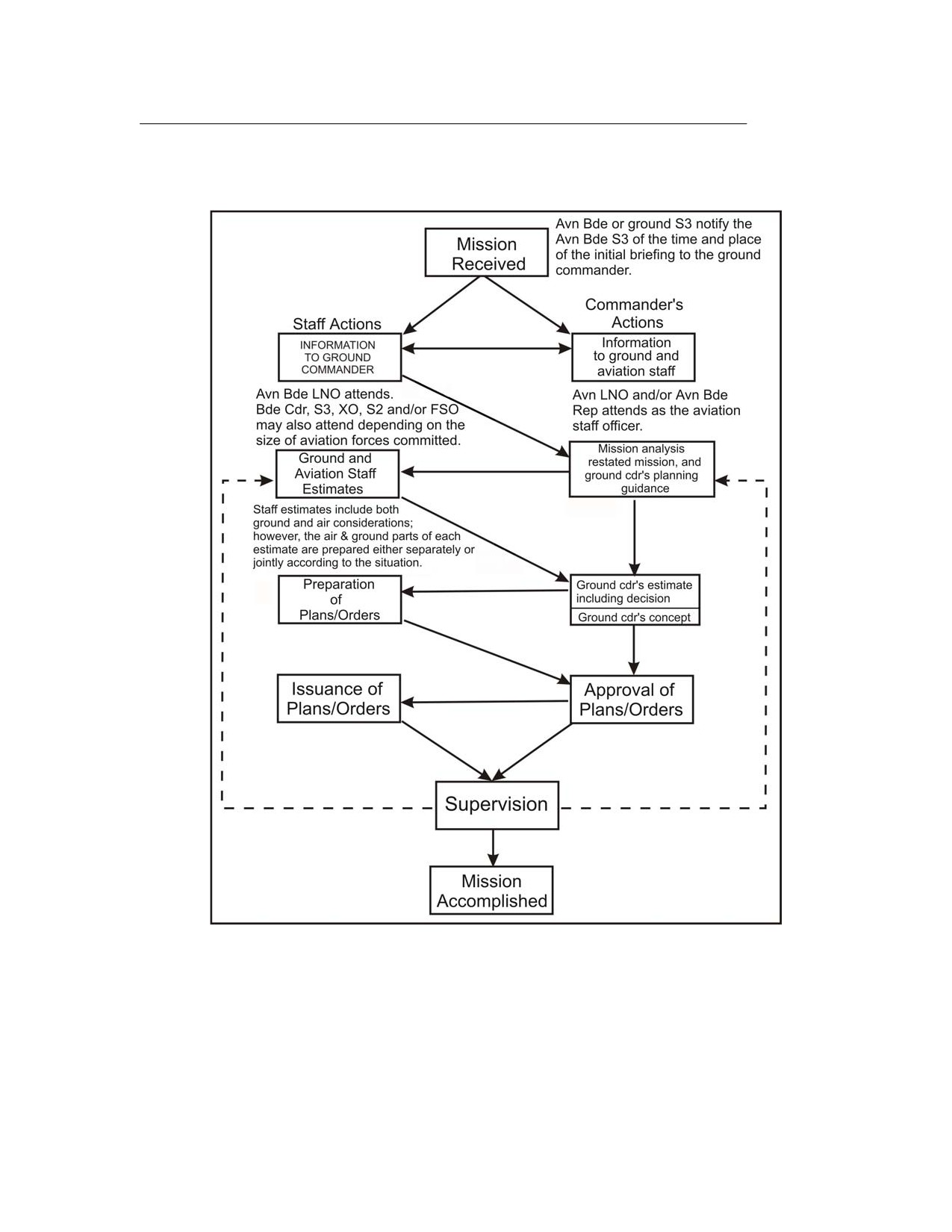
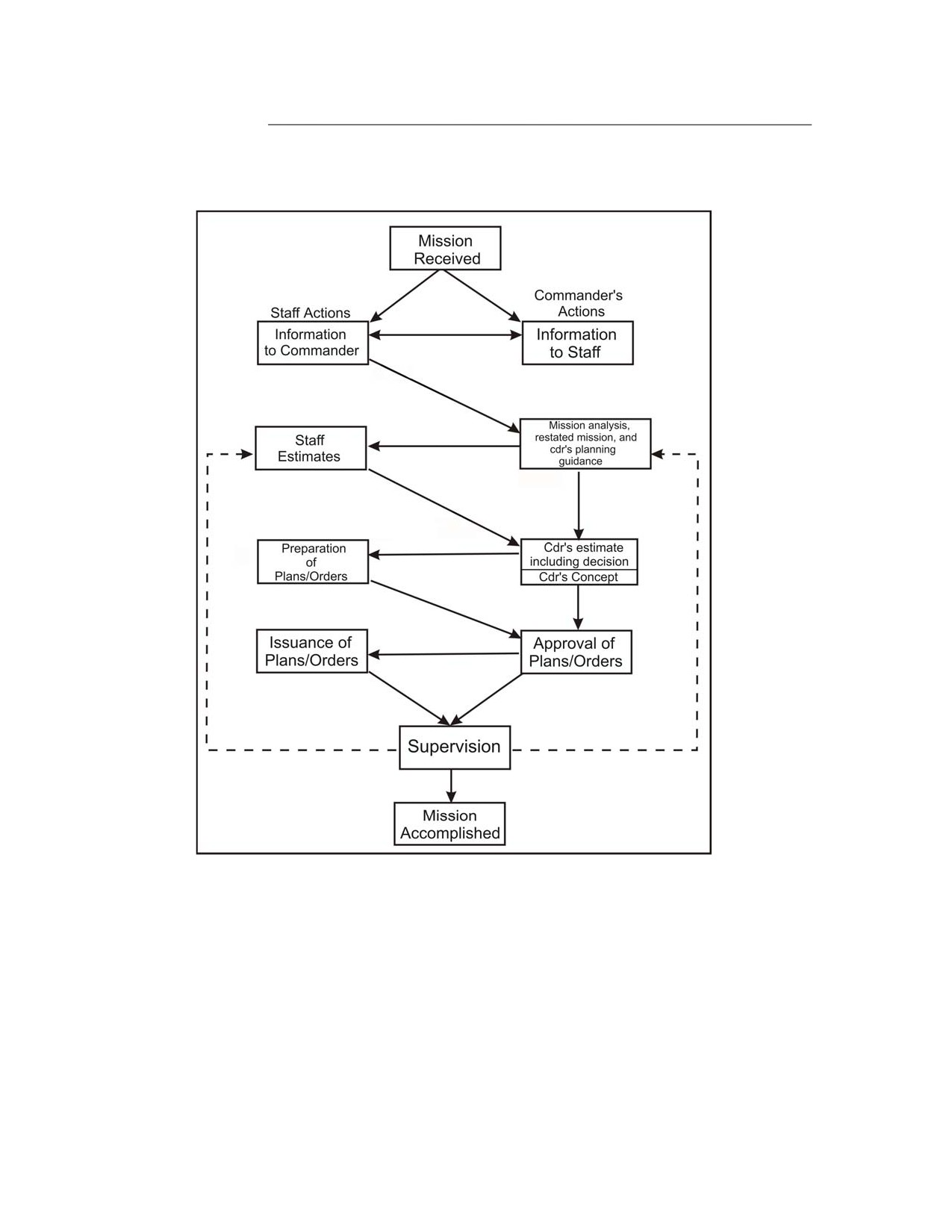
4-72. Each type mission requires a model to guide the planning and
execution. Examples of each are shown in Figures 4-13 and 4-14.
BRIGADE AND SUBORDINATE PLANNING RESPONSIBILITIES
4-73. For most operations the brigade and battalions plan at different levels.
Table 4-6 provides a general guide for planning responsibilities.
Table 4-6. Brigade and Battalion Planning Responsibilities
AVIATION BDE PROVIDES
BATTALION DETERMINES
General timings
Exact speeds, routes, flight modes and timings
H-Hour (line of departure [LD], LZ).
Exact planning times from AA to LD, PP, BP, PZ, or LZ.
PP locations.
Exact flight route.
Suppression of enemy AD (SEAD) /
Adjustments as LD time nears.
JSEAD Plan.
EAs, LZs, PZs, battle areas or
Release points (RPs), rally points, FPs, ABF positions,
potential BPs.
exact BPs, kill zones, landing areas.
Flight axes.
Exact flight routes.
NAI / target areas of interest (TAI) /
Exact surveillance plan.
DPs.
4-18
Chapter Four
Figure 4-13. Brigade Planning Responsibilities, Aviation
Forces In Support of a Ground Unit
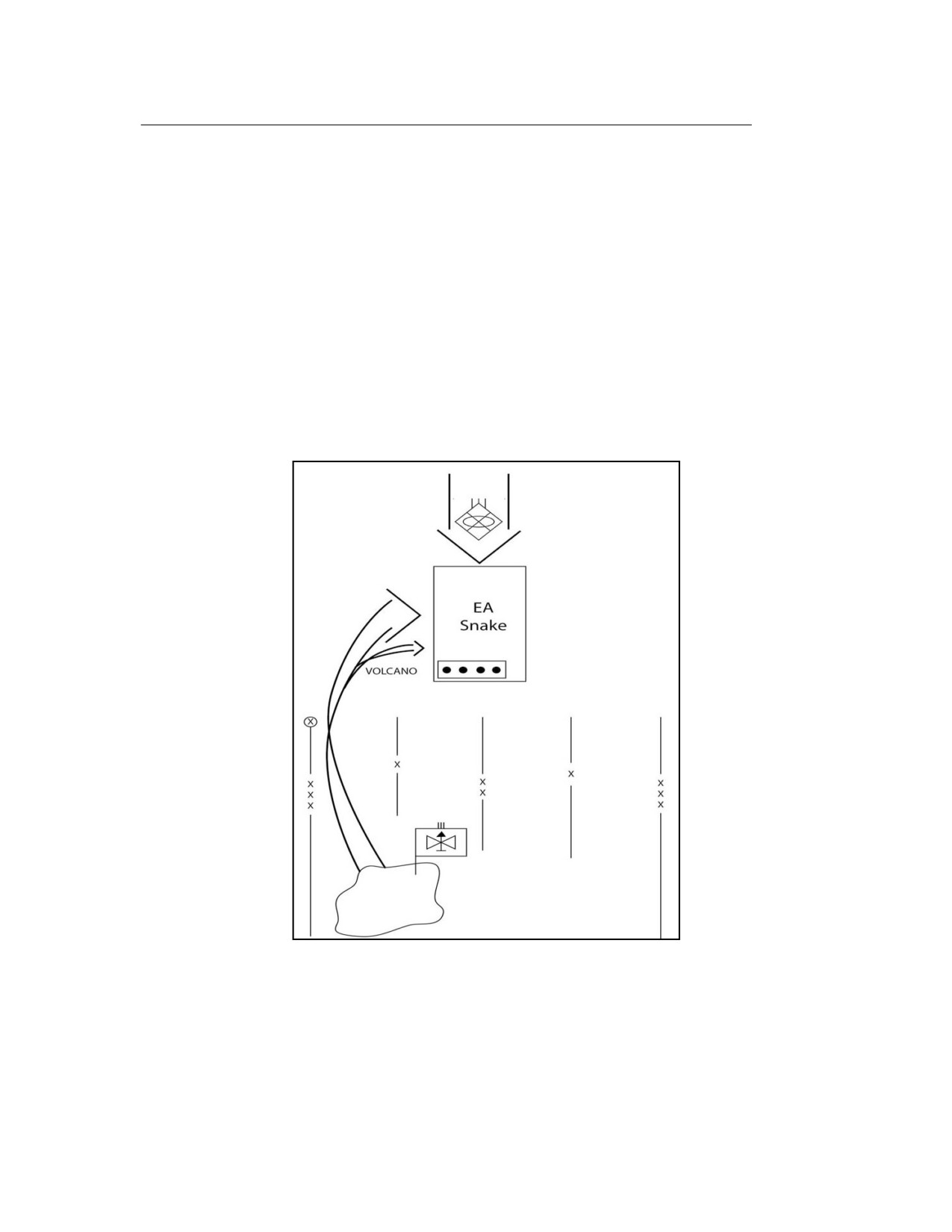
4-19
FM 3-04.111 (FM 1-111)
Figure 4-14. Brigade Planning Responsibilities, Aviation Forces
Under Aviation Brigade Control
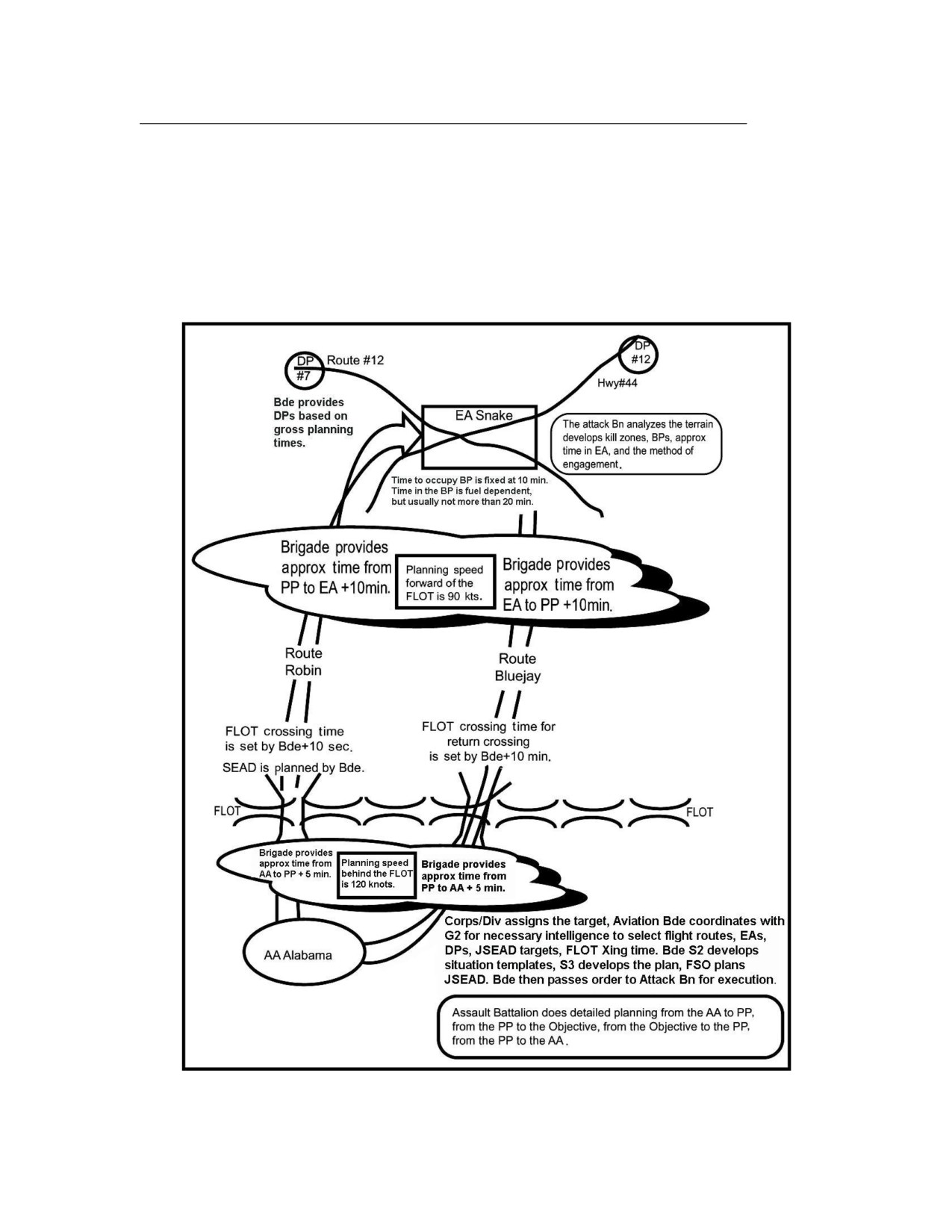
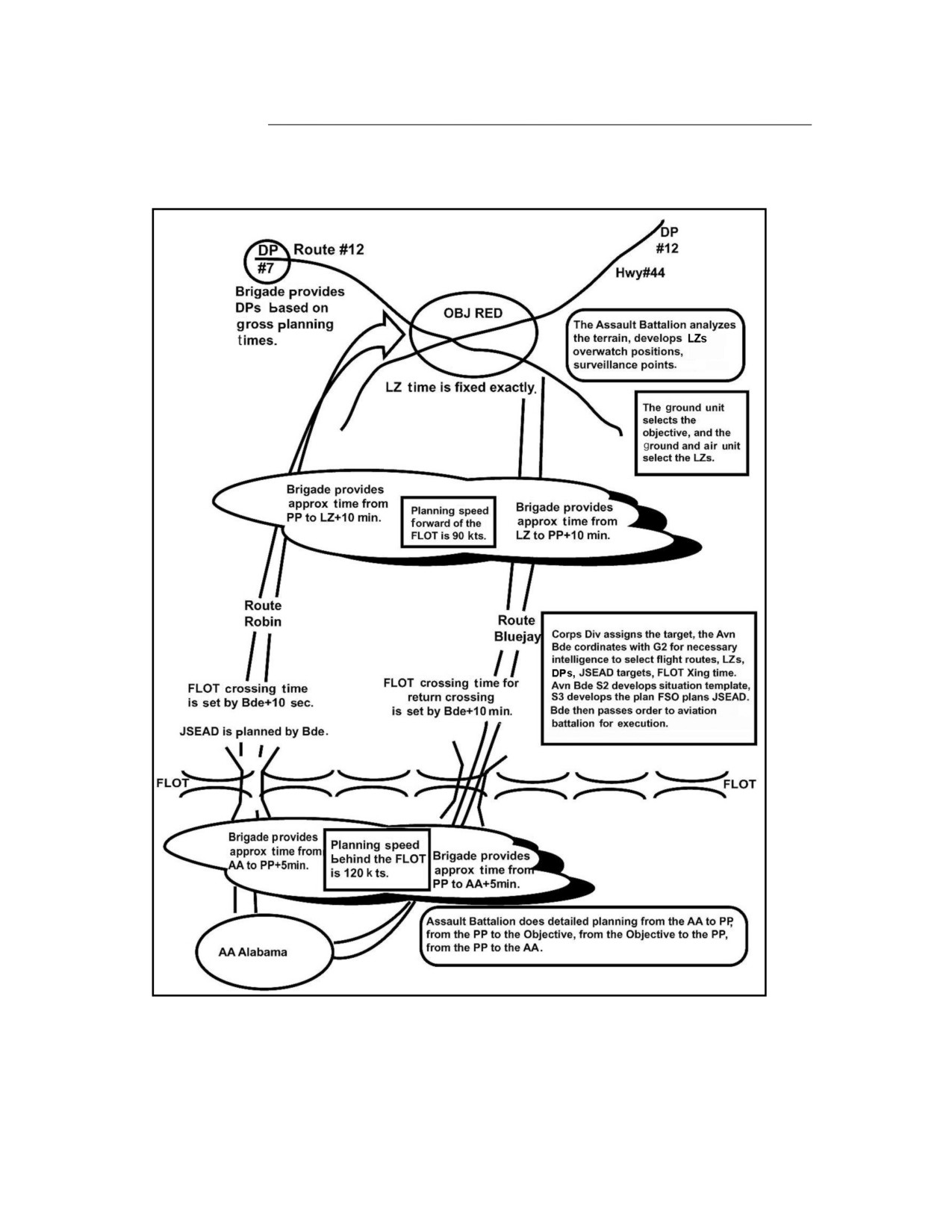
4-74. Figures
4-15 through
4-18 graphically depict the planning
responsibilities between the brigade and the battalion, and incorporate the
general rules in Table 4-6. They also include some of the planning steps of the
aviation brigade's higher headquarters.
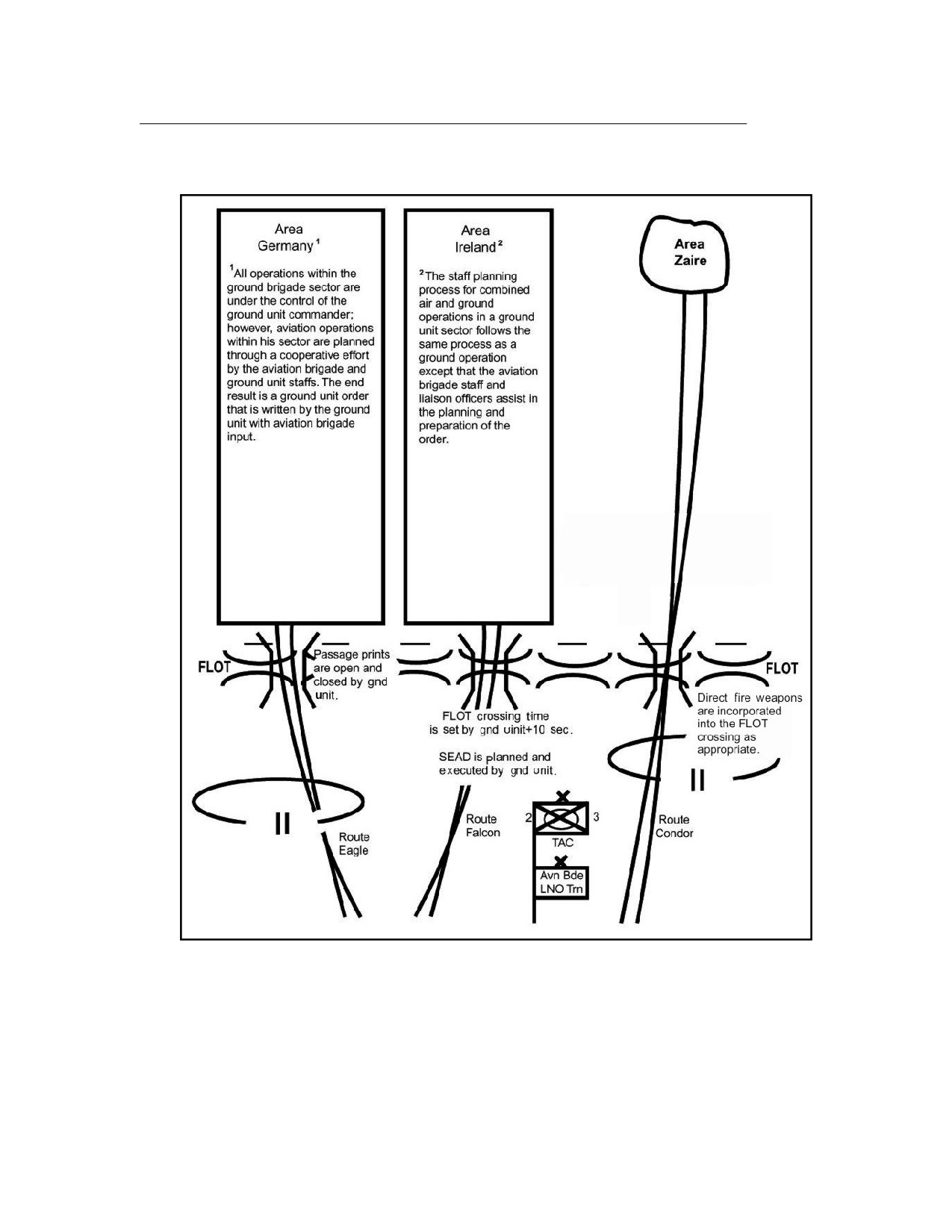
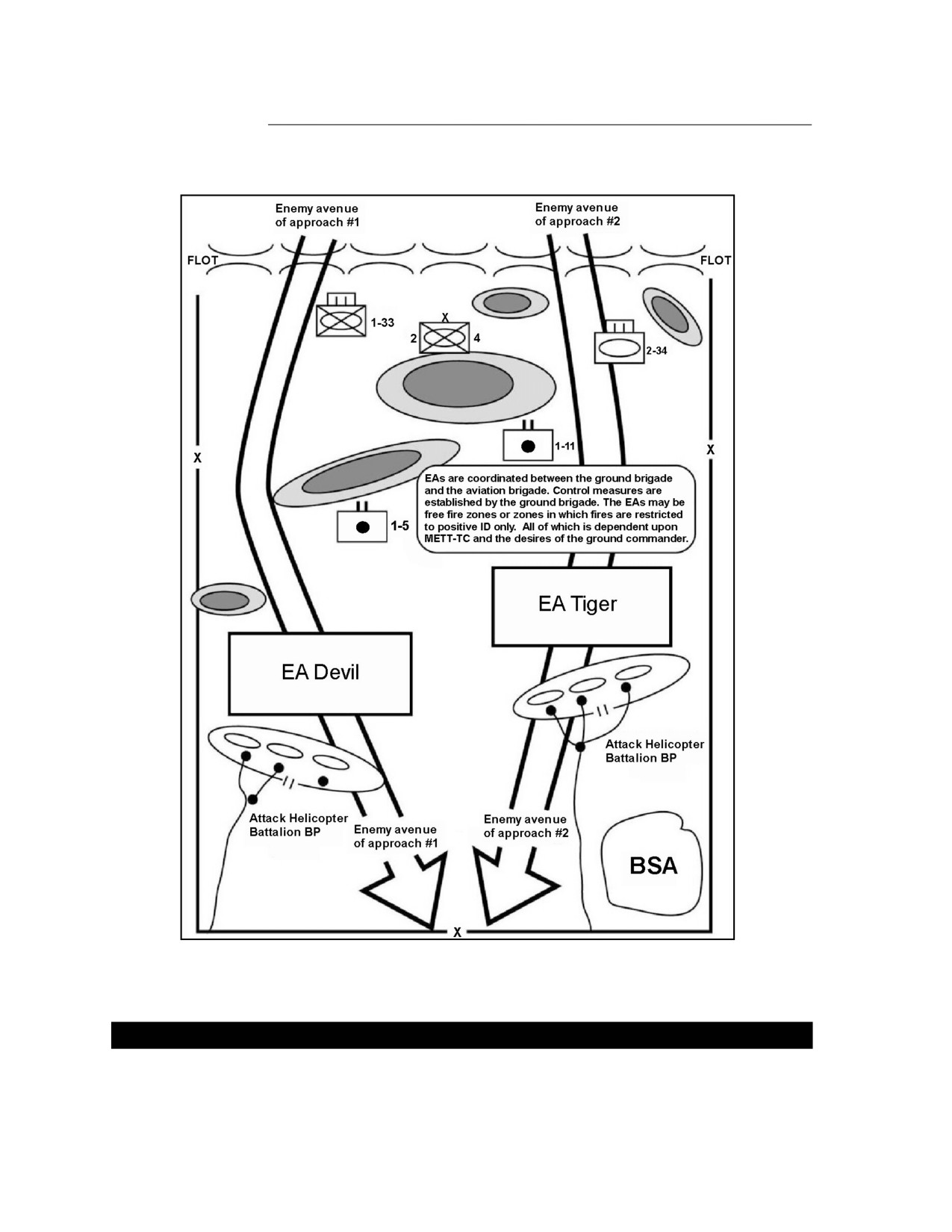
4-75. Figure 4-15 depicts a deliberate attack by the aviation brigade forward
of the FLOT. Figure 4-16 depicts an air assault supported by the aviation
brigade. Figure 4-17 depicts an aviation brigade supporting a ground brigade
within the ground brigade sector both in front of and behind the FLOT.
4-20
Chapter Four
Figure 4-18 depicts the aviation brigade supporting a ground brigade in a
counter-penetration mission.
4-76. Times and airspeeds depicted in these figures are examples.
Additionally, circumstances may require the brigade to provide the exact
routes (airspace coordination) and exact times to effect timely coordination
with supporting elements.
Figure 4-15. Aviation Brigade Conducts A Deliberate Attack
4-21
FM 3-04.111 (FM 1-111)
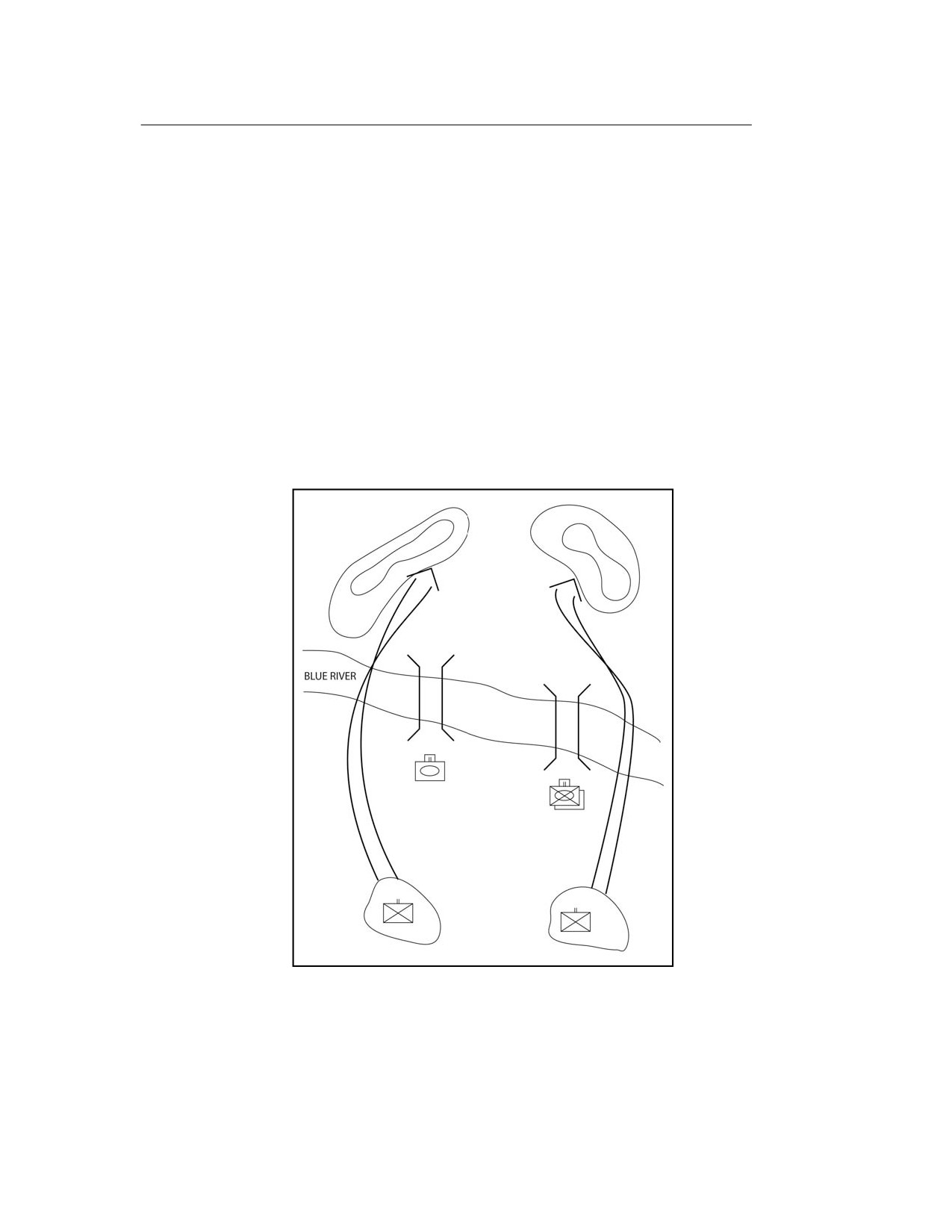
Figure 4-16. Aviation Brigade Supports An Air Assault
4-22
Chapter Four
Figure 4-17. Aviation Brigade Supports Ground Brigade Operations
4-23
FM 3-04.111 (FM 1-111)
Figure 4-18. Aviation Brigade Conducts a Counter-Penetration Mission
in a Ground Brigade Sector
SECTION III - NUCLEAR, BIOLOGICAL, AND CHEMICAL WEAPONS
4-77. U.S. forces are likely to encounter an NBC environment, especially
when facing a militarily less-capable threat that resorts to asymmetric
4-24
Chapter Four
responses. The aviation brigade must avoid the effects of NBC weapons,
respond to their use, take protective measures, and continue the mission.
SOPs and training are the best preparation for operations in an NBC
environment.
4-78. The commander must consider the exposure guidance from higher
headquarters, the enemy's capability, the mission, and the condition of the
unit when establishing the unit's mission oriented protective posture
(MOPP). Because of the degradation in aircrew effectiveness in MOPP
equipment, intensive fighter management is required. To reduce risk in an
NBC environment, units must—
• Avoid detection.
• Retain mobility.
• Seek terrain shielding by carefully selecting AAs and preparing
shelters and fighting positions.
• Instill discipline and physical conditioning to prepare troops for the
confusion and physical demands of a NBC environment.
• Plan for continued operations if attacked.
CONTAMINATION AVOIDANCE
4-79. The term avoidance does not necessarily mean aborting a mission or
suspending operations. Soldiers go into contaminated areas only when
necessary. Normally, it is preferable to bypass these areas. The NBC warning
and reporting system, reconnaissance, monitoring, and surveys identify
contaminated areas.
PROTECTIVE MEASURES
4-80. When elements cannot avoid contamination, or are under direct attack,
soldiers must take appropriate actions to survive. Specific actions are taken
before, during, and after attack. To sustain operations in an NBC
environment, personnel must understand and practice individual and
collective protection. Individual protection involves those measures each
soldier must take to survive and continue the mission. These measures
include immediately donning MOPP gear, seeking cover, and using other
protective equipment and devices. Collective protection provides a
contamination-free environment for selected personnel and precludes the
continuous wear of MOPP gear. Considerations for NBC protection include—
• Positioning NBC reconnaissance assets at likely locations for enemy
employment.
• Combining reach-back intelligence with battlefield sources to anticipate
enemy use of weapons of mass destruction.
• Using smoke to support disengagement.
4-25
FM 3-04.111 (FM 1-111)
SECTION IV - SPECIAL ENVIRONMENTS
4-81. The brigade will be called upon to execute its mission in a variety of
environments. It is imperative that commanders understand the impact of
these environments on their soldiers and equipment. Commanders need to
think through the impact of environmental conditions and provide necessary
training. The Army's concept of "just in time" training, supported by the use
of distance learning products, provides opportunities for commander's to meet
some of the unique training challenges that special environments demand.
URBANIZED TERRAIN
4-82. In urban areas, fields of fire are restricted, landing areas are limited,
and buildings provide cover for enemy forces to engage helicopters with near
impunity. The presence of noncombatants, protected structures, and
important resources and facilities normally demands careful weapons and
munitions selection to avoid collateral damage. The proximity of enemy and
friendly ground forces increases the risk of fratricide. Communications may
be degraded by many structures. Thermal effects from paved surfaces and the
channeling effects of buildings can cause wind conditions to vary significantly
from point to point. Special, restrictive ROE should be expected. Standoff is
key to aviation survival. Chapter 6 and Appendix R cover Urban Operations.
MOUNTAINS AND HIGH ALTITUDE TERRAIN
4-83. While
high
altitude
limits
load-carrying
capabilities,
compartmentalized mountain terrain enhances rapid movement to the flanks
and rear of an isolated enemy force. Enemy mechanized forces are slowed and
channelized as they move up steep grades and down narrow valleys or are
restricted to roads and trails. Mountains provide excellent terrain masking
and allow easy avoidance of radar and visual acquisition; however, high
ridges also provide effective FPs for AD guns and hand-held missiles.
Mountain flying techniques are critical to taking advantage of this terrain.
HIGH ALTITUDE TRAINING SITE
4-84. High altitude training site
(HATS), located at Eagle, Colorado,
provides excellent high altitude and power management training for rotary-
wing aviators. If possible, all PCs should attend the course before deploying.
The course is valuable for operating at high gross weights or high altitude.
Course length is one week.
SNOW, ICE, EXTREME COLD WEATHER
4-85. Operations in snow, ice, and extreme cold weather pose operational and
maintenance challenges. Ice can prevent weapons and missile function.
Blowing snow can create whiteout conditions, especially during takeoff,
landing, or hovering. Aircraft flying low and slow may produce large snow
clouds that the enemy can easily detect. Low flying aircraft can also blow
snow off trees, thus leaving a trail visible to enemy aircrews or UAV.
Uncovered aircraft exposed to these conditions require frequent checks and
4-26
Chapter Four
services to prevent icing. Aircraft that become ice-covered may take hours to
deice. Aircraft skis may also be required. Units that normally do not operate
in these conditions should request unit SOPs and guidance from units
experienced in these conditions.
JUNGLES
4-86. Dense jungles and wooded areas degrade fields of fire and target
identification, and can negate the advantages afforded by superior
acquisition systems. Humid, tropical air decreases the effectiveness of optics.
It also decreases payload capacity. While tropical jungle can be some of the
harshest terrain available for aviation operations, mobility advantages
offered by aviation over ground forces are exponentially increased.
DESERTS
4-87. The brigade can operate effectively in the desert, but open desert
terrain increases the unit's vulnerability to enemy long-range observation
and acquisition. The lack of navigational aids (NAVAIDs) and prominent
terrain features, man-made or natural, makes navigation extremely difficult
without GPS, Doppler, or some other form of navigation assistance. Heat
limits weapon and fuel loads, while sand and dust cause damage and
increases maintenance requirements. Placing FARPs closer to the objective
areas can mitigate the effects of reduced payload capabilities. Aircraft flying
low and slow produce large dust clouds that the enemy can easily detect.
Dust clouds also obscure aircraft acquisition systems.
OVER-WATER OPERATIONS
4-88. Over-water operations may be necessary to defeat enemy waterborne
operations or to move from one location to another. As in desert
environments, openness increases the unit's vulnerability to enemy long-
range observation and acquisition. The lack of NAVAIDs and prominent
terrain features makes navigation extremely difficult without GPS, Doppler,
or some other form of navigation assistance. Over-water operations require
special equipment and training. For example, water wings, rafts, and
helicopter emergency egress device (HEED). Units that normally do not
operate in these conditions should request unit SOPs and guidance from
units experienced in these conditions.
SMOKE AND OBSCURANTS
4-89. Smoke and obscurants are integral parts of most potential adversaries'
doctrine, tactics, equipment, and training. Enemy forces will use smoke to
increase their effectiveness and reduce their vulnerability. Specifically, the
enemy can use smoke to—
• Deny information.
• Mask the use of chemical weapons.
• Disrupt movement, operations, and C2.
• Restrict NOE and contour flight.
4-27
FM 3-04.111 (FM 1-111)
• Reduce the effectiveness of sensors, range finders, target designators,
and visual observation.
FRIENDLY SMOKE
4-90. Through the use of smoke, the brigade can—
• Suppress visually sighted enemy AD systems and small arms.
• Sector portions of EAs, isolating part of the enemy force.
• Obscure LZ or PZ operations from enemy view.
• Screen the displacement of attack or reconnaissance aircraft while they
move or break contact.
SECTION V - SHIPBOARD OPERATIONS
4-91. Shipboard operations provide many options to joint force and
component commanders. Army helicopter operational capabilities are greatly
expanded when ships are available for operations near large bodies of water
and islands. Shipboard operations require special training that must be
accomplished before helicopters can be landed on or operate from ships. (See
FM 3-04.564 [FM 1-564] and the joint shipboard helicopter integration
process [JSHIP] website [http://www.jship.jcs.mil/].)
SECTION VI - UNMANNED AERIAL VEHICLE OPERATIONS
4-92. UAVs linked to brigade assets enhance operations. Maximum use of
UAV and joint assets can greatly reduce the requirements on the
commander's internal resources for security. UAV units can perform all the
basic observation tasks, thus freeing helicopters for higher priority actions.
UAV integration can reduce flying-hour requirements and support crew rest.
While TTP governing UAV operations are emerging, every opportunity to use
UAVs should be exploited (see Appendix H).
4-93. Communications and coordination with UAV controllers are essential
to integrate UAVs. UAVs normally are controlled from within intelligence
sections whereas cavalry organizations are controlled by the command group.
If a UAV unit conducts the screen of an area, accepts handover from or
handover to a cavalry unit, the necessary C2 must be planned in great detail
to ensure proper coverage of the security area. The C2 of UAV and cavalry is
further complicated if the intelligence section controlling the UAVs is at
another headquarters location or at the higher headquarters location.
4-94. Combined UAV and cavalry operations are an excellent force
multiplier. SOPs, battle drills, rehearsals, and training exercises contribute
to success.
4-28
Chapter Four
UNMANNED AERIAL VEHICLE IN RECONNAISSANCE, SURVEILLANCE,
AND TARGET ACQUISITION OPERATIONS
4-95. UAV capabilities make them ideal to support brigade reconnaissance
and security missions. Locating enemy AD systems is a critical mission for
UAVs. They can jam acquisition and tracking emissions, but otherwise
remain in the passive mode. UAVs can cue brigade forces during screen,
guard, and cover missions. Likewise, during economy of force missions, UAVs
can alert dispersed brigade forces to mass effects on a particular enemy force.
Communications retransmission capabilities provide dispersed brigade
elements a means to communicate combat information.
CONCEPTS OF UNMANNED AERIAL VEHICLE AND AVIATION BRIGADE
COOPERATIVE EMPLOYMENT
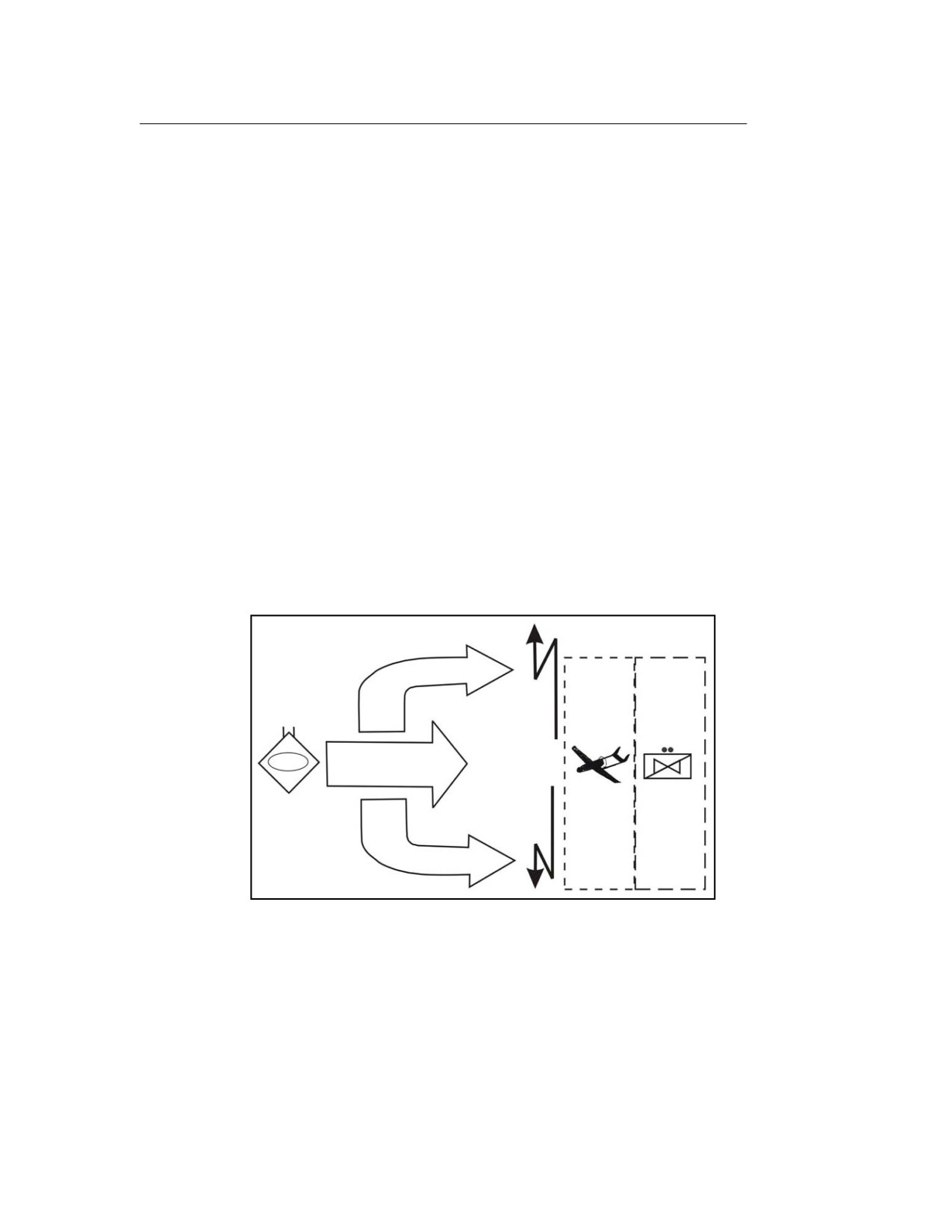
4-96. Three options on how to employ brigade and UAV assets together are
discussed below.
UNMANNED AERIAL VEHICLE TO AVIATION UNIT HANDOVER
4-97. The staff section controlling UAVs acquire the enemy force and
maintain observation. After staff analysis, the high priority targets are
handed off to the brigade for continued observation or destruction. This
option enhances brigade survivability but increases UAV risk (Figure 4-19).
Figure 4-19. UAV to Aviation Unit Handover
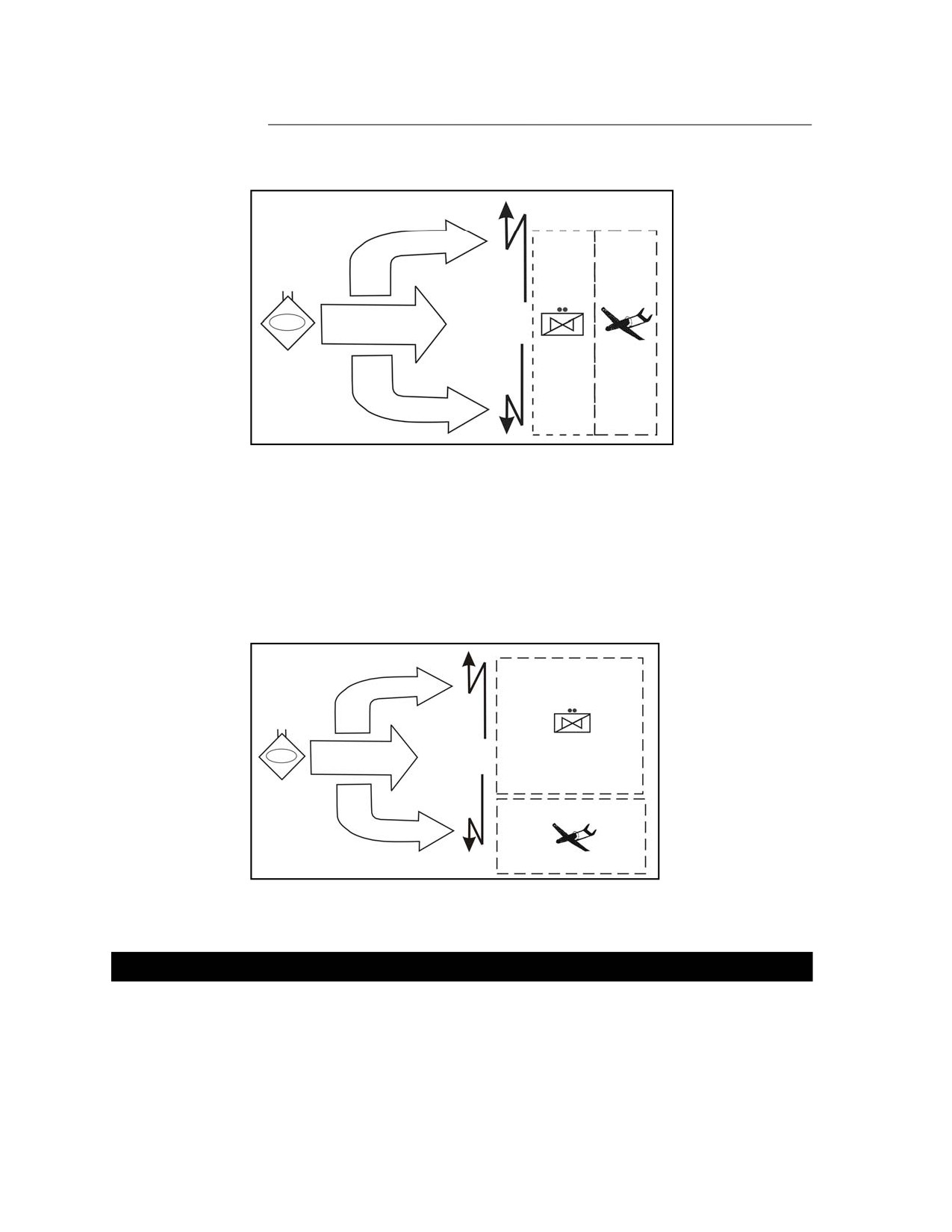
AVIATION UNIT TO UNMANNED AERIAL VEHICLE HANDOVER
4-98. The brigade acquires the enemy force and maintains observation. High
priority targets are then handed over to the staff section controlling UAVs for
continued observation and engagement by FA or CAS. The brigade then
conducts a bypass of the enemy forces and continues the reconnaissance
effort or moves back to an FAA or the AA. This option enhances brigade
survivability and increases UAV risk (Figure 4-20).
4-29
FM 3-04.111 (FM 1-111)
Figure 4-20. Aviation Unit to UAV Handover
AVIATION UNIT AND UNMANNED AERIAL VEHICLE SECTORS
4-99. The brigade and the staff section controlling UAVs are assigned sectors
based on METT-TC. If the situation dictates, they can switch sectors. This
option maximizes the capabilities of both systems; however, it requires the
most coordination. This option allows the brigade to extend its AO and to
concentrate manned elements on the most critical sector (Figure 4-21).
Figure 4-21. Aviation Unit and UAV Sectors
SECTION VII - INSTRUMENT FLIGHT PROFICIENCY
4-100. Tactical combat operations may be fought in marginal weather
conditions. Maintaining instrument flight proficiency at the crew level is a
matter of force protection. Maintaining instrument flight proficiency at the
unit level is a matter of mission accomplishment.
4-30
Chapter Four
AIR MOVEMENT/SELF-DEPLOYMENT
4-101. To accomplish the mission, some tactical movements and self-
deployments may have to be conducted under IMC or a combination of IMC
and visual meteorological conditions
(VMC). Training is essential to
accomplish these missions.
INADVERTENT INSTRUMENT METEOROLOGICAL CONDITIONS
4-102. IMC may not be avoidable during some tactical operations. Units
must have a rehearsed plan for inadvertent encounter of IMC. To ensure
successful recovery, necessary ATS coordination must be accomplished. The
unit must also have a self-recovery plan when ATS is not available.
GROUND ATTACK
4-103. If ground forces attack a brigade location during IMC, the unit may
have to relocate aircraft under instrument conditions. Units must have a
rehearsed plan for aircraft evacuation under IMC.
SECTION VIII - FORMATION FLIGHT
4-104. A formation (multihelicopter operation) is a flight in which two or
more aircraft are so near each other that any movement of the lead aircraft
must be replicated by the others. The flight operates as a single aircraft
regarding navigation and position reporting. Formations concentrate
maximum combat power and maintain unit integrity. They also reduce
aircraft exposure time—providing the threat less time to react. Formations
also facilitate security and control requirements. Formation flight provides a
means to rapidly deliver and place a maximum number of troops/fires on the
LZ/objective in the shortest possible time. The type of formation used for a
particular mission is largely determined by METT-TC.
PLANNING CONSIDERATIONS
4-105. The following factors are considered in determining the best formation
or sequence of formations:
• Mission of the supported unit and the aviation unit.
• Current enemy situation, enemy AD capability and placement, and
vulnerability to enemy visual or electronic surveillance.
• Artillery support available, LZ preparation planning, air support
availability and requirements, Naval surface weapon systems
(including planned types of ordnance), and en route JSEAD.
• Configuration of en route obstacles or corridors; size, shape and surface
of the LZ; obstacles affecting approaches to the LZ; ceiling and
visibility; wind and turbulence, ambient light levels; and IR crossover
throughout the mission.
• Possible changes in the mission or the situation and evasive tactics to
be used.
• Number and type of armed escort aircraft required and available.
4-31
FM 3-04.111 (FM 1-111)
• Degree of control required and the method of control such as radio,
visual signals, and prearranged timing.
• Type of NVDs used.
• OPSEC and safety measures required.
• Level of crew training and experience.
• Aircraft capabilities.
4-106. When different types of aircraft operate in a formation, the external
lighting characteristics of each type must be evaluated. Additionally, when
aircraft types are mixed at night, the differences between NVDs and FLIR
must be identified and considered in planning.
SECTION IX - RECONSTITUTION
4-107. Reconstitution consists of extraordinary actions taken by a
commander to restore a unit to a desired level of combat effectiveness. A unit
is not reconstituted just because it has lost its combat effectiveness.
Reconstitution decisions must be based upon an assessment of the overall
battlefield. Available resources are limited and must be used where they will
have the greatest effect. FM 4-100.9 (FM 100-9) and FM 3-04.500 (FM 1-500)
outline reconstitution in detail.
OVERVIEW
4-108. Reconstitution actions are implemented immediately after a
commander's determination that a unit is not sufficiently effective to meet
operational requirements. Possible actions include reestablishing or
reinforcing C2; cross-leveling or replacing personnel, supplies, and
equipment; and conducting essential training.
4-109. If reconstitution is necessary, commanders have two options—
reorganization and regeneration. Often these are executed together.
REORGANIZATION
4-110. Reorganization shifts internal resources within a degraded unit to
increase its combat effectiveness. Equipment and personnel are redistributed
among internal elements to balance combat capabilities, match operational
weapon systems with crews, and form composite units. Reorganization is
categorized as either immediate or deliberate.
Immediate Reorganization
4-111. Immediate reorganization is the quick, temporary restoration of
degraded units to minimum levels of combat capability.
Deliberate Reorganization
4-112. Deliberate reorganization restores degraded units to a specified
degree of combat capability. It involves more extensive repair and cross-
leveling procedures, and is usually conducted farther to the rear than
immediate reorganization.
4-32
Chapter Four
REGENERATION
4-113. Regeneration rebuilds a unit through large-scale replacement of
personnel, equipment, and supplies. C2 is reestablished and mission-essential
training is conducted. Regeneration is the more challenging reconstitution
option. It requires more time and resources. Regeneration is categorized as
either incremental or whole-unit.
• Incremental regeneration is accomplished by adding personnel and
equipment to an existing unit.
• Whole-unit regeneration is the replacement of entire units or definable
subelements in an organization.
4-33
Chapter 5
Employment
SECTION I - GENERAL
5-1. This chapter addresses employment aspects for each type aviation
brigade. Those operations common to all brigades are covered in Chapter 4,
and are not repeated here. However, within this chapter, some brigade
sections repeat information from other brigade sections, as some employment
factors are common to more than one, but not all brigades. This ensures that
each brigade section stands alone.
5-2. The aviation brigade's primary role is to set the conditions for success.
To do that it must—
• Ensure the required C2 facilities are in place and operational.
• Ensure SU—enemy, friendly, and allied.
• Ensure the necessary liaison to and from other organizations is in
place.
• Coordinate the brigade's movements and operations within the
battlespace.
• Have the necessary CS and CSS.
SECTION II - CORPS AVIATION BRIGADE
OVERVIEW
5-3. The corps aviation brigade is the primary headquarters for Army
aviation operations conducted by the corps. Within the brigade there is an
attack regiment and an aviation group. All aviation group headquarters are
in the RC, while many subordinate battalions and companies are AC. The
corps aviation brigade commander and staff must control these active units
until the group headquarters activates, certifies, and deploys. This additional
C2 requirement is manageable in peace. However, it limits the brigade's
wartime agility and flexibility to accomplish multiple, diverse missions while
concurrently planning future operations. The brigade needs a large staff
augmentation until the group headquarters arrives. Peacetime training
exercises are critical to the timely integration of RC units when mobilized.
TASK ORGANIZATION CONSIDERATIONS
5-4. Normally, even when dispersed to support other organizations, the
attack regiment and aviation group remain under corps aviation brigade C2.
Subordinate elements of the attack regiment and the aviation group,
however, may operate under control of other aviation brigades, such as
another corps aviation brigade or division aviation brigade.
5-0
Chapter Five
AIRFIELDS
5-5. Some corps aviation brigade assets will operate from airfields. This
airfield may be part of the host nation infrastructure, a captured enemy
airfield, another service's airfield, or one built by Army or other service
engineers. Airfields may be used when the air and missile threat is low.
HOW TO FIGHT
5-6. The corps aviation brigade's primary role is to set the conditions for
success for each of its units. It conducts attack, reconnaissance, security, air
assault, C2, air movement, and ATS. It plans, coordinates, and executes
aviation operations to support the corps scheme of maneuver. It can be
expected to operate anywhere in the corps area.
5-7. The attack regiment conducts corps shaping operations and augments
division attack battalions to support decisive operations. The attack regiment
can also conduct guard operations when task-organized with ground
maneuver forces. The attack regiment is an ideal air cavalry force.
5-8. The aviation group coordinates the corps's myriad aviation support
requirements.
• The CAB moves commanders and staffs to coordinate and execute
operations.
• The CSAB accomplishes critical CS and CSS missions for the corps and
divisions and may augment air assault operations.
• The AHB provides air assault support for corps and division operations.
• The HvyHB provides heavy lift capability for combat and support
missions.
• The ATS battalion provides ATS throughout the corps.
INTELLIGENCE
5-9. The S2 prepares intelligence estimates and conducts the IPB process.
Regardless of the nature and intensity of conflict, this involves a time-tested
process. FM 2-01.3 (FM 34-130) contains appropriate checklists and an
aviation-specific section. IPB results are used to develop the products to
support collection management, identify potential enemy COAs, and support
the development of the commander's scheme of maneuver
(to include
branches and sequels).
5-10. The brigade has many sources of intelligence; however, the corps G2
section is key. Close coordination with the corps G2 section is essential to
maintain SA and understanding. The brigade S2 contacts corps and division
intelligence sections to ensure the latest information is available for
operations and aircrews. Corps aviation units may have access in their CPs
to Joint Surveillance Target Attack Radar Systems (JSTARS) ground station
modules or common ground stations. These provide continuous access to
moving target indicator (MTI) ground tracks, and synthetic aperture radar,
UAV, and satellite imagery. If not, the brigade accesses via liaison or staff
presence in the corps intelligence section.
5-1
FM 3-04.111 (FM 1-111)
MANEUVER
5-11. The corps aviation brigade C2s operations to support the corps
commander's tactical and OPLANs.
5-12. Corps aviation brigades plan, coordinate, and execute attacks on enemy
C2 facilities; moving armor, artillery, and troop formations; communications
nodes; supply depots; delivery systems for weapons of mass destruction
(theater missile defense [TMD]); and other hard and soft targets. For the
TMD mission, Longbow aircraft with extended range fuel tanks can search
using the FCR to detect vehicles, and FLIR—augmented by joint assets—to
detect missile launches. Utility and heavy lift aircraft insert air assault
forces. AH-64 aircraft conduct both attack and search and attack missions.
5-13. When corps aviation brigade forces conduct operations in deep areas,
air assaults, and raids against any target, the commander plans and conducts
maneuver functions, supporting fires, and JAAT assets through mission-type
orders or as part of the ATO. Attack, assault and heavy helicopter assets also
support division close battle requirements. The corps commander may
employ corps assault and attack assets as a reaction force against level III
rear area threats.
5-14. Brigade UH-60 and AH-64 aircraft may conduct in-stride recovery of
downed aircrews, or support Air Force CSAR missions if in-stride recovery is
not possible. The Longbow can assist ingress and egress security through its
FCR SA, and augment supporting fires for recovery aircraft. UH-60s, within
capabilities, can insert ground security forces.
FIRE SUPPORT
5-15. The brigade's attack helicopter regiment aircraft may provide laser
designation for other service aircraft, its own aircraft, and precision fires
delivered by Army or other service units. The corps aviation brigade can also
coordinate Army tactical missile systems
(ATACMS), multiple launcher
rocket system (MLRS), cannon artillery, and NSFS. Heavy helicopter and
utility assets may transport towed howitzers, their crews, ammunition, and
prime movers. Heavy helicopters may air transport ATACMS, MLRS, and
cannon artillery ammunition for corps and division units. Air transport of
forward observers, mortar crews, and Q-36 Firefinder radars also are
potential missions.
AIR DEFENSE
5-16. The attack helicopter regiment may conduct defensive air combat and
team insertions against enemy forces performing operations deep in our rear
areas. In operations in enemy deep areas, attack helicopter regiment
elements may conduct overwatch and defensive air combat to defend the
main body. AH-64D aircraft with FCR can identify and engage enemy
helicopters with RF and SAL missiles, flechette rockets, and guns.
5-17. Because corps attack regiments often use airfields as AAs, the brigade
requires AD against both air and tactical ballistic/cruise missiles to protect
against attack while on the ground.
5-2
Chapter Five
5-18. Brigade elements employ active and passive AD. Active measures
include use of integral systems and door guns for defensive air combat.
Passive measures include terrain flight, camouflage, and selection of
locations that provide cover and concealment for CPs, AAs, and FARPs. Air
guards for vehicle movements and road marches provide early warning.
Convoy discipline, such as maintaining proper distances between vehicles,
limits damage from air attack. Elements use identification friend or foe (IFF)
codes to avoid fratricide. A2C2 plans, procedures, and orders ensure AD
elements are aware of aircraft AAs and ingress and egress routes.
MOBILITY/COUNTERMOBILITY/SURVIVABILITY
5-19. Corps aviation brigade aircraft routinely support engineer mobility and
countermobility efforts. Road construction and improvement are major
mobility efforts that can require helicopter transport of outsize loads such as
metal pipes for culverts and bridge materiel. Volcano-equipped aircraft,
escorted by armed helicopters, can emplace minefields. Helicopters may also
transport survivability materiel such as concertina and sandbags for base
camp security.
5-20. Group aircraft move MP reaction forces and traffic control teams,
chemical reconnaissance teams, and decontamination teams. They also
transport firefighters and water buckets in relief missions.
COMBAT SERVICE SUPPORT
5-21. The corps aviation brigade conducts air movement, aerial resupply, and
CASEVAC. Utility and heavy aircraft may emplace and resupply FARPs to
support operations in deep areas. For its own operations, the brigade often
requires Class III/V support from other units, and may require Class IX
support.
5-22. AVIM support is provided by COSCOM. Because some corps aviation
units may not displace as often as other corps or division units, the corps
aviation brigade may desire to have those units conduct most of their own
phase maintenance inspections. If unit displacements increase, passing these
inspections to the COSCOM, or out of theater, is prudent.
COMMAND AND CONTROL
5-23. The corps aviation brigade accomplishes its mission through its
subordinate units—the attack regiment and the aviation group. However, the
aviation group is in the RCs and must be activated, certified, and deployed
before this essential C2 headquarters can contribute to the battle.
5-24. Communication is a major challenge for the corps aviation brigade.
Although improved communications capabilities exist, the brigade will
seldom maintain continuous contact with all its in-flight aircraft. Methods
such as opening and closing flight plans via telephone are tried and true
methods of maintaining positive control.
5-25. Adequate communications must be on board for high priority missions
supporting division commanders and staffs. C2 aircraft availability requires
close management. Some missions require flying backups to provide relay
and ensure timely self-recovery in case of mechanical problems to C2 aircraft.
5-3
FM 3-04.111 (FM 1-111)
5-26. Corps aviation brigades support their own C2 through the CP structure
and employment of relays for LOS combat net radios. HF radios provide an
alternate non-line of sight (NLOS) communications means for longer distance
missions and NOE communications. SATCOM may be required to support
both C2 aircraft customers and the brigade's own C2 needs.
SECTION III - CORP ATTACK HELICOPTER REGIMENT
OVERVIEW
5-27. Within each corps aviation brigade, a subordinate attack regiment
controls the ATKHBs. The regimental headquarters and its battalions may
be in the active or RC. For those units in RCs, peacetime training is critical to
timely integration.
TASK ORGANIZATION CONSIDERATIONS
5-28. ATKHBs normally remain under regimental control during corps
shaping operations. In decisive operations, individual battalions may be
attached to divisions. Division aviation brigades are well suited to accept
regimental ATKHBs. The attack regiment may also be tasked to form an
aviation task force that includes one or more attack companies, assault
elements from the corps aviation group, and ground forces to conduct rear
area operations.
5-29. The regimental commander has flexibility in task-organizing battalions
to support different efforts. He could split one company from an ATKHB and
attach it to another corps ATKHB supporting the division that is the corps’
main effort. The remaining smaller ATKHB would retain sufficient assets to
support secondary efforts, such as corps reserve, or continued shaping
operations as the close battle proceeds. The commander could detach a
company from each of two different battalions to form a smaller third
battalion held in reserve that he, the S3, or XO could command.
Alternatively, these two companies could be attached directly to division
ATKHBs.
5-30. The attack helicopter regiment can receive armored cavalry squadrons
or other maneuver battalions OPCON.
5-31. Corps attack regiments receive C2 support from the aviation group's
CAB, while CS/CSS is provided by the aviation group's CSAB.
HOW TO FIGHT
5-32. The attack regiment's primary role is to set the conditions for success
for each of its units. It conducts corps shaping operations and augments
division attack battalions to support decisive operations. The attack regiment
is also an excellent air cavalry force.
• During initial entry, attack helicopter regiments often fight as part of a
joint force. They may conduct joint shaping operations as a matter of
5-4
Chapter Five
necessity to defend the lodgement. These operations may be conducted
from Navy ships. Operations may be under Army or other service
command.
• The attack helicopter regiment conducts shaping operations for the
ARFOR or corps commander. These operations usually are directed and
planned by a DOCC and supported by other services. The regimental
commander and staff routinely participate in DOCC planning and
execution. The combatant commander for the AO may or may not
require missions to appear on the ATO.
• During the close battle, the regiment can OPCON one or more
battalions to one or more divisions while it plans and executes other
operations with its remaining battalions.
• The deep nature of attack helicopter regiment operations may require
aircraft to fly with auxiliary fuel tanks. Training the use of these tanks
and the resultant reduction in munitions is essential. It must be part of
the unit SOP.
• Longbow-equipped regiments can employ RF missiles with greater
freedom and rapidity of launch because the deep nature of many
missions reduces fratricide risk.
INTELLIGENCE
5-33. The S2 prepares intelligence estimates and conducts the IPB process.
Regardless of the nature and intensity of conflict, this involves a time-tested
process. FM 2-01.3
(FM 34-130) contains appropriate checklists and an
aviation-specific section. IPB results are used to develop the products to
support collection management, identify potential enemy COAs, and support
the development of the commander's scheme of maneuver
(to include
branches and sequels).
5-34. The regiment has many sources of intelligence; however, the corps G2
section is key. Close coordination with the corps G2 section is essential to
maintain SA and understanding. The regimental S2 contacts corps and
division intelligence sections to ensure the latest information is available for
operations and aircrews. As a primary corps asset for shaping operations, the
regiment routinely accesses high-priority intelligence assets like JSTARS,
Airborne Warning and Control System (AWACS), Guardrail C-12, RC-135
Rivet Joint, UAV and satellite imagery, signals intelligence, and electronic
intelligence. Training with these systems and close coordination with the
corps intelligence staff is essential and should be a matter of SOP. C2 aircraft
are required to ensure access to UAV, JSTARS, and other information while
executing missions. The regiment's aircrews also are a great source of combat
information.
MANEUVER
5-35. The regiment normally conducts operations as a regiment. It may
OPCON one or two ATKHBs to other aviation units; but normally it will
retain at least one ATKHB to act as an element of the corps reserve. It may
also control ground maneuver units as part of a guard, covering force, or
corps reserve mission.
5-5
FM 3-04.111 (FM 1-111)
5-36. Corps operations in deep areas require extensive planning. The attacks
themselves are often joint and may include cruise missile, MLRS, ATACMS,
armed UAV, AI assets, NSFS, and Marine attack helicopters. The ATKHBs
attack simultaneously in a maximum destruction attack or in a phased or
continuous attack. The threat, availability of ingress and egress routes, size
of the target, availability of terrain from which to attack, and distance to the
target are factors that determine which method of attack is used.
5-37. The DOCC is a key part of ensuring all aspects of coordination are
accomplished. Every aspect of coordination should be a matter of SOP and
incorporated into checklists and execution matrices.
5-38. Corps attack helicopter regiments play a critical role in support of
light, airborne, and air assault divisions. These early deploying divisions
have limited mobile ground antiarmor assets. Corps attack helicopter
regiments are an excellent means of weakening enemy armor approaching
lighter divisions prior to arrival of sea-deploying heavy forces (Figure 5-1).
5-39. To support the close battle, fratricide issues that effect division attack
battalions also apply to corps attack regiments. Training and SOPs are
essential to avoid fratricide. Ground units and ATKHBs employ control
measures that limit where and when each can fire, and aircrews identify
targets before engagement.
FIRE SUPPORT
5-40. Corps attack regiments ensure JSEAD is planned and coordinated.
Both lethal and nonlethal means are used to ensure suppression or
destruction. ATACMS, MLRS, AC-130, F-16C Block 50 Wild Weasel, F/A-18,
EA-6B, EC-130H Compass Call, and helicopter weapons systems are
employed. Fires in the objective area are planned to ensure all available fires
are placed on the enemy. Units also employ on-call fires during the close
battle, and preplan protective fires around airfields, AAs, and FARPs.
AIR DEFENSE
5-41. The regiment employs both active and passive AD measures. Active
measures include use of Stinger missiles, gun, Hellfire, and rocket
ammunition to conduct defensive air combat. Passive measures include
terrain flight, use of camouflage nets, and locations that provide cover and
concealment for CPs, AAs, and FARPs. Using air guards for vehicle
movements and road marches provides early warning. Convoy discipline,
such as maintaining proper distances between vehicles, limits damage from
air attack. A2C2 plans, procedures, and orders ensure AD elements are aware
of aircraft AAs and ingress and egress routes.
5-42. Corps attack helicopter regiments conducting operations in deep areas
have a greater likelihood of encountering enemy rotorcraft and fighters. AH-
64D aircraft with FCR can identify enemy rotorcraft and engage with RF and
SAL missiles, flechette rockets, and guns. JSTARS and AWACS may or may
not provide adequate early warning for joint assets to destroy enemy aircraft
before they engage friendly forces. During the deep battle, the risk of
fratricide increases from friendly joint assets conducting combat air patrols
and from friendly AD during the return to friendly lines. IFF procedures are
5-6
Chapter Five
critical. IFF systems may be turned off while in enemy territory to avoid
emitting, but that choice must be balanced with the fratricide risk from other
service and allied aircraft. IFF must be on before returning to friendly lines.
Regiments may designate and arm aircraft to provide security for regimental
deep strikes and conduct rear area defensive air combat against infiltrating
enemy rotorcraft.
MOBILITY/COUNTERMOBILITY/SURVIVABILITY
5-43. Aerial delivery of mines can support operations in deep areas. These
operations may be conducted just before or simultaneous to the regiment's
attack. Aerial mining operations must be planned with the same level of
detail as a operation in a deep area to ensure the slow-moving mine delivery
aircraft are not interdicted by enemy action (Figure 5-1).
Figure 5-1. Corps Attack Regiment Conducts Corps
Shaping Operation
COMBAT SERVICE SUPPORT
5-44. Regiments may be tasked to provide security along MSRs and for large
CSS convoys. Regiments need corps aviation group support to set up cross-
FLOT FARPs. Corps FARP asset slices may accompany attack battalions
5-7
FM 3-04.111 (FM 1-111)
attached to divisions. The regiment may support its aircraft on an area GS
basis or in DS of individual battalion efforts.
5-45. At the corps level, AVIM support is provided by COSCOM. OPTEMPO
and frequency of displacements could make phase maintenance inspections
at the AVUM level very difficult or impossible. If unit displacements increase,
passing these inspections to the COSCOM, or out of theater, is prudent.
COMMAND AND CONTROL
5-46. Regimental operations in deep areas require UH-60 C2 aircraft from
the corps aviation group. Units may request joint C2 aircraft to relay
communications and coordinate with joint aircraft. Theater C-12 aircraft can
also be outfitted with additional communications equipment to provide an
Army relay and C2 platform.
SECTION IV - CORP AVIATION GROUP
OVERVIEW
5-47. Within each corps aviation brigade, a subordinate aviation group
controls the assault, command aviation, CS aviation, heavy helicopter, and
ATS battalions. Because all corps aviation group headquarters are in the RC,
the corps aviation brigade commands the group's active battalions and
companies until the group activates and deploys. This diverse command
structure consists of UH-60, CH-47, and ATS assets with varying missions
and capabilities that support combat, CS, and CSS missions.
TASK ORGANIZATION CONSIDERATIONS
5-48. Corps aviation group elements normally are assigned support roles of
DS or GS, rather than OPCON or attached. Maintaining centralized control
of assets ensures aircrew access to information required for safe and
tactically sound flight. Dispersed assets under OPCON of nonaviation units
can easily miss critical aviation-related updates unless steps are taken to
ensure access.
5-49. The CAB supports C2 with highly capable C2 aircraft. It often has its
helicopters remain with supported commanders; however, crews maintain
contact with their headquarters for the reasons stated above. The CSAB and
HvyHB support CS and CSS air movement and aerial resupply for the corps.
They are assigned DS and GS missions performed by single or multiple
aircraft. Air assault missions may be given to the CSAB and HvyHB as a
whole, or to subordinate elements. CSAB elements may be attached or
OPCON to the AHB. HvyHB companies provide DS or GS. They normally are
not attached, even to other aviation units, except another heavy helicopter
unit.
5-50. The AHB supports air assault missions for the corps and divisions, and
inserts and extracts teams. It can support logistics efforts throughout the
corps; however, units that support logistics efforts for long periods may
require additional rehearsal time to better support air assaults. The battalion
5-8
Chapter Five
normally operates in DS or GS. If the AHB is placed under the command of a
division aviation brigade or another aviation group, it is usually assigned,
attached, or OPCON. This command relationship may be short- or long-term.
A light division could have the AHB assigned to it for the remainder of the
campaign.
5-51. Group CH-47 and UH-60 elements may be attached to corps attack
helicopter regiments for FARP and C2 support. ATS battalions support corps
and division airfields, AAs, rapid refuel points, and A2C2 requirements. ATS
companies and platoons provide habitual support to corps and division
aviation units.
5-52. Many group headquarters, heavy helicopter and utility units are RC.
Training before employment is essential for maximum operational capability.
HOW TO FIGHT
5-53. Until the group headquarters activates and deploys, the corps aviation
brigade commander accomplishes the required C2 functions of the aviation
group. The group's primary role is to set the conditions for success for each of
its units. It establishes a close relationship through liaison and presence with
the corps staff and COSCOM to coordinate the corps's myriad aviation
support requirements. Missions for the group are approved by the corps G3
and given to the group directly or through the corps aviation brigade:
• The CAB moves commanders and staffs to coordinate and execute
operations.
• The CSAB accomplishes critical CS and CSS missions for the corps and
divisions, and may augment air assault operations.
• The AHB provides air assault support for corps and division operations.
• The HvyHB provides heavy lift capability for combat and support
missions.
• The ATS battalion provides ATS throughout the corps.
5-54. During SASO and SSC, individual UH-60 battalions and CH-47
companies may activate to support specific missions or for a specific duration
in a rotation.
5-55. During peacetime, units must form habitual training relationships to
ensure wartime readiness. Peacetime RC missions to support disaster relief
and air movement of personnel indirectly provide training for wartime air
movement and C2 support, but not for air assaults.
INTELLIGENCE
5-56. The S2 prepares intelligence estimates and conducts the IPB process.
Regardless of the nature and intensity of conflict, this involves a time-tested
process. FM 2-01.3
(FM 34-130) contains appropriate checklists and an
aviation-specific section. IPB results are used to develop the products to
support collection management, identify potential enemy COAs, and support
the development of the commander's scheme of maneuver
(to include
branches and sequels).
5-57. The group obtains its intelligence support from the corps aviation
brigade and supported units. Many of its aircraft operate singularly or in
5-9
FM 3-04.111 (FM 1-111)
small groups. Information support is essential to timely and efficient
operations. Units need information about the AD threat to ascertain how
close they can safely conduct operations.
5-58. Tactical intelligence support normally comes from the supported unit.
Air assaults, Volcano mine delivery, and air movement missions receive
intelligence support from corps and national assets. Some units do not have
the aviation expertise to ensure all required information is requested. To
prevent that from occurring, prior coordination for aviation-related
intelligence support is essential. This can be accomplished by placing group
intelligence personnel with the supported unit.
5-59. UAVs and other intelligence collection platforms may support assault
battalion operations with time-sensitive intelligence. Their feeds should be
managed intensively to ensure the information and perhaps the feeds
themselves go directly to the AATFC and AMC in their aerial or ground CPs.
The group's aircrews are a great source of combat information.
MANEUVER
5-60. During initial entry, the aviation group often deploys as part of a joint
force. They support operations to defend the lodgment. These operations may
be under Army or other service command.
5-61. The group supports aviation operations for the ARFOR or corps
commander. Many of their operations are directed and planned by a DOCC.
The aviation group commander and staff routinely participate in DOCC
planning and execution. The combatant commander for the AO may or may
not require missions to appear on the ATO.
5-62. The deep nature of corps operations may require aircraft to fly with
auxiliary fuel tanks. Training to use these tanks and the resultant reduction
in payload and power available is essential. It must be part of the unit SOP.
5-63. During close area operations the group may place some of its units
OPCON to one or more divisions while it plans and executes other operations
with its remaining units. Light and airborne divisions benefit greatly from
group aircraft for larger scale air maneuver of forces. Heavy divisions conduct
air assaults with dismounted mechanized infantry or attached light infantry
to secure the terrain inaccessible to Bradley Fighting Vehicles during river
and gap-crossing efforts. Group CH-47s also have key roles in tactical
transport of troops and equipment. The ability to carry up to 60 troops (with
seats removed) provides a capability to insert tremendous combat power with
one aircraft; however, it also places those soldiers in grave danger if the
threat is high (Figure 5-2).
5-64. In all operations, group units can expect to transport U.S. and allied
soldiers and to operate with allied helicopter units. In SASO and SSC, units
may also perform a reconnaissance function or carry civilian or military
observers.
FIRE SUPPORT
5-65. Group UH-60 aircraft transport forward observer teams. Corps CH-47s
externally-transport mortar and towed artillery units and Q-36 Firefinder
5-10
Chapter Five
radars for support in terrain with little road access, or for artillery raids. UH-
60s can move lighter artillery loads. U.S. aircraft may transport allied mortar
teams and towed artillery to base camps and mountaintop vantage points to
ensure coverage and observation.
AIR DEFENSE
5-66. Aviation group elements employ both active and passive AD measures.
Active measures include use of door guns to conduct defensive air combat.
Passive measures include terrain flight, camouflage, and selection of
locations that provide cover and concealment for CPs, AAs, and FARPs. Air
guards for vehicle movements and road marches provide early warning.
Convoy discipline, such as maintaining proper distances between vehicles,
limits damage from air attack. Elements use IFF codes to avoid fratricide.
A2C2 plans, procedures, and orders ensure AD elements are aware of aircraft
AAs and ingress and egress routes.
Figure 5-2. Corps Aviation Group Assets Assist
Heavy Brigade River Crossing
5-67. CH-47s can externally transport Patriot engagement control station
and information and coordination central shelters, and electric power unit
trailers. CH-47s can internally transport Patriot missiles.
5-11
FM 3-04.111 (FM 1-111)
5-68. In SASO and SSC, an air threat may not exist; however, aircraft may
be required to trail drug smuggling aircraft prior to handoff to the Drug
Enforcement Administration (DEA), Coast Guard, or host nation air forces.
These aircraft may perform evasive maneuvers or fly at high speeds to avoid
capture. Missions such as these require additional training because they are
not normally part of a unit's METL.
MOBILITY/COUNTERMOBILITY/SURVIVABILITY
5-69. Aviation group aircraft routinely support engineers. Road construction
and improvement are major mobility efforts that can require helicopter
support to transport outsize loads such as metal pipes for culverts, bridge
materiel, and personnel. Heavy helicopters can assist river crossings by
lifting ribbon bridge bays into place. Volcano-equipped aircraft escorted by
attack helicopters can emplace minefields. Helicopters may also transport
survivability materiel such as concertina and sandbags to support security
for base camps.
5-70. Group aircraft conduct air movement of MP reaction forces and traffic
control teams, as well as, movement of chemical reconnaissance and
decontamination teams. They also transport firefighters and water bucket to
support relief missions.
COMBAT SERVICE SUPPORT
5-71. During combat operations, the group may provide extensive aerial
resupply and air movement for light, airborne, and air assault divisions. It
provides heavy divisions similar support but generally for higher priority
supplies and equipment. Group CH-47D may be OPCON to division aviation
brigades and task forces that lack heavy helicopter assets. Group CH-47s
provide aircraft recovery for corps and division aviation units. They transport
multiple litter patients to hospital ships and other distant care facilities.
Group CS aviation battalions provide dedicated support for CS and CSS
missions.
5-72. Group aircraft may transport relief workers, civilian medical personnel,
and refugees following natural disasters. Aircraft can transport food, water,
medicine and medical supplies, and construction material to assist war-
damaged or disaster-damaged civilian infrastructure.
5-73. At the corps level, AVIM support is provided by COSCOM. OPTEMPO
and frequency of displacements could make conducting phase maintenance
inspections at the AVUM level very difficult or impossible. If unit
displacements increase, passing these inspections to COSCOM, or out of
theater, is prudent.
COMMAND AND CONTROL
5-74. One of the major functions of the aviation group is to provide C2
aircraft to the corps and corps units. This may include augmentation to
divisions for critical operations. Units can expect to transport U.S. and allied
military and civilian leaders as they inspect units, C2, and monitor the
situation. Utility and heavy helicopters can air-emplace communications
equipment/teams and provide aerial relay.
5-12
Chapter Five
SECTION V - DIVISION AVIATION BRIGADE (HEAVY DIVISION)
OVERVIEW
5-75. The heavy division aviation brigade is the primary headquarters for
Army aviation operations conducted by the division. The brigade has an
ATKHB, a divisional cavalry squadron with two ACTs (except 1st Infantry
Division), and a GSAB.
TASK ORGANIZATION CONSIDERATIONS
5-76. An aviation brigade tasked with a main effort, covering force, or an
economy-of-force mission must have additional forces attached or OPCON.
Corps attack asset attachments occur on a regular basis. Heavy helicopter
support can occur because the division lacks these assets. The brigade may
receive additional assault helicopter and ground forces.
HOW TO FIGHT
5-77. The aviation brigade is the primary integrator of aviation assets within
the division. Its primary role is to set the conditions for success for each of its
units. The brigade must prepare to fight as a whole, to support other units
using pure or task-organized units, and to conduct multiple independent
missions requiring pure or task-organized units. Heavy division aviation
brigade missions include—
• Conducting movement to contact as part of the division's guard. Forces
may include all aviation brigade's organic assets (less those supporting
division C2 missions), one or two heavy task forces, supporting artillery,
and other divisional elements.
• Conducting operations with the cavalry squadron under brigade or
division control.
• Conducting decisive or shaping operations for division attacks, with its
ATKHB and mine-dispensing aircraft from the GSAB.
• Supporting the maneuver brigades with direct aerial fires and indirect
rocket fires, conducting counterattacks, and overwatching fires,upon
completion of decisive or shaping operations.
• Inserting and extracting reconnaissance teams. Conducting cross-FLOT
air assaults to seize key terrain or destroy enemy forces. Emplacing
minefields at chokepoints and primary enemy avenues of advance using
mine-dispensing aircraft. Inserting and extracting special operating
forces to conduct raids, surveillance, or reconnaissance.
• Providing C2 aircraft support.
• Supporting DISCOM air movement and aerial resupply.
5-78. The aviation brigade allocates resources based on METT-TC, the
scheme of maneuver, available assets, and the division commander's
priorities.
5-13
FM 3-04.111 (FM 1-111)
5-79. The brigade commander requires units to maintain collective training
proficiency among battalions within the brigade.
INTELLIGENCE
5-80. The S2 prepares intelligence estimates and conducts the IPB process.
Regardless of the nature and intensity of conflict, this involves a time-tested
process. FM 2-01.3
(FM 34-130) contains appropriate checklists and an
aviation-specific section. The IPB results are used to develop the products to
support collection management, identify potential enemy COAs, and support
the development of the commander's scheme of maneuver
(to include
branches and sequels).
5-81. Intelligence is provided from many sources; however, the major
intelligence source will be the division G2 section, attached military
intelligence (MI) assets, and subordinate unit reports. The brigade S2 is the
key intelligence coordinator.
5-82. The division may task the brigade with conducting intelligence liaison
with other elements to gather aviation-specific information. This could be as
simple as flying to the closest Air Force intelligence source, or as complicated
as placing LNOs with allied and joint forces. The brigade may be provided
with a common ground station to display JSTARS feed. UAV support for
aviation missions is essential to identify threats without risking manned
aircraft. The brigade's aircrews also are a great source of combat information.
MANEUVER
5-83. The ATKHB and ACTs are the aviation maneuver forces for the heavy
division. The GSAB has a critical CS role with its mine-dispensing Volcano
systems, team insertion, C2 platforms, and limited air assault capability.
5-84. The aviation brigade conducts shaping operations with the ATKHB,
and may support operations with air cavalry and aerial mine delivery. In the
economy-of-force role, it may advance with or without ground maneuver, and
with or without air assault forces in an effort to hold enemy forces in check
while the bulk of the division's ground maneuver forces advance on another
axis. As the division reserve, it may respond to rear area threats, support the
division commander's scheme of maneuver when he needs to exploit success,
conduct pursuit, or reinforce ground forces.
5-85. The ATKHBs may support or be OPCON to heavy maneuver brigades
as a guard or part of a covering force. They may also operate in an overwatch
and support-by-fire capacity. Division and ground brigade commanders may
employ aircraft directly on top of or slightly behind ground maneuver forces
to maintain awareness of their location vis-à-vis friendly armor. When
employed in this manner, aviation forces are vulnerable to enemy artillery
attack and direct fires intended to target friendly forces, and may reveal
ground force locations. The greater range of Hellfire missiles allows
overwatch and support-by-fire to occur without keeping attack helicopters
directly over ground forces, but this can lead to confusion with respect to
target priorities. The FCR is a valuable source of combat information for the
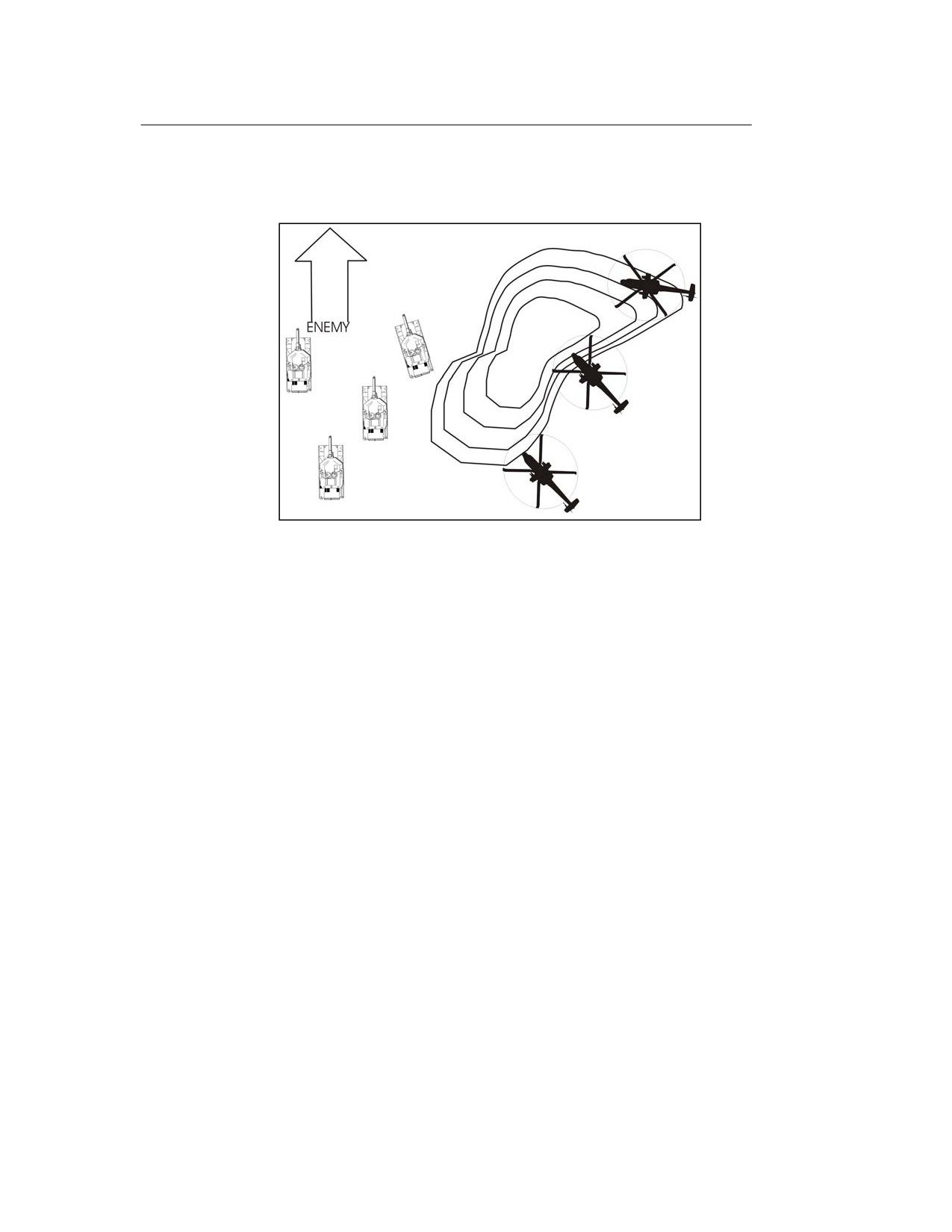
digitized ground maneuver force (Figure 5-3).
5-14
Chapter Five
Figure 5-3. Heavy Division Close Operations—Deliberate Attack
5-86. Employment of attack aviation with armored forces requires
coordinated force-oriented control measures that allow aviation forces to fix
and weaken the enemy at extended ranges, then to reinforce ground unit
fires. This type of employment requires constant practice and very close
coordination.
5-87. The cavalry squadron operates under division control or aviation
brigade control. It may operate with the attack battalion as the division
guard. It may screen a vulnerable flank of the division advance. The cavalry
squadron may provide security at the airhead or port of entry during the
deployment and redeployment phases.
5-88. The GSAB supports limited-size air assaults. It provides C2 aircraft to
support missions. Volcano-equipped UH-60 aircraft emplace minefields.
Aircraft insert and extract reconnaissance teams forward of the FLOT. For
larger air assaults, heavy divisions require corps assault augmentation and
light infantry forces to allow heavy infantry to remain with their combat
system in coordinated simultaneous attacks.
5-89. Brigade UH-60, attached UH-60/HH-60L air ambulances, and OH-58D
aircraft may provide assets for CSAR to recover downed joint and Army
aviators.
FIRE SUPPORT
5-90. Aviation brigades ensure JSEAD is planned and coordinated to include
nonlethal means. The ATKHB and cavalry squadron exploit preplanned and
on-call fires to engage targets. Proper application of fires can destroy lightly
armored targets and disrupt armored targets. Armed aircraft can designate
laser guided artillery and other service munitions. If supporting fires are not
adequate, attack and cavalry aircraft can launch
2.75-inch rockets and
5-15
FM 3-04.111 (FM 1-111)
Hellfire to provide suppressive fires of their own, but such fires detract from
their primary mission. Guns can be effective if enemy AD sites are
unexpectedly encountered at close ranges. Utility aircraft can transport
forward observers to observation points and quickly relocate them.
AIR DEFENSE
5-91. Brigade elements employ both active and passive AD measures. Active
measures include use of Stinger missiles, gun, Hellfire, and rockets for
defensive air combat. Passive measures include terrain flight, camouflage,
and selection of locations that provide cover and concealment for CPs, AAs,
and FARPs. Air guards for vehicle movements and road marches provide
early warning. Convoy discipline, such as maintaining proper distances
between vehicles, limits damage from air attack. Elements use IFF codes to
avoid fratricide. A2C2 plans, procedures, and orders ensure AD elements are
aware of aircraft AAs and ingress and egress routes.
5-92. In SASO and SSC, an air threat may not exist; however, aircraft may
be required to trail drug smuggling aircraft before handoff to the DEA, Coast
Guard, or host nation air forces. These aircraft may perform evasive
maneuvers or fly at high speeds in an attempt to avoid capture. Missions
such as these require additional training because they are not normally part
of a unit's METL.
MOBILITY/COUNTERMOBILITY/SURVIVABILITY
5-93. Division aviation brigade aircraft routinely support the mobility and
countermobility efforts of engineers in MTW, SSC and SASO. Road
improvements are major mobility efforts that can require helicopter support
to transport outsize loads such as metal pipes for culverts, bridge materiel,
and personnel. Supporting heavy helicopters can assist river crossings by
lifting ribbon bridge bays into place. Volcano-equipped aircraft escorted by
attack helicopters security can emplace minefields. Helicopters may also
transport survivability materiel such as concertina and sandbags to support
security for base camps.
5-94. Division brigade aircraft also conduct air movement of MP reaction
forces and traffic control teams, as well as, movement of chemical
reconnaissance and decontamination teams. They also transport firefighters
and water bucket to support domestic missions.
COMBAT SERVICE SUPPORT
5-95. The division attack battalion must provide its own Class III/V support
even when under OPCON of heavy brigades. Brigades and battalions
coordinate CSS throughput whenever possible to support continuous FARP
operations. The division aviation brigade supports CSS air movement, aerial
resupply, and CASEVAC. Division utility helicopters air-emplace and
resupply FARPs.
5-96. At the division level, the DISCOM provides AVIM support. Unit
OPTEMPO and frequency of displacements could make conducting phase
maintenance inspections at the unit AVUM level very difficult or impossible.
5-16
Chapter Five
If unit displacements increase, passing these inspections to the DISCOM or
COSCOM, or out of theater, is prudent.
COMMAND AND CONTROL
5-97. Communication is a major challenge for the heavy division aviation
brigade. Being near the threat requires terrain flight altitudes that make
LOS communications difficult. CPs and aircrews may employ radio relay,
retransmission, or alternate communications to maintain contact. HF radio
with automatic link establishment (ALE), in both voice and data mode,
provides alternate NLOS communications for longer distance missions and
NOE communications. SATCOM is available to support both C2 aircraft
customers and the brigade's own C2 needs.
5-98. For high priority missions supporting division commanders and staffs,
the necessary communications must be on board. Some missions require
flying backups to provide relay and ensure timely self-recovery in case of
mechanical problems to C2 aircraft.
5-99. Division signal units may require air transport of equipment and
personnel to maintain vital division communications.
SECTION VI - DIVISION AVIATION BRIGADE (LIGHT DIVISION)
OVERVIEW
5-100. The light division aviation brigade is the primary headquarters for
Army aviation operations conducted by the division. The brigade has an
AHB, ATKHB, and a divisional cavalry squadron with two ACTs.
5-101. The aviation brigade practices to deploy with as little as two days
notification. The division sacrifices some combat power by using OH-58D in
lieu of AH-64 in the attack battalion to enhance air-deployability.
TASK ORGANIZATION CONSIDERATIONS
5-102. Internal task organization to accomplish air assaults, movement to
contact and screening operations is routine. The aviation brigade is an
appropriate covering or guard force if additional forces are attached or
OPCON, such as one or two light infantry battalions, a corps ATKHB,
artillery, engineers, and corps utility and heavy helicopter units. The brigade
will often receive additional assault helicopter forces from the corps or
uncommited divsions to augment its air assault capability. With
augmentation from habitual-support NG DCSA Bde AHBs, the division's air
assault capability doubles. With further attachment of corps air assault and
HvyHBs, the lift capacity of the light division can approach that of the air
assault division. UAVs forces should support all operations.
5-103. A brigade from a light division frequently deploys to support
contingencies requiring infantry to fight on difficult terrain. As such, the
aviation brigade may deploy an aviation task force to support that brigade.
The task force may also deploy in SASO or as part of a rotation of forces.
5-17
FM 3-04.111 (FM 1-111)
When the entire division deploys, elements of DCSA Bdes may be attached to
the division to augment assault support.
HOW TO FIGHT
5-104. The aviation brigade is the primary integrator of aviation assets
within the division. The brigade's primary role is to set the conditions for
success for each of its units. The brigade must prepare to fight as a whole, to
support other units using pure or task-organized units, and to conduct
multiple independent missions requiring pure or task-organized units. Light
division aviation brigade missions include—
• Conducting a movement to contact as part of the division's guard.
Forces may include all aviation brigade organic assets
(less those
supporting division C2 missions), one to two light infantry battalions,
supporting artillery, and other divisional elements to include OPCON
tanks or armored gun systems if available.
• Supporting the division's main attack with the attack battalion.
Conducting and supporting an air assault to achieve ground brigade or
division objectives. Supporting the DISCOM with utility aircraft.
Inserting and extracting reconnaissance teams forward of the FLOT.
Conducting a screen with the cavalry squadron or attack battalion
under brigade or division control.
• Conducting cross-FLOT air assaults to seize key terrain or destroy
enemy forces. Providing C2 aircraft supporting these assaults.
Emplacing minefields at chokepoints and along primary enemy avenues
of advance using mine-dispensing aircraft. Inserting and extracting
special operating forces and light infantry units to conduct raids,
surveillance, or reconnaissance. Supporting DISCOM air movement
and aerial resupply with utility aircraft. Providing C2 aircraft support.
Supporting the forward brigades with aerial fires and conduct
counterattacks as required.
5-105. The aviation brigade allocates resources based on METT-TC, the
scheme of maneuver, available assets, and the division commander's
priorities.
5-106. The brigade commander requires units to maintain collective training
proficiency among the ATKHB, cavalry squadron, AHB, and units they
habitually support.
INTELLIGENCE
5-107. The S2 prepares intelligence estimates and conducts the IPB process.
Regardless of the nature and intensity of conflict, this involves a time-tested
process. FM 2-01.3
(FM 34-130) contains appropriate checklists and an
aviation-specific section. IPB results are used to develop the products to
support collection management, identify potential enemy COAs, and support
the development of the commander's scheme of maneuver
(to include
branches and sequels).
5-108. Intelligence is provided from many sources; however, the major
intelligence source will be the division G2 section, attached MI assets, and
subordinate unit reports. The brigade S2 is the key intelligence coordinator.
5-18
Chapter Five
5-109. The division may task the brigade with conducting intelligence liaison
with other elements to gather aviation-specific information. This could be as
simple as flying to the closest Air Force intelligence source, or as complicated
as placing LNOs with allied and joint forces. The brigade may have access to
a JSTARS common ground station that can provide real-time intelligence
access from a variety of sources. UAV support for aviation missions is
essential to identify threats without risking manned aircraft. The light
division cavalry squadron and brigade aircrews also are a great source of
combat information.
MANEUVER
5-110. The light infantry division exploits terrain and urban areas for both
offensive and defensive operations. Aviation forces can support light infantry
in any terrain, day or night. Aviation's rapid mobility can quickly assist the
light division's ground forces as they move under the concealment of night
and the cover and concealment of restricted terrain.
5-111. The aviation brigade conducts limited shaping operations with the
ATKHB and may support those operations with air cavalry and aerial mine
delivery. The brigade also conducts economy-of-force or reserve missions. In
the economy-of-force role it may advance with or without air assaults forces
to hold enemy forces in place while the division maneuvers toward the main
objective. As the division reserve, it may respond to area battle threats,
support the division commander's scheme of maneuver when he needs to
exploit success, conduct pursuit, or reinforce ground forces.
5-112. ATKHBs may support or be OPCON to light maneuver brigades as a
guard or part of a covering force. They may also operate in an overwatch and
support-by-fire capacity. Division and ground brigade commanders may
employ aircraft directly on top of or slightly behind ground maneuver forces
to maintain awareness of their location vis-à-vis friendly forces. When
employed in this manner, aviation forces are vulnerable to enemy artillery
attack and direct fires intended to target friendly forces, and may reveal
ground force locations. The greater range of Hellfire missiles allows
overwatch and support-by-fire to occur without keeping attack helicopters
directly over ground forces. However, this can lead to confusion with respect
to target priorities.
5-113. Employment of attack aviation with ground forces requires
coordinated force-oriented control measures that allow aviation forces to fix
and weaken the enemy at extended ranges and then to reinforce ground unit
fires with missile, rocket, and .50 cal fires. This type of employment requires
constant practice and very close coordination.
5-114. The cavalry squadron operates under division control or aviation
brigade control. It may operate with the attack battalion as the division
guard. It may also screen a vulnerable flank of the division advance. It also
provides security before, during, and after air assaults. The cavalry squadron
may provide security at the airhead or port of entry during the deployment
and redeployment phases.
5-115. Attack and cavalry conduct attacks against enemy artillery units that
can devastate light infantry forces. They can also conduct limited overwatch
5-19
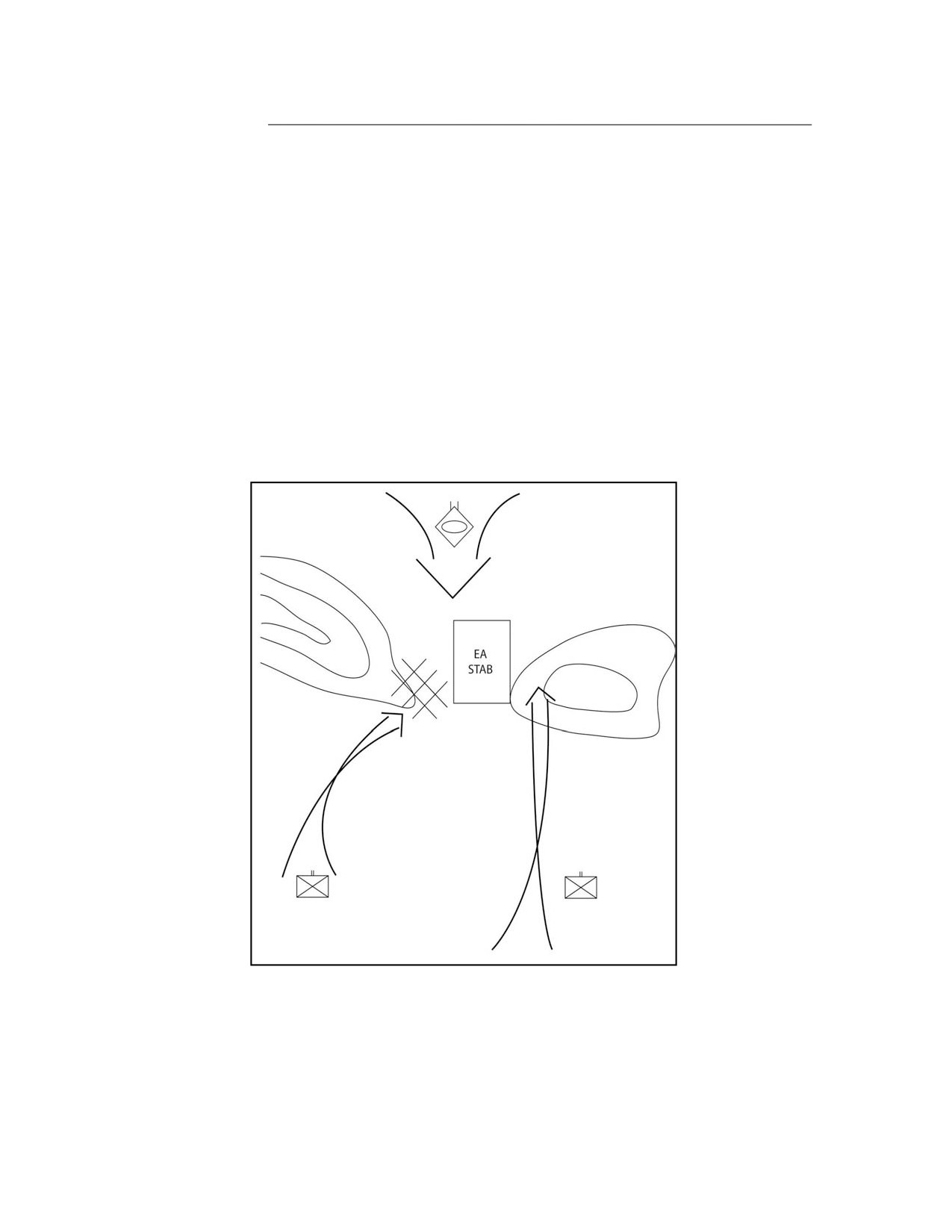
FM 3-04.111 (FM 1-111)
of bridges along key enemy avenues of approach, and obstacles and
minefields at key chokepoints in mountainous and densely forested, or
swampy terrain.
5-116. The AHB conducts air assaults to support seizure of key terrain or to
allow light forces to gain a maneuver advantage over enemy forces. It can
conduct a battalion-sized air assault without augmentation. Helicopters can
transport troops to the objective or rapidly move them after they infiltrate to
it. They can also insert and extract reconnaissance teams forward of the
FLOT. Aviation units normally conduct false insertions at multiple LZs to
disguise true force deployments. Assault aircraft can drop forces atop
ridgelines, altitude and threat permitting, to allow them to fight down or
along the ridge. The assault battalion emplaces minefields using Volcano to
reinforce natural obstacles or to block chokepoints. It supports the division
command group, other brigades, the cavalry squadron, and the ATKHB with
C2 helicopters (Figure 5-4).
Figure 5-4. Light Infantry Battalion Air Assault in Armor Chokepoint
5-117. In an urban environment, helicopters emplace forces on rooftops, in
parks, stadiums, parking areas, and other similar areas. The presence of
wires, poles, antennas, and other obstacles may limit some landing areas.
ATKHB and cavalry aircraft cover landings by engaging targets using
running fire or from standoff ranges. Helicopters must minimize ground time
5-20
Chapter Five
and hovering to avoid sniper, grenade and rocket propelled grenade (RPG)
engagement when inserting or overwatching forces (see Appendix R).
5-118. Brigade UH-60, attached UH-60/HH-60L air ambulances, and OH-
58D aircraft may provide assets for CSAR to recover downed joint and Army
aviators.
FIRE SUPPORT
5-119. Aviation brigades ensure JSEAD is planned and coordinated to
include nonlethal means. Utility aircraft externally transport
105 mm
howitzers and Q-36 Firefinder radars. They also transport forward observer
teams. Attack units may need to coordinate closely with artillery Firefinder
units to find and destroy enemy artillery and mortars that threaten light
infantry. OH-58D aircraft in the cavalry squadron and ATKHB are well-
equipped to support on-call fires and laser designate for joint laser-guided
munitions. They also have limited 2.75-inch rocket capability to suppress and
destroy maneuver forces and ADs.
AIR DEFENSE
5-120. Brigade elements employ active and passive AD measures. Active
measures include use of Stinger missiles, guns, Hellfire, and rockets
ammunition to conduct defensive air combat. Passive measures include
terrain flight, camouflage, and selection of locations that provide cover and
concealment for CPs, AAs, and FARPs. Air guards for vehicle movements and
road marches provide early warning. Convoy discipline, such as maintaining
proper distances between vehicles, limits damage from air attack. Elements
use IFF codes to avoid fratricide. A2C2 plans, procedures, and orders ensure
AD elements are aware of aircraft AAs and ingress and egress routes.
5-121. In SASO and SSC, an air threat may not exist; however, aircraft may
be required to trail drug smuggling aircraft before handoff to the DEA, Coast
Guard, or host nation air forces. These aircraft may perform evasive
maneuvers or fly at high speeds to avoid capture. Missions such as these
require additional training because they are not normally part of a unit's
METL.
MOBILITY/COUNTERMOBILITY/SURVIVABILITY
5-122. Division aviation brigade aircraft routinely support the mobility and
countermobility efforts of engineers in MTW, SSC and SASO. Road
improvements are major mobility efforts that can require helicopter support
to transport outsize loads such as metal pipes for culverts, bridge materiel,
and personnel. Supporting heavy helicopters can assist river crossings by
lifting ribbon bridge bays into place. Volcano-equipped aircraft escorted by
attack helicopters can emplace minefields. Helicopters may also transport
survivability materiel such as concertina wire and sandbags to support
security for base camps.
5-123. Division brigade aircraft also conduct air movement of MP reaction
forces and traffic control teams, as well as, movement of chemical
reconnaissance and decontamination teams. They also transport firefighters
and water bucket in support of domestic missions.
5-21
FM 3-04.111 (FM 1-111)
COMBAT SERVICE SUPPORT
5-124. Assault battalion aircraft are a primary means of air movement
(personnel, equipment, and supplies) for light infantry brigades. CASEVAC is
another key mission. During SSC, UH-60 aircraft provide substantial CSS to
light infantry division forces operating in dispersed areas. During SASO and
disaster relief missions, UH-60s may transport civilian casualties and
refugees. They can also expect to transport supplies, medical and relief
personnel, firefighters, and water buckets. Cavalry and attack units may
provide MSR and convoy security.
5-125. At the division level, AVIM support is provided by the DISCOM. Unit
OPTEMPO and frequency of displacements could make conducting phase
maintenance inspections at the unit AVUM level very difficult or impossible.
If unit displacements increase, passing these inspections to the DISCOM or
COSCOM, or out of theater, is prudent.
COMMAND AND CONTROL
5-126. The CAC provides aircraft for key personnel transport and airborne
C2 support, and when fielded, the A2C2S. The latter offers enhanced
communication capability and access to the C2 systems of the BOSs except
CSS. During SASO and disaster relief, utility aircrews will transport
domestic and foreign civilian leaders surveying damage and directing peace
enforcement or relief efforts. C2 system-equipped aircraft can provide critical
communications support when disasters interrupt phone service. Utility
aircraft can also transport civilian communications workers and their
equipment to set up or repair critical nodes.
SECTION VII - DIVISION AVIATION BRIGADE (AIRBORNE)
OVERVIEW
5-127. The airborne division aviation brigade is the primary headquarters
for Army aviation operations conducted by the division. The brigade has
AHB, ATKHB, and a divisional cavalry squadron with three ACTs.
5-128. The aviation brigade practices to deploy on short notice. The division
sacrifices some combat power by using OH-58D in lieu of AH-64 in the attack
battalion to enhance air-deployability. The brigade is nearly identical to light
infantry division aviation brigades except for the cavalry squadron, which
has a third air reconnaissance troop and a single ground troop.
TASK ORGANIZATION CONSIDERATIONS
5-129. A brigade from the airborne division is on continuous division ready-
brigade status for deployment worldwide within 18 hours. As such, the
airborne division aviation brigade may deploy an aviation task force to
support that brigade contingency. As part of a rotation of forces or when the
entire division deploys, elements of DCSA Bdes may be attached to augment
assault support. Corps heavy helicopter and AH-64D assets may task-
organize with the brigade or its task force for some missions.
5-22
Chapter Five
HOW TO FIGHT
5-130. The aviation brigade is the primary integrator of aviation assets
within the division. Its primary role is to set the conditions for success for
each of its units. The brigade must prepare to fight as a whole, to support
other units using pure or task-organized units, and to conduct multiple
independent missions requiring pure or task-organized units. Airborne
divisional aviation brigade missions include—
• Employing the cavalry squadron to screen the lodgement. Emplacing
minefields using Volcano-equipped aircraft during initial entry
lodgement defense. Conducting a movement to contact as the division's
guard, once the airhead is secure. Forces include all aviation brigade
organic assets (less those supporting division C2 missions), one to two
airborne infantry battalions, supporting artillery, and other divisional
elements to include tanks and armored gun systems, if available.
• Supporting the DMAIN attack with the ATKHB. Supporting forward
brigades with aerial fires, and conducting counterattacks as required.
Conducting and supporting air assaults to achieve ground brigade or
division close battle objectives. Supporting DISCOM air movement and
aerial resupply with UH-60 aircraft. Inserting and extracting
reconnaissance teams forward of the FLOT. Conducting flank screens
with the cavalry squadron under brigade or division control.
• Conducting cross-FLOT air assaults to seize key terrain or to destroy
enemy forces. Emplacing minefields at chokepoints and primary enemy
avenues of advance using Volcano-equipped aircraft. Inserting and
extracting special operating teams conducting raids, surveillance, or
reconnaissance. Supporting DISCOM air movement and aerial resupply
with utility aircraft. Supporting the forward brigades with aerial fires
and conducting counterattacks as required.
5-131. The aviation brigade allocates resources based on METT-TC, the
scheme of maneuver, available assets, and the division commander's
priorities.
5-132. The brigade commander requires units to maintain collective training
proficiency among the attack battalion, cavalry squadron, AHB, and units
they habitually support.
INTELLIGENCE
5-133. The S2 prepares intelligence estimates and conducts the IPB process.
Regardless of the nature and intensity of conflict, this involves a time-tested
process. FM 2-01.3
(FM 34-130) contains appropriate checklists and an
aviation-specific section. IPB results are used to develop the products to
support collection management, identify potential enemy COAs, and support
the development of the commander's scheme of maneuver
(to include
branches and sequels).
5-134. Intelligence is provided from many sources; however, the major
intelligence source will be the division G2 section, attached MI assets, and
subordinate unit reports. The brigade S2 is the key intelligence coordinator.
5-23
FM 3-04.111 (FM 1-111)
5-135. Intelligence is provided from many sources; however, the major
intelligence source will be the division G2 section, attached MI assets, and
subordinate unit reports. The brigade S2 is the key intelligence coordinator.
5-136. The division may task the brigade with conducting intelligence liaison
with other elements to gather aviation specific information. This could be as
simple as flying to the closest Air Force intelligence source or as complicated
as placing LNOs with allied and joint forces. The brigade may have access to
a JSTARS common ground station that can provide real-time intelligence
access from a variety of sources. UAV support for aviation missions is
essential to identify threats without risking manned aircraft. The airborne
division cavalry squadron and brigade aircrews also are a great source of
combat information.
MANEUVER
5-137. The airborne division fights and exploits terrain and urban areas for
both offensive and defensive operations. Airborne division aviation forces can
support light infantry in any terrain day or night. Aviation's rapid mobility
can quickly assist the division's ground forces as they move under the
concealment of night and the cover and concealment of restricted terrain
(Figure 5-5).
5-138. The attack and reconnaissance elements employ OH-58D aircraft to
enhance limited airlift capacity of Air Force aircraft. However, this limits
overall ordnance loads, which increases the division's reliance on corps AH-64
assets for deep missions and defense against large armored forces. As part of
an early entry force, attack and reconnaissance force elements may be part of
a forcible entry and subsequent lodgement defense. They may deploy from
ships or intermediate staging bases in adjacent allied territory. If airlifted
directly to the lodgement, rapid aircraft reassembly is critical.
5-139. Both attack and reconnaissance elements may be important parts of
the initial screening and security force for the lodgement. In subsequent
offensive missions, aircraft provide security for air assaults, and conduct
autonomous attack missions, and provide support for parachute infantry
regiment forces in contact. Aircraft have limited time on station and
frequently use the continuous employment technique to rotate companies
through the FARP to support ground troops. Reconnaissance elements
destroy enemy scouts as part of guard or screening force and provide early
warning and security for the division.
5-140. The aviation brigade conducts limited shaping operations with the
attack battalion and may support those operations with air cavalry and aerial
mine delivery. The brigade also conducts economy-of-force or reserve
missions. In the economy-of-force role it may advance with or without air
assaults forces to hold enemy forces in place while the division maneuvers
toward the main objective. As the division reserve, it may respond to rear
area threats, support the division commander's scheme of maneuver when he
needs to exploit success, conduct pursuit, or reinforce ground forces.
5-24