FM 6-40 TTP for Field Artillery Manual Cannon Battery U.S. - page 16
FM 6-40
A-5. Fire Direction Center Equipment and Configurations
a. Although this appendix focuses on the manual FDC, it should be noted that the
following is the priority in determining the method to be used in the computation of firing data.
(1) The lightweight computer unit (LCU)-BCS is the primary means of computing
technical firing data within the platoon.
(2) The LCU-BCS-BUCS is the backup means of computing technical firing data.
(3) The ability to perform manual fire direction must be maintained to change to
manual fire direction techniques at any time. Each FDC should maintain one firing chart with the
appropriate fire direction equipment and manuals to support all manual cannon gunnery
operations. The firing charts should serve as an emergency backup for BCS and BUCS,
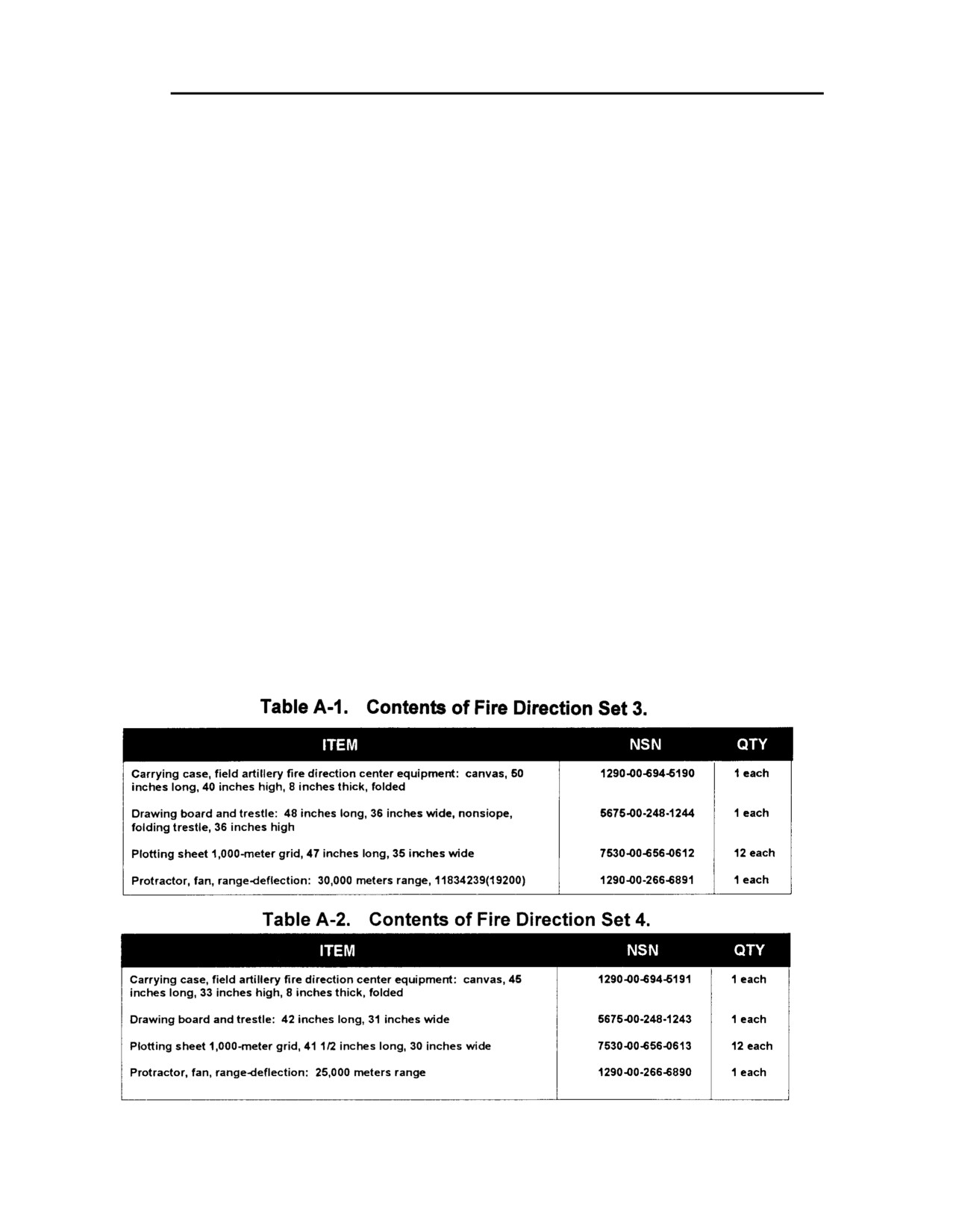
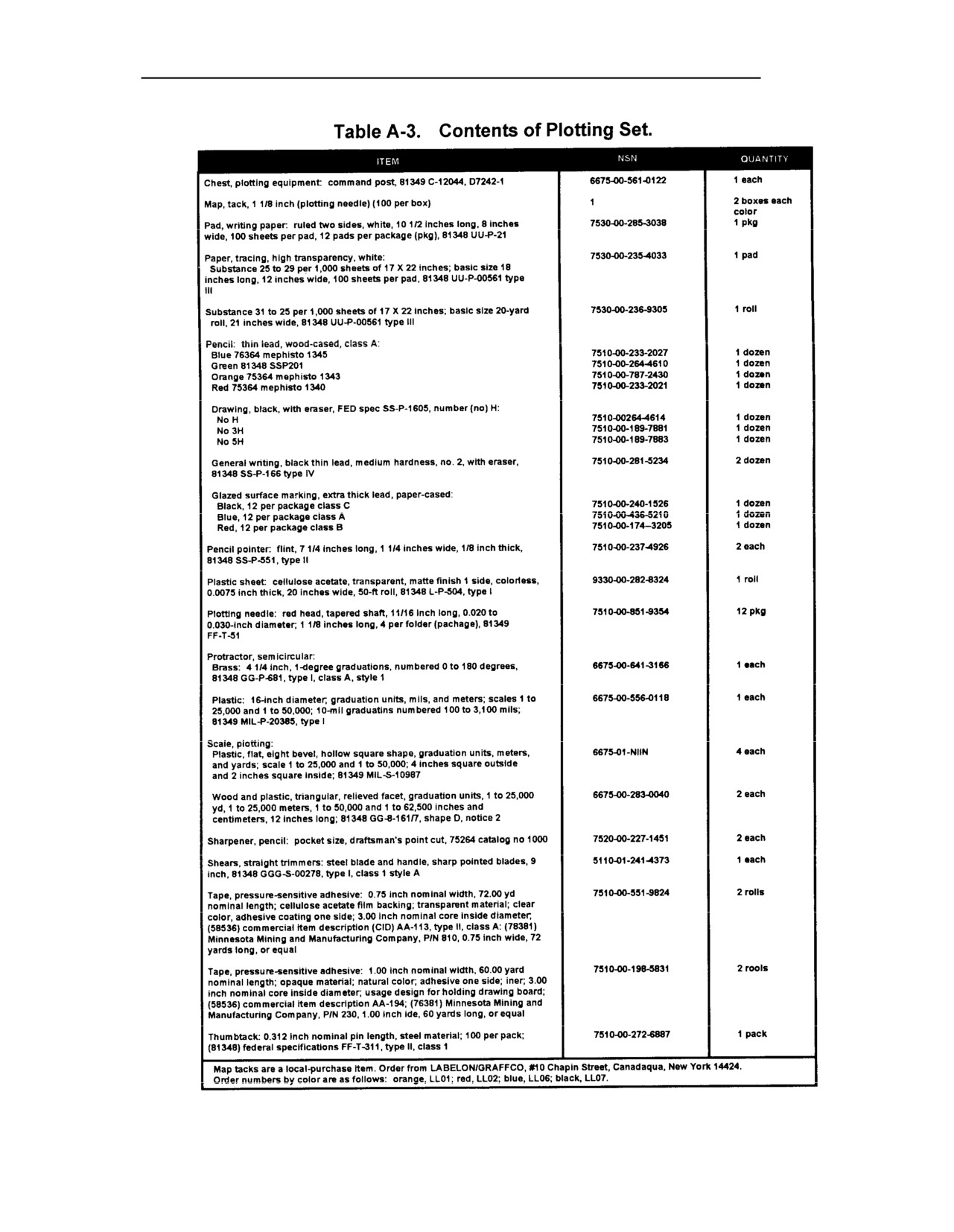
b. Each FDC is authorized the following: fire direction set 3, artillery (NSN
1290-00-299-6892), 30,000 meters maximum range (line item number [LIN] H55843), 19200
(Table A-l); fire direction set 4, artillery (NSN 1290-00-299-6893), 15,000 meters maximum
range (LIN H55706) (Table A-2); and plotting set, artillery fire control @JSN 6675-00-641 -3630)
(LIN P09818) (Table A-3).
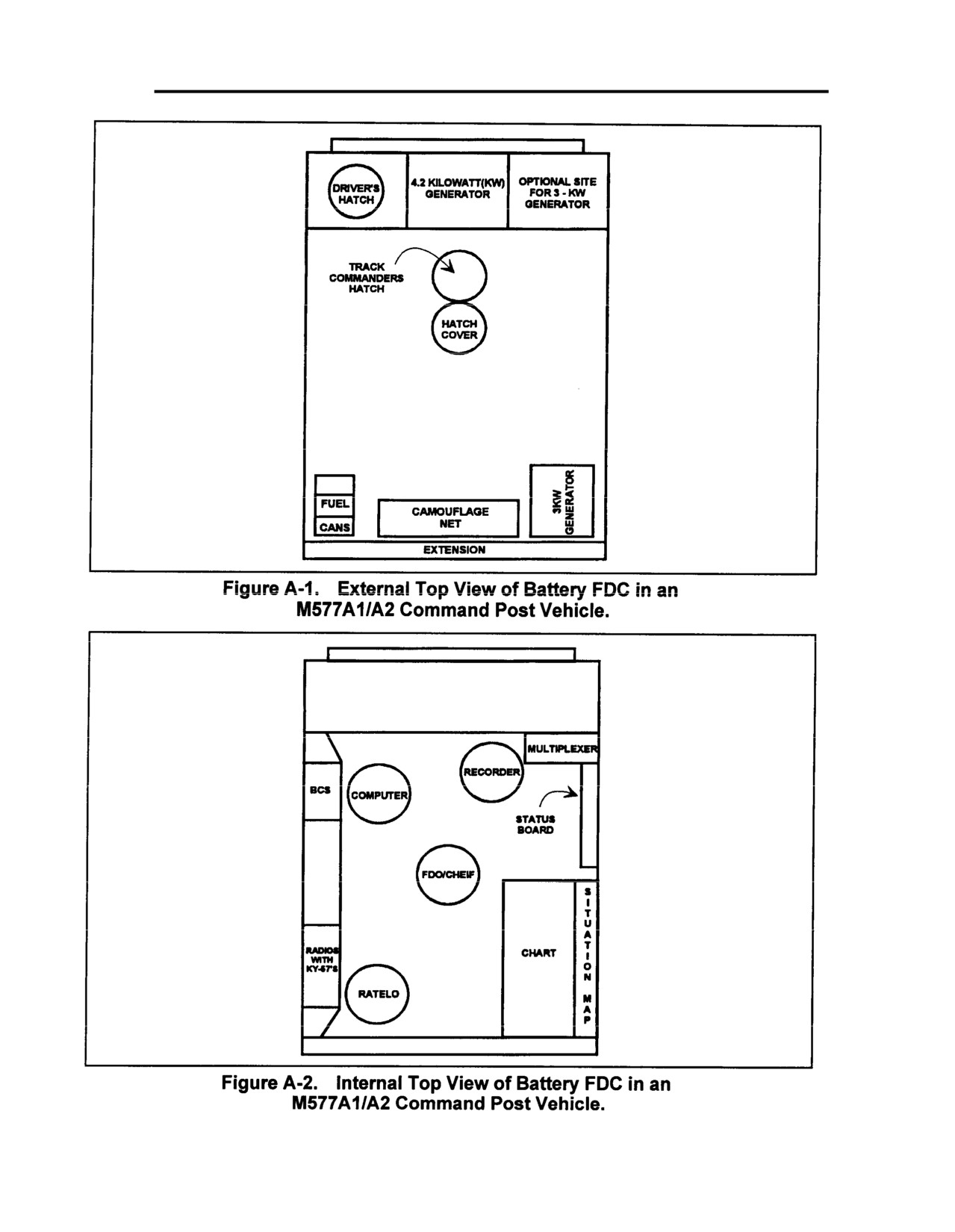
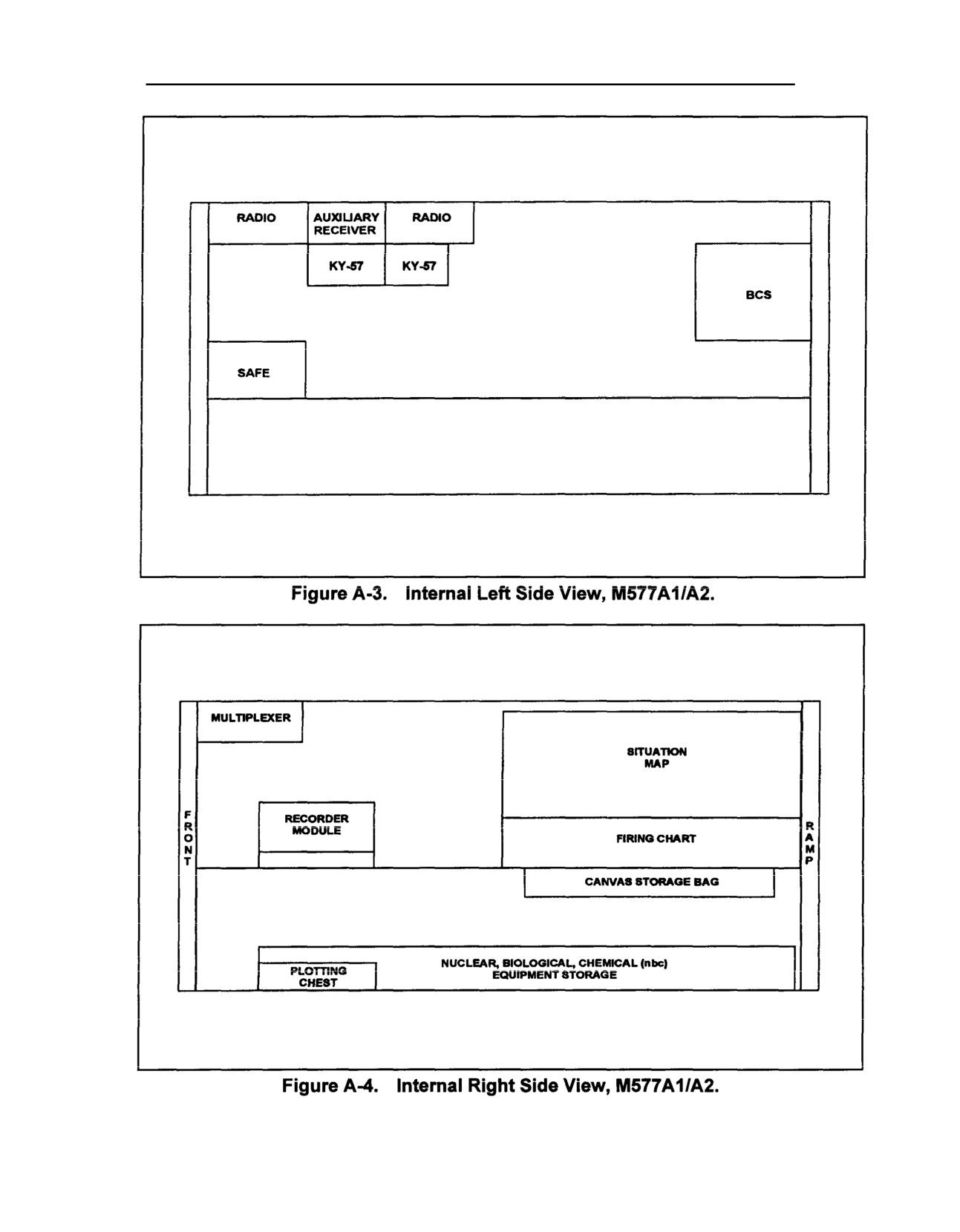
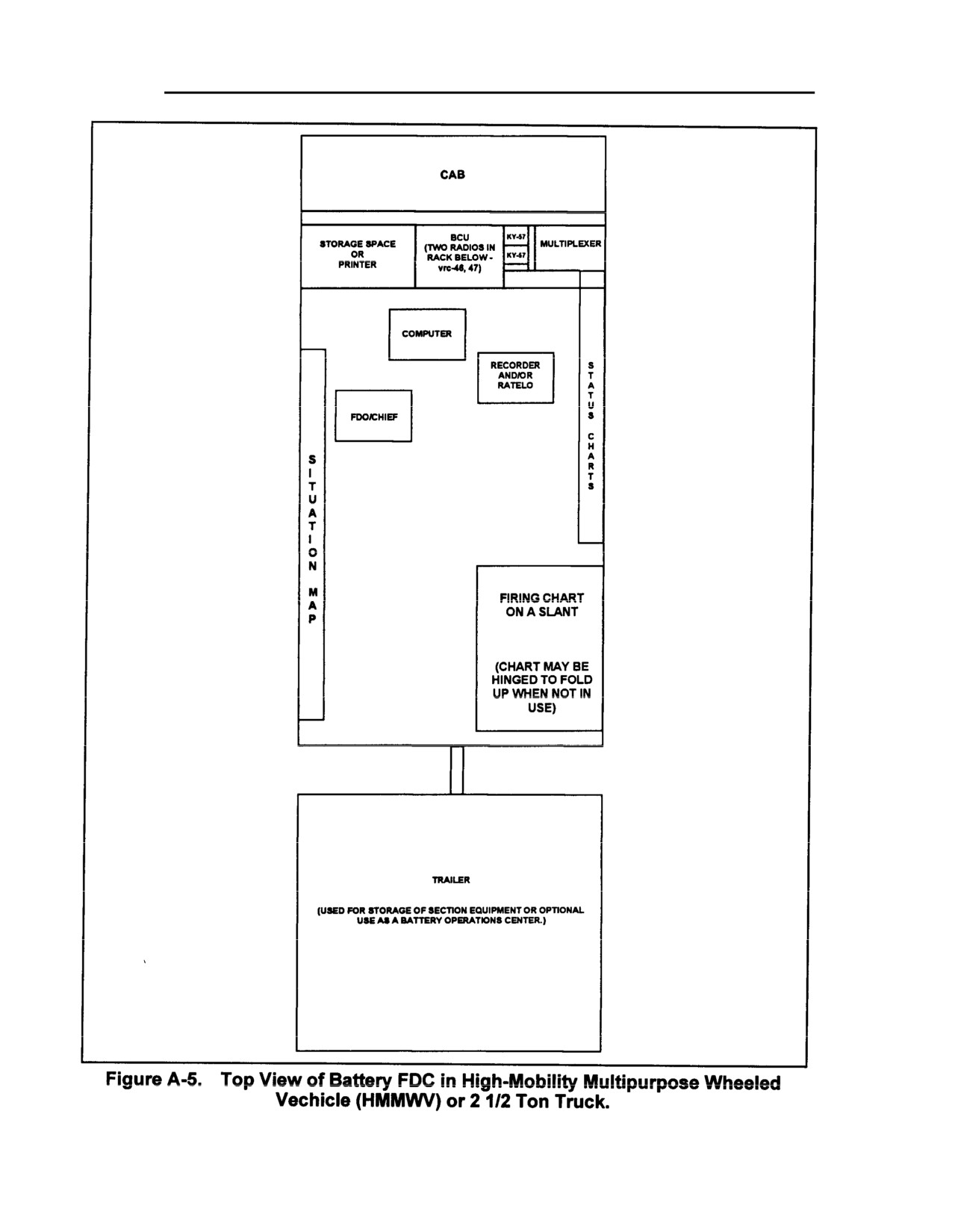
c. Figures A-1 through A-5 show suggested layouts of battery FDCs, including manual,
automated, and howitzer improvement program (HIP) configurations. Applicability of these
configurations will depend on the inherent mission and equipment of the unit concerned. Address
questions or comments concerning these layouts to:
Commandant
US Army Field Artillery School
ATTN: ATSF-GSP
Fort Sill, OK 73503-5600
A-10
FM 6-40
A-11
FM 6-40
A-12
FM 6-40
A-13
FM 6-40
A-14
FM 6-40
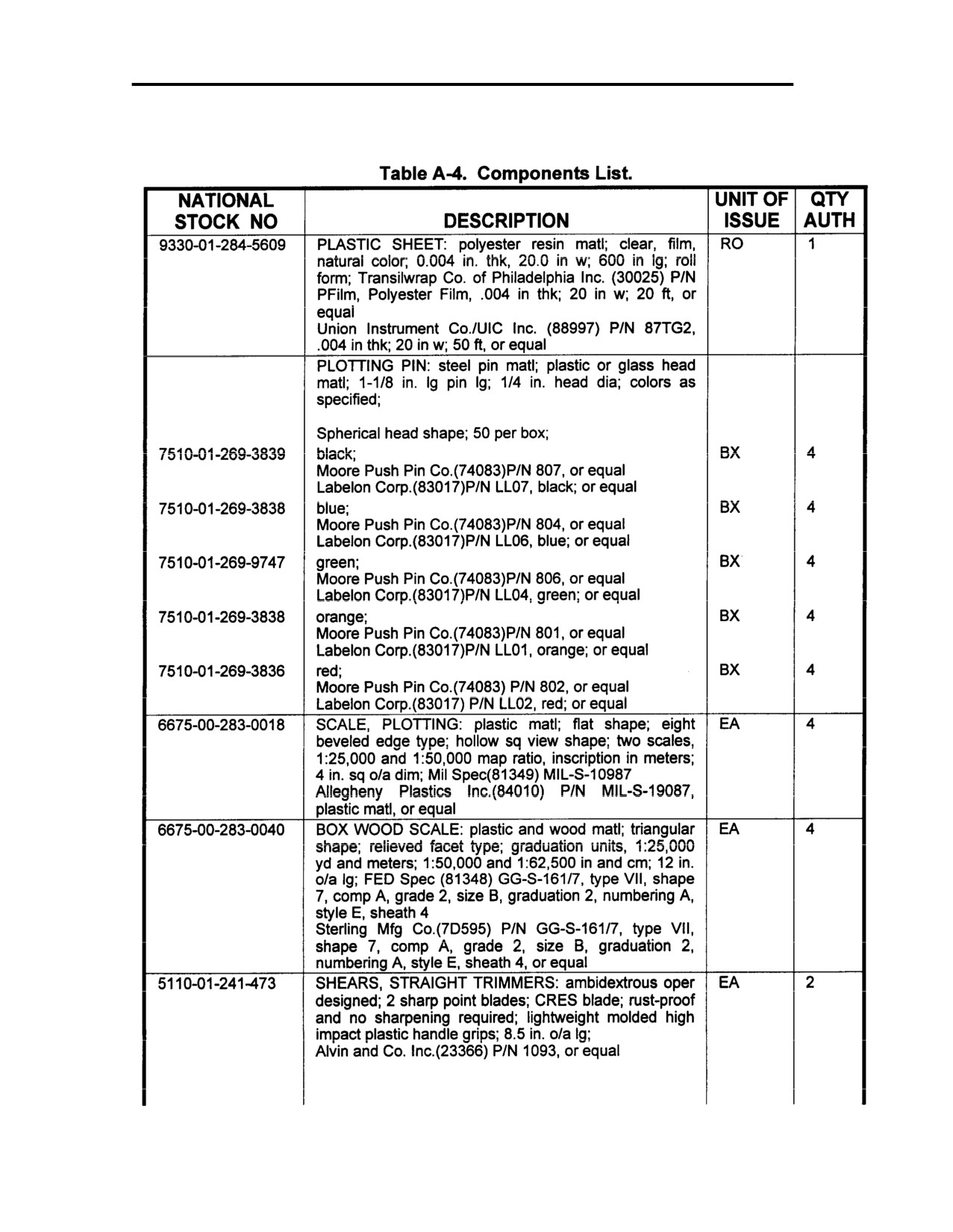
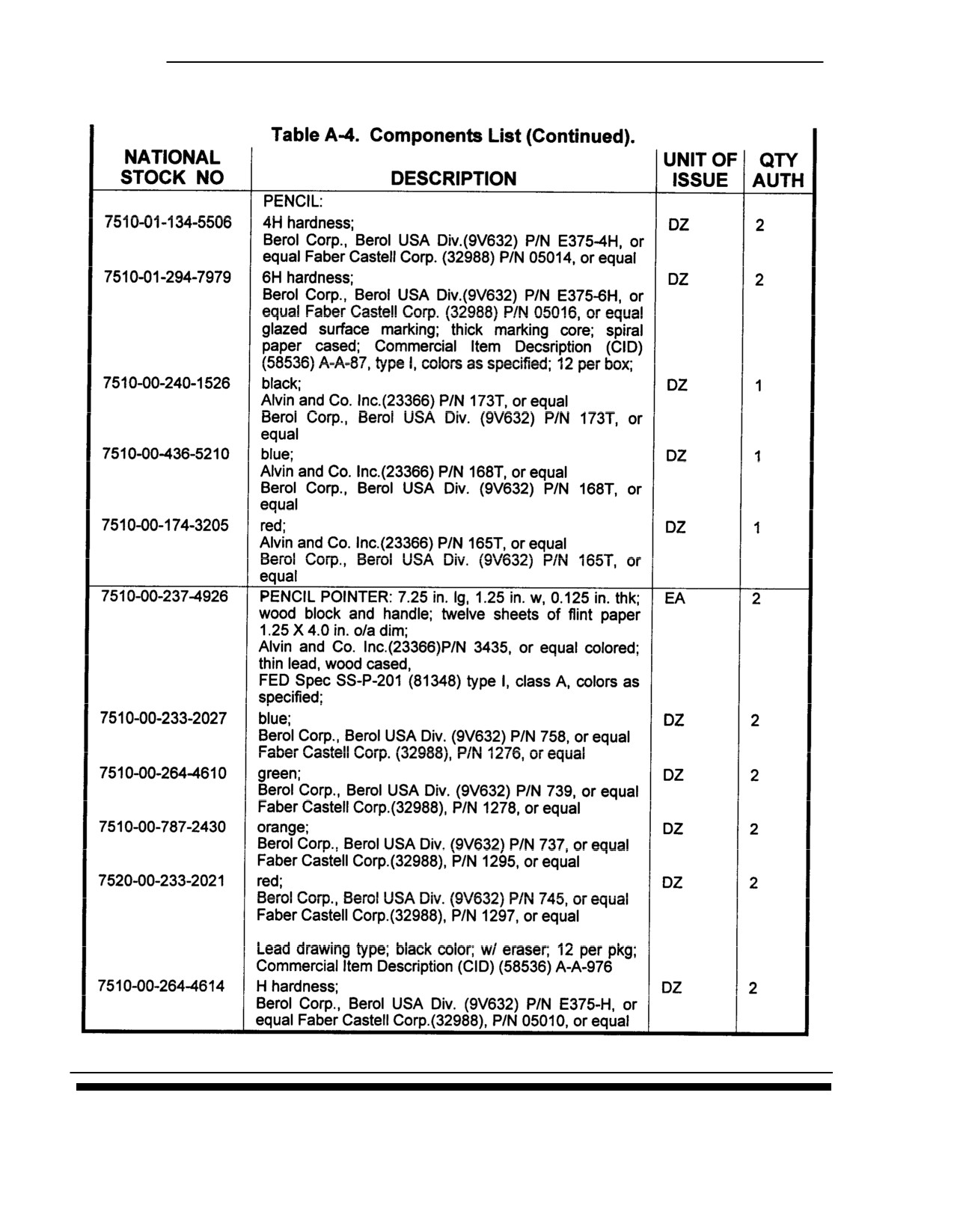
c. Table A-4 shows a list of components needed for the FDC.
A-15
FM 6-40
A-16
FM 6-40
Appendix B
FIRE DIRECTION CENTER SECTION EVALUATION GUIDE
This evaluation guide tests the skills essential to the accomplishment of the mission of the
FDC section. Although many of the tasks are evaluated on the basis of individual performance,
the collective skills evaluation will measure the ability of the platoon FDC to function as a team.
Commanders may use the guide to accomplish the following:
Provide a basis for a section training program.
Evaluate the current state of training proficiency of the section.
Serve as a supplement to other performance-oriented training.
The tasks laid out in this guide also serve as a program of training objectives. The platoon FDC
section should practice each task to acquire the degree of proficiency required by the standards
set in the evaluation.
B-1. Scope
This is an evaluation guide for the platoon FDC section of a cannon battalion or separate
battery. It is generic in scope and can be adapted readily to all platoon FDC sections associated
with all artillery units. It is a performance-oriented evaluation and training guide designed to
collectively identify the performance objectives for the platoon FDC sections. Commanders
should modify this evaluation to meet local mission-essential task list (METL) tasks and current
modification tables of organization and equipment (MTOE) requirements. It may be
administered as follows:
Internally or externally.
With a minimum of admin support.
In the local training area.
In a tactical nonfiring environment.
B-2. Conduct of the Evaluation
The evaluation consists of three phases. The first two phases evaluate the ability of the
section chief to organize and train his section into a cohesive, effective team. The last phase is a
critique of the evaluation. Each phase is a separate annex and can be administered independently.
a. Phase I. This phase begins with an orientation period to include a statement of the
purpose, scope, and description of the evaluation. Evaluators give a written test, on military
occupational specialty (MOS) knowledge. Soldiers take this phase in a classroom environment
before the remaining phases.
B-1
FM 6-40
b. Phase II. This phase (section performance) evaluates the collective skills needed by
the platoon FDC section to perform mission-oriented collective tasks in a tactical environment.
The commander may choose to evaluate during day or night conditions. Live firing is not
necessary to complete this phase. Commanders at various levels may direct the intensity to
include all or only part of tasks for evaluation.
c. Phase III. This is a critique of the evaluation by the platoon FDC section.
Evaluators will note and take recommendations from the soldiers to improve training and future
evaluations.
B-3. Evaluation Format
a. Phase I consists of 25 multiple choice and true-false questions.
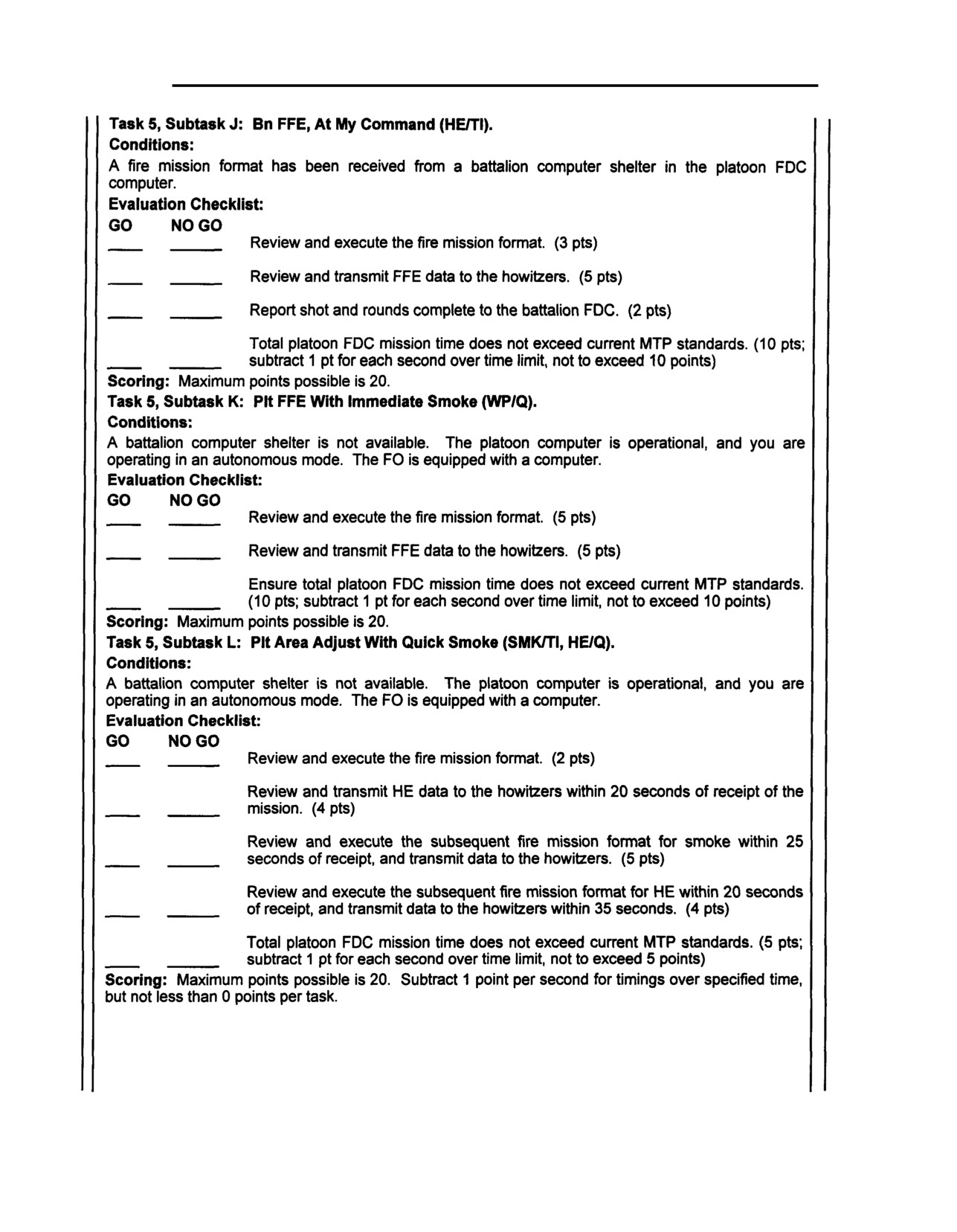
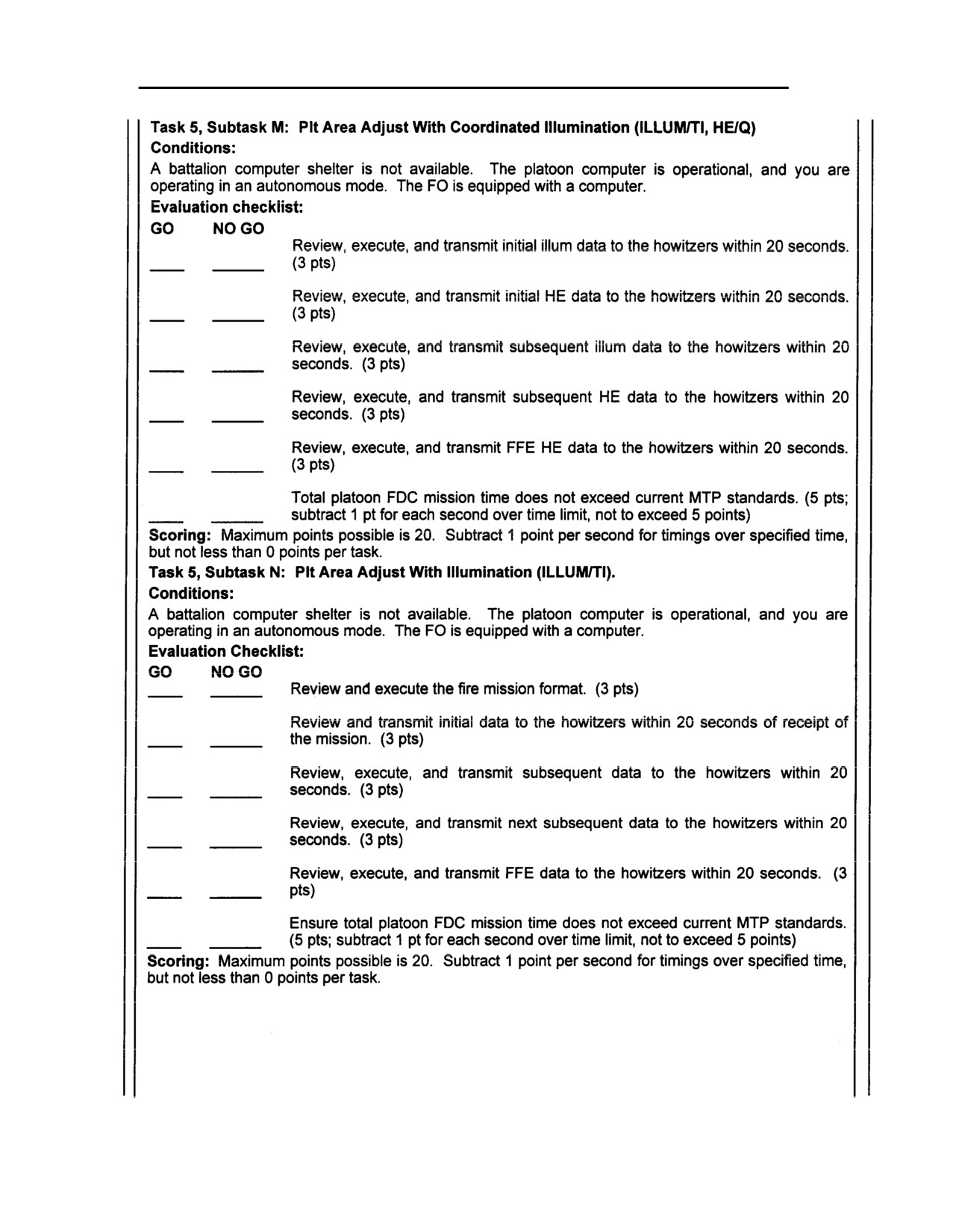
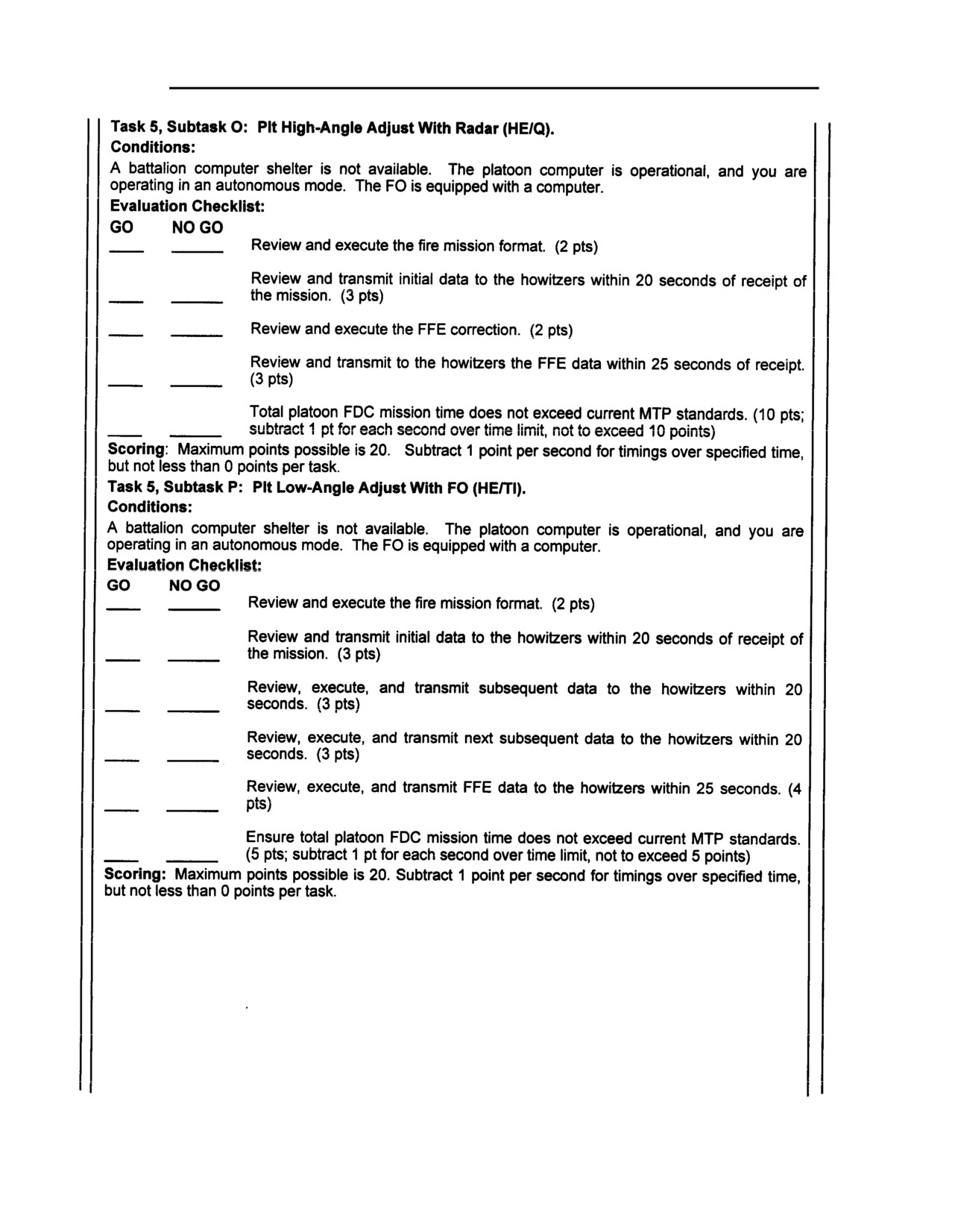
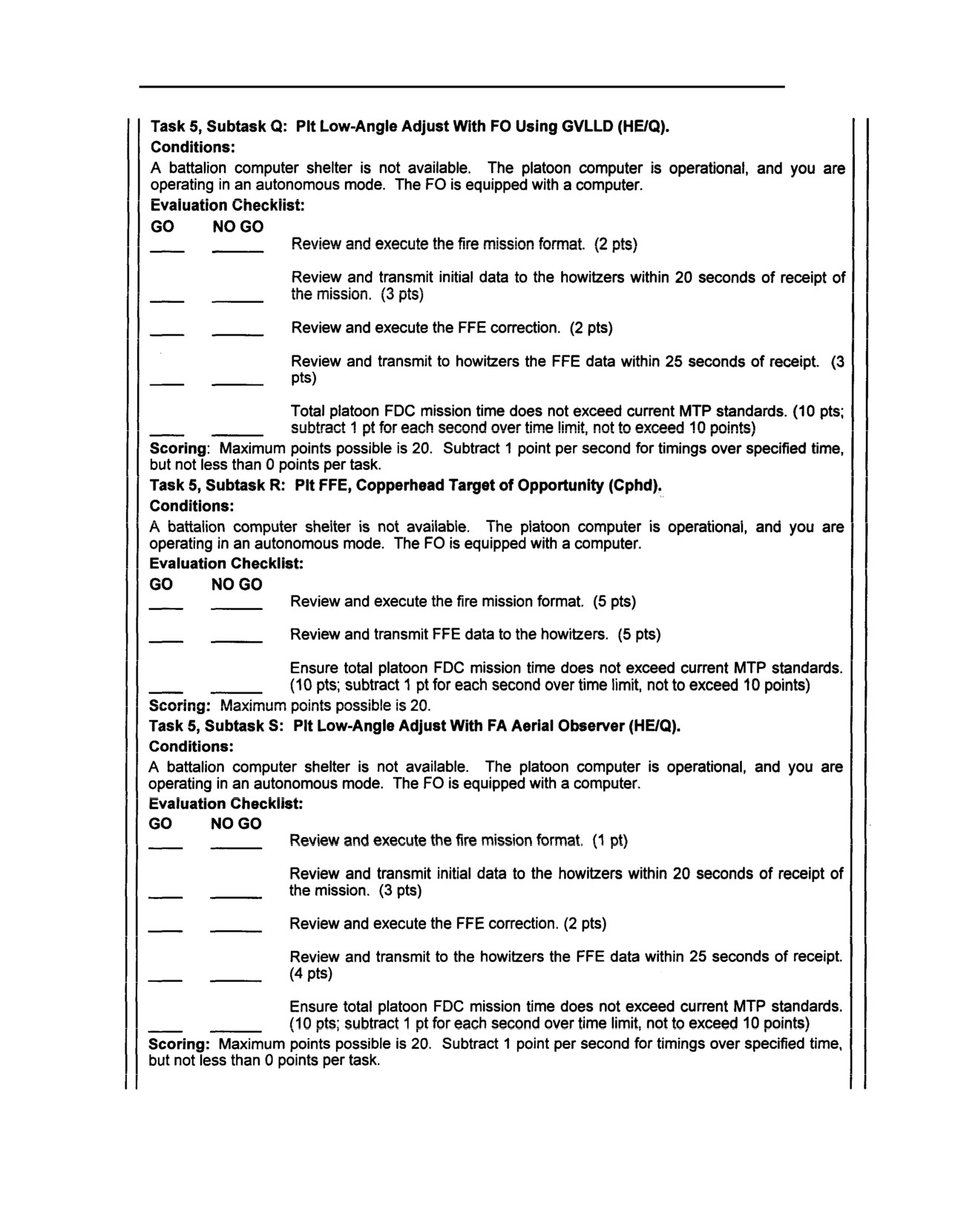
b. Phase II consists of specific section performance tasks.
(1) The task is a general statement of the requirement for the particular evaluation.
(2) The conditions define the specific environment or situation for the evaluation.
They state what assistance, reference materials, equipment, or personnel are required.
(3) Standards or evaluation checklists are the requirements for successful
completion of a particular task. Specific technical procedures required in the task are in the
appropriate technical or field manual.
c. Phase III consists of a period after the evaluation where the section comments on the
evaluated tasks, conditions, and standards.
B-4. Scoring
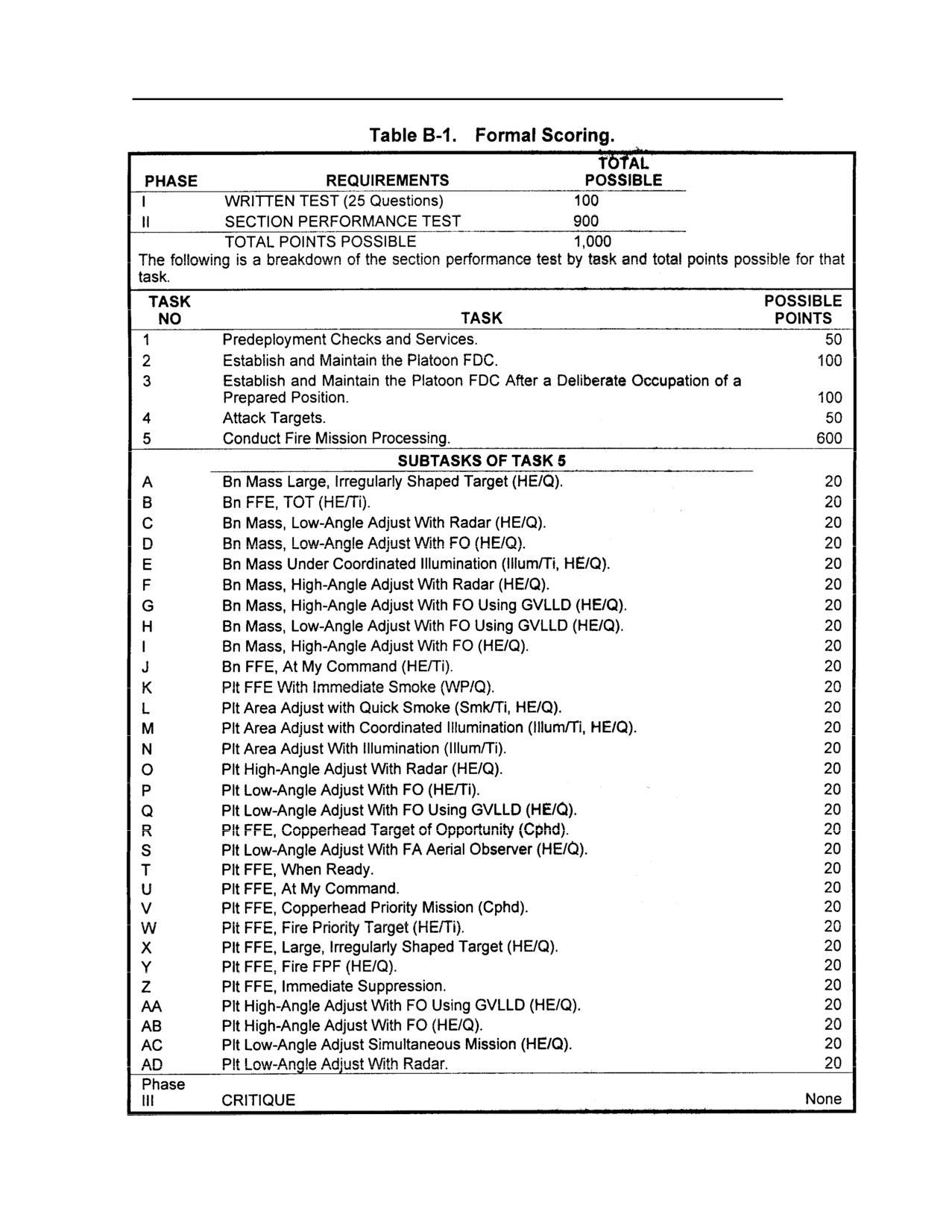
Phases I and II combine for a maximum total point value of 1,000 points. The evaluator
will base his judgment on the criteria stated in the standards or evaluation checklist and on the
most current references for the task.
B-5. Qualification
a. Formal scoring is optional. The commander can determine the strengths and
weaknesses of his section by analyzing the GO-NO GO ratings received for each task performed.
b. The evaluation maybe used to determine the best platoon FDC section in a battalion
ard/or div arty by determining a formal score. To determine the score for individual sections,
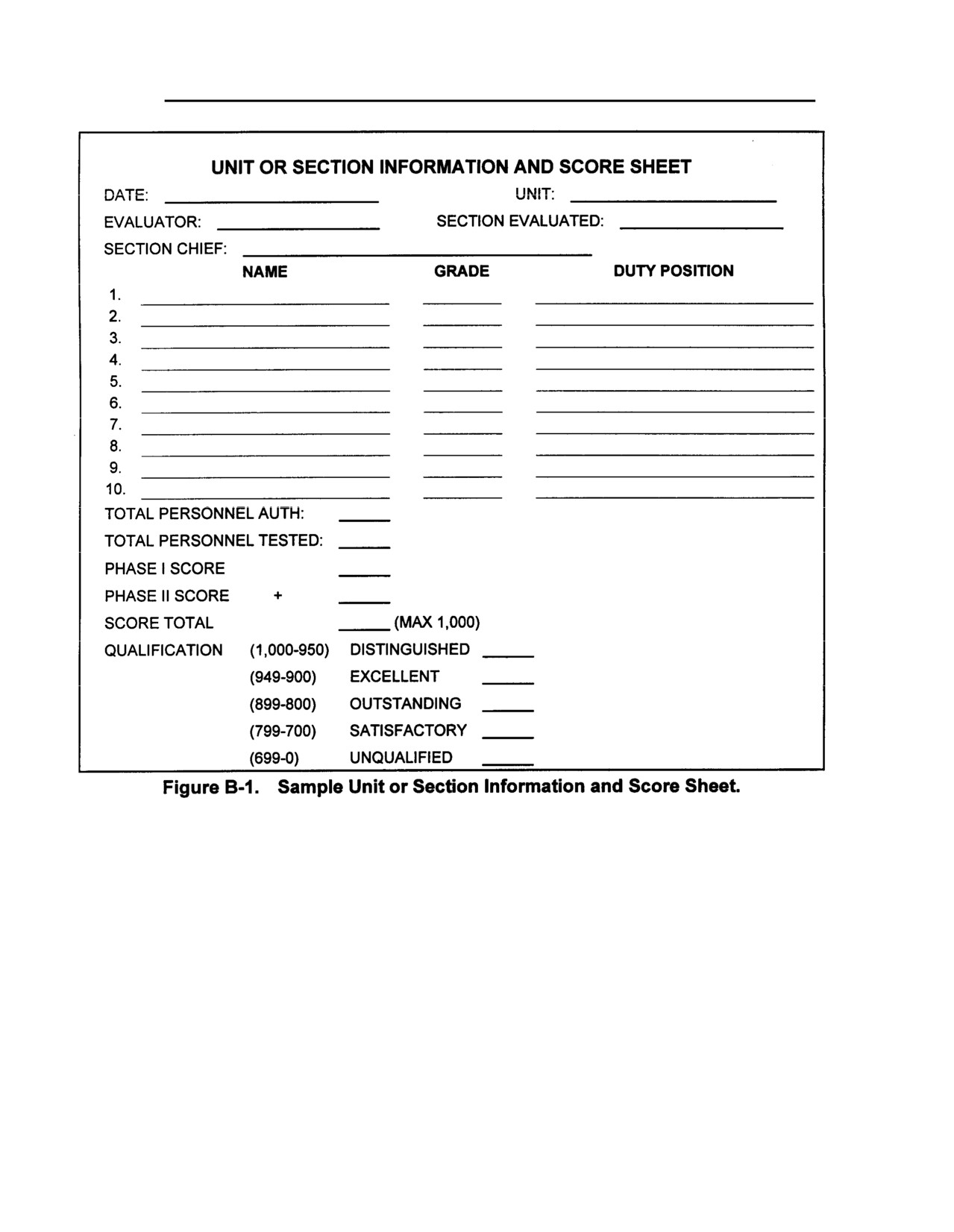
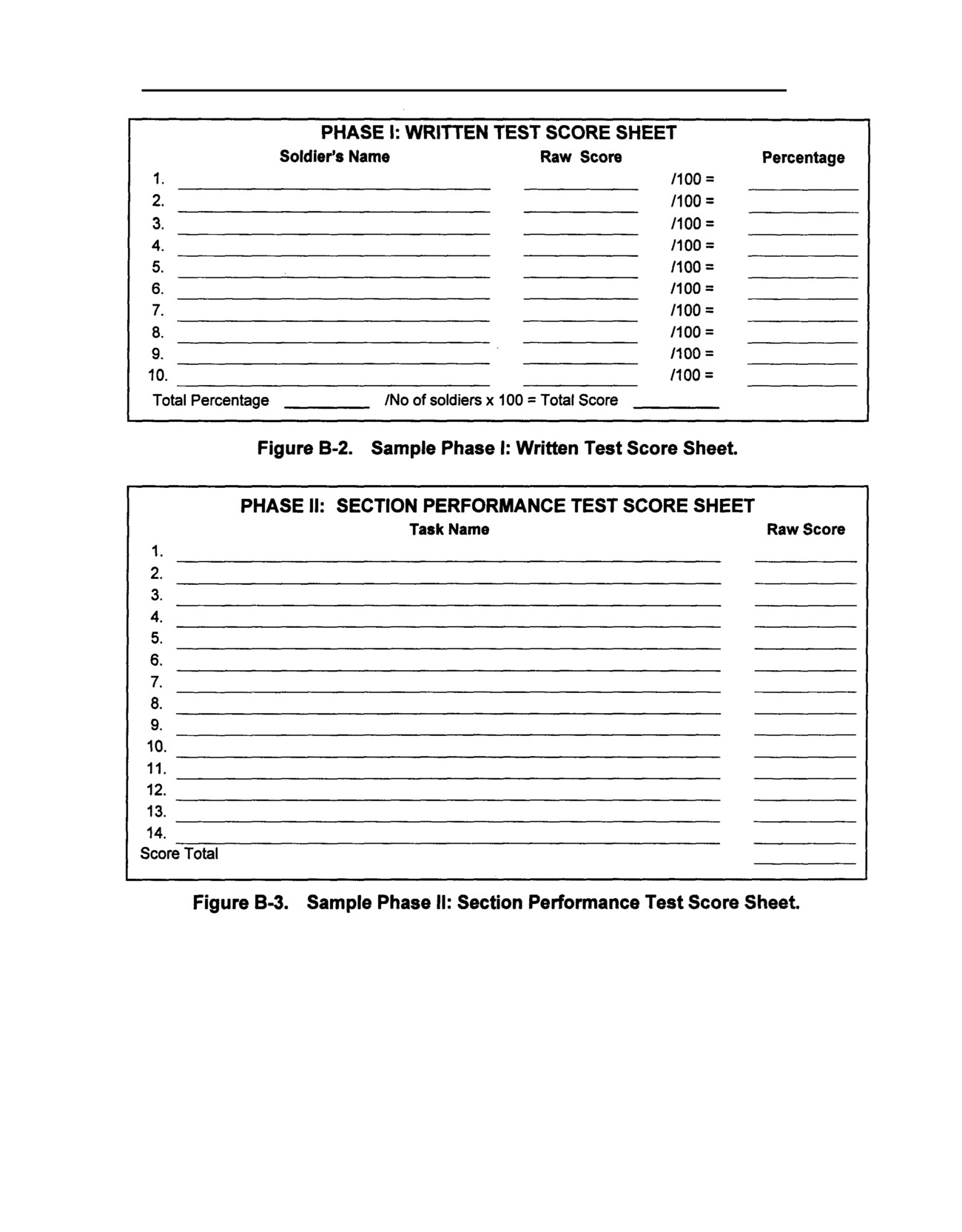
add the numerical scores attained in each of the two phases. (See Table B-1.) Sample score
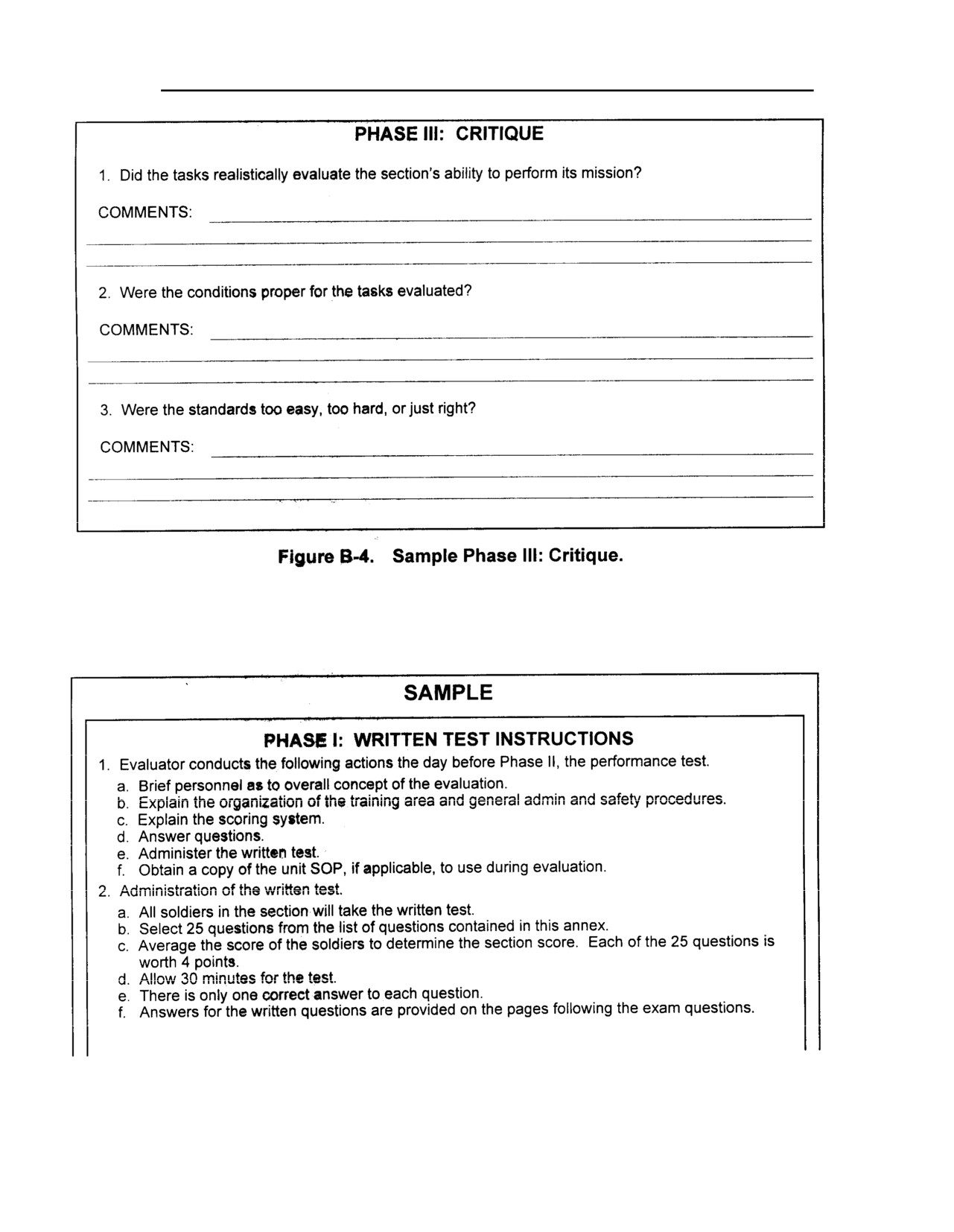
sheets are shown in Figures B-1 through B-3. A sample critique for Phase III is shown in Figure
B-4.
B-2
FM 6-40
B-3
FM 6-40
B-4
FM 6-40
B-5
FM 6-40
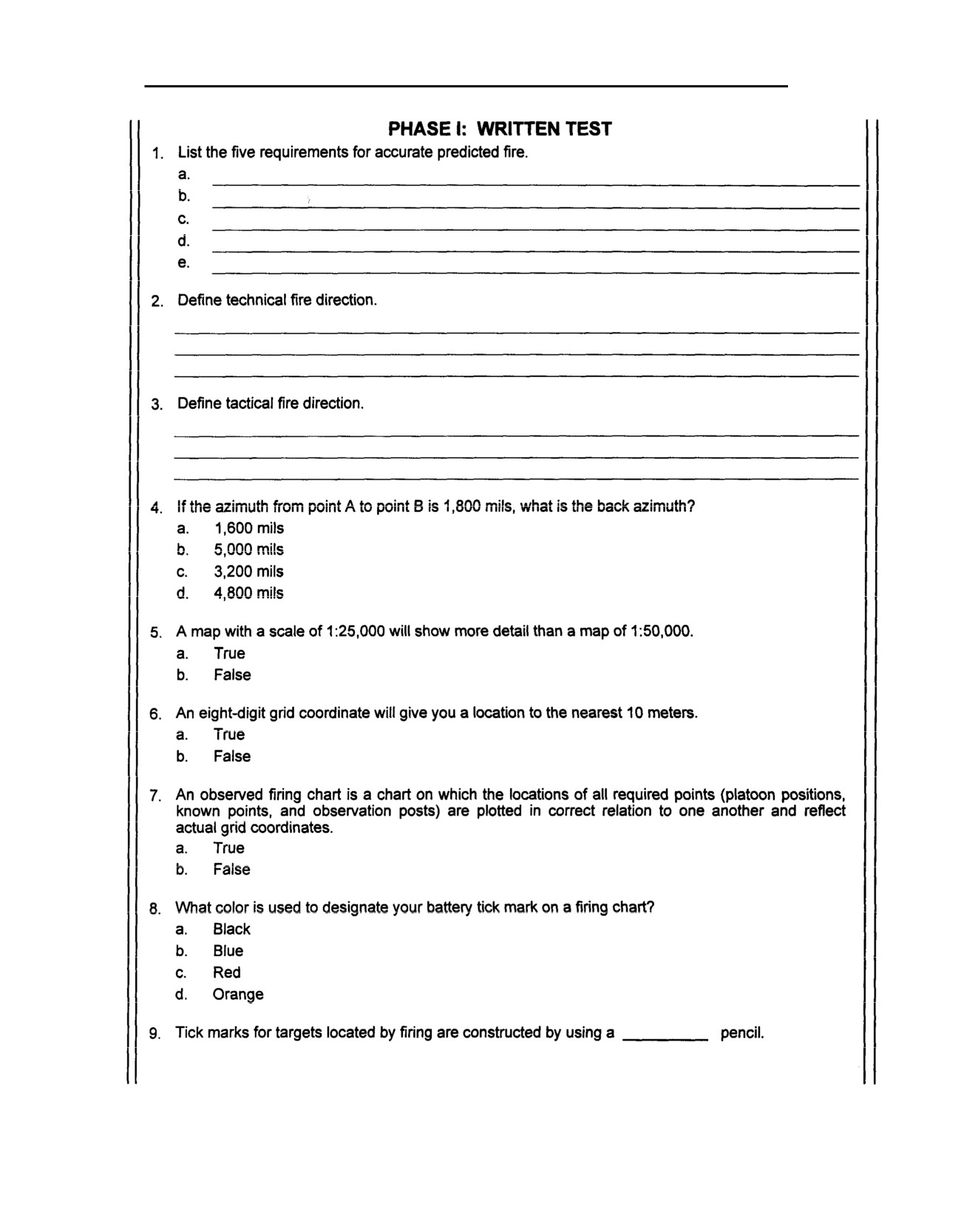
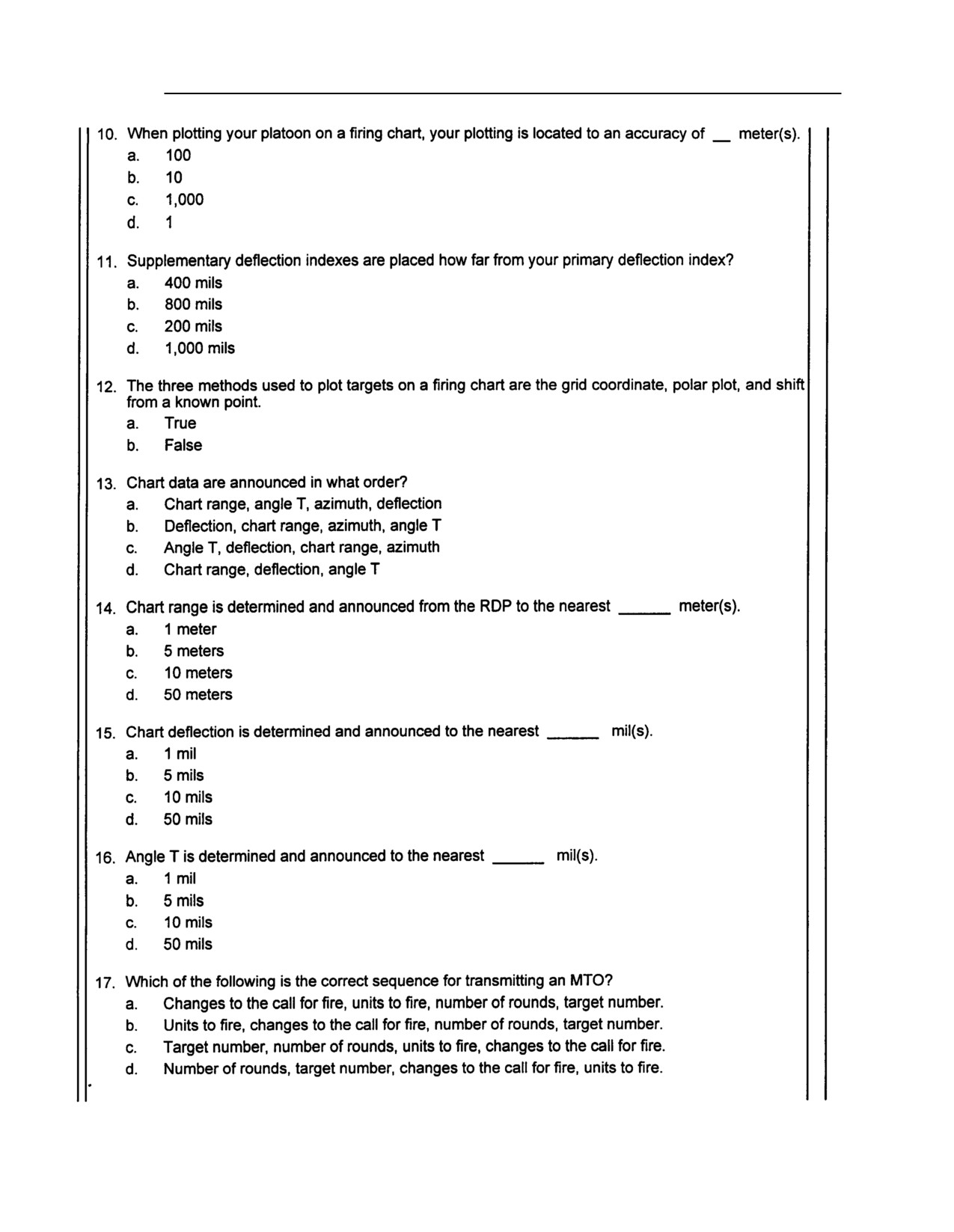
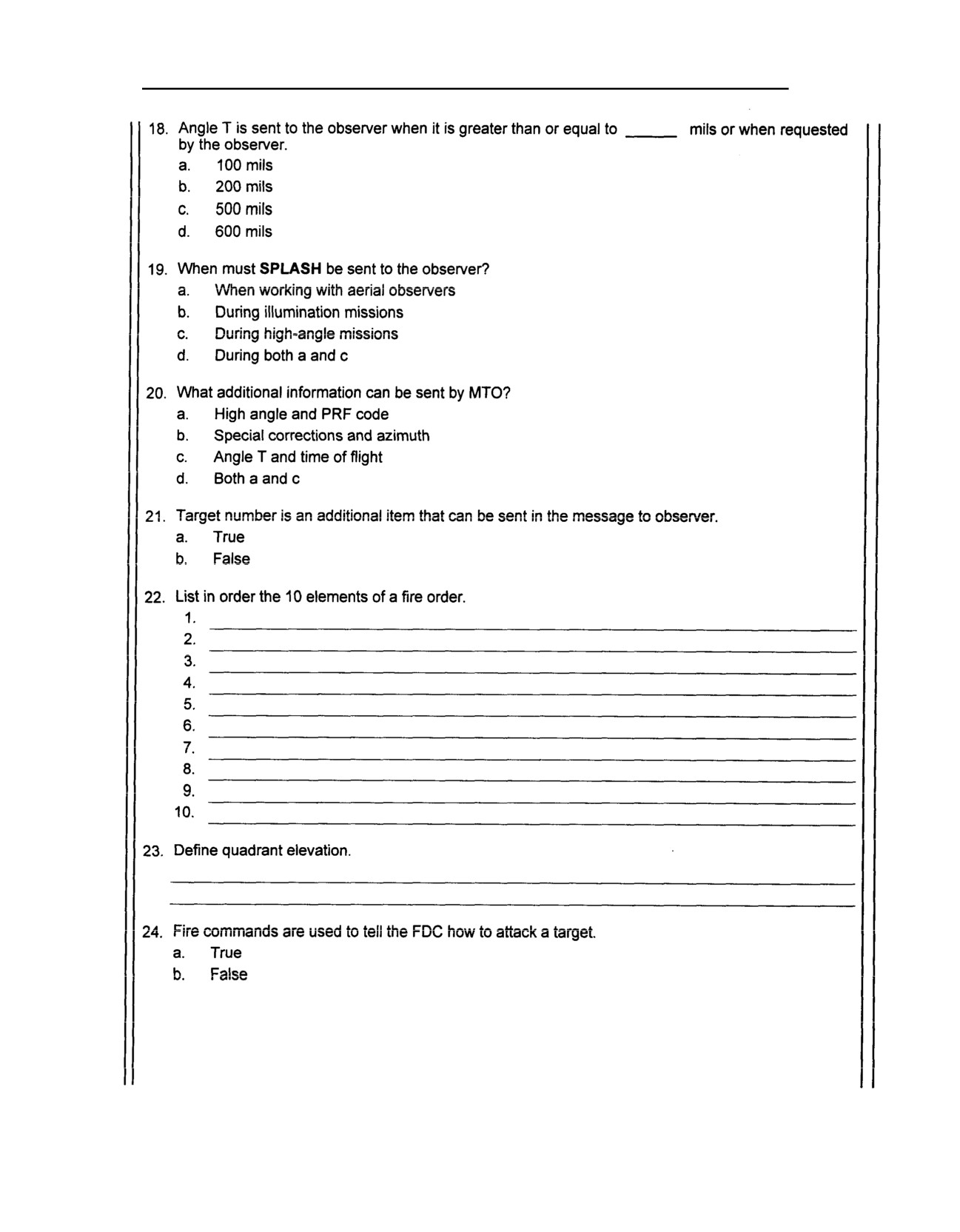
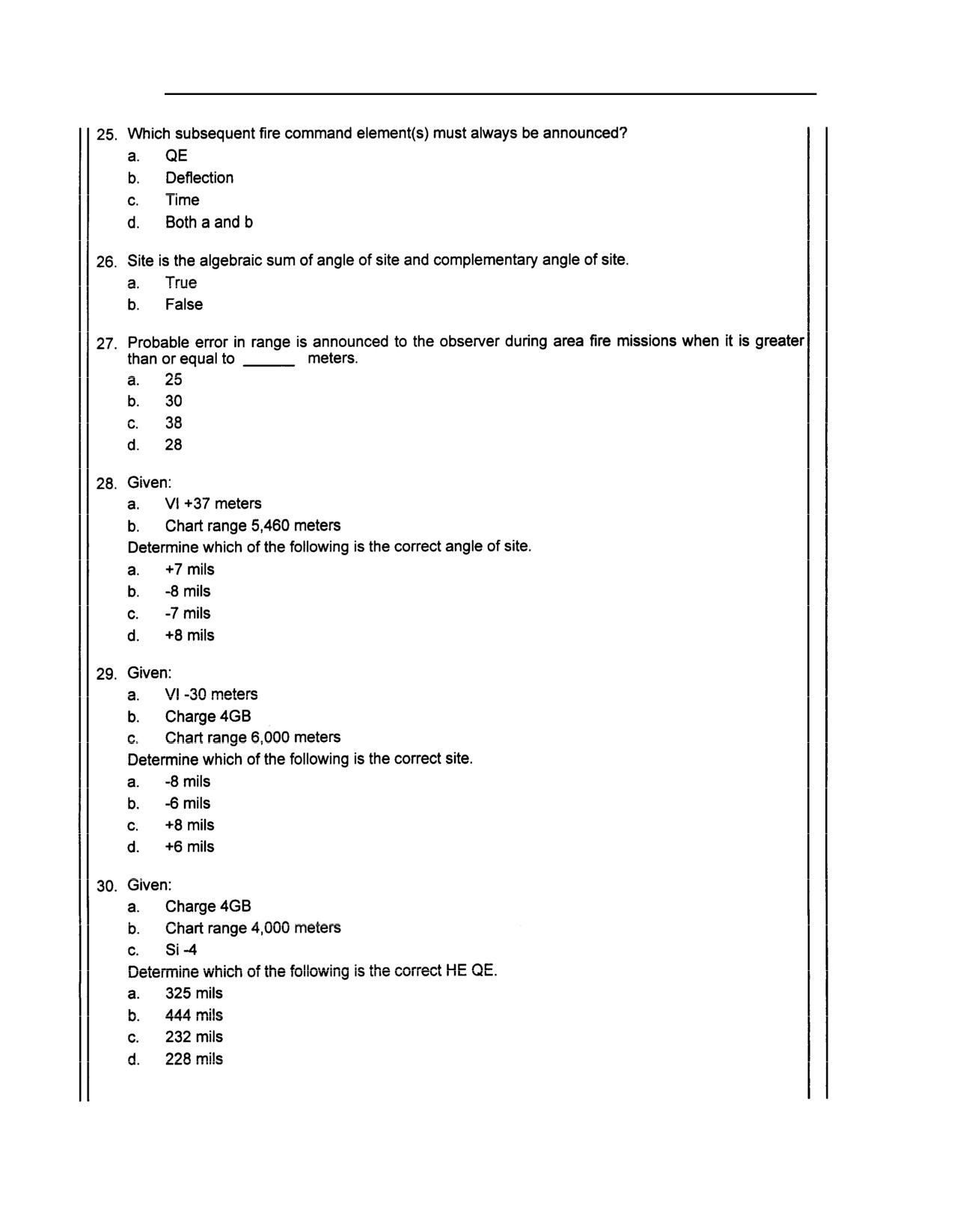
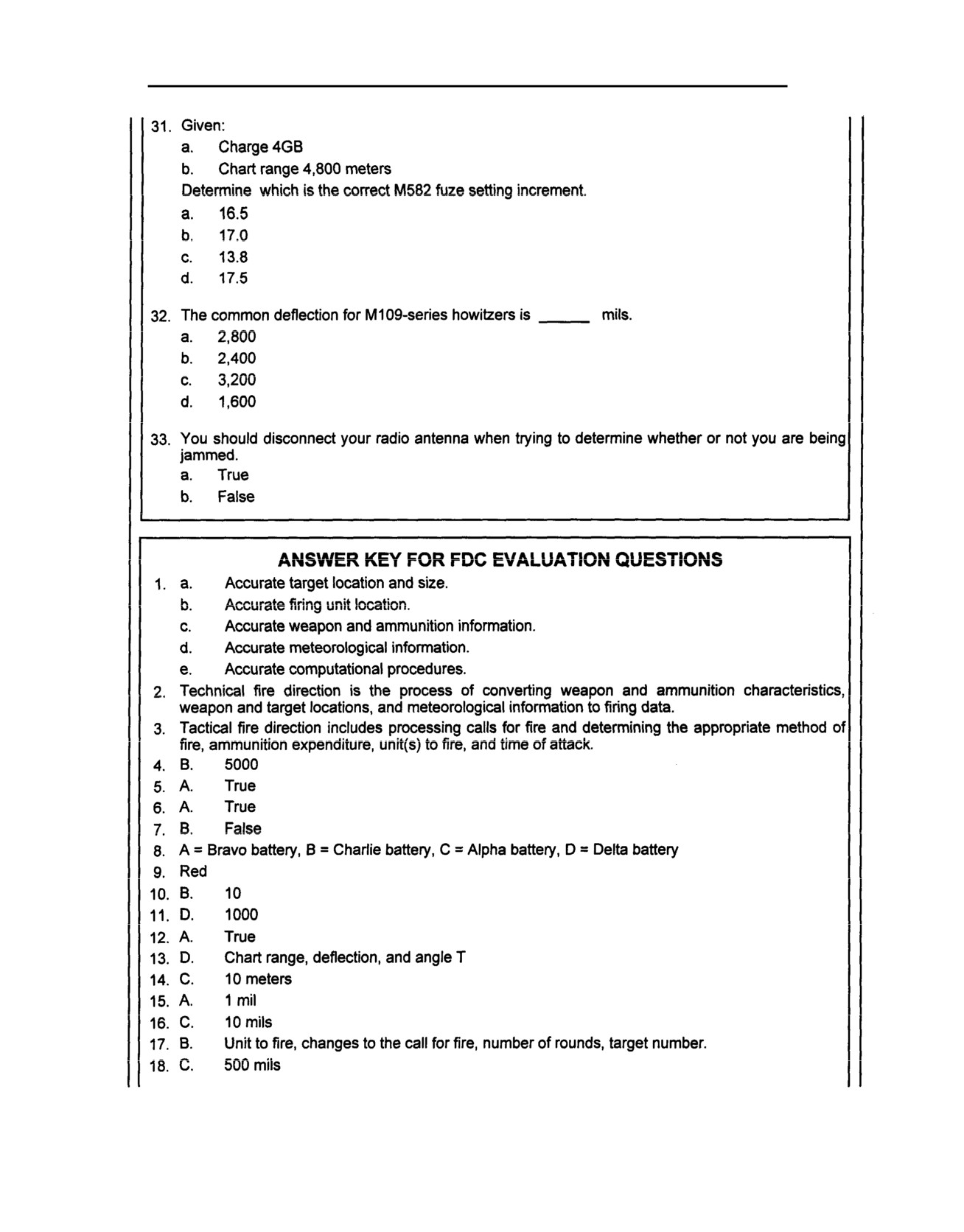
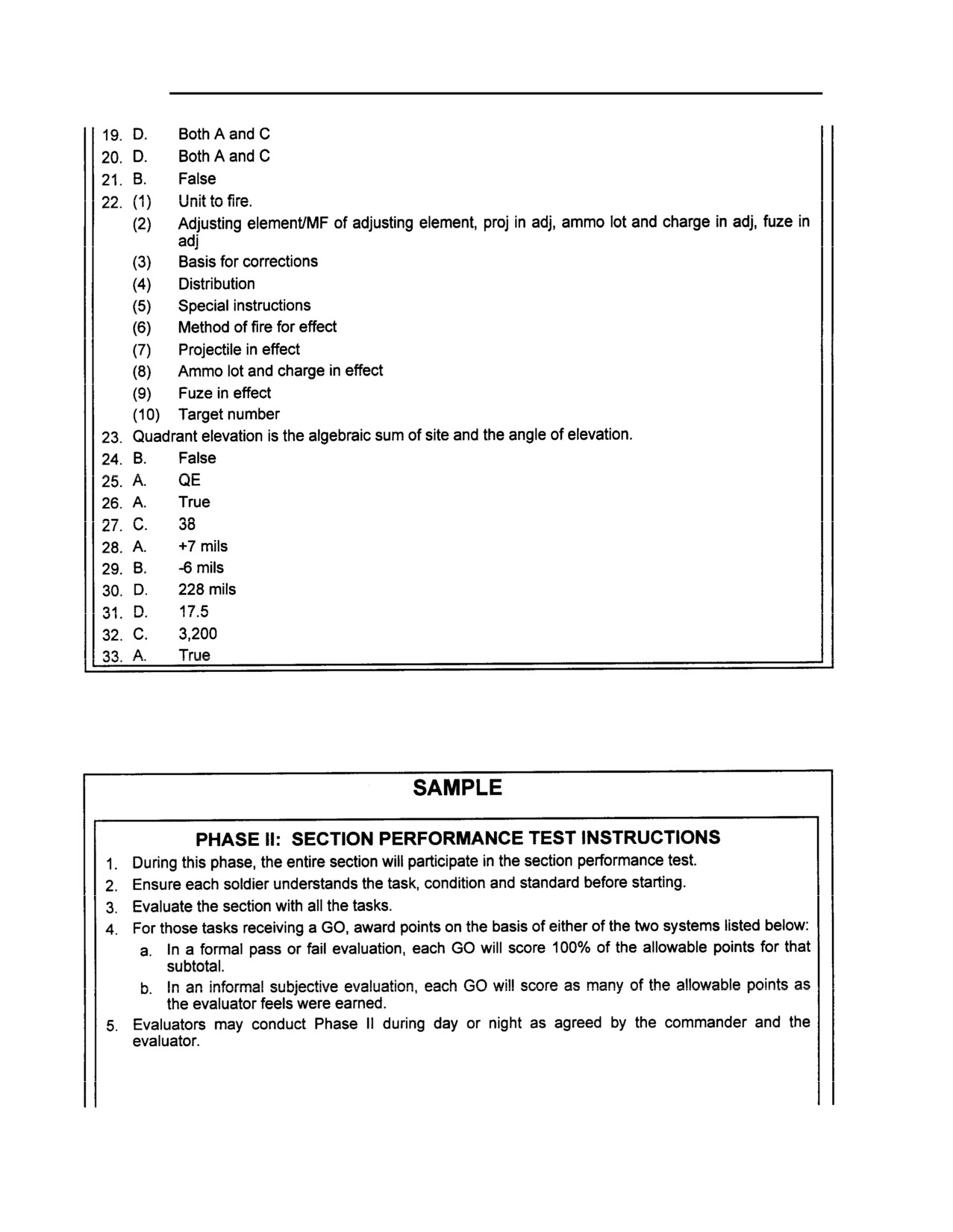
B-6. Phase I: Test and Answer Key
A sample Phase I written test is shown below. The Phase I written test answer key
follows the sample written test.
B-6
FM 6-40
B-7
FM 6-40
B-8
FM 6-40
B-9
FM 6-40
B-10
FM 6-40
B-11
FM 6-40
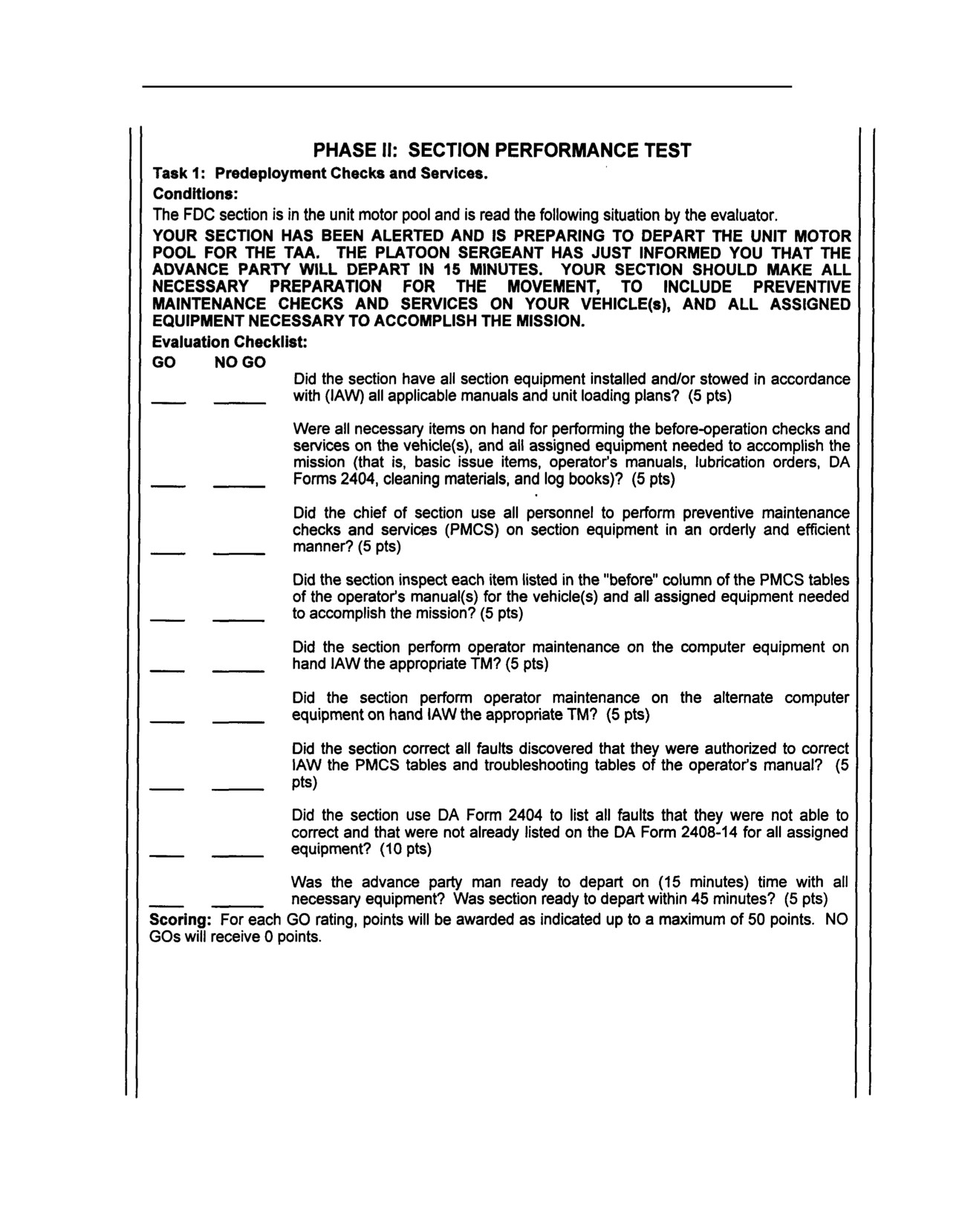
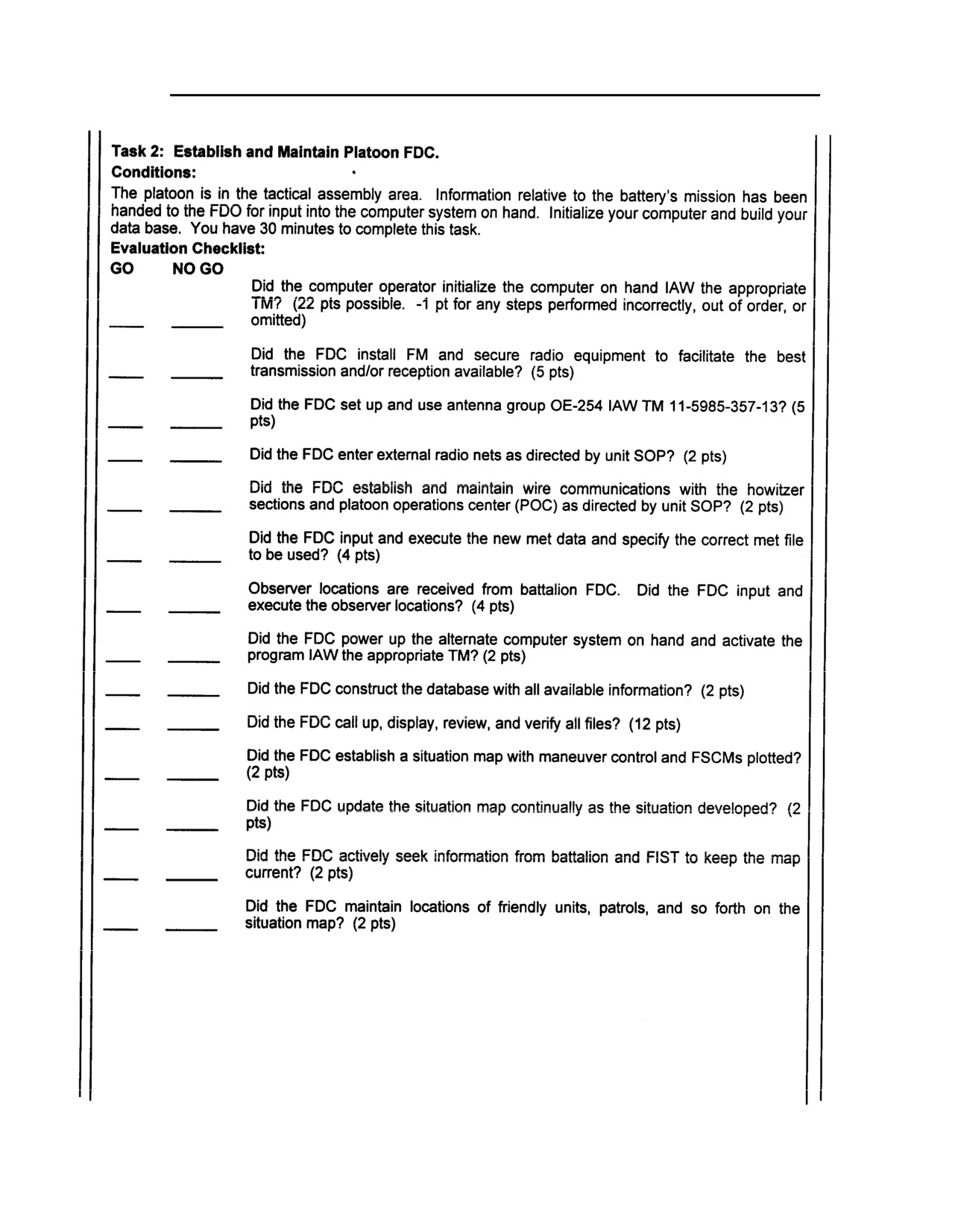
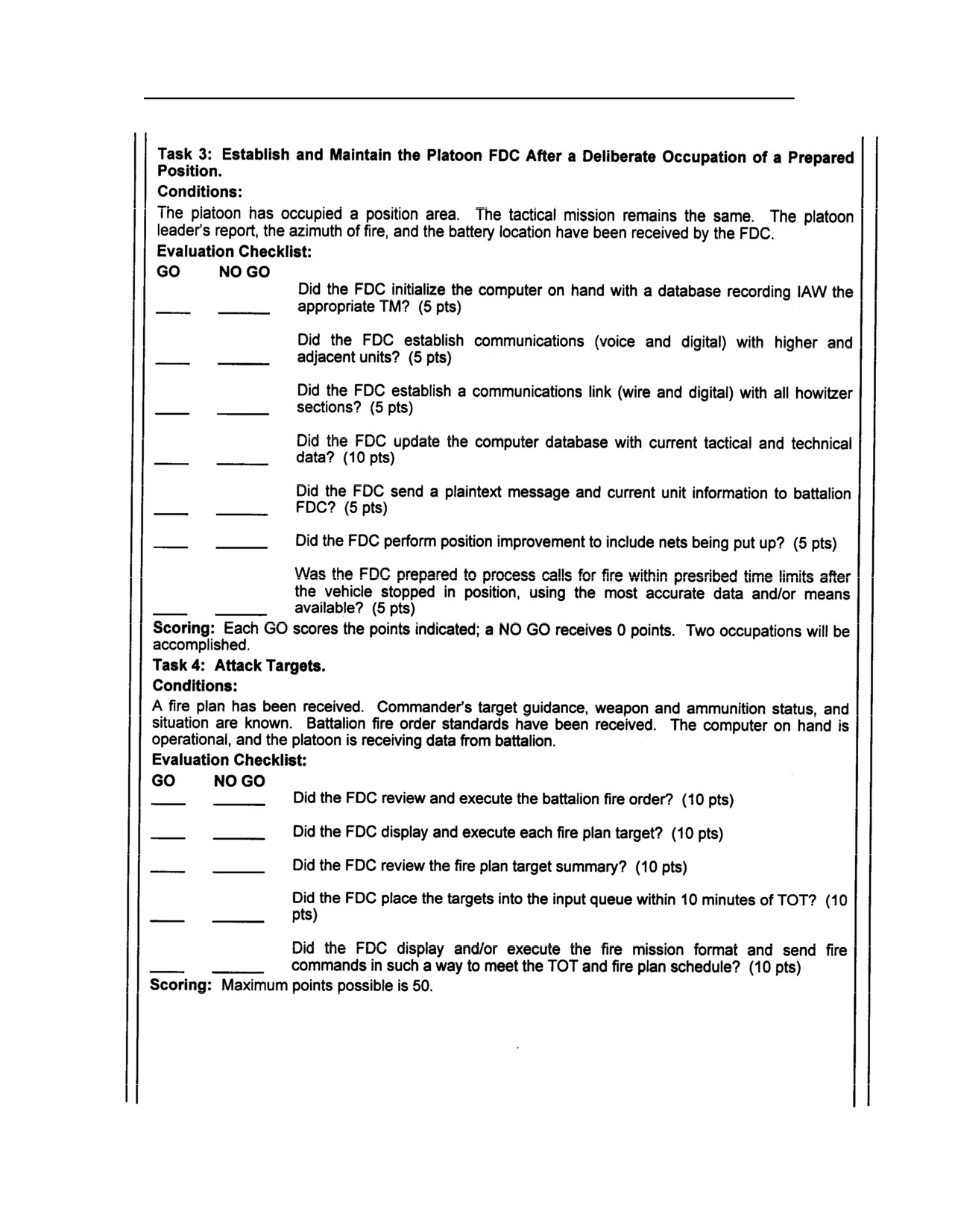
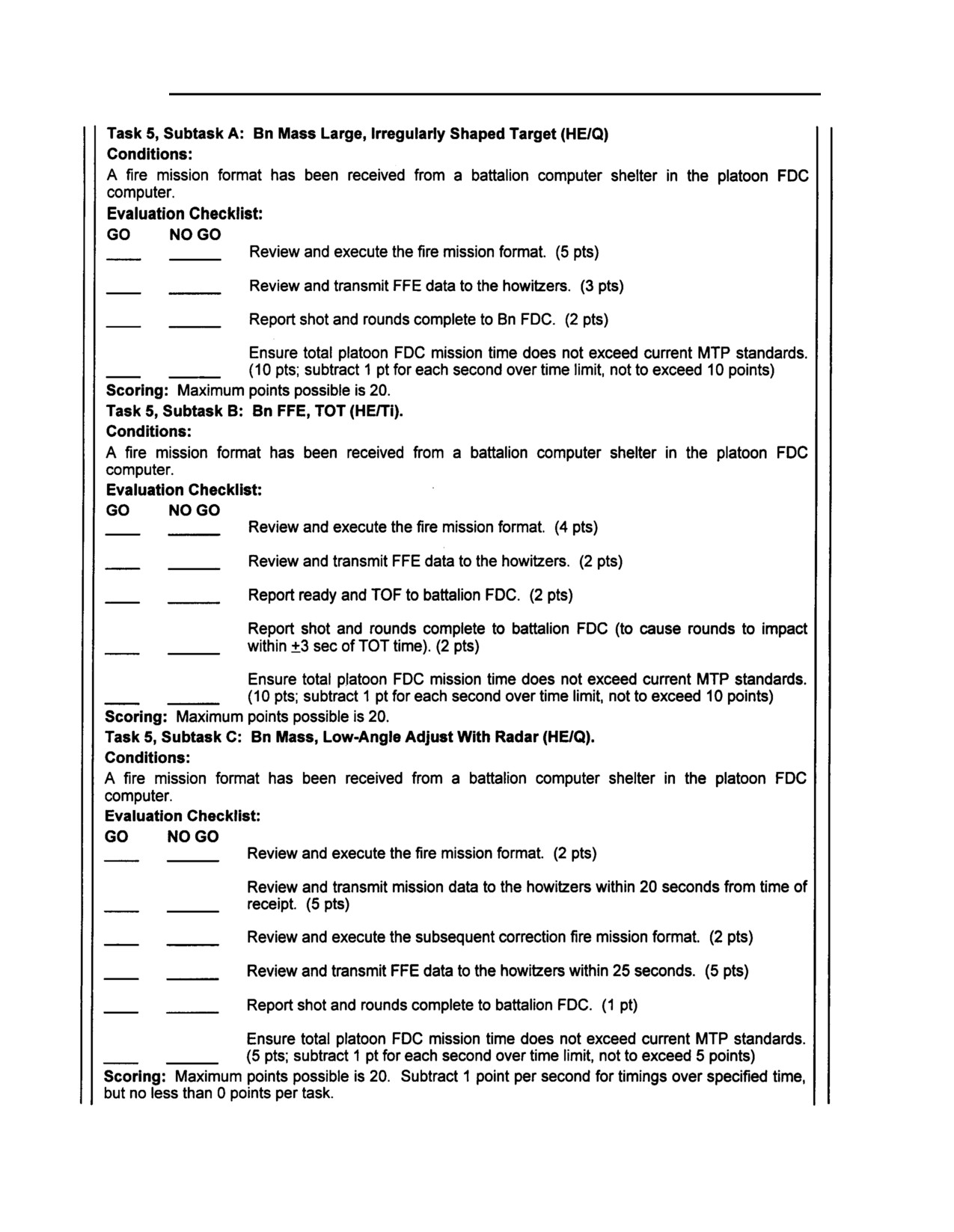
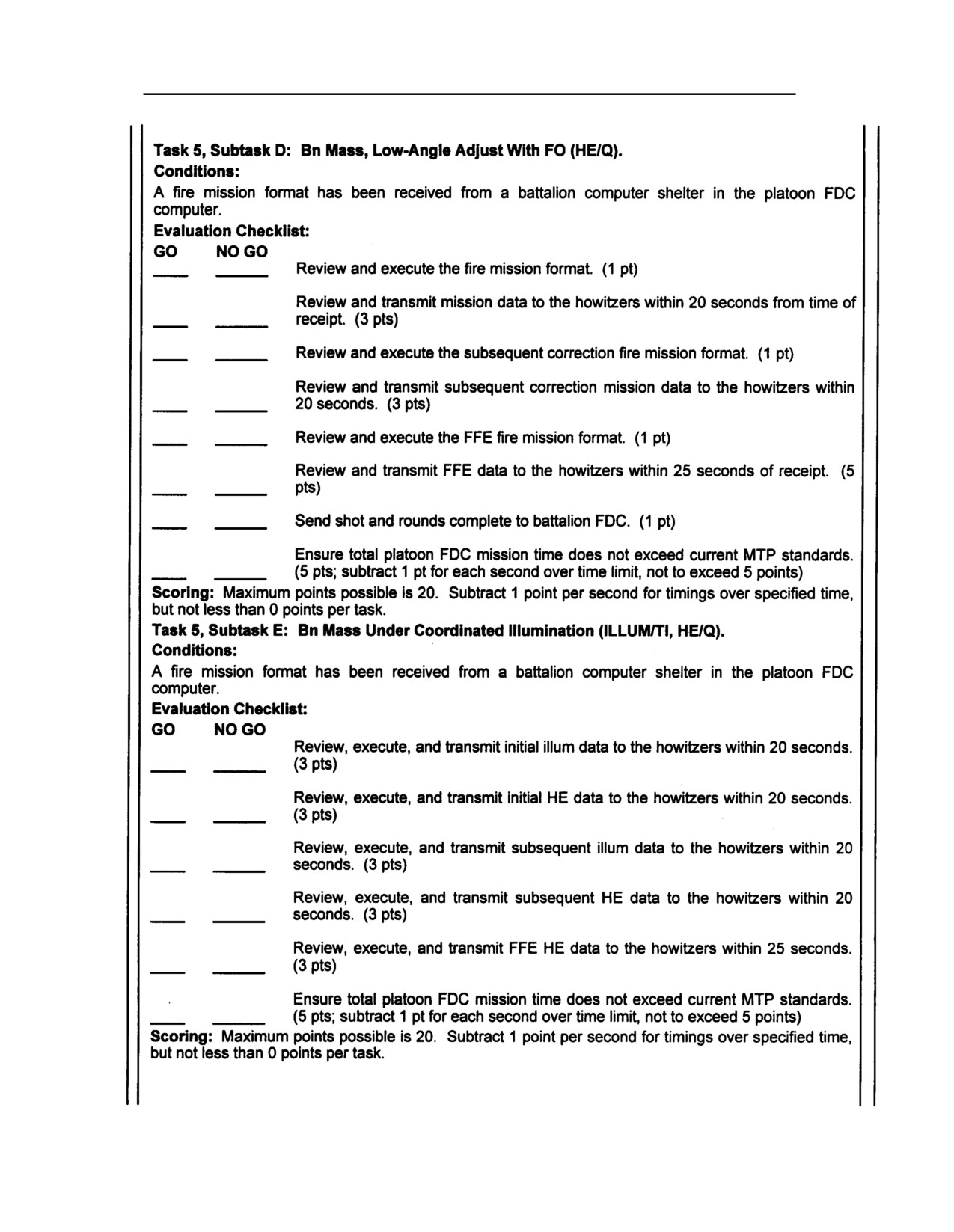
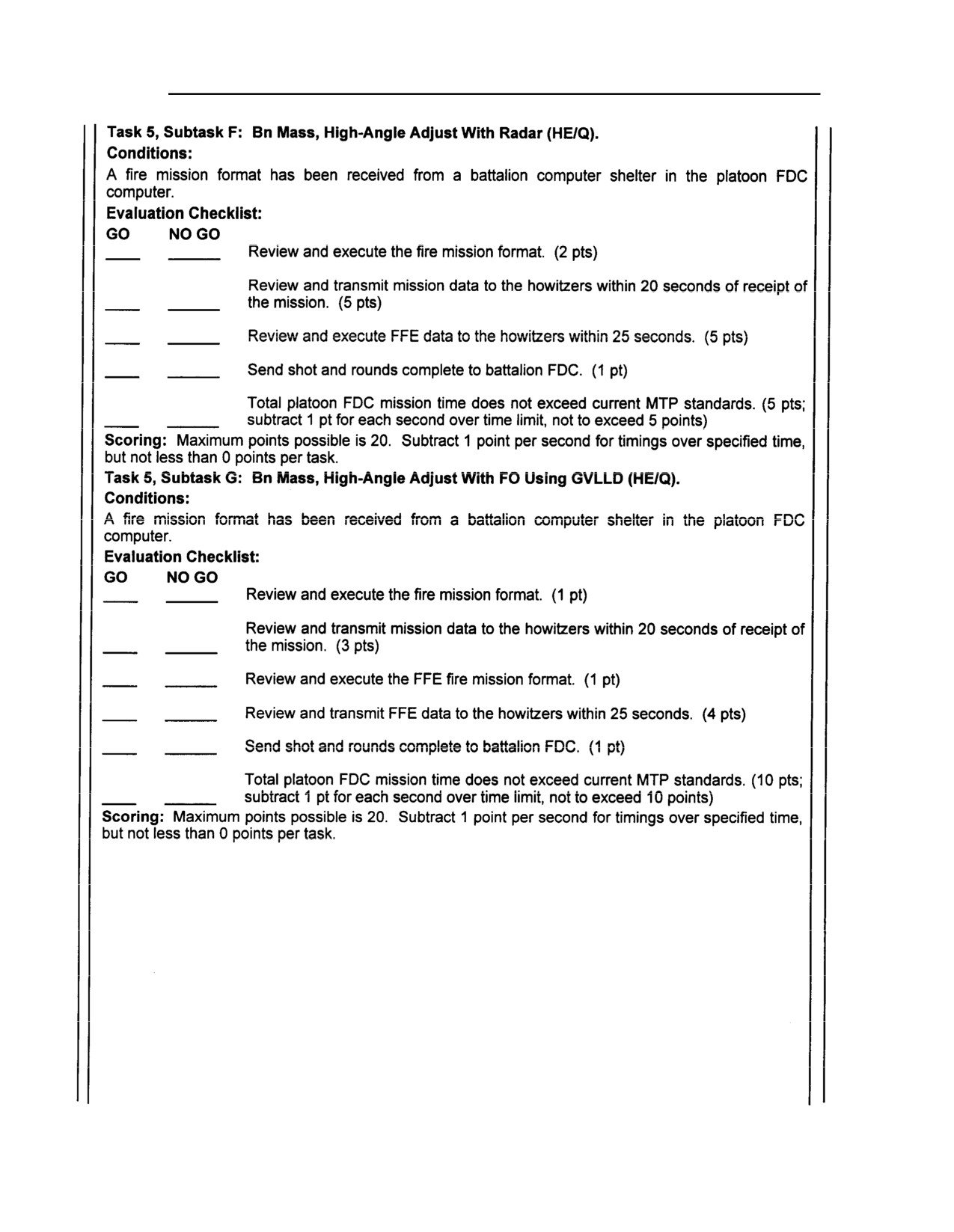
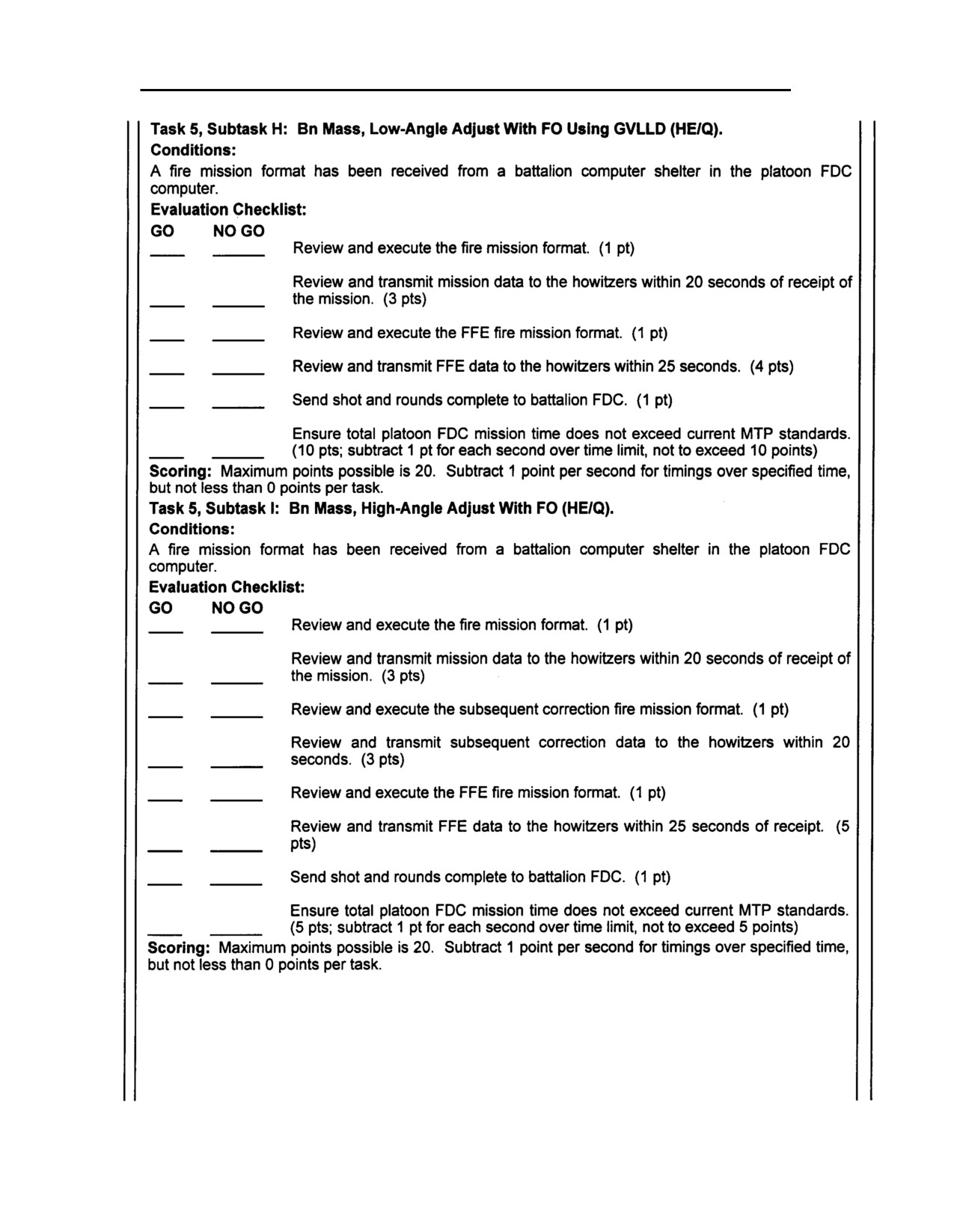
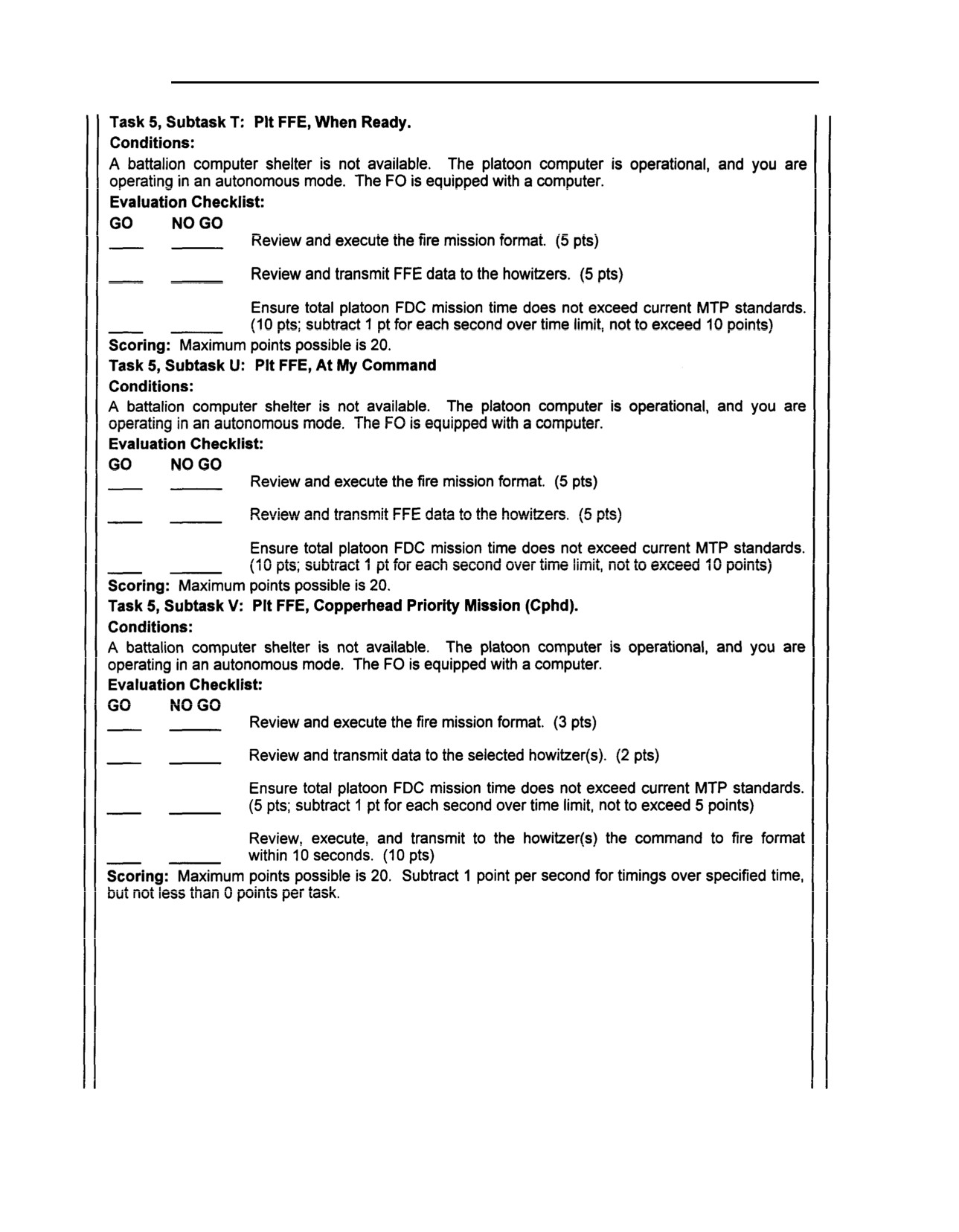
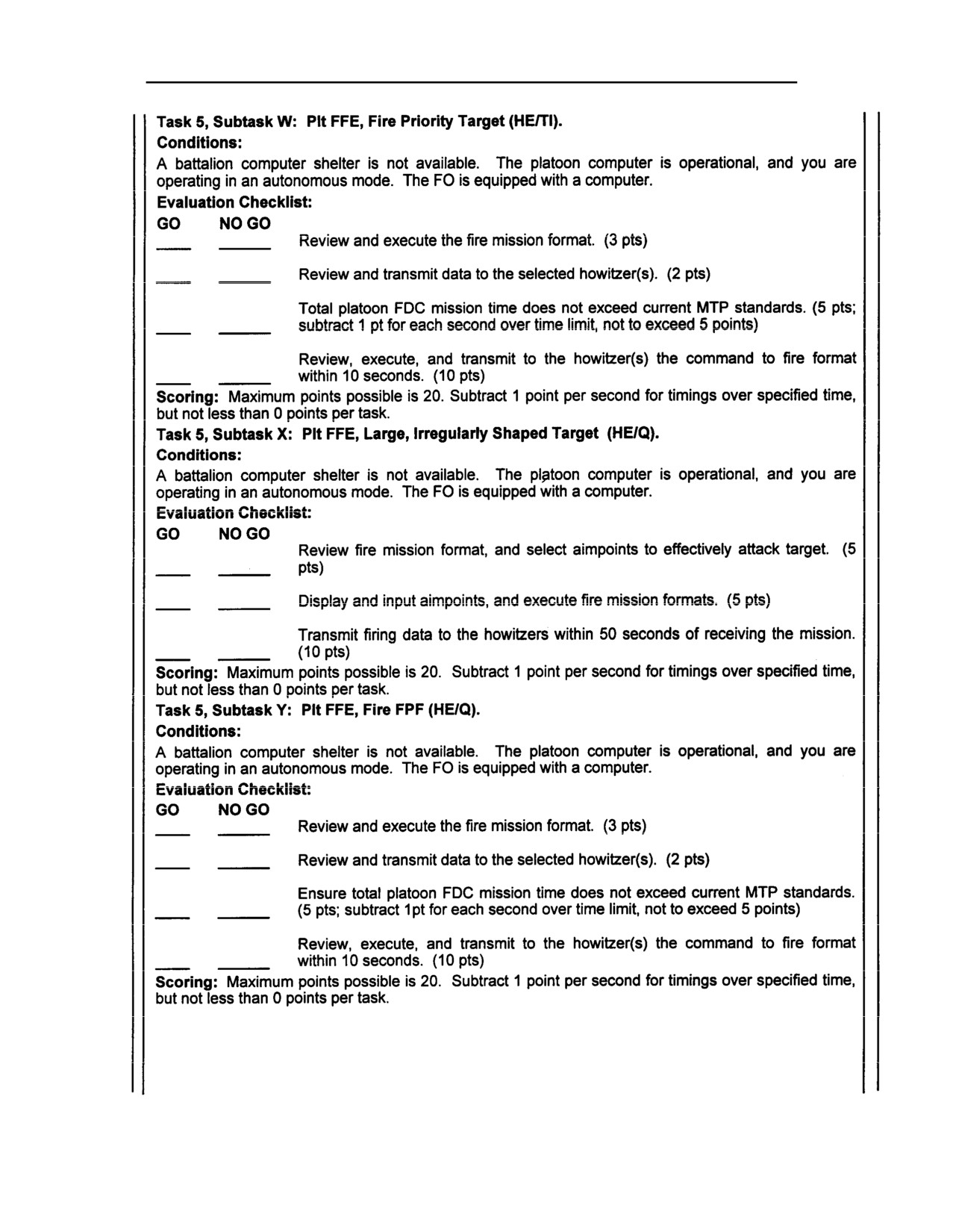
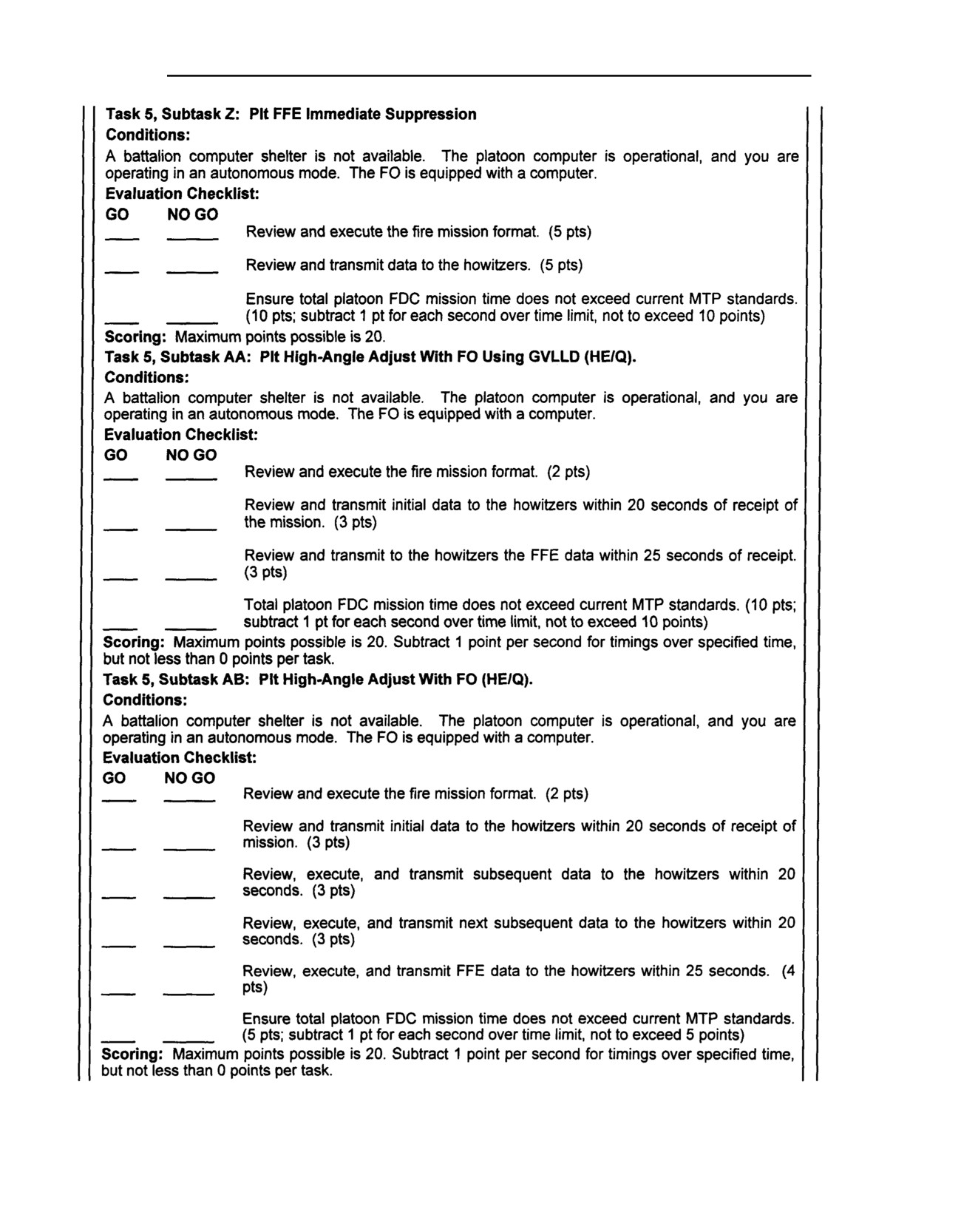
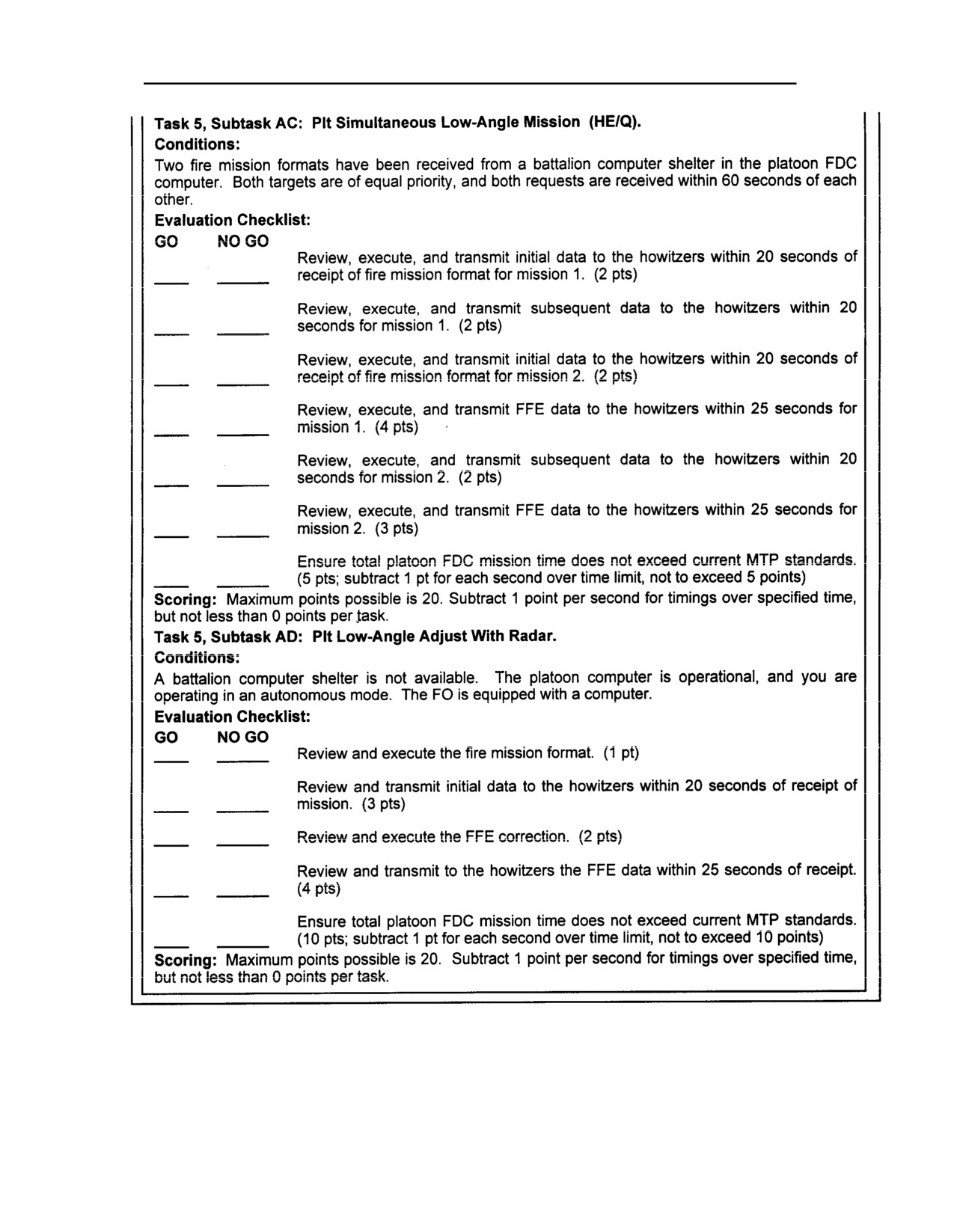
B-7. Phase II: Section Performance Test
A sample Phase II section performance testis shown below.
B-12
FM 6-40
B-13
FM 6-40
B-14
FM 6-40
B-15
FM 6-40
B-16
FM 6-40
B-17
FM 6-40
B-18
FM 6-40
B-19
FM 6-40
B-20
FM 6-40
B-21
FM 6-40
B-22
FM 6-40
B-23
FM 6-40
B-24
FM 6-40
B-25
FM 6-40
B-26
FM 6-40
B-27
FM 6-40
B-8. Phase III: Critique Instructions
a. The evaluator will address comments to the critique quedstions in the front of this
annex. The evaluator should conduct this phase
at the end of each e-valuated phase or after Phase
II only.
b. The references for this critique are:
FM 6-40.
STP 6-13E14-SM-TG, dated Jul 92.
Current ARTEP MTP manual.
NOTE: This appendix was taken from examples of div arty FDC evaluation guides.
B-28
FM 6-40
Appendix C
TARGET ANALYSIS AND MUNITION EFFECTS AND
TERMINAL BALLISTICS
Target analysis is the examination and evaluation of an enemy target situation to
determine the most suitable weapon, ammunition, and method required to defeat, neutralize, or
otherwise disrupt, delay, or limit the enemy. Not only does target analysis involve determining
the amount and type of ammunition required to inflict a given damage (or casualty) level on a
particular target, it also involves a continuous process of consultation and cooperation between
the commander and the FDO.
C-1. Target Analysis
The amount of time devoted to target analysis and the thoroughness of the analysis
depends on the following:
Amount of target information.
Weapons and ammunition available to attack the target.
Urgency of the engagement.
C-2. Determining the Precedence of Attack
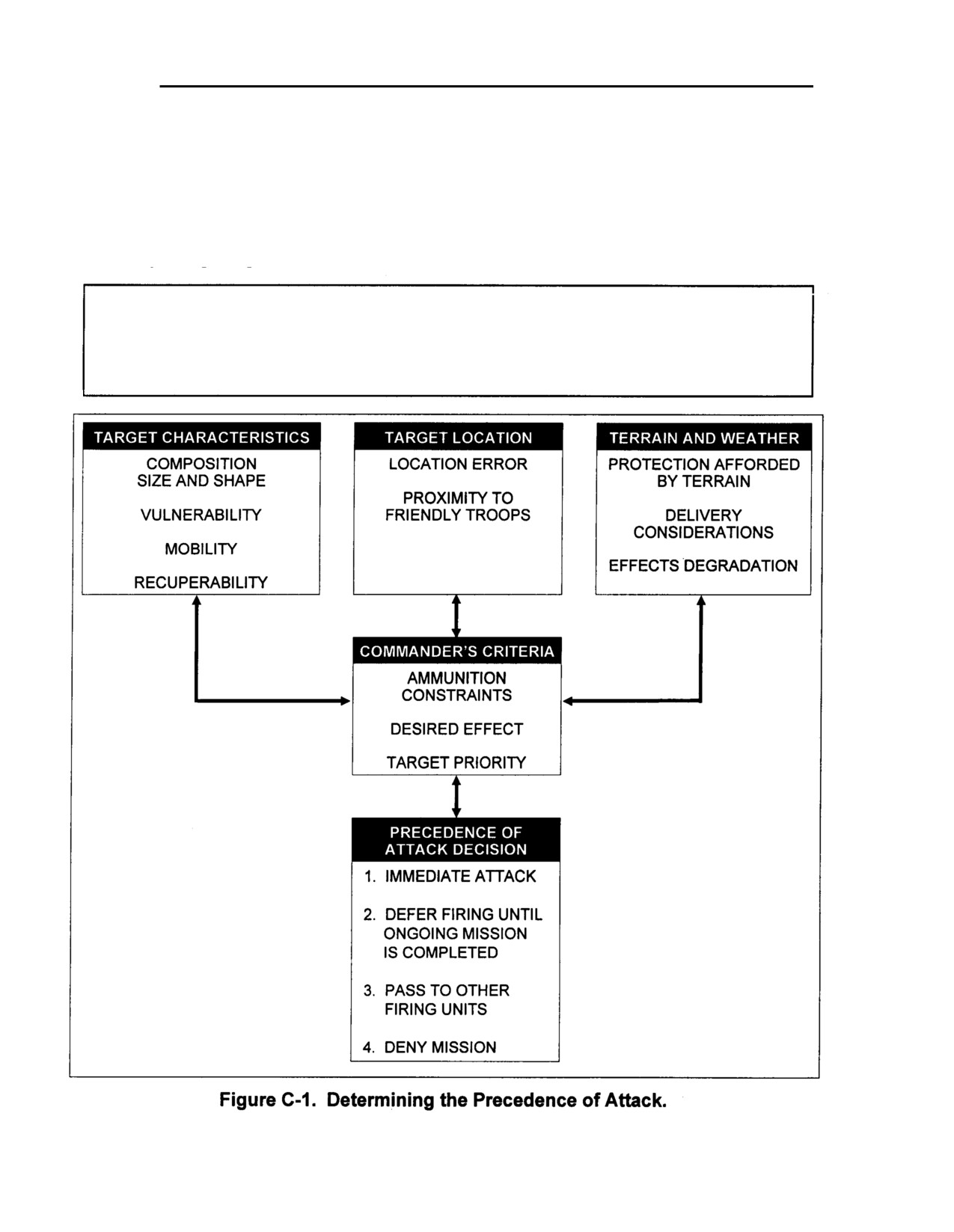
When an FDO receives a fire mission, his options include the following (see Figure C-1):
Attack the target immediately.
Defer attacking the target until an existing fire mission is complete.
Pass the fire mission to another FDC.
Request reinforcing fires.
Deny the mission.
An FDO selects a particular precedence of attack after considering the following:
Call for fire.
Terrain.
Target location.
Weather.
Target characteristics.
Units available.
Commander’s criteria.
Availability of corrections.
Munition effects.
Enemy target acquisition.
Commander’s intent.
Ammunition availability.
C-1
FM 6-40
a. Commander’s Criteria. All phases of target analysis are conducted within
constraints established by the commander. In determining the precedence for attacking a target,
primary consideration is given to the commander’s target priorities.
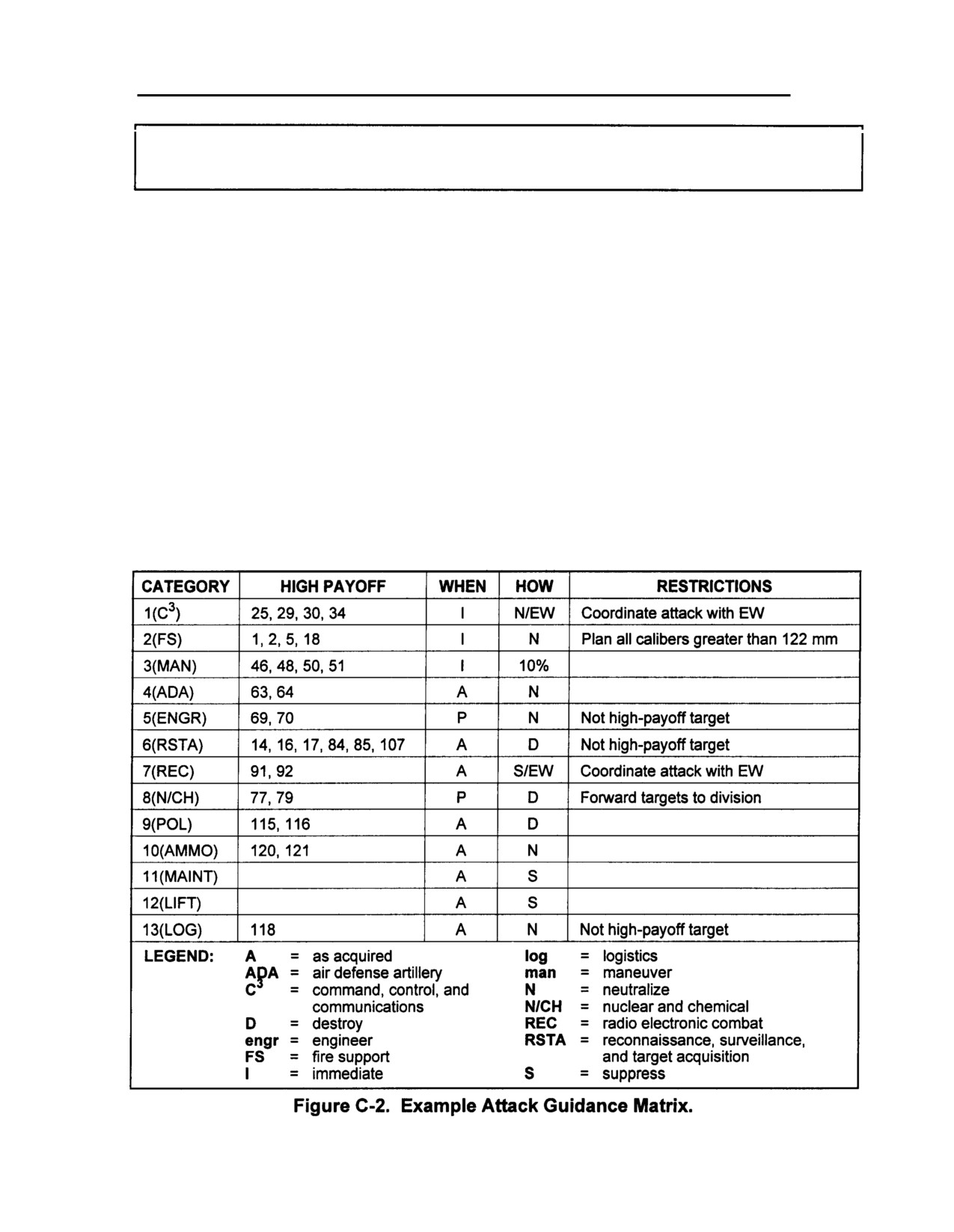
(1) Attack guidance matrix. The commander’s target priorities are organized into
an attack guidance matrix that lists the type of target, when to attack, degree of destruction, and
any restrictions. Figure C-2 is an example of a commander’s attack guidance matrix. The
following example explains how it would be used.
EXAMPLE
Your FDC received a call for fire, and the target description was a POL dump. While processing this
mission, you received another call for fire requesting fires on an infantry platoon. Referring to the
attack guidance matrix, you would determine that the infantry platoon is a higher priority. In this case,
you process this mission first. Upon completion of this mission, you would fire on the POL dump.
C-2
FM 6-40
NOTE: For a more detailed discussion on the attack guidance matrix, see FM
6-20-40.
(2) Target effects categories. On the basis of ammunition constraints, a
commander also specifies the type of effects he desires against specific target categories. The
three target effects categories are as follows:
(a) Suppression. Suppression of a target limits the ability of enemy personnel
to perform their mission. Firing HE, fuze VT reduces the combat effectiveness of personnel and
armored targets by creating apprehension and surprise and by causing tracked vehicles to button
up. Smoke is used to blind or confuse. The effect of suppressive fires usually lasts only as long
as the fires are continued. This type of fire is used against likely, suspected, or inaccurately
located enemy units where time is essential. It can be delivered by small delivery units or means
and requires little ammunition.
(b) Neutralization. Neutralization of a target knocks the target out of the
battle temporarily. Casualties of 10 percent or more neutralize a unit. The unit is effective again
when the casualties are replaced and/or damage is repaired. Neutralization fires are delivered
against targets located by accurate map inspection, indirect fire adjustment, or a TA device. The
assets required to neutralize a target vary according to the type and size of the target and the
weapon-ammunition combination.
C-3
FM 6-40
(c) Destruction. Destruction puts the target out of action permanently. Thirty
percent casualties or materiel damage inflicted during a short time span normally renders a unit
permanently ineffective. Direct hits are required to destroy hard materiel targets. Targets must
be located by accurate map inspection, indirect fire adjustment, or a TA device. Destruction
usually requires a large amount of ammunition from many units.
b. Target Characteristics.
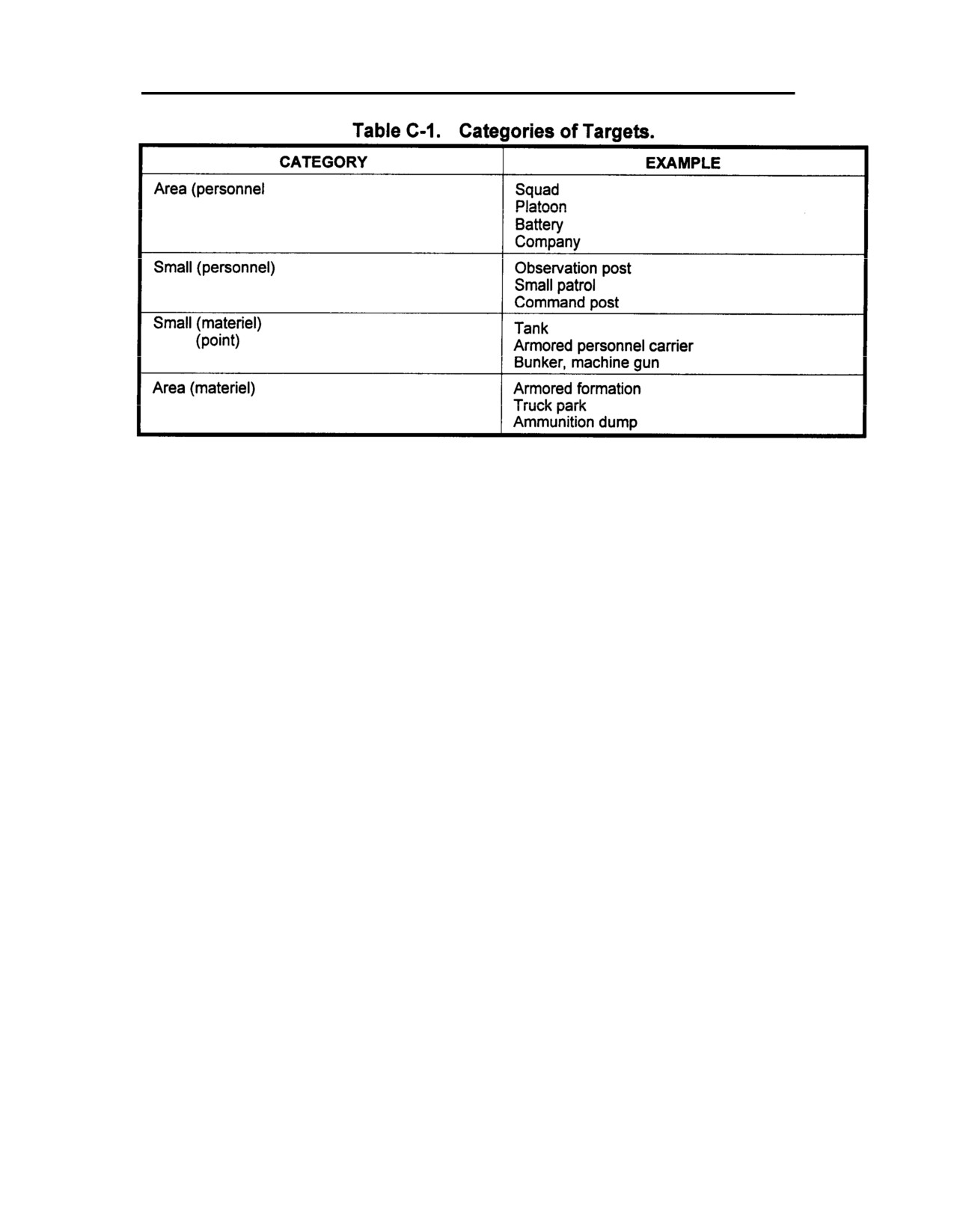
(1) Targets encountered on the battlefield vary considerably in composition, degree
of protection, shape, mobility, and recuperability. For simplicity, targets are divided into four
categories (Table C-1) to compare the effectiveness of particular weapons and rounds. Examples
axe listed for each category. Under certain conditions, some examples could be listed in more
than one category. For example, a motorized rifle battalion could be listed under the first
category and the fourth category.
(2) For personnel targets in particular, the posture of the target is extremely
important. Normally, target postures us d for personnel targets are standing, prone, and in
fighting positions. For computation, it is assumed that the personnel are wearing helmets and
that personnel in fighting positions are in a crouching position. In describing posture of a target,
consider the protection afforded by the terrain. For example, an infantry platoon may be
attacking in a standing posture. However, irregular terrain may provide protection equivalent to
the prone position. Usually, personnel targets seek a more protective posture during an
engagement; for example, from a standing to a prone position. This change is called posture
sequencing. Posture sequencing causes considerable degradation of effects as additional volleys
are fired and is the reason for the continual emphasis on surprise or mass fires. For the purposes
of analysis, personnel targets in the offense are considered to be one-half standing and one-half
prone during the first volley of fire and all prone for subsequent volleys. In a defensive
configuration, personnel targets are considered to be one-half prone and one-half in fighting
positions during the initial volley and all in fighting positions for subsequent volleys.
(3) A target must be analyzed to determine its weak points. Where the target is
most vulnerable and what fires will best exploit its weaknesses are influenced by the degree of
damage desired. Often there is a tendency to overkill the target when less combat power would
suffice. On the basis of the commander’s criteria, the FDO must ascertain the degree of effects
needed (destruction, neutralization, suppression) to support the tactical plan. The acceptable
degree of damage is the level that yields a significant military advantage. For example, fire from
a heavily protected machine-gun emplacement may be silenced by obscuration through smoke
and subsequent engagement by direct fire as opposed to the expenditure of a large number of HE
rounds required for its destruction.
(a) Target location. The FDO must check the target location relative to
friendly forces, fire support coordinating measures, zones of fire, and registration transfer limits.
Target location accuracy is also considered. The range affects the choice of units to fire and
charge selection. The terrain around the target may influence ammo selection or type of
trajectory. High intervening crests may require selection of a lower charge or high angle.
C-4
FM 6-40
(b) Target characteristics. The size of the target affects the number of units to
fire, the type of sheaf, the selection of ammo, and the number of rounds in the fire for effect. The
type of target (troops, vehicles, hard, soft) influences the ammo type and amount, the priority
placed on the mission, and whether surprise fire (for example, time on target) is possible.
(c) Ammo availability. The FDO must consider the amount and type of
ammunition available and the controlled supply rate.
(d) Units available. The number of units available not only affects which
units are used, but also the type of attack. Sweep and/or zone fire or other techniques may be
needed to cover large targets when enough units are not available.
(e) Commander’s criteria or commander’s intent. Restrictions on ammo,
operation order (OPORD), and SOPs may govern the selection of units and ammunition, target
priority, and method of attack.
(f) Call for fire. The FDO must consider the observer’s request carefully since
he is observing the target and talks directly to the maneuver commander. The observer’s request
is honored when possible. The call for fire will also include information on the target activity
(for example, attacking, defending, digging in).
(g) Munitions effects. If time permits, the FDO may use the JMEMs to
determine the type munition and volume of fire. The FDO most often relies on the GMET or
experience.
(h) Availability of corrections. The availability of corrections to firing data for
nonstandard conditions is a guiding factor in the choice of charge and munitions, since it directly
affects the ability to provide accurate first round fire for effect.
(i) Enemy target acquisition capability.Knowledge of the current enemy
counterbattery radar and sound ranging capabilities allows the FDO to attack the target in a
manner most likely to evade detection.
C-5