FM 6-40 TTP for Field Artillery Manual Cannon Battery U.S. - page 10
FM 6-40
11-6. Met Message Checking Procedures
a. When the FDC receives a met message, it should be checked to ensure that it is valid.
Any peculiarities noted in the message should be questioned. If the timeliness or validity of a
met message is doubted, that also should be questioned and referred to the artillery met section,
whose personnel are qualified to explain message variations or to correct message transmission
errors. Verbal transmission of met messages may cause copying errors, particularly if the
message is copied down on something other than the standard (ballistic or computer) met form.
FDC personnel should use the guidelines in subparagraphs b through e below when checking met
messages.
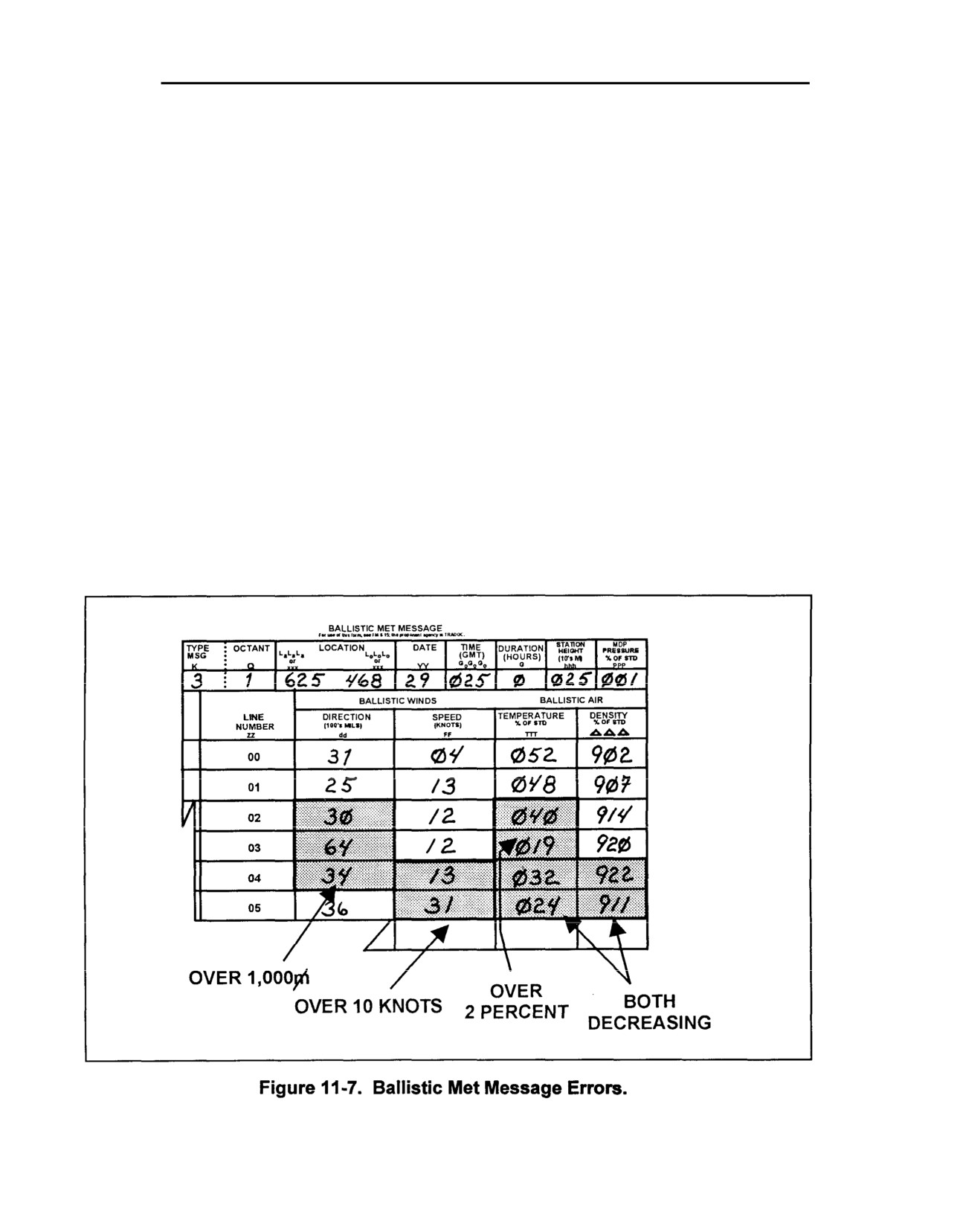
b. Check the ballistic or computer met message heading as follows: (See Figure 11-7 or
11-8.)
(1) Check message type, octant, and location entries for correctness.
(2) Check date-time entries to ensure data are current. If the met message is more
than 4 hours old, consult with the met section to determine message validity (date-time entries are
expressed in Greenwich mean time).
(3) Map-spot the altitude of the MDP by using the latitude and longitude from the
location block in the header of the met message. (See FM 21-26 for additional information on
how to plot a latitude and longitude. An error of 50 meters or more will affect air temperature
and density and/or pressure corrections applied to firing data.)
c. Check the ballistic met message body as follows: (See Figure 11-7.)
11-12
FM 6-40
(1) Ballistic wind direction should trend in a fairly uniform manner. Question
drastic changes (1,000 mils or greater) or sudden reverses of wind direction from line to line,
particularly if wind speeds are more than 10 knots. Direction changes greater than 1,000 mils are
common when wind speeds are 10 knots or less.
(2) Question severe increases or decreases (10 knots or greater) in wind speed from
line to line.
(3) Ballistic temperatures and densities normally show an inverse relationship; that
is, as temperature increases, density should decrease.
(4) Check for drastic changes (2 percent or more) in density or temperature.
Ballistic temperature and density should change smoothly between zones.
d. Consecutive messages should show a trend that relates to the actual weather
conditions unless weather conditions have changed during sunrise or sunset transition periods or
because of a frontal passage, rain, snow, or a rapid increase or decrease in cloud cover.
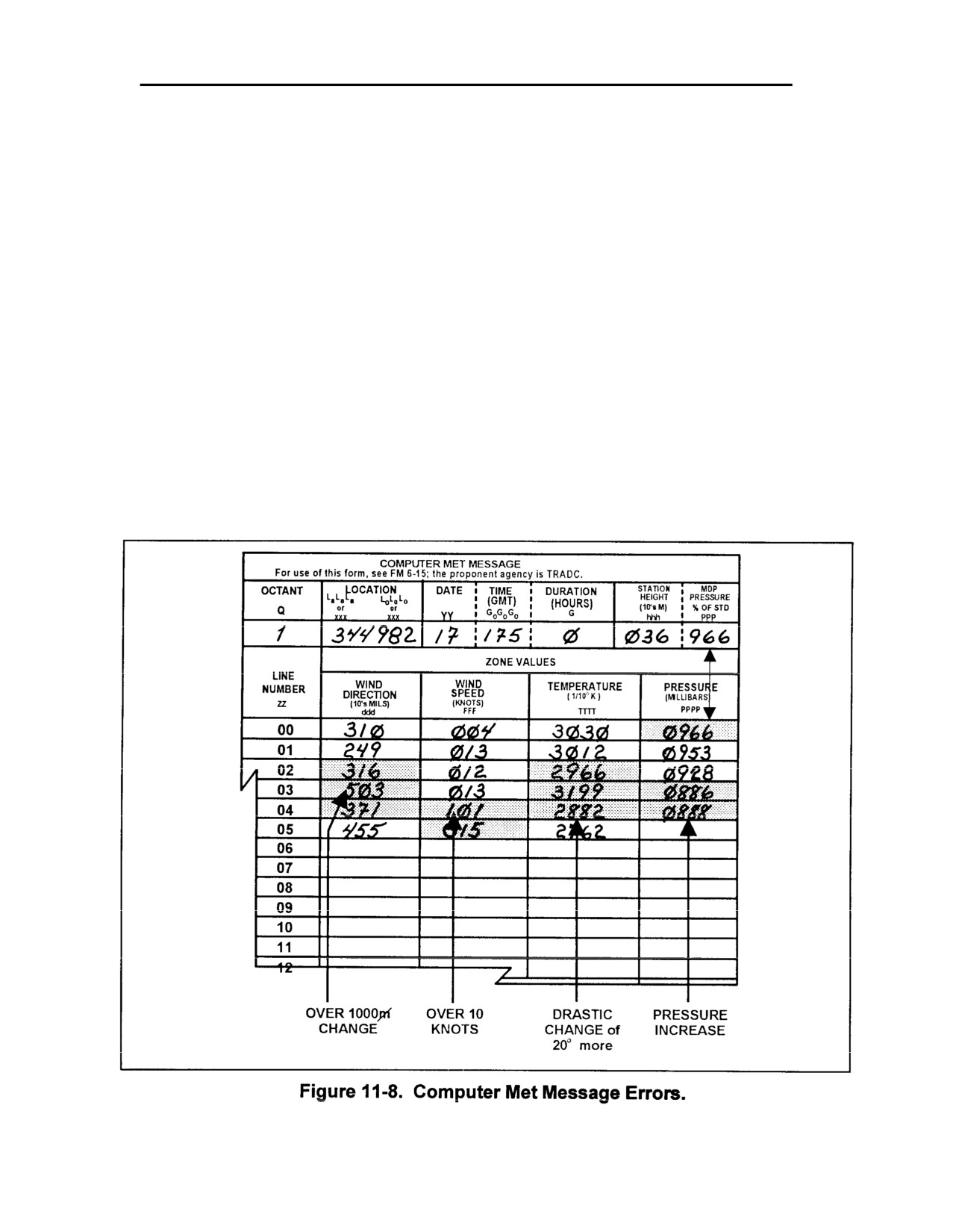
e. Check for errors in the computer met message as follows: (See Figure 11-8.)
(1) Question drastic wind direction changes (1,000 mils or greater) or sudden
reverses of wind direction from line to line, particularly if wind speeds are more than 10 knots.
Direction changes greater than 1,000 mils are-common when wind speeds are 10 knots or less.
11-13
FM 6-40
(2) Question severe increases or decreases (10 knots or greater) in wind speed from line
to line.
(3) Question a severe increase or decrease (over 20°K) in temperature from line to line.
(4) Check for differences in identification line pressure and surface pressure; both
should match.
(5) Check for increases in pressure. Pressure should decrease smoothly from line to
line. Pressure will never increase with height.
11-7. Met Message Space and Time Validity
a. Space Considerations. The accuracy of a met message may decrease as the distance
from the met sounding site to balloon and sensors increases. Local topography has a pronounced
effect on the distance that met data can reasonably be extended. In mountainous terrain, distinct wind
variations occur over short distances. This effect extends to much greater heights than the mountain
tops. Large bodies of water affect both time and space considerations of the met message because of
the land and sea breezes and the effect of humidity on density. It would be impossible to compute an
exact distance for every combination of weather and terrain. Met messages for artillery are considered
valid up to 20 kilometers (km) from the balloon release point (met section). The validity distance
decreases proportionately with the roughness of the terrain and the proximity of large bodies of water.
b. Time Consideration. The passage of time may decrease the accuracy of a message
because of the changing nature of weather. With existent equipment, the artillery met section has
difficulty in providing met messages more often than every 2 hours over an extended period of
time. There are no specific rules for determining the usable time, since that determination
depends on the following:
Characteristics of the atmosphere.
Periods of transition.
Met section movement.
Personnel.
Supplies and equipment.
Altitude of the met message (line number) required by the artillery firing units.
When the weather pattern is variable, the usable time is variable. If a frontal passage is forecast
for the area, the met section will take a new sounding after passage of the front. When the
weather pattern is stable and is forecast to remain so, time between messages may be extended to
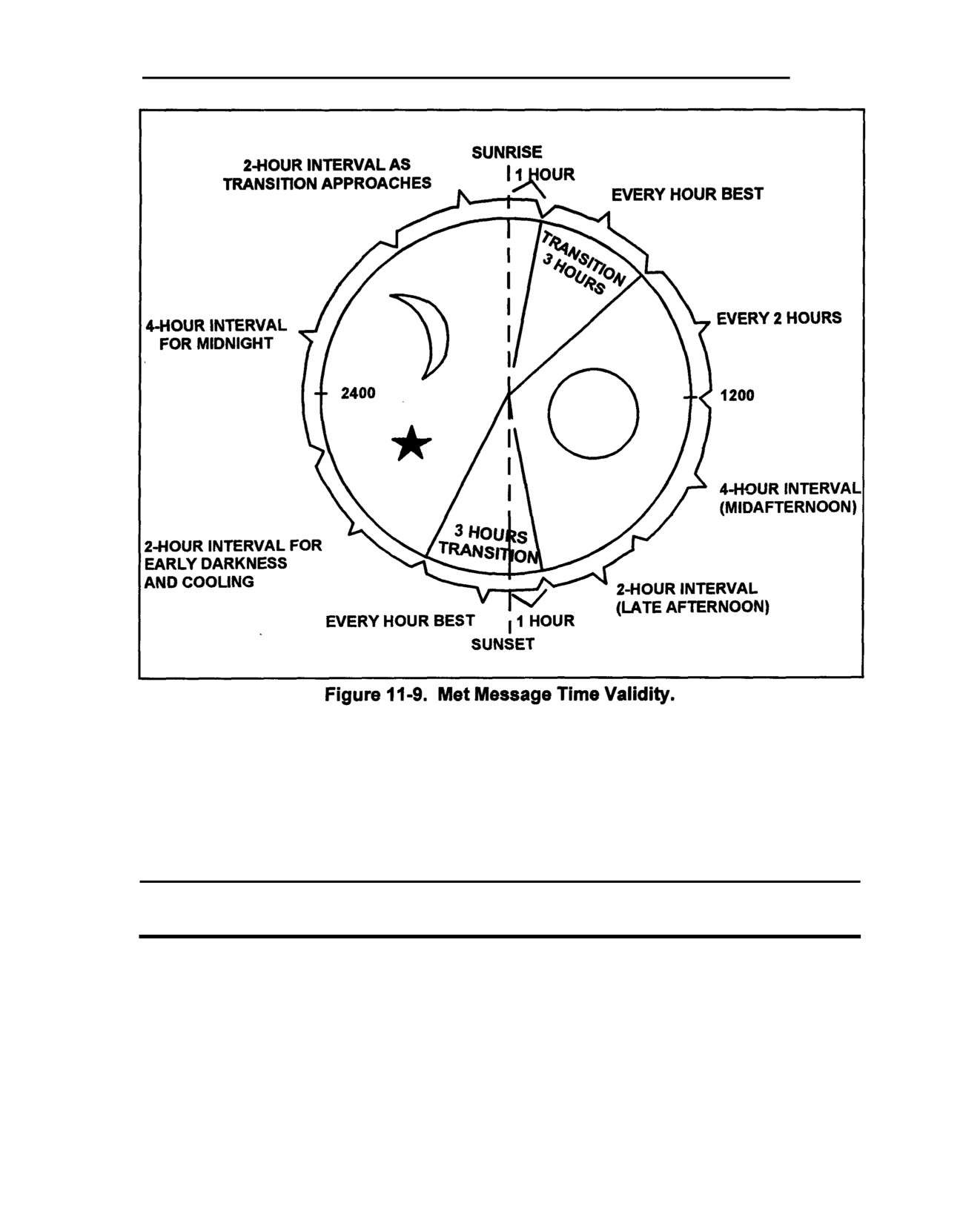
several hours or longer, depending on the time of day and existing weather conditions. (See
Figure 11-9.)
c. Criteria for Use of Met Data. Results of many studies that are based on artillery
firing and met data show that the order of preference of various sources of met data is as shown
in paragraphs (1) through (3) below. A current met message is one that is less than 2 hours old
unless an exchange of air mass has occurred since the met message was produced or unless
periods of transition are involved.
(1) Current met message from a station within 20 kilometers of the midpoint of the
trajectory (upwind is best).
11-14
FM 6-40
(2) Current met message from the nearest station up to 80 kilometers from the
midpoint of the trajectory. A 4-hour old met message may be used except when day-to-night
transitions or frontal passages are occurring.
(3) Met messages over 2 hours old but from a station within 20 kilometers of the
midpoint of the trajectory. A 4-hour-old met message may be used except when day-to-night
transitions or frontal passages are occurring.
Section II
Concurrent Met Technique
A concurrent met is solved to isolate position constants. To perform a
concurrent met technique, the firing unit must have total corrections determined
from a registration and the met conditions that were valid at the time of the
registration. Met corrections are determined and then subtracted from the total
corrections to isolate position constants. Any errors in the met corrections and
total corrections will be contained in the position constants. Every effort must be
made to obtain the most accurate met corrections available.
11-15
FM 6-40
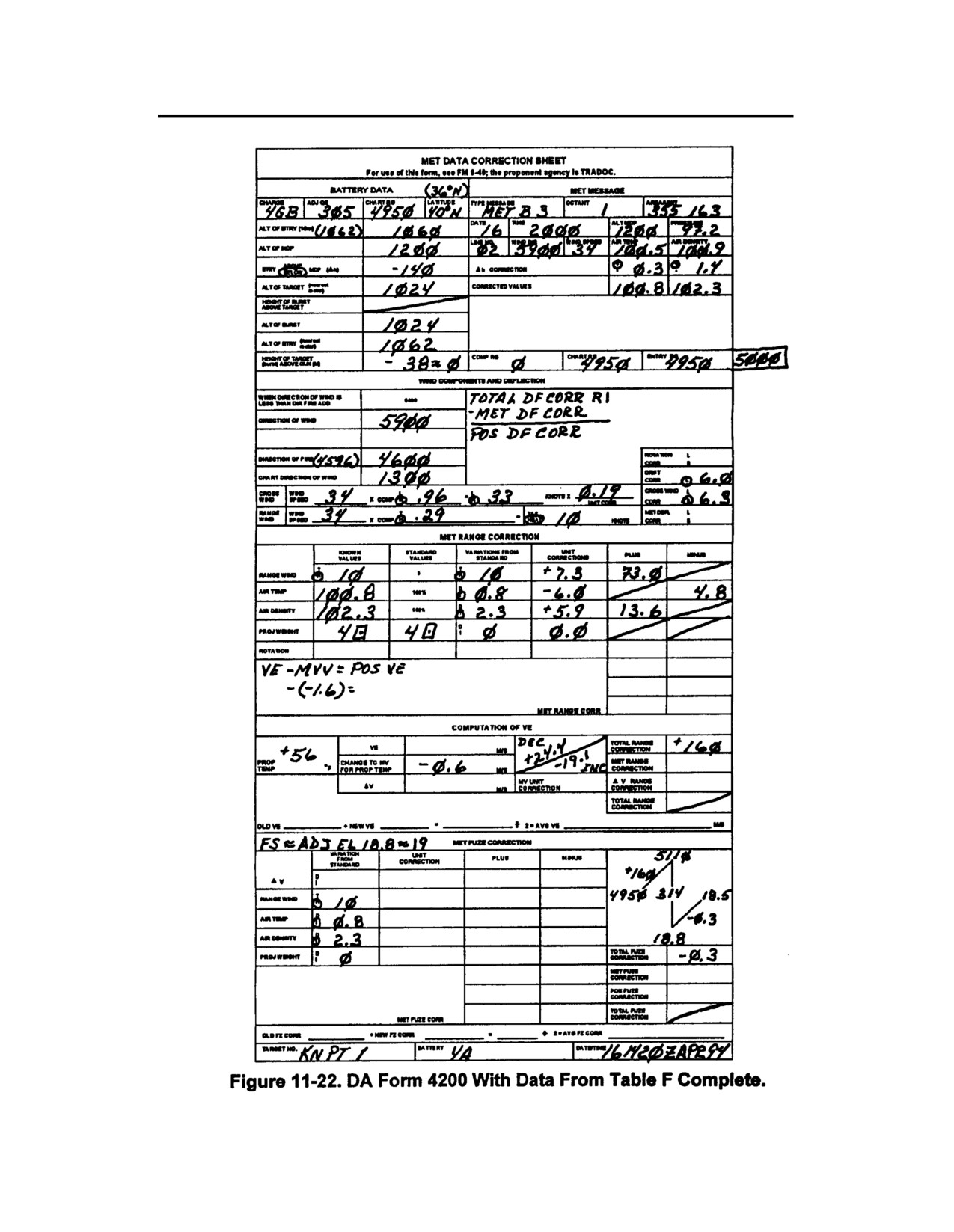
11-8. DA Form 4200
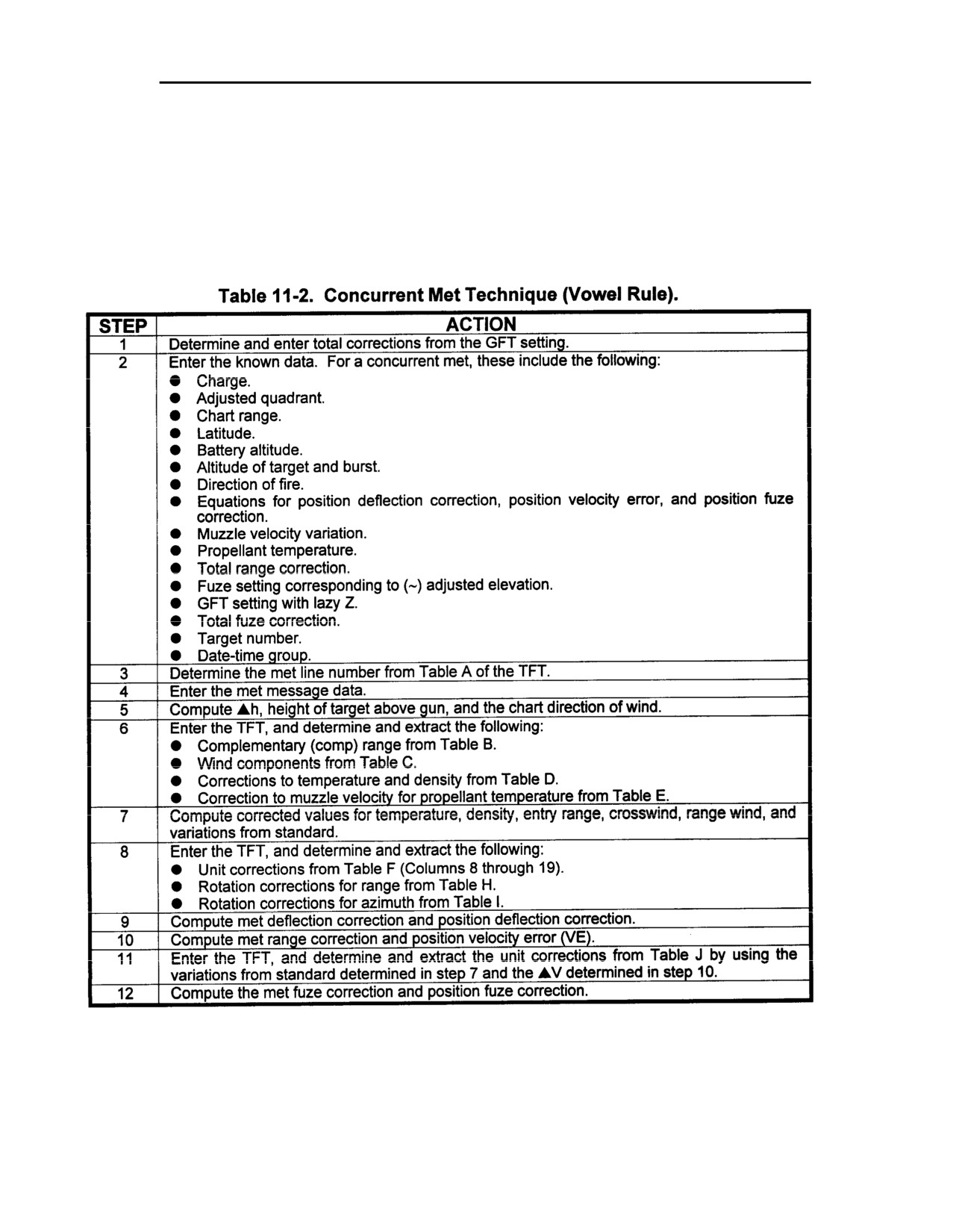
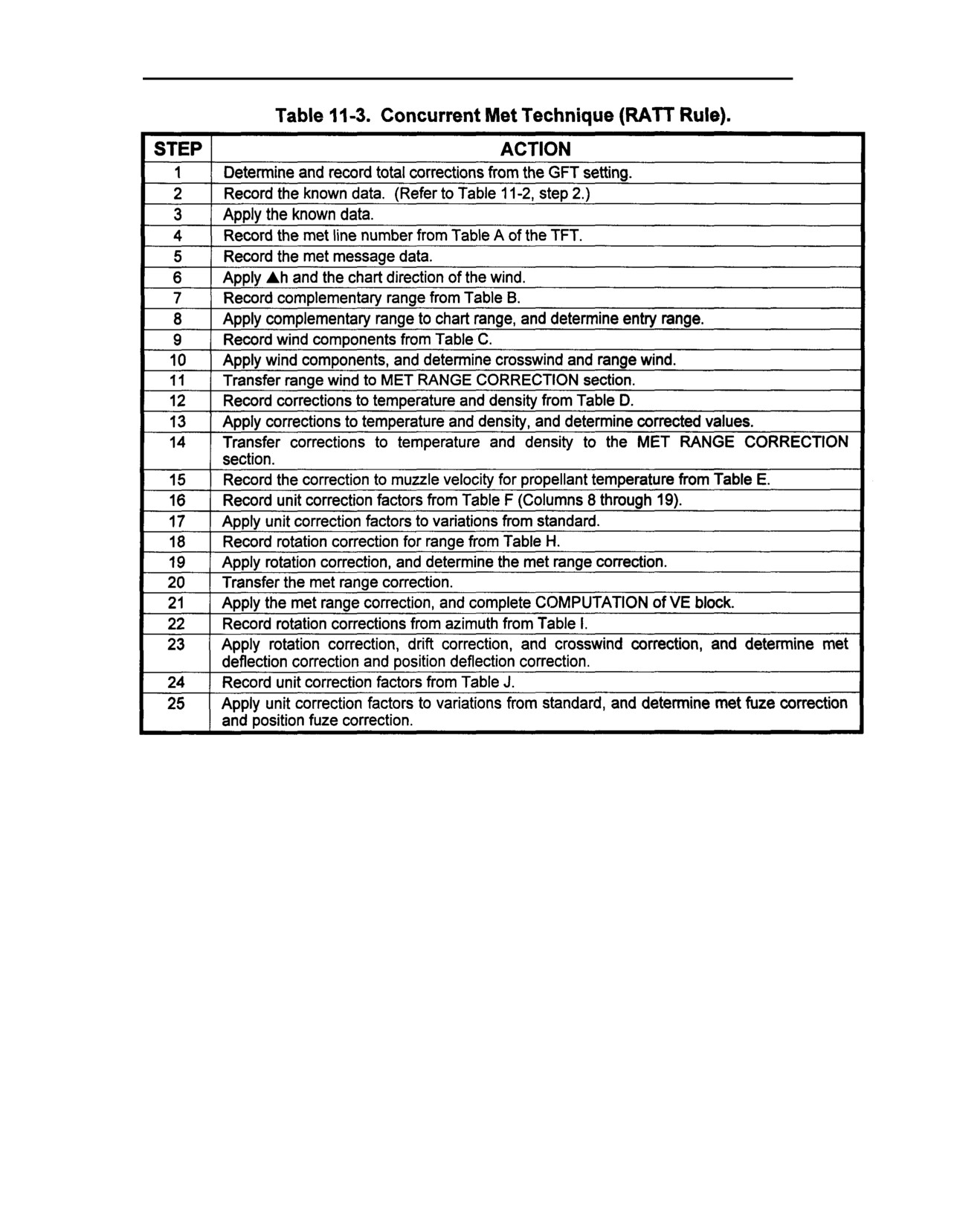
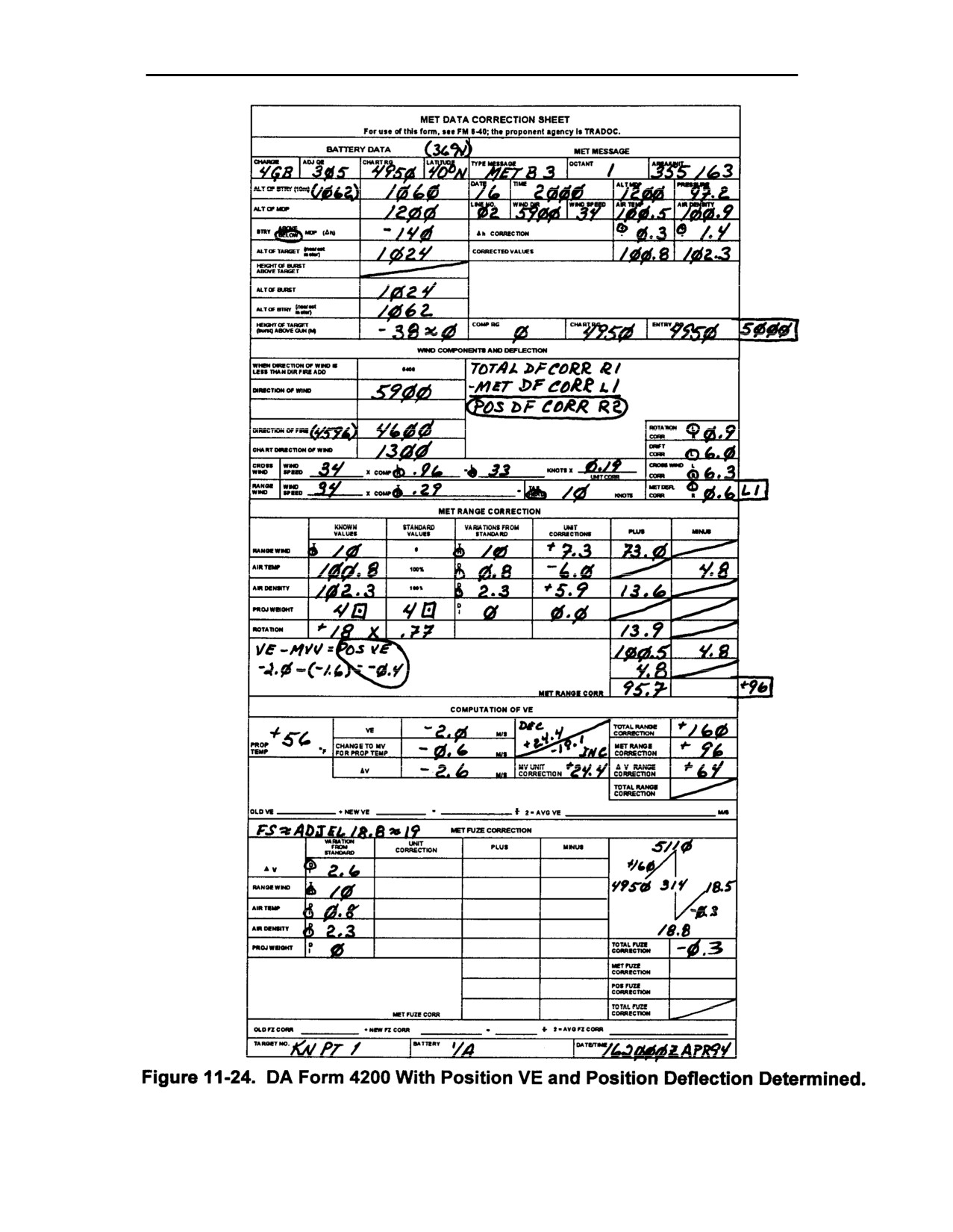
The concurrent met technique is solved on DA Form 4200. There are two methods to solve a
concurrent met technique. The first is the vowel rule. This follows the sequence of the tables in the
TFT, and computations are completed after extracting data from a vowel table. Table 11-2 provides
the abbreviated steps for this method. The second is the RATT rule. RATT is an acronym for record,
apply, transfer, tables. This also follows the sequence of the tables in the TFT, but computations are
completed after extracting data from each table. Table 11-3 provides the abbreviated steps for this
method.
11-16
FM 6-40
11-9. Solution of a Concurrent Met
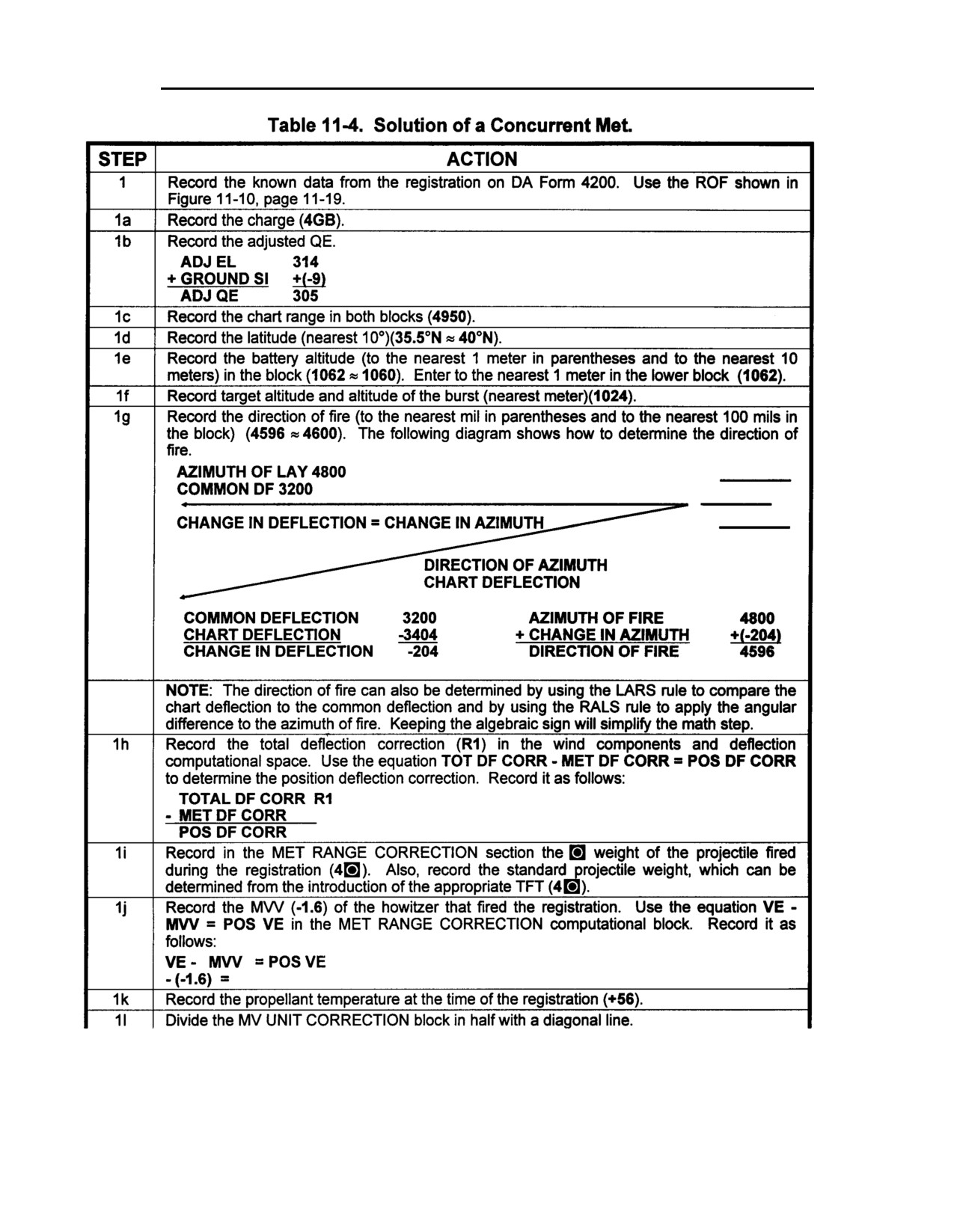
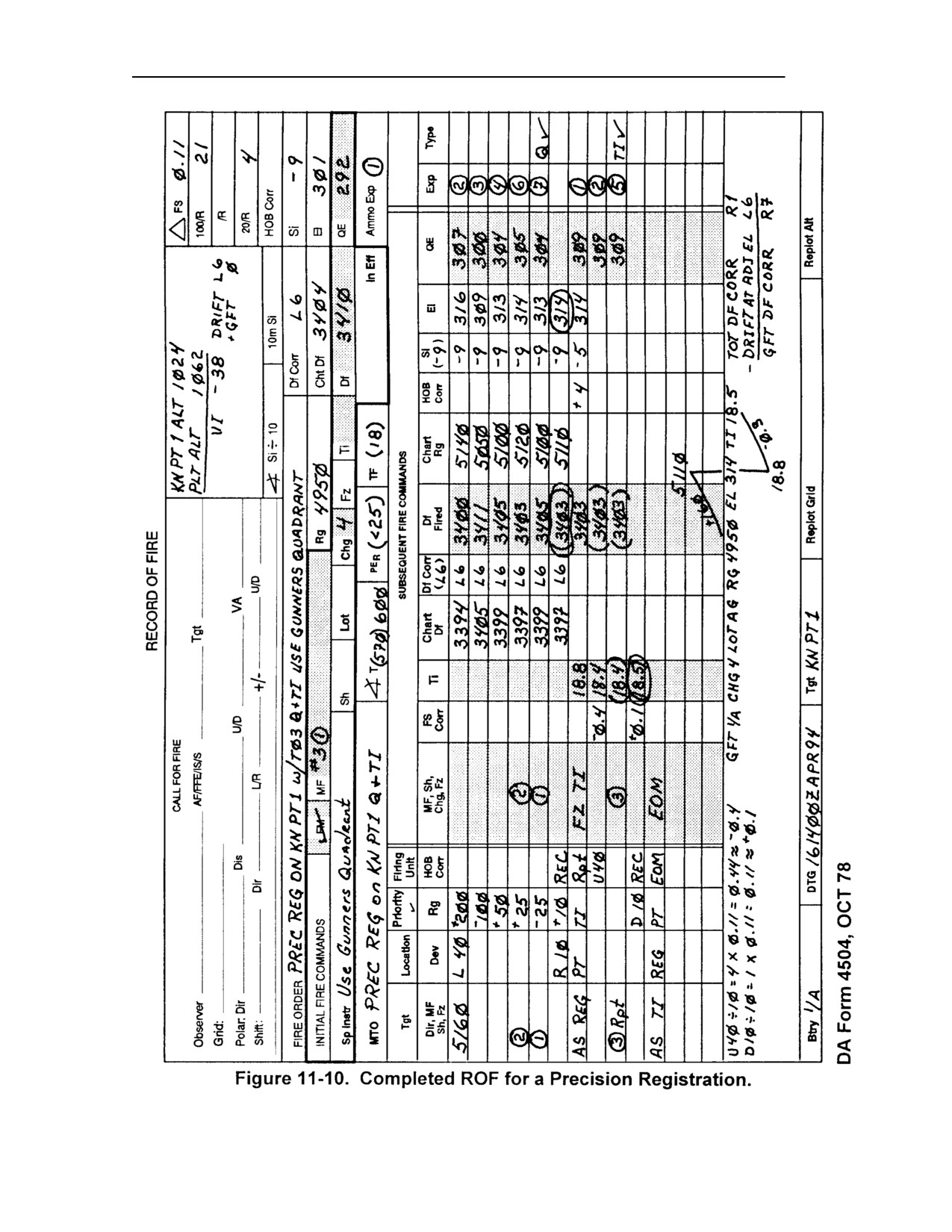
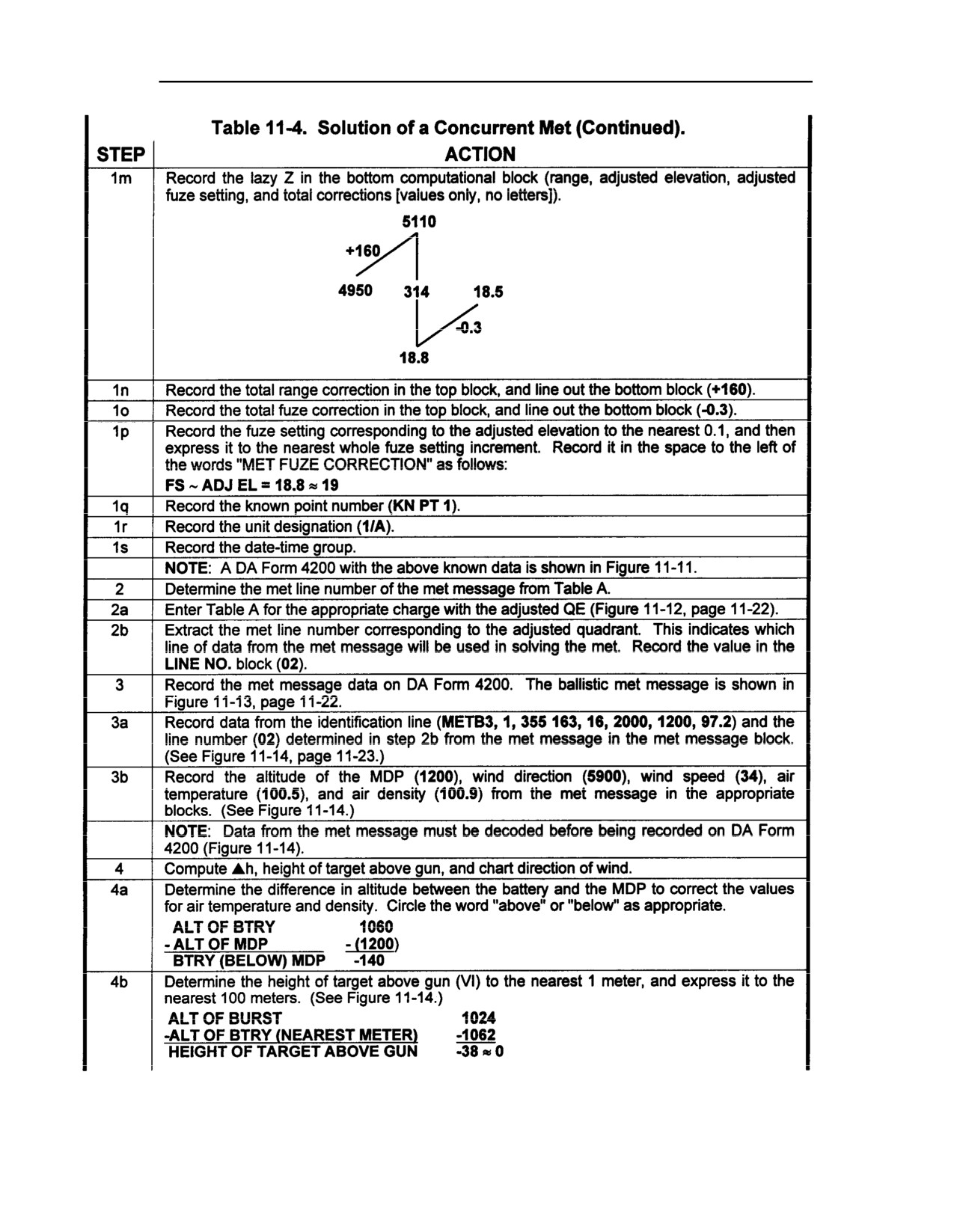
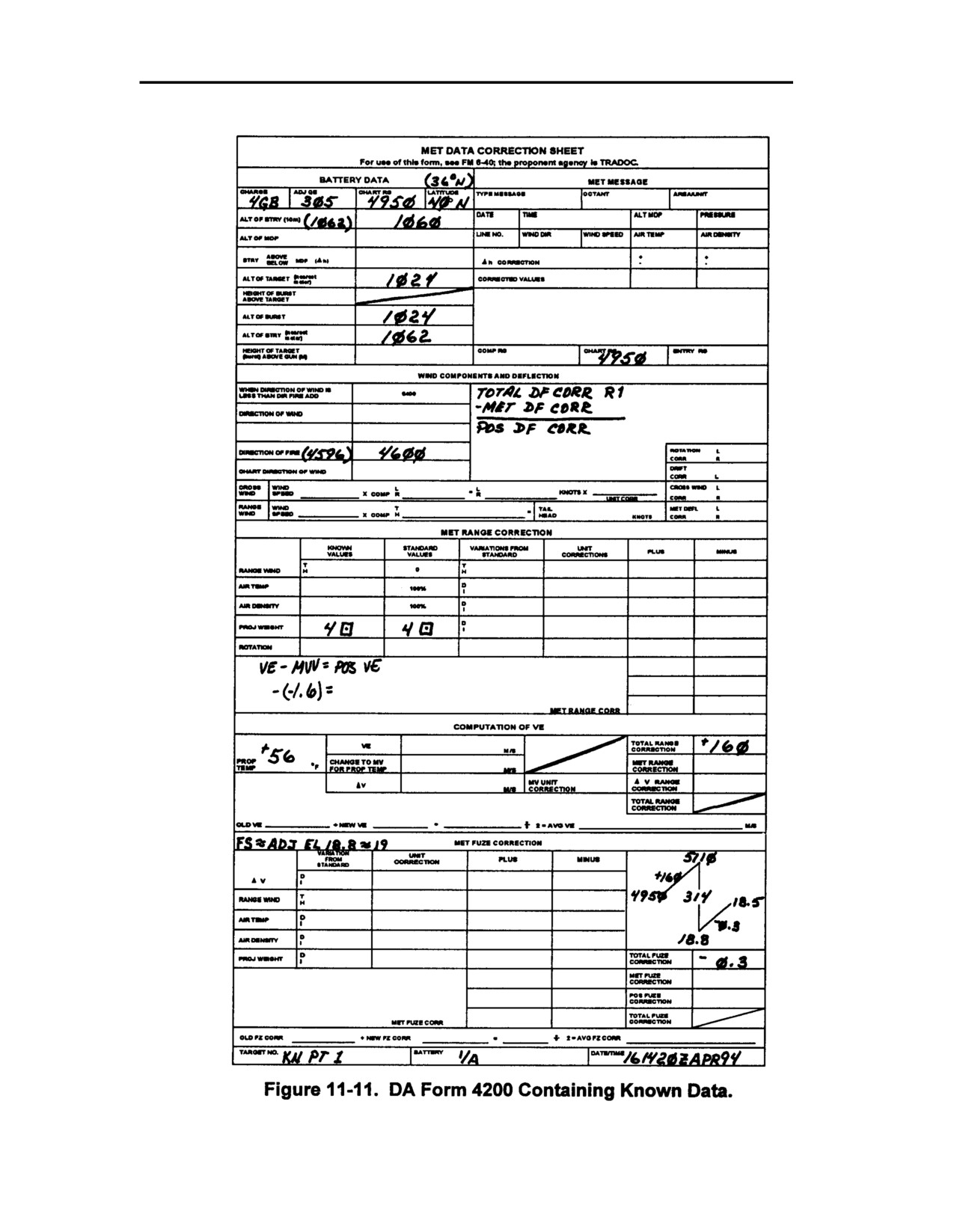
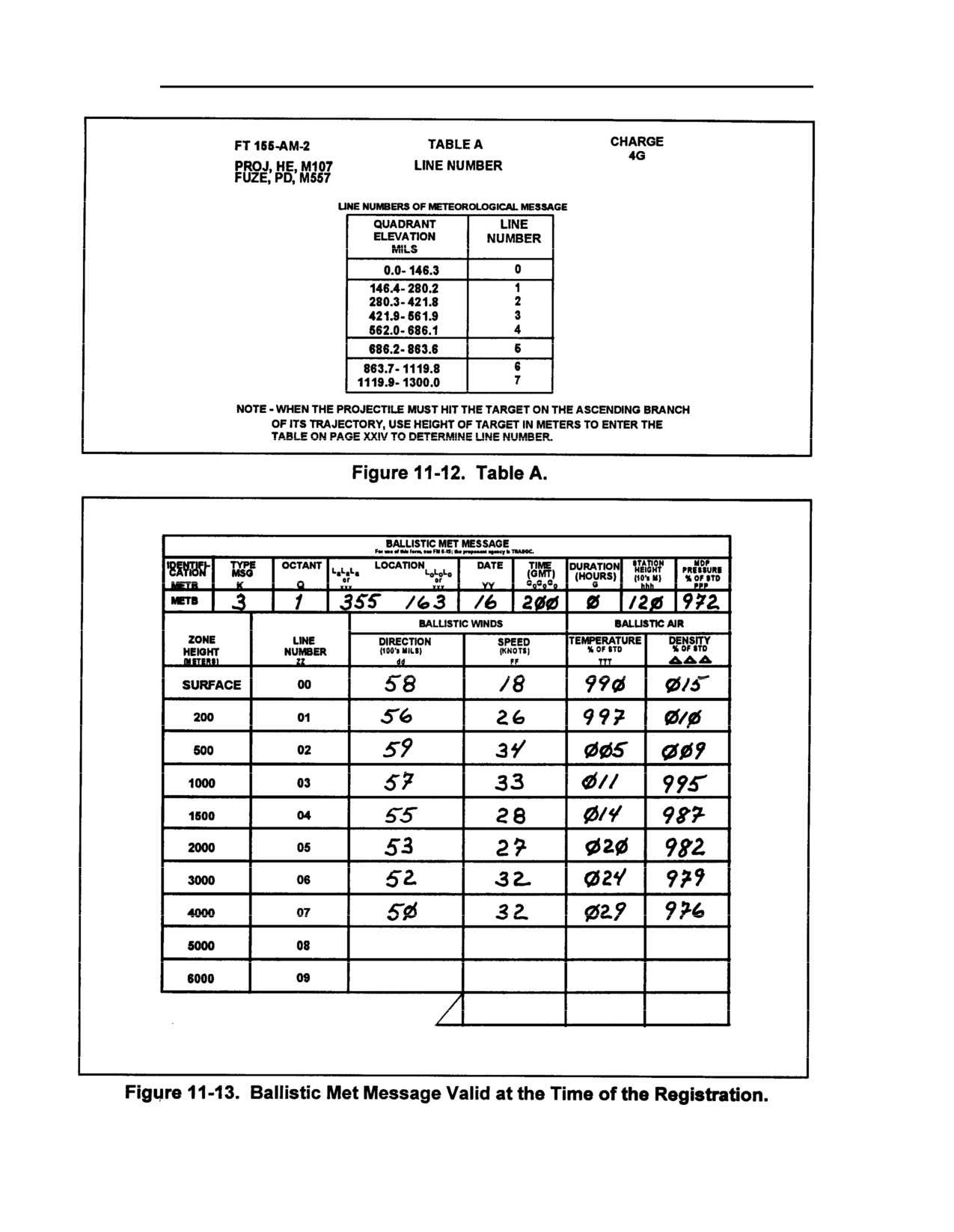
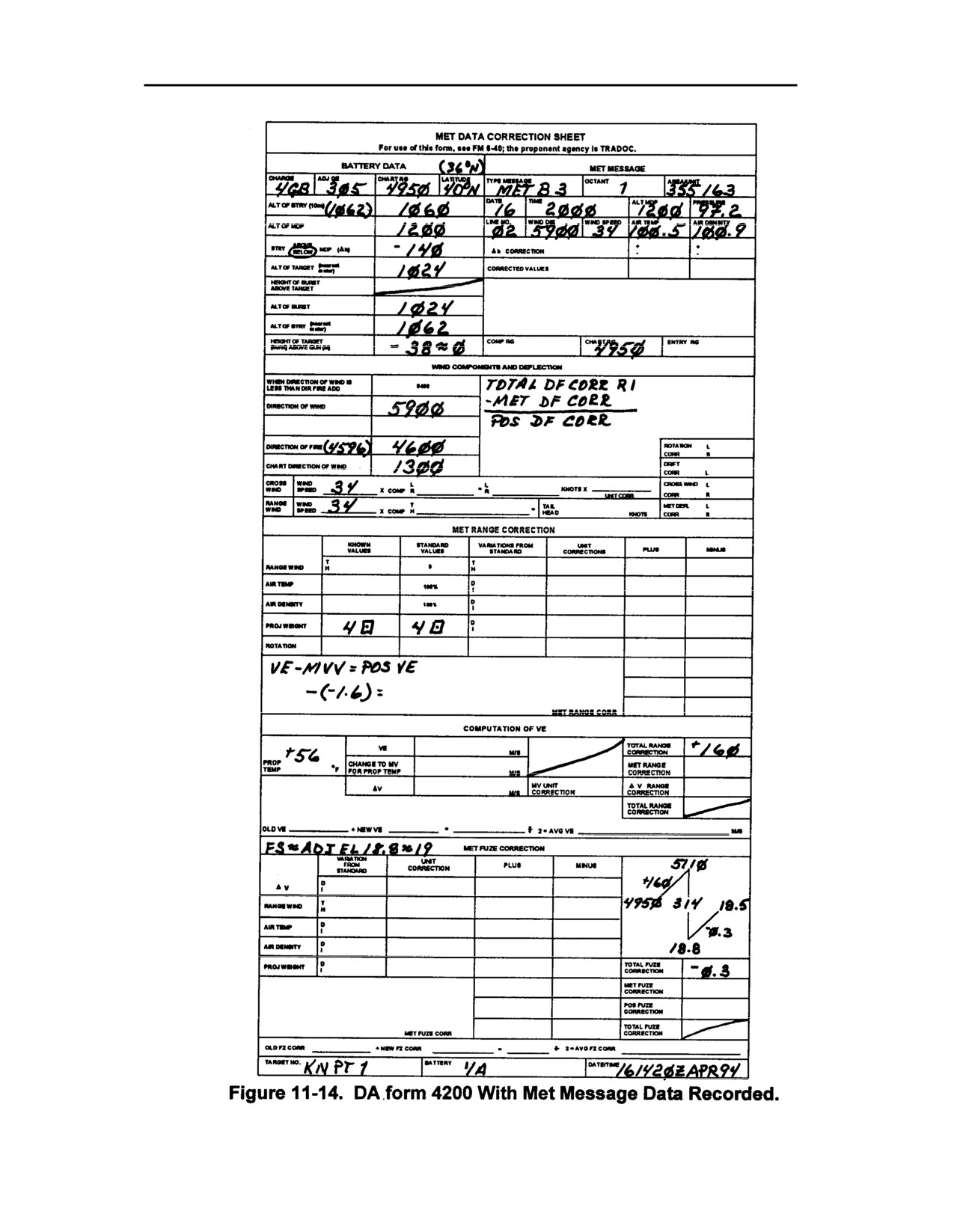
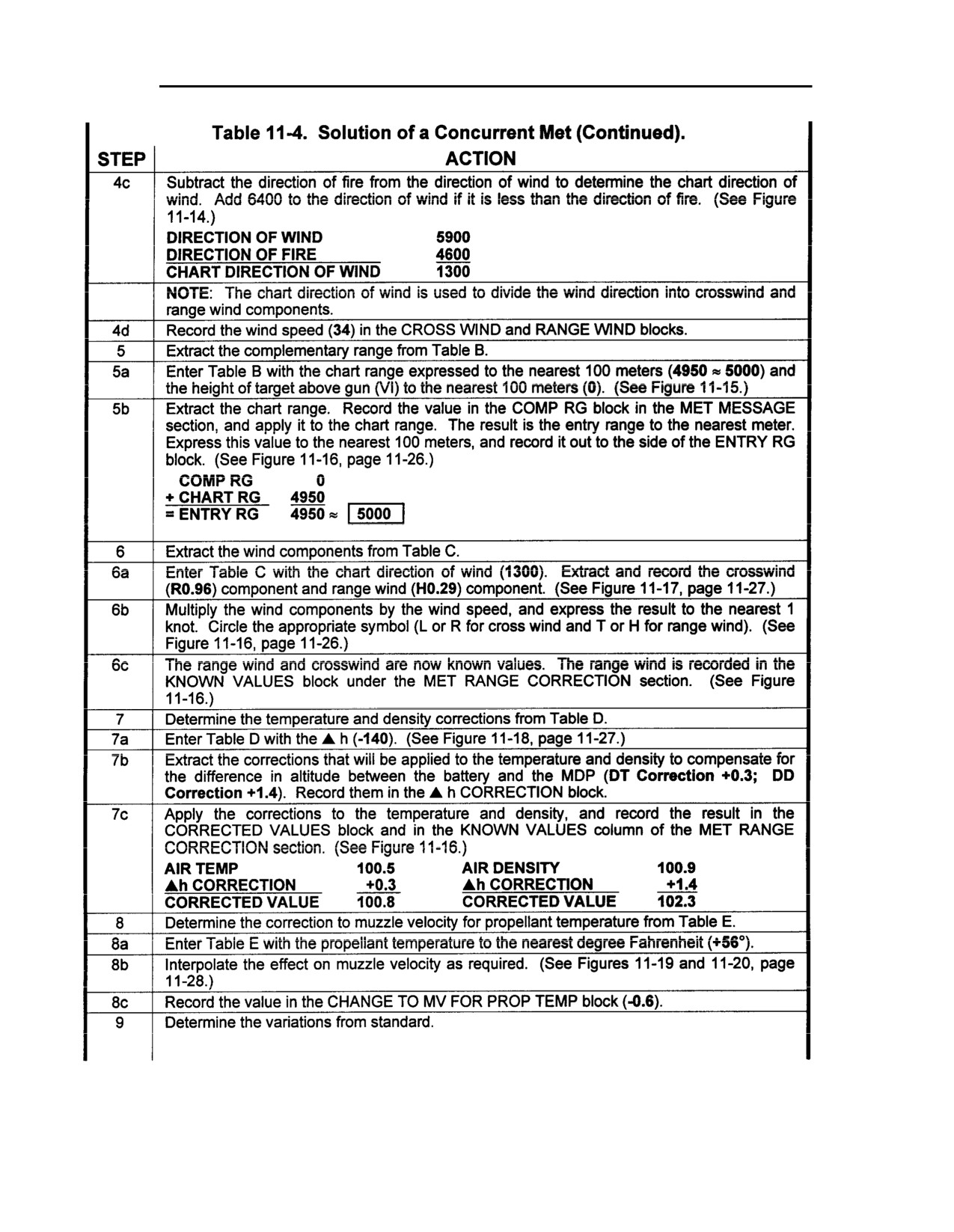
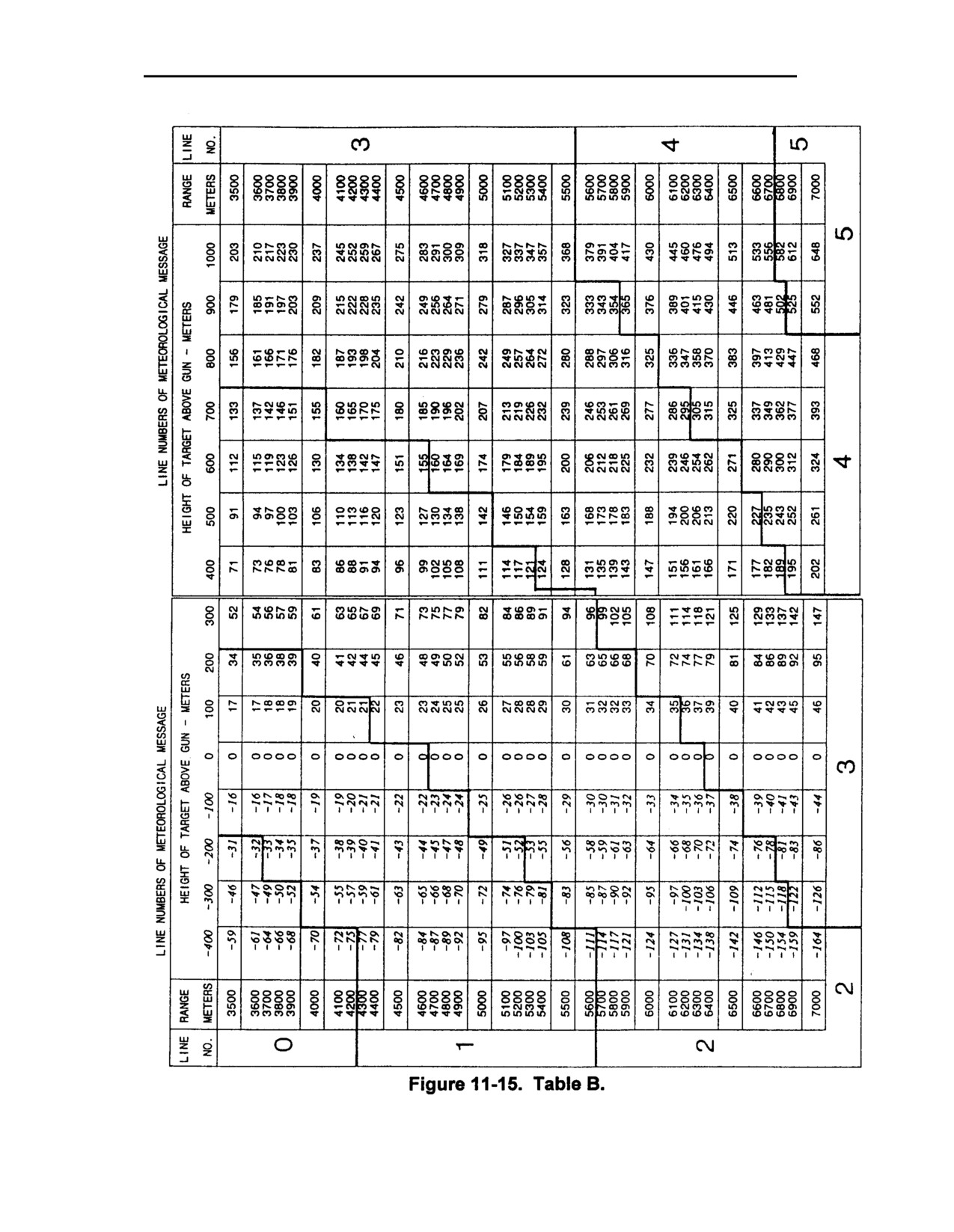
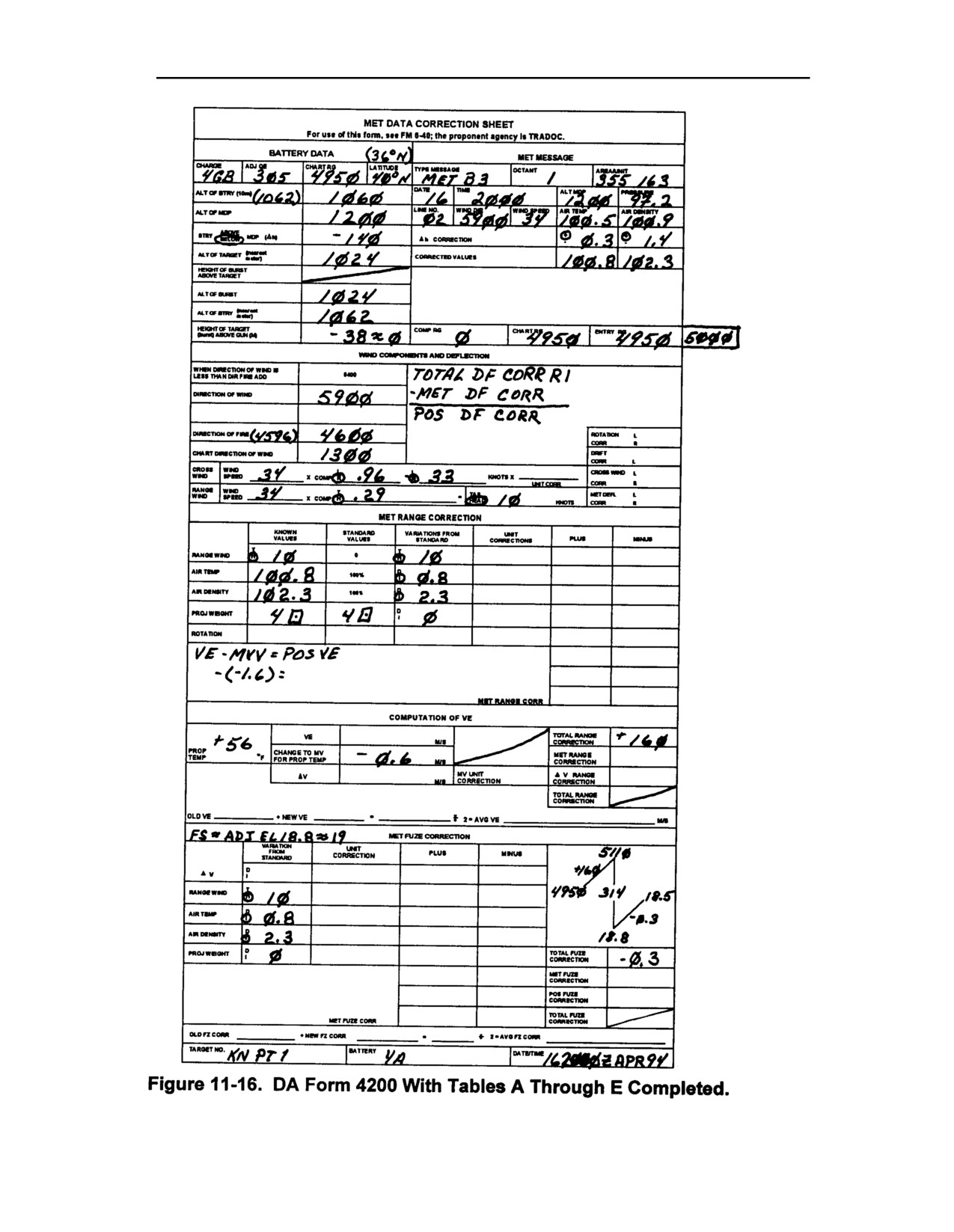
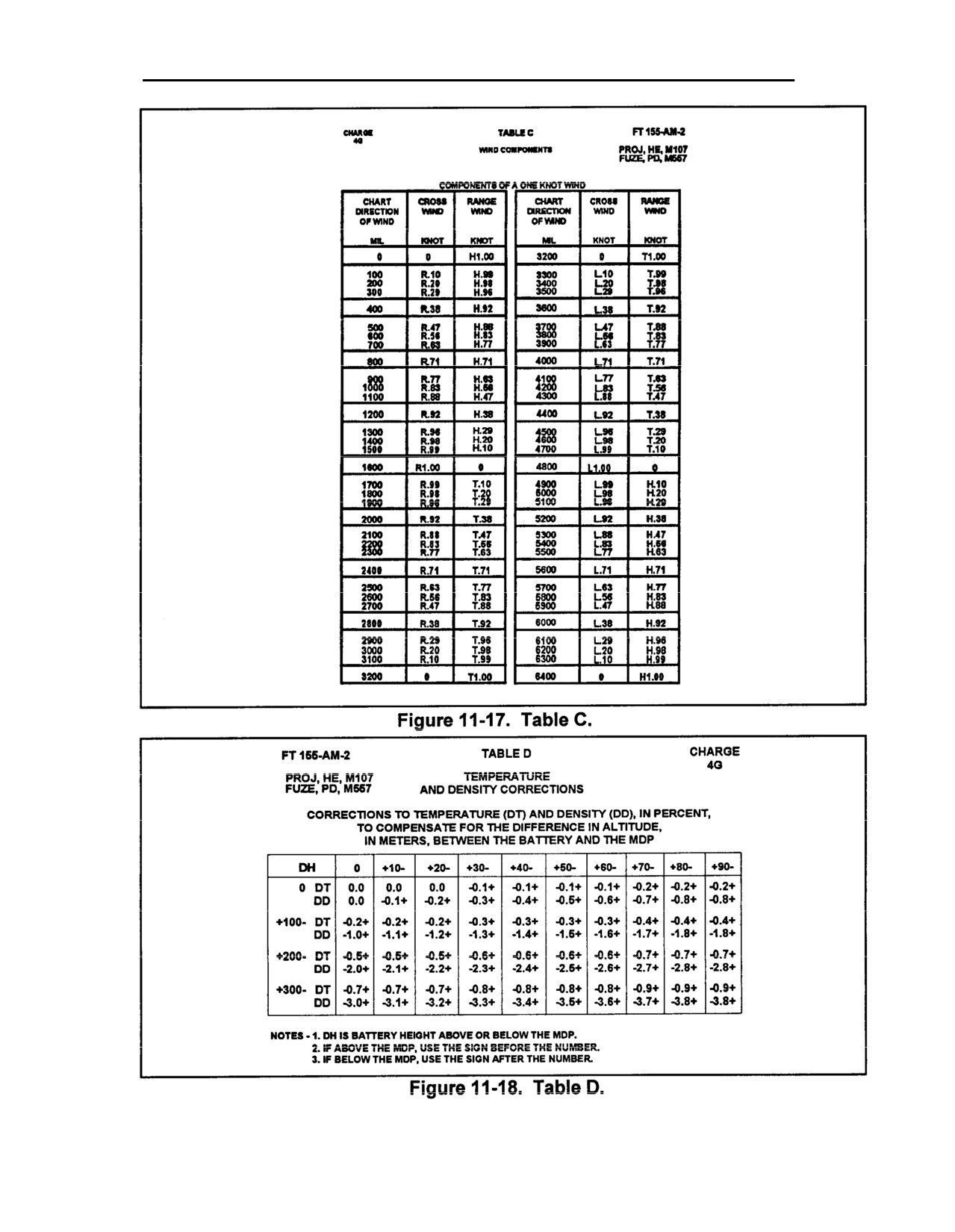
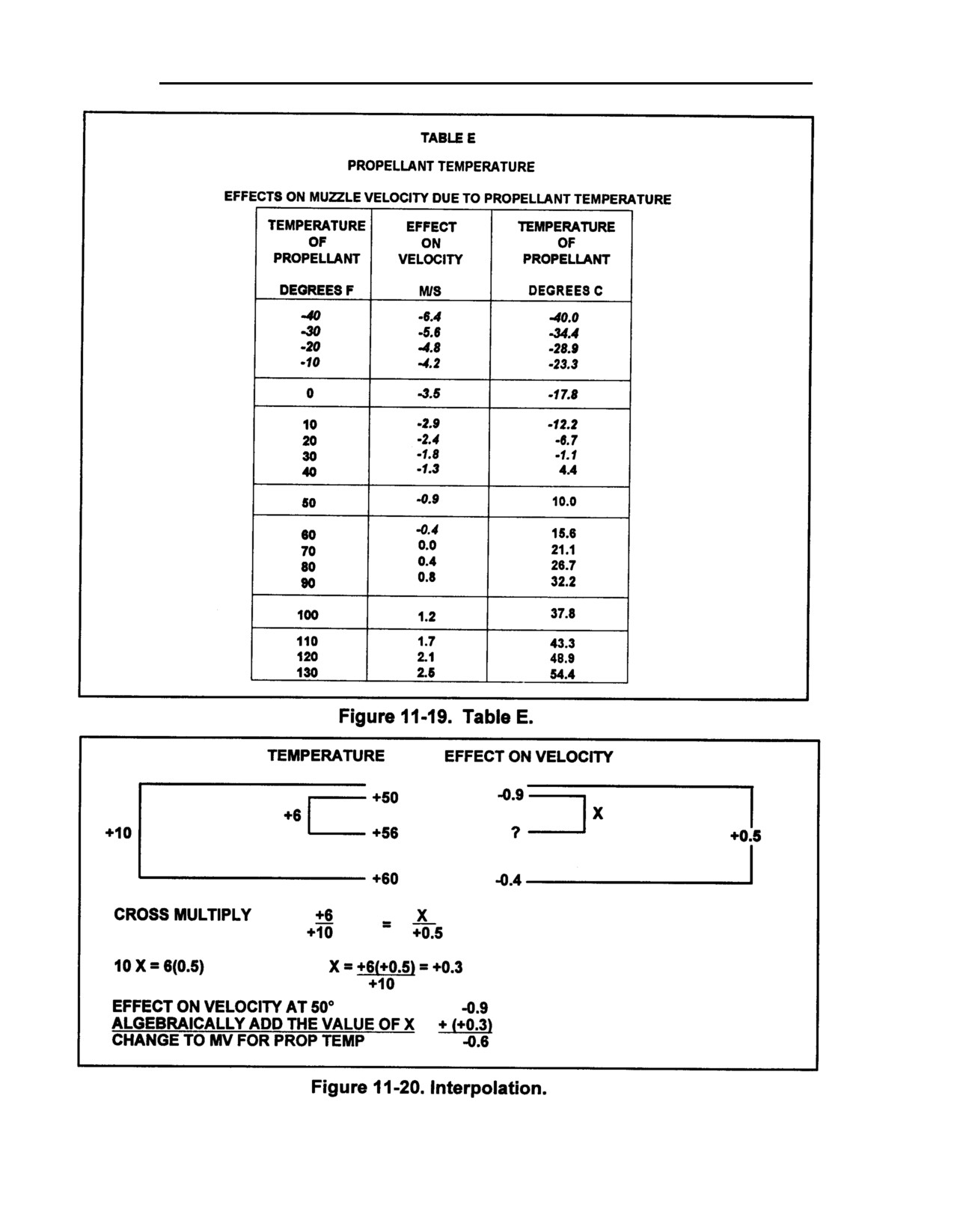
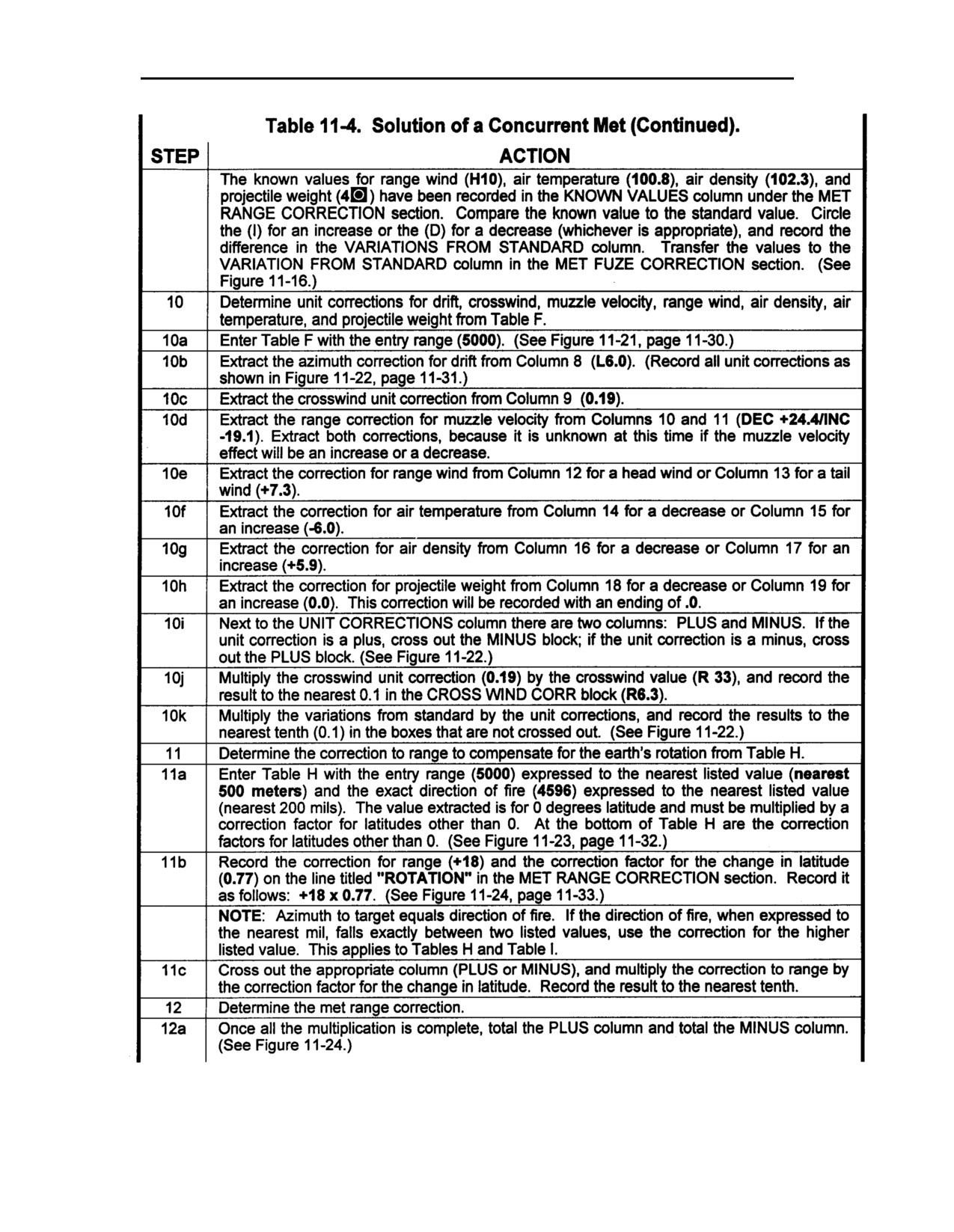
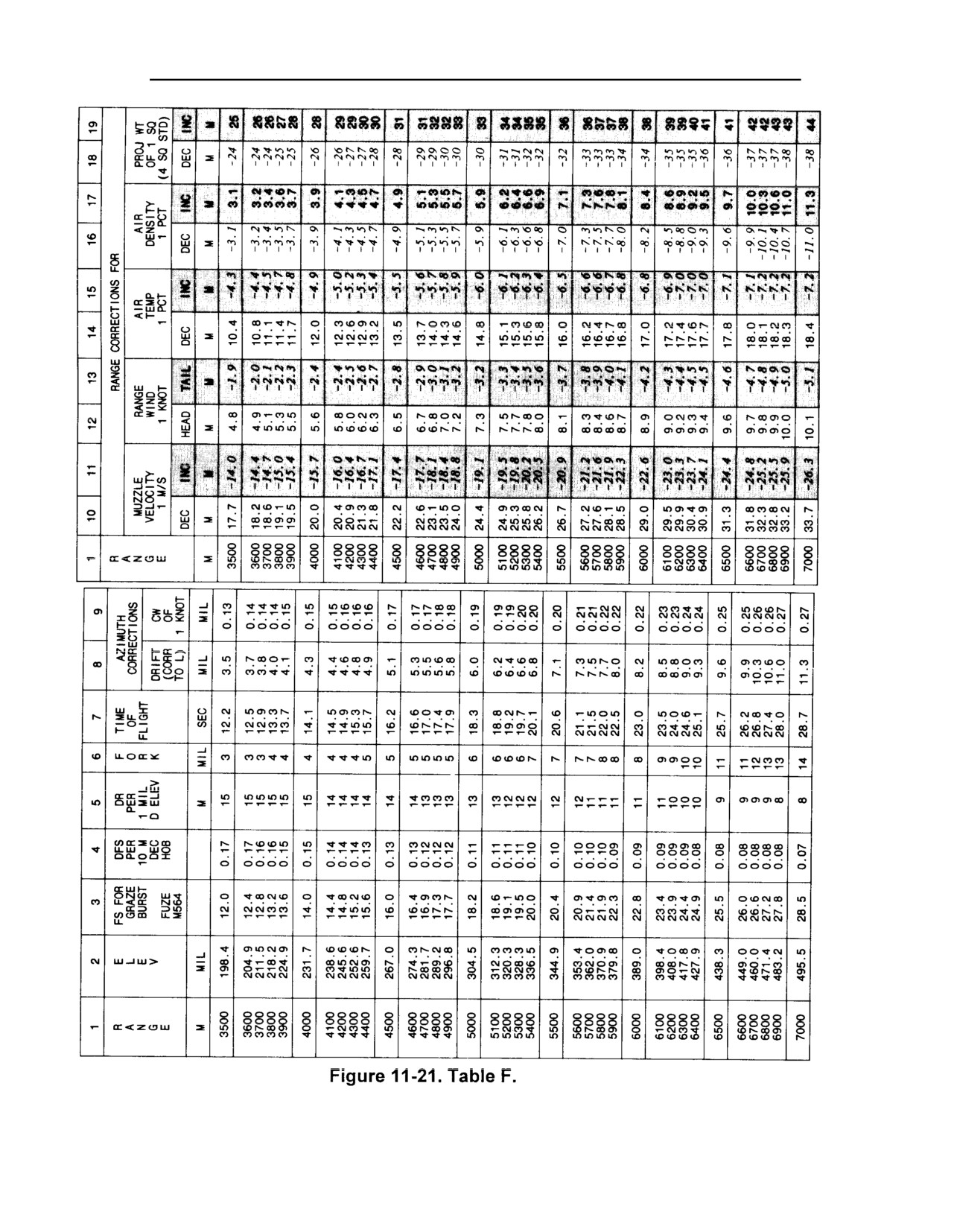
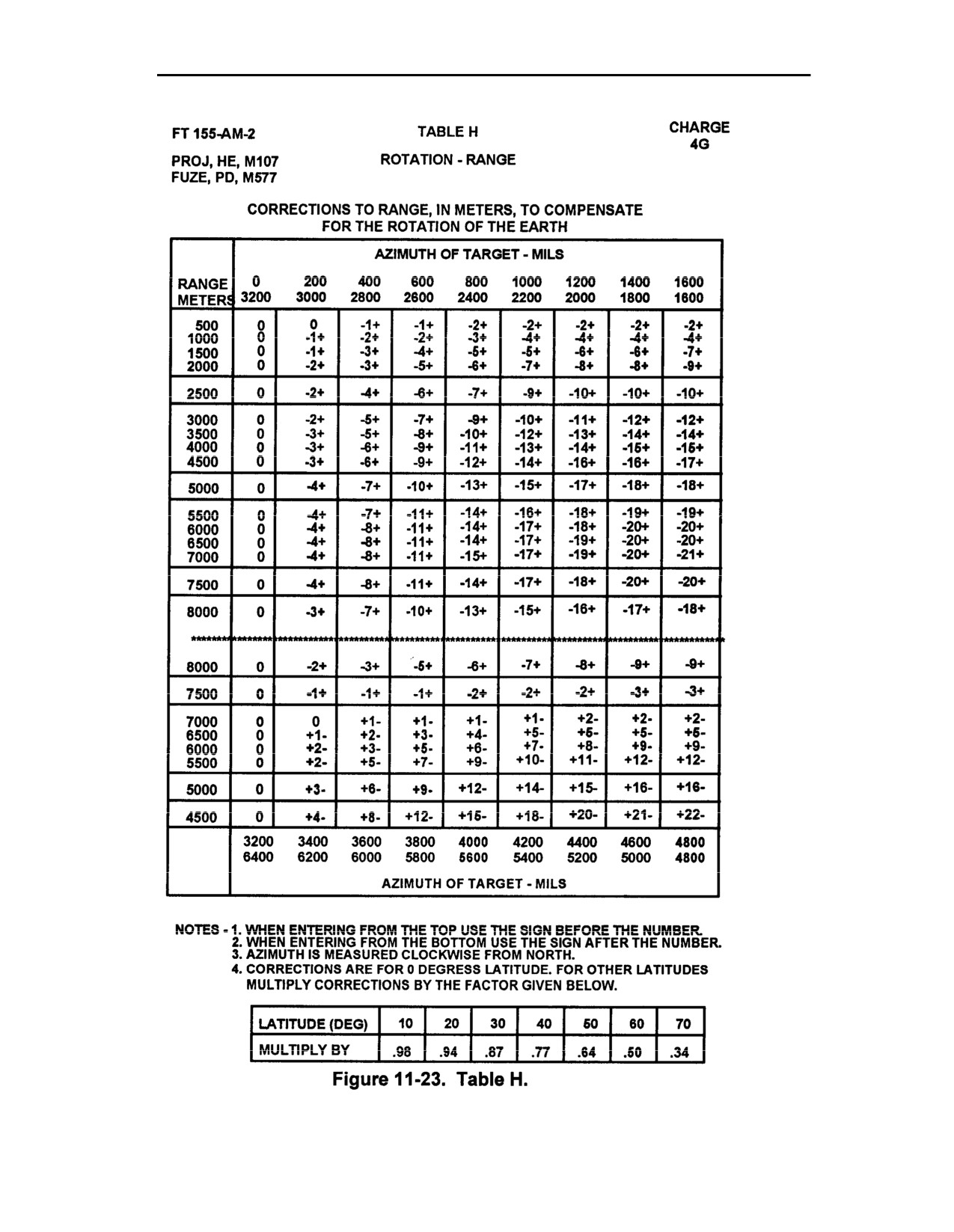
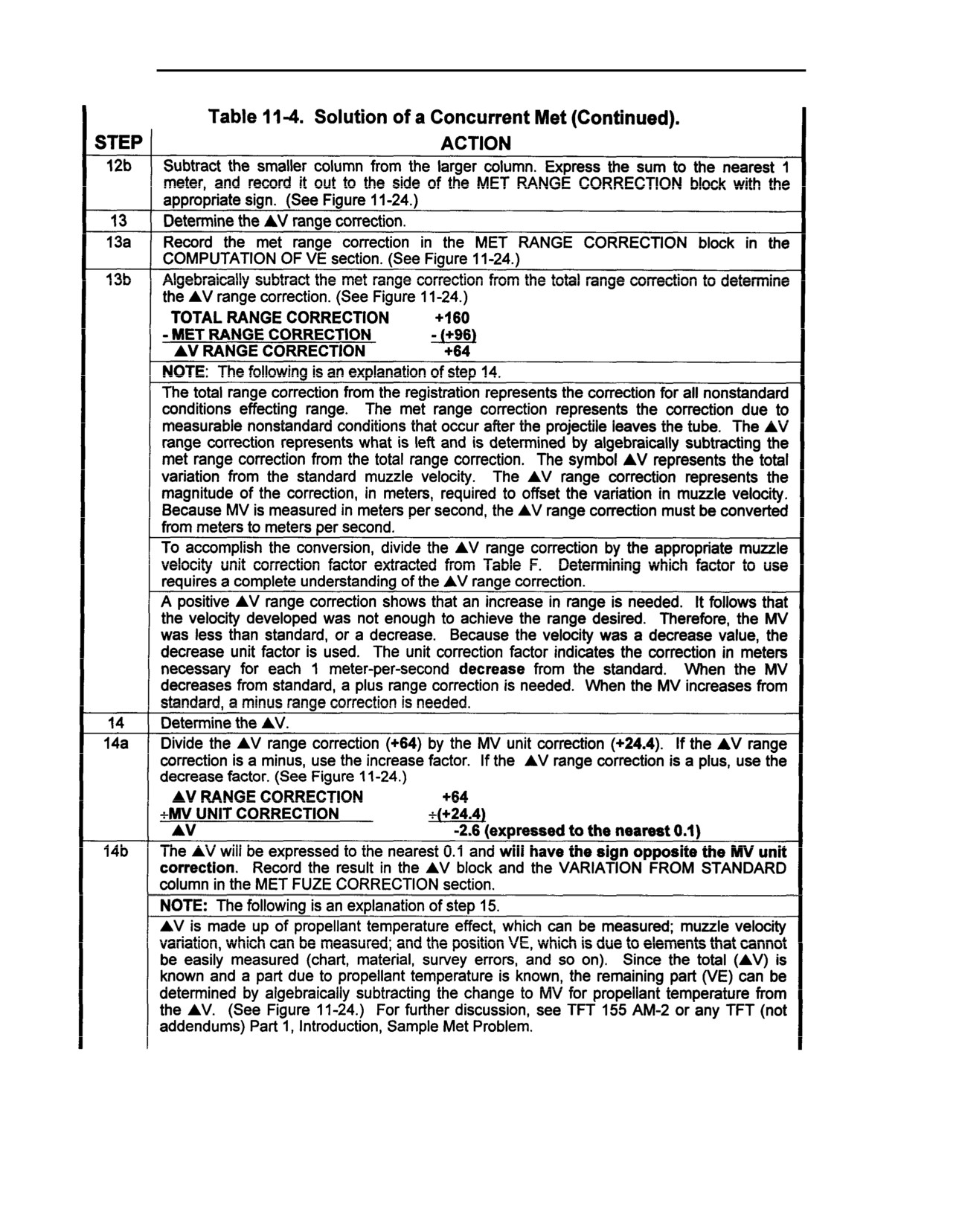
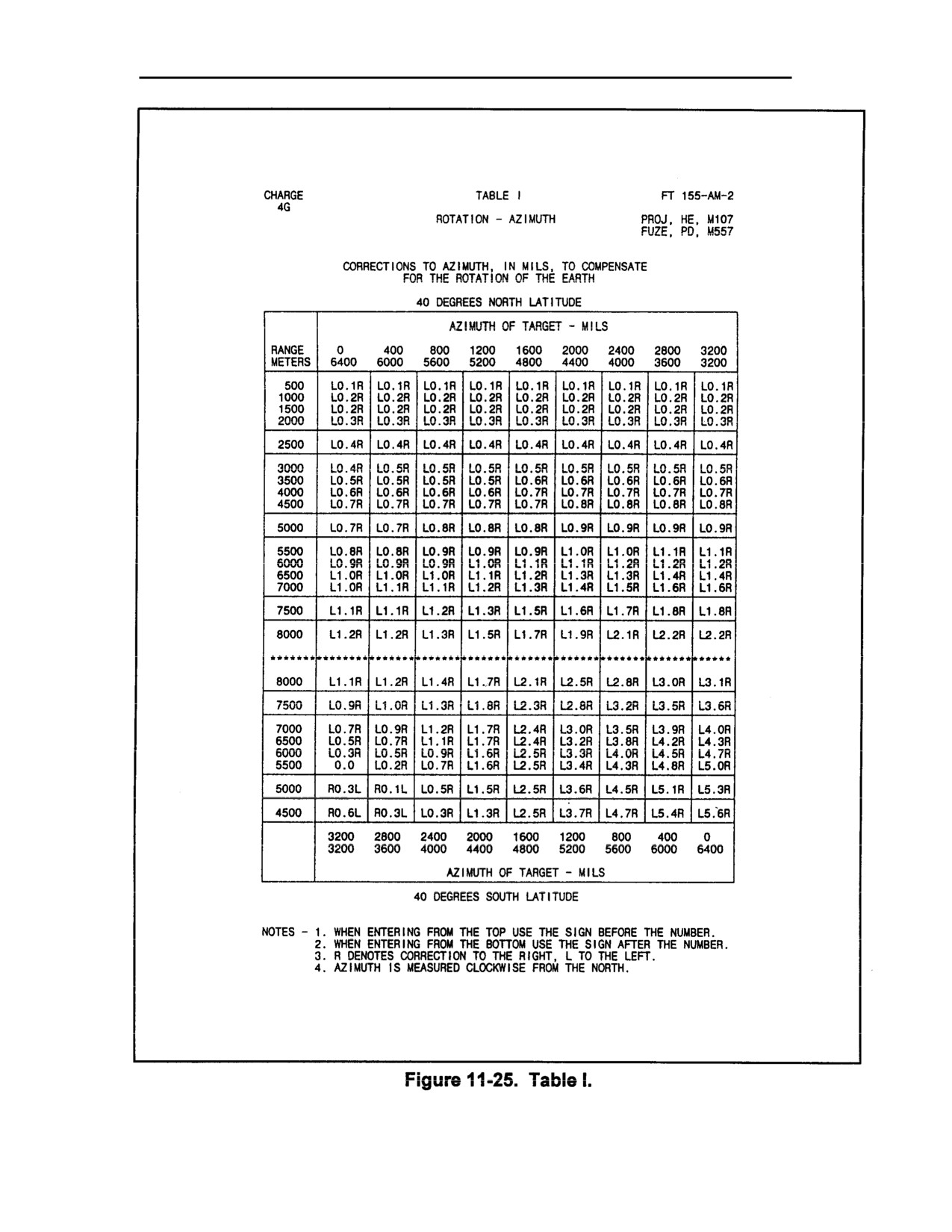
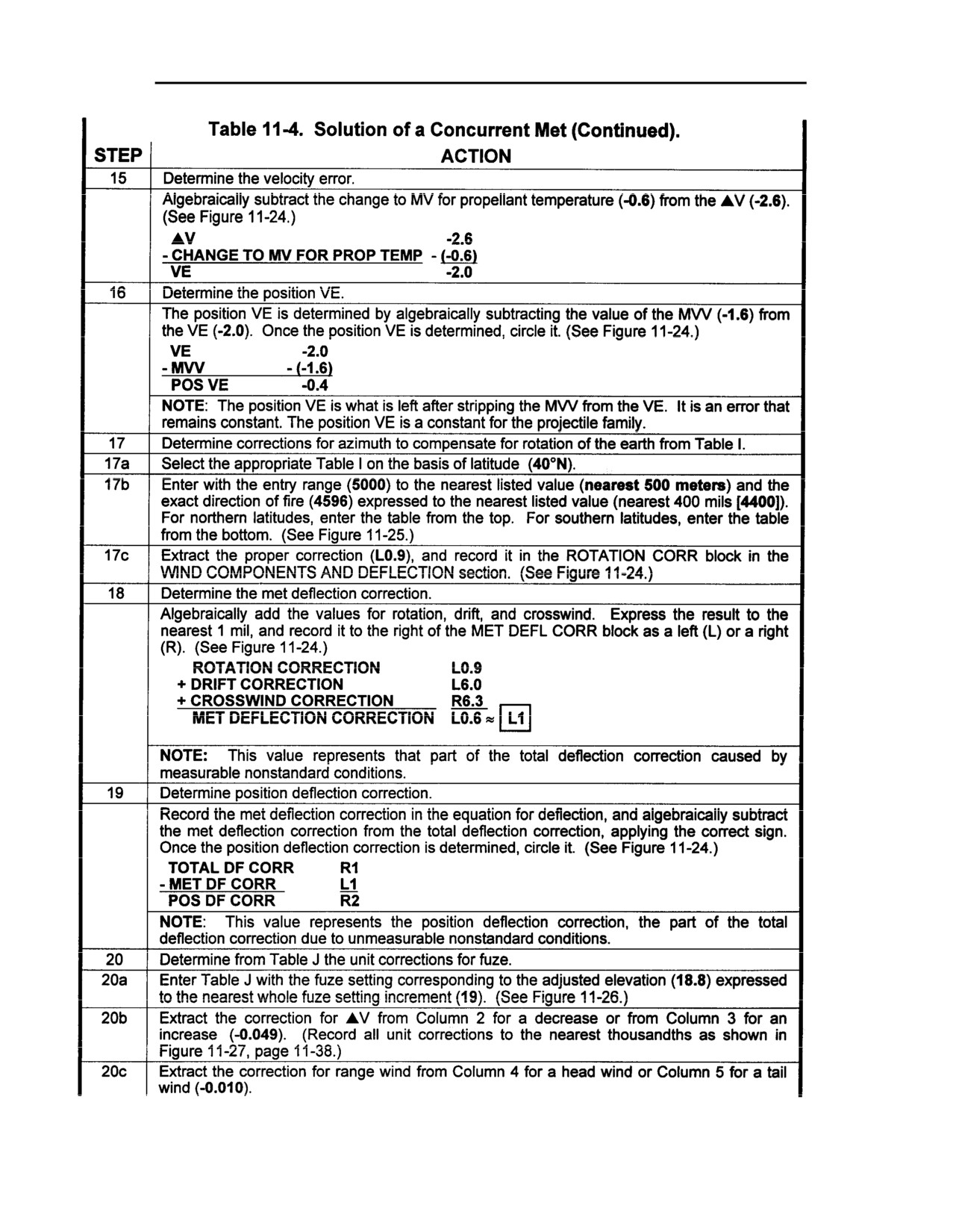
Table 11-4 shows a detailed solution of a concurrent met using the RATT rule. The
example uses the data shown in Figure 11-10.
11-17
FM 6-40
11-18
FM 6-40
11-19
FM 6-40
11-20
FM 6-40
11-21
FM 6-40
11-22
FM 6-40
11-23
FM 6-40
11-24
FM 6-40
11-25
FM 6-40
11-26
FM 6-40
11-27
FM 6-40
11-28
FM 6-40
11-29
FM 6-40
11-30
FM 6-40
11-31
FM 6-40
11-32
FM 6-40
11-33
FM 6-40
11-34
FM 6-40
11-35
FM 6-40
11-36
FM 6-40
11-37
FM 6-40
11-38
FM 6-40
Section III
Subsequent Met Technique
A subsequent met is computed to determine new total corrections. Total
corrections determined from a registration will remain valid only as long as the
met corrections do not change.
11-10. Overview
Whenever a met condition (weather, propellant temperature, projectile weight, or
propellant lot) changes, the GFT setting derived from the registration is no longer valid.
Registering every time one of the conditions changes is not feasible. To update registration
corrections, a subsequent met can be solved to quantify new met corrections, which are added to
the position constants determined from the concurrent met. The result is new total corrections
that are used to determine a new GFT setting.
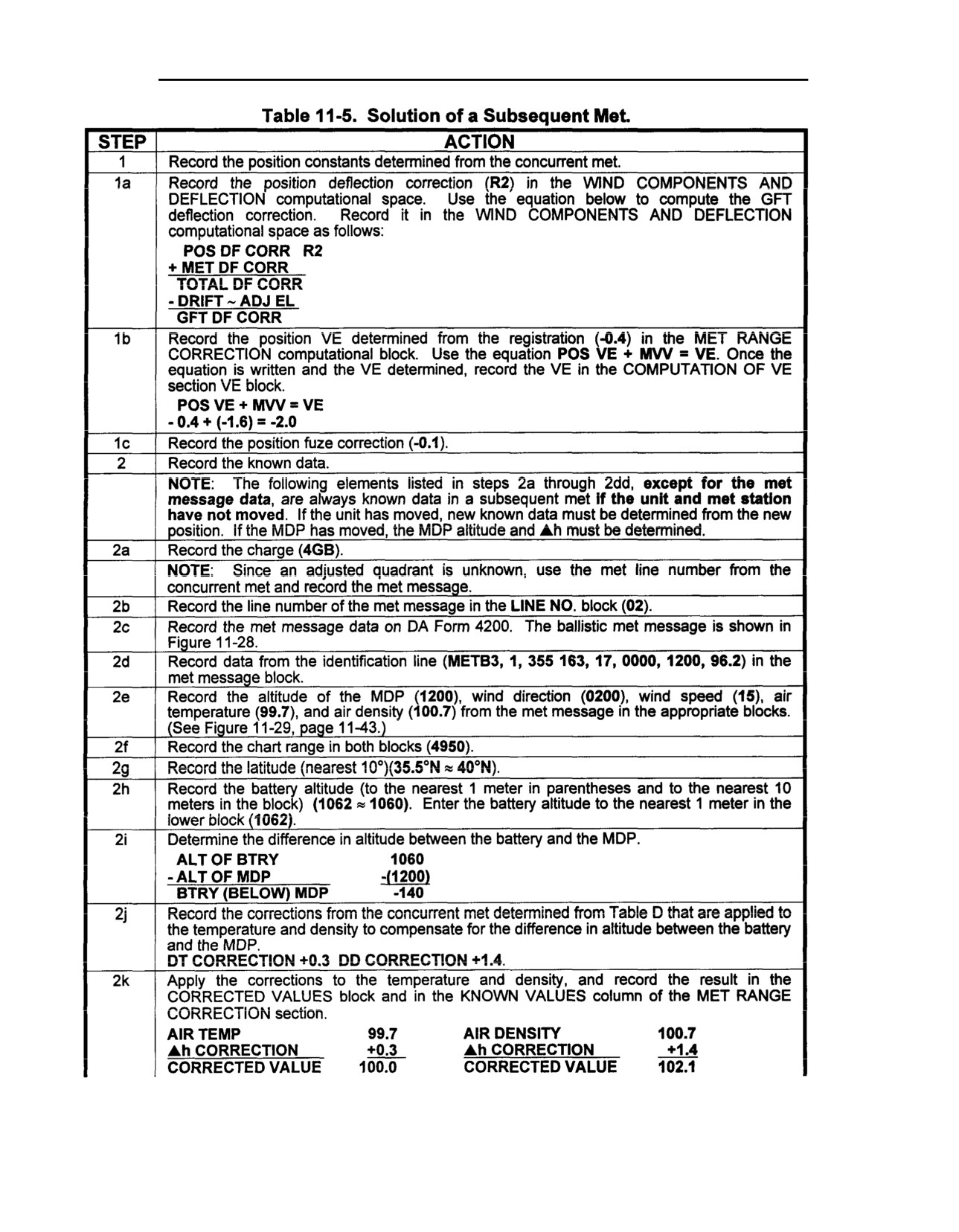
11-11. Solution of a Subsequent Met
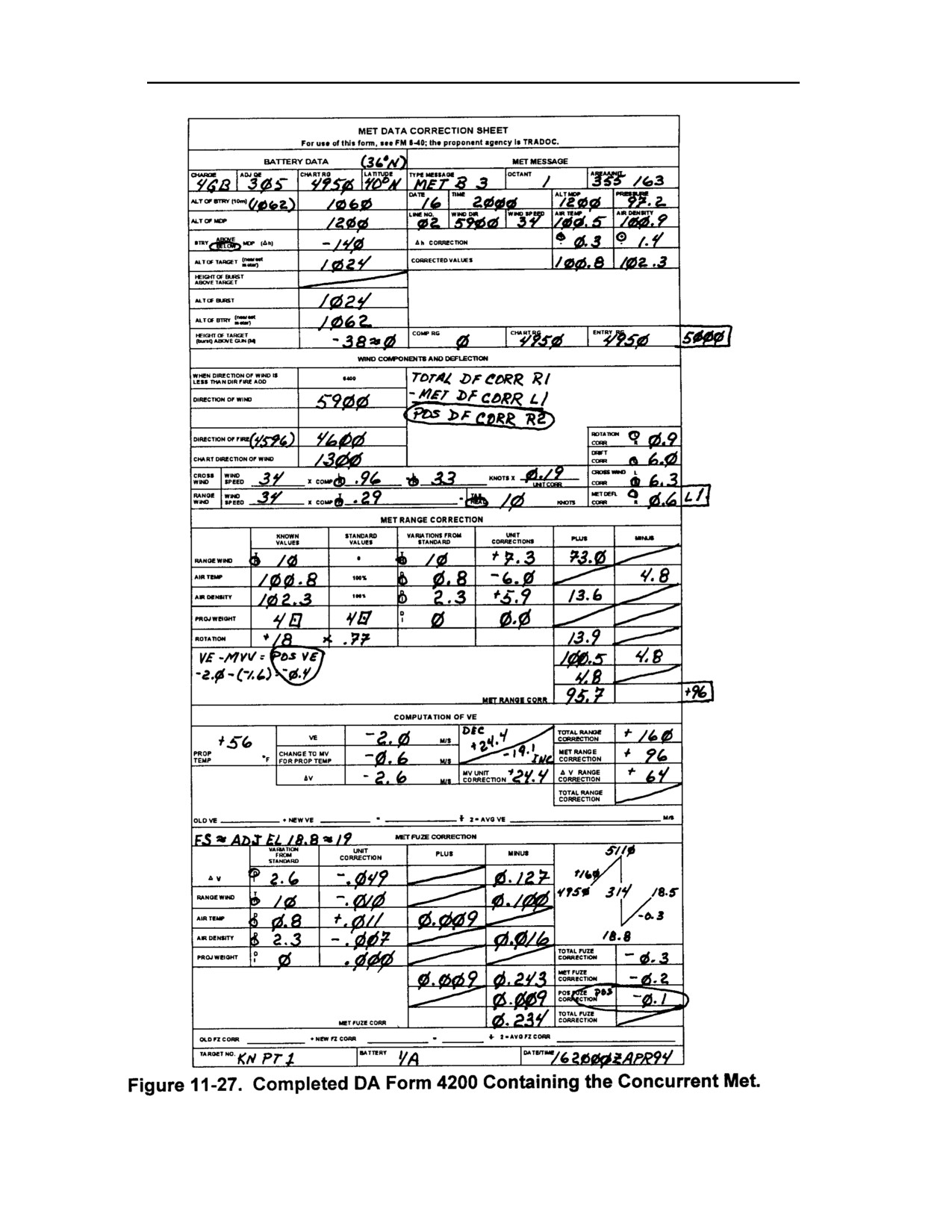
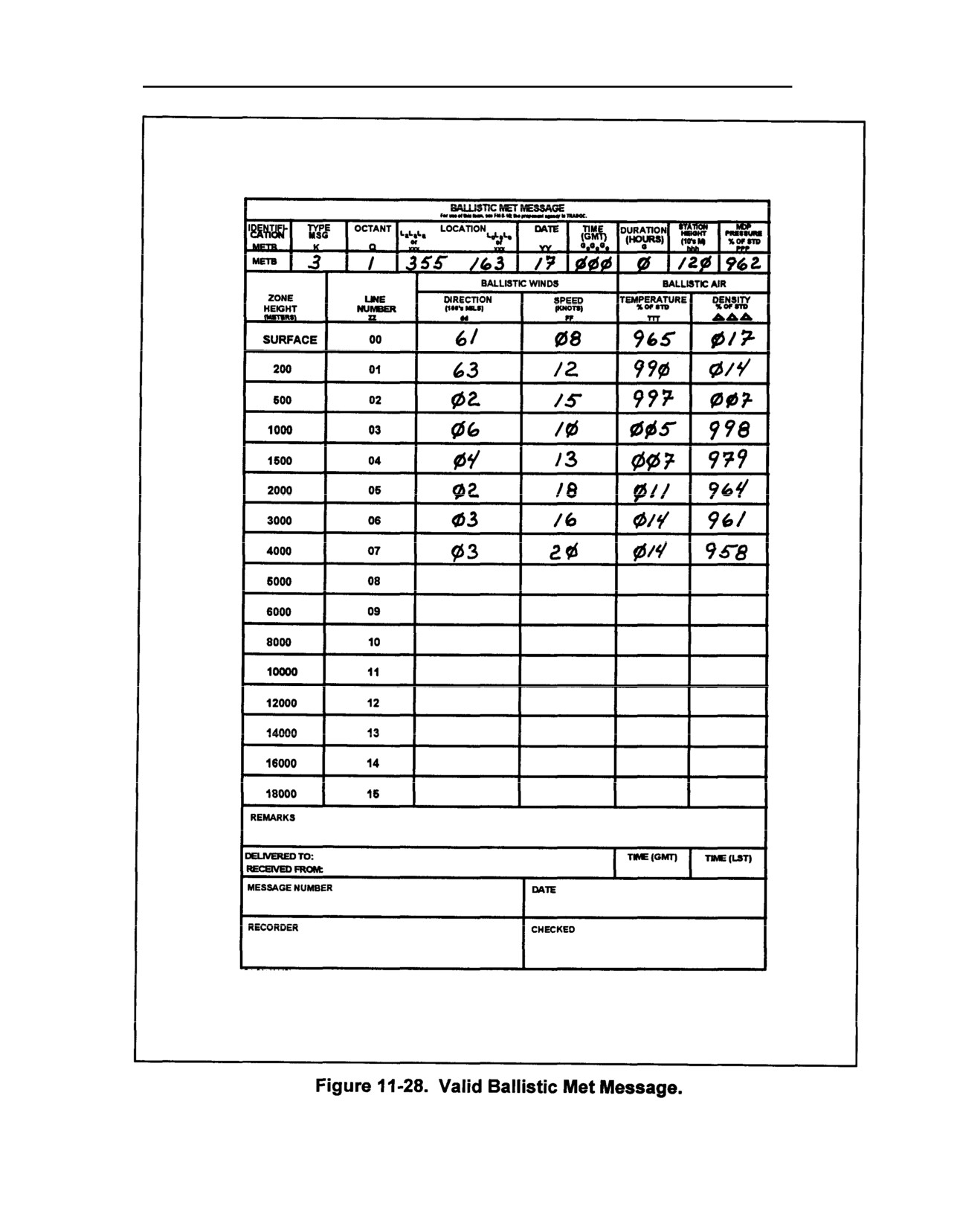
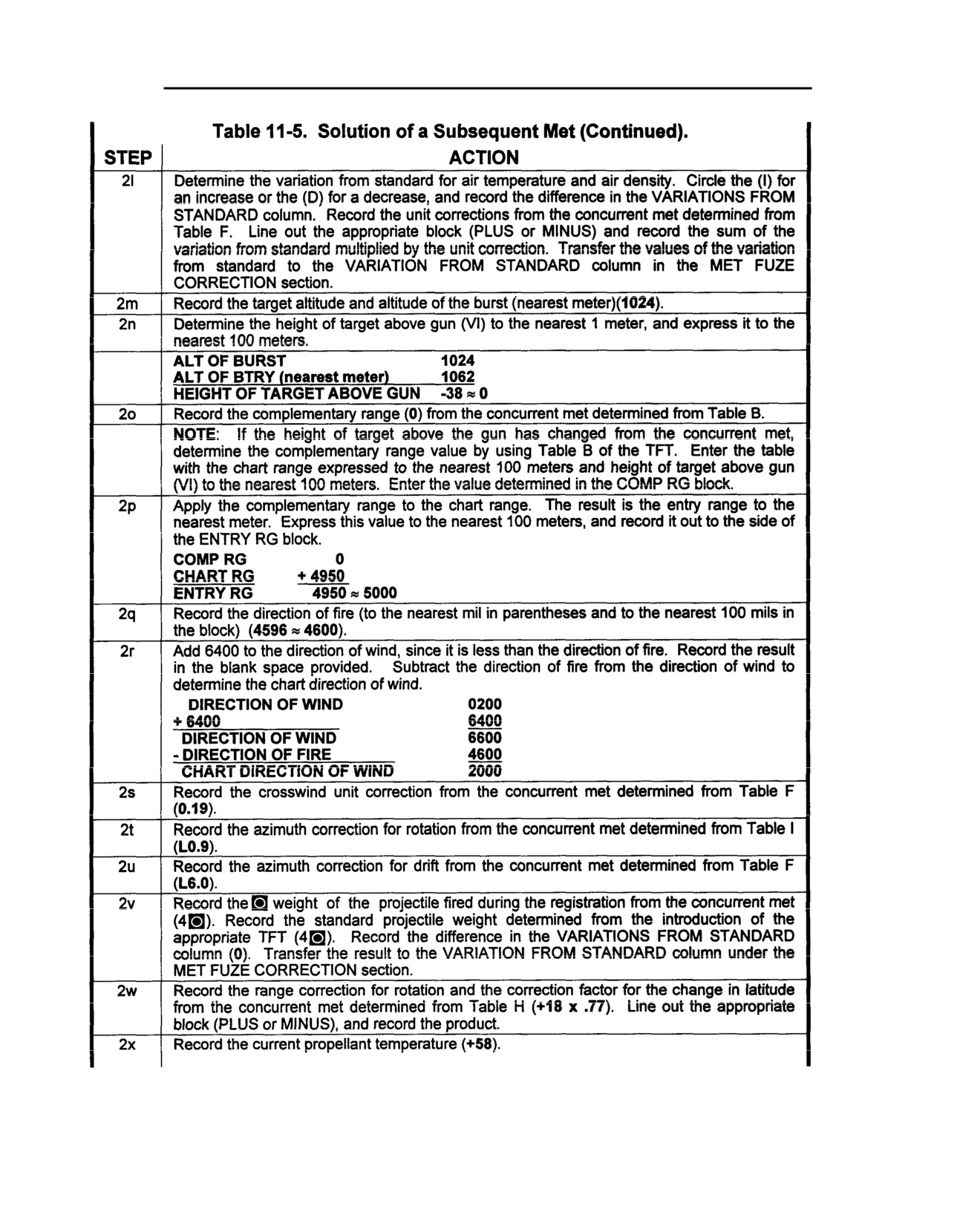
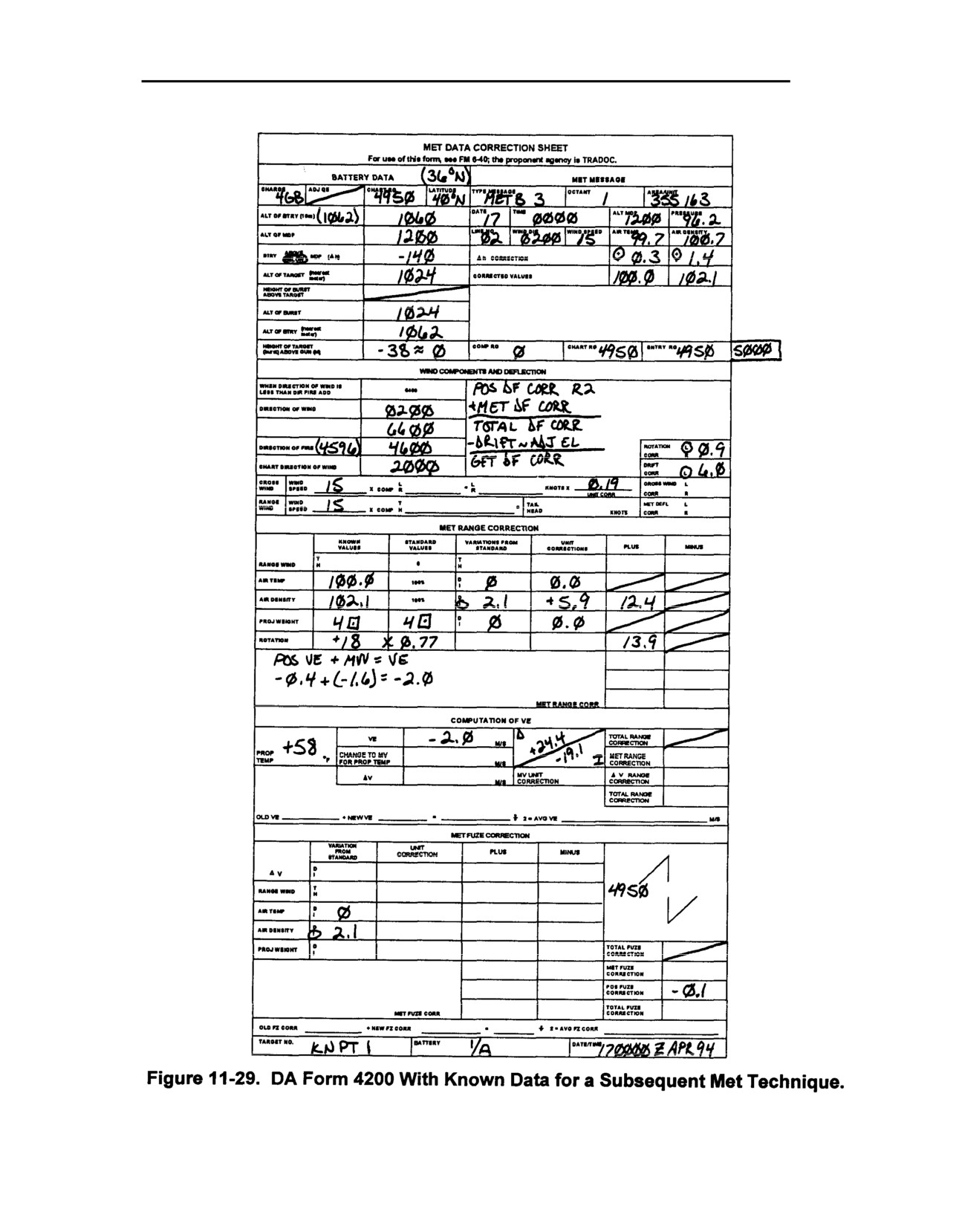
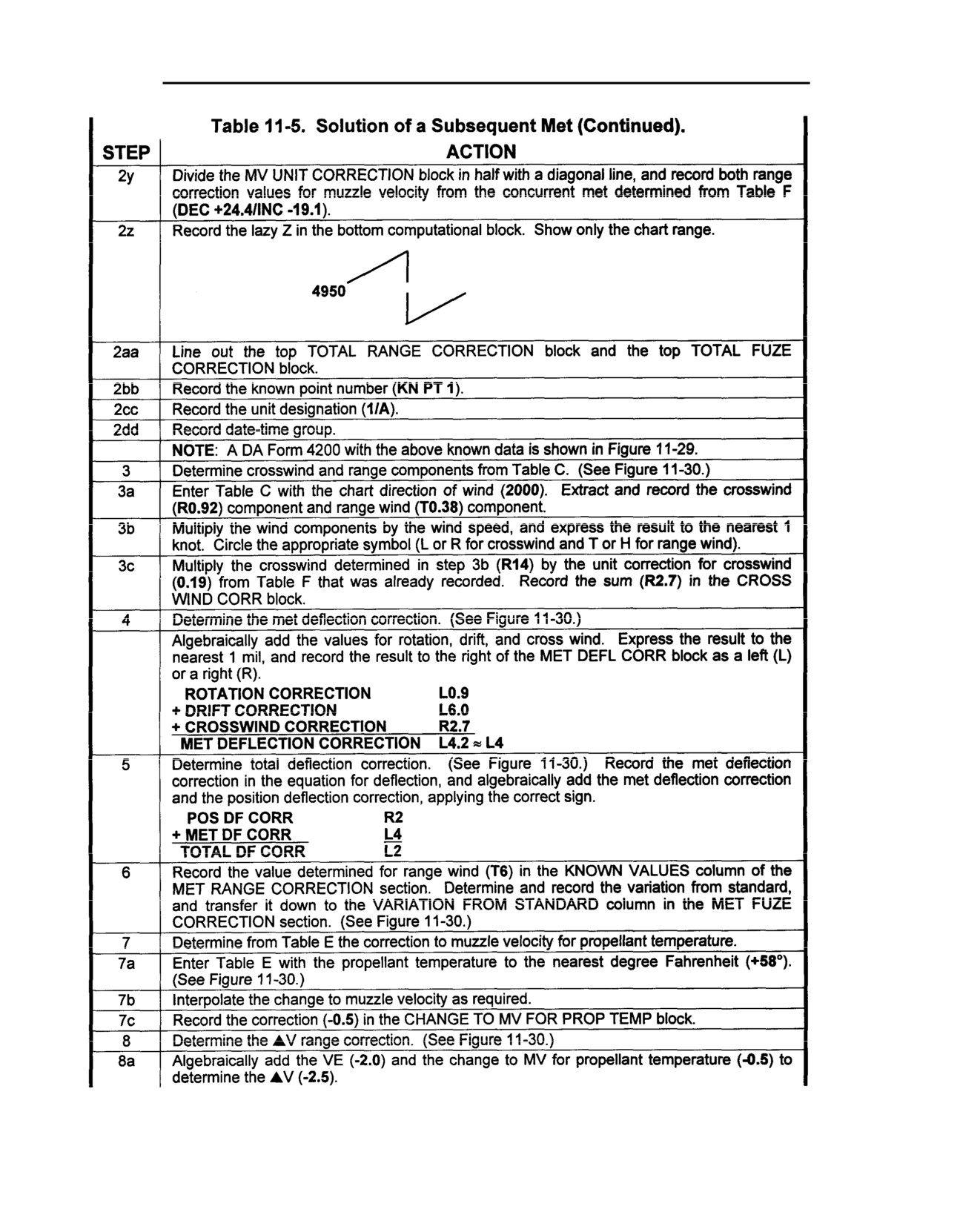
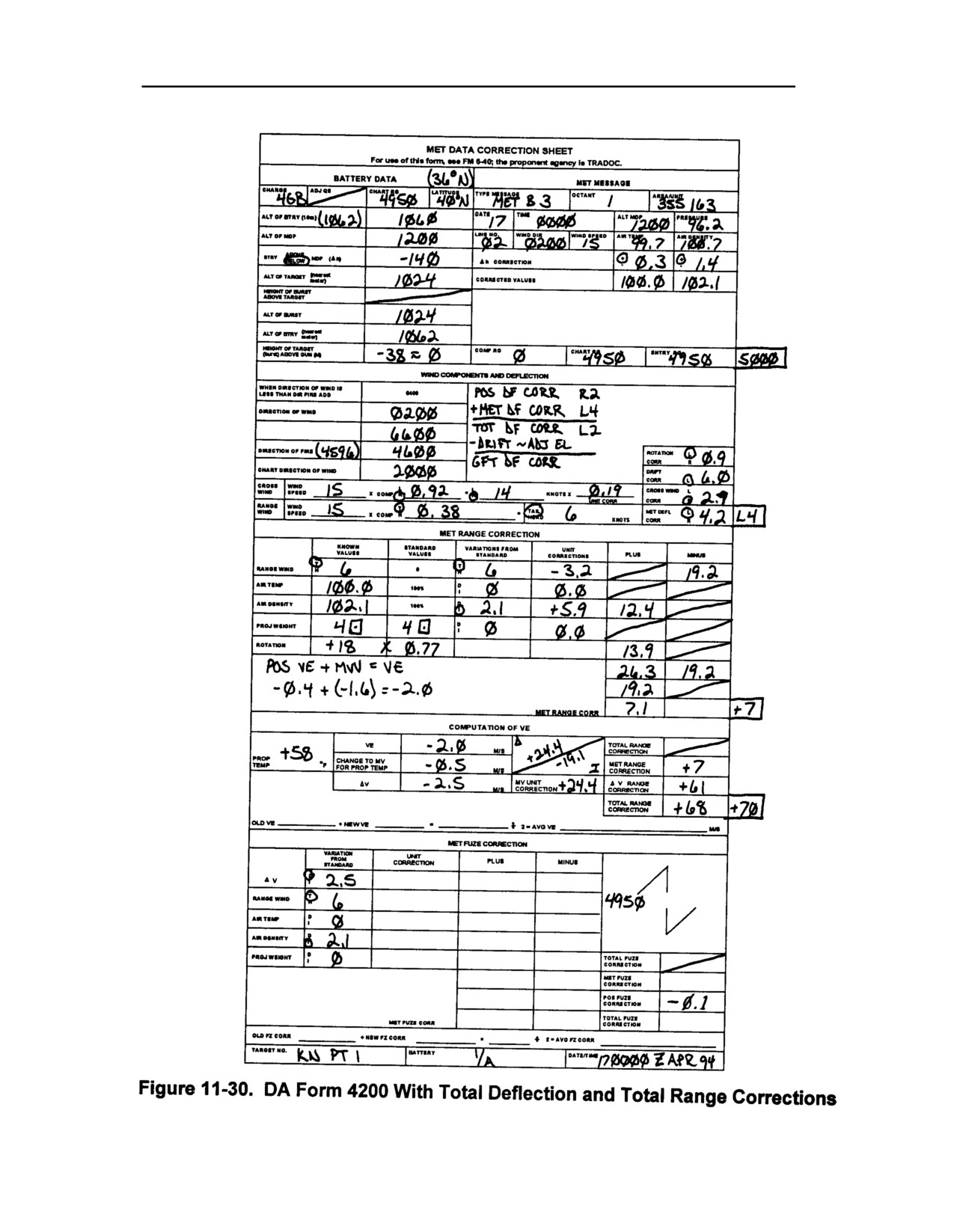
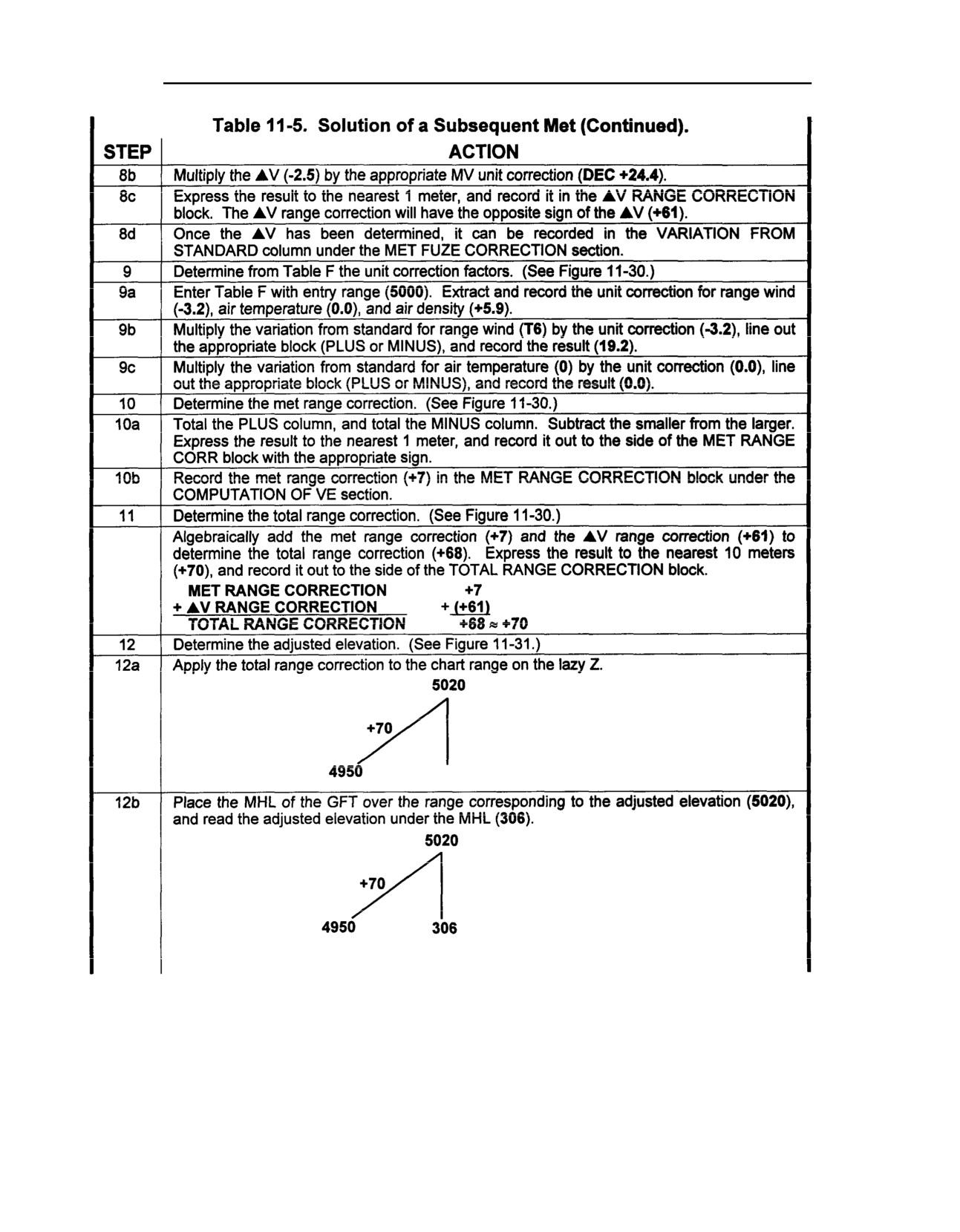
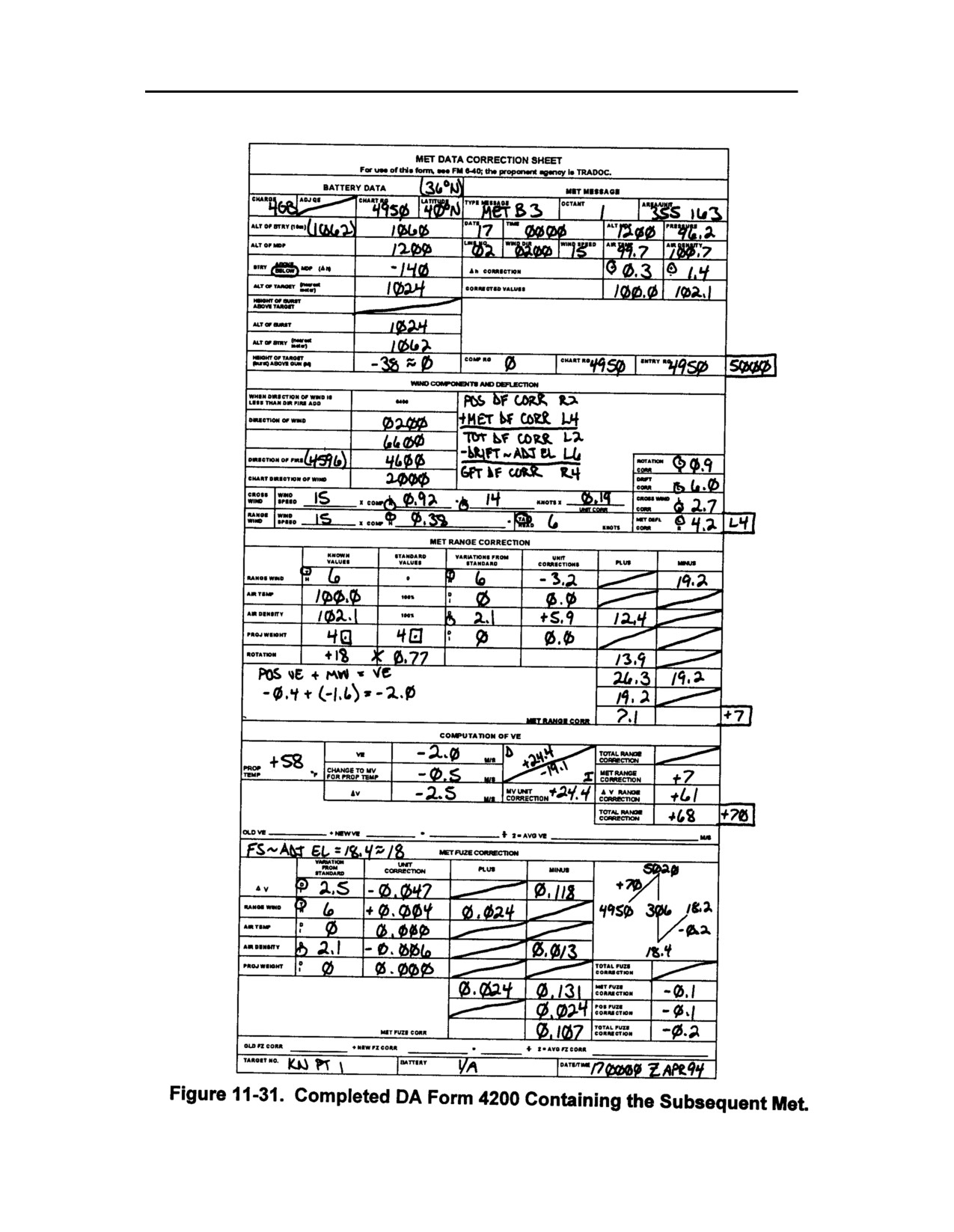
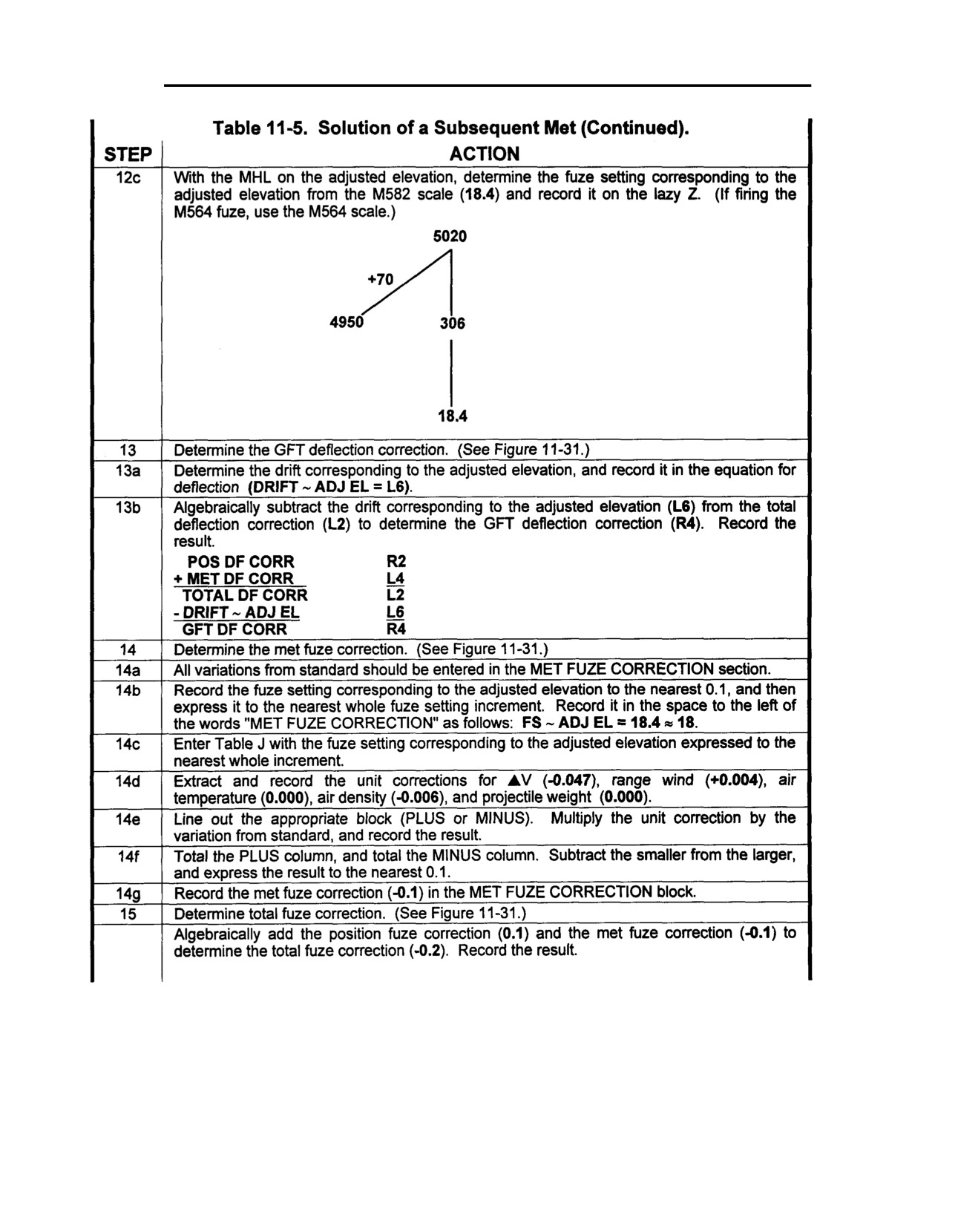
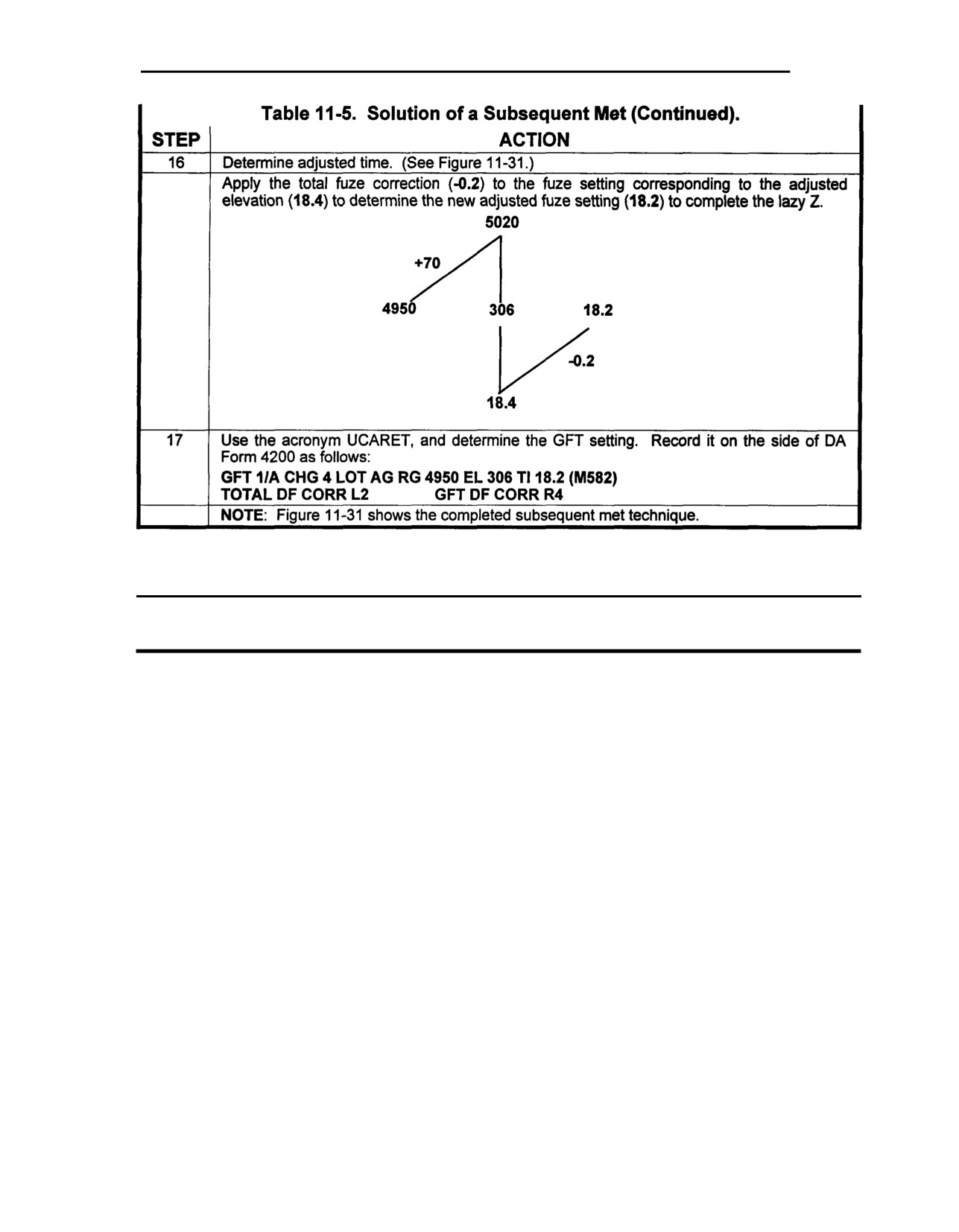
Table 11-5 shows a detailed example of the solution of a subsequent met technique. It
uses the previously completed concurrent met (Figure 11-27) and assumes the battery and MDP
have not moved.
11-39
FM 6-40
11-40
FM 6-40
11-41
FM 6-40
11-42
FM 6-40
11-43
FM 6-40
11-44
FM 6-40
11-45
FM 6-40
11-46
FM 6-40
11-47
FM 6-40
11-48
FM 6-40
Section IV
Subsequent Met Applications
Subsequent met applications include eight-direction met, met to a met
check gauge point, met to a target, and met + VE. These are called subsequent
met techniques but they do not necessarily require met conditions that were
subsequent to a registration nor are position constants required. They are listed
under subsequent met techniques because they are used to determine new GFT
settings or new total corrections. These techniques would also be used if the jive
requirements for accurate predicted fire were being met or registration
corrections were not available. The procedures would be identical to solving a
subsequent met technique, with the exception that all position constants would be
zero.
11-12. Eight-Direction Met
a. Certain combat conditions may require a firing unit to provide accurate artillery
support throughout a 6,400-mil zone. Transfer limits define an area within which total
corrections are-assumed to be valid. These transfer limits place a severe limitation on a 6,400-mil
firing capability. Total corrections could be obtained by conducting a registration in each
800-mil sector of the unit’s area of responsibility. Such registrations, however, would be costly
and would endanger unit survivability. An alternative to registering in each 800-mil sector is the
use of the eight-direction met technique.
11-49
FM 6-40
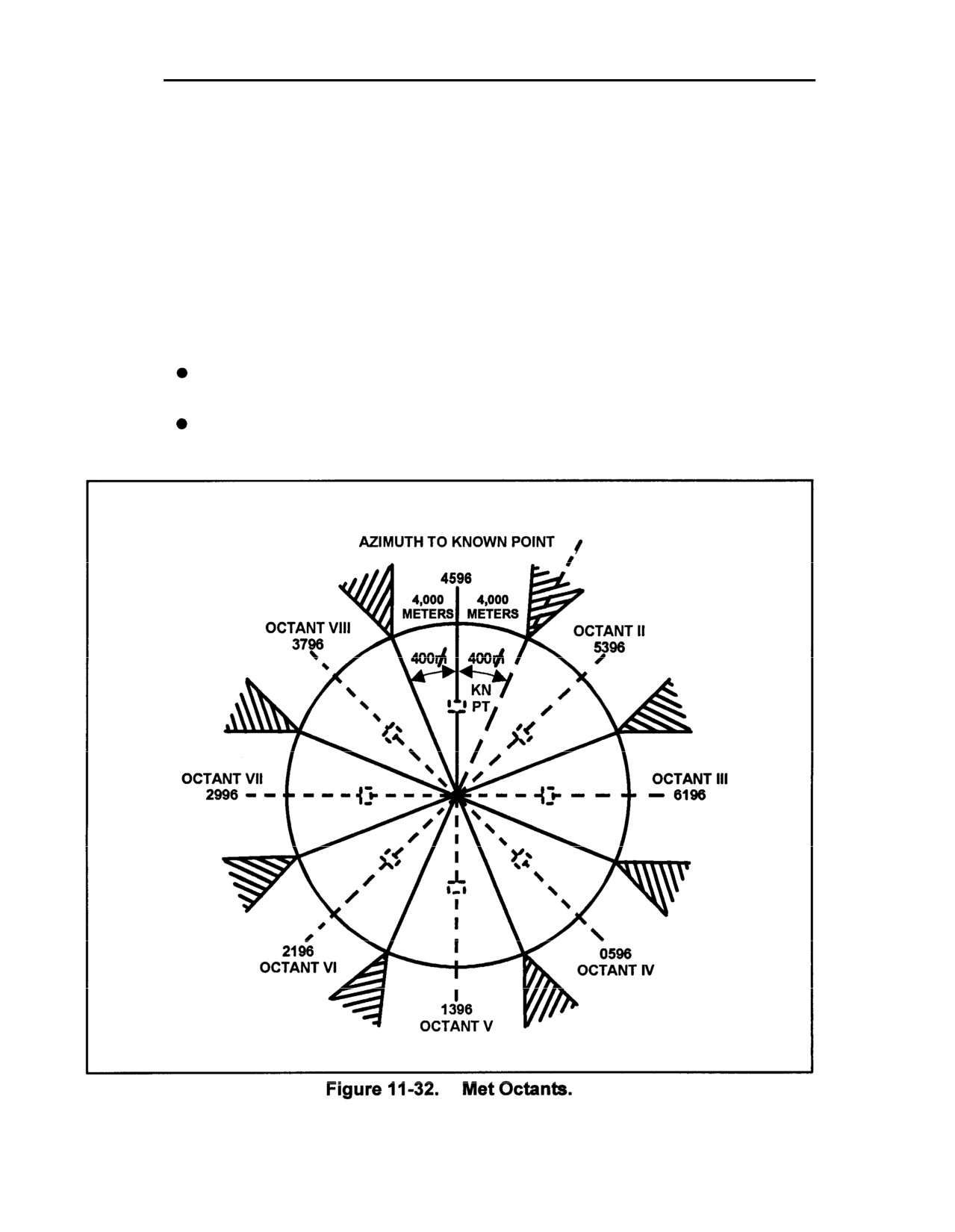
b. The eight-direction met technique provides corrections to range, deflection, and fuze
setting to compensate for the effects of ballistic wind direction and speed and for rotation of the
earth throughout the firing unit’s area of responsibility. These corrections are combined with the
position constants determined in the concurrent met by solving a subsequent met in each 800-mil
sector or selected 800-mil sectors. (See Figure 11-32.)
c. Lateral transfer limits can be eliminated for ranges of 10,000 meters or less by solving
an eight-direction met. For ranges greater than 10,000 meters, because the lateral transfer limits
are valid 4,000 meters left and right of the battery registration point, there will be areas between
the 800-mil segments that are not covered by valid corrections. When needed, corrections to
cover these areas must be computed by using the met-to-target technique.
d. The eight-direction met technique consists of two steps:
Solution of a concurrent met technique to determine the position VE correction,
position deflection correction, and position fuze correction.
Solving for met corrections for other 800-mil segments by use of the met + VE
technique and the position constants to determine GFT settings for those octants.
11-50
FM 6-40
NOTE: The direction of fire will be different for each octant. The value used for
altitude of target is the altitude of the registration point. The FS ~ ADJ EL will be
determined on the basis of the computed adjusted elevation. The eight-direction
met technique could be solved without registering. The procedures would be
identical to solving a subsequent met technique, with the exception that all position
constants would be zero.
11-13. Solution of an Eight-Direction Met Technique
NOTE: This example illustrates how to solve the eight-direction met following the
solution of the concurrent met.
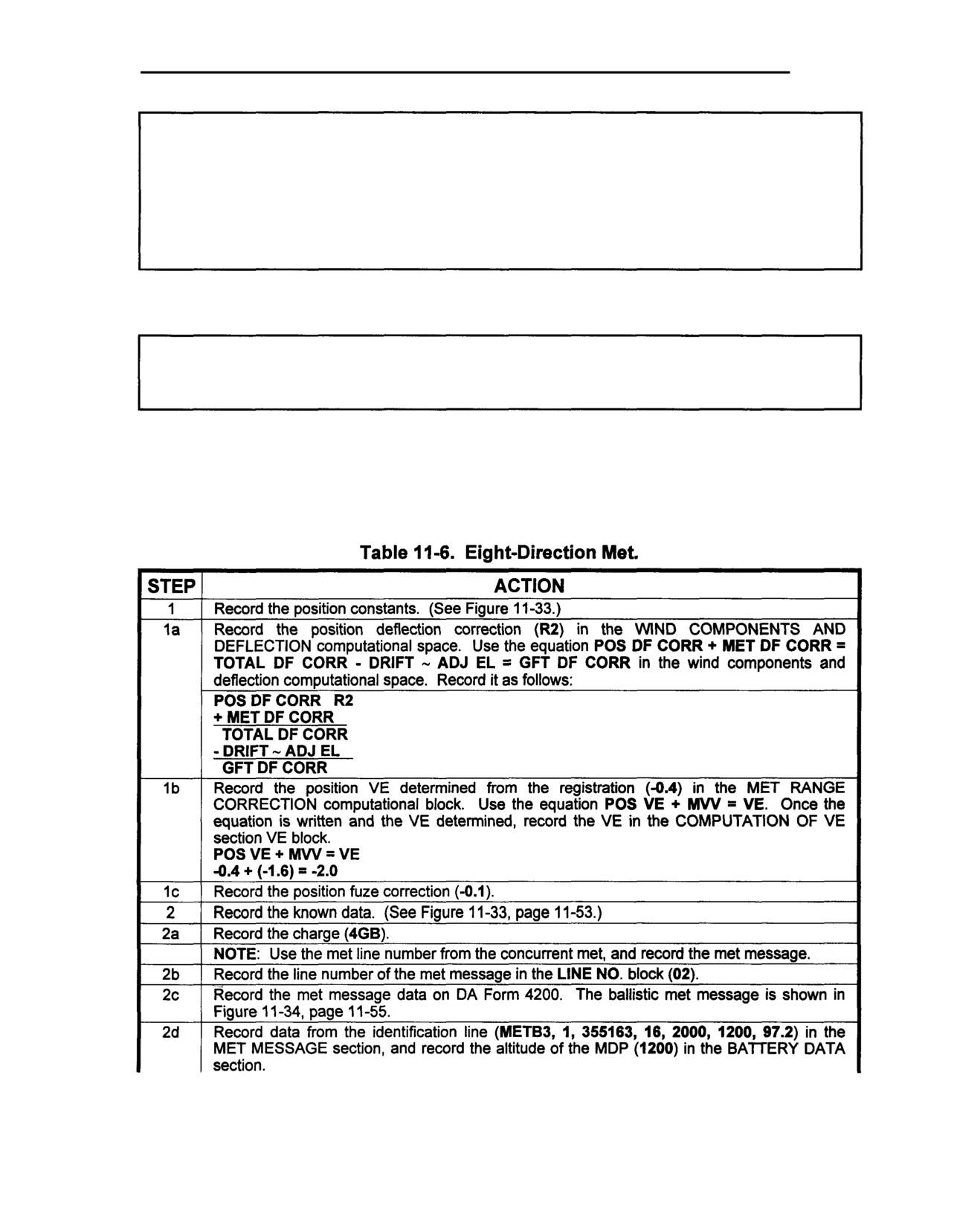
a. All known data remain the same as the concurrent met except for the direction of fire.
The direction of fire must be determined for the new octant by applying 800 roils to the original
direction of fire.
b. The steps shown in Table 11-6 give a detailed example of the solution of an
eight-direction met technique.
11-51