MULTISERVICE TACTICS, TECHNIQUES, AND PROCEDURES FOR NUCLEAR, BIOLOGICAL, AND CHEMICAL RECONNAISSANCE FM 3-11.19 (JULY 2004) - page 6
size, mission, and threat environment of the base. The flight chief is a CE officer or
civilian equivalent, and the superintendent is a master sergeant or senior master
sergeant. Typically, peacetime CONUS and OCONUS Air Force bases (AFBs) with
combat (fighter, bomber) wings or CS (cargo, tanker) wings have six to twelve 3E9X1
personnel assigned. At CONUS support bases (training, depots), the readiness flight
function may be contracted out or minimally manned and the NBC defense capability
may be limited. Contingency AFBs in high-threat areas normally have fifteen to twenty-
two 3E9X1 personnel. CE readiness personnel perform the following NBC defense
functions:
• Conduct NBC defense training for all USAF personnel.
• Train unit NBC teams (contamination control, shelter management).
• Develop base NBC defense plans and procedures.
• Advise the commander on all nonmedical aspects of NBC defense.
• Establish and operate the base NBC detection grid (point and
standoff detectors).
• Conduct NBC reconnaissance missions on and near AFBs.
• Establish personnel CCA.
• Operate the NBC control center and perform NBC warning and
reporting system functions.
• Advise contamination control teams.
• Mark contaminated areas.
• Manage and direct NBC shelter operations (from SRC or NBC
control center).
(2) The EOD flight is part of the CE squadron or detachment. EOD personnel
receive specialized training in NBC agents and have some NBC detection equipment,
including M18A2s. USAF EOD teams have Level A HAZMAT suits.
(3) The fire protection flight is part of the CE squadron or detachment. Most
permanent AFBs have fully trained (technician and operation level) and equipped
HAZMAT response teams. USAF HAZMAT technicians are trained on improved CAMs,
M256A1s, and air data module 300 NBC detection equipment.
NOTE: Fire protection flights at contingency operating locations may not have
fully staffed and equipped HAZMAT teams.
(4) Bioenvironmental engineering flights, assigned to the aeromedical
squadron, are equipped with specialized equipment for detecting and measuring
environmental hazards. They also have some standard NBC gear, including DOD
biological sampling kits, improved CAMs, and air data module 300 NBC detection
equipment. Bioenvironmental engineers are the installation HAZMAT, exposure
assessment, and risk assessment experts. They deploy to contingency operation locations
as a part of preventive aerospace medicine, global-reach lay-down, and medical NBC
teams.
b.
The NBC defense structure includes a defined C2 structure and concept of
operations for wartime. The host wing commander sets alarm conditions, MOPP levels,
F-13
and FP conditions for the entire base. The SRC is the base command post element. It
develops, recommends, implements (with wing approval), and tracks preattack, during-
attack, and postattack passive defense activities on the base. CE readiness personnel are
assigned to work in the SRC, and the SRC and the control center are often collocated.
The NBC control center reports to the SRC, controls NBC reconnaissance teams, and
monitors NBC detectors. The SRC broadcasts alarm conditions and MOPP changes to all
units on base, activates the base siren, tracks casualties and damage to installation
resources, and directs recovery efforts. The SRC tracks the location of all known
postattack hazards on the base.
c.
The next level below the SRC in the command structure is the unit control
center. All major units on the base operate a unit control center during wartime, and all
personnel and work centers on the base are subordinate to a unit control center. The unit
control center provides rapid attack warnings to all assigned or attached unit personnel,
monitors the status of unit activities, and maintains a log of unit actions. It also passes
information to and from the SRC and directs and monitors the implementation of unit
preattack, during-attack, and postattack actions. The unit control center maintains a
base map (color-coded or marked to enable quick identification) with all unit postattack
reconnaissance AORs, structures, shelters, bunkers, and primary operating areas.
Checklists outline the tasks and responsible unit functions under each alarm condition.
Following attacks (in coordination with the SRC), the unit control center directs unit
teams to conduct postattack reconnaissance sweeps, reports postattack hazards to the
SRC, and coordinates recovery actions.
d. The unit control center tracks the location of all known postattack hazards
(including contamination and UXO) that may affect unit personnel or the mission. It
advises unit personnel of hazard locations and directs the movement of unit assets away
from hazard areas. If the base uses the NBC sector or zone concept, the unit control
center tracks the alarm condition and the MOPP for the sectors and zones and controls
the movement of unit resources into and out of contaminated areas.
e.
Within the USAF, deployable teams are organized under UTCs that prescribe
specific team support for a given contingency. Within this concept, trained individuals
are deployed for assignment to teams when the need arises. USAF deployable teams are
shown in Table F-1.
5.
United States Navy Capabilities
a.
Afloat. CBR defense is coordinated aboard each ship according to the specific
CBR defense bill for that ship. The responsibility for CBR defense normally rests with
the damage control officer, who organizes the CBR defense team. Personnel are assigned
to teams to perform the following functions:
• Detection. Operates and maintains shipboard-mounted detection
systems. Employs point detection and monitoring equipment.
• Survey. Conducts a CBR survey of the ship to determine the location and
extent of contamination.
• Contamination control. Operates CCA as defined in the ship CBR
defense bill.
F-14

Table F-1. USAF Deployable Teams
UTC
Identification
Description
FF9DA
NBC and Conventional
Provides limited NBC and conventional defense-supporting
Threat Response Core Team
activities that range from small-scale contingency operations to
MTWs and responds to major accidents and natural disasters for
ABs with up to 1,200 personnel. Capabilities include preliminary
risk and vulnerability assessments, threat analysis, planning,
detection, identification, warning, reporting, decontamination,
CCA, disaster response equipment, technical data, roll-on/roll-off,
and 463L pallets. Personnel deploy with PPE, clothing, weapons,
and ammunition.
FF9DB
NBC and Conventional
Provides minimal NBC and conventional defense-supporting
Threat Response Light Team
activities that range from small-scale contingency operations to
MTWs and responds to major accidents and natural disasters for
ABs with up to 600 personnel. Capabilities include preliminary risk
and vulnerability assessments, threat analysis, planning,
detection, identification, warning, reporting, decontamination,
CCA, disaster response equipment, technical data, roll-on/roll-off,
and 463L pallets. Personnel deploy with PPE, clothing, weapons,
and ammunition.
FF9DC
NBC and Conventional
Provides additional technical expertise, support, and manpower to
Threat Response Light Team
other UTCs in full-spectrum threat response to NBC and
conventional defense, major accidents, and disaster response
operations. Personnel skills include detection, identification,
warning, reporting, decontamination, and contamination control
operations. Provides additional manpower-supporting activities
ranging from small-scale contingency operations to MTWs.
Personnel deploy with PPE, clothing, weapons, and ammunition.
FF9DD
Theater/Joint Task NBC and
Provides a full-spectrum threat response C2 element to support
Conventional C2 Support
numbered USAF, air component, and JTF commanders for
Team
activities ranging from small-scale contingencies to MTWs.
Provides situational analysis and advice on NBC and conventional
issues to the supported commander and subordinate units, and
provides support for major accident and natural disaster
operations. Personnel deploy with PPE, clothing, weapons, and
ammunition.
FF9DE
NBC and Conventional
Provides limited full-spectrum threat response contamination
Response Contamination
control capabilities for sustained operations in NBC and
Control Team Equipment Set
conventional environments. Provides contamination avoidance
resources, such as decontamination apparatus and supplies,
M295 decontamination kits, protective covers, decontaminants,
and application devices. Requires manpower augmentation (10
personnel, any USAF) from the supported unit for setup,
maintenance, and operation of contamination control equipment.
FF9DF
USAF Joint Services Light
Provides personnel, equipment, and supplies to operate the light
NBCRS
NBCRS. Provides a specialized vehicle equipped with a state-of-
the-art suite of detectors and sensors, including mobile standoff
and point vapor/aerosol, surface detection, identification, and
quantification of hazards utilizing a three-person team that is task-
qualified and certified to operate the system. Personnel deploy
with PPE, clothing, weapons, and ammunition.
F-15

Table F-1. USAF Deployable Teams (Continued)
UTC
Identification
Description
FF9DG
CE Squadron NBC
Provides NBC collective protection and sustainment for about 120
Collective-Protective
sortie generation personnel per day for up to 96 hours. Provides
Equipment Set
personnel with a toxic-free, rest-and-relief environment. Requires
manpower augmentation (10 personnel) from the supported unit or
one UTC FF9DJ for setup, operation, maintenance, and
reconstitution.
FF9DH
CE Squadron Open-Air CCA
Provides standardized open-air CCA equipment to transition up to
Set
1,200 personnel into a toxic-free, rest-and-relief environment.
Requires manpower augmentation (10 personnel) from the
supported unit for setup, maintenance, and operation.
FF9DJ
NBC and Conventional
Provides a full-spectrum threat response manpower augmentation
Response Personnel
element (10 personnel, any USAF) to support sustained
Sustainment Team
operations in NBC and conventional environments. Supports
major accident and natural disaster operations and recovery. Team
members are trained in contamination control, CCA operations,
collective protection system operations, shelter team
management, unit control center operations, and NBC detection
equipment operations. Provides the deployed commander with a
cadre of trained personnel to assist with the continuity of
operations in all contingency environments. Personnel deploy with
PPE, clothing, weapons, and ammunition in support of UTCs
FF9DE, FF9DG, FF9DH, and FF9Dl.
FF9DK
USAF Joint Services Light
Provides a three-person team that is task-qualified and certified to
NBCRS Sustainment Team
extend operations of UTC FF9DF for 24 hours. Personnel deploy
with PPE, clothing, weapons, and ammunition.
FF9DL
CE Squadron Prime BEEF
Provides NBC collective protection and sustainment for about 280
NBC Collective-Protective
sortie generation personnel per day for up to 96 hours. Provides
Equipment Set Heavy
personnel with a toxic-free, rest-and-relief environment. Requires
System
manpower augmentation (20 personnel) from the supported unit or
two UTCs FF9DJ for setup, maintenance, operation, and
reconstitution.
FF9DM
NBC and Conventional
Provides NBC and conventional defense capability to respond to
Threat Response Core Team
attacks, major accidents, and natural disasters in support of small-
scale contingency operations (without augmentation) or MTWs for
an AB with up to 1,200 personnel (with augmentation by UTC
FF9DC). Capabilities include preliminary risk assessment,
vulnerability assessment, threat analysis, planning, detection,
identification, warning, reporting, decontamination, CCA, disaster
response equipment, technical data, roll-on/roll-off, and 463L
pallets. Personnel deploy with PPE, clothing, weapons, and
ammunition.
FF9DN
Personal Air Monitor Team
Provides public health, occupational, environmental, and disease
(UTC FFGL2/3/4)
assessment, surveillance, and intervention at the employment
location. Provides PVNTMED services for a deployed AB with up
to 5,000 personnel. Provides personnel for medical support
planning and input into the layout of sanitation facilities. Ensures
the safety of the food and water supply. Provides limited clinical
services. Deploys with the lead wing to help establish the base
infrastructure or support lead mobility wing operations. Provides
limited NBC defense capability to medical units.
F-16

Table F-1. USAF Deployable Teams (Continued)
UTC
Identification
Description
FF9DO
Medical NBC Team (UTC
Provides increased wing survivability through human health
FFGL1)
protection, supports medical facility operations, and works to
prevent acute and chronic health hazards resulting from
operations in an NBC threat environment. Conducts NBC
surveillance. Advises commanders on NBC health effects, threat
impact, protective-action posture, recovery activities, and human
health risk assessments. Documents personnel exposure to NBC
agents. Operates as part of the personal air monitor team
(FF9DN). Interfaces with the biological augmentation, wartime
medical decontamination, and CE readiness teams.
FF9DP
Biological Augmentation
Is a flexible, rapidly deployable, two-person laboratory team
Team (UTC FFBAT)
assigned to the deployed MTF. Expands theater force health
protection by introducing the best-available, advanced
microbiological diagnostic capabilities. Identifies naturally
occurring and induced pathogens in clinical samples and other
environmental media. Provides a preventive medicine capability.
Provides diagnostic data to support the early warning of pathogen
exposures. Assesses the extent and type of biological
contamination in other substances (food, air, water, and soil).
FF9DQ
Wartime Medical
Provides the capability to remove or neutralize NBC agents on
Decontamination Team (UTC
casualties immediately before being admitted to the MTF. Can be
FFGLB)
deployed, assigned, or pre-positioned to support and enable
USAF MTFs. Safely and effectively treats contaminated casualties
without contaminating medical personnel, equipment, or facilities.
Decontamination sites and facilities are constructed near the MTF.
Personnel decontamination is accomplished by removing clothing
and washing skin with soap or a chlorine solution. Conducts
contamination control of medical personnel and assets as needed.
FF9DR
Theater Epidemiological
Provides theater level support to the USAF component command
Team (UTC FFHA1)
surgeon or the JTF surgeon. Provides medical, environmental, and
occupational threat assessments; support for outbreak
investigations; and recommendations for preventive
countermeasures and needed surveillance systems. Coordinates
with other medical and line force protection teams and federal and
international agencies. Is collocated with the theater surgeon or
the appropriate headquarters element.
FF9DS
Air Force Radiological
Is a globally responsive, specialty asset team that provides field
Assessment Team (UTCs
radiological support to the assigned theater medical authority.
FFRA1/2/3)
Identifies the radiological environment and recommends protective
actions to ensure the health and safety of USAF and DOD
personnel and the surrounding community. Provides expert
guidance on the type and degree of radiological hazards that face
deployed forces. Based on these assessments, makes
recommendations to optimize FP in light of achieving mission
objectives. Typical deployment scenarios include consequence
management operations from Broken Arrows, Faded Giants, and
terrorist use of radiological dispersion weapons or improvised
nuclear devices and humanitarian assistance operations to
countries that have experienced a nuclear exchange.
F-17
• Decontamination. Operates decontamination stations as designated by
the damage control officer.
• Damage control training. Provides CBR defense training to survey and
decontamination teams and the ship crew.
b.
Ashore. Disaster preparedness teams are established by the naval shore
activity commanding officer. CBR defense teams consist of the following assets:
• CBR survey team. Surveys assigned areas to determine CBR
contamination locations and levels. Marks hazardous areas.
• Personnel decontamination team. Conducts chemical and radiological
decontamination of personnel who are not seriously injured.
• Facilities and area decontamination team. Effects CBR
decontamination of essential facilities and areas.
• Radiation monitor pool. Provides radiation monitoring capability and
equipment required for performing rescue, first aid, and firefighting.
• Dosimetry team. Determines the radiation dosage of personnel by
reading dosimeters and recording readings.
• Clothing decontamination team. Retrieves contaminated clothing
from personnel decontamination stations, determines its reusability,
decontaminates it, and returns it to the clothing supply team.
• Nuclear accident team. Provides assistance to the on-scene
commander. Performs emergency actions that may be necessary to
minimize the initial results of a nuclear accident or incident.
• Shelter management team. Provides orderly administration of
activities related to the comfort and welfare of inhabitants of an assigned
shelter.
c.
Forward-Deployable, Preventive-Medicine Unit (FDPMU).
(1) The FDPMU enhances force health protection (FHP) by—
• Identifying and evaluating environmental health hazards, including
CBR and physical agents.
• Advising the operational commander on significant health risks.
• Assessing the risk of adverse health outcomes.
• Monitoring the health of deployed forces.
• Recommending countermeasures and interventions needed to
protect the health of the force.
(2) The FDPMU task-organizes from the Bureau of Medicine and Surgery
assets, predominately the Navy Environmental Health Center and subordinate
activities. A designated FDPMU can deploy to provide short-duration, specialized
PVNTMED support; but with resupply, it can provide support for extended operations.
(3) FDPMU teams are functionally organized to provide the appropriate level
of response and technical augmentation to military authorities. The FDPMU is composed
F-18
of the PVNTMED, disease vector, chemical, radiological, and microbiological
components.
•
PVNTMED.
n
Serves as the overall coordinating hub for the other components
in providing theater level recommendations regarding FHP
strategies.
n
Provides expert PVNTMED consultation to prevent or limit the
impact of disease outbreaks through field sanitation expertise
and assessment, epidemiological investigation of disease
outbreaks, and theater surveillance data analysis.
n
Recommends interventions for the prevention and control of
deployment-related occupational and environmental illnesses,
injuries, and diseases.
n
Serves as the theater-wide potable water and food safety
consultant.
•
Disease vector.
n
Provides strategies and programs to protect deployed forces
from vector-borne diseases, including surveillance and control
of insects and animals that transmit diseases of military
relevance.
n
Conducts surveillance operations for insect and animal vectors
of human disease through the collection and identification of
specimens that may be suspected of transmitting disease
pathogens.
n
Determines the potential threat of vector-borne diseases in an
AO.
n
Conducts pest control operations to control or minimize the
threat of vector-borne disease transmission.
•
Chemical.
n
Provides detection, identification, monitoring, and assessment
of chemical agents and environmental hazards.
n
Acts as the theater-wide consultant and reference source for
chemical and environmental agent-related health risk
information.
n
Makes recommendations to eliminate or minimize personnel
exposures to TIC and TIM.
n
Performs surveillance and exposure assessments of air, soil,
and personnel.
n
Prepares and ships samples to reference laboratories.
n
Identifies potential health threats from the civilian
infrastructure (refineries, chemical plants).
F-19
• Radiological.
n
Detects and quantifies radioactive materials.
n
Advises the on-scene commander.
n
Provides consultation in the establishment of an environmental
dosimetry surveillance program and associated protective
actions.
• Microbiological.
n
Detects, identifies, and analyzes naturally occurring infections
and BW agents that may be encountered during deployments.
n
Provides laboratory diagnosis of military-relevant infectious
diseases within the theater.
n
Serves as the local JTF commander’s SME on matters
regarding infectious diseases and BW agents.
n
Provides laboratory support for in-theater infectious disease
outbreak investigations.
n
Processes and analyzes potentially dangerous infectious
specimens, especially in the event of a known or suspected BW
incident.
6.
Unit Level Chemical and Radiological Detection Equipment
a.
M8 Chemical-Agent Detector Paper. Personnel use M8 paper to detect liquid
Types V and G nerve agents and Type H blister agents. M8 paper comes in a book of 25
perforated sheets. A color comparison chart is printed on the inside front cover for the
identification of chemical agents. The sheets turn dark green (Type V), yellow (Type G),
or red (Type H) upon contact with the agent. The paper must touch the agent, so
personnel must use caution when taking a sample. M8 paper does not detect chemical
agents in water or chemical vapors. Agent deposition on M8 paper is primarily composed
of very small droplets (50 to 100 microns). Recognition is especially challenging, if not
impossible, at night or in the presence of other interferents (such as smoke).
b.
M9 Chemical-Agent Detector Paper. M9 paper is issued in a 7-ounce dispenser
box that contains one 30-foot roll of 2-inch-wide detector paper and a plastic storage bag.
It is primarily used on personnel and has a sticky backside, allowing personnel to place a
long strip on their arm, leg, back, and other places expected to be exposed to potential
hazards. M9 paper turns red to brown in color when liquid chemical agents are detected.
Personnel should place strips of M9 paper so that it can be observed, ensuring that the
flaps protrude long enough to be seen while masked or buttoned up inside tactical
vehicles. Doors, hatches, and areas that troops come into frequent contact with should be
considered first choice when applying M9 paper to tactical vehicles.
c.
M256A1 Chemical-Agent Detector Kit. The M256A1 is used to support
unmasking procedures and to detect and identify field concentrations of nerve, blister,
and blood agents. The test takes 15 minutes to complete, and a color change indicates
harmful chemical-agent concentrations. The M256A1 contains potentially carcinogenic
reagents.
F-20
d. M8A1 ACAA. The M8A1 is positioned upwind from unit positions, and it
provides early warning of nerve-agent vapors. This remote detector is connected by WD-
1 communications wire to an M42 alarm unit. The M8A1 detects the nerve agent and
sends an electronic signal to the M42, which provides a remote audible/visual signal (a
visual signal is used when noise discipline is a concern). The M10A1 power supply
provides direct current (DC) power to the detector from an alternating current (AC) (115-
or 220-volt) source. The detector uses one BA 3517/U battery, and the alarm uses four BA
3030 or BB 3203/UF (D cell) batteries.
e.
M90 Automatic Agent Detector. The M90 detects nerve and blister agent. It is
currently in use by the USAF.
f.
M21 Remote-Sensing, Chemical-Agent Alarm. The M21 is a standoff chemical
detector that detects nerve and blister agents. In a stationary position, it scans a 60° arc.
(See the unit staff chemical officer for range detection distances.)
g.
M22 Automatic Chemical-Agent Detector Alarm. The M22 is positioned
upwind from unit positions. It detects, identifies, and provides early warning of nerve-
and blister-agent vapors. The M22 is connected by WD-1 communications wire to an M42
alarm unit. The M22 is replacing the M8A1 ACAA as a point detector. The M22 uses a
nonrechargeable lithium battery (BA 5590/U) and an XM28 power supply kit (national
stock number [NSN] 6665-01-438-6960).
h. CAM/Improved CAM. The CAM and improved CAM are handheld instruments
that detect, identify, and provide relative vapor concentration readouts for Types G and
V nerve agents and Type H blister agents. They are used for area reconnaissance, area
surveillance, and decontamination monitoring. The improved CAM is more reliable and
needs less maintenance than the CAM.
i.
M272 Water Testing Kit. The M272 is a lightweight, easy-to-use kit that
detects and identifies harmful amounts of chemical agents in raw and treated water
sources.
j.
M18A2 Chemical-Agent Detector Kit. The M18A2 uses detector tubes and
paper tickets to detect and classify dangerous concentrations of lethal chemical agents in
the air and on exposed surfaces.
k. MM1 Spectrometer. The MM1 is a field gas chromatograph/mass spectrometer
system housed inside the M93A1 NBCRS. It detects and identifies all known chemical
agents and some TIM. The information can be printed to a hard copy tape for later, more
detailed analysis and a record of the detection.
l.
Chemical-Agent Point Detection System. This system is an installed shipboard
automatic vapor sensor that provides point detection of several nerve agents.
m. Improved Chemical-Agent Point Detection System. This system is an installed
shipboard automatic vapor sensor that provides real-time detection of nerve and blister
agents.
n. AN/KAS-1 CW Directional Detector. This is a semiportable system that is
designed to detect nerve-agent vapor clouds at ranges up to 5 kilometers.
o.
AN/VDR-2 Radiac Set. The AN/VDR-2 detects and measures the gamma
radiation dose rate, measures the total dosage, and monitors the turn-back dose rate
during radiological survey missions. It detects beta radiation, but does not measure it.
F-21
The AN/VDR-2 provides a means to conduct dismounted monitoring and surveying of
personnel and equipment. It is a lightweight, electromagnetic pulse (EMP)-hardened,
tactical dose rate meter that is composed of an IM-243 radiac meter, a DT-616 radiac
probe, and a carrying pouch with a strap. It uses three 9-volt batteries or operates off 24-
volt vehicle power.
NOTE: The dose rate is how much radiation one can expect to absorb in 1 hour,
and the total dosage is how much total radiation one has absorbed.
p. AN/UDR-13 Radiac Set. The AN/UDR-13 measures gamma radiation and
provides the total dosage and the dose rate. It is a compact, lightweight device and is
replacing the IM-93/UD dosimeter.
q.
IM-93/UD Dosimeter. The IM-93/UD measures the total dosage. It is worn as
close to the body as possible and used to monitor the total dosage for a unit.
r.
PP-1578A/PD Radiac Detector Charger. The PP-1578A/PD provides the
electrical charge required to zero the IM-93/UD dosimeter. It is a small electrostatic-
charge generator that is designed to serve all US and certain North Atlantic Treaty
Organization (NATO) combat dosimeters.
s.
DT-236 Dosimeter. The DT-236 is worn by personnel and provides the total
dosage measurement. Personnel wearing the dosimeter cannot read it, because it
requires the AN/PDR-75 to determine exposure levels. The AN/PDR-75 measures
cumulative gamma and neutron radiation dosage. The DT-236 augments the IM-93/UD
or AN/UDR-13; it is not designed to act as a stand-alone dosimeter. Dosimeters provide a
picture of how much total radiation personnel have accumulated.
t.
AN/PDR-75 Radiac Detector/DT-236 Reader. This device reads and displays
accumulated neutron and gamma radiation total dosage recorded by the DT-236
dosimeter. It provides leaders and medical personnel with an indication of the total
gamma and neutron dosage of exposed personnel. The set consists of radiac computer
indicator (reader) CP 696/PDR-75, a two-piece battery box, and three power cables. It can
be powered with a 12- or 24-volt lithium battery (BA 5590/U) or a 24-volt vehicle battery.
7.
Chemical Detector Capabilities and Interferents
a.
Chemical detectors detect and identify CW agents at different levels of
sensitivity. Table F-2 provides additional information on the capabilities of chemical
detectors and monitors.
b.
Table F-3, page F-24, provides information on selected chemical detectors and
their sensitivities. However, they may react to materials other than CW agents and
produce false positives. NBC reconnaissance personnel must be aware of this possibility.
c.
Table F-4, page F-25, shows many of the interferents that may cause false
positives.
NOTE: The use of insecticides around chemical detectors, alarms, and monitors
and M8/M9 paper is not recommended.
d. The environment also plays a role in the ability of detectors to perform, and it
sometimes complicates the issue when analyzing results. Table F-5, page F-26, shows
how environmental conditions relate to the performance of detectors.
F-22

Table F-2. Chemical Detector and Monitor Capabilities
Agent
Chemical Agent
Detector or Monitor
Response Time2
Form
Detection
Identification
M8 Chemical-Agent
Liquid
Types G, V, and H
Types G, V, and H
Less than 30 seconds
Detector Paper
M9 Chemical-Agent
Liquid
Types G, V, and H
None
Less than 30 seconds
Detector Paper
M256A1 Chemical-Agent
Vapor
Types G, VX, HD,
Categorizes as
15 minutes
Detector Kit1
L, CX, AC, and CK
nerve, blood, or
blister
M8A1 ACAA
Vapor
Types GA, GB, GD,
None
Less than 2 minutes
and VX
M90 Automatic Agent
Vapor
Types GA, GB, GD,
Categorizes as
4 to 5 seconds
Detector
GF, VX, HD, L, AC,
nerve, blood, or
and CK
blister
M21 Remote-Sensing,
Vapor
Types GA, GB, GD,
Nerve or blister
Less than 1 minute
Chemical-Agent Alarm
HD, and L
(scan cycle)
M22 Automatic Chemical-
Vapor
Types GA, GB, GD,
Categorizes as
30 seconds to 2
Agent Detector Alarm
GF, VX, H, and L
nerve or blister
minutes
CAM/Improved CAM
Vapor
Types GA, GB, GD,
Categorizes as
Less than 1 minute
VX, HD, and HN
nerve or mustard
M272 Water Testing Kit
Liquid
Types G, VX, HD,
Distinguishes
20 minutes
L, and AC
between agents
M18A2 Chemical-Agent
Vapor
Types G, V, H, HD,
Types G, V, H, HD,
1 to 4 minutes
Detector Kit
HT, HL, CX, ED,
HT, HL, CX, ED,
PD, MD, AC, CK,
PD, MD, CK, AC,
and CG
and CG
MM1 (NBCRS)
Liquid
All CW agents and
All known CW
Less than 45 seconds
some TIM
agents, some TIM
Chemical-Agent Point
Vapor
Types GA, GB, GD,
None
Within seconds under
Detection System
GF, and VX
normal conditions after
warm-up
Improved Chemical-Agent
Vapor
Types G, V, and H
Categorizes as
Less than 1 minute
Point Detection System
nerve or blister
AN/KAS-1 CW Directional
Vapor
Types GA, GB, GD,
None
Based on operator skill
Detector
GF, and VX
and experience and
vapor cloud density
1The M256A1 contains a book of M8 detector paper.
2The response time may vary with the agent, the agent concentration, the temperature, and the droplet size.
F-23

Table F-3. Chemical Detector Limits and Miosis Levels
Type
Detector
GA
GB
GD
GF
VX
HD
M8 Chemical-Agent
0.2 ml
0.2 ml
0.2 ml
0.2 ml
0.2 ml
0.2 ml
Detector Paper
M9 Chemical-Agent
110 µ
110 µ
110 µ
110 µ
100 µ
110 µ
Detector Paper
M256A1 Chemical-Agent
0.005 mg/m
0.005 mg/m
0.005 mg/m
0.005 mg/m
0.02 mg/m
2 mg/m
Detector Kit
M8A1 ACAA
0.1-0.2 mg/m
0.1-0.2 mg/m
0.1-0.2 mg/m
NA
0.4 mg/m
NA
M90 Automatic Agent
0.04 mg/m
0.04 mg/m
0.04 mg/m
0.04 mg/m
0.04 mg/m
0.2 mg/m
Detector
M21 Remote-Sensing,
90 mg/m
90 mg/m
90 mg/m
NA
NA
1,500 mg/m
Chemical-Agent Alarm
M22 Automatic Chemical-
0.1 mg/m
0.1 mg/m
0.1 mg/m
0.1 mg/m
0.04 mg/m
2.0 mg/m
Agent Detector Alarm
CAM/Improved CAM
0.1 mg/m
0.1 mg/m
0.1 mg/m
NA
0.1 mg/m
0.1 mg/m
M272 Water Testing Kit
0.02 mg/l
0.02 mg/l
0.02 mg/l
0.02 mg/l
0.02 mg/l
2.0 mg/l
M18A2 Chemical-Agent
Not available
0.1 mg/m
Not available
Not available
0.1 mg/m
0.5 mg/m
Detector Kit
MM1 (NBCRS)
0.1-1 µg/m
0.1-1 µg/m
0.1-1 µg/m
0.1-1 µg/m
0.1-1 µg/m
0.1-1 µg/m
Chemical-Agent Point
Not available
0.3 mg/m
0.3 mg/m
Not available
0.3 mg/m
NA
Detection System
Improved Chemical-Agent
Not available
Not available
Not available
Not available
Not available
Not available
Point Detection System
AN/KAS-1 CW Directional
Not available
Not available
Not available
Not available
Not available
NA
Detector
Miosis Levels (Inhalation/
0.4 mg-min/
0.4 mg-min/
0.2 mg-min/
0.2 mg-min/
0.1 mg-min/
NA
Ocular, 2-Minute
m
m
m
m
m
Exposure)
F-24

Table F-4. Interferents
Detector
Sources of False Readings
M8 Chemical-Agent
Antifreeze and petroleum-based products
Detector Paper
M9 Chemical-Agent
Antifreeze and petroleum-based products
Detector Paper1
M256A1 Chemical-Agent
HC smoke, decontaminants, and smoke from burning brush
Detector Kit
M8A1 ACAA
Engine exhaust and rocket-propellant, screening, and signaling smoke
M90 Automatic Agent
Diesel exhaust
Detector
M21 Remote-Sensing,
Sun in the field of view, insecticide, halon gas, and alcohol
Chemical-Agent Alarm
M22 Automatic Chemical-
Brake fluid, signaling smoke, malathion, petroleum products (JP8), aqueous
Agent Detector Alarm
fire fighting foam (concentrated), oil-of-wintergreen muscle rub, and tear gas
CAM/Improved CAM
Perfume, diesel fuel additives, and paint fumes
M272 Water Testing Kit
Some battlefield substances
M18A2 Chemical-Agent
Some battlefield substances, including smoke and decontaminants
Detector Kit
MM1 (NBCRS)
Petroleum-based hydrocarbons and some naturally occurring substances
Chemical-Agent Point
Some shipboard vapors at high concentrations
Detection System
Improved Chemical-Agent
Paint vapors
Point Detection System
AN/KAS-1 CW Directional
Based on operator skill and experience
Detector
F-25

Table F-5. Environmental Conditions
Detector
Environmental Precautions
Remarks
M8 Chemical-Agent Detector
Protect from rain.
It may take up to 2 minutes to
Paper
change color below 0°C. This
Be aware of delayed color change
delayed reaction can cause
below 0°C.
personnel to mistakenly believe
an item is clean when it is not.
M9 Chemical-Agent Detector
Protect from rain.
None
Paper
Do not operate below 0°C.
M256A1 Chemical-Agent
Do not place in direct sunlight.
Sunlight and high temperatures
Detector Kit
speed the evaporation of
Protect from freezing.
reagents.
Do not store above 57°C.
M8A1 ACAA
Avoid high dust conditions.
None
M90 Automatic Agent Detector
None
None
M21 Remote-Sensing, Chemical-
Avoid heavy rain, dust, snow,
None
Agent Alarm
smoke—anything that can obscure
energy.
M22 Automatic Chemical-Agent
Operate between 6° and 52°C.
None
Detector Alarm
CAM/Improved CAM
Operate between 11° and 49°C.
None
M272 Water Testing Kit
Operate between 0° and 52°C (the
It takes more time to complete the
optimal range is 10° and 41°C).
test if the sample is not taken
within the optimal temperature
range.
M18A2 Chemical-Agent Detector
None
None
Kit
MM1 (NBCRS)
None
None
Chemical-Agent Point Detection
None
None
System
Improved Chemical-Agent Point
None
None
Detection System
AN/KAS-1 CW Directional
Based on operator skill and
None
Detector
experience
8.
Special-Purpose Equipment
a.
Samplers. Samplers are used to collect biological particles from ambient air.
The particles are then concentrated on a dry medium (filter pad) or in an aqueous
solution (portable, biological aerosol sampler). The dry and wet samplers are portable,
self-contained units that can sample at various intervals from 5 minutes to several
hours. Multiple samplers can be used inside buildings to sample internal circulated air,
or they can be used outside (upwind of unit locations or along a unit perimeter). After
sampling, the operator can conduct the presumptive identification process with a
handheld assay or a DOD biological sampling kit.
b.
Handheld Assay. A handheld assay can be used with a sampler to support the
presumptive identification process for biological agents. For example, the user or
operator pipettes small amounts (e.g., 100 microliters) of liquid with agent-containing
F-26
particles into the individual sample wells for each agent strip on the handheld assay. If
the handheld assay provides a presumptive identification for a biological agent, the
results are reported to the commander.
c.
DOD Biological Sampling Kit.
(1) This kit is a one-time-use item, and it supports the presumptive
identification process for select biological agents. The kit includes a—
• Panel of up to eight handheld assays.
• Bottle of buffer solution.
• Packet of sterile cotton swabs.
• Set of laminated instruction cards.
•
10- by 10-centimeter cutout.
(2) Material from the sampler can be used with the DOD biological sampling
kit when conducting the presumptive identification process, or the operator can use a
cotton swab and the buffer solution to place the suspected substance (e.g., anthrax
spores) in the liquid solution to conduct identification.
CAUTION
Never use the sampling kit as the sole basis for agent
identification or for diagnostic purposes.
F-27
Appendix G
MOVEMENT FORMATIONS AND MOVEMENT, SURVEY, AND
SEARCH TECHNIQUES
1.
Background
An NBC reconnaissance unit uses standard movement formations and techniques
to get to its assigned area. Once at the mission area, the unit selects the appropriate
NBC survey and search techniques to perform its mission.
2.
Movement Formations
a.
Fundamentals. To survive on a battlefield and provide NBC reconnaissance,
leaders must exercise C2, maximize the use of terrain, and apply the following
fundamentals of movement:
• Move on covered and concealed routes.
• Do not move directly forward from covered and concealed positions.
• Avoid likely ambush sites and other danger areas.
• Enforce camouflage, noise, and light discipline.
• Maintain all-around security, including air guards.
• Use terrain for protection.
• Avoid possible kill zones.
• Maximize vehicle capabilities.
b. Control. Leaders place themselves where they can best exercise control. Their
location is governed by the situation, the movement formation, the movement technique,
and whether or not the unit is performing reconnaissance. The selection of the movement
formation is based on METT-TC. The distance between vehicles varies according to the
terrain and the enemy. Each vehicle crew is responsible for a different sector to provide
all-round security while on the move. Leaders direct movement by using arm-and-hand
signals. Radios should be used only as a backup means of communication.
c.
Mounted Movement Formations. There are five formations for mounted
movement—column, line, wedge, V, and echelon.
NOTE: The following illustrations show platoon movement formations;
however, section and squad leaders can configure these mounted movement
techniques for two, three, or four vehicles.
(1) Column. The column formation is used for road marches, for movement
during limited visibility, and when passing through defiles or other restrictive terrain.
The unit can deploy rapidly from the column formation into other formations, and the
column formation simplifies control and provides good security. The staggered column
formation (Figure G-1, page G-2) is used for rapid movement across open terrain. It
affords all-round observation and fields of fire. The unit leader positions himself to best
G-1
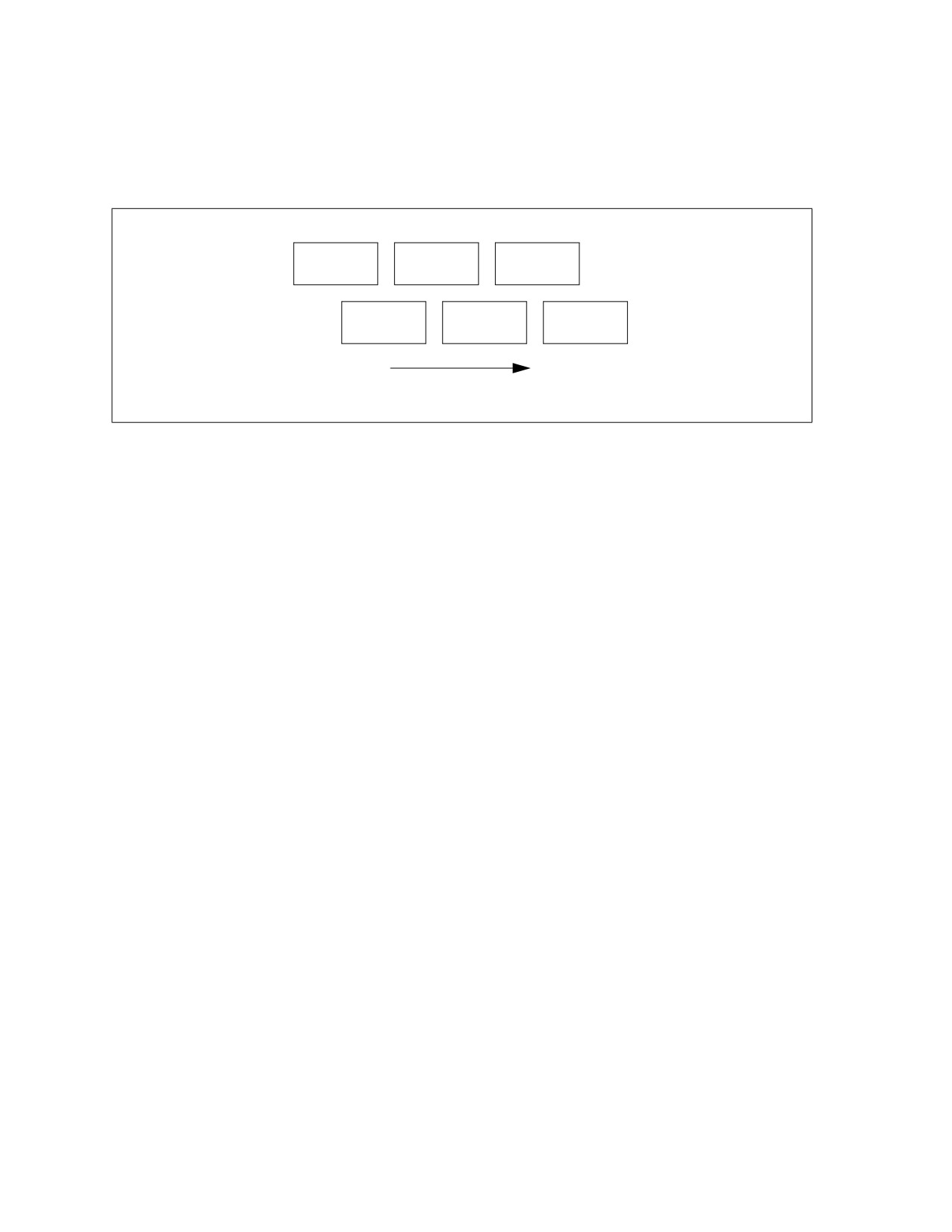
control the unit. Vehicles should maintain 25- to 100-meter intervals and lateral
dispersion. Each vehicle commander maintains observation of his designated sector. The
exact distance between vehicles depends on METT-TC, weather conditions, and
visibility.
Direction of travel
Figure G-1. Staggered Column Formation
(2) Line. The line formation is used for rapid movement when time is limited;
however, it provides little flank security. This formation is primarily used when no
enemy contact is expected and time is critical.
(3) Wedge. The wedge formation (Figure G-2) allows for security and
facilitates C2. Vehicle dispersion and intervals depend on METT-TC and visibility. When
spreading out in open, flat terrain, each vehicle operator must maintain visibility of the
vehicle in front of him. Each vehicle commander maintains observation of a designated
sector. This formation is used when enemy contact is possible, and it can be adapted to a
column of wedges (Figure G-3). The wedge formation is one of the most frequently used
unit movement formations, and it allows for optimum flexibility and security and good
C2. It is best employed when traveling or traveling overwatch conditions are warranted.
(4) V. The V formation (Figure G-4, page G-4) affords good security, speed,
and C2. The split V formation (Figure G-5, page G-4) can be used when two units are
operating on different routes. These formations are used when contact is possible, but
speed is desirable. The lead V element moves along covered and concealed routes for
protection. The trail element moves at a variable speed, continually overwatching and
providing security. The trail element must always maintain visual contact with the lead
element and may stop periodically to observe.
(5) Echelon (Left and Right). The echelon formation (Figure G-6, page G-5)
provides coverage of an area. It provides flexibility and speed, but does not provide
sufficient security if enemy contact is possible or expected.
G-2
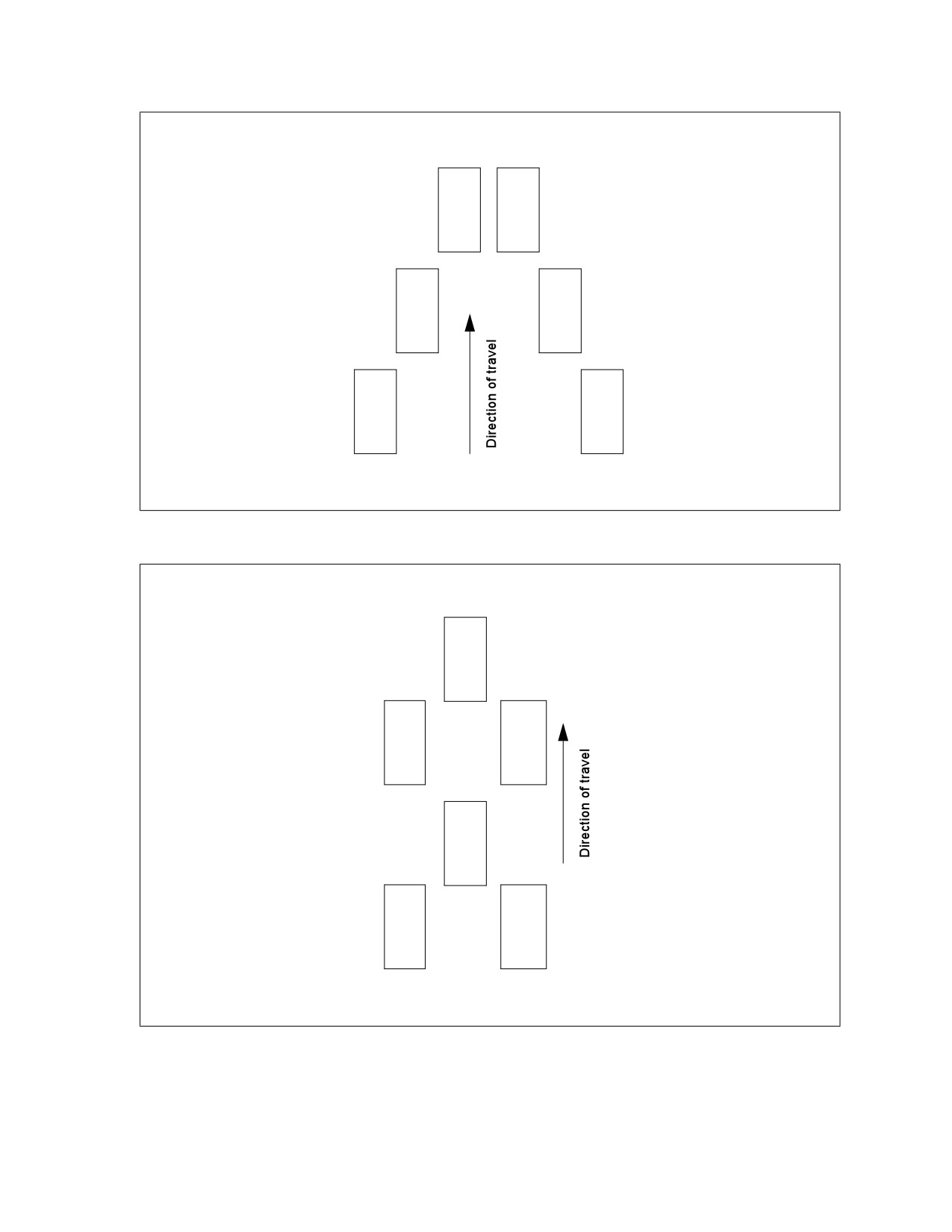
Figure G-2. Wedge Formation
Figure G-3. Column-of-Wedges Formation
G-3
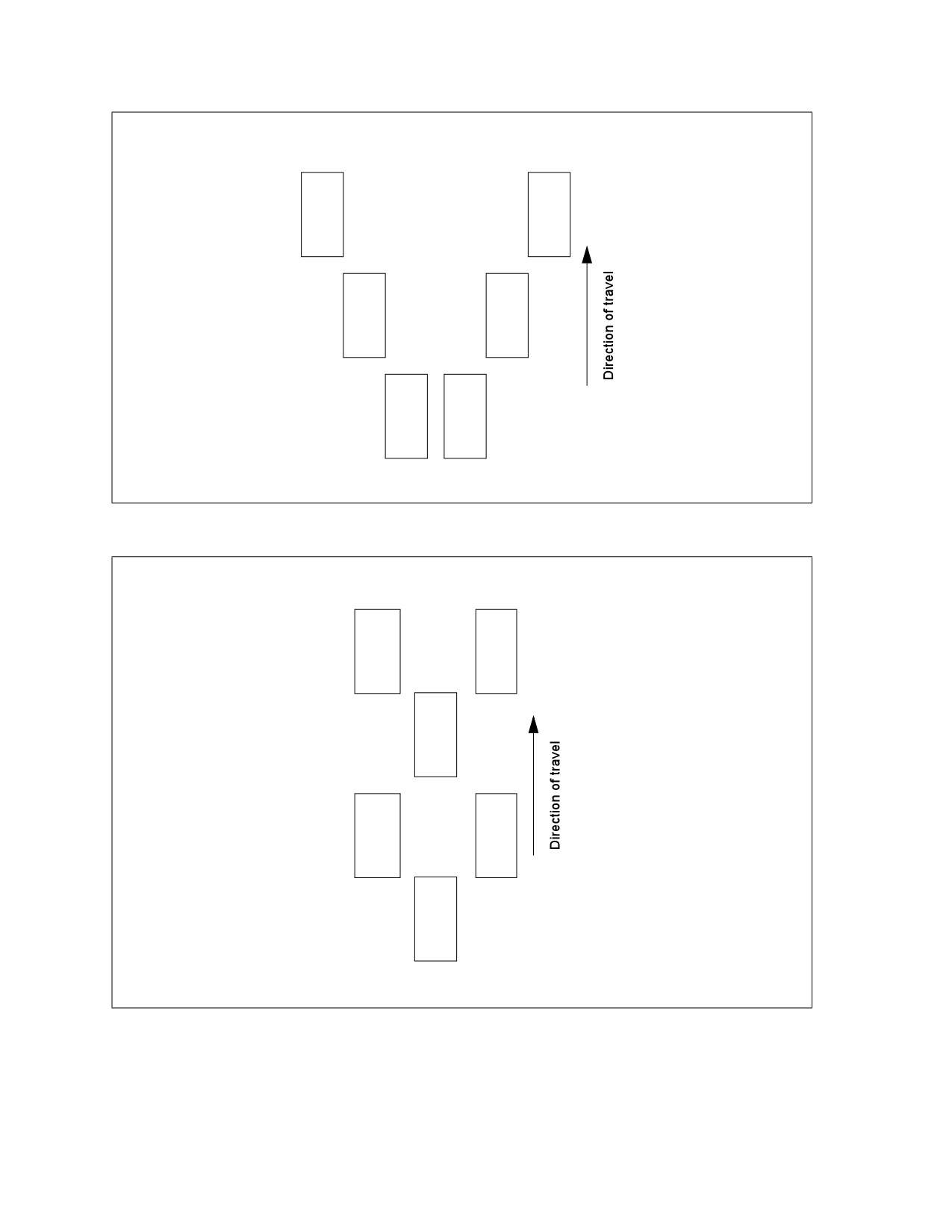
Figure G-4. V Formation
Figure G-5. Split V Formation
G-4
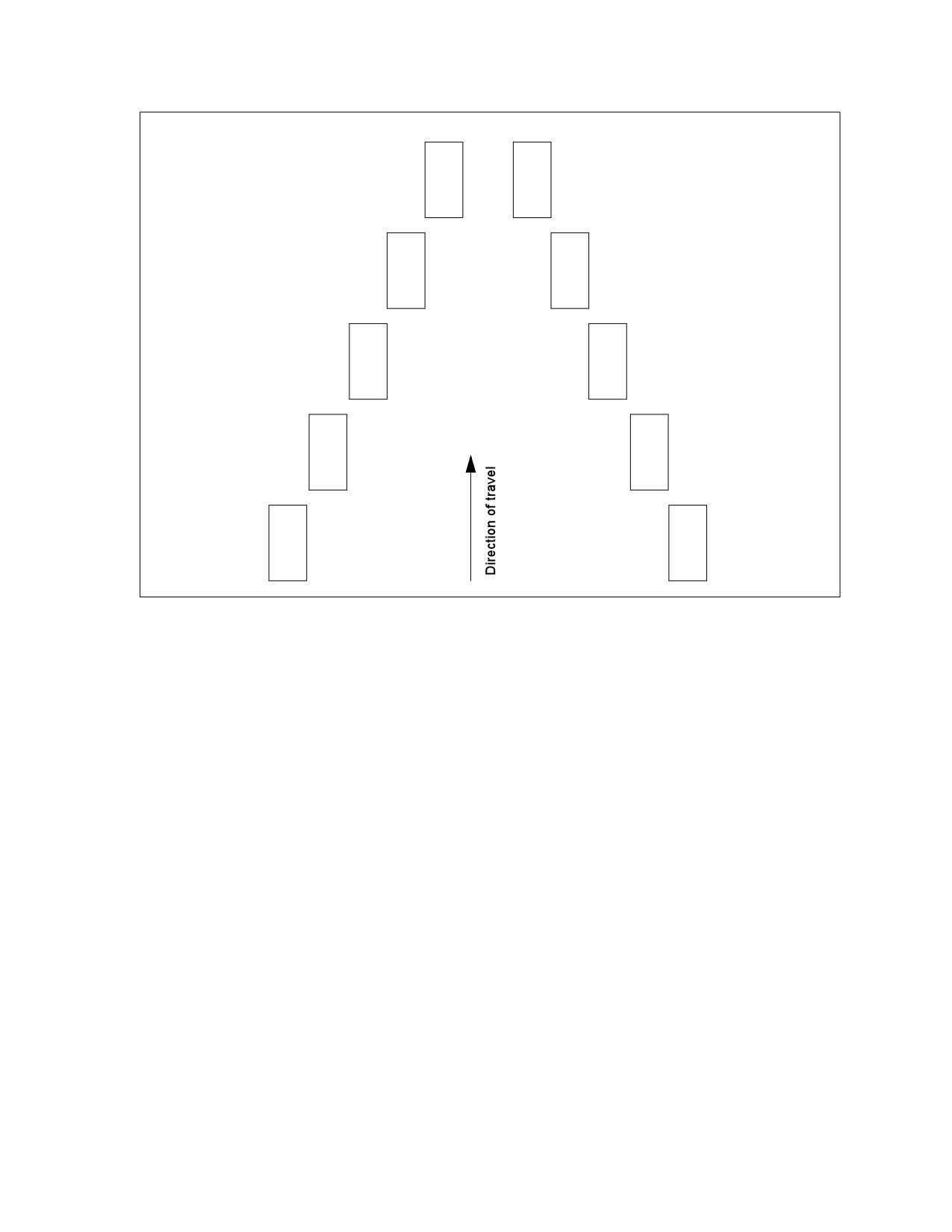
Figure G-6. Echelon (Left and Right) Formations
d. Stationary Formations. There are two security formations used when vehicles
are not moving—herringbone and coil.
(1) Herringbone. The herringbone formation (Figure G-7, page G-6) is used to
disperse the unit when they are traveling in a column formation. It may be used during
air attacks or when the unit must stop during movement. It lets the unit move to covered
and concealed positions from a road or an open area, and it establishes all-round security
without requiring detailed instructions. Vehicles are repositioned as necessary to take
advantage of the best cover, concealment, and fields of fire. Crew members dismount and
establish security.
(2) Coil. The coil formation (Figure G-8, page G-6) provides 360° security and
observation when the unit is stationary. It is useful for tactical refueling and resupply
and when issuing unit orders. Security, including air guards and dismounted personnel,
is posted. The coil formation is used—
• When visibility is limited, the unit leader forms the coil. When the
coil is complete, all vehicles stop, adjust for cover and concealment,
turn 90° outward, and post security.
• During daylight or whenever speed is essential, the unit leader
signals vehicles to move into position and stop. Other vehicles move
directly to their assigned positions (as stated in the unit SOP), seek
cover and concealment, and post security.
G-5
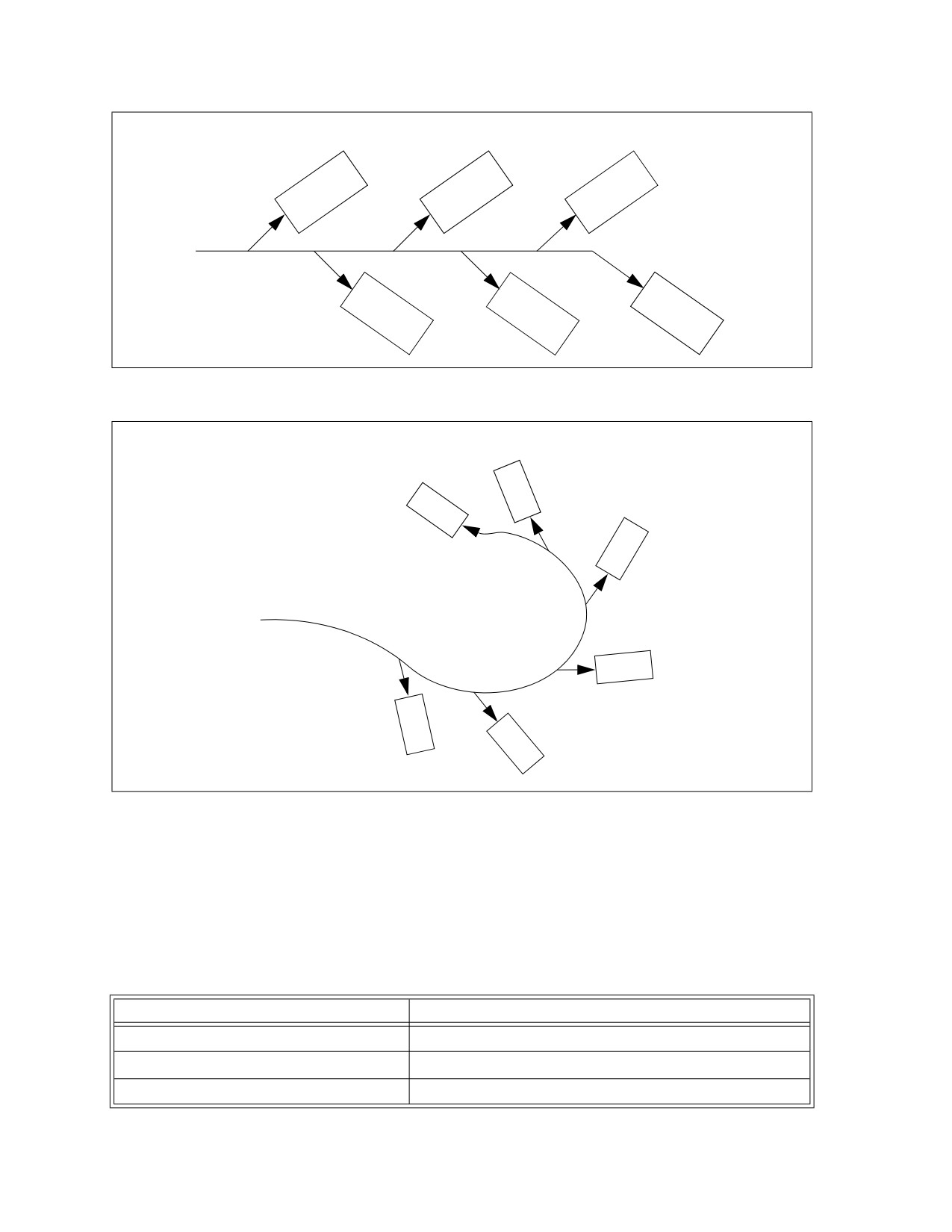
Figure G-7. Herringbone Formation
Figure G-8. Coil Formation
3.
Movement Techniques
Movement techniques are used by units to traverse terrain. The likelihood of enemy
contact determines which movement technique to use—traveling, traveling overwatch,
or bounding overwatch (see Table G-1).
Table G-1. Movement Techniques
Enemy Contact
Recommended Movement
Not likely
Traveling
Likely (possible)
Traveling overwatch
Expected
Bounding overwatch
G-6
a.
Traveling. The traveling technique is employed when speed is necessary and
enemy contact is not likely. The unit moves in a column formation, with 50-meter
intervals. Vehicles move continuously at a maximum safe speed. When the column stops,
vehicles move into a herringbone formation. The unit moves along covered and concealed
routes, automatically contracting and expanding based on terrain and visibility. Local
security is maintained according to the unit SOP. Each vehicle posts an air guard. The
unit leader locates where he can best exercise control.
b.
Traveling Overwatch. The traveling overwatch technique is employed when
enemy contact is likely (possible). The unit moves in a column formation, with 50-meter
intervals and designated lead and trail elements. The trail element moves continuously,
following covered and concealed routes. The lead element is approximately 50 to 100
meters ahead of the trail element, depending on terrain and vegetation. The trail
element moves at varying speeds, stopping as required to overwatch the lead vehicle.
Visual contact is maintained with the lead element at all times. The trail element
overwatches at a distance that would allow it to fire or move to support the lead element
if necessary. In wooded areas or restricted terrain, units reduce the speed and the
intervals. In adverse weather conditions, the crew of the lead vehicle dismounts to verify
route trafficability and the following vehicle(s) provides overwatch. The unit maintains
local security according to the unit SOP.
c.
Bounding Overwatch. The bounding overwatch technique is employed when
enemy contact is expected. The staggered column formation, with 50- to 100-meter
intervals between vehicles, is the standard movement formation. The lead element
bounds forward, following a covered and concealed route. The bounding element may be
a single vehicle or multiple vehicles. The overwatching element covers the progress of the
bounding element from covered and concealed positions, offering observation and fields
of fire against suspected enemy positions. Visual contact is maintained at all times. The
length of a bound is based on terrain analysis and the ranges and fields of fire from the
overwatching vehicles. When cresting a hill, entering an open area, exiting a defile, or
moving through restrictive terrain, a crewman dismounts from the vehicle. He moves
forward on foot to a point where he can observe all suspected and likely enemy firing
positions. The unit maintains local security according to the unit SOP.
4.
Survey Techniques
Survey techniques can be conducted by a mounted or dismounted team. Survey
techniques used include nearside-farside, box, star, and bounce-and-bypass. The
distances suggested for each technique vary depending on METT-TC.
a.
Nearside-Farside.
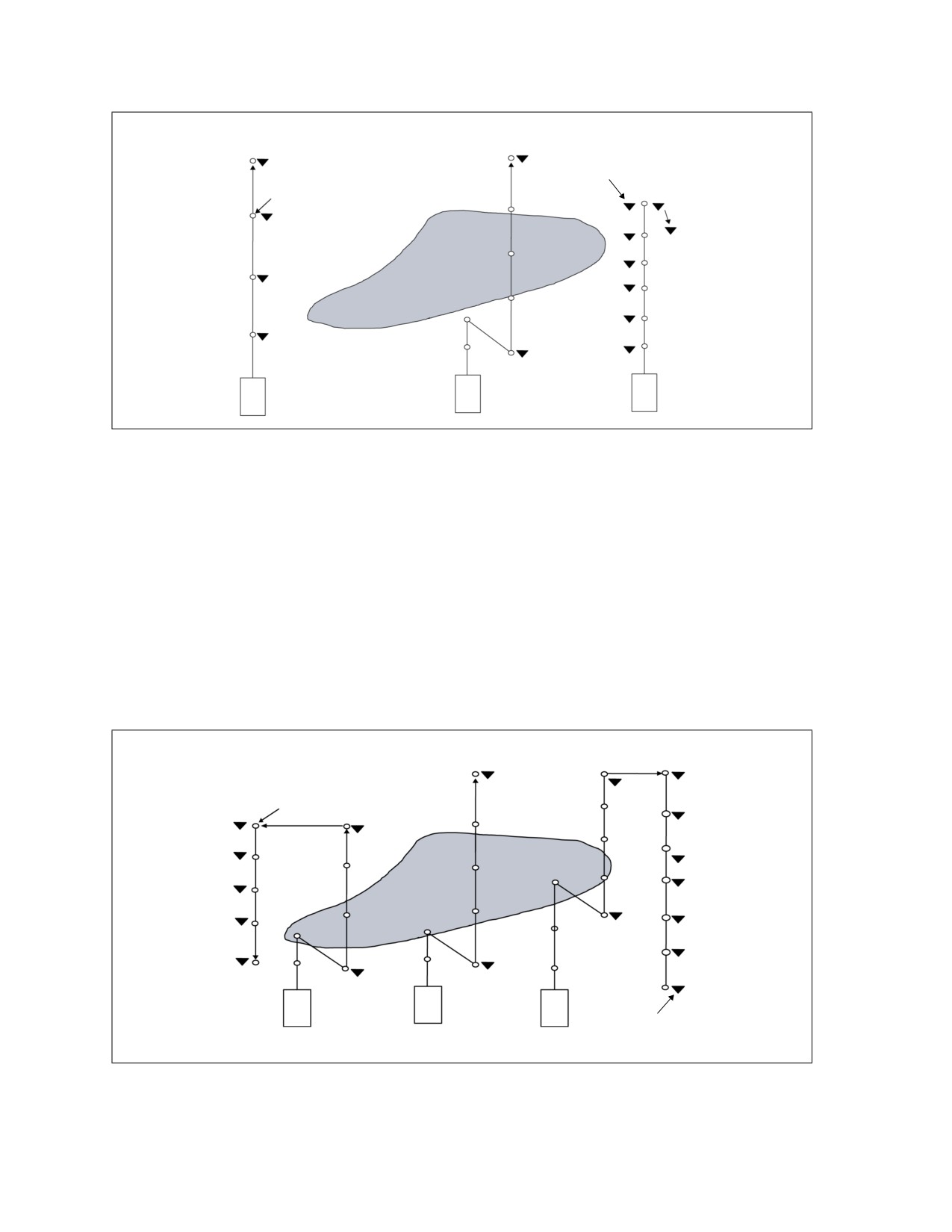
(1) The nearside-farside survey technique is used by a reconnaissance
element when a team enters the contaminated area. All vehicles or personnel in the
reconnaissance element stop. Each team determines if it is in the contaminated area. If a
team is in the contaminated area, it moves back along its original path for 200 meters
and checks for contamination (see Figure G-9, page G-8). If it is out of the contaminated
area, it emplaces appropriate warning markers. If it is still in the contaminated area, it
moves back another 200 meters and checks for contamination. This process is repeated
until it is clear of the contamination. Once the initial vehicle or individual has found the
nearside boundary of contamination, it moves forward across the contaminated area,
testing every 200 meters.
G-7
NBC warning
marker
Detection point
Figure G-9. Nearside-Farside Survey Technique
(2) When contamination is no longer detected, the team moves forward
another 200 meters and checks again. If no contamination is detected, it places an NBC
warning marker. Each team in the element executes this process to determine the
nearside and farside boundaries of the contamination.
(3) It is possible that the left and right limits of the contamination are not
identified, even though the left and right reconnaissance teams determined a nearside
and a farside (see Figure G-10). In this case, the reconnaissance element can shift teams
to the left and right to find the boundaries or it can execute a box survey technique. The
lateral spacing between teams is important to quickly locate all boundaries of the
contaminated area. Once the boundaries are located, clear bypass routes can be easily
located.
Detection point
NBC warning
marker
Figure G-10. Contamination Area Extending Past the Initial Right Limit of the Survey
G-8
b.
Box.
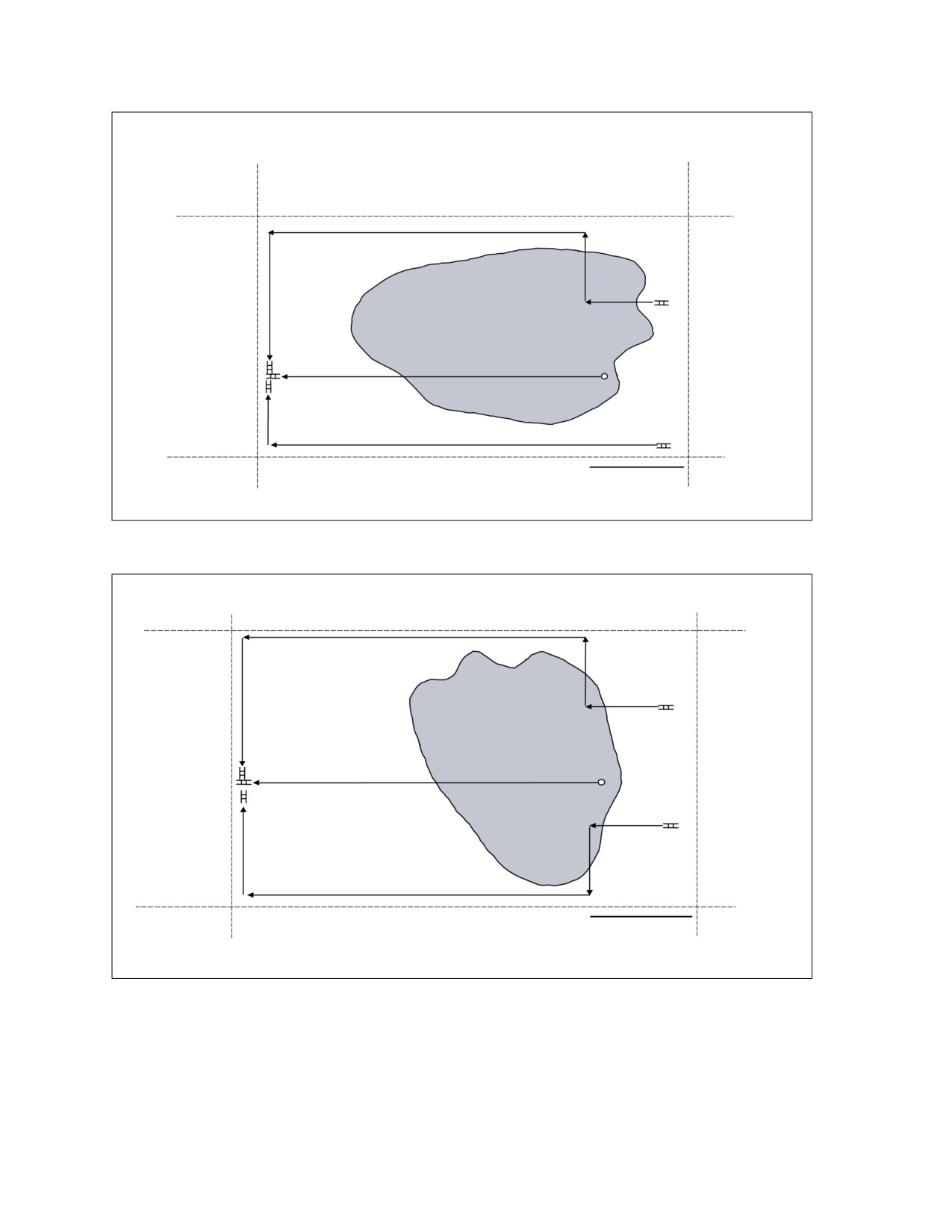
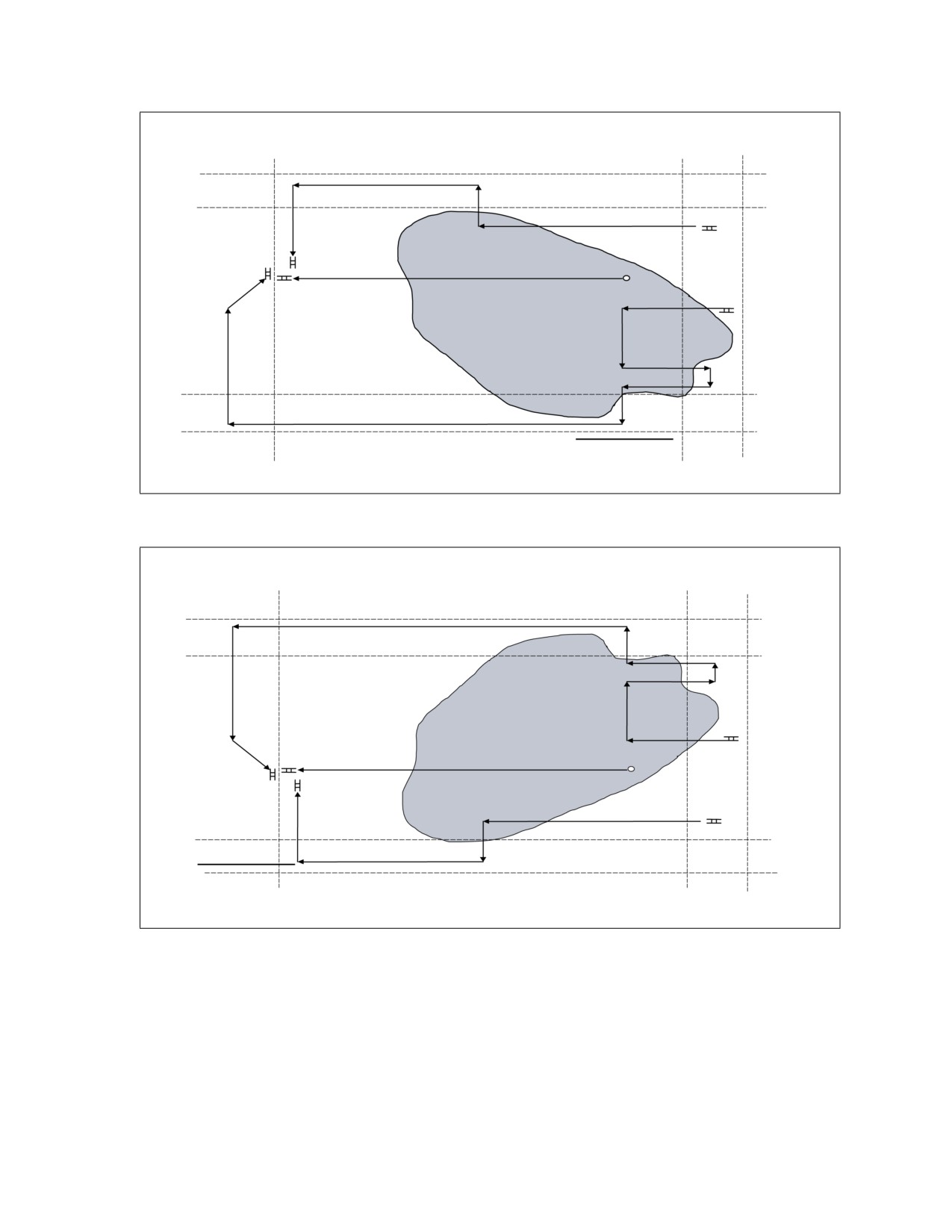
(1) The box survey technique (Figures G-11 through G-14, pages G-10 and
G-11) is used to determine the general dimensions (length and width) of a contaminated
area. It is best employed by three teams, and the process starts once a team enters the
contaminated area. All teams in the reconnaissance element stop and check for
contamination in their immediate areas. The first team to report contamination becomes
the base element. If any other teams in the element are located in the contaminated
area, they must back out of the contamination. All teams in the element should orient on
the base team. At least one team should be to the left and one team to the right of the
base team.
(2) The base team moves forward and finds the farside of the contamination.
The crew continues to check for contamination every 200 meters. When the crew fails to
get a positive reading, they proceed another 200 meters and establish the initial farside
line. The team to the right of the base team places an NBC warning marker to indicate
the initial nearside line, moves forward 200 meters, and checks for contamination.
(3) The crew can find two things at this point—contamination or no
contamination. If contamination is detected, the team turns 90° to the right, moves 200
meters, and checks again. If no contamination is found, the team moves forward 200
meters and checks again. This process of going straight or turning will continue in a box-
like movement until the team has crossed the initial farside line; this is the initial right
limit of the contamination. The movement of the team depends on the orientation of the
contaminated area.
(4) Once the team has reached the initial farside line, the team moves toward
the base team while checking for contamination. The team to the left of the base vehicle
executes the same movement as the team to the right, except its first turn will be to the
left. While this may sound complicated, it is not difficult to execute. The reconnaissance
unit leader must receive continuous reports from the other teams on their findings—
positive or negative. From these reports the NBC reconnaissance unit leader plots the
findings to get a general idea of the contamination layout.
(5) Once the NBC reconnaissance unit leader is satisfied that the limits of the
contamination have been determined, the unit locates the best route to bypass the
contamination. Warning markers are erected around the contamination and along any
trails leading into the contaminated area so that the bypass route is clearly marked.
G-9
Initial right line
No
No
No
No
No
No No
Right
No
Initial
Initial
Yes
No
farside
nearside
line
No
line
Base
No
No
Yes
Yes
Yes
No
Left
No
No
No
No
No
No
Initial left limit
200 m
Figure G-11. Box Survey Technique on Orientation A
Initial right line
No
No
No
No
No
No
No
Right
Yes
No
Initial
No
farside
Initial
line
Base
nearside
line
No
No
No
Yes
Yes
Left
No
Yes
No
No
No
No
No
No
No
200 m
Initial left limit
Figure G-12. Box Survey Technique on Orientation B
G-10
Adjusted right line
No
No
No
Initial
Initial right line
farside
Right
No
line
Yes
No
No
No
No
Initial
No
Base
nearside
line
No
No
Yes
Yes
Yes
Left
No
Yes
No
No
Yes
No
Initial left limit
Yes
No
No
No
No
No
No
Adjusted
nearside
Adjusted left limit
200 m
line
Figure G-13. Box Survey Technique on Orientation C
Adjusted right line
No
No
No
No
No
No
No
Yes
Initial right line
No
Yes
No
No
Right
No
Yes
No
Base
Initial
No
No
No
Yes
Yes
Yes
nearside line
Initial
No
Left
farside
line
Yes
No
No
Adjusted
No
No
nearside
Initial left limit
line
No
No
No
200 m
Adjusted left limit
Figure G-14. Box Survey Technique on Orientation D
G-11
c.
Star.
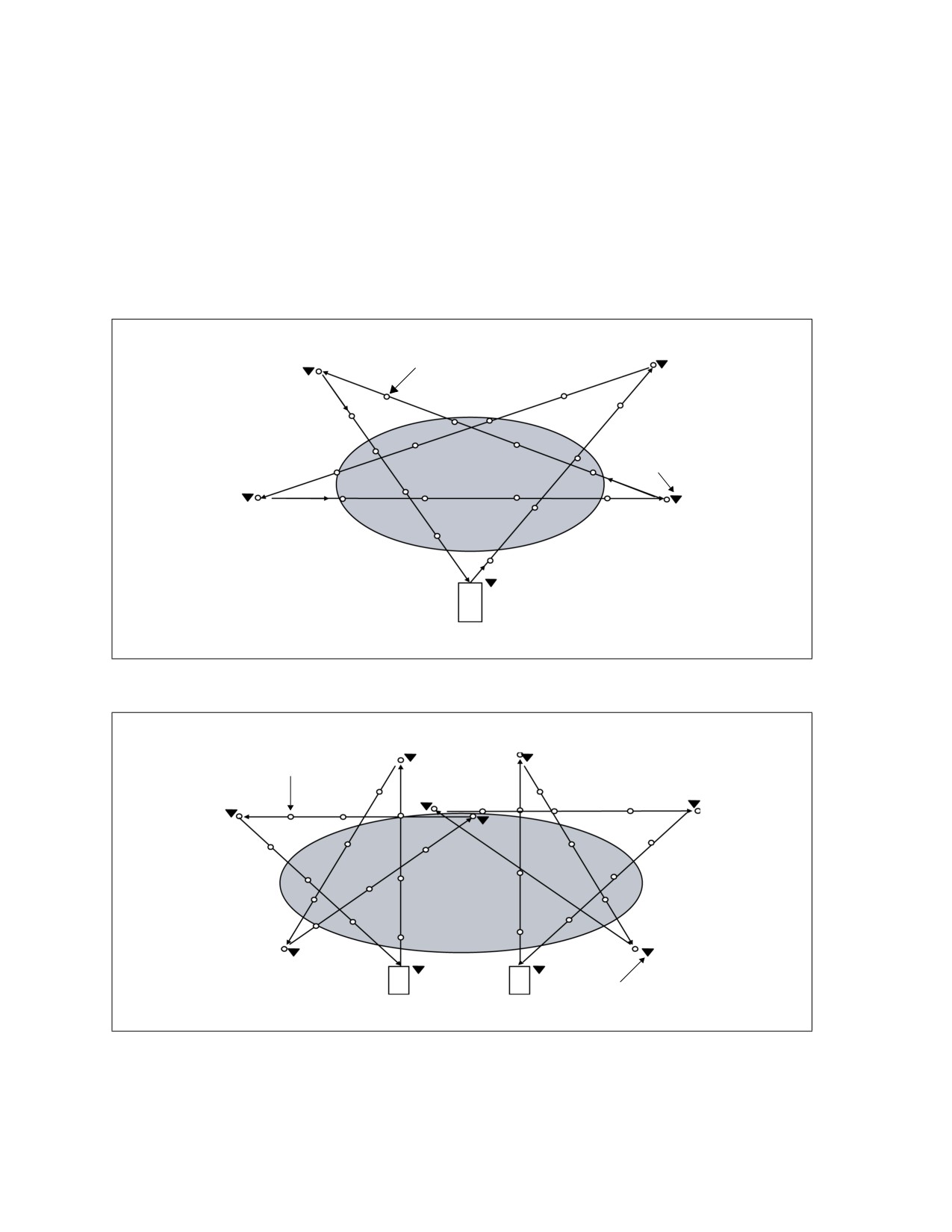
(1) The star survey technique (Figures G-15 and G-16) is a very quick way to
determine the rough limits of a contaminated area. The team that encounters the
contamination moves back from the contaminated area 200 meters from the last positive
reading. This point is the base of the star. The team posts a warning marker and
proceeds forward, detecting every 200 meters to find the farside. Once the team has
detected no contamination, it proceeds for another 200 meters and checks again. If no
contamination is detected, another warning marker is posted. This ends the first leg of
the star.
Detection point
NBC warning
marker
Figure G-15. Star Survey Technique
Detection point
NBC warning
marker
Figure G-16. Star Survey Technique With Two Vehicles
G-12
(2) The team turns about 135° and travels in that direction, detecting every
200 meters. If no contamination is detected on this leg, the team does not travel any
longer than the length of the initial leg. The team repeats this process until it arrives at
or near the base of the star. This technique can be used by two or more teams to obtain
more detecting points, increasing the accuracy of the survey.
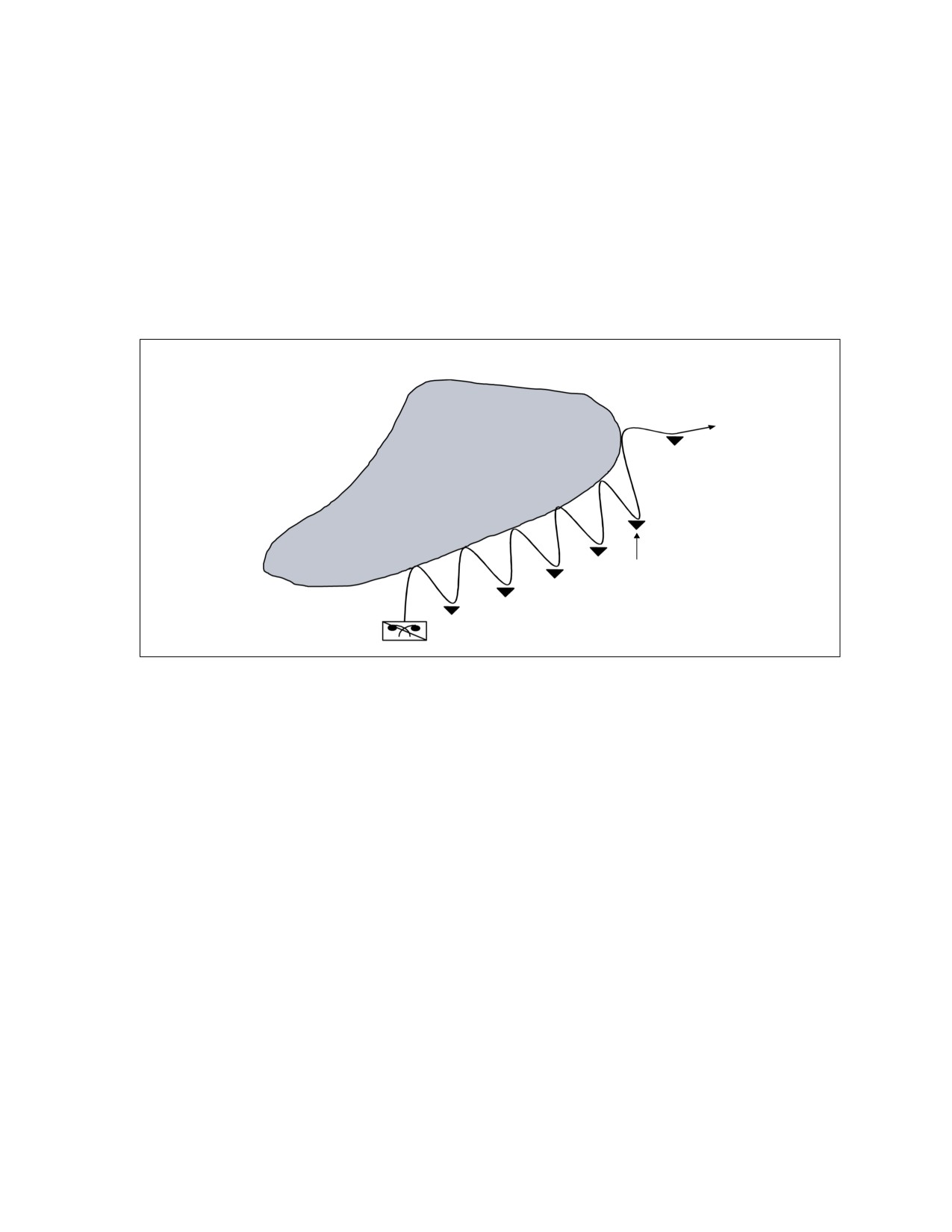
d. Bounce-and-Bypass. The bounce-and-bypass survey technique (Figure G-17) is
used to locate the general boundaries of a contaminated area. The team places warning
markers at specified intervals around the contaminated area and at all entry points. This
technique can also be used to support a radiological survey. The team reports the
intensity of radiation at the contamination boundary.
NBC warning
marker
Figure G-17. Bounce-and-Bypass Survey Technique
5.
Search Techniques
Search techniques can be conducted by a mounted or dismounted team. Search
techniques include zigzag, lane, and cloverleaf. The distances suggested for each
technique vary depending on METT-TC.
a. Zigzag.
(1) The zigzag search technique (Figures G-18 and G-19, page G-14) is used to
locate contaminated areas during route, zone, or area reconnaissance missions. The
reconnaissance element begins its search at the deployment (start) line, maintaining
200-meter intervals between vehicles. A team moves forward along a line that is oriented
45° from the start line. The team monitors identification equipment for indications of
contamination. After the team has moved 500 meters along the first zig, it turns 90° and
zags. After traveling 500 meters, it turns 90° for a second zig. NOTE: Depending on
the terrain, the distances could be larger or smaller.
G-13
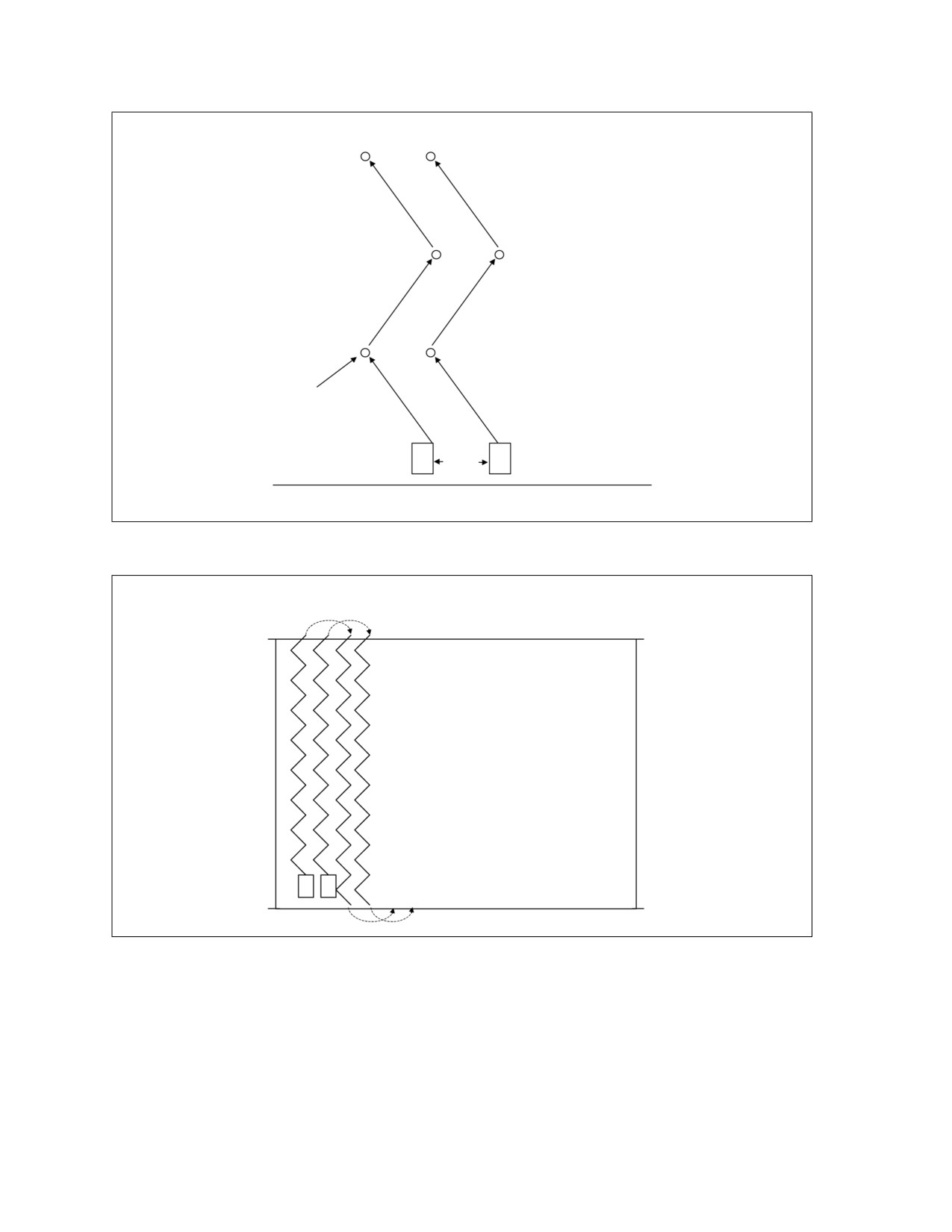
Detection
point
200 m
LD
LD
Figure G-18. Zigzag Search Technique
Limit of
Limit of
advance
advance
The pattern is repeated
until the entire area is
searched.
LD
LD
Figure G-19. Multiple Sweeps Using the Zigzag Search Technique
G-14
(2) The team continues to zigzag until the reconnaissance element has
reached its limit of advance. If the entire mission area has been searched, the
reconnaissance element reports the results of the reconnaissance. If the reconnaissance
element did not search the entire mission area, it begins a new sweep. It repeats the
process until contamination is detected or the entire mission area is searched. The zigzag
technique has a higher probability of detecting contamination because the surface area
not traversed by the reconnaissance element is less than that of other search techniques.
b.
Lane.
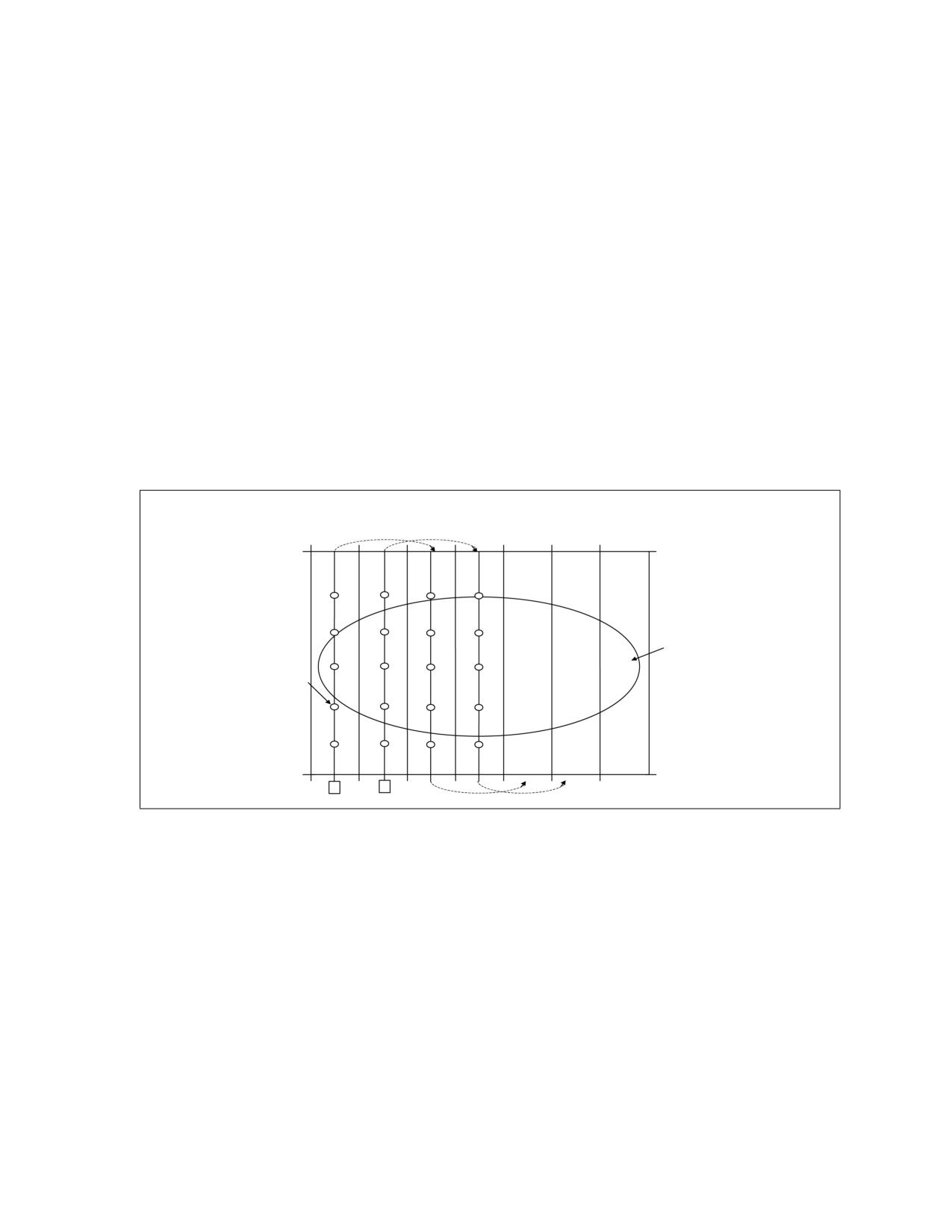
(1) The lane search technique (Figure G-20) is used to locate contaminated
areas. It is very similar to the zigzag technique, but is primarily used during route
reconnaissance missions. It can also be used for area reconnaissance of long, narrow
pieces of terrain, such as defiles. The reconnaissance element begins its search at the LD
with an interval of less than 200 meters between vehicles (if more than one vehicle is
used). For narrow routes, the reconnaissance element moves in a staggered column
formation. Each team moves along a line until it reaches the limit of advance. Teams
monitor the identification equipment for indications of contamination and take readings
every 500 meters.
Limit of
Lane
Limit of
advance
A
B
C D E
F
G
advance
New unit
location
Detection
point
LD
LD
Figure G-20. Lane Search Technique
(2) When the reconnaissance element reaches the limit of advance and the
entire mission area is searched, it reports that no contamination detected. If the element
did not search the entire mission area, it begins a new sweep and repeats the process
until contamination is detected or the entire mission area is searched.
c.
Cloverleaf.
(1) The cloverleaf search technique (Figure G-21, page G-16) is used during
mounted and dismounted operations. During dismounted operations, the team member
dismounts from the vehicle and moves in a cloverleaf pattern. The vehicle is used as the
center of the search, and each leaf extends 50 to 200 meters from the vehicle. This
technique is not used in radiologically contaminated areas because of the lack of
shielding. The CAM and the M256 kit are the primary detection tools that dismounted
G-15
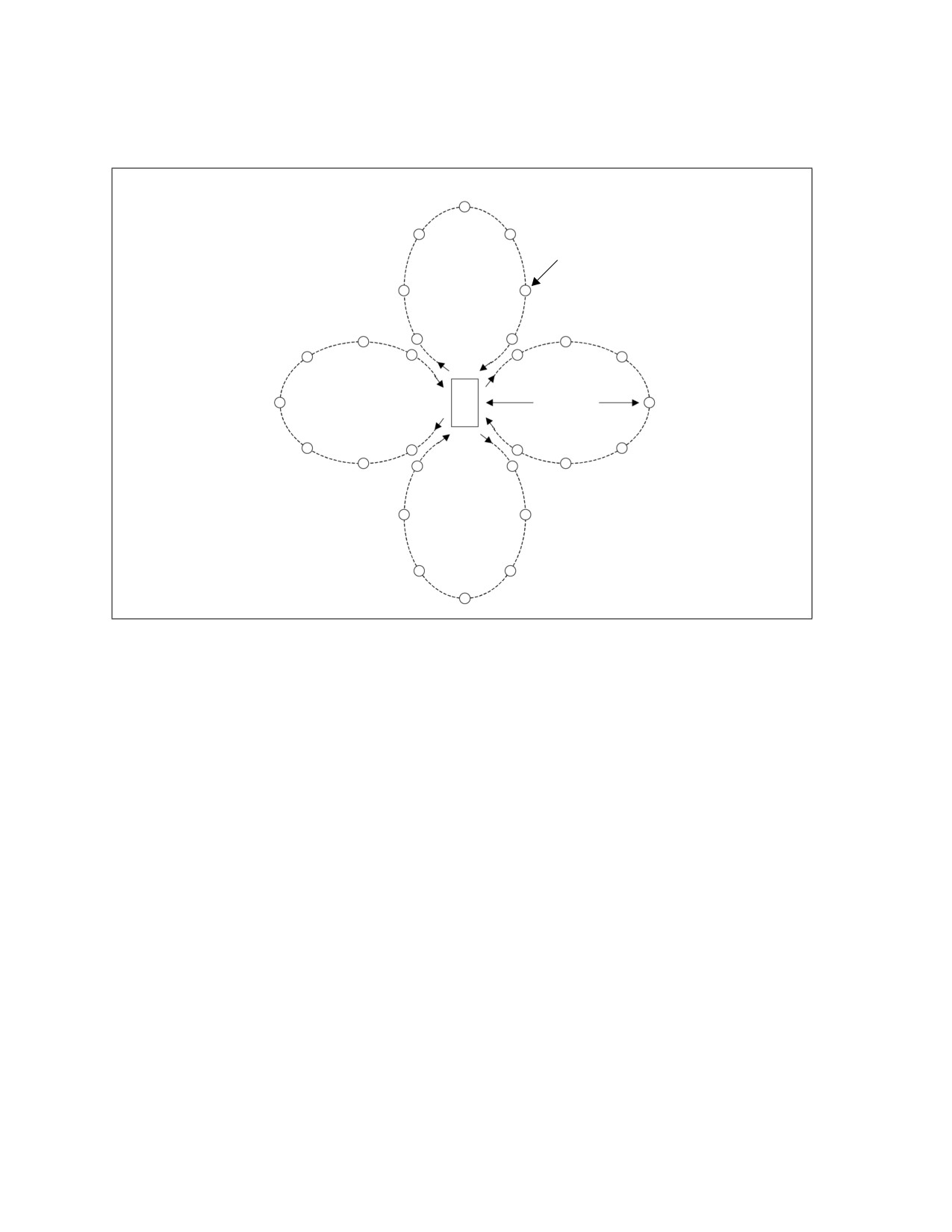
personnel use to detect chemical contamination. They also use M8 and M9 detector
paper.
Detection point
50 to
200 m
Figure G-21. Cloverleaf Search Technique
(2) This technique is primarily used in restricted terrain or to ensure that
sites for high-value facilities (such as C2 centers) are free of contamination. The
cloverleaf search technique is time-consuming; however, it provides detailed coverage
and information about an area.
G-16
Appendix H
SURVEILLANCE TECHNIQUES
1.
Background
a. Surveillance is the systematic observation of aerospace, surface, or subsurface
areas, places, persons, or things by visual, aural, electronic, photographic, or other
means. All units perform a type of NBC surveillance—monitoring. Units monitor their
areas to provide early warning by using the ACAA. Units can also be given the mission to
perform NBC surveillance by observing NAIs for indications of a chemical attack.
Specialized units perform NBC surveillance with point or mobile standoff detectors and
LOS detectors.
b. Surveillance also includes medical surveillance. Medical surveillance involves
the ongoing, systematic collection of health data. This data is essential to the evaluation,
planning, and implementation of public health practice and is closely aligned with the
dissemination of data as required by higher authority.
2.
Establishing an Automatic Chemical-Agent Alarm
Detector Network (Monitoring)
a.
ACAAs and detectors (e.g., M8, M22, and M90 series) are used in point,
stationary roles. Chemical agents can be delivered directly on unit positions (on-target
attacks) or upwind to drift over the unit position (off-target attacks). Detection methods
differ for each type of attack.
• On-target attacks. On-target attacks produce immediate casualties by
contaminating troops and equipment. A large amount of agent must be
delivered in a very short time (within 30 seconds). Alarms may take
several seconds to respond, and they do not detect all chemical agents.
Therefore, a large percentage of personnel might be exposed to chemical
agents before an alarm sounds. This means that personnel must recognize
the delivery of the chemical agent, observe a color change in the detector
paper, or recognize symptoms of chemical-agent poisoning.
• Off-target attacks. It is easier to protect against off-target attacks.
Units use alarms to alert personnel that a chemical agent is about to drift
over their position. Detector paper can also alert units that they are
moving into a contaminated area. Personnel can then take protective
action before being exposed to the agent.
b. Each unit and installation develops a plan for the deployment and integration
of automatic chemical detection, identification, and warning systems with individual
chemical detection systems. Plans must include the activation and use of an NBC
warning and reporting system and local communications. Alerts may be achieved with
radio communications, public-address systems, or flags. Manual systems are used for
backup roles and to expand coverage. The current inventory of detectors sample for
chemical vapors at the detector location. Manual systems provide an indication of a
H-1
chemical attack in 12 minutes or less (for specific agents). Postattack determination for
the presence or absence of chemical agents may take 30 minutes or more.
(1) Detector Assets. NBC personnel determine how many detector assets are
available. They assess how many detector systems are needed to provide coverage for the
unit area or fixed site.
(2) Detector Employment. NBC personnel prepare a dispersal employment
scheme for assigned automatic detectors, M256A1 kits, and M8 and M9 detector paper.
The unit perimeter or installation is divided into sectors. Incident response maps can be
overprinted with the sectors identified. The size and shape of the sector may vary based
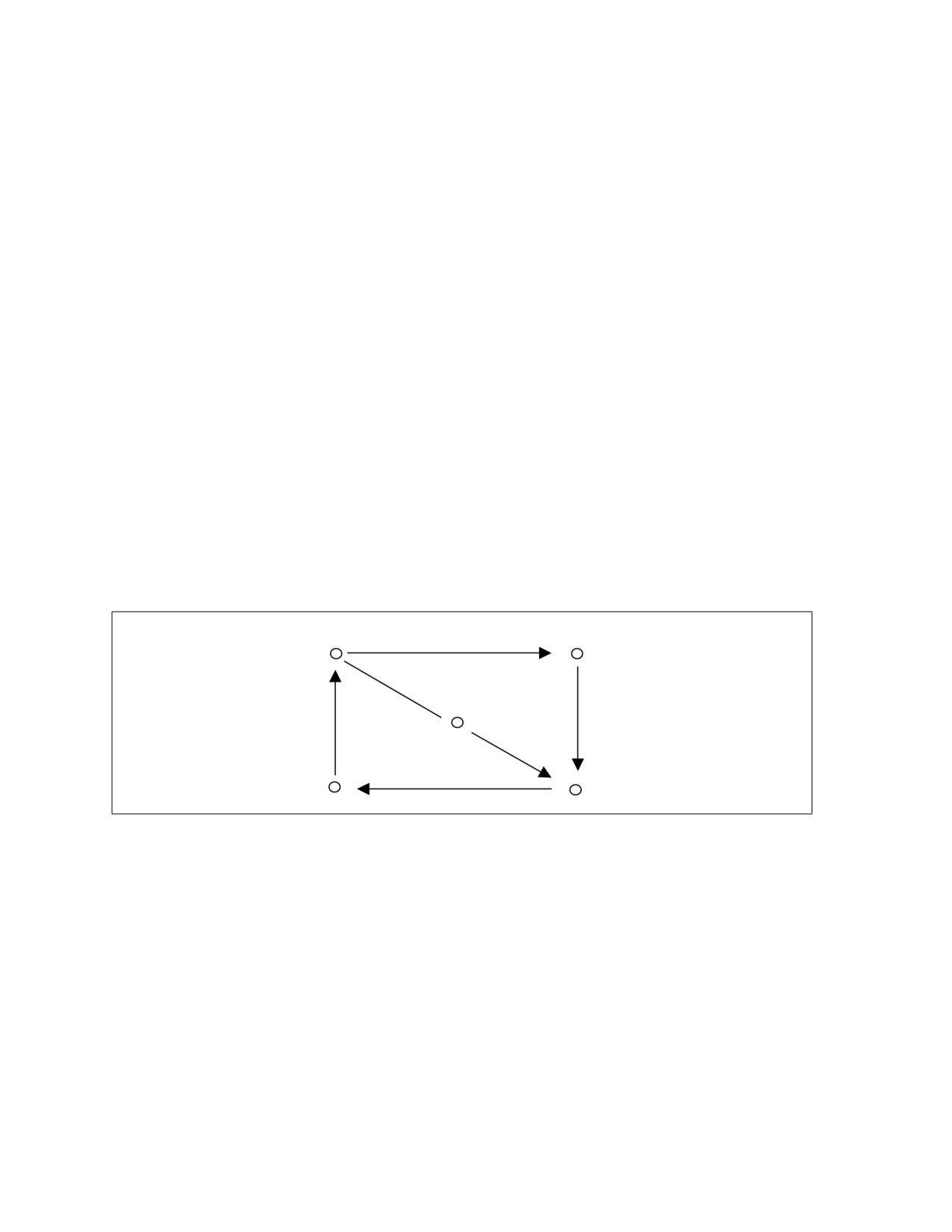
on what is located in the sector. A dice five pattern (a rectangle with five detectors, one in
each corner and one in the center) can be used as the basic pattern (see Figure H-1). The
dice five pattern can also be applied to the installation or unit area, placing available
detectors evenly throughout the installation or perimeter. The prevailing winds for the
fixed site should be taken into account. Detectors should always be concentrated on the
upwind side. Identify critical functions and areas (C2 facilities; munitions sites; buildup
and storage areas; aircraft locations; maintenance facilities; petroleum, oil, and
lubricants [POL] resources; and cantonment and support areas). Predetermine M8 and
M9 detector paper placement for unit monitoring. At fixed sites with limited assets and
responsibility for small cantonment areas, use detection teams in the cantonment area in
the dice five pattern and provide extended coverage of the perimeter as detectors become
available. If detectors are not available, the unit should disperse any necessary sampling
supplies or equipment or otherwise prepare to sample, preferably at the same designated
detector sites.
Figure H-1. Dice Five Pattern Detector Placement
(a) A unit emplaces alarms as soon as it arrives in the area it plans to
occupy. If possible, detectors should be no more than 150 meters upwind from the
farthest upwind unit position. This warns the personnel upwind and those farther
downwind. The detector units should never be placed more than 400 meters from the
alarm unit; otherwise, the signal may not be strong enough to sound the alarm. The
optimum spacing of 300 meters between detectors reduces the risk that a chemical cloud
will drift between detectors without sounding the alarm.
(b) The number of alarms needed to protect a unit depends on the unit
size. The larger the unit front, the more detectors are needed to warn the unit. In this
case, front means the upwind direction. Front could be the left or right flank or the
forward or rear edge of the unit. Table H-1 shows the number of detectors required for
optimum alarm employment.
H-2
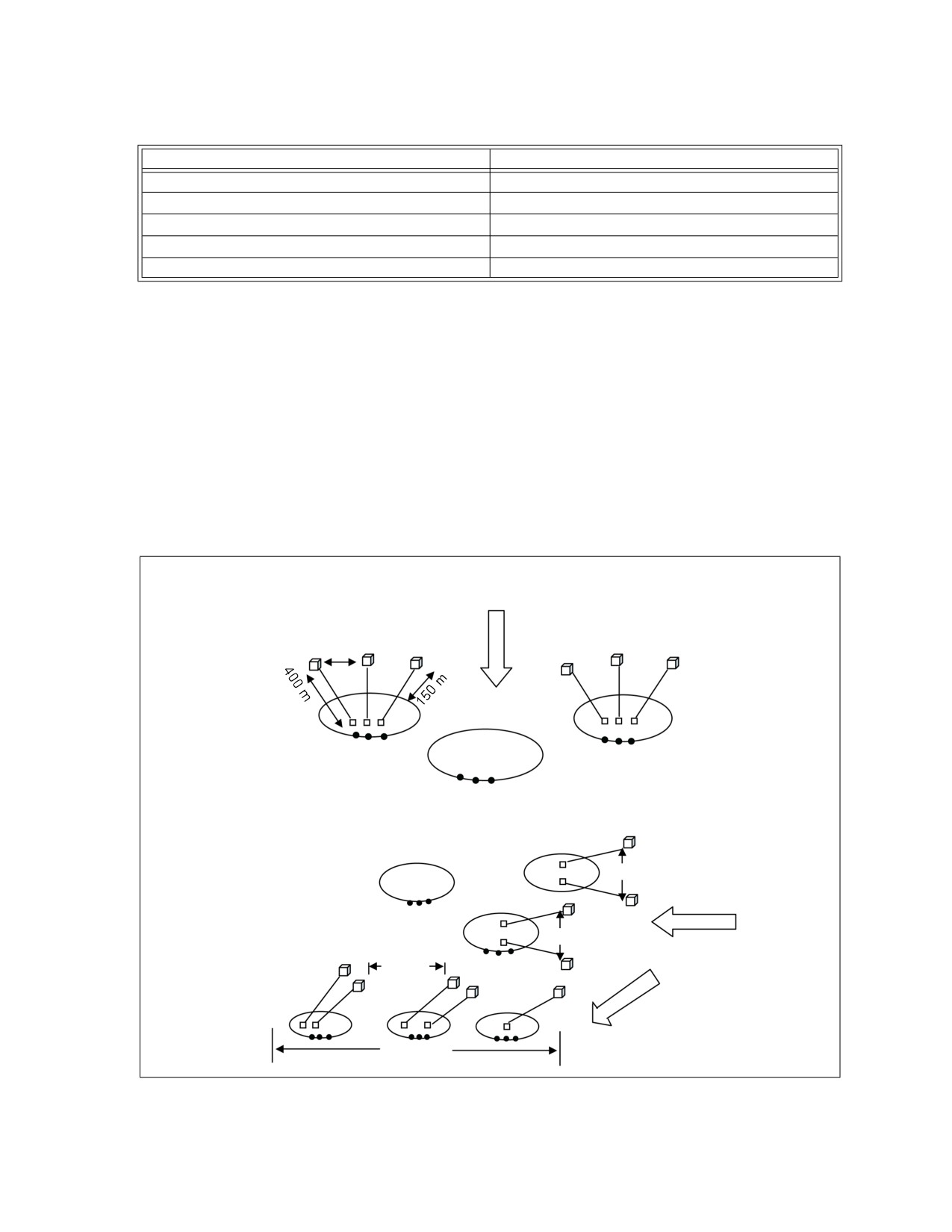
Table H-1. Number of Detectors Required
Unit Front Size (Meters)
Number of Detectors
1 to 36
1
37 to 372
2
373 to 708
3
709 to 1,044
4
1,045 to 1,380
5
(c) Chemical alarms are usually employed at unit level. Exact positions
for the alarms must be determined based on wind speed, wind direction, terrain, and the
tactical situation. The commander, with advice from the unit NBC NCO, chooses the
actual positions. Figure H-2 shows how a fixed emplacement might look. Note how the
detectors are positioned and how these positions change when wind direction and unit
position change. CW agent point vapor detectors (such as M8A1, M22, and M90) should
be placed around a perimeter to provide rapid indication of vapor presence. Because the
detector is a point source detector, ensure that enough detectors are placed in the upwind
positions on the fixed site. Although the point vapor detector is capable of monitoring
agent contamination at an extremely low concentration, do not employ it as a vapor
monitor inside collective protection facilities unless a sufficient number of detectors are
available to provide detection of chemical attacks.
Wind direction
300 m
45o
45o
45o
300 m
Wind direction
45o
300 m
300 m
Wind direction
1,200 m
Figure H-2. Fixed Emplacement of ACAAs
H-3
NOTE: When emplacement is complete, show the alarm locations on a site
diagram (i.e., grid map, range card). For night operations, a strip of engineer
tape can be placed on the alarms to help locate them.
(d) A sample chemical detector deployment scheme for a fixed site
(approximately 3,000 by 5,000 meters) uses 35 detectors in an overlapping dice five
pattern. This pattern calls for 14 detectors to be placed on the perimeter of the base, 18
detectors placed on the interior of the base, and 3 mobile units to be deployed with
chemical reconnaissance teams. This configuration allows for quick chemical detection
with a high confidence level, regardless of wind direction and speed. The mobile units are
used to verify single detector alarms and possible false alarms. Consider the following
factors when establishing a detector array:
•
The exact detector locations are not as important as ensuring
that a sufficient number of detectors are staggered in upwind
positions from where personnel may be working or sleeping.
•
Detector spacing should be based on METT-TC to provide
maximum coverage.
•
Detectors should be no closer than 25 feet to any major
structure to ensure maximum exposure to prevailing winds and
limit interference caused by buildings (micrometeorological
phenomenon).
•
Detectors should be positioned at least 3 feet off the ground, but
no more than 6 feet, to ensure maximum exposure to the
contaminated environment.
•
Detectors should be placed near personnel so that alarms can be
heard and detector malfunctions reported. On the perimeter,
detectors are ideally positioned next to defensive fighting
positions.
•
Commanders should rely on additional information when
confirming an attack. When possible, do not rely on the results
of a single detector to determine if contamination is present.
Observe postattack data for the activation of additional
detectors, M8 and M9 detector paper reaction, environmental
indications, casualties, and other detection means to confirm a
chemical attack.
•
Everyone is issued M8 and M9 detector paper. It can be used
after a suspected attack (blotting) to confirm chemical use.
•
All personnel must be trained to check suspected surfaces with
M8 and M9 detector paper before touching them. They must
avoid marked-off areas (contamination and UXO).
(e)
When emplacing alarms, the wire connecting the alarm and the
detector must be protected from indirect fire. This can be done by burying the wire. It
should be checked periodically (at least every 4 to 6 hours) to ensure that it has not been
broken or cut.
H-4
NOTE: The M8-series alarm is designed to operate in a temperature range of
-40° to 49°C. During Operations Desert Shield and Desert Storm in the Persian
Gulf, deployed units experienced a high frequency of false alarms. This was
due to a multitude of problems. However, the two principal causes were
identified as high temperatures and high dust concentrations. The high-
temperature problem was reduced by placing the alarm up off the ground on
wood or boxes in a shaded area, natural or man-made (such as under
camouflage netting). High dust concentrations required replacing filter
paddles in the alarm more frequently (once every 1 to 2 hours of operation).
(f)
An ACAA can be mounted on a vehicle; however, it does not provide
detection while the vehicle is moving.
3.
Observing Specified Areas (Named Areas of Interest)
NBC surveillance provides observation of a specific area for indications of an NBC
attack. Based on IPB and vulnerability planning, these designated areas are typically
NAIs. The commander prioritizes the use of available collection assets against
designated NAIs; and teams monitor, watch, and listen to observe designated areas for
indications of an attack. The primary means of surveillance may be from OPs. An OP is a
position occupied to observe a designated area. The team reports any indication of an
NBC attack or enemy activity. Another means of surveillance is conducting routine
patrols through the AO. This is normally conducted in rear areas along MSRs and road
networks.
a. OP Site Selection. The supported unit leader or the NBC reconnaissance unit
leader selects the general location for the OP. The leader considers METT-TC factors, the
intelligence collection plan, and the ISR plan when determining the general positioning
of the OP site.
b.
Attack Indicators. Agents can be disseminated by using overt or covert
methods. Explosive delivery systems or spray tanks (such as artillery, rockets, and
missiles detonating) have a distinctive visual signature during the day and at night.
Aircraft spraying agents have distinctive flight patterns along with the signature of the
liquid being released. While these indicators are not positive proof that an attack has
occurred, there is an increased probability that it has. Depending on METT-TC, the NBC
reconnaissance element occupying the OP can conduct a search of the NAI to confirm or
deny the presence of contamination.
c.
Site Reconnaissance. Reconnaissance is the first step in site selection. Begin
with a map reconnaissance. Use the map reconnaissance to determine initial
surveillance areas that support the employment tactic; and then select primary,
alternate, and supplemental surveillance sites within each surveillance area. Some rules
of thumb for the reconnaissance include—
• Reconnoiter the detection areas and potential sites firsthand, if possible.
• Coordinate with the terrain owner before conducting the reconnaissance.
• Ensure that the reconnaissance element includes the designated serial
leaders.
H-5
4.
Conducting Standoff Chemical-Agent, Line-of-Sight
Detection (Monitoring)
Standoff LOS chemical detection capabilities from NBC reconnaissance units
(equipped with an M93A1 NBCRS) provide a 5-kilometer range between the detector and
the target area. This system provides a stationary capability to provide support for
standoff monitoring of NAIs specified in ISR plans. Standoff detection can be conducted
upwind, downwind, or crosswind.
a.
Techniques.
(1) Upwind Surveillance. This technique reduces the likelihood that the NBC
surveillance asset (NBCRS team) will be exposed when conducting surveillance.
Surveillance asset efforts remain focused by IPB and the commander’s PIR and IR.
(2) Downwind Surveillance. While this technique provides early warning,
reconnaissance crews will likely be exposed to FP hazards or agent hazards. The
application of this technique must weigh the potential threat against the risk. The IPB,
RA, and vulnerability analysis must consider the cost factor and the likelihood and
impact of reconnaissance vehicle and crew exposure.
(3) Crosswind Surveillance. When conventional or NBCRS teams conduct
crosswind surveillance, they are positioned to observe NAIs unaffected by head or tail
winds. This technique is recommended when contamination avoidance is foremost and
observation and sensing can be achieved using standoff sensors and dismounts.
b. Capabilities.
(1) M21 Remote-Sensing, Chemical-Agent Alarm. The M21 detects nerve-
and blister-agent vapor. It operates as a detector, and the alarm automatically scans a
60° arc. (See the unit staff chemical officer for range detection distances.) It is a passive
infrared device that reacts audibly by horn and visually by illumination. It is mounted on
an M93A1 NBCRS, or it can be manually emplaced by an M93 NBCRS crew. (See
Appendix J for further information on M21 employment techniques.)
(2) AN/KAS-1, CW Directional Detector. The AN/KAS-1 is a shipboard,
manually operated, passive sensor that detects nerve-agent vapor. It detects the infrared
signature of nerve agents (GA, GD, GB, GF, and VX), but cannot discriminate between
the agents. In addition, it cannot determine the range to the vapor cloud.
5.
Establishing a Biological-Agent Detector Array (Monitoring)
Biological detection assets are employed as units, not as separate, stand-alone
individual systems. The NBC staff prepares an employment plan that is based on the
commander’s concept of operation.
a.
The biological detection array must maximize the probability of detection. The
resultant employment plan can include an area array, a critical-node array, or both to
provide an integrated (layer) network of detectors.
(1) Area Array. This tactic employs biological detection units over a large
area to detect biological clouds upwind of the operational area of concern. The
biodetection SME (e.g., biodetection platoon leader or company commander), in
coordination with the battle staff of the supported unit (in particular, operations,
H-6
intelligence, medical, and NBC sections), determine the specific architecture of this
array. The array is designed to address the threat, operational level NAIs, and unit
dispositions. The area array maximizes the coverage and potential warning to the
command. As the distance between the biological assets is increased, the risk of missing
detections also increases.
(2) Critical-Node Array. This tactic is normally used in support of the most
critical NAIs. When performing this mission, biological detection elements may be
upwind or collocated with a critical asset (such as assembly areas, logistics bases, major
airfields and ABs, naval bases, or ports) to detect or confirm attacks of BW on these
facilities.
(a) Critical-node planning provides an integrated biological detection
capability. A layered detection capability addresses the need for biological surveillance of
outside ambient air and internal building air. The actual number of biological sampling
or detection systems required varies depending on the size of the critical node. However,
multiple systems (samplers or detectors) are required to provide monitoring support.
(b) Outside air surveillance detects the external release of a biological
agent from an overt or covert release. Additionally, critical facilities may also be provided
biological sampling or detection capabilities internal to the heating, ventilation, and air
conditioning (HVAC) system based on the possible use of biological agents by an
adversary.
b.
Multiple biological detection capabilities can be used to support area or
critical-node array employment. Biological detection assets that are well suited for this
include the Biological Integrated Detection System for land forces and the Interim
Biological-Agent Detection System for maritime forces. Additionally, multiple tactical
systems are available to support critical-node biological detection. Critical-node (e.g.,
building) biological detection can also be supported by using samplers with handheld
assays. Regardless of the availability of operational or tactical-level capabilities, the
evaluated report information from these assets is critical to the operational and tactical
commander’s SA.
(1) Biological Integrated Detection System. The Biological Integrated
Detection System is an operational-level war asset. It is configured to detect various
characteristics that are indicators of a large-scale BW attack, and it provides a
presumptive identification capability. The results of the identification process are
reported, and biological samples are evacuated to preselected sample transfer points.
This information, along with other intelligence and medical data, provides the
commander with the capability to assess whether a large-scale biological attack has
occurred. Since the identification of a biological agent is not specific enough to
distinguish between various strains of an agent and the system cannot identify all
biological agents, the identification is presumptive. The system automatically takes
physical samples required for analysis by a medical laboratory.
(2) M99 Joint Portal Shield, Fixed-Site Biological Surveillance Systems. The
M99 joint portal shield is an array of point detectors that provides a biodetection
capability to detect and presumptively identify a BW attack through the use of
networked sensors arrayed around a fixed site. The shelter encloses the sensor and its
ancillary components and provides protection from the weather. The sensor regularly
updates the command post computer through a radio modem and sees detection
algorithms to determine if a rise in the local particulate count merits testing for BW
H-7
agents. The sensor presumptively identifies up to eight biological agents simultaneously.
The networked sensors at a fixed site are separated (by distance) according to METT-TC
factors; however, LOS must be maintained between sensors so that communications can
be sent via the radio modem back to the command post computer.
(3) Interim Biological-Agent Detection System. The Interim Biological-Agent
Detection System is an installed shipboard sensor that provides point detection of
airborne BW agents on a nearly real-time basis. The number of these systems is limited,
and they are cross-decked as directed by higher authority (one or more ships in a task
group may have a system installed). The Interim Biological-Agent Detection System
continuously samples outside air and detects changes in the amount of airborne particles
in several size ranges. When a suspicious increase occurs in the number of particles of
respirable size, the system prepares a sample for testing to presumptively identify
selected biological agents. The intended replacement for the Interim Biological-Agent
Detection System is the XM98 Detection System, Biological Agent: Joint Point, Ship. It
consists of an XM98 basic biological suite unit, a power pack, and two external control
subsystem assemblies.
(4) Joint Biological Point Detection System. This system includes the man-
portable, XM96 detection system, biological agent, or the trailer-mounted, Joint
Biological Point Detection System. The man-portable Joint Biological Point Detection
System consists of a basic biological suite unit, an environmental control unit, and a
power pack. The basic biological suite unit can be remotely operated, and it provides a
presumptive identification and sampling capability for biological agents. The Joint
Biological Point Detection System can also be remotely operated in a trailer-mounted
configuration. Data relays are established for the man-portable or trailer-mounted
configuration for transmitting information to a central location. Either configuration
requires periodic servicing to replenish consumables and perform operator and
organizational maintenance.
6.
Conducting Biological-Agent Surveillance (Standoff Detection)
The Long-Range, Biological, Standoff Detection System is a JTF and echelons above
corps (EAC) USA biological detection company asset that assists in providing early
detection of a biological attack. It enhances SA and allows FP. The system is a key
element of the biological surveillance plan for the joint force command and corps, and it
is integrated into the commander’s overall battlefield ISR plan.
a. Purpose. The Long-Range, Biological, Standoff Detection System employs a
laser system mounted in a UH-60 helicopter to scan a designated AOI and find large,
man-made aerosol clouds suspected of containing BW agents. It provides a long-range,
nonspecific warning of an approaching particulate or aerosol cloud. Used under
appropriate meteorological conditions and given other supporting battlefield intelligence,
the data it provides can be used in the decision to give advance warning to units and to
alert biological detection elements to go to a higher level of readiness. The system teams
obtain data and use helicopter radios to submit incident data reports. The JTF or unit
NBC officer analyzes the data, evaluates all available indicators (in coordination with
the medical officer), ascertains if a biological attack has occurred, and determines the
appropriate recommendations for the commander.
b.
Functions. The four major functions include—
H-8
• Surveillance. The system scans the atmosphere within the NAI, looking
for man-made clouds.
• Detection. The laser detects a range of particulates in the size and
concentration expected of BW agent disseminations. This detection is
generic in that it detects potential man-made aerosols.
• Discrimination. Discrimination is defined as the ability of the operator
to determine if the detected aerosol cloud is man-made (smoke, BW agent)
or natural (pollen, fog, rain).
• Tracking. Tracking is the repeated detection of an aerosol cloud. Once
surveillance has detected a cloud, the operator can map the detectable
size and shape of the aerosol cloud. As the aircraft makes multiple scans
on the suspect aerosol, the operator tracks further cloud movement,
direction, and speed.
c.
Employment.
(1) The system provides the operational-level commander with a critical
asset that complements other ground-based biodetection assets (i.e., Biological
Integrated Detection System). Specifically, this asset is designed to classify an aerosol as
man-made or natural. In accomplishing this function, employment roles could include—
• Cue point detection. The system provides information to the
ground-based biodetectors to facilitate notification (cueing) of point
detectors about an incoming man-made aerosol.
• Detection probability. The mobile, standoff capability enables the
detection of man-made aerosols that may miss point detectors due to
gaps in clouds or low agent concentrations upon arrival at the point
detector.
• Early warning. The system may provide early warning of possible
man-made aerosols that may threaten forces on the move.
• Force economy. The primary role of the system is to complement
command point detector arrays. However, METT-TC considerations
(i.e., large-area coverage requirements, limited availability of
biodetection assets) may increase the viability of using the system in
a force economy role to cover areas that exceed the point detector
network coverage areas.
(2) The system is employed to detect and report suspected BW aerosols, at
distances of 5 to 30 kilometers, under various atmospheric conditions. A clear LOS is
required between the system and the aerosol. The system cannot reliably detect point
source aerosols, but it can detect broken, long-line releases. It is operated above friendly
territory and out of range of effective enemy fire.
d. Capabilities. The system can detect aerosol clouds and classify them as
potentially man-made or naturally occurring. Depending on multiple METT-TC factors
(i.e., available flight time, assigned mission), planners may direct the system crew to
conduct the following actions:
• Detection mapping of a man-made aerosol. The system crew maps
the left and right limits of the cloud and estimates the downwind cloud
H-9