FM 3-21.220 STATIC LINE PARACHUTING TECHNIQUES AND TRAINING (SEPTEMBER 2003) - page 8
FM 3-21.220/MCWP 3-15.7/AFMAN11-420/NAVSEA SS400-AF-MMO-010
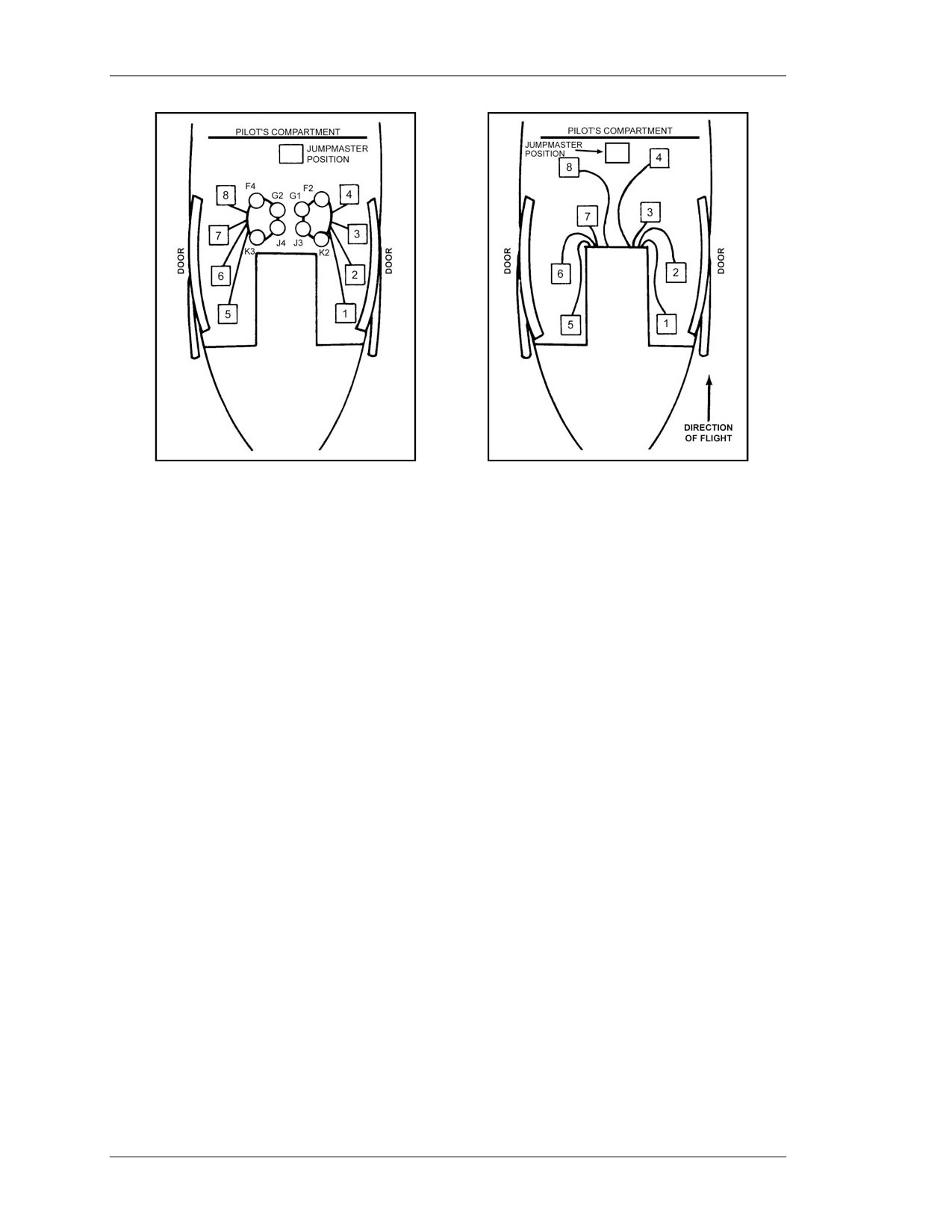
Figure 17-4. UH-1 seating
Figure 17-5. UH-1 seating
configuration, expedient
configuration, overhead
anchor line system.
anchor line system.
a. The JM ensures excess static line is stowed as he hooks up each parachutist.
b. The open portion of the static line snap hook faces the front of the aircraft.
c. For flights less than 25 minutes long, jumpers may sit in the door with their feet
outside the cargo compartment.
17-13. JUMP COMMANDS
The JM issues the following commands:
a. GET READY. This command is given 4 minutes or less from drop time, and the
aircraft is level for final approach. All seat belts are unlatched and moved to the rear of
the parachutists. The JM visually inspects each safety belt to ensure that it is clear of the
parachutist and the equipment.
b. CHECK STATIC LINES. The JM rises and checks the routing of static lines
from the point of attachment to the pack tray to ensure they are properly routed and
hooked up.
c. CHECK EQUIPMENT. All parachutists check their equipment.
d. SOUND OFF FOR EQUIPMENT CHECK. On this command, number 1
parachutist orally indicates “Okay” to the JM. The remaining parachutists follow in order.
e. SIT IN THE DOOR. This command is given by the JM 30 seconds from drop
time. Numbers 1 and 2 swing their legs to the right and take sitting positions in the door
with feet together outside the cargo compartment. (Numbers 3 and 4 extend their legs
outside and move to sitting positions.) They place both hands, palms down, on the floor
alongside their thighs, turn their heads toward the JM, and wait. Numbers 5 and 6 swing
their legs to the left, take sitting positions in the left door, and follow the same procedure
as numbers 1 and 2. (Numbers 7 and 8 extend their legs outside and move to sitting
positions.) This command is omitted if the parachutists are already sitting in the door on a
short flight.
17-6
FM 3-21.220/MCWP 3-15.7/AFMAN11-420/NAVSEA SS400-AF-MMO-010
f. STAND BY. This command is given 8 to 10 seconds before the command GO.
g. GO. At this command, the following occurs:
(1) Personnel. The JM controls the jumper’s exit and ensures a 1-second interval
between jumpers by giving each jumper the oral command GO after the preceding
jumper has exited and cleared the aircraft. The jumpers exit in numerical sequence.
(2) Air Delivery Containers. When an air delivery container is being released from
the cargo hook, the pilot releases the container and informs the JM when the load has
cleared the aircraft. The jumpers exit as explained above.
17-14. ARCTIC OPERATIONS
If the helicopter has skis, the ski attaching bolts and the sharp edges of the skis are
padded and taped on the outboard side of the landing skids aft of the leading edge of the
cargo door. Due to the bulk and weight of arctic clothing, individual equipment is not
worn. The equipment is dropped either as an internal or external load.
17-15. SAFETY PRECAUTIONS
Safety precautions on the UH-1H are as follows:
a. Parachutists. During movement inside the aircraft, the parachutist protects the rip
cord grip. Crowded conditions inside the cargo compartment and the open doors on both
sides of the fuselage pose a hazardous situation regarding accidental activation of the
reserve parachute.
b. Jumpmaster. The JM ensures all parachutists remain secured by their safety belts
until the command GET READY is given. The JM prevents (or corrects) excessive static
line from flopping about the aircraft. (The JM does not jump from this aircraft.) The JM
wears a safety harness.
c. Equipment. Equipment prescribed in Chapter 12 can be worn by parachutists
when jumping this aircraft.
(1) Standard air delivery containers rigged with G-14 cargo parachutes can be
delivered from the cargo hook, using the breakaway static line (FM 10-500-2). The snap
hooks of the static lines are hooked to the anchor line system before lift-off. Door bundles
reduce the number of parachutists that can be carried, depending on the size and number
of bundles.
(2) When CWIEs are jumped (two per load maximum), they are attached to number 3
and number 7 parachutists (one for each door). The DMJP may not be jumped from
aircraft that require parachutists to sit on the floor.
d. Aircraft. The indicated airspeed of the aircraft during jumps is not less than 50
knots or more than 70 knots. The minimum drop altitude is 1,500 feet AGL. After the last
parachutist has cleared the aircraft, the static lines are retrieved inside the aircraft and
secured in an aviator kit bag or secured by a safety belt to the aircraft floor. The static
line snap hooks are not removed from the anchor line cable until the aircraft lands.
Section III. UH-60A BLACK HAWK
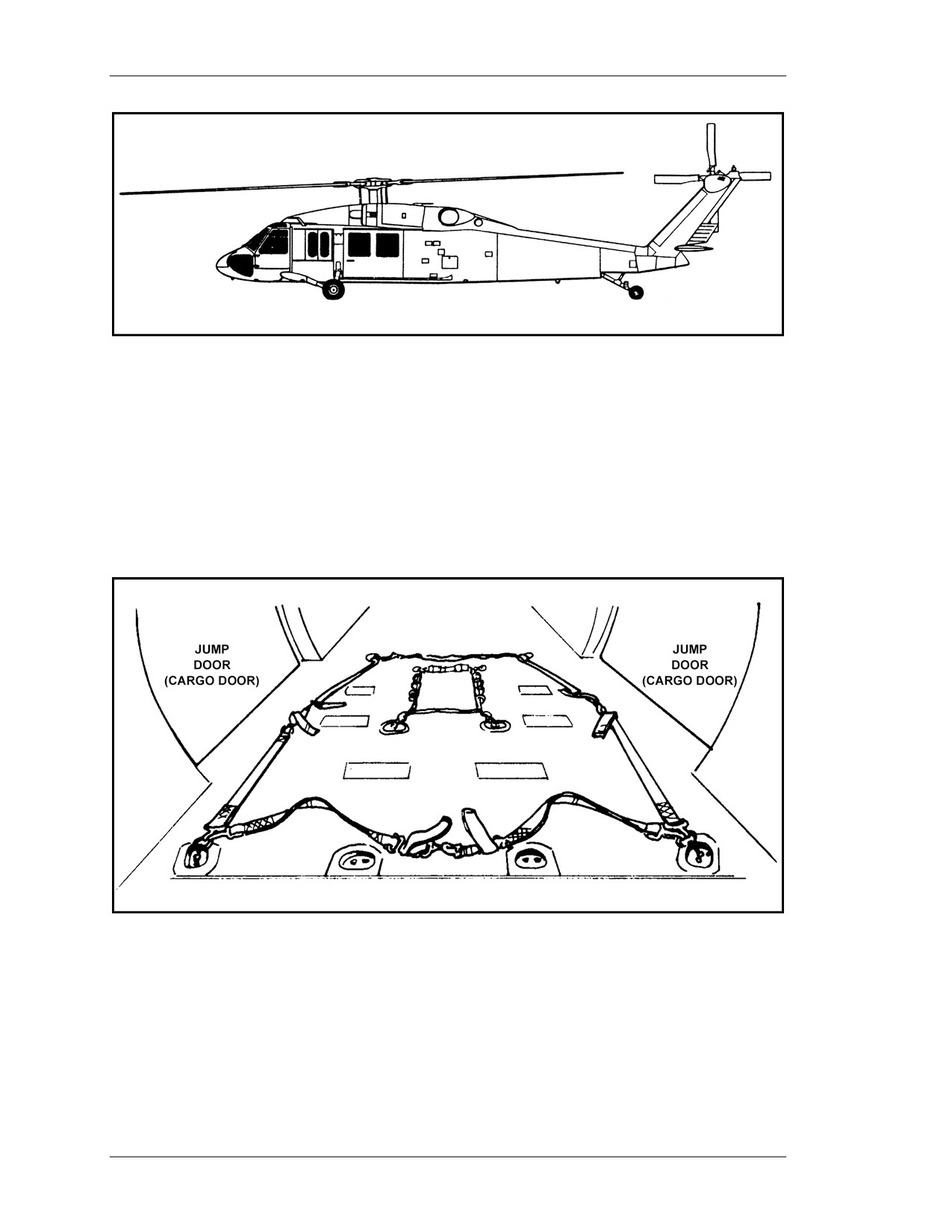
The UH-60A is a twin-turbine, medium-speed, single-main-rotor helicopter
(Figure 17-6). Eight combat-equipped parachutists can jump from this aircraft.
17-7
FM 3-21.220/MCWP 3-15.7/AFMAN11-420/NAVSEA SS400-AF-MMO-010
Figure 17-6. UH-60A Black Hawk.
NOTE: On missions requiring a window gunner, the maximum number of
parachutists is reduced to six. Static line parachute operations require a
static JM.
17-16. PREPARATION AND INSPECTION
The JM prepares and inspects the UH-60A as follows:
a. Preparation. To prepare the UH-60A for jumping, adhere to the following
procedure (Figure 17-7):
Figure 17-7. UH-60A compartment prepared for jumping.
(1) Lock both cargo doors in the open position.
NOTE: For arctic or other cold-weather operations, or during flights of long duration,
the aircraft doors may be closed and locked. Doors cannot be opened during
flight. The aircraft must either land or hover near the ground to open the
doors. This procedure requires coordination between the supporting aviation
and airborne units for the jump.
17-8
FM 3-21.220/MCWP 3-15.7/AFMAN11-420/NAVSEA SS400-AF-MMO-010
(2) Remove seat belts in the cargo compartment (except as required by aircraft crew).
(3) Tape cargo floor troop seat and tie-down fitting wells in front of the cargo doors.
(4) Tape sharp edges and tie-down fitting wells on the cargo floor and door jambs
that could cut or fray static lines or snag parachutists’ equipment.
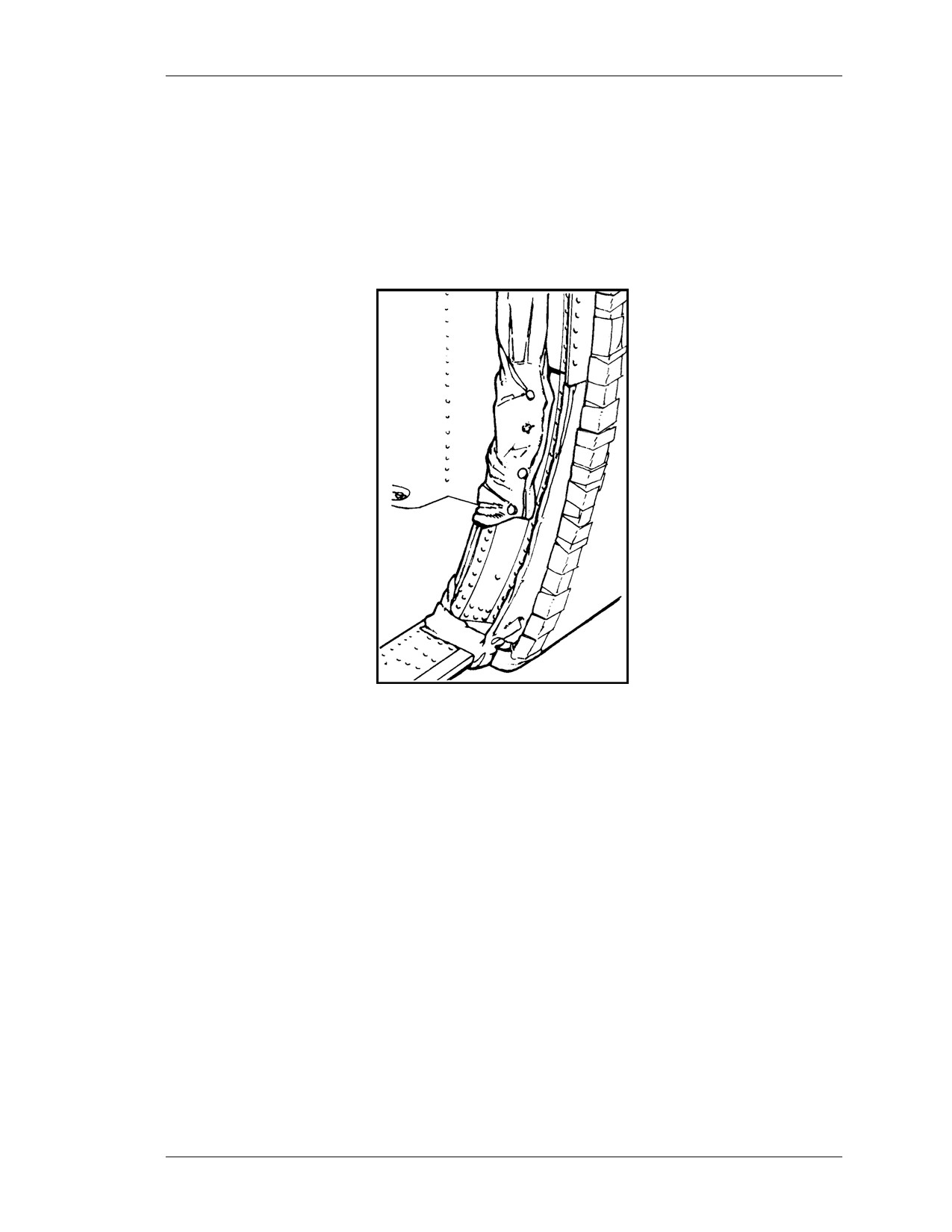
(5) Tape the weather stripping on cargo doors below the door catch (Figure 17-8).
(6) Tape the entire trail edge of the door.
Figure 17-8. UH-60A door edge padded and taped.
NOTE: Tape must not interfere with closing, locking, unlocking, or opening cargo
doors in flight. If the weather stripping below the cargo door catch is missing,
pad the door edge with felt and tape in place. Padding must not preclude
closing the cargo doors.
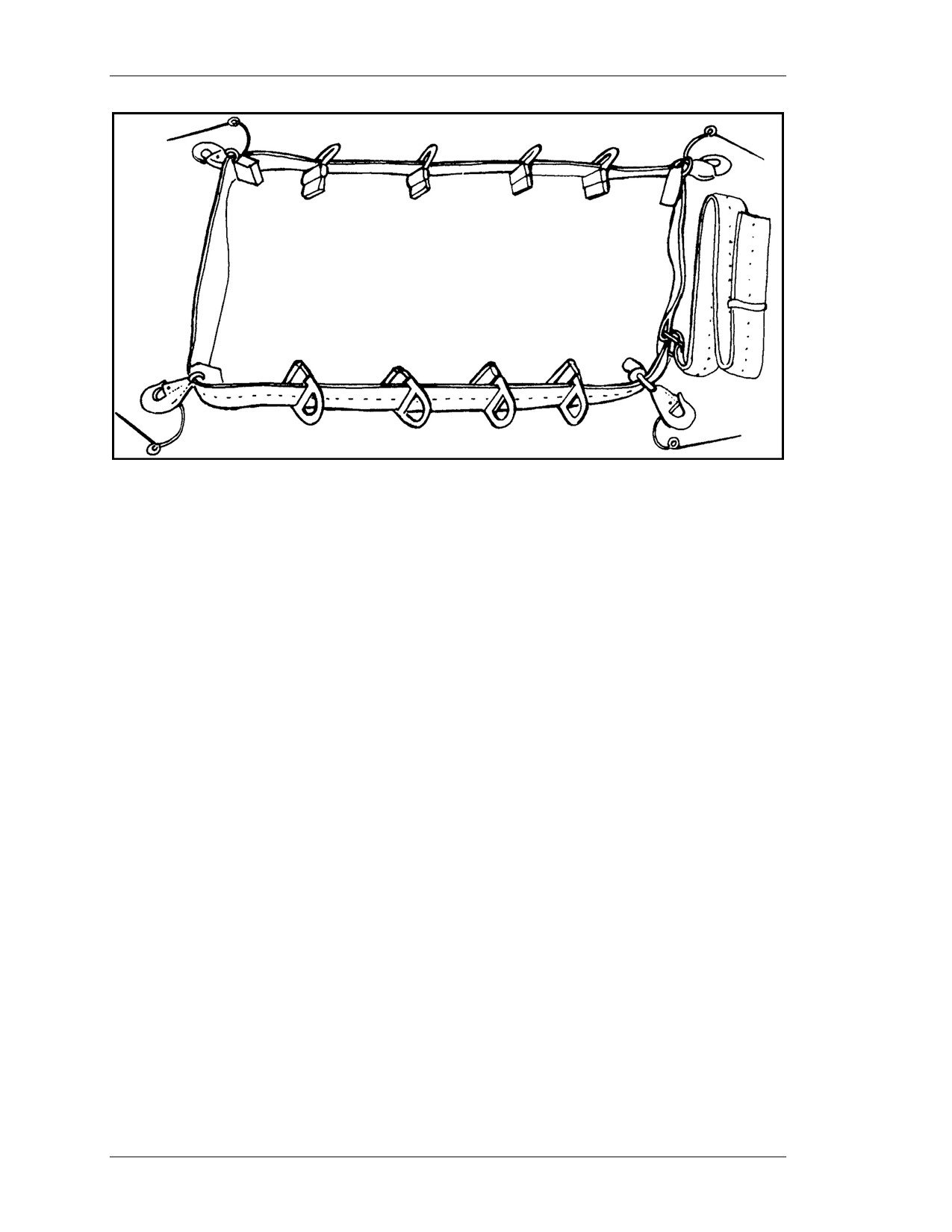
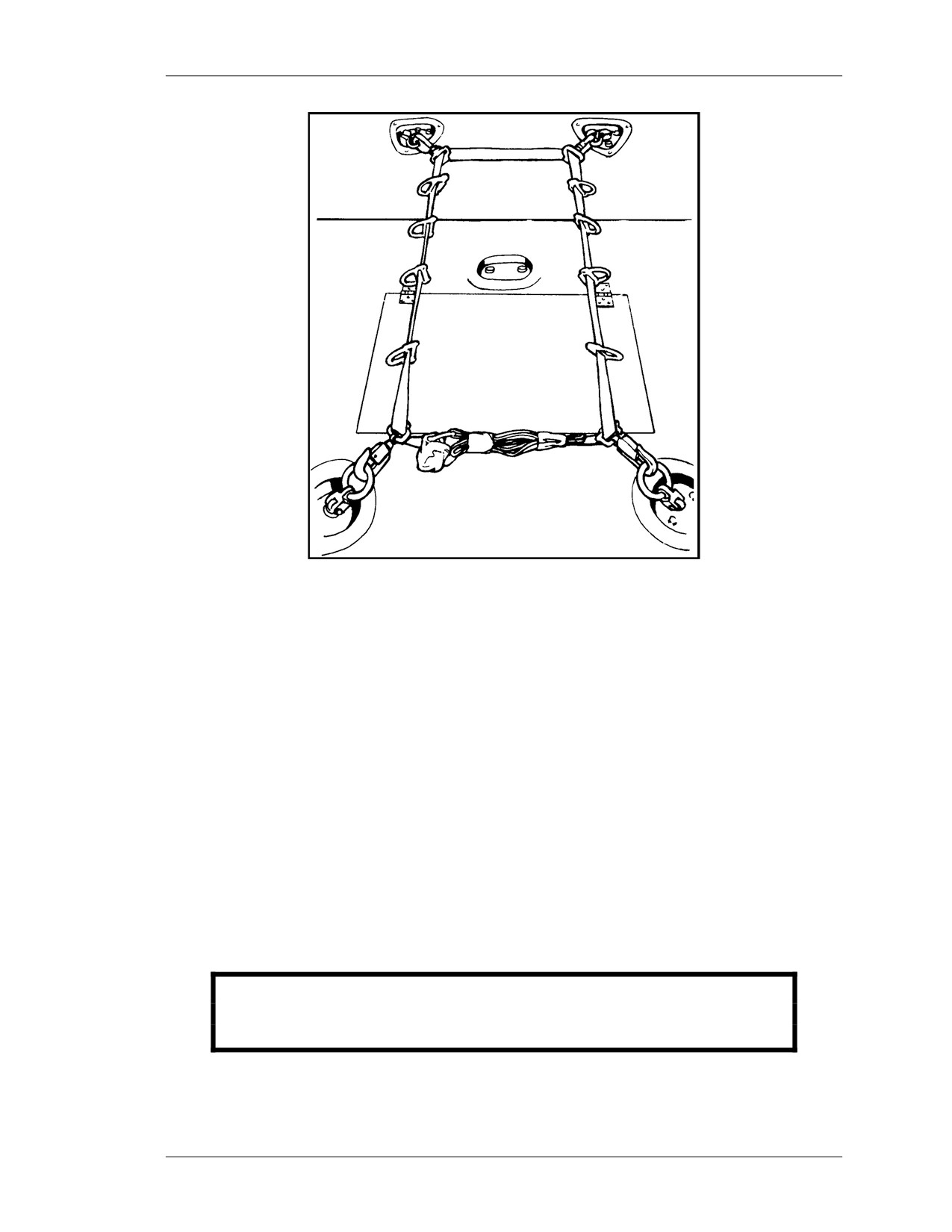
b. Modified Anchor Line System. Install a floor-mounted anchor line system
(Figure 17-9, page 17-10) using a modified STABO extraction system anchoring strap
assembly made from type XXVI nylon webbing (NSN 1670-00-999-3544, TM 10-1670-
262-12&P and TM 10-1670-251-12&P). To modify the STABO, remove two of the
connector snaps (leaving four) and add two D-rings (NSN 1670-00-360-0466). The
cotton buffers may be locally manufactured.
17-9
FM 3-21.220/MCWP 3-15.7/AFMAN11-420/NAVSEA SS400-AF-MMO-010
Figure 17-9. UH-60A modified anchor line.
(1) Install four snap hooks with safety wires and eight D-rings with cotton buffers on
the anchor web loop, with the snap hooks and D-rings facing out in the following order:
one snap hook, four D-rings; two snap hooks, four D-rings; and one snap hook
(Figure 17-10).
(2) Insert about 30 inches of the web loop running end into the quick-fit adapter to
secure the loop.
(3) Center the anchor line system on the cargo floor with the quick-fit adapter to the
rear. Attach the snap hooks to tie-down fittings 3B, 3C, 4B, and 4C. Insert the safety
wires and tape the snap hooks.
(4) Center the quick-fit adapter between tie-down fittings 4B and 4C, and tighten the
web loop by pulling on the loop running end. Secure the web loop running end with an
overhand knot. Fold and tape excess webbing to the web loop.
c. Safety Belt Installation. Install three floor-mounted safety belts.
(1) Attach a standard safety belt to tie-down fittings 5A and 5C for the JM. (This is
necessary only if a seat has not been left for the JM.)
17-10
FM 3-21.220/MCWP 3-15.7/AFMAN11-420/NAVSEA SS400-AF-MMO-010
Figure 17-10. UH-60A modified anchor line secured to floor.
NOTE: The UH-60A cargo compartment configuration and floor tie-down fitting
pattern preclude use of standard
(individual) safety belts. Therefore,
parachutists are restrained in groups of two and three, using modified
safety belts.
(2) Attach an 86-inch-long (extended) safety belt to forward tie-down fittings 1A
and 1D.
(3) Attach a 112-inch-long (extended) safety belt to tie-down fittings 1A and 5A,
left door.
(4) Attach a 112-inch-long (extended) safety belt to tie-down fittings 1D and 5C,
right door.
(5) Ensure that a serviceable safety harness is available for the JM (and the crew
chief, when required). The JM’s safety line is attached to tie-down fitting 5B. The crew
chief’s safety line is attached to tie-down fitting 1A or 1D, as required. If safety harnesses
are not available, a backpack-type parachute may be used.
WARNING
Movement in the cargo compartment must be minimized to
preclude inadvertent parachute activation.
17-11
FM 3-21.220/MCWP 3-15.7/AFMAN11-420/NAVSEA SS400-AF-MMO-010
d. Inspection. Before enplaning, the JM and pilot, or pilot’s representative, jointly
inspect the aircraft to ensure the following.
(1) All loose objects in the cargo compartment are removed or secured forward.
(2) Sharp edges and tie-down fitting wells on the cargo floor and doorjambs (or
anything that could cut or fray static lines or snag the parachutists’ equipment) are
padded and taped.
NOTE: Door catches and handles are not taped.
(3) Cargo doors are locked in the open position and cleared for closing, depending on
mission requirements.
(4) The anchor line system is complete, serviceable, and properly installed.
(5) Three serviceable safety belts (modified) are installed on the cargo floor.
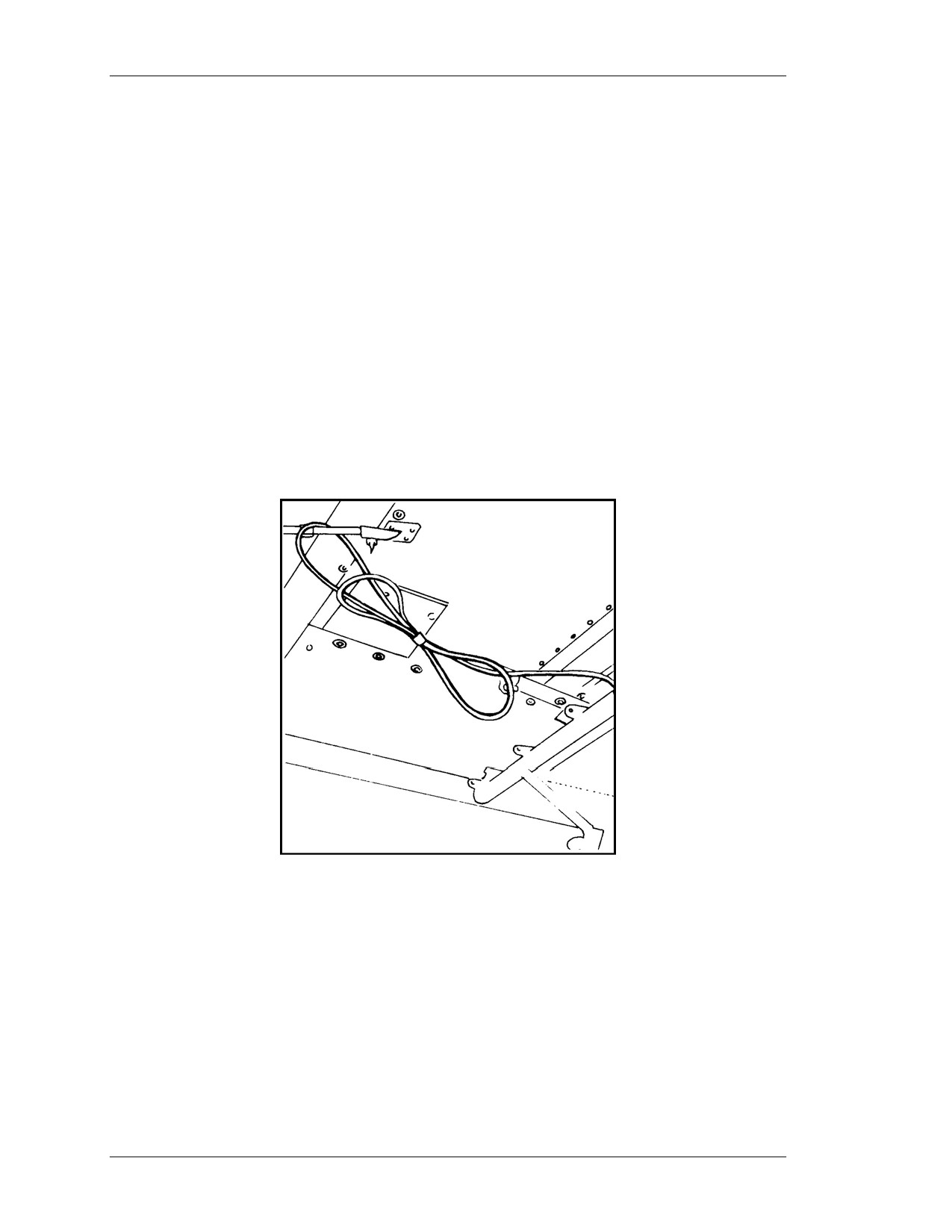
(6) A headset/helmet and intercom jack for the JM are available and operational, and
the intercom extension cord is secured overhead (Figure 17-11).
(7) Safety harnesses and backpack-type emergency parachutes are available for the
JM and the crew chief, as required.
Figure 17-11. UH-60A JM’s intercomm stowed overhead.
17-17. LOADING TECHNIQUES AND SEATING CONFIGURATION
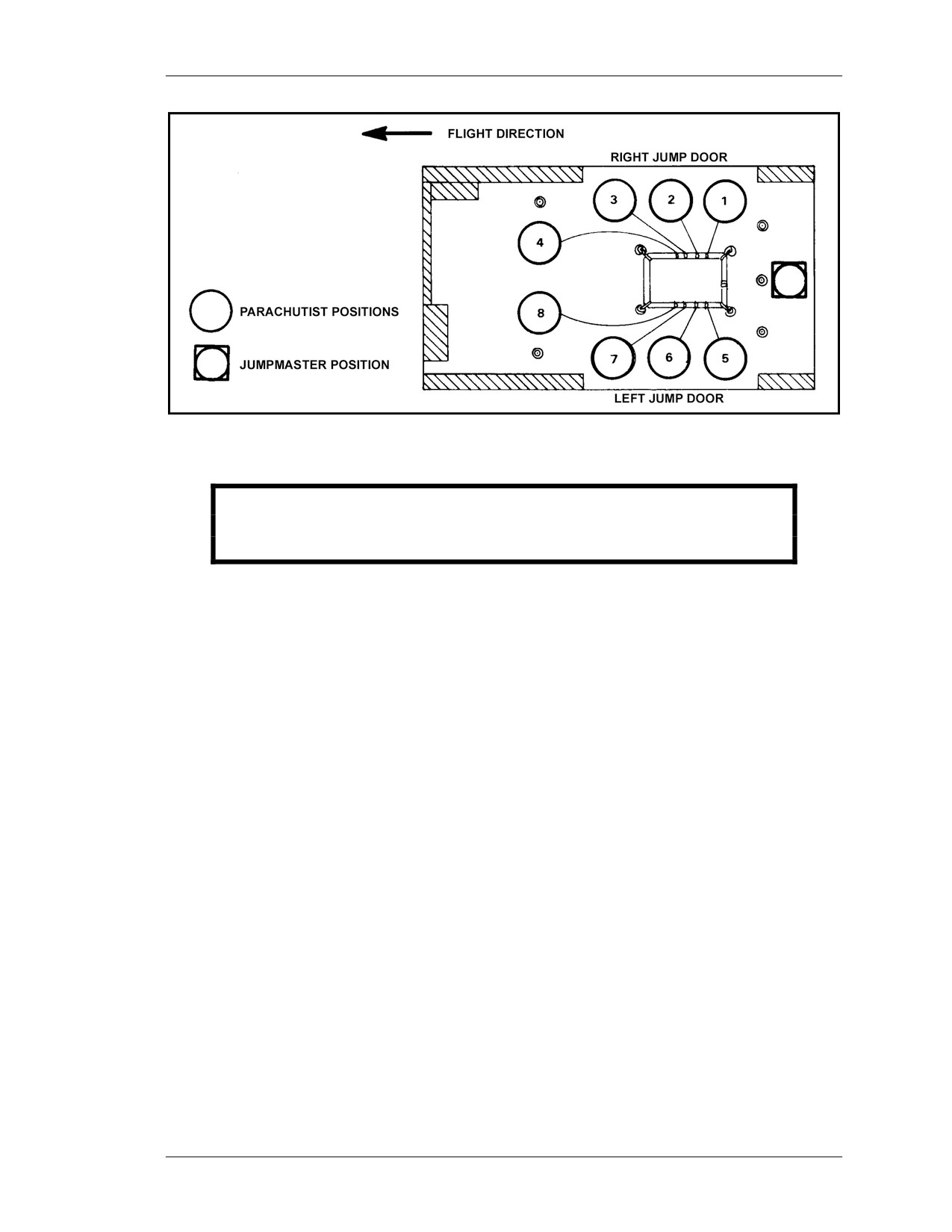
Personnel are organized into a stick of eight parachutists. They approach the aircraft from
the left or right side at a 90-degree angle in reverse order: numbers 8, 7, 6, 5, 4, 3, 2, 1
(Figure 17-12).
17-12
FM 3-21.220/MCWP 3-15.7/AFMAN11-420/NAVSEA SS400-AF-MMO-010
Figure 17-12. UH-60A seating and static line routing.
WARNING
Do not approach the aircraft directly from the front because
the lowest arc of the turning rotor blades occurs at that point.
a. Number 8, followed by numbers 7, 6, and 5, enter the left door on command from
the static JM. Numbers 4, 3, 2, and 1 enter the right door on command from the static JM.
They are seated and hooked up by the JM in reverse numerical sequence, beginning with
parachutist number 8, as they enter the aircraft. The open portion of static line snap hooks
face the front of the aircraft.
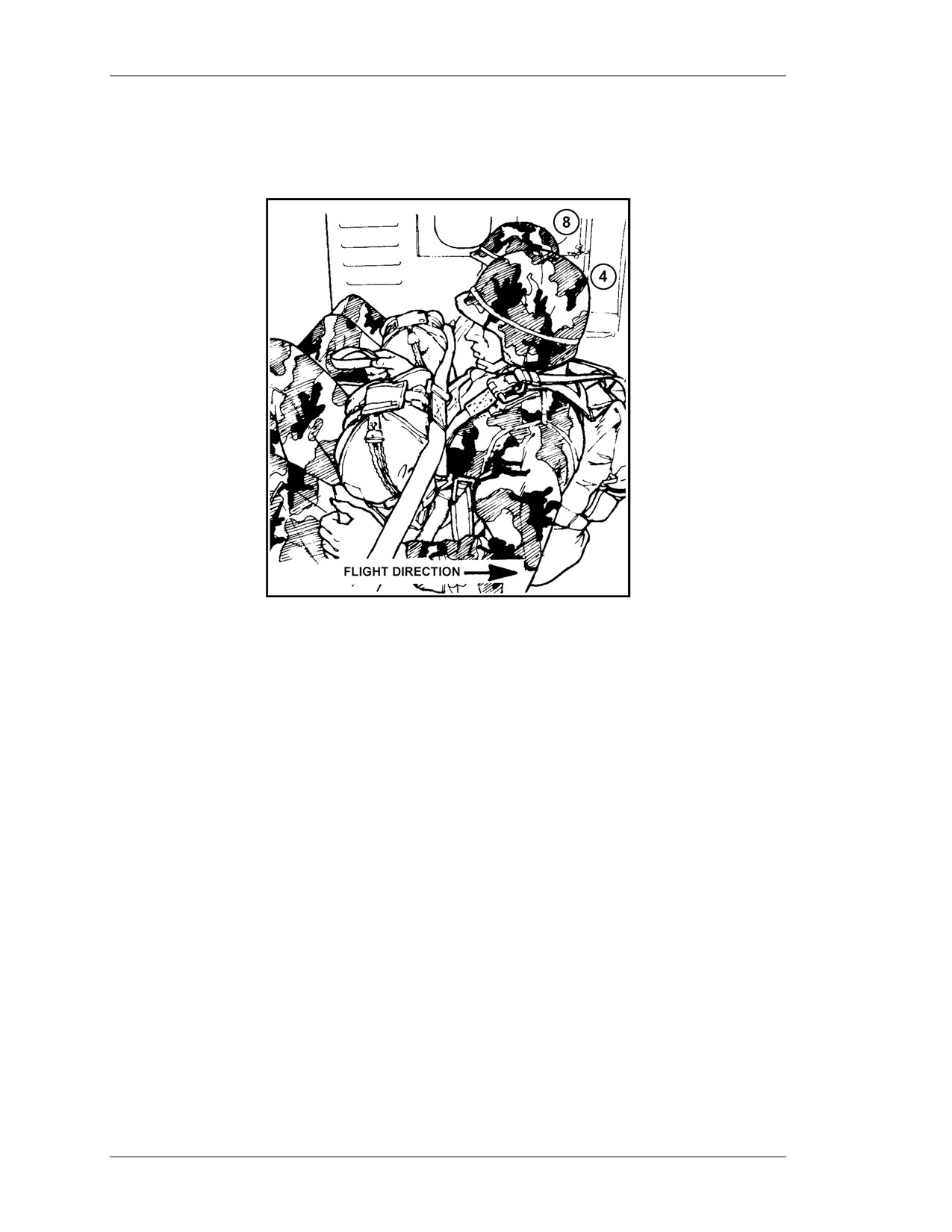
b. Numbers 4 and 8 hold their static lines with a reverse bight: number 4 with the
right hand and number 8 with the left hand. The static lines of the remaining parachutists,
seated in the left and right doors, are routed directly behind them and down to the anchor
line.
c. The JM ensures that any excess static line is stowed in the pack tray retainer band
and that numbers 4 and 8 have correctly routed their static lines with the proper reverse
bight.
NOTE: To preclude binding during exit, excess static lines of numbers 1, 2, 3, 5, 6,
and 7 are stowed through the static line slack retainer on the parachutist’s
backpack.
d. When the JM commands FASTEN SAFETY BELTS, parachutists do the
following:
(1) Numbers 4 and 8 pass the running ends of their safety belt to the center, fasten the
belt, and remove excess slack (Figure 17-13, page 17-14).
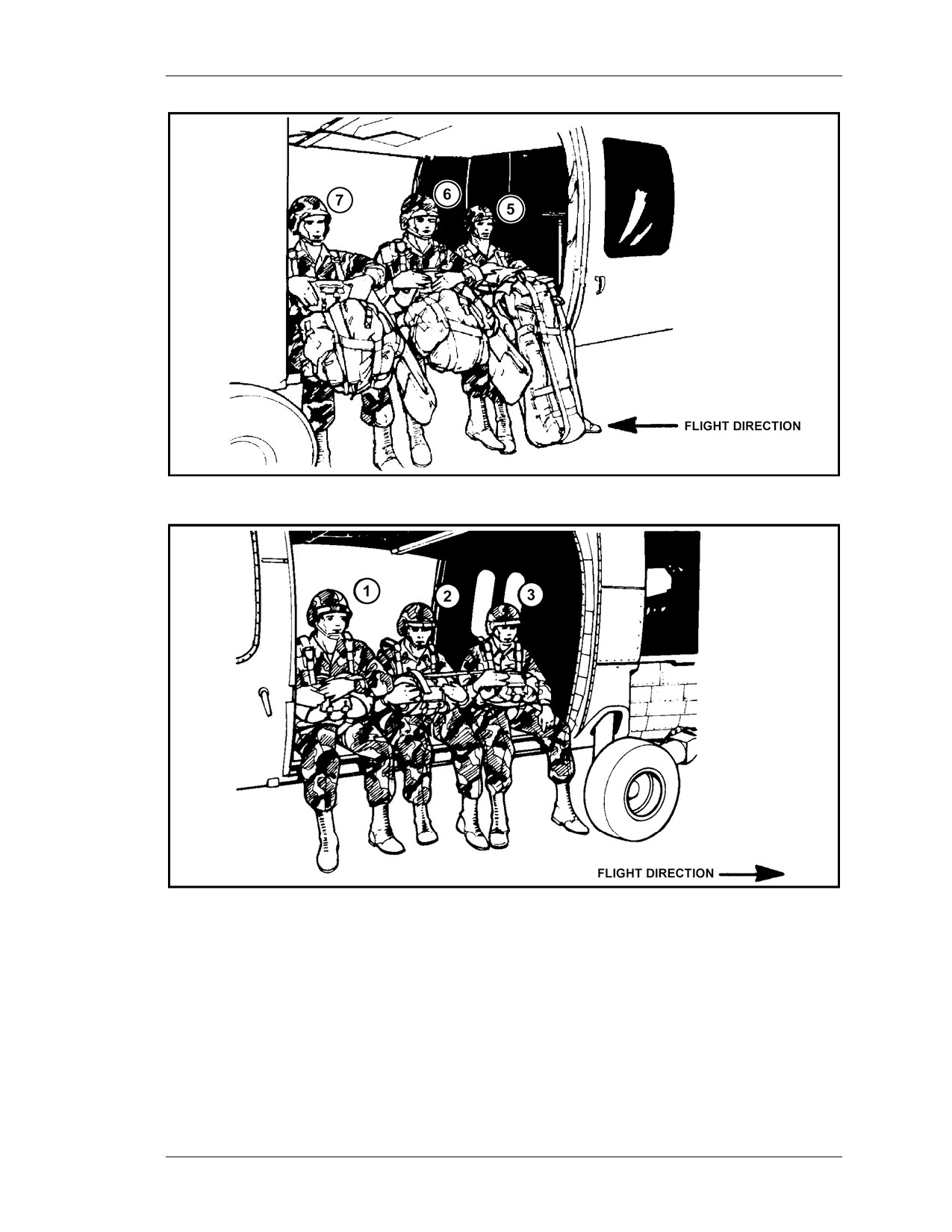
(2) Numbers 5 and 7 pass the running ends of their safety belt to number 6, who
fastens the belt and removes excess slack (Figure 17-14, page 17-15).
17-13
FM 3-21.220/MCWP 3-15.7/AFMAN11-420/NAVSEA SS400-AF-MMO-010
(3) Numbers 1 and 3 pass the running ends of their safety belt to number 2, who
fastens the belt and removes excess slack (Figure 17-15).
Figure 17-13. Numbers 4 and 8 with
static line bight and safety belt secured.
e. The JM inspects all safety belts to ensure that they are securely fastened and
properly fitted. He is seated aft with his safety belt fastened for lift-off and landing. (One
seat should have been left in place for the JM.)
f. For airdrop operations requiring the crew chief and window gunner
(seat
installed), the number of combat-equipped parachutists is reduced to six. The seating
configuration is modified—positions 4 and 8 are deleted, and positions 5, 6, and 7 are
renumbered 4, 5, and 6.
17-14
FM 3-21.220/MCWP 3-15.7/AFMAN11-420/NAVSEA SS400-AF-MMO-010
Figure 17-14. Parachutists (left door) with safety belt secured.
Figure 17-15. Parachutists (right door) with safety belt secured.
17-18. JUMP PROCEDURES
If the cargo doors are to be closed en route to the drop zone, the JM briefs numbers 3 and
7 on door opening procedures before loading. At 6 minutes before the drop, the pilot
either lands or brings the aircraft to a hover (near the ground) and notifies the JM to open
the cargo doors. The JM directs numbers 3 and 7 to open them. He ensures that the cargo
doors are opened and locked. A 4-minute, a 30-second, and an 8- to 10-second warning
are relayed to the JM by the pilot through the intercom system.
17-15
FM 3-21.220/MCWP 3-15.7/AFMAN11-420/NAVSEA SS400-AF-MMO-010
17-19. JUMP COMMANDS
The JM issues the following commands:
a. GET READY. This command is given at the 4-minute warning to alert the
parachutists. All safety belts are removed at 1,000 feet AGL.
NOTE: Safety belts are removed when directed by the JM. Numbers 2, 6, and 8
release them. The running ends are stowed forward and aft to clear the static
lines and the exit path.
b. CHECK STATIC LINES. The JM checks the routing of all static lines (from
pack trays to anchor cable) to ensure they are correctly routed and hooked up. He ensures
excess static line is stowed through the slack retainer on the backpacks of numbers 1, 2,
3, 5, 6, and 7, and that numbers 4 and 8 have the prescribed reverse bight in their static
lines.
c. CHECK EQUIPMENT. All parachutists check their equipment.
d. SOUND OFF FOR EQUIPMENT CHECK. Number 1 indicates orally (and
with a hand signal) to the JM the status of his equipment, followed by the remaining
parachutists in numerical order.
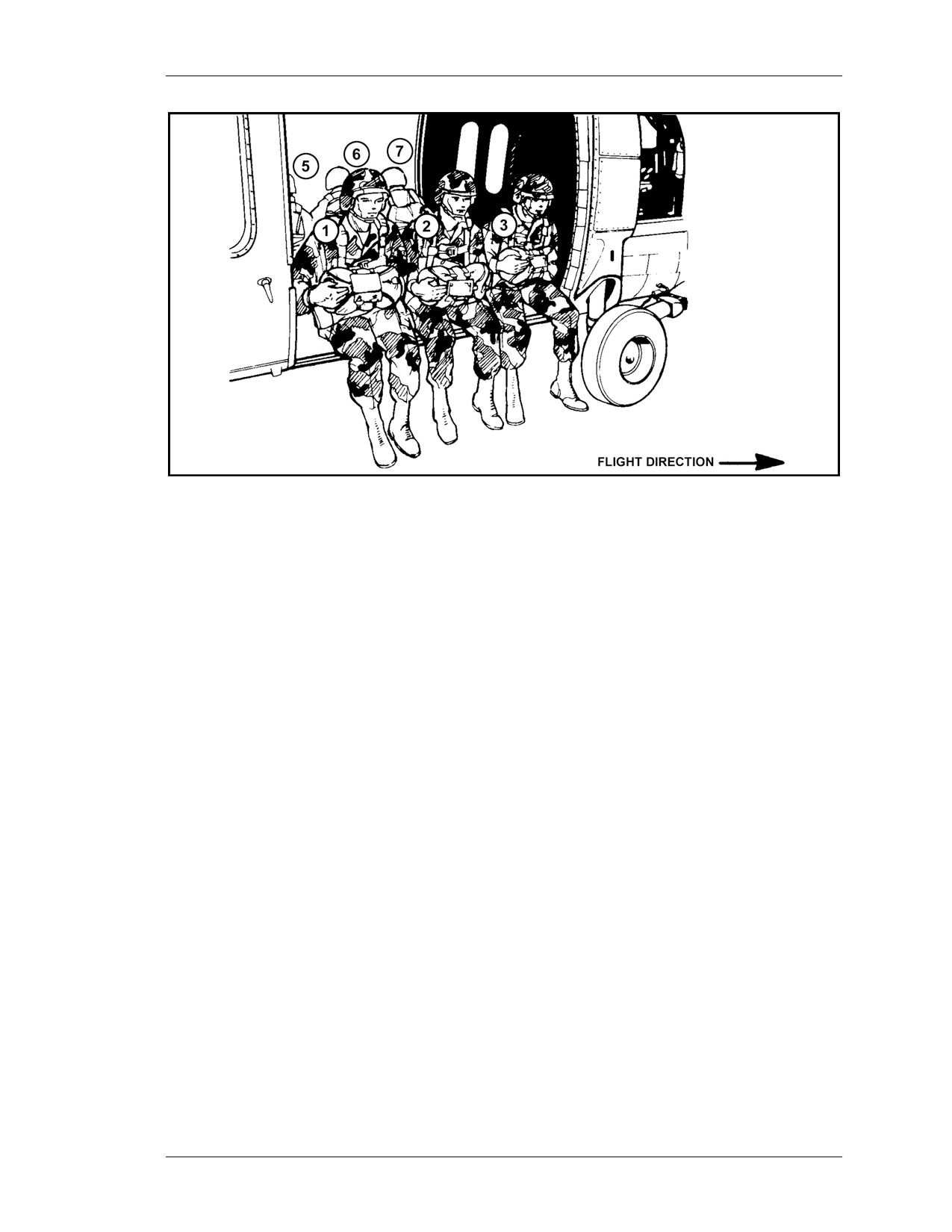
e. SIT IN THE DOOR. This command is given by the JM at the 30-second
warning. Numbers 1, 2, 3, 5, 6, and 7 assume door positions (Figure 17-16) with feet
together outside the cargo compartment. Numbers 4 and 8 remain in place, ensuring that
their feet are clear of their static lines. (This command is omitted if the parachutists are
already sitting in the door.)
f. STAND BY. This command is given at the 8- to 10-second warning. The JM
ensures that all parachutists hear and understand this command, particularly number 1,
who places both hands, palms down, on the cargo floor alongside his thighs and awaits
the next command. Numbers 2, 3, 5, 6, and 7 place both hands, palms down, on the cargo
floor and await the next command; numbers 4 and 8 remain in place.
g. GO. The JM gives this command by an oral GO and a sharp tap on the rear of the
parachutist’s helmet. Each parachutist is tapped out. The jump sequence is in numerical
order, 1 through 8. As soon as number 3 clears the door, number 4 moves into the door
and assumes the door position before being tapped out. The static JM assumes control of
number 4 jumper’s static line as the parachutist begins moving to the door. Numbers 5, 6,
7, and 8 repeat the sequence in the left door.
17-16
FM 3-21.220/MCWP 3-15.7/AFMAN11-420/NAVSEA SS400-AF-MMO-010
Figure 17-16. Numbers 1, 2, 3, 5, 6, and 7 exit positions.
17-20. SAFETY PRECAUTIONS
Safety precautions on the UH-60A are as follows:
a. Parachutists. If CWIEs will be jumped, they may be attached to numbers 1 or 5
parachutists, or both. No more than two CWIEs, one for each door, can be jumped.
DMJPs may not be jumped from aircraft that require parachutists to sit on the floor.
(Procedures for towed parachutists are in paragraph 17-10.) Crowded conditions inside
the cargo compartment make accidental activation of the reserve parachute more likely.
During movement inside the aircraft, parachutists must protect the rip cord grip.
b. JM. The static JM wears a safety harness that is attached to the aft cargo floor tie-
down fitting (5B). Backpack-type emergency parachutes may be used if a safety harness
is not available. The JM is equipped with a headset or flight helmet that allows direct
communications with the aircraft crew. The static JM immediately notifies the pilot of a
towed parachutist.
c. Equipment. Parachutists can wear combat equipment when jumping this aircraft.
Without detaching the static lines, the JM retrieves static lines and D-bags, places them
inside an aviator kit bag, and secures the kit bag until the aircraft has landed. The static
line snap hooks are then removed from the anchor line attaching points. The UH-60A is
not used for static line parachute operations with the cargo doors removed. The static line
anchor line cable is never rigged to the cargo door or overhead tie-down rappelling rings,
since trailing D-bags might foul the main rotor system (due to the high position in which
the bags would trail).
d. Aircraft. The indicated airdrop speed of the aircraft should not be less than 65
knots or more than 75 knots. The minimum jump altitude is 1,500 feet AGL.
NOTE: The pilot must maintain level flight and airdrop speed during D-bag retrieval
to preclude D-bag entanglement with the cargo doors.
17-17
FM 3-21.220/MCWP 3-15.7/AFMAN11-420/NAVSEA SS400-AF-MMO-010
17-21. SAFETY BELT MODIFICATION
The UH-60A cargo compartment floor configuration does not provide a specific design
of tie-down fittings for restraining personnel seated on the cargo floor. The safety belts
used for restraining personnel are part of the troop seat assembly and are removed when
conducting parachute operations.
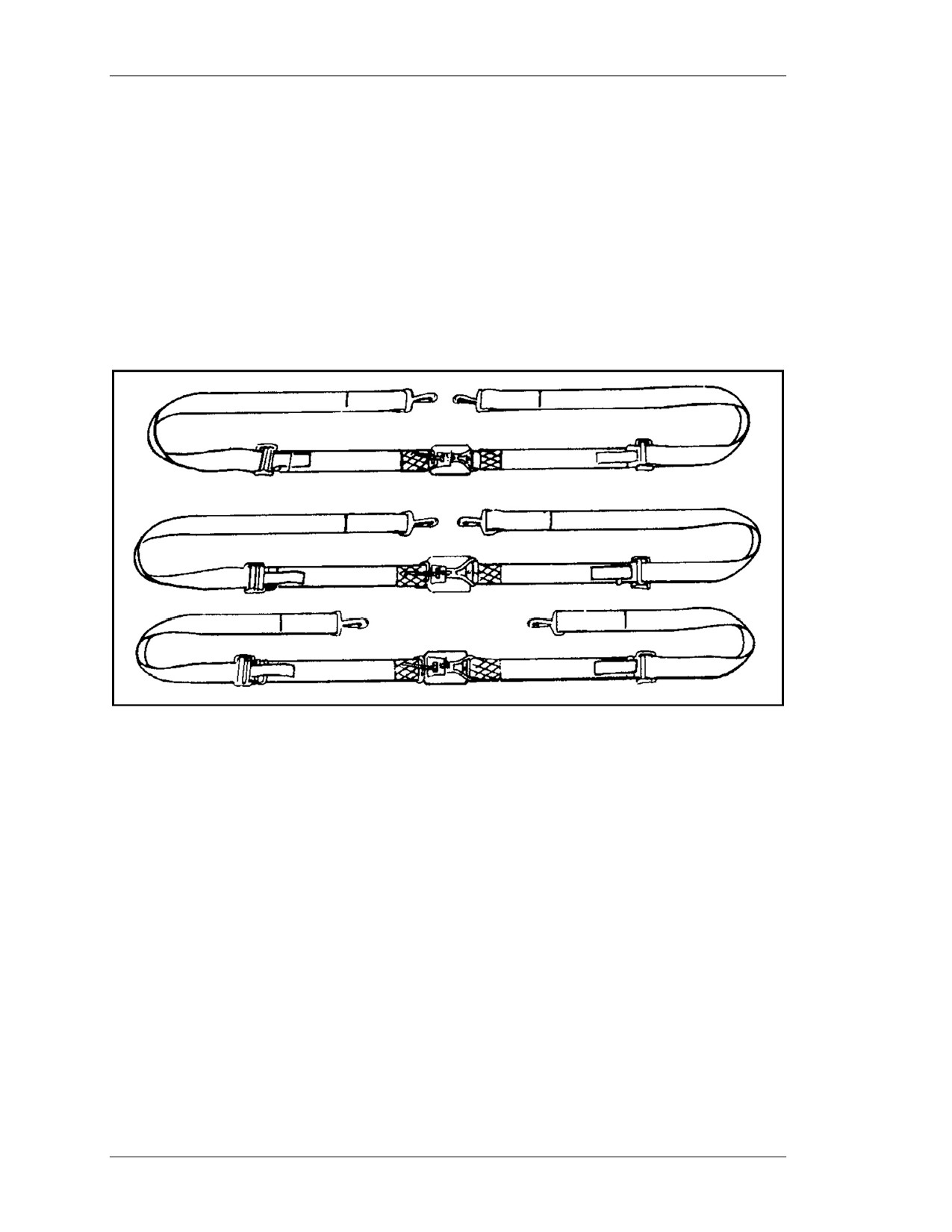
a. The three modified C-3A troop-type safety belts, using the cargo floor tie-down
fittings, restrain parachutists in groups of two and three by a single safety belt
(Figure 17-17).
b. Two safety belts,
112 inches long and adjustable to
86 inches, restrain
parachutists numbers 1 through 3 and 5 through 7, who are seated in the left and right
cargo doors.
Figure 17-17. Modified C-3A troop safety belts.
c. One safety belt, 86 inches long and adjustable to 60 inches, restrains numbers 4
and 8 seated in the cargo compartment. Belt modifications are as follows:
(1) Place three standard C-3A troop-type safety belts (NSN 1670-00-447-9504) on a
flat surface with hardware facing up.
(2) Remove the 8-inch lengths of webbing located between the end snap hooks and
the quick-fit adapters of each belt.
(3) Cut two 32-inch and four 46-inch lengths of number 3 nylon webbing and heat-
sear the ends.
(4) Reassemble one belt using the two 32-inch lengths of webbing.
(5) Thread the running ends of the webbing up through the bar of the snap hooks and
quick-fit adapters. Make a 5-inch fold-back and tack in place.
(6) Sew a 4-inch, 4-point, WW stitch formation on each fold-back using number 3
nylon thread and a medium-duty machine (TM 10-1670-298-20&P).
(7) Reassemble the other two belts as indicated, using the 4-inch lengths of webbing.
17-18
FM 3-21.220/MCWP 3-15.7/AFMAN11-420/NAVSEA SS400-AF-MMO-010
Section IV. CH-47 CHINOOK
The CH-47 is a tandem-rotor, medium-transport helicopter. Twenty-eight combat-
equipped parachutists can jump from this aircraft (Figure 17-18). The jumpmaster may be
a jumping JM or a static JM.
Figure 17-18. CH-47 Chinook.
17-22. PREPARATION AND INSPECTION
The JM prepares and inspects the CH-47 as follows:
a. Preparation. The following steps prepare the CH-47 for jumping.
(1) Install safety belts for each parachutist and extend all the way out to ensure
positive hookup while seated.
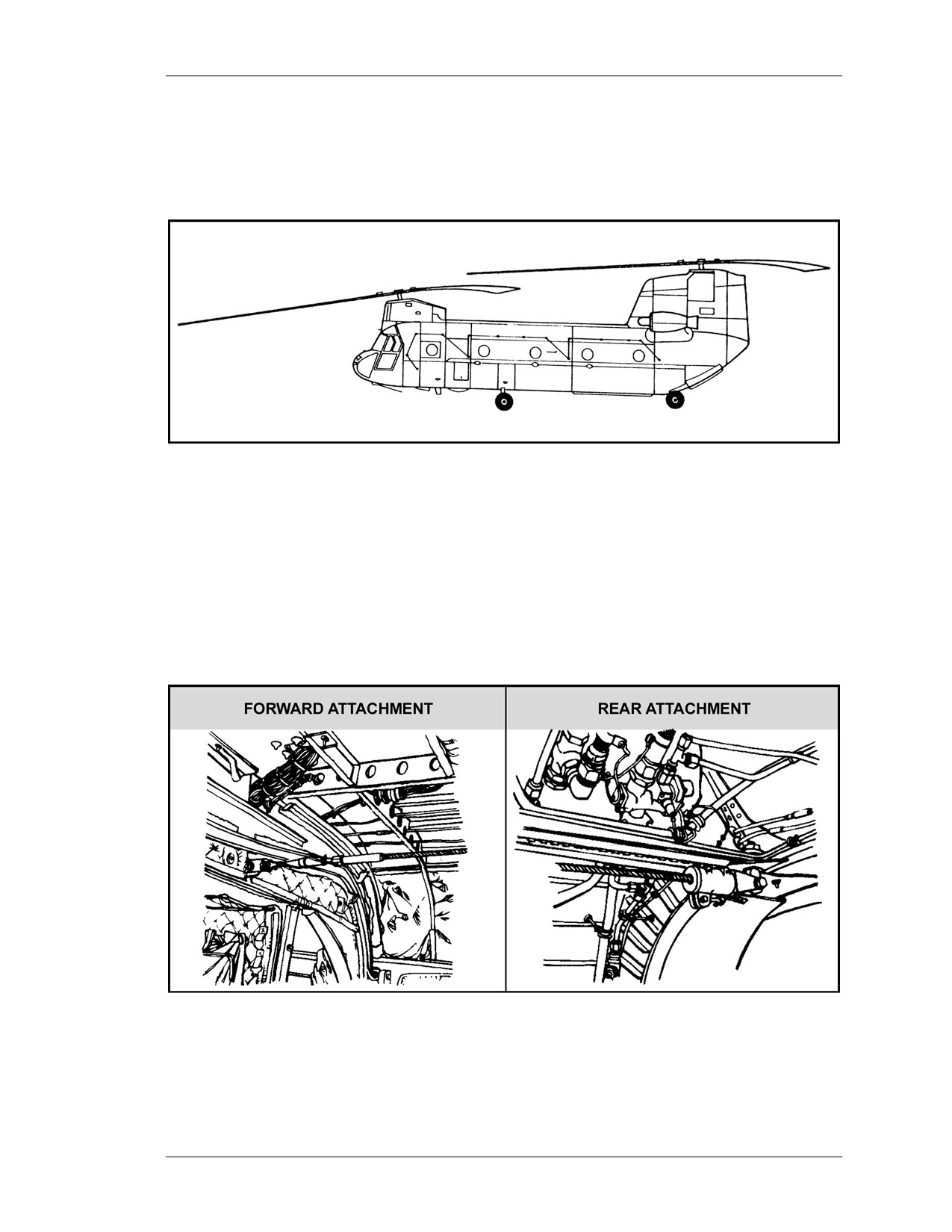
(2) Secure the permanently installed anchor line cable to the attachment points on the
starboard side of the aircraft (Figure 17-19).
(3) Incline the ramp for personnel parachute drops during flight.
Figure 17-19. CH-47 anchor line cable attachment.
NOTE: The best incline is 3 degrees below the horizontal. Scribe marks may be
placed on the ramp to show this degree of incline.
17-19
FM 3-21.220/MCWP 3-15.7/AFMAN11-420/NAVSEA SS400-AF-MMO-010
b. Inspection. Before enplaning, the JM and the pilot, or pilot’s representative,
jointly inspect the aircraft to determine the following:
(1) Troop seats can be easily lifted and secured before jumping.
(2) The ramp is clean and free of oil and water.
(3) Seats are securely fastened in the down position.
(4) Sufficient seat belts are available.
(5) The anchor line cable is not frayed or worn and is secured to the
attachment points.
(6) The crew chief’s headphones are available and function properly.
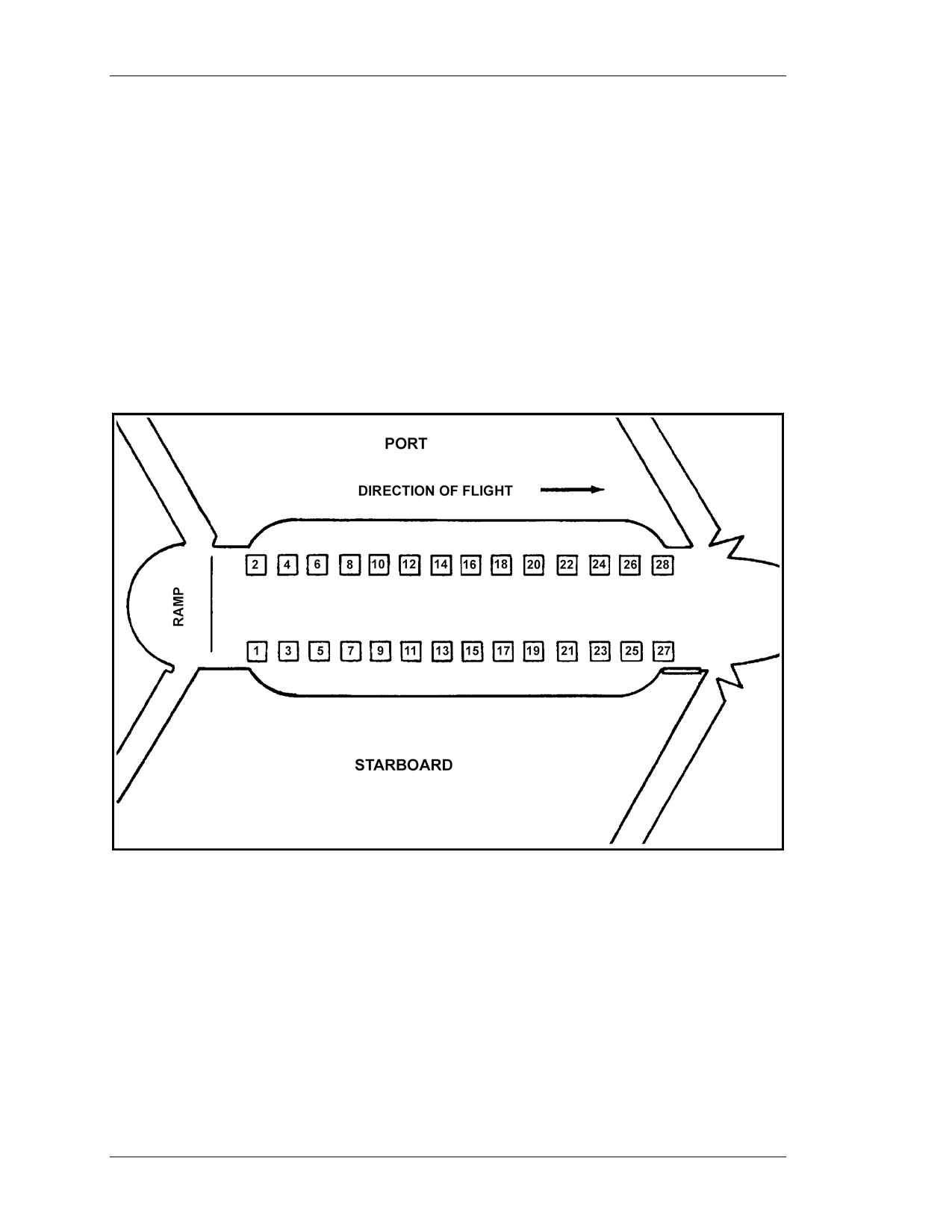
17-23. SEATING CONFIGURATION
The odd-numbered jumpers are seated on the starboard side, and the even-numbered
jumpers are seated on the port side (Figure 17-20).
Figure 17-20. CH-47 seating configuration.
17-24. JUMP PROCEDURES
The 6-minute and 1-minute warnings are given by the pilot to the crew chief, who then
relays them orally and by hand signals to the JM. If the JM jumps, he is number 1; this
requires a nonjumping safety to control the flow of parachutists.
17-25. JUMP COMMANDS
The JM issues the following commands:
a. GET READY. This command is given at the
6-minute warning to alert
parachutists.
17-20
FM 3-21.220/MCWP 3-15.7/AFMAN11-420/NAVSEA SS400-AF-MMO-010
b. PORT SIDE PERSONNEL, STAND UP. Parachutists seated on the port side of
the aircraft stand up and secure their seats in the up position.
c. STARBOARD SIDE PERSONNEL, STAND UP. Parachutists seated on the
starboard side of the aircraft stand up and secure their seats in the up position.
d. HOOK UP. On this command, odd-numbered personnel hook up, followed by
the even-numbered personnel, who hook up (the open portion of the snap hook facing
starboard) between the odd-numbered personnel to form one continuous stick of 28
parachutists.
NOTE: After hooking up, each parachutist controls the static line in a reverse bight at
waist-level (left hand).
e. CHECK STATIC LINES. The JM or safety checks the routing of all static lines.
f. CHECK EQUIPMENT. All parachutists check their equipment.
g. SOUND OFF FOR EQUIPMENT CHECK. Beginning with number 28, the
jumpers pass the status of their equipment toward the aft end of the aircraft. Number 1
orally (and with a hand signal) indicates to the JM the status of his and all other jumpers’
equipment by stating, “All OK, jumpmaster.”
h. STAND BY. The command is given 8 to 10 seconds before the command GO.
Number 1 assumes a standing position at the ramp hinge (near center) of the aircraft. The
remaining personnel close up interval behind the first parachutist.
i.
GO. Number 1 walks off the port side rear corner of the ramp. The remaining
parachutists follow at 1-second intervals.
NOTE: The JM or safety controls the flow from his position on the port side near the
ramp hinge. Less than a 1-second interval between parachutists may result in
entanglement of parachutists and static lines.
17-26. SAFETY PRECAUTIONS
Safety precautions on the CH-47 are as follows:
a. Parachutists. Parachutists ensure that seats are secured in the up position with
seat legs rotated inside the seats. When following internal drop loads, parachutists exit
between the ramp roller conveyor sections, staying as close to the port side section as
possible. The parachutists jumping after external load drops, who are forward of the open
floor hatch (used to check a load drop), remain clear of the opening until the load leaves
the aircraft and the hatch is closed by the crew chief.
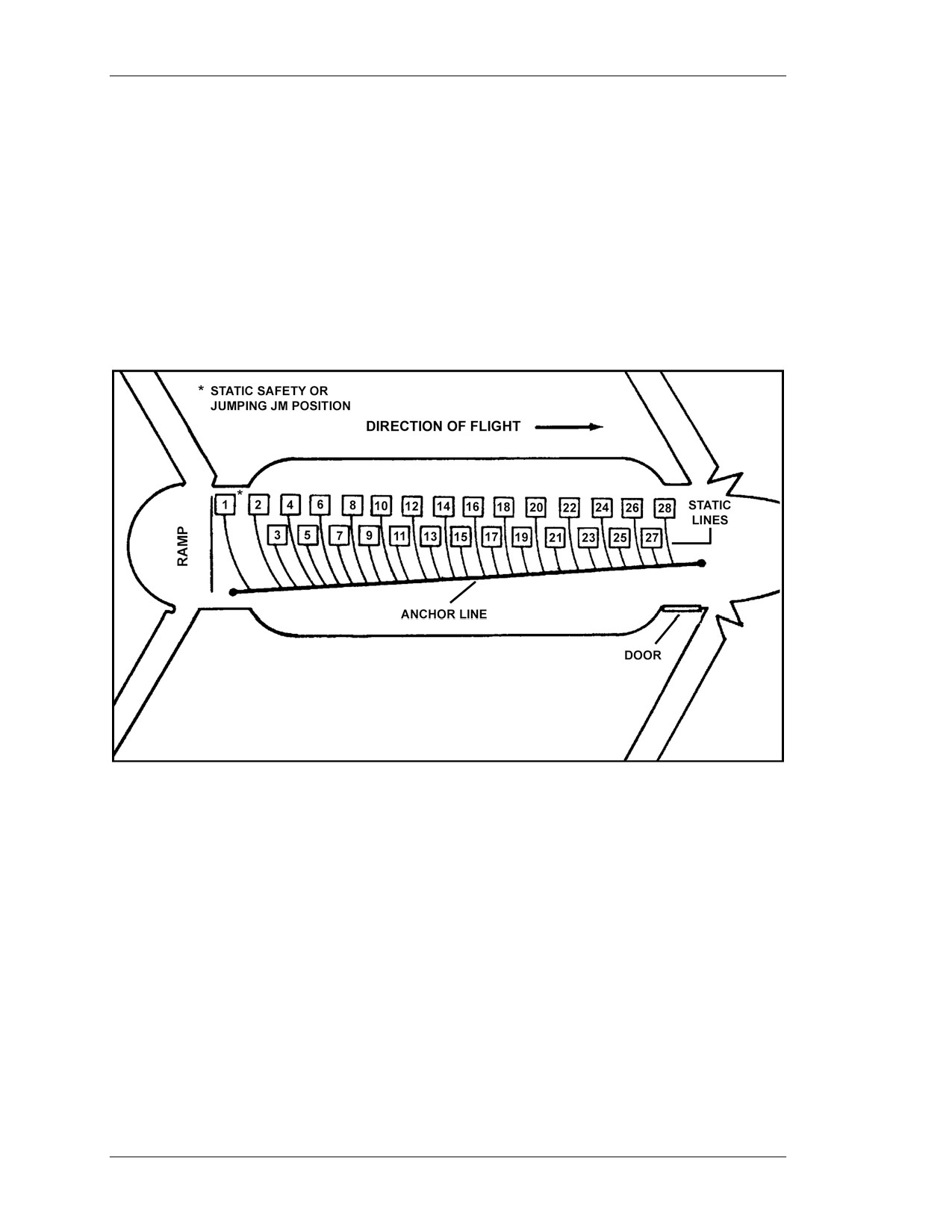
b. Jumpmaster. The JM or safety personnel ensure that parachutists are hooked up
consecutively, 1 through 28 (Figure 17-21, page 17-22). If the JM does not jump, he
wears a safety harness or back emergency parachute. He checks each parachutist after
they hook up and controls the flow of parachutists. When an external load is delivered,
the JM ensures the external load is clear and the aircraft has accelerated to a safe airdrop
speed before dropping cargo bundles from inside the aircraft or before permitting
parachutists to exit.
c. Safety Personnel. If the JM jumps, one nonjumping safety is required; the safety
wears an emergency parachute.
17-21
FM 3-21.220/MCWP 3-15.7/AFMAN11-420/NAVSEA SS400-AF-MMO-010
d. Equipment. When cargo bundles are delivered, JMs use 15-foot breakaway static
lines with cargo parachutes. The ramp roller conveyor section is installed on the starboard
side of the ramp and is used to help eject the bundles from the cargo ramp; numbers 1 and
2 push the bundles out.
e. Aircraft. Aircraft safety requires that the speed during jumps is not less than 80
knots or more than
110 knots, with
90 knots being optimum speed. No special
preparation is required if the aircraft has skis. Minimum jump altitude is 1,500 feet AGL
when jumping below 90 knots. Minimum jump altitude 90 knots and above is 1,250 feet
AGL. After the last parachutist has cleared the aircraft, the static lines are retrieved (using
the static line retriever) inside the aircraft and secured in an aviator kit bag. The ramp
must not be lowered until all jumpers have hooked up to the anchor line cable.
Figure 17-21. CH-47 static line routing.
17-22
FM 3-21.220(FM 57-220)/MCWP 3-15.7/AFMAN11-420/NAVSEA SS400-AF-MMO-010
CHAPTER 18
OTHER SERVICE AIRCRAFT
Other service rotary-wing aircraft can be used for parachuting
operations. In addition to the procedures described here, Chapter 17,
Section I, also applies.
Section I. CH-53 SEA STALLION (USMC)
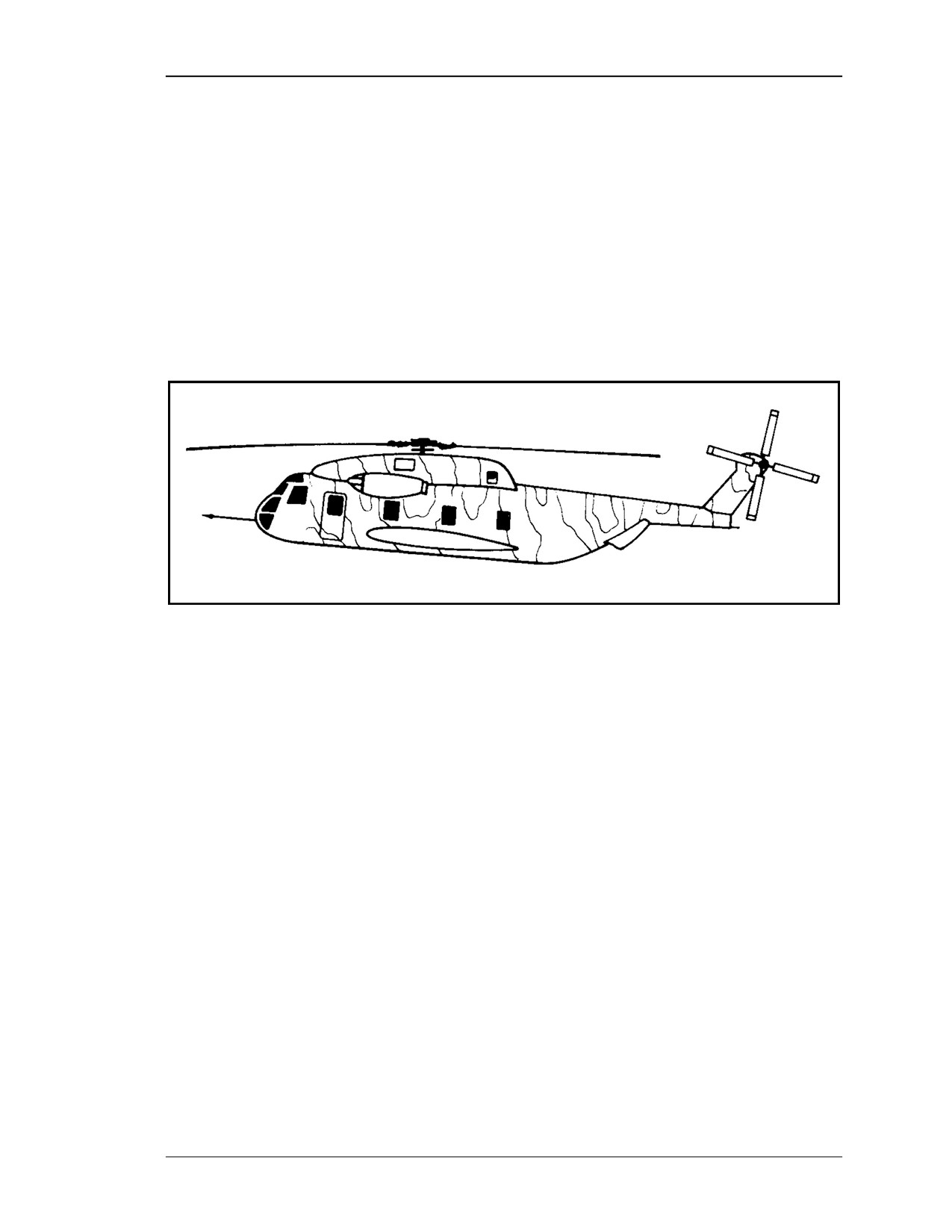
The CH-53 is a twin-engine, single-rotor, medium-transport helicopter. Twenty
combat-equipped parachutists, using the ramp, can jump from this aircraft (Figure 18-1).
Figure 18-1. CH-53 Sea Stallion (USMC).
18-1. PREPARATION AND INSPECTION
The jumpmaster prepares and inspects the CH-53 as follows:
a. Preparation. The following procedures prepare the CH-53 for jumping:
(1) Install the anchor line cable on the port side of the floor (Figure 18-2, page 18-2)
using the appropriate 5,000-pound tie-down fittings for the length of cable used (forward
attachment point) and station number 522 (rear attachment point).
(2) Use one 1/4-inch or 3/8-inch steel cable (3/8-inch preferred), of an acceptable
length, with four 1/4-inch or 3/8-inch cable clamps, lock washers, nuts, and bolts. The
minimum installed length of the anchor line cable will be 8 feet between forward and rear
attaching points (four to five jumpers). Ensure the installed anchor line cable is long
enough so that a jumper’s static line extends from the jumper to the anchor line cable
without touching other jumpers in front of him in the stick.
(3) Route the anchor line cable directly through the forward and rear attaching point
deck rings or use a steel stubai 85 snap link (with locking gate) between the anchor line
cable and the aircraft attaching points. Ensure the locking gates on the snap links are
facing up, locking to the aft of the aircraft, and taped. Ensure all tape is removed from the
anchor line cable components and that the clamps are tight prior to every operation.
18-1
FM 3-21.220/MCWP 3-15.7/AFMAN11-420/NAVSEA SS400-AF-MMO-010
CAUTION
Do not use a clevis assembly (G-13) to attach the
anchor line cable to the aircraft. If the cable is loose,
the clevis may rotate sideways and drastically reduce
the strength of the anchor line cable.
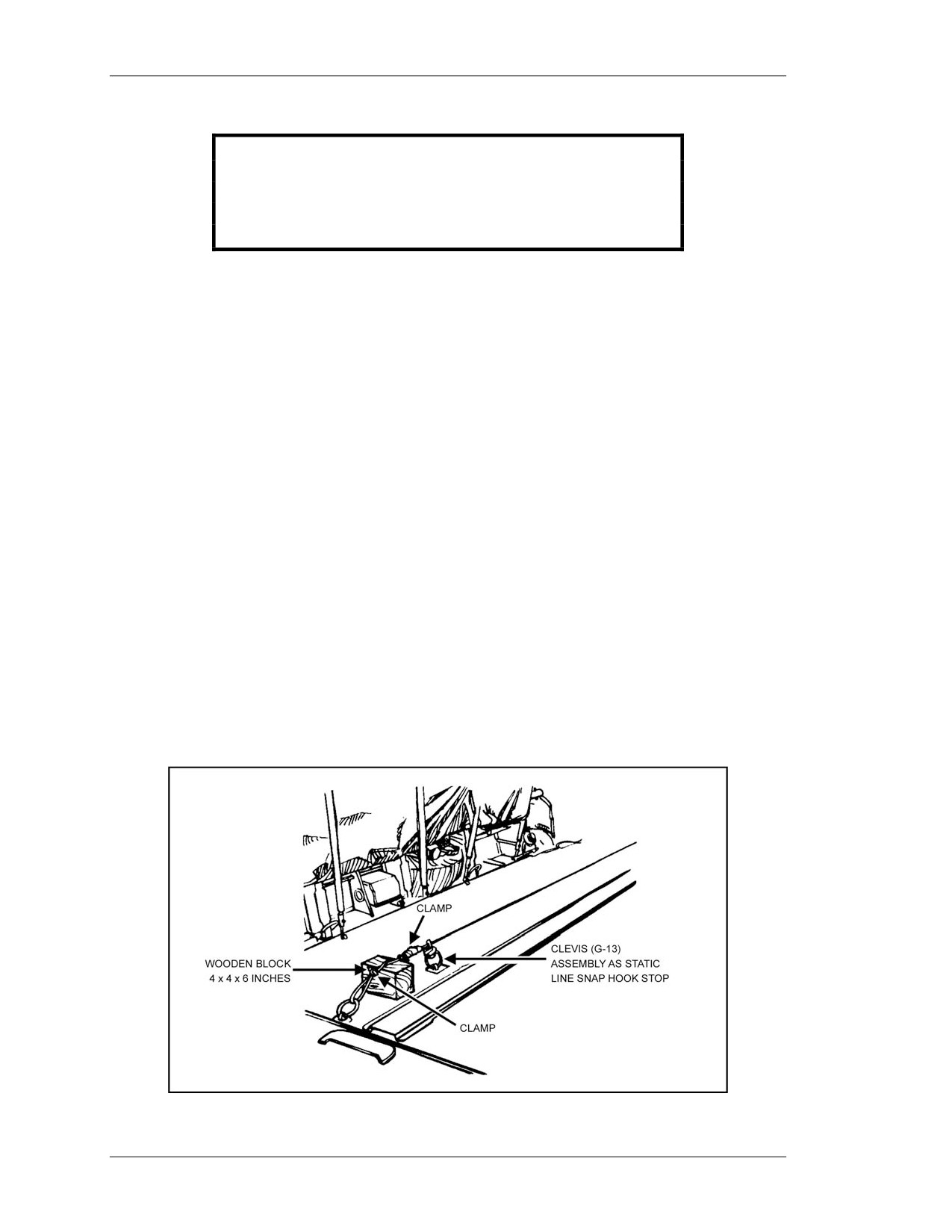
(4) Place a 4- by 4- by 6-inch wooden block between the anchor line cable and floor
and attach a clevis assembly (G-13) to the tie-down ring at station number 502 for use as
a static line snap hook stop.
(5) Remove excess slack from the anchor line.
(6) Turn over and secure the conveyor rollers in the down position with the smooth
surface up.
(7) Attach the 5-foot static line extension (NSN 1670-00-368-4225) to the anchor line
cable; insert and bend safety wires.
(8) Ensure drive-on aids are removed.
(9) Ensure the tail skid is in the “up” position prior to the jumpers exiting the aircraft.
b. Inspection. Before enplaning, the JM and pilot, or pilot’s representative, jointly
inspect the aircraft to determine the following:
(1) Safety belts are installed for all parachutists and extended all the way out to
ensure positive hookup while seated.
(2) Seats are fastened securely in the down position.
(3) Seats are lifted and secured before jumping.
(4) The anchor line cable is not worn or frayed and is secured to the attachment
points in the prescribed manner.
(5) The ramp and deck are clean and free of oil and water.
(6) All protruding objects near the ramp are removed or taped.
(7) The crew chief’s headphones are available and function properly.
Figure 18-2. CH-53 anchor line installation.
18-2
FM 3-21.220/MCWP 3-15.7/AFMAN11-420/NAVSEA SS400-AF-MMO-010
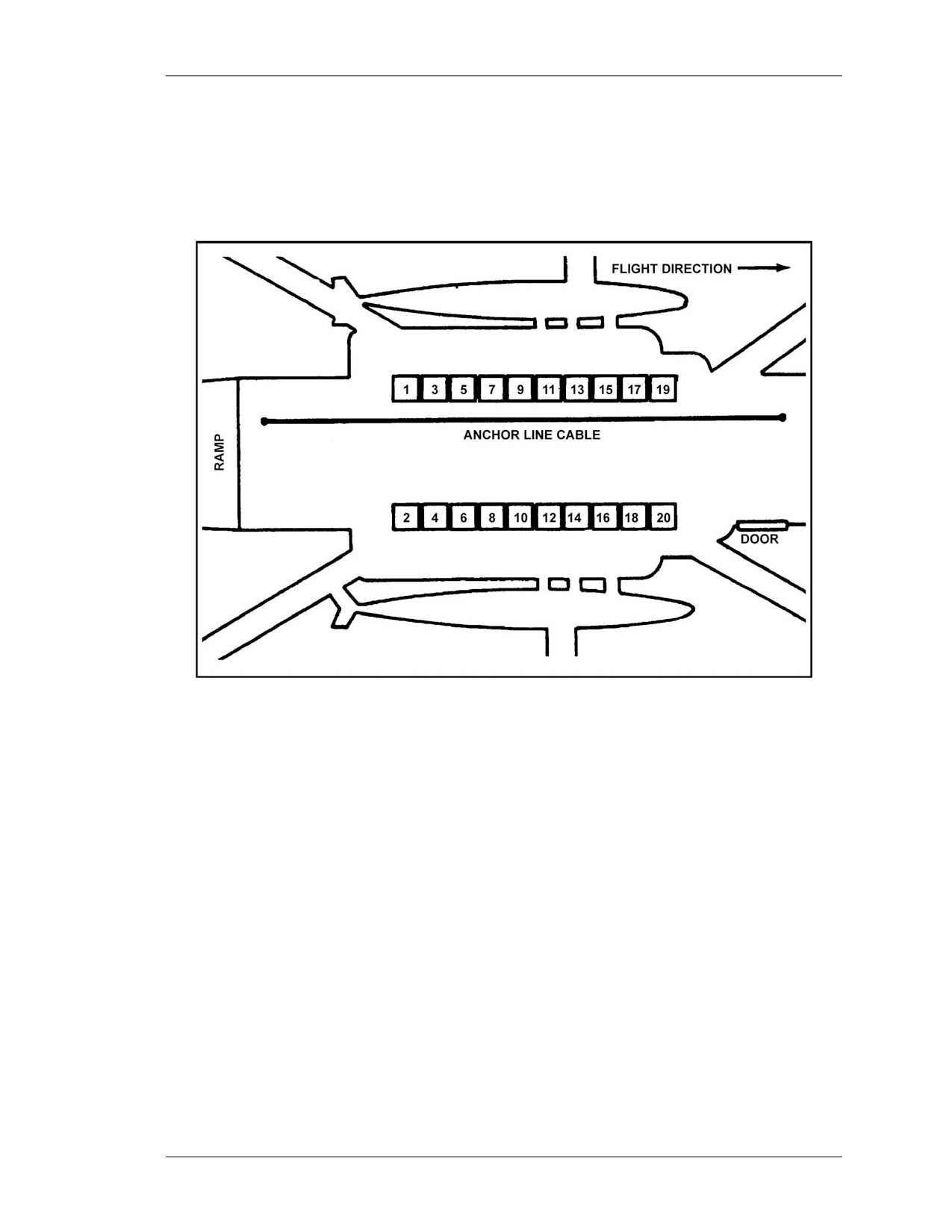
18-2. LOADING TECHNIQUES AND SEATING CONFIGURATION
Parachutists enter the aircraft over the ramp with the static line over the right shoulder.
Odd-numbered parachutists are seated on the port side, and even-numbered parachutists
are seated on the starboard side (Figure 18-3).
Figure 18-3. CH-53 seating configuration.
18-3. JUMP COMMANDS AND PROCEDURES
Jump commands and procedures for the CH-53 are as follows:
a. Time Warnings. The 6-minute and 1-minute warnings are given by the pilot to
the crew chief, who in turn relays them orally and by hand signals to the JM.
b. Jump Commands.
(1) GET READY. All parachutists remove seat belts.
(2) STAND UP. All parachutists stand up and secure their seats in the up position.
(3) HOOK UP. The 5-foot static line extensions are attached to the anchor line cable
by the snap hooks; insert and bend safety wires. The JM or AJM passes the static line
extension to each jumper starting with the last jumper and working forward. When the
command HOOK UP is given, the jumpers ensure the cotton sleeve is on the static line
extension, attach their static line snap hooks, insert and bend safety wires, and hold the
static line snap hook exposed for inspection by the JM. Once inspected, place the sleeve
over the snap hook and take a reverse bite at waist level.
18-3
FM 3-21.220/MCWP 3-15.7/AFMAN11-420/NAVSEA SS400-AF-MMO-010
WARNING
The JM must ensure the jumper has a proper
reverse bite. If an improper reverse bite is taken,
the static line could become misrouted under the
arm and cause a towed jumper or severe injury.
(4) CHECK STATIC LINES. All parachutists check the routing of the static line of
the parachutist to their front to ensure that it is not misrouted. Numbers 19 and 20 turn so
that the static line of the last parachutist can be checked by number 19.
(5) CHECK EQUIPMENT. All parachutists check their equipment.
(6) SOUND OFF FOR EQUIPMENT CHECK.
(7) STAND BY. The number 1 jumper assumes a standing position at the ramp hinge.
The remaining personnel close up intervals behind the first parachutist.
(8) GO. The number 1 jumper walks off the center of the ramp. The remaining
parachutists follow at 1-second intervals.
c. Recovery of Static Lines. Upon exit of all parachutists, the crew chief or static
JM recovers all static lines.
WARNING
Parachutists walk off the ramp, which is lowered a minimum of
11 degrees below centerline gauge. Jumpers do not make a
vigorous exit. Less than a
1-second interval between
parachutists may result in entanglement of parachutists and
static lines.
18-4. SAFETY PRECAUTIONS
No more than two parachutists should jump with CWIE in one pass over the DZ. These
parachutists should be numbers 1 and 2 in the stick. The static JM or safety personnel
ensure that parachutists are hooked up consecutively (1 through 20), and that all seats are
secured out of the way of the jumpers. The speed of the aircraft during jumps is 90 to 110
knots. The minimum drop altitude for aircraft with a 90- to 110-knot drop speed is 1,250
feet AGL. Either the JM or AJM must remain with the aircraft to handle the D-bags and
towed jumpers. The JM spots the aircraft using WSVC, VIRS, or GMRS. The JM may
spot from the crew chief door or the ramp as long as a safety is controlling the jumpers. If
spotting from the ramp and jumping, the JM leads the stick and the AJM stays with the
aircraft.
Section II. CH-46 SEA KNIGHT (USMC)
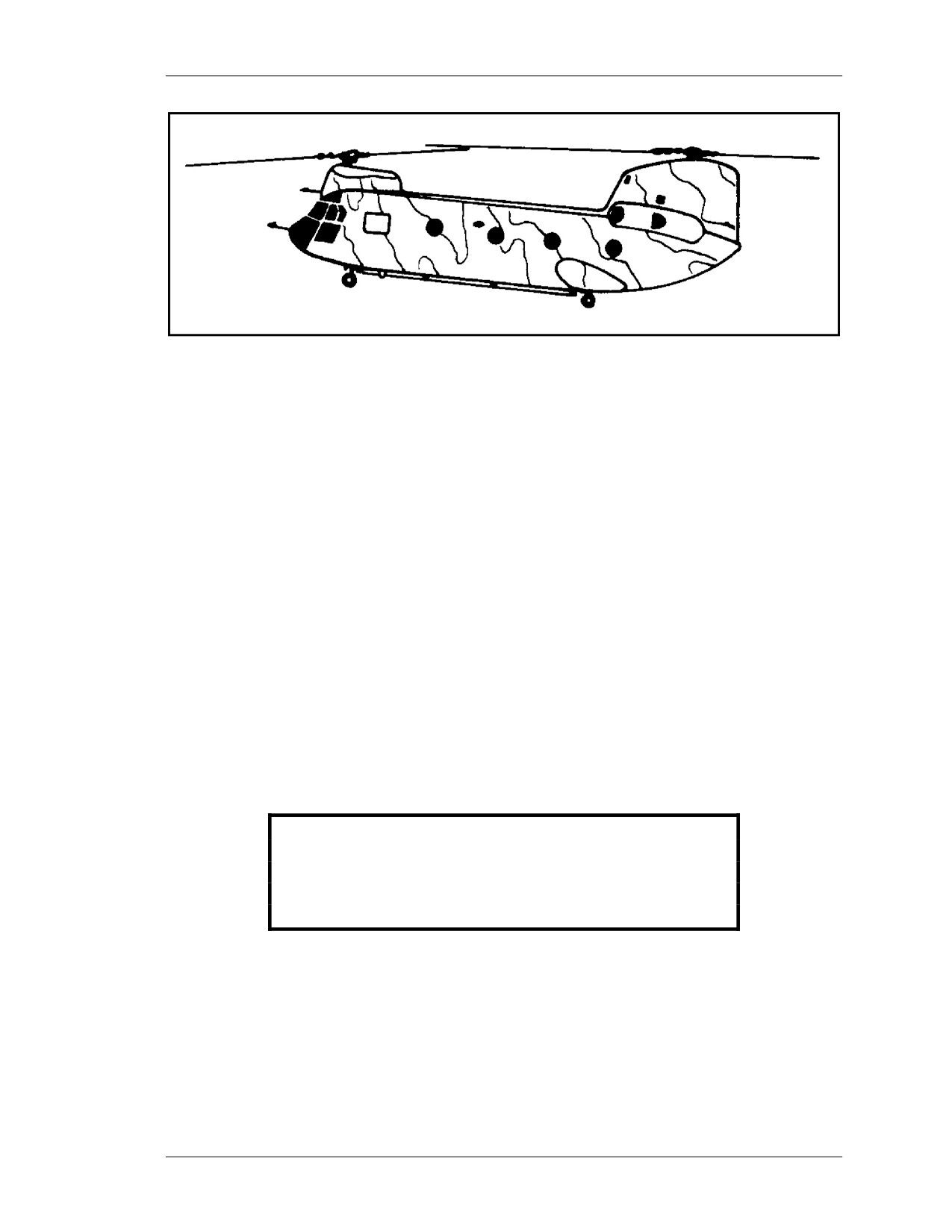
The CH-46 is a tandem-rotor, medium-transport helicopter. Twelve combat-equipped
parachutists can jump from either the personnel door or the ramp (Figure 18-4).
18-4
FM 3-21.220/MCWP 3-15.7/AFMAN11-420/NAVSEA SS400-AF-MMO-010
Figure 18-4. CH-46 Sea Knight.
18-5. PREPARATION AND INSPECTION
The jumpmaster prepares and inspects the CH-46 as follows:
a. Preparation for a Ramp Jump. The following procedure prepares the CH-46 for
jumping:
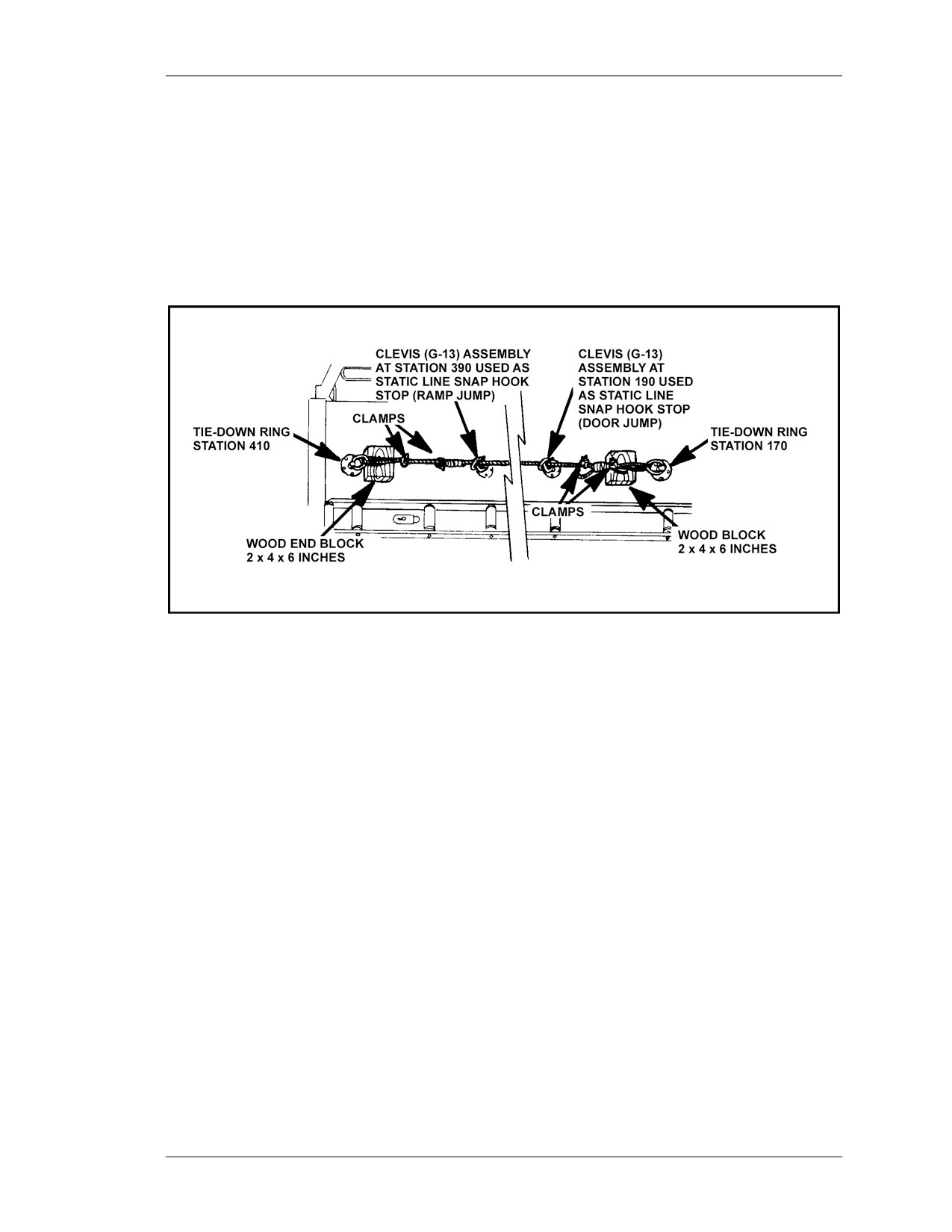
(1) Install the anchor line cable on the port side of the floor using the appropriate
3,000-pound tie-down fittings for the length of the cable used (forward attachment point)
and station number 410 (rear attachment point) (Figure 18-5, page 18-7).
(2) Use one 1/4-inch or 3/8-inch steel cable (3/8-inch preferred) of an acceptable
length with 1/4-inch or 3/8-inch cable clamps and nuts. The minimum installed length of
the anchor line cable will be 8 feet between forward and rear attaching points (four to five
jumpers). Ensure the installed anchor line cable is long enough so that the jumper’s static
line goes from the jumper to the anchor line cable without touching other jumpers in front
of him in the stick.
(3) Route the anchor line cable directly through the forward and rear attaching point
deck rings or use a steel stubai 85 snap link (with locking gate) between the anchor line
cable and the aircraft attaching points. Ensure the locking gates on the snap links are
facing up, locking to the aft of the aircraft, and taped. Ensure all tape is removed from the
anchor line cable components and that the clamps are tight prior to every operation.
CAUTION
Do not use a clevis assembly (G-13) to attach the
anchor line cable to the aircraft. If the cable is loose,
the G-13 clevis may rotate sideways and drastically
reduce the strength of the anchor line cable.
(4) Place two 4-s by 6-inch wooden blocks between the anchor line cable and floor
and attach one clevis assembly (G-13) to the tie-down ring at station number 390 for use
as a static line snap hook stop.
(5) Remove excess slack from the anchor line.
(6) Turn the conveyor rollers over and secure them in the down position with the
smooth surface up.
18-5
FM 3-21.220/MCWP 3-15.7/AFMAN11-420/NAVSEA SS400-AF-MMO-010
(7) Attach the 5-foot static line extension (NSN 1670-00-368-4225) to the anchor line
cable; insert and bend safety wires.
(8) Ensure drive-on aids are removed.
b. Preparation for Door Jump.
(1) The anchor line cable is installed on the floor of the aircraft on the starboard side
(Figure 18-5) using the tie-down fittings at station number 170 (forward attachment
point) and station number 410 (rear attachment point).
(2) Install one 1/4-inch or 3/8-inch steel cable (3/8-inch preferred), of an acceptable
length, with four clamps, lock washers, and bolts that fit the cable. The minimum
installed length of the anchor line cable will be 8 feet between forward and rear attaching
points (four to five jumpers). Ensure the installed anchor line cable is long enough so that
the jumper’s static line goes from the jumper to the anchor line cable without touching
other jumpers in front of him in the stick.
(3) Route the anchor line cable directly through the forward and rear attaching point
deck rings or use a steel stubai 85 snap link (with locking gate) between the anchor line
cable and the aircraft attaching points. Ensure the locking gates on the snap links are
facing up, locking to the aft of the aircraft, and taped. Ensure all tape is removed from the
anchor line cable components and that the clamps are tight prior to every operation.
CAUTION
Do not use a clevis assembly (G-13) to attach the
anchor line cable to the aircraft. If the cable is loose,
the G-13 clevis may rotate sideways and drastically
reduce the strength of the anchor line cable.
(4) Place two 4- by 6-inch wooden blocks between the anchor line cable and floor
and attach a clevis assembly (G-13) to the tie-down ring at station number 190 for use as
a static line snap hook stop.
(5) Remove excess slack from the anchor line.
(6) Turn the conveyor rollers over and secure them in the down position with the
smooth surface up.
(7) Attach the 5-foot static line extension (NSN 1670-00-368-4225) to the anchor line
cable; insert and bend safety wires.
(8) Ensure drive-on aids are removed.
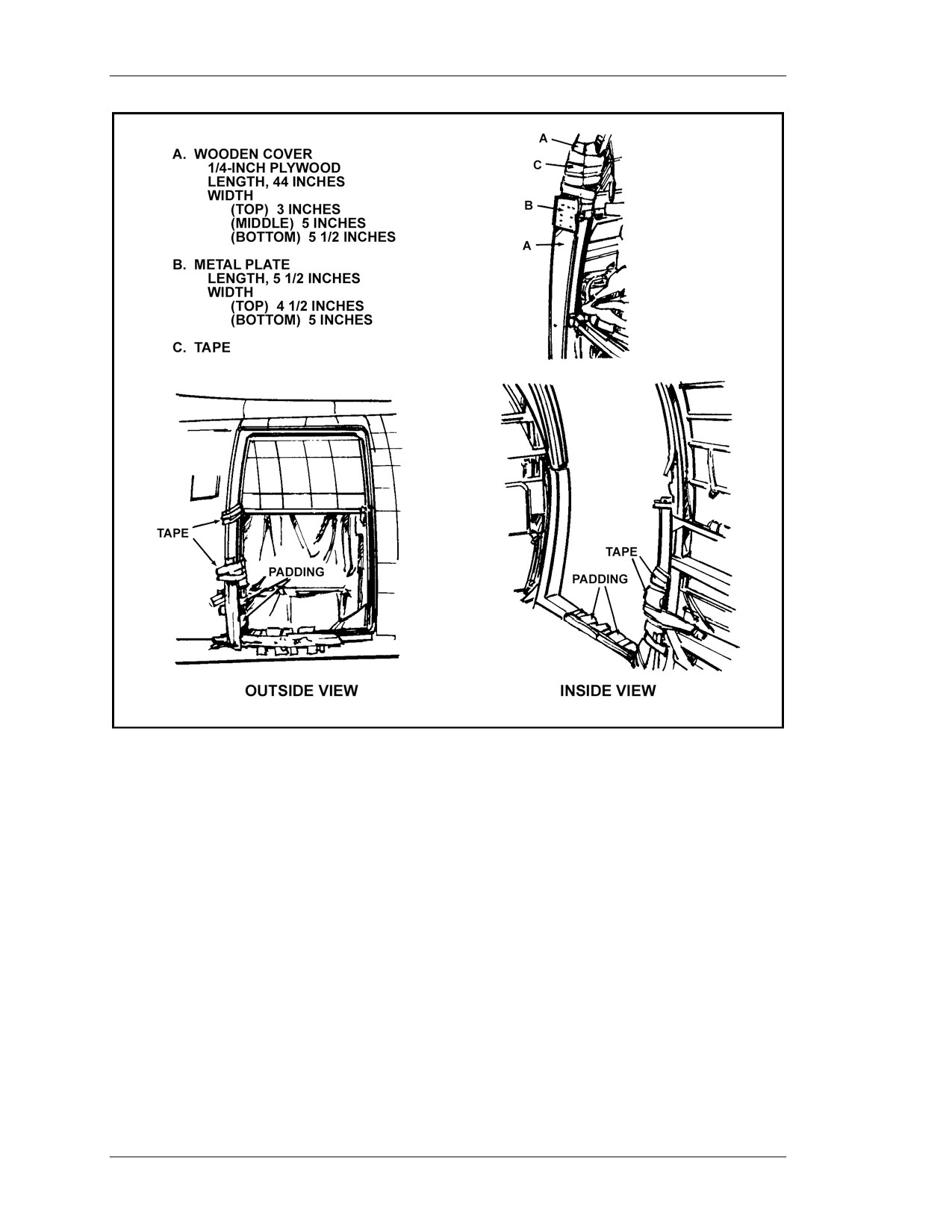
(9) Remove the personnel door and install a plywood cover over the aft side of the
door frame and secure it with a metal plate. Pad and tape the bottom and aft edges of the
door frame (Figure 18-6, page 18-8).
c. Inspection. Before enplaning, the JM and pilot, or pilot’s representative, jointly
inspect the aircraft to determine the following:
(1) Seat belts are installed for all parachutists and extended all the way out to ensure
positive hookup while seated.
(2) Seats are fastened securely in the down position.
(3) Seats can be lifted and secured before jumping.
18-6
FM 3-21.220/MCWP 3-15.7/AFMAN11-420/NAVSEA SS400-AF-MMO-010
(4) The anchor line cable is not worn or frayed and is secured to the attachment
points in the prescribed manner.
(5) The wooden cover is installed and secured to the aft edge of the door frame when
jumping the personnel door.
(6) The bottom edges of the door frame are properly padded and taped.
(7) The ramp and deck are clean and free of oil or water.
(8) All protruding objects near the ramp and personnel door are removed or taped.
(9) The crew chief’s headphones are available and function properly.
Figure 18-5. CH-46 anchor line cable installation.
18-7
FM 3-21.220/MCWP 3-15.7/AFMAN11-420/NAVSEA SS400-AF-MMO-010
Figure 18-6. CH-46 door frame preparation.
18-6. LOADING TECHNIQUES AND SEATING CONFIGURATION
There are two ways a parachutist can jump from the aircraft: the ramp or the door. The
parachutists enter the aircraft with the static line over the right shoulder; they are seated
on the port and starboard side.
18-7. JUMP COMMANDS AND PROCEDURES
The 6-minute and 1-minute warnings, whether jumping the door or ramp, are given by
the pilot to the crew chief, who in turn relays them orally and by hand signals to the
static JM or AJM.
a. Jump Commands for Door Jump.
(1) GET READY. All parachutists in the first stick unfasten their seat belts.
(2) STAND UP. Parachutists stand up and move to the starboard side (Figure 18-7,
page 18-10).
(3) HOOK UP. The 5-foot static line extensions are attached to the anchor line cable
by the snap hooks; insert and bend safety wires. The JM or AJM passes the static line
extension to each jumper starting with the last jumper and working forward. When the
18-8
FM 3-21.220/MCWP 3-15.7/AFMAN11-420/NAVSEA SS400-AF-MMO-010
command HOOK UP is given, the jumpers ensure the cotton sleeve is on the static line
extension, attach their static line snap hooks, insert and bend safety wires, and hold the
static line snap hook exposed for inspection by the JM. Once inspected, place the sleeve
over the snap hook and take a reverse bite at waist level.
WARNING
The JM must ensure the jumper has a proper
reverse bite. If an improper reverse bite is taken,
the static line could become misrouted under the
arm and cause a towed jumper or severe injury.
(4) CHECK STATIC LINES. The parachutists take a reverse bight (at waist level) of
about 8 inches in the static line with the right hand, keep the arm close to the side, and
check the static line of the parachutist to the front.
(5) CHECK EQUIPMENT. All parachutists check their equipment.
(6) SOUND OFF FOR EQUIPMENT CHECK.
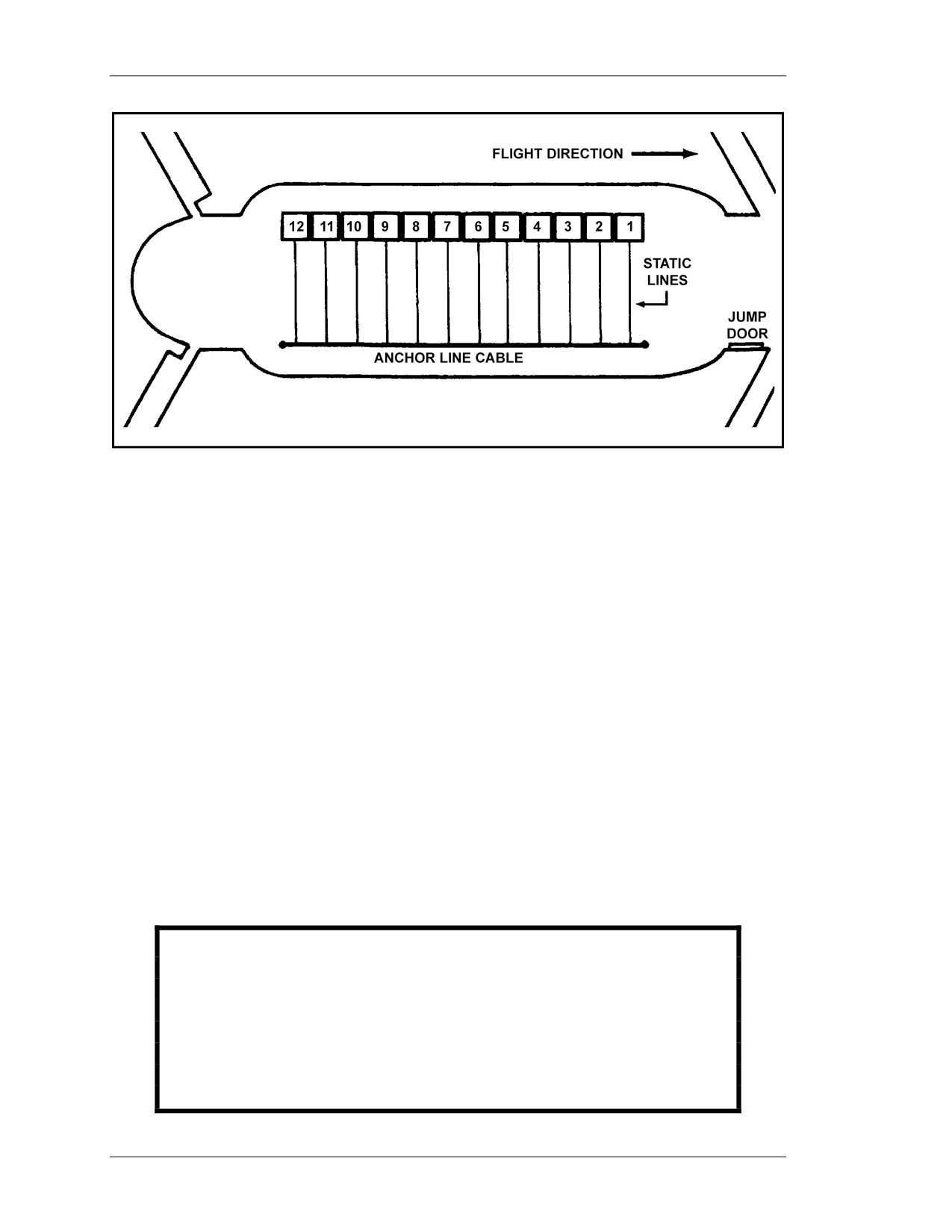
(7) STAND IN THE DOOR. Number 1 parachutist moves to the door and assumes
the door position. He must crouch low to allow at least a 2-inch clearance between his
helmet and the top of the door. The other parachutists close up behind number 1 at
normal intervals.
(8) GO. Number 1 exits by jumping straight out the door and assuming the proper
body position. The succeeding parachutists move up, make a 90-degree turn at the door,
take up a correct door position, and exit in the same manner as number 1, maintaining a
1-second interval. Upon exit of all parachutists, the crew chief or static JM recovers all
static lines.
WARNING
Parachutists must not spring upward when
jumping this helicopter.
18-9
FM 3-21.220/MCWP 3-15.7/AFMAN11-420/NAVSEA SS400-AF-MMO-010
Figure 18-7. CH-46 door jump.
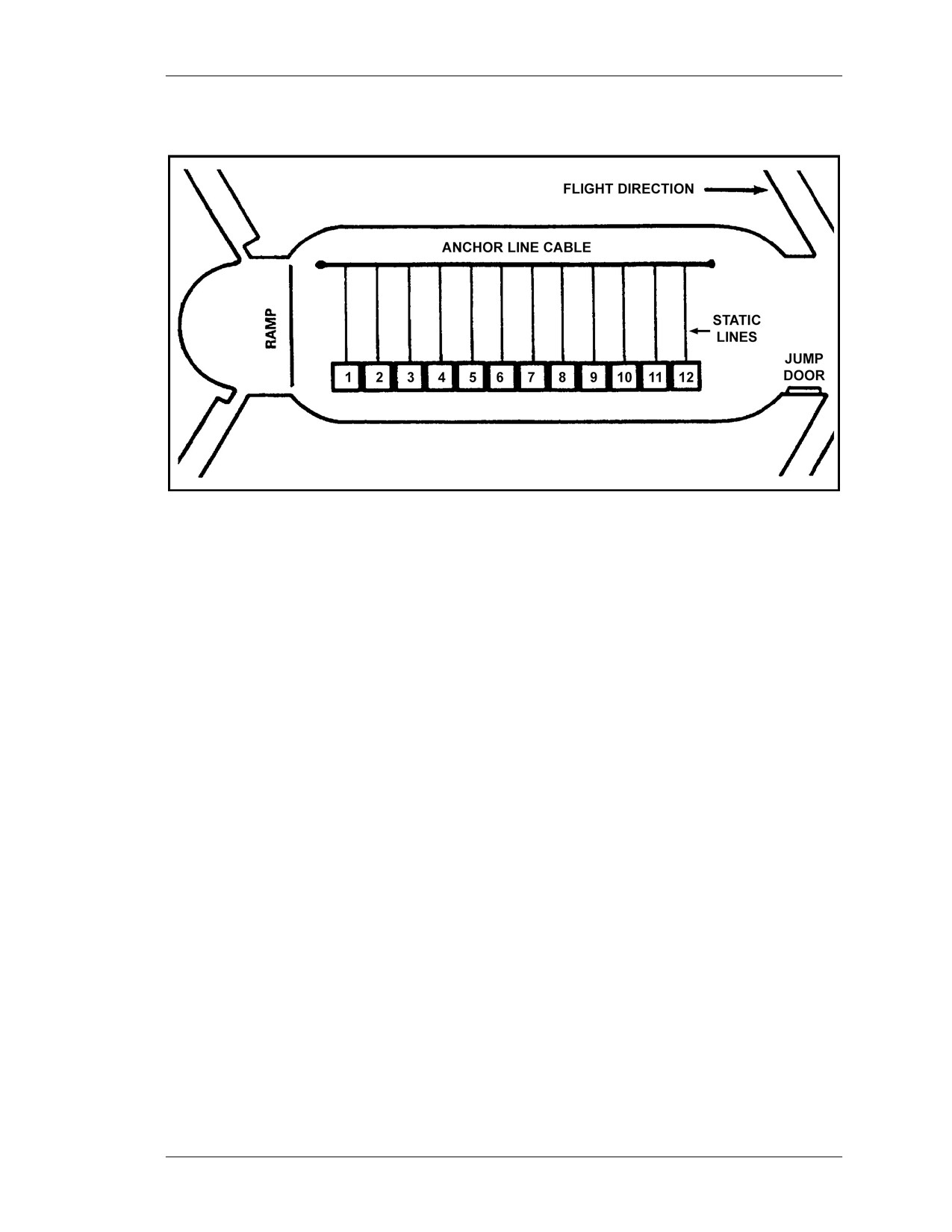
b. Jump Commands for Ramp Jump.
(1) GET READY. All parachutists in the first stick unfasten their seat belts.
(2) STAND UP. Parachutists stand up and move to the port side (Figure 18-8).
(3) HOOK UP. When the command HOOK UP is given, the jumpers ensure the
cotton sleeve is on the static line extension, attach their static line snap hooks, insert and
bend safety wires, and hold the static line snap hook exposed for inspection by the JM.
Once inspected, place the sleeve over the snap hook and take a reverse bite at waist level.
(4) CHECK STATIC LINES. The parachutists take a reverse bight at waist level of
about 8 inches in the static line with the right hand, keep the arm close to the side, and
check the static line of the parachutist to the front.
(5) CHECK EQUIPMENT. All parachutists check their equipment.
(6) SOUND OFF FOR EQUIPMENT CHECK.
(7) STAND BY. Number 1 assumes a standing position at the ramp hinge. The
remaining parachutists close up the interval.
(8) GO. Number 1 walks off the starboard rear of the ramp and assumes a normal
body position. The remaining parachutists follow and exit in the same manner as
number 1, maintaining a
1-second interval between parachutists. Upon exit of all
parachutists, the crew chief or static JM recovers all static lines.
WARNING
Parachutists walk off the ramp (which is lowered to 11 degrees
below centerline gage) in a crouched position to avoid hitting
their heads on the upper ramp door. They do not make a
vigorous exit. Less than a
1-second interval between
parachutists may result in entanglement of parachutists and
static lines. Upon exit of all parachutists, the crew chief or
static JM recovers all static lines.
18-10
FM 3-21.220/MCWP 3-15.7/AFMAN11-420/NAVSEA SS400-AF-MMO-010
Figure 18-8. CH-46 ramp jump.
18-8. SAFETY PRECAUTIONS
On a single pass over the DZ, only the number 1 parachutist jumps with a CWIE from
either the ramp or the door. The static JM or AJM ensures that parachutists are hooked up
consecutively (1 through 12). The JM ensures that seats along the starboard side are
secured in the up position when parachutists are jumping from the personnel door, or that
seats along the port side are secured in the up position when they are jumping from the
ramp. The speed of the aircraft is 80 to 90 knots when jumping. The minimum drop
altitude is 1,250 feet AGL when jumping at 90 knots and 1,500 feet AGL when jumping
at 80 knots. Either the JM or AJM must remain with the aircraft to handle the D-bags and
towed jumpers. The JM spots the aircraft using WSVC, CIRS, or GMRS. The JM may
spot from the crew chief door or the ramp as long as a safety is controlling the jumpers. If
spotting from the ramp and jumping, the JM leads the stick and the AJM stays with the
aircraft.
Section III. CH/HH-3 JOLLY GREEN GIANT (USAF)
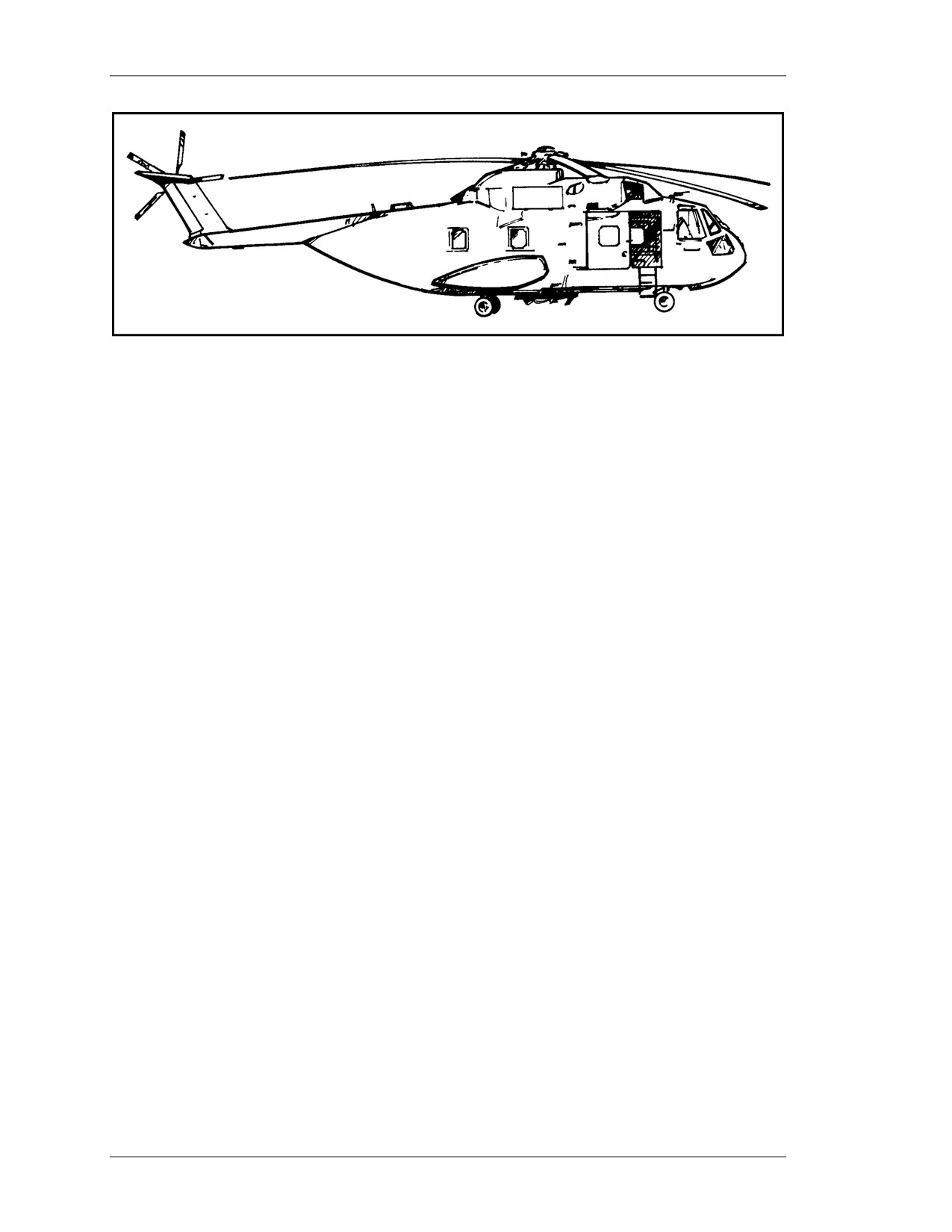
The CH/HH-3 is a twin-engine, single-rotor, medium-transport helicopter. Fifteen
combat-equipped parachutists can jump from this aircraft (Figure 18-9, page 18-12).
18-11
FM 3-21.220/MCWP 3-15.7/AFMAN11-420/NAVSEA SS400-AF-MMO-010
Figure 18-9. CH/HH-3 Jolly Green Giant.
18-9. PREPARATION AND INSPECTION
The crew chief prepares and inspects the CH/HH-3 as follows:
a. Preparation. The following procedure prepares the CH/HH-3 for jumping:
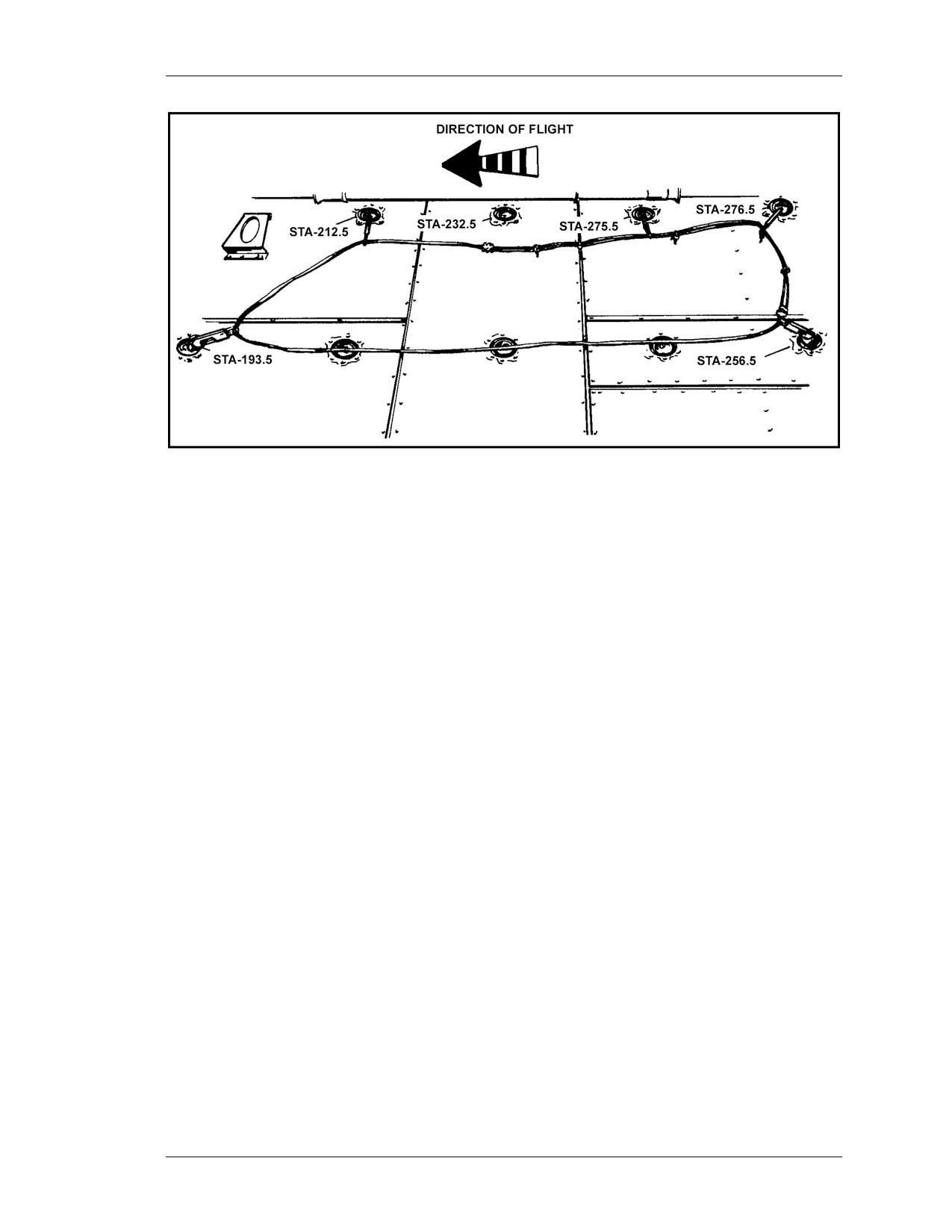
(1) Install the oval-shaped anchor line cable on the starboard side of the aircraft’s
floor using the tie-down fittings at station number 193.5 (right of center) as the port side
forward attachment point, station number 212.5 as the starboard side forward attachment,
station number 256.5 as an intermediate starboard side attachment point, and station
number 276.5 as the starboard side rear and port side rear attachment points (Figure
18-10).
(2) The anchor line cable is constructed of 1/4-inch diameter, 6,400-pound test steel
cable. Thread the anchor line cable through four static line snap hooks, where the static
line is normally attached. These static line snap hooks connect the anchor line cable to the
tie-down fittings. Complete the oval by overlapping both ends of the steel cable, then by
securing the overlap with four cable clamps spaced intermittently between the swaged
cable ends.
(3) Manufactured cables have the date of initial manufacture and weight testing
capacity (2,500 pounds) permanently marked on the starboard side forward static line
snap hook. Inspect cables each time the anchor line cable is installed for jumping.
Remove from service cables showing excessive wear, corrosion, or more than three
broken strands per inch. Weight test cables to a 2,500-pound capacity within each
12-month calendar period. (For example, cables weight tested on 1 January will be due
weight testing by 31 January the following year.) Document annual weight testing on a
DD Form 1574, which is attached to the cable.
18-12
FM 3-21.220/MCWP 3-15.7/AFMAN11-420/NAVSEA SS400-AF-MMO-010
Figure 18-10. CH/HH-3 anchor line cable.
b. Inspection. Before enplaning, the JM and pilot, or pilot’s representative, jointly
inspect the aircraft to determine the following:
(1) The main cabin door is secured to the rear and taped, including the door handle
and latch.
(2) Any external cargo slings are removed before conducting jump operations.
(3) All protruding objects near the doors are removed or taped. The penetrator is
removed before conducting jump operations.
(4) Safety belts are installed for all parachutists and are extended completely to
ensure positive hookup while seated.
(5) Seats are fastened securely in the down position with backs loose (except the four
seats raised for anchor line cable installation).
(6) The anchor line cable is tight and free of frays.
(7) The deck is clean and free of oil and water.
(8) The flight engineer’s headphones and the JM intercom cord are available and
function properly.
18-10. LOADING TECHNIQUES AND SEATING CONFIGURATION
Parachutists enter the aircraft through the starboard side cabin door with their static line
over their right shoulder. They enter the aircraft in reverse stick order with numbers 1
through 8 seated on the port side and numbers 9 through 15 seated on the starboard side.
18-11. JUMP COMMANDS AND PROCEDURES
Jump commands and procedures on the CH/HH-3 are as follows:
a. Time Warnings. The 6-minute and 1-minute warnings are given by the pilot to
the flight engineer, who in turn relays them orally and by hand signals to the JM. Due to
the limited space available to hook up, only four parachutists are airdropped each pass.
b. Jump Commands. The commands on the CH/HH-3 are—
(1) GET READY. The first four parachutists remove seat belts.
(2) STAND UP. Parachutists stand up and move to the anchor line cable.
18-13
FM 3-21.220/MCWP 3-15.7/AFMAN11-420/NAVSEA SS400-AF-MMO-010
(3) HOOK UP. Parachutists connect their static line snap hook to the anchor line
cable with the opening toward the skin of the aircraft.
(4) CHECK STATIC LINES. Each parachutist takes a reverse bight in the static line,
ensuring the static line remains over his bent elbow.
(5) CHECK EQUIPMENT. All parachutists check their equipment. Parachutists
jumping equipment must be at the front of their stick.
(6) SOUND OFF FOR EQUIPMENT CHECK.
(7) STAND IN THE DOOR. The first parachutist moves to the main cabin door,
stopping about one foot from the door, and awaits the JM’s commands.
(8) STAND BY. The first parachutist moves to the main cabin door and awaits the
JM’s commands.
(9) GO. Number 1 walks off the starboard rear corner of the ramp. The remaining
parachutists follow at 1-second intervals.
NOTE: Commands are repeated for the next group of four parachutists and are
repeated until the aircraft is empty.
WARNING
Parachutists walk out the door 90 degrees to the aircraft in a
crouched position to avoid hitting their heads on the upper
door frame. They do not make a vigorous exit.
c. Exits. Parachutists step out the same as exiting the tailgate of a fixed-wing
aircraft, maintaining about a 1-second interval between parachutists. Less than a 1-second
interval may result in entanglement of parachutists and static lines. Upon exit of all
parachutists of each pass, the JM or flight engineer recovers all deployment bags and
static lines.
18-12. SAFETY PRECAUTIONS
Approaching or loading the aircraft is performed only after visual clearance by the pilot
or flight engineer. Before clearing any parachutists to jump, the JM confirms that the
main gear is in the up position. The speed of the aircraft during all jump operations is
between 70 knots and 90 knots indicated air speed.
18-14
FM 3-21.220(FM 57-220)/MCWP 3-15.7/AFMAN11-420/NAVSEA SS400-AF-MMO-010
CHAPTER 19
NONSTANDARD AIRCRAFT
USED DURING AIRBORNE OPERATIONS
This chapter contains aircraft descriptions, JM procedures, and
aircraft preparation techniques for nonstandard rotary-wing and
fixed-wing aircraft. The aviation supporting unit prepares the aircraft for
equipment and personnel drops to include seat and door removal and
installation or rearrangement of seat belts. The installation of a field-
expedient anchor line cable is the jumpmaster’s responsibility. Aircraft
preparation is usually accomplished jointly by the loadmaster/crew chief
and JM. These aircraft are service tested and approved for personnel
airdrop operations.
Section I. MODIFICATIONS TO JUMP COMMANDS AND JUMPERS’
MOVEMENT IN NONSTANDARD AIRCRAFT
On some nonstandard aircraft, jumpers are required to shuffle in the aircraft and assume a
stand-in-the-door position. The standard jump commands are modified by substituting the
command STAND IN THE DOOR for STAND BY. The parachutists execute the shuffle
and the stand-in-the-door position in the following manner.
19-1. SHUFFLE
The shuffle is a method of moving to the jump door without losing balance or tripping.
To perform the shuffle—
a. The jumper’s outboard arm is extended down and out to assist in maintaining
balance and to assume the door position. The other hand grasps the static line in the
correct bight for the aircraft.
b. Both feet are slightly spread, directly beneath the body, and staggered 6 to 8
inches. The jumper faces the rear of the aircraft and places his foot nearest the side of the
aircraft forward; this foot is the shuffle foot. The foot nearest the center of the aircraft is
the trail foot.
c. The jumper moves by stepping forward with his shuffle foot 6 to 8 inches and
then with his trail foot. He keeps both feet staggered in the same relative heel-and-toe
position throughout the shuffle.
19-2. STAND IN THE DOOR
At the command STAND IN THE DOOR—
a. The jumpers shuffle toward the jump door, and the number 1 jumper hands his
static line to the safety.
b. The number 1 jumper ensures his arm is not entangled with the static line and
shuffles into the door so that the toe of his outboard foot is extended about 2 inches over
the edge of the doorsill or jump platform and his trail foot is about 6 inches to the rear.
c. The number 1 jumper keeps his feet shoulder-width apart. His weight is equally
distributed on both feet, knees are bent, upper body is straight, head and eyes are to the
front, and hands are outside the aircraft, with fingers extended and joined. He is in a
19-1
FM 3-21.220/MCWP 3-15.7/AFMAN11-420/NAVSEA SS400-AF-MMO-010
position of “coiled alertness” and is ready to exit the aircraft without further weight
adjustment. His hands are not grasping the aircraft but are used to maintain balance.
d. The number 2 jumper is in the shuffle position, roughly even with the leading
edge of the jump door and facing the rear of the aircraft.
e. Follow-on jumpers close up behind the preceding jumper, using the shuffle
position to maintain balance.
19-3. GO
At the command GO, the number 1 jumper makes a vigorous up-and-out exit, 6 inches up
and 36 inches out, depending on aircraft requirements. The exit action is gained from the
legs alone, and the hands are used only to guide the jumper. On some aircraft, the
vigorous exit is essential to avoid hitting the aircraft or coming in contact with another
jumper beneath or behind the aircraft. The number 2 jumper and all following jumpers—
a. Shuffle toward the jump door.
b. Hand the static line to the safety and ensure the arm is not entangled with the
static line.
c. Shuffle into the door, take up a proper door position, and exit the aircraft without
command, maintaining a 1-second interval between jumpers.
Section II. C-7A CARIBOU
The C-7A is a high-wing transport powered by two piston engines (Figure 19-1). A total
of 24 parachutists may be dropped using the ramp or doors. The ramp is normally used
for dropping parachutists.
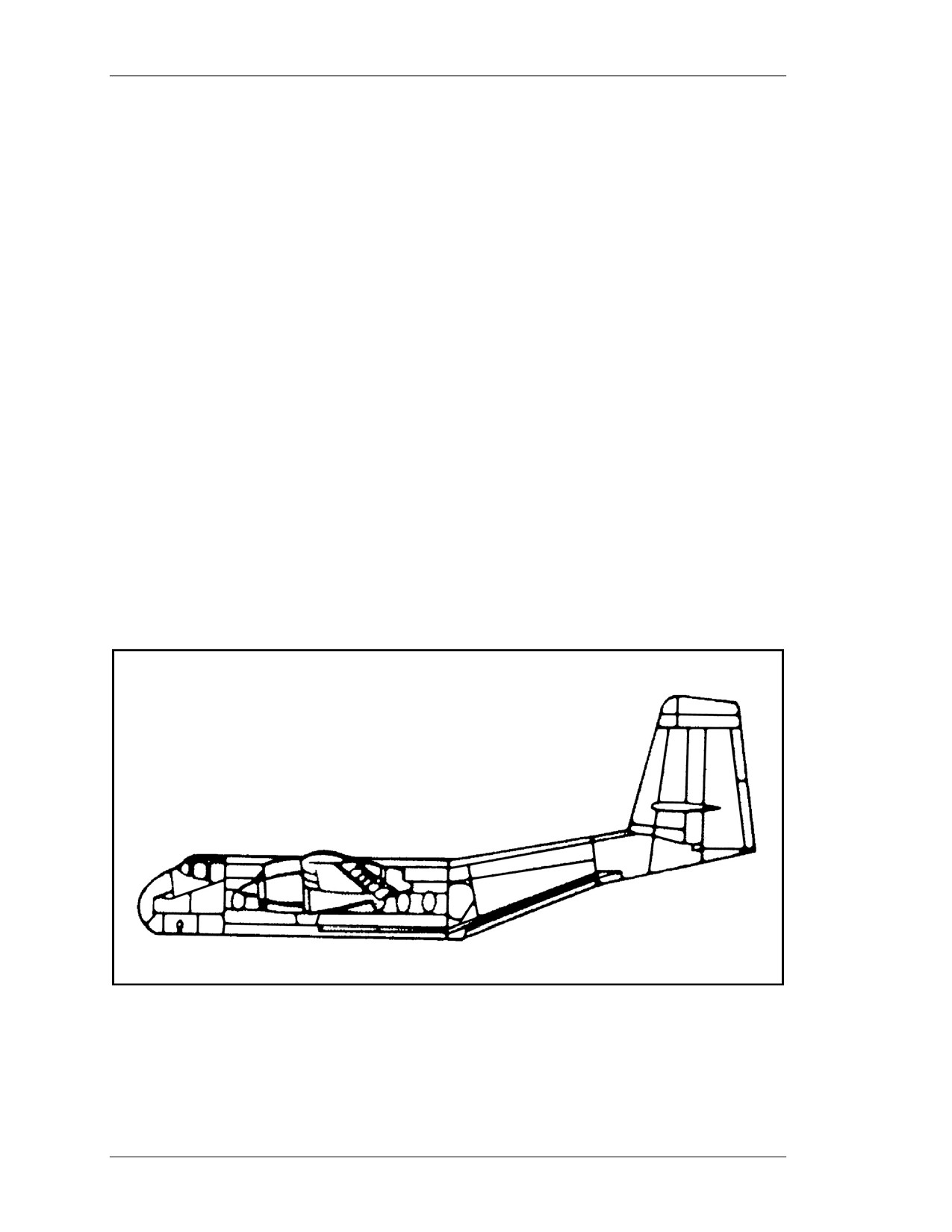
Figure 19-1. C-7A Caribou.
19-4. SEATING CONFIGURATION
Twenty-four parachutists are seated in two 12-parachutist sticks. Parachutists are loaded
over the loading ramp or through the doors. The odd-numbered personnel are seated on
the starboard side, and even-numbered personnel are seated on the port side.
19-2
FM 3-21.220/MCWP 3-15.7/AFMAN11-420/NAVSEA SS400-AF-MMO-010
19-5. SUPERVISORY PERSONNEL REQUIRED
Three personnel supervise safety procedures: one JM who performs standard aircraft
check procedures, one safety NCO, and one loadmaster.
19-6. ANCHOR LINE CABLE ASSEMBLIES
There are two anchor line cable assemblies in the C-7A.
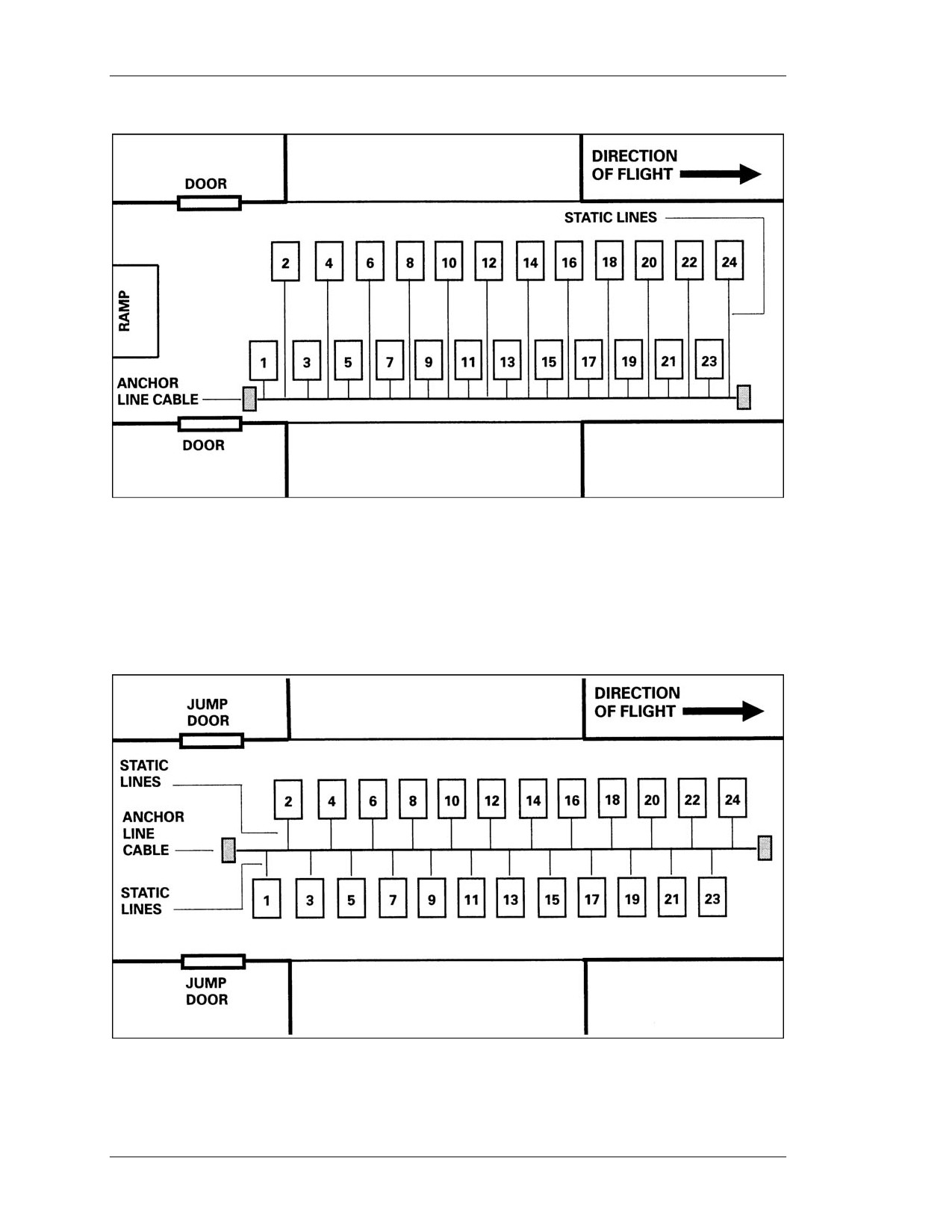
a. The anchor line cable for ramp jumps runs from the reinforced anchor line
attachment plate on the forward bulkhead to the anchor line connector near the right side
of the aft starboard door.
b. The anchor line cable for door jumps runs from the reinforced anchor line
attachment plate down the center of the cargo compartment. It is permanently installed.
19-7. JUMP COMMANDS
Jump commands for the C-7A are as follows:
a. GET READY. Jumpers respond in the same manner as for other
fixed-wing aircraft.
b. PORT SIDE PERSONNEL, STAND UP. Jumpers on the left side of the aircraft
stand up, raise and secure their seats, and face the ramp of the aircraft.
c. STARBOARD SIDE PERSONNEL, STAND UP. Jumpers on the right side of
the aircraft stand up, raise and secure their seats, and face the ramp of the aircraft.
d. HOOK UP. Even-numbered jumpers hook up between the odd-numbered
jumpers to form a continuous stick of jumpers. The jumpers detach the static line snap
hook from the top carrying handle of the reserve parachute and hook up to the anchor line
cable with the open portion of the snap hook facing outboard, ensuring that the snap hook
locks properly. The safety wire is inserted in the hole, pointing toward the rear of the
aircraft, and folded down. The static line is controlled by each parachutist in a reverse
bight at waist level in the left hand.
e. CHECK STATIC LINES, CHECK EQUIPMENT, and SOUND OFF FOR
EQUIPMENT CHECK. These are executed in the same manner as with other
fixed-wing aircraft.
f. STAND BY/STAND IN THE DOOR.
(1) STAND BY. The number 1 jumper, upon receiving the command STAND BY,
assumes a standing position near the starboard side of the ramp hinge. The number 2
jumper stands on the port side of the aircraft slightly to the right of jumper number 1. The
remaining personnel close up the interval behind the number 1 jumper.
(2) STAND IN THE DOOR. The proper door position is taken by the parachutists in
both doors, with the appropriate foot resting on the elevated doorsill. There is no jump
platform.
g. GO. Personnel exit the aircraft at 1-second intervals.
19-8. RAMP JUMPING
The number 1 jumper, upon receiving the command GO, walks off the port side rear
corner of the ramp. The remaining jumpers follow at a 1-second interval. After the
command GO, each jumper visually checks his body position for correctness and begins
the 4000-count. (See Figure 19-2, page 19-4, for C-7A configuration for ramp jumping.)
19-3
FM 3-21.220/MCWP 3-15.7/AFMAN11-420/NAVSEA SS400-AF-MMO-010
Figure 19-2. C-7A configuration for jumping from the ramp.
19-9. DOOR JUMPING
When the troop doors are used, simultaneous exits must not be made. Number 1 jumper
exits the starboard door and number 2 exits the port door 1 second after number 1. The
remaining parachutists alternate in numerical order at 1-second intervals. (See Figure
19-3 for C-7A configuration for door jumping.)
Figure 19-3. C-7A configuration for jumping from the doors.
19-4
FM 3-21.220/MCWP 3-15.7/AFMAN11-420/NAVSEA SS400-AF-MMO-010
19-10. SAFETY PRECAUTIONS
Safety precautions for the C-7A are as follows:
a. Parachutists.
(1) Parachutists ensure that all seats are secured in the up position when they stand to
hook up. During extreme air turbulence, parachutists take a short bight on the static line
and use the center anchor line to steady themselves.
(2) All parachutists remain off the ramp while it is being lowered to the 15-degree
incline for aft end jumping. Parachutists walk down the ramp with feet spread wide to
prevent striking the side of the aircraft. Upon exit from the aircraft, the parachutist brings
the feet and knees together to form a tight body position. When following heavy
equipment loads, parachutists exit between the roller conveyers of the aerial
unloading kit.
b. Jumpmaster.
(1) The JM or safety ensures personnel are hooked up in an alternating manner to the
same anchor line cable and form one continuous stick of jumpers.
(2) For door jumping, the JM or safety taps out the jumpers alternately to preclude a
simultaneous exit from both sides of the aircraft.
(3) Normally, a safety is required on the aircraft, but if no safety personnel are in the
aircraft, the JM jumps last. He must hook up to the center anchor line cable and exercise
caution to control his own static line and ensure it does not become fouled.
NOTE: The left troop door may be removed before the operation to allow the JM to
look for the DZ. If worn, the restraint harness is attached to the centerline
anchor cable as a safety measure.
c. Equipment.
(1) When adjustable individual weapon cases are jumped from the doors, they must
be reduced to 36 inches in length.
(2) When accompanying supplies and equipment are dropped from the doors, the
bundles must be standard air delivery containers no larger than 40 by 24 by 36 inches.
(3) When ramp bundles are dropped, either the 15-foot static line with drogue or the
breakaway static line may be used. When door bundles are dropped, the 15-foot static
lines with drogues are used with cargo parachutes. The ramp roller conveyor section for
the air unloading kit is installed on the port side of the ramp and is used to assist in
ejecting the bundles from the ramp. Parachutists number 1 and number 2 push the
bundles.
d. Aircraft.
(1) The speed of the aircraft during the jump will not be less than 90 nor more than
120 knots.
(2) When jumping from the doors, the crew chief must remove the doors and tape the
rear portion of the door frames prior to takeoff.
(3) The rear tie-down ring, located beneath the tail section, should be removed prior
to jumping. The ring can be unscrewed with a breaker bar or similar device.
19-5
FM 3-21.220/MCWP 3-15.7/AFMAN11-420/NAVSEA SS400-AF-MMO-010
Section III. C-23B/B+ SHERPA
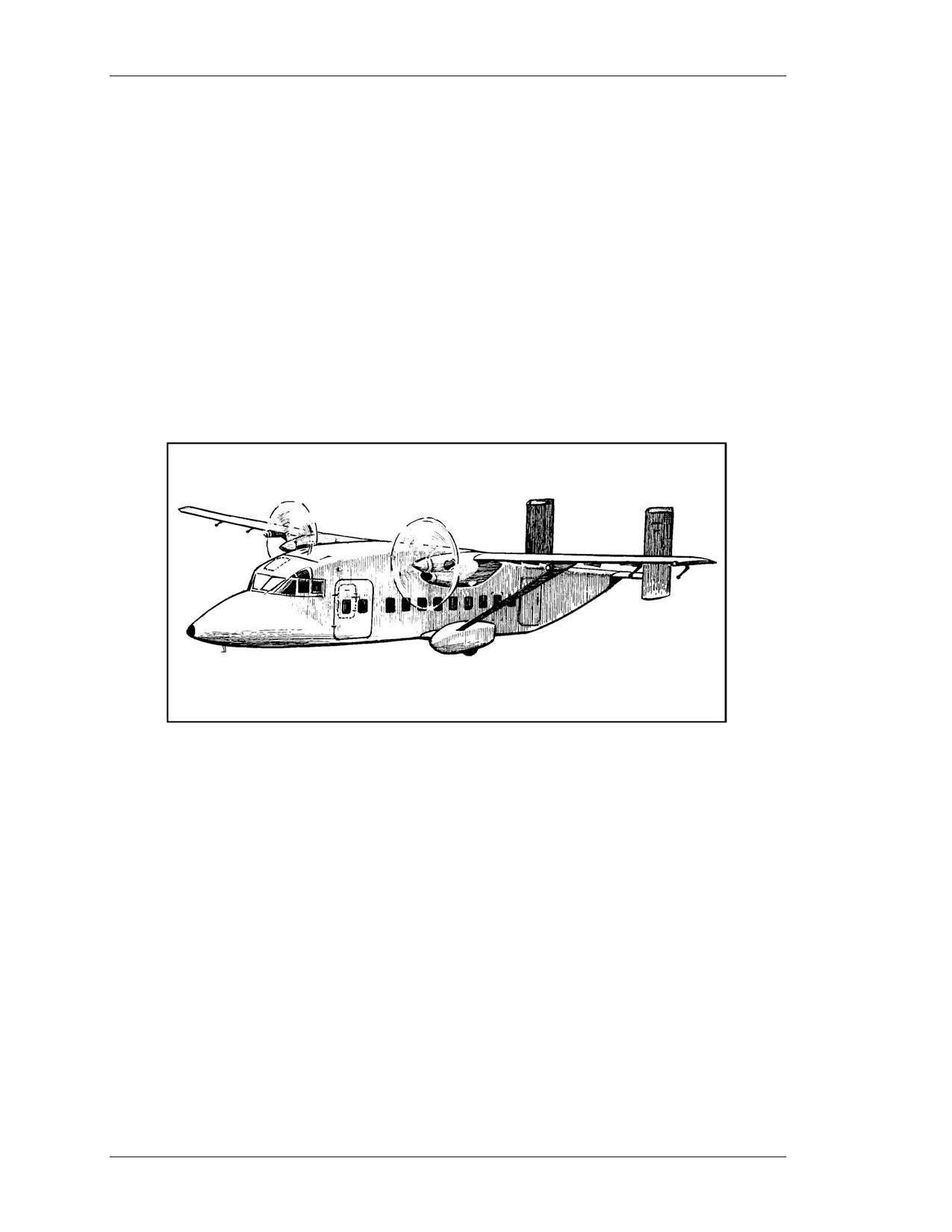
The C-23B/B+ Sherpa is a twin-engine, nonpressurized, turboprop aircraft (Figure 19-4).
It has a cruise speed of 180 knots with a range of 800 nautical miles. The aircraft can
drop 12 combat-equipped parachutists or 16 Hollywood parachutists in the airdrop
configuration. This is a base planning figure; actual troop capacity may vary due to
aircraft limitations based on weight, density, altitude, and fuel loads. Troops may be
loaded over the ramp or through the port side door.
This section outlines the procedures regarding the conduct of airborne operations by
USASOC units from the C-23B/B+ Sherpa. The primary jump door for personnel and
cargo is the rear ramp door. Only over-the-ramp procedures are authorized for static line
personnel parachute operations. Only military free fall operations are authorized from the
port side door. Use of the port side door is no longer authorized for static line
personnel jump operations. Static line personnel drops using the port side jump door
are authorized only for emergencies.
Figure 19-4. C-23B/B+ Sherpa.
19-11. DROP PROCEDURES
The primary method for determining the exit point for jumpers for static line operations is
using wind drift indicators (WDI). GMRS and VIRS can also be used based on the
situation and the mission. The aircraft is also capable of a GPS release if the pilot is given
the release point coordinates. A thorough briefing between the aircrew and all key
personnel is mandatory before any operations involving the C-23B/B+. Standard drop
altitude and speed is 1,500 feet AGL at 105 knots. Military free fall operations can be
conducted up to 17,500 feet MSL.
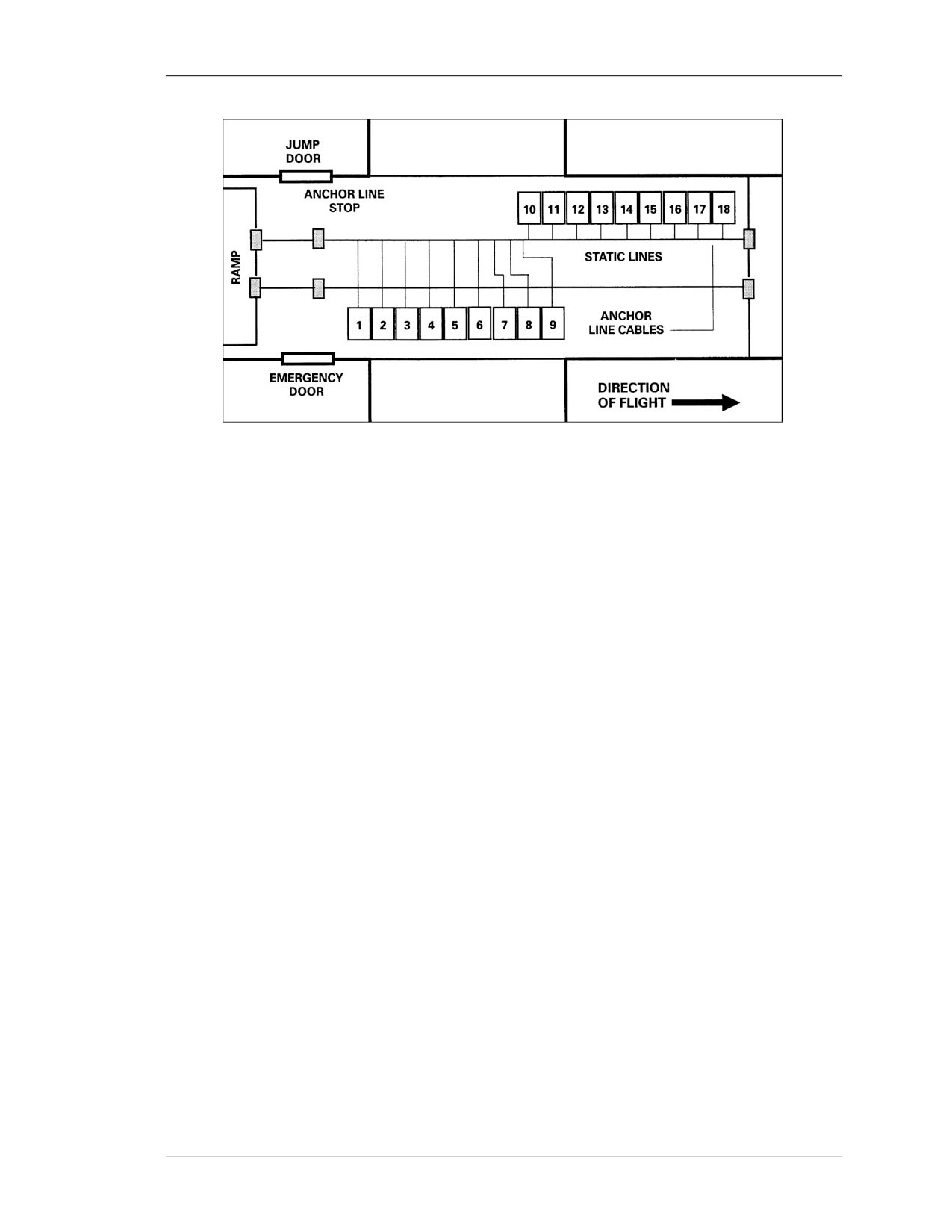
19-12. SEATING CONFIGURATION
Parachutists are seated in two sticks along the port and starboard side of the aircraft
(Figure 19-5). Numbers 1 through 8 are seated on the port side and numbers 9 through 16
are seated on the starboard side.
19-6
FM 3-21.220/MCWP 3-15.7/AFMAN11-420/NAVSEA SS400-AF-MMO-010
Figure 19-5. Seating configuration.
19-13. ANCHOR LINE CABLE ASSEMBLIES
There are two anchor line assemblies located overhead and running the length of the
cabin down the center. The cables run from the reinforced anchor line attachment plate
on the forward bulkhead to the anchor line connector at the center of the ramp hinge.
Only the starboard side anchor line cable is used for personnel para-drop operations.
Either cable can be used for cargo para-drop operations.
19-14. STATIC LINE RETRIEVAL SYSTEM
The static line retrieval system is a 5,000-pound winch located forward in the cabin on
the floor and against the bulkhead. The retrieval cable runs up from the winch and along
the port side anchor line cable and is attached to the starboard side anchor line cable
forward of the anchor line stop. The retrieval system is operated from the rear of the
cabin by the flight engineer. It is only operated in case of a towed jumper.
19-15. SUPERVISORY PERSONNEL REQUIRED
The supervisory personnel required for the C-23B/B+ Sherpa are as follows:
a. Jumpmaster. The jumpmaster will lead the stick out when jumping. The aircraft
may be jumped using a nonjumping/static jumpmaster.
b. Safety. The safety will be nonjumping. Either one or two safeties may be used
when jumping this aircraft.
c. Flight Engineer. The flight engineer is responsible for all operations in the cabin.
19-16. PREPARATION AND INSPECTION
The jumpmaster and the flight engineer jointly inspect the aircraft. The JM should follow
basic aircraft inspection criteria as outlined in the JM handbook. At a minimum,
inspection should include:
•
Seat configuration and seatbelts (correct number and location).
•
Static line retrieval cable and winch (attached correctly and secured).
•
Jump lights (may have to wait until the aircraft is powered up).
19-7
FM 3-21.220/MCWP 3-15.7/AFMAN11-420/NAVSEA SS400-AF-MMO-010
19-17. LOADING PARACHUTISTS
Jumpers are escorted to the aircraft by designated personnel, but are not loaded until
directed to do so by the flight engineer. A step or ladder is required when loading through
the port side door. Rucksacks can be worn while loading the aircraft through the port side
door or the ramp door.
CAUTION
When loading, parachutists must immediately move
forward in the aircraft cabin to prevent the aircraft’s
tail from striking the ground.
a. Cold Loading. Cold loading is when the aircraft is shut down and the engines are
not turning. Jumpers may be loaded over the rear ramp or the port side door. The
C-23B/B+ has a double-hinged ramp that operates differently from conventional ramps
on other aircraft. During ground operations, the ramp door can be lowered to its lowest
position (resting on the ground) and equipment and jumpers can easily be loaded. The
ramp can also be opened to the half-lowered position. The port side door with steps may
also be used during cold loading.
b. Hot Loading. Hot loading is when the engines are turning. During multilift
operation, the aircraft may be hot loaded in order to expedite the airborne operation.
Jumpers may be loaded by either the ramp door or through the port side door. The ramp
cannot be lowered to the ground during hot-load operations. After loading the aircraft, the
jumpers must immediately take their seats and fasten their seatbelts. The safety ensures
the jumpers are secured and signals the JM when completed. The JM then signals the
flight engineer that he is ready for takeoff.
WARNING
Hot loading aircraft is dangerous. Special control
measures should be implemented to ensure
jumpers and ground personnel remain clear of the
propellers.
19-18. JUMP COMMANDS AND TIME WARNINGS
Jump commands and times warnings are as follows:
a. Jump Commands.
•
GET READY!
•
PORT SIDE PERSONNEL, STAND UP!
•
STARBOARD SIDE PERSONNEL, STAND UP! (if required).
•
HOOK UP! (gates toward starboard skin).
•
CHECK STATIC LINES!
19-8
FM 3-21.220/MCWP 3-15.7/AFMAN11-420/NAVSEA SS400-AF-MMO-010
•
CHECK EQUIPMENT!
•
SOUND OFF FOR EQUIPMENT CHECK!
•
STAND BY! (30 seconds).
•
FOLLOW ME! (jumping JM).
•
GO! (static JM).
b. Time Warnings.
(1) 20-Minute Warning.
(a) Flight Engineer. Gives JM verbal and visual time warning.
(b) Jumpmaster. Gives time warning to jumpers.
(c) Safety. If jumping rucksacks, releases the cargo tie-down straps and facilitates the
attachment of the jumpers’ rucksacks.
(d) Jumpers. If jumping rucksacks, stand up; secure seatbelts and fold seats to the
upright position and secure; attach rucksacks for jumping.
(2) 10-Minute Warning.
(a) Flight Engineer. Gives JM verbal and visual time warning.
(b) Jumpmaster. Hooks up his static line to the starboard side anchor cable. Hands
static line to the safety. Begins jump commands.
(c) Safety. Takes static line from JM.
(d) Jumpers. All rigging completed.
(3) 6-Minute Warning.
(a) Flight Engineer. Gives JM verbal and visual time warning. After aircraft
slow-down, the port side door and the rear ramp door are opened. When the rear ramp
door and port side door are open and secure, the JM is signaled that the door and ramp
are ready. Red light comes on.
(b) Jumpmaster. Continues giving jump commands. Upon completion of jump
commands, moves to the port side door to begin spotting procedures, if required.
(c) Safety.
•
Procedure with one safety: After the command of CHECK EQUIPMENT,
hands the JM’s static line to the JM and begins inspecting the jumpers from
forward to the rear. After completing the inspection, he again secures the JM’s
static line. After the JM completes the jump commands, moves to the port side
door with the JM and controls the JM’s static line.
• Procedure with two safeties: Rear safety continues to maintain control of JM’s
static line while forward safety conducts standard jumper safety checks.
(d) Jumpers. Stand up and secure the seats. Upon the command of HOOK UP,
jumpers hook up to the starboard side anchor line cable, gates facing starboard
fuselage. Follow jump commands from JM. Take standard bight on static line.
(4) 1-Minute Warning (all procedures).
(a) Flight Engineer. Gives verbal and visual time warning to the JM.
(b) Jumpmaster. Continues to monitor flight path from the port side door and
identifies the DZ. Announces, “ONE MINUTE” to the jumpers.
(c) Safety. Controls JM’s static line.
(d) Jumpers. Keep eyes on JM.
(5) 30 Seconds (JM release procedures using GMRS or WDI).
(a) Flight Engineer. Ensures green light comes on.
19-9