3-22.1 (FM 23-1) BRADLEY GUNNERY (NOVEMBER 2003) - page 3
FM 3-22.1
Vehicle Speed:
12 MPH
Target Exposure:
42 Seconds
1. Convert vehicle speed into MPS by multipllying by the constant 0.4471416:
12 (MPH) X 0.4471416 = 5.3656992
2. Convert MPS into maneuver box length:
5.3656992 X 42 (target exposure, in seconds) = 225.35936 meters
3. Maneuver box length equals 225 meters.
The maximum distance the vehicle can travel and still have the target exposed is the
length of the maneuver box. If the first number after the decimal is 5 or more, round
the length to the next whole number.
Figure 5-2. Formula for determining length of maneuver box.
5-10
FM 3-22.1
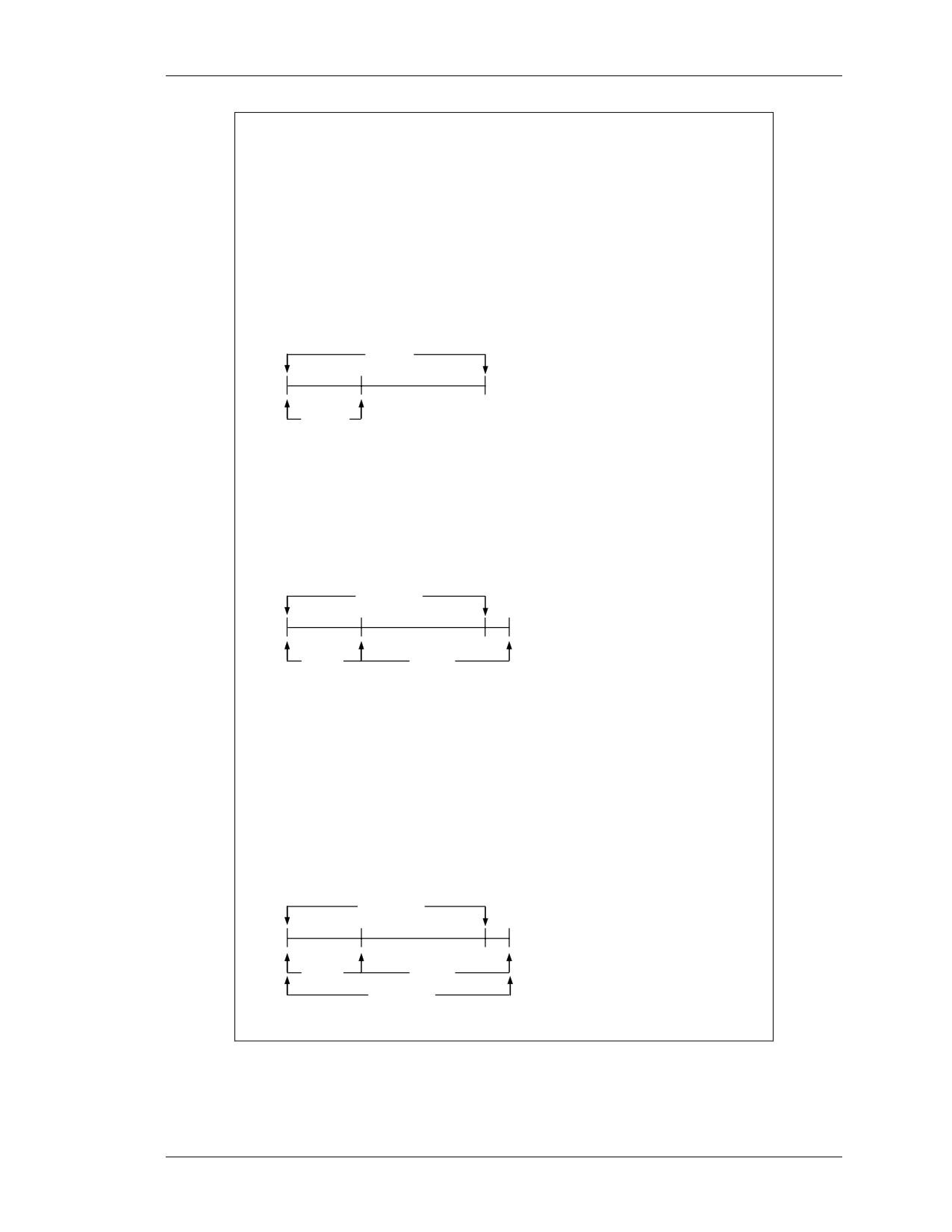
Determine length of maneuver box for first target array presented.
Determine beginning of the maneuver box for the delayed target by multiplying the MPS by the
TDT (target delay time).
MANEUVER
MPS
TGT DELAY TIME*
BOX LENGTH
5.3656992
X
15 sec
=
80.485
(maneuver box
length)
5.3656992 X 15 sec (target delay time) = 80.485
Measure 80 meters from the beginning of the maneuver box for the first target array presented
to determine the start of the delayed target maneuver box.
215 m
80 m
Determine the length of the delayed target maneuver box as previously described.
MANEUVER
MPS
TGT DELAY TIME
TGT LIFT TIME
BOX LENGTH
5.3656992
X
22 sec*
+
8 sec
=
160.97
* Target exposure time of delayed target
Maneuver box length for the delayed target equals 161 meters.
215 meters
80 m
161 m
Determine the entire hunter-killer maneuver box length for the first target:
(1) Obtain maneuver box length for first target array presented (215 m). Subtract the
beginning of the maneuver box for the first target array (80 m). The result (135 m) equals the
difference between the maneuver box length for the first target array and the beginning of the
maneuver box for the delayed target. If this figure is less than the entire length of the
maneuver box for the first target array presented, you need not continue--the delayed target
maneuver box will fit inside the maneuver box for the first target array presented.
(2) Subtract the difference (135 m) from the total length of the delayed target maneuver
box. This difference equals 26 m.
(3) Add the maneuver box length for the first target array presented (215 m) to the
difference of the two maneuver boxes (26 m). The sum (241 m) equals the entire length of the
hunter-killer maneuver box.
215 meters
80 m
161 m
241 meters
Figure 5-3. Formula for determining length of hunter-killer maneuver box.
5-11
FM 3-22.1
d. Range and Training Area Layout for Tactical Training. Tactical training
occurs either on ranges or in training areas, whichever is available. Most of the
preparation that goes into a gunnery exercise also applies in tactical training.
(1) The configuration of the course depends on the local terrain. The unit leader
must adjust each task to fit a specific piece of terrain, so tasks seldom occur in the same
order as any particular table.
(2) As with the gunnery tables, tactical tables also need a range-operation SOP. This
will save the firing unit time and energy. The SOP should include guidelines for setting
up the tactical range or training area and should describe actions for specific tasks.
Figure 5-4 shows an example checklist for setting up a tactical range or training area.
1.
Coordinate with maintenance contact team for MILES devices.
2.
Test MILES or PGS equipment.
3.
Set up tactical table layout based on mission, enemy, terrain (and
weather), troops, time available, and civil considerations (METT-TC)
as well as on table standards.
4.
Brief OPFOR and controller personnel on duties for each engagement.
5.
Test firing weapons machine guns with blank adapters.
6.
Test firing devices.
7.
Move vehicles to the start point.
8.
Issue FRAGOs to initiate movement down the course.
9.
Conduct an AAR after each engagement.
10. Assemble Bradley crews.
11. Reset MILES or PGS equipment.
12. Control movement on the course to prevent congestion.
13. Police the range or training area.
14. Depart the range or training area.
Figure 5-4. Example checklist for setting up tactical range or training area.
e. Targets. Full-scale targets should match the shape, size, and color of the threat
targets they represent. (TC 25-8 describes targets, target mechanisms, and target control
in detail.)
(1) Hard Targets (Live Fire). When available, and where ricochets present no safety
hazard, the unit uses hard targets for 25-mm fire. Old tank hulls and turrets, armored
personnel carriers, and wheeled vehicles make good hard targets. When filled with sand
or dirt, these targets can withstand many hits.
(2) Soft Targets (Live Fire). The unit or range control activity makes soft, olive drab
targets from target cloth or wood. (TC 25-8 describes targets, target mechanisms, and
target sizes.)
(3) Target Kill Cues. The unit uses a visual cue, such as a target drop, an indicator
light, or red or black smoke, to indicate target kills.
f.
Flags. On all ranges, vehicles use flags to display their weapons status IAW
unit SOPs.
5-12
FM 3-22.1
(1) Red--Firing. A red flag indicates that a Bradley is either preparing to or already
engaged in firing. Its weapons are loaded and pointing at the target area, and both the
electrical and manual safeties are off.
(2) Green--Clear. A green flag indicates that all weapons are cleared and elevated,
and that both the electrical and manual safeties are on. All ammunition onboard the
vehicle is either loaded in the ready boxes or stowed.
(3) Yellow (and Red or Green)--Malfunction, Weapons Status. Combining a yellow
flag with a red or green one indicates a Bradley malfunction and the current Bradley
weapons status (Appendix D).
(a) Yellow and Red--Malfunction, Not Clear. This combination indicates a possible
Bradley malfunction with weapons pointing at the target area and not clear. (If the crew
cannot set the electrical and manual safeties, they must notify range safety personnel
at once.)
DANGER
INABILITY TO SET WEAPON SAFETIES
IF EITHER THE ELECTRICAL OR MANUAL WEAPON
SAFETY FAILS TO SET, NOTIFY RANGE SAFETY
PERSONNEL AT ONCE.
(b) Yellow and Green--Malfunction, Clear. The Bradley has a malfunction. All
weapons are clear. Both safeties are on.
(4) Red and Green. The crew is either preparing to fire the Bradley or conducting a
nonfiring exercise and, even if the 25-mm and coax guns have rounds in them, neither is
ready to fire.
(a)
25-mm. The 25-mm gun feeder might be loaded, but the bolt is in the sear
position, and both the electrical and manual safeties are on.
(b) Coax. The coax might be loaded, but the bolt is to the rear, and the manual
safety is on.
g. Range Control. The range control officer coordinates and ensures the safe
conduct of range activity for all units. He delivers a mandatory briefing to each unit
leader before he allows the leader to occupy, or fire a weapon on, his range. He schedules
this briefing promptly to prevent any delay in training. During the briefing, the range
control officer provides the unit leader with a set of local range regulations and policies.
He also reminds the unit leader that he must prepare a surface danger-area diagram
(discussed later), if applicable.
h. Range Communications. The installation range officer controls all ranges by
wire and radio communication. Leaders use this control system to obtain clearance to
fire, report, coordinate, and call cease-fires.
(1) The OIC controls all training activities, including firing, by the best means
available. He always plans a backup system.
5-13
FM 3-22.1
(2) Ideally, target operators and personnel in the impact area communicate by wire.
In the case of tactical training, the OPFOR does the same. In all cases, to prevent delays,
the OIC plans for a backup communication system.
5-4. ESTABLISHMENT OF LIVE-FIRE RANGE
Before a unit leader selects a site for a scaled or full-caliber range, he conducts a ground
reconnaissance and prepares a detailed map of the areas available for firing.
a. Site Selection. The range must be large enough to accommodate all weapon
systems and types of ammunition to be fired. It must also meet the scenario requirements
of the table(s) to be fired. The unit should construct whatever they need to create realistic
conditions on the selected terrain. Some examples include--
(1) Defilade stationary firing positions.
(2) Sufficient maneuver area and enough targets to provide multiple firing points and
target locations.
(3) Targets in realistic arrays and, if possible, unmarked by berms.
b. Ballistic Firing Table. The Bradley master gunners and range-control personnel
use the ballistic data in Bradley ammunition firing tables to develop or modify surface
danger area diagrams. With the master gunner's knowledge of the fire-control system,
they jointly develop realistic gunnery tables. This helps the crews use Bradley weapons
more effectively. (Table 5-1 shows two extracts from ballistic firing table FT 25-A-2.)
The following terms explain the data in all gunnery firing tables. However, the relative
locations of the data columns might differ among the tables for the various rounds of
ammunition and types of weapons:
(1) Range. This refers to the distance from the vehicle to the target.
(2) Superelevation. This refers to the additional elevation induced into the fire-
control system to raise the ballistic flight of a given projectile. This ensures that the
projectile hits the target at a given range.
(3) DR/DSE. This refers to the number of meters a 1-mil elevation change will move
the round in linear range, on the ground, at a given range and superelevation.
(4) DH/DR. This refers to the change in height (in meters) of a projectile for a 100-
meter change in linear range on the ground, at a given range.
(5) Drift. This refers to the number of mils the projectile moves to the right of the
gun-target line due to the spin caused by the rifling in the gun.
(6) Time of Flight. This refers to the time a projectile takes to reach a target at a
selected range.
(7)
10 KPH Crosswind Deflection. Generally, thanks to crosswind deflection, a
round is most unstable when it exits the muzzle. This effect of wind deflection assumes a
crosswind speed of 10 KPH. The firer applies the correction into the wind. If the wind
speed is more or less than 10 KPH, the firer estimates the point of aim.
(8) Maximum Ordinate. This refers to the maximum height the projectile travels
above the line of sight at a given range.
(9) Range to Maximum Ordinate. Out to this range (the range at which the round
reaches maximum ordinate) the projectile ascends. Beyond this range, it descends. This
range (to the maximum ordinate) always occurs shortly past half of the target range.
(10) Angle of Fall. This refers to the number of mils between the trajectory of the
projectile at impact and at the line of sight.
5-14

FM 3-22.1
(11) Remaining Velocity. This refers to the speed of the projectile in meters per
second and at a selected range.
CARTRIDGE, APDS-T, M791
MUZZLE VELOCITY, 1,345 MPS
SUPER-
TIME OF
RANGE
ELEVATION
DR / DSE
DH/DR
DRIFT
FLIGHT
( M )
( mils )
( M / mil )
( M / 100 M )
( mils )
( seconds )
1,600
5.12
263
0.6
0.1
1.33
1,700
5.49
257
0.6
0.1
1.42
1,800
5.88
252
0.7
0.1
1.52
1,900
6.72
247
0.7
0.1
1.61
10 KMPH
RANGE TO
CROSS WIND
MAXIMUM
MAXIMUM
ANGLE OF
REMAINING
DEFLECTION
ORDINATE
ORDINATE
FALL
VELOCITY
RANGE
( mils )
( M )
( M )
( mils )
( M / sec )
( M )
0.2
2.2
830
6
1,075
1,600
0.3
2.5
884
6
1,058
1,700
0.3
2.8
938
7
1,041
1,800
0.3
3.2
993
8
1,025
1,900
Table 5-1. Extracts from FT 25-A-2.
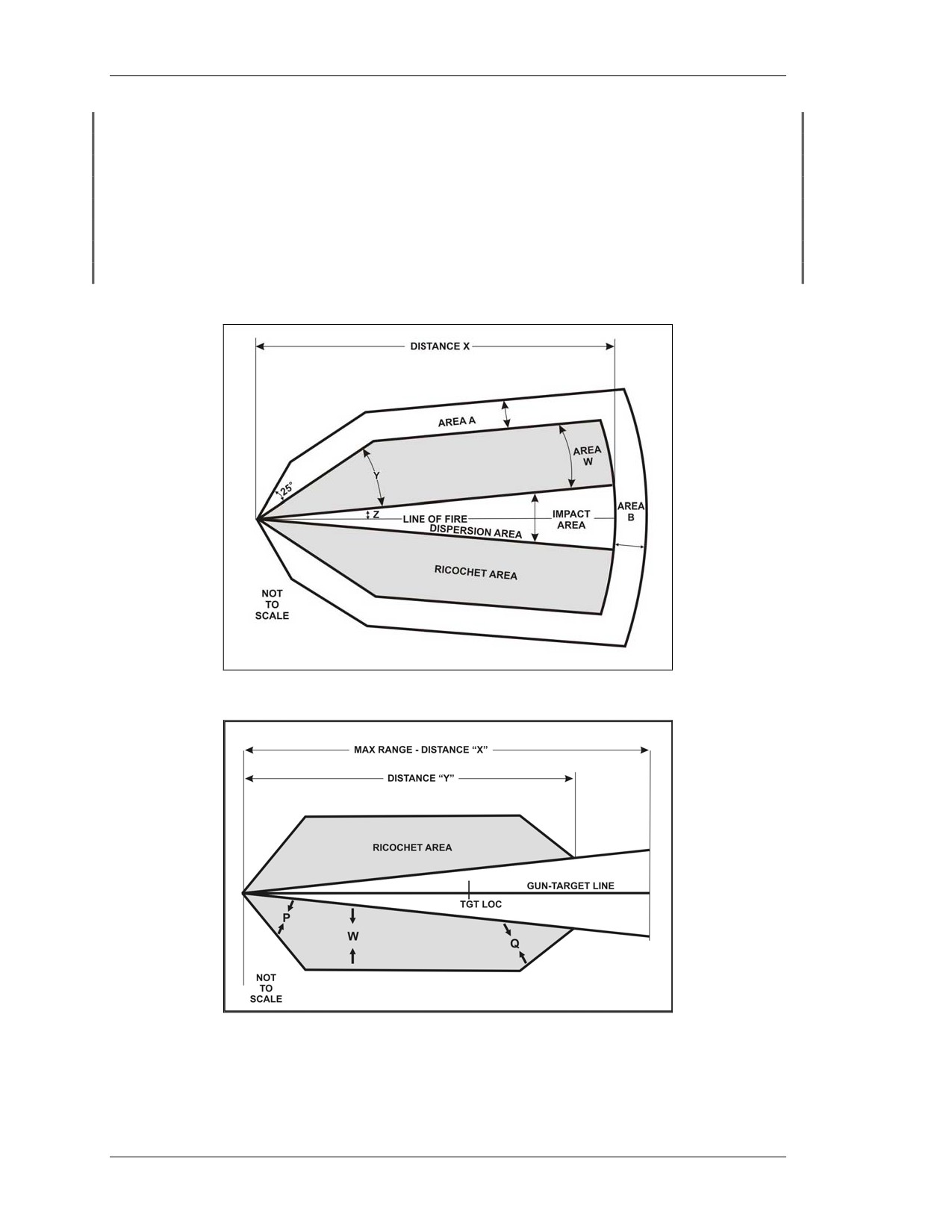
c. Surface Danger-Area Diagrams. Bradley units establishing or modifying
ranges must, before firing starts, provide the range control officer with a safety overlay
showing the modifications. Specifically, the overlay must show the surface danger area,
to include range boundaries and range limit markers for firing positions. The overlay
must also show any other features affected by the modifications and relevant to safety in
any way. To prepare the overlay, the unit uses the ballistic firing tables FT 25-A-2
(Table 5-1) and FT 7.62-A-2. These tables are useful because they state the range,
maximum ordinates, and superelevation values for each ammunition type within that
caliber (Figures 5-5 and 5-6, page 5-16).
(1) When diagrams of surface danger areas on established ranges provide only
unrealistic conditions, or when they use available terrain poorly, the unit should modify
the diagrams. AR 385-63 provides restrictions and precautions for diagrams of surface
danger areas. When engaging ground targets, the unit may reduce Distance X (maximum
range) to 15 degrees elevation, provided they maintain the gun's firing elevation at less
than or equal to 15 degrees (Tables 5-2 through 5-7, pages 5-18 through 5-20). If they
cannot control the weapon at or under 15 degrees, such as could happen when firing
while moving over rough terrain with inoperative stabilization, they will use the
maximum range (Distance X). At 15 degrees elevation, range equals the greatest distance
the projectile can travel when fired at elevations at or under 15 degrees. The unit derives
this value by evaluating ricochet and ballistic firing table data.
5-15
FM 3-22.1
(2) The M2A2 ODS, M3A2 ODS, M2A3, and M3A3 vehicles have eye-safe laser
range finders. Using other
(non-eye-safe) laser range finders requires that the unit
designate an additional buffer area, Area C (AR 385-63, Chapter 19). Every object the
laser beam strikes reflects energy. In most cases, this energy diffuses and presents no
hazard. The crew removes all mirrors, plastic, glass, or other flat mirror-like objects with
vertical or near-vertical surfaces, that is, any reflective objects that could reflect the laser
beam and cause injury, from the target area. If this proves impractical, they can cover the
surfaces with lusterless paint or with a nonreflecting material such cloth or cardboard.
Figure 5-5. Surface-danger-area diagram for M792 ammunition.
Figure 5-6. Surface-danger-area diagram for
7.62-mm, M80, A131 ammunition.
5-16

FM 3-22.1
15-Degree
Angle
Distance
Ricochet
Elevation
IMPACT
Area A
Area B
Area W
Y
Z
X1
Range
Range
MEDIA
(Meters)
(Meters)
(Meters)
(Degrees)
(Meters)
(Meters)
(Meters)
Armor
NA
NA
1,510
24
5
14,578
7,294
11,561
Concrete
NA
NA
2,208
34
5
14,578
7,622
11,561
Earth
NA
NA
1,466
18
5
14,578
7,402
11,561
Water
NA
NA
263
6
5
14,578
5,655
11,561
NOTES:
1. You may reduce Distance X (maximum range) to ricochet range when
engaging ground targets at ranges up to 3,500 meters from stationary firing
positions. When firing from a moving vehicle over level terrain at ground
targets up to 3,500 meters, use the 15-degree elevation range. When firing
on the move over rough terrain, use Distance X.
2. When firing at aerial targets with gun elevation greater than 15 degrees, you
need not use the ricochet area defined by Area W and Angle Y.
3. Area A and Area B: fragmentation areas do not apply to the M791 round,
because it produces no significant fragmentation.
Table 5-2. Dimensions for 25-mm M791 (APDS-T) ammunition.
15-Degree
Angle
Distance
Ricochet
Elevation
IMPACT
Area A
Area B
Area W
Y
Z
X1
Range
Range
MEDIA
(Meters)
(Meters)
(Meters)
(Degrees)
(Meters)
(Meters)
(Meters)
Armor
300
400
1,373
28
5
6,381
5,265
5,244
Concrete
300
400
1,290
27
5
6,381
5,071
5,244
Earth
300
400
908
19
5
6,381
4,792
5,244
Water
300
400
1,047
19
5
6,381
4,823
5,244
NOTES:
1. Firer may reduce Distance X (maximum range) to ricochet range when
engaging ground targets at ranges up to 3,000 meters from stationary firing
positions. When firing from a moving vehicle over level terrain at ground
targets up to 3,000 meters, he can use the 15-degree elevation range;
except for armor impact medium, he uses the Ricochet Range distance,
which is greater. When firing on the move over rough terrain, he uses
Distance X.
2. When firing at aerial targets with gun elevation greater than 15 degrees, he
need not use the ricochet area defined by Area W and Angle Y.
Table 5-3. Dimensions for 25-mm M792 (HEI-T) ammunition.
5-17

FM 3-22.1
15-Degree
Area
Area
Area
Angle
Distance
Ricochet
Elevation
IMPACT
A
B
W
Y
Z
X1
Range
Range
MEDIA
(Meters)
(Meters)
(Meters)
(Degrees)
(Meters)
(Meters)
(Meters)
Armor
NA
NA
799
20
5
6,404
4,472
5,868
Concrete
NA
NA
1,143
27
5
6,404
4,643
5,868
Earth
NA
NA
734
15
5
6,404
4,692
5,868
Water
NA
NA
148
4
5
6,404
3,724
5,868
NOTES:
1. Firer may reduce Distance X (maximum range) to ricochet range when
engaging ground targets at ranges up to 3,000 meters from stationary firing
positions. When firing from a moving vehicle over level terrain at ground
targets up to 3,000 meters, he uses the 15-degree elevation range. When
firing on the move over rough terrain, he uses Distance X.
2. When firing at aerial targets with gun elevation greater than 15 degrees, he
need not use the ricochet area defined by Area W and Angle Y.
Table 5-4. Dimensions for 25-mm M910 (TPDS-T) ammunition.
15-Degree
Area
Area
Area
Angle
Distance
Ricochet
Elevation
IMPACT
A
B
W
Y
Z
X1
Range
Range
MEDIA
(Meters)
(Meters)
(Meters)
(Degrees)
(Meters)
(Meters)
(Meters)
Armor
NA
NA
1,289
26
5
18,260
7,867
14,861
Concrete
NA
NA
1,289
26
5
18,260
7,867
14,861
Earth
NA
NA
801
21
5
18,260
7,725
14,861
Water
NA
NA
801
21
5
18,260
7,725
14,861
NOTES:
1. Firer may reduce Distance X (maximum range) to ricochet range when
engaging ground targets at ranges up to 3,500 meters from stationary firing
positions. When firing from a moving vehicle over level terrain at ground
targets up to 3,500 meters, he uses the 15-degree elevation range. When
firing on the move over rough terrain, he uses Distance X.
2. When firing at aerial targets with gun elevation greater than 15 degrees, he
need not use the ricochet area defined by Area W and Angle Y.
3. Because this round produces no significant fragmentation, Areas A and B,
the fragmentation areas, do not apply.
Table 5-5. Dimensions for 25-mm M919 (APFSDS-T) ammunition.
5-18

FM 3-22.1
15-Degree
Area
Area
Area
Angle
Distance
Ricochet
Elevation
IMPACT
A
B
W
Y Z
X1
Range
Range
MEDIA
(Meters)
(Meters)
(Meters)
(Degrees)
(Meters)
(Meters)
(Meters)
Armor
NA
NA
1,373
28
5
6,048
5,265
5,114
Concrete
NA
NA
1,290
27
5
6,048
5,071
5,114
Earth
NA
NA
908
19
5
6,048
4,792
5,114
Water
NA
NA
1,047
19
5
6,048
4,823
5,114
NOTES:
1. Firer may reduce Distance X (maximum range) to ricochet range when
engaging ground targets at ranges up to 3,000 meters from stationary firing
positions. When firing from a moving vehicle over level terrain at ground
targets up to 3,000 meters, he uses the 15-degree elevation range, with one
exception. When armor is the impact medium, he uses the greater distance
given in the Ricochet Range column. When firing on the move over rough
terrain, he uses Distance X.
2. When firing at aerial targets with gun elevation greater than 15 degrees, he
need not use the ricochet area defined by Area W and Angle Y.
3. Values listed for Area W, Angle Y, and Ricochet Range match those listed
for the ballistically similar M793, TP-T projectile.
Table 5-6. Dimensions for 25-mm M793 (TP-T) ammunition.
Left and
Area
Area
Angle
Angle
Area
Right of
Distance
Distance
IMPACT
A
B
P
Q
W
GTL
X
Y
MEDIA
(M)
(M)
(Degrees)
(Degrees)
(M)
(Degrees)
(M)
(M)
Earth
NA
NA
43.81
38.90
1,461
5
4,100
4,073
Water
NA
NA
43.81
38.90
1,461
5
4,100
4,073
Steel
NA
NA
20.17
75.54
861
5
4,100
4,053
Concrete
NA
NA
20.17
75.54
861
5
4,100
4,053
NOTES:
1. Firer may reduce Distance X (maximum range) to ricochet range when
engaging ground targets at ranges up to 3,000 meters from stationary firing
positions. When firing on the move over rough terrain, he uses Distance X.
2. When firing at aerial targets with gun elevation greater than 15 degrees, he
need not use the ricochet area defined by Area W and Angle Y.
Table 5-7. Dimensions for 7.62-mm M80 (A131) ammunition.
5-19
FM 3-22.1
5-5. DIGITAL RANGE SETUP
Digitally enhanced gunnery ranges support the incorporation of digital communication
equipment during firing exercises:
a. Data Sets. Each digital scenario requires a data set, which consists of a digital
script and one or more overlays, to handle digital gunnery requirements. Users can store
these data sets in the mission data loader (MDL). This lets users retrieve and distribute
the data sets to any FBCB2-equipped BFVs when the lower tactical Internet (LTI) is
unavailable, or to restore data to the net control station (NCS), if needed.
b. Range Overlay. Units should develop standard overlays, both FBCB2 and
hardcopy, for each range. At the least, each overlay includes the following graphic
control measures:
(1) Objectives. These are included for orientation.
(2) Battle Positions. In limited visibility, this control measure shows tower and
safety personnel the positions of the firing vehicles.
(3) Boundaries. These usually consist only of outer range safety markers.
(4) Target Reference Points. These help orient vehicle commanders on the
battlefield. They usually include inner and outer range safety markers or easily identified
points on the battlefield.
(5) Phase Lines. These help control movement.
(6) Routes. These help orient the vehicle and aid in combat service support (CSS)
operations.
c. Digital Base Station. For reliable range communications, the NCS serves as the
digital base station. In case this station fails, units should establish a backup digital base
station. However, the NCS is the only radio set to frequency hopping/master (FH/M). At
least one evaluator should have FBCB2 to monitor and evaluate the firing vehicles’
digital traffic.
d. Rehearsal. The unit should rehearse range setup before executing gunnery
tables. This allows for target synchronization, establishment of safety procedures,
fratricide avoidance, and testing of communications.
e. Execution. Crews or platoons conduct engagements with digital communications
equipment as follows:
(1) Before firing the table, they receive the order and operational graphics.
(2) Each BC displays the overlay(s) on his FBCB2 screen.
(3) As soon as he is ready to start the course, he reports REDCON 1 to the exercise
controller.
(4) Upon completion of both the day and night phases, the firing vehicle crew
completes and sends a digital SALT and SITREP to the exercise controller.
f.
Icon Management. The unit's tactical SOP (TACSOP) provides guidelines for
managing icons. After the unit completes the table, the FBCB2 operator or BCE, acting
as the PL, XO, or S2, removes the red icons from the system.
5-20
FM 3-22.1 (23-1)
CHAPTER 6
Engagement Process
On future battlefields, Bradley crews must rapidly engage multiple
targets while operating within irregular battle lines. Depending on the
tactical situation and the area of operations, enemy targets could
intermingle with friendly coalition and neutral vehicles. Survival depends
on the crew's ability to detect, locate, identify, and rapidly engage and
destroy the enemy. Fire commands are the language used to organize and
execute the engagement process to destroy the enemy and continue the
mission. To engage the enemy successfully, Bradley crews must know the
techniques and procedures for acquiring, deciding to engage, engaging,
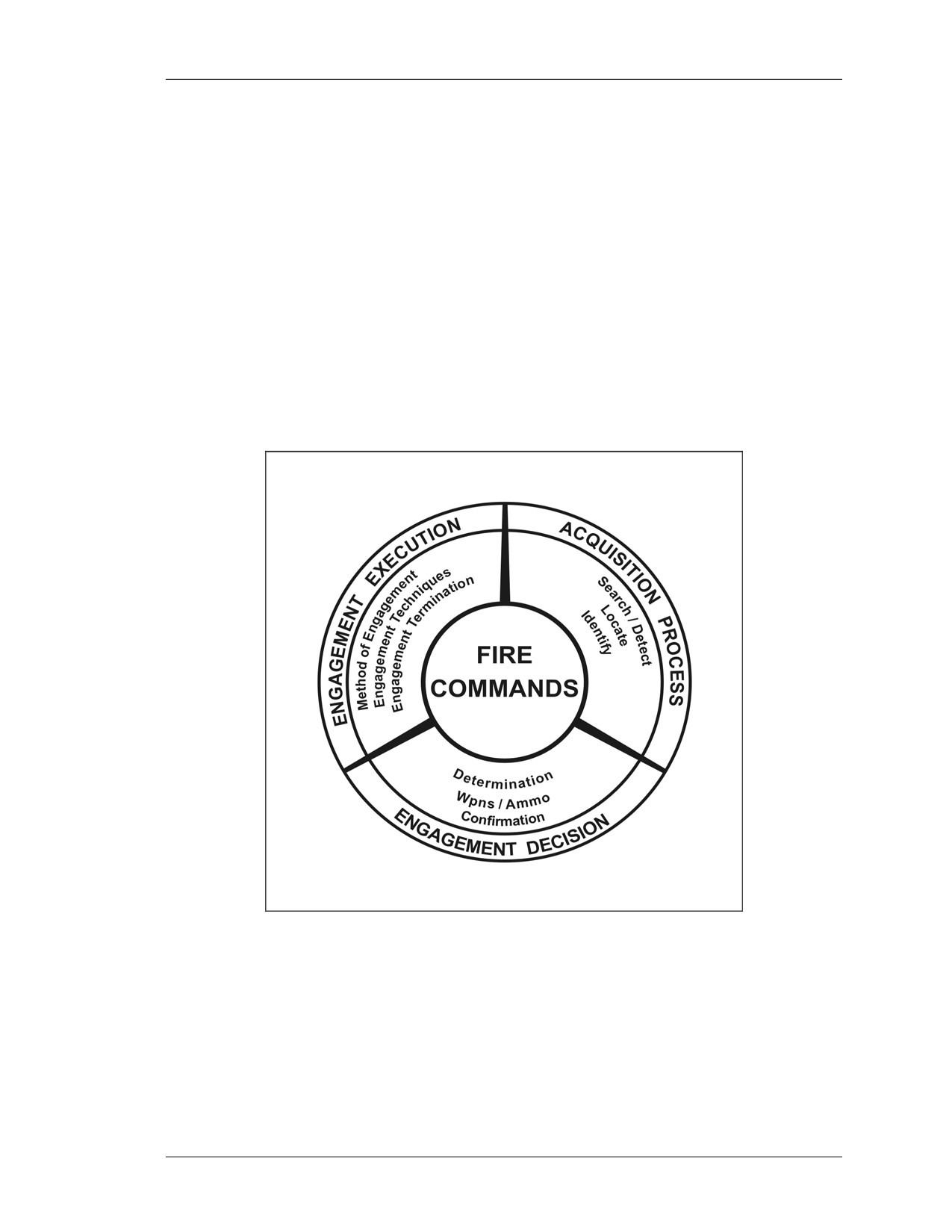
and commanding fire. Figure 6-1 shows the relationship between the steps
in each process.
Figure 6-1. Engagement.
Section I. TARGET ACQUISITION
Acquiring a target is a series of progressive and interdependent steps (or actions) that
include searching, detecting, locating, and identifying it. Effective target acquisition
requires a constant combined effort from each Bradley crewmember and squad member.
6-1
FM 3-22.1
6-1. SEARCH
Crew and squad search (observation) is the act of carefully watching designated areas.
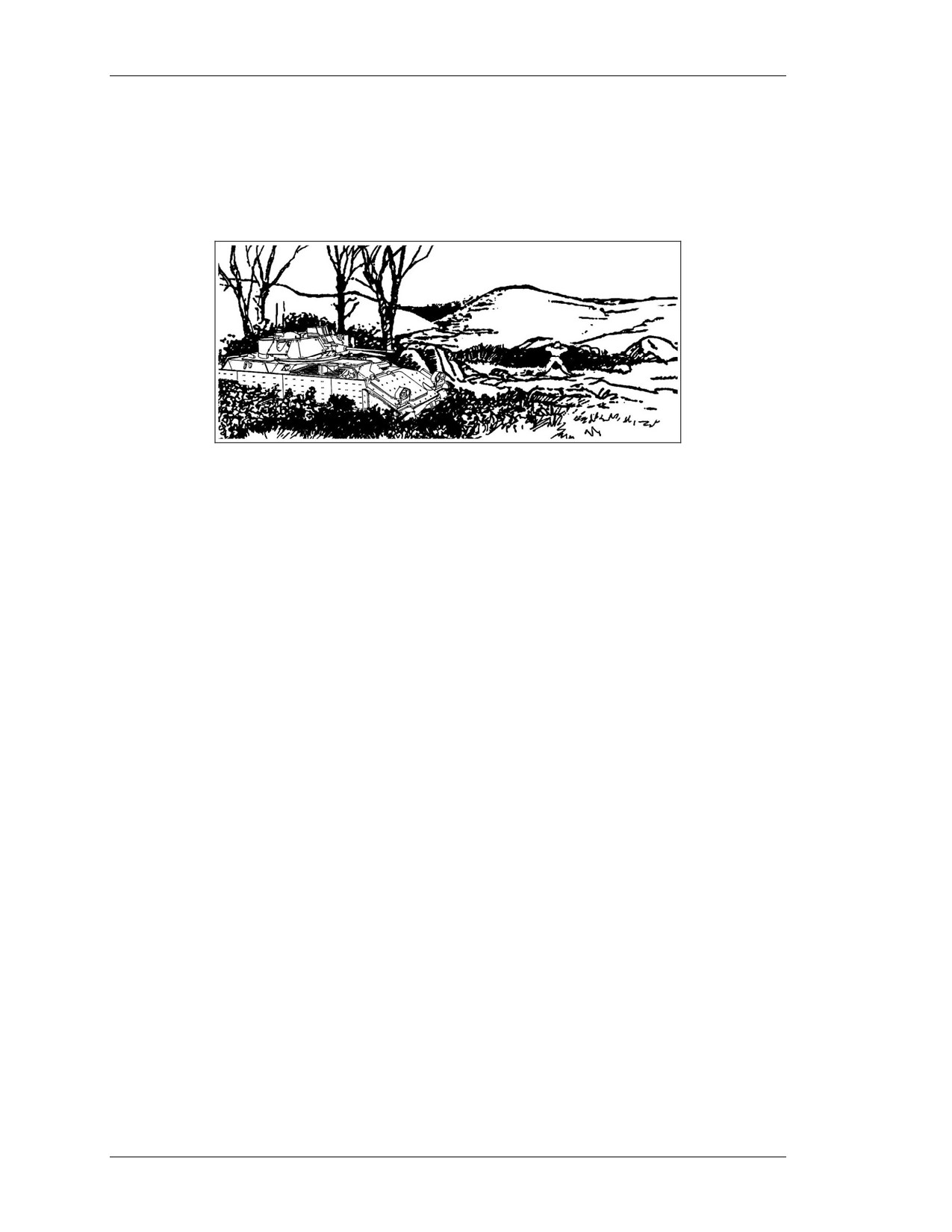
The BC assigns a sector of observation (and target acquisition) to each crewmember and
squad member. If the Bradley vehicle is in a hide position with the squad inside, then the
BC positions an observer (or two) forward of the vehicle IAW FM 3-21.71 (Figure 6-2).
Figure 6-2. Dismounted observer.
a. Ground Search Techniques, All Bradleys. Crew and squad members scan their
sectors at all times to detect targets or possible target locations. Crew and squad members
use the naked eye, binoculars, night vision devices (NVDs), or vehicle optics for ground
searches in both good and limited visibility. Crewmembers can locate targets quickly
using the following techniques:
(1) Rapid Scan. Use this method first to detect obvious signs of enemy activity
quickly (Figure 6-3).
(a) Center Out, Near to Far. From center of sector, scan rapidly, near to far.
(b) Left and Right to Center, Near to Far. Orient left or right; scan rapidly, near to
far. Overlap center of previously scanned sector.
(c) Reverse. After completing one side, scan other side the same way.
(d) BC Far to Near, Gunner Near to Far. The BC and gunner scan as this
title implies:
• BC--far to near.
• Gunner--near to far.
(e) Weapons on Nearest Targets First. Place weapons systems on nearest target first.
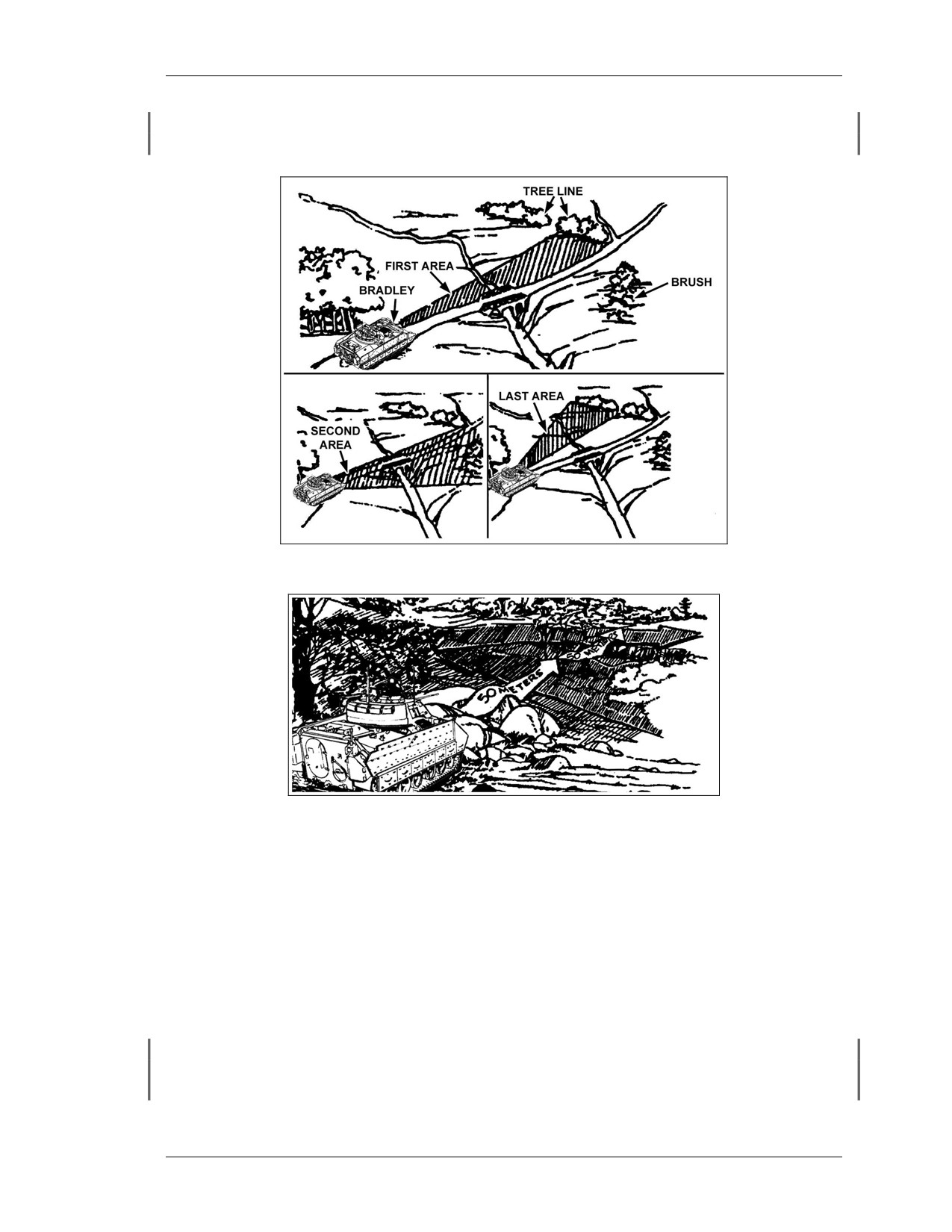
(2) Slow (50-Meter) Scan. In a defensive position or during a short halt, if crew and
squad members detect no targets during a rapid scan, they conduct a slow scan. They
scan more deliberately, using their vehicle optics (day, thermal, or FLIR mode) or their
binoculars (Figure 6-4).
(a) The BC or gunner slowly searches a 50-meter-deep strip of the target area, right
to left, pausing at short intervals to focus.
(b) The gunner then searches a strip farther out, this time left to right, overlapping the
first area.
(c) The BC searches a closer area in front. He continues until he has searched the
entire assigned sector.
(d) When the BC or gunner detects a suspicious area or possible target signature, he
begins searching in more detail.
6-2
FM 3-22.1
NOTE:
(A3 only) In FLIR mode, the BC or gunner can digitally zoom the Bradley A3
IBAS or CIV to 2X or 4X to observe potential targets in more detail.
Figure 6-3. Rapid scans.
Figure 6-4. Slow (50-meter) scan.
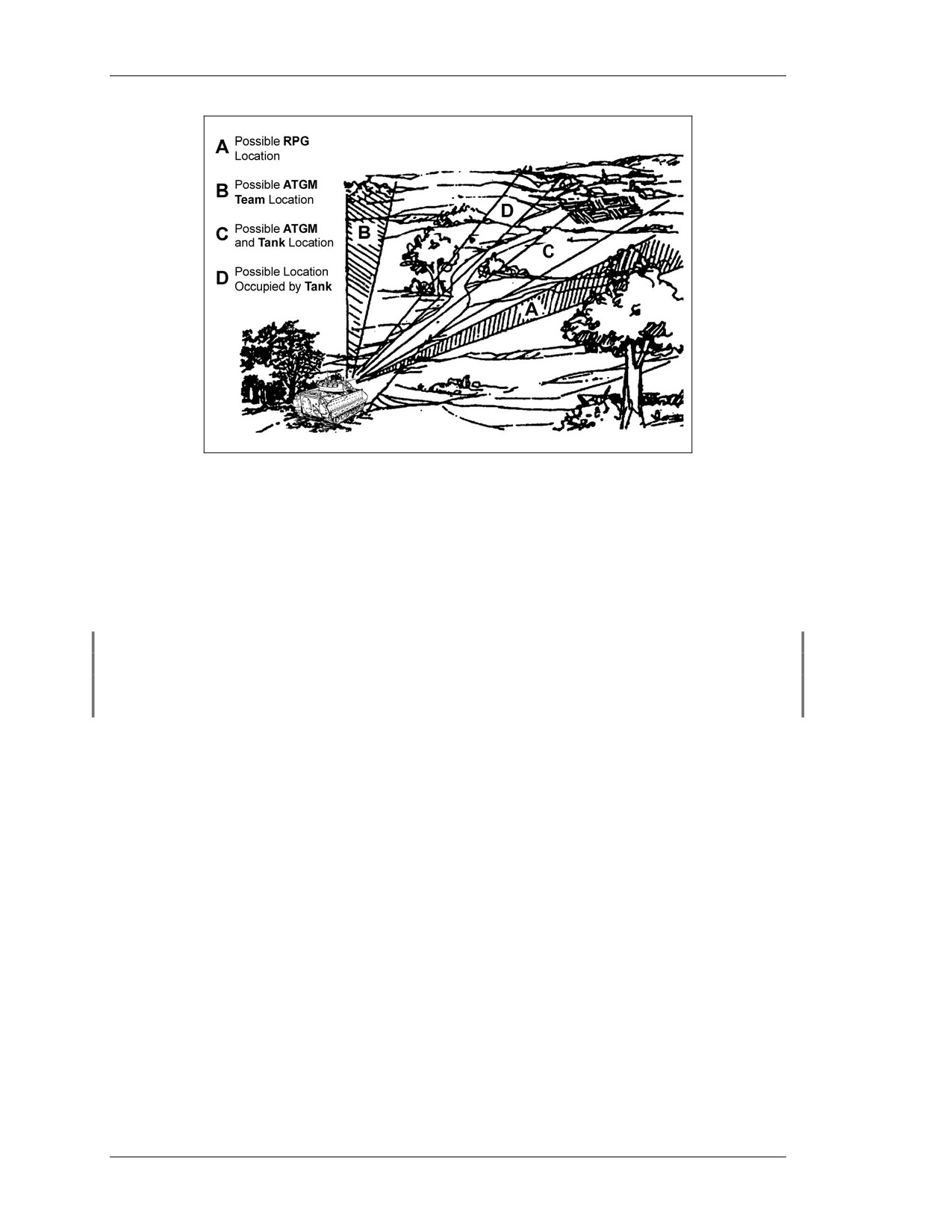
(3) Detailed Search. If neither the rapid nor the slow scan reveals a target, the crew
uses the vehicle optics (day, thermal, or FLIR mode) to search carefully and deliberately,
while stationary or moving (Figure 6-5, page 6-4). They also use this method to search
small areas, suspected avenues of approach, or detected targets in detail.
(a) The crew concentrates on one specific area or location and studies that
area intensely.
(b) They look for direct or indirect target signatures in a clockwise manner around the
focal point area. When two soldiers are using optics, such as when one uses the IBAS and
the other uses the CIV, one scans clockwise and the other scans counterclockwise.
(c) On the Bradley A3, the crew can zoom in FLIR as needed to cover
detailed-search areas.
6-3
FM 3-22.1
Figure 6-5. Detailed ground search.
(4) Off-Center Vision Method. At night, crew and squad members use the off-center
vision method without optics. At each likely target area, they pause for a few seconds to
see if they can detect a target or any movement. If they do detect something, they use off-
center vision to observe it. To prevent object fade-out, they move their eyes frequently in
short, abrupt, irregular movements. To increase their night vision, they cup their hands
around their eyes.
(5) Additional Ground Search Techniques for the Bradley A3. The commander
can use the CIV and all IBAS (DVO, Day TV, and FLIR) systems to search for targets.
The A3’s infantry squad can use the squad leader's display (SLD) to detect and acquire
targets and, before infantry squad ground operations, to maintain situational awareness.
b. Air Search Techniques, All Bradleys. When using air search techniques,
crewmembers and squad members concentrate their search just below the tops of trees or
vegetation to detect helicopters in hide positions.
(1) Enemy Aircraft. Enemy aircraft operate in one to four pairs. So, if soldiers detect
one pair of aircraft, they should expect a second set, and perhaps a third and fourth set.
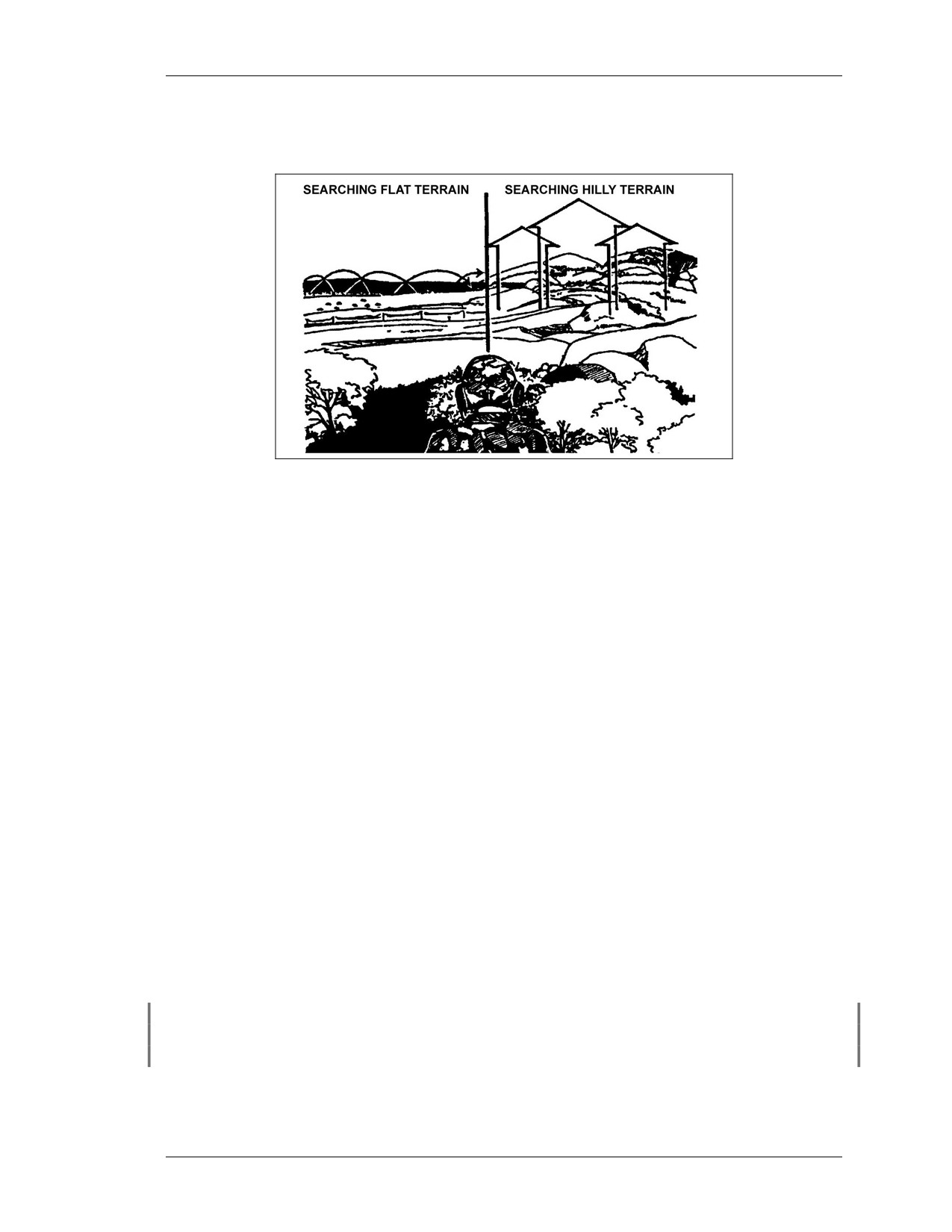
(2) Flat and Hilly Terrain Scans. Crewmembers and squad members use the flat and
hilly terrain scan methods to detect aerial targets quickly. Both methods derive from the
slow (50-meter) scanning method. Whereas crewmembers and squad members should
always search for ground targets from near to far, they should search for airborne targets
from far to near.
(a) Flat Terrain Scans. In flat terrain, crew and squad members search the horizon by
moving their eyes in short movements from object to object (Figure 6-6). They can see
more detail this way than with a continuous scan of the horizon.
(b) Hilly Terrain Scans. In hilly terrain, crew and squad members search the sky,
starting just below the horizon and moving upward (Figure 6-6). They use prominent
terrain features as points of reference to ensure overlapping the areas of the search.
(5) Combination. Because searching the air at night is much like searching the
ground at night, crew and squad members can combine ground and air techniques. This
6-4
FM 3-22.1
lets them scan for targets in the air and on the ground at the same time. How they do this
depends on the area of operations (AO) and on METT-TC.
Figure 6-6. Terrain scan for aerial target.
c.
Search Tips. Regardless of whether they are searching air or ground, soldiers
can use any of the optical devices on the Bradley to acquire targets.
(1) They can scan without optics at first.
(2) The Bradley crew and infantry riflemen should scan different locations.
(3) They scan for targets continuously, because they might at any time detect a
possible target that they missed on an earlier scan.
(4) The Bradley crew and infantry riflemen are much more likely to detect targets
and target locations in their assigned sectors when they use correct scanning methods.
(5) While on the move, the gunner should use the rapid-scan method, constantly
scanning his sector from the right limit to the left limit.
(6) To help him see possible target indicators, the gunner should--
• Reduce reticle brightness until he can barely see the reticle.
• Leave the turret and hull dome lights off or filtered.
• Dim the panel lights.
(7) The BC should cover the sight extension when not using it. Doing this enhances
the gunner's sight picture by reducing the amount of ambient light reflected through the
ISU optics from the commander's sight extension (CSE).
(8) Operating in NBC conditions limits the soldiers’ abilities to acquire and locate
targets. Among other limitations, protective masks greatly narrow fields of view, except
on the A3, because it has a biocular display.
(9) The soldiers concentrate their searches where targets are most likely to appear.
This includes, for example, avenues of approach, wood lines, and reverse-slope
firing positions.
(10) When the A3 crew uses the CIV or the IBAS to scan for targets rapidly, they
should avoid using the zoom. When the Bradley A3 crew detects targets, the infantry
squad can use the SLD to monitor one of the four videos (DVE, IBAS, CTD, or CIV).
d.
Sector Search Techniques. When they have more than one optical device, the
crew uses the following techniques:
6-5
FM 3-22.1
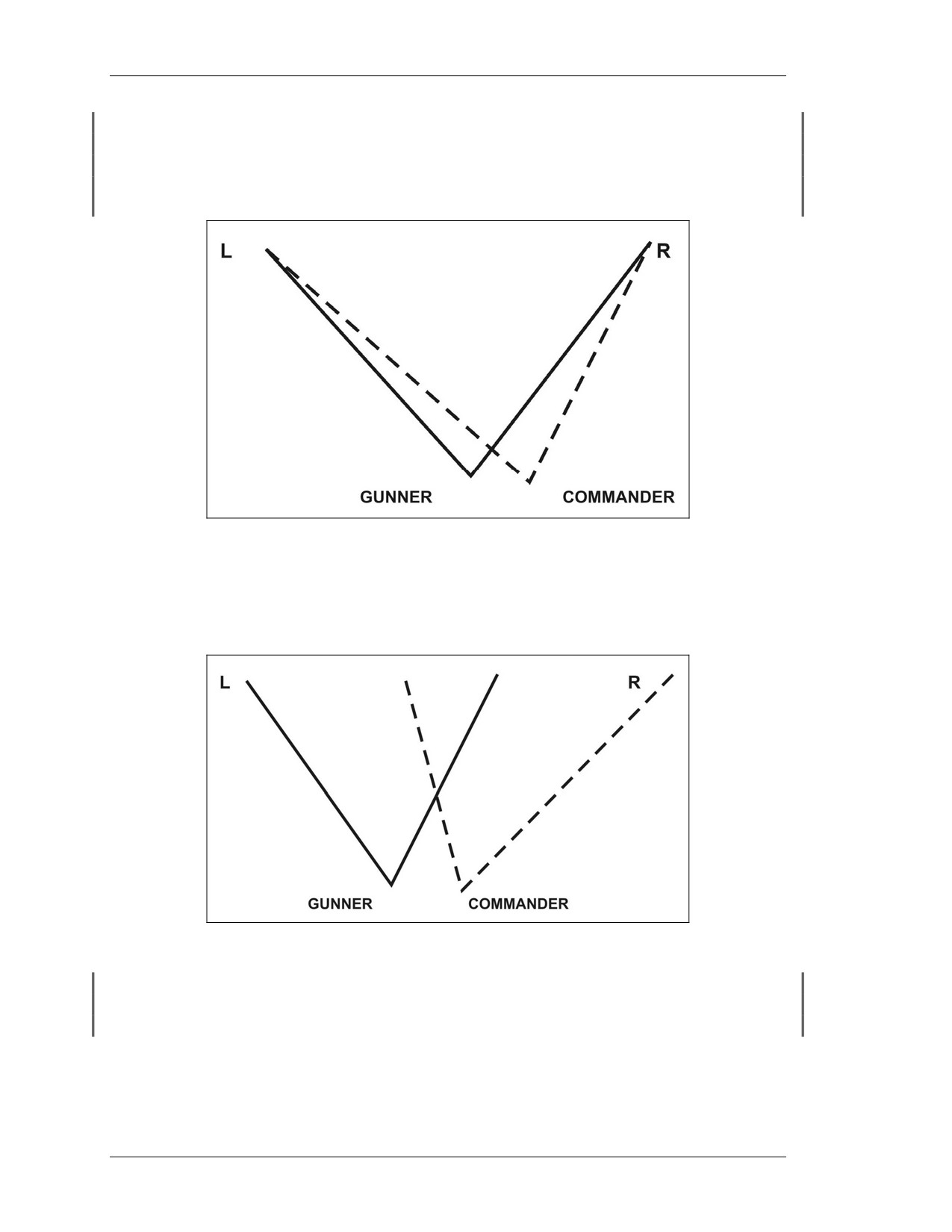
(1) Overlapped Sector. The gunner scans the whole sector, left to right, near to far,
using the IBAS or ISU. The commander also scans the whole sector (the same sector),
but he scans right to left and far to near. He uses the CIV, binoculars, or NVDs to ensure
coverage of the entire sector (Figure 6-7).
Figure 6-7. Overlapped sectors.
(2) Divided Sector. The BC and gunner can divide and search the same sector. Each
scans one-half of it, and they ensure they overlap in the center
(Figure 6-8 and
FM 3-21.71).
Figure 6-8. Divided sector.
(3) Near-to-Far Sector Search. The BC and gunner search the same sector.
• The commander uses the CIV, binoculars, or NVDs to search far.
• The gunner uses the IBAS or ISU to search near.
6-6
FM 3-22.1
6-2. TARGET DETECTION
The crew searches for personnel, vehicles, equipment, or objects of potential military
significance on the battlefield.
a. Signatures. Target signatures help the observer detect potential targets.
(1) Each weapon and vehicle produces signatures that are specific to its design and
function. For example, firing a vehicle’s main weapon system produces several
signatures: blast, flash, noise, smoke, and dust. A list of typical
battlefield
signatures follows:
(a) Soldiers.
• Foxholes.
• Voices (which carry farthest in cold, dry weather and at night).
• Broken vegetation.
• Footprints (weather conditions permitting).
• New and old fires.
• Trash.
• The noise and flash from small-arms weapons.
(b) Tracked Vehicles.
• Vehicle tracks on the ground (if weather conditions permit).
• Hot spots from road wheels or tracks (visible in thermal sight).
• Hot spots from engine compartments (visible in thermal sight).
• Hot spots from weapon barrels (visible in thermal sight).
• Engine noise.
• Exhaust plumes and smoke.
• Dust clouds from movement.
• Disturbed areas of vegetation.
• Reports and smoke from firing weapons.
• Bright flashes at night.
• Open hatch silhouettes.
(c) Antitank Weapons.
• Sharp crack of a fired ATGM.
• Missile launch "swish."
• Fast-traveling hot spots with vapor trails in thermal image.
• Long, thin wires from fired ATGMs.
• Destroyed armored vehicles.
(d) Artillery, Non-Self-Propelled.
• Loud, dull sound.
• Grayish-white smoke cloud.
• Bright orange flash and black smoke from airbursts.
• Rushing noise several seconds before round impacts.
(e) Artillery, Self-Propelled. Self-propelled artillery pieces produce the same thermal,
infrared signatures as tracked vehicles.
(f) Artillery, Towed. These vary according to the towing vehicle.
(g) Aircraft, All.
• Engine noise.
• Vapor trails from engine exhaust or fired missiles.
(h) Aircraft, Fixed-Wing. Reflected glare from the canopy, wings, and fuselage.
6-7
FM 3-22.1
(i) Helicopters. Threat helicopters will most likely move on the far side of wood
lines, ridgelines, and significant folds in the terrain. Signatures include--
• Reflected glare from windows and rotor blades.
• Dust caused by hovering helicopters.
• Foliage movement caused by hovering helicopters.
(j) Obstacles and Mines.
• Loose dirt or dirt that has been disturbed in a regular pattern.
• A destroyed or disabled vehicle that appears to have struck a mine.
(2) Crewmembers use their senses of sight, hearing, and smell to detect, locate, and
identify targets. Environmental conditions in the operational environment, such as
visibility, temperature, and weather conditions, affect each type of target's signatures in
specific ways. For example--
(a) Vehicles make more noise while moving through urban areas than while crossing
open fields.
(b) Different types of aircraft produce different signatures.
(c) A hovering helicopter and a fixed-wing aircraft make different sounds.
(3) The observer is most likely to detect the signatures of wheeled or tracked vehicles
in open areas or rolling terrain. Naturally, that is where threat tanks and APCs will most
likely emplace and move (FM 3-21.71). For this reason, the BC positions antitank
weapons to cover visually the threat’s primary avenues of approach.
b. Challenges. The crew will have more difficulty detecting some targets than they
will others. Leaders must train soldiers to detect and locate all kinds of targets. Some
examples of these more difficult targets and challenges include--
(1) Target.
• Peripheral targets (on the edge of the field of view).
• Camouflaged targets.
• Shadowed targets.
• Audible, but still invisible targets.
• Targets under poor indirect-fire illumination.
• Mirage effects caused by high temperatures and heat waves near the ground.
• Small, single targets such as lone rifle infantry ATGM or RPG positions.
• Natural and man-made obstacles.
(2) Soldier. Behavioral or physical deficiencies such as--
• Fatigue.
• Eye reactions to gun flashes.
(3) Light and Shadow. To search an illuminated area, soldiers should keep one eye
closed. They should avoid looking directly into the source of the illumination.
(a) Illumination in Front of Target. Illumination in front of the target produces a
shadow darker than the target.
(b) Illumination Behind Target. Illumination behind the target "washes out" passive
optics. If not, it should clearly stand out. While searching under illumination,
crewmembers should always keep one eye closed. They must also avoid looking directly
at the source of the illumination.
c. Thermal Sights. The threat usually moves, digs in, or continues an attack at
night. In daytime, he tries to cover his intentions. A thermal sight can detect camouflaged
6-8
FM 3-22.1
targets that a day sight might not detect. It displays an image of the heat radiating from
the viewed objects. Thermal sights sense heat from the following sources:
(1) Body Heat. The thermal sight detects all kinds of heat, including body heat.
(2) Thermal Reflections. Glossy, smooth surfaces, such as the windshield of a
vehicle, can reflect radiated heat.
(3) Solar Heat. Objects absorb heat from the sun at different rates depending on the
material. The amount of heat absorbed determines how the object shows up in a thermal
sight. Target signatures vary if heated only by the sun. As the sun sets, the gunner will
notice how the image changes form.
(4) Fuel Combustion. Naturally, burning fuel produces heat. A vehicle can produce
one plume of heat from its exhaust and another one from its engine compartment. The
location of the engine and the direction of the exhaust plume differ between vehicles. The
strength of the signature produced by fuel combustion depends on how long the engine
runs and where it is located in the vehicle relative to the viewer's position.
(5) Friction. Moving parts cause friction, which produces heat. Therefore, they, too,
show up in a thermal sight. Moving parts include, among other things, tracks, road
wheels, drive sprockets, and support rollers. Vehicles moving through mud or snow
create fuzzy images. Vehicle track-shrouding materials can hide road-wheel and track-
shoe signatures. After long use, these moving parts, just like the engine, produce a more
intense thermal image than they do when used for shorter periods. A vehicle looks very
different through a thermal sight after a 12-kilometer road march than it does in a
defensive position.
d. Thermal Sights, Bradley. Obviously, the possession and effective use of thermal
imaging systems to maneuver and engage at night gives the BFV crew a clear advantage
over the enemy. In daytime, the thermal sights increase the crew's ability to detect targets
behind foliage or in shadows.
(1) Both the BC and the gunner can use the Bradley's thermal sight to acquire targets
in any visibility conditions. The ISU (in thermal mode) and DVE can sense radiant heat
differences as small as 1 degree Fahrenheit between objects and their surroundings.
(2) The Bradley A3 IBAS or CIV FLIR is a second-generation thermal sight. To aid
in target identification, the crewmember can use both the biocular and remote biocular
displays (BD and RBD). The IBAS or CIV FLIR sight can digitally zoom the image from
2X to 4X. These capabilities make the FLIR the primary sight. They can sense a radiant
heat difference of less than 1 degree Fahrenheit between objects and their surroundings.
(3) Some camouflaged targets show up poorly in daylight, but show up well with
thermal sights. For example, a vehicle in a wood line appears as an irregular shape
compared to the surrounding vegetation and shows up well in WHITE HOT. a
camouflaged vehicle moving across an open area stands out in BLACK HOT.
6-3. TARGET LOCATION
A crewmember locates a target by searching, observing, and detecting. Once he does so,
he gives all personnel the target location. How he does this depends on his specific
position, unit SOP, and time available. When the BC locates a target, he can lay the gun
and issue a fire command. This fixes the target's location for the gunner. The following
paragraphs describe the eight most common target-location methods:
a. Clock Method. The BC and gunner can use the clock method to locate the target.
Twelve o'clock represents the direction of vehicle movement while traveling or the hull’s
6-9
FM 3-22.1
orientation
(the direction the front of the vehicle is pointing) while stationary, for
example, BMP, NINE O'CLOCK. The BC or gunner can use the turret position indicator
or, on the A3, use the one in the biocular display.
b. Sector Method. The sector method is similar to the clock method--it is quick and
easy to use. The BC is most likely to use the sector method to indicate the target's
direction of movement relative to that of the Bradley or, if the Bradley is stationary,
relative to its hull orientation. Center sector is always to the front, for example, THREE
TANKS, LEFT REAR.
c. Traverse Method. The BC can use this fairly quick method to locate the target
for the gunner. However, when his handstation malfunctions, the BC can use this method
to guide the gunner on target, for example, TRAVERSE LEFT
(OR RIGHT),
STEADY, ON.
d. Reference-Point Methods. The BFV crew uses these methods along with the
vehicle optics.
(1) Binocular Method. Using binoculars, the BC determines the mil value from a
terrain feature, known position, or target reference point (TRP). He then announces this
mil value to the gunner.
(2) Mil-Relation Method. Using the mil-reticle relationship, the gunner traverses
onto the target. Both the BC and gunner must know the mil-sight relationship, for
example, ATGM, TRP ONE, RIGHT FIVE MILS.
e. Quick Target-Reference-Point Method. All personnel use the quick TRP
method to identify targets near a TRP, for example, "Two PCs, TRP One."
f. Precise-Reference-Point Method. Crewmembers use this method when they
want a precise target location relative to a known TRP.
g. Grid Method. The BC uses this time-consuming method only when all he knows
about the location of the target is the grid coordinates. The BC must locate the target on
his map or FBCB2 map screen. Then, he must orient the turret towards the target for
the gunner.
h. Target-Designation Capability. When the A3 commander locates a target using
the CIV, he presses the TARGET-DESIGNATE button. This moves the gunner's LOS in
the IBAS to within one degree of the target. The handstation palm switch must be
engaged in order to use the target designation feature.
6-4. RANGE ESTIMATION
At times, the BC or gunner must estimate range (Table 6-1). They can each use one of
two methods, but only to estimate range. Proficiency in these methods requires
constant practice.
a.
100-Meter Unit-of-Measure Method. To use this method, the BC or gunner
must be able to picture a distance of 100 meters on the ground.
(1) For ranges up to 500 meters, he estimates the number of 100-meter increments
between the two objects he wishes to measure.
(2) For ranges beyond 500 meters, he--
(a) Selects a point halfway to the object(s).
(b) Determines the number of 100-meter increments to the halfway point.
(c) Doubles that number to find the range to the object(s).
6-10

FM 3-22.1
Factors Affecting
Factors Causing
Factors Causing
Range Estimation
Underestimation of Range
Overestimation of Range
The clarity of outline
When most of the object is visible
When only a small part of the object is
and details of the
and clearly outlined.
visible, or when the object is small
object.
relative to its surroundings.
Nature of terrain or
When looking across a nearly
When looking across a depression
position of the
hidden depression.
that is totally visible.
observer.
When looking downward from high
When vision is confined, as in streets,
ground.
draws, or forest trails.
When looking down a straight,
When looking from low ground toward
open road or along a railroad.
high ground.
When looking over uniform
In poor light, such as dawn and dusk;
surfaces like water, snow, desert,
in rain, snow, fog; or when the sun is
or grain fields.
in the observer’s eyes.
In bright light or when the sun is
shining from behind the observer.
Light and atmosphere.
When the object sharply contrasts
When object blends into the
with or is silhouetted against the
background or terrain.
background due to the size, shape,
or color of the object.
When seen in the clear air of high
altitudes.
Table 6-1. Factors of range estimation.
b. Flash-to-Bang Method. To use this method to determine the range to an
explosion or to enemy fire, the BC or gunner counts the seconds between the flash and
the report. He can use a stopwatch, or he can count steadily, ONE-THOUSAND-ONE,
ONE-THOUSAND-TWO... for a three-second estimated count. If he must count higher
than ten must, he starts over with one. To get the approximate range, he multiplies the
number of seconds by 350 (meters).
6-5. RANGE DETERMINATION
Range determination greatly affects target engagement. Range-determination errors cause
more first-round misses than do deflection errors. Those that cause the first round to fly
beyond the target present the greatest challenge, because observing and adjusting from a
round that lands out of sight is hard. The BC bears the main responsibility for
determining range. He has more ways to do so than do other crewmembers. Also, he
knows more than they do about the terrain and tactical situation. The gunner and driver
have limited means to determine range. This paragraph describes how each crewmember
can determine range.
a. Driver. The driver's ability to determine range is limited, especially with his
hatch closed. He can use the football-field method to estimate range to close-in targets.
However, depth perception problems with the night vision sight AN/VVS-2 and the DVE
prohibit accurate range determination.
b. Bradley Commander. The BC is mainly responsible for navigating,
commanding, and controlling. To determine range, he relies on his experience and
knowledge of the terrain, the tactical situation, and friendly control measures, both on the
6-11
FM 3-22.1
map and on the ground. The BC can determine range using the following methods alone
or together:
(1) Binoculars (Using Mil-Relation Formula). To use this method, he obtains the
target's width, height, and length from the binocular's mil scale. He substitutes the mil
relation and computes the range (Table 6-2). His accuracy depends on his knowing the
target’s dimensions and measuring precisely with the binoculars.
(a) To obtain frontal width, he measures the vehicle's front slope, from the vehicle's
left front corner to its right front corner. To obtain the flank width, he measures the width
of the entire vehicle (Figure 6-9). The mil is a unit of angular measurement equal to
1/6,400 of a circle. One degree equals about 18 mils.
(b) At a range of 1,000 meters, one mil equals the width, height, or length of 1 meter.
This relationship remains constant as the angle or range changes.
(c) The BC completes and expresses range using metric measurements. He can
express target size or range in other units of measurement (yards, feet, or inches).
Whichever unit of measurement he chooses, he must use it for everything.
(d) Since the relationship between target width in mils and meters
(W) remains
constant at varying distances, the BC can use them to determine range accurately
(Figure 6-10, page 6-14). The mil relation holds true whether the W factor is width,
height, or length. Therefore, the BC can determine range if he knows the dimensions of
the target.
(e) Target height might be the most consistent measurement, because length and
width change as the target moves on the battlefield. Therefore, the BC uses target height
to determine the "battlecarry"
(preindexed range and ammunition), which he must
identify before offensive operations.
(f) He obtains the mil and "W" measurements from the target measurement on the
mil scale in the binoculars. He divides the known target measurement ("W") by the mil
measurement. The resulting figure equals the range factor ("R"). He multiplies that by
1,000 to determine range to target.
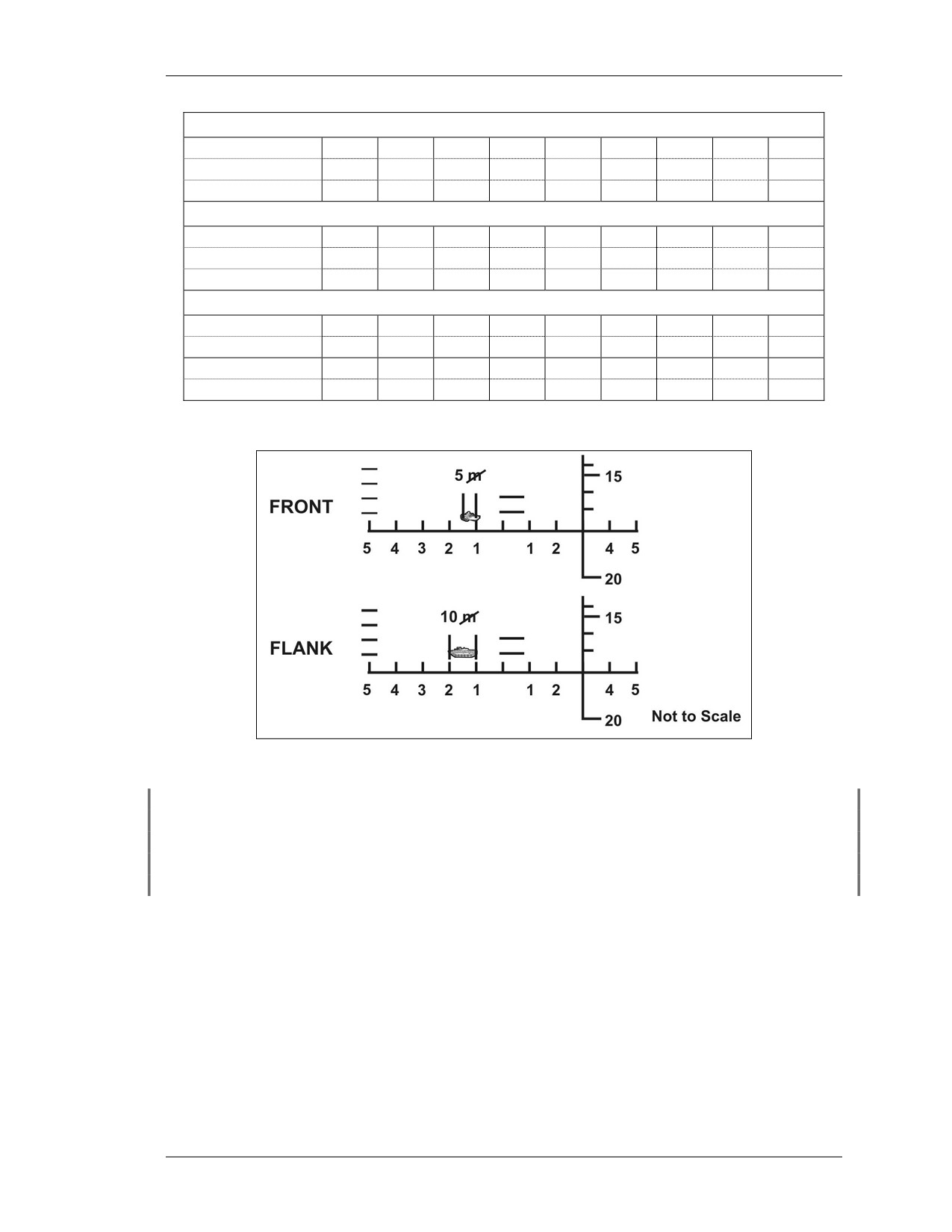
(g) The distance between tick marks on the horizontal scale is 10 mils. Table 6-2
provides a quick reference for determining various threat vehicle ranges. The table
groups the vehicles, averages their sizes, and rounds their ranges to the nearest
hundred meters. This table provides a quick reference for determining the ranges of threat
vehicles. It groups the vehicles and averages their sizes. The table shows ranges rounded
to the nearest hundred.
6-12
FM 3-22.1
GROUP 1 (BMP, TANK, BTR, ZSU, OT, AND MT-LB)
Target Width (Mils)
5
4.5
4
3.5
3
2.5
2
1.5
1
Flank 6.75 Meters
1,400
1,500
1,700
1,900
2,300
2,700
3,400
4,500
6,800
Front 3.0 Meters
600
700
800
900
1,000
1,200
1,500
2,000
3,000
GROUP 2 (BRDM)
Target Width (Mils)
5
4.5
4
3.5
3
2.5
2
1.5
1
Flank 5.5 Meters
1,100
1,200
1,400
1,600
1,800
2,200
2,800
3,700
5,500
Front 2.35 Meters
500
500
600
700
800
1,000
1,200
1,600
2,400
GROUP 3 (HIND HELICOPTER)
Target Width (Mils)
22.5
20
17.5
15
12.5
10
7.5
5
2.5
Flank 17.25 Meters
800
900
1,000
1,200
1,400
1,700
2,300
3,500
6,900
Target Width (Mils)
5
4.5
4
3.5
3
2.5
2
1.5
1
Front 6.9 Meters
1,400
1,500
1,700
2,000
2,300
2,800
3,500
4,600
6,900
Table 6-2. Mil relation for various targets.
Figure 6-9. Target measurement using binocular reticle.
(2) Printed and (A3 only) Digital Maps. The FBCB2 and PLGR do not eliminate the
need for printed maps. The BC must have one to navigate. He must always know where
he is and where he is going. He can also use the map to determine range. In both the
offense and the defense, he uses a map to continually assess likely enemy locations,
engagement areas, and engagement ranges. He adds TRPs to his sector sketch.
(a) He uses the TRPs--
• To control direct and indirect fires.
• To ensure that he reports enemy sightings accurately.
• To help determine range to the target, and to do it quickly.
(b) He uses a map to determine the best battlecarry setting for the terrain and enemy
situation. He uses the map again to adjust the battlecarry as the situation changes.
(3) Range Card. The main function of the range card is to help the crew engage
targets in limited visibility. Since the BC already records range data on the range card, he
might as well use it to help him determine range, too (Chapter 8).
6-13
FM 3-22.1
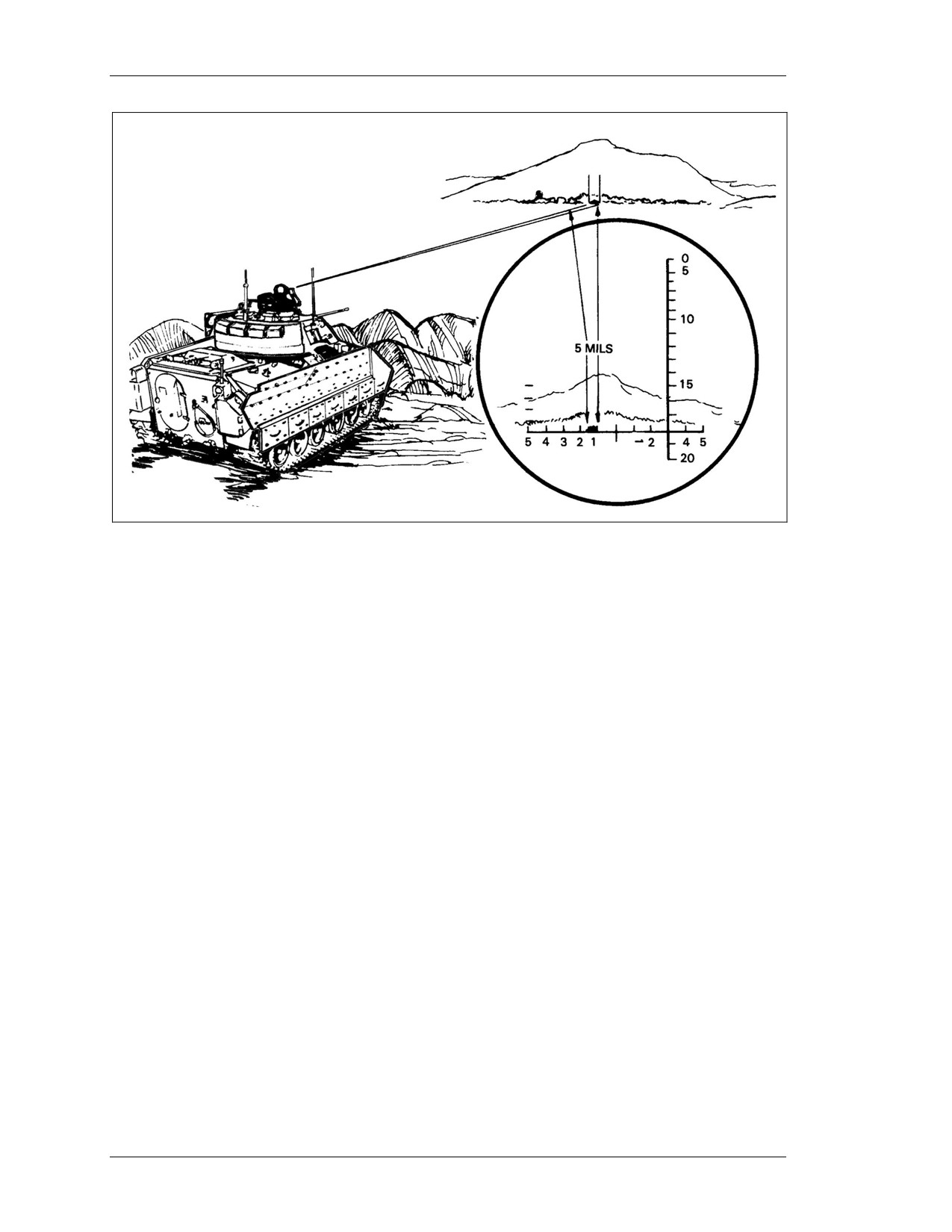
Figure 6-10. Range determination using binoculars.
(4) ISU. The BC and the gunner can use the horizontal ranging stadia or reticle lead-
line method. Using his sight extension limits the BC's field of view. A3 only: However, if
he selects the horizontal ranging stadia, he can use those through the RBD.
(5) Laser Range Finder, AN/GVS-5. Using the laser range finder, the BC can
quickly and accurately determine the range for the gunner. The AN/GVS-5 is not organic
to an infantry company but is organic to the scout platoon.
(6) Eye-Safe Laser Range Finder. The ELRF allows the commander or gunner to
determine, rapidly and accurately, the target range. The ELRF displays range in 5-meter
increments from 190 to 9,990 meters, plus or minus 10 meters.
c. Gunner. The gunner can determine range using any of the following methods:
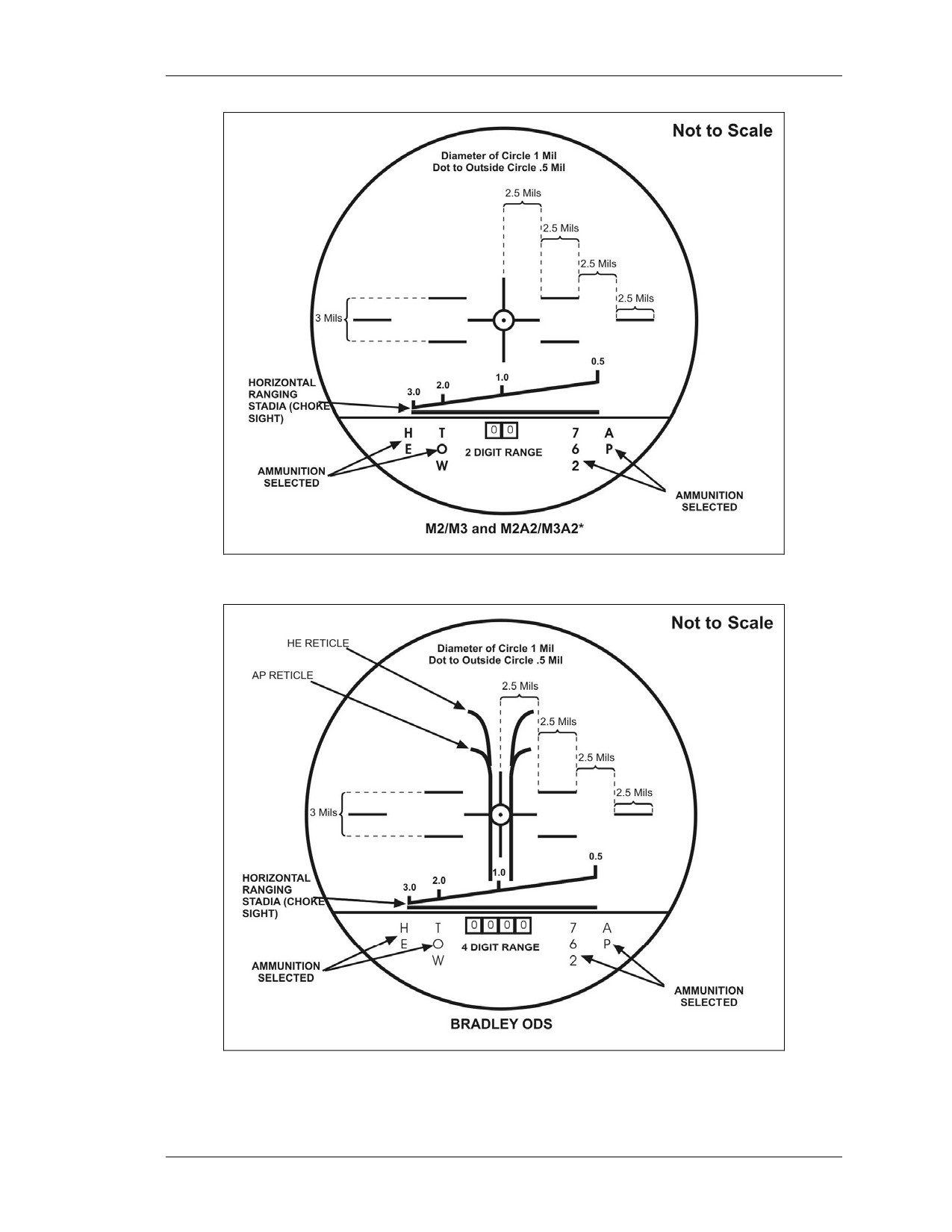
(1) Choke Sight. He only uses the ISU reticle lead lines (Figure 6-11A, page 6-17)
and horizontal ranging stadia
(Figure 6-11B, page 6-17) to determine range from a
defensive position. The ISU reticle has a choke sight he can use to estimate the range to
BMP-type target, that is, any target that measures 1.8-meters high. (Reticles do not show
the ADR for the M2A2 or M3A2.) Many different kinds of vehicles around the world
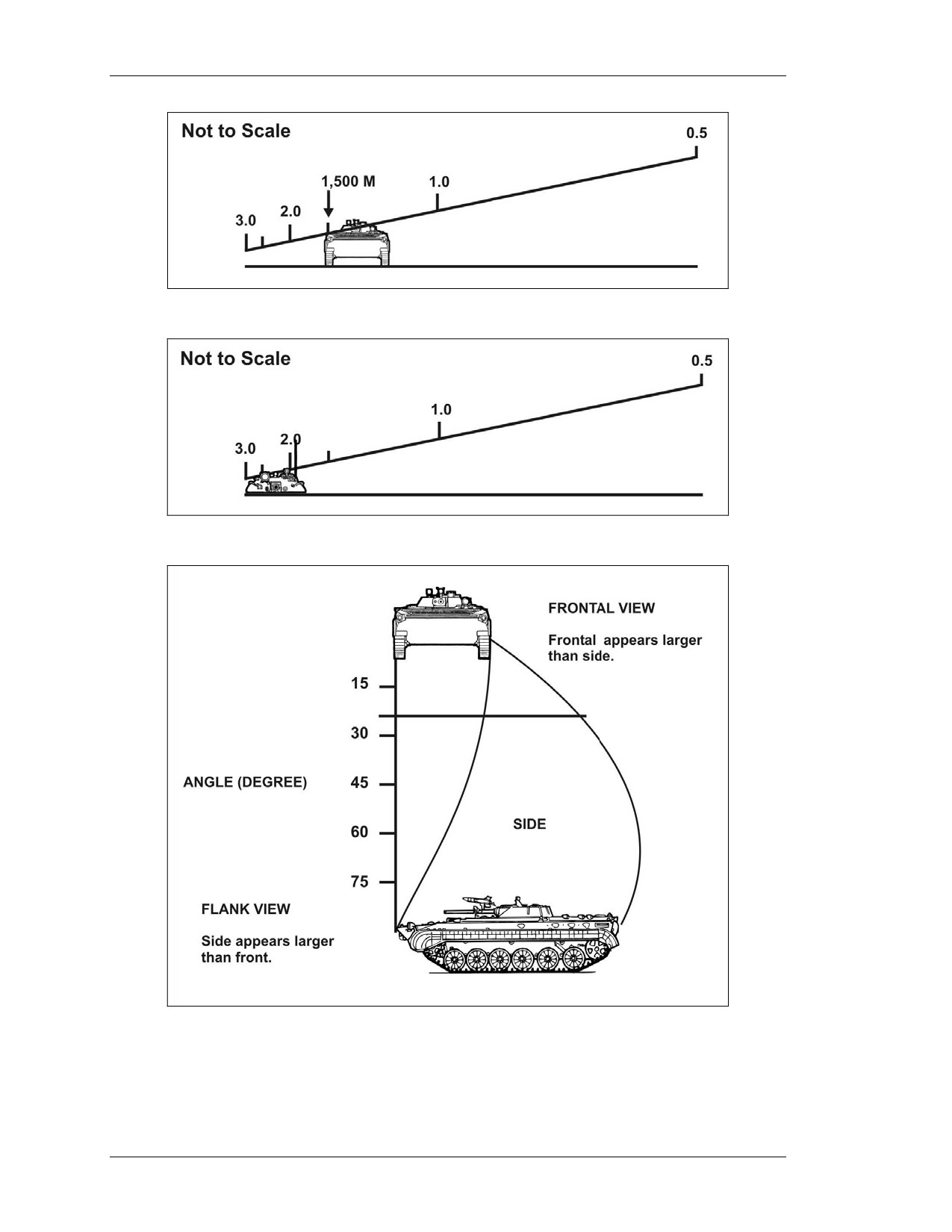
derive from the BMP. The gunner can use the ISU or IBAS ranging stadia to determine
the correct range to any of these (Figure 6-12, page 6-18).
(a) To use the choke sight, he moves the turret until the ranging stadia line appears to
touch the vehicle. He aligns the horizontal line with the bottom of the target vehicle's
track. He moves the turret horizontally along the target until the top of the hull appears to
touch the stadia line. He reads the range where the top of the hull touches the angled
stadia line. If the hull touches the line between the tick marks, he estimates the range,
then indexes it into the ISU. Then, he re-lays the reticle on the target.
6-14
FM 3-22.1
(b) He can use the choke sight to range to targets in defilade (hull down). He aligns
the bottom horizontal line to the bottom of the target. He moves the sight until the top of
the target appears to touch the angled stadia line (Figure 6-13, page 6-18). He reads this
range and divides that number in half. This technique offers less accuracy than ranging a
fully exposed target. He must remember to choke only the hull, not the whole vehicle. He
avoids choking weapons or lights mounted atop the turret.
(2) Reticle Lead Line and Mil Relation. He can use the lead lines on the reticle to
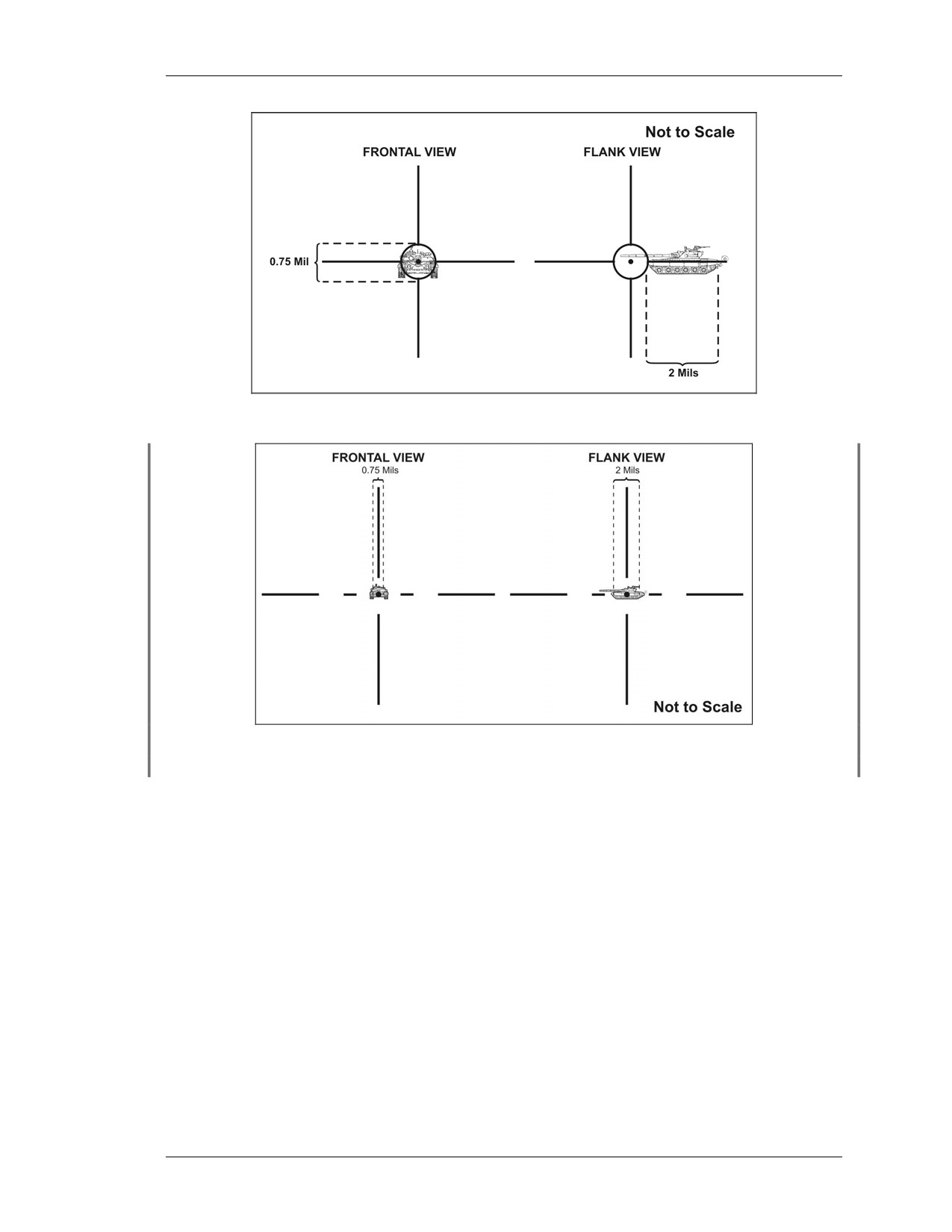
determine the range to a target, since each lead line is 2.5 mils from the center of
the reticle. First, he must classify the target as a frontal or a flank view (Figure 6-14,
page 6-18). Second, he gets the width of the vehicle, either frontal or flank, by comparing
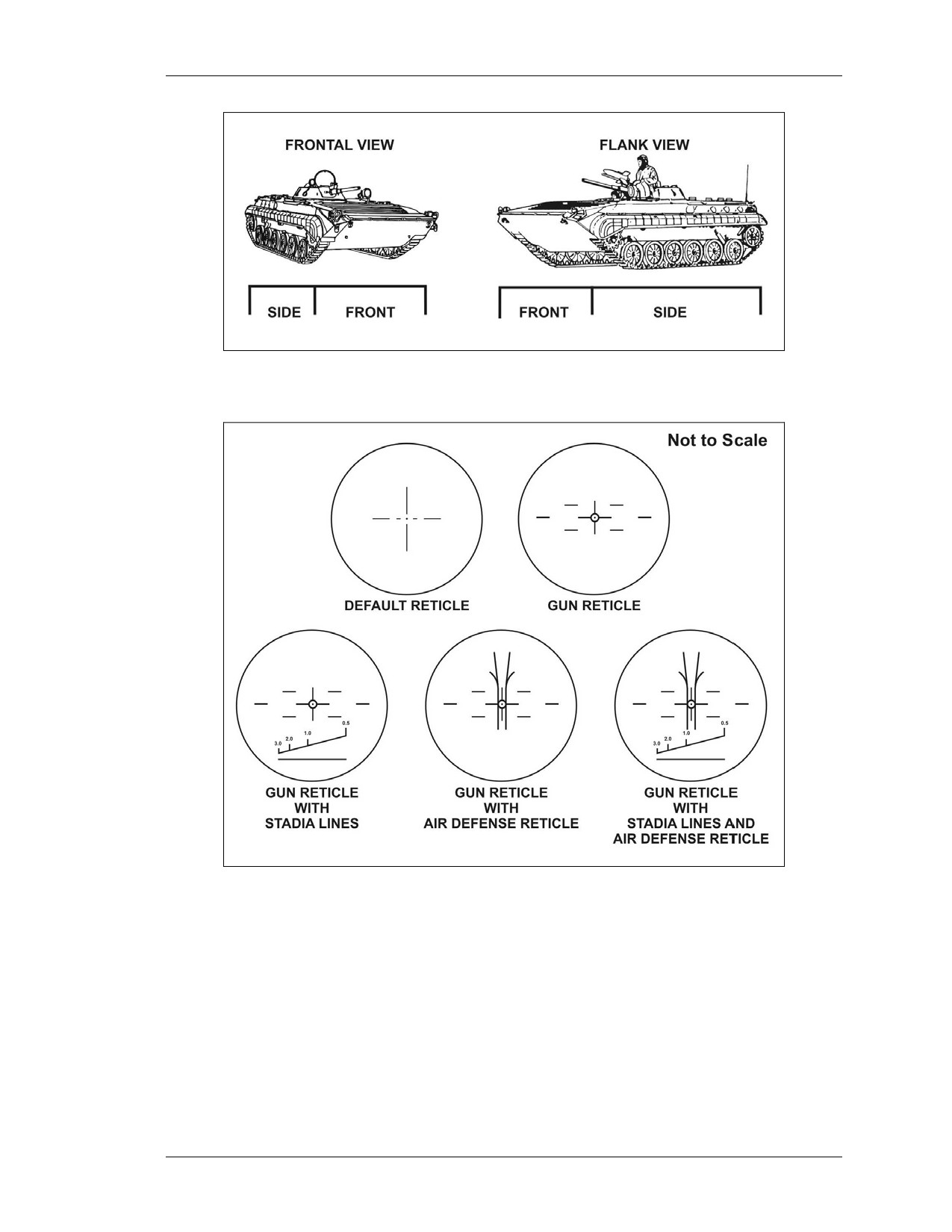
the vehicle's frontal and side views. Figure 6-15, page 6-19, shows how much of the front
and side of the BMP-based vehicle he can see when the vehicle rotates from full frontal
(0 degrees) to full flanking (90 degrees).
(3) A3 IBAS or CIV Reticle. He can use the Bradley A3 IBAS, its CIV, and the ISU
horizontal-ranging stadia to estimate range. (Figure 6-16, page 6-19.
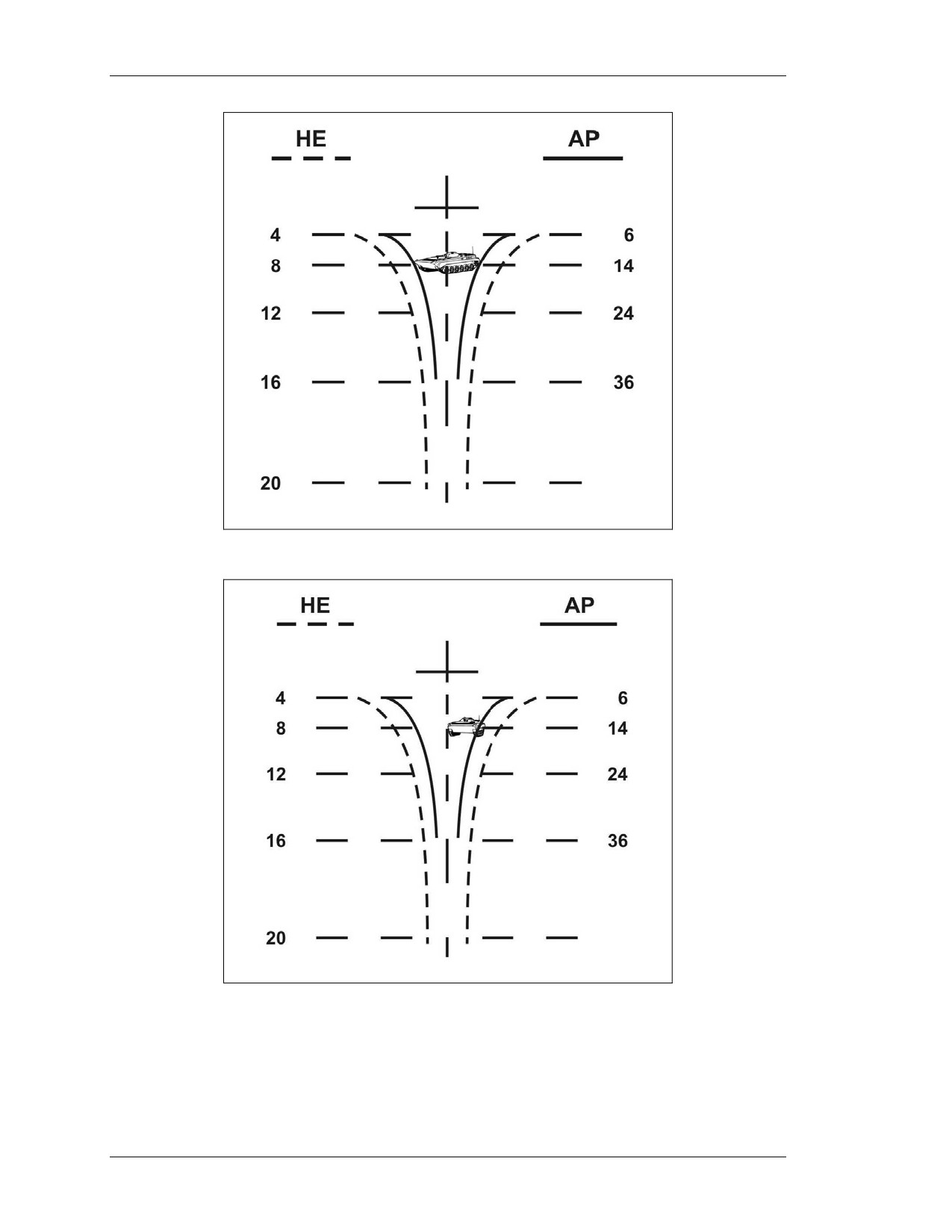
(4) Auxiliary (or Backup) Sight. He can use the backup (AUX) sight when either the
ISU or IBAS--fails to operate or when turret power fails.
(a) The auxiliary sight has stadia lines to help him determine range and, based on
that, to apply the correct superelevation. It also has stadia lines for both APDS-T and
HEI-T ammunition. Thus, he can use the AUX sight to determine the range and to engage
a frontal or flank BMP-type target.
(b) The auxiliary sight has two range scales. The HE scale on the left side of the
reticle (the broken line) extends to 3,200 meters (Figure 6-17, page 6-20), The AP scale
on the right side (the solid line) extends to 3,400 meters (Figure 6-18, page 6-20). The
numbers 4 and 6 represent 400 meters and 600 meters, respectively. The HE range scale
continues to 32 (not shown in figure). He can determine the range to a flank target by
elevating the gun until both the front and rear of the target appear to be touching the AP
stadia lines (Figure 6-17, page 6-20). He can use the HE lines the same way to choke the
range to a flank HE target.
(c) To determine the range to a frontal target, he uses the half-stadia method. He
aligns the center vertical ranging lines with one side of the target. He aligns the
appropriate ammunition stadia line on the other side of the target
(Figure 6-18,
page 6-20). (He will also use the HE stadia lines for the coax.)
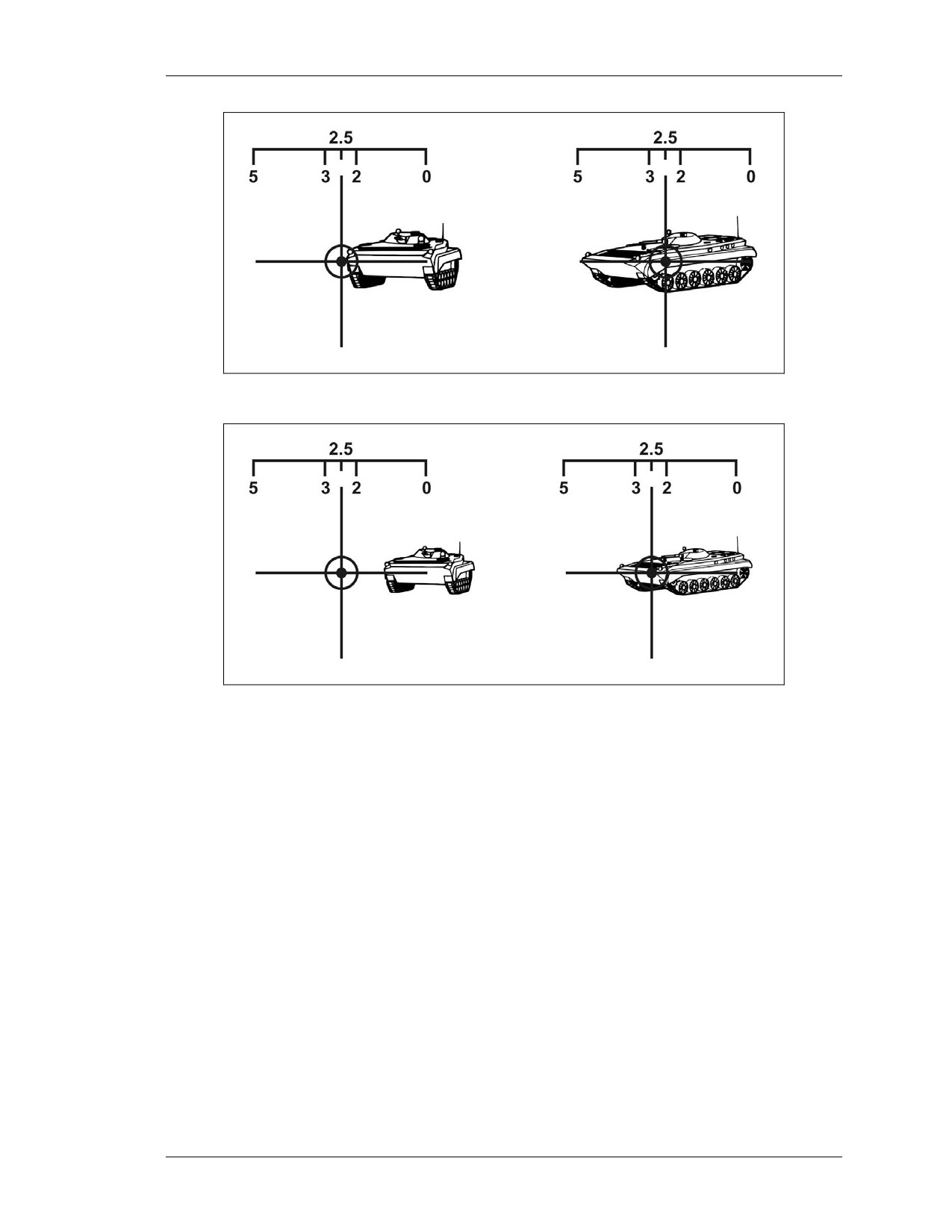
(5) 25-mm Gun Reticle. To determine range with the 25-mm gun reticle, he must
know the width of the vehicle. This reticle provides greater magnification and smaller
graduated markings.
(a) To determine range, he uses the reference markings (Figure 6-19 and Figure 6-20,
page 6-21):
•
2 mils.
•
2.5 mils.
•
3 mils.
•
5 mils.
(b) The Bradley M2A3 gun reticle has no zoom. Therefore, target range depends on
the size of the target, which he can estimate using the mil-relation formula. The
recommended maximum engagement range for APDS-T is 2,000 meters. However, when
firing APDS-T with an index setting of
12, the maximum range is
1,400 meters.
6-15
FM 3-22.1
Figure 6-19, page 6-21, shows where to position the reticle for a target at that range.
Figure 6-20, page 6-21 shows the front and flank sight pictures of a BMP beyond
2,000 meters.
(c) On ODS Bradleys, he cannot use the ELRF with the TOW selected. Before he can
use the TOW, he must determine the maximum engagement range. To do it himself, he
must either switch to another weapon system, determine the range, and reselect TOW; or
he must ask a wingman vehicle to get that information for him. Figure 6-21, page 6-22,
shows the sight picture of a TOW target at maximum engagement range (3,750 meters)
as it would look through the 25-mm reticle.
(6) Range Card. (See Chapter 8.)
(7) ELRF. This applies only to Bradley ODS and A3 models.
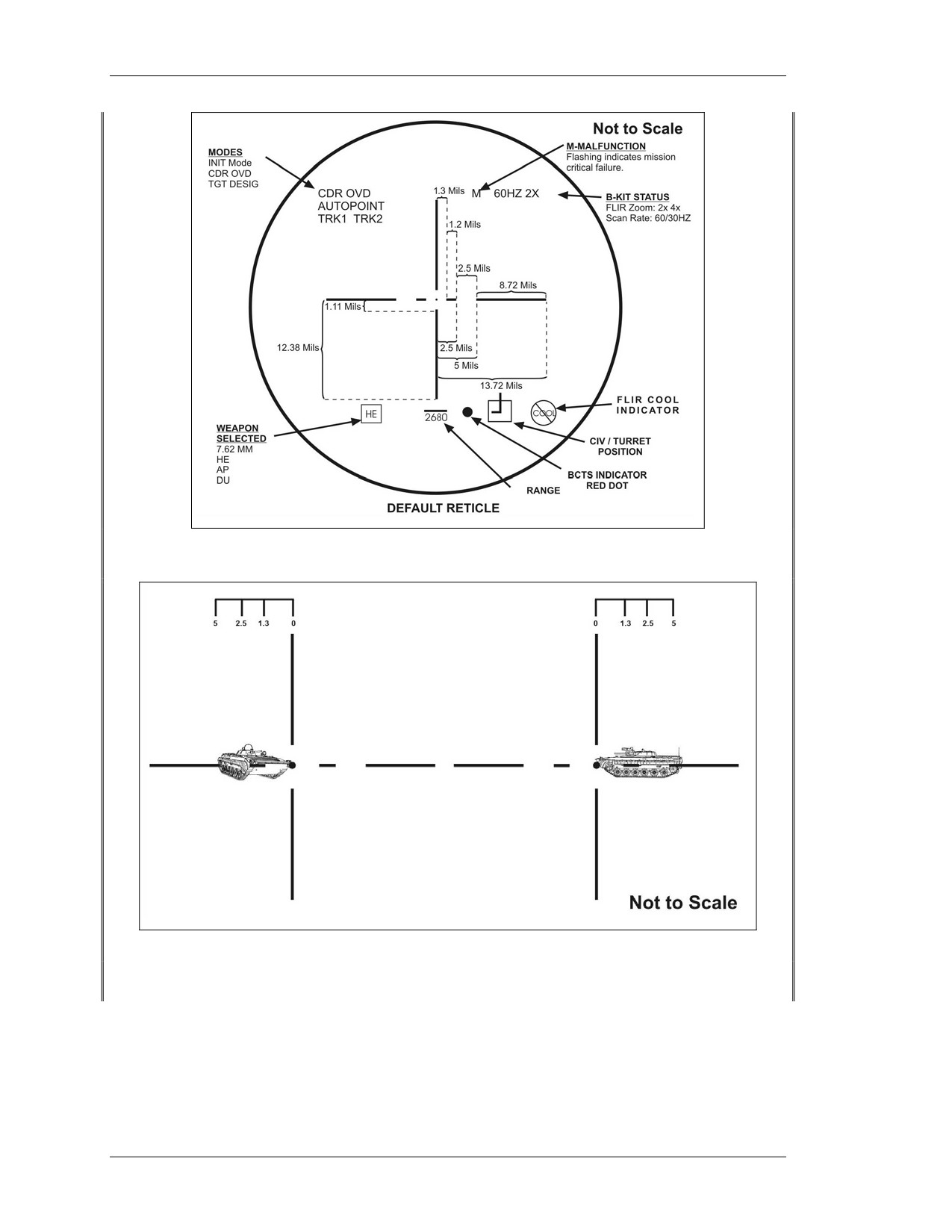
(8) Reticles. When using the Bradley A3 IBAS reticle and CIV reticle, the crew can
select the default reticle, gun reticle, air-defense reticle, and horizontal-ranging stadia
through the CTD (Figure 6-16, page 6-19).
(a) The crew uses the horizontal-ranging stadia and gun reticles on Bradley A3 to
determine target distance. They determine range either by choking the ground to the top
of the vehicle's hull with the ranging stadia, or by using the gun reticle and mil relation.
(b) Figure 6-21, page 6-22, shows the reference markings on the Bradley A3 default
reticle. These marks measure 1.2, 1.3, 2.5, and 5 mils (Figure 6-22, page 6-22). This
technique does not call for the use of reference marks 13.72 and 12.38.
(c) Figure 6-23, page 6-23, shows how to determine the maximum engagement range
for the TOW using the A3 gun reticle.
(d) Figure 6-24, page 6-23, shows a TOW sight picture of a target at its maximum
engagement range (3,750 meters).
(e) Table 6-2, page 6-13 (mil relation for various targets), provides a quick reference
for determining the range to threat vehicles.
NOTES: 1. On both the IBAS and CIV, the gun reticle, air defense reticle, and
horizontal ranging stadia display only in high magnification on the
Day TV and FLIR.
2. On the IBAS, the DVO sight displays the selected reticle in both high and
low magnifications (IBAS only).
3. On Bradley A3 vehicles, crewmembers can use the ELRF with the
TOW selected.
6-16
FM 3-22.1
Figure 6-11A. 25-mm choke sight reticle, reticle lead lines.
Figure 6-11B. 25-mm choke sight reticle, horizontal-ranging stadia.
6-17
FM 3-22.1
Figure 6-12. Choked hull.
Figure 6-13. Choked hull-down vehicle.
Figure 6-14. Determination of range, frontal or flank view.
6-18
FM 3-22.1
Figure 6-15. Determination of vehicle width by comparison of
frontal and side views.
Figure 6-16. Selection of Bradley A3 reticle.
6-19
FM 3-22.1
Figure 6-17. Determination of range to a flank view of a BMP, 1,400 meters.
Figure 6-18. Determination of range to a frontal view of a BMP,
1,400 meters.
6-20
FM 3-22.1
Figure 6-19. Reticle position for a BMP at 1,400 meters.
Figure 6-20. Front and flank sight pictures of a BMP at 2,000 meters.
6-21
FM 3-22.1
Figure 6-21. Bradley A3 default reticle lead line and mil relation.
Figure 6-22. Determination of ranges for a BMP at Target 1 (1,400 meters)
and Target 2 (1,800 meters).
6-22
FM 3-22.1
Figure 6-23. Determination of TOW maximum engagement range.
Figure 6-24. Determination of TOW maximum engagement range for an
A3 default reticle.
6-6. TARGET IDENTIFICATION
Target identification consists of classifying a potential target by type, describing it by
nomenclature, and discriminating it as either friend or foe. For example, the gunner might
identify a potential target by classifying it as a tank, describing it as a T-55, and
discriminating it as a foe.
a. Classification. In classifying a target, the crew identifies a target by vehicle type
(truck, tank, APC). Soldiers can quickly scan the target’s key recognition features, then
classify it accordingly. For example, the gunner classifies a target as a tank because of the
low silhouette, large gun tube, and tracks.
6-23
FM 3-22.1
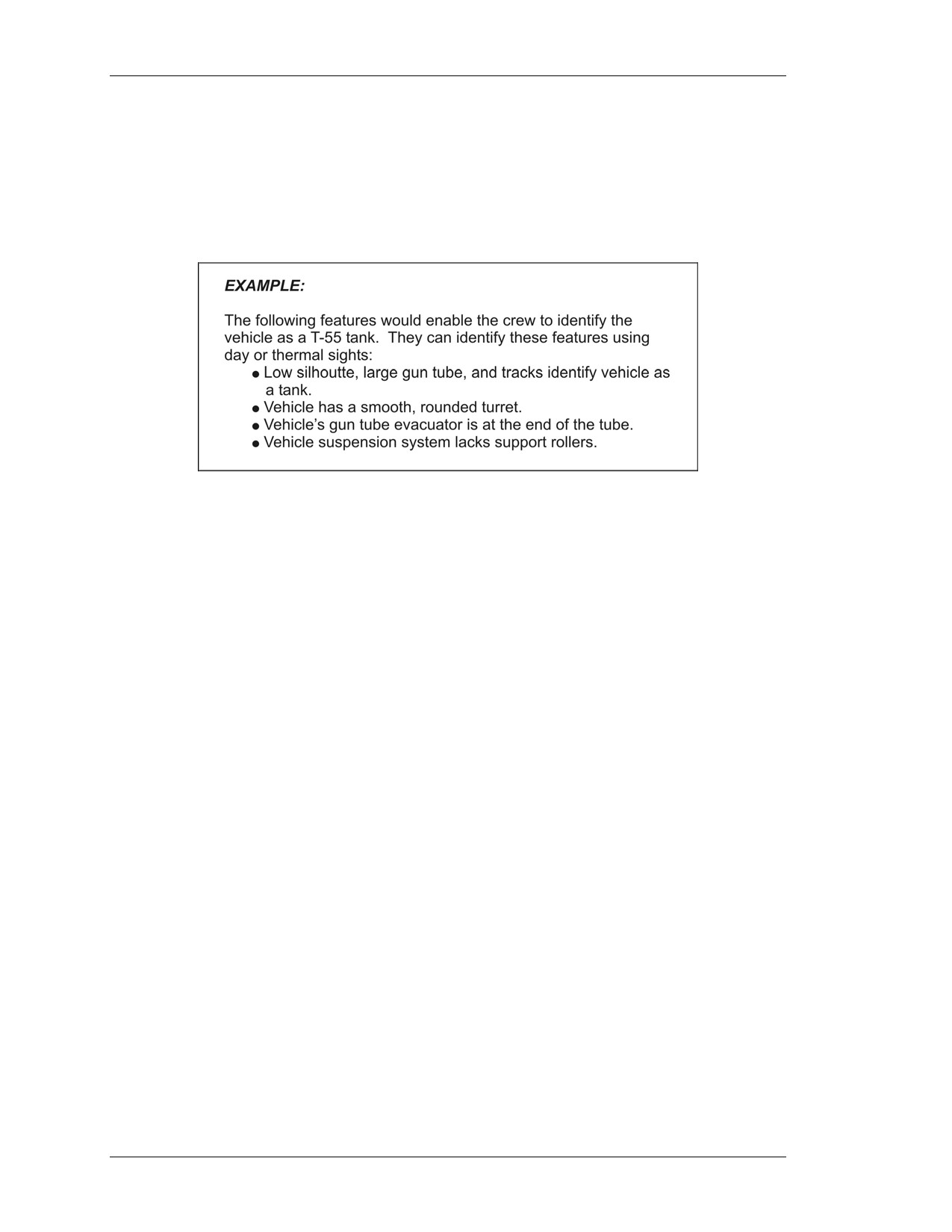
b. Description. In describing a target, the crew identifies a target by nomenclature
(M998, T-55, BMP) based on key recognition features. For example, they look at the
target and note that the turret is smooth and rounded, that the gun tube's evacuator is at
the end of the tube, and that the suspension system has no support rollers. He therefore
describes the target as a T-55 tank. Figure
6-25, page 6-24, shows an example
target description.
Figure 6-25. Example target description.
c. Discrimination. In discriminating a target, the crew identifies a target as friend
or foe. Although equipment manufactured by the former USSR has been sold in large
numbers worldwide, soldiers could also find themselves facing British, French, and
American-made equipment. The following techniques might help Bradley crews
discriminate a target:
NOTE: Situational awareness with METT-TC will support correct discrimination of
friend or foe.
(1) Combat Identification Panel. Combat identification panels (CIPs), also known as
"battleboards," allow the crewmember using a thermal sight to discriminate friendly
vehicles up to 4,000 meters away. Bolted onto combat vehicles, the CIPs, provide a
"cold" image on a "hot" background.
(2) Unit Markings. The unit SOP determines unit markings. Only imagination and
resources limit unit markings. The markings must discriminate a vehicle as friendly, but
soldiers must also train well to identify the markings. The units can mark vehicles with
any of several items.
(a) The VS-17 panels provide a bright recognition feature that allows crews to
discriminate friendly vehicles through the daysight.
(b) Chemical lights provide a means of marking vehicles at night. However, chemical
lights do not appear in a thermal sight.
(c) The unit can use symbols to mark friendly vehicles. An inverted "V" painted on
the flanks, rear, and front of a vehicle helps discriminate it as friendly.
6-7. ACQUISITION REPORTS
As soon as a crew or squad member acquires a target, he reports it immediately to the BC
via acquisition report. This target-handover technique must occur before the
determination step of the engagement decision.
6-24
FM 3-22.1
a. An acquisition report has three elements: alert
(optional), description, and
location, for example, "DRIVER REPORT, TWO MOVING PCS, LEFT FLANK."
b. In the rear, soldiers who can identify each other by voice deliver the acquisition
report verbally. Also, the description element of the report usually serves as the alert
element, for example, "TWO MOVING PCS, ELEVEN O'CLOCK."
c. "TARGET" is not the description element.
Section II. DECISION PROCESS
The engagement decision process consists of a series of progressive and interdependent
steps (or actions). First, determining target threat levels; second, selecting weapon(s) or
ammunition; and third, confirming the target. Only the BC can make these decisions.
6-8. DETERMINATION OF TARGET THREAT LEVELS
To defeat multiple targets on the battlefield, the crew must engage the most dangerous
targets first. Commanders determine target threat levels based on the threat analysis of
the mission area. All soldiers must know their unit's engagement priorities. However, the
BC determines the immediate target threat level based on the current threat posture.
a. Target Threat Levels. The three threat levels are as follows:
(1) Most Dangerous. This type of target presents the greatest threat, so the crew must
engage it immediately.
• Obvious enemy vehicles or troops.
• Vehicles that have armor-defeating capabilities
• Vehicles showing signs of preparing to engage.
(2) Dangerous. The crew must engage this type of target only after destroying the
most dangerous targets.
• Vehicle with armor-defeating capability.
• Vehicles showing no sign of preparing to engage.
(3) Least Dangerous. The crew engages this type of target after they have destroyed
all of the most dangerous and dangerous targets. The only exception occurs when a
particular vehicle, such as a command and control vehicle, has a high priority of
engagement. Least dangerous vehicles include any vehicles that have no armor-defeating
capability.
b. Other Determining Factors. When the crew encounters multiple targets of the
same threat level, it must prioritize the targets according to the degree of threat
they represent. For example, the crew would engage targets in this order of priority:
• Close-range before long-range.
• Stationary before moving.
• Frontal before flank or rear.
6-9. SELECTION OF WEAPON AND AMMUNITION
Weapons and ammunition selection refers to the logical selection of a weapon or
ammunition based on its appropriateness for a given target. Before selecting the weapon
and ammunition type to use against target(s), the crew must first determine the threat type
and range (Table 6-3, page 6-26).
6-25

FM 3-22.1
THREAT
RANGE
RANGE
TYPE
(METERS)
BFV WEAPONS
(METERS)
INFANTRY WEAPONS
Armored
65 to 3,000
Basic TOW
10 to 300
AT4
vehicle
1 65 to 3,750
TOW 2, 2A, and 2B
65 to 1,000
Dragon
65 to 2,000
Javelin
Light-
2 0 to 2,000
AP
10 to 300
AT4
armored
65 to 3,000
Basic TOW
65 to 1,000
Dragon
vehicle
165 to 3,750
All other TOWs
65 to 2,000
Javelin
Unarmored
0 to 900
coax
0 to 900
M249, M240B
vehicle
300 to 3,000
HE
0 to 300
AT4
31 to 150
M203 (Point Target)
0 to 550
M16A2 (Point Target)
0 to 150
M18A1 Mine
Reinforced
300 to 3,000
HE
10 to 300
AT4
position
65 to 3,000
Basic TOW
65 to 1,000
Dragon
165 to 3,750
All Other TOWs
65 to 2,000
Javelin
0 to 900
Coax
31 to 150
M203 (Point Target)
0 to 1,800
(Suppression)
0 to 600
M249, M240B (Point Target)
TP-T (Punch holes
0 to 550
M16A2 (Point Target)
in cinderblock)
0 to 10
Hand Grenade
Troops
0 to 900
Coax
0 to 600
M249, M240B (Point Target)
300 to 3,000
HE
M249 (Area Target)
0 to 300
FPW
0 to 200
M16A2 (Moving Man)
M16A2 (Stationary Man)
0 to 150
M203 (Point Target)
31 to 350
M203 (Area Target)
0 to 100
M18A1 Mine
5 to 35
Hand Grenade
Aerial
1,200 to 2,000
AP
31,000 to
Stinger
0 to 1,200
HE
5,000
M249, M240B
2,000 to 3,000
Basic TOW
SAAD
M16A2 (Burst)
2,000 to 3,750
All Other TOWs
SAAD
31,000 to 5,000
(Linebacker)
1 Minimum arming distance for TOW 2B is 110 meters; maximum arming distance is 200 meters.
2 Planning effective range for APDS-T is 2,000 meters. APFSDS-T ranges are greater.
3 Maximum planning range for Stinger is 5,000 meters.
Table 6-3. Weapon for threat.
6-10. TARGET CONFIRMATION
Confirming a target means rapidly verifying its initial identification and discrimination.
The BC confirms a target after he initiates the fire command, at the same time the gunner
completes the initial lay, and before he issues the execution element. The gunner also
confirms the target. As he makes his final precise lay, he checks one last time to ensure
that the target is hostile before he announces "IDENTIFIED."
a. The BC finishes evaluating the nature of the target based on its identification and
on the tactical situation.
b. If the gunner confirms that the target is hostile, he completes his final lay and
engages the target on order.
(1) If the gunner determines that the target is friendly or unknown, he announces his
confirmation to the BC as "FRIENDLY" or "UNKNOWN."
(2) If he cannot determine the nature of the target, he announces "DOUBTFUL."
(3) The BC then determines whether to continue or to end the engagement.
6-26
FM 3-22.1
c. The BC must know the tactical situation in order to help confirm targets. He gains
his battlefield situational awareness from subordinates and higher elements. On ODS
models that have FBCB2 and on the A3, the BC gets his battlefield situational awareness
(SA) from the CTD, while the squad leader's display
(SLD) provides battlefield
awareness for the Bradley crew or squad.
Section III. ENGAGEMENT EXECUTION
The crew uses the Bradley's weapon systems to engage and destroy targets with direct
precision and area fires. In order for crews to take advantage of the BFV's weapons
systems to quickly lay, engage, and destroy threat targets, they must be experts in the use
of target-engagement methods and techniques.
6-11. METHODS
Once he acquires and discriminates a target, the BC must determine the method of
engagement. Two engagement methods apply to the
25-mm and to the coaxial
machine gun--battlesight gunnery and precision gunnery. Each has its own fire
commands (Section V). The Bradley ODS and A3 gunner uses the ELRF to determine
range, then the BC gives a precision fire command. He selects the method of engagement
based on his estimate of the situation.
NOTE: Battlesight and precision methods do not apply to the TOW system, because
the TOW's ammunition has fixed ranges.
a. Battlesight Gunnery. For the Bradley without a ELRF or whose ELRF fails,
battlesight gunnery offers the fastest way to engage a target. It relies on preselected
ammunition and range settings. This set of "preindexed" information is called
the battlecarry. This battlecarry allows the gunner or BC to aim, shoot, and burst on
target (if necessary). This relieves the BC from having to identify and the gunner from
having to select either the ammunition or the range. While planning fire and selecting
battlecarry, the BC considers several factors. First, he selects ammunition for the most
likely enemy target. Second, he selects the most likely engagement distances and range
settings for those targets. The BC has two options when selecting battlecarry--ballistic
and extended. Each is based on target height, ammunition characteristics, capabilities,
and expected engagement range bands.
(1) Ballistic Battlecarry. The BC uses the ballistic firing tables (FT 25-A-2) to obtain
the necessary ammunition information for his selected battlecarry target. From these
firing tables, the BC can obtain the height of the expected target. Then, regardless of the
target's motion, the gunner aims at half its height. The BC chooses a range that will keep
the highest path of the selected ammunition from passing over the target. If, for example,
the expected target is a BMP 2, the BC will use the M791 ammunition. The target
measures 2.45 meters high. He has the gunner aim at half that height, or 1.225 meters.
Maximum ordinate is the highest measurement the round will travel above the
line of sight. When he checks the maximum ordinate column in the firing
table (FT 25-A-2), the BC notes that 1.1 is the largest number that does not exceed 1.2
(rounded down from 1.225 meters). Reading right or left to the range column, he sees that
a range of 1,200 meters corresponds to a maximum ordinate of 1.1. He instructs the
6-27
FM 3-22.1
gunner to index 1,200 and select "AP" for the battlecarry. If the gunner engages the target
within 1,400 meters, he has a good chance of achieving a first-round hit (Table 6-4).
SUPERELEVATION (meters)
600
800
1,000
1,200
1,400
1,600
1,800
2,000
AMMO
0 to
1,062 to
1,340 to
1,589 to
1,820 to
M919
1,400
1,613
1,787
1,965
2,146
0 to
1,118 to
1,354 to
1,620 to
1,868 to
M791
1,400
1,602
1,771
1,948
2,141
842 to
1,102 to
1,344 to
1,554 to
1,766 to
1,978 to
M792
0 to 945
1,101
1,277
1,450
1,648
1,831
2,021
COAX
0 to 900
BALLISTIC BATTLESIGHT
EXTENDED BATTLESIGHT
Table 6-4. Ballistic and extended battlecarry.
(2) Extended Battlecarry. The BC uses this technique when the gunner must engage
the expected targets at or near the maximum effective range (tracer burnout) of the
selected ammunition. (See Table 2-2, page 2-13 and Table 6-3, page 6-26.)
b. Precision Gunnery. Precision gunnery is the most accurate method of
engagement. It requires both ammunition selection and range determination at the time
of engagement.
(1) The BC uses precision gunnery when--
(a) He has time to determine precise range (defense).
(b) He already knows the range to the target.
(c) The target appears outside the battlesight range band for the type of ammunition
needed to destroy it.
(d) The engagement requires a change in selected ammunition or range.
(e) Both the ODS and A3 crews use the ELRF.
(2) Precision gunnery is the usual method of engagement for HEI-T and coax, due to
the limited ballistic battlecarry range of HEI-T and the high trajectory of coax.
(3) Range determination is the key to precision gunnery. The techniques for
determining range do vary widely in their degrees of precision. However, precision
gunnery is the decision to determine and index range, not the degree of precision.
c. Multiple Targets. When engaging multiple targets in different range bands, the
BC may choose precision or battlesight gunnery, adjusting the method to match
battlesight in the offense and precision in the defense. When selecting an engagement
method, the BC balances the requirements for speed and accuracy. On any Bradley
variant with an ELRF, he issues a precision fire command, except when the ELRF fails.
If more than two targets are presented during an engagement, he can issue a reduced fire
command to supplement or expedite the process. However, he must have issued a correct
precision fire command first.
6-12. TECHNIQUES
The Bradley crew's goal is to engage and destroy or suppress targets as fast as possible.
This paragraph discusses the various techniques and terms used for direct fire and
6-28
FM 3-22.1
effective adjustments of fire. It also discusses techniques for engaging point and area
targets with the 25-mm; for engaging coax machine gun, TOW missile, and FPW targets;
and for employing smoke.
a. Procedures. The basic procedures used in all engagements follow:
(1) The BC might have to lay the gun for direction if the gunner's scan is far from the
target. The BC releases control to the gunner
(target handoff) and issues the fire
command. For the Bradley A3 crew, the BC can use TARGET DESIGNATE to lay the
gunner on the target.
(2) On acquiring the target, the gunner discriminates the target as "Friend,"
"Unknown," or "Doubtful…" He announces "Identified," centers the target in his field of
view, and switches to high magnification. Depending on the situation (range, visibility,
and his level of experience), the gunner might have to switch to high magnification
before he can discriminate the target, and then he announces, "Identified."
(3) The gunner ranges the target with the ELRF before announcing "Identified" or
"On the way" (Bradley ODS and A3s). This ensures that he has lased the target or that he
can announce the range readout from the ELRF.
(4) The BC then confirms the target, gives the command FIRE. Then, he either
observes the target and provides corrections to the gunner, or he searches for
other targets.
(5) The gunner completes his switch checks by--
(6) Lasing or selecting the announced range (if other than the battlecarry) in the ISU
or IBAS. If using the auxiliary sight, he does not select range.
(7) Selecting the ammunition and weapon.
(8) Arming the system.
(9) Establishing the correct sight picture
(depending on target type, ammunition,
target, or BFV motion).
(10)
Announcing "On the way" and firing.
b. Observations. Everyone tries to observe where the round strikes relative to the
target. If the gunner sees where the round goes, he announces at once that he does so,
using specific terms (Figure 6-26, page 6-30). This tells the BC that the gunner has
control of the engagement and needs no subsequent fire command. It frees the BC to
perform other tasks such as acquiring more targets, controlling the driver, navigating, or
communicating. Only if the gunner announces "Lost," indicating that he did not see
where the round went or where it struck, does the BC announce what he saw. If he does,
he uses the same terminology. If the BC must also announce "Lost," then the driver must
announce what he saw. The crew uses the following terms to describe where they
observed the round go:
(1) Target. The crew sees the round hit any part of the target with direct fire.
(2) Lost." The crew says this if they see neither the round nor its effects relative to the
target.
(3) Over. The crew sees the round, tracer, or their effects pass over the target.
(4) Short. Somewhere between the firing vehicle and the target, the crew sees the
round, tracer, or effects.
(5) Doubtful. The crew sees the round, tracer, or effects appear to the left or right of
the target, but at the correct range. Although the observation "Doubtful" might not require
6-29