FM 3-21.8 (FM 7-8) The Infantry Rifle Platoon and Squad (MARCH 2007) - page 7
Chapter 7
7-149. Developing a clear and current picture of the enemy situation is very important. The platoon may
seize an objective in a variety of situations, and the platoon leader will often face unique challenges in
collecting and disseminating information on the situation. For example, if the platoon is the seizing element
during a company deliberate attack, the platoon leader should be able to develop an accurate picture of the
enemy situation during the planning and preparation for the operation. He must be prepared to issue
modifications to the platoon as new intelligence comes in or as problems are identified in rehearsals.
7-150. In another scenario, the platoon leader may have to develop his picture of the enemy situation
during execution. He must rely more heavily on reports from units in contact with the enemy and on his
own development of the situation. In this type of situation, such as when the platoon is seizing an enemy
combat security outpost during a movement to contact, the platoon leader must plan on relaying
information as it develops. He uses clear, concise FRAGOs to explain the enemy situation, and give clear
directives to subordinates.
CLEAR
7-151. Clearing requires the platoon to remove all enemy forces and eliminate organized resistance within
an assigned area. The platoon may be tasked with clearing an objective area during an attack to facilitate
the movement of the remainder of the company, or may be assigned clearance of a specific part of a larger
objective area. Infantry platoons are normally best suited to conduct clearance operations, which in many
cases will involve working in restrictive terrain. Situations in which the platoon may conduct the clearance
tactical task include clearing a—
Defile, including choke points in the defile and high ground surrounding it.
Heavily wooded area.
Built-up or strip area. Refer to FM 3-06, Urban Operations, and FM 3-06.11, Combined
Operations in Urban Terrain, for a detailed discussion of urban combat.
Road, trail, or other narrow corridor, which may include obstacles or other obstructions on the
actual roadway and in surrounding wooded and built-up areas.
GENERAL TERRAIN CONSIDERATIONS
7-152. The platoon leader must consider several important terrain factors when planning and executing
the clearance task. Observation and fields of fire may favor the enemy. To be successful, the friendly
attacking element must neutralize this advantage by identifying dead spaces where the enemy cannot see or
engage friendly elements. It should also identify multiple friendly support-by-fire positions that are
necessary to support a complex scheme of maneuver which cover the platoon’s approach, the actual
clearance task, and friendly maneuver beyond the restrictive terrain.
7-153. When clearing in support of tactical vehicles, cover and concealment are normally abundant for
Infantry elements, but scarce for trail-bound vehicles. Lack of cover leaves vehicles vulnerable to enemy
antiarmor fires. While clearing in support of mechanized vehicles, obstacles influence the maneuver of
vehicles entering the objective area. The narrow corridors, trails, or roads associated with restrictive terrain
can be easily obstructed with wire, mines, and log cribs.
7-154. Key terrain may include areas dominating the objective area, approaches, or exits, and any terrain
dominating the area inside the defile, wooded area, or built-up area. Avenues of approach will be limited.
The platoon must consider the impact of canalization and estimate how much time will be required to clear
the objective area.
RESTRICTIVE TERRAIN CONSIDERATIONS
7-155. Conducting clearance in restrictive terrain is both time consuming and resource intensive. During
the planning process, the platoon leader evaluates the tactical requirements, resources, and other
considerations for each operation.
7-32
FM 3-21.8
28 March 2007
Offensive Operations
7-156. During the approach, the platoon leader focuses on moving combat power into the restrictive
terrain and posturing it to start clearing the terrain. The approach ends when the rifle squads complete their
preparations to conduct an attack. The platoon leader—
Establishes support-by-fire positions.
Destroys or suppresses any known enemy positions to allow elements to approach the
restrictive terrain.
Provides more security by incorporating suppressive indirect fires and obscuring or screening
smoke.
7-157. The platoon leader provides support by fire for the rifle squads. He prepares to support the rifle
squads where they enter the restrictive terrain by using—
High ground on either side of a defile.
Wooded areas on either side of a trail or road.
Buildings on either side of a road in a built-up area.
Movement of rifle squads along axes to provide cover and concealment.
7-158. Clearance begins as the rifle squads begin their attack in and around the restrictive terrain.
Examples of where this maneuver may take place include—
Both sides of a defile, either along the ridgelines or high along the walls of the defile.
Along the wood lines parallel to a road or trail.
Around and between buildings on either side of the roadway in a built-up area.
7-159. The following apply during clearance:
The squads provide a base of fire to allow the weapons squad or support-by-fire element to
bound to a new support-by-fire position. This cycle continues until the entire area is cleared.
Direct-fire plans should cover responsibility for horizontal and vertical observation, and direct
fire.
Squads should clear a defile from the top down and should be oriented on objectives on the
far side of the defile.
Engineers with manual breaching capability should move with the rifle squads. Engineers
may also be needed in the overwatching element to reduce obstacles.
7-160. At times, the unit may encounter terrain that restricts or severely restricts movement. Movement
through these areas is vulnerable to ambush and road blocks. Clearance techniques can also be loosely
applied to other terrain features. Bridges, city streets, road bends, corridors, thickly wooded areas, and any
other area where a narrow passage wall has severely restrictive terrain on both sides may need clearing
when advancing in the fight.
7-161. The platoon must secure the far side of the defile, built-up area, or wooded area until the company
moves forward to pick up the fight beyond the restrictive terrain. If the restrictive area is large, the platoon
may be directed to assist the passage of another element forward to continue the clearance operation. The
platoon must be prepared to—
Destroy enemy forces.
Secure the far side of the restrictive terrain.
Maneuver squads to establish support-by-fire positions on the far side of the restrictive
terrain.
Support by fire to protect the deployment of the follow-on force assuming the fight.
Suppress any enemy elements that threaten the company while it exits the restrictive terrain.
Disrupt enemy counterattacks.
Protect the obstacle reduction effort.
Maintain observation beyond the restrictive terrain.
Integrate indirect fires as necessary.
28 March 2007
FM 3-21.8
7-33
Chapter 7
ENEMY ANALYSIS
7-162. Careful analysis of the enemy situation is necessary to ensure the success of clearing. The enemy
evaluation should include the following:
Enemy vehicle location, key weapons, and Infantry elements in the area of operations.
Type and locations of enemy reserve forces.
Type and locations of enemy OPs.
The impact of the enemy’s CBRN and or artillery capabilities.
BELOWGROUND OPERATIONS
7-163. Belowground operations involve clearing enemy trenches, tunnels, caves, basements, and bunker
complexes. The platoon’s base-of-fire element and maneuvering squads must maintain close coordination.
The weapons squad or support-by-fire element focuses on protecting the squads as they clear the trench
line, or maneuver to destroy individual or vehicle positions. The base-of-fire element normally concentrates
on destroying key surface structures (especially command posts and crew-served weapons bunkers) and the
suppression and destruction of enemy vehicles.
7-164. The platoon must establish a base of fire to allow the rifle squads to then maneuver or enter the
trench line, tunnel, basement, or bunker. The direct-fire plan must be thoroughly developed and rehearsed
to ensure it will facilitate effective protection for the Infantry while preventing fratricide.
7-165. The platoon leader must also consider specific hazards associated with the platoon or supporting
weapons systems. An example is the downrange hazard for the rifle squads created by the CCMS.
7-166. The platoon should consider using restrictive fire measures to protect converging friendly
elements. It must also use other direct-fire control measures such as visual signals to trigger the
requirement to lift, shift, or cease direct fires. Techniques for controlling direct fires during trench, tunnel,
basement, and bunker clearance may include the following: attaching a flag to a pole carried by the Soldier
who follows immediately behind the lead clearing team; using panels to mark cleared bunkers, tunnels, and
basements; using visual signals to indicate when to lift, shift, or cease fires.
7-167. Once the rifle squads enter the belowground area, the combined effects of the platoon’s assets
place the enemy in a dilemma. Every action the enemy takes to avoid direct fire from the support-by-fire
element, such as maintaining defilade positions or abandoning bunker complexes, leaves him vulnerable to
attack from the rifle squads maneuvering down the trench. Every time the enemy moves his vehicles to
avoid attacking squads, or when his Infantry elements stay in bunkers or command posts, he exposes
himself to support fires.
7-168. Consolidation consists of securing the objective and defending against an enemy counterattack.
7-169. Reorganization, normally conducted concurrently with consolidation, consists of preparing for
follow-on operations. As with consolidation, the platoon leader must plan and prepare for reorganization as
he conducts his TLP. He ensures the platoon is prepared to—
Provide essential medical treatment and evacuate casualties as necessary.
Cross-level personnel and adjust task organization as required.
Conduct resupply operations, including rearming and refueling.
Redistribute ammunition.
Conduct required maintenance.
SUPPRESS
7-170. The platoon maneuvers to a position on the battlefield where it can observe the enemy and engage
him with direct and indirect fires. The purpose of suppressing is to prevent the enemy from effectively
engaging friendly elements with direct or indirect fires. To accomplish this, the platoon must maintain
orientation both on the enemy force and on the friendly maneuver element it is supporting. During planning
and preparation, the platoon leader should consider—
7-34
FM 3-21.8
28 March 2007
Offensive Operations
Conducting a line-of-sight analysis during his terrain analysis to identify the most
advantageous positions from which to suppress the enemy.
Planning and integrating direct and indirect fires.
Determining control measures (triggers) for lifting, shifting, or ceasing direct fires
(see
Chapter 2).
Determining control measures for shifting or ceasing indirect fires.
Planning and rehearsing actions on contact.
Planning for large Class V expenditures. (The company commander and the platoon leader
must consider a number of factors in assessing Class V requirements including the desired
effects of the platoon direct fires; the composition, disposition, and strength of the enemy
force; and the time required to suppress the enemy.)
Determining when and how the platoon will reload ammunition during the fight while still
maintaining suppression for the assaulting element.
SUPPORT BY FIRE
7-171. The platoon maneuvers to a position on the battlefield from where it can observe the enemy and
engage him with direct and indirect fires. The purpose of support by fire is to prevent the enemy from
engaging friendly elements.
7-172. To accomplish this task, the platoon must maintain orientation both on the enemy force and on the
friendly maneuver element it is supporting. The platoon leader should plan and prepare by—
Conducting line-of-sight analysis to identify the most advantageous support-by-fire positions.
Conducting planning and integration for direct and indirect fires.
Determining triggers for lifting, shifting, or ceasing direct and indirect fires.
Planning and rehearsing actions on contact.
Planning for large Class V expenditures, especially for the weapons squad and support
elements, because they must calculate rounds per minute. (The platoon leader and weapons
squad leader must consider a number of factors in assessing Class V requirements, including
the desired effects of platoon fires; the time required for suppressing the enemy; and the
composition, disposition, and strength of the enemy force.)
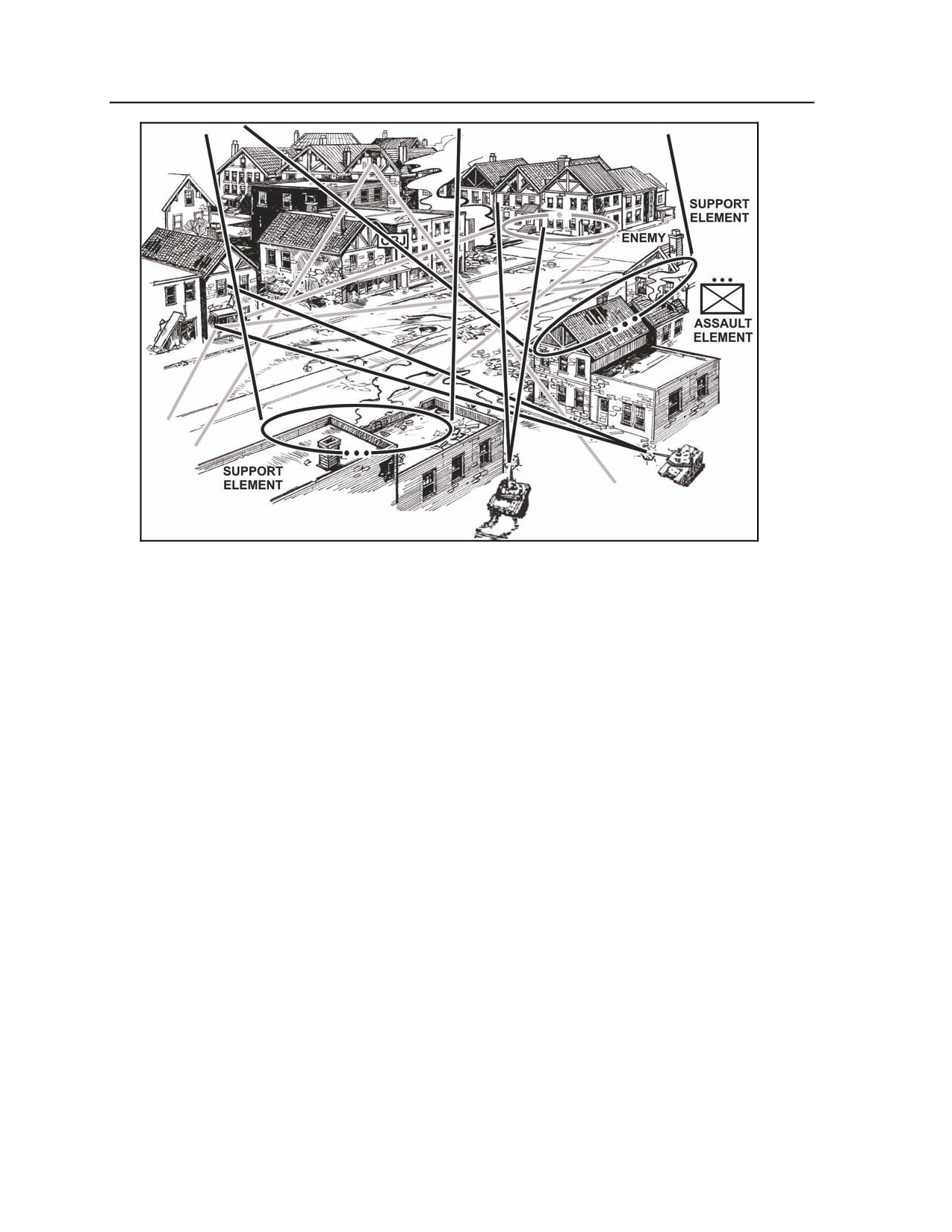
7-173. A comprehensive understanding of the battlefield and enemy and friendly disposition is a crucial
factor in all support-by-fire operations. The platoon leader uses all available intelligence and information
resources to stay abreast of events on the battlefield. Additional considerations may apply. The platoon may
have to execute an attack to secure the terrain from where it will conduct the support by fire. The initial
support-by-fire position may not afford adequate security or may not allow the platoon to achieve its
intended purpose. This could force the platoon to reposition to maintain the desired weapons effects on the
enemy. The platoon leader must ensure the platoon adheres to these guidelines:
Maintain communication with the moving element.
Be prepared to support the moving element with both direct and indirect fires.
Be ready to lift, shift, or cease fires when masked by the moving element.
Scan the area of operations and prepare to acquire and destroy any enemy element that
threatens the moving element.
Maintain 360-degree security.
Use Javelins to destroy any exposed enemy vehicles.
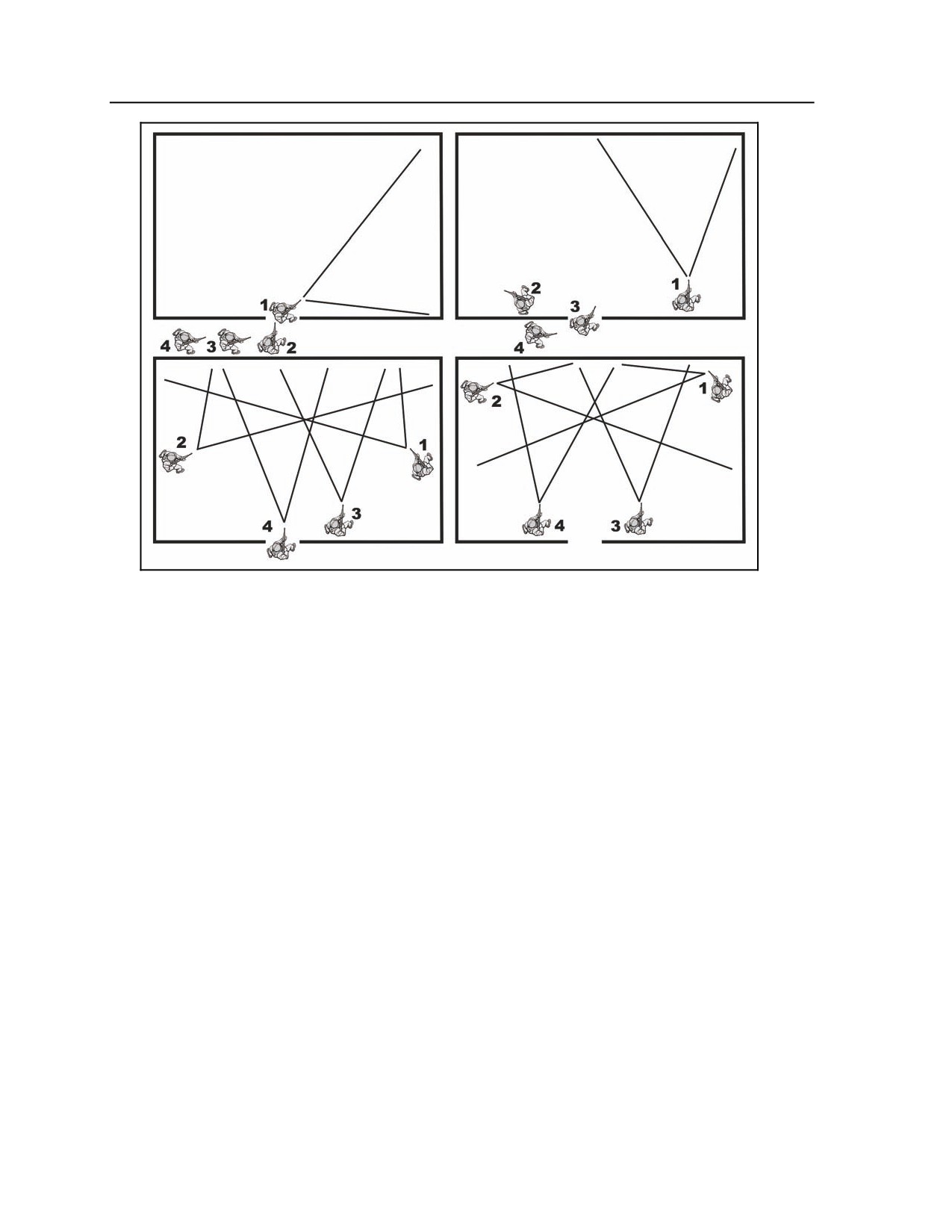
Employ squads to lay a base of sustained fire to keep the enemy fixed or suppressed in his
fighting positions.
Prevent the enemy from employing accurate direct fires against the protected force.
28 March 2007
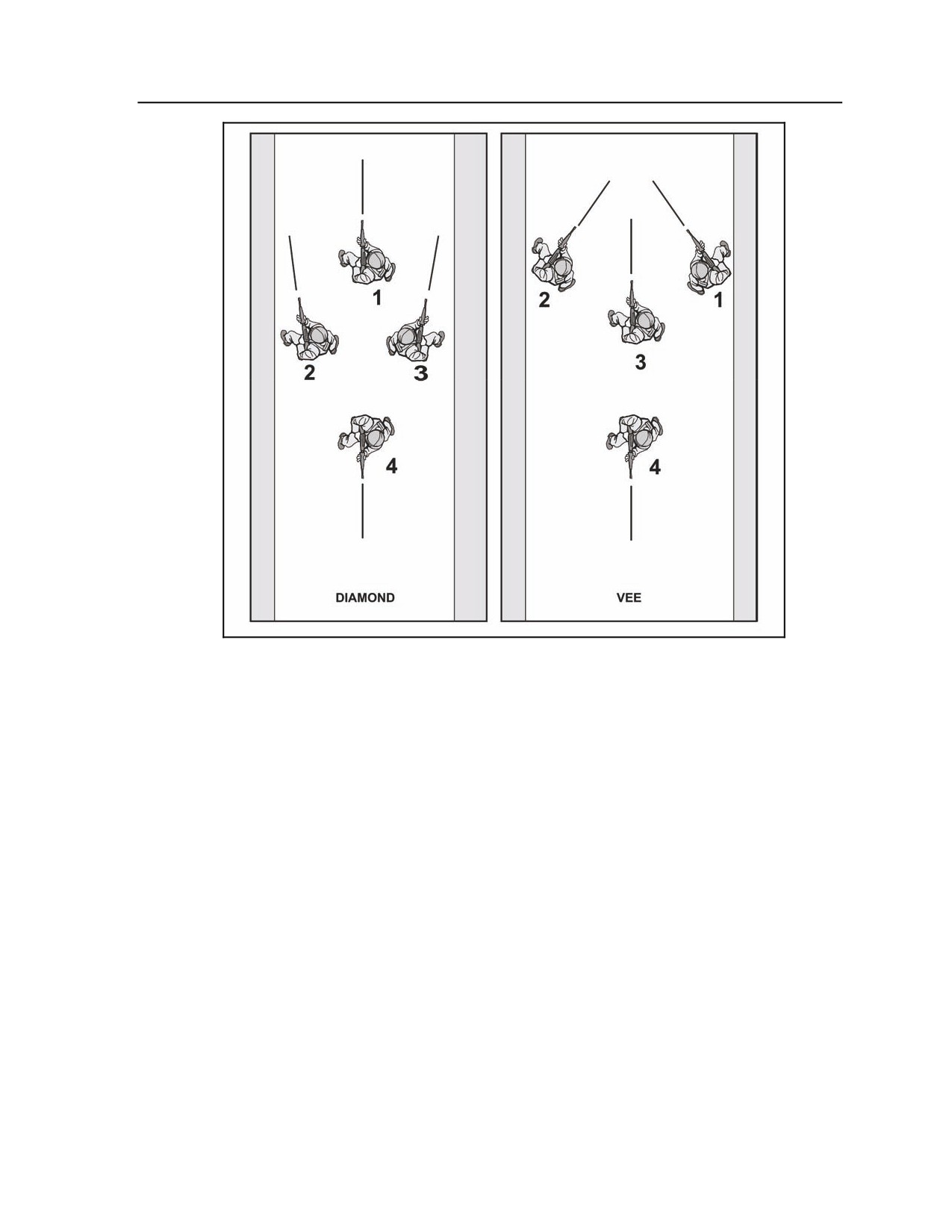
FM 3-21.8
7-35
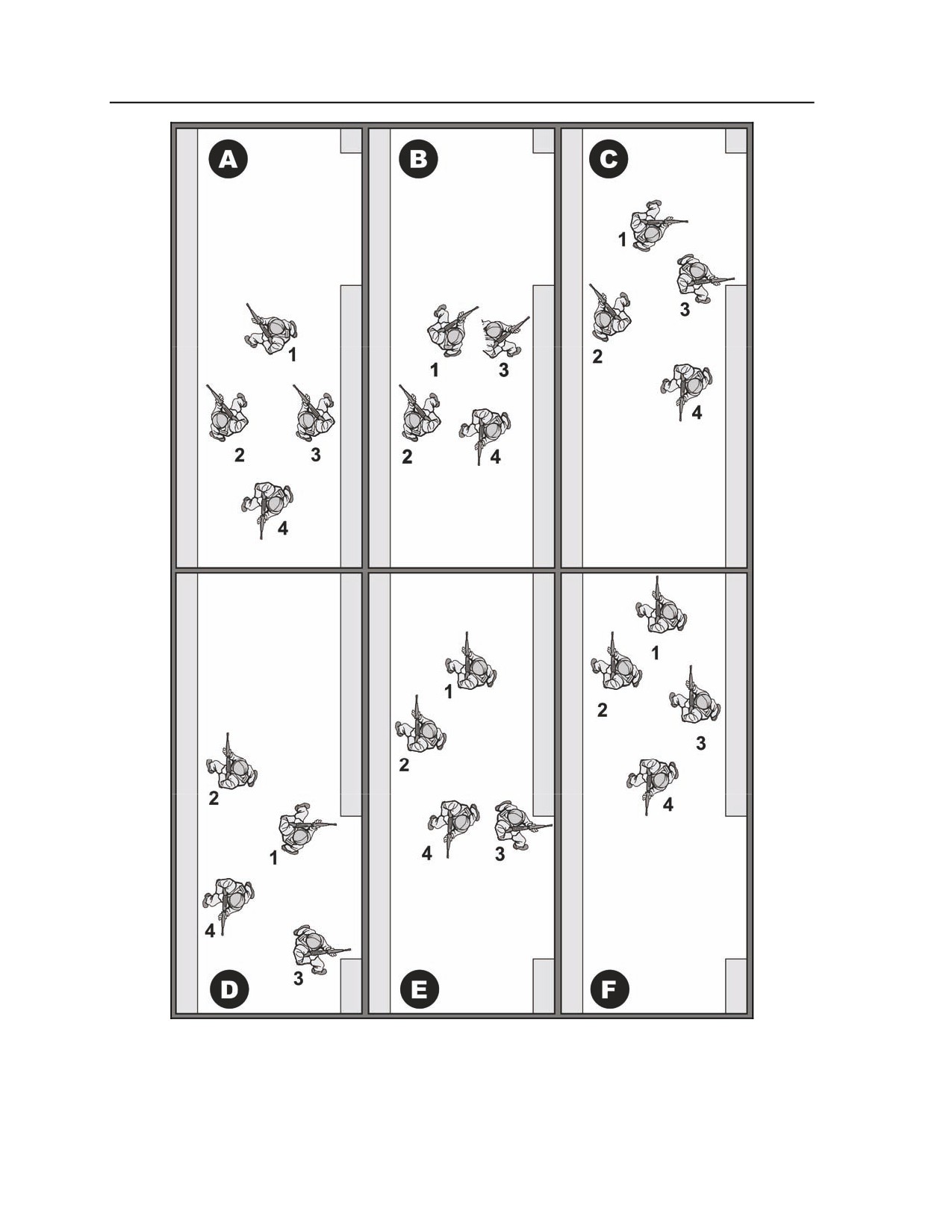
Chapter 7
ATTACK BY FIRE
7-174. The platoon maneuvers to a position on the battlefield from where it can observe the enemy and
engage him with direct and indirect fires at a distance to destroy or weaken his maneuvers. The platoon
destroys the enemy or prevents him from repositioning. The platoon employs long-range fires from
dominating terrain. It also uses flanking fires or takes advantage of the standoff range of the unit’s weapons
systems. The company commander may designate an attack-by-fire position from where the platoon will
fix the enemy. An attack-by-fire position is most commonly employed when the mission or tactical
situation focuses on destruction or prevention of enemy movement. In the offense, it is usually executed by
supporting elements. During defensive operations, it is often a counterattack option for the reserve element.
7-175. When the platoon is assigned an attack-by-fire position, the platoon leader obtains the most current
intelligence update on the enemy and applies his analysis to the information. During planning and
preparation, the platoon leader should consider—
Conducting a line-of-sight analysis during terrain analysis to identify the most favorable
locations to destroy or fix the enemy.
Conducting direct and indirect fire planning and integration.
Determining control measures (triggers) for lifting, shifting, or ceasing direct fires.
Determining control measures for shifting or ceasing indirect fires.
Planning and rehearsing actions on contact.
7-176. Several other considerations may affect the successful execution of an attack by fire. The platoon
may be required to conduct an attack against enemy security forces to seize the ground from where it will
establish the attack-by-fire position. The initial attack-by-fire position may afford inadequate security or
may not allow the platoon to achieve its task or purpose. This could force the platoon to reposition to
maintain the desired weapons effects on the enemy force. Because an attack by fire may be conducted well
beyond the direct fire range of other platoons, it may not allow the platoon to destroy the targeted enemy
force from its initial positions. The platoon may begin to fix the enemy at extended ranges. Additional
maneuver would then be required to close with the enemy force and complete its destruction. Throughout
an attack by fire, the platoon should reposition or maneuver to maintain flexibility, increase survivability,
and maintain desired weapons effects on the enemy. Rifle squad support functions may include:
Seizing the attack-by-fire position before occupation by mounted sections.
Providing local security for the attack-by-fire position.
Executing timely, decisive actions on contact.
Using maneuver to move to and occupy attack-by-fire positions.
Destroying enemy security elements protecting the targeted force.
Employing effective direct and indirect fires to disrupt, fix, or destroy the enemy force.
SECTION VIII — URBAN AREAS
7-177. Infantry platoons conduct operations in urban areas using the same principles applicable to other
offensive operations. This section explains the general tactics, techniques, and procedures used for a limited
attack in an urban area. Depending on the scale of the operation, Infantry platoons or squads may be
required to conduct any or all of the find, fix, fight, and follow-through functions. Leaders should expect
trouble in the process of determining the exact location of the enemy and should anticipate enemy
knowledge of their movements prior to arriving in the objective area. For a more detailed discussion on
urban operations see FM 3-06.11.
CRITICAL TASKS
7-178. There are a number of critical tasks that need emphasis for Infantry platoons assaulting a building:
Isolate the building.
Gain and maintain fire superiority inside and outside the building.
Gain access to the inside of the building.
7-36
FM 3-21.8
28 March 2007
Offensive Operations
Move inside the building.
Seize positions of advantage.
Control the tempo.
FIND
7-179. The compartmentalized nature of urban terrain, limited observation and fields of fire, and the vast
amounts of potential cover and concealment mean that defenders can disperse and remain undetected. The
origin of enemy gunfire can be difficult to detect, because distance and direction become distorted by
structures. The nature of urban conflicts makes it more difficult for leaders to exercise command and
control verbally, and for Soldiers to pass and receive information. Situational understanding is normally
limited to the platoon’s immediate area.
ISOLATE THE BUILDING
7-180. The fix function has two aspects: isolating the objective to prevent interference from the outside
(while preventing enemy from exiting), and separating forces on the objective from each other (denying
mutual support and repositioning). This is accomplished by achieving fire superiority and seizing positions
of advantage. If the platoon is conducting a semi-independent assault, it should be organized to accomplish
both the fix and finish function.
7-181. A cordon is a line of troops or military posts that enclose an area to prevent passage. The Infantry
platoon normally conducts a cordon as part of a larger unit. It is established by positioning one or more
security elements on key terrain that dominates avenues of approach in and out of the objective area. The
overall goal is the protection of the maneuver element, and to completely dominate what exits or enters the
objective area. This requires a detailed understanding of avenues of approach in the area. There are many
techniques used to facilitate isolation including, blocking positions, direct fire (precision and area), indirect
fire, roadblocks, checkpoints, and observation posts. The same techniques can be used to cordon and search
a small urban area (such as a village) surrounded by other terrain (Figure 7-10).
7-182. Ideally these positions are occupied simultaneously, but a sequential approach can also be useful.
Limited visibility aids can be used in the establishment and security of the cordon. The security element
can either surround the area while the maneuver element simultaneously moves in, or it can use a
sequential technique in which they use stealth to get into position before the actual assault.
7-183. Plans should be developed to handle detained personnel. Infantrymen will normally provide
security and accompany police and intelligence forces who will identify, question, and detain suspects.
Infantry may also conduct searches and assist in detaining suspects, but their principal role is to reduce any
resistance that may develop and to provide security for the operation. Use of force is kept to a minimum
unless otherwise directed.
28 March 2007
FM 3-21.8
7-37
Chapter 7
Figure 7-10. Isolate the building.
ASSAULT A BUILDING
7-184. Squads and platoons, particularly when augmented with engineers, are the best organized and
equipped units in the Army for breaching protective obstacles; gaining access to buildings; and assaulting
rooms, hallways, and stairways. Although there are specific drills associated with fighting in buildings, the
overall assault is an operation, not a drill. During planning, the leader’s level of detail should identify each
window (aperture, opening, or firing port) in his sector fortifications. He should then consider assigning
these as a specific TRP when planning fires.
On 21 July 2003, the 3rd battalion 327 Infantry Regiment and an assault
team of elite Special Operations Soldiers from Task Force 20 conducted an assault
on a building as part of a raid to kill or capture high value targets.
Surprise, created by leveraging the aspect of time, enabled the leader to
control the tempo by creating an initial advantage for the attackers. Instead of
sequential actions, the leaders began actions on the objective with the near
simultaneous arrival of the assault, support element, and security elements. The
assault element arrived at an assault position right outside of the building. The
support element occupied three separate support-by-fire positions. Two security
elements were organized to establish inner and outer cordons. The first security
element isolated the objective by establishing six blocking positions that denied
enemy escape and blocked local counterattacks. The second security element
formed the outer cordon to prevent a general counterattack and protect the
population. With the enemy force found and fixed, an interpreter using a bullhorn
requested their quiet surrender. This request was met by gunfire from the objective.
The fight began with the enemy concentrated on the building’s second floor.
The support element easily achieved enough fire superiority to enable movement
outside the building. With those conditions created, the assault element moved from
the assault position to objective and without difficulty seized the building’s first floor.
However, once the assault element attempted to go to the second floor, the support
7-38
FM 3-21.8
28 March 2007
Offensive Operations
element was not able to maintain the fire superiority necessary to facilitate the move.
The assault element was also unable to achieve fire superiority. Undeterred, the
assault element chanced a move up the stairway only to be beaten back by effective
enemy fires resulting in casualties. They attempted several times to gain fire
superiority but the defender’s position of advantage gave them the firepower
advantage and the assault was halted.
When the leader realized the team would not be able to gain fire superiority
from their current locations, he slowed the operation’s tempo down by ordering
another element to seize a position of advantage on top of the objective building.
Several members of the follow-on force gained access to the roof tops of neighboring
houses. From there, they were able to use a supersurface avenue of approach to
seize the objective building’s rooftop. From this position of advantage, the Soldiers
were able to communicate target locations and monitor munition effects, increasing
the support element’s ability to destroy or suppress the enemy.
With fire superiority completely gained outside and inside the building, the
assault team successfully renewed its attempt to move to the second floor. Once up
the stairs, they quickly eliminated remaining resistance and cleared the remainder of
the objective, finishing the fight and accomplishing the mission.
ENTERING THE BUILDING
7-185. After establishing suppression and obscuration, leaders deploy their subordinates to secure the near
side and then, after gaining access, secure the far side. Gaining access to the inside of the building normally
requires reducing protective obstacles. Reducing obstacles is discussed at length in Appendix F.
7-186. Units gain access by using either a top or bottom entry. The entry point is the same thing as a point
of penetration for an obstacle breach and as such is a danger area. The entry point will become the focus of
fires for any enemy in a position to fire at it. It is commonly referred to as the “fatal funnel.” Leaders
ensure they have established measures to ensure the assault team has fire superiority when moving through
the fatal funnel. Grenades (ROE determines fragmentation or concussion) are used to gain enough of a
window of opportunity until the assault element can employ its small arms fire.
Top Entry
7-187. The top of a building is ordinarily considered a position of advantage. Entering at the top and
fighting downward is the preferred method of gaining access to a building for a number of reasons. First,
just as in operations on other types of terrain, it is easier to own the high ground and work your way down
than it is to fight your way up when the enemy owns the high ground. Second, an enemy forced down to
ground level may be tempted to withdraw from the building and expose himself to the fire of covering units
or weapons. Third, the ground floor and basements are normally more heavily defended. Finally, the roof
of a building is ordinarily weaker than the walls (and therefore easier to penetrate).
7-188. Top entry is only feasible when the unit can gain access to an upper floor or rooftop. Rooftops are
danger areas when surrounding buildings are higher and forces can be exposed to fire from those buildings.
Soldiers should consider the use of devices and other techniques that allow them upper level access without
using interior stairways. Those devices and techniques include, but are not limited to, adjacent rooftops, fire
escapes, portable ladders, and various Soldier-assisted lifts. For more information on top entry breaching,
see FM 3-06.11.
Bottom Entry
7-189. Entry at the bottom is common and may be the only option available. When entering from the
bottom, breaching a wall to create a “mousehole” is the preferred method because doors and windows may
be booby-trapped and covered by fire from inside the structure. There are many ways to accomplish this,
including employing CCMS, SLM, demolitions, hand tools, machine guns, artillery fire, and tank fire. The
actual technique used depends on the ROE, assets available, building structure, and the enemy situation. If
28 March 2007
FM 3-21.8
7-39
Chapter 7
the assault element must enter through a door or window, it should enter from a rear or flank position after
ensuring the entry point is clear of obstacles.
Secure the Near and Far Side of the Point of Penetration
7-190. Infantry platoons use the following drill for gaining access to the building. The steps of this drill
are very similar to those drills described in Section IX to secure the near and far side of the point of
penetration—
The squad leader and the assault fire team move to the last covered and concealed position
near the entry point.
The squad leader confirms the entry point.
The platoon leader or squad leader shifts the support fire away from the entry point.
The support-by-fire element continues to suppress building and adjacent enemy positions as
required.
Buddy team #1 (team leader and automatic rifleman) remain in a position short of the entry
point to add suppressive fires for the initial entry.
Buddy team #2 (grenadier and rifleman) and the squad leader move to the entry point. They
move in rushes or by crawling.
The squad leader positions himself where he can best control his teams.
Buddy team #2 position themselves against the wall to the right or left of the entry point.
On the squad leader command of COOK OFF GRENADES (2 seconds maximum), the
Soldiers employing the grenades shout, FRAG OUT, and throw the grenades into the
building. (If the squad leader decides not to use grenades, he commands, PREPARE TO
ENTER—GO!)
Upon detonation of both grenades (or command GO), the buddy team flows into the
room/hallway and moves to points of domination engaging all identified or likely enemy
positions.
Both Soldiers halt and take up positions to block any enemy movement toward the entry
point.
Simultaneously, buddy team #1 moves to and enters the building, joins buddy team #2, and
announces, CLEAR.
The squad leader remains at the entry point and marks it IAW unit SOP. He calls forward the
next fire team with, NEXT TEAM IN.
Once the squad has secured a foothold, the squad leader reports to the platoon leader,
FOOTHOLD SECURE. The platoon follows the success of the seizure of the foothold with
the remainder of the platoon.
7-191.
When using a doorway as the point of entry, the path of least resistance is initially determined on
the way the door opens. If the door opens inward, the Soldier plans to move away from the hinged side. If
the door opens outward, he plans to move toward the hinged side. Upon entering, the size of the room,
enemy situation, and obstacles in the room (furniture and other items) that hinder or channel movement
become factors that influence the number one man’s direction of movement.
CLEAR A ROOM
7-192. The term room in this FM means any enclosed space or partition within a building. Although
rooms come in all shapes and sizes, there are some general principles that apply to most room clearing
tasks. For clearing large open buildings such as hangars or warehouses, it may be necessary to use
subordinate units using a line formation while employing traveling or bounding overwatch. These methods
can effectively clear the entire structure while ensuring security.
7-193. Room clearing techniques differ based on METT-TC, ROE, and probability of noncombatants
inside the building. If there are known or suspected enemy forces, but no noncombatants inside the
building, the platoon may conduct high intensity room clearings. If there are known or suspected
7-40
FM 3-21.8
28 March 2007
Offensive Operations
noncombatants within the building, the platoon may conduct precision room clearings. High intensity room
clearing may consist of fragmentation grenade employment and an immediate and high volume of small
arms fire placed into the room, precision room clearing will not.
7-194. Room clearing techniques are described using the standard four-man fire team. This does not mean
that all four members must enter a room, nor does it mean that more than four men cannot enter. The fire
team organization is the baseline from where units adapt to the specific situation. This is because the
compartmentalized nature typical of buildings and rooms makes units larger than squads awkward and
unmanageable.
7-195. For this battle drill to be effectively employed, each member of the team must know his sector of
fire and how his sector overlaps and links with the sectors of the other team members. No movement
should mask the fire of any of the other team members.
7-196. On the signal, the team enters through the entry point (or breach). As the team members move to
their points of domination, they engage all threats or hostile targets in sequence in their sector. The
direction each man moves should not be preplanned unless the exact room layout is known. Each man
should, however, go in a direction opposite the man in front of him (Figure 7-11). For example:
#1 Man. The #1 man enters the room and eliminates any immediate threat. He can move left
or right, moving along the path of least resistance to a point of domination—one of the two
corners and continues down the room to gain depth.
#2 Man. The #2 man enters almost simultaneously with the first and moves in the opposite
direction, following the wall. The #2 man must clear the entry point, clear the immediate
threat area, and move to his point of domination.
#3 Man. The #3 man simply moves in the opposite direction of the #2 man inside the room,
moves at least 1 meter from the entry point, and takes a position that dominates his sector.
#4 Man. The #4 man moves in the opposite direction of the #3 man, clears the doorway by at
least 1 meter, and moves to a position that dominates his sector.
7-197. Once the room is cleared, the team leader may order some team members to move deeper into the
room overwatched by the other team members. The team leader must control this action. In addition to
dominating the room, all team members are responsible for identifying possible loopholes and mouseholes
in the ceiling, walls, and floor. Cleared rooms should be marked IAW unit SOP.
28 March 2007
FM 3-21.8
7-41
Chapter 7
Figure 7-11. Clearing a room.
MOVING IN THE BUILDING
7-198. Movement techniques used inside a building are employed by teams to negotiate hallways and
other avenues of approach. They are similar to movement techniques employed when clearing enemy
trenches, which is discussed in Section IX.
Diamond Formation (Serpentine Technique)
7-199. The serpentine technique is a variation of a diamond formation that is used in a narrow hallway.
The #1 man provides security to the front. His sector of fire includes any enemy Soldiers who appear at the
far end or along the hallway. The #2 and #3 men cover the left and right sides of the #1 man. Their sectors
of fire include any enemy combatants who appear suddenly from either side of the hall. The #4 man
(normally carrying the M249 machine gun) provides rear protection against any enemy Soldiers suddenly
appearing behind the team.
Vee Formation (Rolling-T Technique)
7-200. The rolling-T technique is a variation of the Vee formation and is used in wide hallways (Figure 7
12). The #1 and #2 men move abreast, covering the opposite side of the hallway from the one they are
walking on. The #3 man covers the far end of the hallway from a position behind the #1 and #2 men, firing
between them. The #4 man provides rear security.
7-42
FM 3-21.8
28 March 2007
Offensive Operations
Figure 7-12. Diamond and vee formation techniques.
Clearing Hallway Junctions
7-201. Hallway intersections are danger areas and should be approached cautiously. Figure 7-13 depicts
the fire team’s actions upon reaching a “T” intersection when approaching along the “cross” of the “T”.
The unit is using the diamond (serpentine) formation for movement (Figure 7-13 A). To clear a hallway—
The team configures into a modified 2-by-2 (box) formation with the #1 and #3 men abreast
and toward the right side of the hall. The #2 man moves to the left side of the hall and orients
to the front, and the #4 man shifts to the right side (his left) and maintains rear security.
(When clearing a right-hand corner, use the left-handed firing method to minimize exposure
[Figure 7-13 B]).
The #1 and #3 men move to the edge of the corner. The #3 man assumes a low crouch or
kneeling position. On signal, the #3 man, keeping low, turns right around the corner and the
#1 man, staying high, steps forward while turning to the right. (Sectors of fire interlock and
the low/high positions prevent Soldiers from firing at one another [Figure 7-13 C]).
The #2 and #4 men continue to move in the direction of travel. As the #2 man passes behind
the #1 man, the #1 man shifts laterally to his left until he reaches the far corner (Figure 7-13
D).
The #2 and #4 men continue to move in the direction of travel. As the #4 man passes behind
the #3 man, the #3 man shifts laterally to his left until he reaches the far corner. As the #3
man begins to shift across the hall, the #1 man turns into the direction of travel and moves to
his original position in the diamond (serpentine) formation (Figure 7-13 E).
As the #3 and #4 men reach the far side of the hallway, they, too, assume their original
positions in the serpentine formation, and the fire team continues to move (Figure 7-13 F).
28 March 2007
FM 3-21.8
7-43
Chapter 7
Figure 7-13. Clearing hallway junctions.
7-44
FM 3-21.8
28 March 2007
Offensive Operations
Clearing a “T” Intersection
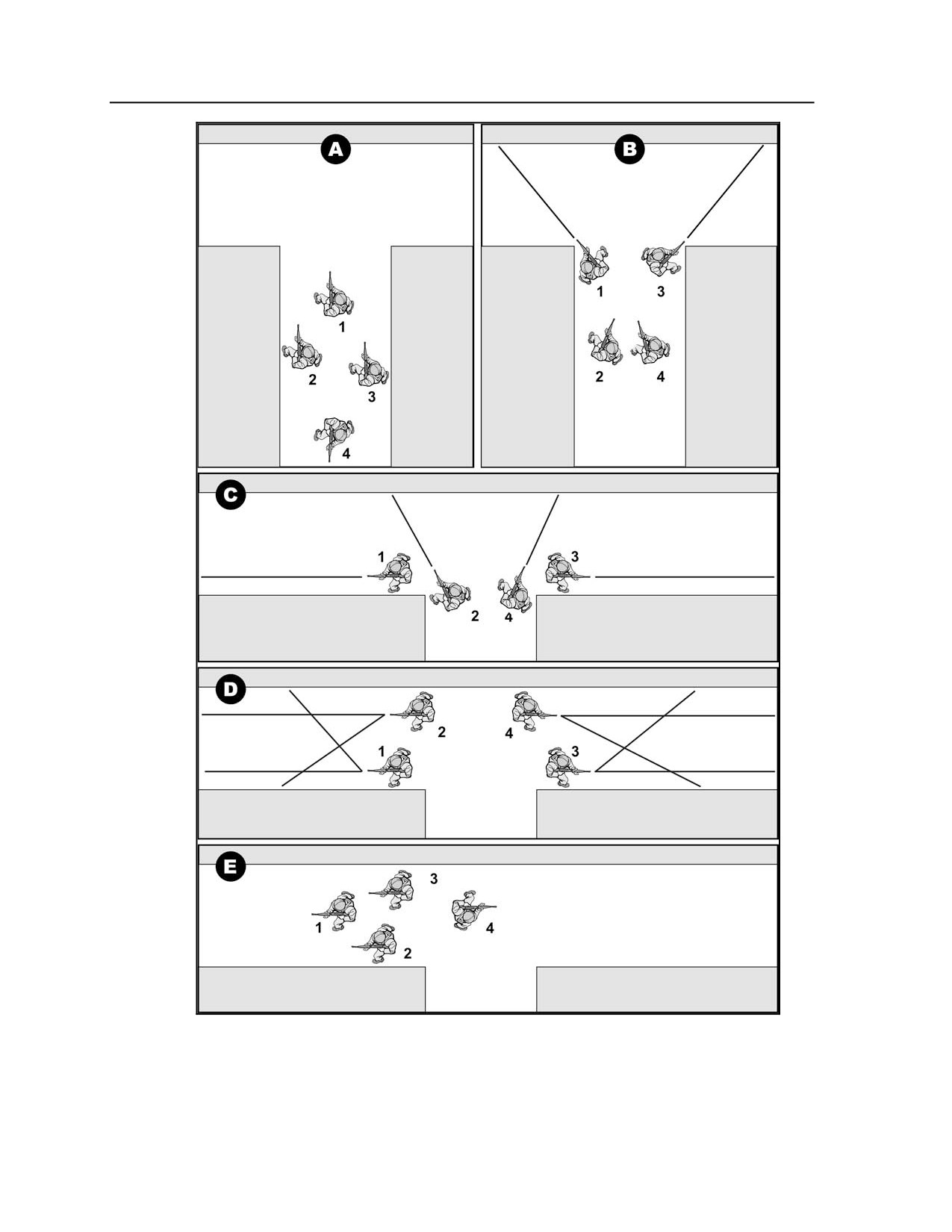
7-202. Figure 7-14 depicts the fire team’s actions upon reaching a “T” intersection when approaching
from the base of the “T”. The fire team is using the diamond (serpentine) formation for movement (Figure
7-14 A). To clear a “T” intersection—
The team configures into a 2-by-2 (box) formation with the #1 and #2 men left and the #3 and
#4 men right. (When clearing a right-hand corner, use the left-handed firing method to
minimize exposure [Figure 7-14 B]).
The #1 and #3 men move to the edge of the corner and assume a low crouch or kneeling
position. On signal, the #1 and #3 men simultaneously turn left and right respectively (Figure
7-14 C).
At the same time, the #2 and #4 men step forward and turn left and right respectively while
maintaining their (high) position. (Sectors of fire interlock and the low/high positions prevent
Soldiers from firing at another [Figure 7-14 D]).
Once the left and right portions of the hallway are clear, the fire team resumes the movement
formation (Figure 7-14 E). Unless security is left behind, the hallway will no longer remain
clear once the fire team leaves the immediate area.
28 March 2007
FM 3-21.8
7-45
Chapter 7
Figure 7-14. Clearing a “T” intersection.
7-46
FM 3-21.8
28 March 2007
Offensive Operations
Clearing Stairwells and Staircases
7-203. Stairwells and staircases are comparable to doorways because they create a fatal funnel. The
danger is intensified by the three-dimensional aspect of additional landings. The ability of units to conduct
the movement depends upon which direction they are traveling and the layout of the stairs. Regardless, the
clearing technique follows a basic format:
The leader designates an assault element to clear the stairs.
The unit maintains 360-degree, three-dimensional security in the vicinity of the stairs.
The leader then directs the assault element to locate, mark, bypass, and or clear any obstacles
or booby traps that may be blocking access to the stairs.
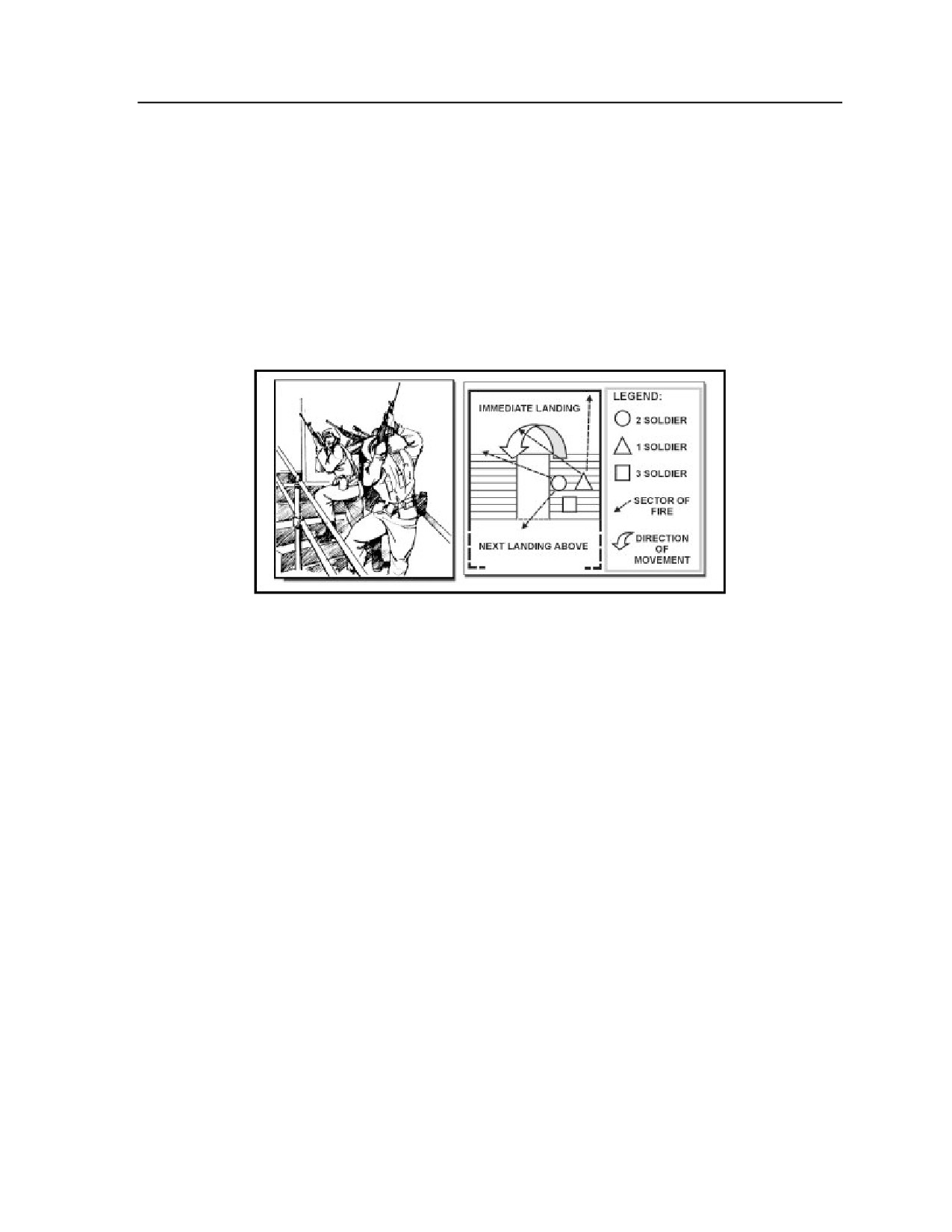
The assault element moves up (or down) the stairway by using either the two-, three-, or four-
man flow technique, providing overwatch up and down the stairs while moving. The three-
man variation is preferred (Figure 7-15).
Figure 7-15. Three-man-flow clearing technique.
FOLLOW THROUGH
7-204. After securing a floor (bottom, middle, or top), selected members of the unit are assigned to cover
potential enemy counterattack routes to the building. Priority must be given initially to securing the
direction of attack. Security elements alert the unit and place a heavy volume of fire on enemy forces
approaching the unit.
7-205. Units must guard all avenues of approach leading into their area. These may include—
Enemy mouseholes between adjacent buildings.
Covered routes to the building.
Underground routes into the basement.
Approaches over adjoining roofs or from window to window.
7-206. Units that performed missions as assault elements should be prepared to assume an overwatch
mission and to support another assault element.
7-207. To continue the mission—
Momentum must be maintained. This is a critical factor in clearing operations. The enemy
cannot be allowed to move to its next set of prepared positions or to prepare new positions.
The support element pushes replacements, ammunition, and supplies forward to the assault
element.
Casualties must be evacuated and replaced.
Security for cleared areas must be established IAW the OPORD or TSOP.
All cleared areas and rooms must be marked IAW unit SOP.
The support element must displace forward to ensure that it is in place to provide support
(such as isolation of the new objective) to the assault element.
28 March 2007
FM 3-21.8
7-47
Chapter 7
SECTION IX — ATTACKING FORTIFIED POSITIONS
7-208. Fortifications are works emplaced to defend and reinforce a position. Time permitting, enemy
defenders build bunkers and trenches, emplace protective obstacles, and position mutually supporting
fortifications when fortifying their positions. Soldiers who attack prepared positions should expect to
encounter a range of planned enemy fires to include small arms fire, mortars, artillery, antitank missiles,
antitank guns, tanks, attack aviation, and close air support. Attacking forces should also expect a range of
offensive type maneuver options to include spoiling attacks, internal repositioning, counterattacks, and
withdrawing to subsequent defensive positions. Spoiling attacks will attempt to disrupt the attacker’s
momentum and possibly seize key terrain. If driven out of their prepared positions, enemy troops may try to
win them back by hasty local counterattacks or through deliberate, planned combined arms counterattacks.
If forced to withdraw, the enemy forces may use obstacles, ambushes, and other delaying tactics to slow
down pursuing attackers.
7-209. The attack of a fortified position follows the basic principles of tactical maneuver. However,
greater emphasis is placed upon detailed planning, special training and rehearsals, increased fire support,
and the use of special equipment. The degree of special preparation depends upon the character, and extent
of the defense.
7-210. The deliberate nature of defenses requires a deliberate approach to the attack. These types of
operations are time consuming. Leaders must develop schemes of maneuver that systematically reduce the
area. Initially, these attacks should be limited in scope, focusing on individual positions and intermediate
terrain objectives. Leaders must establish clear bypass criteria and position destruction criteria as well as
allocate forces to secure cleared enemy positions. Failure in this will likely result in enemy reoccupying the
positions, isolating lead elements, and ambushing follow-on units.
7-211. The intense, close combat prevalent in trench clearing is remarkably similar to fighting in built up
areas. Comparable characteristics include:
Restricted Observation and Fields of Fire. Once the trench is entered, visibilities may be
limited to a few meters in either direction. This compartmentalization necessarily
decentralizes the engagement to the lowest level.
Cover and Concealment. The nature of a trench system allows covered movement of both
friendly and enemy forces. To prevent being flanked or counterattacked, junctions, possible
entry points, and corners should be secured.
Difficulty in Locating the Enemy. The assault element may come under fire from multiple
mutually supporting positions in the trench or a nearby position. The exact location of the fire
may be difficult to determine. Supporting elements outside the trench should be capable of
locating, suppressing, or destroying such threats.
Close Quarters Fighting. Because of the close nature of the trench system, Soldiers should
be prepared to use close quarters marksmanship, bayonet, and hand-to-hand fight techniques.
Restricted Movement. Trench width and height will severely restrict movement inside the
system. This will ordinarily require the assault element to move at a low crouch or even a
crawl. Sustainment functions such as ammunition resupply, EPW evacuation, casualty
evacuation, and reinforcement will also be hampered.
Sustainment. The intensity of close combat in the trench undoubtedly results in increased
resource requirements.
FIND
7-212. Finding the enemy’s fortified positions relates back to the position’s purpose. There are two
general reasons to create fortified positions. The first includes defending key terrain and using the position
as a base camp, shelter, or sanctuary for critical personnel or activities. This type of position is typically
camouflaged and difficult to locate. When U.S. forces have air superiority and robust reconnaissance
abilities, enemy forces will go to great lengths to conceal these positions. Sometimes the only way to find
these enemy positions is by movement to contact. When Infantry platoons or squads encounter a previously
7-48
FM 3-21.8
28 March 2007
Offensive Operations
unidentified prepared enemy position, they should not, as a general rule, conduct a hasty attack until they
have set conditions for success.
7-213. The second general purpose for fortified positions is to create a situation in which the attacker is
required to mass and present a profitable target. This type of position normally occurs in more conventional
battles. These positions can be relatively easy to find because they occupy key terrain, establish identifiable
patterns, and generally lack mobility.
7-214. Attacking fortified positions requires thorough planning and preparation based on extensive
reconnaissance.
FIX
7-215. An enemy in fortified defenses has already partially fixed himself. This does not mean he will not
be able to maneuver or that the fight will be easy. It does mean that the objective is probably more defined
than with an enemy with complete freedom of movement. Fixing the enemy will still require measures to
prevent repositioning to alternate, supplementary, and subsequent positions on the objective and measures
to block enemy counterattack elements.
FINISH — FIGHTING ENEMIES IN FORTIFICATIONS
7-216. Finishing an enemy in prepared positions requires the attacker to follow the fundamentals of the
offense-surprise, concentration, tempo, and audacity to be successful.
7-217. The actual fighting of enemy fortifications is clearly an Infantry platoon unit function because
squads and platoons, particularly when augmented with engineers, are the best organized and equipped
units in the Army for breaching protective obstacles. They are also best prepared to assault prepared
positions such as bunkers and trench lines. Infantry platoons are capable of conducting these skills with
organic, supplementary, and supporting weapons in any environment.
7-218. Leaders develop detailed plans for each fortification, using the SOSRA technique to integrate and
synchronize fire support and maneuver assets. Although there are specific drills associated with the types of
fortifications, the assault of a fortified area is an operation, not a drill. During planning, the leader’s level of
detail should identify each aperture (opening or firing port) of his assigned fortification(s) and consider
assigning these as a specific target when planning fires. Contingency plans are made for the possibility of
encountering previously undetected fortifications along the route to the objective, and for neutralizing
underground defenses when encountered.
SECURING THE NEAR AND FAR SIDE—BREACHING PROTECTIVE OBSTACLES
7-219. To fight the enemy almost always requires penetrating extensive protective obstacles, both
antipersonnel and antivehicle. Of particular concern to the Infantrymen are antipersonnel obstacles.
Antipersonnel obstacles
(both explosive and nonexplosive) include, wire entanglements; trip flares;
antipersonnel mines; field expedient devices (booby traps, nonexplosive traps, punji sticks); flame devices;
rubble; warning devices; CBRN; and any other type of obstacle created to prevent troops from entering a
position. Antipersonnel obstacles are usually integrated with enemy fires close enough to the fortification
for adequate enemy surveillance by day or night, but beyond effective hand grenade range. Obstacles are
also used within the enemy position to compartmentalize the area in the event outer protective barriers are
breached. See Appendix F for more information on obstacles.
7-220. The following steps are an example platoon breach:
The squad leader and the breaching fire team move to the last covered and concealed position
near the breach point (point of penetration).
The squad leader confirms the breach point.
The platoon leader or squad leader shifts the suppressing element away from the entry point.
The fire element continues to suppress enemy positions as required.
28 March 2007
FM 3-21.8
7-49
Chapter 7
Buddy team #1 (team leader and the automatic rifleman) remains in a position short of the
obstacle to provide local security for buddy team #2.
The squad leader and breaching fire team leader employ smoke grenades to obscure the
breach point.
Buddy team #2 (grenadier and rifleman) moves to the breach point. They move in rushes or
by crawling.
The squad leader positions himself where he can best control his teams.
Buddy team #2 positions themselves to the right and left of the breach point near the
protective obstacle.
Buddy team #2 probes for mines and creates a breach, marking their path as they proceed.
Once breached, buddy team #1 and buddy team #2 move to the far side of the obstacle and
take up covered and concealed positions to block any enemy movement toward the breach
point. They engage all identified or likely enemy positions.
The squad leader remains at the entry point and marks it. He calls forward the next fire team
with, "Next team in."
Once the squad has secured a foothold, the squad leader reports to the platoon leader,
“Foothold secure.” The platoon follows the success of the seizure of the foothold with the
remainder of the platoon.
KNOCKING OUT BUNKERS
7-221. The term bunker in this FM covers all emplacements having overhead cover and containing
apertures (embrasures) through which weapons are fired. The two primary types are reinforced concrete
pillboxes, and log bunkers. There are two notable exploitable weaknesses of bunkers.
7-222. First, bunkers are permanent, their location and orientation fixed. Bunkers cannot be relocated or
adjusted to meet a changing situation. They are optimized for a particular direction and function. The worst
thing an Infantry platoon or squad can do is to approach the position in the manner it was designed to fight.
Instead, the unit should approach the position from the direction it is least able to defend against—the flank
or rear.
7-223. Second, bunkers must have openings (doors, windows, apertures, or air vents). There are two
disadvantages to be exploited here. First, structurally, the opening is the weakest part of the position and
will be the first part of the structure to collapse if engaged. Second, a single opening can only cover a finite
sector, creating blind spots. To cover these blind spots, the defender has to either rely on mutually
supporting positions or build an additional opening. Mutual support may be disrupted, thereby enabling the
attacker to exploit the blind spot. Adding additional openings correspondingly weakens the position’s
structural soundness, in which case the attacker targets the opening to collapse the position.
7-224. Ideally the team is able to destroy the bunker with standoff weapons and HE munitions. However,
when required, the fire team can assault the bunker with small arms and grenades. A fire team (two to four
men) with HE and smoke grenades move forward under cover of the suppression and obscuration fires
from the squad and other elements of the base of fire. When they reach a vulnerable point of the bunker,
they destroy it or personnel inside with grenades or other hand-held demolitions. All unsecured bunkers
must be treated as if they contain live enemy, even if no activity has been detected from them. The clearing
of bunkers must be systematic or the enemy will come up behind assault groups. To clear a bunker—
The squad leader and the assault fire team move to the last covered and concealed position
near the position’s vulnerable point.
The squad leader confirms the vulnerable point
The platoon leader/squad leader shifts the base of fire away from the vulnerable point.
The base of fire continues to suppress the position and adjacent enemy positions as required.
Buddy team #1 (team leader and the automatic rifleman) remain in a position short of the
position to add suppressive fires for buddy team #2 (grenadier and rifleman).
Buddy team #2 moves to the vulnerable point. They move in rushes or by crawling.
7-50
FM 3-21.8
28 March 2007
Offensive Operations
One Soldier takes up a covered position near the exit.
The other Soldier cooks off a grenade (2 seconds maximum), shouts, FRAG OUT, and throws
it through an aperture.
After the grenade detonates, the Soldier covering the exit enters and clears the bunker.
Simultaneously, the second Soldier moves into the bunker to assist Soldier #1.
Both Soldiers halt at a point of domination and take up positions to block any enemy
movement toward their position.
Buddy team #1 moves to join buddy team #2.
The team leader inspects the bunker, marks the bunker, and signals the squad leader.
The assault squad leader consolidates, reorganizes, and prepares to continue the mission.
ASSAULTING TRENCH SYSTEMS
7-225. Trenches are dug to connect fighting positions. They are typically dug in a zigzagged fashion to
prevent the attacker from firing down a long section if he gets into the trench, and to reduce the
effectiveness of high explosive munitions. Trenches may also have shallow turns, intersections with other
trenches, firing ports, overhead cover, and bunkers. Bunkers will usually be oriented outside the trench, but
may also have the ability to provide protective fire into the trench.
7-226. The trench provides defenders with a route that has frontal cover, enabling them to reposition
without the threat of low trajectory fires. However, unless overhead cover is built, trenches are subject to
the effects of high trajectory munitions like the grenade, grenade launcher, plunging machine gun fire,
mortars, and artillery. These types of weapon systems should be used to gain and maintain fire superiority
on defenders in the trench.
7-227. The trench is the enemy’s home, so there is no easy way to clear it. Their confined nature,
extensive enemy preparations, and the limited ability to integrate combined arms fires makes trench
clearing hazardous for even the best trained Infantry. If possible, a bulldozer or plow tank can be used to
fill in the trench and bury the defenders. However, since this is not always feasible, Infantry units must
move in and clear trenches. Although obscuration is necessarily outside the trench, it can be more of
hindrance to the attacker inside the trench. Use of night vision equipment also requires special
considerations.
Entering the Trenchline
7-228. To enter the enemy trench the platoon takes the following steps:
The squad leader and the assault fire team move to the last covered and concealed position
near the entry point.
The squad leader confirms the entry point.
The platoon leader or squad leader shifts the base of fire away from the entry point.
The base of fire continues to suppress trench and adjacent enemy positions as required.
Buddy team #1 (team leader and automatic rifleman) remains in a position short of the trench
to add suppressive fires for the initial entry.
Buddy team #2 (grenadier and rifleman) and squad leader move to the entry point. They move
in rushes or by crawling (squad leader positions himself where he can best control his teams).
Buddy team #2 positions itself parallel to the edge of the trench. Team members get on their
backs.
On the squad leader command of COOK OFF GRENADES (2 seconds maximum), they
shout, FRAG OUT, and throw the grenades into the trench.
Upon detonation of both grenades, the Soldiers roll into the trench, landing on their feet and
back-to-back. They engage all known, likely or suspected enemy positions.
Both Soldiers immediately move in opposite directions down the trench, continuing until they
reach the first corner or intersection.
28 March 2007
FM 3-21.8
7-51
Chapter 7
Both Soldiers halt and take up positions to block any enemy movement toward the entry
point.
Simultaneously, buddy team #1 moves to and enters the trench, joining buddy team #2. The
squad leader directs them to one of the secured corners or intersections to relieve the Soldier
who then rejoins his buddy at the opposite end of the foothold.
At the same time, the squad leader rolls into the trench and secures the entry point.
The squad leader remains at the entry point and marks it. He calls forward the next fire team
with, NEXT TEAM IN.
Once the squad has secured a foothold, the squad leader reports to the platoon leader,
FOOTHOLD SECURE. The platoon follows the success of the seizure of the foothold with
the remainder of the platoon.
7-229. The leader or a designated subordinate must move into the trench as soon as possible to control the
tempo, specifically the movement of the lead assault element and the movement of follow-on forces. He
must resist the temptation to move the entire unit into the trench as this will unduly concentrate the unit in a
small area. Instead,, he should ensure the outside of the trench remains isolated as he maintains fire
superiority inside the trench. This may require a more deliberate approach. When subordinates have
reached their objectives or have exhausted their resources, the leader commits follow-on forces or requests
support from higher. Once stopped, the leader consolidates and reorganizes.
7-230. The assault element is organized into a series of three-man teams. The team members are simply
referred to as number 1 man, number 2 man, and number 3 man. Each team is armed with at least one
M249 and one grenade launcher. All men are armed with multiple hand grenades.
7-231. The positioning within the three-man team is rotational, so the men in the team must be rehearsed
in each position. The number 1 man is responsible for assaulting down the trench using well aimed
effective fire and throwing grenades around pivot points in the trenchline or into weapons emplacements.
The number 2 man follows the number 1 man closely enough to support him but not so closely that both
would be suppressed if the enemy gained local fire superiority. The number 3 man follows the number 2
man and prepares to move forward when positions rotate.
7-232. While the initial three-man assault team rotates by event, the squad leader directs the rotation of
the three-man teams within the squad as ammunition becomes low in the leading team, casualties occur, or
as the situation dictates. Since this three-man drill is standardized, three-man teams may be reconstituted as
needed from the remaining members of the squad. The platoon leader controls the rotation between squads
using the same considerations as the squad leaders.
Clearing the Trenchline
7-233. Once the squad has secured the entry point and expanded it to accommodate the squad, the rest of
the platoon enters and begins to clear the designated section of the enemy position. The platoon may be
tasked to clear in two directions if the objective is small. Otherwise, it will only clear in one direction as
another platoon enters alongside and clears in the opposite direction.
7-234. The lead three-man team of the initial assault squad moves out past the security of the support
element and executes the trench clearing drill. The number 1 man, followed by number 2 man and number
3 man, maintains his advance until arriving at a pivot, junction point, or weapons emplacement in the
trench. He alerts the rest of the team by yelling out, POSITION or, JUNCTION, and begins to prepare a
grenade. The number 2 man immediately moves forward near the lead man and takes up the fire to cover
until the grenade can be thrown around the corner of the pivot point. The number 3 man moves forward to
the point previously occupied by number 2 and prepares for commitment.
7-235. If the lead man encounters a junction in the trench, the platoon leader should move forward, make
a quick estimate, and indicate the direction the team should continue to clear. This will normally be toward
the bulk of the fortification or toward command post emplacements. He should place a marker (normally
specified in the unit TSOP) pointing toward the direction of the cleared path. After employing a grenade,
the number 2 man moves out in the direction indicated by the platoon leader and assumes the duties of the
number 1 man. Anytime the number 1 man runs out of ammunition, he shouts, MAGAZINE, and
7-52
FM 3-21.8
28 March 2007
Offensive Operations
immediately moves against the wall of the trench to allow the number 2 man to take up the fire. Squad
leaders continue to push uncommitted three-man teams forward, securing bypassed trenches and rotating
fresh teams to the front. It is important to note that trenches are cleared in sequence not simultaneously.
Moving in a Trench
7-236. Once inside, the trench teams use variations of the combat formations described in Chapter 3 to
move. These formations are used as appropriate inside buildings as well. The terms hallway and trench are
used interchangeably. The column (file) and box formations are self explanatory. The line and echelon
formations are generally infeasible.
FOLLOW-THROUGH
7-237. The factors for consolidation and reorganization of fortified positions are the same as consolidation
and reorganization of other attacks. If a fortification is not destroyed sufficiently to prevent its reuse by the
enemy, it must be guarded until means can be brought forward to complete the job. The number of
positions the unit can assault is impacted by the—
Length of time the bunkers must be guarded to prevent reoccupation by the enemy.
Ability of the higher headquarters to resupply the unit.
Availability of special equipment in sufficient quantities.
Ability of the unit to sustain casualties and remain effective.
7-238. As part of consolidation, the leader orders a systematic search of the secured positions for booby
traps and spider holes. He may also make a detailed sketch of his area and the surrounding dispositions if
time allows. This information will be helpful for the higher headquarters intelligence officer or if the unit
occupies the position for an extended length of time.
28 March 2007
FM 3-21.8
7-53
This page intentionally left blank.
Chapter 8
Defensive Operations
Though the outcome of decisive combat derives from offensive actions, leaders often
find it is necessary, even advisable, to defend. The general task and purpose of all
defensive operations is to defeat an enemy attack and gain the initiative for offensive
operations. It is important to set conditions of the defense so friendly forces can
destroy or fix the enemy while preparing to seize the initiative and return to the
offense. The platoon may conduct the defense to gain time, retain key terrain,
facilitate other operations, preoccupy the enemy in one area while friendly forces
attack him in another, or erode enemy forces. A well coordinated defense can also set
the conditions for follow-on forces and follow-on operations.
SECTION I — CHARACTERISTICS OF THE DEFENSE
8-1. Following are the characteristics of the defense that constitute the planning fundamentals for the
Infantry platoon:
Preparation
Security
Disruption
Massing effects
Flexibility
8-2. To ensure the success of the defense, the platoon leader must understand the characteristics of the
defense and apply TLP during planning, preparation, and execution of the operation.
PREPARATION
8-3. The friendly defender arrives in the battle area before the enemy attacker. As the defender, the
platoon must take advantage of this by making the most of preparations for combat in the time available.
By thoroughly analyzing the factors of METT-TC, the platoon leader gains an understanding of the tactical
situation and identifies potential friendly and enemy weaknesses.
8-4. By arriving in the battle area first, the Infantry platoon has the advantage of preparing the terrain
before the engagement. Through the proper selection of terrain and reinforcing obstacles, friendly forces
can direct the energy of the enemy's attack into terrain of their choosing. Friendly forces must take
advantage of this by making the most thorough preparations that time allows while always continuing to
improve their defenses—security measures, engagement areas, and survivability positions. Preparation of
the ground consists of plans for fires and movement; counterattack plans; and preparation of positions,
routes, obstacles, logistics, and command and control (C2) facilities.
8-5. The Infantry platoon must exploit every aspect of terrain and weather to its advantage. In the defense,
as in the attack, terrain is valuable only if the friendly force gains advantage from its possession or control.
In developing a defensive plan, the friendly force takes account of key terrain and attempts to visualize and
cover with fire all possible enemy avenues of approach into their sector. The friendly defense seeks to
defend on terrain that maximizes effective fire, cover, concealment, movement, and surprise.
8-6. Friendly forces must assume that their defensive preparations are being observed. To hinder the
enemy's intelligence effort, leaders establish security forces to conduct counter reconnaissance and deceive
the enemy as to the exact location of the main defenses.
28 March 2007
FM 3-21.8
8-1
Chapter 8
SECURITY
8-7. The goals of the platoon’s security efforts are normally tied to the company efforts. These efforts
include providing early warning, destroying enemy reconnaissance units, and impeding and harassing
elements of the enemy main body. The platoon will typically continue its security mission until directed to
displace.
DISRUPTION
8-8. Defensive plans vary with the circumstances, but all defensive concepts of the operation aim at
disrupting the enemy attacker’s synchronization. Counterattacks, indirect fires, obstacles, and the retention
of key terrain prevent the enemy from concentrating his strength against selected portions of the platoon’s
defense. Destroying enemy command and control vehicles disrupts the enemy synchronization and
flexibility. Separating enemy units from one another allows them to be defeated piecemeal.
MASSING EFFECTS
8-9. The platoon must mass the overwhelming effects of combat power at the decisive place and time if it
is to succeed. It must obtain a local advantage at points of decision. Offensive action may be a means of
gaining this advantage. The platoon leader must remember that this massing refers to combat power and its
effects—not just numbers of Soldiers and weapons systems.
FLEXIBILITY
8-10. Flexibility is derived from sound preparation and effective command and control and results from a
detailed analysis of the factors of METT-TC, an understanding of the unit’s purpose, and aggressive
reconnaissance and surveillance. The platoon must be agile enough to counter or avoid the enemy
attacker’s blows and then strike back effectively. For example, supplementary positions on a secondary
avenue of approach may provide additional flexibility to the platoon. Immediate transitions from defense to
offense are difficult. To ease this transition, the platoon leader must think through and plan for actions his
platoon may need to take, and then rehearse them in a prioritized sequence based on time available.
SECTION II — SEQUENCE OF THE DEFENSE
8-11. As part of a larger element, the platoon conducts defensive operations in a sequence of integrated and
overlapping phases. This section focuses on the following phases within the sequence of the defense:
Reconnaissance, security operations, and enemy preparatory fires.
Occupation.
Approach of the enemy main attack.
Enemy assault.
Counterattack.
Consolidation and reorganization.
RECONNAISSANCE, SECURITY OPERATIONS, AND ENEMY
PREPARATORY FIRES
8-12. Security forces must protect friendly forces in the main battle area (MBA) and allow them to prepare
for the defense. The goals of a security force include providing early warning, destroying enemy
reconnaissance elements (within its capability), and disrupting enemy forward detachments or advance
guard elements. The platoon may be attached to a larger element or remain with the parent company to
conduct counter-reconnaissance. Additionally, the platoon may conduct security operations as part of the
company defensive plan by conducting patrols or manning observation post(s) (OP) to observe named
area(s) of interest (NAI).
8-2
FM 3-21.8
28 March 2007
Defensive Operations
8-13. The platoon may also be required to provide guides to the passing friendly security force and may be
tasked to close the passage lanes. The passage could be for friendly forces entering or departing the security
zone, and may include logistics units supporting the security forces. The platoon, as part of a larger force,
may also play a role in shaping the battlefield. The battalion or brigade combat team commander may
position the company to deny likely enemy attack corridors. This will enhance flexibility and force enemy
elements into friendly engagement areas.
8-14. When not conducting security or preparation tasks, the Infantry platoon normally occupies dug-in
positions with overhead cover to avoid possible enemy artillery preparatory fires.
OCCUPATION
8-15. The occupation phase of the defense includes moving from one location to the defensive location. A
quartering party under company control normally leads this movement to clear the defensive position and
prepares it for occupation. The platoon plans, reconnoiters, and then occupies the defensive position. The
battalion establishes security forces. The remaining forces prepare the defense. To facilitate maximum time
for planning, occupying, and preparing the defense, leaders and Soldiers at all levels must understand their
duties and responsibilities, including priorities of work (covered in the WARNO or by a unit TSOP).
8-16. Occupation and preparation of the defense site
(see Section V of this chapter) is conducted
concurrently with the TLP and the development of the engagement area (if required). The platoon occupies
defensive positions IAW the company commander’s plan and the results of the platoon’s reconnaissance.
To ensure an effective and efficient occupation, the reconnaissance element marks the friendly positions.
These tentative positions are then entered on the operational graphics. Each squad moves in or is led in by a
guide to its marker. Once in position, each squad leader checks his position location. As the platoon
occupies its positions, the platoon leader manages the positioning of each squad to ensure they locate IAW
the tentative plan. If the platoon leader notes discrepancies between actual positioning of the squads and his
plan, he makes the corrections. Security is placed out in front of the platoon. The platoon leader must
personally walk the fighting positions to ensure that everyone understands the plan and that the following
are IAW the plan:
Weapons orientation and general sectors of fire.
Crew served weapons positions.
Rifle squads’ positions in relation to each other.
8-17. Each squad leader ensures he knows the location of the platoon leader and platoon sergeant for
command and control purposes, and where the casualty collection point is located. The platoon may be
required to assist engineers in the construction of tactical obstacles in their sector. All leaders must know
where these obstacles are so they can tie them into their fire plan.
8-18. When the occupation is complete, subordinate leaders can begin to develop their sector sketches
(paragraph 8-100) based on the basic fire plan developed during the leader’s reconnaissance. Positions are
improved when the direct fire plan is finalized and proofed. In addition to establishing the platoon’s
primary positions, the platoon leader and subordinate leaders normally plan for preparation and occupation
of alternate, supplementary, and subsequent positions. This is done IAW the company order. The platoon
and/or company reserve need to know the location of these positions. The following are tactical
considerations for these positions.
ALTERNATE POSITIONS
8-19. The following characteristics and considerations apply to an alternate position:
Covers the same avenue of approach or sector of fire as the primary position.
Located slightly to the front, flank, or rear of the primary position.
Positioned forward of the primary defensive positions during limited visibility operations.
Normally employed to supplement or support positions with weapons of limited range, such as
Infantry squad positions. They are also used as an alternate position to fall back to if the original
position is rendered ineffective or as a position for Soldiers to rest or perform maintenance.
28 March 2007
FM 3-21.8
8-3
Chapter 8
SUPPLEMENTARY POSITIONS
8-20. The following characteristics and considerations apply to a supplementary position:
Covers an avenue of approach or sector of fire different from those covered by the primary
position.
Occupied based on specific enemy actions.
SUBSEQUENT POSITIONS
8-21. The following characteristics and considerations apply to a subsequent position:
Covers the same avenue of approach and or sector of fire as the primary position.
Located in depth through the defensive area.
Occupied based on specific enemy actions or conducted as part of the higher headquarters’
scheme of maneuver.
APPROACH OF THE ENEMY MAIN ATTACK
8-22. As approach of the enemy main attack begins, brigade combat team and higher headquarters engage
the enemy at long range using indirect fires, electronic warfare, Army attack aviation, and close air support
(CAS). The goal is to use these assets and disrupting obstacles to shape the battlefield and or to slow the
enemy’s advance and break up his formations, leaving him more susceptible to the effects of crew served
weapons. As the enemy’s main body echelon approaches the battalion engagement area, the battalion may
initiate indirect fires and CAS to weaken the enemy through attrition. At the same time, the brigade combat
team’s effort shifts to second-echelon forces, depending on the commander’s plan. Based on an event stated
in the company commander’s order, Infantry platoons cease security patrols and bring OPs back into the
defense at a predetermined time. Positions may be shifted in response to enemy actions or other tactical
factors.
ENEMY ASSAULT
8-23. During an enemy assault attacking enemy forces attempt to fix and finish friendly forces. Their
mission will be similar to those in friendly offensive operations: destroy forces, seize terrain, and conduct a
penetration to pass follow-on forces through. During execution of the defense, friendly forces will mass the
effects of fires to destroy the assaulting enemy. The platoon leader must determine if the platoon can
destroy the enemy from its assigned positions.
FIGHTING FROM ASSIGNED POSITIONS
8-24. If the platoon can destroy the enemy from its assigned positions, the platoon continues to fight the
defense.
8-25. The platoon leader continues to call for indirect fires as the enemy approaches. The platoon begins to
engage the enemy at their weapon systems’ maximum effective range. They attempt to mass fires and
initiate them simultaneously to achieve maximum weapons effects. Indirect fires and obstacles integrated
with direct fires should disrupt the enemy’s formations, channel him toward EAs, prevent or severely limit
his ability to observe the location of friendly positions, and destroy him as he attempts to breach tactical
and or protective obstacles. If there is no enlisted tactical air controller (ETAC) available, the forward
observer or platoon leader will be prepared to give terminal guidance to attack aviation if available and
committed into his area of operations.
8-26. Leaders control fires using standard commands, pyrotechnics, and other prearranged signals. (See
Chapter 2, Employing Fires, for more information.) The Infantry platoon increases the intensity of fires as
the enemy closes within range of additional friendly weapons. Squad leaders and team leaders work to
achieve a sustained rate of fire from their positions by having buddy teams engage the enemy so both
8-4
FM 3-21.8
28 March 2007
Defensive Operations
Soldiers are not reloading their weapons at the same time. To control and distribute fires, leaders
consider—
Range to the enemy.
Engagement criteria (what to fire at, when to fire [triggers], and why).
Most dangerous or closest enemy targets.
Shifting to concentrate direct fires either independently or as directed by higher headquarters.
Ability of the platoon to engage dismounted enemy with enfilading, grazing fires.
Ability of the platoon’s SLM and CCMS to achieve flank shots against enemy vehicles.
8-27. When the enemy closes on the platoon’s protective wire, machine guns fire along interlocking
principal direction(s) of fire (PDF) or final protective line(s) (FPL) as previously planned and designated.
Other weapons fire at their designated PDFs. Grenadiers engage the enemy with grenade launchers in dead
space or as the enemy attempts to breach protective wire. The platoon leader requests final protective fire
(FPF) if it is assigned in support of his positions.
8-28. The platoon continues to defend until it repels the enemy or is ordered to disengage.
FIGHTING FROM OTHER THAN ASSIGNED POSITIONS
8-29. If the platoon cannot destroy the enemy from its assigned positions, the platoon leader reports the
situation to the company commander and continues to engage the enemy. He repositions the platoon (or
squads of the platoon) when directed by the commander in order to—
Continue fires into the platoon engagement area.
Occupy supplementary or alternate positions.
Reinforce other parts of the company.
Counterattack locally to retake lost fighting positions.
Withdraw from an indefensible position using fire and movement to break contact.
NOTE: The platoon leader does not move his platoon out of position if it will destroy the
integrity of the company defense. All movements and actions to reposition squads and the
platoon must be thoroughly rehearsed.
COUNTERATTACK
8-30. As the enemy’s momentum is slowed or stopped, friendly forces may counterattack. The
counterattack may be launched to seize the initiative from the enemy or to completely halt his attack. In
some cases, the purpose of the counterattack will be mainly defensive (for example, to reestablish the
forward edge of the battle area [FEBA] or to restore control of the area). The Infantry platoon may
participate in the counterattack as a base-of-fire element or as the counterattack force. This counterattack
could be planned or conducted during the battle when opportunities to seize the initiative present
themselves.
CONSOLIDATION AND REORGANIZATION
8-31. The platoon secures its sector and reestablishes the defense by repositioning friendly forces,
destroying enemy elements, treating and evacuating casualties, processing EPWs, and reestablishing
obstacles. The platoon conducts all necessary sustainment functions, such as cross-leveling ammunition
and weapons, as it prepares to continue defending. Squad and team leaders provide liquid, ammunition,
casualty, and equipment (LACE) reports to the platoon leader. The platoon leader reestablishes the platoon
chain of command. He consolidates squad LACE reports and provides the platoon report to the company
commander. The platoon sergeant coordinates for resupply and supervises the execution of the casualty and
28 March 2007
FM 3-21.8
8-5
Chapter 8
EPW evacuation plan. The platoon continues to repair or improve positions, quickly reestablishes
observation posts, and resumes security patrolling as directed.
8-32. Consolidation includes organizing and strengthening a position so it can continue to be used against
the enemy. Platoon consolidation requirements include:
Adjusting other positions to maintain mutual support.
Reoccupying and repairing positions and preparing for renewed enemy attack.
Relocating selected weapons to alternate positions if leaders believe the enemy may have
pinpointed them during the initial attack.
Repairing any damaged obstacles and replacing any Claymore mines.
Reestablishing security and communications.
8-33. Reorganization includes shifting internal resources within a degraded friendly unit to increase its
level of combat effectiveness. Platoon consolidation requirements include:
Manning key weapons as necessary.
Providing first aid and preparing wounded Soldiers for CASEVAC.
Redistributing ammunition and supplies.
Processing and evacuating EPWs.
SECTION III — PLANNING CONSIDERATIONS
8-34. The Army warfighting functions incorporate a list of critical tactical activities that provide a structure
for leaders to prepare and execute the defense. Synchronization and coordination among the warfighting
functions are critical for success.
MOVEMENT AND MANEUVER
8-35. Effective weapons positioning enables the platoon to mass fires at critical points on the battlefield to
effectively engage the enemy in the engagement area. (See Section IV for more information on engagement
area development.) The platoon leader must maximize the strengths of the platoon’s weapons systems
while minimizing its exposure to enemy observation and fires.
8-36. Mobility focuses on the ability to reposition friendly forces, including unit displacement and the
commitment of reserve forces. The company commander’s priorities may specify that some routes be
improved to support such operations. Countermobility channels the enemy into the engagement area as it
limits the maneuver of enemy forces and enhances the effectiveness of the defender’s direct and indirect
fires.
DEPTH AND DISPERSION
8-37. Dispersing positions laterally and in depth helps protect the force from enemy observation and fires.
Platoon positions are established to allow sufficient maneuver space within each position for in-depth
placement of crew-served weapons systems and Infantry squads. Infantry fighting positions are positioned
to allow massing of direct fires at critical points on the battlefield, as well as to provide overlapping fire in
front of other fighting positions. Although the factors of METT-TC ultimately determine the placement of
weapons systems and unit positions, the following also apply:
Infantry squads can conduct antiarmor fires in depth with CCMS, which have a maximum range
of 2,000 meters.
Infantry squads can retain or deny key terrain if employed in strongpoints or protected positions.
Infantry squads can protect obstacles or flank positions that are tied into severely restrictive
terrain.
8-6
FM 3-21.8
28 March 2007
Defensive Operations
FLANK POSITIONS
8-38. Flank positions enable a defending friendly force to bring direct fires to bear on an attacking force.
An effective flank position provides the friendly defender with a larger, more vulnerable enemy target
while leaving the attacker unsure of the location of the defender. Major considerations for successful
employment of a flank position are the friendly defender’s ability to secure the flank, and his ability to
achieve surprise by remaining undetected. Effective direct fire control (see Chapter 2, Employing Fires)
and fratricide avoidance measures (see Chapter 5, Command, Control, and Troop-Leading Procedures) are
critical considerations when employing flank positions.
MOBILITY
8-39. During defensive preparations, mobility focuses initially on the ability to resupply, CASEVAC,
reposition, and the rearward and forward passage of forces, supplies, and equipment. Once defensive
preparations are complete, the mobility focus shifts to routes to alternate, supplementary, or subsequent
positions. The company commander will establish the priority of mobility effort within the company.
COUNTERMOBILITY
8-40. To be successful in the defense, the platoon leader must integrate obstacles into both the direct and
indirect fire plans. (Refer to FM 90-7, Combined Arms Obstacle Integration, for additional information on
obstacle planning, siting, and turnover.) A tactical obstacle is designed or employed to disrupt, fix, turn, or
block the movement of the enemy. Platoons construct tactical obstacles when directed by the company
commander.
Disrupting Effects
8-41. Disrupting effects focus a combination of fires and obstacles to impede the enemy’s attack in several
ways, including breaking up his formations, interrupting his tempo, and causing early commitment of
breaching assets. These effects are often the product of situational obstacles such as scatterable mines, and
are normally used forward within engagement areas or in support of forward positions within a defensive
sector. Normally, only indirect fires and long-range direct fires are planned in support of disrupting
obstacles (Figure 8-1).
28 March 2007
FM 3-21.8
8-7
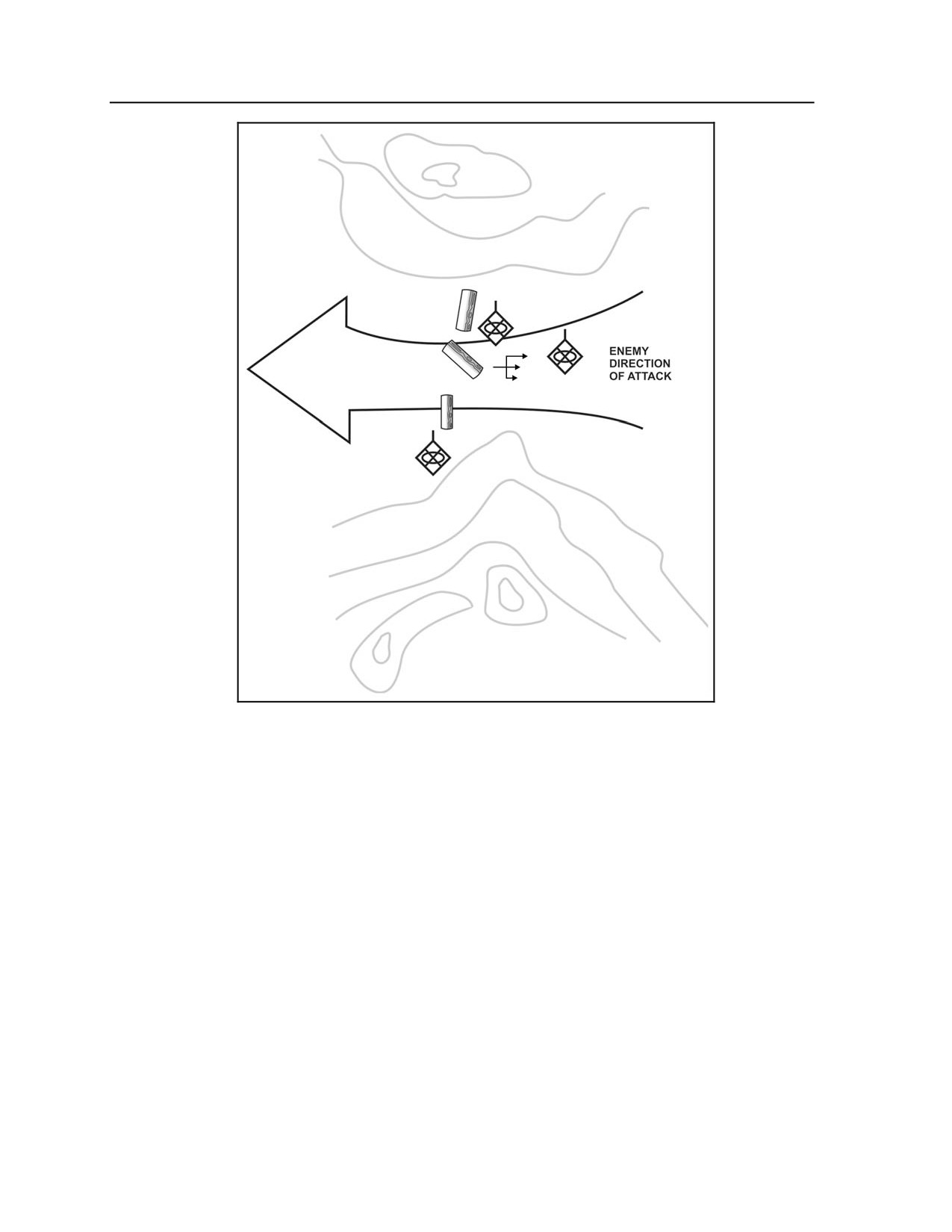
Chapter 8
Figure 8-1. Disrupt obstacle effect.
Fixing Effects
8-42. Fixing effects use a combination of fires and obstacles to slow or temporarily stop an attacker within
a specified area, normally an engagement area (Figure 8-2). The defending unit can then focus on defeating
the enemy by using indirect fires to fix him in the engagement area while direct fires inflict maximum
casualties and damage. If necessary, the defender can reposition his forces using the additional time gained
as a result of fixing the enemy. To fully achieve the fixing effect, direct and or indirect fires must be
integrated with the obstacles. The company commander must specify the size of the enemy unit to be fixed.
8-8
FM 3-21.8
28 March 2007
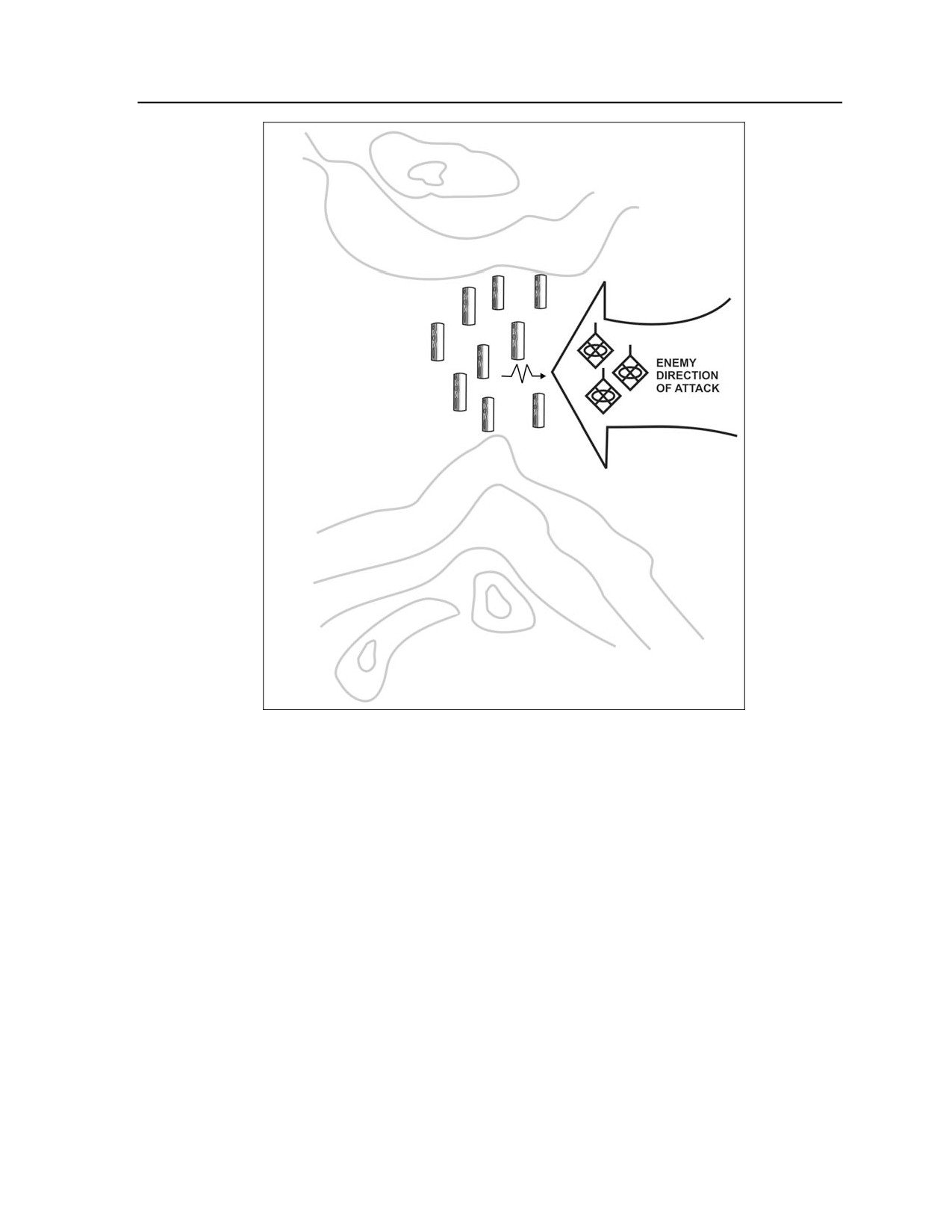
Defensive Operations
Figure 8-2. Fix obstacle effect.
Turning Effects
8-43. Turning effects (Figure 8-3) use the combination of direct and indirect fires and obstacles to support
the company commander’s scheme of maneuver in several ways, including the following:
Diverting the enemy into an engagement area and exposing his flanks when he makes the turn.
Diverting an enemy formation from one avenue of approach to another.
Denying the enemy the ability to mass his forces on a flank of the friendly force.
28 March 2007
FM 3-21.8
8-9
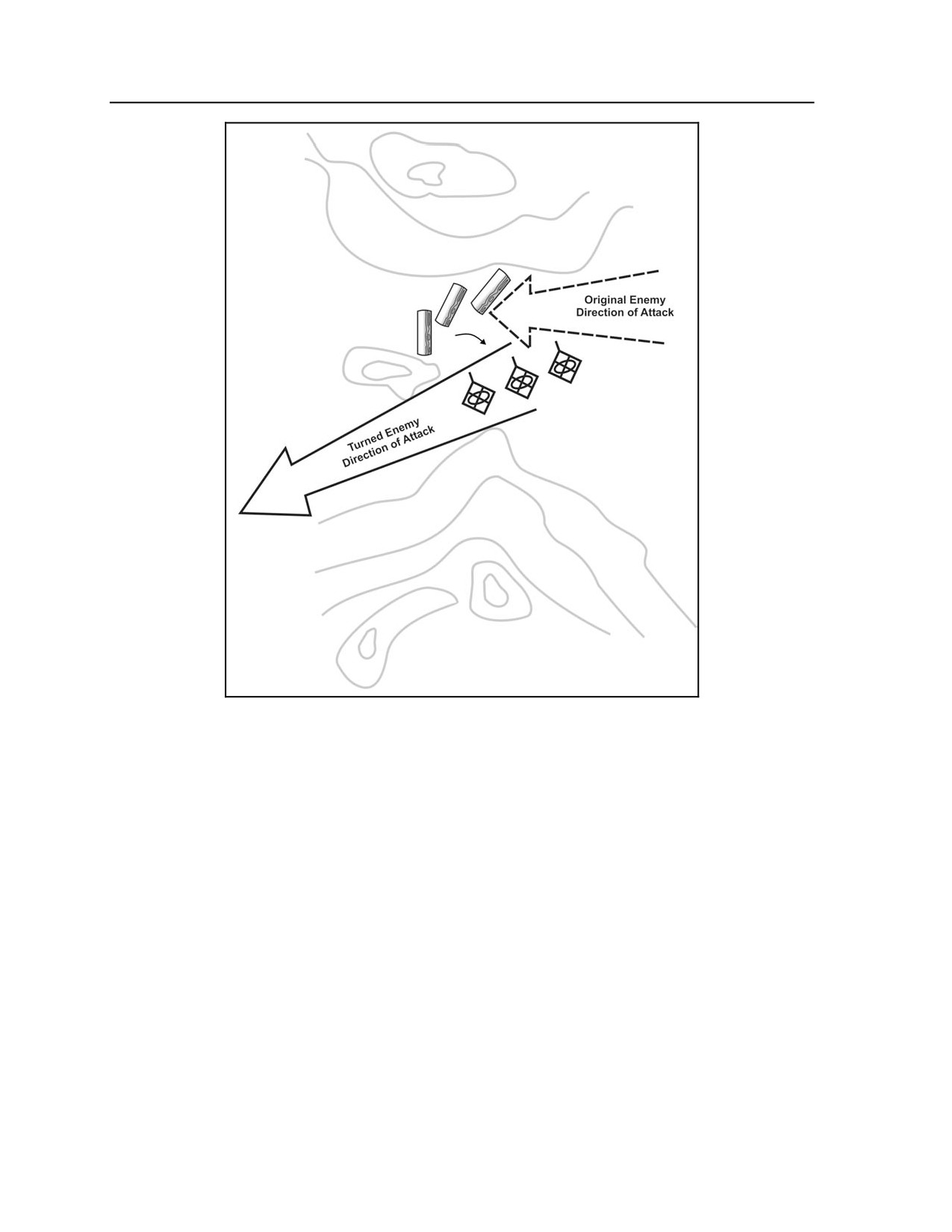
Chapter 8
Figure 8-3. Turn obstacle effect.
Blocking Effects
8-44. Blocking effects use the combination of direct and indirect fires and obstacles to stop an attacker
along a specific avenue of approach (Figure 8-4). Fires employed to achieve blocking effects are primarily
oriented on preventing the enemy from maneuvering. Because they require the most extensive engineer
effort of any type of obstacle, blocking effects are employed only at critical choke points on the battlefield.
Blocking obstacles must be anchored on both sides by existing obstacles (severely restrictive terrain).
Direct and or indirect fires must cover the obstacles to achieve the full blocking effect. The company
commander must clearly specify the size of enemy force that he intends to block.
8-10
FM 3-21.8
28 March 2007
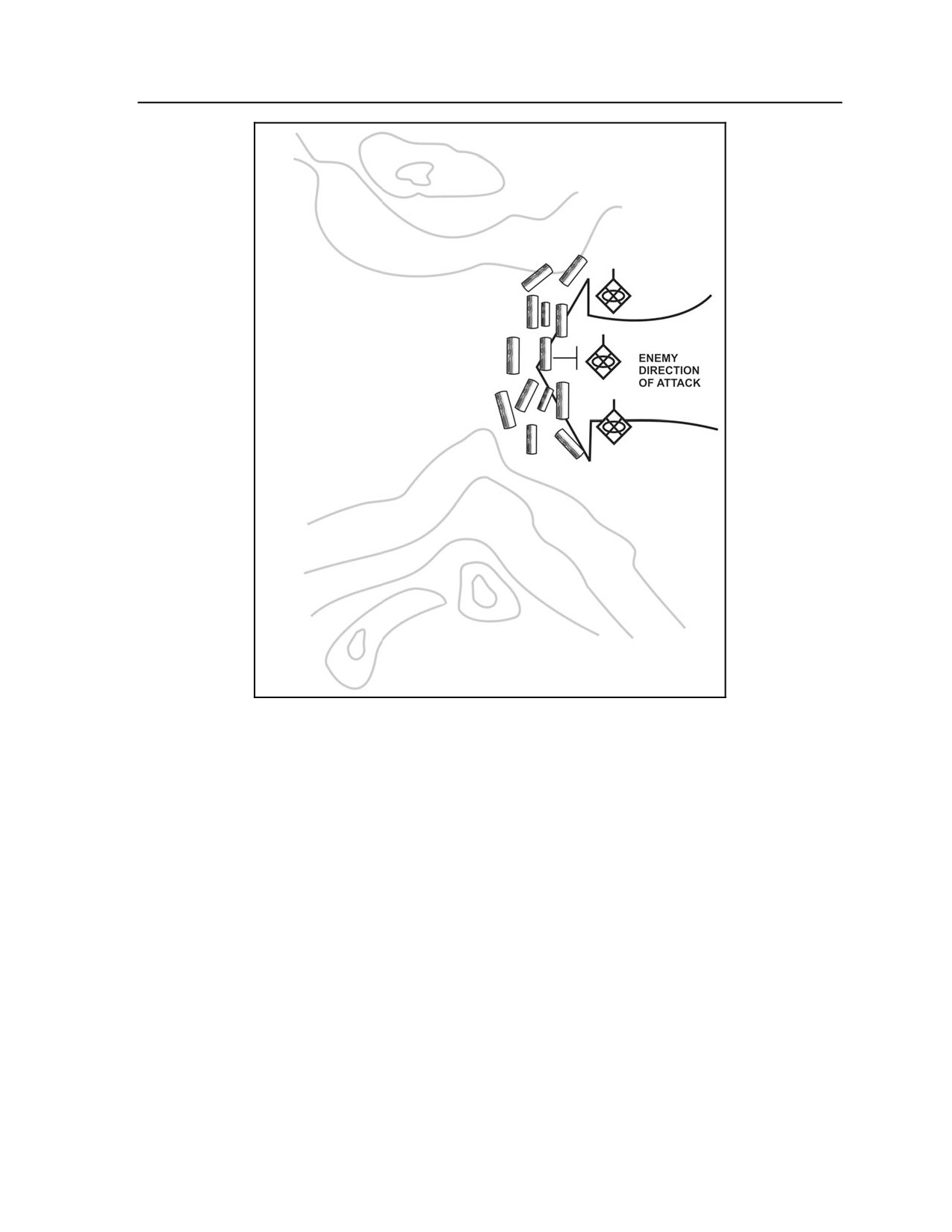
Defensive Operations
Figure 8-4. Block obstacle effect.
DISPLACEMENT AND DISENGAGEMENT PLANNING
8-45. Displacement and disengagement are key control measures that allow the platoon to retain its
operational flexibility and tactical agility. The ultimate goals of displacement and disengagement are to
enable the platoon to maintain standoff range of the CCMS and to avoid being fixed or decisively engaged
by the enemy.
Considerations
8-46. While displacement and disengagement are valuable tactical tools, they can be extremely difficult to
execute in the face of a rapidly advancing enemy force. In fact, displacement in contact poses great
problems. The platoon leader must therefore plan for it thoroughly before the operation and rehearse
moving to alternate and supplementary positions if time permits. Even then, he must carefully evaluate the
situation whenever displacement in contact becomes necessary to ensure it is feasible, and that it will not
result in unacceptable personnel or equipment losses. The platoon leader must consider several important
factors in displacement planning:
The enemy situation (for example, an enemy attack with battalion-sized element may prevent the
platoon from disengaging).
Higher headquarters’ disengagement criteria.
Availability of friendly direct fire to facilitate disengagement by suppressing or disrupting the
enemy.
28 March 2007
FM 3-21.8
8-11
Chapter 8
Availability of cover and concealment, indirect fires, and smoke to assist disengagement.
Obstacle integration, including situational obstacles.
Positioning of forces on terrain (such as reverse slopes or natural obstacles) that provides an
advantage to the disengaging elements.
Identification of displacement routes and times that disengagement and or displacement will take
place.
The size of the friendly force available to engage the enemy in support of the displacing unit.
Disengagement Criteria
8-47. Disengagement criteria dictate to subordinate elements the circumstances under which they will
displace to alternate, supplementary, or subsequent defensive positions. The criteria are tied to an enemy
action (such as one motorized rifle platoon advancing past Phase Line Delta) and are linked to the friendly
situation. For example, they may depend on whether a friendly overwatch element or artillery unit can
engage the enemy. Disengagement criteria are developed during the planning process based on the unique
conditions of a specific situation. They should not be part of the unit’s SOP.
Direct Fire Suppression
8-48. The attacking enemy force must not be allowed to bring effective fires to bear on a disengaging
force. Direct fires from the base-of-fire element, employed to suppress or disrupt the enemy, are the most
effective way to facilitate disengagement. The platoon may also receive base-of-fire support from another
element in the company, but in most cases the platoon will establish its own base of fire. Employing an
internal base of fire requires the platoon leader to carefully sequence the displacement of his elements.
Cover and Concealment
8-49. Ideally, the platoon and subordinate elements should use covered and concealed routes when moving
to alternate, supplementary, or subsequent defensive positions. Regardless of the degree of protection the
route itself affords, the platoon should rehearse the movement. By rehearsing, the platoon can increase the
speed at which it moves and provide an added measure of security. The platoon leader must make a
concerted effort whenever time is available to rehearse movement in limited visibility and degraded
conditions.
Indirect Fires and Smoke
8-50. Artillery or mortar fires can be employed to assist the platoon during disengagement. Suppressive
fires, placed on an enemy force as it is closing inside the defender’s standoff range, will disrupt his
formations, slow his progress, and if the enemy is a mechanized force, cause him to button up. The
defending force engages the enemy with long-range direct fires, then disengages and moves to new
positions. Smoke may be employed to obscure the enemy’s vision, slow his progress, or screen the
defender’s movement out of the defensive positions or along his displacement route.
Obstacle Integration
8-51. Obstacles should be integrated with direct and indirect fires to assist disengagement. By slowing and
disrupting enemy movement, obstacles provide the defender the time necessary for displacement. Obstacles
also allow friendly forces to employ direct and indirect fires against the enemy. The modular pack mine
system (MOPMS) can be employed in support of the disengagement to either block a key displacement
route once the displacing unit has passed through it, or to close a lane through a tactical obstacle. The
location of obstacle emplacement depends in large measure on METT-TC factors. An obstacle should be
positioned far enough away from the defender so enemy elements can be effectively engaged on the far
side of the obstacle while the defender remains out of range of the enemy’s massed direct fires.
8-12
FM 3-21.8
28 March 2007
Defensive Operations
FIRE SUPPORT
8-52. For the indirect fire plan to be effective in the defense, the unit must plan and execute indirect fires in
a manner that achieves the intended task and purpose of each target. Indirect fires serve a variety of
purposes in the defense, including:
Slowing and disrupting enemy movement.
Preventing the enemy from executing breaching operations at turning or blocking obstacles.
Destroying or delaying enemy forces at obstacles using massed indirect fires or precision
munitions (such as Copperhead rounds).
Defeating attacks along dismounted avenues of approach using FPF.
Disrupting the enemy to allow friendly elements to disengage or conduct counterattacks.
Obscuring enemy observation or screening friendly movement during disengagement and
counterattacks.
Based on the appropriate level of approval, delivering scatterable mines to close lanes and gaps
in obstacles, disrupting or preventing enemy breaching operations, disrupting enemy movement
at choke points, or separating or isolating enemy echelons.
PROTECTION
8-53. Platoons are responsible for coordinating and employing their own protective obstacles to protect
their defensive positions. To be most effective, these obstacles should be tied into existing obstacles and
FPFs. The platoon may use mines and wire from its basic load or pick up additional assets (including
MOPMS, if available) from the engineer Class IV or V supply point. (See Appendix F for details on
MOPMS and mines.) The platoon, through the company, also may be responsible for any other required
coordination (such as that needed in a relief in place) for recovery of the obstacle or for its destruction (as
in the case of MOPMS). A detail discussion of Protection can be found in Chapter 4.
8-54. In planning for protective obstacles, the platoon leader must evaluate the potential threat to the
platoon position and employ the appropriate asset. For example, MOPMS is predominately an antitank
system best used on mounted avenues of approach, but it does have some antipersonnel applications. Wire
obstacles may be most effective when employed on dismounted avenues of approach. FM 90-7 provides
detailed planning guidance for the emplacement of protective obstacles.
8-55. Protective obstacles are usually located beyond hand grenade range (40 to 100 meters) from a
Soldier’s fighting position. They may extend out 300 to 500 meters to tie into tactical obstacles and existing
restrictive or severely restrictive terrain. The platoon leader should therefore plan protective obstacles in
depth and attempt to maximize the effective range of his weapons.
8-56. When planning protective obstacles, the platoon leader should consider the amount of time required
to prepare them, the resources available after constructing necessary tactical obstacles, and the priorities of
work for the Soldiers in the platoon.
WIRE OBSTACLES
8-57. There are three types of wire obstacles: protective wire; tactical wire; and supplementary wire
(Figure 8-5).
Protective Wire
8-58. Protective wire may be a complex obstacle providing all-round protection of a platoon perimeter, or
it may be a simple wire obstacle on the likely dismounted avenue of approach toward a squad position
(Figure 8-6). Command-detonated M18 Claymore mines may be integrated into the protective wire or used
separately.
28 March 2007
FM 3-21.8
8-13
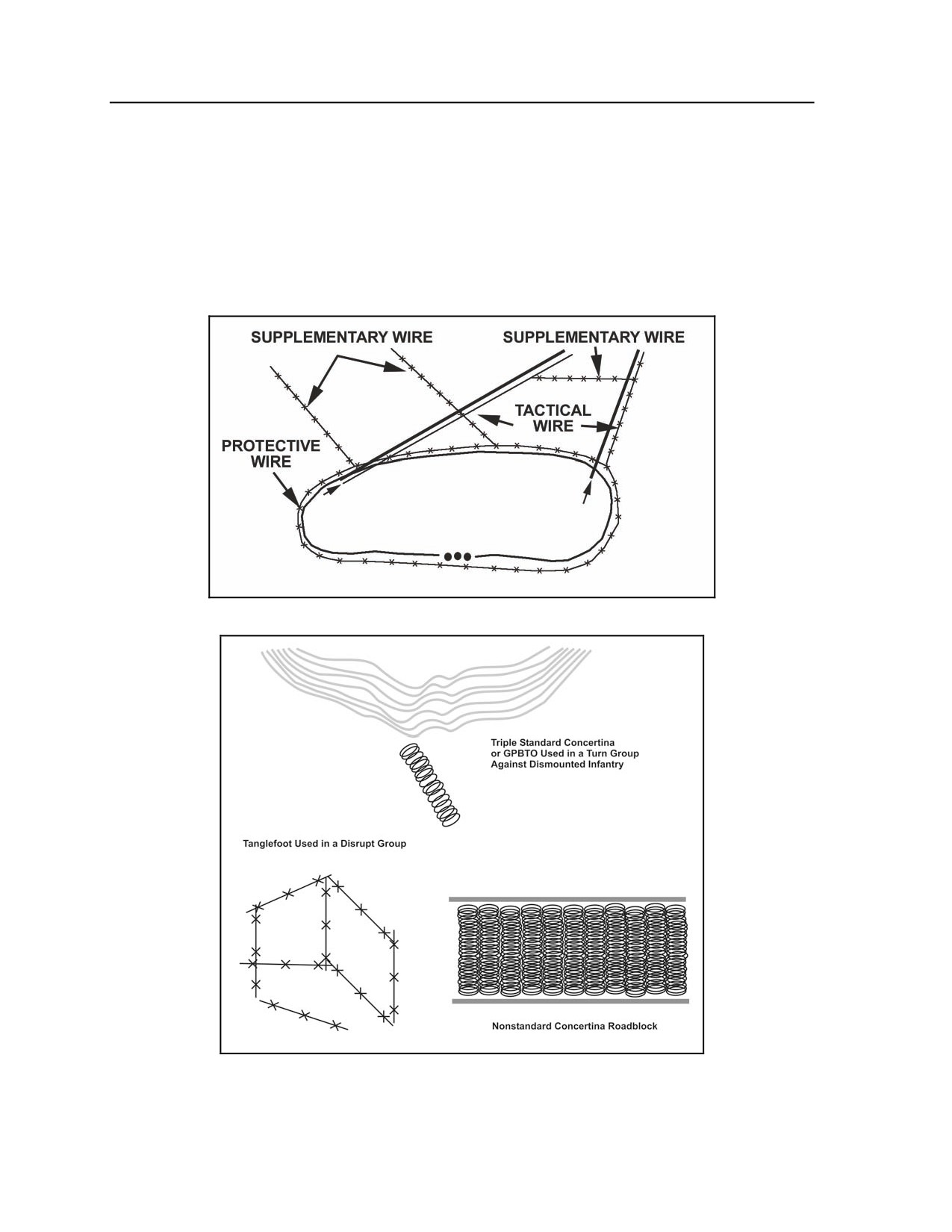
Chapter 8
Tactical Wire
8-59. Tactical wire is positioned to increase the effectiveness of the platoon’s direct fires. It is usually
positioned along the friendly side of a machine gun FPL. Tactical minefields may also be integrated into
these wire obstacles or be employed separately.
Supplementary Wire
8-60. Supplementary wire obstacles are employed to break up the line of tactical wire to prevent the enemy
from locating platoon weapons (particularly CCMS and machine guns) by following the tactical wire.
Figure 8-5. Three types of protective wire obstacles.
Figure 8-6. Protective wire groups.
8-14
FM 3-21.8
28 March 2007
Defensive Operations
OBSTACLE LANES
8-61. The platoon may be responsible for actions related to lanes through obstacles. These duties may
include overwatching lanes in the obstacle, marking lanes in an obstacle, reporting the locations of the
entry and exit points of each lane, manning contact points, providing guides for elements passing through
the obstacle, and closing lanes when directed.
SURVIVABILITY
8-62. Survivability focuses on protecting friendly forces from the effect of enemy weapons systems.
Survivability positions are prepared in defensive positions or strongpoints to protect weapons systems and
rifle squads. Positions can be dug in and reinforced with overhead cover to provide rifle squads and crew-
served weapons with protection against shrapnel from air bursts. The company may dig in ammunition
prestocks at platoon alternate, supplementary, or subsequent defensive positions. The platoon leader may
have time only to dig in positions that have the least amount of natural cover and concealment. Soil
composition should also be a consideration in the selection of defensive positions. Sites to be avoided
include those where the soil is overly soft, hard, wet, or rocky.
AIR AND MISSILE DEFENSE
8-63. The focus of an air and missile defense plan is on likely air avenues of approach for enemy fixed-
wing, helicopters, and unmanned aircraft systems that may not correspond with the enemy’s ground
avenues of approach. A platoon leader is not likely to emplace air defense assets, but he must be aware that
higher headquarters may employ air defense assets near his defensive position. For a detailed discussion of
air defense, see Section II, Chapter 4.
SUSTAINMENT
8-64. In addition to the sustainment function required for all operations, the platoon leader should consider
prestocking (also known as pre-positioning or caches). The platoon leader’s mission analysis (or guidance
from the company commander) may reveal that the platoon’s ammunition needs during an operation may
exceed its basic load. This requires the platoon to establish ammunition caches. The caches, which may be
positioned at an alternate or subsequent position, should be dug in. Security should be provided by active or
passive means (guarded or observed) to indicate when and if the cache is tampered with.
8-65. The platoon must have a plan to recover their assets when quickly transitioning to the offense or
counterattack or when disengaging.
INTELLIGENCE
8-66. The intelligence warfighting function consists of the related tasks and systems that facilitate
understanding of the enemy, terrain, weather, and civil considerations. It includes tasks associated with
ISR. It is a flexible, adjustable architecture of procedures, personnel, organizations, and equipment. These
provide relevant information and products relating to the threat, civil populace, and environment to
commanders. Intelligence warfighting function focuses on four primary tasks:
(1) Support to situational understanding.
(2) Support to strategic responsiveness.
(3) Conduct ISR.
(4) Provide intelligence support to targeting.
COMMAND AND CONTROL
8-67. The command and control warfighting function consists of the related tasks and systems that support
commanders in exercising authority and direction. It includes those tasks associated with acquiring
friendly information, managing all relevant information, and directing and leading subordinates.
28 March 2007
FM 3-21.8
8-15
Chapter 8
SECTION IV — ENGAGEMENT AREA DEVELOPMENT
8-68. The engagement area is the place where the platoon leader intends to destroy an enemy force using
the massed fires of all available weapons. The success of any engagement depends on how effectively the
platoon leader can integrate the obstacle and indirect fire plans with his direct fire plan in the engagement
area to achieve the platoon’s purpose. At the platoon level, engagement area development remains a
complex function that requires parallel planning and preparation if the platoon is to accomplish its assigned
tasks. Despite this complexity, engagement area development resembles a drill. The platoon leader and his
subordinate leaders use a standardized set of procedures. Beginning with an evaluation of the factors of
METT-TC, the development process covers these steps:
Identify likely enemy avenues of approach.
Identify the enemy scheme of maneuver.
Determine where to kill the enemy.
Plan and integrate obstacles.
Emplace weapons systems.
Plan and integrate indirect fires.
Conduct an engagement area rehearsal.
IDENTIFY LIKELY ENEMY AVENUES OF APPROACH
8-69. The platoon leader conducts an initial reconnaissance from the enemy’s perspective along each
avenue of approach into the sector or engagement area. During his reconnaissance, he confirms key terrain
identified by the company commander, including locations that afford positional advantage over the enemy
and natural obstacles and choke points that restrict forward movement. The platoon leader determines
which avenues will afford cover and concealment for the enemy while allowing him to maintain his tempo.
The platoon leader also evaluates lateral mobility corridors (routes) that adjoin each avenue of approach.
IDENTIFY ENEMY SCHEME OF MANEUVER
8-70. The platoon leader greatly enhances this step of the engagement area development process by
gaining information early. He receives answers to the following questions from the company commander:
Where does the enemy want to go?
Where will the enemy go based on terrain?
What is the enemy’s mission (or anticipated mission)?
What are the enemy’s objectives?
How will the enemy structure his attack?
How will the enemy employ his reconnaissance assets?
What are the enemy’s expected rates of movement?
How will the enemy respond to friendly actions?
DETERMINE WHERE TO KILL THE ENEMY
8-71. As part of his TLP, the platoon leader must determine where he will mass combat power on the
enemy to accomplish his purpose. This decision is tied to his assessment of how the enemy will fight into
the platoon’s engagement area. Normally this entry point is marked by a prominent TRP that all platoon
elements can engage with their direct fire weapons. This allows the commander to identify where the
platoon will engage enemy forces through the depth of the company engagement area. In addition, the
leader—
Identifies TRPs that match the enemy’s scheme of maneuver, allowing the platoon (or company)
to identify where it will engage the enemy through the depth of the engagement area.
Identifies and records the exact location of each TRP.
8-16
FM 3-21.8
28 March 2007
Defensive Operations
Determines how many weapons systems can focus fires on each TRP to achieve the desired
purpose.
Determines which squad(s) can mass fires on each TRP.
Begins development of a direct fire plan that focuses at each TRP.
NOTE: In marking TRPs, use thermal sights to ensure visibility at the appropriate range under
varying conditions, including daylight and limited visibility.
PLAN AND INTEGRATE OBSTACLES
8-72. To be successful in the defense, the platoon leader must integrate tactical obstacles with the direct
fire plan, taking into account the intent of each obstacle. At the company level, obstacle intent consists of
the target of the obstacle, the desired effect on the target, and the relative location of the group. A platoon
must have a clear task and purpose to properly emplace a tactical obstacle. The company or battalion will
normally designate the purpose of the tactical obstacle. The purpose will influence many aspects of the
operation, from selection and design of obstacle sites, to actual conduct of the defense. Once the tactical
obstacle has been emplaced, the platoon leader must report its location and the gaps in the obstacle to the
company commander. This ensures that the company commander can integrate obstacles with his direct
and indirect fire plans, refining his engagement area development.
EMPLACE WEAPONS SYSTEMS
8-73. To position weapons effectively, leaders must know the characteristics, capabilities, and limitations
of the weapons as well as the effects of terrain and the tactics used by the enemy. Platoon leaders should
position weapons where they have protection, where they can avoid detection, and where they can surprise
the enemy with accurate, lethal fires. In order to position the weapons, the platoon leader must know where
he wants to destroy the enemy and what effect he wants the weapon to achieve. He should also consider—
Selecting tentative squad defensive positions.
Conducting a leader’s reconnaissance of the tentative defensive positions.
Walking the engagement area to confirm that the selected positions are tactically advantageous.
Confirming and marking the selected defensive positions.
Developing a direct fire plan that accomplishes the platoon’s purpose.
Ensuring the defensive positions do not conflict with those of adjacent units and is effectively
tied in with adjacent positions.
Selecting primary, alternate, and supplementary fighting positions to achieve the desired effect
for each TRP.
Ensuring the squad leaders position weapons systems so the required numbers of weapons or
squads effectively cover each TRP.
Inspecting all positions.
NOTE: When possible, select fighting and crew-served weapon positions while moving in the
engagement area. Using the enemy’s perspective enables the platoon leader to assess
survivability of the positions.
PLAN AND INTEGRATE INDIRECT FIRES
8-74. In planning and integrating indirect fires, the platoon leader must accomplish the following:
Determine the purpose of fires if the company commander has not already done so.
Determine where that purpose will best be achieved if the company commander has not done so.
Establish the observation plan with redundancy for each target. Observers include the platoon
leader as well as members of subordinate elements (such as team leaders) with fire support
responsibilities.
28 March 2007
FM 3-21.8
8-17