FM 3-21.10 (FM 7-10) The Infantry Rifle Company (July 2006) - page 11
Chapter 11
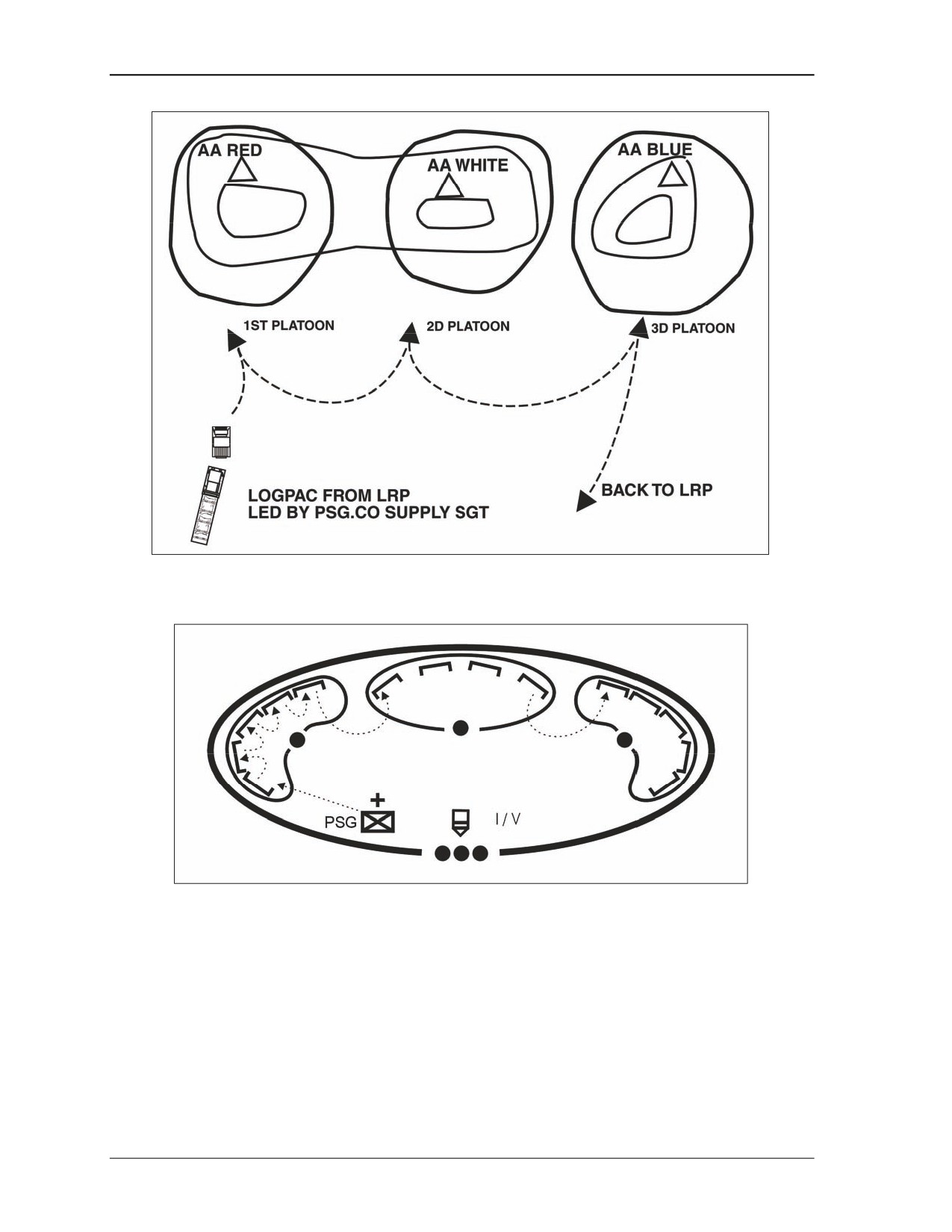
Figure 11-4. Tailgate resupply method.
Figure 11-5. In-position method.
Return to LRP
11-37. Once resupply operations are complete, the LOGPAC vehicles are prepared for the return trip.
Company vehicles requiring evacuation for maintenance are lined up and prepared for towing. Human
remains and their personal effects are carried on cargo trucks, fuel trucks, or disabled vehicles. EPW ride
in the cargo trucks. They are guarded by the walking wounded or by other company personnel. All supply
requests and personnel action documents are consolidated for forwarding to the field trains, where the
11-14
FM 3-21.10
27 July 2006
Sustainment Operations
appropriate staff section processes them for the next LOGPAC. The supply sergeant leads the LOGPAC
back to the LRP. The LOGPAC must keep moving through the LRP to avoid interdiction by enemy forces
or artillery. Whenever possible, the reunited LOGPAC convoy returns to the BSA together. When
METT-TC dictates or when the LOGPAC arrives too late to rejoin the larger convoy, the vehicles return to
the BSA on their own.
RESUPPLY METHODS
11-38. As directed by the commander or XO, the 1SG establishes the company resupply point. Either he
uses a resupply point (service station method) or he delivers resupply directly to the platoon (tailgate
method). Occasionally the in-position resupply method might be required. He briefs each LOGPAC driver
on which method to use. When he has the resupply point ready, the 1SG informs the commander. The
company commander then directs each platoon or element to conduct resupply based on the
tactical situation.
Service Station Resupply
11-39. The service station method allows platoons, squads, or Soldiers to move individually to a centrally
located resupply point. This method requires the Soldiers to leave their fighting positions. Depending on
the tactical situation, a squad or platoon moves out of its position, conducts resupply operations, and moves
back into position. The squads or platoons rotate individually to eat, pick up mail and sundries, and
replenish water. This process continues until the entire platoon has received its supplies. This technique is
normally used in assembly areas and when contact is not likely. This technique also cuts down on the
amount of vehicular movement such as the LOGPAC vehicles are stationary once they have established the
resupply point.
Tailgate Resupply
11-40. When the platoons are dispersed or the tactical situation requires, the 1SG may use the tailgate
method. The terrain must also permit the movement of multiple vehicles to each platoon position. The 1SG
will bring LOGPAC to each platoon's area. Individual Soldiers or teams rotate back through the feeding
area. While there, they pick up mail and sundries, and replenish other classes of supply. They centralize
and guard any EPW. They take Soldiers KIA and their personal effects to the holding area, where the 1SG
assumes responsibility for them.
In-Position Resupply
11-41. Occasionally, during operations when contact with the enemy is imminent, the in-position
resupply method might be required to ensure adequate supplies are available to the squads. This method
requires the company to bring forward supplies or equipment (or both) to individual fighting positions. The
platoon will normally provide a guide to ensure the supplies (Class V) are distributed to the most critical
position first. This method--
y Is used when an immediate need exits.
y Is used to resupply single classes of supply.
y Enables leaders to keep squad members in their fighting positions.
Note: If resupply contact is eminent or vehicles cannot move near platoon positions,
platoon members may need to help the resupply personnel move supplies and equipment
forward.
27 July 2006
FM 3-21.10
11-15
Chapter 11
EMERGENCY RESUPPLY
11-42. Occasionally (normally during combat operations), the company may have such an urgent need
for resupply that it cannot wait for a routine LOGPAC. Emergency resupply may involve Classes III, V,
and VIII, as well as CBRN equipment and, on rare occasions, Class I. Emergency resupply can be
conducted using either the service station or tailgate method, but more often the in-position method. The
fastest appropriate means is normally used although procedures might have to be adjusted when the
company is in contact with the enemy. In the service station method, individual squads may pull back
during a lull in combat to conduct resupply and then return to the fight. With tailgate resupply, the
company brings limited supplies forward to the closest concealed position behind each element.
PRESTOCKAGE OPERATIONS
11-43. Prestock resupply, which includes pre-positioning and caching, is most often required in defensive
operations.
PRE-POSITIONED SUPPLIES
11-44. Normally only Class V items are pre-positioned. Prestock operations must be carefully planned
and executed at every level. All leaders must know the exact locations of prestock sites, which they verify
during reconnaissance or rehearsals. The company must take steps to ensure survivability of the prestock
supplies. These measures include digging in prestock positions and selecting covered and concealed
positions. The company commander must also have a plan to remove or destroy pre-positioned supplies to
prevent the enemy from capturing them.
CACHES
11-45. A cache is a pre-positioned and concealed supply point. It can be used in any operation. Caches
are an excellent tool for reducing the Soldier's load and can be set up for a specific mission or as a
contingency measure. Cache sites have the same characteristics as an ORP or patrol base, with the supplies
concealed above or below ground. An aboveground cache is easier to get to but is more likely to be
discovered by the enemy, civilians, or animals. A security risk always exists when returning to a cache. A
cache site should be observed for signs of enemy presence and secured before being used; it may have been
booby-trapped and might be under enemy observation.
11-46. In the offense, advance elements may set up a cache along the intended route of advance to the
objective. Caches may also be set up in-zone to support continuous operations without allowing the enemy
to locate the company through air or ground resupply. Soldier's load considerations may limit the size of
caches. Do not let the cache activities jeopardize the offensive mission. In some cases, special forces, allied
forces, or partisans may set up caches.
11-47. In the defense, a defending unit may set up caches throughout the area of operations during the
preparation phase. A cache should also be in each alternate or subsequent position throughout the depth of
the defense sector. During stay-behind operations, or in an area defense on a fluid battlefield where the
enemy is all around, caches might be the only source of supply for extended periods.
SECURITY
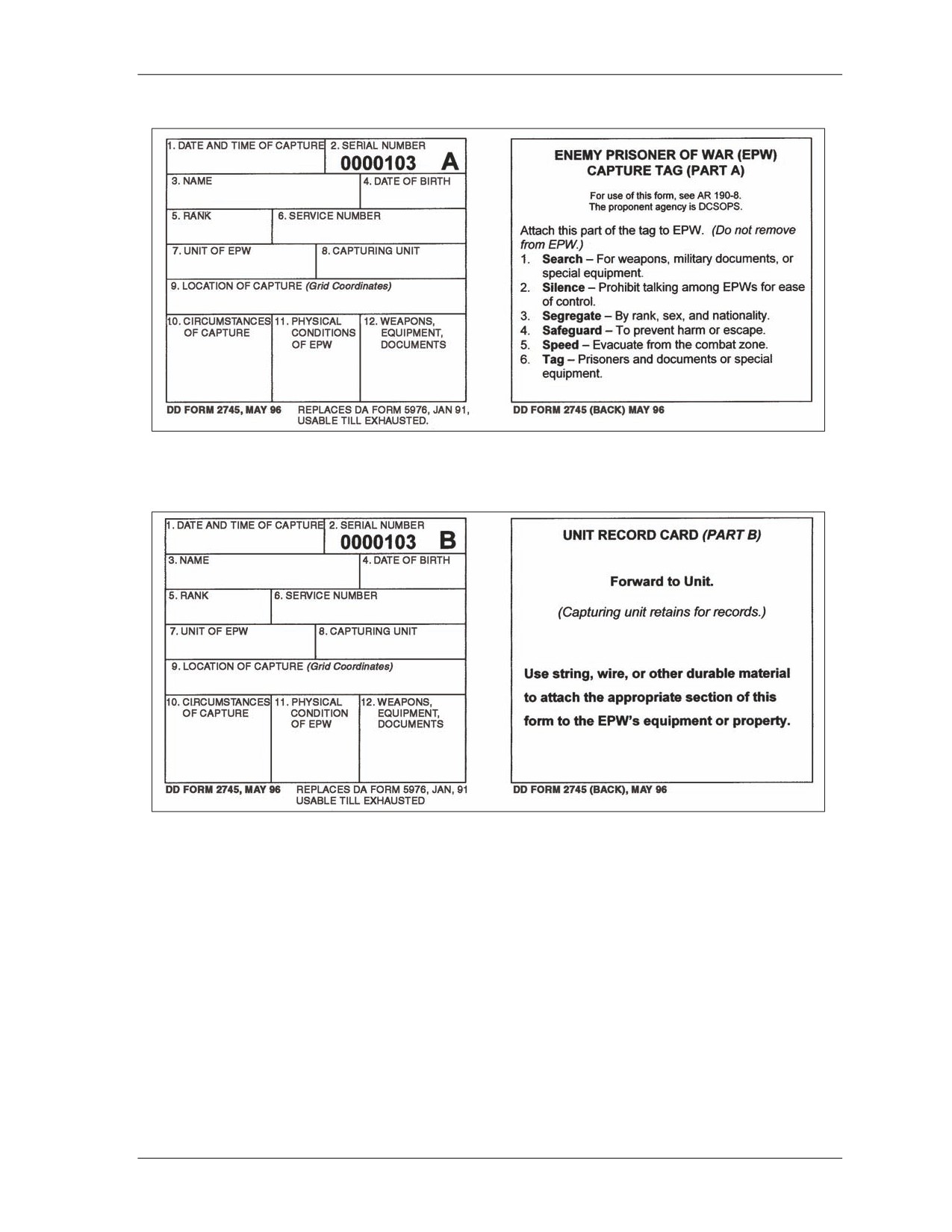
11-48. While these techniques are used in both offensive and defensive operations, the transfer of
supplies to the company is usually conducted from a defensive posture. As such, the security
considerations for a resupply operation are like those for a perimeter defense.
11-16
FM 3-21.10
27 July 2006
Sustainment Operations
SUPPLY CONSIDERATIONS
11-49. The techniques described in the preceding paragraphs are the normal methods for resupply within
the company. However, a basic understanding of nonstandard techniques, different modes of delivery, and
specific supply issues is also required for the successful execution of the sustainment function.
FORAGING AND SCAVENGING
11-50. Foraging and scavenging are used infrequently and only under extreme conditions. Foraging is the
gathering of supplies and equipment necessary to sustain basic needs, such as for food, water, and shelter,
from within the area of operations. Scavenging is the gathering of supplies or equipment (friendly or
enemy) from within the area of operations to help the user accomplish his military mission. Leaders must
protect their Soldiers by determining whether the food or water is safe or whether the equipment is
booby-trapped (FM 27-10).
AERIALLY RESUPPLYING
11-51. In using aerial resupply, the Infantry company commander must consider the threat's ability to
locate his unit by observing the aircraft. Unless conducting the resupply in an area under friendly control
and away from direct enemy observation (reverse slope of a defensive position with reconnaissance well
forward), locate the drop zone or landing zone (DZ or LZ) away from the main unit in an area that can be
defended for a short time. The delivered supplies are immediately transported away from the DZ or LZ.
CROSS-LEVELING
11-52. Cross-leveling is simply a redistribution of supplies throughout the unit. Usually done
automatically between platoons and squads after every engagement, the company may cross-level supplies
between platoons when resupply cannot occur. In some instances, supplies may not be evenly redistributed.
For example, during preparation for an assault of an enemy trench system, the platoon with the task of
support by fire might be required to give its hand grenades to the platoon with the task of clearing the
trench.
BACKHAULING
11-53. Backhauling is a method used to make the most use of vehicular or manpack capabilities moving
rearward. Backhauling returns supplies, equipment, or HAZMAT to the rear for disposition. Backhauling
is also a means for nonstandard evacuation.
MANAGING CONSUMPTION OF WATER
11-54. Ensuring that Soldiers receive and drink enough water is a vital sustainment and leadership
function at all levels in the company chain of command. Even in cold areas, everyone needs to drink at
least two quarts of water a day to maintain efficiency. Soldiers must drink water at an increased rate in a
combat environment.
11-55. Water is delivered to the unit under company or battalion control in 5-gallon cans, bottled water,
water trailers, or collapsible containers. When a centralized feeding area is established, a water point is set
up in the mess area and each Soldier fills his canteen as he goes through. When the company distributes
rations, it can resupply water either by collecting and filling empty canteens or by distributing water cans
to the platoons.
11-56. Water is habitually included in LOGPACs. The ability of the command to supply water is limited
by the ability of the BSB’s water section to purify, store, and distribute it. The logistics system may not
always be able to meet unit needs, particularly during decentralized operations. In most environments,
water is available from natural sources. Soldiers should be trained to find, treat (chemically or using field
expedients), and use natural water sources. (See FM 3-05.70 for ways the unit can supply its own water,
if needed.)
27 July 2006
FM 3-21.10
11-17
Chapter 11
11-57. When water is not scarce, leaders must urge Soldiers to drink water even when they are not
thirsty. The body's thirst mechanism does not keep pace with the loss of water through normal daily
activity. The rate at which dehydration occurs depends on the weather conditions and the level of physical
exertion.
11-58. If water is in short supply, be sparing in its use for hygiene purposes. Water used for coffee or tea
might be counterproductive since both increase the flow of urine. Soups, however, are an efficient means
of getting both water and nutrition when water is scarce. This is especially true in cold weather when
heated food is desirable. When in short supply, water should not be used to heat MREs. A centralized
heating point can be used to conserve water yet provide warmed MREs.
TRANSPORTATION
11-59. Movement of supplies, equipment, and personnel with the limited vehicle assets available requires
careful planning and execution. Infantry companies have limited organic transportation for resupply
operations. Vehicle assets from battalion or the forward supply company are provided for company
resupply operations.
11-60. When extra vehicles are provided to the company, they must be employed to capitalize on their
capability to execute the mission requirement, and they must be returned for follow-on company or
parent-unit missions. Transportation assets are scarce, often resulting in trade-offs. For example, upload
increased quantities of ammunition and less water, or carry unit rucksacks and be unavailable for resupply.
The company commander must ensure that the asset is being employed to accomplish the most important
mission. Time is critical and the company must reduce on-station time so that all company requirements
can be met. Since most vehicles do not have radios, leaders must ensure that drivers know where they are
going and how to get there. Land navigation training, marked routes, and strip maps referenced to
landmarks are all ways to keep drivers from getting lost.
11-61. Because of the limited ground transportation, company personnel must know how to conduct
aerial resupply (FM 90-4). An understanding of PZs/LZs selection, sling loading, bundle drops, and
allowable cargo loads might be critical to company sustainment.
Section V. MAINTENANCE OPERATIONS
The maintenance of weapons and equipment is continuous. Every Soldier must know how to maintain his
weapon and equipment in accordance with the related technical manual. The commander, XO, and 1SG must
understand maintenance for every piece of equipment in the company.
MAINTENANCE REQUIREMENTS
11-62. Proper maintenance is the key to keeping vehicles, equipment, and other materials in serviceable
condition. This continuous process starts when the operator of each piece of equipment or vehicle takes
preventive measures and continues through repair and recovery of the equipment. Proper maintenance also
includes inspecting, testing, servicing, repairing, requisitioning, recovering, and evacuating equipment.
11-63. Maintenance functions begin with PMCS, a daily responsibility for each piece of equipment to
include inspection and maintenance forms (DA Form 2404 or DA Form 5988E) when required. These
forms are the primary means through which the company obtains maintenance support or repair parts. The
forms follow a pathway, described in the following paragraphs, from crew level to the BSA and back. Per
unit SOP, the company XO or 1SG supervises the flow of these critical maintenance documents and parts.
This flow normally occurs at LOGPAC.
y The unit SOP should detail when maintenance is performed (at least once a day in the field), to
what standards, and who inspects it. The squad leader is often the one who inspects
maintenance work whereas the platoon sergeant, platoon leader, 1SG, XO, and commander
11-18
FM 3-21.10
27 July 2006
Sustainment Operations
conduct spot-checks. A technique is for the 1SG or CO to spot check equipment at LOGPAC
and ensure it is clean and 5988Es are complete before receiving CL I. Another technique is for
each to spot-check a different platoon; whereas another is for each to check a single type of
weapon or piece of equipment in all platoons daily. These instructions must be integrated into
the SOP for patrol bases, assembly areas, defenses, and reorganization. They help ensure that
Soldiers make a habit of maintenance and that they perform it without jeopardizing unit
security.
y In addition to operator maintenance, selected Soldiers are trained to perform limited
maintenance on damaged weapons and battle damage assessment and repair (BDAR).
y Inoperative equipment is fixed as far forward as possible. When a piece of equipment is
damaged, it is inspected to see if it can be repaired on the spot. The company armorer keeps a
small-arms repair kit in the company trains or on a company vehicle. If equipment cannot be
repaired forward, it is evacuated immediately or returned with a LOGPAC. Even if the item
cannot be evacuated at once, the sustainment system is alerted to prepare for repair or
replacement. If a replacement is available from an evacuated Soldier or inoperative equipment,
it is sent forward. If not, the leader works around it by prioritizing the use of remaining
equipment, for example, he might use a squad radio for the company FM command net if the
platoon radio is broken.
y Maintenance applies to all equipment. Items such as magazines, ammunition, and batteries are
also maintained and inspected. While test firing in an assembly area, mark the magazines of
weapons that have stoppages. If a magazine is marked more than twice, the magazine might be
causing the stoppages. Inspect the ammunition belts for crew-served weapons along with the
weapons. Dirty or corroded ammunition may also cause weapon malfunctions.
DESTRUCTION
11-64. When a vehicle or piece of equipment cannot be recovered or is damaged beyond repair, the
platoon reports the situation to the company commander. The commander gives permission for destruction
of the materiel if that is the only way to prevent enemy capture. Operators remove all salvageable
equipment and parts and take all classified materials or paperwork that could be of intelligence value to the
enemy. The platoon then destroys the vehicle or equipment IAW the company SOP.
Section VI. HEALTH SERVICE SUPPORT
Effective, timely medical care is an essential factor in sustaining the company's combat power during
continuous operations. The company commander must ensure that the company's leaders and its medical
personnel know how to keep Soldiers healthy, save their lives if they are wounded or injured, and make them
well once injury or illness occurs.
HEALTH AND HYGIENE
11-65. The company commander and all leaders, in conjunction with the company senior trauma
specialist and field sanitation team, emphasize and enforce high standards of health and hygiene at all
times. (See Appendix A for more information.) This "preventive medicine" approach covers all aspects of
the Soldier's health and well being, including--
y Daily shaving to ensure proper fit of the protective mask.
y Regular bathing and changing of clothes.
y Prevention of weather-related problems. These include cold injuries such as frostbite, trench
foot, and immersion foot, and heat injuries like heat exhaustion and heat stroke. Soldiers must
understand the effects of conditions such as sunburn and wind-chill.
27 July 2006
FM 3-21.10
11-19
Chapter 11
y Prevention of diseases. Insect-borne diseases such as malaria and Lyme disease, and diarrhea
diseases can be prevented with effective field sanitation measures, including unit waste control,
water purification, rodent control, and use of insect repellents.
y Combat operational stress control, battle fatigue prevention, and strict implementation of the
unit sleep plan.
y Prevent battle fatigue to include strict implementation of the unit sleep plan.
FIRST RESPONSE
11-66. First response is defined as the initial, essential stabilizing medical care rendered to wounded,
injured, or ill Soldiers at the point of initial injury or illness. The first responder is the first individual to
reach a casualty and provide first aid, enhanced first aid, or EMT. First aid can be performed by the
casualty (self-aid) or another individual (buddy aid), while enhanced first aid is provided by the combat
lifesaver (CLS). The individual who has medical MOS training is the combat medic (trauma specialist). He
provides EMT for life-threatening trauma, stabilizes and prioritizes (triages) wounded for evacuation to the
battalion aid station (BAS). At the BAS, wounded Soldiers receive advanced trauma medicine (ATM) by
the treatment team composed of the surgeon, physician’s assistant, and a senior trauma specialist.
COMBAT LIFESAVER
11-67. The CLS is a nonmedical Soldier trained to provide advanced first aid/lifesaving procedures
beyond the level of self-aid or buddy aid. The CLS is not intended to take the place of medical personnel
but to slow deterioration of a wounded Soldier's condition until treatment by medical personnel is possible.
Each certified CLS is issued a CLS aid bag. Whenever possible, the company commander ensures there is
at least one combat lifesaver in each fire team. An emerging "first responder" program expands CLS
trauma treatment with increased emphasis on combat and away from training injuries.
11-68. Combat lifesavers are squad members trained in emergency medical techniques. They are the
"911" medical assets for the squad until a medic or another more qualified medical person becomes
available. Because combat lifesaving is an organic capability, the platoon and company should make it a
training priority. The combat lifesaver ensures the squad CLS bag is packed, all IVs are present, and litters
are properly packed, and identifies Class VIII shortages to the platoon medic. He participates in all casualty
treatment and litter-carry drills. The combat lifesaver must know the location of the CCP and the SOP for
establishing it. He has a laminated quick reference nine-line MEDEVAC card.
SENIOR TRAUMA SPECIALIST
11-69. The senior trauma specialist (company senior medic) is both the company's primary medical
treatment practitioner and the supervisor of all battlefield medical operations. The latter role encompasses
numerous responsibilities. The senior trauma specialist works closely with the company commander to
ensure all members of the company understand what to do to provide and obtain medical treatment in
combat situations. He oversees the training of combat lifesavers. Once combat begins, he will manage the
company CCP, provide medical treatment, and prepare patients for MEDEVAC. He helps the 1SG arrange
casualty evacuation. The senior trauma specialist is also responsible for monitoring the paperwork that is
part of the medical treatment and evacuation process.
y He ensures that the casualty feeder report remains with each casualty until the Soldier reaches
the battalion main aid station or field aid station.
y If a Soldier's remains cannot be recovered, the senior trauma specialist completes
DA Form 1156 (Casualty Feeder Card), and gives it to the 1SG for processing as soon as
possible.
11-20
FM 3-21.10
27 July 2006
Sustainment Operations
PLATOON MEDICAL OR TRAUMA SPECIALIST
11-70. The fact that platoon members commonly address their trauma specialist as "doc" or "medic"
shows his critical role in providing them with competent, life-saving care. During combat planning and
preparation he inspects platoon CLS bags, verifies IVs are placed in litters, and fills class VIII shortages.
He will determine the location for the platoon CCPs and the SOP for establishing them. He rehearses
casualty treatment and litter carries with all platoon members, not only aid and litter teams; and conducts
CLS refresher training.
Note: DA Form 1156 is collected at the aid station by designated medical personnel; it is
forwarded to the S-1 section for further processing through administrative channels in the
battalion field trains.
PLATOON SERGEANT
11-71. Although unit SOP dictates specific responsibilities, the platoon sergeant is typically responsible
for ensuring that wounded or injured personnel receive immediate first aid and that the commander is
informed of casualties. During critical operations, or when the platoon takes a lot of casualties, the platoon
sergeant normally oversees the platoon casualty collection point (CCP). He coordinates with the 1SG and
company senior trauma specialist for ground evacuation. He may ensure that the casualty feeder (DA
Form 1156) form has been completed and routed to the proper channels. The platoon sergeant carries a
laminated quick reference nine-line MEDEVAC card.
FIRST SERGEANT
11-72. The 1SG oversees the operation of the company CCP, particularly in critical operations or when
casualties are high. He brings the full measure of his experience and authority to bear in the efficient
treatment, collection, preparation, and transport of casualties. Successful casualty evacuation (CASEVAC)
depends on his ability to anticipate, plan, and rehearse his CCP operation. METT-TC dictates the CCP site
location. It must be accessible by both ground and air transport. The 1SG supervises and coordinates
casualty operations, collects witness statements and submits them to the battalion S-1, and submits the
battle loss report to the battalion TOC. These duties also relate to another important combat function of the
1SG: managing the company's personnel status. As needed, the 1SG cross-levels personnel to make up for
shortages.
COMMANDER
11-73. The company commander has overall responsibility for medical services. His primary task is to
position medical personnel at the proper point on the battlefield to treat casualties or to evacuate those
casualties properly. The company commander designates the location for the company's CCP and ensures
that the location is recorded on the appropriate overlays. He also develops and implements appropriate
SOPs for casualty evacuation. Two key planning considerations follow.
11-74. The commander analyzes both fundamental categories of treatment and evacuation to determine if
he must accept risk in one or the other and how he may mitigate identified risks. For example, where
distances to available MTF are excessive and transportation assets stretched, the commander might request
more medics during an operation.
11-75. Sites for casualty treatment and evacuation will vary widely on the noncontiguous battlefield and
the commander tries to identify, disseminate, and coordinate with all available MTF accessible to his unit
including those outside his organization.
CASUALTY EVACUATION
11-76. MEDEVAC is not the same as so-called "casualty evacuation" (CASEVAC).
27 July 2006
FM 3-21.10
11-21
Chapter 11
y Casualty transport, commonly called CASEVAC, is the movement of casualties by nonmedical
assets without specialized trauma care. For the purposes of this discussion, casualty transport or
CASEVAC will mean that which is done when moving casualties from the point of injury
(POI) to the platoon CCP or company CCP.
y MEDEVAC is the movement of casualties using medical assets while providing en route
medical care. Ideally, casualties are transferred from a CCP to a MEDEVAC asset.
11-77. The two areas of medical support are treatment and evacuation. Effective CASEVAC has a
positive impact on the morale of a unit. Casualties are cared for at the point of injury (or under nearby
cover and concealment) and receive self- or buddy aid, advanced first aid from the combat lifesaver, or
emergency medical treatment from the trauma specialist (company or platoon medic).
11-78. During the fight, casualties should remain under cover where they received initial treatment
(self- or buddy aid). As soon as the situation allows, casualties are moved to the platoon CCP. From the
platoon area, casualties are normally evacuated to the company CCP and then back to the BAS. The unit
SOP addresses this activity, to include the marking of casualties in limited visibility operations. Small,
standard, or IR chemical lights work well for this purpose. Once the casualties are collected, evaluated, and
treated, they are prioritized for evacuation back to the company CCP. Once they arrive at the company
CCP, the above process is repeated while awaiting their evacuation back to the BAS.
11-79. An effective technique, particularly during an attack, is to task-organize a logistics team under the
1SG. These Soldiers carry additional ammunition forward to the platoons and evacuate casualties to either
the company or the battalion CCP. The leader determines the size of the team during his estimate.
11-80. When the company is widely dispersed, the casualties might be evacuated directly from the
platoon CCP by vehicle or helicopter. Helicopter evacuation might be restricted due to the threat of enemy
ground to air small arms, shoulder fired or other air defense weapons. In some cases, the casualties must be
moved to the company CCP before evacuation. If the capacity of the battalion's organic ambulances is
exceeded, unit leaders may rerole supply or other vehicles to backhaul or otherwise transport nonurgent
casualties to the battalion aid station. In other cases, the platoon sergeant may direct platoon litter teams to
carry the casualties to the rear.
11-81. Leaders minimize the number of Soldiers required to evacuate casualties. Casualties with minor
wounds can walk or even assist with carrying the more seriously wounded. Soldiers can make
field-expedient litters by cutting small trees and putting the poles through the sleeves of buttoned ACU
blouses. A travois, or skid, might be used for casualty evacuation. Wounded are strapped on this type of
litter, then one person can pull it. It can be made locally from durable, rollable plastic. Tie-down straps are
fastened to it. In rough terrain, or on patrols, litter teams can evacuate casualties to the battalion aid station.
Then, they are carried with the unit either until transportation can reach them or until they are left at a
position for later pickup.
11-82. Unit SOPs and OPORDs address casualty treatment and evacuation in detail. They cover the
duties and responsibilities of key personnel, the evacuation of chemically contaminated casualties (on
separate routes from noncontaminated casualties), and the priority for operating key weapons and
positions. They specify preferred and alternate methods of evacuation and make provisions for retrieving
and safeguarding the weapons, ammunition, and equipment of casualties. Slightly wounded personnel are
treated and returned to duty by the lowest echelon possible. Platoon aid men, evaluate sick Soldiers, and
either treat or evacuate them as necessary. Casualty evacuation is rehearsed like any other critical part of an
operation.
11-83. For procedures in the use of the casualty feeder report, DA Form 1156.
Note: Before casualties are evacuated to the CCP or beyond, leaders should remove all key
operational or sensitive items and equipment, including COMSEC devices or SOIs, maps,
position location devices. Every unit should establish an SOP for handling the weapons and
ammunition of its WIAs. Protective masks must stay with the individual.
11-22
FM 3-21.10
27 July 2006
Sustainment Operations
11-84. At the CCP, the senior trauma specialist conducts triage of all casualties, takes the necessary steps
to stabilize their condition, and initiates the process of evacuating them to the rear for further treatment. He
helps the 1SG arrange evacuation via ground or air ambulance, or by nonstandard means.
11-85. When possible, the HHC medical platoon ambulances provide evacuation and en route care from
the Soldier's point of injury or the company's CCP to the BAS. The ambulance team supporting the
company works in coordination with the senior trauma specialist supporting the platoons. In mass casualty
situations, nonmedical vehicles might be used to assist in casualty evacuation as directed by the Infantry
company commander. Plans for the use of nonmedical vehicles to perform casualty evacuation should be
included in the unit SOP. Ground ambulances from the BSMC or supporting corps air ambulances
evacuate patients from the BAS back to the BSMC medical treatment facility (MTF) located in the BSA.
Note: During entry operations, air ambulances might be unavailable for the first 96 hours.
SOLDIERS KILLED IN ACTION
11-86. The company commander designates a location for the collection of those KIA. Temporary remains
holding areas should be established behind a natural barrier, such as a stand of trees, or shielded from the
view of others by using either tents or tarpaulins. All personal effects remain with the body, but equipment
and issue items become the responsibility of the squad leader until they can be turned over to the 1SG or supply
sergeant. As a rule, human remains should not be transported on the same vehicle as wounded Soldiers. The
commander sends a letter of condolence to the Soldier's next of kin, normally within 48 hours of the death.
Section VII. REORGANIZATION AND WEAPONS REPLACEMENT
To maintain effective, consistent combat power, the company must have specific plans and procedures that
allow each element to integrate replacement personnel and equipment quickly. Unit SOP defines how Soldiers
and equipment are prepared for combat, including areas such as uploading, load plans, PCIs, and in-briefings.
REPLACEMENTS AND CROSS-LEVELING OF PERSONNEL
11-87. Replacements for wounded, killed, or missing personnel are requested through the battalion S-1.
Returning or replacement personnel arriving with the LOGPAC should have already been issued all TA-50
equipment, MOPP gear, and other items, including their personal weapons. Within the company, each
platoon leader cross-levels personnel among his crews, with the 1SG controlling cross-leveling from
platoon to platoon.
11-88. Integrating replacements into a company is important. A new arrival on the battlefield might be
scared and disoriented as well as unfamiliar with local SOPs and the theater of operations. The following
procedures help integrate new arrivals into a company.
y The company commander meets them and welcomes them to the unit. This is normally a brief
interview. The company commander must have an SOP for reception and integration of newly
assigned Soldiers.
y The platoon leader and platoon sergeant welcome them to the unit, inform them of unit
standards, and introduce them to their squad leaders.
y The squad leader introduces them to the squad and briefs them on duty positions. He also
ensures that each replacement has a serviceable, zeroed weapon, as well as ammunition, MOPP
gear, and other essential equipment. The in-briefing should cover the squad and platoon's recent
and planned activities.
y The new arrival is told about important SOPs and a paper copy should be given to the Soldiers
on any special information concerning the area of operations. He might be given a form letter to
27 July 2006
FM 3-21.10
11-23
Chapter 11
send to his next of kin. The letter should tell them where to mail letters and packages, tell them
how to use the Red Cross in emergencies, and introduce them to the chain of command.
ENEMY PRISONERS OF WAR, DETAINEES, AND OTHER
RETAINED PERSONS
11-89. All persons captured, detained, or retained by US Armed Forces during the course of military
operations are considered "detained" persons until their status is determined by higher military and civilian
authorities. The BCT has a military police platoon organic to the BSTB to take control of and evacuate
detainees. However, as a practical matter, Infantry squads, platoons, companies and battalions capture and
must provide the initial processing and holding for detainees.
11-90. All detained persons shall be given humanitarian care and treatment immediately. US Armed
Forces will never torture, mistreat, or purposely place detained persons in positions of danger. No military
necessity or exception exists that allows the violation of these principles. Tactical questioning of detainees
is allowed relative to collection of CCIR. However, detainees must always be treated IAW the US Law of
War Policy as set forth in the DOD Directive 5100.77, DOD Law of War Program.
11-91. In any tactical situation, the Infantry platoons and company have specific procedures and
guidelines for handling prisoners and captured material. Unit SOPs determine exact EPW processing.
Platoons usually have an EPW collection point and the company will have a separate collection point.
11-92. The five-S's and T method reminds Soldiers about the basic principles for handling EPW, which
include tagging prisoners and all captured equipment and materiel (Table 11-1).
11-24
FM 3-21.10
27 July 2006

Sustainment Operations
Action
Description
Search
Search each captive for weapons, items of intelligence value, and items that would make
escape easier or compromise US security interests. Confiscate these items. Prepare a
receipt when taking property.
Note: When possible, conduct same gender searches. When not possible, perform
mixed gender searches in a respectful manner. Leaders must carefully supervise
Soldiers to prevent allegations of sexual misconduct.
Captives may keep the following items found in a search.
y Protective clothing and equipment that cannot be used as a weapon, such as
helmets, protective masks, and clothing, for use during evacuation from the
combat zone.
y Retained property, such as ID cards or tags, personal property having no
intelligence value and no potential value to others, such as photos and
mementos, clothing, mess equipment (except knives and forks), badges of rank
and nationality, decorations, religious literature, and jewelry. MI teams may take
personal items, such as diaries, letters, and family pictures for review, but must
return them to their owner(s).
y Private rations of the detainee.
Confiscate currency only on the order of a commissioned officer (AR 190-8) and provide
a receipt and establish a chain of custody using DA Form 4137 (Evidence/Property
Custody Document) or any other field expedient substitute.
Silence
Silence the detainees by directing them not to talk. Use gags if necessary, and check
frequently to ensure that the detainee is still able to breathe.
Segregate
Segregate detainees based on perceived status and positions of authority. Segregate
leaders from the remainder of the population. Segregate hostile elements such as
religious, political, or ethnic groups hostile to one another. For their protection, normally
segregate minor and female detainees from adult male detainees.
Table 11-1. Five S's and T method of detainee field processing.
27 July 2006
FM 3-21.10
11-25

Chapter 11
Safeguard
Safeguard the detainees. Ensure detainees are provided adequate food, potable water,
clothing, shelter, and medical attention. Ensure detainees are not exposed to
unnecessary danger and are protected (afforded the same protective measures as the
capturing force) while awaiting evacuation. Do not use coercion to obtain information
from the captives. Provide medical care to wounded and sick detainees equal in quality
to that provided to US forces. Report acts or allegations of abuse through command
channels to the supporting judge advocate, and to the US Army Criminal Investigation
Command.
Speed to
Evacuate detainees from the battlefield as quickly as possible, ideally to a collection
a Safe
point where military police take custody of the detainees. Transfer custody of all captured
Area/Rear
documents and other property to the US forces assuming responsibility for the detainees.
Tag
Use DD Form 2745 (Enemy Prisoner of War (EPW) Capture Tag) or a field expedient
alternative, and include the following information.
y Date and time of capture.
y Location of capture (grid coordinates).
y Capturing unit.
y Circumstances of capture. Indicate specifically why the person has been
detained. Use additional documentation when necessary and feasible to
elaborate on the details of capture.
y Documentation should answer the five Ws -who, what, where, why, and
witnesses.
y Use a form, such as DA Form 2823 (Sworn Statement) or an appropriate field
expedient to document this information.
y List all documents and items of significance found on the detainee.
Attach Part A, DD Form 2745, or an appropriate field expedient capture card to the
detainee’s clothing with wire, string, or another type of durable material. Instruct the
captive not to remove or alter the tag. Maintain a written record of the date, time,
location, and personal data related to the detention. Attach a separate identification tag
to confiscated property that clearly links the property with the detainee from whom it
was seized.
Table 11-1. Five S's and T method of detainee field processing (continued).
11-93. In addition to initial processing, the capturing element provides guards and transportation to move
prisoners to the designated EPW collection points. The capturing element normally carries prisoners on
vehicles already heading toward the rear such as tactical vehicles returning from LOGPAC operations. The
capturing element must also feed, provide medical treatment, and safeguard EPW until they reach the
collection point.
11-94. Once the EPW arrive at the platoon collection point, the platoon sergeant assumes responsibility
for them. He provides for security and transports them to the company EPW collection point where they
are consolidated for evacuation to the rear. Normally the 1SG, often assisted by the supply section, moves
the detainees to the vicinity of the combat trains for processing and subsequent interrogation by battalion or
MI company personnel. Crews of vehicles undergoing repair, CS, or sustainment personnel can often be
used as guards. They are then evacuated to the battalion EPW collection point, to the Brigade holding area
or beyond.
11-95. Before an EPW detainee is evacuated, tag him with--
y Part A, DD Form 2745 (Figure 11-6).
y Part B, DD Form 2745 (Figure 11-7, the unit record copy).
11-26
FM 3-21.10
27 July 2006
Sustainment Operations
Figure 11-6. Enemy prisoner of war detainee tag.
Figure 11-7. Unit record copy.
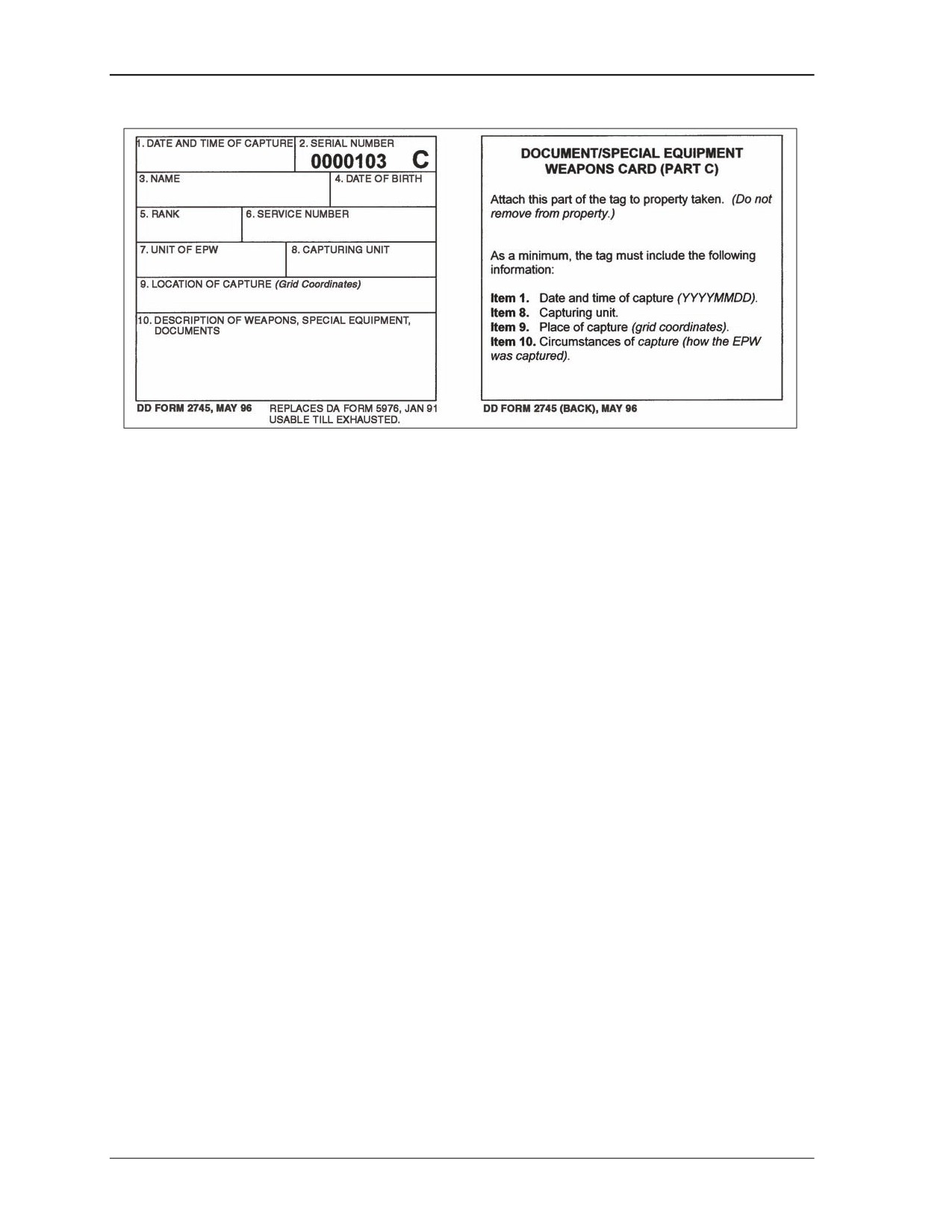
11-96. Before an EPW detainee is evacuated, tag his confiscated property with a DD Form 2745, C
(Figure 11-8, page 11-28). Detainees are allowed to keep protective equipment such as protective masks.
Other captured military equipment and detainee personal effects are inventoried on DA Form 4137.
Soldiers then coordinate with the platoon or company headquarters to link up and turn the documents and
prisoners over to designated individuals.
27 July 2006
FM 3-21.10
11-27
Chapter 11
Figure 11-8. Enemy prisoner of war, document, and special equipment tag.
11-28
FM 3-21.10
27 July 2006
Chapter 12
Urban Operations
What is urban operations (UO)? It is all military actions, combat or not, that are
conducted in any urban area.
All UO are full-spectrum operations. This means they can include peacetime military
engagements, offensive, defensive, and stability operations, as well as support to civil
authorities. The term replaces military operations on urbanized terrain (MOUT).
UO demand a high level of unit proficiency, coordination, training, and individual
dedication. The most important lesson learned about UO is that powerful
combined-arms teams work. Infantry must closely integrate with Armor, aviation,
indirect fire support, reconnaissance, communications, civil affairs, PSYOP, and
logistical elements. Leaders compose these teams after a detailed analysis of the OE
and METT-TC (FM 3-06 and FM 3-06.11).
In this chapter, the term "armored vehicles" refers to both tracked and wheeled
armored vehicles of all types, including tanks, armored fighting and reconnaissance
vehicles, and Infantry carriers.
Section I. INTRODUCTION
Urban operations are not new. Throughout its history the US Army has fought many battles on urban terrain.
What is new is that urban areas and urban populations have grown significantly and have begun to exert a much
greater influence on military operations. The worldwide shift from rural to urban societies has created new
challenges for leaders and Soldiers to not only win urban battles but also to establish stability, restore vital
functions and to transition to a more secure environment. In many cases, the city’s people and society have
become even more of a factor affecting planning than the city’s buildings and roads. Although companies and
platoons will continue to operate as part of a battalion task force, they will often conduct mission with a degree
of independence seldom seen previously. This section highlights the basic planning considerations for Infantry
company commanders conducting full spectrum urban operations.
DEFINITIONS
12-1.
To understand urban operations, you need to know more about urban areas and urban combat.
URBAN AREAS
12-2.
An urban area is a concentration of structures, facilities, and people that form the economic and
cultural focus for the surrounding area. An urban area consists of more than just buildings, roads, and
bridges. It is a complex, interconnected system that includes both the physical structures and the people
who work and live in them. Cities house many human endeavors: society, culture, religion, commerce,
communication, manufacturing, and education, among others The population is ultimately the dominant
feature in all urban operations, although the urban terrain does have significant tactical impact. Operations
27 July 2006
FM 3-21.10
12-1
Chapter 12
are affected by all five categories of urban areas. Cities, metropolises, and megalopolises with associated
urban sprawl cover hundreds of square kilometers.
y Villages (population under 3,000).
y Towns (population between 3,000 and 100,000, but not part of a major urban complex).
y City (population over 100,000 to 1 million).
y Metropolis (population between 1 and 10 million).
y Megalopolis (population over 10 million).
URBAN COMBAT
12-3.
Urban combat is a specific subset of urban operations. It collectively describes offensive and
defensive operations conducted to defeat an enemy in an urban area both during high-intensity combat and
during stability operations. Usually, that is mixed with noncombatants. Because of this intermingling, and
the resulting necessity to limit collateral damage, the rules of engagement (ROE) and the constraints placed
on the use of combat power may be more restrictive than under other combat conditions. This term
replaces several older terms, including fighting in built-up areas (FIBUA) and combat in cities (CIC). Units
may conduct operations in urban areas, including urban combat, when—.
y An assigned objective lies within an urban area and cannot be bypassed.
y The urban area and the population it contains is key or decisive in setting or shaping the
conditions for current or future operations.
y An urban area is between two natural obstacles and cannot be bypassed.
y The urban area is in the path of a general advance and cannot be surrounded or bypassed.
y Political or humanitarian concerns require the control of an urban area or necessitate operations
within it.
y Defending from urban areas supports a more effective overall defense or cannot be avoided.
y Occupation, seizure, and control of the urban area will deny the threat control of the urban area
and the ability to impose its influence on both friendly military forces and the local civilian
population. Therefore, friendly forces can retain the initiative and dictate the conditions for
future operations.
CONDITIONS
12-4.
Due to political, technological, and societal changes, and to the Army’s growing role in
maintaining regional stability, urban operations are conducted across the full spectrum of offense, defense,
stability, and support. This spectrum affects how units plan and execute assigned missions. The enemy's
actions significantly affect the conditions of UO, which may transition from one condition to another
rapidly. Units might be conducting operations under different conditions at two locations at the same time.
The following definitions of the three general conditions of UO provide clarity, focus, and a mental
framework for commanders and leaders conducting tactical planning for urban operations.
SURGICAL CONDITIONS
12-5.
Operations conducted under surgical conditions include special-purpose raids, small precision
strikes, or small-scale personnel seizures or arrests, focused psychological or civil affairs operations, or
recovery operations. Many operations under this condition are planned and conducted by Special
Operations Forces. This condition is the most tightly focused and normally the least physically destructive
of all the conditions of UO. Operations under this condition may involve cooperation between US forces
and host nation police or paramilitary security forces. In many cases, conventional Infantry units are not
directly involved in operations under surgical conditions. They may support SOF forces it by isolating the
area or providing security or crowd control. Very often, Infantry forces are deeply involved in follow-up
operations executed due to SOF actions.
12-2
FM 3-21.10
27 July 2006
Urban Operations
PRECISION CONDITIONS
12-6.
Operations under precision conditions include full-spectrum urban operations in areas. The
enemy might be mixed with noncombatants, or strategic or political considerations might restrict the use of
combat power. Infantry units must routinely expect to operate under precision conditions.
12-7.
Urban operations under precision conditions normally involve combat action, and usually close
combat. Some of this combat can be quite violent for short periods. It is marked, however, by the conscious
acceptance by US forces of the need to focus and sometimes restrain the combat power used. The
commander always attempts to bring overwhelming force to bear, but only on specific portions of the
urban area occupied by the threat. He may choose different tactics or techniques in order to remain within
the bounds of more restrictive ROE. He may make use of non-lethal munitions and equipment or use the
unit’s weapons in less lethal ways in order to reduce collateral damage or injury of non-combatants.
12-8.
When preparing for urban operations under precision conditions, commanders and leaders must
realize that, not only could the ROE change, but also the tactics and techniques used. These changes
require that Soldiers be given time to prepare, to adjust small-unit SOPs.
HIGH INTENSITY CONDITIONS
12-9.
Operations under high intensity conditions include combat actions against a determined enemy
occupying prepared positions or conducting planned attacks. Urban operations under these type conditions
require the coordinated application of the full combat power of the joint combined arms team. Infantry
units must be prepared at all times to conduct violent combat under conditions of high-intensity UO.
12-10. An Infantry unit's mission during UO under high intensity conditions is normally to seize, clear, or
defend urban terrain, engaging and defeating the enemy by using appropriate levels of force. Although the
changing world situation may have made high-intensity UO less likely, it represents the high end of the
combat spectrum, and units must be trained for it.
12-11. Urban combat under high-intensity conditions is the most stressful of all operations in urban areas
and can be casualty-intensive for both sides. Even though the fully integrated firepower of the joint
combined arms team is being used, commanders must still strive to prevent unnecessary collateral damage
and casualties among noncombatants.
Section II. URBAN BATTLESPACE
Urban areas mainly consist of fabricated features such as buildings that provide cover and concealment, limit
fields of observation and fire, and block movement of forces (especially heavy forces). Thick-walled buildings
provide ready-made fortified positions. Thin-walled buildings may have fields of observation and fire that may
prove important. Another important aspect is that urban areas complicate, confuse, and degrade the
commander's ability to identify and control his forces. All these factors will influence the urban battle space.
Commanders and leaders can enhance situational understanding by maintaining a clear understanding of their
urban battle space.
TYPES
12-12. Urban battle space includes--
URBAN AIRSPACE
12-13. Airspace provides a rapid avenue of approach into an urban area. While aviation assets are
unaffected by obstacles such as rubble, vehicles, or constructed barriers, they must consider power lines,
towers, sign poles, and billboards when flying. Task force reconnaissance elements can locate, identify,
and report these obstacles to allow for improved flight planning. The proliferation of UASs has also
complicated the company commander’s task.
27 July 2006
FM 3-21.10
12-3
Chapter 12
SUPERSURFACES (TOPS OF BUILDINGS)
12-14. The term "supersurface" refers only to the top, roof, or apex of a structure. These areas can
provide cover and concealment, limit or enhance observation and fields of fire, and, depending on the
situation, enhance, restrict, canalize, or block movement. Supersurface areas can also provide concealed
positions for snipers, automatic weapons, light and medium antitank weapons, and man-portable air
defense systems. In many cases, they enable top-down attacks against the weakest points of armored
vehicles and unsuspecting aircraft.
INTRASURFACES (INTERIOR OF BUILDINGS)
12-15. The intrasurface refers to the floors within the structural framework—the area from the surface
level
(ground) up to, but not including, the structure’s permanent roof, or apex. Intense combat
engagements often occur in this intrasurface area, which is also known for its widely diverse and complex
nature. The intrasurface of a building greatly limits what can be accomplished by reconnaissance and
surveillance systems, but at the same time, enhances cover and concealment. Also, the intrasurface areas
provide mobility corridors within and between structures at upper levels for both friendly and enemy
forces. Intrasurface areas may also provide concealed locations for snipers, automatic weapons, light and
medium antitank weapons, and man-portable air defense systems. In many cases, they enable top-down
attacks against the weakest points of armored vehicles and unsuspecting aircraft.
SURFACES (GROUND, STREET, AND WATER LEVEL)
12-16. Streets are usually avenues of approach. Streets and open areas provide a rapid approach for
ground movement in urban terrain. Units moving along streets can be canalized by buildings and have little
space for maneuver, while approaching across large open areas such as parks, athletic fields and parking
areas. Streets also expose forces to observation and engagement by enemy elements. Using obstacles on
city streets usually works better than it does in open terrain, because in cities they are harder to bypass.
SUBSURFACES (UNDERWATER AND SUBTERRANEAN)
12-17. Common subsurface areas, which include subways, sewers, public utility systems, and cellars, can
be used as avenues of movement for dismounted elements. Both attacker and defender can use
subterranean routes to outflank or turn the opposition, or to conduct infiltration, ambushes, counterattacks,
and sustaining operations. Subsurface systems in some urban areas are easily overlooked but can be
important to the outcome of operations.
12-18. Commanders and leaders must be able to identify building types, construction materials, and
building design and must understand the effectiveness and limitations of weapons against these factors.
They must also understand that urban combat will require them to visualize a three-dimensional battle
space. Commanders and leaders must be aware of how their urban battle space is changing as friendly and
enemy forces and civilians move and as weather and environmental conditions change. They can react to
changes within their battle space with the timely movement of assault, support, and breaching elements in
the offense; repositioning of platoons and squads in the defense; and synchronization of CS and
sustainment assets. Other factors that impact battle space include--
y CASEVAC and resupply procedures.
y Procedures for handling EPW and noncombatants.
y Rules of engagement.
y Battlefield obscuration.
y Communications.
y Movement of vehicles, that is, how the battlespace will affect movement and target
engagement.
12-4
FM 3-21.10
27 July 2006
Urban Operations
ZONES
12-19. The commander subdivides the area of operations (AO) and the area of interest (AI) into
appropriate types of zones, as follows (see FM 34-130 for more information).
CITY CORE
12-20. The city core is the heart of the urban area—the downtown or central business district. It may be
relatively small and compact, but it often contains a larger percentage of the urban area’s shops, offices,
and public institutions. It normally contains the highest density of multistory buildings and subterranean
areas. In most cities, the core has undergone more recent development than the core periphery. As a result,
the two regions are often quite different. Typical city cores of today are made up of buildings that vary
greatly in height.
CORE PERIPHERY
12-21. The core periphery is located at the edges of the city core. The core periphery consists of streets
12 to 20 meters wide with continuous fronts of brick or concrete buildings. The building heights are
uniform—two or three stories in small towns, five to ten stories in large cities. Dense random and close
orderly block are two common construction patterns that can be found within the city core and core
periphery zones.
Dense Random Construction
12-22. This construction is a typical old inner city pattern with narrow winding streets radiating from a
central area in an irregular manner. Buildings are closely located and frequently close to the edge of a
roadway.
Close Orderly Block Construction
12-23. Wider streets generally form rectangular patterns in this area. Buildings frequently form a
continuous front along the blocks. Inner-block courtyards are common.
DISPERSED RESIDENTIAL AREA
12-24. This type area is normally contiguous to close-orderly block areas in Europe. The pattern consists
of row houses or single-family dwellings with yards, gardens, trees, and fences. Street patterns are
normally rectangular or curving.
HIGH-RISE AREA
12-25. Typical of modern construction in larger cities and towns, this area consists of multistoried
apartments, separated open areas, and single-story buildings. Wide streets are laid out in rectangular
patterns. These areas are often contiguous to industrial or transportation areas or interspersed with
close-orderly block areas.
INDUSTRIAL-TRANSPORTATION AREA
12-26. Industrial-transportation areas are generally located on or along major rail and highway routes in
urban complexes. Older complexes might be located within dense, random construction or close-orderly
block areas. New construction normally consists of low, flat-roofed factory and warehouse buildings.
High-rise areas providing worker housing is normally located adjacent to these areas throughout the Orient.
Identification of transportation facilities within these areas is critical because these facilities, especially rail
facilities, pose significant obstacles to military movement.
27 July 2006
FM 3-21.10
12-5
Chapter 12
PERMANENT OR FIXED FORTIFICATIONS
12-27. These include any of several different types, and might be considered isolated forts. While most of
these fortifications are found in Western Europe, many can be found in the Balkans, Middle East, Asia,
Africa, and South America. Those in the United States are mostly of the coast defense type. Permanent
fortifications can be made of earth, wood, rock, brick, concrete, steel-reinforced concrete, or any
combination of the above. Some of the latest variants are built underground and employ heavy tank or
warship armor, major caliber and other weapons, internal communications, service facilities, and CBRN
overpressure systems.
SHANTYTOWNS
12-28. Shantytowns do not necessarily follow any of the above patterns and might be found in many
different zones within urban areas. Many underdeveloped countries are composed of small towns and
villages and very few large cities. Most of the structures in the small towns and villages might be
constructed from materials ranging from cardboard to concrete block. Some countries in arid regions
depend on adobe for construction. Even the larger cities can have shantytowns at the edge that consist of
cardboard or tin shacks.
BUILDING ANALYSIS
12-29. This part of the analysis is very important for commanders, leaders, and staffs. Commanders and
leaders must be capable of identifying the types of buildings that are in their company sectors, objective
areas, and areas of influence. They must also understand the effects of weapons that are used against those
buildings. The capability of identifying building types and understanding weapons effects enables
commanders to give clear instructions to their subordinates concerning mission execution. It also helps the
platoon and the squad leaders to choose the appropriate weapons or explosives to accomplish their
respective missions.
TYPES OF MASS-CONSTRUCTION BUILDINGS
12-30. Mass-construction buildings are those in which the outside walls support the weight of the
building and its contents. Additional support, especially in wide buildings, comes from using load-bearing
interior walls, strongpoints (called pilasters) on the exterior walls, cast-iron interior columns, and arches or
braces over the windows and doors.
Modern Mass-Construction Buildings
12-31. Modern types of mass construction buildings are wall and slab structures such as many modern
apartments and hotels as well as tilt-up structures commonly used for industry or storage.
Mass-construction buildings are constructed in many ways.
y The walls can be built in place using brick, block, or poured-in-place concrete.
y The walls can be prefabricated and "tilt-up" or reinforced-concrete panels.
y The walls can be prefabricated and assembled like boxes.
Brick Buildings
12-32. Brick buildings are the most common mass-construction buildings. In Europe, brick buildings are
commonly covered with a stucco veneer so that bricks do not show. One of the most common uses of brick
buildings is the small store. These buildings are found in all urban areas but are most common in the dense
random construction and close-orderly block areas.
12-6
FM 3-21.10
27 July 2006
Urban Operations
Warehouses
12-33. Another common mass-construction building in the industrial transportation zone is the
warehouse. It is built of poured-in-place concrete reinforced with steel bars or of prefabricated "tilt-up"
walls. The walls of warehouses provide good cover, although the roof is vulnerable. The warehouses’ large
open bays permit ATGM firing and, because they are normally found in outlying areas, often afford
adequate fields of fire. These buildings are built on slabs, which can normally support the weight of
vehicles and can provide excellent cover and concealment for tanks.
Box-Wall Types
12-34. Another mass-construction building is the box-wall principle type. It is made from prefabricated
concrete panels, which are made of 6- to 8-inch-thick reinforced concrete. The outside wall is often glass.
The box-wall principle building provides good cover, except at the glass wall. The rooms are normally too
small for ATGMs to be fired. A good circulation pattern exists from room to room and from floor to floor.
These buildings are commonly used as hotels or apartments and are located in high-rise areas.
Public Gathering Places
12-35. Public gathering places (churches, theaters) are mass construction buildings with large, open
interiors. The walls provide good cover, but the roof does not. The interior walls are not load bearing and
are normally easy to breach or remove. These buildings have adequate interior space for firing ATGMs.
They are often located next to parks or other open areas and, therefore, have fields of fire long enough for
ATGMs. Public gathering places are most common in the dispersed residential and high-rise areas.
TYPES OF FRAMED BUILDINGS
12-36. Framed buildings are supported by a skeleton of columns and beams and are usually taller than
frameless buildings. The exterior walls are not load bearing, and are referred to as either heavy clad or light
clad. Another type of framed building often found in cities is the garage, which has no cladding.
Heavy-Clad Framed Buildings
12-37. Heavy-clad buildings were common when framed buildings were first introduced. Their walls are
made of brick and block that are sometimes almost as thick as frameless brick walls, although not as
protective. Heavy-clad framed buildings are found in the city core or core periphery. They can be
recognized by a classic style or architecture in which each building is designed with three sections: the
pediment, shaft, and capital. Unlike the brick building, the walls are the same thickness on all floors, and
the windows are set at the same depth throughout. Often the frame members (the columns) can be seen,
especially at the ground floor. The cover provided from the cladding, consisting of layers of terra cotta
blocks, brick, and stone veneer, is not as good as cover from the walls of brick buildings. It protects against
small arms fire and light shrapnel but does not provide much cover against heavy weapons.
Light-Clad Buildings
12-38. Light-clad buildings are more modern and might be constructed mostly of glass. Most framed
buildings built since World War II are light-clad buildings. They are found in both core and outlying
high-rise regions. Their walls consist of a thin layer of brick, lightweight concrete, or glass. Such materials
provide minimal protection against any weapon. However, the floors of the buildings are much heavier and
provide moderate overhead cover. The rooms in light-clad framed buildings are bigger than those in
heavy-clad buildings. This feature, along with the fact that the buildings usually stand detached from other
buildings, favors the employment of ATGMs. The interior partitions are thin, light, and easy to breach.
27 July 2006
FM 3-21.10
12-7
Chapter 12
Parking Garages
12-39. The parking garage is one of the few buildings in an urban area in which all floors support
vehicles. They provide the means to elevate vehicle-mounted TOWs. Their open interiors permit firing of
ATGMs. Garages are normally high enough to provide an all-round field of fire for antiaircraft weapons.
For example, a Soldier equipped with a Stinger could hide under the top floor of the garage, come out to
engage an aircraft, and then take cover back inside.
Section III. CHARACTERISTICS
Many characteristics separate urban operations from operations in other environments. One of the most
significant is the intimate interaction between US forces and the populace. These affect both combat and
non-combat actions, especially at the small unit tactical level. Language and cultural misunderstandings have
the potential to create problems and hinder mission accomplishment. Urban combat places friendly and enemy
forces in close proximity while at the same time limiting lines of sight and fields of fire. US technological
advantages are often reduced during operations in dense urban areas. Air power may not be as useful to an
Infantry force fighting in a building complex. An adept enemy may try to use the technique of "hugging"
American forces to deny them use of their overwhelming firepower. Urban combat is primarily a small unit
fight, requiring significant numbers of Infantry to accomplish the mission; however, combined arms must
support the Infantry. Urban combat is characterized by moment-to-moment decisions by individuals and
small-unit leaders. This demonstrates the importance of every Soldier understanding the ROE. Commanders
and leaders must anticipate what subordinates will need to accomplish their mission. The greatest threats are
normally small arms fire, snipers, booby traps, and rocket-propelled grenades (RPGs). Soldiers can face booby
traps on doorways and windows and on entrances to underground passageways. Our own increased emphasis
on sniper training and experience also serves to counter the sniper threat and enhances friendly mission success.
(See Appendix E for more information.)
CHANGING CONDITIONS
12-40. Platoons and squads may find themselves executing missions in changing conditions during UO.
The change from stability operations to combat operations and vice-versa will often change conditions
from high-intensity to precision or the opposite. METT-TC factors and the ROE determine this change.
ROE changes are normally made at echelons much higher than company and battalion, but they normally
require that units modify the way they fight in urban areas. Squads and platoons will be required to select
different tactics and techniques based on the conditions they face. The ROE will ultimately determine these
conditions for the Infantry platoon and squad.
SMALL-UNIT BATTLES
12-41. Units fighting in urban areas often become or feel isolated, making combat a series of small-unit
battles. Soldiers and squad or team leaders must have the initiative, skill, and courage to accomplish their
missions while isolated from their parent units. A skilled, well-trained defender has tactical advantages
over the attacker in this type of combat. The defender may occupy strong covered and concealed static
positions and conduct three-tier ambushes, whereas the attacker must be exposed in order to advance.
Greatly reduced line-of-sight ranges, built-in obstacles, and compartmented terrain may require the
commitment of more troops for a given frontage. While the defense of an urban area can be conducted
effectively with relatively small numbers of troops, the troop density required for an attack in urban areas
might be greater than for an attack in open terrain. Individual Soldiers must be trained and psychologically
ready for this type of operation.
12-8
FM 3-21.10
27 July 2006
Urban Operations
COMMUNICATIONS
12-42. Urban operations require centralized planning and decentralized execution. Therefore, effective
vertical and horizontal communications are critical. Leaders must trust their subordinates’ initiative and
skill, which can only occur through training. The state of a unit's training and cohesion are vital, decisive
factors in the execution of operations in urban areas.
12-43. Structures and a high concentration of electrical power lines normally degrade radio and FBCB2
communications in urban areas. Many buildings are constructed so that radio waves will not pass through
them. Frequently, units may not have enough radios to communicate with subordinate elements as they
enter buildings and move through urban canyons and defiles.
12-44. Visual signals may also be used, but are often ineffective due to the screening effects of buildings,
walls, and so forth. Signals must be planned, widely disseminated, and understood by all assigned,
attached, or OPCON units. Increased noise makes the effective use of sound signals difficult. Verbal
signals may also reveal the unit's location and intent to the enemy.
12-45. Messengers and wire can be used as other means of communication. Messengers are slow and
susceptible to enemy fire when moving between buildings or crossing streets. Wire is the primary means of
communication for controlling the defense of an urban area. It should be considered as an alternate means
of communications during offensive operations, if assets are available. However, wire communications can
often be cut by falling debris, exploding munitions, and moving vehicles.
NONCOMBATANTS
12-46. Because urban areas are population centers, they have noncombatants, who will affect both
friendly and threat courses of action across the spectrum of UO. Besides the local inhabitants, urban areas
are likely to contain refugees, governmental and nongovernmental officials, and members of the
international media. For example, during fighting in Grozny, 150,000 refugees expanded the pre-battle
population of 450,000 to 600,000, and 50,000 civilians were killed or wounded in the fighting. Units must
prepare to deal with all categories of noncombatants.
AMMUNITION
12-47. Units conducting urban combat must expect to use large quantities of ammunition because of
short ranges, limited visibility, briefly exposed targets, constant engagements, and requirements for
suppression. Shoulder-launched munitions, rifle and machine gun ammunition, 40-mm grenades, hand
grenades, and explosives are high-usage items in this type of fighting. When possible, those items should
be either stockpiled or brought forward on-call, so that they are easily available.
CASUALTIES
12-48. Additional, incidental or accidental casualties are caused by shattering glass, falling debris,
rubble, ricocheting rounds, urban fires, and falls from heights. Difficulty in maintaining situational
awareness increases the risks of fratricide and thus contributes to the casualties. Stress-related casualties
and nonbattle injuries resulting from illnesses or environmental hazards, such as contaminated water, toxic
industrial materials
(TIM), also increase the number of casualties, even during non-combat urban
operations. The dispersed nature of urban operations often means that a trained medic may not be
immediately available to treat casualties during the "Golden Hour," that fleeting period when casualties
have their best chance of survival. This puts a premium on planning for casualty evacuation, training and
certifying combat lifesavers, and on the (junior leaders’) ability to call for and coordinate MEDEVAC.
27 July 2006
FM 3-21.10
12-9
Chapter 12
MANEUVER SPACE
12-49. Buildings, street width, rubble, debris, and noncombatants all contribute to limited mounted
maneuver space inside urban areas. Armored vehicles will rarely be able to operate inside an urban area
without Infantry support. This does not mean that armored vehicles cannot operate or fight in urban areas.
Modern armored fighting vehicles are incredibly powerful and survivable, even in high-intensity urban
combat. Fighting together, however, makes both mounted and dismounted forces more effective.
THREE-DIMENSIONAL TERRAIN
12-50. Friendly and threat forces will conduct operations in a three-dimensional battle space.
Engagements can occur on the surface, above the surface, or below the surface of the urban area. Also,
engagements can occur inside and outside of buildings. Multistory buildings will present the additional
possibility of different floors within the same structure being controlled by either friendly or threat forces.
COLLATERAL DAMAGE
12-51. Depending on the nature of the operation and METT-TC factors, significant collateral damage
may occur, especially under conditions of high-intensity urban combat. Commanders and leaders must
ensure that ROE are disseminated and enforced.
HUMAN INTELLIGENCE
12-52. Until technological provides better ways to gather information, an increased need exists for
human intelligence (HUMINT). Reconnaissance efforts of battalion and brigade assets can assist as well as
the shaping operations of division or joint task force assets. Companies and below normally have to
continue to rely on information provided to them from human sources.
COMBINED ARMS
12-53. While urban operations historically have generated the need to accomplish many Infantry-specific
tasks, urban combat conducted purely by Infantry units have often proven to be unsound. Appropriately
tasked-organized, combined arms teams, consisting mostly of Infantry, Engineers, and Armor supported by
other combat, combat support, and logistical assets, have been more successful in offense and defense. The
same concept is true for stability operations, when the decisive operation may not necessarily be performed
by combat units.
CRITICAL POINTS
12-54. During offensive operations, companies, platoons, and squads will be assaulting buildings and
clearing rooms. More often, assets will not exist to isolate large portions of the urban area. Therefore,
skillful use of direct and indirect fires, obscurants, and maneuver must occur to isolate key buildings or
portions of buildings in order to secure footholds and clear.
SNIPERS
12-55. Historically, snipers have been especially useful in urban areas. They can provide long- and
short-range precision fires and can help with company- and platoon-level isolation efforts. Snipers also
provide valuable precision fires during stability operations. Along with engaging assigned targets, snipers
are a valuable asset to the commander for providing observation along movement routes and suppressive
fires during an assault.
12-10
FM 3-21.10
27 July 2006
Urban Operations
SUPPORT-BY-FIRE POSITIONS
12-56. Buildings, street width, rubble, debris, and noncombatants all dictate the positioning and fields of
fire for crew-served and key weapons in urban areas.
Section IV. WEAPONS AND DEMOLITIONS
The characteristics and nature of combat in urban areas affect the employment of weapons and the results they
can achieve. Leaders at all levels must consider the following factors in various combinations.
SURFACES
12-57. Hard, smooth, flat surfaces are characteristic of urban targets. Rarely do rounds impact
perpendicular to these flat surfaces; rather, they impact at some angle of obliquity, which reduces the effect
of a round and increases the threat of ricochets.
ENGAGEMENT RANGES
12-58. Engagement ranges are close. Studies and historical analyses have shown that only 5 percent of all
targets are more than 100 meters away. About 90 percent of all targets are located 50 meters or less from
the identifying soldier. Few personnel targets will be visible beyond 50 meters and engagements usually
occur at 35 meters or less. Minimum arming ranges and troop safety from backblast or fragmentation
effects must be considered.
ENGAGEMENT TIMES
12-59. Engagement times are short. Enemy personnel present only fleeting targets. Enemy-held buildings
or structures are normally covered by fire and often cannot be engaged with deliberate, well-aimed shots.
DEPRESSION AND ELEVATION
12-60. Depression and elevation limits for some weapons create dead space. Tall buildings form deep
canyons at street level that are often safe from indirect fires. Target engagement from oblique angles, both
horizontal and vertical, demands superior marksmanship skills.
REDUCED VISIBILITY AND INCREASED NOISE
12-61. Smoke from burning buildings, dust from explosions, shadows from tall buildings, and the lack of
light penetrating inner rooms all combine to reduce visibility and to increase a sense of isolation. Added to
this is the masking of fires caused by rubble and man-made structures. Targets, even those at close range,
tend to be indistinct. Urban combat creates intense noise that may totally prevent Soldiers, even those
nearby, from hearing voice commands.
FRIENDLY FIRE
12-62. Urban fighting often becomes confused melees with several small units attacking on converging
routes. The risks from friendly fires, ricochets, and fratricide must be considered during planning. Control
measures must be continually adjusted to lower the risks. Soldiers and leaders must maintain a sense of
situational awareness and clearly mark their progress IAW unit SOP to avoid fratricide.
27 July 2006
FM 3-21.10
12-11
Chapter 12
CLOSE COMBAT
12-63. Both the shooter and target may be inside or outside buildings and they may both be inside the
same or separate buildings. The enclosed nature of combat in urban areas means the weapon's effects, such
as muzzle blast and back blast, must be considered as well as the round's impact on the target.
MAN-MADE STRUCTURES
12-64. Often man-made structures must be attacked before enemy personnel inside are attacked.
Weapons and demolitions often must be chosen for employment based on their effects against masonry and
concrete rather than against enemy personnel.
MODERN BUILDINGS
12-65. Modern engineering and design improvements mean that most large buildings constructed since
World War II are resilient to the blast effects of bomb and artillery attack. They may burn easily, but
usually retain their structural integrity and remain standing. Once high-rise buildings burn out, they are still
useful to the military and are almost impossible to damage further. A large structure can take 24 to 48
hours to burn out and become cool enough for soldiers to enter.
Section V. FUNDAMENTALS
The fundamentals described in this paragraph apply to UO regardless of the mission or geographical location.
Some fundamentals may also apply to operations not conducted in an urban environment, but are particularly
relevant in an environment dominated by manmade structures and a dense noncombatant population.
Commanders should use these fundamentals when planning UO.
PERFORM FOCUSED INFORMATION OPERATIONS AND
AGGRESSIVE INTELLIGENCE, SURVEILLANCE, AND
RECONNAISSANCE
12-66. During OIF and OEF, there were numerous cases of valuable intelligence collection and targeting
efforts through the employment of UAS and SUAS. In the near future, more advanced models of
unmanned aerial and ground sensors will enter into service. The company commander must exploit such
systems in UO for the purposes of intelligence, surveillance, and reconnaissance to destroy the enemy,
protect his own force, and to accomplish both combat and non-combat missions. Information superiority
efforts aimed at influencing non-Army sources of information are critical in UO. Because of the density of
noncombatants and information sources, the media, the public, allies, coalition partners, neutral nations,
and strategic leadership will likely scrutinize how units participate in UO. The proliferation of cell phones,
Internet capability, and media outlets ensure close observation of unit activities. With information sources
rapidly expanding, information about Army operations reaches the public faster than the internal military
information system (INFOSYS) can process it. Units can aggressively integrate information operations into
every facet and at all levels of the operation to prevent negative impacts. Under media scrutiny, the actions
of a single Soldier may have significant strategic implications. The goal of information operations is to
ensure that the information available to all interested parties, the public, the media, and other agencies, is
accurate and placed in the proper context of the Army’s mission. While many information operations will
be planned at levels above the brigade, tactical units conducting UO may often be involved in the
execution of information operations such as military deception, operations security (OPSEC), physical
security, and psychological operations.
12-12
FM 3-21.10
27 July 2006
Urban Operations
CONDUCT CLOSE COMBAT
12-67. Close combat is required in offensive and defensive urban operations. The capability must be
present and visible in stability operations and might even be required, by exception, during urban
operations in support of civil authorities. Close combat in any urban operation requires a lot of resources
and properly trained and equipped forces. It also has the potential for high casualties. Close combat can, of
course, achieve decisive results when properly conducted. Infantry units must always be prepared to
conduct close urban combat as part of a combined arms team.
AVOID ATTRITION APPROACH
12-68. Previous doctrine was inclined towards a systematic linear approach to urban combat. This
approach placed an emphasis on standoff weapons and firepower. It can result in significant collateral
damage, a lengthy operation, and be inconsistent with the political situation and strategic objectives.
Enemy forces that defend urban areas often want units to adopt this approach because of the likely costs in
resources. Commanders should only consider this tactical approach to urban combat only when the factors
of METT-TC warrant its use.
CONTROL ESSENTIALS
12-69. Many modern urban areas are too large to be completely occupied or even effectively controlled.
Therefore, units must focus their efforts on controlling only the factors essential to mission
accomplishment. At a minimum, this requires control of key terrain. The definition of key terrain remains
standard: terrain whose possession or control provides a marked advantage to one side or another. In the
urban environment, functional, political, or social significance might be what makes terrain key. For
example, a power station or a major government building might be key terrain. Units focus on control of
the essential so they can concentrate combat power where it is needed and conserve it for use elsewhere.
This implies risk in those areas where units choose not to exercise control in order to be able to mass
overwhelming power where it is needed.
MINIMIZE COLLATERAL DAMAGE
12-70. Units should use precision standoff fires, information operations, and nonlethal tactical systems to
the greatest extent possible consistent with mission accomplishment and the battalion commander’s intent.
Operational commanders may develop unique ROE for each urban area and mandate firepower restrictions.
Information operations and nonlethal systems may compensate for some of these required restrictions.
Moreover, commanders must always consider the short and long-term effects of firepower on the
population, the infrastructure, and on subsequent unit missions.
SEPARATE COMBATANTS FROM NONCOMBATANTS
12-71. Promptly separating noncombatants from combatants may make the operation more efficient and
diminish some of the enemy's advantages. Separation of noncombatants may also reduce some of the
restrictions on the use of firepower and enhance force protection. This important task becomes more
difficult when the adversary is an unconventional force and can mix easily with the civil population.
Efforts should be made at all levels to encourage the populace to separate from enemy combatants.
RESTORE ESSENTIAL SERVICES
12-72. Tactical units might have to plan for the restoration of essential services that may fail to function
upon their arrival or cease to function during an operation. Essential services include shelter, power
generation and distribution, food and water delivery, sewage removal and treatment, medical services, and
civil order. The use of nonlethal and less destructive munitions and capabilities can help ensure that
27 July 2006
FM 3-21.10
12-13
Chapter 12
potentially vital infrastructure remains intact. Initially, Army forces might be the only force able to restore
or provide essential services. However, units must transfer responsibility for providing essential services to
other agencies, nongovernment organizations (NGOs), or the local government as quickly as possible.
PRESERVE CRITICAL INFRASTRUCTURE
12-73. Attempts to preserve the critical elements for post-combat sustainment operations, stability
operations, civil support operations, or the health and well-being of the indigenous population often will be
required. This requirement differs from simply avoiding collateral damage. Units might have to initiate
actions to prevent the removal, damage, or destruction of infrastructure that will be required in the future.
In some cases, preserving critical infrastructure might be the assigned objective of the operation itself.
UNDERSTAND HUMAN DIMENSION
12-74. Commanders must carefully consider and manage the allegiance and morale of the civilian
population that may decisively affect operations. The assessment of the urban environment must identify
clearly and accurately the attitudes of the urban population toward units. Guidance to subordinates
covering numerous subjects including ROE, force protection, logistics operations, and fraternization, is one
of the many outcomes of this assessment. Commanders may also be required to consider the demographic
variance in the attitudes of an urban population. Western cultural norms may not be appropriate if applied
to a nonwestern urban population. Commanders must make their assessments based on a thorough
understanding and appreciation of the local social and cultural norms of the population. Sound policies,
discipline, and consideration will positively affect the attitudes of the population toward Army forces.
Also, well-conceived information operations can also enhance the position of units relative to the urban
population. Even during combat operations against a conventional enemy force, the sensitivity and
awareness of units toward the civilian population will affect the post combat situation. The human
dimension of the urban environment often has the most significance and greatest potential for affecting the
outcome of an urban operation.
CONTROL TRANSITION
12-75. Urban operations of all types are resource intensive and thus commanders must plan to conclude
UO expediently, yet consistent with successful mission accomplishment. The end state of all UO ultimately
transfers control of the urban area to another agency or returns it to civilian control. This requires the
successful completion of the Army force mission and a thorough transition plan. The transition plan may
include returning control of the urban area to another agency a portion at a time as conditions permit. For
brigades and below, transition may also include changing missions from combat operations to stability
operations or vice versa.
Section VI. ARMOR
This section discusses employment considerations for company-size combined arms teams; limitations,
strengths; and employment of Infantry and Armored vehicles; task organization with tanks at company team
level and with Bradleys at company team level; armored vehicle positions; transportation of Infantry; armored
vehicular, weapon, and munitions considerations.
EMPLOYMENT CONSIDERATIONS FOR COMPANY-SIZE
COMBINED-ARMS TEAMS
12-76. Urban combat by units composed entirely of Infantrymen is a historical anomaly. Across the
spectrum of combat action in urban areas, powerful combined-arms teams produce the best results. Infantry
units operating alone suffer from critical shortcomings that can only be compensated for by appropriate
12-14
FM 3-21.10
27 July 2006
Urban Operations
task organization with heavy Infantry, armor, and engineers. These teams must be supported by closely
integrated aviation, fire support, communications, and logistical elements. This section discusses
employment of Infantry and armored vehicles during the execution of UO (see also Appendix C).
STRENGTHS AND LIMITATIONS OF INFANTRY AND ARMORED
VEHICLES
12-77. Due to the decentralized nature of urban combat and the need for a high number of troops to
conduct operations in dense, compact terrain, Infantrymen will always represent the bulk of forces. At the
small-unit tactical level, Infantry forces have disadvantages that can be compensated for by heavy Infantry
or armor units. Conversely, tanks and heavy Infantry face problems in the confines of urban areas that
place them at a severe disadvantage when operating alone. Only together can these forces decisively
accomplish their mission.
INFANTRY STRENGTHS
12-78. Infantry strengths include--
y Infantry small-arms fire within a building can destroy resistance without seriously damaging
the structure.
y Infantrymen can infiltrate into position without alerting the enemy. Infantrymen can move over
or around most urban terrain, regardless of the amount of damage to buildings.
y Infantrymen have excellent all-round vision and can engage targets with small arms fire under
almost all conditions.
y Only Infantrymen are capable of providing the close in flank, rear, and overhead security
necessary by armored forces operating in urban terrain.
INFANTRY LIMITATIONS
12-79. Infantry limitations include--
y Infantry forces lack heavy supporting firepower, protection, and long-range mobility and speed.
y Exposed Infantry forces are subject to taking a high number of casualties between buildings
and crossing roads when operating close to armored vehicles if, and when, anti armor or heavy
weapons are directed against the armor forces.
y Infantry forces are more subject to fratricide-related casualties from friendly direct and
indirect fire.
ARMORED VEHICLE STRENGTHS
12-80. Armored vehicle strengths include--
y The thermal sights on armored vehicles can detect enemy activity through darkness and smoke.
y Armored forces deliver devastating fires; are fully protected against antipersonnel mines,
fragments and small arms; and have excellent mobility along unblocked routes.
y Armored vehicles project a psychological presence, and an aura of invulnerability that aids the
friendly forces in deterring violence. Mounted patrols by armored vehicles can monitor large
areas of a city while making their presence known to the entire populace, both friendly and
unfriendly.
y Armored vehicles can move mounted Infantrymen rapidly to a different area. With their
long-range sights and weapons, armored vehicles can dominate large expanses of open area and
thus free Infantry to operate in more restrictive terrain and visual dead space.
27 July 2006
FM 3-21.10
12-15
Chapter 12
y The mobile protected firepower of armored vehicles can be used to add security, resupply
convoys, and extract wounded personnel under fire. The armored vehicle's smoke-generation
capability can aid this and other small-unit actions.
ARMORED VEHICLE LIMITATIONS
12-81. Armored vehicle limitations include--
y Crewmembers in armored vehicles have poor all-round vision through their vision blocks; they
are easily blinded by smoke or dust. Tanks cannot elevate or depress their main guns enough to
engage targets very close to the vehicle or those high up in tall buildings. Armored vehicle
thermal sights are not able to detect infrared or laser-type marking signals used by most
Infantry forces.
y If isolated or unsupported by Infantry, armored vehicles are vulnerable to enemy hunter or
killer teams firing light and medium antiarmor weapons. Because of the abundance of cover
and concealment in urban terrain, armored vehicle gunners may not be able to identify enemy
targets easily unless the commander exposes himself to fire by opening his hatch or
Infantrymen directing the gunner to the target.
y Armored vehicles are noisy. Therefore, they are unlikely to arrive anywhere undetected.
Improvised barricades, narrow streets and alleyways, or large amounts of rubble can block
armored vehicles.
y Due to the length of the tank main gun, the turret will not rotate if it hits a solid object. Heavy
fires from armored vehicles can cause unwanted collateral damage or destabilize
basic structures.
y The main gun of an M1A2 can only elevate +20 degrees and depress -9 degrees. Examples of
minimum distances from buildings where a HEAT round is used are--
- 1st (ground) floor—2.5 meters from the target.
- 3d floor—23 meters from the target.
- 18th floor—132 meters from the target.
EMPLOYMENT OF INFANTRY AND ARMORED VEHICLES
12-82. Heavy Infantry or armored units (operating in platoon, company team, and battalion task force
strength) combine mobility, protection, and firepower to seize the initiative from the enemy and greatly aid
friendly success. Caution must be exercised when working with armored vehicles. Keeping up with the
locations of Infantry Soldiers is difficult for vehicle commanders. Sudden movement or displacement of
armored vehicles must be anticipated. This is particularly critical in limited visibility, incoming indirect
fires, or sudden contact with enemy forces. Caution around armored vehicles is applicable in all situations
and is not unique to UO. The Infantryman is responsible for maintaining situational awareness of armored
vehicle location, while staying out of the way of armored vehicles operating in urban terrain. Armored
vehicles can support Infantry during urban combat operations by (Figure 12-1).
y Providing shock action and firepower.
y Isolating objectives with direct fire to prevent enemy withdrawal, reinforcement, or
counterattack.
y Providing thermal observation of urban areas through limited visibility or obscuration outside
small arms range.
y Neutralizing or suppressing enemy positions with smoke, HE, and automatic weapons fire as
Infantry closes with and destroys the enemy.
y Assisting opposed entry of Infantry into buildings when doorways are blocked by debris,
obstacles, or enemy fire.
y Smashing through street barricades or reducing barricades by fire.
y Obscuring enemy observation using smoke generators or grenade launchers.
12-16
FM 3-21.10
27 July 2006
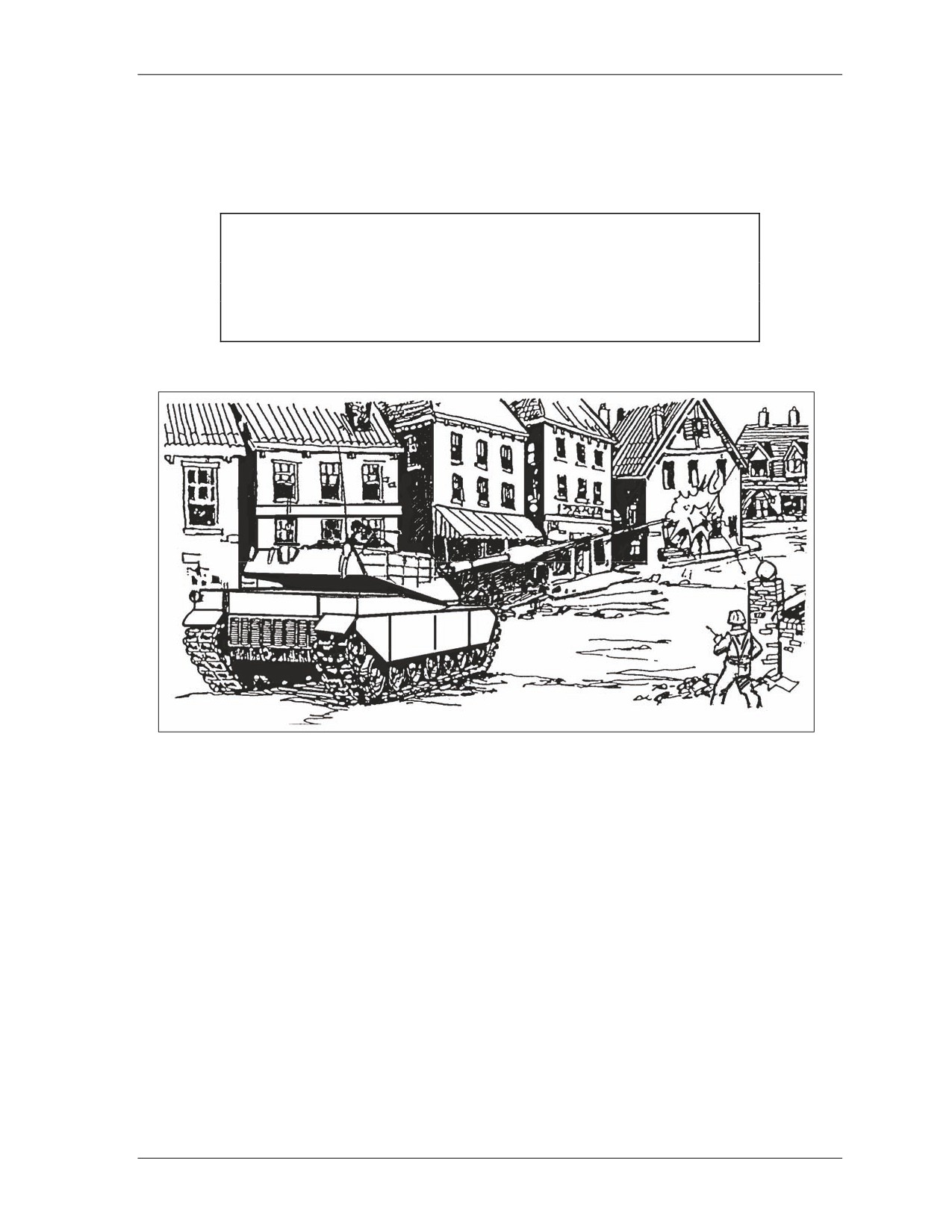
Urban Operations
y Securing cleared portions of the objective by covering avenues of approach.
y Attacking by fire any other targets designated by the Infantry.
y Establishing roadblocks or checkpoints.
y Suppressing identified sniper positions.
CAUTION
When operating close to Infantry during combined-arms urban combat,
tanks should employ heat shields, normally used for towing, to deflect
the intense heat caused by the exhaust.
Figure 12-1. Tank in direct fire, supported by Infantry.
TASK ORGANIZATION WITH TANKS AT COMPANY TEAM LEVEL
12-83. An attached or OPCON Bradley fighting vehicle (BFV) platoon will have Infantry squads that can
be employed in the scheme of maneuver. Therefore, platoon integrity with a BFV platoon should be
maintained in urban combat and the BFV platoon should be used as a maneuver element. The information
in this paragraph refers to tank platoons. Normally, a tank platoon would be OPCON to an Infantry
company during combined-arms operations at the company team level. Armored vehicles do not usually
operate in elements smaller than sections. Their tactics, training, and communication systems are designed
to work at section level and higher. The four basic techniques of task organizing the tank platoon into the
Infantry company for urban combat follow.
TANK PLATOON AS A MANEUVER ELEMENT
12-84. In this technique, the tank platoon leader is responsible for maneuvering the tanks IAW the
company team commander's intent. With this task organization, likely missions for the tanks are to support
by fire or to overwatch the movement of the Infantry. This task organization is the most difficult to
maneuver tanks with the Infantry. However, in order to execute the mission, the tank platoon leader can
choose to maneuver the platoon by sections. This provides greater flexibility in supporting the Infantry
27 July 2006
FM 3-21.10
12-17
Chapter 12
during the close fight. This technique will allow the company team commander to employ the tank platoon
as a reserve or counter, attack force, and capitalize on mobility, and shock effect of the tank platoon.
TANK SECTIONS UNDER INFANTRY PLATOON CONTROL
12-85. In this technique, tanks are organized into two sections and each section is placed under the
OPCON of an Infantry platoon, and employed IAW the platoon leader's scheme of maneuver. The
company team commander relinquishes direct control of the tank maneuver to the Infantry platoon leaders.
This technique is very effective in maintaining the same rate of progress between the tanks and the
Infantry. However, Infantry platoon leaders are burdened with the additional responsibility of employing
tanks. The general lack of experience with tanks and the overall battlefield focus of the Infantry platoon
leader can also affect this technique. This technique is best suited when contact with the enemy is expected
and close continuous support is required for movement or clearing buildings.
TANK SECTIONS UNDER COMPANY AND PLATOON CONTROL
12-86. In this technique, the tank platoon is organized into two sections: one under company control and
the other under platoon control. The selected Infantry platoon would have a tank section available to
support the close fight. With this technique, the company team commander has a tank section to deploy at
the critical place and time of his choosing. This task organization still allows support to the Infantry close
fight while keeping additional support options in reserve for the commander to employ. The disadvantages
to this technique are that an Infantry platoon leader is employing tanks, instead of the tank platoon leader,
and the tanks directly available to the company team commander are cut in half. This technique requires
detailed planning, coordination, and rehearsals between the Infantry platoons and tank sections.
INFANTRY SQUADS UNDER TANK PLATOON CONTROL
12-87. In this technique, the company team commander has the option of placing one or more Infantry
squads OPCON to the tank platoon leader. He may also retain all tanks under the control of the tank
platoon leader or place a tank section OPCON to an Infantry platoon leader. This technique will give the
company team commander a fourth maneuver platoon, and involves the tank platoon leader in the fight. It
can work well in a situation where a mobile reserve that needs Infantry protection is required. This
technique requires detailed planning, coordination, and rehearsals between the Infantry squads and tank
platoon or sections. Major disadvantages to this technique are the transportation of the Infantry squads and
the ability of the Infantry squads to communicate with the tank platoon.
GUIDELINES
12-88. None of the techniques described above are inherently better than the other one. The task
organization is tailored to accomplish the mission. Regardless of the technique selected, the guidelines
below should be followed.
y Tanks should be used as sections. Single tanks may operate in support of Infantry; however,
tanks should operate as sections. If using tanks to shield squads and teams from building to
building as part of the maneuver plan, the leader of the forward element needs to control
the tanks.
y If the company commander is controlling the tanks, he needs to move forward to a position
where he can effectively employ the tanks in support of the Infantry.
y The task organization should support the span of control. If the company commander is going
to control the tanks, then there is no reason to task-organize the tanks by section under
Infantry platoons.
12-89. Tanks need Infantry support when the two elements are working together. Do not leave tanks
alone because they are not prepared to provide local security during the operation. Tanks are extremely
vulnerable to dismounted attack when operating on urban terrain. Tanks are most vulnerable and need local
flank, rear, and overhead security when Infantry are in the process of clearing buildings. Tanks must
12-18
FM 3-21.10
27 July 2006
Urban Operations
remain relatively stationary for prolonged periods while Infantry clear the building allowing threat antitank
(AT) teams to maneuver to a position of advantage.
MUTUAL SUPPORT
12-90. Infantry or tank teams work together to bring the maximum combat power to bear on the enemy.
The Infantry provides the eyes and ears of the team. The Infantry locates and identifies targets for the tank
to engage. It maneuvers along covered and concealed routes to assault enemy elements fixed or suppressed
by tank fire. It provides protection for the tank against attack by enemy Infantry. Meanwhile, the tank
provides heavy, continuous supporting fires against enemy positions.
MOVEMENT
12-91. The Infantry normally leads movement through urban areas. The tanks follow and provide
overwatch. However, the Infantry must still ensure the tanks are provided flank and rear security. If the
Infantry discovers an enemy position or encounters resistance, the tanks immediately maneuver to a
position where they can respond with supporting fire to fix the enemy or suppress him and allow the
Infantry to develop the situation. The Infantry leader directs the tank to move, if necessary, and identifies
specific targets for the tank to engage.
COORDINATION
12-92. Coordination between tank and Infantry leaders is close and continuous. The tank commander or
driver, accompanied by the Infantry leader, may need to dismount and move to a position where the route
or target is more visible. Signals for initiating, shifting, or ceasing fires must be understood by all. One of
the greatest barriers to coordination, command, and control in urban combat is the intense noise. Verbal
commands should be backed up by simple, nonverbal signals.
COMMUNICATIONS
12-93. The tank platoon leader and platoon sergeant maintain communications with the company team
commander via conventional FM radio. Individual tanks and Infantrymen communicate with each other
using one or more of these techniques.
Visual Signals
12-94. Visual signals, either prescribed by TSOP or coordinated during linkup, facilitate simple
communications.
Wire
12-95. M1-series tank crewmembers can route WD-1 wire from the AM-1780 through the loader's hatch
or vision block and attach it to a field phone on the back of the tank. WD-1 wire can also be run on a more
permanent basis starting through the engine compartment, through the hull or subturret floor, and attached
to the turret's intercom system via the driver's communications box. These techniques work better in a
defensive situation rather than in an attack, where wire might hinder tank movement or reaction time.
FM Radios
12-96. FM radios or other short-range hand-held radios can be distributed during the linkup to provide a
reliable means of communications between Infantry and supporting tank commanders (TCs). These radios
allow the Infantry to use terrain more effectively in providing close in protection for the tank; Infantrymen
can watch for enemy elements while limiting exposure to enemy fires directed against the tank.
Information in SOIs is used by the tank platoon or sections and the company team headquarters or the
27 July 2006
FM 3-21.10
12-19
Chapter 12
Infantry platoons. This SOI information is a fast reliable method of communications that does not require
additional assets.
SMOKE
12-97. The tank's smoke grenade launchers or smoke generator might be used to protect the tank from
enemy fire and to provide concealment for the Infantry forces as they move either across open areas or
recover wounded. The use of smoke must be carefully coordinated. Although the tank’s sights can see
through most smoke, Infantrymen are at a significant disadvantage when enveloped in dense smoke clouds.
The smoke grenade launchers on the tank provide excellent, rapidly developed local smoke clouds, but the
grenades produce burning fragments that are hazardous to Infantrymen near the tank and can ignite fires in
urban areas.
HEAVY DIRECT-FIRE SUPPORT
12-98. Tanks are valuable tools for assisting the assaulting forces during actions in the objective area.
When possible, tanks are positioned where their fires can be used to prevent enemy reinforcement and
engage enemy forces withdrawing from the objective. Due to the nonlinear nature of urban engagements,
enemy forces may move to the rear or flanks of the tanks and destroy them. If a small element of Infantry
cannot be spared to support the tanks, both vehicles in the section should move to positions of cover and
mutual support. Loaders and vehicle commanders should be alert, especially for enemy Infantry
approaching from above, the rear, or from the flanks.
OTHER CONSIDERATIONS
12-99. Other considerations for employing tanks at company team level are--
y In planning, pay close attention to available terrain that supports tank cross-country movement.
While the pace might be slower, security might be significantly enhanced.
y Involve tank platoon leaders and sergeants in the planning process. Their expertise will hasten
the understanding of what tanks can and cannot do and aid the Infantry company commander in
making the best employment decision.
y Tanks can be used to carry ammunition, water, and other supplies to support the urban fight.
y To keep tanks mission capable requires planning for refueling and rearming. There may also be
a requirement to recover disabled vehicles. The company XO coordinates with the battalion S-4
to ensure that the proper logistical support is provided for the tanks. Infantry companies and
battalions do not have resources to support a tank platoon with CL III, V, or recovery and need
sustainment augmentation. Normally the attached tank platoon or company comes with their
sustainment slice elements.
y Infantry company commanders allocate time in the planning process for precombat inspections
(PCIs) for the tanks.
12-100. Conduct a combined-arms rehearsal at the level that the tanks are task-organized. Try to replicate
conditions for mission execution during rehearsals, for example, in daylight and in limited visibility,
civilians on the battlefield, host nation support, and ROE. Also include the following.
y Communications.
y Direct fire plans.
y Breach drills.
y Procedures for Infantry riding on tanks. (Tanks can move a maximum of nine personnel.)
y Techniques for using tanks as Infantry shields.
12-101. To minimize casualties when moving outside or between buildings--
y Cover all possible threat locations with observation and fire.
12-20
FM 3-21.10
27 July 2006
Urban Operations
y For those areas that cannot be covered with observation or fire, use smoke to set a screen to
block enemy observation of friendly movement.
y Move tanks forward to support Infantry movement. Position the tanks before the Infantry
begins moving, whether the tanks are supporting by fire, being used as shields, or both.
y Plan positions, if possible, but devise a marking system and communication signals to designate
situational dependent positions to help maintain momentum. For example, The VS-17 panel
from Building 2 means move to SBF 3.
y When using tanks as a shield for Infantry, move the tanks as close as possible to the start point
to allow the Infantry the freedom of movement when exiting the building. Tanks need to move
at the Infantry's rate of movement.
y When the distance between buildings is short, position tanks to block the open area from
enemy fire.
y Use simple, clearly understood graphic control measures. The following are particularly useful
for Infantry or heavy operations in urban combat (Figure 12-2).
- Phase lines.
- Number and lettering systems for buildings.
- Tentative support by fire positions.
- No fire areas.
27 July 2006
FM 3-21.10
12-21
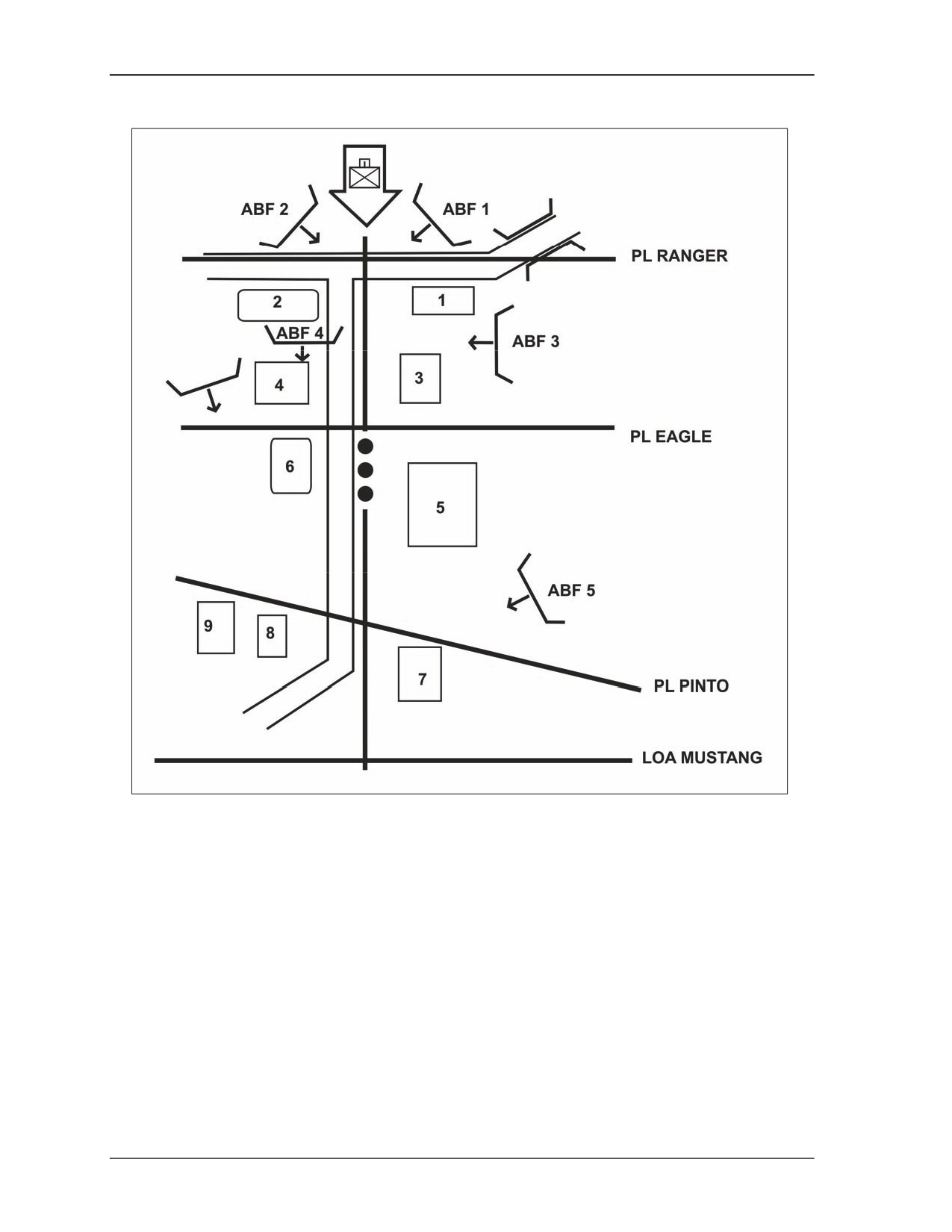
Chapter 12
Figure 12-2. Graphic control measures for Infantry and heavy.
12-102. Rely on the radio to help control the battle. Platoon leaders and radio operators must be well
trained in sending reports. Constant reporting from the subordinate elements to the commander is critical
for mission success.
ARMORED VEHICLE POSITIONS
12-103. Fighting positions for tanks are essential to a complete and effective defensive plan in urban areas.
Armored vehicle positions are selected and developed to obtain the best cover, concealment, observation,
and fields of fire while retaining the vehicle's ability to move.
HULL DOWN
12-104. If fields of fire are restricted to streets, hull-down positions should be used to gain cover and fire
directly down streets (Figure 12-3, page 12-20). From those positions, tanks are protected and can move to
12-22
FM 3-21.10
27 July 2006
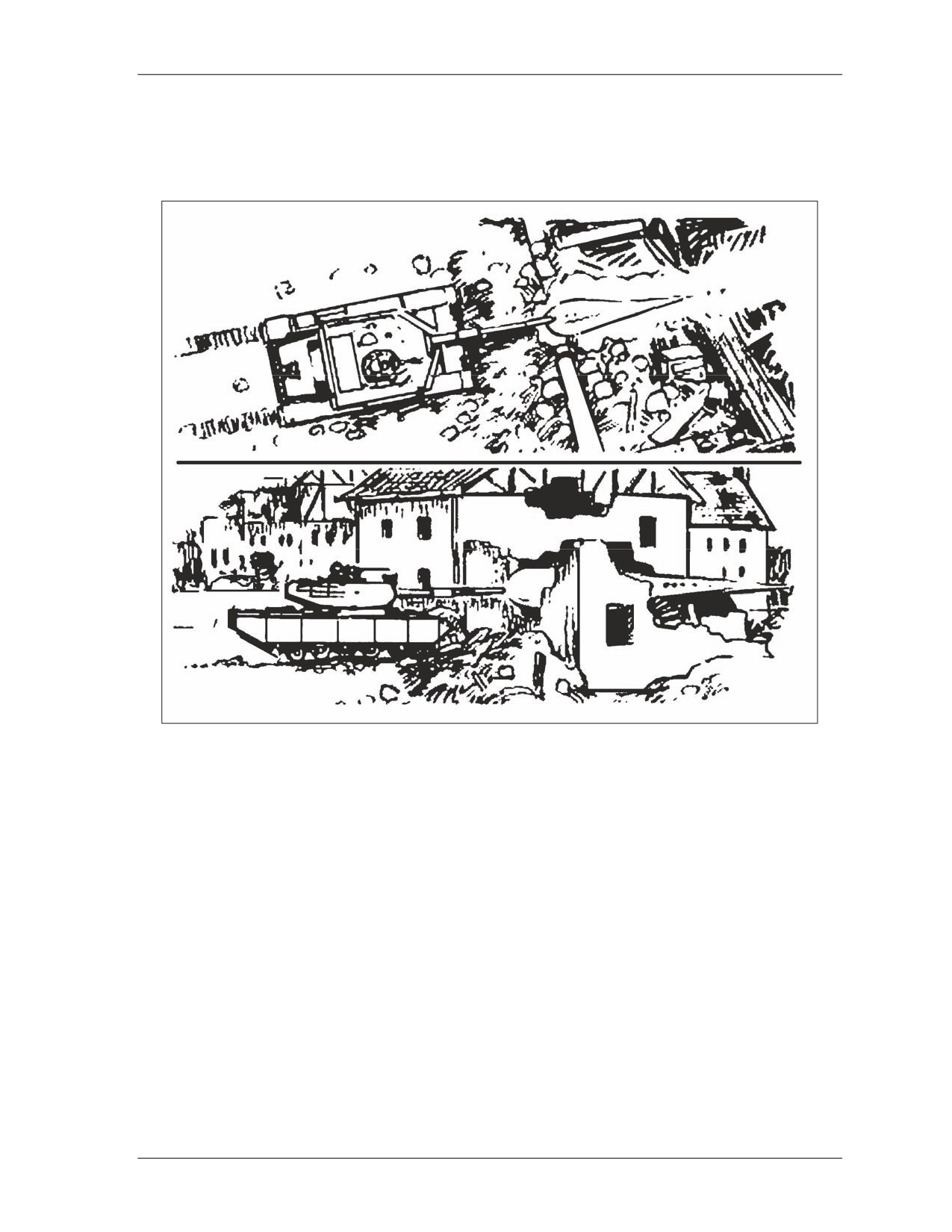
Urban Operations
alternate positions rapidly. Buildings collapsing from enemy fires are a minimal hazard to the armored
vehicle and crew.
Figure 12-3. Hull-down position.
HIDE
12-105. The hide position covers and conceals the vehicle until time to move into position for target
engagement. Since the crew cannot see advancing enemy forces, an observer from the vehicle or a nearby
Infantry unit is concealed in another location. The observer acquires the target and signals the armored
vehicle to move to the firing position and to fire. After firing, the tank moves to an alternate position to
avoid compromising one location (Figure 12-4).
27 July 2006
FM 3-21.10
12-23
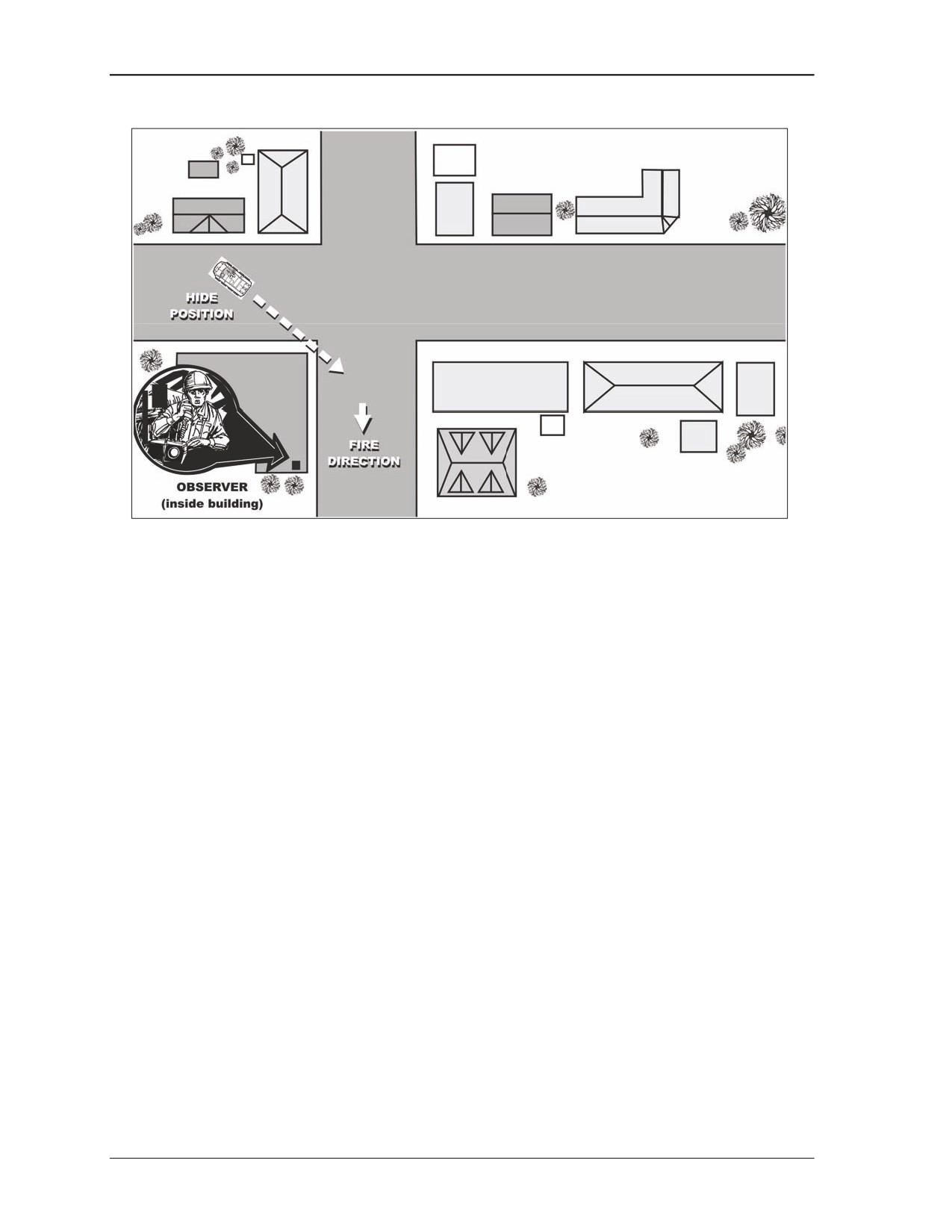
Chapter 12
Figure 12-4. Hide position.
BUILDING HIDE
12-106. The building hide position conceals the vehicle inside a building. If basement hide positions are
inaccessible, engineers must evaluate the building's floor strength and prepare for the vehicle. Once the
position is detected, it should be evacuated to avoid enemy fires (Figure 12-5).
12-24
FM 3-21.10
27 July 2006
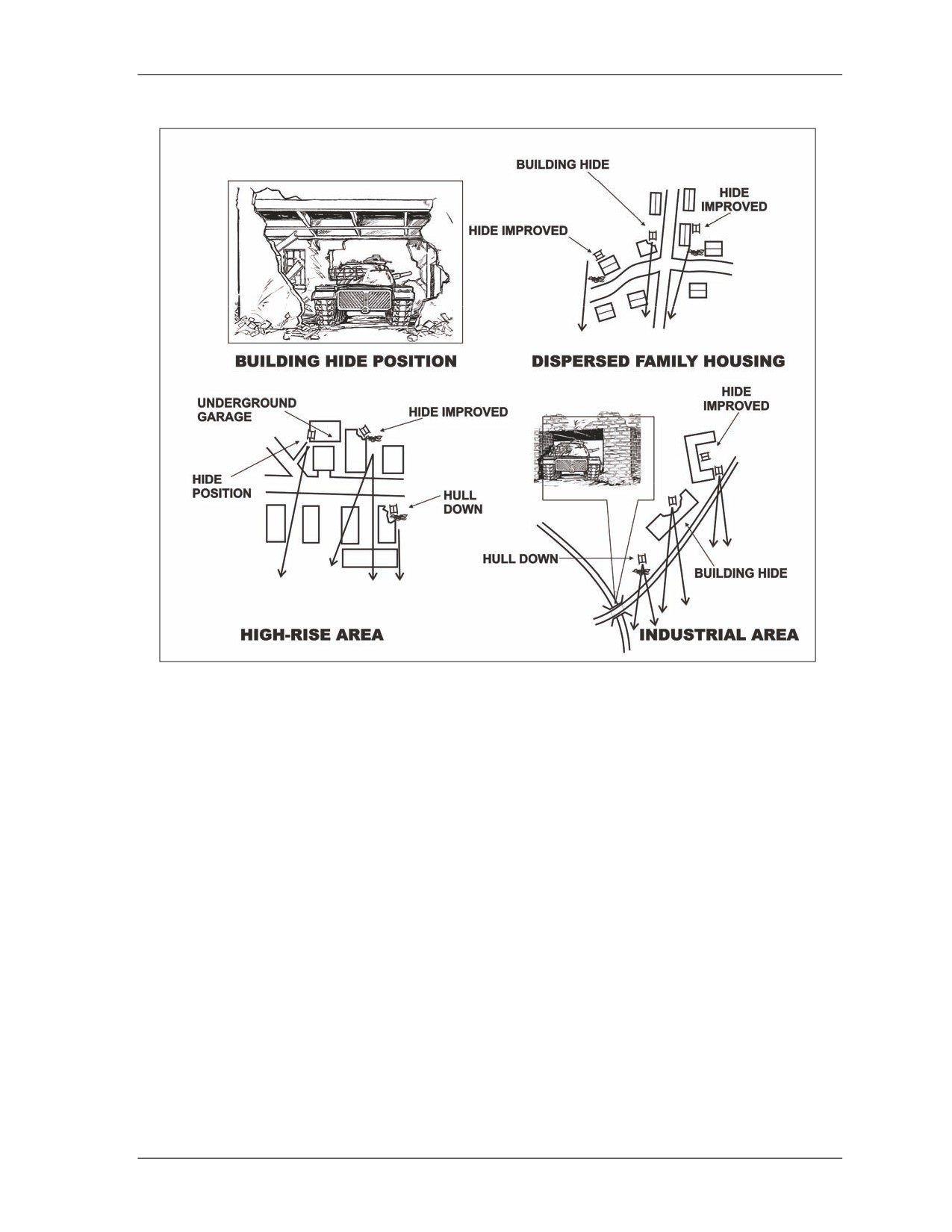
Urban Operations
Figure 12-5. Building hide position.
TRANSPORTATION OF INFANTRY
12-107. At times, the tank platoon might be required to transport Infantrymen. This is a hazardous
undertaking and must not be done if the unit is expecting contact. The proliferation of remotely detonated
mines and IEDs has made this technique even more hazardous. It should be used only after careful
consideration or in extremis. If the tank platoon is moving as part of a larger force and is tasked to provide
security for the move, the lead section or element should not carry Infantry (Figure 12-6, page 12-26).
27 July 2006
FM 3-21.10
12-25