FM 4-20.198 Multiservice Helicopter Sling Load: Single-Point Load Rigging Procedures (February 2009) - page 12
Chapter 14
RIGGING STEPS
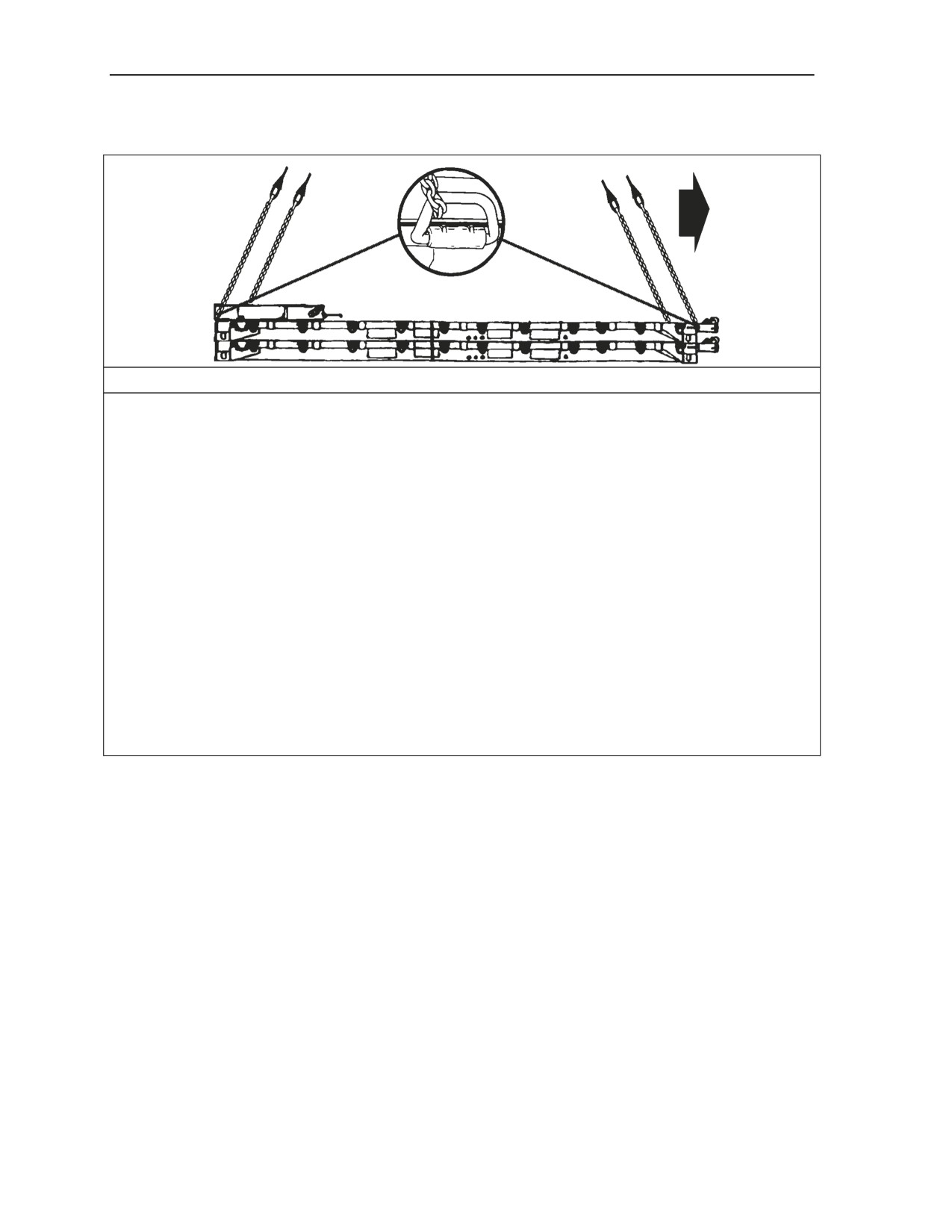
1. Position the apex fitting on top of the stacked platforms. Route outer sling legs 1 and 2 to the
front of the platform and inner sling legs 3 and 4 to the rear (A-frame end). Sling legs 1 and 3
must be on the left side of the load.
2. Loop the chain end of sling leg 1 through the left front lift provision located on the top
platform. Place the correct link from Table 14-7 in the grab hook. Repeat with sling leg 2
through the right front lift provision on the top platform.
3. Loop the chain end of sling leg 3 through the left rear lift provision located on the top
platform. Place the correct link from Table 14-7 in the grab hook. Repeat with sling leg 4
through the right rear lift provision on the top platform.
4. Secure all excess chain with tape or Type III nylon cord.
5. Pad each chain where it contacts sharp edges on the platform. Secure the padding with tape
or Type III nylon cord.
6. Cluster and tie (breakaway technique) all sling legs together on top of the platforms to
prevent entanglement during hookup and lift-off.
Figure 14-7. Container Roll-in/out Platform, M3/M3A1, Two Empty Platforms, Stacked
SPECIAL OPERATIONS CRAFT-RIVERINE (SOC-R) AND NAVAL
SPECIAL WARFARE RIGID INFLATABLE BOAT (NSWRIB)
TRAILER
14-9. The special operations craft-riverine and naval special warfare rigid inflatable boat trailer is rigged
for single-point sling load using the following procedures:
z
Applicability. The following items in Table 14-8 are certified for all helicopters with suitable
lift capacity by the US Army Natick Soldier Center:
FM 4-20.198/MCRP 4-11.3E, VOL II/NTTP 3-04.12/
14-12
AFMAN 11-223 (I), VOL II/COMDTINST M13482.3B
20 February 2009
Certified Single-Point Rigging Procedures for Miscellaneous Equipment
Table 14-8. Special Operations Craft-Riverine and Naval Special Warfare Rigid Inflatable Boat
Trailer
Nomenclature
Max
Sling
Link Count
Weight
Set
Front/Rear
(Pounds)
Special Operations Craft-Riverine (SOC-R) Trailer
3,716
15K
5/3
Naval Special Warfare Rigid Inflatable Boat (NSWRIB) Trailer
4,300
15K
5/3
z
Materials. The following materials are required to rig this load:
Multileg sling set (15,000-pound capacity).
Tape, adhesive, pressure-sensitive, 2-inch wide roll.
Cord, nylon, Type III, 550-pound breaking strength.
Webbing, cotton, 1/4-inch, 80-pound breaking strength.
z
Personnel. Two persons can prepare and rig this load in 10 minutes.
z
Procedures. The following procedures apply to this load:
Preparation. Prepare the load using the following steps:
─ Secure the utility box lid with Type III nylon cord.
─ Lower the lunette close to the ground and secure it in place with a 5,000-pound tiedown
strap and load binder.
─ Secure safety chains, intervehicular electrical cables, and brake cables on top of the
drawbar with tape or Type III nylon cord.
─ Engage the parking brake and secure it in the engaged position.
─ Tape the rails on the trailer together to ensure the slings do not become entangled.
─ Tape all lights.
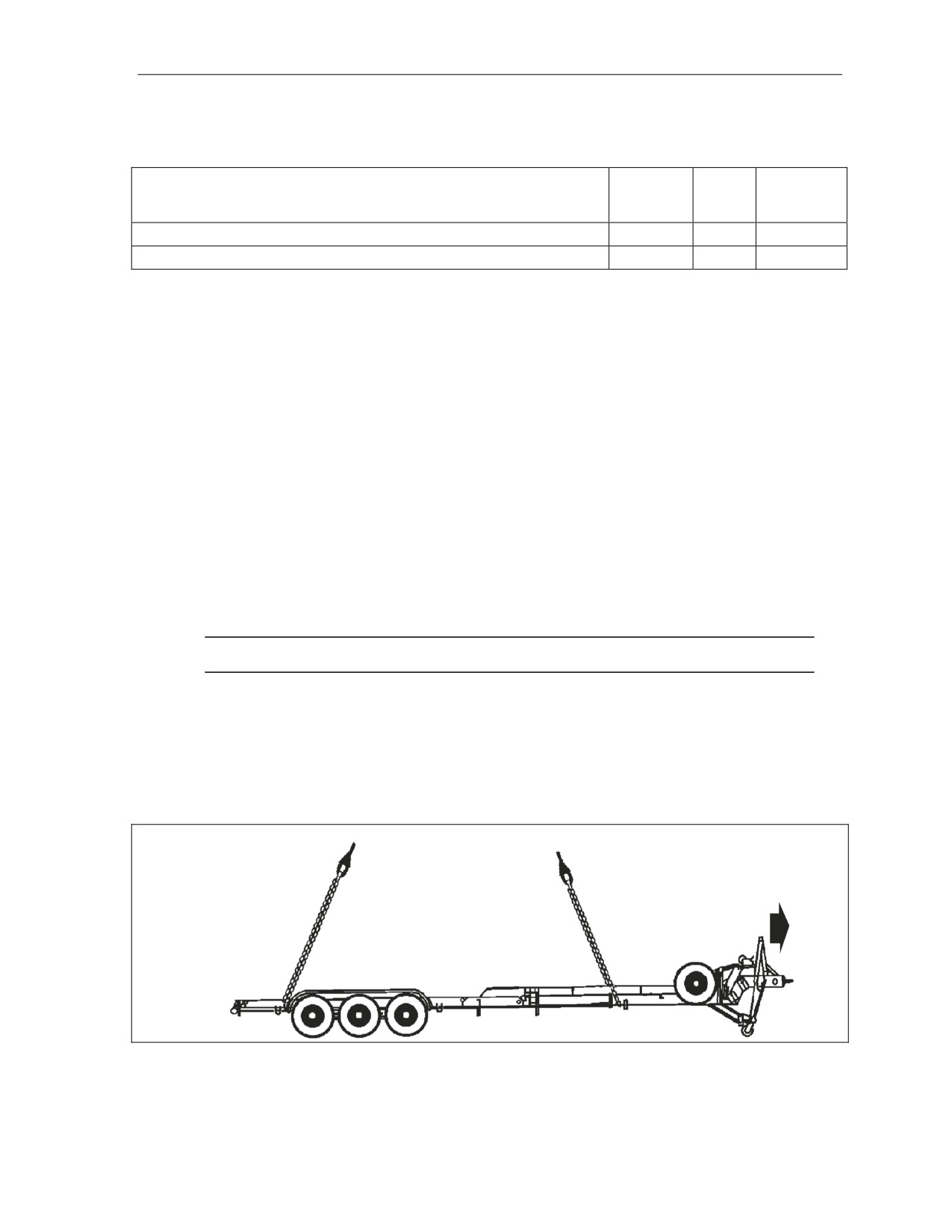
Rigging. Rig the load according to the steps in Figure 14-8.
Note. This load is flown with the lunette in front.
Hookup. The hookup team stands next to the trailer. The static discharge person
discharges the static electricity. The hookup person places the apex on the cargo hook. The
hookup teams then carefully dismount the boat and remain close to the load as the helicopter
removes slack from the sling legs. When successful hookup is assured, the hookup teams
quickly exit the area underneath the helicopter to the designated rendezvous point.
Derigging. Derigging is the reverse of the preparation and rigging procedures.
Figure 14-8. Special Operations Craft-Riverine and Naval Special Warfare Rigid Inflatable Boat
Trailer
20 February 2009
FM 4-20.198/MCRP 4-11.3E, VOL II/NTTP 3-04.12/
AFMAN 11-223 (I), VOL II/COMDTINST M13482.3B
14-13
Chapter 14
RIGGING STEPS
1. Position the apex fitting on top of the trailer.
2. Loop the chain end of sling leg 1 around the main support frame in front of the tiedown
provision on the left side of the trailer. Place the correct link from Table 14-8 in the grab
hook. Repeat this step with sling leg 2 on the right side of the trailer.
3. Loop the chain end of sling leg 3 around the frame and through the lift provision on the left
rear of the trailer. Place the correct link from Table 14-8 in the grab hook. Repeat this step
with sling leg 4 on the right side of the trailer. Secure the excess chain with tape or Type III
nylon cord.
4. Raise the apex fittings above the load. Cluster and tie (breakaway technique) the sling legs
in each sling set together to prevent entanglement during hookup and lift-off.
Figure 14-8. Special Operations Craft-Riverine and Naval Special Warfare Rigid Inflatable Boat
Trailer (Continued)
FM 4-20.198/MCRP 4-11.3E, VOL II/NTTP 3-04.12/
14-14
AFMAN 11-223 (I), VOL II/COMDTINST M13482.3B
20 February 2009
Chapter 15
Suitable Single-Point Rigging Procedures for Wheeled
Vehicles
INTRODUCTION
15-1. This chapter contains rigging procedures for single-point lift of wheeled vehicles that are suitable for
sling load. Each rigging procedure is found in a paragraph that includes a description of the load, materials
required for rigging, and steps to complete the procedure. An applicability paragraph is also a part of each
paragraph and identifies the suitable loads. The suitable single-point rigging procedures for wheeled
vehicles are in this section. Paragraphs 15-2 through 15-6 give detailed instructions for rigging loads.
Note. Reach pendants may be used on all single point loads. A static discharge person is not
required when using a reach pendant.
M342A2 2 1/2-TON DUMP TRUCK WITH WINCH
15-2. The M342A2 2 1/2-ton dump truck with winch is rigged for single-point sling load using the
following procedures:
z
Applicability. The following item in Table 15-1 is suitable for all ARMY helicopters with
suitable lift capacity by the US Army Natick Soldier Center:
Table 15-1. M342A2 2 1/2-Ton Dump Truck with Winch
Nomenclature
Max
Sling
Link Count
Weight
Set
Front/Rear
(Pounds)
M342A2 2 ½-Ton Dump Truck with Winch
15,770
25K
3/30
WARNING
DO NOT LIFT THIS LOAD WITH THE ORIGINAL VEHICLE LIFT
PROVISION.
z
Materials. The following materials are required to rig this load:
Sling set (25,000-pound capacity).
Tape, adhesive, pressure-sensitive, 2-inch wide roll.
Cord, nylon, Type III, 550-pound breaking strength.
Webbing, cotton, 1/4-inch, 80-pound breaking strength.
z
Personnel. One person can prepare and rig this load (after modifying the bed) in 15 minutes.
z
Procedures. The following procedures apply to this load:
Preparation. Prepare the load using the following steps:
─ Modify the cargo bed. Secure the bed in the down position.
─ Place the transmission in neutral and engage the hand brake.
─ Secure the steering wheel and doors with Type III nylon cord.
20 February 2009
FM 4-20.198/MCRP 4-11.3E, VOL II/NTTP 3-04.12/
AFMAN 11-223 (I), VOL II/COMDTINST M13482.3B
15-1
Chapter 15
─ Tape the windshield wipers to the windshield.
─ Secure the hood with Type III nylon cord routed from the grill through the hood latches.
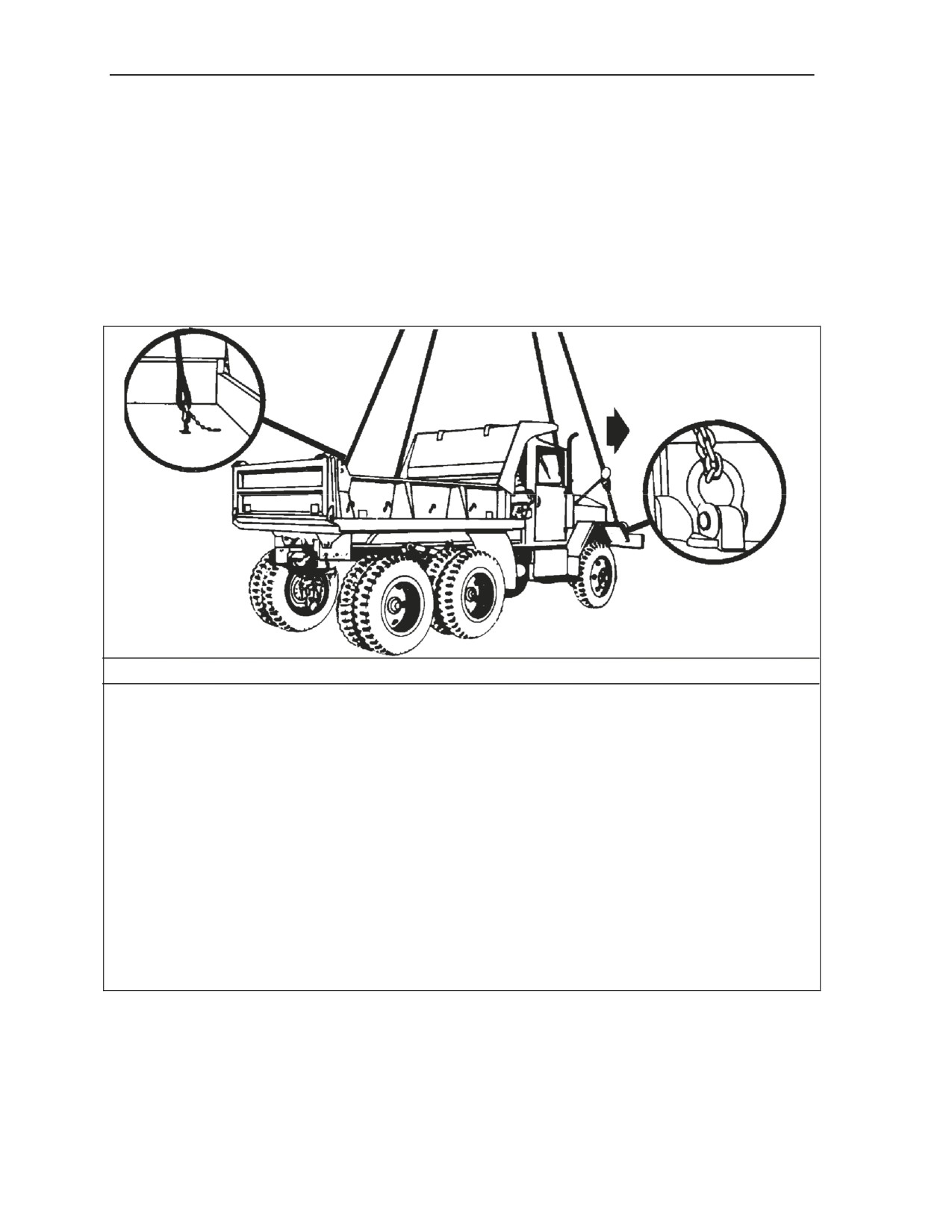
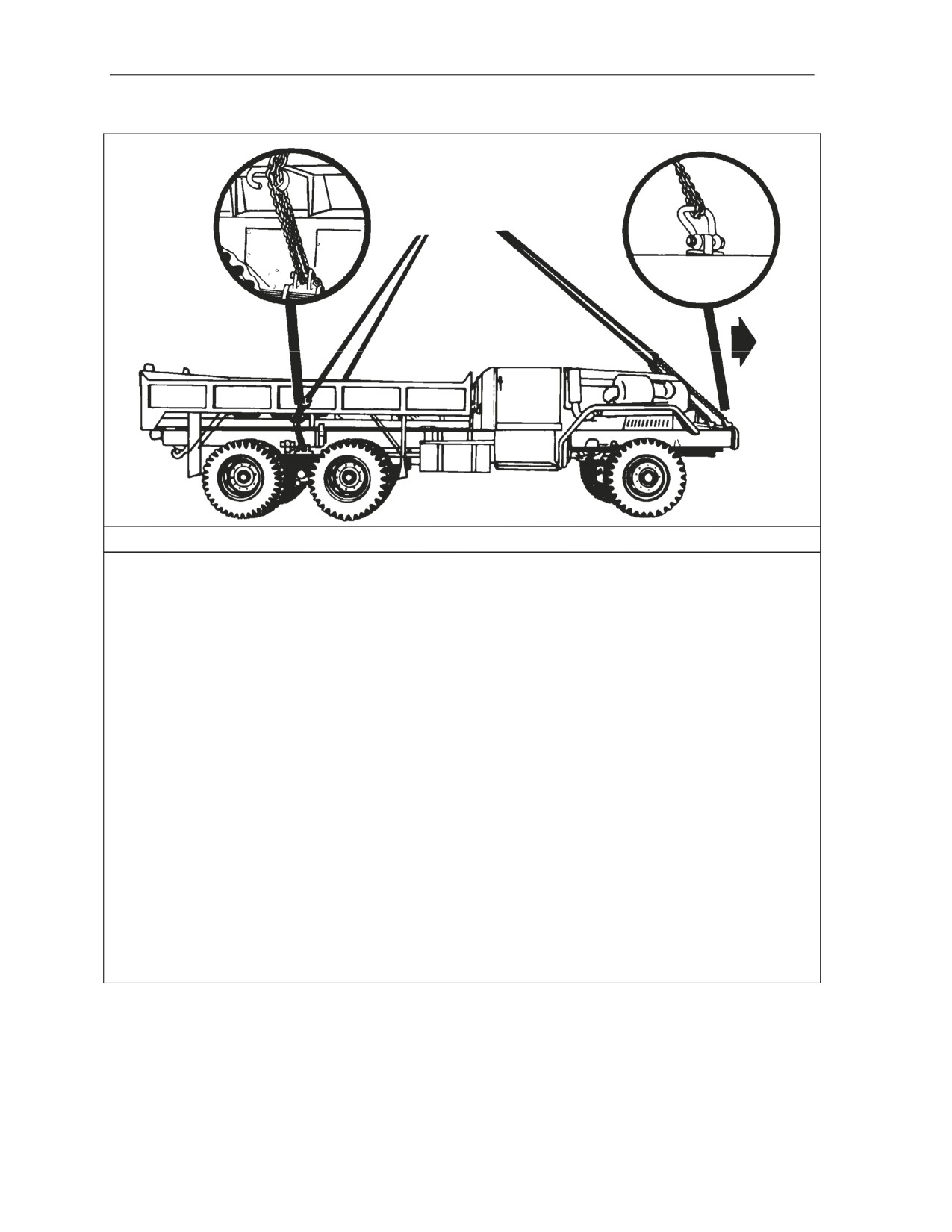
Rigging. Rig the load according to the steps in Figure 15-1.
Hookup. The hookup team stands in the cargo bed of the truck. The static wand person
discharges the static electricity with the static wand. The hookup person places the apex fitting
onto the aircraft cargo hook. The hookup team then moves clear of the load but remains close to
the load as the helicopter removes slack from the sling legs. When successful hookup is
assured, the hookup team quickly exits the area underneath the helicopter to the designated
rendezvous point.
Derigging. Derigging is the reverse of the preparation and rigging procedures.
RIGGING STEPS
1. Position apex fitting on top of the forward end of the dump box. Route outer sling legs 1 and
2 to the front of the truck and inner sling legs 3 and 4 to the rear end. Sling legs 1 and 3
must be on the left side of the load.
2. Loop the chain end of sling leg 1 through the left front lift provision located on the left side of
the front bumper. Place the correct link from Table 15-1 in the grab hook. Repeat with sling
leg 2 and the right front lift provision.
3. Loop the chain end of sling leg 3 through the left hole in the floor of the cargo bed, under the
lifting pin on the spring shackle between the wheels, and back up through the hole. Place the
correct link from Table 15-1 in the grab hook. Repeat with sling leg 4 and the right rear lift
provision.
4. Cluster and tie or tape (breakaway technique) all sling legs together on top of the truck to
prevent entanglement during hookup and lift-off.
Figure 15-1. M342A2 2 1/2-Ton Dump Truck with Winch
M35A1/A2 2 1/2-TON CARGO TRUCK WITH WINCH
15-3. The M35A1/A 2, 2 1/2-ton cargo truck with winch is rigged for single-point sling load using the
following procedures:
FM 4-20.198/MCRP 4-11.3E, VOL II/NTTP 3-04.12/
15-2
AFMAN 11-223 (I), VOL II/COMDTINST M13482.3B
20 February 2009
Suitable Single-Point Rigging Procedures for Wheeled Vehicles
z
Applicability. The following items in Table 15-2 are suitable for all ARMY helicopters with
suitable lift capacity by the US Army Natick Soldier Center:
Table 15-2. M35A1/A2 2 1/2-Ton Cargo Truck with Winch
Nomenclature
Max
Sling
Link Count
Weight
Set
Front/Rear
(Pounds)
M35A1 2 ½-Ton Cargo Truck with Winch
13,550
25K
13/3
M35A2 2 ½-Ton Cargo Truck with Winch
13,570
25K
13/3
WARNING
DO NOT LIFT THIS LOAD WITH THE ORIGINAL VEHICLE LIFT
PROVISION.
z
Materials. The following materials are required to rig this load:
Sling set (25,000-pound capacity).
Tape, adhesive, pressure-sensitive, 2-inch wide roll.
Cord, nylon, Type III, 550-pound breaking strength.
Webbing, cotton, 1/4-inch, 80-pound breaking strength.
Padding, cellulose.
Tie-down, cargo, CGU-1/B (as required).
z
Personnel. Two persons can prepare and rig this load in 25 minutes.
z
Procedures. The following procedures apply to this load:
Preparation. Prepare the load using the following steps:
─ Remove the bed tarpaulin and bows and secure them in the truck bed with tie-down
straps or Type III nylon cord.
─ Remove the cab tarpaulin, lower and secure the windshield, and secure the tarpaulin over
the windshield with Type III nylon cord.
─ Secure the hood with Type III nylon cord routed from the grill through the hood latches.
─ Ensure the fuel cap, oil filler cap, radiator cap, and battery caps are properly installed and
the battery compartment door is fastened.
─ Secure the seats and doors with Type III nylon cord.
─ Place the transmission in neutral and engage the hand brake.
─ Straighten the front wheels and secure the steering wheel with Type III nylon cord.
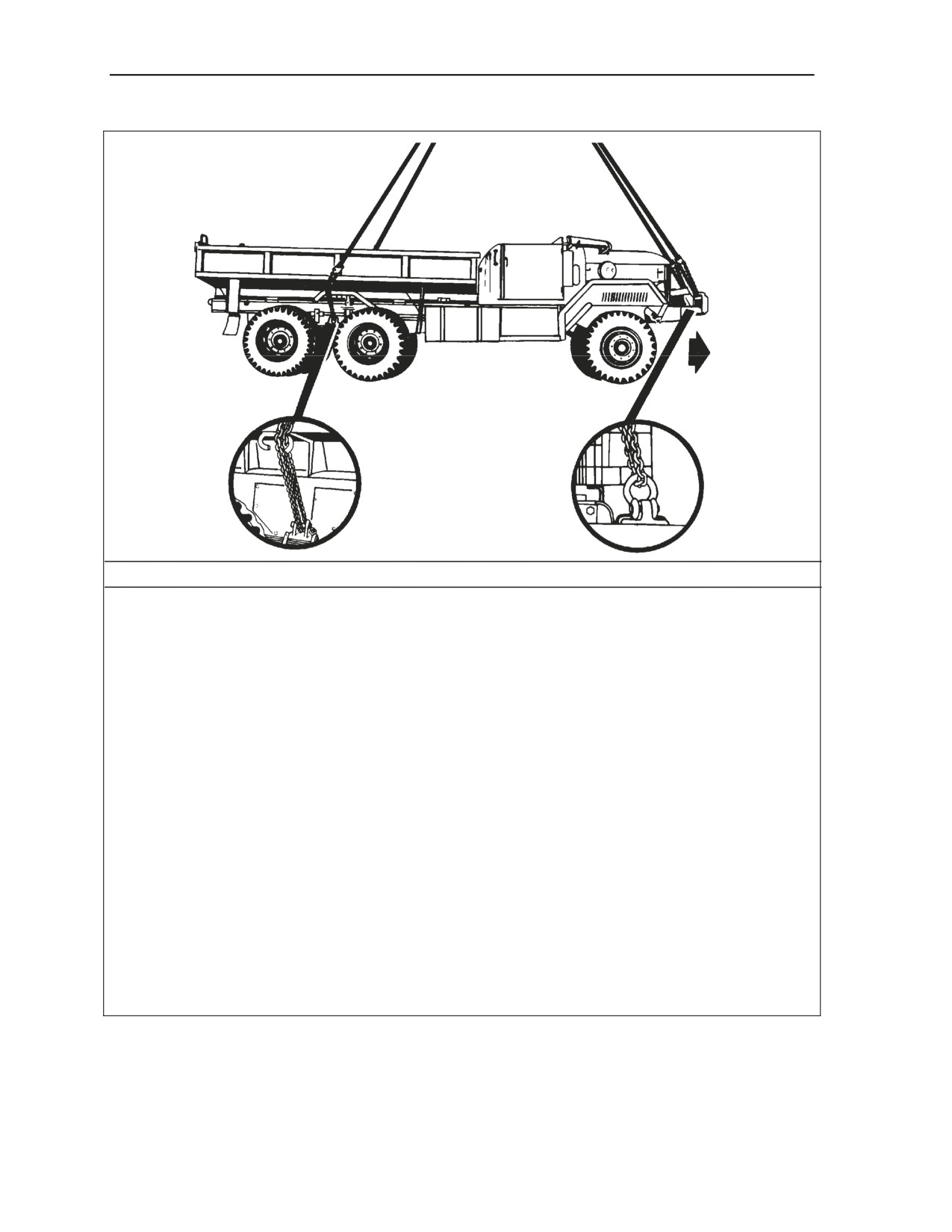
Rigging. Rig the load according to the steps in Figure 15-2.
Hookup. The hookup team stands in the cargo bed of the truck. The static wand person
discharges the static electricity with the static wand. The hookup person places the apex fitting
onto the aircraft cargo hook. The hookup team then moves clear of the load but remains close to
the load as the helicopter removes slack from the sling legs. When successful hookup is
assured, the hookup team quickly exits the area underneath the helicopter to the designated
rendezvous point.
Derigging. Derigging is the reverse of the preparation and rigging procedures.
20 February 2009
FM 4-20.198/MCRP 4-11.3E, VOL II/NTTP 3-04.12/
AFMAN 11-223 (I), VOL II/COMDTINST M13482.3B
15-3
Chapter 15
RIGGING STEPS
1.
Position apex fitting in the bed of the truck near the cab. Route outer sling legs 1 and 2 to the
front of the truck and inner sling legs 3 and 4 to the rear end. Sling legs 1 and 3 must be on
the left side of the load.
2.
Loop the chain end of sling leg 1 through the left front lift provision located on the left side of
the front bumper. Place the correct link from Table 15-2 in the grab hook. Repeat with sling
leg 2 and the right front lift provision. Secure the excess chain with Type III nylon cord.
3.
Loop the chain end of sling leg 3 through the left lifting pin on the spring shackle between the
rear wheels. Place the correct link from Table 15-2 in the grab hook. Pull the grab hook up
against the side of the truck and tie the chain in the chain guide bracket with 1/4-inch cotton
webbing. Ensure the hook side of the grab hook faces outward. Repeat with sling leg 4 and
the right rear lift provision.
4.
Tie the rear grab hooks together across the bed of the truck with 1/4-inch cotton webbing.
5.
Pull the front sling legs up over the hood and secure the grab hooks to the hood latch
attachment with Type III nylon cord.
6.
Tape sling legs 1 and 2 to the top of the steering wheel. Cluster and tie (breakaway
technique) all sling legs together on top of the truck to prevent entanglement during hookup
and lift-off.
Figure 15-2. M35A1/A2 2 1/2-Ton Cargo Truck with Winch
FM 4-20.198/MCRP 4-11.3E, VOL II/NTTP 3-04.12/
15-4
AFMAN 11-223 (I), VOL II/COMDTINST M13482.3B
20 February 2009
Suitable Single-Point Rigging Procedures for Wheeled Vehicles
M54A2 5-TON CARGO TRUCK WITH WINCH
15-4. The M54A2, 5-ton cargo truck with winch is rigged for single-point sling load using the following
procedures:
z
Applicability. The following item in Table 15-3 is suitable for all ARMY helicopters with
suitable lift capacity by the US Army Natick Soldier Center:
Table 15-3. M54A2 5-Ton Cargo Truck with Winch
Nomenclature
Max
Sling
Link Count
Weight
Set
Front/Rear
(Pounds)
M54A2 5-Ton Cargo Truck with Winch
20,782
25K
13/3
WARNING
DO NOT LIFT THIS LOAD WITH THE ORIGINAL VEHICLE LIFT
PROVISION.
z
Materials. The following materials are required to rig this load:
Sling set (25,000-pound capacity).
Tape, adhesive, pressure-sensitive, 2-inch wide roll.
Cord, nylon, Type III, 550-pound breaking strength.
Webbing, cotton, 1/4-inch, 80-pound breaking strength.
Padding, cellulose.
Tie-down, cargo, CGU-1/B (as required).
z
Personnel. Two persons can prepare and rig this load in 25 minutes.
z
Procedures. The following procedures apply to this load:
Preparation. Prepare the load using the following steps:
─ Remove the bed tarpaulin and bows and secure them in the truck bed with tie-down
straps or Type III nylon cord.
─ Remove the cab tarpaulin, lower and secure the windshield, and secure the tarpaulin over
the windshield with Type III nylon cord.
─ Secure the hood with Type III nylon cord routed from the grill through the hood latches.
─ Ensure the fuel cap, oil filler cap, radiator cap, and battery caps are properly installed and
the battery compartment door is fastened.
─ Secure the seats and doors with Type III nylon cord.
─ Place the transmission in neutral and engage the hand brake.
─ Straighten the front wheels and secure the steering wheel with Type III nylon cord.
Rigging. Rig the load according to the steps in Figure 15-3.
Hookup. The hookup team stands in the cargo bed of the truck. The static wand person
discharges the static electricity with the static wand. The hookup person places the apex fitting
onto the aircraft cargo hook. The hookup team then moves clear of the load but remains close to
the load as the helicopter removes slack from the sling legs. When successful hookup is
assured, the hookup team quickly exits the area underneath the helicopter to the designated
rendezvous point.
Derigging. Derigging is the reverse of the preparation and rigging procedures.
20 February 2009
FM 4-20.198/MCRP 4-11.3E, VOL II/NTTP 3-04.12/
AFMAN 11-223 (I), VOL II/COMDTINST M13482.3B
15-5
Chapter 15
RIGGING STEPS
1.
Position apex fitting in the bed of the truck near the cab. Route outer sling legs 1 and 2 to the
front of the truck and inner sling legs 3 and 4 to the rear end. Sling legs 1 and 3 must be on
the left side of the load.
2.
Loop the chain end of sling leg 1 through the left front lift provision located on the left side of
the front bumper. Place the correct link from Table 15-3 in the grab hook. Repeat with sling
leg 2 and the right front lift provision. Secure the excess chain with Type III nylon cord.
3.
Loop the chain end of sling leg 3 through the left lifting pin on the spring shackle between the
rear wheels. Place the correct link from Table 15-3 in the grab hook. Pull the grab hook up
against the side of the truck and tie the chain in the chain guide bracket with 1/4-inch cotton
webbing. Ensure the hook side of the grab hook faces outward. Repeat with sling leg 4 and
the right rear lift provision.
4.
Tie the rear grab hooks together across the bed of the truck with 1/4-inch cotton webbing.
5.
Pull the front sling legs up over the hood and secure the grab hooks to the hood latch
attachment with Type III nylon cord.
6.
Tape sling legs 1 and 2 to the top of the steering wheel. Cluster and tie (breakaway
technique) all sling legs together on top of the truck to prevent entanglement during hookup
and lift-off.
Figure 15-3. M54A2 5-Ton Cargo Truck with Winch
FM 4-20.198/MCRP 4-11.3E, VOL II/NTTP 3-04.12/
15-6
AFMAN 11-223 (I), VOL II/COMDTINST M13482.3B
20 February 2009
Suitable Single-Point Rigging Procedures for Wheeled Vehicles
M52A2 OR M818 5-TON TRACTOR WITH WINCH
15-5. The M52A2 or M818, 5-ton tractor with winch is rigged for single-point sling load using the
following procedures:
z
Applicability. The following items in Table 15-4 are suitable for all ARMY helicopters with
suitable lift capacity by the US Army Natick Soldier Center:
Table 15-4. M54A2 or M818 5-Ton Cargo Truck with Winch
Nomenclature
Max
Sling
Link Count
Weight
Set
Front/Rear
(Pounds)
M52A2 5-Ton Tractor with Winch
18,430
25K
3/43
M818 5-Ton Tractor with Winch
20,107
25K
3/43
WARNING
DO NOT LIFT THIS LOAD WITH THE ORIGINAL VEHICLE LIFT
PROVISION.
z
Materials. The following materials are required to rig this load:
Sling set (25,000-pound capacity).
Tape, adhesive, pressure-sensitive, 2-inch wide roll.
Cord, nylon, Type III, 550-pound breaking strength.
Webbing, cotton, 1/4-inch, 80-pound breaking strength.
z
Personnel. Two persons can prepare and rig this load in 15 minutes.
z
Procedures. The following procedures apply to this load:
Preparation. Prepare the load using the following steps:
─ Place the transmission in neutral and engage the hand brake.
─ Straighten the front wheels and secure the steering wheel with Type III nylon cord.
Secure the doors with Type III nylon cord.
─ Place the air hoses in the brackets and secure with Type III nylon cord.
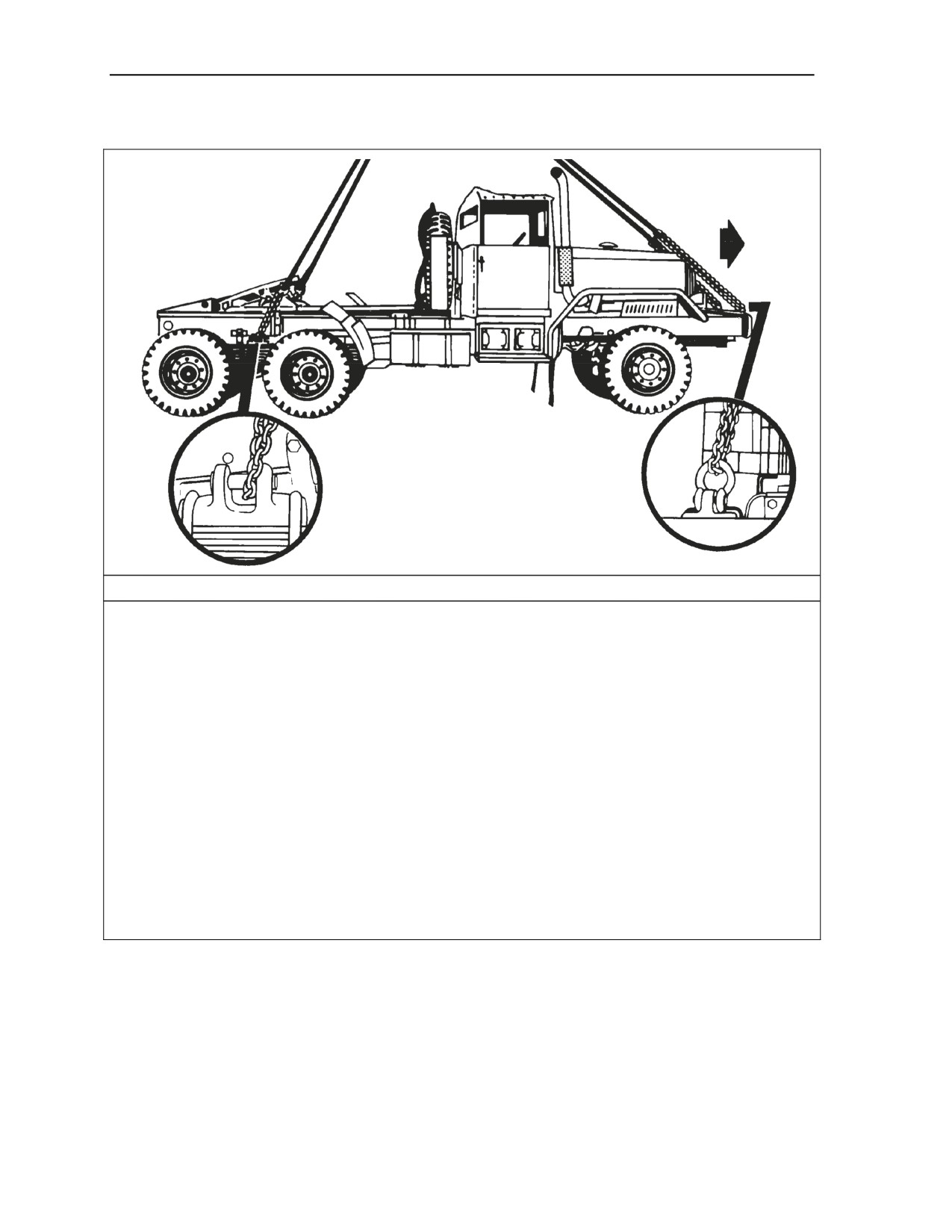
Rigging. Rig the load according to the steps in Figure 15-4.
Hookup. The hookup team stands on the rear of the hood. The static wand person
discharges the static electricity with the static wand. The hookup person places the apex fitting
onto the aircraft cargo hook. The hookup team then moves clear of the load but remains close to
the load as the helicopter removes slack from the sling legs. When successful hookup is
assured, the hookup team quickly exits the area underneath the helicopter to the designated
rendezvous point.
Derigging. Derigging is the reverse of the preparation and rigging procedures.
20 February 2009
FM 4-20.198/MCRP 4-11.3E, VOL II/NTTP 3-04.12/
AFMAN 11-223 (I), VOL II/COMDTINST M13482.3B
15-7
Chapter 15
RIGGING STEPS
1. Position apex fitting on top of the spare tire. Route outer sling legs 1 and 2 to the front of the
truck and inner sling legs 3 and 4 to the rear end. Sling legs 1 and 3 must be on the left side
of the load.
2. Loop the chain end of sling leg 1 through the left front lift provision located on the left side of
the front bumper. Place the correct link from Table 15-4 in the grab hook. Repeat with sling
leg 2 and the right front lift provision.
3. Loop the chain end of sling leg 3 through the left lifting pin on the spring shackle between the
rear wheels. Place the correct link from Table 15-4 in the grab hook. Repeat with sling leg 4
and the right rear lift provision. Secure the excess chain with Type III nylon cord.
4. Pull the front sling legs up over the hood and secure the grab hooks to the hood latch
attachment with Type III nylon cord.
5. Cluster and tie (breakaway technique) all sling legs together on top of the spare tire to
prevent entanglement during hookup and lift-off.
Figure 15-4. M524A2 or M818 5-Ton Tractor with Winch
CRANE, SELF-PROPELLED, FOR ARMY AIRCRAFT
MAINTENANCE AND POSITIONING (SCAMP)
15-6. The crane, self-propelled, for army aircraft maintenance and positioning is rigged for single-point
sling load using the following procedures:
FM 4-20.198/MCRP 4-11.3E, VOL II/NTTP 3-04.12/
15-8
AFMAN 11-223 (I), VOL II/COMDTINST M13482.3B
20 February 2009
Suitable Single-Point Rigging Procedures for Wheeled Vehicles
z
Applicability. The following item in Table 15-5 is suitable for all ARMY helicopters with
suitable lift capacity by the US Army Natick Soldier Center:
Table 15-5. Crane, Self-Propelled, for Army Aircraft Maintenance and Positioning
Nomenclature
Max
Sling
Link Count
Weight
Set
Front/Rear
(Pounds)
Crane, Self-Propelled for Army Aircraft Maintenance and
14,600
25K
3/40
Positioning
z
Materials. The following materials are required to rig this load:
Sling set (25,000-pound capacity).
Tape, adhesive, pressure-sensitive, 2-inch wide roll.
Cord, nylon, Type III, 550-pound breaking strength.
Webbing, cotton, 1/4-inch, 80-pound breaking strength.
z
Personnel. Two persons can prepare and rig this load in 10 minutes.
z
Procedures. The following procedures apply to this load:
Preparation. Prepare the load using the following steps:
─ Attach the block and tackle to the front pintle hook (the cable must be snug).
─ Rotate the mirrors in toward the cab and tape all the glass.
─ Secure the engine cover, tow bar, and tow wheels in place with Type III nylon cord.
─ Secure all loose equipment, doors, or panels with tape or Type III nylon cord.
─ Place the transmission in neutral and engage the parking brake.
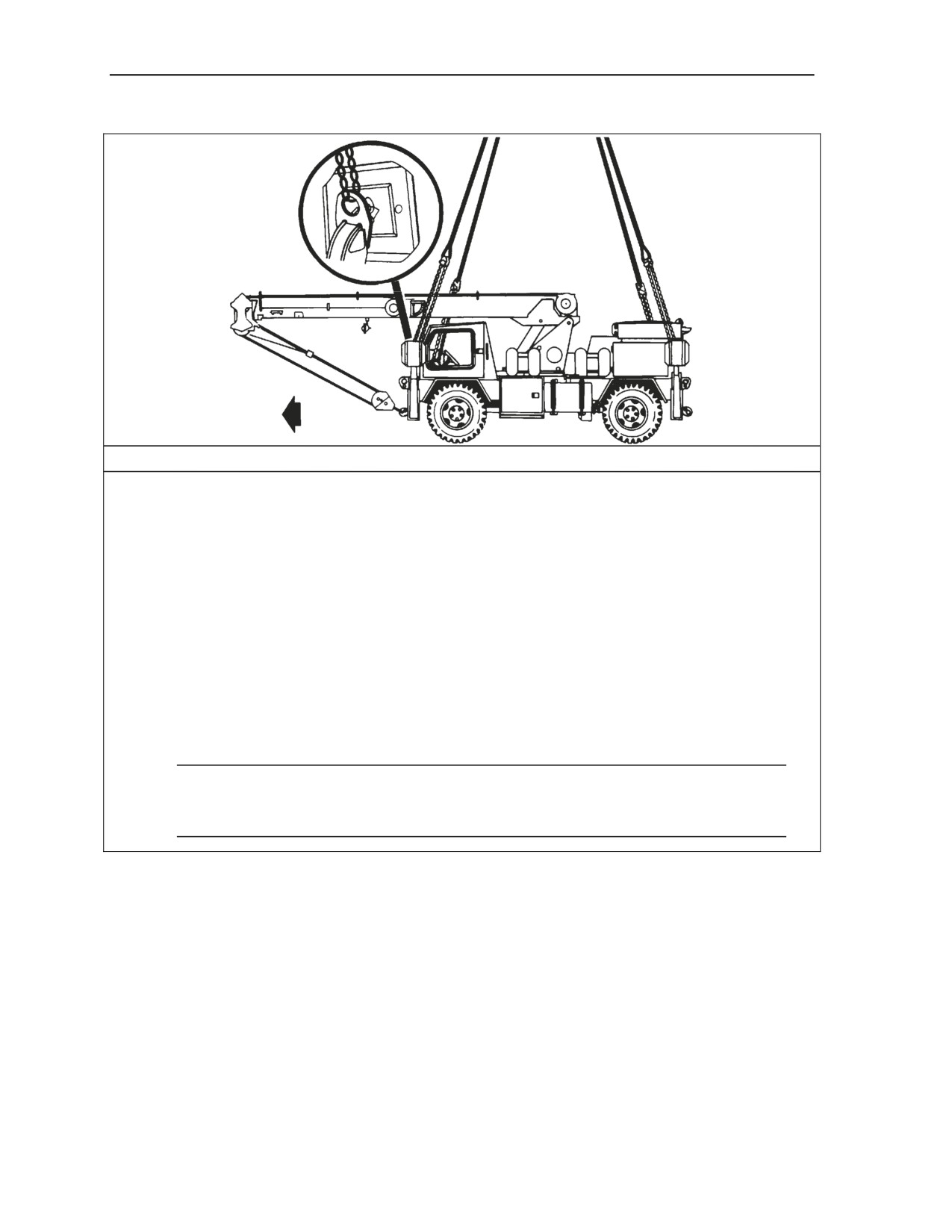
Rigging. Rig the load according to the steps in Figure 15-5.
Hookup. The hookup team stands between the end of the boom and the engine cover. The
static wand person discharges the static electricity with the static wand. The hookup person
places the apex fitting onto the aircraft cargo hook. The hookup team then moves clear of the
load but remains close to the load as the helicopter removes slack from the sling legs. When
successful hookup is assured, the hookup team quickly exits the area underneath the helicopter
to the designated rendezvous point.
Derigging. Derigging is the reverse of the preparation and rigging procedures.
20 February 2009
FM 4-20.198/MCRP 4-11.3E, VOL II/NTTP 3-04.12/
AFMAN 11-223 (I), VOL II/COMDTINST M13482.3B
15-9
Chapter 15
RIGGING STEPS
1. Position apex fitting on top of the boom. Route outer sling legs 1 and 2 to the front of the
crane and inner sling legs 3 and 4 to the rear end. Sling legs 1 and 3 must be on the left side
of the load.
2. Loop the chain end of sling leg 1 through the left front lift provision located on the left front
outrigger. Place the correct link from Table 15-5 in the grab hook. Repeat with sling leg 2
and the right front lift provision.
3. Loop the chain end of sling leg 3 through the left rear lift provision located on the left rear
outrigger. Place the correct link from Table 15-5 in the grab hook. Repeat with sling leg 4
and the right rear lift provision. Secure the excess chain with Type III nylon cord.
4. Cluster and tie (breakaway technique) all sling legs together on top of the crane to prevent
entanglement during hookup and lift-off.
Notes. 1. The rear sling leg routed on the exhaust must be secured above the exhaust pipe to
prevent entangling the sling.
2. This load will fly with the boom low to prevent the boom from striking the aircraft.
Figure 15-5. Crane, Self-Propelled, for Army Aircraft Maintenance and Positioning
FM 4-20.198/MCRP 4-11.3E, VOL II/NTTP 3-04.12/
15-10
AFMAN 11-223 (I), VOL II/COMDTINST M13482.3B
20 February 2009
Chapter 16
Suitable Single-Point Rigging Procedures for Trailers
INTRODUCTION
16-1. This chapter contains rigging procedures for single-point lift of trailers that are suitable for sling
load. Each rigging procedure is found in a paragraph that includes a description of the load, materials
required for rigging, and steps to complete the procedure. An applicability paragraph is also a part of
each paragraph and identifies the suitable loads. The suitable single-point rigging procedures for trailers
are in this section. Paragraphs 16-2 through 16-13 give detailed instructions for rigging loads.
Note. Reach pendants may be used on all single point loads. A static discharge person is not
required when using a reach pendant.
M105 1 1/2-TON TRAILER
16-2. The M105 1 1/2-ton trailer is rigged for single-point sling load using the following procedures:
z
Applicability. The following item in Table 16-1 is suitable for all ARMY helicopters with
suitable lift capacity by the US Army Natick Soldier Center:
Table 16-1. M105 1 1/2-Ton Trailer
Nomenclature
Max
Sling
Link Count
Weight
Set
Front/Rear
(Pounds)
M105 1 ½-Ton Trailer
5,750
10K
4/30
z
Materials. The following materials are required to rig this load:
Sling set (10,000-pound capacity).
Tape, adhesive, pressure-sensitive, 2-inch wide roll.
Cord, nylon, Type III, 550-pound breaking strength.
Webbing, cotton, 1/4-inch, 80-pound breaking strength.
Tie-down, cargo, CGU-1/B (as required).
z
Personnel. Two persons can prepare and rig this load in 25 minutes.
z
Procedures. The following procedures apply to this load:
Preparation. Prepare the load using the following steps:
─ Remove the top tarpaulin and bows.
─ Remove the front and rear racks, stow in the slots provided on each side of the trailer,
and secure them in place with Type III nylon cord.
─ Stow the bows and tarpaulin in the trailer bed and secure them with Type III nylon cord.
─ Fasten the tailgate in the open position with the chains on each side hooked through the
keepers.
─ Secure the cargo in the bed using the CGU-1/B cargo straps.
─ Secure the light cable to the drawbar with tape or Type III nylon cord.
─ Engage the parking brake.
20 February 2009
FM 4-20.198/MCRP 4-11.3E, VOL II/NTTP 3-04.12/
AFMAN 11-223 (I), VOL II/COMDTINST M13482.3B
16-1
Chapter 16
─ If the trailer has modified lift provisions, remove the push pin and rotate the provisions
downward.
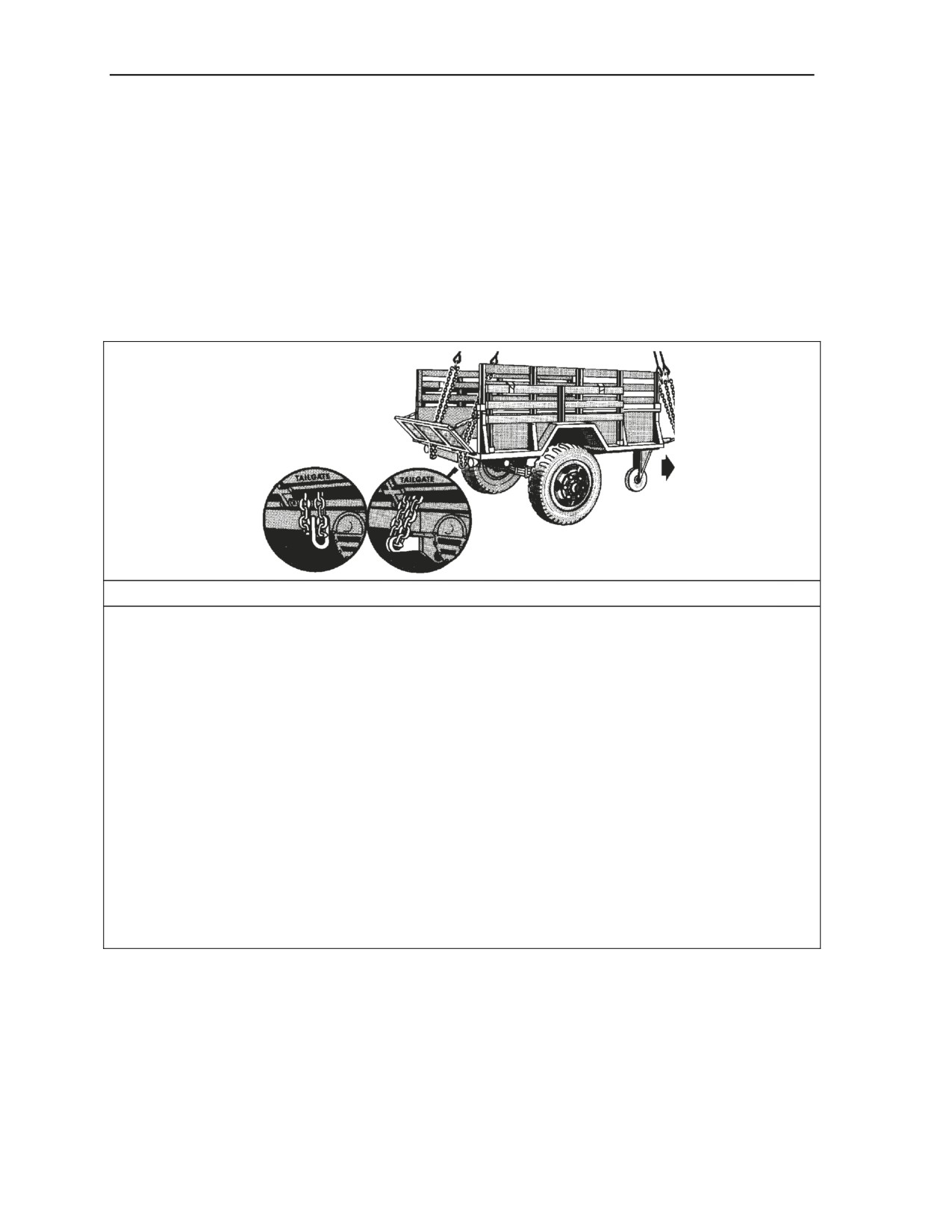
Rigging. Rig the load according to the steps in Figure 16-1.
Hookup. The hookup team stands in the cargo bed of the trailer. The static wand person
discharges the static electricity with the static wand. The hookup person places the apex fitting
onto the aircraft cargo hook. The hookup team then moves clear of the load but remains close to
the load as the helicopter removes slack from the sling legs. When successful hookup is
assured, the hookup team quickly exits the area underneath the helicopter to the designated
rendezvous point.
Derigging. Derigging is the reverse of the preparation and rigging procedures.
RIGGING STEPS
1. Position apex fitting in the trailer bed. Route outer sling legs 1 and 2 to the front of the trailer
and inner sling legs 3 and 4 to the rear end. Route the rear chains between the tailgate and
the bed. Sling legs 1 and 3 must be on the left side of the load.
2. Loop the chain end of sling leg 1 through the lunette. Place the correct link from Table 16-1
in the grab hook. Repeat with sling leg 2 on the lunette.
3. Loop the chain end of sling leg 3 through the left rear lift provision located at the aft end of
the trailer chassis frame. Place the correct link from Table 16-1 in the grab hook. Repeat
with sling leg 4 and the right rear lift provision. Secure the excess chain with Type III nylon
cord.
4. Remove the slack from sling legs 3 and 4. Tape or tie the grab hook or sling leg to the side
rack.
5. Cluster and tie (breakaway technique) all sling legs together on top of the trailer to prevent
entanglement during hookup and lift-off.
Figure 16-1. M105 1 1/2-Ton Trailer
M270A1 SEMITRAILER, WRECKER
16-3. The M270A1 semitrailer, wrecker is rigged for single-point sling load using the following
procedures:
z
Applicability. The following item in Table 16-2 is suitable for all ARMY helicopters with
suitable lift capacity by the US Army Natick Soldier Center:
FM 4-20.198/MCRP 4-11.3E, VOL II/NTTP 3-04.12/
16-2
AFMAN 11-223 (I), VOL II/COMDTINST M13482.3B
20 February 2009
Suitable Single-Point Rigging Procedures for Trailers
Table 16-2. M270A1 Semitrailer, Wrecker
Nomenclature
Max
Sling
Link Count
Weight
Set
Front/Rear
(Pounds)
Semitrailer, Lowbed, Wrecker, 12-Ton, 4-Wheel
17,500
25K
55/3
WARNING
DO NOT LIFT THIS LOAD WITH THE ORIGINAL VEHICLE LIFT
PROVISION.
z
Materials. The following materials are required to rig this load:
Sling set (25,000-pound capacity).
Tape, adhesive, pressure-sensitive, 2-inch wide roll.
Cord, nylon, Type III, 550-pound breaking strength.
Webbing, cotton, 1/4-inch, 80-pound breaking strength.
z
Personnel. One person can prepare and rig this load in 10 minutes.
z
Procedures. The following procedures apply to this load:
Preparation. None required.
Rigging. Rig the load according to the steps in Figure 16-2.
Hookup. The hookup team stands on the trailer. The static wand person discharges the
static electricity with the static wand. The hookup person places the apex fitting onto the
aircraft cargo hook. The hookup team then moves clear of the load but remains close to the load
as the helicopter removes slack from the sling legs. When successful hookup is assured, the
hookup team quickly exits the area underneath the helicopter to the designated rendezvous
point.
Derigging. Derigging is the reverse of the rigging procedures in step d (2).
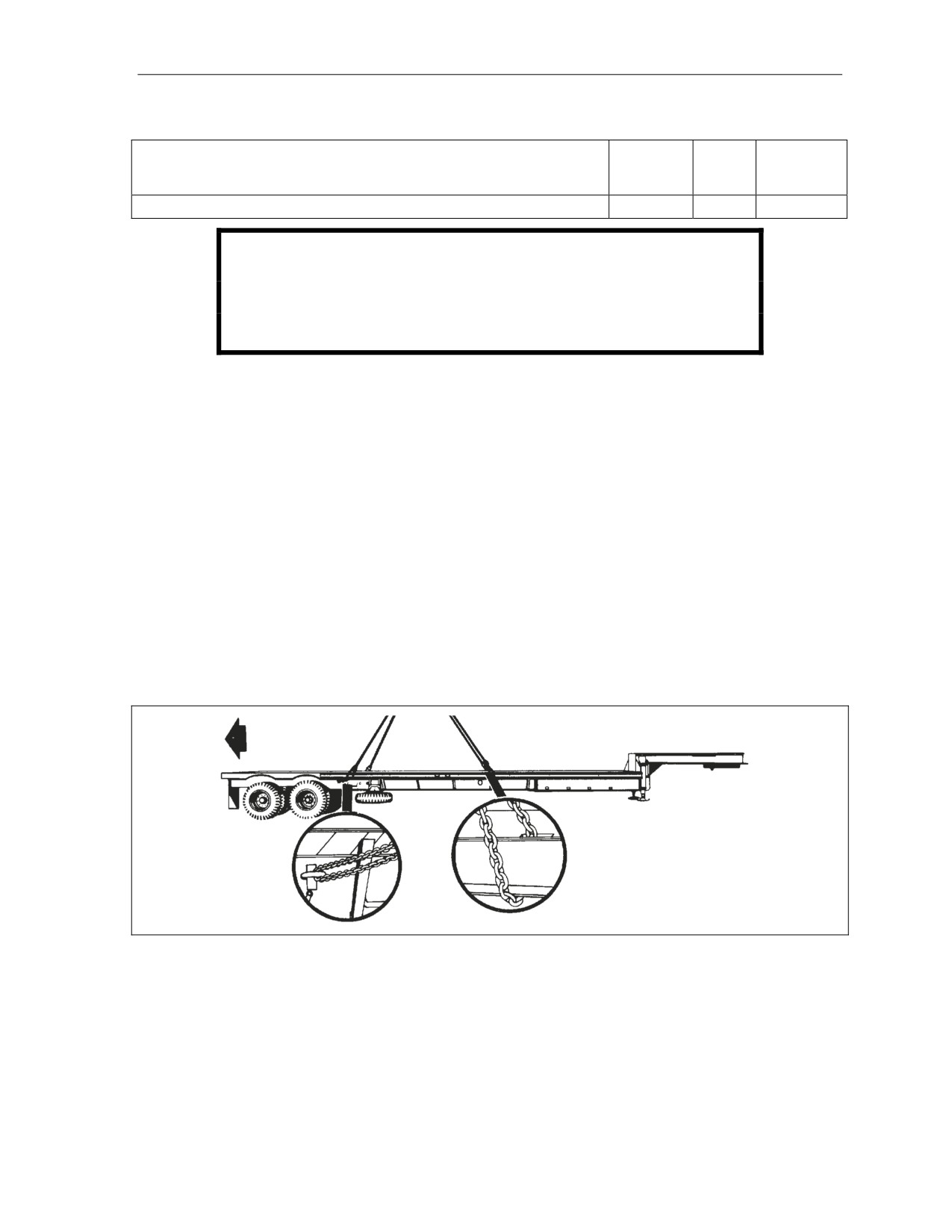
Figure 16-2. M270A1 Semitrailer, Wrecker
20 February 2009
FM 4-20.198/MCRP 4-11.3E, VOL II/NTTP 3-04.12/
AFMAN 11-223 (I), VOL II/COMDTINST M13482.3B
16-3
Chapter 16
RIGGING STEPS
1. Position apex fitting on the trailer in the vicinity of the spare tire. Route outer sling legs 1 and
2 to the front of the trailer and inner sling legs 3 and 4 to the rear end. Sling legs 1 and 3
must be on the left side of the load.
2. Loop the chain end of sling leg 1 through the third stake pocket on the left side from the
forward end of the trailer. Place the correct link from Table 16-2 in the grab hook. Repeat
with sling leg 2 on the right side. Secure the excess chain with Type III nylon cord.
3. Loop the chain end of sling leg 3 through the left lift provision on the frame forward of the
wheels. Place the correct link from Table 16-2 in the grab hook. Repeat with sling leg 4 and
the right rear lift provision.
4. Cluster and tie (breakaway technique) all sling legs together on top of the trailer to prevent
entanglement during hookup and lift-off.
Figure 16-2. M270A1 Semitrailer, Wrecker (Continued)
M172A1 SEMITRAILER, LOWBED
16-4. The M172A1 semitrailer, lowbed is rigged for single-point sling load using the following
procedures:
z
Applicability. The following item in Table 16-3 is suitable for all ARMY helicopters with
suitable lift capacity by the US Army Natick Soldier Center:
Table 16-3. M172A1 Semitrailer, Lowbed
Nomenclature
Max
Sling
Link Count
Weight
Set
Front/Rear
(Pounds)
M172A1 Semitrailer, Lowbed
16,500
25K
3/60
WARNING
DO NOT LIFT THIS LOAD WITH THE ORIGINAL VEHICLE LIFT
PROVISION.
z
Materials. The following materials are required to rig this load:
Sling set (25,000-pound capacity).
Tape, adhesive, pressure-sensitive, 2-inch wide roll.
Cord, nylon, Type III, 550-pound breaking strength.
Webbing, cotton, 1/4-inch, 80-pound breaking strength.
z
Personnel. One person can prepare and rig this load in 10 minutes.
z
Procedures. The following procedures apply to this load:
Preparation. None required.
Rigging. Rig the load according to the steps in Figure 16-3.
Hookup. The hookup team stands on the trailer. The static wand person discharges the
static electricity with the static wand. The hookup person places the apex fitting onto the
FM 4-20.198/MCRP 4-11.3E, VOL II/NTTP 3-04.12/
16-4
AFMAN 11-223 (I), VOL II/COMDTINST M13482.3B
20 February 2009
Suitable Single-Point Rigging Procedures for Trailers
aircraft cargo hook. The hookup team then moves clear of the load but remains close to the load
as the helicopter removes slack from the sling legs. When successful hookup is assured, the
hookup team quickly exits the area underneath the helicopter to the designated rendezvous
point.
Derigging. Derigging is the reverse of the preparation and rigging procedures.
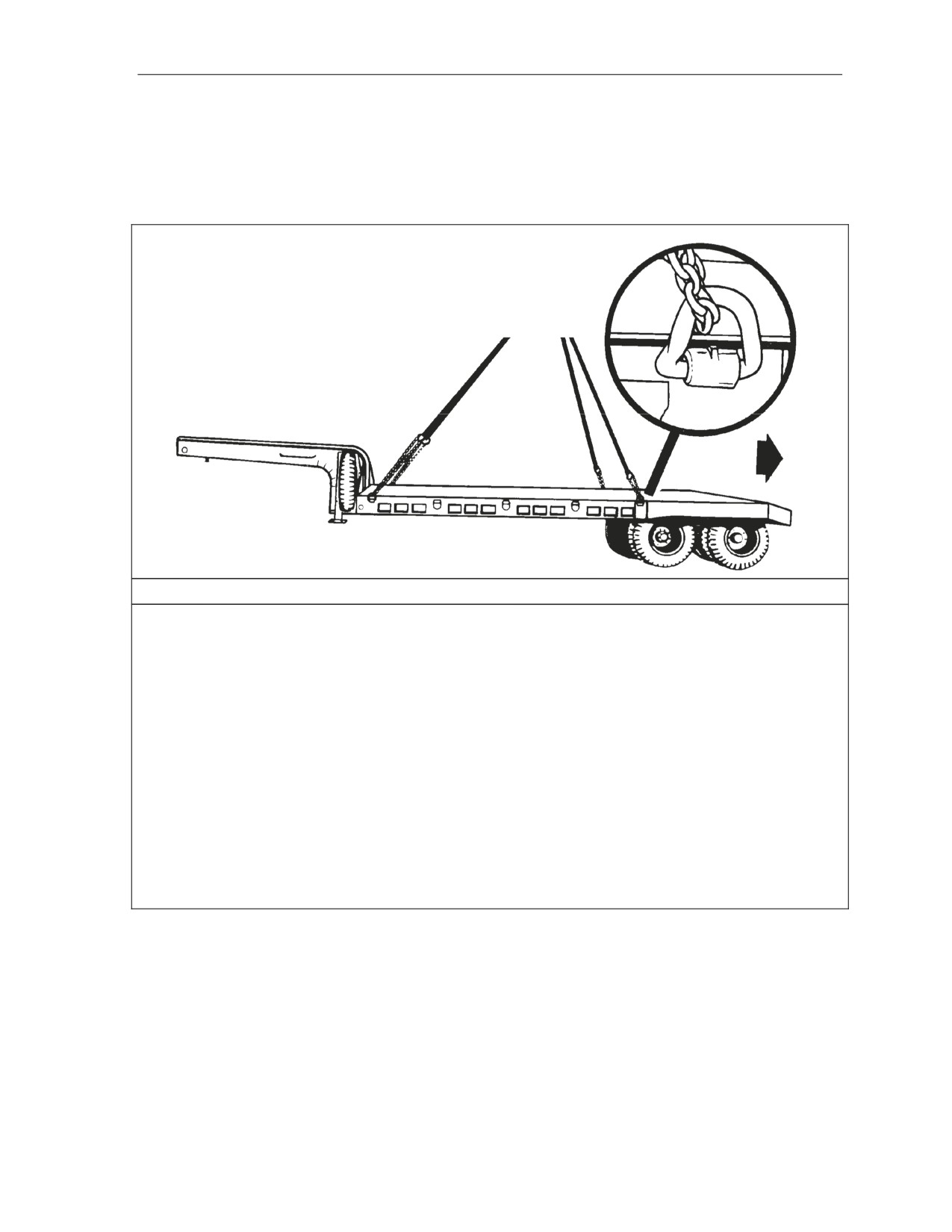
RIGGING STEPS
1. Position apex fitting on the trailer in the vicinity of the spare tire. Route outer sling legs 1 and
2 to the front of the trailer and inner sling legs 3 and 4 to the rear end. Sling legs 1 and 3
must be on the left side of the load.
2. Loop the chain end of sling leg 1 through the forward lift provision on the left side of the
trailer. Place the correct link from Table 16-3 in the grab hook. Repeat with sling leg 2 on
the right side.
3. Loop the chain end of sling leg 3 through the aft lift provision located on the left side of the
trailer forward of the wheels. Place the correct link from Table 16-3 in the grab hook. Repeat
with sling leg 4 and the right rear lift provision. Secure the excess chain with Type III nylon
cord.
4. Cluster and tie (breakaway technique) all sling legs together on top of the trailer to prevent
entanglement during hookup and lift-off.
Figure 16-3. M172A1 Semitrailer, Lowbed
TRAILER, FLATBED, TILT DECK, 15-TON, 8-WHEEL
16-5. The trailer, flatbed, tilt deck,
15-ton, 8-wheel is rigged for single-point sling load using the
following procedures:
z
Applicability. The following item in Table 16-4 is suitable for all ARMY helicopters with
suitable lift capacity by the US Army Natick Soldier Center:
20 February 2009
FM 4-20.198/MCRP 4-11.3E, VOL II/NTTP 3-04.12/
AFMAN 11-223 (I), VOL II/COMDTINST M13482.3B
16-5
Chapter 16
Table 16-4. Trailer, Flatbed, Tilt Deck, 15-Ton, 8-Wheel
Nomenclature
Max
Sling
Link Count
Weight
Set
Front/Rear
(Pounds)
Trailer, Flatbed, Tilt Deck, 15-Ton, 8-Wheel
9,000
10K
50/30
WARNING
DO NOT LIFT THIS LOAD WITH THE ORIGINAL VEHICLE LIFT
PROVISION.
z
MATERIALS. The following materials are required to rig this load:
Sling set (10,000-pound capacity).
Tape, adhesive, pressure-sensitive, 2-inch wide roll.
Cord, nylon, Type III, 550-pound breaking strength.
Webbing, cotton, 1/4-inch, 80-pound breaking strength.
z
Personnel. Two persons can prepare and rig this load in 10 minutes.
z
Procedures. The following procedures apply to this load:
Preparation. Prepare the load using the following steps:
─ Secure the air hoses and safety chains to the drawbar with Type III nylon cord.
─ Ensure the spare tire is securely attached.
─ Engage the parking brake.
Rigging. Rig the load according to the steps in Figure 16-4.
Hookup. The hookup team stands on the trailer. The static wand person discharges the
static electricity with the static wand. The hookup person places the apex fitting onto the
aircraft cargo hook. The hookup team then moves clear of the load but remains close to the load
as the helicopter removes slack from the sling legs. When successful hookup is assured, the
hookup team quickly exits the area underneath the helicopter to the designated rendezvous
point.
Derigging. Derigging is the reverse of the preparation and rigging procedures.
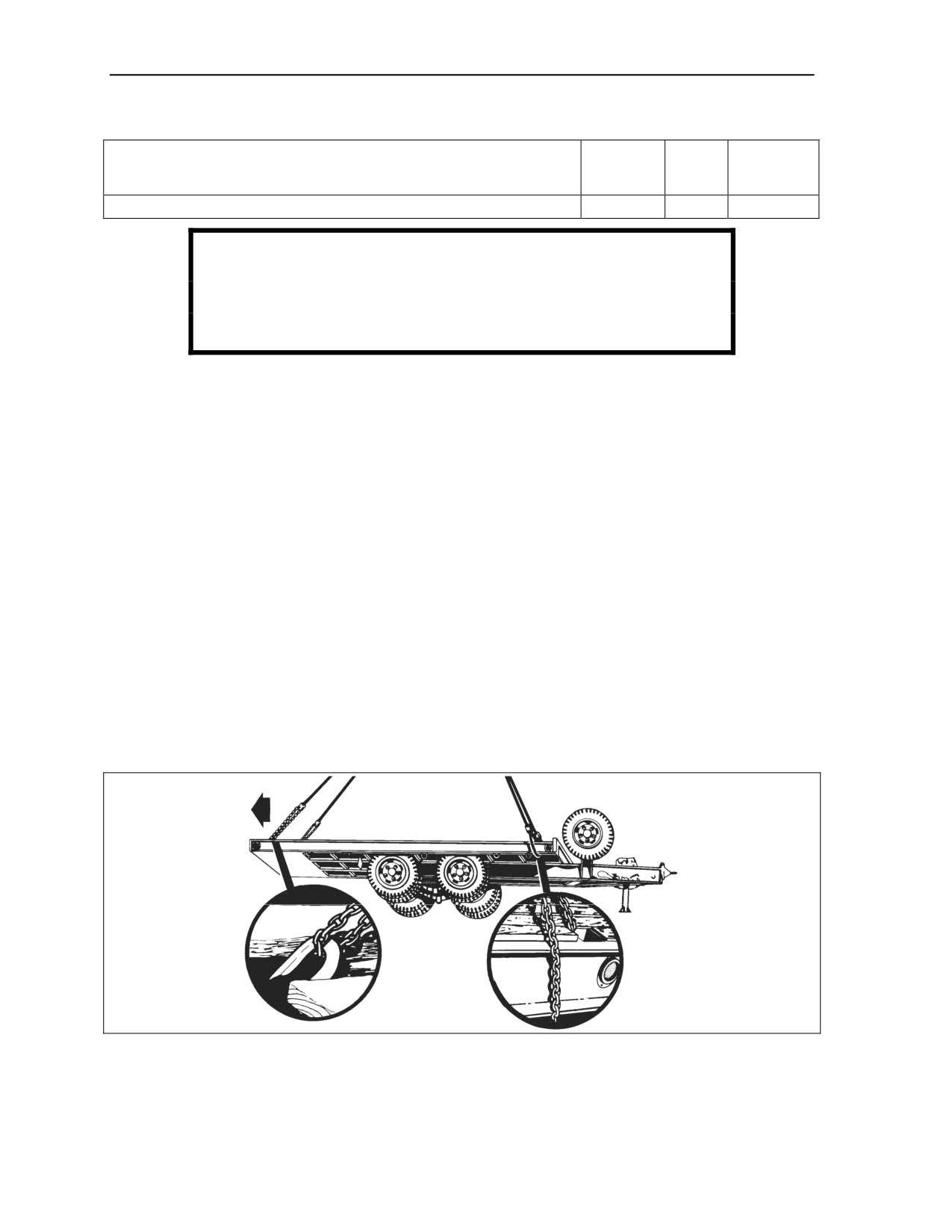
Figure 16-4. Trailer, Flatbed, Tilt Deck, 15-Ton, 8-Wheel
FM 4-20.198/MCRP 4-11.3E, VOL II/NTTP 3-04.12/
16-6
AFMAN 11-223 (I), VOL II/COMDTINST M13482.3B
20 February 2009
Suitable Single-Point Rigging Procedures for Trailers
RIGGING STEPS
1. Position apex fitting on the trailer bed. Route outer sling legs 1 and 2 to the front of the trailer
and inner sling legs 3 and 4 to the rear end. Sling legs 1 and 3 must be on the left side of the
load.
2. Loop the chain end of sling leg 1 through the first hole on the side of the trailer on the left
front corner. Place the correct link from Table 16-4 in the grab hook. Repeat with sling leg 2
on the right side. Secure the excess chain with Type III nylon cord.
3. Loop the chain end of sling leg 3 through the lift ring located on top of the trailer in the left
rear corner. Place the correct link from Table 16-4 in the grab hook. Repeat with sling leg 4
and the right rear lift provision. Secure the excess chain with Type III nylon cord.
4. Cluster and tie (breakaway technique) all sling legs together on top of the trailer to prevent
entanglement during hookup and lift-off.
Figure 16-4. Trailer, Flatbed, Tilt Deck, 15-Ton, 8-Wheel (Continued)
TRAILER-MOUNTED WELDING SHOP
16-6. The trailer-mounted welding shop is rigged for single-point sling load using the following
procedures:
z
Applicability. The following item in Table 16-5 is suitable for all ARMY helicopters with
suitable lift capacity by the US Army Natick Soldier Center:
Table 16-5. Trailer-Mounted Welding Shop
Nomenclature
Max
Sling
Link Count
Weight
Set
Front/Rear
(Pounds)
Trailer-Mounted Welding Shop
2,960
10K
10/65
z
Materials. The following materials are required to rig this load:
Sling set (10,000-pound capacity).
Tape, adhesive, pressure-sensitive, 2-inch wide roll.
Cord, nylon, Type III, 550-pound breaking strength.
Webbing, cotton, 1/4-inch, 80-pound breaking strength.
z
Personnel. Two persons can prepare and rig this load in 15 minutes.
z
Procedures. The following procedures apply to this load:
Preparation. Prepare the load using the following steps:
─ Secure all tie-down handles on tanks with Type III nylon cord. Secure the safety chains
and intervehicular cable to the trailer tongue with tape or Type III nylon cord.
─ Ensure all covers, doors, lids, and latches are securely fastened.
─ Engage the parking brake.
Rigging. Rig the load according to the steps in Figure 16-5.
Hookup. The hookup team stands on the platform to the rear of the trailer near the vise.
The static wand person discharges the static electricity with the static wand. The hookup person
places the apex fitting onto the aircraft cargo hook. The hookup team then moves clear of the
load but remains close to the load as the helicopter removes slack from the sling legs. When
successful hookup is assured, the hookup team quickly exits the area underneath the helicopter
to the designated rendezvous point.
Derigging. Derigging is the reverse of the preparation and rigging procedures.
20 February 2009
FM 4-20.198/MCRP 4-11.3E, VOL II/NTTP 3-04.12/
AFMAN 11-223 (I), VOL II/COMDTINST M13482.3B
16-7
Chapter 16
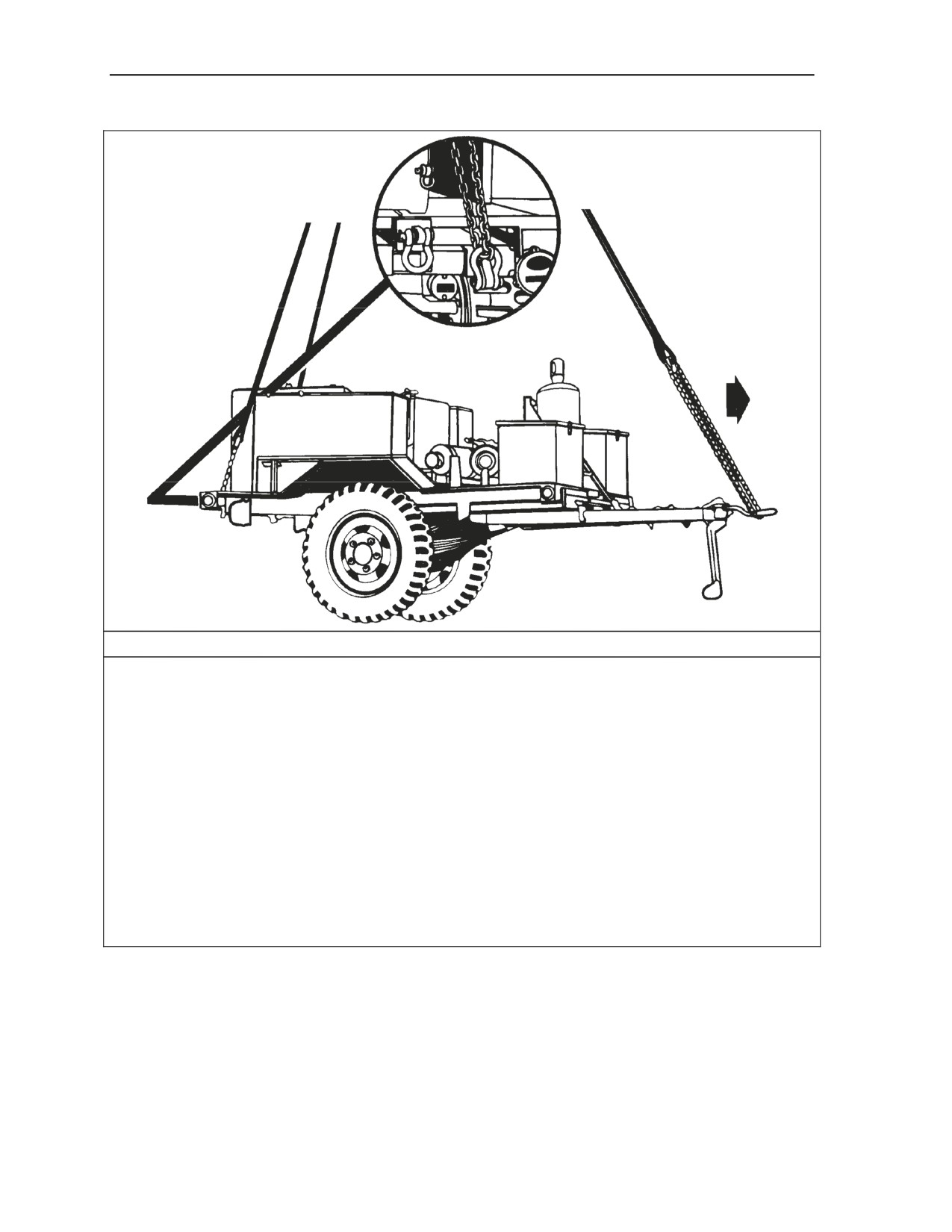
RIGGING STEPS
1. Position apex fitting on top of the center of the load. Route outer sling legs 1 and 2 to the
front of the trailer and inner sling legs 3 and 4 to the rear end. Sling legs 1 and 3 must be on
the left side of the load.
2. Loop the chain end of sling leg 1 through the lunette of the trailer. Place the correct link from
Table 16-5 in the grab hook. Repeat with sling leg 2 on the right side. Secure the excess
chain with Type III nylon cord.
3. Loop the chain end of sling leg 3 through the left rear lift provision located on the left rear
corner of the trailer. Place the correct link from Table 16-5 in the grab hook. Repeat with
sling leg 4 and the right rear lift provision. Secure the excess chain with Type III nylon cord.
4. Cluster and tie (breakaway technique) all sling legs together on top of the trailer to prevent
entanglement during hookup and lift-off.
Figure 16-5. Trailer-Mounted Welding Shop
FM 4-20.198/MCRP 4-11.3E, VOL II/NTTP 3-04.12/
16-8
AFMAN 11-223 (I), VOL II/COMDTINST M13482.3B
20 February 2009
Suitable Single-Point Rigging Procedures for Trailers
LEB 300 WELDING MACHINE ON 2 1/2-TON TRAILER CHASSIS
16-7. The LEB 300 welding machine on 2 1/2-ton trailer chassis is rigged for single-point sling load
using the following procedures:
z
Applicability. The following item in Table 16-6 is suitable for all ARMY helicopters with
suitable lift capacity by the US Army Natick Soldier Center:
Table 16-6. LEB 300 Welding Machine on 2 1/2-ton Trailer Chassis
Nomenclature
Max
Sling
Link Count
Weight
Set
Front/Rear
(Pounds)
Welding Machine, Arc, LEB 300 on 2 ½-Ton Trailer
5,310
10K
28/3
z
Materials. The following materials are required to rig this load:
Sling set (10,000-pound capacity).
Tape, adhesive, pressure-sensitive, 2-inch wide roll.
Cord, nylon, Type III, 550-pound breaking strength.
Webbing, cotton, 1/4-inch, 80-pound breaking strength.
Chock blocks (2 each) (addition to OVE blocks).
z
Personnel. One person can prepare and rig this load in 10 minutes.
z
Procedures. The following procedures apply to this load:
Preparation. Prepare the load using the following steps:
─ Place chock blocks in front and behind the wheels.
─ Secure the brake hoses, safety hoses, and chains to the trailer tongue with tape or Type
III nylon cord.
─ Secure the OVE chock blocks on the trailer racks with Type III nylon cord.
─ Close and secure all lids, doors, and caps.
Rigging. Rig the load according to the steps in Figure 16-6.
Hookup. The hookup team stands on the platform to the rear of the trailer near the vise.
The static wand person discharges the static electricity with the static wand. The hookup person
places the apex fitting onto the aircraft cargo hook. The hookup team then moves clear of the
load but remains close to the load as the helicopter removes slack from the sling legs. When
successful hookup is assured, the hookup team quickly exits the area underneath the helicopter
to the designated rendezvous point.
Derigging. Derigging is the reverse of the preparation and rigging procedures.
20 February 2009
FM 4-20.198/MCRP 4-11.3E, VOL II/NTTP 3-04.12/
AFMAN 11-223 (I), VOL II/COMDTINST M13482.3B
16-9
Chapter 16
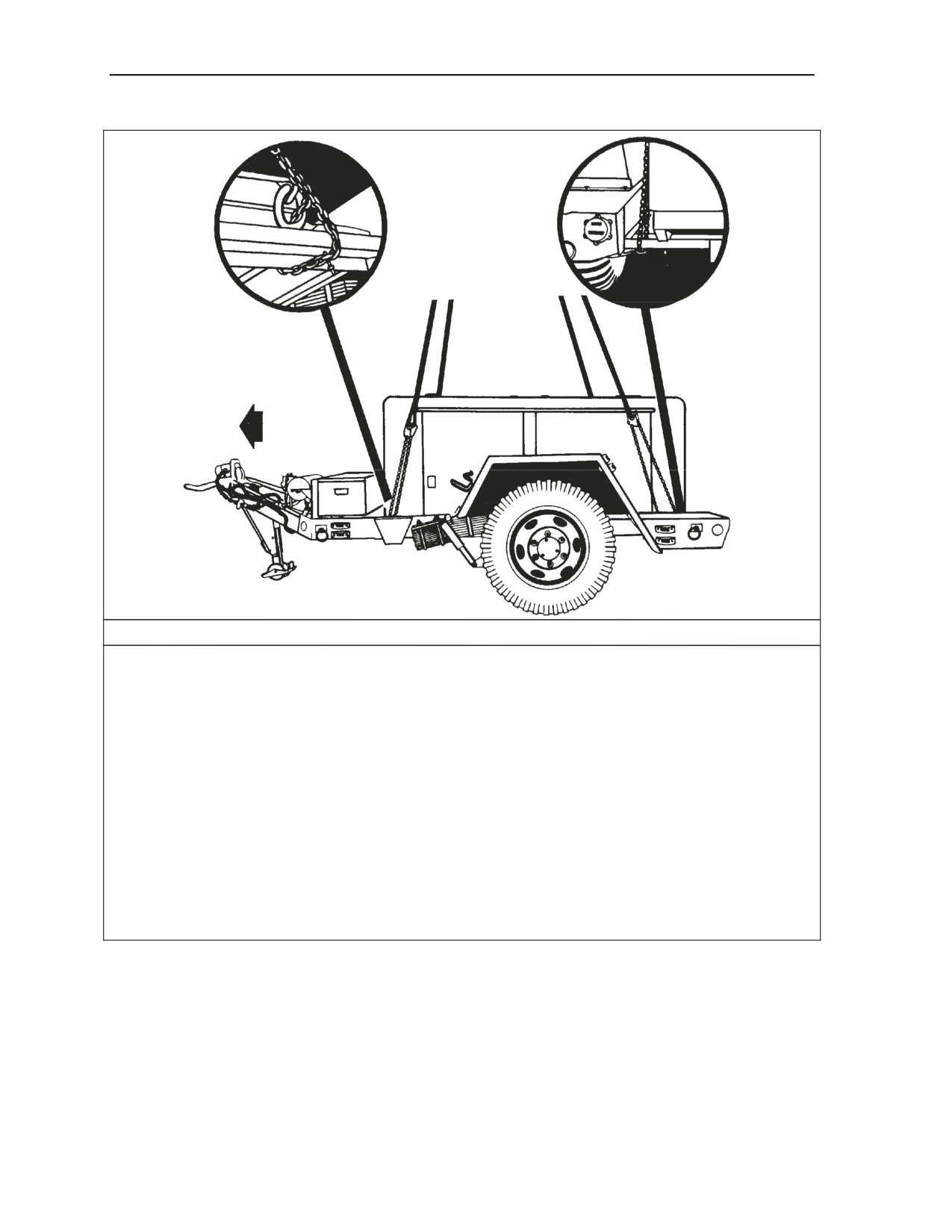
RIGGING STEPS
1. Position apex fitting on top of the welding machine. Route outer sling legs 1 and 2 to the
front of the trailer and inner sling legs 3 and 4 to the rear. Sling legs 1 and 3 must be on the
left side of the load.
2. Loop the chain end of sling leg 1 down through the left front lift provision on the LEB 300 arc
welder, around the trailer frame, and back up by the welder. Place the correct link from Table
16-6 in the grab hook. Repeat with sling leg 2 on the right side. Secure the excess chain
with Type III nylon cord.
3. Loop the chain end of sling leg 3 around the rear crossmember and back up by the welder on
the left rear corner of the trailer. Place the correct link from Table 16-6 in the grab hook.
Repeat with sling leg 4 and the right rear corner of the trailer.
4. Cluster and tie (breakaway technique) all sling legs together on top of the welder to prevent
entanglement during hookup and lift-off.
Figure 16-6. LEB 300 Welding Machine on 2 1/2-ton Trailer Chassis
TRAILER-MOUNTED COMPRESSOR, RECIPROCATING
16-8. The trailer-mounted compressor, reciprocating is rigged for single-point sling load using the
following procedures:
z
Applicability. The following item in Table 16-7 is suitable for all ARMY helicopters with
suitable lift capacity by the US Army Natick Soldier Center:
FM 4-20.198/MCRP 4-11.3E, VOL II/NTTP 3-04.12/
16-10
AFMAN 11-223 (I), VOL II/COMDTINST M13482.3B
20 February 2009
Suitable Single-Point Rigging Procedures for Trailers
Table 16-7. Trailer-Mounted Compressor, Reciprocating
Nomenclature
Max
Sling
Link Count
Weight
Set
Front/Rear
(Pounds)
Trailer-Mounted Compressor, Reciprocating
900
10K
10/15
z
Materials. The following materials are required to rig this load:
Sling set (10,000-pound capacity).
Tape, adhesive, pressure-sensitive, 2-inch wide roll.
Cord, nylon, Type III, 550-pound breaking strength.
Webbing, cotton, 1/4-inch, 80-pound breaking strength.
z
Personnel. Two persons can prepare and rig this load in 10 minutes.
z
Procedures. The following procedures apply to this load:
Preparation. Prepare the load using the following steps:
─ Secure the front leg in the down position.
─ Secure the brake hoses, safety hoses, and chains to the trailer tongue with tape or Type
III nylon cord.
─ Close and secure all lids, doors, and caps.
─ Engage parking brake.
Rigging. Rig the load according to the steps in Figure 16-7.
Hookup. The hookup team stands along side the trailer. The static wand person discharges
the static electricity with the static wand. The hookup person places the apex fitting onto the
aircraft cargo hook. The hookup team then moves clear of the load but remains close to the load
as the helicopter removes slack from the sling legs. When successful hookup is assured, the
hookup team quickly exits the area underneath the helicopter to the designated rendezvous
point.
Derigging. Derigging is the reverse of the preparation and rigging procedures.
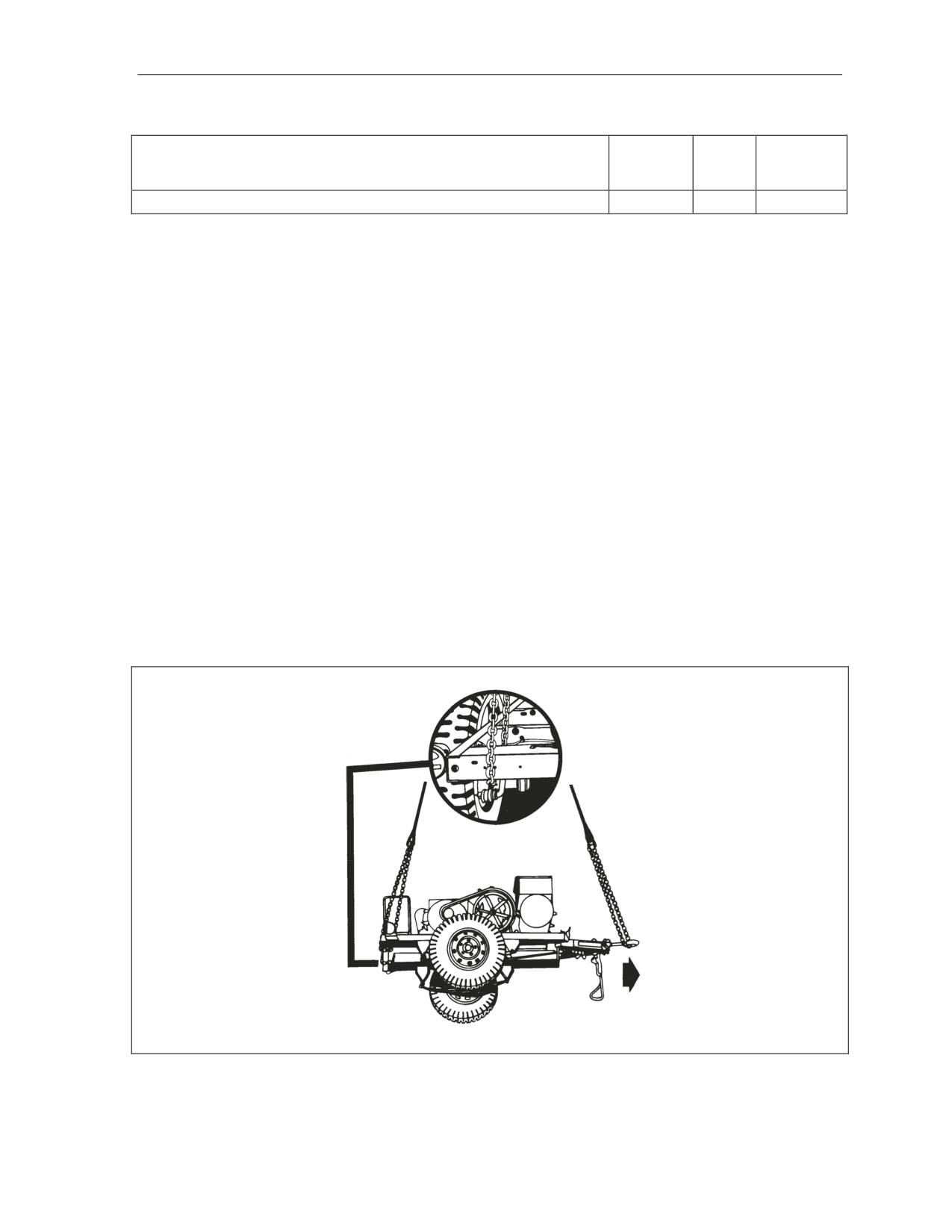
Figure 16-7. Trailer-Mounted Compressor, Reciprocating
20 February 2009
FM 4-20.198/MCRP 4-11.3E, VOL II/NTTP 3-04.12/
AFMAN 11-223 (I), VOL II/COMDTINST M13482.3B
16-11
Chapter 16
RIGGING STEPS
1. Position apex fitting on top of the compressor. Route outer sling legs 1 and 2 to the front of
the trailer and inner sling legs 3 and 4 to the rear. Sling legs 1 and 3 must be on the left side
of the load.
2. Loop the chain end of sling leg 1 through the lunette. Place the correct link from Table 16-7
in the grab hook. Repeat with sling leg 2 on the right side. Secure the excess chain with
Type III nylon cord.
3. Loop the chain end of sling leg 3 around the rear frame member to the left of the fuel tank.
Place the correct link from Table 16-7 in the grab hook. Repeat with sling leg 4 and the right
rear corner of the trailer. Secure the excess chain with Type III nylon cord.
4. Cluster and tie (breakaway technique) all sling legs together on top of the compressor to
prevent entanglement during hookup and lift-off.
Figure 16-7. Trailer-Mounted Compressor, Reciprocating (Continued)
TRAILER-MOUNTED AN/MTC-10
16-9. The trailer-mounted AN/MTC-10 is rigged for single-point sling load using the following
procedures:
z
Applicability. The following item in Table 16-8 is suitable for all ARMY helicopters with
suitable lift capacity by the US Army Natick Soldier Center:
Table 16-8. Trailer-Mounted AN/MTC-10
Nomenclature
Max
Sling
Link Count
Weight
Set
Front/Rear
(Pounds)
AN/MTC-10 Telephone Control Office Group on M416 Trailer
1,800
10K
3/3
z
Materials. The following materials are required to rig this load:
Sling set (10,000-pound capacity).
Tape, adhesive, pressure-sensitive, 2-inch wide roll.
Cord, nylon, Type III, 550-pound breaking strength.
Webbing, cotton, 1/4-inch, 80-pound breaking strength.
z
Personnel. Two persons can prepare and rig this load in 30 minutes.
z
Procedures. The following procedures apply to this load:
Preparation. Prepare the load using the following steps:
─ Remove the tarpaulin and all external items; stow in the bed of the trailer.
─ Stow the accompanying load in the trailer bed and secure with Type III nylon cord.
─ Tape all fittings on the trailer and tongue.
─ Fold rear stand before hookup to helicopter.
Rigging. Rig the load according to the steps in Figure 16-8.
Hookup. The hookup team stands on top of the load. The static wand person discharges
the static electricity with the static wand. The hookup person places the apex fitting onto the
aircraft cargo hook. The hookup team then moves clear of the load but remains close to the load
as the helicopter removes slack from the sling legs. When successful hookup is assured, the
hookup team quickly exits the area underneath the helicopter to the designated rendezvous
point.
FM 4-20.198/MCRP 4-11.3E, VOL II/NTTP 3-04.12/
16-12
AFMAN 11-223 (I), VOL II/COMDTINST M13482.3B
20 February 2009
Suitable Single-Point Rigging Procedures for Trailers
Derigging. Derigging is the reverse of the preparation and rigging procedures.
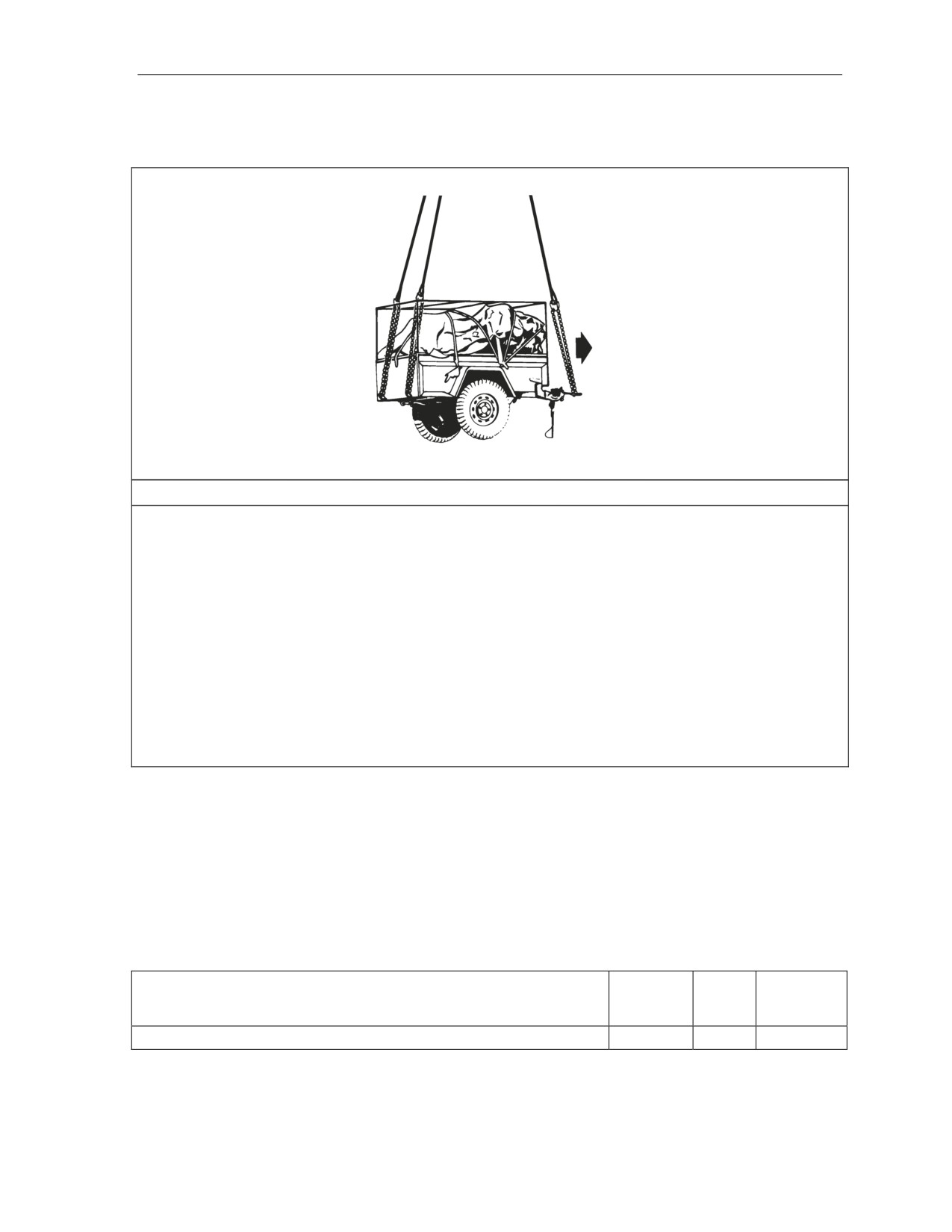
RIGGING STEPS
1. Position apex fitting on top of the trailer. Route outer sling legs 1 and 2 to the front of the
trailer and inner sling legs 3 and 4 to the rear ensuring they are forward of the aft top frame.
Sling legs 1 and 3 must be on the left side of the load.
2. Loop the chain end of sling leg 1 through the lunette. Place the correct link from Table 16-8
in the grab hook. Repeat with sling leg 2 on the right side.
3. Loop the chain end of sling leg 3 under the left rear corner of the trailer and around the left
rear spring shackle. Place the correct link from Table 16-8 in the grab hook. Repeat with
sling leg 4 and the right rear corner of the trailer.
4. Cluster and tie or tape (breakaway technique) all sling legs to the upper frame to prevent
entanglement during hookup and lift-off.
Figure 16-8. Trailer-Mounted AN/MTC-10
TRAILER-MOUNTED TOOL OUTFIT
16-10. The trailer-mounted tool outfit is rigged for single-point sling load using the following
procedures:
z
Applicability. The following item in Table 16-9 is suitable for all ARMY helicopters with
suitable lift capacity by the US Army Natick Soldier Center:
Table 16-9. Trailer-Mounted Tool Outfit
Nomenclature
Max
Sling
Link Count
Weight
Set
Front/Rear
(Pounds)
Trailer-Mounted Tool Outfit
2,450
10K
3/35
20 February 2009
FM 4-20.198/MCRP 4-11.3E, VOL II/NTTP 3-04.12/
AFMAN 11-223 (I), VOL II/COMDTINST M13482.3B
16-13
Chapter 16
z
Materials. The following materials are required to rig this load:
Sling set (10,000-pound capacity).
Tape, adhesive, pressure-sensitive, 2-inch wide roll.
Cord, nylon, Type III, 550-pound breaking strength.
Webbing, cotton, 1/4-inch, 80-pound breaking strength.
z
Personnel. Two persons can prepare and rig this load in 15 minutes.
z
Procedures. The following procedures apply to this load:
Preparation. Prepare the load using the following steps:
─ Secure the covers and doors with tape or Type III nylon cord.
─ Secure the intervehicular cable and safety chains to the trailer tongue with tape or Type
III nylon cord.
─ Engage the parking brake.
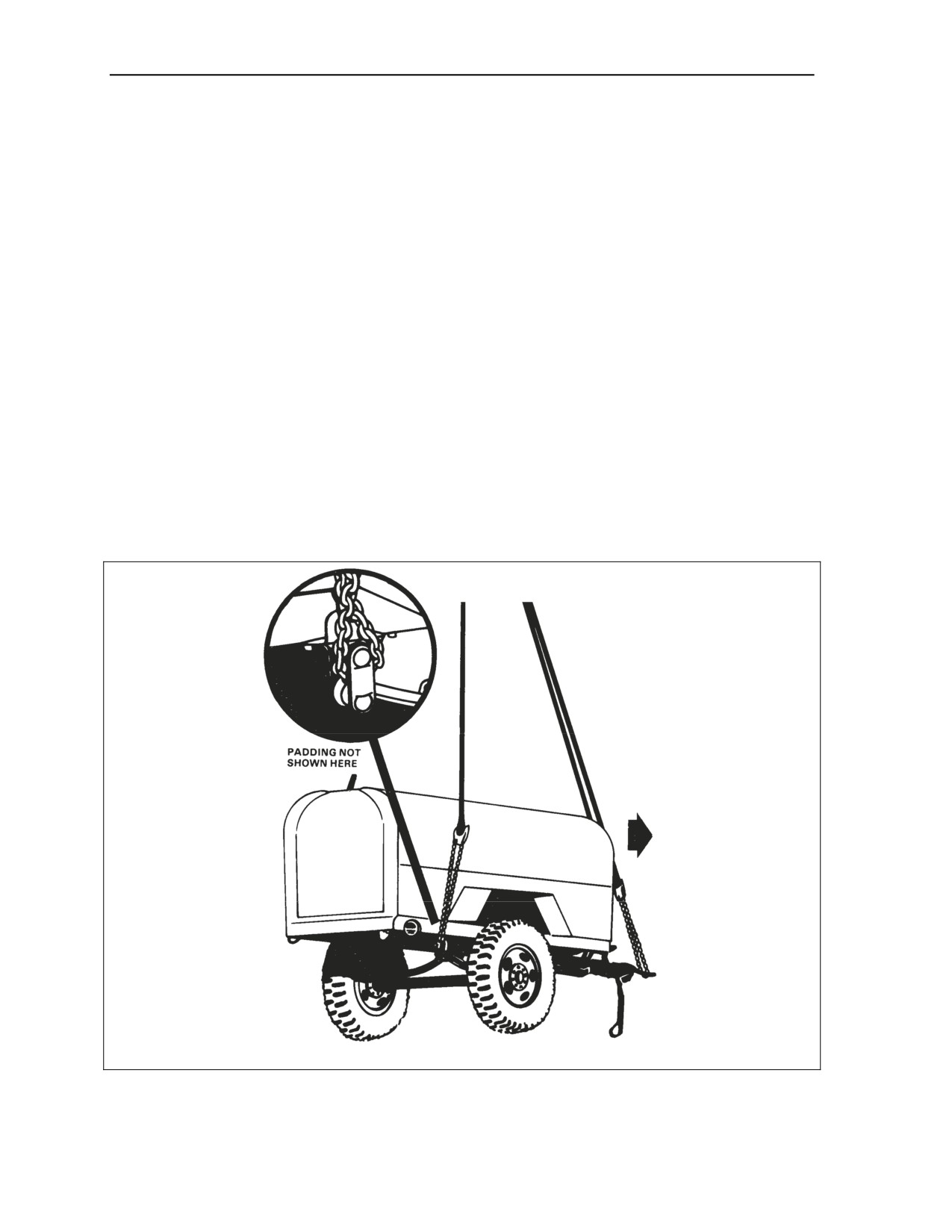
Rigging. Rig the load according to the steps in Figure 16-9.
Hookup. The hookup team stands on top of the load. The static wand person discharges
the static electricity with the static wand. The hookup person places the apex fitting onto the
aircraft cargo hook. The hookup team then moves clear of the load but remains close to the load
as the helicopter removes slack from the sling legs. When successful hookup is assured, the
hookup team quickly exits the area underneath the helicopter to the designated rendezvous
point.
Derigging. Derigging is the reverse of the preparation and rigging procedures.
Figure 16-9. Trailer-Mounted Tool Outfit
FM 4-20.198/MCRP 4-11.3E, VOL II/NTTP 3-04.12/
16-14
AFMAN 11-223 (I), VOL II/COMDTINST M13482.3B
20 February 2009
Suitable Single-Point Rigging Procedures for Trailers
RIGGING STEPS
1. Position apex fitting on top of the tool outfit cover. Route outer sling legs 1 and 2 to the front
of the trailer and inner sling legs 3 and 4 to the rear. Sling legs 1 and 3 must be on the left
side of the load.
2. Loop the chain end of sling leg 1 through the lunette. Place the correct link from Table 16-9
in the grab hook. Repeat with sling leg 2 on the right side.
3. Loop the chain end of sling leg 3 under the left rear corner of the trailer and around the left
rear spring shackle. Place the correct link from Table 16-9 in the grab hook. Repeat with
sling leg 4 and the right rear corner of the trailer. Secure the excess chain with Type III nylon
cord.
4. Cluster and tie (breakaway technique) all sling legs together on top of the tool outfit to
prevent entanglement during hookup and lift-off.
Figure 16-9. Trailer-Mounted Tool Outfit (Continued)
TRAILER-MOUNTED, LUBE, SERVICE UNIT
16-11. The trailer-mounted, lube, service unit is rigged for single-point sling load using the following
procedures:
z
Applicability. The following item in Table 16-10 is suitable for all ARMY helicopters with
suitable lift capacity by the US Army Natick Soldier Center:
Table 16-10. Trailer-Mounted, Lube, Service Unit
Nomenclature
Max
Sling
Link Count
Weight
Set
Front/Rear
(Pounds)
Lube Service Unit, Engine 3A, Trailer-Mounted
5,540
10K
5/20
z
Materials. The following materials are required to rig this load:
Sling set (10,000-pound capacity).
Tape, adhesive, pressure-sensitive, 2-inch wide roll.
Cord, nylon, Type III, 550-pound breaking strength.
Webbing, cotton, 1/4-inch, 80-pound breaking strength.
Tie-down, cargo, CGU-1B (2 each).
z
Personnel. Two persons can prepare and rig this load in 20 minutes.
z
Procedures. The following procedures apply to this load:
Preparation. Prepare the load using the following steps:
─ Ensure the batteries and loose equipment under the cover is secure.
─ Secure the doors with Type III nylon cord.
─ Secure the box to the frame with the CGU-1/Bs.
─ Secure the brake hoses and safety chains to the tongue of the trailer with Type III nylon
cord.
─ Engage the parking brake.
Rigging. Rig the load according to the steps in Figure 16-10.
Hookup. The hookup team stands on top of the load. The static wand person discharges
the static electricity with the static wand. The hookup person places the apex fitting onto the
aircraft cargo hook. The hookup team then moves clear of the load but remains close to the load
as the helicopter removes slack from the sling legs. When successful hookup is assured, the
20 February 2009
FM 4-20.198/MCRP 4-11.3E, VOL II/NTTP 3-04.12/
AFMAN 11-223 (I), VOL II/COMDTINST M13482.3B
16-15
Chapter 16
hookup team quickly exits the area underneath the helicopter to the designated rendezvous
point.
Derigging. Derigging is the reverse of the preparation and rigging procedures.
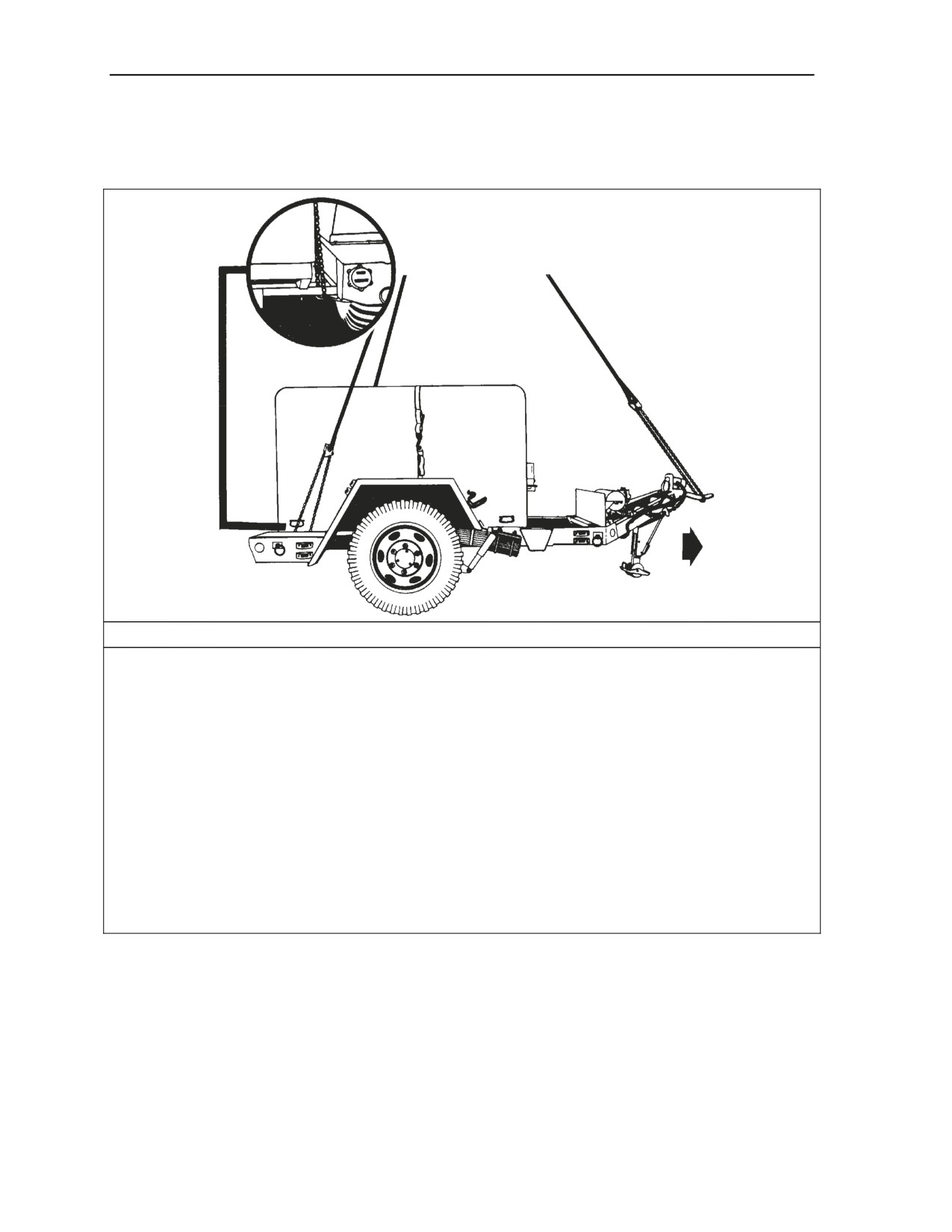
RIGGING STEPS
1. Position apex fitting on top of the lube service unit. Route outer sling legs 1 and 2 to the front
of the trailer and inner sling legs 3 and 4 to the rear. Sling legs 1 and 3 must be on the left
side of the load.
2. Loop the chain end of sling leg 1 through the lunette. Place the correct link from Table 16-10
in the grab hook. Repeat with sling leg 2 on the right side.
3. Loop the chain end of sling leg 3 around the frame member between the left rear side of the
service unit and work platform. Place the correct link from Table 16-10 in the grab hook.
Repeat with sling leg 4 and the right rear corner of the trailer. Secure the excess chain with
Type III nylon cord.
4. Cluster and tie (breakaway technique) all sling legs together on top of the lube service unit to
prevent entanglement during hookup and lift-off.
Figure 16-10. Trailer-Mounted, Lube, Service Unit
TRAILER, BOLSTER, M796
16-12. The trailer, bolster, M796 is rigged for single-point sling load using the following procedures:
z
Applicability. The following item in Table 16-11 is suitable for all ARMY helicopters with
suitable lift capacity by the US Army Natick Soldier Center:
FM 4-20.198/MCRP 4-11.3E, VOL II/NTTP 3-04.12/
16-16
AFMAN 11-223 (I), VOL II/COMDTINST M13482.3B
20 February 2009
Suitable Single-Point Rigging Procedures for Trailers
Table 16-11. Trailer, Bolster, M796
Nomenclature
Max
Sling
Link Count
Weight
Set
Front/Rear
(Pounds)
Trailer, Bolster, M796
6,340
10K
100/8
z
Materials. The following materials are required to rig this load:
Sling set (10,000-pound capacity).
Tape, adhesive, pressure-sensitive, 2-inch wide roll.
Cord, nylon, Type III, 550-pound breaking strength.
Webbing, cotton, 1/4-inch, 80-pound breaking strength.
z
Personnel. Two persons can prepare and rig this load in 15 minutes.
z
Procedures. The following procedures apply to this load:
Preparation. Prepare the load using the following steps:
─ Secure the front leg in the down position.
─ Secure the brake hoses and safety chains to the tongue of the trailer with Type III nylon
cord.
─ Engage the parking brake.
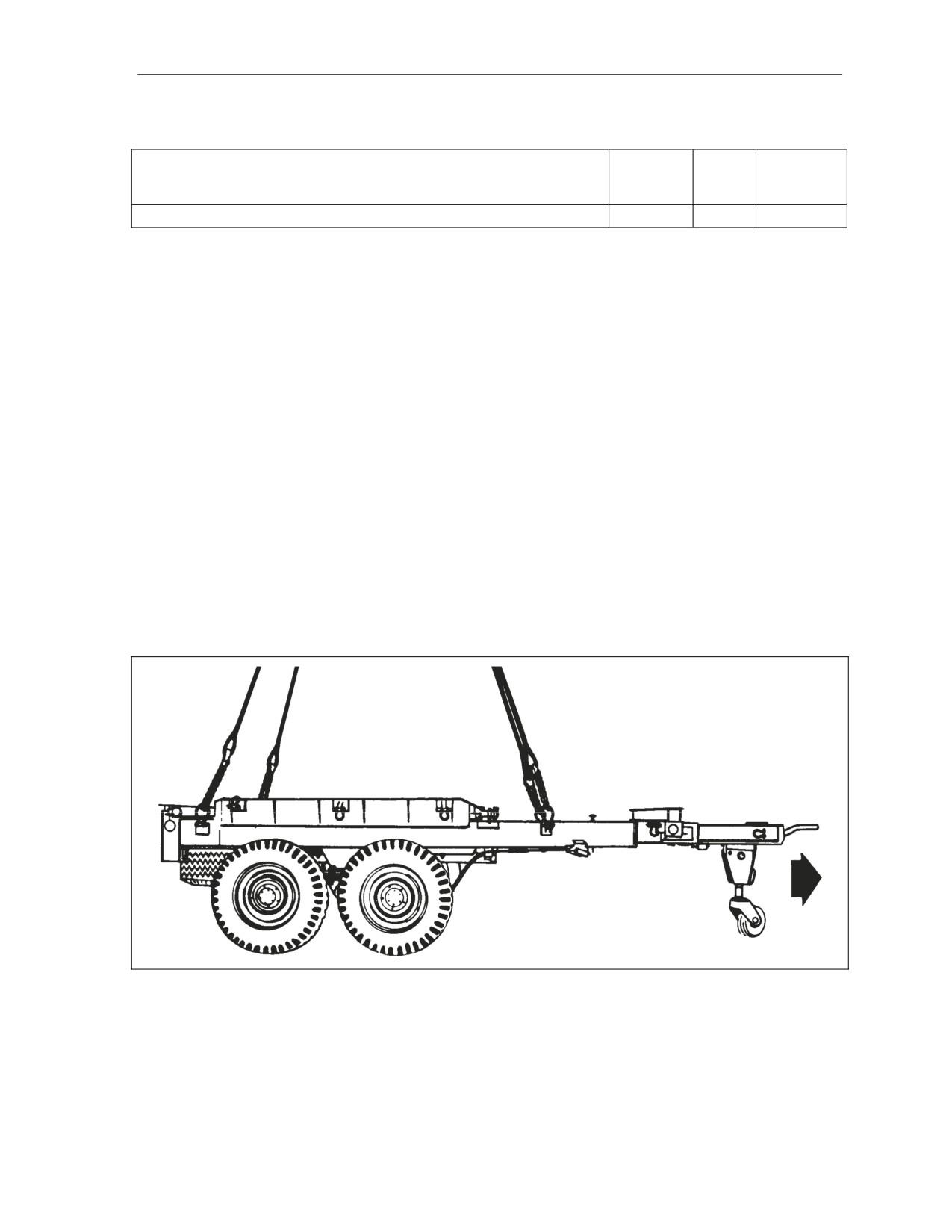
Rigging. Rig the load according to the steps in Figure 16-11.
Hookup. The hookup team stands on top of the trailer. The static wand person discharges
the static electricity with the static wand. The hookup person places the apex fitting onto the
aircraft cargo hook. The hookup team then moves clear of the load but remains close to the load
as the helicopter removes slack from the sling legs. When successful hookup is assured, the
hookup team quickly exits the area underneath the helicopter to the designated rendezvous
point.
Derigging. Derigging is the reverse of the preparation and rigging procedures.
Figure 16-11. Trailer, Bolster, M796
20 February 2009
FM 4-20.198/MCRP 4-11.3E, VOL II/NTTP 3-04.12/
AFMAN 11-223 (I), VOL II/COMDTINST M13482.3B
16-17
Chapter 16
RIGGING STEPS
1. Position apex fitting on top of the trailer. Route outer sling legs 1 and 2 to the front of the
trailer and inner sling legs 3 and 4 to the rear. Sling legs 1 and 3 must be on the left side of
the load.
2. Loop the chain end of sling leg 1 through the left front lift provision located aft of the left hand
brake. Place the correct link from Table 16-11 in the grab hook. Repeat with sling leg 2 on
the right side. Secure the excess chain with Type III nylon cord.
3. Loop the chain end of sling leg 3 through the left rear lift provision located aft of the left
wheel. Place the correct link from Table 16-11 in the grab hook. Repeat with sling leg 4 and
the right rear of the trailer.
4. Cluster and tie (breakaway technique) all sling legs together on top of the trailer to prevent
entanglement during hookup and lift-off.
Figure 16-11. Trailer, Bolster, M796 (Continued)
M149 SERIES WATER TRAILERS
16-13. The M149 series water trailers are rigged for single-point sling load using the following
procedures:
z
Applicability. The following items in Table 16-12 are suitable for all ARMY helicopters with
suitable lift capacity by the US Army Natick Soldier Center:
Table 16-12. M149 Series Water Trailers
Nomenclature
Max
Sling
Link Count
Weight
Set
Front/Rear
(Pounds)
Trailer, Water, M149
6,060
10K
75/90
Trailer, Water, M149A1
6,060
10K
75/90
Trailer, Water, M149A2
6,060
10K
75/90
WARNING
THE M149, M149A1, AND M149A2 WATER TRAILERS, WITHOUT
THE MODIFIED CLEVIS-TYPE LIFT PROVISIONS, ARE NOT
CURRENTLY CERTIFIED FOR SLING LOADING DUE TO
INADEQUATE LIFT PROVISION STRENGTH WHEN THE TRAILER
IS LOADED.
z
Materials. The following materials are required to rig this load:
Sling set (10,000-pound capacity).
Tape, adhesive, pressure-sensitive, 2-inch wide roll.
Cord, nylon, Type III, 550-pound breaking strength.
Webbing, cotton, 1/4-inch, 80-pound breaking strength.
z
Personnel. Two persons can prepare and rig this load in 10 minutes.
FM 4-20.198/MCRP 4-11.3E, VOL II/NTTP 3-04.12/
16-18
AFMAN 11-223 (I), VOL II/COMDTINST M13482.3B
20 February 2009
Suitable Single-Point Rigging Procedures for Trailers
z
Procedures. The following procedures apply to this load:
Preparation. Prepare the load using the following steps:
─ Secure the brake hoses and safety chains to the tongue of the trailer with Type III nylon
cord.
─ Place the support leg and wheel in the DOWN position.
─ Tape the top edge of the aft end of the water tank to prevent the sling legs from chafing n
the top of the tank.
─ Engage both hand brakes.
─ Ensure the fill port is securely closed. Tape if necessary.
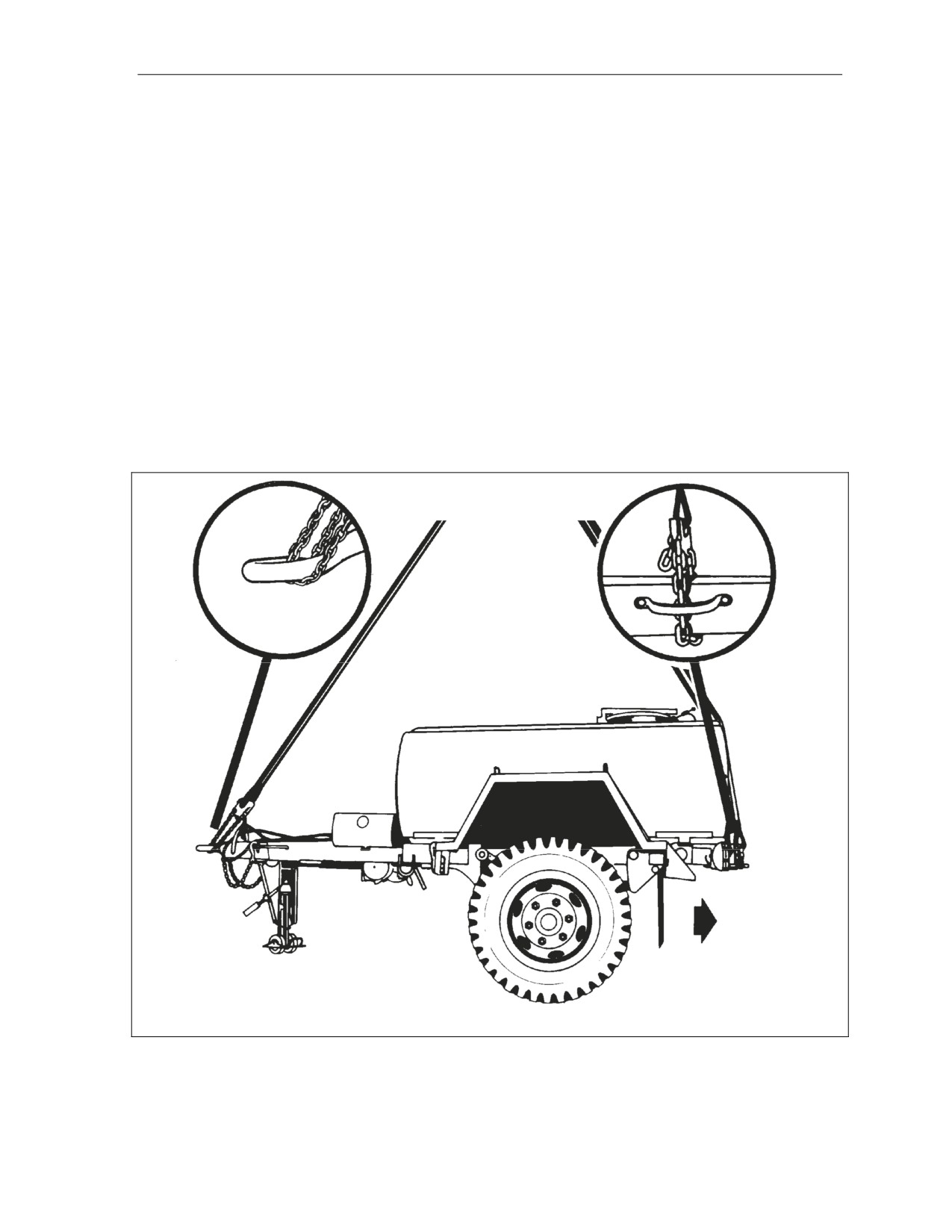
Rigging. Rig the load according to the steps in Figure 16-12.
Hookup. The hookup team stands on each wheel fender. The static wand person
discharges the static electricity with the static wand. The hookup person places the apex fitting
onto the aircraft cargo hook. The hookup team then moves clear of the load but remains close to
the load as the helicopter removes slack from the sling legs. When successful hookup is
assured, the hookup team quickly exits the area underneath the helicopter to the designated
rendezvous point.
Derigging. Derigging is the reverse of the preparation and rigging procedures.
Figure 16-12. M149 Series Water Trailers
20 February 2009
FM 4-20.198/MCRP 4-11.3E, VOL II/NTTP 3-04.12/
AFMAN 11-223 (I), VOL II/COMDTINST M13482.3B
16-19
Chapter 16
RIGGING STEPS
1. Position apex fitting on top of the tank. Route outer sling legs 1 and 2 to the front of the
trailer and inner sling legs 3 and 4 to the rear. Sling legs 1 and 3 must be on the left side of
the load.
2. Loop the chain end of sling leg 1 through the lunette. Place the correct link from Table 16-12
in the grab hook. Repeat with sling leg 2 on the right side. Secure the excess chain with
Type III nylon cord.
3. Using the rear lift provisions as a guide to keep the chains in place, route the chain end of
sling leg 3 down between the tank and the crossmember, under the rear crossmember, and
back up through the lift provision. Place the correct link from Table 16-12 in the grab hook.
Repeat with sling leg 4 and the right rear of the trailer. Secure the excess chain with Type III
nylon cord.
4. Cluster and tie or tape (breakaway technique) all sling legs together on top of the water tank
to prevent entanglement during hookup and lift-off.
Figure 16-12. M149 Series Water Trailers (Continued)
FM 4-20.198/MCRP 4-11.3E, VOL II/NTTP 3-04.12/
16-20
AFMAN 11-223 (I), VOL II/COMDTINST M13482.3B
20 February 2009
Chapter 17
Suitable Single-Point Rigging Procedures for Engineer
Equipment
INTRODUCTION
17-1. This chapter contains rigging procedures for single-point lift of engineer equipment that is suitable
for sling load. Each rigging procedure is found in a paragraph that includes a description of the load,
materials required for rigging, and steps to complete the procedure. An applicability paragraph is also a
part of each paragraph and identifies the suitable loads. The suitable single-point rigging procedures for
engineer equipment are in this section. Paragraphs 17-2 through 17-12 give detailed instructions for
rigging loads.
Note. Reach pendants may be used on all single point loads. A static discharge person is not
required when using a reach pendant.
MRS-100 WHEELED INDUSTRIAL TRACTOR
17-2. The MRS-100 wheeled industrial tractor is rigged for single-point sling load using the following
procedures:
z
Applicability. The following item in Table 17-1 is suitable for all ARMY helicopters with
suitable lift capacity by the US Army Natick Soldier Center:
Table 17-1. MRS-100 Wheeled Industrial Tractor
Nomenclature
Max
Sling
Link Count
Weight
Set
Front/Rear
(Pounds)
MRS-100 Wheeled Industrial Tractor
21,100
25K
53/3
z
Materials. The following materials are required to rig this load:
Sling set (25,000-pound capacity).
Tape, adhesive, pressure-sensitive, 2-inch wide roll.
Cord, nylon, Type III, 550-pound breaking strength.
Webbing, cotton, 1/4-inch, 80-pound breaking strength.
z
Personnel. One person can prepare and rig this load in 15 minutes.
z
Procedures. The following procedures apply to this load:
Preparation. Prepare the load using the following steps:
─ Sectionalize the tractor from the scraper according to the operator's manual.
─ Secure the hydraulic lift cylinder in the carrying bracket.
─ Secure all caps, lids, and hatches.
─ Place the transmission in neutral and set the hand brake.
─ Lock the blade in the locked position.
Rigging. Rig the load according to the steps in Figure 17-1.
Hookup. The hookup team stands on the driver's seat. The static wand person discharges
the static electricity with the static wand. The hookup person places the apex fitting onto the
20 February 2009
FM 4-20.198/MCRP 4-11.3E, VOL II/NTTP 3-04.12/
AFMAN 11-223 (I), VOL II/COMDTINST M13482.3B
17-1
Chapter 17
aircraft cargo hook. The hookup team then moves clear of the load but remains close to the load
as the helicopter removes slack from the sling legs. When successful hookup is assured, the
hookup team quickly exits the area underneath the helicopter to the designated rendezvous
point.
Derigging. Derigging is the reverse of the preparation and rigging procedures.
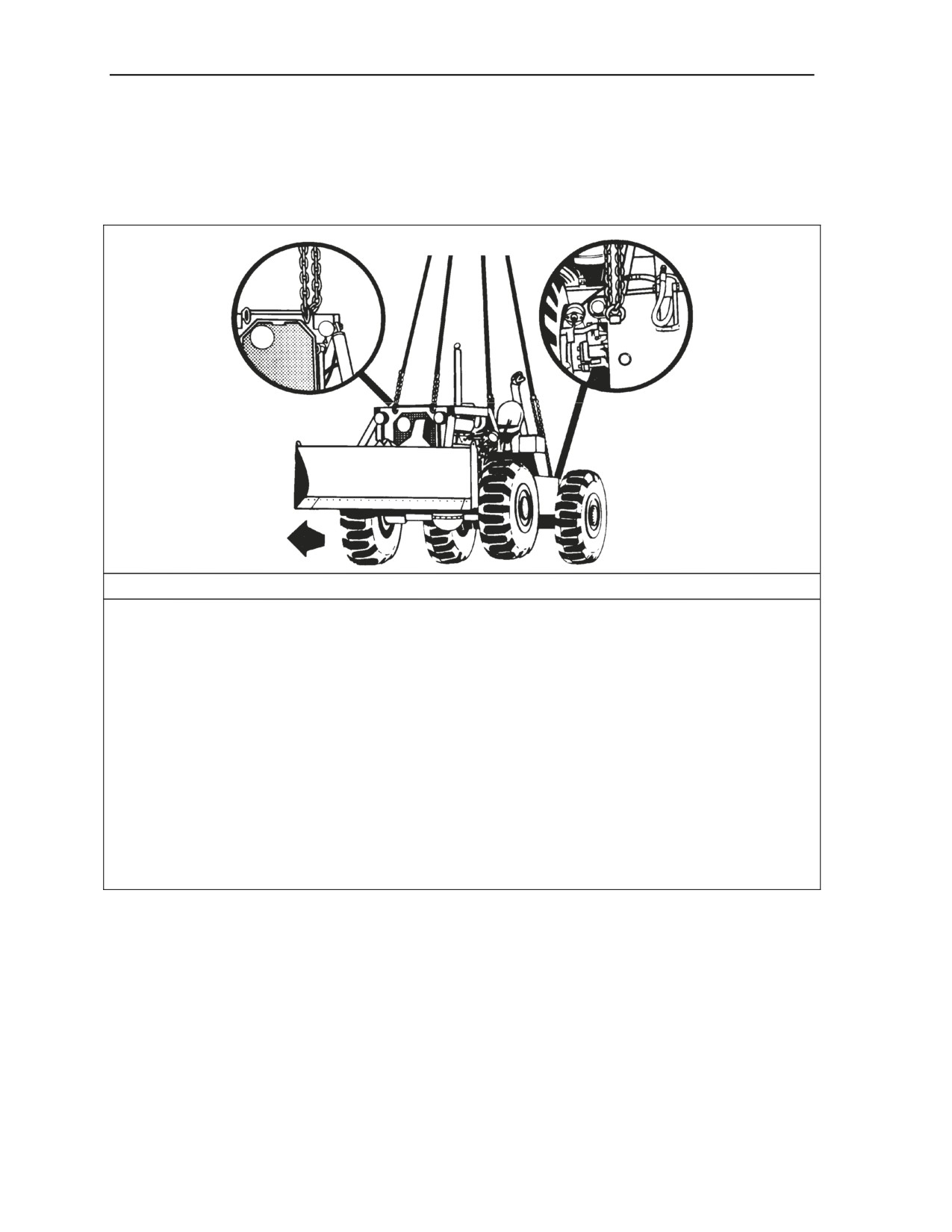
RIGGING STEPS
1. Position apex fitting on the driver's seat. Route outer sling legs 1 and 2 to the front of the
tractor and inner sling legs 3 and 4 to the rear. Sling legs 1 and 3 must be on the left side of
the load.
2. Loop the chain end of sling leg 1 through the left front lift provision by the radiator. Place the
correct link from Table 17-1 in the grab hook. Repeat with sling leg 2 and the right front lift
provision. Secure the excess chain with Type III nylon cord.
3. Loop the chain end of sling leg 3 through the left rear lift provision located near the left brake
light. Place the correct link from Table 17-1 in the grab hook. Repeat with sling leg 4 and the
right rear lift provision.
4. Cluster and tie (breakaway technique) all sling legs together on top of the tractor to prevent
entanglement during hookup and lift-off.
Figure 17-1. MRS-100 Wheeled Industrial Tractor
M5 8-FOOT AGGREGATE SPREADER
17-3. The M5 8-foot aggregate spreader is rigged for single-point sling load using the following
procedures:
z
Applicability. The following item in Table 17-2 is suitable for all ARMY helicopters with
suitable lift capacity by the US Army Natick Soldier Center:
FM 4-20.198/MCRP 4-11.3E, VOL II/NTTP 3-04.12/
17-2
AFMAN 11-223 (I), VOL II/COMDTINST M13482.3B
20 February 2009
Suitable Single-Point Rigging Procedures for Engineer Equipment
Table 17-2. M5 8-Foot Aggregate Spreader
Nomenclature
Max
Sling
Link Count
Weight
Set
Front/Rear
(Pounds)
M5 8-Foot Aggregate Spreader
2,290
10K
3/3
z
Materials. The following materials are required to rig this load:
Sling set (10,000-pound capacity).
Tape, adhesive, pressure-sensitive, 2-inch wide roll.
Cord, nylon, Type III, 550-pound breaking strength.
Webbing, cotton, 1/4-inch, 80-pound breaking strength.
z
Personnel. One person can prepare and rig this load in 15 minutes.
z
Procedures. The following procedures apply to this load:
Preparation. Prepare the load using the following steps:
─ Remove the operator's platform and block off plates.
─ Stow and secure the platform and plates in the spreader.
Rigging. Rig the load according to the steps in Figure 17-2.
Hookup. The hookup team stands on top of the spreader. The static wand person
discharges the static electricity with the static wand. The hookup person places the apex fitting
onto the aircraft cargo hook. The hookup team then moves clear of the load but remains close to
the load as the helicopter removes slack from the sling legs. When successful hookup is
assured, the hookup team quickly exits the area underneath the helicopter to the designated
rendezvous point.
Derigging. Derigging is the reverse of the preparation and rigging procedures.
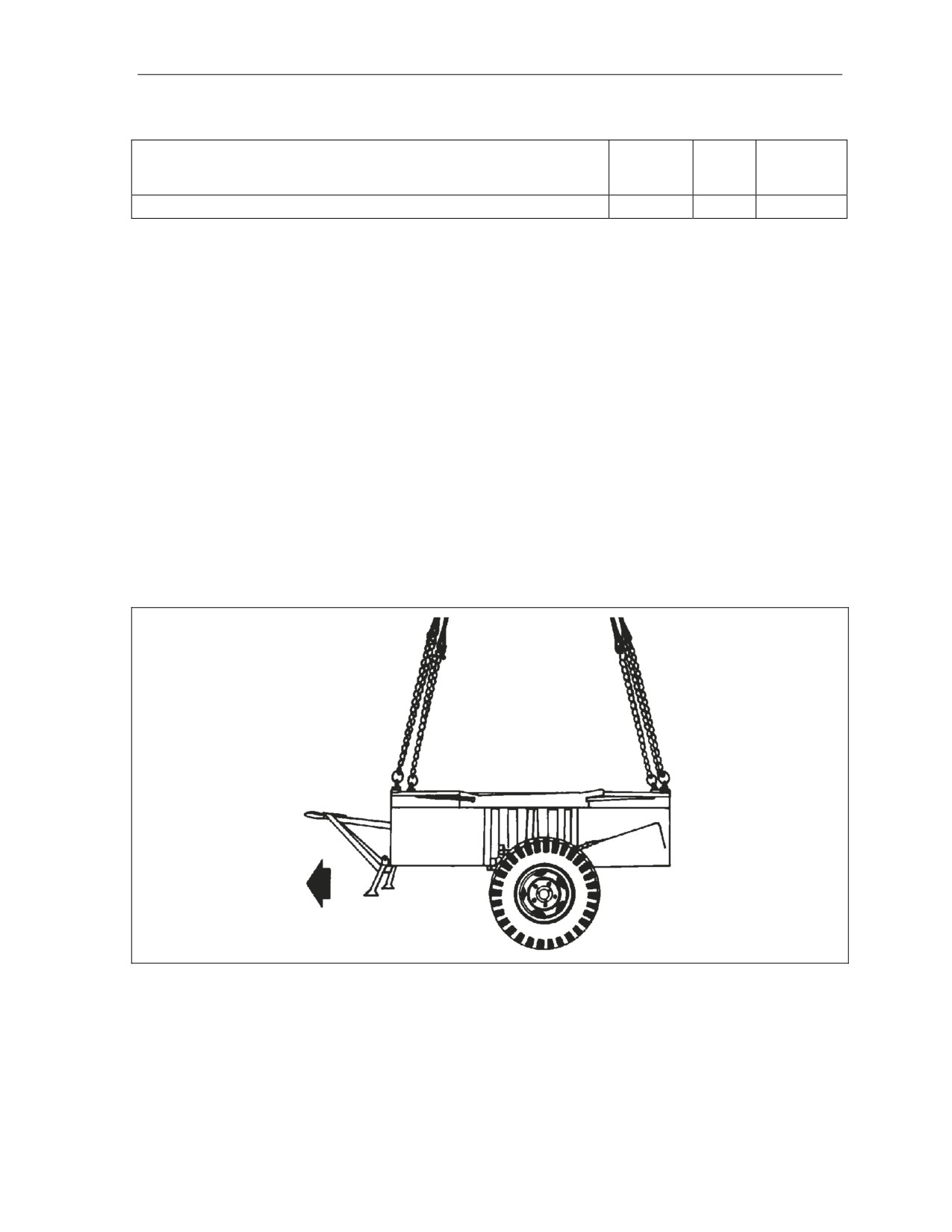
Figure 17-2. M5 8-Foot Aggregate Spreader
20 February 2009
FM 4-20.198/MCRP 4-11.3E, VOL II/NTTP 3-04.12/
AFMAN 11-223 (I), VOL II/COMDTINST M13482.3B
17-3
Chapter 17
RIGGING STEPS
1. Position apex fitting on top of the spreader. Route outer sling legs 1 and 2 to the front
(tongue end) of the spreader and inner sling legs 3 and 4 to the rear. Sling legs 1 and 3 must
be on the left side of the load.
2. Loop the chain end of sling leg 1 through the left front lifting eye located on the front left
corner of the spreader. Place the correct link from Table 17-2 in the grab hook. Repeat with
sling leg 2 and the right front lift provision.
3. Loop the chain end of sling leg 3 through the left rear lifting eye located on the left rear corner
of the spreader. Place the correct link from Table 17-2 in the grab hook. Repeat with sling
leg 4 and the right rear lift provision.
4. Cluster and tie (breakaway technique) all sling legs together on top of the spreader to prevent
entanglement during hookup and lift-off.
Figure 17-2. M5 8-Foot Aggregate Spreader (Continued)
ROLLER, TOWED, VIBRATING, 1-DRUM, 5-TON, VR55TM
17-4. The roller, towed, vibrating, 1-drum, 5-ton, VR55TM is rigged for single-point sling load using the
following procedures:
z
Applicability. The following item in Table 17-3 is suitable for all ARMY helicopters with
suitable lift capacity by the US Army Natick Soldier Center:
Table 17-3. Roller, Towed, Vibrating, 1-Drum, 5-Ton, VR55TM
Nomenclature
Max
Sling
Link Count
Weight
Set
Front/Rear
(Pounds)
Roller, Towed, Vibrating, 1-Drum, VR55TM
3,450
10K
20/90
z
Materials. The following materials are required to rig this load:
Sling set (10,000-pound capacity).
Tape, adhesive, pressure-sensitive, 2-inch wide roll.
Cord, nylon, Type III, 550-pound breaking strength.
Webbing, cotton, 1/4-inch, 80-pound breaking strength.
z
Personnel. Two persons can prepare and rig this load in 15 minutes.
z
Procedures. The following procedures apply to this load:
Preparation. Prepare the load using the following steps:
─ Secure the front and rear support legs in the DOWN position with Type III nylon cord.
─ Secure the battery box cover and engine top cover with Type III nylon cord.
Rigging. Rig the load according to the steps in Figure 17-3.
Hookup. The hookup team stands on top of the roller. The static wand person discharges
the static electricity with the static wand. The hookup person places the apex fitting onto the
aircraft cargo hook. The hookup team then moves clear of the load but remains close to the load
as the helicopter removes slack from the sling legs. When successful hookup is assured, the
hookup team quickly exits the area underneath the helicopter to the designated rendezvous
point.
Derigging. Derigging is the reverse of the preparation and rigging procedures.
FM 4-20.198/MCRP 4-11.3E, VOL II/NTTP 3-04.12/
17-4
AFMAN 11-223 (I), VOL II/COMDTINST M13482.3B
20 February 2009
Suitable Single-Point Rigging Procedures for Engineer Equipment
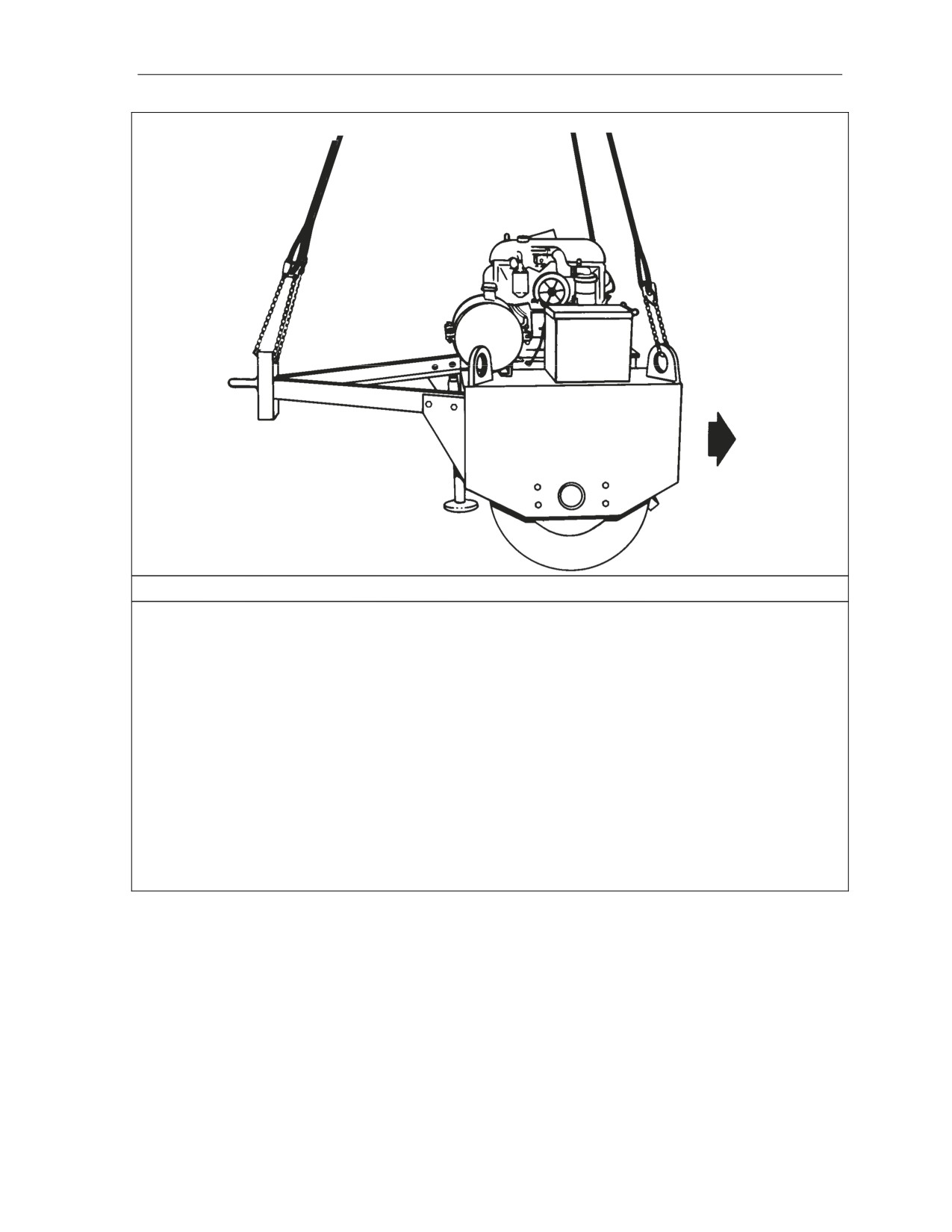
RIGGING STEPS
1. Position apex fitting on top of the roller. Route outer sling legs 1 and 2 to the front (pintle
end) of the roller and inner sling legs 3 and 4 to the rear. Sling legs 1 and 3 must be on the
left side of the load.
2. Loop the chain end of sling legs 1 and 2 through the front lifting point on top of the pintle
eyelet. Place the correct link from Table 17-3 in the grab hook. Secure the excess chain
with Type III nylon cord.
3. Loop the chain end of sling leg 3 through the left rear lift provision located on the left rear
corner of the roller. Place the correct link from Table 17-3 in the grab hook. Repeat with
sling leg 4 and the right rear lift provision. Secure the excess chain with Type III nylon cord.
4. Cluster and tie (breakaway technique) all sling legs together on top of the roller to prevent
entanglement during hookup and lift-off.
Figure 17-3. Roller, Towed, Vibrating, 1-Drum, 5-Ton, VR55TM
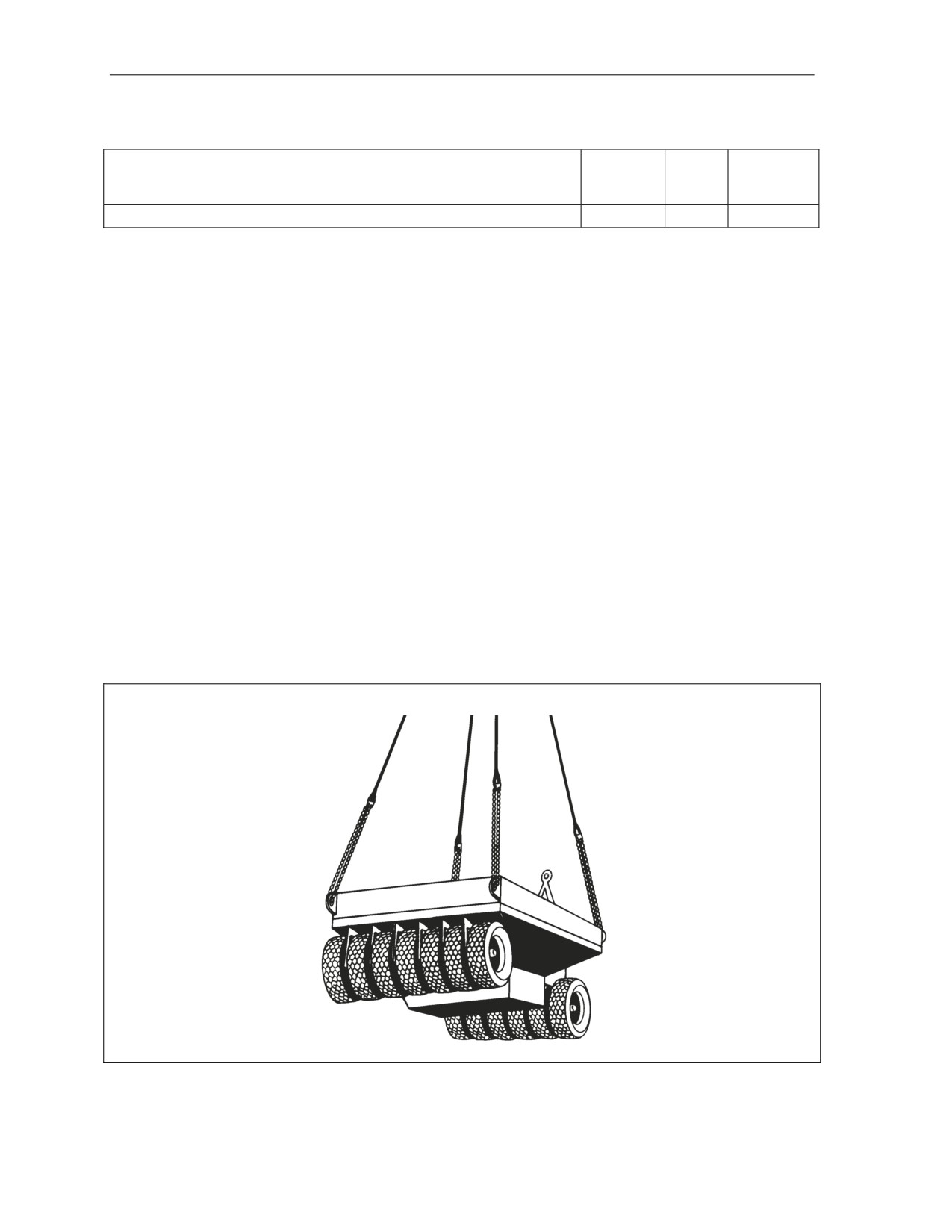
ROLLER, ROAD, TOWED, WHEELED, 13-TIRE, 9-TON
17-5. The roller, road, towed, wheeled, 13-tire, 9-ton is rigged for single-point sling load using the
following procedures:
z
Applicability. The following item in Table 17-4 is suitable for all ARMY helicopters with
suitable lift capacity by the US Army Natick Soldier Center:
20 February 2009
FM 4-20.198/MCRP 4-11.3E, VOL II/NTTP 3-04.12/
AFMAN 11-223 (I), VOL II/COMDTINST M13482.3B
17-5
Chapter 17
Table 17-4. Roller, Road, Towed, Wheeled, 13-Tire, 9-Ton
Nomenclature
Max
Sling
Link Count
Weight
Set
Front/Rear
(Pounds)
Roller, Road, Towed, Wheeled, 13-Tire, 9-Ton
3,300
10K
3/3
z
Materials. The following materials are required to rig this load:
Sling set (10,000-pound capacity).
Tape, adhesive, pressure-sensitive, 2-inch wide roll.
Cord, nylon, Type III, 550-pound breaking strength.
Webbing, cotton, 1/4-inch, 80-pound breaking strength.
Tie-down, cargo, CGU-1/B.
Chock blocks (2 each).
z
Personnel. Two persons can prepare and rig this load in 10 minutes.
z
Procedures. The following procedures apply to this load:
Preparation. Prepare the load using the following steps:
─ Secure the drain plugs with tape.
─ Raise the tongue and secure it in place with the CGU-1/B cargo tie-down strap.
─ Place the chock blocks by each set of rollers.
Rigging. Rig the load according to the steps in Figure 17-4.
Hookup. The hookup team stands on top of the roller. The static wand person discharges
the static electricity with the static wand. The hookup person places the apex fitting onto the
aircraft cargo hook. The hookup team then moves clear of the load but remains close to the load
as the helicopter removes slack from the sling legs. When successful hookup is assured, the
hookup team quickly exits the area underneath the helicopter to the designated rendezvous
point.
Derigging. Derigging is the reverse of the preparation and rigging procedures.
Figure 17-4. Roller, Road, Towed, Wheeled, 13-Tire, 9-Ton
FM 4-20.198/MCRP 4-11.3E, VOL II/NTTP 3-04.12/
17-6
AFMAN 11-223 (I), VOL II/COMDTINST M13482.3B
20 February 2009

Suitable Single-Point Rigging Procedures for Engineer Equipment
RIGGING STEPS
1. Position apex fitting on top of the roller. Route outer sling legs 1 and 2 to the front of the
roller and inner sling legs 3 and 4 to the rear. Sling legs 1 and 3 must be on the left side of
the load.
2. Loop the chain end of sling leg 1 through the left front lift provision located on the front left
corner of the roller. Place the correct link from Table 17-4 in the grab hook. Repeat with
sling leg 2 and the right front lift provision.
3. Loop the chain end of sling leg 3 through the left rear lift provision located on the left rear
corner of the roller. Place the correct link from Table 17-4 in the grab hook. Repeat with
sling leg 4 and the right rear lift provision.
4. Cluster and tie (breakaway technique) all sling legs together on top of the roller to prevent
entanglement during hookup and lift-off.
Figure 17-4. Roller, Road, Towed, Wheeled, 13-Tire, 9-Ton (Continued)
TAR KETTLES
17-6. The tar kettles are rigged for single-point sling load using the following procedures:
z
Applicability. The following items in Table 17-5 are suitable for all ARMY helicopters with
suitable lift capacity by the US Army Natick Soldier Center:
Table 17-5. Tar Kettles
Nomenclature
Max
Sling
Link Count
Weight
Set
Front/Rear
(Pounds)
Kettle, Heating, Bitumen, 165-Gallon
1,750
10K
5/20
Kettle, Bitumen, Trailer-Mounted, 7ZPSAP
1,900
10K
5/20
z
Materials. The following materials are required to rig this load:
Sling set (10,000-pound capacity).
Tape, adhesive, pressure-sensitive, 2-inch wide roll.
Cord, nylon, Type III, 550-pound breaking strength.
Webbing, cotton, 1/4-inch, 80-pound breaking strength.
z
Personnel. Two persons can prepare and rig this load in 10 minutes.
z
Procedures. The following procedures apply to this load:
Preparation. Prepare the load using the following steps:
─ Secure the trailer front support leg in the DOWN position. Secure all safety chains,
cables, and hoses with tape or Type III nylon cord.
─ Secure all loose covers with Type III nylon cord.
─ Engage the parking brake.
Rigging. Rig the load according to the steps in Figure 17-5.
Hookup. The hookup team stands on the frame alongside the kettle. The static wand
person discharges the static electricity with the static wand. The hookup person places the apex
fitting onto the aircraft cargo hook. The hookup team then moves clear of the load but remains
close to the load as the helicopter removes slack from the sling legs. When successful hookup is
assured, the hookup team quickly exits the area underneath the helicopter to the designated
rendezvous point.
20 February 2009
FM 4-20.198/MCRP 4-11.3E, VOL II/NTTP 3-04.12/
AFMAN 11-223 (I), VOL II/COMDTINST M13482.3B
17-7