FM 20-32 Mine/Countermine Operations (August 2001) - page 11

FM 20-32
Table D-1. Air Volcano capabilities and limitations
Planning
Cruise
Fuel Burn
Maximum
Pressure
Temperature
Maximum
Endurance
Combat
Speed
Rate
Range
Altitude (ft)
(oC)
Weight (lb)1
(hr + min)2
Radius
(knots/kph)
(lb per hr)
(nm/km)3
(nm/km)4
80/148
965
1
+
57
154/285
+20
22,000
90/166
1,040
1
+
48
160/296
60/111
100/182
1,145
1
+
35
158/292
80/148
975
1
+
56
156/289
0
+30
22,000
90/166
1,045
1
+
48
160/296
59/109
100/182
1,160
1
+
34
156/289
80/148
995
1
+
53
150/277
+40
21,600
90/166
1,055
1
+
45
156/289
58/107
100/1827
1,175
1
+
33
154/285
80/148
960
1
+
58
157/290
+20
22,000
90/166
1,060
1
+
45
157/290
60/111
100/182
1,155
1
+
35
158/292
80/148
1,000
1
+
28
117/217
90/166
1,045
1
+
23
124/229
2,000
+30
21,0005
45/83
100/1827
1,175
1
+
12
120/222
80/148
1,005
1
+
21
28/52
7
1,075
1
+
19
29/53
+40
20,0006
90/166
7/13
100/1827
1,150
1
+
16
27/49
NOTE: Based on UH-60A with an aircraft torque factor of 97.5.
1Maximum weight for deep operations only; no interdiction capability.
2Endurance includes 20-minute fuel reserve.
3Does not compensate for winds. This is the maximum range line-of-site distance.
4The general planning figures used for time-on-target missions; includes compensation for 10-knot winds,
makeup for lost time, and a 5-minute on-station time.
51,800 pounds of fuel at takeoff
6700 pounds of fuel at takeoff
7Operation at this air speed may be limited to 30 minutes due to target limits.
LIMITATIONS:
•
There are no modifications to mount the M60D machine gun on the air Volcano aircraft.
•
Crews cannot use the M60D with the system mounted on an aircraft.
•
Crews cannot fly the aircraft with full tanks above +30oC and 2,000-ft pressure altitude.
•
Aircraft may require a rolling takeoff and landing, depending on ambient weather conditions.
CLOSE OPERATIONS
Employment
The air Volcano is employed in close operations to fix enemy formations in
EAs, turn advancing formations into desirable terrain that supports the
friendly scheme of maneuver, disrupt formations enough to slow the enemy
down, and block key AAs. Multiple missions may be required, depending on
D-4 Air Volcano
C2, FM 20-32
the intended effect. The air Volcano can be used to reseed existing minefields
or to close lanes and gaps. The target area must be clear of friendly forces
before an air Volcano mission is executed.
Use of the air Volcano in close operations should be a primary planning
consideration. It can quickly reach the outer edge of the forward operating
base where AAs need a minefield obstacle. The threat level will be lower, and
the station time will increase.
Aviation Configuration
Two air Volcano aircraft should be used (one primary, one backup). The
requirement for security aircraft depends on METT-TC factors, but security
should be used whenever possible.
Fire-Support Coordination
The forward command post FSE coordinates and executes fires in support of
air Volcano missions. The FSE, the engineer liaison officer, and the G3/S3
representative coordinate to ensure that the air coordination/tasking order
supports the mission and the planned SEAD fires. The division/brigade main
will be available to support the forward command post as necessary.
The brigade/TF FSE is responsible for coordinating through the forward
command post to the division/brigade main FSE. If the forward command post
has jumped, the brigade/TF FSE coordinates directly with the division/brigade
main FSE.
REAR OPERATIONS
Employment
The primary purposes of the air Volcano in rear areas is to protect key terrain
from possible airborne/air-assault forces and to fix/disrupt enemy forces long
enough to allow the tactical combat force or ready-reserve force time to react
and meet the changing enemy situation.
The least preferred employment method is to deliver tactical minefields to
brigade and corps support areas. This employment tactic is normally used
when all other available assets have been exhausted. The flexibility of the air
Volcano system makes it ideal for employment against a mounted Level III
threat in the rear. The target area should be out of the direct view/fire of the
threat and on a choke point that allows cover for the reacting forces.
Aviation Configuration
The air Volcano aircraft could be employed individually or with security/escort
aircraft. The use of OH-58D KWs as security aircraft allows units to develop
the situation and helps place minefields in the proper location to assist
inbound attack aircraft or fires. If the air Volcano aircraft is not provided
security aircraft, it is recommended that ground forces provide covering fires.
Fire-Support Coordination
The division/brigade rear FSE coordinates and executes fires in support of air
Volcano missions. The FSE, the engineer liaison officer, and the G3/S3
representative coordinate to ensure that the air coordination/tasking order
Air Volcano D-5
FM 20-32
supports the mission and the planned SEAD fires. The division/brigade main
will be available to support the division/brigade rear as necessary.
The headquarters element that controls the rear area coordinates with the
division/brigade rear FSE. The division/brigade rear FSE coordinates with the
division/brigade FSE for fire support and air assets.
MINEFIELD EFFECTS
Turn
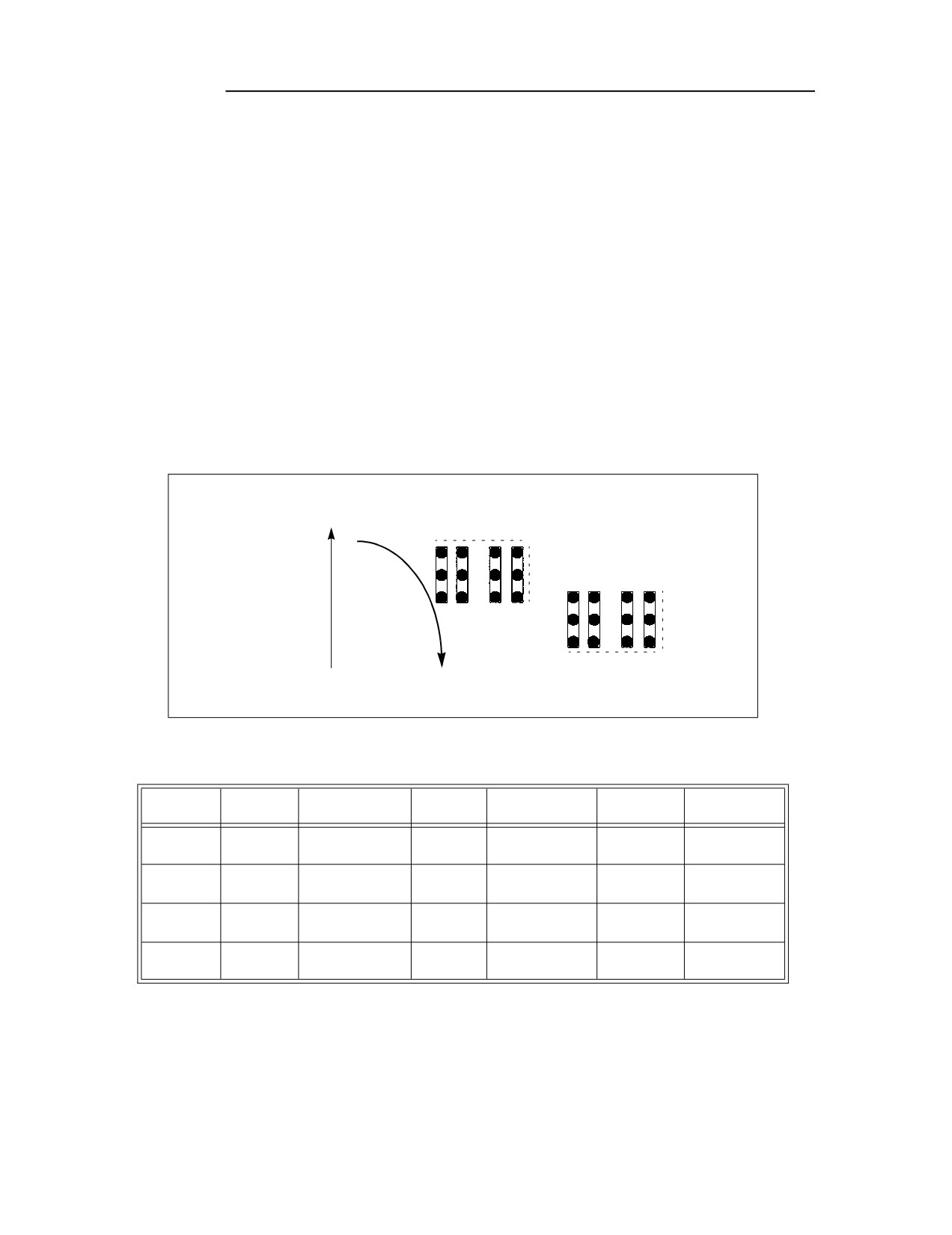
A turn minefield manipulates enemy maneuver in a desired direction. It
forces or entices enemy formations to move in a different direction rather than
breach the obstacle. This means the bypass must be easily identified. Turn
minefields are extremely lethal, with approximately 80 percent probability of
mine encounter. The typical width is 557 by 320 meters for air Volcano. Figure
D-2 shows two turn minefields combined to create a turn-effect obstacle group.
It takes 160 canisters (800 AT/160 AP mines) to emplace one turn minefield.
One air Volcano aircraft can lay one turn minefield (see Table D-2).
320 m
557 m
Aircraft line of flight
(1)
(2)
557 m
320 m
(3)
(4)
NOTE: Numbers correspond to the aircraft pass.
Figure D-2. Turn obstacle
Table D-2. Air Volcano minefield data
Type of
Frontage of
Number
Canisters per
Total
Minefields per
Depth (m)
Minefield
Minefield (m)
of Strips
Strip
Canisters
Aircraft
40
Disrupt
120
278
1
40
4
(20 each side)
40
Fix
120
278
1
40
4
(20 each side)
80
Turn
320
557
1
160
1
(40 each side)
80
Block
320
557
1
160
1
(40 each side)
Block
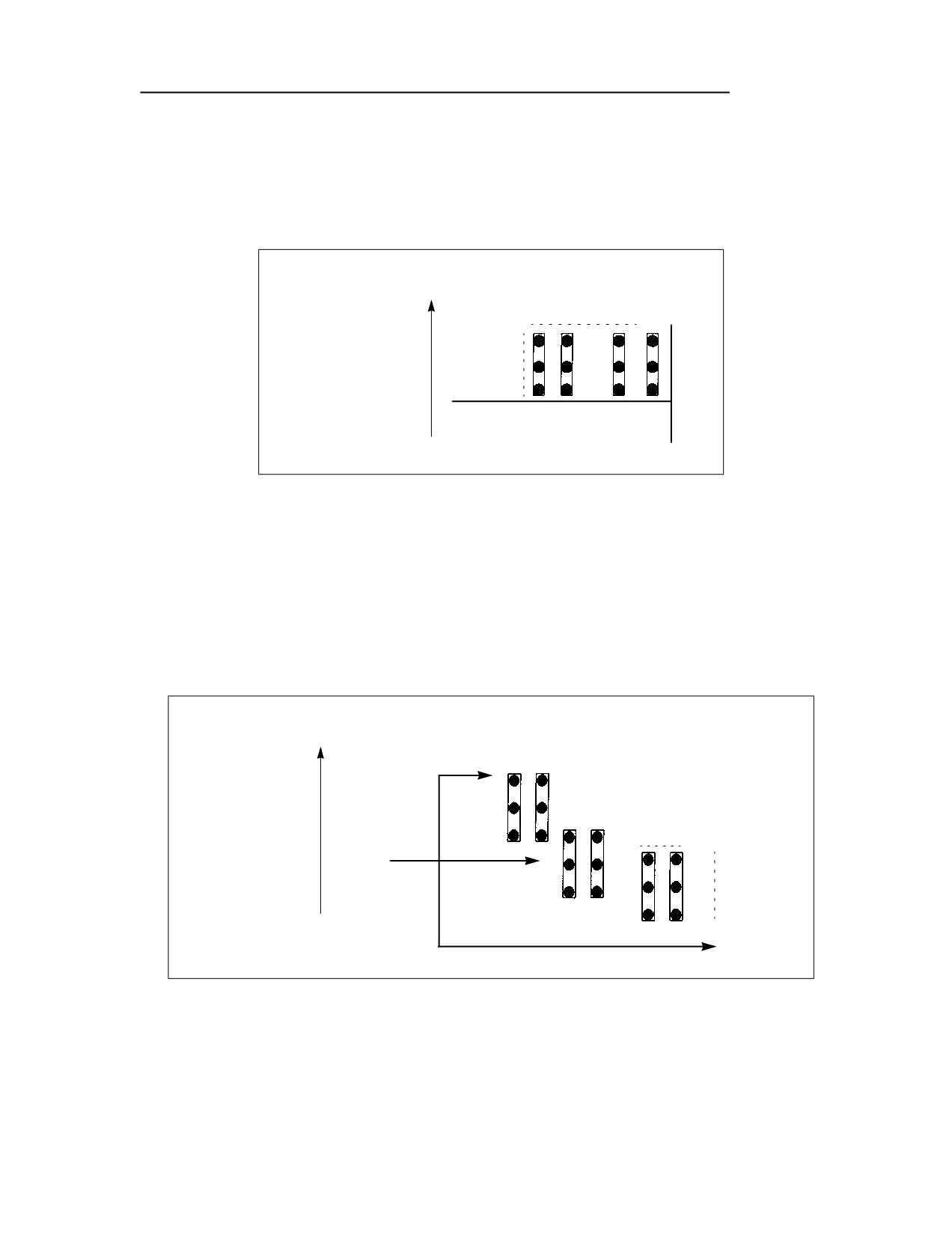
A block minefield (Figure D-3) is designed to stop an enemy advance along a
specific AA or allow it to advance at an extremely high cost. Block minefields
are obstacles with intensive integrated fires. They should be employed in a
D-6 Air Volcano
FM 20-32
complex obstacle scheme with road craters or bridge demolitions enhancing
the effectiveness of the minefield. One air Volcano aircraft can lay a 557- by
320-meter block minefield, using all 160 canisters (800 AT/160 AP mines). The
probability of mine encounter is more than 80 percent. One Volcano aircraft
can lay one block minefield, making two passes side by side (see Table D-2).
320 m
Aircraft line of flight
557 m
(1)
(2)
Figure D-3. Block obstacle
Disrupt
A disrupt minefield (Figure D-4) fractures and breaks up enemy formations. It
causes premature commitment of reduction assets, interrupts C2, and alters
timing. A disrupt minefield is not resource- or time-intensive. The probability
of mine encounter is approximately 50 percent, and the typical width is 278 by
120 meters. It takes 40 canisters (200 AT/40 AP mines) to emplace one disrupt
minefield. One air Volcano aircraft can lay four disrupt minefields (see Table
D-2).
(1)
Aircraft line of flight
120 m
(2)
278 m
(3)
Figure D-4. Disrupt obstacle
Fix
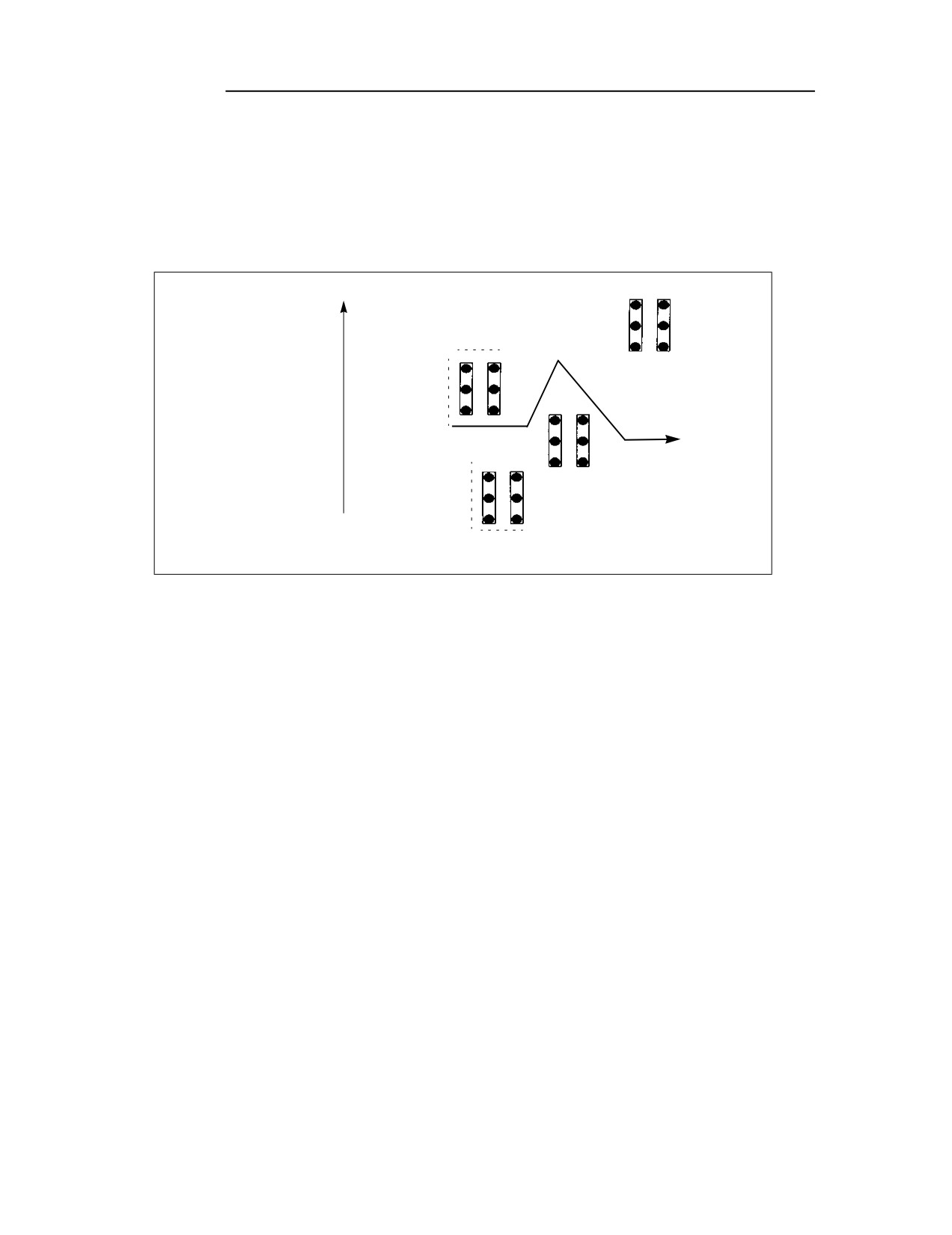
A fix minefield (Figure D-5) slows enemy formations within a specified EA. It
gives friendly forces time to acquire, target, and destroy enemy formations. A
Air Volcano D-7
FM 20-32
fix minefield is employed in depth and causes enemy formations to react and
breach repeatedly. The air Volcano fix minefield does not look impenetrable to
enemy formations. The probability of mine encounter is 50 percent, and the
typical size is 278 by 120 meters. It takes 40 canisters (200 AT/40 AP mines)
to emplace one fix minefield. One air Volcano aircraft can lay four fix
minefields (see Table D-2, page D-6).
(4)
120 m
(1)
Aircraft line of flight
278 m
(3)
278 m
(2)
120 m
Figure D-5. Fix obstacle
Linear
If the threat situation allows, the aircrew makes a pass to confirm the
minefield end points and the suitability of the terrain. In a high-threat
situation, the aircrew emplaces the minefield on the first pass. This hasty
minefield is linear in configuration and is 1,115 by 75 meters. All 160
canisters are fired.
PLANNING
Responsibilities
Division Commander
The division commander approves air Volcano employment and integration
into deep, close, and rear operations. He is also the authority for SCATMINE
employment.
Maneuver Brigade Commander
When authority is delegated by the division commander, the maneuver
brigade commander is responsible for employing air Volcano in close
operations and in supporting follow-on missions. He is responsible for
approving target nominations to be submitted to the division. The maneuver
brigade commander receives the air Volcano aircraft and its crew in OPCON
status.
D-8 Air Volcano
FM 20-32
Aviation Brigade Commander
The aviation brigade commander is responsible for integrating the air Volcano
into deep aviation attacks and for shaping EAs in the division AO. He
executes the air Volcano missions in deep, close, and rear operations. The
aviation brigade commander submits target nominations to the division
targeting cell through the aviation brigade engineer and provides support for
transporting and loading Volcano mines.
Division Engineer
The division engineer is responsible for target nominations that support
division missions or objectives in deep operations. He—
• Submits the nominations to the division targeting cell.
• Determines minefield characteristics.
• Incorporates the Volcano minefield, DTG of SD times, and safety zones
into the division obstacle plan.
• Estimates the requirements for mine canisters and Class IV/V
supplies.
• Determines the intent of the Volcano minefield as it is integrated into
the division obstacle plan.
• Disseminates the SCATMINWARN to adjacent and subordinate units
before the minefield is laid and one hour before the SD sequence of the
minefield is initiated.
Brigade Engineer
The brigade engineer is responsible for target nominations that support
objectives within his respective fight. He—
• Submits target nominations to the assistant division engineer.
• Synchronizes air Volcano missions into brigade operations.
• Assists the brigade FSE in planning SEAD, CAS, and Apache escort.
• Provides logistics estimates to the brigade S4 for coordination of
ammunition requirements.
• Posts the operations map with the minefield’s location, aviation
graphics, the safety zone, and the DTG of SD times.
• Disseminates the SCATMINWARN to adjacent and subordinate units
before the minefield is laid and one hour before SD sequence of the
minefield is initiated.
Deputy Fire-Support Coordinator
The deputy FSCOORD recommends commanding general/chief of staff
approval for target nominations developed by the division targeting cell. He is
responsible for submitting division-approved air Volcano target nominations
to the G3 air for inclusion in the air coordination order. He coordinates SEAD,
CAS, and intelligence and electronic warfare for division-directed air Volcano
missions. The deputy FSCOORD is also responsible for—
Air Volcano D-9
FM 20-32
• Targeting (intelligence and asset coordination).
• The air tasking order.
• The G3 air coordination order.
• G2 collection and assessment.
G3 Air
The G3 air synchronizes coordination and deconfliction of division air space
for air missions, SEAD, and CAS. When necessary, he submits the air
coordination order to higher headquarters with the division-approved target
list.
Emplacing Unit/UH-60 Company
The emplacing unit or the designated UH-60 company sets up and loads the
air Volcano system in conjunction with the forward-area refuel point. The
Volcano system is loaded on the UH-60 at the designated point. The emplacing
unit/UH-60 company is also responsible for—
• Maintaining the unit basic load at the forward-area refuel point or
ATP.
• Preparing the scatterable minefield report and record, forwarding it to
the authorizing commander or the aviation brigade engineer, and
verifying that the assistant division/brigade engineer receives the
entire report.
• Coordinating air routes and corridors.
• Requesting SEAD and security aircraft.
• Planning the air-mission coordination meeting to refine or develop the
aviation scheme of maneuver.
• Ensuring that pilots attend the unit’s rehearsal.
• Posting aviation graphics on the current operations overlay.
Process
All target nominations are submitted through the division targeting cell. In
the brigade, all target nominations go to the assistant division engineer for
submission to the board. Nominations should be submitted 96 hours prior to
the execution time (see Table D-3).
• The targeting cell validates the targets based on the SITEMP and
recommends approval through the commanding general/chief of staff.
• Upon approval, the deputy FSCOORD turns the target numbers and
the air requirements over to the G3 air, who adds the targets to the air
coordination order.
• The deputy FSCOORD begins to plan SEAD/CAS requirements for
division missions.
• The G3 issues the division WO so that units can be prepared to
execute specific air Volcano missions.
D-10 Air Volcano
FM 20-32
Table D-3. Planning process (H-hour sequence)
H-96+00. Submit target nominations/receive approval. Submit CAS requests for enemy ADA sites along
ingress and egress routes.
H-72+00. Receive mission. Division WO issued.
•
Conduct air-mission coordination meeting.
•
Conduct S2 update on enemy situation and pass down to executing unit.
•
Submit additions or changes to the CAS request to FSE for enemy ADA sites.
•
Post the air Volcano mission in the air coordination order.
•
Disseminate the SCATMINWARN.
H-48+00. Mount the system. The system takes 3 to 4 hours with a crew of three on a hard surface. The
time is doubled in a field environment and requires three or four personnel to assist in loading.
H-24+00. Conduct detailed mission analysis and planning. Issue WO to attack assets, including—
•
NLT time for mission planning and upload completion.
•
Time and location of air-mission brief.
•
Units attending.
•
Minefield location and type.
•
Establishment of C2 relationship.
•
Face-to-face coordination with attack assets.
•
Liaison officers planning multiple routes to minefield.
•
Liaison officers coordinating with engineers, ADA, and FSEs for support. G4/S4 must be notified of
reload plans and any other Class III/V requirements.
•
Intelligence update.
H-20+00. Volcano integrated into deep attack or air-assault matrix by the aviation brigade.
H-8+00. Conditions-check matrix approved by the commanding general or designated authority,
including—
•
Weather.
•
Threat suppression along route.
•
Attack support.
•
FLOT crossing coordination completion.
•
FLOT initial crossing point.
•
SEAD fire coordination.
•
Mines available.
•
Integration into execution matrix.
•
Crews updated on ADA threat.
•
Backup system and aircraft available.
•
CAS coordination.
•
Rehearsal completion with attack assets.
•
Intelligence update.
•
Close operation mission, including—
— Location of friendly forces.
— Type of marking and when it will be in place.
H-6+00. Conduct air-mission brief, including—
•
S2 intelligence update.
•
ADA threat update.
•
Rehearsal held after brief.
•
Brigade engineer and brigade fire-support officer being present.
H-4+00. Latest time for link-up of aviation assets. Fly to forward-area refuel point or tactical assembly area
for mine load-up. Remember that—
•
Loading canisters takes 1 to 3 hours with a crew of four to eight. Time varies greatly based on
whether or not the canisters are in shipping containers.
•
The loading time in a field environment is decreased if one pad is dedicated to air Volcano aircraft
loading and arming.
H-0+30. Cross FLOT (estimated; exact time is based on route), to include—
•
SEAD fired.
•
CAS sorties.
H-hour. Minefield deployed, to include—
•
Aircraft reports to the supporting brigade engineer if an infantry brigade mission.
•
Aircraft reports to the aviation brigade engineer if a division mission.
•
Engineer disseminates the scatterable minefield report and record to appropriate units.
Air Volcano D-11
FM 20-32
• The division issues a fragmentary order
(FRAGO) to order the
execution of the air Volcano mission.
• The planning staff gives the aviation brigade a date and a time for the
air Volcano system to be uploaded and prepared for employment.
• Air Volcano minefields are integrated into the scheme of maneuver as
a directed, situational, or reserve obstacle as stated in FM 90-7. This
includes integration into the COA that is synchronized during war
gaming and included in the OPORD as part of the rehearsal.
Logistics
Air Volcano munitions are transported and handled in the same manner as
Class V mines and explosives. The only significant difference in handling is
whether air Volcano operations are conducted from the tactical assembly area
or the forward operating base.
Echelon-above-corps transportation assets will transfer the air Volcano to
corps storage areas (ammunition). Based on forecasts by the division
ammunition officer, the corps support area will push air Volcanos to ASPs or
ATPs in the division area (tactical assembly area). ASPs and ATPs in or near
the tactical assembly area are normally operated by a direct-support
ammunition company attached to the corps support group (forward). ATPs in
brigade support areas are normally operated by forward support battalions.
Mines are moved from the corps support area to ASPs/ATPs by transportation
units from the corps support group (rear). Further throughput of mines from
ASPs to ATPs is supported by transportation assets from the corps support
group (forward). Based on the division ammunition officer’s forecast and the
availability of transportation, the corps support area will attempt to transfer
bulk mines to the ASP/ATP that is best positioned to support requirements.
ATPs issue mines to using units while ASPs handle bulk ammunition. ASPs
can do emergency issue to using units, but this is usually done only for units
using large quantities of bulk ammunition and having their own ammunition
transportation support available (division or corps artillery).
Preparation and Coordination
If an air Volcano mission has been approved for a unit, an aviation brigade
liaison officer coordinates with the S3 air, the engineer, and the air defense
officer to outline air Volcano requirements.
Logistical Requirements
The engineer planner calculates Class IV/V supplies and requests them from
the Assistant Chief of Staff, G4 (Logistics)(G4)/S4. The engineer and the
assistant division aviation officer coordinate the location (forward-area refuel
point, tactical assembly area, forward operating base) of the ATP where the
UH-60 will be loaded and fueled. The ALO must provide the amount of air
time available and the fuel required, and he must be prepared to discuss
emplacement times based on Volcano locations. The air-mission brief will
facilitate dissemination of this information.
D-12 Air Volcano
FM 20-32
Concept of the Operation
The scheme of maneuver, fires, and engineer operation must be outlined. The
scheme of engineer operations outlines exact grid coordinates, the obstacle
intent, and the minefield composition and size. The air Volcano can be
emplaced under enemy contact, but additional control measures must be used
to protect the aircraft and the crew. If the air Volcano is triggered by enemy
action, the DST must be briefed during the air-mission brief. The DST must
outline NAIs, including the type of sensors and triggers (long-range
surveillance device [LRSD], SOF, UAV), TAIs, decision points, and execution
criteria.
Control Points and Markers
The initial point, the approach marker, and minefield markers are designated.
Approach and minefield markers must be visible from the air and be distinctly
different from one another:
• The initial point is an easily identifiable terrain feature used for
coordinating the entry point of the UH-60 into the sector.
• The approach marker allows the aircraft to set the altitude, the speed,
and the final orientation to the minefield. The approach marker can
also be a terrain feature.
• Minefield markers establish the limits of the desired minefield. Deep
area minefields do not require minefield markers.
Terrain Analysis
A combined (aviation, maneuver, fire-support, and engineer planners) terrain
analysis should be conducted using Terrabase or a similar product. Terrabase
enables planners to analyze the effects of the terrain in a three-dimensional
format. AAs, terrain references, TAIs, NAIs, line-of-sight profiles, and
minefield locations can be confirmed during this analysis.
Air-Mission Brief
The air-mission brief is the most critical planning and coordination meeting at
the execution level, and it must occur no later than H-6 in the planning
process. During the air-mission brief—
• C2 is established.
• Updates and changes to the situation are exchanged between the
brigade or TF engineer, the fire-support officer, and the air-mission
commander.
• The engineer and the air-mission commander use four control
techniques (discussed later in this appendix) to ensure mission
success. The primary technique for emplacement and the
responsibilities for each control technique are outlined.
• Radio frequencies; points of contact; code words; identification, friend
or foe, modes; and challenge and passwords are exchanged and
disseminated.
Air Volcano D-13
FM 20-32
• The forward-area refuel point location, the security aircraft, flight
routes, and lethal/nonlethal SEAD are identified (if already approved).
Mounting
The system must be mounted no later than H-48 in the planning process.
Execution
Siting
The key to proper emplacement is the location of the minefield in relation to
existing terrain features. If appropriate, the minefield should tie into an
existing terrain feature to prevent easy bypass or fording. Using Terrabase
enhances siting and emplacement procedures in deep operations.
Reconnaissance must be conducted to verify the location.
Movement
Loading. The launcher rack functions as the carrier and launcher platform
for 40 mine canisters. The rack has 40 keyholes for mine canisters, a green
latch that latches the mine canister to the rack, and a red latch that arms the
mine canisters. The rack has two electrical receptacles—one for the connector
and one for the launcher rack cable from the DCU. While looking at the
canister side of the rack, rows are 1 through 4 from bottom to top and columns
are 1 through 10 from left to right.
Arming.
•
Due to the weight of the Volcano mine system, a large, open area that
is clear of obstacles must be selected. The site should have a hard
surface if possible. If a hard surface is unavailable, inspect the ground
to ensure that it is firm enough to support the weight of the aircraft.
Perforated steel planking or two pieces of 1-inch plywood (4 by 4 feet)
may be used as a field-expedient surface in soft areas.
•
Concentrations of nonessential personnel or frequently traveled
vehicular routes should not be within 1,000 meters of the site. This
distance is based on the total weight of explosives and the safe
fragmentation distance found in FM 5-250. When using the M88
training canisters, the minimum distance is 30 meters.
•
Two Underwriters Laboratories, Incorporated (UL)-listed 10BC fire
extinguishers and a grounding rod (minimum safety equipment) must
be available at the arming point. This equipment is provided by
personnel who deliver the mines.
•
The number of personnel allowed access to the site should be held to a
minimum. All personnel involved in the arming will receive a safety
brief that includes—
— Ammunition handling and inspection procedures.
— Loading procedures.
— Emergency procedures and rendezvous points.
•
Emergency procedures.
D-14 Air Volcano
FM 20-32
— Fire. In the event of a fire away from the mines, attempt to contain
or extinguish the fire by any available means. If the fire is near
the mines or in them, clear the area to a minimum distance of
1,000 meters and notify fire-fighting personnel immediately. When
training with M88 canisters, clear the area to a minimum distance
of 30 meters.
— Accidental discharge. Immediately clear the area to a distance of
640 meters and notify EOD. The mines arm approximately 2½
minutes after firing. When training with M88 canisters, terminate
arming until the problem can be identified and corrected.
— Failure to fire. Remove the canister from the aircraft and place it
in the dud pit. Notify EOD immediately. When training with M88
canisters, remove the canister from the aircraft, separate it from
the other canisters, repack it, and return it to the ASP.
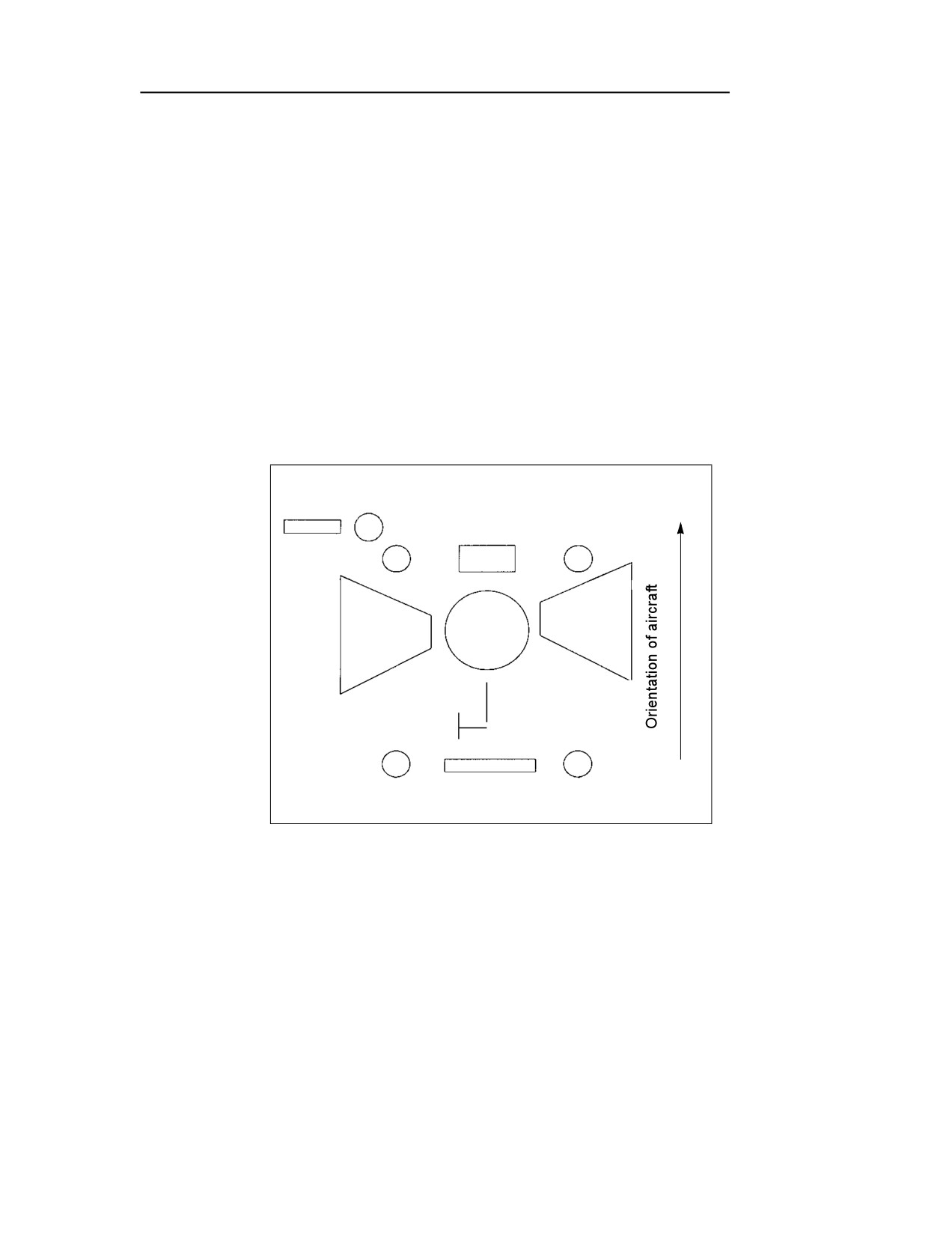
• Site layout (Figure D-6).
Dud pit
Ammunition
points
Avoid
Avoid
area
area
Spent ammunition
Figure D-6. Site layout
— Berming of the site is not required for a tactical arming point.
— The following rules apply when the site is located next to a refuel
point:
> A minimum of 1,000 meters must exist between arming points
and refuel points when the total quantity of explosives is less
than 600 kilograms. For quantities greater than 600
kilograms, refer to FM 5-250.
NOTE: Each M87 canister contains 3.4 kilograms of explosives; a full
load (160 canisters) contains 550 kilograms of explosives.
Air Volcano D-15
C2, FM
20-32
> The refuel point for armed aircraft must be located at least
375 meters from other aircraft refueling points.
> Parked, armed aircraft must be at least 36 meters from other
armed aircraft to prevent the detonation of explosives on
adjacent aircraft. This distance will not prevent damage to
adjacent aircraft; a 130-meter distance is required to prevent
damage by fragments and to ensure that the aircraft remains
operational.
— A dud pit (bermed when possible) for damaged or misfired
ammunition should be established beyond the ammunition points.
— Arming points should be laid out as shown in Figure D-6.
Dearming. After the mission is complete, the aircraft returns to the arming
point for dearming. Spent canisters should be discarded at least 30 meters
from the aircraft, at the 4- and 8-o’clock positions. Live canisters should be
returned to ASPs for future use or repackaging. Canisters that misfire should
be placed in the dud pit.
Flight Planning and Preflight.
• The flight crew analyzes the mission using METT-TC factors and
determines the flight profile to be used during mine emplacement. It
will select (or have designated) one or more of the following control
measures to be used during mine emplacement:
— Visual identification (start and stop markers on the ground).
— Time-lapse (tables to determine the minefield length).
— Number of canisters fired.
— Doppler/GPS (start and stop coordinates).
• The crew member(s) will ensure that the air Volcano is installed
properly, that all installation checks are completed, and that mine
canister pallets are loaded as directed by the pilot or the SOP.
• The flight crew conducts ground checks according to the checklist in
TM 1-1520-237-10 to confirm proper operation of the air Volcano prior
to takeoff.
Before Arrival at the Target Area.
• During the equipment check, the crew chief turns on the DCU power-
control switch, verifies that no malfunctions were indicated during the
initial built-in test, and turns off the DCU power-control switch.
• After completion of run-up with the aircraft at flight idle, the crew
chief turns on the DCU power-control switch.
• Before arrival at the release point, the pilot will make the following
checks (listed on the Volcano card [a sample is shown in Figure D-7]):
— Verify that the DCU is on.
— Verify that the mine SD time is properly set.
D-16 Air Volcano

FM 20-32
VOLCANO CARD
Emplacement Date:
Unit
Engr
ASP
Call Sign
Frequency
Location
N
Remarks
Not to scale
1st pass
2nd pass
3rd pass
4th pass
Initial Point
A
D
G
J
SD Time
knots
knots
knots
knots
Ground Speed
kph
kph
kph
kph
No Tubes
Altitude
Track
Start Time
B
E
H
K
Stop Time
C
F
I
L
Figure D-7. Sample Volcano card
— Announce the ground speed in knots or kph, as required. (The
pilot and the crew chief will acknowledge.)
— Announce the number of canisters the crew chief will count down.
If deployment is 40 canisters per run (20 per side) and there are
two runs, the crew chief will count down from 80 to 60 on the first
run and 60 to 40 on the second run. (The crew chief will
acknowledge.)
— Announce the altitude for employment.
(The pilot will
acknowledge.)
— Announce the course for the delivery track.
(The pilot will
acknowledge.)
Air Volcano D-17
FM
20-32
— Announce the delivery time based on the setting of the ground
speed. (The crew chief will acknowledge.)
•
Before arrival at the initial point, the crew chief will—
— Ensure that the DCU fire-circuit switch’s safety pin and streamer
are removed.
— Ensure that the DCU fire-circuit switch is enabled.
— Place the interface control-panel arming switch to the ARM
position. He will verify that the jettison advisory light indicates
armed and that no fault codes are displayed on the DCU.
At the Target Area.
•
The pilot simultaneously announces “mark,” presses the go-around
switch, and starts timing the run when he is over the minefield start
point.
•
The pilot maintains a ground speed of 5 kph/3 knots and an altitude of
3 meters during the mine-dispensing pass. The pilot is responsible for
flying the aircraft within the prescribed limitations.
•
The crew chief announces the mine-canister count, as the canisters
are dispensed, by counting down in 10s. He then announces the last
three canisters. For example, the pilot announces a canister count of
60, the crew chief calls out “80, 70, 3, 2, 1, mark.”
•
The pilot terminates mine dispensing when the grid location is
reached.
After Mission Completion.
The crew chief will—
• Place the interface control-panel arming switch to the SAFE position
and verify that the armed advisory capsule is extinguished.
• Place the DCU fire-circuit switch to the OFF position. Install the
safety pin and the streamer.
• Prepare and submit a SCATMINWARN.
EMPLACEMENT
The air Volcano is fast and flexible, but it is difficult to accurately dispense
mines within the confines of the minefield marking. The desired obstacle-
effect norms for the air Volcano require extensive planning, preparation,
coordination, and positive control during emplacement. The critical aspect of
the air Volcano is getting the right amount of mines in the specified location
and in the desired density.
The detailed coordination focuses on positive control. Positive control of an air
Volcano mission requires a redundancy of control techniques to minimize
errors in minefield size and location. These control techniques must
compensate for poor visibility, wind speed and direction, and navigational
errors.
D-18 Air Volcano

FM 20-32
The following control techniques are used by the engineer and the air-mission
commander to ensure that Volcano minefields match specific obstacle-effect
norms. Units rely on these techniques to accomplish the mission, and they are
part of the Volcano air-mission brief:
• Visual identification. Focuses on the visual identification of minefield
emplacement. As part of the preparation for a Volcano minefield, an
engineer element erects airfield panel markers to mark start and end
points. This provides a visual signal for the engineer and the air-
mission commander to start and stop firing Volcano canisters. The
pilot depresses the launch switch over the first marker to start firing
and depresses it again over the second marker to stop firing. This
control technique is good for open terrain with adequate visibility and
little canopy coverage.
• Time lapse. Focuses on when to stop firing Volcano canisters. The UH-
60’s air speed and the type of minefield being laid determines the
amount of time it takes to lay a minefield. The air Volcano has six air
speed settings—20, 30, 40, 55, 80, and 120 knots. Table D-4 shows the
time required to lay minefields and the full load time.
Table D-4. Air Volcano dispensing times based on air speed
Disrupt and Fix
Turn and Block
160 Canisters
Knots
Minefields
Minefields
per Load
20
27 seconds
54 seconds
108 seconds
30
18 seconds
36 seconds
72 seconds
401
13 seconds
27 seconds
54 seconds
55
9 seconds2
18 seconds
39 seconds
80
6 seconds2
13 seconds2
27 seconds
120
4 seconds2
9 seconds2
18 seconds
Width of minefield (meters)
278.8
557.5
1,115
No passes per minefield
1
23
1
No canisters per pass
40
80
160
1Recommended air speed
2Recommended only if absolutely necessary
3Blackhawks in pairs can lay turn and block minefields in one pass, firing 80 canisters each.
The following example is provided to show how Table D-4 is used:
Example: The mission is to install an air Volcano disrupt minefield.
The UH-60 is traveling at 40 knots (this is entered on the DCU), and
the pilot initiates (depresses the launch switch) at the identification of
the Volcano start marker or the grid location on the ground. The pilot
depresses the launch switch a second time after 13 seconds have
elapsed.
• Number of canisters fired. Focuses on when to stop firing Volcano
canisters. The number of Volcano canisters dispensed also determines
when firing is terminated. There is a digital readout on the DCU (for
Air Volcano D-19
FM
20-32
the left and right side) that shows the number of canisters remaining.
The pilot stops firing when the required number of canisters have
been fired (see Table D-4, page D-19).
Using the disrupt minefield example above, the UH-60 starts the
mission with a full load (80 canisters on each side of the aircraft). The
pilot initiates (depresses the launch switch) at the identification of the
Volcano start marker or the grid location on the ground. The pilot
depresses the launch switch a second time after 20 canisters have
been expended on each side. The DCU counts down from the total
number of canisters. When the DCU reads 60 right/60 left, the pilot
depresses the switch to end the firing process. Ideally, the timing of
delivery and the number of canisters fired are done simultaneously. As
the crew chief counts down the timer, the pilot and the crew chief
monitor the number of canisters remaining on the DCU digital
readout.
•
Doppler/GPS. Focuses on when to start and stop firing Volcano
canisters using the UH-60’s Doppler/GPS guidance and navigation
set. This set provides the present position or destination in latitude
and longitude (degrees and minutes) or grid coordinates. As part of the
preparation for the Volcano minefield, exact grid coordinates are
needed to determine the approach points and the limits of the
minefield. These coordinates are provided to the air-mission
commander during the air-mission brief. The pilot enters the grid
coordinates into the Doppler/GPS on the primary and the backup
aircraft. During execution, the air-mission commander monitors the
Doppler/GPS and determines the time to target, when to initiate
firing, and when to terminate firing.
OUTSIDE FRIENDLY TERRITORY
Reconnaissance of the proposed site for the air Volcano minefield will be
conducted before mines are emplaced. This could include—
• LRSD.
• Apache gun tapes.
• UAV overflights.
• Imagery.
Key terrain or landmarks are used to identify start and end points for aviation
assets. It is unlikely that military marking will be employed based on the
proximity to enemy forces and the probability of early detection if man-made
markers are present. Fencing the minefield is not required until the area has
been secured by friendly forces.
WITHIN FRIENDLY TERRITORY
Within friendly territory, air Volcano minefields should be fenced and marked
with NATO identification signs to protect friendly forces.
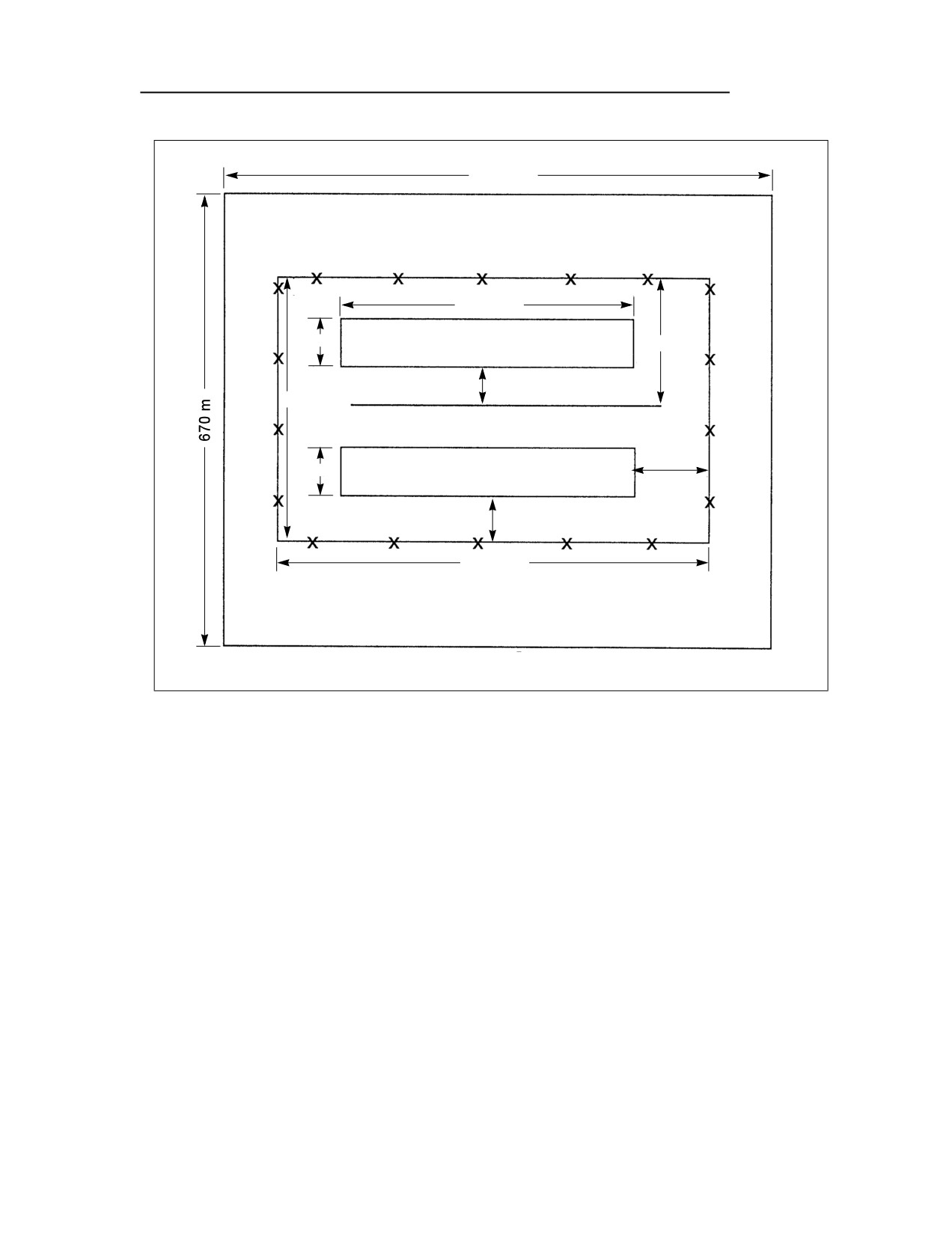
Fencing is installed before the air Volcano minefield is delivered, and it is
located 100 meters from the centerline of the minefield and 100 meters from
the start and end points (Figure D-8).
D-20 Air Volcano
FM 20-32
1,785 m
1,115 m
35 m
100 m
35 m
200 m
35 m
100 m
30 m
1,315 m
Figure D-8. Fencing for an air Volcano minefield
Start and end points should be marked with man-made devices such as VS-17
panels. During limited visibility, start and end points should be marked with
infrared or heat-producing sources. Key terrain features and landmarks
should still be used to identify start and end points.
Fencing the minefield is not viable when the minefield duration is short or
civilians on the battlefield are an issue. In this case, CA, public affairs, and
PSYOP personnel should be involved in letting friendly personnel know the
minefield location. This could include—
• Leaflet drops.
• CA teams disseminating information.
• Host-nation support.
• PSYOP.
Air Volcano D-21
FM 20-32
REPORTING
SCATTERABLE MINEFIELD WARNING
The emplacing unit is responsible for issuing the SCATMINWARN (Figure 8-
7, page 8-23) to adjacent units and higher headquarters. The brigade
engineers and the assistant division engineer assist in this process. They
disseminate the warning based on whether or not it is a brigade (brigade
engineer) or division (aviation brigade engineer) mission. To ensure that all
units are informed, the assistant division engineer forwards the
SCATMINWARN to the G3 for dissemination through operational channels.
SCATTERABLE MINEFIELD REPORT AND RECORD
The aircraft emplacing the minefield reports initiation and completion times
to the engineer of the emplacing unit. The engineer prepares the scatterable
minefield report and record (Figure 8-8, page 8-23) and forwards it through
his unit to the assistant division engineer. The assistant division engineer
forwards the report to the G3 who provides the information to higher and
subordinate units through operational channels.
D-22 Air Volcano
Appendix E
Safety and Training
Mine training is inherently dangerous, in part, because several different
types of mines and fuse systems are used throughout the world. Detailed
safety instructions for each type of mine are provided throughout this
manual. This appendix merely points out the safety aspects of live-mine
training that are common to all types of mines.
Conduct mine training as if the mines were live. This is the only way
soldiers form a habit of correctly and safely handling mines and gain a
true appreciation of the requirements and the time it takes to perform an
actual mine-warfare mission. Live-mine training gives soldiers the
confidence they need to handle mines and their components. Accidents can
usually be traced to ignorance, negligence, deliberate mishandling,
overconfidence, mechanical failure, or fright. The first four can be
overcome by training and proper supervision. Mechanical failure rarely
happens; but if it does, it can be controlled by training and proper
supervision. The last item, fright, is mastered through well-controlled,
live-mine training.
STORAGE
There are three types of mines used in mine training:
• Inert. Does not contain explosives.
• Practice. Contains an LE charge or a smoke-producing component to
simulate detonation.
• HE. Involves actual mines used in combat
Conventional mines are painted to enhance concealment, retard rusting of
exposed metal parts, and help identify the type of mine and filler (HE, LE, or
chemical agent). Older manufactured mines are painted according to the Five-
Element Marking System; newer mines use the Standard Ammunition Color-
Coding System (see Table E-1, page E-2).
NOTE: Mines that are color-coded and marked according to the old
system have been on hand for several years. Ensure that all
ammunition, whether color-coded according to the old or new
system, is properly and fully identified.
Always handle mines with care. The explosive elements in fuses, primers,
detonators, and boosters are particularly sensitive to mechanical shock,
friction, static electricity, and high temperatures. Boxes and crates containing
mines should not be dropped, dragged, tumbled, walked on, or struck. Do not
smoke within 50 meters of a mine or its components.
Safety and Training E-1

C2, FM 20-32
Table E-1. Mine color-coding system
Five-Element Marking System
Standard Ammunition Color-
Type of Ammunition
(Old)
Coding System (New)*
Persistent casualty chemical
Gray with green markings and
Gray with green markings and
agent
two green bands
two 12-mm green bands
Gray with green markings and
Gray with green markings and
Nerve agents
two or three green bands
three 12-mm green bands
Gray with violet markings and
Light red with black markings and
Incendiary
one violet band
one yellow band
HE
Olive drab with yellow markings
Olive drab with yellow markings
Practice mines
Blue with white markings
Blue with white markings
Black with the word INERT in
Blue with the word INERT in
Inert mines
white
white
*Chemical ammunition containing an HE has one 6-mm yellow band in addition to the other markings.
When it is necessary to leave mines in the open—
• Set them on dunnage at least 5 centimeters above the ground.
• Place a waterproof cover (such as canvas) over them, and leave enough
space for air circulation.
• Dig drainage trenches around stacks of mines to prevent water from
collecting under them.
• Protect mines and their components against moisture by
waterproofing them with grease coatings, tar paper, or tarpaulins.
Additional maintenance procedures are as follows:
• Do not open mine boxes in a magazine, at an ammunition dump, or
within 30 meters of an explosive store. Use copper or wooden safety
tools, if available, to unpack and repack mines.
• Do not fuse mines within 30 meters of an explosive or ammunition
holding area. Mines can be fused at the mine dump.
• Use specifics authorized by the US Army Materiel Command and
applicable TMs to disassemble mines and their components.
• Remove safety pins, safety forks (clips), and other safety devices as the
last step when arming the mine; and replace them before the mine is
moved again. These devices prevent accidental initiation of the mine
while it is being handled.
• Place tape over open fuse cavities and secondary fuse wells. Ensure
that they are clear of obstruction and free of foreign matter before
attempting to install the fuse, the detonator, or the FD.
• Take steps to prevent moisture or water from accumulating around
the mine and subsequently freezing if the temperature fluctuates
around freezing. Mines usually function satisfactorily at temperatures
between 40 and 160ºF. Most mines are not appreciably affected by
temperature changes, but mines can become neutralized by ice
formations (see Chapter 12).
E-2 Safety and Training
FM 20-32
• Observe proper procedures when recovering mines. Ensure that
components do not show evidence of damage or deterioration.
• Ensure that practice or inert mines or their components are not
present when live mines or their components are being used.
• Do not mix inert mines with live mines.
• Do not display live mines or their components in museums,
demonstrations, models, or similar layouts. Only inert equipment can
be used for displays.
• Handle explosive materials with appropriate care. The explosive
elements in primers, blasting caps, and fuses are particularly
sensitive to shock and high temperatures.
• Assemble activators, standard bases, and FDs before installing them.
Do not carry them in the pockets of your clothing.
• Do not point FDs at anyone.
• Camouflage the mine before removing the positive safety pin when
possible.
NOTE: Additional storage and safety precautions are outlined in TM
9-1300-206.
LIVE-MINE TRAINING
NOTE: No live-mine training is authorized with M14 mines. Units
outside Korea will not use live M16A1 mines in tactical or protective
minefield training.
Live-mine training is conducted by preparing, laying, arming, neutralizing,
and disarming live mines (with live fuses and components) in a training
environment.
Supervisors must adhere to the following safety considerations when
conducting live-mine training:
• Only personnel who are qualified and certified according to the local
range SOP are allowed to supervise activities or training in which live
mines or their components are used.
• Minimum personnel requirements to conduct live-mine training are—
— Range officer (OIC).
— Range safety officer (RSO).
— One NCO supervisor for each arming bay.
— Mine-explosive breakdown NCO.
— One medic per four arming bays.
— Guards, as required by the range SOP.
• Sound organization is a must before live-mine training can begin. The
OIC and supervising NCOs conduct a demonstration/briefing to
ensure that the practice runs smoothly.
Safety and Training E-3
FM
20-32
•
The training officer must foresee hazards that can occur through
personnel nervousness or material failure. The commander should
conduct a risk assessment according to AR 385-10.
•
The OIC takes his place at the control point or post. Once he is
satisfied that all safety regulations have been observed, he orders the
first detail to start training.
•
Soldiers are trained on inert and practice mines before arming live
mines, according to the guidelines established by the Standards in
Training Commission.
•
Fuses are not inserted into mines until ordered by the OIC.
•
An NCO supervisor must be present when soldiers arm live mines. He
ensures that soldiers adhere to the proper procedures and regulations.
•
Only one soldier arms a mine at any given time.
•
Personnel disarm one mine before arming the next one.
•
Personnel never arm an M16 AP mine in the trip-wire mode during
live-mine training.
•
Personnel never remove the positive safety pin from the M16 AP mine
during live-mine training.
•
Instructors inspect fuses and mines for serviceability before starting
practice.
•
Instructors inspect mines and their components for damage and
excessive wear after each student has gone through the station.
Replace the mine and the fuse if damage or wear is found.
•
All personnel wear a helmet (with the serviceable chin strap fastened)
and body armor when arming and disarming mines.
•
Ear protection is not permitted in the arming bays. The student must
be able to hear the supervisor and certain distinct noises (such as a
firing pin dropping).
•
Instructors post guards at all entrances to the range. The guards
communicate with the RSO by radio, wire, voice, or signal. No one
enters the range without permission from the RSO.
•
Instructors keep mine records and inventory sheets. They maintain
accountability of all mines and fuses, before and after each exercise.
•
Instructors draw and return supplies; check equipment for issue; and
ensure that live mines are safe, serviceable, and unarmed. They
ensure that the requirements contained in AR 385-63, range
regulations, and SOPs are observed and that no one does anything to
prejudice safety.
•
Instructors clearly mark the word LIVE on all live mines and their
components that are used for live-mine training. Live mines are
maintained separately from practice and inert mines.
E-4 Safety and Training
FM 20-32
• Live AHDs are not used with live mines during training, but they can
be used with practice and inert mines.
• Arming and disarming are conducted in the prone position.
• Waiting personnel are located in a bunker, behind a suitable
barricade, or at a safe distance from live-mine training.
• Supervisors ensure that live-mine training is not rushed. There are no
shortcuts. Supervisors must allow soldiers ample time to arm and
disarm mines. Most soldiers are already in a high state of stress from
dealing with live munitions, and rushing them only serves to heighten
their stress level.
LIVE-MINE DEMONSTRATIONS
Live-mine demonstrations show mine characteristics and capabilities using
M16 and M18 AP mines and M15, M19, and M21 AT mines. The appropriate
authority must authorize the demonstration, and firing personnel must be
fully conversant with all safety and technical aspects pertaining to live-mine
firing.
An OIC and an RSO are appointed for each activity involving live-mine firing.
The amount of explosive contained in the mine cannot exceed the maximum
amount allowed for the range, and one mine is fired at a time.
Upon arriving at the range, the instructor and his assistants establish areas
according to the following rules (signs are posted for large demonstrations):
• Firing point. Sited outside the danger area and near the OIC to
facilitate coordination, commentaries, and firing.
• Spectator area. Sited outside the danger area and within earshot of
the commentator. It is large enough to provide a good view of the
explosion.
• Supply area. Any suitable area away from spectators.
• Explosive area. Sited away from supplies and spectators.
• Mine area. Mines are set out in full view of the OIC and spectators.
Individual mines are at least 25 meters apart.
• Target area. Targets are positioned and inspected by spectators before
the blasting cap is inserted into the mine.
M16
ANTIPERSONNEL MINE
• Safety distance. 300 meters.
• Firing procedures.
— Roll out 300 meters of firing cable and attach it to a stake or picket
in the ground (leave at least 1 meter of free end). Test the firing
cable for continuity.
— Place the mine in the ground (dig in level with the surface).
Remove the shipping plug.
— Test a blasting cap (under a sandbag) with the demolition test set.
Safety and Training E-5
FM 20-32
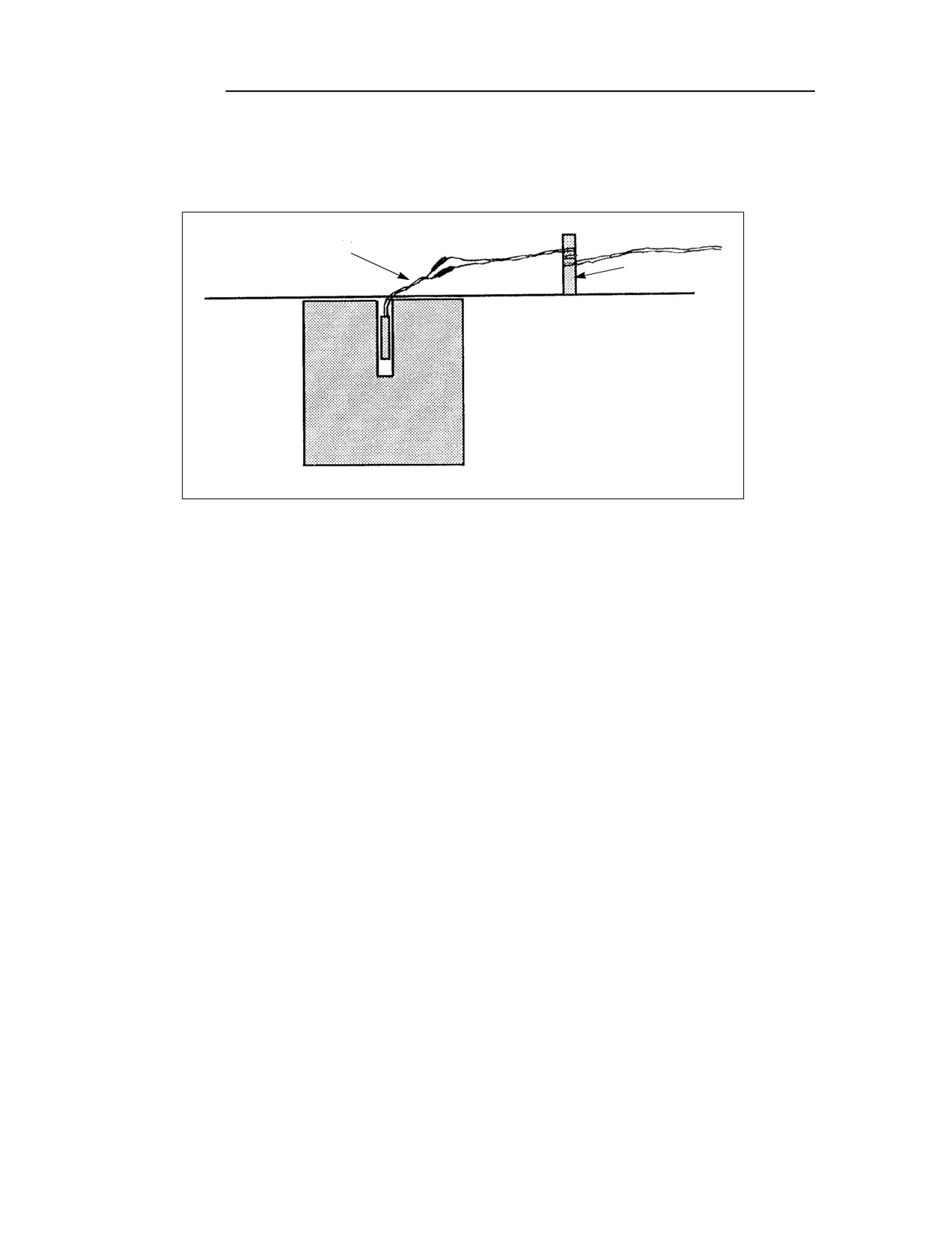
— Attach the ends of the blasting-cap leads to the ends of the electric
cable and insulate the joints with tape. Place the blasting cap into
the fuse well (see Figure E-1, page E-6).
Taped joints
Stake
NOTE: The cap is suspended
two thirds of the way down
the fuse well.
Figure E-1. M16 AP mine
• Suggested target. A circle of tar paper,
6
meters in diameter,
supported by 1.8-meter pickets. Spectators can later view shrapnel
effects.
NOTE: The procedure detailed here dispenses with the M605 igniter.
The mine cannot be detonated by pull or pressure. The expulsion
charge and millisecond delay fuses are still operated, and the mine
bounds out of its casing (which remains in the ground) before
exploding in the air. Although the normal firing delay is removed, it
does not detract from the demonstration. The blasting cap is
suspended two-thirds of the way down the fuse well to initiate the
expelling charge and delay elements.
• Misfires. In the event of a misfire, the RSO disposes of the mine by
placing a block of C4 as close to the mine as possible, without touching
it. He destroys the mine by normal nonelectric means.
M18A1
ANTIPERSONNEL MUNITION
• Safety distance. 300 meters.
• Firing procedures.
— Roll out 300 meters of firing cable and attach it to a stake or picket
in the ground (leave at least 1 meter of free end). Test the firing
cable for continuity.
— Place the mine on the ground and ensure that the front of the
mine faces away from the firing point. Remove the shipping plug.
— Test an electric blasting cap (under a sandbag) with the demolition
test set.
E-6 Safety and Training
FM 20-32
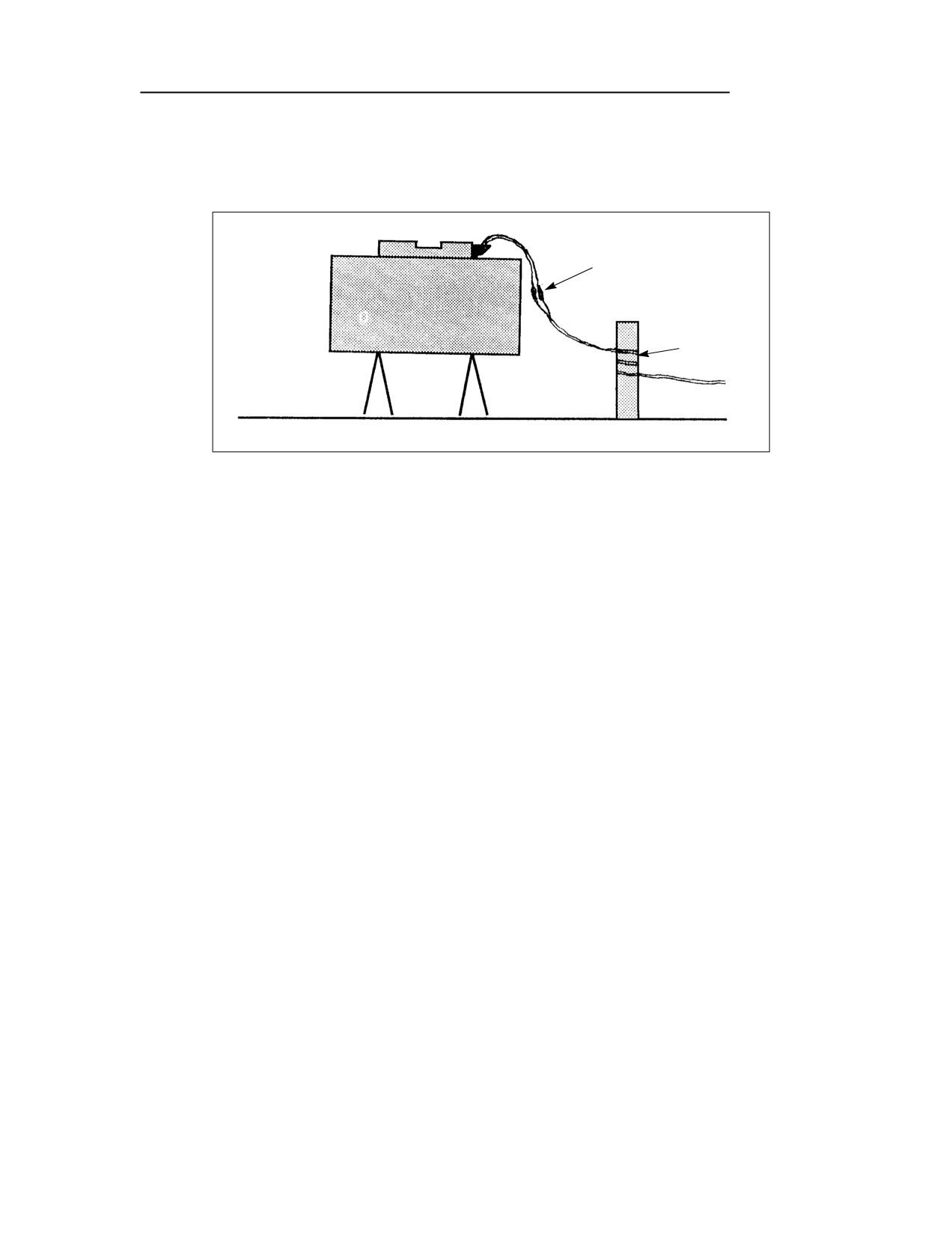
— Attach the ends of the blasting cap leads to the ends of the electric
cable and insulate the joints with tape. Place the blasting cap into
the detonator well (see Figure E-2).
Taped joints
Stake
Figure E-2. M18A1 AP mine
• Suggested target. Several E-type silhouette targets, 15 to 100 meters
from the mine.
NOTE: The procedure detailed here applies only to demonstration
firings. Standard accessories are used on all other occasions. The
mine explodes instantaneously and clearly illustrates the sound of an
M18A1 explosion.
• Misfires. In the event of a misfire, the RSO disposes of the mine by
placing a block of C4 as close to the mine as possible, without touching
it. He destroys the mine by normal nonelectric means.
M15, M19, AND M21 ANTITANK MINES
• Safety distance. 1,000 meters.
• Firing procedures.
— Roll out 1,000 meters of firing cable and attach it to a stake or
picket in the ground (leave at least 1 meter of free end). Test the
firing cable for continuity.
— Place the mine in the ground and leave the top exposed. A target is
used only when the mine can be placed without disturbing the
target. A derelict vehicle is a suitable target.
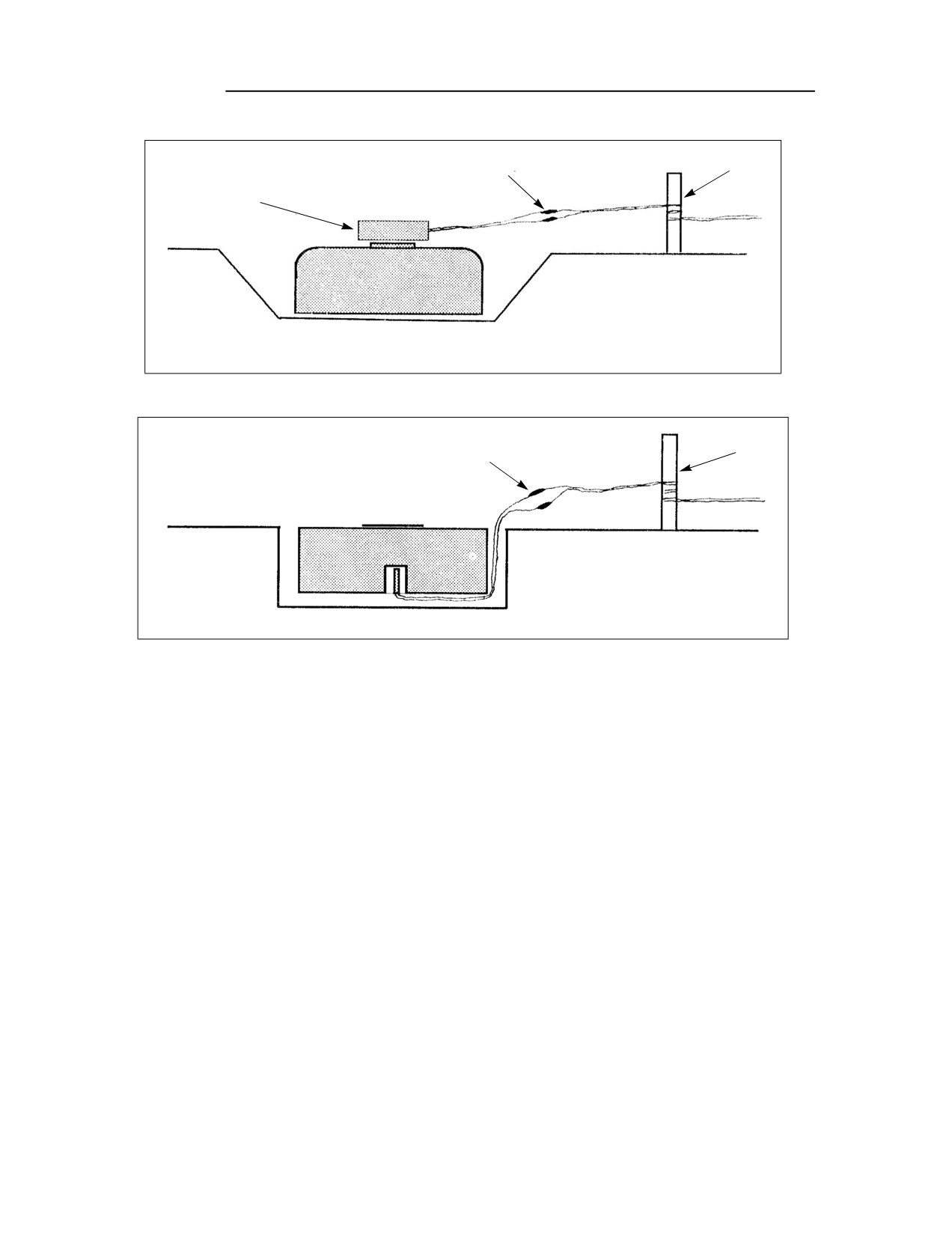
— Place a block of C4 on top of M15s and M19s (see Figure E-3, page
E-8).
— Remove the shipping plug from the booster well of the M21 and
pack the well with C4. Insert an electric blasting cap into the C4
(see Figure E-4, page E-8).
NOTE: Do not remove safety devices. Keep arming dials in the SAFE
position. The mine explodes instantaneously and clearly
demonstrates the blast/shaped-charge effect.
Safety and Training E-7
FM 20-32
Taped joints
Stake
C4
Figure E-3. M15 and M19 AT mines
Stake
Taped joints
Figure E-4. M21 AT mine
• Misfires. In the event of a misfire, the RSO disposes of the mine by
placing a block of C4 as close to the mine as possible, without touching
it. He destroys the mine by normal nonelectric means.
RISK ASSESSMENT FOR LIVE-MINE DEMONSTRATIONS
The following risk assessment is provided as a guideline for live-mine
demonstrations using an M16 AP mine. It must be carefully reviewed before
conducting a demonstration. Live-mine demonstrations can be conducted in a
safe manner. The risk of injury to personnel is significantly minimized if you
adhere to established procedures.
During the demonstration, mines are not armed with standard fuses. They are
activated by electric blasting caps placed inside the fuse wells.
A demonstration shows the effectiveness of an M16 AP mine. Spectators do
not handle the mines or explosives. To show the effectiveness of an M16 mine,
a sheet of paper is placed in a semicircle around the mine. Spectators remain
in bunkers or at a safe distance while mines are primed with electric blasting
caps and detonated. After the mines have been detonated and the RSO has
cleared the area, spectators are allowed to view the results of the detonated
mine. Misfires are handled by the RSO.
Figure E-5 is a risk assessment prepared by the Department of
Transportation.
E-8 Safety and Training
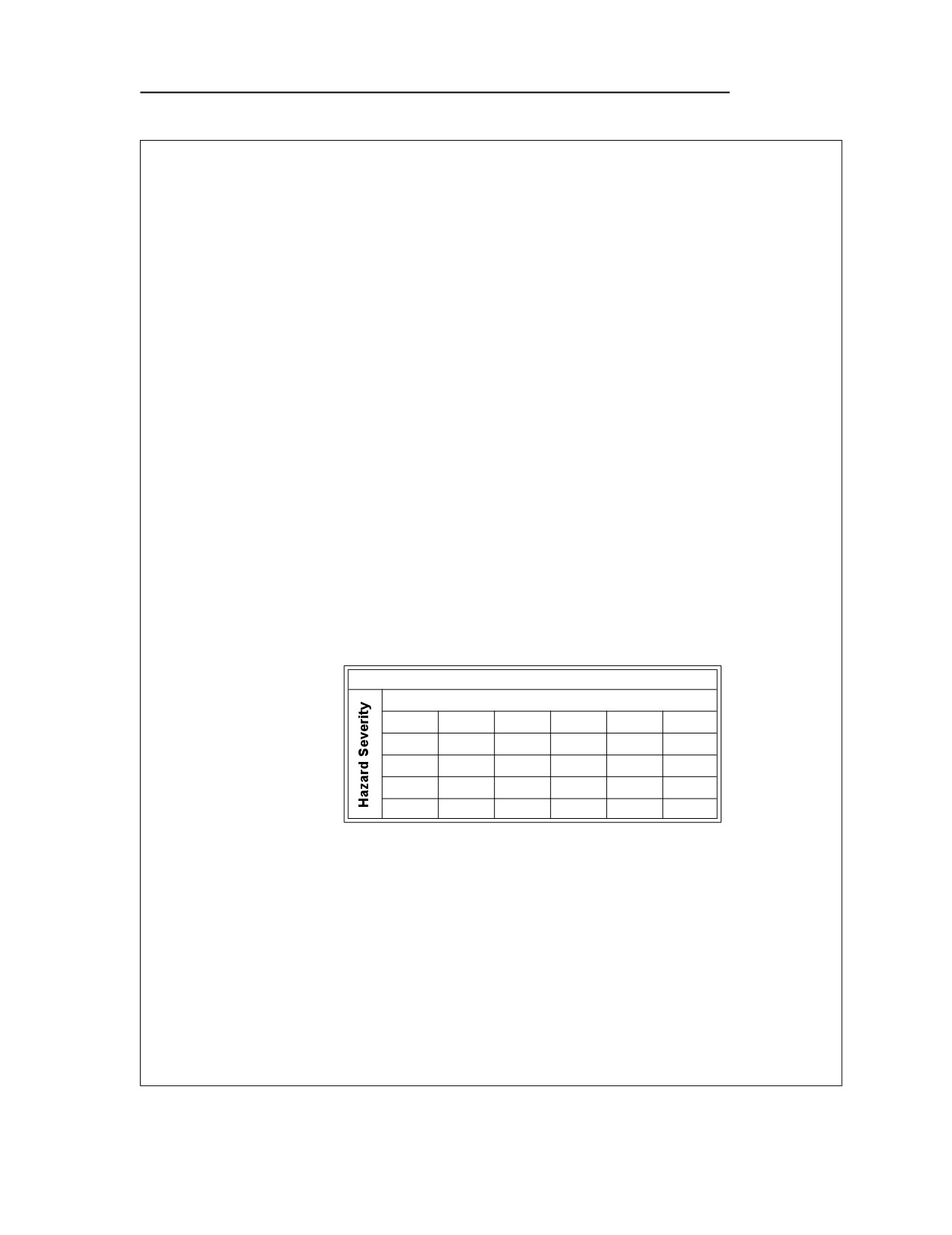
FM 20-32
QUALITATIVE RISK ASSESSMENT
Qualitative risk-assessment techniques are used to place a value on the level of risks created by hazards in an
operation. The principal qualitative technique is the risk-assessment code (RAC) described in MILSTD-882C.
This method was established as a common way to set priorities for Department of Defense (DOD)-wide
hazard-abatement programs and uses an RAC matrix format to combine the concepts of frequency and
severity into a single, numerical code. It is very useful in comparing different risks (such as those from different
programs) or even differences (such as health versus safety risks).
RACs are implemented for the Army in Army Regulation (AR) 385-10, which describes the two qualities of
hazard severity and hazard probability as follows:
•
Category I—CATASTROPHIC. May cause death or loss of a facility. In this case, loss does not mean a
period of interrupted service; it means destruction of the facility or operation.
•
Category II—CRITICAL. May cause severe injury, severe occupational illness, or major property
damage.
•
Category III—MARGINAL. May cause minor injury, minor occupational illness, or minor property
damage.
•
Category IV—NEGLIGIBLE. Probably would not affect personnel safety or health, but is in violation of
specific standards.
Mishap probability is the probability that a hazard will result in a mishap, based on an assessment of factors
such as location, exposure in terms of cycles or hours of operation, and affected population. The expression
combines the idea of the probability of an event and the exposure to the event. These probabilities are
expressed as letters conforming to the following system:
•
Subcategory A—Likely to occur immediately.
•
Subcategory B—Probably will occur in time.
•
Subcategory C—May occur in time.
•
Subcategory D—Remote.
•
Subcategory E—Improbable.
The two qualities are combined to yield an RAC by using the following table:
Risk-Assessment Code Table
Mishap Probability
A
B
C
D
E
I
1
1
2
3
4
II
1
2
3
4
5
III
2
3
4
5
5
IV
—
—
—
—
—
In using the RAC system, it is important to note that the IA and IIA classifications are termed “imminent
danger.” Though their RAC codes of 1 are the same as that of the IB entry, their immediacy makes them more
critical. The codes are useful in assessing an operation as it begins, but they must be updated as the operation
continues, the facility ages, and so forth to account for degrading condition or performance.
For risk managers, there are some important organizational/management considerations to RAC codes. AR
40-10 also contains an RAC system, but due to a difference in definitions, the health RAC code may be a lower
number, indicating a higher degree of risk. This is important to managers who are comparing health risks to
others risks under AR 385-10; the health issue would always win if no compensation or consideration was
factored into the codes. From the managerial standpoint, it must be remembered that RACs are judgmental
and not necessarily held to be the same by different managers or evaluators. When differences in perception
occur, the differences are likely based on either the understanding of the operation’s behavior or the criteria for
selecting the probability and severity. It is wise to listen to the basis of others’ RAC choices and attempt to
develop a common understanding.
Figure E-5. Excerpt from Risk-Assessment Techniques Manual, prepared by the Department of
Transportation’s Transportation Safety Institute, August 1986
Safety and Training E-9
FM 20-32
Qualitative risk-assessment techniques are used to prepare estimates of risk levels using performance
data, when available, to improve the accuracy of risk estimates used in risk-acceptance decision making.
These assessments are numeric values representing the safety risk of an Army activity, system operation,
or comparable endeavor, based on actuarial or derived numeric data. Though RACs are numerical, they
are derived from judgments and are not demonstrable in records of performance. If it is desirable that
performance be measured, it is necessary that quantified estimates of risk levels be established, that risk
levels be predictive so that future performance has a base of comparison, and that risk levels be assigned
numeric values.
Figure E-5. Excerpt from Risk-Assessment Techniques Manual, prepared by the Department of
Transportation’s Transportation Safety Institute, August 1986 (continued)
RISK ASSESSMENT FOR LIVE-MINE TRAINING
The United States Army Engineer Center, Department of Instruction,
obtained information for the following risk assessment from the Collective
Training Branch, Department of Training and Doctrine, and from the
Engineering Branch for Engineer Officer Basic Course demolitions training.
Hazards are identified and analyzed on preliminary hazard-analysis work
sheets (see Figures E-6 through E-15, pages E-11 through E-21). Risk-
assessment codes are assigned to each hazard based on the severity and the
probability of occurrence.
References used in the risk-analysis process include this manual and the
following publications:
• DA Pamphlet (Pam) 350-38.
• AR 385-10.
• AR 385-16.
• AR 385-63.
• Soldier Training Publication (STP) 5-12B1-SM.
• Training Circular (TC) 25-8.
• TM 9-1345-203-12.
• TM 43-0001-36.
E-10 Safety and Training

Operation Name:
Arming the M15 AT Mine
Date Prepared:
11 October 1990
Sheet Number:
1
of 1
Controlled
Hazards
System Effects
Causal Factors
RAC
Actions
Standards/Comments
RAC
Damaged mine
None
Lack of training/improper
IV B (-)
Do not use mine.
IV D (-)
Proper training is conducted.
used
training
Contact QASAS to
Soldiers are proficient on inert
Improper supervision
investigate.
mines first.
Incomplete or no inspection
Turn mine in for
One instructor is assigned to one
investigation/
soldier.
disposal.
All training is conducted in the
Too much force on
Mine detonates
Soldier bends/pushes on
I B (1)
Do not remove the
I D (3)
prone position.
extension rod/
rod or fuse
safety stop and
pressure ring
band if the exten-
Mine training is done after
(M624 fuse)
sion rod is used.
identified by a unit’s METL and
only with select personnel.
OR
Training is conducted in the
Remove the
proper environment.
extension rod before
removing safety
Soldiers are in the proper
stop and band.
protective gear.
Too much
Mine detonates
Soldier applies excessive
I D (3)
See comments.
I D (3)
pressure on
pressure
No trip wires or AHDs are used
pressure plate
with an M15 mine.
(M603 fuse)
Fuse improperly
Mine detonates
Excessive debris/corrosion
I C (2)
Perform depth
I D (3)
Using the cap to perform the fuse
seated in the fuse
in well
check with wrench.
depth check is not authorized.
well (M603 fuse)
Use the wrench.
Lack of training/improper
training
Improper supervision
Incomplete or no inspection
Improper handling
Fuse detonates
Pressure applied to fuse
II D (4)
Handle fuse
II D (4)
of fuse (M603
with safety fork removed
properly.
fuse)
Figure E-6. Preliminary hazard-analysis work sheet (arming M15)

Operation Name: Disarming the M15
AT Mine
Date Prepared:
11 October 1990
Sheet Number:
1 of 1
Controlled
Hazards
System Effects
Causal Factors
RAC
Actions
Standards/Comments
RAC
Do not apply
Too much pressure on
pressure to
Camouflage
pressure plate
Mine detonates
I D (3)
pressure plate.
I D (3)
removed
Damage to the mine
See comments.
Too much resistance (M603
See comments for arming an
fuse) is applied to turning
M15 AT mine (Figure E-8, page
indicator.
Unable to turn the
E-13).
mine to SAFE or
Safety band (M624), safety
Perform controlled
reinstall safety
Mine detonates
I C (2)
None
See risk assessment for
stop, or safety pin has
detonation in place.
ring, safety stop,
command-detonating a mine in
become damaged.
or safety pin
place with explosives (Figure E-
16, page E-21).
Foreign material has
entered the fuse well.
Pressure is placed on the
Fuse removed/
pressure plate of fuse.
Follow proper
safety fork
Fuse detonates
II D (4)
II D (4)
procedures.
installed
Fuse is not removed.
Figure E-7. Preliminary hazard-analysis work sheet (disarming M15)

Operation Name:
Arming the M16-Series AP Mine
Date Prepared:
11 October 1990
Sheet Number:
1
of 1
Controlled
Hazards
System Effects
Causal Factors
RAC
Actions
Standards/Comments
RAC
Damaged mine
None
Lack of training/improper
IV C (-)
Do not use mine.
None
Proper training is conducted.
used
training
Contact QASAS to
Soldiers are proficient on inert
Improper supervision
investigate.
mines first.
Incomplete or no inspection
Turn in the mine for
One instructor is assigned to one
investigation/
soldier.
disposal.
All training is conducted in the
Faulty fuse used
Mine detonates
Safety pins missing
I B (1)
Do not use fuse.
I D (3)
prone position.
(M605)
Prongs bent
Contact QASAS to
Mine training is done after the
investigate.
need is identified by a unit’s
Fuse head does not turn
METL and then only with select
freely
Turn mine in for
personnel.
investigation/
Pins installed incorrectly
disposal.
Training is conducted in the
proper environment.
Conduct quality
control check before
Soldiers are in the proper
training.
protective gear.
Pressure applied
Mine detonates
Pressure is applied
I B (1)
Do not remove the
I D (3)
to prongs after the
inadvertently
positive safety pin at
No trip wires or live AHDs are
positive safety pin
any time.
used with an M16 mine.
is removed
Fuse improperly
Mine detonates
Individual pushes in on
I B (1)
Do not remove the
I D (3)
In the event of damage or loss of
armed
release pin while or after
positive safety pin at
any safety pins, stop training with
positive safety pin is
any time.
this particular mine and destroy
removed
it.
Wrong sequence for
removing pins
Locking safety pin is
removed, click is heard,
soldier continues
Figure E-8. Preliminary hazard-analysis work sheet (arming M16)

Operation Name:
Disarming the M16-Series AP Mine
Date Prepared:
11 October 1990
Sheet Number:
1
of 1
Controlled
Hazards
System Effects
Causal Factors
RAC
Actions
Standards/Comments
RAC
Provide close
supervision.
Camouflage
Too much pressure on
Do not rush the
Mine detonates
I C (2)
I D (3)
removed
M605 fuse pressure prongs
procedure.
Do not fully arm this mine; leave
Do not camouflage
the positive safety pin in the fuse
mine.
at all times.
Pins not replaced
See comments for arming an
Pull on release-pin ring
Provide close
M16 AP mine (Figure E-10, page
supervision.
Replace safety
E-15).
Mine detonates
Pressure on fuse pressure
I C (2)
I D (3)
pins
prongs
Do not rush the
See risk assessment for
procedure.
command-detonating a mine in
Pins replaced in wrong
place with explosives (Figure E-
order
16, page E-21).
Provide close
Safety pins not properly in
supervision.
place, thus allowing
M605 fuse
Mine detonates
pressure to be applied to
I C (2)
I D (3)
removed
Assure that pins are
the fuse, pressure prongs,
secure and replaced
or release pin
correctly.
Figure E-9. Preliminary hazard-analysis work sheet (disarming M16)

Operation Name:
Arming the M19 AT Mine
Date Prepared:
11 October 1990
Sheet Number:
1 of 1
Controlled
Hazards
System Effects
Causal Factors
RAC
Actions
Standards/Comments
RAC
Lack of training/improper
Proper training is conducted.
training
Do not use mine.
Damaged mine
None
IV B (-)
IV B (-)
Soldiers are proficient on inert
used
Improper supervision
Contact QASAS to
mines first.
investigate.
Incomplete or no inspection
One instructor is assigned to one
Soldier handles detonator
soldier.
improperly
All training is conducted in the
Lack of training/improper
prone position.
Improper handling
Detonator
Handle detonator
training
I D (4)
III D (5)
of detonator
detonates
properly.
Mine training is done after
Improper supervision
identified by a unit’s METL and
only with select personnel.
Incomplete or no inspection
Too much
Training is conducted in the
Soldier applies too much
pressure on
Mine detonates
I D (3)
See comments.
I D (3)
proper environment.
pressure
pressure plate
Soldiers are in the proper
Mine detonates
Inform soldiers of
protective gear.
at pressure
Weakened
less pressure
lower than
Belleville spring weakening
I C (2)
I D (3)
Belleville spring
required to
No trip wires or AHDs are used
designed
detonate.
with a live M19 mine.
pressure
Figure E-10. Preliminary hazard-analysis work sheet (arming M19)

Operation Name: Disarming the M19 AT Mine
Date Prepared:
11 October 1990
Sheet Number:
1 of 1
Controlled
Hazards
System Effects
Causal Factors
RAC
Actions
Standards/Comments
RAC
Too much pressure on
Camouflage
pressure plate
Do not camouflage
Mine detonates
I D (3)
I D (3)
removed
mine.
Damaged or malfunctions
See comments for arming an
Too much resistance
M19 AT mine (Figure E-12, page
turning the dial indicator
E-17).
Unable to turn the
Perform controlled
Mine detonates
I C (2)
I D (3)
mine to SAFE
detonation in place.
Foreign material in the fuse
See risk assessment for
well
command-detonating a mine in
place with explosives (Figure E-
Fuse assembly
Dropped fuse assembly
16, page E-21).
removed and
Handle fuse
Detonator
with detonator
detonator
II C (3)
assembly and
II D (4)
detonates
replaced with
detonator properly.
Dropped the detonator
shipping plug
Figure E-11. Preliminary hazard-analysis work sheet (disarming M19)

Operation Name:
Arming the M21 AT Mine
Date Prepared:
11 October 1990
Sheet Number:
1
of 1
Controlled
Hazards
System Effects
Causal Factors
RAC
Actions
Standards/Comments
RAC
Do not use mine.
Lack of training/improper
training
Contact QASAS to
Damaged mine
investigate.
None
IV B (-)
IV B (-)
used
Improper supervision
Proper training is conducted.
Turn mine in for
Incomplete or no inspection
investigation/
Soldiers are proficient on inert
disposal.
mines first.
Do not remove the
One instructor is assigned to one
safety stop and
soldier.
band if the exten-
sion rod is used.
Too much force on
All training is conducted in the
extension rod/
Soldier bends/pushes on
prone position.
Mine detonates
I B (1)
OR
I D (3)
pressure ring
rod or fuse
(M607 fuse)
Mine training is done after
Remove the
identified by a unit’s METL and
extension rod before
only with select personnel.
removing the safety
stop and band.
Training is conducted in the
Excessive debris/corrosion
proper environment.
in well
Soldiers are in the proper
Fuse improperly
Lack of training/improper
protective gear.
seated in the fuse
Mine detonates
training
I C (2)
See comments.
I D (3)
well
No trip wires or AHDs are used
Improper supervision
with a live M21 mine.
Incomplete or no inspection
Improper handling
Pressure applied to fuse
Handle fuse
Fuse detonates
II D (4)
None
of fuse
while mine is armed
properly.
Figure E-12. Preliminary hazard-analysis work sheet (arming M21)

Operation Name: Disarming the M21 AT Mine
Date Prepared:
11 October 1990
Sheet Number:
1
of 1
Controlled
Hazards
System Effects
Causal Factors
RAC
Actions
Standards/Comments
RAC
Too much pressure
Do not use
extension rod.
Camouflage
Mine detonates
Tilted extension rod
I B (1)
I D (3)
removed
Ensure close
See comment for arming an M21
Damaged or malfunctions
supervision.
AT mine (Figure E-14, page E-
Too much pressure
19).
Do not use
extension rod.
Band, stop, and
Tilted extension rod
Stop training with this particular
Mine detonates
I B (1)
I C (2)
cotter pin replaced
mine and destroy it in the event
Ensure close
Damaged stop, band, or
of damage or loss of stop, band,
supervision.
cotter pin
or cotter pin.
Do not use
extension rod.
See risk assessment for
Extension rod
Too much pressure
command-detonating a mine in
and/or fuse
Mine detonates
I C (2)
I D (3)
Ensure proper
place with explosives (Figure E-
removed
Tilted extension rod
placement of band,
16, page E-21).
stop, and cotter pin.
Booster
Soldier improperly handles
Handle booster
Booster removed
II D (4)
None
detonates
booster
properly.
Figure E-13. Preliminary hazard-analysis work sheet (disarming M21)

Operation Name:
Preparing charges and priming explosives to be used for mine demolition (detonated in place)
Date Prepared:
11 October 1990
Sheet Number:
1
of 1
Controlled
Hazards
System Effects
Causal Factors
RAC
Actions
Standards/Comments
RAC
Wire will not carry electrical
Defective wire or
Do not use wire
No detonation
charge to detonate
IV D (-)
None
faulty test of wire
(replace it).
explosive
Handle cap
Electric blasting
Cap improperly handled
properly.
cap check done
Blasting cap
III C (4)
IV D (-)
incorrectly or not
detonates
Cap not put under sandbag
Place cap under
at all
After testing, ensure that wire
sandbag.
ends are twisted together.
Ensure that firing
Cap/firing wire improperly
Blasting cap
wire is shunted.
handled
Only one demolitions person and
attached
Blasting cap
III C (4)
IV D (-)
one safety person will be at the
incorrectly to firing
detonates
Ensure proper
End of firing wire not
mine when the blasting cap is
wire
handling of blasting
shunted
inserted into the demolition.
cap.
Blasting cap
RSO is responsible for clearing
Blasting cap
inserted
Too much pressure on
misfires.
and/or
Ensure proper
incorrectly/too
blasting cap
demolition
I D (3)
handling of blasting
I D (3)
forcefully into 1-
RSO keeps a misfire kit under his
charge
cap.
pound demolition
Cap improperly handled
control.
detonates
charge
OIC declares a
Faulty blasting cap
misfire.
Charge does not
No detonation
Faulty blasting machine
IV C (-)
IV C (-)
detonate
Follow RSO
procedures for a
Faulty firing wire
misfire.
Figure E-14. Preliminary hazard-analysis work sheet (command detonation)

Operation Name:
Mine arming/disarming peripheral factors (not all-inclusive)
Date Prepared:
11 October 1990
Sheet Number:
1 of 2
Controlled
Hazards
System Effects
Causal Factors
RAC
Actions
Standards/Comments
RAC
Good weather
No direct
Temperature between 45 and
IV A (-)
None
None
This list is not conclusive and will
70°F
depend on the particulars of the
unit, the training, and the range
Clear or partly cloudy
facilities.
Wind speed less than 5 mph
Additional peripheral factors a
unit commander may wish to
Minimal weather
No direct
Temperature between 32 and
III A (2)
Ensure close
III C (4)
consider are—
44°F or 71 and 80°F
supervision.
•
Level of proficiency.
•
Time of event (day or
Drizzle
Do not rush training
to get in shelter.
night).
Wind speed between 5 and 15
•
Availability and extent of
mph
Postpone or cancel
emergency-response
training.
assets.
Bad weather
Wet, miserable
Temperature less than 32°F or
I C (2)
Postpone or cancel
I D (3)
•
Train up (rehearsals and
soldiers
greater than 80°F
training.
dry runs).
•
Terrain.
Wet munitions
Moderate to heavy rain
•
Location of instructor in
relation to soldier during
Snow or ice
the training.
Wind speed greater than 15
mph
Lack of
The sequential
Current doctrine not available
I B (1)
Stop training if
I D (3)
references
arming or
unsure of a task.
disarming not
Questions or confirmation of
done correctly,
techniques not quantified
Have proper
causing the fuse
references available.
and/or mine to
detonate
Figure E-15. Preliminary hazard-analysis work sheet (peripheral factors)

Operation Name:
Mine arming/disarming peripheral factors (not all-inclusive)
Date Prepared:
11 October 1990
Sheet Number:
2
of 2
Controlled
Hazards
System Effects
Causal Factors
RAC
Actions
Standards/Comments
RAC
Lack of support
Improper
Not enough or incorrect
I C (2)
Ensure that proper
I D (3)
materials or
procedures or
fuses, wrenches, and/or
support material is
components
practices
washers used
available.
introduced,
causing the fuse
Stop training if the
and/or the mine
proper material is
to detonate
not available.
Condition of
Improper
Long amount of training
I D (3)
Ensure that soldiers
None
soldiers
procedures or
with little or no sleep
have adequate
practices
sleep.
introduced,
Strenuous training
causing the fuse
conducted before or during
Allow for breaks
and/or the mine
live-mine training
during training.
to detonate
Stop training if
soldiers appear to
be heavily fatigued.
Protective clothing
Improper or
Improper or lacking
I C (2)
All soldiers
None
lacking
protective clothing
participating in mine
protective
training will have
clothing,
Kevlar helmets, flak
increasing the
vests, and boots.
severity of an
accident if it
does occur
Figure E-15. Preliminary hazard-analysis work sheet (peripheral factors) (continued)