FM 4-20.137 RIGGING FORWARD AREA REFUELING EQUIPMENT (FARE) AND ADVANCED AVIATION FORWARD AREA REFUELING SYSTEM (AAFARS, JUNE 2003) - page 3
FM 4-20.137/TO 13C7-1-19
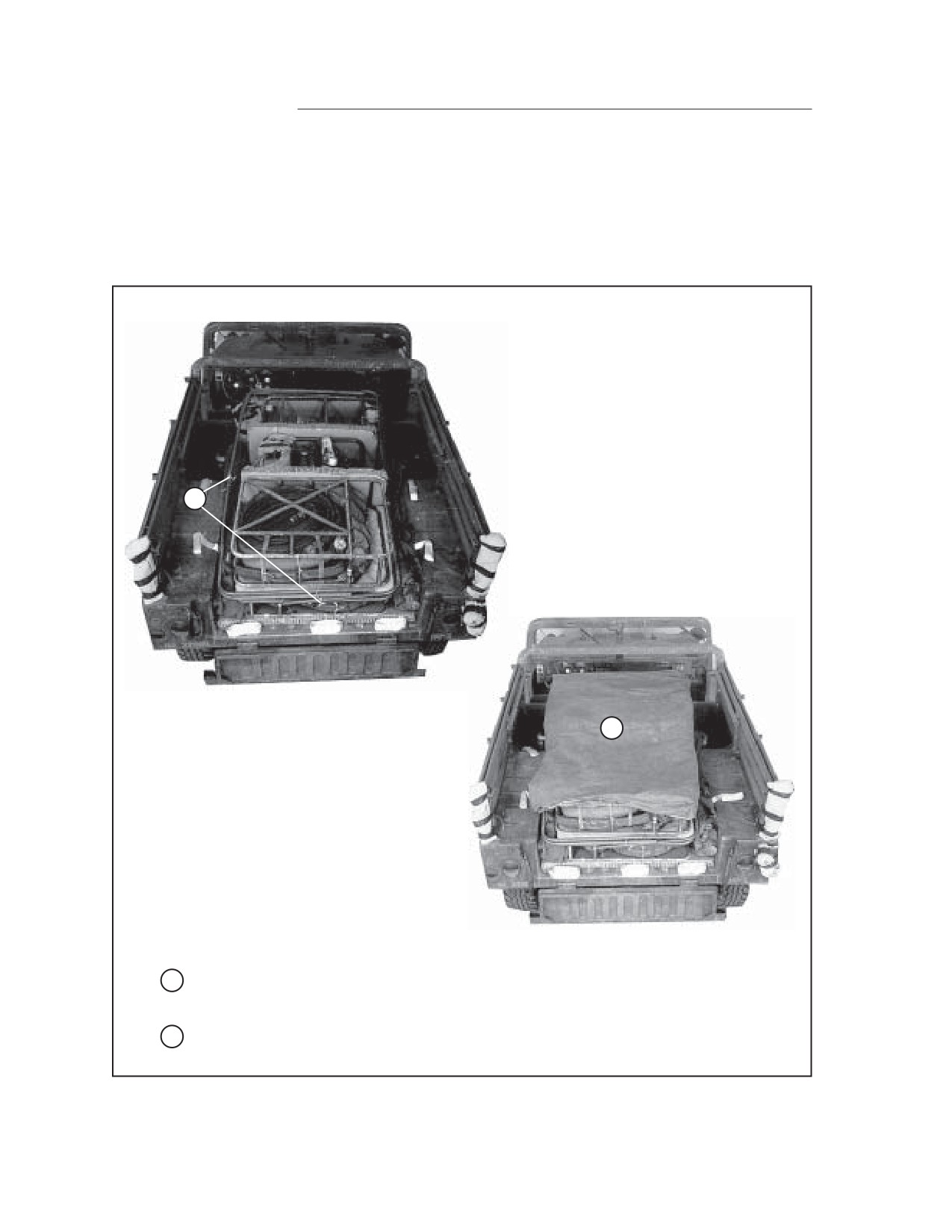
SECURING FARE
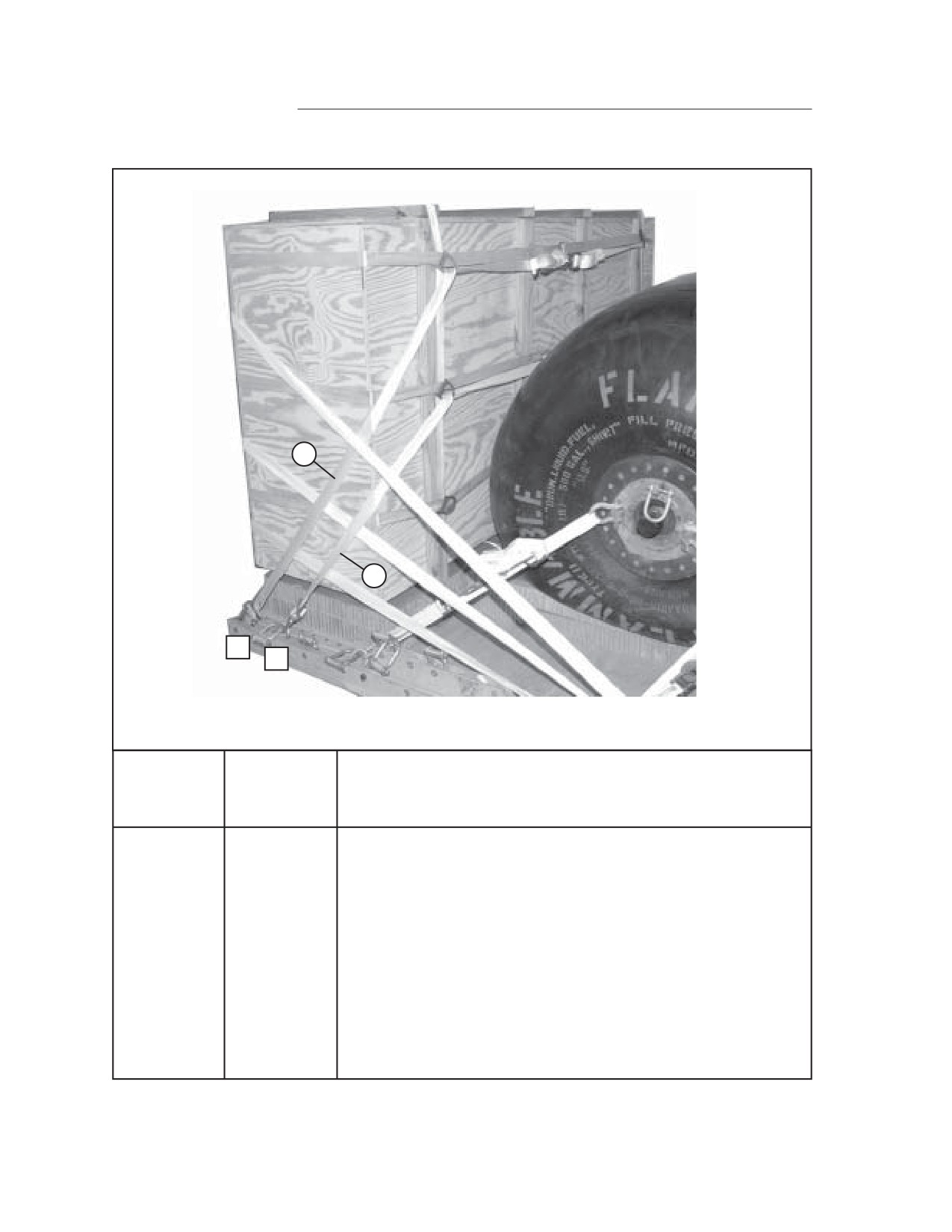
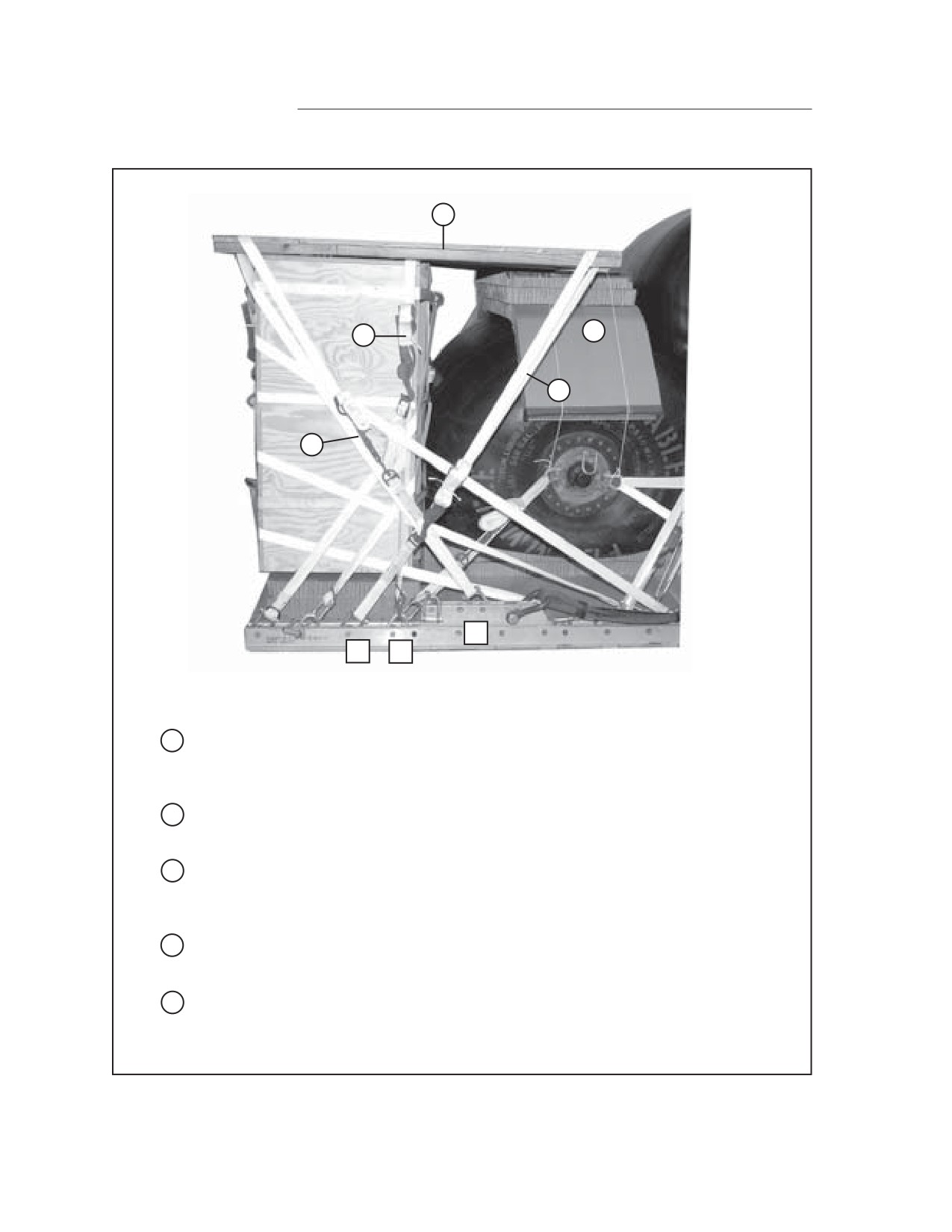
1-37 Secure the FARE in the cargo bed of the M998 using the pre-positioned
lashings. Secure the lashings with D-rings and load binders according to FM 4-
20.102/NAVSEA SS400-AB-MMO-010/TO 13C7-1-5 and as shown in Figure 1-53.
1
2
1
Place the truck tarpaulin bows on top of the suction hose bags. Tie the bows together
with a length of type III nylon cord.
2
Place the truck tarpaulin over the FARE. Fold the ends under to ensure a neat
appearance.
Figure 1-53. FARE Secured
1-70
FM 4-20.137/TO 13C7-1-19
4
6
5
3
3
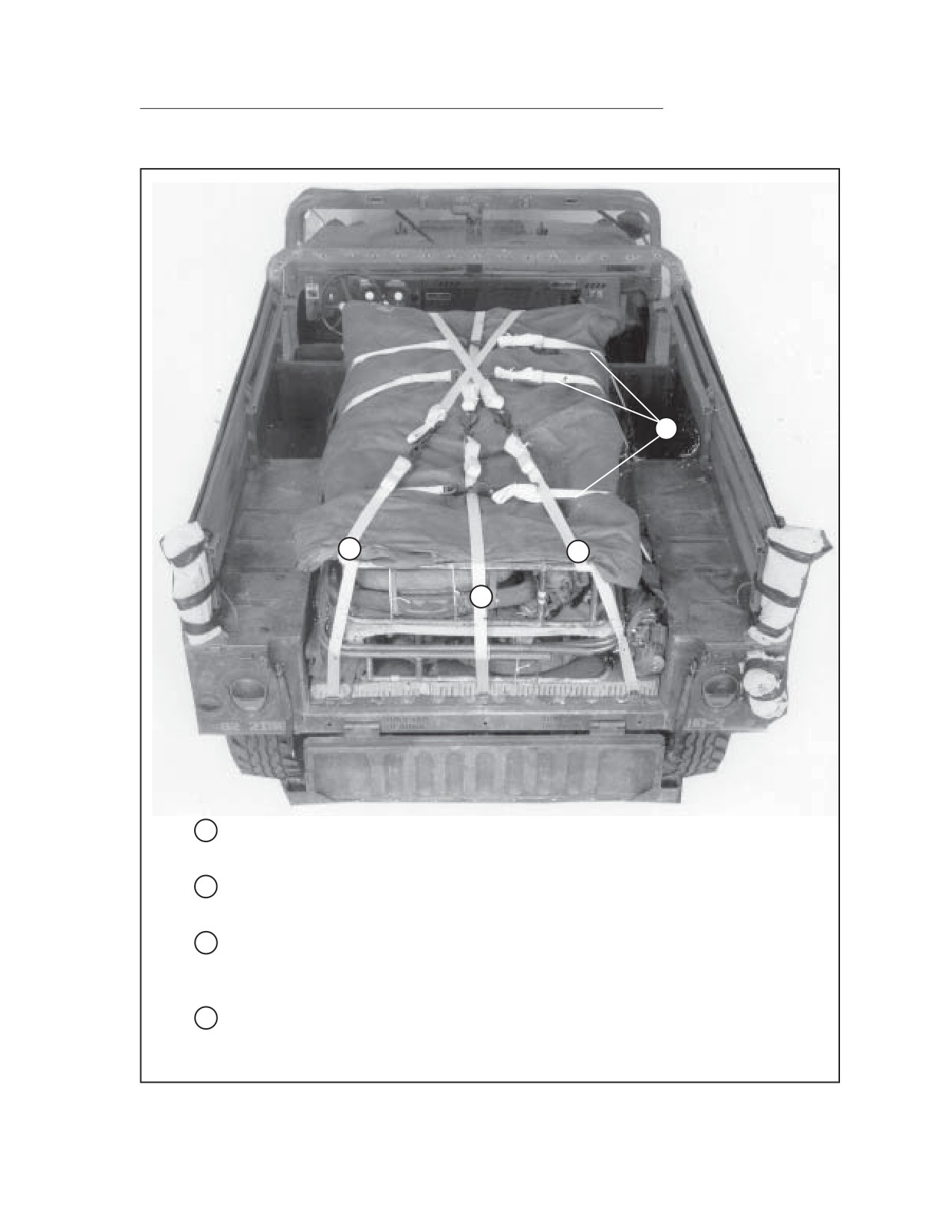
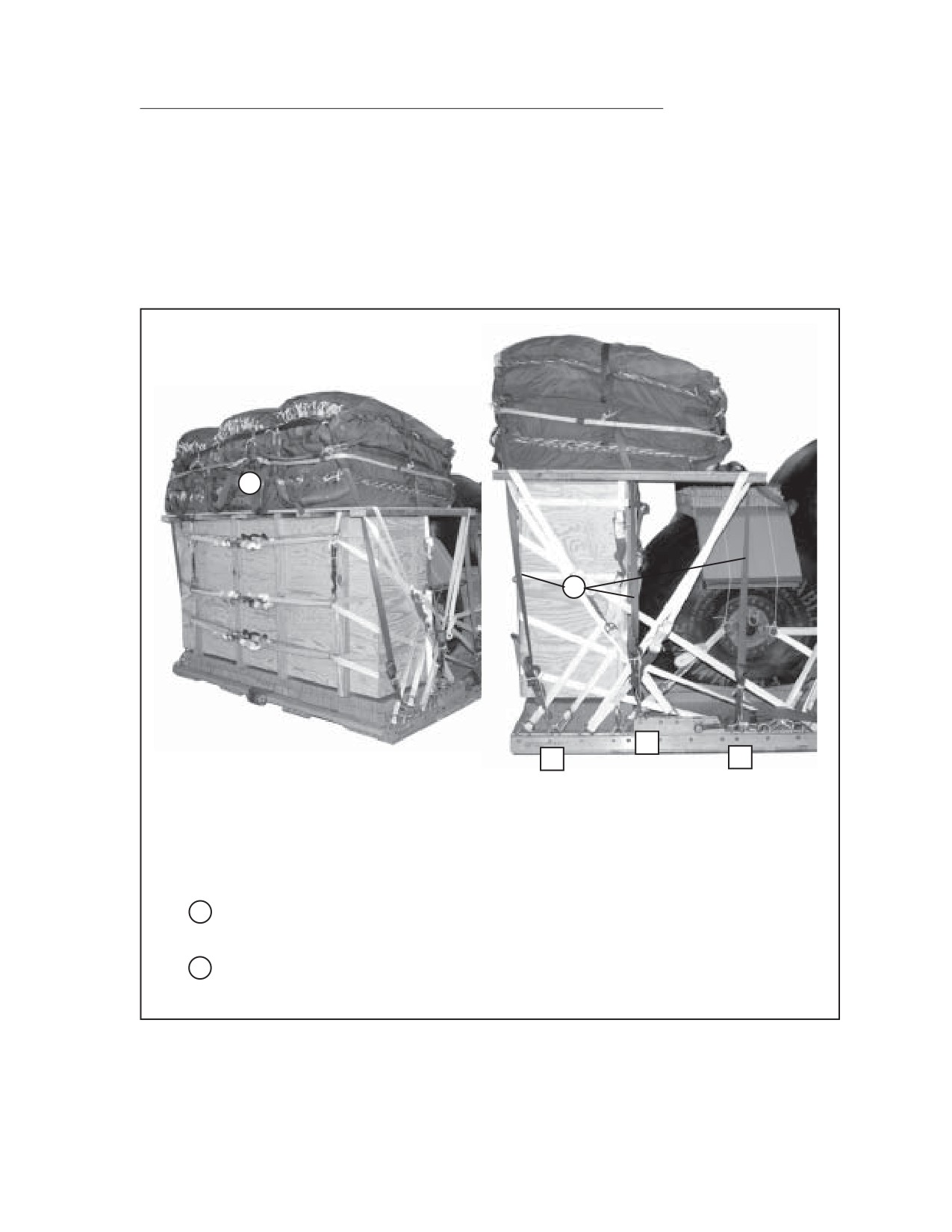
Pass the end of the center lashing over the top of the tarpaulin, and secure the lashing
in place.
4
Pass the ends of the three horizontal lashings over the top of the tarpaulin, and secure
them in place.
5
Pass the right rear lashing over and around the discharge hose assembly to the top of
the tarpaulin. Pass the left front lashing over the tarpaulin to meet the right rear
lashing. Secure the lashing in place.
6
Pass the left rear lashing over and around the discharge hose assembly to the top of
the tarpaulin. Pass the right front lashing over the tarpaulin to meet the left rear
lashing. Secure the lashing in place.
Figure 1-53. FARE Secured (continued)
1-71
FM 4-20.137/TO 13C7-1-19
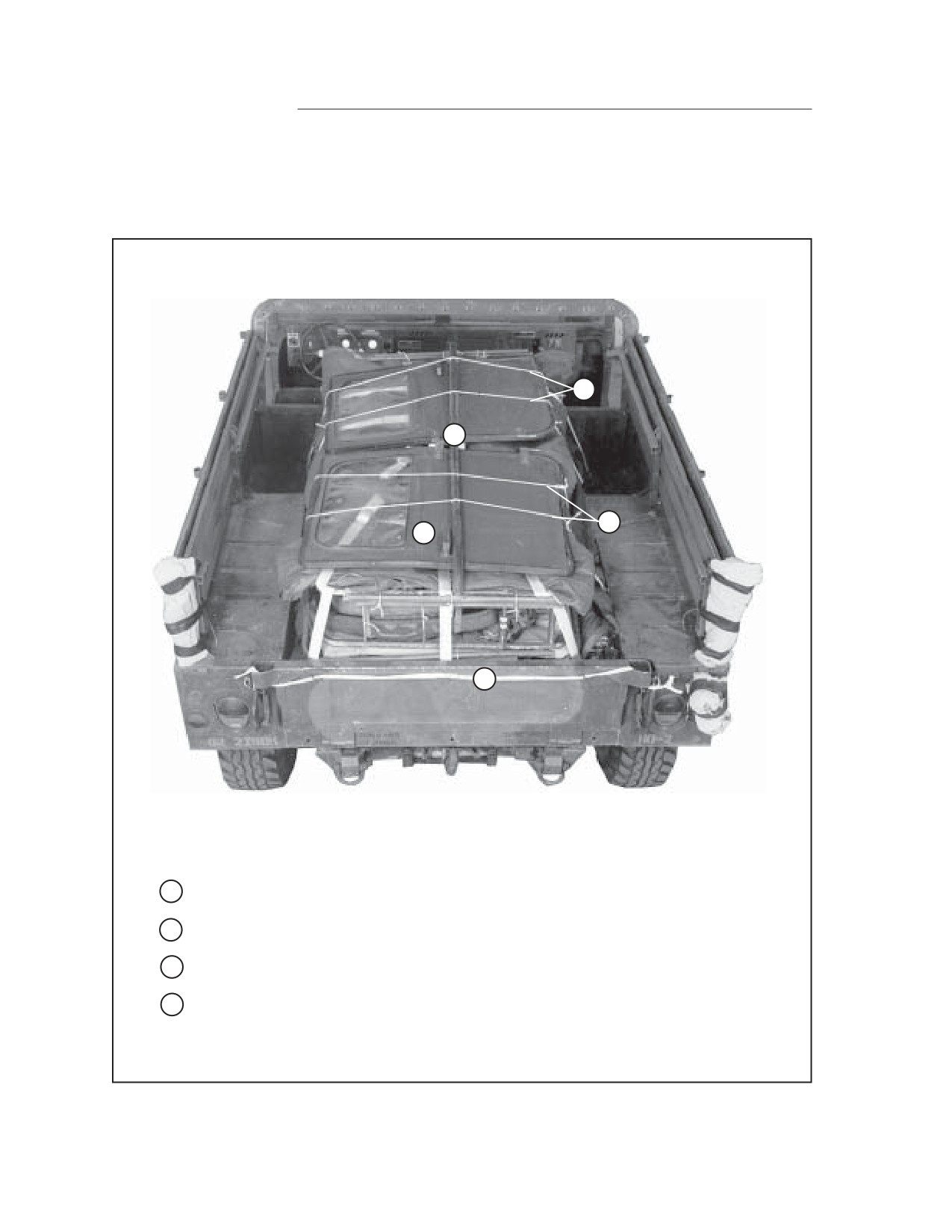
SECURING ACCESSORIES
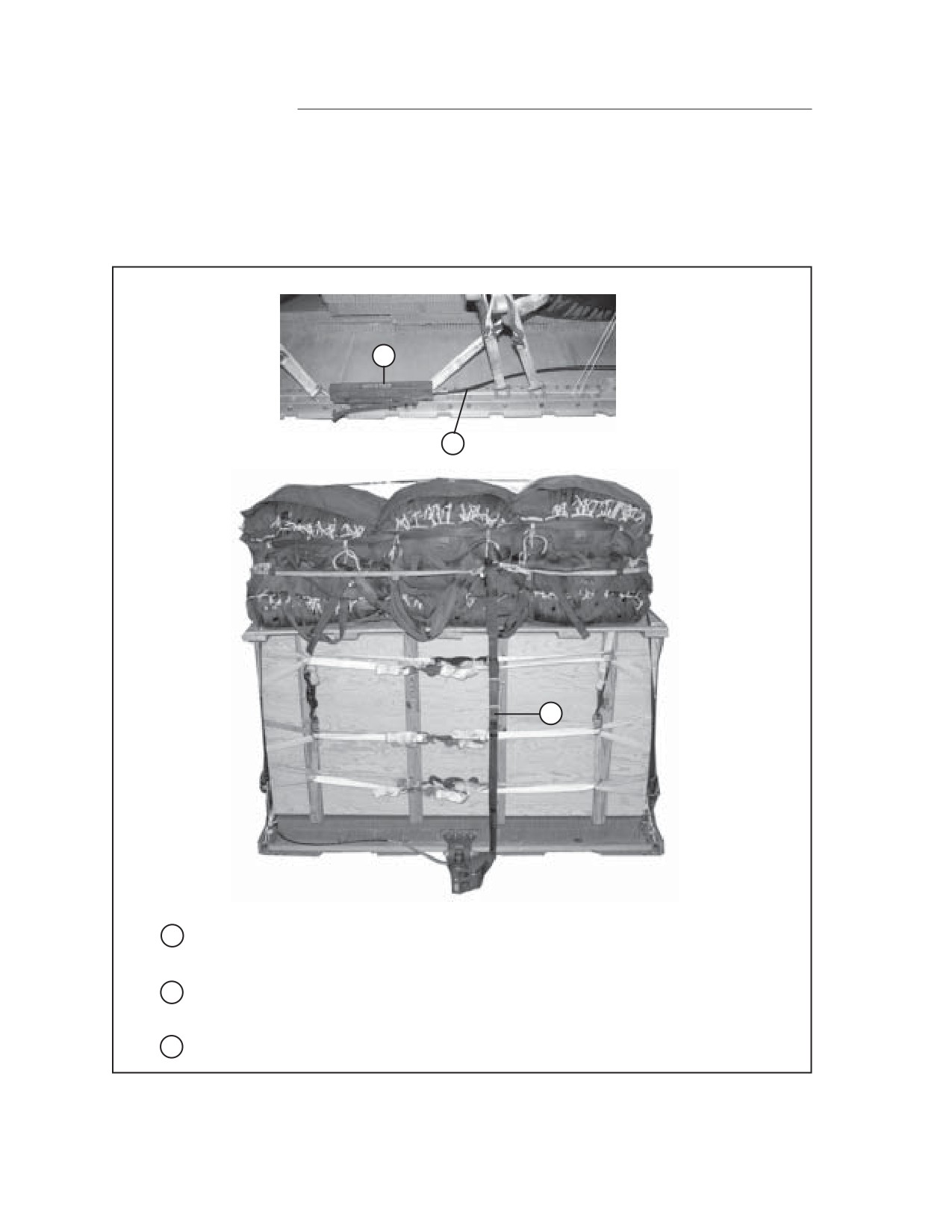
1-38. Secure the accessories on the tarpaulin as shown in Figure 1-54.
3
2
3
1
4
1
Place the doors on top of the tarpaulin.
2
Place the frame support on top of the doors.
3
Secure the doors to the bows using a length of type III nylon cord.
4
Close the tailgate and secure it in place with a double length of 1/2-inch tubular
nylon webbing. Tie the ends using alternating half hitches and an overhand
knot in the ends.
Figure 1-54. Accessories Secured
1-72
FM 4-20.137/TO 13C7-1-19
Table 1-4. Equipment Required for Rigging FARE in an M998, 1 1/4-Ton Truck
Low-Velocity Airdrop
National Stock
Numbe r
Item
Quantity
4020-00-240-2146
Cord, nylon, type
I
I
As required
8135-00-664-6958
Cushioning material, packaging, cellulose
As required
1670-00-753-3928
Pad, energy-dissipating (honeycomb)
3- by 36- by 96-in
4 sheets
7510-00-266-5016
T
ape, adhesive, 2-in
As required
7510-00-266-6710
T
ape, masking, 2-in
As required
1670-00268-2411
T
ie-down assembly, 15-ft
6
Webbing:
8305-00-268-2411
Cotton, 1/4-in, type I
As required
8305-00-082-5752
Nylon, tubular, 1/2-in
As required
8305-00-263-3591
Type V
I
As required
1-73
FM 4-20.137/TO 13C7-1-19
SECTION IV - RIGGING FARE WITH SEVEN 500-GALLON FUEL DRUMS ON A
32-FOOT PLATFORM
DESCRIPTION OF LOAD
1-39. Two containerized FARE and seven 500-gallon collapsible fuel drums are
rigged on a 32-foot platform with six G-11 cargo parachutes. Each drum is filled
with 432 gallons of fuel. Each containerized FARE weighs 1,230 pounds. Each
gasoline-filled 500 gallon fuel drum weighs 2,842 pounds and is approximately
53-inches in length. The total weight of the seven gasoline-filled drums and the
two containerized FARE is 22,354 pounds.
Notes: 1. For drums filled with a liquid other than gasoline, use Table 1-1 to
recompute the weight.
2. If the load varies from the one shown, the weight, height, CB, tipoff
curve, and parachute requirements must be recomputed.
3. This load may not be rigged using water due to load weight require-
ments.
4. Do not pressurize drums with air.
PREPARING PLATFORM
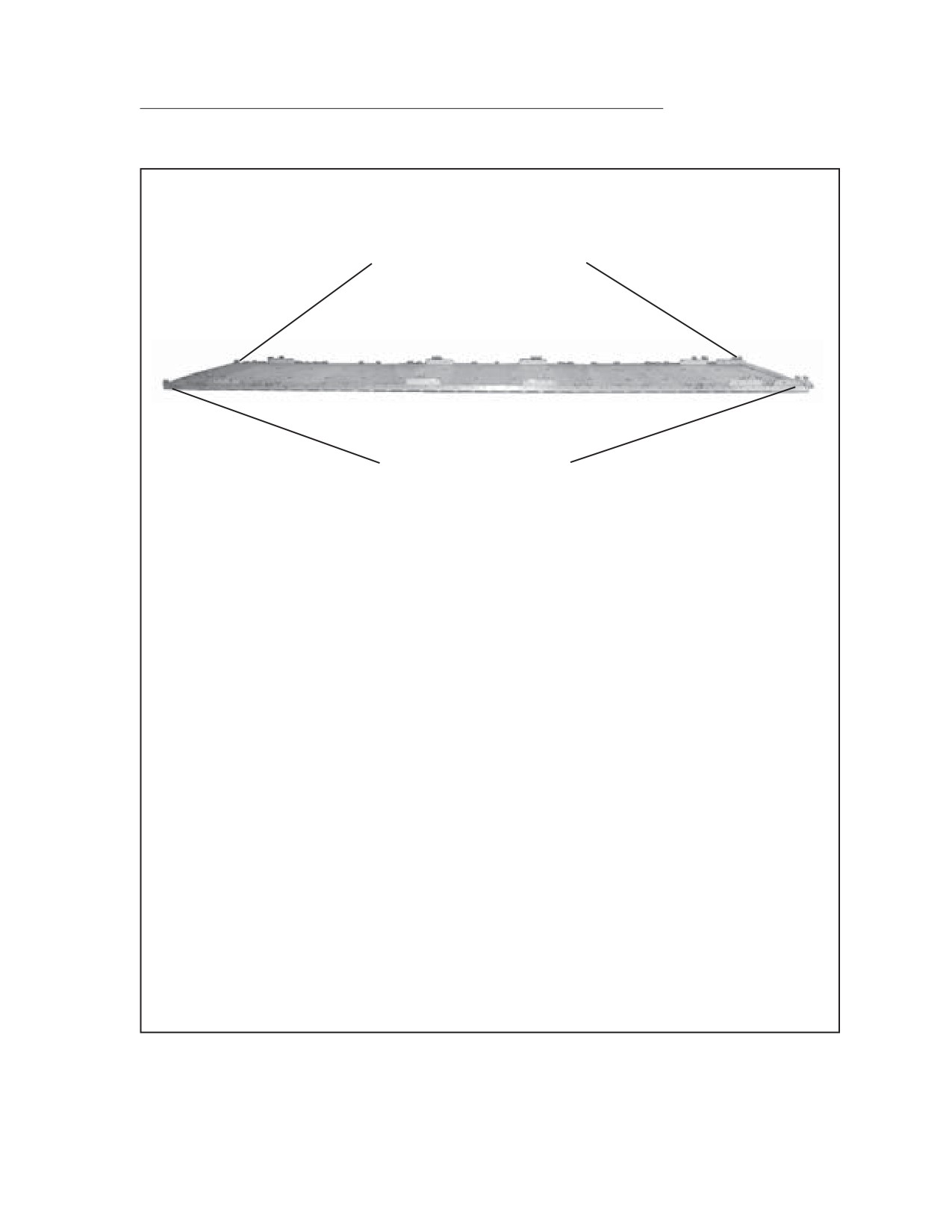
1-40. Prepare a 32-foot airdrop platform using two tandem links, eight suspension
brackets, and 82 tie-down clevises as shown in Figure 1-55.
Notes: 1. The nose bumper may or may not be installed.
2. Measurements given in this section are from the front edge of the
platform, NOT from the front edge of the nose bumper.
1-74
FM 4-20.137/TO 13C7-1-19
CLEVISES 38A THROUGH 1A
REAR
LEFT
FRONT
RIGHT
CLEVISES 38 THROUGH 1
Steps:
1. Inspect, or assemble and inspect, the platform as outlined in TM 10-1670-268-
20&P/TO 13C7-52-22.
2. Install a suspension bracket using holes 6, 7, and 8; 26, 27, and 28; 37, 38, and
39; 57, 58, and 59 on each platform side rail.
3. Install a tandem link on the front of each platform side rail using holes 1, 2, and
3.
4. Install a tie-down clevis to bushings 1 and 2 on each tandem link.
5. Install a tie-down clevis to bushings 1 and 3 on the first suspension bracket on
each platform side rail.
6. Install a tie-down clevis to bushings 2 and 3 on the second suspension bracket
on each platform side rail.
7. Install a tie-down clevis to bushings 2 and 3 on the third suspension bracket on
each platform side rail.
8. Install a tie-down clevis to bushings 2 and 4 (doubled) on the fourth suspension
bracket on each platform side rail.
9. Starting at the front of each platform side rail, install a tie-down clevis to the
bushings bolted to holes 4, 10, 11 (tripled), 12, 16, 19, 22, 23, 31, 34, 41, 42, 46,
48, 53, 54 (tripled), 55 (tripled), 56, 61 (tripled), 62, 63 (tripled), and 64.
10. Starting at the front of the platform, number the clevises bolted to the right side
from 1 through 38 and those bolted to the left side from 1A through 38A.
Figure 1-55. Platform Prepared
1-75
FM 4-20.137/TO 13C7-1-19
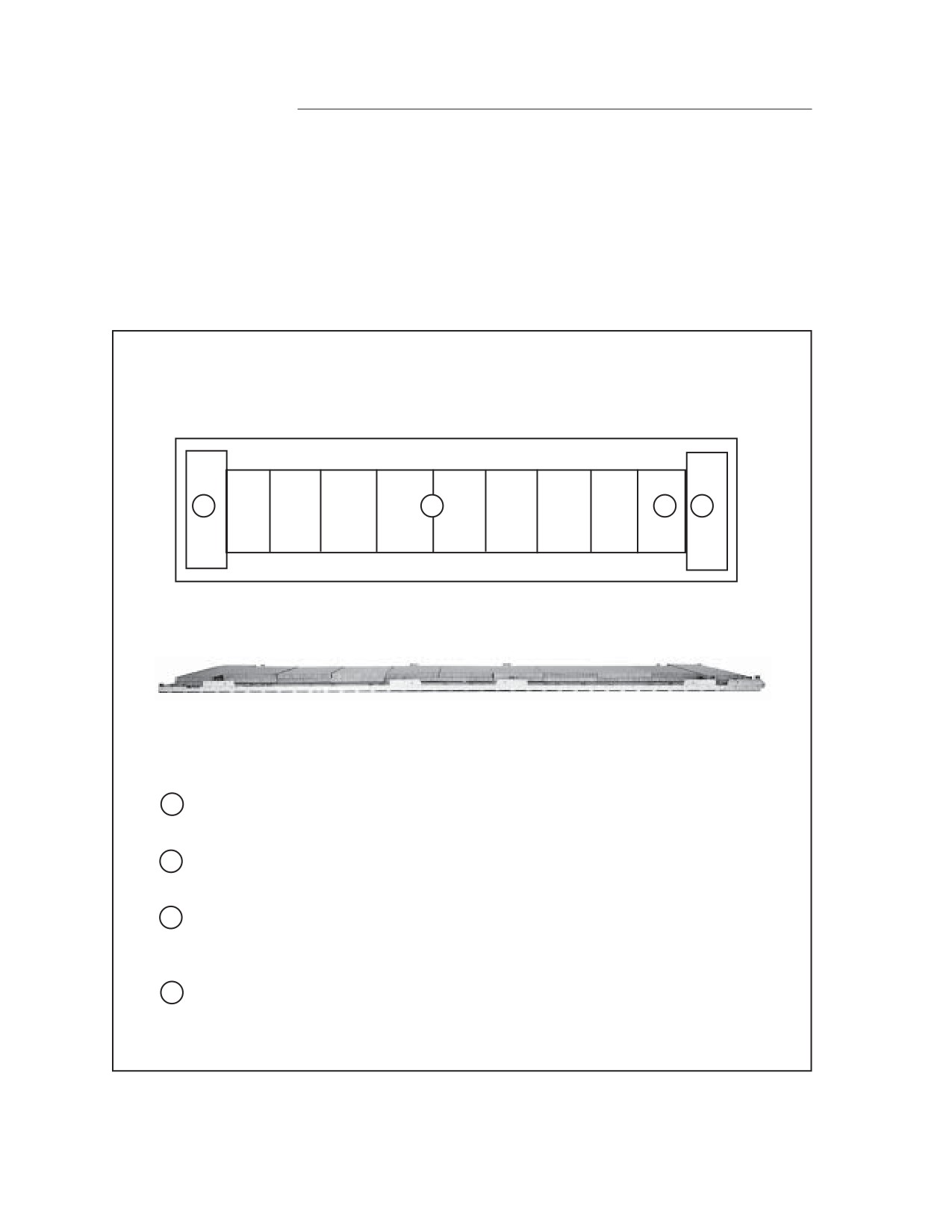
BUILDING AND POSITIONING HONEYCOMB
1-41. Position the base layers of honeycomb on the platform as shown in Figure 1-
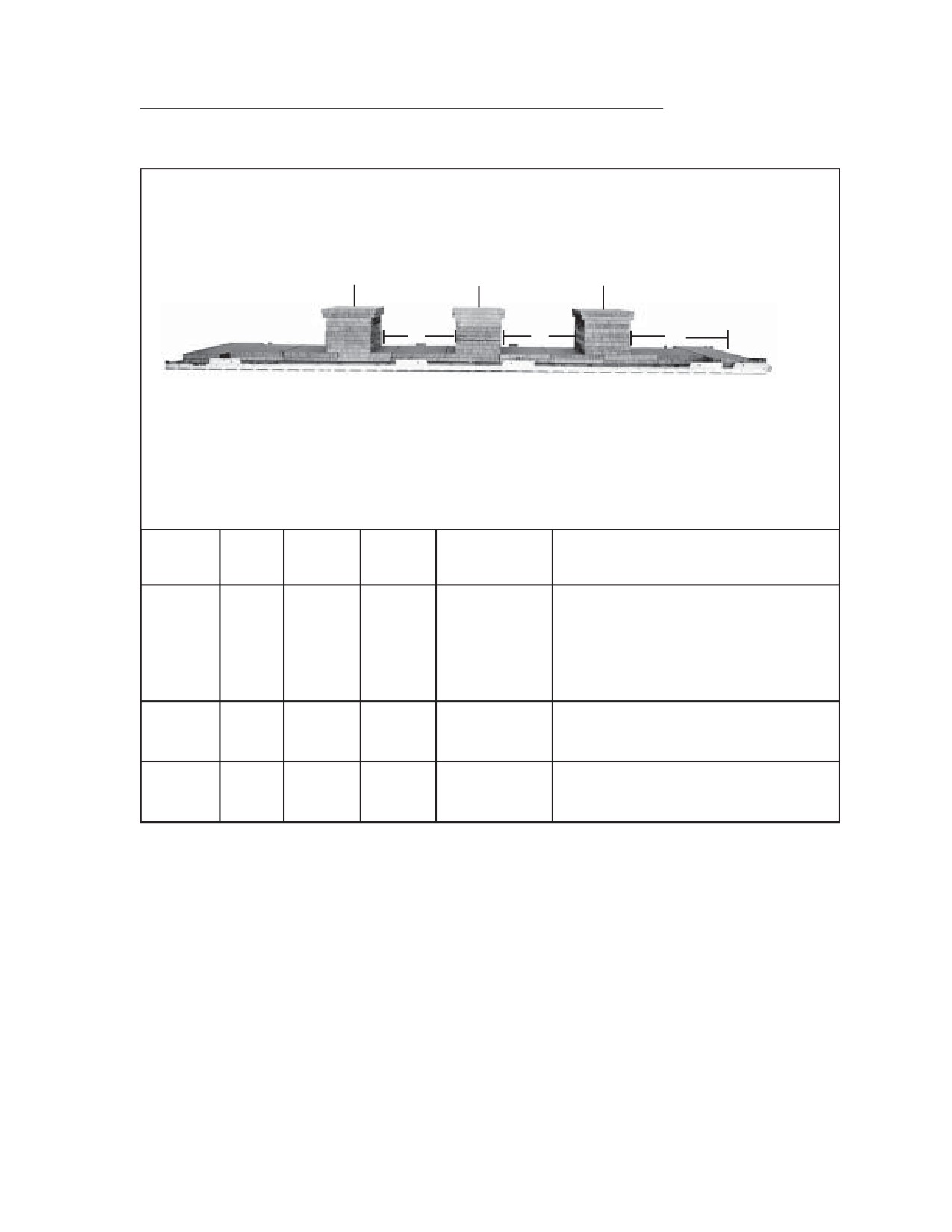
56. Build and position three honeycomb stacks on top of the base layers of honey-
comb as shown in Figure 1-57.
Note: Do not glue the stacks of honeycomb to the platform.
Note: This drawing is not drawn to scale.
4
3
2
1
FRONT
REAR
1
Center two 96- by 24-inch pieces of honeycomb 9 inches from the front edge of
the platform.
2
Center two 60- by 36-inch pieces of honeycomb flush against those positioned in
step 1.
3
Center sixteen 60- by 36-inch pieces of honeycomb (eight sets, two pieces each) on the
platform. Place the first set flush against the rear edge of the honeycomb positioned in
step 2. Place other sets flush against each previous set.
4
Center two 96- by 24-inch pieces of honeycomb flush against the rear of the honeycomb
positioned in step 3.
Figure 1-56. Base Layers Positioned
1-76
FM 4-20.137/TO 13C7-1-19
Note: All measurements are given in inches.
STACK 3
STACK 2
STACK 1
57
57
90
Stac k
Width
Length
Number
Pieces
(Inches )
(Inches )
Material
Instructions
1
8
60
30
Honeycom b
Center and glue on top of base
l
90 inches from the front edge of the
platform
1
60
34
Honeycom b
Center and glue on top of the base.
1
60
36
Honeycom b
Center and glue on top of the 60- by
34-inch piece of honeycomb.
2
8
60
30
Honeycom b
Build stack according to stack
1
1
60
34
Honeycom b
Center stack 57 inches from the rear
1
60
36
Honeycom b
edge of stack
1
3
8
60
30
Honeycom b
Build stack according to stack
1
1
60
34
Honeycom b
Center stack 57 inches from the rear
1
60
36
Honeycom b
edge of stack
2
Figure 1-57. Honeycomb Stacks Prepared and Positioned
1-77
FM 4-20.137/TO 13C7-1-19
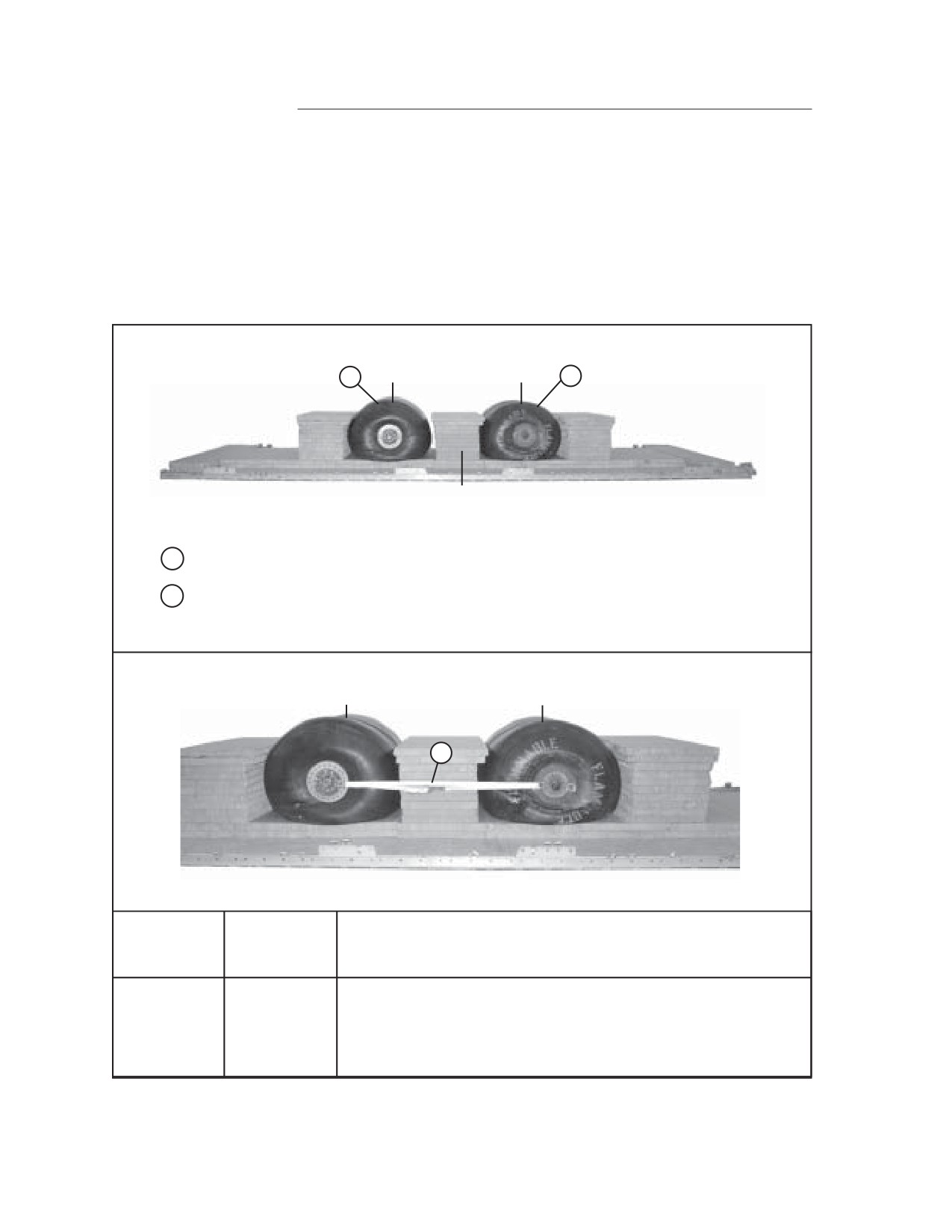
POSITIONING AND LASHING DRUMS
1-42. Before lifting, check each fuel drum and fittings for leaks and damage. Be
sure each end of each fuel drum has two lifting shackles. Attach a 9-foot (2-
loop), type XXVI nylon webbing sling to the fuel drum lifting shackle by adapt-
ing the procedures in paragraph 1-8 and as shown in Figure 1-16. Position the
fuel drums as shown in Figure 1-58.
DRUM
DRUM
2
5
3
1
REAR
FRONT
STACK
2
1
Place drum 3 flush against the front of stack 2.
2
Place drum 5 flush against the rear of stack 2.
DRUM
DRUM
5
3
1
REAR
FRONT
Tie-dow n
Lashing
Clevis
Instruction s
Number
Number
1
Route a lashing from the right rear shackle of drum 3 to the
right front shackle of drum
5
2
Route a lashing from the left rear shackle of drum 3 to the left
front shackle of drum
5
Figure 1-58. Fuel Drums Positioned and Lashed
1-78
FM 4-20.137/TO 13C7-1-19
DRUM
DRUM
5
3
REAR
FRONT
5
9
7
3
22
17
16
11
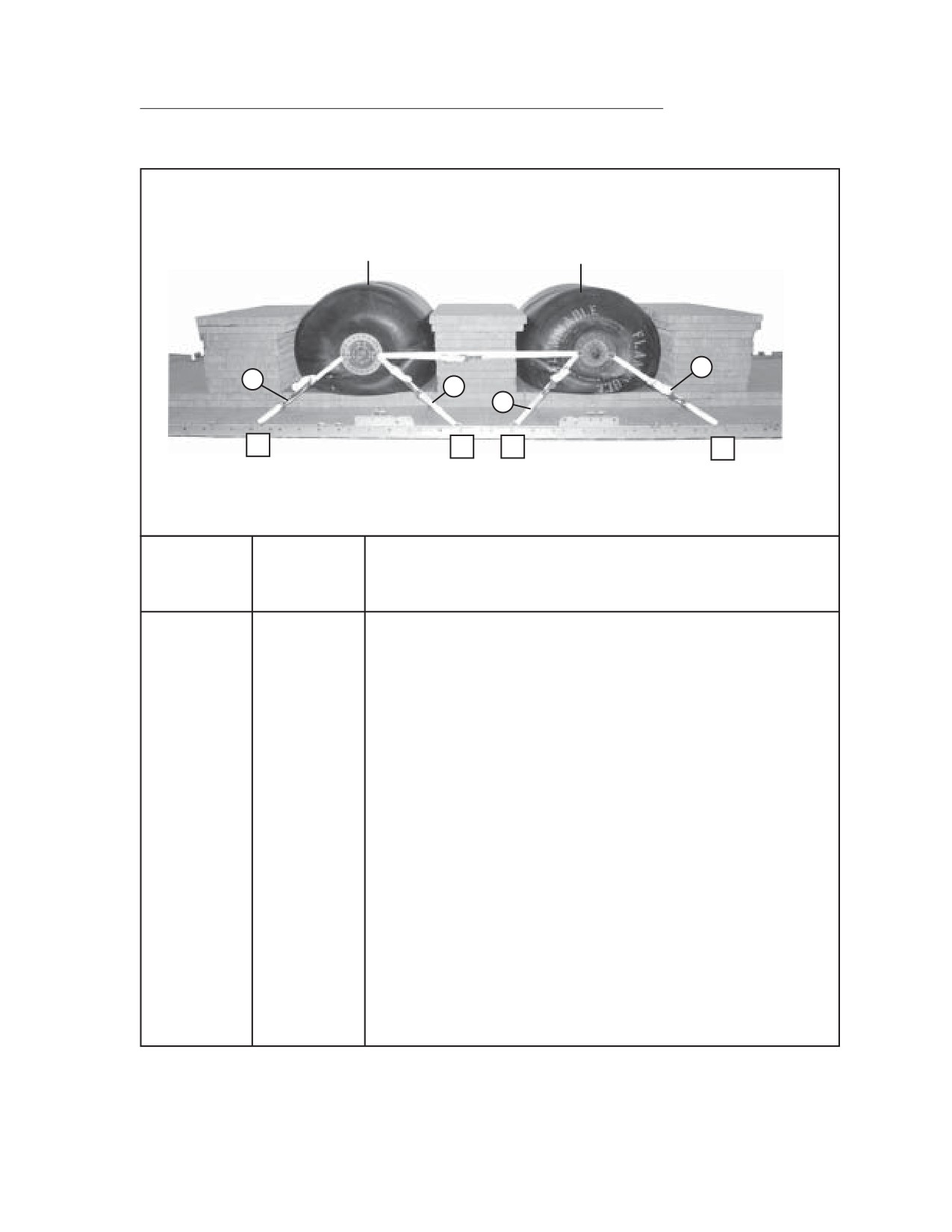
Tie-dow n
Lashing
Clevis
Instruction s
Number
Number
3
16
Route a lashing from clevis
16 to the right rear shackle of drum
3
4
16A
Route a lashing from clevis
16A to the left rear shackle of drum
3
5
11
Route a lashing from clevis
11to the right front shackle of drum
3
6
11A
Route a lashing from clevis
11A to the left front shackle of
drum
3
7
17
Route a lashing from clevis
17 to the right front shackle of
drum
5
8
17A
Route a lashing from clevis
17A to the left front shackle of
drum
5
9
22
Route a lashing from clevis
22 to the right rear shackle of drum
5.
10
22A
Route a lashing from clevis
22A to the left rear shackle of drum
5.
Figure 1-58. Fuel Drums Positioned and Lashed (Continued)
1-79
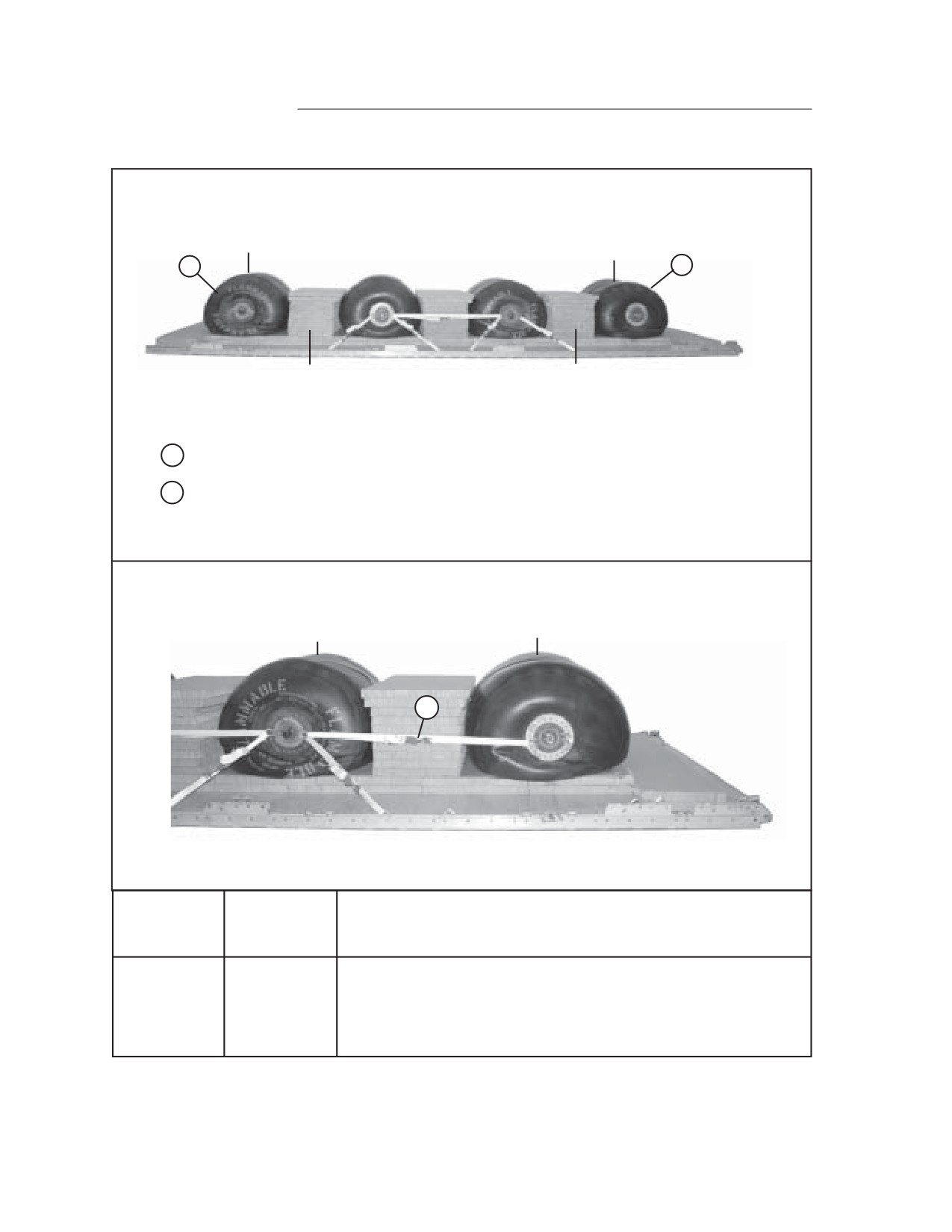
FM 4-20.137/TO 13C7-1-19
DRUM
DRUM
7
1
4
3
REAR
FRONT
STACK
STACK
3
1
3
Place drum 1 flush against the front of stack 1.
4
Place drum 7 flush against the rear of stack 3.
DRUM
DRUM
1
3
11
REAR
FRONT
Tie-dow n
Lashing
Clevis
Instruction s
Number
Number
11
Route a lashing from the right rear shackle of drum 1 to the
right front shackle of drum
3
12
Route a lashing from the left rear shackle of drum 1 to the left
front shackle of drum
3
Figure 1-58. Fuel Drums Positioned and Lashed (Continued)
1-80
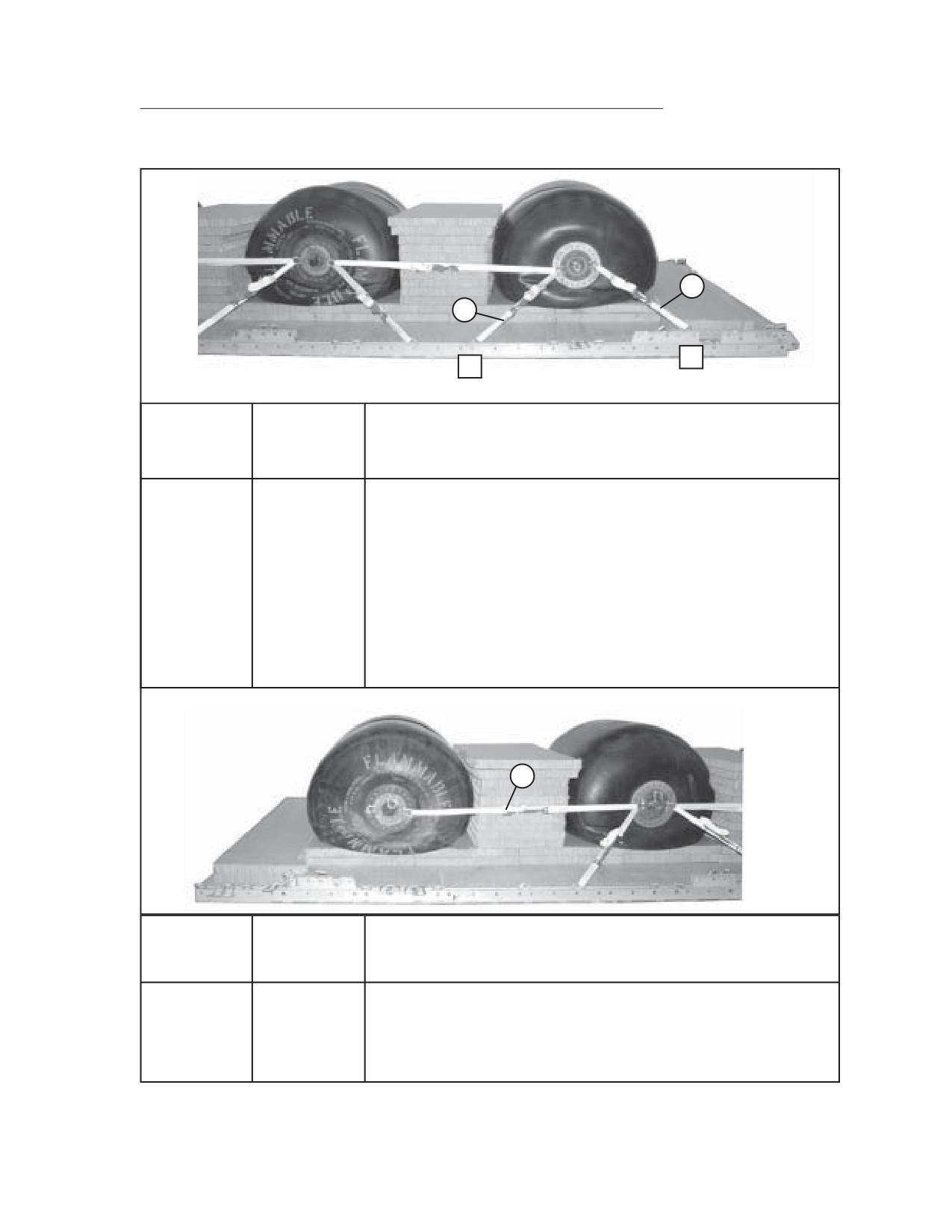
FM 4-20.137/TO 13C7-1-19
DRUM
DRUM
3
1
15
REAR
FRONT
13
4
10
Tie-dow n
Lashing
Clevis
Instruction s
Number
Number
13
10
Route a lashing from clevis 10 to the right rear shackle of drum
1
14
10A
Route a lashing from clevis 10A to the left rear shackle of drum
1
15
4
Route a lashing from clevis 4 to the right front shackle of drum
1.
16
4A
Route a lashing from clevis 4A to the left front shackle of drum
1.
DRUM
DRUM
7
5
17
REAR
FRONT
Tie-dow n
Lashing
Clevis
Instruction s
Number
Number
17
Route a lashing from the right rear shackle of drum 5 to the
right front shackle of drum
7
18
Route a lashing from the left rear shackle of drum 5 to th e
left front shackle of drum
7
Figure 1-58. Fuel Drums Positioned and Lashed (Continued)
1-81
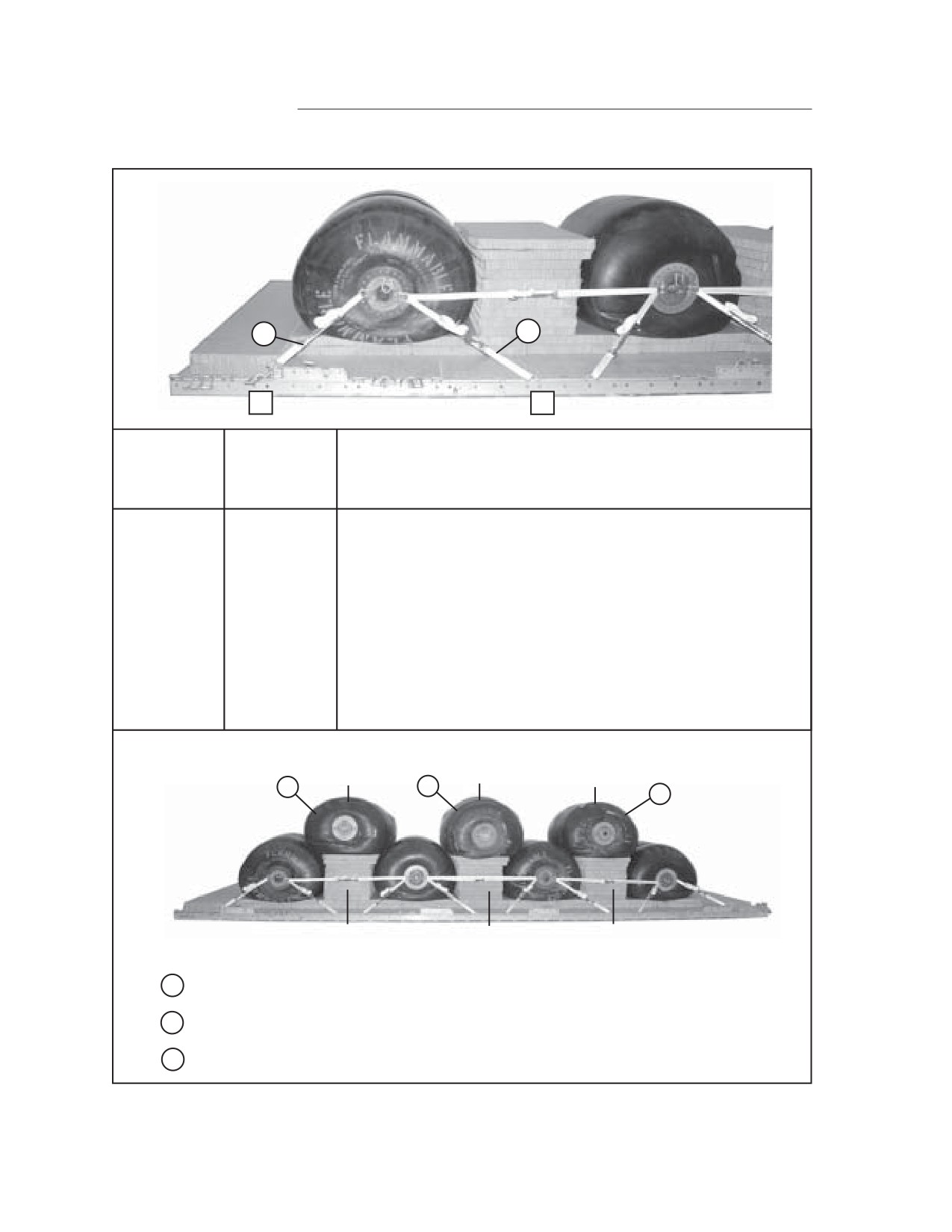
FM 4-20.137/TO 13C7-1-19
DRUM
7
19
21
33
23
Tie-dow n
Lashing
Clevis
Instruction s
Number
Number
19
23
Route a lashing from clevis 23 to the right
f
drum
7
20
23A
Route a lashing from clevis 23A to the left
f
drum
7
21
33
Route a lashing from clevis 33 to
t
7.
22
33A
Route a lashing from clevis 33A to
t
7.
DRUM
DRUM
DRUM
6
4
2
7
6
5
REAR
FRONT
STACK
STACK
STACK
3
2
1
5
Place drum 2 centered on stack 1.
6
Place drum 4 centered on stack 2.
7
Place drum 6 centered on stack 3.
Figure 1-58. Fuel Drums Positioned and Lashed (Continued)
1-82
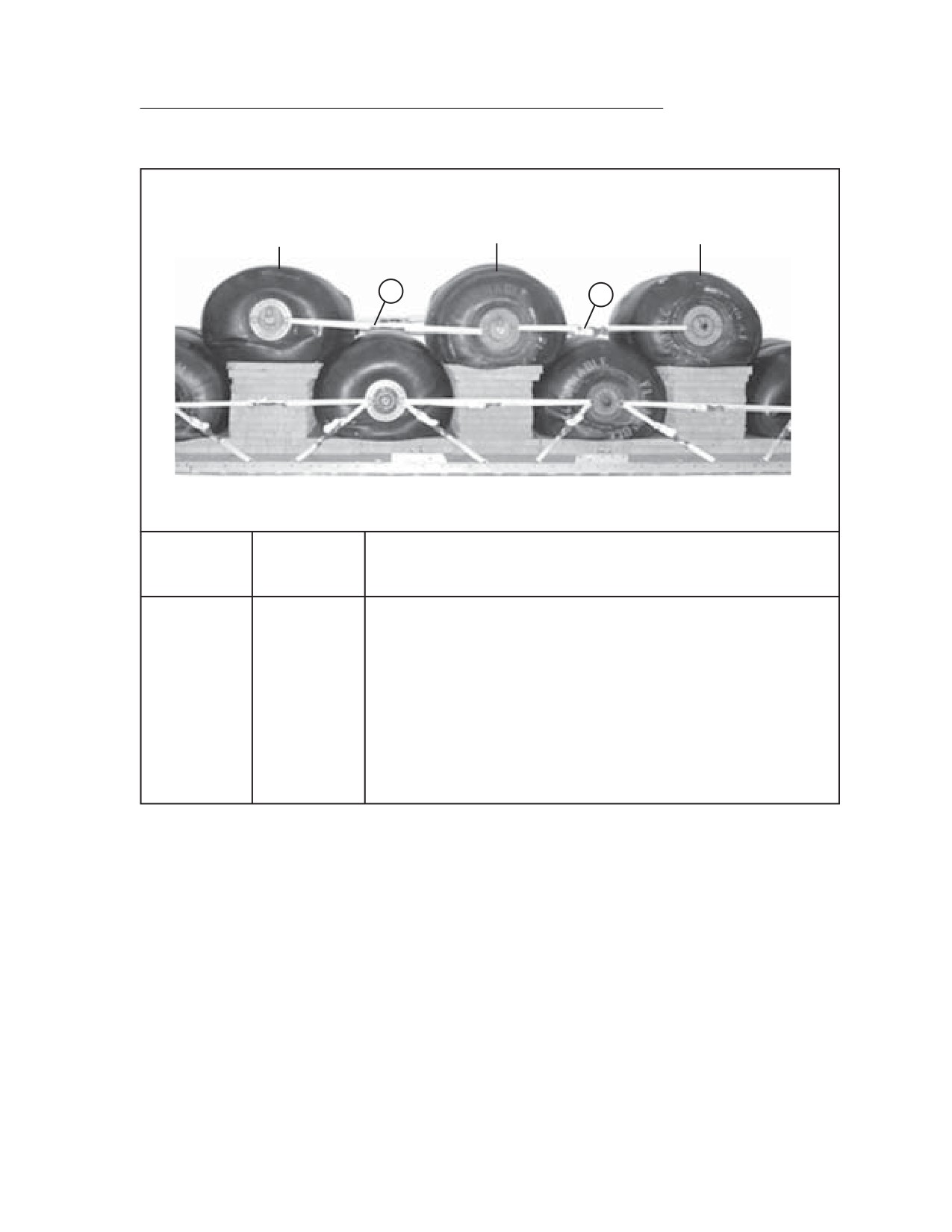
FM 4-20.137/TO 13C7-1-19
DRUM
DRUM
DRUM
4
2
6
25
23
Tie-dow n
Lashing
Clevis
Instruction s
Number
Number
23
Route a lashing from the right rear shackle of drum 2 to the
right front front shackle of drum
4
24
Route a lashing from the left rear shackle of drum 2 to the left
front front shackle of drum
4
25
Route a lashing from the right rear shackle of drum 4 to the
right front front shackle of drum
6
26
Route a lashing from the left rear shackle of drum 4 to the left
front front shackle of drum
6
Figure 1-58. Fuel Drums Positioned and Lashed (Continued)
1-83
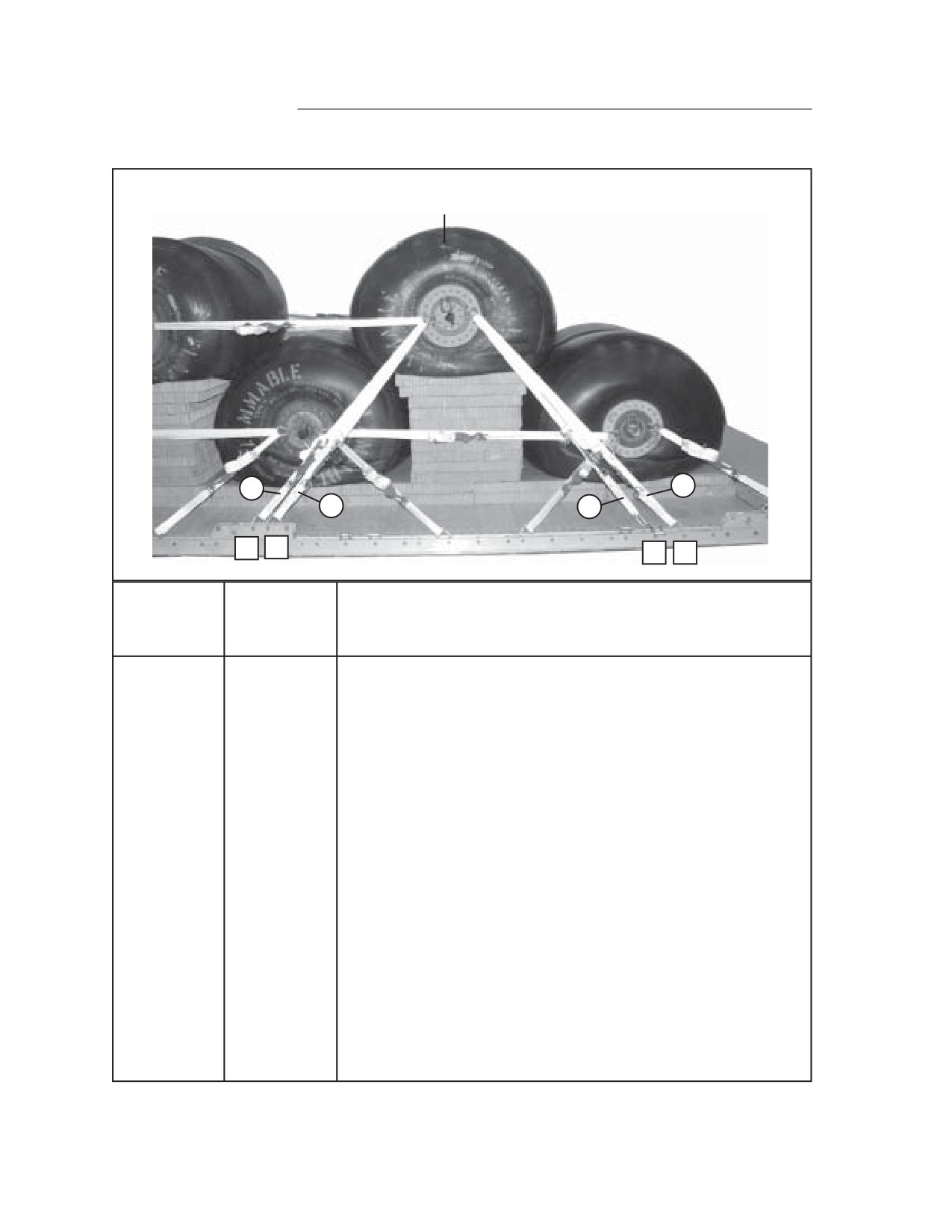
FM 4-20.137/TO 13C7-1-19
DRUM
2
31
33
29
27
15
14
8
6
Tie-dow n
Lashing
Clevis
Instruction s
Number
Number
27
8
Route a lashing from clevis 8 to the right front shackle of drum
2
28
8A
Route a lashing from clevis 8A to the left front shackle of drum
2
29
14
Route a lashing from clevis 14 to the right front shackle of
drum
2
30
14A
Route a lashing from clevis 14A to the left front shackle of
drum
2
31
6
Route a lashing from clevis 6 to the right rear shackle of drum
2
32
6A
Route a lashing from clevis 6A to the left rear shackle of drum
2
33
15
Route a lashing from clevis 15 to the right rear shackle of drum
2.
34
15A
Route a lashing from clevis 15A to the left rear shackle of drum
2.
Figure 1-58. Fuel Drums Positioned and Lashed (Continued)
1-84
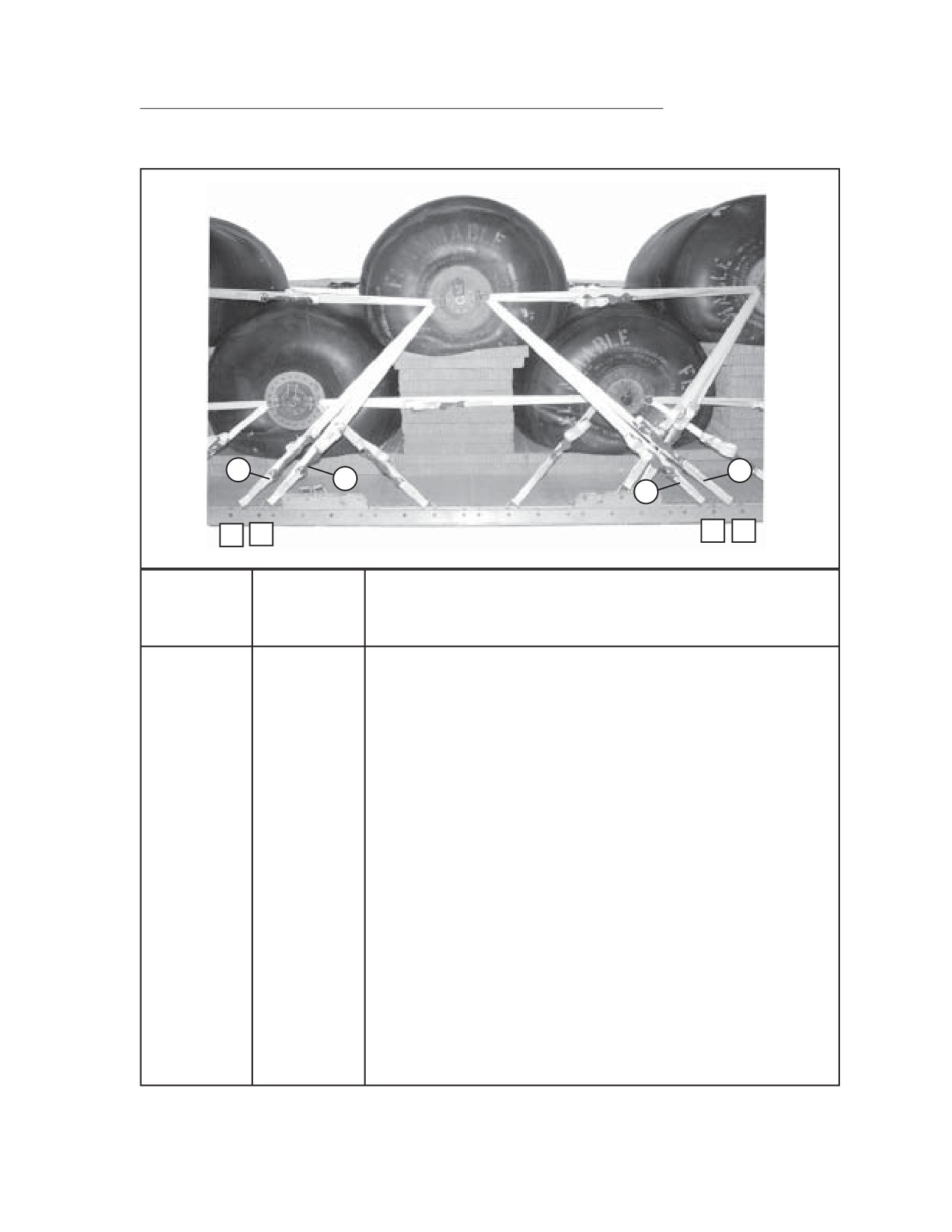
FM 4-20.137/TO 13C7-1-19
DRUM
4
41
39
37
35
13
12
21
20
Tie-dow n
Lashing
Clevis
Instruction s
Number
Number
35
13
Route a lashing from clevis 13 to the right front shackle of
drum
4
36
13A
Route a lashing from clevis 13A to the left front shackle of
drum
4
37
20
Route a lashing from clevis 20 to the right front shackle of
drum
4
38
20A
Route a lashing from clevis 20A to the left front shackle of
drum
4
39
12
Route a lashing from clevis 12 to the right rear shackle of drum
4
40
12A
Route a lashing from clevis 12 to the left rear shackle of drum
4
41
21
Route a lashing from clevis 21 to the right rear shackle of drum
4.
42
21A
Route a lashing from clevis 21A to the left rear shackle of drum
4.
Figure 1-58. Fuel Drums Positioned and Lashed (Continued)
1-85
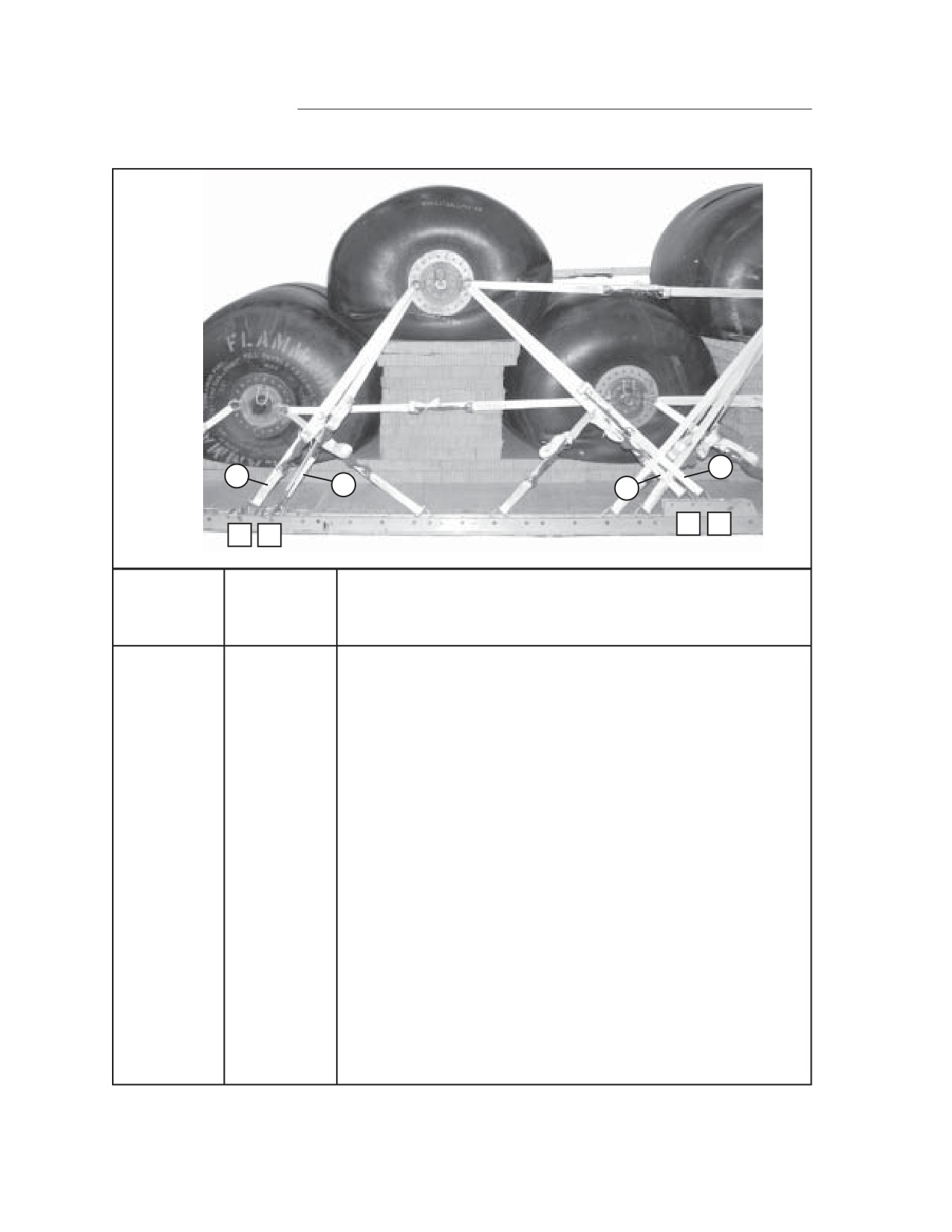
FM 4-20.137/TO 13C7-1-19
DRUM
6
47
49
45
43
19
18
27
25
Tie-dow n
Lashing
Clevis
Instruction s
Number
Number
43
19
Route a lashing from clevis
19 to the right front shackle of
drum
6
44
19A
Route a lashing from clevis
19A to the left front shackle of
drum
6
45
25
Route a lashing from clevis
25 to the right front shackle of
drum
6
46
25A
Route a lashing from clevis
25A to the left front shackle of
drum
6
47
18
Route a lashing from clevis
18 to the right rear shackle of drum
6
48
18A
Route a lashing from clevis
18A to the left rear shackle of drum
6
49
27
Route a lashing from clevis
27 to the right rear shackle of drum
6.
50
27A
Route a lashing from clevis
27A to the left rear shackle of drum
6.
Figure 1-58. Fuel Drums Positioned and Lashed (Continued)
1-86
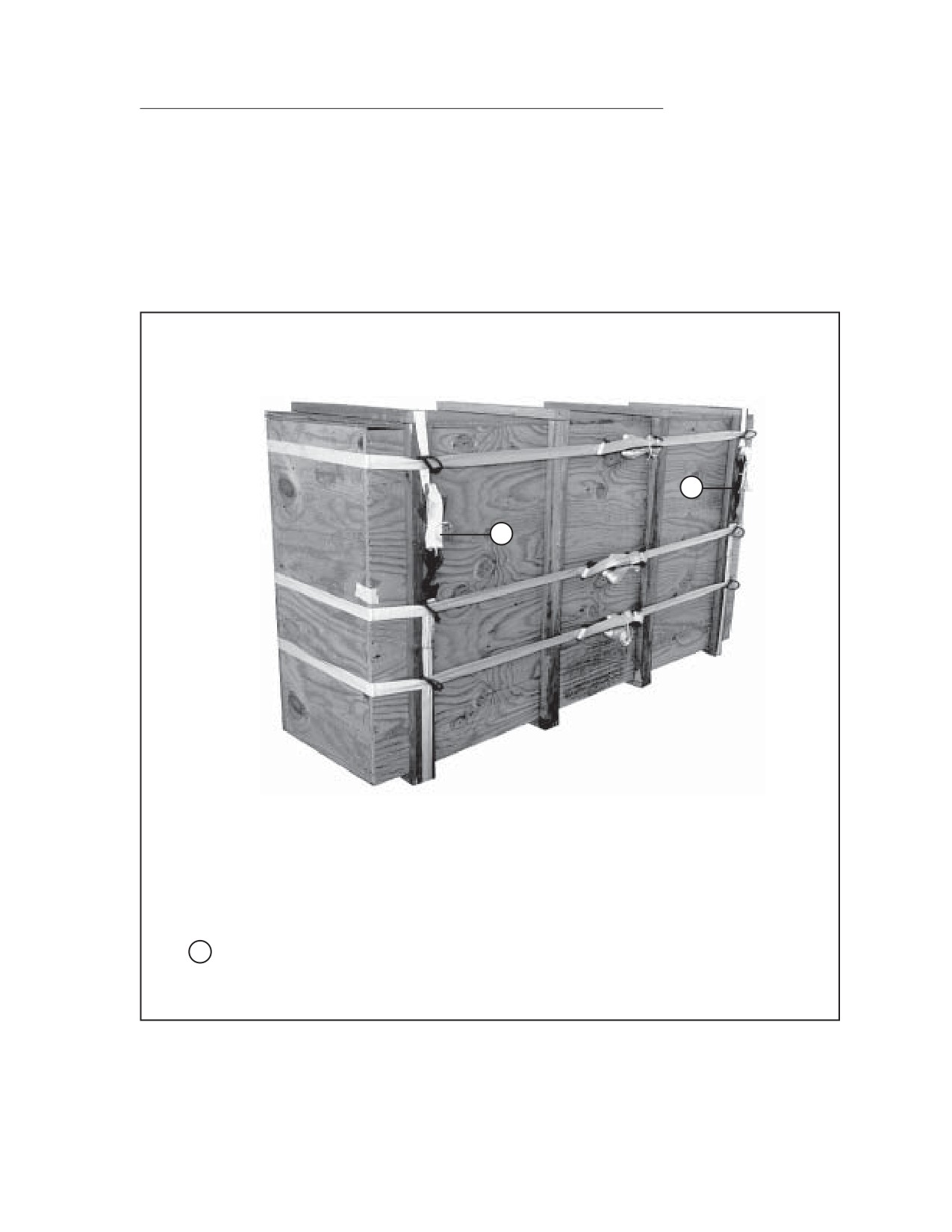
FM 4-20.137/TO 13C7-1-19
PREPARING FARE
1-43. Build two containers for the FARE according to paragraph1-4. Prepare
the components of the FARE and stow them in the containers according to
paragraph 1-5. Secure the container as shown in Figure 1-59.
1
LEFT
1
RIGHT
FRONT
1
Secure the container according to paragraph 1-6 except position the vertical
lashings so that the load binders are on the front side of the container of the
front container and on the rear side of the rear container.
Figure 1-59. Container Secured
1-87
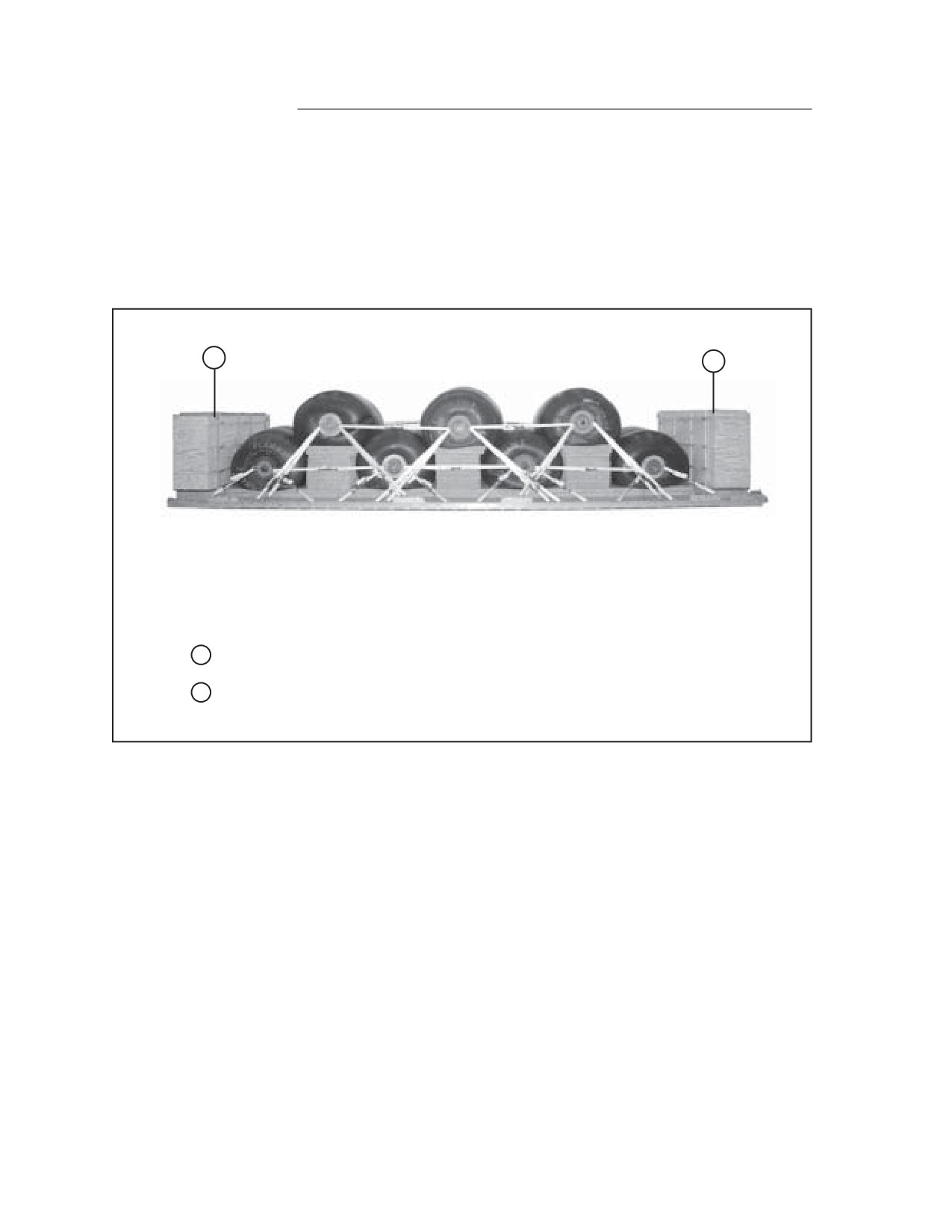
FM 4-20.137/TO 13C7-1-19
INSTALLING LIFTING SLINGS AND POSITIONING FARE
CONTAINERS
1-44. Install lifting slings to the FARE containers as shown in Figure 1-14.
Position the FARE container as shown in Figure 1-60.
2
1
FRONT
REAR
NOTES:
1. Containers should be positioned so that the load binders are facing the
ends of the platform.
2. There must be no load binders on top of container 2.
1
Center container 1 flush with the front edge of the base layers of honeycomb.
2
Center container 2 flush with the rear edge of the base layers of honeycomb.
Figure 1-60. FARE Containers Positioned
LASHING FARE CONTAINERS TO PLATFORM
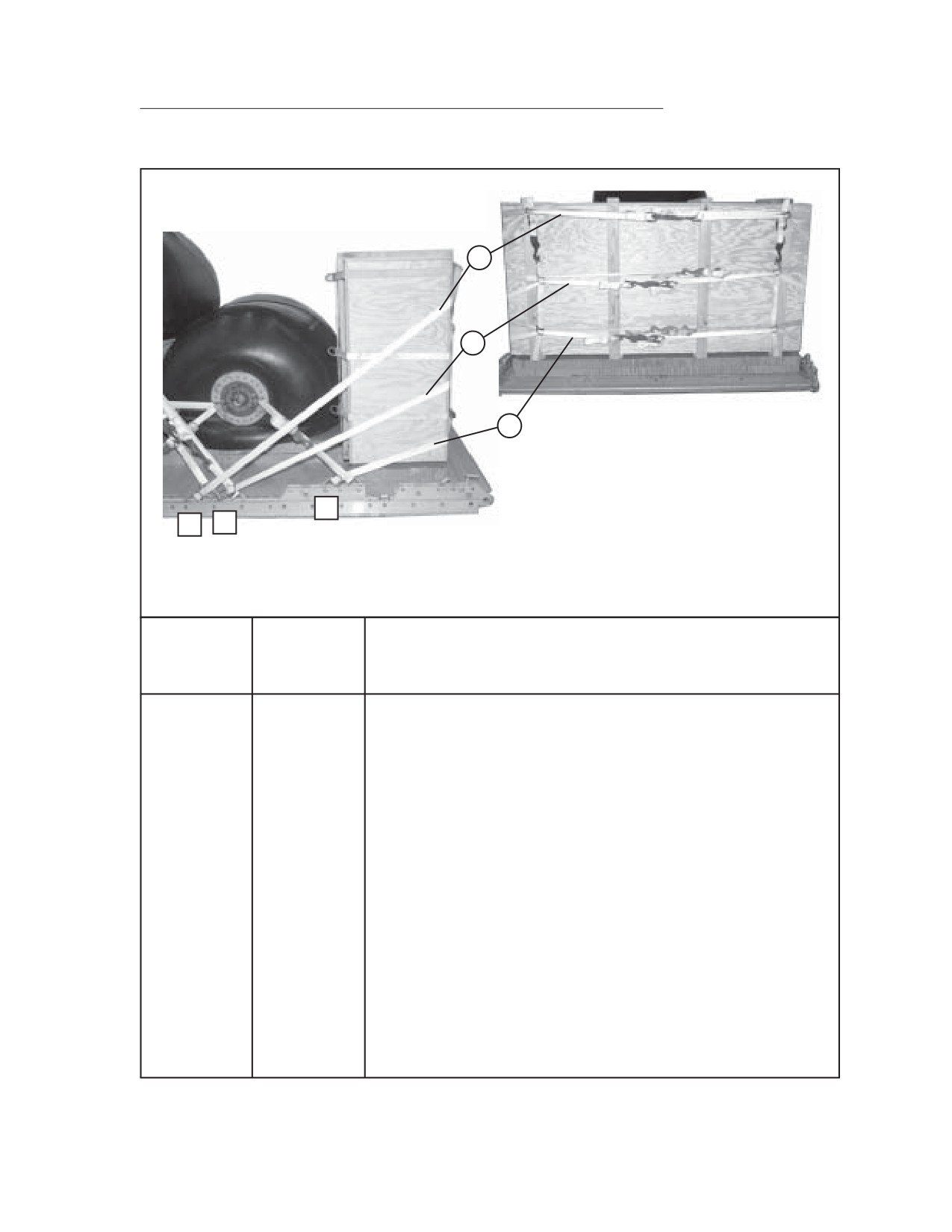
1-45. Lash the FARE containers to the platform as shown in Figure 1-61.
1-88
FM 4-20.137/TO 13C7-1-19
55
53
FRONT
51
5
9
7
Tie-dow n
Lashing
Clevis
Instruction s
Number
Number
51
5
Route a lashing through it's own D-ring on clevis 5 and
through the bottom rings on the front of container
1
52
5A
Route a lashing through it's own D-ring on clevis 5A and
through the bottom rings on the front of container 1. Bin d
lashing 51 to lashing 52 with two D-rings and a load binder.
53
7
Route a lashing through it's own D-ring on clevis 7 and
through the middle rings on the front of container
1
54
7A
Route a lashing through it's own D-ring on clevis 7A and
through the middle rings on the front of container 1. Bin d
lashing 53 to lashing 54 with two D-rings and a load binder.
55
9
Route a lashing through it's own D-ring on clevis 9 and
through the top rings on the front of container
1
56
9A
Route a lashing through it's own D-ring on clevis 9A and
through the top rings on the front of container 1. Bind lashin g
55 to lashing 56 with two D-rings and a load binder.
Figure 1-61. FARE Containers Lashed
1-89
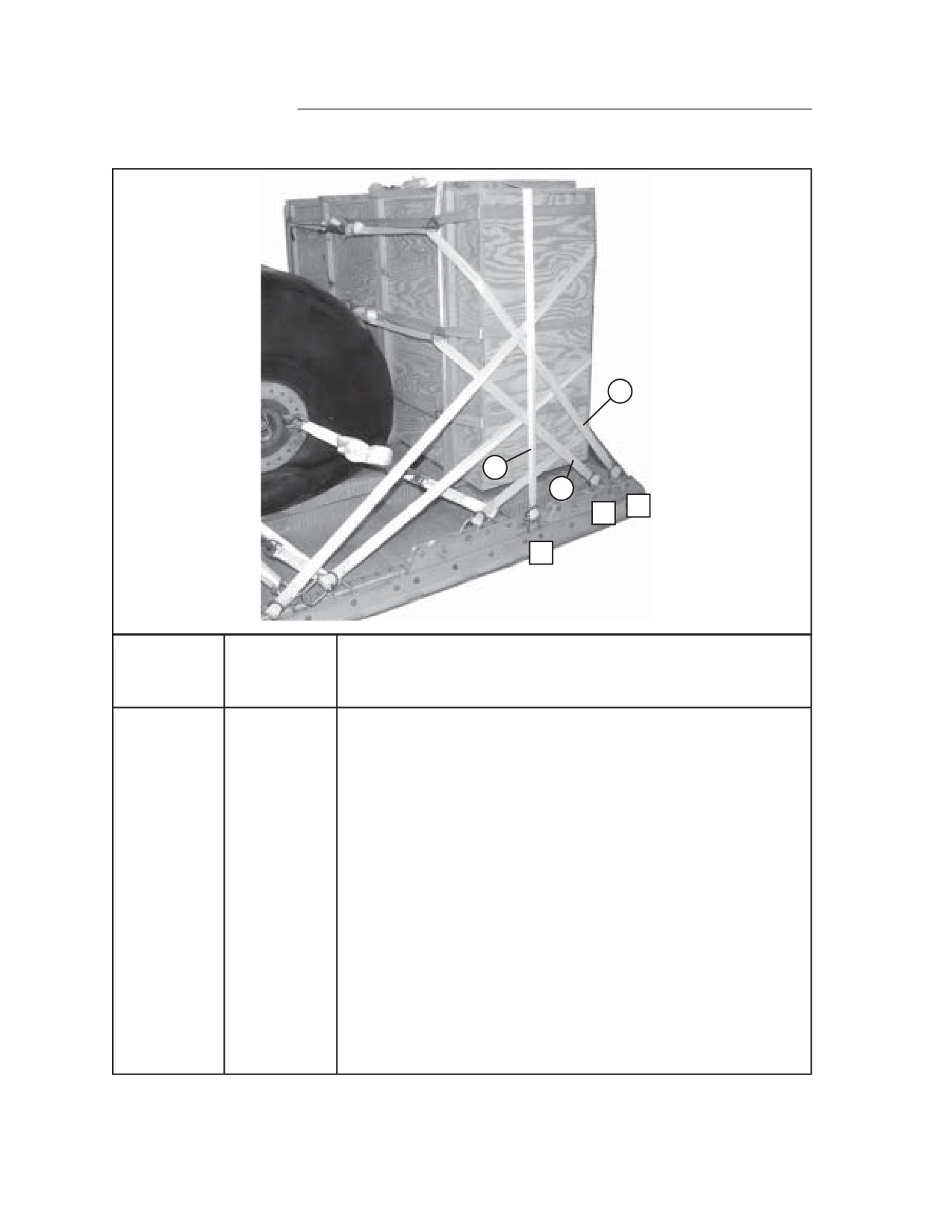
FM 4-20.137/TO 13C7-1-19
57
FRONT
61
59
1
2
3
Tie-dow n
Lashing
Clevis
Instruction s
Number
Number
57
1
Route a lashing through it's own D-ring on clevis 1and through
the top rings on the rear of container
1
58
1A
Route a lashing through it's own D-ring on clevis 1A and
through the top rings on the rear of container 1. Bind lashing
57
to lashing 58 with two D-rings and a load binder.
59
2
Route a lashing through it's own D-ring on clevis 2 and
through the middle rings on the rear of container
1
60
2A
Route a lashing through it's own D-ring on clevis 2A and
through the middle rings on the rear of container 1. Bin d
lashing 59 to lashing 60 with two D-rings and a load binder.
61
3
Route a lashing through it's own D-ring on clevis 3 and over
the top of container
1
62
3A
Route a lashing through it's own D-ring on clevis 3A and over
the top of container 1. Bind lashing 61 to lashing 62 with tw o
D-rings and a load binder.
Figure 1-61. FARE Containers Lashed (Continued)
1-90
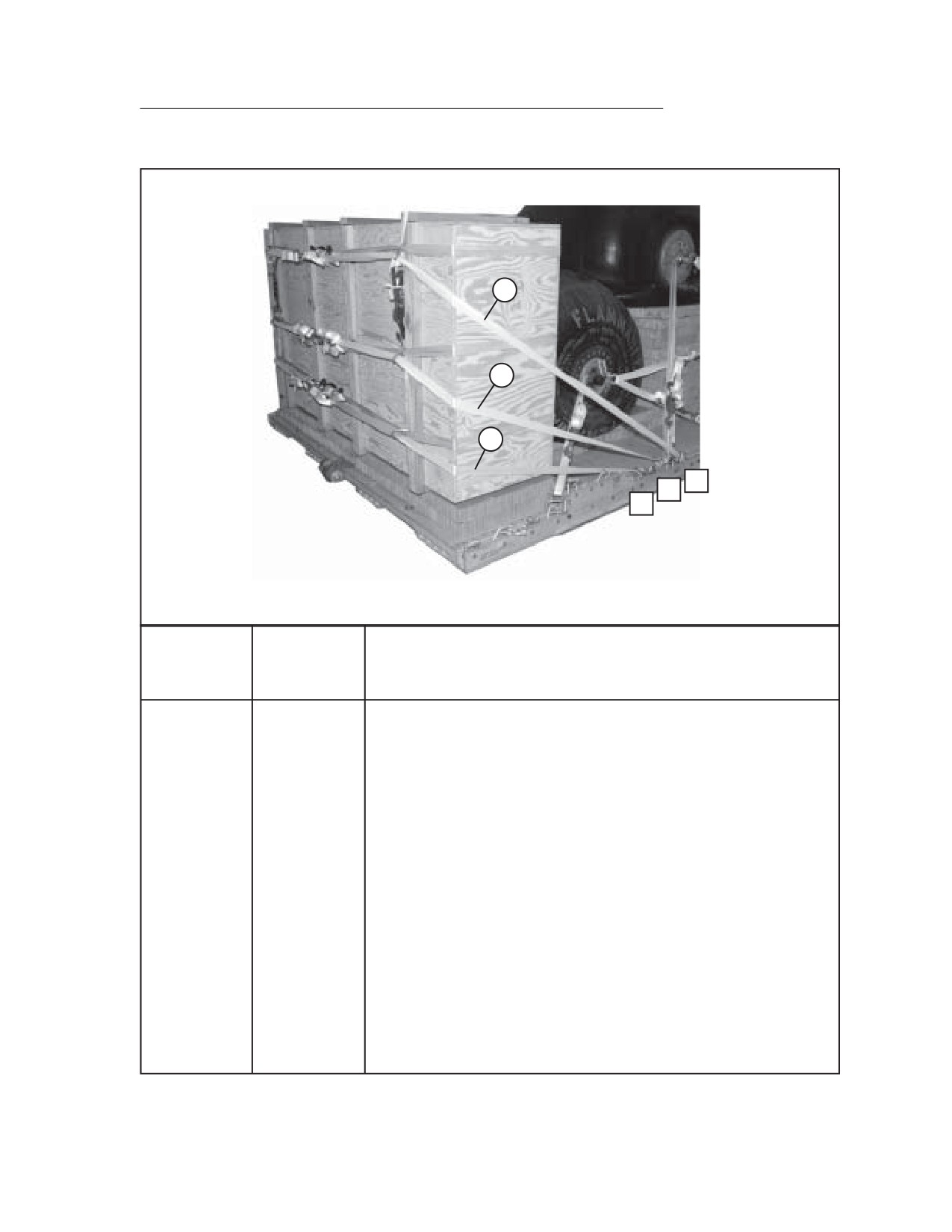
FM 4-20.137/TO 13C7-1-19
63
65
67
24
26
REAR
28
Tie-dow n
Lashing
Clevis
Instruction s
Number
Number
63
24
Route a lashing through it's own D-ring on clevis 24 and
through the top rings on the rear of container
2
64
24A
Route a lashing through it's own D-ring on clevis 24A and
through the top rings on the rear of container 2. Bind lashin g
63 to lashing 64 with two D-rings and a load binder.
65
26
Route a lashing through it's own D-ring on clevis 26 and
through the middle rings on the rear of container
2
66
26A
Route a lashing through it's own D-ring on clevis 26A and
through the middle rings on the rear of container 2. Bin d
lashing 65 to lashing 66 with two D-rings and a load binder.
67
28
Route a lashing through it's own D-ring on clevis 28 and
through the bottom rings on the rear of container
2
68
28A
Route a lashing through it's own D-ring on clevis 28A and
through the bottom rings on the rear of container 2. Bin d
lashing 67 to lashing 68 with two D-rings and a load binder.
Figure 1-61. FARE Containers Lashed (Continued)
1-91
FM 4-20.137/TO 13C7-1-19
71
69
REAR
38
36
Tie-dow n
Lashing
Clevis
Instruction s
Number
Number
69
36
Route a lashing through it's own D-ring on clevis 36 and
through the middle rings on the front of container
2
70
36A
Route a lashing through it's own D-ring on clevis 36A and
through the middle rings on the front of container 2. Bin d
lashing 69 to lashing 70 with two D-rings and a load binder.
71
38
Route a lashing through it's own D-ring on clevis 38 and
through the top rings on the front of container
2
72
38A
Route a lashing through it's own D-ring on clevis 38A and
through the top rings on the front of container 2. Bind lashin g
65 to lashing 66 with two D-rings and a load binder.
Figure 1-61. FARE Containers Lashed (Continued)
1-92
FM 4-20.137/TO 13C7-1-19
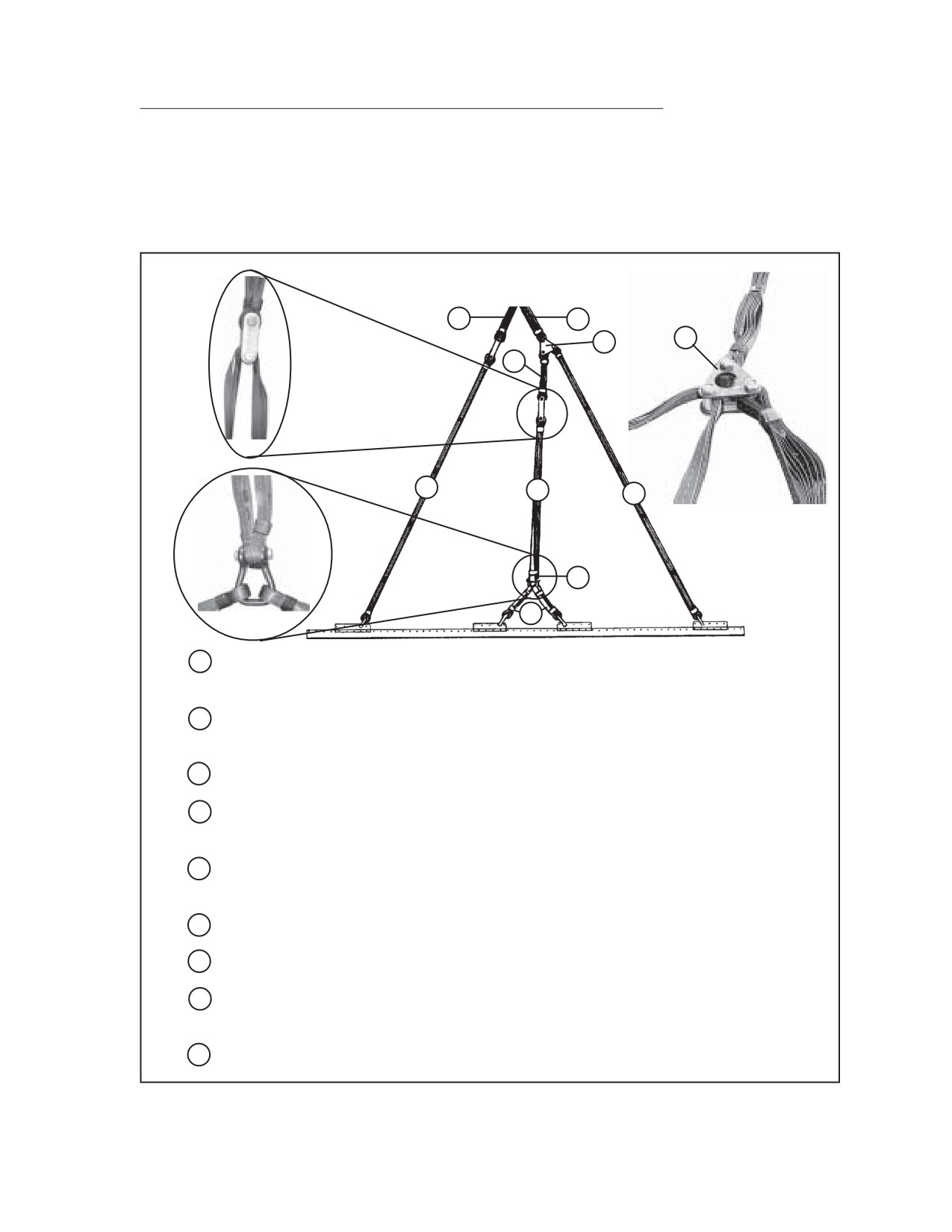
INSTALLING SUSPENSION SLINGS
1-46. Install suspension slings as shown in Figure 1-62.
Note: This drawing is not drawn to scale.
8
7
6
6
5
1
4
1
3
2
1
Attach a 20-foot (4-loop), type XXVI nylon webbing sling to each first and fourth
suspension bracket with a large suspension clevis.
2
Attach a 3-foot (4-loop), type XXVI nylon webbing sling to each second and third
suspension bracket with a large suspension clevis.
3
Place the 3-foot slings on each side of the load in the bell of a large suspension clevis.
4
Bolt a 16-foot (2-loop), type XXVI nylon webbing sling to each large suspension clevis.
Loop the sling to form one half the length of the sling.
5
Attach a 11-foot (2-loop), type XXVI nylon webbing sling to the 16-foot sling with a 5 1/2-
inch, two-point link assembly. Loop the sling to form one half of the length of the sling.
6
Use a 3-point link to join the center and front suspension slings.
7
Place a 3-foot (4-loop), type XXVI nylon webbing sling on the top spool of the 3-point link.
8
Attach a 3-foot (4-loop), type XXVI nylon webbing sling to each rear suspension sling
with a 3 3/4-inch, two-point link assembly.
9
Place cloth-backed tape around the bolt and nut on all connecting links (not shown).
Figure 1-62. Suspension Slings Installed
1-93
FM 4-20.137/TO 13C7-1-19
SAFETY TIEING SUSPENSION SLINGS
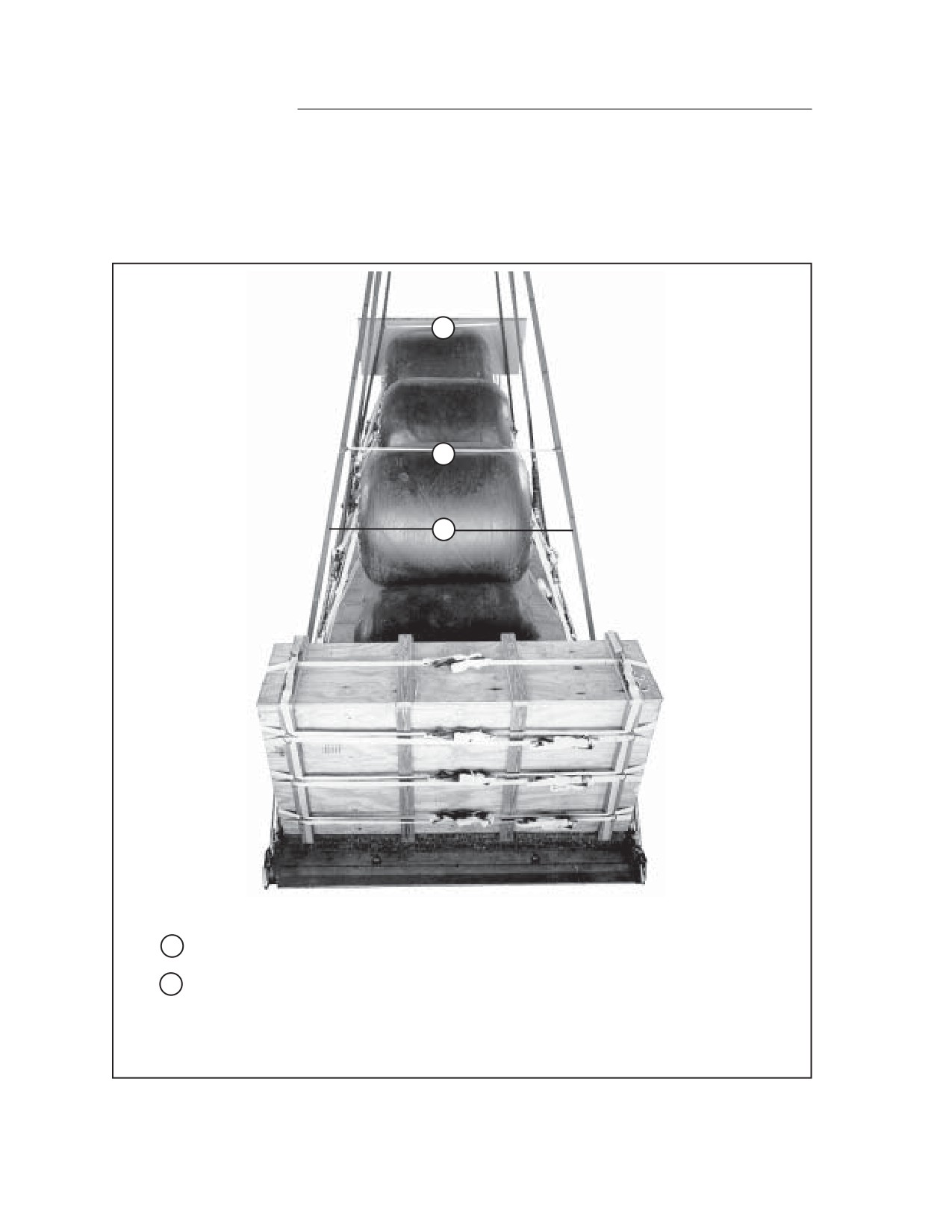
1-47. Safety tie the suspension slings as shown in Figure 1-63. Refer to the Notice
of Exception in the Introduction portion of this manual.
2
2
1
1
Raise the suspension slings.
2
Raise the suspension slings and install the suspension sling safety ties as shown
in Appendix A, to the front and rear suspension slings, even with the top of
drum 2 and drum 6.
Figure 1-63. Suspension Slings Safety Tied
1-94
FM 4-20.137/TO 13C7-1-19
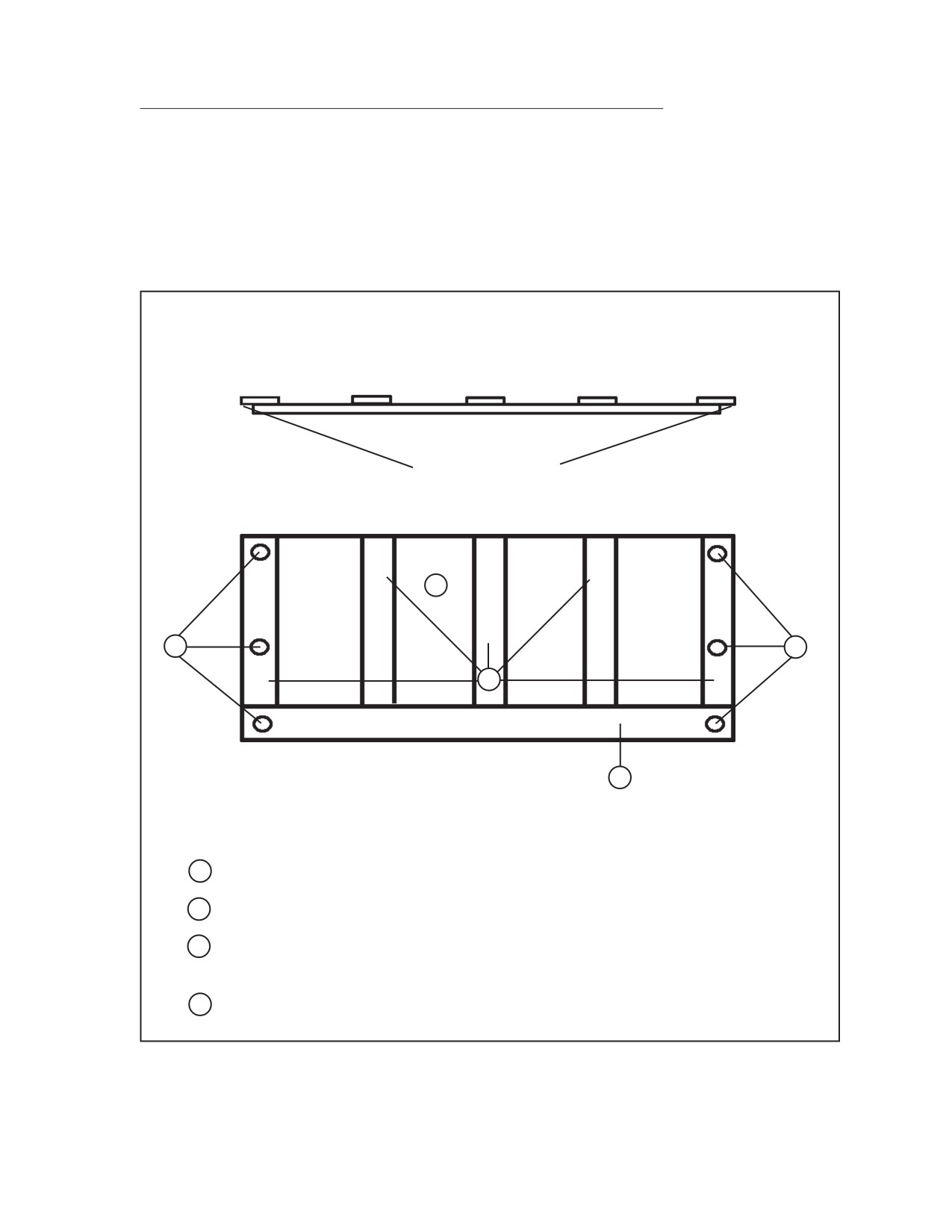
BUILDING AND INSTALLING CARGO PARACHUTE STOWAGE TRAY
1-48. Build the cargo parachute stowage tray as shown in Figure 1-64. Install
the cargo parachute stowage tray as shown in Figure 1-65.
Note: This drawing is not drawn to scale.
REAR EDGE
1/2-INCH OVERLAP
REAR
1
4
4
2
FRONT
3
1
Lay a 96- by 48- by 3/4-inch and a 96- by 12- by 3/4-inch piece of plywood side by side.
2
Nail five 2- by 6- by 54-12-inch pieces of lumber using eightpenny nails as shown above.
3
Nail a 2- by 6- by 97-inch piece of lumber flush against the vertical pieces of lumber on
the front edge of the tray using eightpenny nails.
4
Drill six holes 3 inches on center from the edges of the plywood as shown above.
Figure 1-64. Cargo Parachute Stowage Tray Built
1-95
FM 4-20.137/TO 13C7-1-19
2
1
3
4
5
REAR
30
35
34
1
Center two 24- by 48-inch pieces of honeycomb on top of a 24- by 96-inch piece of honey-
comb over drum 7. Tape the top edges and secure the honeycomb to the drum with type
III nylon cord.
2
Center the parachute stowage tray over container 2 with the 2- by 6-by 97-inch piece of
lumber resting on the honeycomb over drum 7.
3
Attach 15-foot tie-down assemblies to clevises 34 and 34A by running the straps
through their own D-rings. Run the lashing from clevis 34A through the center holes
in the tray and secure them together with D-rings and a load binder on the right side.
4
Route a lashing through platform clevis 35 through the front hole of the parachute plat-
form. Attach the lashing with a load binder and D-ring. Repeat step for clevis 35A.
5
Route a lashing through platform clevis 30 through the rear hole of the parachute plat-
form. Attach the lashing with a load binder and D-ring. Repeat step for clevis 30A.
Figure 1-65. Cargo Parachute Stowage Tray Installed
1-96
FM 4-20.137/TO 13C7-1-19
PREPARING AND STOWING CARGO PARACHUTES
1-49. Prepare, place, and restrain six G-11 cargo parachutes according to
FM 4-20.102/NAVSEA SS400-AB-MMO-010/TO 13C7-1-5 and as shown in
Figure 1-66.
1
2
31
37
29
1
Position and secure six G-11 cargo parachutes according to FM 4-20.102/
NAVSEA SS400-AB-MMO-010/TO 13C7-1-5.
2
Restrain the parachutes using clevises 29, 29A, 31, 31A, 37, 37A.
Figure 1-66. Cargo Parachute Stowed
1-97
FM 4-20.137/TO 13C7-1-19
INSTALLING THE EXTRACTION SYSTEM
1-50. Install the EFTC as shown in Figure 1-67.
1
2
3
1
Install the mounting brackets of the EFTC to the rear holes on the left platform
side rails according to FM 4-20.102/NAVSEA SS400-AB-MMO-010/TO 13C7-1-5.
2
Install a 28-foot cable to the actuator assembly. S-fold the cable to take up the
slack according to FM 4-20.102/NAVSEA SS400-AB-MMO-010/TO 13C7-1-5.
3
Attach a 9-foot (2-loop), type XXVI nylon webbing sling as a deployment line.
Figure 1-67. Extraction System Installed
1-98
FM 4-20.137/TO 13C7-1-19
INSTALLING PARACHUTE RELEASE SYSTEM
1-51. Install the M-2 cargo parachute release system according to FM 4-20.102/
NAVSEA SS400-AB-MMO-010/TO 13C7-1-5 and as shown in Figure 1-68.
2
3
1
4
1
Install the M-2 cargo parachute release system according to FM 4-20.102/
NAVSEA SS400-AB-MMO-010/TO 13C7-1-5.
2
Tie the front suspension slings to the front shackle on drum 2 on each side
using one turn double of type I, 1/4-inch cotton webbing.
3
Tie the center suspension slings to the front shackle on drum 4 on each side
using one turn of type III nylon cord.
4
Tie the rear suspension slings to the rear shackle on drum 6 on each side using
one turn double of type I, 1/4-inch cotton webbing.
Figure 1-68. M-2 Cargo Parachute Release System Installed
1-99
FM 4-20.137/TO 13C7-1-19
5
6
5
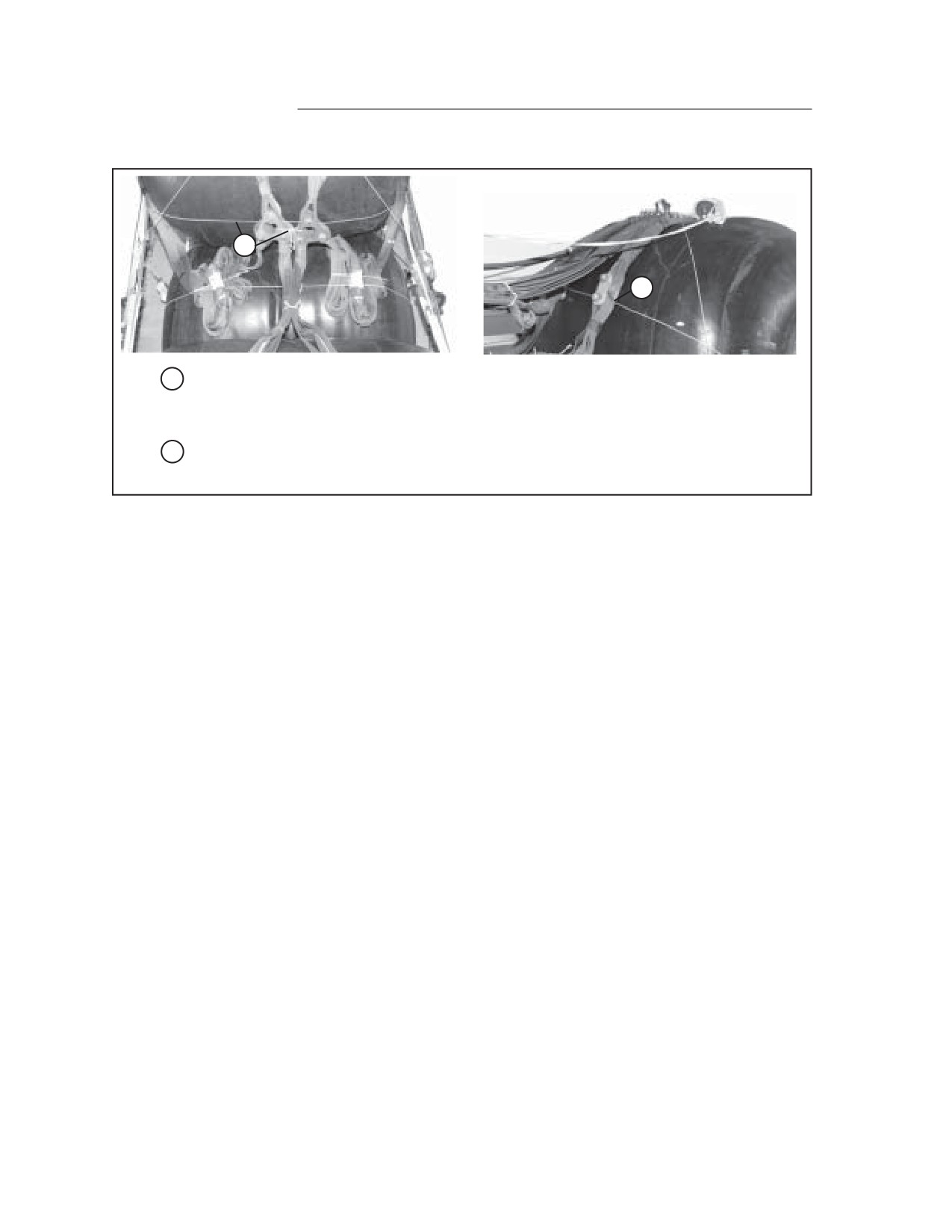
Safety tie both three-point links of the front suspension slings with type III
nylon cord from clevises 17 to 17A. Also cluster tie the three-point links together
with 1/4-inch cotton webbing.
6
Safety tie both 3 3/4-inch two-point links of the rear suspension slings with type
III nylon cord from clevises 16 to 16A.
Figure 1-68. M-2 Cargo Parachute Release System Installed (Continued)
PLACING EXTRACTION PARACHUTE
1-52. Select the extraction parachute and extraction line needed using the
extraction line requirements table in FM 4-20.102/NAVSEA SS400-AB-MMO-
010/TO 13C7-1-5. Rig the extraction line in an extraction line bag according to
TM 10-1670-286-20/TO 13C5-2-41. Place the extraction parachute and extrac-
tion line on the load for installation in the aircraft.
INSTALLING PROVISIONS FOR EMERGENCY RESTRAINTS
1-53. Select and install the provisions for emergency aft restraints according to
the emergency aft restraint requirements table in FM 4-20.102/NAVSEA SS400-
AB-MMO-010/TO 13C7-1-5.
MARKING RIGGED LOAD
1-54. Mark the rigged load according to FM 4-20.102/NAVSEA SS400-AB-MMO-
010/TO 13C7-1-5 and as shown in Figure 1-69. Complete Shipper’s Declaration
for Dangerous Goods and affix to the load. If the load varies from the one
shown, the weight, height, CB, tipoff curve, and parachute requirements must
be recomputed.
EQUIPMENT REQUIRED
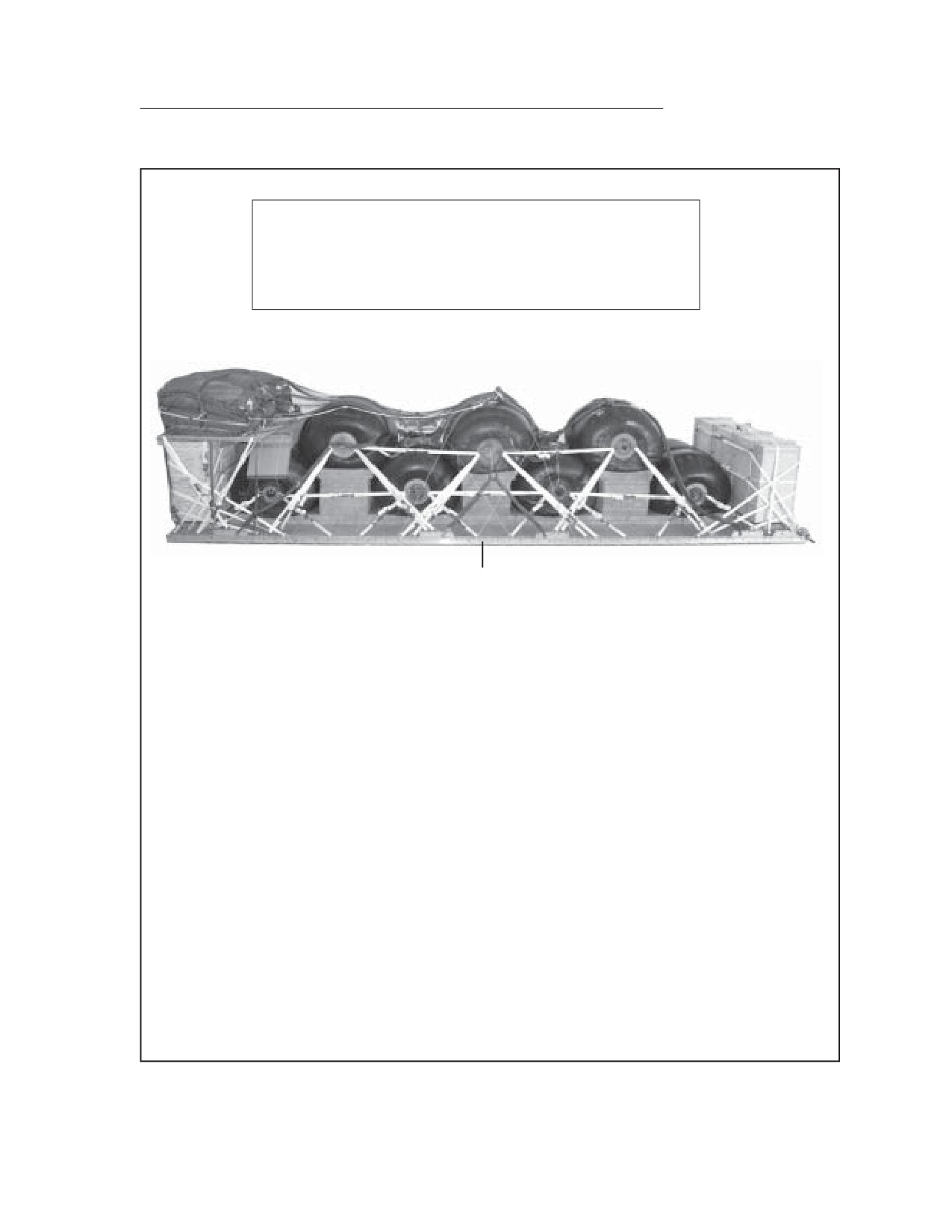
1-55. Use the equipment list in Table 1-5 to rig the load shown in Figure 1-69.
1-100
FM 4-20.137/TO 13C7-1-19
CAUTION:
Make the final inspection required by FM 4-20.102/NAVSEA
SS400-AB-MMO-010/TO 13C7-1-5 before the load leaves
the rigging site.
CB
RIGGED LOAD DATA
Weight
28,000 pounds
Maximum Weight
30,000 pounds
Height
95 inches
Width
108 inches
Overall Length
402 inches
Overhang: Front
0 inches
Rear (EFTC)
18 inches
Center of Balance (CB) (from front edge of platform)
202 inches
Extraction System
EFTC
Figure 1-69. FARE with Seven 500-Gallon Fuel Drums Rigged for Low-Velocity Airdrop
1-101
FM 4-20.137/TO 13C7-1-19
Table 1-5. Equipment Required for Rigging FARE with Seven 500-Gallon Fuel Drums for
Low-Velocity Airdrop
National Stock
Number
Item
Quantity
8040-00-273-8713
Adhesive, paste, 1-gal
As required
1670-01-035-6054
Bridle, extraction line bag (for DES)
1
4030-00-090-5354
Clevis, suspension:
1-in (large
)
10
4020-00-240-2146
Cord, nylon, type III, 550-lb
As required
1670-00-434-5783
Coupling, airdrop, extraction force transfer with cable,
28-ft
1
Cover:
1670-00-360-0328
Clevis, large
As required
8135-00-664-6958
Cushioning material, packaging, cellulose wadding
As required
5365-00-937-0147
D-ring, heavy-duty, 10,000-lb
24
1670-00-003-4391
Knife, miniature, cutter (for DES)
1
1670-01-183-2678
Leaf, extraction line (line bag)(add 2 for DES)
2
Line, drogue (for DES
)
1670-01-062-6313
60-ft (3-loop), type XXV I
1
Line, extraction
:
1670-01-064-4454
For C-130: 60-ft (6-loop), type XXV I
1
1670-01-062-6312
For C-141: 120-ft (6-loop), type XXV I
For C-5:
1670-01-062-6312
120-ft, (6-loop), type XXV I
1670-01-064-4454
60-ft, (6-loop), type XXV I
1
For C-17:
1670-01-468-9178
140-ft (6-loop), type XXV I
1
1670-01-483-8259
Link, tow release mechanism (H-Block) C-17
aircraft
1
Link Assembly:
5306-00-435-8994
(8
)
5310-00-232-5165
Nut, 1-in, hexagonal (add 2 for DES
)
(8
)
1670-00-003-1953
Plate, side, 3 3/4-in (add 2 for DES
)
(4
)
1670-00-003-1954
Plate, side, 5 1/2-in
(4
)
5365-00-007-3414
Spacer, large (add 2 for DES
)
(8
)
1670-01-307-1055
Three-point
2
1670-00-006-2752
Four-point
1
5510-00-220-6146
Lumber, 2- by 4-in:
24-inch
8
27-inch
8
50 1/4-inch
16
1-102
FM 4-20.137/TO 13C7-1-19
Table 1-5. Equipment Required for Rigging FARE with Seven 500-Gallon Fuel Drums for
Low-Velocity Airdrop (continued)
National Stock
Number
Item
Quantity
1670-00-753-3928
Pad, energy-dissipating (honeycomb)
3- by 36- by 96-in
32 sheets
Parachute:
Cargo:
1670-01-016-7841
G-11C
6
Cargo extraction:
1670-00-040-8135
28-ft
2
Drogue (for DES
)
1670-01-063-3715
15-ft
1
Platform, airdrop, type V, 32-ft:
1670-01-353-8425
Bracket assembly, coupling
(1
)
1670-01-162-2372
l
(76
)
1670-01-162-2376
Extraction bracket assembly
(1
)
1670-01-247-2389
Bracket, suspensio n
(8
)
1670-01-162-2381
T
andem link assembly (Multipurpose
l
(2
)
5530-00-128-4981
Plywood, 3/4-in
3
sheets
1670-01-097-8817
Release, cargo parachute, M-2
1
Sling, cargo, airdrop
For suspension:
1670-01-062-6306
3-ft (4-loop), type XXVI nylon webbing
8
1670-01-063-7760
11-ft (2-loop), type XXVI nylon webbing
2
1670-01-063-7761
16-ft (2-loop), type XXVI n
l
2
1670-01-064-4453
20-ft (4-loop), type XXVI n
l
4
For deployment:
1670-01-062-6304
9-ft (2-loop), type XXVI nylon webbing
1
For riser extension:
1670-01-062-6311
120-ft (2-loop), type XXVI n
l
6
For lifting slings
:
1670-01-062-6304
9-ft (2-loop), type XXVI nylon webbing
2
5340-00-040-8219
Strap, parachute release, multi-cut, comes w/ 3
knives
2
7510-00-266-5016
T
ape, adhesive, 2-in
As required
7510-00-266-6710
T
ape, masking, 2-in
As required
1670-00-937-0271
Tie-down assembly, 15-foot
96
8310-00-917-3945
Thread, Cotton, Ticket 8/7
As required
Webbing:
8305-00-268-2411
Cotton, 1/4-in, type I
As required
8305-00-082-5752
Nylon, tubular, 1/2-in
As required
8305-00-261-8584
Nylon, Type X
As required
1-103
FM 4-20.137/TO 13C7-1-19
Chapter 2
Rigging the 350-GPM Wheel-Mounted POL Pumping
Assembly with Filter/ Separator
DESCRIPTION OF LOAD
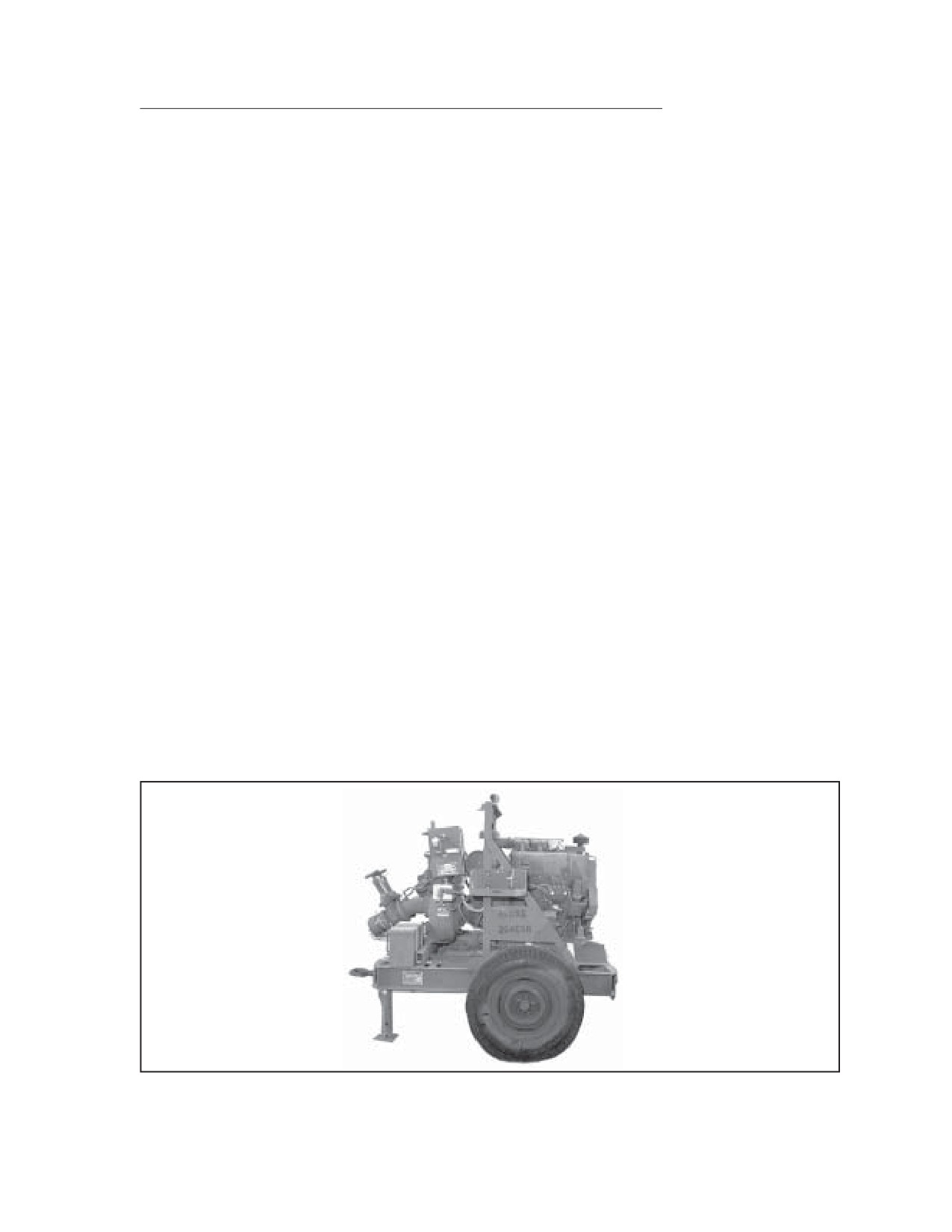
2-1. The 4-inch, 350-GPM wheel-mounted POL pumping assembly with filter/
separator (Figure 2-1) is rigged on a 16-foot type V platform for low-velocity air-
drop with two G-11 cargo parachutes. It consists of two pumps, each weighing
2,100 pounds and two filter/separators each weighing 425 pounds. It is approxi-
mately 76 3/4 inches in height, 108 inches in width, and 215 inches in length with
an overhang of 5 inches in the front and 18 inches in the rear. The total rigged
weight is 7,880 pounds.
PREPARING PLATFORM
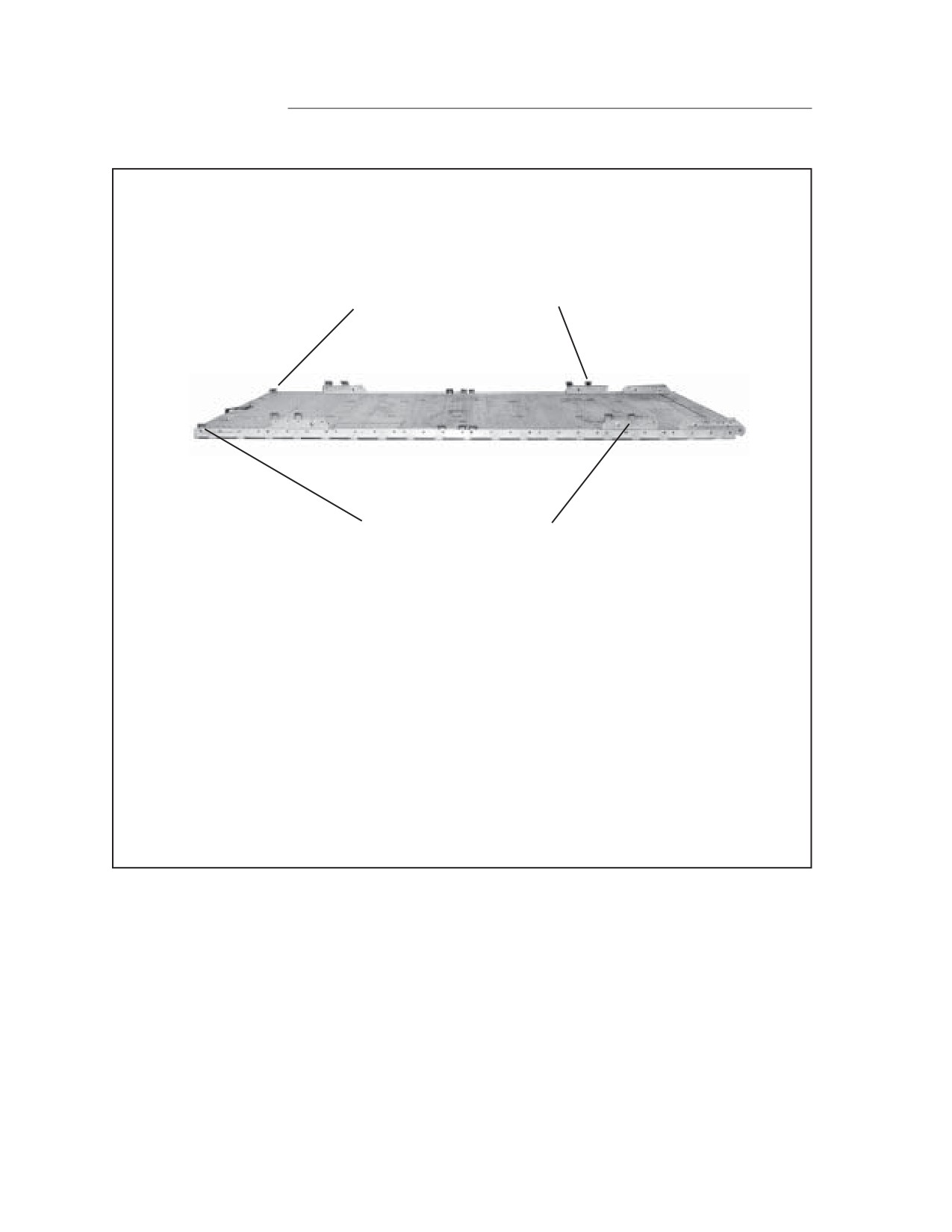
2-2. Prepare a 16-foot type V airdrop platform using two tandem links, four sus-
pension brackets, and 16 tie-down clevises as shown in Figure 2-2.
Notes: 1. The nose bumper may or may not be installed.
2. Measurements given in this section are from the front edge of the
platform, NOT from the front edge of the nose bumper.
Figure 2-1. Pumping Assembly with Filter/Separator
2-1
FM 4-20.137/TO 13C7-1-19
CLEVISES 8A THROUGH 1A
REAR
FRONT
CLEVISES 8 THROUGH 1
Steps:
1. Inspect, or assemble and inspect, the platform as outlined in TM 10-1670-268-
20&P/TO 13C7-52-22.
2. Install a tandem link on the front of each platform side rail using holes 1, 2, and
3.
3. Install suspension brackets to bushings 6, 7, and 8; 25, 26, and 27 on each
platform side rail.
4. Install a tie-down clevis to bushings 3 and 4 of each front suspension bracket.
5. Install a tie-down clevis to bushings 2 and 4 of each rear suspension bracket.
6. Starting at the front of each platform side rail, install a tie-down clevis to the
bushings bolted to holes 16, 17, 18, and 32.
7. Starting at the front of the platform, number the clevises bolted to the right side
from 1 through 8 and those bolted to the left side from 1A through 8A.
Figure 2-2. Platform Prepared
2-2
FM 4-20.137/TO 13C7-1-19
PREPARING HONEYCOMB
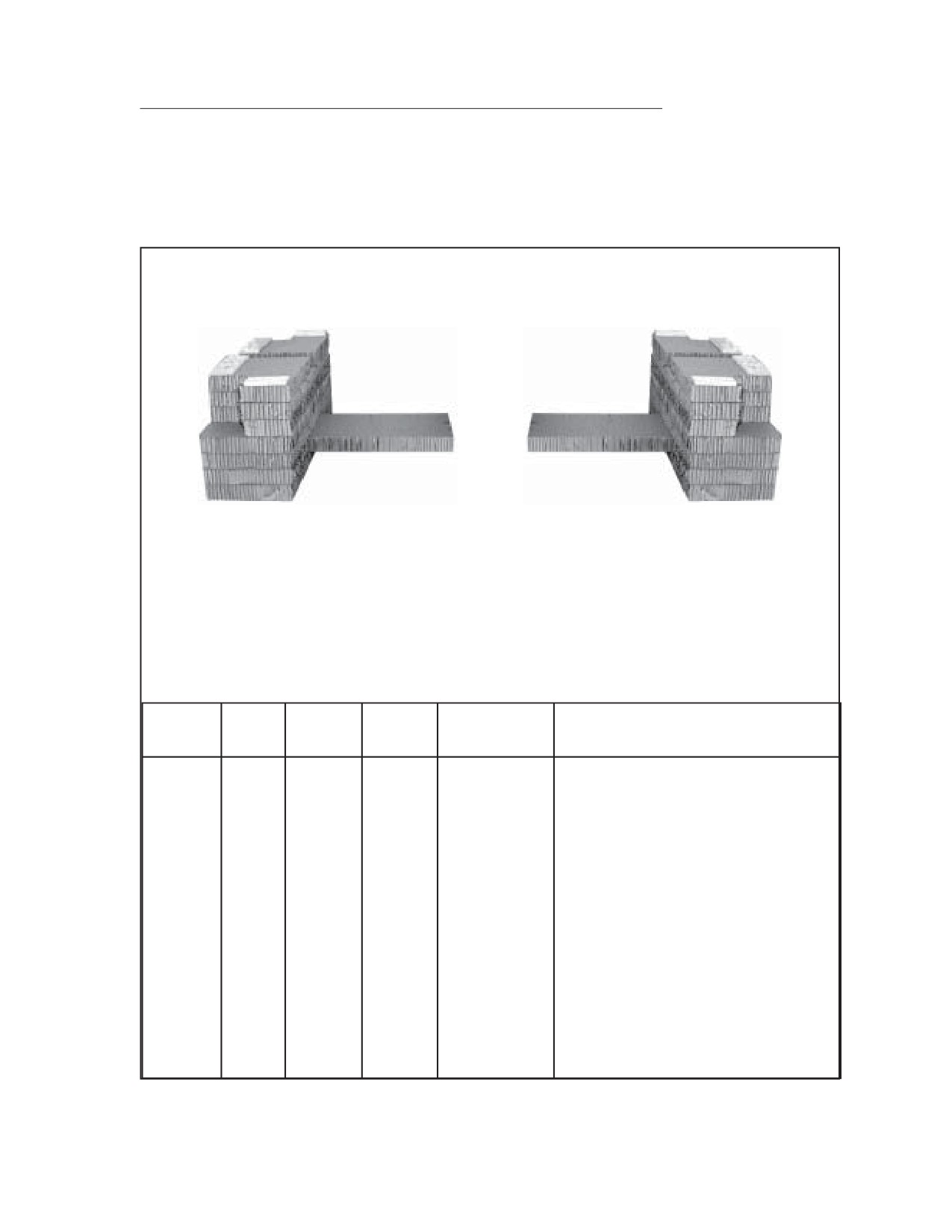
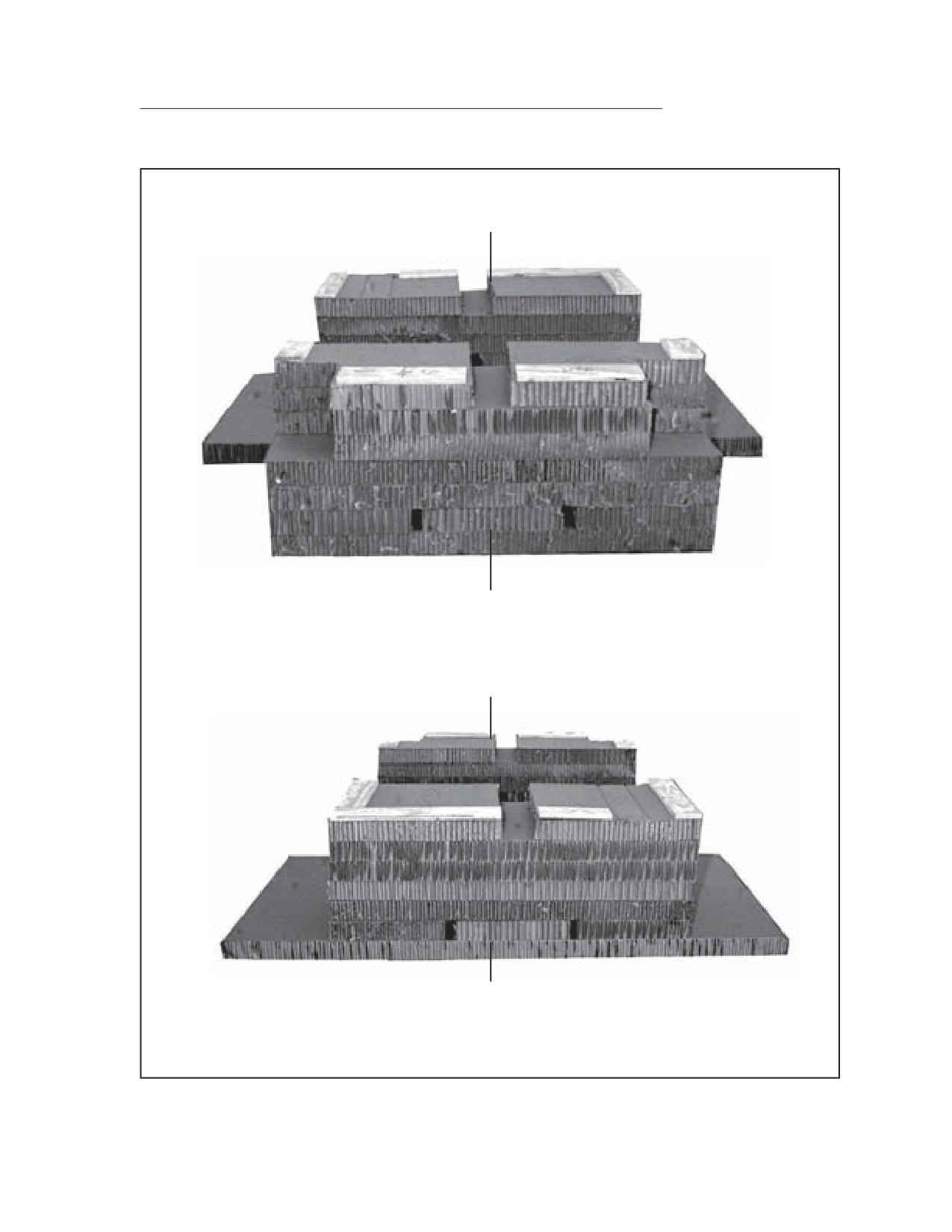
2-3. Build honeycomb stack as shown in Figures 2-3 through 2-6.
Stack
Width
Length
Numbe r
Pieces
(Inches)
(Inches)
Material
Instructions
1
&
4
1
51
16
Honeycom b
Form a base.
2
16
16
Honeycom b
Glue one end on each side of the base .
1
16
64
Honeycom b
Glue one end centered between the 16 -
by 16-inch pieces and
l
front edge of the base .
2
51
16
Honeycom b
Glue on base .
2
51
16
Honeycom b
Notch the right and
l
each piece with an 8- by 8-inch cutout
and glue to the base .
2
23
16
Honeycom b
Notch one corner of each piece with an
8- by 8-inch cutout and glue one on the
right and one on the
l
base.
2
4
7
3/4-in Plywoo d
Glue one piece on the right and
l
of the base.
2
14
4
3/4-in Plywoo d
Glue one piece on the right and
l
of the base.
Figure 2-3. Honeycomb Stacks 1 and 4 Prepared
2-3
FM 4-20.137/TO 13C7-1-19
STACK 4
STACK 3
REAR
FRONT
STACK 2
STACK 1
FRONT
REAR
t
Width
Length
Numbe r
Pieces
(Inches
)
(Inches
)
Material
Instru
t
2
&
3
1
80
36
Honeycom b
Form a base. Center and glue
the
bridge from stack 1
f
outside edge of the base. Repeat
t
step for stack
4
2
16
20
Honeycom b
Glue one piece on the right and
l
sides of the bridge 14 1/2 inches
f
therightand
l
f
flush with the outside edge of the base.
4
51
20
Honeycom b
Glue
t
2
23
20
Honeycom b
Glue one piece on each side of
t
base.
1
4
20
3/4-in Plywood
Glue to the right
f
1
10
4
3/4-in Plywood
Glue
t
1
23
4
3/4-in Plywood
Glue to the
l
1
4
16
3/4-in Plywood
Glue to the
l
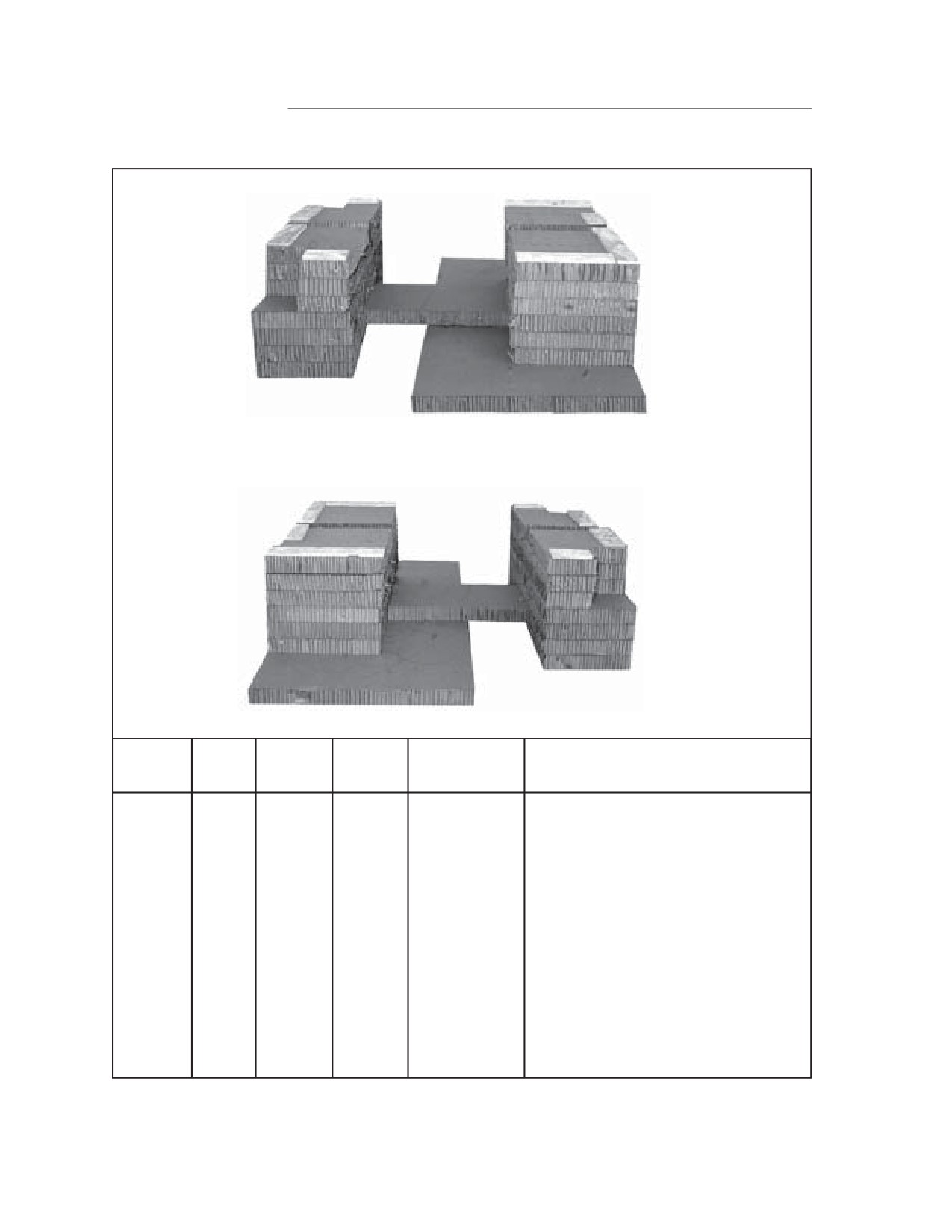
Figure 2-4. Honeycomb Stacks 2 and 3 Prepared
2-4
FM 4-20.137/TO 13C7-1-19
STACK 1
STACK 2
STACK 4
STACK 3
Figure 2-5. Honeycomb Stacks 1, 2, 3, and 4 Prepared
2-5
FM 4-20.137/TO 13C7-1-19
STACK 5
t
Width
Length
Numbe r
Pieces
(Inches
)
(Inches
)
Material
Instru
t
5
2
96
36
Honeycom b
Glue pieces together to
f
4
34
4
3/4-in Plywood
Glue the plywood pieces
f
front and rear edges 2 1/2 inches
f
the
l
f
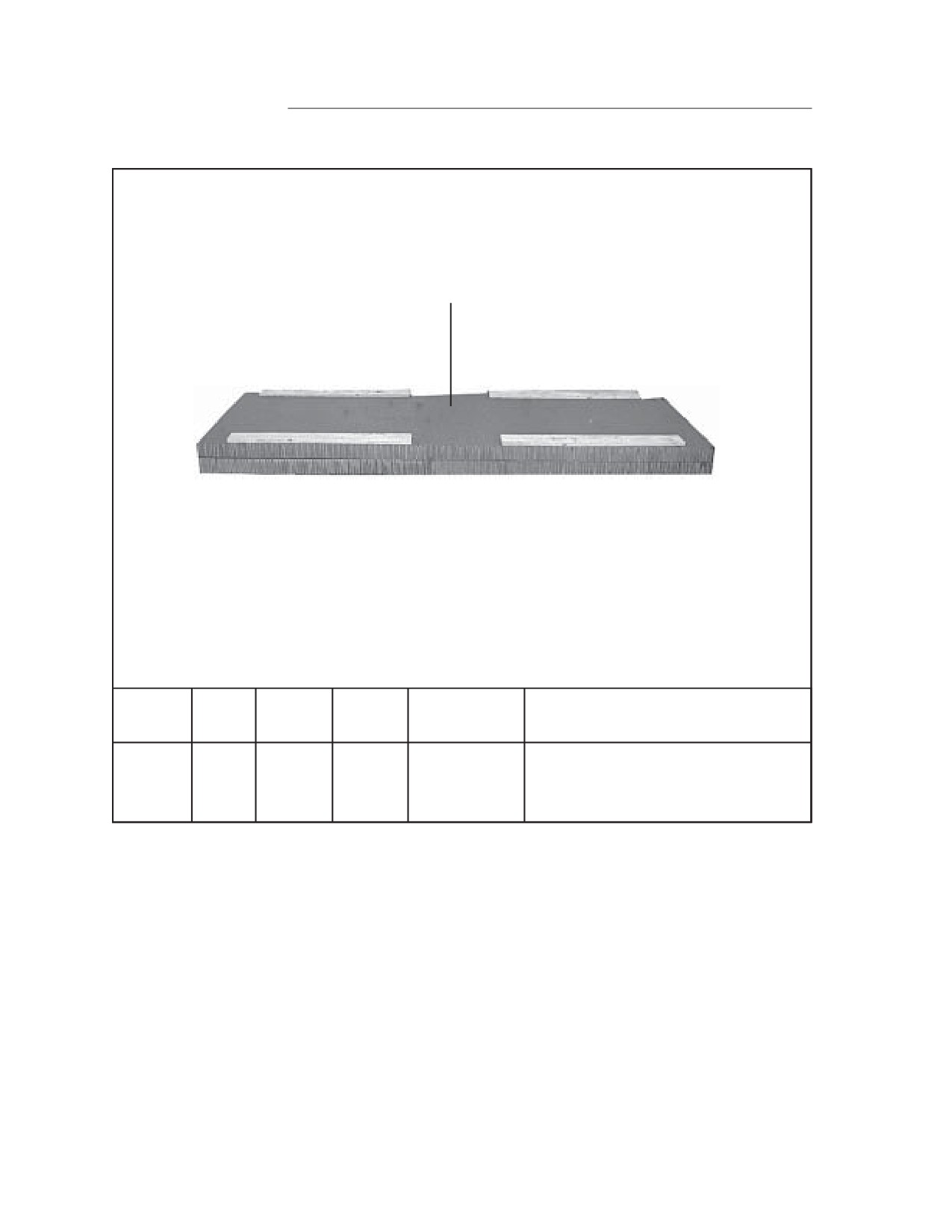
Figure 2-6. Honeycomb Stack 5 Prepared
2-6