FM 3-06 URBAN OPERATIONS (OCTOBER 2006) - page 7
Appendix B
URBAN INTELLIGENCE TOOLS AND PRODUCTS
B-36. Developing tools and products to assist with situational understanding is not the task of intelligence
sections alone. Commanders and all elements of their staffs must develop and adapt products and tools
suited to their particular requirements. Listed below are some of the analytic tools and products that may
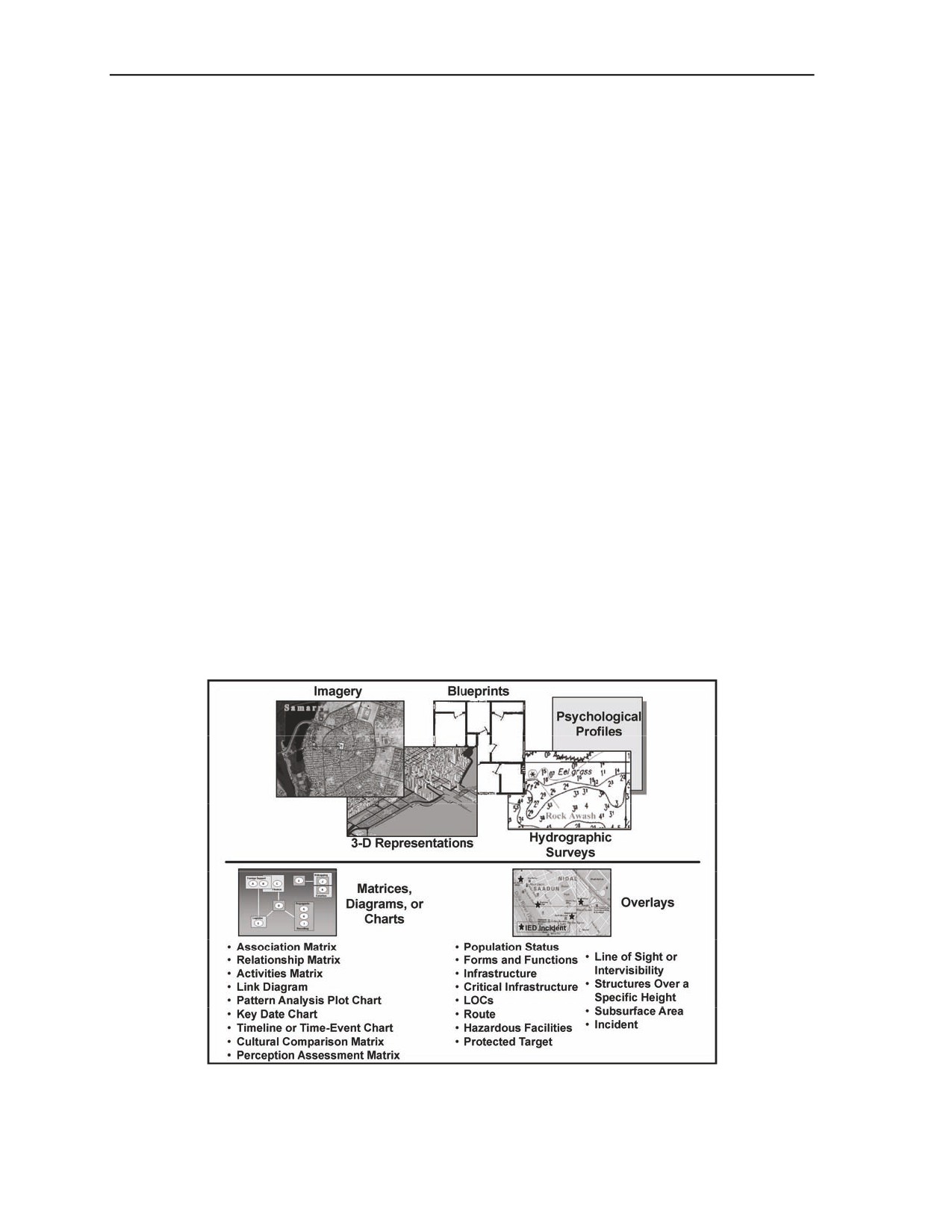
help meet those requirements in a complex environment (see figure B-7 on page B-14 and FMI 2-91.4).
Standard tools and products include: modified combined obstacle overlays and doctrinal, situation, event,
and decision support templates or matrices. In addition to these standards aids, staffs and analysts may
develop or produce other innovative tools to assist commanders in their situational understanding of the
complex urban environment. These tools may contain overlapping information as different types of
information are compared to determine patterns among them. Staffs and analysts may also initiate requests
for products (or information) from their higher headquarters or other agencies with the technical means or
control over assets when the capability lies outside the Army force’s means. The tools that may be
developed or requested include—
Imagery.
Three-dimensional representations.
Infrastructure blueprints.
Hydrographic surveys.
Psychological profiles.
Matrices, diagrams, or charts.
Various urban overlays.
B-37. There are many software applications available to the Army that can be used to conduct intelligence
analysis and create many of the relevant products described above. These applications currently range from
such programs as the Analyst Notebook and Crimelink which have link analysis, association matrix, and
pattern analysis software tools to the Urban Tactical Planner developed by the Topographic Engineering
Center as an operational planning tool. The focus of the following information, however, is the various
types of tools that can be developed and used to understand the urban environment rather than the
constantly evolving and changing software or hardware that may be used to create them.
Figure B-7. Urban intelligence tools and products
B-14
FM 3-06
26 October 2006
An Urban Focus to the Intelligence Preparation of the Battlefield
IMAGERY
B-38. Recent satellite imagery or aerial photography will be required for most types of UO. Such images
clarify vague and inaccurate maps and other graphic representations. Satellite assets provide responsive
data input into the geographic information systems (GIS). (The National Geospatial Intelligence Agency
[NGA] is one important source of imagery and map data.) GIS will often form the basis for creating the
three-dimensional representations and the various overlays described below. Frequently updated
(or
continuous real-time) satellite or aerial imagery may be required for detailed pattern analysis and
maintaining accurate situational understanding. For example, imagery taken during an area’s rainy season
may appear significantly altered during the summer months. Finally, digital, hand-held still and video
cameras, particularly at the tactical level, will also be critical in developing and attaining situational
understanding in a complex urban environment.
THREE-DIMENSIONAL REPRESENTATIONS
B-39. Often, physical or computer-generated (virtual) three-dimensional representations may be required to
achieve situational understanding. These models or computer representations include specific sections of
the urban area or specific buildings or structures. Such detail is particularly important for special operating
forces and tactical-level units. These units require detail to achieve precision, increase the speed of the
operation, and lessen friendly casualties and collateral damage.
INFRASTRUCTURE BLUEPRINTS
B-40. Urban police, fire, health, public utilities, city engineer, realty, and tourist agencies, and other urban
organizations often maintain current blueprints and detailed maps. Such documents may prove useful to
update or supplement military maps or to clarify the intricacies of a specific infrastructure. They may prove
critical in operations that require detailed information to achieve the speed and precision required for
success. Without such detail, analysts determine interior configurations based on a building’s outward
appearance. That task generally becomes more difficult as the building size increases.
HYDROGRAPHIC SURVEYS
B-41. Many urban areas are located along the world’s littoral regions and major rivers. Therefore,
commanders may need current hydrographic surveys to support amphibious, river crossing, riverine, and
sustainment operations.
PSYCHOLOGICAL PROFILES
B-42. Psychological profiles analyze how key groups, leaders, or decision makers think or act—their
attitudes, opinions, and views. They include an analysis of doctrine and strategy, culture, and historical
patterns of behavior. The degree to which the attitudes, beliefs, and backgrounds of the military either
reflect or conflict with the urban populace’s (or civilian leadership’s) core values is extremely important in
this analysis. Psychological profiles help to assess the relative probability of a threat (or noncombatant
group) adopting various COAs as well as evaluating a threat’s vulnerability to deception. These profiles are
derived from open-source intelligence as well as signals and human intelligence.
MATRICES, DIAGRAMS, AND CHARTS
B-43. Matrices, diagrams, and charts help to identify and understand key relationships among friendly and
threat forces and other significant elements of the urban environment. While similar, each looks at
information in a different way to uncover hidden patterns and connections useful in understanding the
complex urban environment, particularly the threat and the urban society. These tools and products might
include—
Association Matrix. The association matrix helps identify the nature and relationship between
individuals. Association matrices also help to identify those personalities and associations
needing a more in-depth analysis necessary to establish the degree of relationship, contacts, or
26 October 2006
FM 3-06
B-15
Appendix B
knowledge between individuals. Threat organizational structure and functions are uncovered as
connections between personalities are made.
Relationship Matrix. Relationship matrices are an extension of association matrices described
above. They are used to examine the relationship between groups and organizations—threat
forces, friendly forces, NGOs, the media, and the various elements of the urban population.
Urban terrain and infrastructure may also be included as analytical factors to help expose
relationships. These matrices graphically depict how human elements of the urban area interact
with the physical elements to promote or degrade mission success. A significant relationship
matrix may be a comparison of cultural perspectives—ideology, politics, religion, acceptable
standards of living, and mores—between urban population groups and Army (and multinational)
forces to help understand and accurately predict a civilian element’s actions. The relationships
discovered may suggest ways that commanders can shape the environment. For example,
conflicting ideals or issues between two disparate threat forces may be emphasized to cause
threats to focus their resources against each other rather than Army forces. Conversely, stressing
common ideals identified between opposing noncombatant organizations may cause these
groups to unite and work harmoniously toward a goal reflecting their commonalities.
Activities Matrix. An activities matrix connects individuals to organizations, professions,
events, activities, or addresses. Information from this matrix (combined with information from
association and relationship matrices) also helps to link personalities, uncover the structure of an
organization (threat or otherwise), and recognize differences, similarities, and dependencies for
possible exploitation.
Link Diagram. This tool graphically depicts many of the relationships and associations
described above—people, groups, events, locations, or other factors deemed significant in any
given situation. It helps commanders and analysts visualize how people and other factors are
interrelated to determine key links.
Pattern Analysis Plot Chart. This chart depicts the times and dates of a selected activity (such
as ambushes, sniper and mortar attacks, bombings, and demonstrations) to search for patterns of
activity for predictive purposes as well as to discern intent. This analysis can be conducted using
a time-event wheel as well as by plotting events on maps using multiple historical overlays
(analog or digital). (Compare with Incidents Overlay covered later in this chapter.) During
pattern analysis, commanders and analysts consider not only what is occurring but also what is
not occurring (or ceases to occur).
Key Event Chart. In many urban operations, particularly stability operations, key holidays,
historic events, and other significant cultural or political events can be extremely important for
commanders to understand. More than just dates, these charts depict what can be expected to
happen on each particular event. In Bosnia, for example, weddings are often held on Fridays and
celebratory fire is a common occurrence. Understanding this cultural phenomenon could reduce
collateral damage and accompanying civilian deaths.
Timeline or Time-Event Chart. Timelines are a list of significant historical dates with relevant
information and analysis that provide the commander with a record of past activities necessary
to understand current operational conditions. A timeline may highlight a specific feature of the
present situation such as population movements or political shifts or outline the general
chronological record of the urban area, perhaps highlighting the activities of a certain population
sector. Understanding past events also helps commanders predict future reactions to proposed
COAs. Similarly to link diagrams, time-event charts display large amounts of information in a
small space. These charts may help commanders discover larger-scale patterns of activity and
relationships.
Cultural Comparison Matrix. Commanders must avoid ethnocentricity—assuming that only
one cultural perspective exists (often their own) and using that as the single lens with which to
view the situation. To avoid this common obstacle to an accurate understanding of the urban
society, commanders use this matrix to compare local ideology, attitudes, beliefs, and acceptable
standards of living with associated U.S. and Army norms and values. This matrix not only
highlights differences but also similarities.
B-16
FM 3-06
26 October 2006
An Urban Focus to the Intelligence Preparation of the Battlefield
Perception Assessment Matrix. All of the above tools contribute to developing the perception
assessment matrix; they allow commanders to see the urban environment from the perspective of
its inhabitants. The perception assessment matrix is another tool that uses this refined
perspective and the framework outlined in the matrix to predict the urban population’s
perception of a proposed COA. Although perceptions are not actions, they—more than reality—
drive decision-making and resultant civilian activity. (As an example, legitimacy is a critical
factor in developing many COAs that affect the civilian population, particularly during stability
operations. This legitimacy must be viewed from the perspective of the inhabitants and not
based on the Army commander’s own culturally-shaped perceptions. Moreover, the legitimacy
of an operation may need to be considered from other perspectives as well. These might include
those of the American public, coalition partners and their publics, and those of neighboring
states in the region.) This same matrix can later be used as a foundation to track and gauge the
effectiveness of the chosen COA with favorable perception as one criterion of success.
Commanders must be wary that perceptions are not fixed. They may change based on factors
that the commander may not be able to control or influence. Therefore, commanders must
continually monitor perceptions for deviation.
VARIOUS URBAN OVERLAYS
B-44. Staffs can produce various map overlays. These overlays depict physical locations of some aspect
critical to the planning and conduct of the urban operation. Given adequate lead time, NGA can produce
many overlays as an integrated map product (including satellite imagery). These overlays can include the—
Population Status Overlay. This tool depicts the physical location of various groups identified
by any significant social category such as religion, tribe, or language. During offensive and
defensive operations, it may simply be where significant numbers of people are “huddled” or
located throughout the battlefield. Population dispersal can vary significantly through the day,
particularly at night, and must be considered as part of the overall analysis leading to the
development of this tool.
Forms and Functions Overlay. Based on the urban model, this overlay depicts the urban core
or central business district, industrial areas, outlying high-rise areas, commercial ribbon areas,
and residential areas, to include shantytowns.
Infrastructure Overlay. This overlay is actually a series of overlays. It depicts identifiable
subsystems in each form of urban infrastructure: communications and information,
transportation and distribution, energy, economics and commerce, administration and human
services, and cultural. Each subsystem can be broken down into more detail. Infrastructure data
may be used to develop three other overlays—
Critical Infrastructure Overlay. This tool displays specific elements of the urban
infrastructure that, if harmed, will adversely affect the living conditions of the urban society to
the detriment of the mission. These elements may include power generation plants, water
purification plants and pumping stations, and sewage treatment plants. This information could
be coded as part of the overall infrastructure overlay.
Lines of Communications (LOCs) Overlay. The LOCs overlay highlights transportation
systems and nodes, such as railways, road, trails, navigable waterways, airfields, and open areas
for drop zones and landing zones. It also includes subsurface areas and routes such as sewage,
drainage, and tunnels and considers movement between supersurface areas. The LOCs overlay
and the route overlay (below) consider traffic conditions, times, and locations, to include
potential points where significant portions of the urban population may congregate.
Route Overlay. This overlay emphasizes mobility information to assist commanders and
planners in determining what forces and equipment can move along the urban area’s mobility
corridors. Pertinent data includes street names, patterns, and widths; bridge, underpass, and
overpass locations; load capacities; potential sniper and ambush locations (which may be its
own overlay); and key navigational landmarks such as major roads and highways, rivers and
canals, cemeteries, bridges, stadiums, and churches. The structures over a specific height
26 October 2006
FM 3-06
B-17
Appendix B
overlay and subsurface overlay may assist in its development. As with the LOCs overlay,
commanders, planners, and analysts think in all dimensions.
Line of Sight or Intervisibility Overlay. This product creates a profile view (optical or
electronic) of the terrain from the observer’s location to other locations or targets. It can show
trajectory or flight-line masking as well as obstructed or unobstructed signal pathways.
Structures over a Specific Height Overlay. This level of detail may also be critical to
communications, fires, and Army airspace command and control
(air mobility corridors
especially low-level flight profiles). Incorporated as part of this overlay, it may include floors or
elevations above limitations for particular weapon systems at various distances from the
structure.
Subsurface Area Overlay. As an alternate to the building or structure height overlay, this
product provides the locations of basements, underground parking garages, sewers, tunnels,
subways, naturally-occurring subterranean formations, catacombs, and other subsurface areas.
Similar to elevation
“dead spaces,” this overlay may show areas that exceed depression
capabilities of weapon systems and potential threat ambush locations—again, affecting
maneuver options.
Urban Logistic Resources Overlay. This product identifies the locations of urban logistic
resources that may contribute to mission accomplishment. It may contain specific warehouse
sites, hospitals and medical supply locations, viable food stores, building material locations, fuel
storage areas, car or truck lots, maintenance garages, and appliance warehouses.
(NGO
locations, taken from an NGO relationship matrix, may be an essential, overlapping element of
this overlay.)
Hazardous Facilities Overlay. This overlay identifies urban structures with known or
suspected chemical, biological, or radiological features, such as nuclear power plants, fertilizer
plants, oil refineries, pharmaceutical plants, and covert locations for producing weapons of mass
destruction. These locations are critical to maneuver and fire planning.
Protected Target Overlay. This overlay depicts terrain that should not be destroyed or attacked
based on restrictions due to international, host-nation, or U.S. law and subsequent rules of
engagement. These may include schools, hospitals, historical or other culturally significant
monuments, and religious sites. This overlay may incorporate no-fire areas, such as special
operations forces locations, critical infrastructure, logistic sources, and hazardous sites that must
be protected as part of the commander’s concept of the operation.
Incident Overlay. Similar to the pattern analysis plot chart, this product depicts the location of
different threat actions and types of tactics employed to uncover recurring routines, schemes,
methods, tactics, or techniques and overall threat interests, objectives, or the desired end state.
B-45. The above IPB tools and products constitute a small sampling of what staffs and analysts can
produce. They are limited only by their imaginations and mission needs (not all tools presented above may
be relevant or necessary to every operation). Many products can be combined into a single product or each
can generate further products of increasing level of detail. This is similar to transparent overlays positioned
one atop another on a map. As discussed earlier, technology—software and hardware—will allow for more
urban data to be combined, compared, analyzed, displayed, and shared—ultimately allowing scaleable
products that can expand and contract to meet the intelligence requirements of any echelon of command
down to the individual Soldier. The challenge will remain, however, to provide timely, accurate, complete,
and relevant information in an understandable, usable, and share-capable form—share-capable among
different levels of command as well as among multinational partners and various governmental and (as
required) nongovernmental organizations—without overloading the commander.
B-18
FM 3-06
26 October 2006
Appendix C
Operations in Somalia: Applying the Urban Operational
Framework to Stability Operations
It’s impossible for an American mother to believe that a Somali mother would raise
children to avenge the clan.
Major General Thomas M. Montgomery
GENERAL SITUATION
C-1. Following decades of political unrest and the fall of Somali dictator Siad Barre, a civil war broke out
as 14 clans vied for power. The resulting nation composed of hostile social factions was held together by
weak political alliances—none strong enough to unite and lead the country to national reconciliation. An
ongoing drought led to famine and compounded the ethnic tensions and political instability. This volatile
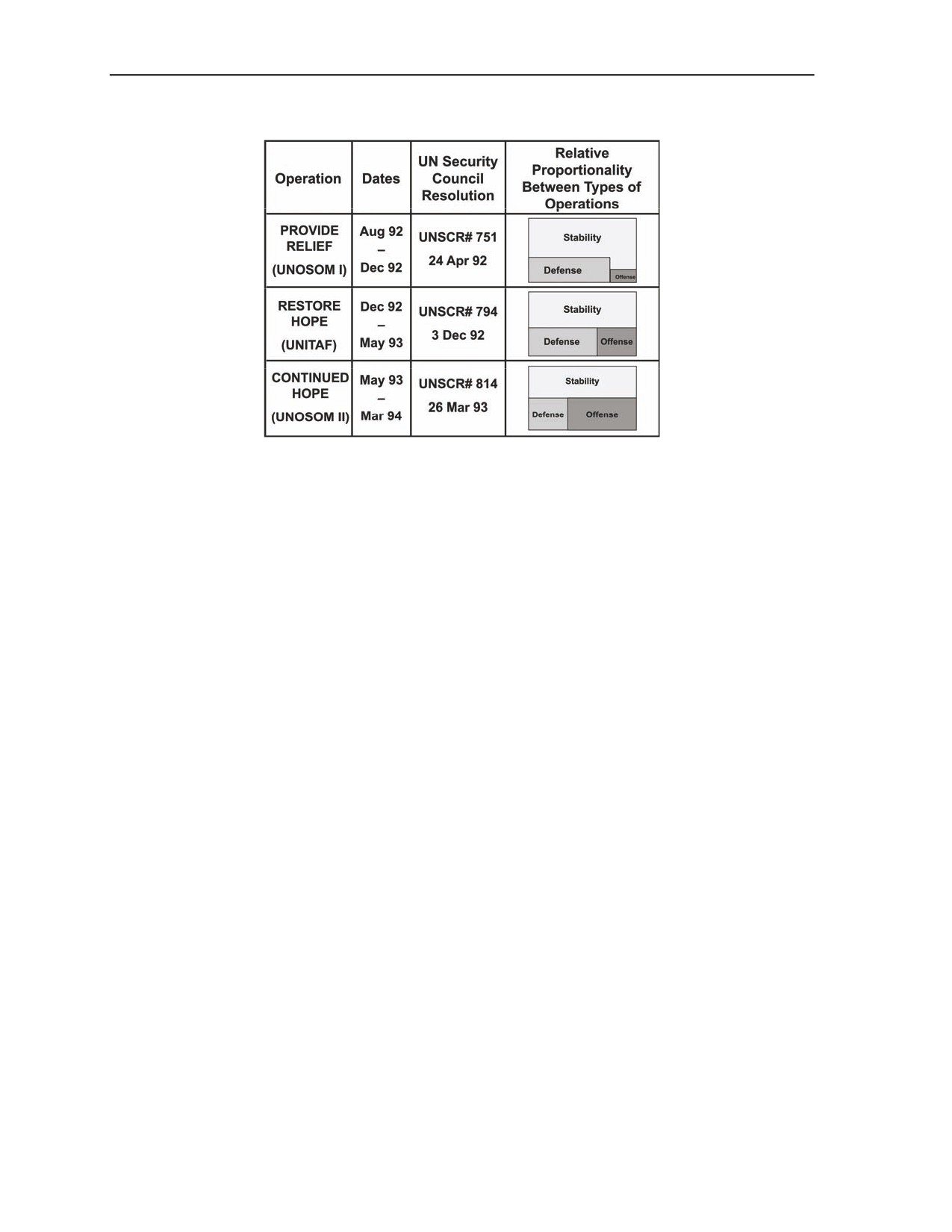
situation rapidly led to a phased U.S. involvement (see figure C-1). Army forces combined, sequenced, and
proportionally emphasized the different types of operations to accomplish changing political objectives.
Throughout all operations in Somalia, urban areas were critical to achieving mission success.
SOMALI OPERATIONS
INITIAL UN RESPONSE
C-2. The United Nations (UN) initially responded to requests for assistance from international relief
organizations by sending supplies and other forms of humanitarian aid to Somalia. However, widespread
looting, fighting between gangs, and other lawlessness prevented supplies from reaching the hungry and
sick. Only 20 percent of the food entering the country reached the people who needed it. An estimated 25
percent of Somalia’s 6 million people died of starvation or disease. In April 1992, the UN issued Security
Council Resolution (UNSCR) 751 which authorized 50 unarmed observers, but the action had little effect.
Under continuing pressure for additional measures to ensure the delivery of supplies and relief, the UN
authorized 500 armed peacekeepers (furnished by Pakistan and transported by U.S. sea- and airlift) to
protect humanitarian workers. The battalion’s limited mission, designated UN Operations in Somalia I
(UNOSOM I), encompassed safeguarding the unloading of ships and providing convoy security.
PROVIDE RELIEF (UNOSOM I)
C-3. In July 1992, the UN requested an increased airlift of supplies and the United States quickly
responded. U.S. Central Command
(USCENTCOM) activated joint task force
(JTF) OPERATION
PROVIDE RELIEF. Based on careful mission analysis, USCENTCOM limited the JTF’s actions to—
Deploying a humanitarian assistance survey team to assessing relief requirements.
Providing an emergency airlift of supplies.
Using Air Force cargo aircraft for daily relief sorties into Somalia.
C-4. USCENTCOM restricted the sorties to flying during daylight hours and to locations that would
provide a permissive and safe environment. In mid-September 1992, the United States prudently expanded
its role by stationing the amphibious ready group, USS Tarawa, offshore to provide support to the
Pakistani security battalion and to provide security for U.S. airlift operations. The
11th Marine
expeditionary unit (MEU) was on board the USS Tarawa to rapidly respond to any change in mission (see
Appendix D for a description and the capabilities of a MEU).
26 October 2006
FM 3-06
C-1
Appendix C
Figure C-1. Relative proportionality between types of operations
RESTORE HOPE (UNITAF)
C-5. By November 1992, the magnitude of the task, UN organizational deficiencies, and a continued lack
of security precluded delivery of sufficient supplies to the needy. Notably, a ship laden with relief supplies
was fired on in the harbor at Mogadishu, forcing its withdrawal before the supplies could be brought
ashore, and a Pakistani peacekeeper was shot when his car was hijacked. Subsequently, the United States
offered to provide forces and lead a UN-sponsored operation to reopen the flow of food to where it was
needed most. In December 1992, the UN issued UNSCR 794, which authorized member states “to use all
necessary means to establish a secure environment for humanitarian relief operations in Somalia” and
demanded all “factions in Somalia immediately cease hostilities.” To allay concerns of colonialism by a
number of African countries, the UN Secretary-General was given oversight of the operation. The
resolution also required soldiers to be withdrawn once order was restored; however, it provided no exit
strategy. As clearly as possible, the USCENTCOM mission statement
(below) for OPERATION
RESTORE HOPE reflected the UN mandate:
When directed by the
[President or the Secretary of Defense],
[Commander,
USCENTCOM] will conduct joint/combined military operations in Somalia to secure the
major air and sea ports, key installations and food distribution points, to provide open
and free passage of relief supplies, provide security for convoys and relief organization
operations, and assist UN/[nongovernmental organizations] in providing humanitarian
relief under UN auspices. Upon establishing a secure environment for uninterrupted
relief operations,
[Commander, USCENTCOM] terminates and transfers relief
operations to UN peacekeeping forces.
C-6. Mogadishu was the largest port in the country and the focal point of previous humanitarian relief
activities of nongovernmental organizations (NGOs). It was also the headquarters of the coalition of 20
nations and over 30 active humanitarian relief organizations. As such, Mogadishu became the entry point
for the operational buildup of the multinational force known as Unified Task Force (UNITAF) and the key
logistic hub for all operations in Somalia. UNITAF immediately gained control over the flow of relief
supplies into and through Mogadishu and stabilized the conflict among the clans. In less than a month,
UNITAF forces expanded control over additional ports and interior airfields. They secured additional
distribution sites in other key urban areas in the famine belt to include Baidoa, Baledogle, Gialalassi,
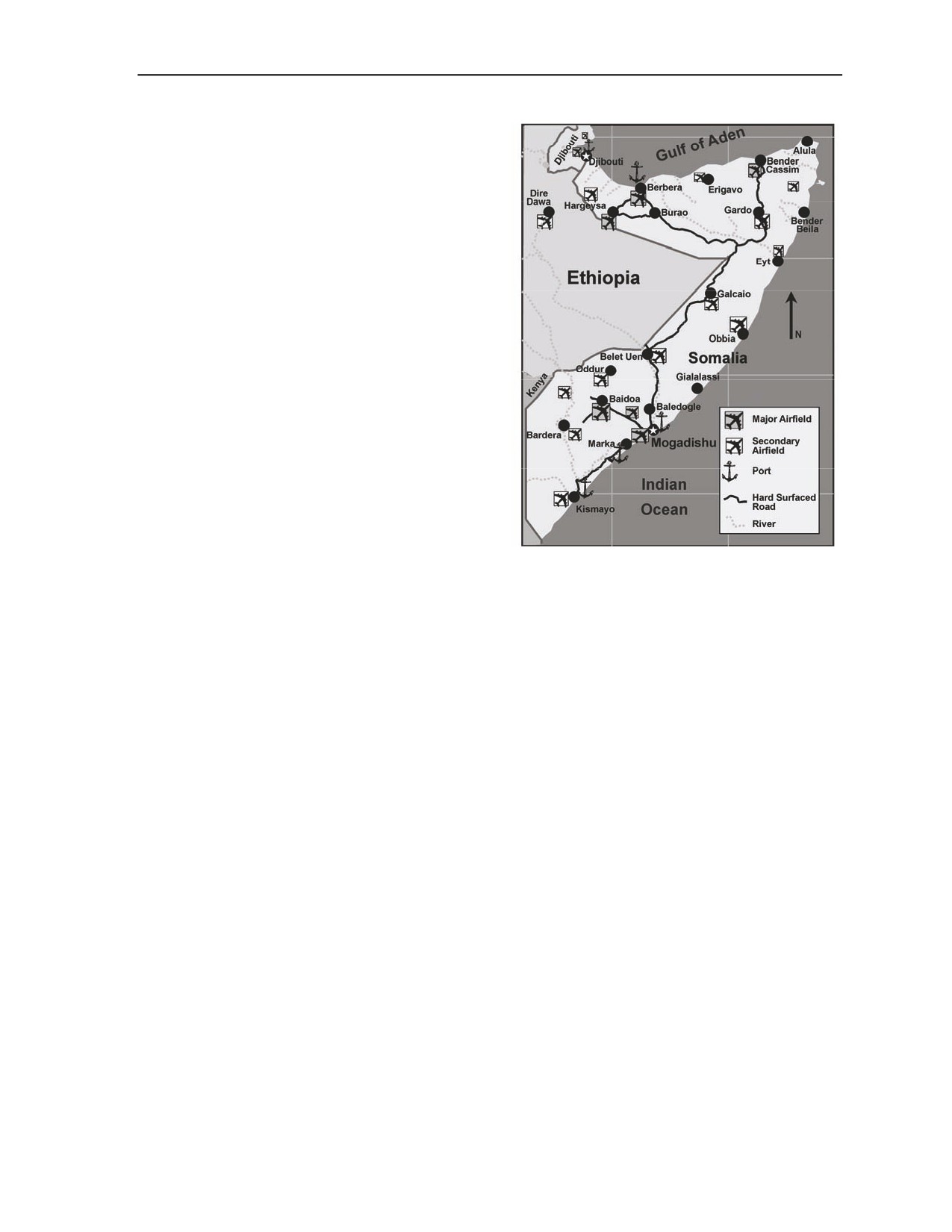
Bardera, Belet Uen, Oddur, Marka, and the southern town of Kismayo (see figure C-2). With minimal
force, the U.S.-led UNITAF established a secure environment that allowed relief to reach those in need,
successfully fulfilling its limited—yet focused—mandate.
C-2
FM 3-06
26 October 2006
Operations in Somalia: Applying the Urban Operational Framework to Stability Operations
CONTINUED HOPE (UNOSOM II)
C-7. In March 1993, the UN issued UNSCR 814
establishing a permanent peacekeeping force,
UNOSOM II. However, the orderly transition from
UNITAF to UNOSOM II was repeatedly delayed
until May 1993. (The UN Secretary-General urged
the delay so that U.S. forces could effectively
disarm bandits and rival clan factions in Somalia.)
This resolution was significant in two critical
aspects:
It explicitly endorsed nation building
with the specific objectives of
rehabilitating the political institutions and
economy of Somalia.
It mandated the first ever UN-directed
peace enforcement operation under the
Chapter VII enforcement provisions of
the Charter, including the requirement
for UNOSOM II to disarm the Somali
clans. The creation of a peaceful, secure
environment included the northern region
that had declared independence and had
hereto been mostly ignored.
Figure C-2. Map of Somalia
C-8. These far-reaching objectives exceeded the limited mandate of UNITAF as well as those of any
previous UN operation. Somali clan leaders rejected the shift from a peacekeeping operation to a peace
enforcement operation. They perceived the UN as having lost its neutral position among rival factions. A
more powerful clan leader, General Mohammed Farah Aideed (leader of the Habr Gidr clan), aggressively
turned against the UN operation and began a radio and propaganda campaign. This campaign characterized
UN soldiers as an occupation force trying to recolonize Somalia.
C-9. The mounting crisis erupted in June 1993. Aideed supporters killed 24 Pakistani soldiers and
wounded 57 in an ambush while the soldiers were conducting a short-warning inspection of one of
Aideed’s weapons arsenals. UNSCR 837, passed the next day, called for immediately apprehending those
responsible and quickly led to a manhunt for Aideed. The United States deployed 400 rangers and other
special operations forces (SOF) personnel to aid in capturing Aideed, neutralizing his followers, and
assisting the quick reaction force (QRF), composed of 10th Mountain Division units, in maintaining the
peace around Mogadishu.
PHASED WITHDRAWAL
C-10. On 3 October 1993, elements of Task Force (TF) Ranger (a force of nearly 100 Rangers and SOF
operators) executed a raid to capture some of Aideed’s closest supporters. Although tactically successful, 2
helicopters were shot down, 75 soldiers were wounded, and 18 soldiers were killed accomplishing the
mission. The U.S. deaths, as well as vivid scenes of mutilation to some of the soldiers, increased calls to
Congress for withdrawing U.S. forces from Somalia. The President then ordered reinforcements to protect
U.S. Forces, Somalia (USFORSOM) as they began a phased withdrawal with a 31 March deadline. The
last contingent sailed from Mogadishu on 25 March, ending OPERATION CONTINUED HOPE and the
overall U.S. mission in Somalia.
C-11. Although U.S. forces did not carry out the more ambitious UN goals of nation building, they
executed their missions successfully, relieving untold suffering through humanitarian assistance with
military skill and professionalism. Operations in Somalia occurred under unique circumstances, yet
26 October 2006
FM 3-06
C-3
Appendix C
commanders may glean lessons applicable to future urban stability operations, as well as civil support
operations. In any operations, commanders balance changing mission requirements and conditions.
UNDERSTAND
C-12. Although accomplished to varying degrees, U.S. forces failed to adequately assess and understand
the urban environment, especially the society. Somali culture stresses the unity of the clan; alliances are
made with other clans only when necessary to elicit some gain. Weapons, overt aggressiveness, and an
unusual willingness to accept casualties are intrinsic parts of the Somali culture. Women and children are
considered part of the clan’s order of battle.
C-13. Early in the planning for OPERATION RESTORE HOPE, U.S. forces did recognize the limited
transportation and distribution infrastructure in Mogadishu. The most notable was the limited or poor
airport and harbor facilities and its impact on the ability of military forces and organizations to provide
relief. Therefore, a naval construction battalion made major improvements in roads, warehouses, and other
facilities that allowed more personnel, supplies, and equipment to join the relief effort faster.
UNDERSTANDING THE CLAN (THE HUMAN DIMENSION)
C-14. During OPERATION RESTORE HOPE, the UNITAF worked with the various clan leaders as the
only recognized leadership remaining in the country. The UNITAF was under the leadership of LTG
Robert B. Johnston and U.S. Ambassador to Somalia, Robert Oakley. In addition, UNITAF forces also
tried to reestablish elements of the Somali National Police—one of the last respected institutions in the
country that was not clan-based. This reinstated police force manned checkpoints throughout Mogadishu
and provided crowd control at feeding centers. Largely because of this engagement strategy, the UNITAF
succeeded in its missions of stabilizing the security situation and facilitating humanitarian relief. Before its
termination, the UNITAF also worked with the 14 major Somali factions to agree to a plan for a
transitional or transnational government.
C-15. The UN Special Representative of the Secretary-General, retired U.S. Navy Admiral Jonathon
Howe, worked with the UNOSOM II commander, Turkish General Cevik Bir. During OPERATION
CONTINUED HOPE, Howe and General Bir adopted a philosophy and operational strategy dissimilar to
their UNITAF predecessors. Instead of engaging the clan leaders, Howe attempted to marginalize and
isolate them. Howe initially attempted to ignore Aideed and other clan leaders in an attempt to decrease the
warlord’s power. Disregarding the long-established Somali cultural order, the UN felt that, in the interest
of creating a representative, democratic Somali government, they would be better served by excluding the
clan leadership. This decision ultimately set the stage for strategic failure.
THREAT STRATEGY AND TACTICS
C-16. During OPERATION RESTORE HOPE, U.S. forces also failed to properly analyze and understand
their identified threat’s intent and the impact that the urban environment would have on his strategy,
operations, and tactics. The UN began to view eliminating Aideed’s influence as a decisive point when
creating an environment conducive to long-term conflict resolution. Aideed’s objective, however, remained
to consolidate control of the Somali nation under his leadership—his own brand of conflict resolution. He
viewed the UN’s operational center of gravity as the well-trained and technologically advanced American
military forces, which he could not attack directly. He identified a potential American vulnerability—the
inability to accept casualties for an operation not vital to national interests—since most Americans still
viewed Somalia as a humanitarian effort. If he could convince the American public that the price for
keeping troops in Somalia would be costly, or that their forces were hurting as many Somalis as they were
helping, he believed they would withdraw their forces. If U.S. forces left, the powerless UN would leave
soon after, allowing Aideed to consolidate Somalia under his leadership.
VULNERABILITY AND RISK ASSESSMENT
C-17. U.S. forces failed to assess, understand, and anticipate that Aideed would adopt this asymmetric
approach and attack the American public’s desire to remain involved in Somalia. By drawing U.S. forces
C-4
FM 3-06
26 October 2006
Operations in Somalia: Applying the Urban Operational Framework to Stability Operations
into an urban fight on his home turf in Mogadishu, he could employ guerrilla insurgency tactics and use the
urban area’s noncombatants and its confining nature. Such tactics made it difficult for the U.S. forces to
employ their technological superiority. If U.S. forces were unwilling to risk harming civilians, his forces
could inflict heavy casualties on them, thereby degrading U.S. public support for operations in Somalia. If,
on the other hand, the U.S. forces were willing to risk increased civilian casualties to protect themselves,
those casualties would likely have the same effect.
C-18. However, an assessment and understanding of the Somali culture and society should have
recognized the potential for Aideed’s forces to use women and children as cover and concealment.
Accordingly, the plan should have avoided entering the densely populated Bakara market district with such
restrictive rules of engagement. As legitimacy is critical to stability operations, TF Ranger should have
been prepared and authorized to employ nonlethal weapons, to include riot control gas, as an alternative to
killing civilians or dying themselves.
C-19. U.S. forces also failed to assess and understand the critical vulnerability of their helicopters in an
urban environment and the potential impact on their operations. TF Ranger underestimated the threat’s
ability to shoot down its helicopters even though they knew Somalis had attempted to use massed rocket-
propelled grenade (RPG) fires during earlier raids. (Aideed brought in fundamentalist Islamic soldiers from
Sudan, experienced in downing Russian helicopters in Afghanistan, to train his men in RPG firing
techniques). In fact, the Somalis had succeeded in shooting down a UH-60 flying at rooftop level at night
just one week prior to the battle. Instead, TF Ranger kept their most vulnerable helicopters, the MH-60
Blackhawks, loitering for forty minutes over the target area in an orbit that was well within Somali RPG
range. The more maneuverable AH-6s and MH-6s could have provided the necessary fire support.
Planning should have included a ready ground reaction force, properly task organized, for a downed
helicopter and personnel recovery contingency.
C-20. Information operations considerations apply throughout the entire urban operational framework;
however, operations security
(OPSEC) is critical to both assessment and shaping. OPSEC requires
continuous assessment throughout the urban operation particularly as it transitions among the spectrum of
operations. As offensive operations grew during OPERATION CONTINUED HOPE, U.S. forces did little
to protect essential elements of friendly information. Combined with the vulnerability of U.S. helicopters,
Aideed’s followers used U.S. forces’ inattention to OPSEC measures to their advantage. The U.S. base in
Mogadishu was open to public view and Somali contractors often moved about freely. Somalis had a clear
view both day and night of the soldiers’ billets. Whenever TF Ranger would prepare for a mission, the
word rapidly spread through the city. On 3 October 1993, Aideed’s followers immediately knew that
aircraft had taken off and, based on their pattern analysis of TF Ranger’s previous raids, RPG teams rushed
to the rooftops along the flight paths of the task force’s Blackhawks.
SHAPE
C-21. One of the most critical urban shaping operations is isolation. During OPERATION CONTINUED
HOPE, U.S. forces largely discounted other essential elements of friendly information and did not establish
significant public affairs and psychological operations (PSYOP) initiatives. In fact, Army forces lacked a
public affairs organization altogether. Consequently, Aideed was not isolated from the support of the
Somali people. This failure to shape the perceptions of the civilian populace coupled with the increased use
of lethal force (discussed below) allowed Aideed to retain or create a sense of legitimacy and popular
support. Ironically, the focus on Aideed helped create a popular figure among the warlords through which
many noncompliant, hostile, and even neutral Somalis could rally behind.
C-22. During OPERATION RESTORE HOPE, Aideed conducted propaganda efforts through “Radio
Aideed”—his own radio station. UNITAF countered these efforts with radio broadcasts. This technique
proved so effective that Aideed called MG Anthony C. Zinni, UNITAF’s director of operations, over to his
house on several occasions to complain about UNITAF radio broadcasts. General Zinni responded, “If he
didn’t like what we said on the radio station, he ought to think about his radio station and we could
mutually agree to lower the rhetoric.” This approach worked.
26 October 2006
FM 3-06
C-5
Appendix C
ENGAGE
C-23. The complexity of urban operations requires unity of command to identify and effectively strike the
center of gravity with overwhelming combat power or capabilities. Complex command and control
relationships will only add to the complexity and inhibit a commander’s ability to dominate and apply
available combat power to accomplish assigned objectives. Stability operations as seen in Somalia required
commanders to dominate within a supporting role and, throughout, required careful, measured restraint.
UNITY OF COMMAND (EFFORT)
C-24. During OPERATION RESTORE HOPE, UNITAF successfully met unity of command challenges
through three innovations. First, they created a civil-military operations center (CMOC) to facilitate unity
of effort between NGOs and military forces. Second, UNITAF divided the country into nine humanitarian
relief sectors centered on critical urban areas that facilitated both relief distribution and military areas of
responsibility. Third, to establish a reasonable span of control, nations that provided less than platoon-sized
contingents were placed under the control of the Army, Marine Corps, and Air Force components.
C-25. On the other hand, during OPERATION CONTINUED HOPE, UNOSOM II command and control
relationships made unity of command (effort) nearly impossible. The logistic components of USFORSOM
were under UN operational control, while the QRF remained under USCENTCOM’s combatant
command—as was TF Ranger. However, the USCENTCOM commander was not in theater. He was not
actively involved in planning TF Ranger’s missions or in coordinating and integrating them with his other
subordinate commands. It was left to TF Ranger to coordinate with the QRF as needed. Even in TF
Ranger, there were dual chains of command between SOF operators and the Rangers. This underscores the
need for close coordination and careful integration of SOF and conventional forces (see Chapter 4). It also
emphasizes overall unity of command (or effort when command is not possible) among all forces operating
in a single urban environment.
C-26. Following TF Ranger’s
3 October mission, the command structure during OPERATION
CONTINUED HOPE was further complicated with the new JTF-Somalia. This force was designed to
protect U.S. forces during the withdrawal from Somalia. JTF-Somalia came under the operational control
of USCENTCOM, but fell under the tactical control of USFORSOM. Neither the JTF nor USFORSOM
controlled the naval forces that remained under USCENTCOM’s operational control. However unity of
effort
(force protection and a rapid, orderly withdrawal) galvanized the command and fostered close
coordination and cooperation among the semiautonomous units.
MEASURED RESTRAINT
C-27. During OPERATIONS PROVIDE RELIEF and RESTORE HOPE, U.S. forces dominated within
their supporting roles. Their perseverance, adaptability, impartiality, and restraint allowed them to provide
a stable, secure environment. Hence, relief organizations could provide the food and medical care
necessary to reduce disease, malnourishment, and the overall mortality rate. However, during
OPERATION CONTINUED HOPE, U.S. operations became increasingly aggressive under the UN
mandate. However, peace enforcement also requires restraint and impartiality to successfully dominate and
achieve political objectives. The increased use of force resulted in increased civilian casualties, which in
turn reduced the Somalis’ perception of U.S. legitimacy. As a result, most moderate Somalis began to side
with Aideed and his supporters. Many Somalis, without effective information operations to shape their
perceptions, felt that it was fine for foreign military forces to intervene in their country to feed the starving
and even help establish a peaceful government, but not to purposefully target specific Somali leaders as
criminals.
CONSOLIDATE AND TRANSITION
C-28. Across the spectrum of conflict, Army forces must be able to execute full spectrum operations not
only sequentially but, as in the case of operations in Somalia, simultaneously. OPERATION PROVIDE
RELIEF began primarily as a stability operation in the form of foreign humanitarian assistance. Later this
operation progressed to include peacekeeping (another stability operation), defensive operations to protect
C-6
FM 3-06
26 October 2006
Operations in Somalia: Applying the Urban Operational Framework to Stability Operations
UN forces and relief supplies, and minimum offensive operations. As operations transitioned to
OPERATION RESTORE HOPE, it became apparent that while foreign humanitarian assistance was still
the principal operation, other operations were necessary. More forceful peacekeeping, show of force, and
arms control (all forms of stability operations), and offensive and defensive operations grew increasingly
necessary to establish a secure environment for uninterrupted relief operations. In the final phase of U.S.
involvement during OPERATION CONTINUED HOPE, major changes to political objectives caused a
major transition in the form of the stability operation to peace enforcement with an even greater increase in
the use of force, offensively and defensively, to create a peaceful environment and conduct nation building.
Finally, the TF Ranger raid demonstrated the need to maintain a robust, combined arms force capable of
rapidly transitioning from stability operations (primarily peace operations) to combat operations.
SUMMARY
C-29. OPERATIONS PROVIDE RELIEF and RESTORE HOPE were unquestionably successes.
Conversely, during OPERATION CONTINUED HOPE, the 3-4 October battle of Mogadishu (also known
as the “Battle of the Black Sea”) was a tactical success leading to an operational failure. TF Ranger
succeeded in capturing 24 suspected Aideed supporters to include two of his key lieutenants. Arguably,
given the appropriate response at the strategic level, it had the potential to be an operational success. After
accompanying Ambassador Oakley to a meeting with Aideed soon after the battle, MG Zinni described
Aideed as visibly shaken by the encounter. MG Zinni believed Aideed and his subordinate leadership were
tired of the fighting and prepared to negotiate. Unfortunately, the U.S. strategic leadership failed to conduct
the shaping actions necessary to inform and convince the American public (and its elected members of
Congress) of the necessity of employing American forces to capture Aideed. The President was left with
little recourse after the battle of Mogadishu but to avoid further military confrontation.
C-30. Despite this strategic failing, the operational commanders might have avoided the casualties, and any
subsequent public and Congressional backlash, had they better communicated among themselves and
worked with unity of effort. Recognizing the separate U.S. and UN chains of command, the UN Special
Representative, along with the USCENTCOM, USFORSOM, and TF Ranger commanders, should have
established the command and control architecture needed. This architecture would have integrated planning
and execution for each urban operation conducted. These commanders failed to “operationalize” their plan.
They did not properly link U.S. strategic objectives and concerns to the tactical plan. The TF Ranger
mission was a direct operational attempt to obtain a strategic objective in a single tactical action. Yet, they
failed to understand the lack of strategic groundwork, the threat’s intent and capabilities, and the overall
impact of the urban environment, to include the terrain and society, on the operation. Such an
understanding may not have led to such a high-risk course of action but instead to one that de-emphasized
military operations and emphasized a political solution that adequately considered the clans’ influence.
26 October 2006
FM 3-06
C-7
This page intentionally left blank.
Appendix D
Joint and Multinational Urban Operations
[Joint force commanders] synchronize the actions of air, land, sea, space, and special
operations forces to achieve strategic and operational objectives through integrated,
joint campaigns and major operations. The goal is to increase the total effectiveness of
the joint force, not necessarily to involve all forces or to involve all forces equally.
JP 3-0
As pointed out earlier, Army forces, brigade size and larger, will likely be required to
conduct operations in, around, and over large urban areas in support of a joint force
commander (JFC). The complexity of many urban environments, particularly those
accessible from the sea, requires unique leveraging and integration of all the
capabilities of U.S. military forces to successfully conduct the operation. This
appendix discusses many of these capabilities; JP 3-06 details joint urban operations.
PURPOSE
D-1. In some situations, a major urban operation is required in an inland area where only Army forces are
operating. Army commanders determine if the unique requirements of the urban environment require
forming a joint task force (JTF) or, if not, request support by joint capabilities from the higher joint
headquarters. Sometimes the nature of the operation is straightforward enough or the urban operation is on
a small enough scale that conventional intraservice support relationships are sufficient to meet the mission
requirements.
D-2. Most major urban operations (UO), however, require the close cooperation and application of joint
service capabilities. A JTF may be designated to closely synchronize the efforts of all services and
functions in an urban area designated as a joint operations area (JOA). If a large urban area falls in the
context of an even larger ground force area of operations, a JTF dedicated to the urban operation may not
be appropriate. These situations still require joint capabilities. In such cases, the responsible JFC designates
support relations between major land units and joint functional commands. The major land units can
consist of Army forces, Marine Corps forces, or joint forces land component command. The joint
functional commands can consist of the joint special operations task force, joint psychological operations
task force, or joint civil-military operations task force.
D-3. This appendix describes the roles of other services and joint combatant commands in UO. It provides
an understanding that enables Army commanders to recommend when to form a JTF or to request support
from the JFC. It also provides information so commanders can better coordinate their efforts with those of
the JFC and the commanders of other services or components conducting UO. Lastly, this appendix
describes some considerations when conducting UO with multinational forces.
SISTER SERVICE URBAN CAPABILITIES
D-4. Army forces conducting UO rely on other services and functional joint commands for specialized
support in the urban environment. These capabilities are requested from and provided through the
commanding JFC. Army forces request the assets and capabilities described in this annex through their
higher headquarters to the joint command. The JFC determines if the assets will be made available, the
appropriate command relationship, and the duration of the support. Army forces prepare to coordinate
planning and execution with other services and to exchange liaison officers. These capabilities can greatly
26 October 2006
FM 3-06
D-1
Appendix D
increase the Army’s ability to understand, shape, engage, consolidate, and transition within the context of
UO.
AIR FORCE
D-5. Air Force support is an important aspect of the Army force concept for urban operations. Air Force
elements have a role to play in UO across the spectrum of operations.
D-6. Air Force intelligence, surveillance, and reconnaissance (ISR) systems contribute significantly to
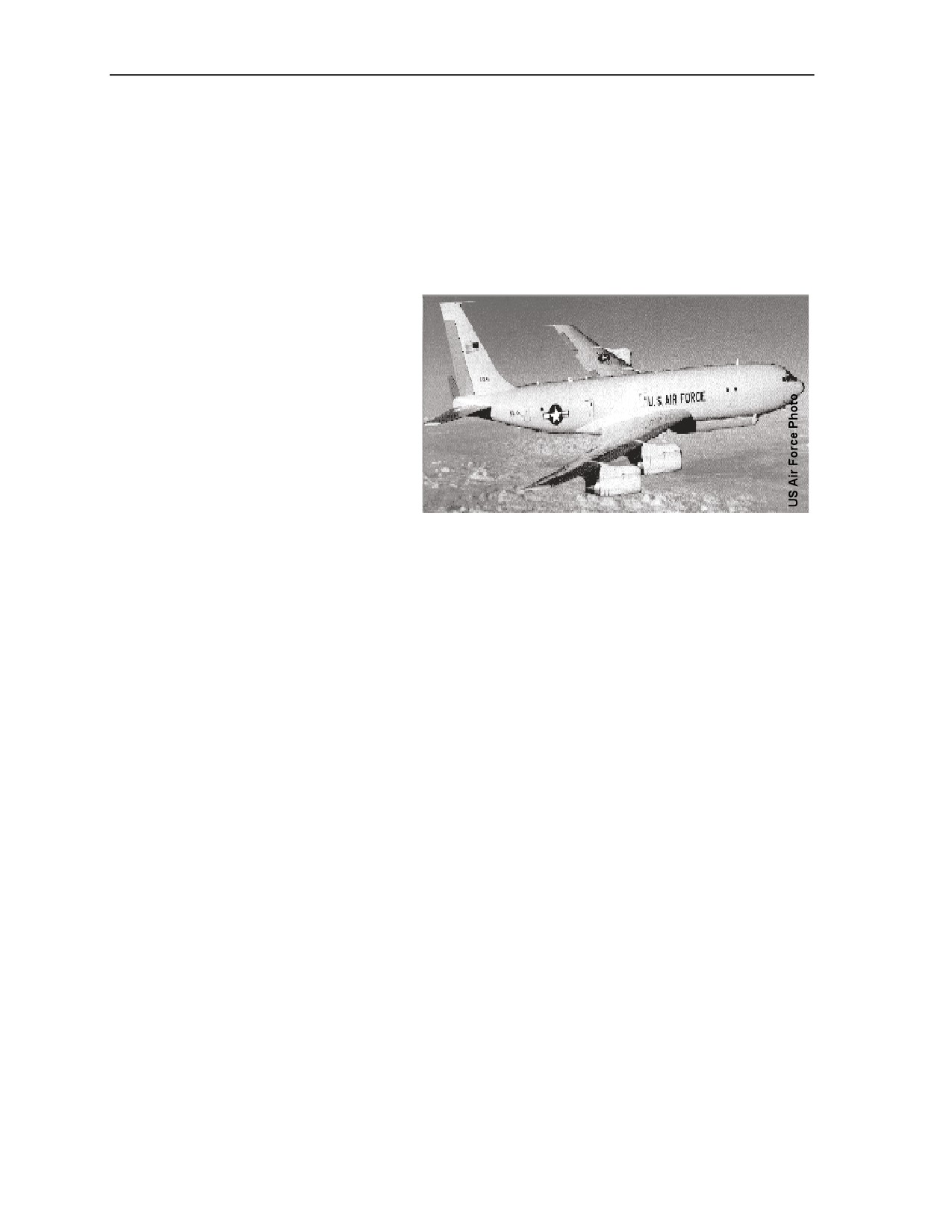
understanding the urban environment. These ISR systems include the E-8 Joint Surveillance Target Attack
Radar System (JSTARS) (see figure D-1),
U2 Dragon Lady, RC-135 Rivet Joint, or
RQ-4 Global Hawk and RQ/MQ-1
Predator unmanned aerial systems. Air
Force ISR systems can provide vital data
to help assess threat intentions, threat
dispositions, and an understanding of the
civilian population. These systems also
can downlink raw information in real-time
to Army intelligence processing and
display systems, such as the common
ground station or division tactical
exploitation system.
Figure D-1. USAF E-8 JSTARS platform
D-7. Air interdiction (AI) can be a vital component of shaping the urban operational environment. Often,
AI of the avenues of approach into the urban area isolates the threat by diverting, disrupting, delaying, or
destroying portions of the threat force before they can be used effectively against Army forces. AI is
especially effective in major combat operations where restrictions on airpower are limited and the threat is
more likely to be a conventionally equipped enemy. In 1991 during OPERATION DESERT STORM, AI
helped prevent the Iraqi 5th Mechanized Division from reaching Khafji.
D-8. Precision-guided munitions (PGMs) delivered from combat aircraft can positively and directly affect
the conduct of Army close combat actions in the urban area. Special munitions designed to penetrate
reinforced concrete can provide unique support to land forces executing UO. Although laser-guided bombs
are extremely accurate with an effective laser lock-on, environmental factors such as smoke, haze, and
weather can adversely affect successful laser designation. If the launching aircraft can achieve a successful
laser designation and lock-on, these weapons have devastating effects, penetrating deep into reinforced
concrete before exploding with great force. If launched without a lock-on, or if the laser spot is lost, these
weapons are unpredictable and can travel long distances before they impact. However, continual
advancements in tactics and weapons systems, such as joint direct attack munition (JDAM) weapons, help
decrease the adverse effects of these environmental factors. (For example, in 2003 during OPERATION
IRAQI FREEDOM, the Air Force supported the Army’s attack on An Najaf with JDAM-equipped F 16s
and B 1s during a blinding sandstorm. With near zero visibility, JDAM weapons provided significant fire
support, allowing Army forces to complete their mission and continue the attack north.) When PGMs are
unavailable, general-purpose bombs from 500 to 2,000 pounds can also prove effective. However, there
may be risk factors associated with their use such as collateral damage due to decreased accuracy, threat
exposure to the delivering aircraft due to lower delivery altitudes, or reduced weapons effectiveness due to
shallower penetration angles. (See FM 3-06.1 for a more detailed description of various aircraft weapons
and capabilities.)
D-9. In addition to shaping and engaging the UO through firepower, commanders can use Air Force
capabilities to improve and augment the urban transportation and distribution infrastructure. Air Force
units can repair or improve airfields, revitalize civil aviation maintenance facilities, manage air-delivered
cargo, and control civil and military air traffic. These latter capabilities particularly enhance urban stability
and civil support operations. These capabilities may even be decisive. Air-delivered cargo and air traffic
D-2
FM 3-06
26 October 2006
Joint and Multinational Urban Operations
management, for example, were the decisive factors in U.S. forces’ successful resistance of the Soviet
blockade of Berlin in 1948. In OPERATION RESTORE HOPE, from December 1992 to May 1993, Air
Force operations in Mogadishu were critical to airlifting and staging supplies and forces. The Air Force
determined the ultimate success of the humanitarian assistance operation (see Appendix C).
D-10. In unique situations, such as the Berlin Blockade and OPERATION RESTORE HOPE, exercising
Air Force urban capabilities may be the decisive action of the operation. Most often, however, Air Force
capabilities will play a shaping role, sustaining role, or both in joint urban operations because of the
inherent requirement to occupy terrain and interface with the population.
MARINE CORPS
D-11. The Marine Corps can assault across water obstacles into a defended urban environment. This
capability is an invaluable tactical and operational tool. The mere threat of this capability can divert many
enemy forces from other avenues of approach and obscure the true nature of an attack. The impact of the
threat of amphibious assault was vividly demonstrated during OPERATION DESERT STORM where
embarked Marine Forces diverted several Iraqi divisions to defensive positions along the coast and near
Kuwait City.
D-12. The presence of Marine amphibious equipment, apart from Marine infantry, provides Army forces
unique capabilities. In UO, the amphibious operation is often not an assault from the sea, but rather an
assault river crossing. In 1950, the 7th U.S. Infantry Division used amphibious tractor support from the 1st
Marine Division to conduct an assault river crossing of the Han River into downtown Seoul. See FM 3
31.1.
D-13. The worldwide deployment of Marine air-ground task forces (MAGTFs) enables a short notice
response into any urban areas accessible from the sea. Typically, a deployed MAGTF is a Marine
expeditionary unit (special operations capable) (MEU[SOC]). The MEU(SOC) can perform forcible entry
operations, seize lodgments, and may execute these tasks anticipating reinforcement by Army or joint
forces. They are also well positioned and equipped to rapidly reinforce Army forces already deployed in
theater. The special-operations-capable training that these units accomplish before deploying includes
urban warfare training and contributes to their value in UO. The MEU(SOC) is relatively small (its core
unit is a Marine infantry battalion), is forward deployed, and has a wide spectrum of organic capabilities. It
is an important asset in crisis stability and civil support operations.
D-14. The Marine expeditionary brigade is the MAGTF between a MEU and a Marine expeditionary force
(the largest MAGTF). All MAGTFs include an aviation combat element, which is particularly skilled at
providing accurate and timely close air support. The responsiveness and accuracy of Marine close air
support aptly suits it to UO where the lethality of combat and the close range of engagements demand
accurate and responsive fires.
D-15. Marine forces that conduct UO work well in littoral urban areas because of their unique relationship
with naval forces and thus their capability to closely integrate land and sea operations. A supporting arms
liaison team may be attached to Army forces at battalion level to provide ship-to-shore communications
and coordination for naval gunfire support.
NAVY
D-16. Many major urban areas are accessible from the sea. Therefore, Army commanders should
understand how sea power can influence and support UO. The Navy brings several major capabilities to
UO. These include naval gunfire support, naval air support, and port and coastal security. In addition, the
Navy can offer secure command post sites and meeting areas; provide limited emergency shelter and
critical care for Soldiers and, as necessary, civilians; and store and transport critical supplies ashore
providing flexibility in meeting support requirements. The ability to provide support from “over the
horizon” not only enhances force protection but also the legitimacy of urban and host nation authorities
during transition.
26 October 2006
FM 3-06
D-3
Appendix D
D-17. Naval surface fire support (which includes naval gunfire support) particularly applies to forcible
entry operations in littoral urban areas. It provides an initial indirect fire support capability until Army
forces land ashore. However, naval gunfire support lacks a precision munitions capability. In defensive
operations, naval gunfire support can also add major fires, especially during retrograde operations through
an urban area. Naval gunfire support of the 3rd Infantry Division was the primary fire support for the last
two days of the X Corps retrograde
operation out of the port of Hungnam,
North Korea, in December 1950.
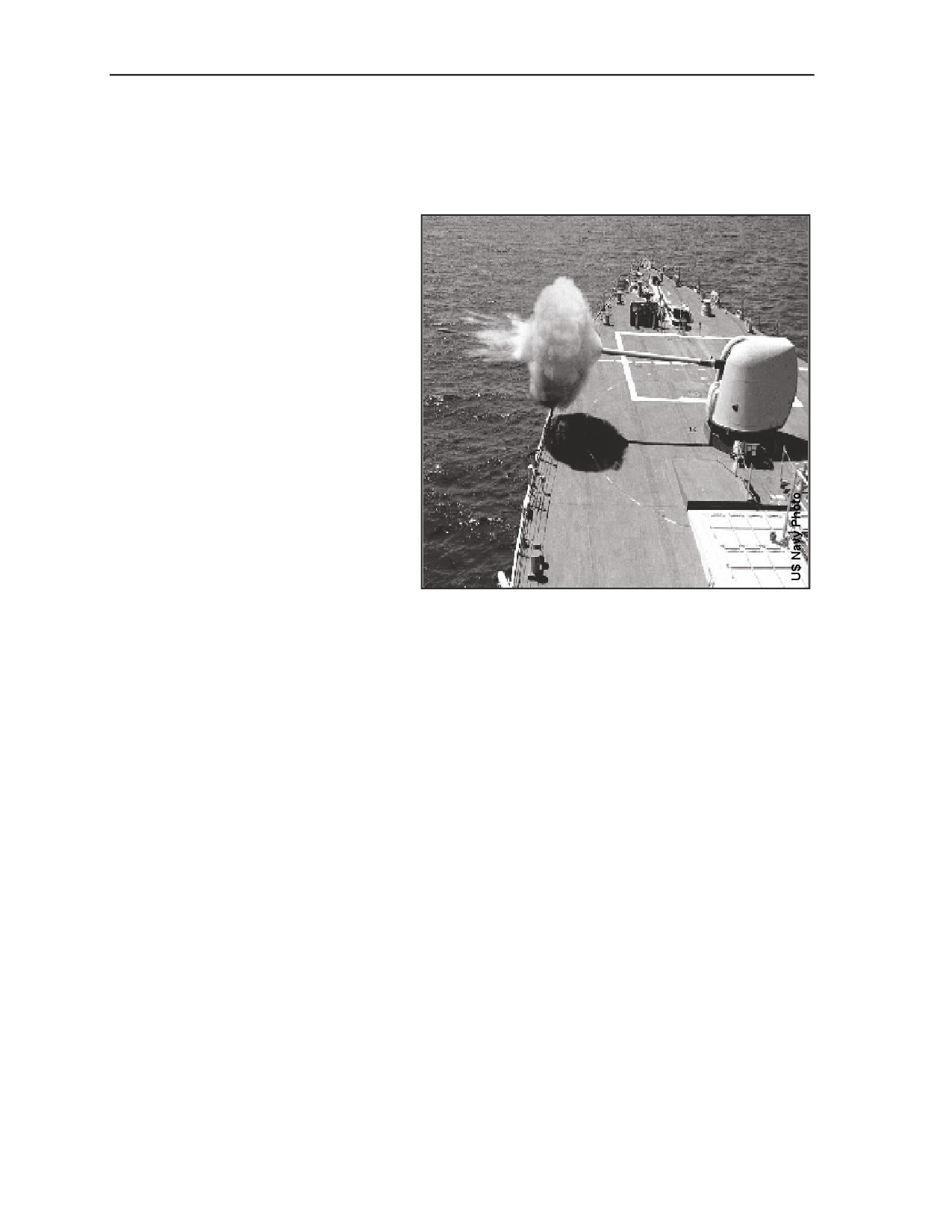
D-18. Destroyers and cruisers, which
mount one and two
127mm MK45
lightweight gun systems respectively (see
figure D-2), are capable of providing
naval gunfire support. This gun system
can provide a rate of fire of 20 rounds per
minute per gun to a range of
approximately 23 kilometers. Destroyers,
cruisers, and attack submarines are
capable of precision strikes with
Tomahawk cruise missiles. Depending on
the location of the urban area, naval air
can provide responsive aviation support to
UO alleviating the need for fixed-wing
aviation bases.
Figure D-2. USN MK45 lightweight gun system
D-19. Due to its flat trajectory, terrain masking affects naval gunfire more than field artillery. Naval gunfire
also results in large range probable errors (the dispersion pattern of the naval gun is roughly elliptical with
the long axis in the direction of fire). Hence, coverage of targets such as roads and airfields is most
effective when the gun-target line (GTL) coincides with the long axis of the target. Very close supporting
fire can be delivered when the GTL is parallel to the front line of troops. Oppositely, a GTL perpendicular
to the front trace can endanger friendly forces. Within the limits of hydrographic conditions, the ship can
maneuver to achieve a better GTL, but ship movement also makes it difficult to adjust fire. Overall, naval
and air threats, bad weather, and large range probable errors make naval gunfire difficult and can cause
cancellation of supporting fires.
D-20. Water terminals located in urban areas are usually the debarkation points for the bulk of Army forces
as well as a joint force theater logistics requirement. Army forces are responsible for water terminal
operations while naval capabilities protect these strategic and operationally vital facilities.
D-21. Naval coastal warfare (NCW) is the responsibility of the JFC and is often exercised through the
Navy component commander. He may assign a naval coastal warfare commander for an appropriate
geographic area. NCW includes coastal sea control, port security, and harbor defense. While coastal sea
control is conducted in the environment of the open seas, port security and harbor security include the
urban environment. Port security is the safeguarding of vessels, harbors, ports, waterfront facilities, and
cargo from internal threats. It includes destruction, loss, or injury from sabotage or other subversive acts;
accidents; thefts; or other causes of similar nature. The Navy’s role in protecting essential urban
infrastructure is often key. This task is also important when executing stability operations if the threats
against urban infrastructure will likely be unconventional.
D-22. Harbor defense protects harbor approaches, harbors, anchorages, and ports from external threats.
Harbor defense focuses on the conventional defense of port infrastructure. It is a task appropriate in a
major operation or campaign and often includes port security as a subtask. The JFC executes NCW
D-4
FM 3-06
26 October 2006
Joint and Multinational Urban Operations
(focused on harbor defense and port security) using combined Navy capabilities including surface warfare,
aviation, and naval special operations. See also discussions in this appendix on transportation command
and special operations command.
COAST GUARD
D-23. The Coast Guard, like the Navy, can significantly influence the conduct of UO when the urban area
is accessible from the sea. The U.S. Coast Guard (USCG) is the federal authority for port security and
harbor defense of domestic facilities. When directed by the President, the USCG can augment the Navy in
operations overseas. Historically, the entire USCG was under Navy control during both World Wars I and
II. USCG elements deployed overseas and operated under Navy control during the Vietnam War and
during OPERATIONS DESERT SHIELD and DESERT STORM.
D-24. The USCG uses surface warfare systems and aerial reconnaissance systems to conduct its missions.
Its air systems are unarmed, whereas its surface systems are armed for self-defense and law enforcement
operations. The USCG is experienced and adept at supporting other agencies, local governments, and law
enforcement. Its capabilities can best support Army UO in civil support operations or the civil support
aspects of an operation. The USCG works effectively against an unconventional threat and threats with on-
water capability.
URBAN FUNCTIONAL COMBATANT COMMAND CAPABILITIES
D-25. Three commands provide urban functional combatant command capabilities. Transportation
Command manages the global transportation system. Strategic Command integrates plans for and employs
space forces ad assets. Special Operations Command is responsible for providing special operations forces.
TRANSPORTATION COMMAND
D-26. U.S. Transportation Command (USTRANSCOM) provides strategic air, land, and sea transportation
for the Department of Defense to deploy, employ, sustain, and redeploy U.S. military forces worldwide.
USTRANSCOM provides global transportation management, using an integrated transportation system
across the spectrum of operations through its transportation component commands (TCCs). The TCC
consists of Air Mobility Command (AMC), Military Sealift Command (MSC), and Surface Deployment
and Distribution Command (SDDC).
D-27. During urban operations, USTRANSCOM, through its TCC, can provide common-user terminal
services in support of strategic transportation movements to a theater of operations. AMC provides
common-user airlift, air refueling, and aeromedical evacuation services. It is the worldwide aerial port
manager and, where designated, the operator of common-user aerial ports of embarkation and aerial ports
of debarkation. MSC provides common-user sealift services between seaports of embarkation (SPOEs) and
seaports of debarkation
(SPODs). SDDC provides common-user ocean terminal service and, where
designated, serves as the single port manager at SPOEs and SPODs. The urban transport system, in the
form of railheads, ports, and airfields, is integral to many urban operations across the spectrum of Army
operations and often the objective of Army UO. Army forces planning, preparing, and executing urban
operations engage the supported geographic commander of a combatant command or his component
commands in all aspects of conducting UO when the objective is transport related.
D-28. In offensive operations, commanders use transportation expertise to identify the urban transportation
infrastructure (both the terrain and social [human] aspects) that is secured or that can affect current and
future operations. This analysis also includes second- and third-order support systems. USTRANSCOM is
consulted regarding the degree of acceptable damage that the system can sustain and still meet mission
requirements. During execution, USTRANSCOM units may integrate into the operation so they can begin
operating the transportation systems as early as possible. During the Inchon landing of September 1950,
Army forces had begun rail operations on D+1 and port operations under way by D+3 of the forcible entry.
D-29. In defensive and stability or civil support operations, USTRANSCOM units safeguard and prevent
disruption of the transport system by the conduct of defensive operations or stability tasks.
26 October 2006
FM 3-06
D-5
Appendix D
USTRANSCOM advises Army commanders of the impact of defensive tactics, techniques, and procedures
(TTP) on USTRANSCOM operations as well as security requirements for USTRANSCOM facilities. The
JFC provides guidance to deconflict any issues that may arise from these potentially divergent missions
and tasks.
STRATEGIC COMMAND
D-30. The United States Strategic Command (USSTRATCOM) is the combatant command that integrates
and synchronizes space operations, information operations, integrated missile defense, global command
and control (C2); ISR, global strike, and strategic deterrence to provide. A unified source for greater
understanding of specific threats around the world and the means to rapidly respond to those threats
including weapons of mass destruction. USSTRATCOM operates assigned forces through its service
component commands: U.S. Army Space Command/Army Forces Strategic Command; Air Force Space
Command, and Naval Net Warfare Command.
D-31. USSTRATCOM provides critical space systems that offer global coverage and potential for real-
time and near real-time support to urban operations. Space systems are unconstrained by political
boundaries. Commanders can use space systems during peacetime or times of crisis to monitor an urban
area before inserting friendly forces. Space systems enhance operations and assist commanders in
overcoming some of the physical challenges of the urban environment. These enhancement operations
include ISR; positioning and navigation; environmental monitoring; and communications. Space-based
imagery and sensors are important ISR capabilities that contribute to situational understanding throughout
the depth, breadth, and height of the urban area. ISR systems can provide route and target information for
mission planning, locate presurveyed missile launch sites, detect camouflage, assess threat operations and
movements, and warn of hostile acts and reconnaissance. Positioning and navigation systems also assist
situational understanding through links to digital information systems (INFOSYS) while assisting tactical
navigation in ambiguous terrain found in some urban areas. These enhancements can include precise
location and position information for urban fires, ingress and egress routes, and rendezvous coordination.
Environmental monitoring systems can provide weather and ionospheric information needed to assess
weapon selection, air routes, ground and water trafficability, and communications. Communications
systems provide secure, survivable links between elements of Army and joint forces to disseminate plans,
orders, and warnings. These systems may form a critical link in the INFOSYS that transmit data to
assessment centers and intelligence to key decision makers. However, some of the same environmental
influences and degradation as ground-based systems may affect space-based systems. Commanders should
refer to FM 3-14 for more information on space support to Army operations.
SPECIAL OPERATIONS COMMAND
D-32. U.S. Special Operations Command (USSOCOM) exercises combatant command of all active and
reserve special operations forces stationed in the United States. USSOCOM also provides trained and
combat-ready special operations forces (SOF) to the geographical combatant commanders and, when
directed by the President or the Secretary of Defense, command-designated special operations.
D-33. SOF provide commanders with capabilities critical to success in the urban environment. The density
of this environment in both space and time requires the careful integration of SOF and conventional forces.
Army forces conducting UO have a clear and unambiguous C2 relationship with the SOF in the urban area
to ensure coordination, massing of effects, and unity of effort.
D-34. Each service has unique special operations (SO) capabilities. For example, SOF can identify and
seize or destroy key terrain or infrastructure in denied areas; secure or capture key personnel; identify
supportive civilians
(aides and allies) who can facilitate future infiltrations and the cache of critical
supplies; counter urban insurgencies; and conduct unconventional warfare in enemy-held urban areas. SOF
can also emplace covert sensors and surveillance devices, provide clandestine intelligence collection, and
provide target acquisition information or emplace beacons (for weapons guidance or navigation) in the
highly restrictive terrain of the urban environment. In multinational UO, they can provide coalition support
teams with trained, culturally aware, language proficient, military liaison personnel with organic
D-6
FM 3-06
26 October 2006
Joint and Multinational Urban Operations
communications connectivity. Army leaders understand the SO capabilities available to ensure that they
request the right support for Army UO and to ensure unity of effort within the urban JOA.
Army SOF
D-35. The Army provides five types of SOF units to USSOCOM. Two of these, psychological operations
(PSYOP) and civil affairs, are discussed in Chapter 4.
Ranger Forces
D-36. The U.S. Army 75th Ranger Regiment can rapidly deploy light infantry forces from company
through regimental size. Rangers specialize in direct action (DA) SO missions and focus on airfield seizure
and raids. Typically, Ranger units turn over their objectives to conventional units upon mission
completion. The Ranger DA capability especially applies to UO because of the many critical
infrastructures that often prompt Army forces to engage in UO. Ranger capabilities are ideal for seizing
critical facilities to preempt their defense or destruction. The size and combat power of Ranger units permit
execution of offensive and defensive operations against enemy conventional units for periods of limited
duration; austere combat service support capabilities limit the Ranger regiment’s ability to sustain combat
action without extensive augmentation.
Special Forces
D-37. U.S. Army Special Forces Command (Airborne) trains and prepares Army Special Forces (SF) to
deploy and execute operational requirements for geographical combatant commanders. SF units are small
and capable of extended operations in remote and hostile locations. SF units execute seven basic missions:
foreign internal defense (FID), unconventional warfare (UW), counterproliferation of weapons of mass
destruction, special reconnaissance (SR), DA, counterterrorism, and information operations. Important
collateral activities consist of coalition support, combat search and rescue, counterdrug activities,
humanitarian demining activities, humanitarian assistance, security assistance, and special activities.
D-38. SR, DA, and coalition support are particularly important in UO. SF units may physically penetrate an
urban area to conduct SR to determine threat strengths, dispositions, and intentions. In some situations, SF
units, due to their language and cultural training, can gather accurate information regarding the disposition
and attitudes of the population. SF special reconnaissance can also determine or verify the functional status
of urban infrastructure as well as conduct target acquisition, area assessment, and poststrike
reconnaissance.
D-39. SF teams can execute terminal guidance and with qualified joint tactical air controllers can control
operations for Army and joint precision fires. Although these teams possess limited organic combat power
for their short-duration, DA missions, they can bring significant effects to bear against high-payoff targets.
Yet, SF units have no capability to conduct a sustained defense of such targets.
D-40. SF units can advise, train, and assist urban indigenous movements already in existence to conduct
unconventional warfare and possibly accompany these groups into combat. The upsurge in urban
insurgency and terrorism has caused worldwide concern since it is not confined to developing countries.
Present day dissident groups are well aware of this situation. These groups realize that to be successful,
they must center the insurgent activities on the major cities or political center of their countries.
Special Operations Aviation Forces
D-41. Army special operations aviation provided by the 160th Special Operations Aviation Regiment
operates primarily to support SO missions. They execute insertion, extraction, and resupply missions to
support SO. Similar to conventional aviation, this capability may be more vulnerable to concealed air
defenses when operating over hostile or unsecured urban terrain than in many other environments.
26 October 2006
FM 3-06
D-7
Appendix D
Navy SOF
Sea-Air-Land Teams
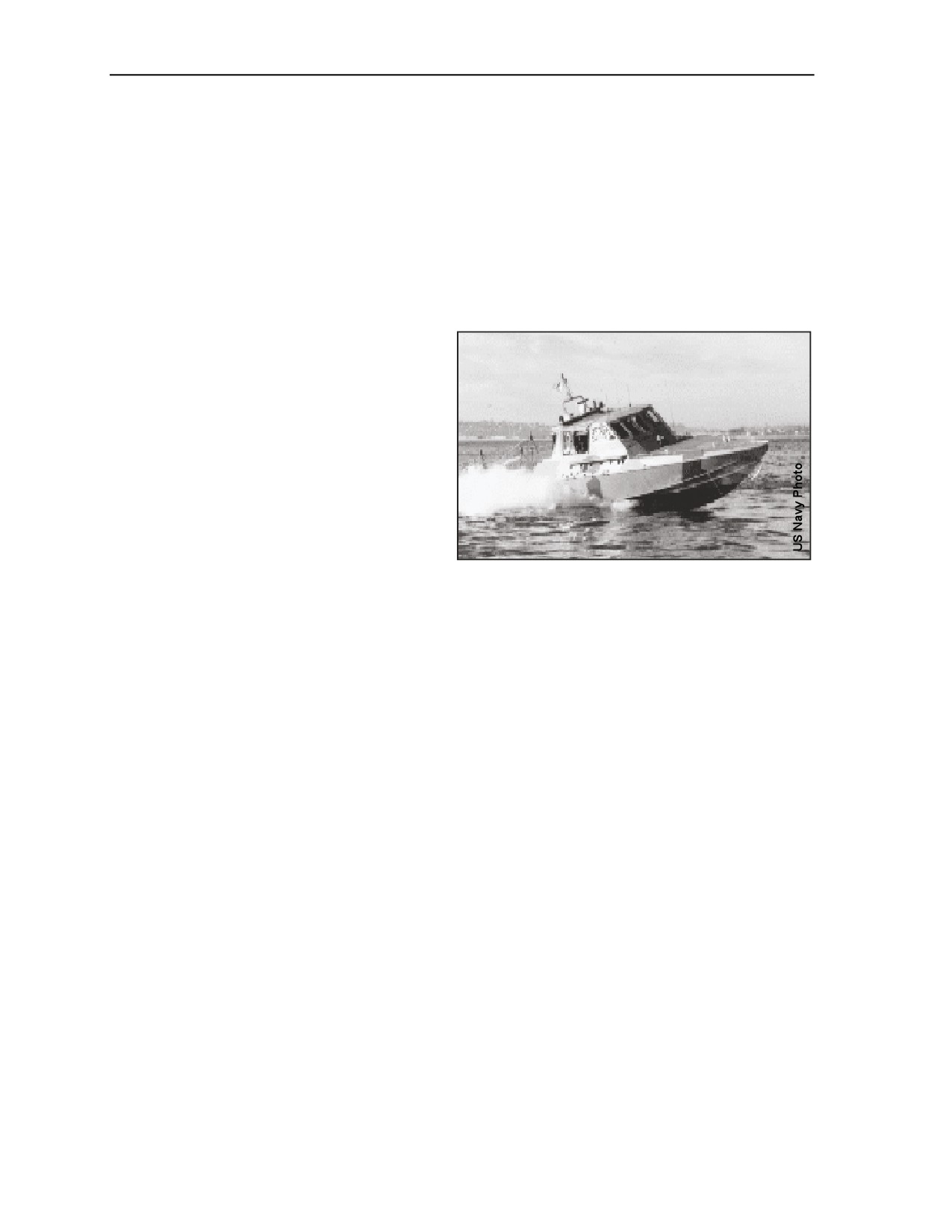
D-42. Navy sea-air-land teams (SEALs) specialize in water approaches to targets. They operate in small,
squad-size teams and have many of the same capabilities as Army Special Forces (see above). Navy
SEALs do not typically have the cultural and language training of Army Special Forces. Their capability to
insert from sea gives them a unique ability to penetrate into urban areas that are accessible from the sea.
Special Boat Units
D-43. Special boat units (SBUs) employ, operate, and maintain various surface combatant craft (see figure
D-3) to conduct and support naval and joint
special operations, riverine warfare, and coastal
patrol and interdiction. The SBU can infiltrate
and exfiltrate forces; provide small-caliber
gunfire support; and conduct coastal patrol,
surveillance, harassment, and interdiction of
maritime lines of communications. These units
are ideal in UO that include ports and rivers.
They can assist in port security, conduct river
patrols, and participate in harbor defense. They
are well suited for preventing sea infiltration by
unconventional threats.
Figure D-3. USN MK V special
Operations CraftAir Force SOF
D-44. The Air Force has three primary SOF elements: special operations air units, battlefield Airmen, and
combat aviation advisory units.
Special Operations Wings and Groups
D-45. Air Force special operations aviation elements operate both fixed-wing and rotary-wing aircraft
(which include variants of both C-130s and MH-53s). Air Force SOF conduct core missions which include
specialized air mobility, precision aerospace fires, aerospace surface interface, personnel recovery
operations, specialized refueling, combat aviation advisory, information operations, and PSYOP. As a
result, Air Force SOF conduct infiltrations, exfiltrations, resupplies, close air support of SOF ground
elements, electronic warfare, and aerial C2 support.
D-46. The AC-130 U and AC-130 H model aircraft (see figure D-4) are designed specifically to provide
close air support to ground SOF. However, they will be an invaluable asset to any ground force operating
in an urban environment. Hence, Army commanders seek opportunities to train with AC-130 gunships
prior to the conduct of UO. AC-130s are armed with one 40mm autocannon and one 105mm howitzer. The
AC-130 U is also armed with one 25mm autocannon. This aircraft has night capability and is extremely
accurate. Its fires are responsive and can be decisive in close urban combat. Its cannon and howitzer are
accurate enough to concentrate fire onto a single spot to create a rooftop breach that allows fire to be
directed deeper into the building. The aircraft can provide excellent covert illumination with its infrared
spotlight. The AC-130 is very vulnerable to air defense systems, which friendly forces must suppress or
destroy to effectively use this system. (During OPERATION DESERT STORM in 1991, an AC-130 was
shot down over Kuwait.)
D-8
FM 3-06
26 October 2006
Joint and Multinational Urban Operations
Battlefield Airmen
D-47. Battlefield Airmen consist of special tactics teams (STTs) and special operations weather teams
(SOWTs). Combat controllers and pararescue personnel constitute STTs. STTs are specially tailored to
meet mission criteria and may vary from a small three-man team to a larger twenty-five-man element. STTs
support the UO Army commanders by—
Performing air-land-sea personnel recovery operations.
Providing terminal attack control or guidance.
Establishing and operating navigational aids and beacons.
Providing liaison to ground commanders.
Providing visual flight rules and limited instrument flight rules air traffic control.
Providing positive control of the terminal objective area aviation environment during SOF
operations.
Note: SOWTs are normally attached to Army SOF to provide weather observation and limited
tactical forecasting.
Combat Aviation Advisory (CAA) Operations
D-48. CAA operations are part of an interagency process aimed toward freeing and protecting the host
nation’s population from subversion, lawlessness, and insurgency. Specifically, CAA operations are
tailored to assess, train, advise, and assist foreign aviation forces in air operations employment and
sustainability. CAA operations support geographical combatant commanders throughout the spectrum of
conflict primarily by facilitating the availability, reliability, safety and interoperability, and integration of
friendly and allied aviation forces supporting joint, interagency, and multinational forces and
organizations. CAA operations provide assistance in the interrelated areas of FID, coalition support, UW,
and humanitarian and disaster relief. CAA operations also include a liaison role in coalition support.
MULTINATIONAL CONSIDERATIONS
D-49. Army UO in foreign urban areas will often be joint and likely have a multinational component.
When properly executed, integrating multinational forces into UO greatly enhances the operation’s military
(as well as political) effectiveness. Properly integrating multinational forces into UO requires a thorough
understanding of both the urban environment and the nature of individual national forces. This
understanding includes the political, cultural, and historical characteristics of the other national forces.
Such understanding also includes the national force’s doctrine and military capabilities, strengths, and
weaknesses. In UO, these considerations are critical because these factors will alter the urban population’s
attitude toward multinational forces and the behavior of such forces as they interact with the urban
population. Combining this understanding with effective C2 and an equal understanding of the urban
environment results in effective multinational UO (see FM 100-8).
CULTURAL COMPATIBILITY
D-50. When evaluating and assigning UO tasks, Army commanders also consider the degree of interaction
with the civilian population. A national force from a Muslim-majority country may work better with a
civilian population that is also Muslim than a force having a different religion. In such a situation, the
national force with the same religion as the urban population may be assigned tasks that require close
relations with civilians. Army forces, in this situation, may be assigned tasks that are more remote from the
population. National forces that have a national history of animosity to the civil population (or that
sympathize with antagonists within the civilian population) are not used in tasks requiring diplomacy and
close cooperation with the civilians or government.
26 October 2006
FM 3-06
D-9
Appendix D
MILITARY CAPABILITIES AND RESTRICTIONS
D-51. Army forces are responsible to understand the military capabilities of national forces with which
they work. Some national forces, as part of their normal capabilities, are adept at police functions that
enable them to operate with little training in a law enforcement role. Other national forces specialize in
small-unit, light infantry patrolling. These forces may be ideal in a stability operation. In contrast, a
national force composed of conscripts and trained primarily in conventional warfare techniques may best
work as a reinforcing force or may require extensive training before mission execution in an urban
environment or a stability situation. Army commanders also consider the type of weapon systems with
which participating multinational forces are equipped; they may be more or less effective in an urban
environment. For example, some countries may still possess the Vulcan antiaircraft gun system (or similar
weapon) that can be very useful in urban offensive and defensive operations.
D-52. Commanders in multinational UO must also understand nation-specific rules of engagement (ROE).
Some nations will severely limit their participating military’s use of lethal and nonlethal fires. On the other
hand, other nations may not be as constrained as Army units. Ideally, commanders attempt to create ROE
that are the same across the coalition but recognize that this may not be achievable. Hence, in an
environment where minimization of collateral damage will be paramount, Army commanders will need to
carefully consider national limitations on the employment of forces when planning and executing UO.
Relatedly, commanders take into account each nation’s ability to achieve precision effects with their
available forces and systems.
INTELLIGENCE SHARING
D-53. Due to classification issues, sharing intelligence with coalition partners may be challenging; the
United States may have close intelligence ties with some countries within the coalition and few or none
with others. In many cases intelligence personnel from other countries have unique skills (and cultural
perspectives) that can significantly contribute to the friendly intelligence effort. Reports from some
coalition members may fill intelligence gaps for Army forces and the coalition as a whole. On the other
hand, few countries have the sophisticated intelligence collection assets available to Army forces and
information that Army units may provide could be critical to a coalition partner’s force protection and
overall mission success.
INFORMATION MANAGEMENT
D-54. National capabilities to collect, process, store, display, and disseminate information and establish a
common operational picture vary considerably between coalition partners. As the capabilities of Army
information systems increase, those of our future partners may not keep pace. Even when capabilities are
similar, equipment may not be compatible. The complex nature of the urban environment and coalition
language differences
(and linguist shortages) will only serve to exacerbate incompatibilities and
limitations. Therefore commanders must understand capabilities and limitations to ensure that orders,
control measures, and information can be appropriately disseminated, displayed, and understood.
Significantly, they must understand the coalition’s ability to accurately locate and track friendly forces as
well as identify friend from foe. Commanders must take the appropriate steps to ensure that essential
intelligence and relevant information is provided to coalition partners in a form (and language) that they
can accept and use. This will be critical to establishing the common operational picture necessary to
facilitate rapid decision making and effective command and control across the coalition.
D-55. Logistically, agreement among the multinational forces should include support consolidation
whenever possible. Creating a multinational logistics office or coordination center works best when
accomplished early. This office can coordinate local contracts as well as already agreed upon host-nation
support. This coordination among participating nations will reduce the competition for local assets that
could otherwise have detrimental effects on one or more participating nations. Additionally, many nations
providing forces for a coalition effort may not be able to support them logistically and will rely almost
D-10
FM 3-06
26 October 2006
Joint and Multinational Urban Operations
entirely on the United States or another coalition army for logistic support. Finally, pooled resources such
as transportation assets and maintenance personnel could potentially reduce deployment requirements for
one or more coalition partners. As the coalition matures, the role of this office or center may be expanded
to include command activities.
26 October 2006
FM 3-06
D-11
This page intentionally left blank.
Source Notes
These are sources quoted or paraphrased in this publication. They are listed by page number. Quotations are
identified by the first few word of the quote. Where a quote is embedded within a paragraph, the paragraph
number is listed. Boldface indicates the title of historical vignettes.
Chapter 1-The Urban Outlook
1-1
“Today’s security environment demands more...”: FM 1, The Army, 14 June 2005: 1-19.
1-4
Rome: A Microcosm of Urban Warfare: R. Ernest Dupuy and Trevor N. Dupuy, The Encyclopedia
of Military History: From 3500 B.C. to the Present (San Francisco: Harper & Row, 1977).
1-6
The Three Block War: as quoted in Russell W. Glenn, Steven Hartman, and Scott Gerwehr, Urban
Combat Service Support Operations: The Shoulders of Atlas (Santa Monica, CA: RAND, 2003): 26.
1-8
Winning the Peace in Iraq: The Requirement for Full Spectrum Operations: Peter W. Chiarelli
and Patrick R. Michaelis, “Winning the Peace: The Requirement for Full-Spectrum Operations,”
Military Review (July/August 2005): 4.
Chapter 2-Understanding the Urban Environment
2-1
“From a planning perspective, commanders view cities….”: FM 3-0, Operations, 14 June 2001: 6-19.
2-16
“Me and Somalia Against the World”: cited in Andrew S. Natsios, “Food Through Force:
Humanitarian Intervention and U.S. Policy,” The Washington Quarterly (winter 1994): 136.
2-18
Understanding the Effects of Unit and Soldier Actions in Iraq: Initial Impressions Report:
Operation Iraqi Freedom—Stability Operations-Support Operations, Center for Army Lessons
Learned (CALL) Newsletter No. 04-13 (Fort Leavenworth, KS: Center for Army Lessons Learned,
U.S. Training and Doctrine Command [TRADOC], 2004): ii.
2-21
“Whoever coined the phrase… ”: General Sir Rupert Smith, “Wars in Our Time-A Survey of Recent
and Continuing Conflicts,” World Defence Systems, volume 3:2 (London: Royal United Services
Institute for Defence Studies, 2001): 121.
2-25
Understanding the Urban Environment: Paris - 1944: Russell W. Glenn, “Urban Combat is
Complex,” Proceedings (February 2002): 65. Russell W. Glenn, Steven Hartman, and Scott Gerwehr,
Urban Combat Service Support Operations: The Shoulders of Atlas (Santa Monica, CA: RAND,
2003): 10-11.
Chapter 3-Understanding the Urban Threat
3-1
“…[T]he United States could be forced to intervene...”: Quadrennial Defense Review Report, 30
September 2001: 6.
3-3
“…Iraq made no direct effort...”: Gregory Fontenot, E. J. Degen, and David Tohn, On Point: US Army
in Operation IRAQI FREEDOM (Fort Leavenworth, KS: Combat Studies Institute Press, 2004): 388.
3-4
Tempo: 26th Infantry Regimental Association, Aachen. Military Operations in Urban Terrain (Lititz,
PA: 26th Infantry Regimental Association, 1999); Irving Werstein, The Battle of Aachen (New York:
Thomas Y. Crowell Company, 1962); Charles Whiting, Bloody Aachen (New York: Stein and Day,
1976).
3-6
“Chechen fighters sometimes disguised...”: Olga Oliker, Russia’s Chechen Wars 1994-2000: Lessons
from Urban Combat (Santa Monica, CA: RAND, 2001): 21.
3-7
Identifying Threats from Noncombatants: Olga Oliker, Russia’s Chechen Wars 1994-2000:
Lessons from Urban Combat (Santa Monica, CA: RAND, 2001).
3-9
Information and the Media: Eric Hammel, Fire in the Streets: The Battle for Hue, Tet 1968 (New
York: Dell Publishing, 1991).
3-12
Cultural and Religious Instability: Sid Heal, “Crowds, Mobs and Nonlethal Weapons,” Military
Review (March/April 2000): 45-50.
3-13
Food and Water Shortages: Leif R. Rosenberger, “The Strategic Importance of the World Food
Supply,” Parameters (spring 1997): 84-105.
3-15
Insurgencies and the Urban Society: Roger Trinquier, Modern Warfare: A French View of
Counterinsurgency (New York: Praeger Publisher, 1964): 16-17.
26 October 2006
FM 3-06
Source Notes-1
Source Notes
3-16
Crime and Criminal Organizations: Eugene Linden, “The Exploding Cities of the Developing
World,” Foreign Affairs (January/February 1996): 52-65; Andrew S. Natsios, “Commander’s
Guidance: A Challenge of Complex Humanitarian Emergencies,” Parameters (summer 1996): 50-66.
Chapter 4-Understanding the Urban Environment’s Effects on Warfighting Functions and Tactics
4-1
“War is, above all things, an art...”: Francis V. Greene, “The Important Improvements in the Art of
War During the Past Twenty Years and Their Probable Effect on Future Military Operations,” Journal
of the Military Service Institution of the United States 4, no. 13 (1883): 41.
4-13
“Fighting in a city is much...”: Vasili I. Chuikov, The Battle for Stalingrad (New York: Holt, Rinehart,
and Winston, 1964): as cited by JP 3-06, Doctrine for Urban Operations, 16 September 2002: 1-8.
4-14
“I heard small-arms fire and...”: Mark A. B. Hollis, “Platoon Under Fire,” Infantry (January/April
1998): 29-30.
4-17
Example of Simple Communications Innovation: Israel’s Six-Day War - 1967: Trevor N. Dupuy
and Paul Martell, Flawed Victory: The Arab-Israeli Conflict and the 1982 War in Lebanon (Fairfax,
VA: Hero Books, 1986); Richard A. Gabriel, Operation Peace for Galilee: The Israeli-PLO War in
Lebanon (New York: Hill and Wang, 1984).
Chapter 5-Contemplating Urban Operations
5-1
“We based all our further calculations...”: S. M. Shtemenko, The Soviet General Staff at War, 1941-
1945: Book One (Moscow: Progress Publishers, 1981): 317-318.
5-19
“Four hostile newspapers...”: Napoleon Bonaparte, Justin Wintle (ed.), The Dictionary of War
Quotations (New York: The Free Press, 1989): 73.
5-24
Conventional and Special Forces Integration: Gregory Fontenot, E. J. Degen, and David Tohn, On
Point: US Army in Operation IRAQI FREEDOM (Fort Leavenworth, KS: Combat Studies Institute
Press, 2004): 403.
Chapter 6-Foundations for Urban Operations
6-1
“Utilities such as electricity…”: Richard Connaughton, John Pimlott, and Duncan Anderson, The
Battle for Manila: The Most Devastating Untold Story of World War II (Novata, CA: Presidio Press,
1995): 103.
6-7
Applying the Urban Operational Framework: Panama - 1989: Ronald H. Cole, Operation Just
Cause (Washington DC: Joint History Office, 1995); Thomas Donnelly, Margaret Roth, and Caleb
Baker, Operation Just Cause: The Storming of Panama (New York: Lexington Books, 1991); John T.
Fishel, The Fog of Peace: Planning and Executing the Restoration of Panama (Carlisle, PA: Strategic
Studies Institute, 1992); Malcolm McConnell, Just Cause: The Real Story of America’s High-Tech
Invasion of Panama (New York: St. Martin’s Press, 1991); John Embry Parkerson, Jr., “United States
Compliance with Humanitarian Law Respecting Civilians During Operation Just Cause,” Military Law
Review (1991): 31-140; Jennifer Morrison Taw, Operation Just Cause: Lessons for Operations Other
Than War (Santa Monica, CA: RAND, 1996).
6-12
“I’m talking about attacking...”: William S. Wallace quoted in Michael R. Gordon, “Baghdad Targets
Picked if Hussein Holes Up There,” New York Times (7 March 2003): A11.
6-13
“Do not try to...” T. E. Lawrence, “Twenty-Seven Articles,” The Arab Bulletin (20 August 1917): as
cited in David H. Petraeus, “Learning Counterinsurgency: Observations from Soldiering in Iraq,”
Military Review (January/February 2006): 4-5.
Chapter 7-Urban Offensive Operations
7-1
“…Capture Suez City...”: Abraham Adan, On the Banks of the Suez (Novato, CA: Presidio Press,
1980): 409.
7-2
Operational Context of Urban Operations: Brittany Ports - 1944: Kent H. Butts, “The Strategic
Importance of Water,” Parameters (spring 1997): 65-83; Paul Carell, Stalingrad: The Defeat of the
German 6th Army (Atglen, PA: Schieffer Publishing, 1993); R. Ernest Dupuy and Trevor N. Dupuy,
The Encyclopedia of Military History: From 3500 B.C. to the Present (San Francisco: Harper & Row,
1977); Ralph Peters, “Our Soldiers, Their Cities,” Parameters (spring 1996): 43-50; John J. Peterson,
Into the Cauldron (Clinton, MD: Clavier House, 1973).
Source Notes-2
FM 3-06
26 October 2006
Source Notes
7-10
Forms of Attack in the Urban Offense: Metz - 1944: John Colby, War From the Ground Up: The
90th Division in WWII (Austin, TX: Nortex Press, 1991); Anthony Kemp, The Unknown Battle: Metz,
1944 (New York: Stein and Day, 1981).
7-17
Isolating an Urban Area: Hue, Vietnam - 1968: James R. Arnold, Tet Offensive 1968: Turning
Point in Vietnam (London: Osprey, 1990); Eric Hammel, Fire in the Streets: The Battle for Hue, Tet
1968 (New York: Dell Publishing, 1991).
7-21
“Often what seems to be...”: Russell W. Glenn, An Attack on Duffer’s Downtown (Santa Monica, CA:
RAND, 2001): 28.
7-22
Creative Task Organization: Using Artillery in the Direct Fire Role: 26th Infantry Regimental
Association, Aachen. Military Operations in Urban Terrain (Lititz, PA: 26th Infantry Regimental
Association, 1999); Ronald H. Cole, Operation Just Cause (Washington DC: Joint History Office,
1995); Thomas Donnelly, Margaret Roth, and Caleb Baker, Operation Just Cause: The Storming of
Panama (New York: Lexington Books, 1991); David Eshel, Mid-East Wars: The Lebanon War 1982
(Hod Hasharon, Israel: Eshel-Dramit, 1983); Richard A. Gabriel, Operation Peace for Galilee: The
Israeli-PLO War in Lebanon (New York: Hill and Wang, 1984); Malcolm McConnell, Just Cause:
The Real Story of America’s High-Tech Invasion of Panama (New York: St. Martin’s Press, 1991);
Irving Werstein, The Battle of Aachen (New York: Thomas Y. Crowell Company, 1962); Charles
Whiting, Bloody Aachen (New York: Stein and Day, 1976); Bruce Allen Watson, Sieges: A
Comparative Study (Westport, CT: Praeger, 1993).
7-26
Bold Operational Maneuver to Seize an Urban Area: Inchon and Seoul, Korea - 1950: Robert
Debs Heinl, Jr., Victory at High Tide: The Inchon-Seoul Campaign (Annapolis, MD: Nautical &
Aviation Publishing Company of America, 1979); Douglas MacArthur, Reminiscences (New York:
McGraw-Hill, 1964); Shelby L. Stanton, Ten Corps in Korea, 1950 (Novato, CA: Presidio Press,
1989).
Chapter 8-Urban Defensive Operations
8-1
“Generally, a modern city magnifies...”: Christopher R. Gabel, “Military Operations on Urbanized
Terrain: The 2d Battalion, 26th Infantry, at Aachen, October 1944,” Urban Combat Operations:
tactics, Techniques and Procedure. Center for Army Lessons Learned (CALL) Newsletter No. 99-16
(Fort Leavenworth, KS: Center for Army Lessons Learned, U.S. Training and Doctrine Command
[TRADOC], November 1999): 1-9.
8-5
Urban Defense in a Major Operation: Stalingrad -1942 to 1943: Anthony Beevor, Stalingrad
(New York: Penguin Books, 1998); Vasili I. Chuikov, The Battle for Stalingrad (New York: Holt,
Rinehart, and Winston, 1964); William Craig, Enemy at the Gates: The Battle for Stalingrad (New
York: Reader’s Digest Press, 1973).
8-8
“What is the position...”: Michael Dewar, War in the Streets: The Story of Urban Combat from Calais
to Khafji (New York: Sterling Publishers, 1992): 8.
8-10
Defensive Combat Power: Suez - 1973: Abraham Adan, On the Banks of the Suez (Novato, CA:
Presidio Press, 1980).
Chapter 9-Urban Stability and Civil Support Operations
9-1
“The Rangers were bound...”: Mark Bowden, Black Hawk Down: A Story of Modern War (New York:
Atlantic Monthly Press, 1999): 18.
9-5
“In wars of intervention...”: Antoine-Henri Jomini, “The Art of War,” in Roots of Strategy: Book 2
(Harrisburg, PA: Stackpole Books, 1987): 441.
9-8
Assessment of Security and Force Protection: Belfast, Northern Ireland: Michael Dewar, British
Army in Northern Ireland (New York: Sterling Publishers, 1985); Desmond Hamill, Pig in the Middle:
The Army in Northern Ireland, 1969-1984 (London: Methuen, 1985).
9-11
“If there is any lesson...”: Frederick Funston, “How the Army Worked to Save San Francisco,”
Cosmopolitan Magazine (July 1906). Available at http: //www.sfmuseum.org/1906/cosmo.html.
9-12
Civil Support and Coordination with Civilian Authorities: Los Angeles - 1992: James D. Delk,
Fires & Furies: The LA Riots (Palm Springs, CA: Etc. Publications, 1995); William W. Mendel,
Combat in Cities: The LA Riots and Operation Rio (Fort Leavenworth, KS: Foreign Military Studies
Office, 1996).
26 October 2006
FM 3-06
Source Notes-3
Source Notes
9-14
Restraint: An Najaf, Iraq - 2003: Gregory Fontenot, E. J. Degen, and David Tohn, On Point: US
Army in Operation IRAQI FREEDOM (Fort Leavenworth, KS: Combat Studies Institute Press, 2004).
9-16
“I met immediately with the...”: Jeffrey B. Van Sickle, “Stability Operations in Northern Iraq: Task
Force Altun Kupri,” Infantry (January/February 2005): 26.
Chapter 10-Urban Sustainment
10-1
“Even supply is different…” Ralph Peters, “Our Soldiers, Their Cities,” Parameters (spring 1996): 48.
10-2
Base Security: Tan Son Nhut, Vietnam - 1968: James R. Arnold, Tet Offensive 1968: Turning Point
in Vietnam (London: Osprey, 1990); Keith William Nolan, The Battle for Saigon: Tet 1968 (New
York: Pocket Books, 1996).
10-4
“[Sustainment] planning accounts for...”: FM 3-0, Operations, 14 June 2001: 6-19.
10-8
“Greater friendly force density would appear...”: Russell W. Glenn, Steven Hartman, and Scott
Gerwehr, Urban Combat Service Support Operations: The Shoulders of Atlas (Santa Monica, CA:
RAND, 2003): 4.
10-13
Host Nation Repair Operations: OPERATION IRAQI FREEDOM: Steven Leonard, personal
experience written specifically for FM 3-06.
10-18
Combat Stress: Chechnya - 1994 to 1996: Timothy L. Thomas and Charles P. O’Hara, “Combat
Stress in Chechnya: ‘The Equal Opportunity Disorder’,” Army Medical Department Journal
(January/March 2000): 46-53.
10-22
“…[I]n an endeavor like that in Iraq…”: David H. Petraeus, “Learning Counterinsurgency:
Observations from Soldiering in Iraq,” Military Review (January/February 2006): 4-5.
Appendix A-Siege of Beirut: An Illustration of the Fundamentals of Urban Operations
A-1
Siege of Beirut: An Illustration of the Fundamentals of Urban Operations: Trevor N. Dupuy and
Paul Martell, Flawed Victory: The Arab-Israeli Conflict and the 1982 War in Lebanon (Fairfax, VA:
Hero Books, 1986); David Eshel, Mid-East Wars: The Lebanon War 1982 (Hod Hasharon, Israel:
Eshel-Dramit, 1983); Richard A. Gabriel, Operation Peace for Galilee: The Israeli-PLO War in
Lebanon (New York: Hill and Wang, 1984).
A-1
“The [Israeli Defense Forces] IDF had...”: Richard A. Gabriel, Operation Peace for Galilee: The
Israeli-PLO War in Lebanon (New York: Hill and Wang, 1984): 128.
Appendix B-An Urban Focus to the Intelligence Preparation of the Battlefield
B-1
“Maneuvers that are possible...”: Infantry in Battle, 2d ed. (Richmond, VA: Garret & Massie, 1939;
Reprint, Fort Leavenworth, KS: U.S. Army Command and General Staff College, 1981): 69.
B-5
Analysis of an Urban Area’s Underlying Terrain: Mitrovica, Kosovo - 1999: Jamison Jo Medby
and Russell W. Glenn, Street Smart: Intelligence Preparation of the Battlefield for Urban Operations
(Santa Monica, CA: RAND, 2002).
B-10
“…[T]he adversaries of freedom...”: John F. Kennedy, Message to Congress, 25 May 1961. Available
B-12
Shifting Civilian Interests and Intent: James D. Delk, Fires & Furies: The LA Riots (Palm Springs,
CA: Etc. Publications, 1995); Jamison Jo Medby and Russell W. Glenn, Street Smart: Intelligence
Preparation of the Battlefield for Urban Operations (Santa Monica, CA: RAND, 2002).
Appendix C-Operations in Somalia: Applying the Urban Operational Framework to Stability
Operations
C-1
Operations in Somalia: Applying the Urban Operational Framework to Stability and
Reconstruction Operations: Kenneth Allard, Somalia Operations: Lessons Learned (Washington,
DC: National Defense University Press, 1995).
C-1
“It’s impossible for an American mother...”: Thomas M. Montgomery, interview, “Ambush in
Mogasdishu,” Frontline, WGBH Boston, 29 September 1998,
C-2
C-5 …” to use all necessary…”: United Nations Security Council Resolution 794 (1992) (New York:
C-2
C-5 “When directed by the…”: CENTCOM mission statement as cited in Kenneth Allard, Somalia
Operations: Lessons Learned (Washington, DC: National Defense University Press, 1995): 13-14.
Source Notes-4
FM 3-06
26 October 2006
Source Notes
Appendix D-Joint and Multinational Urban Operations
D-1
“[Joint force commanders] synchronize the actions…” JP 3-0, Doctrine for Joint Operations, 10
September 2001: II-4.
26 October 2006
FM 3-06
Source Notes-5
This page intentionally left blank.
Glossary
SECTION I - ACRONYMS AND ABBREVIATIONS
AI
air interdiction
AIDS
acquired immune deficiency syndrome
AMC
Air Mobility Command
AO
area of operations
ARVN
Army of the Republic of Viet Nam
ASCOPE
areas, structures, capabilities, organizations, people, and events
BCT
brigade combat team
BDAR
battle damage assessment and repair
BENELUX
Belgium, Netherlands, and Luxembourg
C2
command and control
CA
civil affairs
CAA
combat aviation advisory
CASEVAC
casualty evacuation
CBRN
chemical, biological, radiological, nuclear
CBRNE
chemical, biological, radiological, nuclear, high-yield explosive
CCIR
commander’s critical information requirement
CI
counterintelligence
CEA
captured enemy ammunition
CERP
commander’s emergency response program
CLS
combat lifesaver
CMO
civil-military operations
CMOC
civil-military operations center
CNA
computer network attack
CND
computer network defense
CNE
computer network exploitation
CNO
computer network operations
COA
course of action
COG
center of gravity
CONUS
continental United States
COP
common operational picture
DA
direct action
DNBI
disease and nonbattle injury
DOTMLPF
doctrine, organization, training, materiel, leadership and education,
personnel, and facilities
EAC
echelons above corps
EEFI
essential elements of friendly information
26 October 2006
FM 3-06
Glossary-1
Glossary
EOD
explosive ordnance disposal
EW
electronic warfare
FHP
force health protection
FID
foreign internal defense
FM
field manual; frequency modulation
FMI
field manual, interim
FSB
forward support battalion
G-9
assistant chief of staff, civil affairs
GIS
geographic information system
GTL
gun-target line
HRS
human resources support
HUMINT
human intelligence
IDF
Israeli Defense Forces
IED
improvised explosive device
IMINT
imagery intelligence
INFOSYS
information system
IO
information operations
IPB
intelligence preparation of the battlefield
ISR
intelligence, surveillance, and reconnaissance
JDAM
Joint Direct Attack Munition
JFC
joint force commander
JOA
joint operations area
JP
joint publication
JTF
joint task force
JUO
joint urban operations
LAN
local area network
LNO
liaison officer
LOC
line of communications
LOGCAP
logistics civilian augmentation program
LOS
line of sight
LPT
logistics preparation of the theater
MAGTF
Marine air-ground task force
MANPADS
man-portable air defense system
MEDEVAC
medical evacuation
METT-TC
mission, enemy, terrain and weather, troops and support available, time
available, civil considerations
MEU
Marine expeditionary unit
MEU(SOC)
Marine expeditionary unit (special operations capable)
MHE
materials handling equipment
MLRS
Multiple Launch Rocket System
MP
military police
Glossary-2
FM 3-06
26 October 2006
Glossary
MSC
Military Sealift Command
MST
maintenance support team
NATO
North Atlantic Treaty Organization
NCW
naval coastal warfare
NGA
National Geospatial-Intelligence Agency
NGO
nongovernmental organization
NKPA
North Korean People’s Army
NVA
North Vietnamese Army
OAKOC
observation and fields of fire, avenues of approach, key terrain,
obstacles, and cover and concealment
ODA
operational detachment alpha
OIF
Operation Iraqi Freedom
OPSEC
operations security
PA
public affairs
PDF
Panamanian Defense Force
PGM
precision-guided munitions
PLO
Palestinian Liberation Organization
PMCS
preventive maintenance checks and services
POW
prisoner of war
PSYOP
psychological operations
QRF
quick reaction force
ROE
rules of engagement
RPG
rocket-propelled grenade
SBU
special boat unit
SDDC
Surface Deployment and Distribution Command
SEAL
sea-air-land (team)
SF
special forces
SIGINT
signals intelligence
SJA
Staff Judge Advocate
SO
special operations
SOF
special operations forces
SOFA
status-of-forces agreement
SOP
standing operating procedure
SOWT
special operations weather team
SPOD
seaport of debarkation
SPE
seaport of embarkation
SR
special reconnaissance
STT
special tactics team
SWET
sewer, water, electricity, trash
SWEAT
sewer, water, electricity, academics trash
SWEAT-MS
sewer, water, electricity, academics trash-medical, security
26 October 2006
FM 3-06
Glossary-3
Glossary
TACON
tactical control
TC
training circular
TCC
transportation component command
TF
task force
TIM
toxic industrial material
TTP
tactics, techniques, and procedures
UAS
unmanned aircraft system
UN
United Nations
UNITAF
Unified Task Force
UNOSOM
United Nations Operations in Somalia
UNSCR
UN Security Council resolution
UO
urban operations
USACE
United States Army Corps of Engineers
USAID
United States Agency for International Development
USCENTCOM
United States Central Command
USFORSOM
United States Forces, Somalia
USCG
United States Coast Guard
USTRANSCOM
United States Transportation Command
UXO
unexploded ordnance
UW
unconventional warfare
VC
Viet Cong
WMD
weapons of mass destruction
SECTION II - Terms and Definitions
agility - The ability to move and adjust quickly and easily. (FM 3-0)
air interdiction - Air operations conducted to destroy, neutralize, or delay the enemy’s military potential
before it can be brought to bear effectively against friendly forces at such distance from friendly forces that
detailed integration of each air mission with the fire and movement of friendly forces is not required. (JP 1
02)
area defense - A type of defensive operation that concentrates on denying enemy forces access
to designated terrain for a specific time rather than destroying the enemy outright. (FM 3-0)
area of interest - That area of concern to the commander, including the area of influence,
areas adjacent thereto, and extending into enemy territory to the objectives of current or
planned operations. This area also includes areas occupied by enemy forces who could
jeopardize the accomplishment of the mission. (JP 1-02)
area of operations - An operational area defined by the joint force commander for land and
naval forces. Areas of operations do not typically encompass the entire operational area of
the joint force commander, but should be large enough for component commanders to
accomplish their missions and protect their forces. (JP 1-02)
ARFOR - The senior Army headquarters and all Army forces assigned or attached to a
combatant command, subordinate joint force command, joint functional command, or
multinational command. (FM 3-0)
Glossary-4
FM 3-06
26 October 2006
Glossary
assessment - (Army) The continuous monitoring of the current situation and progress of an
operation.(FMI 5-0.1)
asymmetry - Dissimilarities in organization, equipment, doctrine, and values between other
armed forces (formally organized or not) and US forces. Engagements are symmetric if
forces, technologies, and weapons are similar; they are asymmetric if forces, technologies,
and weapons are different, or if a resort to terrorism and rejection of more conventional rules
of engagement are the norm. (FM 3-0)
attack - An offensive operation that destroys or defeats enemy forces, seizes and secures
terrain, or both. (FM 3-0)
attainability - One of the eight characteristics of combat service support: generating the
minimum essential supplies and services necessary to begin operations. (FM 4-0)
attrition - The reduction of the effectiveness of a force caused by loss of personnel and materiel.
(JP 1-02)
avenue of approach - An air or ground route of an attacking force of a given size leading to its
objective or to key terrain in its path. (JP 1-02)
axis of advance - (Army) The general area through which the bulk of a unit’s combat power
must move. (FM 3-90)
battle - A set of related engagements that lasts longer and involves larger forces than an
engagement. (FM 3-0)
battlefield organization - The allocation of forces in the area of operations by purpose. It
consists of three all-encompassing categories of operations: decisive, shaping, and sustaining.
(FM 3-0)
battle rhythm - The sequencing of command and control activities within a headquarters and
throughout the force to facilitate effective command and control. (FMI 5-0.1)
branch - (Army) A contingency plan or course of action (an option built into the basic plan or
course of action) for changing the mission, disposition, orientation, or direction of movement
of the force to aid success of the current operation, based on anticipated events,
opportunities, or disruptions caused by enemy actions. Army forces prepare branches to
exploit success and opportunities, or to counter disruptions caused by enemy actions. (FM 3-
0)
breakout - An operation conducted by an encircled force to regain freedom of movement or
contact with friendly units. It differs from other attacks only in that a simultaneous defense
in other areas of the perimeter must be maintained. (FM 3-90)
buffer zone - A defined area controlled by a peace operations force from which disputing or
belligerent forces have been excluded. A buffer zone is formed to create an area of separation
between disputing or belligerent forces and reduce the risk of renewed conflict. Also called
area of separation in some United Nations operations. (JP 1-02)
bypass - A tactical mission task in which the commander directs his unit to maneuver around
an obstacle, position, or enemy force to maintain the momentum of the operation while
deliberately avoiding combat with an enemy force. (FM 3-90)
campaign - A series of related military operations aimed at accomplishing a strategic or
operational objective within a given time and space. (JP 1-02)
26 October 2006
FM 3-06
Glossary-5
Glossary
canalize - (Army) A tactical mission task in which the commander restricts enemy movement to
a narrow zone by exploiting terrain coupled with the use of obstacles, fires, or friendly
maneuver. (FM 3-90)
capability - The ability to execute a specified course of action (a capability may or may not be
accompanied by an intention) (JP 1-02)
casualty evacuation - (Army) A term used by nonmedical units to refer to the movement of
casualties aboard nonmedical vehicles or aircraft. (FM 8-10-6)
centers of gravity - Those characteristics, capabilities, or sources of power from which a
military force derives its freedom of action, physical strength, or will to fight. (JP 1-02)
civil affairs - Designated Active and Reserve component forces and units organized, trained,
and equipped specifically to conduct civil affairs activities and to support civil-military
operations. (JP 1-02)
civil considerations - The influence of manmade infrastructure, civilian institutions, and
attitudes and activities of the civilian leaders, populations, and organizations within an area
of operations on the conduct of military operations. (FM 6-0)
civil disturbance - Group acts of violence and disorder prejudicial to public law and order. (JP
1-02)
civil-military operations - The activities of a commander that establish, maintain, influence,
or exploit relations between military forces, governmental and nongovernmental civilian
organizations and authorities, and the civilian populace in a friendly, neutral, or hostile
operational area in order to facilitate military operations, to consolidate and achieve US
objectives. Civil-military operations may include performance by military forces of activities
and functions normally the responsibility of the local, regional, or national government.
These activities may occur prior to, during, or subsequent to other military actions. They
may also occur, if directed, in the absence of other military operations. Civil-military
operations may be performed by designated civil affairs, by other military forces, or by a
combination of civil affairs and other forces. (JP 1-02)
civil-military operations center - An ad hoc organization, normally established by the
geographic combatant commander or subordinate joint force commander, to assist in the
coordination of activities of engaged military forces, and other United States Government
agencies, nongovernmental organizations, and regional and international organizations.
There is no established structure, and its size and composition are situation dependent. (JP
1-02)
civil support operations - Domestic operations that address the consequences of man-made or
natural accidents and incidents beyond the capabilities of civilian authorities. (FM 1)
clear - (Army) 1. A tactical mission task that requires the commander to remove all enemy
forces and eliminate organized resistance within an assigned area. (FM 3-90) 2. The total
elimination or neutralization of an obstacle that is usually performed by follow-on engineers
and is not done under fire. (FM 3-34.2)
close air support - Air action by fixed- and rotary-wing aircraft against hostile targets that are
in close proximity to friendly forces and that require detailed integration of each air mission
with the fire and movement of those forces. (JP 1-02)
Glossary-6
FM 3-06
26 October 2006
Glossary
close combat - Combat carried out with direct fire weapons, supported by indirect fire, air-
delivered fires, and nonlethal engagement means. Close combat defeats or destroys enemy
forces or seizes and retains ground. (FM 3-0)
coalition - An ad hoc arrangement between two or more nations for common action. (JP 1-02)
collateral damage - Unintentional or incidental injury or damage to persons or objects that
would not be lawful military targets in the circumstances ruling at the time. Such damage is
not unlawful so long as it is not excessive in light of the overall military advantage
anticipated from the attack. (JP 1-02)
combatant command - A unified or specified command with a broad continuing mission under
a single commander established and so designated by the President, through the Secretary
of Defense and with the advice and assistance of the Chairman of the Joint Chiefs of Staff.
Combatant commands typically have geographic or functional responsibilities. (JP 1-02)
combat power - The total means of destructive and/or disruptive force which a military
unit/formation can apply against the opponent at a given time. (JP 1-02)
combined arms - The synchronized or simultaneous application of several arms—such as
infantry, armor, field artillery, engineers, air defense, and aviation—to achieve an effect on
the enemy that is greater than if each arm were used against the enemy separately or in
sequence. (FM 3-0)
combined arms team - (Army) Two or more arms mutually supporting one another, usually
consisting of infantry, armor, cavalry, aviation, field artillery, air defense artillery, and
engineers. (FM 3-90).
command and control system - (Army) The arrangement of personnel, information
management, procedures, and equipment and facilities essential for the commander to
conduct operations. (FM 6-0)
commander’s critical information requirements - (Army) - Elements of information
required by commanders that directly affect decisionmaking and dictate the successful
execution of military operations. (FM 3-0)
commander’s intent - (Army) A clear, concise statement of what the force must do and the
conditions the force must meet to succeed with respect to the enemy, terrain, and civil
considerations that represent the operation’s desired end state. (FMI 5-0.1)
commander’s visualization - The mental process of developing situational understanding,
determining a desired end state, and envisioning how the force will achieve that end state.
(FMI 5-0.1)
common operational picture -
(Army) An operational picture tailored to the user’s
requirements, based on common data and information shared by more than one command.
(FM 3-0)
computer network attack - Actions taken through the use of computer networks to disrupt,
deny, degrade, or destroy information resident in computers or computer networks, or the
computers and networks themselves. (JP 1-02)
computer network defense - Actions taken through computer networks to protect, monitor,
analyze, detect and respond to unauthorized activity within Department of Defense
information systems and computer networks. (JP 1-02)
26 October 2006
FM 3-06
Glossary-7
Glossary
concept of operations - (Army) How commanders see the actions of subordinate units fitting
together to accomplish the mission. As a minimum, the description includes the scheme of
maneuver and concept of fires. The concept of operations expands the commander’s selected
course of action and expresses how each element of the force will cooperate to accomplish the
mission. (FM 3-0)
constraint - A restriction placed on the command by a higher command. A constraint dictates
an action or inaction, thus restricting the freedom of action a subordinate commander has for
planning. (FM 5-0)
control - (Army) 1. The regulation of forces and warfighting functions to accomplish the mission
in accordance with the commander’s intent. (FMI 5-0.1) 2. A tactical mission task that
requires the commander to maintain physical influence over a specified area to prevent its
use by an enemy. (FM 3-90)
controlled exchange - The removal of serviceable parts, components, or assemblies from
unserviceable, economically reparable equipment and their immediate reuse in restoring a
like item of equipment to a combat operable or serviceable condition. (FM 4-30.3)
control measure - A means of regulating forces or warfighting functions. (FMI 5-0.1)
counterattack - (Army) A form of attack by part or all of a defending force against an enemy
attacking force with the general objective of denying the enemy his goal in attacking. See FM
3-0.
counterdeception - Efforts to negate, neutralize, diminish the effects of, or gain advantage
from a foreign deception operation. Counterdeception does not include the intelligence
function of identifying foreign deception operations. (JP 1-02)
counterdrug - Those active measures taken to detect, monitor, and counter the production,
trafficking, and use of illegal drugs. (JP 1-02)
counterinsurgency - Those military, paramilitary, political, economic, psychological, and civic
actions taken by a government to defeat insurgency. (JP 1-02)
counterintelligence
- Information gathered and activities conducted to protect against
espionage, other intelligence activities, sabotage, or assassinations conducted by or on behalf
of foreign governments or elements thereof, foreign organizations, or foreign persons, or
international terrorist activities. (JP 1-02)
countermobility operations - The construction of obstacles and emplacement of minefields to
delay, disrupt, and destroy the enemy by reinforcement of the terrain. The primary purpose
of countermobility operations is to slow or divert the enemy, to increase time for target
acquisition, and to increase weapon effectiveness. (JP 1-02)
counterpropaganda - Programs of products and actions designed to nullify propaganda or
mitigate its effects. (FM 3-05.30)
counterterrorism - Operations that include the offensive measures taken to prevent, deter,
preempt, and respond to terrorism. (JP 1-02)
course of action - 1. Any sequence of activities that an individual or a unit may follow. 2. A
possible plan open to an individual or a commander that would accomplish or is related to
the accomplishment of a mission. 3. The scheme adopted to accomplish a job or mission. 4. A
line of conduct in an engagement.
5. A product of the Joint Operation Planning and
Execution System concept development phase. (JP 1-02)
Glossary-8
FM 3-06
26 October 2006
Glossary
cover - (Army) 1. Protection from the effects of fires. (FM 6-0) 2. A form of security operation
whose primary task is to protect the main body by fighting to gain time while also observing
and reporting information and preventing enemy ground observation of and direct fire
against the main body. Unlike a screening or guard force, the covering force is a self-
contained force capable of operating independently of the main body. (FM 3-90)
dead space - 1. An area within the maximum range of a weapon, radar, or observer, which
cannot be covered by fire or observation from a particular position because of intervening
obstacles, the nature of the ground, the characteristics of the trajectory, or the limitations of
the pointing capabilities of the weapon. 2. An area or zone which is within range of a radio
transmitter, but in which a signal is not received. 3. The volume of space above and around a
gun or guided missile system into which it cannot fire because of mechanical or electronic
limitations. (JP 1-02)
debarkation - The unloading of troops, equipment, or supplies from a ship or aircraft. (JP 1-02)
decision point - (Army) An event, area, or point in the battlespace where and when the
friendly commander will make a critical decision. (FM 5-0)
decision support matrix - An aid used by the commander and staff to make battlefield
decisions. This matrix is a staff product of the wargaming process that lists the decision
point, location of the decision point, the criteria to be evaluated at the point of decision, the
action or operations to occur at the decision point, and the unit or element that is to act and
has responsibility to observe and report the information affecting the criteria for the
decision. (FM 5-0)
decision support template - (Army) A staff product initially used in the wargaming process
that graphically represents the decision points and projected situations, and indicates when,
where, and under what conditions a decision is most likely to be required to initiate a specific
activity or event. (FM 5-0)
decisive engagement - In land and naval warfare, an engagement in which a unit is
considered fully committed and cannot maneuver or extricate itself. In the absence of outside
assistance, the action must be fought to a conclusion and either won or lost with the forces at
hand. (JP 1-02)
decisive operation - The operation that directly accomplishes the task assigned by the higher
headquarters. Decisive operations conclusively determine the outcome of major operations,
battles, and engagements. (FM 3-0)
decisive point - A geographic place, specific key event, critical system or function that allows
commanders to gain a marked advantage over an enemy and greatly influence the outcome
of an attack. (JP 1-02)
defeat
- A tactical mission task that occurs when an enemy force has temporarily or
permanently lost the physical means or the will to fight. The defeated force’s commander is
unwilling or unable to pursue his adopted course of action, thereby yielding to the friendly
commander’s will, and can no longer interfere to a significant degree with the actions of
friendly forces. Defeat can result from the use of force or the threat of its use. (FM 3-90)
defeat in detail - Concentrating overwhelming combat power against separate parts of a force
in sequence rather than defeating the entire force at once. (FM 3-90)
defense in depth - The siting of mutually supporting defense positions designed to absorb and
progressively weaken attack, prevent initial observations of the whole position by the enemy,
and to allow the commander to maneuver the reserve. (JP 1-02)
26 October 2006
FM 3-06
Glossary-9