FM 3-34.170/MCWP 3-17.4 ENGINEER RECONNAISSANCE (March 2008) - page 7

Appendix F
Table F-3. Properties of timber stringer
Rectangular Stringers
Rectangular Stringers
Nominal
m
v
Lm
Nominal
m
v
Lm
Size
(ft-kips)2
(kips)3
(ft)4
Size
(ft-kips)2
(kips)3
(ft)4
(b x d, in)1
(b x d, in)1
4 x 6
4.80
2.40
7.14
16 x 16
136.50
25.60
19.10
4 x 8
8.53
3.20
9.50
16 x 18
172.80
28.80
21.50
4 x 10*
13.33
4.00
11.90
16 x 20
213.00
32.00
23.80
4 x 12*
19.20
4.80
14.30
16 x 22
258.00
35.20
26.20
6 x 8
12.80
4.80
9.50
16 x 24
307.00
38.40
28.60
6 x 10
20.00
6.00
11.90
18 x 18
194.40
32.40
21.50
6 x 12
28.80
7.20
14.30
18 x 20
240.00
36.00
23.80
6 x 14*
39.20
8.40
16.70
18 x 22
290.00
39.60
26.20
6 x 16*
51.20
9.60
19.10
18 x 24
346.00
43.20
28.60
6 x 18*
64.80
10.80
21.50
Round Stringers (Nominal Size is Diameter)
8 x 8
17.07
6.40
9.50
8 x 10
26.70
8.00
11.90
8
10.05
5.70
9.50
8 x 12
38.40
9.60
14.30
9
14.31
7.20
10.70
8 x 14
52.30
11.20
16.70
10
19.63
8.80
11.90
8 x 16
68.30
12.80
19.10
11
26.10
10.60
13.10
8 x 18*
86.40
14.40
21.50
12
33.90
12.70
14.30
8 x 20*
106.70
16.40
23.80
13
43.10
15.00
15.50
8 x 22*
129.10
17.60
26.20
14
53.90
17.40
16.70
8 x 24*
153.60
19.20
28.60
15
67.50
20.20
17.80
10 x 10
33.30
10.00
11.90
16
80.40
22.60
19.10
10 x 12
48.00
12.00
14.30
17
98.20
26.00
20.20
10 x 14
65.30
14.00
16.70
18
114.50
28.60
21.50
10 x 16
85.30
16.00
19.10
19
137.10
32.40
22.60
10 x 18
108.00
18.00
21.50
20
157.10
35.40
23.80
10 x 20
133.30
20.00
23.80
21
185.20
39.60
24.90
10 x 22
161.30*
22.00
26.20
22
209.00
42.70
26.20
10 x 24
192.00*
24.00
28.60
23
243.00
47.60
27.30
12 x 12
57.60
14.40
14.30
24
271.00
50.80
28.60
12 x 14
78.40
16.80
16.70
25
312.00
56.20
29.70
12 x 16
102.40
19.20
19.10
26
351.00
60.80
30.90
12 x 18
129.60
21.60
21.50
27
393.00
65.60
32.10
12 x 20
160.00
24.00
23.80
28
439.00
70.50
33.30
12 x 22
193.60
26.40
26.20
29
487.00
75.60
34.50
12 x 24
230.00
28.80
28.60
30
540.00
81.00
35.70
14 x 14
91.50
19.60
16.70
31
595.00
86.40
36.80
14 x 16
119.50
22.40
19.10
32
655.00
92.10
38.00
14 x 18
151.20
25.20
21.50
33
718.00
98.00
39.20
14 x 20
186.70
28.00
23.80
34
786.00
104.00
40.40
F-16
FM 3-34.170/MCWP 3-17.4
25 March 2008

Rapid Classification of Bridge Spans
Table F-3. Properties of timber stringer
Rectangular Stringers
Rectangular Stringers
Nominal
m
v
Lm
Nominal
m
v
Lm
Size
(ft-kips)2
(kips)3
(ft)4
Size
(ft-kips)2
(kips)3
(ft)4
(b x d, in)1
(b x d, in)1
14 x 22
226.00
30.80
26.20
35
857.00
110.20
41.60
14 x 24
269.00
33.60
28.60
36
933.00
116.60
42.80
Notes.
* A minimum of three lateral braces is required.
1 If d > 2b, bracing is required at the midspan and at both ends.
2 Moment capacity for rectangular stringers not listed is b(d2)/30. Moment capacity for round stringers not listed is 0.02(d)3.
3 Shear capacity for rectangular stringers not listed is b(d)/10. Shear capacity for round stringers not listed is 0.09(d2).
4 Maximum span length for stringers not listed is 1.19d.
Table F-4. Properties of steel stringers (Fy = 36 ksi, fb = 27 ksi, fv = 16.5 ksi)
Nominal
d
Ws
b
tf
tw
m
v
Lm
Lc
Size
(in)
(lbs/ft
(in)
(in)
(in)
(ft-kips)
(kips)
(ft)
(ft)
)
W39x211
39.250
211
11.750
1.438
0.75
1,770
450
100
12.4
W37x206
36.750
206
11.750
1.438
0.75
1,656
425
95
12.4
W36x300
36.750
300
16.625
1.688
0.94
2,486
520
94
17.6
W36x194
36.500
194
12.125
1.250
0.81
1,492
431
93
12.8
W36x182
36.375
182
12.125
1.187
0.75
1,397
406
93
12.8
W36x170
36.125
170
12.000
1.125
1.06
1,302
381
92
12.7
W36x160
36.000
160
12.000
1.000
1.06
1,217
365
92
12.7
W36x230
35.875
230
16.500
1.250
0.75
1,879
421
91
17.4
W36x150
35.875
150
12.000
0.937
0.62
1,131
350
91
12.7
W36x201
35.375
201
11.750
1.438
0.75
1,545
402
90
12.4
W33x196
33.375
196
11.750
1.438
0.75
1,433
377
85
12.4
W33x220
33.250
220
15.750
1.250
0.81
1,661
392
85
16.6
W33x141
33.250
141
11.500
0.937
0.62
1,005
313
85
12.1
W33x130
33.125
130
11.500
0.875
0.56
911
300
85
12.1
W33x200
33.000
200
15.575
1.125
0.56
1,506
362
84
16.6
W31x180
31.500
180
11.750
1.312
0.75
1,327
327
80
12.4
W30x124
30.125
124
10.500
0.937
0.68
797
273
77
11.1
W30x116
30.000
116
10.500
0.875
0.62
738
263
76
11.1
W30x108
29.875
108
10.500
0.750
0.56
672
255
76
11.1
W30x175
29.500
175
11.750
1.312
0.56
1,156
304
75
12.4
W27x171
27.500
171
11.750
1.312
0.68
1,059
282
70
12.4
W27x102
27.125
102
10.000
0.812
0.68
599
217
69
10.6
W27x94
26.875
92
10.000
0.750
0.50
546
205
68
10.6
W26X157
25.500
157
11.750
1.250
0.50
915
237
65
12.4
W24x94
24.250
94
9.000
0.875
0.62
497
191
62
9.5
W24x84
24.125
84
9.000
0.750
0.50
442
174
61
9.5
25 March 2008
FM 3-34.170/MCWP 3-17.4
F-17

Appendix F
Table F-4. Properties of steel stringers (Fy = 36 ksi, fb = 27 ksi, fv = 16.5 ksi)
Nominal
d
Ws
b
tf
tw
m
v
Lm
Lc
Size
(in)
(lbs/ft
(in)
(in)
(in)
(ft-kips)
(kips)
(ft)
(ft)
)
W24x100
24.000
100
12.000
0.750
0.50
560
173
61
12.7
S24x120
24.000
120
8.000
1.125
0.50
564
286
61
8.4
S24x106
24.000
106
7.875
1.125
1.18
527
224
61
8.3
S24x80
24.000
80
7.000
0.875
0.62
391
183
61
7.4
W24x76
23.875
76
9.000
0.687
0.50
394
163
61
9.5
W24x153
23.625
153
11.750
0.250
0.43
828
217
60
12.4
S24x134
23.625
134
8.500
1.250
0.62
634
283
60
9.0
S22x75
22.000
75
7.000
0.812
0.81
308
168
56
7.4
W21x139
21.625
139
11.750
1.187
0.50
699
198
55
12.4
S21x112
21.625
112
7.875
1.187
0.62
495
238
55
8.3
W21x73
21.250
73
8.250
0.750
0.75
338
148
54
8.7
W21x68
21.125
68
8.250
0.687
0.50
315
140
54
8.7
W21x62
21.000
62
8.250
0.625
0.43
284
130
53
8.7
S20x85
20.000
85
7.125
0.937
0.37
337
195
51
7.5
S20x65
20.000
65
6.500
0.812
0.68
245
132
51
6.9
W20x134
19.625
134
11.750
1.187
0.43
621
177
50
12.4
W18x60
18.250
60
7.500
0.687
0.62
243
115
46
7.9
S18x86
18.250
86
7.000
1.000
0.43
326
184
46
7.4
W18x55
18.125
55
7.500
0.625
0.37
220
108
46
7.9
S18x80
18.000
80
8.000
0.937
0.50
292
133
46
8.4
W18x50
18.000
50
7.500
0.562
0.37
200
99
46
7.9
S18x55
18.000
55
6.000
0.687
0.50
199
126
46
6.3
S18x122
17.750
122
11.750
1.062
0.56
648
145
45
12.4
S18x62
17.750
62
6.875
0.750
0.37
238
100
45
7.3
S18x77
17.750
77
6.625
0.937
0.62
281
163
45
7.0
W16x112
16.750
112
11.750
1.000
0.56
450
136
42
12.4
S16x70
16.750
70
6.500
0.937
0.62
238
146
42
6.9
W16x50
16.250
50
7.125
0.625
0.37
181
94
41
7.5
W16x45
16.125
45
7.000
0.562
0.37
163
85
41
7.4
W16x64
16.000
64
8.500
0.687
0.43
234
106
40
9.0
W16x40
16.000
40
7.000
0.500
0.31
145
75
40
7.4
S16x50
16.000
50
6.000
0.687
0.43
155
105
40
6.3
W16x36
15.875
36
7.000
0.437
0.31
127
74
40
7.4
W16x110
15.750
110
11.750
1.000
0.56
345
127
40
12.4
S16x62
15.750
62
6.125
0.875
0.56
200
129
40
6.5
S16x45
15.750
45
5.375
0.625
0.43
150
104
40
5.7
W15x103
15.000
103
11.750
0.937
0.56
369
121
38
12.4
S15x56
15.000
56
5.875
0.812
0.50
173
110
38
6.2
S15x43
15.000
43
5.500
0.625
0.43
132
93
38
5.8
W14x101
14.250
101
11.750
0.937
0.56
344
114
36
12.4
S14x40
14.250
40
5.375
0.375
0.37
119
83
36
5.7
S14x51
14.125
51
5.625
0.750
0.50
150
104
36
5.9
F-18
FM 3-34.170/MCWP 3-17.4
25 March 2008

Rapid Classification of Bridge Spans
Table F-4. Properties of steel stringers (Fy = 36 ksi, fb = 27 ksi, fv = 16.5 ksi)
Nominal
d
Ws
b
tf
tw
m
v
Lm
Lc
Size
(in)
(lbs/ft
(in)
(in)
(in)
(ft-kips)
(kips)
(ft)
(ft)
)
S14x70
14.000
70
8.000
0.937
0.43
204
87
35
8.4
S14x57
14.000
57
6.000
0.875
0.50
153
101
35
6.3
W14x34
14.000
34
6.750
0.437
0.31
121
78
35
7.1
W14x30
13.875
30
6.750
0.375
0.25
109
61
35
7.1
W14x92
13.375
92
11.750
0.875
0.50
297
96
34
12.4
S14x46
13.375
46
5.375
0.687
0.50
126
99
34
5.7
S13x35
13.000
35
5.000
0.625
0.37
85
72
33
5.3
S13x41
12.625
41
5.125
0.687
0.37
108
104
32
5.4
W12x36
12.250
36
6.625
0.565
0.31
103
56
31
7.0
S12x65
12.000
65
8.000
0.937
0.43
182
73
30
8.4
W12x27
12.000
27
6.500
0.375
0.25
76
44
30
6.9
S12x50
12.000
50
5.500
0.687
0.68
113
120
30
5.8
S12x32
12.000
32
5.000
0.562
0.37
81
62
30
5.3
S12x34
11.250
34
4.750
0.625
0.43
81
72
28
5.0
W11x76
11.000
76
11.000
0.812
0.50
202
67
28
11.6
S10x29
10.625
29
4.750
0.562
0.31
67
48
27
5.0
W10x25
10.125
25
5.750
0.437
0.25
59
38
25
6.1
S10x40
10.000
40
6.000
0.687
0.37
92
53
25
6.3
S10x35
10.000
35
5.000
0.500
0.62
65
88
25
5.3
S10x25
10.000
25
4.625
0.500
0.31
55
46
25
4.9
W10x21
9.875
21
5.750
0.312
0.25
48
36
25
6.1
W10x59
9.250
59
9.500
0.687
0.43
132
56
25
10.0
S9x25
9.500
25
4.500
0.500
0.31
51
43
24
4.8
S9x50
9.000
50
7.000
0.812
0.37
103
45
23
7.4
S8x35
8.000
35
6.000
0.625
0.31
65
34
20
6.3
S8x28
8.000
28
5.000
0.562
0.31
49
35
20
5.3
W8x31
8.000
31
8.000
0.437
0.31
61
33
20
8.4
W8x44
7.875
44
7.875
0.625
0.75
81
40
20
8.3
W7x35
7.125
35
7.125
0.562
0.37
58
37
18
7.5
W6x31
6.250
31
6.250
0.562
0.37
45
31
16
6.6
25 March 2008
FM 3-34.170/MCWP 3-17.4
F-19
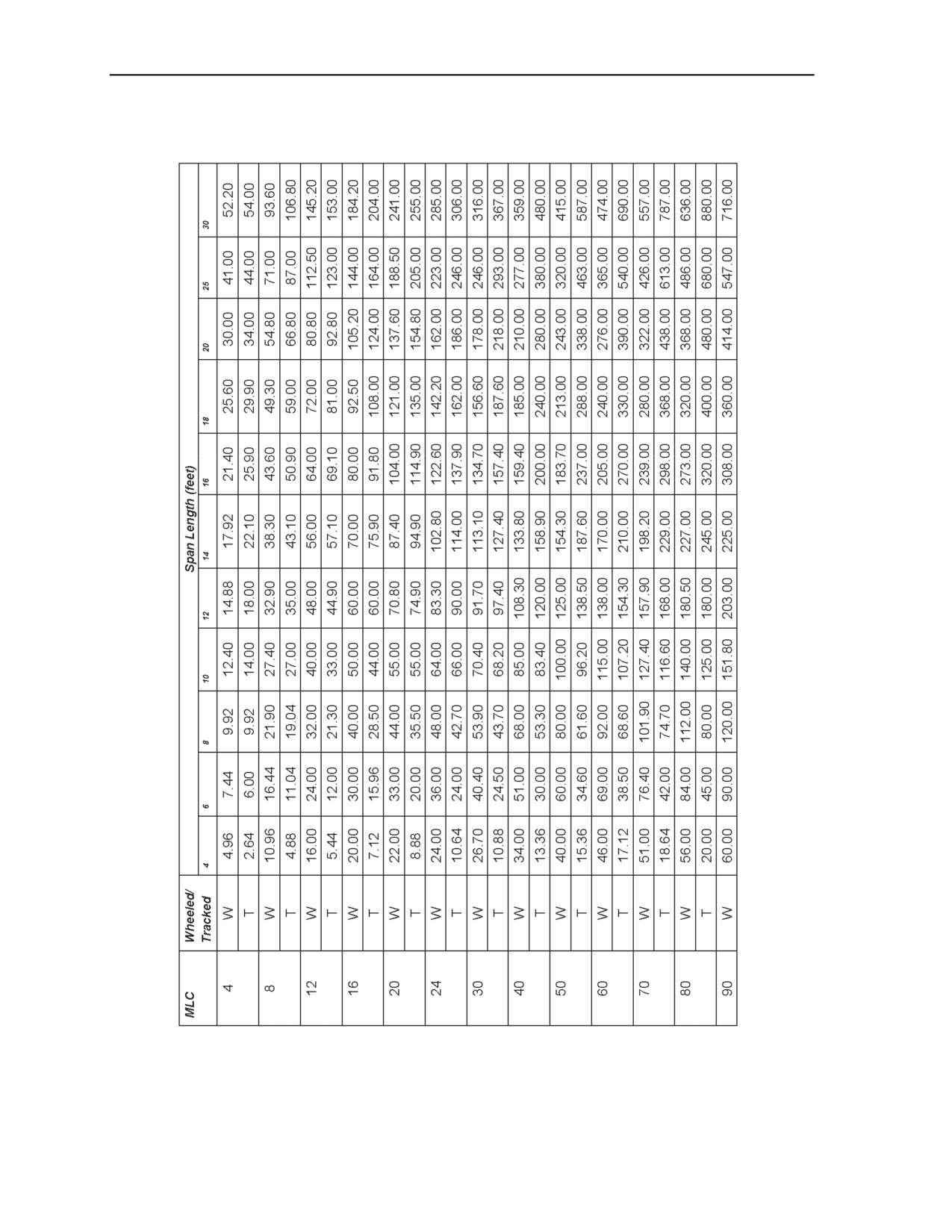
Appendix F
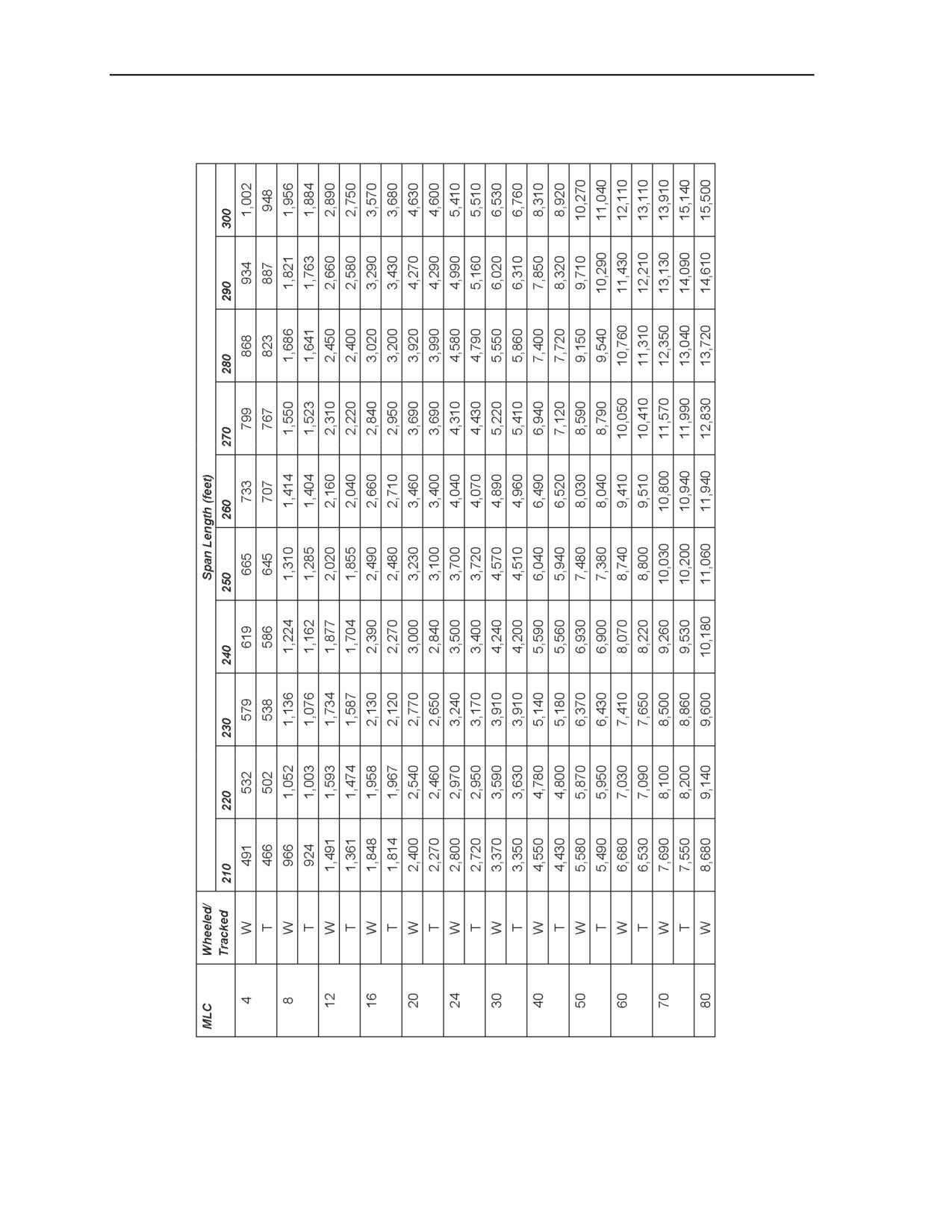
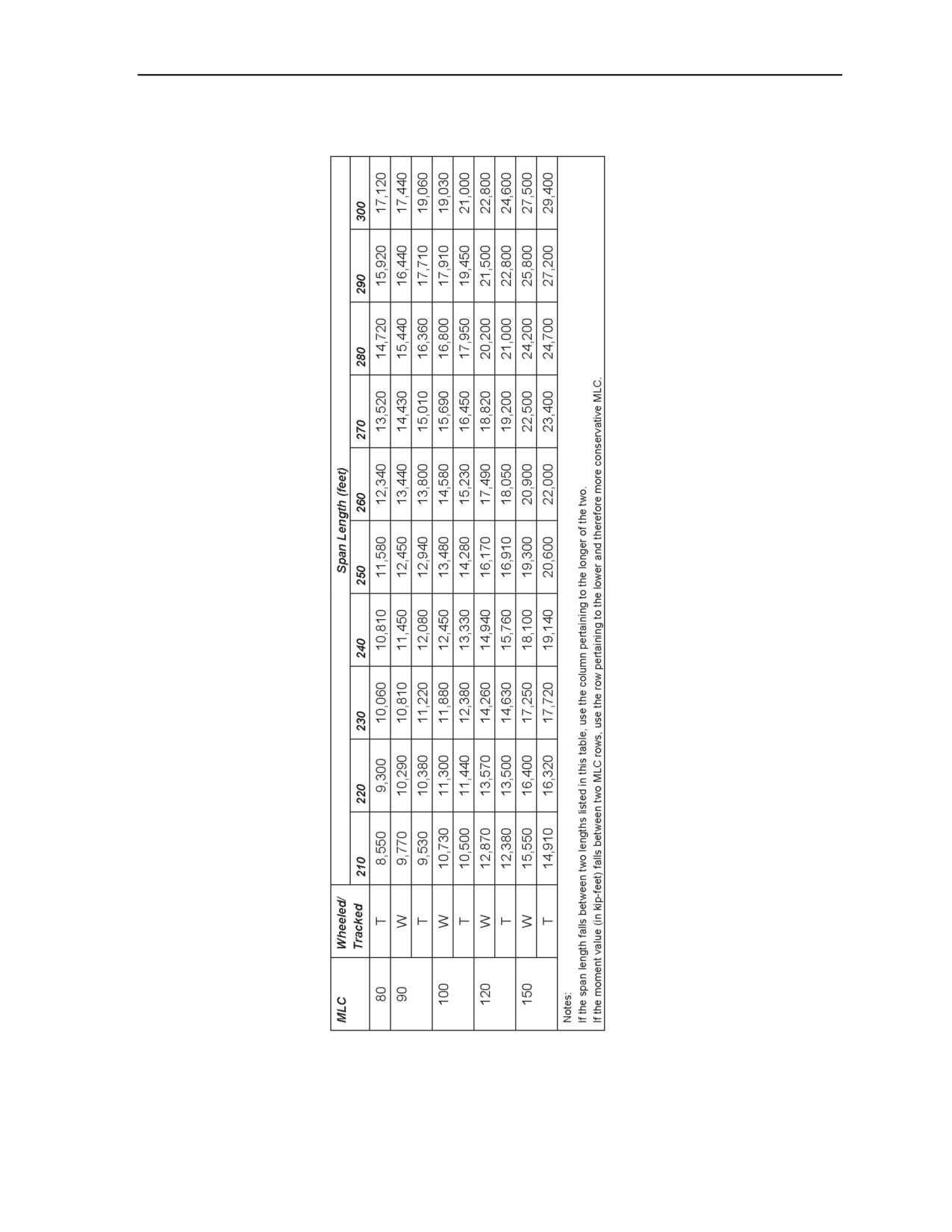
Table F-5. Wheeled- and tracked-vehicle moment (MLL in kip-ft)
F-20
FM 3-34.170/MCWP 3-17.4
25 March 2008
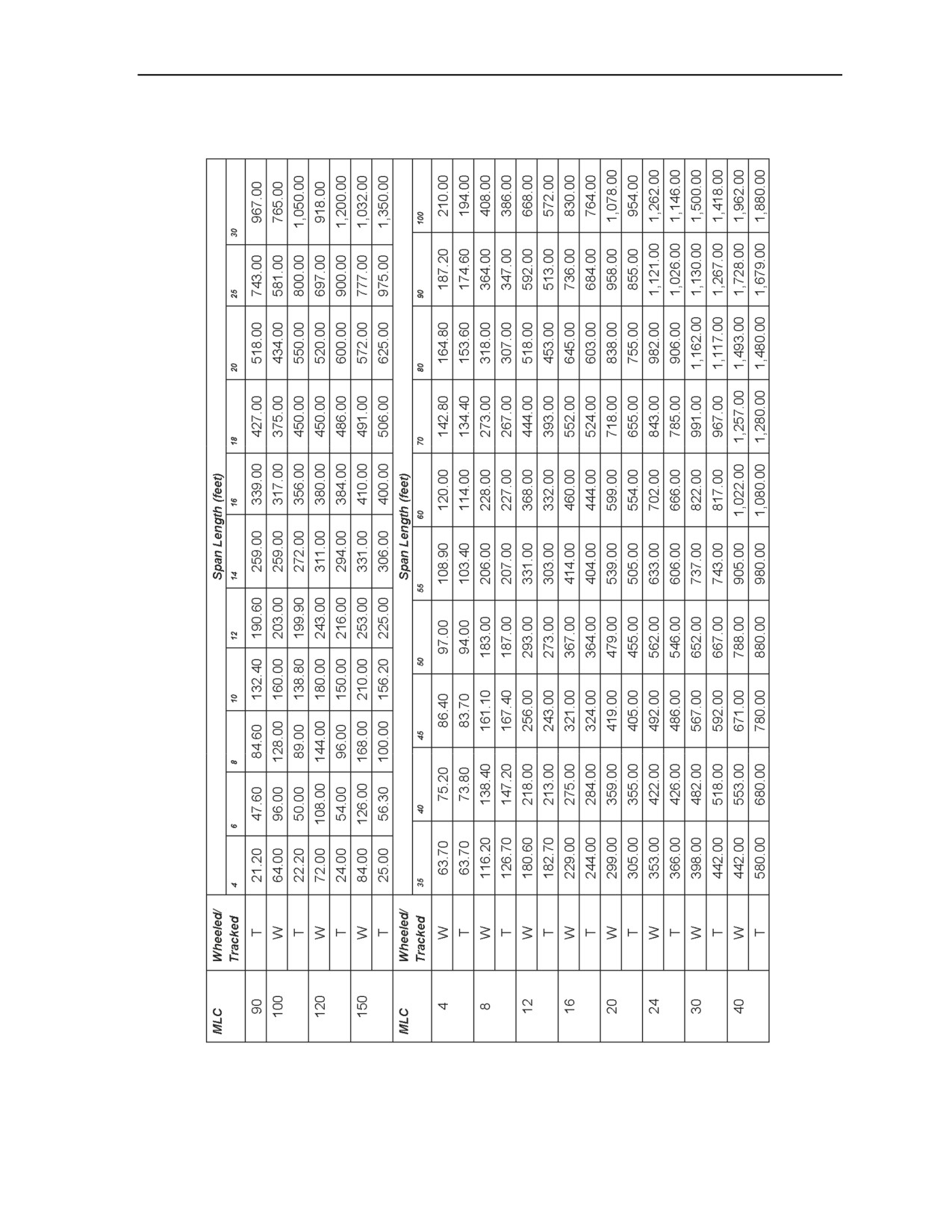
Rapid Classification of Bridge Spans
Table F-5. Wheeled- and tracked-vehicle moment (MLL in kip-ft) (continued)
25 March 2008
FM 3-34.170/MCWP 3-17.4
F-21
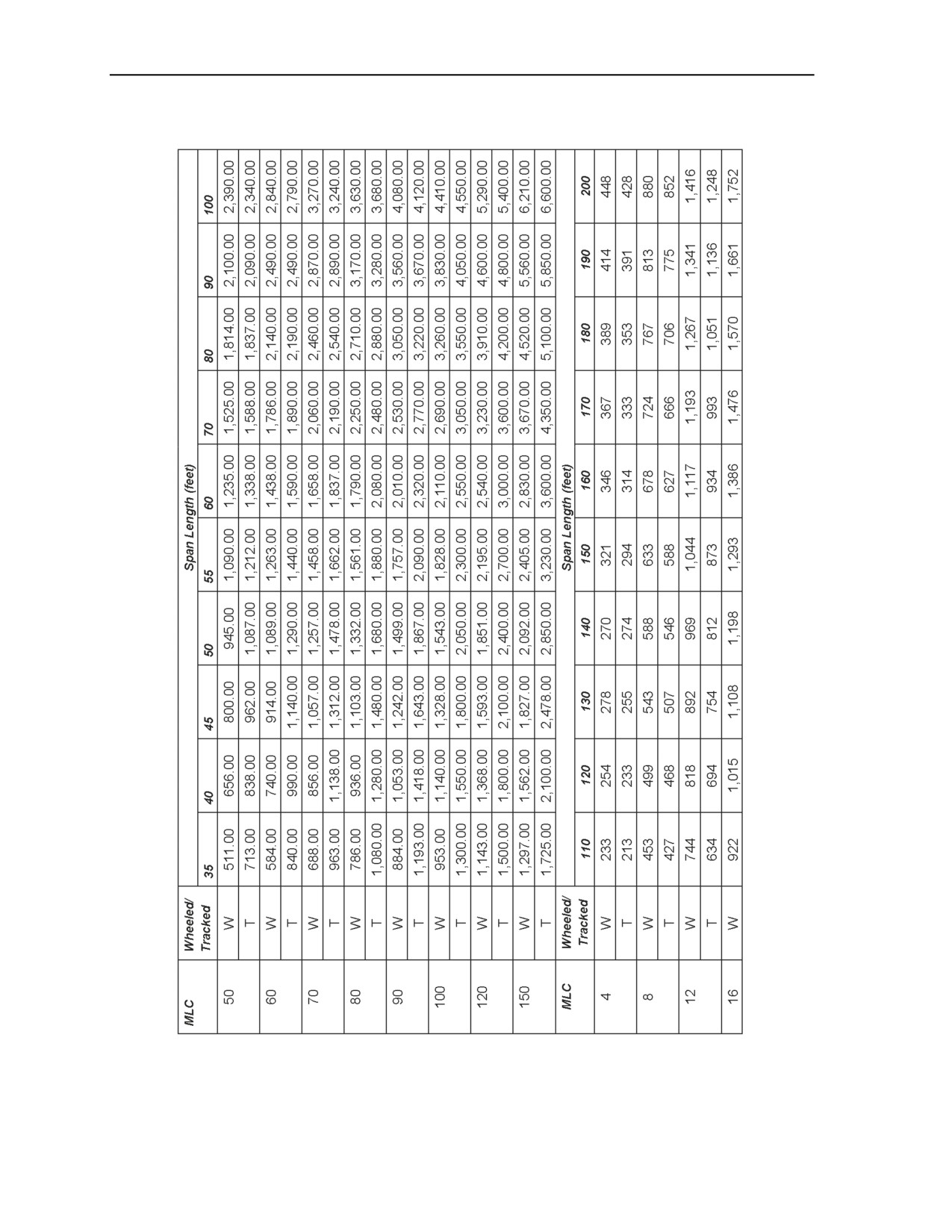
Appendix F
Table F-5. Wheeled- and tracked-vehicle moment (MLL in kip-ft) (continued)
F-22
FM 3-34.170/MCWP 3-17.4
25 March 2008
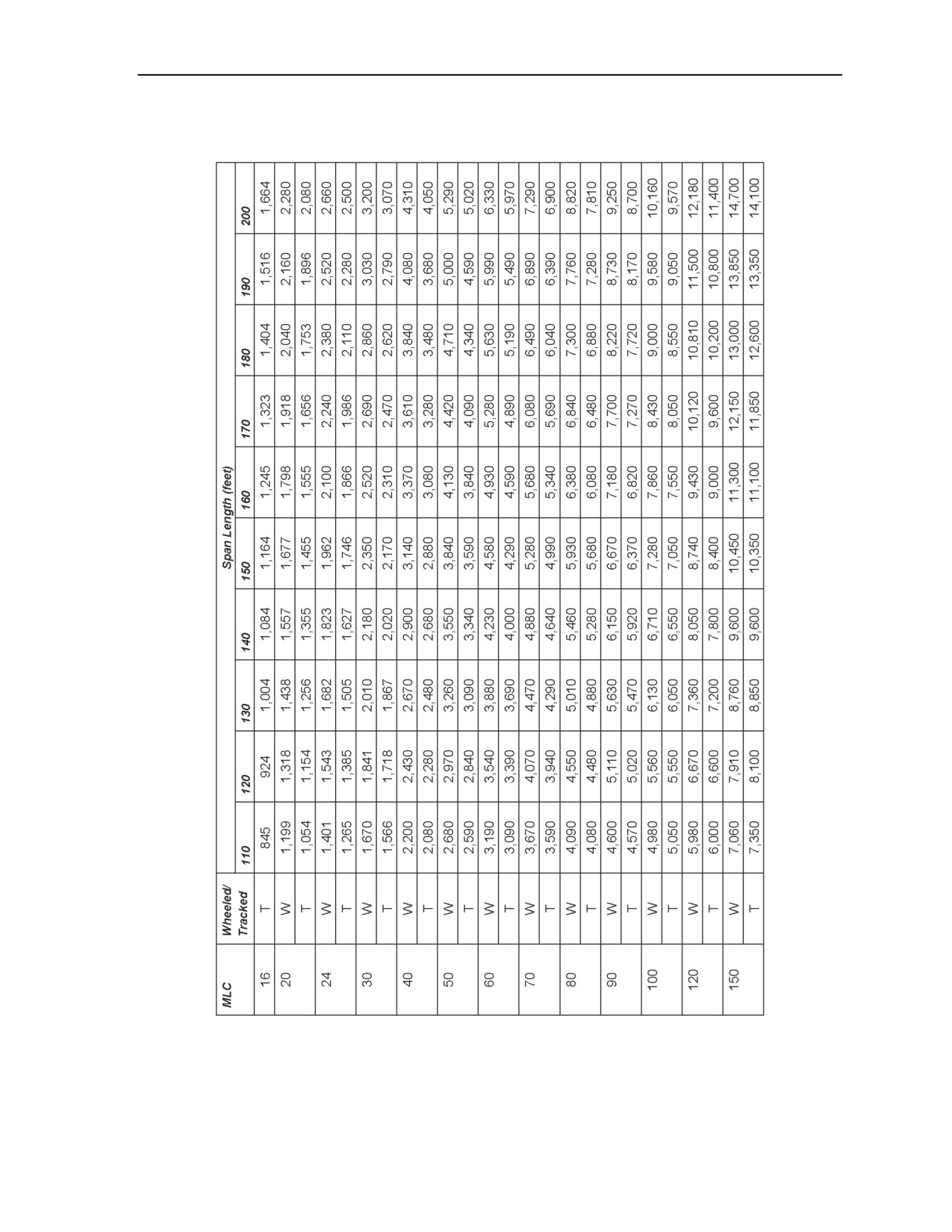
Rapid Classification of Bridge Spans
Figure F-5. Wheeled- and tracked-vehicle moment (MLL in kip-ft) (continued)
25 March 2008
FM 3-34.170/MCWP 3-17.4
F-23
Appendix F
Figure F-5. Wheeled- and tracked-vehicle moment (MLL in kip-ft) (continued)
F-24
FM 3-34.170/MCWP 3-17.4
25 March 2008
Rapid Classification of Bridge Spans
Figure F-5. Wheeled- and tracked-vehicle moment (MLL in kip-ft) (continued)
25 March 2008
FM 3-34.170/MCWP 3-17.4
F-25
Appendix F
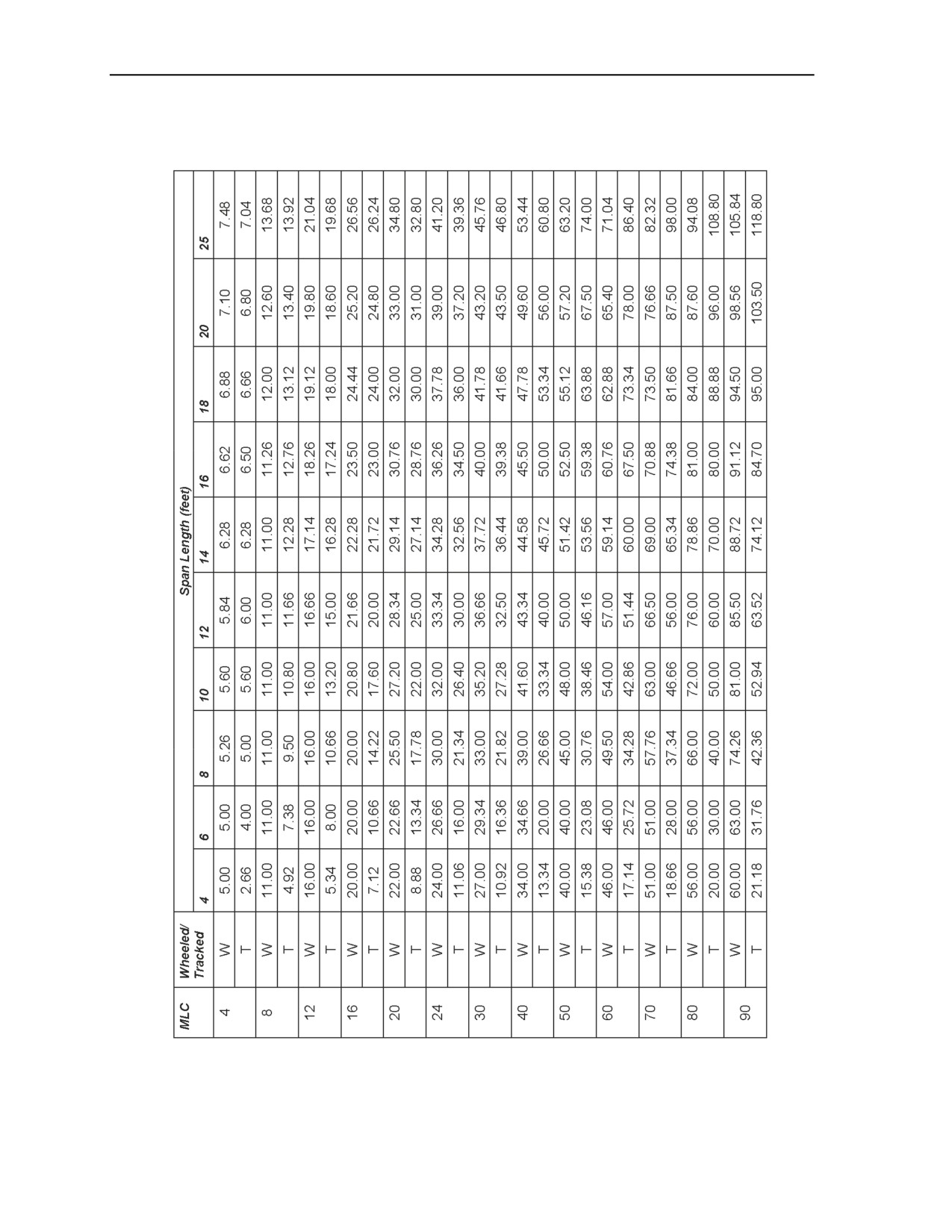
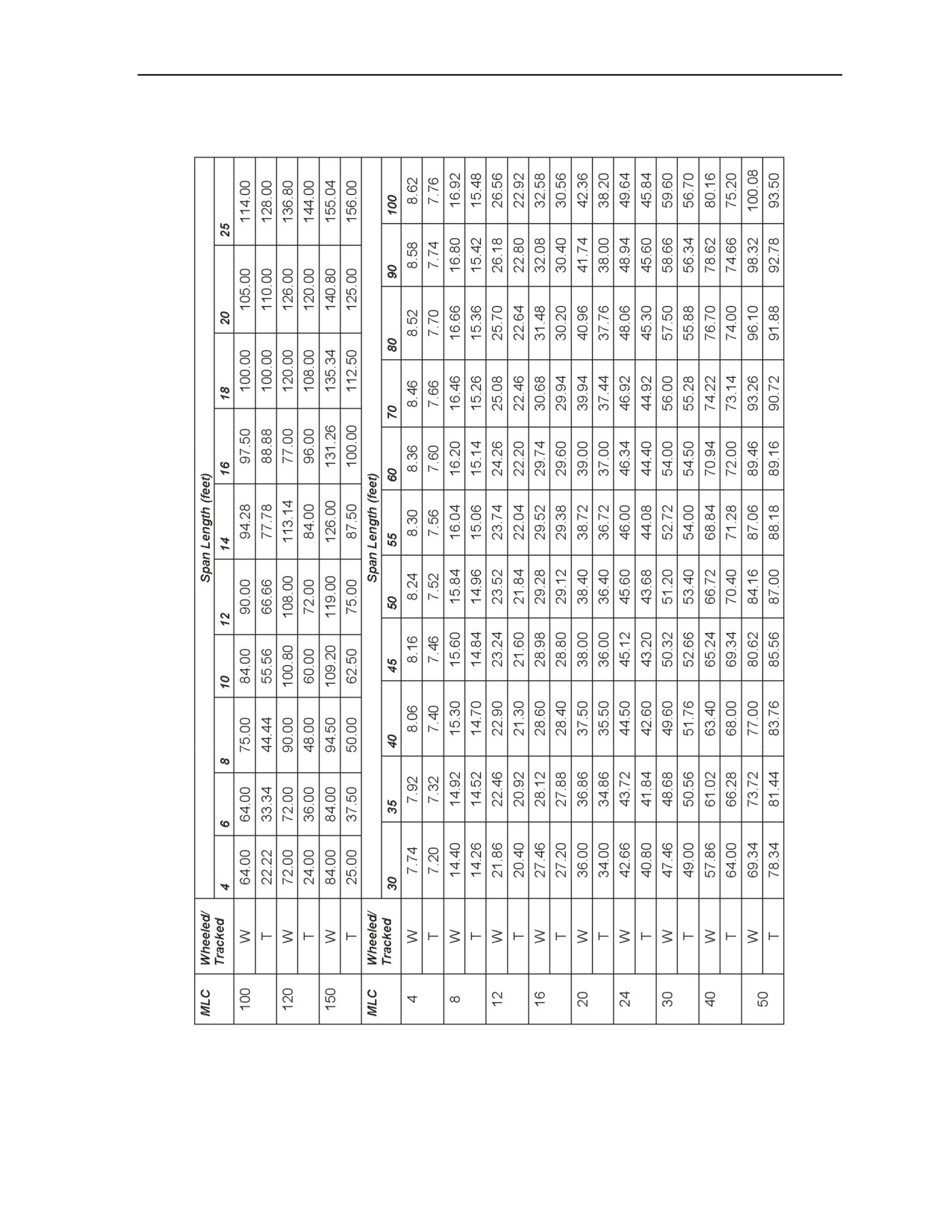
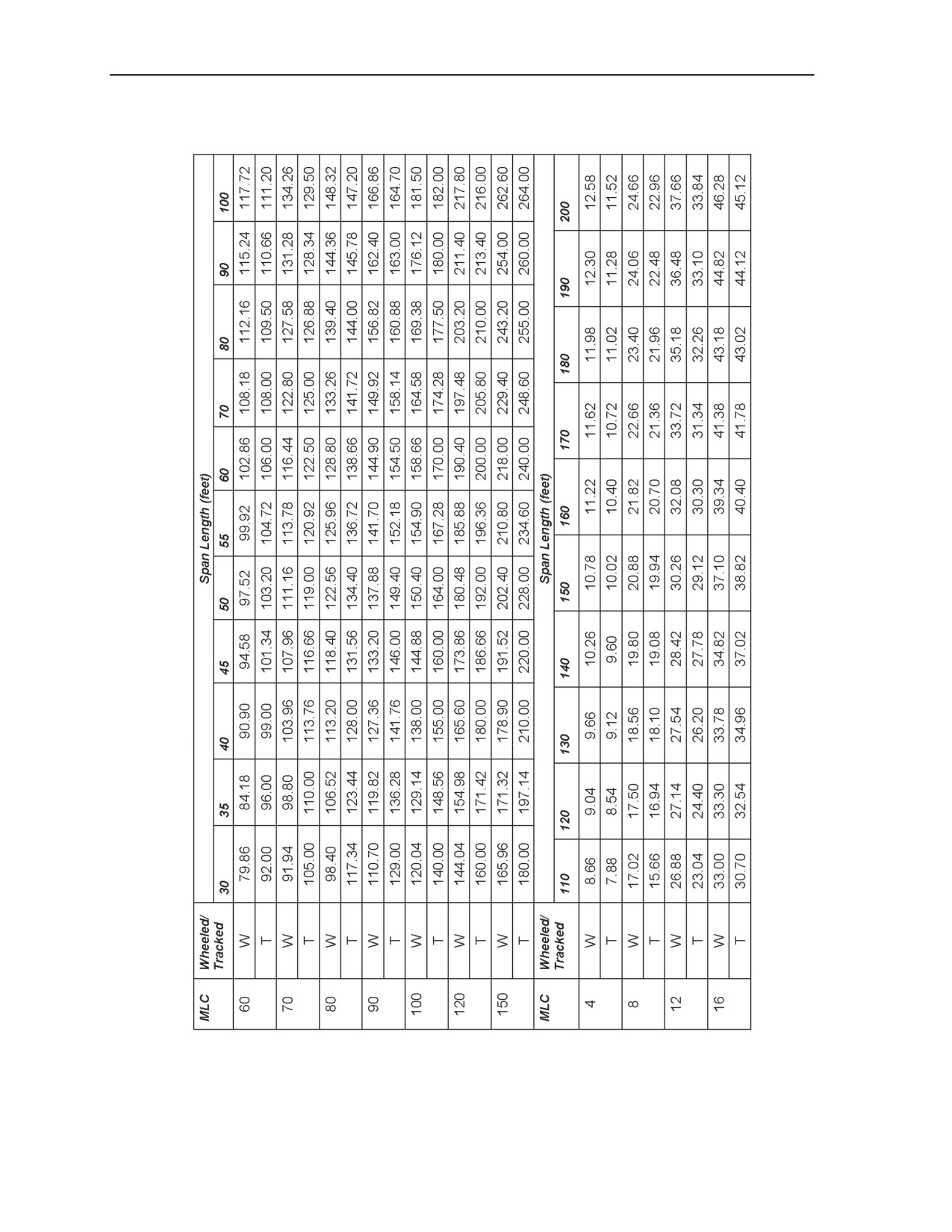
Table F-6. Wheeled- and tracked-vehicle sheer (VLL in kips)
F-26
FM 3-34.170/MCWP 3-17.4
25 March 2008
Rapid Classification of Bridge Spans
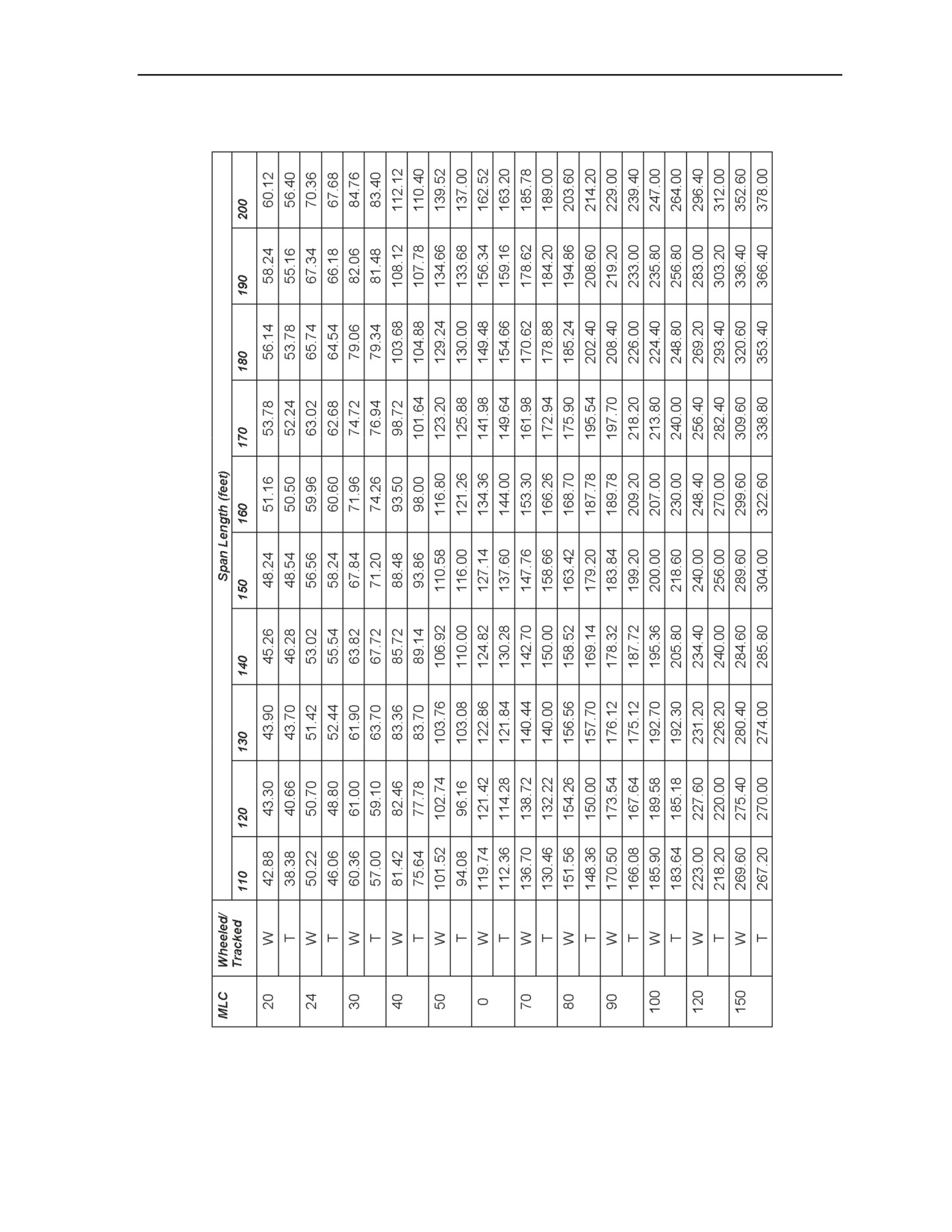
Table F-6. Wheeled- and tracked-vehicle sheer (VLL in kips) (continued)
25 March 2008
FM 3-34.170/MCWP 3-17.4
F-27
Appendix F
Table F-6. Wheeled- and tracked-vehicle sheer (VLL in kips) (continued)
F-28
FM 3-34.170/MCWP 3-17.4
25 March 2008
Rapid Classification of Bridge Spans
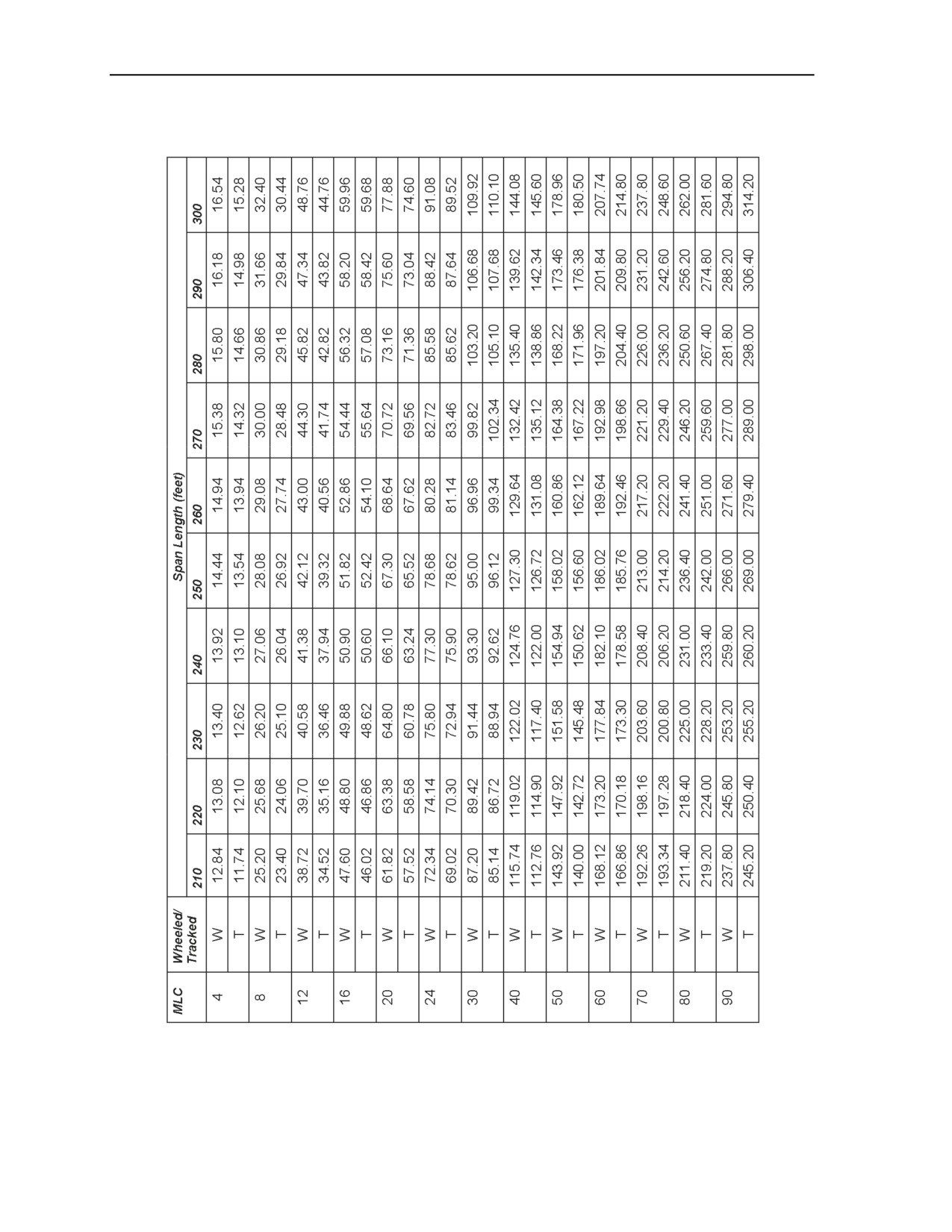
Table F-6. Wheeled- and tracked-vehicle sheer (VLL in kips) (continued)
25 March 2008
FM 3-34.170/MCWP 3-17.4
F-29
Appendix F
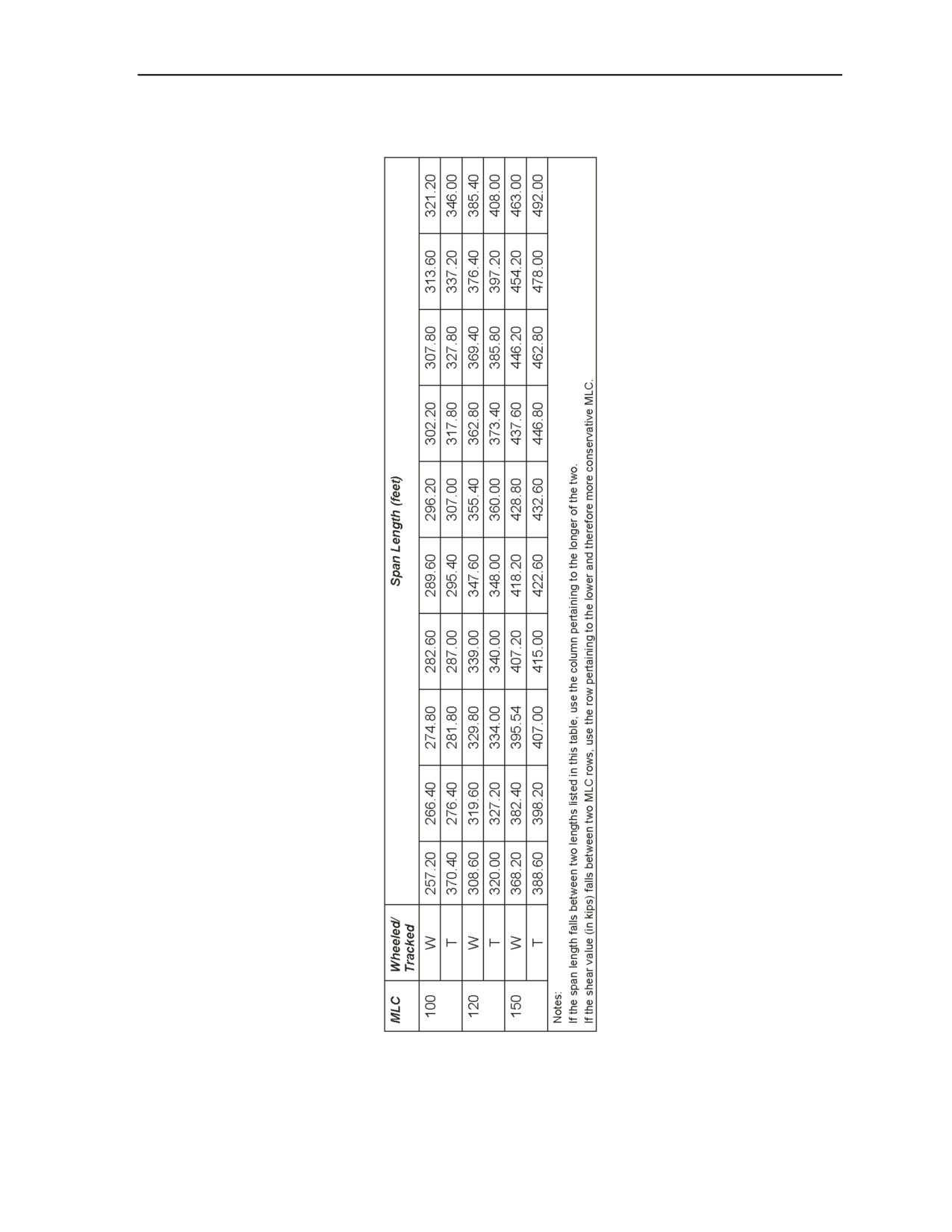
Table F-6. Wheeled- and tracked-vehicle sheer (VLL in kips) (continued)
F-30
FM 3-34.170/MCWP 3-17.4
25 March 2008
Rapid Classification of Bridge Spans
Table F-6. Wheeled- and tracked-vehicle sheer (VLL in kips) (continued)
25 March 2008
FM 3-34.170/MCWP 3-17.4
F-31

Appendix F
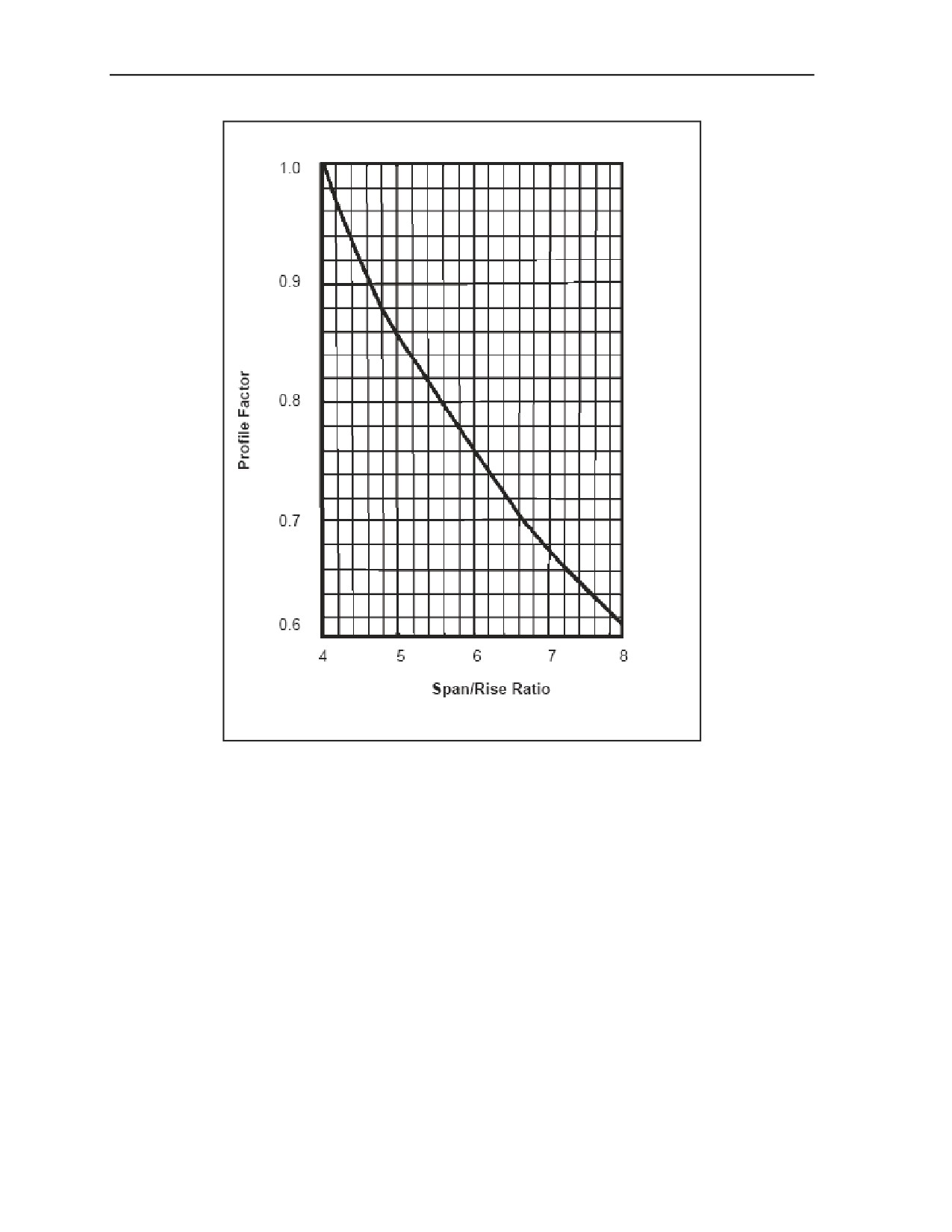
Table F-7. Profile factors
Profile
Factor
Remarks
For span-to-rise ratio up to 4
1.0
For a given load, a flat arch of steeper profile (although
it has a very large rise) may fail due to the crown’s
action as a smaller, flatter arch.
See figure F-16,
For span-to-rise ratio over 4
page F-38.
Table F-8. Arch factors
Material Factors
Type of Material
Factor
Granite, white stone, or built-in course masonry
1.50
Concrete or blue engineering bricks
1.20
Good limestone masonry and building bricks
1.00
Poor masonry or any kind of brickwork
0.50
Joint Factors
Type of Joint
Factor
Thin joints, 1/10 inch or less in width
1.25
Normal joints, width to 1/4 inch, pointed mortar
1.00
Normal joints, mortar unpointed
0.90
Joint over 1/4 inch, irregular good mortar
0.80
Joint over 1/4 inch, mortar with voids deeper than 1/10 of the ring thickness
0.70
Joints 1/2 inch or more, poor mortar
0.50
Deformations
Condition
Adjustment
Note
The rise over the affected
Span-to-rise ratio of affected
portion is always positive.
portion to whole arch applied.
Arch ring deformation may be due to
Distortion produces a flat
Maximum MLC = 12.
partial failure of the ring (usually
section of profile.
accompanied by a sag in the parapet) or
movement at the abutment.
A portion of the ring is
Maximum MLC = 5 only if fill at
sagging.
crown > 18 inches.
Abutment Size Factors
Type of Abutment
Factor
Note
Both abutments
1.00
An abutment may be regarded as
satisfactory
inadequate to resist the full thrust of the
arch if—
One abutment
0.95
unsatisfactory
• The bridge is on a narrow
embankment, particularly if the
Both abutments
0.90
approaches slope steeply up to the
unsatisfactory
bridge.
Both abutments massive
0.70
• The bridge is on an embanked
but a clay fill suspected
curve.
Arch carried on one
0.90
• The abutment walls are very short
abutment and one pier
and suggest little solid fill behind the
Arch carried on two piers
0.80
arch.
F-32
FM 3-34.170/MCWP 3-17.4
25 March 2008

Rapid Classification of Bridge Spans
Table F-8. Arch factors
Abutment Fault Factors
Type of Fault
Factor
Inward movement of one abutment
0.50
Outward spread of abutments
0.50
Vertical settlement of one abutment
0.50
Crack Factors
Type of Crack
Factor
Note
Longitudinal cracks within 2 feet of the
This type of longitudinal crack is due to
edge of the arch; wider than ¼ inch and
an outward force on the spandrel walls
1.00
longer than 1/10 of the span, in bridges.
caused by a lateral spread of the fill.
0.70
• Wider than 20 feet between parapets.
• Narrower than 20 feet between
parapets.
Longitudinal cracks in middle third of the
This type of longitudinal crack is due to
ridge with—
varying amount of subsiding along the
1.00
length of the abutment. Large cracks
• One small crack under 1/8 inch wide
and shorter than 1/10 of the span.
are danger signs which indicate that the
0.50
arch ring has broken up into narrower,
• Three or more small cracks as above.
independent rings.
• One large crack wider than ¼ inch and
0.50
longer than 1/10 of the span.
Lateral and diagonal cracks less than 1/8
Lateral cracks, usually found near the
inch wide and shorter than 1/10 of the arch
quarter points, are due to permanent
width
deformation of the arch, which may be
caused by partial collapse of the arch or
Lateral and diagonal cracks wider than ¼
1.00
by abutment movement.
inch and longer than 1/10 of the arch width:
Restrict load classification to 12 or to the
Diagonal cracks, usually starting near
calculated classification using all other
the sides of the arch at the springing
applicable factors, whichever is less.
and spreading toward the center of the
arch at the crown, are probably due to
subsiding at the sides of the abutment.
Cracks between the arch ring and
Cracks indicate that the bridge is in a
dangerous condition due to spreading of
spandrel or parapet wall greater than 1/10
the fill pushing the wall outward or
of the span due to fill spread
0.90
movement of a flexible ring away from a
Cracks between the arch ring and spandrel
stiff fill, so that the two act
or parapet wall due to a dropped ring:
independently. The latter type of failure
Reclassify from the nomograph, taking the
often produces cracks in the spandrel
crown thickness as that of the ring alone.
wall near the quarter points.
25 March 2008
FM 3-34.170/MCWP 3-17.4
F-33
Appendix F
Table F-9. Minimum roadway widths
Bridge Classification
Roadway Width (meters)
One-Way
Two-Way
2.75 to 3.34
12
0
3.35 to 3.99
30
0
4 to 4.49
60
0
4.5 to 4.99
100
0
5 to 5.4
150
0
5.5 to 7.2
150
30
7.3 to 8.1
150
60
8.2 to 9.7
150
100
Over 9.8
150
150
Note. Minimum overhead clearance for all classes is 4.3 meters.
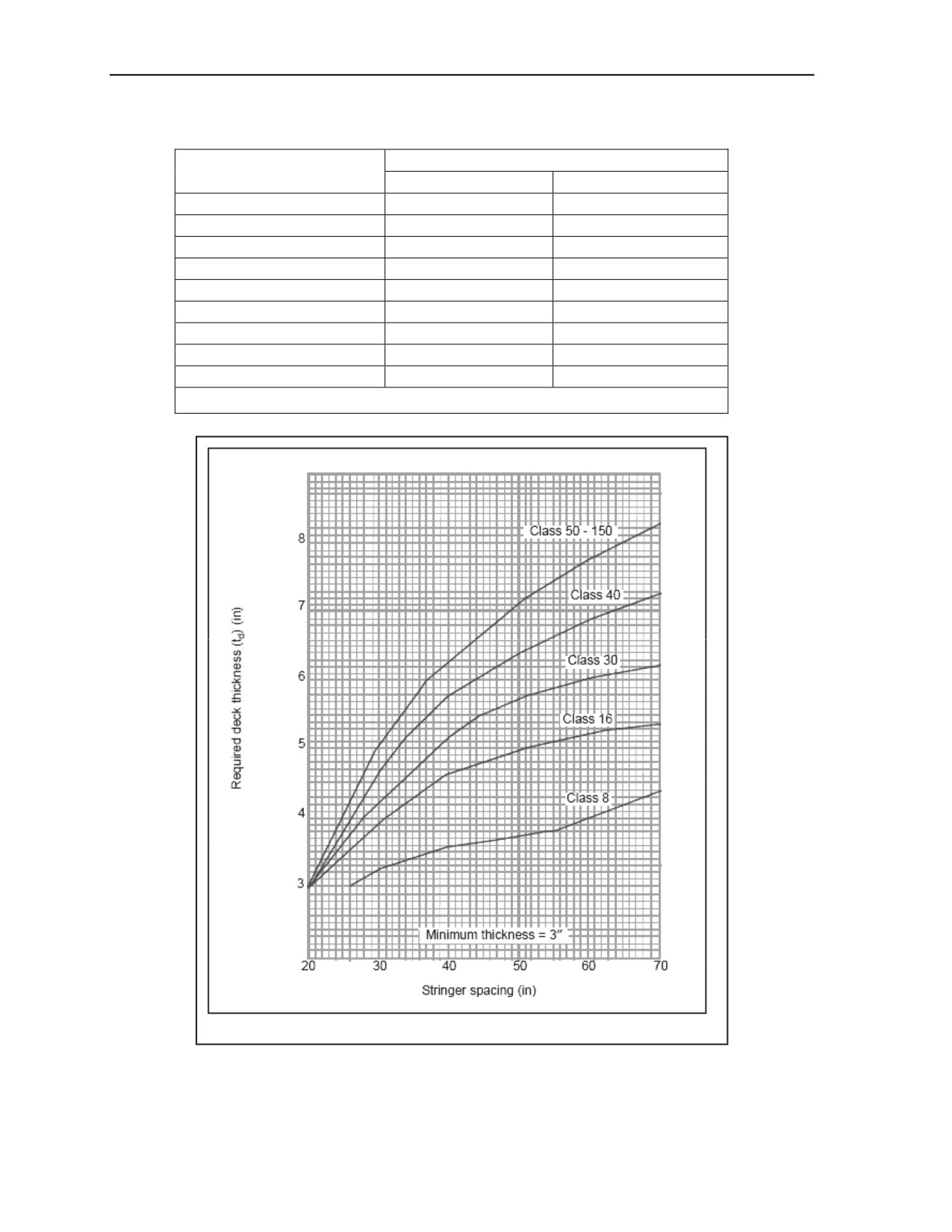
Figure F-12. Timber deck classification
F-34
FM 3-34.170/MCWP 3-17.4
25 March 2008
Rapid Classification of Bridge Spans
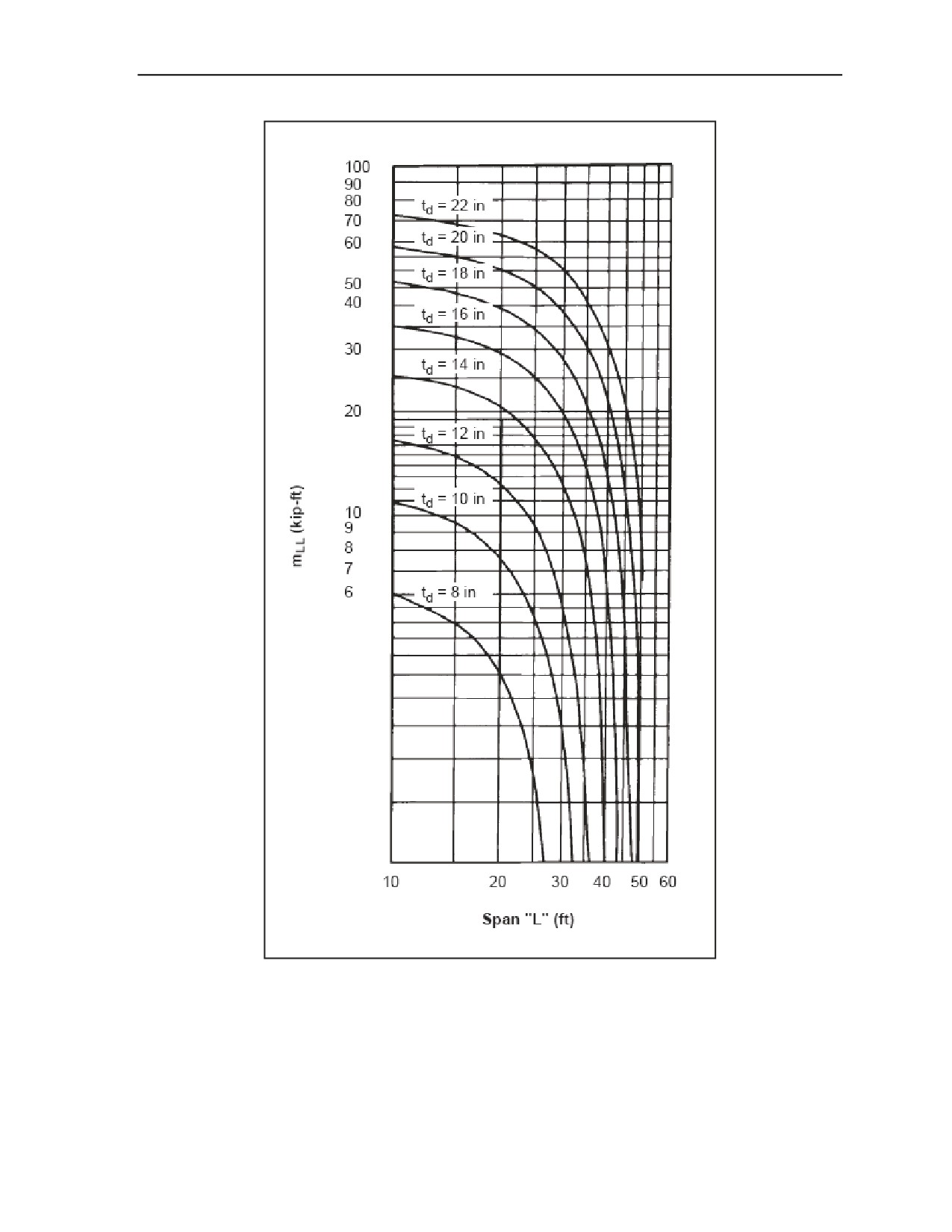
Figure F-13. Live-load moment for a 12-inch reinforced concrete strip
25 March 2008
FM 3-34.170/MCWP 3-17.4
F-35
Appendix F
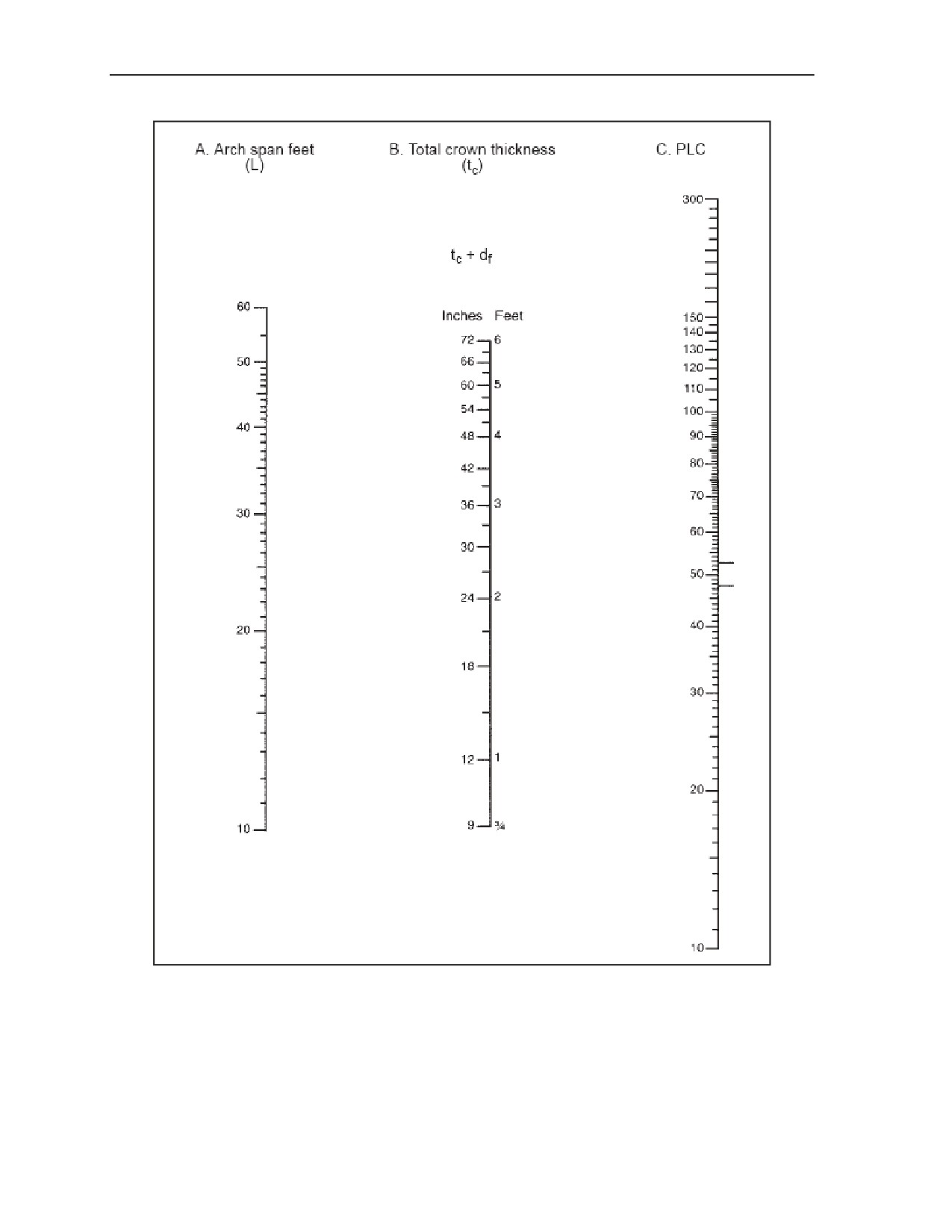
Figure F-14. Masonry arch PLC
F-36
FM 3-34.170/MCWP 3-17.4
25 March 2008
Rapid Classification of Bridge Spans
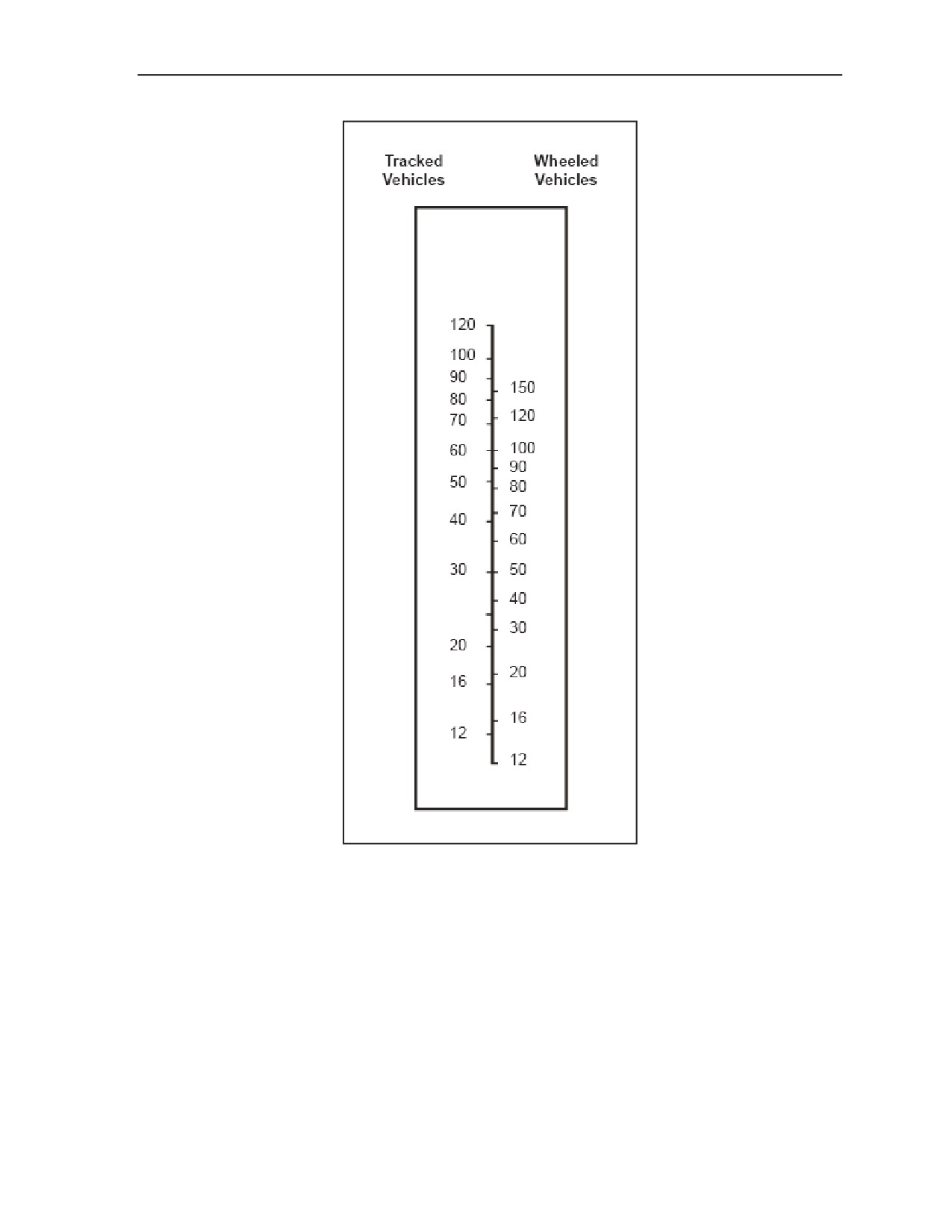
Figure F-15. Bridge classification
25 March 2008
FM 3-34.170/MCWP 3-17.4
F-37
Appendix F
Figure F-16. Profile factors for arch bridges
F-38
FM 3-34.170/MCWP 3-17.4
25 March 2008
Appendix G
Signs
Posting signs at bridges and at other constrictions or key locations along a route
promotes efficient traffic control and limits the impact of hazardous areas along the
route. Signs are used when it is necessary to identify special controls placed on a
bridge or route section, to warn vehicle operators of hazardous areas or conditions,
and to identify holding areas, turnouts for parking and unloading vehicles, and
checkpoints. Procedures for posting military routes are standardized for the United
States and Allied Nations. However, this system may be integrated into other road-
sign systems in accordance with military requirements.
Note. This appendix implements STANAG 2454 and Allied Publication AMovP-1, Road
Movements and Movement Control.
ROUTE SIGNS
G-1. There are three general types of standard route signs—hazard, regulatory, and guide. Table G-1 on
page G-2 lists the way each type may be used. The size of these signs is not prescribed; however, they must
be large enough to be easily read under poor lighting conditions. Exceptions to this rule are bridge
classification signs for which dimensions are specified. As a guide, signs for civil international road use
usually are not less than 16 inches square.
25 March 2008
FM 3-34.170/MCWP 3-17.4
G-1

Appendix G
Table G-1. Typical hazard, regulatory, and guide signs
Type
Hazard
Regulatory
Guide
Advance warning of stop
No entry
Detour
signs and traffic signals
Changes in road width
One way
Detour begins
Crossroad
Parking restrictions
Detour ends
Curves
Specific regulations for
Directions
vehicles
Danger or hazard
Speed limit
Distances
Dangerous corner
Stop
Information to help driver
Dips
Bridge classification
Locations
Application
Junction T
Route number
Junction Y
Level railroad crossing,
advance warning
Men working
Railroad crossing
Road construction repairs
Road narrows
Slippery road
Steep grades
Steep hill
Turns
HAZARD SIGNS
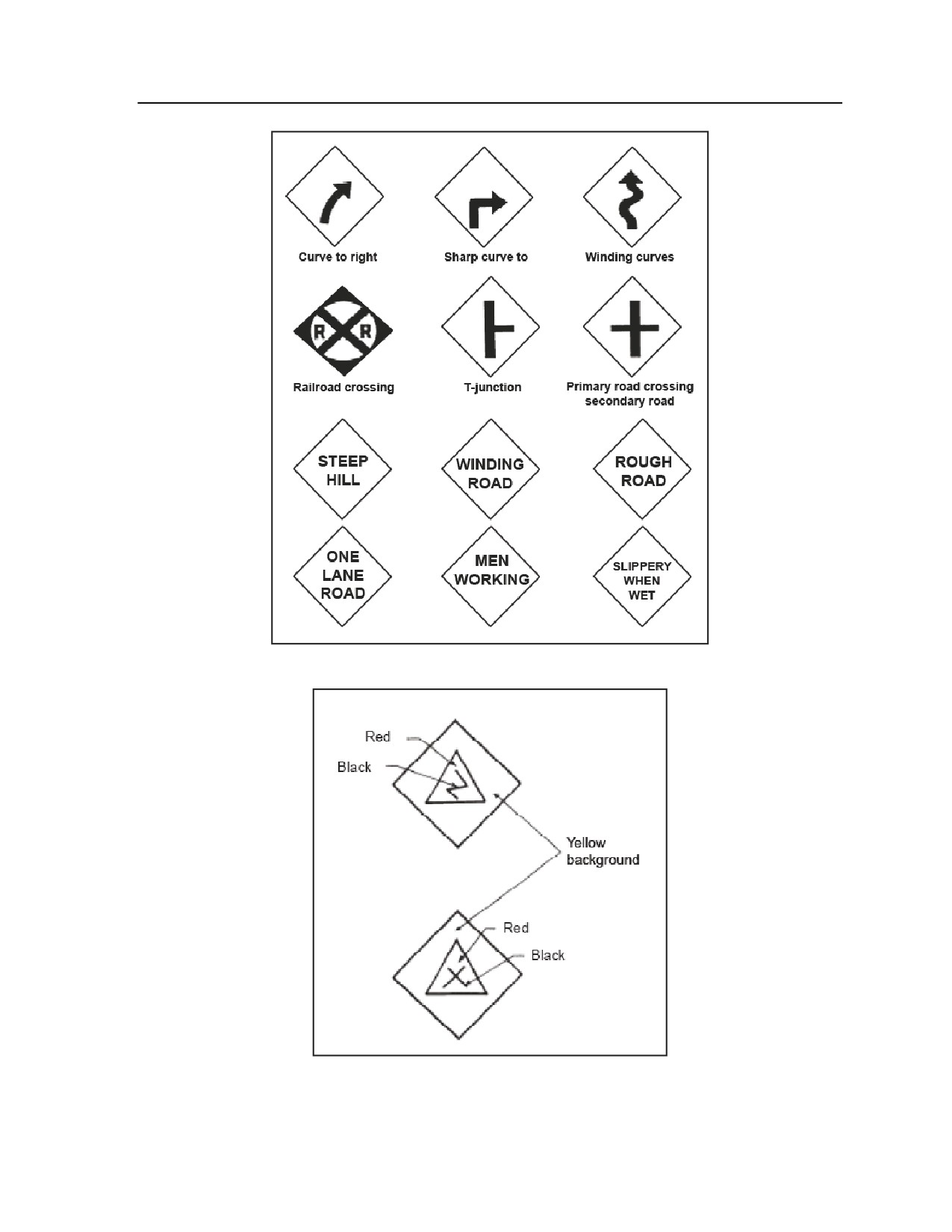
G-2. Hazard signs indicate traffic hazards and require coordination with civil authorities. Hazard signs are
square and are installed in a diamond position (see figures G-1 and G-2). A military hazard sign has a
yellow background with the legend or symbol inscribed in black. The wording on these signs is in the
language or languages determined by the authority erecting the sign. (See FM 3-34.210 for information on
explosive hazard signs.)
G-2
FM 3-34.170/MCWP 3-17.4
25 March 2008
Signs
Figure G-1. Example of hazard signs not included in the Geneva Convention
Figure G-2. Example of hazard signs included in the Geneva Convention
25 March 2008
FM 3-34.170/MCWP 3-17.4
G-3
Appendix G
REGULATORY SIGNS
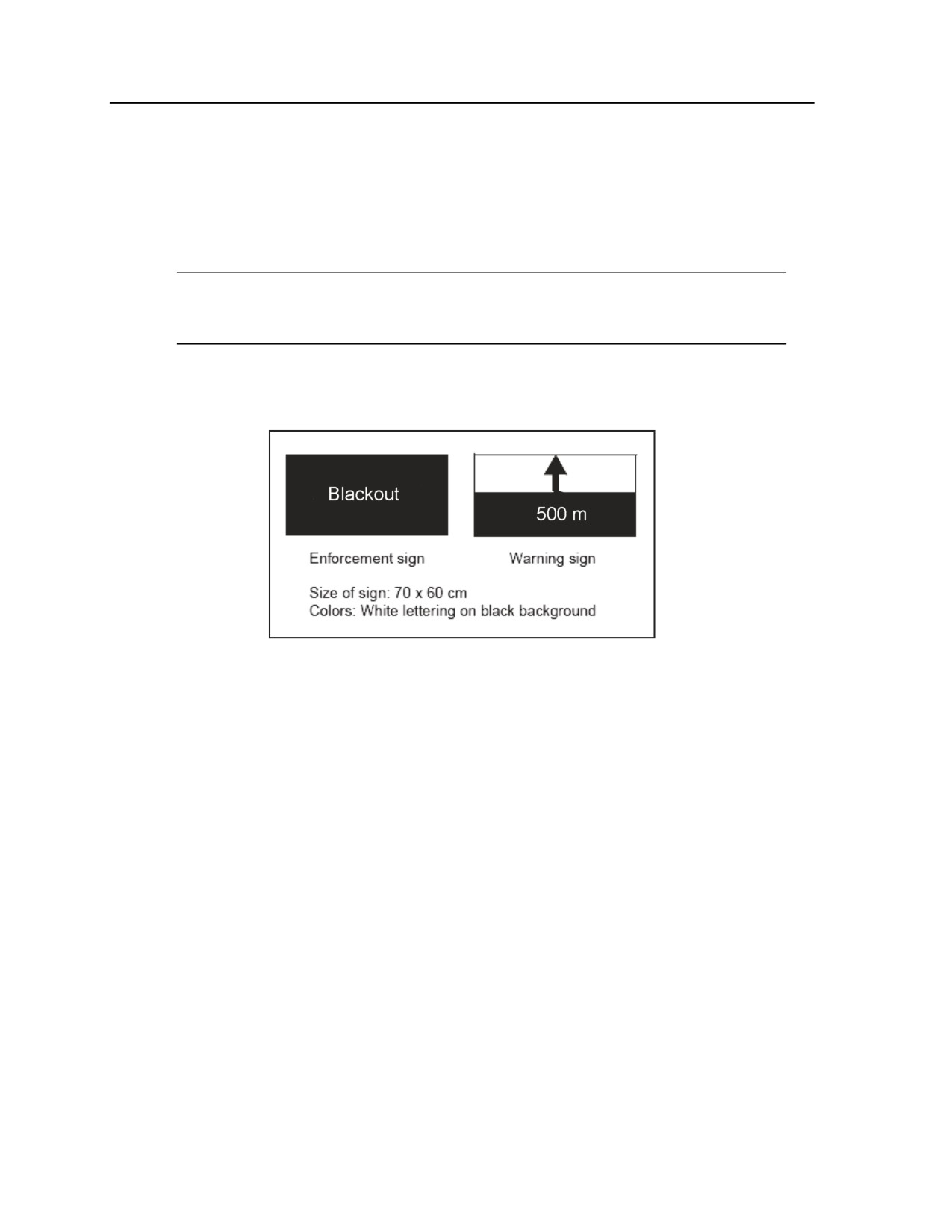
G-3. Regulatory signs regulate and control traffic. Regulatory signs include enforcement and warning
signs. Warning signs are placed in advance of the enforcement sign to provide vehicle operators with
advance notice of the enforcement area. Examples of regulatory signs include bridge classification signs,
stop signs, no-entry signs, and signs that define the light line (the line where vehicles must use blackout
lights at night). Regulatory signs have a black background on which the legend or symbol is superimposed
in white.
Note. Exceptions to these rules are bridge classification signs, stop signs, no-entry signs, and
signs that apply to civil as well as military traffic. Check with civilian authorities to ensure
compliance when erecting signs in areas with civilian traffic.
G-4. Example regulatory signs are shown in figure G-3. Two warning signs are located, according to the
terrain, prior to the enforcement sign. Locate the first warning sign 200 to 500 meters before the regulatory
sign.
Figure G-3. Warning and enforcement signs
Bridge and Raft Signs
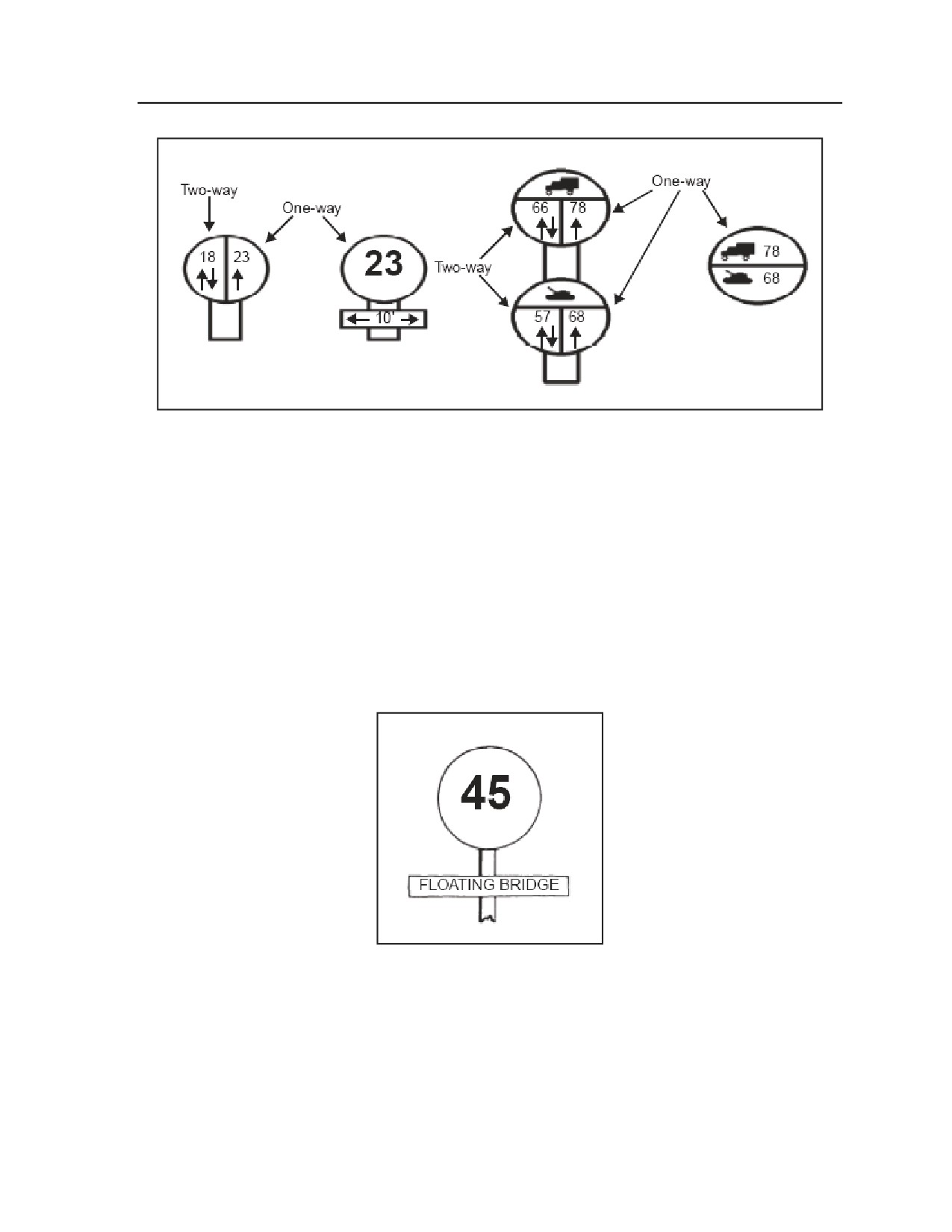
G-5. All classified vehicles and bridges in the theater of operations require classification signs. Bridge
signs are circular with yellow background and black inscriptions. Sign diameters are a minimum of 40
centimeters for one-lane bridges and 50 centimeters for two-lane bridges. (See figure G-4.) A two-lane
bridge has two numbers, side by side, on the sign.
z
The number on the left is the bridge classification when both lanes are in use at the same time.
z
The number on the right indicates the classification if the bridge is carrying one-way traffic and
the vehicles proceed along the centerline of the bridge.
G-4
FM 3-34.170/MCWP 3-17.4
25 March 2008
Signs
Figure G-4. Bridge signs
G-6. For bridges with separate classifications for wheeled and tracked vehicles (dual classification), use a
special circular sign that indicates both classifications (only applicable if the classification is over 50) (see
the right side of figure G-4). Use a separate rectangular sign, if necessary, to show the bridge’s width
limitations. For one-way or two-way traffic bridges, the sign is to be a minimum of 50 centimeters.
Rectangular Bridge Signs
G-7. Additional instructions and technical information are posted on rectangular signs, which are a
minimum of 41 centimeters in height or width and have a yellow background with the appropriate letters
and symbols in black. Write the figures as large as the sign permits. Theater commanders may make special
arrangements to indicate vehicles of exceptional width or to indicate low overhead obstructions. Use
separate signs to show width or height limitations (see figure G-6, page G-6) or technical information (see
figure G-5). Width and height signs are not required on bridges where existing civilian signs are in place
and sufficiently clear.
Figure G-5. Bridge sign containing technical information
Width and Height Restrictions
G-8. Table F-9, page F-34, lists minimum roadway width restrictions for given bridge classifications. If a
one-lane bridge does not meet width requirements, post a rectangular warning sign under the classification
sign showing the actual clear width (see figure G-6, page G-6). If this is a route restriction, annotate it in
the route classification formula. For a two-lane bridge, downgrade the two-way classification to the highest
class for which it does qualify (one-way class is not affected). Post a limited-clearance sign if the overhead
25 March 2008
FM 3-34.170/MCWP 3-17.4
G-5
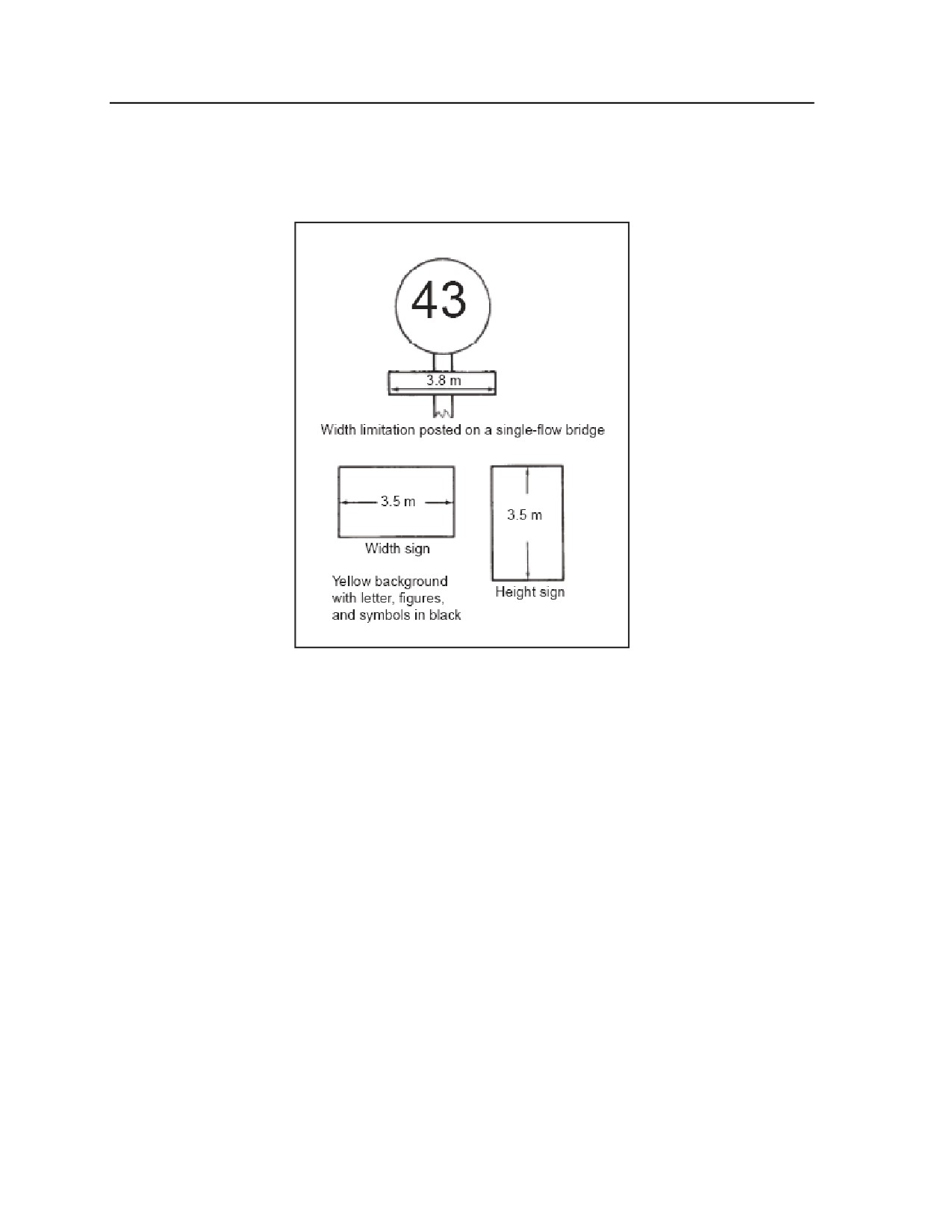
Appendix G
clearance is less than 4.3 meters. These signs must be a minimum of 3 to 5 meters in height or width, with
a yellow background, and the appropriate description in black letters. Separate rectangular signs are used if
necessary to denote width limitations, height limitations, or other technical information. The same signs are
used for tunnels, if applicable.
Figure G-6. Width and height signs
Multilane Bridge Signs
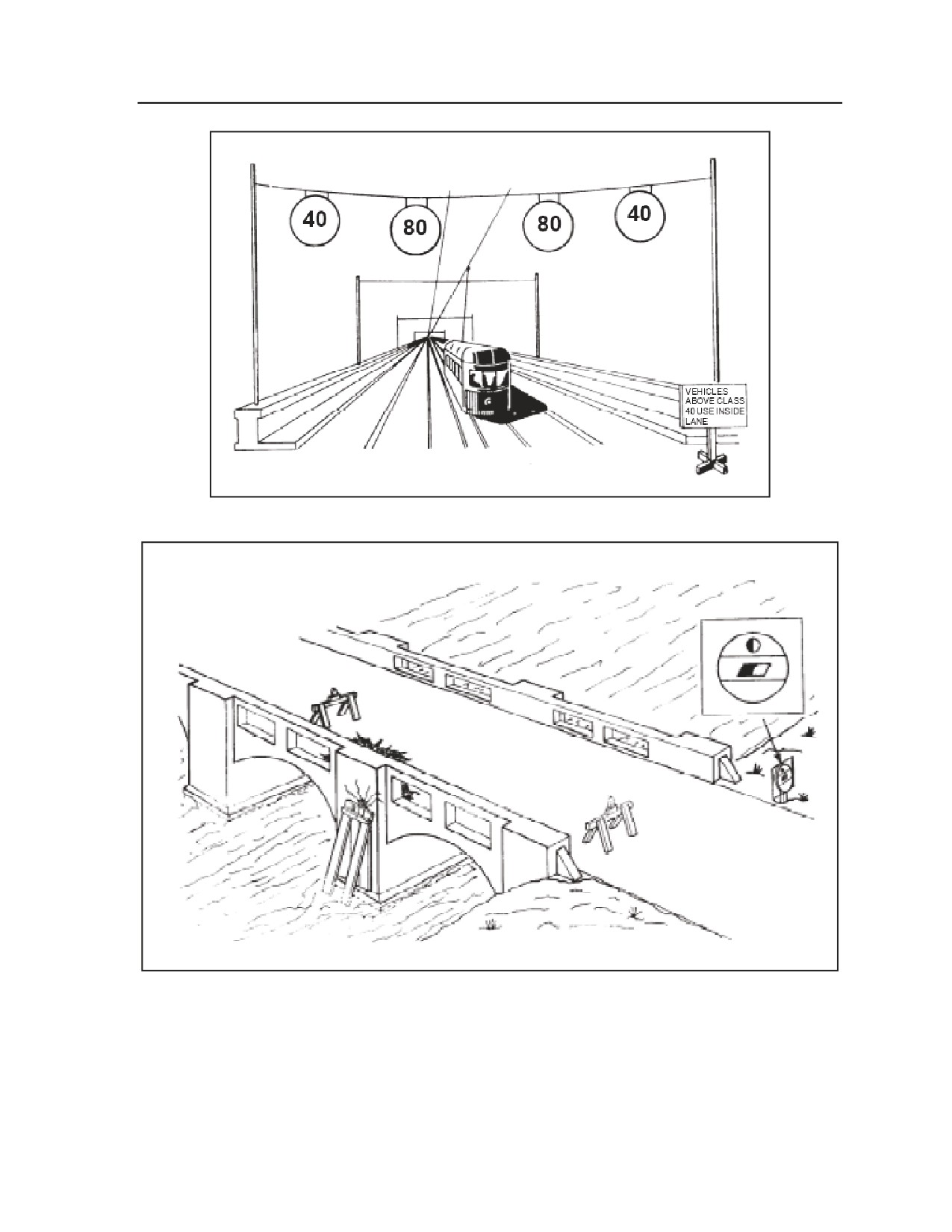
G-9. Bridges of three or more lanes are special cases that require individual consideration; the minimum
widths for respective load classifications (see table F-9, page F-34) are used. In some cases, heavier loads
can be carried on a restricted lane rather than on the other lanes (see figure G-7 and figure G-8). Under
such circumstances, post standard bridge-classification signs for each lane and mark the restricted lanes
with barricades, painted lines, or studs.
Bridge Sign Placement
G-10. Ensure that signs are placed properly (as listed below) to maintain uninterrupted traffic across a
bridge.
z
The bridge classification sign is placed at both ends of the bridge in a position that is clearly
visible to all oncoming traffic.
z
Rectangular signs, other than those indicating height restrictions, are placed immediately below
the bridge classification (circular) signs.
z
Signs that indicate height restrictions are placed centrally on the overhead obstruction.
z
Special classification numbers are never posted on standard bridge-marking signs.
z
Appropriate advance warning signals are placed on bridge approaches, as required.
G-6
FM 3-34.170/MCWP 3-17.4
25 March 2008
Signs
Figure G-7. Typical multilane bridge classification
Figure G-8. Example of posting a damaged bridge
GUIDE SIGNS
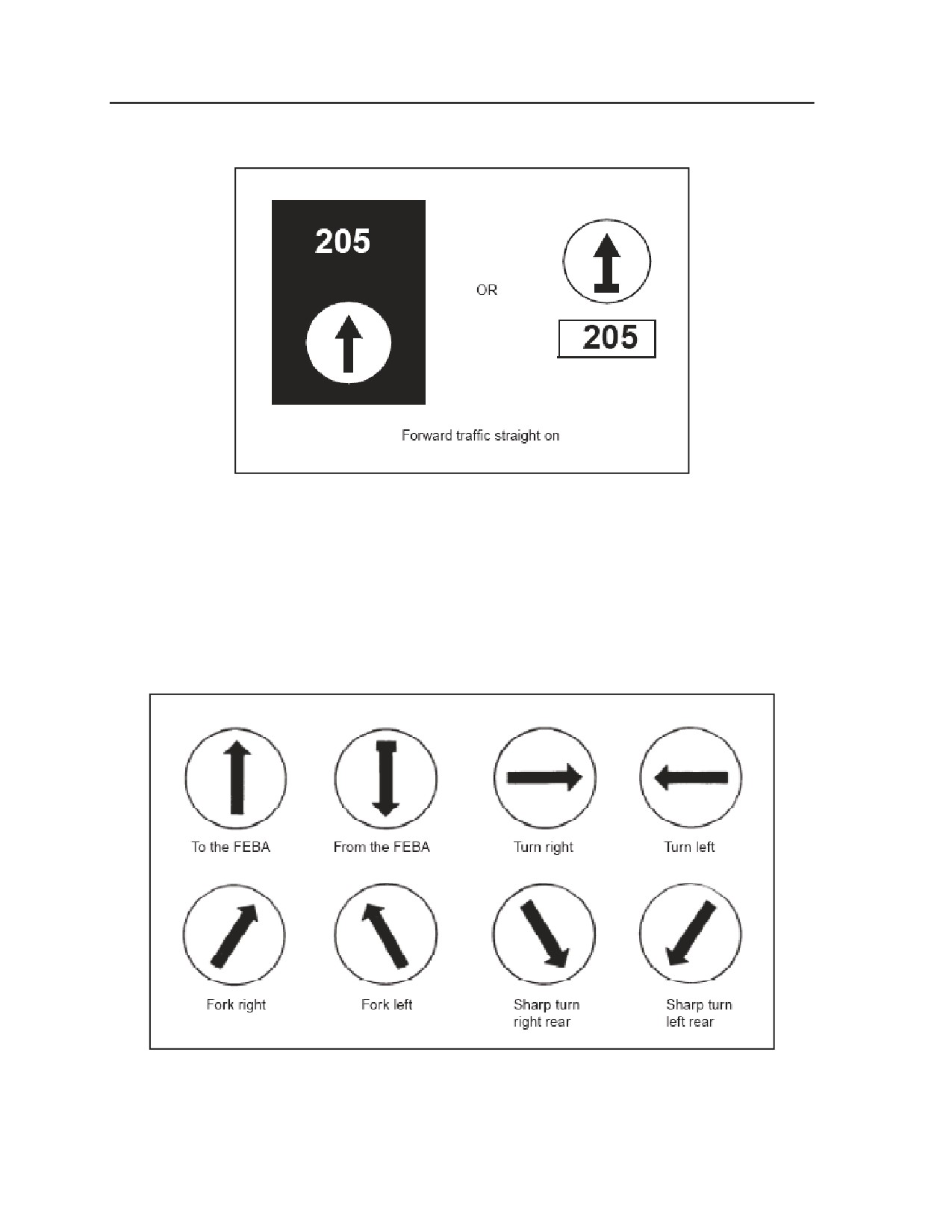
G-11. Guide signs indicate direction or location. These signs consist of the military route number and the
appropriate directional disk. If standard signs are not available, construct military route guide signs by
25 March 2008
FM 3-34.170/MCWP 3-17.4
G-7
Appendix G
placing a directional disk over a rectangular panel upon which the route number is inscribed
(see
figure G-9).
Figure G-9. Military route guide signs for axial routes
Directional Disks
G-12. A directional disk consists of a fixed black arrow, with or without a bar, on a white background.
Eight equally spaced holes around the edges of the circumference allow the disk to be nailed with the
arrow pointing in the desired direction. These disks are no smaller than 12 inches in diameter (see figure
G-10). They are used as standard guide signs to indicate military axial and lateral routes. Directional disks
may be used together with unit signs to indicate direction to locations of major units (groups and above).
Smaller units may not use directional disks. However, any arrow sign that provides a different shape and
color from the standard direction disks can be used to indicate smaller units.
Figure G-10. Example of directional arrow disks
G-8
FM 3-34.170/MCWP 3-17.4
25 March 2008
Signs
Headquarters and Logistical Signs
G-13. Use these signs to mark a headquarters and logistical installation. Use the appropriate military
symbol
(see FM
1-02). The inscription is black on a yellow background. This symbol may be
supplemented by national distinguishing symbols or abbreviations. For division headquarters and above,
nationality is always indicated. Colors other than black or yellow are prohibited except for national
distinguishing symbols.
Casualty Evacuation Route Signs
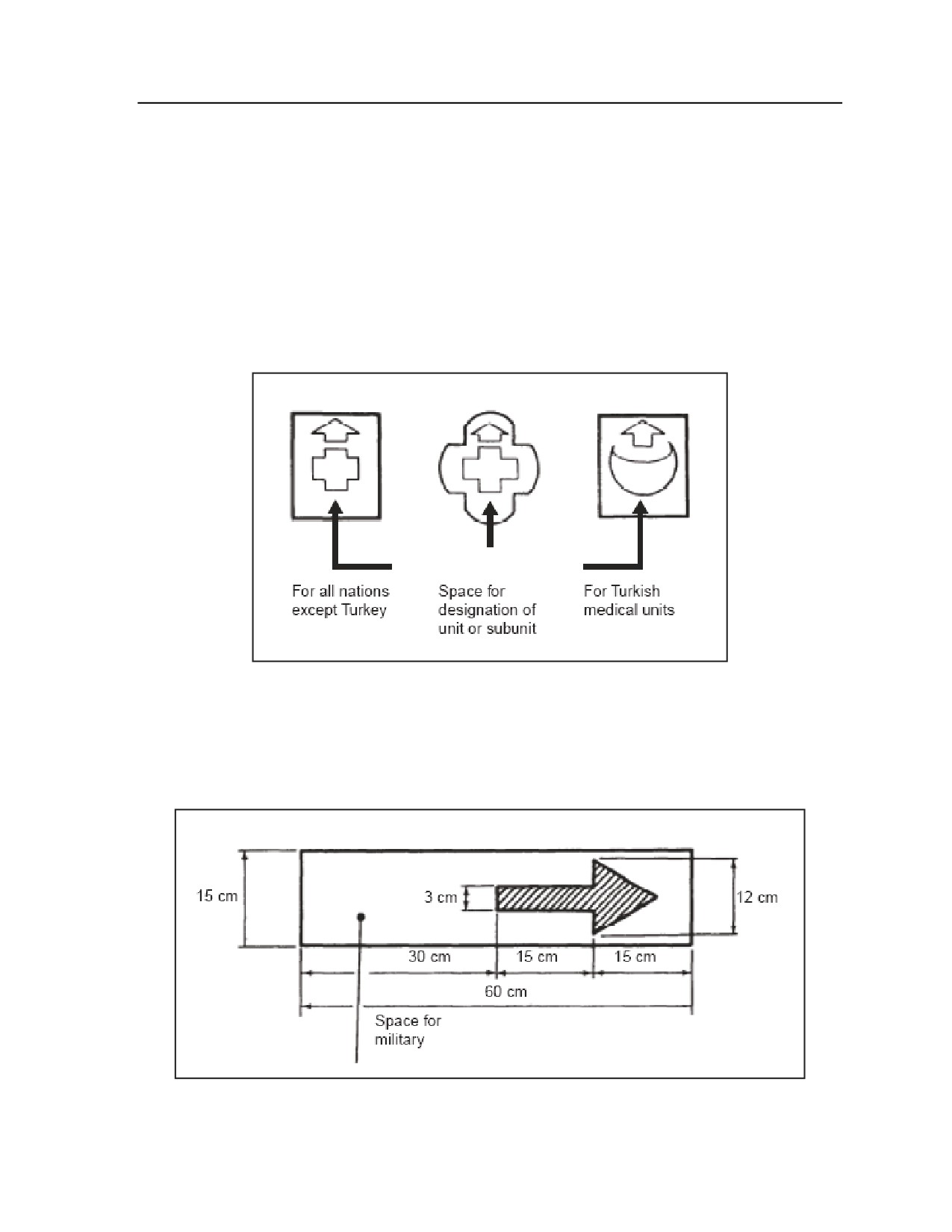
G-14. Indicate casualty evacuation routes on rectangular signs (see figure G-11). The signs have a white
background with red inscriptions of a directional arrow, a red cross (red crescent for Turkey), and a unit or
subunit designation (if required). An alternate sign may be made from a white disk with four segments cut
out to give an X shape. The inscriptions are shown in red.
Figure G-11. Example of guide signs for casualty evacuation routes
Unit Direction Arrow
G-15. Use temporary unit direction arrows to mark march routes (see figure G-12). In addition to the
direction arrow, include the unit identification symbol as part of the inscription. Unit route signs are placed
in advance of the moving column and are picked up by a trail vehicle.
Figure G-12. Unit direction arrow
25 March 2008
FM 3-34.170/MCWP 3-17.4
G-9
Appendix G
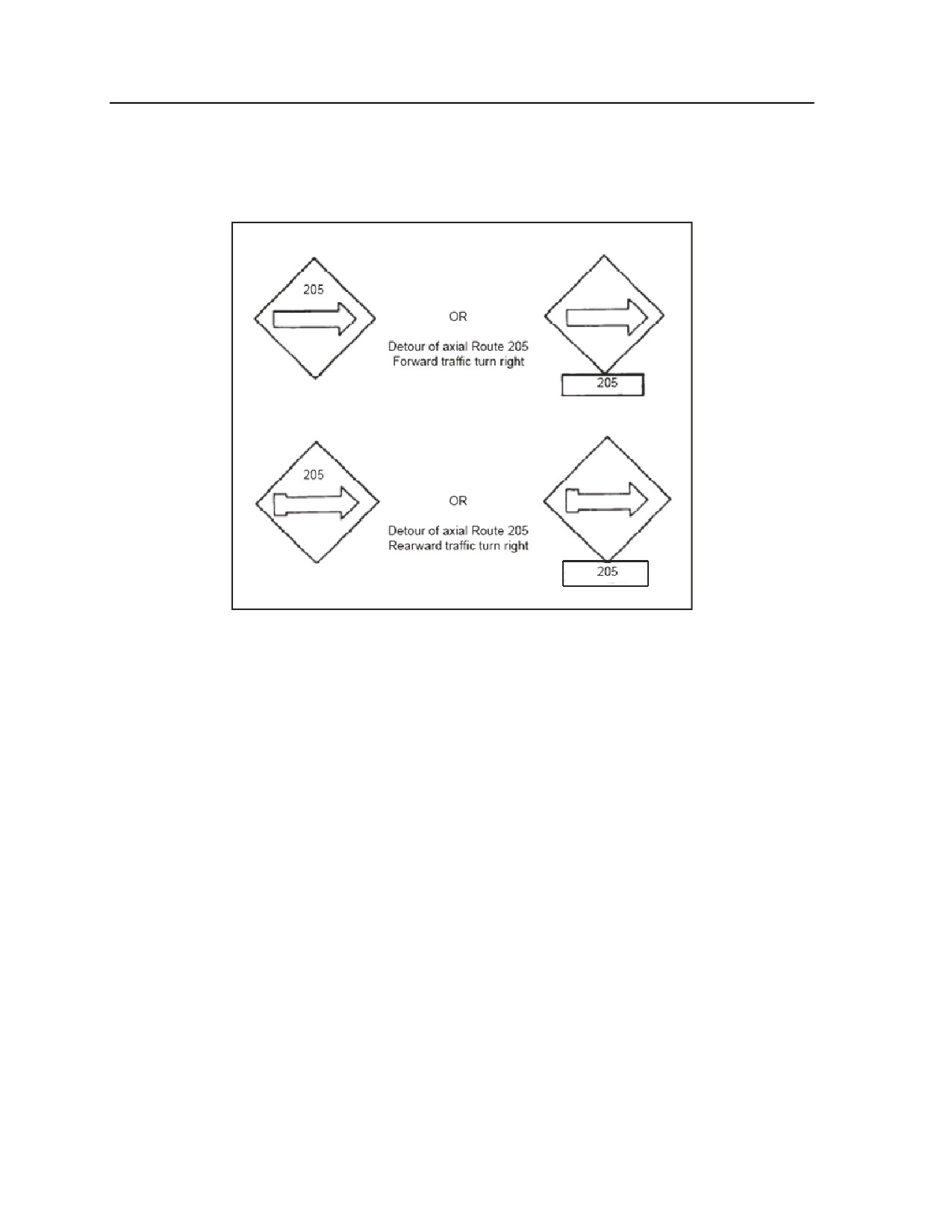
Military Detour Signs
G-16. Detour signs consist of a white arrow superimposed on a blue square. Place the sign in a diamond
position (see figure G-13). Show the number of the diverted route by placing the number on the square
over the arrow or placing the number on a small panel under the square.
Figure G-13. Example of detour signs
ROAD MARKERS IN AREAS OF HEAVY SNOW
G-17. Posting road signs in areas of heavy snowfall requires special attention. Ensure that the markers are
placed evenly on both sides of the traveled way. In open country, use poles of appropriate height with
direction markers, snow markers, or flags. Erect markers at least one meter off the traveled way to avoid
traffic damage. If you cannot completely mark a road, erect arrow signs at prominent points to indicate
road direction. Road markers and signs used for long periods of time in areas of heavy snow should be
checked frequently to ensure that their positions have not altered. In areas with prolonged conditions of
snow, yellow (international orange) may be substituted for white on all standard military route signs.
VEHICLE SIGNS
G-18. There are two types of vehicle signs: front and side.
z
Use front signs on all vehicles, except trailers, to show the classification of the laden vehicle.
z
Use side signs on towing vehicles and trailers only to show the classification of the laden towing
vehicles or trailers by themselves.
G-19. Both signs are circular and marked in contrasting colors consistent with camouflage requirements.
Black figures on a yellow background may be used.
z
The front sign is 23 centimeters in diameter. Place or paint the front sign on the front of the
vehicle, above or on the bumper, and below the driver’s line of vision. When possible, place it
on the right side, facing forward. .
z
The side sign is 15 centimeters in diameter. Place or paint the side sign on the vehicle’s right
side facing outward.
G-10
FM 3-34.170/MCWP 3-17.4
25 March 2008

Signs
G-20. Make the inscription on the sign as large as the sign allows.
z
The front sign—except on towing vehicles and tank transporters—indicates the vehicle’s laden
solo class. On towing vehicles, the front sign indicates the train’s combined load class. Above
this number, write the letter C to distinguish the vehicle as a towing vehicle (see figure G-14).
On tank transporters and similar type vehicles, the fixed front sign shows the maximum
classification of the laden vehicle. In addition, one alternative front sign may be carried. Place it
so that it covers the fixed front sign, when necessary, to show the class of the vehicle when
unladen.
z
The side sign (used only by prime movers of combination vehicles and trailers) indicates the
laden solo class of the prime mover or trailer.
G-21. Single vehicles (including tank transporters) carry the front sign only, towing vehicles carry both
front and side signs, and trailers carry side signs only. Mark all vehicles as given above. (See appendix E
for details on determining a vehicle’s MLC.) Marking the following vehicles is optional:
z
Vehicles of a gross weight of 3.048 tons or less.
z
Trailers with a rated capacity of 1.524 tons or less.
Figure G-14. Front sign
SIGN LIGHTING
G-22. The appropriate military authority in the area specifies which signs are to be illuminated. Primary
considerations go to hazard and direction signs. The system of lighting must remain operational for a
minimum of 15 hours without refueling or changing batteries. Consider the following:
z
Under normal conditions, each armed force is responsible for ensuring that standard signs are
visible at night and other periods of reduced visibility. Take necessary precautions in tactical
situations.
z
Under reduced lighting conditions, the positioning of the signs and the methods adopted to make
them visible (illumination or reflection) must enable personnel to see them from vehicles fitted
with reduced lighting or filtering devices.
z
In a blackout zone, signs are equipped with upper shields that prevent light from being directly
observed from the air. The light illuminating the sign is of such low intensity that it is not
possible to locate the sign from the air at altitudes greater than 150 meters by its reflection off
the road surface. Illumination devices are positioned so they can be recognized by oncoming
vehicles at a road distance of 100 meters and read at a distance of 80 meter.
25 March 2008
FM 3-34.170/MCWP 3-17.4
G-11
Appendix H
Technical Tools and Resources
This appendix highlights some of the most useful and primary support tools for
engineers performing general engineering operations. These tools include the
USAES, the USACE Engineer Research and Development Center (ERDC), USACE
Protective Design Center (PDC), USACE TEOC, Prime Power, Water Resource
Detection Team (WRDT), AARK, Defense Environmental Network and Information
Exchange (DENIX), and USACHPPM. This type of reach-back capability is one of
the characteristics of FFE. The Air Force and Navy provide some of the same type of
capabilities and support through the AFCESA and the NAVFAC. (See FM 3-34 for
further information.)
UNITED STATES ARMY ENGINEER SCHOOL
H-1. The doctrine division (DD) of the USAES manages engineer doctrine within the United States Army
Training and Doctrine Command (TRADOC) doctrine development cycle. As part of this process, DD
assesses, plans, develops, produces, and disseminates engineer doctrine that is synchronized with allied,
multinational, joint, multi-Service, and combined arms doctrine. DD supports the development of
nonengineer doctrinal products by providing subject matter expertise for review and coordination. DD also
supports the Engineer Regiment by managing the Center for Engineer Lessons Learned and by providing
information and analysis as needed.
ENGINEER RESEARCH AND DEVELOPMENT CENTER
H-2. The U.S. Army ERDC is one of the most diverse engineering and scientific research organizations in
the world. It consists of seven laboratories at four geographical sites in Vicksburg, MS; Champaign, IL;
Hanover, NH; and Alexandria, VA; employing more than 2,000 engineers, scientists, and support
personnel.
H-3. ERDC research and development supports the DOD, other federal agencies, and the nation in
military and civilian projects. Its primary mission areas include the following.
z
Warfighter support.
z
Installations.
z
Environment.
z
Water resources.
z
Information technology.
H-4. Research projects include facilities, airfields and pavements, protective structures, sustainment
engineering, environmental quality, installation restoration
(cleanup), compliance and conservation,
regulatory functions, flood control, navigation, recreation, hydropower, topography, mapping, geospatial
data, winter climatic conditions, oceanography, environmental impacts, and information technology.
UNITED STATES ARMY CORPS OF ENGINEERS PROTECTIVE
DESIGN CENTER
H-5. The U.S. Army Corps of Engineers PDC is the Army’s Center of Expertise for structures hardened
to resist weapons effects and in security engineering. The PDC employees are considered world-class
experts in their specialties.
25 March 2008
FM 3-34.170/MCWP 3-17.4
H-1
Appendix H
H-6. The PDC co-chairs the committee that wrote the DOD minimum antiterrorism construction standards
and that writes many of the DOD security engineering UFC documents. These UFC present design
guidance for protective systems against aggressor tactics including—
z
Vehicle improvised explosive devices.
z
Indirect weapons fire.
z
Direct weapons fire.
z
CBRNE.
H-7. The PDC has experience assisting units with vulnerability assessments and using software and other
tools to determine where facility hardening is required. Their engineers can identify vulnerabilities and
recommend mitigating measures including vehicle barriers to achieve standoff distance and structural
hardening to resist weapons effects.
TELEENGINEERING OPERATIONS CENTER
DESCRIPTION
H-8. The TEOC provides a reach-back engineering capability that allows DOD personnel deployed
worldwide to talk directly with experts in the United States when a problem in the field needs quick
resolution. Deployed troops can be linked to subject matter experts (SMEs) within the USACE (or
comparable Air Force and Navy organizations), private industry, and academia to obtain detailed analysis
of complex problems that would be difficult to achieve with the limited expertise or computational
capabilities available in the field.
CAPABILITIES
H-9. TEOC staff members respond to incoming information requests and provide detailed analyses of
problems—such as flooding potential due to dam breaches, load-carrying capacities of roads and bridges,
field fortifications and protection, evaluation of transportation networks, and water resource data. The
TEOC has access to the USACE Transportation System Center, which includes SMEs on airfields,
roadways, and railroads.
SUPPORTING TECHNOLOGY
H-10. TeleEngineering communication equipment provides reach-back capability using off-the-shelf
communications equipment with encryption added. Video teleconferences and data transfers can be
conducted from remote sites where other similar means of communications are nonexistent or unavailable.
H-11. The TeleEngineering toolkit (TETK) is a software product that provides a valuable analysis tool to
personnel on the ground or going into an AO. By annotating an area of interest, a small reference file can
be sent back to the SMEs to provide requests for a variety of information to include cross-country mobility
analysis, flood analysis, and vegetation information. The response can then be sent back and graphically
displayed using the TETK.
(For more information on TeleEngineering, contact the ERDC at
teoc@usace.army.mil.)
PRIME POWER OPERATIONS
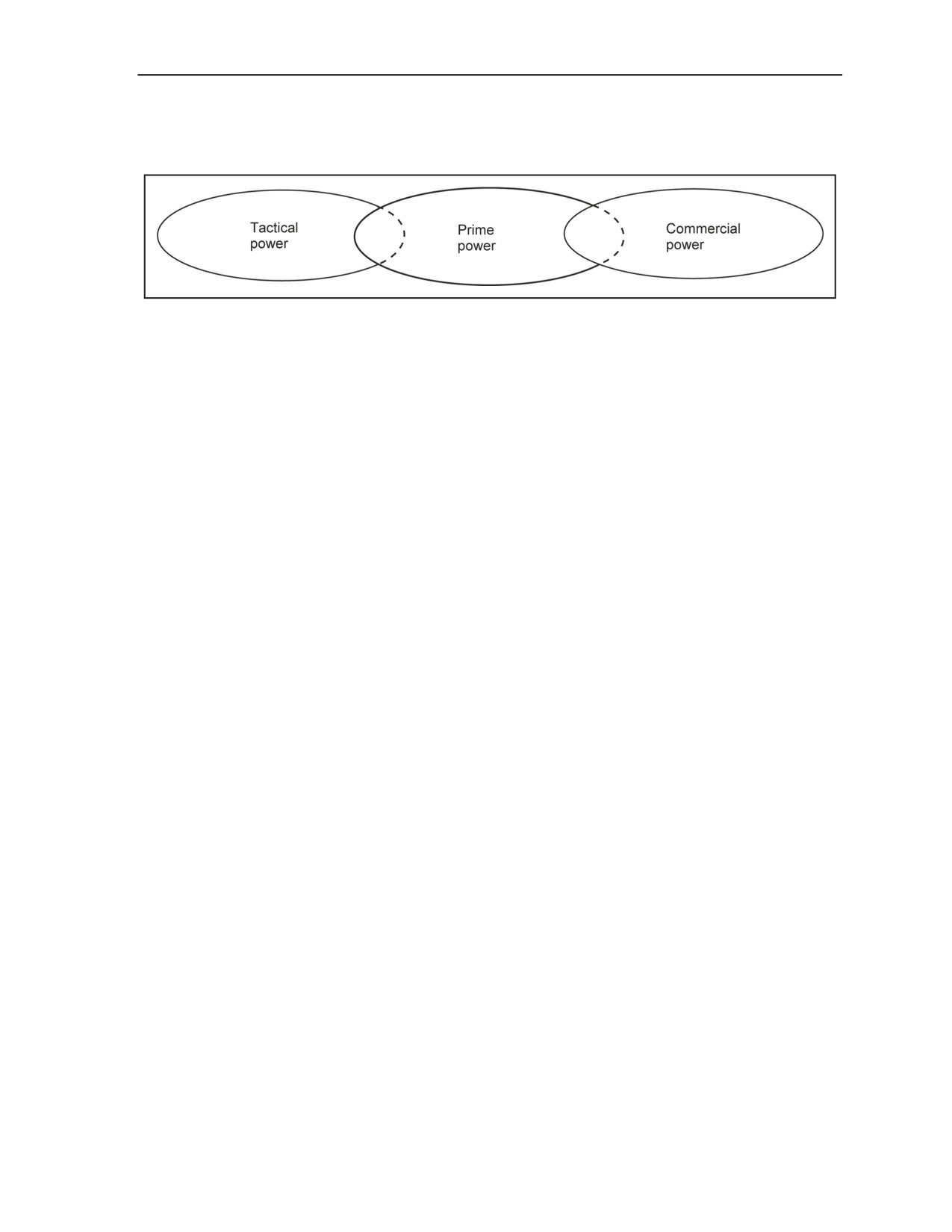
H-12. Engineer prime power units conduct prime power operations, a subset of the general engineering
function of the engineer regiment (see FM 3-34.480). They provide an essential continuity between power
from tactical generators (TACGENS) and commercial sources (see figure H-1). Prime power units provide
technical assistance and staff planning to support development of electrical power solutions for military
operations. Prime power units also possess a limited organic capability to provide interim contingency
power to satisfy the critical electrical requirements above the capability of TACGENS and below the
availability of commercial power or to augment the power available from either source. The portion of the
continuum that is exclusively prime power represents power generation and distribution accomplished by
H-2
FM 3-34.170/MCWP 3-17.4
25 March 2008
Technical Tools and Resources
prime power units with their organic equipment. The intersections of TACGENS and commercial power
with prime power represent areas of shared responsibility.
Figure H-1. The power continuum
H-13. Engineer prime power units support theaterwide general engineering efforts by providing advice and
technical assistance on all aspects of electrical power and distribution systems in support of military
operations. They are also capable of providing limited, interim contingency power generation to critical
facilities. This mission statement spans the range of military operations to include combat (offense and
defense), stability and support operations, and civil support operations. Prime power efforts and
capabilities must be closely integrated and synchronized with the overall general engineering effort to
achieve the effects intended in the theater ESP.
H-14. The prime power unit performs many technical power related tasks. A minimum of a two-Soldier
and Marine team is required to perform each of the tasks. These tasks include—
z
Providing power related planning and staff assistance.
z
Conducting electrical load surveys.
z
Analyzing and designing distribution systems.
z
Constructing, maintaining, and repairing distribution systems.
z
Performing damage assessment of distribution systems.
z
Operating and maintaining industrial power systems and controls.
z
Providing power related technical assistance to the contracting officer’s representative.
H-15. Engineer prime power units can produce large quantities of reliable power with their organic
generators. Each prime power platoon is equipped with four 840-kilowatt power units, giving the platoon a
3.36-megawatt total power production capability and 2.52-megawatts of normal operating continuous
power production. They can also install, operate, and maintain nonstandard, power generation equipment
and operate and maintain some fixed commercial power plants. This power generation capability can be
used in a variety of military base camp configurations as well as ports, airfields, C2 nodes, and other
critical facilities. The units' power generation capability also allows them to—
z
Provide power to locations where another source is not available or is inadequate using organic
or war reserve equipment.
z
Operate, maintain, and perform damage assessments of fixed commercial diesel engine power
plants.
WATER RESOURCE DETECTION TEAM
PURPOSE
H-16. The objective of the water resource detection team (WRDT) is to identify high-potential areas for the
best quality of water, within available drilling equipment capability, to meet the water production
requirements of the mission.
CAPABILITIES
H-17. WRDT expertise and studies are concentrated in four areas or elements: database, remote sensing,
supporting specialists, and geophysics.
25 March 2008
FM 3-34.170/MCWP 3-17.4
H-3
Appendix H
z
Database. TEC produces and maintains a worldwide DOD Water Resources Database (WRDB)
of available water supply and hydrologic data, including ground water resources. The WRDB is
derived from classified and open-source data, maps, documents, and imagery. When specific
missions/requests are received for areas where data are uncertain or inconclusive, the team will
research additional sources and data unique to the area. The resulting WRDT product or report
summarizes the information critical to planning a successful well—such as the hydrogeology,
target depth, aquifer material, expected yield, and probable water quality. Office studies, based
on research and analysis of existing data, are the most cost effective and timely WRDT approach
and normally take hours to days to complete.
z
Remote sensing. If databases and other supplemental information are inadequate, aerial or
satellite imagery may be studied and analyzed for indications of groundwater. This source is
especially useful in a hard-rock area, where siting wells on significant fractures and fracture
intersections is the key to success. The acquisition and analysis of imagery increases the time
and cost to complete an office study.
z
Supporting specialists. If office studies including imagery analysis are inadequate, one or more
supporting specialists may be deployed to the site. These specialists contact HN groundwater
experts, collect and evaluate in-country data associated with existing or historic wells, and
conduct hydrogeologic field reconnaissance of specific areas prior to drilling. They may also
assist with interpreting well cuttings and down-hole electric logging during drilling. Field
studies generally take days to weeks to complete.
z
Geophysics. Should information gathered by supporting specialists be insufficient, additional
local site investigation may be necessary using exploratory geophysics. Geophysicists may
deploy to the site to conduct electrical resistivity, seismic refraction, or other on-site tests to
better define the subsurface prior to drilling. Geophysical exploration and data analysis
generally take weeks to complete. Costs are significantly higher than for office-based studies
and are normally paid by the requester.
H-18. When activated, the WRDT does not automatically deploy to provide technical support for military
operations. The starting point for each WRDT request is to identify high-potential areas by examining
existing databases, followed by collecting and analyzing additional sources and imagery. In those rare
cases when high-potential water sites cannot be identified from source data and imagery, teams from the
supporting specialists and/or geophysics elements can be deployed for on-site investigations. This should
take place before well drillers arrive. If deployed to the theater of operations, the WRDT operates as a
component of the ENCOM or senior engineer organization in theater. As with any USACE capability,
activation of the WRDT for deployment is not automatic; it must be requested through the supporting
ENCOM in theater or through other appropriate command channels to TEC. The commander
provides/arranges for the WRDT logistics and administrative support necessary for mission
accomplishment.
AUTOMATED ROUTE RECONNAISSANCE KIT
PURPOSE
H-19. An automated route reconnaissance kit (ARRK) provides military units with an adaptable, easy-to
use reconnaissance package that allows an ERT or other engineer reconnaissance element to rapidly collect
and process reconnaissance (all types but generally route) information.
CAPABILITIES
H-20. The ARRK uses a field-ready laptop computer to continuously collect reconnaissance information
without stopping or leaving the vehicle for routine calculations. Time, security, and accuracy issues
normally associated with a route reconnaissance are reduced. The ARRK collects pictures, voice
recordings, GPS locations, accelerometer, and gyroscope data streams in three dimensions. Unlike the
traditional, manually recorded route reconnaissance efforts, the ARRK allows an operator with minimum
training experience to collect, process, and export the route information. The ARRK accommodates a
H-4
FM 3-34.170/MCWP 3-17.4
25 March 2008
Technical Tools and Resources
chronological, picture replay of the route and geo-referenced display of major features that affect the
classification and usage of the road or route. The viewer of the data can scroll through the stored data types
to instantly locate specific features along the route. Data includes automated determination of slope, radius
of curvature, and ride quality. The reconnaissance data collected from the ARRK is quickly converted by
the operator to a preformatted report that is according to the requirements of this manual. Planned
improvements for the system include integration of a laser range finder and digital scale reference guide.
The system will be developed as a stand-alone data collection tool and a fully interoperable data collection
platform for dissemination and repository of route information.
DEFENSE ENVIRONMENTAL NETWORK AND INFORMATION
EXCHANGE
PURPOSE
H-21. The Defense Environmental Network and Information Exchange
(DENIX) is an electronic
environmental bulletin board accessible throughout the DOD that gives DOD environmental, safety, and
occupational health managers a central communications platform to gain timely access to vital
environmental information.
CAPABILITIES
H-22. DENIX (based on the Army’s Defense Environmental Electronic Bulletin Board System) gives users
the ability to—
z
Read online environmental publications (proprietary or DOD specific).
z
Send/receive mail electronically on the DENIX host computer or across the internet.
z
Exchange environmental information via managed discussion forums based on a subject area.
z
Send/receive required reporting data through the chain of command.
z
Peruse and request environmental training courses and seminars.
z
Access the DENIX directory service database.
z
Upload and download files from DENIX to and from a personal computer.
UNITED STATES ARMY CENTER FOR HEALTH PROMOTION AND
PREVENTIVE MEDICINE
PURPOSE
H-23. The United States Army Center for Health Promotion and Preventive Medicine (USACHPPM) has a
mission to provide worldwide technical support for implementing preventive medicine, public health, and
health promotion/wellness services into all aspects of America's Army and the Army community. It
anticipates and rapidly responds to operational needs and adapts to a changing world environment. The
USACHPPM organization is headquartered at Aberdeen Proving Ground, Maryland, with subordinate
commands in Landstuhl, Germany, and Sagami, Japan. USACHPPM also maintains subordinate
commands at three locations in the United States: Fort Meade, MD; Fort McPherson, GA; and Fort Lewis,
WA.
CAPABILITIES
H-24. The USACHPPM is a linchpin of medical support to combat forces and of the military managed-care
system. It provides worldwide scientific expertise and services in clinical and field preventive medicine,
environmental and occupational health, health promotion and wellness, epidemiology and disease
surveillance, toxicology, and related laboratory sciences. It supports readiness by keeping Soldiers and
Marines fit to fight, while also promoting wellness among their families and the Federal civilian workforce.
Professional disciplines represented include chemists, physicists, engineers, physicians, optometrists,
epidemiologists, audiologists, nurses, industrial hygienists, toxicologists, entomologists, and many others,
as well as subspecialties within these professions.
25 March 2008
FM 3-34.170/MCWP 3-17.4
H-5
Source Notes
This section lists sources by page number. Where material appears in a paragraph,
both the page number and paragraph number are listed. Boldface indicates titles of
vignettes.
1-1
“Nothing is more worthy of attention…”: Niccolo Machiavelli, The Military Quotation
Book, (edited by James Charlton, Thomas Dunne Books, February 2002; St. Martin’s
Press, 175 Fifth Avenue, New York, New York 10010), 87.
2-1
“Make your plans fit the circumstances.”: General George S. Patton, Jr., [Online].
3-1
“No matter how enmeshed a commander becomes…”: Sir Winston Churchill, [Online].
Available: http://www.quoteopia.com.
4-1
“Tactics are the cutting edge of strategy,…”: Major General J.F.C. Fuller, The Military
Quotation Book, (Thomas Dunne Books, February 2002; St. Martin’s Press, 175 Fifth
Avenue, New York, New York 10010).
5-1
The art of war is, in the last result,…”: Xenophon,
[Online]. Available:
6-1
Bring war material with you from home,…”: Sun Tzu,
[Online]. Available:
25 March 2008
FM 3-34.170/MCWP 3-17.4
Source Notes-1