FM 3-34.170/MCWP 3-17.4 ENGINEER RECONNAISSANCE (March 2008) - page 5
Reporting
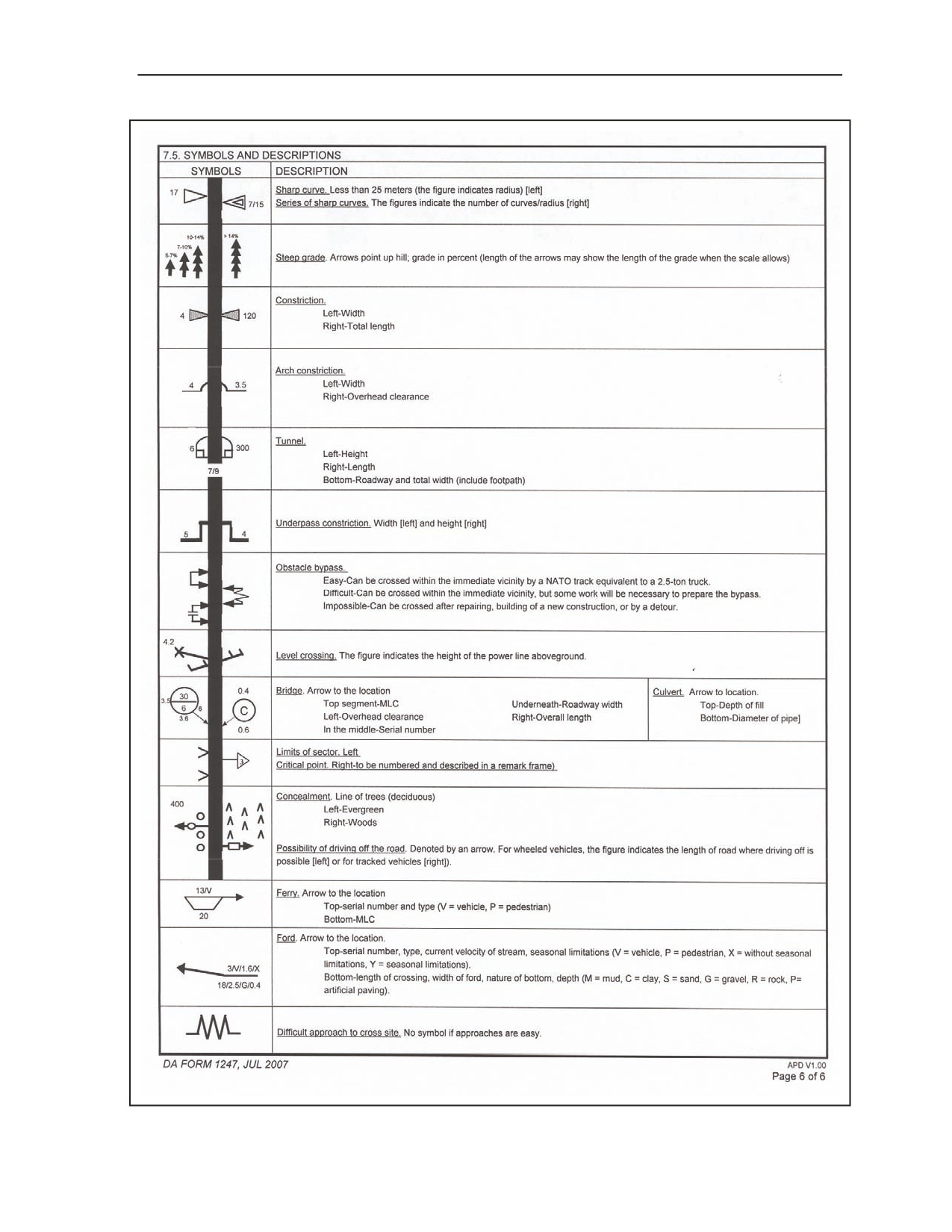
Figure B-1. Sample DA Form 1247 (continued)
25 March 2008
FM 3-34.170/MCWP 3-17.4
B-11
Appendix B
ROAD RECONNAISSANCE REPORT
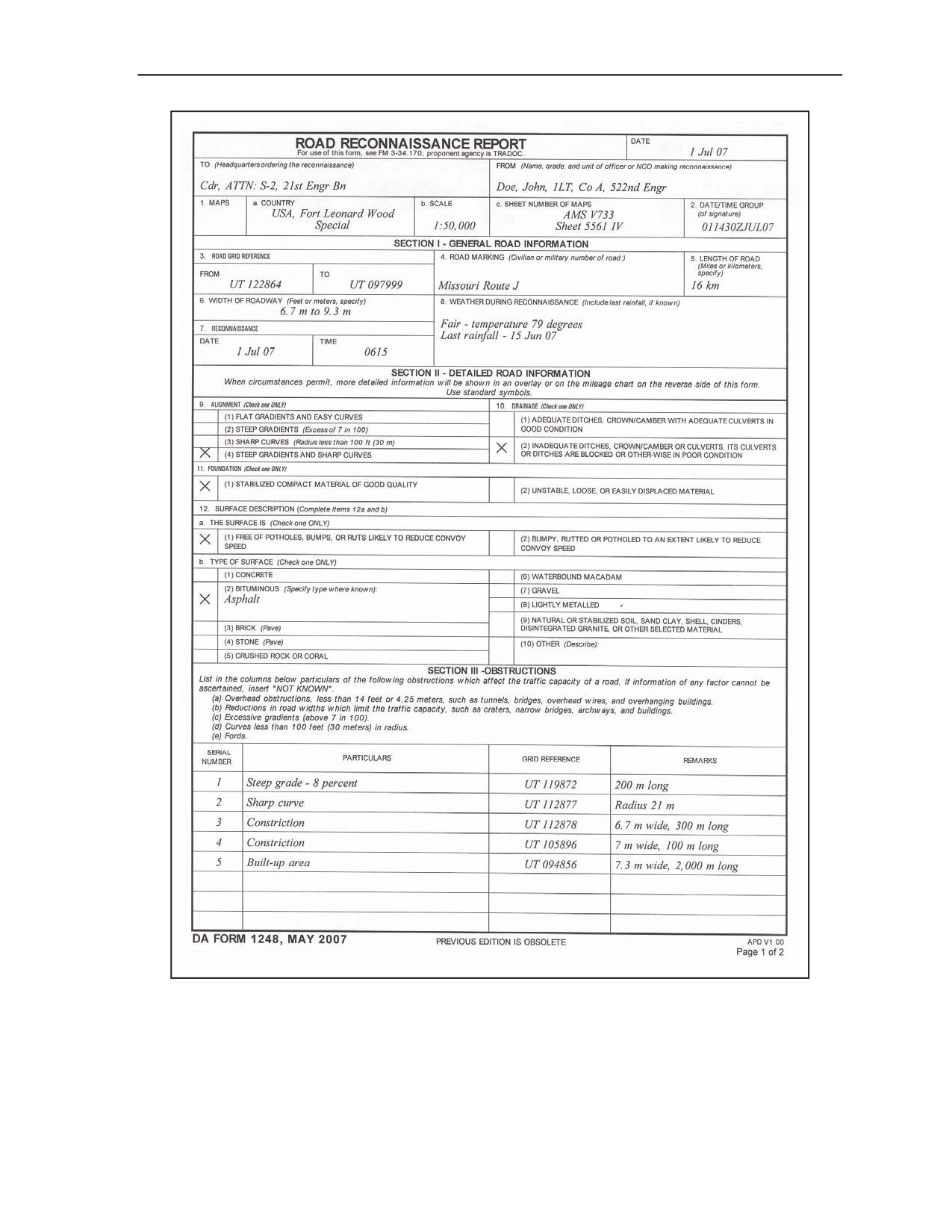
B-4. Use a Road Reconnaissance Report, DA Form 1248, to report the technical information collected
during road reconnaissance. Additionally, the road information is summarized on the route classification
overlay as described in chapter 5. Complete the road reconnaissance form as follows (see figure B-2 on
pages B-13 and B-14).
z
There are four Date blocks on the form (3 on the front side and 1 on the back); record the same
date in each.
z
Block 1a should indicate country and map name, not just the country.
z
Block 1c should indicate sheet number and edition as well as the map sheet date.
z
Block 3 requires at least a 6-digit grid coordinate.
z
In section II, record information for the most limiting characteristics of the road.
z
Section III (d) should read, “Curves with a radius of 25 meters and less. (Also record curves
with a radius of 25.1 to 45 meters).”
z
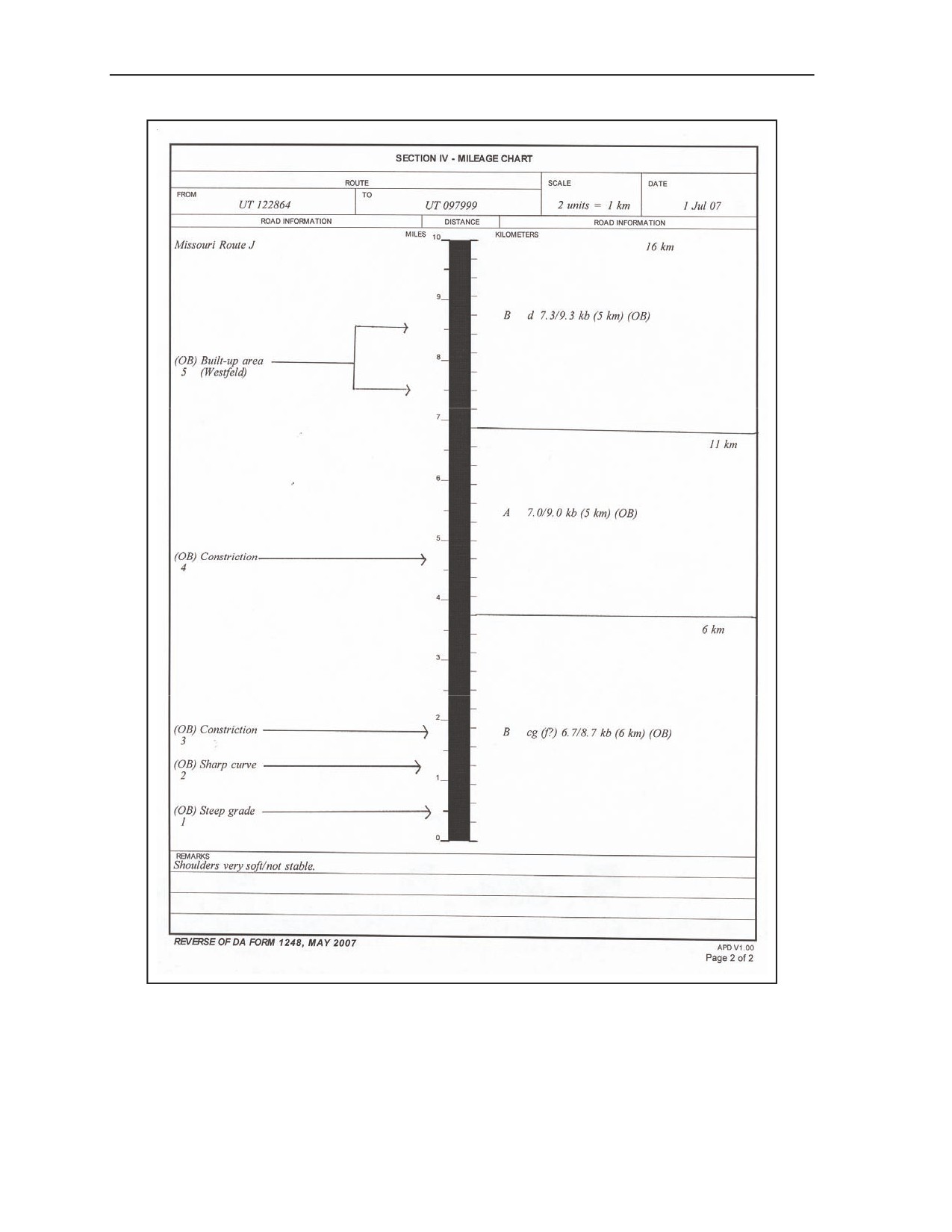
In section IV, complete the Scale block as follows, Scale:_____units = _____kilometers. Include
the road classification formula (see chapter 5, pages 5-25 through 5-27) for each section of road.
Indicate on sketch the location of all obstructions.
B-12
FM 3-34.170/MCWP 3-17.4
25 March 2008
Reporting
Figure B-2. Sample DA Form 1248
25 March 2008
FM 3-34.170/MCWP 3-17.4
B-13
Appendix B
Figure B-2. Sample DA Form 1248 (continued)
B-14
FM 3-34.170/MCWP 3-17.4
25 March 2008

Reporting
BRIDGE RECONNAISSANCE REPORT
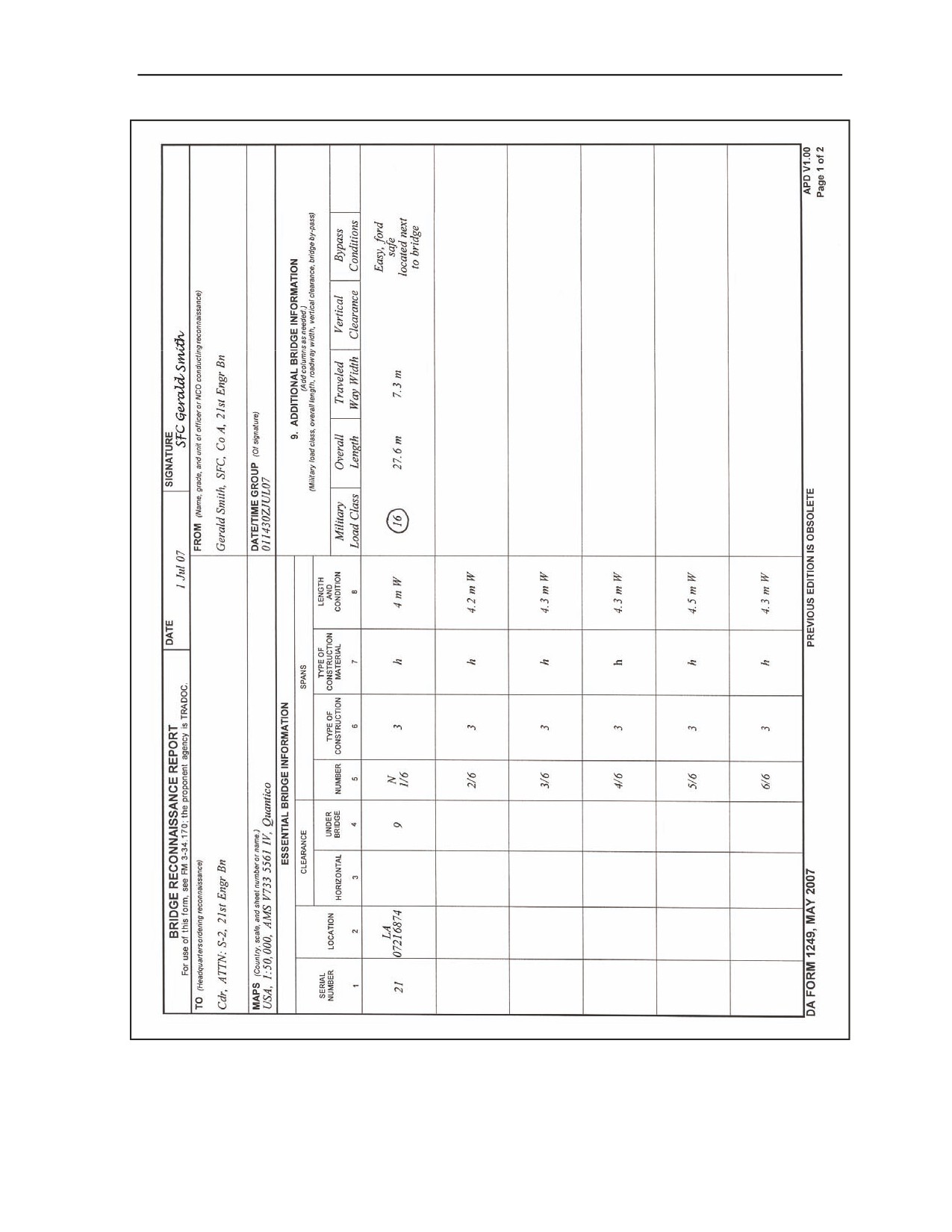
B-5. Use a Bridge Reconnaissance Report, DA Form 1249, to report the technical information collected
during a bridge reconnaissance. Additionally, when part of a route classification, the bridge information is
summarized on the route classification overlay as described in chapter
5.
(For rapid classification
procedures see appendix F.) Complete the bridge reconnaissance form as follows (see figure B-4 on pages
B-19 through B-20).
z
Column 1. Record the assigned serial number. This number matches the serial number used in
the bridge symbol of the route classification overlay.
z
Column 2. Record the 8-digit grid coordinates, with the map identifier, of the actual bridge site.
z
Column 3. Record horizontal clearance information, in meters. Horizontal clearance is the clear
distance between the inside edges of the bridge structure, measured at a height of 0.3 meter
above the surface of the traveled way and upwards. However, horizontal clearance for truss
bridges is measured 1.21 meters above the traveled way. Any horizontal clearance less than the
minimum required for the bridge’s roadway width, as shown in table B-3, is underlined.
Unlimited clearance is indicated by the symbol ∞.
Table B-3. Minimum roadway widths
Bridge Classification
Roadway Width (meters)
One-Way
Two-Way
2.75 to 3.34
12
0
3.35 to 3.99
30
0
4 to 4.49
60
0
4.5 to 4.99
100
0
5 to 5.4
150
0
5.5 to 7.2
150
30
7.3 to 8.1
150
60
8.2 to 9.7
150
100
Over 9.8
150
150
Note. Minimum overhead clearance for all classes is 4.3 meters
z
Column 4. Record under-bridge clearance, in meters. It is the clear distance between the
underside of each span and the surface of the water. The height above the stream bed and the
height above the estimated normal water level (pertaining to the appropriate bridge type) are
included in this column for each span.
z
Column 5. If the bridge is oriented more north to south, start with the northern most span and
work south. Place the letter N in column 5 before the first span in sequence. If the bridge is
oriented more east to west, start with the eastern most span and work west. Place the letter E in
column 5 before the first span in sequence. For each span, list a sequence number followed by a
slash and the total number of spans. Columns 5, 6, 7, and 8 are completed for each span.
z
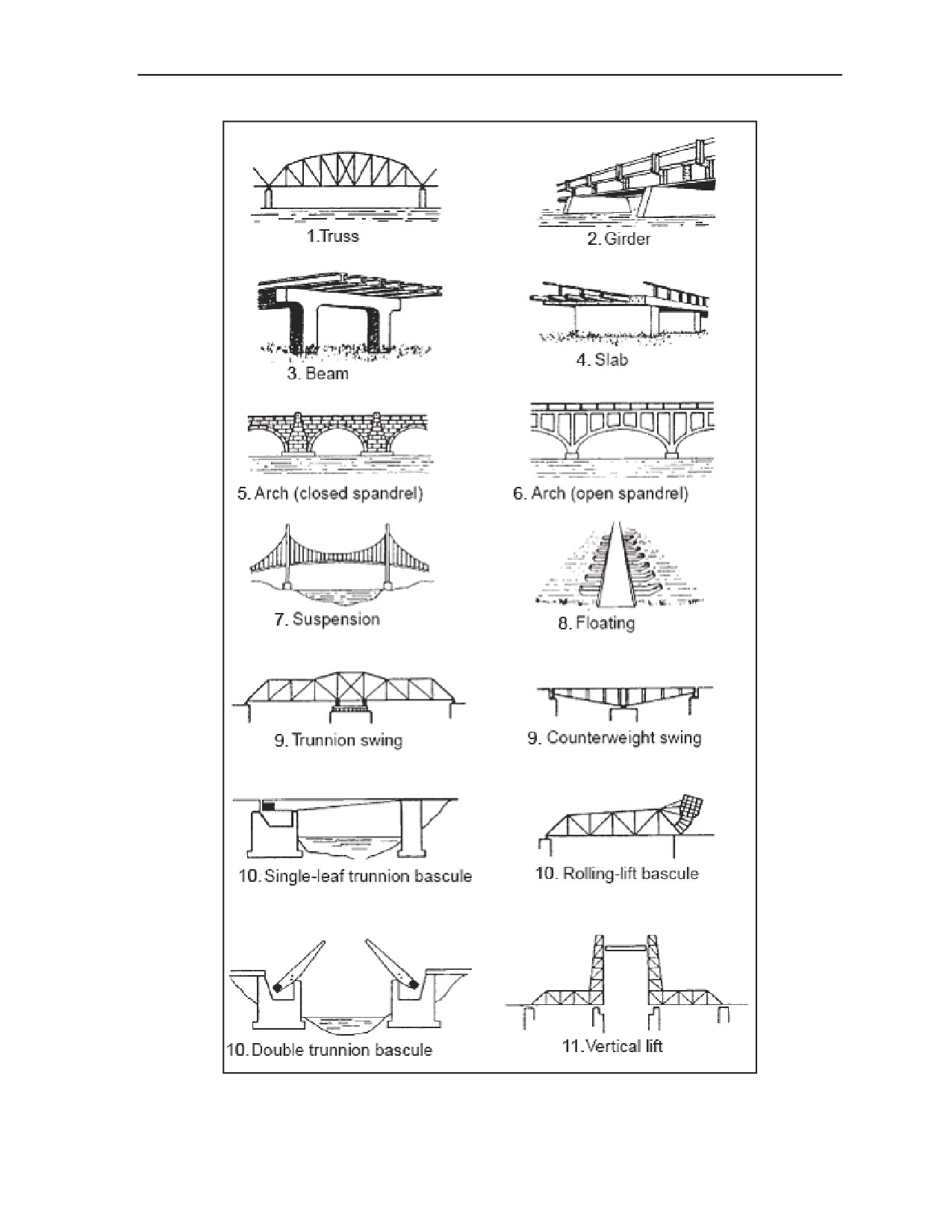
Column 6. Record the type of span construction. Refer to the numbers in table B-4, page B-16,
and the diagrams in figure B-3, page B-17, for this information.
25 March 2008
FM 3-34.170/MCWP 3-17.4
B-15

Appendix B
Table B-4. Span construction types
Span Type
Number
Truss
1
Girder
(including steel multigirder and
2
two girder spans)
Beam
(including reinforced or
3
prestressed concrete and steel
box beam spans)
Slab
4
Arch (closed spandrel)
5
Arch (open spandrel)
6
Suspension
7
Floating
8
Swing
9 (specify type in additional information)
Bascule
10 (specify type in additional information)
Vertical lift
11
Other
12 (specify type in additional information)
B-16
FM 3-34.170/MCWP 3-17.4
25 March 2008
Reporting
Figure B-3. Typical bridge spans
25 March 2008
FM 3-34.170/MCWP 3-17.4
B-17

Appendix B
z
Column 7. Record the type of construction material. Refer to table B-5 for this information.
Table B-5. Construction material
Material of Span Construction
Letter Symbol
Steel or other metal
a
Concrete
k
Reinforced concrete
ak
Prestressed concrete
kk
Stone or brick
p
Wood
h
Other (to be specified by name)
o
z
Column 8. Record span length, in meters. This is a center-to-center spacing between bearings.
The sum of the span length may not equal the overall length. Spans that are not usable because
of damage or destruction are indicated by the pound symbol (#), placed after the dimension of
the span length. Spans that are over water are indicated by placing the letter W after the
dimension of the span length (see figure B-4).
B-6. Under “Additional Bridge Information,” columns are added to give the MLC, overall length,
roadway width, overhead clearance, and bypass possibilities (specify use easy, use difficult, or use
impossible). Indicate whether the bridge is simply supported or continuous (see figure B-4).
B-18
FM 3-34.170/MCWP 3-17.4
25 March 2008
Reporting
Figure B-4. Sample DA Form 1249
25 March 2008
FM 3-34.170/MCWP 3-17.4
B-19
Appendix B
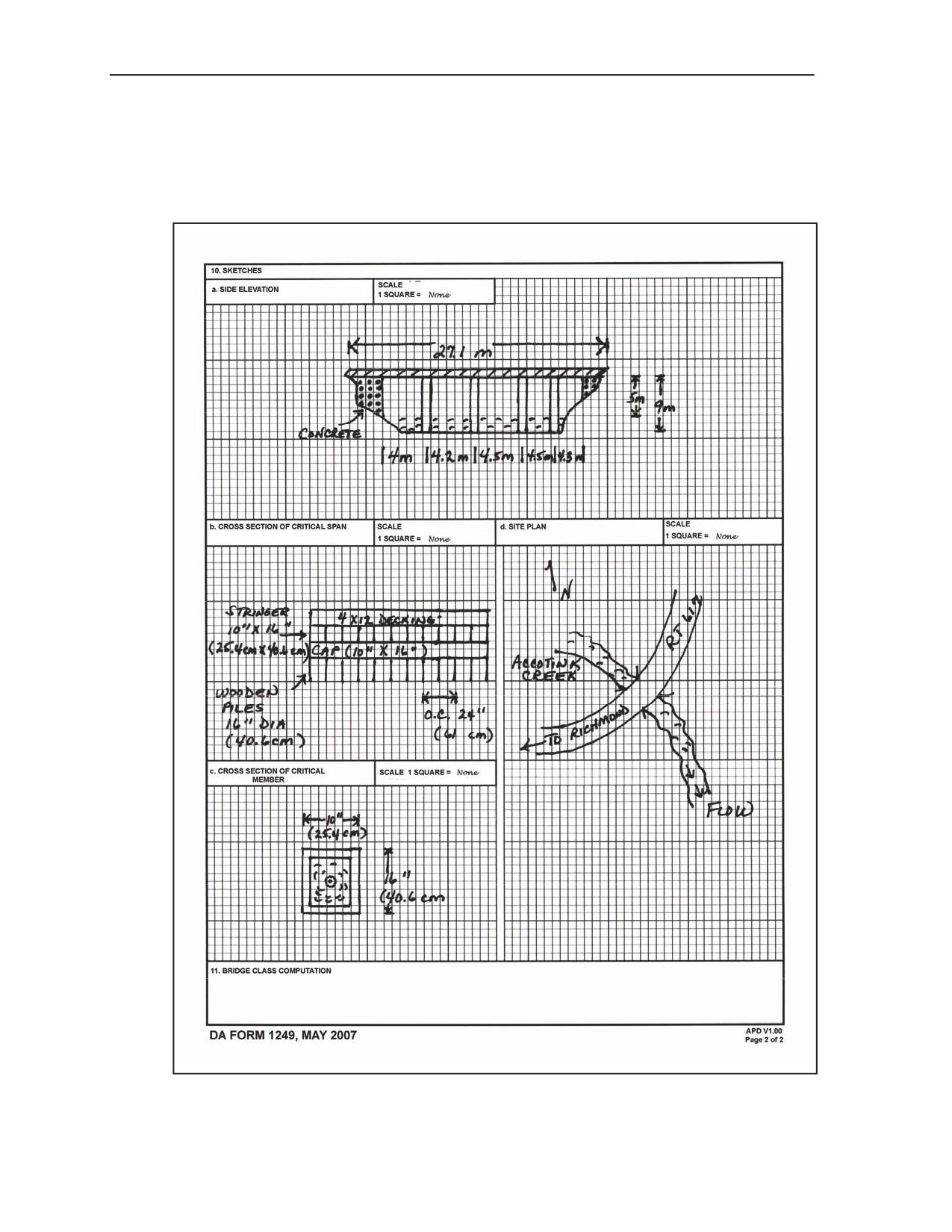
B-7. The bridge reconnaissance report should include a sketch as well as photographs when possible.
Show as much information as possible when sketching the bridge on the backside of DA Form 1249 (see
figure B-5). For bridges that present a challenge to reconnaissance elements collecting information and/or
determining a classification, USACE assistance is available through reach-back support as discussed under
FFE in appendix H.
Figure B-4. Sample DA Form 1249 (continued)
B-20
FM 3-34.170/MCWP 3-17.4
25 March 2008
Reporting
TUNNEL RECONNAISSANCE REPORT
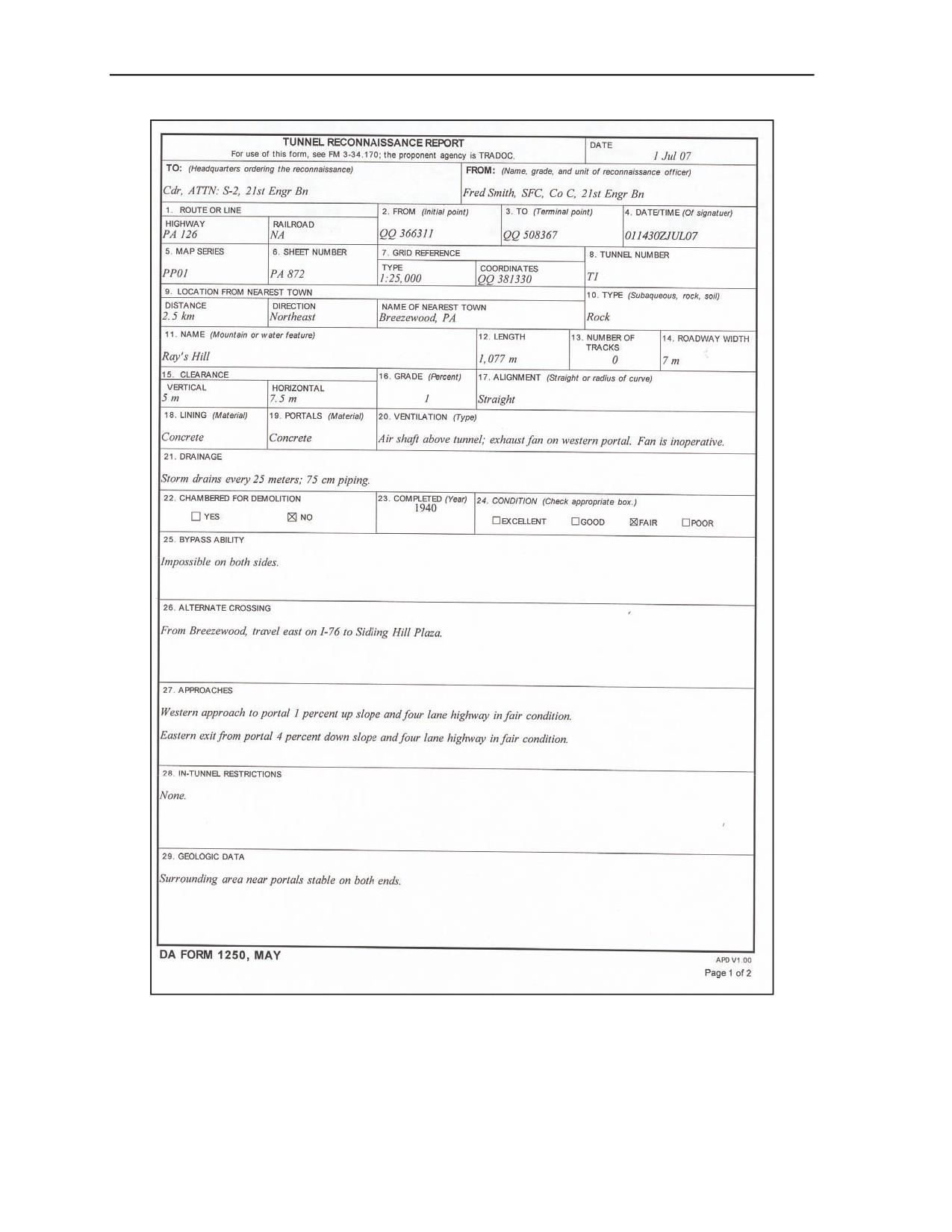
B-8. Use a Tunnel Reconnaissance Report, DA Form 1250, to report the technical information collected
during reconnaissance of tunnels on routes. Additionally, the tunnel information is summarized on the
route classification overlay as described in chapter 5. Complete the tunnel reconnaissance form as follows
(see figure B-5 on pages B-22 through B-23).
z
Blocks 2 and 3. Record the grid coordinates for the start and end points of the route on which
the tunnel is located.
z
Block 8. Record the tunnel number found on the map sheet or on the head wall (or data plate) of
the actual tunnel. If a number is not on the map or tunnel, then assign an appropriate number
based on the unit’s SOP. If there is a different number on the map than on the tunnel, record
both serial numbers.
z
Block 9. Record the distance and direction from the nearest town.
z
Block 13. Record the number of railroad tracks passing through the tunnel, if applicable.
z
Block 15. Record the vertical clearance (the shortest clearance from the road surface in the
tunnel to the lowest point on the ceiling above the traveled way). Also, record the distance from
the sidewalk to the ceiling if traffic can travel on the sidewalks.
z
Block 15 (continued). Record the horizontal clearance. It is the roadway width or the roadway
width and sidewalks/emergency lanes (where vehicles can move through the tunnel without
striking the top or sides).
z
Block 16. Record the internal tunnel grade. Record the grade of the tunnel entrances in block
27.
z
Block 17. State whether the tunnel is straight or curved. Record curves that may restrict traffic
flow.
z
Block 19. Record a description of what the tunnel entrances (portals) look like and their
composition.
z
Block 22. Mark the applicable box. Some tunnels are chambered for demolition. This means
that the tunnel has predesigned locations for placing demolitions to destroy the tunnel and deny
use by the enemy.
z
Block 23. Record the date that the tunnel was constructed.
z
Block 29. Inspect the rock or soil at the tunnel’s entrances. If there is a chance of a rock or mud
slide, record the location and possible solution to the problem.
25 March 2008
FM 3-34.170/MCWP 3-17.4
B-21
Appendix B
Figure B-5. Sample DA Form 1250
B-22
FM 3-34.170/MCWP 3-17.4
25 March 2008
Reporting
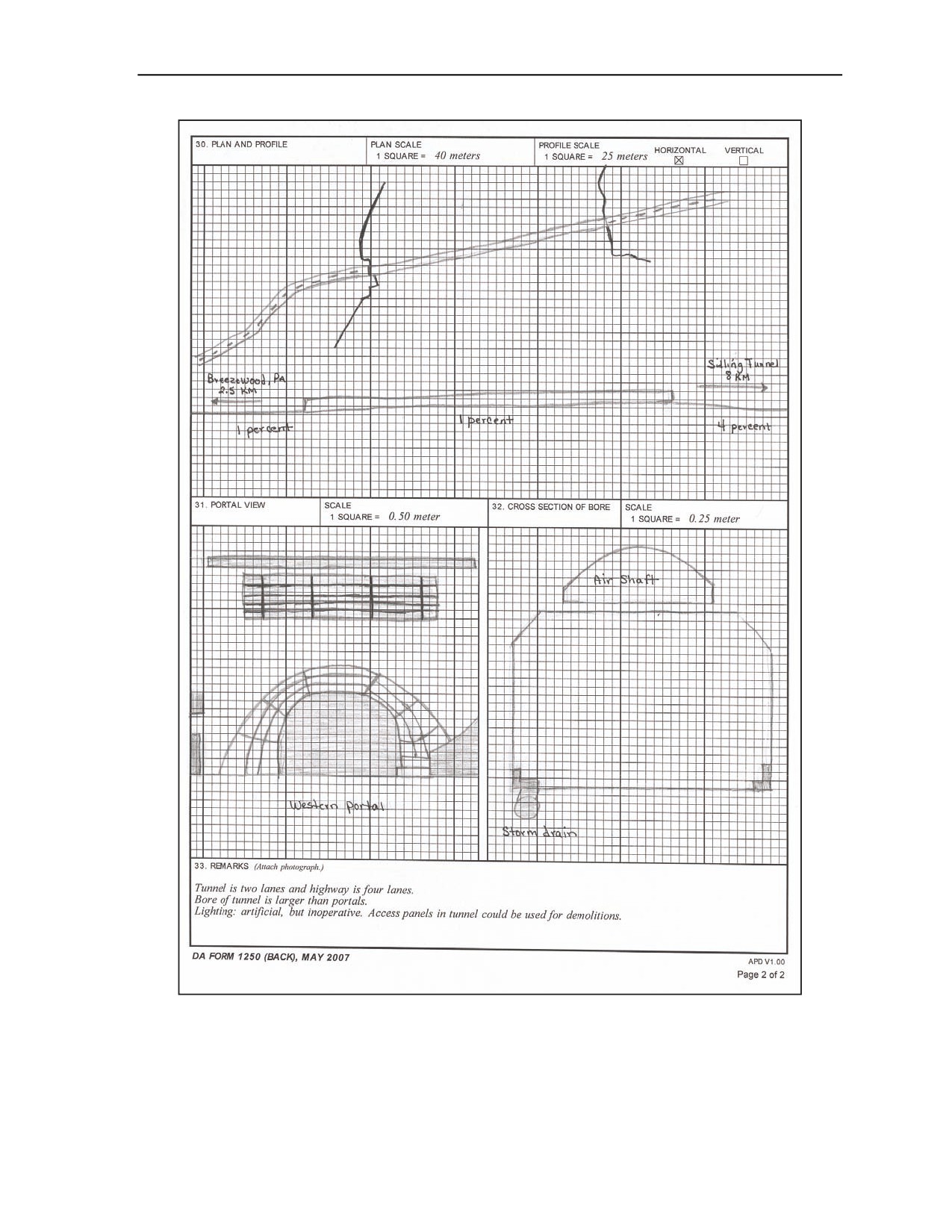
Figure B-5. Sample DA Form 1250 (continued)
FORD RECONNAISSANCE REPORT
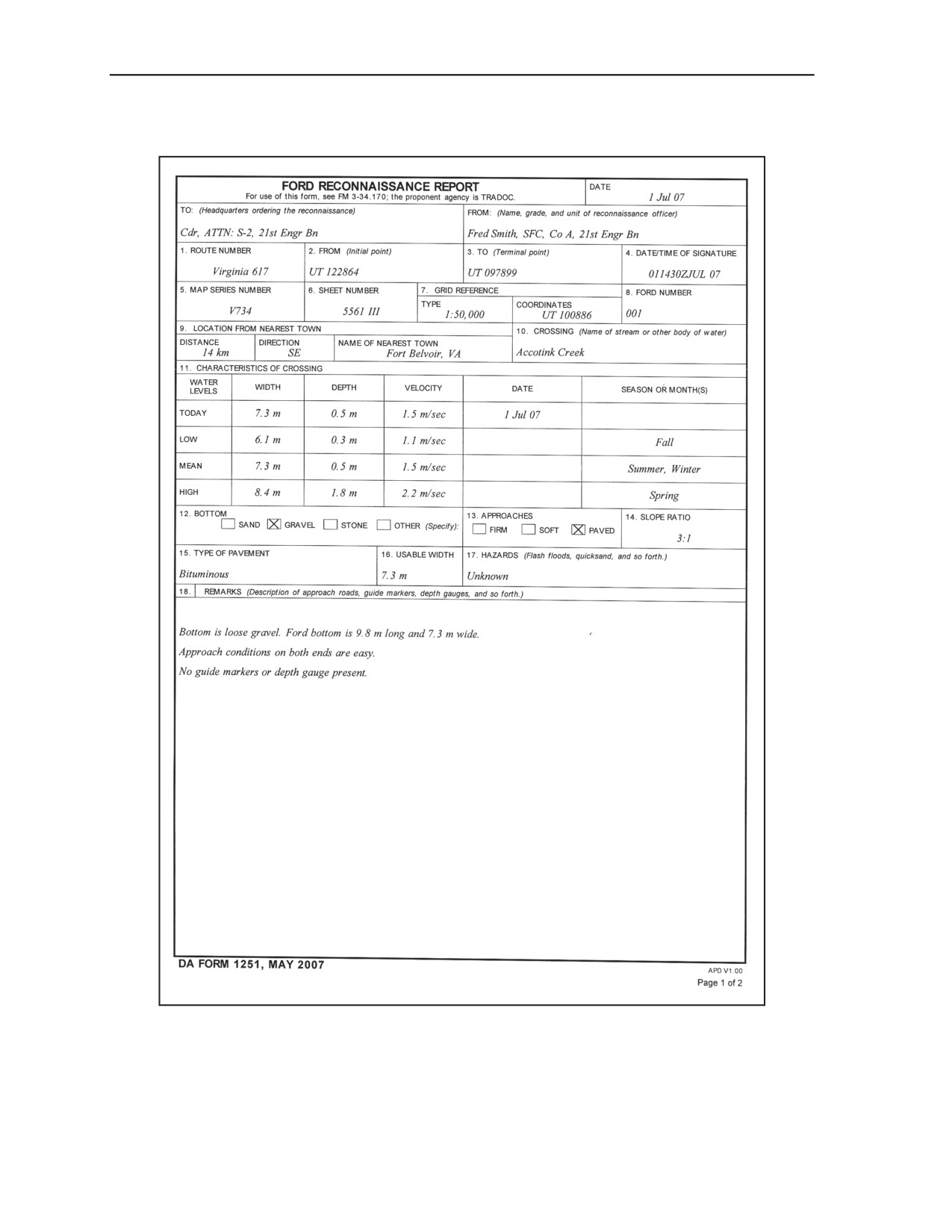
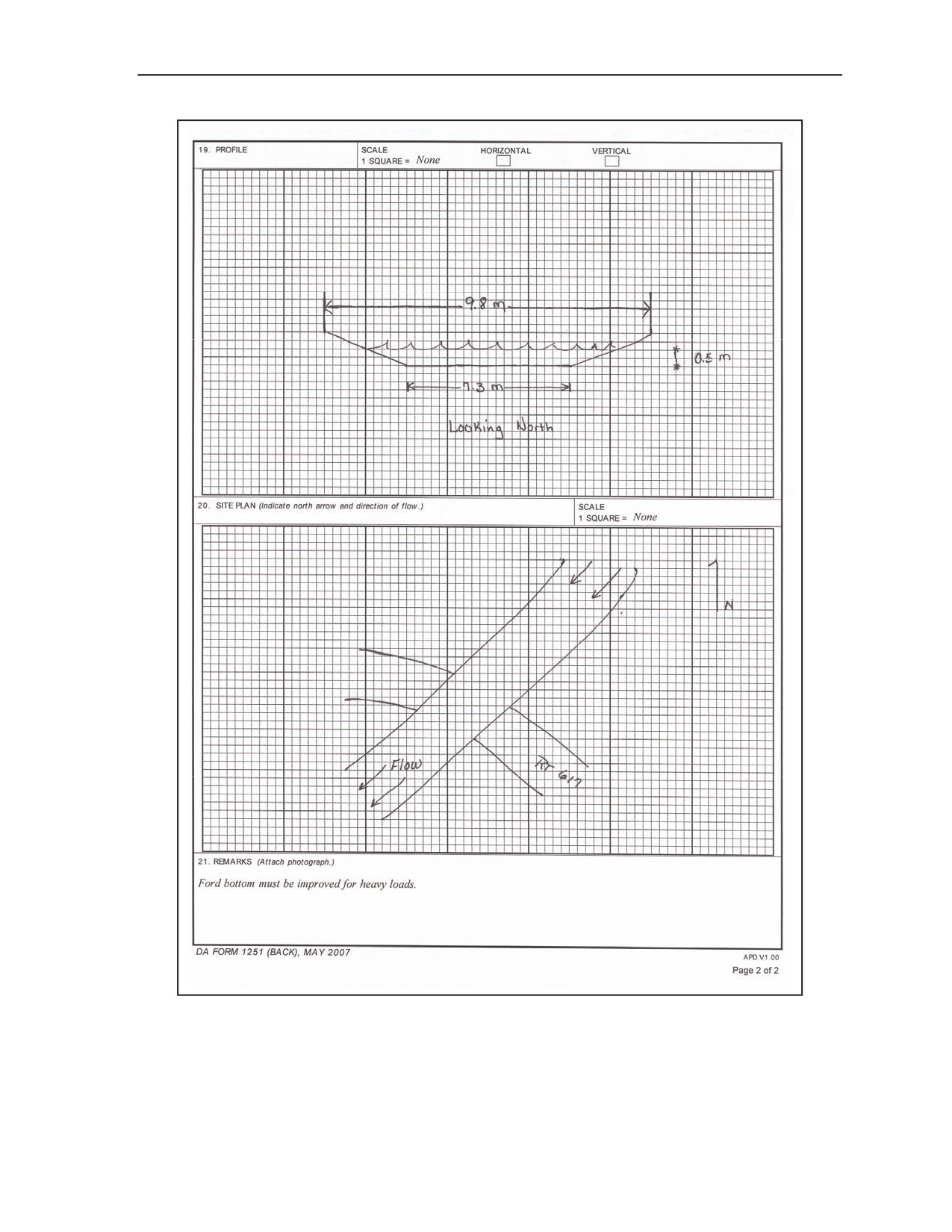
B-9. Use a Ford Reconnaissance Report, DA Form 1251, to report the technical information collected
during ford reconnaissance. Additionally, when the ford reconnaissance is part of a route classification, the
25 March 2008
FM 3-34.170/MCWP 3-17.4
B-23
Appendix B
ford information is summarized on the route classification overlay as described in chapter 5. Complete the
ford reconnaissance form as shown in figure B-6).
Figure B-6. Sample DA Form 1251
B-24
FM 3-34.170/MCWP 3-17.4
25 March 2008
Reporting
Figure B-6. Sample DA Form 1251 (continued)
25 March 2008
FM 3-34.170/MCWP 3-17.4
B-25
Appendix B
FERRY RECONNAISSANCE REPORT
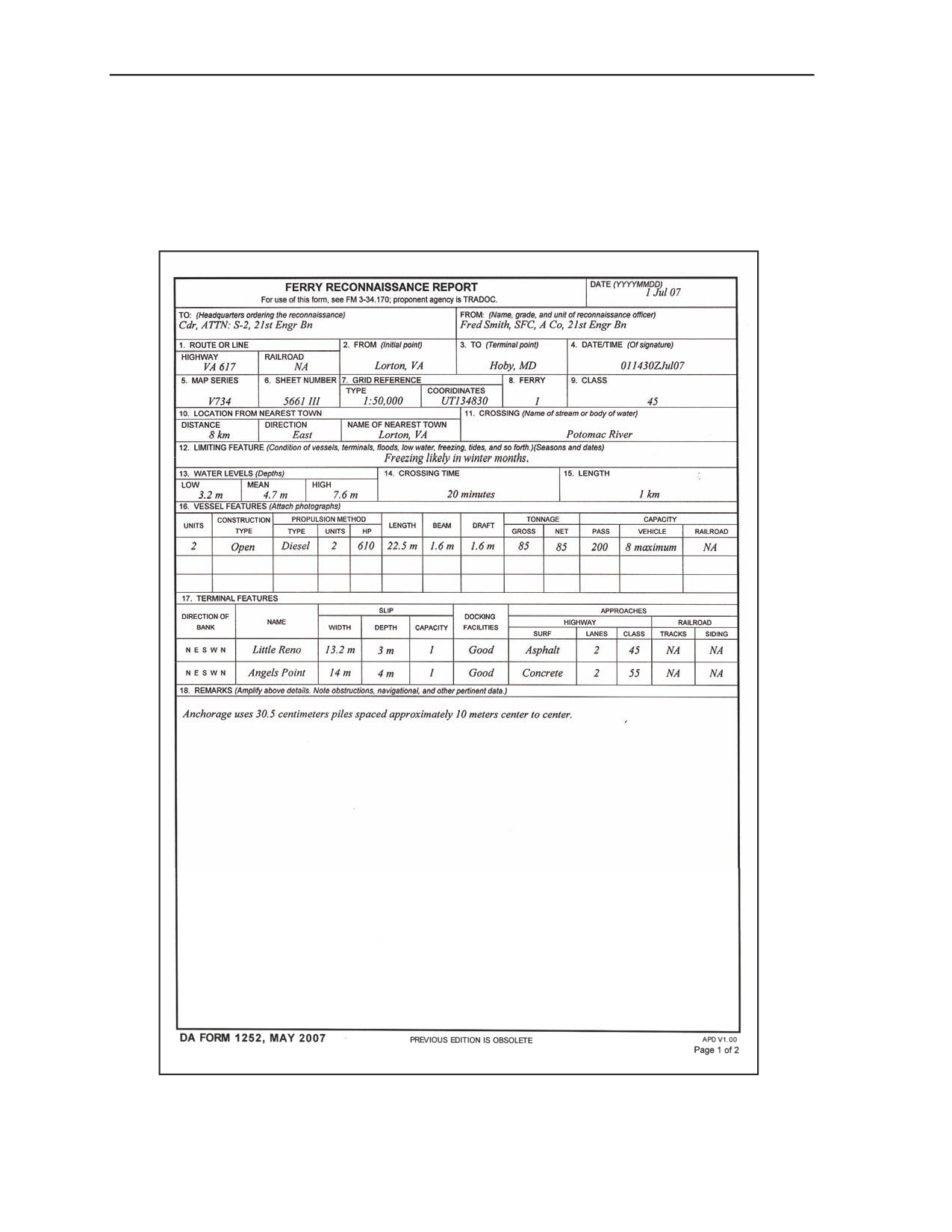
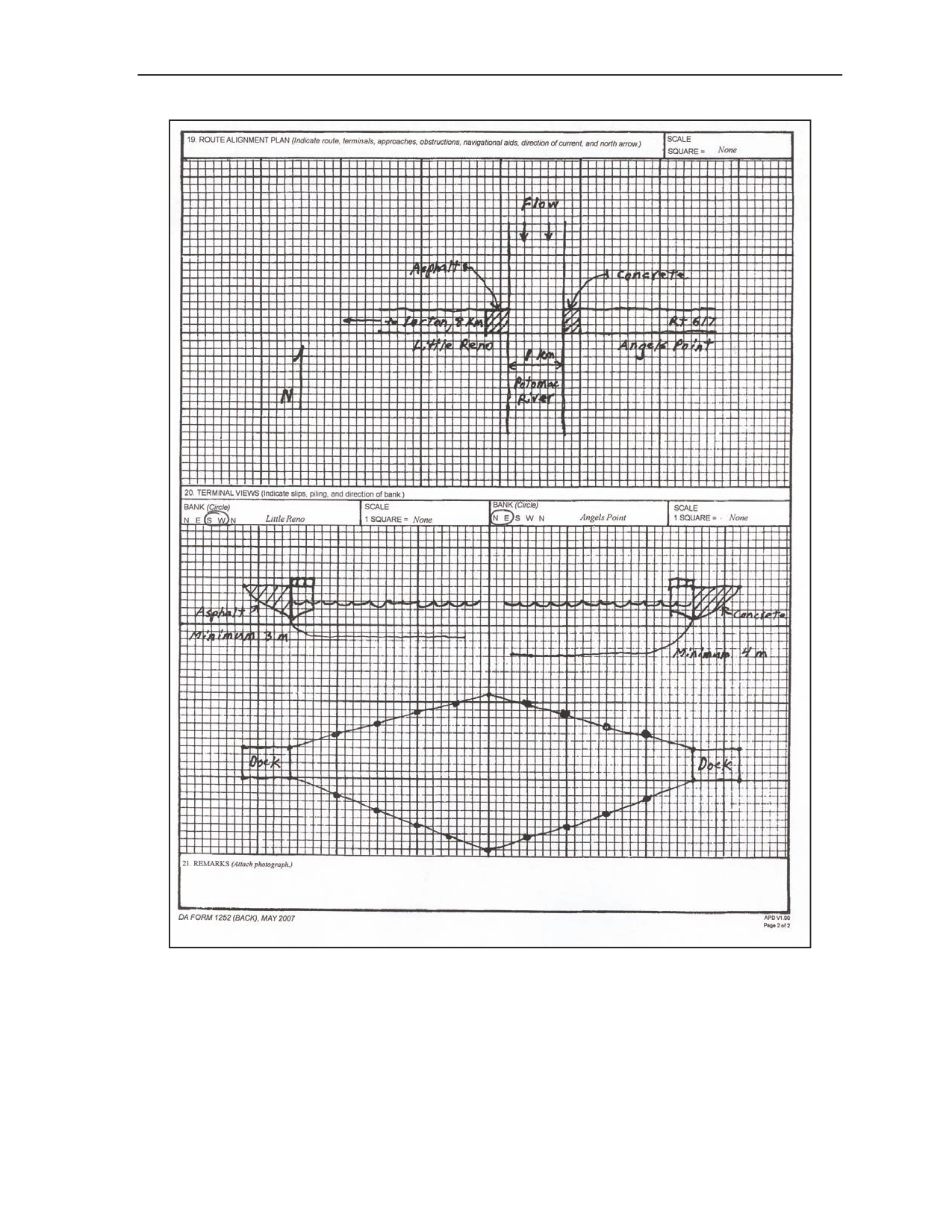
B-10. Use a Ferry Reconnaissance Report, DA Form 1252, to report the technical information collected
during ferry reconnaissance. Additionally, when the ferry reconnaissance is part of a route classification,
the ferry information is summarized on the route classification overlay as described in chapter 5. Complete
the ferry reconnaissance form as shown in figure B-7).
Figure B-7. Sample DA Form 1252
B-26
FM 3-34.170/MCWP 3-17.4
25 March 2008
Reporting
Figure B-7. Sample DA Form 1252 (continued)
25 March 2008
FM 3-34.170/MCWP 3-17.4
B-27
Appendix B
ENGINEER RECONNAISSANCE REPORT
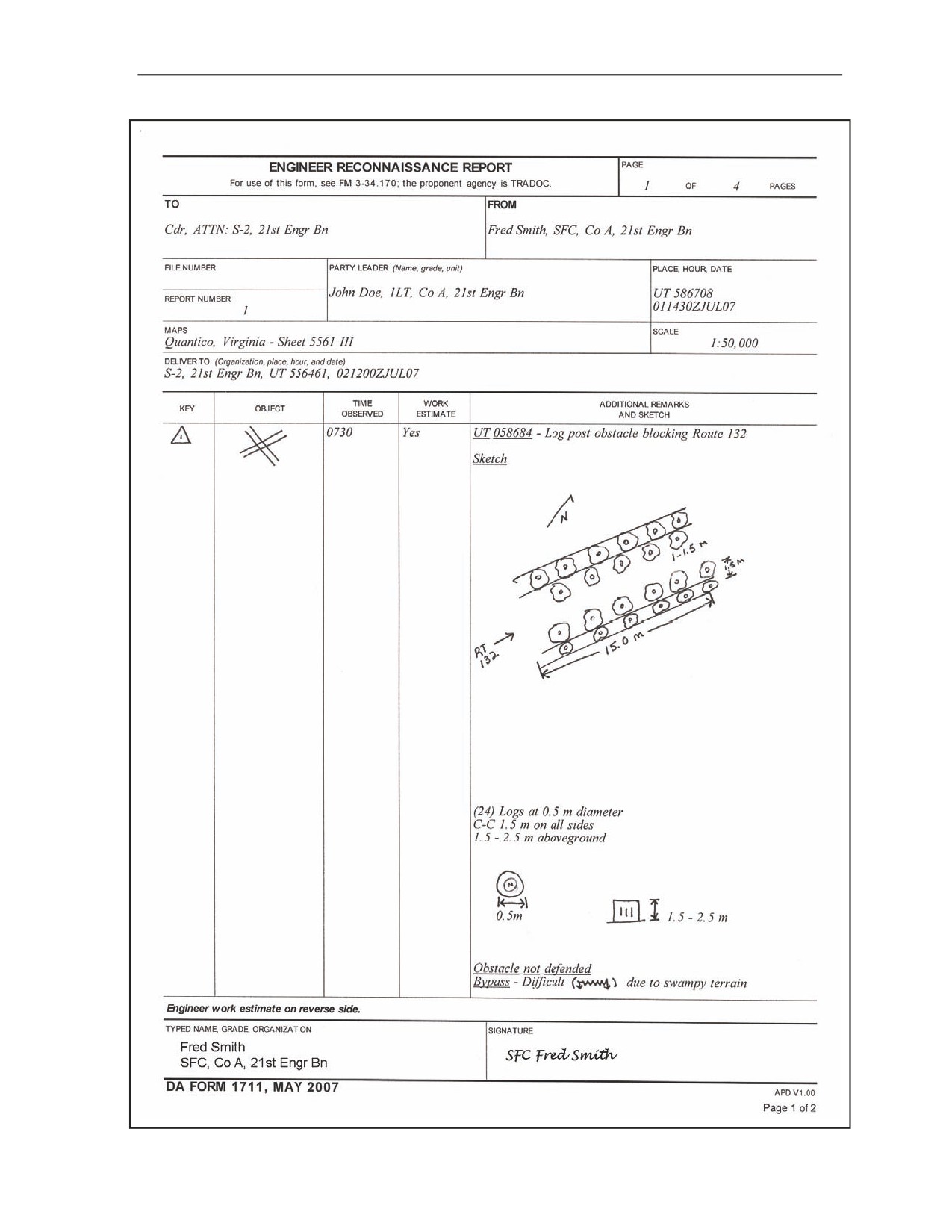
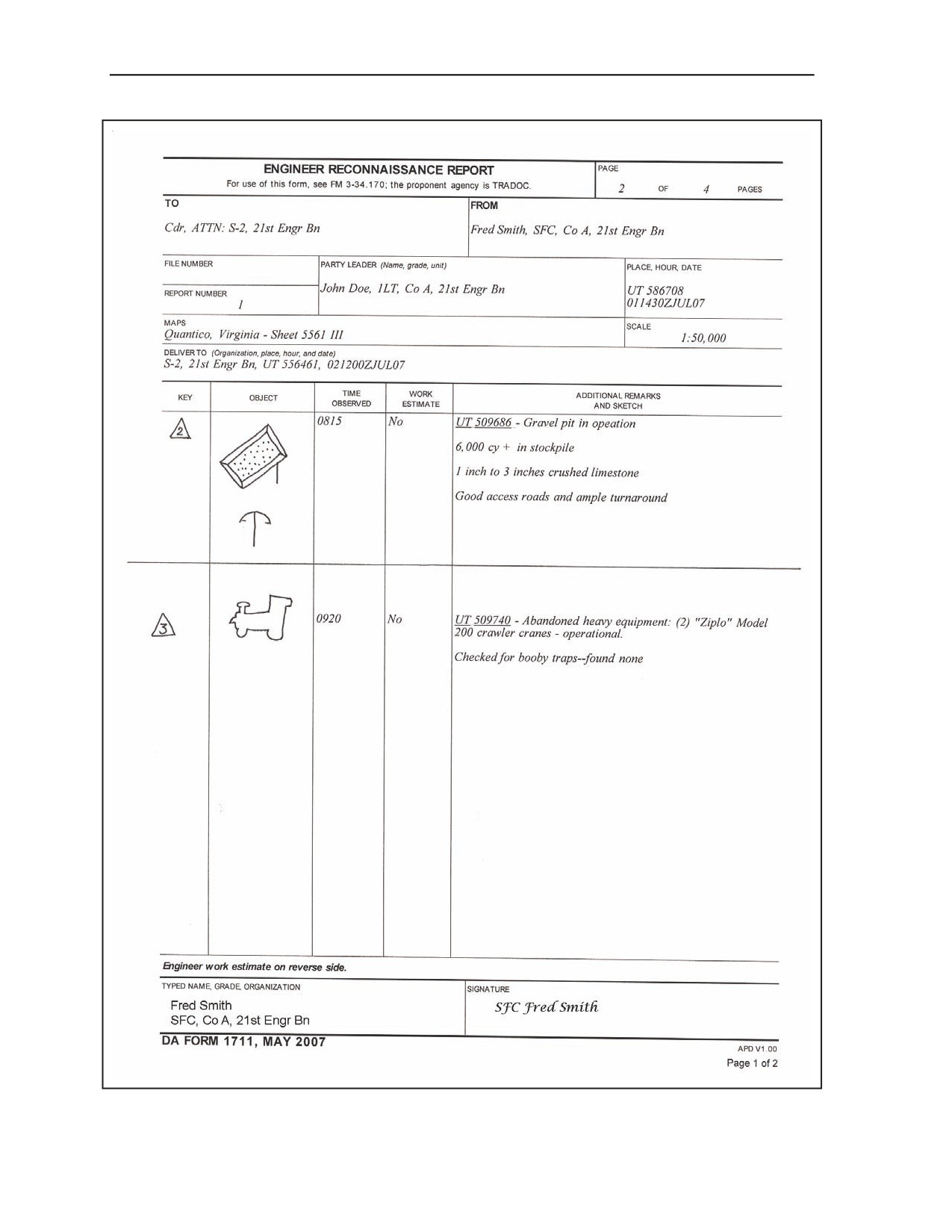
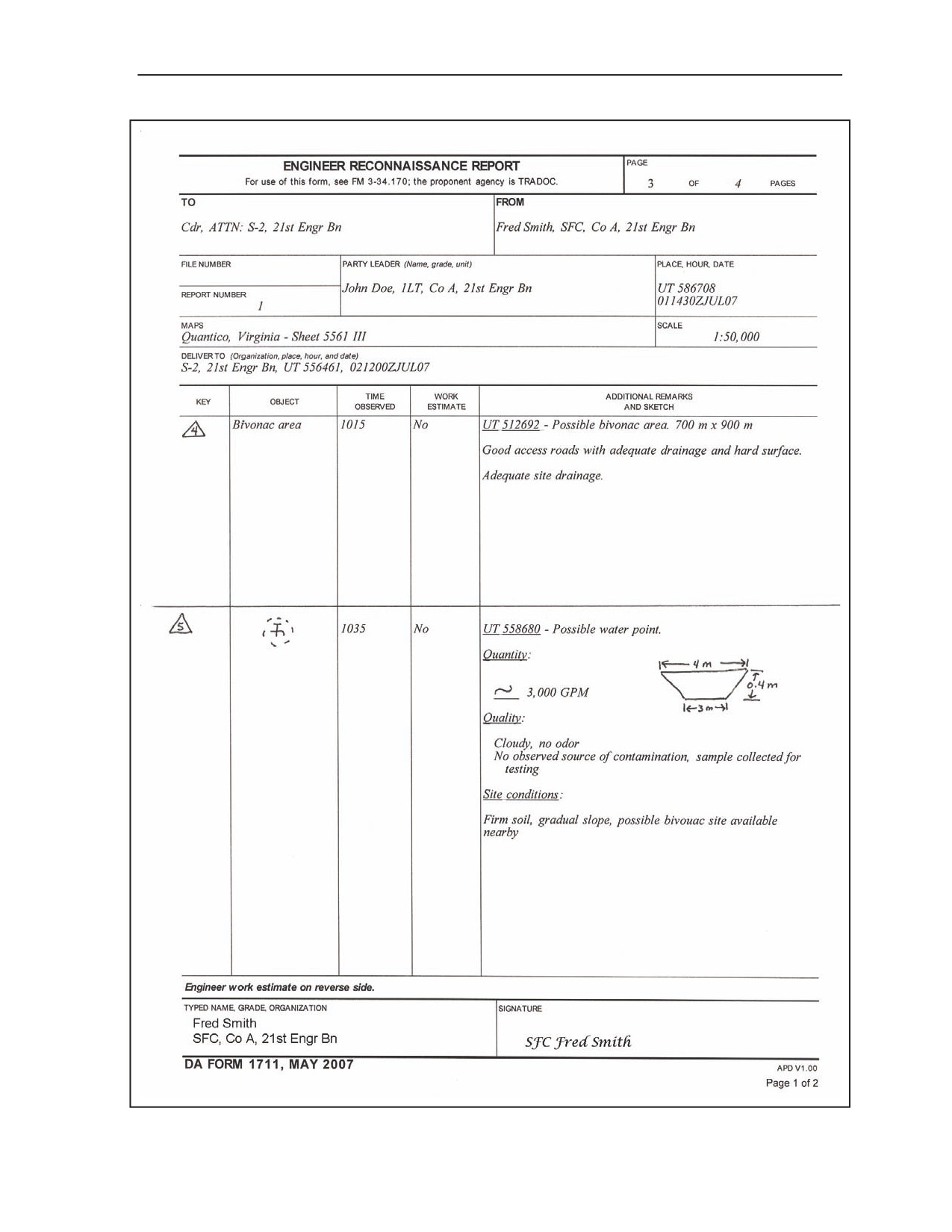
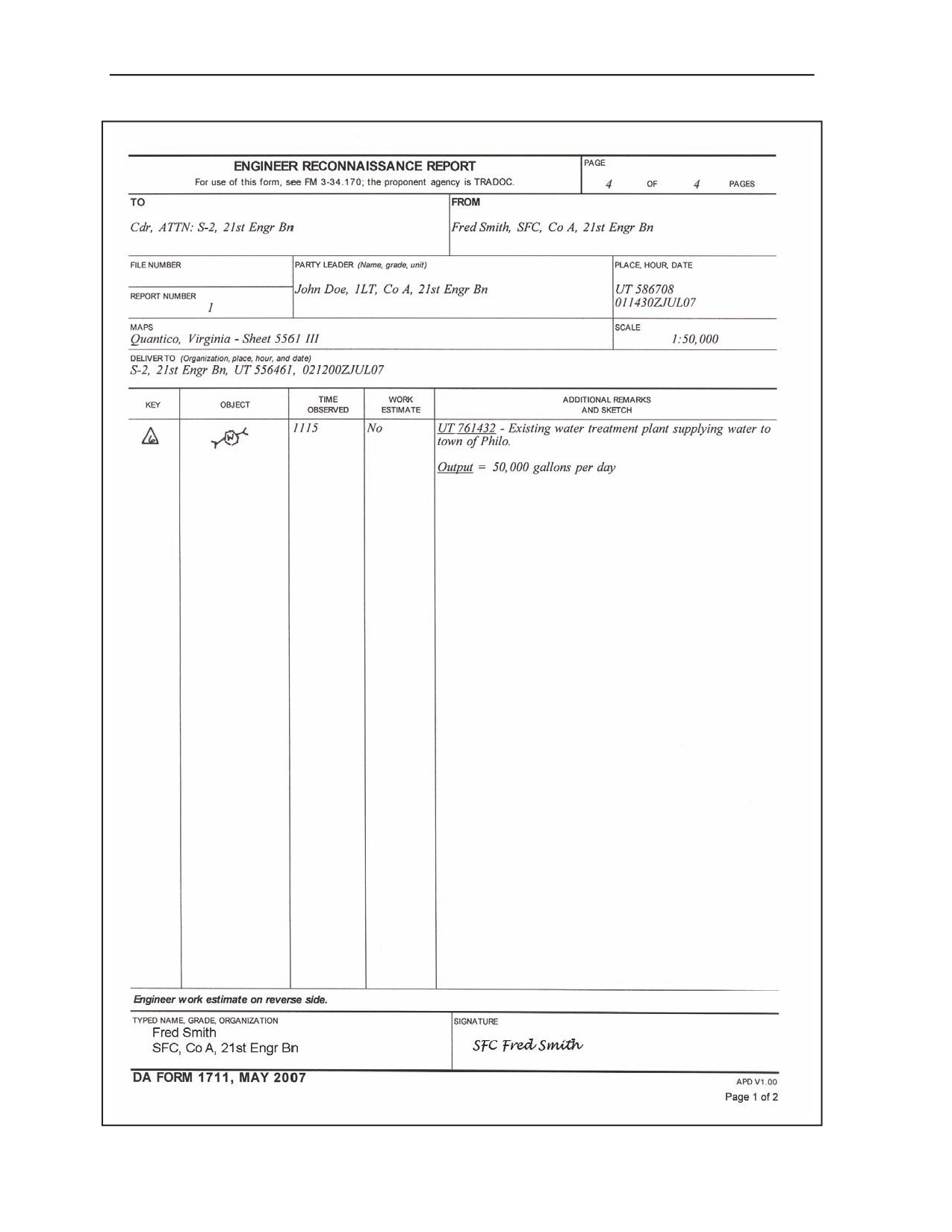
B-11. Use the Engineer Reconnaissance Report, DA Form 1711, to report the technical information
collected during an engineer resource assessment. Additionally, the engineer reconnaissance report can be
used to report other significant engineer information not covered by any of the other reports in this
appendix. Complete the engineer reconnaissance form as follows (see figure B-8 on pages B-29 through
B-33).
z
Heading. Self-explanatory.
z
Key. The key references the item of the report and its corresponding location on the map
overlay. The object’s serial number (or critical point number) is entered in this column.
z
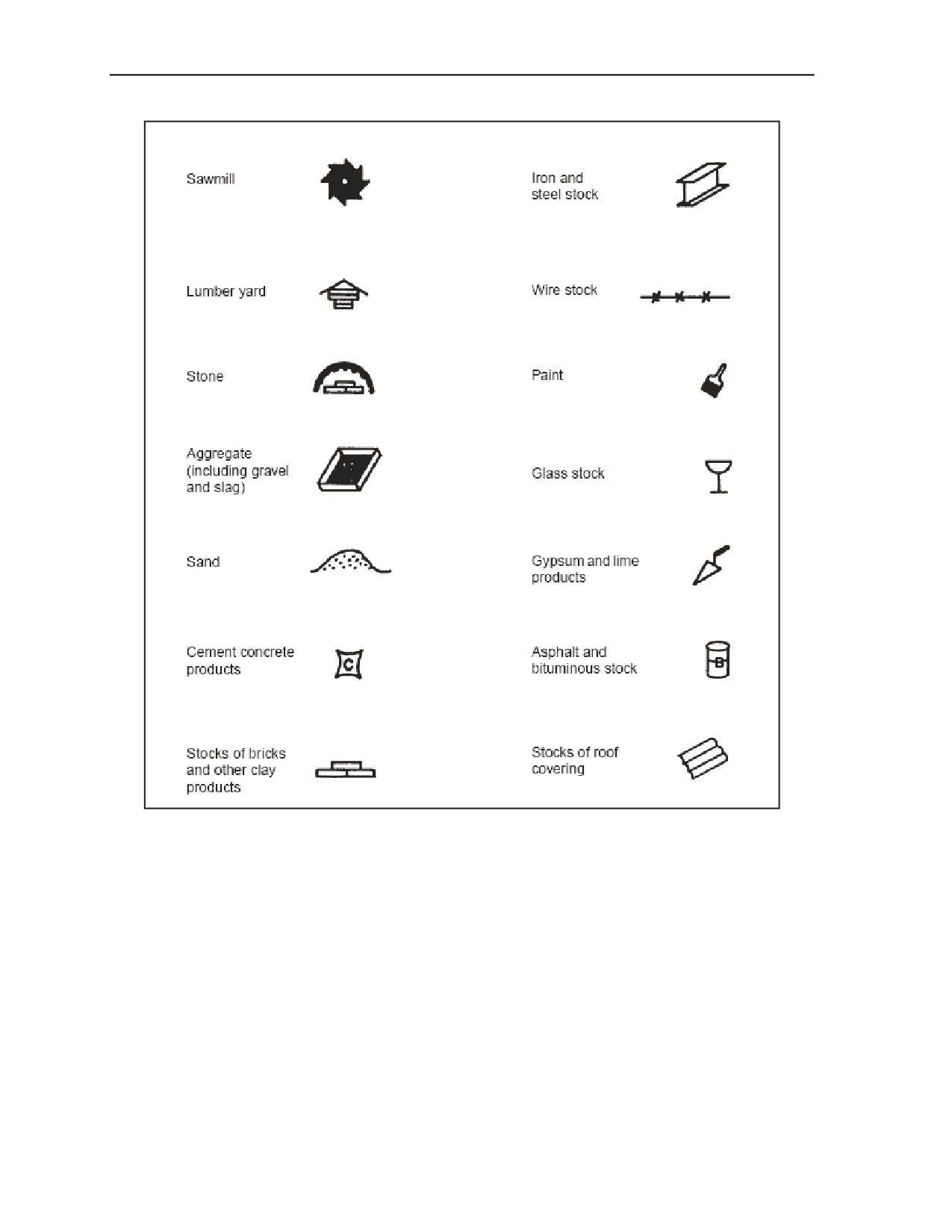
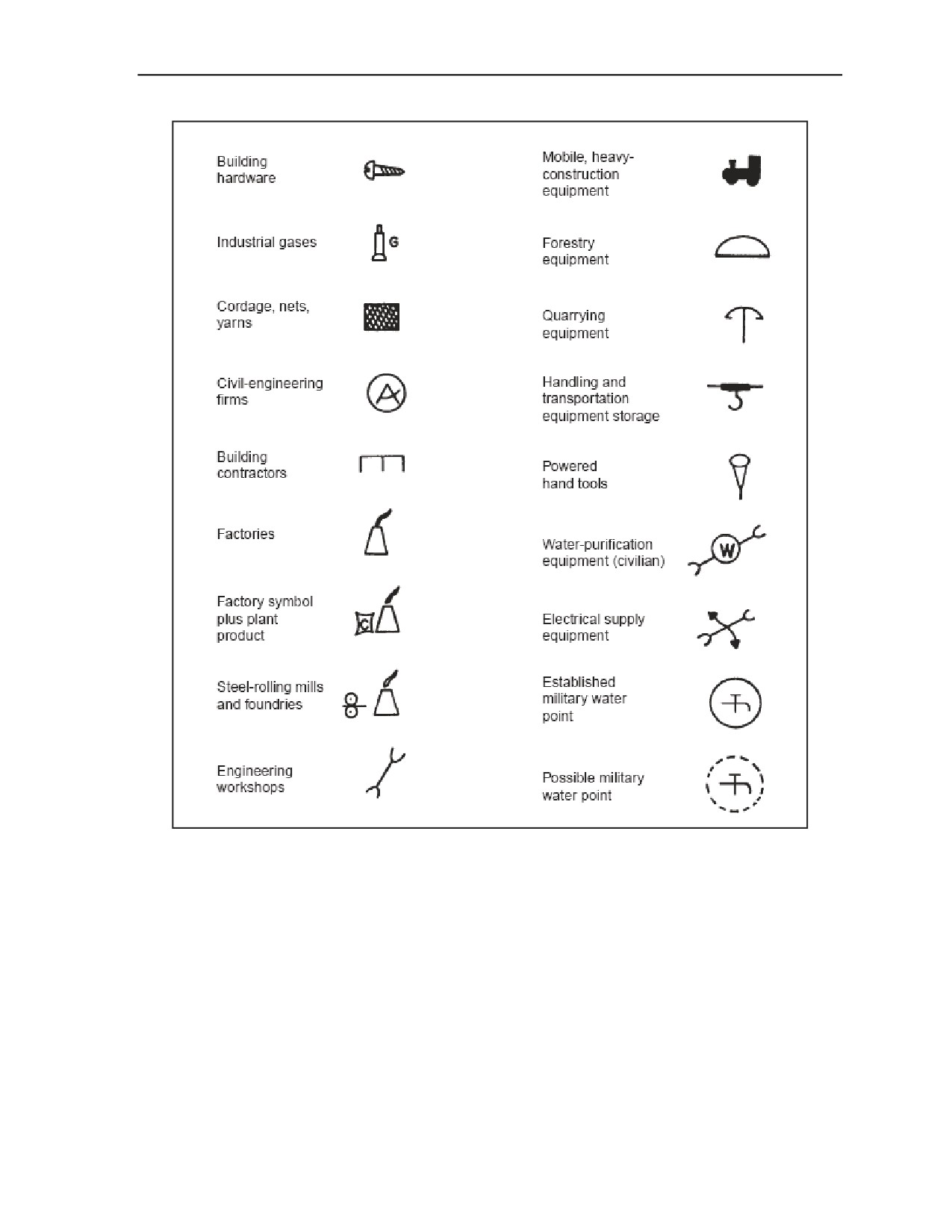
Object. Shown by a conventional symbol (see figure B-9, pages B-32 through B-33) or a brief
written description.
z
Work estimate. If a work estimate is included as part of the report, enter yes; if not, enter no.
z
Additional Remarks. In this column, report the object’s location by grid coordinates followed by
remarks, calculations, and sketches. Make this information as detailed as possible to alleviate the
necessity for an additional reconnaissance.
z
Authentication block. This is for the company commander’s signature block and signature.
z
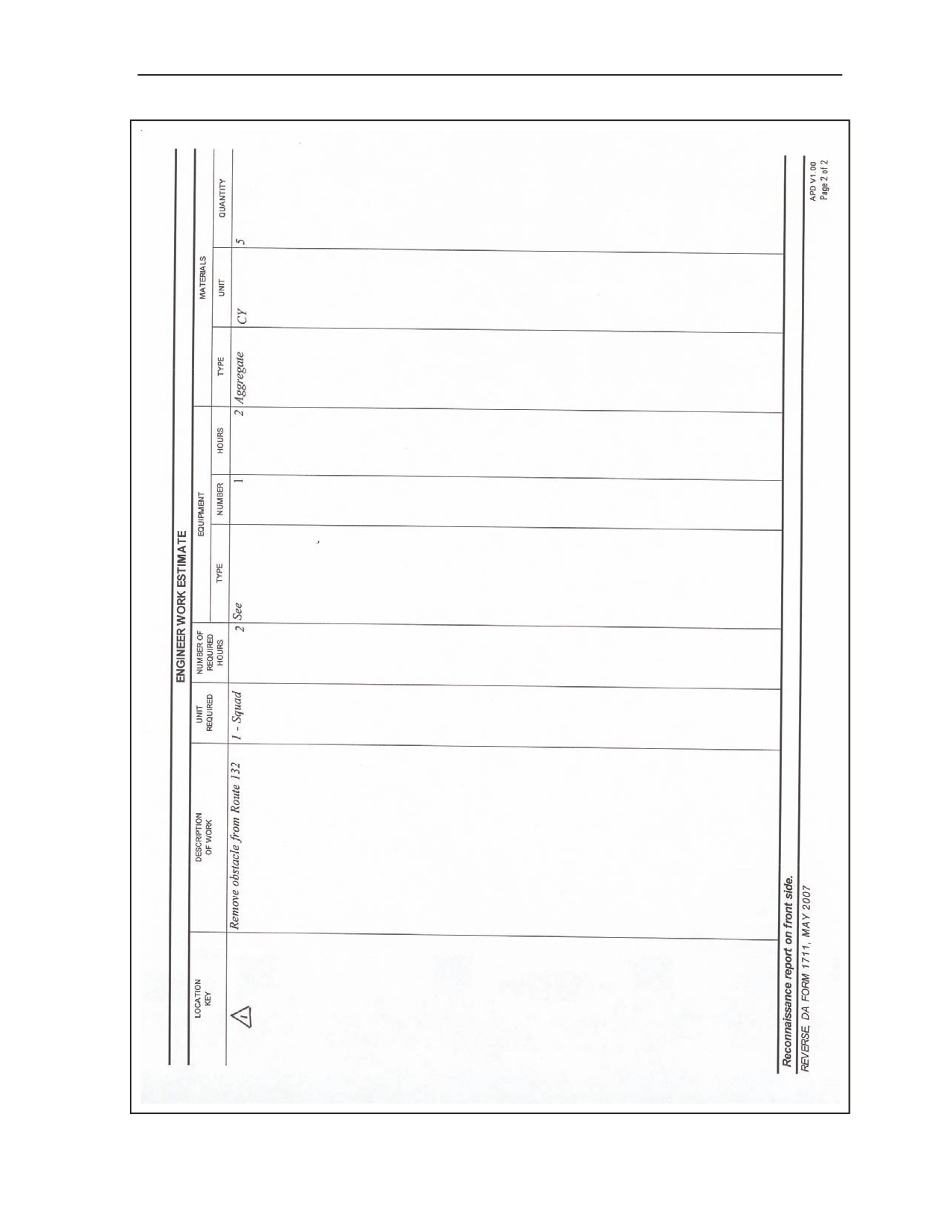
Work estimate. The work estimate is on the back of the DA Form 1711. Each work estimate is
keyed by a serial or critical point number to the appropriate object on the reverse side of the
form. Only those columns that are appropriate need be completed. Draw additional sketches
when necessary (see figure B-8).
B-28
FM 3-34.170/MCWP 3-17.4
25 March 2008
Reporting
Figure B-8. Sample DA Form 1711
25 March 2008
FM 3-34.170/MCWP 3-17.4
B-29
Appendix B
Figure B-8. Sample DA Form 1711 (continued)
B-30
FM 3-34.170/MCWP 3-17.4
25 March 2008
Reporting
Figure B-8. Sample DA Form 1711 (continued)
25 March 2008
FM 3-34.170/MCWP 3-17.4
B-31
Appendix B
Figure B-8. Sample DA Form 1711 (continued)
B-32
FM 3-34.170/MCWP 3-17.4
25 March 2008
Reporting
Figure B-8. Sample DA Form 1711 (continued)
25 March 2008
FM 3-34.170/MCWP 3-17.4
B-33
Appendix B
Figure B-9. Engineer resource symbols
B-34
FM 3-34.170/MCWP 3-17.4
25 March 2008
Reporting
Figure B-9. Engineer resource symbols (continued)
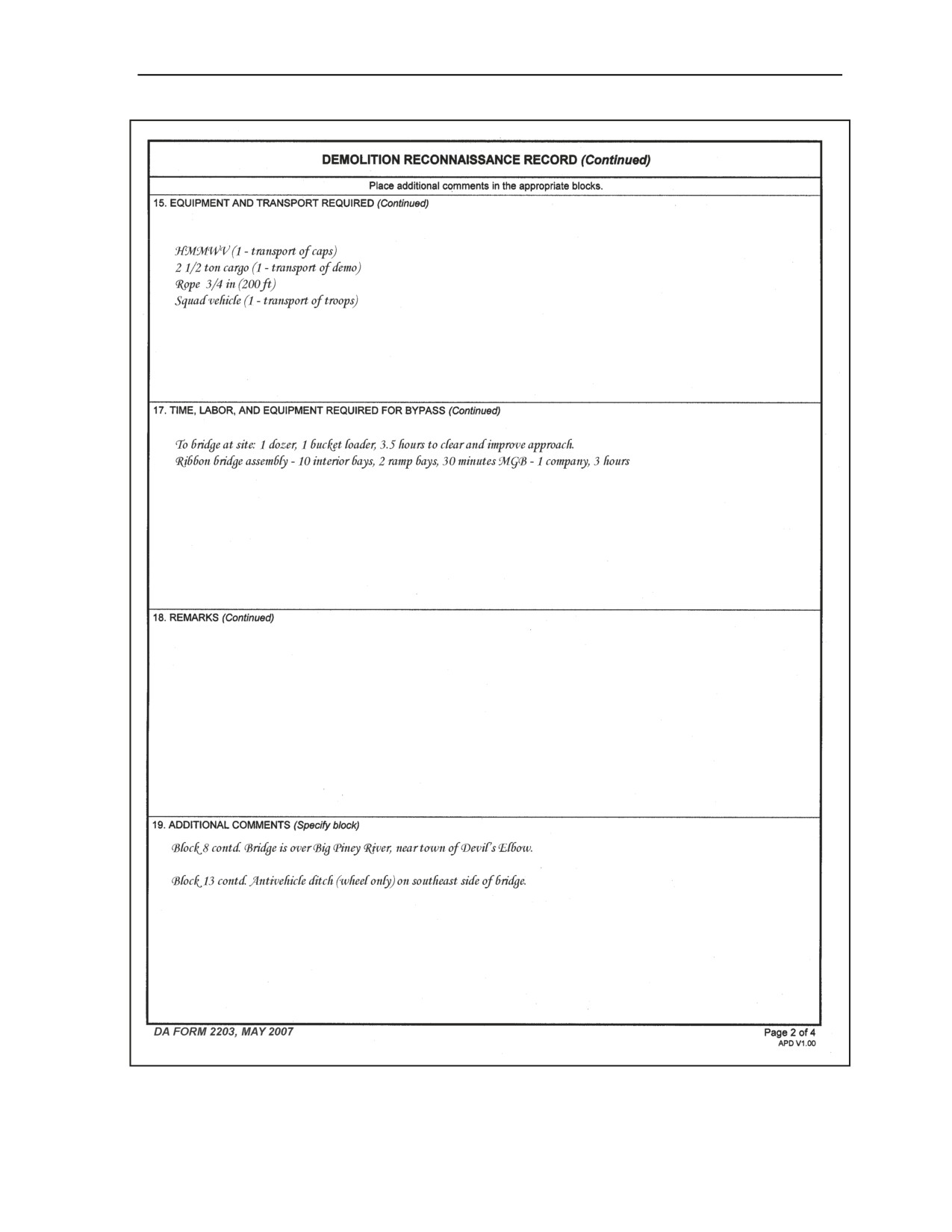
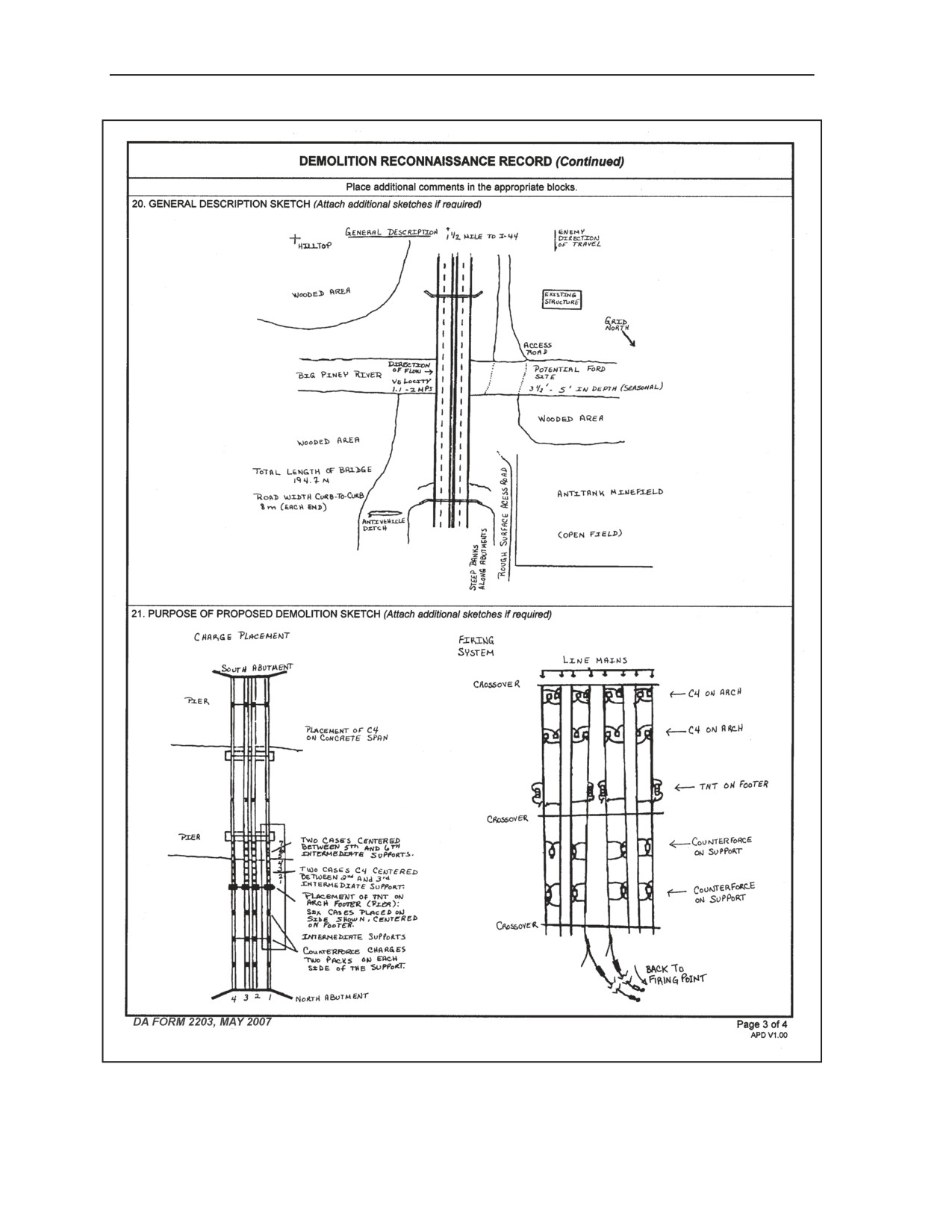
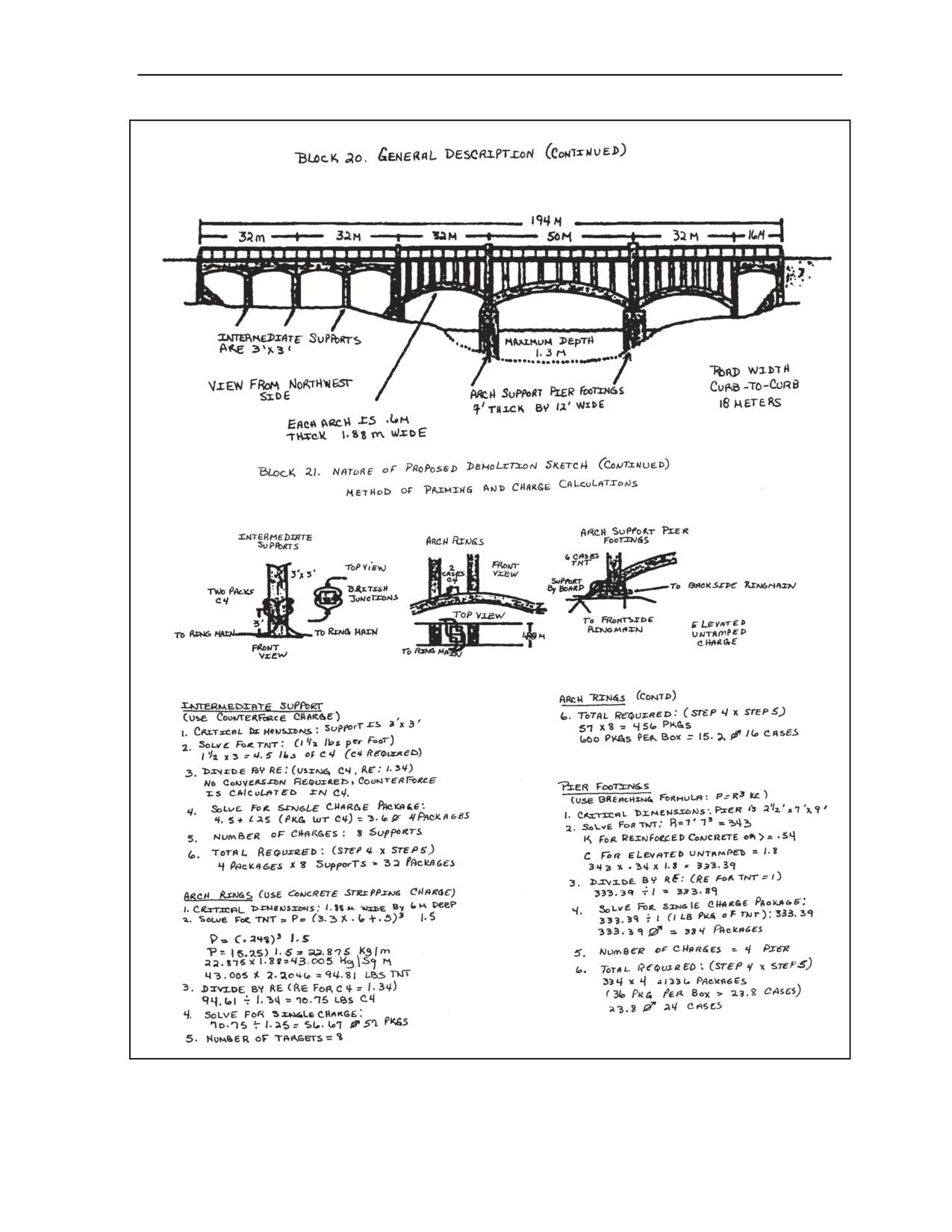
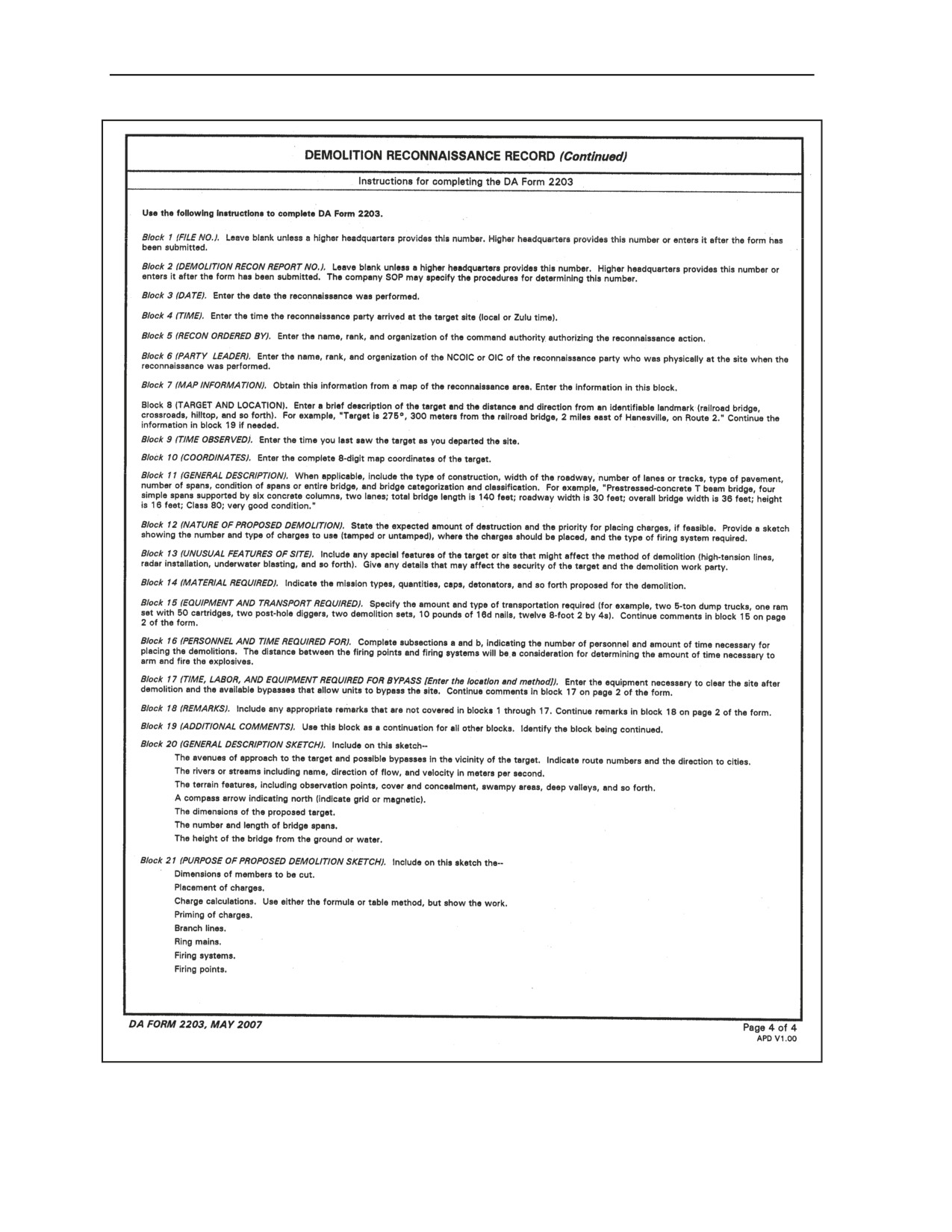
DEMOLITION RECONNAISSANCE RECORD
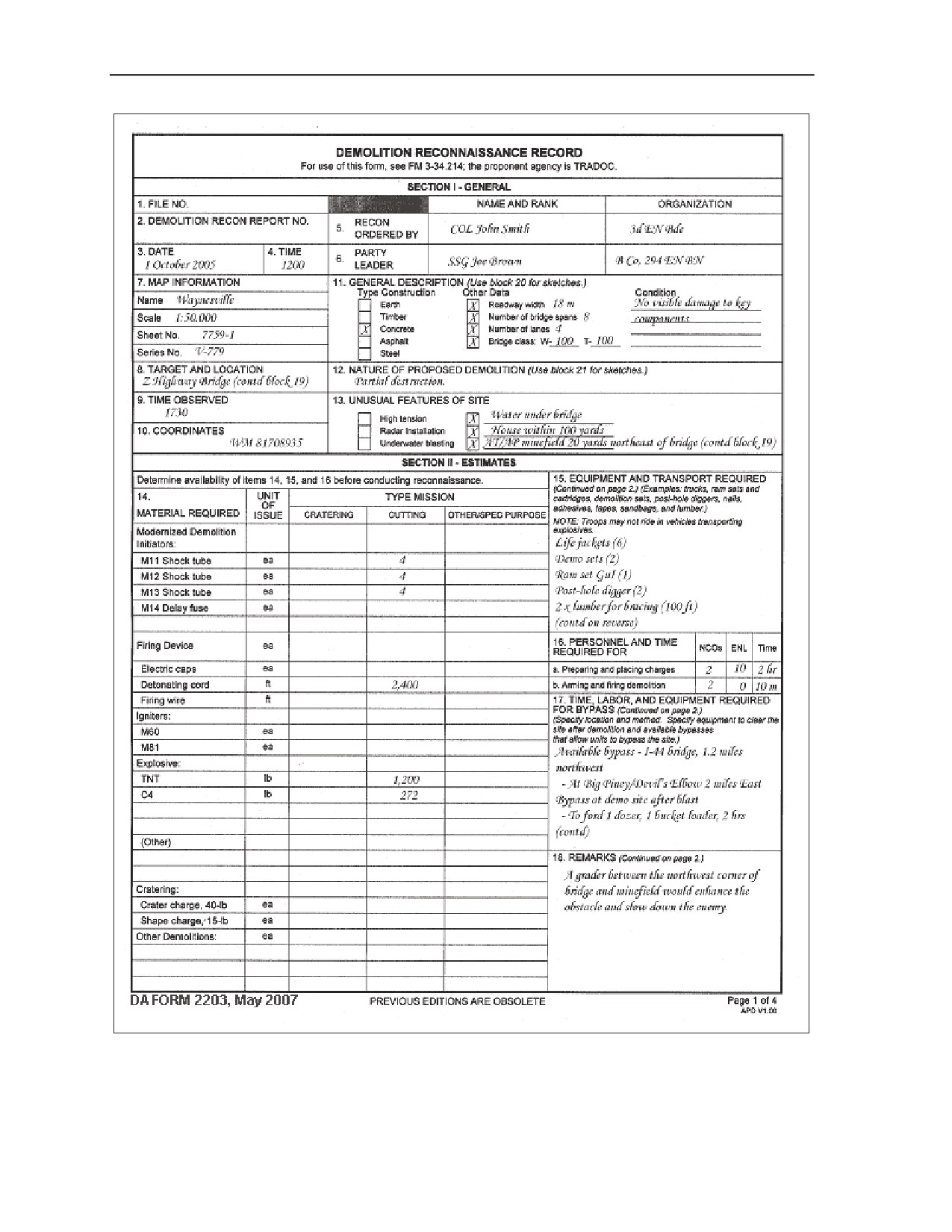
B-12. Use a Demolition Reconnaissance Record, DA Form 2203, to report the technical information
collected during demolition reconnaissance. This form can also be a component of a demolition target
folder
(see FM 3-34.214). The demolition reconnaissance is discussed in chapter
4. Complete the
demolition reconnaissance record as follows (see figure B-10 pages B-36 through B-40).
25 March 2008
FM 3-34.170/MCWP 3-17.4
B-35
Appendix B
Figure B-10. Sample DA Form 2203
B-36
FM 3-34.170/MCWP 3-17.4
25 March 2008
Reporting
Figure B-10. Sample DA Form 2203 (continued)
25 March 2008
FM 3-34.170/MCWP 3-17.4
B-37
Appendix B
Figure B-10. Sample DA Form 2203 (continued)
B-38
FM 3-34.170/MCWP 3-17.4
25 March 2008
Reporting
Figure B-10. Sample DA Form 2203 (continued)
25 March 2008
FM 3-34.170/MCWP 3-17.4
B-39
Appendix B
Figure B-10. Sample DA Form 2203 (continued)
B-40
FM 3-34.170/MCWP 3-17.4
25 March 2008
Reporting
RIVER RECONNAISSANCE REPORT
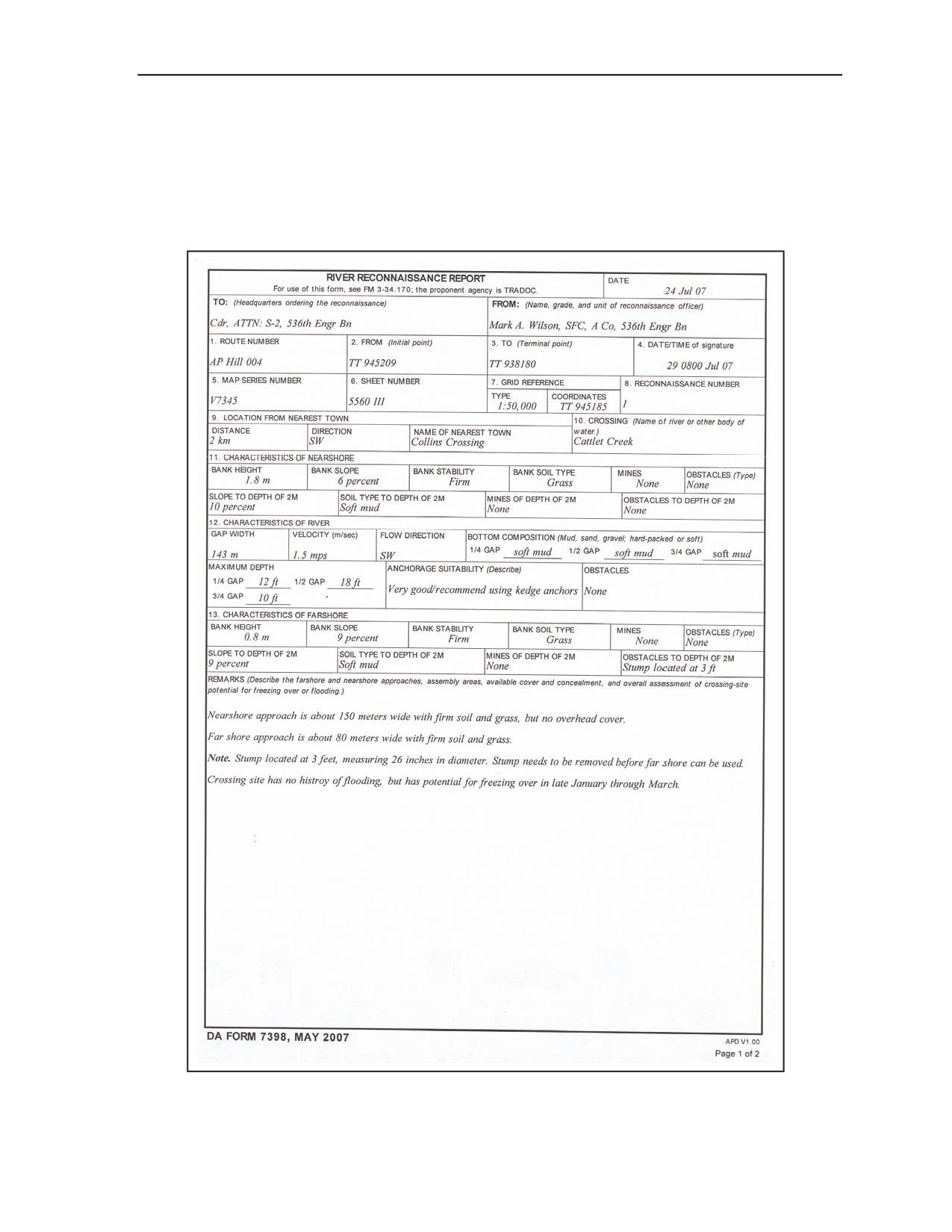
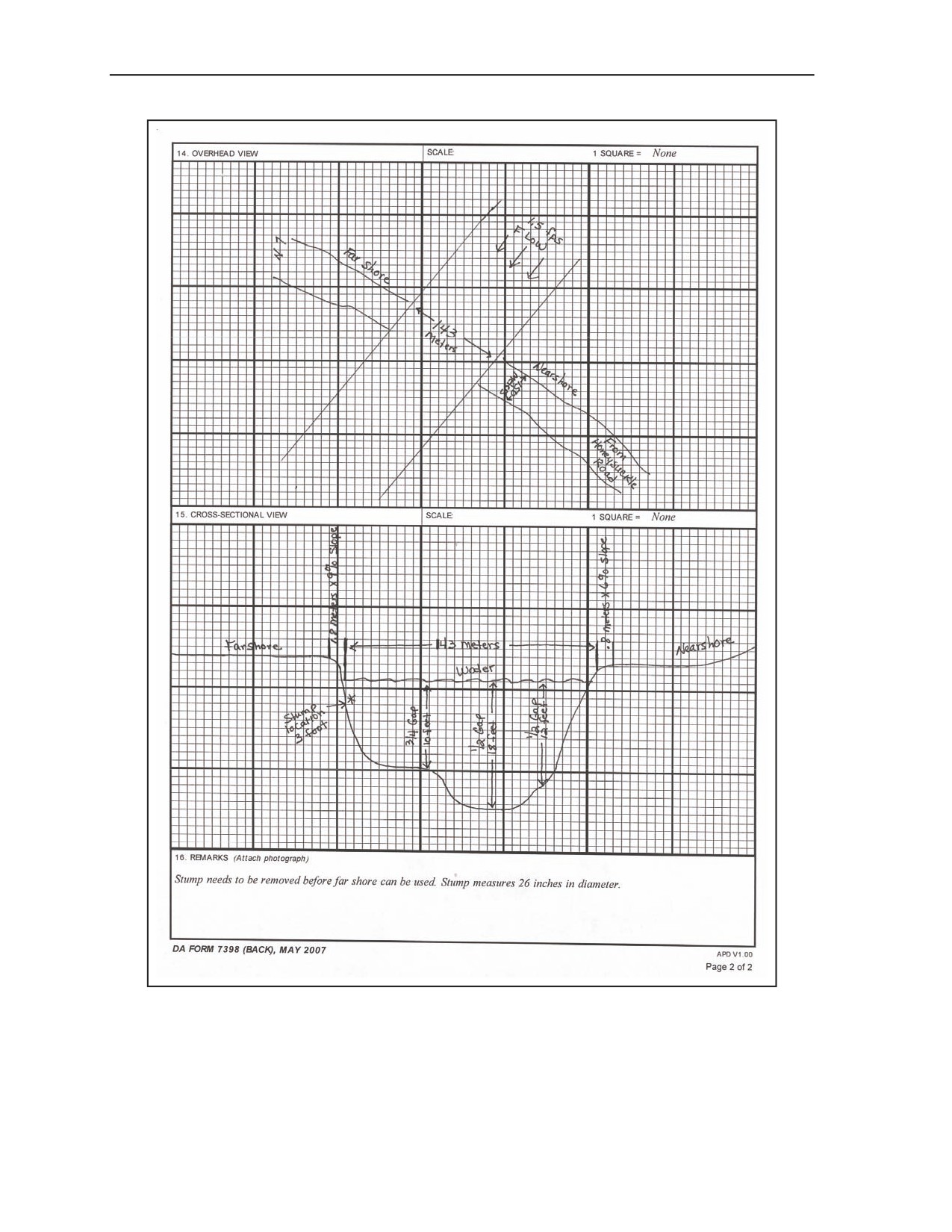
B-13. Use a River Reconnaissance Report, DA Form 7398, to report the technical information collected
during river reconnaissance. Additionally, when the river reconnaissance is part of a route classification,
the river information is summarized on the route classification overlay as described in chapter 5. Complete
the river reconnaissance form as shown in figure B-11).
Figure B-11. Sample DA Form 7398
25 March 2008
FM 3-34.170/MCWP 3-17.4
B-41
Appendix B
Figure B-11. Sample DA Form 7398 (continued)
B-42
FM 3-34.170/MCWP 3-17.4
25 March 2008
Reporting
NORTH ATLANTIC TREATY ORGANIZATION AGREEMENTS
B-14. NATO nations have concluded a number of agreements on a wide range of engineer matters, which
are regularly reviewed with more subject areas under negotiation. This section provides a summary of the
standardization agreements (STANAGs) of relevance to engineer reconnaissance. The list of STANAGs
relevant to engineer reconnaissance is shown below with the custodians shown in brackets.
z
STANAG 2002 - Warning Signs for the Marking of Nuclear, Biological, and Chemical
Contaminations (JSB - NBC).
z
STANAG 2010 - Military Load Classification Markings (France).
z
STANAG 2017 - Orders to the Demolition Guard Commander and Demolition Firing Party
Commander (Non-nuclear) (United Kingdom).
z
STANAG 2021 - Military Load Classification of Bridges, Ferries, Rafts and Vehicles
Classifications (France).
z
STANAG 2036 - Land Mine Laying, Marking, Recording and Reporting Procedures (United
States).
z
STANAG 2101 - Establishing Liaison (Military Committee Joint Standardization Board
[MCJSB]).
z
STANAG 2123 - Obstacle Folder (Germany).
z
STANAG 2143 - Explosive Ordnance Reconnaissance/Explosive Ordnance Disposal (EOD).
z
STANAG 2221 - Explosive Ordnance Disposal Reports and Messages (Allied Explosive
Ordnance Disposal Publication [AEODP-6]) (EOD).
z
STANAG 2259 - Military Geographic Documentation - Terrain (International Geospatial
[IGEO]).
z
STANAG 2269 - Military Geographic Documentation - Engineer Resources (IGEO).
z
STANAG 2282 - Interservice EOD Operations on Multinational Deployments (EOD).
z
STANAG 2369 - Identification and Disposal of Surface and Air Munitions (EOD).
z
STANAG 2370 - Principles of Improvised Explosive Device Disposal (AEODP-3(A) (EOD).
z
STANAG 2430 - Land Forces Combat Engineer Messages, Reports and Returns (AEngrP
2(B)) (United Kingdom).
z
STANAG 2929 - Airfield Damage Repair (Supreme Headquarters Allied Powers, Europe
[SHAPE]).
z
STANAG 2989 - Transfer of Barriers (Spain).
z
STANAG 2991 - NATO Combat Engineer Glossary (Allied Administrative Publication [AAP]
19(D)) (Combined Arms).
z
STANAG 3680 - NATO Glossary of Terms and Definitions (AAP-6).
25 March 2008
FM 3-34.170/MCWP 3-17.4
B-43
This page intentionally left blank.
Appendix C
Infrastructure Reconnaissance
This appendix provides a quick reference for collecting and reporting technical
information from the major and several “other” categories of infrastructure. For each
category, the appendix provides a smartcard with a brief overview of the
infrastructure category and its component systems followed by a checklist to guide
the collection of relevant information.
ASSESSMENT
C-1. The infrastructure assessment and the infrastructure survey are two stages/levels of infrastructure
reconnaissance used to gather this necessary infrastructure information. The purpose of the assessment is to
provide immediate feedback concerning the status of the basic services necessary to sustain the local
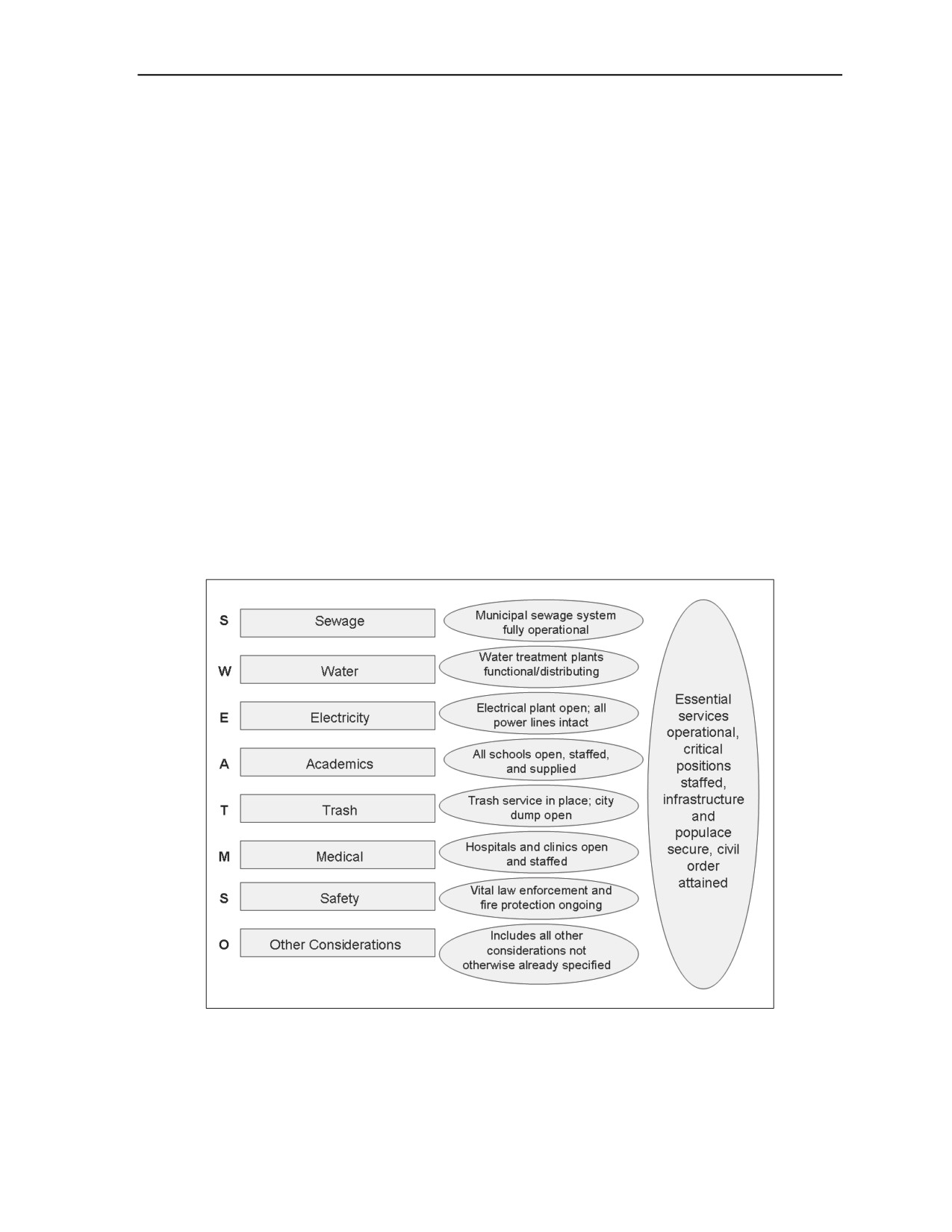
population. The memory aid to describe this assessment is SWEAT-MSO with each of the letters
describing a major area within the assessment (see figure C-1). The model can be adapted for use at the
tactical level in either stability or civil support operations. In either type of operation, the infrastructure
assessment and survey model can be used during course of action development to delineate tasks, missions,
and effects that support civil-military-related objectives.
Figure C-1. The infrastructure assessment and survey model
25 March 2008
FM 3-34.170/MCWP 3-17.4
C-1
Appendix C
C-2. The basic services or categories evaluated depend on the situation, mission, and commander’s intent.
While it is typically performed by engineers, it may be accomplished by others when an engineer is not
available, depending on the expertise available and the desired type/quality of information required. If
available, leaders should also consult military and NGO units and agencies in the area to determine if there
are extenuating circumstances that may influence the outcome of the assessment. Typically, engineer
planners use this information to define immediate needs and determine priorities of work. While an
infrastructure assessment is designed to support the resolution of the immediate challenges, it will normally
set the conditions for a successful transition. Some of the primary considerations for the assessment are—
z
Sewage. What is the status of the local sewage system? What health and environmental risks
exist?
z
Water. What potable water sources are available? Are they adequate? Have they been tested?
z
Electricity. What is the status of electrical generation facilities to include availability of
generators? What is the status of the transmission infrastructure? What critical facilities to
include hospitals, government buildings, and schools are not having their needs met? What is
the availability of fuel for transportation, heating, and cooking? Is there an adequate system of
distribution?
z
Academics. What schools are in need of repair and rebuilding?
z
Trash. Is there a system in place for removing waste? What hazardous waste streams are being
generated that may have detrimental impacts on health and the environment? What is the
ultimate disposal system for trash?
z
Medical. Are medical services available and operational? Does an emergency service exist? Are
services available for animals?
z
Safety. Is there a police and fire service? Are UXO or other EHs an issue?
C-3. Other considerations. Other considerations that leaders may consider as a part of the assessment
include—
z
Transportation networks. Are roads, bridges, and railroads trafficable? Is the airport
operational? Do helicopter landing sites exist and are they useable? Can they sustain the local,
humanitarian assistance traffic?
z
Fuel distribution. Is there a fuel distribution system available to commercial and residential
customers?
z
Housing. Are the homes structurally sound and habitable? Do they include basic utilities?
z
Explosive hazards. Are ordnance hazards observed?
z
Environmental hazards. Are environmental hazards observed?
z
Communications. Is the telephone network available and operational? Does the town have TV,
radio, and newspaper access and, if so, do they work?
z
Places of worship. Are there adequate facilities to support religious activities for all groups?
z
Attitude. Are local people and community leaders supportive? Is there ethnic tension?
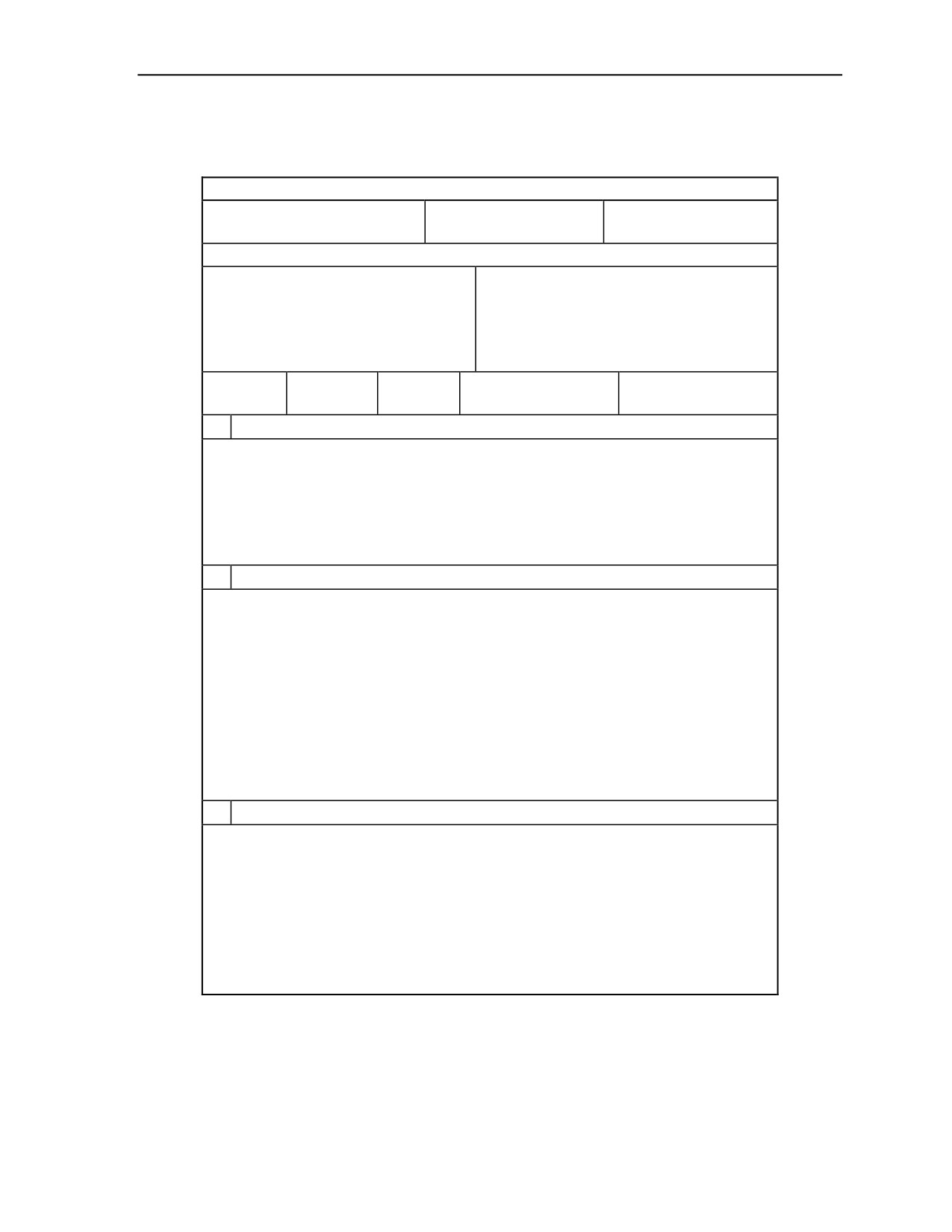
C-4. Table C-1 provides an example checklist for an initial infrastructure assessment of a town or location
to assist in determining the humanitarian and civic assistance needs of the town at the beginning of a
stability operation. This example is not intended to be all-inclusive but rather another aid to support an
assessment. The formal survey will be much more specific and in depth than the information in any
assessment, and survey smartcards are provided in the second half of this appendix to support the conduct
of a survey. The example uses the SWEAT-MSO model introduced in table C-2 on pages C-3 through C-5
to assist the Soldier and Marine in organizing an assessment strategy. Chapter 6 provides an infrastructure
assessment rating to assist in rating each of the assessed categories. Leaders may use these resources to
begin developing priorities, obtaining resources, and refining a plan. Many of the tasks derived from this
process will be general engineering tasks (such as facilities construction, well drilling, power generation,
and road repair).
C-2
FM 3-34.170/MCWP 3-17.4
25 March 2008
Infrastructure Reconnaissance
Table C-1. Sample infrastructure assessment
General Engineering Requirements - Infrastructure Assessment
Town/Village/Neighborhood:
Location:
Assessor:
Local Points of Contact (Name, Location, Phone Number, etc.)
Mayor:
Police Chief:
City Council:
Fire Chief:
City Engineer:
School Administrators:
Religious Leaders:
NGOs:
Community Leaders:
Population:
Male:
Female:
Religious Breakdown:
Ethnic Breakdown:
S
Sewage System Assessment
Status of municipal sewage system/distribution system:
Status of sewage systems in commercial/residential properties:
Immediate needs:
W
Water Assessment
Status of water treatment plants/distribution system:
Status of potable water in commercial/residential properties:
Storage capacity:
Wells (location and capacity):
Immediate needs:
E
Electricity Assessment
Status of electric plant/distribution system:
Status of electric power in commercial/residential properties:
Alternate power sources:
Immediate needs:
25 March 2008
FM 3-34.170/MCWP 3-17.4
C-3

Appendix C
Table C-1. Sample infrastructure assessment
A
Academics Assessment
Status of school building(s):
Status of teachers and supplies:
Immediate needs:
T
Trash Assessment
Status of trash collection system:
Status of disposal site:
Immediate needs:
M
Medical Assessment
Status of hospital/clinic buildings:
Status of physicians and supplies:
Immediate needs:
S
Safety Assessment
Status of police/fire departments:
Status of safety personnel and supplies:
Immediate needs:
O
Other Considerations
Transportation System Assessment
Status of road system (attach sketch if necessary):
Impact on critical transportation needs:
Immediate needs:
Fuel Distribution Assessment
Status of fuel distribution system:
Storage capacity:
Immediate needs:
C-4
FM 3-34.170/MCWP 3-17.4
25 March 2008

Infrastructure Reconnaissance
Table C-1. Sample infrastructure assessment
Housing Assessment
Status of structures:
Status of utilities:
Immediate needs:
Explosive Hazard Assessment
Explosive ordnance locations/type (send 9-line UXO report as required by the mission):
Explosive ordnance marked (if yes, marking description):
Immediate needs:
Environmental Hazard Assessment
Do known hazards exist (if yes, describe):
Are chemicals visible on the ground (if yes, describe):
Abandoned manufacturing buildings (if yes, are waste products/streams contained):
Immediate needs:
Other Critical Considerations:
Recommended Priorities:
Remarks:
Signature:
Organization:
Date:
25 March 2008
FM 3-34.170/MCWP 3-17.4
C-5
Appendix C
SURVEY
C-5. Infrastructure reconnaissance is accomplished in stages—the infrastructure assessment and the
infrastructure survey. As a follow-on to the assessment, the infrastructure survey provides a detailed
description of the condition of major services. The primary difference between the assessment and the
survey is the degree of technical information and the expertise required and available to perform the
reconnaissance. The survey is normally conducted by forward USACE personnel assigned or attached to a
FEST-M team and will integrate other technical specialties (medical, CA, and others) to enhance the
quality of the survey. A large urban area may require more than one survey team to accomplish the
necessary breadth of survey requirements. A survey may also require that the area be secure in order for it
to be performed while the assessment may be performed in an area that is not secured yet. Both are best
performed when other branch specialties are available to support the base engineer element. The following
series of smartcards are available to assist with the more detailed infrastructure survey.
C-6. Figures C-2 through C-8 on pages C-7 through C-29 address the following:
z
Sewage (figure C-2).
z
Water (figure C-3).
z
Electricity (figure C-4).
z
Academics (figure C-5).
z
Trash (figure C-6).
z
Medical (figure C-7).
z
Safety (figure C-8).
C-7. Figures C-9 through C-18 on pages C-30 through C-67 address other considerations including:
z
Roads and railroads (figures C-9 and C-10).
z
Bridges and waterways (figure C-11).
z
Airports (figure C-12).
z
Housing (figure C-13).
z
Communications (figure C-14).
z
Food supply (figure C-15).
z
Socio/government (figure C-16).
z
Cultural/historical/religious (figure C-17).
z
Hazardous materials (figure C-18).
C-6
FM 3-34.170/MCWP 3-17.4
25 March 2008