FM 7-100.1 OPFOR Opposing Force Operations (DECEMBER 2004) - page 10
FM 7-100.1 ________________________________________________________________________________
TYPES OF NUCLEAR ATTACK
11-34. The OPFOR categorizes nuclear attacks as either massed or indi-
vidual attacks. The category depends on the number of targets hit and the
number of nuclear munitions used.
11-35. A massed nuclear attack employs multiple nuclear munitions simul-
taneously or over a short time interval. The goal is to destroy a single large
enemy formation, or several formations, as well as other important enemy
targets. A massed attack can involve a single service of the State’s Armed
Forces, as in a nuclear missile attack by the Strategic Forces, or the com-
bined forces of different services.
11-36. An individual nuclear attack may hit a single target or group of
targets. The attack consists of a single nuclear munition, such as a missile or
bomb.
NUCLEAR RELEASE
11-37. At all stages of a conflict, the OPFOR keeps nuclear forces ready to
make an attack. The decision to initiate nuclear warfare occurs at the highest
level of the State government. National-level planners develop the fire plan
for the initial nuclear attack for approval by the NCA.
11-38. After the initial nuclear release, the NCA may delegate employment
authority for subsequent nuclear attacks to an OSC commander. The
commander of the OSC’s integrated fires command (IFC) submits to the
OSC commander, for approval and integration into OSC fire support
plans, recommendations for the subsequent employment of nuclear and
chemical weapons.
OFFENSIVE NUCLEAR EMPLOYMENT
11-39. Once the NCA releases nuclear weapons, two principles govern
their use: mass and surprise. The OPFOR plans to conduct the initial
nuclear attack suddenly and in coordination with nonnuclear fires. Initial
nuclear attack objectives are to destroy the enemy’s main combat forma-
tions, C2 systems, and nuclear and precision weapons, thereby isolating
the battlefield.
11-40. Nuclear attacks may target and destroy the enemy’s defenses and set
the conditions for the exploitation force. Other fire support means support
the assault and fixing forces. The OPFOR may plan a high-speed air and
ground offensive operation to exploit the nuclear attack.
11-41. If the enemy continues to offer organized resistance, the OPFOR
might employ subsequent nuclear attacks to reinitiate offensive operations.
Nuclear attacks can eliminate the threat of a counterattack or clear re-
sistance from the opposite bank in a water-obstacle crossing. If the enemy
begins to withdraw, the OPFOR plans nuclear attacks on choke points where
retreating enemy forces present lucrative targets.
11-8
________________________________________________________________________________Chapter 11
Planning
11-42. Although the opening stages of an offensive operation are likely to be
conventional, OPFOR planning focuses on the necessity of—
• Countering enemy employment of nuclear weapons.
• Maintaining the initiative and momentum.
• Maintaining fire superiority over the enemy (preempting his nuclear
attack, if necessary).
11-43. In deliberately planned operations, the OPFOR plans nuclear fires in
detail. An exploitation force would probably receive the highest percentage of
weapons; however, the OPFOR may also reserve weapons for other large, im-
portant targets. In more fluid situations, such as during exploitation, the
commander may keep some nuclear weapon systems at high readiness to fire
on targets of opportunity. Nuclear allocations vary with the strength of the
enemy defense and the scheme of maneuver.
11-44. Since the enemy too is under nuclear threat, he also must disperse his
formations, which can make him more vulnerable to penetration by an at-
tacking force. However, the OPFOR realizes that enemy troops are also highly
mobile and capable of rapidly concentrating to protect a threatened area. There-
fore, it considers surprise and timing of operations to be extremely critical in or-
der to complicate enemy targeting and deny him the time to use his mobility.
Execution
11-45. Upon securing a nuclear release, the OPFOR would direct nuclear at-
tacks against the strongest points of the enemy’s formations and throughout
his operational depth. This would create gaps through which maneuver
units, in
“nuclear-dispersed” formations, would attack as an exploitation
force. As closely as safety and circumstances permit, maneuver forces follow
up on attacks near the battle line. Airborne troops may exploit deep attacks.
11-46. An exploitation force would probably attack to take full advantage
of the speed of advance it could expect to achieve. The aim of these maneu-
ver units would be to seize or neutralize remaining enemy nuclear weapons,
delivery systems, and C2 systems. By attacking from different directions, the
maneuver units would try to split and isolate the enemy.
11-47. Commanders would ensure a rapid tempo of advance by assigning
tank and mechanized infantry units to the exploitation force. Such units are
quite effective in this role, because they have maneuverability, firepower,
lower vulnerability to enemy nuclear attacks, and the capability to achieve
penetrations of great depth.
DEFENSIVE NUCLEAR EMPLOYMENT
11-48. Primary uses of nuclear weapons in the defense are to—
• Destroy enemy nuclear and precision weapons and delivery means.
• Destroy main attacking groups.
• Eliminate penetrations.
• Support counterattacks.
11-9
FM 7-100.1 ________________________________________________________________________________
• Deny areas to the enemy.
• Conduct preemptive attack.
If nuclear weapons degrade an enemy offensive, the defender could gain the
opportunity to switch quickly to an offensive role.
BIOLOGICAL WARFARE
11-49. The State closely controls information about the status of its biological
warfare capabilities. This creates uncertainty among its regional neighbors
and potential extraregional opponents as to what types of biological agents
the State might possess and how it might employ them.
11-50. Biological weapons can provide a great equalizer in the face of a nu-
merically and/or technologically superior adversary that the OPFOR cannot
defeat in a conventional confrontation. However, their effects on the enemy
can be difficult to predict, and the OPFOR must also be concerned about the
possibility that the effects could spread to friendly forces.
WEAPONS AND AGENTS
11-51. Biological weapons consist of pathogenic microbes, micro-organism
toxins, and bioregulating compounds. Depending on the specific type, these
weapons can incapacitate or kill people or animals and destroy plants, food
supplies, or materiel. The type of target being attacked determines the choice
of agent and dissemination system.
11-52. Biological weapons are extremely potent and provide wide-area
coverage. Some biological agents are extremely persistent, retaining their
capabilities to infect for days, weeks, or longer. Biological weapons can take
some time (days, weeks, or monthsdepending on the agent) to achieve their
full effect. To allow these agents sufficient time to take effect, the OPFOR may
use clandestine means, such as SPF or civilian sympathizers, to deliver
biological agents in advance of a planned attack or even before the war begins.
DELIVERY MEANS
11-53. It is possible to disseminate biological agents in a number of ways.
Generally, the objective is to expose enemy forces to an agent in the form of a
suspended cloud of very fine biological agent particles. Dissemination
through aerosols, either as droplets from liquid suspensions or by small par-
ticles from dry powders, is by far the most efficient method.
11-54. There are two basic types of biological munitions: point-source bom-
blets delivered directly on targets and line-source tanks that release the
agent upwind from the target. Within each category, there can be multiple
shapes and configurations.
11-55. Military systems, as well as unconventional means, can deliver biological
agents. Potential delivery means include rockets, artillery shells, aircraft spray-
ers, saboteurs, and infected rodents. Aside from SPF and civilian sympathizers,
the OPFOR might use affiliated insurgent or terrorist organizations to deliver
biological agents within the region, outside the immediate region (to divert enemy
attention and resources), or even in the homeland of an extraregional opponent.
11-10
________________________________________________________________________________Chapter 11
TARGETS
11-56. Probable targets for biological warfare pathogen attack are nuclear
delivery units, airfields, logistics facilities, and C2 centers. The OPFOR may
target biological weapons against objectives such as food supplies, water
sources, troop concentrations, convoys, and urban and rural population cen-
ters rather than against frontline forces. The use of biological agents against
rear area targets can disrupt and degrade enemy mobilization plans as well
as the subsequent conduct of war. This type of targeting can also reduce the
likelihood that friendly forces would become infected.
BIOLOGICAL RELEASE
11-57. The decision to employ biological agents is a political decision made at
the national levelby the NCA. Besides the political ramifications, the State
recognizes a degree of danger inherent in the use of biological agents, due to
the difficulty of controlling an epidemic caused by them.
11-58. The prolonged incubation period makes it difficult to track down the
initial location and circumstances of contamination. Thus, there is the possi-
bility of plausible deniability. Even if an extraregional opponent might be
able to trace a biological attack back to the State, it may not be able to re-
spond in kind.
NBC PROTECTION
11-59. The OPFOR’s ability to protect itself against NBC weapons and to op-
erate in contaminated environments is at least the equal of any force in the
world, including extraregional forces. OPFOR planners readily admit that
casualties would be considerable in any future war involving the use of NBC
weapons. However, they believe that the timely use of active and passive
measures can significantly reduce a combat unit’s vulnerability. These meas-
ures include but are not limited to protective equipment, correct employment
of reconnaissance assets, and expeditious decontamination procedures. The
OPFOR conducts rigorous training for chemical defense.
11-60. The OPFOR believes the best way to protect against NBC weapons is
to destroy delivery systems, which are always high-priority targets. Other
operational-tactical responses to the threat include
• Dispersion: Concentrations of forces must last for as short a time as
possible.
• Speed of advance: If the advance generates enough momentum, this
can make enemy targeting difficult and keep enemy systems on the
move.
• Camouflage, concealment, cover, and deception (C3D): C3D measures
complicate enemy targeting.
• Continuous contact: The enemy cannot attack with NBC weapons as
long as there is intermingling of friendly and enemy forces.
11-11
FM 7-100.1 ________________________________________________________________________________
ORGANIZATION
11-61. Chemical defense units are responsible for nuclear and biological, as
well as chemical, protection and reconnaissance measures. In the adminis-
trative force structure, such units are organic to all maneuver units brigade
and above. Operational-level commands may provide some chemical defense
augmentation to subordinate units, particularly those conducting the main
effort. However, they must also retain some chemical defense assets at the
operational level to deal with the threat to the support zone and provide
chemical defense reserves.
11-62. Chemical troops are a vital component of combat support. They pro-
vide trained specialists for chemical defense units and for units of other
arms. Basic tasks chemical troops can accomplish in support of combat troops
include
• Reconnoitering known or likely areas of NBC contamination.
• Warning troops of the presence of NBC contamination.
• Monitoring changes in the degree of contamination.
• Monitoring the NBC contamination of personnel, weapons, and equipment.
• Performing decontamination activities.
• Providing trained troops to handle chemical munitions.
They perform specialized NBC reconnaissance in addition to supporting
regular ground reconnaissance efforts.
11-63. NBC protection functions are not limited to maneuver units. Artillery
and air defense regiments and brigades have their own chemical defense
units. Medical and SSM units have some decontamination equipment.
Engineer troops also are important, performing functions such as decon-
taminating roads, building bypasses, and purifying water supplies. Of course,
all arms have a responsibility for chemical reconnaissance and at least par-
tial decontamination without specialist support. However, they can continue
combat actions for only a limited time without complete decontamination by
chemical troops.
EQUIPMENT
11-64. OPFOR troops have protective clothing. Most combat vehicles and
many noncombat vehicles have excellent overpressure and filtration systems.
Items of equipment for individual or collective protection are adequate to pro-
tect soldiers from contamination for hours, days, or longer, depending on the
nature and concentration of the contaminant. Antidotes provide protection from
the effects of agents. Agent detector kits and automatic alarms are available in
adequate quantities and are capable of detecting all standard agents.
11-65. Chemical troops have a wide variety of dependable equipment that,
for the most part, is in good supply and allows them to accomplish a number
of tasks in support of combat troops. They have specialized equipment for de-
tecting and monitoring NBC contamination. They have some specialized
NBC reconnaissance vehicles, and they may use helicopters for NBC recon-
naissance. Decontamination equipment is also widely available.
11-12
________________________________________________________________________________Chapter 11
NBC DETECTION AND WARNING REPORTS
11-66. The OPFOR transmits NBC warning information over communica-
tions channels in a parallel form using both the command net and the air
defense and NBC warning communications net. Depending of what type of
unit initially detected the contamination, detection reports leading to such
warnings may go either through chemical defense and force protection chan-
nels or through the maneuver unit or ground reconnaissance reporting chain.
Detection Reports
11-67. Upon detection of contamination, an NBC observer or NBC reconnais-
sance patrol normally transmits an NBC detection report to the chief of force
protection on the staff of the commander that sent out the observer or patrol.
When NBC observers (whether from the chemical troops or another branch)
are attached to regular ground reconnaissance forces, security forces, or ma-
neuver units, the NBC observers that detect contamination would initially
pass the detection report through reconnaissance or maneuver unit reporting
channels. Of course, they would also report the detection to the commander
of the unit to which they are attached. When the maneuver unit chief of staff
or chief of reconnaissance receives an NBC detection report through his own
channels, he immediately passes it to the chief of force protection at that level.
Warning Reports
11-68. The chief of force protection and his staff evaluate the NBC detection
report and determine whether it warrants the issuing of a warning. If it does,
they inform the maneuver commander (or his chief of staff). At this point,
the NBC detection report changes into an NBC warning report. Then, the
maneuver commander (or chief of staff) disseminates the NBC warning re-
port via his command net to all subordinate unit commanders and via the
next-higher commander’s command net to the higher commander and other
subordinates of that command. Simultaneously, the chief of force protection
disseminates the same report to all of his own command’s subordinates over
the air defense and NBC warning communications net. He would also inform
the chief of force protection at the next-higher headquarters. The desired goal
it to disseminate the warning as rapidly as possible to all affected units.
11-69. The chief of force protection (and/or the chief of staff) may issue an
advance NBC warning based on the predicted development of an NBC
situation. NBC protective measures would change or be rescinded based on
subsequent NBC detection reports or on warning reports from higher, lower,
or adjacent units. Changes in the NBC protective measures are disseminated
by the maneuver commander or chief of staff and the chief force protection
using their respective communications nets.
SMOKE
11-70. The OPFOR plans to employ smoke extensively on the battlefield
whenever the situation permits. Use of smoke can make it difficult for the
enemy to conduct observation, determine the true disposition of OPFOR
troops, and conduct fires (including precision weapon fires) or air attacks.
The possible presence of toxic smokes may cause the enemy to use chemical
11-13
FM 7-100.1 ________________________________________________________________________________
protection systems, thus lowering his effectiveness, even if the OPFOR is us-
ing only neutral smoke.
ORGANIZATION
11-71. In the administrative force structure, army groups, armies, and corps
typically have smoke companies in their chemical defense battalions and/or
smoke battalions. In either case, the smoke companies each consist of nine
smoke-generating trucks. These assets are often allocated to OSCs, which
can then suballocate them to tactical-level subordinates.
AGENTS
11-72. Smoke agents may be either neutral or toxic. Neutral smoke agents
are liquid agents, pyrotechnic mixtures, or phosphorus agents with no toxic
characteristics. Toxic smokes (commonly referred to as combination smoke)
degrade electro-optical (EO) devices in the visual and near-infrared (near-IR)
wavebands; they also can debilitate an unmasked soldier by inducing water-
ing of eyes, vomiting, or itching.
11-73. The OPFOR may use a number of different smoke agents or other
obscurants together. For instance, obscurants such as fog oil block portions
of the electromagnetic spectrum more fully when seeded with chaff. The vast
quantities of white phosphorus (WP) on the battlefield also suggest that
random mixtures of this agent with other obscurants (both manmade and
natural) could occur, by chance or by design. The OPFOR recognizes the need
to counter target acquisition and guidance systems operating in the IR and mi-
crowave regions of the electromagnetic spectrum. It has fielded obscurants, in-
cluding chaff, capable of attenuating such wavelengths.
DELIVERY SYSTEMS
11-74. The OPFOR has an ample variety of equipment for smoke dissemina-
tion. Its munitions and equipment include—
• Smoke grenades.
• Vehicle engine exhaust smoke systems (VEESS).
• Smoke barrels, drums, and pots.
• Mortar, artillery, and rocket smoke rounds.
• Spray tanks (ground and air).
• Smoke bombs.
• Large-area smoke generators (ground and air).
Although not designed for this purpose, some decontamination vehicles with
chemical defense units can also generate smoke.
11-75. Smoke grenades include hand grenades, munitions for various gre-
nade launchers, and smoke grenade-dispensing systems on armored vehicles.
These grenades can provide quick smoke on the battlefield or fill gaps in
smokescreens established by other means. Some armored fighting vehicles
have forward-firing smoke grenade dispensers that can produce a bispectral
screen up to 300 m ahead of vehicles.
11-14
________________________________________________________________________________Chapter 11
11-76. All armored fighting vehicles can generate smoke through their ex-
haust systems. With these VEESS-equipped vehicles, a platoon can produce a
screen that covers a battalion frontage for 4 to 6 minutes.
11-77. Smoke-filled artillery projectiles, smoke bombs, spray tanks, and gen-
erator systems are also common. Artillery can fire WP rounds (which have a
moderate degrading effect on thermal imagers and a major one on lasers).
The OPFOR makes considerable use of smoke pots emplaced by chemical
troops, infantrymen, or other troops. The OPFOR still uses smoke bombs or
pots dropped by fixed- or rotary-wing aircraft.
TYPES OF SMOKESCREENS
11-78. The OPFOR recognizes three types of smokescreens: blinding, cam-
ouflage, and decoy. Classification of each type as frontal, oblique, or flank
depends on the screen’s placement. Smokescreens are either stationary or mo-
bile depending on prevailing winds and the dispensing means used. Each basic
type can serve a different purpose. However, simultaneous use of all types is
possible.
Blinding
11-79. Blinding smokescreens can mask friendly forces from enemy gunners,
observation posts, and target-acquisition systems. They can restrict the en-
emy’s ability to engage the OPFOR effectively. Delivery of WP and plasti-
cized white phosphorus (PWP) is possible using MRLs, artillery, mortars,
fixed-wing aircraft, or helicopters. The OPFOR lays blinding smoke directly
in front of enemy positions, particularly those of antitank weapons and ob-
servation posts. Blinding smoke can reduce a soldier’s ability to acquire tar-
gets by a factor of 10, and its use can reduce casualties significantly.
11-80. Likely targets for blinding smokescreens are enemy defensive positions,
rear assembly areas, counterattacking forces, and fire support positions. The
screening properties of a blinding smokescreen can couple with dust, HE
combustion effects, and the incendiary effects of phosphorus. This can create
an environment in which fear and confusion add to the measured effective-
ness of the smoke.
Camouflage
11-81. The OPFOR uses camouflage smokescreens to support all kinds of
C3D measures. Such screens can cover maneuver, conceal the location of
units, hide the nature and direction of attacks, or mislead the enemy regard-
ing any of these. The camouflage smokescreen is useful on or ahead of
friendly troops.
11-82. These screens are normally effective up to the point where forces de-
ploy for combat. The number, size, and location of camouflage smokescreens
vary depending on terrain, weather, and type of combat action. Camouflage
also forces enemy attack helicopters to fly above or around a screen, thus
exposing themselves to attack. Camouflage smoke can also cover assembly
areas, approaches of exploitation forces, or withdrawals. Smokescreens can
also cover a wide surface area around fixed installations or mobile units that
do not move for extended periods.
11-15
FM 7-100.1 ________________________________________________________________________________
11-83. Establishing camouflage smokescreens normally requires use of a
combination of smoke grenades, smoke barrels, smoke pots, vehicles mounting
smoke generating devices, and aircraft. Some decontamination vehicles also
have the capability to generate smoke.
11-84. Two smoke-generator vehicles can lay a smokescreen of sufficient size
to cover a battalion advancing to the attack. For larger smokescreens, the
OPFOR divides the smokescreen line into segments and assigns two vehicles
to each segment. Doctrinally, camouflage smokescreens should cover an area
at least five times the width of the attacking unit’s frontage.
11-85. The threat of enemy helicopter-mounted antitank systems concerns
the OPFOR. Consequently, its doctrine calls for advancing forces to move as
close behind the smokescreen as possible. The higher the smokescreen, the
higher an enemy helicopter must go to observe troop movement behind the
smokescreen, and the more vulnerable it is to ground-based air defense
weapons. Depending on weather and terrain, some large-area smoke
generators can produce screens up to several hundred meters high. There is
considerable observation-free maneuver space behind a screen of this height.
Conversely, smoke pots provide a screen 5 to 10 m high. This screen masks
against ground observation but leaves the force vulnerable to helicopters
“hugging the deck” and popping up to shoot.
11-86. The protection produced by camouflage smoke also interacts as a
protective smoke. Just as smokescreens can degrade enemy night-vision
sights, the protective smoke can shield friendly EO devices from potentially
harmful laser radiation. This protective effect is greater with a darker smoke
cloud because of the better absorption capability of that cloud. Protective
smokescreens are also a good means of reducing the effects of thermal ra-
diation from nuclear explosions. A protective smokescreen is useful in front
of, around, or on top of friendly positions.
Decoy
11-87. A decoy screen can deceive an enemy about the location of friendly
forces and the probable direction of attack. If the enemy fires into the decoy
smoke, the OPFOR can pinpoint the enemy firing systems and adjust its fire
plan for the true attack. The site and location of decoy screens depend on the
type of combat action, time available, terrain, and weather conditions. One
use of decoy smoke is to screen simultaneously several possible crossing sites
at a water obstacle. This makes it difficult for the enemy to determine which
site(s) the OPFOR is actually using.
OFFENSIVE SMOKE EMPLOYMENT
11-88. The OPFOR emphasizes the use of smoke during the offense to help
reduce friendly battle losses. However, it understands that smoke may hin-
der its own C2, battlefield observation, and target engagement capabilities. In
addition, the enemy may take advantage of OPFOR smokescreens to shield
his own maneuvers or to carry out a surprise attack or counterattack. Thus, a
smokescreen is successful when the OPFOR attackers are able to maintain
their assigned axis and retain sight of the objective. To prevent the smoke from
11-16
________________________________________________________________________________Chapter 11
interfering with friendly maneuver, OPFOR commanders must coordinate the
planned location and duration of smokescreens with the scheme of maneuver.
DEFENSIVE SMOKE EMPLOYMENT
11-89. In the defense, the OPFOR may use smokescreens for—
• Camouflaging or covering the maneuver of friendly units.
• Concealing engineer activities from enemy observation.
• Screening replacements of units under conditions of good visibility.
• Camouflaging the approach of friendly units for a counterattack.
• Providing flank and maneuver security.
• Misleading the enemy on the disposition of reserves and planned
counterattack axes.
11-90. Because a completely obscured environment tends to aid the attacker
more than the defender, an OPFOR defense uses smoke to minimize the
enemy’s vision while allowing the defenders a fairly clear view of the enemy’s
location. Smoke from artillery and mortar shells is the most effective means
of blinding an advancing enemy while keeping friendly forces out of the
obscured area.
SIGNALING SMOKE
11-91. Aside from smokescreens, the OPFOR also uses colored smoke for
signal purposes. Smoke can mark enemy positions or, occasionally, friendly
positions or movement routes for the information of supporting aircraft or
artillery. By prearrangement, colored smoke may—
• Identify friendly units.
• Identify targets.
• Control the commencing and lifting of fire.
• Coordinate fire and maneuver of combat units.
STRATEGIC CONTEXT
11-92. During all strategic-level courses of action, the OPFOR will ensure
that the employment of NBC weapons is coordinated with perception man-
agement efforts. The purpose of this coordinated effort is to convey a message
of political and military dominance to the regional civilian populace as well
as to convey an adverse view of an intervening extraregional opponent.
11-93. The OPFOR may use the threat of employing NBC weapons as an in-
timidating factor. Any regional opponent with an NBC capability of its own
knows that the OPFOR is prepared to retaliate in kind. The fact that NBC
weapons may also place noncombatants at risk is a further intimidating
factora positive factor from the State’s perspective. Thus, it may use or
threaten to use NBC weapons as a way of applying political, economic, or
psychological pressure by allowing the enemy no sanctuary. This applies to
both regional and extraregional foes.
11-94. The OPFOR realizes that an extraregional force will possess a techno-
logical edge in the ability of its RISTA means to target OPFOR fire support
11-17
FM 7-100.1 ________________________________________________________________________________
assets capable of delivering NBC munitions. Additionally, the OPFOR real-
izes that its regional opponent may receive RISTA support (such as satellite
and fixed-wing signals intelligence and imagery) from an extraregional
power. Therefore, OPFOR fire support planners develop contingency plans to
preserve their NBC-capable fire support assets during all strategic-level
courses of action. Common countermeasures are to disperse fire support
assets and to use decoys and camouflage.
REGIONAL OPERATIONS
11-95. During regional operations, the State may be able to employ NBC
weapons with little fear of retaliation from its regional neighbors. Thus, it is
possible that the OPFOR would use chemical weapons early in an operation
or from its outset, against key targets in a neighbor’s homeland. However, it
is aware that use of any NBC weapons could have both positive and negative
affects on its ability to achieve its strategic goals. On the one hand, it may be
concerned that NBC use during a strategic campaign against a regional
neighbor might lead to the intervention of an extraregional force. On the
other hand, the OPFOR could use NBC against a regional neighbor as a
warning to any potential extraregional enemy that it is willing to use such
weapons. The State would prefer not to use chemical weapons within its own
boundaries, except perhaps in an area populated by a particularly rebellious
dissident minority opposed to of the State government.
TRANSITION OPERATIONS
11-96. During transition operations, the OPFOR may use NBC weapons to
attack unique or key targets in aerial and sea ports of debarkation in order to
disrupt the deployment tempo of the extraregional force. These targets in-
clude key C2 nodes, logistics operating bases, ground and airborne RISTA
platforms, and contractors and contractor-operated facilities. The OPFOR
will also seek to conduct these attacks in concert with the perception man-
agement portion of the information warfare (IW) plan, in order to leverage
the world media to report adverse perceptions of the extraregional force.
ADAPTIVE OPERATIONS
11-97. When the OPFOR shifts to adaptive operations, it will employ all
means availableeven WMD against selected targetsto allow the enemy
no sanctuary. As in regional operations, the OPFOR would prefer not to use
even chemical weapons within the boundaries of the State. However, it would
contaminate its own soil if necessary in order to preserve the regime or the
State’s sovereignty.
11-98. During adaptive operations, the OPFOR seeks to use a nontraditional
approach to NBC warfare. This approach revolves around the creation of
WMD-like events in concert with the perception management portion of the
IW plan. For example, the OPFOR may seek to use the media to amplify and
embellish the results of a fire at a facility that produces chemicals used in
everyday households. The media campaign would seek to attribute the cause
of the fire to enemy action and would emphasize that injuries caused to the
civilian population are similar in nature to those caused by the release of a
chemical munition.
11-18
Chapter 12
Logistics
Operational logistics links strategic-level logistics resources with the
tactical level of logistics, thus creating the conditions for effective
sustainment of a combat force. It covers the support activities required to
sustain campaigns and major operations. A dependable logistics system
helps commanders seize and maintain the initiative. Operational
maneuver and the exploitation of operational or tactical success often
hinge on the adequacy of logistics and the ability of the force to safeguard
its critical lines of communication (LOCs), materiel, and infrastructure.
Operational logistics normally supports campaigns and provides theater-
wide logistics support, generally over a period of months. Operational
logisticians coordinate the allocation and distribution of resources within
the area of responsibility (AOR). They interface with tactical-level
logisticians in order to determine shortfalls and communicate these
shortfalls back to the strategic logistics complex to support operational
priorities. Operational logisticians coordinate the flow of strategic
capabilities within the theater based on the commander’s priorities.
STRATEGIC CONTEXT
12-1. The State strategic logistics complex is the foundation for the logistics
system. Fundamental to the logistics concept are the twin notions of total war
and all means necessary. As a consequence, the State fully integrates civilian
and military components of both its materiel and service industries. Thus,
the State strategic logistics complex includes the national industrial base
with its supply points, distribution centers, arsenals, plants, manufacturing
facilities, medical support, and personnel support centers. The national
industrial base is capable of building everything from small arms to nuclear-
capable missiles. However, while the State has the ability to design, produce,
and field weapon systems, there are some serious qualitative shortcomings in
production and integration.
12-2. The State logistics system is designed to provide continuous support to
the civilian populace while simultaneously supporting military forces from
the strategic level to the individual fighting unit. The State’s national
security strategy requires that the OPFOR and the entire population be
constantly prepared for the sudden outbreak of war or natural disasters. The
State continues to make major improvements in all aspects of its logistics
system. This includes an increased emphasis on support zone security and
plans for stockpiling war materiel throughout the country.
12-3. For the OPFOR, all strategic logistics support is coordinated at the
national level through the Chief of Logistics in the Ministry of Defense
12-1
FM 7-100.1 ________________________________________________________________________________
(MOD). The responsibilities of the Chief of Logistics are the same during war
and peace. These responsibilities include
• Procuring of personnel, materiel, and services required by the military.
• Preparing the economy and the people to provide sustained support in
case of war.
• Ensuring that an uninterrupted flow of personnel, materiel, and equip-
ment reaches the individual fighting unit at the proper place and time.
12-4. Organizations within the national-level military logistics establishment
include materiel support and maintenance units, as well as mobilized civilian
resources, to include medical personnel and facilities. Some national-level
logistics units may be allocated to subordinate commands to augment the
units forming their logistics bases, while the remaining units are centralized
under General Staff control.
LOGISTICS STOCKPILES
12-5. In preparation for war, the State’s national security strategy includes
plans for stockpiling war materials, as well as critical civilian supplies and
materials, throughout the country. The logistics storage of war materials
consists of four major categories: national, strategic, mobilization, and mobile
reserves.
National and Strategic Reserves
12-6. Government warehouses store national-level reserves consisting of
foodstuffs, petroleum products, manufactured goods, and strategic raw
materials. While these stocks are separate from the military items held in
strategic reserve, the military will likely use part of these stocks.
12-7. Strategic reserves are stocks of supplies and equipment controlled by
the General Staff. These stocks are similar to stocks in national reserves and
are not planned for early use in a conflict.
Mobilization Reserves
12-8. The OPFOR holds mobilization reserves for issue to newly activated, large
military units and for resupply to combat units in the early stages of a conflict.
The Organization and Mobilization Directorate of the General Staff determines
the level and configuration of these stocks. That directorate also is responsible
for accountability and maintenance. If the administrative force structure
includes military districts or regions, these geographic commands can coordinate
mobilization measures between military and civilian sectors. Mobilizing reserve
and militia units are generally dependent on stockpiled supplies.
Mobile Reserves
12-9. Deployed ground units hold and transport mobile logistics reserves
consisting of ammunition, fuel, rations, and equipment. Ground forces maintain
these supplies for use in the conduct of ground operations and distribute them to
both tactical and support units. Published planning factors establish quantities
of these supplies. Each OPFOR unit maintains an emergency reserve of supplies,
and only the unit commander can order the use of these supplies.
12-2
________________________________________________________________________________Chapter 12
DEPOT FACILITIES AND OPERATION
12-10. Depots are part of the
strategic logistics support structure
Depot Categories
and hold national-level stockpiles and
The depots are generally divided
strategic reserves. They occupy fixed
into the following categories:
peacetime facilities, aboveground and
• Area distribution depots.
underground structures, plus dispersal
• Ammunition depots.
sites throughout the country. They
• Maintenance depots.
manage the distribution of war stocks
• Medical depots.
and armaments and materiel, and
perform any higher-level repair work
that is accomplished in country. Examples of these repairs include aircraft
instrumentation, optics, and electronics. The depots manage the distribution
of consumables such as fuel, food, and other items from the civilian economy.
Rocket and missile units, aviation support units, and air defense
maintenance units receive logistics support direct from the nearest depot.
12-11. A single depot may have one or more of the above missions. An area
distribution depot (ADD) receives, stores, and distributes items for units
operating or assigned within its geographic support area. Major end items
may also be stored in an ADD, but normally are stored in a maintenance
depot. The materiel stored within an ADD should accommodate a majority of
the demands placed on the distribution system for the units located in its
respective support area. An ammunition depot receives stores, renovates,
issues, and demilitarizes munitions of all types. Maintenance depots overhaul
major end items and repairable components and, as necessary, perform
limited fabrication and manufacturing. All overhaul items are stored at a
maintenance depot until disposition instructions are received from the MOD.
Medical depots are discussed in the Medical Logistics section of this chapter.
Aboveground Structures
12-12. Aboveground structures range from factory warehouses to
aboveground hardened structures. Hardened structures are reinforced for
protection against aerial and ground attack. Earth mounded bunkers are an
example of an aboveground hardened structure. The State uses extensive
camouflage and concealment techniques to reduce the detection signature of
these structures to enemy reconnaissance platforms. The State will also
develop sophisticated decoy sites.
Underground Structures
12-13. Underground structures include shallow buried and deep underground
bunkers and complexes. There are cases where the State uses underground
storage facilities to house its C2 complexes and medical facilities.
Underground structures are dispersed throughout the country and consist of
intersecting tunnels with multiple exits. Some of these exits may lead to
either external combat positions or other subterranean facilities. Large
camouflaged doors cover the entrances. The camouflage material matches the
surrounding rock so closely that one has to knock on the surface to determine
the difference. Normally, a complex may extend over a square kilometer or
12-3
FM 7-100.1 ________________________________________________________________________________
more. Auxiliary casements in the underground facility may hold fuel, water,
food, medical supplies, clothing, or life support equipment.
Short-Duration Facilities
12-14. Short-duration storage facilities play a central role in any strategic
campaign that may involve intervention by an extraregional power. For
example, prior to conducting adaptive operations, the State plans, develops,
and builds short-duration storage facilities for the pre-positioning of
equipment and supplies to sustain deployed forces. The State attempts to
anticipate outside intervention and plan accordingly. Logistics items are
stockpiled or cached in underground caves and dugout holes, tents, or
warehouses, and are dispersed over a wide area. These facilities can be
considered a mini-supply depot. They also undergo extensive camouflage and
concealment to reduce their detection signature.
THEATER DISTRIBUTION NETWORK
12-15. Theater distribution is the
Theater Distribution Network
flow of personnel, equipment, and
materiel within a theater, which
The theater distribution network
enables combat forces to accomplish
consist of
their assigned missions. The theater
• Physical network.
distribution network consists of the
• Resource network.
physical and resource networks.
12-16. The physical network consists of fixed structures and established
facilities to support distribution operations. It includes roads, airfields,
railroads, hardened structures (warehouses and storage facilities), inland
waterways, ports, and pipelines. The quantity, capacity, and capability of
these structures and facilities determine the robustness of the distribution
network.
12-17. The resource network consists of personnel (military and civilian),
organizations, materiel, and equipment. These resources operate within the
physical network of the distribution system.
TAILORED LOGISTICS UNITS
12-18. The OPFOR concentrates the bulk of its logistics units at two
levelstheater and operational-strategic command (OSC). This concentration
supports the OPFOR philosophy of streamlined, highly mobile combat forces
at the tactical level. These higher levels maintain the responsibility and the
primary means for logistics support.
12-19. Tailoring allows allocation of logistics resources to the combat forces
most essential to mission success. It also allows the OPFOR to assign
priorities for logistics support. Subordinate units receive assets according to
the importance of their mission, the nature of the terrain, and the level of
fighting anticipated. Commanders not only can reallocate their own resources
in line with changes in the situation, but also can take away their
subordinates’ organic resources and give them to other subordinates if the
situation warrants.
12-4
________________________________________________________________________________Chapter 12
ADMINISTRATIVE FORCE STRUCTURE
12-20. The administrative force structure is the aggregate of military
headquarters, organizations, facilities, and installations that are designed to
man, train, and equip the OPFOR. After transferring control of its major
fighting forces to one or more task-organized fighting commands, an
administrative headquarters, facility, or installation continues to provide
depot and area support-level administrative, supply, and maintenance
functions. The logistics function of the administrative force structure is
extensive and complex, serving as the major connecting link between the
industrial base of the State and forces engaged in combat.
FIGHTING FORCE STRUCTURE
12-21. The OPFOR’s fighting force structure is a flexible organization. It
receives logistics assets from the administrative force structure and tailors
them to meet specific objectives, based on forces available, mission
requirements, enemy forces, and the geography of the AOR. Tailoring affects
both the number and type of subordinate combat units and the number and
type of logistics units allocated to support them.
LOGISTICS MISSIONS
12-22. In operational (and tactical) logistics, three terms describe how the
OPFOR provides support to the field. These terms are primary support, area
support, and depot support.
12-23. Primary support is a mission given to supply, services, transportation,
and maintenance units that normally provide support directly to other units.
This allows the primary support unit to respond directly to the supported
unit’s request for assistance or supplies.
12-24. Area support is a mission given to supply, services, transportation, and
maintenance units that normally provide support to primary support units and
other area support units. Lower-priority units may have to rely on area support,
rather than receiving supplies and services directly from the next-higher echelon.
12-25. Depot support is a mission given to national- or theater-level units
that normally provide support to area support units. Depot support
operations include the receipt, storage, and issue of war stocks and
domestically produced armaments and materiel, and the overhaul and
rebuilding of major end items.
OPERATIONAL LOGISTICS CONCEPTS
12-26. The OPFOR understands
Operational Logistics Concepts
that there is as much chance of
an operation being brought to
The OPFOR relies on the following logis-
culmination by a lack of
tics concepts:
sufficient logistics support as
• Centralized planning and decen-
by enemy action. Therefore, it
tralized execution.
considers thorough logistics
• Support forward.
planning and preparation
• Sustainment from other sources.
essential to executing operation
12-5
FM 7-100.1 ________________________________________________________________________________
plans. The OPFOR relies on three concepts: centralized planning and
decentralized execution, support forward, and sustainment from other
sources.
CENTRALIZED PLANNING AND DECENTRALIZED EXECUTION
12-27. To ensure both priority of effort and efficiency in the logistics process,
the OPFOR’s logistics operations are characterized by the concept of
centralized planning and decentralized execution. Logistics plans are
developed at higher levels and executed by units and organizations at lower
levels. At OSC level, the resources officer has overall responsibility for
logistics planning. Centralized planning requires a focal point for logistics
planning and resource allocation at all levels. Regardless of whether the focal
point is an individual (the resources officer or his secondary staff) or a unit, it
must be constantly aware of requirements and capabilities. Decentralized
execution enhances the flexibility of lower-level commanders to meet local
requirements and to rapidly reprioritize support.
12-28. The concept of centralized planning and decentralized execution is key
to supporting reconnaissance fire (see Chapter 7) and strike operations (see
Chapter 3). The OPFOR uses reconnaissance fire to attack specific enemy
systems in order to destroy or degrade the combat potential of the enemy
force. It employs a strike to destroy an enemy formation after setting the
conditions for its destruction. The OPFOR uses a series of caches and short-
duration storage facilities to sustain fire support and maneuver forces during
these operations.
12-29. This concept of centralized planning and decentralized execution is
particularly important for supporting the deployment of special-purpose
forces (SPF). Generally, SPF deployed into the enemy’s strategic depth or
against his LOCs are inserted with the munitions and supplies their missions
require. Since SPF units are expected to sustain themselves for the duration
of their missions, the OPFOR relies on the careful planning and stockage of
supply caches to sustain these forces.
SUPPORT FORWARD
12-30. Logistics units are organized and deployed to support forward. The
guiding principle is that a combat force should retain its organic support
resources (such as trucks, recovery equipment, and ambulances) to support
its subordinate units. It should not have to use its own resources to go to
support areas to pick up supplies or to evacuate resources that can no longer
contribute to combat power.
SUSTAINMENT FROM OTHER SOURCES
12-31. Finally, the logistics system may have to rely on sustainment from
other than military sources. Supplies may be procured or obtained from social
groups, consumer cooperatives, government farms, or individual citizens, and
by coercion or foraging in the AOR. Captured enemy supplies and equipment
are another source of outside sustainment.
12-6
________________________________________________________________________________Chapter 12
COMMAND AND CONTROL
12-32. The General Staff may keep some national-level logistics units its
direct control. However, it normally allocates some national-level assets, as
well as logistics assets of operational-level commands in the administrative
force structure, to provide logistics support to an OSC.1 In some cases, these
allocated assets may remain under the command of their original parent
headquarters but become associated with an OSC in a supporting
relationship. In other cases, they actually come under the command of the
OSC in a constituent or dedicated status. (See Chapter 2 for a more detailed
explanation of the various command and support relationships.)
OPERATIONAL STAFF RESPONSIBILITIES
12-33. At all levels of command, including the OSC, the resources section of
the primary staff is the principal office for the logistics integration of supply,
maintenance, transportation, and services. The resources officer heads this
section, with two subsections headed by secondary staff officers who support
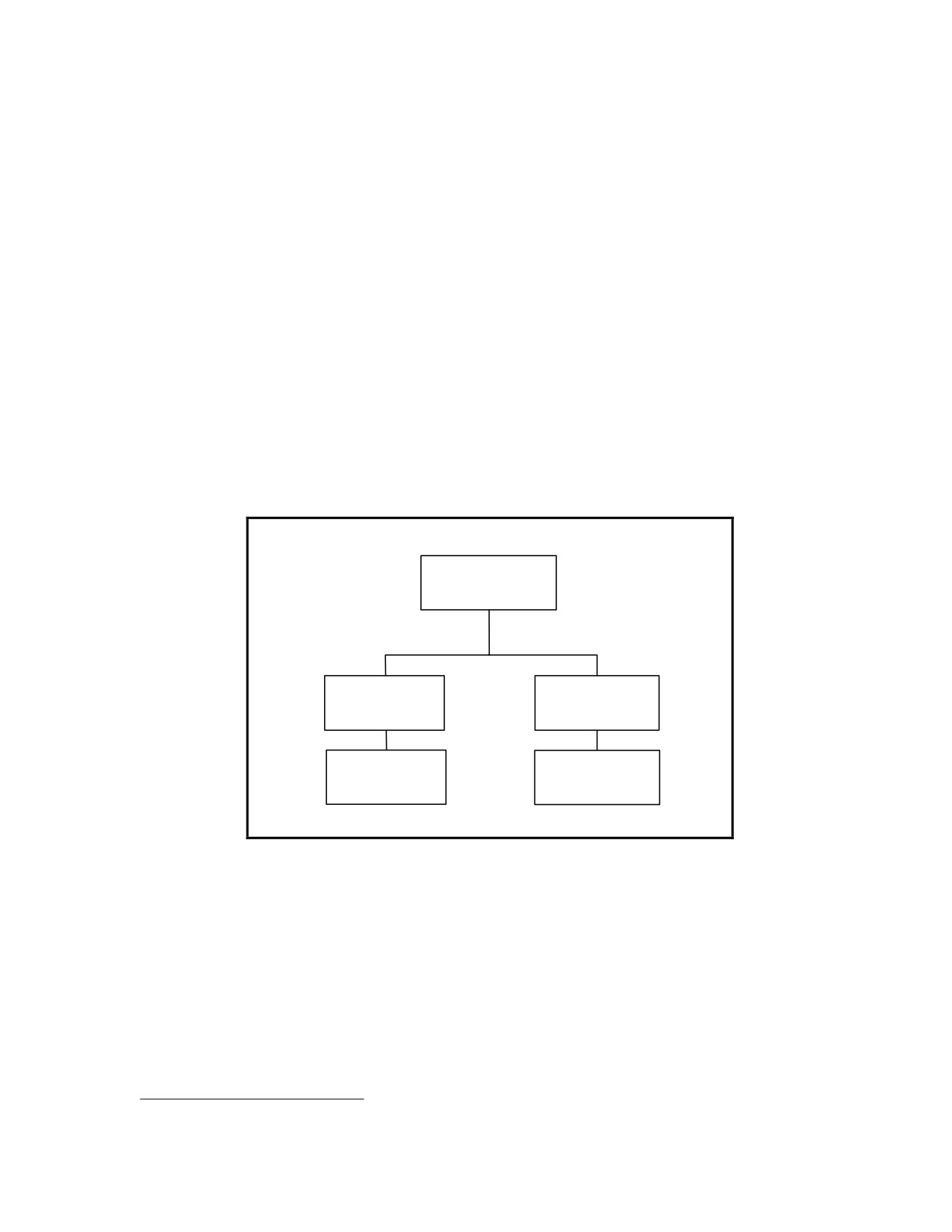
him: the chief of logistics and the chief of administration. See Figure 12-1.
RESOURCES
OFFICER
CHIEF
CHIEF
OF
OF
LOGISTICS
ADMINISTRATION
LOGISTICS
ADMINISTRATIVE
SUBSECTION
SUBSECTION
Figure 12-1. Resources Section
Resources Officer
12-34. The resources officer is responsible for the requisition, acquisition,
distribution, and care of all of the command’s resources, both human and
materiel. He ensures the commander’s logistics and administrative
requirements are met and executes staff supervision over the command’s
logistics and administrative procedures. One additional major task of the
resources officer is to free the commander from the need to bring his
influence to bear on priority logistics and administrative functions. He is also
the officer in charge of the sustainment command post (CP).
1 Unless otherwise specified, references to OSC in this chapter could also apply to a field group.
12-7
FM 7-100.1 ________________________________________________________________________________
Chief of Logistics
12-35. The chief of logistics is responsible for managing the order, receipt,
and distribution of supplies to sustain the command. He is responsible for the
condition and combat readiness of armaments and related combat equipment
and instruments. He is also responsible for their supply, proper utilization,
repair, and evacuation. He oversees the supply and maintenance of the
command’s combat and technical equipment. These responsibilities
encompass the essential wartime tasks of organizing and controlling the
command’s recovery, repair, and replacement system. During combat, he
keeps the commander informed on the status of the command’s equipment.
Chief of Administration
12-36. The chief of administration supervises all personnel actions and
transactions in the command. His subsection maintains daily strength
reports; records changes in table of organization and equipment of units in
the administrative force structure; assigns personnel; requests replacements;
records losses; administers awards and decorations; and collects, records, and
disposes of war booty.
INTEGRATED SUPPORT COMMAND
12-37. The integrated support command (ISC) is the aggregate of combat
service support units (and perhaps some combat support units) allocated from
the administrative force structure to an OSC in a constituent or dedicated
command relationship and not suballocated in a constituent or dedicated
command relationship to a subordinate headquarters within the OSC.
Normally, the OSC further allocates part of its combat service support units
to its tactical-level subordinates and some, as an integrated support group
(ISG), to support its IFC. The rest remain in the ISC at OSC level to provide
overall support of the OSC. For organizational efficiency, other combat
service support units may be grouped in this ISC, although they may support
only one of the major units of the OSC. An ISC has six major functions:
• Materiel support (supply and services).
• Maintenance.
• Transportation.
• Medical support.
• Personnel support.
Sometimes, an ISC might also include units performing combat support tasks
(such as chemical defense, IW, or law enforcement) that support the OSC.
ISC Headquarters
12-38. The ISC headquarters is composed of the ISC commander and his
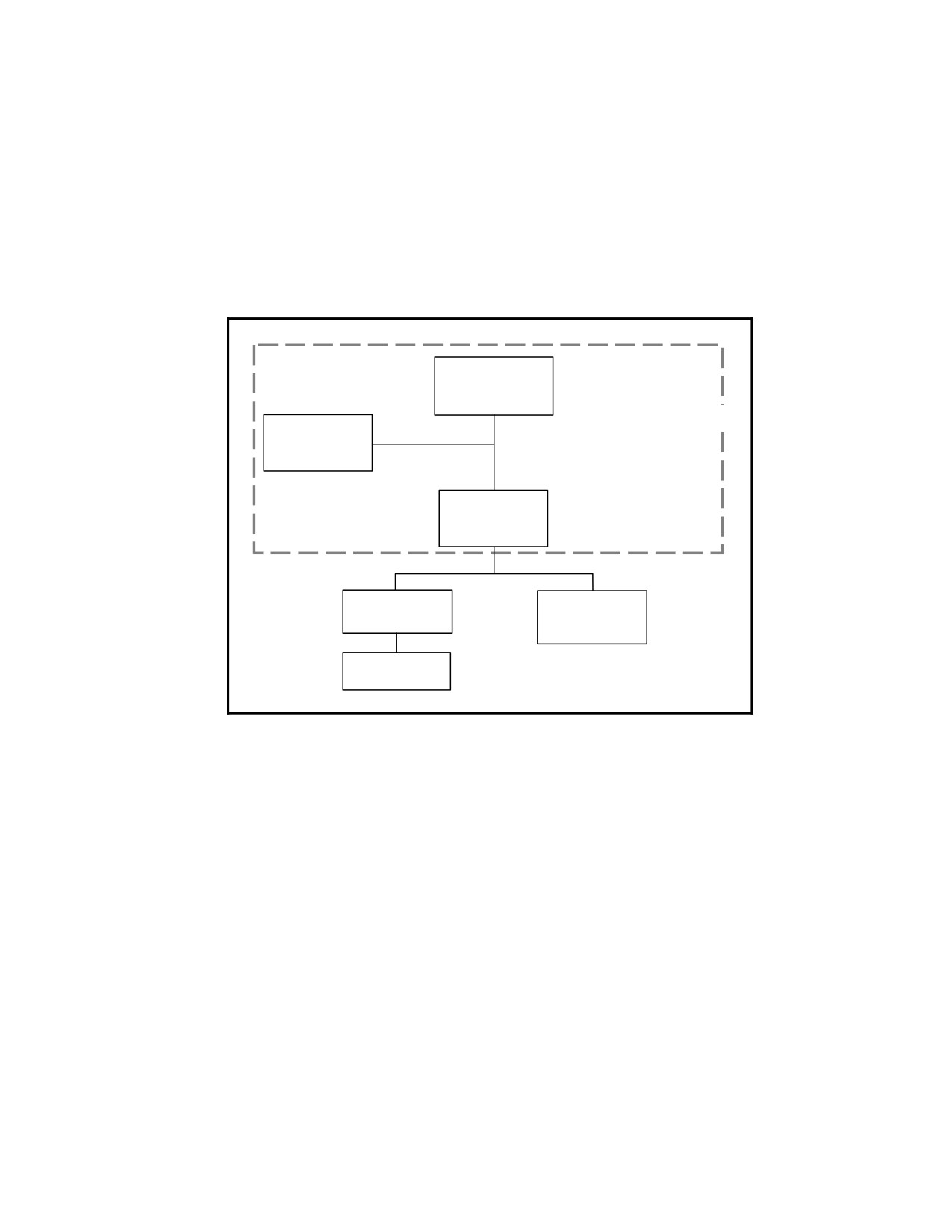
command group, an operations section, and a resources section. (See Figure
12-2.) The operations section provides the control, coordination,
communications, and IW support for the ISC headquarters. Located within
the operations section is the support operations coordination center (SOCC).
The SOCC is the staff element responsible for the planning and coordination
of support for the OSC. In addition to the SOCC, the operations section has
12-8
________________________________________________________________________________Chapter 12
subsections for future operations and airspace operations. The resources
section consists of logistics and administrative subsections which,
respectively, execute staff supervision over the ISC’s logistics and personnel
support procedures. The ISC headquarters includes liaison teams from
subordinate units of the ISC and from other OSC subordinates to which the
ISC provides support. These liaison teams work together with the SOCC to
ensure the necessary coordination of support for combat operations.
ISC
COMMANDER
COMMAND GROUP
ISC DEPUTY
COMMANDER
ISC CHIEF
OF
STAFF
OPERATIONS
RESOURCES
SECTION
SECTION
SOCC
Figure 12-2. ISC Headquarters
12-39. The ISC commander and his staff are the OSC logisticians. The ISC
commander advises the OSC commander, resources officer, and the rest of
the OSC staff on logistics matters. The ISC commander normally receives
guidance and direction from the OSC commander. The overall responsibility
for logistics planning belongs to the OSC resources officer. The OSC
commander tasks the ISC commander to evaluate the logistics supportability
of future operation plans or courses of action. The ISC commander tasks and
provides guidance to the ISC staff. The ISC staff gives the alternatives and
preferred solutions to the ISC commander for a decision. If necessary, the ISC
headquarters can assume the functions of the OSC’s sustainment CP, should
that CP containing the OSC resources officer be incapacitated.
Task Organization
12-40. The units allocated to an OSC and its ISC vary according to the
mission of that OSC and the support requirements of other operational-level
commands. The OSC resources officer (in consultation with his chiefs of
logistics and administration and the ISC commander) determines the proper
task organization of logistics and administrative support assets allocated to
12-9
FM 7-100.1 ________________________________________________________________________________
the OSC. He suballocates some assets to the IFC and to other OSC
subordinates based on support mission requirements. The remainder he
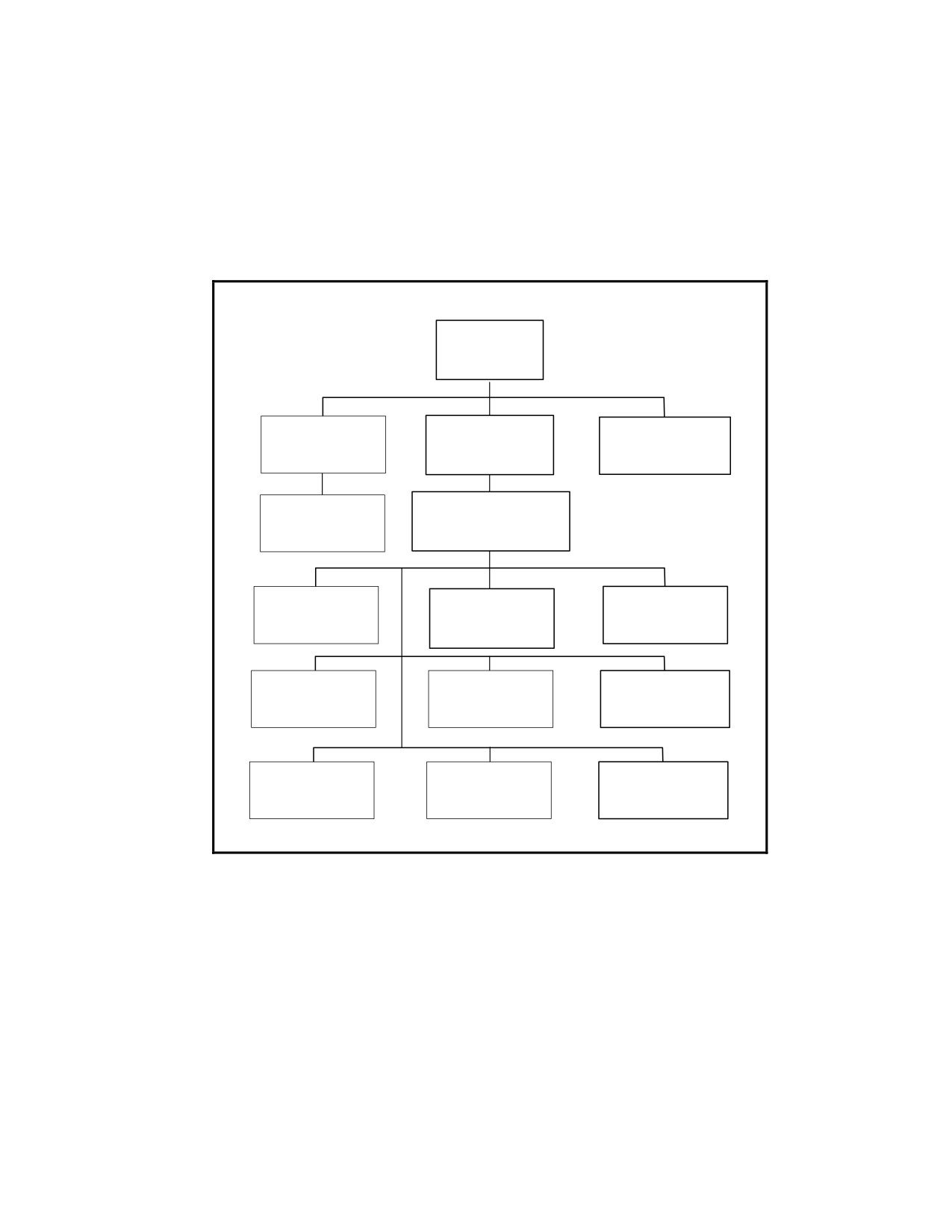
places under the ISC commander. Figure
12-3 shows a typical OSC
organization, with an example of the types of combat service support and
combat support units that might appear in an OSC ISC.
OSC
TACTICAL-
IFC
ISC
LEVEL
SUBORDINATES
ISC
ISG
HEADQUARTERS
MATERIEL
HEAVY
EQUIPMENT
MAINTENANCE
SUPPORT
TRANSPORT
BATTALION
BRIGADE
BRIGADE
CHEMICAL
TRAFFIC
SMOKE
DEFENSE
CONTROL
BATTALION
BATTALION
BRIGADE
INFORMATION
PERSONNEL
MEDICAL
WARFARE
SUPPORT
BATTALION
BRIGADE
BATTALION
Figure 12-3. Task Organization, with ISC Example
12-41. The number and type of units in the ISC and ISG will vary according
to the number and size of supported units in the OSC and its IFC,
respectively. For example, an ISC supporting an OSC composed mainly of
tank and mechanized infantry units will differ from an ISC supporting an
OSC composed mainly of infantry or motorized infantry units. When the
logistics units are no longer required for ISC or ISG functions, the primary or
area support units will revert to control of their original parent units in the
administrative force structure or otherwise will be assigned to other
operational-level commands, as appropriate.
12-10
________________________________________________________________________________Chapter 12
INTEGRATED SUPPORT GROUP
12-42. The integrated support group
(ISG) is a compilation of units
performing logistics tasks that support the IFC in a constituent or dedicated
command relationship. For organizational efficiency, various units
performing other combat support and combat service support tasks might be
grouped into the ISG, even though they may support only one of the major
units or components of the IFC.
12-43. There is no standard ISG organizational structure. The number, type,
and mix of subordinate units vary based on the operational support situation.
In essence, the ISG is tailored to the mission and the task organization of the
IFC. An ISG can have many of the same types of units as shown in Figure 12-
3 for one example of ISC subordinates, but tailored in size and functions to
support the IFC.
MATERIEL SUPPORT
12-44. The OPFOR materiel support system comprises a mix of very modern
and less modern capabilities that vary depending on the priority of the
supported units. Generally, high-priority or elite units enjoy the benefits of a
robust materiel support system that affords a higher degree of flexibility and
responsiveness to rapid changes in plans. For such units, the system may be
fully automated to track requirements and control the issue of supplies. Less
capable units (including reserve and militia forces) typically have little or no
automation support. Both types of materiel support system are based on
allocating supplies and services to units in order to accomplish mission
objectives. However, the aim of the OPFOR is to continue the upgrade of its
less capable units to a robust supply system capable of sustaining the force in
all environments.
SUPPLY
12-45. Supply includes actions to acquire, manage, receive, store, and issue
the materiel required to equip and sustain the force from deployment through
combat operations and recovery into State territory. The allocation of
supplies is based on the unit mission, supply reports, and the availability of
supplies.
SERVICES
12-46. The OPFOR concept of services includes all troops, installations, and
duty positions that perform logistics support for combat arms units. Such
services are not specific to the ground forces, but support other Armed Forces
components as well.
METHODS OF DISTRIBUTION
12-47. During peacetime, the OPFOR operates under the “pull system” of
supply. For example, units in the field may request materiel from a depot
where they must pick it up and deliver it to the field. During wartime,
however, the OPFOR operates under the forward distribution or “push
system” principle, in which the higher echelon directly supplies and services
the next-lower echelon. Supplies and services are delivered directly to
12-11
FM 7-100.1 ________________________________________________________________________________
subordinate units using the organic transportation assets of the higher
headquarters. Lower-priority units may have to rely on area support or even
supply point distribution.
12-48. The three methods by which supplying units distribute supplies to
using units are supply point distribution, unit distribution, and throughput.
In supply point distribution, the supplying unit issues supplies from a
supply point to a receiving unit. The receiving unit must go to the supply
point and use its own transportation to move supplies to where they are
needed.
12-49. In unit distribution, the supplying unit issue supplies and delivers
supplies to the receiving unit’s area in transportation assets the supplying
unit has arranged. Throughput is a method of distribution in which
shipments bypass intermediate supply points or logistics sites. Throughput
eliminates the need for double handling, uses transportation assets more
efficiently, and is more responsive to the user’s needs.
MAINTENANCE
12-50. Maintenance includes actions taken to keep materiel and equipment
in a serviceable condition, to return it to service, or to update and upgrade its
capability. Since supplies are limited, the OPFOR stresses preventive
maintenance, technical inspections, and proper operating methods to extend
the life cycle of equipment. The maintenance system is designed to repair
vehicles and equipment in the battle zone or as close to it as possible. Repair
facilities and units move near the scene of combat rather than waiting for
damaged equipment to be evacuated to them. Fixed and mobile repair units
extend repair capabilities into the battle zone and provide service to the
customer unit. During wartime, the types of repair performed at each level
depend on the situation. Generally, they are of a lesser degree than in
peacetime. The OPFOR classifies three categories of repair: routine, medium,
or capital.
12-51. Routine repairssuch as replacements, adjustments, or repair of
individual componentsrequire a short time to fix. Generally, maintenance
personnel do not disassemble major components as part of routine repair.
Medium repairs include the minor overhaul of equipment and the repair of
individual components requiring a short time to fix. Capital repairs are
conducted at depot level and involve the major overhaul and/or assembly of
equipment.
TRANSPORTATION
12-52. Transportation is a critical function that cannot be looked at in
isolation; it is the one function that ties sustainment and all other battlefield
operations together. The OPFOR envisions an environment characterized by
dynamic, nonlinear operations; wide dispersion of forces; the need to
concentrate rapidly for battle and disperse quickly; and the need to conduct a
wide range of operations simultaneously.
12-53. Military logistics planners base their estimates on the use of all
movement resources available. These estimates include tactical combat
12-12
________________________________________________________________________________Chapter 12
vehicles as well as civilian transportation assets mobilized to move supplies,
equipment, and personnel. For example, during mobilization, civilian
trucking and bus companies may be organized as militia truck units to
provide transportation of cargo and personnel within the State or occupied
territory. The mobility of logistics units must match that of the supported
force. If the logistics support units fail to achieve this, they may jeopardize
the overall success of the operation. Traffic management at the operational
level is the responsibility of the military transportation center (MTC). The
MTC is subordinate to the OSC chief of logistics and is responsible for
managing OSC transportation requirements, using military and civilian
resources.
MOVEMENT PRINCIPLES
12-54. The principles of movement apply to all military transportation
services and remain constant throughout peace and war. Additionally, they
apply regardless of the planning level. During wartime, civilian personnel,
transportation assets (including farm animals, vehicles, aircraft, and water
vessels), and materiel-handling equipment are mobilized to support the war
effort.
Centralized Planning and Decentralized Execution
12-55. Movement control is centralized at the highest level at which
commanders charged with providing total logistics support and monitoring
the transportation system and infrastructure can exercise it. This requires a
focal point for transportation movement planning and resource allocation at
all levels. That focal point, whether an individual (the resources officer or
chief of logistics) or unit, must be constantly aware of requirements and
capabilities. Decentralized execution enhances the flexibility of lower-level
commanders to meet local requirements and to rapidly reprioritize support.
Regulated Movement
12-56. All movement is regulated according to command priorities.
Movements are not validated, approved, or initiated if any part of the
transportation system cannot meet the requirement. Regulating
transportation assets and LOCs is required to prevent congestion, confusion,
and conflict of movements. Unregulated use of the transportation system can
severely hamper the movement of critical cargo and personnel supporting the
operation or the overall strategic campaign. Therefore, traffic in the AOR is
programmed to provide fluid movement throughout the transportation
network.
12-57. The OPFOR employs a system of measures organized and executed for
the purpose of ensuring convoy and traffic regulation as well as maintaining
general order in areas where troops are deployed. A traffic control brigade is
responsible for traffic control and law enforcement at the operational level. It
is responsible for directing military traffic along convoy routes and ensuring
that the proper convoy speed and spacing are maintained. The State’s
Internal Security Forces support movement control through protection of
supply routes of movement in the State’s homeland and of key transportation
nodes and centers.
12-13
FM 7-100.1 ________________________________________________________________________________
12-58. A movement program is a directive that allocates the available
transport mode capability to satisfy the movement requirements in
accordance with the commander’s priorities. The program normally contains
detailed information concerning origins, destinations, weights, and cube of
cargo, and/or types and number of personnel to be moved.
Fluid and Flexible Movement
12-59. The transportation system is designed to provide an uninterrupted
flow of traffic that adjusts rapidly to changing situations. It is flexible enough
to meet the changing priorities of a fluid battlefield and reallocate resources
as necessary. Adjustments must be made to meet the variations in combat
intensity. For example, when units are in the offense, the transportation
system expands to maintain the tempo of the operation. Conversely, when
units are in the defense, the system is contracted, the mode changes, and
differing cargo priorities may be necessary. Changes in the operational
environment necessitate adjustments to operate in varying conditions and
operational and/or tactical situations that may dictate the types of convoys
and controls established for movement.
12-60. The availability and use of road and rail networks, airfields, inland
waterways, ports, and beaches not only allow the transportation system to
meet operational and tactical changes, but also provide redundancy within
the overall transportation network. For example, if a portion of a road
network is destroyed or rendered unusable, the mode could change to rail or
inland waterway.
Maximum Use of Carrying Capacity
12-61. The principle of making maximum use of carrying capacity involves
more than just loading each transportation asset to its optimum carrying
capacity. Transport capability that is not used in one day cannot be stored to
provide an increase in capability for subsequent days. Similarly, a situation
allowing fully-loaded transport to sit idle is just as much a loss of carrying
capacity as is a partially-loaded vehicle moving through the system. While
allowing for sufficient equipment, maintenance, and personnel rest, planners
should keep transportation assets loaded and moving as much as the
situation permits.
TRANSPORTATION MODES
12-62. Transportation operations may include motor vehicles, rail, aircraft,
and waterway (coastal and inland) transport vessels. The OPFOR generally
uses motor vehicles to move large quantities of general cargo, petroleum
products, and personnel throughout the AOR. However, waterway transport
vessels may be used to move large quantities of supplies and personnel along
coastal or inland waterways to remote areas that are not accessible to motor
vehicles.
12-63. As requirements for transportation fluctuate, each mode must be
properly used to accomplish the commander’s objective. For example, air
transport is employed if reaction speed is the priority. Motor transport is
considered the most flexible surface mode. It provides door-to-door delivery
service and an interface with all other transportation modes.
12-14
________________________________________________________________________________Chapter 12
12-64. Motor transport becomes essential as supplies are moved forward from
railheads, field depots, or supply points to combat units. After the relocation
of supplies from national-level depots, the OPFOR distributes them within
OSCs primarily by truck. Within an OSC, the heaviest truck transport
requirements are primarily above the division level.2
SUPPLY AND EVACUATION ROUTES
12-65. Within their AORs, OSCs establish and improve supply and
evacuation routes, using the network of military roads, and maintain them in
passable condition. Staff responsibility for this is shared by the OSC
resources officer and the chief of infrastructure management at that level.
Engineer units at OSC level may form road and bridge construction and
repair groups to prepare and maintain these and other movement routes. At
national level, the Strategic Integration Directorate (SID) also organizes civil
engineering and construction efforts required to sustain military actions.
During wartime, civil engineering units from the Ministry of the Interior, as
directed by the SID, may be employed at the national and/or OSC levels.
Employed on an area basis, these units are responsible for the upkeep of
supply and evacuation routes and for repair of battle-damaged roads and
bridges. The OSC chief of infrastructure management must coordinate and
prioritize the route construction and maintenance functions of both civil and
combat engineers within his AOR.
PERSONNEL
12-66. The MOD establishes policy, assigns responsibilities, and prescribes
procedures for personnel readiness issues as they apply to all members and
components (standing forces, reserve, and militia) of the armed services. The
Manpower and Readiness Department under the MOD Chief of Logistics is
responsible for the administration and management of the personnel support
system.
12-67. During peacetime, the State may be unable to fully man the military
with critical professional and technical specialists to maintain an elaborate
support structure. Thus, the OPFOR may experience a shortage of doctors,
engineers, computer programmers, electronic technicians, and other support
professionals. Once the country has been mobilized, however, these critical
professionals are detailed into the military structure to augment existing
professionals.
12-68. The State considers people as one of the assets most critical to the
success of any military operation. Thorough planning and efficient personnel
support directly influence mission readiness. Therefore, the MOD requires
each of the armed services to resource personnel requirements in a timely
manner to support operational requirements. The State views “personnel
support” as all activities associated with assignment of personnel against
authorized billets and validated individual augmentation requirements, as
well as those administrative activities associated with personnel programs
within a command.
2 Throughout this chapter, references to division- and brigade-level logistics support may also apply to a division tac-
tical group (DTG) and brigade tactical group (BTG), unless specifically stated otherwise.
12-15
FM 7-100.1 ________________________________________________________________________________
PERSONNEL SUPPORT
12-69. Units may maintain strength by piecemeal replacement of casualties
during combat, particularly when lightly wounded personnel and damaged
equipment can return to parent units quickly. Once casualties are sufficient
to threaten total loss of combat effectiveness, the unit withdraws from
contact and reconstitutes. Timely replacement of ineffective units is vital to
maintaining momentum. The commander may choose to withdraw heavily
attritted units and consolidate them to form a smaller number of combat-
effective units.
12-70. The OSC chief of administration is responsible for all personnel
actions and transactions in the command. The personnel support battalion
provides the personnel to operate the personnel operations center. That
center’s major functions include providing personnel and administrative
support, finance support, and legal support.
REPLACEMENT
12-71. Replacement operations are based on unit strength reports and
include the coordinated support and delivery of replacements and soldiers
returning from medical facilities. The unit strength report is used to assess a
unit’s combat power, plan for future operations, and assign replacements on
the battlefield.
Individual Replacements
12-72. The OPFOR can use the system of individual replacements in both
peacetime and wartime. The sources of replacement personnel are school
graduates, reserve assignments, medical returnees, and normal assignments.
Incremental Replacements
12-73. The OPFOR may incrementally replace entire small units such as
weapons crews, squads, and platoons. Replacements can be obtained from
training units or reserve forces.
Composite Unit Formations
12-74. Composite units may be formed from other units reduced by combat
operations. Composite units may be constituted up to OSC level.
Whole-Unit Replacement
12-75. The OPFOR uses whole-unit replacement when massive losses occur
as a result of a combat action. Company-level and above units are brought
forward from reserve forces to replace combat forces rendered ineffective.
Replacement Training
12-76. OPFOR planners realize that personnel replacement requirements
may necessitate any of the aforementioned procedures. Individual and unit
replacement exercises are held semiannually to maintain established
proficiency standards for personnel units. During these and other training
exercises, troops are moved by various modes of transportation such as motor
vehicles, waterway, aircraft, or rail.
12-16

________________________________________________________________________________Chapter 12
MEDICAL SUPPORT
12-77. The basic principle of combat medical support is multistage
evacuation with minimum treatment by medical personnel at each unit level.
They treat the lightly wounded who can return to combat and those
casualties who would not survive further evacuation without immediate
medical attention.
12-78. The OPFOR divides the range of medical treatment into three
categories. The first category of procedures includes only mandatory
lifesaving measures. The second category includes procedures to prevent
severe complications of wounds or injuries. The final category of treatment
includes procedures accomplished only when there is a low casualty load and
reduced enemy activity.
12-79. In anticipation of an overtaxed combat medical support system,
OPFOR doctrine emphasizes the importance of self-help and mutual aid
among individual soldiers. This concept extends beyond the battlefield to
casualty collection points and unit aid stations. Self-help and mutual aid
reduces the demands made on medical personnel, particularly when there is
a sudden and massive influx of casualties. Each soldier is required to attend
a first-aid training session.
MEDICAL LOGISTICS
12-80. The medical logistics system operates on a “pull system.” Personnel in
the field request medical materiel
(including repair parts for medical
equipment) from a medical depot where it must be picked up and delivered to
the field. Normally, medical supplies are transported from the support zone
to the battle zone on cargo-carrying transport vehicles, water vessels, or
aircraft. However, ground ambulances returning to the battle zone may assist
in transporting medical supplies. A medical equipment maintenance unit at
the medical depot provides all medical equipment maintenance.
Level
Available Care
Platoon
Platoon medic (corpsman) provides basic first aid.
Company
Company medic (paramedic) provides advanced first aid, pain relief, intravenous fluids,
and treatment of most common illnesses.
Battalion
Medical assistant (physician’s assistant) provides limited medical intervention, minor sur-
gery, and treatment of most common illnesses; limited inpatient capability.
Brigade, BTG,
Medical officers (physicians) provide trauma stabilization and minor surgical intervention.
and Division
DTG or Higher
A field hospital provides major surgery and extended care.
OSC or Theater
Central Military Hospital and major civilian hospitals provide definitive care in fixed facili-
Support Zone
ties.
Figure 12-4. Levels of Medical Care
12-17
FM 7-100.1 ________________________________________________________________________________
CASUALTY HANDLING
12-81. The OPFOR has shown success in handling combat casualties. This
success stems from emphasis placed on trauma training and close
coordination with the civilian medical sector. Evacuation is based on a
higher-to-lower method. The next-higher echelon provides transportation for
casualties. Each level has specific responsibilities for the care of the sick and
wounded. (See Figure 12-4.) Besides treating the wounded, medical personnel
handle virtually all of their own administration, especially at lower levels. As
casualties move through the combat evacuation system, medical personnel at
each level make effective use of medical facilities by repeated sorting of the
wounded (triage). Helicopters are used for all military and civilian search and
rescue missions, medical evacuations, and domestic disaster relief flights.
During wartime situations, most casualties arrive at a hospital within 6 to 12
hours after being wounded. The evacuation time is reduced to 2 hours during
peacetime.
MEDICAL FACILITIES
12-82. A field hospital is the first level in the evacuation system capable of
conducting major surgery and giving extended care. It is mobile and capable
of deployment near the battle zone. It constitutes the largest and most
extensive military facility with this capability.
12-83. The best medical facility is the Central Army Hospital. During
peacetime, military personnel receive treatment at this hospital, which also
is designated as one of the emergency medical care facilities for foreign
diplomats, their families, and tourists. The State also has designated some of
its major university hospitals as such emergency medical care facilities. This
ensures consistent high-quality medical staffing, care and treatment. A
majority of medical facilities or clinics in the outlying areas has sufficient
numbers of trained personnel, supplies, and reliable electric power and
water. The facilities also contain high-quality, sophisticated, domestic and
imported medical equipment. The pharmacies are stocked with high-quality,
domestic, and foreign-produced pharmaceuticals. During wartime conditions,
military personnel are treated at all of the major civilian hospitals in addition
to field hospitals.
NBC TREATMENT
12-84. Treating nuclear, biological, and chemical
(NBC) casualties is a
standard OPFOR trauma protocol. The NBC medical plan is based on three
assumptions:
• Mass casualties will occur.
• Casualties will be similar to those that medical personnel have been
trained to treat.
• Medical personnel are able to treat the casualties in a decontaminated
environment.
The Central Army Hospital can be converted into a chemical decontamina-
tion center within 2 to 6 hours. Most of the remaining major hospitals require
up to 30 days to convert to a decontamination center.
12-18
________________________________________________________________________________Chapter 12
BLOOD MANAGEMENT
12-85. The Ministry of Health maintains a Blood Management Office to
oversee the collection, processing, storage, and distribution of blood
(to
include liquid blood and blood components) to alleviate the effects of a
natural disaster or war. Blood management services are provided to support
both civilian and military establishments. The main source of blood to
support wartime casualty requirements comes from the collection and
processing of blood from the civilian populace during peacetime. The blood is
generally stored in pre-positioned underground structures throughout the
country.
SUPPORT OF COMBAT OPERATIONS
12-86. During both offense and defense, OPFOR logistics units operate from
locations that are protected, concealed, and serviced by good road networks.
Commanders emphasize that logistics units make maximum use of urban
areas to conduct logistics operations. The dispersion of logistics sites is
consistent with support requirements, control, and local security.
12-87. Logisticians must be continuously informed of operation plans and
probable changes to those plans. They coordinate logistics preparations with
deception plans to avoid giving away the element of surprise. Commanders
emphasize passive security measures during the sustainment of combat
operations. Logistics unit commanders anticipate that at least 50 percent or
more of their work will be done in darkness or under other limited visibility
conditions. Therefore, noise and light discipline is a necessity when operating
under these conditions.
OFFENSE
12-88. The logistics objective in supporting offensive operations is to
maintain the momentum of operations by supporting in the battle zone or as
close to it as possible. Both the battle zone and the support zone can move as
the offensive operation progresses.
12-89. Planners must consider the nature of offensive operations as it affects
logistics activities. For example, high fuel consumption may dictate making
provisions to position substantial quantities in or near the battle zone
without signaling the OPFOR’s intention to attack to the enemy. Responsive
support is critical and is made more difficult by lengthening of supply lines
and by critical requirements for user resupply vehicles to stay close to their
respective units. Planning, coordination, communication, and above all
flexibility are key factors to consider. Therefore, planners develop logistics
plans flexible enough to meet the changing priorities of a fluid battlefield.
12-90. In considering the attack, materiel support units ensure that all
support equipment is ready and that supplies are best located for support.
They also ensure that sufficient transportation is available to support
maneuver and logistics plans. Normally, ammunition and fuel are the most
important supplies in the offense. However, consideration must be given to
all supplies, as well as other support procedures, specifically medical and
maintenance.
12-19