FM 5-277 BAILEY BRIDGE (May 1986) - page 4
FM 5-277
89
90
FM 5-277
REINFORCING BRIDGE AND CONVERTING BRIDGE
CONVERTING SINGLE-SINGLE
PROCEDURE
TO DOUBLE-SINGLE
The class of existing single- and double-truss
TO
convert a
single-single
bridge to a
double-
5
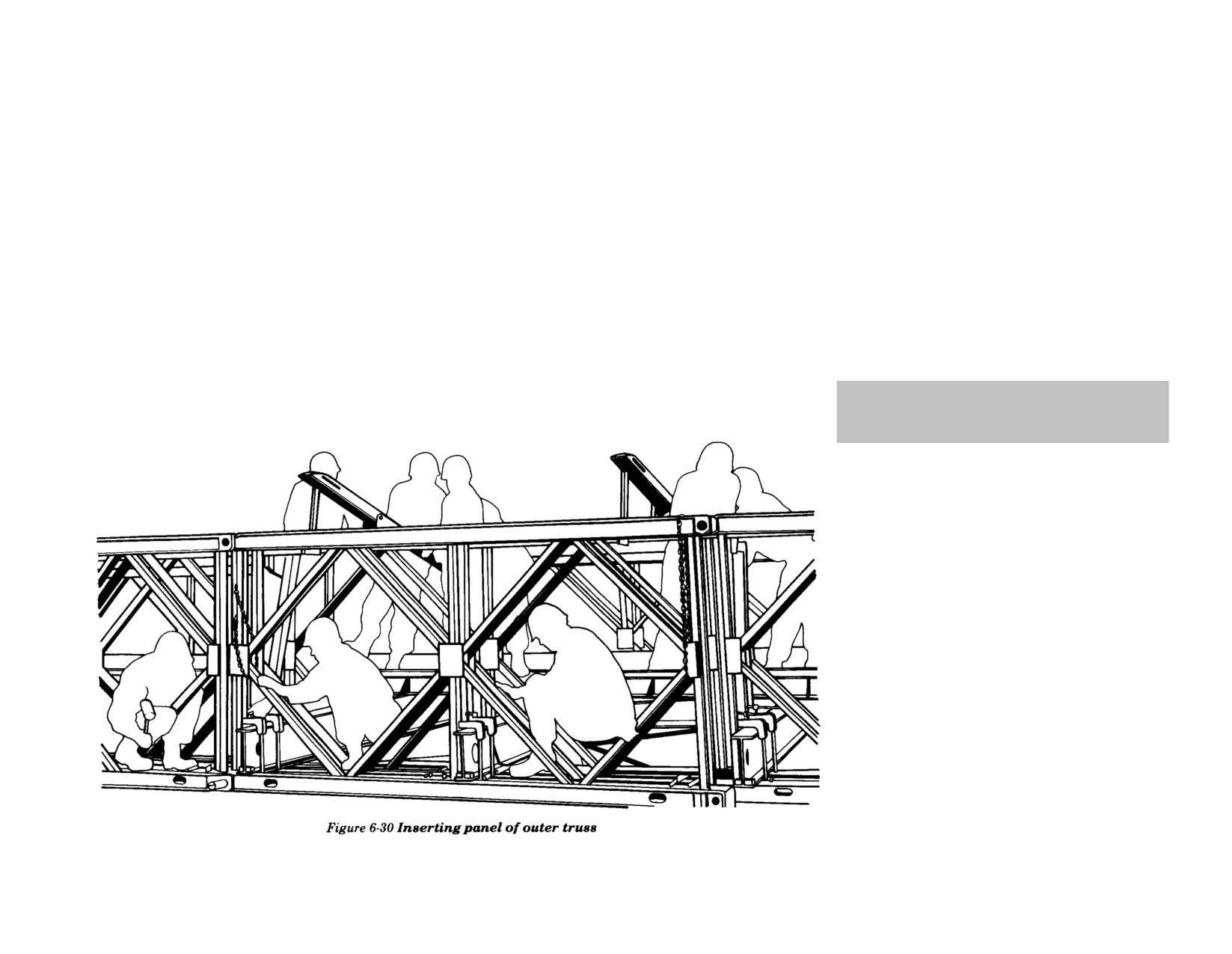
Position second panel, insert transom
bridges can be increased by adding extra
single
bridge, proceed as follows:
clamps, and tighten. Insert panel pins
trusses. Construction starts from the center
(point inward) first in bottom and then in
of the bridge, and panels are added toward
1
Remove footwalk (if any).
top of panel.
each end. Panel levers are used to aid in
positioning the extra panels (Figure 6-30).
2
Position first panel at center of bridge.
6
Connect outer truss to inner truss with
bracing frames bolted to top chord. Con-
For all assemblies over class 70, the deck
3
Lower panel over side with chain or rope
tinue adding panels toward each end of
system must be reinforced by increasing the
slings at ends of panel and position with
bridge.
number of transoms per bay from two to four
levers (Figure 6-30).
and by adding a 3-inch (7.6 centimeters)
7
Jack bridge off bearings (ramps need not
longitudinal wear tread. These transoms can
4 Insert transom clamps and tighten.
be removed) and install end posts.
be threaded a bay at a time from inside the
Tightening transom clamps helps reduce
Caution:
At the end of bridge where
bridge.
effect of sag.
the transom is in the end post, panel
and post must be added as one unit.
8 Position bearings for double-truss
assembly, jack bridge down on bearings,
and replace footwalks (if any).
9 Check to ensure that the existing grillage
is strong enough to carry the reinforced
class.
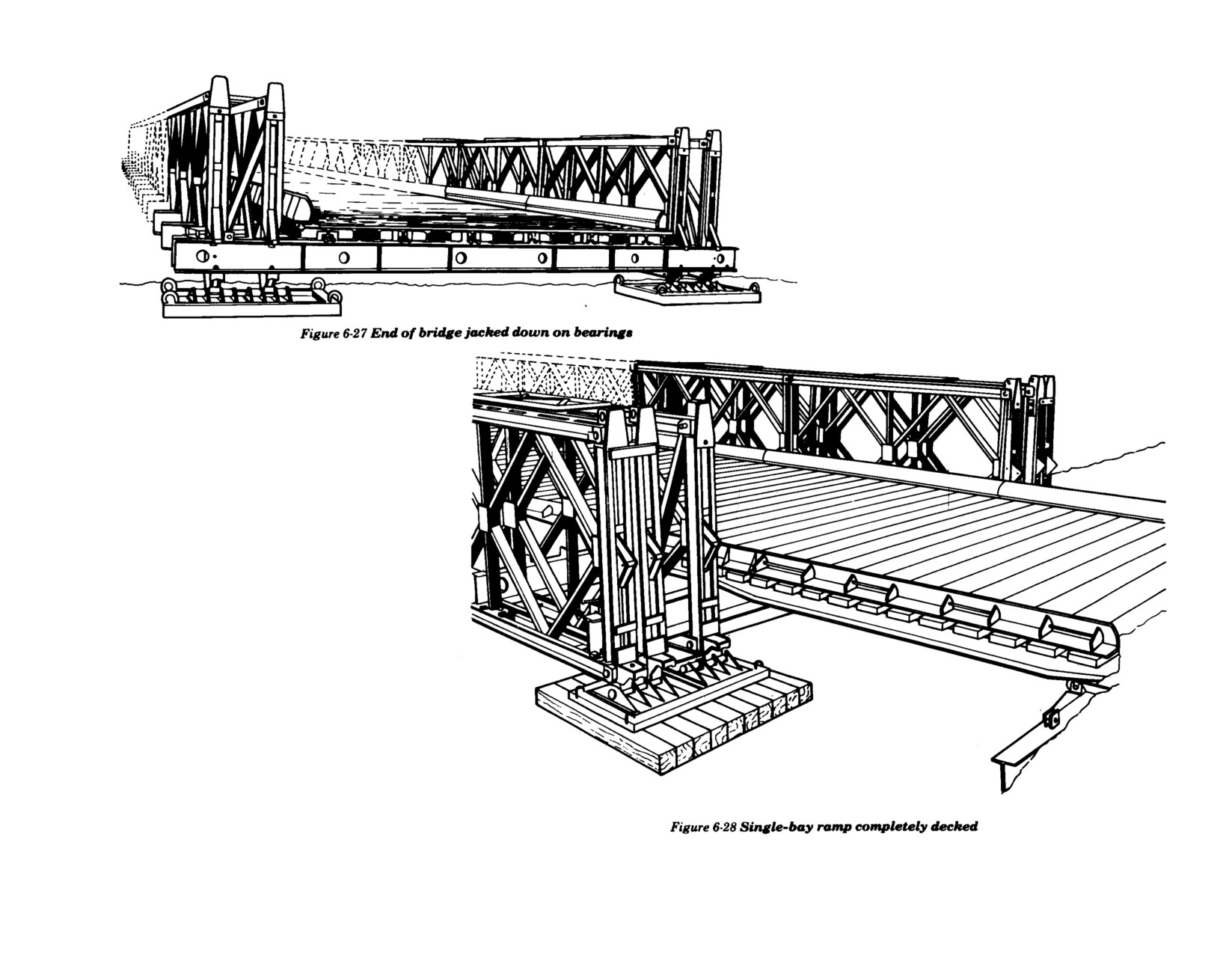
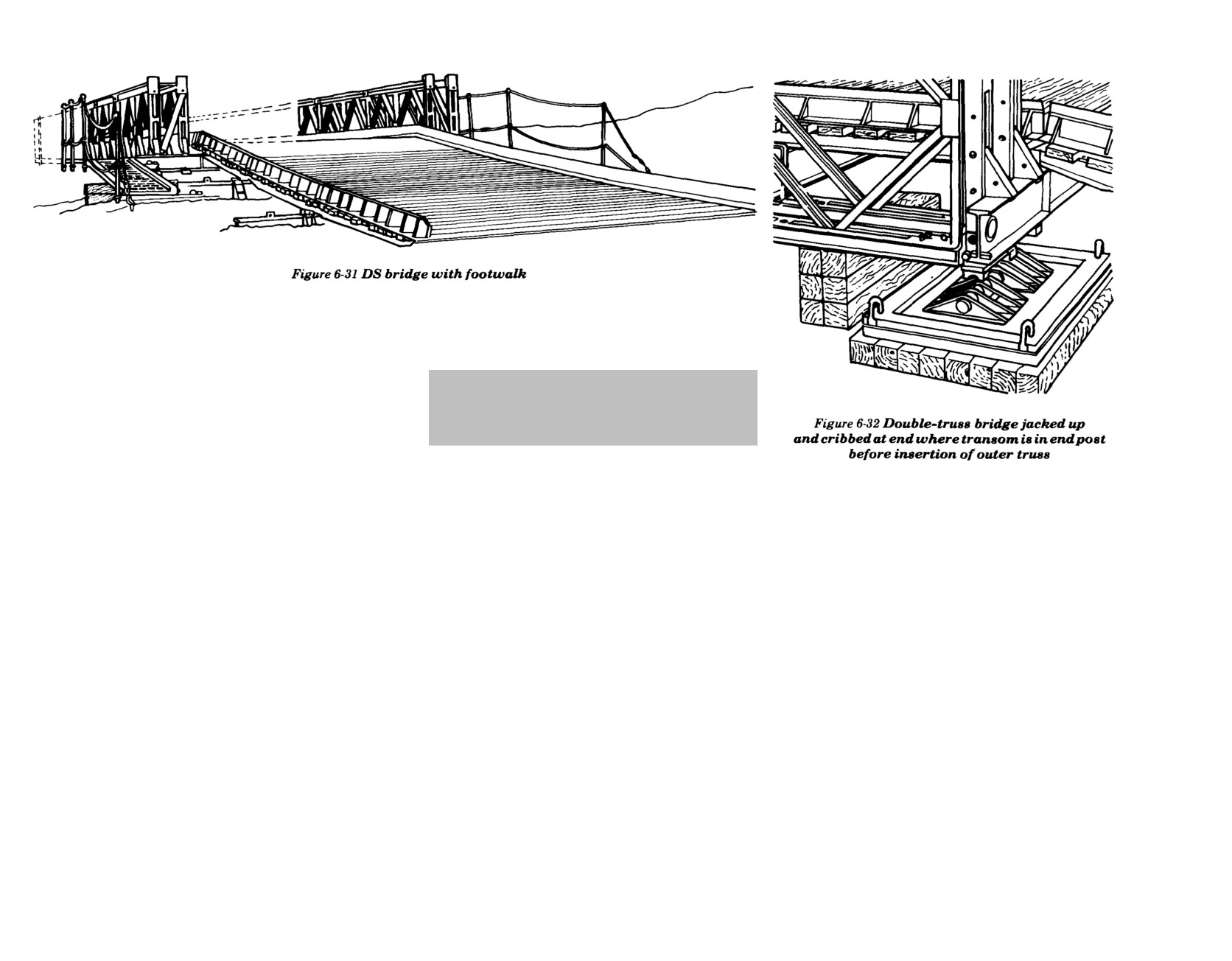
Figure 6-31 (page 92) shows a complete
double-single
bridge with footwalk.
91
FM 5-277
CONVERTING DOUBLE-SINGLE
4
Install end panel and end post by raising
TO TRIPLE-SINGLE
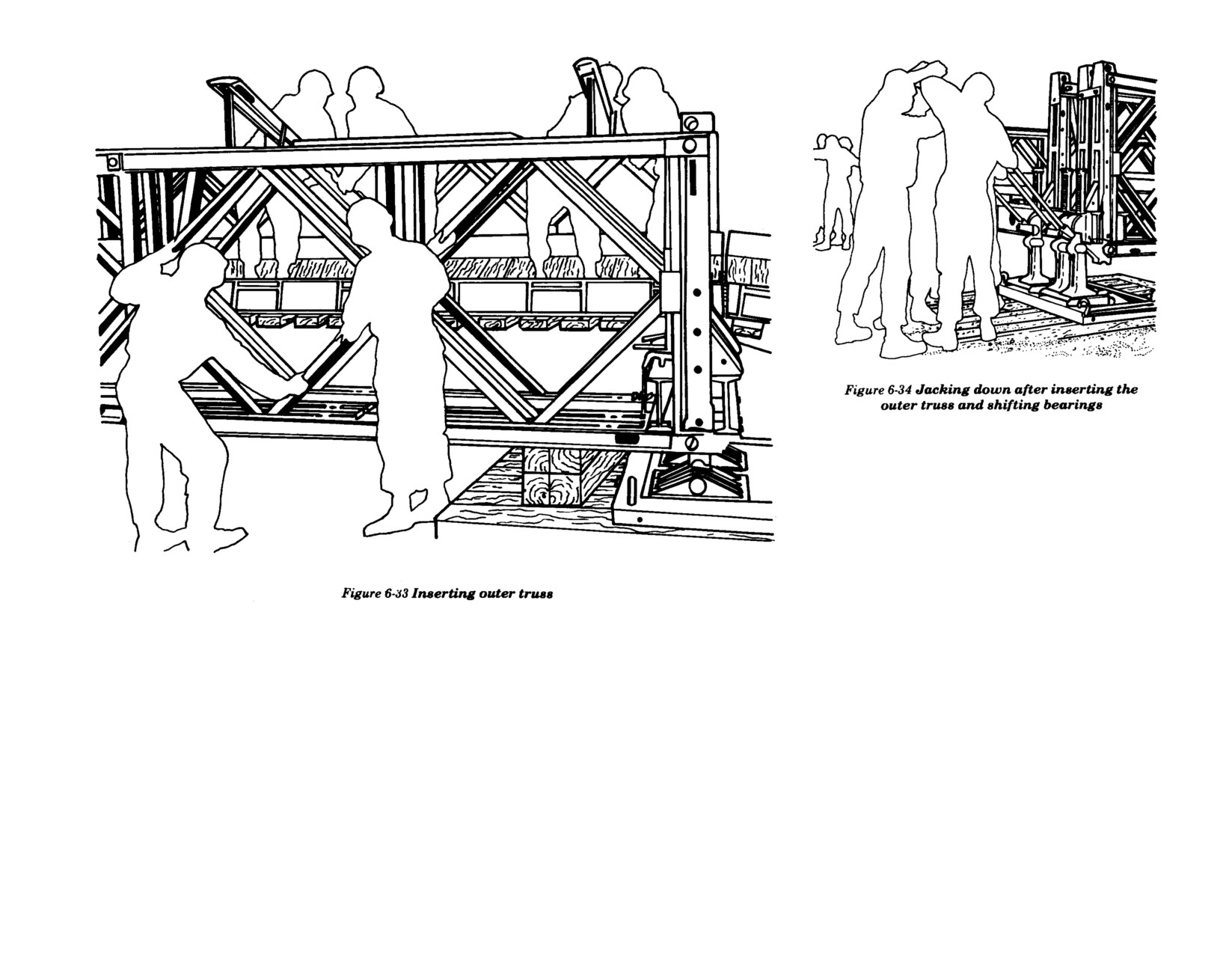
into position with levers (Figure 6-33).
To convert
double-single
bridge to a
triple-
single
bridge, proceed as follows:
Caution:
At the end of the bridge
where the transom is in the end post,
the panel and post must be added as
one unit.
1
Use same procedure as for converting
through insertion of panel pins in top and
bottom of panel.
5
Insert panel pins, point inward, slot
horizontal. Add tie plates.
2
Connect outer truss to middle truss with
tie plates bolted to top raker holes in the
6
Shift bearings for double-truss assembly
same upright of successive panels
to bearings for triple-truss assembly. Jack
(Figure 6-20). Continue adding panels
down bridge on bearings (Figure 6-34).
toward each end of bridge.
7
Replace footwalk if needed.
3 Jack bridge off bearing (ramps need not
be removed) and crib under first and
8 Check to ensure that the existing grillage
second truss (Figure 6-32).
is strong enough to carry the reinforced
class.
Note:
Cribbing must not extend out be-
yond second truss.
92
FM 5-277
93
FM 5-277
CHAPTER 7
ASSEMBLY OF DOUBLE-STORY BRIDGES
THE DOUBLE-DOUBLE BRIDGE 94
THE TRIPLE-DOUBLE BRIDGE 97
LAUNCHING AND JACKING DOWN 98
REINFORCING BRIDGE AND CONVERTING BRIDGE 99
Methods of assembly for double-story bridges
possible to assemble the second story during
assembly. For long heavy bridges, it maybe
are similar to those used for single-story
bridge assembly or after the bridge has been
necessary to use trucks or a bulldozer. The
bridges. The second-story panels, however,
entirely launched. It is preferable, however,
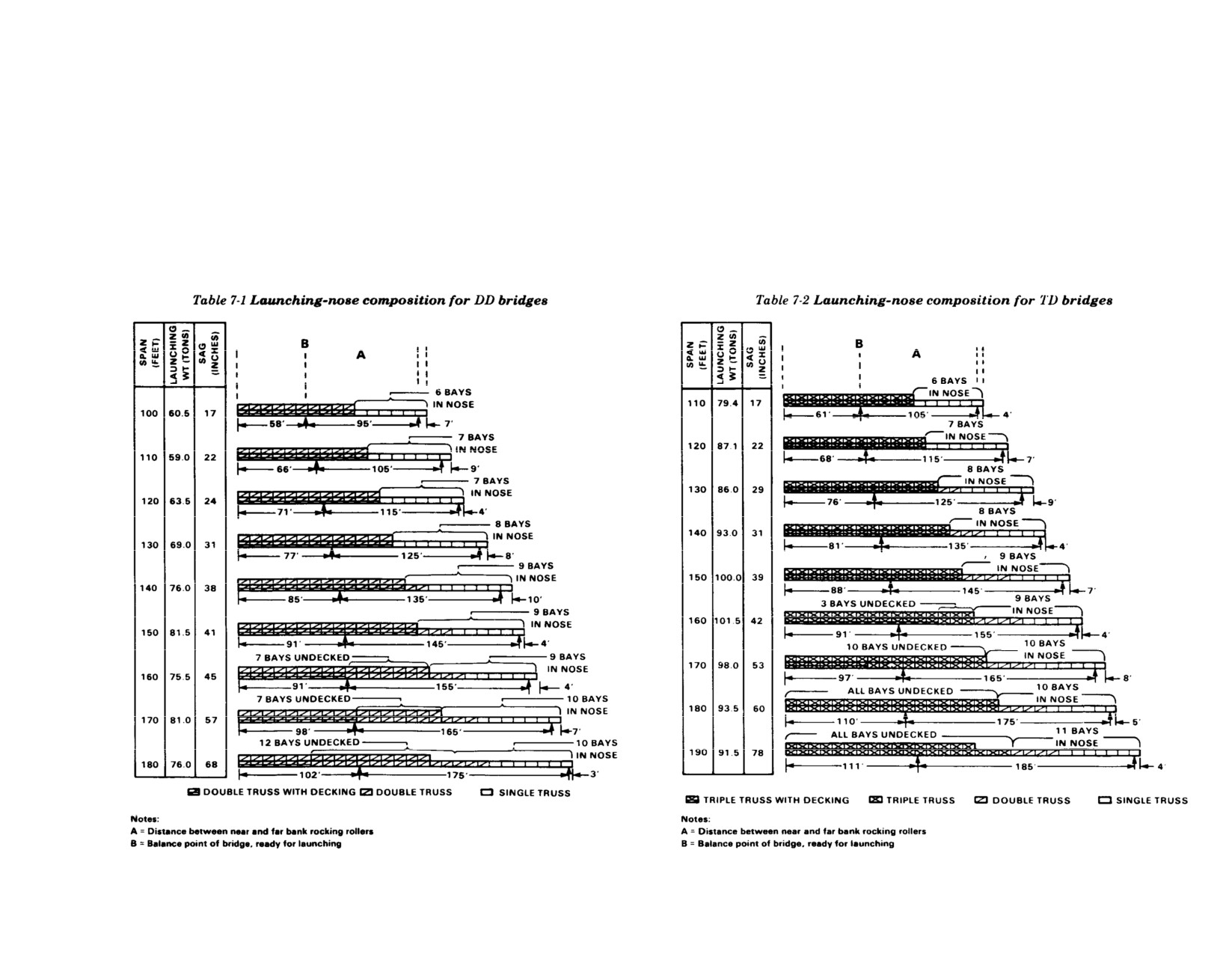
composition of the launching nose for the
can be hand carried from trucks or other
to assemble the entire bridge before pushing
various combinations of spans and truss
platforms. Truck-mounted cranes, 5-ton
it across the gap. The same methods of
types is given in Tables 7-1 and 7-2. The
wreckers, or gin poles can also be used. It is
launching are used as for single-story
tables must be followed exactly.
THE DOUBLE-DOUBLE BRIDGE
FIRST BAY OF BRIDGE
Panels must be loaded on trucks to allow
e Tighten chord bolts and bracing frame
When the nose is completed, proceed with the
standing room in the truck for the working
bolts.
first bay of the bridge as follows:
parties. The second story is assembled as
follows:
f When footwalks are not used and trucks
1
Assemble three bays of double-single
cannot be maneuvered alongside the
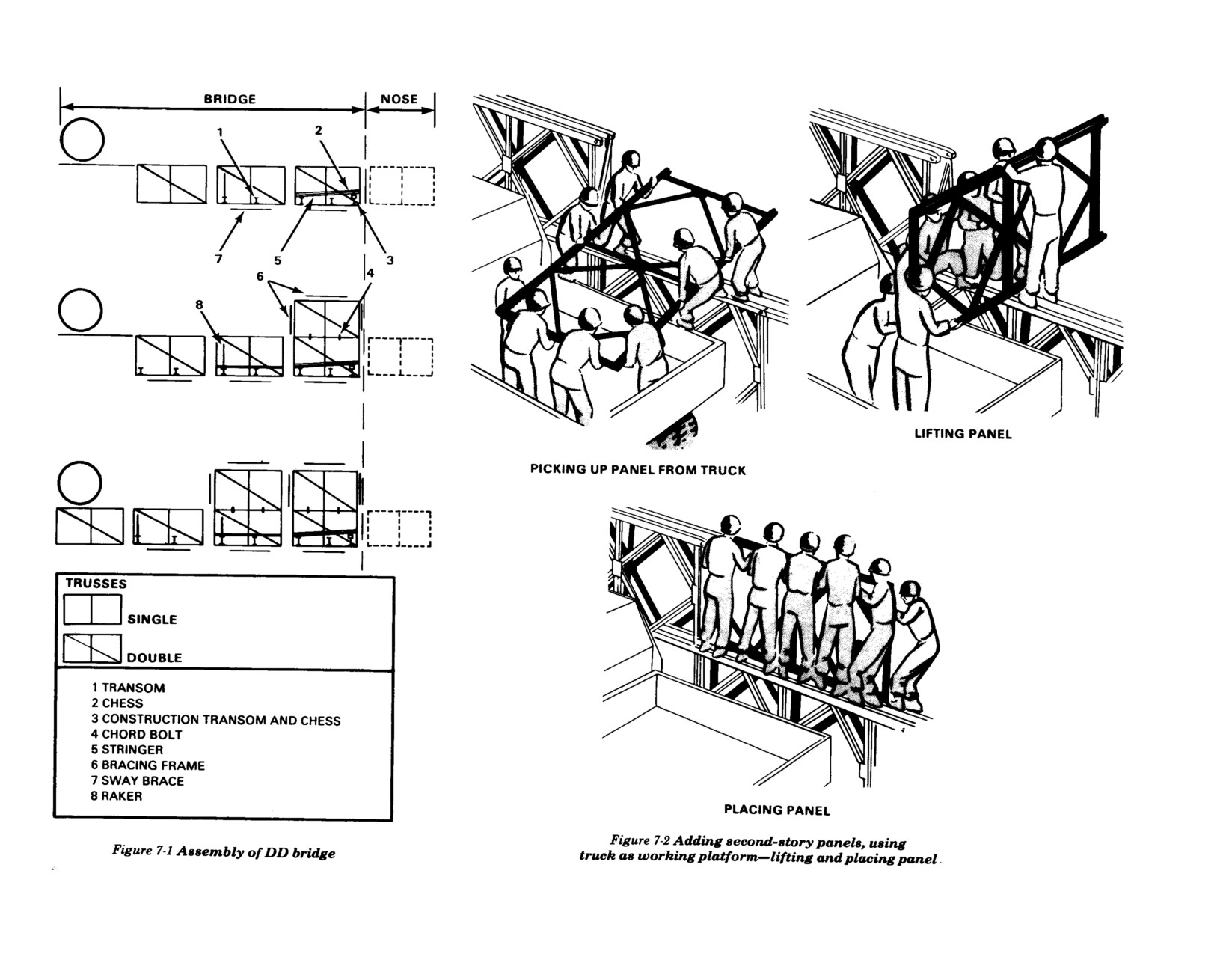
bridge as shown in Figure 7-1 (page 96)
a
Lift panel from truck at side of bridge.
bridge, second-story panels can be
and as described in Chapter 6.
Place flat on top chord of bridge. Slide
placed from a temporary deck inside
panel in toward center of bridge.
the bridge or by the use of gin poles.
2 Begin double-story assembly in the first
bay of bridge with a separate working
b
Lift panel upright. Pivot so it is parallel
REMAINDER OF BRIDGE
party (Figure 7-1). Continue bottom-story
to existing truss. Position and pin
The remainder of the bridge is built the same
assembly at the same time, using the
panel. Insert chord bolts, but do not
as the first bay except that bracing frames
procedure for the single-story bridge. The
tighten them.
are positioned only on the rear verticals and
second story always lags by two bays.
top chord of the second story (Figure 7-1).
Use an erection platform when placing
c
Repeat process with panels on outer
When enough bays of bridge have been built
second-story panels. Footwalks can be
truss.
to counterbalance the nose, move the bridge
used as a working platform or panels can
forward so the first bay is over the rocking
be hand carried from trucks maneuvered
d
Position bracing frames on front and
rollers. Movement will not be necessary again
alongside the bridge (Figure 7-2, page 96).
rear verticals and on top chord.
during assembly unless the overhang at the
94
This change supersedes page 95.
FM 5-277
tail causes excessive sag. When adding panels
from outside the bridge, place inner panels
first with panel pins inserted from the outside.
Then place outer truss panels with pins in-
serted from the outside. When adding panels
from inside the bridge, place the outer panels
first and insert all pins from the inside.
9 5
FM 5-277
96
FM 5-277
THE TRIPLE-DOUBLE BRIDGE
METHOD OF ASSEMBLY
The triple-truss, double-story assembly
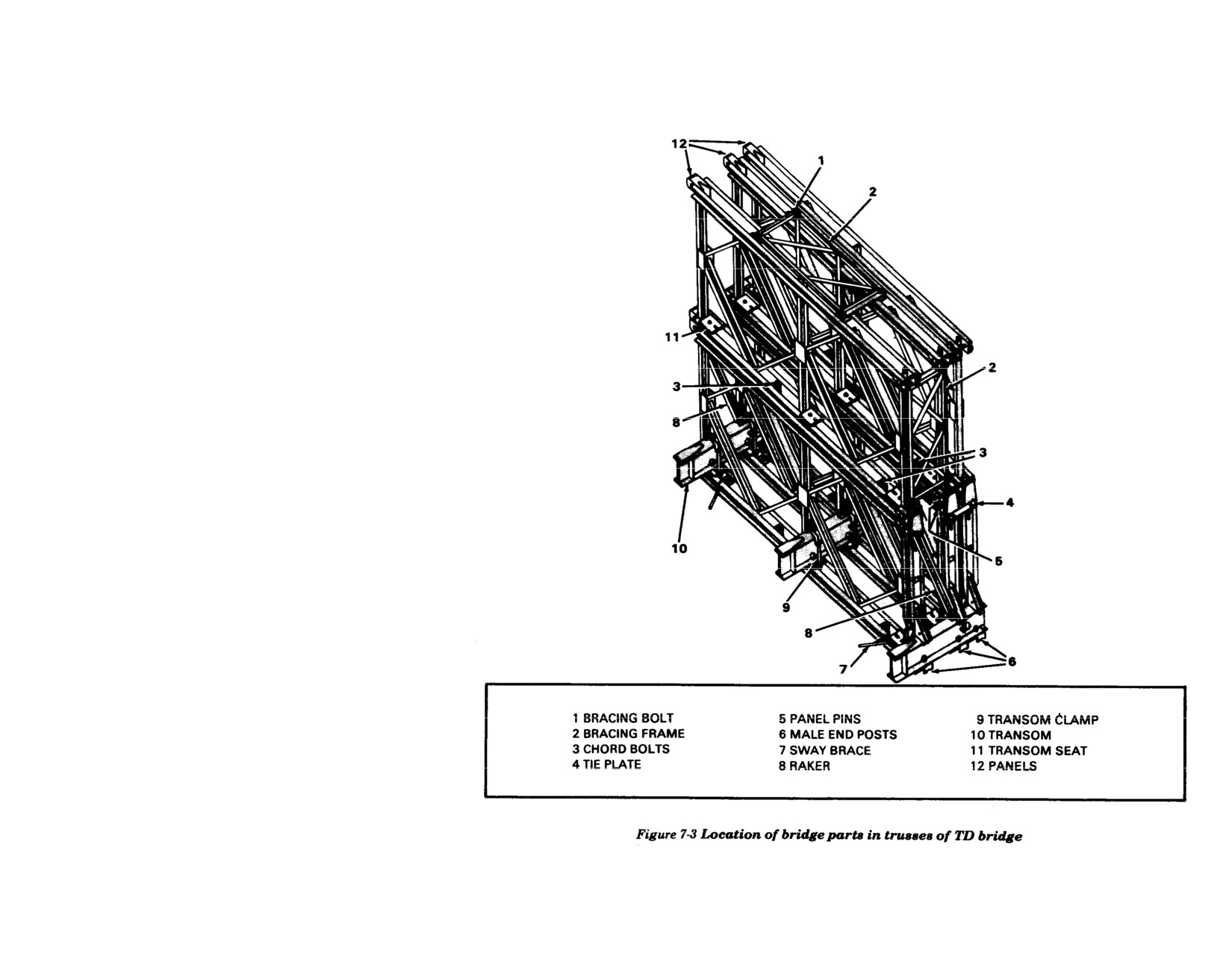
(Figure 7-3) is essentially the same as double
truss, double-story assembly. With triple-truss
assembly, however, the outer truss in both
the lower and second story must lag by one
bay to allow insertion of the panel pins in the
middle truss when panels are added from
outside the bridge. When second-story panels
are added from inside the bridge, the inner
and middle trusses must lag by one bay to
allow insertion of the panel pins in the outer
truss.
LAUNCHING NOSE
The composition of the launching nose is the
same as that for the
double-double
bridge.
For the length and assembly of nose required
for various spans, see Table 7-2.
FIRST BAY OF BRIDGE
When assembly of the nose is completed,
proceed with the first bay of the bridge as
follows:
1
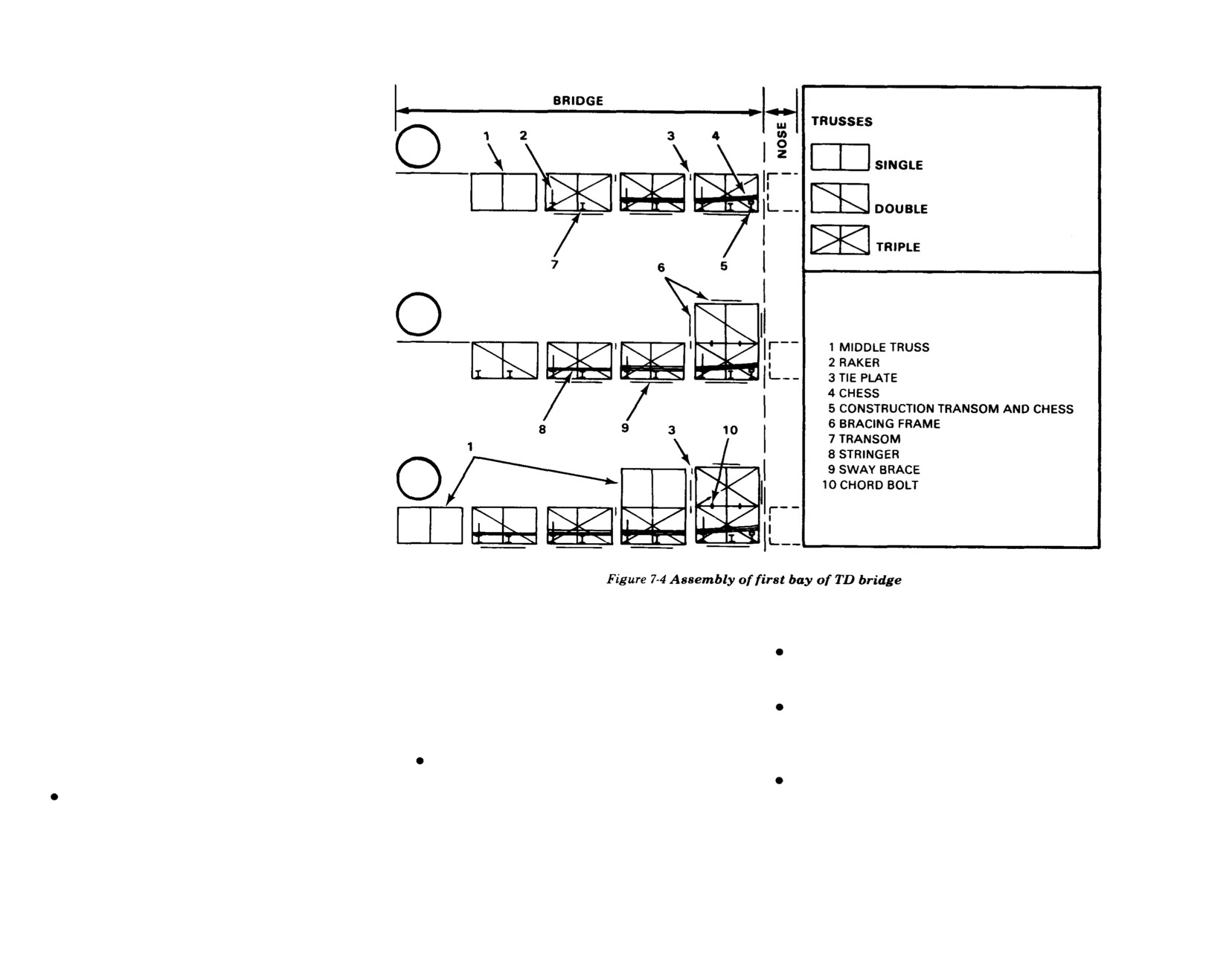
Assemble four bays of single-story bridge
as shown in Figure 7-4 (page 98) and
described in Chapter 6.
2
Add double-story assembly using the same
assembly method as for the
double-double
bridge (Figure 7-1).
3 Position bracing frames on the front and
rear verticals and on the top chord of the
first bay of bridge before the chord bolts
are tightened.
97
FM 5-277
This change supersedes page 98.
REMAINDER OF BRIDGE
Assemble the remainder of the bridge the
same as the first bay, but position bracing
frames only on the rear verticals and top
chords of the second story. Connect outer
truss to middle truss with tie plates bolted to
the top raker holes in the forward panel
uprights of both stories. See Chapter 4 for
ramp construction and Chapter 9 for traffic
control.
LAUNCHING AND JACKING DOWN
LAUNCHING
agonals. Apply it against the end posts,
Rig a line to control lateral movement of
Launching of double-story bridges normally
or a transom at the junction of the diag-
the bridge.
begins after the assembly of the entire bridge.
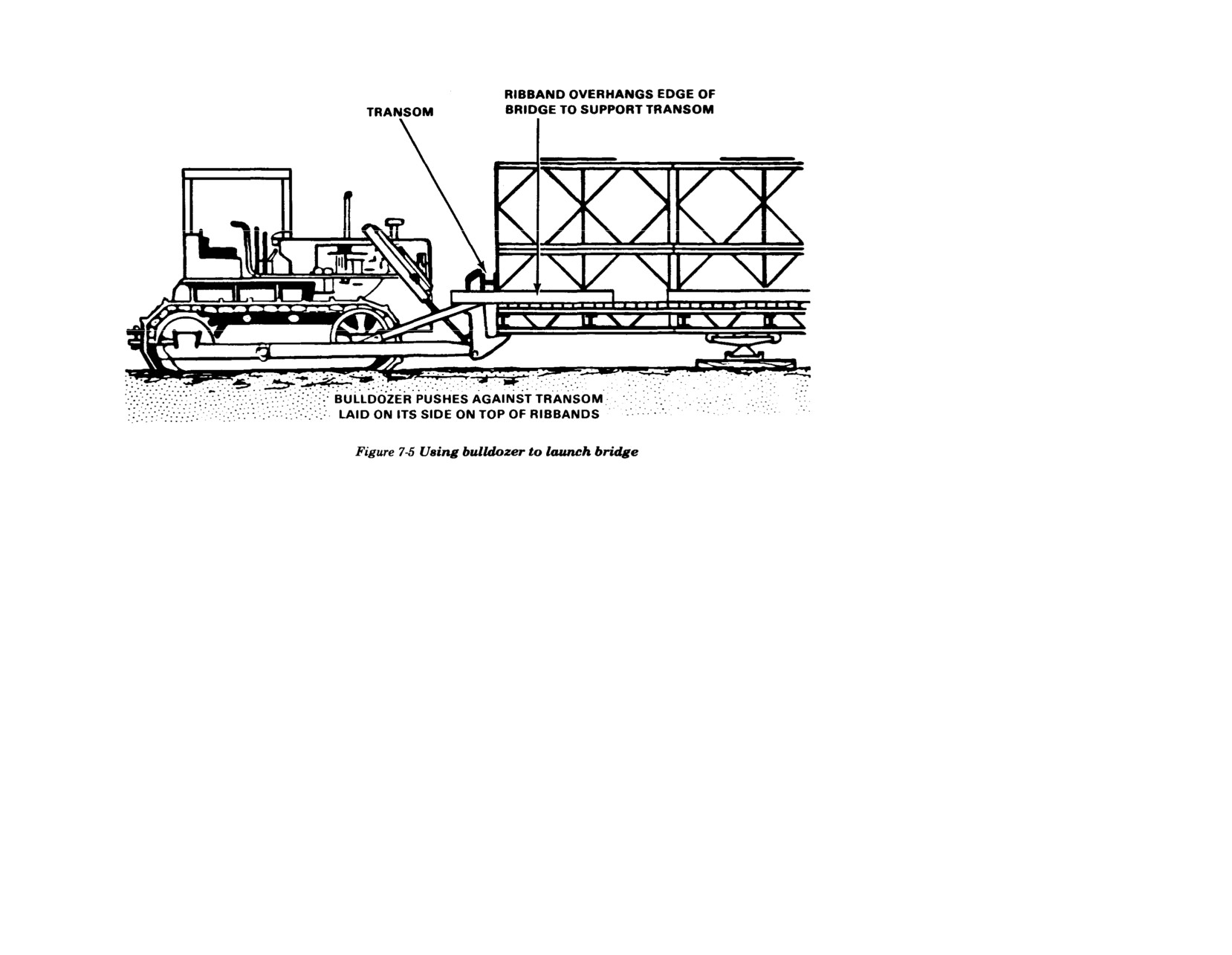
onals (Figure 7-5). When applying power
Use the same launching methods and pre-
against a transom, make sure it is distri-
If the bridge requires two trucks or bull-
cautions as for launching single-story
buted across the length of the transom.
dozers to move it, use one against the end
bridges. When launching with bulldozers or
post of each girder.
trucks, take the following precautions:
Roller heights must be fixed so that the
tail of the bridge is at least 6 inches (15.2
When using a bulldozer, bolt ribbands at
Do not apply power directly to the end of a
centimeters) off the ground during the
the tail of the bridge so they extend
panel except at the junction of the di-
entire launching.
beyond the end of the bridge. Place a
98
FM 5-277
transom on its side on the ribbands so the
transom rests against the end vertical at
the junction of the diagonals. Face tran-
som lugs toward the nose of the bridge.
Control lateral movement of the bridge by
fastening winch lines from two trucks to
male panel holes for positive control.
Launch the bridge with the bulldozer
blade pushing against the transom
(Figure 7-5).
JACKING DOWN
Use the same jacking methods and precau-
tions used for single-story bridges (Chapter
6).
REINFORCING BRIDGE AND CONVERTING BRIDGE
METHOD
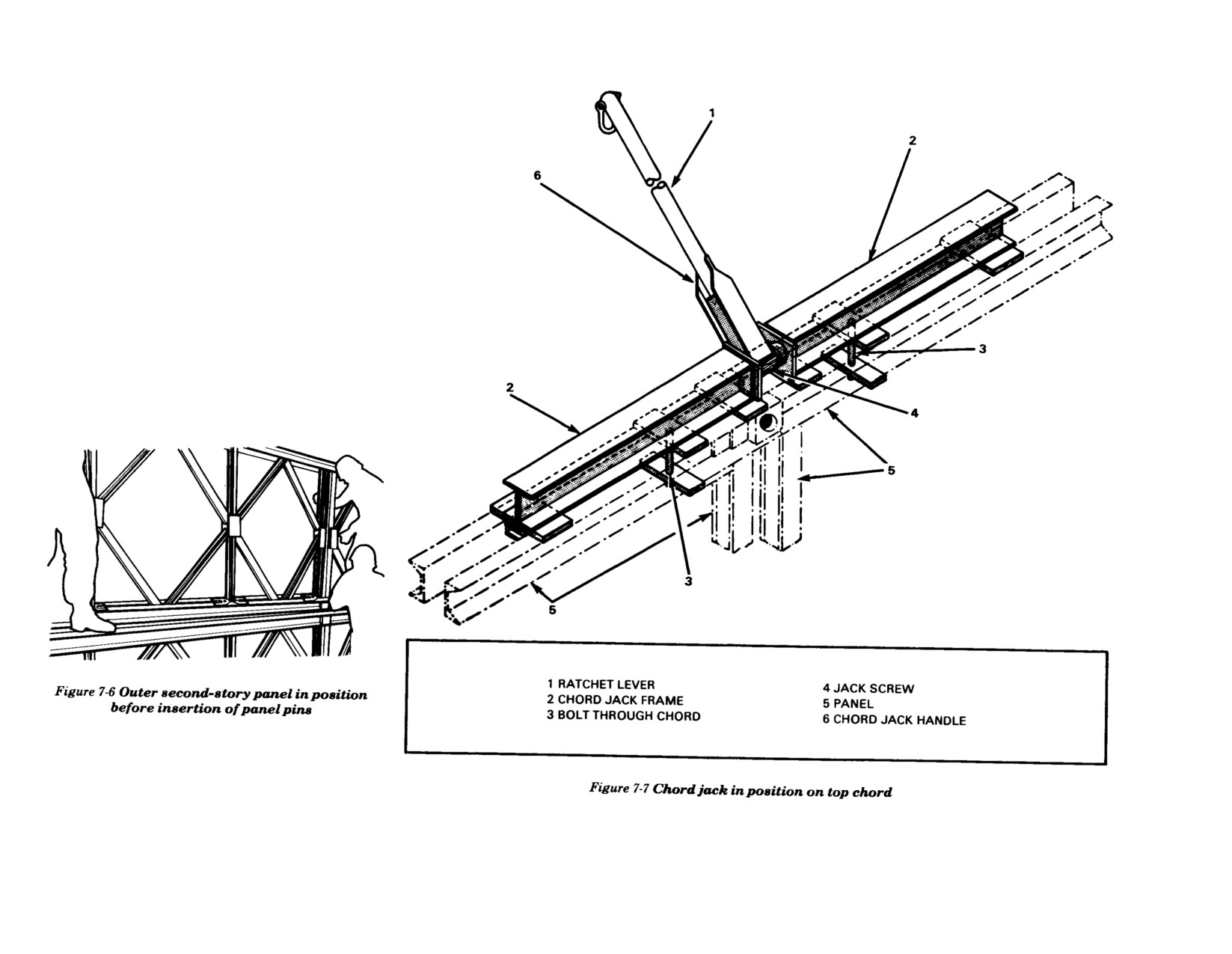
Erect outer truss first (Figure 7-6, page
a
Place first panel of second story at
The class of existing single-story bridges can
100). Before raising panels, insert
center of bridge and insert chord bolts.
be increased by adding extra stories. For all
wrenches in the top chord of the existing
Do not tighten bolts.
assemblies over class 70, the decking system
bridge to prevent the panel from skidding
must be reinforced by increasing the number
out. The inner truss assembly should
b
Place a panel at each end of the center
of transoms per bay from two to four, and by
follow closely behind the outer truss in
panel of the second story. Insert chord
adding a 3-inch (7.6 centimeters) longitudinal
order to speed construction.
bolts and upper panel pins.
wear tread.
3 Insert chord bolts and panel pins. Where
c
Tighten all chord bolts to reduce sag.
CONVERTING DOUBLE-SINGLE
necessary, use chord jacks (Figure 7-7,
Drive lower panel pins with a sledge
TO DOUBLE-DOUBLE
page 100) to overcome sag when inserting
hammer.
To convert an existing double-single bridge
panel pins. Tightening chord bolts also
to a double-double bridge, proceed as follows:
helps reduce difficulty caused by sag.
d
After the first three panels are in place,
Chord jacks are not required when adding
add other panels, one at a time, working
1 Remove bracing frames.
a second story to double-truss spans 120
toward both ends of the bridge.
feet (36.6 meters) or less in length if the
2 Carry first panel to midpoint of bridge
following method is used simultaneously
and place on top chord of existing bridge.
on both sides of the bridge:
99
FM 5-277
e
As each panel is placed, insert chord
bolts. Do not tighten until the upper
panel pin has been inserted.
f
It maybe necessary to drive upper and
lower panel pins simultaneously,
starting at the ends of the bridge.
Tighten chord bolts to reduce sag.
g
Place bracing frames vertically on the
same end of successive panels and
horizontally along the top chord of the
second story.
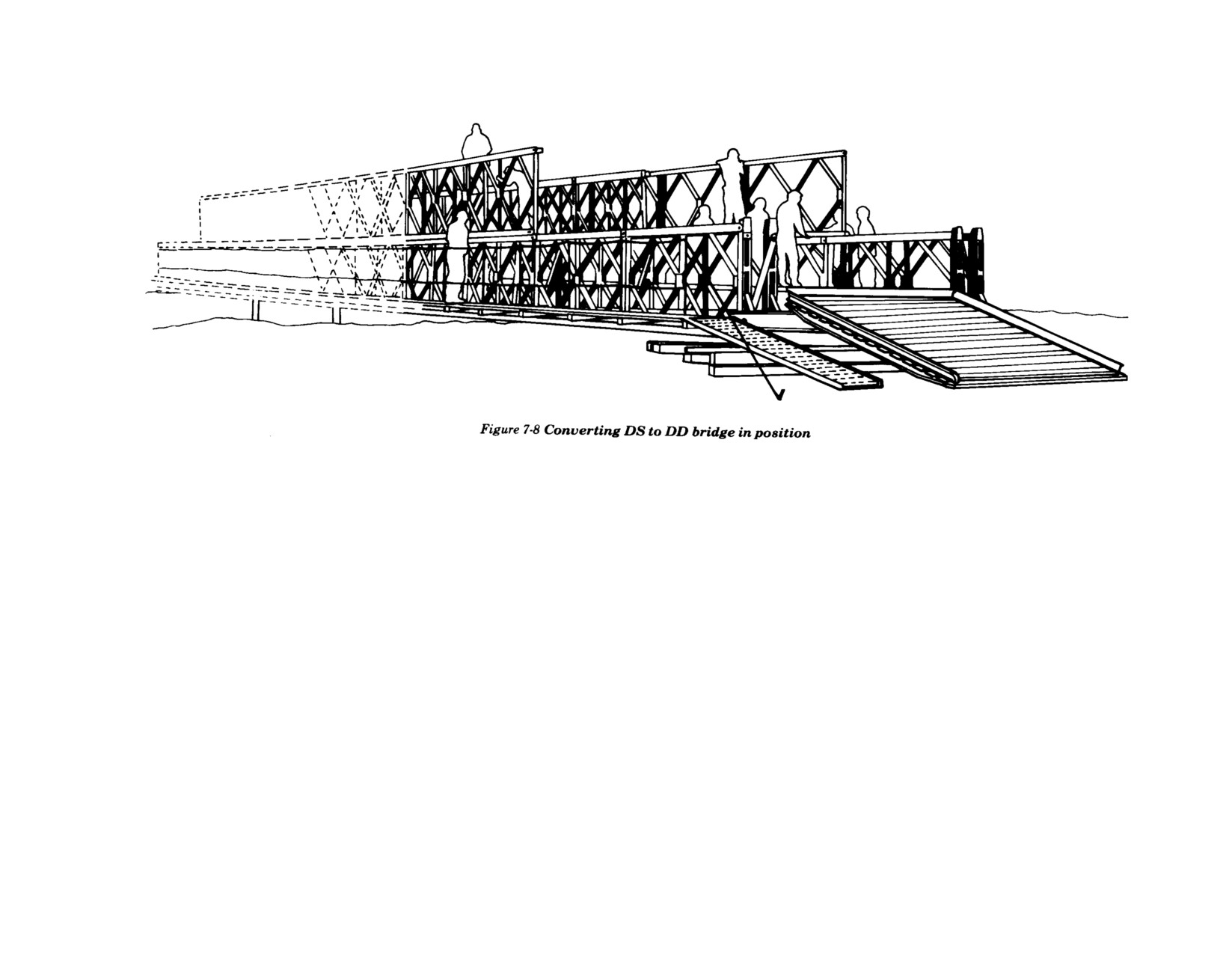
See Figure 7-8 for partially completed bridge.
100
FM 5-277
101
FM 5-277
CHAPTER 8
ASSEMBLY OF TRIPLE-STORY BRIDGES
LAUNCHING NOSE AND OVERHEAD BRACING 103
THE DOUBLE-TRIPLE BRIDGE 107
THE TRIPLE-TRIPLE BRIDGE 107
ASSEMBLY OF BRIDGES WITH UNDERSLUNG STORY 109
This chapter describes the assembly and
composition of triple-story bridges and their
launching noses. The normal cantilever
method used for launching single- and
double-story bridges is used for launching
triple-story bridges. However, some triple-
story bridges must be launched incomplete to
reduce launching weight.
Triple-story bridges are normally assembled
by truck-mounted cranes. If cranes are not
available, parts can be placed with gin poles,
5-ton wreckers, or carried by hand. Triple-
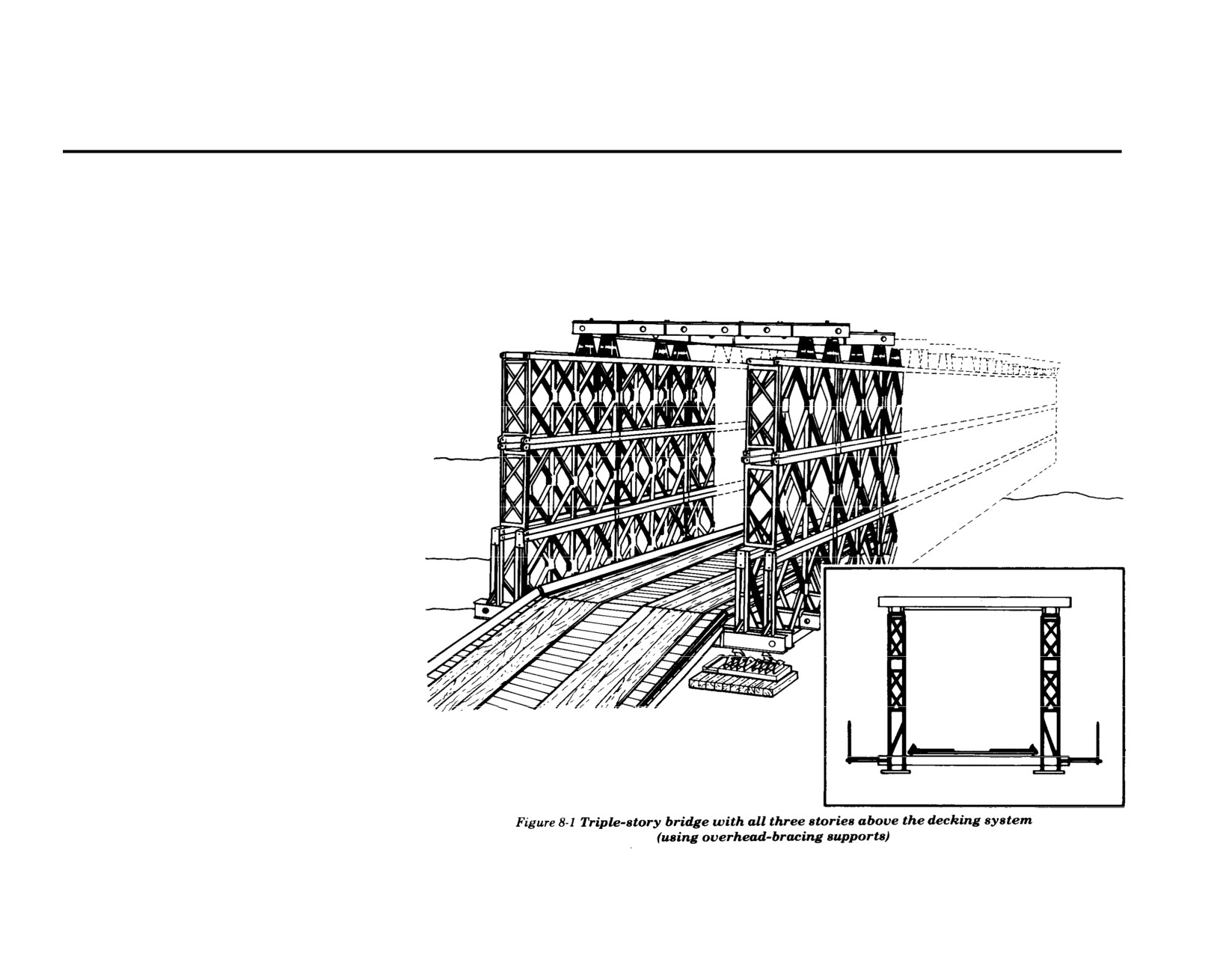
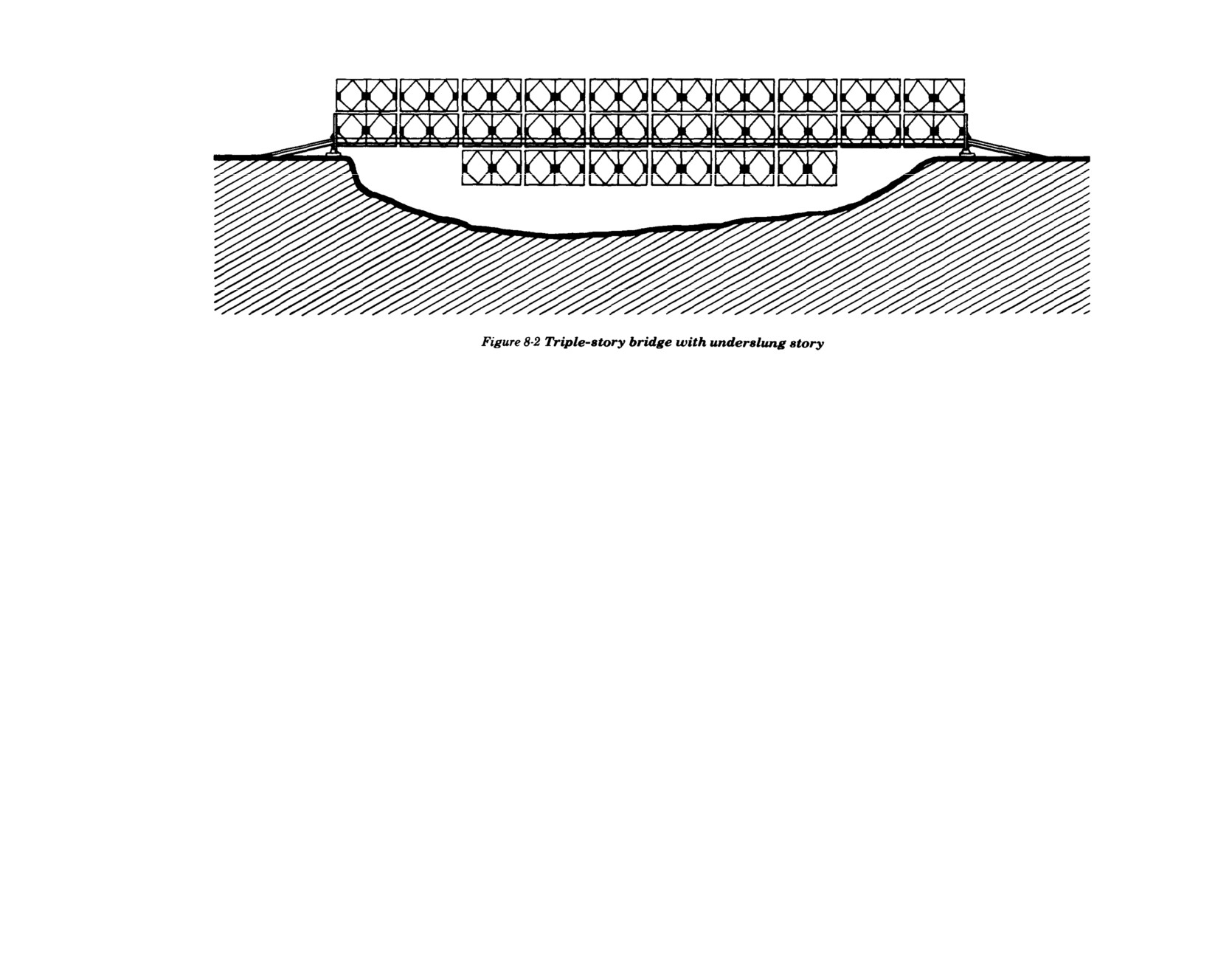
story bridges can be assembled with all three
stories above the decking system (Figure 8-1)
or with one story underslung (Figure 8-2).
When all three stories are above the decking
system, the top chord of the upper story must
be braced laterally with transoms and sway
braces. When one story is below the decking
system, lateral bracing in the bottom chord of
the underslung story is required only when
the wind velocity is more than 50 miles (80.6
kilometer) per hour. The class of triple-story
bridges is not affected by the location of the
deck or by the omission of one story of panels
in each end bay.
102
FM 5-277
LAUNCHING NOSE AND OVERHEAD BRACING
LAUNCHING NOSE ASSEMBLY
with transoms and sway braces on the top
Without overhead-bracing supports
AND COMPOSITION
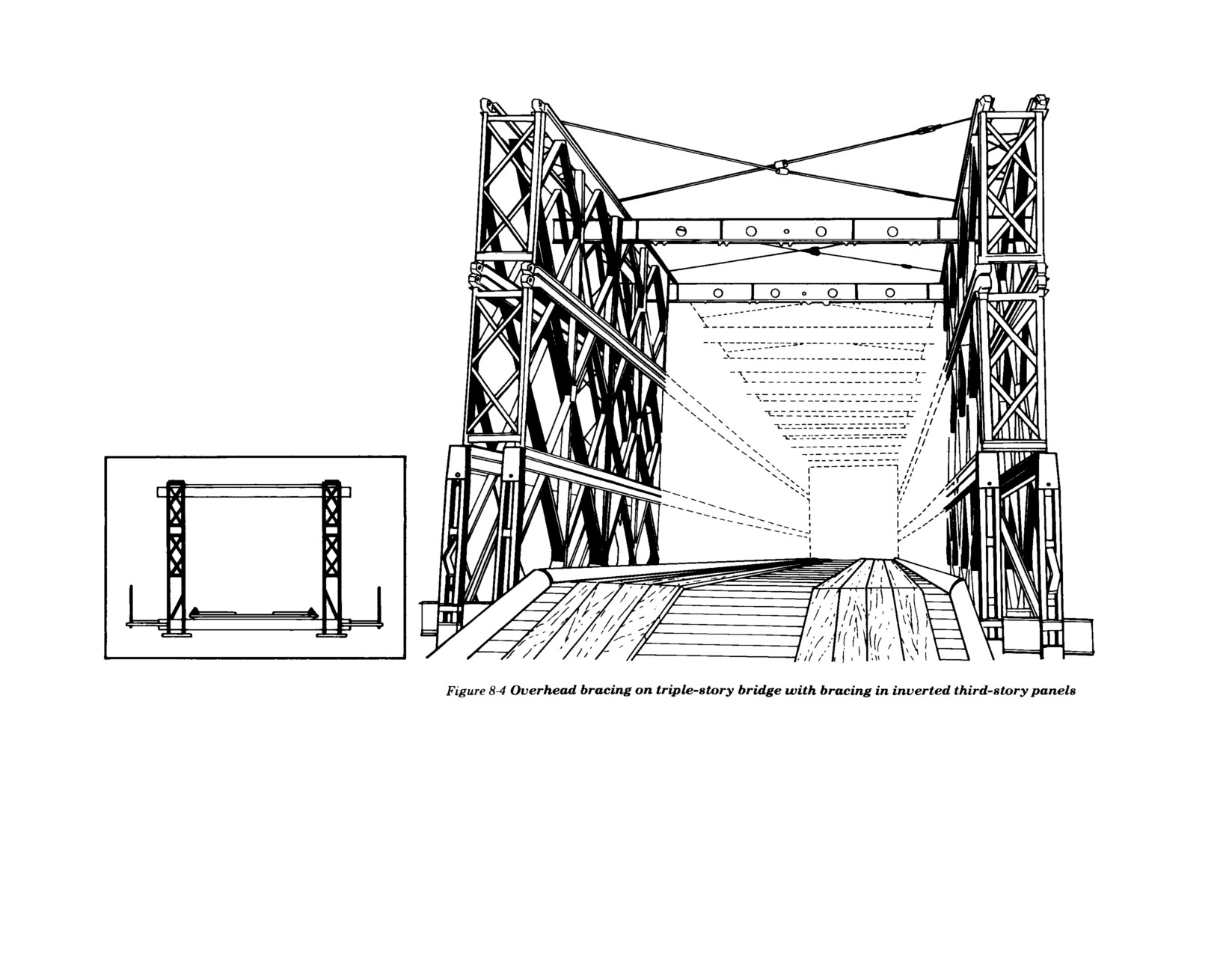
chord of the upper story (Figure 8-l). Another
When overhead-bracing supports are not
Assembly of the launching nose for triple-
method is to invert the third-story panels and
used, the panels of the third story must be
story bridges is the same as for single- and
place transoms and sway braces in their
inverted so that transoms and sway braces
double-story bridges. However, the launching
normal seating on the inverted panels.
can be inserted (Figure 8-4, page 106). Tran-
weight of the nose and bridge is limited by the
soms are fitted on the transom seats beneath
120-ton (108.8 metric tons) capacity of the
With overhead-bracing supports
the upper chord of the top story and are held
near-bank rocking rollers and the lower-
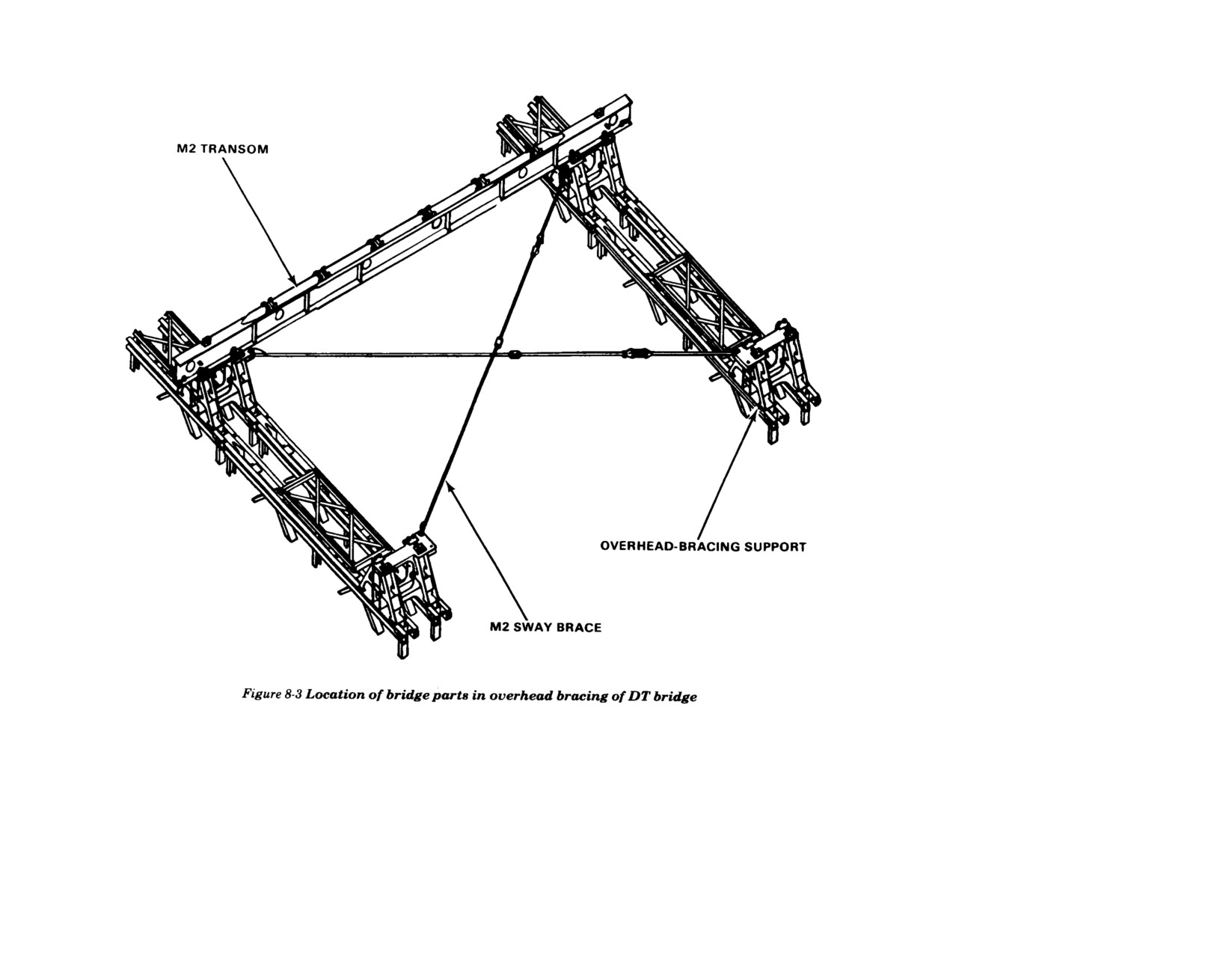
When overhead-bracing supports are used,
in place by transom clamps. Sway braces are
bridge chords which they support. The com-
place one support per girder on each bay of
placed in the sway-brace holes in the sides of
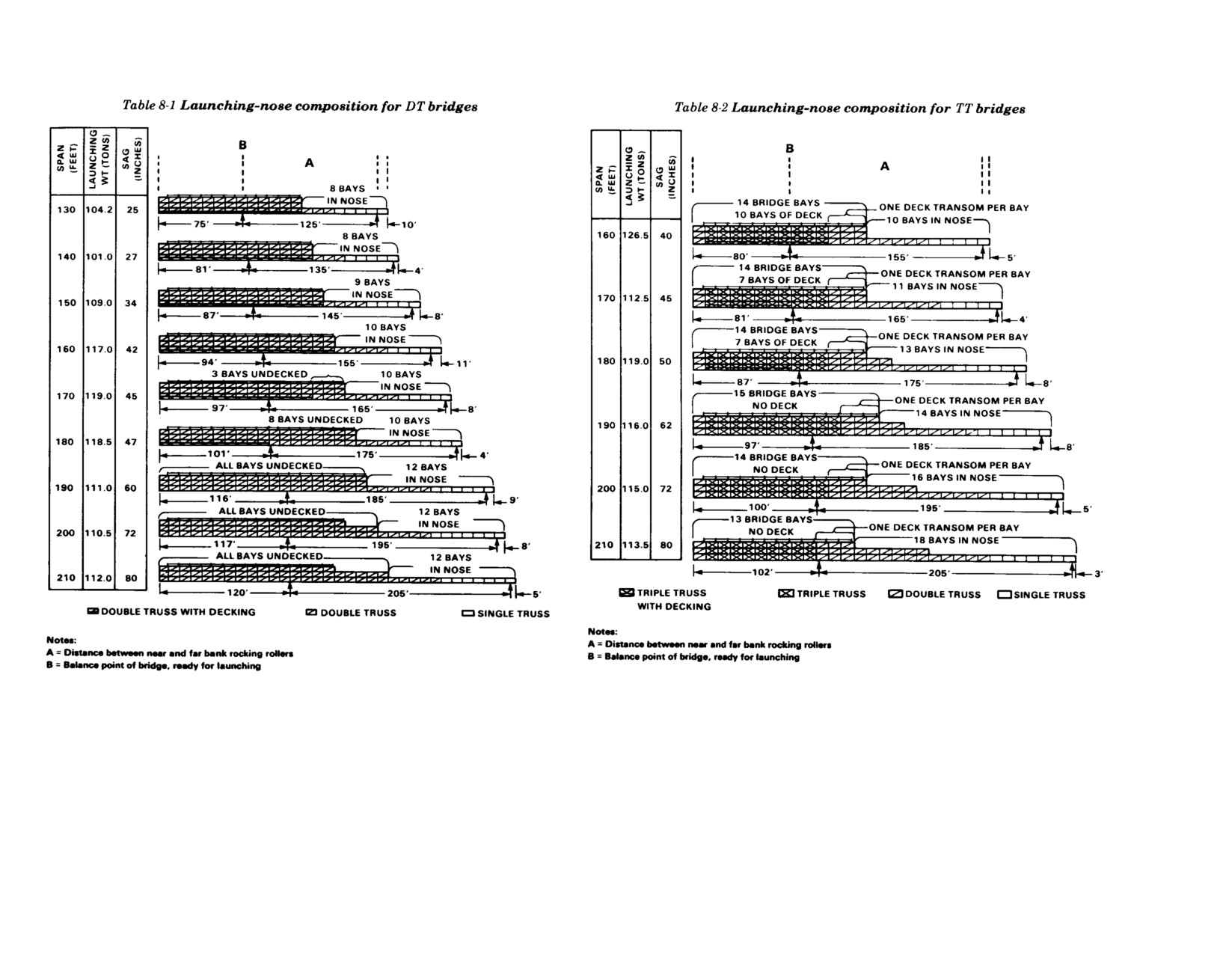
position of the launching nose for the various
the bridge. Position the supports on panels of
the upper chord of the third-story panels. One
combinations of span and bridge assembly is
the inner and second truss over the chord-bolt
transom and two sway braces are used per
given in Tables 8-1 and 8-2 (page 104). These
holes nearest to the female lugs. This provides
bay.
tables must be followed exactly.
clearance for the bracing frames on the top
chord. Fasten transoms to the tops of the
OVERHEAD BRACING
supports and pin sway braces to the pro-
The upper story of triple-story bridges, with
jecting ears on the supports (Figure 8-3, page
all three stories above the floor system, is
105).
braced by using overhead-bracing supports
103
FM 5-277
104
FM 5-277
105
FM 5-277
106
FM 5-277
THE DOUBLE-TRIPLE BRIDGE
DESCRIPTION
Double-triple
bridges are normally assembled
to aid handling. Place bracing frames on
girders out and insert two chord bolts in
bay by bay on rollers and launched complete.
front and rear panel verticals in second
the support.
Some of the longer, spans, however, must be
and third stories and on top chord of third
launched incomplete to reduce the launching
story.
7
Position overhead sway braces but do not
weight.
tighten until overhead transom in next
4
Lift overhead-bracing supports with
bay has been fixed.
METHOD OF ASSEMBLY
cranes and position over chord-bolt holes
When assembly of the nose is completed,
nearest female lugs of panels. Bolt to
8
Place the rest of the panels with cranes.
assemble the first bay of the bridge as follows:
girder on one side of bridge only. Bolts on
Assemble on the ground a single-truss
other side are left out because bolt holes
section of two panels connected by chord
1
Connect inner and outer truss panels to
may not line up when transom is placed
bolts. When the two-panel section is
last bay of nose. Assemble parts into
on supports, since the girders tend to lean
completed, attach a sling and lift the
place.
slightly toward center.
section into place by a crane. Insert top
panel pins first and bottom ones next.
2
Add transoms, bracing, and decking in
5
Position overhead transom and fasten by
the same way as for single-story bridges.
the two clamps on each support.
9
Add the transoms and deck while
assembling the rest of the stories.
3
Add panels to second and third story with
6
Insert jack between support that is not
cranes. Stockpiles are located near cranes
bolted and outer truss of bridge. Force
THE TRIPLE-TRIPLE BRIDGE
DESCRIPTION
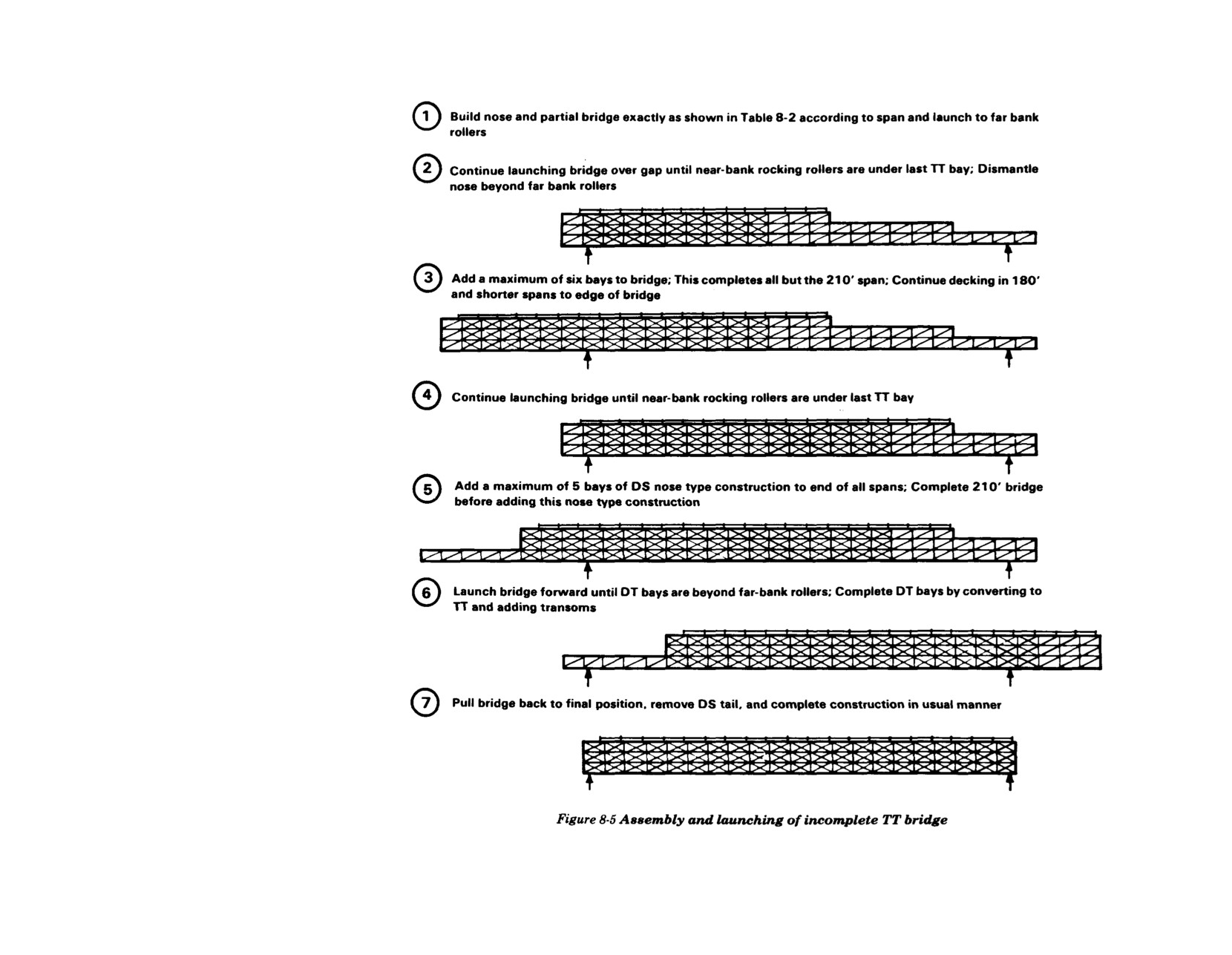
1 Assemble nose and partial bridge exactly
more
triple-triple
bays at most). This gives
Triple-triple
assembly is uncommon. Its
as shown in Table 8-2 according to span
the required bridge length for all but the
heavy launching weight could cause failure
length, and launch to far-bank rollers
210-foot (64 meters) span. Because of
of the rollers or lower chord of the bridge. For
using normal methods of assembly and
staggered assembly, the end bay of the
this reason, special methods must be used for
launching.
latter bridge must be left
double-triple
at
assembling
triple-triple
bridges.
this point. Decking in 180-foot (54.9
2
Continue launching bridge over gap until
meters) and shorter spans can be con-
ASSEMBLY AND LAUNCHING
near-bank rocking rollers are under last
tinued to the end of the bridge (Figure 8-5).
Triple-triple
bridges can be launched incom-
triple-triple
bay of bridge. Dismantle nose
plete or by using a temporary launching pier.
beyond far-bank rocking rollers (Figure
4
Continue launching bridge until the near-
Triple-triple
bridges are launched incomplete,
8-5, page 108).
bank rocking rollers are again under the
using the assembly given in Table 8-2, to
last
triple-triple
bay of bays added (Figure
reduce launching weight and prevent over-
3 Make near-bank end
double-triple
bay
8-5).
load of the rollers. The bridge is assembled
triple-triple,
and add enough
triple-triple
and launched as follows:
bays to obtain required bridge length (six
107
FM 5-277
5
Add five bays of
double-single
nose to the
near-bank end of all bridges (Figure 8-5).
Add two more bays to the 210-foot (64
meters) bridge to get the required bridge
length before adding this tail assembly.
6
Launch bridge forward until the three
double-triple
bays at front of bridge are
beyond far-bank rollers. Complete
double-
triple
bays by converting to
triple-triple
and adding transoms (Figure 8-5).
7 Pull bridge back to final position, remove
double-single
tail, and complete assembly
in usual manner (Figure 8-5).
Triple-double
bridges can be launched using
a temporary launching pier. Assemble and
launch a normal
triple-double
bridge. At the
same time, assemble a temporary launching
pier from panel-bridge parts. The pier can be
offset from the center of the gap so the short
span is not less than 60 percent of the long
span. After the pier is completed, place a
platform on top of it to carry jacks. When the
triple-double
bridge has been jacked down
onto the bearings, insert jacks under the
bridge at the pier, and jack up the bridge to
about horizontal. Then use a truck crane to
place the third-story panels and the overhead
bracing. Jacking most of the sag out of the
bridge makes it possible to place the third-
story panels. When a fixed pier cannot be
used, use a floating pier. The pontons are
partly filled with water to float the pier under
108
FM 5-277
JACKING DOWN
the bridge, and the water is pumped out to
construction may be used to provide the
Normal jacking down methods cannot be
raise the bridge. Information on pier reactions
required bridge class.
used for triple-story bridges. There is not
is given in Chapter 16, and on panel crib piers
enough room at the end posts to use the
in Chapter 17.
USE OF MECHANICAL MEANS
required number of jacks. Use either jacks of
It is normally necessary to launch triple
higher capacity or the methods of jacking
VERTICAL CLEARANCE
story bridges by mechanical means. Take
down bridges on intermediate piers. Using
The vertical clearance in triple-story bridges
special care to see that the assembly of the
intermediate pier methods requires room
is of prime importance when loaded tank
bridge and nose is correct and that the rollers
ahead of the bearings for placing the jacks
transporters are to pass over them. This is
are properly leveled. The launching weight of
and the timber grillage under the bottom
especially true when expedient overhead
these bridges is high and slight errors can
chord to catch the bridge if the jacks slip or
bracing is used. If greater vertical clearance
cause failure.
fail.
is needed, underslung stories or deck-type
ASSEMBLY OF BRIDGES WITH UNDERSLUNG STORY
METHODS
USING TEMPORARY
and assembly methods for abridge length
Triple-story bridges with underslung story
LAUNCHING PIER
equal to one half the width of the gap
are normally assembled and launched by one
This method requires a temporary inter-
(distance from near bank to forward
of the following methods:
mediate launching pier at the center of the
rocking rollers on pier).
gap. It also requires enough room under the
Launched with underslung story, using a
near-bank abutment to add one story of
3
As soon as the launching nose has landed
temporary launching pier at center of
underslung panels. The bridge is assembled
on the pier rocking rollers on the far-bank
gap. This method is normally used when
and launched as follows:
side of the pier, add underslung panels,
the launching pier can be positioned.
starting with the second bay of bridge.
1
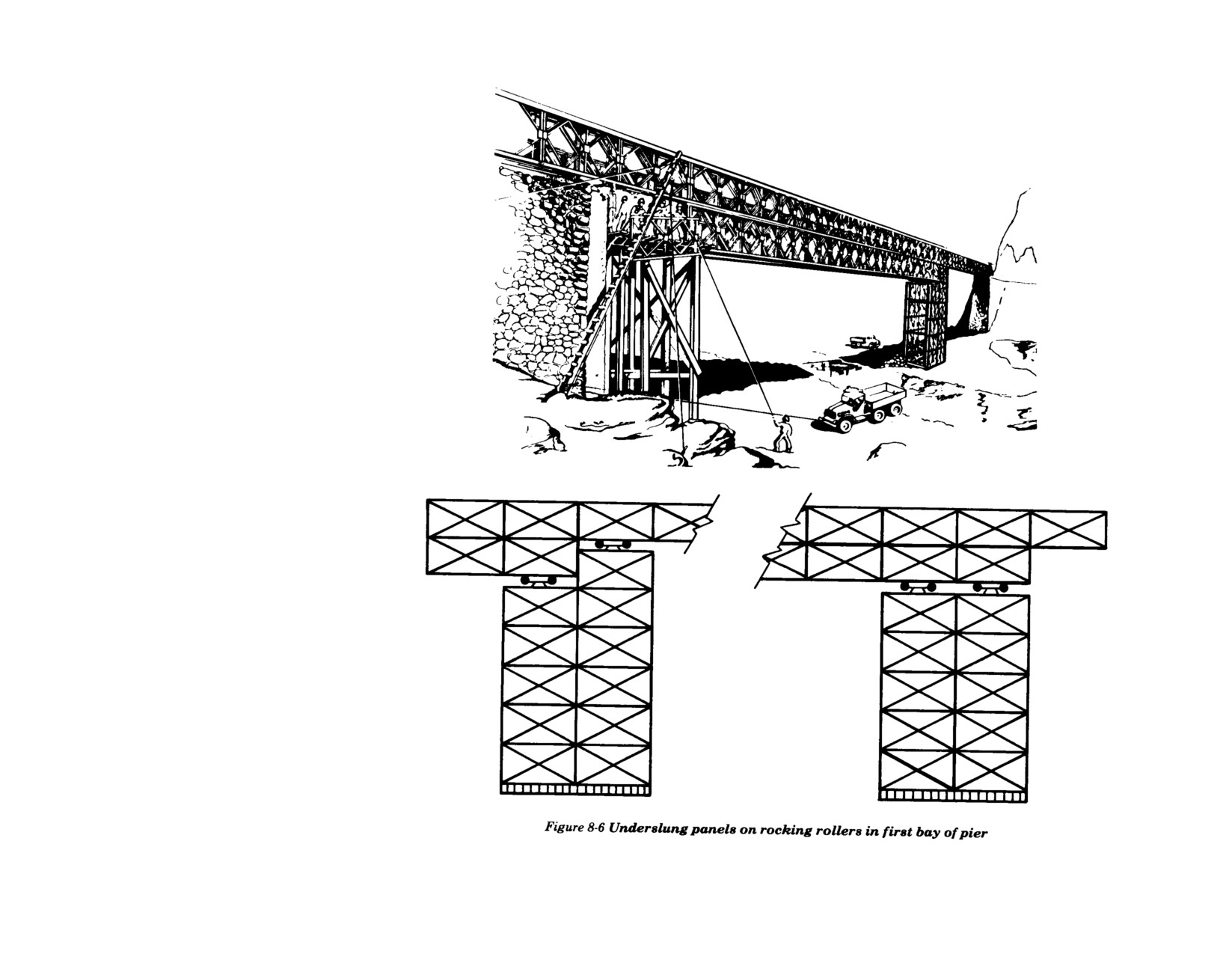
Assemble a panel crib pier at the center of
Launched as double-story bridge, with
the gap strong enough to carry the com-
4
Continue launching the double-or triple-
underslung story added after bridge is in
pleted triple-story bridge (Chapter 17).
truss single-story bridge and adding the
place. This method is normally used when
The pier must have at least two bays of
underslung story until the underslung
the launching pier cannot be positioned.
panels horizontal (Figure 8-6, page 110).
story reaches the pier (Figure 8-6).
On the pier bay toward the far bank, place
Launched as double-story bridge, jacked
rocking rollers at same elevation as near-
5
When the underslung panels land on the
down approximately 6 feet (1.8 meters),
bank rollers. On the near-bank side of the
pier rocking rollers on the near-bank side
with third story added on top chord. This
pier, assemble a bay one panel height
of the pier (Figure 8-6), remove the pier
method requires jacking the bridge an
below the bay toward the far bank, and
rocking rollers under the launching nose.
excessive distance and generally is not
place rocking rollers.
Also remove the top bay of panels on the
used.
far-bank side of the pier under the
2
Assemble double- or triple-truss single-
launching nose.
story bridge using normal launching nose
109
FM 5-277
6
Continue launching until bridge lands on
far-bank rocking rollers. Remove
launching nose and position end posts.
Before jacking bridge down onto bearings,
remove one complete story from pier and
place a working platform on the pier.
7
Jack up center of bridge at intermediate
pier until bridge is approximately level.
This reduces sag and eliminates difficulty
in placing third-story panels.
8
Add third-story panels by using truck
crane or truck, or by hand.
9 Remove construction pier. Bridge is now
complete.
ASSEMBLY IN PLACE
An underslung story can be added to a
double-story bridge in place by using a truck
crane. This is the easiest and fastest way.
Lower single panels over the side with a truck
crane and attach them with chord bolts.
Place inner panels first. Use blocks and
tackle to position the inner truss panels.
Other truss panels can be positioned directly
with the crane.
When a truck crane is not available or when it
causes too much sag in the bridge, the under-
slung story can be added as follows:
1
After the double-story has been assembled
and launched, position plain rollers out-
side of and about 10 inches (25.4 centi-
meters) from the existing outside truss.
Place the front roller 3 feet 6 inches (1.07
110
FM 5-277
meters) from the base plate position and
outside end and one between first and
another roller 25 feet (7.62 meters) from
second truss.
the first. Additional rollers 25 feet (7.62
meters) apart can be placed if necessary.
5
Launch single girder over plain rollers on
bank and rakers on bridge until it is in
2
Assemble a single-truss girder one half of
position to be lowered. Attach outer tackle
the total length of the bridge minus one
to girder, remove rakers, and then lower
bay (not to exceed 12 bays).
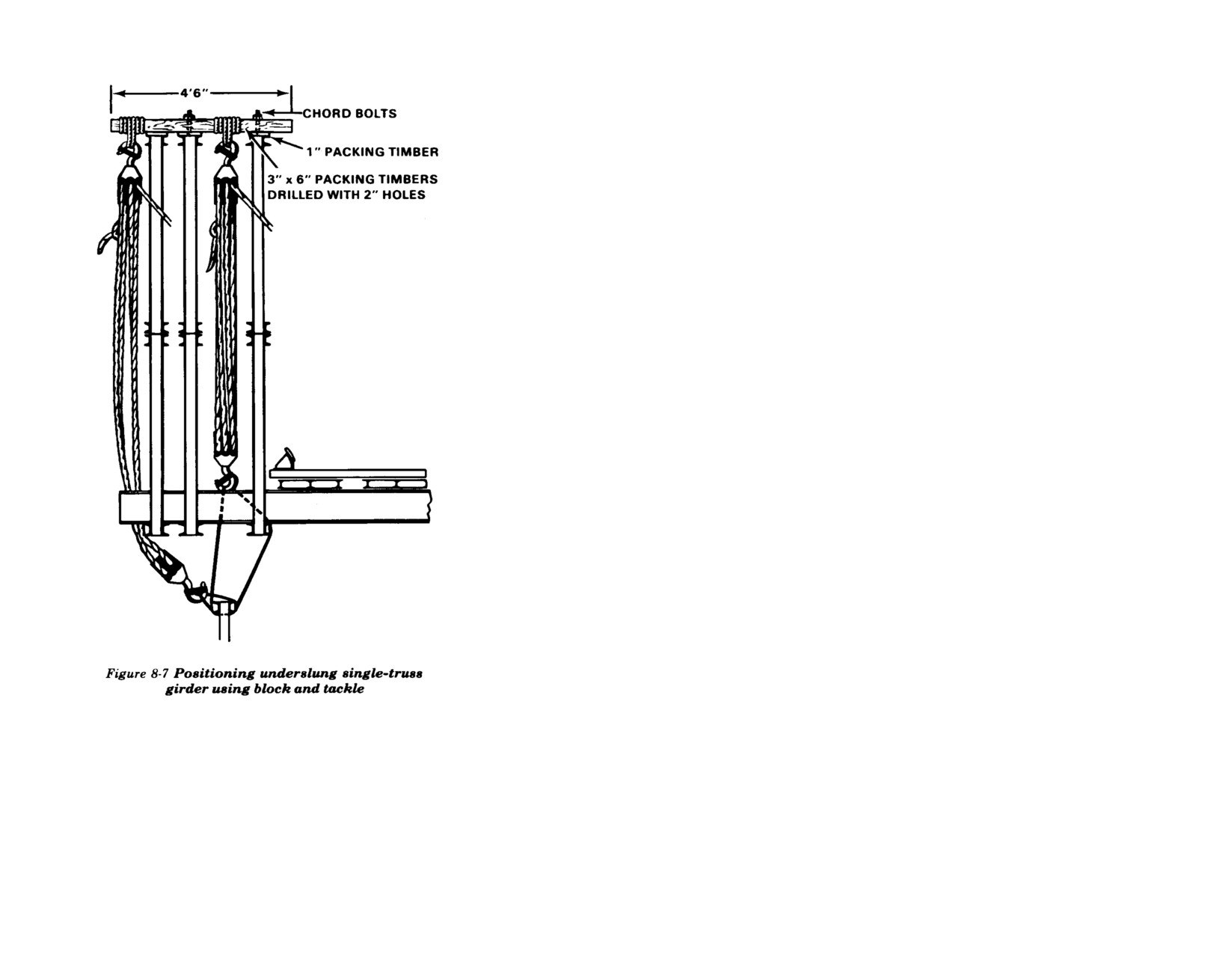
girder until top chord is below bottom
chord of the bridge. Attach inside tackle
3
Attach one raker per bay to the bottom
below the bottom chord of the bridge to
bracing-frame hole on the inner truss
the girder with a sling which passes
panel chord. Lay rakers flat across the
around the bottom chord of the inner
bottom chords of the panels so they project
truss of the bridge (Figure 8-7).
beyond the side of the bridge and over the
gap.
6
Remove outer tackle and lift girder into
position under lower chord of bridge with
4
Place 3-by 6-inch (7.6 by 15.2 centimeters)
inner tackle.
packing timbers on top chord of bridge in
every fourth bay. Hold in place with
7
Insert chord bolts and tighten to fix girder
chord bolts through chord-bolt holes
into position.
nearest female lugs. Place l-inch (2.54
centimeters) timber packing between gril-
8
Remove inner tackle and repeat procedure
lage and chord. Suspend double-or triple-
for the rest of the trusses.
block and tackle from each timber, one at
111
FM 5-277
CHAPTER 9
TRAFFIC CONTROL
To ensure that vehicle drivers recognize and
To avoid congestion, waiting vehicles are
the bridge set. The tape is attached to the
follow class and clearance restrictions, and
directed to park off the road.
approach posts and is not visible from the air.
that vehicles come upon the bridge properly,
These markers help guide drivers to and
use traffic control measures.
Stop traffic when bridge is damaged.
through the bridge and help to keep traffic
moving steadily. They may be arranged on
BRIDGE SIGNS
Keep vehicles spaced properly and within
the bridge and at the approaches in different
Mark bridges and access roads with standard
speed limits specified for the type of
ways, according to the type of approach,
North Atlantic Treaty Organization (NATO)
crossing authorized.
length of the bridge, and amount of skylight.
bridge and vehicle classification signs. These
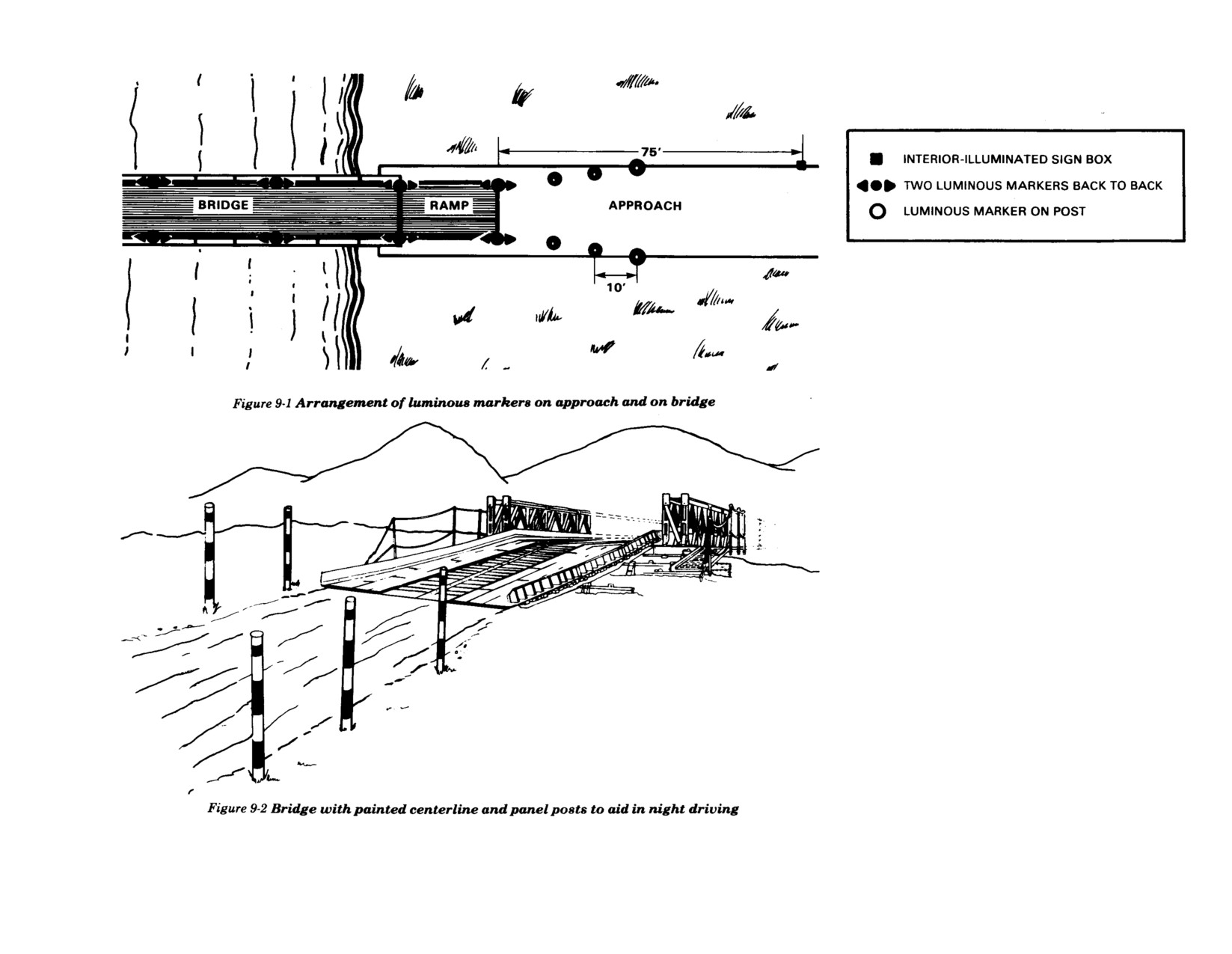
Figure 9-1 shows a suggested arrangement of
signs state the class, the roadway width, and
Help drivers of wide vehicles by giving
blackout markers on the approach and on the
the overhead clearance of the bridge. Details
instructions and signal guidance across
bridge. On the bridge, place tape level with
on the proper posting of NATO bridge signs
the bridge.
the top of the bottom story.
are found in Field Manual 5-34.
Maintain markers in a clean and easily
As a further aid in night driving and
BRIDGE GUIDES
recognizable condition. This is parti-
particularly as a guide for very wide vehicles,
Post traffic guides at each end of long bridges
cularly necessary for the luminous
a 4-inch (10.1 centimeters) wide centerline in
or at one end of short bridges. The guides’
painted panel verticals and roadway center-
the roadway should be painted with luminous
duties are to—
line when these are used.
or white paint. Ribbands, end posts, panel
verticals, panel chords, and gusset plates
Enforce traffic restrictions and bar unsafe
Approach guides are stationed on approach
may also be painted with luminous or white
vehicles. The guide determines the proper
roads or at the intersection of an approach
paint. These painted markings aid in guiding
crossings of critical vehicles and bars all
road with the main traffic net. They control
wide vehicles in the daytime as well as all
vehicles having vehicle class numbers
the traffic on the approach roads. Normally,
night traffic (Figure 9-2). Since luminous
exceeding the posted bridge class. The
units other than the bridge crew provide the
paint might be seen from the air, use it only
guide permits caution and risk crossings
approach guides.
when and where the tactical situation permits
only when so authorized and in the
its use.
presence of higher authority. (This higher
The two guides on long bridges should
authority must have theater or area
communicate by telephone. The guides at the
ROAD SURFACE
approval of caution and risk crossings.)
bridge and the guides on the approach roads
To avoid shocks and possible displacement of
should also be able to communicate directly.
the bridge from the impact of vehicles striking
Keep traffic moving to avoid congestion.
its end, build up the road surface to about an
BRIDGE MARKING
inch (2.5 centimeters) above the decking of
Arrange for alternative flow of traffic
Luminous tape for distinguishing the bridge
the ramp.
when needed to keep the bridge exit clear.
during blackout conditions is provided with
112
FM 5-277
113
FM 5-277
CHAPTER 10
TWO-LANE THROUGH-TYPE BRIDGE
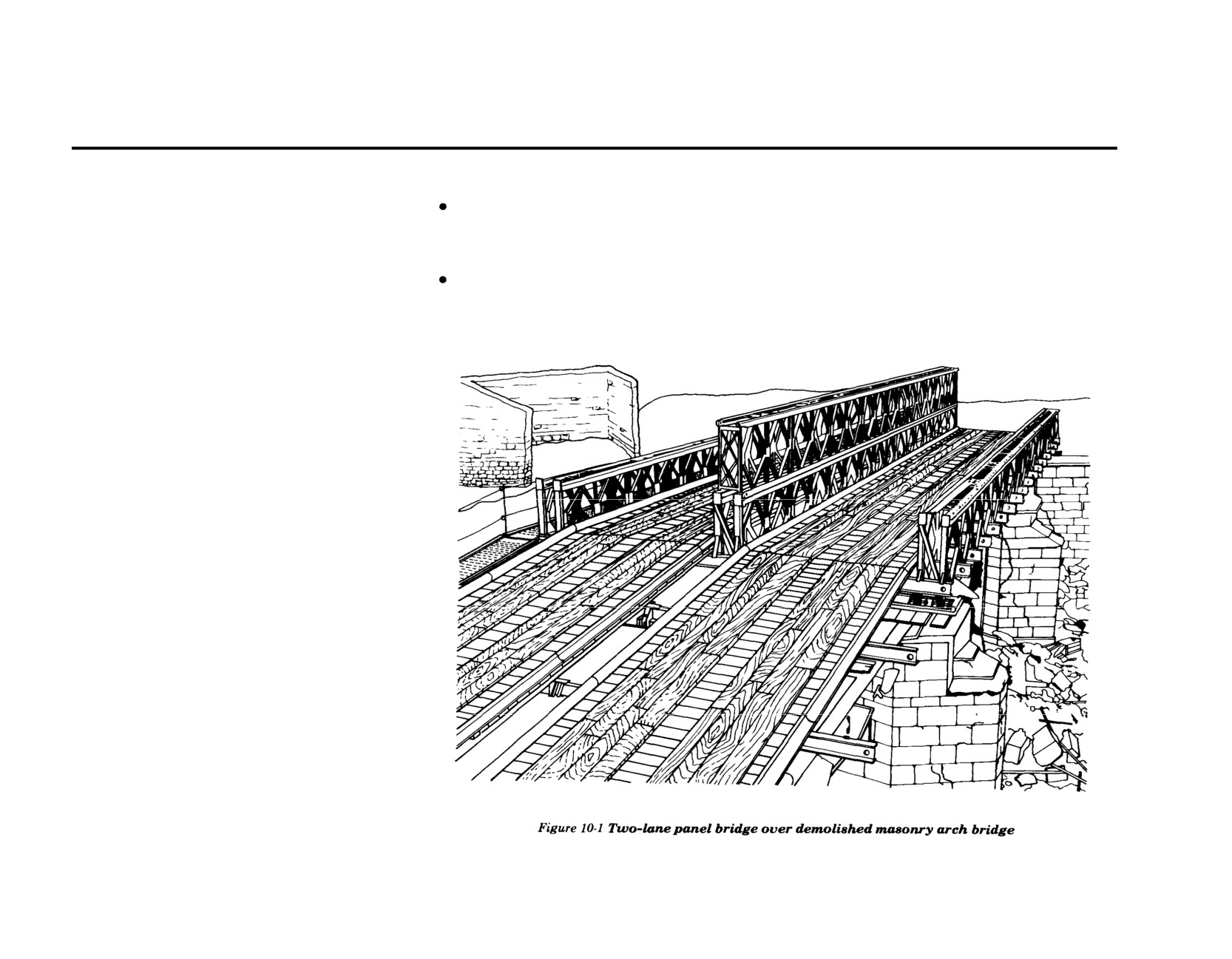
The two-lane through-type panel bridge is
The maximum span that can be launched
NUMBER OF PARTS AND SPARES
used to provide two-way traffic where bridge
by standard launching methods is 160
Formulas for computing the number of parts
supports at a demolished bridge are too
feet.
and spares required to assemble the bridge
narrow for two separate bridges (Figure 10-1).
and nose are given in Table A-8, Appendix A.
This type of bridge is also useful where a
Launching and jacking down are more
The percentage of spares used for single-lane
narrow launching site necessitates lateral
difficult than for a single-lane bridge.
bridges is also used for two-lane bridges.
movement of separately launched bridges to
position them on their bearings. In this case,
it would be easier to build a two-lane bridge.
DESCRIPTION
The bridge consists of two independent outer
girders and a common middle girder, as-
sembled from standard panel-bridge parts.
The middle girder carries about half the total
load and must be about twice as strong as the
outer girders. Transoms overlap and occupy
alternate transom seatings on the middle
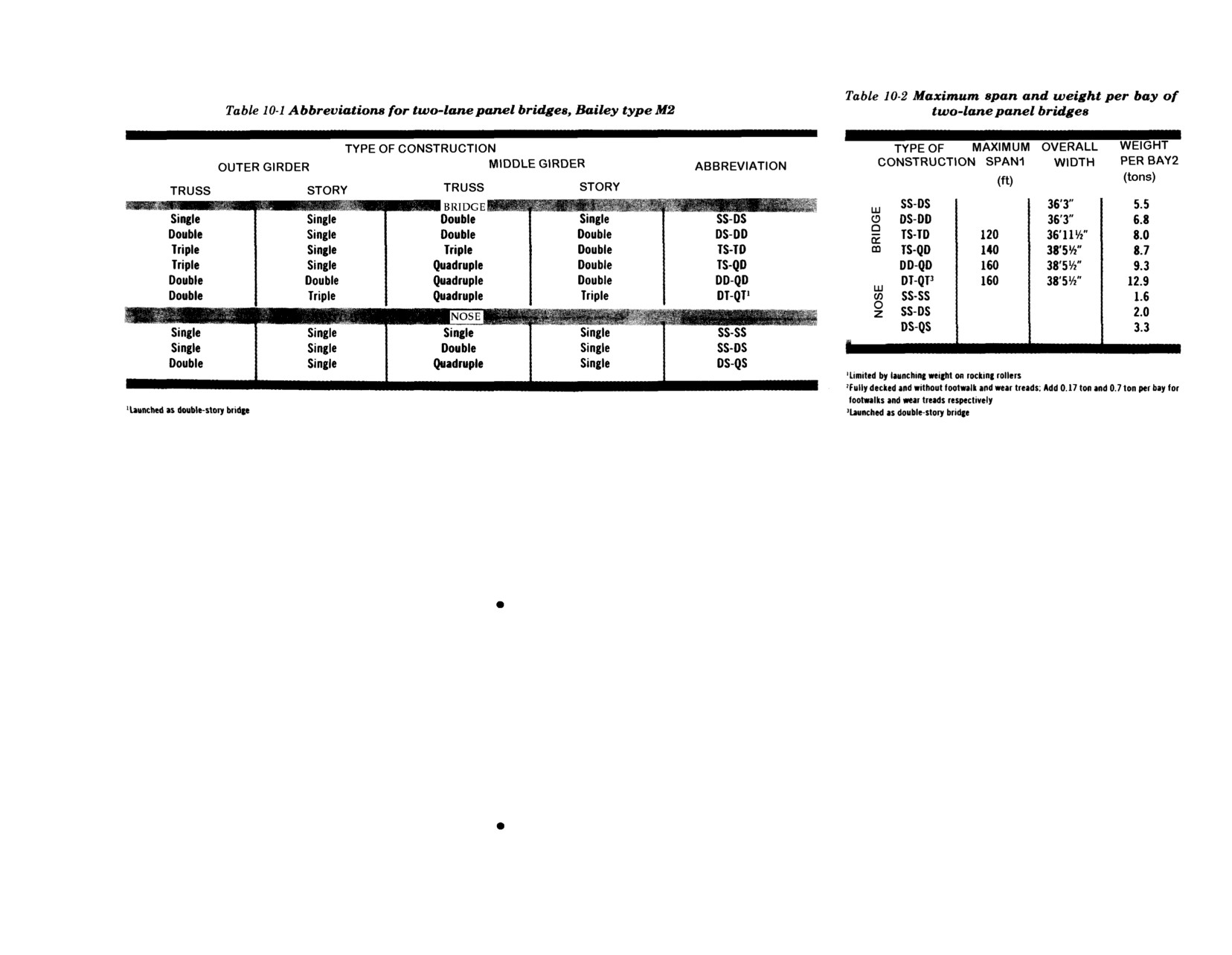
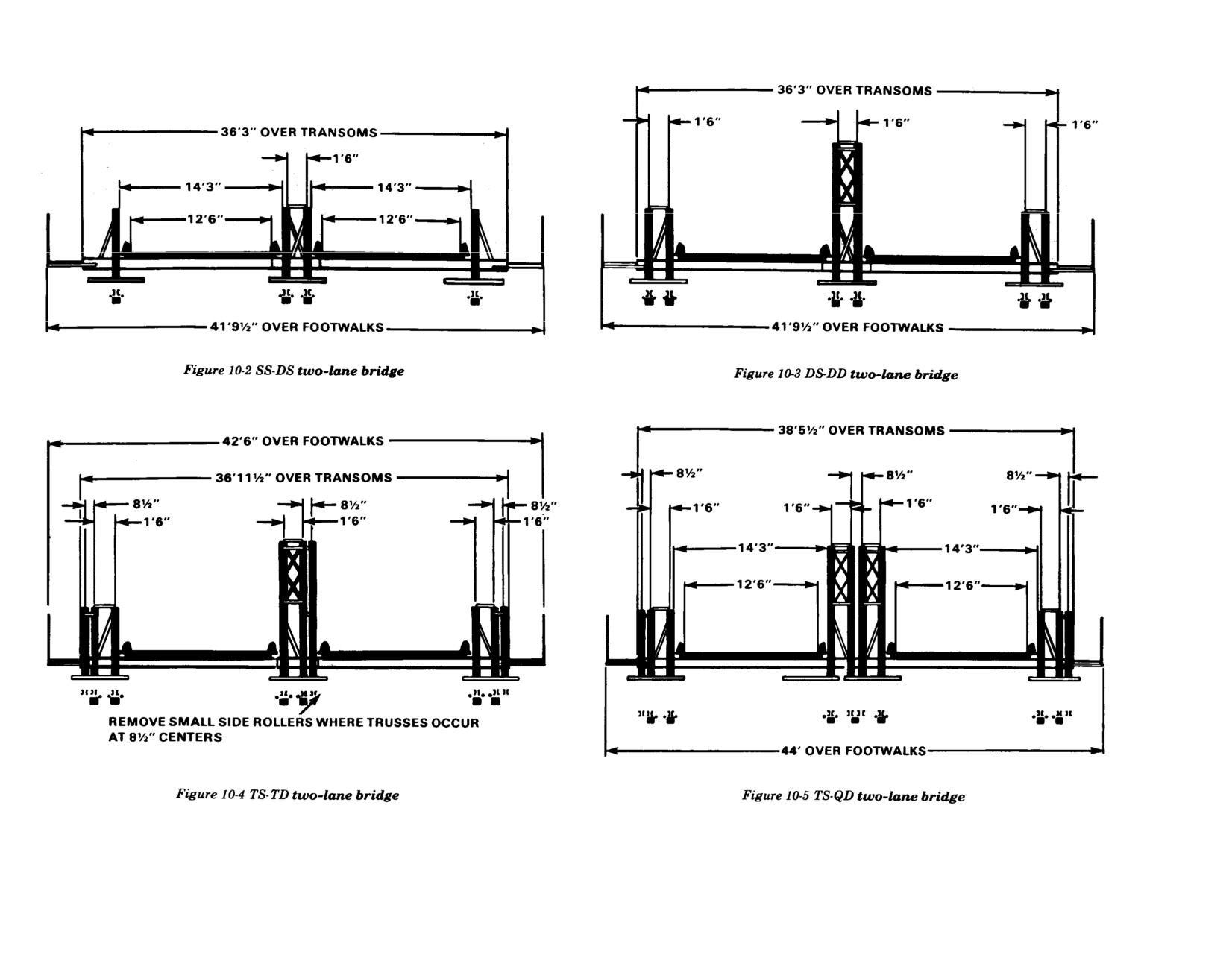
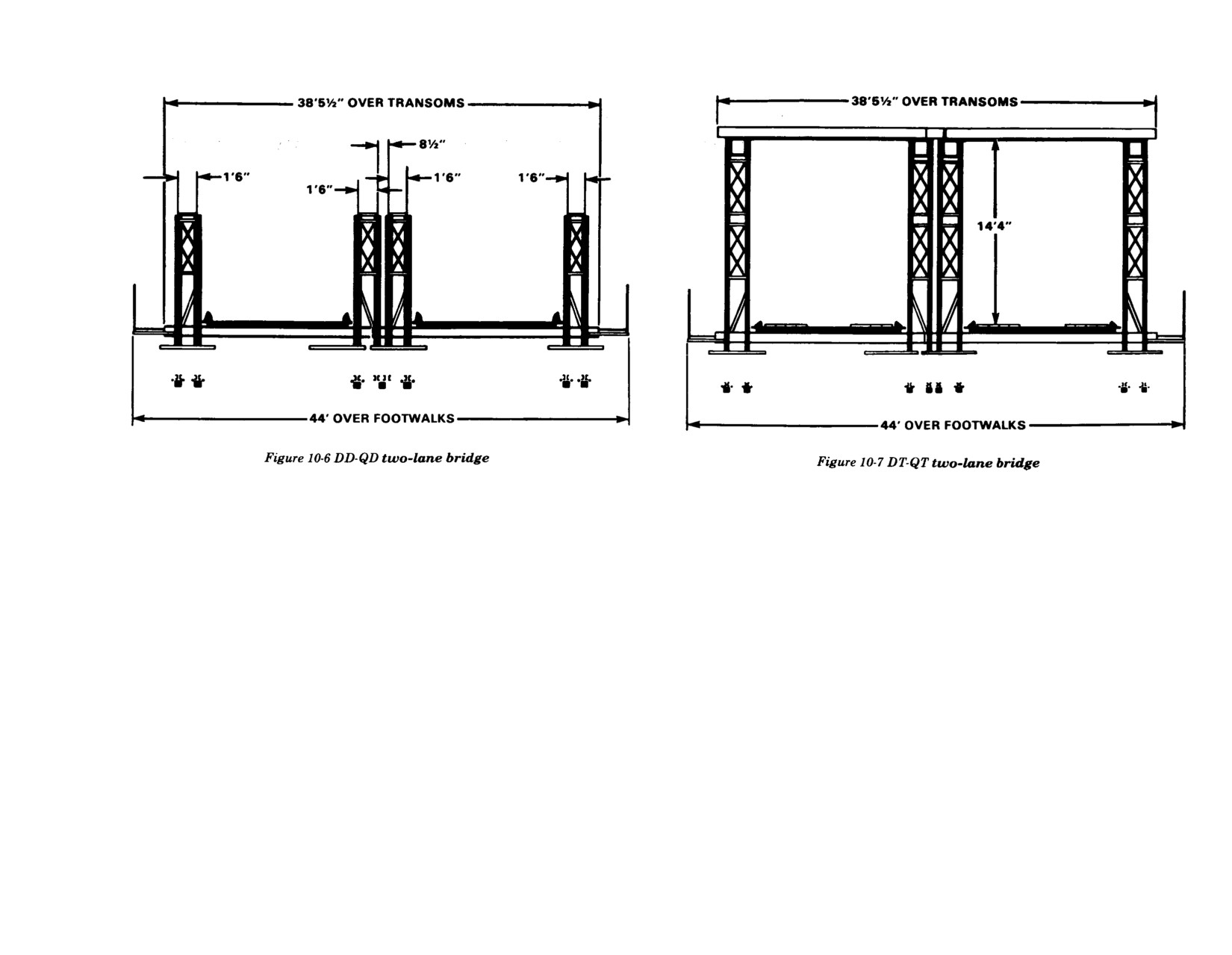
girder. Only the types of construction shown
in Figures 10-2 to 10-7 (pages 116 and 117)
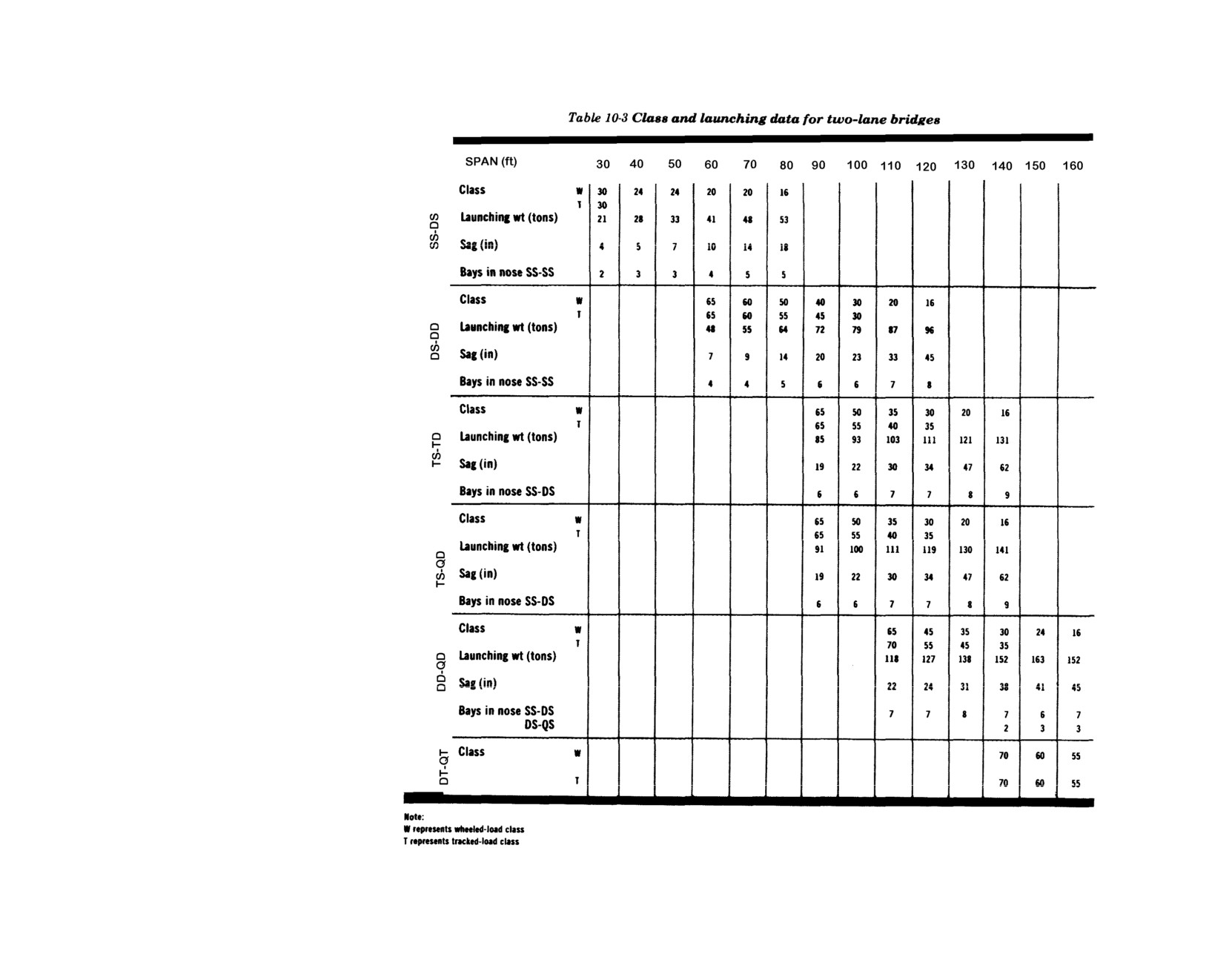
and listed in Table 10-1 are used. Table 10-2
gives maximum spans that can be assembled
and launched with standard equipment.
Longer spans can be launched by using
greased timbers or other expedients.
CLASS
The class and maximum spans of two-lane
bridges are the same as those of single-lane
bridges, with the same truss assembly as the
outer girders (Table 10-3, page 118).
LIMITATIONS
Two-lane through-type bridges have the fol-
lowing limitations:
114
FM 5-277
ASSEMBLY DETAILS
soms seated on the end posts and offset the
single/quadruple-double,
and
double-
The assembly of two-lane bridges differs
ramp transoms 2 1/4 inches (5.5 centimeters)
double/quadruple-double
bridges, noses
from single-lane assembly in several ways.
from the bridge centerline (Figure 10-9, page
normally consist of
single-single
outer
The first of these concerns transom seating
120).
girders and two
single-single
middle gir-
in
triple-single/triple-double
bridges. The
ders (Figure 10-11, page 121). However, all
spacing of trusses in the girders of this bridge
The number of bays and assembly of
girders in the last two nose bays of the
is normal with respect to one lane. With
launching noses is determined as follows:
140-foot (43 meters)
double-double/
respect to the other lane, however, the two
quadruple-double
and the last three nose
middle-girder trusses nearest that lane are
For
single -single/double-single
and
bays of the 150- (46.2 meters) and 160-foot
spaced at 8 1/2 inches (20.8 centimeters) instead
double-single/ double-double
bridges,
(49.2 meters)
double-double/quadruple-
of 1 foot 6 inches (44.1 centimeters). Accord-
noses consist of three
single-single
double
bridges are double-truss assembly.
ingly, transoms from that lane do not fit on
trusses. Assemble one completely braced
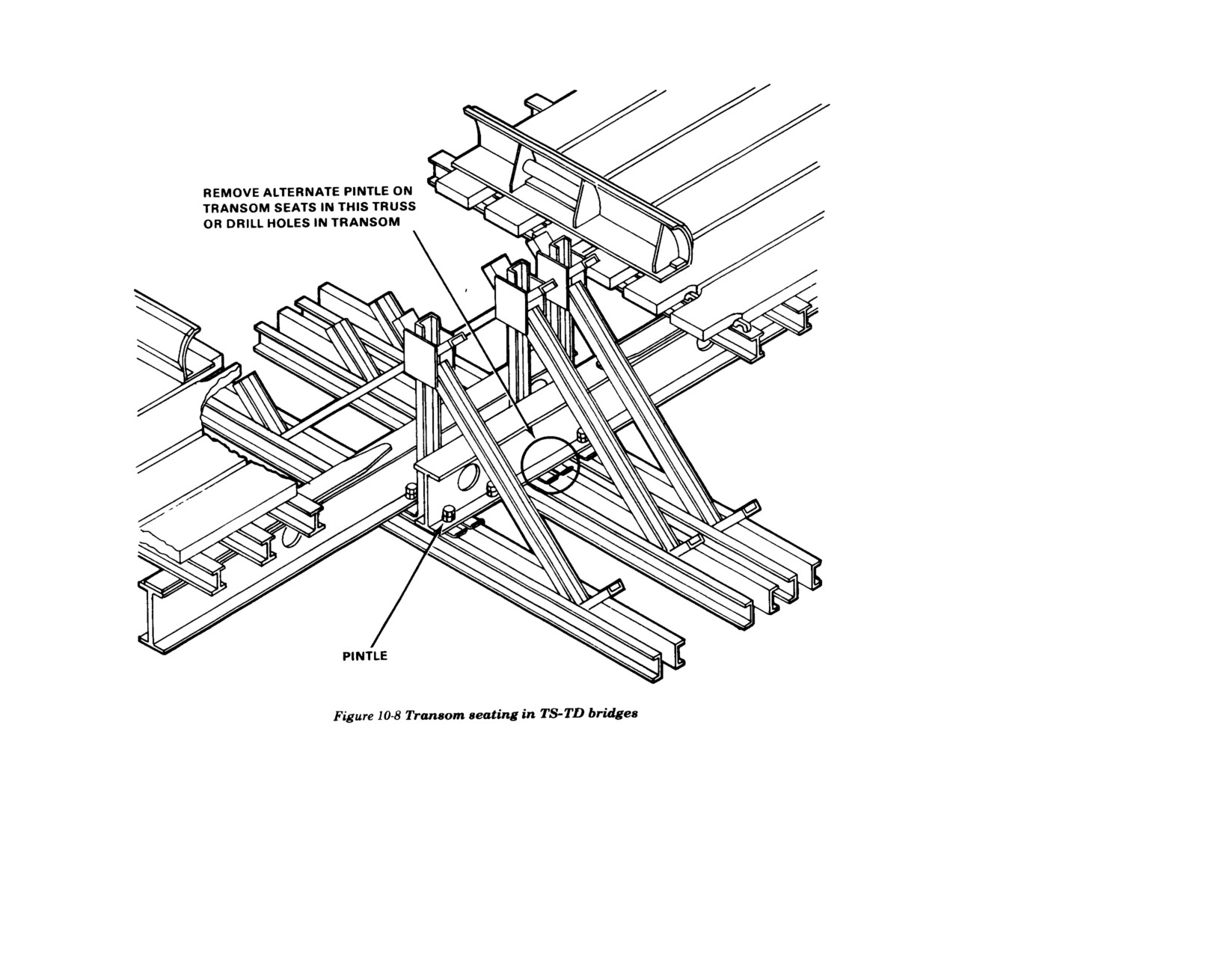
In all cases, place transoms in alternate
seating pintles of the center truss; these
nose of the required length for one lane.
seatings and brace the nose the same as
pintles must be removed or transoms drilled
For the second lane, add a single truss
for normal assembly. Transoms connect
(Figure 10-8, page 119).
and connect it to the middle truss by
the nose girders of the
triple-single/triple-
transoms overlapping the transoms of
double
bridge. However, the nose girders
Ramp clearance also differs. To provide clear-
the first lane. Add rakers to the second
of the
triple-single/quadruple-double
and
ance between transoms and ramps at the
lane, but omit sway bracing (Figure 10-10,
double-double/quadruple-double
bridges
ends of
single-single/double-single
and
double-
page 121).
cannot be connected because transoms
single/double-double
bridges, cut a 3 1/2- by
are not long enough except in
double-
4 1/2-inch (86 by 11 centimeters) notch in tran-
For
triple- single/triple-double, triple-
single/quadruple-single
nose bays.
115
FM 5-277
116
FM 5-277
117
FM 5-277
118
FM 5-277
119