C2, ARMY FM 10-500-71 RIGGING THE FAMILY OF MEDIUM TACTICAL VEHICLES (FMTV) (DECEMBER 2003) - page 9
C2, FM 10-500-71/TO 13C7-6-141
23
24
25
26
23
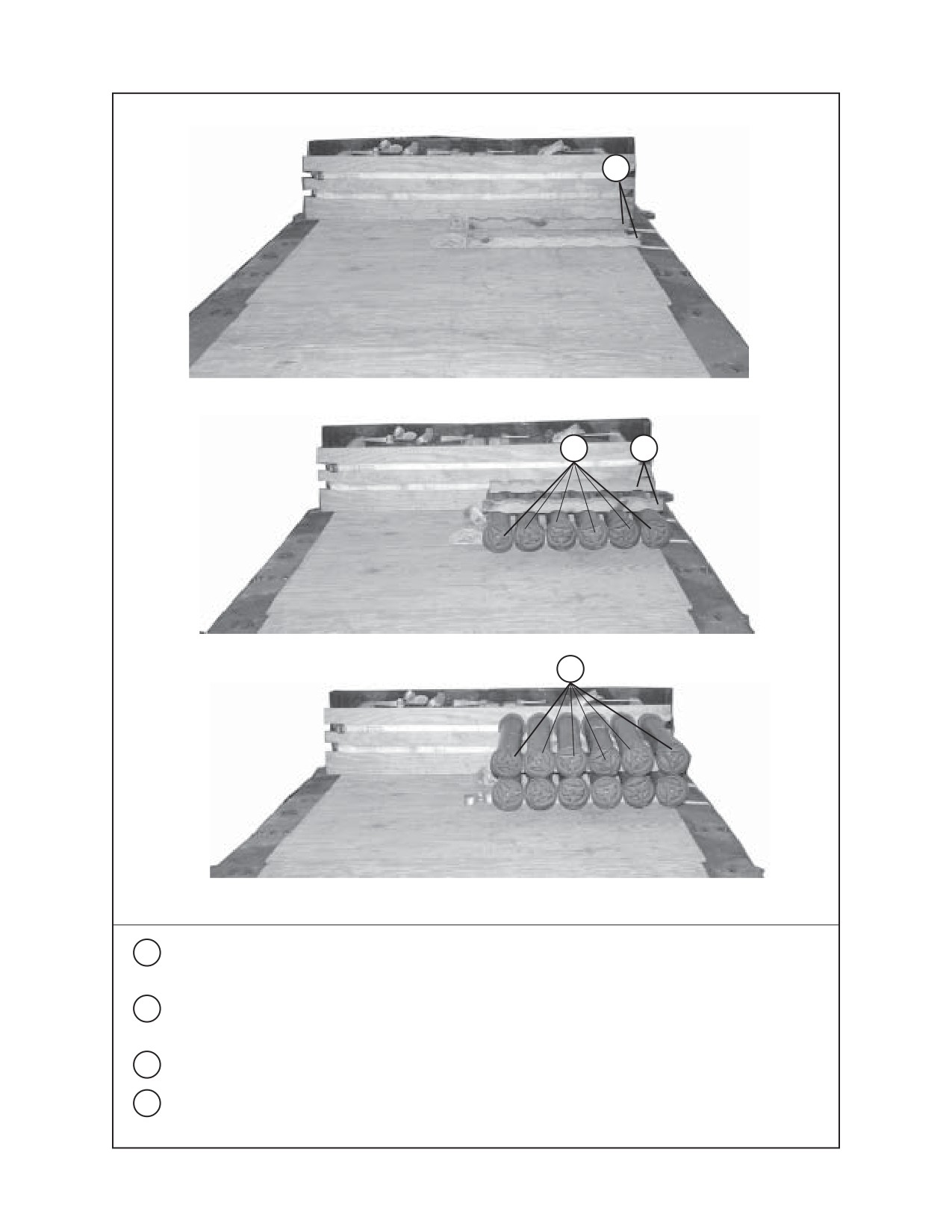
Position the precut green bag canister stacking lumber on the lashings. Ensure that there is a 1-inch
overhang on the 79-inch edge of the plywood.
24
Position six M3A1 green bag canisters (long) on the two pieces of precut green bag canisters stacking
lumber.
25
Position two pieces of precut green bag canisters on top of the six green bag canisters.
26
Position six M3A1 green bag canisters (long) on the two pieces of precut green bag canisters stacking
lumber.
Figure 5-12. Trailer accompanying load stowed (Continued)
5-55
C2, FM 10-500-71/TO 13C7-6-141
27
28
29
27
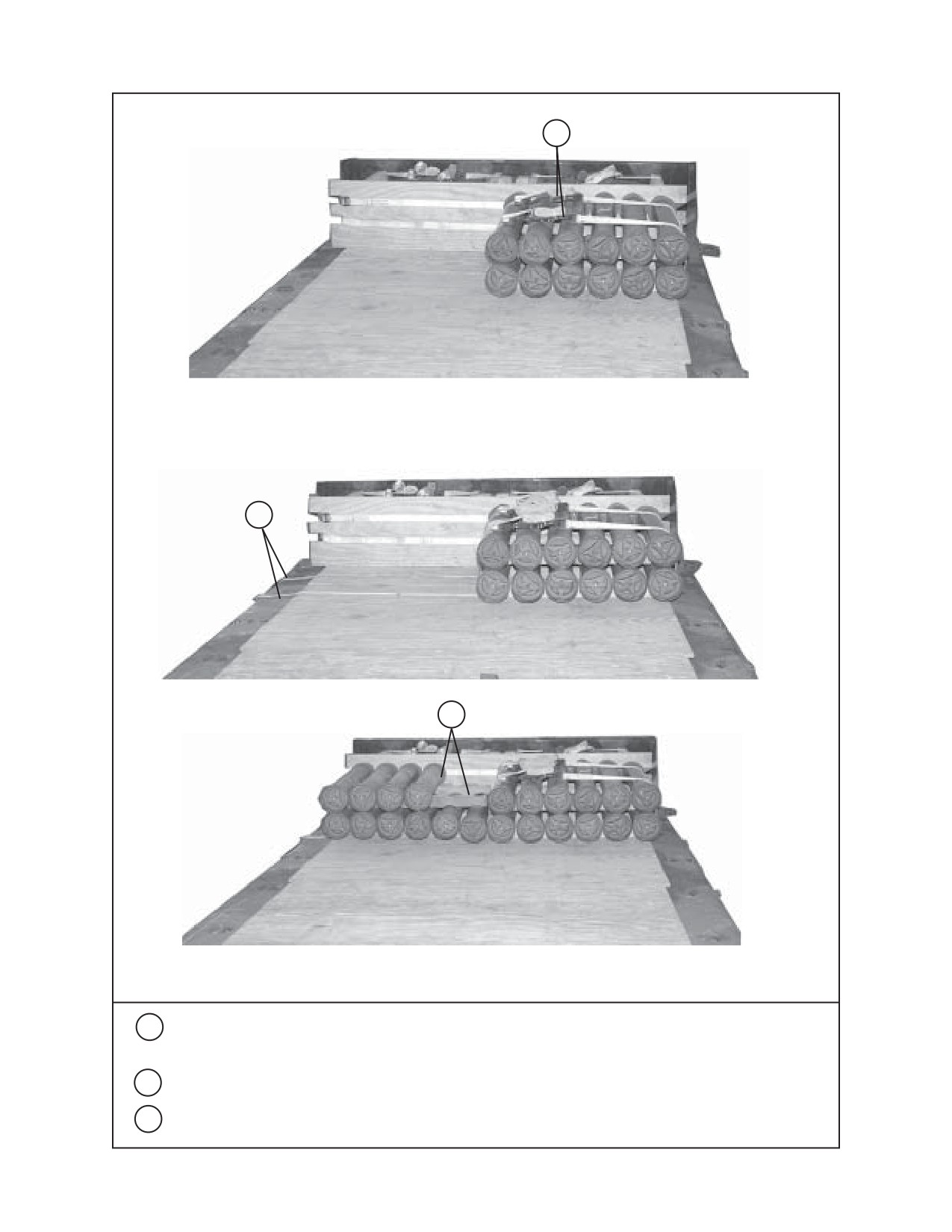
Lash the M3A1 green bag canisters (long) with positioned lashings and secure with a D-ring and
loadbinder.
28
Repeat steps 20 through 25 on the left side.
29
Position four M3A1 green bag canisters (long) leaving the two inside spaces empty.
Figure 5-12. Trailer accompanying load stowed (Continued)
5-56
C2, FM 10-500-71/TO 13C7-6-141
30
31
32
33
30
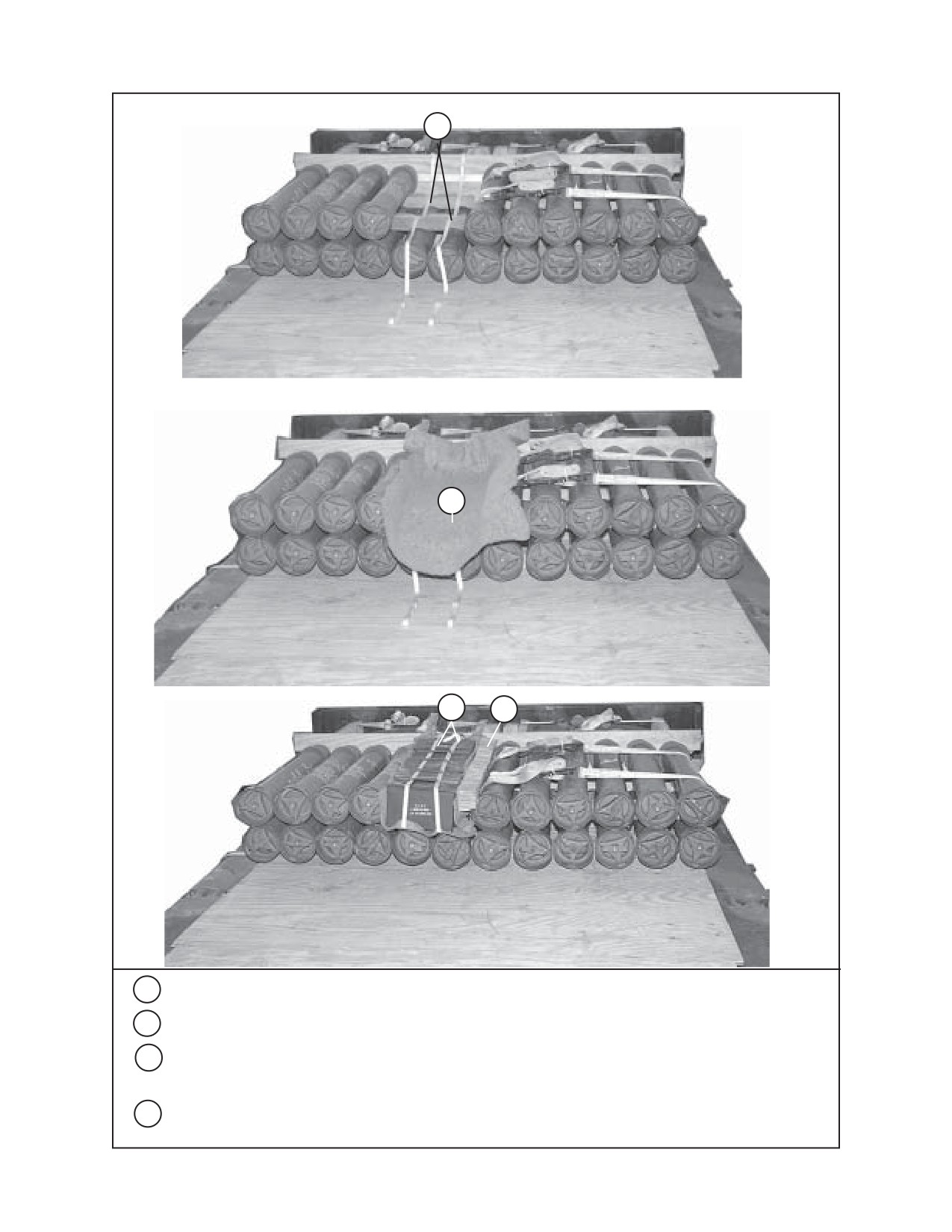
Position two 120-inch lengths of 1/2-inch tubular nylon webbing across the empty rack spaces.
31
Place a 36- by 50-inch piece of felt on top of the two lengths.
32
Position six fuse ammo boxes on the felt. Secure with the positioned 1-inch tubular nylon webbing
through the carrying handles.
33
Fill the empty space between the felt and the trailer's right side of the M3A1 green bag canisters stack with
pieces of honeycomb.
Figure 5-12. Trailer accompanying load stowed (Continued)
5-57
C2, FM 10-500-71/TO 13C7-6-141
34
35
36
37
34
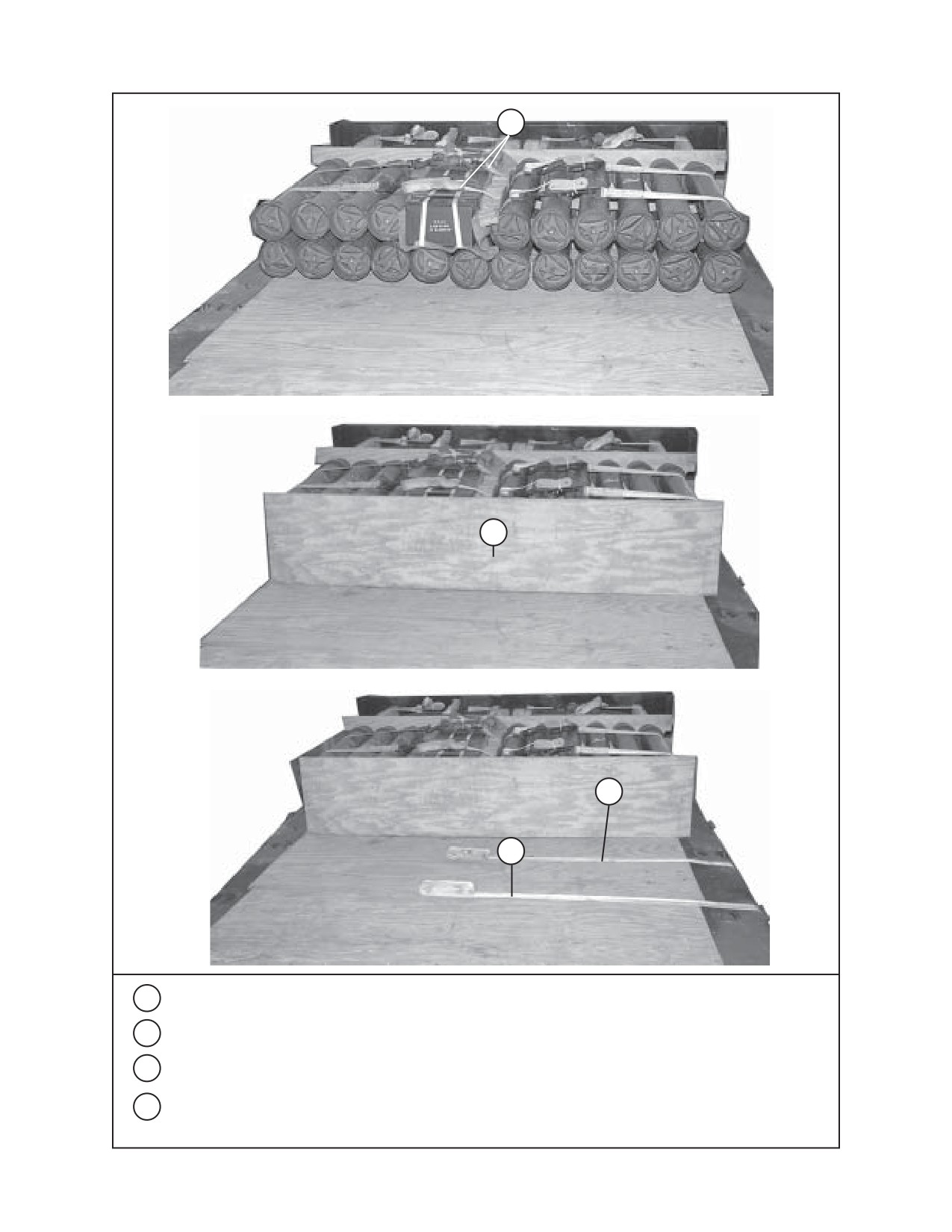
Fill the empty space with pieces of honeycomb and secure with a D-ring and loadbinder.
35
Place a 17-by 82- by ¾-inch piece of plywood against the rear of the green bag canister racks.
36
Position a 15-foot lashing 10 inches from the 17- by 82-inch plywood on the right side of the trailer bed.
37
Position a second 15-foot lashing 16 inches from the lashing previously positioned. Ensure the lashings
D-ring is 36 inches over the edge of the trailer.
Figure 5-12. Trailer accompanying load stowed (Continued)
5-58
C2, FM 10-500-71/TO 13C7-6-141
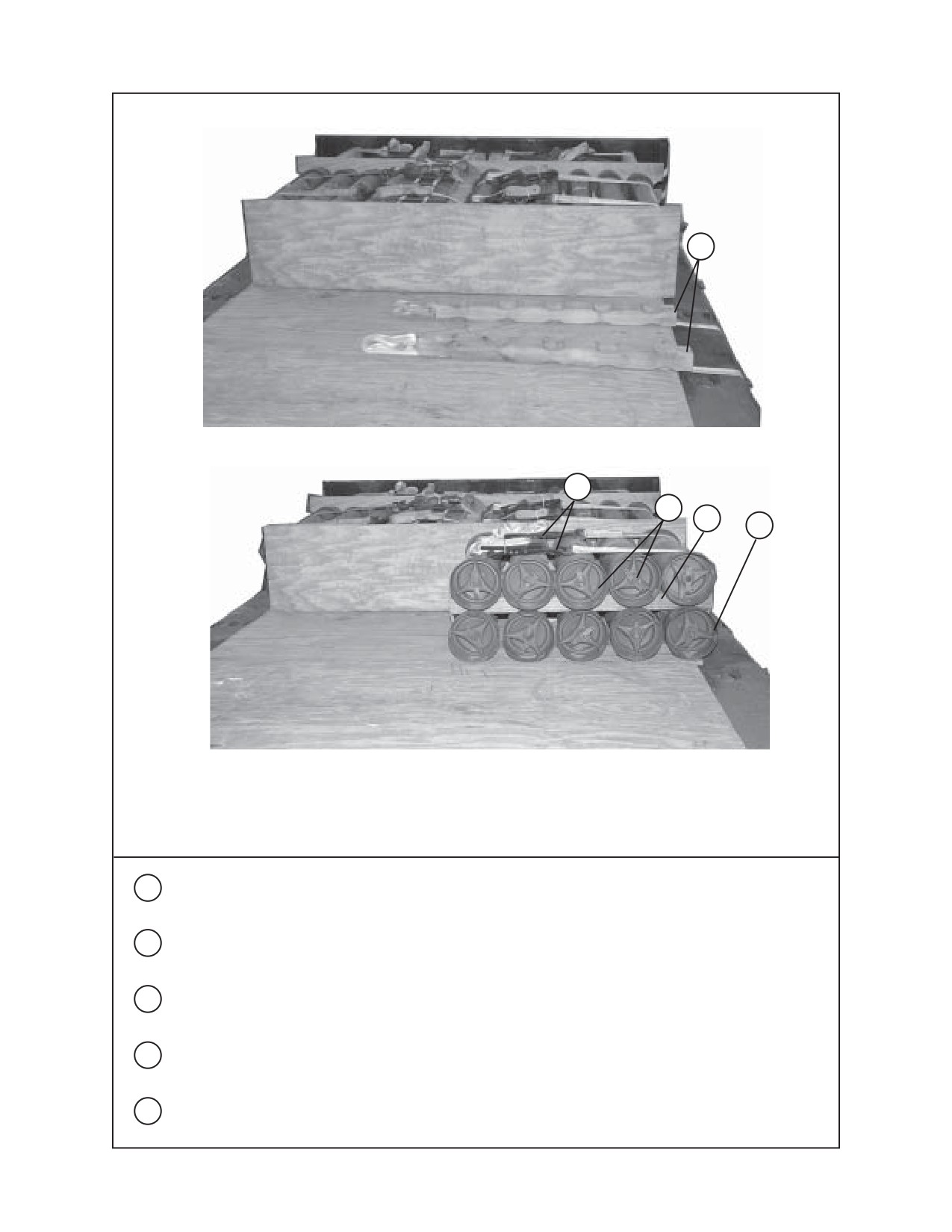
38
42
41
40
39
38
Position the precut white bag canister stacking lumber on the lashings. Ensure that there is a 1-inch
overhang on the 79-inch edge of the plywood.
39
Position five M4A2 white bag canisters (short) on top of the two pieces of precut white bag canister
stacking lumber.
40
Position two pieces of precut white bag canisters stacking lumber on top of the five M4A2 white bag
canisters (short).
41
Position five M4A2 white bag canisters (short) on top of the two pieces of precut white bag canister
stacking lumber.
42
Lash the M4A2 white bag canisters (short) with positioned lashings and secure with a D-ring and
loadbinder.
Figure 5-12. Trailer accompanying load stowed (Continued)
5-59
C2, FM 10-500-71/TO 13C7-6-141
FRONT
LEFT
RIGHT
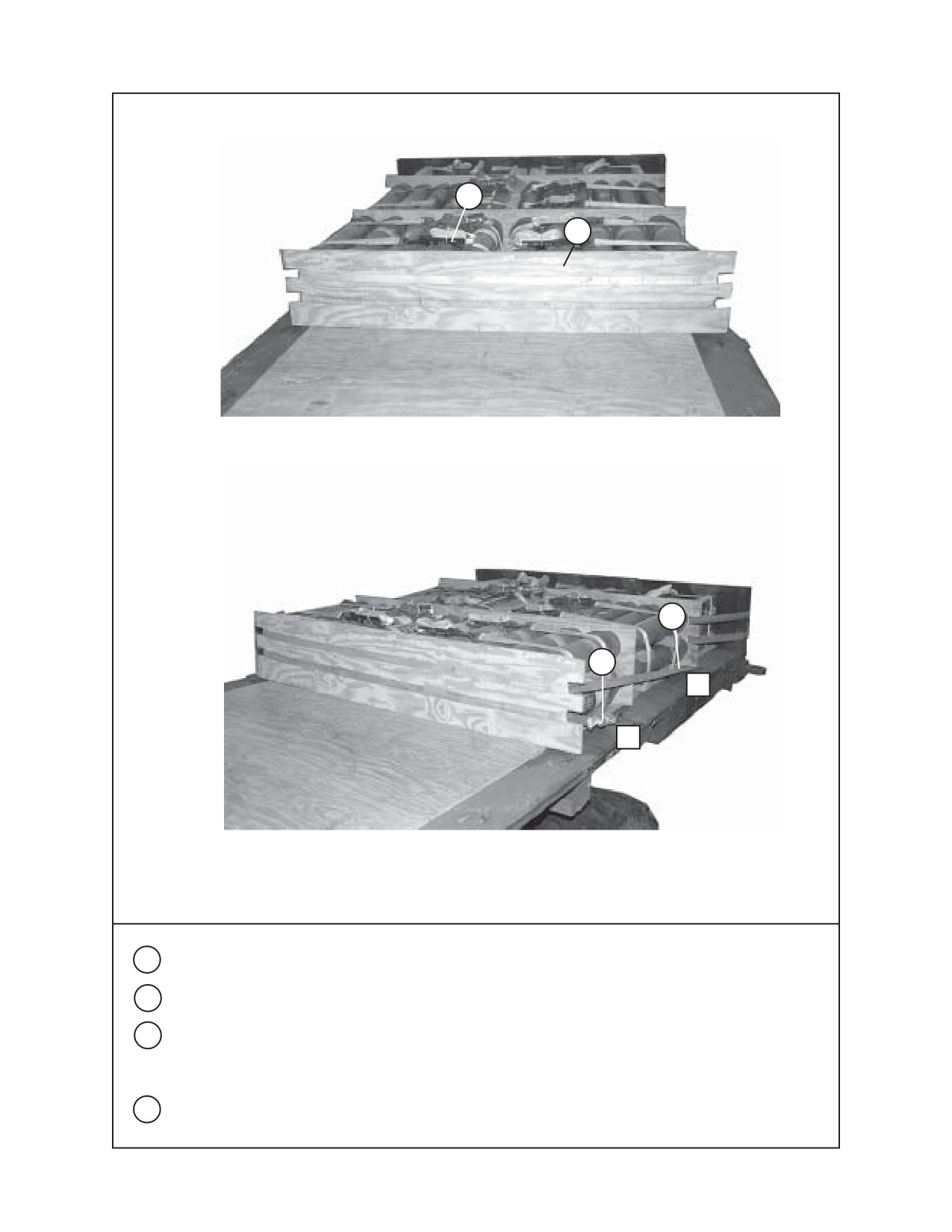
43
44
FRONT
LEFT
45
46
B1
D1
RIGHT
43
Repeat steps 36 through 42 on the trailer's left side.
44
Place the second endboard from Figure 5-12, step 13, against the white canister racks.
45
Route a 15-foot lashing through its own D-ring on trailer bed tiedown ring B. Repeat for trailer bed tiedown
ring B1 and route it through the upper cutouts of the endboard. Secure with a loadbinder together on the
left side.
46
Route a 15-foot lashing through its own D-ring on trailer bed tiedown ring D and route it through the lower
cutouts of the endboard. Secure with a loadbinder to trailer bed tiedown ring D1.
Figure 5-12. Trailer accompanying load stowed (Continued)
5-60
C2, FM 10-500-71/TO 13C7-6-141
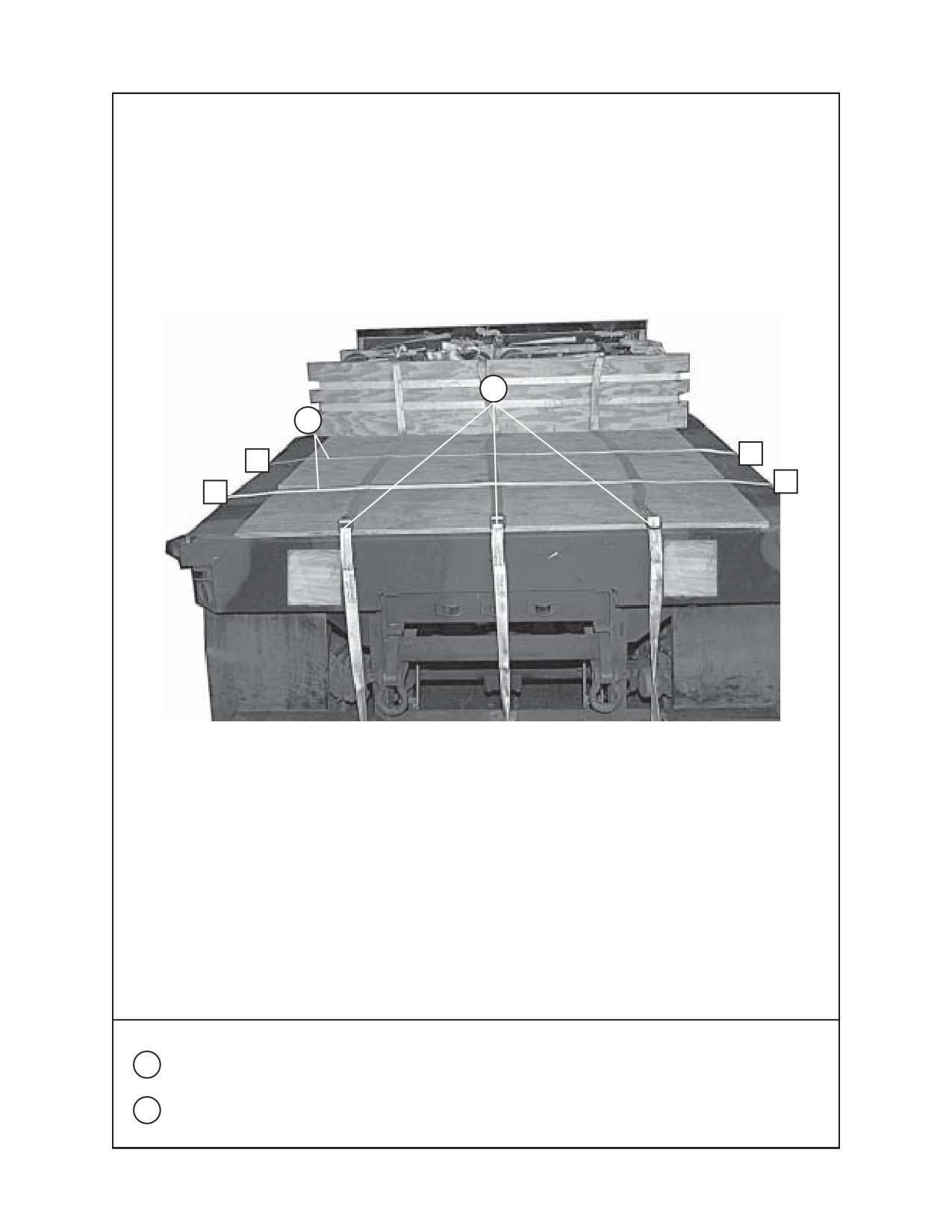
48
47
F1
F
G1
G
47
Position three 30-foot lashings lengthwise to the rear of cell #2 with the D-rings at the rear edge of the
plywood.
48
Position two 15-foot lashings across the bed approximately at F, F1, G, and G1 bed-rings.
Figure 5-12. Trailer accompanying load stowed (Continued)
5-61
C2, FM 10-500-71/TO 13C7-6-141
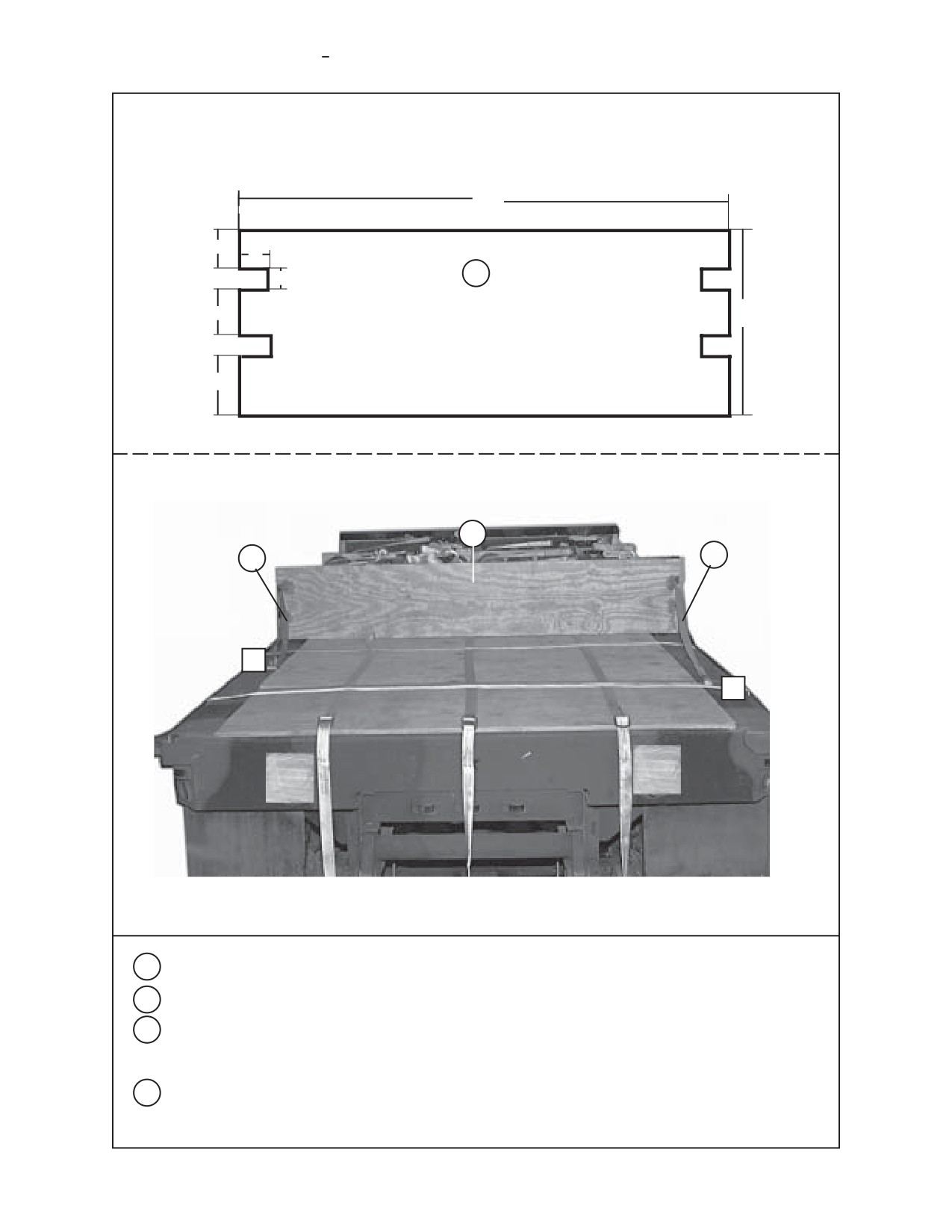
Notes: 1. This drawing is not drawn to scale.
2. All measurements are given in inches.
93"
4"
3"
49
2"
3/4" Plywood
17"
4"
5"
Endboard for cell #3
50
52
51
F
G1
49
Construct three endboards as shown in diagram above with 2- by 3-inch deep cutouts.
50
Place an endboard against cell #2.
51
Route a 15-foot lashing through its own D-ring on trailer bed tiedown ring F and through the lower cutouts
of the endboard.
Note: Do NOT tighten loadbinder at this time. Step 64 will complete this step.
52
Route a 15-foot lashing through its own D-ring on trailer bed tiedown ring G1 and through the upper cutouts
of the endboard.
Note: Do NOT tighten loadbinder at this time. Step 65 will complete this step.
Figure 5-12. Trailer accompanying load stowed (Continued)
5-62
C2, FM 10-500-71/TO 13C7-6-141
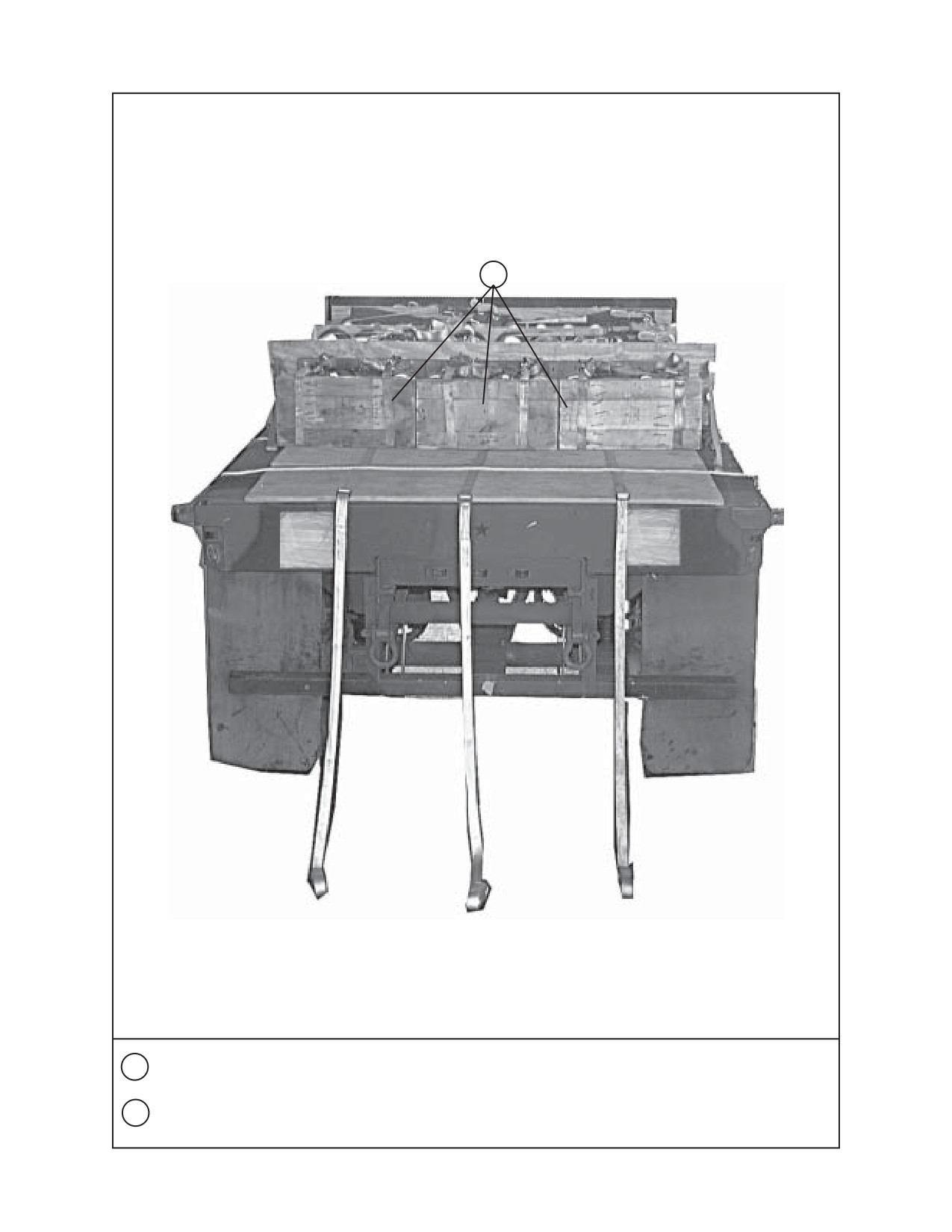
54
53
Prepare three M107 HE racks according to Figure 5-12, steps 7 through 10. Remove footers from
shipping racks base.
54
Position the three M107 HE racks top toward front of trailer centered and against the endboard.
Figure 5-12. Trailer accompanying load stowed (Continued)
5-63
C2, FM 10-500-71/TO 13C7-6-141
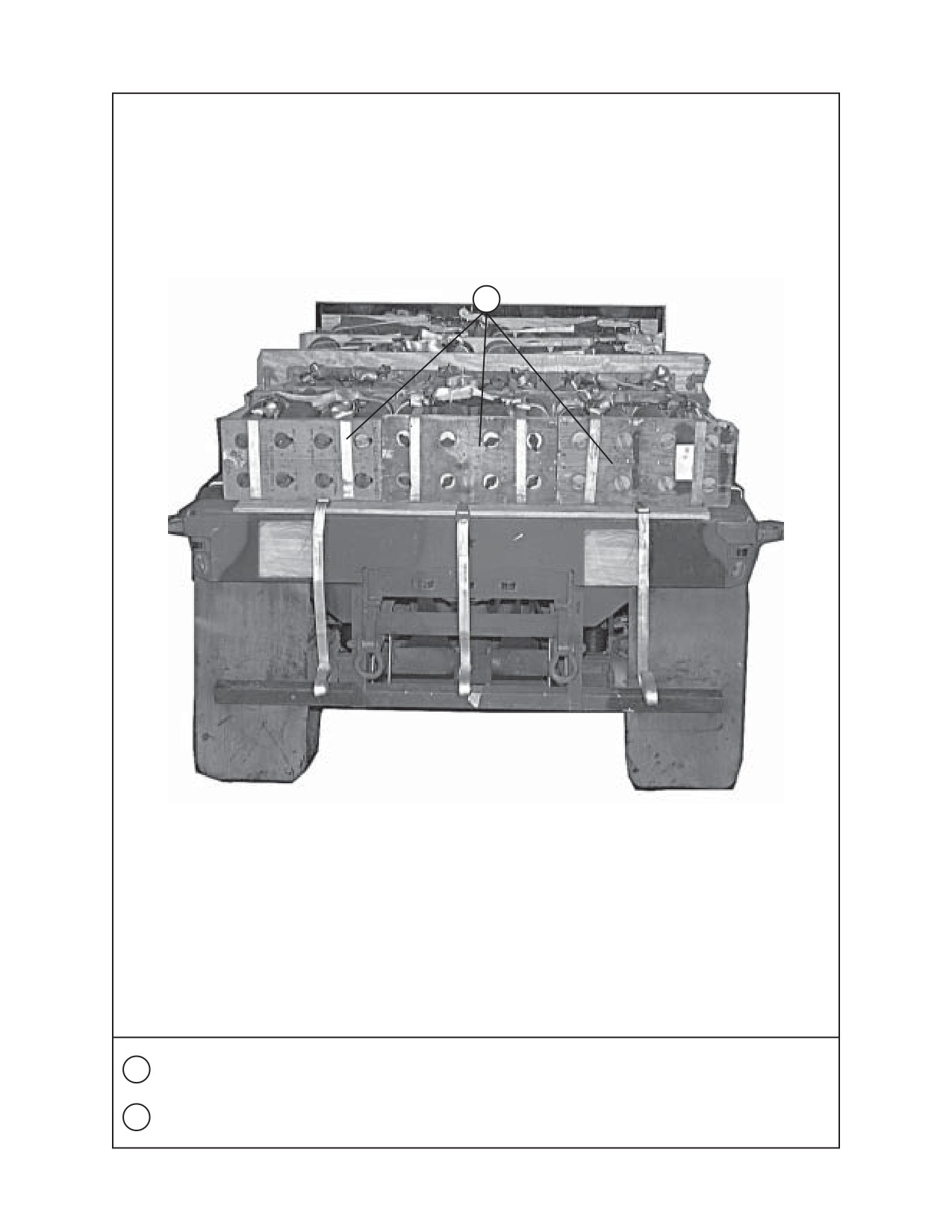
56
55
Prepare three M483A1 racks according to Figure 5-12, steps 7 through 10. Remove footers from shipping
racks base.
56
Position the three M483A1 racks with footers against the M107 HE racks .
Figure 5-12. Trailer accompanying load stowed (Continued)
5-64
C2, FM 10-500-71/TO 13C7-6-141
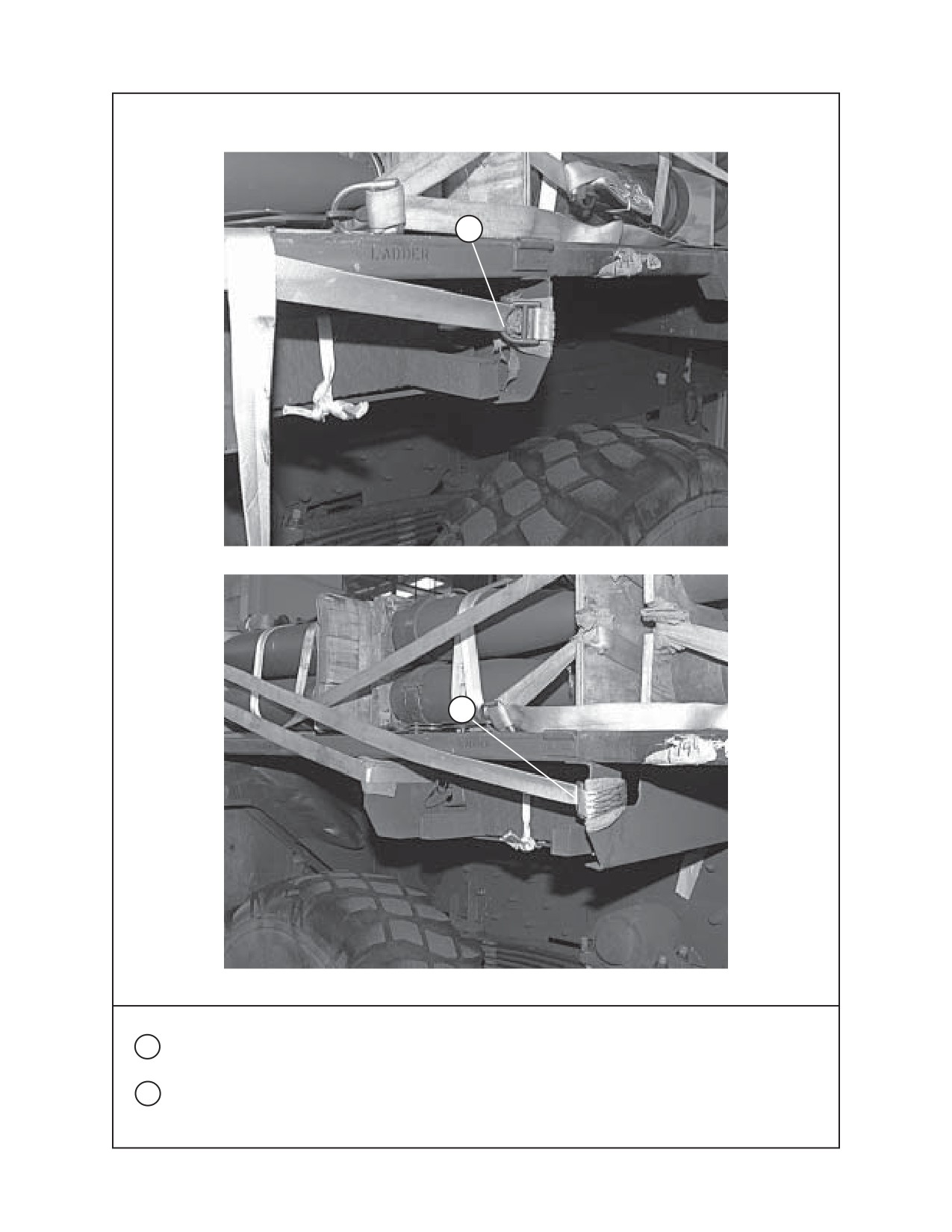
57
58
57
Route a 15-foot lashing through hole in front of the ladder frame on the right side and back through it's own
D-ring.
58
Route a 15-foot lashing through hole in front of the ladder frame on the left side and back through it's own
D-ring.
Figure 5-12. Trailer accompanying load stowed (Continued)
5-65
C2, FM 10-500-71/TO 13C7-6-141
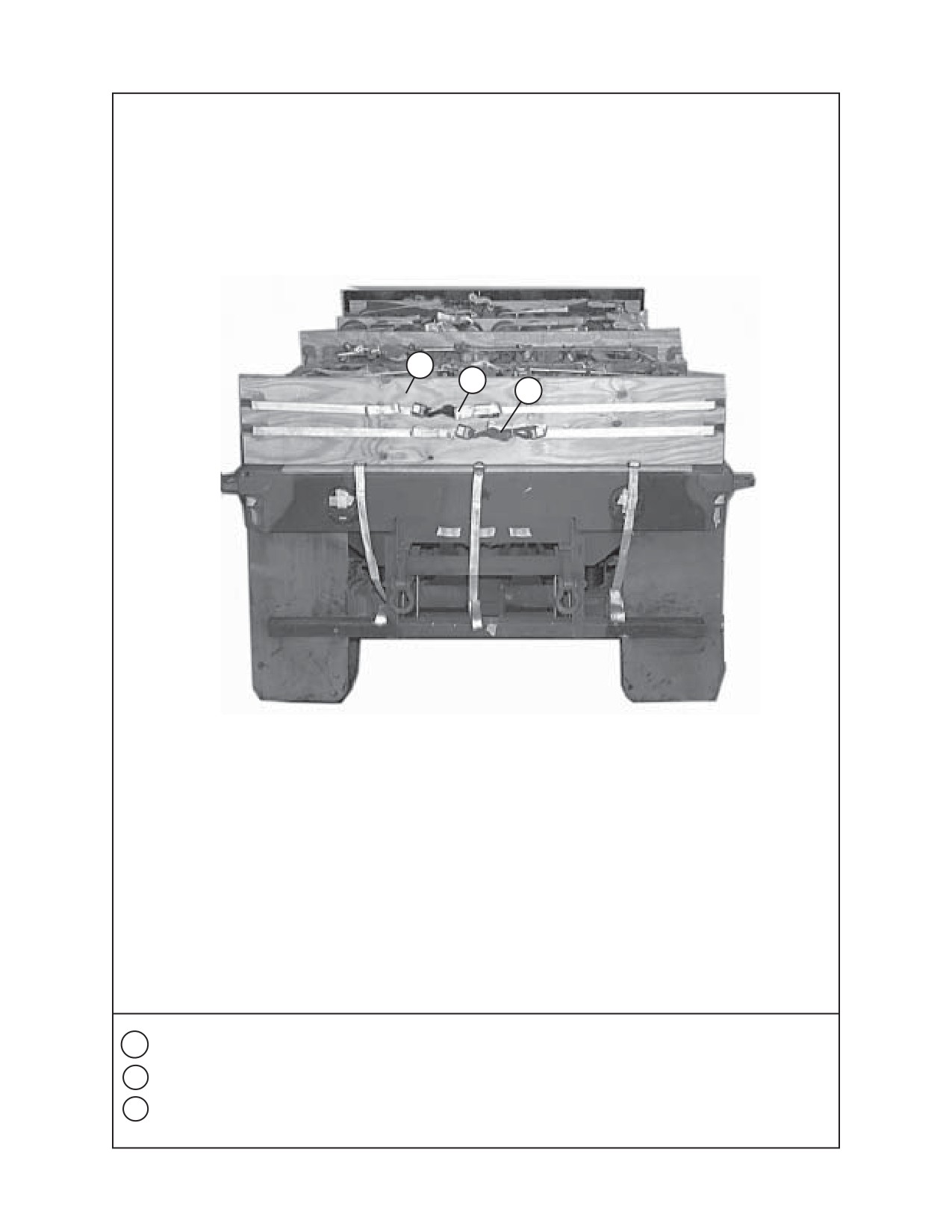
59
60
61
59
Place two endboards from step 49, to the rear and against cell #3.
60
Route both lashings through the upper cutouts of the rear endboards and secure with loadbinder in the rear.
61
Route a 30-foot lashing to the inside of the rear ladder frame and through the lower cutouts of the rear
endboards. Secure with loadbinder in the rear.
Figure 5-12. Trailer accompanying load stowed (Continued)
5-66
C2, FM 10-500-71/TO 13C7-6-141
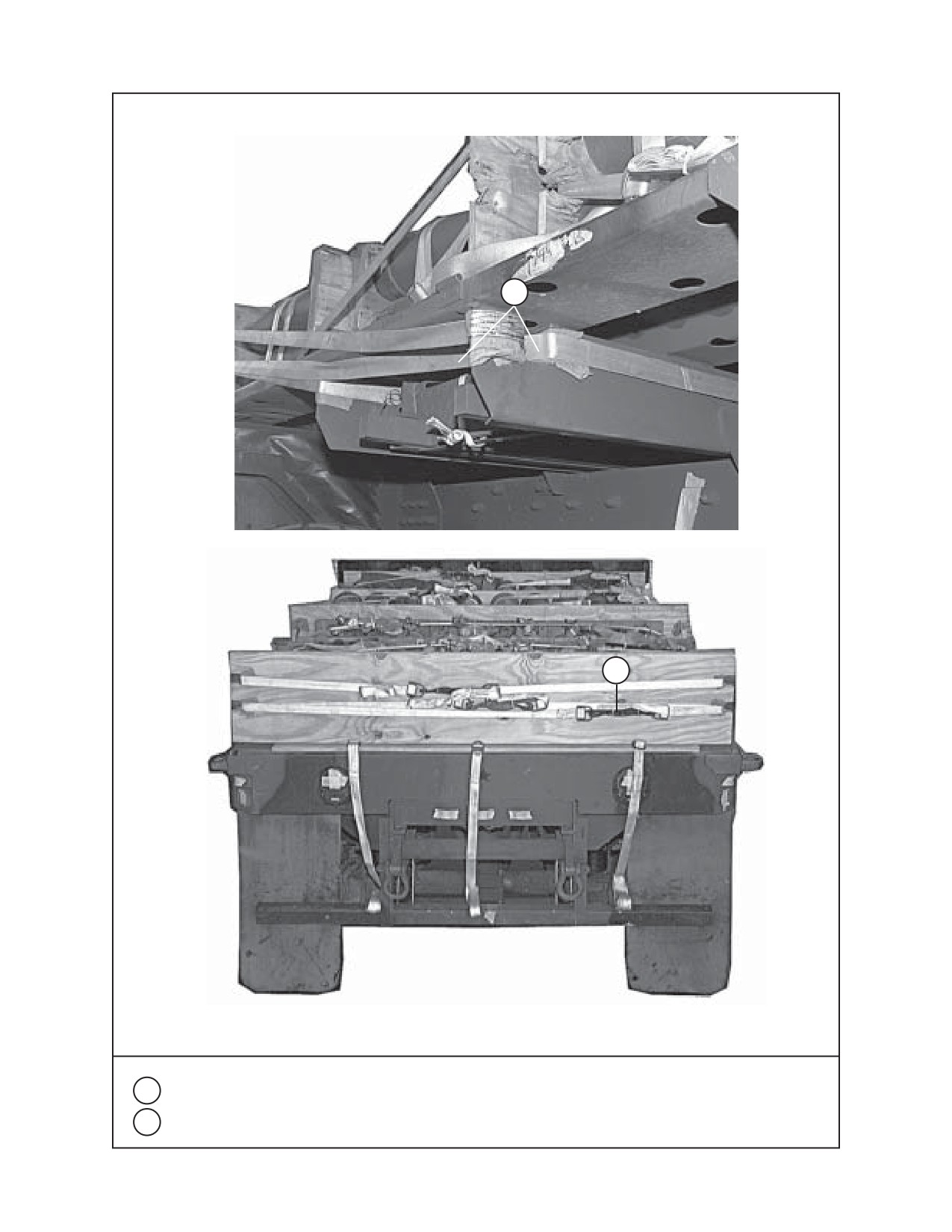
62
63
62
Route a 30-foot lashing to the outside of the front ladder frame through the holes.
63
Route the lashing though the lower cutouts of the rear endboards. Secure with loadbinder in the rear.
Figure 5-12. Trailer accompanying load stowed (Continued)
5-67
C2, FM 10-500-71/TO 13C7-6-141
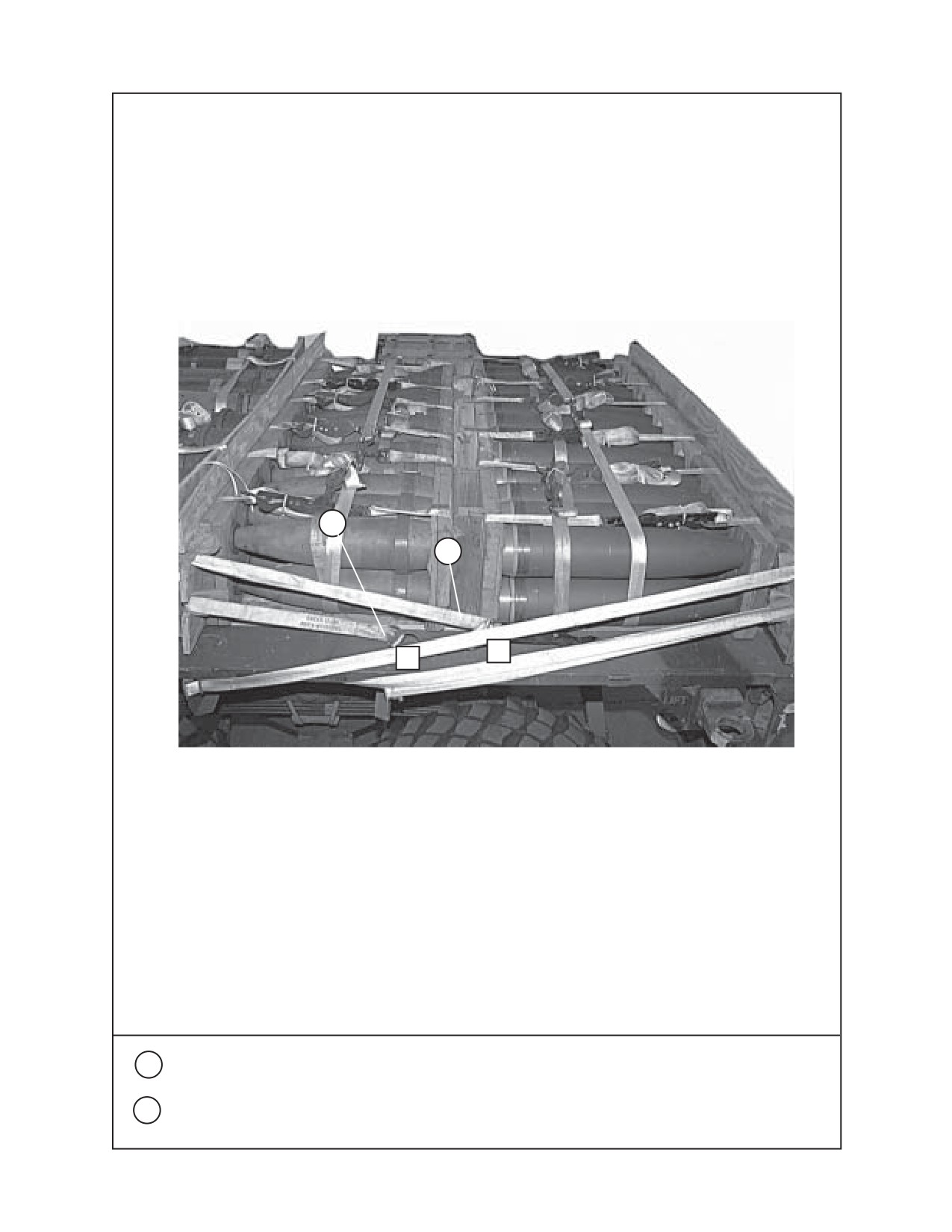
64
65
G
F
64
Secure the lashings with a loadbinder and D-rings from step 51, Figure 5-12, F trailer bed tiedown ring to F1
trailer bed tiedown ring.
65
Secure the lashings with a loadbinder and D-rings from step 52, Figure 5-12, G trailer bed tiedown ring to G1
trailer bed tiedown ring.
Figure 5-12. Trailer accompanying load stowed (Continued)
5-68
C2, FM 10-500-71/TO 13C7-6-141
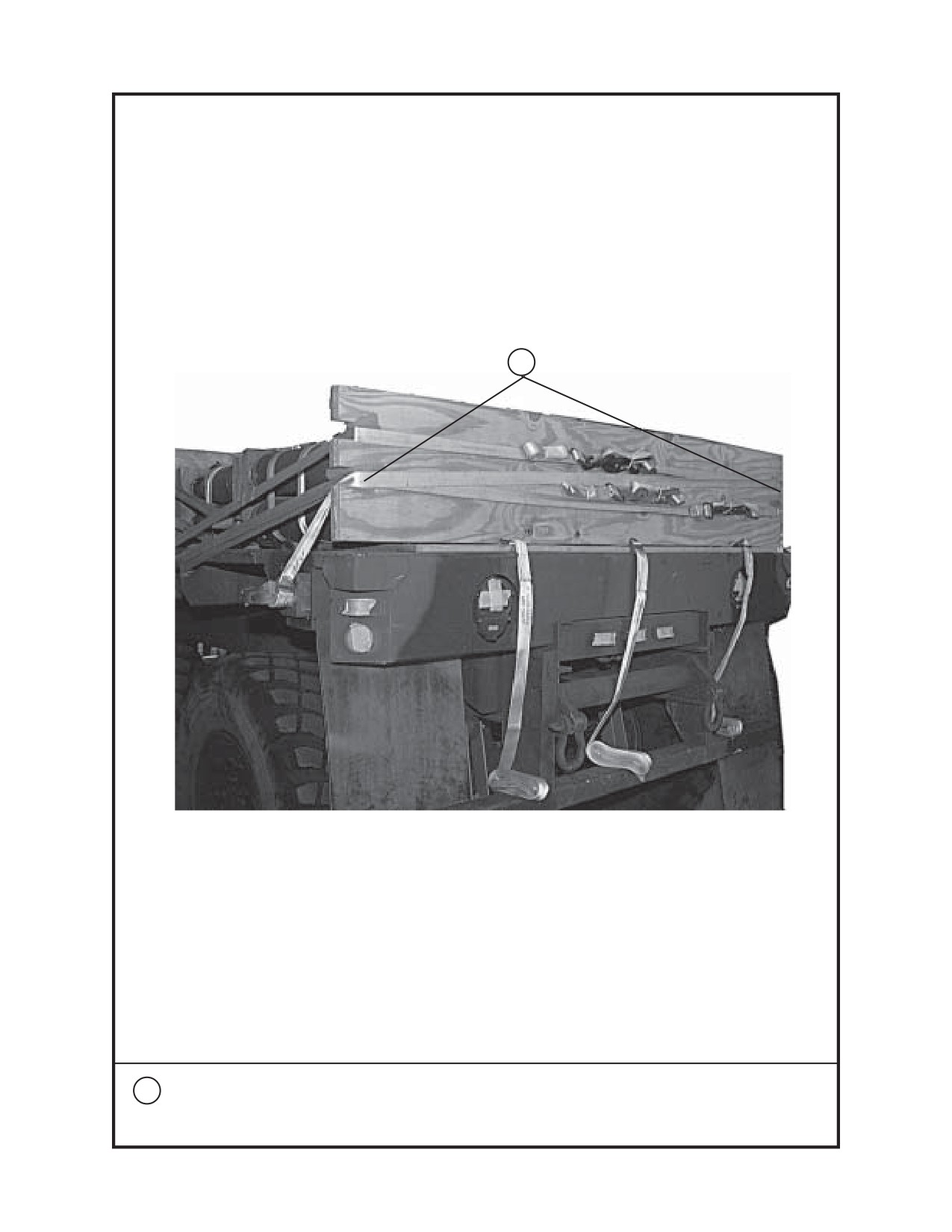
66
66
Route a lashing through the trailer rear left sling guide and back through it's own D-ring, through the lower
left cutout and through the right upper cutout of the rear endboards.
Figure 5-12. Trailer accompanying load stowed (Continued)
5-69
C2, FM 10-500-71/TO 13C7-6-141
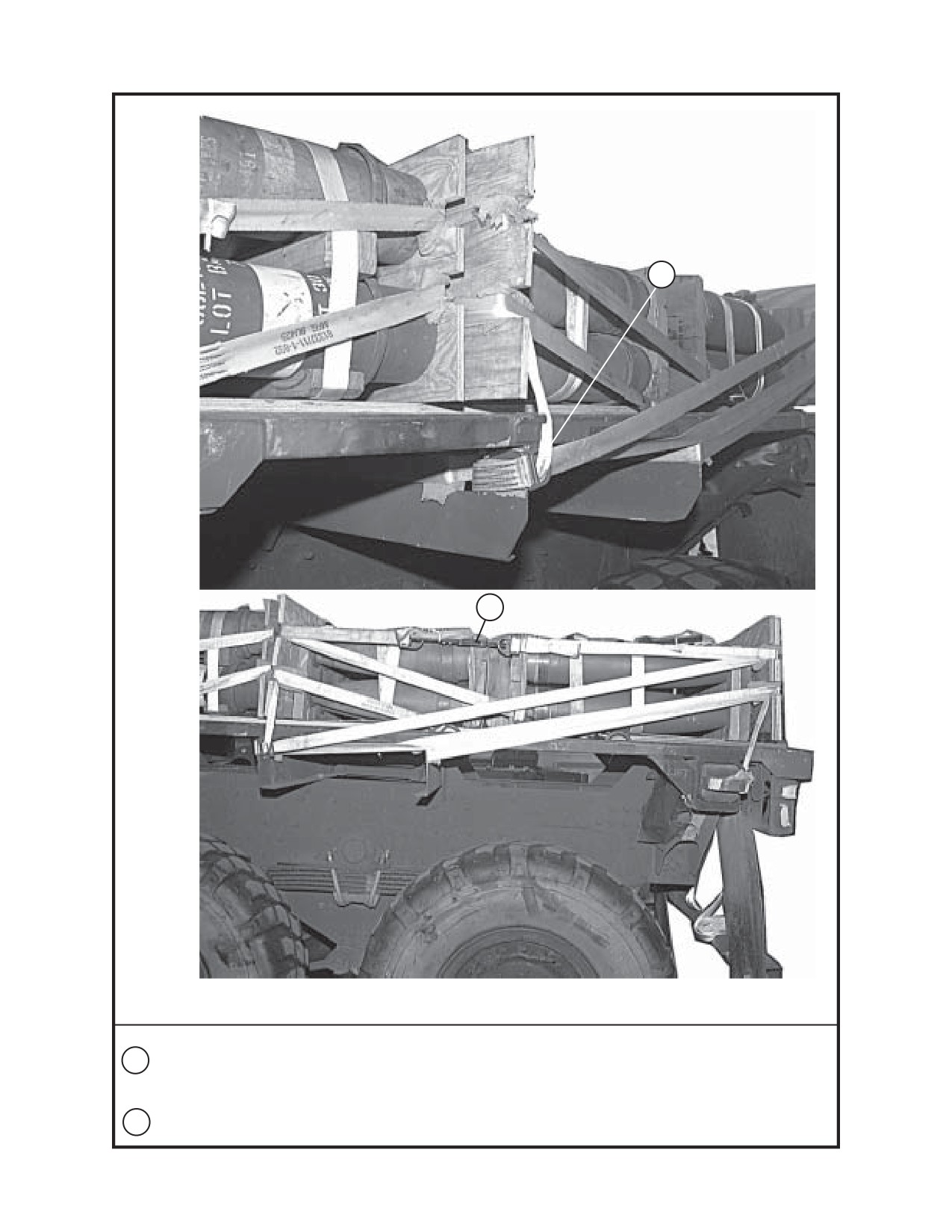
67
68
67
Route a 15-foot lashing through the hole in front of the ladder frame on the left side and back through it's
own D-ring, through the lower left cutout and through the right upper cutout of the front endboard. Secure
with loadbinder to the lashing from step 66 on the right side.
68
Repeat steps 66 and 67 on the opposite sides of the trailer.
Figure 5-12. Trailer accompanying load stowed (Continued)
5-70
C2, FM 10-500-71/TO 13C7-6-141
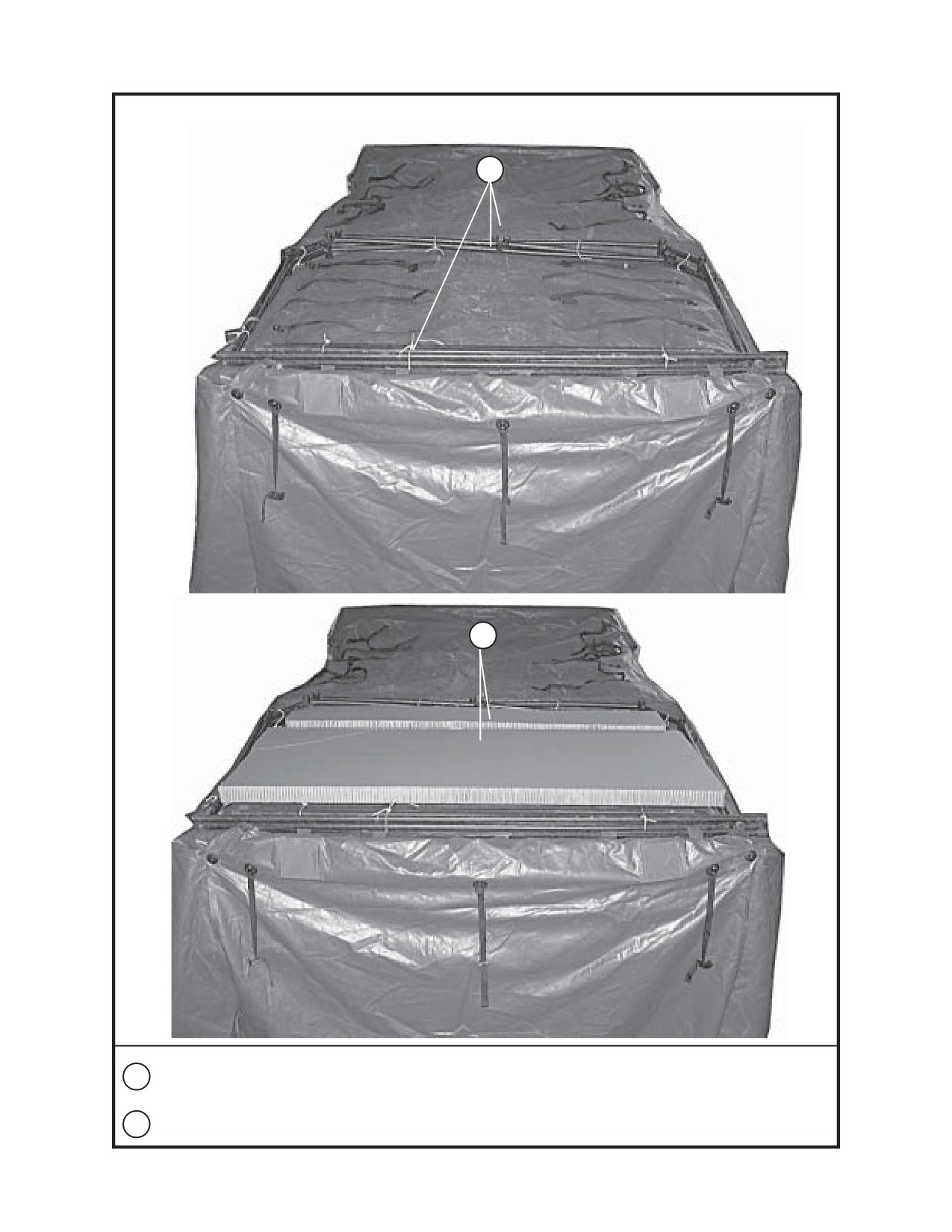
69
70
69
Place the cargo cover over the trailer with the bows, spreaders and poles on top of the cargo cover. Secure
with type III nylon cord on cell #3.
70
Fill the empty space with honeycomb.
Figure 5-12. Trailer accompanying load stowed (Continued)
5-71
C2, FM 10-500-71/TO 13C7-6-141
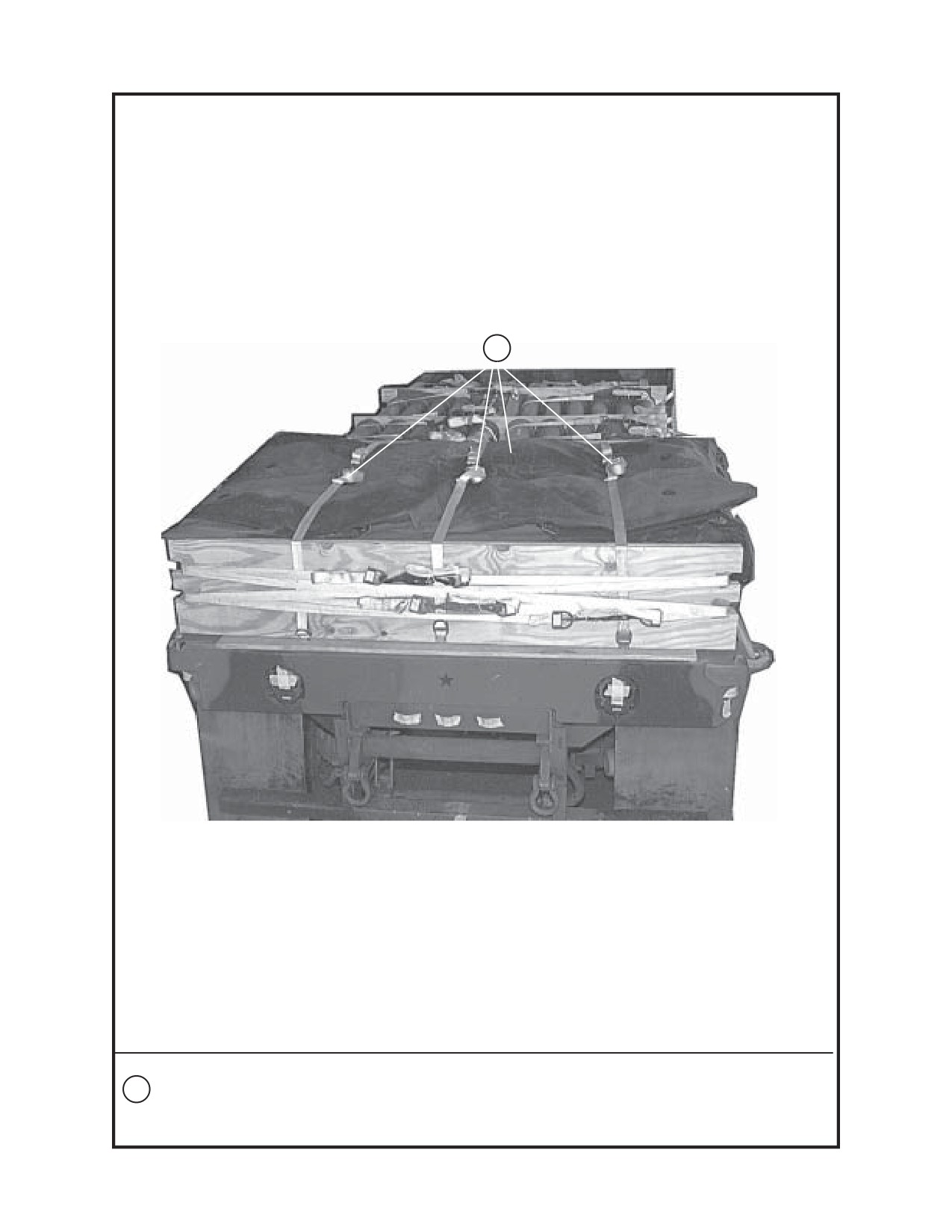
71
71
Fold the cargo cover over the bows, spreaders, poles and honeycomb on cell #3. Secure the three pre-
positioned 30-foot lashings positioned in step 47 on top with loadbinders.
Figure 5-12. Trailer accompanying load stowed (Continued)
5-72
C2, FM 10-500-71/TO 13C7-6-141
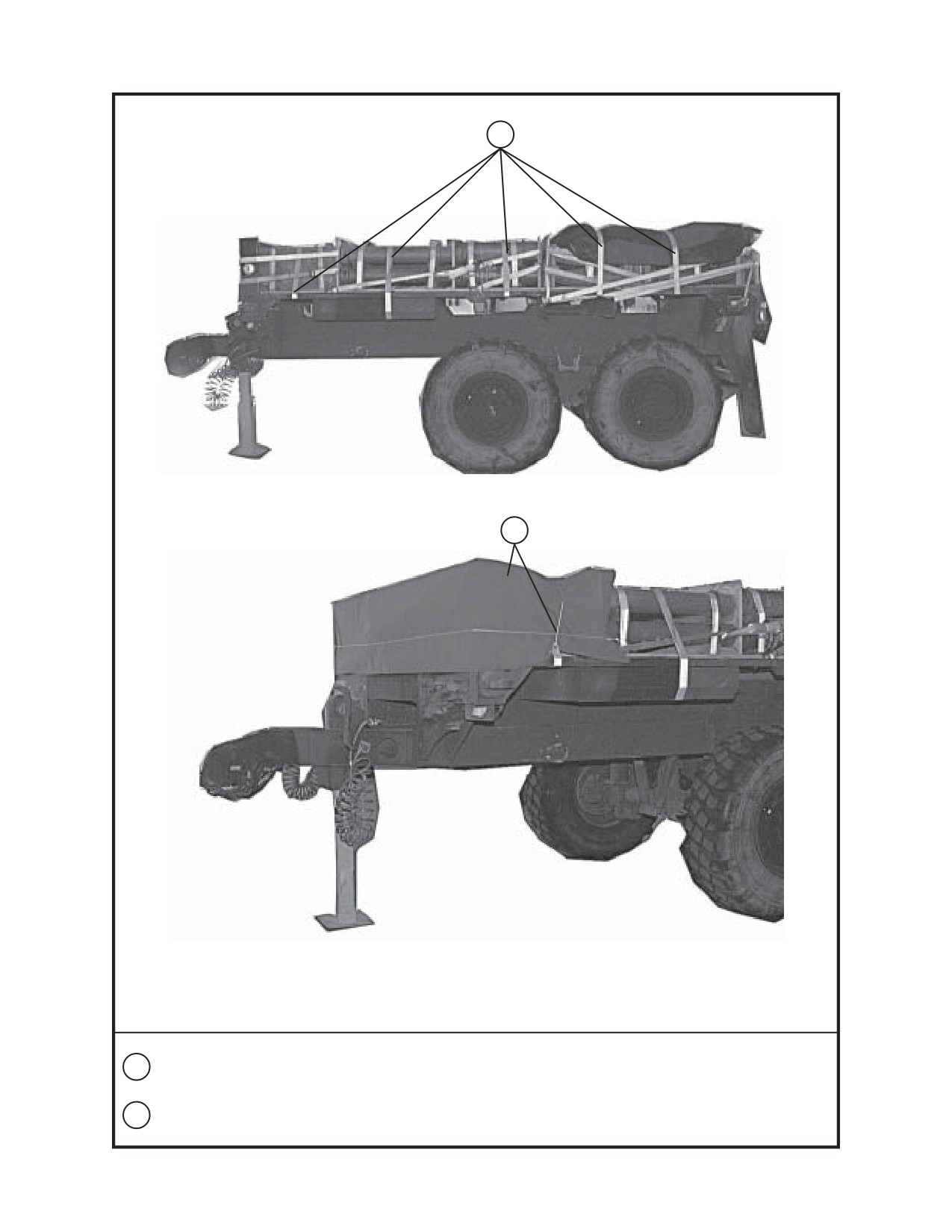
72
73
72
Route five 30-foot lashings under the trailer bed and over the racks of each cell. Secure each with a load-
binder on top.
73
Cut and place a 60- by 133-inch piece of coated cloth over cell #1 and the trailer bed front. Secure with type
III nylon cord.
Figure 5-12. Trailer accompanying load stowed (Continued)
5-73
C2, FM 10-500-71/TO 13C7-6-141
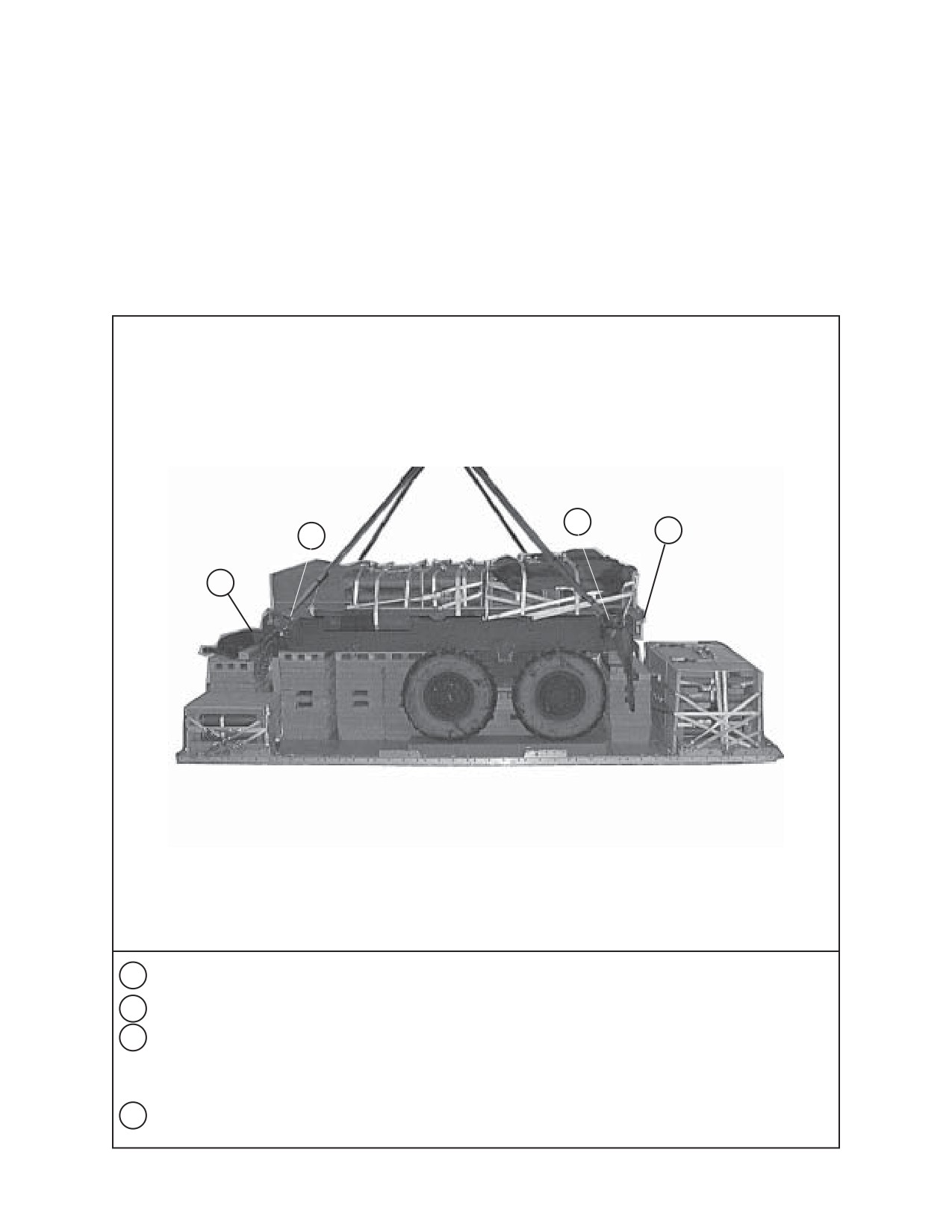
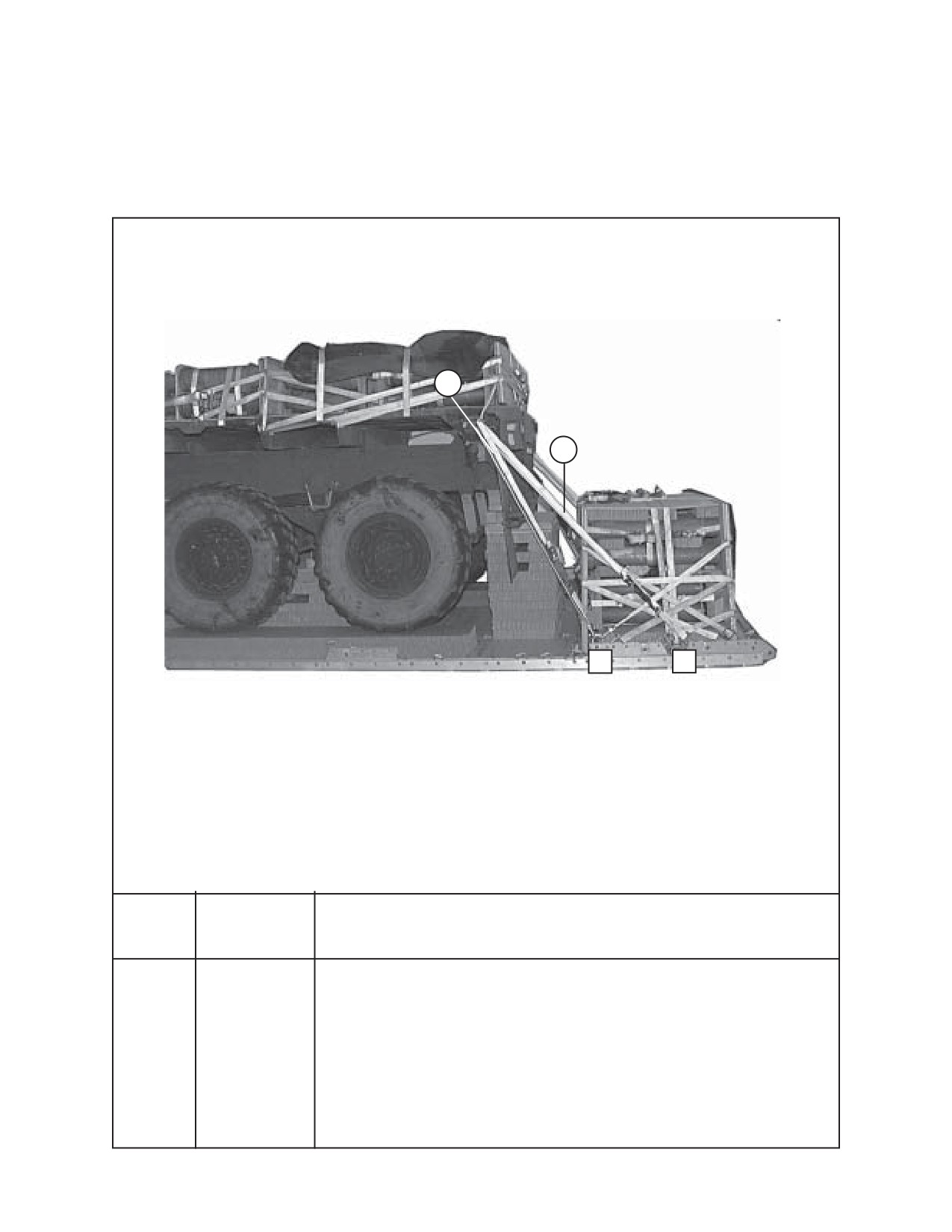
5-8. Lifting and Positioning Trailer
Install lifting slings on the M1095
trailer and position the trailer as
shown in Figure 5-13 and described
below.
a. Construct a lifting kit using an 11-foot (4-loop), type
b. Position the load so that the rear bumper of the
XXVI sling with a large clevis attached to each rear
trailer is 64 inches from the front edge of the platform
sling/lifting points. Attach a large clevis to an 11-foot
and centered.
(4-loop), type XXVI sling to each front sling/lifting
points.
2
4
1
3
REAR
FRONT
RIGHT
1
Attach a large clevis to an 11-foot (4-loop), type XXVI sling to each trailer front sling/lifting points.
2
Attach a large clevis to an 11-foot (4-loop), type XXVI sling to each trailer rear sling/lifting points.
3
Manually raise the landing gear to it's highest vertical position and secure the handle in its holder with
type III nylon cord. Secure the pin with tape.
Note: Damage will occur upon impact if this is not accomplished.
4
Position the load with the rear bumper of the trailer 64 inches from the front edge of the platform and centered.
Figure 5-13. Load positioned
5-74
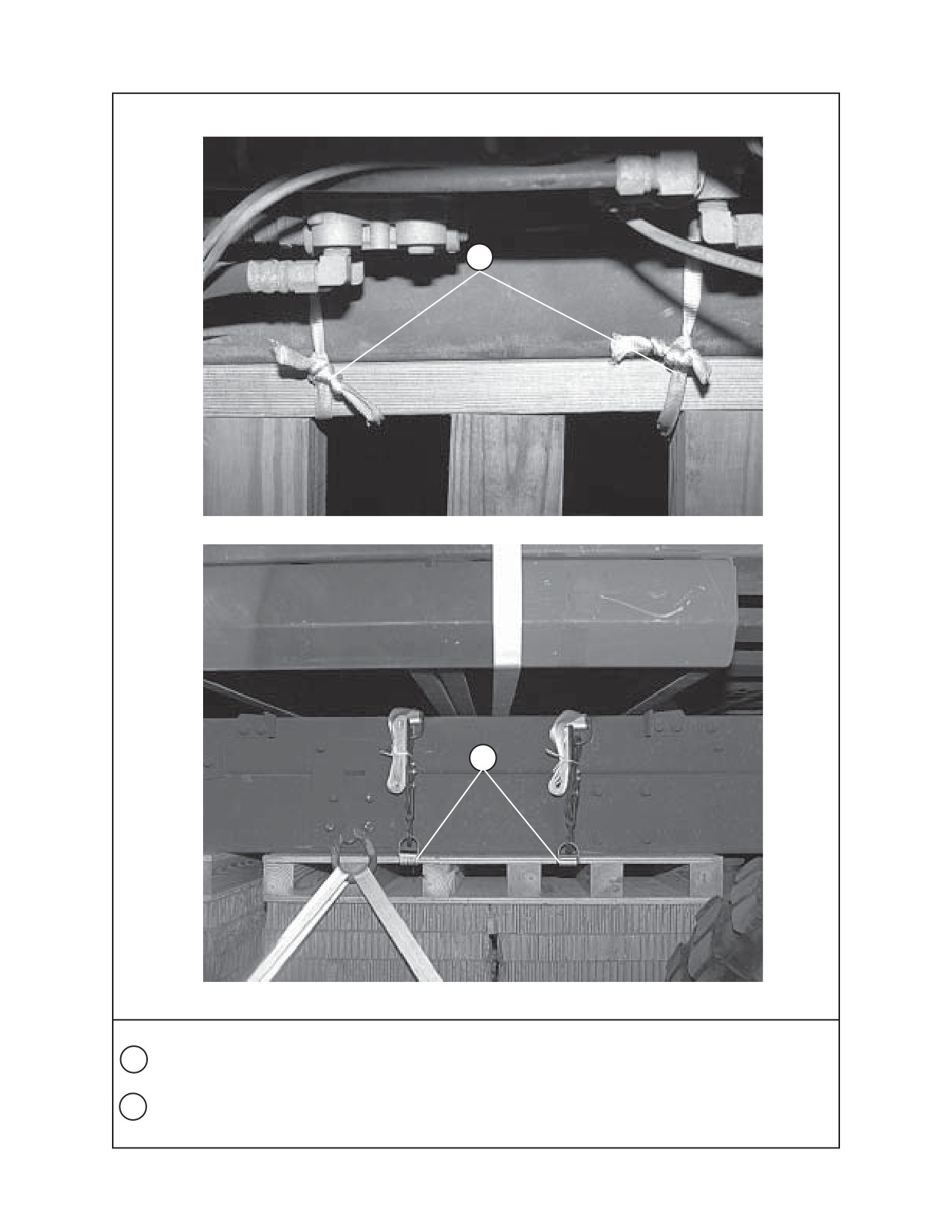
C2, FM 10-500-71/TO 13C7-6-141
5
6
5
Place 1/2-inch tubular nylon webbing around the 4- by 4-inch lumber upright of stack #2 and the trailer frame
and secure.
6
Route a lashing through the second hole of stack #3 and around the trailer frame. Secure with loadbinder on
the side. Repeat for the fourth hole.
Figure 5-13. Load positioned (Continued)
5-75
C2, FM 10-500-71/TO 13C7-6-141
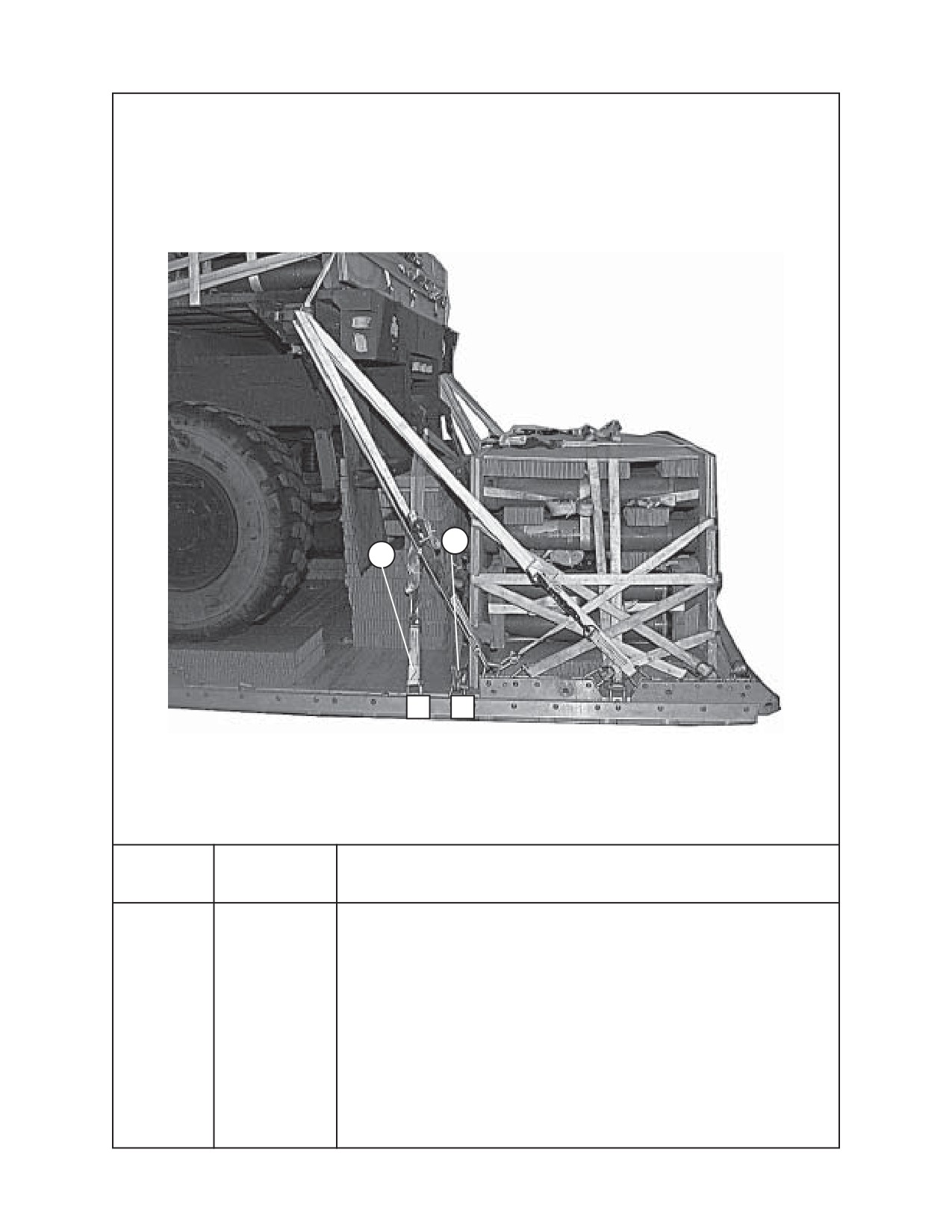
5-9. Installing Lashings
Install lashings according to FM 4-
20.102/NAVSEA SS400-AB-MMO-010/TO
13C7-1-5 and as shown in Figure 5-14.
3
1
FRONT
9
4
RIGHT
Tiedown
Lashing
Clevis
Number
Number
Instructions
Route lashing:
1
4
Through trailer's left rear sling guide.
2
4A
Through trailer's right rear sling guide.
3
9
Through trailer's left rear sling guide.
4
9A
Through trailer's right rear sling guide.
Figure 5-14. Trailer lashed to the platform
5-76
C2, FM 10-500-71/TO 13C7-6-141
5
7
12
11
Tiedown
Lashing
Clevis
Instructions
Number
Number
Route lashing:
5
11
Through trailer's right rear tiedown shackle.
6
11A
Through trailer's left rear tiedown shackle.
7
12
Through trailer's left rear tiedown shackle.
8
12A
Through trailer's right rear tiedown shackle.
Figure 5-14. Trailer lashed to the platform (Continued)
5-77
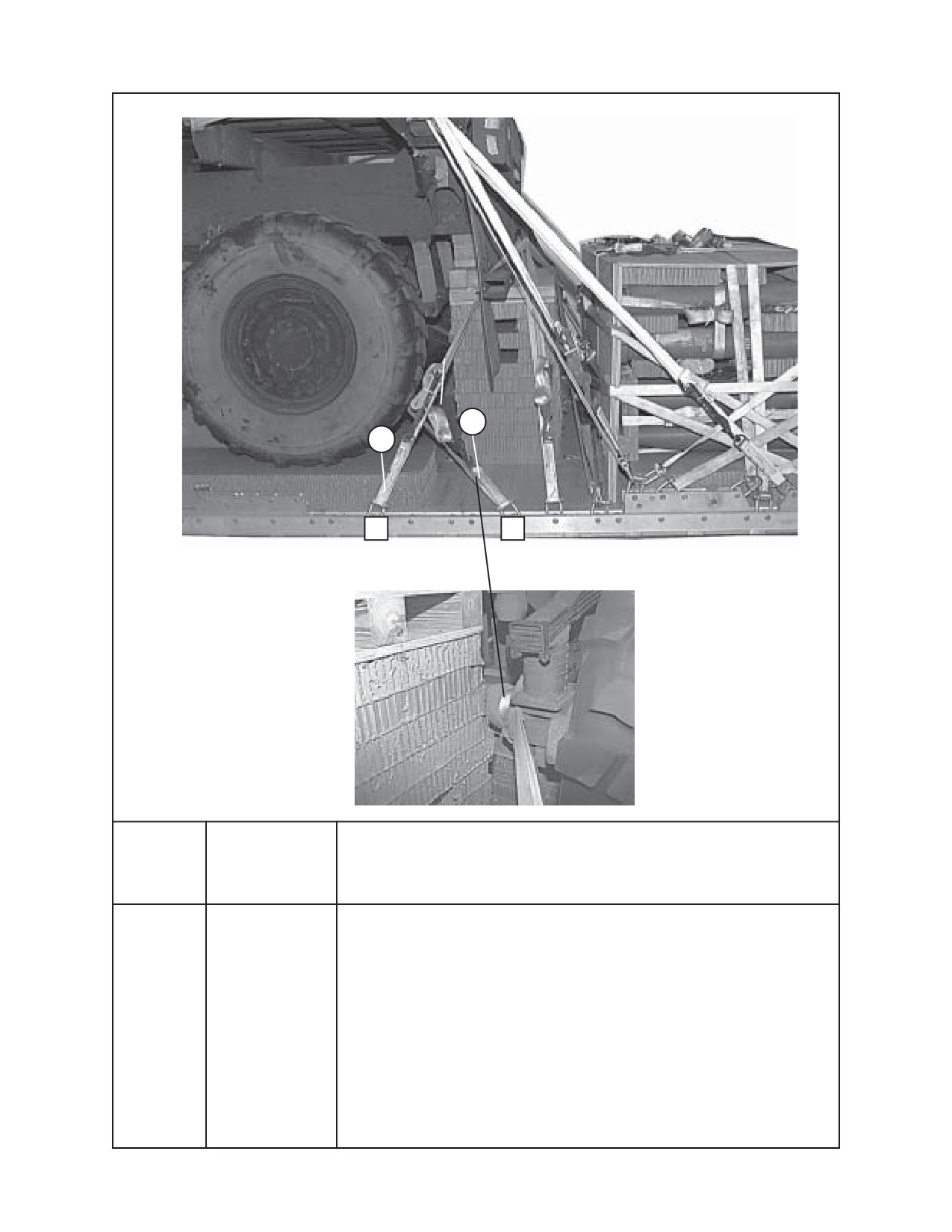
C2, FM 10-500-71/TO 13C7-6-141
9
11
14
13
RIGHT
Tiedown
Lashing
Clevis
Instructions
Number
Number
Route lashing:
Around the trailer's left rear axle, inside the torsion bar.
9
13
Note: Use ample cellulose wadding to prevent lashing damage.
Around the trailer's right rear axle, inside the torsion bar.
10
13A
Note: Use ample cellulose wadding to prevent lashing damage.
Over the top of the bumper and through the trailer's left rear, tiedown
11
14
shackle.
Over the top of the bumper and through the trailer's right rear, tiedown
12
14A
shackle.
Figure 5-14. Trailer lashed to the platform (Continued)
5-78
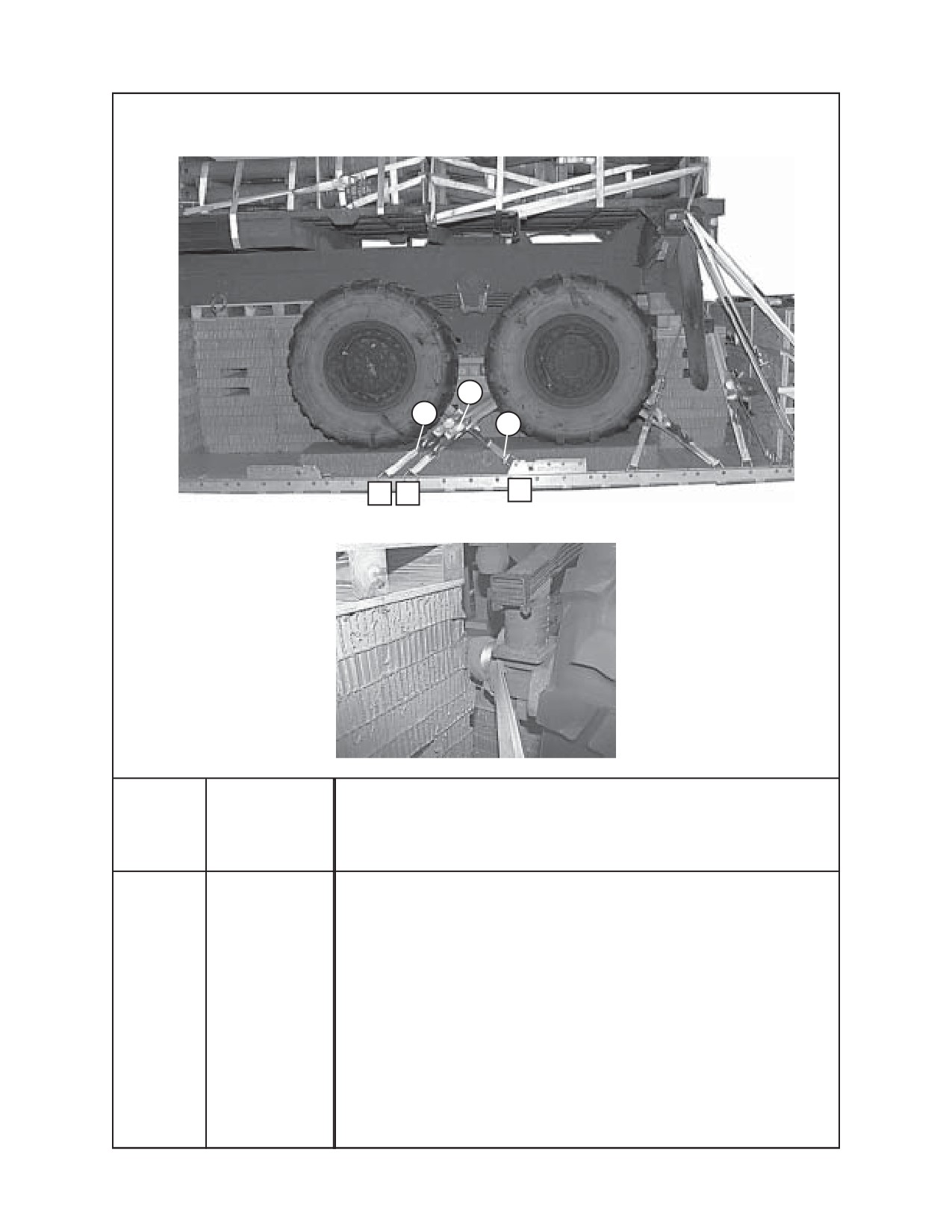
C2, FM 10-500-71/TO 13C7-6-141
15
17
13
17
16
15
RIGHT
Tiedown
Lashing
Clevis
Number
Number
Instructions
Route lashing:
13
15
Around the trailer's front left axle, inside the torsion bar.
14
15A
Around the trailer's front right axle, inside the torsion bar.
15
16
Around the trailer's rear left axle, inside the torsion bar.
16
16A
Around the trailer's rear right axle, inside the torsion bar.
17
17
Around the trailer's rear left axle, inside the torsion bar.
18
17A
Around the trailer's rear right axle, inside the torsion bar.
Figure 5-14. Trailer lashed to the platform (Continued)
5-79
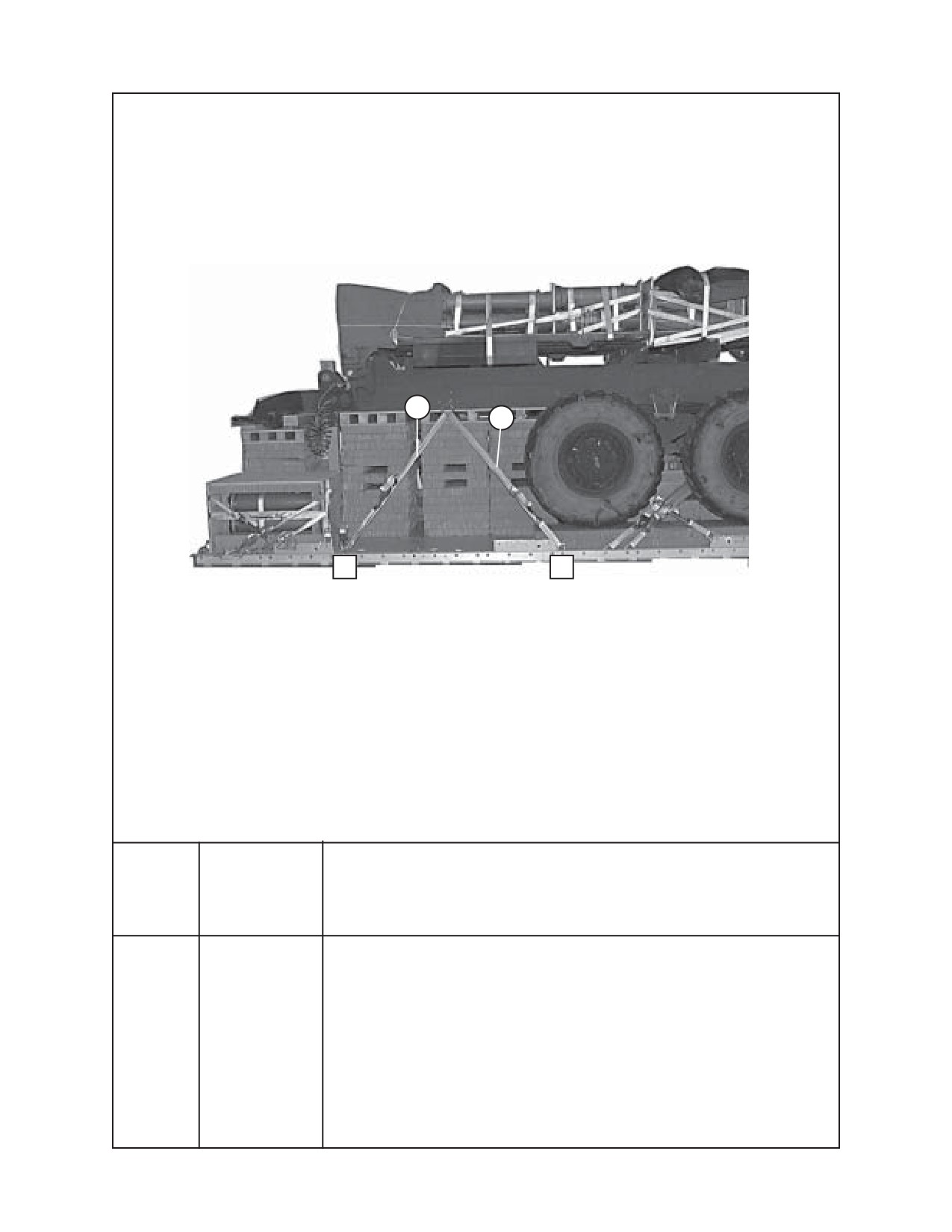
C2, FM 10-500-71/TO 13C7-6-141
21
19
23
18
Tiedown
Lashing
Clevis
Number
Number
Instructions
Route lashing:
19
18
Through the trailer's front left side tiedown shackle.
20
18A
Through the trailer's front right side tiedown shackle.
21
23
Through the trailer's front left side tiedown shackle.
22
23A
Through the trailer's front right side tiedown shackle.
5-80
Figure 5-14. Trailer lashed to the platform (Continued)
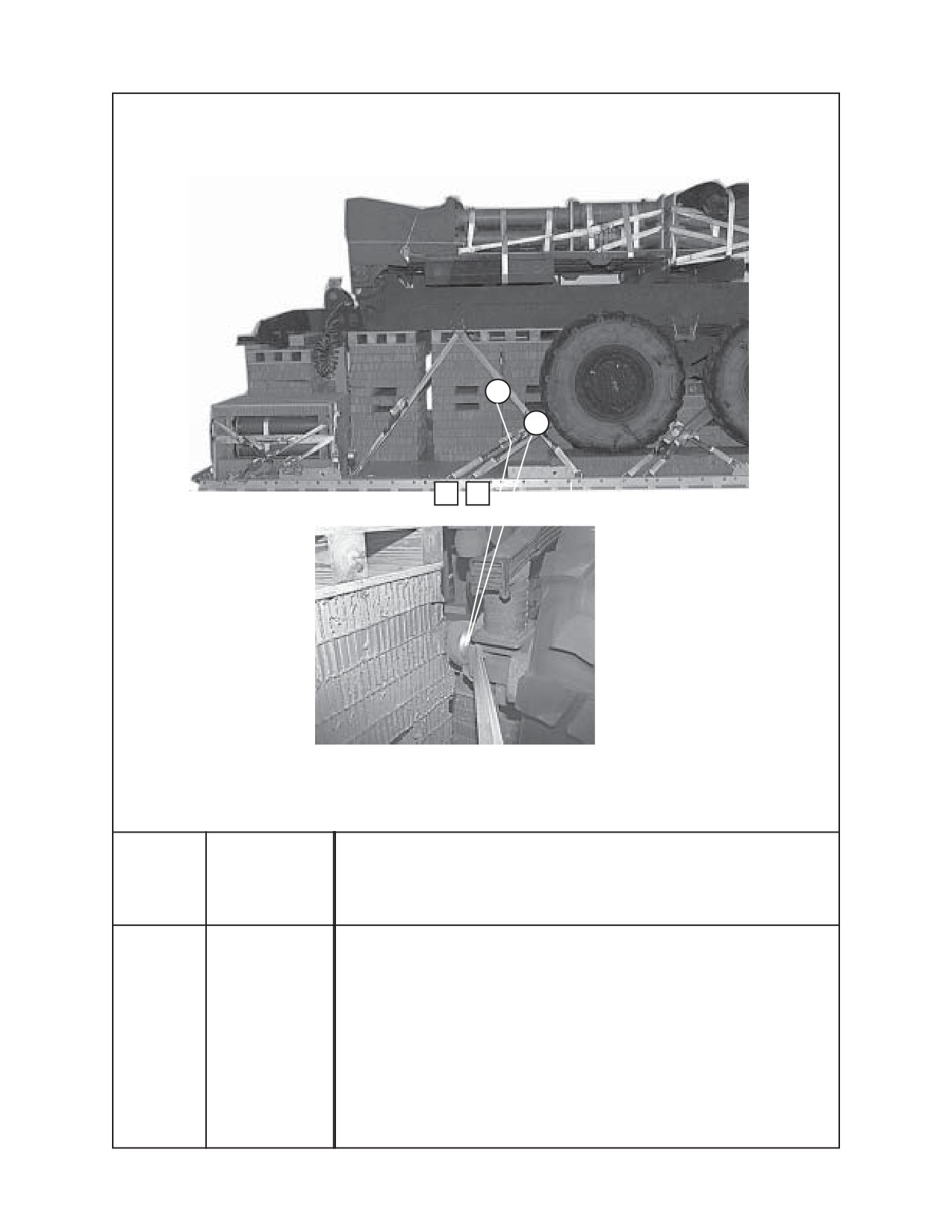
C2, FM 10-500-71/TO 13C7-6-141
25
23
20
19
Tiedown
Lashing
Clevis
Number
Instructions
Number
Route lashing:
19
Around the trailer's front left axle, inside the torsion bar.
23
19A
Around the trailer's front right axle, inside the torsion bar.
24
20
Around the trailer's front left axle, inside the torsion bar.
25
20A
Around the trailer's front right axle, inside the torsion bar.
26
Figure 5-14. Trailer lashed to the platform (Continued)
5-81
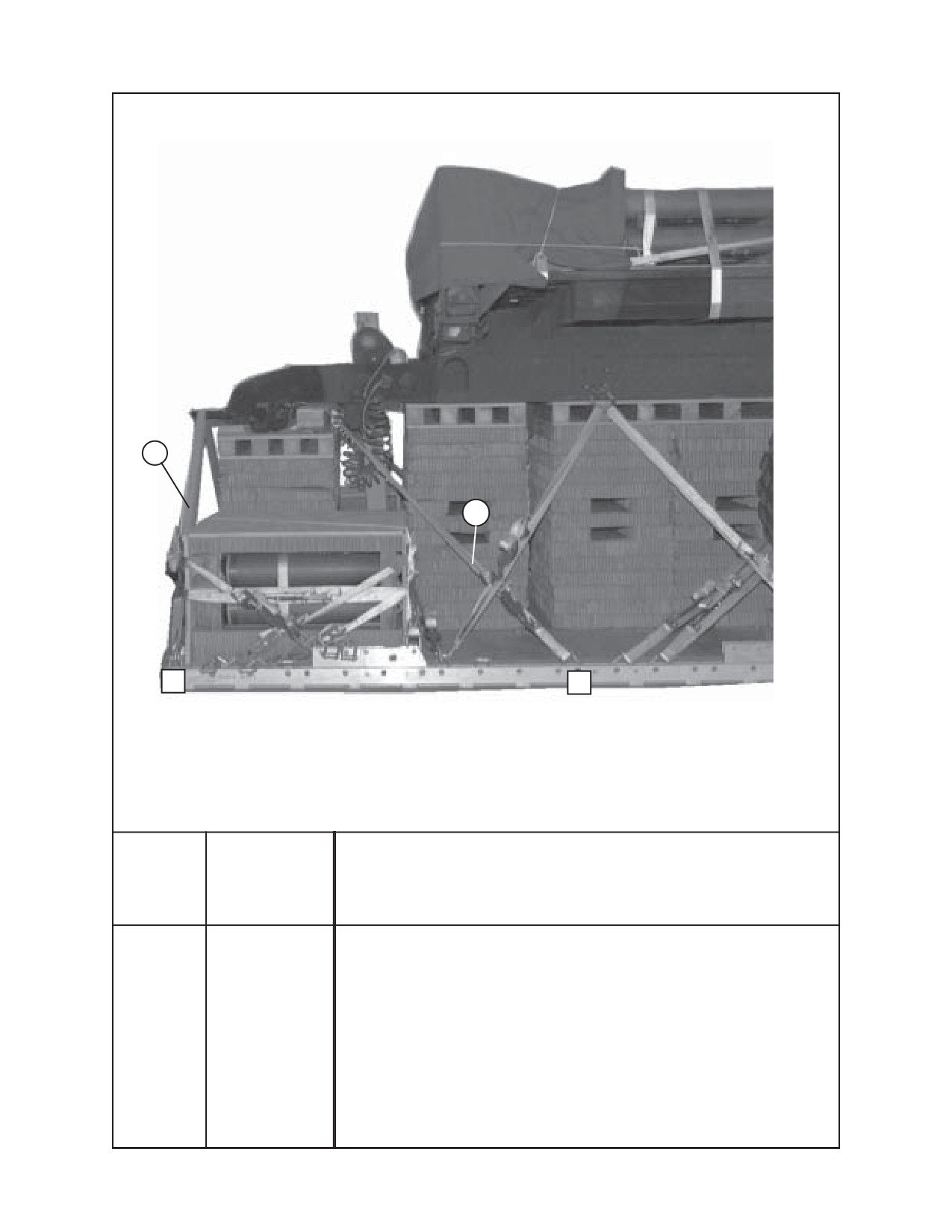
C2, FM 10-500-71/TO 13C7-6-141
29
27
35
21
Tiedown
Lashing
Clevis
Number
Instructions
Number
Route lashing:
27
21
Through the trailer's left side safety chain bracket.
28
21A
Through the trailer's right side safety chain bracket.
29
35
Through the lunette.
30
35A
Through the lunette.
5-82
Figure 5-14. Trailer lashed to the platform (Continued)
C2, FM 10-500-71/TO 13C7-6-141
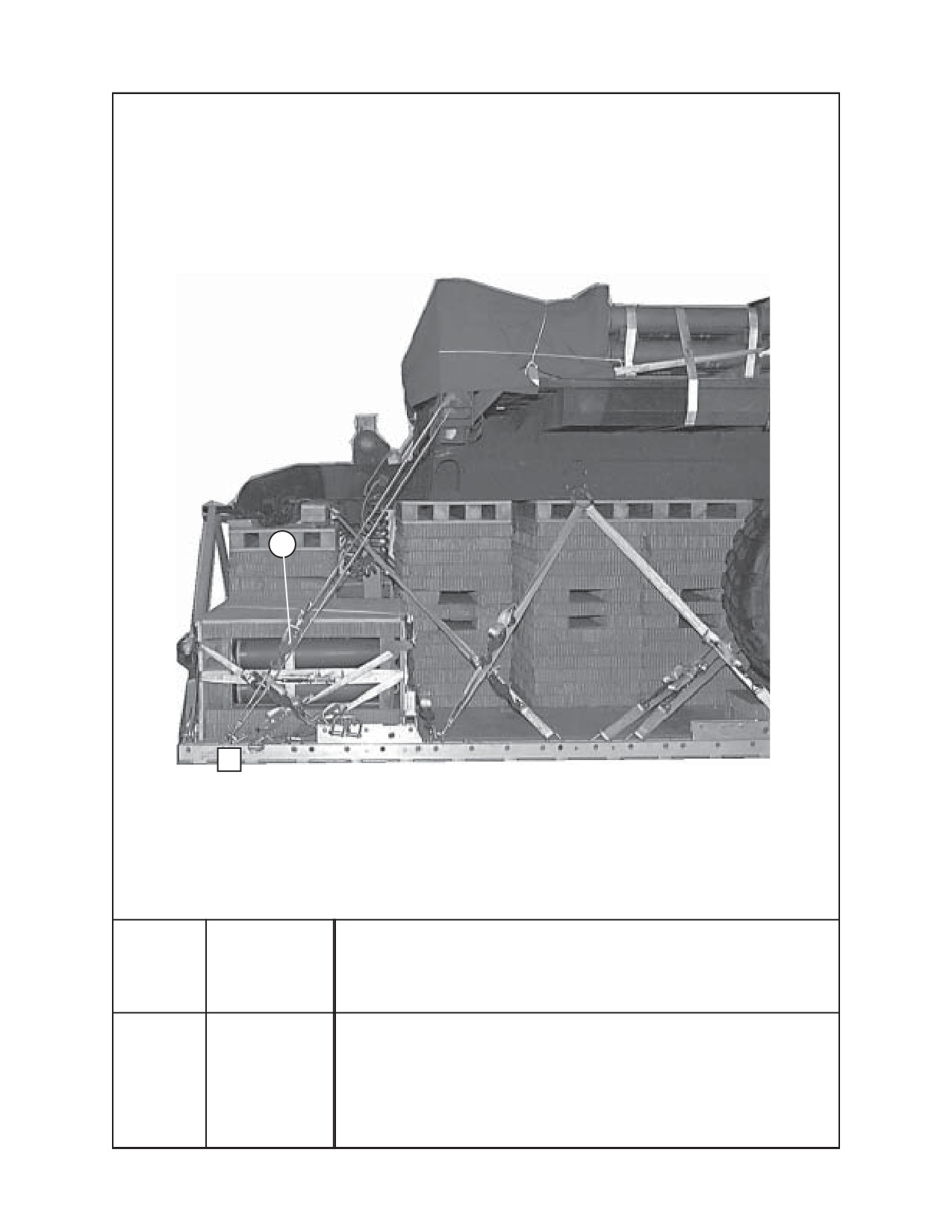
31
33
Lashing
Tiedown
Number
Clevis
Instructions
Number
Route lashing:
31
33
Through the trailer's front left sling guide.
32
33A
Through the trailer's front right sling guide.
Figure 5-14. Trailer lashed to the platform (Continued)
5-83
C2, FM 10-500-71/TO 13C7-6-141
34
35
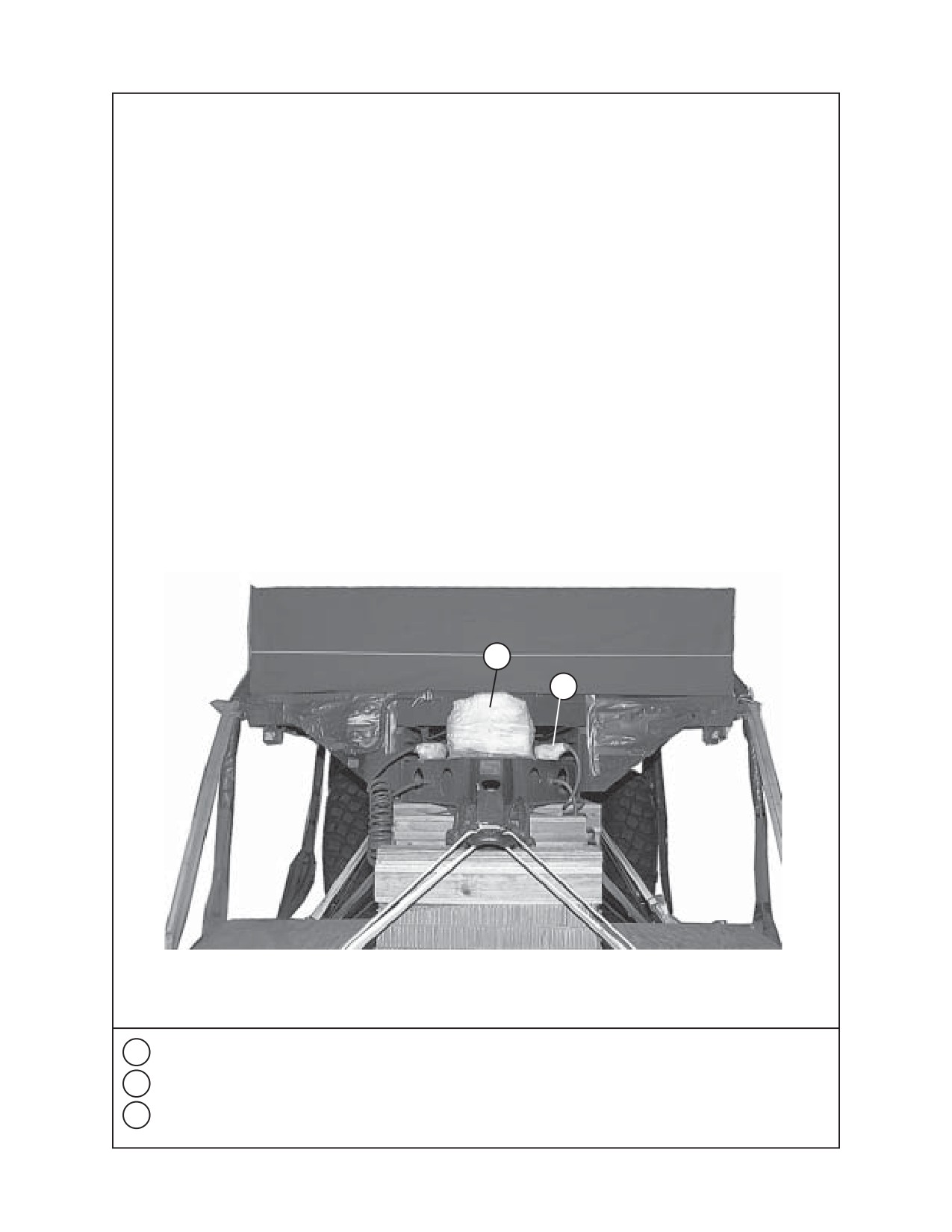
33
Secure the safety chains with type III nylon cord (Not Shown).
34
Pad with cellulose wadding and tape the crank gearbox.
35
Pad with cellulose wadding and tape the trailer left side air supply hose springs and connector.
5-84
Figure 5-14. Trailer lashed to the platform (Continued)
C2, FM 10-500-71/TO 13C7-6-141
5-10. Building Sling Spreader and Installing Suspension Slings
Build sling spreader and install the suspension slings
according to FM 4-20.102/NAVSEA SS400-AB-MMO-010/
TO 13C7-1-5 and as shown in Figure 5-15.
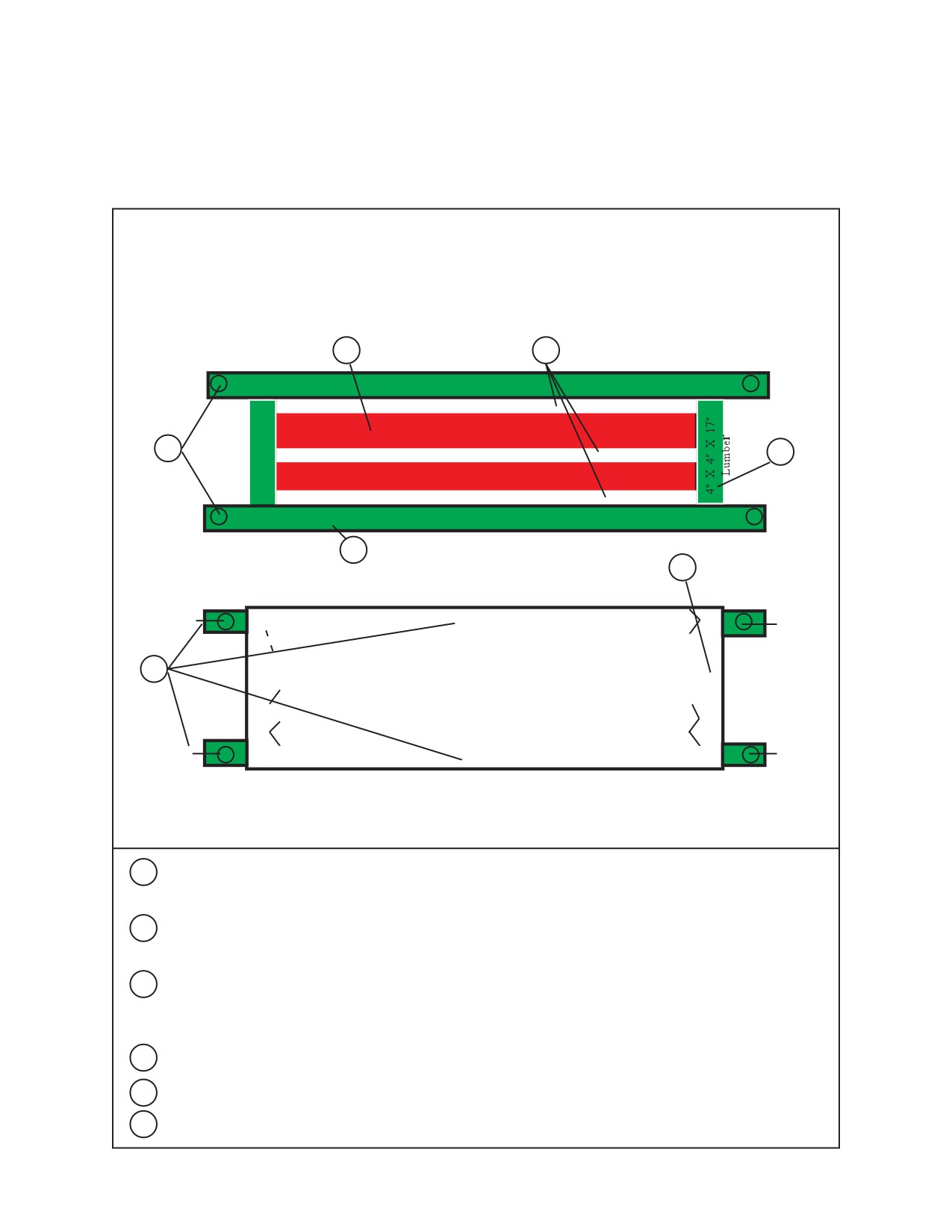
Notes: 1. This drawing is not drawn to scale.
2. Use eightpenny nails to nail the plywood to the lumber.
3. Construct sling spreader using one piece of 24-by 96- by 3/4-inch plywood, two pieces of 4- by 4- by
106-inch lumber, two pieces of 4- by 4- by 17-inch lumber, and three pieces of 2- by 4- by 89-inch lumber.
1
3
12345678901234567890123456789012123456789012345678901234567890121234567
12345678901234567890123456789012123456789012345678901234567890121234567
4
12345678901234567890123456789012123456789012345678901234567890121234567
123456789012345678902" X 4" X 89" Lumber2345678901234567890121234567
2
12345678901234567890123456789012123456789012345678901234567890121234567
12345678901234567890123456789012123456789012345678901234567890121234567
4" X 4" X 106" Lumber
1
Bottom
6
12345678901234567890123456789012123456789
A
23456789012345678Forward345678901212345678
B
234567890123456789012345678901212345678
12345678901234567890123456789012123456789
12345678901234567890123456789012123456789
12345678901234567890123456789012123456789
5
12345678901234567890123456789012123456789
123456789012324" X 96" X 3/4" Plywood9012123456789
12345678901234567890123456789012123456789
12345678901234567890123456789012123456789
12345678901234567890123456789012123456789
12345678901234567890123456789012123456789
234567890123456789012345678901212345678
C
Aft
D
234567890123456789012345678901212345678
Top
SLING SPREADER
1
Nail a 4- by 4- by 106-inch piece of lumber flush with both 96 inch sides of a 24- by 96- by 3/4-inch piece of
plywood allowing 5-inches on each end of the 4- by 4- by 106-inch pieces of lumber.
2
Nail a 4- by 4- by 17-inch piece of lumber flush with both 24 inch sides of the 24- by 96- by 3/4-inch piece of
plywood.
3
Nail a 2- by 4- by 89-inch piece of lumber flush and inside next to both 96 inch sides of the 4- by 4- by
106-inch pieces of lumber. Nail the other 2- by 4- by 89-inch piece of lumber centered on the 24- by 96- by
3/4-inch piece of plywood.
4
Drill a 2-inch hole centered 3 inches from the ends of the 4- by 4- by 106-inch pieces of lumber.
5
Mark forward, aft and hole numbers for proper rigging.
6
Pad with felt and tape where slings come in contact with sling spreader.
Figure
5-15. Suspension slings installed
5-85
C2, FM 10-500-71/TO 13C7-6-141
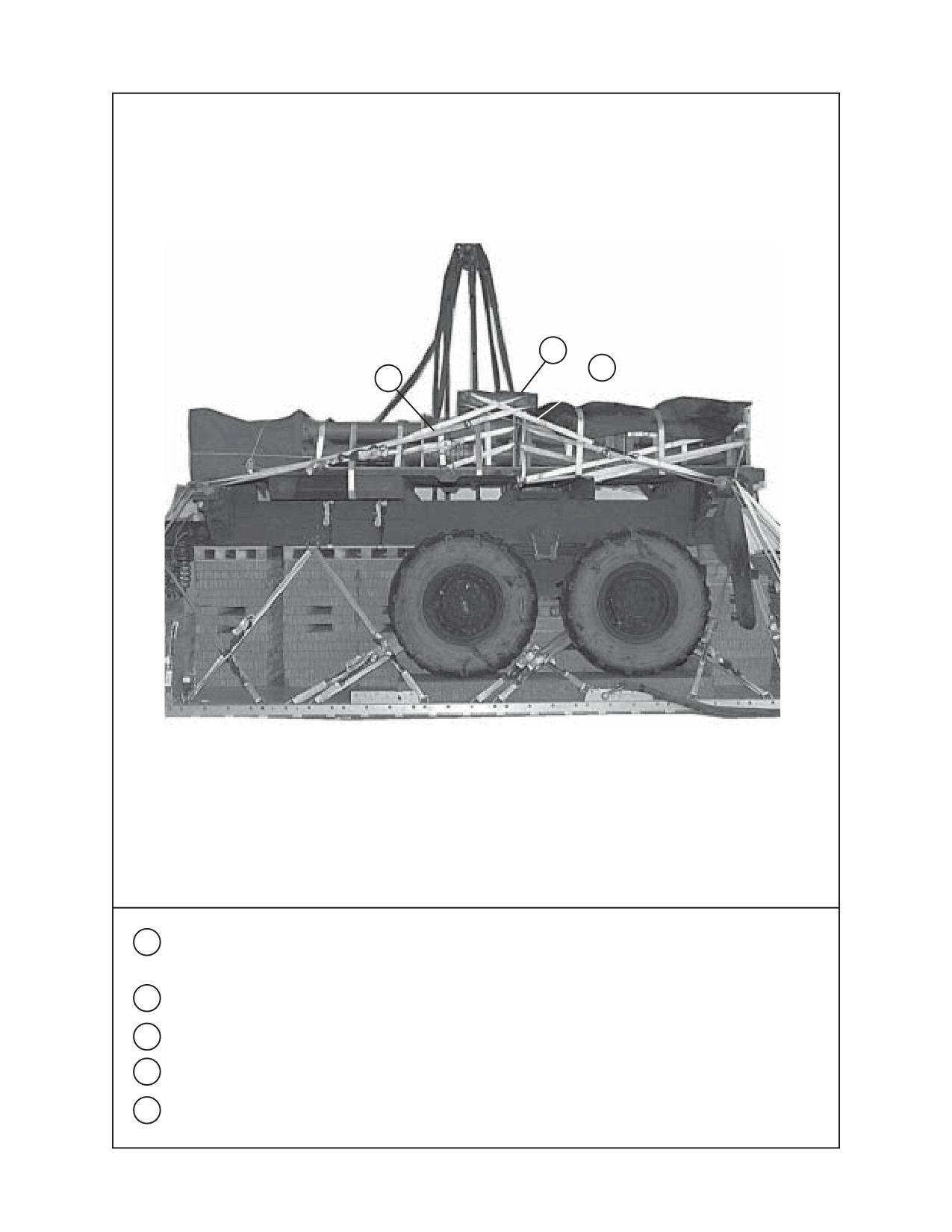
7
9
8
REAR
FRONT
7
Position the sling guide spreader on the trailer aligned between the second and third suspension links with
the forward edge of the spreader facing the front of platform.
8
Route a lashing from the trailer's rear left sling guide to hole D in sling guide spreader.
9
Route a lashing from the trailer's front left sling guide to hole B in sling guide spreader.
10
Route a lashing from the trailer's rear right sling guide to hole C in sling guide spreader. (Not shown)
11
Route a lashing from the trailer's front right sling guide to hole A in sling guide spreader. (Not shown)
Figure
5-15. Suspension slings installed (Continued)
5-86
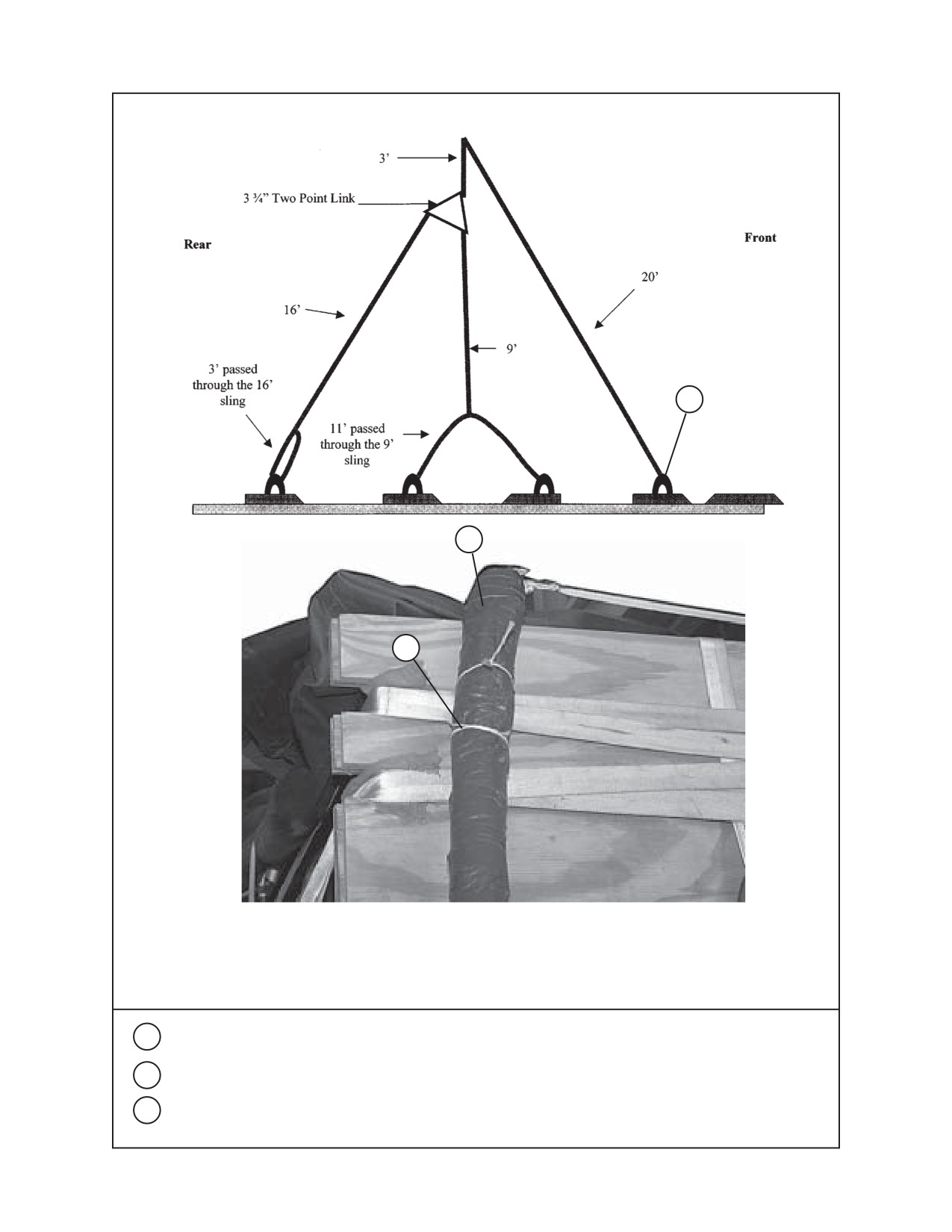
C2, FM 10-500-71/TO 13C7-6-141
Note: This drawing is not drawn to scale.
12
13
14
12
Attach a large clevis to one end of a 20-foot (4-loop), type XXVI nylon sling.
13
Wrap the sling with felt and tape from 12 to 112 inches from the clevis.
14
Attach the clevis to the first suspension bracket. Secure the sling to a lashing at the rear of cell #3 with
type I, 1/4-inch cotton webbing.
Figure
5-15. Suspension slings installed (Continued)
5-87
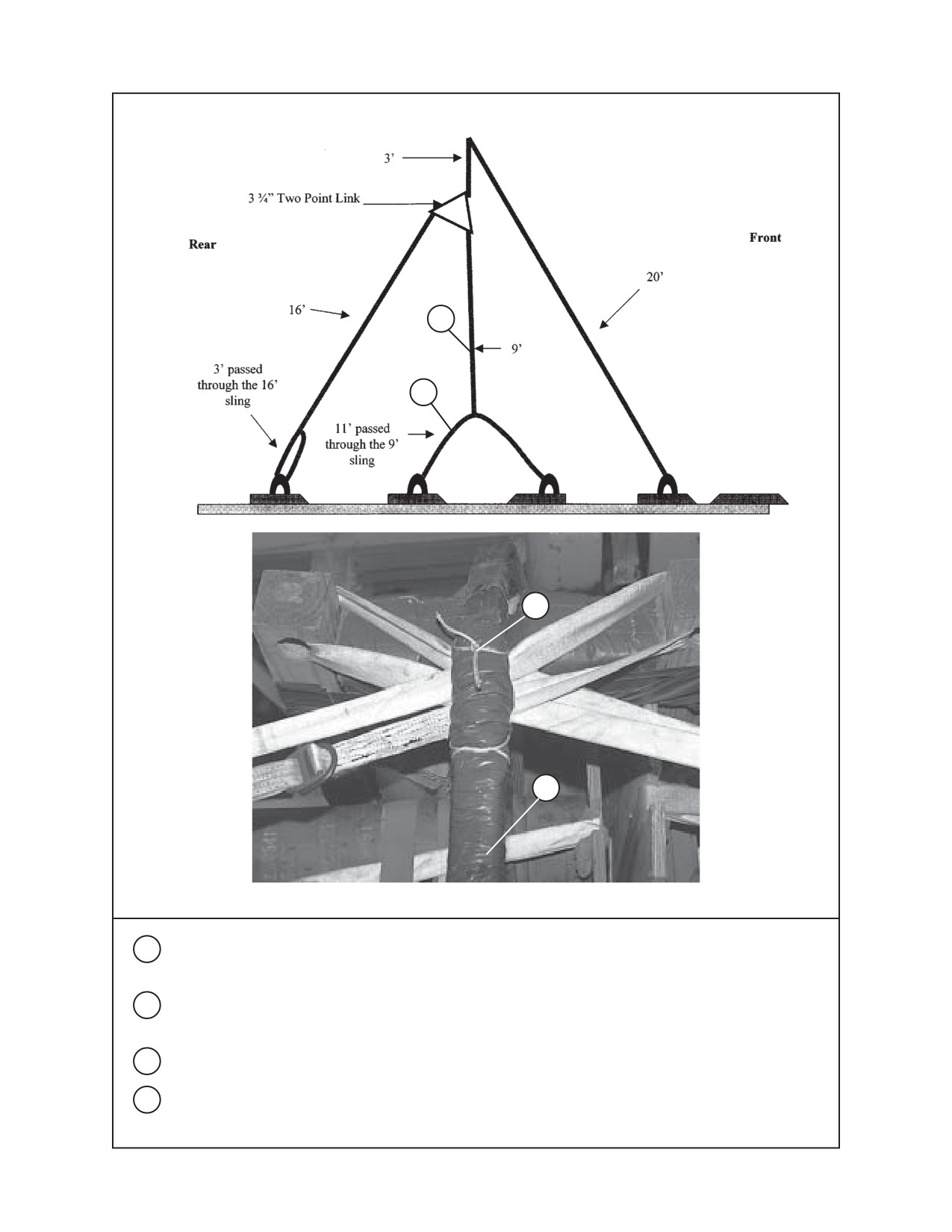
C2, FM 10-500-71/TO 13C7-6-141
Note: This drawing is not drawn to scale.
15
16
18
17
15
Attach a large clevis to one end of an 11-foot (4-loop), type XXVI nylon sling. Route the running end
through a 9-foot (4-loop), type XXVI nylon sling.
16
Attach a large clevis to the free end of the 11-foot (4-loop), type XXVI nylon sling and attach the clevises
to the second and third suspension bracket.
17
Wrap with felt and tape the 11-foot and 9- foot sling 38 to 88 inches from the clevises.
18
Secure the 9-foot (4-loop), type XXVI nylon sling to the crossed sling spreader lashings with type III nylon
cord.
5-88
Figure
5-15. Suspension slings installed (Continued)
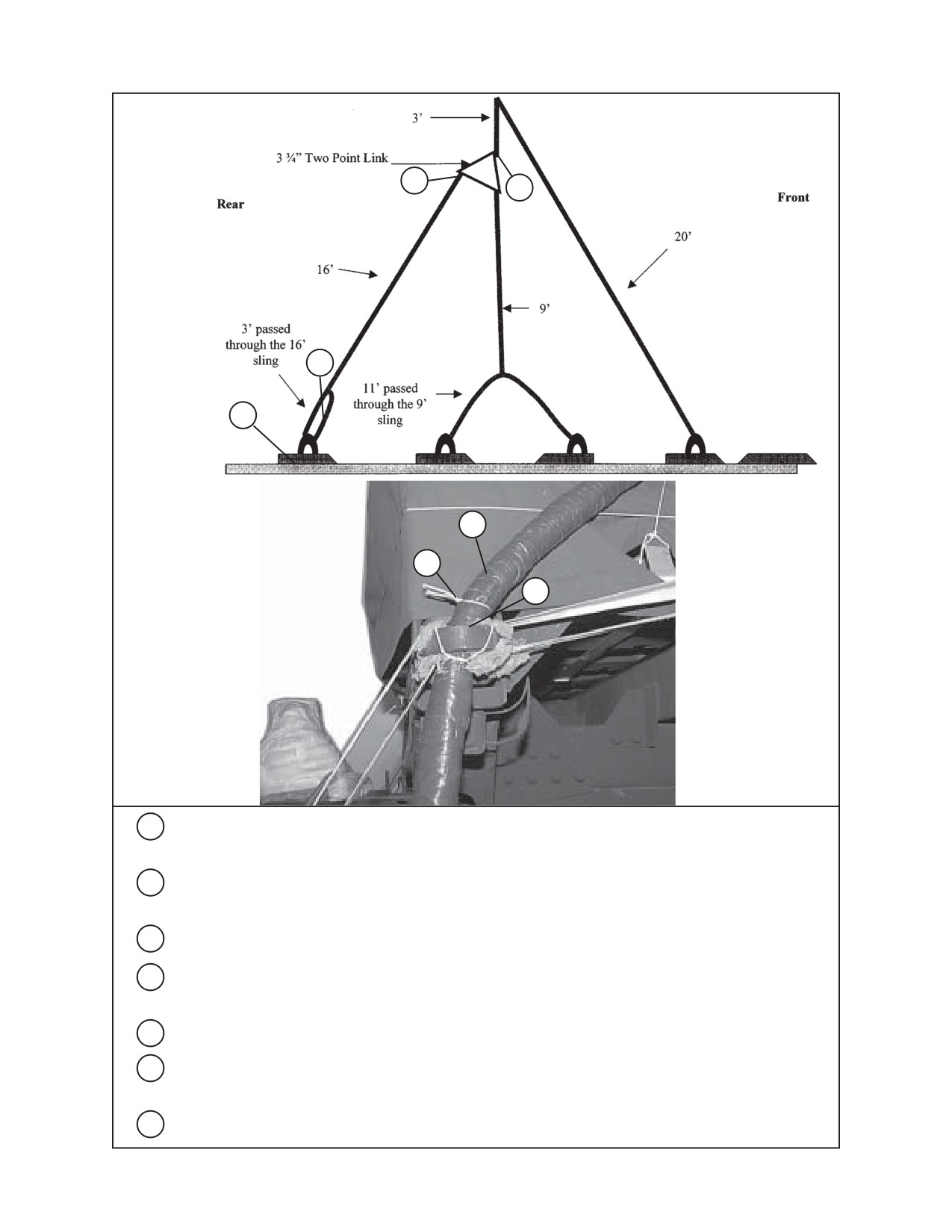
C2, FM 10-500-71/TO 13C7-6-141
Note: This drawing is not drawn to scale.
23
24
19
20
21
23
22
19
Attach a large clevis to one end of a 3-foot (4-loop), type XXVI nylon sling. Route the running end through
a 16-foot (4-loop), type XXVI nylon sling.
20
Attach the same large clevis to the free end of the 3-foot (4-loop), type XXVI nylon sling and attach the
clevis to the fourth suspension bracket.
21
Wrap with felt and tape the 16-foot (4-loop), type XXVI nylon sling 39 to 99 inches from the clevis.
22
Route the 16-foot (4-loop), type XXVI nylon sling through the trailer's front left lifting/sling guide and
attach it to a 3-point link.
23
Secure the 16-foot (4-loop), type XXVI nylon sling to the front left sling guide with type III nylon cord.
24
Attach the 9-foot (4-loop), type XXVI nylon sling to the 3-point link. Attach a 3-foot (4-loop), type
XXVI nylon sling to the 3-point link.
25
Repeat steps 12 through 24, Figure 5-15, for the platform's left side.
Figure
5-15. Suspension slings installed (Continued)
5-89
C2, FM 10-500-71/TO 13C7-6-141
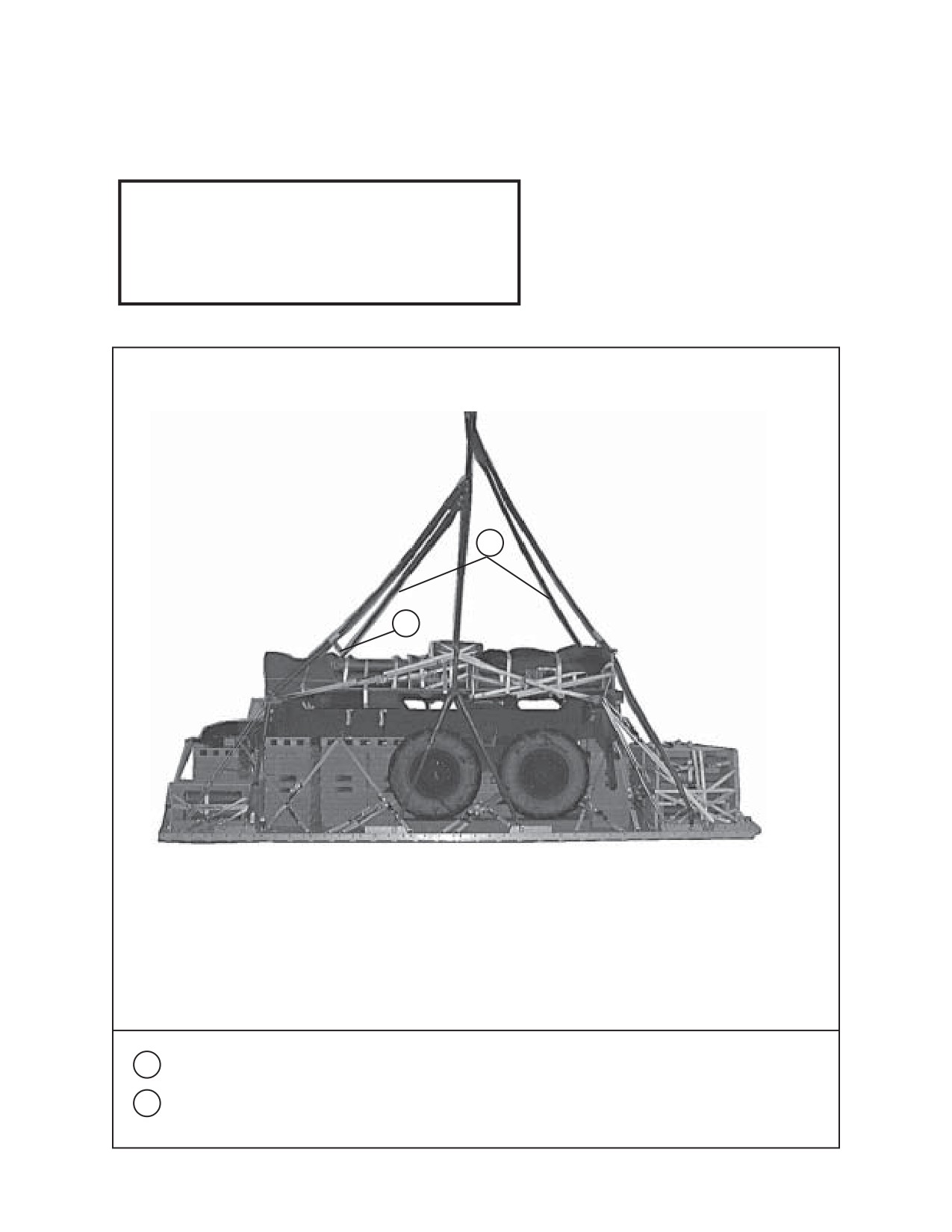
5-11. Safety Tieing Suspension Slings
Safety tie the slings as described in Figure 5-16.
NOTICE OF EXCEPTION
The positioning of the safety tie is different from that in
FM 4-20.102/NAVSEA SS400-AB-MMO-010/TO 13C7-1-5.
An exception to FM 4-20.102/NAVSEA SS400-AB-MMO-010/
TO 13C7-1-5 is granted. The procedures in Appendix A and
this paragraph must be followed.
1
2
1
Raise the suspension slings.
2
Install the safety ties 6 to 8 inches above the load. Safety tie the front and rear suspension slings
according to instructions shown in Appendix A.
5-90
Figure 5-16. Suspension slings safety tied
C2, FM 10-500-71/TO 13C7-6-141
5-12. Building and Positioning the
Parachute Stowage Platform
Build and position the parachute stowage
platform as shown in Figure 5-17.
Notes:
1. This drawing is not drawn to scale.
2. All measurements are given in inches.
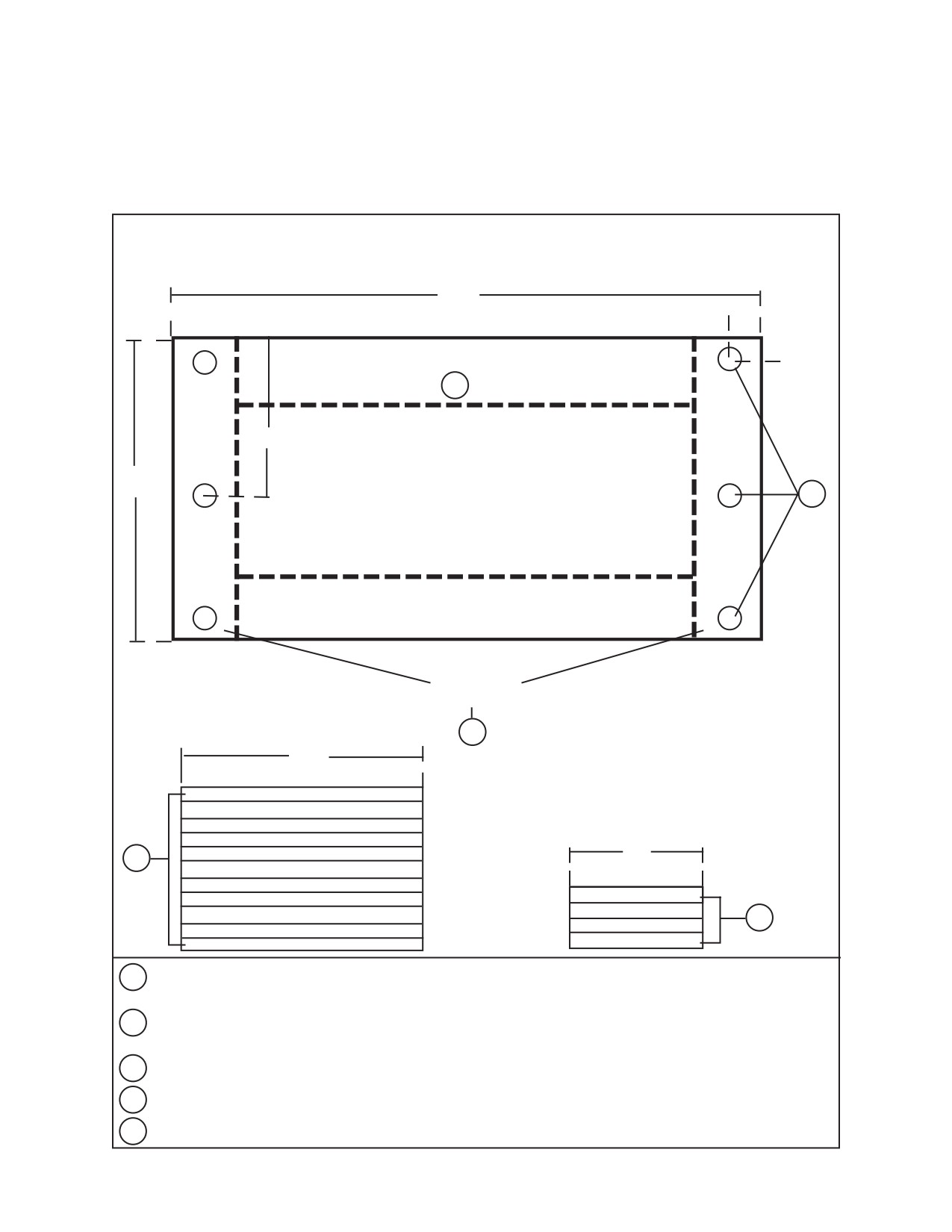
96"
2"
2" x 6" x 85" Lumber
2"
2
24"
48"
48" X 96" X 3/4" Plywood
3
2" x 6" x 85" Lumber
2" x 6" x 48"
Lumber
1
24"
10"
4
5
1
Construct the parachute stowage platform by nailing a 2- by 6- by 48-inch piece of lumber flush with the right
and left side edges of a 48- by 96- by 3/4-inch piece of plywood.
2
Nail a 2- by 6- by 85-inch piece of lumber between the 2- by 6- by 48-inch piece of lumber in step 1, flush with
the front and rear edges of the plywood as shown.
3
Make three 2-inch holes in each 48 inch side of the parachute stowage platform as shown.
4
Cut and glue eleven 24- by 24-inch pieces of honeycomb to form base. Repeat for left side.
5
Cut and glue four 10- by 10-inch pieces of honeycomb for trailer lunette.
Figure
5-17. Parachute stowage platform positioned
5-91
C2, FM 10-500-71/TO 13C7-6-141
13
7
8
12
11
9
6
RIGHT
27
REAR
33
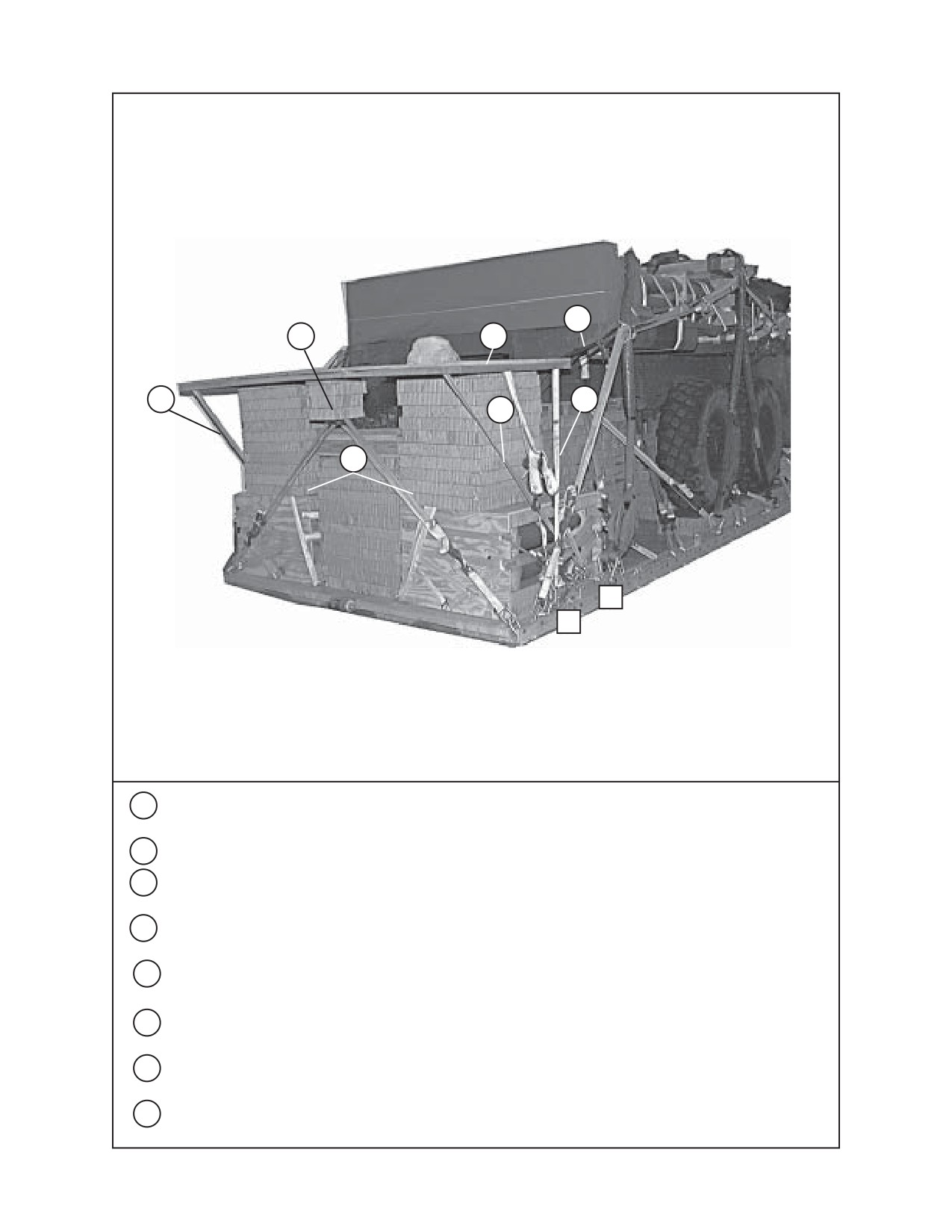
6
Position the two 24- by 24-inch honeycomb stacks on the inside and rear edges of platform accompanying
loads.
7
Position the10- by 10-inch honeycomb stack centered on the trailer lunette.
8
Position the parachute stowage platform against the landing leg gear box. Center it left to right and on top
of the 10- by 10-inch honeycomb stack and two 24- by 24-inch honeycomb stacks.
9
Route a lashing from clevis 33 up through the center right hole in the parachute stowage platform and down
through the front right hole and secure with loadbinder.
10
Route a lashing from clevis 33A through the center left hole in the parachute stowage platform through the
front left hole and secure with loadbinder. (Not Shown).
11
Route a lashing from clevis 27 up through the rear right hole in the parachute stowage platform and down
through the center right hole and secure with loadbinder.
12
Route a lashing from clevis 27A up through the rear left hole in the parachute stowage platform through the
center left hole and secure with loadbinder.
13
Secure a length of 1-inch tubular nylon webbing through the front right hole in the parachute stowage
platform and through the trailer front left sling guide. Repeat on the left side.
Figure
5-17. Parachute stowage platform positioned (Continued)
5-92
C2, FM 10-500-71/TO 13C7-6-141
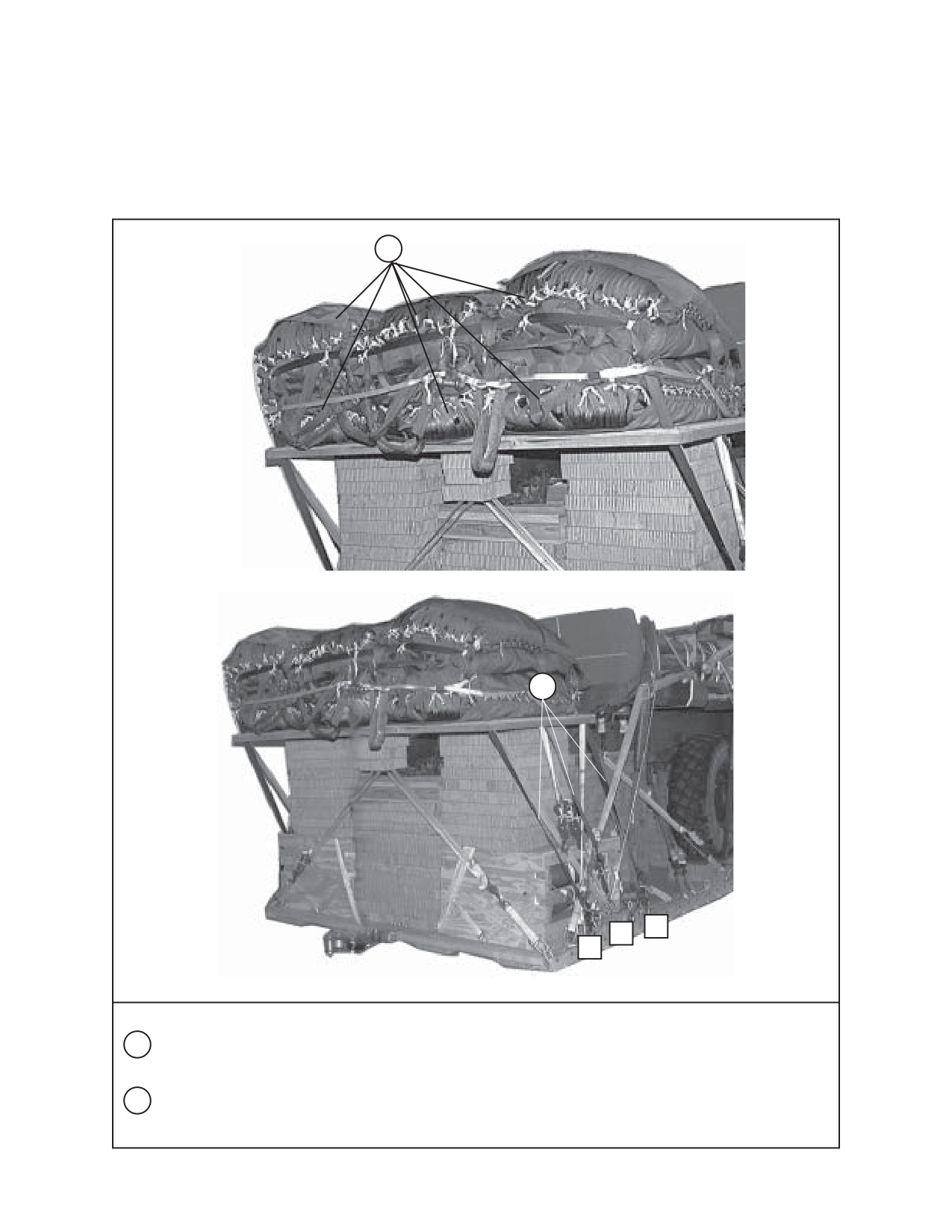
5-13. Stowing Cargo Parachutes
Stow six G-11C cargo parachutes according
to FM 4-20.102/NAVSEA SS400-AB-MMO-010
/TO 13C7-1-5 and as shown in Figure 5-18.
1
2
22
26
31
1
Prepare, cluster and place six G-11C parachutes on top of the parachute stowage platform according to
FM 4-20.102/NAVSEA SS400-AB-MMO-010/TO 13C7-1-5.
2
Restrain the parachutes using type X nylon webbing. Secure to clevises 22, 22A, 26, 26A, 31, and 31A on
the platform with loadbinders and D-rings according to FM 4-20.102/NAVSEA SS400-AB-MMO-010/
TO 13C7-1-5.
Figure 5-18. Parachutes stowed
5-93
C2, FM 10-500-71/TO 13C7-6-141
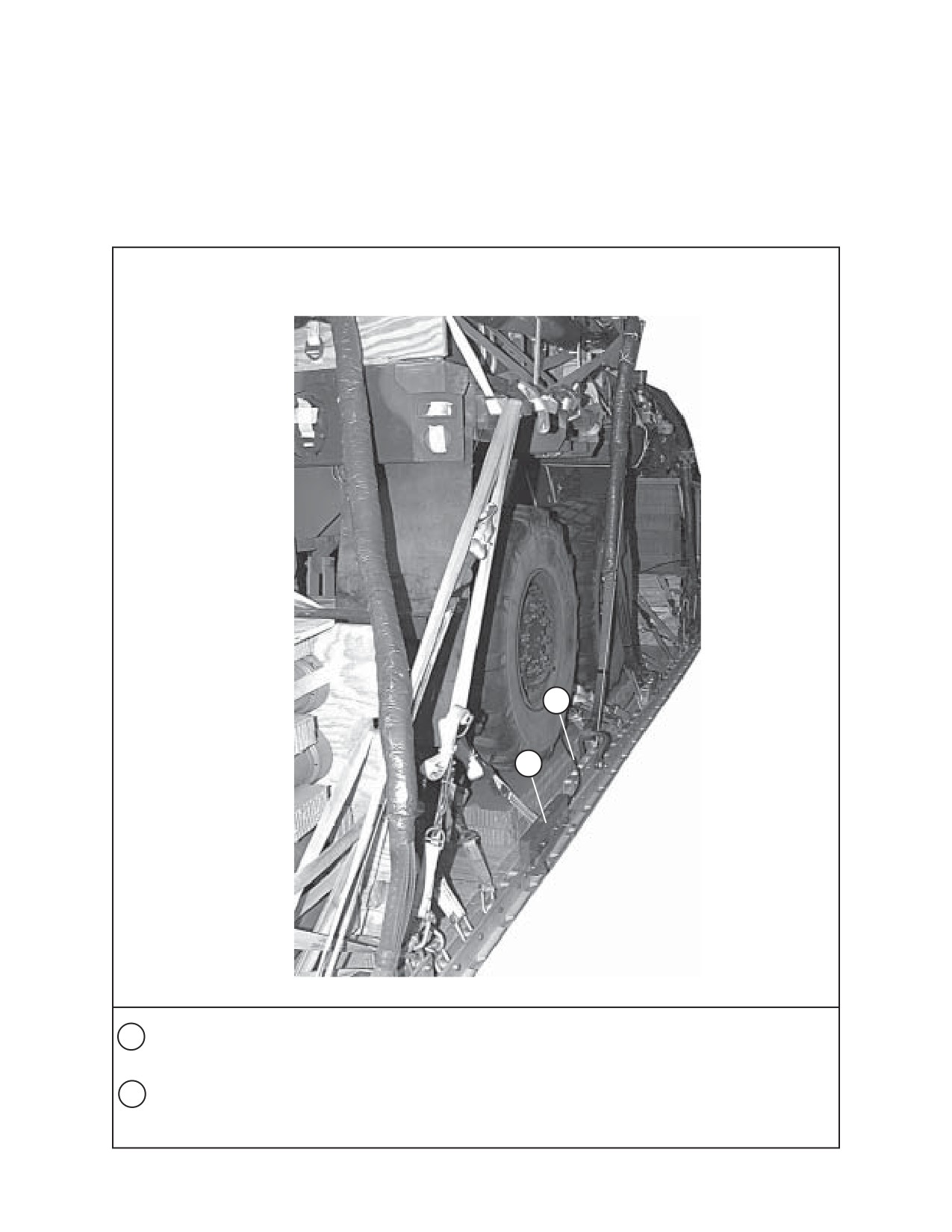
5-14. Installing Extraction System
Install the components of the extraction
force transfer coupling (EFTC) according
to FM 4-20.102/NAVSEA SS400-AB-MMO-010
/TO 13C7-1-5 and as shown in Figure 5-19.
2
1
LEFT
1
Install the EFTC mounting brackets in the rear mounting holes on the left platform rail, according to FM 4-
20.102/NAVSEA SS400-AB-MMO-010/TO 13C7-1-5.
2
Install the EFTC extraction system according to FM 4-20.102/NAVSEA SS400-AB-MMO-010/TO 13C7-1-5.
Attach a 24-foot release cable to the actuator mounting brackets. Safety tie it with type I, 1/4-inch cotton
webbing.
5-94
Figure 5-19. Extraction system installed