FM 7-15 THE ARMY UNIVERSAL TASK LIST (AUGUST 2003) - page 6

FM 7-15__________________________________________________________________________
No.
Scale
Measure
07
Time
To develop counter measures.
08
Percent
Of threat SIGINT collection capabilities correctly identified.
Of countermeasures that effectively denied or degraded threat’s ability
09
Percent
to collect on friendly force using SIGINT.
ART 5.3.8.6 PERFORM COUNTER-MEASUREMENT AND SIGNATURE
INTELLIGENCE
5-100. Counter measurement and signature intelligence is designed to
defeat or degrade threat measurement and signature intelligence collection
capabilities. The intelligence staff will provide counterintelligence to the
commander outlining the capabilities and limitation of threat measurement
and signature intelligence services, and develop TTP to limit or eliminate
these MASINT capabilities. (FM 34-1) (USAIC&FH)
No.
Scale
Measure
Identify threat measurement and signature intelligence collection
01
Yes/No
capabilities and limitations.
Identify friendly force vulnerabilities to threat measurement and
02
Yes/No
signature intelligence collection.
Develop countermeasures to deny or degrade threat’s ability to collect
03
Yes/No
on friendly force.
Develop countermeasures to mitigate friendly force vulnerability to threat
04
Yes/No
measurement and signature collection.
Threat capabilities and friendly force countermeasures identified in
05
Yes/No
sufficient time for implementation.
06
Time
To develop threat databases and templates.
07
Time
To develop countermeasures.
Of threat measurement and signature intelligence collection capabilities
08
Percent
correctly identified.
Of countermeasures that effectively denied or degraded threat’s ability
09
Percent
to collect on friendly forces using MASINT.
5-88
Chapter 6
ART 6.0: The Combat Service Support
Battlefield Operating System
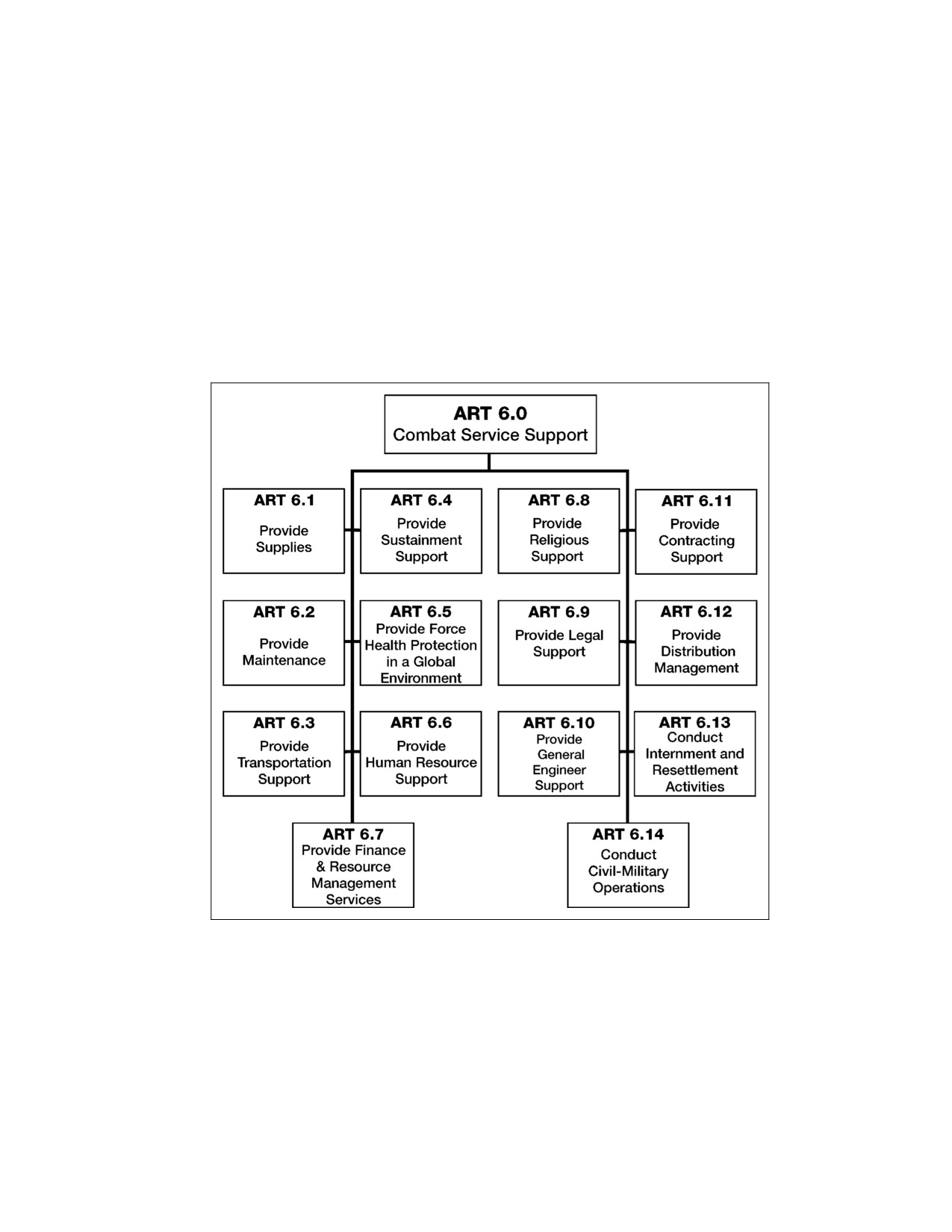
The Combat Service Support (CSS) BOS is the support and services to
sustain forces during full spectrum operations. It includes many technical
specialties and functional activities. These include the functions within
the Army’s framework of CSS
(FM
100-10): supply, maintenance,
transportation, combat health support, human resource support, legal
support, finance, religious support, contracting support, distribution
management, field and other service support as well as general
engineering. The CSS BOS includes all aspects of civil-military operations
falling under the Joint Staff definition of force sustainment (see JP 1-02).
6-1
FM 7-15__________________________________________________________________________
The supported force may be joint, multinational, or interagency in nature.
Army forces may also provide CSS to contractors, civilians (including
refugees and disaster victims), or members of nongovernmental
organizations (NGOs).
SECTION I - ART 6.1: PROVIDE SUPPLIES
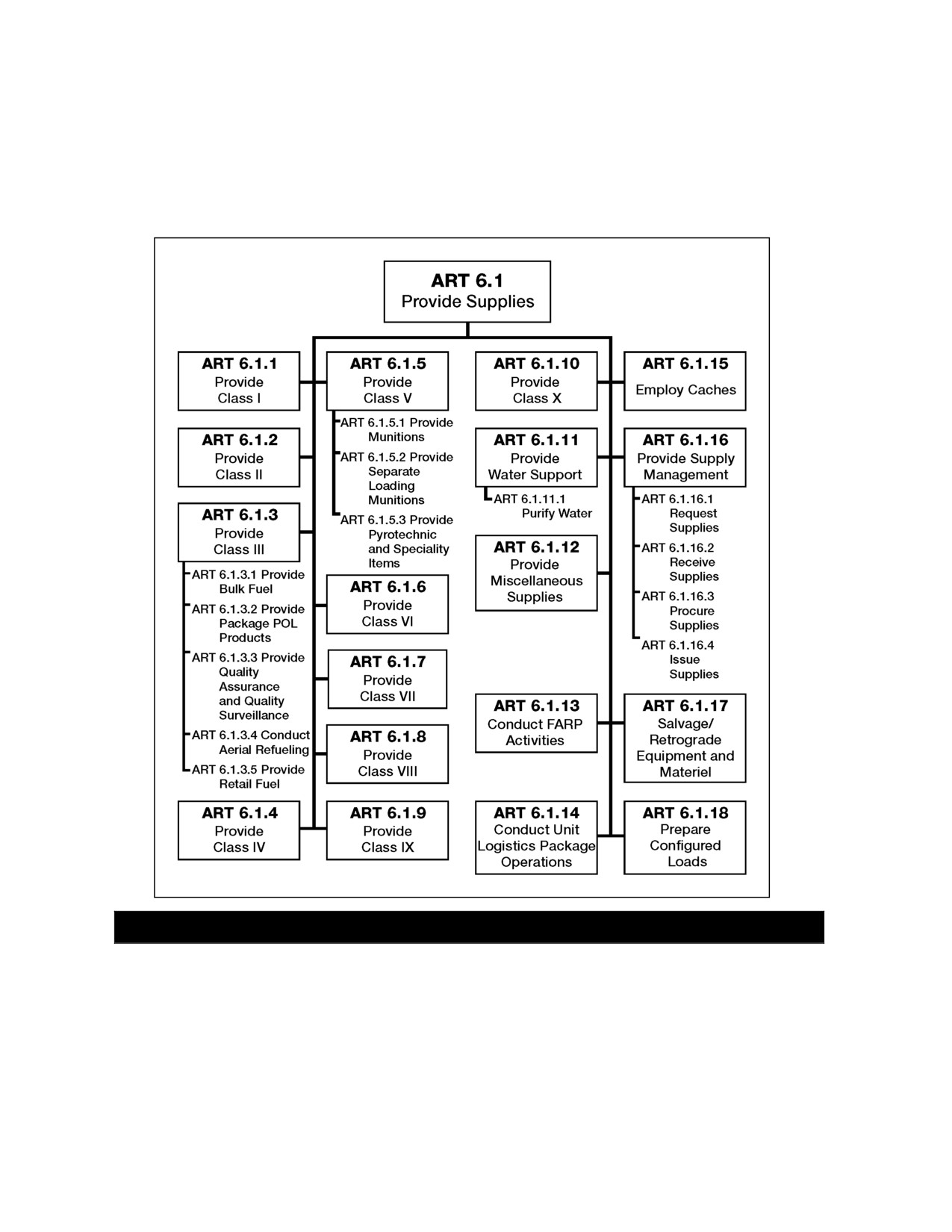
6-1. Provide all classes of supply necessary to equip, maintain, and operate
military units. (FM 10-1) (CASCOM)
6-2

_______________________________
ART 6.0: The Combat Service Support Battlefield Operating System
No.
Scale
Measure
01
Yes/No
The unit has supplies to conduct its mission.
The unit does not have to wait for supplies before it can conduct its
02
Yes/No
mission.
Required to develop or update plans to establish support operations after
03
Time
receipt of warning order.
To develop concept of support sustainment requirements after receipt of
04
Time
warning order.
05
Time
To achieve time-phased operating and safety levels of supply in AO.
06
Time
Of supply stockpiled in AO to support operations.
07
Time
Of sustainment supply in AO supported by available facilities.
08
Percent
Difference between planned and actual demand by type of supply in AO.
09
Percent
Of planned supply support achieved in AO.
10
Percent
Of supplies available in AO compared to requirements by type of supply.
11
Percent
Of replenishment stocks in AO delivered on time.
12
Percent
Of shortfalls in supply that have acceptable alternatives.
13
Percent
Of required supplies delivered in AO.
Of operations degraded, delayed, or modified due to delays in moving or
14
Percent
evacuating personnel, supplies, and equipment.
15
Percent
Of requisitions in AO filled.
16
Percent
Of required delivery date (RDD) in AO achieved.
17
Percent
Of requisitions in AO filled from shelf stocks.
18
Percent
Of critical replenishment stocks in AO that experienced late delivery.
Of tons per day of supplies and equipment in AO delivered to operating
19
Number
forces by class of supply.
ART 6.1.1 PROVIDE SUBSISTENCE (CLASS I)
6-2. Provide food in bulk or prepackaged rations and bottled water. This task
also includes the provision of health and comfort packages, such as
disposable razors and other personnel care items, other AAFES tactical field
exchanges are operational. (FM 10-23) (CASCOM)
Note: The task of inspecting Class I and Class I sources is contained in ART
6.5.4.4. (Provide Veterinary Services).
No.
Scale
Measure
01
Yes/No
The unit has class I supplies to conduct its mission.
The unit does not have to wait for class I supplies before it can conduct
02
Yes/No
its mission.
Required to develop or update plans to establish support operations after
03
Time
receipt of warning order.
To develop concept of support sustainment requirements after receipt of
04
Time
warning order.
05
Time
To achieve time-phased operating and safety levels of supply in AO.
6-3

FM 7-15__________________________________________________________________________
No.
Scale
Measure
06
Time
Of class I supply stockpiled in AO to support operations.
07
Time
Of sustainment supply in AO supported by available facilities.
08
Percent
Difference between planned and actual demand by supply line in AO.
09
Percent
Of planned class I supply support achieved in AO.
10
Percent
Of class I supplies available in AO compared to requirements.
11
Percent
Of replenishment stocks delivered on time in AO.
12
Percent
Of shortfalls in class I supply in AO that have acceptable alternatives.
13
Percent
Of required class I supplies in AO delivered.
Of operations degraded, delayed, or modified due to delays in moving
14
Percent
class I supplies.
15
Percent
Of class I supply requisitions filled in AO.
16
Percent
Of RDD for class I supplies in AO achieved.
17
Percent
Of critical replenishment stocks in AO that experienced late delivery.
18
Percent
Of class I supplies provided by host nation.
19
Number
Of tons per day of class I supply in AO delivered to operating forces.
ART 6.1.2 PROVIDE CLOTHING, INDIVIDUAL EQUIPMENT, TOOLS,
AND ADMINISTRATIVE SUPPLIES (CLASS II)
6-3. Provide clothing, individual equipment, tentage, organizational tool sets
and kits, hand tools, geospatial products
(maps), administrative and
housekeeping supplies and equipment. (FM 10-27) (CASCOM)
No.
Scale
Measure
01
Yes/No
The unit has class II supplies to conduct its mission.
The unit does not have to wait for class II supplies before it can conduct
02
Yes/No
its mission.
03
Time
To refine supply support program for AO after receipt of warning order.
To develop concept of support sustainment requirements after receipt of
04
Time
warning order.
05
Time
To achieve time-phased operating and safety levels of supply in AO.
06
Time
Of class II supply stockpiled in AO to support operations.
07
Time
Of sustainment supply in AO supported by available facilities.
08
Percent
Difference between planned and actual demand by supply line in AO.
09
Percent
Of planned class II supply support achieved in AO.
10
Percent
Of class II supplies available in AO compared to requirements.
11
Percent
Of replenishment stocks delivered on time in AO.
12
Percent
Of shortfalls in class II supply in AO that have acceptable alternatives.
13
Percent
Of required class II supplies in AO delivered.
Of operations degraded, delayed, or modified due to delays in moving
14
Percent
class II supplies.
15
Percent
Of class II supply requisitions filled in AO.
16
Percent
Of RDD for class II supplies in AO achieved.
17
Percent
Of critical replenishment stocks in AO that experienced late delivery.
6-4

_______________________________
ART 6.0: The Combat Service Support Battlefield Operating System
No.
Scale
Measure
18
Percent
Of class II supplies provided by host nation.
19
Number
Of tons per day of class II supply in AO delivered to operating forces.
ART 6.1.3 PROVIDE PETROLEUM, OIL, AND LUBRICANTS (CLASS III
B/P)
6-4. Supply bulk fuel and packaged petroleum products.
(FM
10-67)
(CASCOM)
No.
Scale
Measure
01
Yes/No
The unit has sufficient class III supplies to conduct its mission.
The unit does not have to wait for class III supplies before it can conduct
02
Yes/No
its mission.
03
Time
To develop replenishment concept after receipt of warning order.
04
Time
Of operational delay due to fuel shortages.
05
Time
Of supply of required fuel in place to support campaign.
06
Percent
And type of daily class III provided by host nation.
07
Percent
And type of required fuel delivered to theater.
08
Percent
Of fuel delivery capacity available in theater.
09
Percent
Of attempted deliveries destroyed by enemy action.
10
Percent
Of destroyed fuel deliveries anticipated and compensated for.
11
Percent
Of refueling capability available in theater at times and places needed.
12
Percent
Of total refueling assets available to support operational forces in theater.
Time phased force deployment data (TPFDD) bulk fuel units deployed
13
Percent
and operating.
14
Percent
Of available fuel lost to spills.
15
Number
Of gallons per day lost to spills.
16
Number
Of gallons and types of fuel delivered to theater.
ART 6.1.3.1
PROVIDE BULK FUEL
6-5. Provide bulk fuels to units using tankers, rail tank cars, hose lines, or
bulk transporters. ART 6.1.3.1 includes the conduct of refueling on the move.
(FM 10-67) (CASCOM)
No.
Scale
Measure
01
Yes/No
Unit has the necessary bulk class III supplies to conduct its mission.
The unit does not have to wait for bulk class III supplies before it can
02
Yes/No
conduct its mission.
03
Time
To develop replenishment concept after receipt of warning order.
04
Time
Of operational delay due to fuel shortages.
05
Time
Of supply of required fuel in place to support campaign.
06
Percent
And type of daily class III bulk fuel provided by host nation.
07
Percent
And type of required bulk fuel delivered to theater.
08
Percent
Of bulk fuel deliveries completed compared to forecasted requirements.
6-5

FM 7-15__________________________________________________________________________
No.
Scale
Measure
09
Percent
Of bulk fuel delivery capacity available in theater.
10
Percent
Of attempted deliveries destroyed by enemy action.
11
Percent
Of destroyed bulk fuel deliveries anticipated and compensated for.
Of bulk refueling capability available in theater at times and places
12
Percent
needed.
Of total bulk refueling assets available to support operational forces in
13
Percent
theater.
14
Percent
Of TPFDD bulk fuel units deployed and operating.
15
Percent
Of available bulk fuel lost to spills.
16
Number
Of gallons per day of bulk fuel lost to spills.
17
Number
Of gallons and types of bulk fuel delivered to theater.
ART 6.1.3.2 PROVIDE PACKAGED PETROLEUM, OILS, AND LUBRICANTS
PRODUCTS
6-6. Provide packaged products—including lubricants, greases, hydraulic
fluids, compressed gasses, and specialty items—that are stored, transported,
and issued in containers with a capacity of 55 gallons or less. (FM 10-67)
(CASCOM)
No.
Scale
Measure
01
Yes/No
The unit has class III supplies to conduct its mission.
The unit does not have to wait for packaged class III supplies before it
02
Yes/No
can conduct its mission.
To refine the supply support program for an AO after receipt of warning
03
Time
order.
04
Time
Of operational delay due to fuel shortages.
Of supply of required packaged petroleum products in place to support
05
Time
operations.
And type of daily class III packaged petroleum products provided by host
06
Percent
nation.
07
Percent
And type of required packaged petroleum products delivered to theater.
Of packaged petroleum products deliveries completed compared to
08
Percent
forecasted requirements.
09
Percent
Of attempted deliveries destroyed by enemy action.
Of gallons per day and type of packaged petroleum products delivered to
10
Number
theater.
ART 6.1.3.3
PROVIDE QUALITY ASSURANCE AND QUALITY SURVEILLANCE
6-7. Quality assurance is a contract administration function performed by
the government in determining whether contractors fulfill requirements and
specifications for petroleum products and related services. Quality
surveillance includes the measures used to determine and maintain the
quality of government-owned petroleum products to ensure that such
products are suitable for their intended use. Quality surveillance ensures
that products meet quality standards after acceptance from the contractor as
6-6
_______________________________
ART 6.0: The Combat Service Support Battlefield Operating System
well as after transfer between government agencies or issue to users. (FM 10-
67-2) (CASCOM)
No.
Scale
Measure
Class III supplies do not cause damage to the equipment when used IAW
01
Yes/No
normal safeguards.
The unit does not have to delay operations to purge equipment fuel and
02
Yes/No
lubrication systems of contamination.
To develop a program that ensures military petroleum products are
03
Time
procured under federal or military specification.
04
Percent
Of fuel meeting DOD Manual 4140.25-M inspection specifications.
05
Percent
Of fuel receiving tested IAW applicable regulations and standards.
Of laboratories provided and maintained for testing fuels and lubricants
06
Percent
IAW applicable regulations.
Of agencies maintaining a quality surveillance program as prescribed in
07
Percent
applicable regulations.
08
Percent
Of fuel certified by USAPC.
09
Percent
Of fuel products in excess of 10,000 gallons IAW DA PAM 710-2-1.
Of fuel products meeting standards established by AR 200-1 and the Air
10
Percent
Pollution Abatement Program.
Of fuel tested IAW American Society for Testing and Materials
11
Percent
or Federal Test Methods Standard standards.
12
Percent
Of fuel suppliers IAW STANAG 2115.
ART 6.1.3.4
CONDUCT AERIAL REFUELING
6-8. Use Army special operations forces aviation capabilities to receive aerial
refueling to extend the range of rotary-wing insertion/exfiltration platforms.
(FM 3-05.60) (USAAVNC)
No.
Scale
Measure
01
Yes/No
Unit has aerial refueling capabilities to conduct its mission.
Aerial refueling assets required to support mission accomplishment were
02
Yes/No
where they were supposed to be at the time and with the quantities
specified in the operations order.
03
Time
To provide aerial fuel resupply concept after receipt of warning order.
04
Time
To conduct aerial refueling operations.
05
Percent
Of daily aerial refueling requirements provided by organic support assets.
06
Percent
Of required bulk fuel delivered to units.
07
Percent
Of bulk fuel delivery capacity available.
08
Percent
Of required aerial refueling support assets available for the operation.
Of bulk aerial refueling capability available in theater at times and places
09
Percent
needed.
Of total bulk refueling assets available to support operational forces in
10
Percent
theater.
11
Number
Of gallons/pounds of fuel available in AO.
12
Number
Of days of required fuel in place to support operation.
6-7

FM 7-15__________________________________________________________________________
No.
Scale
Measure
13
Number
Of total flying hours for each aircraft.
14
Number
Of kilometers between support locations and supported forces.
15
Number
Of aviation platforms requiring fuel.
16
Number
Of gallons per day of bulk aviation fuel lost to spills.
ART 6.1.3.5 PROVIDE RETAIL FUEL
6-9. Provide retail fuels to individual systems from tankers, rail tank cars,
hose lines, or bulk transporters. (FM 10-67) (CASCOM)
No.
Scale
Measure
01
Yes/No
Unit has the necessary bulk class III supplies to conduct its mission.
02
Time
That the supply of required fuel in place to support campaign.
03
Percent
And type of daily class III retail fuel requirements provided by host nation.
04
Percent
Of retail fuel deliveries completed compared to forecasted requirements.
05
Percent
Of available retail fuel lost to spills.
06
Number
Of gallons per day of retail fuel lost to spills.
07
Number
Of gallons and types of retail fuel delivered to users within the AO.
ART 6.1.4 PROVIDE BARRIER AND CONSTRUCTION MATERIAL
(CLASS IV)
6-10. Provide construction materials including installed equipment and all
fortification and barrier materials. ART 6.1.4 includes the conduct of quarry,
sawmill, and rock-crushing operations, and the production of asphalt and
concrete. (FM 10-27) (CASCOM)
No.
Scale
Measure
01
Yes/No
Unit has class IV supplies to conduct its mission.
The unit does not have to wait for class IV supplies before it can conduct
02
Yes/No
its mission.
Required to develop or update plans to establish support operations after
03
Time
receipt of warning order.
To develop concept of support sustainment requirements after receipt of
04
Time
warning order.
05
Time
To achieve time-phased operating and safety levels of supply in AO.
Difference between projected engineer construction material
06
Percent
requirements and actual requirements in AO.
07
Percent
Of planned class IV supply support achieved in AO.
08
Percent
Of class IV supplies available in AO compared to requirements.
09
Percent
Of replenishment stocks delivered on time in AO.
10
Percent
Of shortfalls in class IV supply in AO that have acceptable alternatives.
11
Percent
Of required class IV supplies in AO delivered.
Of operations degraded, delayed, or modified due to delays in providing
12
Percent
class IV supplies to the right locations in the right quantities.
13
Percent
Of class IV supply requisitions filled in AO.
14
Percent
Of RDD for class IV supplies in AO achieved.
6-8

_______________________________
ART 6.0: The Combat Service Support Battlefield Operating System
No.
Scale
Measure
15
Percent
Of critical replenishment stocks in AO that experienced late delivery.
16
Percent
Of class IV supplies provided by host nation.
17
Number
Of days of class IV supply stockpiled in AO to support campaign.
18
Number
Of days of sustainment supply in AO supported by available facilities.
19
Number
Of sawmills operating within the AO.
20
Number
Of rock crushing facilities/quarries operating within AO.
21
Number
And types of class IV supply in tons/day delivered to forces within the AO.
ART 6.1.5 PROVIDE AMMUNITION (CLASS V)
6-11. Provide the right type and quantity of ammunition to the force. (FM
9-6) (CASCOM)
No.
Scale
Measure
01
Yes/No
Unit has class V supplies to conduct its mission.
The unit does not have to wait for class V supplies before it can conduct
02
Yes/No
its mission.
To determine suitable munitions available in theater after receipt of
03
Time
warning order.
04
Time
To develop replenishment concept after receipt of warning order.
05
Time
After RDD that replenishment stocks are delivered.
06
Percent
Of required lift available.
07
Percent
Of minimum safety level of build-up stocks maintained at staging areas.
08
Percent
Of munitions at zero balance.
09
Percent
Of munition lines below required supply rates.
10
Percent
Of TPFDD ammunition units deployed and operational.
11
Percent
Capacity of TPFDD ammunition units deployed and operational.
12
Percent
Of unit missions delayed due to shortfall in major equipment items.
13
Percent
Of high-priority targets attacked with preferred munitions.
ART 6.1.5.1
PROVIDE MUNITIONS
6-12. Supply munitions—small arms ammunition, grenades, mines,
rockets, missiles, and tank and field artillery rounds—to the force. (FM 9-6)
(CASCOM)
No.
Scale
Measure
01
Yes/No
Unit has class V supplies to conduct its mission.
The unit does not have to wait for class V supplies before it can conduct
02
Yes/No
its mission.
After receipt of warning order to determine if suitable munitions are
03
Time
available within the AO.
04
Time
After RDD that replenishment stocks are delivered.
05
Percent
Of minimum safety level of build-up stocks maintained at staging areas.
06
Percent
Of required reception and onward movement support available.
07
Percent
Of missions delayed due to shortfall of munitions.
6-9

FM 7-15__________________________________________________________________________
No.
Scale
Measure
08
Percent
Of fire missions delayed or not completed due to munitions shortfall.
Of high-priority targets requiring reattack because preferred munitions not
09
Percent
available.
10
Percent
Of replenishment stocks delivered prior to RDD.
11
Number
Of days of supply supported by available facilities.
ART 6.1.5.2
PROVIDE SEPARATE LOADING MUNITIONS
6-13. Supply munitions items, such as separate loading field artillery
rounds, that have distinct components. (FM 9-6) (CASCOM)
No.
Scale
Measure
01
Yes/No
Unit has class V supplies to conduct its mission.
The unit does not have to wait for class V supplies before it can conduct
02
Yes/No
its mission.
After receipt of warning order to determine if suitable munitions are
03
Time
available within the AO.
After RDD that replenishment stocks of separate loading ammunition are
04
Time
delivered.
05
Percent
Of minimum safety level of build-up stocks maintained at staging areas.
06
Percent
Of required reception and onward movement support available.
07
Percent
Of missions delayed due to shortfall of separate loading munitions.
Of fire missions delayed or not completed due to separate loading
08
Percent
munitions shortfall.
Of high-priority targets that require reattack because separate loading
09
Percent
munitions not available.
10
Percent
Of replenishment stocks delivered prior to RDD.
11
Number
Of days of supply supported by available facilities.
ART 6.1.5.3
PROVIDE PYROTECHNIC AND SPECIALTY ITEMS
6-14. Supply munitions items such as explosive bolts, ejection cartridges,
and demolition charges. (FM 9-6) (CASCOM)
No.
Scale
Measure
01
Yes/No
Unit has pyrotechnic and specialty items to conduct its mission.
The unit does not have to wait for pyrotechnic and specialty items before
02
Yes/No
it can conduct its mission.
After receipt of warning order to determine if suitable munitions are
03
Time
available within the AO.
After RDD that replenishment stocks of pyrotechnic/specialty items
04
Time
ammunition are delivered.
05
Percent
Of minimum safety level of build-up stocks maintained at staging areas.
06
Percent
Of required reception and onward movement support available.
07
Percent
Of missions delayed due to shortfall of pyrotechnic and specialty items.
Of fire missions delayed or not completed due to pyrotechnic/specialty
08
Percent
items munitions shortfall.
Of high-priority targets that require re-attack because
09
Percent
pyrotechnic/specialty items munitions not available.
6-10

_______________________________
ART 6.0: The Combat Service Support Battlefield Operating System
No.
Scale
Measure
10
Percent
Of replenishment stocks delivered prior to RDD.
11
Number
Of days of supply supported by available facilities.
ART 6.1.6 PROVIDE PERSONAL DEMAND ITEMS (CLASS VI)
6-15. Coordinate and provide personal demand items, such as health and
hygiene products and nonmilitary sales items. (FM 10-1) (CASCOM)
No.
Scale
Measure
01
Yes/No
Unit has the necessary class VI supplies to conduct its mission.
The unit does not have to wait for class VI supplies before it can conduct
02
Yes/No
its mission.
Required to develop or update plans to establish support operations after
03
Time
receipt of warning order.
To develop concept of support sustainment requirements after receipt of
04
Time
warning order.
05
Time
To achieve time-phased operating and safety levels of supply in AO.
06
Percent
Difference between planned and actual demand by supply line in AO.
07
Percent
Of class VI supplies available in AO compared to requirements.
08
Percent
Of replenishment stocks delivered on time in AO.
09
Percent
Of shortfalls in class VI supply in AO that have acceptable alternatives.
10
Percent
Of required class VI supplies in AO delivered.
11
Percent
Of planned class VI supply support achieved in AO.
Of operations degraded, delayed, or modified due to delays in moving
12
Percent
class VI supplies.
13
Number
Of days of class VI supply stockpiled in AO to support campaign.
14
Number
Of days of sustainment supply in AO supported by available facilities.
15
Number
Of tons per day of class VI supply in AO delivered to operating forces.
ART 6.1.7 PROVIDE MAJOR END ITEMS (CLASS VII)
6-16. Provide major end items, such as launchers, tanks, mobile machine
shops, and vehicles. (FM 10-1) (CASCOM)
No.
Scale
Measure
01
Yes/No
Unit has class VII supplies to conduct its mission.
The unit does not have to wait for class VII supplies before it can conduct
02
Yes/No
its mission.
03
Time
To achieve time-phased operating and safety levels of supply in AO.
Required to develop or update plans to establish support operations after
04
Time
receipt of warning order.
To develop concept of support sustainment requirements after receipt of
05
Time
warning order.
06
Percent
Difference between planned and actual demand by supply line in AO.
07
Percent
Of planned class VII supply support achieved in AO.
6-11

FM 7-15__________________________________________________________________________
No.
Scale
Measure
08
Percent
Of class VII supplies available in AO compared to requirements.
09
Percent
Of replenishment stocks delivered on time in AO.
10
Percent
Of shortfalls in class VII supply in AO that have acceptable alternatives.
11
Percent
Of required class VII supplies in AO delivered.
12
Percent
Of class VII supply requisitions filled in AO.
Of operations degraded, delayed, or modified due to delays in moving
13
Percent
class VII supplies.
14
Percent
Of RDD for class VII supplies in AO achieved.
15
Percent
Of critical replenishment stocks in AO that experienced late delivery.
16
Percent
Of class VII supplies provided by host nation.
17
Number
Of days of class VII supply stockpiled in AO to support operations.
18
Number
Of days of sustainment supply in AO supported by available facilities.
19
Number
Of tons per day of class VII supply in AO delivered to operating forces.
ART 6.1.8 PROVIDE MEDICAL MATERIAL AND REPAIR PARTS
(CLASS VIII)
6-17. Provide class VIII medical materiel to include medical supplies,
equipment, and medical peculiar repair parts. (FM 4-02.1) (USAMEDDC&S)
Note: ART 6.5.3 (Provide Medical Logistics) addresses the other aspects of
combat health logistics.
No.
Scale
Measure
01
Yes/No
Unit has class VIII supplies to conduct its mission.
The unit does not have to wait for class VIII supplies before it can
02
Yes/No
conduct its mission.
03
Yes/No
Unit has Class VIII medical unique repair parts to conduct its mission.
Unit does not have to wait for Class VIII medical peculiar parts before it
04
Yes/No
can conduct its mission.
Required to develop or update plans to establish support operations after
05
Time
receipt of warning order.
To transship class VIII supplies and medical equipment upon receipt of
06
Time
warning order.
07
Time
To provide emergency shipment of class VIII supplies within AO.
To refine medical equipment maintenance and repair support program
08
Time
after receipt of warning order.
09
Time
To receive medical equipment peculiar repair parts after requisition.
An average piece of medical equipment is not mission capable (awaiting
10
Time
parts).
To requisition, procure, and provide critical medical equipment peculiar
11
Time
repair parts.
12
Percent
Difference between planned and actual demand by supply line in AO.
13
Percent
Of planned class VIII supply support achieved in AO.
6-12
_______________________________
ART 6.0: The Combat Service Support Battlefield Operating System
No.
Scale
Measure
14
Percent
Of class VIII supplies require replenishment per day.
15
Percent
Of shortfalls in Class VIII supply in AO that have acceptable alternatives.
16
Percent
Of required Class VIII supplies in AO delivered.
Of operations degraded, delayed, or modified due to delays in moving
17
Percent
Class VII supplies.
18
Percent
Of Class VIII supply requisitions filled in AO.
19
Percent
Of required delivery date (RDD) for Class VIII supplies in AO achieved.
20
Percent
Of critical replenishment stocks in AO that experienced late delivery.
Of Class VIII supplies (meeting regulatory requirements) provided by host
21
Percent
nation.
22
Percent
Of average medical equipment down.
23
Percent
Of TPFDL medical logistics units deployed and operational.
24
Percent
Of medical equipment deadlined for supply.
Of Class VII medical equipment peculiar repair parts requirements
25
Percent
provided by the host nation.
Of instances when medical capability is unavailable due to shortage or
26
Number
lack of class VIII supplies or equipment.
Of tons per day of Class VIII supply (and medical peculiar repair parts) in
27
Number
AO delivered to operating forces.
ART 6.1.9 PROVIDE REPAIR PARTS (CLASS IX)
6-18. Provide any part, subassembly, assembly, or component required for
installation in the maintenance of an end item, subassembly, or component.
(FM 10-1) (CASCOM)
No.
Scale
Measure
01
Yes/No
Unit has class IX supplies to conduct its mission.
The unit does not have to wait for class IX supplies before it can conduct
02
Yes/No
its mission.
03
Time
To refine supply support program after receipt of warning order.
04
Time
To receive repair parts after requisition.
05
Time
An average piece of equipment is not mission capable (awaiting parts).
06
Time
To requisition, procure, and provide critical repair parts.
07
Percent
Of average equipment downtime.
08
Percent
Of TPFDD maintenance units deployed and operational.
09
Percent
Of equipment deadlined for supply.
10
Percent
Of transportation units deployed and operational.
11
Percent
Of class IX requirements provided by host nation.
12
Number
Of tons per day of class IX supply in AO delivered to operating forces.
ART 6.1.10 PROVIDE SUPPLIES FOR CIVILIAN USE (CLASS X)
6-19. Provide material to support nonmilitary programs, such as
agriculture and economic development. (FM 10-1) (CASCOM)
6-13

FM 7-15__________________________________________________________________________
No.
Scale
Measure
01
Yes/No
Unit has class X supplies to conduct its mission.
The unit does not have to wait for class X supplies before it can conduct
02
Yes/No
its mission.
US and host-nation laws and regulations allow civilians to use the
03
Yes/No
supplies provided.
To establish liaison with appropriate host-nation civilian government
04
Time
officials in AO after receipt of mission.
05
Time
To coordinate host-nation support agreements on activation of the AO.
06
Percent
Of sustainment supplies in AO procured from host-nation sources.
07
Percent
Of logistic effort in AO provided by host nation.
08
Number
Of facilities used by US units in AO provided by host nation.
09
Number
Of host-nation support agreements in effect in AO.
10
Number
Of US military units that have host-nation liaison officers assigned in AO.
11
Number
Of tons per day of class X supplies in AO delivered for civilian use.
ART 6.1.11 PROVIDE WATER SUPPORT
6-20. Provide water. ART 6.1.11 includes purification, distribution, storage,
and quality surveillance of water. (FM 10-52) (CASCOM)
Note: ART
6.10.3
(Provide Engineer Construction Support) addresses
construction, repairing, maintenance, and operations of permanent and semi-
permanent water facilities, such as the drilling of water wells.
No.
Scale
Measure
01
Yes/No
Unit has potable/nonpotable water supplies to conduct its mission.
The unit does not have to wait for potable and nonpotable water before it
02
Yes/No
can conduct its mission.
Required to develop or update plans to establish support operations after
03
Time
receipt of warning order.
To develop concept of support sustainment requirements after receipt of
04
Time
warning order.
05
Time
To achieve time-phased operating and safety levels of supply in AO.
06
Percent
Difference between planned and actual demand by supply line in AO.
07
Percent
Of planned potable water support achieved in AO.
Of potable water generation equipment available in AO compared to
08
Percent
requirements.
Of shortfalls in potable water generation and distribution equipment in AO
09
Percent
that have acceptable alternatives.
10
Percent
Of required potable water in AO generated.
Of operations degraded, delayed, or modified due to delays in generating
11
Percent
and distributing potable water.
12
Percent
Of potable water (bottled) provided by host nation.
And types of potable water generation equipment stockpiled in AO to
13
Number
support operations.
6-14

_______________________________
ART 6.0: The Combat Service Support Battlefield Operating System
No.
Scale
Measure
14
Number
Of days of sustainment supply in AO supported by available facilities.
15
Number
Of gallons per day of potable water in AO delivered to operating forces.
ART 6.1.11.1 PURIFY WATER
6-21. Provide and operate water purification equipment and facilities to
provide potable water for consumption and use where purified water is
required. (FM 10-52) (CASCOM)
No.
Scale
Measure
01
Yes/No
Unit has potable water supplies to conduct its mission.
The unit does not have to wait for potable water before it can conduct its
02
Yes/No
mission.
03
Time
To refine field services program for AO after receipt of warning order.
04
Percent
Difference between planned and actual demand by supply line in AO.
05
Percent
Of planned capacity of water purification support achieved in AO.
06
Percent
Of operational water purification facilities and equipment in AO.
07
Percent
Of required gallons of water provided per day in AO.
08
Percent
Of water distribution system operational in AO on average.
09
Percent
Of total potable water production capacity utilized in AO on average.
10
Number
Of water purification teams in AO.
11
Number
Of water sources available in AO.
12
Number
Of days of water supply on hand in AO.
13
Number
Of gallons of potable water required per person per day in AO.
14
Number
Of gallons of potable water provided per person per day in AO.
ART 6.1.12 PROVIDE MISCELLANEOUS SUPPLIES
6-22. Provide miscellaneous supplies and captured materials. (FM 10-1)
(CASCOM)
No.
Scale
Measure
01
Yes/No
Unit has miscellaneous supplies to conduct its mission.
The unit does not have to wait for miscellaneous supplies before it can
02
Yes/No
conduct its mission.
Required to develop or update plans to establish support operations after
03
Time
receipt of warning order.
To develop concept of support for miscellaneous supply requirements
04
Time
after receipt of warning order.
05
Time
To achieve time-phased operating and safety levels of supply in AO.
06
Time
To certify captured supplies as being safe substitutes for US supplies.
07
Percent
Difference between planned and actual demand by supply line in AO.
08
Percent
Of planned supply support for miscellaneous supplies achieved in AO.
09
Percent
Of miscellaneous supplies available in AO compared to requirements.
10
Percent
Of miscellaneous replenishment stocks delivered on time in AO.
6-15

FM 7-15__________________________________________________________________________
No.
Scale
Measure
11
Percent
Of shortfalls in miscellaneous supplies that have acceptable alternatives.
12
Percent
Of supply lines in AO that can be supported by using captured supplies.
13
Percent
Of required miscellaneous supplies in AO delivered.
Of operations degraded, delayed, or modified due to delays in moving
14
Percent
miscellaneous supplies.
15
Percent
Of miscellaneous supply requisitions filled in AO.
16
Percent
Of RDD for miscellaneous supplies in AO achieved.
17
Percent
Of critical replenishment stocks in AO that experienced late delivery.
18
Percent
Of miscellaneous supplies provided by host nation.
Of daily supply requirements for a particular item met by use of captured
19
Percent
materiel.
20
Number
Of days of miscellaneous supplies stockpiled in AO to support operations.
21
Number
Of days of miscellaneous supplies in AO supported by available facilities.
22
Number
Of tons of miscellaneous supplies per day delivered to operating forces.
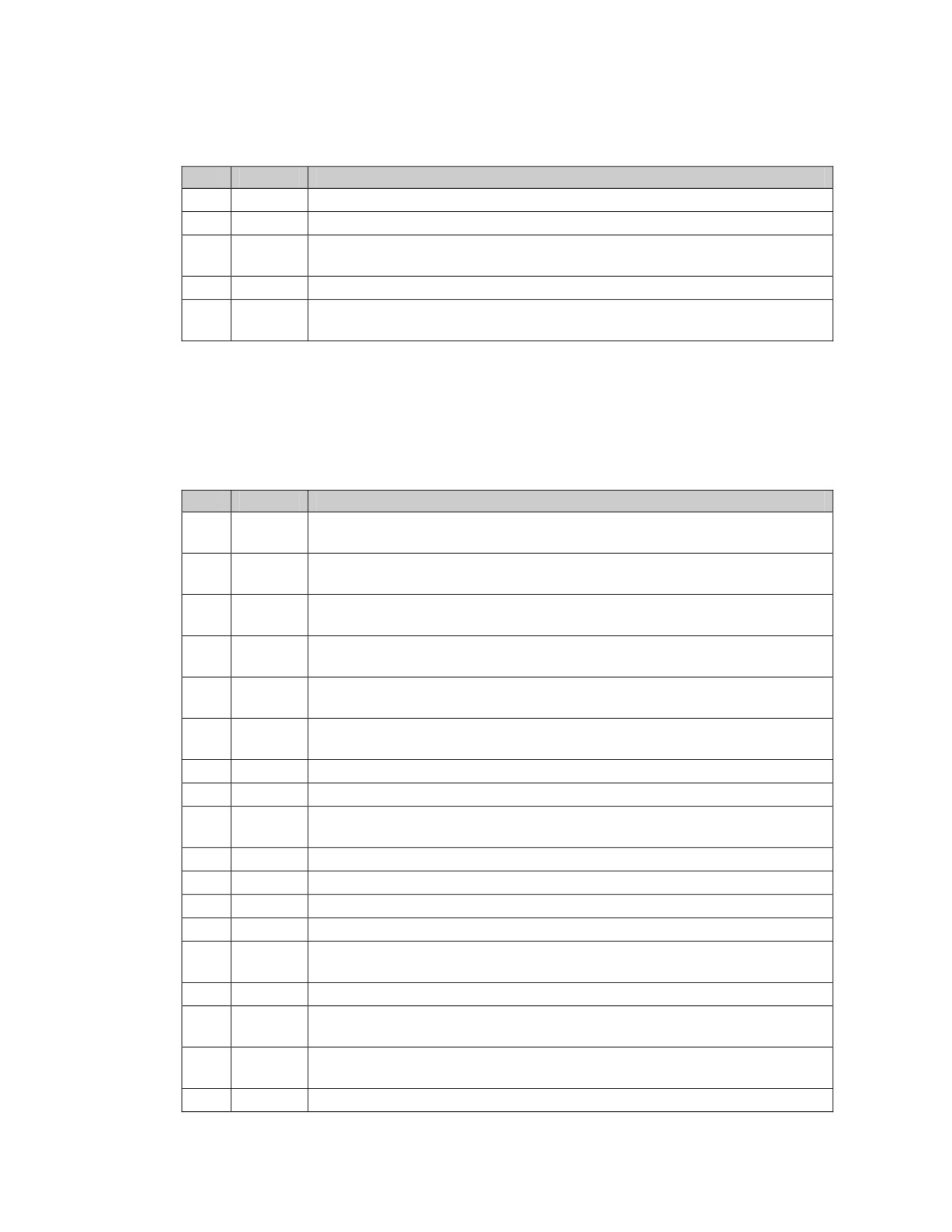
ART 6.1.13 CONDUCT FORWARD ARMING AND REFUELING POINT
ACTIVITIES
6-23. Establish a temporary facility organized, equipped, and deployed to
provide fuel and ammunition to employ helicopter units. A FARP is located
closer to the AO than the aviation unit’s CSS area. (FM 1-100) (USAAVNC)
No.
Scale
Measure
The FARP site contains supplies to allow the aviation element to continue
01
Yes/No
its mission.
The FARP site was operational when and where necessary to support
02
Yes/No
the aviation element.
To provide forward aerial fuel and ammunition concept of support after
03
Time
receipt of warning order.
To complete bulk refuel and rearm operations at the FARP, once aircraft
04
Time
arrive.
05
Percent
Of bulk fuel and ammunition distribution capacity available.
06
Percent
Of supplies destroyed by enemy action.
Of communication resources and support personnel available to support
07
Percent
mission.
Of materiel handling equipment (MHE) available to support each mission
08
Percent
and site.
09
Number
And types of aviation platforms requiring resupply.
10
Number
And types of supplies to support operation.
11
Number
Of gallons of bulk fuel delivered to FARP.
12
Number
And types of ordnance delivered to FARP.
13
Number
Of gallons/pounds of bulk fuel provided by organic assets.
14
Number
And types of ordnance provided by organic assets.
Of total flying hours for each aircraft and number of miles between
15
Number
support location.
6-16
_______________________________
ART 6.0: The Combat Service Support Battlefield Operating System
No.
Scale
Measure
16
Number
Of kilometers between support location.
17
Number
And types of platforms providing security.
Of kilometers that the location of supported forces is offset from the
18
Number
location of supporting forces.
19
Number
And types of supplies destroyed by enemy action.
Of casualties occurring during the conduct of the FARP operations
20
Number
resulting from enemy action and accidents.
ART 6.1.14 CONDUCT UNIT LOGISTICS PACKAGE OPERATIONS
6-24. Move a centrally organized resupply convoy originating at the task
force trains for each company/team/platoon to and from that company/team/
platoon’s location. Each convoy carries items to sustain its supported
company/team for a specific period, usually
24 hours or until the next
scheduled LOGPAC. (FM 3-90.1) (USAARMS)
No.
Scale
Measure
The unit LOGPAC contains supplies to allow the unit to continue its
01
Yes/No
mission.
Unit operations were not delayed by LOGPAC failure to arrive at the
02
Yes/No
resupply site at the specified time.
Required to develop or update plans to establish support operations after
03
Time
receipt of warning order.
To establish comprehensive surface movement plan on receipt of the
04
Time
warning order.
For transport vehicles to upload supplies and equipment for supported
05
Time
units.
For transport vehicles to travel to supported units, resupply the units, and
06
Times
return to point of origin.
07
Percent
Difference between planned and actual demand by supply line in AO.
08
Percent
Of projected surface transport available in AO.
Of operations degraded, delayed, or modified due to delays in moving or
09
Percent
evacuating personnel, supplies, and equipment.
10
Percent
Of surface cargo in AO transported by wheeled/tracked vehicles.
11
Percent
Of roads available to transport supplies and equipment.
12
Percent
Of supplies lost to enemy action.
13
Percent
Of supplies transported by host nation.
Of personnel, supplies, and equipment in AO that arrive at destination on
14
Percent
schedule.
15
Number
Of passengers transported (per day) by surface means in AO.
Of kilometers between the brigade support area and field trains, and
16
Number
between the field trains and supported company.
Of tons per day of supplies and equipment moved by surface transport in
17
Number
AO.
18
Number
Of tons per day of supplies and equipment in AO moved by organic units.
6-17

FM 7-15__________________________________________________________________________
ART 6.1.15 EMPLOY CACHES
6-25. Hide supply stocks in isolated locations by such methods as burial,
concealment, or submersion to support the operations of a designated force.
ART 6.1.15 can routinely occur during the conduct of retrograde, evasion and
recovery, and special operations. (FM 7-85) (USAIS)
No.
Scale
Measure
01
Yes/No
The caches allow the unit to continue its mission.
Unit operations were not delayed by an inability to find the cache due to
02
Yes/No
inaccurate reporting of the cache’s location.
Unit establishing the cache used cover and concealment to hide the
03
Yes/No
location of the cache.
To develop caches concept of support and determine specific quantities
04
Time
and types of supplies to place in caches after receipt of warning order.
05
Time
Before RDD that replenishment stocks are delivered.
06
Percent
Of required lift by mode available to emplace caches.
07
Percent
Of supplies destroyed by enemy forces.
Of supplies destroyed by environmental factors, to include damage from
08
Percent
animals.
09
Percent
Of caches whose locations were accurately reported.
10
Number
Of caches established.
11
Number
And types of vehicles supported from each cache location.
12
Number
And types of enemy forces operating in AO.
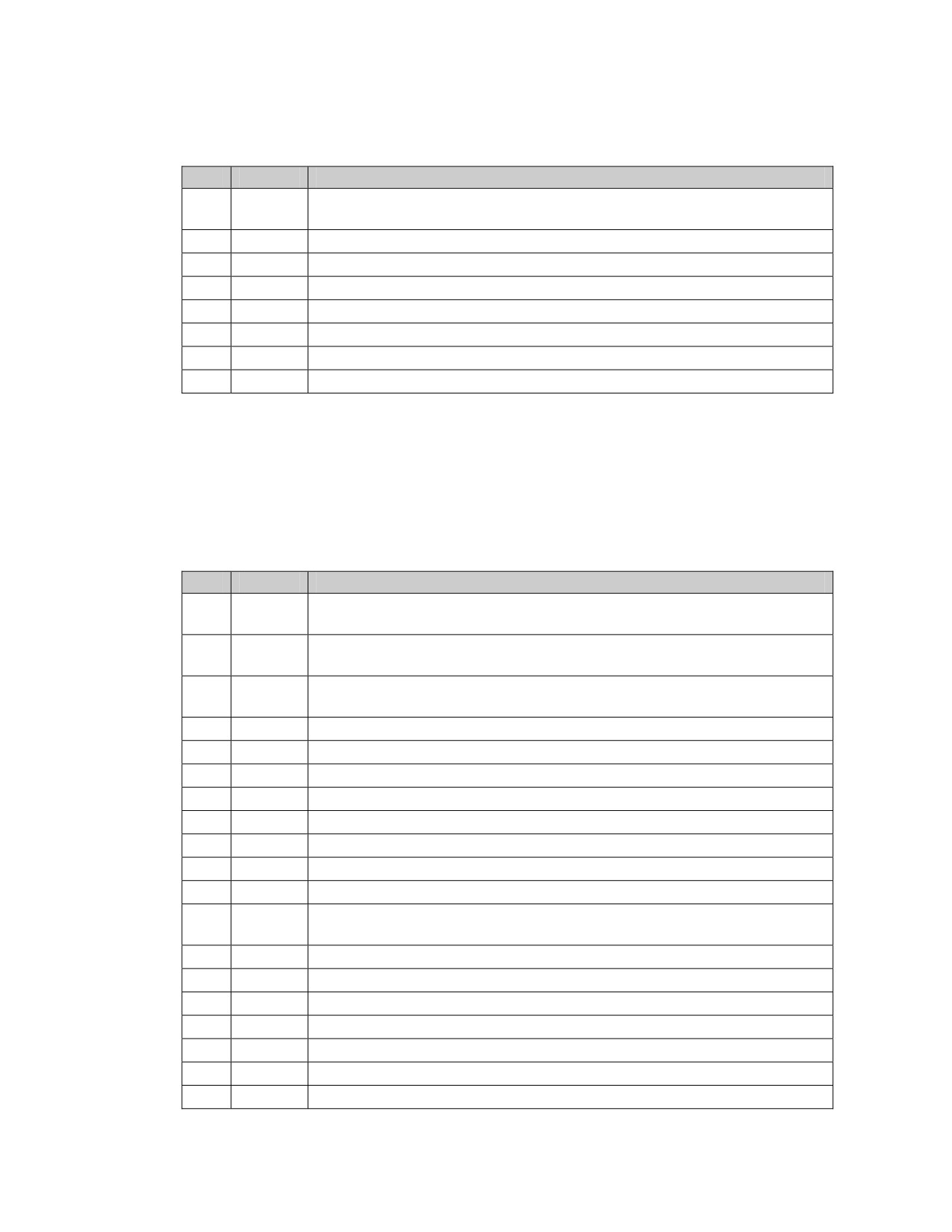
ART 6.1.16 PROVIDE SUPPLY MANAGEMENT
6-26. Provide management for all classes of supplies and material. ART
6.1.16 includes procedures established for requesting, procuring, and issuing
supplies while maintaining accountability and security of supply stocks. (FM
100-10) (CASCOM)
No.
Scale
Measure
Unit operations were not delayed by an inability to perform supply
01
Yes/No
management.
The conduct of supply management enhanced the unit’s ability to
02
Yes/No
accomplish its mission.
Required to develop or update plans to establish support operations after
03
Time
receipt of warning order.
To develop concept of support sustainment requirements after receipt of
04
Time
warning order.
05
Time
To achieve time-phased operating and safety levels of supply in AO.
06
Percent
Difference between planned and actual demand by supply line in AO.
07
Percent
Of planned supply support achieved in AO.
08
Percent
Of supplies available in AO compared to requirements.
09
Percent
Of replenishment stocks in AO delivered on time.
10
Percent
Of shortfalls in supply that have acceptable alternatives.
11
Percent
Of required supplies delivered in AO.
6-18
_______________________________
ART 6.0: The Combat Service Support Battlefield Operating System
No.
Scale
Measure
Of operations degraded, delayed, or modified due to delays in moving or
12
Percent
evacuating personnel, supplies, and equipment.
13
Percent
Of requisitions in AO filled.
14
Percent
Of RDD in AO achieved.
15
Percent
Of requisitions in AO filled from shelf stocks.
16
Percent
Of critical replenishment stocks in AO that experienced late delivery.
17
Number
Of days of supplies stockpiled in AO to support operations.
18
Number
Of days of sustainment supplies in AO supported by available facilities.
19
Number
Of tons of supplies and equipment per day delivered to operating forces.
ART 6.1.16.1 REQUEST SUPPLIES
6-27. Submit a supply request to a supporting supply element. ART 6.1.16.1
includes company-sized and smaller units requesting all types of supplies
from the organization such as the unit supply section, battalion support
platoon, forward support company, or headquarters and distribution
company responsible for sustaining them. ART
6.1.16.1 also includes
determining requirements and on-hand/due-in stocks, preparing requisitions,
and determining the source/location of supply items. (FM 10-1) (CASCOM)
No.
Scale
Measure
The process of requesting supplies did not delay the conduct of unit
01
Yes/No
operations.
To refine supply sustainment program for the area of operation after
02
Time
receipt of warning order.
To develop a concept of support and determine sustainment
03
Time
requirements after receipt of warning order.
04
Time
To achieve time-phased operating and safety levels of supply in AO.
05
Time
To process requisition in AO for replacement supplies and equipment.
06
Percent
Difference between planned and actual demand by supply line in AO.
07
Percent
Of planned supply support achieved in AO.
08
Percent
Of supplies available in AO compared to requirements.
09
Percent
Of replenishment stocks in AO delivered on time.
10
Percent
Of shortfalls in supplies that have acceptable alternatives.
11
Percent
Of required supplies delivered in AO.
Of operations degraded, delayed, or modified due to delays in processing
12
Percent
requisitions for needed supplies and equipment.
13
Percent
Of requisitions in AO filled.
14
Percent
Of RDD in AO achieved.
15
Percent
Of requisitions in AO filled from shelf stocks.
16
Percent
Of critical replenishment stocks in AO that experienced late delivery.
17
Percent
Of supply requisitions returned due to errors in the requisition process.
18
Number
Of days of supplies stockpiled in AO to support operations.
19
Number
Of days of sustainment supplies in AO supported by available facilities.
6-19

FM 7-15__________________________________________________________________________
No.
Scale
Measure
20
Number
Of requisitions processed per day in AO.
Of tons of supplies and equipment in AO delivered per day to operating
21
Number
forces.
ART 6.1.16.2 RECEIVE SUPPLIES
6-28. Replenish stocks to maintain required levels of supply. ART 6.1.16.2
includes maintaining unit basic loads or supply stocks required for a specific
mission. It also includes determining the type and quantity of shipment, and
performing quality assurance. (FM 10-1) (CASCOM)
No.
Scale
Measure
The process of receiving supplies did not delay the conduct of unit
01
Yes/No
operations.
Required to develop or update plans to establish support operations after
02
Time
receipt of warning order.
To develop concept of support sustainment requirements after receipt of
03
Time
warning order.
04
Time
To achieve time-phased operating and safety levels of supply in AO.
05
Time
To process requisition in AO for replacement supplies and equipment.
06
Percent
Difference between planned and actual demand by supply line in AO.
07
Percent
Of planned supply support achieved in AO.
08
Percent
Of supplies available in AO compared to requirements.
09
Percent
Of replenishment stocks in AO delivered on time.
10
Percent
Of shortfalls in supply that have acceptable alternatives.
11
Percent
Of required supplies delivered in AO.
Of operations degraded, delayed, or modified due to errors in processing
12
Percent
requisitions in AO for needed supplies and equipment.
13
Percent
Of requisitions in AO filled.
14
Percent
Of RDD in AO achieved.
15
Percent
Of critical replenishment stocks in AO that experienced late delivery.
16
Percent
Of supplies received in AO that are in error due to faulty requisitioning.
Of errors in requisitioning of supplies in AO found through quality
17
Percent
assurance audit.
18
Number
Of days of sustainment supply in AO supported by available facilities.
19
Number
Of requisitions processed per day in AO.
20
Number
Of tons of supplies and equipment delivered per day to operating forces.
6-20

_______________________________
ART 6.0: The Combat Service Support Battlefield Operating System
ART 6.1.16.3 PROCURE SUPPLIES
6-29. Obtain resources that may be available through such sources as local
purchase, support agreements developed at command echelons, and foraging.
ART 6.1.16.3 includes determining requirements for commercial sources and
processing captured supplies. (FM 10-1) (CASCOM)
No.
Scale
Measure
Procedures to procure supplies do not negatively impact the unit’s ability
01
Yes/No
to accomplish its mission.
Required to develop or update plans to establish support operations after
02
Time
receipt of warning order.
To develop concept of support sustainment requirements after receipt of
03
Time
warning order.
To process requisition in AO for replacement supplies and equipment
04
Time
from procurement sources.
05
Time
To achieve time-phased operating and safety levels of supply in AO.
06
Percent
Difference between planned and actual demand by supply line in AO.
07
Percent
Of planned supply support achieved in AO.
08
Percent
Of supplies procured in AO compared to requirements.
09
Percent
Of replenishment stocks in AO delivered on time.
10
Percent
Of shortfalls in supply that have acceptable alternatives.
11
Percent
Of required procurements completed in AO.
Of operations degraded, delayed, or modified in AO due to procurement
12
Percent
shortfall.
Of requisitions in AO filled by procurement from interservice support
13
Percent
agreements.
14
Percent
Of RDD in AO achieved for supply procurement items.
15
Percent
Of procurement requirements in AO provided by host nation.
Of critical replenishment stocks from procurement in AO that experienced
16
Percent
late delivery.
Of supplies received through procurement agencies in AO that are in
17
Percent
error due to faulty requisitioning.
Of procured items obtained from captured enemy supplies and
18
Percent
equipment.
19
Number
Of requisitions for procurement items processed per day in AO.
20
Number
Of tons of supplies and equipment procured per day for operating forces.
ART 6.1.16.4 ISSUE SUPPLIES
6-30. Provide supplies to using activities and units. ART 6.1.16.4 includes
determining methods of issue that maintain supply accountability,
establish/operate transfer/distribution points, and reissue supplies. (FM 10-1)
(CASCOM)
No.
Scale
Measure
Procedures to issue supplies do not negatively impact the unit’s ability to
01
Yes/No
accomplish its mission.
Required to develop or update plans to establish support operations after
02
Time
receipt of warning order.
6-21

FM 7-15__________________________________________________________________________
No.
Scale
Measure
03
Time
To develop supply distribution system after receipt of warning order.
04
Percent
Difference between planned and actual demand by supply line in AO.
05
Percent
Of planned supply distribution capability achieved in AO.
Of supply distribution points established in AO compared to
06
Percent
requirements.
07
Percent
Of supplies and equipment in AO issued via the service station method.
08
Percent
Of supplies and equipment in AO issued via the tailgate method of issue.
Of operations degraded, delayed, or modified in AO due to time delays
09
Percent
caused by failure to distribute supplies and equipment to the operating
forces.
10
Percent
Of supply distribution capability in AO provided by host nation.
11
Number
Of major supply distribution points established in AO.
ART 6.1.17 SALVAGE AND RETROGRADE EQUIPMENT AND
MATERIEL
6-31. Save, rescue, or retrograde condemned, discarded, or abandoned
property and materiel, or operational stocks and supplies not consumed for
reuse, refabrication, or scrapping. ART 6.1.17 includes receiving materiel at
collection points, classifying materiel, and determining the disposition of and
disposing of the materiel. (FM 10-1) (CASCOM)
No.
Scale
Measure
Procedures to salvage/retrograde equipment and materiel do not
01
Yes/No
negatively impact on the unit’s ability to accomplish its mission.
Required to develop or update plans to establish support operations after
02
Time
receipt of warning order.
To develop concept of salvage and restoration after receipt of warning
03
Time
order.
04
Percent
Difference between planned and actual demand by supply line in AO.
05
Percent
Of planned salvage capability achieved in AO.
06
Percent
Of salvage collection points established in AO compared to requirements.
07
Percent
Of salvaged supplies and equipment in AO reusable as is.
08
Percent
Of salvaged supplies and equipment in AO reusable after refabrication.
09
Percent
Of salvaged supplies and equipment in AO converted to scrap metal.
10
Percent
Of salvaged supplies and equipment in AO discarded as unusable.
11
Percent
Of salvaged property in AO converted to use by the operating forces.
12
Percent
Of salvage capability in AO provided by host nation.
13
Number
Of salvage collection points established in AO.
6-22
_______________________________
ART 6.0: The Combat Service Support Battlefield Operating System
ART 6.1.18 PREPARE CONFIGURED LOADS
6-32. Configure a load at a supply activity for a user. (FM 63-11) (CASCOM)
No.
Scale
Measure
01
Yes/No
Configured loads support the unit in accomplishing its mission.
Procedures to prepare configured loads do not negatively impact on the
02
Yes/No
supported unit’s ability to accomplish its mission.
Required to develop or update plans to establish support operations after
03
Time
receipt of warning order.
04
Time
Longevity of each type of projected mission in AO.
05
Percent
Difference between planned and actual demand by supply line in AO.
06
Percent
Of host-nation support available in AO.
07
Number
Of personnel in AO requiring support.
08
Number
And type of vehicles requiring support in AO.
09
Number
Of composite items within a single request for each type of unit in AO.
And type of weapons systems and other equipment in each supported
10
Number
unit that require resupply.
Of rounds of ammunition each weapon system in the supported unit
11
Number
consumes per mission.
12
Number
And types of transport used to move supplies.
13
Number
Of days of supply for all classes/line numbers of supply on hand.
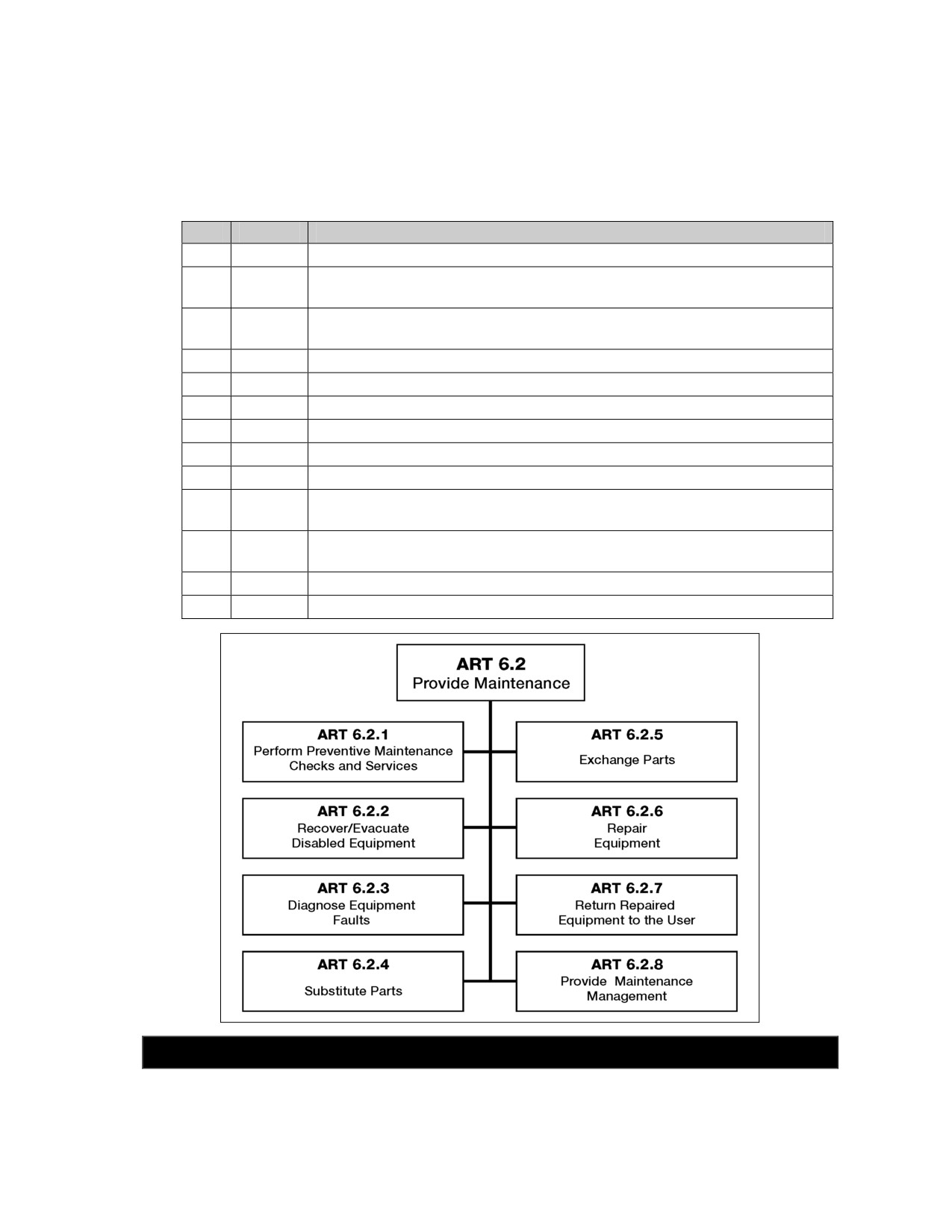
SECTION II - ART 6.2: PROVIDE MAINTENANCE
6-33. Repair and maintain the availability of weapons systems and
equipment. (FM 4-30.3) (CASCOM)
6-23
FM 7-15__________________________________________________________________________
No.
Scale
Measure
Weapons systems and equipment support the unit in accomplishing its
01
Yes/No
mission.
02
Time
Average equipment downtime.
03
Time
Turnaround time for repair of priority combat equipment.
04
Time
To refine salvage/recovery plans after receipt of warning order.
05
Time
To diagnose malfunctioning equipment.
To complete diagnosis, troubleshoot, and determine repair parts
06
Time
requirements for faulty equipment.
07
Time
To refine substitution policy after receipt of warning order.
To diagnose, determine subsystem availability, and perform substitution
08
Time
to return major combat equipment to service.
09
Time
To refine direct exchange policy after receipt of warning order.
To diagnose, determine direct exchange availability, and perform the
10
Time
exchange to return major combat equipment to service.
Of average downtime for deadlined equipment using the direct exchange
11
Time
pipeline.
12
Time
To obtain replacement parts.
13
Time
To repair and return equipment.
To refine the concept and policies for equipment repair, maintenance,
14
Time
and evacuation, and provide for establishment of maintenance facilities,
after receipt of warning order.
15
Percent
Of PMCS tasks completed.
16
Percent
Of PMCS tasks deferred.
17
Percent
Of equipment operationally ready at any given time.
18
Percent
Of friendly damaged equipment recovered.
19
Percent
Of enemy abandoned equipment recovered.
Of damaged/abandoned material left on the battlefield due to failure to
20
Percent
timely report.
21
Percent
Of malfunctioning equipment deadlined with misdiagnosis.
22
Percent
Of equipment unavailable due to substitution/cannibalization.
23
Percent
Of substitutions completed through use of salvage/disposal material.
Of substitutions completed through use of authorized cannibalization
24
Percent
within unit.
25
Percent
Of deadlined equipment returned to service through direct exchange.
26
Percent
Of direct exchanges unsuccessful due to faulty record keeping.
27
Percent
Of average equipment downtime.
28
Percent
Of TPFDD maintenance units deployed and operational.
29
Percent
Of equipment deadlined for maintenance.
30
Percent
Of equipment deadlined for supply.
31
Percent
Of equipment failures successfully repaired.
32
Percent
Of maintenance capability provided by host nation.
33
Percent
Of maintenance facilities and sites secure from attack.
6-24

_______________________________
ART 6.0: The Combat Service Support Battlefield Operating System
No.
Scale
Measure
Of operations degraded, delayed, or modified due to faulty maintenance
34
Percent
management.
Of operations that address collection, classification, and disposition of
35
Percent
enemy material.
Of captured enemy materiel collected, classified, and disposed of IAW
36
Percent
instructions from appropriate material management center.
37
Number
Of PMCS tasks.
38
Number
Of PMCS tasks deferred.
39
Number
Of PMCS tasks completed.
Of instances when unit operations are degraded, delayed, or modified
40
Number
due to ongoing recovery operations.
Of instances when unit operations are degraded, delayed, or modified
41
Number
due to lack of skilled mechanics and diagnostic equipment.
ART 6.2.1 PERFORM PREVENTATIVE MAINTENANCE CHECKS AND
SERVICES
6-34. Conduct PMCS to quickly identify potential problems. ART
6.2.1
includes quick turnaround repairs by component replacement, minor repairs,
and performance of scheduled services at the operator, crew, company, and
battalion/task force levels. ART
6.2.1 includes the performance of daily
checks and the performance of scheduled services. (FM 4-30.3) (CASCOM)
No.
Scale
Measure
Unit conducts PMCS IAW standards established in technical manuals for
01
Yes/No
its equipment.
02
Time
Of average equipment downtime.
03
Time
Of turnaround time for repair of priority combat equipment.
04
Percent
Of PMCS tasks completed.
05
Percent
Of PMCS tasks deferred.
06
Percent
Of equipment operationally ready.
07
Number
Of PMCS tasks.
08
Number
Of PMCS tasks deferred.
09
Number
Of PMCS tasks completed.
ART 6.2.2 RECOVER/EVACUATE DISABLED EQUIPMENT
6-35. Obtain damaged, discarded, condemned, or abandoned allied or enemy
materiel (ground, aircraft, and marine). ART 6.2.2 includes the method,
techniques, and procedures for recovering and evacuating disabled
equipment. (FM 4-30.3) (CASCOM)
No.
Scale
Measure
The recovery and evacuation of disabled equipment contributes to the
01
Yes/No
maintenance of unit combat power.
02
Time
To refine salvage/recovery plans after receipt of warning order.
6-25

FM 7-15__________________________________________________________________________
No.
Scale
Measure
03
Percent
Of friendly damaged equipment recovered.
Of damaged/abandoned material left on the battlefield due to failure to
04
Percent
timely report.
05
Percent
Of enemy abandoned equipment recovered.
Of instances when unit operations are degraded, delayed, or modified
06
Number
due to ongoing recovery operations.
ART 6.2.3 DIAGNOSE EQUIPMENT FAULTS
6-36. Identify malfunctions through the use of on-board sensors, external
test equipment, and visual inspections. ART 6.2.3 includes fault isolation/
troubleshooting, battle damage/accident assessment, and differentiating
between parts needing repair/replacement and serviceable parts/equipment.
(FM 4-30.3) (CASCOM)
No.
Scale
Measure
Unit correctly identifies equipment malfunctions/assesses equipment
01
Yes/No
battle damage.
02
Time
To diagnose malfunctioning equipment.
To complete diagnosis, troubleshoot, and determine repair parts
03
Time
requirements for faulty equipment.
04
Percent
Of equipment faults correctly diagnosed.
05
Percent
Of malfunctioning equipment deadlined with misdiagnosis.
Of instances when unit operations are degraded, delayed, or modified
06
Number
due to lack of skilled mechanics and diagnostic equipment.
ART 6.2.4 SUBSTITUTE PARTS
6-37. Remove serviceable parts, components, and assemblies from
unserviceable, economically repairable equipment, or from materiel
authorized for disposal. Immediately reuse it in restoring a like item to a
combat-operable or serviceable condition. ART
6.2.4 includes controlled
exchange of parts and cannibalization. (FM 4-30.3) (CASCOM)
No.
Scale
Measure
01
Yes/No
Unit substitution policy increases the unit’s available combat power.
02
Time
To refine substitution policy after receipt of warning order.
To diagnose, determine subsystem availability, and perform substitution
03
Time
to return major combat equipment to service.
04
Percent
Of equipment unavailable due to substitution/cannibalization.
05
Percent
Of substitutions completed through use of salvage/disposal materiel.
Of substitutions completed through use of authorized cannibalization
06
Percent
within unit.
ART 6.2.5 EXCHANGE PARTS
6-38. Issue serviceable materiel in direct exchange for unserviceable materiel
on an item-for-item basis. (FM 4-30.3) (CASCOM)
6-26

_______________________________
ART 6.0: The Combat Service Support Battlefield Operating System
No.
Scale
Measure
01
Yes/No
Unit exchange policy does not degrade unit readiness.
02
Time
To refine direct exchange policy after receipt of warning order.
To diagnose, determine direct exchange availability, and perform the
03
Time
exchange to return major combat equipment to service.
Of average downtime for deadlined equipment using the direct exchange
04
Time
pipeline.
05
Percent
Of deadlined equipment returned to service through direct exchange.
06
Percent
Of direct exchanges unsuccessful due to faulty record keeping.
ART 6.2.6 REPAIR EQUIPMENT
6-39. Restore an item to serviceable condition through correction of a specific
failure or unserviceable condition. These items include tactical and combat
vehicles, aircraft, marine equipment, and command and control systems.
ART 6.2.6 includes testing/checking equipment, adjusting, aligning, and
repairing components and assemblies, repairing and modifying defective end
items, replacing components and assemblies, removing/replacing piece parts,
and marking/painting equipment. ART
6.2.6 also includes systems
calibration, installation of modification work orders, and preventative
replacement of parts before they can fail. (FM 4-30.3) (CASCOM)
No.
Scale
Measure
The time necessary to repair unit equipment does not take more than five
percent longer than the sum of time necessary to recover the equipment
01
Yes/No
to a maintenance site, diagnose equipment faults, order, obtain, and
install replacement parts, and test/check repaired equipment.
02
Time
To obtain replacement parts.
03
Time
To repair equipment.
04
Time
Of average equipment downtime.
05
Time
Of turnaround time for repair and return of critical combat equipment.
06
Time
To determine reason why equipment is malfunctioning.
07
Percent
Of equipment faults diagnosed correctly.
08
Percent
Of average equipment downtime.
09
Percent
Of TPFDD maintenance units deployed and operational.
10
Percent
Of equipment deadlined for maintenance.
11
Percent
Of equipment deadlined for supply.
12
Percent
Of equipment failures successfully repaired.
13
Percent
Of damaged equipment salvaged.
14
Percent
Of maintenance capability provided by host nation.
15
Percent
Of unit maintenance capability diverted toward providing local security.
ART 6.2.7 RETURN REPAIRED EQUIPMENT TO THE USER
6-40. Return equipment to the battle or supply system. ART 6.2.7 includes
providing operationally ready items to supply stream, or float and repaired
equipment to units. (FM 4-30.3) (CASCOM)
6-27

FM 7-15__________________________________________________________________________
No.
Scale
Measure
Repaired equipment is returned to the user in a timely manner based on
01
Yes/No
the situation.
02
Time
To obtain replacement parts.
03
Time
To repair and return equipment.
04
Time
Of average equipment downtime.
05
Time
Of turnaround time for repair and return of critical combat equipment.
06
Percent
Of average equipment downtime.
07
Percent
Of TPFDD maintenance units deployed and operational.
08
Percent
Of equipment deadlined for maintenance.
09
Percent
Of equipment deadlined for supply.
10
Percent
Of equipment failures successfully repaired.
11
Percent
Of damaged equipment salvaged.
12
Percent
Of maintenance capability provided by host nation.
ART 6.2.8 PROVIDE MAINTENANCE MANAGEMENT
6-41. Coordinate maintenance operations among the various activities and
maintain maintenance/equipment records. (FM 4-30.3) (CASCOM)
No.
Scale
Measure
The procedures to provide maintenance management are successful in
01
Yes/No
maintaining unit combat power.
02
Time
To obtain replacement parts.
03
Time
To repair equipment.
To refine the concept and policies for equipment repair, maintenance,
04
Time
and evacuation, and provide for establishment of maintenance facilities,
after receipt of warning order.
05
Time
Of average equipment downtime.
06
Time
Of turnaround time for repair and return of critical combat equipment.
07
Percent
Of average equipment downtime.
08
Percent
Of TPFDD maintenance units deployed and operational.
09
Percent
Of equipment deadlined for maintenance.
10
Percent
Of equipment deadlined for supply.
11
Percent
Of equipment failures successfully repaired.
12
Percent
Of damaged equipment salvaged.
13
Percent
Of maintenance capability provided by host nation.
14
Percent
Of rear area maintenance facilities secure.
Of operations degraded, delayed, or modified due to faulty maintenance
15
Percent
management.
Of operations orders that address the collection, classification, and
16
Percent
disposition of enemy material.
Of captured enemy material collected, classified, and disposed of IAW
17
Percent
instructions from appropriate material management center.
6-28
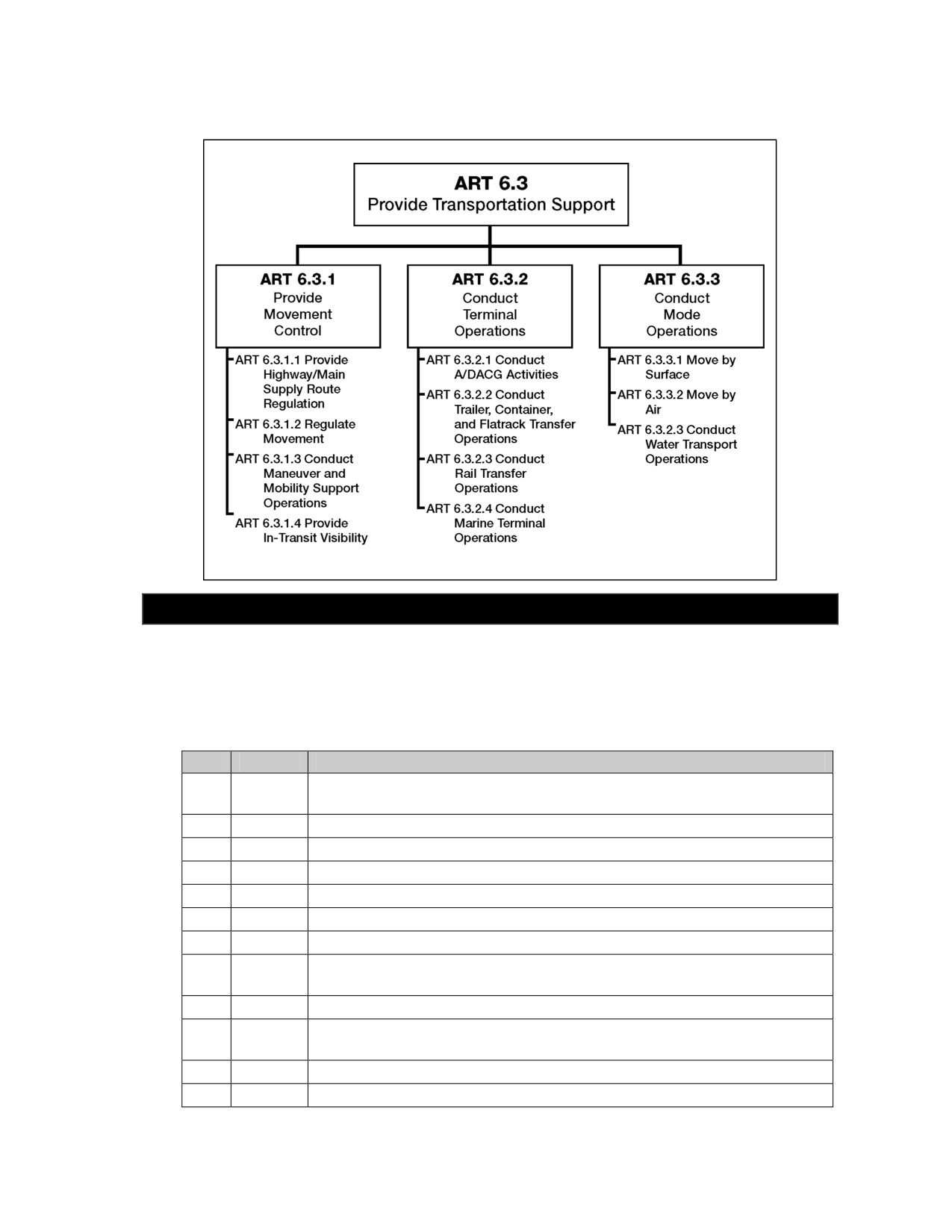
_______________________________
ART 6.0: The Combat Service Support Battlefield Operating System
SECTION III - ART 6.3: PROVIDE TRANSPORTATION SUPPORT
6-42. Move and transfer equipment, materiel, or personnel by towing, self-
propulsion, or any means of carrier: such as, railways, highways, waterways,
oceans, Joint Logistics Over-the-Shore
(JLOTS), and airways. ART
6.3
includes technical operations, and moving, evacuating, and transfer of cargo,
personnel, and equipment between transportation modes.
(FM
55-1)
(CASCOM)
No.
Scale
Measure
Lack of transportation support does not delay, degrade, cause the
01
Yes/No
modification of, or cancel unit operations.
02
Time
To refine transportation plan for AO after receipt of warning order.
03
Time
To establish a comprehensive movement plan on activation of the AO.
04
Time
For AO movement center to begin operation on activation of AO.
05
Time
Operations delayed due to late arrivals of personnel and/or equipment.
06
Percent
Difference between transportation plan and actual requirements in AO.
07
Percent
Of planned movement services support achieved in AO.
Allowable cabin load filled for AO lift sorties (not including staging and
08
Percent
backload).
09
Percent
Of airfields with material handling equipment.
Of airlift sorties (not including staging and backhaul) flying at 90 percent
10
Percent
allowable cabin load or better.
11
Percent
Of landing zones with material handling equipment.
12
Percent
Of scheduled transport movements accomplished on schedule.
6-29

FM 7-15__________________________________________________________________________
No.
Scale
Measure
13
Percent
Of fire support delayed or canceled due to ammunition shortfall.
14
Percent
Of supplies moved to correct destination.
15
Percent
Of supplies lost or destroyed en route to destination in AO.
16
Number
Of passengers transported in AO per day in support of operations.
17
Number
Of ton-miles of supplies and equipment transported per day in AO.
ART 6.3.1 PROVIDE MOVEMENT CONTROL
6-43. Plan, route, schedule, control, coordinate, and provide in-transit
visibility of personnel, units, equipment, and supplies moving via all modes
of transportation (less pipeline) over air and surface lines of communication.
(FM 55-10) (CASCOM)
No.
Scale
Measure
Procedures established to provide movement control within the AO do
01
Yes/No
not delay, degrade, cause the modification of, or cancel unit operations.
02
Time
To refine movement plan for AO after receipt of warning order.
To establish comprehensive movement control plan on activation of the
03
Time
AO.
04
Time
For AO movement center to begin operation on activation of AO.
Operations are delayed due to late arrivals of personnel and/or
05
Time
equipment.
06
Time
To identify location of personnel/equipment in transit.
Difference between movement plan requirements and actual
07
Percent
requirements in AO.
08
Percent
Of planned movement control support achieved in AO.
09
Percent
Of scheduled transport movements accomplished on schedule.
10
Percent
Of accurate position reports.
11
Number
Of passengers transported per day in AO in support of operations.
12
Number
Of ton-miles of supplies and equipment transported per day in AO.
ART 6.3.1.1
PROVIDE HIGHWAY/MAIN SUPPLY ROUTE REGULATION
6-44. Plan, route, schedule, and deconflict the use of highways and main
supply routes (MSRs) to facilitate movement control. Highway regulation is
synchronized with unit movement and maneuver. (FM 55-10) (CASCOM)
No.
Scale
Measure
Procedures established to provide highway/MSR regulation within the AO
01
Yes/No
do not delay, degrade, cause the modification of, or cancel unit
operations.
To refine highway/MSR regulation plan for AO after receipt of warning
02
Time
order.
To establish, publish, and distribute a comprehensive highway/MSR
03
Time
regulation plan on activation of the AO.
04
Time
For AO movement center to begin operation on activation of AO.
6-30

_______________________________
ART 6.0: The Combat Service Support Battlefield Operating System
No.
Scale
Measure
Delay in highway/MSR movements due to late arrivals of personnel
05
Time
and/or equipment.
06
Time
To identify location of personnel/equipment in transit.
Difference between highway/MSR regulation plan requirements and
07
Percent
actual requirements in AO.
08
Percent
Of planned highway/MSR regulation support achieved in AO.
09
Percent
Of scheduled highway/MSR movements that must be deconflicted.
10
Percent
Of accurate position reports.
11
Number
Of highway regulation teams available within the AO.
ART 6.3.1.2
REGULATE MOVEMENT
6-45. Identify critical points where restrictions could slow down or stop
movement. Critical points are facilities, terminals, ports, railheads, and cargo
transfer points that, if congested, will limit the efficiency and effectiveness of
the entire transportation network. (FM 55-10) (CASCOM)
No.
Scale
Measure
Procedures to regulate movement within the AO do not delay, degrade,
01
Yes/No
cause the modification of, or cancel unit operations.
02
Time
To refine movement program for AO after receipt of warning order.
03
Time
To establish comprehensive port clearance plan on activation of the AO.
04
Time
For AO movement center to begin operation on activation of AO.
05
Time
Delay in operations due to critical chokepoint clearance.
06
Time
To identify location of personnel/equipment in transit.
Difference between movement program requirements and actual
07
Percent
requirements in AO.
08
Percent
Of planned port clearance (air and sea) achieved in AO.
09
Percent
Of scheduled transport movements accomplished on schedule.
10
Percent
Of accurate position reports.
11
Number
Of critical points identified.
ART 6.3.1.3
CONDUCT MANEUVER AND MOBILITY SUPPORT OPERATIONS
6-46. Control movement with a traffic circulation plan that addresses the use
of MSRs
(names, direction of travel, size and weight restrictions),
checkpoints, rest and refuel areas, traffic control points, highway regulation
points, and mobile patrols. It reflects any restrictive route features, such as
direction of travel or size and weight restrictions, and critical points. ART
6.3.1.3 includes providing route signs and installing radio frequency
interrogators at critical points to capture radio frequency tag data and report
the data to in-transit visibility servers. (FM 55-10) (CASCOM)
No.
Scale
Measure
Maneuver and mobility support operations enhance the capabilities of
01
Yes/No
units within the AO to accomplish assigned missions.
02
Time
To refine traffic circulation plan for AO after receipt of warning order.
6-31

FM 7-15__________________________________________________________________________
No.
Scale
Measure
To establish checkpoints, rest areas, refuel points, traffic control points,
03
Time
and highway regulation points to support the operation.
04
Time
To identify the location of personnel/equipment in transit.
05
Time
To produce and post route control signage.
Difference between traffic circulation plan requirements and actual
06
Percent
requirements in AO.
07
Percent
Of routes classified (weight and size restrictions) in AO.
08
Percent
Of secured routes achieved in AO.
09
Percent
Of scheduled transport movements accomplished on schedule.
10
Percent
Of accurate position reports.
11
Number
Of radio frequency interrogators employed in AO.
ART 6.3.1.4
PROVIDE IN-TRANSIT VISIBILITY
6-47. Provide ITV by continuously updating the location of units, equipment,
personnel, and supplies as they travel throughout the transportation and
distribution system. Provide commanders with critical information and allow
for shipment diversion based on changing battlefield priorities. (FM 55-1)
(CASCOM)
No.
Scale
Measure
Unit maintains ITV over personnel, equipment, and supplies moving
01
Yes/No
throughout the AO.
To refine plan for AO to identify en route locations for radio-frequency
02
Time
identification (RFID) tag readers/interrogators.
For satellite transponder location information relating to convoy move-
03
Time
ments to be reported to the appropriate regional in-transit visibility server.
To establish fixed or mobile RFID tag readers/interrogators at highway
04
Time
and rail arrival gates, barge arrival gates, and airfields per theater ITV
plan.
To establish the RFID system and RFID readers/interrogators set to
05
Time
collect tag data.
For the theater support command to assign support element
06
Time
responsibility to manage collection activities at designated interrogation
locations.
To pass unit cargo movement data to the global transportation network
07
Time
via TC-AIMS II.
To scan smart cards for all deploying soldiers at designated integration
08
Time
locations and to pass them to the global transportation network.
To establish procedures to remove and properly dispose of RFID tags
09
Time
and satellite transponders.
Of en route location RFID tag readers/interrogators effectively repaired by
10
Percent
support element.
Of RFID tagged unit equipment, vehicles, 463L pallets, and containers
11
Percent
that are read/interrogated and the data automatically reported to the
appropriate regional ITV server.
12
Percent
Of RFID tags and smart card data that are complete and accurate.
6-32

_______________________________
ART 6.0: The Combat Service Support Battlefield Operating System
No.
Scale
Measure
Of designated support elements that scan MSL and smart cards at
13
Number
designated locations.
ART 6.3.2 CONDUCT TERMINAL OPERATIONS
6-48. Provide an area or facility at which cargo, unit equipment, or personnel
are loaded, unloaded, or handled in transit or transferred/reconfigured to
another mode of transportation. ART 6.3.2 includes the preparation and
reading of radio frequency tags to capture in-transit visibility and document
inbound and outbound cargo movements. (FM 55-60) (CASCOM)
No.
Scale
Measure
Terminal operations within the AO do not delay, disrupt, cause the
01
Yes/No
modification of, or eliminate unit COA.
02
Time
To refine theater distribution plan after receipt of warning order.
To establish comprehensive terminal operations plan after theater
03
Time
operations order execution date.
04
Time
To begin movement control operations.
Difference between the theater distribution plan requirements and actual
05
Percent
requirements.
06
Percent
Of planned terminal operations achieved in AO.
07
Percent
Of scheduled transport movements accomplished on schedule.
08
Percent
Of terminal capacity utilized in theater per day.
09
Percent
Of required terminal capacity provided by host nation.
10
Percent
Of ITV transactions expected and actual.
11
Number
Of passengers processed per day through terminals in theater.
12
Number
Of terminals operating in theater at activation.
13
Number
Of tons of supplies and equipment handled per day in theater terminals.
14
Number
Of terminals with active ITV RFID capability installed.
15
Number
Of ITV RFID transactions transmitted.
ART 6.3.2.1
CONDUCT ARRIVAL/DEPARTURE AIRFIELD CONTROL GROUP
ACTIVITIES
6-49. Coordinate, control, outload, and offload units and their equipment by
air for deployment and redeployment. ART 6.3.2.1 requires marshaling of
transported units, airfield reception, outloading procedures, and receiving
and disposing of forces at the offload airfield. This task is the responsibility of
the transported unit, its parent organization or installation, the A/DACG and
the Air Force tanker airlift control element mission support team. ART
6.3.2.1 includes the movement of sustainment cargo through the airfield and
coordination for the transfer of the cargo to another mode of transportation.
(FM 55-1) (CASCOM)
6-33

FM 7-15__________________________________________________________________________
No.
Scale
Measure
A/DACG activities do not delay the unit’s movement through the aerial
port of embarkation/aerial port of debarkation (APOE/APOD) beyond the
01
Yes/No
time to prepare equipment/personnel for movement or reconfigure
equipment for operations after movement.
02
Time
To establish A/DACG program for AO after receipt of warning order.
03
Time
To activate A/DACG on receipt of requirement in the AO.
04
Time
To provide requested MHE and logistic support to A/DACG.
Difference between outload/offload requirements planned and actual
05
Percent
requirements in AO.
06
Percent
Of planned arrivals/departures achieved on schedule in AO.
Of scheduled passengers, unit equipment, and supplies moved on
07
Percent
schedule.
08
Number
Of tons of supplies and equipment handled by A/DACG per day.
09
Number
Of passengers per day processed through A/DACG.
ART 6.3.2.2 CONDUCT TRAILER, CONTAINER, AND FLATRACK TRANSFER
OPERATIONS
6-50. Establish and operate a trailer, container, and flatrack transfer point
for exchanging transportation platforms for line haul trucks operating over
adjoining segments of a line haul route or in support of a distribution hub.
ART 6.3.2.2 includes controlling and reporting equipment engaged in
transfer operations. (FM 55-60) (CASCOM)
No.
Scale
Measure
Trailer, container, and flatrack transfer operations do not delay, restrict,
01
Yes/No
modify or cancel unit operations and mission accomplishment.
02
Time
To refine theater distribution plan after receipt of warning order.
03
Time
To establish operational transfer points.
04
Percent
Of planned capability utilized.
05
Percent
Of ITV transactions expected and actual.
06
Percent
Of documentation errors corrected (digital and hard copy).
07
Number
Of trailers, containers, and flatracks processed through transfer point.
08
Number
Of trailers, containers, and flatracks stranded at transfer point.
09
Number
Of tons of supplies and material transferred at transfer point per day.
Of unserviceable en route RFID tag readers/interrogators effectively
10
Number
repaired by support element.
11
Number
Of transfer points with active ITV RFID capability installed.
12
Number
Of maintenance/repair actions completed at transfer points.
ART 6.3.2.3
CONDUCT RAIL TRANSFER OPERATIONS
6-51. Coordinate, control, upload, and offload equipment by rail for
deployment and redeployment. ART
6.3.2.3 requires marshaling of
equipment, railhead reception, outloading procedures, and receiving and
disposing of equipment at the offload railhead. ART 6.3.2.3 includes using
rail for the movement of sustainment supplies and materiels, and the
6-34
_______________________________
ART 6.0: The Combat Service Support Battlefield Operating System
operation and maintenance of railway facilities, locomotives, and rolling
stock. (FM 55-20) (CASCOM)
No.
Scale
Measure
Delays in moving or handling of personnel, supplies, and equipment by
01
Yes/No
rail degrade, delay or modify unit operations.
02
Time
To refine theater distribution plan for AO after receipt of warning order.
03
Time
To establish comprehensive rail movement plan on activation of AO.
Difference between the theater distribution plan requirements and actual
04
Percent
requirements in AO.
05
Percent
Of planned rail movements achieved in AO.
06
Percent
Of scheduled rail transport movements accomplished on schedule.
07
Percent
Of surface cargo in AO transported by railroad.
08
Percent
Of passengers stranded in transit for more than one day.
Of personnel, supplies, and equipment in AO that arrive at their
09
Percent
destination on schedule.
Of operation degraded, delayed, or modified due to delays in moving or
10
Percent
handling of personnel, supplies, and equipment.
11
Percent
Of rail transport capacity in AO utilized per day.
12
Percent
Of required rail transport provided by host nation.
13
Percent
Of available rail network double tracked.
14
Percent
Of rolling stock operational.
15
Number
Of tons per day of supplies and equipment loaded at railheads.
16
Number
Of tons per day of supplies and equipment unloaded at railheads.
17
Number
Of passengers per day moved by rail transport.
18
Number
Of flatcars for oversized cargo.
19
Number
Of miles per day that can be repaired or upgraded.
ART 6.3.2.4
CONDUCT MARINE TERMINAL OPERATIONS
6-52. Provide for loading, offloading, and in-transit handling of cargo and
personnel at a seaport of embarkation and debarkation. ART 6.3.2.4 includes
the transfer of cargo, equipment, and personnel from a marine terminal to
another mode of ground or air transportation to facilitate onward movement
and sustainment operations. Marine terminals are classified as fixed port
facilities, unimproved port facilities, or bare beach port facilities. (FM 55-60)
(CASCOM)
No.
Scale
Measure
Delays in moving or handling of personnel, supplies, and equipment
01
Yes/No
degrade, delay or modify unit operations.
To refine marine terminal service program for AO after receipt of warning
02
Time
order.
To establish comprehensive marine terminal services plan on activation
03
Time
of the AO.
04
Time
For AO terminals to begin operation on activation of AO.
6-35

FM 7-15__________________________________________________________________________
No.
Scale
Measure
Difference between planned marine terminal service plan and actual
05
Percent
requirements in AO.
06
Percent
Of planned marine terminal services support achieved in AO.
07
Percent
Of scheduled transport movements accomplished on schedule.
08
Percent
Of marine terminal capacity in AO utilized per day.
09
Percent
Of required marine terminal capacity provided by host nation.
Of operations degraded, delayed, or modified due to delays in loading,
10
Percent
unloading or handling of personnel, supplies, and equipment at a marine
terminal.
11
Number
Of tons per day of supplies and equipment handled at marine terminals.
Of tons per day of supplies and equipment held in storage at marine
12
Number
terminals.
Of tons per day of supplies and equipment handled in intermodal
13
Number
operations in AO on average.
14
Number
Of passengers per day vectored through marine terminals in AO.
15
Number
Of marine terminals operating in AO at activation.
ART 6.3.3 CONDUCT MODE OPERATIONS
6-53. Physically move supplies, unit equipment, individuals, and materiel on
a transportation conveyance by a transportation mode or by unit means
(individuals or unit organic means). ART 6.3.3 includes the relocation of
ammunition supply/transfer points, supply support activities, and tactical
JLOTS in support of the AO and mode operations. Operations include all
modes of transportation and the use of military, contracted, and commercial
transportation assets. (FM 55-1) (CASCOM)
No.
Scale
Measure
01
Yes/No
Delays in mode operations degrade, delay or modify unit operations.
02
Time
To refine theater distribution plan for AO after receipt of warning order.
To establish comprehensive movement support plan on activation of the
03
Time
AO.
04
Time
For AO movement center to begin operation on activation of AO.
Difference between the theater distribution plan requirements and actual
05
Percent
requirements in AO.
06
Percent
Of planned movement services support achieved in AO.
07
Percent
Of scheduled transport movements accomplished on schedule.
Of operations degraded, delayed, or modified due to delays in moving or
08
Percent
evacuating personnel, supplies, and equipment.
09
Percent
Of personnel, supplies, and equipment in AO that arrive on schedule.
10
Percent
Of passengers stranded in transit for more than one day.
11
Percent
Of movement capacity in AO utilized per day.
12
Percent
Of required transport services provided by host nation.
Of tons per day of supplies and equipment moved by transport means in
13
Number
AO.
6-36

_______________________________
ART 6.0: The Combat Service Support Battlefield Operating System
No.
Scale
Measure
14
Number
Of tons per day of supplies and equipment in AO moved by organic units.
15
Number
Of passengers per day transported in AO.
ART 6.3.3.1
MOVE BY SURFACE
6-54. Transport cargo, equipment, and personnel by waterways, railroads,
highways, or other means, such as organic transportation. ART
6.3.3.1
includes the conduct of logistic convoys. (FM 55-30) (CASCOM)
No.
Scale
Measure
Delays in surface transportation do not degrade, delay or modify unit
01
Yes/No
operations.
02
Time
To refine theater distribution plan for AO after receipt of warning order.
To establish comprehensive surface movement plan on activation of the
03
Time
AO.
04
Time
For AO movement center to begin operation on activation of AO.
Difference between planned theater distribution requirements and actual
05
Percent
requirements in AO.
06
Percent
Of planned surface transport support achieved in AO.
07
Percent
Of scheduled surface transport movements accomplished on schedule.
Of operations degraded, delayed, or modified due to delays in moving or
08
Percent
evacuating personnel, supplies, and equipment.
09
Percent
Of surface cargo in AO transported by waterways.
10
Percent
Of surface cargo in AO transported by railroad.
11
Percent
Of bulk fuel in AO transported by pipeline.
12
Percent
Of surface cargo in AO transported by wheeled/tracked vehicles.
Of personnel, supplies, and equipment in AO that arrive at their
13
Percent
destination on schedule.
14
Percent
Of passengers stranded in transit for more than one day.
15
Percent
Of surface transport capacity in AO utilized per day.
16
Percent
Of required surface transport provided by host nation.
Of tons per day of supplies and equipment moved by surface transport in
17
Number
AO.
18
Number
Of tons per day of supplies and equipment in AO moved by organic units.
19
Number
Of passengers per day transported by surface means in AO.
ART 6.3.3.2
MOVE BY AIR
6-55. Transport personnel, cargo, and equipment by aircraft. These assets
include military, contracted, and commercial as well as strategic and theater
fixed-wing airlift. ART 6.3.3.2 also includes the use of rotary-wing and Army
operational support fixed-wing airlift as transportation platforms to move
personnel, equipment, and sustainment supplies. (FM 55-1) (CASCOM)
No.
Scale
Measure
Delays in air transportation do not degrade, delay or modify unit
01
Yes/No
operations.
6-37

FM 7-15__________________________________________________________________________
No.
Scale
Measure
02
Time
To refine theater distribution plan for AO after receipt of warning order.
03
Time
To establish comprehensive air movement plan on activation of the AO.
04
Time
For AO movement center to begin operation on activation of AO.
Difference between planned theater distribution requirements and actual
05
Percent
requirements in AO.
06
Percent
Of planned air transport support achieved in AO.
07
Percent
Of scheduled air transport movements accomplished on schedule.
Of operations degraded, delayed, or modified due to delays in moving or
08
Percent
evacuating personnel, supplies, and equipment.
Of personnel, supplies, and equipment in AO that arrive at destination on
09
Percent
schedule.
10
Percent
Of cargo in AO moved by air transport.
11
Percent
Of passengers stranded in transit for more than one day.
12
Percent
Of air transport capacity in AO utilized per day.
13
Percent
Of required air transport provided by host nation.
14
Number
Of tons per day of supplies and equipment moved by air transport in AO.
Of tons per day of supplies and equipment in AO moved by organic
15
Number
aviation units.
16
Number
Of passengers per day moved by air transport in AO.
ART 6.3.3.3
CONDUCT WATER TRANSPORT OPERATIONS
6-56. Provide for the movement of unit personnel, equipment, and
sustainment cargo through and between Army water terminals. Water
transport operations are conducted at established ocean and river ports,
beach sites and inland waterways. They are an integral part of inland
waterway and shore-to-shore operations. Tasks include offshore ship
discharge; inland waterway; and shore-to-shore operations for logistic
purposes, to include logistics over-the-shore. (FM 55-60) (CASCOM)
Note: Amphibious operations as a task are addressed in ART 8.1.5.1.3
(Conduct an Amphibious Assault into an AO).
No.
Scale
Measure
Delays in water transportation do not degrade, delay or modify unit
01
Yes/No
operations.
02
Time
To refine theater distribution plan for AO after receipt of warning order.
To establish comprehensive water transport movement plan on activation
03
Time
of AO.
Difference between planned theater distribution requirements and actual
04
Percent
requirements in AO.
05
Percent
Of planned water transport movements achieved in AO.
06
Percent
Of scheduled water transport movements accomplished on schedule.
07
Percent
Of surface cargo in AO transported via waterways.
08
Percent
Of passengers stranded in transit for more than one day.
6-38
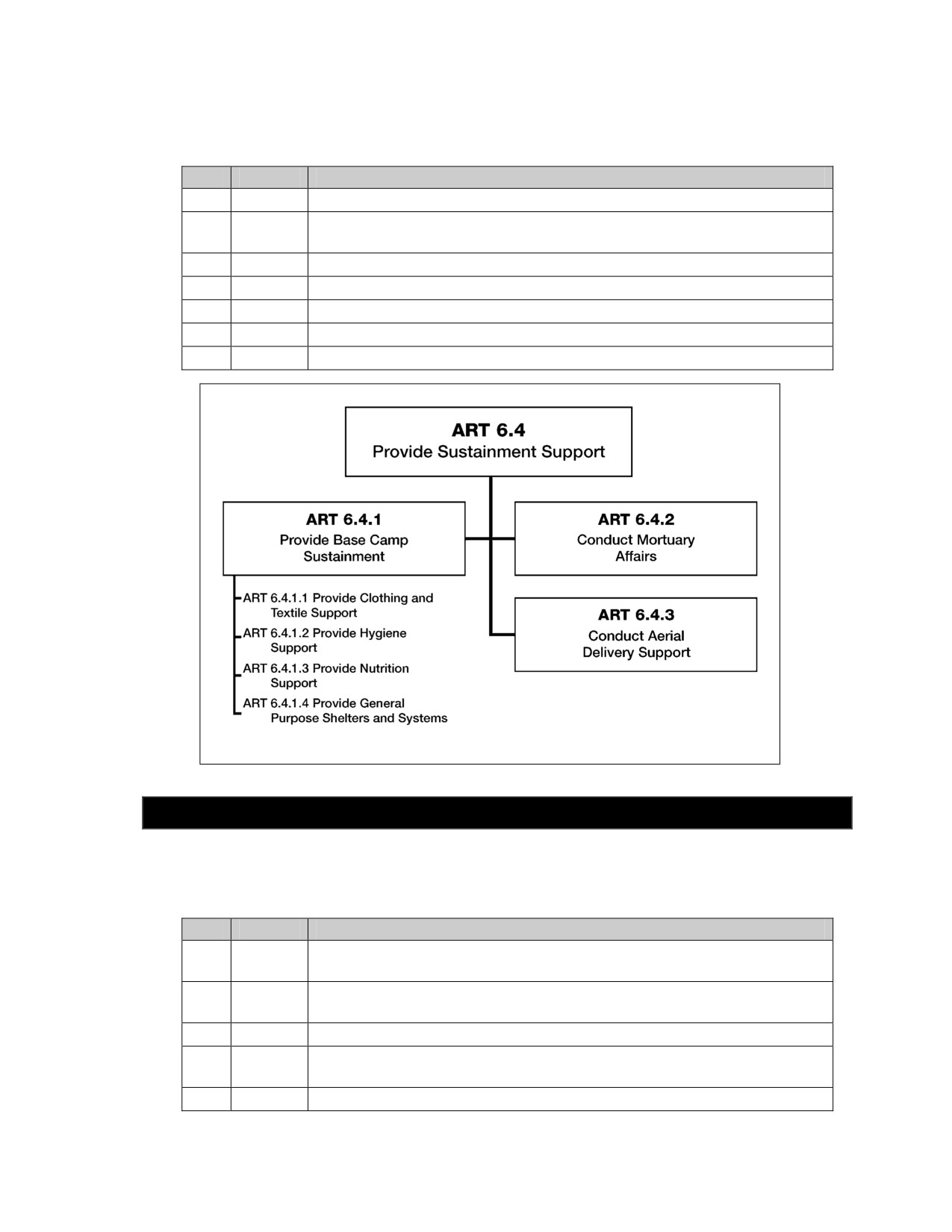
_______________________________
ART 6.0: The Combat Service Support Battlefield Operating System
No.
Scale
Measure
09
Percent
Of personnel, supplies, and equipment in AO that arrive on schedule.
Of operation degraded, delayed, or modified due to delays in moving or
10
Percent
handling of personnel, supplies, and equipment.
11
Percent
Of water transport capacity in AO utilized per day.
12
Percent
Of required water transport provided by host nation.
13
Number
Of tons per day of supplies and equipment moved by water transport.
14
Number
Of tons per day of supplies and equipment moved by organic units.
15
Number
Of passengers per day moved by water transport.
SECTION IV - ART 6.4: PROVIDE SUSTAINMENT SUPPORT
6-57. Providing sustainment support to soldiers involves providing base
camp sustainment, mortuary affairs, and aerial delivery services to soldiers
and their units. The commander determines the priorities for sustainment
support. (FM 100-10) (CASCOM)
No.
Scale
Measure
Procedures to provide sustainment support do not negatively impact on
01
Yes/No
supported units’ ability to perform missions.
To refine sustainment support program for AO after receipt of warning
02
Time
order.
03
Time
To coordinate hygiene operations with medical authorities in AO.
To estimate nonmateriel sustainment support requirements for military,
04
Time
DOD civilian, qualifying contractor, and other personnel in AO.
05
Time
To rig equipment or supplies for airdrop in AO.
6-39