FM 3-22.9 RIFLE MARKSMANSHIP M16-/M4-SERIES WEAPONS (August 2008) - page 5
Chapter 6
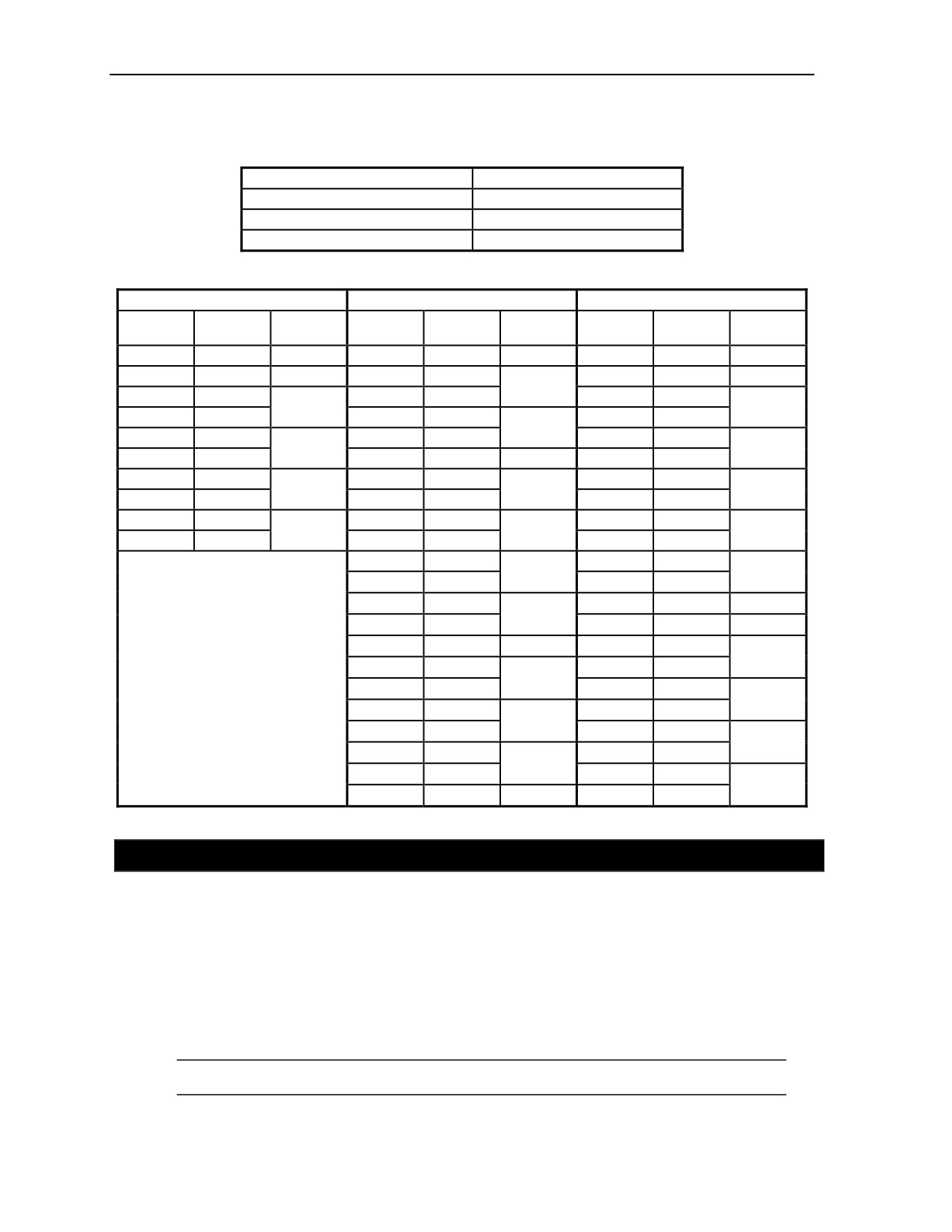
Table 6-4. Number of rounds that must be fired from each position during Field Fire II.
POSITION
NUMBER OF ROUNDS FIRED
Supported firing position
10
Supported firing position
22
Unsupported firing position
22
Table 6-5. Field Fire II firing tables.
FIRING TABLE 1
FIRING TABLE 2
FIRING TABLE 3
ROUND
RANGE
TIME
ROUND
RANGE
TIME
ROUND
RANGE
TIME
(m)
(sec)
(m)
(sec)
(m)
(sec)
1
75
5
1
175
7
1
75
6
2
175
7
2
75
2
175
8
10
3
75
3
300
3
75
11
13
4
300
4
75
4
300
9
5
75
5
175
5
75
9
11
6
175
6
300
9
6
175
7
75
7
75
7
75
10
9
12
8
300
8
175
8
300
9
175
9
175
9
175
11
11
13
10
300
10
300
10
300
11
75
11
75
9
11
12
175
12
175
13
175
13
175
8
11
14
300
14
75
6
15
75
5
15
75
11
16
175
16
175
11
17
300
17
75
12
18
75
18
300
9
19
175
19
75
11
20
75
20
175
10
21
300
21
175
13
22
175
7
22
300
SECTION III. RECORD QUALIFICATION
The objective of record fire is to access and confirm the individual proficiency of firers and the effectiveness of
the training program. Important statistical data, such as qualification ratings and first-time GO rates, are
obtained from record fire. These data provide goals for the Soldier and aid the commander in identifying the
quality of his training.
PRACTICE RECORD FIRE I AND II
6-52. Although the Soldier receives a practice rating based on the number of target hits, practice record fire
should also be considered a valuable training exercise. When practice record fire is correctly conducted, all
Soldiers gain valuable experience and become more confident in engaging combat targets.
NOTE: See Table 6-6 for the current training program.
6-10
FM 3-22.9
12 August 2008
Field Fire
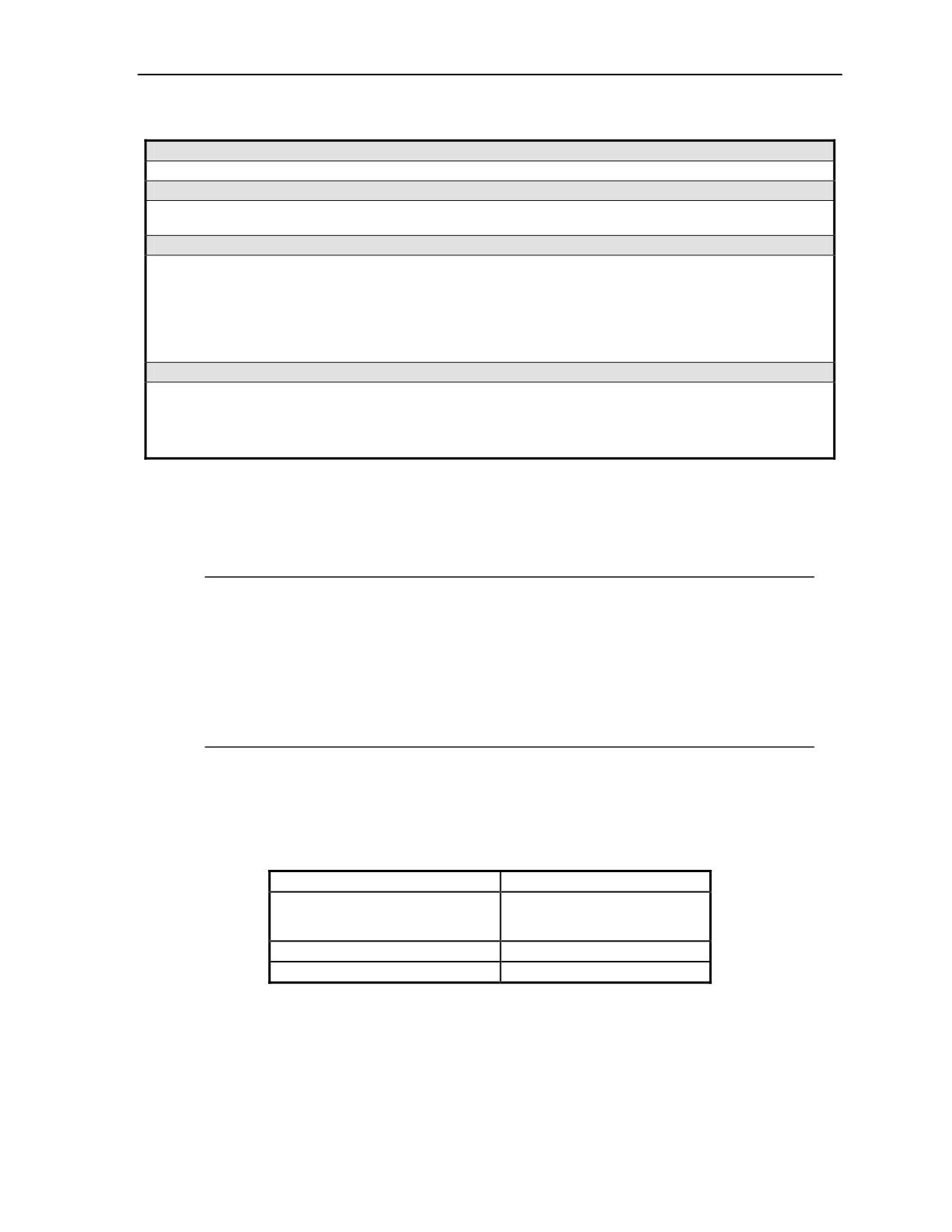
Table 6-6. Practice Record Fire I and II training program.
PRACTICE RECORD FIRE I AND II
Instructional Intent
•
Reinforce PMI and KD firing and apply the techniques of target detection by engaging a more difficult course of
fire with single and multiple pop-up targets and increased time constraints.
Special Instructions
Ensure that—
•
The rear sight is on the proper setting (M16A2/3=8/3; M16A4 and M4=6/3 flush; M16A1=the unmarked
aperture, short-range).
•
The rear sight aperture is set on 300, not 800.
•
The small aperture is being used.
•
Peer coaching is stressed (Practice Record Fire I only).
Observables
•
Soldiers apply all aspects of BRM.
•
Soldiers hit 23 out of 40 target exposures.
•
Soldiers that do not meet the standard receive remedial training before refiring.
•
Practice record fire should be conducted on a different range than record fire.
CONCEPT
6-53. Practice Record Fire I and II should closely resemble all aspects of actual qualification.
CONDUCT
NOTES:
1. When firing record fire, each Soldier must wear the proper uniform: the helmet,
LBE, and IBA with all SAPI plates (if available). No other armor is required.
2. Before engaging targets, target detection is accomplished with a dry-fire
scenario.
3. If possible, Soldiers should fire Practice Record Fire I and II on different ranges.
Soldiers firing Practice Record Fire II on the same range as Practice Record Fire
I must fire on a different lane.
6-54. Each firer receives 40 single or multiple target exposures at ranges from 50 to 300 meters and 40
rounds of 5.56-millimeter ball ammunition. Table 6-7 depicts the number of rounds that must be fired from
each position. Each Soldier must hit a minimum of 23 out of 40 target exposures.
Table 6-7. Number of rounds that must be fired from each position during
Practice Record Fire I and II.
POSITION
NUMBER OF ROUNDS FIRED
Prone supported firing position or (at
20
the unit commander’s discretion) the
foxhole supported firing position
Prone unsupported firing position
10
Kneeling unsupported firing position
10
6-55. Soldiers adhere to the following guidelines:
z
Based on the total number of hits achieved in each table, Soldiers are critiqued on the practice
record fire score. If a firer consistently misses targets or experiences problems with target
detection and range estimation, coaches should point out the shooting error to help correct it.
z
Exposure times are three to seven seconds at ranges of 50 to 300 meters. Since it requires one to
two seconds for the manually activated target mechanism to raise the target, timing begins when
12 August 2008
FM 3-22.9
6-11
Chapter 6
the target is fully exposed, rather than when the tower operator activates the target switch. When
practice record fire is conducted on automated record fire (ARF) ranges, these factors are
included in the computer program.
NOTE: Practice Record Fire I allows peer coaching and the use of dummy ammunition. Practice
Record Fire II does not allow peer coaching, and dummy ammunition will not be used.
ALIBI FIRING
6-56. Alibi firing should be conducted at the end of each firing table IAW tower operator commands.
Alibis are provided during practice record fire for three reasons:
z
Malfunction of the weapon.
z
Malfunction of the target mechanism.
z
Faulty ammunition.
RANGE TRAINING AREAS
6-57. The three range training areas are as follows:
z
Orientation area.
z
Ready area.
z
Retired area.
Orientation Area
6-58. The orientation area is located so that firers cannot see the firing area. Practice record fire orientation
includes instructions on the conduct of fire, safety, and range operations, including the procedures used in
ready and retired areas.
Ready Area
6-59. The ready area is located near the firing range, but is positioned so that firers cannot see targets on
the range. While in this area, the firer blackens the weapon sights, lubricates the weapon, and checks for
defects that might cause malfunctions.
Retired Area
6-60. The retired area is about 100 meters behind the ready area. Soldiers completing practice record fire
move to the retired area to clean their weapons and be critiqued on their firing performance.
PRACTICE RECORD FIRE STANDARDS
6-61. A firer who fails to qualify on his first try should refire the practice record fire range after his
problem has been diagnosed and remedial training has been provided. Practice qualification ratings are
shown in Table 6-8.
Table 6-8. Qualification ratings for Practice Record Fire I and II.
QUALIFICATION
NUMBER OF
RATINGS
TARGETS HIT
Expert
36 to 40
Sharpshooter
30 to 35
Marksman
23 to 29
6-12
FM 3-22.9
12 August 2008

Field Fire
RECORD OF PERFORMANCE
6-62. Accurate performance data are critical. The firer’s score is manually recorded using DA Form 3595-R
(Record Fire Scorecard) or automatically documented using a computer printout provided on the automated
range. Based on the data recorded, an AAR can be performed by range and firing position to discuss firing
performance.
NOTE: See Appendix B for a sample of a completed DA Form 3595-R and the end of this
publication for a blank, reproducible copy.
RECORD FIRE
6-63. The intent of record fire is to facilitate the commander’s evaluation of several individual tasks and
integrated marksmanship skill performances, and to provide unit readiness indicators. The qualification
standards are specifically related to a prescribed procedure for conducting record fire. Individual
performance must be evaluated IAW two components:
z
What record fire test was used (standard, KD, or alternate scaled)?
z
How were individual performances distributed (first-time GO rates, percent in each qualification rating)?
NOTE: See Table 6-9 for the current training program.
Table 6-9. Record Fire training program.
RECORD FIRE
Instructional Intent
•
Reinforce all phases of BRM.
•
Allow Soldiers to practice and refine critical marksmanship skills.
•
Measure the Soldier’s complete understanding of BRM.
Special Instructions
Ensure that—
•
The rear sight is on the proper setting (M16A2/3=8/3; M16A4 and M4=6/3 flush; M16A1=the unmarked
aperture, short-range).
•
The rear sight aperture is set on 300, not 800.
•
The small aperture is being used.
•
All targets are operational.
•
Each Soldier has one 20-round magazine and two 10-round magazines.
Observables
•
Soldiers apply all aspects of BRM.
•
Soldiers hit 23 out of 40 target exposures.
•
Soldiers that do not meet the standard receive remedial training before refiring.
CONCEPT
6-64. Since all Soldiers must fire the record fire course at least once a year for qualification, the course can
provide excellent firing performance evaluations. It also provides excellent diagnostic information for
instructor/trainers who are concerned with scheduling training to overcome the most serious firing
weaknesses. The standard record fire course should be used for all Soldiers, but there are times when
qualification exercises must be conducted on alternate courses.
DEVELOPMENT OF STANDARDS
6-65. Testing and development indicates that the Soldier should hit at least 39 of 40 targets if he applies the
marksmanship fundamentals correctly (assuming that target mechanisms have been checked and are
12 August 2008
FM 3-22.9
6-13
Chapter 6
functioning). This probability of hit (PH) is provided as a guide to consider the capability of the typical
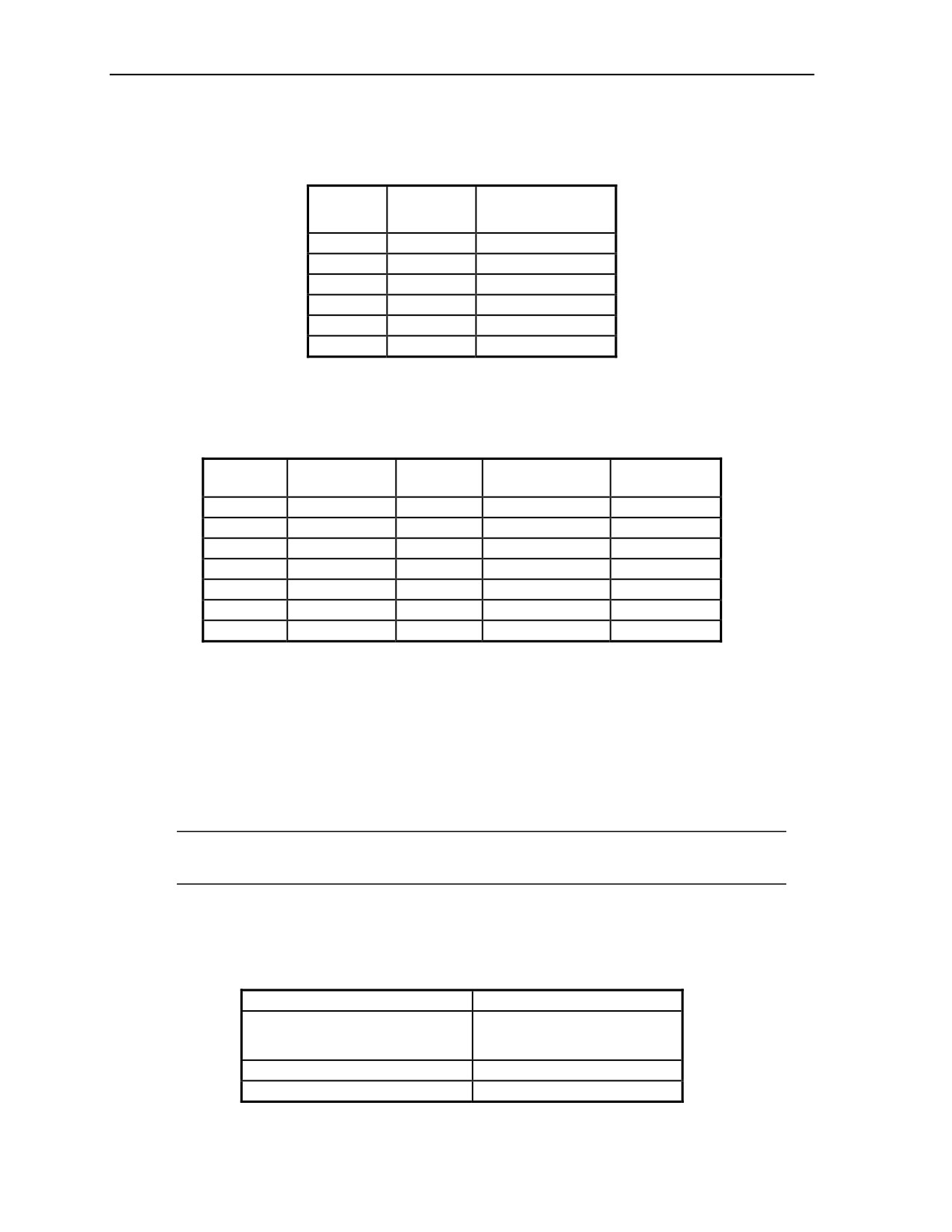
weapon, ammunition, and Soldier firing a standard course (Table 6-10).
Table 6-10. Probability of hits.
RANGE
NUMBER OF
PH
(m)
TARGETS
50
1.0
6
100
1.0
8
150
1.0
11
200
.99
7
250
.95
5
300
.90
3
6-66. When the IET BRM POI or an adequate unit training program is conducted, the following PH can be
expected (Table 6-11).
Table 6-11. Results from an adequate unit training program.
RANGE
TARGETS
LOW PH
AVERAGE PH
HIGH PH
(m)
50
6
.80
.95
.98
100
8
.70
.90
.95
150
11
.65
.90
.95
200
7
.45
.70
.90
250
5
.35
.60
.85
300
3
.25
.50
.80
23 hits
32 hits
37 hits
TARGET FUNCTION
6-67. The first task on a standard record fire course is to ensure that all targets function properly. When in
doubt, a lane should be fired to ensure that a bullet strike will activate each target. Sometimes slapping a
target with a cleaning rod can cause it to activate, but a bullet impact will not. Hot plastic targets may allow
a 5.56-millimeter bullet to pass through without causing sufficient vibration to activate the mechanism,
resulting in a requirement to change targets more often, use double targets, or use different silhouettes.
CONDUCT
NOTE: When firing record fire, each Soldier must wear the proper uniform: the helmet, LBE,
and IBA with all SAPI plates (if available). No other armor is required.
6-68. Each firer receives 40 single or multiple target exposures at ranges from 50 to 300 meters and 40
rounds of 5.56-millimeter ball ammunition. Table 6-12 depicts the number of rounds that must be fired
from each position. Each Soldier must hit a minimum of 23 out of 40 target exposures.
Table 6-12. Number of rounds that must be fired from each position during Record Fire.
POSITION
NUMBER OF ROUNDS FIRED
Prone supported firing position or (at
20
the unit commander’s discretion) the
foxhole supported firing position
Prone unsupported firing position
10
Kneeling unsupported firing position
10
6-14
FM 3-22.9
12 August 2008
Field Fire
6-69. Soldiers adhere to the following guidelines:
z
Credit for targets hit should not be given when rounds are “saved” from difficult targets to be
used on easier targets (for example, not firing at the 300-meter target so an additional round can
be fired at the 150-meter target).
z
When double targets are exposed, the Soldier should fire two rounds. If the first target is missed,
he may fire at that same target with the second round.
z
Soldiers engage the target that poses the greatest threat first (normally assumed to be the closer
target). No scoring distinction is made between near targets and far targets or the sequence in
which they are engaged.
z
Credit is not given if unused ammunition from one 20-round table is added to a magazine
provided for the next table.
Alibi Firing
6-70. Alibi firing is reserved for Soldiers who encounter a malfunctioning target, ammunition, or weapon.
A Soldier will not be issued more than 20 rounds for Table 1, 10 rounds for Table 2, or 10 rounds for Table
3. Soldiers who fire 20 rounds, despite a target malfunction, will not be issued additional alibi rounds.
There are no alibis for Soldier-induced weapon malfunctions or for targets missed during the application of
immediate action procedures.
NOTE: The ammunition allocation and alibi procedures for practice record fire and record fire
are conducted the same. The only exception is that coaching is authorized for practice record
fire.
6-71. If a weapon or target malfunction occurs—
z
The Soldier must apply immediate action procedures and continue to fire the exercise.
z
After firing, the Soldier notifies the NCOIC to determine if the ammunition was faulty or if the
target malfunctioned.
z
The NCOIC verifies the malfunction.
z
The Soldier is permitted to fire at that target(s) with the exact number of rounds equal to the target
malfunctions. For example, a Soldier had two confirmed target malfunctions at 250 meters.
Although he may have had five rounds left from the overall exercise, the Soldier receives only two
rounds to engage the two 250-meter target exposures, if repaired, or the nearest target. He is not
allowed to fire all five remaining rounds at the two 250-meter target exposures.
z
On a computerized range, the tower operator confirms that the target malfunctioned and
indicates the number of malfunctions that occurred.
6-72. Inoperable weapons are uncorrectable malfunctions such as the following:
z
A broken firing pin.
z
Jam caused by a double feed, not by the Soldier.
z
Failure to extract due to a broken extractor.
z
Round in the bore.
6-73. The Soldier must apply correct immediate action procedures to eliminate stoppages. If a stoppage is
determined to be correctable (for example, the Soldier did not apply correct immediate action procedures
and, as a result, the Soldier did not engage the required number of targets), the Soldier is at fault.
Troubleshooting Performance
6-74. Onsite observation, detailed analysis and evaluation of individual results, and unit performance
identify weaknesses such as the following:
z
Unserviceable weapons could cause poor zeroes or failures to fire and, therefore, failures to qualify.
z
Some Soldiers may not qualify because of a lack of understanding of immediate action
procedures or weapon and magazine maintenance procedures.
12 August 2008
FM 3-22.9
6-15
Chapter 6
z
Soldiers who miss targets are not applying the four fundamentals or are not accurately zeroing
the weapon.
z
Soldiers who do not fire at exposed targets during qualification might be experiencing:
Failure to scan the designated area.
Lack of ability to detect targets.
Lack of ability to shift from one target to another.
Failure to manage ammunition.
A stoppage.
6-75. Training can then focus on combat tasks, skills, or other factors that address these weaknesses.
Refire
6-76. Qualified weapons personnel or the NCOIC must verify weapon malfunctions before the Soldier can
refire the course. Soldiers who erroneously claim a malfunction on the firing line are considered
unqualified and refire as a second-time firer. Soldiers who fail to qualify on the first attempt should be
given appropriate remedial training and allowed to refire in a few days. When a Soldier refires the course—
z
He remains unqualified if he hits 22 targets or less.
z
A rating of marksman is awarded for a score of 23 to 40 target hits.
z
If automated scoring procedures (if available) allow the Soldier's performance to be stored and
retrieved before a weapon malfunction, his performance is added to the score of his first attempt
after weapon repair and refire.
z
If a Soldier’s weapon becomes inoperable and his performance before a malfunction precludes
qualification, he is considered unqualified and must refire.
QUALIFICATION RATINGS
6-77. One point is awarded for each round within or touching some part of the silhouette facing.
Qualification ratings are shown in Table 6-13.
Table 6-13. Qualification ratings for Record Fire.
QUALIFICATION
NUMBER OF
RATINGS
TARGETS HIT
Expert
36 to 40
Sharpshooter
30 to 35
Marksman
23 to 29
RECORD OF PERFORMANCE
6-78. The record fire range is fired and recorded IAW DA Form 3595-R.
NOTE: See Appendix B for a sample completed scorecard and the end of this publication for a
blank, reproducible copy.
SECTION IV. ALTERNATE QUALIFICATION COURSES
Units should conduct weapon qualification on a standard record fire range. Convenience and comfort should not
be the prime consideration when choosing a range. Authorized alternate record fire courses are—
z
KD record fire range.
z
25-meter scaled target alternate course.
z
15-meter scaled target alternate course.
6-16
FM 3-22.9
12 August 2008

Field Fire
NOTES:
1. The official records of personnel who use an alternate qualification course are
noted to distinguish alternate qualification ratings from standard record fire
course ratings. For example, official personnel records are annotated as follows:
JONES, John Q. 000-00-0000 Expert 36 (record fire [RF])
JONES, John Q. 000-00-0000 Expert 38 (known distance alternate course
[KDAC])
JONES, John Q. 000-00-0000 Expert 38 (alternate course [AC])
2. The uniform for all alternate qualification courses is a helmet, LBE, and IBA
with all SAPI plates (if available). No other armor is required.
3. Firers should engage targets from left to right, from nearest to the farthest
(50-meter, 100-meter left, 100-meter center, 100-meter right, 150-meter left,
150-meter right, 200-meter left, 200-meter right, 250-meter, and 300-meter).
This ensures that firers do not forget which targets they engaged during
qualification. It also alleviates the possibility of shooting each target more than
the prescribed number of times.
KNOWN DISTANCE RECORD FIRE RANGE
NOTE: The KD record fire range is used by all components of the U.S. Army, U.S. Army
Reserve, and Army National Guard when a record fire range is not available.
6-79. The KD record fire range allows Soldiers to engage targets at range while experiencing time
constraints, feedback, and the effects of wind and gravity.
CONDUCT
6-80. To complete this course, Soldiers fire three tables. Table 6-14 depicts these three tables and provides
related information, such as time constraints, number of rounds that must be fired, type of target that must
be used, and the distance from the firer that the target must be placed.
NOTE: Before firing the course, all Soldiers confirm the zero of their assigned weapons by
assuming the prone position and firing six rounds from the 300-meter line. Zero rounds do not
count for score.
Table 6-14. Known distance record fire range firing tables and related information.
TABLE
POSITION
TIME
NUMBER
TYPE OF TARGET
DISTANCE
CONSTRAINTS
OF
(m)
ROUNDS
Table 1
Prone supported firing position
2 min
20
E-type silhouette target
300
Table 2
Prone unsupported firing position
60 sec
10
E-type silhouette target
200
Table 3
Prone unsupported firing position
60 sec
10
F-type silhouette target
100
QUALIFICATION RATINGS
6-81. Scoring is conducted in the pits, with the results provided after each firing table. One point is
awarded for each round within or touching some part of the silhouette facing. Qualification ratings for the
KD record fire range are shown in Table 6-15.
12 August 2008
FM 3-22.9
6-17

Chapter 6
Table 6-15. Qualification ratings for the known distance record fire range.
QUALIFICATION
NUMBER OF
RATINGS
TARGETS HIT
Expert
38 to 40
Sharpshooter
33 to 37
Marksman
26 to 32
Unqualified
25 and below
RECORD OF PERFORMANCE
6-82. The KD record fire range is fired and recorded IAW DA Form 5789-R (Record Fire Scorecard—
Known Distance Course).
NOTE: See Appendix B for a sample completed form and the end of this publication for a
blank, reproducible copy.
25-METER SCALED TARGET ALTERNATE COURSE
NOTE: The 25-meter scaled target alternate course is used when a standard record fire or KD
range is unavailable for weapon qualification.
6-83. The 25-meter scaled target alternate course enables units to test a Soldier’s weapon marksmanship
proficiency, and firing at scaled silhouettes allows Soldiers to engage targets with time constraints and
feedback.
CONDUCT
6-84. To complete this course, Soldiers fire three tables. Table 6-16 depicts these three tables and provides
related information, such as time constraints, number of rounds that must be provided, number of
silhouettes that must be engaged, and the distance from the firer that the target must be placed.
NOTES:
1. Soldiers should not receive training on target detection or the effects of wind
and gravity by engaging targets at 25 meters. These skills are trained by firing at
longer distances.
2. If zeroing/grouping exercises are not performed on the day of record fire, all
Soldiers confirm the zero of their assigned weapons by firing six rounds of
training/sustainment ammunition from the 25-meter line before firing the course.
Zero rounds do not count for score.
6-18
FM 3-22.9
12 August 2008

Field Fire
*Table 6-16. 25-meter scaled target alternate course firing tables and related information.
TABLE
POSITION
TIME
NUMBER OF ROUNDS
NUMBER OF
ADDITIONAL
CONSTRAINTS
SILHOUETTES
INFORMATION
Table 1
Prone supported
120 sec
20-round magazine, two
10 silhouettes
No more than two
firing position or
rounds for each
on the same
hits for each
foxhole supported
silhouette
target sheet
silhouette will be
firing position
scored for this
table.
Table 2
Prone unsupported
60 sec
10-round magazine, one
10 silhouettes
No more than one
firing position
round for each silhouette
on the same
hit for each target
target sheet
will be scored for
this table.
Table 3
Kneeling
60 sec
10-round magazine, two
5 silhouettes on
No more than two
unsupported firing
rounds for each
the same target
hits for each target
position
silhouette at 50 to 100
sheet (50 to
will be scored for
meters and one round at
150 m)
this table.
each 150-meter
silhouette
Time Between Firing Positions
6-85. The time between each firing position is not specified, but enough time should be allotted to allow
the firer to clear his weapon, quickly change firing positions, and reload before beginning the next firing
table.
DUTIES OF RANGE PERSONNEL
6-86. The following personnel perform range duties:
z
Officer in charge (OIC).
z
Range safety officer (RSO).
z
Firing line safety crew.
Officer In Charge
6-87. The OIC briefs all Soldiers on the proper scoring procedures.
Range Safety Officer
6-88. To facilitate the timely flow of the record fire qualification table, the RSO ensures that enough time
is given between firing positions.
Firing Line Safety Crew
6-89. Firing line safety crew personnel—
z
Perform as scorers.
z
Inform the chief range officer of crossfires.
z
Inform the chief range officer of allowable alibis.
z
Accurately count hits and misses.
z
Count only four hits for each silhouette for score.
z
Complete the scorecard.
z
Assist the Soldier with target repair.
z
Total, sign, and return the completed scorecard to the chief range officer.
10 February 2011
FM 3-22.9, C1
6-19

Chapter 6
SCORING
6-90. One hit is awarded for each round that strikes within or touches some part of the silhouette. If a bullet
hole does not touch some part of the scaled silhouette, it is counted as a miss. Ricochets are counted as hits
or misses.
*6-91. The same target sheet is used for every 40-round qualification table that a firer completes. A
maximum of 40 hits comprises 3 hits per target at 200, 250, and 300 meters; 4 hits per target at 150 meters;
and 5 hits per target at 50 and 100 meters.
6-92. DA Form 5790-R (Record Fire Scorecard—Scaled Target Alternate Course) is used to score
alternate course record fire qualifications.
NOTE: See Appendix B for a sample completed form and the end of this publication for a
blank, reproducible copy.
6-93. The NSNs for scaled silhouette targets are—
z
*25-meter (NSN 6920-01-167-1398).
z
*15-meter (NSN 6920-01-167-1396).
RATINGS
6-94. Qualification ratings for the 25-meter scaled target alternate course are shown in Table 6-17.
Table 6-17. Qualification ratings for the 25-meter scaled target alternate course.
QUALIFICATION
NUMBER OF
RATINGS
TARGETS HIT
Expert
36 to 40
Sharpshooter
30 to 35
Marksman
23 to 29
Unqualified
22 and below
15-METER SCALED TARGET ALTERNATE COURSE
NOTE: Units are permitted to use the 15-meter scaled alternate course only when standard
record fire and KD ranges, and 25-meter scaled target alternate courses are unavailable.
6-95. The 15-meter scaled target alternate course is conducted on a 50-foot indoor range using a .22-caliber
rimfire adapter
(RFA). Qualification is conducted using the
15-meter alternate course C target
(NSN 6920-01-167-1396).
NOTES:
1. See Appendix A for more information about the RFA.
2. Prior to qualification, all Soldiers battlesight zero their weapons using the
15-meter battlesight zeroing target (NSN 6920-01-167-1393).
3. The conduct of fire, scoring, scorecard, and qualification ratings are the same as
those used for the 25-meter scaled target alternate course.
6-20
FM 3-22.9, C1
10 February 2011
Chapter 7
Advanced Rifle Marksmanship
The procedures and techniques for implementing the ARM training program are
based on all Soldiers understanding common firing principles, being proficient
marksmen, and being confident in applying their firing skills in combat. This chapter
concentrates on the advanced techniques and procedures that Soldiers need to
participate in collective training during unit live-fire training exercises. This chapter
describes advanced firing positions, combat firing techniques, CBRN firing,
unassisted night fire, moving target engagements, SRM training, and SDM training.
NOTE: Unit METL and STRAC allocation determine which ARM tasks will be trained.
SECTION I. ADVANCED FIRING POSITIONS
After mastering the four marksmanship fundamentals in the basic firing positions, Soldiers master the four
fundamentals while firing from a variety of advanced firing positions. The firer’s position may change, but the
three remaining fundamentals never change. Ultimately, any firing position that aids the firer in applying the
fundamentals is acceptable, as long as the firer applies it consistently to avoid changing his sight picture.
With minor modifications, the dry-fire exercises taught during PMI can effectively train and evaluate a
Soldier’s ability to apply the fundamentals while in advanced firing positions. Repetitive training (muscle
memory) will teach the Soldier the corrections needed to keep the same point of aim while in different firing
positions.
NOTE: The act of assuming different firing positions while keeping the same point of aim
increases first-time target hits and Soldier survivability.
12 August 2008
FM 3-22.9
7-1
Chapter 7
KNEELING SUPPORTED FIRING POSITION
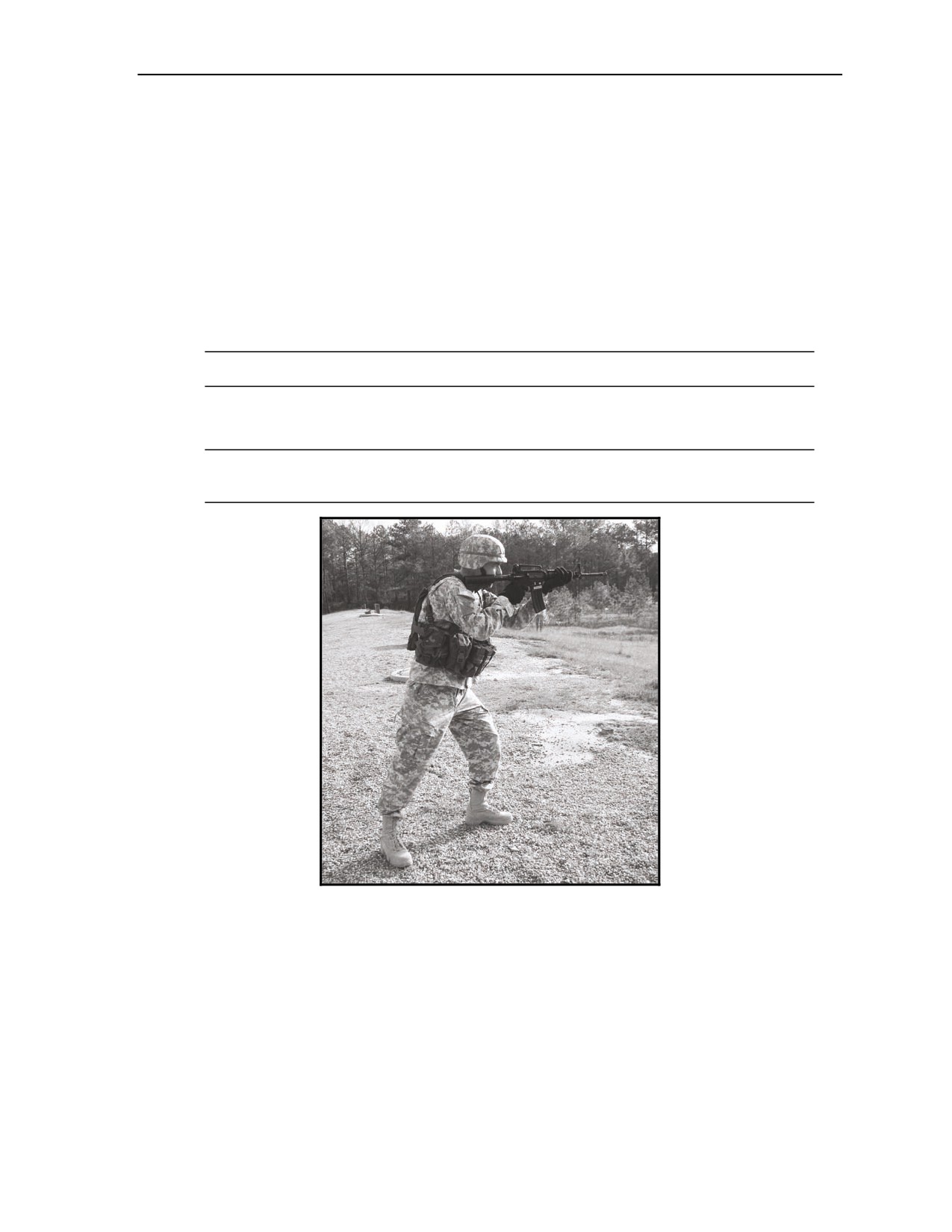
7-1. This position allows the Soldier to obtain the height necessary to observe many target areas while
taking advantage of available cover. This position is the same as the kneeling unsupported firing position,
except the Soldier uses some form of support to stabilize his body. Solid cover that can support any part of
the body or weapon assists in firing accuracy.
NOTE: See Chapter 4 for more information about the kneeling unsupported firing position.
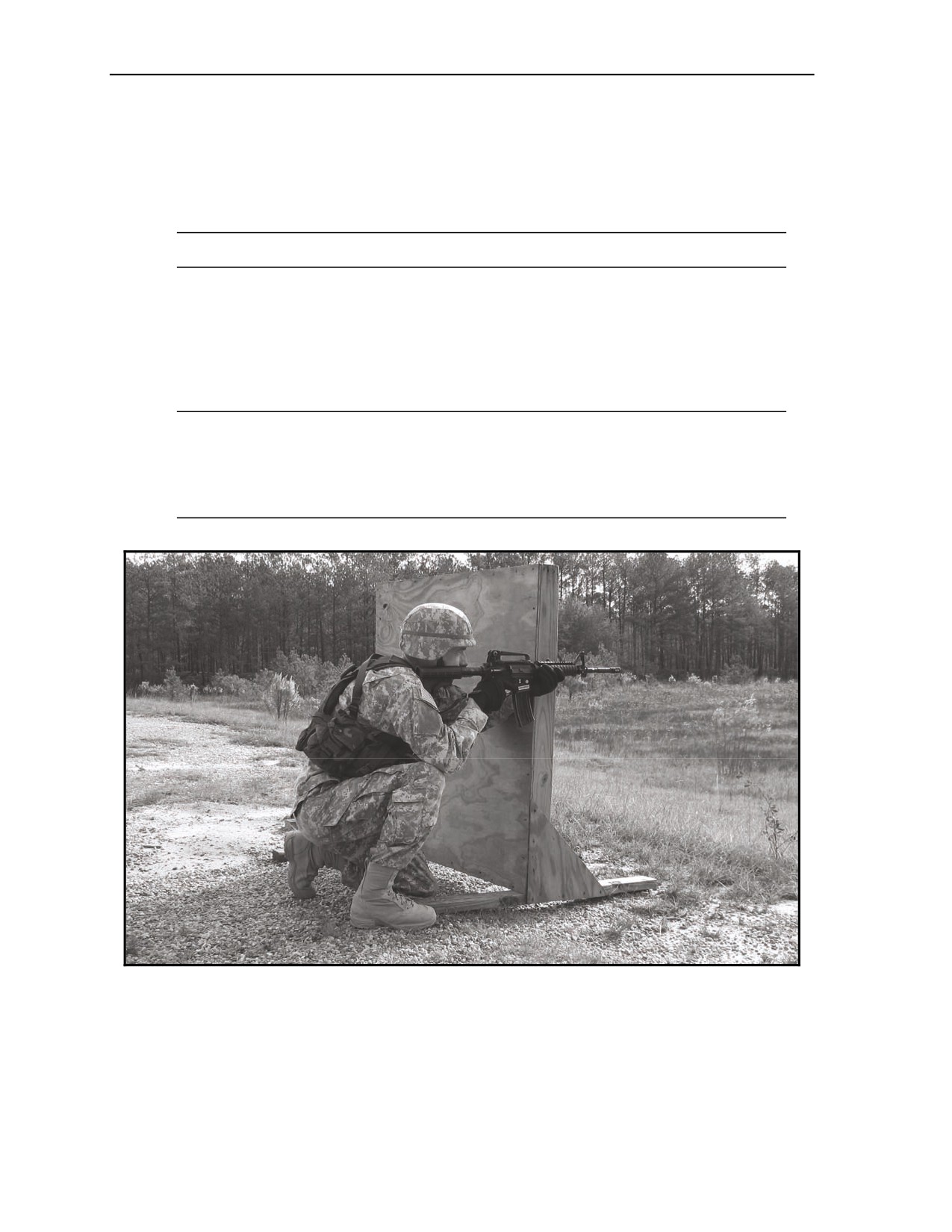
7-2. To assume the kneeling supported firing position (Figure 7-1)—
(1) Drop to the knee toward the inside of the covered position.
(2) Place the foot toward the outside of cover, with the toes pointing toward the engagement area.
(3) Place the nonfiring hand on the edge of the cover to support the weapon.
(4) Place the firing hand on the pistol grip, with the weapon's buttstock between the SAPI plate and
the bicep to stabilize the weapon and absorb recoil.
NOTE: When firing from the strong side, the firer can place the elbow of the firing side on the
outside knee to provide stability. When firing from the weak side, the firer should cant the
weapon approximately 45 degrees and thrust the hips forward to minimize exposure to the
enemy. When placing the weapon against the cover, the firer should take care to prevent the
ejection port from becoming obstructed.
Figure 7-1. Kneeling supported firing position.
7-2
FM 3-22.9
12 August 2008
Advanced Rifle Marksmanship
STANDING UNSUPPORTED FIRING POSITION
7-3. While the standing position provides the least stability, it can be assumed quickly while moving and
is a good position for target area observation. Support for any portion of the body or weapon improves
stability.
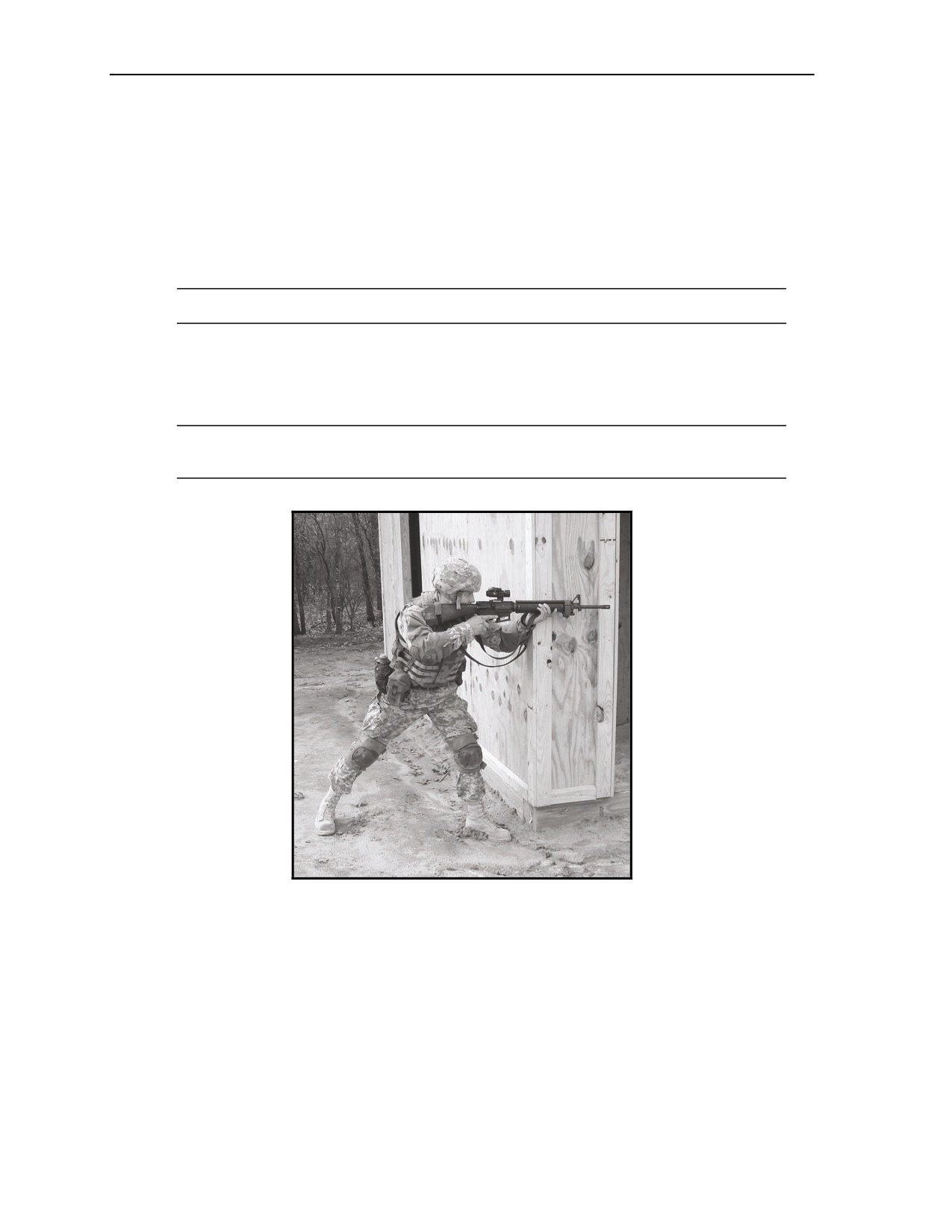
7-4. To assume the standing unsupported firing position (Figure 7-2)—
(1) Face the target.
(2) Step toward the target with the foot closest to the target.
(3) Spread the feet a comfortable distance apart.
(4) Place the firing hand on the pistol grip and the nonfiring hand on the upper handguard.
(5) Place the weapon's buttstock between the SAPI plate of the IBA and the bicep.
NOTE: This action stabilizes the weapon and absorbs recoil.
(6) Shift the feet until aiming naturally at the target.
(7) Evenly distribute body weight.
NOTE: More stability can be obtained by adjusting the ammunition pouch to support the
nonfiring-side elbow. This allows the weapon's magazine to rest in the nonfiring hand.
Figure 7-2. Standing unsupported firing position.
12 August 2008
FM 3-22.9
7-3
Chapter 7
STANDING SUPPORTED FIRING POSITION AROUND OBSTACLES
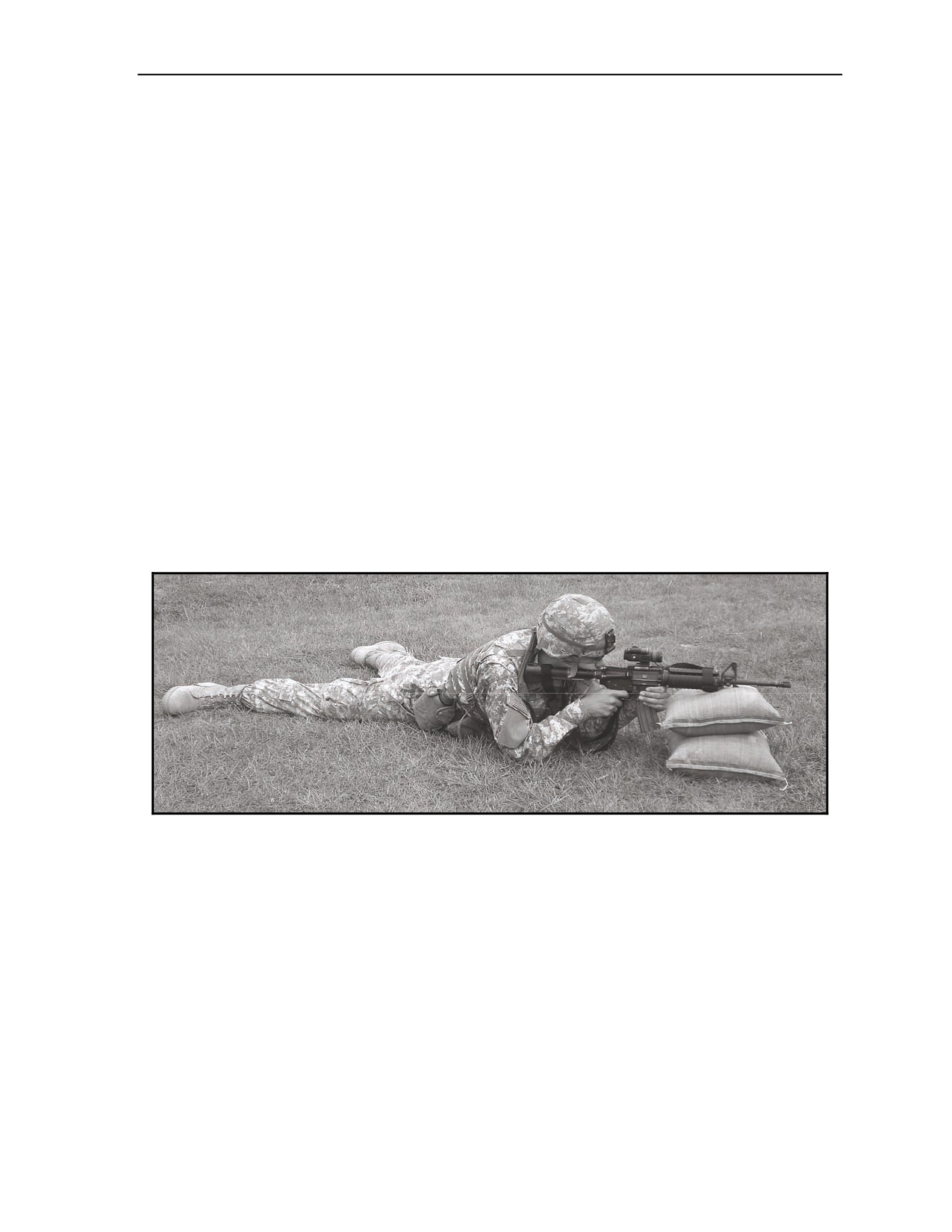
7-5. To assume the standing supported firing position when firing around obstacles (Figure 7-3)—
(1) Face the target.
(2) Execute a facing movement to the firing side.
(3) Spread the feet a comfortable distance apart.
(4) Place the firing hand on the pistol grip and the nonfiring hand on the upper handguard.
(5) Place the weapon's buttstock between the SAPI plate and the bicep.
NOTE: This action helps stabilize the weapon and absorbs recoil.
(6) Lean into the wall or obstacle, with the nonfiring-side forearm, shoulder, and thigh touching the
obstacle for support.
(7) Shift the feet until aiming naturally at the target.
(8) Evenly distribute body weight.
NOTE: When firing from the left side of any obstacle, the firer should take care to prevent the
ejection port from becoming obstructed.
Figure 7-3. Standing supported firing position around obstacles.
7-4
FM 3-22.9
12 August 2008
Advanced Rifle Marksmanship
MODIFIED FIRING POSITIONS
7-6. Soldiers should be encouraged to modify positions by—
z
Taking advantage of available cover.
z
Using anything that helps to steady the weapon.
z
Making changes that allow them to hit more combat targets.
7-7. To provide maximum stability, Soldiers should use prone and supported positions when firing M16-
or M4-series weapons in the automatic or burst fire mode. If the weapon is equipped with the ARS, the
Soldier should use the vertical pistol grip to further increase control of the weapon. Optional modifications
include the following:
z
Maximize use of artificial support.
z
Grip the weapon firmly, and pull it into the shoulder securely. This helps offset the progressive
displacement of weapon/target alignment caused by recoil.
z
Use sandbags to support the weapon.
z
Position the nonfiring hand on the weapon wherever it provides the most stability and flexibility.
The goal is to maintain weapon stability and minimize recoil.
z
Form a 5-inch loop with the sling at the upper sling swivel. Grasp this loop with the nonfiring
hand, and pull down and to the rear while firing.
z
Grasp the small of the stock with the nonfiring hand, and apply pressure down and to the rear
while firing.
z
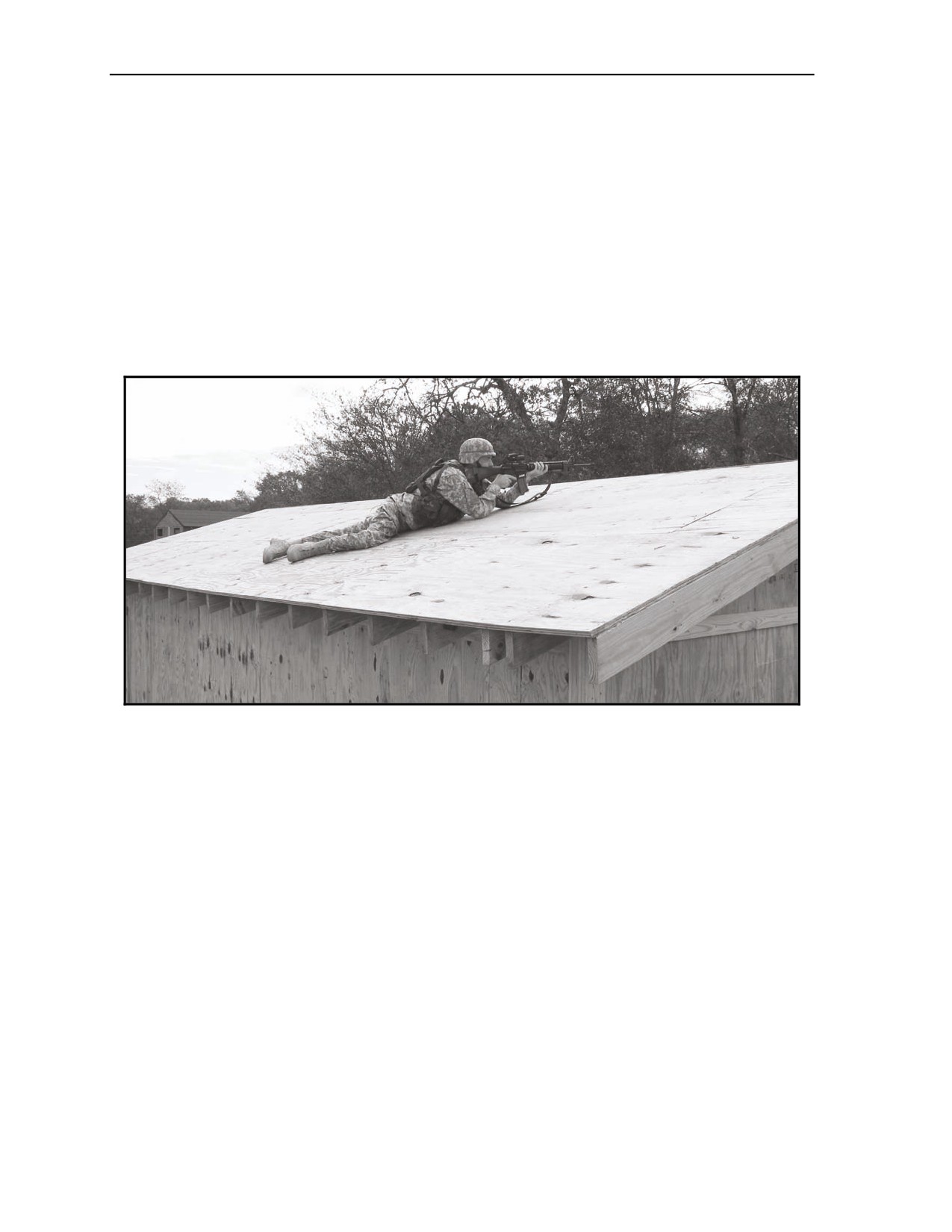
Assume the modified supported prone firing position (Figure 7-4). This position uses sandbags
to support the handguard and frees the nonfiring hand to hold the magazine steady.
Figure 7-4. Modified supported prone firing position.
12 August 2008
FM 3-22.9
7-5
Chapter 7
URBAN OPERATIONS FIRING POSITIONS
7-8. Although the same principles of rifle marksmanship apply, the selection of firing positions during
urban operations (UO) requires some special considerations. During UO, Soldiers may be required to fire—
z
Over rooftops.
z
Around obstacles.
z
From windows.
FIRING OVER ROOFTOPS
7-9. Long-range observation may require Soldiers to occupy positions that are high above the ground.
Figure 7-5 shows a Soldier firing over a rooftop, exposing only the parts of his body necessary to engage a
target.
Figure 7-5. Firing over a rooftop.
7-6
FM 3-22.9
12 August 2008
Advanced Rifle Marksmanship
FIRING AROUND OBSTACLES
7-10. In the urban environment, Soldiers may encounter man-made and natural obstacles. Figure 7-6 shows
a Soldier firing around an urban obstacle.
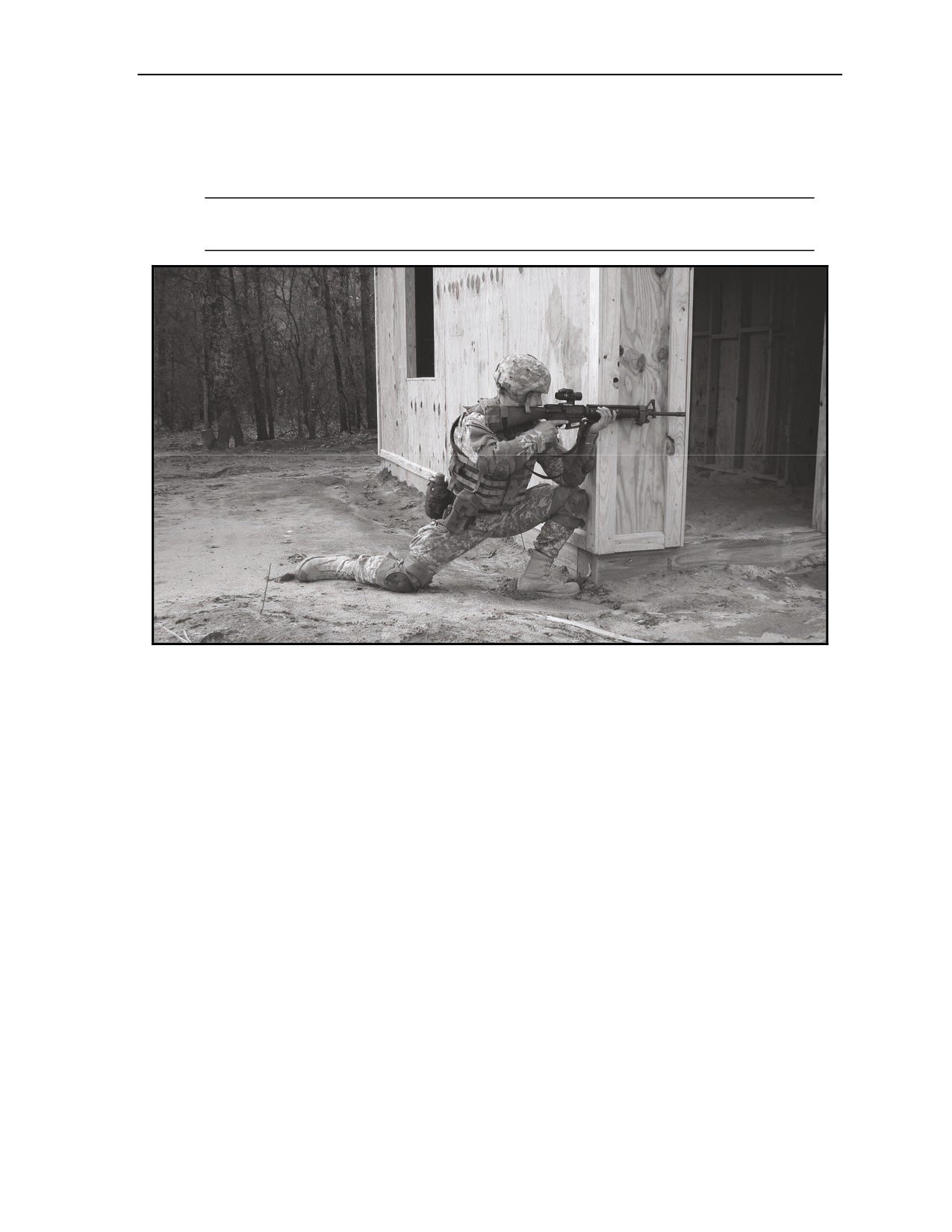
NOTE: Firing around corners could require the Soldier to fire from the opposite shoulder to
avoid exposing himself to enemy fire.
Figure 7-6. Firing around an obstacle.
12 August 2008
FM 3-22.9
7-7
Chapter 7
FIRING FROM WINDOWS
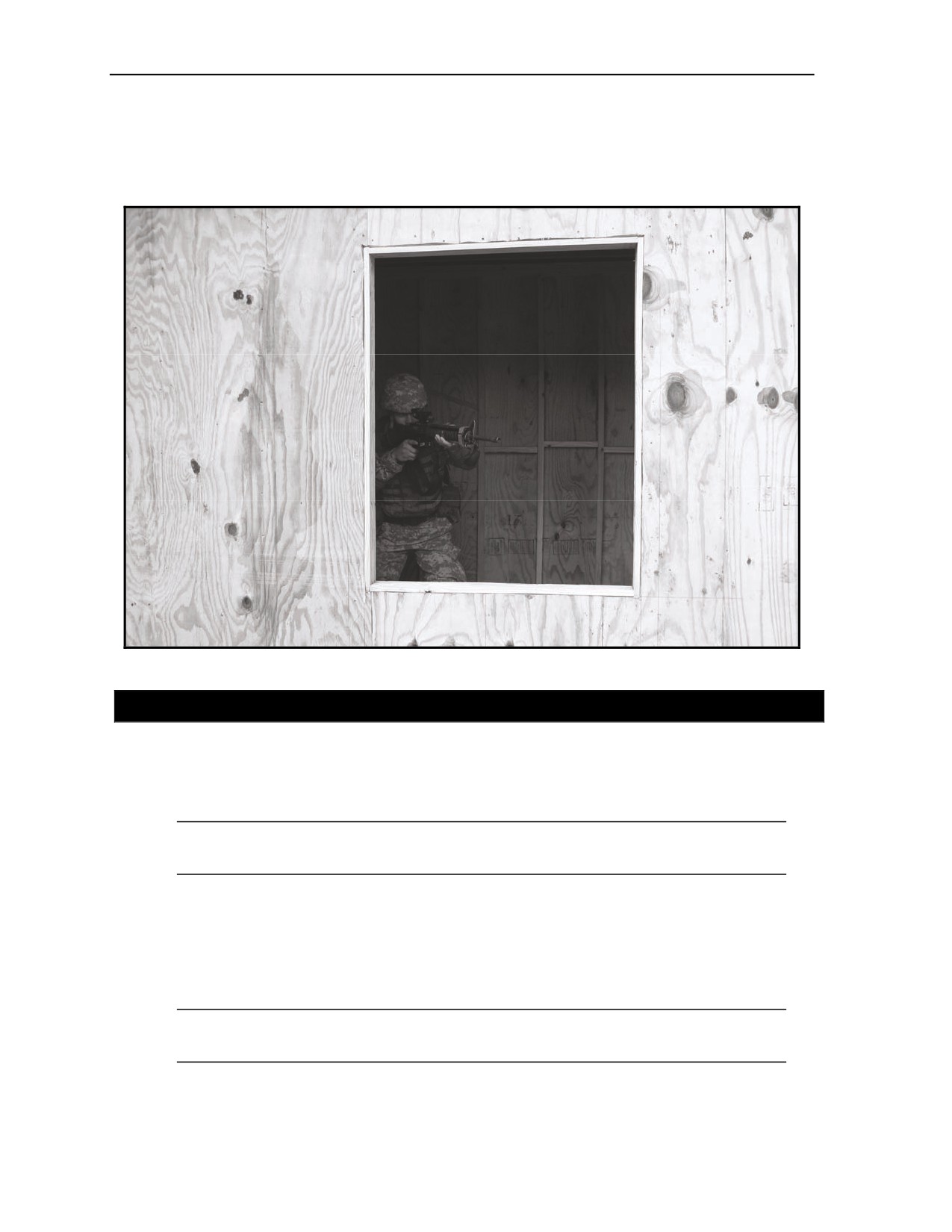
7-11. When firing from windows, Soldiers should stay in the shadows and make sure that the weapon's
muzzle does not protrude out of the opening (Figure 7-7).
Figure 7-7. Firing from a window.
SECTION II. COMBAT FIRE TECHNIQUES
Combat is the ultimate test of a Soldier's ability to apply the fundamentals of marksmanship and firing skills.
Soldiers must apply the marksmanship skills mastered during training, practice, and record fire exercises to
many combat situations (for example, attack, assault, ambush, or UO). Although these situations present
problems, basic techniques and fundamentals require only two modifications: changes to the rate of fire and
alterations in weapon/target alignment.
NOTE: The necessary changes are significant and must be thoroughly taught and practiced
before performing LFXs.
RAPID SEMIAUTOMATIC FIRE
7-12. The most important firing technique during fast-moving, modern combat is rapid semiautomatic fire.
It is the most accurate technique of placing a large volume of fire on poorly defined targets or target areas,
such as short exposure, multiple, or moving targets. To apply rapid semiautomatic fire, the Soldier
intentionally fires a quick series of shots into the target area to ensure a high probability of a hit.
NOTE: Increased speed and volume should be sought only after the Soldier has demonstrated
expertise and accuracy during slow semiautomatic fire.
7-8
FM 3-22.9
12 August 2008
Advanced Rifle Marksmanship
EFFECTIVENESS AND CONTROL OF RAPID SEMIAUTOMATIC FIRE
7-13. With proper training, Soldiers can select the appropriate mode of fire: semiautomatic fire, rapid
semiautomatic fire, or automatic/burst fire.
NOTE: Leaders must ensure that Soldiers apply proper fire discipline at all times. Even in
training, unaimed fire must never be tolerated, especially unaimed automatic fire.
7-14. While Soldiers sacrifice some degree of accuracy to deliver a greater volume of fire, it is surprising
how devastatingly accurate rapid semiautomatic fire can be. At ranges beyond
25 meters, rapid
semiautomatic fire is superior to automatic fire in all measures: shots per target, trigger pulls per hit, and
time to hit. Proper training and repeated practice increases the degree of accuracy.
7-15. Rapid application of the four fundamentals will result in a well-aimed shot every one or two seconds.
This technique of fire allows a unit to place the most effective volume of fire in a target area while
conserving ammunition. It is the most accurate means of delivering suppressive fire.
MODIFICATIONS FOR RAPID SEMIAUTOMATIC FIRE
7-16. Trainers must consider the impact of the increased rate of fire on the Soldier’s ability to properly
apply the fundamentals of marksmanship and other combat firing skills, such as immediate action
procedures.
Marksmanship Fundamentals
7-17. The following paragraphs describe the modifications necessary for Soldiers to apply the four
fundamentals when firing in the rapid semiautomatic fire mode.
Steady Position
7-18. Consider the following modifications to achieve a steady position:
z
Make sure that the weapon is well-supported to improve accuracy and reduce recovery time
between shots.
z
Grip the handgrip tightly to reduce recovery time and rapidly shift or distribute fire to
subsequent targets.
z
When possible, pivot the weapon where the nonfiring hand meets the support.
z
Avoid changing the position of the nonfiring hand on the support; it is awkward and time-
consuming when rapidly firing a series of shots.
Aiming
7-19. Consider the following recommendations to properly aim the weapon:
z
Do not change sighting and stock weld during rapid semiautomatic fire. Keep the cheek on the
stock for every shot, align the firing eye with the rear aperture, and focus on the front sightpost.
z
When using slow semiautomatic fire, seek a stable sight picture.
z
In the fast-moving situations that require rapid semiautomatic fire, accept target movement and
unsteady sight picture, and keep firing into the target area until the target is down or there is no
chance of a hit.
z
Aim every shot.
Breath Control
7-20. Breath control must be modified because the Soldier does not have time to take a complete breath
between shots. Consider the following modifications to achieve proper breath control:
z
Hold your breath at some point in the firing process.
z
Take shallow breaths between shots.
12 August 2008
FM 3-22.9
7-9
Chapter 7
Trigger Squeeze
7-21. To maintain the desired rate of fire, the Soldier has a brief period of time to squeeze the trigger. The
firer must cause the weapon to fire in about half of a second or less and still not anticipate the precise
moment of firing. Consider the following modifications to achieve proper trigger squeeze:
z
Apply initial trigger pressure as soon as a target is identified and while the front sightpost is
being brought to the desired point of aim.
z
When the front sightpost reaches the point of aim, apply final pressure to cause the weapon to
fire almost at once. Apply this additional pressure, also known as final trigger squeeze, without
disturbing the lay of the weapon.
z
Increase the firing rate by firing, releasing enough trigger pressure to reset the sear, and then
immediately firing the next shot. This technique is called rapid trigger squeeze. It eliminates the
time used in fully releasing pressure on the trigger and allows the firer to rapidly deliver
subsequent rounds.
NOTE: Training and practice sessions are required for Soldiers to become proficient in the
technique of rapid trigger squeeze.
7-22. Repeated dry-fire training using simulators, such as the EST 2000 and LMTS, and live-fire practice
ensure that the Soldier can squeeze the trigger and maintain a rapid rate of fire consistently and accurately.
Immediate Action Procedures
7-23. To maintain an increased rate of suppressive fire, Soldiers must apply immediate action quickly.
Repeated dry-fire practice using blanks or dummy rounds, followed by live-fire training and evaluation,
ensures that Soldiers can rapidly apply immediate action procedures while other Soldiers initiate fire.
RAPID SEMIAUTOMATIC FIRE TRAINING
NOTE: Soldiers should be well-trained in all aspects of slow semiautomatic firing before
attempting any rapid semiautomatic fire training. Those who display a lack of knowledge of
fundamental marksmanship skills should not advance to rapid semiautomatic fire training until
these skills are learned and mastered.
7-24. Initial training should focus on the modifications to the fundamentals and other basic combat skills
necessary during rapid semiautomatic firing.
NOTE: See Table 7-1 for the current training program.
7-10
FM 3-22.9
12 August 2008
Advanced Rifle Marksmanship
Table 7-1. Rapid semiautomatic fire training program.
RAPID SEMIAUTOMATIC FIRE TRAINING PROGRAM
Instructional Intent
•
Soldiers learn to engage targets using rapid semiautomatic fire and practice rapid magazine changes.
Special Instructions
Ensure that—
•
The M16A2/A3/A4 rifle's or M4 carbine’s rear sight is set on the 0-2 aperture.
•
The M16A1's rear sight is set on the unmarked aperture.
•
Soldiers use a 25-meter alternate course C qualification target.
•
Each Soldier is given four 5-round magazines of 5.56-millimeter ball ammunition.
•
Soldiers use rapid semiautomatic fire to engage targets.
•
Each Soldier fires one round at each of the 10 silhouettes on the alternate course C qualification
target.
•
Each Soldier does a rapid magazine change after each magazine is fired.
•
The first iteration of 10 rounds is fired within a time limit of 40 seconds.
•
The second iteration of 10 rounds is fired within a time limit of 30 seconds.
•
Each target is inspected, and the results are posted after each iteration.
Observables
• Coaches continuously analyze the firer’s application of the fundamentals.
•
Each Soldier obtains 14 hits out of 20 silhouette target exposures.
Conduct
7-25. Each Soldier receives four 5-round magazines of 5.56-millimeter ball ammunition. Using rapid
semiautomatic fire, the Soldier fires one round at each of the 10 silhouettes on the alternate course C
qualification target. Soldiers fire two iterations, performing a rapid magazine change after each magazine is
fired. The targets are inspected, and the results are posted after each iteration. Each Soldier must obtain 14
hits out of 20 silhouette target exposures.
7-26. Table 7-2 depicts the two iterations and provides related information, such as time constraints,
number of rounds that must be fired, type of target that must be used, and the distance away from the firer
that the target must be placed.
Table 7-2. Rapid semiautomatic fire training and related information.
ITERATION
TIME
NUMBER OF
TYPE OF TARGET
DISTANCE
CONSTRAINTS
ROUNDS
(m)
1
40 sec
10
25-m alternate course C qualification target
25
2
30 sec
10
25-m alternate course C qualification target
25
Dry-Fire Exercises
7-27. Repeated dry-fire exercises are the most efficient means to ensure that Soldiers can apply
modifications to the fundamentals. Multiple dry-fire exercises are needed, emphasizing a rapid shift in
position and point of aim, followed by breath control and fast trigger squeeze.
NOTES:
1. Blanks or dummy rounds may be used to train rapid magazine changes and
immediate action procedures.
2. The Soldier should display knowledge and skill during dry-fire exercises before
attempting LFXs.
12 August 2008
FM 3-22.9
7-11
Chapter 7
Live-Fire Exercises
7-28. There are two types of LFXs:
z
Individual.
z
Collective.
Individual
7-29. To conduct an individual LFX—
z
Ensure that the emphasis is on each Soldier maintaining a heavy volume of accurate fire.
z
Keep weapon downtime (during immediate action and rapid magazine changes) to a minimum.
z
Begin by firing at shorter ranges, progressing to longer ranges as Soldiers display increased
proficiency.
z
Shorten exposure or engagement times and increase the number of rounds to simulate the need
for a heavy volume of fire.
z
Provide downrange feedback to determine the accuracy of fire.
Collective
7-30. Rapid semiautomatic fire should be the primary means of delivering fire during a collective LFX. To
conduct a collective LFX, ensure that the emphasis is on performing staggered rapid magazine changes,
maintaining a continuous volume of fire, and conserving ammunition.
AUTOMATIC OR BURST FIRE
NOTE: Automatic or burst fire should be trained only after the Soldier has demonstrated
expertise during slow and rapid semiautomatic fire.
7-31. When applying automatic or burst fire, Soldiers deliver the maximum number of rounds (one to three
rounds per second) into a designated target area while rapidly applying the four fundamentals. This
specialized technique of delivering suppressive fire may not apply to most combat engagements.
NOTE: The M16A1/A3 rifle and M4A1 carbine have fully automatic settings. The M16A2/A4
rifle and M4 carbine use a three-round burst capability.
EFFECTIVENESS AND CONTROL OF AUTOMATIC OR BURST FIRE
7-32. Automatic or burst fire is inherently less accurate than semiautomatic fire. The first fully automatic
shot fired may be on target, but recoil and a high cyclic rate of fire often combine to place subsequent
rounds far from the desired point of impact. Even controlled (three-round burst) automatic or burst fire may
place only one round on the target. Because of these inaccuracies, it is difficult to evaluate the effectiveness
of automatic or burst fire, and even more difficult to establish absolute guidelines for its use.
FACTORS FOR USE OF SEMIAUTOMATIC VERSUS AUTOMATIC OR BURST FIRE
7-33. Trainers must ensure that Soldiers understand the capabilities and limitations of automatic or burst
fire. They must know when it should and should not be used.
7-12
FM 3-22.9
12 August 2008
Advanced Rifle Marksmanship
Semiautomatic Fire
7-34. M16 rifles and M4 carbines should normally be employed in the semiautomatic fire mode.
7-35. Depending on the tactical situation, Soldiers should employ the semiautomatic fire mode in the
following conditions:
z
Ammunition is in short supply, or resupply may be difficult.
z
Single targets are being engaged.
z
Widely spaced multiple targets are being engaged.
z
The target is located more than 50 meters away.
z
The effect of bullets on the target cannot be observed.
z
Artificial support is not available.
z
Targets may be effectively engaged using semiautomatic fire.
Automatic or Burst Fire
7-36. In some combat situations, the use of automatic or burst fire can improve survivability and enhance
mission accomplishment. Clearing buildings, final assaults, FPF, and ambushes may require limited use of
automatic or burst fire.
7-37. Depending on the tactical situation, Soldiers should employ automatic or burst fire in the following
conditions:
z
Ammunition is readily available, and there are no problems with resupply.
z
Closely spaced multiple targets are located 50 meters away or less.
z
Maximum fire is immediately required at an area target.
z
Tracers or some other means can be used to observe the effect of bullets on the target.
z
Leaders can maintain adequate control over weapons firing in the automatic fire mode.
z
Good artificial support is available.
z
The initial sound of gunfire disperses closely spaced enemy targets.
MODIFICATIONS FOR AUTOMATIC OR BURST FIRE
7-38. Automatic or burst fire is inherently less accurate than semiautomatic fire. Trainers must consider the
impact of recoil and the high cyclic rate of fire on the Soldier’s ability to properly apply the fundamentals
of marksmanship and other combat firing skills, such as immediate action procedures and rapid magazine
changes.
Marksmanship Fundamentals
7-39. The following paragraphs describe the modifications necessary for Soldiers to apply the four
fundamentals when firing in the automatic fire mode.
Steady Position
7-40. Consider the following modifications to achieve a steady position:
z
Make sure that the weapon is well-supported.
z
Grip the weapon a little more firmly and pull it into the shoulder a little tighter than when in the
semiautomatic fire mode.
NOTE: This support and increased grip help offset the progressive displacement of
weapon/target alignment caused by recoil.
z
To provide maximum stability, assume the modified supported prone firing position (Figure
7-4).
12 August 2008
FM 3-22.9
7-13
Chapter 7
NOTE: If the weapon is equipped with the ARS, use the vertical pistol grip to further increase
control of the weapon.
Aiming
7-41. Consider the following recommendations to properly aim the weapon:
z
Do not change sighting and stock weld during automatic or burst fire. Keep the cheek on the
stock for every shot, align the firing eye with the rear aperture, and focus on the front sightpost.
z
Although recoil may disrupt this process, try to apply the aiming techniques throughout recoil.
Breath Control
7-42. Breath control must be modified because the Soldier does not have time to take a complete breath
between shots. Consider the following modifications to achieve proper breath control:
z
Hold your breath at some point in the firing process.
z
Take shallow breaths between shots.
Trigger Squeeze
7-43. Training and repeated dry-fire practice aid the Soldier in applying proper trigger squeeze during
automatic firing. LFXs enable him to improve this skill.
M16A2/3/4 Rifles and M4 Carbines
7-44. Until the weapon fires, trigger squeeze is applied in the normal manner. To use the burst fire mode—
(1) Hold the trigger to the rear until three rounds are fired.
(2) Release pressure on the trigger until it resets.
(3) Reapply pressure for the next three-round burst.
NOTES:
1. Do not slap or jerk the trigger. Squeeze it, and then quickly release pressure.
2. Depending on the position of the burst can when the selector is moved to the
burst fire mode, the weapon may fire one, two, or three rounds when the trigger
is held to the rear for the first time. If the weapon fires only one or two rounds,
quickly release pressure on the trigger and squeeze again, holding it to the rear
until a three-round burst is completed.
M16A1 Rifles
7-45. Until the weapon fires, trigger squeeze is applied in the normal manner. Because three-round bursts
are the most effective rate of fire, pressure on the trigger should be released as quickly as possible. To use
the burst fire mode, keep the index finger on the trigger, but quickly release pressure to prevent an
excessive number of rounds from being fired in one burst. With much dry-fire practice, the Soldier can
become proficient at delivering three-round bursts with the squeeze/release technique.
Immediate Action
7-46. To maintain an increased rate of suppressive fire, Soldiers must apply immediate action quickly.
Repeated dry-fire practice using blanks or dummy rounds, followed by live-fire training and evaluation,
ensures that Soldiers can rapidly apply immediate action procedures.
Rapid Magazine Changes
7-47. Rapid magazine changes are vital in maintaining automatic or burst fire. Rapid magazine changes
must be correctly taught and practiced during dry-fire and live-fire exercises until the Soldier becomes
proficient.
7-14
FM 3-22.9
12 August 2008

Advanced Rifle Marksmanship
AUTOMATIC OR BURST FIRE TRAINING
NOTE: Soldiers should be well-trained in all aspects of slow semiautomatic firing before
attempting any automatic training. Those who display a lack of knowledge of fundamental skills
should not advance to automatic or burst fire training until these skills are learned.
7-48. Initial training should focus on the modifications to the fundamentals and other basic combat skills
necessary during automatic firing.
7-49. Unit training is vital to properly applying this technique. Soldiers must be taught the advantages and
disadvantages of automatic and burst firing so they know when it should be used. Without this knowledge,
Soldiers tend to switch to the automatic or burst fire mode in life-threatening situations.
NOTE: See Table 7-3 for the current training program.
Table 7-3. Automatic or burst fire training program.
AUTOMATIC OR BURST FIRE TRAINING PROGRAM
Instructional Intent
•
Soldiers learn the advantages and disadvantages of automatic or burst fire.
Special Instructions
Ensure that—
•
The M16A2/A3/A4 rifle's or M4 carbine's rear sight is set on the 0-2 aperture.
•
The M16A1's rear sight is set on the unmarked aperture.
•
Soldiers use a 25-meter alternate course C qualification target.
•
Each Soldier is in a proper modified automatic/burst firing position.
•
Each Soldier is given two 15-round magazines of 5.56-millimeter ball ammunition.
•
Each Soldier fires one
3-round burst at each of the
10 silhouettes on the alternate course C
qualification target.
•
Each Soldier does a rapid magazine change after each magazine is emptied.
Observables
•
Each Soldier obtains five target hits.
•
Soldiers demonstrate control of the weapon in the automatic/burst fire mode.
Conduct
7-50. Each Soldier receives two 15-round magazines of 5.56-millimeter ball ammunition. Each Soldier
fires one
3-round burst at each of the 10 silhouettes on the alternate course C qualification target,
performing a rapid magazine change after each magazine is emptied. Each Soldier must obtain five target
hits.
7-51. Table 7-4 depicts automatic or burst fire training and provides related information, such as number of
rounds that must be fired, type of target that must be used, and the distance away from the firer that the
target must be placed.
Table 7-4. Automatic or burst fire training and related information.
FIRING POSITION
NUMBER OF ROUNDS
TYPE OF TARGET
DISTANCE
(m)
Modified automatic/burst firing position
30, one 3-round burst at
Alternate course C qualification target
25
each of the 10 silhouettes
12 August 2008
FM 3-22.9
7-15
Chapter 7
Dry-Fire and Live-Fire Exercises
7-52. Repeated dry-fire exercises are the most efficient means to ensure that Soldiers can apply
modifications to the fundamentals. Multiple dry-fire exercises are needed, emphasizing a stable position
and point of aim, followed by breath control and appropriate trigger squeeze.
NOTES:
1. Blanks or dummy rounds may be used to train trigger squeeze, rapid magazine
changes, and immediate action procedures.
2. The Soldier should display knowledge and skill during dry-fire exercises before
attempting LFXs.
SUPPRESIVE FIRE
7-53. Suppressive fire is precisely aimed at a definite point or area target. Some situations may require a
Soldier to place suppressive fire into a wide area (for example, wood line, hedgerow, or small building)
while, at other times, the target may be a smaller area (for example, a bunker or window). Suppressive fire
is used to control the enemy and the area he occupies. It is employed to kill the enemy or to prevent him
from observing the battlefield, effectively using his weapons, or moving.
EFFECTIVENESS AND CONTROL OF SUPPRESSIVE FIRE
7-54. Many Soldiers have difficulty delivering effective suppressive fire when they cannot see a definite
target, only likely locations or general areas where the enemy is known to exist. Even though definite
targets cannot be seen, most suppressive fire should be well-aimed.
7-55. When controlling suppressive fires, two factors must be considered:
z
Point of aim.
z
Rate of fire.
Point of Aim
7-56. Suppressive fire should be well-aimed, sustained, semiautomatic fire. Although lacking a definite
target, the Soldier must be taught to control and accurately deliver fire within the limits of the suppressed
area. As when engaging a point target, the weapon sights are used, with the front sightpost placed so each
shot impacts within the desired area.
Rate of Fire
7-57. During most phases of live-fire training (for example, grouping, zeroing, qualifying), shots are
delivered using slow semiautomatic fire (one round every 3 to 10 seconds). During training, this allows a
slow and precise application of the fundamentals. Successful suppressive fire requires a faster, but
sustained, rate of fire. Soldiers may need to fire full automatic or bursts (13 rounds per second) for a few
seconds to gain initial fire superiority. Rapid semiautomatic fire (one round every one or two seconds)
allows the firer to sustain a large volume of accurate fire while conserving ammunition.
MODIFICATIONS FOR SUPPRESSIVE FIRE
7-58. The tactical situation dictates the most useful rate of fire, but the following must be considered:
z
Marksmanship fundamentals.
z
Rapid magazine changes.
z
Ammunition conservation.
7-16
FM 3-22.9
12 August 2008
Advanced Rifle Marksmanship
Marksmanship Fundamentals
7-59. As the stress of combat increases, some Soldiers may fail to apply the fundamentals of
marksmanship. This factor contributes to reduced accuracy and effectiveness. While some modifications
are appropriate, the basic fundamentals should be applied and emphasized—regardless of the rate of fire or
combat stress. Strategies to enhance marksmanship skills under combat stress include shooting in the prone
position, as opposed to standing.
7-60. Factors that contribute to combat stress are:
z
Environmental.
z
Operational.
Environmental
7-61. Environmental stressors have been shown to degrade marksmanship accuracy up to 20 percent. Such
stressors include—
z
Heat.
z
Altitude.
Operational
7-62. Operational stressors have been shown to degrade marksmanship accuracy from 17 percent to 136
percent. Such stressors include—
z
MOPP gear.
z
Tasks that require carrying rucksacks, litter patients, and other equipment on the body.
z
Sleep deprivation.
Rapid Magazine Changes
7-63. One of the keys to sustained suppressive fire is reloading the weapon rapidly. Rapid magazine
changes must be correctly taught and practiced during dry-fire and live-fire exercises until the Soldier
becomes proficient. Small-unit training exercises must be conducted so Soldiers who provide suppressive
fire practice staggered magazine changes.
Ammunition Conservation
7-64. Automatic or burst fire should be used sparingly and only to gain initial fire superiority. Depending
on the tactical situation, the rate of fire should be adjusted so that a minimum number of rounds are
expended. Accurate fire conserves ammunition, while preventing the enemy from placing effective fire on
friendly positions.
SUPPRESSIVE FIRE TRAINING
NOTE: See Table 7-5 for the current training program.
12 August 2008
FM 3-22.9
7-17
Chapter 7
Table 7-5. Suppressive fire training program.
SUPPRESSIVE FIRE TRAINING PROGRAM
Instructional Intent
•
Soldier learns to suppress targets using suppressive fire.
Special Instructions
Ensure that—
•
The M16A2/A3/A4 rifle's or M4 carbine’s rear sight is set on the 0-2 aperture.
•
The M16A1's rear sight is set on the unmarked aperture.
•
Soldiers use a 25-meter scaled landscape target.
•
Each Soldier is given two 9-round magazines and one 12-round magazine of 5.56-millimeter ball ammunition.
•
Each Soldier is in a proper supported firing position.
•
Each Soldier fires 9 rounds at the open window area of the target using rapid semiautomatic fire with the first
9-round magazine.
•
Each Soldier fires 12 rounds at the fence or hedgerow area of the target using rapid semiautomatic fire with the
12-round magazine.
•
Each Soldier fires three 3-round bursts at the tank turret area of the target using the automatic/burst fire mode
with the second 9-round magazine.
Observables
•
Each Soldier achieves 5 hits inside the open window area within 18 seconds.
•
Each Soldier achieves 10 hits inside the dotted lines surrounding the fence or hedgerow area within 24
seconds.
•
Each Soldier achieves 3 hits inside the tank turret area within 24 seconds.
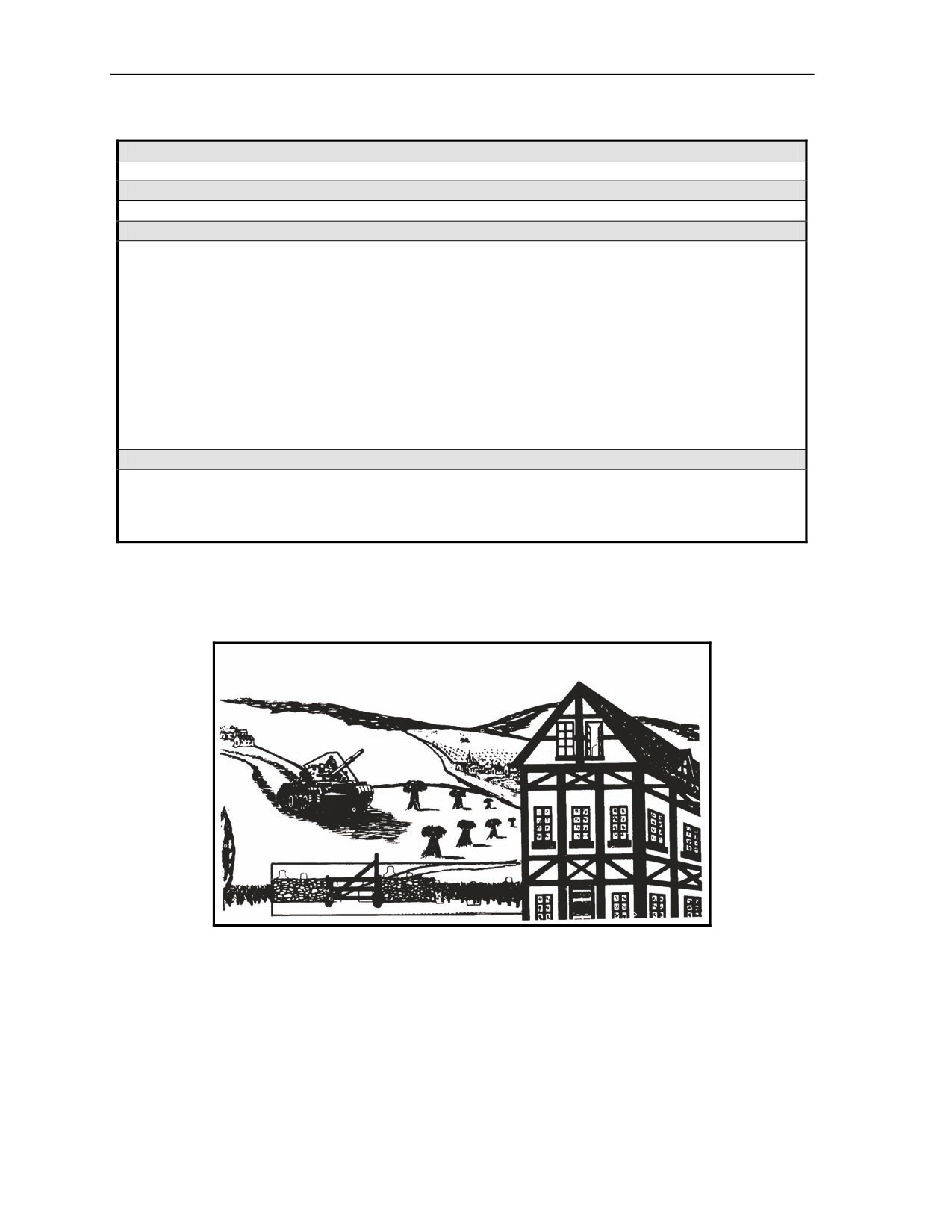
7-65. Figure 7-8 shows a landscape target suitable for suppressive fire training. When this type of target is
used, trainers must develop a firing program to include areas of engagement and designated target areas. At
25 meters, this target provides the firer with an area to suppress without definite targets to engage.
Figure 7-8. Landscape target.
7-18
FM 3-22.9
12 August 2008

Advanced Rifle Marksmanship
Conduct
7-66. Each Soldier receives two 9-round magazines and one 12-round magazine of 5.56-millimeter ball
ammunition. The Soldier engages three areas of a 25-meter scaled landscaped target: the open window
area, the fence or hedgerow area, and the tank turret area. Each Soldier achieves 5 hits inside of the open
window area, 10 hits inside of the dotted lines surrounding the fence or hedgerow area, and 3 hits inside of
the tank turret area.
7-67. Table 7-6 depicts suppressive fire training and provides related information, such as number of
rounds that must be fired, type of target that must be used, and the distance away from the firer that the
target must be placed.
Table 7-6. Suppressive fire training and related information.
FIRING
TYPE OF
AREA OF TARGET
NUMBER OF
TYPE OF FIRE
TIME
POSITION
TARGET
ENGAGED
ROUNDS
CONSTRAINTS
Supported
25-m scaled
Open window
9
Rapid semiautomatic
18 sec
firing position
landscape target
Fence or hedgerow
12
Rapid semiautomatic
24 sec
Tank turret
9, in three 3-round
Automatic/burst
24 sec
bursts
QUICK FIRE
7-68. The two main techniques of directing fire with a rifle or carbine are—
z
Aim using the sights.
z
Use weapon alignment, instinct, bullet strike, or tracers to direct the fire.
7-69. The preferred technique is to use the sights, but sometimes quick reflex action is required. Quick fire,
also known as instinctive firing or quick kill, is a technique used to deliver fast, effective fire on surprise
personnel targets 25 meters away or less.
EFFECTIVENESS AND CONTROL OF QUICK FIRE
7-70. Quick fire techniques are appropriate when Soldiers are presented with close, suddenly appearing,
surprise enemy targets; or when close engagement is imminent.
NOTE: Fire may be delivered in the SEMIAUTO or AUTOMATIC/BURST fire mode. For
example, a point man in a patrol may carry the weapon on AUTOMATIC/BURST. This may
also be required when clearing a room or bunker. Initial training should be in the SAFE mode.
7-71. Two techniques of delivering quick fire are:
z
Aimed.
z
Pointed.
7-72. The difference in the speed of delivery of these two techniques is small. Pointed quick fire can be
used to fire a shot about one-tenth of a second faster than aimed quick fire. The difference in accuracy,
however, is more pronounced:
z
A Soldier well-trained in pointed quick fire can hit an E-type silhouette target at 15 meters,
although the shot may strike anywhere on the target.
z
A Soldier well-trained in aimed quick fire can hit an E-type silhouette target at 25 meters, with
the shot or burst striking 5 inches from the center of mass.
7-73. This variance of target hit for this type of engagement reinforces the need for well-aimed shots.
12 August 2008
FM 3-22.9
7-19
Chapter 7
7-74. Pointed and aimed quick fire should be used only when a target cannot be engaged fast enough using
the sights in a normal manner. These techniques should be limited to targets appearing at 25 meters or less.
Modern short-range combat (SRC) techniques emphasize carrying the weapon with the buttstock high so
that the weapon sights can be brought into display as quickly as firing a hasty unaimed shot. In extremely
dangerous moments, special reaction teams (SRTs) commonly advance with weapons shouldered, aiming
as they advance.
Aimed
7-75. When using this technique, a Soldier can accurately engage a target at 25 meters or less in one
second or less.
7-76. To use aimed quick fire (Figure 7-9)—
(1) Bring the weapon to the shoulder.
(2) With the firing eye, look through or just over the rear sight aperture.
(3) Use the front sightpost to aim at the target.
(4) Quickly fire a single shot.
Figure 7-9. Aimed quick fire.
7-20
FM 3-22.9
12 August 2008
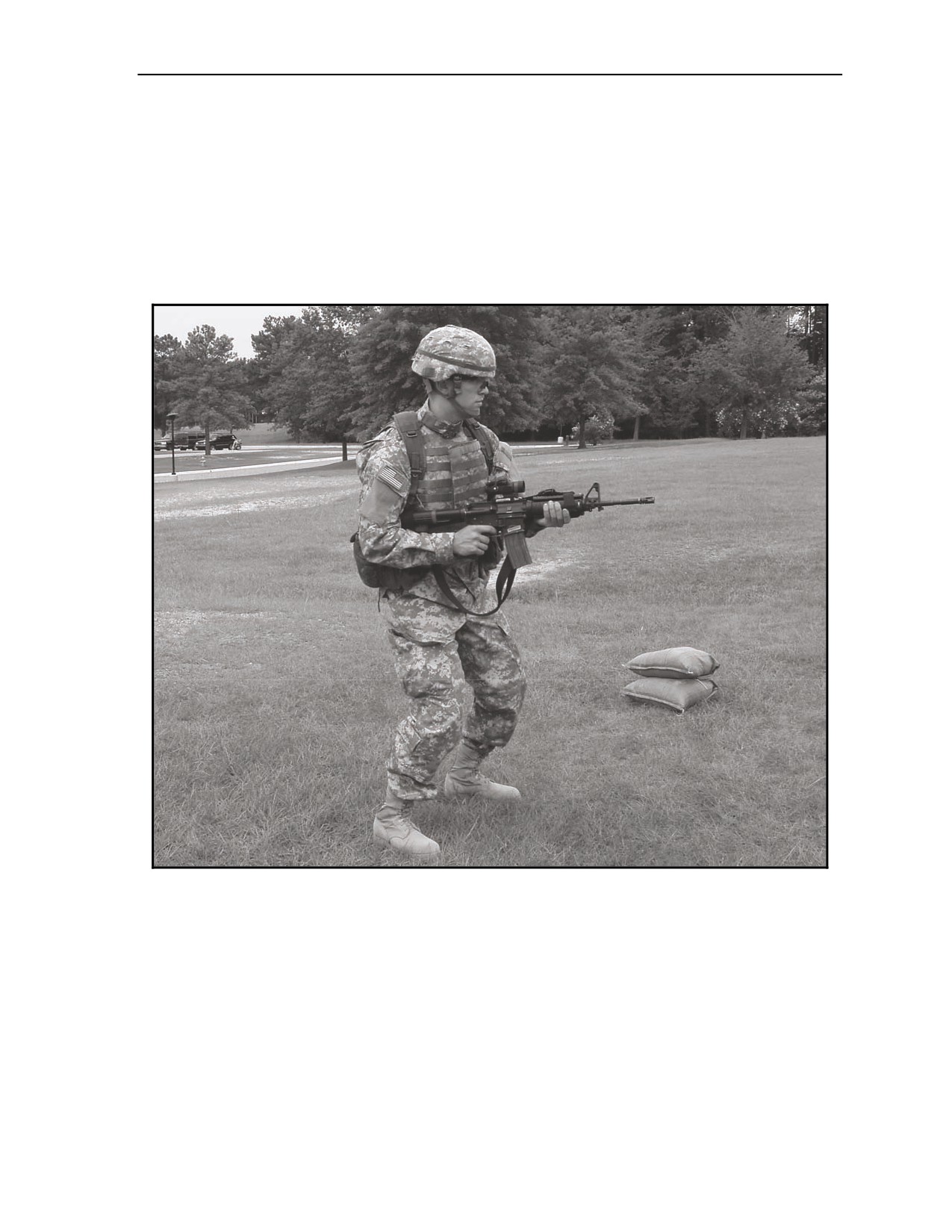
Advanced Rifle Marksmanship
Pointed
7-77. When using this technique, a Soldier can engage a target at 15 meters or less in less than one second.
7-78. To use pointed quick fire (Figure 7-10)—
(1) Keep the weapon at your side.
(2) Keeps both eyes open, and use instinct and peripheral vision to line up the weapon with the
target.
(3) Quickly fire a single shot or burst.
Figure 7-10. Pointed quick fire.
12 August 2008
FM 3-22.9
7-21
Chapter 7
FACTORS FOR USE OF CONTROLLED PAIRS VERSUS BURST FIRE
7-79. Tactical considerations dictate whether controlled pairs or burst fire is most effective in a given
situation.
MODIFICATIONS FOR QUICK FIRE
7-80. Trainers must consider the impact of the increased rate of fire on the Soldier’s ability to properly
apply the fundamentals of marksmanship and other combat firing skills.
Marksmanship Fundamentals
7-81. Quick fire techniques require major modifications to the four fundamentals of marksmanship. Initial
training in these differences, followed by repeated dry-fire exercises, will be necessary to prepare the
Soldier for live-fire.
Steady Position
7-82. The quickness of shot delivery prevents the Soldier from assuming a stable firing position. Consider
the following modifications:
z
Fire from the present position when the target appears.
z
If moving, stop.
z
Do not make adjustments for stability and support before the round is fired.
Aimed
7-83. Consider the following modifications:
(1) Pull the weapon's buttstock into the pocket of the shoulder as the cheek comes in contact with
the stock.
(2) Firmly grip the weapon with both hands, applying rearward pressure.
(3) Place the firing eye so that it looks through or just over the rear sight aperture.
(4) Place the sight on the target.
Pointed
7-84. Consider the following modifications:
z
Pull the weapon into the side.
z
Firmly grip the weapon with both hands, applying rearward pressure.
Aiming
7-85. This fundamental must be highly modified because the Soldier may not have time to look through the
rear sight, find the front sight, and align it with the target.
NOTE: When using either aiming technique, bullets may tend to impact above the desired
location. Repeated live-fire practice is necessary to determine the best point of aim or
the best focus. Such practice should begin with the Soldier using a center of mass aim.
7-22
FM 3-22.9
12 August 2008
Advanced Rifle Marksmanship
Aimed
7-86. Consider the following modified procedure:
(1) Initially focus on the target.
(2) Place the firing eye so that it looks at the target through or just over the rear sight aperture.
(3) Using peripheral vision, locate the front sightpost and bring it to the center of the target.
NOTE: Focus remains on the front sightpost throughout the aiming process.
(4) When the front sightpost is in focus, fire a controlled pair.
Pointed
7-87. Consider the following modifications:
z
Place the focus on or slightly below the center of the target as you align the weapon with it, and
fire the weapon.
z
Use your instinctive pointing ability and peripheral vision to aid in proper alignment.
Breath Control
7-88. This fundamental has little application to the first shot of quick fire. The round must be fired before a
conscious decision can be made about breathing. If subsequent shots are necessary, breathing must not
interfere with the necessity of firing quickly. When possible, use short, shallow breaths.
Trigger Squeeze
7-89. Consider the following modifications:
(1) Apply initial pressure as weapon alignment is moved toward the target.
(2) Exert trigger squeeze so when weapon/target alignment is achieved, the rounds are fired at once.
7-90. Perfecting rapid trigger squeeze requires much training and practice.
QUICK FIRE TRAINING
NOTE: Only Soldiers in basic training will conduct quick fire training. SRM will be conducted
at the unit level. See Section VI of this chapter for more information about SRM training.
7-91. The key to the successful employment of both quick fire techniques is practice. Both pointed and
aimed quick fire must be repeatedly practiced during dry-fire training. LFXs provide further skill
enhancement and illustrate the difference in accuracy between the two techniques.
NOTE: See Table 7-7 for the current training program.
12 August 2008
FM 3-22.9
7-23
Chapter 7
Table 7-7. Quick fire training program.
QUICK FIRE TRAINING PROGRAM
Instructional Intent
•
Soldiers learn how to engage targets using the quick fire techniques.
Special Instructions
Ensure that—
•
The M16A2/A3/A4 rifle's or M4 carbine’s rear sight is set on the 0-2 aperture.
•
The M16A1's rear sight is set on the unmarked aperture.
•
Each Soldier is given two 10-round magazines.
•
Each Soldier engages
10 target exposures of
2 seconds each at 15 meters using the first
10-round
magazine.
•
Each Soldier moves to the 25-meter line and engages 10 target exposures of 2 seconds each at 25 meters
using the second 10-round magazine.
Observables
•
Each Soldier achieves 7 hits out of 10 target exposures at 15 meters.
•
Each Soldier achieves 5 hits out of 10 target exposures at 25 meters.
Conduct
7-92. Each Soldier receives two 10-round magazines. Each Soldier must achieve 7 target hits out of 10
target exposures at 15 meters and 5 target hits out of 10 target exposures at 25 meters.
7-93. Table 7-8 depicts quick fire training and provides related information, such as the number of target
exposures, distance from the firer, number of rounds that must be fired, and time constraints.
Table 7-8. Quick fire training and related information.
NUMBER OF TARGET
DISTANCE
NUMBER OF ROUNDS
TIME CONSTRAINTS
EXPOSURES
10
15
10
2 sec per target exposure
10
15
10
2 sec per target exposure
SECTION III. CHEMICAL, BIOLOGICAL, RADIOLOGICAL, AND NUCLEAR
FIRING
All Soldiers must effectively fire their weapons to accomplish combat missions in a CBRN environment. With
proper training and practice, Soldiers gain confidence in their ability to effectively hit targets in full MOPP
equipment. MOPP firing proficiency must be part of every unit’s training program.
MISSION-ORIENTED PROTECTIVE POSTURE EQUIPMENT FIRE
7-94. Firing weapons is only part of overall CBRN training. Soldiers must be familiar with CBRN
equipment, its use, and proper wear before they progress to learning the techniques of MOPP firing.
MODIFICATIONS FOR MISSION-ORIENTED PROTECTIVE POSTURE FIRE TRAINING
7-95. Trainers must consider the impact of MOPP equipment (for example, hood or mask, gloves,
overgarments) on the Soldier’s ability to properly apply the fundamentals of marksmanship and combat
firing skills.
7-24
FM 3-22.9
12 August 2008
Advanced Rifle Marksmanship
Operation and Function
7-96. Many actions are affected by MOPP equipment: handling the weapon, performing operation and
function checks, loading and unloading, and cleaning. Consider the following modifications:
z
Movements are slowed; tasks take longer to complete and often require more effort.
z
Vision is impaired.
z
Care is needed to avoid damaging MOPP equipment and possible exposure to lethal agents.
7-97. Because of the great differences between MOPP Level 1 and MOPP Level 4, Soldiers must be
trained in all aspects of weapon operation and maintenance while practicing at the highest MOPP level.
Only through repeated training and practice can the Soldier be expected to perform tasks efficiently.
Immediate Action
7-98. Consider the following modifications:
z
Under normal conditions, a Soldier should be able to clear a stoppage in 3 to 5 seconds. Under
increased MOPP levels, however, this may take as long as 10 seconds to successfully complete.
z
Mask (with or without hood) and gloves must be worn. Care must be taken not to snag or
damage the gloves or dislodge the hood or mask during movements.
z
Vision is limited to what can be seen through the mask lenses or faceplate. Peripheral vision is
severely restricted. The lenses or faceplate may be scratched or partly fogged, further restricting
vision.
NOTE: Soldiers requiring corrective lenses must be issued insert lenses before training.
z
Scanning movements may be restricted by the hood or mask.
7-99. These factors could adversely affect the Soldier’s ability to quickly and accurately detect targets.
Dry-fire practice under these conditions is necessary to reduce time and streamline actions. Until Soldiers
can instinctively apply immediate action to stoppages, they should practice using dummy or blank
ammunition.
Marksmanship Fundamentals
7-100. Although the four marksmanship fundamentals remain valid during MOPP firing, some
modifications may be needed to accommodate the equipment.
Steady Position
7-101. Consider these modifications:
z
Due to the added bulk of the overgarment, adjust firing positions for stability and comfort.
z
Stand, crouch, or squat during dry- and live-fire to reduce bodily contact with contaminated
ground or foliage.
z
Understand that a consistent spot or stock weld is difficult to maintain due to the shape of the
protective mask. This requires the firer to hold his head in an awkward position to place the eye
behind the sight.
Aiming
7-102. Wearing a protective mask may force firers to rotate (cant) the weapon to see through the rear
aperture. This ideal aiming procedure (Figure 7-11) should be the initial procedure taught and practiced. If
this cannot be achieved, a canted sight picture may be practiced.
12 August 2008
FM 3-22.9
7-25
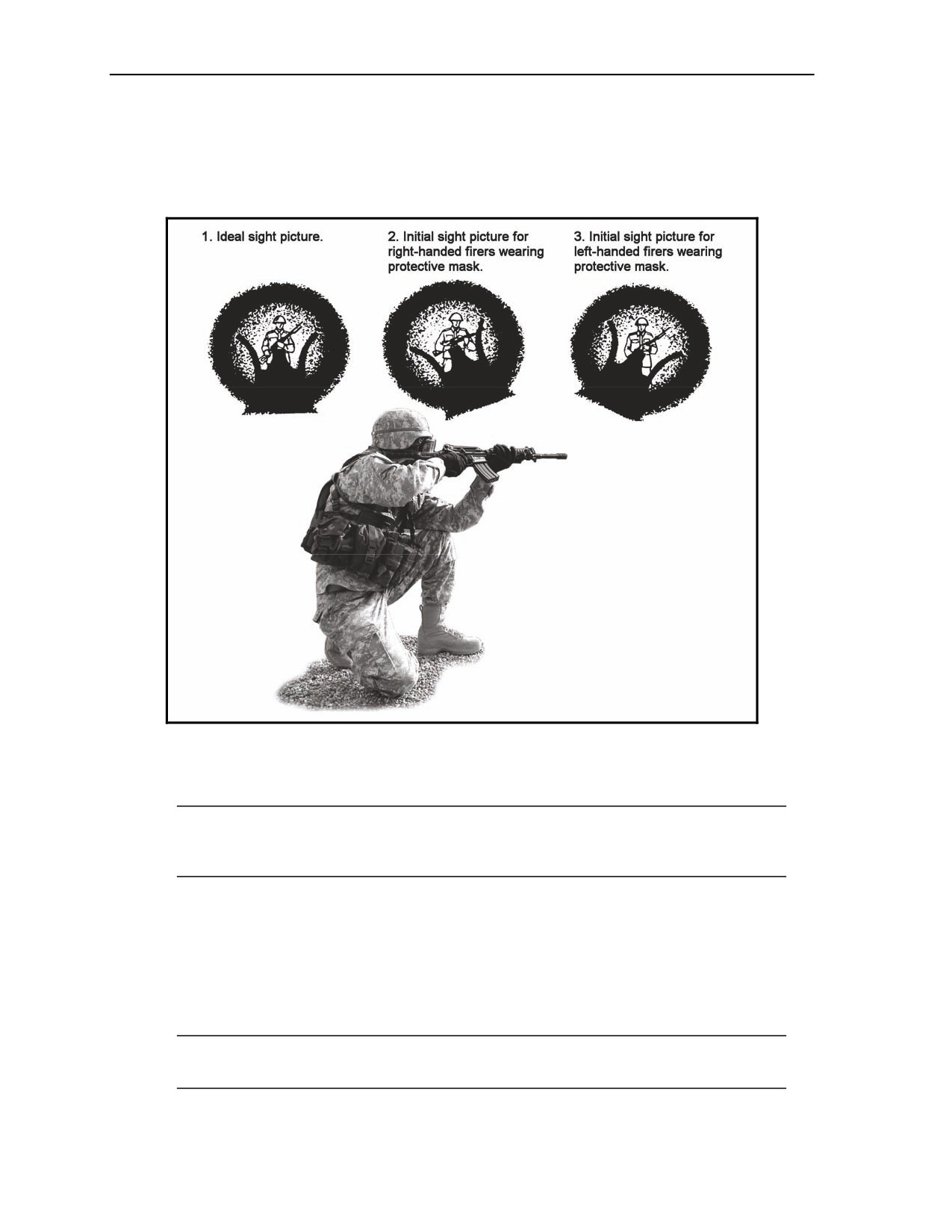
Chapter 7
Ideal Aiming Procedure
7-103. To perform the ideal aiming procedure—
(1) Rotate the weapon as little possible to see through and line up the sights.
(2) Place the center tip of the front sightpost on the ideal point of aim.
Figure 7-11. Sight picture when canting the rifle while
wearing a protective mask (75-meter target).
Canted Sight Picture
NOTE: The normal amount of cant has a limited influence on rounds fired at ranges of
75 meters or less. Rifle ballistics cause the strike of the bullet to impact low in the direction of
the cant at longer ranges.
7-104. Due to a shift in bullet strike and the many individual differences in sight alignment when wearing
a protective mask, it is important to conduct downrange feedback training at ranges beyond 75 meters on
KD ranges. This allows Soldiers to determine the aiming adjustments needed to hit the center of the target.
7-105. Figure 7-12 shows what might be expected for a right-handed firer engaging a target at 175 meters
with a certain amount of cant; it depicts the adjustment in point of aim needed to move the bullet strike to
the center of the target. Figure 7-13 shows what might be expected for a right-handed firer engaging a
300-meter target.
NOTE: The adjustments in point of aim for left-handed firers are the opposite of those shown in
Figures 7-12 and 7-13.
7-26
FM 3-22.9
12 August 2008
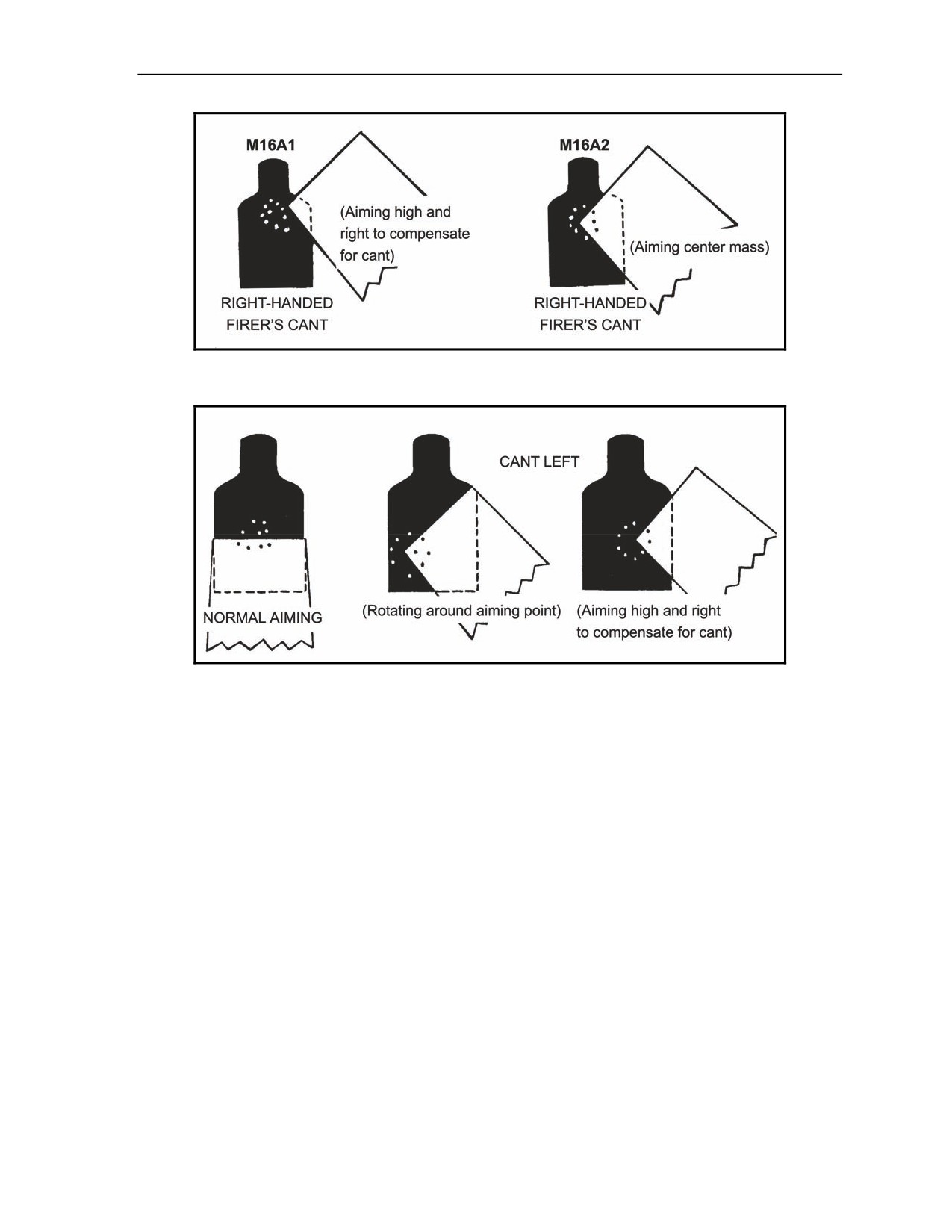
Advanced Rifle Marksmanship
Figure 7-12. Engagement of 175-meter target.
Figure 7-13. Engagement of 300-meter target.
7-106. Although bullet strike is displaced when using a cant, individual differences vary; center-of-mass
aiming should be used until the individual knows what aiming adjustment is needed. When distant targets
are missed, a right-handed firer should usually adjust his point of aim to the right and high; a left-handed
firer should adjust to the left and high. Actual displacement of the point of aim must be determined by
using downrange feedback targets positioned more than 75 meters from the firer.
Breath Control
7-107. Moving when encumbered by MOPP equipment requires more physical effort, and breathing is
restricted while wearing the protective mask. Physical exertion can produce labored breathing and make
settling into a normal breathing rhythm much more difficult, which, in turn, can increase the breath rate. All
of these factors make holding and controlling the breath to produce a well-aimed shot more energy- and
time-consuming. Emphasis must be placed on rapid target engagement during the limited amount of time a
firer can control his breath.
Trigger Squeeze
7-108. Consider the following modifications:
z
MOPP gloves complicate the act of grasping the pistol grip and squeezing the trigger with the
index finger. The action of the trigger finger is restricted, and the fit of the glove may require the
release of the swing-down trigger guard.
z
Because the trigger feels different, control differs from that used in barehanded firing. This
difference cannot be accurately predicted.
12 August 2008
FM 3-22.9
7-27

Chapter 7
7-109. Dry-fire training using dime/washer exercises or simulators such as the EST 2000 or LMTS may
be necessary to ensure that the firer knows the changes he will encounter during live-fire.
MISSION-ORIENTED PROTECTIVE POSTURE EQUIPMENT TRAINING
7-110. Repeated dry-fire training and LFXs are the most efficient means to prepare a Soldier wearing
MOPP Level 4 equipment for successful target engagements at any range. The Soldier must follow these
procedures and applications to be combat-effective in a CBRN environment.
Conduct
NOTE: See Table 7-9 for the current training program.
Table 7-9. Chemical, Biological, Radiological, and Nuclear fire training program.
CBRN FIRE TRAINING PROGRAM
Instructional Intent
•
Develop the Soldier’s confidence and ability to engage targets while wearing any level of MOPP equipment.
Special Instructions
Ensure that—
•
The M16A2/A3/A4 rifle's or M4 carbine’s rear sight is set on the 0-2 aperture.
•
The M16A1's rear sight is set on the unmarked aperture.
•
Soldiers have inserted lenses before firing, if required.
•
Soldiers have a proper seal on the mask to prevent fogging and loss of visibility.
•
Each Soldier is issued 20 rounds of ammunition to be loaded in two magazines (10/10).
•
Each Soldier engages 20 targets at 50 meters.
•
Target exposures consist of 10 from the right and 10 from the left from the foxhole supported firing position
using Table 1 of the Record Fire Qualification firing table (DA Form 3595-R).
Observables
•
Each Soldier obtains 11 hits out of 20 target exposures.
Dry-Fire Exercises
7-111. As with all marksmanship training, Soldiers must start at the basics in order to become proficient
at CBRN fire. Modified fundamentals can be taught anywhere, and Soldiers must learn them before
participating in an LFX. The dry-fire exercises used during CBRN training are the same as those used
during initial rifle marksmanship (dime/washer exercise, target box, SPORTS, EST 2000, and LMTS).
Soldiers can also practice by using MILES equipment during force-on-force training.
NOTE: Soldiers should wear MOPP Level 4 when participating in dry-fire exercises; training
at the highest degraded level allows Soldiers to adjust their shooting technique to increase their
marksmanship ability in a CBRN environment.
Downrange Feedback
7-112. CBRN downrange feedback gives Soldiers the confidence, knowledge, and skills required to
consistently deliver accurate, well-aimed fire against combat targets as far away as 300 meters. On a KD
range, the Soldier will perform the following scenario:
z
The Soldier will be issued six magazines.
The first and second magazine will have 5 rounds each.
The third and fourth magazine will have 10 rounds each.
The fifth and sixth magazine will have 5 rounds each.
7-28
FM 3-22.9
12 August 2008
Advanced Rifle Marksmanship
z
The Soldier engages the appropriate targets.
The Soldier engages the 75-meter target with the first and second 5-round magazine from
the foxhole, standing, or kneeling supported position.
The Soldier engages the 175-meter target with both 10-round magazines from the foxhole,
standing, or kneeling supported firing position.
The Soldier engages the 300-meter target with the remaining two 5-round magazine from
the foxhole, standing, or kneeling supported firing position.
z
In order to receive a GO, the Soldier must obtain a minimum of—
8 hits out of 10 shots on the 75-meter target.
14 hits out of 20 shots on the 175-meter target.
5 hits out of 10 shots on the 300-meter target.
NOTES:
1. DA Form 5789-R is used to record the firer's results.
2. Soldiers can use ammunition allocated by DA PAM 350-38 for advanced skill
training for the CBRN downrange feedback scenario.
50-Meter Live-Fire Exercise
7-113. The basic CBRN LFX allows all Soldiers to gain confidence in their CBRN firing abilities.
Practice and proficiency firing can be conducted on any range; however, when a Remote Electronic Target
System (RETS) range is used for this exercise, the two 50-meter mechanisms are used. For CBRN LFXs,
Soldiers perform the following scenario.
z
Each Soldier is issued 20 rounds of ammunition to be loaded in two 10-round magazines.
z
On the command “GAS-GAS-GAS,” each Soldier engages twenty 50-meter targets. Target
exposures consist of 10 from the right and 10 from the left from the foxhole supported or the
kneeling firing position.
z
Each Soldier must achieve 11 hits out of 20 target exposures.
z
This is a GO/NO GO exercise.
Alternate Fire Exercise
7-114. The CBRN alternate fire course uses the
25-meter scaled silhouette timed-fire target. This
silhouette can be used on any 25-meter range, and the target provides feedback to the firer on where the
strike of the round impacts the target. This exercise is conducted in the same manner as the 25-meter
alternate course record fire.
z
Each Soldier will be in MOPP Level 4.
z
Each Soldier will be issued 20 rounds of ammunition to be loaded two 10-round magazines.
z
Each Soldier will engage each silhouette with two rounds from the foxhole supported or
kneeling position using Table I of DA Form 5790-R.
z
Each Soldier must achieve 11 hits out of 20 shots.
z
This is a GO/NO GO exercise.
NOTE: At the commander’s discretion, Table II of DA Form 3595-R may be used as an
alternate course of fire. This table allows Soldiers to engage targets from 50 to 300 meters.
12 August 2008
FM 3-22.9
7-29