FM 4-01.30 MOVEMENT CONTROL (SEPTEMBER 2003) - page 4
FM 4-01.30 ______________________________________________________________________________________ Appendix B
Appendix B
Geographical Considerations
B-1. This appendix contains general descriptive information relating to some of the unified
commands and a generic description of theater movement control organizations. Even as the Army
is going through a transformation, changes are being made among the unified and specified
command structure. What is depicted here is current or forecast as of the publication date of this
field manual.
UNITED STATES CENTRAL COMMAND (USCENTCOM)
Area of Responsibility (AOR)
B-2. The southwest Asia region is a diverse and tumultuous area. The population is over 316 million
with 17 different ethnic groups, 420 major tribal groupings, six major language groupings, hundreds
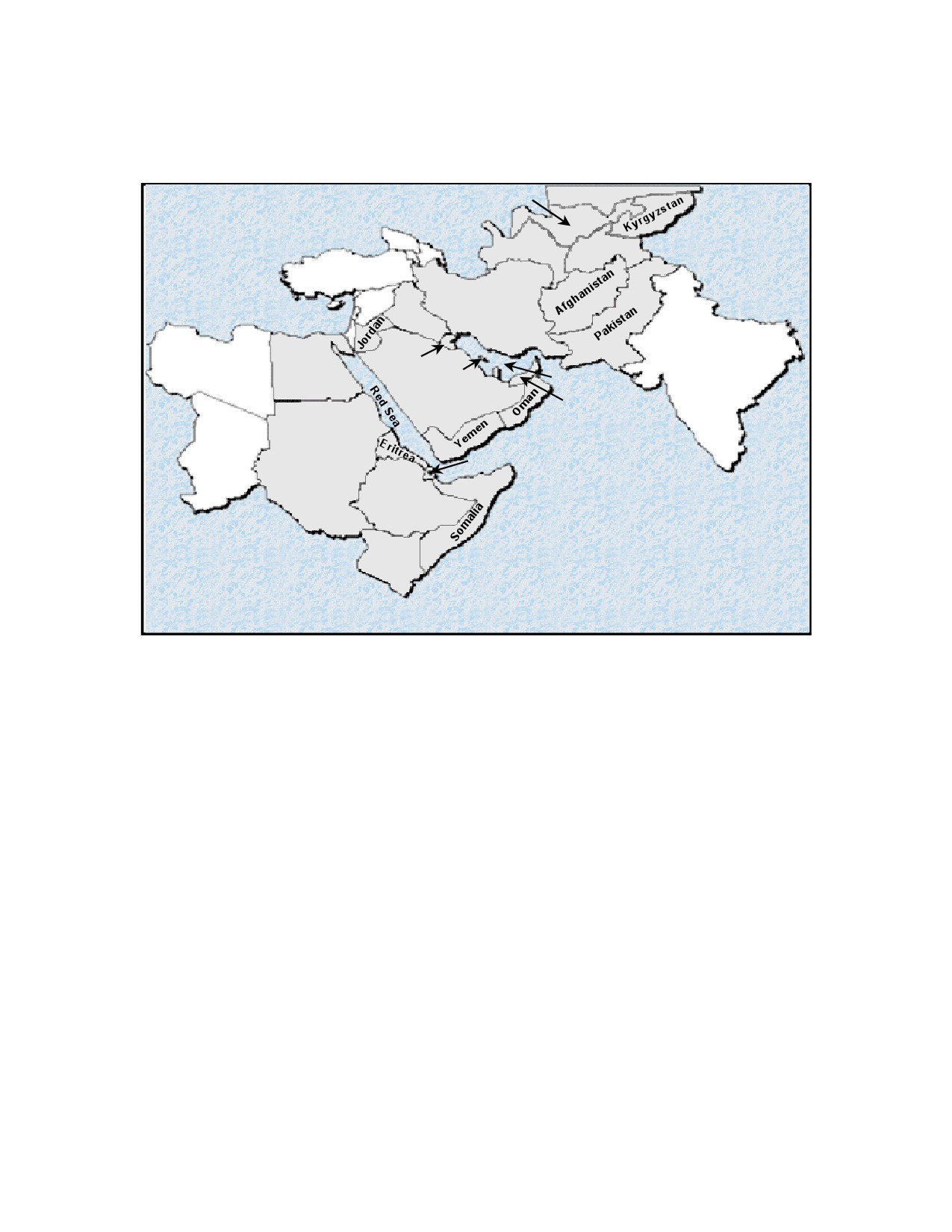
of dialects, and three major religions. The command’s AOR (figure B-1) begins in the east with
Pakistan and includes, among others, Afghanistan, Iran, Iraq, and Jordan on the Asian continent, the
entire Arabian peninsula, and west to Egypt, Sudan, Ethiopia, Djibouti, Somalia, Eritrea, and Kenya
on the African continent. It includes the waters of the Red Sea and Persian Gulf.
B-3. Host nation support (HNS) ranges from good to nonexistent, depending on the specific
country involved. HNS in Saudi Arabia, Egypt, and Kuwait is good. Civilian contracted assets or
LOGCAP support are frequently used to augment military assets. Lines of communication (LOC)
vary from the few regularly used in support of pre-positioned supplies, equipment, and personnel; to
those used periodically for exercises; to those identified but not used because of political or other
considerations.
B-4. US forces apportioned to USCENTCOM are both forward-deployed and Continental United
States (CONUS) based forces. In terms of numbers, there are few permanently forward-deployed
Army forces in the area. However, permanent forward-deployed Army, Air Force, and Navy
organizations are present in the region. As this is written, forces from all four Services are engaged
in Afghanistan and Pakistan, among other countries in the AOR.
USCENTCOM Command Relationships
B-5. Headquarters, USCENTCOM is located at McDill AFB, Florida, but is planning a permanent
move to a location in the AOR. Headquarters, Third US Army (TUSA), located at Fort McPherson,
Georgia, is the headquarters of the Army component command for USCENTCOM.
(The Army
component is referred to as ARCENT.) It provides planning guidance for Army units that would be
deployed in contingencies and for those already deployed.
B-1
FM 4-01.30 ______________________________________________________________________________________ Appendix B
Uzbekistan
Kazakhstan
Caspian
Tajkistan
Sea
Turkmenistan
Iran
Iraq
Kuwait
Egypt
Bahrain
Qatar
Persian Gulf
Saudi Arabia
United Arab
Emirates
Sudan
Djibouti
Ethiopia
Kenya
Seychelles
Figure B-1. USCENTCOM AOR
UNITED STATES EUROPEAN COMMAND (USEUCOM)
Area of Responsibility
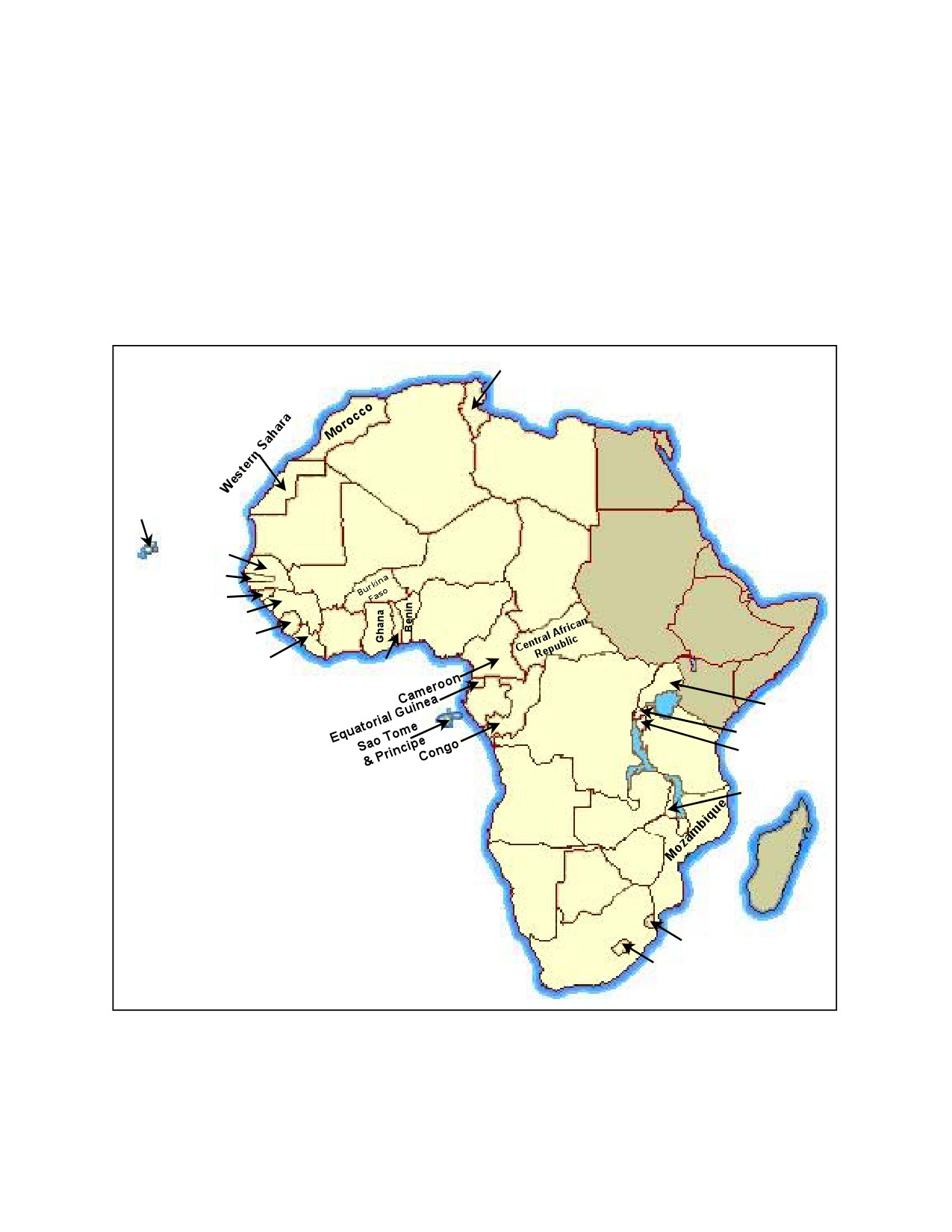
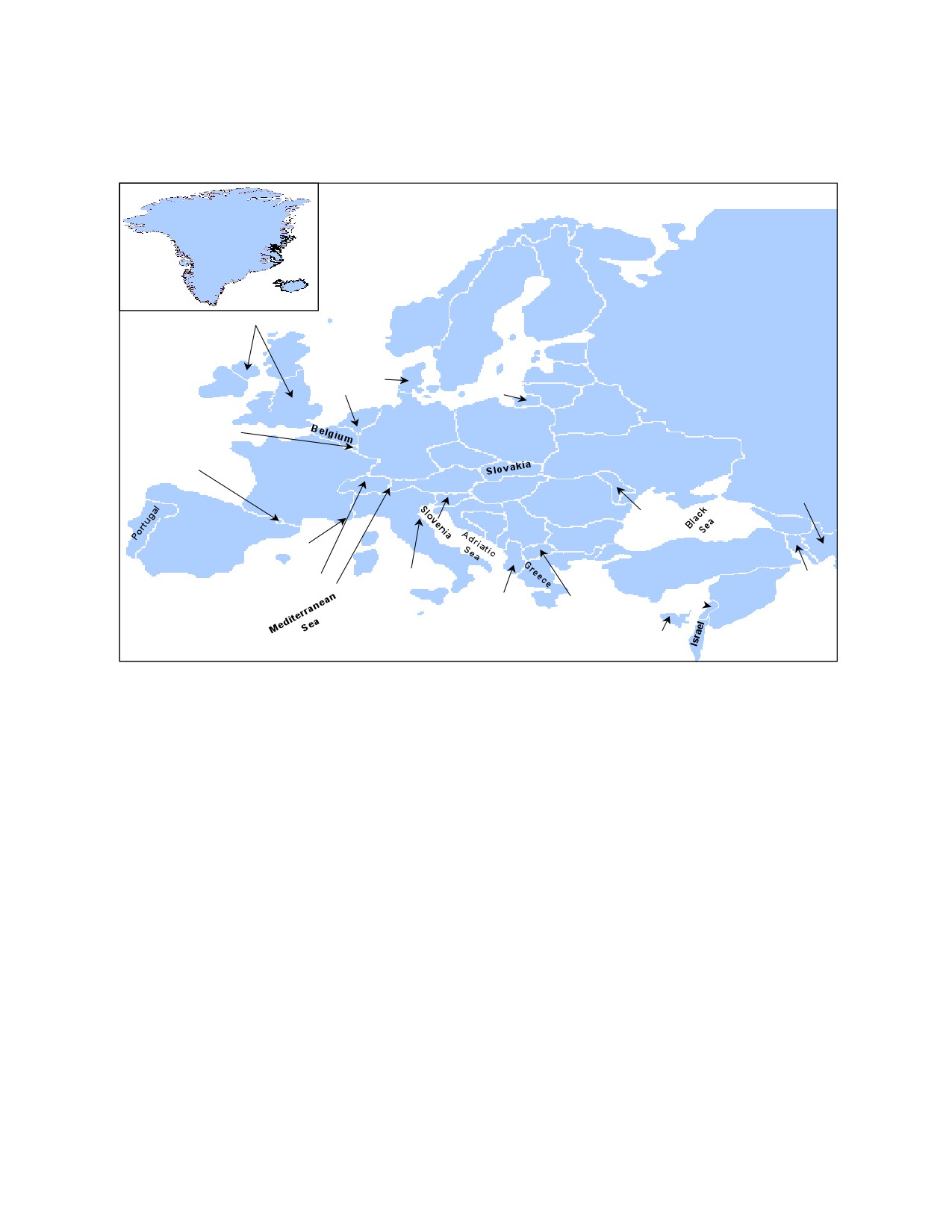
B-6. The USEUCOM AOR (figures B-2, B-3) is vast and diverse. It encompasses 30 million square
miles, extends from the northern tip of Russia to the southern tip of Africa (less the African area
assigned to USCENTCOM), and from Portugal in the west of Europe to Azerbaijan on the Asian
continent in the east. This array includes 91 countries and territories. This territory extends out to
the waters of the Atlantic Ocean from 500 miles off the U.S. east coast, and includes the Baltic,
Adriatic, Black, and Mediterranean Seas, most of Europe, most of Africa, and very significant
countries of the Middle East (Israel, Syria, and Lebanon).
(USPACOM assists with eastern areas of
Russia.) The USEUCOM AOR is an extremely complex one.
B-7. USEUCOM HNS ranges from the very good to the nonexistent, depending on the specific
country involved. The NATO countries (and European countries in general) offer excellent HNS,
whereas most of the African countries, for example, vary from good to non-existent. LOCs vary
from the few regularly used; to those used periodically for exercises; to those identified but not used
because of political or other considerations..
B-8. US forces apportioned to USEUCOM include both forward-deployed and CONUS-based
forces. Those forward-deployed consist mainly of US Army Europe (USAREUR) and US Air Force
in Europe (USAFE) command elements.
B-2
FM 4-01.30 ______________________________________________________________________________________ Appendix B
USEUCOM Command Relationships
B-9. Headquarters USEUCOM is located in Stuttgart, Germany. USAREUR is the Army
component of USEUCOM and is headquartered in Heidelberg, Germany. HQ, USAREUR provides
planning guidance for Army units that would be deployed in contingencies and for those already
deployed.
Tunisia
Algeria
Libya
Cape
Verde
Mauritania
Mali
Niger
Senegal
Chad
Gambia
Guinea Bissau
Guinea
Nigeria
Cote
Sierra Leonne
D’Ivoire
Liberia
Togo
Gabon
Democratic
Uganda
Republic
Rwanda
of the Congo
Burundi
Tanzania
Malawi
Angola
Zambia
Zimbabwe
Namibia
Botswana
South
Swaziland
Africa
Lesotho
Figure B-2. USEUCOM Africa AOR
B-3
FM 4-01.30 ______________________________________________________________________________________ Appendix B
Greenland
Iceland
Finland
United Kingdom
Norway
Swedan
Russia
Estonia
Baltic
Sea
Denmark
Latvia
Ireland
Netherlands
Russia
Lithuania
Belarus
Luxembourg
Germany
Poland
Czech
Rep
Ukraine
Andorra
France
Austria
Hungary
Azerbaijan
Croatia
Romania
Italy
Bosnia
Moldova
Georgia
Serbia
Bulgaria
Spain
Monaco
Turkey
San Marino
Switzerland
Armeria
Liechtenstein
Syria
Albania
Lebanon
Macedonia
Malta
Cyprus
Figure B-3. USEUCOM Europe and Middle East AOR
UNITED STATES PACIFIC COMMAND (USPACOM)
Area of Responsibility
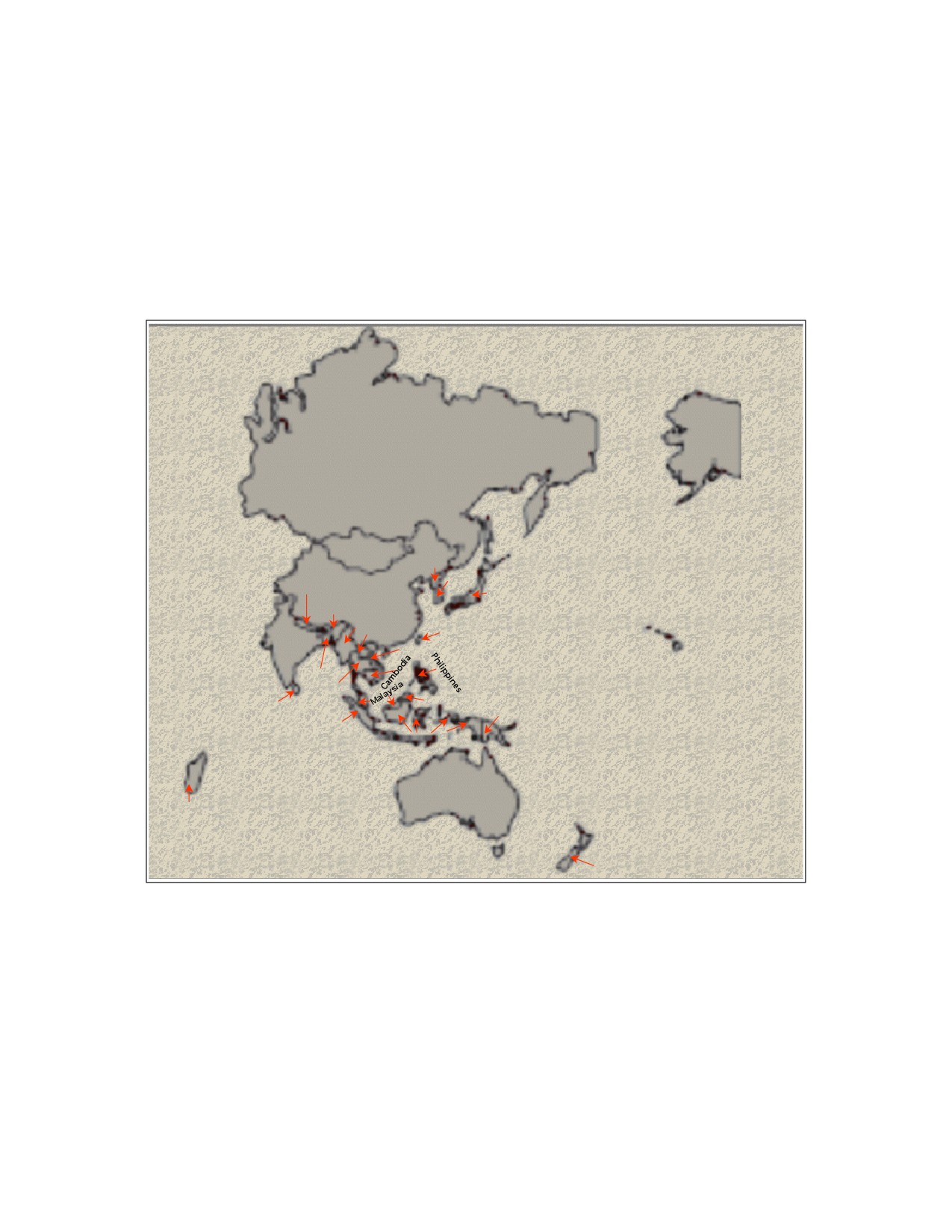
B-10. The USPACOM AOR is huge, complex, and unique because of its vast water areas. It
encompasses 105 million square miles, extends in the east from Madagascar (east of Mozambique) in
the Indian Ocean to Samoa in Oceania in the west, and includes Asia. It also runs from the northern
tips of Mongolia and China to the southern tip of New Zealand. USPACOM also includes Hawaii
and Alaska (see Figure B-4). It is an extremely diverse AOR.
B-11. USPACOM HNS a wide range from good to nonexistent, depending on the specific country
involved. LOCs vary from the few regularly used; to those used periodically for exercises; to those
identified but not used because of political or other considerations.
B-12. US forces apportioned to USPACOM include both forward-deployed and CONUS-based forces.
Those USPACOM forces deployed forward consist of US Forces Japan (USFJ), US Forces Korea
(USFK), Alaskan Command (ALCOM), Special Operations Command, Pacific (SOCPAC), US Army
Pacific (USARPAC), US Pacific Fleet (PACFLT), Marine Forces, Pacific (MARFORCENT), and Fleet
Marine Forces, Pacific (FMFPAC). Even though Alaska is part of USNORTHCOM, US forces there are
commanded by USPACOM.
B-4
FM 4-01.30 ______________________________________________________________________________________ Appendix B
USPACOM COMMAND RELATIONSHIPS
B-13. HQ, USPACOM is located in Hawaii, as is headquarters, USARPAC. The Army component
command for USPACOM is USARPAC, which provides planning guidance for Army units that
would be deployed in contingencies and for those already deployed.
Alaska
Russia
Mongolia
North
Korea
South
Nepal
Korea Japan
China
Bhutan
Burma
Hawaii
Laos
Taiwan
India
Vietnam
Marshall
Federated States of
Islands
Bangladesh
Micronesia
Thailand
Palau
Brunei
Sri Lanka
Papua
Maldives
New Guinea
Singapore
Naura
Kiribati
Comoros
Indonesia
Solomon
Tuvalu
Islands
Cook Islands
Mauritius
Samoa
Australia
Vanuatu
Fiji
Madagascar
Niue
New
Tonga
Caledonia
New Zealand
Figure B-4. USPACOM AOR
B-5
FM 4-01.30 ______________________________________________________________________________________ Appendix B
UNITED STATES SOUTHERN COMMAND (USSOUTHCOM)
Area of Responsibility
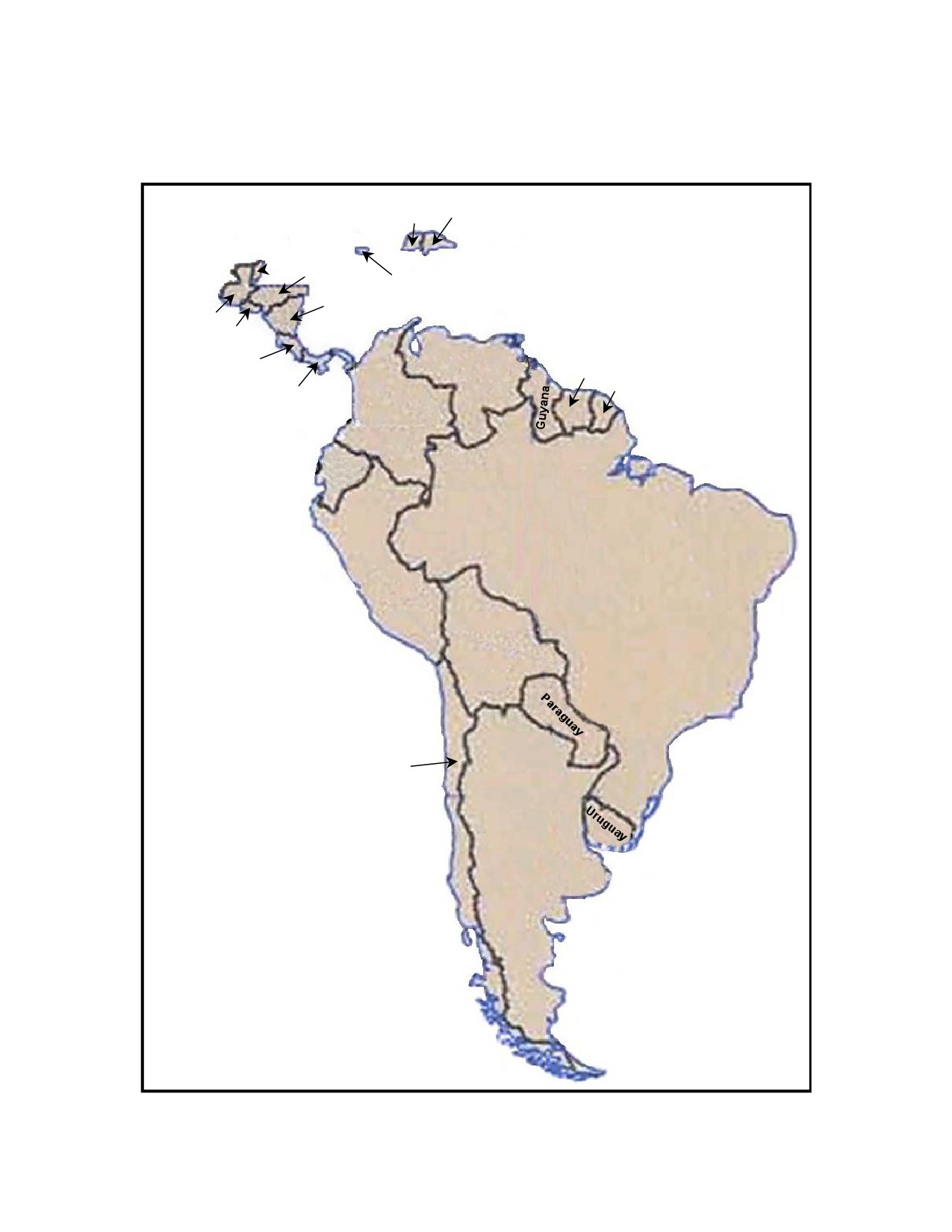
B-14. The USSOUTHCOM AOR is diverse (see Figure B-5). The USSOUTHCOM AOR includes
the land mass of Latin America south of Mexico; the waters adjacent to Central and South America;
the Caribbean Sea, its 13 island nations (less those assigned to USNORTHCOM), European and U.S.
territories; the Gulf of Mexico; and a portion of the Atlantic Ocean. It encompasses 32 countries (19
in Central and South America and 13 in the Caribbean) and covers about 15.6 million square miles.
The region represents about one-sixth of the landmass of the world assigned to regional unified
commands.
B-15. Unlike some other unified commands, USSOUTHCOM HNS potential ranges only from
poor to nonexistent, depending on the specific country involved. The region is generally poor, and
with few exceptions, the U.S. has no significant HN agreements in the area, because few U.S forces
are forward-deployed there. LOCs vary from the few regularly used; to those used periodically for
exercises; to those identified but not used because of political or other considerations..
B-16. US forces apportioned to USSOUTHCOM include both temporarily deployed and CONUS
based forces. Those consist mainly of US Army South (USARSO) and US South Air Force
(USSOUTHAF) command missions.
B-6
FM 4-01.30 ______________________________________________________________________________________ Appendix B
Dominican
Republic
British Virgin
Haiti
Islands
US Virgin
Islands
Anguilla
St. Kitts/Nevis
Belize
Antiqua
Honduras
Guadeloupe
Jamaica
Dominica
Martinique
Nicaragua
Aruba
St. Lucia
Guatemala
St. Vincent
Barbados
El Salvador
Grenada
Trinidad
Costa Rica
Venezuela
Suriname
French Guiana
Panama
Colombia
Ecuador
Peru
Brazil
Bolivia
Chile
Argentina
Figure B-5. USSOUTHCOM AOR
B-7
FM 4-01.30 ______________________________________________________________________________________ Appendix B
USSOUTHCOM Command Relationships
B-17. Headquarters, USSOUTHCOM is located in Miami, Florida. US Army South (USARSO) has
its headquarters at Fort Buchanan, Puerto Rico and is the Army component command for
USSOUTHCOM. It provides planning guidance for Army units that would be deployed in
contingencies and for those that are already deployed.
UNITED STATES NORTHERN COMMAND (USNORTHCOM)
Area of Responsibility
NOTE: On 17 April 2002, U.S. Secretary of Defense Donald Rumsfeld formally announced the establishment of the U.S.
Northern Command, with the primary missions of homeland and continental security. It will be formally established on 1
October 2002.
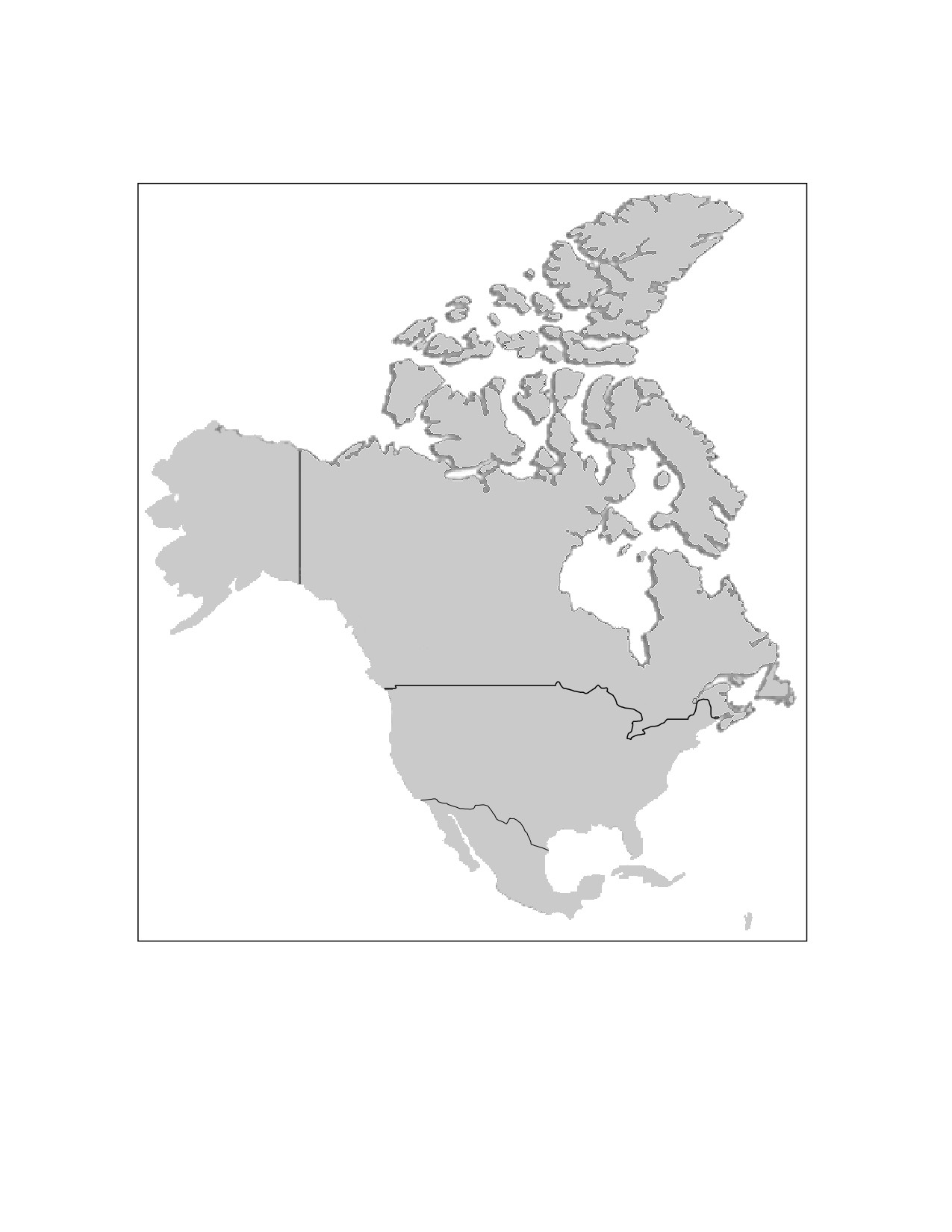
B-18. The USNORTHCOM AOR (see Figure B-6) is unique because it includes homeland defense.
The USNORTHCOM AOR includes the land mass of North America north of Guatemala to
Ellesmere Island in the Arctic Ocean; island territories of Puerto Rico and Bermuda; nations of Cuba
and The Bahamas; the waters adjacent to North America; the Gulf of Mexico; and a portion of the
Atlantic and Pacific Oceans. It encompasses five countries (United States, Canada, Mexico, Cuba,
The Bahamas), island territories in the Caribbean not covered by USSOUTHCOM, and includes
assisting USEUCOM with the eastern areas of Russia.
B-19. USNORTHCOM HNS potential ranges from very good to nonexistent, depending on the
specific country involved. LOCs also vary from the few regularly used; to those used periodically for
exercises; to those identified but not used due to political or other considerations. USNORTHCOM
is different from other unified commands in that it includes the continental United States. It is
responsible for homeland defense on the ground, the sea, as well as aerospace defense (North
American Aerospace Command — a U.S. and Canada command). In this regard, the command is
responsible for forces that operate in the continental US in support of civil authorities in cases of
attack and natural disaster.
B-20. US forces apportioned to USNORTHCOM include CONUS based forces and forces in Cuba.
However, while Alaska will fall under USNORTHCOM, forces stationed there will remain under
USPACOM command.
USNORTHCOM Command Relationships
B-21.
USNORTHCOM is planned to be headquartered at Petersen AFB, Colorado.
USAFORSCOM headquartered at Fort McPherson, Georgia is the Army component command for
USNORTHCOM. It provides planning guidance for Army units that could be deployed in
prosecution of the varied missions of USNORTHCOM.
B-8
FM 4-01.30 ______________________________________________________________________________________ Appendix B
Ellesmere
Island
Devon Island
Baffin Bay
Baffin
Victoria
Island
Island
Alaska
Labrador
Canada
Hudson
Sea
Bay
Gulf of Alaska
United States
Gulf of
Bahamas
Mexico
Mexico
Cuba
Puerto Rico
Figure B-6. NORTHCOM AOR
B-9

FM 4-01.30 ______________________________________________________________________________________ Appendix C
Appendix C
Automated Identification Technology (AIT) Equipment
C-1. The purpose of this chapter is to describe the automated identification technology (AIT)
equipment, hardware, and technology, as it pertains to transportation purposes. For explanation of
the functional application of the technology, see Chapter 11 of this FM.
AIT DATA STORAGE DEVICES
C-2. The essence of AIT is the storage of information of some kind in a device that accepts the
storage in some coded form that can be retrieved by being read, either by scanning or interrogation.
The device is handcarried by personnel or attached in some way to equipment and containers. There
are four basic components of AIT:
• An automated identification data storage device, (e.g., bar code label, optical memory card
[OMC], Smart Card, radio frequency identification [RFID] tag, or contact memory button
[CMB]).
• AIT hardware used to write information onto the data storage devices and later, read the
data from the devices.
• Automation information systems (AISs) that can receive and use AIT data.
• A reliable communications infrastructure that links the AIT hardware to the AISs and
further links the AISs to global in-transit and total asset visibility (TAV) systems.
Bar Coded Data
C-3. Department of Defense (DOD) and the Army use two types of bar codes, linear and two-
dimensional. All logistics nodes are to read and write both types. Each node of the DOD
transportation system, including commercial vendors, read and write linear and two-dimensional bar
coded shipping labels that contain both transportation and supply information. Reader equipment
scans the bar code, decodes it, and transfers the data to a supporting AIS.
Linear Bar Code
C-4. The linear bar code provides item identification and document control information for
individual items and shipments. Linear bar codes have limited storage capacity, normally consisting
of about 20 characters. The commercial automated identification manufacturer’s BC-1 (Code 39),
the standard for linear bar codes, is used throughout DOD. Linear bar codes are used to represent
essential data elements (e.g., a national stock number, document number, or transportation control
number). Figure C-1 shows an example of linear bar code.
C-1
FM 4-01.30 ______________________________________________________________________________________ Appendix C
Figure C-1. Linear Bar Code (example)
Two Dimensional (2D) Bar Code
C-5. A 2D bar code has a much greater data storage capacity than a linear bar code. It is currently
capable of holding 1,850 characters. A 2D bar code can sustain considerable damage and still be read
because of the redundancy of data within the bar code. The DOD standard 2D bar code is the
commercial standard Portable Data File
417
(PDF
417).
The
2D symbology provides
comprehensive data on documents, individual items or shipments, and consolidation data on multi-
packs and air pallets. Figure C-2 shows an example of a 2D bar code matrix.
Figure C-2. Two Dimensional Bar Code (example)
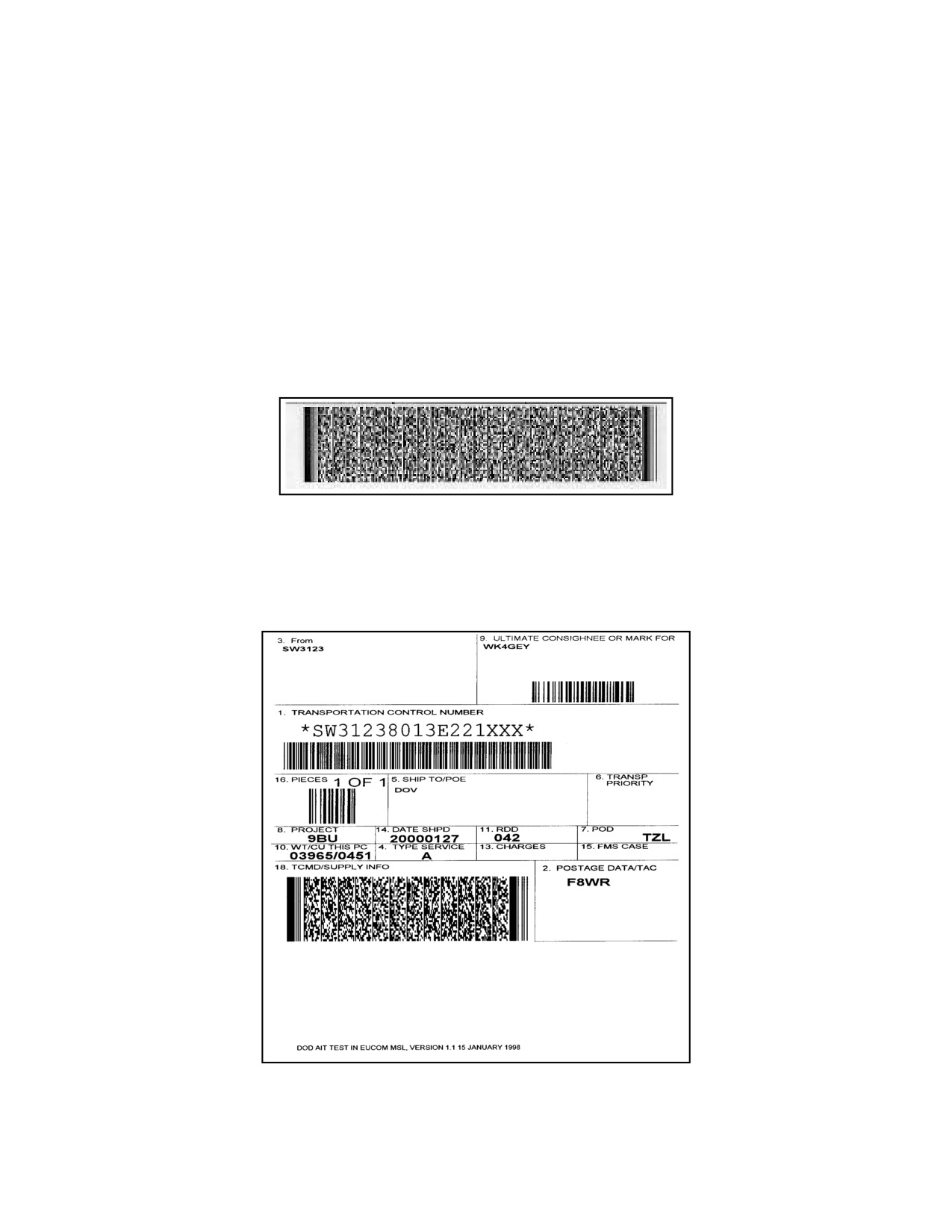
C-6. Military shipping labels (MSLs) incorporate 2D bar code fields as well as linear bar codes.
Figure C-3 shows an example of an MSL with linear bar codes used in blocks 1, 9 and 16 and 2D bar
code technology being used in block 18.
Figure C-3. MSL Using Both 2D and Linear Bar Code (example)
C-2
FM 4-01.30 ______________________________________________________________________________________ Appendix C
Optical Memory Card (OMC)
C-7. An OMC uses compact disk technology. Data is etched to the card with a high-intensity laser
creating a series of pits in the card. A low-power light beam is used to read the pits and collect the
data. Data is written to an OMC in sequential order. As changes occur, all the shipment data is
rewritten on the card (data on the card cannot be over-written). The card can be reused until all
available memory space is filled. The OMC has a very large data capacity (2.4 megabytes), and DOD
accepts the Drexler European License Association (DELA) standard format. OMCs are relatively
inexpensive, reusable, and unaffected by climatic changes. They are best used to carry large amounts
of shipment data to facilitate receipt processing at final destination.
C-8. OMCs are normally used for sustainment cargo that is being containerized. Army supply
practices strive to create single consignee packs that can be throughput to the end user’s location.
C-9. OMCs can also be used to support container movement in a unit movement operation. OMCs
can be used to account for detailed container and pallet content. The UMO uses the TC-AIMS II
hand held reader to scan bar codes as items are packed into the container. Once the container is
loaded, the UMO coordinates to produce OMCs for containers, using the supporting TC-AIMS II
system.
(This scenario would require advance coordination with intermediate and destination nodes,
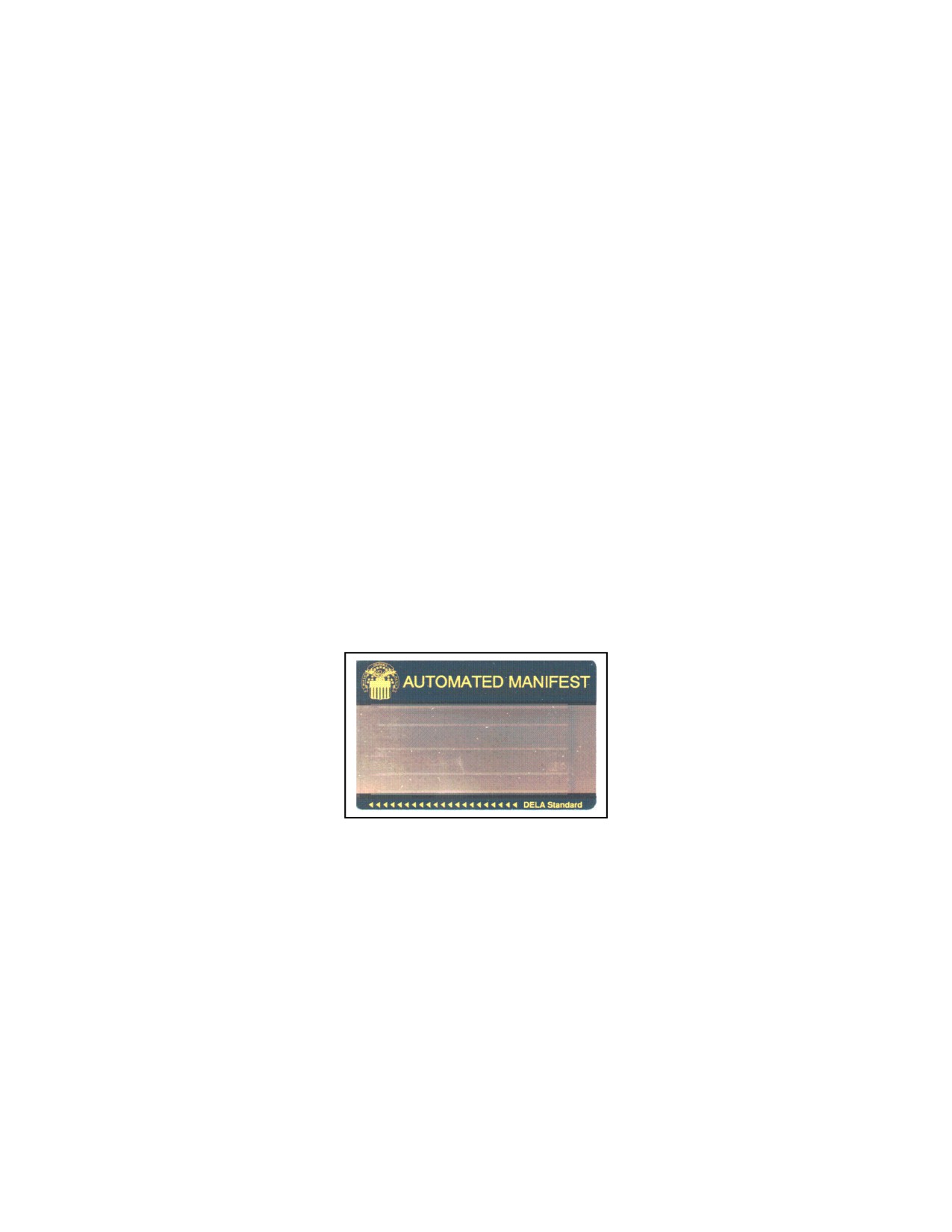
as OMC use for unit packed containers is not a normal business practice.) Figure C-4 shows an
example of an OMC.
Figure C-4. OMC (example)
Smart Cards (also known as Common Access Cards)
C-10. A Smart Card is a plastic card similar in shape to a credit card. Unlike a credit card, the Smart
Card contains an integrated circuit chip with an 8-bit embedded microprocessor and 1 to 8 kilobyte
memory capacities. Smart Cards may also contain one or more other methods (i.e., magnetic strip,
bar code, digitized photo, printed information) for storing information related to the cardholder.
Newer cards will have 16 and 32-bit microprocessors and a data storage capacity between 16 and 32
kilobytes. In addition to memory capacity, Smart Cards can contain security measures such as
personal identification numbers, passwords, encrypted data, photos, or thumb print technology.
Figure C-5 depicts a sample Smart Card.
C-3

FM 4-01.30 ______________________________________________________________________________________ Appendix C
Figure C-5. Smart Card (sample)
Radio Frequency Identification (RFID) Technology
C-11. RFID is used to provide automated data capture of movements at transportation nodes.
RFID also provides commanders container or pallet content visibility and can be used to locate
tagged items in congested ports, container yards, or staging areas.
C-12. RFID tags contain a microchip, a long life battery, and an RFID transceiver. The microchip
contains unique tag identification information and can be loaded with data to identify the items
traveling with the tag. RFID write stations are used at the point of origin to write supply and
transportation data to the tag and to report the same information to a central database. As the tag
passes an interrogator during movement, the tag responds by sending data to the interrogator. The
interrogator then passes this information and a date-time stamp to a supporting AIS or a regional in-
transit visibility (ITV) server. The interrogator can also be set to activate a tag beeper for all the tags
within its range, or activate a specific tag number. Using this option, operators can find specific tags
and associated equipment.
Types of Radio Frequency Tag
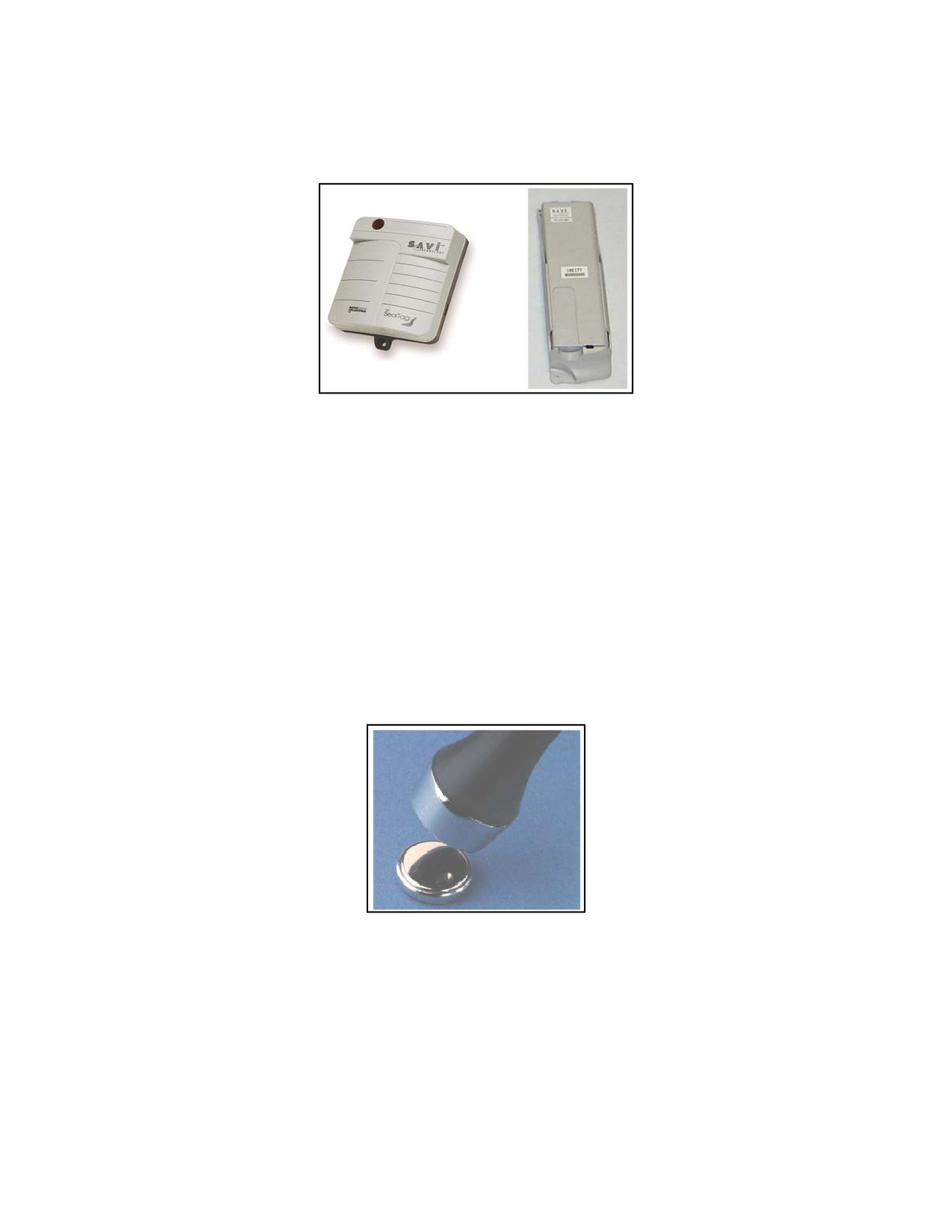
C-13. The Army is currently using two RFID tags, the older Seal Tag II and a newer Tag 410 (figure
C-6). Eventually the Army intends to transition to a single tag. Both tags hold data in the same
format and transmit the data on the same frequency. Each tag has a unique tag number, has a
“beeper” option, and can store up to 128 kilobytes of data. The tags have an omnidirectional
unobstructed range of approximately 300 feet. The battery life of the tag is approximately nine years,
based on two collections per day. Battery life is an important consideration and should be checked
closely when source data is written to the tag. The organization writing the tag should ensure that
low batteries are replaced. Additionally, the theater ITV plan will identify nodes in the force
projection process where the battery life should be checked and low batteries replaced. Battery life
can be checked by a fixed or handheld interrogator or by viewing the regional ITV server low battery
pages.
C-4
FM 4-01.30 ______________________________________________________________________________________ Appendix C
Figure C-6. RFID Tags.
Seal Tag II is on the left. Tag 410 is on the right.
Contact Memory Buttons (CMB)
C-14. CMBs are an AIT tool used by the Department of the Navy. The Naval Supply Systems
Command attaches the buttons to pieces of equipment to provide ready access to a component’s
maintenance history. The Army Logistics Integration Agency (LIA) and the Army maintenance
community are currently exploring using CMBs for similar purposes on Army equipment. A CMB is
a very small, fast, read-write data storage device impervious to the elements in most harsh operating
environments. It has a data storage capacity of between 128 and 32,000 bytes. A button does not
require a battery to retain its memory and has a life expectancy of 100 years or one million read-write
cycles. CMBs cannot be read remotely. Data is read from the button by touching a probe to the
outside of the container. CMBs can be read-only, write-once-read-many-times, or read/write to
allow updates. Figure C-7 shows a CMB and its probe.
Figure C-7. Contact Memory Button and Probe
AIT HARDWARE
C-15. AIT hardware consists of tools used by operators to write information to AIT data storage
devices, and to interrogate and read the data stored on the data storage device. Some of the tools
currently used by the Army are discussed in the following paragraphs.
C-5
FM 4-01.30 ______________________________________________________________________________________ Appendix C
RFID Write Station
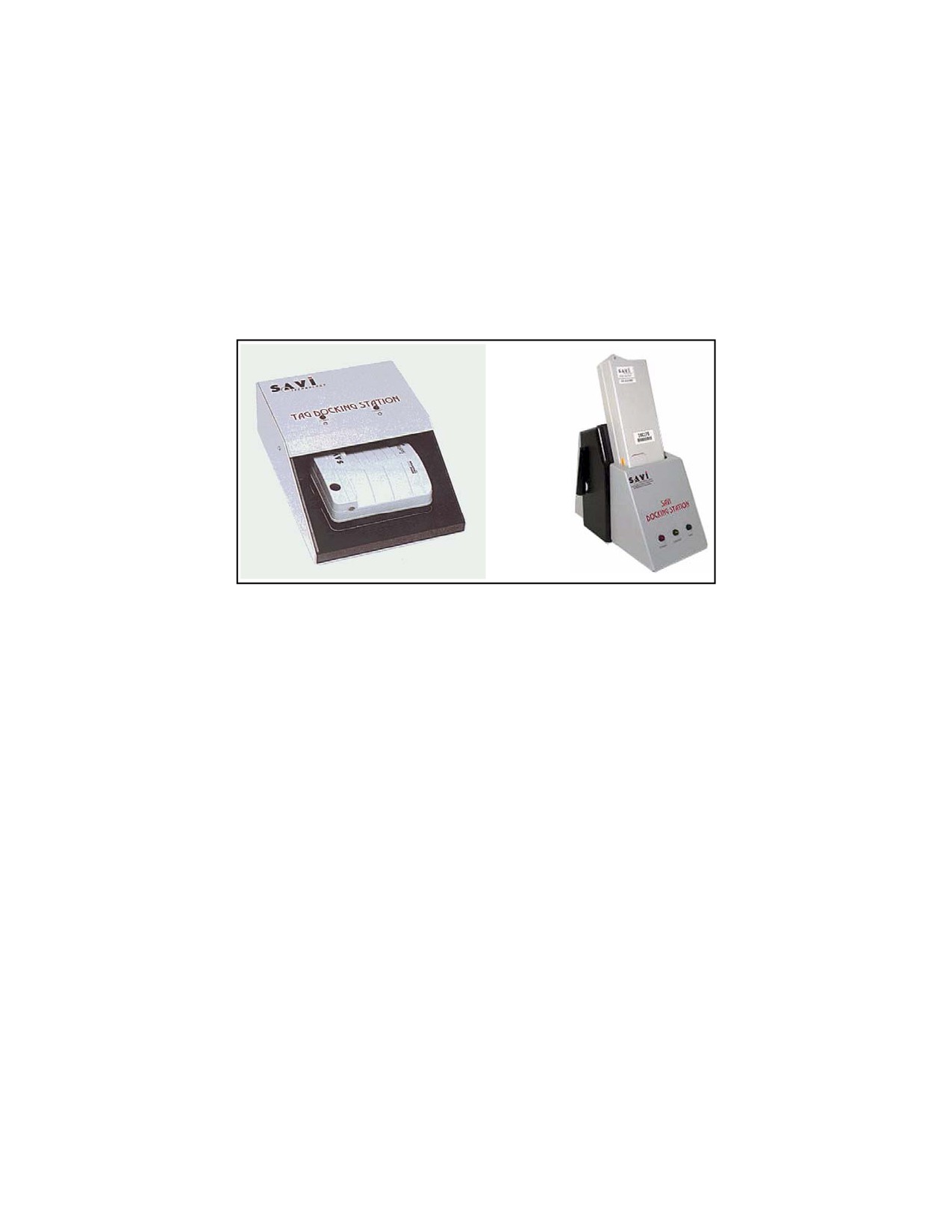
C-16. The RFID write station is a hardware interface unit called a tag docking station, which is
connected to an AIS. The tag docking station is used to write data to RFID tags, one tag at a time.
The tags are inserted into the docking station and data is transferred. Figure C-8 shows the docking
stations for the SealTag II and the Tag 410.
Figure C-8. RFID Tag Docking Stations
Seal Tag II is on the left. Tag 410 is on the right.
Fixed RFID Interrogator
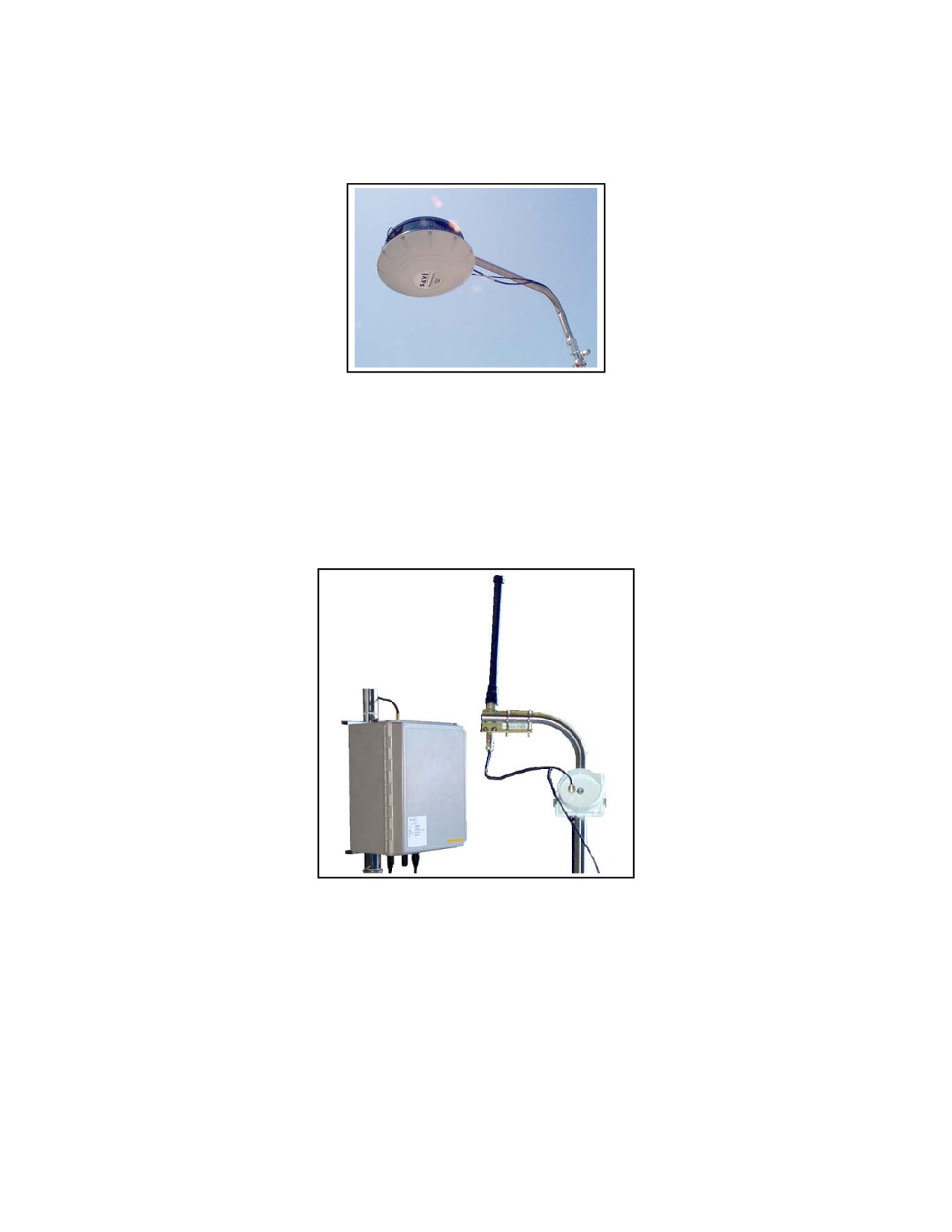
C-17. A fixed RFID interrogator transmits queries to and receives data from all active RFID tags in
its area. The maximum unobstructed radius is approximately 300 feet. The interrogator passes the
data to a computer that can update the appropriate AIS. The data is passed to regional ITV servers
and the Global Transportation Network (GTN) to provide in-transit and total asset visibility. Fixed
RFID interrogators are positioned permanently in warehouses, central receiving points, and at
selected points within transportation networks. The interrogator operates by sending a ‘wake-up’
signal to the RFID tag, which then transmits data back to the interrogator on a different frequency.
(In some configurations, such as a GateReader, a motion sensor is included to activate the
interrogator for data collection of tags on vehicles approaching the sensor). Fixed RFID
interrogators are also used to write data to tags. Although interrogators take more time to write the
data to an individual tag, the fixed interrogator can write to multiple tags, as opposed to a tag docking
station that can only write data to one tag at a time. Interrogators are compatible with both models
of RFID tags. Figure C-9 shows a picture of a fixed RFID interrogator mounted on a pole.
C-6
FM 4-01.30 ______________________________________________________________________________________ Appendix C
Figure C-9. Fixed RFID Interrogator
Radio Frequency (RF) Relay
C-18. The RF relay functions as a wireless modem and is used as a substitute for cable connections
between fixed interrogators and the host computer. The RF relay has a
7,500-foot range
(unobstructed). RF relays can be used in pairs to form a repeater for data transmission over longer
distances or around obstructions. Figure C-10 shows a RF relay.
Figure C-10. RF Relay
Hand Held Interrogators (HHI), Scanners, and Data Collection Devices
C-19. RFID hand held interrogators (HHI) and scanners operate much like fixed interrogators but
are not directly connected to the host computer. Data from HHIs are downloaded to the host
computer using a cable or infrared port. HHIs can be used to locate a specific tag, view the tag
details, or to locate a specific item contained within one of several tagged containers or pallets. HHIs
can change (update) tag data without using a tag docking station, and they can write data to a new
RFID tag (but see note below). HHIs are also used to scan bar codes if that feature is available.
Figure C-11 depicts a HHI currently in use by DOD.
C-7
FM 4-01.30 ______________________________________________________________________________________ Appendix C
NOTE: It is normally not recommended to change information on a tag using an HHI unless it is certain that the
changed data will be uploaded to the regional ITV server. If the data is not uploaded, viewers of the tag data on
the regional ITV server (via WWW) will see different tag information than what is actually on the tag.
Figure C-11. Hand Held RFID Interrogator
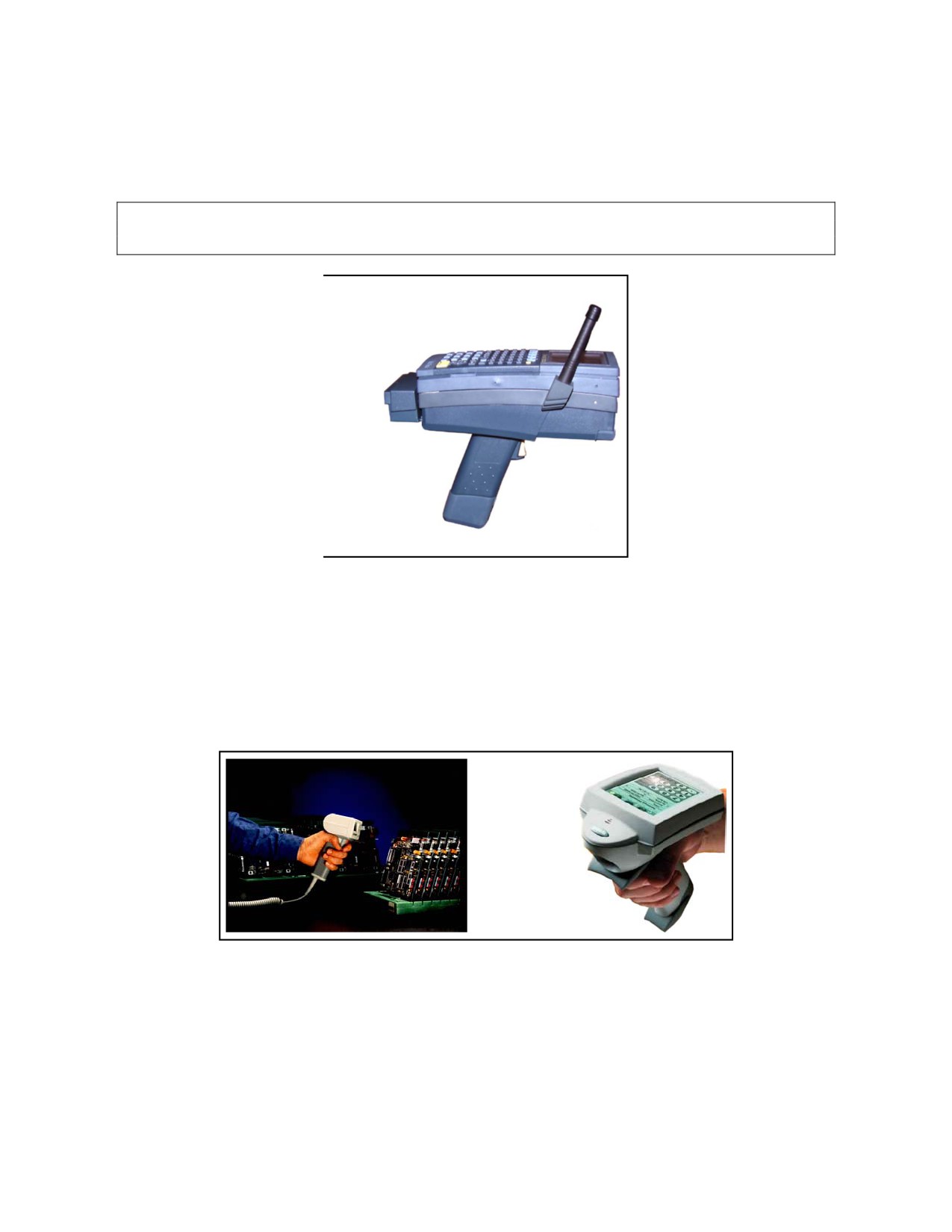
C-20. Hand held data collection devices are used by personnel to scan and record bar coded data.
Some of the devices are directly connected to the computer (tethered), while others are portable.
The portable devices store information for a connected download to the computer system or they
may have the ability to transmit data directly to the computer using a wireless local area network
(LAN). Figure C-12 shows an example of a tethered bar code reader and a portable data collection
device.
Figure C-12. Bar Coded Data Collection Devices.
Tethered reader on the left, portable reader on the right.
Bar Code Label Printer
C-21. Bar code readability is affected by print quality, smears, poor contrast, improper label stock,
incorrect ink, and poor printer adjustment. Operational tests have found that these factors can cause
C-8
FM 4-01.30 ______________________________________________________________________________________ Appendix C
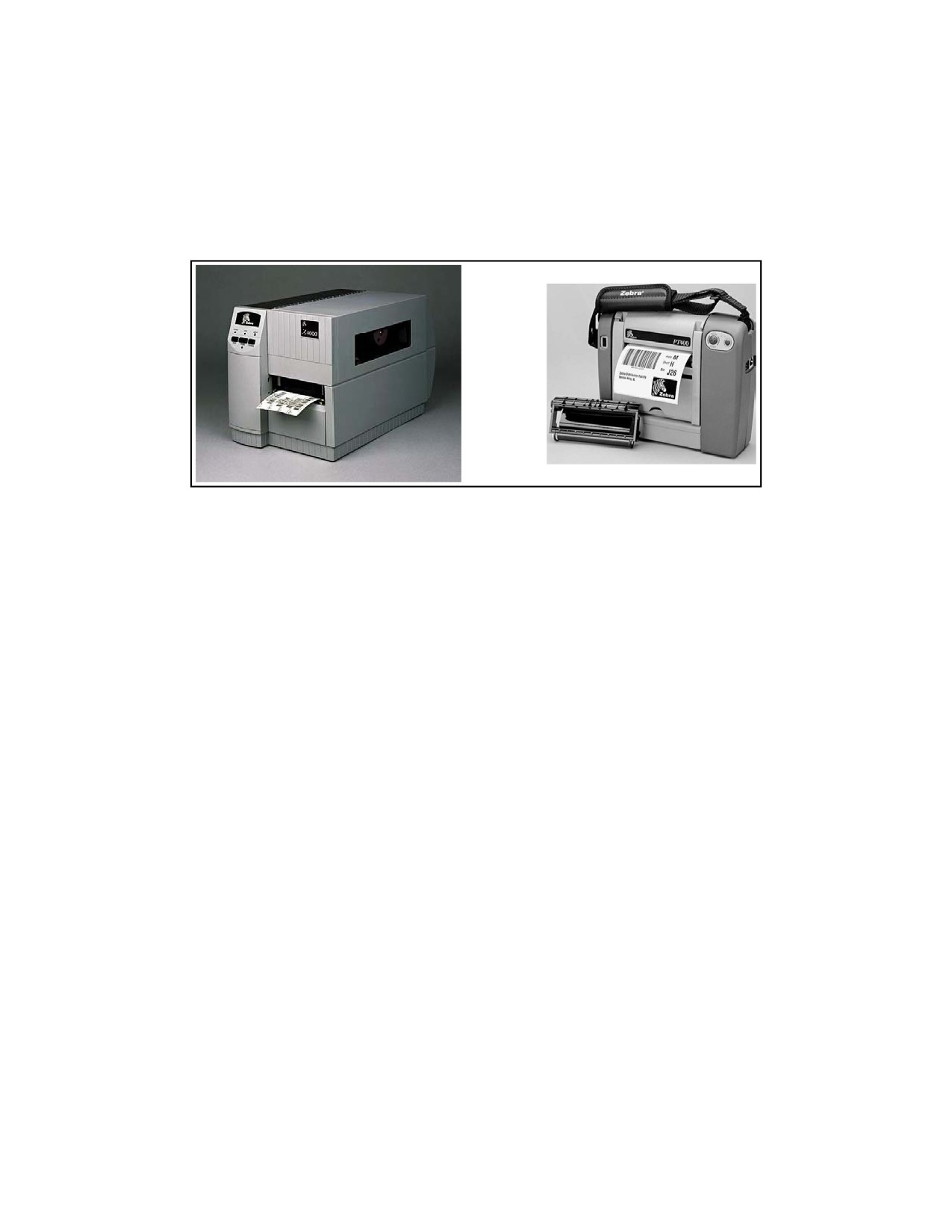
as much as 50% of the bar coded labels printed at some locations to be unreadable. Proper printer
maintenance and care are important for producing readable bar codes. Figure C-13 shows a desktop
bar code printer as well as a ruggedized portable bar code printer.
Figure C-13. Bar Code Printers
Desktop version on the left. Ruggedized version on the right.
C-9
FM 4-01.30
Appendix D
Appendix D
Tables of Organization and Equipment (TO&E)
D-1. This appendix contains a detailed description of the mission, assignment, methods of
operation, and function of most movement control organizations.
D-2. The following organizations are described in this appendix:
• Transportation Command (TRANSCOM).
• Transportation Command Element (TCE).
• Movement Control Battalion Echelons Above Corps (MCB EAC).
• MCB (Corps).
• Port Movement Control Team (MCT).
• Area MCT.
• Division Support MCT.
• Movement Regulating Team (MRT).
• Cargo Documentation Team.
MOVEMENT CONTROL ORGANIZATIONS
Transportation Command
D-3. Mission. To command, control and provide technical supervision of assigned and attached
units supporting Army service component commands (ASCC) with all modes of transportation,
terminal operations, movement control and related services including maintenance for rail and army
watercraft. To control designated wartime host nation support (WHNS) resources; and to liaise with
other United States and allied forces. Serves as the Army's executive agent responsible for providing
combatant commanders functional expertise in concept plan (CONPLAN) and operation plan
(OPLAN) preparation and deconfliction, transportation force capability assessment and time phased
force deployment data (TPFDD) development.
D-4. Through deployable modules, provides technical supervision and staff augmentation to TCEs,
ASCCs, and theater commander for all theater transportation requirements.
D-5. Assignment. The TRANSCOM is assigned to an ASCC.
• Methods of Operation. The theater TRANSCOM when deployed is a major subordinate
command under the ASCC. The TRANSCOM is the single worldwide transportation
operational planning organization. It serves as a critical linkage between United States
Transportation Command (USTRANSCOM) and the supported combatant commander by
providing a globally-focused operational interface between the Defense Transportation
System (DTS) and the theater distribution system. The TRANSCOM provides crisis and
deliberate planning for worldwide transportation operations, and critical planning and
operational linkage to the USTRANSCOM. It provides theater and contingency
D-1
FM 4-01.30
Appendix D
transportation throughput analysis, movement capability assessment, TPFDD development,
and it synchronizes theater operations with USTRANSCOM. Prior to deployment, the
TRANSCOM provides training, readiness oversight, and integrated operational planning
focus to the TCEs. It is the only Army organization structured with the capability to provide
analytical planning and operational oversight for the entire transportation spectrum in all area
of responsibilities (AOR).
•
Functions. The following provide a variety of functions to ensure the successful mission of
the TRANSCOM.
╺
Paragraph 01, Command Section. The TRANSCOM headquarters commands all
transportation units subordinate to the ASCC. The TRANSCOM provides modules
directly to the TSC, ASCC, and the theater commander to support all operations
worldwide. The Command Section provides administrative functions for the unit. It
provides overall command and control (C2) of the operating elements of the unit to
accomplish duties imposed by statute regulations, directives, and assigned missions tasks.
The minimum number of personnel requirements for this section is as follows:
• Commander
• Deputy Commander
•
2 Aides-de-camp
•
Command Sergeant Major
•
2 Executive Assistants
•
2 Chauffeurs
•
Inspector General
•
Transportation Inspector General
•
Administrative Specialist
╺
Paragraph 02, Chief of staff (CofS). The CofS, commensurate with the authority
delegated by the commander, directs the TRANSCOM staffs, both special and general,
in the execution of staff tasks, coordination of staff members, and the efficient and
prompt response of the staff. Personnel requirements consists of the following:
Coordinate transportation services and planning with other headquarter’s
(HQ) at
ASCC. Advises on employment, deployment, and capabilities of transportation assets
required to accomplish personnel and cargo movement.
• CofS.
•
2 Liaison Officers.
•
Secy General Staff.
╺
Paragraph 03, Inspector General (IG) Section. The IG Section is a special staff
section which inquires into and reports on matters about the performance of the
mission, state of discipline, efficiency, and economy by conducting inspections,
investigations, surveys, and studies as directed by the commander and as prescribed by
D-2
FM 4-01.30
Appendix D
╺
law and regulations; and receiving, investigating, and reporting on allegations,
complaints, and grievances.
• IG.
• Trans IG.
╺
Paragraph 04, Staff Judge Advocate (SJA) Section. This special staff section
supervises the administration of military justice and other legal matters in the command.
It advises the commander, staff, and subordinate commanders and provides legal
services on military law; administrative and contract law; claims; criminal law; legal
assistance; and other related legal matters. The chief of the section, the SJA, serves on
the commander’s personal staff and as the senior judge advocate in the command. In
this capacity the SJA is responsible for providing legal advice to the commander on all
matters that affect the morale, good order, and discipline of the command.
• SJA.
• Senior Paralegal Non-Commissioned Officer (NCO).
╺
Paragraph 05, Unit Ministry Team (UMT) Section. This special staff section plans,
manages, and executes religious support policies and programs. It supervises and
coordinates area and denominational religious support for the TRANSCOM. The
Chaplain advises the commander on religion, unit morale, and ethical issues as affected
by religious support, and the impact of indigenous religions, to meet the religious and
spiritual needs of the soldiers and other personnel. Establishes liaison and maintains
contact with unit ministry teams of higher and subordinate units. This section provides
a chaplain to Transportation Command Elements when requested. The senior chaplain
in this section serves on the commander's personal staff.
•
3 Chaplains.
•
3 Chaplain Assistants.
╺
Paragraph 06, Public Affairs Section. The Public Affairs Section is a special staff
section which advises the commander on the public affairs impact of planned or
implemented operations; formulates, implements, and supervises public affairs actions
for the command; informs soldiers of command information and their roles and
responsibilities; serves as command spokesman to media; ensures information for public
release is in compliance with security and policy requirements; conducts liaison with
media representatives for support as authorized and appropriate; ensures that
community relations activities support command mission; and serves in an advisory
capability to the media.
• Public Affairs Officer.
• Public Affairs NCO.
╺
Paragraph 07, G1 Section. The G1 Section is the principal section handling all matters
pertaining to military and civilian human resources. The G1 monitors personnel
readiness and personnel services and manages the headquarters. Specific responsibility
includes personnel management readiness; health and personnel service support; and
D-3
FM 4-01.30
Appendix D
administration of discipline, awards, punishments, and transfers. This section requires
the following personnel:
• Assistant Chief Of Staff (ACofS) G1.
• Ch Human Resources SGT.
•
2 Plans Officers.
•
Exec Admin Asst.
╺
Paragraph 08, Personnel Mgmt Br G1. The Personnel Management Branch has
primary coordinating staff responsibility for managing personnel assets to include
strength accounting, casualty reporting, and personnel requisitioning. It establishes and
maintains the TRANSCOM safety program; coordinates postal services; provides advice
and assistance to subordinate commanders on personnel support matters and maintains
liaison with medical units to coordinate medical support. The Personnel Management
Branch coordinates mortuary affairs support; develops estimates and studies of
personnel requirements and recommends allocations based on priorities established by
the commanders. The Branch establishes and maintains morale support activities; and in
the absence of a Theater Army Personnel Command (TA PERSCOM), inprocesses and
assigns personnel within the TRANSCOM and subordinate elements.
• Adjutant General.
• Pers Management OFF.
• Personnel Actions OFF.
• Military Personnel Tech.
• Sr Human Resources SGT.
• Human Resources SGT.
•
3 Human Resources Spec.
╺
Paragraph 09, G4 Section. The G4 Section prepares general logistics and operations
plans and orders. Determines supply and transportation requirements. Monitors and
analyzes maintenance functions and equipment readiness status. Conducts and
coordinates meeting of operational and tactical transportation requirements supporting
movement control functions. The G4 coordinates for all types of services including
food preparation, organizational clothing & individual equipment (OCIE) operations,
aerial delivery, transportation, handling, and storage of hazardous material. Personnel
requirements are as follows:
• ACofS G4.
•
3 Plans Officers.
•
Sr Transportation Supv.
•
Exec Admin Asst.
╺
Paragraph 10, Maintenance Br G4 . This branch provides staff supervision and
overall coordinating responsibility for developing plans, policies, and procedures for
internal maintenance support coordination for internal maintenance support for
TRANSCOM and its subordinate units.
D-4
FM 4-01.30
Appendix D
• Maintenance Mgmt Officer.
• Marine Maint Officer.
• Chief Maint Log NCO.
• Marine Maint SGT.
• Maintenance Mgmt NCO.
╺
Paragraph 11, Supply Br G4 . This branch provides staff supervision and overall
coordination responsibility for developing plans, policies, and procedures for internal
supply support for the TRANSCOM and it's subordinate units
• Supply Management Officer.
• Supply Systems Tech.
• Sr Log Svc Supv.
•
3 Supply Sergeants.
•
Mat Con/Acctg NCO.
╺
Paragraph 12, Services Br G4 . This branch provides Engineer staff supervision and
overall coordination responsibility for developing plans, policies, and procedures for
internal services to include food service and subsistence operations for the TRANSCOM
and it's subordinate units.
• Engineer Staff Officer.
• Command Food Svc Tech.
╺
Paragraph 13, G5 Section. The G5 coordinates requirements for civilian/host nation
support to Transportation Operations.
• Chief.
• Government Functions Officer.
• Intelligence Sergeant.
╺
Paragraph 14, G6 Section. The G6 provides automation and communications support
for the TRANSOM and subordinate transportation units. This section establishes
electronic countermeasure procedures for subordinate headquarters.
• Chief.
• Communications and Electronics (C-E) Officer
• Info Management OFF
• Info Systems Chief
╺
Paragraph 15, Information Management Br G6. The Information Management
branch installs, troubleshoots, and maintains all internal automation requirements. It
conducts automation security for subordinate units. It manages computer programs and
equipment for the TRANSCOM and it's subordinate.
• Info Management Officer.
D-5
FM 4-01.30
Appendix D
• Info Systems Tech.
• Sr Info Systems OPR-MNT.
•
2 Info Systems OPR-MNT.
╺
Paragraph 16, C-E Br G6. The C-E Branch manages the installation, troubleshooting,
and maintenance of TRANSCOM and all subordinate units internal communications
requirements.
• C-E Officer.
• Signal Support Sys Chief.
• Sr Sig Spt Sys Maint.
╺
Paragraph 17, Deputy Commander for Transportation, G2/3. The G-2/3 Section
supervises the communications and security link between higher and lower headquarters.
It is the operations and security center. It is the principal staff officer for all matters
concerning security, training, operations and plans, and force development and
modernization, prepares operation plans (OPLANs) and operation orders (OPORDs),
coordinates and plans troop movements, route selection, movement priorities, locations,
and prepares movement orders. The G-2/3 has the Internal Operations and
Transportation Operations working directly for them.
• DC for Trans Ops/G2/3.
• Aide-de-Camp.
• Sr Trans Supervisor.
• Executive Admin Asst.
• Chauffeur.
╺
Paragraph 18 Security/Ops Section, G2/3. The deputy for internal operations
develops deployment and placing plans for the TRANSCOM. This section has primary
responsibility for force development and plans, watercraft operations, rear area
operations and Nuclear, Biological, and Chemical
(NBC). The G-2/3 specifically
supervises the command training program. The Security and Operations Section
develops deployment and placing plans.
• ACofS Scty/Plans/Ops.
• Operations Sergeant.
╺
Paragraph 19, Intel/Operations Br G2/3. This branch prepares, authenticates, and
publishes administrative/logistic plans and orders and operation plans and orders. It
coordinates the displacement of subordinate commands and assignment of facilities and
areas. It exercises staff supervision over deception activities.
• Plans Officer.
•
2 Tactical Intelligence Officers.
•
2 Plans Officers.
D-6
FM 4-01.30
Appendix D
• Operations Sergeant.
• Senior Intelligence Sergeant.
╺
Paragraph 20, Security Br G2/3. Develops policies and reviews rear area protection
(RAP) plans for the TRANSCOM commander and for the units and bases under the
TRANSCOM
• Physical Security Officer.
• Physical Security NCO.
╺
Paragraph 21, NBC Br G2/3. This branch advises the TRANSCOM commander and
staff on all matters pertaining to NBC defense and the concept for chemical unit support
operations for subordinate units.
• Chemical Officer.
• NBC Officer.
• Chemical Ops NCO.
╺
Paragraph 22, Plans Movements G2/3. The Plans and Movements Division provides
strategic to operational planning for transportation operations worldwide. This section
also deploys elements that serve as the Army component core of a joint movements
center or combined movement center in support of an ASCC serving as a joint task
force (JTF) or, when tasked, in support of a combatant commander.
• Chief.
• Transportation Officer.
• Operations sergeant.
╺
Paragraph 23, Watercraft Operations Section. The Watercraft Operations Section
provides strategic to operational level planning and oversight for all Army watercraft
during both peacetime and contingency operations worldwide.
• Water Move Officer.
• Plans Officer.
•
2 Terminal Ops OFF.
•
Marine Ops Officer.
•
Maine Maint Officer
•
Operations Sergeant.
•
2 Operations Sergeant
╺
Paragraph 24, Strategic Plans Br. This Branch consists of two strategic planning cells
that develop strategic and operational transportation plans for two major combat
operations. They also perform transportation contingency planning for lesser regional
conflicts and peacekeeping support operations.
D-7
FM 4-01.30
Appendix D
• Two Team Chief.
• Circulation Control Officer.
•
6 Plans Officer.
•
Assistant Movements Officer
•
Terminal Officer
•
2 Mobility Officer.
•
2 Transportation Supervisor.
•
2 Staff Movements NCO.
•
2 Movements Supervisor.
╺
Paragraph 25, Joint Movement Center (JMC). This section provides two joint
movements teams for major combat operations, or other joint requirements. They will
deploy to provide the Army component core of two JMCs or combined movements
centers in support of ASCCs serving as a JTF or, when tasked, in support of a
combatant commander.
•
2 Team Chief.
•
Freight Movements Officer.
•
Terminal Operations Officer
•
Movements Control Officer.
•
Marine Terminal Ops Officer.
•
Assistant Movements Officer
•
Passenger Movements Officer
•
2 Motor/Rail Trans Officer.
•
2 Mobility Officers
•
2 Transportation Supv.
•
2 Operations Sergeant.
•
2 Sr Movements NCO.
•
2 Movements Supervisor.
•
Trans Mgmt NCO.
•
2 Marine Ops NCO.
•
2 Vehicle Drivers.
╺
Paragraph 26, Company Headquarters. The Company Headquarters provides
command, control, administrative, and limited logistics support to the TRANSCOM and
assigned or attached teams. This section provides internal security, training, food
service, supply, organic maintenance support, visitor reception and accommodations,
and Uniform Code of Military Justice for all assigned and attached personnel.
• Commander
• First Sergeant.
• Senior Food Opns SGT.
• Supply SGT.
• First Cook.
• Human Resource SGT.
D-8
FM 4-01.30
Appendix D
• Equip Rec/Parts SGT.
• Lt Wh Veh Mechanic.
• Vehicle Driver.
•
3 Cooks.
•
Armorer.
•
Supply Spec.
Transportation Command Element (TCE)
D-6. Mission. To command, control and provide technical supervision of assigned or attached
units supporting a contingency operation with all modes of transportation, terminal operations,
movement control and related services including maintenance for rail and Army watercraft. When
directed by the TRANSCOM, attaches to the TSC and serves as the TSC’s executive agent for tactical
transportation operations. When acting in this capacity, the TCE commander is dual hatted as the
TSC’s deputy commander for transportation. This organization may also be employed as the senior
transportation element for a corps when the corps is employed as an Army force
(ARFOR)
headquarters.
D-7. Assignment. The TCE is assigned to a TRANSCOM; attached to a TSC as directed.
•
Methods of Operation. The requirements for force projection operations demand that the
TCE be able to deploy early and operate as the senior TRANSCOM in theater. The TSC
will provide C2 for the unit. The TCE will also operate as the executive agent for tactical
transportation operations for the TSC. They must have the C2 capability organic to the unit
to provide all transportation services throughout the theater.
•
Functions. The following provide a variety of functions to ensure the successful mission of
the TCE.
╺ Paragraph 01, Command Section. The Command Section commands, controls, and
supervises all transportation organizations operating at EAC. It is responsible for
transportation operations and plans, and force development and modernization,
prepares OPLANs and OPORDs, coordinates and plans troop movements, route
selection, movement priorities, locations, and prepares movement orders. The
command has the Movement Control Division and the Transportation Operations
Division working directly for them.
• Commander.
• Deputy Commander.
• IG
• Aide-de-Camp.
• Command Sergeant Major.
• IG NCO
• Executive Admin Assistant
• Chauffeur
D-9
FM 4-01.30
Appendix D
╺
Paragraph 02, Plans and Operations Section. The Plans and Operations Section
provides limited staff expertise to the TCE in security, rear area protection, and NBC. It
also develops, coordinates, publishes, and distributes the movements program using the
available intratheater common-user transportation assets. It coordinates and forecasts
long-term movement and communications requirements, receives and updates higher
headquarters on movement activities, intelligence, and any information concerning
transportation systems, facilities, equipment, and personnel. Collects, monitors, and
evaluates data concerning lines of communication
(LOC) capabilities. It develops
theater container policy with the USTRANSCOM and develops standard formats and
procedures for collecting and presenting statistical data. This section coordinates
requirements for HNS to transportation operations. The Plans and Operations Section
provides the commander advice on military law and public affairs.
• Plans Officer.
• Judge Advocate.
• Psyop/CA Officer.
•
3 Plans Officer.
•
MMS Ops Officer.
•
Public Affairs Officer
•
NBC Officer.
•
Mobility Officer.
•
Chemical Ops NCO.
•
Transportation Supr.
•
Operations Sergeant
•
Staff Movements NCO.
•
Force Protection Supv
•
Intelligence Sergeant.
•
Movements Supervisor.
•
Movements NCO
•
Movements Specialist
╺
Paragraph 03, Communications and Automation Branch. This branch maintains
the equipment and systems for the Headquarters & Headquarters Company (HHC) and
supervises and assists in the maintenance of communications and automation equipment
and systems in subordinate units.
In this section personnel coordinate the
communications system organic to the HHC and subordinate elements of the TCE.
They provide technical advice and staff assistance to the TCE commander, TCE
headquarters staff, and subordinate commanders.
They coordinate with area
communications elements to ensure efficient communications within the TCE, with the
TSC C-E officer, and with attached and supported units. This section interacts with the
TRANSCOM G6 and integrates databases for new units. It coordinates signal support
actions requirements with the corps signal officer. It maintains data on combat service
support (CSS) hardware and software use on all automated information system (AIS)
operated by TCE units.
D-10
FM 4-01.30
Appendix D
• Info Systems Tech.
• Signal Support Sys Ch.
• Info Systems Team Ch.
• Sr Info Systems Specialist
•
2 Info Sys Opr-Mnt.
•
2 Signal Support Sys Maint.
╺
Paragraph 04, Movement Control Division. The Movement Control Division
integrates movement control plans, operations, and highway regulation. This section has
a Movements Plans Branch, a Movements Operations Branch, and a Highway
Regulation Branch.
All branches communicate and exchange data with the
transportation community. These branches are discussed below.
• Transportation Officer.
• Movement Control Officer.
• Operations Sergeant.
╺
Paragraph 05, Movements Operation Branch. The Movement Operations Branch is
responsible for all movement activities in the theater.
This section develops,
implements, and monitors theater and corps movements, and programs and commits
transportation ground and air assets for logistical support. It maintains operational
status, provides information and guidance to subordinate groups and battalions,
maintains in-transit visibility (ITV), conducts transportation planning, plans support for
contingency operations, and coordinates exceptional movement requirements. It will
coordinate the evacuation of civilian refugees and US civilians with appropriate
authorities.
•
3 Movements Control Officers
•
Plans Officer
•
Mobility Officer.
•
Transportation Supervisor.
•
Staff Movements NCO.
•
Movements Supervisor.
•
2 Movements NCO
•
4 Movements Specialists
╺
Paragraph 06, Highway Regulation Branch. The Highway Regulation Branch is
responsible for highway regulation plan for theater and coordinates the plan with the
Corps Support Commands (COSCOM) Movement and Transport Division. When
augmented by appropriate detachments, it five movements control officers provides a
central headquarters to execute highway regulation and maintain intransit visibility of
tactical and non-tactical moves within its area of responsibility.
•
3 Movements Control Officer.
•
Plans Officer.
•
2 Circulation Control Officer.
•
Transportation Supervisor.
D-11
FM 4-01.30
Appendix D
•
2 MMS NCO
•
Senior Movements NCO.
•
Movements Supervisor.
•
2 Movements NCO
•
4 Movements Specialists
╺
Paragraph 07, Transportation Operations Division. The Operations Division
integrates transportation management, examines priorities, and evaluates transportation
plans ensuring compliance with command guidance. It evaluates and ensures that the
appropriate mode is used. The operations division has a Highway Operations Branch,
Air Operations Branch, Rail Operations Branch, Terminal Operations Branch, and a
Watercraft Operations Branch. All branches communicate and exchange data with the
transportation community. These branches are discussed below.
•
2 Transportation Officer.
•
Operations Sergeant.
╺
Paragraph 08 Highway Operations Branch. The Highway Operations Branch
advises on the use and implementation of assigned motor assets. Provides guidance on
positioning of truck units throughout the theater. It maintains status of motor assets in
the area of operations. Monitors theater-assigned motor assets to ensure they are not
over tasked.
• Transportation Officer.
•
2 Motor Rail Officer.
•
Transportation Supervisor.
•
Operations Sergeant.
•
Movements Supervisor.
•
Transportation Mgmt NCO.
•
3 Movements Specialists
╺
Paragraph 09, Airlift Operations Branch. The Airlift Operations Branch advises on
the use and implementation of assigned Army and Air Force air assets. Provides
guidance on positioning of air assets throughout the theater. It receives airlift requests
from the transportation command element (TCE). Maintains status of air assets in the
area of operations. Monitors assigned airlift assets to ensure they are not over tasked.
Reviews, validates, and recommends changes to regularly scheduled airlift routes.
•
2 Transportation Officers.
•
Transportation Supervisor.
•
Transportation Logistics NCO.
╺
Paragraph 10, Rail Operations Branch. The Rail Operations Branch advises on the
use and implementation of assigned rail assets. Provides guidance on positioning of rail
units throughout the theater. It maintains status of rail assets in the area of operations.
Monitors assigned rail assets to ensure they are not over tasked.
D-12
FM 4-01.30
Appendix D
•
2 Motor/Rail Transportation Officers.
•
Transportation Supervisor.
•
Senior Train Movements Supervisor
╺
Paragraph 11, Terminal Operations Branch. The terminal branch advises on the use
and implementation of subordinate terminal units. Monitors and coordinates operations
for all terminal operations in the theater; motor, rail, intermodal, air, and sea. Maintains
status of terminal transportation assets in the area of operations.
•
3 Terminal Operations Off.
•
Transportation Supervisor.
•
Operations Sergeant.
•
Movements Supervisor.
•
Movements NCO.
•
2 Movements Specialists
╺
Paragraph 12, Watercraft Operations Branch. The Watercraft Operations Branch
advises on the use and implementation of assigned watercraft assets. Provides guidance
on positioning of watercraft units throughout the theater. It maintains status of
watercraft assets in the area of operations. Monitors assigned watercraft assets to ensure
they are not over tasked. Monitors operational status of all direct support watercraft
maintenance assets.
•
2 Terminal Operations Officer.
•
Marine Operations Officer.
•
Transportation Supervisor.
•
Operations Sergeant.
╺
Paragraph 13, Admin Log Section. The Admin Log Section provides limited staff
expertise to the TCE in personnel, maintenance, supply, and services. This section
supplements the Admin Log capability of the TSC.
• Logistics Officer.
• Engineer Staff Officer.
• Personnel Management Officer.
• Senior Ord Log Officer.
• Chief Engineer.
• Supply Systems Tech.
• Construction Operation SGT.
• Sr, Human Resources Sergeant.
• Ch, Mech Maint MgmtLog NCO
• Marine Maintenance NCO.
• Subsistence Supervisor.
• Supply Sergeant
D-13
FM 4-01.30
Appendix D
╺ Paragraph 14, Company Headquarters. The company headquarters supports all
soldiers assigned or attached to the TCE headquarters. It also provides maintenance
personnel to assist in the maintenance of equipment authorized the TCE. As applicable,
company headquarters personnel: develop the perimeter defense plan, secure the TCE
headquarters area and provide details as required, provide unit administrative support,
provide unit supply, provide power generation, and maintain unit discipline.
• Commander.
• First Sergeant.
• Senior First Cook.
• Supply Sergeant.
• Human Resources Sergeant.
• Lt Wheeled Vehicle Mech.
• Vehicle Driver
•
3 Cooks.
•
Armorer.
Movement Control Battalion (Echelons Above Corps) (MCB[EAC])
D-8. Mission. The MCB (EAC) commands, controls, and supervises MCTs. The battalion controls
the movement of all personnel, units, and materiel in the theater. The battalion maximizes the use of
available transportation assets.
D-9. Capabilities.
• Commands, controls, and provides technical supervision of assigned or attached
transportation movement control detachments as listed below.
╺
55506LA00 - Port Movement Control Team
╺
55506LB00 - Area Movement Control Team
╺
55506LD00 - Movement Regulating Team
╺
55506LE00 - Movement Control Cargo Documentation Team
• Coordinates movement programming, highway regulation, and transportation support.
• When augmented by appropriate teams
╺ Operates a central headquarters to execute these missions and maintain intransit visibility
of tactical and non-tactical moves within a geographical AOR. These areas are defined
by the TCE.
╺ Coordinates with engineers on MSR repair and maintenance schedules.
╺ Manages a consolidated property book for subordinate teams.
D-10. Assignment. The MCB (EAC) is assigned to a TSC and normally attached to a TCE.
• Methods of Operation. The Headquarters and Headquarters Detachment (HHD) MCB
commands and controls MCTs behind the corps rear boundary. The battalion plans,
D-14
FM 4-01.30
Appendix D
coordinates, and manages movement programming, highway regulation, and transportation
support for the theater. It provides a central headquarters for all MCTs assigned or attached
to the battalion. The battalion provides asset visibility and maintains in-transit visibility of
tactical and nontactical moves within the TCE defined geographical area.
•
Functions. The following provide a variety of functions to ensure the successful mission of
the MCB (EAC).
╺
Paragraph 01, Battalion Headquarters. The battalion headquarters commands and
controls the planning, direction, and supervision of attached and assigned MCTs.
Personnel requirements are as follows:
• Commander.
• Executive Officer.
• S2/3
• S6
• Chaplain
• S1
• S4
• Command Sergeant Major.
• Vehicle Driver
╺
Paragraph 02, Battalion S1 Section. The S1 section performs internal administrative
services, personnel actions, mail distribution, and awards support to the battalion.
Personnel requirements are as follows:
•
2 Human Resource SGTs.
•
Paralegal Specialist.
•
Human Resource specialist.
╺
Paragraph 03, S2/3 Section. The S2/3 is responsible for movement planning,
security, and the manning of the operations center. The S2/3 provides supervision for
the Plans, Programming, and Operations Section (paragraph 04) and Highway Traffic
Section (paragraph 05). Personnel requirements are as follows:
• Transportation supervisor
• NBC NCO
• Intelligence analyst
• Vehicle Driver
• Trans Management Coordinator
╺
Paragraph 04, Plans, Programs, and Operations Section. The Plans, Programs, and
Operations section works for the S3. It is responsible for movement activities in its
designated geographical area. The section develops, implements, and monitors theater
movements and program; and commits transportation ground and air assets for logistical
support. Personnel requirements are as follows:
D-15
FM 4-01.30
Appendix D
•
3 Movement control officers
•
Mobility warrant officer
•
Senior movements NCO
•
Two movement NCOs
•
4 Transportation movement coordinators
╺ Paragraph 05, Highway Traffic Section. This section works for the S3. It is
responsible for the area highway regulation plan. This section plans, schedules,
develops, coordinates, and regulates the traffic circulation plan (TCP). This section also
requires two radios operating on the alternate net control station (NCS). Personnel
requirements include the following:
•
2 Circulation control officers
•
2 Movement control officer
•
Circulation control NCOs
•
3 Movements control NCOs
•
Trans management coordinator
╺
Paragraph 06, Battalion S4 Section. The S4 section plans, coordinates, and supervises
all unit logistical activities. The S4 communications systems operate on the command
net and the admin/log nets. Personnel requirements are as follows:
• Property book officer
•
2 Supply NCOs
•
Supply specialist
╺
Paragraph 07, Unit Ministry Team. The Unit Ministry Team plans and provides
religious support to all personnel assigned or attached to the battalion including
collective worship services, ministry for mass casualties and hospitalized soldiers.
Advises commander and staff on religious, moral soldier welfare issues, and the impact
of indigenous religions. Establishes liaison and maintains contact with unit ministry
teams of higher and adjacent units. It is comprised of one Chaplain and one Chaplain’
Assistant.
╺
Paragraph 08, S6 Section. This section maintains the equipment and systems for the
HHC and supervises and assists in the maintenance of communications and automation
equipment and systems in subordinate units. The section personnel coordinate the
communications system organic to the headquarters company and subordinate elements
of the BN. It provides technical advice and staff assistance to the BN commander, BN
headquarters staff, and subordinate commanders.
It coordinates with area
communications elements to ensure efficient communications within the BN and with
attached and supported units. This section interacts with the transportation group S6
and integrates databases for new units. It maintains data on CSS hardware and software
use on all AIS operated by subordinate units.
D-16
FM 4-01.30
Appendix D
• Section Chief
• Sr Info Systems Team Chief
• Signal Support Maint
•
2 Info Sys Specialist
•
2 Signal Support Sys Spec
╺ Paragraph
09, Detachment Headquarters.
The Headquarters Detachment
headquarters commands, controls, and provides limited administrative and logistical
support to the battalion and attached teams. Personnel requirements are as follows:
• Commander
• Detachment sergeant
• Armorer/Supply SGT
• Human Resource Specialist
• NBC specialist
• Cook (to provide support to the battalion)
Movement Control Battalion (Corps)
D-11. Mission. The Corps MCB commands, controls, and supervises MCTs. The battalion
controls the movement of all personnel, units, and materiel in the theater. The battalion maximizes
the use of available transportation assets.
D-12. Capabilities.
• Provides command, control, and supervision of assigned and attached movement control
detachments as listed below.
╺
55506LA00 - Port Movement Control Team
╺
55506LB00 - Area Movement Control Team
╺
55506LC00 - Division Support Movement Control Team
╺
55506LD00 - Movement Regulating Team
╺
55506LE00 - Movement Control Cargo Documentation Team
• Maintains intransit visibility of tactical and nontactical vehicle movements in the corps.
• Provides asset visibility throughout the corps.
D-13. Assignment. The Corps MCB is assigned to a corps.
• Methods of Operation. The HHD MCB commands and controls MCTs forward of the
CORPS rear boundary. The battalion plans, coordinates, and manages movement
programming, highway regulation, and transportation support for the CORPS. It provides a
central headquarters for all MCTs assigned or attached to the battalion. The battalion
D-17
FM 4-01.30
Appendix D
provides asset visibility and maintains in-transit visibility of tactical and nontactical moves
within the corps AOR.
•
Functions. The following provide a variety of functions to ensure the successful mission of
the corps MCB.
╺
Paragraph 01, Battalion Headquarters. The battalion headquarters commands and
controls the planning, direction, and supervision of attached and assigned MCTs.
Personnel requirements are as follows:
• Commander.
• Executive Officer.
• S2/3
• S6
• Chaplain
• S1
• S4
• Command Sergeant Major.
• Vehicle Driver
╺
Paragraph 02, Battalion S1 Section. The S1 section performs internal administrative
services, personnel actions, mail distribution, and awards support to the battalion.
Personnel requirements are as follows:
•
2 Human Resource SGTs.
•
Paralegal Specialist.
•
Human Resource specialist.
╺
Paragraph 03, S2/3 Section. The S2/3 is responsible for deployment planning,
security, and the manning of the operations center. This section provides supervision
for the Plans, Programming, and Operations Section
(paragraph
04) and Highway
Traffic Section (paragraph 05). Personnel requirements are as follows:
• Plans Officer
• Transportation supervisor
• NBC NCO
• Intelligence analyst
• Vehicle Driver
• Trans Management Coordinator
╺
Paragraph 04, Plans, Programs, and Operations Section. The Plans, Programs, and
Operations section works for the S3. It is responsible for movement activities in its
designated geographical area. The section develops, implements, and monitors theater
movements; and programs and commits transportation ground and air assets for
logistical support. Personnel requirements are as follows:
D-18
FM 4-01.30
Appendix D
•
3 Movement control officers
•
Mobility warrant officer
•
Senior movements NCO
•
Two movement NCOs
•
4 Transportation movement coordinators
╺
Paragraph 05, Highway Traffic Section. The section works for the S3. The section
regulates the TCP. It also plans, schedules, develops, and coordinates the highway
regulation plan and unit movement requirements. Personnel requirements for this
section include the following:
•
2 Circulation control officers
•
2 Movement control officer
•
Circulation control NCOs
•
Sr, Movement control NCO
•
2 Movements control NCOs
•
Trans management coordinator
╺
Paragraph 06, Battalion S4 Section. The S4 section plans, coordinates, and supervises
all unit logistical activities. The S4 communications systems operate on the command
net and the admin/log nets. Personnel requirements are as follows:
• Property book officer
•
2 Supply NCOs
•
Supply specialist
╺
Paragraph 07, Unit Ministry Team. The Unit Ministry Team plans and provides
religious support to all personnel assigned or attached to the battalion including
collective worship services, ministry for mass casualties and hospitalized soldiers.
Advises commander and staff on religious, moral soldier welfare issues, and the impact
of indigenous religions. Establishes liaison and maintains contact with unit ministry
teams of higher and adjacent units. It is comprised of one Chaplain and one Chaplain’
Assistant.
╺
Paragraph 08, S6 Section. This section maintains the equipment and systems for the
HHC and supervises and assists in the maintenance of communications and automation
equipment and systems in subordinate units.
The section coordinates the
communications system organic to the headquarters company and subordinate elements
of the BN. It provides technical advice and staff assistance to the BN commander, BN
headquarters staff, and subordinate commanders.
It coordinates with area
communications elements to ensure efficient communications within the BN, and with
attached and supported units. The section interacts with the Group S6 and integrates
databases for new units. It coordinates signal support actions requirements with the S6
officer. It maintains data on CSS hardware and software use on all automated
information systems (AIS) operated by subordinate units.
D-19
FM 4-01.30
Appendix D
• Section Chief
• Sr Info Systems Team Chief
•
2 Info Sys Specialist
•
2 Signal Support Sys Spec
╺ Paragraph 09, Detachment Headquarters. The detachment headquarters commands,
controls, and provides limited administrative and logistical support to the battalion and
attached teams. Personnel requirements are as follows:
• Commander
• Detachment sergeant
• Armorer/Supply SGT
• Human Resource Specialist
• NBC specialist
• Cook (to provide support to the battalion)
Port MCT
D-14. Mission. The port MCT expedites, coordinates, and supervises transportation support of
units, cargo, and personnel into, through, and out of air, land, or water ports. The exception is the
movement of bulk POL using a pipeline.
D-15. Capabilities.
• Provides movement control functions at aerial port of debarkation (APOD) or seaport of
debarkation (SPOD) and small army operated air and sea terminals.
• Expedites throughput of cargo through the transportation system.
• Expedites the port clearance of cargo and personnel arriving or departing by air or sea.
• Provides technical expertise to transportation users transiting the port area.
• In conjunction with the port commander, coordinates transportation support and highway
clearance for forward movement.
• Provides intransit visibility of units, cargo, and personnel transiting an aerial or seaport.
• Coordinates with the mode battalion for transportation of personnel and materiel.
• Trains and assists transportation users with transportation and discrepancy reporting
documentation procedures.
• Commits mode operators to transport personnel and materiel.
• Maintains visibility of transportation assets.
D-16. Assignment. The Port MCT is assigned to a Corps or Theater, attached to a Movement
Control Battalion 55406F000 or 55606F000.
• Methods of Operation. The Port MCT operates at aerial and seaports. This team
expedites the throughput of cargo through the transportation system. It provides in-transit
visibility of units, cargo, and personnel transiting PODs and POEs. The team deploys on an
as needed basis supporting onward movement and sustainment operations.
D-20
FM 4-01.30
Appendix D
• Functions. The following provide a variety of functions to ensure the successful mission of
the Port MCT.
╺ Paragraph 01, Port MCT. The Port MCT expedites the port clearance of Army cargo
and personnel. Personnel requirements are as follows:
• Transportation officer as the officer in charge and operations supervisor.
• Movement control officer.
• Personnel officer.
• Health service material officer.
• Mobility warrant officer.
• Movement supervisor.
• Trans Management NCO
• Stock control supervisor.
• Vehicle driver
•
6 Traffic management specialists.
Area MCT
D-17. Mission. The Area MCT expedites, coordinates, and supervises transportation support of
units, cargo, and personnel into, through, and out of air, land, or water ports. The exception is the
movement of bulk POL using a pipeline.
D-18. Capabilities.
• Validates transportation requirements, coordinates transportation support, highway clearance
and inbound clearance for moving units, personnel, and cargo.
• Coordinates transportation movements, diversions, reconsignments, and transfers of units,
cargo and personnel.
• Provides technical expertise to transportation users within its assigned geographic area of
responsibility.
• Provides intransit visibility of movements of unit equipment and sustainment cargo in a
corps or theater army area.
• Coordinates with the mode battalion for transportation of personnel and materiel.
• Trains and assists transportation users with transportation and discrepancies reporting
documentation procedures.
D-19. Assignment. The Area MCT is assigned to a Corps or Theater, attached to a Movement
Control Battalion 55406F000 or 55606F000.
• Methods of Operation. The Area MCT supports inland transfer points and supply support
activities. It expedites cargo throughput and provides ITV of units, cargo and personnel
moving through an assigned geographic area. An MCB provides command and control and
D-21
FM 4-01.30
Appendix D
administrative support for the team. The MCT deploys, as needed, to support combat units
and sustainment operations.
• Functions. The following provide a variety of functions to ensure the successful mission of
the Area MCT.
╺ Paragraph 01, Area MCT. The Area MCT performs movement control functions for
movements of units, cargo, and personnel (except bulk POL by pipeline). The team
validates transportation requirements and coordinates transportation support, highway
clearance, cargo and personnel movements, diversions, and reconsignments. It provides
technical expertise to transportation users and provides ITV of unit equipment and
sustainment cargo. The team has mode tasking authority for transportation assets.
Personnel requirements are as follows:
• Movement control officer
• Mobility warrant officer.
• Chief, Movements supervisor
• Movements supervisor.
• Transportation management supervisor
•
2 Transportation management NCOs
•
Vehicle operator
•
5 Transportation management coordinators.
Division Support Movement Control Team
D-20. Mission. The Division Support MCT augments the Division Transportation Office (DTO).
D-21. Capabilities.
• Executes highway regulation for non-tactical movements within the division.
• Plans and coordinates the use of main supply routes (MSRs) within the division.
• Operates the first destination reporting point.
• Provides technical expertise to transportation users in the division area.
• Provides intransit visibility of unit equipment and sustainment cargo movements in the
division area.
• Provides movement control support to tactical road marches and division movements.
• Provides additional capability to the movements control officer for support of operations.
D-22. Assignment. The Division Support MCT is assigned to a corps, attached to a division.
• Methods of Operation. The Division Support MCT assists the DTO with movement
programming, highway regulation, and division transportation support. The team deploys as
needed to support the division. It assists with the execution of division highway regulation
for nontactical movements, the planning and coordinating of the division MSRs, and
provides movement control for tactical and nontactical road marches.
D-22