FM 3-09.15 TACTICS, TECHNIQUES, AND PROCEDURES FOR FIELD ARTILLERY METEOROLOGY (OCTOBER 2007) - page 5

MET Messages
Table A-28. A-Sate of Water Surface
Code Figure
Explanation
depth unknown
7
Ice, complete cover, depth 5-9 cm
8
Ice, complete cover, depth 10-24 cm
9
Ice, complete cover, depth 25 cm or more
TEMPERATURE (TT)
A-162. Temperature is indicated in whole degrees Celsius. Negative temperatures are encoded by adding
50 to the absolute value of the temperature; that is., -20 degrees is coded as 70.
PRESSURE (PPPP)
A-163. The surface pressure to the nearest tenth of a millibar is encoded. When pressure is over 1,000
millibars, the thousands' digit is dropped.
WIND DIRECTION (DD)
A-164. In this portion of the code, the wind direction (in tens of degrees) is reported in two digits. This
data is used to further amplify wind information reported in the fourth six-digit group. These two digits
will be encoded as 99 when the wind speed is less than 5 knots.
WIND SPEED (FF)
A-165. The wind speed is reported in knots and in two digits.
AMOUNT OF LOW CLOUD (NH)
A-166. The lowest cloud is determined for the amount of cover in eighths. For encoding, see table A-29.
Table A-29. Nh-Amount of Cloud Reported at Height ha
Code Figure
Explanation
0
0
1
1/8 or less, but not 0
2
2/8
3
3/8
4
4/8
5
5/8
6
6/8
7
7/8 or more, but not 8/8
8
8/8
9
Sky obscured or cloud amount cannot be
estimated
HEIGHT OF LOW CLOUD (HA)
A-167. The height of the lowest cloud above the observing point is estimated. For encoding, see table
A-30.
25 October 2007
FM 3-09.15/MCWP 3-16.5
A-53
Appendix A
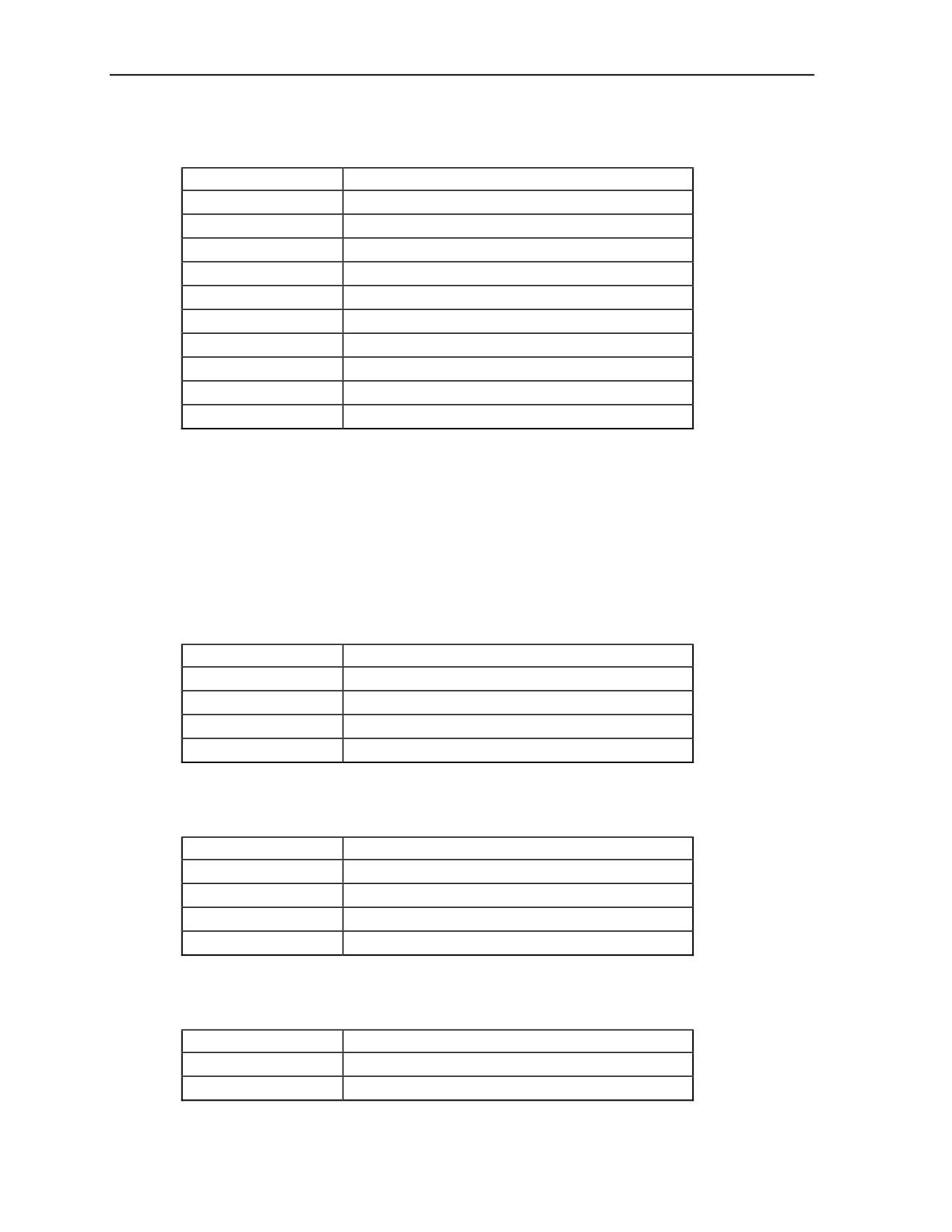
Table A-30. ha-Height of the Lowest Cloud Layer Above the
Observation Point
Code Figure
Explanation
0
0-99 meters
1
100-199 meters
2
200-299 meters
3
300-399 meters
4
400-499 meters
5
500-599 meters
6
600-699 meters
7
700-799 meters
8
800-899 meters
9
900 meters or more or no clouds
INDICATOR FOR SURF DATA (99)
A-168. When the unit is located at a seacoast area, it is important to give surf conditions. The 99 group
indicates that surf data will follow. The surf data includes average height of breakers, time breakers last,
direction of waves' approach to beach, and the width of the surf zone. For estimation and encoding of these
variables, see tables A-31, A-32, A-33, and A-34. When surf data is not available, the message will end
with height of low cloud plus any remarks on weather elements that might seem appropriate. Thus, the
message includes seven 6-digit groups when surf data is not included. Any data or weather element that is
missing is represented by a slash (/).
Table A-31. Hs-Average Height of Breakers
Code Figure
Explanation
0
0 to 10 seconds
1
10 to 20 seconds
2
20 to 30 seconds
3
More than 30 seconds
Table A-32. Ps-Period of Breakers (Seconds) Time Required for
Successive Breakers to Pass a Given Point
Code Figure
Explanation
0
Less than 1 meter
1
1-2 meters
2
2-3 meters
3
More than 3 meters
Table A-33. Dw-Direction of Approach of Waves To Beach
(Observers Back to Sea)
Code Figure
Explanation
0
Waves approaching from right side
1
Waves approaching directly from rear
A-54
FM 3-09.15/MCWP 3-16.5
25 October 2007
MET Messages
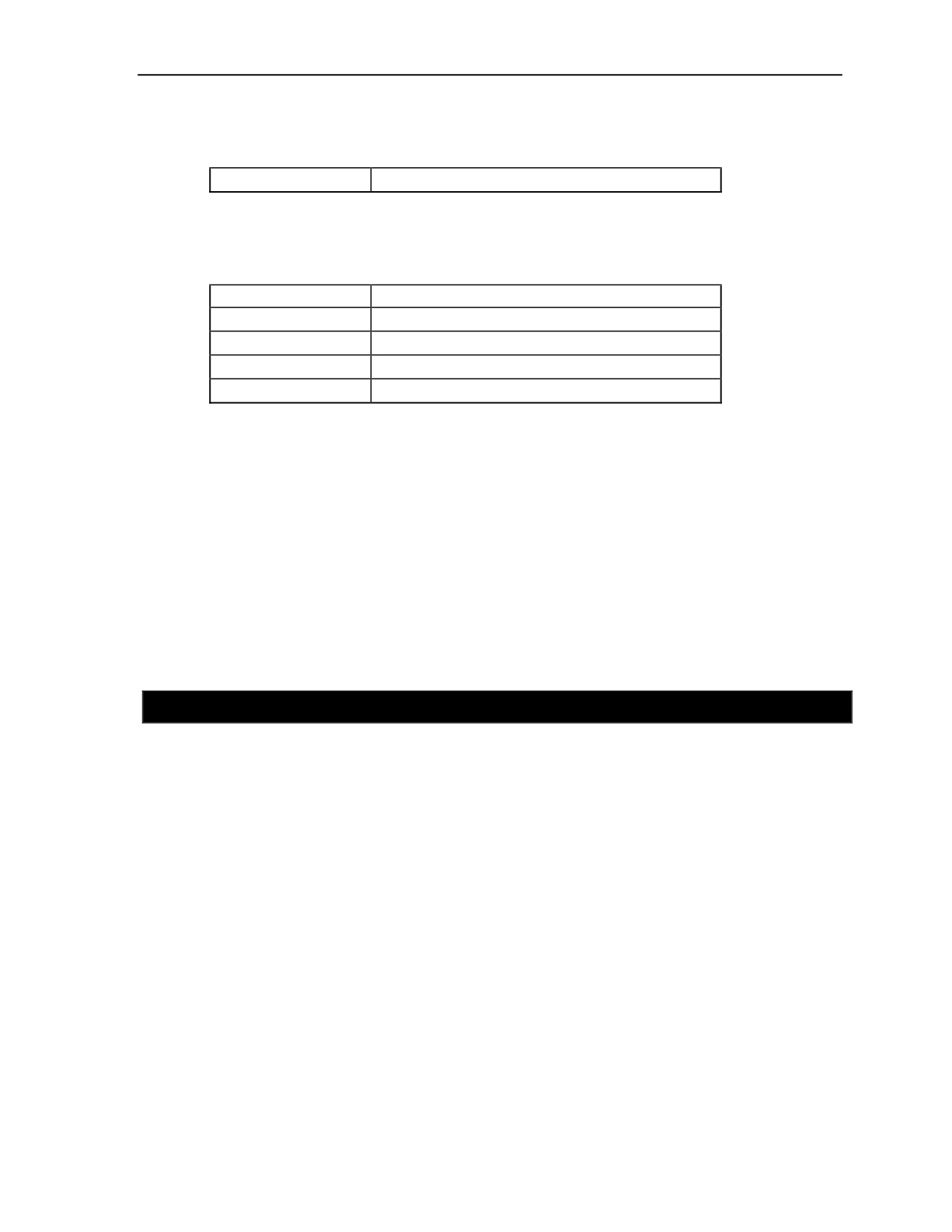
Table A-33. Dw-Direction of Approach of Waves To Beach
(Observers Back to Sea)
2
Waves approaching from lift side
Table A-34. Ws-Width of Surf Zone (Distance from Edge of Water
to the Point Seaward that the White Caps of the Surf Begin to
Appear)
Code Figure
Explanation
0
1 to 10 meters
1
10 to 20 meters
2
29 to 30 meters
3
More than 30 meters
PLAIN LANGUAGE REMARKS
A-169. Any remark that the observer considers beneficial or explanatory may be listed at the bottom of
the message. Some examples include—
z
The direction of a thunderstorm from your location and the approximate direction it is moving
toward; for example, thunderstorms E moving NE.
z
The direction of lightning from your location; for example, lightning overhead and SW through
NW.
z
Obscuring phenomena at a distance from your location but not occurring at your location; for
example, fog bank NE through SE.
DA FORM 5033-R LIMITED SURFACE OBSERVATION
A-170. Figure A-56 is a DA form to be completed for each limited surface observation.
SECTION V MET MESSAGE CHECKING PROCEDURES
A-171. MET section personnel perform quality control checks of all data and MET messages. However,
anyone receiving MET messages should question any peculiarities noticed on their copy. Anytime there is
doubt about the timeliness or validity of a MET message, the MET section should be consulted. MET
section personnel are qualified to explain and correct message variations or transmission errors. Voice
dissemination of messages often induces copying errors, especially when other than the standard MET
message forms are used to copy the messages.
A-172. All MET messages are processed automatically. Once the instrument is released, MET section
personnel can monitor the raw data but cannot edit it. If any peculiarities appear on the final message, the
MET station leader can extract the flight data and look for any abnormal conditions that could explain the
peculiarity. If the MET station leader has any doubts, another sounding can be made to verify data.
Consecutive soundings should show a trend unless weather conditions have changed because of rain, snow,
a rapid increase or decrease in cloud cover, the passage of a front, or a sunrise or sunset transition period.
MET MESSAGE PARTS
A-173. MET messages are divided into the message heading and message body. The message heading
identifies the MET station location, the area of validity of the message, and the time of the message. The
message body contains the MET data element of the specific message.
25 October 2007
FM 3-09.15/MCWP 3-16.5
A-55
Appendix A
CHECKING THE MESSAGE HEADING
A-174. In general, the procedures for checking the heading of the MET message are the same for all types
of messages. These procedures are discussed below.
Location
A-175. The location of the MET station and the octant is a check to ensure it is valid for your area of
operation.
Date and Time
A-176. The date and time entries are checked to ensure that the MET data in the message are current. If
the message is over 4 hours old, verify the validity of the message with the MET section or obtain an
updated message from them.
NOTE: The date and time are Greenwich Mean Time, not local standard time.
Altitude
A-177. The altitude of the MET section should be checked on the map. An altitude error of 50 meters or
more can affect temperature and density accuracy.
Pressure
A-178. The pressure on the ID line should be the same as the pressure on line 00. This does not apply to
ballistic messages since all lines except the heading are reported in density percentage of standard.
CHECKING THE MESSAGE BODY
A-179. The procedures for checking the message body vary with each type of message. Procedures for
checking the message body of specific types of MET messages are discussed below.
Computer MET Message
A-180. The computer MET message is a record of actual measured weather conditions. Therefore, it is
more likely to show abrupt changes not noticed on the ballistic MET message.
A-181. Wind speeds and directions should be fairly uniform with proportional changes in altitude. Large
changes in wind direction (1,000 mils when wind speeds are above 10 knots) or abrupt increases or
decreases in wind speeds (10 to 15 knots) are suspect and should be investigated.
NOTE: Large changes in wind direction are not uncommon with wind speeds less than 10
knots.
A-182. Temperature accuracy is hard to evaluate because of natural erratic changes. Any severe increase
or decrease in temperature (for example, +/- 20°K) is suspect and should be investigated.
A-183. Atmospheric pressure always decreases from line to line. Pressure never increases with height.
Transposed figures are the most common errors in pressure values. If errors in pressure are suspected, the
MET section must provide the corrected values.
BALLISTIC MET MESSAGE
A-184. Ballistic wind directions should remain fairly constant from line to line. Drastic changes (greater
than 1,000 mils) or sudden reversals in direction should be questioned, particularly if the wind speeds on
A-56
FM 3-09.15/MCWP 3-16.5
25 October 2007
MET Messages
those lines are greater than 10 knots. Ballistic wind speed changes greater than 15 knots from line to line
should be questioned.
A-185. Ballistic temperatures and densities should trend smoothly with no drastic changes between zones.
Normally, as density increases, temperature decreases. Rarely will both temperature and density change in
the same direction. If they do, those lines are suspect and should be verified by the MET section. Drastic
changes in density or temperature (2.0 percent or more) should be verified by the MET section.
OTHER MET MESSAGES
A-186. The data in each of the other types of MET messages are not easily checked by the user. If the
message heading has been checked for each of these messages, the data provided should be considered
correct without further checking.
25 October 2007
FM 3-09.15/MCWP 3-16.5
A-57
This page intentionally left blank.
Appendix B
World Meteorological Organization Cloud Codes
This appendix provides the necessary tables and specific instructions to record cloud
phenomena for the surface “41414 NhCLhCMCH” group. This guidance assumes
minimal previous knowledge of synoptic code procedures; however, a basic
understanding of clouds is necessary. For those already familiar with synoptic codes,
some departure from conventional World Meteorological Organization coding
procedures will be noticed. By simply observing the elements requested and
reporting them according to tables provided in this text, the intent of the cloud entry
will be fully met.
CLOUDS GROUP FORMAT
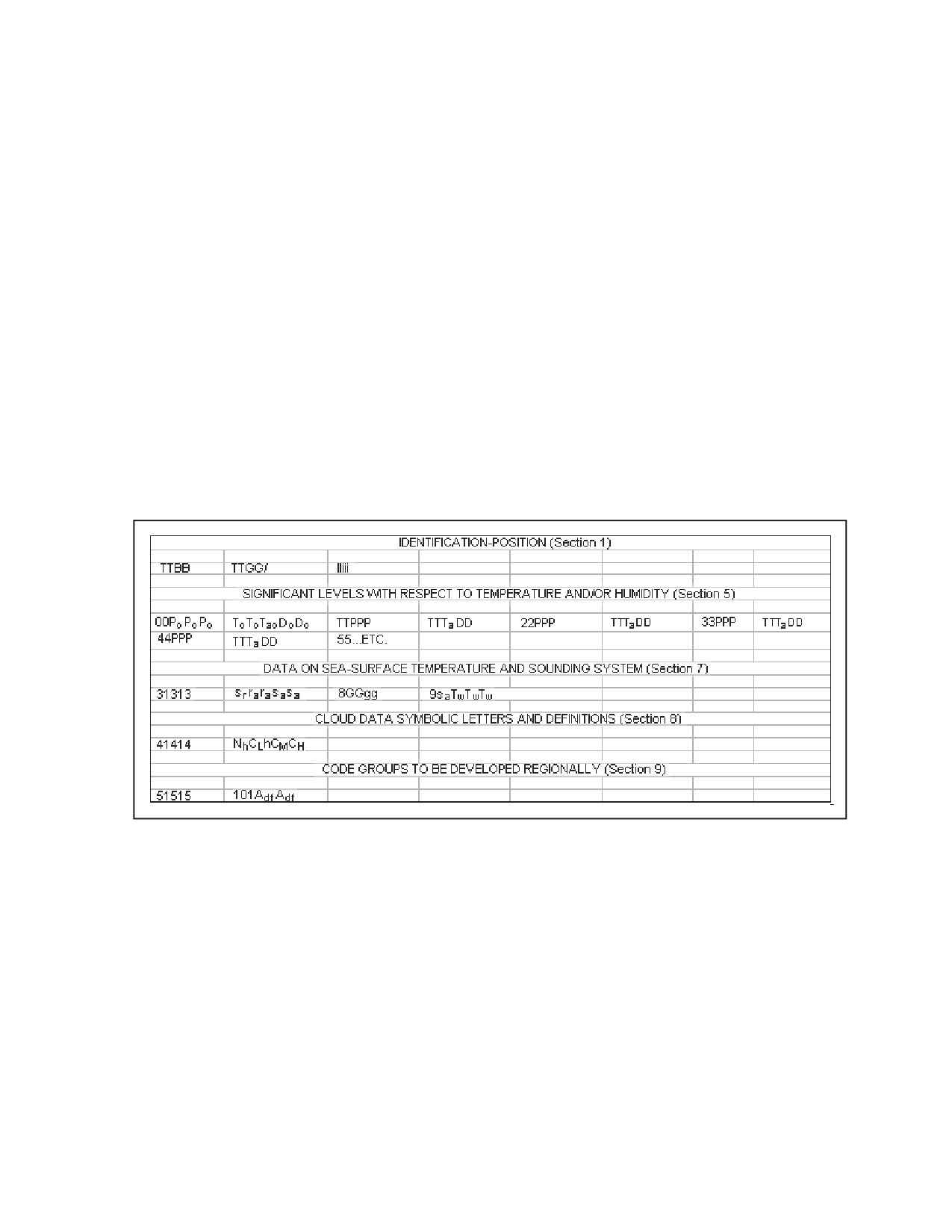
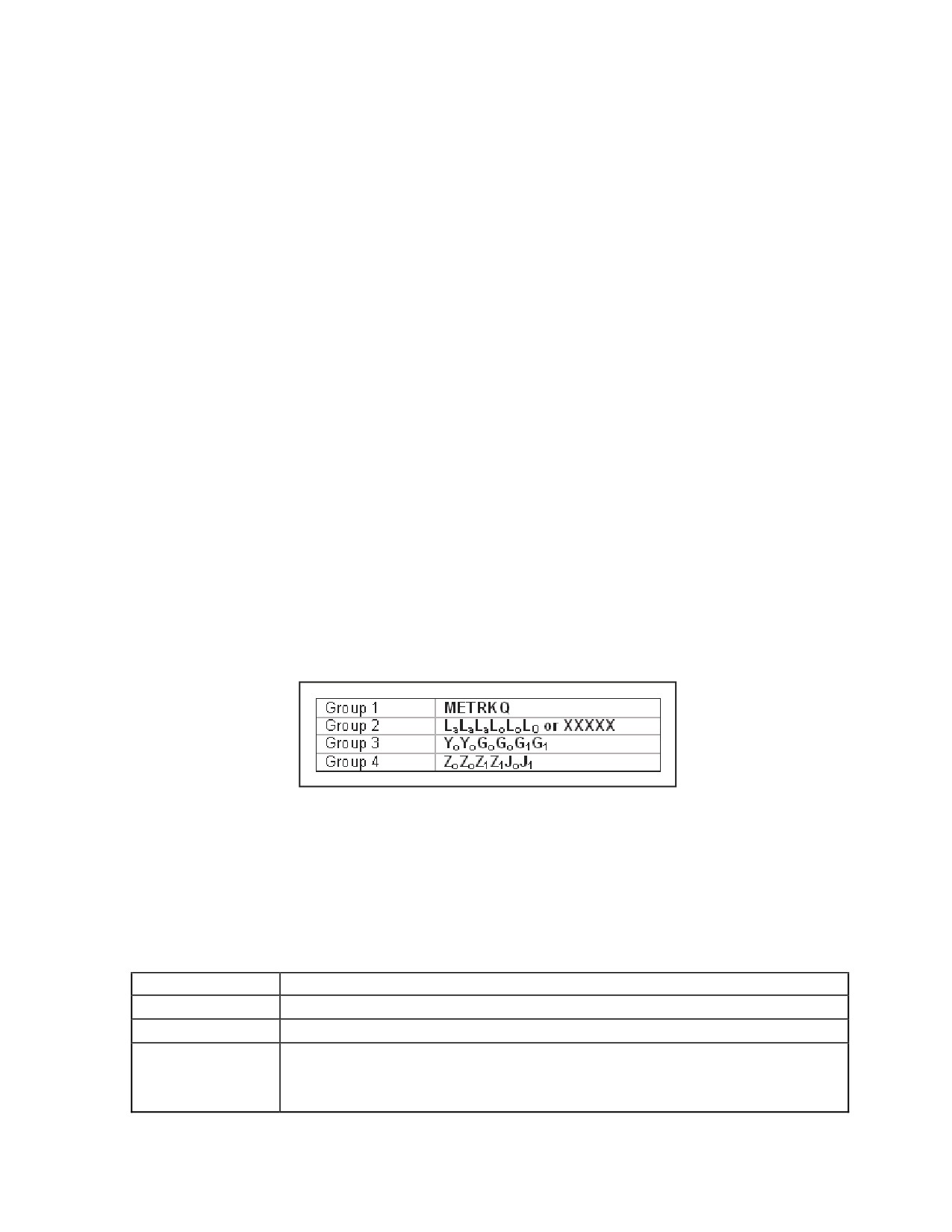
B-1. The clouds entry is a five-digit, mandatory group as shown in figure B-1.
Figure B-1 Format for part B (TTBB) of WMO MET message
B-2. All five digits must be entered, regardless of the presence or absence of clouds. The WMO format
for entry of clouds has been modified to meet National Climatic Data Center requirements. All stations
should follow this modified format, regardless of location. A description of the five-digit format follows.
B-3. Nh. Nh is the amount (in oktas) of the sky covered by all low clouds (CL) observed or the amount of
sky covered by all the middle clouds (CM) observed. In no case will the amounts of the low and middle
clouds be combined to report Nh. Use table B-1 to report the amount of low or middle cloud coverage.
25 October 2007
FM 3-09.15/MCWP 3-16.5
B-1
Appendix B
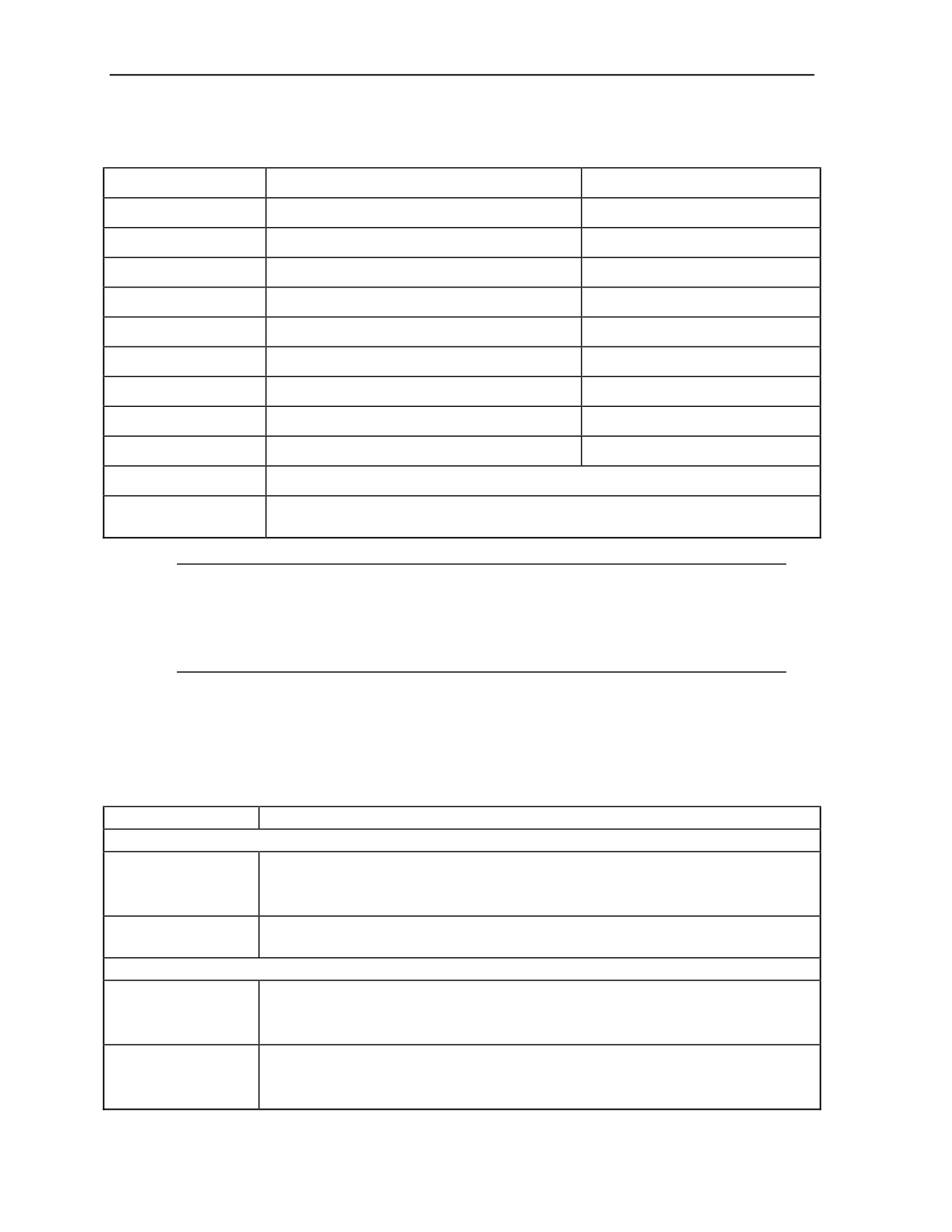
Table B-1. Amount of Low/Middle Cloud, Nh
Code Figure
Cloud Amount in oktas (eighths)
Cloud Amount in Tenths
0
0
0
1
1 okta or less, but not zero
1/10 or less
2
2 oktas
2/10 - 3/10
3
3 oktas
4/10
4
4 oktas
5/10
5
5 oktas
6/10
6
6 oktas
7/10 - 8/10
7
7 oktas or more, but not 8 oktas
9/10 or more, but not 10/10
8
8 oktas
10/10
9
Sky obscured by fog and/or other meteorological phenomena
/
Cloud cover is indiscernible for reasons other than fog or other meteorological
phenomena
NOTE: If there are any breaks in the sky at all, such as an overcast with a mackerel sky
(altocumulus pelucidus or stratocumulus pelucidus), Nh would be encoded as 7. If there are only
a few patches of low or middle cloud in the sky, Nh cannot be encoded as 0, but is encoded as 1.
A partial obscuration does not affect the coding of Nh. A total obscuration is coded as 9, not 8
(overcast sky).
B-4.
CL. CL is the type of low cloud, based on the priority given in table B-2. This table presents the
specifications for type of low cloud, CL, in order of priority. Go down the table and use the first applicable
code figure. A slash (/) is reported if CL clouds are not visible owing to fog or similar obscuring
phenomena.
Table B-2. Coding of Low Cloud, CL
Code Figure
Reportable Heights (ft)
CUMULONIMBUS PRESENT, WITH OR WITHOUT OTHER CL CLOUDS
CL = 9
If the upper part of at least one of the cumulonimbus clouds present is clearly
fibrous or striated, use CL = 9.
CL = 3
If the upper part of none of the cumulonimbus clouds present is clearly fibrous
or striated, use CL=3.
NO CUMULONIMBUS PRESENT
CL = 4
If stratocumulus formed by the spreading out of cumulus is present, use CL =
4.
CL = 8
If the CL code figure 4 is not applicable and if cumulus and stratocumulus
clouds with bases at different levels are present, use CL = 8.
B-2
FM 3-09.15/MCWP 3-16.5
25 October 2007
World Meteorological Organization Cloud Codes
Table B-2. Coding of Low Cloud, CL
Code Figure
Reportable Heights (ft)
CL = 1
If the CL code figures 4, 8, and 2 are not applicable, use CL = 1, if the CL clouds
present are predominantly (NOTE 1) cumulus with little vertical extent and
seemingly flattened or ragged cumulus other than of bad weather (NOTE 2), or
both.
CL = 5
Use CL = 5, if among other CL clouds present, stratocumulus other than that
formed by the spreading out of cumulus of predominant.
CL = 6
Use CL = 6, if the CL clouds present are predominantly stratus in a more or less
continuous sheet or layer, or in shreds (stratus of bad weather), or both.
CL = 7
Use CL = 7, if the CL clouds present are predominantly pannus (ragged shreds
of stratus of bad weather or ragged cumulus of bad weather), or both.
0
No CL clouds - No cumulus, cumulonimbus, stratocumulus, or stratus.
/
CL clouds not visible owning to fog or similar obscuring phenomena.
NOTE 1: Consideration of predominance is restricted to the clouds corresponding to CL code figures
1, 5, 6, and 7, which have the same priority. Clouds of any one of these four specifications are said to
be predominant when their sky cover is greater than that of the clouds of any of the other three
specifications.
NOTE 2: Bad weather denotes the conditions which generally exist during precipitation and a short
time before and after.
NOTE: Clouds are divided into three families, and classified as low, middle, or high. The
general height ranges for these are surface to 6,500 feet for low, 6,500 feet to 20,000 feet for
middle, and above 20,000 feet for high. Remember, these ranges are not absolute, but given as a
guide only. More consideration may be given to the cloud form than the height in many cases.
Each cloud family is coded with a single digit, 0 through 9. The code figure 0 is used to indicate
that clouds are not present for a given family.
B-5. h. h = Height of the base of the lowest cloud seen. The height reported is with respect to the surface.
The height is coded as a solidus (/) if there is a total surface-based obscuration that prevents an observation
of the clouds. Use table B-3 for the cloud base height.
Table B-3. Height of Cloud Base Above Ground
Code Figure
Reportable Heights (ft)
1
200 or 300
2
400 or 600*
3
700 to 900*
4
1000 to 1900*
5
2000 to 3200*
6
3300 to 4900*
7
5000 to 6500**
25 October 2007
FM 3-09.15/MCWP 3-16.5
B-3
Appendix B
Table B-3. Height of Cloud Base Above Ground
Code Figure
Reportable Heights (ft)
8
7000 to 8000**
9
8500 or higher or no clouds
/
unknown or base of clouds below surface of station
reported in 100-foot increments
**
reported in 500-foot increments
NOTE 1: This group is used to report the height of the base of the lowest cloud seen, regardless of
cloud amount. The height reported is with respect to the surface.
NOTE 2: The lowest cloud height is coded with a solidus (/) if there is a total surface-based
obscuration that prevents an observation of the clouds.
B-6. CM. CM is the type of middle cloud, based on priority given in table B-4. This table presents the
specifications for type of middle cloud, CM, in order of priority. Go down the table and use the first
applicable code figure. A solidus (/) is reported if CM clouds are not visible owing to fog or similar
obscuring phenomenon, or because of a continuous layer of lower clouds.
Table B-4. Coding of Middle Cloud, CM
Code Figure
Coding Criteria
ALTOCUMULUS PRESENT
CM = 9
If the sky is chaotic, use CM = 9.
CM = 8
If the CM code figure 9 is not applicable and if altocumulus with sprouting in the
form of turrets or battlements or altocumulus having the appearance of small
cumuliform tufts is present, use CM = 8.
CM = 7*
If the CM code figures
9 and 8 are not applicable and if altostratus or
nimbostratus is present together with altocumulus, use CM = 7.
CM = 6
If the CM code figures 9, 8, and 7 are not applicable and if altostratus formed by
the spreading out of cumulus or cumulonimbus is present, use CM = 6.
CM = 5
If the CM code figures 9, 8, 7, and 6 are not applicable and if the altostratus
present is progressively invading the sky, use CM = 5.
**There are several definitions of CM = 7 and each has a different priority; therefore, CM = 7 appears
several times in this code table.
CM = 4
If the CM code figures 9, 8, 7, 6, and 5 are not applicable and if the altostratus
present is continually changing in appearance, use CM = 4.
CM = 7
If the CM code figures 9, 8, 6, 5, and 4 are not applicable and if the altostratus
present occurs at two or more levels, CM = 7.
CM = 7, 3
If the CM code figures 9, 8, 6, 5, and 4 are not applicable and if the altocumulus
present occurs at one level, use CM = 7 or 3 depending on whether the greater
part of the altocumulus is respectively opaque or semi-transparent.
NO ALTOCUMULUS PRESENT
CM = 2
If nimbostratus is present or if the greater part of the alto stratus present is
opaque, use CM = 2.
CM = 1
If there is no nimbostratus and if the greater part of the altostratus present is
semi-transparent, use CM = 1.
CM = 0
No CM clouds - No altocumulus, altostratus, or nimbostratus.
/
CM clouds not visible owing to fog or similar obscuring phenomena or because of
a continuous layer of lower clouds.
B-7. CH.= CH is the type of high cloud, based on priority given in table B-5. This table presents the
specifications for type of high cloud, CH, in order of priority. Go down the table and use the first applicable
code figure. A solidus (/) is reported if CH clouds are not visible owing to fog or similar obscuring
phenomenon, or because of a continuous layer of lower clouds.
B-4
FM 3-09.15/MCWP 3-16.5
25 October 2007

World Meteorological Organization Cloud Codes
Table B-5. Coding of High Cloud, CH
Code Figure
Coding Criteria
ALTOCUMULUS PRESENT
CH = 9
If cirrocumulus is present alone or is more than the combined sky cover of any
cirrus and cirrostratus present, use CH = 9.
CIRROSTRATUS PRESENT
CH = 7
If the cirrostratus covers the whole sky, use CH = 7.
CH = 8
If the cirrostratus does not cover the whole sky and is not invading the celestial
dome, use CH = 8.
CH = 6
If the cirrostratus is progressively invading the sky and if the continuous veil
extends more than 45 degrees above the horizon but does not cover the whole
sky, use CH = 6.
CH = 5
If the cirrostratus is progressively invading the sky but the continuous veil does
not reach 45 degrees above the horizon, use CH = 5.
NO CIRROSTRATUS PRESENT
CH = 9
Not applicable.
CH = 4
If the cirrus clouds are invading the sky, use CH = 4.
CH = 3
If the CH code figure 4 is not applicable and if dense cirrus which originated from
cumulonimbus is present in they sky, use CH = 3.
CH = 2, 1
If the code figures 4 and 3 are not applicable:
Use CH = 2, if the combined sky cover of dense cirrus, of cirrus with sprouting in
the form of small turrets or battlements, and of cirrus of tufts is greater than the
combined sky cover of cirrus in the form, of filaments, strands, or hooks.
Use CH = 1, if the combined sky cover of cirrus in the form of filaments, strands,
or hooks is greater than the combined sky cover of dense cirrus, of cirrus with
sprouting in the form of small turrets or battlements, and of cirrus in tufts.
CH = 0
No CH clouds - No cirrus, cirrostratus, or cirrocumulus.
/
CH clouds not visible owing to fog or similar obscuring phenomena or because of
a continuous layer of lower clouds.
25 October 2007
FM 3-09.15/MCWP 3-16.5
B-5
This page intentionally left blank.
Appendix C
MET Support Request Procedures
MMS equipped sections normally distribute MET messages digitally to all users by
broadcasting them on a specific schedule (push method). Some users, especially
firing units, may have an immediate need for MET data before being placed on
automatic distribution. All MET messages from MMS-P equipped sections using
220C Protocol are requested (pull method) by users. Users can request MET support
by using the procedures in this appendix.
SUBMISSION OF MMS MET SUPPORT REQUESTS
C-1. All requests for MET support should be forwarded through the operations officer to the appropriate
MET section. Requests should state who should eventually receive the MET data. To ensure receipt of
appropriate MET information, the unit requesting MET support should state specifically in the initial
request what information is needed, the delivery time, and the method of delivery. The number of lines
requested should be no greater than the number required for the maximum ordinate expected to be fired.
Requests for MET should be submitted as far in advance as possible. Also units must realize MET
messages are provided on time schedules based on GMT, not local time. The structure for a request for
MET support is shown in figure C-1. The standard format for MET requests provides the following:
z
Type of message.
z
Intervals between messages.
z
Lowest and highest lines required.
z
Time request is terminated.
Figure C-1. Message request structure
C-2. The symbols in the message request for MET support are defined in table C-1 in the order in which
they appear. The Q code for octant of the globe is defined in table C-2. Table C-3 lists the line codes for
the type 2 or 3 ballistic MET message. Table C-4 lists the zone number codes for a TA MET message.
Table
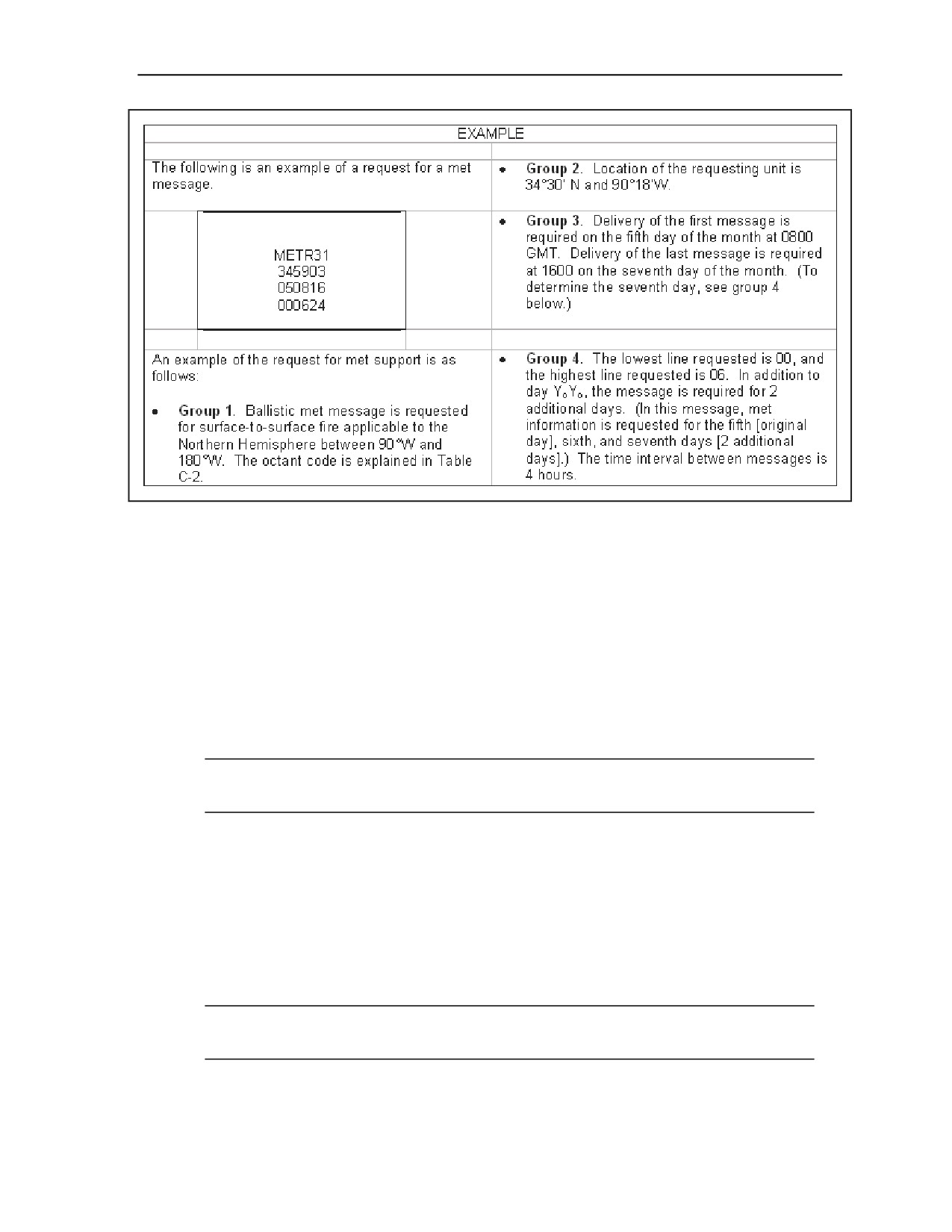
C-5 lists the zone codes for a computer MET message. Figure C-2 shows an example and provides an
explanation of a request for a MET message.
Table C-1. Symbols in Message Request for MET Support
Symbol
Definition
MET
Designates message category-met.
R
Designates request.
K
Designates type of message as follows:
2-surface to air (type 2 ballistic).
3-surface to surface (type 3 ballistic).
25 October 2007
FM 3-09.15/MCWP 3-16.5
C-1
Appendix C
Table C-1. Symbols in Message Request for MET Support
Symbol
Definition
6-target acquisition.
9-computer.
Q
Designates octant of the globe in which requesting unit is located. (See Table
C-2.)
LaLaLa
Designates latitude of requesting unit to the nearest tenth of a degree.
LoLoLo
Designates longitude of requesting unit to the nearest tenth of a degree. For
longitudes of 100° and greater, the hundreds digit is dropped.
or
XXXXXX
Location of the center of the area of applicability in code.
YoYo
Designates day of month (GMT) on which delivery of first message is required.
GoGo
Designates time (GMT) to the nearest hour of day (YoYo) at which delivery of
the first message is required.
G1G1
Designates time (GMT) to the nearest hour on the last day on which final
message is required. (See Jo to determine date.)
ZoZo
Designates lowest line required in the message is 00 (surface) for all
messages.
ZtZt
Designates highest line code required. See Tables C-3, C-4, or C-5 for the type
message requested by K.
Jo
Designates the number of days from 0 to 9 that must be added to YoYo to find
the last day for which MET message support is required. The hour of the last
day is determined by G1G1 above.
J1
Designates time interval, in hours, between messages. Numbers 1 through 8
indicate hourly intervals, and 9 indicates a 12-hour interval. When only one
message is required, G1G1 is the same as GoGo and Jo and J1 are 0.
Table C-2. Q Code for Octant of the Globe
Q Code
Octant Locations
0
North latitude-0° to 90° west longitude
1
North latitude-90° to 180° west longitude
2
North latitude-180° to 90° east longitude
3
North latitude-90° to 0° east longitude
4
Not used
5
South latitude-0° to 90° west longitude
6
South latitude-90° to 180° west longitude
7
South latitude-180° to 90° east longitude
8
South latitude-90° to 0° east longitude
9
To be used when the location of the MET station is not
indicated by latitude and longitude
C-2
FM 3-09.15/MCWP 3-16.5
25 October 2007
MET Support Request Procedures
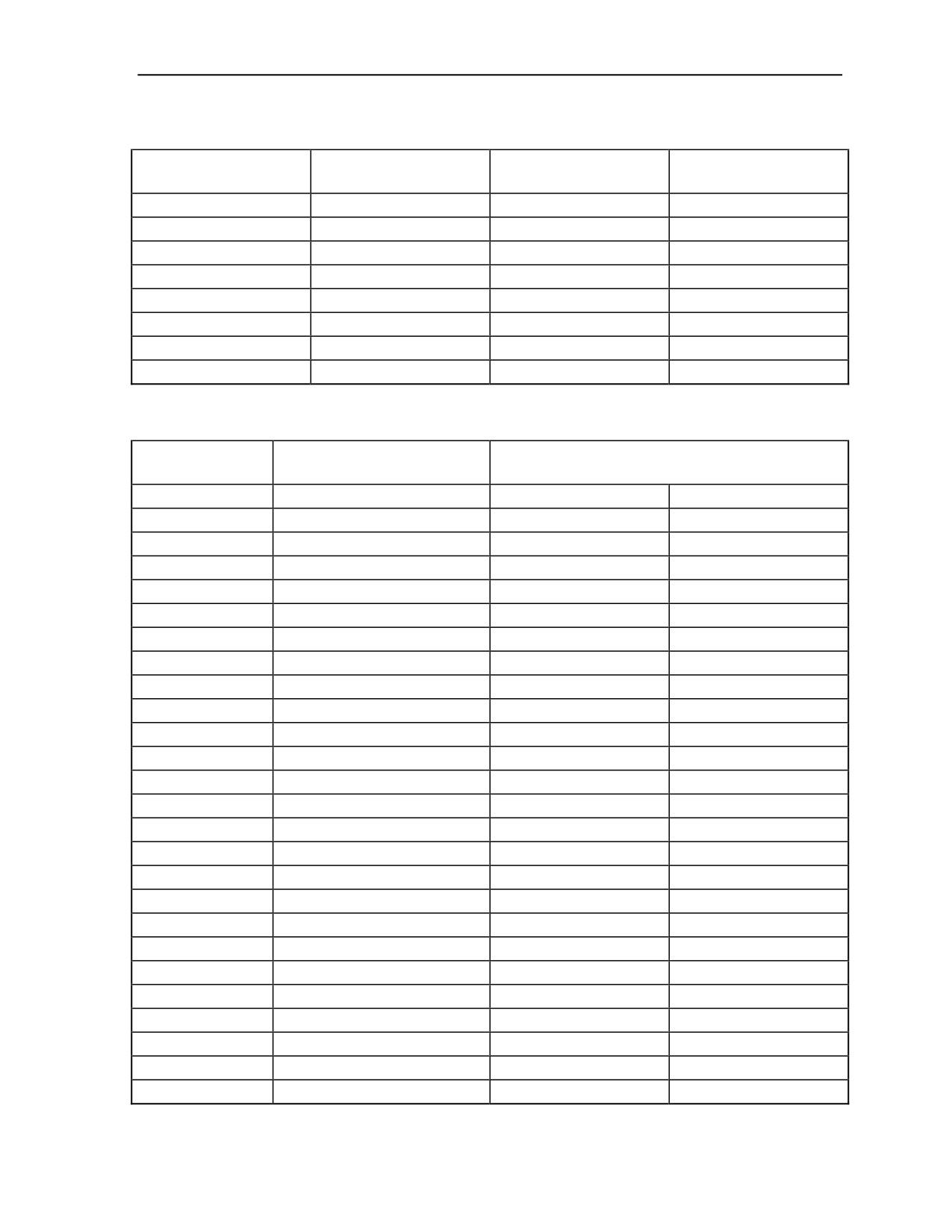
Table C-3. Line Codes for Ballistic MET Messages (Type 2 or 3)
Line-Code
Meters
Line-Code
Meters
ZtZt
ZtZt
00
0
08
5,000
01
200
09
6,000
02
500
10
8,000
03
1,000
11
10,000
04
1,500
12
12,000
05
2,000
13
14,000
06
3,000
14
16,000
07
4,000
15
18,000
Table C-4. Zone Number Codes for Target Acquisition MET Message
Height Of Midpoint Of Zone
Height Above MDP Of Zone
Above MDP (Meters)
ZtZt
(Meters)
Base
Top
00
0
-
-
01
25
0
50
02
75
50
100
03
150
100
200
04
250
200
300
05
350
300
400
06
450
400
500
07
550
500
600
08
650
600
700
09
750
700
800
10
850
800
900
11
950
900
1,000
12
1,050
1,000
1,100
13
1,150
1,100
1,200
14
1,250
1,200
1,300
15
1,350
1,300
1,400
16
1,450
1,400
1,500
17
1,550
1,500
1,600
18
1,650
1,600
1,700
19
1,750
1,700
1,800
20
1,850
1,800
1,900
21
1,950
1,900
2,000
22
2,050
2,000
2,100
23
2,150
2,100
2,200
24
2,250
2,200
2,300
25 October 2007
FM 3-09.15/MCWP 3-16.5
C-3

Appendix C
Table C-4. Zone Number Codes for Target Acquisition MET Message
Height Of Midpoint Of Zone
Height Above MDP Of Zone
Above MDP (Meters)
ZtZt
(Meters)
25
2,350
2,300
2,400
26
2,450
2,400
2,500
27
2,550
2,500
2,600
Table C-5. Zone Number Codes for Computer MET Messages
Height Above MDP Of Midpoint Of
Height Above MDP From Base To
Zone (Meters)
Top Of Zone (Meters)
ZtZt
00
0
0
01
100
0 to 200
02
350
200 to 500
03
750
500 to 1,000
04
1,250
1,000 to 1,500
05
1,750
1,500 to 2,000
06
2,250
2,000 to 2,500
07
2,750
2,500 to 3,000
08
3,250
3,000 to 3,500
09
3,750
3,500 to 4,000
10
4,250
4,000 to 4,500
11
4,750
4,500 to 5,000
12
5,500
5,000 to 6,000
13
6,500
6,000 to 7,000
14
7,500
7,000 to 8,000
15
8,500
8,000 to 9,000
16
9,500
9,000 to 10,000
17
10,500
10,000 to 11,000
18
11,500
11,000 to 12,000
19
12,500
12,000 to 13,000
20
13,500
13,000 to 14,000
21
14,500
14,000 to 15,000
22
15,500
15,000 to 16,000
23
16,500
16,000 to 17,000
24
17,500
17,000 to 18,000
25
18,500
18,000 to 19,000
26
19,500
19,000 to 20,000
C-4
FM 3-09.15/MCWP 3-16.5
25 October 2007
MET Support Request Procedures
Figure C-2. MET message request
SUBMISSION OF MMS-P MET SUPPORT REQUESTS
C-3. All requests for MET message generation, except for the upper air message (which is automatically
generated at the termination of a sounding), require the following entries:
z
Gun location.
z
Target location.
z
Specific type of MET message desired.
z
The requestor’s universal resource locator (URL).
NOTE: The MET messages (except for the TAM) generated by the MMS-P are based on the
mid-point between the gun location and target location grids.
Computer MET Message
C-4. The requestor should use his grid for gun location and an estimated center grid of the target area for
the target location.
Target Area MET Message
C-5. The requestor should use his grid for gun location and the actual grid of the target area you need data
on for the target location.
NOTE: Even though the profiler will ignore the gun location and only use the target location,
both fields must be entered to generate the MET message.
25 October 2007
FM 3-09.15/MCWP 3-16.5
C-5
Appendix C
Target Acquisition MET
C-6. Since the MMS-P generates a TA MET for the location midpoint between the entered gun location
and target location grids, the radar should use his grid for gun location and the nearest suspected enemy
artillery location, along the radar’s center sector of search, for the target location.
Basic Wind Report
C-7. Since the profiler generates a basic wind report for the location midpoint between the entered gun
location and target location grids, the requestor should use his grid for gun location and the grid of the
suspected CBRNincident (CBRN 1 Report) for the target location (if known). If no grid for a suspected
CBRN incident is known then select a grid down range in the direction of the enemy as the target location.
MET REQUEST GUIDANCE
C-8. In theory, MET data for both the local and target area could be requested and sent for each fire
mission, or every 30 minutes, to assist in fire mission accuracy. A MET every 30 minutes has been shown
to dramatically increase the lethality of munitions. This however may be impractical and could slow the
responsiveness of the shooter as well as tie up the digital communications net. Instead, examples of when it
would be critical for a firing unit to request and receive a MET message are—
z
Upon entering its initial fighting position. (Along with his unit update, the battery FDC sends a
request for a computer MET message to the profiler. (MLRS will also request a target area
MET.)
z
Anytime a firing unit moves more than 4 kilometers, but the target area remains the same.
(Request a computer MET.)
z
Anytime the target area grid changes by more than 5 kilometers; that is, if the battery is told to
lay its guns on a new engagement area (EA). (Request both a computer MET and a target area
MET.)
z
Anytime direction of fire is more than 800 mils from the original target location. (Request a new
computer MET.)
z
When smart munitions are expected to be used in the target area. (Request a target area MET.)
(MLRS only.)
z
Anytime there is a significant change in weather; that is, a storm front comes through or the
temperature increases or decreases. (Request both a computer MET and a target area MET.)
z
As directed by the firing unit commander.
NOTE: Although the profiler system was developed to allow for automated MET message
requests using the information request message format, this message format will not be available
until the next version AFATDS message set is fielded. Since the 188/220A protocol with
revision 3 message set does not support the information request message format, the requestor
must request MET messages using a free text message.
C-6
FM 3-09.15/MCWP 3-16.5
25 October 2007

Appendix D
Example MET Plan
The MET plan contains the information needed to understand how MET assets will
be employed. This appendix shows an example of a MET plan. Table D-1 lists
acronyms and abbreviations for the example MET plan.
Table D-1. Acronyms and Abbreviations
Acronym/Abbreviation
Definition
admin
Administrative
Intel
Intelligence
Log
Logistics
Mech
Mechanized
PSY
Psychological
PSYOP
psychological operations
EXAMPLE MET PLAN
(Classification)
The classification is a header and footer that will appear on the top and bottom of each page.
TAB F (MET PLAN) TO APPENDIX 3 (FA SUPPORT PLAN) TO ANNEX C (FIRE SUPPORT) TO
OPORD 06-3, 1st Brigade Combat Team.
REFERENCE: Map, series JWT 128, MONROVIA, sheet 3 (DURIEN), edition 2, 1:50, 000.
Time Zone Used Throughout the Order: BRAVO.
1.
SITUATION
a.
Enemy Forces. Annex A (Intelligence) to OPORD 06-3.
b.
Friendly Forces
(1)
1st Brigade Combat Team attacks to secure crossings over the RAMUZZA
River and destroys enemy in zone.
(2)
Attachments and detachments are as follows:
(a)
Section-1 is attached for admin and log support to 1-12th FA.
2.
MISSION
The MET section of the 1st Brigade Combat Team controlling headquarters will provide MET data
support to U.S. and allied forces (artillery) and to the USAF.
25 October 2007
FM 3-09.15/MCWP 3-16.5
D-1
Appendix D
3
EXECUTION
a.
Concept of Operation. MET support will be provided on a continuous basis.
(1)
The MET Section will provide automatic MET messages for artillery fires.
Direct coordination with firing batteries is required for special operations. Unless otherwise requested,
flights will be 3,000 meters altitude (line 6 [type 3 ballistic] and line 7 [computer]). Coordination with
allied sound and/or artillery units require direct coordination for both receipt and delivery of MET data
for artillery fires and allied sound ranging.
(2)
The MET Section will provide high-altitude MET data for radiological fallout
forecasts and MET messages for USAF as requested by the using G2, S2, or staff weather offices.
MET messages for artillery firing and sound data and TA data will be generated from the same
sounding (ballistic type 2 and type 3, computer, and sound). Additional MET data for artillery firing will
be required at other times, as scheduled by individual units (U.S. and allied) through controlling
headquarters S3. Special limited surface observations will be provided for smoke and chemical
operations, as requested directly by the USAF.
(3)
Controlling Headquarters operations officer will coordinate all MET section
displacements and other movements by echelons to provide uninterrupted flow of MET data.
(4)
Target acquisition MET data will be developed as required. It will be
generated at the same time as ballistic data.
(5)
Special MET data requests will be processed through controlling
headquarters operations officer for PSYOP units.
(6)
Controlling Headquarters operations officer will establish liaison with any
adjacent allied artillery units and/or MET sections to provide a receipt of ballistic, computer, and
fallout data whenever similar data are not available from organic MET section.
b.
Coordinating Instructions
(1)
Priority of MET is 7 lines computer and 6 lines ballistic, up to 3,000 meters
for howitzer and 11 lines computer and 8 lines ballistic, up to 5000 meters for rockets. These
messages will be provided on a 2-hour basis unless otherwise coordinated with firing units. USAF
support and radiological fallout will be provided in addition to firing MET data.
(2)
All firing elements within the sector of operations and spatial validity of MET
section locations will be provided MET support.
(3)
There will be direct coordination between the MET section, the firing
battalion, and, the controlling headquarters operations officer regarding radiosonde frequencies, radio
frequencies, and movements of MET section.
(4)
The controlling headquarters operations officer will position the MET section
to provide optimum coverage for all firing units (U.S. and allied) radar, unmanned aircraft system
(UAS), smoke units, USAF, Intel sections, and other MET users.
4.
SERVICE SUPPORT
a.
All MET-specific Class IX parts and expendable items will be routed from the
controlling headquarters S4 through artillery battalions down to the requesting MET section.
Organizational maintenance will be performed by on-hand unit maintenance personnel. Direct
support maintenance will be provided by the direct support battalion.
b.
Controlling Headquarters S4 will monitor low-density, met-specific parts and
expendable items and cross-level between MET sections, as required.
D-2
FM 3-09.15/MCWP 3-16.5
25 October 2007
Example MET Plan
5.
COMMAND AND SIGNAL
a.
Command. 1st BDE Combat Team controlling headquarters operations officer will
direct all MET operations.
b.
Signal
(1)
Current SOI in effect.
(2)
Automatic direct radio data link will be established for all firing units.
(3)
FM voice (secure) alternate.
(4)
Landline in effect when MET sections collocate with firing units.
(Classification)
25 October 2007
FM 3-09.15/MCWP 3-16.5
D-3
This page intentionally left blank.
Appendix E
Global Positioning System (GPS)
The MMS and the MMS-P systems use the GPS system to track the movement of
balloon borne radiosondes giving the systems wind finding capability.
GPS SYSTEM
E-1. The GPS is a continuous, worldwide, space-based radio positioning and time-transfer navigational
system maintained by the U.S. Department of Defense (DOD). The GPS provides position, velocity, and
time (PVT) data that is highly accurate and continuous to an unlimited number of suitably equipped
ground, sea, air, and space users.
E-2. The system is unaffected by weather and provides a worldwide common grid reference system based
on an earth fixed coordinate system. For its earth model, GPS uses the World Geodetic system of 1984
datum.
E-3. The GPS consists of three main segments. They are the space segment, control segment, and user
segment. These are defined as follows:
z
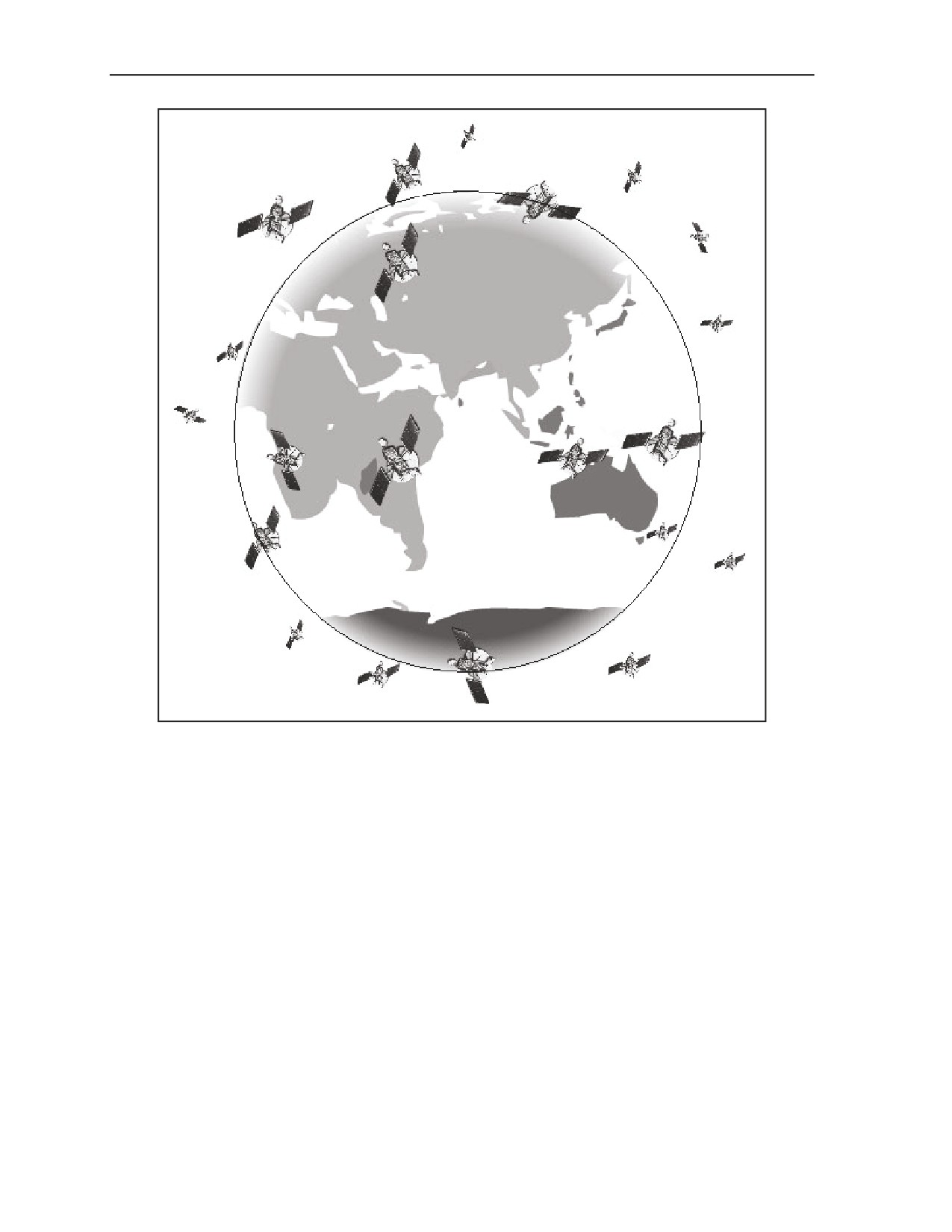
The space segment consists of a constellation of 24 low orbit satellites transmitting military and
civil navigational signals. Each satellite broadcasts radio frequencies (RF) ranging codes and a
navigation data message.
z
The control segment consists of a network of monitoring and control facilities that are used to
manage the satellite constellation and update the satellite navigation data messages.
z
The user segment consists of a variety of radio navigation receivers specifically designed to
receive, decode, and process the GPS satellite codes and navigation data messages.
SPACE SEGMENT
E-4. The GPS space segment consists of 24 satellites deployed in semi-synchronous (approximately 12-
hours) orbit. The satellites are positioned in orbital planes that provide a good geometric relationship
allowing four or more satellites to be viewed from any location on earth. Each satellite broadcasts two RF
signals. Each signal is modulated with a unique code sequence that allows the navigational set to identify
the satellite. Each satellite is also modulated with a navigational data message that gives the navigational
information about the operation of the satellite.
E-5. A minimum of four satellites are normally required to be simultaneously “in view” of the receiver.
The satellites provide the receiver four range measurements. Three of the measurements are used to
calculate a three-dimensional location of the receiver. The fourth parameter represents the user clock error.
Treating the user clock error as an unknown parameter enables most receivers to be built with an
inexpensive crystal oscillator rather than an expensive precision oscillator or an atomic clock.
25 October 2007
FM 3-09.15/MCWP 3-16.5
E-1
Appendix E
Figure E-1. GPS satellite constellation
CONTROL SEGMENT
E-6. The control segment of the GPS system consists of ground stations monitoring and controlling the
satellites by performing the following tasks:
z
Track the satellites.
z
Check and control satellite orbits.
z
Update the satellite navigational message.
E-7. The control segment primarily consists of a master control station located in Colorado Springs,
Colorado, and monitor stations and ground antennas at various locations around the world.
E-8. The master control station is the central processing facility for the control segment and is responsible
for monitoring and managing the satellite constellation.
USER SEGMENT
E-9. The user segment is utilized by both military and civilian personnel. The primary intended use for
GPS is for military purposes. The Department of Defense (DOD) determines who has authorization to use
E-2
FM 3-09.15/MCWP 3-16.5
25 October 2007
Global Positioning System (GPS)
the GPS. The civilian code is limited by a selective availability program also called spoofing. Though
civilians are able to access the GPS, access is controlled by cryptographic techniques.
MMS AND MMS-P GPS OPERATIONS
E-10. The MMS and MMS-P systems have the capability to determine wind speed and direction using the
GPS system. The GPS receiver in the radiosonde transmits frequency and phase measurements to the
ground station for processing. These measurements are processed by the ground station to determine wind
speed and direction.
E-11. The ground stations in the MMS and MMS-P differ in configuration and capabilities. The Marwin in
the MMS contains a built-in GPS receiver that processes the signals from the GPS radiosonde allowing the
Marwin to determine wind speed and direction. The MMS-P system GPS radiosonde signals are received
by the PLGR II and passed to the Marwin III for GPS wind finding. Using the PLGR II to process signals,
allows the system to utilize the Precise Positioning Service (PPS) signal and allows future compliance with
Selective Availability Anti-Spoofing Module compliance. This results in the MMS-P producing more
accurate wind finding data.
25 October 2007
FM 3-09.15/MCWP 3-16.5
E-3
This page intentionally left blank.

Appendix F
NAVAID Coverage Charts and Tables
This appendix provides charts for the selection of optimum coverage. Section I
contains an overview of the long-range aid to navigation coverage charts. Section II
contains a map depicting very low frequency and Omega station locations. Apply the
procedures outlined in chapter 4 to enter the charts in this appendix.
LORAN COVERAGE CHARTS
F-1. The U.S. Department of Defense requirement for foreign LORAN-C coverage ended December 31,
1994. The Coast Guard has either closed or turned over the foreign stations to the host country. As a result,
predictability of coverage availability is no longer possible. Some chains no longer have the requisite three
stations operating, whereas others are completely off the air. MET personnel should consult with local
authorities when selecting optimum LORAN-C coverage. Those chains operational as of the publication
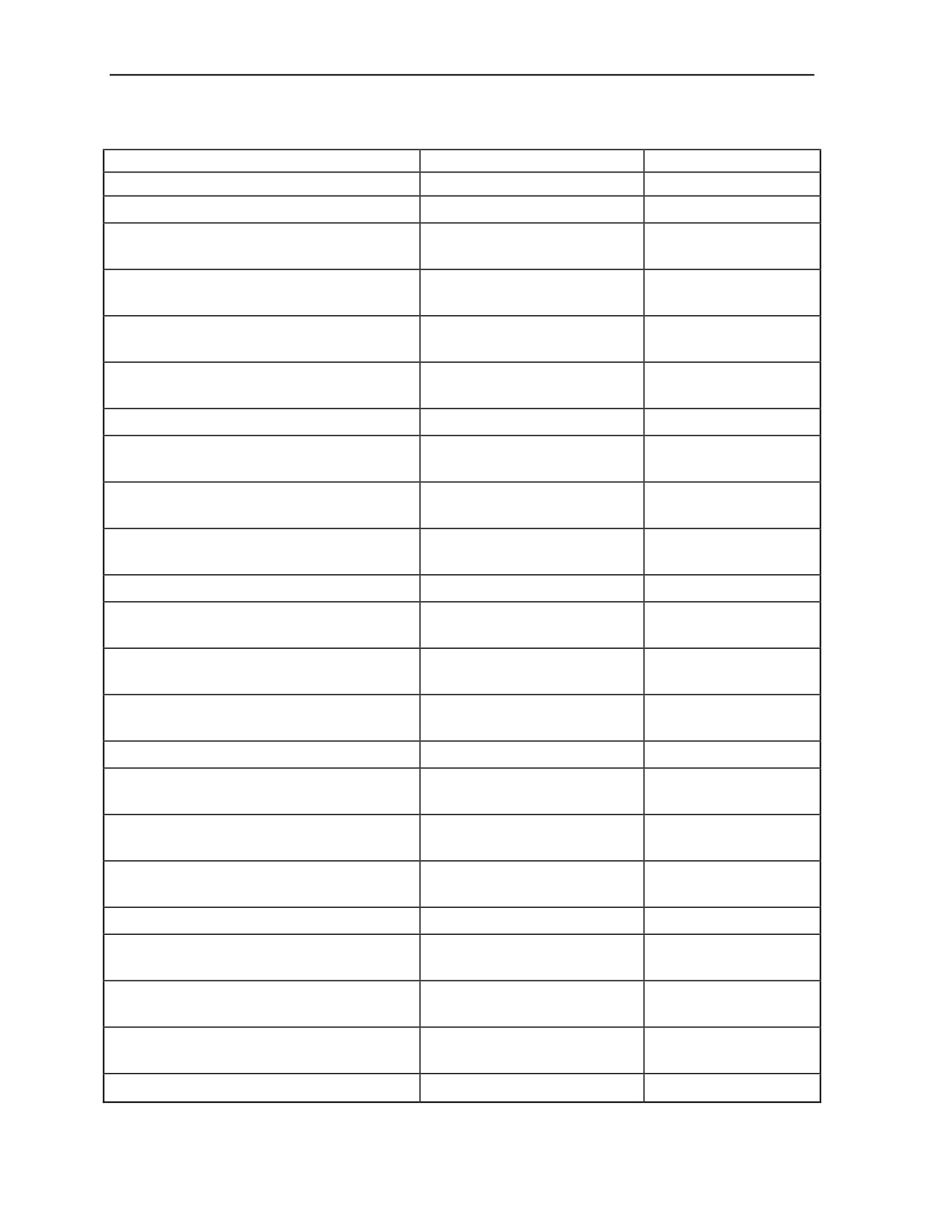
date are contained in. Table F-1 as a quick reference for the LORAN chains’ master and secondary
stations. See figures F-1 through F-24 for the specific master and secondary stations for each chain.
Table F-1. LORAN Chains’ Stations
Chain Name
Stations
Latitude/Longitude
5543 Calcutta
Master / Baleshwar
021˚ 29’ 08.000” N
086˚ 55’ 18.000” E
Whiskey / Diamond Harbor
022˚ 10’ 18.000” N
088˚ 12’ 25.000” E
X-ray / Patpur
020˚ 26’ 48.000” N
085˚ 49’ 47.000” E
5930 Canadian East Coast Chain
Master / Caribou
046˚ 48’ 27.305” N
067˚ 55’ 37.159” W
X-ray / Nantucket
041˚ 15’ 12.046” N
069˚ 58’ 38.536” W
Yankee / Cape Race
046˚ 46’ 32.286” N
053˚ 10’ 27.606” W
Zulu / Fox Harbor
052˚ 22’ 35.252” N
055˚ 42’ 27.862” W
5980 Russian-American Chain
Master / Petropavlovsk
053˚ 07’ 47.584 N
157˚ 41’ 42.900” E
Whiskey / Attu Island
052˚ 49’ 44.134”N
173˚ 10’ 49.528” E
X-ray / Alexandrovsk
151˚ 04’ 42.800” N
25 October 2007
FM 3-09.15/MCWP 3-16.5
F-1
Appendix F
Table F-1. LORAN Chains’ Stations
Chain Name
Stations
Latitude/Longitude
142˚ 42’ 04.950” E
5990 Canadian West Coast Chain
Master / Williams Lake
051˚ 57’ 58.876” N
122˚ 22’ 01.686” W
X-ray / Shoal Cove
055˚ 26’ 58.876” N
131˚ 15’ 19.094” W
Yankee / George
047˚ 03’ 48.096” N
119˚ 44’ 38.976” W
Zulu / Port Hardy
050˚ 36’ 29.830” N
127˚ 21’ 28.489” W
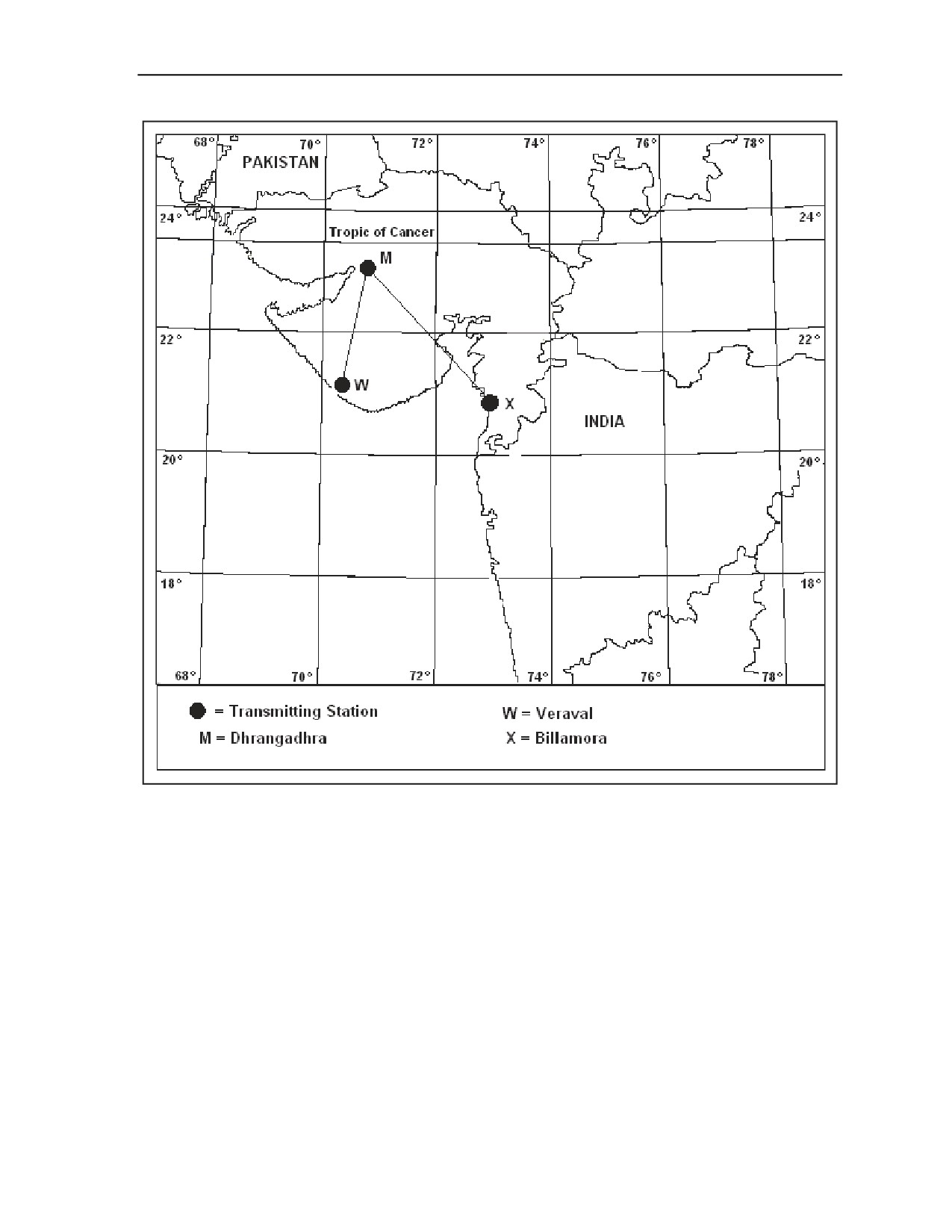
6042 Bombay Chain
Master / Dhrangadhra
023˚ 00’ 14.000” N
071˚ 31’ 39.000” E
Whiskey / Veraval
020˚ 57’ 07.000” N
070˚ 20’ 13.000” E
X-ray / Billamora
020˚ 45’ 40.000” N
073˚ 02’ 17.000” E
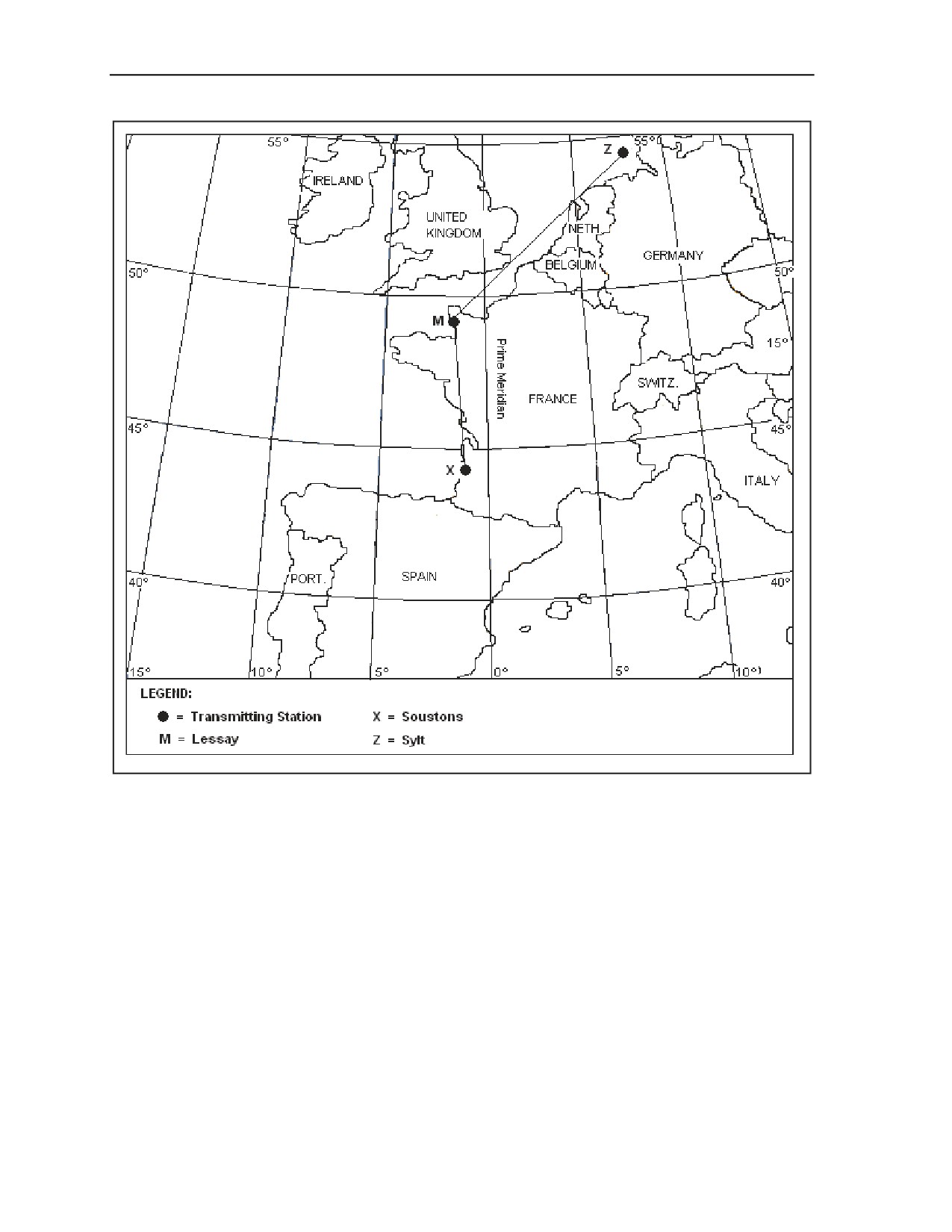
6731 Lessay Chain
Master / Lessay
049˚ 08’ 55.224” N
001˚ 30’ 17.029” W
X-ray / Soustons
043˚ 44’ 23.099” N
001˚ 22’ 49.584” W
Zulu / Sylt
054˚ 48’ 29.975” N
008˚ 17’ 36.856” E
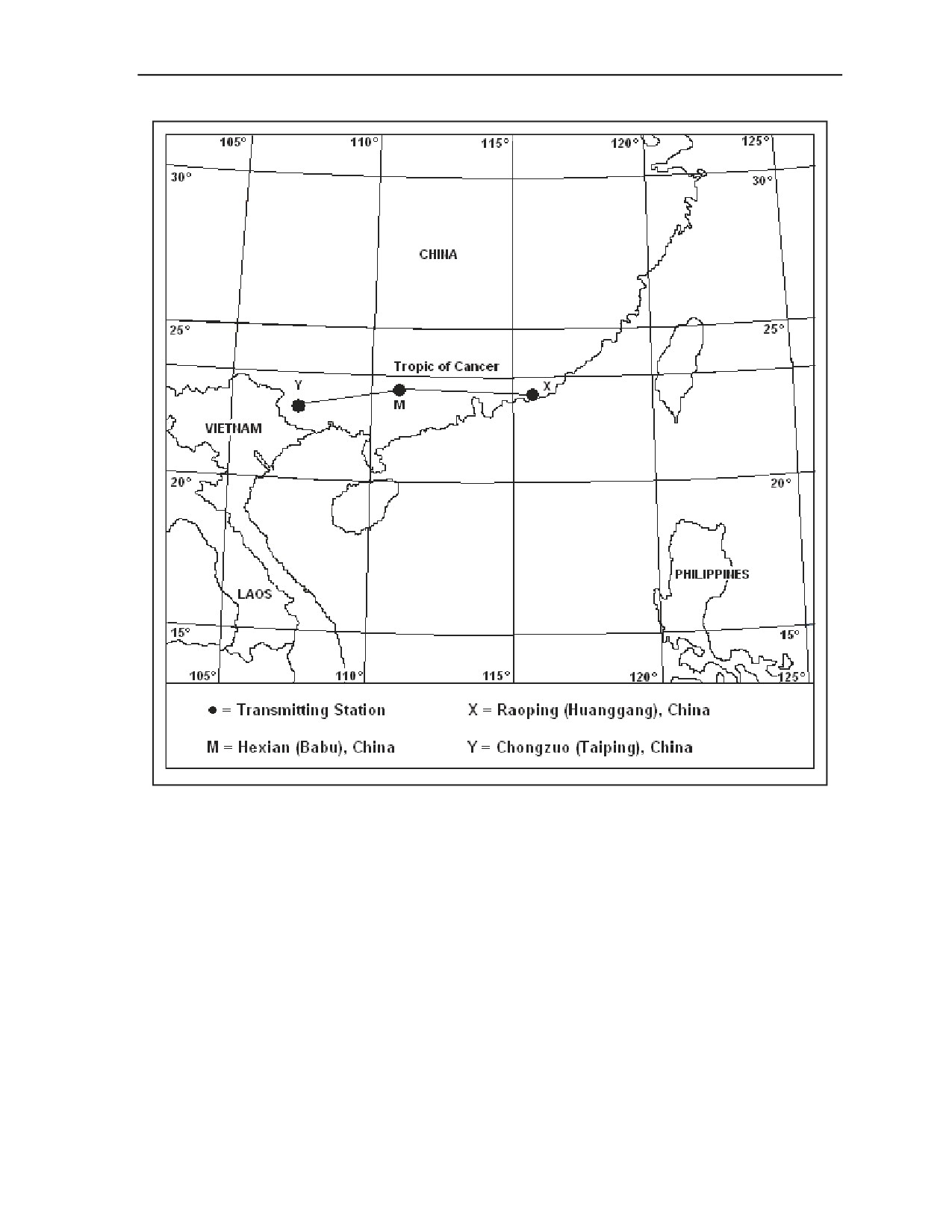
6780 China South Sea
Master / Hexian (Babu)
023˚ 58’ 03.847” N
111˚ 43’ 10.298” E
X-ray / Raoping (Huanggang)
023˚ 43’ 25.941” N
116˚ 53’ 44.826” E
Yankee / Chongzuo (Taiping)
022˚ 32’ 35.452” N
107˚ 13’ 21.665” E
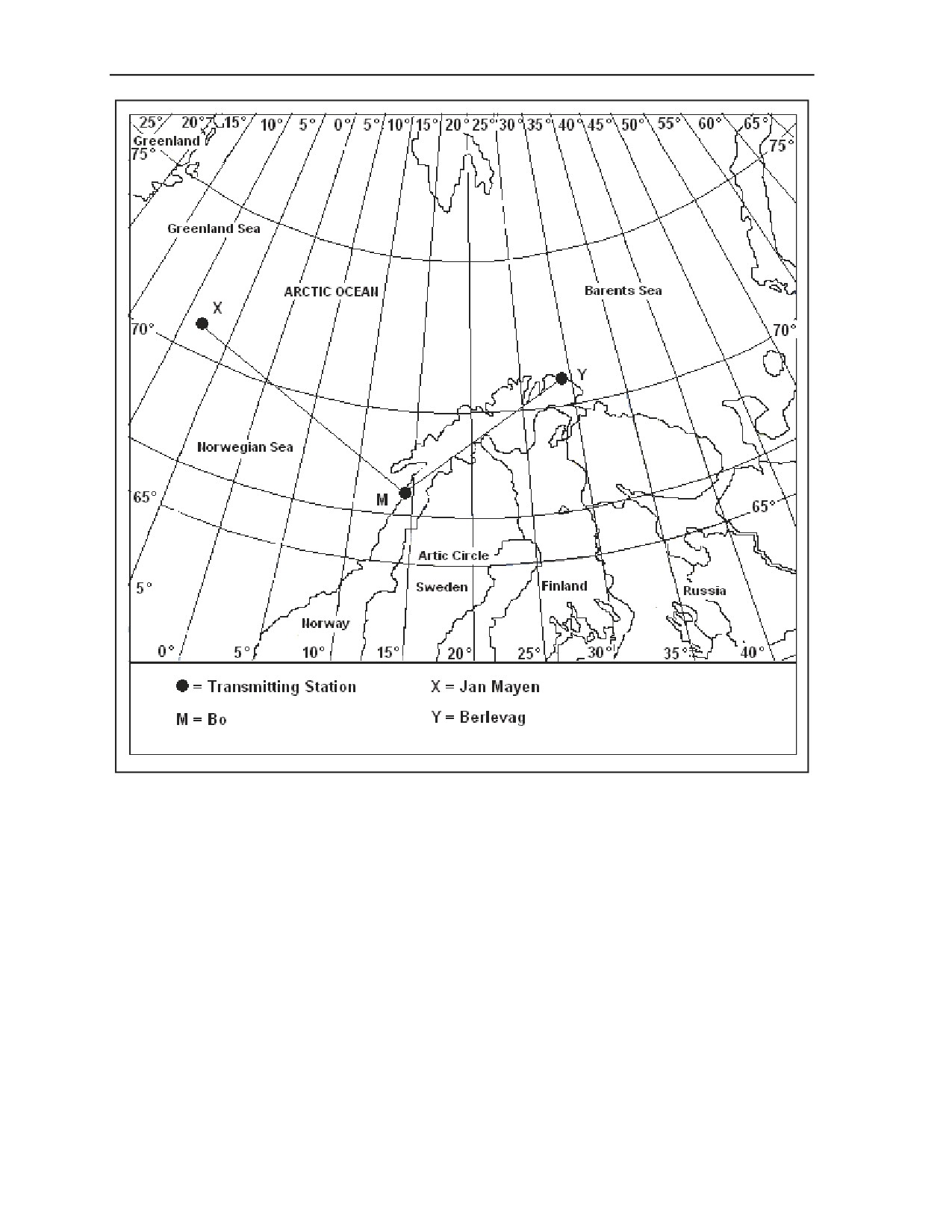
7001 Bo
Master / Bo
068˚ 38’ 06.847” N
111˚ 43’ 10.298” E
X-ray / Jan Mayen Island
070˚ 54’ 51.478” N
008˚ 43’ 56.525” W
Yankee / Berlevag
070˚ 50’ 43.014” N
029˚ 12’ 15.980” E
7030 Saudi Arabia South Chain
F-2
FM 3-09.15/MCWP 3-16.5
25 October 2007
NAVAID Coverage Charts and Tables
Table F-1. LORAN Chains’ Stations
Chain Name
Stations
Latitude/Longitude
Master / Al Khamasin
020˚ 28’ 02.025” N
044˚ 34’ 52.894” E
Whiskey / Salwa
024˚ 50’ 01.631” N
050˚ 34’ 12.574” E
X-ray / Afif
023˚ 48’ 36.952” N
042˚ 51’ 18.184” E
Yankee / Ash Shaykh
028˚ 09’ 15.997” N
Humayd
034˚ 45’ 40.544” E
Zulu / Al Muwassam
016˚ 25’ 56.028” N
042˚ 48’ 04.844” E
7270 Newfoundland East Coast
Master / Comfort Cove
049˚ 19’ 53.570” N
054˚ 51’ 42.570” W
Whiskey / Cape Race
046˚ 46’ 32.286” N
053˚ 10’ 27.606” W
X-ray / Fox Harbor
052˚ 22’ 35.252” N
055˚ 42’ 27.862” W
7430 China North Sea
Master / Rongcheng (Yatou)
037˚ 03’ 51.765” N
122˚ 19’ 25.954” E
X-ray / Xuancheng
031˚ 04’ 07.937” N
118˚ 53’ 09.635” E
Yankee / Helong
042˚ 43’ 11.562” N
129˚ 06’ 27.213” E
7499 Sylt
Master / Sylt
054˚ 48’ 29.975” N
008˚ 17’ 36.856” E
X-ray / Lessay
049˚ 08’ 55.224” N
001˚ 30’ 17.029” W
Yankee / Vaerlandet
061˚ 17’ 49.435” N
004˚ 41’ 46.618” E
7950 Eastern Russia Chayka
Master / Aleksadrovsk
051˚ 04’ 42.805” N
142˚ 42’ 04.952” E
Whiskey / Petropavlovsk
053˚ 07’ 47.584” N
157˚ 41’ 42.900” E
X-ray / Ussuriisk
044˚ 31’ 59.702” N
131˚ 38’ 23.403” E
Yankee / Tokachibuto
042˚ 44’ 37.214” N
143˚ 43’ 09.757” E
25 October 2007
FM 3-09.15/MCWP 3-16.5
F-3
Appendix F
Table F-1. LORAN Chains’ Stations
Chain Name
Stations
Latitude/Longitude
Zulu / Okhotsk
059˚ 25’ 02.050” N
143˚ 05’ 22.916” E
7960 Gulf of Alaska Chain
Master / Tok
063˚ 19’ 42.884” N
142˚ 48’ 31.346” W
X-ray / Narrow Cape
057˚ 26’ 20.301” N
152˚ 22’ 10.708” W
Yankee / Shoal Cove
055˚ 26’ 20.940” N
131˚ 15’ 19.094” W
Zulu / Port Clarence
065˚ 14’ 40.372” N
166˚ 53’ 11.996” W
7980 Southeast United States Chain
Master / Malone
030˚ 59’ 38.870” N
085˚ 10’ 08.751” W
Whiskey / Grangeville
030˚ 43’ 33.149” N
090˚ 49’ 43.046” W
X-ray / Raymondville
026˚ 31’ 55.141” N
097˚ 49’ 59.539” W
Yankee / Jupiter
027˚ 01’ 58.528” N
080˚ 06’ 52.875” W
Zulu / Carolina Beach
034˚ 03’ 46.208” N
077˚ 54’ 46.100” W
7990 Mediterranean Chain
Master / Sellia Marina
038˚ 52’ 20.707” N
016˚ 43’ 06.713” E
X-ray / Lampedusa
035˚ 31’ 20.912” N
012˚ 31’ 30.799” E
Yankee / Kargabarun
040˚ 58’ 21.066” N
(off air)
027˚ 52’ 02.074” E
Zulu / Estartit
042˚ 03’ 36.629” N
(off air)
003˚ 12’ 16.066” E
8290 North Central United States
Master / Havre
048˚ 44’ 38.589” N
109˚ 58’ 53.613” W
Whiskey / Baudette
048˚ 36’ 49.947” N
094˚ 33’ 17.915” W
X-ray / Gillette
044˚ 00’ 11.305” N
105˚ 37’ 23.895” W
Yankee / Williams Lake
051˚ 57’ 58.876” N
122˚ 22’ 01.686” W
F-4
FM 3-09.15/MCWP 3-16.5
25 October 2007
NAVAID Coverage Charts and Tables
Table F-1. LORAN Chains’ Stations
Chain Name
Stations
Latitude/Longitude
8830 Saudi Arabia North Chain
Master / Afif
023˚ 48’ 36.952” N
042˚ 51’ 18.184” E
Whiskey / Salwa
024˚ 50’ 01.631” N
050˚ 34’ 12.574” E
X-ray / Al Khamasin
020˚ 28’ 02.025” N
044˚ 34’ 52.894” E
Yankee / Ash Shaykh
028˚ 09’ 15.997” N
Humayd
034˚ 45’ 40.544” E
Zulu / Al Muwassam
016˚ 25’ 56.028” N
042˚ 48’ 04.844” E
8970 Great Lakes Chain
Master / Dana
039˚ 51’ 07.658” N
087˚ 29’ 11.586” W
Whiskey / Malone
030˚ 59’ 38.870” N
085˚ 10’ 08.751” W
X-ray / Seneca
042˚ 42’ 50.716” N
076˚ 49’ 33.308” W
Yankee / Baudette
048˚ 36’ 49.947” N
094˚ 33’ 17.915” W
Zulu / Boise City
036˚ 30’ 20.783” N
102˚ 53’ 59.487” W
9610 South Central United States Chain
Master / Boise City
036˚ 30’ 20.783” N
102˚ 53’ 59.487” W
Victor / Gillette
044˚ 00’ 11.305” N
105˚ 37’ 23.895” W
Whiskey / Searchlight
035˚ 19’ 18.305” N
114˚ 48’ 16.881” W
X-ray / Las Cruces
032˚ 04’ 18.130” N
106˚ 52’ 04.388” W
Yankee / Raymondville
026˚ 31’ 55.141” N
097˚ 49’ 59.539” W
Zulu / Grangeville
030˚ 43’ 33.149” N
090˚ 49’ 43.046” W
9930 East Asia
Master / Pohang
036˚ 11’ 05.450” N
129˚ 20’ 27.440” E
Whiskey / Kwang Ju
035˚ 02’ 23.996” N
126˚ 32’ 27.295” E
25 October 2007
FM 3-09.15/MCWP 3-16.5
F-5
Appendix F
Table F-1. LORAN Chains’ Stations
Chain Name
Stations
Latitude/Longitude
X-ray / Gesashi
026˚ 36’ 25.038” N
128˚ 08’ 56.920” E
Yankee / Niijima
034˚ 24’ 11.943” N
139˚ 16’ 19.473” E
Zulu / Ussurisk
044˚ 31’ 59.702” N
(off air)
131˚ 38’ 23.403” E
9940 United States West Coast Chain
Master / Fallon
039˚ 33’ 06.740” N
118˚ 49’ 55.816” W
Whiskey / George
047˚ 03’ 48.096” N
119˚ 44’ 38.976” W
X-ray / Middletown
038˚ 46’ 57.110” N
122˚ 29’ 43.975” W
Yankee / Searchlight
035˚ 19’ 18.305” N
114˚ 48’ 16.881” W
9960 Northeast United States Chain
Master / Seneca
042˚ 42’ 50.716” N
076˚ 49’ 33.308” W
Whiskey / Caribou
046˚ 48’ 27.305” N
067˚ 55’ 37.159” W
X-ray / Nantucket
041˚ 15’ 12.046” N
069˚ 58’ 38.536”W
Yankee / Carolina Beach
034˚ 03’ 46.208” N
077˚ 54’ 46.100” W
Zulu / Dana
039˚ 51’ 07.658” N
087˚ 29’ 11.586” W
9990 North Pacific Chain
Master / Saint Paul
057˚ 09’ 12.350” N
170˚ 15’ 06.245” W
X-ray / Attu Island
052˚ 49’ 44.134” N
173˚ 10. 49.528” E
Yankee / Port Clarence
065˚ 14’ 40.372” N
166˚ 53’ 11.996” W
Zulu / Narrow Cape
057˚ 26’ 20.301” N
152˚ 22’ 10.708” W
F-6
FM 3-09.15/MCWP 3-16.5
25 October 2007
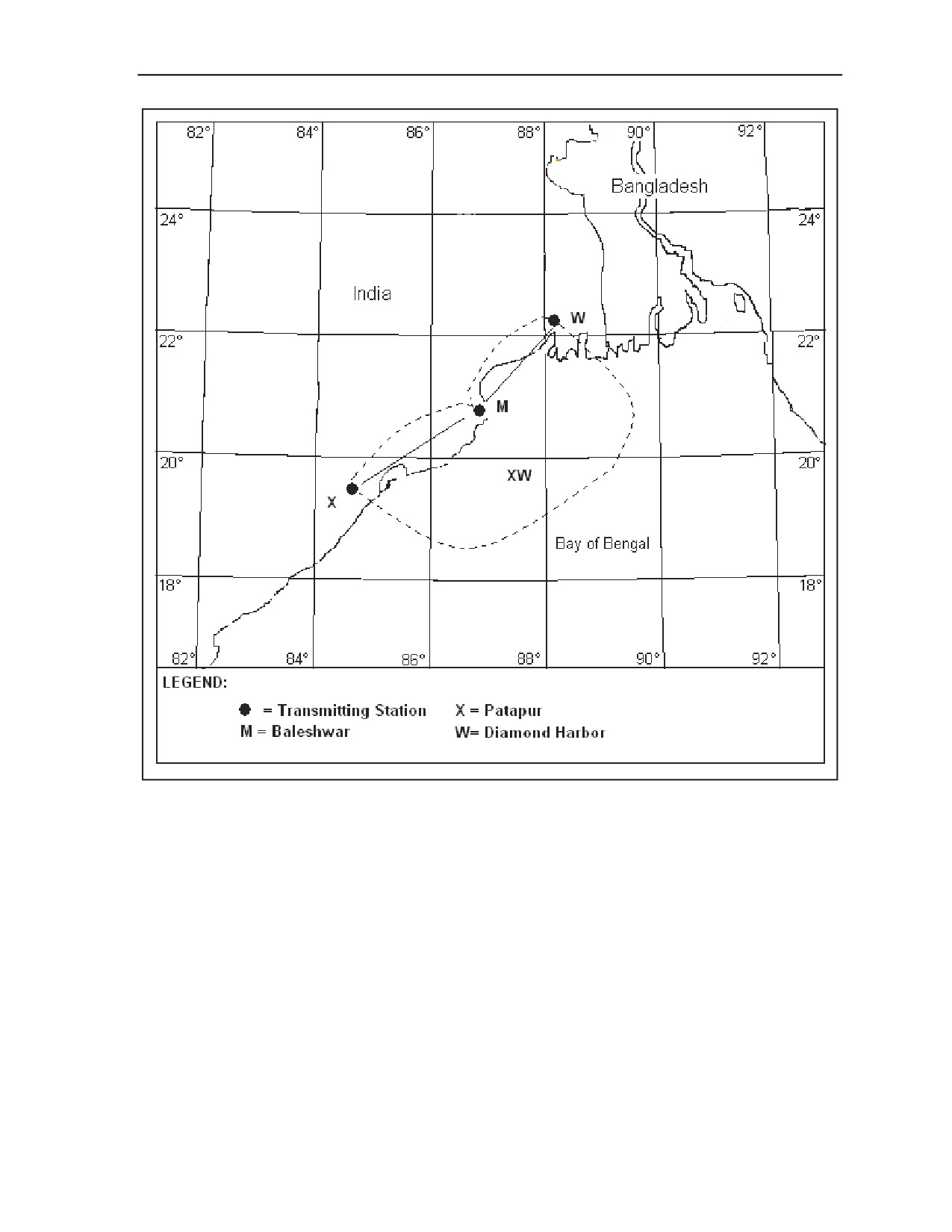
NAVAID Coverage Charts and Tables
Figure F1. LORAN-C, Calcutta chain GRI 5543
25 October 2007
FM 3-09.15/MCWP 3-16.5
F-7
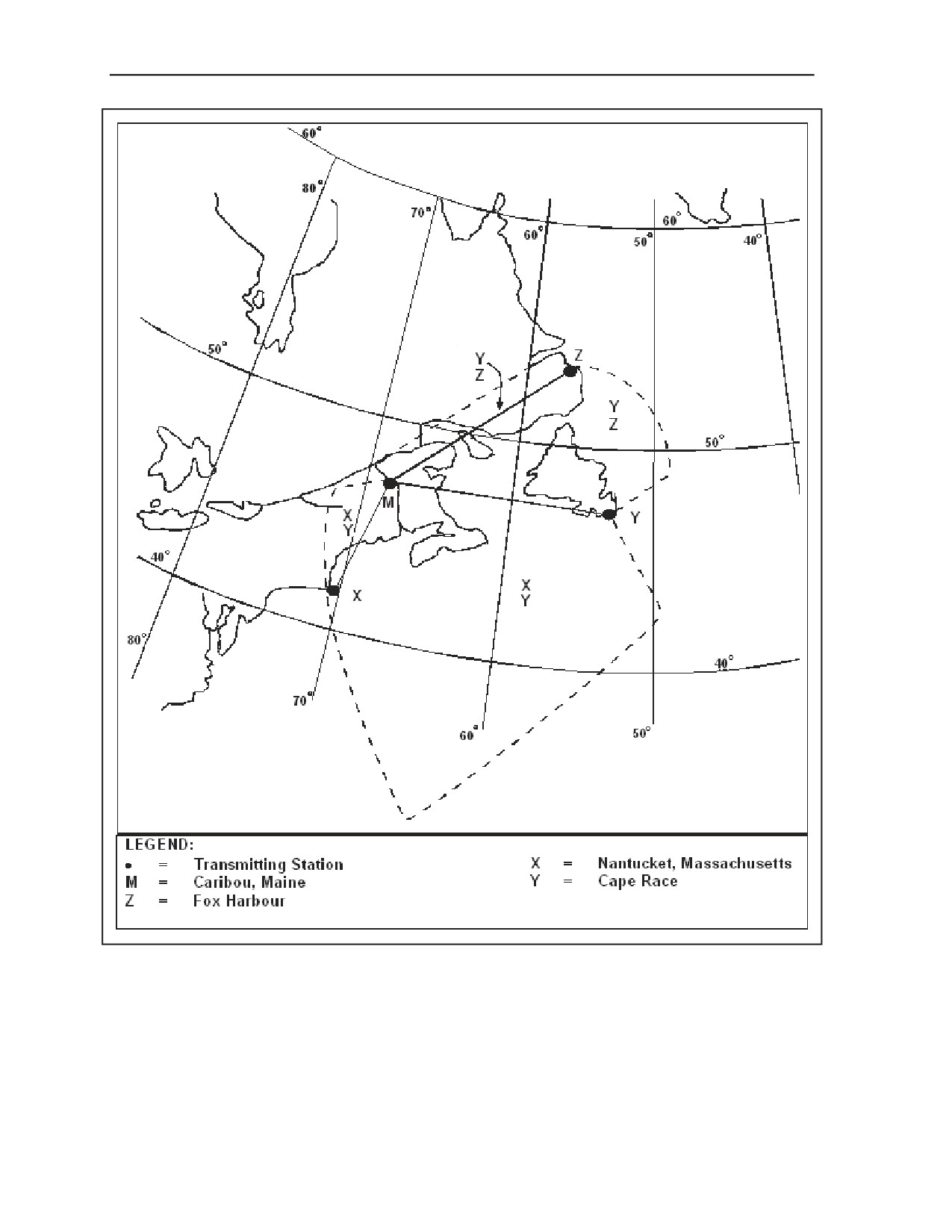
Appendix F
Figure F-2. LORAN-C, Canadian east coast Chain GRI 5930
F-8
FM 3-09.15/MCWP 3-16.5
25 October 2007
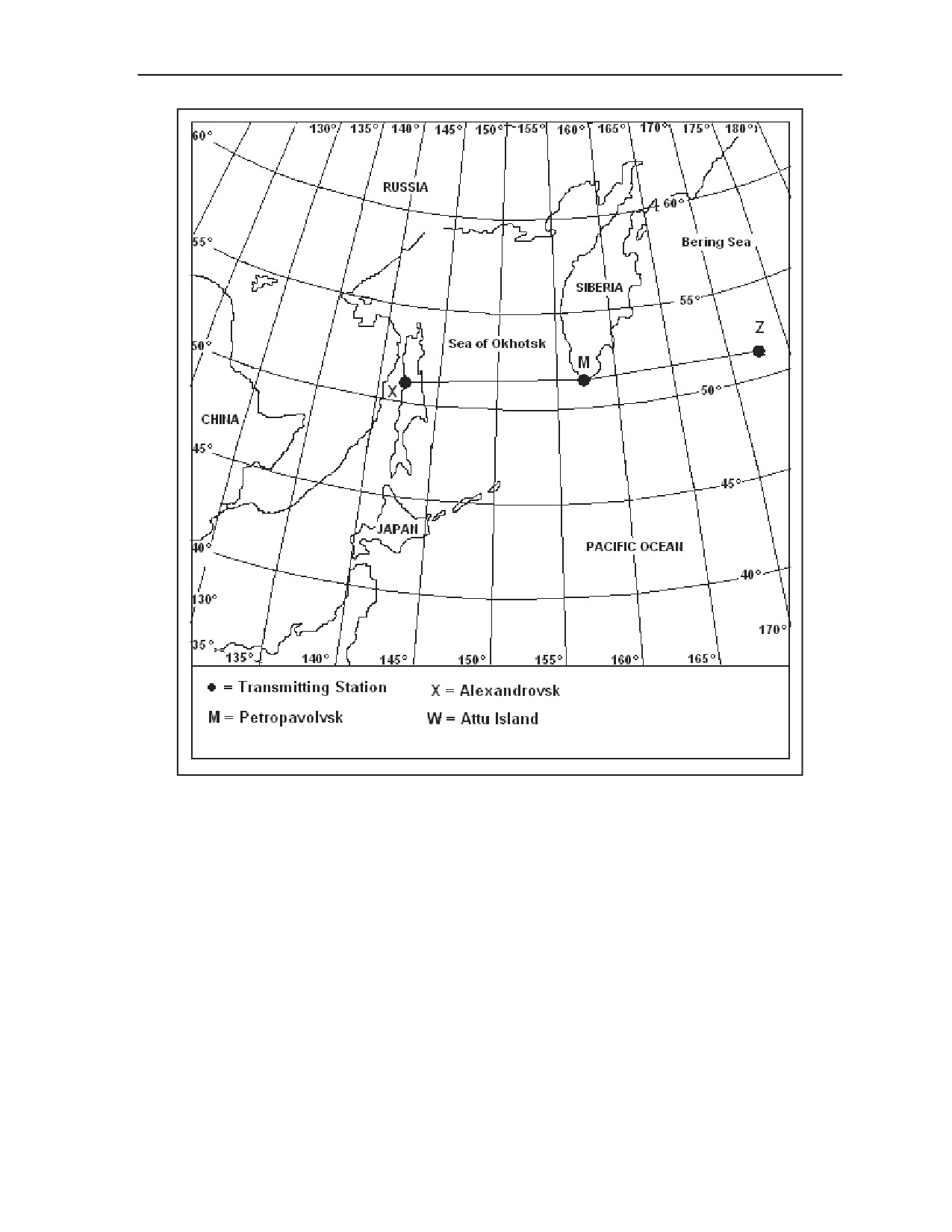
NAVAID Coverage Charts and Tables
Figure F3. LORAN-C, Russian-American chain GRI 5980
25 October 2007
FM 3-09.15/MCWP 3-16.5
F-9
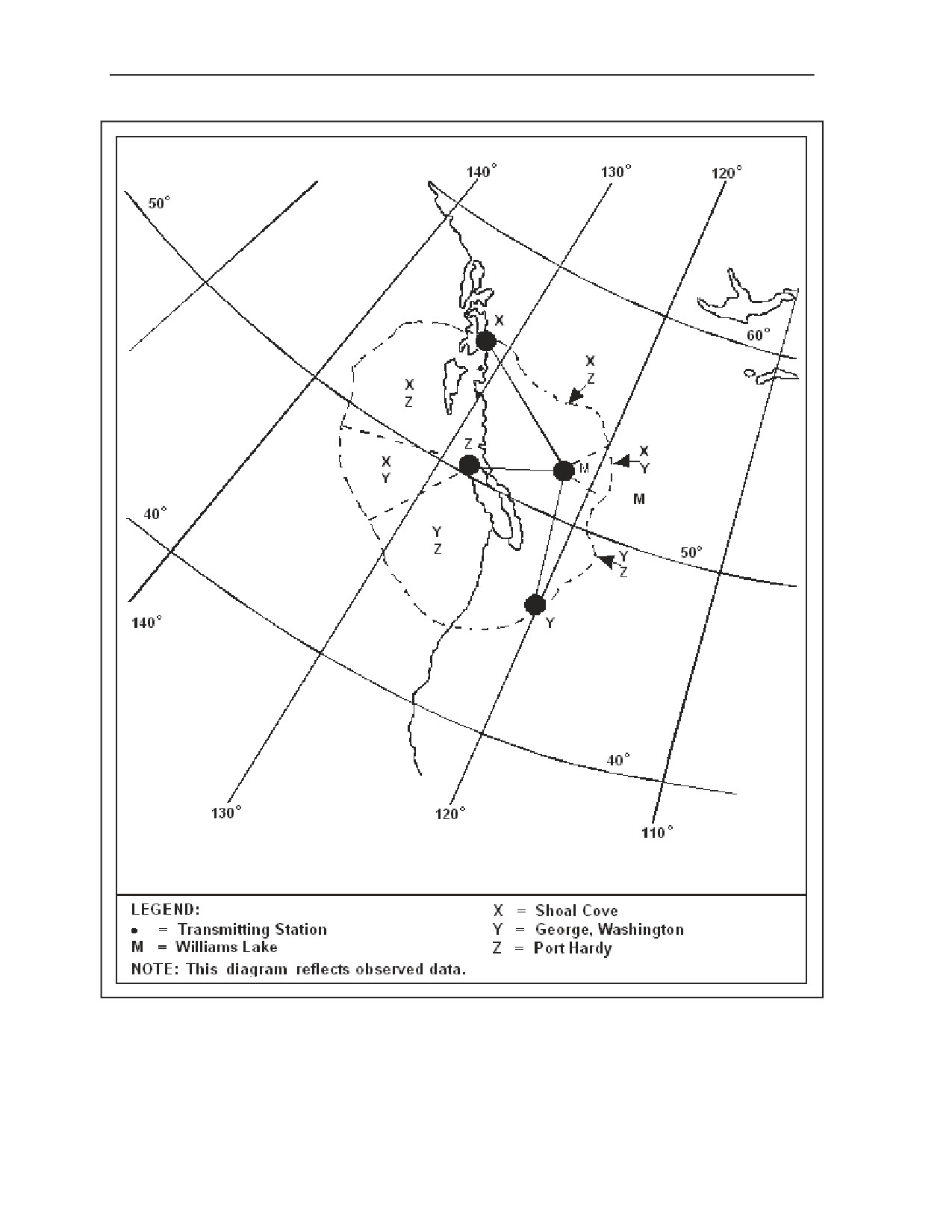
Appendix F
Figure F4. LORAN-C, Canadian west coast chain, GRI 5990
F-10
FM 3-09.15/MCWP 3-16.5
25 October 2007
NAVAID Coverage Charts and Tables
Figure F5. LORAN-C, Bombay chain GRI 6042
25 October 2007
FM 3-09.15/MCWP 3-16.5
F-11
Appendix F
Figure F6. LORAN-C, Lessay chain GRI 6780
F-12
FM 3-09.15/MCWP 3-16.5
25 October 2007
NAVAID Coverage Charts and Tables
Figure F7. LORAN-C, China south sea GRI 6780
25 October 2007
FM 3-09.15/MCWP 3-16.5
F-13
Appendix F
Figure F8. LORAN-C, Bo chain GRI 7001
F-14
FM 3-09.15/MCWP 3-16.5
25 October 2007