FM 3-09.15 TACTICS, TECHNIQUES, AND PROCEDURES FOR FIELD ARTILLERY METEOROLOGY (OCTOBER 2007) - page 6
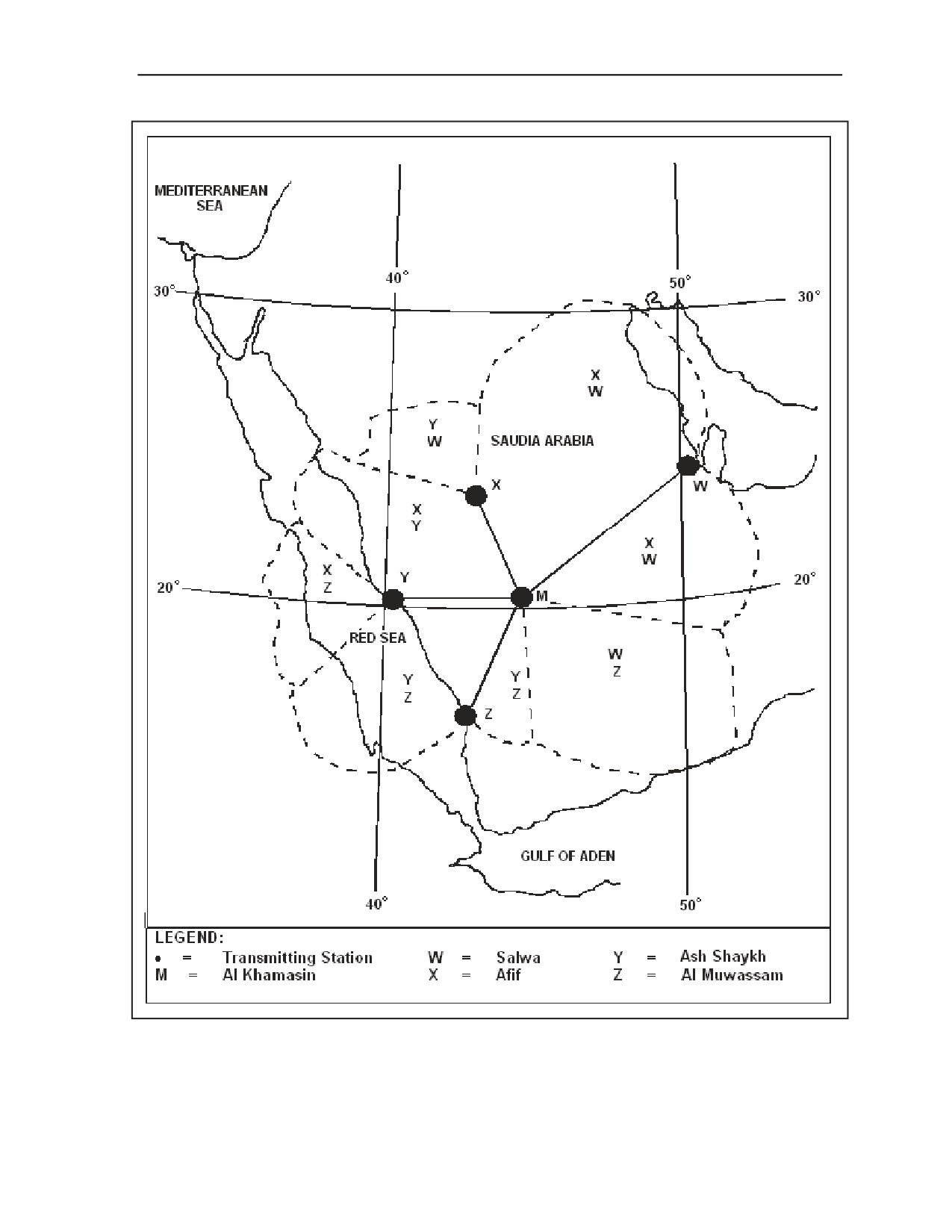
NAVAID Coverage Charts and Tables
Figure F-9. LORAN-C, south Saudi Arabian chain, GR 7030
25 October 2007
FM 3-09.15/MCWP 3-16.5
F-15
Appendix F
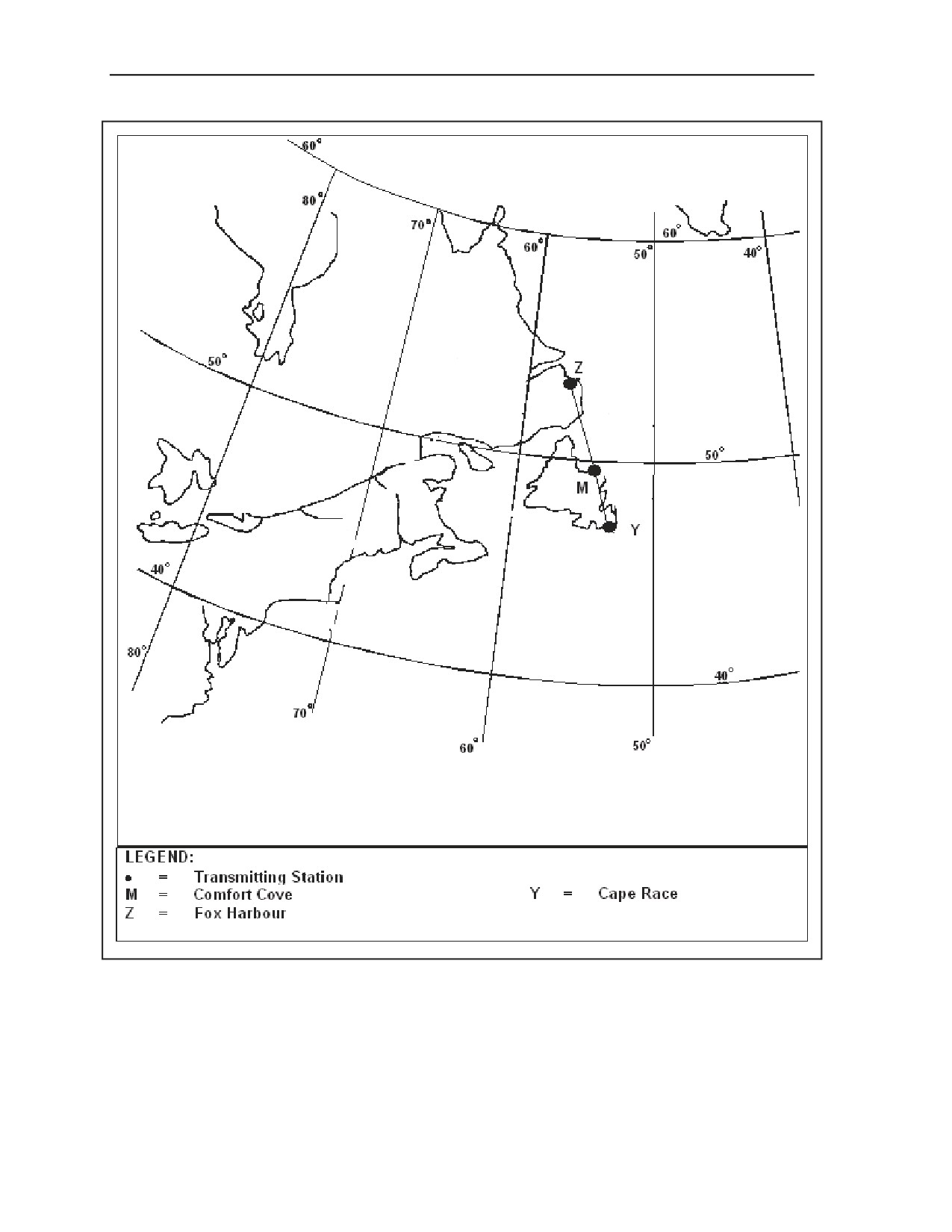
Figure F10. LORAN-C, Newfoundland east coast GRI 7270
F-16
FM 3-09.15/MCWP 3-16.5
25 October 2007
NAVAID Coverage Charts and Tables
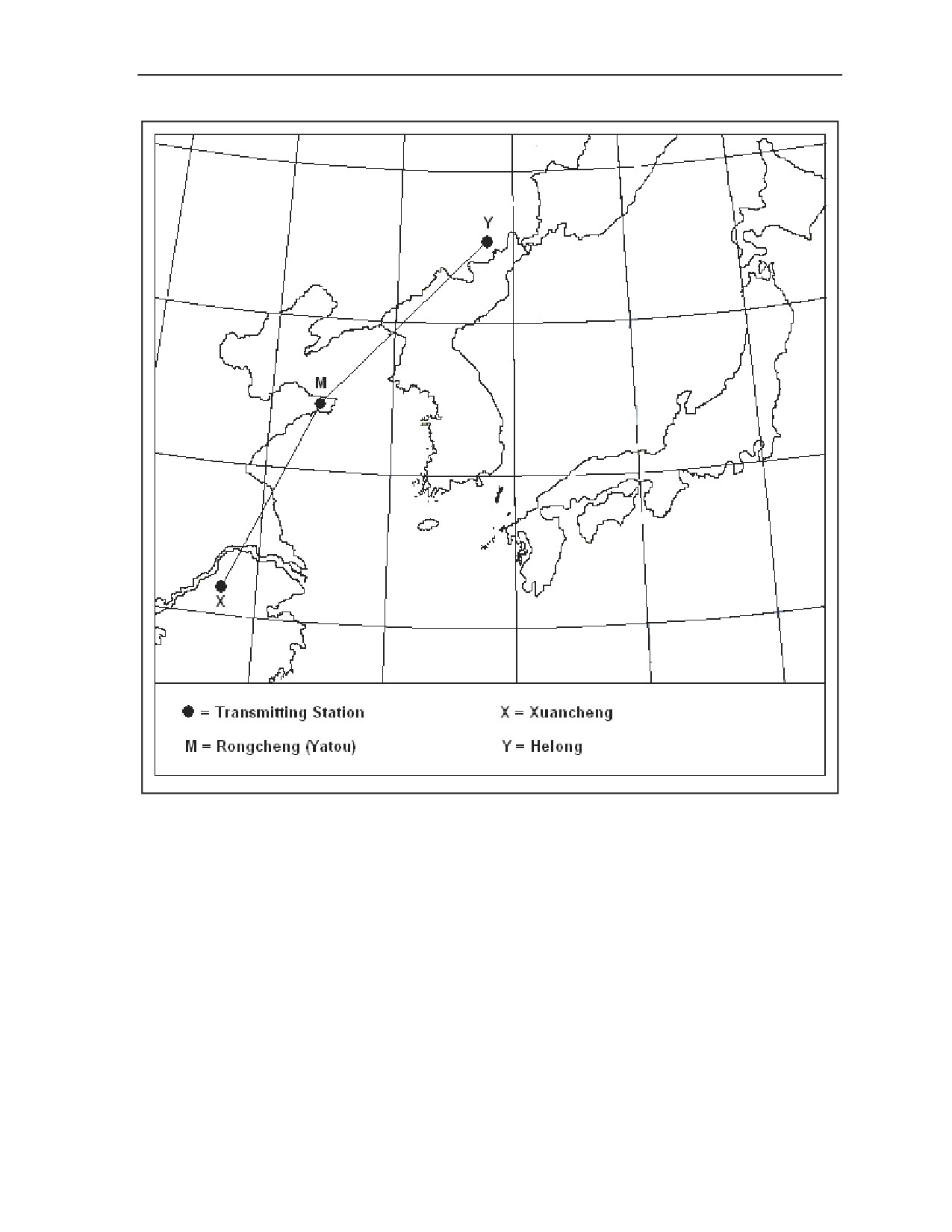
Figure F11. LORAN-C, China north sea GRI 7430
25 October 2007
FM 3-09.15/MCWP 3-16.5
F-17
Appendix F
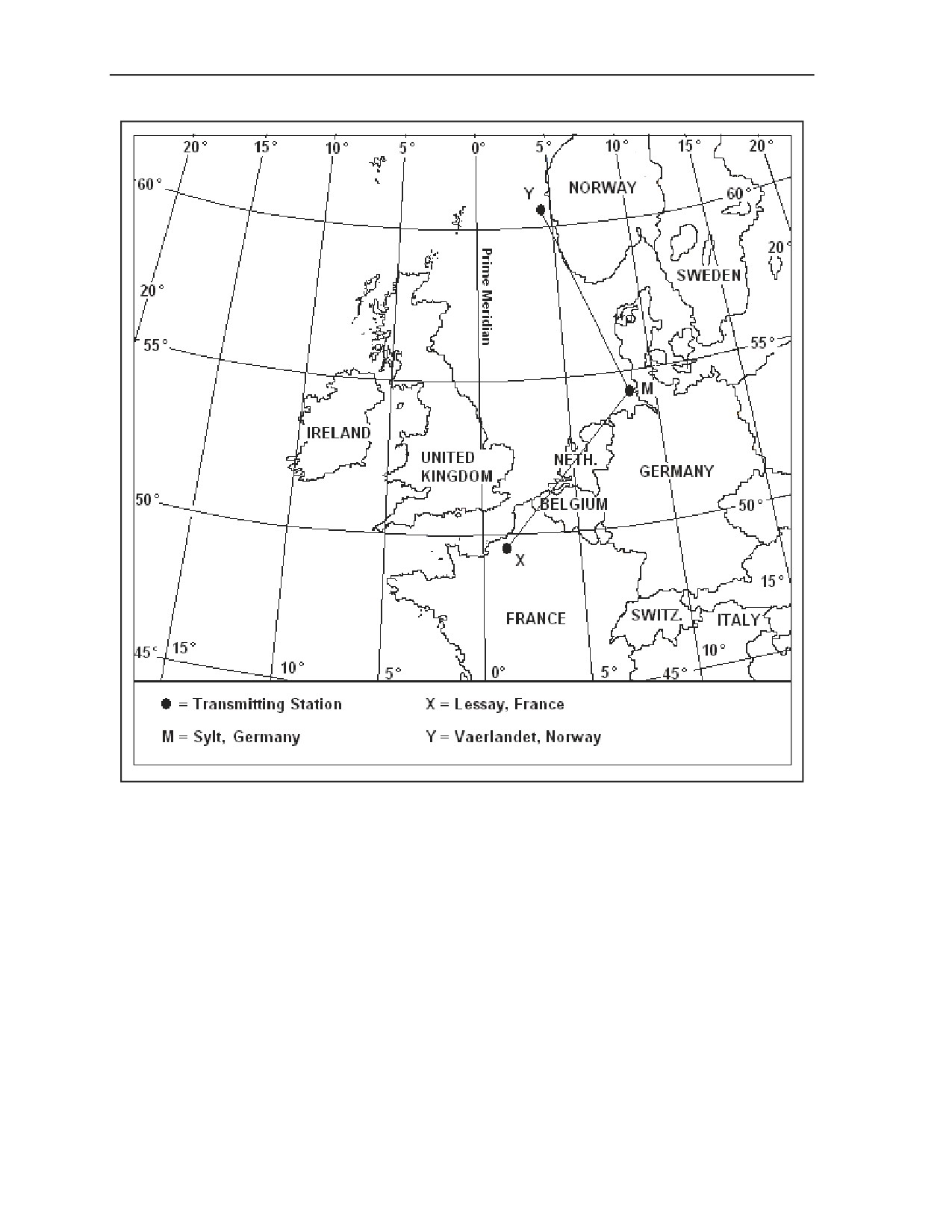
Figure F12. LORAN-C, Sylt chain GRI 7499
F-18
FM 3-09.15/MCWP 3-16.5
25 October 2007
NAVAID Coverage Charts and Tables
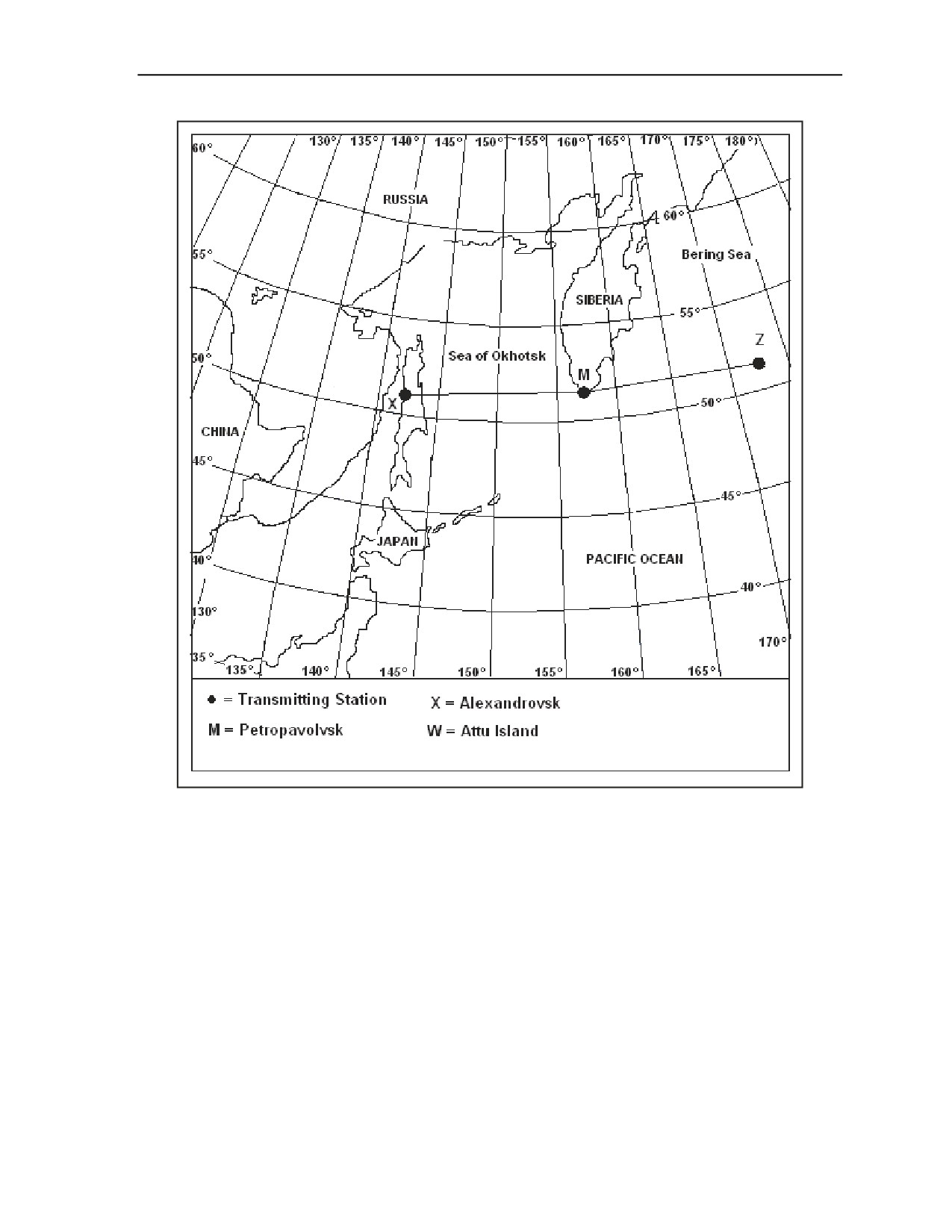
Figure F13. LORAN-C, eastern Russia Chayka chain GRI 7950
25 October 2007
FM 3-09.15/MCWP 3-16.5
F-19
Appendix F
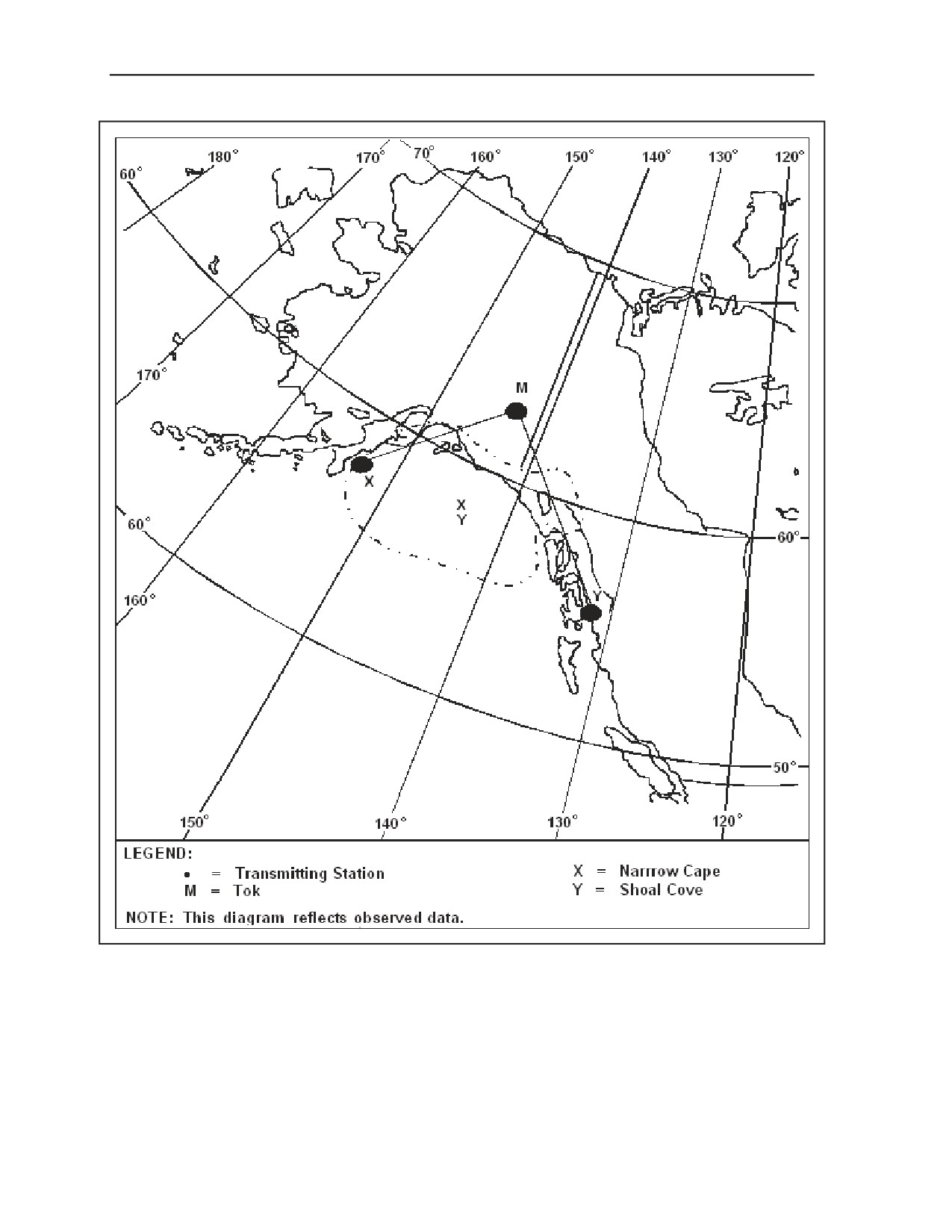
Figure F-14. LORAN-C, Gulf of Alaska chain, GRI 7960
F-20
FM 3-09.15/MCWP 3-16.5
25 October 2007
NAVAID Coverage Charts and Tables
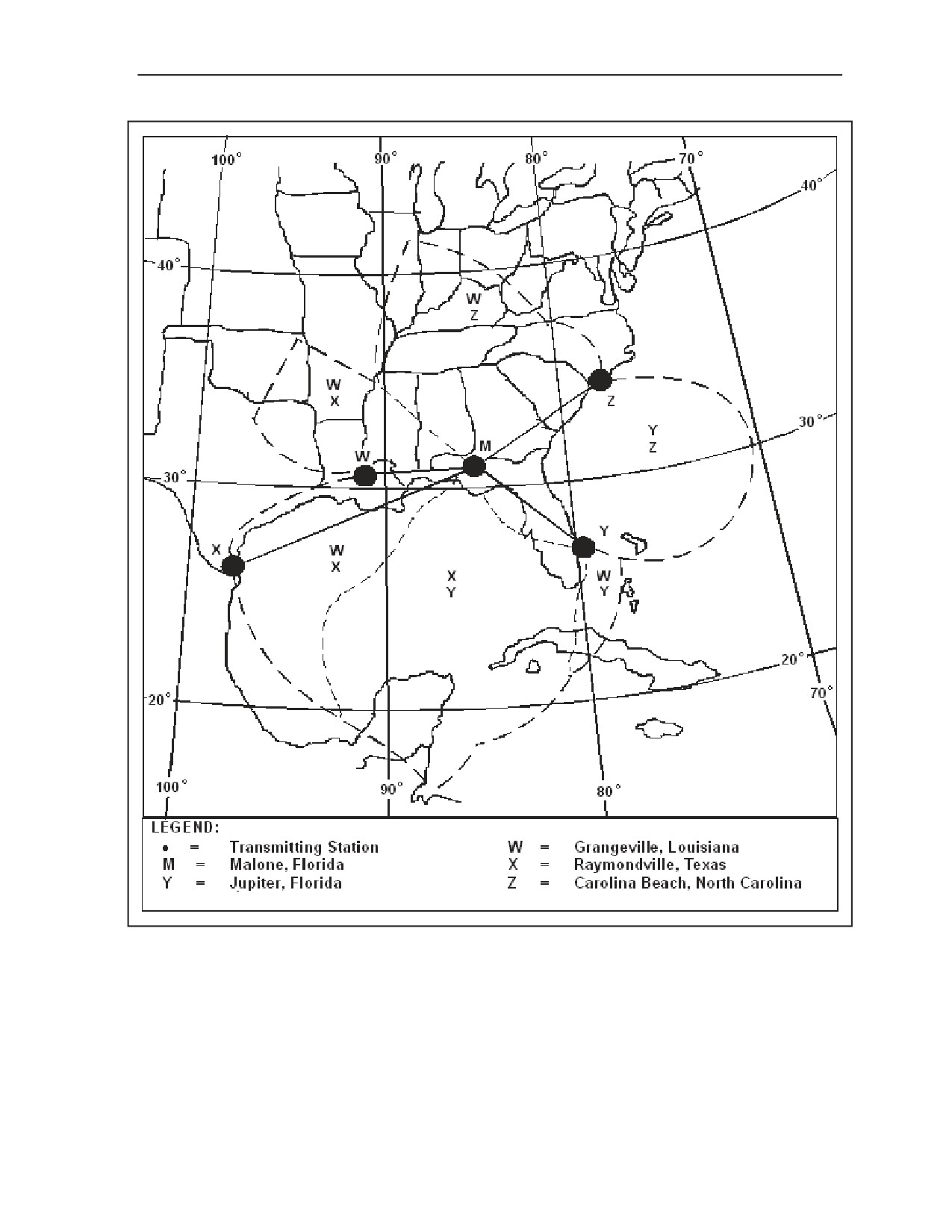
Figure F-15. LORAN-C, southeast United States chain, GRI 7980
25 October 2007
FM 3-09.15/MCWP 3-16.5
F-21
Appendix F
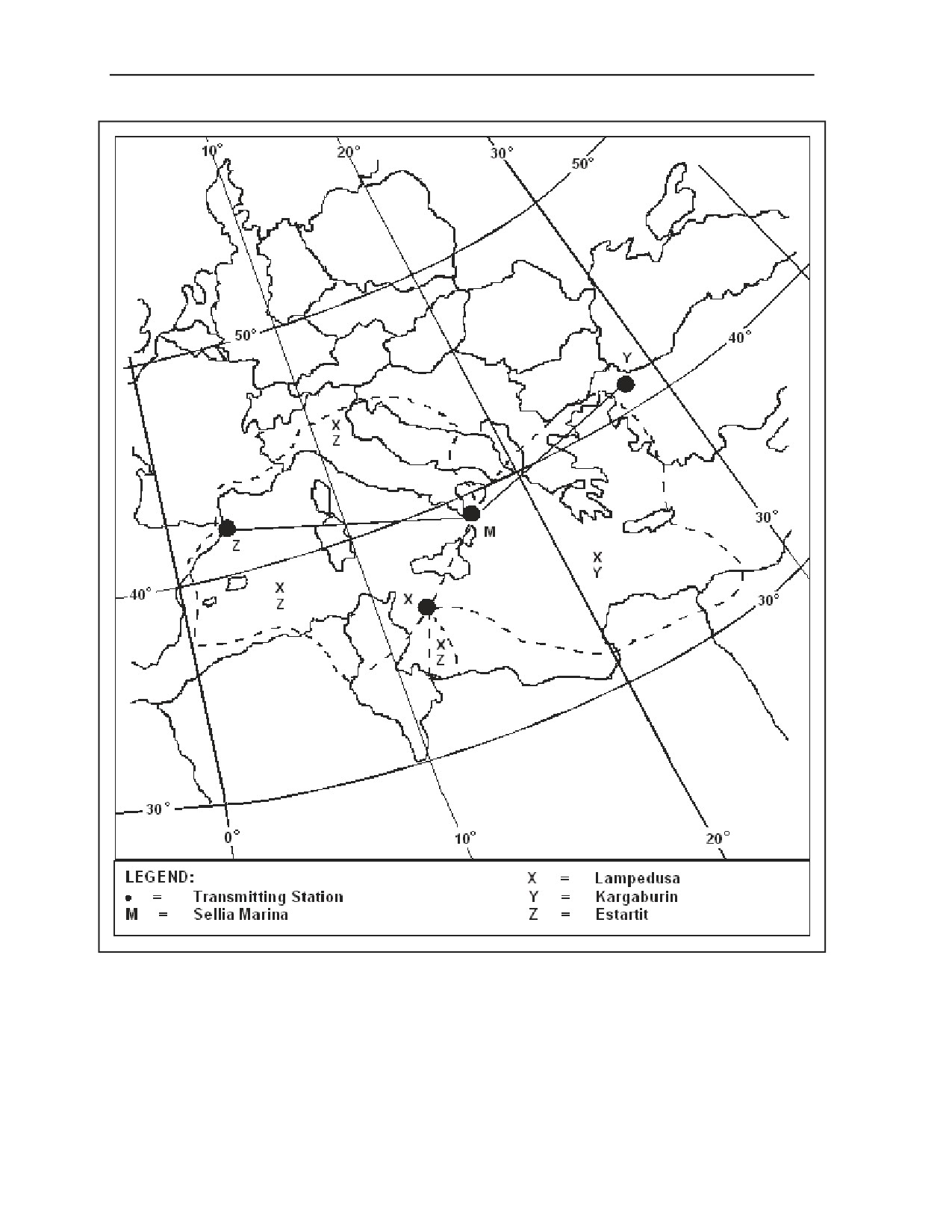
Figure F-16. LORAN-C, Mediterranean chain, GRI 7990
F-22
FM 3-09.15/MCWP 3-16.5
25 October 2007
NAVAID Coverage Charts and Tables
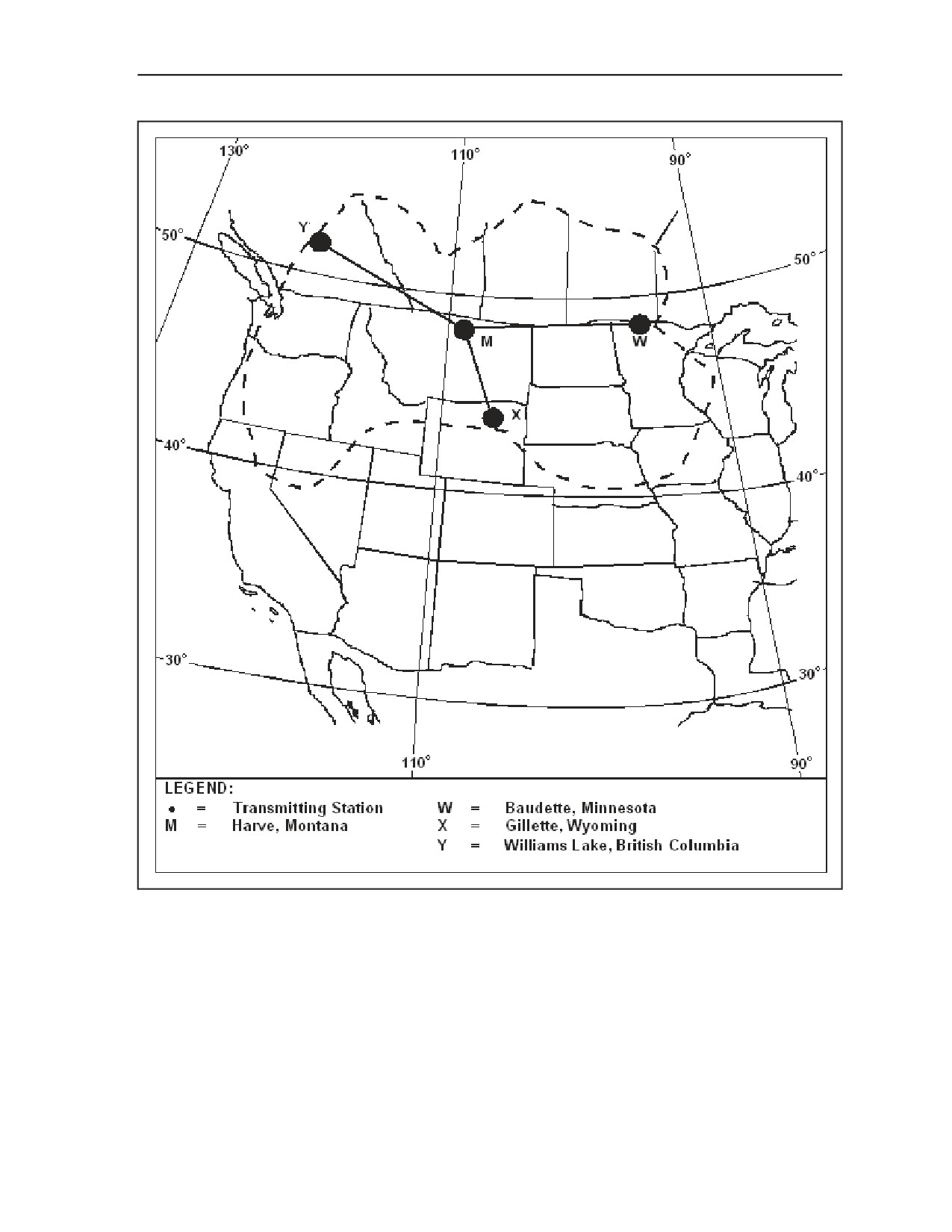
Figure F-17. LORAN-C, north central United States chain, GRI 8290
25 October 2007
FM 3-09.15/MCWP 3-16.5
F-23
Appendix F
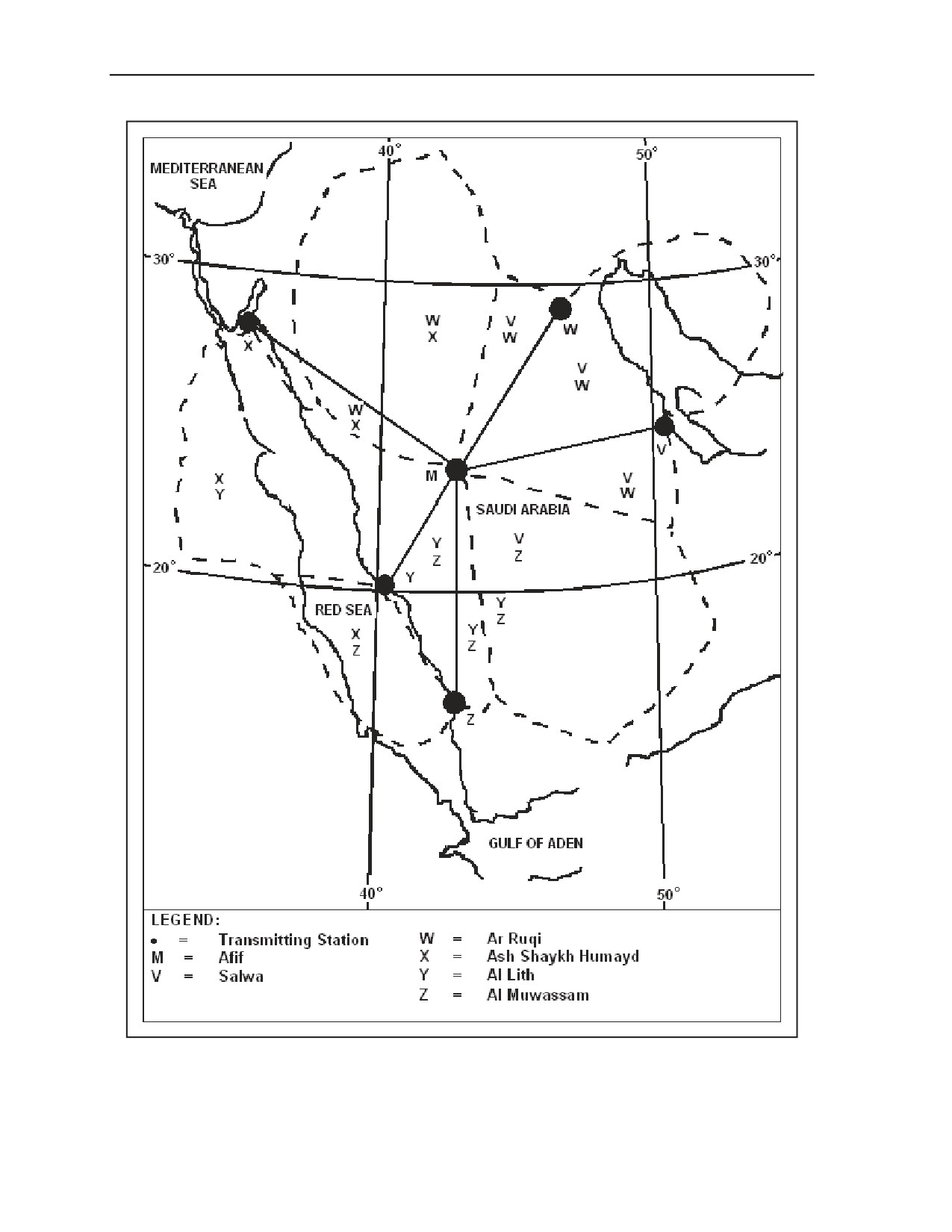
Figure F-18. LORAN-C, north Saudi Arabian chain, GRI 8830
F-24
FM 3-09.15/MCWP 3-16.5
25 October 2007
NAVAID Coverage Charts and Tables
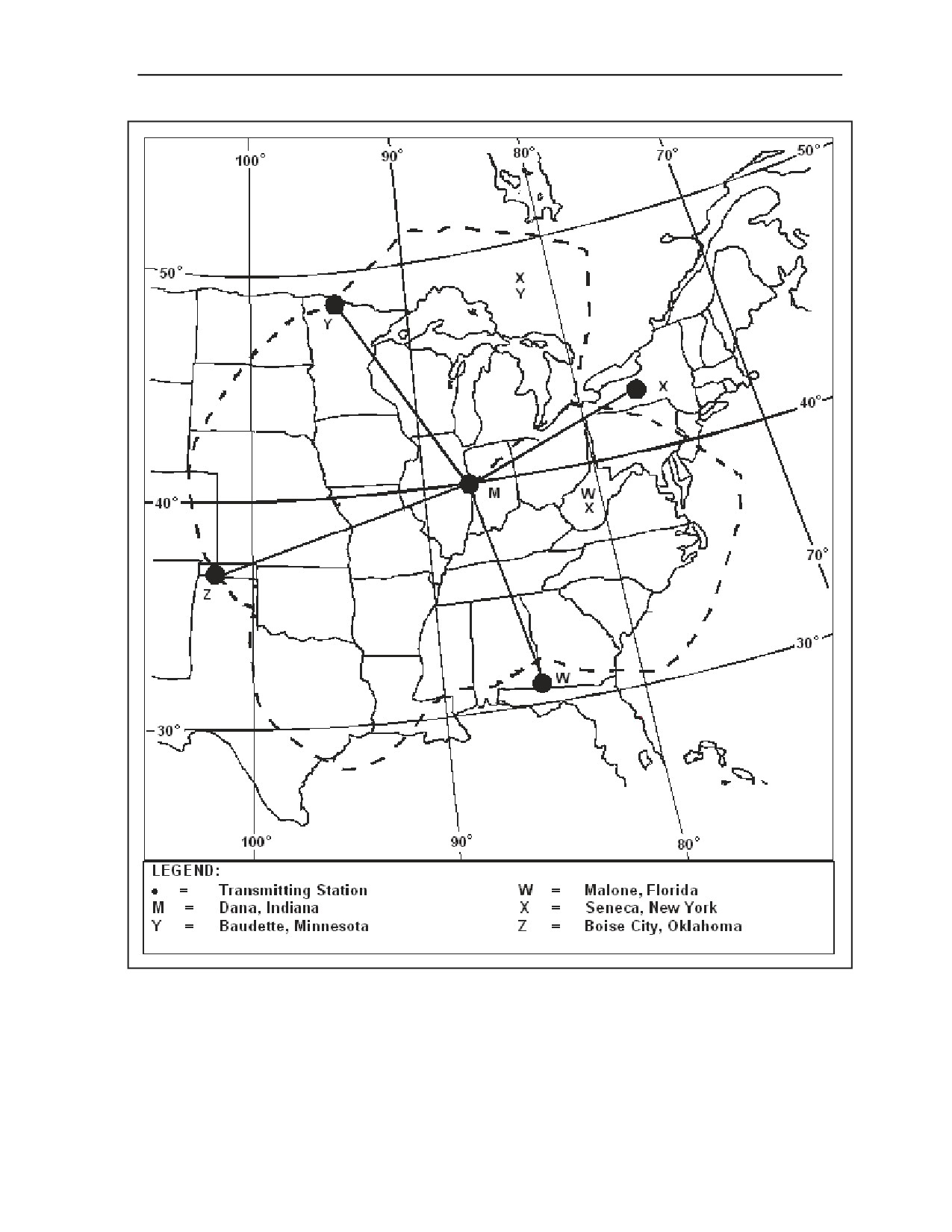
Figure F-19. LORAN-C, Great Lakes chain, GRI 8970
25 October 2007
FM 3-09.15/MCWP 3-16.5
F-25
Appendix F
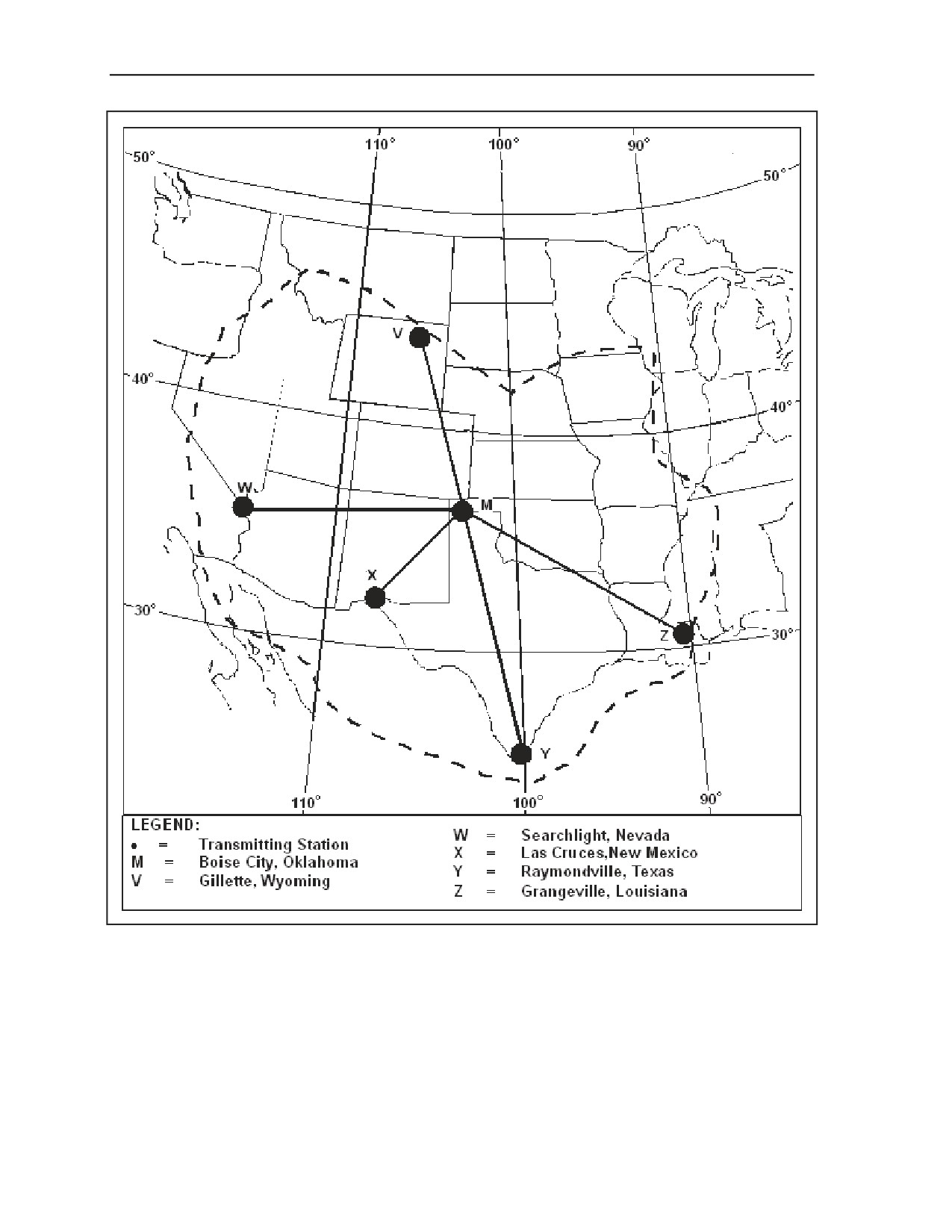
Figure F-20. LORAN-C, south central United States chain, GRI 9610
F-26
FM 3-09.15/MCWP 3-16.5
25 October 2007
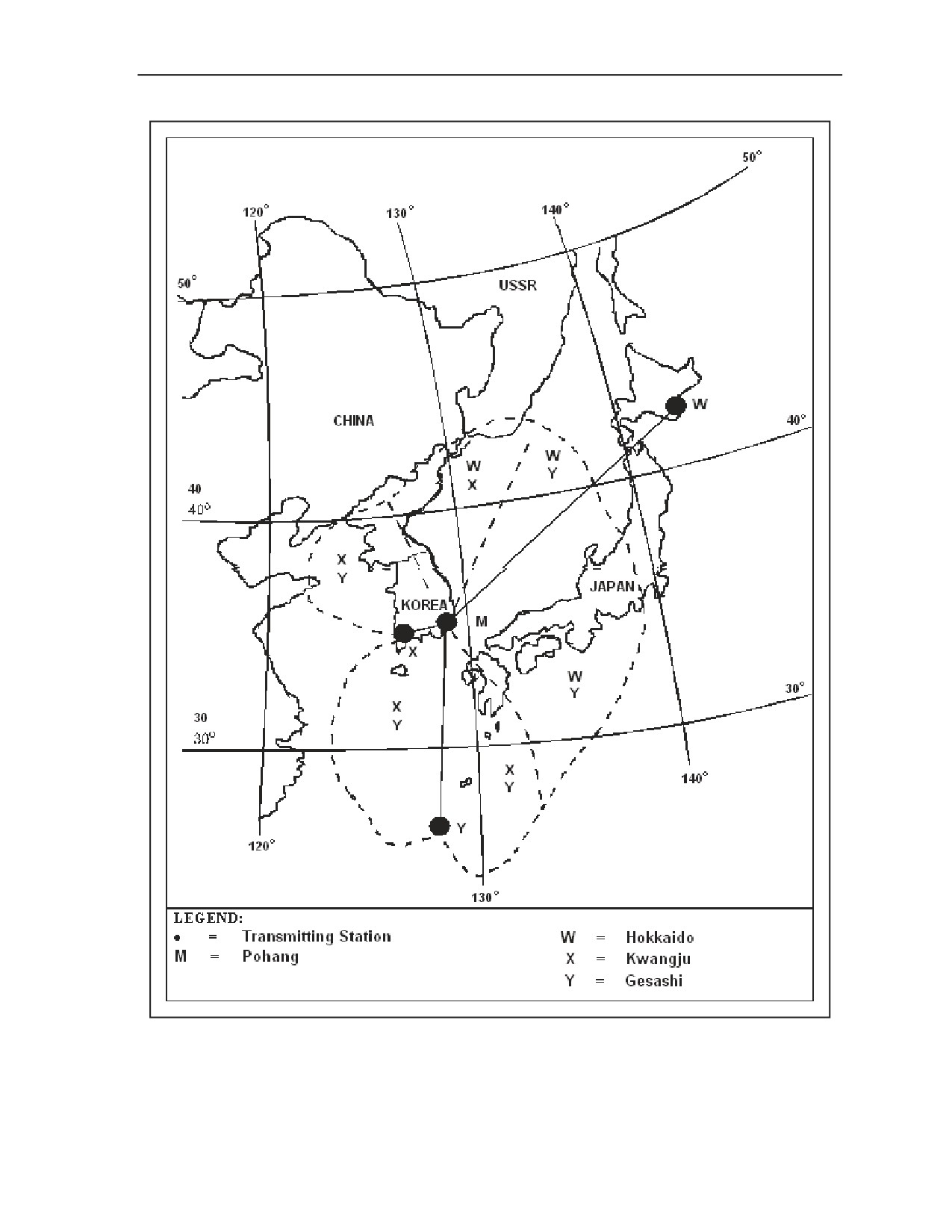
NAVAID Coverage Charts and Tables
Figure F-21. East Asia GRI 9930
25 October 2007
FM 3-09.15/MCWP 3-16.5
F-27
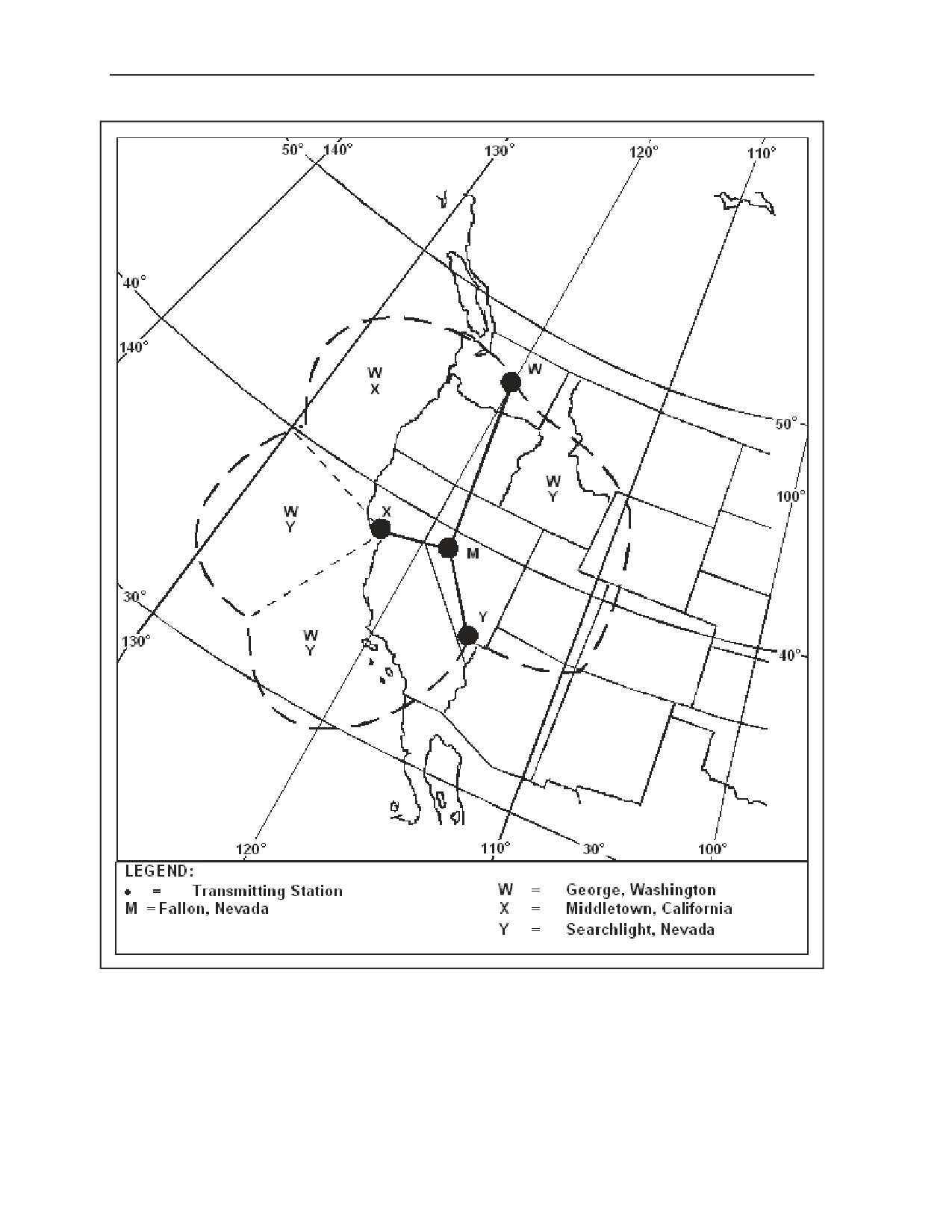
Appendix F
Figure F-22. LORAN-C, United States west coast chain, GRI 9940
F-28
FM 3-09.15/MCWP 3-16.5
25 October 2007
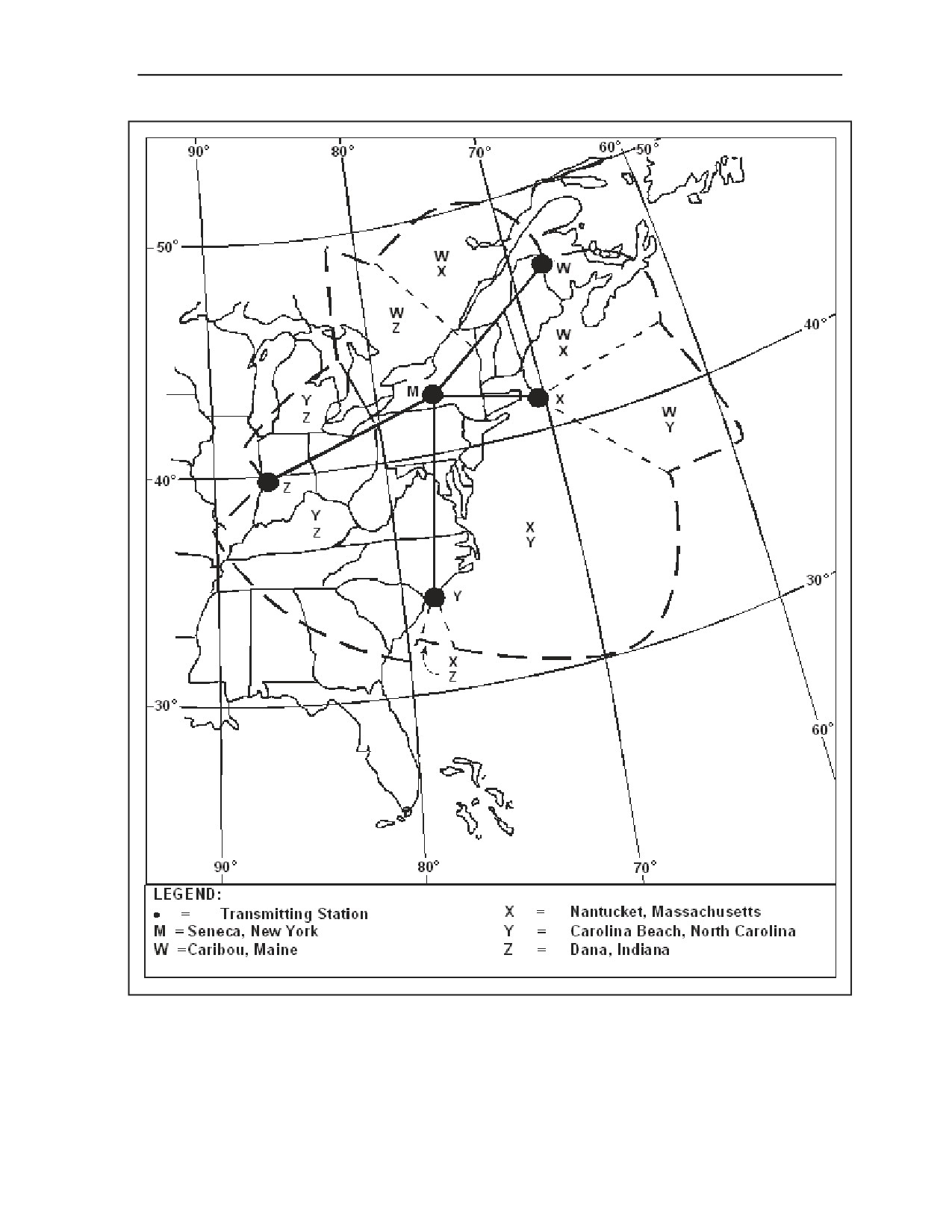
NAVAID Coverage Charts and Tables
Figure F-23. LORAN-C, northeast United States chain, GRI 9960
25 October 2007
FM 3-09.15/MCWP 3-16.5
F-29
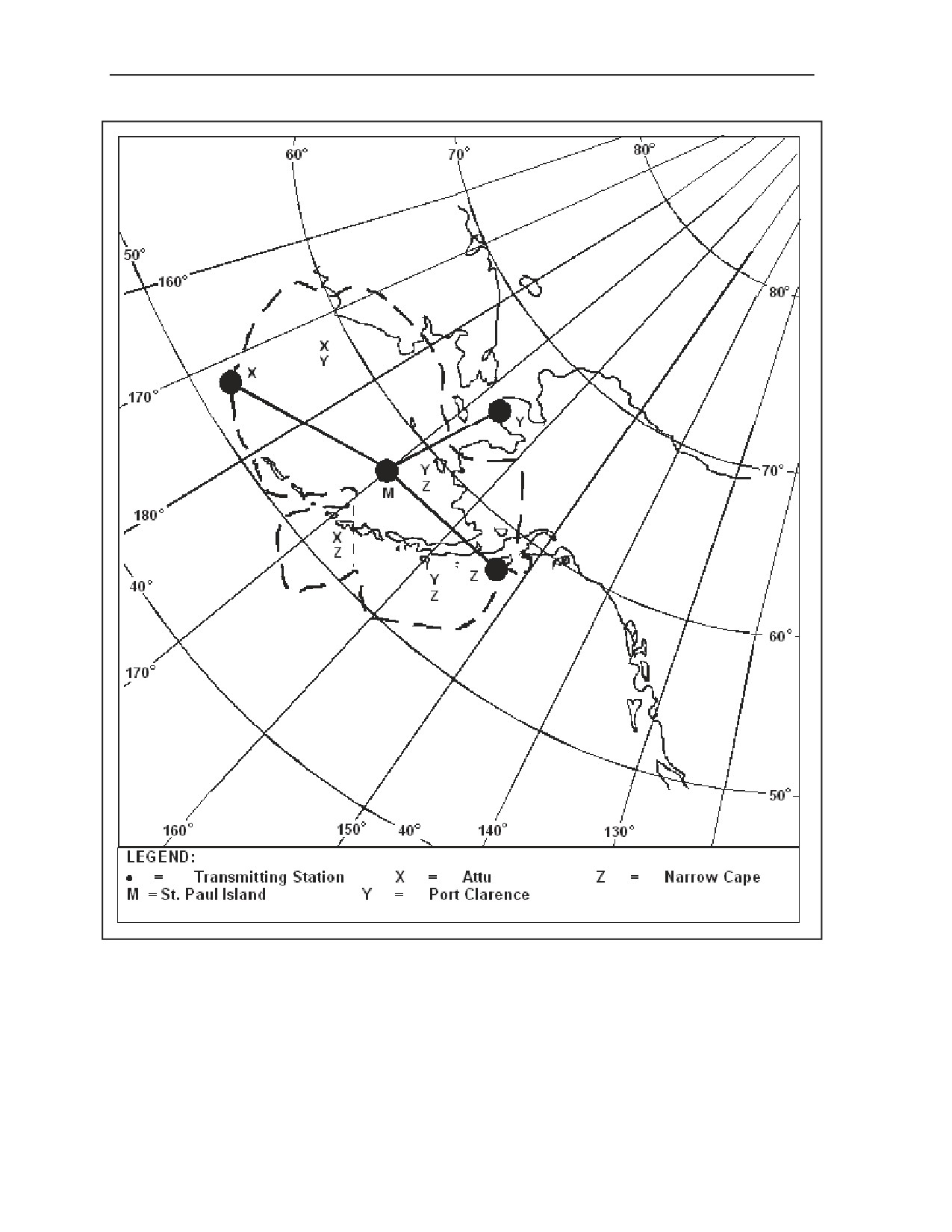
Appendix F
Figure F-24. LORAN-C, north Pacific chain, GRI 9990
F-30
FM 3-09.15/MCWP 3-16.5
25 October 2007
Appendix G
Safety and Environmental Requirements
Safety is always a primary consideration of Soldiers and trainers at all levels. Often,
the implementation of safety and environmental procedures becomes
counterproductive, preventing units from conducting realistic training. Units must be
able to conduct realistic training while meeting all safety and environmental
requirements. This appendix addresses these requirements.
GENERAL
G-1. The first rule of safety is: “Do Not Take Chances.” Hydrogen gas is extremely flammable. Special
care in handling, storing, and disposing of waste is required to prevent injury or environmental hazards.
HYDROGEN
G-2. Mixtures of hydrogen and air can be highly explosive. Personnel using commercial hydrogen must
remove all possible sources of flames and sparks. Hydrogen burns with an almost invisible flame that is
difficult to extinguish. If hydrogen ignites, use powder fire extinguishers only.
Storage
G-3. Warning signs must be posted in all areas where hydrogen is stored. The hydrogen cylinders should
not be exposed to extreme heat or the direct rays of the sun. The area should be well ventilated and at least
50 feet (15 meters) away from ignition sources. Material safety data sheets (MSDS) must be kept on file at
each location.
Handling
G-4. All sources of static electricity must be provided a path to ground. All personnel and equipment must
be grounded when using or generating hydrogen. Fire extinguishers must be readily available. Personnel
must adhere to the detailed safety requirements outlined in chapter 7.
Disposal
G-5. Commercial hydrogen produces no harmful waste. When using the hydrogen generator set,
AN/TMQ-3, a cloudy substance, calcium hydroxide, is released into the water during the process. This by-
product is an environmental hazard. Before disposing of this deposit and the calcium hydride containers,
MET personnel must check with local agencies and comply with their procedures.
25 October 2007
FM 3-09.15/MCWP 3-16.5
G-1
This page intentionally left blank.
Appendix H
Environmental Awareness
Commanders, unit leaders, and Soldiers have specific duties and responsibilities
concerning protection of the environment. Soldiers are expected to do what is right in
the absence of specific guidance. Unit leaders and commanders must be competent
and confident in the area of environmental stewardship. Not all leaders are required
to be environmental experts; however, they must be aware and responsive to
compliance and prevention issues required during the execution of their duties. The
information contained herein is considered an overview of expected duties and
responsibilities in order to build a foundation of basic environmental awareness.
Throughout is reference to material for further reading; research of these documents
provides a complete explanation of legal and ethical responsibilities.
NOTE: Equivalent U.S. Marine Corps guidance documents include MCO P1200.7S and MCO
P5090.2A.
SECTION I-ARMY ENVIRONMENTAL AWARENESS
GENERAL POLICY STATEMENTS
H-1. The Army's environmental vision states: "The Army will be a national leader in environmental and
natural resource stewardship for present and future generations as an integral part of our mission". To
achieve this vision, the Army's environmental strategy places a high priority on sustained compliance with
all environmental laws; takes into account the restoration of previously contaminated sites; focuses on
pollution prevention; and accounts for the conservation and preservation of natural resources.
H-2. The Army environmental ethic calls for the chain of command to establish and support a stewardship
climate that supports compliance; obeying the law; prevention; the concept of reduce, reuse, recycle;
conservation, control and protection of natural resources; and restoration, the cleanup of contaminated
areas. This ethic supports caring for the environment while conducting realistic training.
H-3. All Army personnel should become familiar with these policy statements; they are established so that
our natural environment will be available for present and future generations. Complete information
regarding these polices can be obtained in section II of The Field Artillery Guide to Environmental
Considerations.
SECTION II-METEOROLOGY ENVIRONMENTAL CONSIDERATIONS
FIELD ACTIVITIES
H-4. The meteorological (MET) section provides accurate and timely meteorological data to both artillery
and other tactical units. This data is gathered via highly mobile, automated data processing and MET data
acquisition systems. In order to obtain this data, various processes are used to launch and track a balloon-
borne radiosonde. These processes apply and produce substances that have the potential to cause serious
damage to the environment. This section will identify and address the various preventive measures that can
25 October 2007
FM 3-09.15/MCWP 3-16.5
H-1
Appendix H
be utilized in order to decrease possible environmental damage while conducting realistic training from the
met section, associated vehicles, and personnel involved in training and operations.
H-5.
Key field environmental considerations include, but are not limited to, the following:
z
Vehicles should stay on established roads, trails, firing points, and firebreaks, unless conducting
specific cross-country maneuver exercises.
z
Follow land contours rather than driving up and down hills or along creeks.
z
In order to minimize siltation of streams; use bridges or low water crossings when crossing
permanent streams. If crossing through a stream becomes necessary, then do so by the most
direct route (90-degree angle).
z
Establish refueling and maintenance areas away from wetlands, drainage areas, and near or over
water sources.
z
Federal law prohibits the removal of artifacts from federal property. Do not excavate, remove,
damage, or otherwise alter or deface any archaeological resource located on a military
reservation.
z
Avoid off-limit areas for known archaeological sites during military training exercises. Penalties
can be up to $250,000 for knowingly disturbing a site.
z
Be aware of and avoid nesting, bedding, and habitats of all species of birds and animals.
z
Use radar-scattering camouflage netting as outlined in the field manual; not live vegetation.
z
When planning training activities, conform to installation and community noise-abatement
regulations. Identify, mark, and abide by off-limit boundaries.
z
Open fires, such as burning of garbage, refuse, and rubbish is not allowed on range areas.
z
Conform to field sanitation and medical standards when using soakage pits for wash water,
liquid kitchen wastes, and grease traps per FM 21-10.
z
Establish field satellite-accumulation site and procedures.
z
Police field locations and establish field trash-collection point and procedures. Remove
materials packed into training area on departure from the training area.
z
When the training exercise is complete, repair any field damage such as ruts from vehicles and
other emplacements.
z
Conduct all training with a concern for conservation and future use of range training areas.
HAZARDOUS MATERIAL AND HAZARDOUS WASTE
H-6. The Resource Conservation Recovery Act
(RCRA) of 1976 is the framework for managing
hazardous waste and has established standards for identifying, classifying, and storing of these wastes.
RCRA regulations require those involved in managing hazardous substances to be properly trained, and the
training to be properly documented.
H-7. Key hazardous material and hazardous waste environmental considerations include, but are not
limited to, the following items:
z
Personnel dealing with hazardous materials should be trained in proper handling, containment,
cleanup, and reporting procedures.
z
A material safety data sheet (MSDS) must be on file, and made available to all personnel
regarding hazardous material.
z
.Battery electrolyte (acid) from damaged batteries should be drained and disposed of through
turn-in via installation policy and maintenance SOP. Refer to TB
43-0134 for complete
procedures regarding battery handling and disposal.
z
Never allow the accumulation of more than 55 gallons of a hazardous waste, or 1 quart of
acutely hazardous waste, at the satellite accumulation point. Process all hazardous waste in a
timely manner.
z
Hazardous waste containers should be kept closed when not in use, kept free of rust and leaks,
and stored separately from incompatible wastes.
z
Incompatible wastes must never be transported on the same vehicle.
H-2
FM 3-09.15/MCWP 3-16.5
25 October 2007

Environmental Awareness
z
Ensure that all U.S. Department of Transportation (DOT) and hazardous waste transportation
requirements are met prior to transporting hazardous material or hazardous waste on public
highways.
z
Check with local environmental office for transportation procedures within the installation
boundary.
z
For complete information regarding storing and handling of hazardous materials refer to TM 38-
410.
MATERIAL SAFETY DATA SHEET
H-8. A MSDS is a summary of information on a given chemical identifying material, health and physical
hazards, exposure limits, and precautions. A MSDS describes the hazards of a material and provides
information on how the material can be safely handled, used, and stored. Insist on receiving a copy of a
MSDS when receiving a hazardous chemical from supply, and retain it for when or if you turn in the
material. Periodically review each MSDS pertaining to your unit. This will assure a quick response when
identifying symptoms and handling emergencies.
H-9. Unfortunately, there is no specified format for a MSDS, and it doesn't contain all known data of a
chemical, but there are typical components. These are outlined in 29 CFR 1910.1200. Use the following
information in table H-1 as a guide toward what to expect on most MSDS forms.
Table H-1 Material Safety Data Sheet
Section/Topic
Contents
Section 1 - General Information
Manufacturers' name and address
Trade or common name of product
Section 2 - Hazardous Components
NIOSH and/or CAS Number
Chemical name and percentage
Section 3 - Physical Properties
Boiling point, freezing point, water solubility, etc.
Appearance and odor under normal conditions
Section 4 - Fire & Explosion Hazard
Fire-fighting equipment
Any unusual fire and explosion hazards
Section 5 - Health Hazard
Routes of entry into the body
Emergency and first aid procedures
Section 6 - Reactivity Data
Conditions to avoid
Incompatibility with other materials
Section 8 - Control Measures
Recommended respiratory and ventilation
Personal protective equipment, if needed
Section 9 - Special Precautions
Handling and storing precautions
Section 10 - Transportation
Applicable regulations
Hazards class and required labeling
MAINTENANCE
H-10. The MET station leader assigns a hazardous material/hazardous waste (HM/HW) spill coordinator.
This person ensures the accountability, proper storage, and disposal of all HM/HW, and ensures that
HM/HW spills are immediately contained and reported.
H-11. Key maintenance environmental considerations include, but are not limited to, the following:
z
Refueling operation SOPs should address practices to minimize spills.
25 October 2007
FM 3-09.15/MCWP 3-16.5
H-3
Appendix H
z
Implement preventive maintenance on all heavy equipment to ensure petroleum products will
not be released from the belly pan.
z
Ensure pollutants are not discharged into storm or wash rack drains or poured on the ground or
along fence lines. Some common pollutants are oil, solvents, soap, diesel, gasoline, battery acid,
chemicals, waste antifreeze, paint, and grease.
z
Parts containing asbestos, such as brake shoes, clutch plates, and equipment insulation should be
removed, collected, and disposed according to installation policy.
z
The least hazardous or preferably, nonhazardous material to perform a function should be used,
unless previous research of options clearly indicates otherwise. The Defense Logistics Agency
(DLA) produces a manual, Environmental Products, to assist in this process.
z
Do not mix fuel, oil, or antifreeze together. This is considered a mixed waste.
SUPPLY
H-12. The MET section is required to have a complete inventory of HM/HW generated by the section. The
MET station leader must know what chemicals the unit requires, where and how they are stored, how much
hazardous waste is generated, and necessary spill response procedures. He/she should coordinate with the
unit operations officer or environmental control officer (ECO) to ensure this information is incorporated
into the unit SOP.
H-13. Key supply environmental considerations include, but are not limited to, the following items:
z
Requisition only supplies needed and authorized, avoid excessive stockpiling of materials.
z
Maintain an accurate inventory in SOP of hazardous waste used by the MET section. This
listing should include waste by volume, type, generating process, and location.
z
Use of used oil tanks for disposal of solvents, antifreeze, or other HM/HW is against regulation.
Storage of hazardous material must be in clearly marked DOT-approved containers.
z
Actively support a unit-recycling program.
z
Ensure tires and batteries are properly turned in for recycling.
z
Ensure used batteries are turned in on a one-for-one basis.
SPILL RESPONSE
H-14. Generally, only persons specifically trained to respond to a spill should handle unit spills. However,
all personnel should, at a minimum, report the spill, and be aware of the following four basic steps to spill
response:
z
Protect yourself. Use personal protective equipment (PPE) specified in the MSDS.
z
Stop the flow. This may be as simple as placing the container upright or closing a valve.
z
Contain the spill. Place absorbent material around the spill, and protect drains and ditches.
z
Report the spill. Notify supervisor, and other key personnel.
H-15. Each unit is responsible for the cleanup of their own spills, as long as no personnel are put in danger.
After the above four steps are completed, take the necessary steps to cleanup the spill. Information on
cleanup procedures can be found on the MSDS, unit SOP, or contact installation environmental staff for
guidance. Turn in the spilled material and absorbent to the Defense Reutilization Marketing Office
(DRMO), or another designated point if a DRMO is not available. Also, ensure adequate spill supplies are
on-hand for future use.
H-16. Key spill prevention, response, and cleanup considerations include, but are not limited to, the
following items:
z
A spill prevention and response section should be included in the unit SOP outlining installation
spill plan requirements.
z
Maintain a spill cleanup kit near any satellite-accumulation area, or where a potential for spill
exists. The kit should contain, at a minimum, absorbent material, shovel, brooms, gloves, and
H-4
FM 3-09.15/MCWP 3-16.5
25 October 2007
Environmental Awareness
appropriate containers. Units who have a potential for release or spill that may impact streams
should also maintain booms for containment.
z
Drip pans should be used under vehicles and equipment where spills are likely to occur.
z
Spills of oil, fuel, or other hazardous pollutants over 5 gallons (18.9 liters) in volume, 100
square feet (9.3 square meters) in area, or in any waterway should be reported immediately to
the chain of command.
z
All topsoil contaminated with oil should be removed, properly disposed, and replaced by the
unit. While awaiting disposal, keep the excavated soil covered to prevent runoff in case of rain.
SECTION III-REGULATORY REQUIREMENTS
LAWS AND REGULATIONS
H-17. Military facilities are subject to federal, state, local, and host nation environmental laws. When the
requirements differ, the most stringent applies. Ignorance of environmental laws is not an excuse for
noncompliance, and it will not protect commanders, Soldiers, or the military services from civil and
criminal liability. Table H-2 lists the federal and military laws and regulations that are frequently
encountered by Army personnel; however, it is not inclusive of all requirements.
H-18. Additionally, environmental law varies with differing countries, states, and cities. What is legal in
one area may be illegal in another. Each installation environmental office knows the laws for that locality,
and should be consulted on environmental considerations during the planning and execution of training.
H-19. Army units outside the United States (OCONUS) that are not subject to federal environmental
regulations decreed by the Environmental Protection Agency
(EPA) should comply with the final
governing standards (FGS) of the host nation (HN). In areas where a HN has minimal or no environmental
laws and regulations, comply with the Overseas Environmental Baseline Guidance Document (OEBGD)
provided by the Department of Defense, AR 200-1, and AR 200-2. Refer to Table H-2 for a listing of
applicable Army regulations, executive orders, and federal laws.
Table H-2. Environmental Laws and Regulations
Army Regulations
Federal Laws
AR 200-1. Environmental Protection and Enhancement
Archaeological Protection Act of 1979
AR 200-2. Environmental Effects of Army Actions
Clean Air Act of 1970
AR 200-3. Natural Resources
Clean Water Act of 1972
AR 200-4. Historic Preservation
CERCLA of 1980
AR 420-49. Solid and Hazardous Waste Management
EPCRA of 1986
AR 420-76. Pest Management
Endangered Species Act of 1973
Federal Facilities Compliance Act of 1992
Executive Orders
Haz. Materials Transportation Act of 1975
EO 11989. Use of off-road vehicles on public land
National Environmental Policy Act of 1969
EO 11990. Wetland protection
National Historic Preservation Act of 1966
EO 12114. Effects of federal actions abroad
Noise Control Act of 1972
EO 12196. OSHA Compliance for federal employees
Oil Pollution Act of 1990
EO 12580. CERCLA duties and powers
RCRA of 1976
EO 13101. Pollution prevention and recycling
Toxic Substances Control Act of 1976
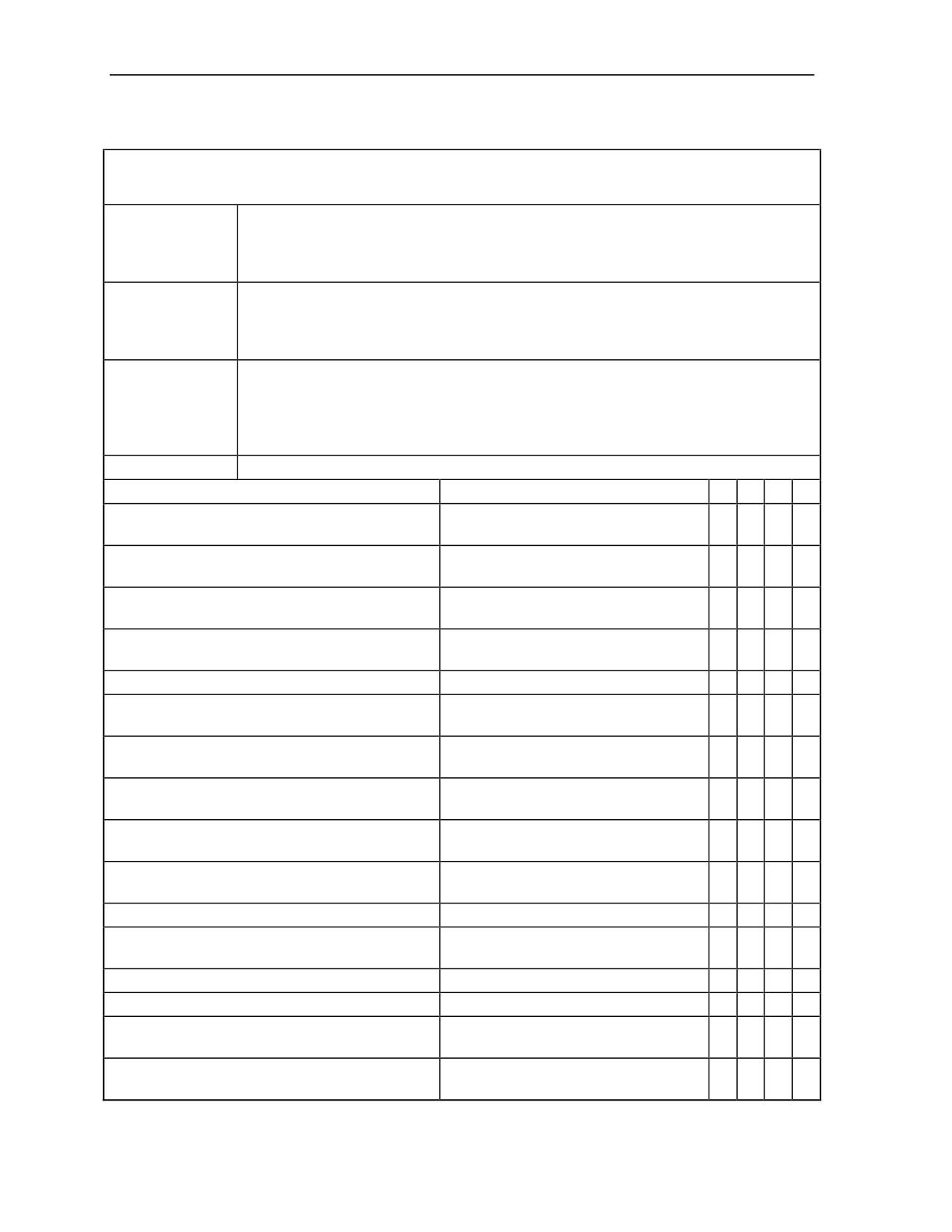
H-20. Regulatory agencies exist which require environmental training. This training may be general
designed for all personnel in the unit, or may be specialized training targeted at specific personnel. The
installation Environmental and Safety Offices can best assist in determining your training requirements and
who to contact for additional information. Table H-3 is provided as a reference of possible training
requirements for the MET section personnel.
25 October 2007
FM 3-09.15/MCWP 3-16.5
H-5
Appendix H
Table H-3. Regulatory Training Requirements
NOTE: The depth or level of training will vary between target audiences. For example, K and E will need in-depth
training, while A will only require broad overviews. The letters K, E, N, or A denotes target audience, and are
listed below:
Knowledge
Personnel who administer, implement, or comply with contents of regulations
such as program manager and technicians in the environmental field. Also
includes organizations that need in-depth knowledge of the environmental
laws/regulations/programs, such as Staff Judge Advocate.
Executors
All personnel who supervise or actually handle responsibilities dealing with
environmental programs, to include ECOs, technicians, and workers. Also
includes unit personnel required to execute responsibilities with environmental
ramifications as part of their mission.
Need to Know
Personnel who may encounter environmental issues as part of their mission. This
may include personnel within the following activities: Engineers; Designers;
Emergency Personnel; Safety; Reserve Components; First-line Supervisors; Crew
Chiefs; NCO's; and various unit personnel as identified by the installation
Environmental Office and their supervisors
Awareness
Public Affairs Office, Reserve Components, other unit personnel.
Training Topic
Regulatory Reference
K
E
N
A
Hazardous Materials/Waste Compliance
29 CFR 1200; 40 CFR 262.34,
Training
264.16, 265.16; 49 CFR 172
Hazardous Waste Operations (HAZWOPER)
29 CFR 1910.120
for IR
Hazardous Waste Operations (HAZWOPER)
29 CFR 1910.120
for TSDF
Emergency Response to Hazardous Materials
29 CFR 1910.120
Incidents/Hazardous Material Technician
National Environmental Policy Act (NEPA)
NEPA of 1969
National Historic Preservation Act (NHPA)
36 CFR part 800, 36 CFR part 63,
NHPA of 1966
Archaeological Resources Protection Act
43 CFR 7.7 (4) ARPA of 1979
(ARPA)
Native American Graves Protection and
NAGPRA of 1990
Repatriation Act (NAGPRA)
Emergency Planning and Community Right-
EPCRA/SARA 1986 Title 3,
to-Know (EPCRA)
Executive Order 12856
Lead Based Paint
Lead Based Paint Exposure
Reduction Act of 1992, 24 CFR 35
Asbestos
40 CFR part 763, 40 CFR 61 part M
Endangered Species Act (ESA)
ESA 1973 as amended, 50 CFR par
402
Clean Water Act (CWA)
CWA S 311
Storm Water Pollution Prevention Planning
CWA S 319
*
CFC/Halon Refrigerants
EO 11051, 40 CFR 82.40, 40 CFR
*
282, 58 FR 92 (p. 28660)
Federal Insecticide, Fungicide, and
FIFRA of 1972, 40 CFR 265.16,
*
Rodenticide Act (FIFRA)
SARA of 1986
H-6
FM 3-09.15/MCWP 3-16.5
25 October 2007

Environmental Awareness
Table H-3. Regulatory Training Requirements
NOTE: The depth or level of training will vary between target audiences. For example, K and E will need in-depth
training, while A will only require broad overviews. The letters K, E, N, or A denotes target audience, and are
listed below:
Solid Waste Management
40 CFR 240-257/RCRA Subtitle D
Underground Storage Tanks
40 CFR part 280, RCRA Subtitle I
National Pollutant Discharge Elimination
CWA of 1990, 40 CFR 122-129
System (NPDES)
Confined Space Entry
29 CFR 1910.146
Occupational Respiratory Protection
29 CFR 1926.58, 29 CFR 1910.134
Occupational Exposures to Bloodborne
29 CFR 1910.1030
Pathogens
Storm Water Compliance
40 CFR 122-129, WPCA S 319
Hazard Communication Standard
29 CFR 1910.1200
Department of Transportation
49 CFR172.704
ENVIRONMENTAL COMPLIANCE OFFICER RESPONSIBILITIES
H-21. Field artillery battalions will appoint an environmental compliance officer (ECO)/hazardous waste
coordinator. This individual is an excellent source for guidance with regards to environmental regulations and
procedures. Appointed personnel—
z
Should receive formal training and act as an advisor on environmental regulatory compliance
during training, operations, and logistics functions.
z
Will be the commander's eyes and ears for environmental matters, as the safety officer/NCO is
for safety matters.
z
Should function as the liaison between the unit and higher headquarters regarding environmental
matters such as training requirements, equipment, or supplies that unit personnel need.
z
Should inspect HM/HW accumulation sites, and ensure that Soldiers handling these materials
are properly trained.
z
Ensure the unit's SOP covers environmental considerations, conservation, natural resources,
pollution prevention, HM/HW, and spill procedures.
z
Support the Army's pollution prevention/recycling program.
z
Report hazardous material and waste spills immediately.
z
Conduct environmental self-assessments or internal environmental compliance assessments, and
meet with key installation environmental points of contact, as necessary, to remain updated on
any regulatory changes.
SECTION IV. ENVIRONMENTAL RISK MANAGEMENT
ENVIRONMENTAL RISK MANAGEMENT
H-22. Leaders at all levels are required to make timely and appropriate decisions regarding the
environment. The failure to do so may negatively impact the training environment, which could then lead
to personal liability of individuals directly involved, the chain of command, and the U.S. Army. Therefore,
leaders must have a method of managing, assessing, and reducing environmental risks.
H-23. Risk management is a five-step process designed to provide leaders a methodology for the
identification, assessment, control, and evaluation of environmental risks. The following is a summary of
these steps from FM 20-400 and FM 100-14; refer to them for detailed information.
25 October 2007
FM 3-09.15/MCWP 3-16.5
H-7

Appendix H
H-24. Step 1. Identify Hazards - Environmental hazards include all activities that may pollute, create
negative noise-related effects, degrade archeological/cultural resources, or negatively affect threatened or
endangered species habitats. A select listing of common environmental hazards is located in table H-4.
Table H-4. Common Environmental Hazards
Media Area
Common Environmental Hazards
Air
Equipment exhaust, convoy dust, range fires, open-air burning,
pyrotechnics/smoke pots/smoke grenades, part-washer emissions,
paint emissions, air-conditioner/refrigeration CFCs, HM/HW release,
pesticides, other toxic industrial chemicals or material.
Archeological and cultural
Maneuvering and digging in sensitive areas, disturbing or removing
artifacts, demolition/munitions effects, HM/HW spills.
Noise
Low-flying aircraft (helicopters), demolition/munitions effects, nighttime
operations, operations near post/camp boundaries and civilian
populations, vehicle convoys/maneuvers, large-scale exercises.
Threatened and/or
Maneuvering in sensitive areas, demolition/munitions effects, especially
endangered species
during breeding seasons, disturbing habitat or individual species,
HM/HW spills or releases, poor field sanitation, improper cutting of
vegetation, damage to coral reefs,
Soil (terrain)
Over use of maneuver areas, demolition/munitions effects, range fires,
poor field sanitation, poor maneuver-damage control, erosion, troop
construction effect, refueling operations, HM/HW spills, maneuver in
ecologically sensitive areas such as wetlands and tundra, industrial
waste runoff, pesticide accumulation in soil, vegetation, and terrestrial
organisms.
Water
Refueling operations near water sources, HM/HW spills, erosion and
unchecked drainage, amphibious/water-crossing operations, troop
construction effects, poor field sanitation, washing vehicles at
unapproved sites.
H-25. Step 2. Assess Environmental Hazards to Determine Risk - A risk assessment is a tool used for
evaluating the most pressing or most hazardous potential environmental damage. It considers two factors:
probability, how often a hazard is likely to occur; and severity, the effect in degrees a hazard will have on
personnel, equipment, environment, and mission. Unit leaders should conduct risk assessments before
conducting any training, operations, or logistical activities that are not previously addressed in the SOP, or
when conditions differ significantly from the SOP. Complete information on risk assessments can be
obtained from FM 20-400 for procedures on how to perform an environmental risk assessment.
H-26. Step 3. Develop Controls and Make a Decision - This step is designed to reduce the probability or
severity of each hazard, which in turn lowers the overall risk. Control types fall in the categories of
educational, physical, or avoidance. Table H-5 outlines examples of environmental controls, and section II
above contains the specifics pertinent to the MET section.
H-8
FM 3-09.15/MCWP 3-16.5
25 October 2007
Environmental Awareness
Table H-5. Examples of Environmental Controls
Control Type
Environmental-Related Examples
Educational
Conducting unit environmental-awareness training
Conducting an environmental briefing before deployment
Performing tasks to environmental standards
Reviewing environmental considerations in AARs
Reading unit's environmental SOPs and policies
Physical
Providing spill-prevention equipment
Establishing field satellite-accumulation site and procedures
Policing field locations
Practicing good field sanitation
Posting signs and warnings for off-limit areas
Avoidance
Maneuvering around historical/cultural sites
Establishing refueling and maintenance areas away from wetlands and
drainage areas
Crossing streams at approved sites
Preventing pollution
Limiting noise in endangered and threatened species habitats
H-27. Step 4. Implement Controls - Leaders must inform subordinates of risk-control measures, state how
each control is to be implemented, and assign responsibilities. They must also ensure these controls are in
place prior to the operation. This is accomplished by using the before, during, and after checklists and the
environmental risk-assessment process. Examples of checklists can be obtained from TC 5-400, or from
the field artillery environmental handbook referenced in section I, in order to determine the environmental
considerations that may effect MET section training and operations.
H-28. Step 5. Supervise and Evaluate - Leaders should monitor controls to ensure effectiveness and
whether controls require modification. They should ensure the after action review (AAR) process includes
an evaluation of environmental-related hazards, controls, Soldier performance, and leader supervision.
25 October 2007
FM 3-09.15/MCWP 3-16.5
H-9
This page intentionally left blank.
Appendix I
Time Zones, Octants, and Regions
To establish a common time and location, MET messages are reported in Greenwich
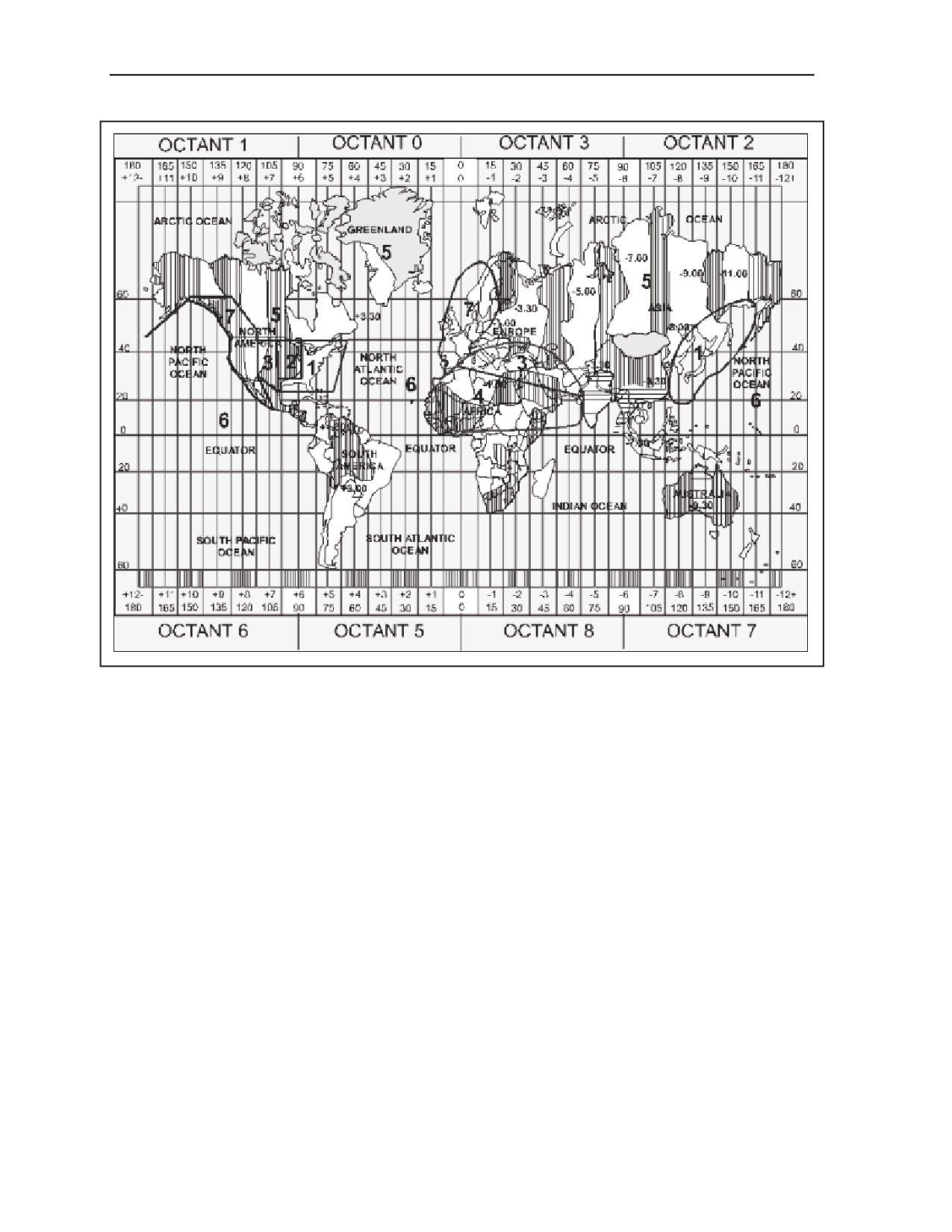
Mean Time while locations are prefaced with an octant of the globe code. Figure I-1
is a world map divided into time zones, global octants, and climatic regions
TIME ZONES
I-1. Time is calculated from the Greenwich meridian. The middle of the zero time zone passes through
Greenwich with its east and west limits 7° 30’ on each side. Each 15-degree zone east and west of the
initial zone represents 1 hour of time. The number of hours that must be added to or subtracted from local
standard time to give GMT is indicated for each zone. Political boundaries in the various countries have
caused modifications of the time zones. The vertical lines and clear sections are used to show which zones
these divisions belong. Where a half-hour difference is legal, horizontal lines are used. Where no zone
system has yet been adopted, the area is represented by small dots. Where no legal time has been
established, the larger dots are used. Variations from zone time are given in hours and minutes. Enter the
map with the section location and extract the time correction.
GLOBAL OCTANTS
I-2. Global octants are indicated by bold N-S, E-W lines and octant identifications. Determine the section
location on the map and extract the appropriate octant number.
CLIMATIC REGIONS
I-3. The seven climatic regions of the Northern Hemisphere are indicated and identified by the large
black numbers 1 through 7.
25 October 2007
FM 3-09.15/MCWP 3-16.5
I-1
Appendix I
Figure I-1. Time zones, octants, and regions
I-2
FM 3-09.15/MCWP 3-16.5
25 October 2007
Glossary
SECTION I. ACRONYMS AND ABBREVIATIONS
AFATDS
Advanced Field Artillery Tactical Data System
AFW
Air Force weather
AFWA
Air Force Weather Agency
AI
area of interest
ALSO
artillery limited surface observation
AMV
area of meteorology validity
AO
area of operation
AR
Army regulation
ARTEP
Army Training and Evaluation Program
ASI
additional skill identifier
BCT
brigade combat team
BITE
built-in test equipment
BN
Battalion
C2
command and control
C
Celsius
CBRN
chemical, biological, radiological, and nuclear
CECOM
Communications-Electronics Command
CMP
common message processor
comm
Communications
COSCOM
corps support command
corr alt
corrected altitude (Table 2 computation work sheet)
CPL
Corporal
DA
Department of the Army
DDT
digital data terminal
DISCOM
division support command
DOD
Department of Defense
DOT
Department of Transportation
DP
dew point
DRMO
Defense Reutilization Marketing Office
DS
direct support
DTED
Digital Terrain Elevation Data
ECO
Environmental Control Officer
F
Fahrenheit
FA
field artillery
FATDS
Field Artillery Tactical Data System
FC
Fires Cell
25 October 2007
FM 3-09.15/MCWP 3-16.5
Glossary-1
Glossary
FCE
fire control element
FDC
fire direction center
FLOT
forward line of own troops
FM
field manual
FMH
federal meteorology handbook
FOMET
fallout met
FSCL
fire support coordination line
FSC
federal supply catalog
FSCOORD
fire support coordinator
GMT
Greenwich Mean Time
GPS
Global Positioning System
GRI
grid repetition interval
GS
general support
GUI
graphical user interface
HAZMAT
hazardous materials
HM/HW
hazardous material/hazardous waste
HMMWV
high-mobility multipurpose wheeled vehicle
HN
host nation
Hz
Hertz
ICAO
International Civil Aviation Organization
IMETS
Integrated Meteorological System
IP
internet protocol
IPB
intelligence preparation of the battlefield
JAAWIN
Joint Air Force and Army Weather Information Network
JVMF
joint variable message format
K
Kelvin
kHz
Kilohertz
km
Kilometer
kw
kilowatt
LCPL
lance corporal
log
logistics
LORAN
long-range aid to navigation
LORAN-C
Long-range aid to navigation commercial
LRU
line replaceable units
m
meter
MAC
maintenance allocation chart
mb
millibar
MDP
meteorological datum plane
mech
mechanized
MET
meteorology
Glossary-2
FM 3-09.15/MCWP 3-16.55
25 October 2007
Glossary
METCM
meteorology computer message
METT-TC
mission, enemy, terrain and weather, troops and support available, time
available, civil considerations
MHG
meteorological hydrogen generator
Mhz
megahertz
MLRS
Multiple Launch Rocket System
MOS
military occupational specialty
MSDS
material safety data sheet
MSE
mobile subscriber equipment
MSL
mean sea level
MM5
mesoscale model (fifth generation)
MMS
meteorological measuring set
MMS-P
meteorological measuring set-profiler
MUL
master unit list
NATO
North Atlantic Treaty Organization
NAVAID
navigational aid
NCO
noncommissioned officer
NIPRNET
Non-Classified Internet Protocol Network
NOGAPS
Naval Operational Global Atmospheric Prediction System
NOTAM
notice to airmen
OIC
operator interface computer
OPORD
operation order
PFC
private first class
PIBAL
pilot balloon
PMCS
preventive maintenance checks and services
POL
petroleum, oils, and lubricants
PPS
Precise Positoning Service
PSI
pounds per square inch
PSY
Phychological
PSYOP
psychological operations
PTM
plaintext message
PTU
pressure temperature humidity
OPORD
operations order
QSTAG
quadripartite standardization agreement
RAOB
Radiosonde Observation
RCRA
Resource Conservation Recovery Act
RDF
radio direction finding
RF
radio frequencies
RH
relative humidity
RPV
remotely piloted vehicle
SAASM
Selective Availability Anit-Spoofing Module
25 October 2007
FM 3-09.15/MCWP 3-16.5
Glossary-3
Glossary
S3
operations officer
SF
standard form
SFC
sergeant first class
SGT
Sergeant
SINCGARS
single-channel ground and air-borne radio system
SIPRNET
Secret Internet Protocol Routing Network
SOI
signal operating instructions
SOP
standard operating procedure
SPC
Specialist
SOWT
special observation weather team
SSG
staff sergeant (Army)
SSGT
staff sergeant (USMC)
STANAG
standardization agreement
SWO
staff weather officer
TA
target acquisition
TACMET
tactical metorology
TAM
target area metorology
TB
technical bulletin
TC
training circular
TCIM
tactical communications interface module
TM
technical manual
TRN
transmission repeat number
TSOP
tactical standing operating procedure
T-VSAT
Tactical-Very Small Aperture Terminal
UAV
unmanned aerial vehicle
UPPS
Unified Post Processing System
URL
Universal Resource Locator
URN
unit reference number
U.S.
United States
USAF
United States Air Force
USMC
United States Marine Corps
V
Volt
VAC
volts alternating current
VDC
volts direct current
VLF
very low frequency
VMF
variable message format
WB
white bag
WLR
weapons-locating radar
WMO
World Meteorological Organization
Z
ZUZU time zone
Glossary-4
FM 3-09.15/MCWP 3-16.55
25 October 2007
Glossary
SECTION II-TERMS AND DEFINITIONS
air mass
An extensive body of air within which the conditions of temperature and moisture in a horizontal
plane are essentially uniform.
air pressure
The weight of the air per unit of volume.
all-weather
The ability to be functional without regard to weather.
ambient temperature
The temperature of the immediate surrounding medium, such as a gas or liquid.
Anemometer
The general name for instruments designed to measure the speed (or force) of the wind.
aneroid
A kind of barometer which contains no liquid.
area observations
Meteorological observations that come in via messages over the radio network from other MMS-P or
metorological measuring set systems in the current theater of operations.
azimuth
The horizontal angle, measured clockwise by degrees or mils between a reference direction and the
line to an observed or designated point. There are three base (reference) directions or azimuths: true,
grid, and magnetic azimuth.
ballistic meteorology
The study dealing with the phenomena of the atmosphere and its effect upon the motion of projectiles.
ballistics
The science of the motion of projectiles.
ballistic temperature
An assumed temperature that would have the same total effect on a projectile during its flight as the
varying temperatures actually encountered; reported as a percent of standard.
ballistic wind
An assumed constant wind that would have the same total effect on a projectile during its flight as the
varying winds actually encountered.
barometer
An instrument for measuring atmospheric pressure.
baroswitch
A pressure-operated switching device used in a radiosonde.
built-in test equipment (BITE)
Circuits built into an item of equipment to test certain functions.
climatological information
Information that deals with weather conditions and variations from normal for a particular place or
area, during a specified period of a year.
critical angle
The limiting angle at which angular data may become invalid.
25 October 2007
FM 3-09.15/MCWP 3-16.5
Glossary-5
Glossary
cursor
An indicator on a computer.
datum
A mathematical model of the earth used to calculate and specify geographic locations.
density
The mass per unit volume, measured in grams per cubic meter.
deviation
A departures from accepted policies or standards. Ballistic densities and temperatures are reported as
deviations from the standards that were used to develop the weapons firing tables.
domain
A square geographic area with a center point selected by the system operator.
downwind
The direction toward which the wind is blowing (with the wind).
dry-bulb temperature
The temperature measured by the dry bulb of a psychrometer; ambient air temperature.
elevation
The vertical distance of a point or level on or affixed to the surface of the Earth measured from mean
sea level.
elevation angle
Elevation angle is the angle between the horizon and objects above the horizon measured along the arc
which passes through the zenith and the object in question.
equation of state
An equation relating temperature, pressure, and volume of a system in thermodynamic equilibrium.
fallout
Fallout is the precipitation to earth of particulate matter from a nuclear cloud; also applied to the
particulate matter itself.
free lift
Refers to the net upward force required for a balloon to rise at a given rate. Free lift corresponds to the
specific balloon (sounding or pilot balloon) being used and is a portion of total lift.
fronts
A transition zone between air masses of different densities and temperatures.
geopotential height
The height of a given point in the atmosphere in units proportional to the potential energy of unit mass
(geopotenital) at this height, relative to mean sea level.
horizontal distance
The arc distance or the distance traveled by a balloon as projected to the earth’s curved surface.
hydrostatic equation
The basic force equation which states that the change of pressure with respect to height is equal to the
negative product of density and the acceleration of gravity.
Glossary-6
FM 3-09.15/MCWP 3-16.55
25 October 2007
Glossary
hygristor
The hygristor is a humidity-sensing element or device; a resistor whose resistance varies according to
the amount of moisture in the air.
inversion
An increase of air temperature with increase in altitude (the ground being colder than the surrounding
air). When an inversion esists, there are not convection currents an dwind speed apre below 5 knots.
The atmosphere is stable and normally is considered the most favorable state for ground release of
chemical agents.
isobar
A line of constant pressure.
isobaric
Means of equal or constant pressure.
isotherm
A line of constant temperature.
isothermal
Means of equal or constant temperature.
kelvin scale (°K)
An absolute temperature scale with a freezing point of 273.16°K and a boiling point of 373.16°K.
lapse rate
The rate at which temperature changes with altitude.
Local observations
Meteorological observations gathered at the current shelter location. Also referred to as local data or
local met.
low-level winds
Winds in the friction layer of the atmosphere.
magnetic declination
The angle between the magnetic and geographical meridians at any place, expressed in degrees east or
west to indicate the direction of magnetic north from true north. In nautical and aeronautical
navigation, the term magnetic variation is used instead of magnetic declination and the angle is termed
variation of the compass or magnetic variation.
mandatory level
One of several constant-pressure levels in the atmosphere for which a complete evaluation of data
derived from upper air observation is required.
mean sea level
The average height of the surface of the sea for all stage of the tide; used as a reference for elevations.
mean sea level pressure
The station pressure reduced to mean sea level pressure.
meteorological datum plane
The altitude of the met station from which all met computations are based.
meteorological day
A 24-hour day divided into three periods - night, afternoon, and transition.
25 October 2007
FM 3-09.15/MCWP 3-16.5
Glossary-7
Glossary
meteorological data
Meteorological facts pertaining to the atmosphere, such as wind, temperature, air density, and pressure
an other phenomena that affect military operations.
meteorology
The study of the earth’s atmosphere.
millibar
A unit of atmospheric pressure.
modulator
The part of a radiosonde which contains the sensing elements and baroswitch.
N unit
A mathematically simplified unit of refraction; designed to replace complex numbers involved in the
values of the index of refraction.
NOGAPS data
Worldwide forecast model data for the next 72 hours produced by the Navy Operational Global
Atmospheric Prediction System (NOGAPS).
nowcast
A weather forecast for “now,” meaning a very short term forecast.
nowcast segment
The 30-minute period in which an iteration of modeling is done by the MM5.
observations
Actual measurements of meteorological conditions, as opposed to predicted or interpolated values.
Also referred to as real-time meteorological observations.
offset
The difference in distance and azimuth from a tracking point to the point of release of a sounding or
pilot balloon.
operational response
The data entered during the operation of the flight.
optical-electrical bearing clock
A check performed to ensure that the optical axis of the telescope is parallel to the electrical axis of the
radio direction finding antenna.
orographic
Means of, pertaining to, or (frequently in meteorology) caused by mountains.
parameter
A quantity to which arbitrary values may be assigned, such a temperature, density, or pressure values.
pilot balloon
A small balloon whose ascent is followed by a theodolite to obtain data for computing speed and
direction of winds in the upper air.
precipitation
The form of water, either liquid or solid, that falls from the atmosphere, and which reaches the ground.
pressure gradient
The spacing between lines of constant pressure, or isobars.
Glossary-8
FM 3-09.15/MCWP 3-16.55
25 October 2007
Glossary
pressure gradient force
The initiating force which produces wind.
projectile
Any object projected by exterior force and continuing in motion by its own inertia.
psychrometer
An instrument used for measuring atmospheric humidity that consists of a dry-bulb thermometer and a
wet-bulb thermometer.
radioactive fallout
The eventual descent to the earth’s surface of radioactive matter placed in the atmosphere by atomic or
thermonuclear explosion (also called radiological fallout).
radio direction finder
A component of the MMS that tracks the radiosonde signal.
radiosonde
A balloon-borne instrument (radio) that measures and transmits meteorological data.
rawin
Rawin is a method of winds aloft observation; that is, the determination of wind speed and direction in
the atmosphere above the station by using radar or a radio direction finder; a contraction of radio
winds.
rawinsonde (radiosonde and wind sounding, combined)
A method of winds aloft observation that determines wind speed and direction in the atmosphere
above the station by using radar of a radio direction finder. [Note: the term is a contraction of “radio
winds”].
relative humidity
The ratio of the actual vapor pressure of the air to the saturation vapor pressure, usually expressed in
percent.
sounding
Upper-air meteorological data gathered by sensors and transmitted to a ground receiver by the
radiosonde carried aloft by a balloon.
sounding balloon
A free, unmanned balloon carrying a radiosonde to sound the upper air.
sound ranging (sound locating)
The method of locating the source of a sound, such as that of a gum report or a shell burst, by
calculations based on the intervals between the reception of the sound at various previously oriented
microphone stations.
spatial validity
The space, or distance, from the location of the met section that is estimated or determined to be within
the valid limitation of the MET sounding.
standard ballistic density
The density of the air as defined by the ICAO standard atmosphere; density of 100 percent.
standard height
25 October 2007
FM 3-09.15/MCWP 3-16.5
Glossary-9
Glossary
The height above surface to the top of a prescribed standard zone.
station pressure
Surface pressure at the observing station; the atmospheric pressure computed for the level of the
station elevation.
surface wind
The wind speed and direction as measured at the surface with an anemometer.
temperature element
A thermistor which is a resistor that reacts to temperature changes.
theodolite
An optical instrument which consists of a sighting telescope and graduated scales to read angles of
azimuth and elevation.
thermistor temperature
The temperature measured by the temperature element (thermistor) on a radiosonde.
total lift
The weight (grams) of the balloon with attachments that must be balanced by the gas volume in the
inflated balloon for the balloon to rise at a desired rate of ascent.
trajectory
The path of a projectile in the earth’s atmosphere.
true north
The direction from any point on the earth’s surface toward the geographic north pole.
virtual temperature
In a system of moist air, the temperature of dry air having the same density and pressure as the moist
air. The virtual temperature is always greater than the actual temperature.
visual technique
The determination of upper air conditions from PIBAL observations and the measurement of surface
temperature, pressure, and relative humidity.
weather forecast
A prediction of expected weather conditions at a point, along a route, or within an area, for a given
time or specific period of time in the future.
weather information
Information concerning the state of the atmosphere, mainly with respect to its effects on the military;
data and information concerned with forecasts, summaries, and climatology.
weighing off
Glossary-10
FM 3-09.15/MCWP 3-16.55
25 October 2007