6-02.45 (FM 11-45) Signal Support to Theater Operations (APRIL 2004) - page 5
FM 6-02.45________________________________________________________________________________
TRAINING
B-9. Weapons qualification and combat-worthy weapons proficiency are not
the same. True weapons proficiency is not a task to be set-aside after
obtaining annual qualification. Weapons proficiency must be cultivated as a
way of life, much like personal physical fitness. Commanders, leaders, and
planners must provide both personal example and resources (range time,
funds, instruction, and ammunition) to make this happen.
B-10. All unit members should be trained, qualified, and proficient on all
unit-crew served weapons in addition to their individual weapons. Both
primary and alternate weapon crew members pull shift, go on sick call, and
are often detailed to jobs away from the vicinity of their assigned weapons
and/or the signal site, they get hurt, and even killed. With the demands of
normal signal operations and the turmoil of battle, primary and alternate
weapons crews are not sufficient to ensure that weapons will be manned and
effective during battle.
B-11. Land navigation proficiency is equally as important as weapons
proficiency. The combat arms forces supported by personnel assigned to
theater tactical signal units have fully embraced the operational capabilities
that the GPS offers, allowing them to rapidly and accurately move over vast
distances of featureless terrain, sometimes with limited map coverage and
under conditions of limited visibility. Operational doctrine and planning
require theater tactical signal units to keep pace while avoiding or bypassing
enemy strong points and maneuvering around minefields and other obstacles.
While the ability to navigate and negotiate obstacles on the battlefield has
always been critical, it was never more evident than during the tragic
ambush of the 507th maintenance company during Operation Iraqi Freedom
when the company missed a turn at a road intersection ventured into
uncleared territory.
B-12. Proficiency with the GPS does not replace or reduce the requirement for
proficiency with maps and compasses, nor does it reduce the requirement to
issue and carry maps and compasses in sufficient quantities. Many of the
GPS sets likely to be encountered in signal units have either inadequate map
storage and display capability or no map storage or display capability at all.
Knowing the numerical coordinates of a position will not provide the critical
information obtained from a map. Maps can provide you with information
about terrain within the vicinity of your location, the location of nearest
bridge, enemy positions or obstacles, or identification of the road on which
you are traveling. Proficiency with both GPS and maps enables theater signal
units to move about with the same speed and accuracy as the force they
support.
B-13. Effective unit employment of GPS is as much a leader and staff
function as an individual skill. Leaders and staff members must be
thoroughly familiar with the strengths, nuances, and potential pitfalls in the
employment of the technology in order to make effective plans and to train
their subordinates in its proper use. The need to develop detailed familiarity
with the technology and the need to develop and train TTPs that compensate
for its nuances are shown in the following examples.
B-2
_______________________________________________________________________________FM 6-02.45
B-14. Some techniques for designating waypoints are more precise than
others. For example, designating a waypoint by range and bearing from a
known waypoint is less precise than recording it directly or plotting it on a
map and reading the coordinates from the map. The greater the range from
the known waypoint, the greater the potential error when the waypoint is
used. Many GPS sets only display to the nearest degree. At long distances
from the reference waypoint, the distance represented by this +/- ½ degree
can be significant. If an off-set technique is used to mark a road junction and
the bearing is not at or near right angles to the road, the error along the road
can be significantly greater than the normal high degree of accuracy that
users expect of GPS and enough to cause the user to take a wrong turn.
Using the wrong technique can lead to a dangerous false sense of security.
B-15. Under conditions of operational stress and fatigue and conditions of
difficult navigation, turnoffs and jogs in the road are often easily missed.
Marking turns in the route with GPS waypoints and then providing
subsequent nearby waypoints along the direction of the turn is a useful
technique to reduce this confusion. In contrast, if only major changes in the
general direction of the route are marked, soldiers could easily miss a short
dogleg in the desired route and end up in a minefield or hostile neighborhood.
While numerous factors contributed to the ambush of the 507th Maintenance
Company, a preliminary after-action report indicates that only a smaller
number of more general waypoints were programmed into the unit GPS set(s)
in the area of a critical missed turn. Under these conditions, the GPS sets
would have indicated that the unit was still heading in the general direction
of the next waypoint even after the turn was missed. The full potential of the
available GPS sets to avert missed turns was not realized.
B-16. The above examples are only a small sample of possible pitfalls and
compensating techniques in the use of GPS. Leaders at all levels must study
the technology thoroughly and practice with it frequently to develop the
complete understanding and intuitive feel for its strengths and weaknesses
required to fully realize its potential as a combat multiplier and life saver.
SITE DEFENSE PLANNING
B-17. Signal unit defense plans must consider the nature of signal
operations, organizations, and the equipment to be realistic and effective.
Only under certain circumstances are the personnel of a typical signal unit or
node enough to maintain a perimeter large enough to adequately protect all
of the unit’s systems. Even under such ideal instances, units would find great
difficulty manning the entire perimeter and manning all of its
communications systems concurrently.
B-18. The mathematics to calculate the potential for a signal unit to establish
and maintain a perimeter is fairly simple. Generally, two-person fighting
positions should be placed approximately 20 meters (66 feet) apart, and
single-person positions may be placed about 10 meters (32 feet) apart. These
distances provide reasonable assurance that enemy soldiers will not be able
to infiltrate between the positions while facilitating battlefield tasks such as
redistributing ammunition, replacing fallen individual soldiers or fallen crew
members on crew-served weapons, communicating with adjacent positions,
and rendering first aid to injured soldiers in adjacent positions. Greater
B-3
FM 6-02.45________________________________________________________________________________
distances interfere with these functions. Frequently, terrain, weather,
visibility, and other factors dictate closer spacing. The diameter of the
perimeter can be calculated by multiplying the number of positions that the
unit can man by the spacing and dividing by 3.14.
B-19. When a signal site is established with 50-meter (164 feet) spacing
between systems so that a single mortar round will not cause damage to more
than one system, the size of the site rapidly grows beyond the capacity of the
unit to man an effective perimeter.
B-20. Vehicular-mounted communications systems project large silhouettes
and are extremely vulnerable to small arms and indirect fire. When at a
semipermanent or permanent halt, often the most prudent defensive measure
would be to place these systems in buildings or field fortifications, rather
than relying on dispersion for protection. This approach also has the
advantage of facilitating a smaller, more manageable and defensible
perimeter.
B-21. Clustering with other units at the semipermanent or permanent halt
can provide a common defensive perimeter. Since most combat support and
combat service support organizations also have defensive problems, such
clustering is mutually beneficial. The exception to clustering as a norm would
be when the enemy has sufficient electronic warfare capability coupled with
adequate firepower to threaten clustered units based on information gathered
from the electronic signature of the signal unit. In such cases, commanders
must make their decisions based on their assessments of the relative severity
of the different threats.
B-4
Appendix C
Organizations Being Phased Out
This appendix lists the force structures being phased out as a result of the
transition to the ITSB structure and organizations being phased out for
other reasons.
FORCE STRUCTURES BEING PHASED OUT
C-1. The following organizational structures are being phased out as a result
of the transition to the ITSB structure.
SIGNAL BATTALION (COMPOSITE), TOE 11626L
C-2. This unit’s mission is to provide C2 of assigned or attached units. This
unit—
• Provides C2, staff planning, and supervision of a signal battalion,
consisting of two to five companies.
• Maintains a consolidated property book for assigned units.
• Supplements an assigned unit with food service and motor
maintenance support.
• Provides religious support for the battalion.
• Provides a unit maintenance technician (light), who is responsible for
ensuring that maintenance is correctly performed in the unique
communications companies.
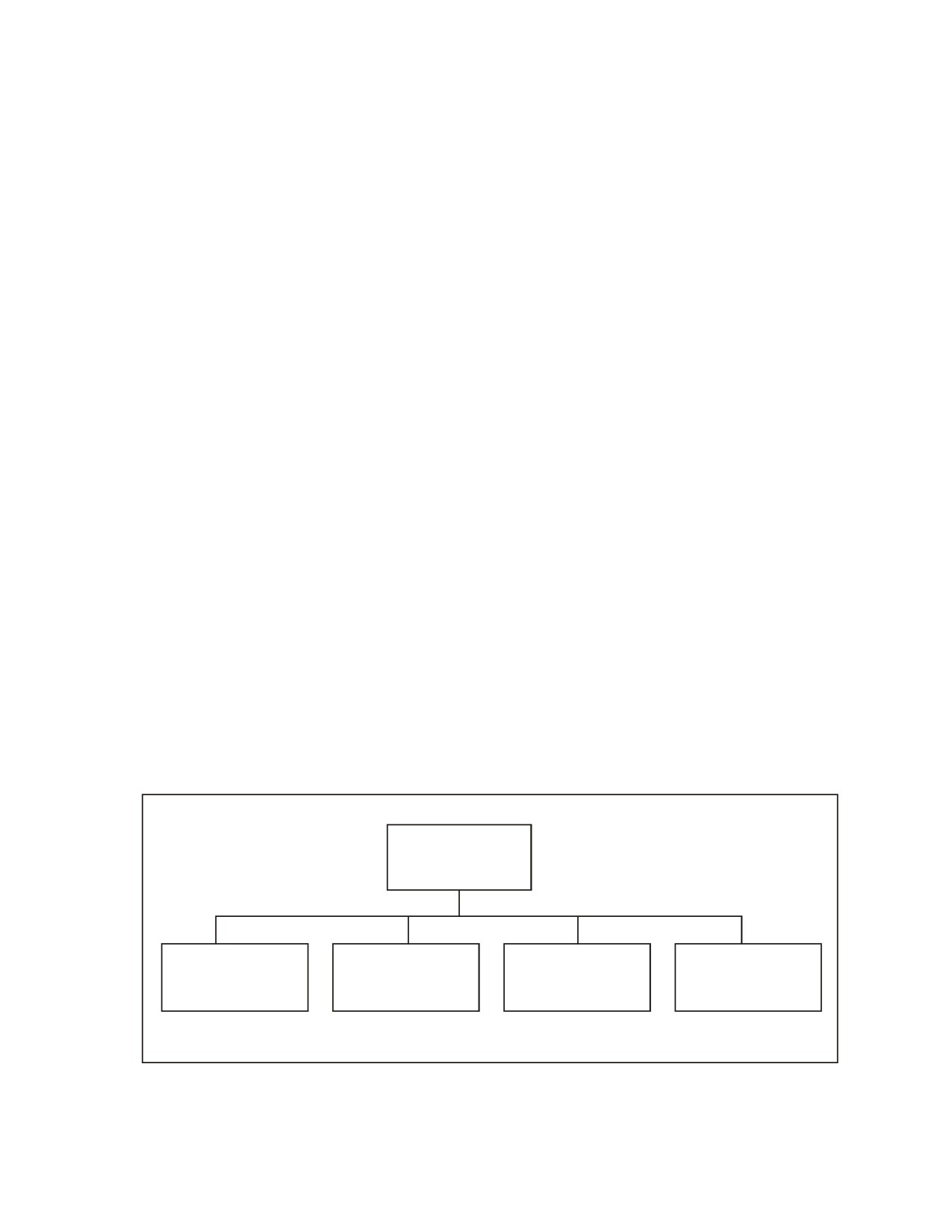
C-3. Figure C-1 shows the signal battalion (composite).
Signal
Battalion
TOE 11626L000
(Composite)
Theater
HHD
Tactical Installation
Signal
Cable and Wire
Signal Battalion
and Networking
Maintenance
Company
(Composite)
Company
Company
TOE 11626L000
Figure C-1. Signal Battalion (Composite), TOE 11626L
C-1
FM 6-02.45________________________________________________________________________________
SIGNAL TELECOMMUNICATIONS BATTALION (AREA), TOE 11635L
C-4. This unit’s mission is to install, operate, and maintain communications
nodes. This unit provides two extension nodes to support medium-sized
functional commands
(such as the MEDCOM or personnel command
[PERSCOM]).
C-5. This unit can install area communications system facilities consisting of
three or four area nodes, 12 small extension nodes (SENs), and two medium
headquarters extension nodes with three organic area signal companies.
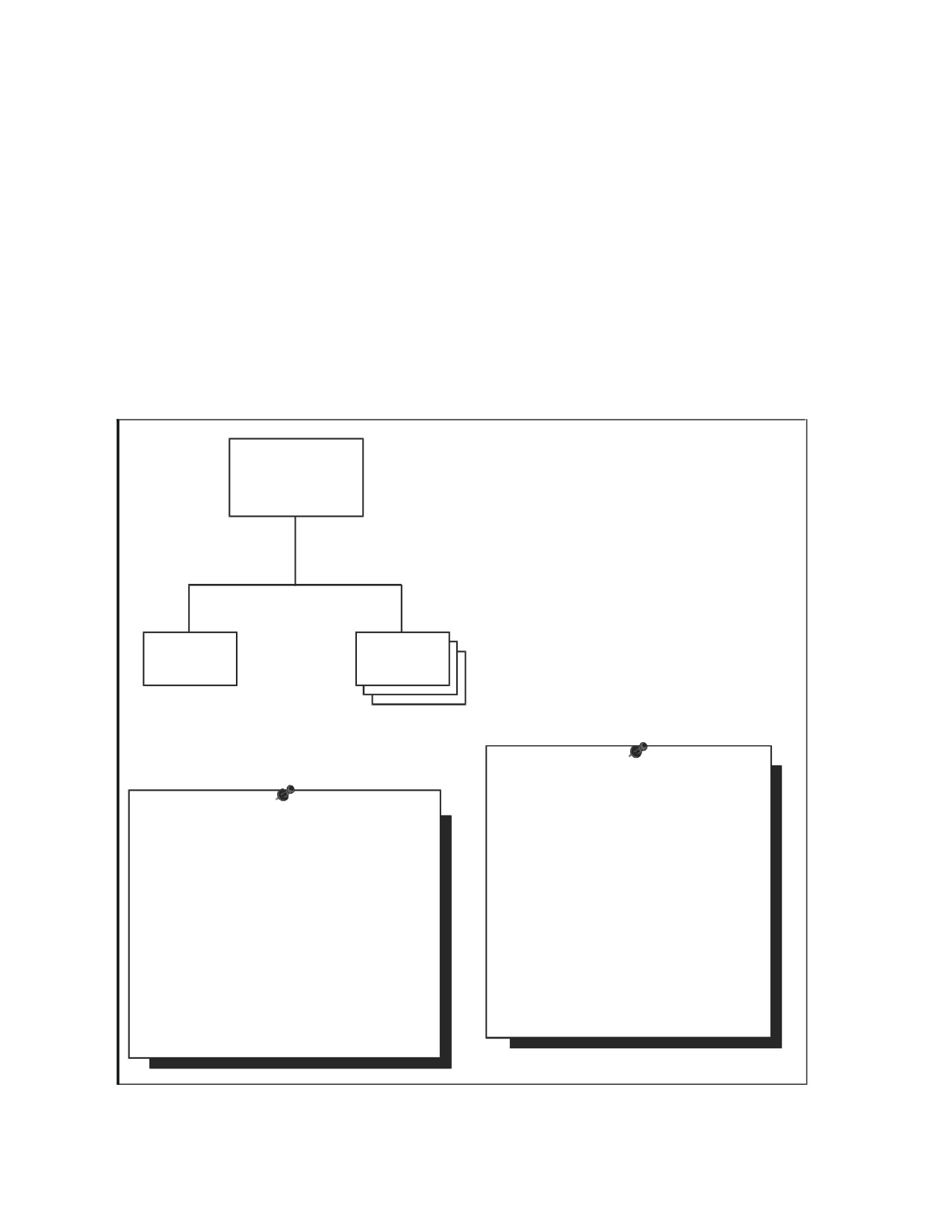
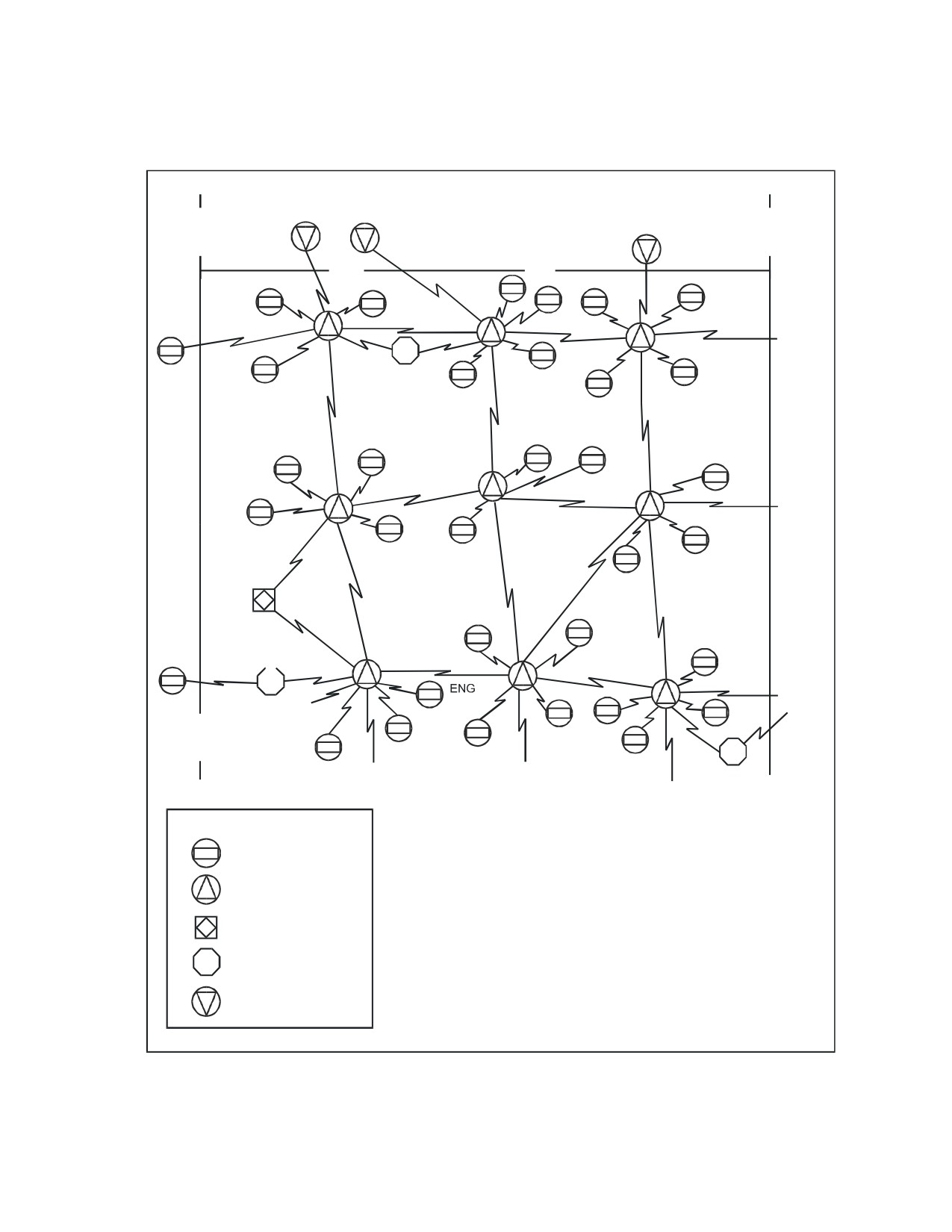
C-6. Figure C-2 shows the signal telecommunications battalion (area), and
Figure C-3 shows the doctrinal employment of a signal telecommunications
battalion.
Signal
Telecommunications
TOE 11635L
Battalion
(Area)
Battalion Mission:
Install, operate, and maintain up to three area signal nodes
and 12 signal extension nodes in the Theater Army
communications system; provide two medium headquarters
extension nodes, including message switching and access
to the theater network for medium-sized headquarters.
Area Signal
HHC
TOE 11636L
Company
TOE 11637L
Capabilities:
3 Area Signal Nodes providing:
- Automatic telephone central office
switching
Communications Systems (Three-Node Battalion):
- Net radio interface
1 ea AN/TYQ-30 System Control Element
- Multichannel radio communications
3 ea AN/TYQ-31 Tactical C3 Nodal Processors
and terminal facilities to provide
2 ea AN/TTC-46 Large Extension Switches
four extension nodes
12 ea AN/TTC-48 Small Extension Switches
- Repeater systems to extend range of
12 ea AN/TRC-173 Radio Vans
multichannel network
11 ea AN/TRC-174 Radio Vans
12 Extension nodes
3 ea AN/TRC-175 Radio Vans
6 (MSE) radio access units
9 ea AN/TRC-138A Radio Vans
Headquarters providing:
6 ea AN/TRC-191 Radio Access Units
- Internal command post circuits
1 ea AN/TYC-39A TRI-TAC Message Switch
- Communications access to theater
3 ea AN/TTC-39D TRI-TAC Switches
Army network
2 ea AN/GSQ-80 Message Centers
1 Message switch
2 ea AN/TSC-58 Telegraph Terminals
Figure C-2. Signal Telecommunications Battalion (Area), TOE 11635
C-2
________________________________________________________________________________FM 6-02.45
Wire/
x
x
Radio/
x
x
x
DGM/
x
x
MSE NCS
TACSAT/
x
AN/TTC-47
TROPO
xxx
xxx
CHEM
ENG
EPW
BN
ADA
BN
BN
MI BN
Adjoining
BDE
ASG
Allied
MP BDE
CHEM
TSC
BN
ENG GP
CBT SPT
S & S
AMMO
BN
Hospital
CBT SPT
BN
ADA
Hospital
BDE
EOD
ASG
GP
Adjoining
BDE
S & S
BN
MI BN
S & S
BN
S & S
BN
CHEM
ASCC
BN
FWD
CBT SPT
Theater
Hospital
Aviation
TRANS
BDE
ASG
MED
GP
BDE
Adjoining
BDE
Allied
DISN
BDE
FIN
x
BN
x
CBT SPT
x
x
MED
Hospital
SIGINT
MI
GP
Adjoining
BN
Adjoining
TRANS
BDE
BDE
BDE
Adjoining
GP
BDE
LEGEND:
Small Extension Node
Area Node
Command Operation
Company Node
Large Extension Node
EAC area communications support a wide variety of customers/users:
MSE Node
- EAC level units/commands (starting with CINC and ASCC).
- Including corps units traversing EAC.
Figure C-3. Doctrinal Employment of a Telecommunications Battalion
C-3
FM 6-02.45________________________________________________________________________________
HHC Signal Telecommunications Battalion (Area), TOE 11636L
C-7. This unit’s mission is to—
• Provide C2 and administrative and logistical support for a signal
telecommunications battalion (area).
• Install, operate, and maintain two medium headquarters extension
nodes for internal command post communications and access to the
area communications system.
C-8. The headquarters provides—
• C2, staff planning, and supervision of the battalion.
• Administrative and logistical support for the battalion to include—
Unit administration for assigned or attached units.
Staff supervision of automotive, power generation, and air
conditioning equipment maintenance.
Backup unit maintenance and vehicle recovery for organic
companies.
Bulk fuel resupply for units assigned to the battalion.
COMSEC direct support maintenance for the battalion.
• Two medium headquarters extension node platoons that provide
internal command post circuit and message switching,
communications access, and over-the-counter service to the ASCC
area communications systems for a medium size headquarters (for
example, TAACOM, MEDCOM, engineer command
[ENCOM],
PERSCOM, transportation command
[TRANSCOM], and other
comparable sized units).
• Message switching facility for operation at one of three area nodal
centers.
• Consolidated property book for assigned units.
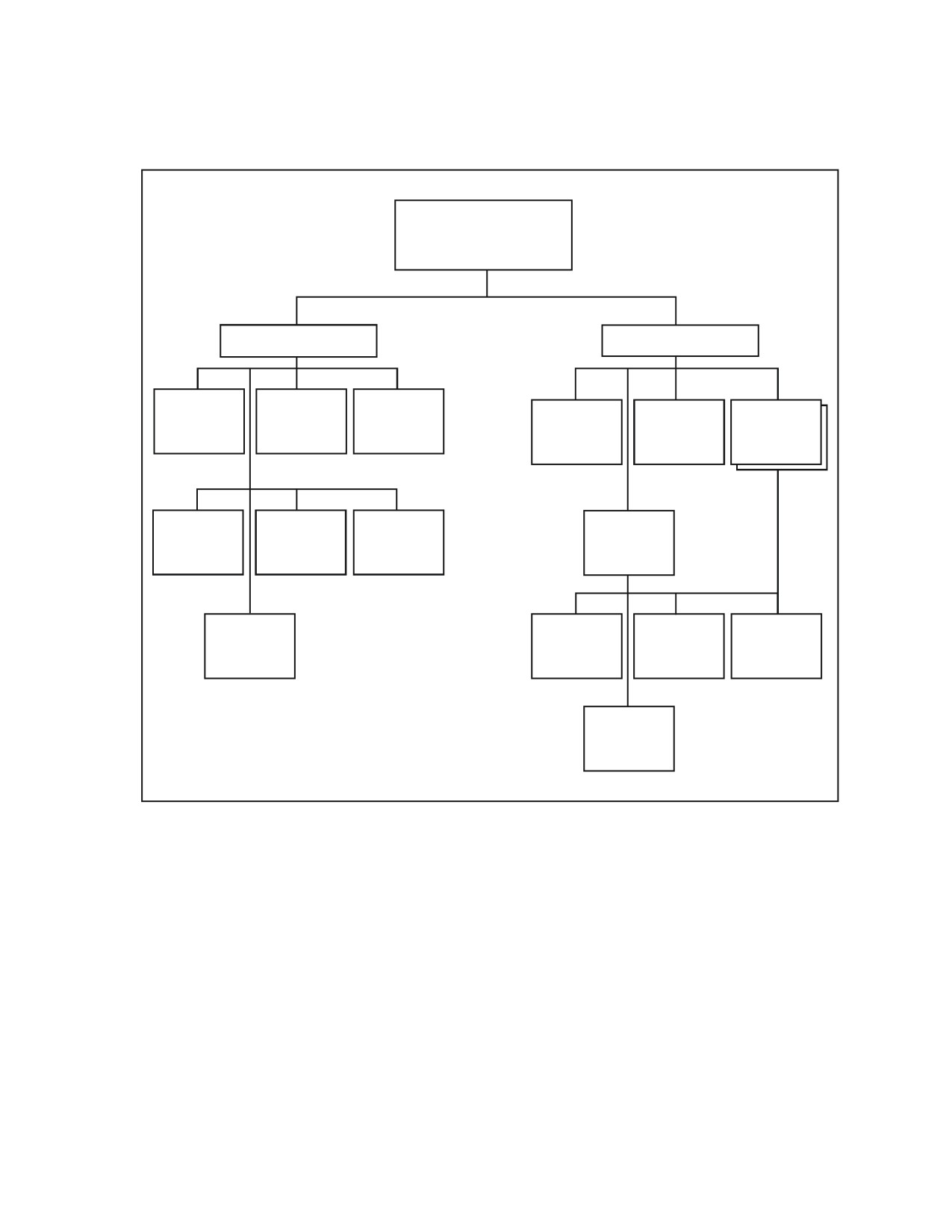
C-9. Figure C-4 shows the HHC signal telecommunications battalion (area).
C-4
________________________________________________________________________________FM 6-02.45
HHC
Signal Telecommunications
TOE 11636L
Battalion (Area)
Battalion Headquarters
Headquarters Company
Operations
Medium
Command
Administrative
and
Message
Company
Headquarters
Section
Section
Intelligence
Switch
Headquarters
Support
Section
Section
Platoon
Motor
COMSEC
Logistics
COMSEC
Maintenance
Logistics
Section
Maintenance
Section
Section
Unit
Switch and
Platoon
COMMCEN
Ministry
Transmission
Headquarters
Section
Team
Section
Cable
and
Wire Section
Figure C-4. HHC Signal Telecommunications Battalion (Area), TOE 11636L
Area Signal Companies (A, B, and C), TOE 11637L
C-10. This unit’s mission is to install, operate, and maintain an area node
and extension signal nodes in the common-user area nodal system of the
theater communications system (TCS). An area signal company area node
provides—
• Automatic telephone office switching facilities, AN/TTC-39D.
• Net radio interface (NRI) for frequency modulated voice radio access
to the TCS.
• Multichannel radio communications facilities that terminate systems
between the area node, adjacent area nodes, and extension nodes.
• Multichannel radio terminal facilities, AN/TRC-173, that provide four
extension switching nodes for units requiring access to the TCS.
C-5
FM 6-02.45________________________________________________________________________________
• Multichannel radio communications repeater stations, AN/TRC-174,
which extend the range of the multichannel radio system.
• CSCE, AN/TYQ-31, for the management and control of the signal
node facilities.
• Food service and unit level maintenance of organic equipment and
direct support maintenance on organic signal equipment.
• MSE radio access units (RAUs), AN/TRC-191, that provide subscriber
access to the TCS.
• Food service and direct support maintenance for CE equipment organic to
HHC signal telecommunications battalion (area).
C-11. Figure C-5 shows the area signal companies A, B, and C.
Area Signal
TOE 11637L0
Company
Signal
Company
Area Node
Extension
Cable
Maintenance
Headquarters
Platoon
Node Platoon
Platoon
Section
Platoon
Platoon
Platoon
Headquarters
Headquarters
Headquarters
Extension
Multichannel
Field
Node Switch/
Section
Cable Section
NRI Section
Telephone
Switchboard
Extension
Section
Node Radio
Section
Radio Relay
Section
Figure C-5. Area Battalion Companies A, B, and C, TOE 11637L
C-6
________________________________________________________________________________FM 6-02.45
THEATER TACTICAL SIGNAL BATTALION (TTSB), TOE 11685A
C-12. The TTSB’s mission is to install, operate, and maintain nodal
communications support for the commander of the ARFOR component to a
combatant commander or JTF contingency operation or a MCO deployment.
C-13. This unit accomplishes its mission with an HHC signal battalion and
four communications companies (two command support companies, a minor
support company, and a major support company). Figure C-6 shows the
TTSB.
Theater
Tactical
TOE 11685A000
Signal Battalion
HHC
Command
Minor
Major
Theater Tactical
Support
Support
Support
Signal Battalion
Company
Company
Company
TOE 11686A00
TOE 11687A0
TOE 11688A0
TOE 11689A0
Figure C-6. TTSB, TOE 11685A
HHC TTSB, TOE 11686A
C-14. This unit’s mission is to provide C2 of assigned or attached units and
logistics support and internal security to the headquarters.
C-15. This unit—
• Provides C2, staff planning, and supervision of a signal battalion
consisting of four companies.
• Maintains a consolidated property book for assigned units.
• Provides organic food service, unit maintenance support, and direct
support maintenance of organic CE/COMSEC equipment.
• Provides religious support, food service support, and direct support of
organizational COMSEC equipment.
C-16. This unit depends on assigned units for unit maintenance of wheeled
vehicles, generators, and air conditioners. It also depends on the ASCC for
unit-level health, legal, finance, personnel, administrative, and food services;
COMSEC maintenance; and supplemental transportation and vehicle
recovery. Figure C-7 shows the HHC TTSB.
C-7
FM 6-02.45________________________________________________________________________________
HHC
Theater Tactical
TOE 11686A00
Signal Battalion
Battalion Headquarters
Company Headquarters
Operations
CE/COMSEC
Unit
Command
Administrative
Logistics
and
Maintenance
Ministry
Section
Section
Section
Intelligence
Section
Team
Section
Figure C-7. HHC TTSB, TOE 11686A
TTSB Command Support Company, TOE 11687A
C-17. This unit’s mission is to provide nodal communications support for the
ARFOR components to a CINC or JTF contingency operation or a MRC
deployment.
C-18. This unit provides—
• Food service and unit level maintenance of organic equipment and
direct support of organic CE/COMSEC equipment.
• Automatic telephone office switching facilities, AN/TTC-39D.
• CSCE, AN/TYQ-31, for the management and control of the signal
node facilities.
• AN/TSC-85B/93B SATCOM terminals to provide secure, high data
rate communications via satellite link.
• Installation, operation, and maintenance of two TROPO systems,
AN/TRC-170(V)2. These systems can span a distance of up to 161
kilometers (100 miles) with maximum traffic channels.
• One MSE RAU, AN/TRC-191, to provide subscriber access to the TCS.
• Installation, maintenance, and repair of indigenous cable and wire
systems.
C-19. Each command support company is authorized an additional 61 secure
telephones and
210 nonsecure telephones with appropriate associated
support items of equipment (ASIOE) to provide service to those organizations
that do not provide their own instruments.
C-8
________________________________________________________________________________FM 6-02.45
C-20. This unit depends on the HHC TTSB for refueling services, unit-level
administration, religious support, and direct support for COMSEC
equipment. The unit depends on the TSC for health, finance, legal, and
transportation services. Figure C-8 shows the TTSB command support
company.
Command
Support
TOE 11687A0
Company
Headquarters
Transmission
Switch
Platoon
Platoon
Platoon
Company
Platoon
Platoon
Headquarters
Headquarters
Headquarters
Telephone
Operations
Section
Switchboard
Company
TROPO
Section
Maintenance
Section
Cable and
Signal
SATCOM
Wire Section
Section
Maintenance
Figure C-8. TTSB Command Support Company, TOE 11687A
TTSB Minor Support Company, TOE 11688A
C-21. This unit’s mission is to provide nodal communications support for the
ARFOR components to a CINC or JTF contingency operation or an MRC
deployment. This unit provides—
• Food service and unit level maintenance of organic equipment and
direct support maintenance of CE/COMSEC equipment.
• Automatic telephone office switching facilities, AN/TTC-39D.
• CSCE, AN/TYQ-31, for the management and control of the signal
node facilities.
C-9
FM 6-02.45________________________________________________________________________________
• Two AN/TSC-93B SATCOM terminals to provide secure, high data
rate communications via satellite link.
• Installation, operation, and maintenance of two TROPO systems.
These systems can span a distance of up to 161 kilometers (100 miles)
with maximum traffic channels.
• One MSE RAU, AN/TRC-191, to provide subscriber access to the TCS.
• Installation, maintenance, and repair of indigenous cable and wire
systems.
C-22. Figure C-9 shows the TTSB minor support company.
Minor
Support
TOE 11688A0
Company
Headquarters
Transmission
Switch
Platoon
Platoon
Platoon
Headquarters
Headquarters
Headquarters
Company
Platoon
Platoon
Telephone
Company
TROPO
Switchboard
Operations
Section
Section
Signal
Cable
SATCOM
Maintenance
and
Section
Section
Wire Section
Motor
Maintenance
Section
Figure C-9. TTSB Minor Support Company, TOE 11688A
C-10
________________________________________________________________________________FM 6-02.45
TTSB Major Support Company, TOE 11689A
C-23. This unit’s mission is to provide nodal communications support for the
ARFOR components to a CINC or JTF contingency operation or a MRC
deployment. This unit provides—
• Food service and unit level maintenance of organic equipment and
direct support maintenance of CE/COMSEC equipment.
• Automatic telephone office switching facilities: one AN/TTC-39D and
one AN/TTC-46.
• CSCE, AN/TYQ-31, for the management and control of the signal
node facilities.
• Message switch, AN/TYC-39, equipped to provide secure automatic
message switching service.
• Two AN/TSC-85B SATCOM terminals to provide secure, high data
rate communications via satellite link.
• Installation, operation, and maintenance of two TROPO systems that
can span a distance of up to
161 kilometers
(100 miles) with
maximum traffic channels.
• One MSE RAU, AN/TRC-191, to provide subscriber access to the TCS.
• Installation, maintenance, and repair of indigenous cable and wire
systems.
• Multichannel radio communications facilities to terminate systems.
• A flyaway message switch to provide record data communications
message support and over-the-counter service for both classified and
unclassified customers.
• A mobile gateway van
(MGV) to provide an extension of the
nonclassified NIPRNET into the tactical deployed theater.
C-24. Figure C-10 shows the TTSB major support company.
SIGNAL VI COMPANY (TA), TOE 11613L
C-25. Signal VI company (TA) provides—
• Tailored VI products, including graphics, to support operational
requirements.
• Historical documentation to support the Army VI documentation
program.
• Processing, maintenance, and repair support of VI to ASCC units
beyond the capacity of those units.
C-26. Figure C-11 shows the signal VI company (TA).
C-11
FM 6-02.45________________________________________________________________________________
Major
Support
TOE 11689A0
Company
Headquarters
Transmission
Switch
Platoon
Platoon
Platoon
Company
Platoon
Platoon
Headquarters
Headquarters
Headquarters
Telephone
Company
TROPO
Switchboard
Operations
Section
Section
Signal
Cable
SATCOM
Maintenance
and
Section
Section
Wire Section
Motor
LOS
TYC-39
Maintenance
Section
Section
Section
MGV
LEN
Section
Section
JRMC
Section
Figure C-10. TTSB Major Support Company, TOE 11689A
C-12
________________________________________________________________________________FM 6-02.45
1 Signal VI
TOE 11613L0
Company (TA)
2
Operations
Operations
Operations
Company
and
and
and
Headquarters
Support Platoon
Support Platoon
Support Platoon
1- One Company per TSC.
2- Provides COMCAM Teams to Support Theater
Headquarters and Major Subordinate Commands
Operating at EAC
Figure C-11. Signal VI Company (TA), TOE 11613L
POWER PAC3 COMPANY, TOE 11600A
C-27. The POWER PAC3 company’s mission is to rapidly deploy and support
initial information service requirements of the ASCC. Working in concert
with deployed Army mobile liaison teams, the organizations are mutually
supportive and can meet the entire gamut of communications/information
needs of the ground component commander until the arrival of the TSC. The
company can extend US strategic communications systems to support allied
forces.
C-28. The POWER PAC3 company is a critical C2 communications provider,
which serves to ensure success during power projection operations. The unit
is highly mobile and is tailored to any warfighting ground component
commander’s mission essential communications and information needs.
C-29. The POWER PAC3 company can deploy into a logistically austere
theater with little or no communications infrastructure. The unit must
sustain itself for up to 45 days; therefore, the operator/maintainer must
maximize all equipment.
C-30. This unit provides—
• Command, staff planning, control, and supervision of the operations
of the company to include any augmenting of personnel or material
assets.
• Vehicular, electronic, and COMSEC maintenance and repair, as well
as supply facilities to support company operations.
• Communications network planning and management.
C-13
FM 6-02.45________________________________________________________________________________
C-31. On ARFOR deployment, the POWER PAC3 company’s configuration is
determined by mission requirements. Generally, the POWER PAC3 company
supports the ARFOR main command post, ARFOR forward command post,
and six LNO signal support teams (SSTs). Each section provides a variety of
communications capabilities for the headquarters it supports. Assets from the
LNO teams could extend the theater information infrastructure to support
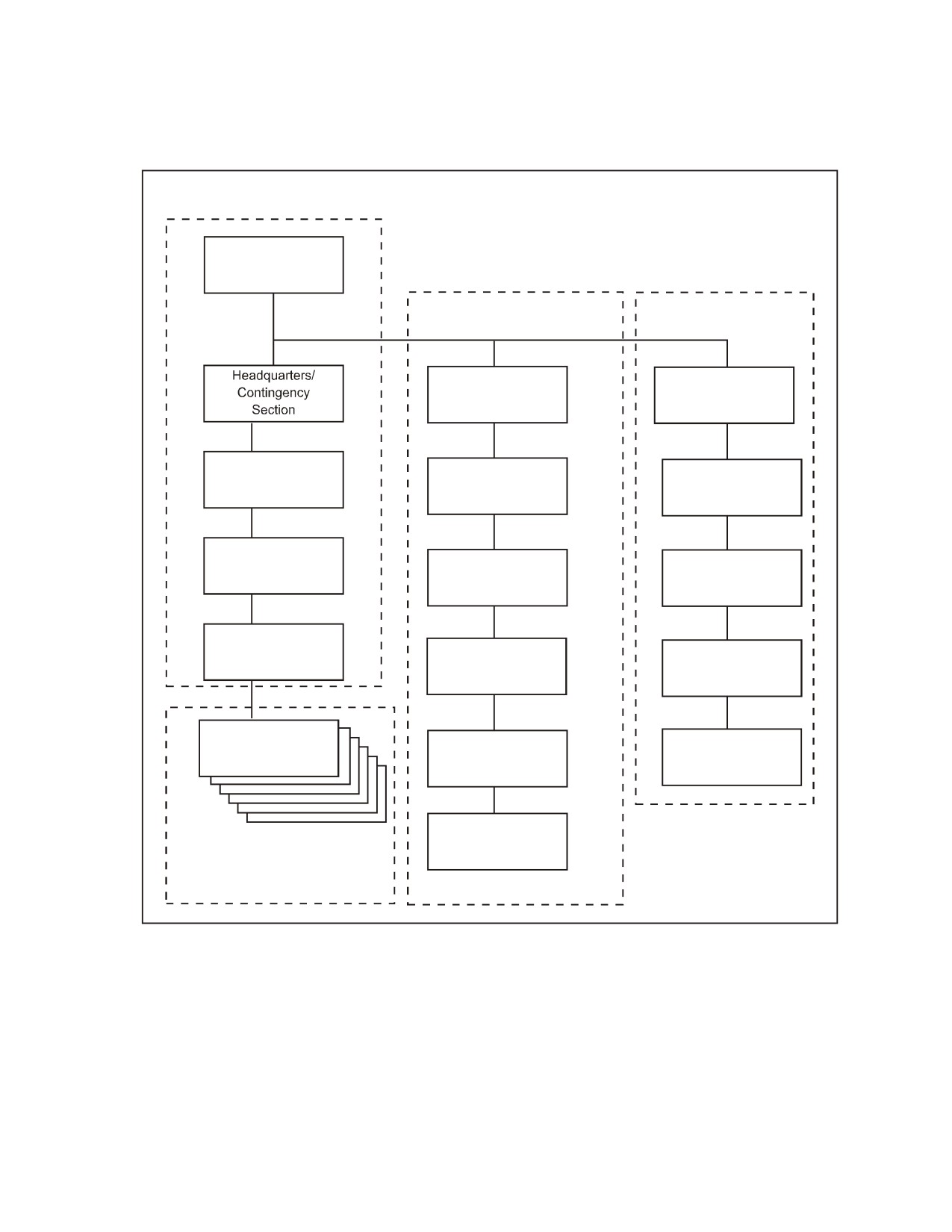
other or additional support missions. Figure C-12 shows the POWER PAC3
company’s AOR support requirements.
PAC3 Company Headquarters
C-32. The headquarters company has a headquarters/contingency section,
network management section, motor maintenance section, CE/COMSEC
maintenance section, and LNO teams.
C-33. This company is responsible for the C2, management, network
engineering, maintenance, supervision, and support of company personnel to
include LNO SSTs and any augmentation assets.
C-34. The contingency company engineers the installation of the
communications systems required for the ARFOR, supervises and manages
the operation of the network, and resolves technical problems.
PAC3 Heavy Hub Platoon
C-35. The heavy hub platoon has a multichannel TACSAT section, future
SEN section, single-channel TACSAT section, LOS section, and switchboard
and cable section. This platoon is responsible for the following information
services (secure and nonsecure) at the ARFOR main command post:
• Digital voice switching.
• Commercial and host nation communications access.
• LOS multichannel radio.
• SATCOM.
• Cable and wire operations and message processing.
• NIPIRNET (e-mail) access.
C-36. A typical support package provides
128 local secure terminal
connections, four local LAN loops, and connectivity to eight extended LANs
via X.25 ports that support access to the TPN.
C-37. This unit is authorized an additional 70 secure telephones and 222
nonsecure telephones with appropriate ASIOE to provide service to those
organizations that do not provide their own instruments.
C-14
________________________________________________________________________________FM 6-02.45
OTOE 11600A
Company
Headquarters
11607A
11608A
11606A
Heavy Hub
Light Hub
Platoon
Platoon
Network
Multichannel
Multichannel
Management
TACSAT
TACSAT
Section
Section
Section
Motor
Maintenance
FSEN
FSEN
Section
Section
Section
CE/COMSEC
Single-Channel
Single-Channel
Section
TACSAT
TACSAT
Section
Section
Switchboard
LNO Teams
LOS Team
and Cable
Section
Switchboard
AN/TSC-93
and Cable
AN/GRC-193
Section
AN/VRC-92
PSC-5
11609A
SEN
Figure C-12. Power PAC3 Company, TOE 11600A
C-15
FM 6-02.45________________________________________________________________________________
PAC3 Light Hub Platoon
C-38. The light hub platoon has a multichannel TACSAT section, future SEN
section, single-channel TACSAT section, and switchboard and cable section.
This platoon installs, operates, and maintains communications equipment at
ARFOR forward command posts and provides information services (secure
and nonsecure) to include message processing and NIPIRNET (e-mail) access.
This is done through SATCOM, cable and wire operations, digital voice
switching, and commercial and host nation communications.
C-39. A typical support package provides
96 local secure terminal
connections, three local LAN loops, and connectivity to six extended LANs via
X.25 ports that support access to the TPN.
C-40. This unit is authorized an additional 70 secure telephones and 222
nonsecure telephones with appropriate ASIOE to provide service to those
organizations who do not provide their own instruments.
PAC3 LNO Team
C-41. The LNO team has six liaison SSTs. Each SST has multichannel
TACSAT, voice/data switching, and single-channel TACSAT. The SST is
assigned to an Army LNO team and attached to a designated joint, coalition,
or allied headquarters.
C-42. The POWER PAC3 company’s LNO SST installs, operates, and
maintains communications equipment and provides information services to
the liaison team. This is done by SATCOM, digital voice switching, and
commercial and host nation communications access. Each LNO SST is
tailored to mission requirements and has a standardized integrated
command post shelter.
C-43. Each team has the necessary equipment assigned to it for direct
communications back to ARFOR main command post and/or ARFOR forward
command post. A typical support package provides 32 local secure terminal
connections, one local LAN loop, and connectivity to two extended LANs via
X.25 ports that support access to the TPN. For full-scale POWER PAC3
company deployment, these SSTs should provide full information services to
16 subscribers per site.
C-44. This unit is authorized an additional 12 secure telephones and 48
nonsecure telephones with appropriate ASIOE to provide service to those
organizations who do not provide their own instruments.
SIGNAL COMPANY, TROPO (LIGHT), TOE 11667L
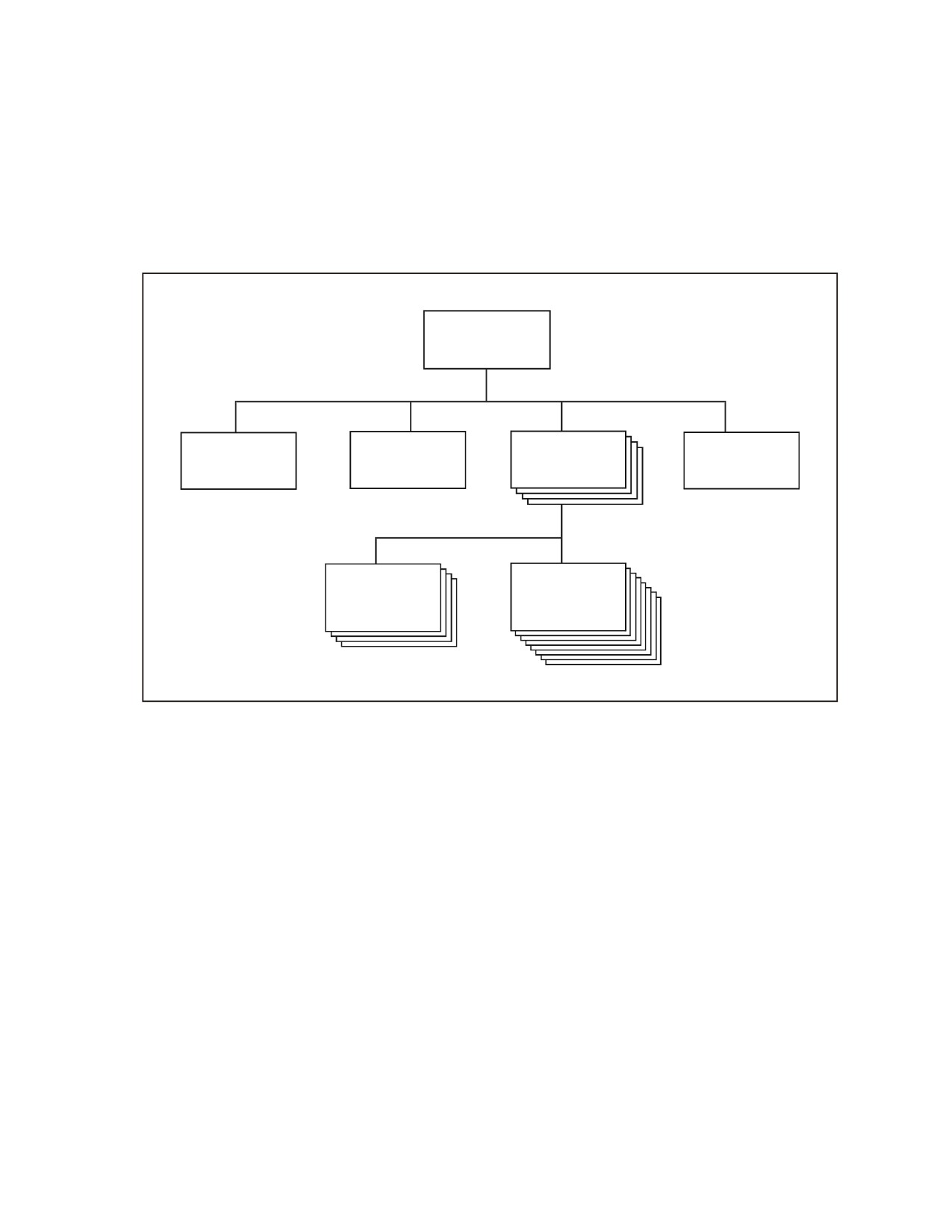
C-45. This unit’s mission is to provide multichannel TROPO communications
links for long-distance communications. This unit (AN/TRC-170(V)3)—
• Installs, operates, and maintains eight TROPO communications links
(two terminals per link). These links can span a distance of up to 161
kilometers (100 miles) with maximum traffic channels.
• Provides circuit patching and limited test facilities that provide a
limited technical control capability.
C-16
________________________________________________________________________________FM 6-02.45
• Provides food service and performance of direct support maintenance
on all organic signal and COMSEC equipment, and unit maintenance
and vehicle recovery on organic equipment.
C-46. Figure C-13 shows the signal company, TROPO (light).
Signal Company
TROPO
TOE 11667L0
(Light)
Technical
Signal
Company
TROPO
Control
Maintenance
Headquarters
Platoon
Section
Section
TROPO
TROPO
Platoon
Section
Headquarters
Figure C-13. Signal Company, TROPO (Light), TOE 11667L
SIGNAL COMPANY, TROPO (HEAVY), TOE 11668L
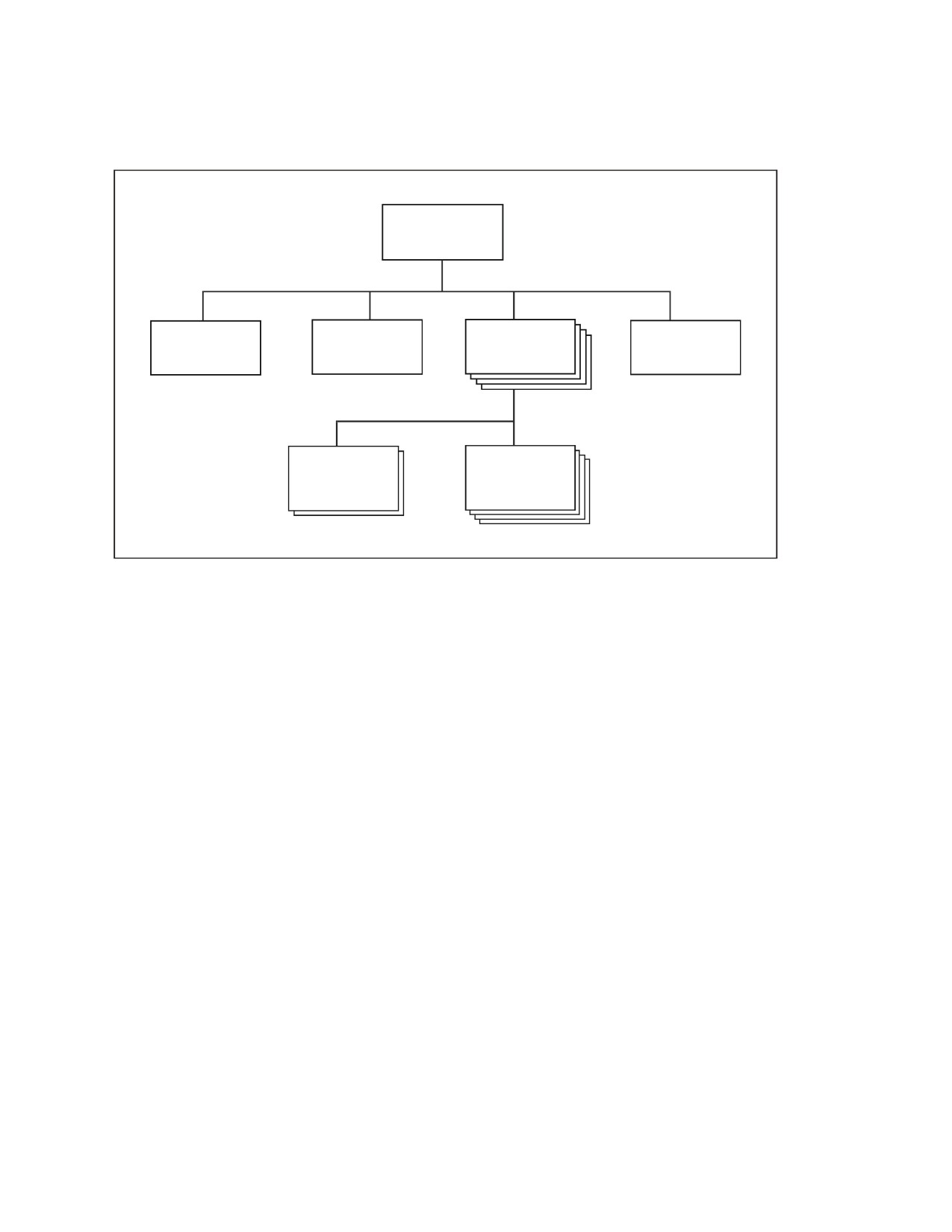
C-47. This unit’s mission is to provide multichannel TROPO communications
links for long-distance communications in the communications zone. This
unit—
• Installs, operates, and maintains four TROPO communications links
(two terminals per link). These links can span up to 241 kilometers
(150 miles).
• Operates in dual or quad diversity mode (space and frequency).
• Provides food service.
• Provides direct support maintenance on all organic signal and
COMSEC equipment.
• Provides unit maintenance and vehicle recovery on organic
equipment.
C-48. Figure C-14 shows the signal company, TROPO (heavy).
C-17
FM 6-02.45________________________________________________________________________________
Signal Company
TROPO
TOE 11667L0
(Heavy))
Signal
Company
Operations
TROPO
Maintenance
Headquarters
Section
Platoon
Section
TROPO
TROPO
Platoon
Section
Headquarters
Figure C-14. Signal Company, Tropo (Heavy), TOE 11668L
SIGNAL COMPANY (COMMAND OPERATIONS THEATER), TOE 11669L
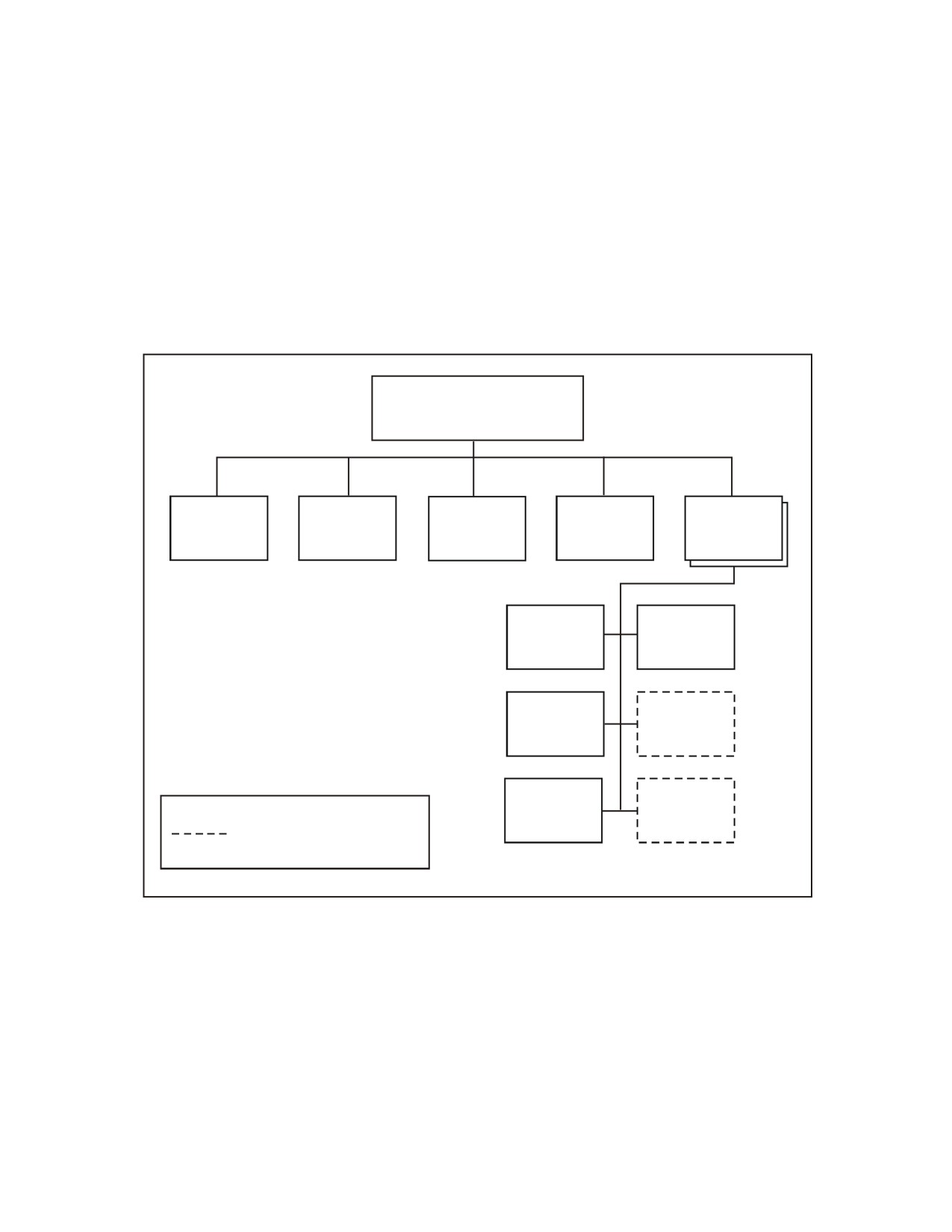
C-49. This unit’s mission is to provide communications facilities in the TCS
for an EAC MSC, ASCC headquarters, or an equivalent size headquarters.
The signal company (command operations theater) provides—
• Installation, operation, and unit maintenance of communications
facilities supporting a major headquarters, which includes a main
and rear or jump capability.
• Food service and unit-level maintenance of organic equipment and
direct support maintenance of CE/COMSEC equipment.
• Two circuit switches, AN/TTC-39D, providing service for up to 744
local telephones and one large extension switch providing service for
up to 176 subscribers, both secure and nonsecure.
• Two TCCs for circuit patching, testing, and controlling terminal
communications facilities.
• Four high-capacity LOS radio repeaters.
• Two 96-channel multiplex terminals for terminating the connecting
links between the headquarters and two separate TCS switching
centers.
C-18
________________________________________________________________________________FM 6-02.45
• Two message switches, AN/TYC-39, equipped to provide facsimile
service and normal message handling services to include over-the-
counter service and messenger services with limited motor messenger
capability.
• Two antenna erection teams to assemble and disassemble the
antenna towers, extending the LOS multichannel over natural and
manmade obstruction.
C-50. Figure C-15 shows the signal company (command operations theater).
Signal Company
(Command Operations Theater)
TOE 11669L0
Section
Nodal
Company
Maintenance
Maintenance
Logistics
Platoon
Headquarters
Motor
Signal
COMSEC
Headquarters
Platoon
Cable
Headquarters
and Wire
Cable and
TT Terminal/
Switchboard
Message
Section
Center
Transmission
TSRT/
LEGEND:
and Control
DSTE Section
Section
A new system TBD.
These two sections are obsolete.
Figure C-15. Signal Company (Command Operations Theater), TOE 11669L
C-19
FM 6-02.45________________________________________________________________________________
SIGNAL TACSAT COMMUNICATIONS COMPANY, TOE 11603L
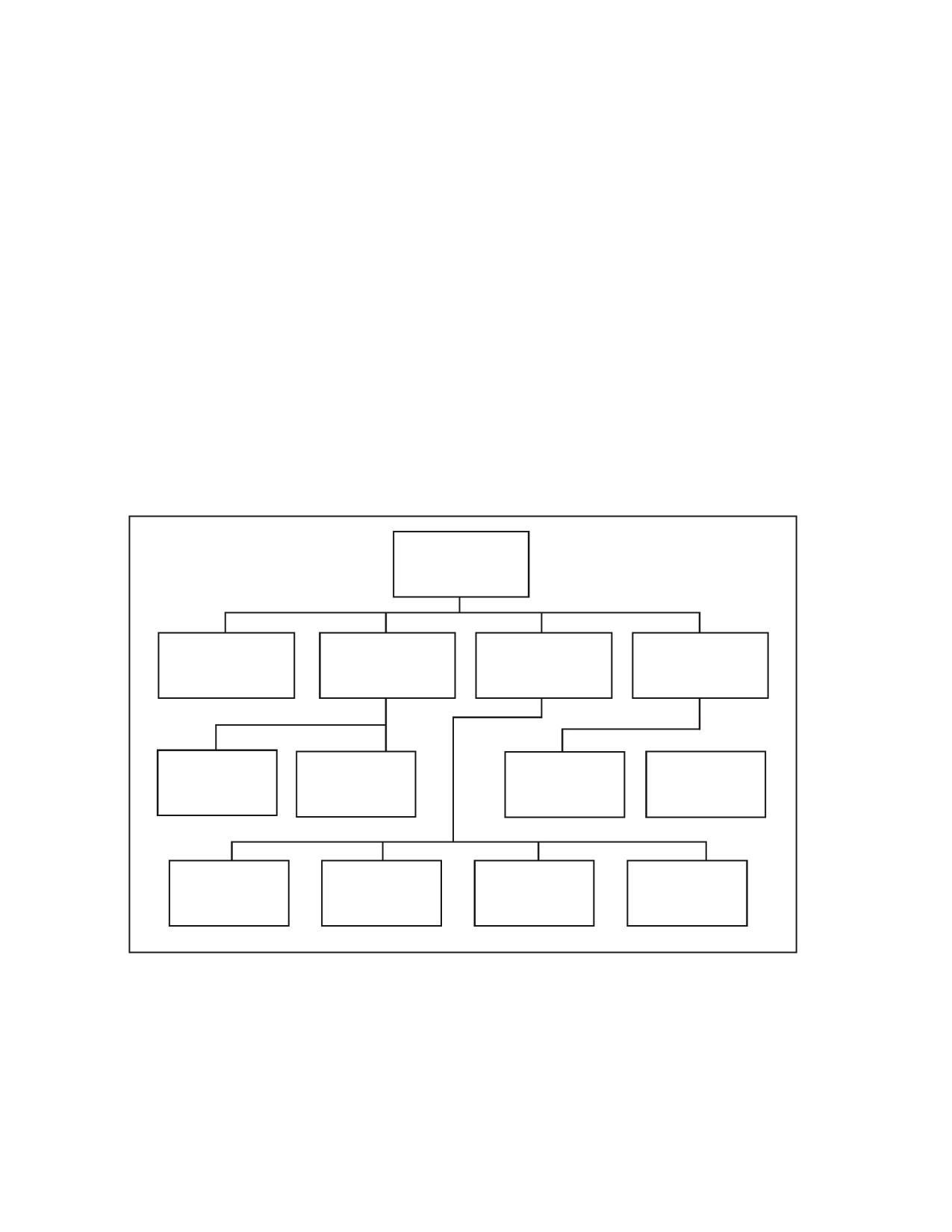
C-51. This unit’s mission is to provide TACSAT terminal facilities at major
communications switching nodes and command posts in a TCS. The mission
determines the type and quantity of TACSAT systems and identifies the
tailoring of the TOE to support the requirement. This unit—
• Installs, operates, and maintains
16 SATCOM terminals: eight
AN/TSC-85s and eight AN/TSC-93s or six AN/TSC-85s and
10
AN/TSC-93s.
• Provides multichannel TACSAT that provides connectivity between
key EAC headquarters based on distance, terrain, criticality of links,
and the need to augment LOS relays.
• Provides unit maintenance on all organic equipment and direct
support maintenance on organic COMSEC and signal equipment.
• Provides supplemental food service support.
C-52. Figure C-16 shows signal TACSAT communications company.
Signal TACSAT
Communications
TOE 11603L100/11603L200
Company
Company
AN/TSC-85
Support
AN/TSC-93
Headquarters
Platoon
Platoon
Platoon
AN/TSC-85
AN/TSC-93
Platoon
Platoon
Headquarters
Section
Terminal
Headquarters
Terminal
Section
Signal
Motor
COMSEC
Platoon
Maintenance
Maintenance
Logistics
Headquarters
Section
Section
Section
Figure C-16. Signal TACSAT Communications Company, TOE 11603L
C-20
________________________________________________________________________________FM 6-02.45
THEATER TACTICAL SIGNAL COMPANY (SEPARATE) (TTSC [SEP]), TOE 11674A (385TH
SIGNAL COMPANY)
C-53. The TTSC’s (SEP) mission is to install, operate, and maintain nodal
communications support for the commander of an ARFOR component to a
CINC or JTF contingency operation or a major theater war (MTW). The
TTSC (SEP), as a separate company, can be assigned to a strategic signal
battalion, theater signal brigade, or TSC. The unit may be forward deployed
or CONUS-based and deployed in support of an ASCC JFLCC, subordinate
unified command, JTF, single-service force, or theater CINC. The TTSC
(SEP) provides the following information and signal support services:
• Secure and nonsecure voice and data.
• Host nation/Commercial telephone access.
• Increased theater connectivity.
• CNR interface.
• TPN interface.
• Global Command and Control System-Army connectivity.
• LAN technical support (systems management assistance).
• Multiple means of long-range communications.
• Flood search routing.
C-54. Figure C-17 shows the TTSC (SEP).
C-21
FM 6-02.45________________________________________________________________________________
Theater Tactical
Signal Company
TOE 11674A000
(Separate)
Headquarters
Strategic Interface
Nodal
Platoon
Platoon
Platoon
Platoon
Platoon
Platoon
Headquarters
Headquarters
Headquarters
Operations
Section
NCS
Section
TRI-TAC
Section
1 TTC-39
2 TTC-47
2 TRC-190(V3)
Electronic
Maintenance
Section
Radio
SEN
Section
Section
Maintenance
27 PSC-5
2 TTC-48(V2)
Unit
15 VRC-92A
Section
Non-nodal
LOSV1
SATCOM
Section
Section
1 TRC-190(V1)
3 TSC-93
Nodal
SATCOM
Section
2 TSC-85
Figure C-17. TTSC (SEP), TOE 11674A (385th Signal Company)
C-22
________________________________________________________________________________FM 6-02.45
OTHER ORGANIZATIONS BEING PHASED OUT
C-55. The following organizational structures are being phased out for other
reasons.
SIGNAL COMPANY, CABLE AND WIRE, TOE 11623L
C-56. The cable and wire company’s modular platoons and teams—
• Lay cable and wire between major headquarters and subordinate
units.
• Provide cable and wire support from multichannel radio sites to
terminating or switching equipment.
• Provide cable and wire connectivity between area signal nodes and
theater communications systems as tasked by the NETCOM/9th ASC
and required by the ASCC or other major commanders.
C-57. Figure C-18 shows the signal company, cable and wire.
Signal Company
TOE 11623L000
Cable and Wire
Cable
Company
SPECEQ
Cable and
Splicer
Headquarters
Section
Wire Platoon
Section
Cable and
Cable and
Wire Platoon
Wire Section
Headquarters
Figure C-18. Signal Company, Cable and Wire, TOE 11623L
C-23
FM 6-02.45________________________________________________________________________________
SIGNAL DETACHMENT, REPRODUCTION SERVICES, TOE 11570L
C-58. The signal detachment, reproduction services’ mission is to provide
volume reproduction for all Army units at theater level. Individuals of these
organizations can assist in the coordinated defense of the unit’s area or
installation. This unit installs, operates, and maintains a reproduction
facility that provides volume reproduction services to units serviced.
Reproduction services include duplicating, collating, binding, and packaging.
C-59. Figure C-19 shows the signal detachment, reproduction services.
Signal Detachment
TOE 11570LB00
Reproduction Services
Administrative
Production
Bindery
Maintenance
Section
Section
Section
Section
Figure C-19. Signal Detachment, Reproduction Services, TOE 11570L
C-24
Appendix D
Equipment Overview
This appendix discusses the equipment used to provide signal support to
theater operations.
SATCOM TERMINAL
D-1. The following sections discuss some of the satellite systems installed,
operated, and maintained in support of theater operations.
AN/TSC-85B(V)1, AN/TSC-85B(V)2, AND AN/TSC-85C(V)1 SATCOM TERMINALS
NSN: 5895-01-042-9859 (AN/TSC-85(V)2)
5895-01-284-8305 (AN/TSC-85B(V)1)
5895-01-463-4063 (AN/TSC-85C(V)1
References: TM 11-5895-1128-10 (AN/TSC-85B(V)1 & (V)2)
TM 11-5895-1684-13P (AN/TSC-85C(V)1)
General Information
D-2. The AN/TSC-85 terminals contain equipment to receive, transmit, and
process low, medium, and high capacity multiplexed voice, data, and
teletypewriter signals. Using encryption devices, they will process secure and
nonsecure traffic. The terminals are intended for either point-to-point or
multipoint operation in tactical communications systems. They can transmit
one and receive up to four high data rate carriers. The AN/TSC-85(V)2
requires an external multiplex shelter to terminate the circuits. The
terminals include modulation and demodulation equipment and a specialized
pulse code modulation (PCM) signal processor. The terminals have external
connections for an intercommunication set, field telephones, wideband 70
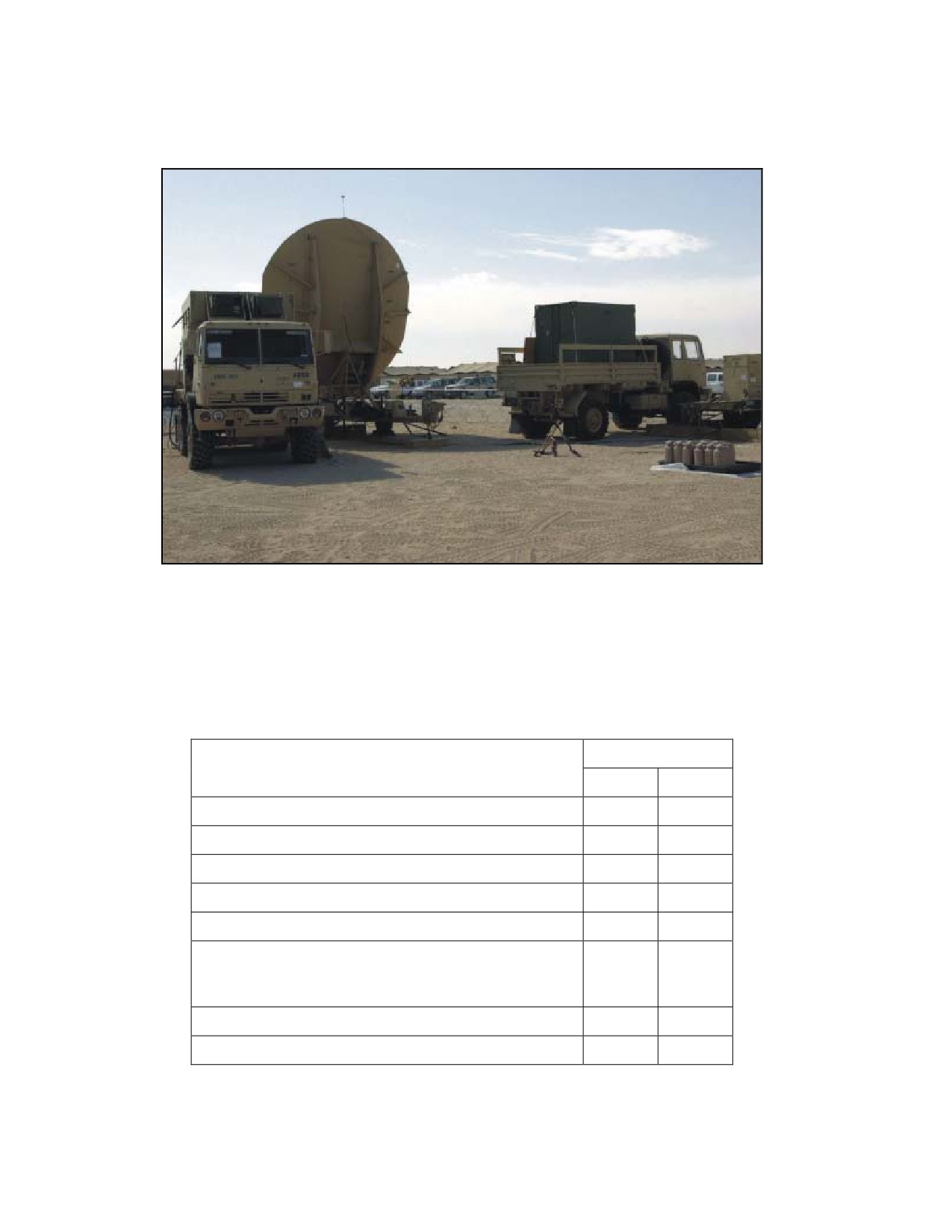
MHz, and chemical, biological, radiological (CBR) alarm. Figure D-1 shows
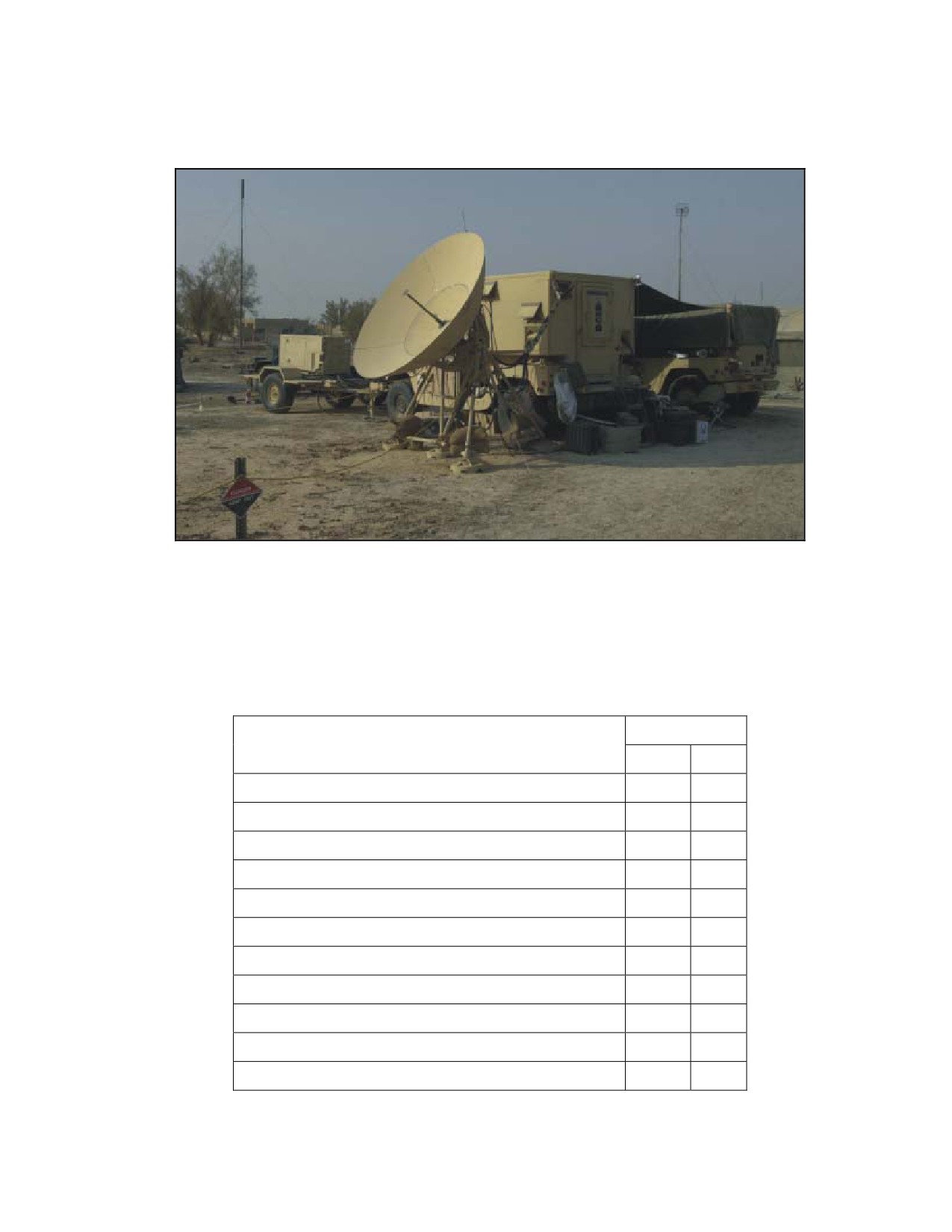
an AN/TSC-85 with a lightweight high gain antenna.
D-1
FM 6-02.45________________________________________________________________________________
Figure D-1. AN/TSC-85
Major Components
D-3. Table D-1 lists the major components of AN/TSC-85B(V)2 and AN/TSC-
85C(V)1.
Table D-1. Major Components of AN/TSC-85B(V)2 and AN/TSC-85C(V)1
Quantity
Components
85B(V)2
85C(V)1
RT-1287/TSC receiver-transmitter orderwire
1
1
AM-6701/TSC RF amplifier
2
2
PP-7086/TSC power supply
2
N/A
PP-7712(V)2/TSC power supply
N/A
2
CV-3198A/TSC frequency converter
2
2
TD-1147/TSC multiplexer/demultiplexer TACSAT
2
N/A
signal processor (tactical satellite signal processor
[TSSP])
TD-1337/(V)1/G multiplexer/demultiplexer TSSP
2
N/A
CV-3201/TSC frequency converter
5
6
D-2

________________________________________________________________________________FM 6-02.45
Table D-1. Major Components of AN/TSC-85B(V)2 and AN/TSC-85C(V)1 (Continued)
Quantity
Components
85B(V)2
85C(V)1
MD-945/TSC digital data modem
5
5
TA-312/PT telephone set
1
1
LS-147F/FI intercommunications station
1
1
AS-3036A/TSC antenna
1
1
C-10237/TSC antenna control
N/A
1
C-10348/TSC antenna control
1
N/A
TD-1069/G multiplexer (not basic issue)
N/A
4
TSEC/KG-27 security device (not basic issue)
N/A
4
MX-9635A/TSC echo suppressor
N/A
4
BZ236A/TSC fault alarm
1
1
TD-660B/G multiplexer
N/A
4
TD-1065 high speed data buffer
N/A
4
MD-1026 group modem
N/A
1
CV-1548A/G telephone signal converter
N/A
4
S250 shelter
1
N/A
S-280 shelter
N/A
1
Technical Characteristics
D-4. Table D-2 lists the technical characteristics
of
AN/TSC-85B(V)2
and
AN/TSC-85C(V)1.
Table D-2. Technical Characteristics of AN/TSC-85B(V)2 and AN/TSC-85C(V)1
Characteristics
Description
Frequency range:
Transmit
7250 to 7750 MHz
Receive
7900 to 8400 MHz
Power output
500 watts (nominal) at antenna
Operation:
Single-channel (digital voice)
16/32 Kbps
Multichannel
6, 12, 24, 18-96 channels
(48 Kbps per channel at true multiplex rates)
D-3
FM 6-02.45________________________________________________________________________________
Table D-2. Technical Characteristics of AN/TSC-85B(V)2 and AN/TSC-85C(V)1 (Continued)
Characteristics
Description
Power requirements:
AN/TSC-85B(V)2
115 volts alternating current (VAC) 10%, 50/60
Hz, single-phase
AN/TSC-85C(V)1
115 VAC 10%, 50/60 Hz, three-phase, five-wire
Antenna system
16’ Lightweight High Gain X-Band Antenna
(LHGXA); 8’ parabolic antenna.
NOTE: Refer to TM
11-5895-1433-12-1 for additional
information on the technical characteristics of AN/TSC-
85B(V)2.
AN/TSC-93B(V)2 AND AN/TSC-93C(V)1 SATCOM TERMINALS
NSN: 5895-01-284-8307 (AN/TSC-93B(V)2)
5895-01-284-4064 (AN/TSC-93C(V)1)
References: TM 11-5895-1127-10 (AN/TSC-93B(V)2)
TM 11-5895-1127-34 (AN/TSC-93B(V)2)
TM 11-5895-1685-10HR (AN/TSC-93C(V)1)
General Information
D-5. The AN/TSC-93() terminals contain equipment to receive, transmit, and
process medium and high capacity multiplexed voice, data, and
teletypewriter circuits. Using encryption equipment, they will process secure
and nonsecure traffic. The terminals are intended for point-to-point operation
in tactical communications systems. They can simultaneously transmit and
receive a single high data rate carrier. The terminals include modulation and
demodulation equipment and a specialized PCM signal processor. Digital
interfaces are set up using external connections for an intercommunications
set, field telephones, wideband 70 MHz, and CBR alarm. These terminals are
used as a communications link via satellite with the AN/TSC-85() or another
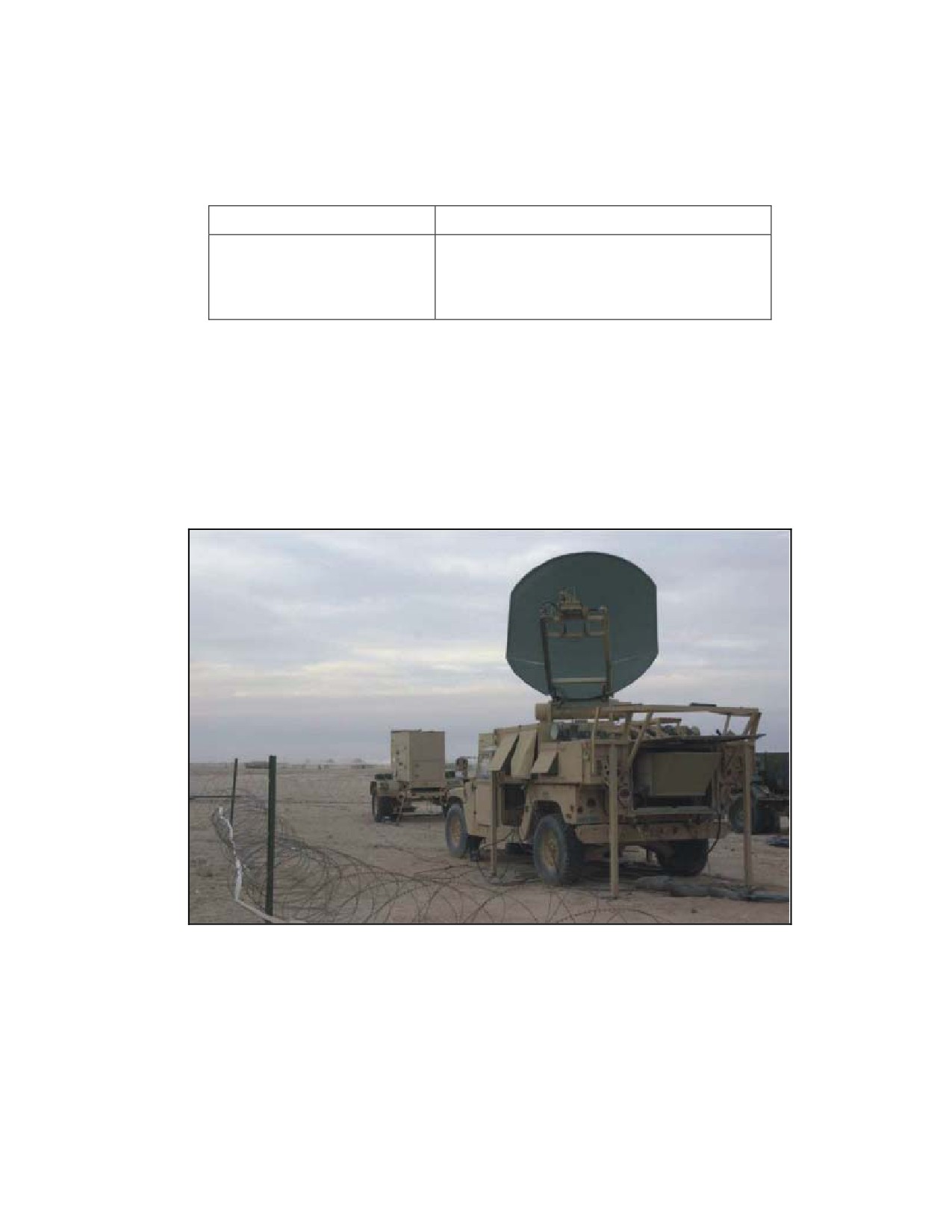
AN/TSC-93(). Figure D-2 shows an AN/TSC-93() with an 8-foot antenna.
D-4
________________________________________________________________________________FM 6-02.45
Figure D-2. AN/TSC-93 with 8-Foot Antenna
Major Components
D-6. Table D-3 lists the major components of the AN/TSC-93B
and
the
AN/TSC-93C.
Table D-3. Major Components of AN/TSC-93B and AN/TSC-93C
Quantity
Components
93B
93C
RT-1287/TSC receiver-transmitter orderwire
1
1
CV-3201/TSC frequency converter
1
2
MD-945/TSC digital data modem
1
1
AM-6701/TSC RF amplifier
N/A
1
PP-7087 power supply
N/A
N/A
PP-7712(V)2/TSC power supply
1
1
CV-3189/TSC frequency converter
N/A
1
TD-1147/TSC multiplexer/demultiplexer (TSSP)
N/A
1
TD-1337(V)2/TSC multiplexer/demultiplexer (TSSP)
1
1
TD-754/G multiplexer
N/A
N/A
TD-660/G multiplexer
N/A
2
D-5

FM 6-02.45________________________________________________________________________________
Table D-3. Major Components of AN/TSC-93B and AN/TSC-93C (Continued)
Quantity
Components
93B
93C
TD-1065/G high speed data buffer
N/A
2
MX-9635A/TSC echo suppressor
1
2
CV-1548/G converter
1
2
TSEC/KY-57 security device (not basic issue)
1
2
TD-1069/G multiplexer (not basic issue)
1
1
TA-312/PT telephone set
1
1
AS-3036A/TSC antenna
1
1
LS-1147F/FI intercommunications station
N/A
1
C-10237/TSC antenna control
N/A
1
C-10348/TSC antenna control
1
N/A
Technical Characteristics
D-7. Table D-4 lists the technical characteristics of the AN/TSC-93B and the
AN/TSC-93C.
Table D-4. Technical Characteristics of AN/TSC-93B and AN/TSC-93C
Characteristic
Description
Frequency range:
Transmit
7250 to 7750 MHz
Receive
7900 to 8400 MHz
Power output
500 watts (nominal) at antenna
Operation:
Single-channel (digital voice)
16/32 Kbps
Multichannel
6, 12, 24, 18-96 channels
AN/TSC-93 or 93C)
(48 Kbps per channel at true multiplex rates)
Power requirements:
AN/TSC-93
115 VAC 10%, 50/60 Hz 5%, single-phase
1380 watts (nominal)
AN/TSC-93C
115 VAC 10%, 50/60 Hz 5%, three-phase,
five-wire
5500 watts (nominal)
D-6
________________________________________________________________________________FM 6-02.45
Table D-4. Technical Characteristics of AN/TSC-93B and AN/TSC-93C (Continued)
Characteristic
Description
Organic power:
AN/TSC-93
PU-619 (modified)
AN/TSC-93C
2 ½ ton truck (two each)
TRI-BAND SATCOM TERMINAL AN/TSC-143
NSN: 5895-01-393-6264
Reference: TM 11-5895-1562-12&P-1
TM 11-5895-1562-12&P-2
General Information
D-8. The tri-band SATCOM terminals are intended for point-to-point
operation in tactical communications systems. Figure D-3 shows an AN/TSC-
143.
Figure D-3. AN/TSC-143
D-9. The AN/TSC-143 consists of nondevelopmental items, COTS, and
government furnished equipment. It is configured on a HHMMWV (M1097),
and is C-130 roll on/off capable.
D-7
FM 6-02.45________________________________________________________________________________
D-10. The AN/TSC-143 operates in the SHF (C, X, and Ku bands), and is
capable of operation in hub-spoke, mesh, or point-to-point configurations. It is
interoperable with the AN/TSC-85B/93B and DSCS gateway terminals at the
RF level (through the modems) and at the multiplex level (through the TSSP
and integrated digital network exchange [IDNX]). It is capable of entering
the commercial gateways using both C and Ku bands.
D-11. The AN/TSC-143 can be deployed worldwide and operate with any of
the following satellites: DSCS, NATO, International Telecommunication
Satellite Organization (INTELSAT), European Telecommunication Satellite
Organization
(EUTELSAT), Pan American Satellite Organization
(PANAMSAT), Skynet 4, HISPASAT, and domestic satellites (for example,
Spacenet, GSTAR, etc.).
D-12. The parameters for these satellites are stored within the AN/TSC-143
database and include corresponding uplink and downlink bands and the data
rates available to a user. The AN/TSC-143 provides the required effective
isotropically radiated power (EIRP) and gain/temperature (G/T) necessary to
utilize the maximum data throughput capacity available in a specific area of
deployment.
D-13. The AN/TSC-143 incorporates a beacon receiver that is compatible with
all commercial and defense payload beacon signals, allowing accurate
satellite tracking. The terminal meets the certification requirements of the
DSCS and INTELSAT, allowing compatible operation with other users on the
satellites and interoperation with other standard earth terminals. The
AN/TSC-143 has commercial telephone access through its switch for positive
terminal control in commercial satellite applications and an STU III for
control in DSCS applications. Complete parameters and subsystems
descriptions are provided in the technical manuals for the system.
D-14. The following subsystems of the AN/TSC-143 provide operational
planning insights to the overall capability of the system.
D-15. GPS Receiver. GPS reception is provided by the AN/PSN-11 Satellite
Signals Navigation Set, commonly referred to as Precision Lightweight GPS
Receiver (PLGR). The GPS receiver provides accurate position and time
information to the operator interface unit (OIU), which enables accurate
pointing and tracking data to be generated. The GPS information is available
to the operator on the OIU. The IEEE-488 converter is used to interpret
information sent between the PLGR and the OIU.
D-16. Baseband Group. AN/TSC-143 baseband equipment supports switching
and multiplexing. These functions are integrated by a patching capability
that provides flexibility and accommodates future growth for new interfaces
and functions. The baseband equipment includes:
• Modem. There are three satellite modems, SLM-8650, included in the
AN/TSC-143. Each modem provides baseband data formatting,
forward error corrections
(FEC) coding/decoding, and waveform
generation. One of the modems is used to modulate the incoming data
stream for transmission over the satellite by the RF equipment. All
three modems are used to demodulate separate received signals from
D-8
________________________________________________________________________________FM 6-02.45
the satellite by the RF equipment. The modems provide DSCS,
INTELSAT, and commercial C-band and Ku-band operation.
•
TSSP Digital Multiplexer, TD-1337(V)3/G. The TD-1337(V)3/G is a
synchronous time-division multiplexer/demultiplexer that provides a
full-duplex capability interfacing the modems in the terminal with
the rest of the baseband equipment in the terminal. The main
purpose of the TSSP is to provide a point-to-multipoint or mesh
network capability, supporting one satellite uplink supergroup and
four (only three are used in this system) downlink supergroups.
•
Trunk Encryption Device (TED) (KG-194). The transmission security
for aggregate data transmitted over the satellite payload is provided
by three TEDs. This allows for encryption and decryption of up to
three independent data streams for networked and multiple carrier
operation.
•
Communications Security Equipment (TSEC/KY-57). The KY-57 is a
wideband secure voice digital device that encrypts and decrypts
digital voice orderwire traffic. The KY-57 is used in combination with
the handset to provide a terminal-to-terminal orderwire through the
TSSP.
•
IDNX. The IDNX serves primarily as a first-level multiplexer. When
communicating with other AN/TSC-143s, the IDNX can only be used
in a point-to-point fashion (for example, the IDNX only has one trunk
in this configuration). Alternatively, users may use the AN/TSC-143
IDNX to gain SATCOM access to remote IDNX networks by
connecting to a cooperating terminal (not an AN/TSC-143), which is
connected to an IDNX network. The IDNX is configured from the
OIU.
•
Switch Multiplexer Unit
(SMU) Keyboard and Display. As the
switching system for the AN/TSC-143, the SMU functions as an
originating and terminating switch providing wire subscriber
services. It routes calls to subscribers anywhere in the network and
provides system timing. The SMU consists of a compact digital
switch, a loop nest, and timing standard. The SMU loop nest can
support up to 53 subscribers. The SMU can also support an additional
seven DTGs, at rates up to 4096 Kbps for each DTG. There is also a
separate power supply for the SMU, located directly under the SMU.
•
IP Router. The IP router provides a packet switching capability to the
AN/TSC-143 and is used to access hosts in the MSE packet network.
•
Transceiver. The transceiver
(transmitter/receiver) provides a
10
Mbps medium access LAN interface (through coaxial cable) to the
router for switching, and converts the attachment unit interface of
the router to ThinLAN interfaces used by hosts and LANs.
•
Automatic Key Distribution Center (AKDC). The AKDC interfaces
with TEDs and loop key generators (LKGs), and provides automatic
key generation, distribution, and storage.
D-9
FM 6-02.45________________________________________________________________________________
•
LKG. The LKGs provide crypto synchronization with a variety of
terminal equipment
(for example, digital secure voice terminal
[DSVT], digital nonsecure voice terminal
[DNVT], and EAC
interfaces). Under switch control or manual operation, the LKGs
perform synchronization, resynchronization, and key transfers, which
operate and process end-to-end encrypted digital traffic.
•
Electronic Transfer Device (KYK-13). This electronic transfer device
is a battery-operated, hand- or pocket-carried transfer and storage
device, which can store up to six keys. It is used to load and transfer
keys to a KYX-15, another KYK-13, or to compatible COMSEC
equipment. The KYK-13 can receive keys from a KOI-18, KYX-15, or
another KYK-13.
•
STU-III. Critical voice and data communications are vulnerable to
interception by moderately sophisticated, hostile, or criminal
elements. The STU is a low-cost terminal that prevents the
interception of valuable information. There is also a metal oxide
varistor (surge suppressor) to prevent power surges from damaging
the unit.
•
Call Service Position (CSP). The CSP is a staffed workstation that
provides assistance to subscribers. This assistance includes
upgrading the precedence of a call beyond the established level of a
subscriber and establishing conference calls. The CSP is included as
part of the AN/TSC-143, but is carried external to the terminal
during transportation.
•
Patch Panel. After signals are connected to equipment through the
signal entry panel, the operator can use the patch panel and patch
cables to connect various pieces of baseband equipment together.
D-17. Power Source Group. The power system provides backup power for 10
minutes to the OIU and the SMU and its support equipment to maintain user
communications over terrestrial circuits. The power source group consists of:
• Generator. The
120-VAC,
60-Hz, single-phase, diesel-powered
generator provides 5.8 kW continuously at 7,000 feet altitude and
102.50F. It consists of a three-cylinder, water-cooled, direct injection,
diesel engine driving a 9-kW continuous duty generator. The engine
control unit allows the operator to start the engine manually or
remotely with a single switch. It also monitors engine oil pressure,
temperature, and speed, and displays and reports any faults to the
OIU. The associated fuel system provides both an integrated fuel
tank that provides 12 hours of continuous operation and a removable
five-gallon fuel can.
•
28V Power Supply. The HHMMWV alternator supplies a 400-ampere,
28 volts direct current (VDC) signal to operate the AN/TSC-143. The
branch circuit breaker panel distributes the 28 VDC (and 115 [120]
VAC) power to the equipment in the pallet, as required.
D-10

________________________________________________________________________________FM 6-02.45
• Dual Power Converter. The dual converter performs power
conditioning. This unit accepts unregulated 85 to 265 VAC, 47 to 66
Hz, single-phase, and/or
21 to
33 VDC power, and provides
conditioned and filtered 115 VAC, 60-Hz power for the equipment in
the pallet. When both 120 VAC and 28 VDC sources are connected to
the unit, a valid alternating current source is selected. If the
alternating current source is outside the valid range (for example, 85
to 265 VAC and 47 to 66 Hz), the input is automatically switched to a
valid 21 to 33 VDC source.
• Uninterruptible Power Supply (UPS). The UPS also accepts 85 to 265
VAC, 47 to 66 Hz, single-phase, and/or 21 to 33 VDC power and
selects the most valid when both are available. The UPS provides 115
VAC, 60-Hz power to the SMU and its support equipment and to the
OIU to maintain user communications by way of terrestrial circuits.
If both sources are invalid, the internal batteries provide 1 kW of
backup power for 10 minutes.
System Configuration
D-18. The system configuration of the AN/TSC-143 is as follows:
• Prime mover: One M1097 HMMWV (carries the system).
• Two M998 HMMWVs (pull the generator and trailer).
• Power plant (generator): Two PU-801s (15-kW).
• Shelter: S250.
Crew
D-19. The crew for an AN/TSC-143 consists of the following:
• Three personnel (MOS 31S).
• Two personnel (MOS 31F).
• One personnel (MOS 31L, 31U, and 31W).
Tabulated Technical Characteristics
D-20. Table D-5 lists the technical characteristics of the AN/TSC-143.
Table D-5. Technical Characteristics of AN/TSC-143
Characteristics
Description
Performance Characteristics
Routed Protocols
TCP/IP
OSI CLNS (ISO 8473)
OSI (CMNS) (ISO 8880)
DECnet Phase IV and Phase V
Novell IPX
AppleTalk Phase 1 and Phase 2
D-11

FM 6-02.45________________________________________________________________________________
Table D-5. Technical Characteristics of AN/TSC-143 (Continued)
Characteristics
Description
Banyan VINES
3Com XNS
Xerox XNS
3Ungermann-Bass XNS
Apollo Domain
Xerox PUP
CHAOSnet
Bridging Technologies
Transparent Bridging
IEEE 802.1 (d) Spanning Tree
DEC Spanning Tree
Source-Route Bridging
Remote Source-Route Bridging
Source-Route Transparent Bridging
IBM Protocol Support
SDLC Transport
SDLC to Token Ring Conversion (SDLLC)
LAN Network Manage
CiscoWorks NetView Interface Option
Local Termination of SDLC/LLC2 Sessions
(Local Acknowledgement)
NetBIOS Name and Caching Filters
Transmission Groups/Class of Service
SNA/LU Address Prioritization
Proxy Explorer
Virtual Ring
Access Expressions
WAN Support
HDLC
PPP
X.25
DDN X.25
D-12

________________________________________________________________________________FM 6-02.45
Table D-5. Technical Characteristics of AN/TSC-143 (Continued)
Characteristics
Description
Frame Relay
SMDS Interface Protocol
TCP/IP Header Compression
Priority Output Queuing
Dial Backup and Load Sharing
Dial-on-Demand Routing via V.25bis (for circuit switching)
Routing Protocol Support
IGRP (for IP and OSI CLNS)
RIP (IP)
OSPF (IP)
BGP (IP)
EGP (IP)
ES-IS (OSI CLNS)
IS-IS (OSI CLNS)
Protocol-specific routing for all protocols noted under Routed
Protocols
Router Management/Security
Simple Network Manager Protocol (SNMP)
Telnet Remote Access
MOP Remote Access
Priority Output Queuing
User name/Password for Remote Access Security Control
Access Lists (routing)
Administrative Filtering (bridging)
Debug Commands
Ping Commands
Syslog Event Logging
Performance Tuning
LAN Interfaces
Token Ring 4 or 16 Mbps
Ethernet
AUI
Serial Interfaces
V.35, V.10, ISDN BRI, EIA 530, X.21, NRZ or NRZI, RS-232,
RS-449, DCE or DTE (DTE only for EIA 530); Speeds up to
4 Mbps
D-13