6-02.45 (FM 11-45) Signal Support to Theater Operations (APRIL 2004) - page 4
FM 6-02.45________________________________________________________________________________
• Provides direct support/general support level maintenance on
microcomputers, electromechanical telecommunications terminal
equipment, facsimile machines, and other associated equipment and
devices.
• Depends on the appropriate organizations for administrative and
logistical support and health and financial services.
TOE 11566AO00 EAC G6 Plans Team
5-105. The mission of the G6 plans team is to provide plans, operations, staff
oversight, and coordination for C4 support to Army, joint, and combined
headquarters.
5-106. The G6 plans team—
• Plans, operates, coordinates and manages the supported unit’s
telecommunications systems, and information systems support
functions for C4.
• Provides spectrum planning and management.
• Coordinates and directs information processing systems, to include
data system studies, and prepares documentation and specifications
for proposals.
• Provides oversight of the installation, operation, and maintenance of
electronic switches and network operations equipment, radio
receivers and transmitters, and other associated equipment.
• Depends on the appropriate organizations for administrative and
logistical support and health and financial services.
TOE 11566AK00, 11566AO00 EAC CINC Communications Team
5-107. The mission of the CINC communications team is to provide
combatant commander communications support in the form of secure FM
radio, UHF TACSAT, and COMSEC equipment maintenance. The differences
between the TOE variants are mainly the sizes of the teams. Refer to current
TOE documents for more detailed information.
5-108. The CINC communications team—
• Installs, operates, and maintains secure FM radio communications.
• Installs, operates, and maintains UHF SATCOM.
• Maintains COMSEC equipment.
• Depends on the appropriate organizations for administrative and
logistical support and health and financial services.
TOE 11563AG00, 11563AH00, 11567AL00 EAC DMS Service Center (DSC) Team
5-109. The mission of the DSC team is to provide organizational and
individual messaging for customers in a regional area. The differences among
the TOE variants are mainly the sizes of the teams. Refer to current TOE
documents for more detailed information.
5-22
________________________________________________________________________________FM 6-02.45
5-110. The DSC team—
• Operates and maintains the DMS equipment and ancillary devices.
• Provides organizational and individual messaging to customers in a
geographic AOR.
• Performs systems administration and help desk functions for
electronic messaging and mail systems.
• Performs COMSEC material management functions and information
systems security functions for the DMS.
• Installs, operates, and performs unit level maintenance on the DMS
cable and wire communications systems, COMSEC devices, and
associated equipment.
• Depends on the appropriate organizations for administrative and
logistical support and health and financial services.
TOE 11563AN00 EAC DMS Certification Authorization Workstation (CAW) Team
5-111. The mission of the DMS CAW team is to provide DMS COMSEC
material support and management for customers in a regional area.
5-112. The DMS CAW team—
• Provides COMSEC material issue and support to DMS users in a
geographic AOR.
• Performs COMSEC material management functions and information
systems security functions for the DMS.
• Depends on the appropriate organizations for administrative and
logistical support and health and financial services.
TOE 11568AG00 EAC Communications Management Support Team
5-113. The mission of the communications management support team is to
provide DOD communications support as necessary to assist the United
States Secret Service (USSS) perform its protective function.
5-114. The communications management support team—
• Maintains continuous liaison with the USSS.
• Functions as the sole authorized Army activity, in support of a DOD
directive, as managed by DISA, to provide communications support
for the USSS.
• Arranges for and provides the necessary administrative and logistical
support to effectively accomplish the assignments.
• Documents every USSS request to ensure that it accurately reflects
the requesting and approving authority.
TOE 11568AH0 EAC Antenna Maintenance Team
5-115. The mission of the antenna maintenance team is to provide general
support for emergency and scheduled maintenance services and quality
assurance inspections for antenna and antenna support structure for the
Army and other government agencies.
5-23
FM 6-02.45________________________________________________________________________________
5-116. The antenna maintenance team—
• Provides maintenance services for antennas and antenna support
structures.
• Provides quality assurance inspection for antenna maintenance
services performed by the team or contractors.
• Must be certified as communications cable and antenna systems
maintainers with an additional skills identifier of J2.
TOE 11568AK EAC Emergency Action Messaging System Team (EAM)
5-117. The mission of the emergency action messaging system team is to
provide a national secure C2 (nuclear/chemical) network used to support the
National Capital Region and Air Force Missile Launch Control Centers on a
24X7 basis.
5-118. The emergency action messaging system team—
• Operates and maintains the communications networks for emergency
action message system.
• Maintains and disseminates record traffic.
TOE 11XXXXXX RNOSC
5-119. The mission of the RNOSC is to perform NETOPS, providing
strategic, reach-back, and sustaining base information and network service to
support combatant commanders, organizations, and agencies within the
assigned AOR.
5-120. The RNOSC also provides—
• Operations and maintenance of RNOSC-level C4 information systems
and services.
• Network management within its area of operation.
• IA operations.
• IDM.
• Single point of coordination for end-to-end connectivity to the GIG
and C4 infrastructure for the combatant commander it supports.
TACTICAL
5-121. Due to the fluid nature of modern conflict, theater signal
organizations may find themselves operating at or supporting any level of
war (strategic, operational, or tactical) regardless of the level for which they
were designed. This may change on a day-to-day basis within a single
operation or conflict. This manual defines tactical communications as
communications systems or networks that enable the exchange of
information among mobile deployed forces in an area of operations, and
between mobile deployed forces and nondeployed elements. Tactical
communications systems are mobile, deployable, quickly installed and
disassembled (compared to fixed systems), secure, and durable. The majority
of the deployable signal organizations under NETCOM/9th ASC are normally
tasked to support warfighter organizations that are nominally at the
operational level of war.
5-24
________________________________________________________________________________FM 6-02.45
SRC 11602L TSC(A)
5-122. Currently, the future roles and missions of the TSC(A) are under
review. This review will be heavily influenced by lessons learned from
Operation Enduring Freedom, Operation Iraqi Freedom, and the Global War
on Terrorism.
5-123. The TSC(A) plans, engineers, and manages the Army’s portion of the
TIG and provides the G6 staff to the ASCC. The TSC(A) is a MSC of the
NETCOM/9th ASC and is under the OPCON of the supported ASCC (with the
exceptions noted below for reserve component TSC(A)).
5-124. The TIG must be flexible and responsive to operational changes if the
necessary C2 systems are to be available at the right time and place. C2
tools, such as information systems and VTC capabilities, have become
increasingly important to the JTF and ASCC commanders. Complex systems
such as these require that the TSC(A) early entry module be in the theater
early to ensure the commander’s C2 requirements are met in the deployment
and entry phase of the operation.
5-125. The TOE for a TSC(A) is a headquarters and headquarters company
(HHC), which can exercise C2 over a wide variety of other signal
organizations.
5-126. The total TSC(A) consists of all operational and strategic level signal
organizations within the AOR supporting the ASCC. These organizations
may include—
• Multiple theater tactical signal brigades or elements thereof.
• Strategic/Fixed station signal brigade or elements thereof.
• COMCAM company.
• Theater signal maintenance company.
5-127. The actual number of theater signal brigades and the number and
type of their subordinate signal units deployed to the theater of operation
depend on the METT-TC. Figure 5-4 shows the organization of the HHC
TSC(A).
5-128. The HHC TSC(A)’s mission is to—
• Provide C2 and supervision for units assigned and attached to the
TSC(A).
• Formulate and implement plans, policies, and procedures for the
engineering, installation, operation, and management of assigned
portions of the TIG.
• Provide management of the TIG, to include centralized management
of voice, data, messaging, and VTC capabilities.
• Provide communications planning and management of special
purpose communications/information systems.
• Provide intelligence and security support and oversight to
subordinate commands.
5-25
FM 6-02.45________________________________________________________________________________
•
Provide ASCC IA and information protection planning and
management for the theater communications system, and support the
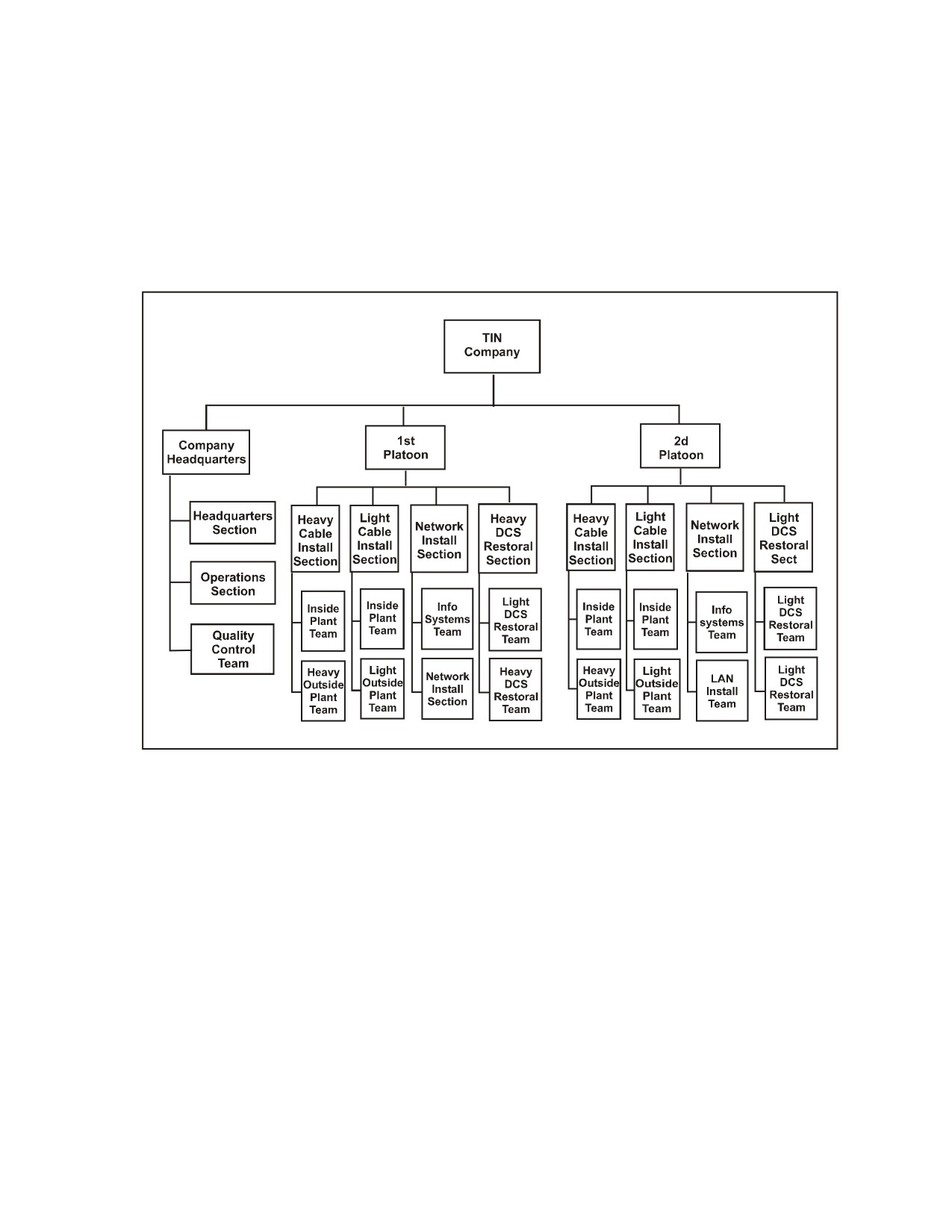
protect, detect, and react strategies of the Army as directed by the
ASCC G6.
•
Provide oversight of records management to the ASCC.
•
Establish the JCCC, with augmentation from other services, when
tasked.
•
Provide the Army’s portion to the JCCC, when established.
5-129.
The TSC(A)—
•
Plans, engineers, and manages signal support systems installed by
the TSC(A), and network interfaces with systems installed by other
units, to include joint, combined, and allied.
•
Formulates and implements signal support plans, policies, and
procedures for the ASCC. Provides staff management of the TIG, to
include theater operational COMSEC, IA, and information protection.
•
Provides OPCON over the theater COMSEC Logistics Support Center
and other facilities that provide general support/specialized repair
activity. Backs up direct support COMSEC maintenance and supply
in those theaters where the theater Army area command (TAACOM)
TSC(A) does not perform the function.
•
Provides the DCSIM staff to the ASCC. This DCSIM staff develops
the policies and procedures for using signal support assets within the
ASCC. It provides assistance to units within the area of operations
and to other ASCC staff elements. The personnel within the DCSIM
staff are assigned to the HHC, TSC(A), but they are normally
collocated with the ASCC headquarters.
•
Exercises staff supervision over the DCSIM staff.
•
Provides oversight of records management to the ASCC.
•
Provides battlefield spectrum management to include allocation,
assignment, and control of radio frequencies for Army, joint, and
coalition elements throughout the theater in coordination with host
nation agencies, if so tasked.
•
Provides communications engineering support and coordination of
requirements for special-purpose communications/information
systems.
•
Provides planning and staff management of the ground mobile
forces/TACSAT Theater Satellite Communications Monitoring Center
and Army ground mobile forces in the theater of operations.
•
Works closely with the DISA concerning DISN.
•
Coordinates with the host nation communications organizations for
planning and using the assets within the ASCC.
•
Provides planning and coordination of TSC(A)’s transportation
requirements.
5-26
________________________________________________________________________________FM 6-02.45
•
Provides planning, staff supervision, and implementation of the
public affairs program and command information programs for the
TSC(A).
•
Provides staff supervision, investigation, inquiries, surveys, studies,
and reports of inspector general matters within the TSC(A).
•
Provides staff supervision of comptroller matters of management
consultant services, management surveys, and programming,
budgeting, and controlling funds within the TSC(A).
•
Provides coordination of operations and planning and evaluates and
prepares reports of nuclear, biological, chemical
(NBC) activities
throughout the TSC(A).
•
Provides coordination of engineering support facilities supporting the
TSC(A).
•
Assists in the coordinated defense of the unit’s area or installation.
•
Performs unit maintenance on organic equipment.
•
Provides management and coordination of volume reproduction units
and VI units at EAC.
•
Provides staff supervision of software management, to include
managing all signal software, managing all noncombatant service
support software, and advising the command and staff on automation
matters.
5th Signal Command
5-130.
The 5th Signal Command is a subordinate TSC(A) of NETCOM/9th
ASC and is under the command of NETCOM/9th ASC, with OPCON vested
in USAREUR. The 5th Signal commander is dual-hatted as the USAREUR
DCSIM. The 5th Signal Command’s mission is to provide a combat ready,
forward deployed signal force providing responsive theater tactical, strategic,
and installation signal support to NATO and US warfighters in the
USEUCOM across the spectrum of operations.
311th Theater Signal Command
5-131. The 311th Theater Signal Command is a USAR TSC(A) with the
mission to deploy to the theater of operations as a Force Package 1 unit. It
performs C2 for assigned and attached signal units and formulates and
implements plans, policies, and procedures for US Forces, Korea (USFK) and
PACOM C4IM systems. In peacetime, the US Army Reserve Command
(USARC) commands the unit. In wartime, the unit is under the command of
the NETCOM/9th ASC and under the OPCON of Eighth US Army (EUSA),
USARPAC, or a combined or JTF. Also, in wartime the commander of the
311th is dual-hatted as the G6/J6 of the supported force.
5-27
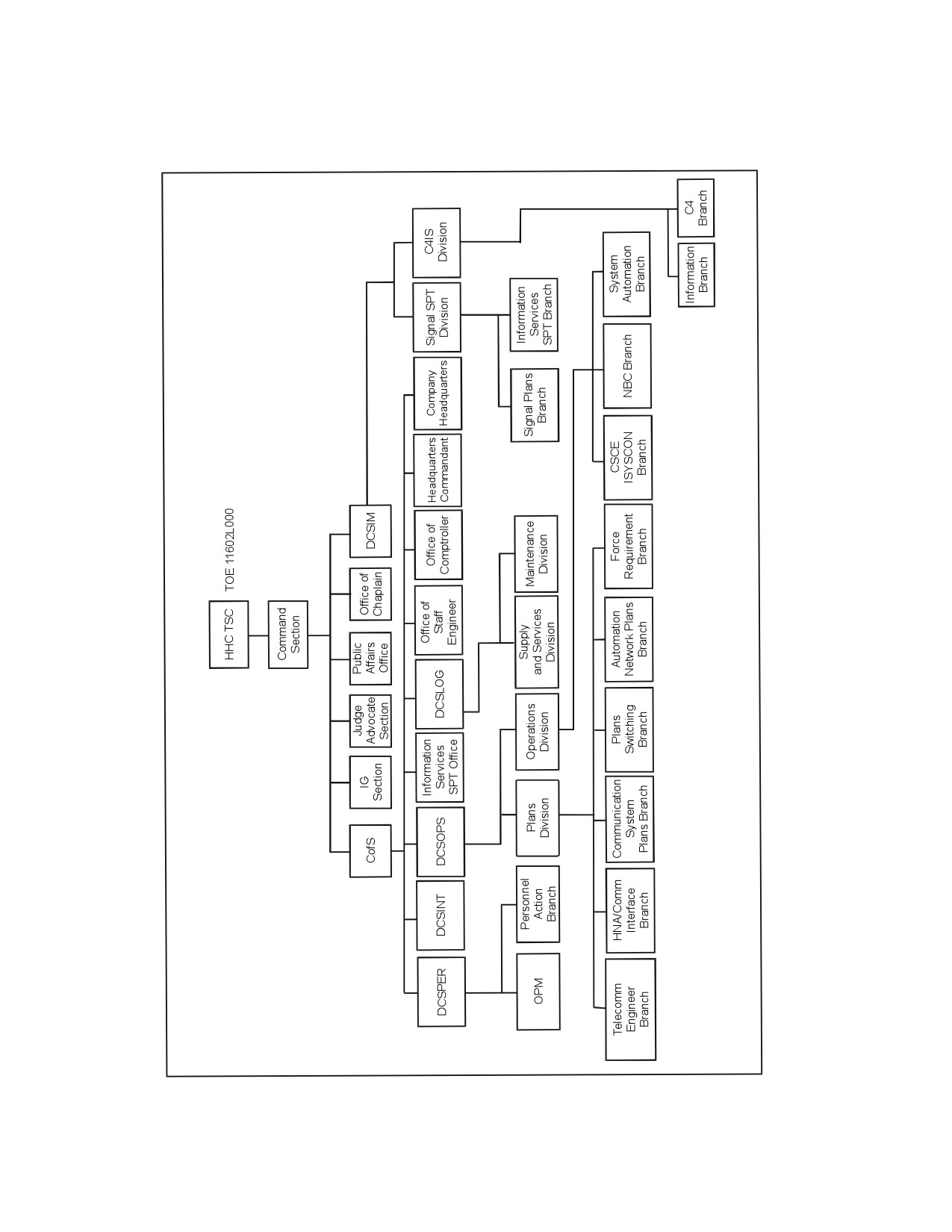
FM 6-02.45________________________________________________________________________________
Figure 5-4. HHC TSC(A)
5-28
________________________________________________________________________________FM 6-02.45
335th Theater Signal Command
5-132. The 335th Theater Signal Command is a USAR TSC(A) with the
mission to manage telecommunications infrastructure for Southwest Asia
(South Asia, Middle East, North Africa) in support of US Army Forces,
Central Command (USARCENT)/Third US Army and Central Command
during peacetime and contingency operations. In peacetime, the USARC
commands the unit. In wartime, the unit is under the command of the
NETCOM/9th ASC and under the OPCON of USARCENT. Also, in wartime
the commander of the 335th is dual-hatted as the G6/J6 of the supported
force.
TOE 11632 THEATER TACTICAL SIGNAL BRIGADE
5-133. The mission of the theater tactical signal brigade is to command and
control two to five signal battalions and other assigned or attached signal
forces such as separate companies. These may be ITSBs or any combination
of ITSBs, area signal battalions, or composite signal battalions. Figure 5-5
shows the organization of the HHC theater tactical signal brigade.
HHC
Theater
TOE 11632
Signal Brigade
Command
Section
Signal
Signal
Headquarters
Administrative
Logistics
Engineer
Control
Company
Section
Section
Section
Section
Signal Plans
Chief
and
Ministry
Judge
Intelligence
Section
Advocate
Section
Figure 5-5. HHC Theater Tactical Signal Brigade
5-29
FM 6-02.45________________________________________________________________________________
Command Section
5-134. This section provides C2 and staff supervision over the HHC theater
tactical signal brigade.
Headquarters Company
5-135. The HHC commander is responsible for C2 and coordination of the
company’s mission.
Administrative Section
5-136. This section operates under the staff supervision of the S1 officer and
provides administrative and personnel actions for the entire brigade,
advising the commander on all issues pertaining to personnel administration.
This section also provides staff assistance to the subordinate units.
Logistics Section
5-137. This section operates under the staff supervision of the S4 officer, and
provides staff supervision for all logistics actions and develops logistics plans
for the brigade. This section also advises the brigade commander on all
matters pertaining to logistics and maintenance.
Signal Engineer Section
5-138. This section is the communications systems planning element for the
brigade. It conducts detailed systems engineering studies and develops plans
for establishing communications systems. Some of the specific actions
performed by this branch include—
• Determining the technical characteristics of circuits.
• Determining equipment suitability and adaptability with existing
military indigenous communications systems.
• Ascertaining the types of installations and employment required to
provide quality transmission over installed circuits and systems.
• Handling frequency requests and associated records for the brigade
units.
5-139. The branch also maintains direct coordination with the
communications systems control element (CSCE) section, keeping the section
informed of current and future needs for rerouting or reconstituting circuits
and facilities throughout the communications system.
Signal Control Section, CSCE
5-140. This section provides effective operational management and
responsive systems control. This section’s main objective is to optimize the
performance of the deployed network in the face of a constantly changing
network configuration. A database is established and maintained to assist in
near real-time control of communications systems and to assist the signal
plans and intelligence section in systems planning and engineering.
5-30
________________________________________________________________________________FM 6-02.45
Signal Plans and Intelligence Section
5-141. This section plans, coordinates, and supervises the plans and
intelligence requirements of the brigade.
Ministry Section
5-142. This section provides religious and welfare support.
Chief Judge Advocate
5-143. This section provides legal services support by personnel of the Judge
Advocate General Corps and provides advice and assistance to commanders
and staffs on matters concerning operational and administrative law.
1st Signal Brigade
5-144. This theater tactical signal brigade is under the command of
NETCOM/9th ASC, with OPCON vested in USFK/EUSA. The 1st Signal
Brigade commander is dual-hatted as the EUSA G6. The 1st Signal Brigade’s
mission is to provide a combat ready, forward deployed signal brigade for
responsive theater tactical, strategic, and installation signal support to
combatant commanders, United Nations Command, Combined Forces
Command, USFK, and warfighters in the EUSA across the spectrum of
operations. During wartime, the 1st Signal Brigade comes under the OPCON
of the theater signal command for the PACOM or EUSA area of operations.
7th Signal Brigade
5-145. This theater tactical signal brigade is under the command of
NETCOM/9th ASC, with OPCON vested in USAREUR. The 7th Signal
Brigade maintains a combat ready, forward deployed signal force to deploy,
install, operate, and maintain seamless theater tactical information system
support to US and NATO warfighters in the USAREUR/USEUCOM AOR.
11th Signal Brigade
5-146. This theater tactical signal brigade is under the command of
NETCOM/9th ASC and provides signal EAC support to CENTCOM,
USARCENT, and PACOM. The 11th Signal Brigade’s mission is to provide
support to worldwide contingencies in response to Joint Staff, HQDA, and
NETCOM/9th ASC mission directives to install, operate, maintain, and
restore C4 systems across the spectrum of conflict. They also provide daily
signal and DOIM support in the CENTCOM AOR with the forward stationing
of the 54th Signal Battalion.
93d Signal Brigade
5-147. This theater tactical signal brigade is under the command of
NETCOM/9th ASC. The commander, 93d Signal Brigade, is dual-hatted as
the DCSIM G6, US Army South (USARSO). The 93d Signal Brigade’s mission
is to provide support to worldwide contingencies in response to Joint Staff,
HQDA, and NETCOM/9th ASC mission directives to install, operate, and
restore theater tactical communications across the spectrum of conflict.
5-31
FM 6-02.45________________________________________________________________________________
228th Signal Brigade and 261st Signal Brigade
5-148. These National Guard theater tactical signal brigades are under the
command of the National Guard during peacetime. In wartime, the units are
under the command of the NETCOM/9th ASC and are assigned in accordance
with applicable OPLANS.
359th Signal Brigade
5-149. This theater tactical signal brigade is under the command of USAR
during peacetime. In wartime, the unit is commanded by NETCOM/9th ASC
and is assigned in accordance with applicable OPLANS.
GBS TIP
5-150. Selected theater tactical brigades are equipped and structured to
install, operate, and maintain the GBS TIP. The GBS TIP enables in-theater
forces to transmit information via the GBS as opposed to only being able to
receive information transmitted by the Primary Injection Points
(PIPs)
located in CONUS. Currently, the Army has three GBS TIPs. For further
information on the GBS TIP, see Chapter 4.
TOE 11XXXXXX ITSB
5-151. The centerpiece of the current force transformation of theater tactical
signal units is the ITSB. The ITSB is organized into multifunctional
elements, each containing all of the switching equipment, the transmission
systems, the data network management systems, and the C2 and data
network management resources that comprise a complete signal node. This is
a fundamental shift from battalions containing single function companies (for
example, SATCOM or TROPO companies) such as the composite signal
battalions that are among the structures being replaced. The ITSB differs
from the area signal battalions being replaced in that it is multifunctional to
a lower level and to a greater degree. (The theater area signal battalion is
multifunctional in that it incorporates both transmission, switching, and
systems control assets.) The ITSB incorporates BLOS systems, wideband
data, and computer network management capabilities into its design that are
not present and/or not integrated in the designs of the structures it replaces.
5-152. The multifunctional nodal structure of the ITSB reflects a train-as-
you-fight and organize-as-you-fight philosophy. This alleviates one of the
greatest difficulties of the current structures which is to task organize from
multiple organizations to form a single communications node to support a
single customer enclave. Under such conditions, C2 of the node is an ad-hoc
and often fragmented arrangement. Under ITSB, the entire node is under the
command of one organization. That organization is the same organization
that lives together and trains together in garrison and field environments.
Therefore, unit cohesion is enhanced.
5-32
________________________________________________________________________________FM 6-02.45
Operation Enduring Freedom
The scenario below is representative of deployments that have occurred since
Desert Shield/Desert Storm.
Beginning in November 2001, elements of a theater signal battalion were tasked
to relieve elements of the Special Operations Signal Battalion in Afghanistan.
The signal battalion being relieved was supporting a Special Operation Forces
headquarters, with a normal
(to the customer) array of voice, SIPRNET,
NIPRNET, message, and voice capabilities. The relieving unit was to expand this
operation to support two additional headquarters. The scope of support was to be
expanded to include VTC and DRSN. An additional requirement was to quickly
commercialize the operation, especially the satellite transmission services in
order to free up tactical signal assets for follow-on deployments.
To assemble a team with the required skill sets to provide these services, the
relieving signal battalion had to create a task organization of 50 personnel (which
later grew to 75) from eight companies spread over three battalions and four
commands.
The only available sources for key pieces of up-to-date equipment required to
provide these services were COTS items. No suitable type-classified items
existed. Hence, no suitable items were on the TOEs for the two battalions. These
critical pieces of equipment were acquired by or for both units at different times
and places using a variety of contingency funds and redirection of operational
funds. Soldiers were not school trained on this equipment. Unit training required
for individuals was of the magnitude and nature of full major upscale military
occupational specialty
(MOS) changes
(for example,
71L Administrative
Specialist and 31L Cable Systems Installer-Maintainer to Information Systems
Operator-Analyst [then 74B, now 25B]).
The COTS equipment sets developed by the two battalions were not the same,
even though the functionalities provided were similar. Because the equipment
was not the same, instead of being able to fall in on the equipment in place and
assume the mission, the relieving battalion had to be trained by the battalion
being relieved. This made personnel from the battalion being relieved unavailable
for other missions.
The challenges posed by these ad-hoc task organizations and equipment sets
were overcome by the extra-ordinary efforts of the soldiers on the ground and the
planners and leaders who supported them. This degree of improvisation and task
organization should not be considered a model for future operations.
5-153. The ITSB design facilitates deployment planning. The ITSB
engineers, installs, operates, and maintains up to three major and
12
extension command, control, communications, computers, and information
technology nodes in support of the combatant commanders of unified or
specified commands, ASCC, or JTF/JFLCC. The ITSB basis of allocation is
one per JTF/JFLCC, one per ASCC, and one per 15 supported headquarters.
5-33
FM 6-02.45________________________________________________________________________________
5-154. One of the training benefits of multifunctionality is that it is only
necessary to assemble a platoon or a company in order to train end-to-end
systems level tasks. In single functional organizations, it was often necessary
to assemble an entire battalion or brigade to train this level of tasks. Another
benefit of multifunctionality to the company and platoon level is that it trains
leaders faster in a systems view of communications than single function
units. This prepares a base of highly qualified, versatile leaders for higher
echelons as those leaders advance in their careers. Appendix E provides an
illustration of a sample network configuration. The focus of this figure is
equipment employment; it does not represent any particular organization or
scenario.
Organizational Description
5-155. The mission of the ITSB is to provide the capability to engineer,
install, operate, and maintain up to three major and
12 extension
multifunctional C4 information technology nodes in support of customer
organizations as tasked. ITSB support to the customer is tailored based on
factors such as the number of geographically separate enclaves that must be
supported, the number of telephone and data subscribers, the
telecommunications and information technology services required, and the
bandwidth required. Typical customers of the ITSB include the combatant
commanders of unified or specified commands, ASCC commanders, or
JTF/JFLCC.
5-156. The ITSB will typically be assigned to theater tactical signal
brigades, although it may be assigned or attached to other higher-level
organizations as well.
5-157. The ITSB and its subordinate companies are multifunctional
organizations that are designed in a modular fashion. Modules are designed
around communications nodes so that support to the customer can be easily
tailored in a scalable fashion by deploying the required number of nodes.
5-158. Each node module includes voice switching and data networking
capabilities, along with a mixture of transmission systems such as SATCOM,
TROPO, and LOS. Deployed or detached nodes operate under the same
internal chain of command as they live and train within garrison and in non-
detached status.
5-159. The ITSB supports the doctrinal objectives of enabling reach-back
support and enabling a similar level of electronic information services, as
does the garrison environment for its supported customers. This is
accomplished through the wide-band SATCOM and TROPO systems organic
to each nodal module and by the integrated data networking and voice
switching systems and operators organic to each nodal module. The SATCOM
systems provide the capability to link back to the sustaining base as well as
provide other C2 linkages. The TROPO systems support this requirement by
providing intra-theater BLOS linkages to other nodes with reach-back links
in cases where reach-back links are consolidated. Planning ranges for
TROPO systems are generally 150 kilometers for the heavy variant and 100
kilometers for the lighter version.
5-34
________________________________________________________________________________FM 6-02.45
5-160. The SATCOM and TROPO systems organic to the various nodal
modules support the warfighter in the enclave style deployments of the
nonlinear, noncontiguous battlefield. These systems provide the wideband
links needed for inter-enclave communications when enclaves are deployed at
greater than LOS distances from each other. Although LOS is heavily terrain
dependent, maximum LOS distances are typically considered to be 30 to 40
kilometers.
5-161. The ITSB is composed of a battalion HHC and three companies.
Alpha or Bravo companies are identical, while Charlie Company is slightly
heavier in terms of switching, TACSAT, and LOS, as well as having the TMS
for the battalion and heavy versus light TROPO.
HHC
5-162. The ITSB HHC provides for C2, staff planning, and supervision of a
battalion consisting of the three companies to include any augmenting units,
personnel, or material assets. The HHC also provides administrative and
logistical support for the battalion to include: unit administration for
assigned or attached units; staff supervision of signal, automotive, power
generation, and environmental control equipment; and coordination of bulk
fuel resupply for all units assigned to the battalion. Figure 5-6 depicts the
organization chart for the components of the HHC.
Alpha and Bravo Companies
5-163. Alpha or Bravo companies are comprised of the same elements and
are identical in all functional areas. They consist of a company headquarters
platoon, an area node platoon (light), an extension node platoon (light), and a
data cable and wiring (DCW) platoon. Figure 5-7 depicts the organization
chart for the components of the Alpha or Bravo Company.
5-164. Company Headquarters Platoon. The company headquarters platoon
provides for C2, staff planning, and supervision of a company consisting of
three platoons to include any augmenting elements, personnel, or material
assets. The headquarters platoon provides limited administrative and
logistical support of the company, which includes unit administration for
assigned or attached elements, supply support, NBC support, and weapons
support. The company headquarters performs unit level and direct support
maintenance on all organic communications-electronics (CE) and COMSEC
equipment. The company headquarters also performs up to organizational
level maintenance on all organic automotive, power generation, and
environmental control equipment and provides for organic food service in
both field and garrison environments. The battalion HHC augments the
company headquarters.
5-165. Area Node Platoons. The area node platoons provide the services and
soldiers to maintain and deploy two TROPO teams AN/TRC-170(V)3, a data
team, a LOS supervisory team with two multichannel teams AN/TRC-138
and two multichannel team AN/TRC-174, a telephone switchboard team
AN/TTC-56, and a TACSAT team AN/TSC-85C.
5-35
FM 6-02.45________________________________________________________________________________
5-166. Extension Nodes. The extension nodes provide the services and
soldiers to maintain and deploy two telephone switchboard teams AN/TTC-
48C(V)4, two multichannel teams AN/TRC-173B, two data packages, and two
TACSAT teams AN/TSC-93C.
5-167. DCW. The DCW will provide the services and soldiers to maintain
and deploy two DCW sections each containing two DCW teams.
ITSB
HHC
Command
Section
Company
Headquarters
S1
S2/S3
S4
CE
Maintenance
UMT
Figure 5-6. HHC Organizational Chart
5-36
________________________________________________________________________________FM 6-02.45
ITSB
A and B
Company
Company
Area Node
Extension Node
DCW
Headquarters
Platoon Light
Platoon
Platoon
Platoon
Platoon
Platoon
Signal
Headquarters
Headquarters
Headquarters
Maintenance
DCW
TTC-56
TTC-48
Section
Motor
Maintenance
Data Team
DCW Team
TRC-173
LOS
Supervisor
DCW
Section
DEN
TRC-138(V)1
DCW Team
TSC-93
TRC-138(V)2
TRC-174(V)1
TRC-174(V)2
TROPO (V)3
TSC-85
Figure 5-7. Alpha and Bravo Company Organizational Chart
5-37
FM 6-02.45________________________________________________________________________________
Charlie Company
5-168. Charlie Company is comprised of many of the same elements as
Alpha or Bravo companies and provides the same functional services, but is
able to support a larger operation in terms of end-users and equipment.
Charlie Company consists of a company headquarters
(headquarters)
platoon, an area node platoon (heavy), an extension node platoon (heavy), and
a DCW platoon.
5-169. Company Headquarters Platoon. The company headquarters provides
for C2, staff planning, and supervision of a company consisting of three
platoons to include any augmenting elements, personnel, or material assets.
The headquarters platoon provides limited administrative and logistical
support of the company, which includes unit administration for assigned or
attached elements, supply support, NBC support, and weapons support. The
company headquarters performs unit level and direct support maintenance
on all organic CE and COMSEC equipment. The company headquarters also
performs up to organizational level maintenance on all organic automotive,
power generation, and environmental control equipment and provides for
organic food service in both field and garrison environments. The battalion
HHC augments the company headquarters.
5-170. Area Node Platoon. The area node platoon provides the services and
soldiers to maintain and deploy a TROPO supervisory team with three
TROPO teams AN/TRC-170(V)3, a data team, an LOS supervisory team with
two multichannel teams AN/TRC-138C and two multichannel teams
AN/TRC-174B, a telephone switchboard team AN/TTC-56, a TACSAT team
AN/TSC-85C, and a TMS team.
5-171. Extension Node Platoon. The extension node platoon for Charlie
Company provides the services and soldiers to maintain and deploy three
telephone switchboard teams AN/TTC-48C(V)4, a LOS supervisory team with
three multichannel teams AN/TRC-173B, two BBNs, and two TACSAT teams
AN/TSC-93C.
5-172. DCW Platoon. The DCW will provide the services and soldiers to
maintain and deploy two DCW sections that each contains a DCW team.
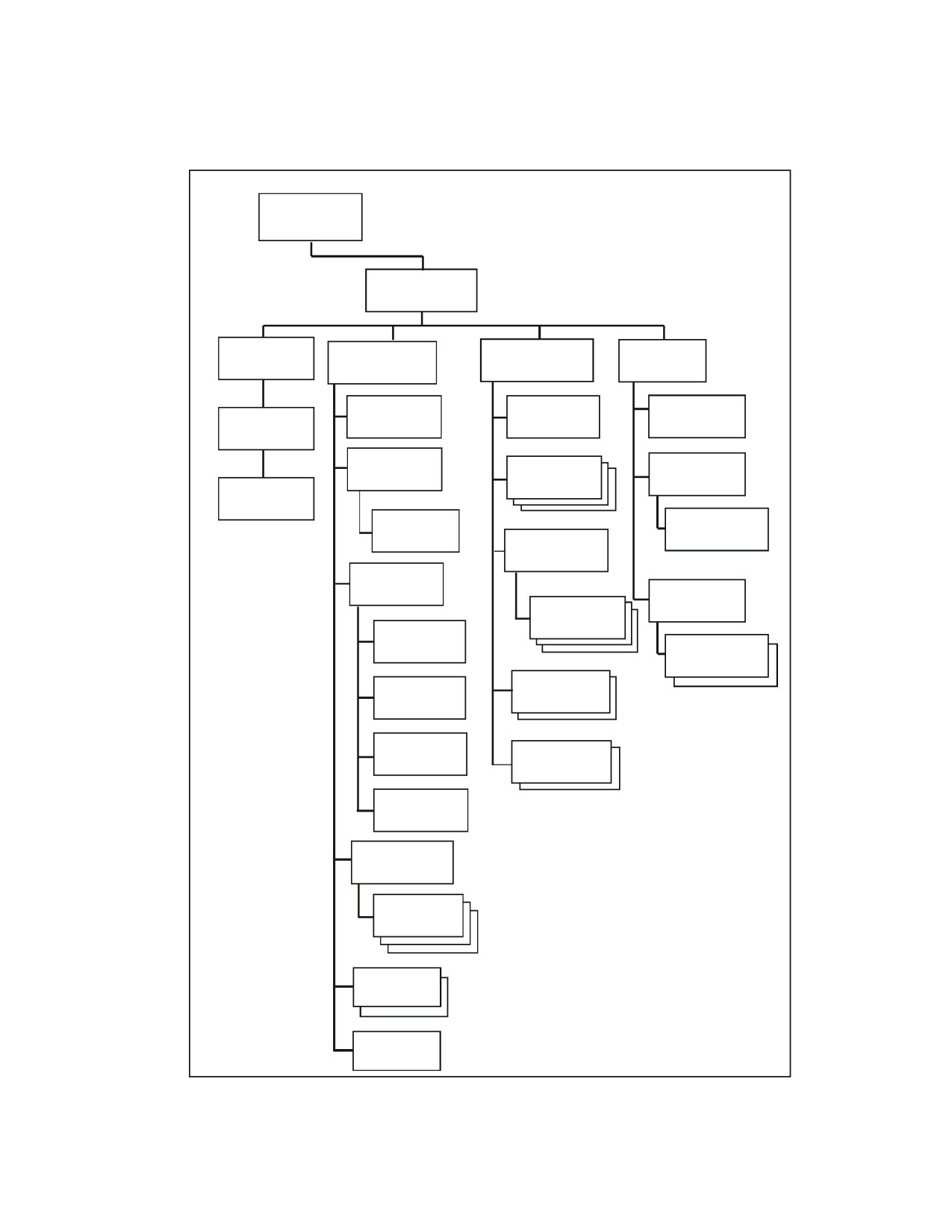
5-173. Figure
5-8 depicts the organization chart for the components of
Charlie Company.
5-38
________________________________________________________________________________FM 6-02.45
ITSB
C Company
Company
Area Node
Extension Node
DCW
Headquarters
Platoon Heavy
Platoon Heavy
Platoon
Platoon
Platoon
Platoon
Signal
Headquarters
Headquarters
Headquarters
Maintenance
TTC-56
DCW
TTC-48
Section
Motor
Maintenance
Data
DCW Team
Team
LOS
Supervisor
LOS
Supervisor
DCW
Section
TRC-173
TRC-138(V)1
DCW Team
BBN
TRC-138(V)2
TRC-174(V)1
TSC-93
TRC-174(V)2
TROPO
Supervisor
TROPO (V)2
TSC-85
TMS
Figure 5-8. Charlie Company Organizational Chart
5-39
FM 6-02.45________________________________________________________________________________
TOE 11XXXXXX TIN COMPANY
5-174. The TIN Company grew out of a need to provide responsive and agile
advanced network installation services for critical missions such as Defense
Communications System (DCS) restoral and for elements occupying fixed or
semi-fixed facilities. In contrast to the cable and wire companies that it
replaces, the company has the technical expertise and equipment to configure
and operate computer network LANs and WANs. Replacement of cable and
wire companies is not on a one-for-one basis.
Organizational Description
5-175. The mission of the redesigned TIN Company is to deploy in support of
combatant commands, JTF, JFLCCs, ASCC, and TSC(A)s. The TIN Company
provides rapid DCS installation and restoral. The TIN Company provides
follow-on tactical support to signal packages for semipermanent/permanent
tactical automation, network installation, and information system support
utilizing user provided bill of materials. The TIN Company also provides
quality assurance testing and handoff coordination.
Concept of Operations
5-176. One (or more) TIN Company deploys to an area of operation. The
company is attached under the OPCON of a higher Army signal unit or G6
staff section or under an organization responsible for joint communications
until an Army signal headquarters deploys into theater.
5-177. TIN Company headquarters—
• Assesses mission requirements and assists in building the Bill of
Materials.
• Provides technical expertise to interpret and implement engineer
implementation plans for communication systems.
• Advises the supported commander on aspects of network installation
to include inside plant, outside plant, LAN installation and
initialization, and DCS restoral.
• Performs quality assurance testing and handoff of installed and
restored systems.
5-178. TIN platoons—
• Install, maintain, and repair aerial, buried, or underground cable,
wire, and fiber optic transmission systems.
• Repair and maintain indigenous cable, wire, and fiber optic systems,
and provide antenna and tower construction and repair.
• Provide LAN installation and cabling.
• Provide automation support to include LAN initialization, network
security, DMS, DRSN, SIPRNET, NIPRNET, and VTC.
• Install or restore the DSCS terminal.
• Install or restore a strategic to tactical interface path.
5-40
________________________________________________________________________________FM 6-02.45
5-179. Platoons/Sections/Teams can operate autonomously to support
battlefield enclaves. The TIN Company can also deploy tasked organized
teams, sections, or platoons to support SSC in CONUS and OCONUS.
5-180. Figure 5-9 is the organization chart for the components of the TIN
Company.
Figure 5-9. TIN Company Organizational Chart
5-181. The TIN Company has the capability to restore or install critical
pieces of the DCS, which include the DSN, the DSCS, and the DISN. It brings
software application expertise, network installation and administration, and
information system security support to the battlefield. A thorough planning
phase must identify work requirements, specific core competencies, an
estimated Bill of Materials, and personnel requirements. This company must
be trained, equipped, and prepared to deploy anywhere in the world to
support a wide range of information requirements. It serves as a springboard
for organic theater communications and information systems providers,
assisting in the integration of reinforcing signal forces for the warfighting
commander. The TIN Company is designed to assist the gaining command in
three main areas of information system support: automation, network
installation, and DCS restoration.
5-41
FM 6-02.45________________________________________________________________________________
TOE 11690A COMCAM
5-182. The COMCAM mission is to provide documentation covering air, sea,
and ground actions of armed forces in war, MOOTW, catastrophes, natural
disasters, and training activities (such as exercises, war games, operations,
and peacetime engagements). It allows C2 and management authorities not
at the scene to visualize the essence of ongoing activities. Its primary use is
as an operational decision-making tool and does not include imagery
specifically acquired by intelligence activities.
5-183. COMCAM documentation is an essential battlefield information
resource that supports strategic, operational, and tactical mission objectives.
Sharing COMCAM documentation, as required, simultaneously supports the
operational and planning requirements of commanders and decision makers
from the warfighter through National Command Authority levels. It is a
fundamental tool for commanders and decision makers that, when utilized
properly, is an effective combat multiplier.
5-184. The theater operational commander determines collection
requirements based on local mission objectives and is the releasing authority
for all COMCAM imagery.
5-185. At the theater level, the COMCAM Company is attached to the
TSC(A) and is collocated with the ASCC G3, with the TSC(A) providing
electronic maintenance support.
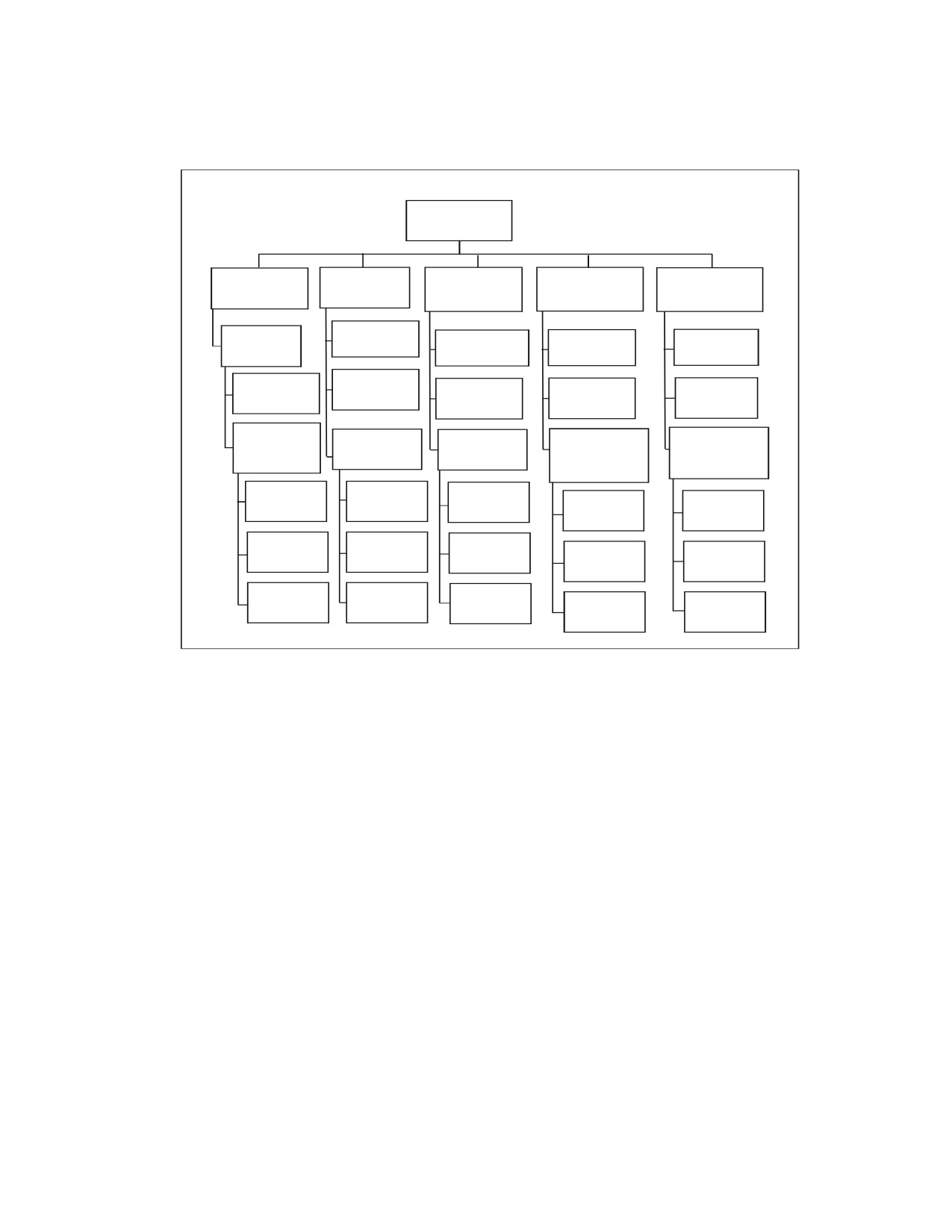
5-186. Figure 5-10 depicts the organization chart and the components of the
COMCAM Company.
5-187. The COMCAM Company provides the following capabilities to the
theater:
• Staff planning, control, and supervision of the operations of the
company, to include any augmenting personnel or materiel assets.
• COMCAM equipment maintenance by on-site repair, replacement, or
evacuation to civilian contractors.
• Liaison to supported units, joint collection management tool (JCMT),
and other service COMCAM elements.
• Capability of landing by parachute when organized to support
airborne operations.
• Establishment, operation, and maintenance of COMCAM facilities
supporting the theater and subordinate tactical command post
headquarters. This includes—
COMCAM editing for the electronic processing of digital still and
motion imagery acquired by organic documentation teams,
weapons system video, or other COMCAM field units located in
the theater area of operation.
Operating support facilities to provide tailored still and motion
media products, graphics products, narration support, and video
reports on short suspense.
Presentation and exploitation of visual imagery in support of
operational requirements.
5-42
________________________________________________________________________________FM 6-02.45
11640S000
Theater
Combat Camera
Company
Company
Corps
Corps
Corps
Division (x7)
HQ
Support Platoon
Support Platoon
Support Platoon
Support Platoon
Module 01
(ABN)
(ABN)
Theater
Platoon HQ
Platoon HQ
OPNS Section
Module 06
Platoon HQ (ABN)
Platoon HQ
(ABN)
Module 06a
Module 06
Module 03
Module 06a
Editing Squad
Editing Squad
Editing Squad
Module 03
Editing Squad
Editing Squad
Module 03
(ABN)
Module 03
Module 03
Module 03a
Documentation
Documentation
Documentation
Documentation
Documentation
(x2)
Squad HQ
Squad HQ (ABN)
(x3)
(x3)
Squad HQ
Module 04
Module 04a
Squad HQ (ABN)
Squad HQ (ABN)
Module 04
Module 04
Module 04a
Documentation
Documentation
Documentation
Team
Team
Team (ABN)
Documentation
Documentation
Module 05
Module 05
Module 05a
Team
Team (ABN)
Module 05
Module 05a
Documentation
Documentation
Documentation
Team
Team
Team (ABN)
Documentation
Documentation
Module 05
Module 05
Module 05a
Team
Team (ABN)
Module 05
Module 05a
Documentation
Documentation
Documentation
Team
Team
Team (ABN)
Documentation
Documentation
Module 05
Module 05
Module 05a
Team
Team (ABN)
Module 05
Module 05a
Figure 5-10. COMCAM Organizational Chart
5-188. COMCAM platoons support operational requirements and
provide
continuous COMCAM documentation for historical purposes, to
include
ground and aerial documentation/acquisition of visual imagery. Transmission
is accomplished via the most reliable transmission means available: combat
net radios
(CNRs), single-channel TACSAT radios, LANs, or DSN and
commercial telephone lines.
TOE 43648A TACTICAL SIGNAL MAINTENANCE COMPANY
5-189. The following paragraphs discuss the tactical signal maintenance
company.
Mission
5-190. The mission of the tactical signal maintenance company is to provide
CE general support level maintenance for a TSC(A). The tactical signal
maintenance company is assigned to a theater area support group, TOE
63622L, normally attached to a headquarters and headquarters detachment,
theater signal battalion.
5-191. The tactical signal maintenance company provides—
• C2 for three signal support maintenance platoons, TOE 43568LA00.
• An automated test equipment diagnostics and repair facility.
5-43
FM 6-02.45________________________________________________________________________________
• A theater record of COMSEC.
• Limited direct support maintenance capability for ground support
equipment for each signal brigade.
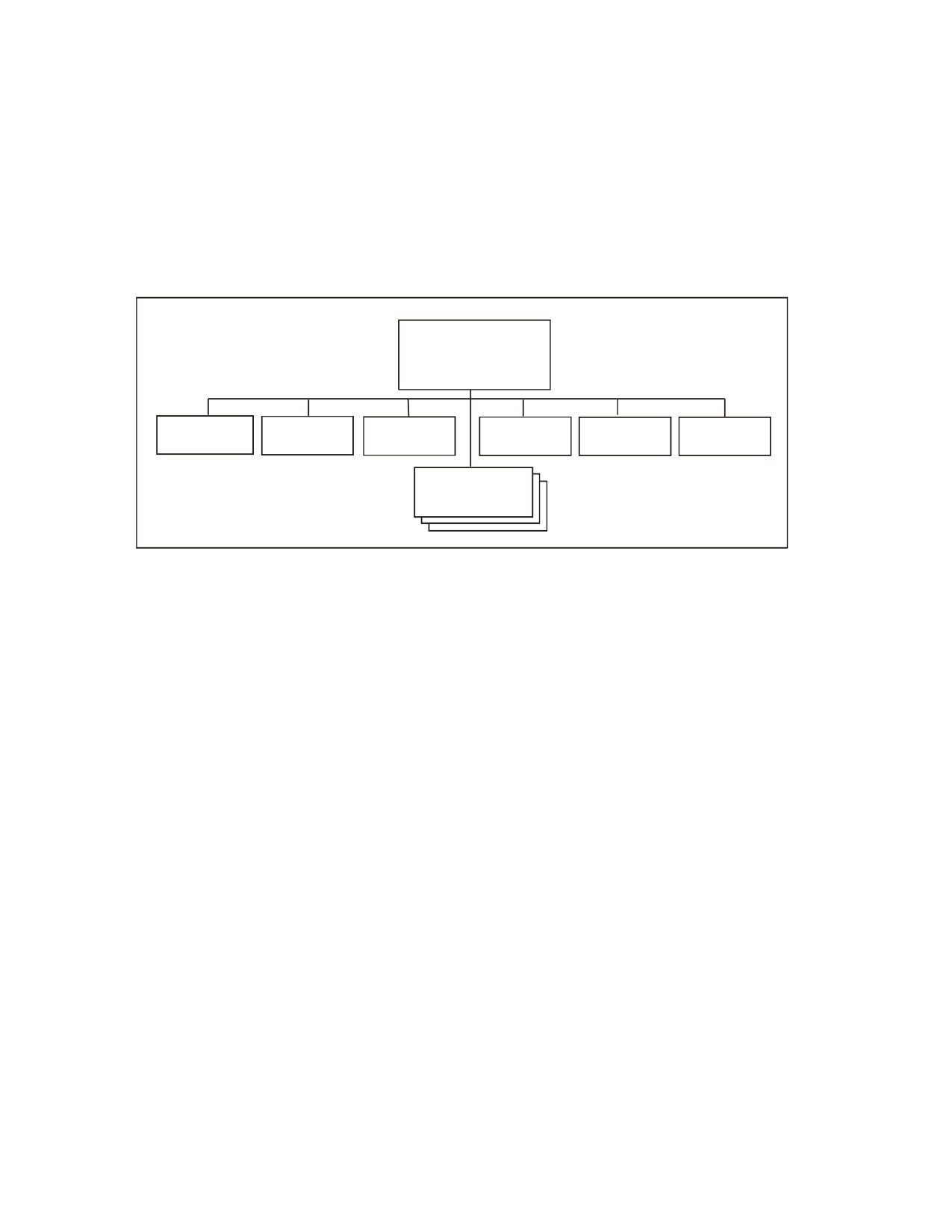
5-192. Figure 5-11 shows the organization of a tactical signal maintenance
company.
Ordnance Maintenance
Company
(GS)
TSC(A)
Company
Maintenance
Unit
TCOR
ATE Repair
GSE Repair
Headquarters
Section
Maintenance
Signal
Maintenance
Platoon
Figure 5-11. Theater Signal Maintenance Company Organizational Chart
TOE 43468A TACTICAL SIGNAL MAINTENANCE PLATOON
5-193. The following paragraphs discuss the tactical signal maintenance
platoon.
Mission
5-194. The mission of the tactical signal maintenance platoon is to provide
dedicated sustainment maintenance and Class IX supply support for unique
tri-service tactical communications (TRI-TAC), mobile subscriber equipment
(MSE), computers, and conventional communications/electronics end items
and components for a TSC(A) signal brigade. The tactical signal maintenance
platoon is assigned to a theater signal maintenance company (gs) normally
attached to a signal battalion.
5-195. The tactical signal maintenance platoon provides—
• CE repair capability.
• Class IX supply support.
• Maintenance on COMSEC equipment.
5-196. The tactical signal maintenance platoon provides—
• Appropriate elements of the theater Army for religious, legal, combat
health support, finance, personnel and administrative services, and
supplemental transportation support.
• The composite signal battalion for food service support.
• The parent company headquarters, TOE 43648a000, or the signal
battalion for unit maintenance.
5-44
________________________________________________________________________________FM 6-02.45
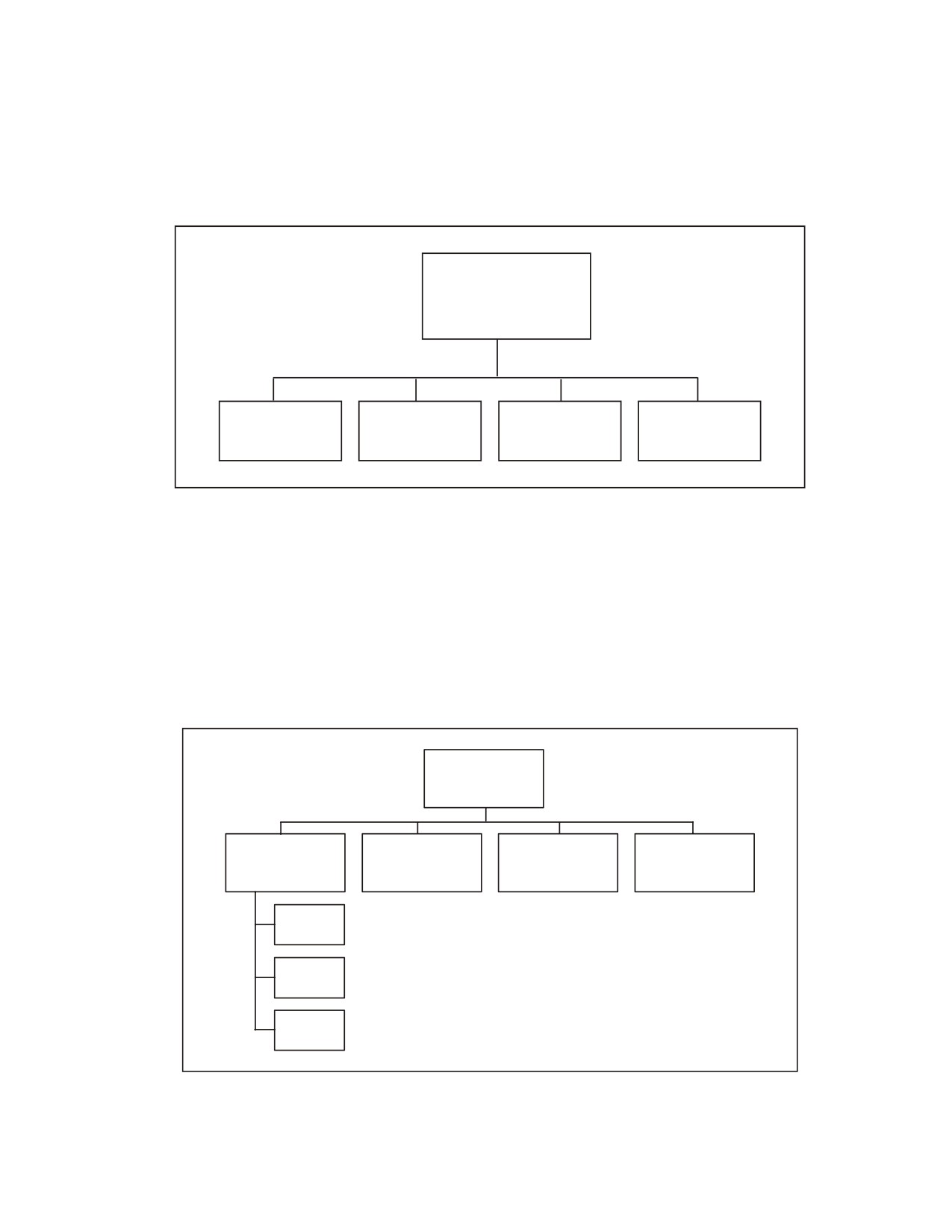
5-197. Figure 5-12 shows the organization of the theater signal maintenance
platoon.
Theater Signal
Maintenance
Platoon (GS)
TSC (A)
Maintenance
Platoon
Class IX
CE
Continue
Headquarters
Section
Repair
Section
Figure 5-12. Theater Signal Maintenance Platoon Organizational Chart
1ST SATELLITE CONTROL (SATCON) BATTALION
5-198. The 1st SATCON Battalion’s mission is to provide communications
network and satellite payload control of the DSCS for the National Command
Authority (NCA) and joint warfighters. The seven critical defense information
systems networks routed through the DSCS constellation are DSN, DMS,
VTC, DRSN, Telemedicine, SIPRNET, and NIPRNET. Figure 5-13 shows the
organization of the 1st SATCON Battalion. The following paragraphs describe
the tasking, mission, and capabilities of the 1st SATCON Battalion.
1st SATCON
Battalion
SATCON
Battalion
SATCON
HHC
B-C-D-E
Headquarters
A Company
Company
S1
S2/S2
S4
Figure 5-13. 1st SATCON Battalion
5-45
FM 6-02.45________________________________________________________________________________
BATTALION HEADQUARTERS
5-199. The battalion headquarters provides C2, services, support, and staff
assistance for the five DSCS Operations Center (DSCSOC) companies (A-E)
located worldwide and the HHC containing the DSCS Operational Control
System Certification Facility (DCF).
S1
5-200. The S1 provides administrative services for the operational
companies. While the companies receive some administrative service at their
deployed locations, the S1 retains a major role in supporting its companies.
The S1 coordinates the assignment of 31S soldiers throughout the battalion
and closely manages assignments of 31S soldiers with the additional skill
identifier of
1C. Additionally, awards, leaves, evaluations, and personnel
actions normally accomplished in a battalion remain within the S1’s scope of
support.
S2/S3
5-201. The S2/S3 provides training and certification for satellite controllers
and is responsible for verification of all certification of assigned personnel.
S4
5-202. The S4 maintains oversight of logistical systems in all of its forward
deployed companies. The companies receive some support at their deployed
locations, to include supply and maintenance of common military systems
and equipment. However, the unique components comprising the satellite
control system are beyond the capability of those locations to support.
Additionally, the logistic sections provide contract management and
oversight.
HHC
5-203. The HHC contains the battalion staff elements and the DCF, whose
unclassified mission is to operate, maintain, and sustain three contingency
DSCS platforms to provide network, payload, and platform control of the
DSCS satellites as directed by the NCA.
Companies A, B, C, D, and E
5-204. Companies A, B, C, D, and E have the same mission to provide
communications network and satellite control of the DSCS satellites. A
Company is structured at a higher strength than the other companies
because it has additional DSCS control equipment and a greater capacity for
monitoring satellites, thus requiring more personnel to accomplish the
control mission. Companies B through E are structured at the same level.
5-46
Appendix A
Emerging Systems and Concepts
This appendix examines high-level trends as well as technological
sustainment considerations that are likely to affect theater signal
organizations and planners. It suggests trade-offs that should be
considered by planners of future theater signal forces and equipment.
Where possible, it identifies key indicators that may signal the need for
future changes or serve as barometers for the magnitude of those
changes. These indicators are not prescriptive. The drivers of change are
categorized as user requirements/opportunities and signal-specific
requirements/opportunities.
USER DRIVEN FUTURE CHANGES
A-1. Many of the future changes that will affect theater signal will be directly
attributable to user requirements. These requirements can be broadly
categorized as technological and organizational/operational.
TECHNOLOGICAL
A-2. For the purpose of this discussion, user driven technological changes
relate to technologies and factors that are directly visible to the user. Users
will tend to adopt these technologies on their own based on their obvious
potential for operational benefits, or be forced to adopt them to avoid
obsolescence. Users will often adopt technological changes first and then seek
signal support later. The following paragraphs discuss technological changes.
Leveraging of Technology
A-3. The Army continuously seeks to gain operational advantage through the
leveraging of technology. Wireless data communications technology is a major
area for which there is continuous and increasing pressure for expansion.
A-4. The most prominent requirement for wireless technology is to enable
higher and higher echelon headquarters to command and control their
subordinates while on the move. The challenges to the Signal Corps include
selecting technologies that will fit in available RF spectrum, selecting
computer operating systems and network management systems that can
adapt to rapidly changing network topologies, and providing services in a
reliable and secure manner.
A-5. Installation time/materials/manpower savings over stationary radio
systems and wire and cable are also factors that drive requirements for
wireless services.
A-1
FM 6-02.45________________________________________________________________________________
A-6. Opportunities to make scarce areas of expertise available further
forward on the battlefield will drive communications-based reach-back
support applications such as telemedicine and other forms of teleexpert.
A-7. Enhanced collaboration tools will drive Army requirements as they are
developed and adopted in the civilian world and in garrison.
A-8. Army organizations will be directly driven by requirements to maintain
compatibility with e-government initiatives. The Army interfaces with other
DOD and non-DOD government agencies at all levels (local through federal)
for a myriad of functions ranging from support relationships to legal and
regulatory compliance. The Army must maintain the ability to interface with
these agencies in their normal way of doing business.
ORGANIZATIONAL/OPERATIONAL
A-9. Organizational/Operational changes are those that do not have an
obvious technological factor directly driving them. Changes in the user
organizational structure or operational practices can affect communications
and information service requirements even if these changes are not directly
attributable to technological factors. An example of such a change is the shift
in emphasis from the contiguous battlefield to the noncontiguous, enclave-
oriented battlefield. Another example would be the introduction to or
elimination of echelons from the C2 structure.
A-10. Unit of action (UA)/Unit of employment (UE) is a concept that is
currently being explored by the Army. This concept includes making
organizations smaller, more deployable, agile, capable, and intrinsically joint.
This could potentially result in the elimination of a layer of C2, which would
cause a reduction in the number of signal links needing to be established and
maintained on the battlefield, and a corresponding reduction in the size
and/or number of signal units in the force.
A-11. The purpose of this manual is not to endorse or dispute any of the
proposals under consideration, but to project some of the possible
implications of these concepts to signal support.
UA
A-12. A UA is defined as a brigade size fighting force that will be able to
operate and maneuver rapidly anywhere within a 75-kilometer (47-mile)
radius of its parent unit. A major signal impact of this is that 75 kilometers
(47 miles) is BLOS communications range.
A-13. The intent is for organic and user-owned and -operated equipment to
completely satisfy UA communications requirements, and UA
communications and information services to be operated on the move.
A-14. The laws of physics dictate a trade-off among the parameters of useful
bandwidth, available RF spectrum, and the directionality of antennas. The
omni-directional antennas likely to be chosen for on-the-move operations will
make less efficient use of available RF spectrum. Competition among users
for available spectrum will increase.
A-2
________________________________________________________________________________FM 6-02.45
A-15. One projection is that the additional combat capabilities and expanded
area of interest/area of influence of the UA will drive requirements to provide
JWICS connectivity down to the UA level.
A-16. If or when the UA/UE concept is adopted, these changes will not occur
instantaneously across the board. Existing forces will co-exist with UA/UE
structures for a period of several years. Often, with the adoption of new
doctrine with a new force structure, the old generation forces must
implement as much of the new doctrine as they can (within technological
limitations) during the transition period. If a current combat arms brigade is
required to operate in a similar manner to a Stryker or future force UA, then
there is a greater signal impact. Current combat arms brigades do not have
sufficient organic communications and information services to execute this
concept. They especially do not have sufficient BLOS multichannel capability.
To come close to exercising the UA profile, a current brigade would require
signal augmentation. By normal command and support relationships, the
first choice for this augmentation would be the signal battalion of the parent
division, or a signal battalion of the parent corps. Because current division
and corps level signal battalions are limited in BLOS capability compared to
theater signal units, the task is likely to be assigned to a theater signal unit.
The modularity of the ITSB makes it a good candidate to provide such
augmentation.
UE
A-17. The UE is a headquarters element that will command, control, and
support several UAs with the capability to serve as a joint or coalition
headquarters. UEs that are built from the ground up are expected to have
sufficient organic communications resources to execute the concept.
A-18. As with the UA, it is almost a certainty that current organizations will
remain in the force structure for several years during the transition period.
In a similar manner, it is likely that these current organizations (corps and
division headquarters) will be expected to seek creative ways to implement as
much or the new doctrine as possible prior to being converted to the new
structure.
A-19. Theater signal units are likely to be tasked to fully support corps and
division headquarters operating as quasi-UEs or to augment their organic
communications capabilities. Providing signal support to a corps or division
headquarters operating in a UE mode is little different than supporting a
traditional theater headquarters. Theater signal forces are already
structured for this, making the transition transparent to them. The
limitations in BLOS capability at corps and below make augmentation of
organic signal assets a likely scenario. The modular structure of the ITSB
makes this augmentation easily tailorable.
SIGNAL SPECIFIC TECHNOLOGICAL OPPORTUNITIES AND TRENDS
A-20. There are several technological trends that are likely to impact the
Signal Corps in general and theater signal in particular, which are less
visible to the nonsignal user. These behind-the-scene technologies enable the
Signal Corps to perform its job.
A-3
FM 6-02.45________________________________________________________________________________
BLOS OPTIONS
A-21. The increased demand for BLOS service forces the Signal Corps to
investigate options for increasing this capability. The following paragraphs
discuss some of the options available for providing BLOS.
TROPO
A-22. TROPO is not as versatile as, nor does it have the range of, SATCOM.
Thus, previous Army decisions have been to focus on SATCOM. However,
TROPO is a proven technology that has the potential to support selected
links and reduce the demand for scarce satellite bandwidth. To maintain the
viability of TROPO, recapitalization will be necessary to improve equipment
reliability and logistic supportability, and to reestablish schoolhouse training.
Low Earth Orbit (LEO) Constellations
A-23. In addition to the familiar use of military and civilian geostationary
satellites, there is discussion of establishing additional constellations of LEO
that would operate in a manner similar to IRIDIUM. Such constellations
could provide additional bandwidth and on-the-move capability. Systems
design considerations include:
• Omni-directional antennas to adapt to the moving satellites will
result in lower bandwidth than what could be obtained with
directional antennas.
• If directional antennas are used, they will require tracking
mechanisms with wide ranges of motion. These would be more
expensive to acquire and maintain than antennas with limited or no
tracking mechanisms.
Airborne Relays
A-24. Concepts for airborne relays are not new. The increased demand for
BLOS bandwidth combined with limitations on the availability of satellite
bandwidth may drive adoption of one or more systems of airborne relays.
A-25. Many signal planners are aware that availability of bandwidth in the
space segment of SATCOM systems is a major consideration, as well as the
availability of earth terminals. What is less often considered is that parking
space in geostationary orbit for new satellites is also a constrained resource.
If satellites are placed too close together, multiple satellites will be
illuminated by the beam width of a single ground station antenna. Planners
cannot automatically assume spending enough money to put up more
satellites will increase that available space segment bandwidth. This manual
does not attempt to predict when the geostationary parking space resource
will become saturated. Changes in the allocation of frequencies for SATCOM
and advances in the technologies that enable efficient use of RF spectrum (for
example, modem and multiplex technologies) will affect the saturation level
of this resource. Signal planners making long-term technology decisions must
consider the question of saturation of orbital parking space for systems and
operational concepts that would increase the number of orbital platforms.
A-4
________________________________________________________________________________FM 6-02.45
A-26. Airborne relay concepts include both stationary and nonstationary
platforms. Key system design considerations for airborne relay systems are
discussed below.
A-27. As with satellite systems, nonstationary airborne platforms will require
ground stations to have either omni-directional antennas or directional
antennas with tracking mechanisms. This creates a trade-off between cost
and bandwidth. Nearly the same trade-off applies in the case of mobile
ground users and stationary airborne platforms. The difference is that there
is some possibility of frequency reuse through strategically positioning the
stationary airborne platforms and using tracking antennas on the mobile
ground stations.
A-28. Stationary platforms such as tethered aerostats or high altitude
lighter-than-air ships with good station keeping capability can be equipped
with relays that are compatible with existing multichannel TACSAT or LOS
ground stations. The ground stations can continue to use their fixed or
relatively fixed directional antennas
(in some cases, SATCOM ground
antenna systems have tracking systems with limited ranges of motion in
order to deal with slight imperfections in satellite orbit). Ground stations
would become dual use. In the case of SATCOM compatible relays on the
aerial platforms, the platforms would be deployed in a manner that the
antennas of all the supported ground stations would be pointing in directions
well away from the orbital plane of satellites. This would enable the ground
stations to reuse the satellite frequencies without creating interference.
A-29. Physical security must be planned for airborne relays. This is not
meant to imply that security is impossible, or that the costs would outweigh
the benefits. Asymmetric threats must be given special consideration in the
cases of stationary or nearly stationary platforms. It does not require a
missile, manned aircraft, or a gun to attack such a platform. A radio
controlled model airplane loaded with incendiary material could be carried to
altitude by weather balloons and then released, posing a serious threat to a
lighter-than-air ship.
ADVANCED CABLE AND WIRE CAPABILITIES
A-30. Advanced cable and wire capabilities will remain a requirement for
theater signal units for the foreseeable future. The proliferation of personal
computers and other automation systems on the battlefield will continue as
the Army pursues its goal of becoming a network-centric force. These
computers will have to be integrated into LANs and WANs. This requires
high quality cabling, both metallic and fiber. A user who previously required
only a telephone will require a telephone and at least a NIPRNET connection.
Many will require SIPRNET connections as well. Due to the added
complexity of data cabling, this results in approximately a threefold increase
in wire and cable installation over the telephone.
A-5
FM 6-02.45________________________________________________________________________________
A-31. This requirement will only be partially mitigated by wireless
networking technologies. This is not to say that Army use of wireless
networking technologies will not or should not increase. Planning for
adoption of wireless networking capabilities must take into consideration the
following inherent limitations:
•
Availability and application of encryption technologies for wireless
links is a consideration. Although encryption technology is becoming
more conveniently available to battlefield automation users, it still
requires planning and detailed system design work to make it a
reality.
•
Jamming technology that would be effective against wireless
networking can be assembled from inexpensive, simple, and readily
available components. Disposable jammers could be packaged as
small as hand grenades and still have several hours of battery life.
Such devices would be a highly asymmetric threat to US forces
operating in an urban environment. In such an environment, it is
often necessary to permit normal civilian traffic very close to the
facilities occupied by US forces. An enemy could conceal several such
devices within effective range of the US-controlled buildings, and
deploy replacements as the batteries run down. Because of its small
size, even small pieces of trash would provide effective hiding places
for the devices. If the United States were to deploy hand-held
direction finding equipment suitable for finding and disabling
disposable jammers, the task would be a significant drain on the
scarce manpower of the small-footprint forces planned for the future.
Such disposable jammers could easily incorporate or be deployed with
booby traps, further increasing the threat to US personnel.
•
The availability of supporting spectrum space will always be a
consideration in the adoption of wireless technologies.
•
Electronic signature generated by wireless networking can be a
consideration depending on the technology level of potential
adversaries.
A-32. Cable and wire systems are not subject to the limitations listed above.
EQUIPMENT DOWNSIZING AND MULTIFUNCTIONALITY
A-33. Current trends for miniaturization of components and downsizing of
equipment are expected to continue. This will integrate more functions into
single boxes and shelters. Integration of voice switching and data networking
capabilities with transmission systems in single shelters will enable Army
signal units to become lighter and deploy with reduced footprints.
A-34. This increased density of functions within single shelters will pose new
training challenges to theater signal since individual soldiers must acquire
the skills to operate all of these functions because there is not room in the
shelter for the number of operators that previously performed the functions.
This is likely to lead to the redefinition of existing MOSs or the establishment
of new ones.
A-6

________________________________________________________________________________FM 6-02.45
WIN-T
A-35. The WIN-T is the Army’s future tactical deployed communications
network. The original Warfighter Information Network (WIN) concept was
developed in the
1994-1995 timeframe. The first WIN-T operational
requirements document (ORD) was written as a replacement system for the
current MSE/TRI-TAC networks and was Joint Requirements Oversight
Council approved on 12 December 2000. The original ORD, written before the
Army Transformation initiative, was optimized for the defense, was TOC
centric in nature, called out a requirement for shelters, had limited
information dissemination capabilities, had limited handheld capabilities,
and required terrestrial and manned relay sites.
A-36. Beginning in October 1999, the Army leadership began a process that is
designed to make the force lighter, quicker to deploy, and more strategically
responsive worldwide. Operational vignettes using future force offensive
concepts, highlighting the qualities of increased mobility over greater
operational distances, and relying on real-time situational awareness exposed
that the Joint Requirements Oversight Council approved WIN-T
requirements would not deliver the desired future force capability. As a
result, the WIN-T ORD underwent a significant rewrite in January 2002 to
focus the requirements for an offensive-oriented, highly mobile future force.
The new ORD defines requirements in very broad, conceptual terms. It
specifically outlines requirements and avoids any suggestion of how to satisfy
the requirement. Table A-1 highlights the major differences between the two
ORDs.
Table A-1. Major Differences Between Old and New WIN-T ORDs
Old ORD
New ORD
•
Focus on Force XXI
• Focus on future combat system, UA, and UE
concepts
•
TOC centric
•
Optimized for defense
• Commander centric: mission command
•
Interoperability
(joint,
allied, and
• Optimized for offensive operations
coalition)
• Survivability: low probability of intercept/low
probability of direction
• Sensor to shooter
• Integrated command, control, communications,
computers,
intelligence,
surveillance,
reconnaissance (C4ISR), and maneuver
• Enhanced versatility (joint, allied, and coalition)
• Adaptability (modular, tailorable, and scalable)
A-7
FM 6-02.45________________________________________________________________________________
A-37. The end state for the WIN-T ORD is to describe a requirement for an
integrating communications network—scaleable, modular, and easily
upgradeable—for the future force units of purpose that bridges the sustaining
base to the tactical communications network. The ORD will also support
Army command of joint and combined task forces (for example, JTF, JFLCC,
CJTF, and Commander Forces Land Component Command). The overarching
challenge is to provide a highly mobile capability for UA and some UE, as
well as provide the static, fixed infrastructure that supports large command
posts at the ARFOR/JTF echelon.
A-38. It is also important to note that the WIN-T fielding is not dependent on
the Army Transformation, future combat system, or Future force force design
updates. The Signal Corps will field WIN-T as an Future force system and/or
as a replacement for the current MSE/TRI-TAC systems. WIN-T is also the
replacement communications system for the TROJAN SPIRIT (TS-SCI).
A-39. General Capabilities. WIN-T is the integrating communications
network for the future force. It will integrate and synchronize the overall
network infrastructure and services by providing the high speed and high
capacity backbone network and overarching NETOPS functionality. The
paragraphs below discuss the general capabilities of the WIN-T.
A-40. Transmission systems include:
• SATCOM:
Ka, Ku, UHF, X, and C bands
(includes an on-the-move
capability).
GBS.
• High capacity LOS (on the move):
Wideband network waveform.
Tactical Common Data Link.
• Secure wireless LAN.
• Airborne communications relay payload.
• Personal communications device (PCD).
A-41. NETOPS includes:
• Network planning/management functions:
Plan and manage transmission systems.
Plan and manage WIN-T services.
Monitor the WIN-T network and interfaces.
Configure and reconfigure the WIN-T network and interfaces.
Plan and allocate IP addresses.
Plan and allocate spectrum for the future force network.
Provide bandwidth management, policies, and procedures.
A-8
________________________________________________________________________________FM 6-02.45
• IDM:
Plan and manage IDM policies and user profiles.
Implement quality of service.
Provide interoperability with the GIG and other services.
• IA:
Plan, configure, manage, and monitor IA systems.
Access control lists.
Coordinate firewall policy.
Establish demilitarized zone (DMZ) architecture.
Implement DOD PKI and Electronic Key Management System
systems.
A-42. End user devices include:
• Secure and nonsecure phones.
• VTC conferencing units.
• PCDs.
A-43. Additional capabilities include dynamic spectrum management and
opportunistic use of RF spectrum, advanced antenna technology, multiband,
multimode, steerable, and self-aligning. The actual implementation of the
above capabilities is entirely contractor dependent. The basis of the ORD is to
provide an overarching requirement. The challenge of the contractor is to
decompose the requirement into an architecture that supports all of the
tenets of the future force and the WIN-T ORD.
A-44. Because fielding schedules are fluid and can be changed by a variety of
unpredictable factors such as budget priorities and program slips, this
manual does not project a fielding schedule for WIN-T.
A-45. The ongoing challenge to signal planners and materiel developers is to
achieve the goals of the program with technology that is current as of the
date of fielding and to maintain currency of technology during the life of the
system rather than the date of program initiation. Success of the program
will be determined by its ability to meet this challenge.
QUALITY OF SERVICE AND BANDWIDTH MANAGEMENT
A-46. Network converged services have been facilitated by exponential
growths in bandwidth availability in the commercial and consumer
environment. Tactical bandwidth requirements have followed the same
trend, but unfortunately, bandwidth availability has not maintained a
commensurate pace. In addition, network converged services are much more
dependent upon and susceptible to anomalies in network quality, including
continuous bandwidth availability, network latency, delay, and jitter.
Network acceleration and compression technologies have been exploited to
help offset the lack of bandwidth, but together these accomplishments only
provide a band-aid to a larger and more pressing problem. The available
bandwidth must satisfy the critical warfighter requirements, and in the
A-9
FM 6-02.45________________________________________________________________________________
tactical environment, this requires establishing and implementing network
wide quality of service policies and procedures.
A-47. Fortunately, many of the most critical warfighter service requirements
are typically low bandwidth in nature and have a higher likelihood of
operational success in an austere environment if they have the requisite
priority for transport. Bandwidth management and quality of service provide
the means to do just this by allocating bandwidth as appropriate based on a
network-wide quality of service policy and managing bandwidth distribution
between users and/or applications.
A-48. Currently, standards-based, quality of service implementations are still
not widely rooted in the commercial environment. In addition, many
proprietary solutions to network tagging and bandwidth acceleration have
gained wide acceptance but lack any basis of interoperability.
A-49. One potential quality of service solution that emerging programs
(WIN-T and JTRS) are evaluating is differentiated services. Differentiated
services
(RFC 2474/3168/3260) are realized by mapping the code point
contained in the IP packet header field to a per-hop behavior at each network
node (router) along its path. Per-hop behaviors will be implemented by
employing a range of queue service and/or queue management disciplines on
a network node's output interface queue. However, service providers are not
required to use the same node mechanisms or configurations to enable service
differentiation within their networks, and are free to configure the node
parameters in whatever way that is appropriate for their service offerings
and traffic engineering objectives. The signal community must standardize on
nodal parameters to ensure a consistent configuration across the WAN.
A-50. In the near future, the signal community will soon be faced with the
challenge of maintaining and enforcing quality of service across the network.
In much the same way that TTPs are associated with firewall planning,
quality of service planning will become a prerequisite to routine network
operations. However, as contrasted to firewall planning (identifying users
and application ports), quality of service planning will encompass much more
fidelity, including identifying and prioritizing users, identifying critical
applications, and establishing the quality of service requirements.
Recognizing this challenge, future programs of record like the WIN-T and
JTRS participate in a Department of the Army G6 chaired working group to
identify the candidate standards and protocols (including quality of service
implementations) to ensure there is a network-wide standard for
implementing a quality of service policy.
EVERYTHING OVER IP - NETWORK CONVERGENCE
A-51. Based on the warfighter’s increased adoption of COTS products and
services, and a trend to increase mobility and reduce command post size and
infrastructure, it is natural that deployed services follow commercial trends
of network convergence. Network convergence is the trend whereby services
that were previously provisioned over separate infrastructures tend to
consolidate upon established protocols (IP in the de-facto case) and thus are
candidates for delivery over the same IP infrastructure. Whereas previous
dynamic bandwidth allocation between separate network infrastructures
A-10
________________________________________________________________________________FM 6-02.45
required comprehensive and complicated underlying multiplexing
architectures (for example, asynchronous transfer mode), convergence upon
IP as the common transport lends itself to natural dynamic bandwidth
allocation, contingent upon successful policy-based management of the
quality of network services.
A-52. Network convergence also offers many additional benefits from a
warfighter perspective. Individual services such as voice, video, data, and
intercom that previously required separate and distinct cabling
infrastructures can now be consolidated on a single cable. This consolidation
results in a significant cost and manpower savings, reduces the cabling
infrastructure in command posts, and thus the set-up and teardown times,
and enhances overall mobility. Additional benefits may be realized in reduced
personnel training and management of a signal underlying IP.
IP TUNNELLING TECHNOLOGY
A-53. There will be an increase in IP tunneling technology to create virtual
private networks for various communities of interest and to pass higher
levels of classified/compartmentalized information through networks of lower
levels of classification. IP tunneling technology will be a large factor in
solving the problems of providing TS/SCI service to the users who require it.
SUSTAINMENT
A-54. Some technological changes will be driven purely from a sustainment
perspective, that is, to allow users to continue operation at their present
levels of effectiveness.
A-55. Army users are driven by the same factors that drive civilian users to
adopt technological advances just to stay on par with their environment. In
many instances, staying on par for the Army relative to both friendly
organizations and potential foes will entail the adoption of new capabilities
such as enhanced collaboration tools as mentioned above.
A-56. Frequent hardware and software upgrades will be required just to
maintain present basic user collaboration capabilities. Such capabilities
include such simple things like exchanging documents and files efficiently
with other organizations. When other organizations have upgraded to more
advanced versions of word processors, spreadsheets, or other applications, an
organization may have no choice but to upgrade to maintain compatibility.
Even though many upgraded applications have file formatting options to
retain a measure of backwards compatibility, an organization cannot afford
the inefficiency of having to frequently call other organizations back to
request that documents or files be resent in down-level format. To avoid such
disruptions, the Army will need to stay at or near the leading edge of new
releases of basic tools such as word processors, spread sheets, and
presentation tools (for example, PowerPoint).
A-11
FM 6-02.45________________________________________________________________________________
NOTE: Centralized software acquisition and support under
Enterprise Systems Management is expected to alleviate
many of these potential problems from an Army-internal
perspective. The planners and leaders who make upgrade
decisions at the enterprise level should consider the factors
listed in this section.
A-57. Some hardware and software upgrades will be driven by what is
available in the market. As equipment wears out, modernization may be
forced on organizations because the old model is simply no longer available or
cannot be supported with repair parts. Likewise, additional licenses of the old
software may no longer be available. Organizations will sometimes be forced
into across-the-board technology upgrades just to maintain internal
compatibility.
A-58. Applying a best value for cost philosophy is a useful predictor of future
investment levels required to maintain the present level of functionality
(such as file sharing compatibility). If purchasing adequate new hardware
and software for a desktop work environment costs X dollars today, then
whatever the best value available in the marketplace at the next upgrade
cycle is likely to be pretty close to what that user needs to remain at the same
level of functionality and compatibility with the outside environment. Flat
line budgeting does not necessarily allow for keeping up with advances
adopted by peers and for maintaining operational advantages over potential
opponents who may be budgeting for more than status-quo.
A-59. In addition to interfaces with government agencies, nearly all Army
organizations have requirements to access commercial Web sites in order to
conduct their business. Logistics elements in particular need to be able to
access the Web sites of civilian contractors as well as government supply
agencies. Army organizations will upgrade their hardware and software as
required in order to maintain compatibility with their outside world. They
will demand communications and information services comparable with
competitive civilian businesses.
A-60. Linking this need to maintain compatibility to civilian Web site
practices provides a useful barometer for the baseline of Internet bandwidth
required for Army customers. Civilian Web site operators, particularly those
engaged in e-commerce, design their Web pages so that they will download at
a speed that is regarded as acceptable to their typical customers. For
example, if their customers are using dial-up Internet access, the vendors will
adapt their Web page designs so that they will not lose business to customer
annoyance at excessive download times. If or when the typical customer has
greater bandwidth, vendors will add features to their Web pages to take
advantage of this capability while staying within the bounds of customer
tolerance.
A-61. This is not to say that the baseline of Army user Internet bandwidth
requirements should be the same as typical household bandwidth. An Army
supply clerk may need several times as much bandwidth with the
corresponding greater download speed in order to process his required
number of transactions in a day. What it does mean is that if typical civilian
customer bandwidth goes up by a factor of two, and Web page size goes up
A-12
________________________________________________________________________________FM 6-02.45
correspondingly, then Army users are likely to need to double their Internet
access bandwidth in order to process the same number of transactions per
day as before.
INFORMATION DISSEMINATION MANAGEMENT - TACTICAL (IDM-T)
A-62. IDM-T is the tactical implementation of the DISA-developed IDM
services, orchestrated through the IDM-T Program Office at Fort Monmouth,
New Jersey. It uses a set of Web-based tools to locate and deliver information
products to tactical users, managing information flow over available
communications. IDM-T enables the intelligent transport of information from
multiple sources to the appropriate tactical user via both “push” and “pull”
techniques.
A-63. The IDM-T software infrastructure consists of commercial and
government software packages, and currently resides on a ruggedized Sun-
based server in a TOC, with LAN and satellite-based communications
interfaces. Users access the IDM-T server via a standard Web browser (for
example, Internet Explorer) on a laptop or desktop computer connected
through the tactical LAN.
A-64. The four key IDM-T operational concepts include:
• A unit-tailored IDM-T portal that provides an operational capability
to meet staff information requirements and battle rhythm timed
information exchanges through a standard Web browser interface,
increasing the warfighter’s ability to exchange critical information
quickly and easily.
• A unit-tailored channel structure that controls the flow of
information, allocates communications resources, and prioritizes
information flow, enabling implementation of the Commander’s
Dissemination Policy.
• Information exchange through publish, subscribe, and alert functions
that enable users to send and receive critical information to the right
staff member at the right time, without the overhead of managing
large, dynamic distribution lists on both classified and unclassified
networks.
• Directory replication that enables large directories of information to
replicate automatically from rear servers to forward units via
optimized routing over high speed links, reducing traffic and
bandwidth needs on lower-speed tactical LANs.
A-65. IDM-T is currently being integrated with the GBS for the
management of information products received over GBS transmission
facilities. A single server will host both IDM-T and the GBS receive broadcast
manager. The combined architecture will provide the following capabilities:
• Document management and information dissemination.
• Enhanced information search capabilities.
• Information categorization and storage.
• Product and mission profiling as well as product advertising.
A-13
FM 6-02.45________________________________________________________________________________
A-66. As a key enabler of information superiority objectives, IDM-T provides
for information awareness, access, delivery, and support services. The vision
of the IDM-T program is to support the disadvantaged user with wideband
transport of critical situation awareness products. As IDM-T doctrine and
technologies mature, they will continue to play a critical role for current,
Stryker, and future forces.
A-14
Appendix B
Selected Lessons Learned from Operation Enduring
Freedom and Operation Iraqi Freedom
The collection and analysis of lessons learned from Operation Enduring
Freedom and Operation Iraqi Freedom are ongoing processes, just as the
operations themselves are ongoing as of the September 2003 writing of
this manual. This appendix is not a complete set of lessons learned.
Instead, it focuses on selected lessons learned that are already influencing
signal doctrine and force structure.
FORCE PROTECTION ON A NONCONTIGUOUS BATTLEFIELD
B-10. The noncontiguous battlefield and guerrilla environments of Operation
Enduring Freedom and Operation Iraqi Freedom have highlighted force
protection requirements for theater tactical signal units that are much
greater than those that were projected, equipped for, and trained for under
Cold War doctrines. The following paragraphs discuss some of these
requirements.
EQUIPMENT
B-7. Based on experiences from Operation Iraqi Freedom, theater signal
support personnel accompany combat arms units during the performance of
their duties. An example of this occurred when theater signal units
accompanied combat elements of the Third Infantry Division on the march to
Baghdad. To ensure that signal troops receive adequate protection from small
arms fire, they require the same protective individual equipment
(for
example, body armor) as the combat forces. This is in contrast to the Cold
War norm that assumed that theater signal units would locate and operate
only in protected, rear areas. Force development planners need to ensure that
this equipment is included in requirements documents
(TOE) and
authorization documents (MTOEs).
B-8. On the nonlinear battlefield, there are no protected rear areas;
everywhere is the front-line. Theater signal units require robust weapons (for
example, heavy machine guns, automatic grenade launchers, night vision
devices, and weapon sights) for self-defense, both during convoy movement
and at the halt. Ideally, possessing the appearance and equipment of a
formidable defense can be a deterrent to an attack. Signal soldiers need and
deserve every edge that robust weaponry provides if and when a battle
occurs. Force development planners need to insure that this equipment is
included in requirements documents (TOE) and authorization documents
(MTOEs).
B-1