6-02.45 (FM 11-45) Signal Support to Theater Operations (APRIL 2004) - page 2
________________________________________________________________________________FM 6-02.45
3-29. In theater, the GIG is composed of enclaves of service-controlled assets
connected by a network of DISA-controlled assets. The complex nature of the
GIG in theater requires that all component NETOPS organizations work
together closely, under the direction of the J6, to ensure the reliable
operation of the GIG. This is made more complex by the increased use of
inter-theater C4IM resources to support a given tactical operation.
NETCOM/9TH ASC, through the ANOSC, operates and manages the Army’s
cross-theater C4IM support to the various warfighter commands.
Common Services and Applications Management
3-30. NETCOM/9TH ASC has responsibility for common C4IM services and
applications throughout the Army. These common services and applications
are provided in accordance with baseline service levels approved by the Army
CIO Executive Board and funded by the ACSIM. Baseline services are
defined by the service provider based upon affordability within available
resources. Changes in resource baselines may necessitate changes in baseline
services. Any adjustment in levels of service must be consistent and
equitable. NETCOM/9TH ASC negotiates service level agreement extensions
to baseline services through the DOIM. This pertains to any service
requirement beyond established Army baseline for all identified services. The
service level agreement extensions are based on performance measures such
as availability, reliability, and response time that can be monitored to
measure NETCOM/9TH ASC performance and customer satisfaction. In this
way, standard service levels are provided throughout the enterprise. Common
services and applications categories include:
• Telecommunications.
• Visual information.
• Automation.
• IA.
Functional Applications Management
3-31. Functional applications—such as personnel, logistics, financial,
training, and medical—are the responsibility of their functional owner for the
near-term. The long-term vision is to separate the link between functional
application management and the management of underlying networks and
processing systems. The functional owners are responsible for applications
and content management, while NETCOM/9TH ASC provides the
communications and processing services necessary to meet the functional
owner’s service requirements.
End-User Support Management
3-32. During AEI transformation, end-user support has undergone and
continues to undergo major changes to standardize and centralize services to
the maximum extent possible, resulting in service that is more effective and
reduced the total cost of ownership. The Army baseline service levels are
validated by the Army Enterprise Infostructure Management Steering Group
and approved by the Army CIO Executive Board and the ACSIM. Services
provided to the end user include:
3-11
FM 6-02.45________________________________________________________________________________
• Standardized, consistent services for end-user devices (for example,
desktop and laptop) and software applications.
• End-user devices delivered with preinstalled software.
• Remote desktop software upgrades and patches.
• Virtual desk side assistance (remote, real-time problem diagnosis and
resolution).
• Single account logon using PKI/CAC.
• Single, integrated help desk or one-stop problem reporting and
resolution.
NETWORK COMMON OPERATIONAL PICTURE (NETCOP)/NETWORK COMMON
RELEVANT OPERATIONAL PICTURE (NETCROP)
3-33. As a result of the Army’s ongoing transformation to an info-centric,
network-centric force, the status of networks has achieved much greater
visibility with warfighting commanders than in the past, putting it on par
with the status of other combat assets such as tanks and artillery systems.
This section discusses the organizations and processes that work together to
assemble and provide this information to the warfighter, as well as
performing a large portion of the day-to-day NETOPS tasks in the AEI.
3-34. The Deputy Secretary of Defense's 24 Aug 2000 Guidance and Policy
Memorandum No.
10-8460-Network Operations calls for combatant
commanders of unified commands to collaborate with their respective service
component commands, DISA, Joint Task Force
(JTF), and US Space
Command to create and maintain a NETCOP. Additionally, the Joint
NETOPS CONOPS directs each service to develop and disseminate a
NETCOP for its portion of the GIG.
3-35. The NETCOP provides the ability for combatant commanders, service
components, subunified commands, JTF, and deployed forces to rapidly
identify outages and degradations, network attacks, mission impacts, C4
shortfalls, operational requirements, and problem resolutions at the
strategic, operational, and tactical levels.
3-36. The Army extends the NETCOP concept by specifically including the
criteria of relevance, resulting in the term NETCROP. The NETCROP
integrates a capability that receives, correlates, and displays a view of voice,
video, and data telecommunications networks, systems, and applications at
the installation, tactical, region, theater, and global levels through the
installations/deployed tactical forces, network service centers, Theater
Network Operations and Security Center (TNOSC), and ANOSC respectively.
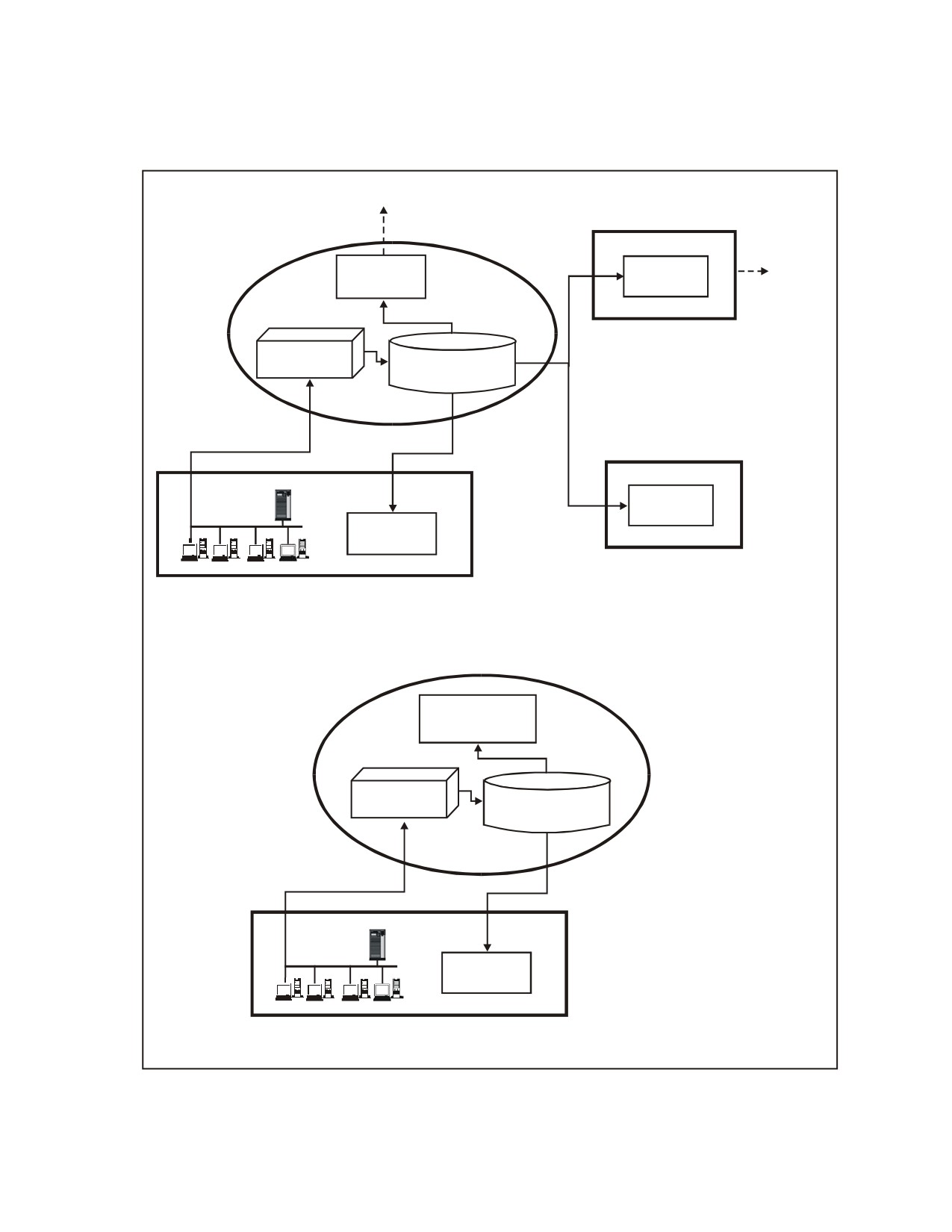
Figure 3-7 illustrates the conceptual process by which the NETCROP may be
distributed to the various organizations that have a need for this information.
3-12
________________________________________________________________________________FM 6-02.45
Combatant DISA-RNOSC
Theater
Army
DISA-
NETCROP
NETCROP
GNOSC
TNOSC
ANOSC
RCERT
Infostructure
ACERT
Infostructure
Monitoring
Performance Data
Regional
NETCROP
Installation
NETCROP
RCIO-NOSC
Installation
Brigade/Battalion
NETCROP
Brigade NOSC/
Battalion NOSC
Infostructure
Infostructure
Monitoring
Performance Data
Tactical
NETCROP
Deployed Unit
Figure 3-7. Dissemination of NETCROP Information
3-13
FM 6-02.45________________________________________________________________________________
3-37. Coordination with DISA provides agreement on the information passed
between DISA and other agencies. From that and other Army enterprise
requirements, agreements are made for information to be pushed throughout
the Army Network Operations and Security Centers (NOSCs). At each level,
the required data is collected for analysis along with any other required data
at that level. The NETCROP at each level reflects statuses, performance, and
IA. At a minimum, the NETCROP includes telecommunication/system/
application fault and performance status as well as significant IA reports
such as network intrusions or attacks.
ROLES AND FUNCTIONS OF KEY NETWORK MANAGEMENT
ORGANIZATIONS
3-38. NOSCs and Computer Emergency Response Teams (CERTs) execute
the real-time management and defense of networks and services. NOSCs are
embedded in the structures of signal and information service provider
organizations at various echelons. Reporting relationships for the NOSCs do
not always follow the hierarchical lines of authority of the parent provider
organizations.
3-39. NOSCs at all levels develop and provide NETCROP information. In
general, lower echelon NOSCs provide information upward to higher echelon
NOSCs on their assigned portions of the network. Higher echelon NOSCs
provide consolidated NETCROP views downward to lower echelon NOSCs.
3-40. NOSCs perform the link and circuit management functions that were
performed by their predecessor organizations, the battalion control centers,
systems control centers, and network control centers. Additionally, they
perform IA and IDM functions. These functions include, but are not limited
to, LAN/WAN administration and CND that includes intrusion prevention,
detection, response, and recovery.
3-41. Overall responsibility for CND within the Army belongs to
NETCOM/9th ASC as specified in Department of the Army (DA) General
Order number 2002-5. This function is executed in a layered manner by the
NOSCs of the various echelons (under the TECHCON of NETCOM/9th ASC).
Just as physical defensive operations are greatly enhanced by good
intelligence support, CND is also greatly enhanced by focused intelligence
and analytical support.
3-42. This analogy also applies to information feedback from defensive
operations to improve the quality of the intelligence knowledge base. For this
reason, signal organizations directly engaged in CND maintain close, direct
liaison with their counterparts in the intelligence community. At the Army
level, this is a close, formal relationship between NETCOM/9th ASC and the
Army Intelligence and Security Command
(INSCOM). The top-level
operational interface point for this relationship is the combined facility
shared by the NETCOM/9th ASC ANOSC and the INSCOM 1st Information
Operations Command Army Computer Emergency Response Team (ACERT).
The detailed breakout of operational procedures between these two
organizations is still evolving and is beyond the scope of this manual.
Because both organizations have technical capabilities that can significantly
degrade network services if they are misapplied, the closeness of this
3-14
________________________________________________________________________________FM 6-02.45
relationship is deemed so critical that the ANOSC was physically moved after
its establishment to co-locate with the ACERT and other computer network
operations forces. At lower echelons where both NOSCs and CERTs exist, the
requirement for close coordination and liaison is equally critical.
3-43. Operations related to CND that are of particular interest to theater
signal personnel are the gathering of forensic evidence to trace attacks and/or
unauthorized network activities to their source and active incident response
measures, either through law enforcement channels or through retaliatory
network measures directed at foreign enemies. These operations fall under
computer network exploitation and computer network attack respectively.
Such actions are governed by intelligence oversight statutes and are
coordinated/executed by the intelligence community under the OPCON of the
G3/J3/C3 at the respective operational and strategic levels. Theater signal
interface to these processes is usually through NETOPS interface points, the
CERTs.
3-44. The US Army INSCOM establishes and operates CERTs under the
OPCON of the G3 of the Army at the national level and G3/J3/C3 at lower
levels. CERTs operate symbiotically with NOSCs to enhance the protection
and defense of Army networks. CERTs do not exist at every echelon that
NOSCs do. At echelons where both NOSCs and CERTs exist, they are co-
located whenever possible to facilitate cooperation and collaboration. CERTs
provide more sophisticated analytical tools than may be available in their
counterpart NOSCs and a greater depth of expertise for enhanced incident
response and recovery. The details of the interaction between CERTs and
NOSCs are continuing to evolve and are beyond the scope of this manual.
ANOSC
3-45. The ANOSC’s mission is to provide reporting and situational
understanding for the Army's portion of the GIG. The ANOSC provides
worldwide operational and technical support across the strategic, operational,
and tactical levels. The ANOSC—as depicted in Figure 3-8—interfaces with
all Army TNOSCs, functional NOSCs, the DISA Global Network Operations
and Security Center (GNOSC), and other service NOSCs, where appropriate.
3-46. The ANOSC’s general roles and responsibilities include the following:
• Operate in conjunction with the Army CERT in order to provide
comprehensive CND for assigned networks.
• Collect near real-time status information on essential intra-theater
gateways (STEP and Teleport) and other networks and information
systems.
• Ensure implementation of approved DOD/Army policies and
procedures for NETOPS.
• Provide near real-time global situational awareness of Army
networks and systems to authorized organizations
(for example,
NETCROP).
• Coordinate problem resolution actions that effect operations in two or
more theaters.
3-15
FM 6-02.45________________________________________________________________________________
•
Oversee the provisioning of domain name services (DNS) and IP
management services for ARFOR.
•
Implement policy and operational measures to ensure near real-time
worldwide defense for the Army's portion of the GIG; these measures
will be coordinated with the ACERT.
•
Conduct reporting of worldwide facilities, telecommunications, and
information system problems.
•
Maintain liaison with DISA GNOSC, Army operations center, and the
1st Information Operations Command.
•
Establish, in coordination with the US Commander in Chief, Space
Command, DA Staff, INSCOM, and MACOMs, Army-wide procedures
for dissemination of CND and related advisories, alerts, and warning
notices, including those originating outside the Army and DOD.
•
Monitor compliance with issued IA vulnerability alerts and direct
Army-wide actions, including Army-wide information operations
conditions changes, to defend Army computer network operations in
coordination with the Army G3, commander, and ARFOR computer
NETOPS.
•
Coordinate with NETCOM G2 to refine priority information
requirements in support of CND/IA operations.
•
Chair the NETOPS communications configuration board and is a
voting member of the AEI technical communications control board.
•
Ensure global metrics for SLM are included in the Army NETCROP.
3-47. The ANOSC has the following responsibilities for networthiness:
• Ensure compliance with networthiness policies and procedures before
any IT resource, network, system, or application is connected to the
infostructure.
• Participate as required in networthiness reviews, tests, and forums.
3-48. The ANOSC has the following responsibilities for asset and resource
management:
• Identify any new real or logical property that should be addressed in
the ARM process.
• Identify assets or resources where usage pattern indicates a potential
efficiency increase and identify how the efficiency increase might be
realized.
• Receive, process, and forward requests to create subordinate ARM
processes.
TNOSC
3-49. The TNOSC acts as a single point of contact for Army network services,
operational status, and anomalies in the theater to other services operating
in the theater. The TNOSC provides visibility and status information to the
ANOSC, the Theater Communications Control Center (TCCC), and DISA
Regional Network Operations and Security Center
(RNOSC). In some
theaters, the TNOSC may provide visibility to other service component
3-16
________________________________________________________________________________FM 6-02.45
NOSCs. There are TNOSCs established in every theater of operation:
CONUS, Europe, Pacific, Korea, South West Asia (SWA), and Southern
Command (SOUTHCOM).
3-50. Assignment and C2 (OPCON, TACON, TECHCON, etc.) relationships
of TNOSCs are situation and workload dependent. It is not the same for all
theaters. Because these relationships can change much more rapidly than the
normal update cycle for doctrinal publications, they are not depicted here.
3-51. This section addresses the functions common to all theaters and not
specific functions that are unique to an individual theater. Theater common
functions can be performed at multiple geographical locations, but they
should be performed the same way at each location.
3-52. The TNOSC will perform or coordinate any task that spans the theater
or multiple regional director regions. This provides consistent service among
regions. It also places the operational function at the only location in the
enterprise that would have visibility or awareness of what was happening in
both regions.
3-53. The TNOSC’s general roles and responsibilities include the following:
•
Operate in conjunction with its counterpart CERT
(usually a
Regional Computer Emergency Response Team [RCERT]) to provide
comprehensive CND of assigned networks.
•
Exercise control and configuration as well as day-to-day management
and protection of the networks, systems, and applications within the
theater.
•
Consolidate the NETCROP inputs of subordinate NOSCs and
provide, via secure means (usually SIPRNET), views into the Army
theater NETCROP to the combatant commander’s TCCC, the Army
component commander, and the ANOSC.
•
Provide IDM support for organizations within the theater to include
the dissemination of the NETCROP to the appropriate organizations
and commands within the theater.
•
Operate and manage all items located on the public or DISA side of
the installation network infrastructure that are Army owned.
Initially, this will include all long-haul communications resources
used to connect the installation to the WAN backbone or to tie regions
together, the installation gateway or Army DISN Router Program
router, and any devices located in the communications zone between
the security router and the installation gateway router.
•
Operate and manage selected systems and networks within the
installation based on the implementation of a consolidated
management capability for those devices or systems.
•
Develop a theater NETOPS CONOPS to supplement and address
theater-unique missions and responsibilities.
•
Include in NETCROP theater metrics for SLM.
3-17
FM 6-02.45________________________________________________________________________________
• Report any violations of networthiness detected on Army networks.
• Identify any new physical or logical property that should be
addressed in the asset resource management process.
3-54. The TNOSC has the following responsibilities for CM:
• Execute and enforce the policies and procedures promulgated by the
Army CIO through the ANOSC for CM.
• Is a voting member of NETOPS communications control board.
3-55. The TNOSC has the following responsibilities for networthiness:
• Ensure all IT resources, networks, systems, or applications have a
valid certificate to operate before connecting to the infostructure.
• Participate as required in networthiness reviews, tests, and forums.
NETOPS SUPPORT BELOW THE TNOSC LEVEL
3-56. Below the TNOSC, an OCONUS theater is typically divided into
regions, and sometimes even subregions, for NETOPS support. When regions
or subregions are defined, they will have some form of NETOPS capability
that provides some of the functions of NOSCs. These regional capabilities
may be fixed station or tactical. The assignment and command relationships
for the facilities that provide these services are situation and workload
dependent. Such facilities may or may not have the term “NOSC” in their
names.
OTHER NOSCS AND NETWORK MANAGEMENT CAPABILITIES
3-57. The following paragraphs discuss other NOSC and network
management capabilities.
DISA GNOSC
3-58. DISA manages the DISN through the GNOSC. The GNOSC provides
the overall management control and technical direction of the GIG backbone.
As the direct interface for the National Communications System (NCS),
Office of the Secretary of Defense, and Joint Chief of Staff (JCS) customers,
the GNOSC performs customer assistance and provides current operational
GIG services at the strategic-national level.
3-59. The GNOSC’s general roles and responsibilities include the following:
• Serve as the single manager to operate the DISN WAN and
associated LAN.
• Integrate the overall DISN with all other networks provided by DOD
components to extend DISN services to their installations.
• Advise the Chairman, JCS, and Commander, US Space Command, on
matters regarding the allocation of DISN resources and network
anomalies.
• Maintain visibility, to include security provisions, of the GIG through
a DOD component-integrated global NETCROP. This is achieved
through integration of DISA RNOSC and service/agency component
feeds.
3-18
________________________________________________________________________________FM 6-02.45
3-60. The DISA GNOSC has the following roles and responsibilities for SLM:
• Provide agreed upon levels of service for the WANs and LANs to
support the Army infostructure and its defined critical services.
• Direct, monitor, and control DISA-provided telecommunications
networks, and provide connectivity services to combatant commands,
service, and agency networks in the theater.
• Provide exercise and contingency support to the J6 and JTF.
• Support the combatant commanders and components by creating and
disseminating the NETCROP for the theater. This is accomplished by
integrating NETOPS event and status information received from
joint network operations and security centers.
• Coordinate solutions to problems involving DISA-controlled networks.
Functional Area NOSCs
3-61. Functional area NOSCs such as those that administer Corp of
Engineers network(s) or MEDCOM network(s) are under TECHCON of
NETCOM/9th ASC. The long-term goal is for functional area NOSCs and the
National Guard and Army Reserve NOSCs to become absorbed by
NETCOM/9th ASC and, in some cases, consolidated as the Army moves to a
single enterprise network.
Lowest Tier Network Administration
3-62. Although deployable NOSCs with their associated data packages and
teams may have subscribers directly connected to them, frequently there will
be subordinate layers of network management capability below this level.
Nodal Data Teams
3-63. Below the battalion level, data network management and IA functions
are performed by nodal data teams. In the case of the ITSB, these teams are
organic to the nodal platoons. In legacy organizations, these teams are often
task-organized locally and not uniformly recognized on TOEs.
Subscriber IT/IA Personnel
3-64. The lowest level of data network management and IA function is the
cell of IT/IA personnel embedded in subscriber organizations. These
personnel provide local management and support of unit and individual
hardware and software. They are the first source of assistance to users in
resolving problems. Personnel may be delegated selected machine and
network management functions such as resetting passwords. They provide
local expertise and support on applications, which are specific to their type of
unit, such as Maneuver Control System for the maneuver unit.
3-19
Chapter 4
Theater Tactical Signal Architecture
This chapter discusses the theater tactical signal architectures. It covers
the current force architecture, network standardization, rapid deployment
contingency communications packages, non-ITSB generic contingency
communications packages, and the notional deployment sequence. This
chapter also covers the echelons corps and below (ECB) and stovepipe
architectures.
CURRENT FORCE ARCHITECTURE
4-1. The following paragraphs discuss the architecture of the current force.
DISN
4-2. The DISN is the DOD communications network providing access to a
variety of C4IM services and capabilities. The DISN cloud extends around
the globe and provides services to warfighters where needed. These services
and capabilities are extended to deployed users by the TSC(A)s in theaters
(where they exist), theater tactical brigades, and subordinate ITSBs.
4-3. The DISN—
• Provides the long-haul transport component of the DOD portion of the
GIG.
• Provides seamless interoperability.
• Provides constant connectivity.
• Provides positive control of network resources.
• Incorporates emerging technology as it becomes available.
4-4. The DISN infrastructure supports sustaining-base, long-haul, space, and
deployable tactical communications capabilities. All equipment, technologies,
and transmission media within the DISN are interoperable with other
networks and information services within these segments.
STEP/Teleport
4-5. The STEP is the interface between the strategic layers of the DISN and
tactical signal forces, providing support to the deployed user. The ITSB
provides connectivity from any 1 of 15 worldwide STEP locations to deployed
forces for access to the DISN. Tactical signal forces access the STEP via super
high frequency
(SHF) military SATCOM over the Defense Satellite
Communications System (DSCS). Future enhancements to the STEP include
providing a capability to receive and transmit via commercial band satellites.
4-1
FM 6-02.45________________________________________________________________________________
4-6. A STEP site can be a single or dual site. A single STEP site supports one
satellite coverage area and acts as a ground mobile forces hub terminal. A
dual STEP site supports at least two satellite areas and duplicates the
equipment requirements for subsystems located in the single STEP site. The
goal of the STEP is to pre-position services and connectivity and make these
services available to the deployed user.
4-7. The DOD Teleport System provides increased SATCOM capacity,
improved interoperability of joint communications systems, and dynamic
reconfiguration to meet the changing needs of a JTF, joint deployed
headquarters, and the deployed forces. The purpose of the DOD Teleport is to
expand on the capabilities currently provided by STEP sites and provide
deployed warfighters continuous global access via multimedia radio
frequency
(RF). This multimedia RF includes existing Military Satellite
Communications (MILSATCOM) systems (that is, SHF, ultra high frequency
[UHF], and extremely high frequency
[EHF]), future Ka bands, and
commercial SHF wideband systems in the C, L, and Ku bands. High
frequency (HF) will also be incorporated.
DISN Point of Presence (POP)
4-8. In many contingencies, the DISA will install additional capabilities in
theater to provide access to the DISN. This POP is typically a commercially
based satellite and/or terrestrial system that will provide similar services
that are available at a STEP/Teleport site. DISN POPs are used to help
alleviate the burden on the STEP/Teleport sites for satellite access. DISN
POPs may be installed and co-located with the JTF headquarters and/or
component command headquarters. Theater tactical signal forces may access
DISA POPs when available.
END-USER SERVICES EXTENDED
4-9. TSC(A)s (in theaters where they exist), theater tactical brigades, and
subordinate ITSBs provide standard end-user services. These services
provide critical capabilities that enable effective planning and execution of
the mission. The following paragraphs discuss these end-user services
extended.
IP Data Network Services
4-10. The deployed ITSB sets up and configures access to data networks that
allow the flow of information to and from the warfighter. These networks
permit both secure and nonsecure information flow as well as access to
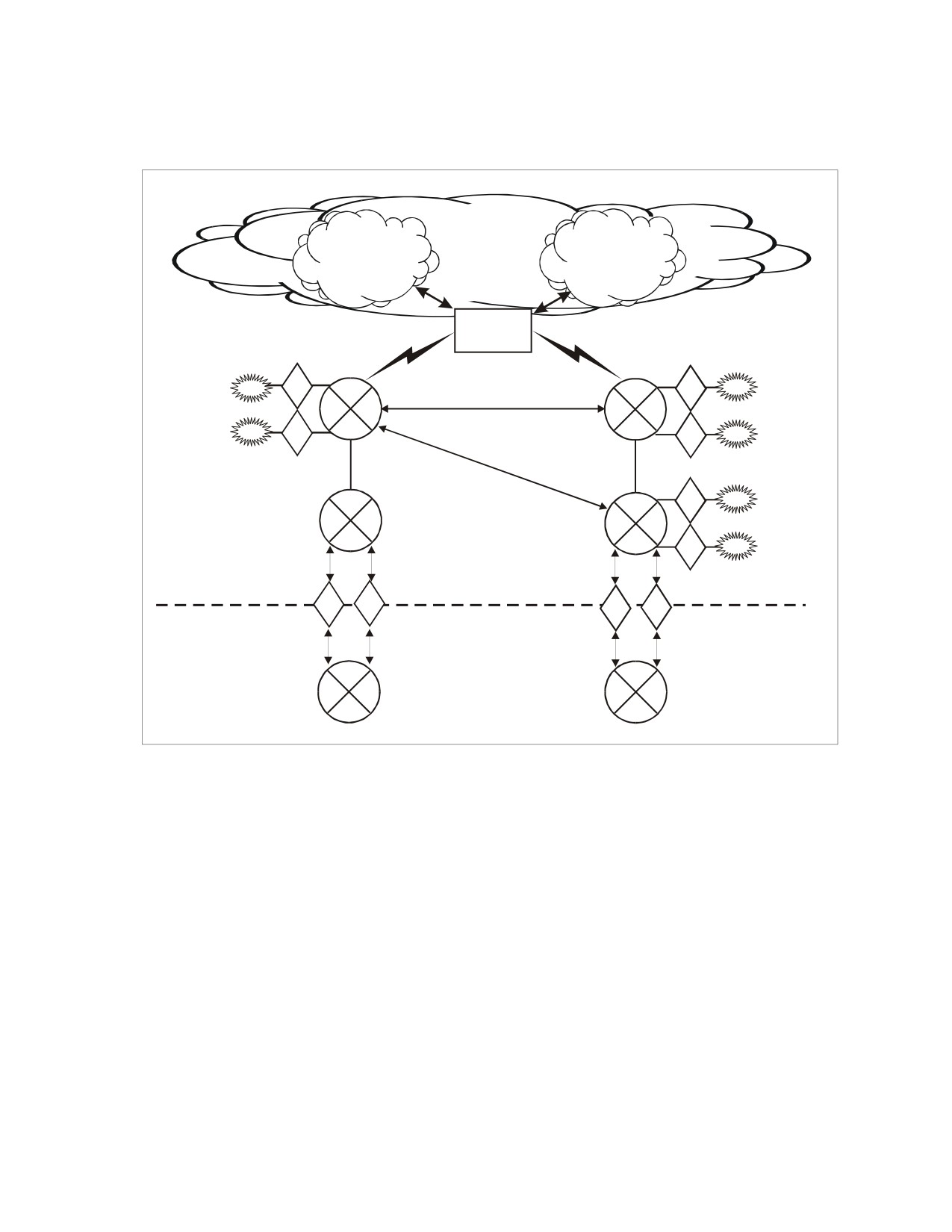
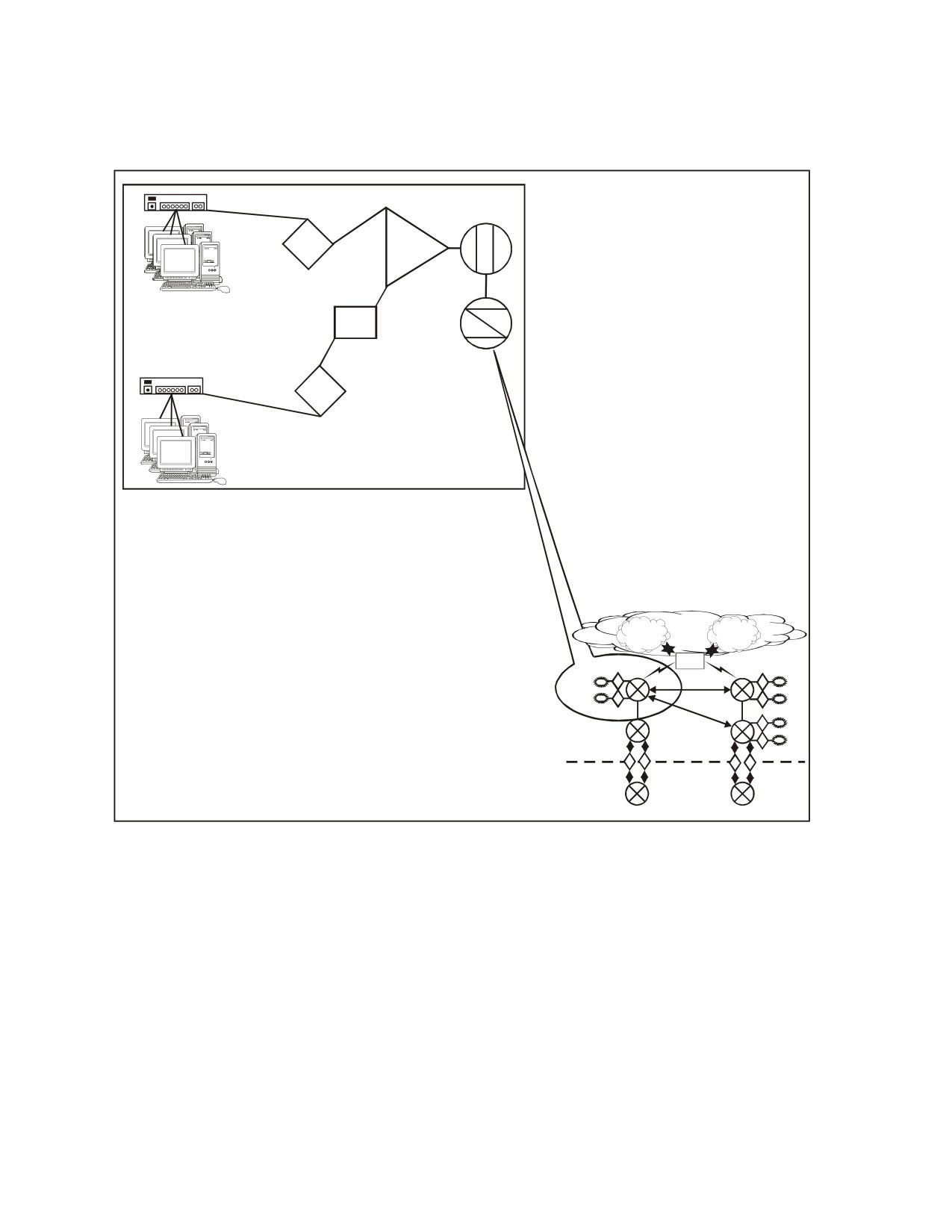
coalition resources. Figure
4-1 depicts the NIPRNET and SIPRNET
connectivity to the STEP, and Figure 4-2 shows this in detail.
4-2
________________________________________________________________________________FM 6-02.45
NIPRNET
DISN
SIPRNET
STEP
Strategic ITSB
N
N
Enclave of
Enclave of
Users
Users
S
S
Enclave of
Users
Enclave of
Routers
Users
Routers
N
Enclave of
Users
S
Enclave of
Users
Routers
N
S
N
S
Corps
Routers
Routers
Figure 4-1. NIPRNET and SIPRNET Connectivity to the STEP
4-3
FM 6-02.45________________________________________________________________________________
N
1st Level
MUX
KIV
S
NIPRNET
DISN
SIPRNET
STEP
Strategic ITSB
N
N
Enclave of
Users
Enclave ofUsers
S
S
Enclave of
Enclave of
Users
Routers
Routers
Users
N
Enclave of
Users
S
Enclave of
Routers
Users
N S
Corps
N
S
Routers
Routers
Figure 4-2. NIPRNET and SIPRNET Detailed
4-4
________________________________________________________________________________FM 6-02.45
4-11. NIPRNET. The NIPRNET is a network of government-owned IP
routers used to exchange sensitive information. In providing this service,
theater signal acts in a role very similar to a civilian Internet Service
Provider. The NIPRNET is a US Unclassified worldwide IP data network
managed by the DISA. It is the consolidation of several service and agency
networks with common protocols and standards. It supports connectivity over
a high-speed network. NIPRNET availability is critical in support of C2
applications. Many DOD applications are based upon the ability for users to
access the Internet/NIPRNET to perform their mission.
4-12. Access to the NIPRNET is obtained through a STEP site and is then
distributed through an Unclassified theater network. NIPRNET access is also
distributed to networks ECB through theater to corps gateways. These access
points also act as routing boundaries for the design and engineering of the IP
networks in support of the NIPRNET.
4-13. SIPRNET. The SIPRNET is a US Secret High worldwide IP data
network managed by the DISA. It is made separate from the NIPRNET and
secure by a combination of physical, procedural, and cryptographic measures.
Users connect to the network at a selectable data rate that meets the mission
requirements. The Regional Control Center, located in Washington, D.C.,
performs all SIPRNET configurations at the STEP.
4-14. Access to the SIPRNET is obtained through a STEP site. Similar to the
NIPRNET, the SIPRNET is distributed throughout the theater using ITSB
assets. The SIPRNET is also distributed to networks at ECB through theater
to corps gateways.
4-15. Coalition Network. Generically, the coalition network service supports
planning and execution of operations by US and non-US coalition forces in
the operational environment. Much like the NIPRNET and SIPRNET, the
coalition network service may require distribution throughout the theater of
operation. Current coalition network services operate at the SBU level and at
the Secret level.
4-16. Implementation of coalition network service can take a variety of forms.
At the lowest level, it may be a LAN among coalition partners with little or
no connectivity to other networks. On a larger scale, it may consist of theater
or regional WANs among coalition partners, but still with limited or no
connectivity to other networks. In its most developed form, the coalition
network service may extend the worldwide standing coalition network known
as the CENTRIXS to tactical coalition users.
4-17. CENTRIXS is a permanent, classified coalition network that provides
e-mail, Web, and collaboration (chat) services. CENTRIXS merges the Pacific
Command
(PACOM) coalition network with the Central Command
(CENTCOM) coalition network. Commander, Pacific Fleet serves as executive
agent for this network. Assistant Secretary of Defense for Command, Control,
Communications, and Intelligence provides a program management office to
manage further CENTRIXS technical development. As of September 2003,
CENTRIXS links over 50 partner nations.
4-5
FM 6-02.45________________________________________________________________________________
4-18. CENTRIXS makes extensive use of tunneling technology and
encryption to traverse other IP networks, enabling the flexible establishment
and management of various separate virtual communities of users and
interest groups within the overall CENTRIXS user community. CENTRIXS
incorporates some managed
(filtered) electronic connections to other
networks that allow the transfer of releasable data between the various
networks and communities of interest.
4-19. Management practices of the CENTRIXS network impose a degree of
hardware and software standardization. CENTRIXS-compatible hardware
and software are normally made available to non-US participants via foreign
military sales channels.
4-20. In many ways, the NIPRNET, SIPRNET, and coalition networks
provide similar types of capabilities. However, it should be noted that the
requirements for each type of network might be dramatically different based
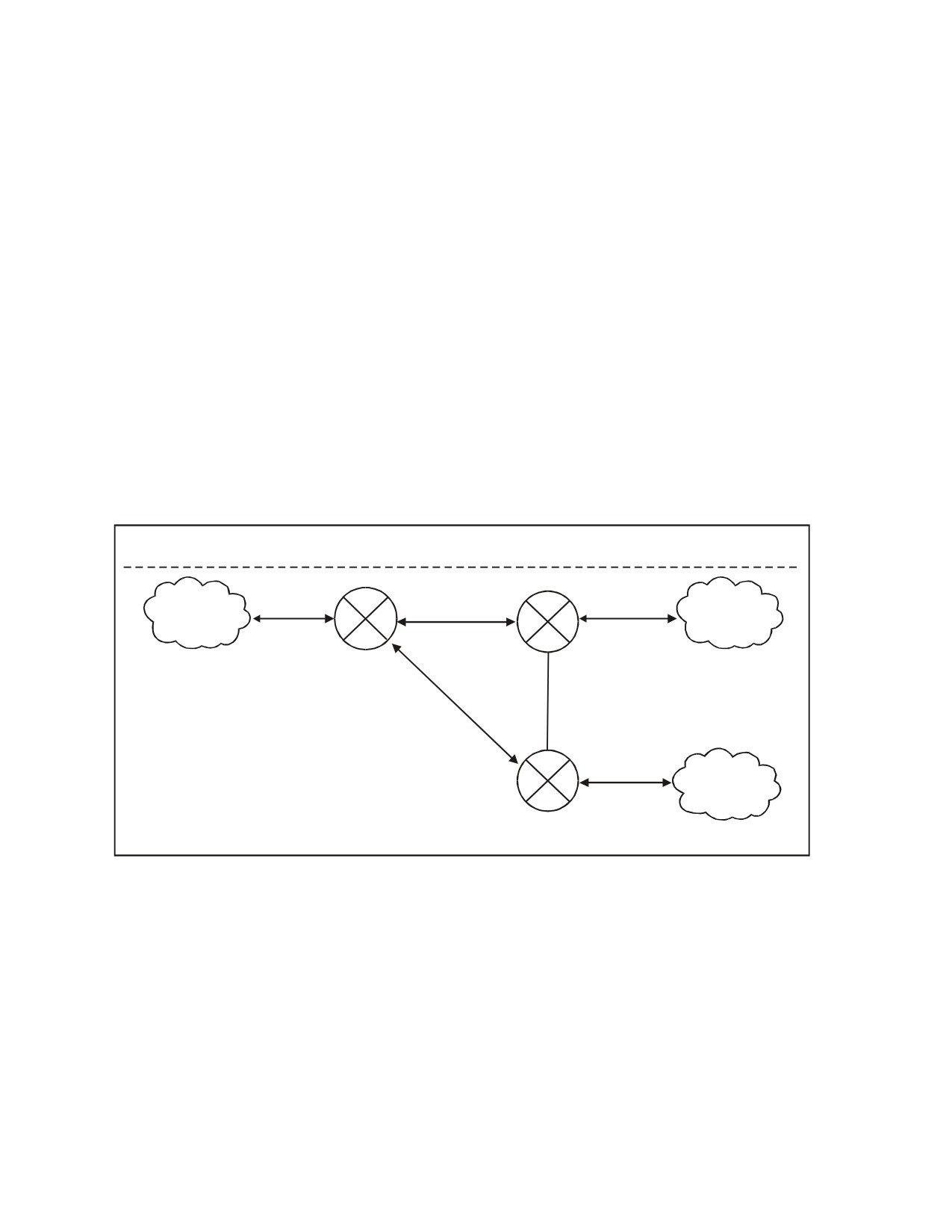
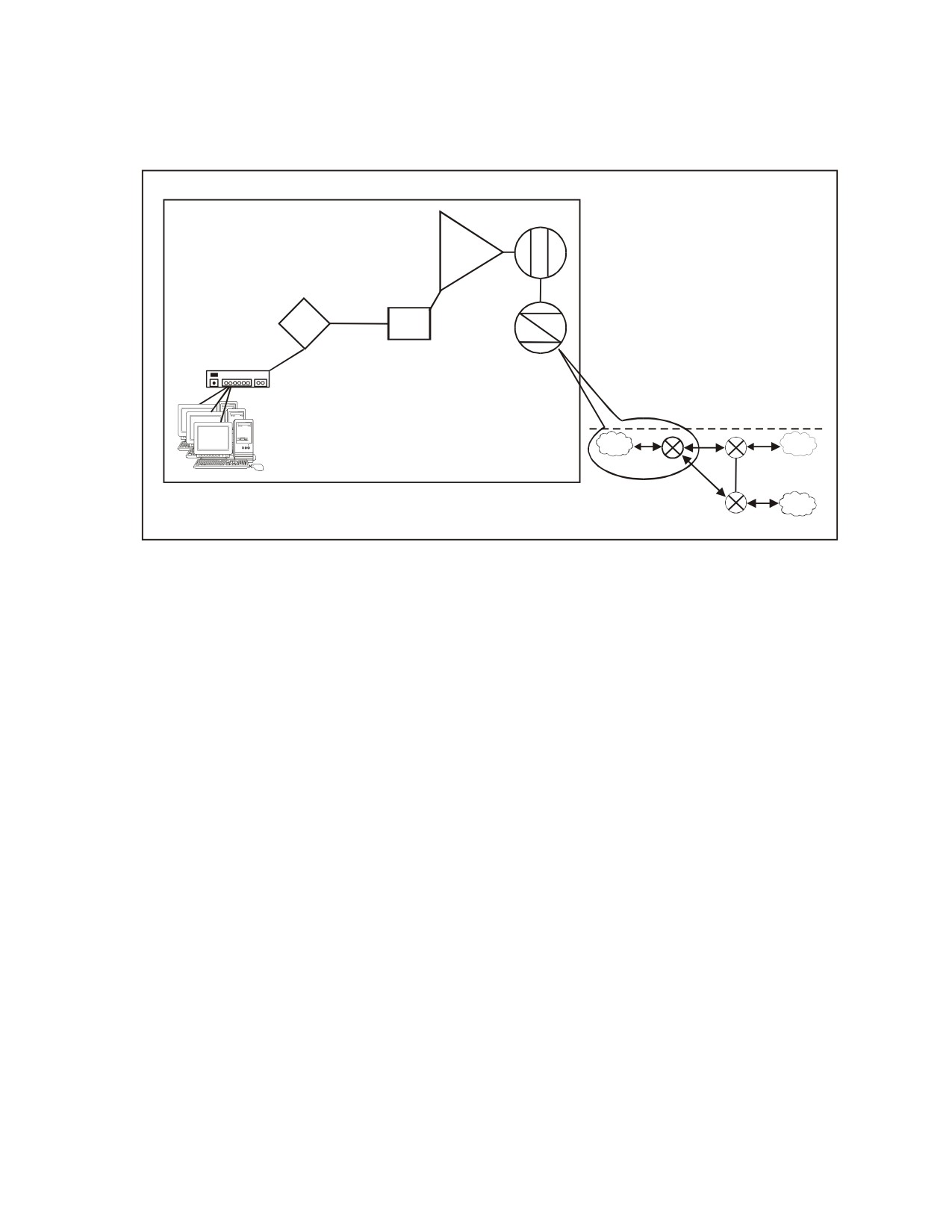
upon the mission or the location being supported. Figure 4-3 depicts the
coalition network and how it connects to the ITSB, and Figure 4-4 depicts
this in detail.
ITSB
Coalition
Coalition
Network
Network
Coalition
Network
Figure 4-3. Coalition Network Connectivity to the ITSB
4-6
________________________________________________________________________________FM 6-02.45
1st Level
MUX
S
KIV
ITSB
Coalition
Coalition
Network
Network
Coalition
Network
Figure 4-4. Coalition Network Detailed
JWICS
4-21. JWICS is the sensitive, compartmented information portion of the
DISN. It incorporates advanced networking technologies that permit point-to-
point or multipoint information exchange involving voice, text, graphics,
data, and VTC. In the tactical arena, it is a service typically provided at
higher echelons (corps and above).
Traditional Voice and Video
4-22. The following paragraphs discuss traditional voice and video
employment in a theater of operations.
4-23. Voice Services. Switched voice service allows connections between and
among garrison and theater locations. The service includes long-haul
switched voice, facsimile, and conference calling. The ITSB extends the DSN
voice service supporting the warfighter. DSN and the tactical switched voice
network provide nonsecure and secure calls to other DSN and tactical
subscribers.
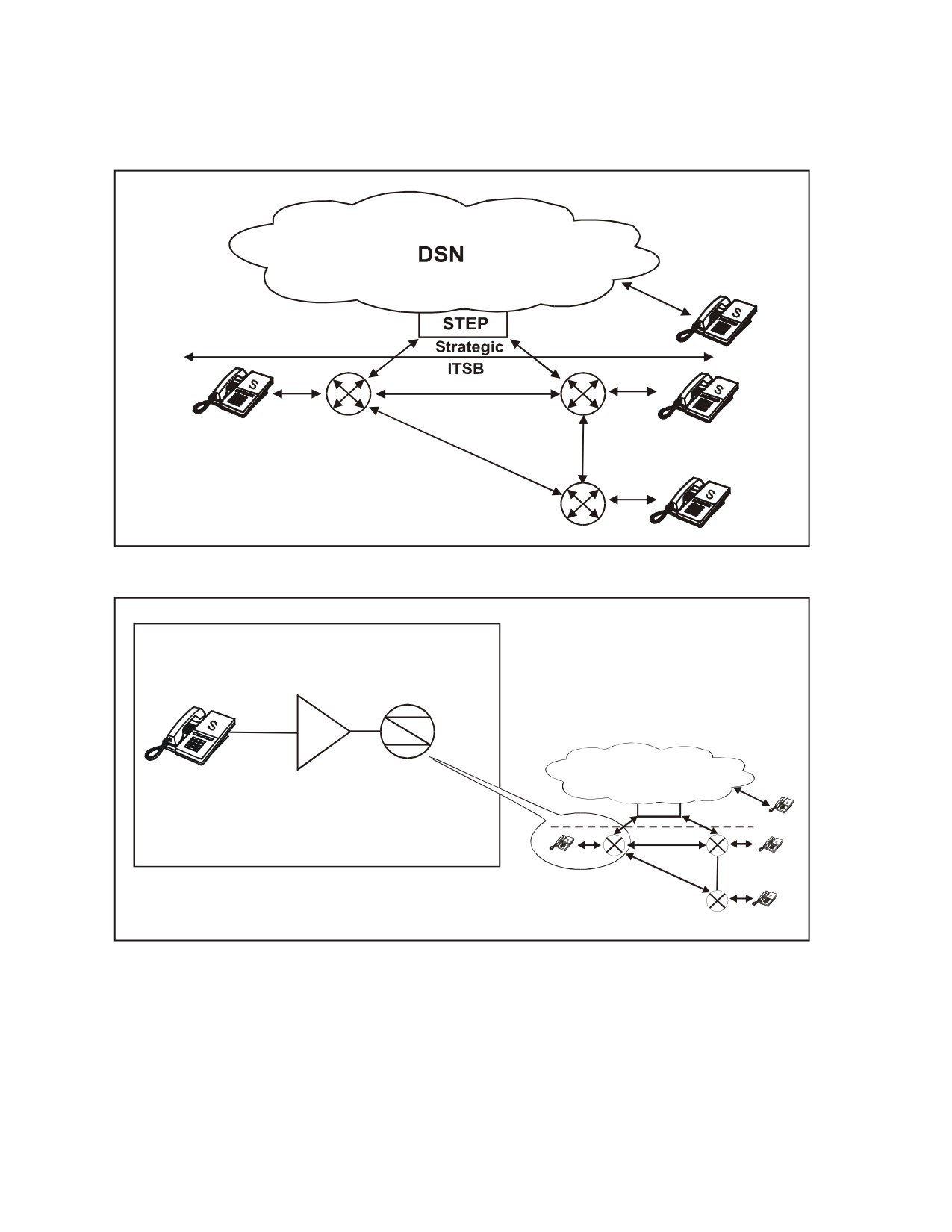
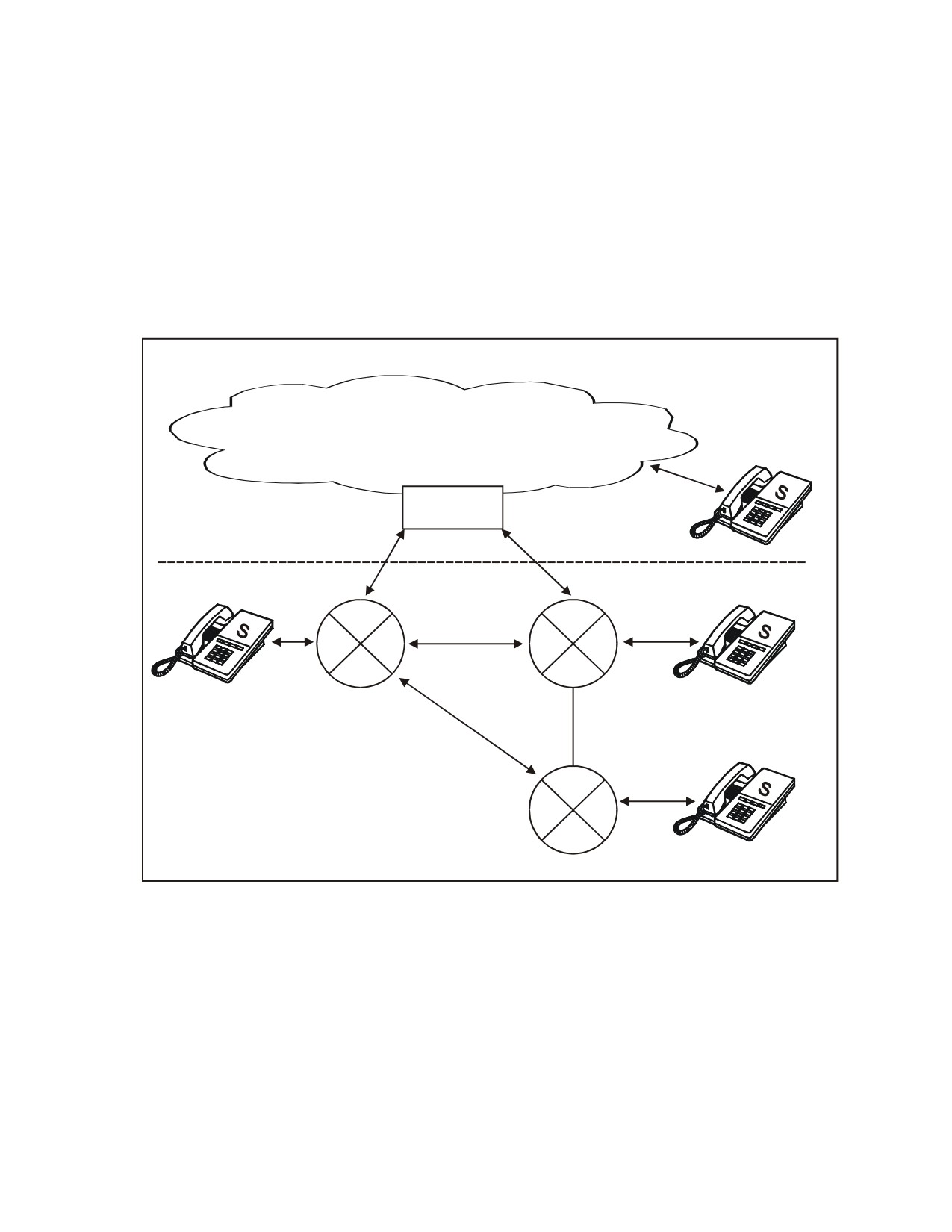
4-24. Figure
4-5 depicts an overview of the DSN voice connections
established and extended by the ITSB in a deployed location, and Figure 4-6
depicts this in detail.
4-7
FM 6-02.45________________________________________________________________________________
Figure 4-5. DSN Connectivity through the ITSB
1st Level
MUX
DSN
STEP
Strategic
ITSB
Figure 4-6. DSN Detailed
4-8
________________________________________________________________________________FM 6-02.45
4-25. DRSN. The DRSN is the worldwide secure voice switched network
managed by DISA. It provides secure voice C2 switches that offer high-
quality secure voice, data, and conferencing capabilities to the senior decision
makers and staff of the National Command Authorities, the combatant
commander, MACOMs, other government departments and agencies, and
allies. The ITSB extends the DRSN voice service supporting the warfighter.
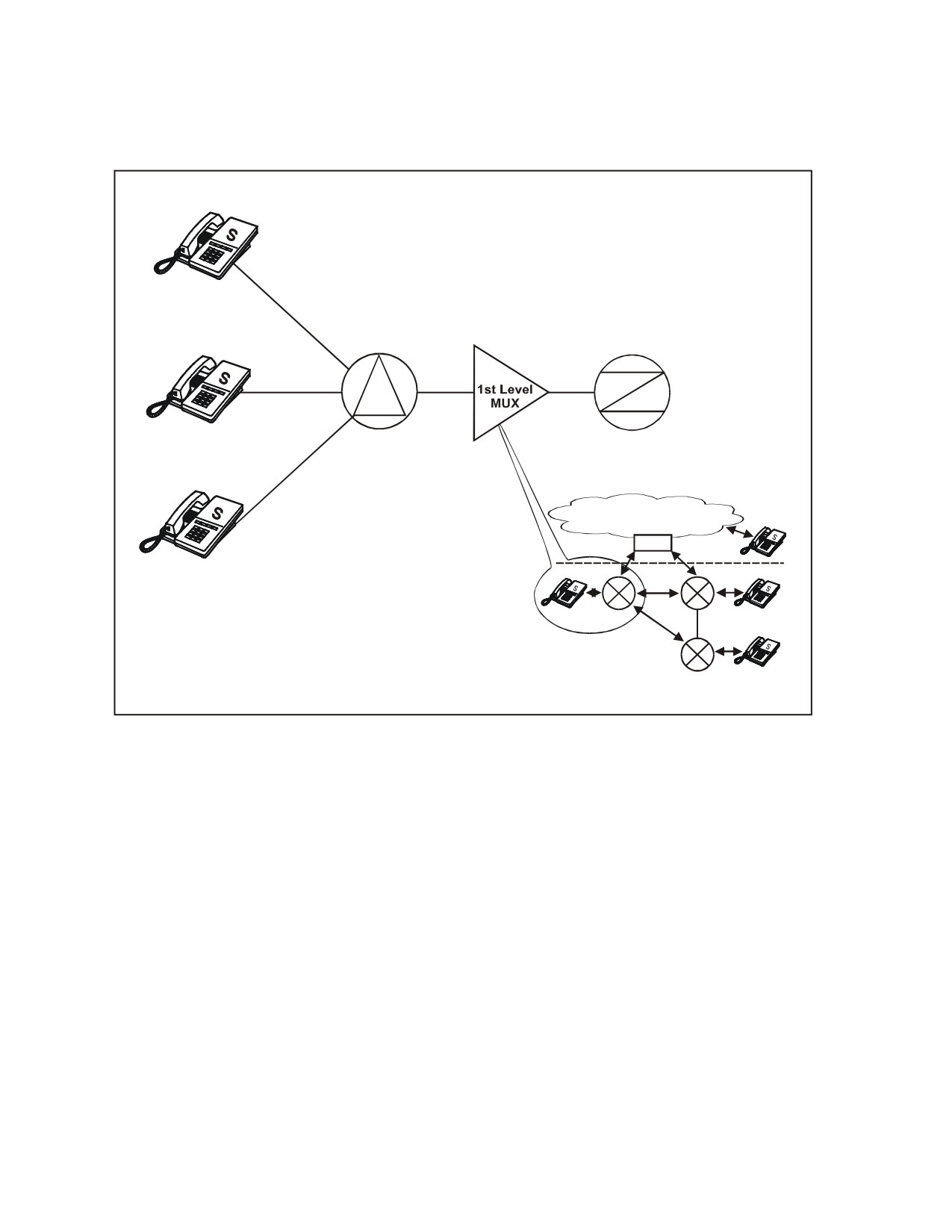
Figure 4-7 depicts the DRSN voice connections established by the ITSB, and
Figure 4-8 depicts this in detail.
DRSN
STEP
Strategic
ITSB
Figure 4-7. DRSN Connectivity through the Integrated Theater Signal Units
4-9
FM 6-02.45________________________________________________________________________________
DRSN
STEP
Strategic
ITSB
Figure 4-8. DRSN Detailed
4-26. VTC. The DISN global video system is a worldwide VTC service
supplied by using hubs in CONUS and OCONUS locations. The DISN global
video service provides a T1 connection from the video hubs to the STEP. The
ITSB provides deployed warfighters with compatible video capability that can
access the DISN global video networks.
4-27. The ITSB may also extend these VTC services to corps, as well as from
one ITSB supported deployment, such as a JTF headquarters, to another
ITSB supported deployment, such as ARFOR, by means of a VTC network
within the deployed operational environment.
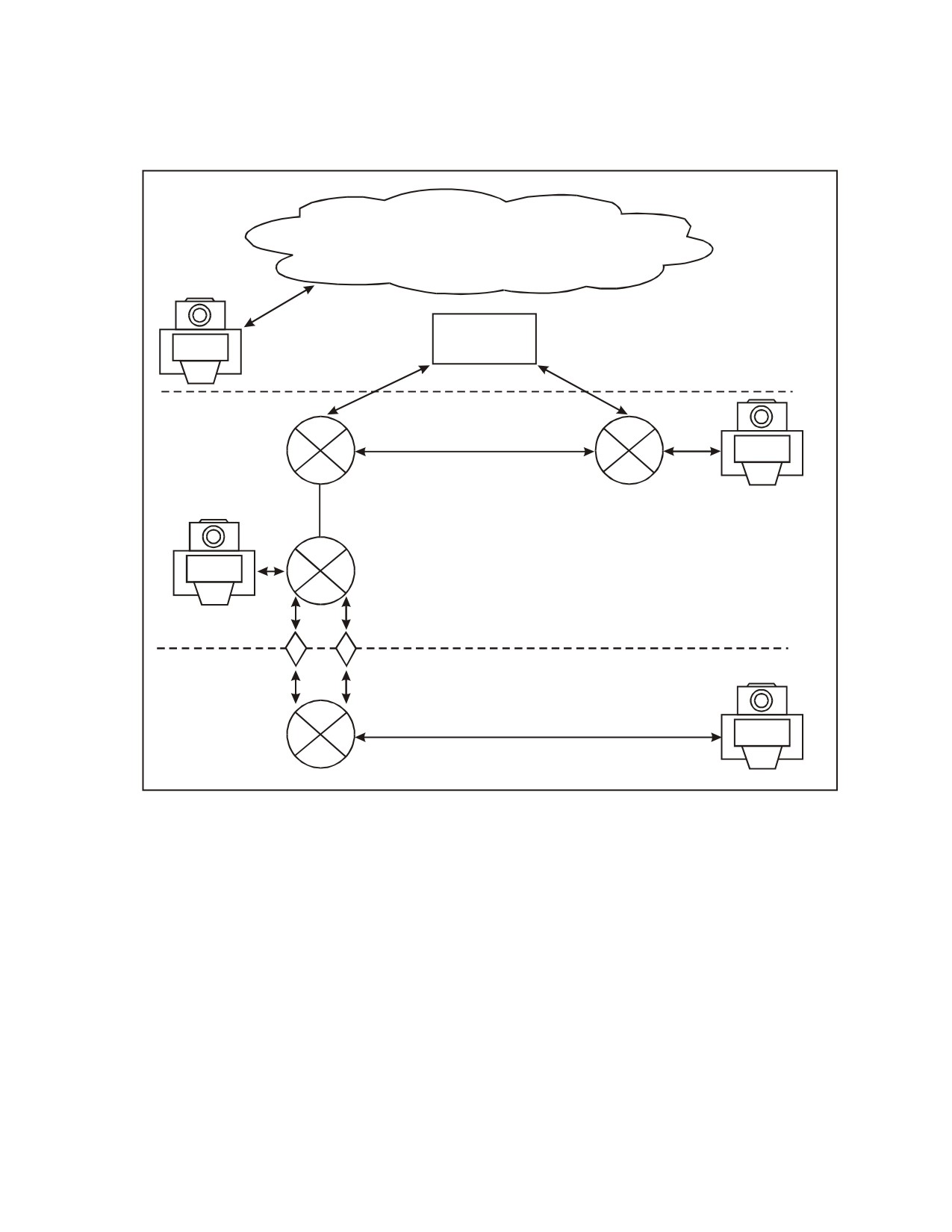
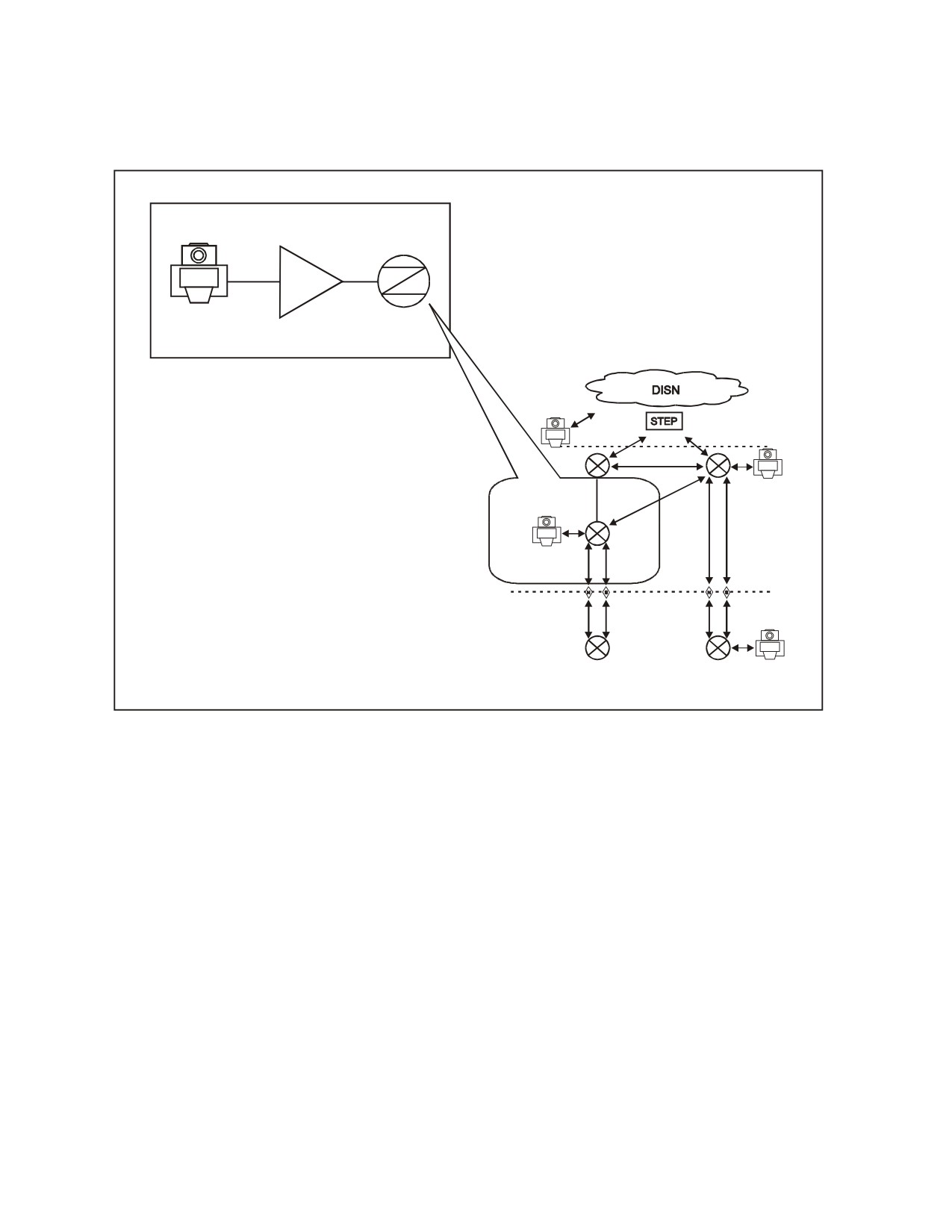
4-28. Figure 4-9 depicts an overview of the VTC connections established and
extended by the ITSB in a deployed location, and Figure 4-10 depicts this in
detail.
4-10
________________________________________________________________________________FM 6-02.45
DISN
STEP
VTC
Strategic
ITSB
VTC
VTC
N
S
CORPS
VTC
Figure 4-9. VTC Connectivity to Extended by the ITSB
4-11
FM 6-02.45________________________________________________________________________________
VTC
1st Level
MUX
VTC
Strategic
ITSB
VTC
VTC
CORPS
VTC
Figure 4-10. VTC Connectivity Detailed
Collaboration Services
4-29. Collaboration services are provided by H.323 and T.120 compliant
services. H.323 collaboration services utilize the established theater IP
network, and based upon the classification of the collaboration, may traverse
the theater NIPRNET, SIPRNET, or coalition network.
GBS
4-30. The GBS is a system of information sources, uplink sites, broadcast
satellites, receiver terminals, and management processes for requesting and
coordinating the distribution of information products. It is a space based,
high data rate communications link for the asymmetric flow of information
from the United States or rear echelon locations to deployed forces. The GBS
broadcast is capable of multiple levels of security. It is one-way; it only
distributes information. Requests for information (user “pull”) are made via
other communications means.
4-12
________________________________________________________________________________FM 6-02.45
4-31. The GBS system “pushes” a high volume of intelligence, weather, and
other information to widely dispersed, low cost receive terminals, similar to
the set-top-box used with the commercial direct broadcast satellite. The GBS
capitalizes on the popular commercial direct broadcast satellite television
technology to provide critical information to the nation's warfighters. What
makes GBS so attractive is the ability to provide high-volume data directly
into 18-inch antennas. Mobile force elements are no longer restricted by the
requirement for large, fixed antennas to receive information formerly
relegated only to command centers.
4-32. By broadcasting directly to selected users and groups of users, the GBS
alleviates congestion on other communications networks.
4-33. GBS is an extension of the DISN and a part of the overall DOD
MILSATCOM architecture. As such, it employs an open architecture that can
accept a variety of input formats. It also exploits COTS technology. It
interfaces with and augments other major DOD information systems such as
the Global Command and Control System, as well as other theater
information management systems. Eventually, GBS may supplant some
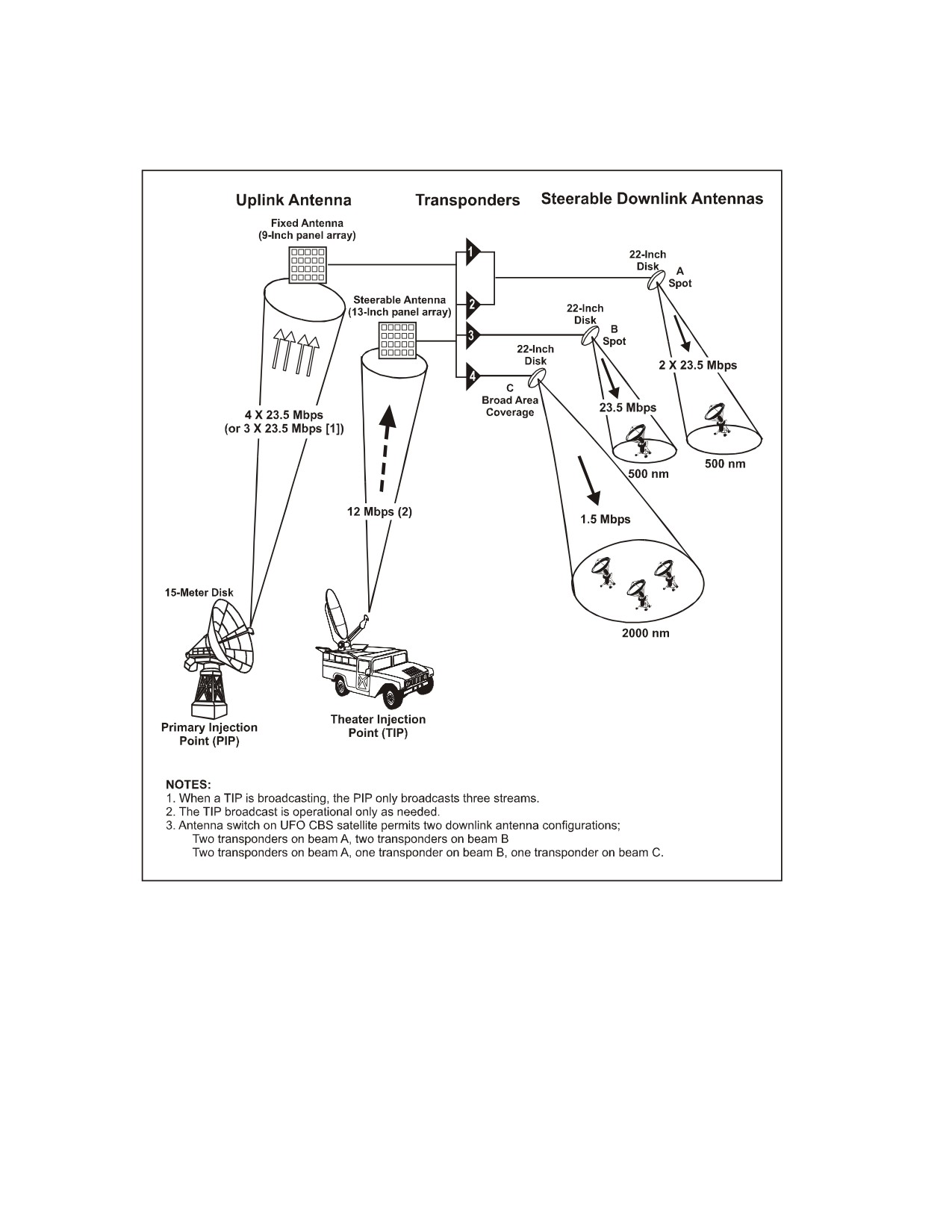
theater information management systems. Figure 4-11 depicts the GBS
broadcast architecture.
4-34. The GBS system consists of the following segments:
• Broadcast management segment—integrates, encrypts, and packages
multimedia information and provides a bit stream to the primary
injection points (PIP) for RF transmission to the satellite. GBS also
has the capability to inject products directly from the theater it serves
via a mobile facility known as a theater injection point (TIP). TIPs are
assigned to theater signal brigades.
• Space segment—is a mixture of military and commercial satellites.
• User receive terminal—consists of a small satellite antenna, low
noise block, and a receiver. It receives and converts the RF downlink
signal into a bit stream for receive broadcast management decryption
and distribution to end users. The receive broadcast-management
subsystem of the user receive terminal includes a computer to store
the downloaded information for later retrieval and processing. This
computer can be operated as a stand-alone server with local clients,
or it may be connected to a LAN and operated as a Web server to
disseminate GBS products in that manner.
NOTE: As of September 2003, the GBS is operational in
some theaters but is not fully fielded.
4-13
FM 6-02.45________________________________________________________________________________
Figure 4-11. GBS Broadcasting Architecture
4-35. GBS Services. The following services are provided by the GBS to the
end user/customer:
• File transfer service. The GBS system supplies a file transfer service
for products that require delivery using File Transfer Protocol (FTP).
Files are received by the transmit suite (satellite broadcast manager
or theater satellite broadcast manager) using FTP and delivered to
the receive suite (receive broadcast manager) to the end users using
FTP. This service supports both push and pull techniques for file
acquisition and distribution.
4-14
________________________________________________________________________________FM 6-02.45
•
Immediate file delivery. A GBS system provides the capability to send
files through GBS without the latency incurred by the scheduling
process.
•
Web service. The GBS system supplies access to products that are
made available using Universal Resource Locator (URL) product
references. Selected material will be cached at the receive suite for
transparent access by end users.
•
Video/Audio service. Only one video/audio signal can be received per
integrated receive decoder. A specific video program is selected via
integrated receive decoder channel selection. Video is displayed on a
user-supplied TV or monitor.
•
Black Cell service. The GBS system supplies Black Cell classified
video from a classified source to the satellite broadcast manager/PIP
through the satellite to the appropriate receive suite capable of
handling classified video.
•
Serial stream service. The GBS system supplies a serial stream
service in which the stream input to the satellite broadcast
manager/PIP is replicated bit for bit at the output of the receive suite.
•
IP multicasting service (not yet implemented). Supports the transfer
of IP multicast data that must be tunneled from the source to the
transfer suite. The receive broadcast manager forwards multicast
streams of interest over the LAN. Multicast-enabled applications,
which run on the user’s workstation, are used to receive and display
the multicast data. The multicast-enabled application must be
configured for the specific stream of interest based on information in
the program guide.
DMS
4-36. DMS is the Army's portion of the global strategic network with DMS-A
extending this service to the tactical end user. It replaces the AUTODIN. The
DMS provides a secure writer-to-reader electronic messaging system for
organizational users and organizational electronic messaging to the Army.
4-37. The DMS operates in four separate security domains: Unclassified,
Secret, Top Secret, and TS/SCI. DMS-A Secret domains are implemented
similar to the Unclassified domain, and include their own message handling,
directory, certificate, and service management subsystems.
4-38. All security domains implement a separate backbone infrastructure.
The majority of DMS strategic users use the Unclassified domain. The
majority of DMS-A (tactical) end users use the Secret High domain. The
DMS-A Top Secret Collateral tactical users will use dial-up or inline network
encryption to the Pentagon Telecommunications Support Center. DMS-A
TS/SCI will use battlefield automation systems and tie directly into the
Defense Intelligence Agency regional node.
4-15
FM 6-02.45________________________________________________________________________________
TMS
4-39. The TMS is a group of DMS servers and devices in transit cases that
extends the DMS into the tactical environment. The full-up TMS will provide
the services of all security domains (Unclassified, Secret, Top Secret, and
TS/SCI) to tactical users.
4-40. The TMS is being fielded in three blocks:
• Block 1—is the Secret-High service. (As of September 2003, Block 1 is
partially fielded.)
• Block 2—will field the SBU capability.
• Block 3—will field the Top Secret and TS/SCI capabilities.
4-41. All DMS intra/inter traffic in and out of the tactical area of operations
is routed through the TMS. Strategic Unclassified DMS messages will
traverse through High Assurance Guard to and from the Secret High TMS.
4-42. The TMS extends the DMS services to battlefield automation systems
(for example, Army Battle Command System, Global Command and Control
System-Army, and Medical Communications for Combat Casualty Care) and
existing platforms
(that is, government off-the-shelf
[GOTS] and COTS
software and hardware) that host user agents and subordinate groupware
server
(SGWS) software. The SGWS is the TMS backbone server that
connects the tactical environment to the sustaining-base DMS environment.
The TMS will also provide the hub connectivity needed for messaging
between tactical operations centers (TOCs). The TMS completes the DMS as
a global messaging system, enabling SBU and Secret messaging worldwide
from a tactical environment.
4-43. The TMS does not operate on the move. It consists of two TMS suites,
per echelon (corps and division). Twenty-three EAC units get a total of 30
TMS suites based on their mission. Each user's SGWS is connected to both
TMSs so that the movements of a single TMS do not interrupt service to the
users.
IA
4-44. IA includes provisions for protection, detection, and response
capabilities. First, the protection capability is composed of devices such as
network guards and firewall systems that ensure emission security
(EMSEC), communications security
(COMSEC), computer security
(COMPUSEC), and information security (INFOSEC). Second, the detection
capability is the ability to determine abnormalities such as attacks, damages,
and unauthorized modifications in the network via intrusion detection
systems. Third, the response capability refers to the ability to respond to
normal operation restoration as well as respond to a detected entity.
4-45. Theater tactical signal units provide IA services through their NOSCs
at the signal battalion through TSC(A) levels. Data teams at each node
provide IA services below the signal battalion level.
4-16
________________________________________________________________________________FM 6-02.45
Wire and Cable Installation
4-46. The cable and wire platoon’s and teams
• Provide cable and wire connectivity between major headquarters and
subordinate units.
• Provide cable and wire support from multichannel radio sites to
terminating or switching equipment.
• Provide cable and wire connectivity between users, systems, devices,
command posts, or switching centers.
• Provide cable and wire connectivity between area signal nodes and
theater communications systems as tasked by the NETCOM and
required by the ASCC or other major commanders.
NOTE: In this context, cable includes both fiber optic and
metallic cable.
ITSB EXTENDING COMMON DISN SERVICES
4-47. By having the means and skill sets to provide the previously mentioned
services, the ITSB can deploy into the battlefield or provide support to a JTF
or a humanitarian relief effort. The following sections discuss such
deployments and how the ITSB functions in that capacity.
JTF
4-48. A JTF is a joint force constituted and so designated by a JTF
establishing authority
(for example, Secretary of Defense, combatant
commander, subordinate unified command, or existing JTF). A JTF may be
established on a geographical area or functional basis when the mission has a
specific limited objective and does not require overall centralized control of
logistics. The mission assigned a JTF should require execution of
responsibilities involving a joint force of a significant scale and closely
integrated effort, or should require coordination of local defense of a
subordinate area. Execution of JTF responsibilities may involve air, land,
sea, space, and special operations in any combination, executed unilaterally
or in cooperation with friendly nations. US-led JTFs should expect to
participate as part of a multinational force in most future military endeavors
throughout the range of military operations. A JTF will consist of two or more
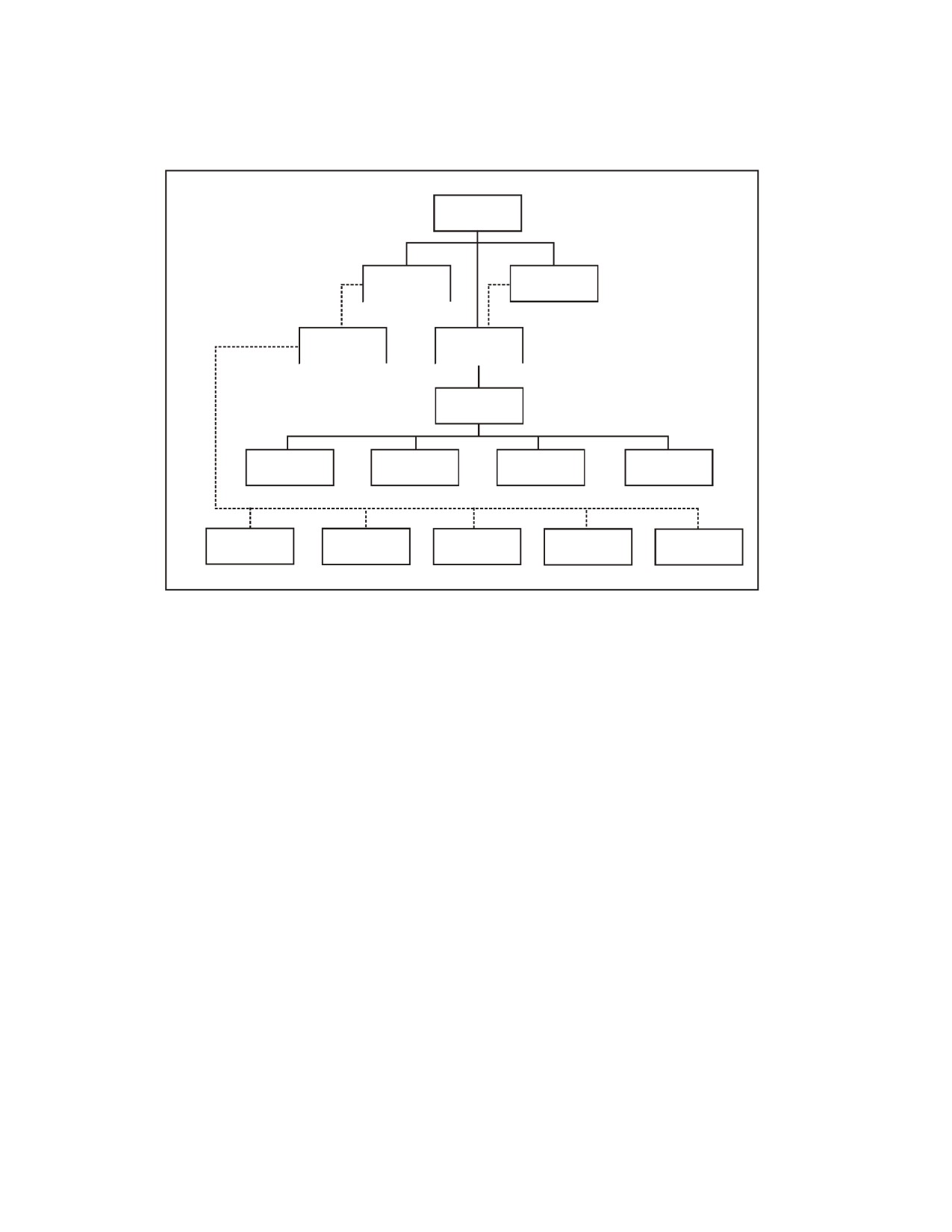
service components (for example, Army and Air Force). Figure 4-12 is a
representation of a typical JTF organization.
4-49. The service component commanders are responsible for all
administrative and logistical support for the assigned units. When
determined by the JTF commander, functional component commanders may
be designated to provide control over military operations. These commanders
are normally the service component commanders with the preponderance of
assets and the capability to best plan, task, and control the assets given the
nature of the operation. For example, the ARFOR is often designated the
Joint Forces Land Component Commander (JFLCC) with Marine Forces
(MARFOR) assigned, and MARFOR can also be designated as the JFLCC
with ARFOR assigned.
4-17
FM 6-02.45________________________________________________________________________________
SECDEF
Military
CJCS
Departmets
Service
Combatant
Components
Commander
CJTF
JFLCC
JFMCC
JFACC
JFSOCC
ARFOR
MARFOR
AFFOR
NAVFOR
SOFFOR
Figure 4-12. Typical JTF Organization
ITSB Theater Tactical Deployment
4-50. The ITSB may be called upon to provide support to a JTF and/or a
service component headquarters in times of war or humanitarian relief
efforts. In many cases, the ITSB that is available and resourced will provide
the key elements to the first responders to the crisis location. Because JTF
and service component headquarters are not fixed-size organizations, signal
support will be scaled to the requirement based on mission, enemy, terrain,
troops, time, and civil consideration (METT-TC). The support may be more or
less than what is depicted in the notional diagrams that follow later in this
chapter. Further, many support organizations that are not counted as part of
a JTF headquarters or a service component headquarters will typically co-
locate in the same enclaves with those headquarters elements. These enclave
tenants also require signal support and must be taken into consideration by
the signal provider.
4-51. ITSB assets are not allocated based purely on the type of headquarters
being supported. The primary factors that determine the allocation of ITSB
assets are:
• Number of geographically separate enclaves that must be supported
and whether those enclaves are within LOS transmission distance of
each other.
• Number of telephone and computer subscribers at each enclave.
4-18
________________________________________________________________________________FM 6-02.45
• The specific services required at each enclave.
• The bandwidth required by each enclave, both for intra- and inter-
theater communications.
4-52. The ITSB is organized around nodes. Each node is comprised of
telephone switching, a data team, and transmission assets. In some cases,
one node may have enough capacity to support several different organizations
in one enclave. For larger enclaves, it may be necessary to assign multiple
nodes to a single enclave to achieve the required capacity of all the required
services. Some enclaves will be large enough to not only require multiple
node teams for support, but also require the use of LOS radio to communicate
within the enclave.
4-53. ITSB nodes are further categorized as major and extension. Major
nodes have larger telephone and data packages and can support larger
numbers of customers. They also have larger numbers of transmission
systems so that they can serve as hubs in a hub-spoke network configuration.
Extension nodes have smaller telephone switches and data packages and
support smaller numbers of customers. They also have smaller numbers of
associated transmission systems and will typically be used as spoke
terminals in a hub-and-spoke network configuration. Extension nodes are not
necessarily limited to the role of a spoke terminal, but they are less capable
than major nodes in the hub role.
4-54. Chapter 5 provides a detailed description of the ITSB organizational
structure and capabilities.
4-55. A typical deployment of ITSB assets may be to support an Army-led
JTF as depicted in Figure 4-13.
Defense Information Systems Network (DISN)
JTF HQ
ITSB
C Company
AFFOR
ARFOR/JFLCC HQ
MARFOR
NAVFOR
ITSB
ITSB
A or B Company
A or B Company
Figure 4-13. Notional ITSB in Support of JTF
4-19
FM 6-02.45________________________________________________________________________________
4-56. The ITSB may deploy all three companies to support the JTF
headquarters, the ARFOR/JFLCC headquarters, and other ARFOR assigned
to the JTF. The equipment set of the ITSB is scaleable in that the
architecture can be easily expanded without reconfiguring the entire
network. Spokes can be added to the satellite systems, links added to the
data systems, and additional voice switching capabilities may be added
without interrupting existing service to users.
JTF Headquarters Support
4-57. This notional architecture depicts C Company of an ITSB in support of
the JTF headquarters.
4-58. The ITSB may be called upon to provide support to a JTF headquarters
in times of war or humanitarian relief efforts. In many cases, the ITSB that
is currently in theater will provide the key elements to the deployed location.
4-59. The ITSB provides support to the JTF headquarters using its organic
assets to:
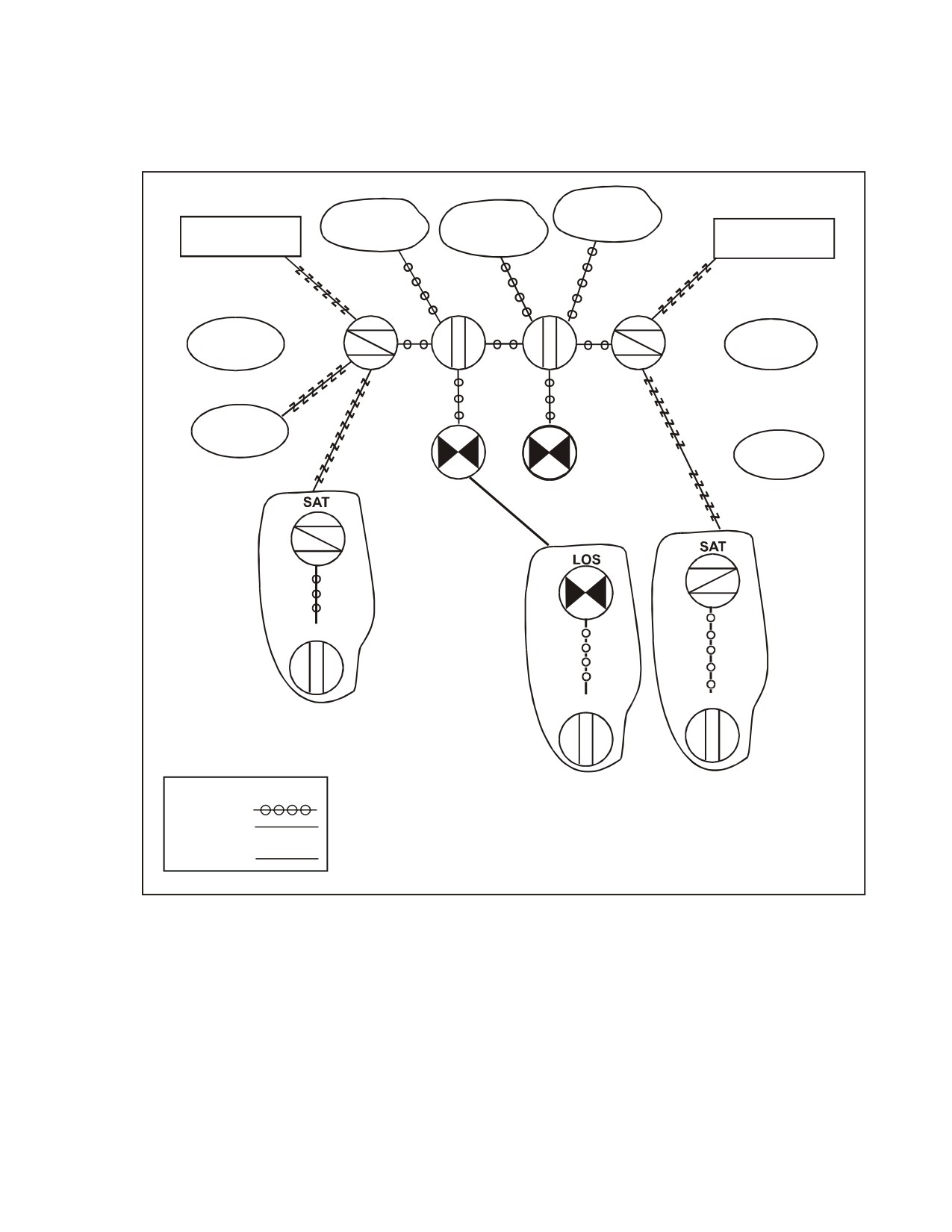
• Extend DISN services from a STEP/Teleport site to the JTF.
• Provide connectivity from the JTF headquarters to service component
headquarters:
ARFOR/JFLCC headquarters.
Air Force Forces
(AFFOR)/Joint Forces Air Component
Commander headquarters.
Naval Forces
(NAVFOR)/Joint Forces Maritime Component
Commander headquarters.
MARFOR headquarters/JFLCC headquarters.
Special Operations Forces
(SOFFOR)/Joint Force Special
Operations Component Commander/Joint Special Operations
Task Force headquarters.
• Extend services as required to LNOs at coalition headquarters.
• Extend services as required to remote users.
4-60. Key points are:
• When available and operationally feasible, the JTF will access DISN
services using existing theater infrastructure, DISN POP, commercial
assets, and a STEP/Teleport.
• Not depicted but an important aspect of the JTF architecture are
links between the component headquarters to provide intra-theater
routing and redundancy. It is assumed that each component
command also has connectivity to at least one STEP/Teleport as well
as possible connectivity to existing theater and commercial assets.
4-61. Figure 4-14 depicts the ITSB using C Company to support a JTF.
4-20
________________________________________________________________________________FM 6-02.45
Commercial
DISA POP
Theater
STEP/Teleport
Infrastructure
STEP/Teleport
SAT
BBN
BBN
SAT
MARFOR
z z z z
z z z z
SOFFOR
ARFOR
ARFOR
x x x x x x x x x x x x
BBN
BBN
BBN
Coalition
LNO
Remote
Coalition
LEGEND:
User
LNO
CABLE
JTF
SAT
Z Z Z Z
TROPO
X X X X
C Co ITSB
LOS
Figure 4-14. Notional ITSB Support to JTF Headquarters
ARFOR/JFLCC Headquarters Support
4-62. This notional architecture depicts A Company of an ITSB in support of
the ARFOR/JFLCC headquarters.
4-63. The ITSB may be called upon to provide support to an ARFOR/JFLCC
headquarters in times of war or humanitarian relief efforts. In many cases,
the ITSB that is currently in theater will provide the key elements to
deployed location.
4-21
FM 6-02.45________________________________________________________________________________
4-64. The ITSB can provide support to a deployed ARFOR/JFLCC
headquarters using its organic assets to:
• Extend DISN services from a STEP/Teleport site to the
ARFOR/JFLCC headquarters.
• Provide access to commercial communications when available.
• Terminate connectivity from the JTF headquarters.
• Provide connectivity and extend services to:
ARFOR/JFLCC forward headquarters.
Division headquarters.
Air, sea, and rail ports of debarkation.
4-65. Key points are:
• Connectivity from the ARFOR/JFLCC headquarters to the
subordinate Army unit is achieved by the ITSB, providing both ends
of the link supporting the higher to lower Army signal doctrine.
• When available and practical, the ARFOR/JFLCC will access DISN
services using existing theater infrastructure, commercial assets, and
the STEP/Teleport.
• The ARFOR/JFLCC will also install links to other component
headquarters where practical and possible and/or directed by the
commander, JTF.
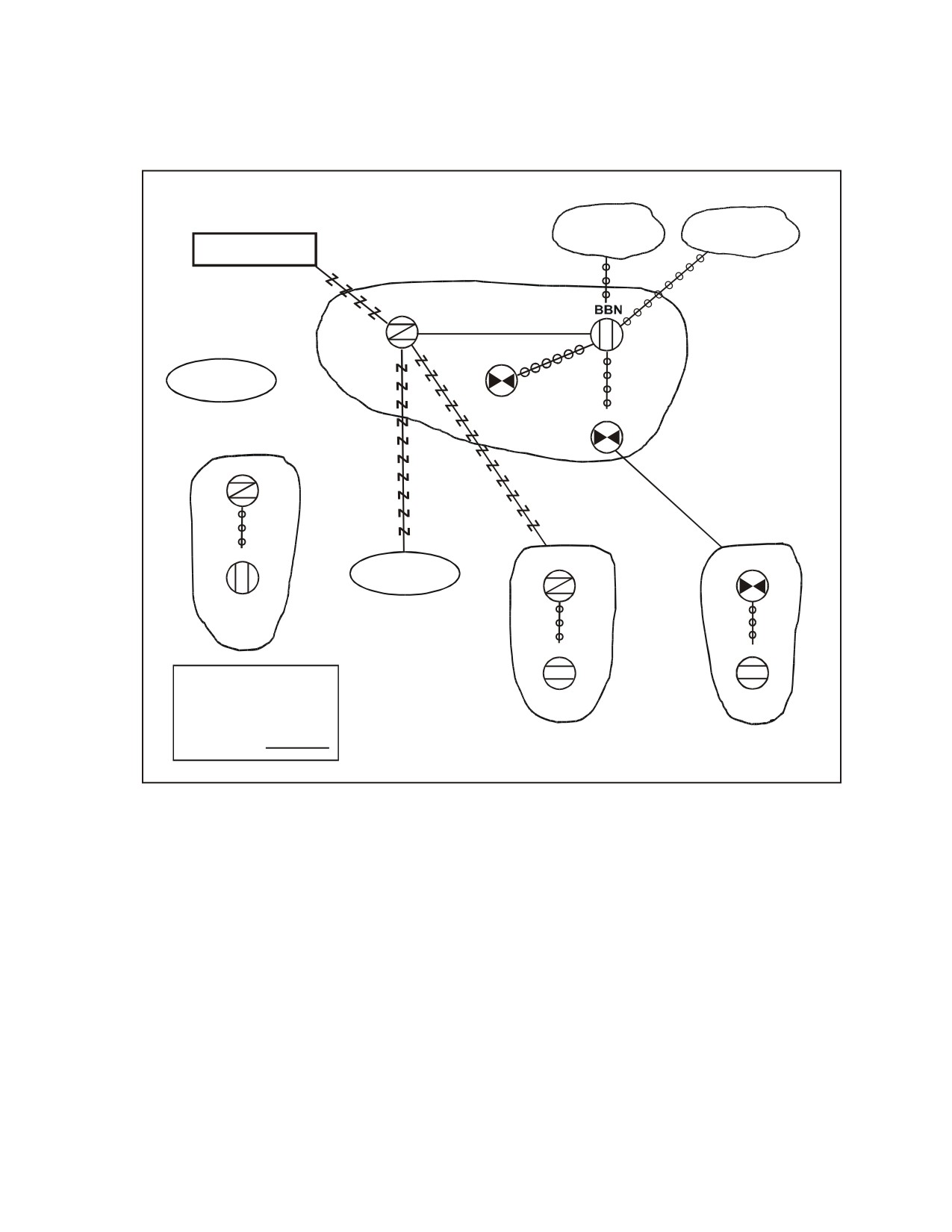
4-66. Figure 4-15 depicts notional architecture of A or B Company supporting
an ARFOR/JFLCC.
Support to Deployed ARFOR
4-67. For purposes of illustration, this notional architecture depicts B
Company of an ITSB in support of a division headquarters.
4-68. While a division headquarters nominally receives its primary signal
support from its organic signal battalion and from signal battalion(s) of the
corps above it, the ITSB may be called upon to provide support to a division
headquarters because of technical capabilities not present in corps and
division signal units, or because of the overall task organization of the forces
in theater.
4-69. The ITSB can provide support to a deployed division headquarters
using its organic assets to:
• Extend DISN services from a STEP/Teleport site to the division
headquarters.
• Provide access to commercial communications when available.
• Terminate connectivity from the ARFOR/JFLCC headquarters.
• Provide connectivity and extend services to:
ARFOR/JFLCC forward headquarters.
Brigade task force.
Division headquarters.
Division rear.
4-22
________________________________________________________________________________FM 6-02.45
Theater
Commercial
Infrastructure
STEP/Teleport
ARFOR/JFLCC
SAT
o o o o o o o o o o o o
TROPO
JTF
X X X X X X X X X X X X
LOS
SAT
BBN
Division
SAT
LOS
HQ
ARFOR
Forward
SEN
BBN
LEGEND:
CABLE
o o o o
SPOD
APOD
SAT
Z Z Z Z
TROPO
X X X X
LOS
Figure 4-15. Notional ITSB Support to ARFOR/JFLCC
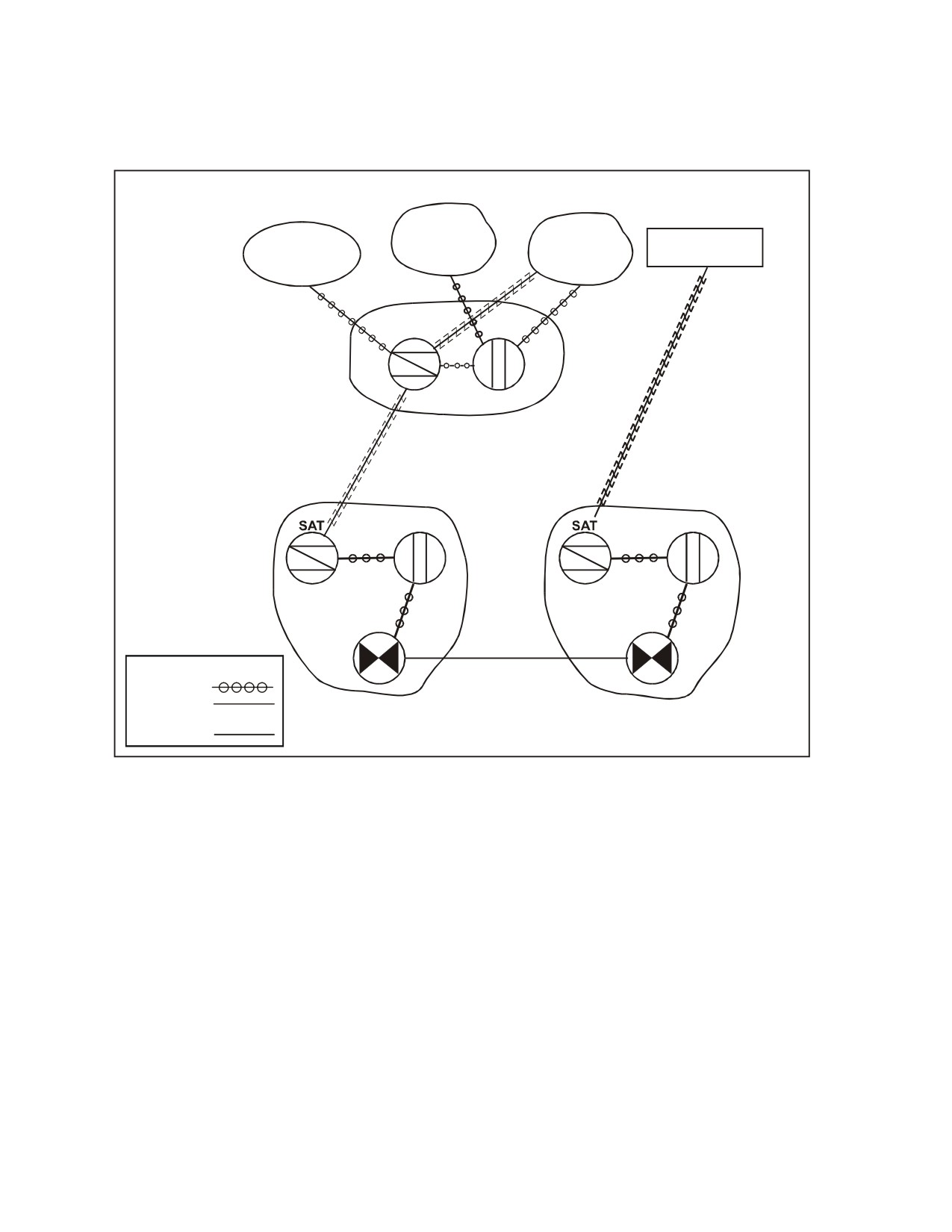
4-70. Key points are:
• When available and practical, the ARFOR/JFLCC will access DISN
services using existing theater infrastructure, commercial assets, and
the STEP/Teleport.
• The division headquarters will also install links to the supported
brigades, additional division command posts (for example, division
rear and division tactical command), and other locations as directed
by the division commander.
4-71. Figure 4-16 depicts a notional architecture of an A or B Company
supporting a division.
4-23
FM 6-02.45________________________________________________________________________________
Theater
Infrastructure
Commercial
STEP/Teleport
ARFOR
Division HQ
SAT
BBN
DREAR
Brigade
BBN
BBN
Combat
Team,
Aviation Task
Force...
LEGEND:
B Co ITSB
CABLE
SAT
Z Z Z Z
TROPO
X X X X
LOS
Figure 4-16. Notional ITSB Support to a Division
ITSB Support to Army Service Component Command (ASCC)
4-72. The ASCC receives, equips, marshals, stages, and moves units forward
to the tactical assembly areas for employment. The ITSB has the capability to
provide the rapid deployment and initial worldwide communications
capability to the liaison teams and advanced elements of the ASCC
headquarters. Follow-on communications will be engineered, installed,
operated, and maintained by the ITSB, which provides the internal and
external wire communications support, terrestrial multichannel and
SATCOM facilities, COMSEC, and electronic maintenance, and is responsible
for information management within the headquarters.
4-24
________________________________________________________________________________FM 6-02.45
4-73. To support the force-projection Army, operational-level information
services mesh seamlessly with those of the sustaining base, which may be
located within CONUS or another theater. The ITSB internally has the
assets to connect to the DSCS, commercial SATCOM, HF radios, or
commercial fiber optic links for both connectivity and reach-back capability
allowing for split-based operations.
4-74. The ITSB provides the support to the ASCC using its organic assets to:
• Provide access to the commercial and host nation infrastructure,
when available.
• Terminate the connectivity from the JTF/JFLCC headquarters.
• Extend DISN service from a STEP/Teleport to the ASCC
headquarters.
• Provide connectivity from the ASCC main, rear, logistics support
activity, and home stations node.
• Provide connectivity with joint, allied, and coalitions forces.
4-75. The net effect of the ITSB is to allow forces to deploy worldwide without
sacrificing their ability to exchange secure and reliable information in theater
and with CONUS-based information resources.
4-76. Figure
4-17 depicts a notional architecture of A or B Company
supporting an ASCC.
Support to SSC Operations
4-77. Noncombatant Evacuation Operation [NEO]). The ITSB may be called
upon to provide support to NEO operations in times of war or humanitarian
relief efforts.
4-78. The ITSB can provide support to deployed NEO operations using its
organic assets to:
• Extend DISN services from a STEP/Teleport site to the NEO task
force headquarters.
• Provide access to commercial communications when available.
• Provide connectivity and extend services to:
Local embassy.
Air, sea, and rail ports of embarkation.
Other remote users as dictated by the task force commander.
4-25
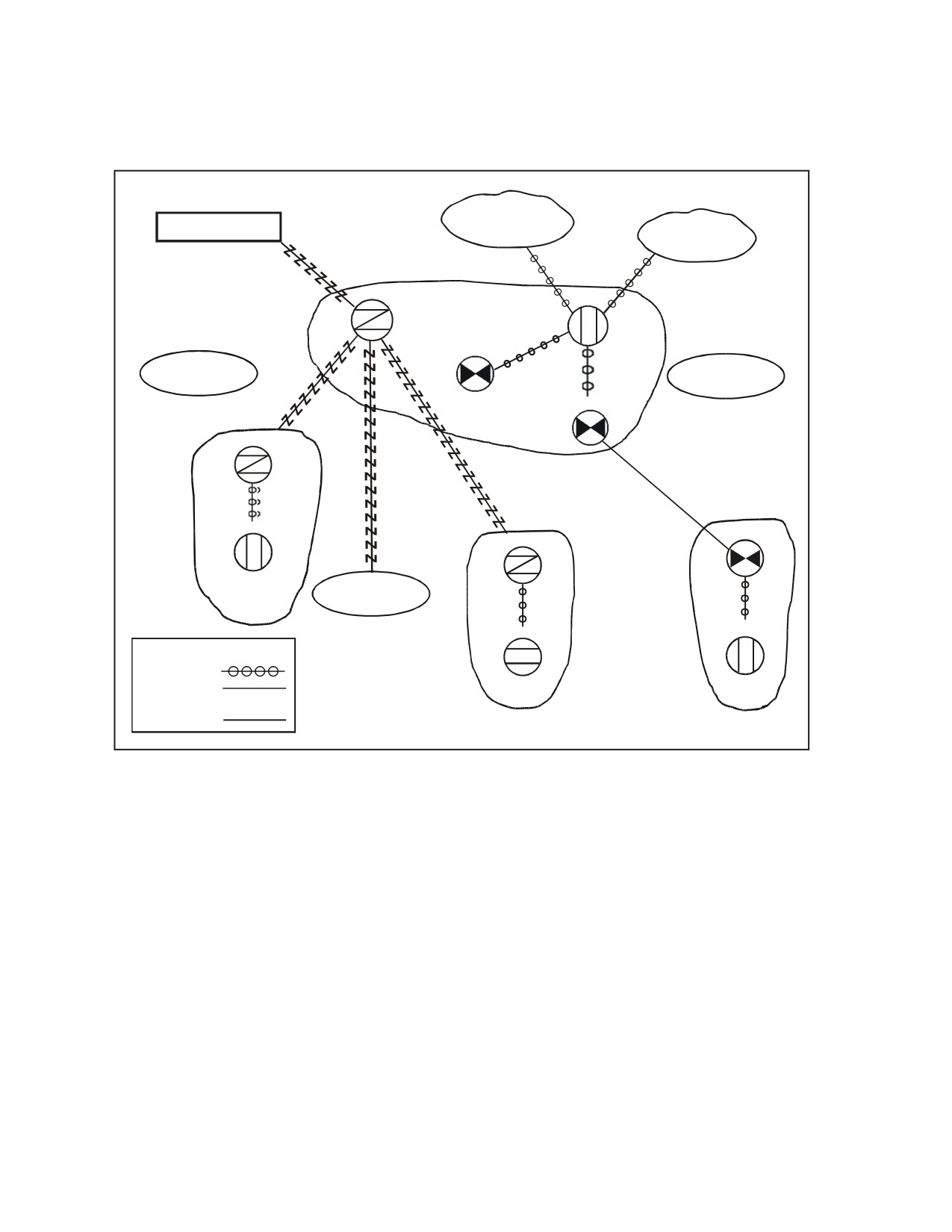
FM 6-02.45________________________________________________________________________________
Theater
STEP/Teleport
Infrastructure
Commercial
SAT
ASCC
BBN
oooooooooooo
TROPO
ARFOR/
JTF
X X X X X X X
X X X X X
X X X X X X X X X X X
JFLCC
LOS
SAT
BBN
LOS
SAT
ARFOR
Division
Forward
HQ
SEN
BBN
LEGEND:
CABLE
SAT
Z Z Z Z
SPOD
APOD
TROPO
X X X X
LOS
Figure 4-17. Notional ITSB Support to an ASCC
4-79. Key points are: NEO operations are characterized by a relatively small
in-theater footprint. The overarching requirement is to provide inter-theater
connectivity, allowing the NEO task force to communicate effectively back to
the supported combatant command headquarters.
4-80. Figure
4-18 depicts a notional architecture of an ITSB company
supporting NEO operations.
4-26
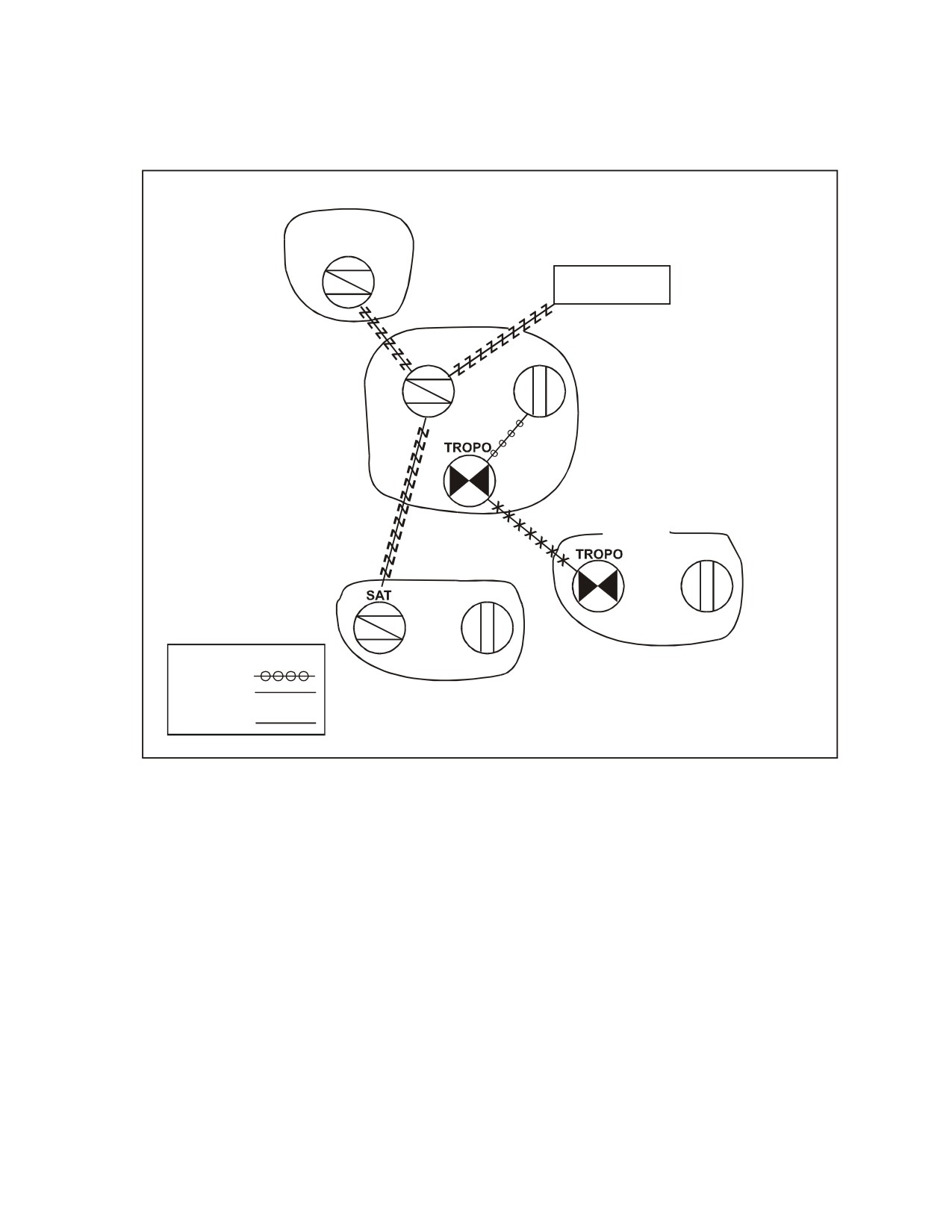
________________________________________________________________________________FM 6-02.45
US Embassy
SAT
STEP/Teleport
TF NEO HQ
SAT
BBN
o o o o
APOE/APOD
BBN
SPOE/SPOD
oooo
BBN
o o o o
LEGEND:
CABLE
SAT
Z Z Z Z
TROPO
X X X X
LOS
Figure 4-18. Notional ITSB Support to a NEO
4-81. Homeland Security. The ITSB may be called upon to provide support to
the Homeland Security mission in the case of a terrorist attack in the United
States. In many cases, the National Guard will be a key element of the first
responders to the crisis location. National Guard ITSBs may be ordered onto
active duty by the governor of their state in his role as Commander in Chief
(CINC) of the state’s National Guard to provide area communications first
responder support, including restoration of communications for federal, state,
and municipal authorities to use in crisis coordination.
4-82. The ITSB can support the first responders using its organic assets to
extend services to the crisis response command post location by—
• Extending DISN services from a STEP/Teleport.
• Extending DISN services in coordination with the local DOIM from a
post, camp, or station.
4-27
FM 6-02.45________________________________________________________________________________
• Extending services by accessing commercial networks.
• Providing connectivity and extending services to the crisis/incident
location and other remote users as directed.
4-83. Key points are: Critical to this support is the ability to interface with
local, state, and federal agencies.
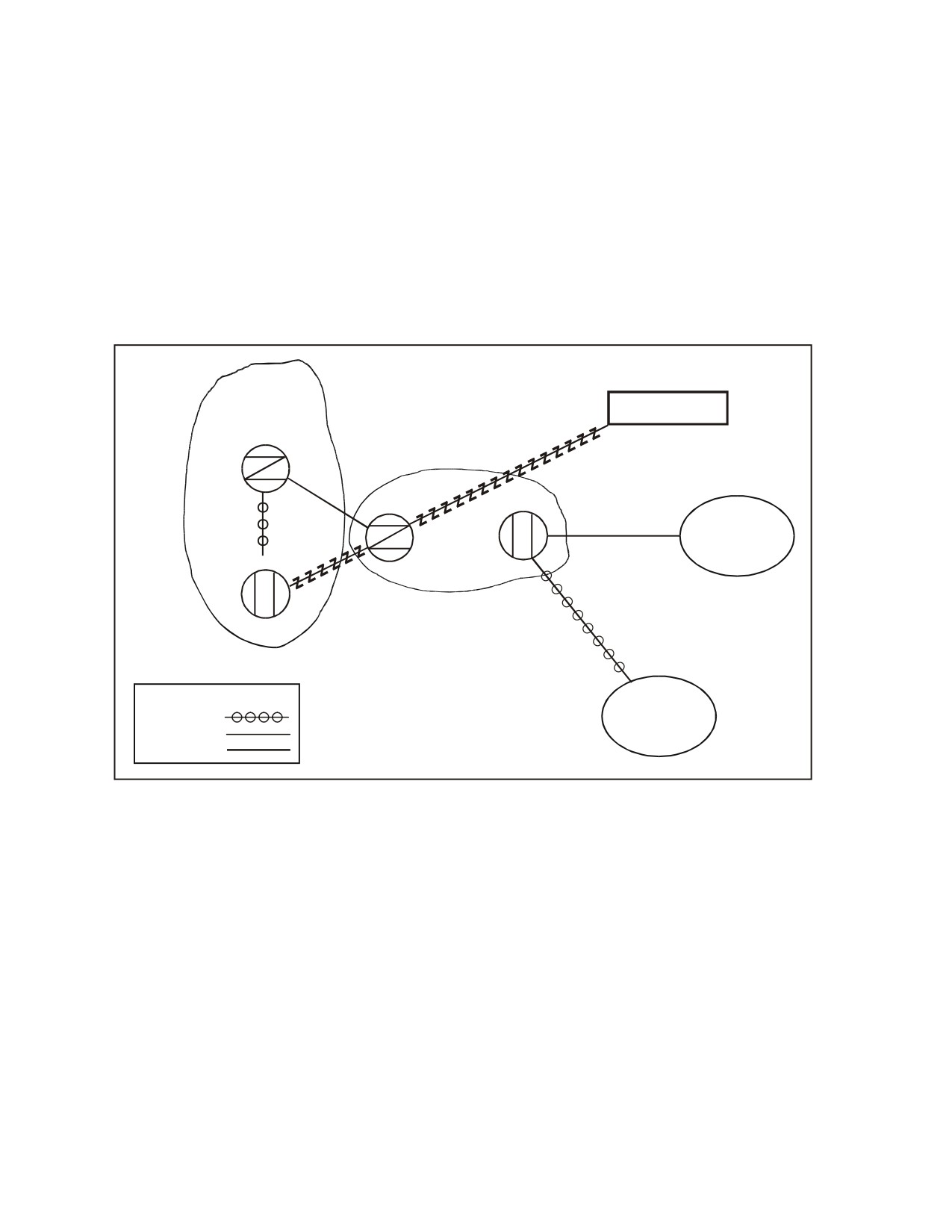
4-84. Figure 4-19 depicts an ITSB company supporting a Homeland Security
crisis response mission.
Incident
Location
STEP/Teleport
TACSAT
TACSAT
BBN
O O O O
DOIM
LOS
BBN
LEGEND:
CABLE
Commercial
SAT
Z Z Z Z
LOS
Figure 4-19. Notional ITSB Support to Homeland Security
COMMERCIALIZATION OF SIGNAL ASSETS
4-85. Historically, theater signal planners have leveraged transitioning to
commercial networks and infrastructure in order to free up valuable tactical
signal assets. Operation Desert Shield/Storm, Bosnia, Kosovo, and conflicts
as recent as Afghanistan are examples of a tactical theater level
communications element installing the initial communications infrastructure
and transitioning that capability to a commercial provider.
4-86. Figures
4-20 and
4-21 depict a tactical network before and after
commercialization respectively.
4-28
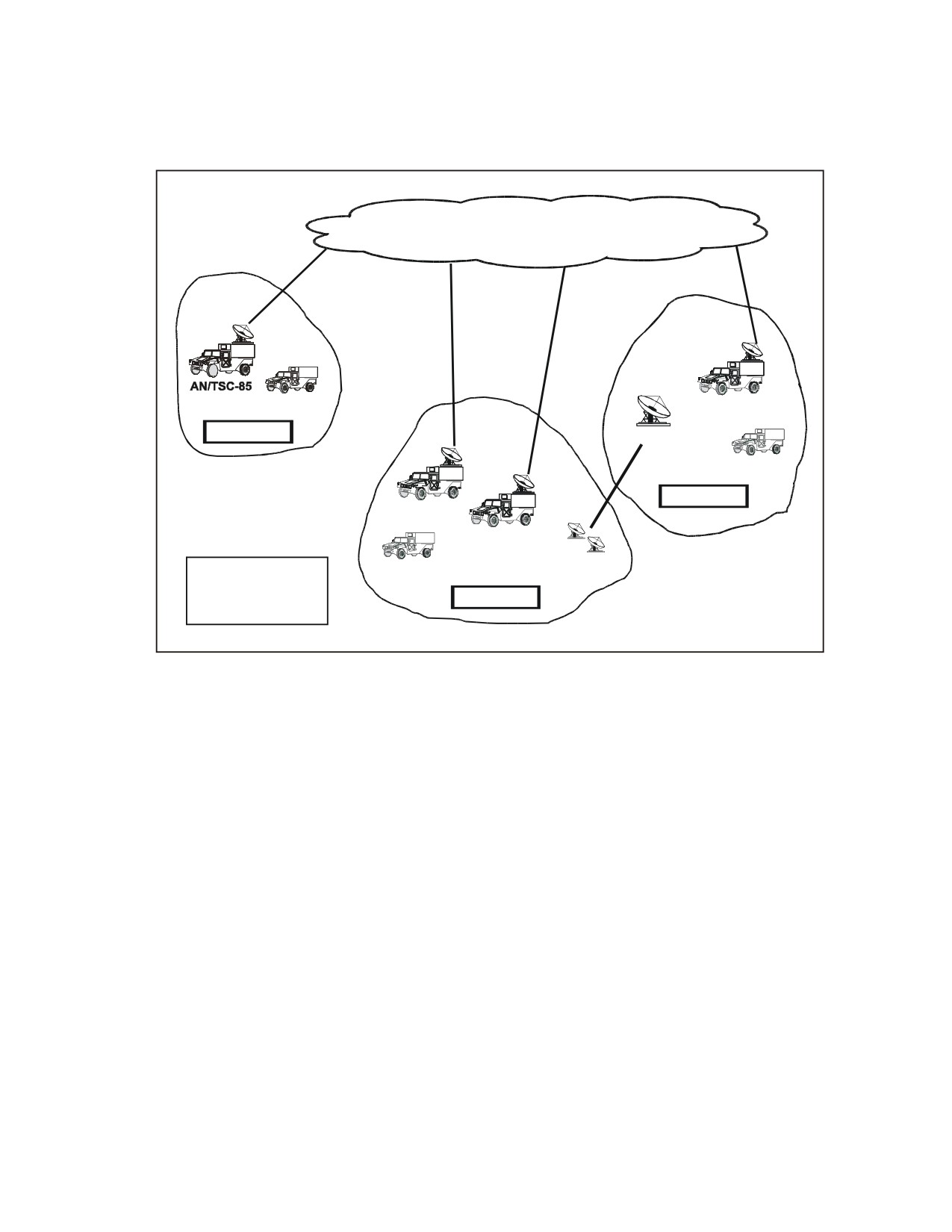
________________________________________________________________________________FM 6-02.45
DISN Cloud
Camp
Able Sentry
Camp
Monteith
AN/TTC-39D
AN/TSC-93
Camp
Data Package
Bondsteel
AN/TRC-170
AN/TTC-39D
Data Package
AN/TSC-85
AN/TSC-85
Data Package
AN/TTC-39D
AN/TRC-170
IP Services
Voice Switching
Data Package
Video Teleconferencing
Figure 4-20. Before Commercialization
4-87. The ITSB should begin planning to transition the communications
network to commercial means as soon as the operational scenario permits.
Transitioning a communications network to another provider while ensuring
interruption of services to the user is minimized is a complicated and precise
process. Planning factors include:
• Commercial leased satellite.
• Other available commercial infrastructures.
• SIPRNET, NIPRNET, and routing schemes.
• IP addressing.
• Phone books and numbering schemes.
• VTC equipment and control mechanisms.
• DISN and commercial access.
• Wiring and cable plans.
• Cellular and satellite telephone capabilities.
• Wireless LAN and point-to-point services.
4-29
FM 6-02.45________________________________________________________________________________
Commercial
Reachback Facility
DISN Cloud
Mannheim, GE
Camp
Able Sentry
Camp
Monteith
Dragon Package
DISA POP
C-Band
Camp
Dragon Package
Bondsteel
Cellular
Dragon Package
C-Band
Microwave
Dragon Package
Commercial
-Band
Cellular
Cellular Service
Voice Switching
Microwave
Data Services
DISA POP
C-Band
Figure 4-21. After Commercialization
4-88. Key points are:
• Coordination with the TSC(A) is important in maintaining visibility
on the status of contractual negotiations and ensuring requirements
are adequately identified and fed into the contract documents. Some
of the TSC(A)s are Army Reserve units. This underscores the
importance of dedicated training and coordination between the
Reserve and Active Components to ensure seamless transition from a
peacetime to wartime footing.
• Commercialization can be a long lead-time process. Consequently, it
should be factored into the initial planning process. In fact, whenever
possible, contracts for commercial services should be prenegotiated
and coordinated well ahead of any potential deployment scenario.
• Standardization of a tactical signal infrastructure on COTS products
facilitates the transition of services to commercial providers.
4-30
________________________________________________________________________________FM 6-02.45
NETWORK STANDARDIZATION
4-89. Network configurations implemented by non-ITSB organizations are
essentially the same as those implemented by ITSB organizations. The major
operational difference is that non-ITSB organizations typically require
significantly more task organization to achieve the desired network
configuration.
4-90. Data packages in current organizations are not standard throughout
the force because they were procured and assembled locally at different times
under different circumstances in response to urgent operational
requirements. The doctrinal solution to this lack of standardization is the
accelerated centralized development and acquisition of standard hardware in
conjunction with the change to the ITSB organizational structure. When
missions must be executed with nonstandard data packages, detailed liaison
between planners and the executing organizations is required to resolve
potential compatibility problems. Appendix D provides an overview of some of
the equipment deployed in the current force architecture.
4-91. Appendix E provides an illustration of a typical TRI-TAC DGM
equipment employment.
RAPID DEPLOYMENT CONTINGENCY COMMUNICATIONS PACKAGES
4-92. Combatant commanders often require their supporting theater signal
forces to define and maintain packages of equipment and personnel to
support rapid insertion of forces into a theater. For the purpose of this
manual, these are referred to as contingency communications packages. The
content of deployed contingency packages will be determined on a case-by-
case basis by METT-TC. The communications packages discussed below
provide a standardized starting point for planners who are tasked with
providing such packages. A key feature of this predefined baseline is that it
relates services and number of supported subscribers to required airlift.
4-93. The communications packages illustrated for ITSB will be equipped
with Army standard equipment fully supported by standard Army logistics
practices. The communications packages illustrated for non-ITSB
organizations are notional starting points for planning. Historically, non-
ITSB organizations have developed the data package portions of their
contingency communications packages locally, outside formal Army systems
acquisition channels. Such packages are not standardized from organization
to organization. When tasking non-ITSB organizations to provide contingency
communications packages, planners should contact the providing
organizations to learn the actual equipment configurations available.
4-94. Organizations needing to create or upgrade data packages prior to the
fielding of Army type classified standard solutions should contact
NETCOM/9th ASC G3. NETCOM/9th ASC G3 will provide assistance in
equipment selection to obtain the maximum degree of standardization and
interoperability among units and theaters that can be achieved under the
circumstances.
4-95. The technical capabilities provided by communications packages from
non-ITSB organizations are very similar to those provided by ITSB
4-31