6-02.45 (FM 11-45) Signal Support to Theater Operations (APRIL 2004) - page 3
FM 6-02.45________________________________________________________________________________
organizations. The main operational difference is that communications
packages provided by ITSBs typically come from a single platoon, or at worst,
a single company. These individuals have lived together, trained together,
worked together, and fought together under the same leadership. Such teams
have greater cohesiveness than ad-hoc teams. Parent unit support to the
deployed team has the advantage of coming from a single parent unit. In
contrast, contingency packages assembled from non-ITSB organizations are
likely to have elements from several different companies, battalions, and/or
commands. Unit cohesiveness may not be as great. Parent unit support is
less efficient when it comes from multiple parent units.
ITSB SMALL CONTINGENCY COMMUNICATIONS PACKAGE
4-96. The mission of the ITSB small contingency communications package is
to provide an initial entry theater-strategic link in support of forward
deployed contingency headquarters (for example, JTF or ARFOR) with follow-
on support of forward tactical headquarters (for example, division rear and
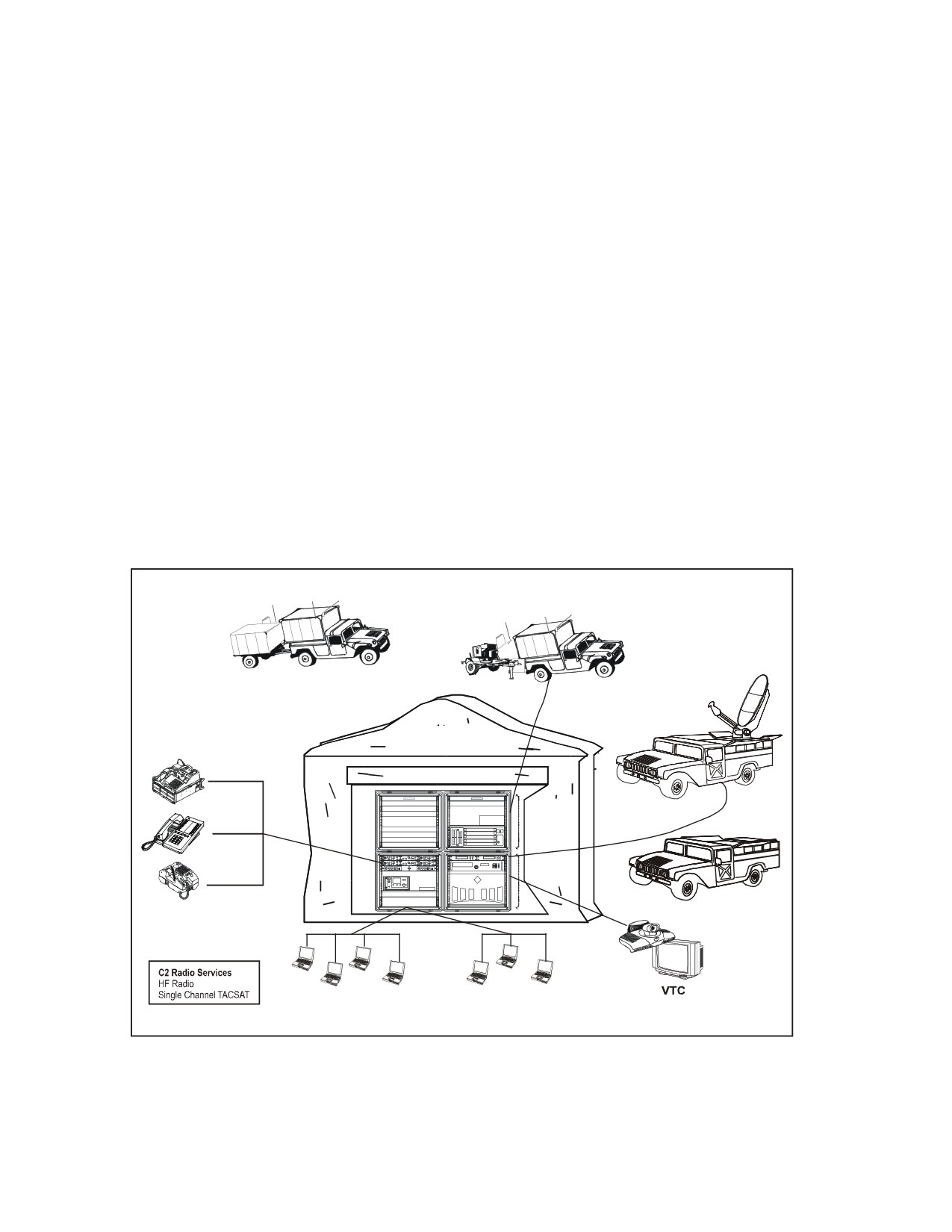
division tactical command). Figure 4-22 provides an example of a small
contingency communications package. Table
4-1 identifies the services,
capabilities, and transportability requirements of a small contingency
communications package.
PU-798
C & W Team
Multiband
TACSAT
DSVT
Laptop
KVM
Loop Power Nest (rear)
Call Manager
3550 Ethernet Switch
3640 Router
FEC
VG248
STU III
VG248
DNVT
3640 Router
SIPRNET
NIPRNET
Figure 4-22. ITSB Small Contingency Communications Package
4-32

________________________________________________________________________________FM 6-02.45
Table 4-1. ITSB Small Contingency Communications Package Example
Service
Qty/Criterion
Major
Equipment
Crew
Element/Component
Voice (256 KB)
OIC OR NCOIC
N/A
1
DSN
96 subscribers
Multiband TACSAT (for
1xECV w/system
4
plus 8 long locals
example, Phoenix)
1xECV w/generator
DRSN
Available
BBN-early entry pkg
Data pkg in four transit cases:
3
VTC (256 KB)
1 Suite
1xHMMWV - cargo
SIPRNET
50 subscribers
1xPU-798 (10kw) trailer
NIPRNET
50 subscribers
Cable and Wire Team
1xHMMWV - cargo
3
(wire and phones)
JWICS
0 subscribers
1xHMT cargo trailer
(cable and wire)
C-LAN/C-WAN
No
Maintenance Team
N/A
1
IA/Network
Yes
Total Personnel
12
Management
Bandwidth
Up to 8 Mbps
Total Equipment:
Qty:
HMMWV
4
Trailers (cargo and generator)
2
Deploys
Transportation:
Sorties:
(earliest)
N+18 hrs
C130
7
C5
1
C17
2
IOM (99% of
subscribers
Arrival
connected)
+ 24 hrs
Remarks
Up to three small contingency packages can be task organized within each ITSB.
When it is critical to minimize air transport requirements, the base band node (BBN) - early entry data
package components can be shipped on a pallet, and one HMMWV and one generator can be transported
later. In this configuration, the team is only 75 percent self-sufficient for ground transport and will be reliant on
the supported unit for data package power.
Aircraft numbers required are estimates and include pallets for two personal bags per soldier. Food is not
included.
Deployment times as required by supported combatant commander. Level of alert/standby to support times
shorter than N+72 hours severely impacts training.
Bandwidths allocated to various services are for illustration only. Allocation in the field will be by METT-TC.
Total bandwidth available depends on the combination of ancillary equipment installed in the SATCOM
terminal and on availability of bandwidth from the space segment (the bird); up to 8 Mbps can be achieved.
Switch capacity is listed; unit usually deploys with only a fraction of that number of phones.
4-33
FM 6-02.45________________________________________________________________________________
ITSB MEDIUM CONTINGENCY COMMUNICATIONS PACKAGE
4-97. The mission of the ITSB medium contingency communications package
is to provide an initial entry theater-strategic link in support of forward
deployed contingency headquarters (for example, JTF or ARFOR) with follow-
on support of forward tactical headquarters (for example, division rear and
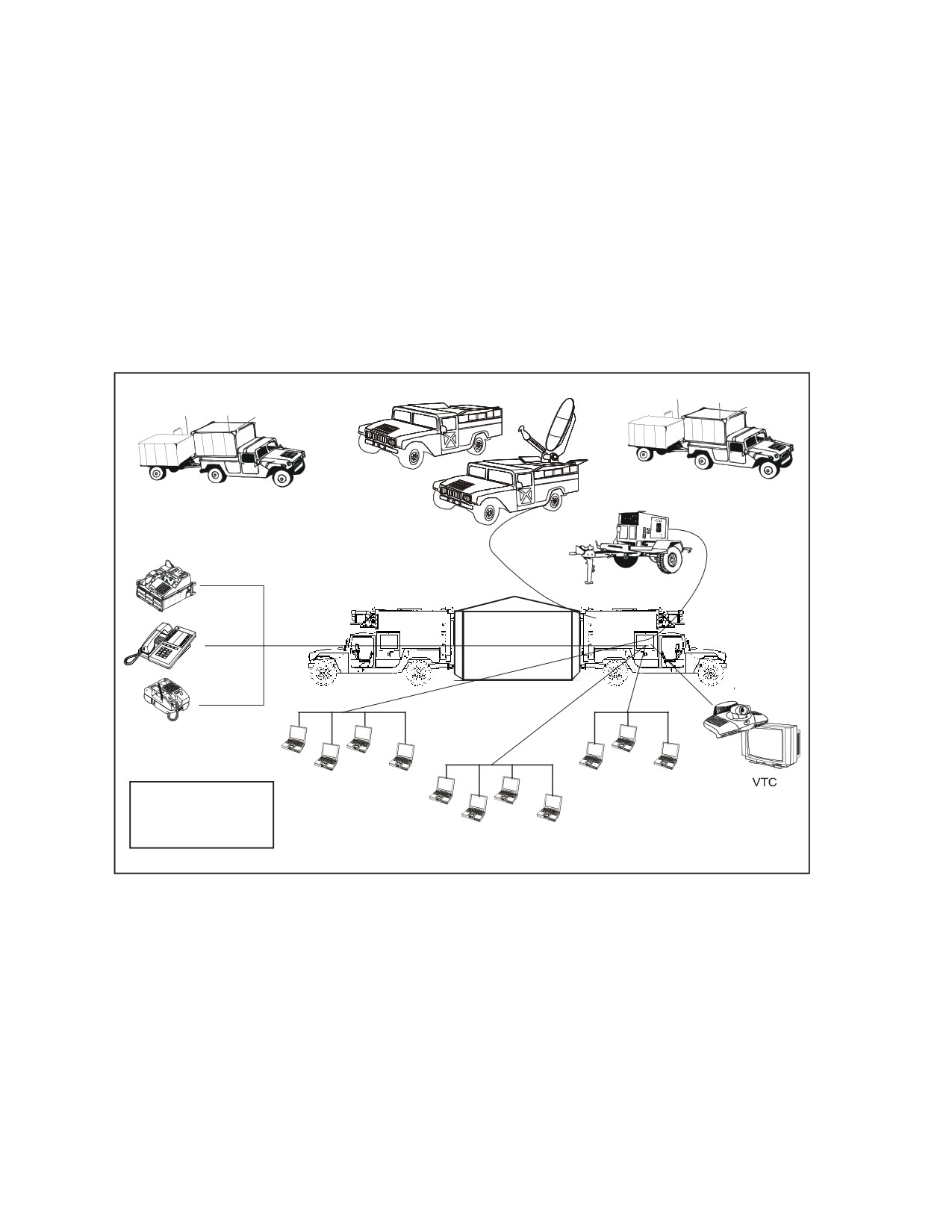
division tactical command). Figure 4-23 provides an example of a medium
contingency communications package. Table
4-2 identifies the services,
capabilities, and transportability requirements of a medium contingency
communications package.
Multiband
TACSAT
PU-798
DSVT
STU III
DNVT
SIPRNET
Coalition LAN
C2 Radio Services
HF Radio
Single Channel TACSAT
NIPRNET
Figure 4-23. ITSB Medium Contingency Communications Package
4-34

________________________________________________________________________________FM 6-02.45
Table 4-2. ITSB Medium Contingency Communications Package
Service
Qty/Criterion
Major
Equipment
Crew
Element/Component
Voice
OIC or NCOIC
N/A
1
DSN
96 analog subscribers
Multiband TACSAT
1xECV w/system
4
60 tactical subscribers
(for example, Phoenix)
1xECV w/generator
DRSN
Dedicated interface
BBN-Shelterized
1xECV w/system
5
1xECV w/TSM-210
VOIP
Up to 1000 subscribers
1xHMMWV - cargo
VTC (384 K)
1 Suite
1xPU-798 (10kw) trailer
SIPRNET (512K)
250 subscribers
1xHMT cargo trailer
NIPRNET (512K)
250 subscribers
Cable and Wire Team
1xHMMWV - cargo
5
(wire and phones)
JWICS (128K)
1 subscriber
1xHMT cargo trailer
(cable and wire)
C-LAN/C-WAN
Yes - 50
Maintenance Team
N/A
1
IA/Network
Yes
Total Personnel
16
Management
Bandwidth
Up to 8 Mbps
Total Equipment:
Qty:
HMMWV
6
Trailers (cargo and generator)
4
Deploys
N+18 hrs
Transportation:
Sorties:
C130
11
C5
2
C17
2
IOM (99% of
Arrival + 48 hrs
subscribers
connected)
Remarks
Typically one extension node from the ITSB extension node platoon without LOS; augmented with wire and
cable team and maintenance.
Initial communications for highest priority users arrival+24 hours.
Deployment times as required by supported combatant commander. Level of alert/standby to support times
shorter than N+72 hours severely impacts training.
Bandwidths allocated to various services are for illustration only. Allocation in the field will be by METT-TC.
Total bandwidth available depends on the combination of ancillary equipment installed in the SATCOM terminal
and on availability of bandwidth from the space segment (the bird); up to 8 Mbps can be achieved.
Aircraft numbers required are estimates and include pallets for two personal bags per soldier. Food is not
included.
Switch capacity is listed; unit usually deploys with only a fraction of that number of phones.
4-35
FM 6-02.45________________________________________________________________________________
ITSB LARGE CONTINGENCY COMMUNICATIONS PACKAGE
4-98. The mission of the ITSB large contingency communications package is
to provide an initial entry theater-strategic link in support of forward
deployed contingency headquarters (for example, JTF or ARFOR) with follow-
on support of forward tactical headquarters (for example, division rear and
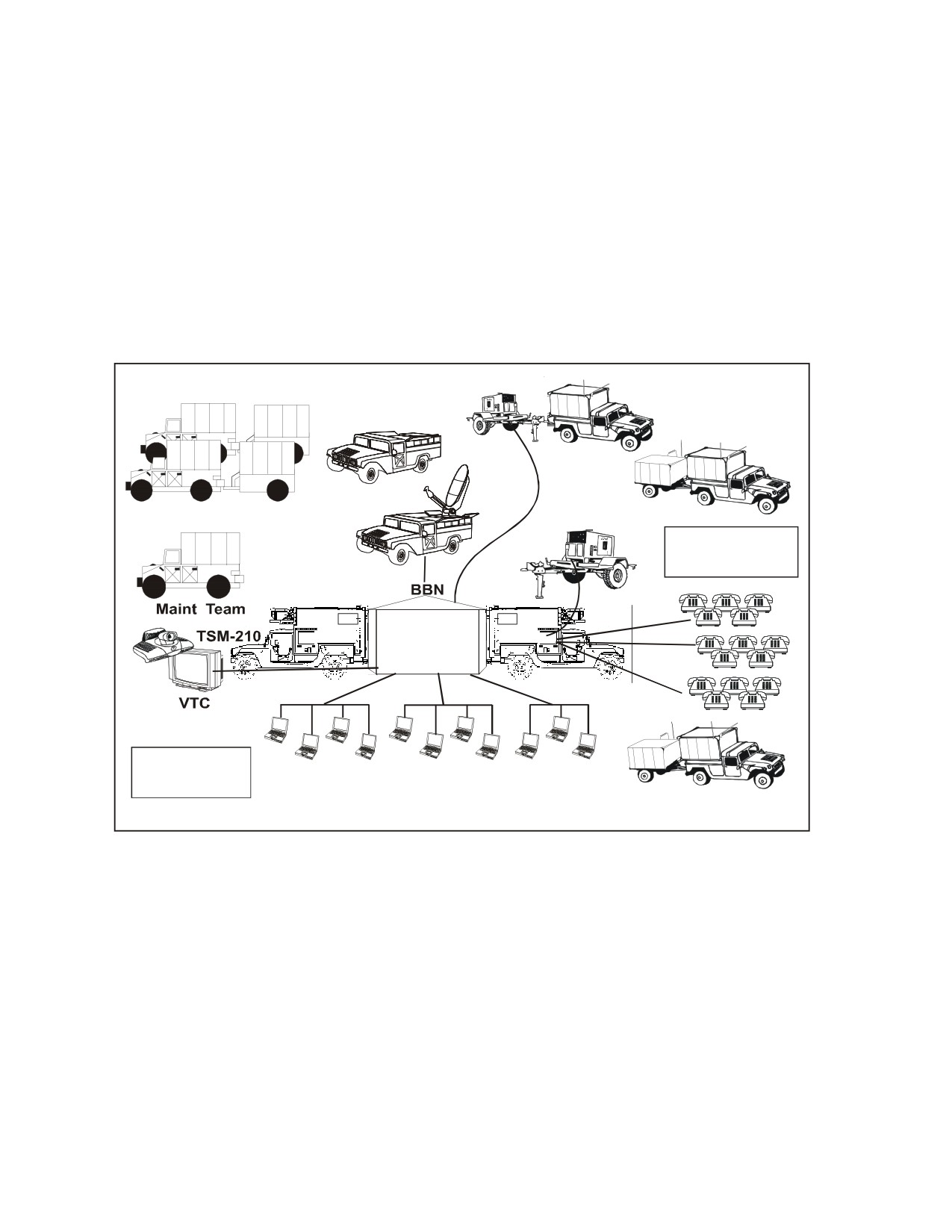
division tactical command). Figure
4-24 provides an example of a large
contingency communications package. Table
4-3 identifies the services,
capabilities, and transportability requirements of a large contingency
communications package.
PU-798
BBN
Spt Vehicle
Multiband
C & W Team
TACSAT
Can run phones from
PU-798
SSS and BBN
SSS
DSVT
STU/STE
DNVT
C2 Radio Services
HF Radio
Coalition LAN
NIPRNET
SIPRNET
Single Channel TACSAT
SSG
Spt Vehicle
Figure 4-24. ITSB Large Contingency Communications Package
4-36

________________________________________________________________________________FM 6-02.45
Table 4-3. ITSB Large Contingency Communications Package
Service
Qty/Criterion
Major
Equipment
Crew
Element/Component
Voice
OIC
N/A
1
DSN
500 subscribers
NCOIC
N/A
1
DRSN
Dedicated
Multiband TACSAT
1xECV w/system
4
interface
(for example, Phoenix)
1xECV w/generator
VOIP
Up to 1000
TTC-56 SSS
1xECV w/system
5
subscribers
1xECV w/TSM-210
VTC (384 K)
1 Suite
1xHMMWV - cargo
SIPRNET (512K)
500 subscribers
1xPU-798 (10kw) trailer
NIPRNET (512K)
500 subscribers
1xHMT cargo trailer
JWICS (128K)
1 subscriber
C-LAN/C-WAN
Yes - 50
BBN - transit case
Data pkg in 10-14 transit cases:
3
1xHMMWV - cargo
IA/Network
Yes
1xPU-798 (10kw) trailer
Management
Bandwidth
Up to 8 Mbps
Cable and Wire Team
2xHMMWV - cargo
7
(wire and phones)
Deploys
N+24 hrs
2xhigh mobility cargo trailer
(cable and wire)
IOM (99% of
Arrival
Maintenance Team
1xHMMWV - cargo
2
subscribers
+ 72 hrs
connected)
Total Personnel
23
Total Equipment:
Qty:
HMMWV
10
Trailers (cargo and generator)
6
Transportation:
Sorties:
C130
11
C5
2
C17
2
Remarks
Typically formed with elements of area node platoon augmented with cable and wire team and maintenance.
Bandwidths allocated to various services are for illustration only. Allocation in the field will be by METT-TC.
Total bandwidth available depends on the combination of ancillary equipment installed in the SATCOM terminal
and on availability of bandwidth from the space segment (the bird); up to 8 Mbps can be achieved.
Aircraft numbers required are estimates and include pallets for two personal bags per soldier. Food is not
included.
Switch capacity is listed; unit usually deploys with only a fraction of that number of phones.
4-37
FM 6-02.45________________________________________________________________________________
NON-ITSB GENERIC CONTINGENCY COMMUNICATIONS PACKAGES
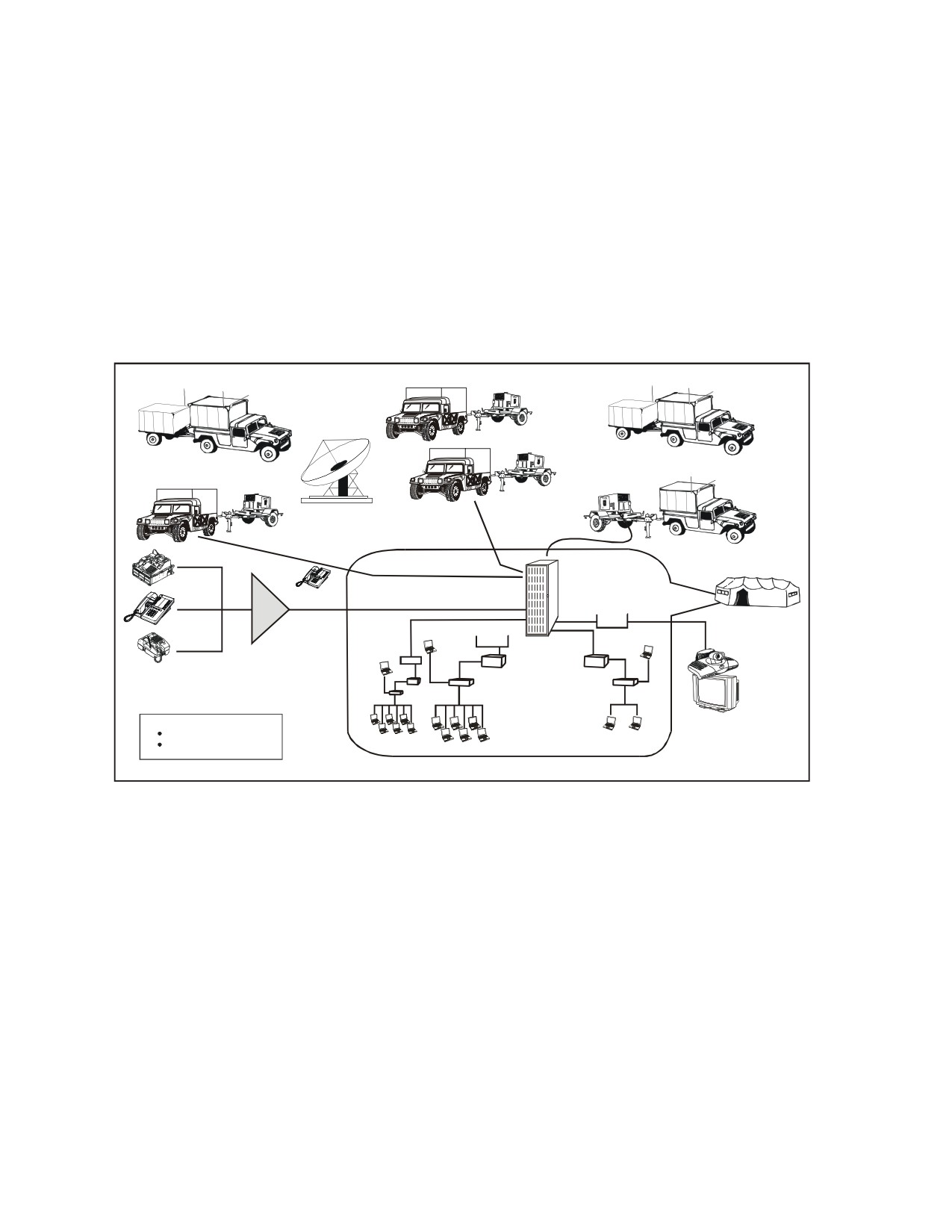
4-99. The following
paragraphs discuss non-ITSB contingency
communications packages.
NON-ITSB GENERIC SMALL CONTINGENCY COMMUNICATIONS PACKAGE
4-100. The mission of the non-ITSB small contingency communications
package is to provide an initial entry theater-strategic link in support of
forward deployed contingency headquarters (for example, JTF or ARFOR)
with follow-on support of forward tactical headquarters (for example, division
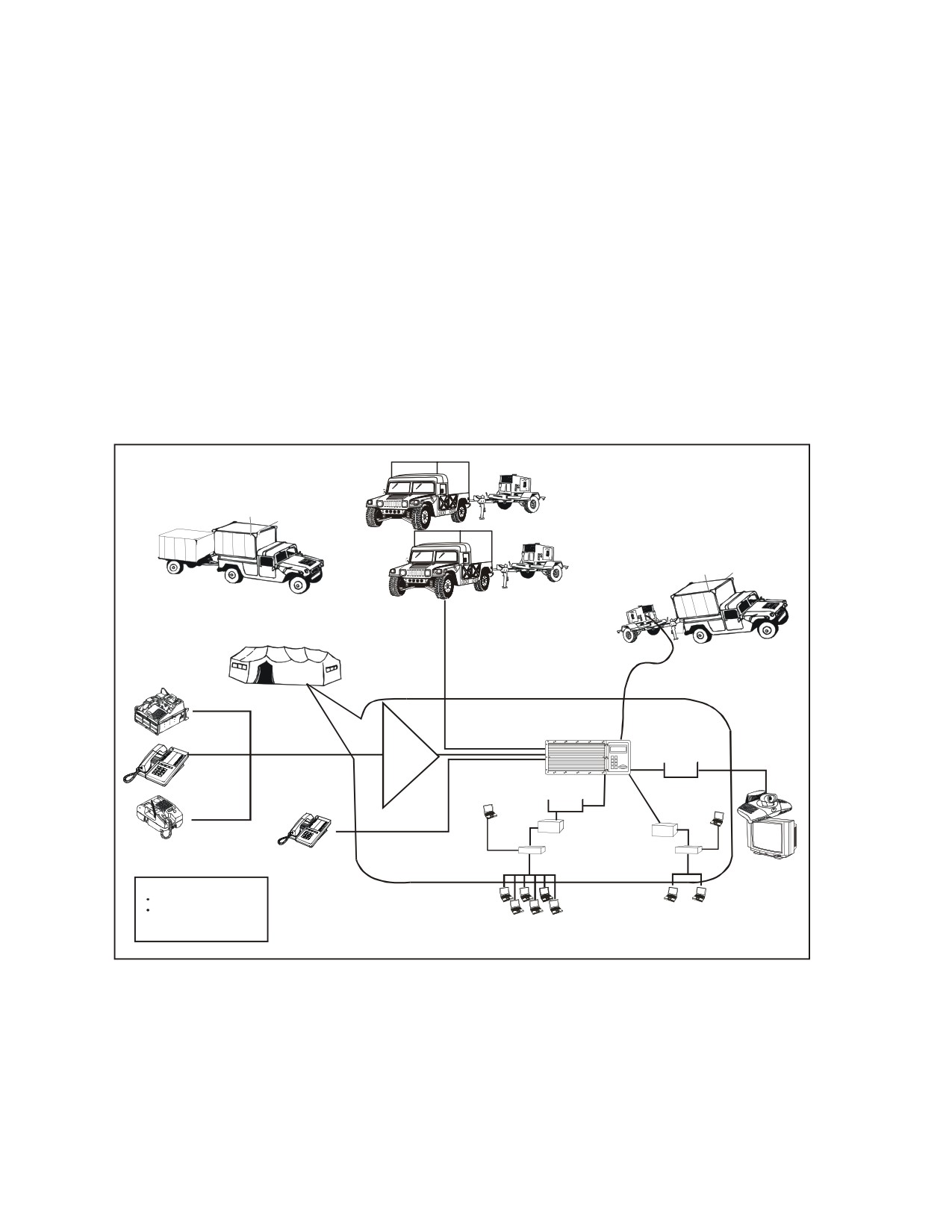
rear and division tactical command). Figure 4-25 provides an example of a
non-ITSB small contingency communications package. Table 4-4 identifies
the services, capabilities, and transportability requirements of a non-ITSB
small contingency communications package.
PU-798
PU-798
PU-798
TSC-93C
SDP Spt Vehicle
DSVT
FCC-100
KIV-7(HS)
CV4180
STU III
LTU
KIV-7(HS)
SIPRNET
SERVER
NIPRNET
SERVER
SIPRNET
SIPRNET
DNVT
ROUTER
ROUTER
ETHERNET
ETHERNET
DSN Long
HUB
HUB
Locals
VTC
DATA PACKAGE
(STU/STE)
C2 Radio Services
HF Radio
Single Channel
Workstations
TACSAT
Workstations
Figure 4-25. Non-ITSB Generic Small Contingency Communications Package
4-38

________________________________________________________________________________FM 6-02.45
Table 4-4. Non-ITSB Generic Small Contingency Communications Package
Service
Qty/Criterion
Major
Equipment
Crew
Element/Component
Voice (256 KB)
OIC or NCOIC
N/A
1
DSN
30 subscribers
TSC-93 TACSAT
1xECV w/system
4
DRSN
Available
1xECV w/generator
VTC (256 KB)
1 Suite
2xPU-798 (10kw) trailers
SIPRNET
50 subscribers
SDP-early entry pkg
Data pkg in four transit cases:
3
NIPRNET
50 subscribers
1xHMMWV - cargo
JWICS
0 subscribers
1xPU-798 (10kw) trailer
C-LAN/C-WAN
No
Cable and Wire Team
1xHMMWV - cargo
3
(wire and phones)
IA/Network
Yes
1xHMT cargo trailer
Management
(cable and wire)
Bandwidth
1152 Kbps
Maintenance Team
N/A
1
Deploys (earliest)
N+18 hrs
Total Personnel
12
IOM (99% of
Arrival
Total Equipment:
Qty:
subscribers
+ 24 hrs
HMMWV
4
connected)
Trailers (cargo and generator)
4
Transportation:
Sorties:
C130
8
C5
2
C17
2
Remarks
A multiband SATCOM terminal may be substituted for the AN/TSC-93 for greater versatility.
Aircraft numbers required are estimates and include pallets for two personal bags per soldier. Food is not
included.
When it is critical to minimize air transport requirements, the data package components can be shipped on a
pallet, and the fourth HMMWV can be transported later. In this configuration, the team is only 75 percent self-
sufficient for ground transport on arrival.
Deployment times as required by supported combatant commander. Level of alert/standby to support times
shorter than N+72 hours severely impacts training.
Bandwidths allocated to various services are for illustration only. Allocation in the field will be by METT-TC.
Total bandwidth available depends on the combination of ancillary equipment installed in the SATCOM
terminal and on availability of bandwidth from the space segment (the bird). In some combinations, up to
8 Mbps can be achieved. Number shown is realistic for planning purposes when the configuration of the
tasked unit equipment is not known.
Switch capacity is listed; unit usually deploys with only a fraction of that number of phones.
4-39
FM 6-02.45________________________________________________________________________________
NON-ITSB GENERIC MEDIUM CONTINGENCY COMMUNICATIONS PACKAGE
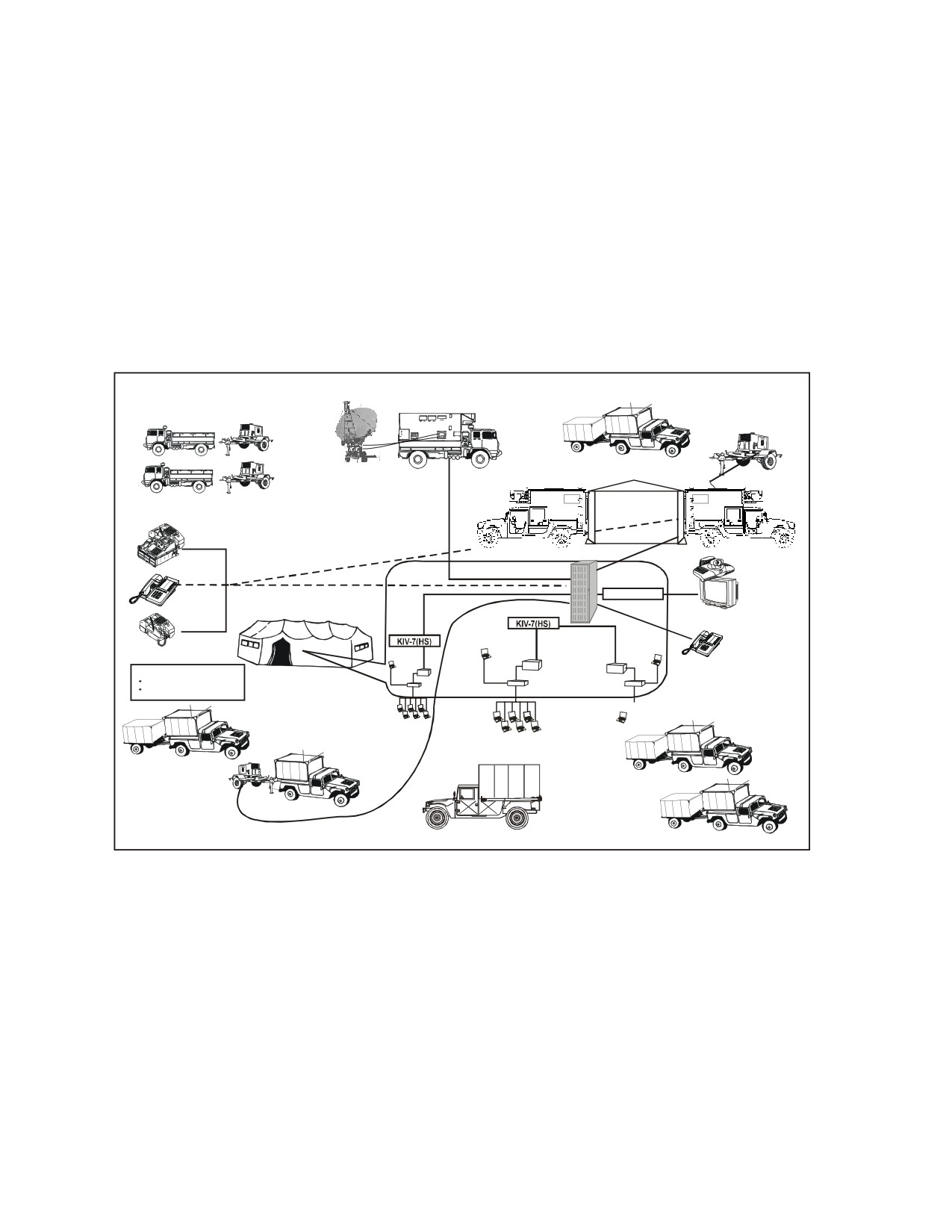
4-101. The mission of the non-ITSB medium contingency communications
package is to provide an initial entry theater-strategic link in support of
forward deployed contingency headquarters (for example, JTF or ARFOR)
with follow-on support of forward tactical headquarters (for example, division
rear and division tactical command). Figure 4-26 provides an example of a
non-ITSB medium contingency communications package. Table 4-5 identifies
the services, capabilities, and transportability requirements of a non-ITSB
medium contingency communications package.
PU-798
PU-798
PU-798
SDP Spt Vehicles
PU-798
TSC-93
Transit Case
PROMINA
DSVT
800
DSN Long
Locals
KIV-7(HS)
(STU/STE)
STU III
KIV-7(HS)
KIV-7(HS)
SIPRNET
NIPRNET
SERVER
SERVER
DNVT
SIPRNET
SIPRNET
ROUTER
ROUTER
Can run phones
ETHERNET
ETERNET
from SEN
CW
HUB
HUB
and SDP
DATA PACKAGE
C2 Radio Service
VTC
HF Radio
Workstations
Single Channel TACTSAT
Workstations
Figure 4-26. Non-ITSB Generic Medium Contingency Communications Package
4-40

________________________________________________________________________________FM 6-02.45
Table 4-5. Non-ITSB Generic Medium Contingency Communications Package
Service
Qty/Criterion
Major
Equipment
Crew
Element/Component
Voice
OIC or NCOIC
1
DSN
140 subscribers
TSC-93 TACSAT
1xECV w/system
4
DRSN
Available
1xECV w/generator
VTC (384K)
1 Suite
2xPU-798 (10kw) trailers
SIPRNET(512K)
250 subscribers
TTC-48 SEN
1xHMMWV w/system
3
NIPRNET(512K)
250 subscribers
1xPU-798 (10kw) trailer
JWICS (128K)
1 subscribers
SDP
Data pkg in 10-14 transit cases
5
C-LAN/C-WAN
Yes - 50
2xHMMWV - cargo
IA/Network
Yes
1xHMT cargo trailer
Management
1xPU-798 (10kw) trailer
Bandwidth
2048 Kbps
Cable and Wire Team
1xHMMWV - cargo
5
(wire and phones)
Deploys
N+18 hrs
1xHMT cargo trailer
(cable and wire)
IOM (99% of
Arrival
Maintenance Team
N/A
1
subscribers
+ 48 hrs
connected)
Total Personnel
19
Total Equipment:
Qty:
HMMWV
6
Trailers (cargo and generator)
6
Transportation:
Sorties:
C130
12
C5
2
C17
3
Remarks
Initial communications for highest priority users is Arrival +24 hours.
A multiband SATCOM terminal may be substituted for the AN/TSC-93 for greater versatility.
Aircraft numbers required are estimates and include pallets for two personal bags per soldier. Food is not
included.
Deployment times as required by supported combatant commander. Level of alert/standby to support times
shorter than N+72 hours severely impacts training.
Bandwidths allocated to various services are for illustration only. Allocation in the field will be by METT-TC.
Total bandwidth available depends on the combination of ancillary equipment installed in the SATCOM
terminal and on availability of bandwidth from the space segment (the bird). In some combinations, up to
8 Mbps can be achieved. Number shown is realistic for planning purposes when the configuration of the
tasked unit equipment is not known.
Switch capacity is listed; unit usually deploys with only a fraction of that number of phones.
4-41
FM 6-02.45________________________________________________________________________________
NON-ITSB GENERIC LARGE CONTINGENCY COMMUNICATIONS PACKAGE
4-102. The mission of the non-ITSB large contingency communications
package is to provide an initial entry theater-strategic link in support of
forward deployed contingency headquarters (for example, JTF or ARFOR)
with follow-on support of forward tactical headquarters (for example, division
rear and division tactical command). Figure 4-27 provides an example of a
non-ITSB large contingency communications package. Table 4-6 identifies the
services, capabilities, and transportability requirements of a non-ITSB large
contingency communications package.
AN/TSC-85
PU-802
PU-798
PU-802
SSS and Spt Vehicles
TSM-210
SSS
Can run phones from SSS and SDP
DSVT
PROMINA
STU III
KIV-7(HS)
VTC
DNVT
SIPRNET
NIPRNET
SIPRNET
NIPRNET
SERVER
SERVER
ROUTER
ROUTER
DSN Long
C2 Radio Services
ETHERNET
ETHERNET
Locals
HF Radio
HUB
HUB
(STU/STE)
Single Channel TACSAT
TRANSIT CASE STANDARD
DATA PACKAGE
C-LAN
SIPR
NIPR
SDP Spt Vehicles
PU-798
C & W Team
Maintenance Team
Figure 4-27. Non-ITSB Generic Large Contingency Communications Package
4-42

________________________________________________________________________________FM 6-02.45
Table 4-6. Non-ITSB Generic Large Contingency Communications Package
Service
Qty/Criterion
Major
Equipment
Crew
Element/Component
Voice
OIC and NCOIC
N/A
2
DSN (1152K)
400 subscribers
TSC-85
1x5-ton / MTV w/shelter
4
DRSN (128K)
2 subscribers
1x2.5-ton / LMTV w/8' antenna
VTC (385K)
1 Suite
1x2.5-ton / LMTV
SIPRNET (1152K)
500 subscribers
2xPU-802 (15kw) trailers
NIPRNET (512K)
250 subscribers
Antenna on Trailer (QRSA or
LHGXA)
JWICS (128K)
1 subscriber
TTC-56 SSS
1xECV w/system
5
C-LAN/C-WAN (128K)
Yes - 50
1xECV w/TSM-210
IA/Network Management
Yes
1xHMMWV - cargo
Bandwidth
4096 Kbps
1xPU-798 (10kw) trailer
Deploys
N+24 hrs
1xHMT cargo trailer
IOM (99% of subscribers
Arrival
SDP-Transit Case
Data pkg in 10-14 transit cases:
5
connected)
+ 72 hrs
2xHMMWV - cargo
1xHMT cargo trailer
1xPU-798 (10kw) trailer
Cable and Wire Team
2xHMMWV - cargo
7
(wire and phones)
2xHMT cargo trailer
(cable and wire)
Maintenance Team
1xHMMWV - cargo
2
Total Personnel
25
Total Equipment:
Qty:
MTV
3
HMMWV
8
Trailers (cargo and generator)
9
Transportation:
Sorties:
C130
15
C5
3
C17
5
Remarks
A multiband SATCOM terminal may be substituted for the AN/TSC-93 for greater versatility.
Aircraft numbers required are estimates and include pallets for two personal bags per soldier. Food is not
included.
Bandwidths allocated to various services are for illustration only. Allocation in the field will be by METT-TC.
Total bandwidth available depends on ancillary equipment installed in the SATCOM terminal and on
availability of bandwidth from the space segment (the bird); up to 8 Mbps can be achieved. Number shown is
realistic for planning purposes.
Switch capacity is listed; unit usually deploys with only a fraction of that number of phones.
4-43
FM 6-02.45________________________________________________________________________________
NOTIONAL DEPLOYMENT SEQUENCE
4-103. Actual deployment of theater signal and supported forces into a
theater will be determined on a case-by-case basis by METT-TC. The notional
sequence below provides a basis for understanding the process of developing
signal capability in a theater and its relationship to organizational structure:
•
The initial theater signal contingency package will be based on one of
the three package types (small, medium, or heavy). The size will be
selected based mainly on the number of subscribers to be supported,
but all the factors of METT-TC will be considered.
•
The initial contingency package deploys and begins operations.
Departure from home station occurs notification (N)+18 hours for
small, medium, and heavy. Transportation time to theater is not
under the control of the signal organization. Upon arrival, the initial
package sets up and begins operation and maintenance of services
within arrival+24 hours for small, medium, and heavy.
•
In the case of ITSB, the initial contingency package will typically be a
single node provided by any of the nodal platoons in the battalion.
•
In the case of non-ITSB forces, the initial contingency package may
be provided by a power pack company or task organized from other
forces available.
•
As the supported force grows, the initial contingency package will be
augmented by additional elements such as cable and wire, additional
multichannel SATCOM, TROPO systems, multichannel LOS systems,
and additional voice and data switching. In some cases, the
contingency package will be left in place and simply augmented. In
others, arriving signal elements will replace elements of the
contingency package in order to free them for follow-on deployments
such as the onward movement of forward elements of the supported
headquarters.
•
In the case of an ITSB, the follow-on elements will come mostly from
the parent company or battalion providing the contingency package.
This includes early cable and wire support by the organic wire and
cable capability of the ITSB.
•
In the case of non-ITSB forces, follow-on elements will come from a
variety of sources. To the extent possible, they will come from the
parent unit providing the contingency package. Because non-ITSB
forces do not have the technological diversity of the ITSB in single
battalions, some of the follow-on augmentation is likely to come from
other organizations such as composite battalions.
•
If a semipermanent or permanent installation is required to free up
tactical signal units for redeployment, elements of the Tactical
Installation and Networking (TIN) Company may be deployed to
install wiring and networking equipment commensurate with the
permanence of the facilities and the requirements of the supported
force.
4-44
________________________________________________________________________________FM 6-02.45
• As the TIN establishes semipermanent or permanent network
facilities, it trains the using unit(s) of the facilities in the operation
and maintenance of the equipment installed and prepares for
redeployment.
• Planning for transition to contractor support begins as early as
possible in the overall deployment planning process. This is to free
tactical signal assets as quickly as possible for follow-on or future
deployments. The goal is to transition to contractor support as soon
as the local security/force protection situation makes it feasible.
Typical lead times for the contracting process are in the range of 30 to
120 days from initiation of planning to contractors on the ground.
ECB ARCHITECTURES
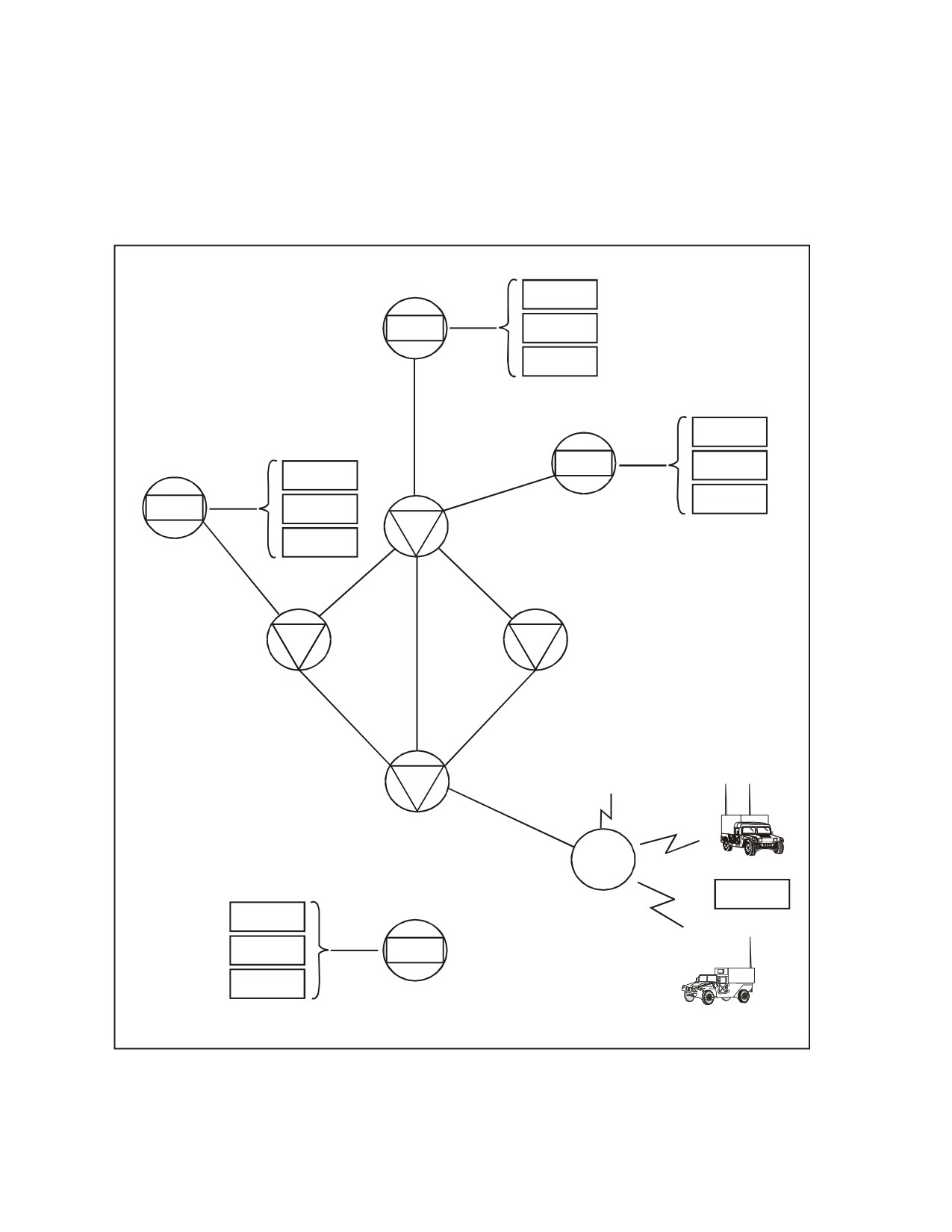
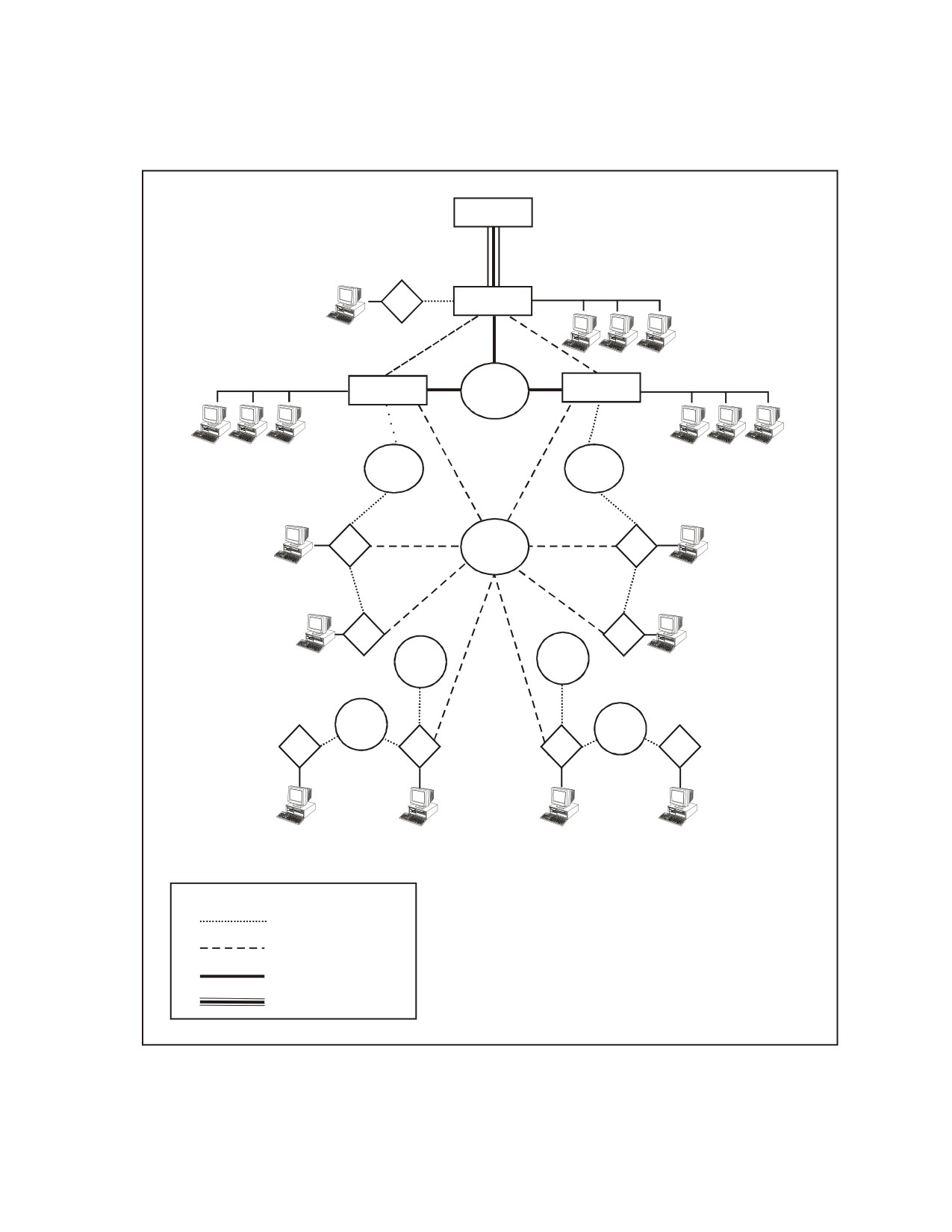
4-104. In addition to providing support to theater level headquarters and
other theater level elements, a normal task for theater signal units is to
provide upward connectivity for corps and division signal units in order to
extend services to corps and division level users and to enable reach back for
those echelons. Figure
4-28 illustrates the key features of the signal
architecture at ECB to which theater signal units must interface. Figure 4-29
provides a simplified version of Tactical Internet connectivity at maneuver
brigade and below.
STOVEPIPE ARCHITECTURES
4-105. There is not a formal definition for the term stovepipe architecture or
stovepipe system. Stovepipe architecture refers to the design of systems that
serve only a narrowly defined community of users and have limited or no
interoperability with other user communities. The Army seeks to avoid the
establishment and maintenance of stovepipe systems because the lack of
interoperability hinders the seamless exchange of information necessary for
info-centric operations, and because they divert resources from providing
communications and information services to the Army as a whole.
4-106. While the Army seeks to avoid stovepipe systems, some systems have
developed in response to bona-fide requirements that could not be met by the
common user systems and services provided by the Signal Regiment.
Examples of signal shortfalls that have driven the establishment of such
systems include classification level, bandwidth, and quality of service. The
fact that these systems have competed effectively for resources at some level
to come into existence and to remain in existence testifies to the validity of
the requirements they fill.
4-107. Signal leaders will sometimes encounter such systems in the field,
and may be required to provide varying degrees of support to them. On some
occasions, they may be required to provide interfaces between these and
other systems even though such interfaces were not originally designed into
the respective systems.
4-108. Signal leaders and planners (for example, force developers, combat
developers, and materiel developers) should strive to make future
mainstream signal forces capable of meeting the user requirements that
drive stovepipe systems so the number of such systems can be reduced.
4-45
FM 6-02.45________________________________________________________________________________
4-109. One example of a stovepipe system is the AN/TSQ-190
TROJAN/TROJAN SPIRIT II Communications Central. This system is
discussed in the following paragraphs.
Voice
SEN
Data
FAX
Voice
LEN
Data
Voice
FAX
SEN
Data
NCS
FAX
NCS
NCS
NCS
RAU
MSRT
Voice
Data
SEN
FAX
Figure 4-28. Simplified MSE Diagram
4-46
________________________________________________________________________________FM 6-02.45
SEN
Bde LAN
INC
S6 Veh
Bde Cdr
Bn LAN
Bn LAN
S6 Veh
NTDR
S6 Veh
Bn Net
Bn Net
EPLRS
INC
INC
Net
Bn Cdr
Bn Cdr
INC
INC
Co
Co
Co Cdr
Co Cdr
Plt
Plt
INC
INC
INC
INC
FBCB2
FBCB2
FBCB2
FBCB2
Wing
Plt
Plt
Wing
LEGEND:
- SINCGARS Link
- EPLRS Link
- NTDR Link
- MSE Link
Figure 4-29. Simplified Tactical Internet Connectivity
4-47
FM 6-02.45________________________________________________________________________________
AN/TSQ-190 TROJAN/TROJAN SPIRIT II COMMUNICATIONS CENTRAL
4-110. The TROJAN SPIRIT system is an intelligence dissemination
satellite terminal that provides access for intelligence processing and
dissemination systems. It was developed because of an inability of the Army
common user system to provide TS/SCI service and, to an extent, provide the
bandwidth required for intelligence services and products.
4-111. The SPIRIT II program, a follow-on to SPIRIT I, provides a much
more robust terminal and increased capability. It is a near-term fix for high-
capacity imagery data communications capability. It consists of secure voice,
data, facsimile, video, and secondary imagery dissemination capabilities. The
system will receive, display, and transmit digital imagery, weather and
terrain products, templates, graphics, and text between CONUS/OCONUS
bases and deployed forces.
4-112. The Communications Central extends the current worldwide
TROJAN fixed station architecture to the tactical intelligence force structure
in a mobile configuration. It has alternative communications capabilities
down to brigade level, and uses existing external alternate current/direct
current power sources or the on-board, tunnel-mounted, 10-kilowatt diesel
generator. Supporting components are:
• A primary heavy high mobility multipurpose wheeled vehicle
(HHMMWV) shelter subsystem consisting of secure voice and data
and SATCOM processing and dissemination equipment integrated
into an S-788/G shelter mounted on an M-1097 HHMMWV. The
enhanced combat vehicle (ECV) is replacing the HHMMWV.
• The C/KU-band SATCOM mobile antenna platform for ECB or a tri-
band SATCOM trailer for EAC.
• A spare equipment maintenance subsystem consisting of a second
S-788/G shelter carried on an M-1097 HHMMWV.
4-113. The TROJAN SPIRIT II SATCOM system supports up to 14 circuits
(eight TS/SCI and six collateral) using variable baud rates from 4.8 to 512
Kbps per channel on C, Ku, or X frequency bands. System connectivity
capability includes DSNET1, DSNET3, MSE, Tactical Packet Network (TPN)
interfaces, and LAN connectivity. The TROJAN SPIRIT II is shelter mounted
on two HMMWVs. The system's two workstations also allow the operators to
receive and disseminate secondary imagery, signal intelligence databases and
reports, and unmanned aerial vehicle video. This capability allows the
TROJAN SPIRIT II to serve as a temporary communications set for the
analysis and control element during redeployment or split-based operations.
4-114. The TROJAN SPIRIT II combines the TROJAN Data Network (TDN)
with mobile switch extensions to offer a worldwide, forward-deployed, quick-
reaction reporting and analysis link. This corps and division asset provides
dedicated intelligence communications that is intended to augment EAC and
ECB in-theater communications. It will conduct split-based and inter- and
intra-theater operations through the range of military operations.
4-48
________________________________________________________________________________FM 6-02.45
4-115. Connectivity is provided through the Fort Belvoir TROJAN switching
center that currently connects TROJAN systems at various US bases with
front-end antenna arrays located worldwide. The Communications Central
combines this network with mobile switch extensions to offer a worldwide,
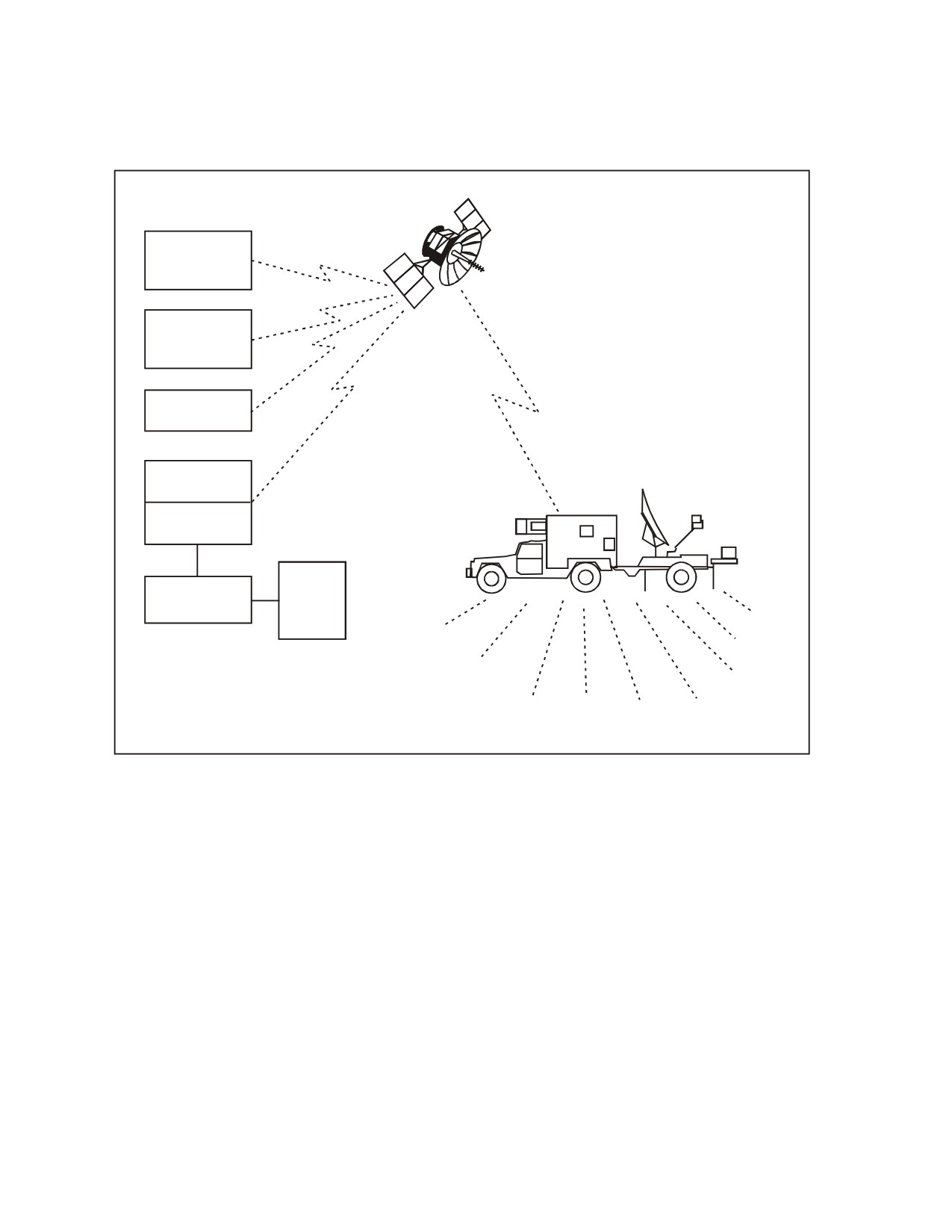
forward-deployed, quick reaction reporting and analysis link. Figure 4-30
depicts TDN connectivity.
4-116. The TDN is a router, TCP, or IP based network. It is overlaid on the
communications network that links the AN/FSQ-144(V) TROJAN CLASSIC
central operating facilities and switch extensions at various US bases with
remote collection facilities worldwide. The TDN is subdivided into three
electronically and physically separated networks that correspond to the three
security levels required of the system. As with the TROJAN CLASSIC
architecture, the TDN has a TROJAN Network Control Center in the
TROJAN Switch Center at Fort Belvoir, VA, to provide configuration control
and network management. The three networks of the TDN are:
• TDN-1. The TDN-1 operates at the Secret security level and is the
gateway to DSNET1. It provides data exchange between TROJAN
Classic facilities, switch extensions, and SPIRITs.
• TDN-2. The TDN-2 operates at the TS/SCI security level. It provides
data exchange between selected TROJAN sites requiring access to the
National Security Agency network.
• TDN-3. The TDN-3 operates at the TS/SCI security level and is the
gateway to JWICS. It provides data exchange between TROJAN
Classic facilities, switch extensions, and SPIRITs.
4-117. Although currently there are shortfalls in Army common user
communications systems capability, current actions and plans allow the
TROJAN SPIRIT to serve as an example of these problems being corrected.
For the long-term solution, the requirements and planning documents for the
Warfighter Information Network-Tactical (WIN-T) system provide for the
bandwidth and security capabilities to carry this and other intelligence
requirements. (WIN-T is the next generation Army common user system.) As
a near-term action to provide for a degree of integrated network
management, the signal and intelligence communities have agreed to provide
automated visibility for signal network management facilities into the
TROJAN SPIRIT network. This is one significant step towards the goal of a
single Army enterprise network.
4-49
FM 6-02.45________________________________________________________________________________
Remote
Collection
Facilities
Central
Operating
Facilities
Switch
Extensions
Switching
Center
Net Control
Center
DIA
DISNET 1
NSA
DISNET 3
CIA
JTT
CINCs
MSE
ASAS
DVM
FAX
SSP-S
Voice FAX
JSTARS
ETUT
MITT
UAV GCS
GSM
Figure 4-30. TROJAN Data Network Connectivity
4-50
Chapter 5
Theater Strategic and Tactical Signal Organizations
This chapter discusses the missions, functions, and salient characteristics
of the fully implemented theater signal organizations of the current force,
both strategic and tactical. It discusses the command and support
relationships for theater signal units in peacetime and how some of these
relationships would change in wartime. The detailed information on
assignments, task organizations, and organizational structure is a
snapshot in time and is intended to be informative and illustrative, not
authoritative. The authority for and changes to command and support
relationships come from a variety of sources such as orders and operation
plans (OPLANS). The authority for organizational structures is exercised
through the ARFOR development process and is promulgated by
authorization documents such as MTOEs. The authoritative documents
can change with little or no notice for a variety of circumstances.
NEW/SIGNIFICANTLY MODIFIED FORCE STRUCTURES
5-1. New and modified force structures have been developed to keep theater
signal relevant in meeting warfighter communications requirements. These
new structures significantly reduce the need to task organize signal assets.
These force structures will be phased in gradually and will co-exist with units
of the current force structure during the transition period.
5-2. The new and significantly modified force structures include:
• ITSB.
• TIN Company.
• Combat Camera (COMCAM) Company.
• NETCOM/9thASC (formerly U.S. Army Signal Command).
• NOSCs at various echelons.
5-3. In addition, data packages are integrated into existing organizations at
several echelons. Other significant changes include integrating GBS TIPs
and joint command, control, communications, and computers packages
(JC4Ps) into selected new and existing organizations.
FORCE STRUCTURES BEING PHASED OUT
5-4. Refer to Appendix C for information on forces being phased out.
ORGANIZATIONAL STRUCTURE
5-5. Appendix E provides illustrations for both active and reserve
components structures.
5-1
FM 6-02.45________________________________________________________________________________
STRATEGIC/FIXED STATION
5-6. Due to the fluid nature of the common operational environment, theater
strategic/fixed station signal organizations may find themselves operating at
or supporting the strategic, operational, or tactical level of war. For the
purpose of this manual, the terms strategic and fixed station describe
organizations that do not deploy from their home stations, and include
organizations that provide intra- and/or inter-theater communications
supporting both power projection and C2 systems that span from the
warfighter through the Secretary of Defense to the President of the United
States. While organizational structures of strategic/fixed station
organizations are different and unique, the fundamental mission (C2 and
signal support) remains the same for all organizations.
TOE 11800 NETCOM/9TH ASC
5-7. In accordance with Department of the Army General Order Number
2002-05, Headquarters, Army Signal Command was reorganized and
redesignated as the NETCOM/9th ASC. This expanded the mission of the
organization to full enterprise level responsibility for networks and systems.
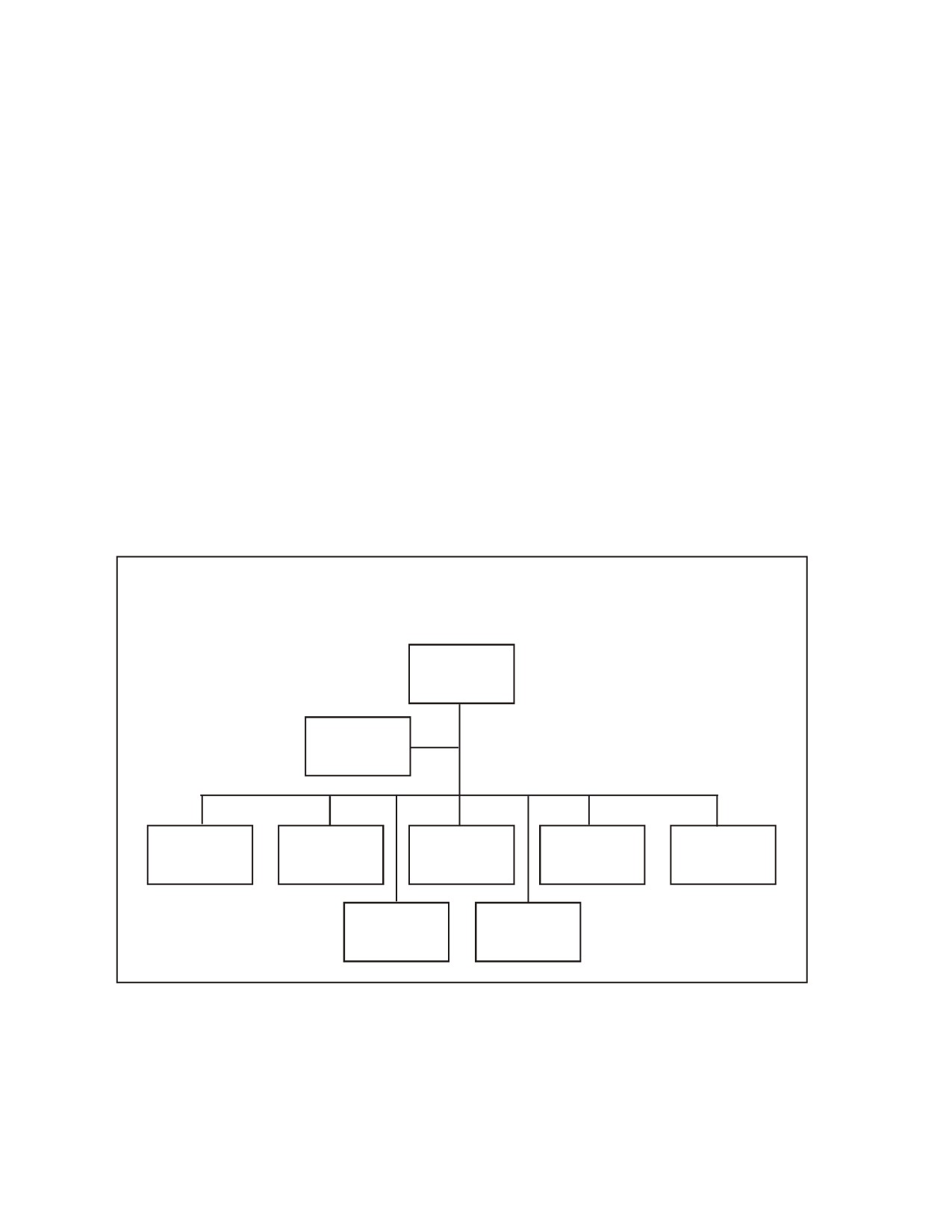
Figure 5-1 shows the organization of the NETCOM/9th ASC.
NETCOM/9th ASC
Top Level TOE 11800A000
Command
Section
Chief of Staff
Office of G2
Office of G2
Office of G3
Office of G4
Office of G8
ANOSC
ESTA
Figure 5-1. NETCOM/9th ASC
5-2
________________________________________________________________________________FM 6-02.45
5-8. Headquarters, NETCOM/9th ASC has a standard G-staff (G1-G4 and
G8) and is located at Fort. Huachuca, Arizona. It maintains a staff and
leadership presence in the NCR. The headquarters is able to deploy
headquarters elements and subelements to the field in order to directly
support warfighter requirements or to augment subordinate units.
NETCOM/9th ASC Mission
5-9. The NETCOM/9th ASC is the single authority to operate, manage, and
defend the Army’s enterprise level infostructure. It delivers seamless
enterprise level C4 information technology common user services and signal
warfighting forces in support of the combatant commanders and ASCC
commanders. The NETCOM/9th ASC operates, sustains, and defends the
Army’s portion of the GIG, enabling force projection and delivery of decisive
combat power.
5-10. NETCOM/9th ASC is designated as a direct reporting unit to the
CIO/G6. The Army CIO/G6 provides oversight of the NETCOM/9th ASC.
NETCOM/9th ASC is under the limited OPCON of the US Army Forces
Command (FORSCOM) for tactical CONUS force provisioning, specifically for
the purpose of—
• Organizing and employing CONUS tactical commands and forces in
concert with unique requirements noted in the Secretary of Defense
Memorandum dated 6 April, 2001, Subject: Forces For and the
Chairman Joint Chiefs of Staff (CJCS) Instruction 3110.10, enclosure
A, Appendix C.
• Assigning operational tasks.
• Designating objectives.
• Resourcing operational requirements.
• Providing staff actions in direct support of mobilization requirements.
• Providing deployment or deployment sustainment operations.
• Providing Active Component/Reserve Component integration
oversight.
• Providing oversight of training and exercises.
5-11. NETCOM/9th ASC works closely with all US Army Reserves (USAR)
and Army National Guard signal forces to ensure integrated signal support is
available to support combatant commander requirements. Strategic
communications systems will be available and operational to fully support
split-based operations. NETCOM/9th ASC’s emphasis is on operation,
maintenance, and defense of critical strategic C4 systems and networks and
the training of combat-ready Active Component, the National Guard, and the
USAR EAC signal forces for worldwide deployment. EAC signal forces and
the systems they operate must provide rapid and responsive world-class
services anywhere, anytime.
5-3
FM 6-02.45________________________________________________________________________________
5-12. NETCOM/9th ASC has a multinational and multitheater AOR.
Subordinate NETCOM/9th ASC organizations extend from North America to
Europe and Asia. Specific locations include CONUS, Alaska, Puerto Rico,
Germany, England, Italy, Belgium, Netherlands, Honduras, Qatar, Saudi
Arabia, Kuwait, Bahrain, Korea, Japan, and Hawaii.
5-13. NETCOM/9th ASC’s mission includes:
• Protect our force and care for the NETCOM/9th ASC family.
• Engineer, install, operate, maintain, and defend C4 systems and
networks throughout the Army enterprise.
• Provide global Army NETOPS.
• Deploy, sustain, and redeploy signal forces.
• Exercise C2 of assigned and attached forces.
5-14. NETCOM/9th ASC also performs the following tasks and functions:
•
Provides a centralized configuration control capability to monitor and
control configuration changes of Army tactical and strategic voice and
data switches to ensure switch interoperability and compliance with
joint directives.
•
Manages the Army Military Affiliate Radio Systems Program.
•
Engineers and provides fast reaction support to worldwide
NETCOM/9th ASC C4 operational systems, forces, and associated
signal initiatives.
•
Manages all facilities engineering and environmental issues incident
to the deployment, sustainment, and redeployment of EAC signal
assets.
•
Provides engineering support to the TSC(A)s as required and/or
requested.
•
Ensures that NETCOM/9th ASC facilities worldwide are adequate to
support the mission.
•
Deploys signal staff augmentation individuals and teams on a
worldwide basis in support of warfighting forces in those instances
where the TSC(A) is not deployed or where augmentation to the
TSC(A) is required.
•
Deploys network management and system security teams worldwide
to engineer, install, operate, and maintain data networks in support
of JTF and Army and nongovernmental agencies. Such teams also
provide tactical interface for the Army NOSC and TNOSC.
•
Serves as the proponent for quality assurance/quality control for
communications infrastructure; operates and deploys a total quality
assessment team to provide quality assessment and quality control
assistance to power projection and support platforms and to all levels
of the Defense Information Infrastructure, to include related systems,
networks, and subnetworks.
5-4
________________________________________________________________________________FM 6-02.45
Enterprise Systems Technology Activity (ESTA)
5-15. A significant portion of the NETCOM/9th ASC transformation was the
transformation of its subordinate US Army Network Engineering
Telecommunications Activity to the ESTA.
5-16. The ESTA mission is to develop, implement, and enforce enterprise
systems management (ESM) processes and activities required to operate and
manage the transformed, consolidated Army infostructure at the enterprise
level. ESTA—
•
Establishes ESM policies and procedures, and executes necessary
actions to ensure seamless C4IM common user services are provided
within a secure NETOPS framework across the enterprise.
•
Provides operational policy and functional staff oversight for ESM
operations to NETCOM/9th ASC regional units and RCIOs.
•
Coordinates external requirements with the HQDA staff and major
Army command CIOs.
•
Assesses and develops requirements as the ESM functional
proponent.
•
Develops, staffs, and manages service level agreements for the
enterprise.
•
Conducts required operational engineering and architectural review
to ensure new systems and enabling technologies or capabilities
fielded within the Army infostructure comply with enterprise-level
standards, practices, and procedures.
•
Serves as command focal point for policy formation, and operation
and management of NETCOM/9th ASC-wide AKM initiatives.
•
Engineering, installing, operating, maintaining, and defending C4
systems and networks throughout the Army.
•
Providing technical expertise to restore C4 systems and networks.
•
Executing long haul and base communications programs.
•
Planning, implementing, and fielding enterprise infostructure
management for the Army GIG.
•
Serving as CIO/G6 chief technology office.
•
Providing oversight of all Army activities related to the allocation,
allotment, and assignment of RF spectrum.
•
Formulating IA policies and plans.
ANOSC
5-17. The ANOSC is a subordinate element of NETCOM/9th ASC. For
information on the missions and functions of the ANOSC, refer to Chapter 3.
CONUS TNOSC
5-18. The CONUS TNOSC is a subordinate element of NETCOM/9th ASC.
For information on the missions and functions of the TNOSC, refer to
Chapter 3.
5-5
FM 6-02.45________________________________________________________________________________
US ARMY SIGNAL ACTIVITY-INTELLIGENCE AND SECURITY COMMAND (ASA-INSCOM)
5-19. The ASA-INSCOM is under the C2 of NETCOM/9th ASC and under
OPCON of the US Army Intelligence and Security Command. The
commander is dual-hatted as the G6, INSCOM. The ASA-INSCOM’s mission
is to provide planning, programming, budgeting, engineering, installation,
and operational management of secure and nonsecure telecommunications to
the National Security Agency, HQDA, INSCOM, and NETCOM/9th ASC.
TOE 11622A STRATEGIC/FIXED STATION SIGNAL BRIGADES
5-20. This unit's mission is to command and control EAC strategic signal
battalions and sustaining-base organizations and to support the power
projection platform required to support force projection and split-based
operations. Individuals of the organizations, except the chaplain, can assist in
the coordinated defense of the unit's area or installation. The unit depends
on appropriate elements of the theater Army for legal, combat health
support, and finance. Additionally, it depends on installation motor pools for
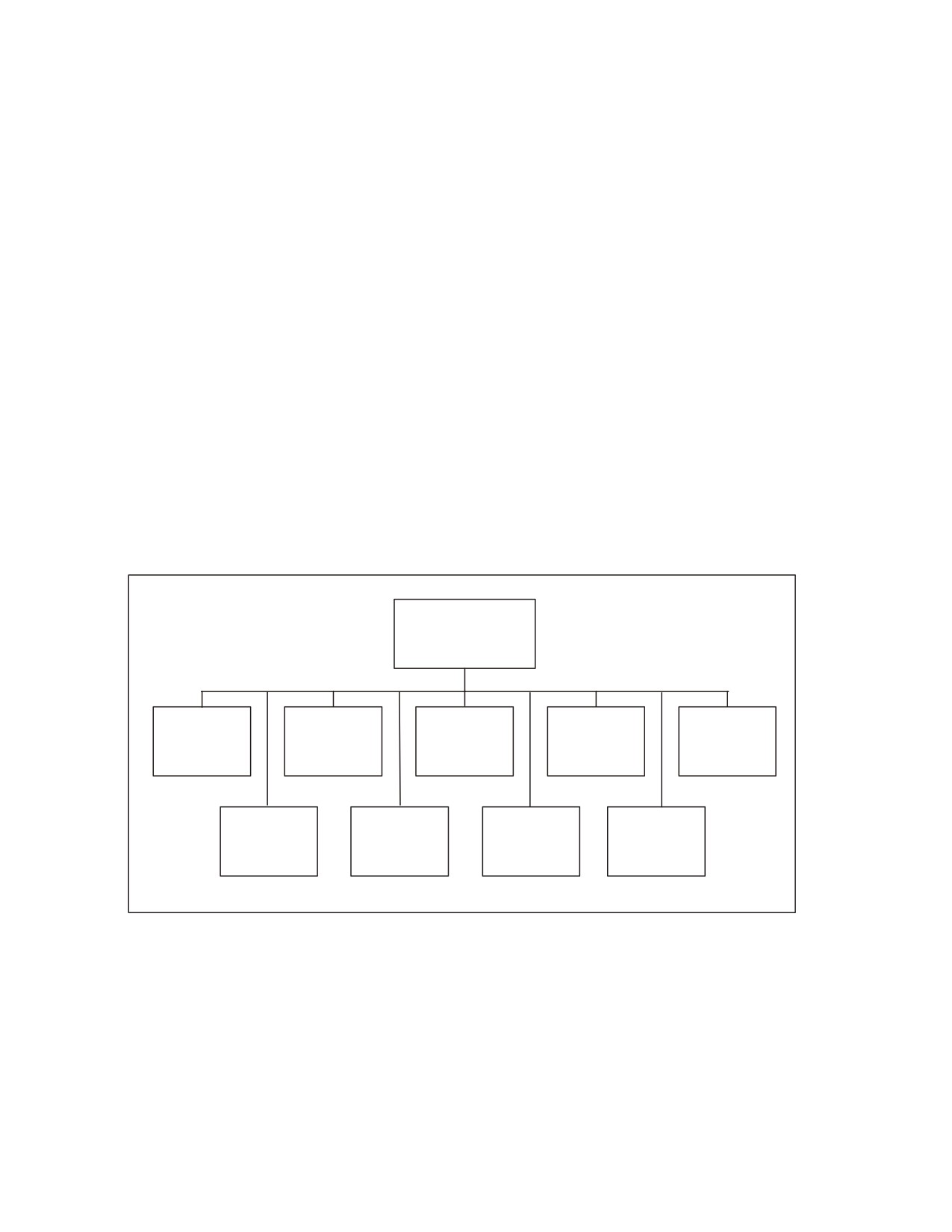
government-furnished equipment transportation support. Figure 5-2 shows
the organization of an HHC strategic signal brigade. The following
paragraphs describe the tasking, mission, and capabilities of the HHC
strategic signal brigade.
HHC
Strategic
Signal Brigade
Brigade
Brigade
Brigade
Command
HHC
Admin
Logistics
Operations
Section
Section
Section
Branch
01
02
03
04
05
Plans
Automation
Intel
Unit Ministry
Branch
Branch
Branch
Team
06
07
08
09
Figure 5-2. HHC Strategic Signal Brigade
5-6
________________________________________________________________________________FM 6-02.45
Command Section, PARAGRAPH 01
5-21. The command section provides C2 and staff supervision over the
brigade’s units.
HHC, PARAGRAPH 02
5-22. The HHC provides the command and administrative personnel for
housekeeping operations.
Brigade Admin Section, PARAGRAPH 03
5-23. The brigade admin section provides the personnel and equipment to
support the administrative requirements of the brigade.
Brigade Logistics Section, PARAGRAPH 04
5-24. The brigade logistics section provides the personnel and equipment to
support the logistical requirements of the brigade.
Brigade Operations Branch, PARAGRAPH 05
5-25. The brigade operations branch has staff responsibility for planning,
coordinating, and supervising the operational function of the brigade.
Plans Branch, PARAGRAPH 06
5-26. The plans branch’s responsibilities are to advise commanders, staff,
and other command, control and communications
(C3) users on the
capabilities, limitations, and employment of all tactical and nontactical signal
assets available to the command.
Automation Branch, PARAGRAPH 07
5-27. The automation branch advises the staff on information management,
automation policy, and technical matters. It performs or supervises system
analysis and programming functions, and supervises the installation,
operation, and maintenance of automated communications.
Intel Branch, PARAGRAPH 08
5-28. The intelligence branch provides the commander with all-source
intelligence assessments and estimates at the operational and strategic levels
dealing with enemy capabilities, intentions, and vulnerabilities. It predicts
enemy courses of action; produces threat estimates to support doctrine,
training, and combat developments; ensures proper dissemination of
intelligence information and products; and evaluates, interprets, analyzes,
and produces general intelligence products in support of DOD requirements.
Unit Ministry Team, PARAGRAPH 09
5-29. The unit ministry team is responsible for ministering to the members of
the brigade. This team has a chapel activities specialist (E4, 71M) who works
under the supervision of the brigade’s chaplain and is responsible for the
administrative functions associated with assisting the chaplain.
5-7
FM 6-02.45________________________________________________________________________________
Tailored Strategic Fixed Signal Brigades
5-30. The following strategic/fixed station signal brigades are organized
under the TOE 11622A. However, they are highly tailored to the specific
requirements of the theaters to which they are assigned.
5-31. 2nd Signal Brigade. This brigade is a subordinate command of
NETCOM/9th ASC, with OPCON vested in US Army Europe (USAREUR).
The 2nd Signal Brigade’s mission is to install, operate, and maintain the
communications infrastructure and systems capable of extending the GIG on
order to Army, joint, and combined forces.
5-32. 21st Signal Brigade. This brigade is a subordinate command of
NETCOM/9th ASC. The 21st Signal Brigade’s mission is to provide for the
integration of telecommunications services that include tactical and fixed
stations for the DOD and other federal agencies within CONUS and provide
visual documentation of US, allied, and hostile forces during combat
operations and peacetime training exercises.
5-33. 160th Signal Brigade. This brigade is a subordinate command of
NETCOM/9th ASC. The 160th Signal Brigade is OPCON to US Army Forces,
Central Command (ARCENT) during peacetime. Its command and support
relationships can change during wartime. The 160th Signal Brigade’s mission
is to command and control EAC strategic signal battalions and sustaining
base organizations to support split-based operations.
5-34. 516th Signal Brigade. This brigade is a subordinate command of
NETCOM/9th ASC, with OPCON vested in US Army, Pacific (USARPAC).
The commander, 516th Signal Brigade, is dual-hatted as the USARPAC
Deputy Chief of Staff, Information Management (DCSIM). The 516th Signal
Brigade’s mission is to provide signal support to Pacific warfighting forces,
provide theater C4 policy and programming functions, and advise the
commanding general, USARPAC, on resources required by major subordinate
commands (MSCs) for C4 systems, to include deployable assets.
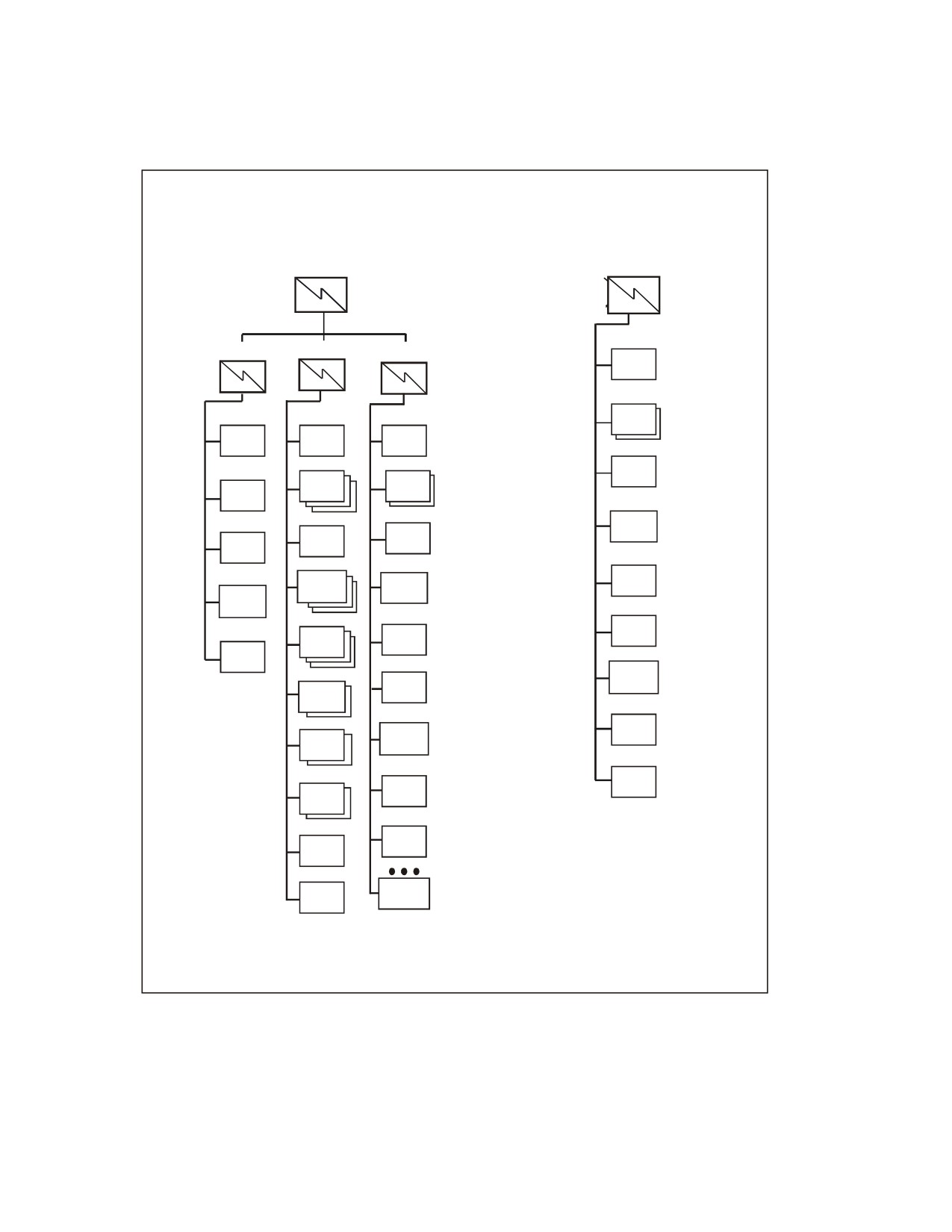
STRATEGIC MODULES
5-35. Strategic/Fixed station signal organizations are individually tailored to
the theaters where they are located. They are assembled from standardized
TOE modules. Figure 5-3 shows the strategic modules.
NOTE: The term CINC in the context of theater combatant
commander is retained in this section to reflect the titles of
organizations as they appear in the TOE databases that
document them.
5-8
________________________________________________________________________________FM 6-02.45
Examples of
Strategic Modular Structures
I I
I I
I
I
I
BN HQ
(V1)
11630A1
11630A2
11630A3
11563AA00
INFO CNT
TM (V1)
CO HQ
CO HQ
CO HQ
(V1)
(V1)
(V1)
11563AC00
11563AB00
11563AO00
11566AR00
TECH CTL
TM (V1)
INFO CNT
INFO CNT
INFO CNT
TM (V1)
TM (V1)
11563AK00
TM (V1)
11563AC00
11563AC00
11563AC00
CABLE INST
ELEC SW
TECH CTL
TM (V2)
INFO CNT
TM (V2)
TM (V1)
TM (V3)
11563AL00
11563AI00
11563AK00
11563AE00
SOFTWR
MICROWAVE
CABLE INST
MNT TM
TM (V2)
TM (V2)
DMS SVC
CNT (V2)
11563AW00
11563AL00
11563AJ00
11563AH00
ELEC SW
TECH CTL
SOFTWR
TM (V2)
TM (V1)
MNT TM
SOFTWR
11563AI00
MNT TM
11563AW00
MICROWAVE
11563AK00
11563AW00
ELEC SW
TM (V2)
CABLE INST
TM (V2)
TM (V2)
11563AJ00
11563AI00
11563AL00
COMSEC
MICROWAVE
MAINT TM
DMS CAW
TM (V2)
TM
11563AR00
11563AJ00
11563AN00
CABLE
COMSEC
SPLICE TM
COMSEC
MAINT TM
MAINT TM
11563AC00
11563AR00
11563AR00
CABLE
CABLE
SPLICE TM
SPLICE TM
11563AC00
11563AC00
MOBILE CMD
AN/GSC
TM
SPT PLT
11563AF00
11563AQ00
Strategic Companies
Strategic Battalions
Built with Modules
Built with Modules
Figure 5-3. Strategic Modules
5-9
FM 6-02.45________________________________________________________________________________
TOE 11563AT00, 11563AU00, 11563AV00 EAC Technical Control Center (TCC) Team
5-36. The mission of the TCC team is to provide record telecommunications
for a given regional area. The differences among the TOE variants are mainly
the sizes of the teams. Refer to current TOE documents for more detailed
information.
5-37. The TCC team—
• Operates and maintains automated telecommunications equipment
central and associated peripheral devices 24 hours a day, 7 days a
week.
• Maintains record copy files.
• Provides methods and results analysis.
• Depends on the appropriate organizations for administrative and
logistical support and health and financial services.
TOE 11506AG00 EAC Automated Gateway Message Switch (AGMS) Team
5-38. The mission of the AGMS team is to provide record telecommunications
and e-mail to a regional area as part of the DMS.
5-39. The AGMS team—
• Operates and maintains the AGMS and DMS equipment and
ancillary devices.
• Performs traffic and circuit monitoring and restoration.
• Provides general service records communications and e-mail to a
regional area.
• Depends on the appropriate organizations for administrative and
logistical support and health and financial services.
TOE 11563AC00, 11563AD00, 11563AE00, 11567AM01, 11567AH01 EAC Information Center
Team
5-40. The mission of the information center team is to provide automation
and information support to all units in a given regional area. The differences
among the TOE variants are mainly the sizes of the teams. Refer to current
TOE documents for more detailed information.
5-41. The information center team—
• Provides signal support including information and data automation.
• Installs, operates, and maintains multifunctional/multiuser
information processing systems including peripheral equipment and
auxiliary devices.
• Provides planning, requirements analysis, design, development,
testing, installation, maintenance, and training for all automated
data processing systems in a region.
• Depends on the appropriate organizations for administrative and
logistical support and health and financial services.
5-10
________________________________________________________________________________FM 6-02.45
TOE 11563AW00 EAC Software Maintenance Team
5-42. The mission of the software maintenance team is to provide software
support for a regional area.
5-43. The software maintenance team—
• Troubleshoots and repairs existing application software.
• Designs, prepares, edits, and tests computer programs.
• Modifies existing application programs to support the user’s
requirements.
• Depends on the appropriate organizations for administrative and
logistical support and health and financial services.
TOE 11566AB00, 11567AK00 EAC COMSEC Material Direct Support Activity (CMDSA) Team
5-44. The mission of the CMDSA team is to provide COMSEC custodian
functions, COMSEC equipment maintenance, and COMSEC logistics
functions to a geographic area. The differences between the TOE variants are
mainly the sizes of the teams. Refer to current TOE documents for more
detailed information.
5-45. The COMSEC CMDSA team—
• Provides COMSEC custodian functions to include COMSEC material
account management, the safeguarding of COMSEC material, and
COMSEC material inventories and reports.
• Provides direct support/general support level maintenance of
COMSEC equipment, controlled cryptographic items (CCI), radio
receivers and transmitters, and other associated equipment.
• Provides COMSEC logistics functions to include procurement,
maintenance, and transport of COMSEC equipment and material.
• Depends on the appropriate organizations for administrative and
logistical support and health and financial services.
TOE 11564AK00 EAC COMSEC Logistics Support Unit (CLSU) Team
5-46. The mission of the CLSU team is to provide COMSEC and radio
equipment maintenance and COMSEC logistics functions to a geographic
area.
5-47. The CLSU team—
• Provides direct support/general support level maintenance of
COMSEC equipment, CCI, radio receivers and transmitters, and
other associated equipment.
• Provides COMSEC logistics functions to include procurement,
maintenance, and transport of COMSEC equipment and material.
• Depends on the appropriate organizations for administrative and
logistical support and health and financial services.
5-11
FM 6-02.45________________________________________________________________________________
TOE 11563AR00, 11563AI00 EAC COMSEC Maintenance Team
5-48. The mission of the COMSEC maintenance team is to provide electronic
maintenance of COMSEC and radio equipment for a geographic AOR.
5-49. The COMSEC maintenance team—
• Provides COMSEC and radio equipment maintenance for a
geographic AOR.
• Provides direct support/general support level maintenance of radio
receivers, transmitters, COMSEC equipment, CCI, and other
associated equipment.
• Depends on the appropriate organizations for administrative and
logistical support and health and financial services.
TOE 11563AO00, 11563AI00, 11564AM00 EAC Electronic Switching System (ESS) Switch Team
5-50. The mission of the ESS switch team is to provide operation and
maintenance of commercial electronic switching systems and equipment
associated with switched network operations in a given regional area. The
differences among the TOE variants are mainly the sizes of the teams. Refer
to current TOE documents for more detailed information.
5-51. The ESS switch team—
• Installs, initializes, and operates unit level and direct support
maintenance on electronic switches and network operations
equipment 24 hours a day.
• Implements network control center-generated changes to support
operational requirements.
• Depends on the appropriate organizations for administrative and
logistical support and health and financial services.
TOE 11564AE00 EAC Emergency Action Center Switch Team
5-52. The mission of the emergency action center switch team is to provide
emergency and contingency switching communications to a region during
peace, war, and military operations other than war (MOOTW).
5-53. The emergency action switch team—
• Operates and maintains emergency and contingency switching
communications 24 hours a day.
• Plans, engineers, and controls emergency and contingency switching
communications.
• Depends on the appropriate organizations for administrative and
logistical support and health and financial services.
5-12
________________________________________________________________________________FM 6-02.45
TOE 11563AJ00, 11563AP00, 11564AF00 EAC Microwave Team
5-54. The mission of the microwave team is to provide installation, operation,
and maintenance of microwave communications systems at a microwave site.
The team performs engineering quality control and continuity testing of
microwave circuits, trunks, links, systems, and facilities. The differences
among the TOE variants are mainly the sizes of the teams. Refer to current
TOE documents for more detailed information.
5-55. The microwave team—
• Configures, aligns, operates, and performs unit level and direct
support maintenance on microwave communications equipment and
associated devices.
• Monitors, fault isolates, and restores telecommunications circuits,
trunk groups, systems, and associated commercial and military
interface equipment.
• Maintains circuit, link, system, and station records and reports.
• Depends on the appropriate organizations for administrative and
logistical support and health and financial services.
TOE 11563AK00, 11564AN00 EAC Technical Control Facility (TCF) Team
5-56. The mission of the TCF team is to provide an intermediate level of
operations and maintenance control within the DISN. The TCF provides
OPCON and technical direction over a given geographic area and number of
DISN facilities and systems. The differences between the TOE variants are
mainly the sizes of the teams. Refer to current TOE documents for more
detailed information.
5-57. The TCF team—
• Responds to operational direction from the DISA and to operate and
maintain control elements.
• Exercises TECHCON, coordination, and supervision over subordinate
DISN facilities, transmission systems, and networks.
• Responds immediately to any deterioration or failure of DISNs,
equipment, trunks, or circuits that are causing degradation or loss of
service to users of the DISN.
• Performs quality control tests and measurements on all trunks,
channels, circuits, and equipment for which the TCF is responsible.
• Directs and managing HF radio communications systems in support
of the DISN.
• Depends upon the appropriate organizations for administrative and
logistical support and health and financial services.
TOE 11564AL00 EAC Facility Control Office (FCO) Team
5-58. The mission of the FCO team is to provide the highest level of
operations and maintenance control within the DISN. FCOs are designated
by each DISA area to provide OPCON and technical supervision over Level 4
and Level 5 DISN facilities within a designated geographical area.
5-13
FM 6-02.45________________________________________________________________________________
5-59. The FCO team—
• Provides operational direction over the TCF within its region.
• Provides operations 24 hours a day, with sufficient communications
capabilities to coordinate with the appropriate DISA Level 2 facility
and provides OPCON over subordinate facilities.
• Schedules and coordinates with the Defense Communications Agency
for approval of authorized outages.
• Functions as the reporting facility for all assigned subordinate DISN
facilities, transmission systems, and networks.
• Develops specific operating procedures pertinent to the area of
assigned responsibility.
• Depends on the appropriate organizations for administrative and
logistical support and health and financial services.
TOE 11564AG00, 11563AL00, 11563AM00 EAC Cable Installation Team
5-60. The mission of the cable installation team is to provide installation and
maintenance of base support cable and wire systems in a given regional area.
The differences among the TOE variants are mainly the sizes of the teams.
Refer to current TOE documents for more detailed information.
5-61. The cable installation team—
• Installs and maintains copper and fiber optic cable systems.
• Installs and maintains repeaters, restorers, voltage protection
devices, telephones, distribution frames, and related equipment.
• Installs and uninstalls wire systems, including telephones.
• Depends on the appropriate organizations for administrative and
logistical support and health and financial services.
TOE 11564AC00, 11568AI00 EAC Cable Splicer Team
5-62. The mission of the cable splicer team is to provide permanent and
emergency splicing of copper and fiber optic cable systems, as well as
installation and maintenance of base-support cable and wire systems. The
differences between the TOE variants are mainly the sizes of the teams.
Refer to current TOE documents for more detailed information.
5-63. The cable splicer team—
• Provides permanent and emergency splicing of copper and fiber optic
cable systems.
• Installs and maintains copper and fiber optic cable systems.
• Installs and maintains repeaters, restorers, voltage protection
devices, telephones, distribution frames, and related equipment.
• Installs and uninstalls wire systems, including telephones.
• Depends on the appropriate organizations for administrative and
logistical support and health and financial services.
5-14
________________________________________________________________________________FM 6-02.45
TOE 11563AX00, 11563AY00, 11564AG00 11567AG01 EAC Contingency HF Radio Team
5-64. The mission of the contingency HF radio team is to provide emergency
and contingency radio communications to a region during peace, war, and
MOOTW. The differences between the TOE variants are mainly the sizes of
the teams. Refer to current TOE documents for more detailed information.
5-65. The contingency HF radio team—
• Operates and maintains contingency HF radio communications 24
hours a day.
• Plans, engineers, and controls contingency HF radio communications.
• Depends on the appropriate organizations for administrative and
logistical support and health and financial services.
TOE 11566AH00 EAC CINC UHF SATCOM Team
5-66. The mission of the CINC UHF SATCOM team is to establish combatant
commander UHF SATCOM networks for emergency and contingency
operations.
5-67. The CINC UHF SATCOM team—
• Operates and maintains UHF SATCOM 24 hours a day.
• Plans, engineers, and controls UHF SATCOM networks.
• Commands and controls the combatant commander UHF SATCOM
networks.
• Depends on the appropriate organizations for administrative and
logistical support and health and financial services.
TOE 11566AC00 EAC SATCOM Terminal Team, AN/GSC-40
5-68. The mission of the SATCOM terminal team, AN/GSC-40, is to provide
earth terminal communications as part of the special communications system
(SCS) to establish combatant commander networks and to disseminate highly
specialized critical user information.
5-69. The AN/GSC-40, SATCOM terminal team—
• Provides UHF SATCOM deployed in a network configuration as part
of the SCS, which is operated and maintained by the Army, Navy,
and Air Force.
• Provides a fixed command post terminal configured to provide specific
SCS network C2 functions and the means for disseminating highly
specialized critical user information.
• Depends on the appropriate organizations for administrative and
logistical support and health and financial services.
TOE 11566AI00 EAC SATCOM Terminal Team, AN/MSC-64(V)2
5-70. The mission of the SATCOM terminal team, AN/MSC-64(V)2 is to
provide earth terminal communications as part of the SCS to establish
combatant commander networks and to disseminate highly specialized
critical user information.
5-15
FM 6-02.45________________________________________________________________________________
5-71. The AN/MSC-64(V)2, SATCOM terminal team—
• Provides UHF SATCOM deployed in a network configuration as part
of the SCS, which is operated and maintained by the Army, Navy,
and Air Force.
• Provides a mobile terminal to deploy and access the SCS network and
to disseminate highly specialized critical user information.
• Depends on the appropriate organizations for administrative and
logistical support and health and financial services.
TOE 11566AL00, 11566AE00, 11566AM00 EAC Radio Terminal Station Team, AN/TRC-194
5-72. The mission of the radio terminal station team, AN/TRC-194(V)1 and
(V)2, is to provide satellite ground communications as part of the military
strategic and tactical relay
(MILSTAR) system. It establishes combatant
commander networks and emergency action message (EAM) dissemination,
force direction and integrated tactical warning and assessment (ITW&A)
reception, and summary transmissions. The differences between the TOE
variants are mainly the sizes of the teams. Refer to current TOE documents
for more detailed information.
5-73. The AN/TRC-194, radio terminal team—
• Provides EHF uplink and SHF downlink interfaces to the MILSTAR
and fleet SATCOM EHF package payloads.
• Manages assigned communications resources and user priorities.
• Provides baseband interfaces to user equipment groups, which
supports the transmission of voice, teletype, and facsimile.
• Provides backward compatibility with existing MILSATCOM
systems.
• Depends on the appropriate organizations for administrative and
logistical support and health and financial services.
TOE 11566AM00 EAC Radio Terminal Station Augmentation Team, AN/TRC-194(V)
5-74. The mission of the radio terminal station augmentation team, AN/TRC-
194(V), is to provide a supervisor for two or more MILSTAR AN/TRC-194(V)
systems.
5-75. The AN/TRC-194(V), radio terminal augmentation team—
• Supervises two or more AN/TRC-194(V) terminal teams.
• Provides overall maintenance, training, and mission sustainment of
two or more ground command post terminals.
• Provides daily coordination and contact with supported combatant
commanders regarding mission support requirements and system
status.
• Manages assigned communications resources and user priorities.
• Depends on the appropriate organizations for administrative and
logistical support and health and financial services.
TOE 11564AR00 EAC SATCOM Terminal Team, AN/TSC-86
5-16
________________________________________________________________________________FM 6-02.45
5-76. The mission of the SATCOM terminal team, AN/TSC-86, is to provide
earth terminal communications as part of the DSCS to establish combatant
commander networks and for EAM dissemination, force direction and
ITW&A reception, and summary transmissions.
5-77. The AN/TSC-86, SATCOM terminal team—
• Provides SHF interfaces to the DSCS that provides simultaneous
communications with up to four other terminals.
• Manages assigned communications resources and user priorities.
• Processes multiple, medium, and wideband-digital voice data, and
teletype signals.
• Depends on the appropriate organizations for administrative and
logistical support and health and financial services.
TOE 11563AF00 EAC SATCOM Terminal Team, AN/GSC-52(V)1, and 11567AF00 SATCOM
Terminal, AN/GSC-52(V)1, Augmentation Team
5-78. The mission of the SATCOM terminal team, AN/GSC-52(V)1, is to
provide earth terminal communications as part of the DSCS to establish
combatant commander networks and for EAM dissemination, force direction
and ITW&A reception, and summary transmissions.
5-79. The AN/GSC-52(V)1, SATCOM terminal team—
• Provides SHF interfaces to the DSCS that can simultaneously
transmit and receive up to 12 communications carriers.
• Manages assigned communications resources and user priorities.
• Provides survivable antijam, antiscintillation, voice, and digital data
SATCOM using the universal modem system.
• Depends on the appropriate organizations for administrative and
logistical support and health and financial services.
TOE 11564AH00 EAC SATCOM Terminal Team, AN/GSC-52(V)2 - Mobile
5-80. The mission of the SATCOM terminal team, AN/GSC-52(V2)-mobile, is
to provide earth terminal communications as part of the DSCS to establish
combatant commander networks and for EAM dissemination, force direction
and ITW&A reception, and summary transmissions.
5-81. The AN/GSC-52(V)2-mobile, SATCOM terminal team—
• Provides SHF interfaces to the DSCS that can simultaneously
transmit and receive up to 12 communications carriers.
• Manages assigned communications resources and user priorities.
• Depends on the appropriate organizations for administrative and
logistical support and health and financial services.
• Requires theater transportation assets not organic to the team to be
moved. Site teardown and loading to move takes approximately five
days, while site setup takes approximately two weeks.
5-17
FM 6-02.45________________________________________________________________________________
TOE 11566AF00 EAC SATCOM Terminal Team, AN/FSC-78
5-82. The mission of the SATCOM terminal team, AN/FSC-78, is to provide
earth terminal communications as part of the DSCS to establish combatant
commander networks and for EAM dissemination, force direction and
ITW&A reception, and summary transmissions.
5-83. The AN/FSC-78, SATCOM terminal team—
• Provides SHF interfaces to the DSCS that can transmit up to nine
communications carriers and receive up to
18 communications
carriers.
• Manages assigned communications resources and user priorities.
• Provides survivable, antijam, antiscintillation, voice, and digital data
SATCOM using the universal modem system.
• Depends on the appropriate organizations for administrative and
logistical support and health and financial services.
TOE 11564AO00 EAC SATCOM Terminal Team, AN/GSC-39
5-84. The mission of the SATCOM terminal team, AN/GSC-39, is to provide
earth terminal communications as part of the DSCS to establish combatant
commander networks and for EAM dissemination, force direction and
ITW&A reception, and summary transmissions. The differences between the
TOE variants are mainly the sizes of the teams. Refer to current TOE
documents for more detailed information.
5-85. The AN/GSC-39(V)1, SATCOM terminal team—
• Provides SHF interfaces to the DSCS that can transmit up to nine
communications carriers and receive up to
18 communications
carriers.
• Manages assigned communications resources and user priorities.
• Provides survivable, antijam, antiscintillation, voice, and digital data
SATCOM using the universal modem system.
• Depends on the appropriate organizations for administrative and
logistical support and health and financial services.
TOE 11564AP00 EAC Dual-Site SATCOM Terminal Augmentation Team,
AN/GSC-39(V)1
5-86. The mission of the dual-site SATCOM terminal augmentation team,
AN/GSC-39(V)1, is to provide satellite system operator-maintainer
augmentees to a site having two SATCOM systems. The team provides earth
terminal communications as part of the DSCS to establish combatant
commander networks and for EAM dissemination, force direction and
ITW&A reception, and summary transmissions.
5-87. The AN/GSC-39(V1) dual-site SATCOM terminal augmentation team—
• Provides augmentation of SATCOM system operator-maintainers to a
site with two SATCOM terminals.
• Provides SHF interfaces to the DSCS that can transmit up to nine
communications carriers and receive up to
18 communications
carriers.
5-18
________________________________________________________________________________FM 6-02.45
• Manages assigned communications resources and user priorities.
• Provides survivable, antijam, antiscintillation, voice, and digital data
SATCOM using the universal modem system.
• Depends on the appropriate organizations for administrative and
logistical support and health and financial services.
TOE 11563AZ00 EAC SATCOM Terminal Team, AN/GSC-49(V)3
5-88. The mission of the SATCOM terminal team, AN/GSC-49(V)3, is to
provide earth terminal communications as part of the DSCS to establish
combatant commander networks and for EAM dissemination, force direction
and ITW&A reception, and summary transmissions.
5-89. The AN/GSC-49(V)3, SATCOM terminal team—
• Provides SHF interfaces to the DSCS and a single carrier with beacon
and spread spectrum communications tracking. The universal modem
system provides conference-selected terminals.
• Manages assigned communications resources and user priorities.
• Provides survivable antijam, antiscintillation, voice, and digital data
SATCOM using the universal modem system.
• Depends on the appropriate organizations for administrative and
logistical support and health and financial services.
TOE 11563AQ00 EAC Mobile Command Support Platoon
5-90. The mission of the mobile command support platoon is to provide
combatant commander communications support in the form of secure
frequency modulated
(FM) radio, UHF TACSAT, and record
telecommunications message support.
5-91. The mobile command support platoon—
• Installs, operates, and maintains secure FM radio communications.
• Installs, operates, and maintains UHF TACSAT communications.
• Installs, operates, and maintains record telecommunications message
support.
• Installs, operates, and maintains data communications and
information systems.
• Depends on the appropriate organizations for administrative and
logistical support and health and financial services.
TOE 11564AS00, 11567AJ00 EAC Visual Information (VI) Team
5-92. The mission of the VI team is to provide a means to document combat
and noncombat Army, joint, and combined operations using film, video,
audio, multimedia imaging, and VI equipment. The differences between the
TOE variants are mainly the sizes of the teams. Refer to current TOE
documents for more detailed information.
5-19
FM 6-02.45________________________________________________________________________________
5-93. The VI team—
• Operates film, video, and audio equipment to document combat and
noncombat Army, joint, and combined operations.
• Operates broadcast, collection, television production, and distribution
equipment.
• Installs, operates, and maintains VI equipment and systems to VTC
equipment in support of Army, joint, and combined operations.
• Operates electronic multimedia imaging equipment to provide
decision graphics and images to Army, joint, and combined
operations.
• Depends on the appropriate organizations for administrative and
logistical support and health and financial services.
TOE 11564AI00, 11567AA00, 11564AJ00, 11566AJ00, 11567AN00 EAC ARFOR Information
Support Team
5-94. The mission of the ARFOR information support team is to provide staff
oversight and coordination for C4 support to combat and noncombat Army,
joint, and combined headquarters. The differences among the TOE variants
are mainly the sizes of the teams. Refer to current TOE documents for more
detailed information.
5-95. The ARFOR information support team—
• Plans, operates, coordinates, and manages the supported unit’s
telecommunications systems and information systems support
functions for C4.
• Coordinates and directs information processing systems, to include
data system studies, and prepares documentation and specifications
for proposals.
• Provides oversight of the installation and maintenance of copper and
fiber optic cable systems, wire systems
(including telephones),
repeaters, restorers, voltage protection devices, distribution frames,
and related equipment.
• Depends on the appropriate organizations for administrative and
logistical support and health and financial services.
TOE 11564AQ00 EAC STEP Team and STEP Augmentation Team TOE 11568AE00
5-96. The mission of the STEP team is to provide a tactical interface to the
DSCS that establishes combatant commander and JTF networks, and for
EAM dissemination, force direction and ITW&A reception, and summary
transmissions.
5-97. The STEP team—
• Provides SHF interfaces to the DSCS that can provide simultaneous
communications with up to four other terminals.
• Manages assigned communications resources and user priorities.
5-20
________________________________________________________________________________FM 6-02.45
• Processes multiple, medium, and wideband-digital voice, data, and
teletype signals.
• Depends on the appropriate organizations for administrative and
logistical support and health and financial services.
TOE 11566AN00 EAC Status Control Alerting and Reporting System (SCARS) Team
5-98. The mission of the SCARS team is to provide data transmission and
reception of EAM traffic for North Atlantic Treaty Organization (NATO)
affiliated organizations.
5-99. The SCARS team—
• Provides only NATO-approved EAM injection into NATO EAM
system.
• Links US combatant commander, Europe into the NATO EAM
system.
• Provides two-man (NATO) control over system and crypto materiel
and equipment.
• Depends on the appropriate organizations for administrative and
logistical support and health and financial services.
TOE 11563AS00 EAC Direct Support/General Support Electronic Maintenance Team
5-100. The mission of the direct support/general support electronic
maintenance team is to provide electronic equipment maintenance of
microwave, cable, and wire systems and VI equipment for a geographic area.
5-101. The direct support/general support electronic maintenance team
provides direct support/general support level maintenance—
• For a geographic AOR.
• On microwave communications equipment and associated devices.
• On repeaters, restorers, voltage protection devices, telephones,
distribution frames, and related equipment.
• On VI equipment and systems to include VTC equipment.
5-102. The team depends on the appropriate organizations for
administrative and logistical support and health and financial services.
TOE 11564AB00, 11568AJ00 EAC Electronic Maintenance Team
5-103. The mission of the electronic maintenance team is to provide
electronic equipment maintenance of COMSEC, radio, telecommunications,
and microcomputer equipment for a geographic AOR.
5-104. The electronic maintenance team—
• Provides electronic equipment maintenance for an AOR with a small
volume of equipment.
• Provides direct support/general support level maintenance on radio
receivers, transmitters, COMSEC equipment, CCI, and other
associated equipment.
5-21