6-02.45 (FM 11-45) Signal Support to Theater Operations (APRIL 2004) - page 6

FM 6-02.45________________________________________________________________________________
Table D-5. Technical Characteristics of AN/TSC-143 (Continued)
Characteristics
Description
Mechanical:
Antenna Type
Prime Focus, Offset Paraboloid
Mount Type
Elevation over Azimuth
Travel Range:
Azimuth
f1350
Elevation
5° to 90° Operational range
Polarization
+900 Effective
Axis Drive Speed
Variable to 2 deg/sec nominal
Operational Characteristics
Modems:
Interoperability
EF Data SLM-4650, MD-1002, OM-73 and MD-945
Operation Modes
INTELSAT IESS-308 (IDR), INTELSAT IESS-309 (IBS),
DSCS
Digital Data Rate
Selectable in 1 bit/s increments from 9.6 Kbps to 9.468
Mbps
Modulation Types
QPSK, Offset QPSK, and BPSK
Data Scrambling Types
OM-73 compatible, IESS-309, CCITT V.35 (EF Data/-
Comstream compatible), Fairchild compatible, no scrambling
Transmit/Receive IF
Tunable in 2.5 kHz steps from 50 MHz to 180 MHz.
Frequency
Transmit IF tunable independent from Receive IF
Receive Buffer
Adjustable from 384 to 262 bits or to 144 bits in 16-bit
increments. Allows continuous synchronous operation with
payloads inclined at 10° at maximum data rate of 8.192
Mbps
Data Timing
Operator Selectable Internal, Transmit Terrestrial, External,
and Receive Satellite Clock
Antenna:
Transmit Frequency Range
C-Band 5850 - 6425 MHz
X-Band 7900 - 8400 MHz
Ku-Band 14.0 -14.5 GHz
Receive Frequency Range
C-Band 3625 - 4200 MHz
X-Band 7250 - 7750 MHz
Ku-Band 10.95 - 12.75 GHz
D-14

________________________________________________________________________________FM 6-02.45
Table D-5. Technical Characteristics of AN/TSC-143 (Continued)
Characteristics
Description
Transmit RF Bandwidth
C-Band 575 MHz
X-Band 500 MHz
Ku-Band 500 MHz
Variation +_2 dB maximum
Receive RF Bandwidth
C-Band 575 MHz
X-Band 500 MHz
Ku-Band 1800 MHz
Variation _2 dB maximum
G/T (Clear Weather)
C-Band 16.5 dB/K 3.65 GHz < f < 4.0 GHz minimum
16.5 + 20 log (f/4) dB/K 4.0 GHz < f minimum
X-Band 21.0 dB/K minimum
Ku-Band 25.0 + 20 log (f/1 1) minimum
EIRP
C-Band 65.0 dBW minimum
X-Band 67.5 dBW minimum
Ku-Band 71.5 dBW minimum
Variation _2 dB maximum
VSWR
C-Band 1.4:1 Receive, 1.3: 1 Transmit maximum
Ku-Band 1.4:1 Receive, 1.3:1 Transmit maximum
X-Band 1.25: 1 Receive, 1.25: 1 Transmit maximum
Transmit C/No
All Bands 111 dB minimum
IF Input/Outputs
50 Ohm
Return Loss
IF Input 26 dB minimum
IF Outputs 26 dB minimum
Transmit Power Handling
C-Band 500W CW
Ku-Band 500W CW
X-Band 500W CW
D-15

FM 6-02.45________________________________________________________________________________
Table D-5. Technical Characteristics of AN/TSC-143 (Continued)
Characteristics
Description
Digital Multiplexer TD-1337
Satellite Side (Super group)
Interfaces:
Format
Unbalanced NRZ
Rates
16 Kbps to 4664 Kbps in 8 Kbps increments or 4915.2 Kbps
Data 1
0.0 to -0.4V
Data 0
-2.2 to -2.6V
Input/Output Impedance
91 Ohms
Earth Side Interfaces
(Balanced NRZ Group):
Format
Unbalanced NRZ (two-wire system)
Rates
8, 16, 32, 64, 72, 128, 144, 256, 288, 512, 576, 1024, and
1152 Kbps. 4915.2 Kbps for TD-976 mode
Data 1
High side of two-wire system positive with respect to low
side
Data 0
High side of two-wire system negative with respect to low
side
Transmit Level
87mV to 3V
Receiver Sensitivity
50mV
Input/Output Impedance
100 Ohms
Group Modem Group Data:
Format
Conditioned diphase
Rates
72, 128, 144, 256, 288, 512, 576, 1024, and 1152 Kbps
Data
Intelligence contained in signal transitions (rather than
voltage levels)
Transmit Level
3.OV (2.4 to 3.6V) peak-to-peak
Receive Level
Transmit level fixed; receive level is that received through
appropriate length of CX-11230/G cable
Input/Output Impedance
58 Ohms
D-16

________________________________________________________________________________FM 6-02.45
Table D-5. Technical Characteristics of AN/TSC-143 (Continued)
Characteristics
Description
Power Requirements
Input Power/Prime Input Power
120 VAC +/-l0%, 50 to 60 Hz, single phase
Acceptable Input Power
85 to 265 VAC, 47 to 66 Hz, single phase
Alternate Direct Current Power
28 VDC
Acceptable Direct Current
21 to 33 VDC
Power
Environmental Requirements
Sheltered Equipment
Temperature:
Operating
0 to +50° C (0 to 122°F)
Storage
-40 to +70° C (-40 to 158°F)
Humidity
To 100% non-condensing
Altitude:
Operating
7000 feet (2100m.)
Nonoperating
40,000 feet (12,200m.)
Transportation Vibration
As encountered in mobile applications and commercial
shipping environments
Outdoor Equipment
Temperature:
Operating
-40 to +50° C (-40 to 122°F)
Storage
-40 to +70° C (-40 to 158°F)
Humidity
To 100% condensing
Altitude:
Operating
7000 feet (2100m.)
Nonoperating
40,000 feet (12,200m.)
Transportation Vibration
As encountered in mobile applications and commercial
shipping environments
Reflector Assembly
Temperature:
Operating
-30 to +50° C (-22 to 122°F)
Storage
-40 to +70° C (-40 to 158°F)
D-17

FM 6-02.45________________________________________________________________________________
Table D-5. Technical Characteristics of AN/TSC-143 (Continued)
Characteristics
Description
Humidity
To 100% condensing
Altitude:
Operating
7000 feet (2100m.)
Nonoperating
40,000 feet (12,200m.)
Wind Limits:
Operational
40 mph (64.36 km) gusting to 60 mph (96.54 km) without
anchors
Survival
60 mph (96.54 km) without anchors and antenna deployed
90 mph (160.9 km) without anchors and antenna stowed
Ice Accumulation
0.5 inch (1.27 cm) maximum
Rain
Operational to 4 inches (10.16 cm) per hour
Salt/Solvents
Operational in normal coastal and industrial environments
Sand
Blowing typical desert environments
Transportation Vibration
As encountered in mobile applications and commercial
shipping environments
FLYAWAY TRI-BAND SATELLITE TERMINAL (FTSAT) AN/USC-60A
NSN: N/A
Reference: N/A
General Information
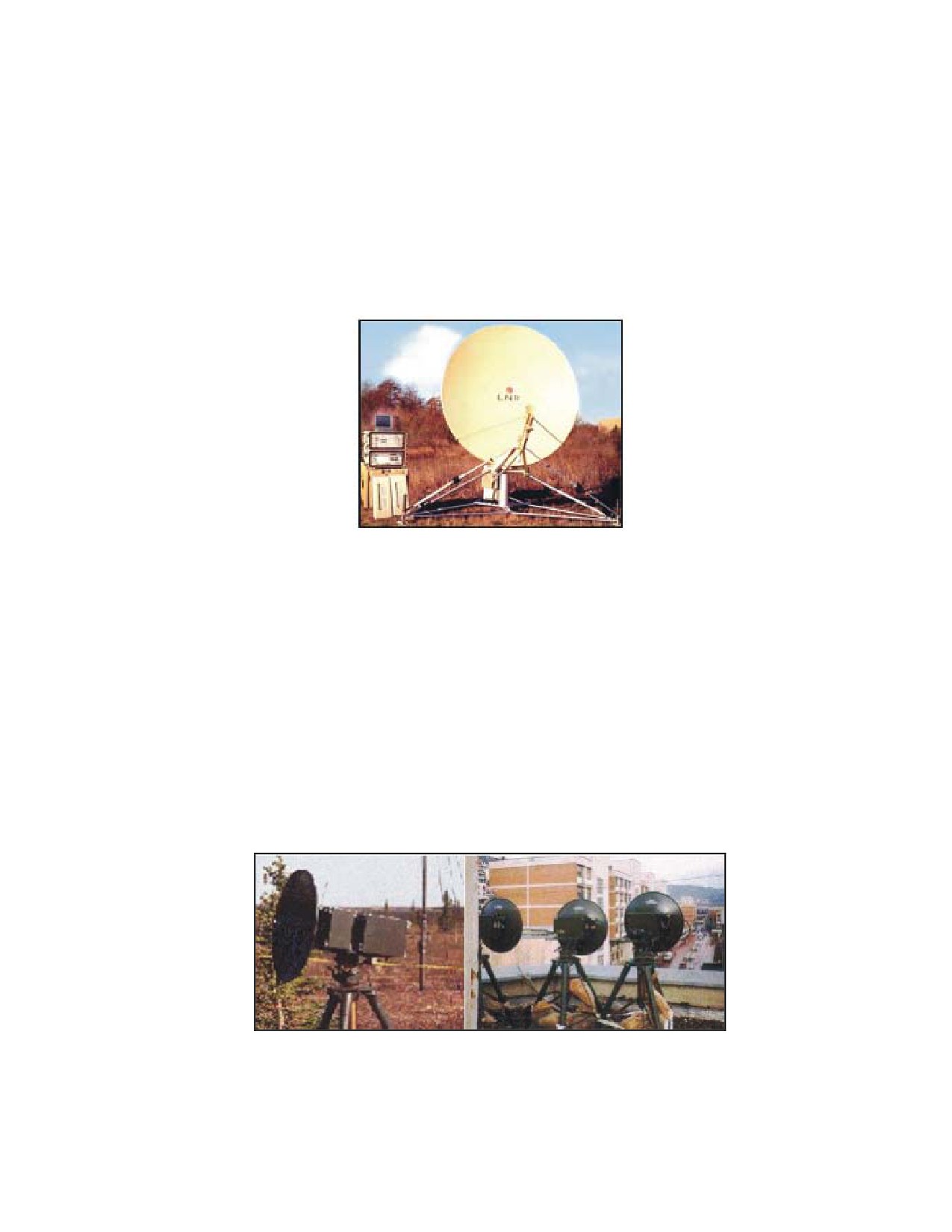
D-21. The AN/USSC-60A FTSAT is a small, lightweight, tri-band SATCOM
terminal, and its design is a unifold, lightweight tripod 2.4-meter antenna
system of modular architecture that is highly transportable. The FTSAT is an
affordable and proven SATCOM facility, certified for DSCS and INTELSAT
operation.
D-22. The FTSAT is easy to set up and is integrated, contained, and
transported in ruggedized transit cases. All transit case units are commercial
airline checkable for ease of deployment. The terminal is also transportable
on pallets by military aircraft. Terminal set-up and satellite acquisition is
accomplished in less than
60 minutes. The FTSAT provides worldwide
SATCOM operating over the following SATCOM systems:
• DSCS II/III.
• NATO IV.
• INTELSAT.
• EUTELSAT.
D-18
________________________________________________________________________________FM 6-02.45
• PANAMSAT.
• Domestic Satellite Organization (DOMSAT).
D-23. The modular architecture of the AN/USC-60A terminals easily
accommodates expansions such as a digital video, digital voice/fax
transmission, secure communications, and network control. Figure D-4
depicts an AN/USC-60A.
Figure D-4. AN/USC-60A
TROPO SATELLITE SUPPORT RADIO (TSSR) AN/GRC-239
NSN: 5820-01-378-8778
Reference: N/A
General Information
D-24. The AN/GRC-239 TSSR is a field tunable, full duplex, LOS microwave
radio terminal intended for rapid deployment. Characterized by ease of
transport, short set-up and teardown times, and reliable operation under
adverse environmental conditions, the TSSR is ideally suited for remoting
communications from a main site, hub, or headquarters to an isolated or
remote service component. It was designed to replace tactical CX-11230 dual
coaxial cable runs or tactical fiber optic cable assemblages (TFOCA). Figure
D-5 shows an AN/GRC-239.
Figure D-5. AN/GRC-239
D-19

FM 6-02.45________________________________________________________________________________
Technical Characteristics
D-25. The TSSR can interconnect with any conditioned diphase or fiber optic
trunk originating from TRI-TAC terminals, satellite systems, or COTS
equipment. The TSSR can provide either analog voice or a digital voice
orderwire. Table D-6 lists the technical characteristics of the AN/GRC-239.
Table D-6. Technical Characteristics of AN/GRC-239
Characteristic
Description
Frequency
14.4GHz - 15.25 GHz
Modulation
FM
Tuning Increments
100-KHz steps
Transmit-Receive Separation
Transmit and receive frequencies should
be selected at least 100 MHz apart
Transmit Power
300 mW
Planning Range
5-10 miles
Single TRI-TAC Digital Trunk Group
72-4608 Kbps
Data Rate
Balanced Nonreturn to Zero (Nrz)
6.144 Mbps
Group (from AN/TAC-1)
ENHANCED TACTICAL SATELLITE SIGNAL PROCESSOR (ETSSP) SHM-1337
D-26. The following paragraphs discuss the ETSSP.
General Information
D-27. The ETSSP supports point-to-point, hub-spoke, mesh, and hybrid
network configurations and can be used as either a hub or a spoke. It
provides aggregate interfaces (enhanced and current) to satellite terminals
using balanced/unbalanced NRZ, conditioned diphase (CDI), bipolar, and T-
Carrier 3 (T1)/European Basic Multiplex Rate (E1).
D-28. The SHM-1337 is a direct replacement for the TD-1337.
Technical Characteristics
D-29. The ETSSP, also known as the Enhanced Satellite Hub Multiplexer
Model SHM-1337, provides enhanced multiplexer features per MIL-STF-188-
168 and is interoperable with the current TD-1337 multiplexers installed in
the AN/TSC-85C, AN/TSC-93C, and AN/TSC-143 tactical satellite terminals.
D-20
________________________________________________________________________________FM 6-02.45
SWITCHING CENTERS
D-30. The following sections discuss the switching centers.
SINGLE SHELTER SWITCH (SSS) AN/TTC-56
NSN: 5805-01-452-5730
Reference: TM 11-5805-803-13&P-1
TM 11-5805-803-13&P-2
TM 11-5805-803-13&P-3
General Information
D-31. The AN/TTC-56 SSS is a downsized, mobile, and transportable tactical
digital circuit switch that includes a packet switch and a packet gateway
fielded to EAC signal units. The AN/TTC-56 interfaces with DSN, NATO,
commercial and tactical telephone switches, switchboards, and various
subscribers’ telephones.
D-32. The AN/TTC-56 SSS is an improved tactical circuit switch that is
replacing the AN/TTC-39D circuit switch. It is housed in a lightweight,
multipurpose shelter and mounted on an M1113 expanded capacity vehicle.
The SSS provides voice and packet switching capability using small,
lightweight, and modular switching equipment. It tows a trailer-mounted
diesel engine generator set that provides 10-kW primary operating power for
the system.
D-33. Signal Interface. Multiconductor and coaxial cable connections made at
the signal entry panel accommodate signal traffic in and out of the SSS.
Connector receptacles on these panels carry the signals through the shelter
wall. Inside each signal entry panel, electrical surge arrestors and high
voltage assemblies on the individual signal lines protect electrical equipment
from transient high voltage pulses. All panel connector receptacles are
waterproof. A hinged cover extends over the panel to provide additional
protection against the environment. A grounding stud is located on each
signal entry panel.
System Features
D-34. The following subscriber features are possible through the capabilities
of the SSS:
• Subscriber profiles.
• Multilevel precedence and preemption.
• Precedence level dialing.
• Conference calling.
• Call security.
• Call forwarding.
• Zone restriction.
• Commercial network access.
• Compressed dialing.
• Direct dialing.
D-21

FM 6-02.45________________________________________________________________________________
Technical Characteristics
D-35. Table D-7 lists the technical characteristics of the AN/TTC-56.
Table D-7. Technical Characteristics of the AN/TTC-56
Characteristics
Description
Power requirements:
Prime power
240 VAC, 60 Hz, signal phase
Auxiliary power
+26.5 VDC (nominal)
+24 VDC
Emergency power
Terminal capacity
Supports up to 300 digital subscribers 1
Provides 18 digital trunks groups
Voice conferencing
Up to four five-party conferences or
combinations of up to one 14-party
conference
Two 10-party conferences or
combinations of up to one 18-party
conference
Up to 20 preprogrammed conferences
Voice digitization rate
16 Kbps or 32 Kbps
Tactical High Speed Data Network
Supports SIPRNET, NIPRNET (in tunnel
(THSDN) overlay
mode), and VTC at up to approximately
4 Mbps
1 NOTE: It is possible to connect a much larger number of subscriber loops to the AN/TSC-56.
Different units have experienced different degrees of success in doing so. The 300 figure is
provided as a starting point for planning purposes.
SEN SWITCH AN/TTC-48(V)2
NSN: 5805-01-310-2539
Reference: TB 11-5805-764-15
TM 11-5805-764-13-1
TM 11-5805-764-13-2
TM 11-5805-764-23P
D-22
________________________________________________________________________________FM 6-02.45
General Information
D-36. The SEN switch is an attended mobile communications system that
provides command posts with automatic local secure switching and wire
subscriber access to MSE. The SEN C(V)1 and C(V)3 provide connections for
26 subscribers, while the SEN A(V)2, C(V)2, and C(V)4 provide connections
for 41 subscribers. The SEN switch also has provisions to directly access
commercial switching offices, interface with the CNR system, interface with a
TACSAT terminal, and interface with an analog to digital converter.
Individual computers, called host systems, and LANs interface with the SEN
using the packet switch and its associated devices, the signal data converter,
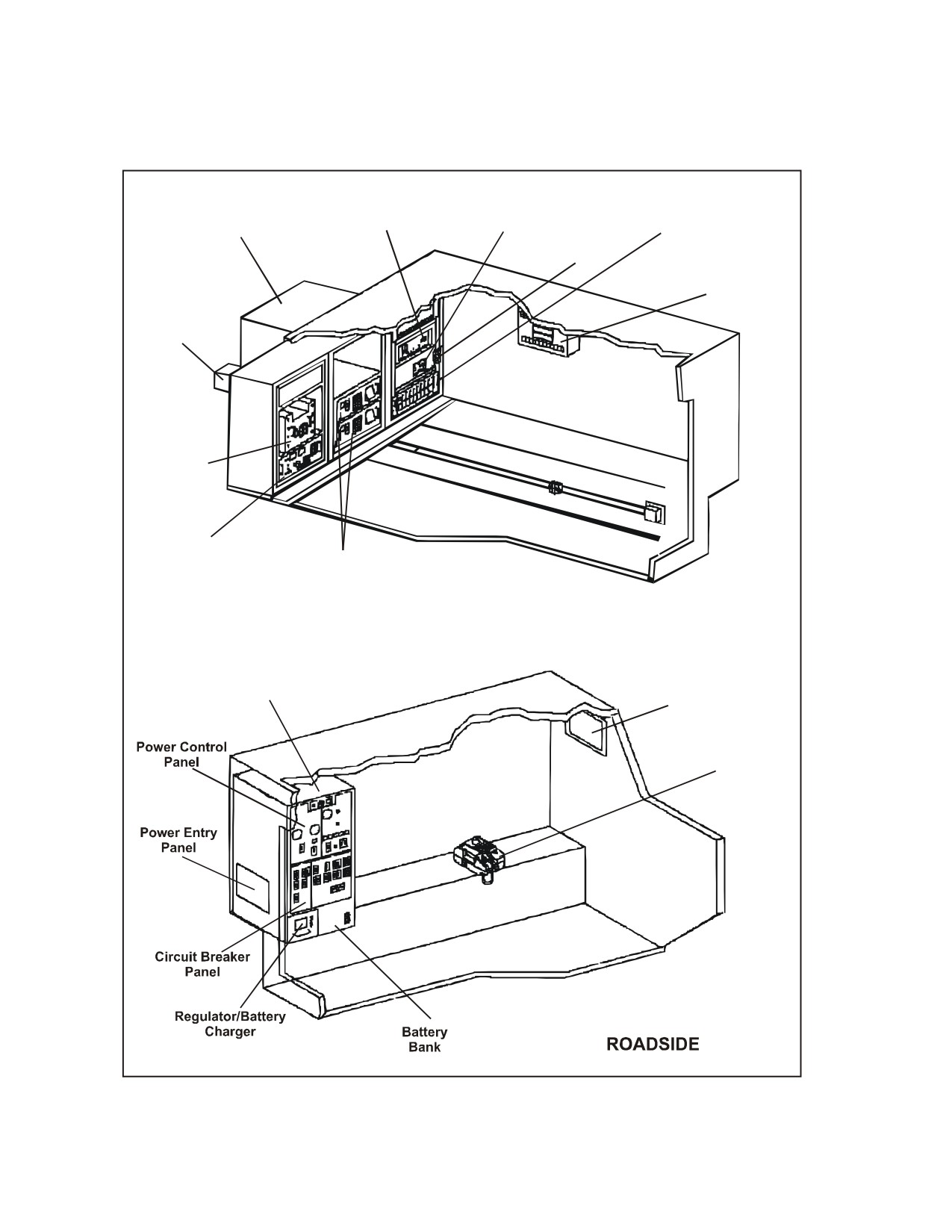
and transceivers. Figure D-6 shows a SEN.
NOTE: The information in this section applies to all models;
when no distinction between models is made, the common
name SEN is used.
Differences in EAC and MSE SEN
D-37. The EAC SEN switch provides EAC communications network access
for 41 local subscribers, and has provisions to directly access commercial
switching offices and to interface with the CNR system. Although the EAC
SEN switch and one of the MSE SEN switches have the same model number,
they are not internally configured the same. The EAC SEN switch interfaces
with an AN/TTC-39D and operates at 32 Kbps data rate. The EAC SEN
switch is equipped with a DNVT TA-1042 rather than the TA-1035/U used in
the MSE SEN. Additionally, the SHF radio and antenna components are not
provided with the EAC SEN switch.
Differences in EAC and MSE Subscriber Features
D-38. The subscriber-initiated affiliation and disaffiliation features of the
MSE network do not function in an EAC communications network. Operators
must manually enter, alter, and remove routing instructions and subscriber
profile information from the EAC SEN switch database. After updating the
database, all other subscriber features are the same.
AN/TYQ-127 COMMUNICATIONS DATA LINK AND AN/TTC-58(V) BBN
NSN: N/A
Reference: N/A
General Information
D-39. The AN/TYQ-127 is being fielded in response to urgent combatant
commander requirements for tactical data capability. The key subsystems of
the AN/TYQ 127 are COTS equipment, which the Army wholesale supply and
maintenance system does not fully support.
D-23
FM 6-02.45________________________________________________________________________________
Trunk Encryption
Communication
Environmental
Device
KY-57
Modem
Control Unit
H-350/U
Signal Entry Panel/
Patch Panel
Blower
CNR
KY-90
Switchboards (2)
Not Shown:
KYK-13 and Junction Box
CURBSIDE
Power Bay
Blower
DNVT
(T/A-954/TT)
Figure D-6. SEN
D-24
________________________________________________________________________________FM 6-02.45
D-40. The AN/TTC-58(V) BBN is being developed as a follow-on to the
general technical requirement filled by the AN/TYQ-127. The AN/TTC-58(V)
will be fielded in conjunction with the conversion of theater tactical signal
forces to the ITSB structure. The BBN system will support the immediate
need for data and voice services across the tactical battlespace. The BBN will
combine voice, data, and video switching with existing and emerging organic
transmission capabilities to provide a smaller, lighter, more capable system
to augment today’s ACUS, TRI-TAC, and MSE communications systems
network. Additionally, the BBN will meet the requirement for improved
tactical-to-strategic interoperability and inter- and intra-service data
network interoperability. The BBN will provide a high speed data and
video/imagery communications solution that will include a capability to
accommodate higher throughput for data networks and provide a method for
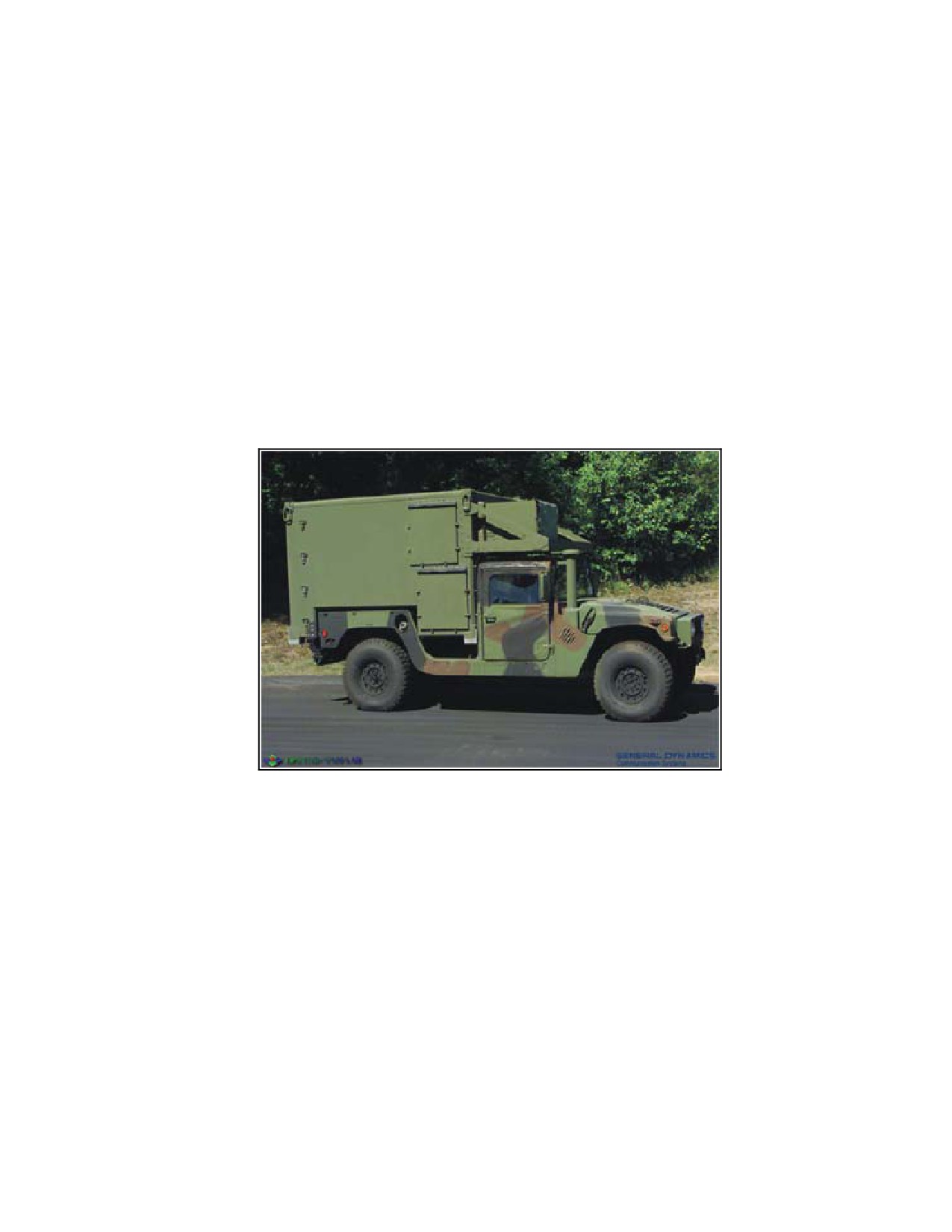
the effective use and allocation of bandwidth. Figure D-7 shows a BBN.
Figure D-7. AN/TYQ-127 BBN
PROMINA 800 (HUB) MULTISERVICE ACCESS PLATFORM
Commercial Item
General Information
D-41. The Promina 800 serves as a communications hub multiplexer. It
supports local voice subscriber loops and switching, data, video, fax/modem,
LAN, and imaging traffic, as well as ATM networking, advanced bandwidth
management, integrated service digital network
(ISDN), frame relay
networking, multiprotocol routing and bridging, voice processing, and digital
data networking. A typical customer would be a combatant commander/JTF
size headquarters. The Promina 800 uses either an AN/TSC-85C or a
multiple-link commercial satellite as a transmission medium. Figure D-8
shows an artist rendition of a Promina 800.
D-25

FM 6-02.45________________________________________________________________________________
Figure D-8. Artist Rendition of a Promina 800
Technical Characteristics
D-42. The Promina 800 consists of a high-speed shelf and multiple extended
expansion shelves. The high-speed shelf and extended expansion shelves
accommodate redundant alternating current/direct current power supplies.
The high-speed shelf provides for common equipment
(processor and
interconnect switching) modules, while the extended expansion shelves
accommodates up to 16 standard interfaces, applications or features, and
trunk modules per shelf.
PROMINA 400 (SPOKE) MULTISERVICE ACCESS PLATFORM
Commercial item
General Information
D-43. The Promina 400 fully integrates the functions of local voice subscriber
loops and switching, data, video, fax/modem, LAN, and imaging traffic, as
well as an ISDN switch/server and a frame relay switch/server. This
multiplexer normally supports remote spokes in a typical hub-spoke network
configuration. Typical customers would include JTF extension elements. The
Promina
400 uses an AN/TSC-93C or AN/TSC-143 as a transmission
medium. Figure D-9 shows an artist rendition of a Promina 400.
D-26

________________________________________________________________________________FM 6-02.45
Figure D-9. Artist rendition of a Promina 400
Technical Characteristics of the Promina 800 and Promina 400
D-44. Because this is COTS equipment, specifications are subject to change
without notice unless the government has made contractual arrangements to
the contrary for government purchased units.
D-45. Both the Promina
800 and Promina 400 are tailored to mission
requirements by the selection of cards installed. Table D-8 shows the
specifications for the Promina 800 and Promina 400. Table D-9 shows the
networking features of the Promina 800 and Promina 400. Not all of the
features listed below will necessarily be installed at one time, and some
features may appear in different quantities.
D-27

FM 6-02.45________________________________________________________________________________
Table D-8. Technical Characteristics of the Promina 800 and Promina 400
Characteristic
Promina 800 Description
Promina 400 Description
Physical System Capacity 1
nx64 trunks
96
15
E1 or T1 trunks
96
15
E3 or T3 trunks
4 or 6
2 (ATM only)
ATM Virtual Trunks
32
8
ATM Port Bundles
128
32
Data ports
1,488
352
Voice ports
2,000
480
Physical Specifications
Feature slots
128
24
Shelves
1-7
1-2
Physical design
Net.com cabinet,
Cabinet, standalone, or
standalone, or rackmount
rackmount
AC power (autoranging)
90 VAC-264 VAC
90 VAC-264 VAC
47 Hz-63 Hz
47 Hz-63 Hz
DC power
-48 VDC to -60 VDC
-48 VDC to -60 VDC
Dimensions (H x W x D)
84 in. x 22.09 in. x 32.56 in
33.6 in. x 19 in. x 21.67 in.
213.36 cm x 56.11 cm x
85.3 cm x 48.26 cm x 55.04
82.7 cm
cm
Ambient temperature
5°C-40°C
5°C-40°C
41°F -104°F
41°F -104°F
Relative humidity
5%-95%
5%-95%
(noncondensing)
1 Operational capacity is application dependent.
D-28

________________________________________________________________________________FM 6-02.45
Table D-9. Networking Features of the Promina 800 and Promina 400
Networking Features
Description
Traffic types
Synchronous data; asynchronous data; ATM; LAN; frame relay;
digital voice; analog voice; fax; voice band data; video; image
Transmission facilities
OC-3; E1; E3; T1; T3/DS3; fiber; microwave; satellite; DDS;
X.21; EIA-422; EIA-530
Switching techniques
Cell; packet; frame; circuit
Voice interfaces
Digital: DS1; DAMI (G.703/704); Analog: 2/4 wire E&M; FXO;
FXS
Voice signaling protocols
E&M; FXO; FXS; PLAR; SSDC5-A; COLISEE; R2; MLPP
Data interfaces
EIA-232; EIA-449/422; EIA-530; V.35; biphase; conditioned
diphase; X.21; V.24; V.36
LAN interfaces
Ethernet; Token Ring
MDSL Interfaces
ETR 152
SHF RADIO SYSTEMS
D-46. The following sections discuss SHF radio systems.
AN/TRC-138A RADIO REPEATER SET
NSN: 5820-01-161-9419
References: TM 11-5820-926-12-1
TM 11-5820-926-12-2
General Information
D-47. The AN/TRC-138A is a tactical communications assemblage
with
multiple system deployment. It provides a 576-channel short-range wideband
radio (SRWBR) link between the radio park at the top of the hill (TOH) and
the AN/TRC-175 radio terminal set at the bottom of the hill (BOH). It is used
as a radio repeater to provide a LOS (40 kilometers [25 miles] maximum)
microwave link (24/144-channel) between two external AN/TRC-138As and as
a radio/cable terminal to terminate up to 72/144 low speed channel systems
(48 kilometers [25 miles maximum]). The AN/TRC-138A can terminate three
PCM/digital group multiplexer (DGM) systems and is compatible with TRI-
TAC.
Major Components
D-48. Table D-10 lists the major components of the AN/TRC-138.
D-29

FM 6-02.45________________________________________________________________________________
Table D-10. Major Components of the AN/TRC-138
Components
Quantity
AN/GRC-222 radio sets
3
TSEC/KY-68 DSVT
1
TSEC/KG-84 loop encryption device
1
MD-1026 (P)/G group modems
3
LS-147F/F1 intercommunication station
1
TSEC/KY-57 voice encryption device
1
S-667C/TRC-138A shelter
1
Technical Characteristics
D-49. Table D-11 lists the technical characteristics of the AN/TRC-138A.
Table D-11. Technical Characteristics of the AN/TRC-138A
Characteristics
Description
Frequency range
4.4 to 5.0 GHz
Transmission range:
LOS
Up to 40 kilometers (25 miles)
SRWBR
8 kilometers (5 miles)
Cable driver modem
8 kilometers (5 miles) with repeaters
RF output
1-3 W
Channelization
Time division mulitplexer
Number of channels
SRWBR 576 channel link (from AN/TRC-175)
24/144 channel link (node-to-node) from another
AN/TRC-138A or AN/TRC-175
Orderwire:
Digital voice
16 Kbps
Analog voice
300 to 1800 Hz at 3 dB bandwidth points
Weight
2,424 kilograms (5,240 pounds) including shelter
Power requirement
115 VAC ±6 volts, 50/60/400 Hz, three-phase
Power unit
PU-631
Mounting
S-667 shelter
D-30

________________________________________________________________________________FM 6-02.45
AN/TRC-138C RADIO REPEATER SET
NSN: 5820-01-387-4544
References: TM 11-5820-1135-12
General Information
D-50. The AN/TRC-138C radio repeater provides a
32- to
144-channel
internodal microwave link, up to 40 kilometers (25 miles). It is capable of
communicating with adjacent nodes via radio or fiber optic cable links and
can provide communications between the BOH and the TOH for up to 8
kilometers (5 miles). It is used as a radio/cable terminal to terminate up to
three systems or as a radio repeater to extend the range of internodal
multichannel links. The AN/TRC-138C is used in both PCM (12 to 96
channels) and DGM (36 to 144 channels) multichannel systems to satisfy
operational requirements. The AN/TRC-138C fits into a smaller shelter than
earlier models. By using two HMMWV/s rather than one 5-ton truck for
tactical transport, this high mobility DGM assemblage (HMDA) can then be
driven right onto the aircraft and right off into the area where needed.
Major Components
D-51. Table D-12 lists the major components of the AN/TRC-138C.
Table D-12. Major Components of the AN/TRC-138C
Components
Quantity
S-667C/TRC-138C (modified S-805/G) shelter
1
AN/GRC-222 radio sets
3
AN/VRC-46 or AN/VRC-90 radio set
1
C-10717/TRC control orderwire
1
ID-2324(V)/TRC alarm status indicator
1
MD-1026(P)/G group modems
3
MD-1272/G fiber optic modem receivers-
12
transmitters
Reflector assembly
3
D-31
FM 6-02.45________________________________________________________________________________
TROPO SYSTEMS
D-52. The following sections discuss the TROPO systems.
AN/TRC-170(V) RADIO TERMINAL SET
NSN: 5820-01-148-3977 (AN/TRC-170(V)2)
5820-01-148-3976 (AN/TRC-170(V)3)
References: TM 11-5820-934-13-1-3 (AN/TRC-170(V)2)
TM 11-5820-934-13-1-4 (AN/TRC-170(V)2)
TM 11-5820-934-13-1-5 (AN/TRC-170(V)2)
TM 11-5820-934-13-2-1 (AN/TRC-170(V)3)
TM 11-5820-934-13-2-2 (AN/TRC-170(V)3)
TM 11-5820-934-13-2-3 (AN/TRC-170(V)3)
TM 11-5820-934-13-2-4 (AN/TRC-170(V)3)
TM 11-5820-934-13-2-5 (AN/TRC-170(V)3)
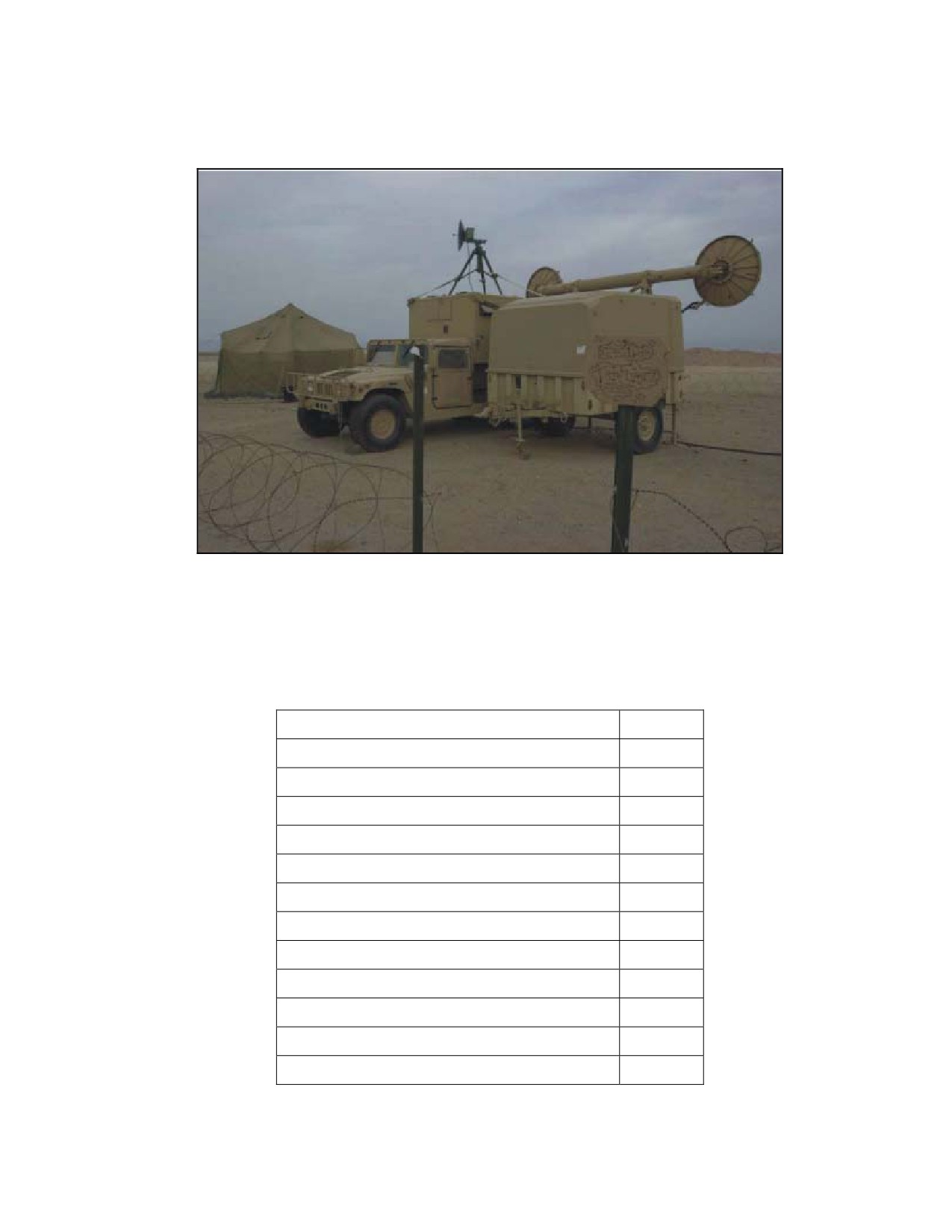
General Information
D-53. The AN/TRC-170(V) provides tactical multichannel digital TROPO or
LOS systems for transmitting analog and digital traffic. It can terminate one
system and deploy at hybrid modes for internodal and extended range (skip
node) communications. The AN/TRC-170(V)2 replaces the AN/TRC-132
TROPO. The AN/TRC-170(V)3 replaces the AN/TRC-112/121 TROPO. Figure
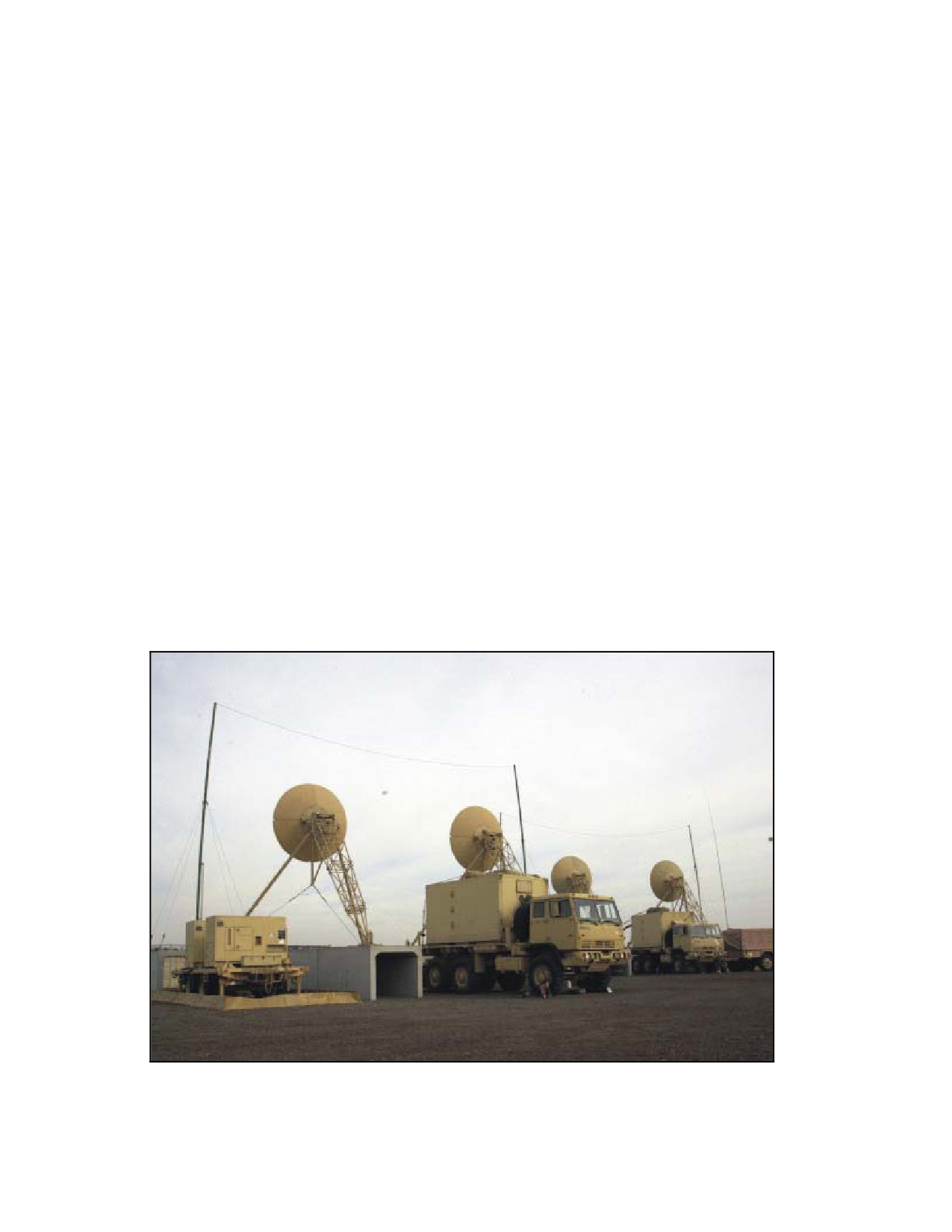
D-10 shows an AN/TRC-170(V)2 heavy TROPO, and Figure D-11 shows an
AN/TRC-170(V)3 light TROPO.
Figure D-10. AN/TRC-170(V)2 Heavy TROPO
D-32
________________________________________________________________________________FM 6-02.45
Figure D-11. AN/TRC-170(V)3 Light TROPO
Major Components
D-54. Table D-13 lists the major components of the AN/TRC-170.
Table D-13. Major Components of the AN/TRC-170
Components
Quantity
AN/GRC-197 radio set
1
KY-68 DSVT
1
MD-1026( )(P)/G group modems
1
TSEC/KY-58 VINSON
1
KYK-13 electronic transfer device
1
QRA antenna system, 3 meters
1
TD-1236( )/G trunk group multiplexer
1
C-10602/TRC-170 voice orderwire control unit
1
MD-1023( )/G low speed cable driver modem
1
High power amplifiers (2 kilowatts) ((V)2)
2
High power amplifier (2 kilowatts) ((V)3)
1
Environmental control unit
1
D-33

FM 6-02.45________________________________________________________________________________
Table D-13. Major Components of the AN/TRC-170 (Continued)
Components
Quantity
OM-61/TRC-170 TROPO modem
1
TSEC/KG-81 trunk encryption devices
2
SN-531/TRC-170(V)2 synthesizers
2
SN/531/TRC-170(V)3 synthesizer
1
TSEC/KG-84 dedicated loop encryption
2
devices
951-211-1 high wind kit
1
Technical Characteristics
D-55. Table D-14 lists the technical characteristics of the AN/TRC-170.
Table D-14. Technical Characteristics of the AN/TRC-170
Characteristics
Description
Number of channels
8 to 144
Data rates
128 to 4,096 Kbps
Frequency range
4 to 5.0 GHz
Power output
2 kilowatts
Diversity
(V)2: Quad or dual
(V)3: Dual bandwidth
(V)2: 3.5 or 6 MHz
(V)3: 3.5 or 7 MHz
Range
(V)2: 241 kilometers (150 miles)
(V)3: 161 kilometers (100 miles)
Power requirement
120/208 VAC, 50/60/400 Hz
Weight
(V)2: 3,859 kilograms (8,500 pounds) (with shelter)
(V)3: 2,656 kilograms (5,850 pounds) (with shelter)
Shelter
(V)2: Modified S-280
(V)3: Modified S-250
D-34

________________________________________________________________________________FM 6-02.45
UHF RADIO SYSTEMS
D-56. The following sections discuss UHF radio systems.
AN/TRC-173 AND AN/TRC-173A RADIO TERMINAL SETS
NSN: 5802-01-316-0890
Reference: TM 11-5820-1090-12
TM 11-5820-1090-24P
TM 11-5820-1090-34
General Information
D-57. The AN/TRC-173 and AN/TRC-173A operate as radio or cable
terminals and can terminate up to two 7 to 32 channels at 32 Kbps per
channel or 7 to 64 channels at 16 Kbps per channel digital multichannel LOS
systems.
Major Components
D-58. Table D-15 lists the major components of the AN/TRC-173
and
AN/TRC-173A.
Table D-15. Major Components of the AN/TRC-173 and AN/TRC-173A
Components
Quantity
S-589 shelter
1
TSEC/KY-58 VINSON
1
AN/GRC-103(V)4 radio sets
2
Power supply 28 VDC
1
TSEC/KG-81 trunk encryption devices
2
AS-3047/GRC-103 antennas
2
AB-577 masts
2
MK-806 mast extension kits
2
LS-147F/FI intercommunication station
1
TD-1234( )/TTC remote multiplexer combiner
4
(RMC)
CV-2500 frequency electronic converter
1
DA-437/GRC-103 dummy loads
2
MD-1023( )/G low speed cable driver modems
2
TA-312/PT
1
H-182/PT headset
1
D-35

FM 6-02.45________________________________________________________________________________
Table D-15. Major Components of the AN/TRC-173 and AN/TRC-173A (Continued)
Components
Quantity
MD-1026( )(P)/G group modems (up to four per
2
case)
KY-68 DSVT
1
KYK-13 electronic transfer device
1
KYK-15/TSEC net control device
1
Fill cable auxiliary components and spares
1
KOI-18 tape reader
1
TSEC/KG-84 dedicated loop encryption device
1
SINCGARS radio
1
AN/MJQ-19 power unit
1
C-10716 orderwire control unit
1
Technical Characteristics
D-59. Table D-16 lists the technical characteristics of the AN/TRC-173.
Table D-16. Technical Characteristics of AN/TRC-173
Characteristic
Description
Frequency range
Range 1.35 to 1.85 GHz (Band IV)
Power output
15 watts (Band IV)
Range
64 kilometers (40 miles)
Power requirement
115 VAC, single phase
Weight
2,179 kilograms (4,800 pounds)
Shelter
S-589
AN/TRC-173B RADIO TERMINAL SET
NSN: 5820-01-387-4952
References: TM 11-5820-1136-12
TM 11-5820-1136-24P
TM 11-5820-1136-34
General Information
D-60. The AN/TRC-173B radio terminal set provides radio termination and
multiplexing for extension access links of 8 to 36 channels at 32 Kbps per
channel or 7 to 32 channels. The maximum traffic channels provided are 64
at 16 Kbps per channel. The AN/TRC-173B provides direct interface with any
mixture of four-wire analog and digital subscriber terminals through remote
D-36

________________________________________________________________________________FM 6-02.45
multiplex equipment and interfaces directly with a unit level circuit switch, if
required. The AN/TRC-173B fits into a smaller shelter than the A model. By
using two HMMWVs rather than one 5-ton truck for tactical transport, this
HMDA can then be driven right onto the aircraft and right off into the area
where needed. Figure D-12 depicts the AN/TRC-173B.
Figure D-12. AN/TRC-173B
Major Components
D-61. Table D-17 lists the major components of the AN/TRC-173B.
Table D-17. Major Components of the AN/TRC-173B
Components
Quantity
S-589B/TRC-173B (modified S-805/G) shelter
1
AN/GRC-103(V)4 radio set
2
DA-437/GRC-103 dummy load, electric
2
CV-2500/GR waveform converter
1
C-10716/TRC control orderwire (OCU-1)
1
ID-2324(V)/TRC alarm status indicator
1
MD-1026(P)/G group modems
2
MD-1272/G fiber optic modem receivers-transmitters
8
TD-1234(P)/TTC
4
D-37

FM 6-02.45________________________________________________________________________________
AN/TRC-174 AND AN/TRC-174A RADIO REPEATER SETS
NSN: 5820-01-161-9420 (AN/TRC-174)
5820-01-316-0880 (AN/TRC-174A)
References: TM 11-5820-864-12-1 (AN/TRC-174)
TN 11-5820-1089-12 (AN/TRC-174A)
General Information
D-62. The AN/TRC-174 and AN/TRC-174A operate as radio repeaters or split
radio terminals and can terminate up to three 18l/36 digital multichannel
LOS systems. They will deploy in hybrid (analog/digital) integrated tactical
communications system nodes and extension systems during the transitional
period. In split terminal operations, they connect to the communication nodal
control element by CX-11230 or SRWBR. The AN/TRC-174 replaces the
AN/TRC-110 and AN/TRC-152.
Major Components
D-63. Table D-18 lists the major components of AN/TRC-174 and AN/TRC-
174A.
Table D-18. Major Components of the AN/TRC-174 and AN/TRC-174A
Components
Quantity
AN/GRC-103(V)4 radio sets
3
AB-577 masts
3
MD-1023( )/G low speed cable driver modems
3
CY-4507 mast extension kits
3
LS-147F/FI intercommunication station
1
MD-1026( )(P)/G group modems (up to four
1
modems per case)
DA-437/GRC-103 dummy loads
3
TA-312/PT telephone
1
H-182/PT headset
1
TSEC/KG-84 dedicated loop encryption devices
2
AN/MJQ-19 power unit, ancillary components, and
1
spares
C-10716 orderwire control unit (OCU-1)
1
KY-68 DSVT
1
KYK-13 electronic transfer device
1
TSEC/KY-58 VINSON
1
D-38

________________________________________________________________________________FM 6-02.45
Table D-18. Major Components of the AN/TRC-174 and AN/TRC-174A (Continued)
Components
Quantity
Fill cable
1
Power supply 28 volts direct current (VDC)
1
KOI-18 tape reader
1
AS-3047/GRC-103 antennas
3
SINCGARS radio
1
Technical Characteristics
D-64. Table D-19 list the technical characteristics of the AN/TRC-173B.
Table D-19. Technical Characteristics of the AN/TRC-173B
Characteristic
Description
Frequency range
Range 1.35 to 1.85 GHz (Band IV)
Power output
15 watts (Band IV)
Range
48 kilometers (30 miles)
Power requirement
115 VAC, single phase
Weight
2,134 kilograms (4,700 pounds)
Shelter
S-590
AN/TRC-174B RADIO REPEATER SET
NSN: 5820-01-387-4520
References: TM 11-5820-1137-12
TM 11-5820-1137-24P
TM 11-5820-1137-34
General Information
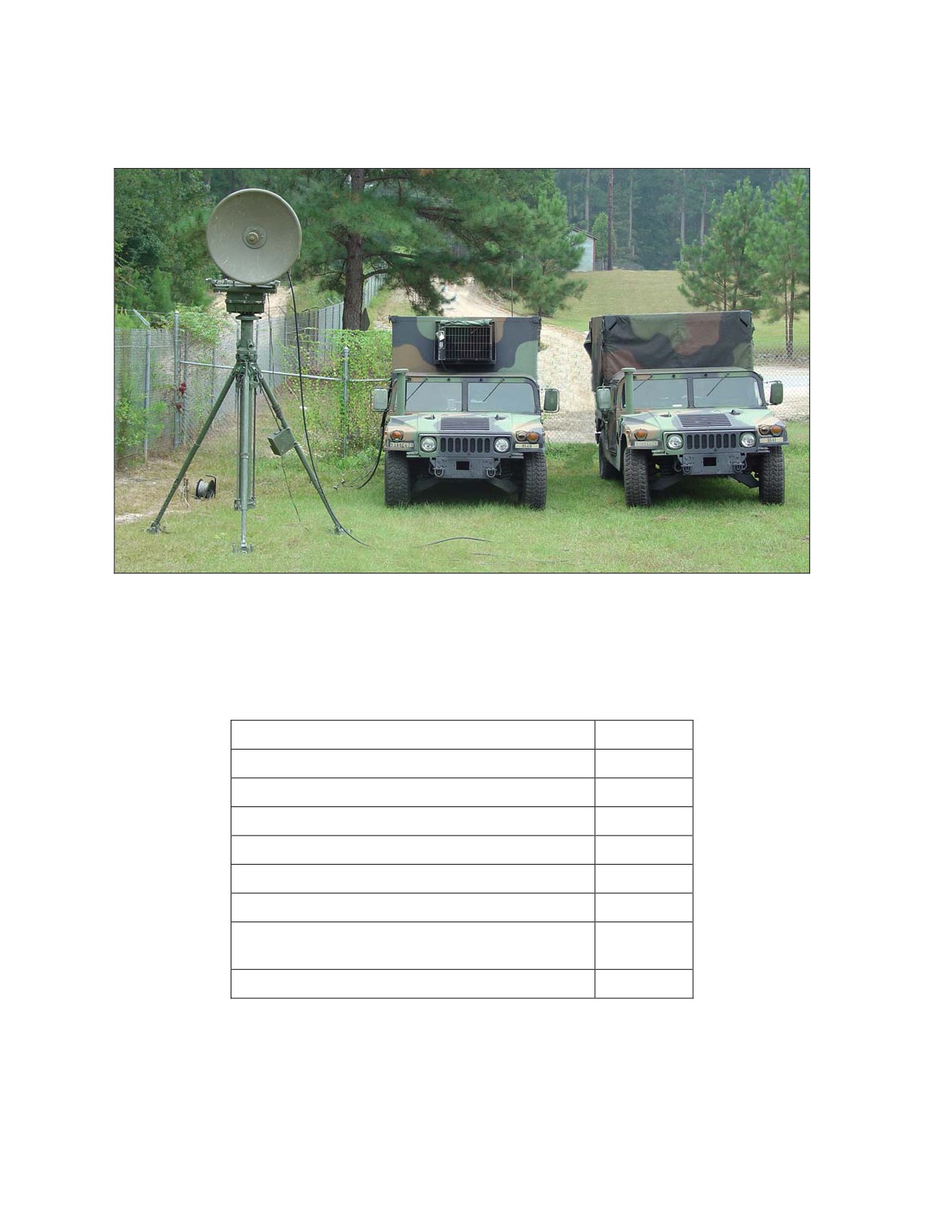
D-65. The AN/TRC-174B radio repeater set is used in extension links, up to
48 kilometers (30 miles), to provide users that are in the vicinity of the node
entry into the area communications systems. It is used as a split terminal at
major areas and extension nodes to provide radio termination of up to three
eight- to 36- multichannel systems at 32 Kbps per channel. It is also used as
a radio repeater to extend the range of extension links. The AN/TRC-174 will
fit into a smaller shelter. By using two HMMWVs rather than one 5-ton truck
for tactical transport, this HMDA can then be driven right onto the aircraft
and right off into the area where needed. Figure D-13 depicts the AN/TRC-
174B.
D-39
FM 6-02.45________________________________________________________________________________
Figure D-13. AN/TRC-174B
Major Components
D-66. Table D-20 lists the major components of the AN/TRC-174B.
Table D-20. Major Components of the AN/TRC-174B
Components
Quantity
S-590B/TRC-174B (modified S-805/G) shelter
1
AN/GRC-103(V)4 radio sets
3
DA-437/GRC-103 dummy loads, electric
2
C-10716/TRC control orderwire (OCU-1)
1
ID-2324(V)2/TRC alarm status indicator
1
MD-1026(P)/G group modems
2
MD-1272/G fiber optic modem receivers-
8
transmitters
CV-2500/GR waveform converter
1
D-40
________________________________________________________________________________FM 6-02.45
TIME DIVISION MULTIPLEXER AN/FCC-100
LIN: M85055 (AN/FCC-100(V)1X)
(AN/FCC-100(V)2X)
(AN/FCC-100(V)3X)
M84987 (AN/FCC-100(V)1)
(AN/FCC-100(V)2)
(AN/FCC-100(V)4)
(AN/FCC-100(V)4X)
(AN/FCC-100(V)5X)
(AN/FCC-100(V)6)
(AN/FCC-100(V)8)
NSN: 5820-01-121-1991 (AN/FCC-100(V)1)
5820-01-121-7079 (AN/FCC-100(V)1X)
5895-01-226-4034 (AN/FCC-100(V)2)
5820-01-226-4035 (AN/FCC-100(V)2X)
5820-01-330-2671 (AN/FCC-100(V)3X)
5895-01-335-9365 (AN/FCC-100(V)4)
5820-01-342-3210 (AN/FCC-100(V)4X)
5820-01-368-9112 (AN/FCC-100(V)5X)
5820-01-368-9111 (AN/FCC-100(V)6)
5895-01-415-8663 (AN/FCC-100(V)8)
Reference: TM 11-5805-732-series (AN/FCC-100(V)1, 1X, 2, 2X, 4, 4X)
TM 11-5805-784-series (AN/FCC-100(V)3X, 5X, 6)
General Information
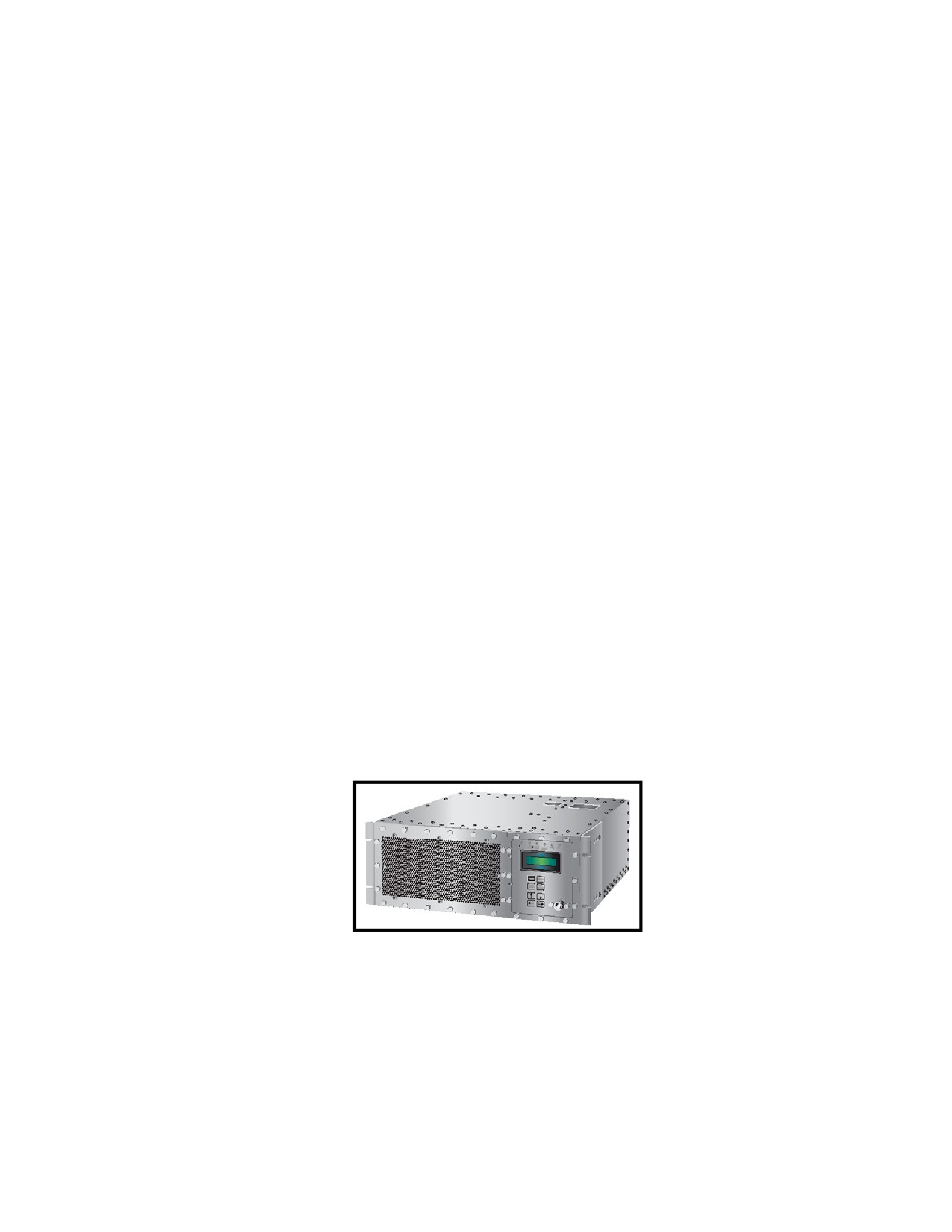
D-67. The AN/FCC-100 is a rack-mountable, stand-alone unit used to perform
multiplexing, demultiplexing, timing, synchronizing, framing, monitoring,
and alarm reporting. This multiplexer normally supports remote spokes and
JTF extensions and uses AN/TSC-93C or TROPO/LOS radios as a
transmission medium. Figure D-14 shows an FCC-100.
Figure D-14. FCC-100
Technical Characteristics
D-68. The AN/FCC-100 terminates up to 16 full-duplex circuits and supports
digital port operations (synchronous NRZ, conditioned diphase, and TRI-TAC
conditioned diphase, asynchronous, and isochronous) and analog port
modulation encoding/decoding (PCM and continuous variable slope delta).
D-41
Appendix E
Illustrations
This appendix contains figures that help illustrate information contained
within the manual. Due to the detail of each illustration, the figures are
provided in foldout format, and can only be printed on 11 x 17 size paper.
TRI-TAC DGM EQUIPMENT
E-1. Figure E-1 (shown as E-1a and E-1b) depicts a typical TRI-TAC DGM
equipment deployment. The focus of this figure is equipment employment; it
does not represent any particular organization or scenario.
ITSB
E-2. Figure E-2 depicts a typical ITSB deployment and is an example of what
a typical network might resemble.
STRATEGIC/FIXED STATION ORGANIZATIONAL STRUCTURES
E-3. Figures E-3 through E-6 depict the following:
• Strategic/Fixed station theater tactical organizational structure of the
active components (Figure E-3).
• Strategic/Fixed station theater tactical organizational structure after
the conversion to ITSB for the active components (Figure E-4).
• Strategic/Fixed station theater tactical organizational structure of the
reserve components (Figure E-5).
• Strategic/Fixed station theater tactical organizational structure after
the conversion to ITSB for the reserve components (Figure E-6).
E-1
Glossary
AAMDC
Army Air Missile Defense Command
ABCS
Army Battle Command System
ABN
airborne
AC
Active Component
ACA
Army Contracting Agency
ACC
Army Component Command
ACCOR
Army COMSEC Central Office of Record
ACERT
Army Computer Emergency Response Team
ACL
access control list
ACP
Allied Communications Publication
ACSIM
Army Chief of Staff for Installation Management
ACUS
Area Common User System
ADA
air defense artillery
ADC
analog to digital converter
ADP
automated data processing
ADPE
automated data processing equipment
AEI
Army Enterprise Infostructure
AEIMSG
Army Enterprise Infostructure Management Steering Group
AEIT
Army Enterprise Infostructure Technology
AF
Air Force
AFCERT
Air Force Computer Emergency Response Team
AFFOR
Air Force Forces
AG
Adjutant General
AGMS
automated gateway message switch
AHRS
Army Human Resource System
AIS
automated information system
AKDC
Automatic Key Distribution Center
AKM
Army Knowledge Management
AKO
Army Knowledge Online
AMC
US Army Materiel Command
Glossary-1
FM 6-02.45________________________________________________________________________________
AMMO
ammunition
ANOSC
Army Network Operations and Security Center
ANSOC
Army Network and Systems Operations Center
AO
area of operations
AOR
area of responsibility
APOD
aerial port of debarkation
ARCENT
US Army Forces, US Central Command
ARFOR
Army Forces
ARM
asset and resource management
ARNG
Army National Guard
ARSOF
Army Special Operations Forces
ASA-INSCOM
US Army Signal Activity-Intelligence and Security Command
ASAS
all source analysis system
ASC
Army Signal Command
ASCC
Army Service Component Command
ASD
Assistant Secretary of Defense
ASG
area support groups
ASIOE
associated support items of equipment
ATE
automated test equipment
ATM
asynchronous transfer mode
ATO
Army Telecommunications Office
ATRRS
Army Training requirements and Resource Training System
ATS
air traffic services
ATTN
attention
AUI
attachment unit interface
AUTODIN
automated digital network
B/P/C/S
base, post, camp, or station
B/W
bandwidth
Banyan VINES
Banyan Virtual Integrated Network Service
BATCOM
battalion control center
BBN
base band node
BDE
brigade
BGP (IP)
Border Gateway Protocol
Glossary-2
________________________________________________________________________________FM 6-02.45
BIS
battlefield information system
BLDG
building
BLOS
beyond line-of-sight
BLUF
bottom line up front
BN
battalion
BOH
bottom of the hill
BOM
bill of materials
BPSK
biphase shift keying
BSM
battlefield spectrum management
C&W
cable and wire
C/P/S
camp/post/station
C2
command and control
C3
command, control, and communications
C3I
command, control, communications, and intelligence
C4
command, control, communications, and computers
C4I
command, control, communications, computers, and intelligence
C4IM
command, control, communications, computers, and information
management
C4IS
command, control, communications, computers, and information
systems
C4IT
command, control, communications, computers, and information
technology
CA
Civil Affairs
CAC
common access card
CACOM
civil affairs command
CAP
crisis action procedures
CAW
certification authorization workstation
CBE
command budget estimate
CBR
chemical, biological, radiological
CBT
combat
CCB
Configuration Control Board
CCI
controlled cryptographic items
CCP
Configuration Change Proposal
CDI
conditioned diphase
CDR
commander
Glossary-3
FM 6-02.45________________________________________________________________________________
CE
communications-electronics
CENTCOM
Central Command
centers of gravity
Those characteristics, capabilities, or localities from which a
military force derives its freedom of action, physical strength, or
will to fight.
CFC
Combined Forces Command
CFLCC
Commander Forces Land Component Command
CG
commanding general
CHEM
chemical
CIA
Central Intelligence Agency
CID
Criminal Investigation Division
CINC
Commander in Chief
CIO
chief information officer
CIO/G6
chief information officer/G6
CJCS
Chairman, Joint Chiefs of Staff
CJCSI
Chairman, Joint Chiefs of Staff Instruction
CJCSM
Chairman, Joint Chiefs of Staff Manual
CJTF
Combined Joint Task Force
C-LAN
coalition local area network
CLSU
COMSEC logistics support unit
CM
configuration management
CMD
command
CMDSA
COMSEC material direct support activity
CMDT
commandant
CMST
Communication Management Support Board
CND
computer network defense
CNN
cable news network
CNR
combat network radio
Co
company
coalition
An ad hoc arrangement between two or more nations for common
action.
COE
contemporary operational environment
CofS
Chief of Staff
COMCAM
Combat Camera
Comm
communications
Glossary-4
________________________________________________________________________________FM 6-02.45
COMMCEN
communications center
COMMZ
communications zone
COMPUSEC
computer security
COMSEC
communications security
CON
Certification of Notifications
CONOPS
continuity of operations
CONUS
continental United States
COOP
continuity of operations plan—assists each core business process,
application manager, or facility business manager in completing
Y2K contingency plans (i.e., risk assessment and continuity of
operations plan).
COTS
commercial off-the-shelf
coup de main
An offensive operation that capitalizes on surprise and
simultaneous execution of supporting operations
to
achieve
success in one swift stroke.
CP
command post
CPT
captain
CROP
common relevant operational picture
CS
combat support
CSCE
communications system control element
CSP
call service position
CSPE
communications systems planning element
CSS
combat service support
CTO
Certificate to Operate
CUDP
common user data package
C-WAN
coalition wide area network
DA
Department of the Army
DCA
Defense Communications Agency
DCE
distributed computing environment
DCO-A
Defense Certification Office-Army
DCofS
Deputy Chief of Staff
DCP
deployed command post
DCS
Defense Communications System
DCSC4
Deputy Chief of Staff for command, control, communications, and
computers
DCSENG
Deputy Chief of Staff Engineer
Glossary-5
FM 6-02.45________________________________________________________________________________
DCSIM
Deputy Chief of Staff, Information Management
DCSIM
Deputy Chief of Staff for Information Management
DCSINT
Deputy Chief of Staff for Intelligence
DCSLOG
Deputy Chief of Staff for Logistics
DCSMED
Deputy Chief of Staff Medical
DCSOPS
Deputy Chief of Staff for Operations and Plans
DCSPER
Deputy Chief of Staff for Personnel
DCSPM
Deputy Chief of Staff Provost Marshall
DCSRM
Deputy Chief of Staff Resource Management
DCW
data cable and wiring
DDN
digital data network
DECnet
Digital Equipment Corporation
DGM
digital group multiplex
DID
defense in depth
DII
defense information infrastructure
DISA
Defense Information System Agency
DISN
Defense Information Systems Network
DISNET
defense integrated secure network
DIVTAC
division TAC
DKET
Deployable Ku-band Earth Terminal
DLA
Defense Logistics Agency
DMS
Defense Message System
DMZ
demilitarized zone
DNOSC
Deployed Network Operation and Security Center
DNS
domain name service
DNVT
digital nonsecure voice terminal
DoD
Department of Defense
DOI
defense operating instructions
DOIM
Directorate of Information Management
DOMSAT
Domestic Satellite Organization
DPAS
digital patch and access
DREAR
division rear
DRSN
Defense Red Switch Network
DRU
direct reporting unit
Glossary-6
________________________________________________________________________________FM 6-02.45
DS
direct support
DSB
direct broadcast satellite
DSC
DMS Service Center
DSCS
Defense Satellite Communications System
DSED
Direct Support Engineering Directorate
DSN
defense switched network
DSSCS
Defense Special Security Communications System
DSTE
digital subscriber terminal equipment
DSVT
Digital Secure voice Terminal
DTE
data terminal equipment
DTG
digital trunk group
DUA
directory user agents
DVM
digital voice modem
ea
each
EAC
echelons above corps
EAM
emergency action message
ECB
echelons corps and below
ECV
enhanced combat vehicle
EGP (IP)
Exterior Gateway Protocol
EHF
extremely high frequency
EIA
Electronic Industries Alliance
EIOM
engineer, install, operate, and maintain
Elec
electronic
e-mail
electronic mail
EMSEC
emission security
ENCOM
engineer command
ENG
engineer
ENL
enlisted
EOD
explosive ordinance disposal
EPW
enemy prisoner of war
EQ
equipment
ES-IS
element structure information set
(OSI CLNS)
ESM
enterprise systems management
Glossary-7
FM 6-02.45________________________________________________________________________________
ESO
Engineering Support Organizations
ESS
electronic switching system
ESTA
Enterprise Systems Technology Activity
ETSSP
enhanced tactical satellite signal processor
ETUT
enhanced tactical user terminal
EUSA
Eight US Army
EUTELSAT
European Telecommunications Satellite Organization
EW
electronic warfare
EXS
extended expansion shelf
FAX
facsimile
FCO
Facility Control Office
FCS
future combat system
FDU
force design update
FEC
forward error correction
FEP
FLTSATCOM EHF package
FIN
finance
FLTSATCOM
fleet satellite communications
FM
frequency modulated; field manual
FOIA
Freedom of Information Act
FORSCOM
US Army Forces Command
FOT
fiber-optic terminal
FOTS
fiber-optic transmission systems
FPC
Functional Processing Center
FSEN
future small extension node
FTP
file transfer protocol
FTS
file transfer service
FTSAT
Flyaway Triband Satellite Terminal
FWD
forward
G1
Assistant Chief of Staff, Personnel
G2
Assistant Chief of Staff, Intelligence
G3
Assistant Chief of Staff, Operations
G4
Assistant Chief of Staff, Logistics
G5
Assistant Chief of Staff, Civil Affairs
G6
Assistant Chief of Staff, Communications
Glossary-8
________________________________________________________________________________FM 6-02.45
G8
Assistant Chief of Staff, Resource Management
GATES
Global Air Transportation Execution System
GBS
Global Broadcast System
GCCS
Global Command and Control System
GCCS-A
Global Command and Control System Army
GCS
ground control station
GENSER
general service
GIG
Global Information Grid
GMF
ground mobile forces
GNOSC
Global Network Operations and Security Center
GOTS
government off-the-shelf
GP
group
GPS
global positioning system
GS
general support
GSE
ground support equipment
GWS
groupware server
HDLC
high level data link control
HF
high frequency
HHC
headquarters and headquarters company
HHD
headquarters and headquarters detachment
HHMMWV
heavy high mobility multipurpose wheeled vehicle
HLS
Homeland security
HMDA
high mobility DGM assembly
HMMWV
high mobility multipurpose wheeled vehicle
HN
host nation
HNA
host nation agreement
HOSP
hospital
HQ
headquarters
HQ,NETCOM/
Headquarters, Network Enterprise Technology
Command/9
th
9TH ASC
Army Signal Command
HQASC
Headquarters Army Signal Command
HQDA
Headquarters, Department of the Army
HSS
high speed shelf
Glossary-9
FM 6-02.45________________________________________________________________________________
humanitarian
Programs conducted to relieve or reduce the results of natural or
assistance
man-made disasters or other endemic conditions such as human
pain, disease, hunger, or privation that might present a serious
threat to life or that can result in great damage to or loss of
property. Humanitarian assistance provided by US forces is
limited in scope and duration. The assistance provided is
designed to supplement or complement the efforts of the host
nation civil authorities or agencies that may have the primary
responsibility for providing humanitarian assistance.
IA
information assurance
IAVA
information assurance vulnerability alert
IAW
in accordance with
IDM
information dissemination management
IDNX
Integrated Digital Network Exchange
IDS
intrusion detection system
IEEE
Institute of Electrical and Electronics Engineers
IFD
immediate file delivery
IG
Inspector General
IGAR
Inspector General Action Request
IGRP
Interior Gateway Routing Protocol
IHFR
improved high frequency radio
IMA
Individualization Augumentee
IMCEN
Information Management Support Center
IMINT
imagery intelligence
IMO
Information Management Office
IMP
Information Management Plan
Info
information
information system
The organized collection, processing, transmission,
and
dissemination of information, IAW defined procedures, whether
automated or manual. In information warfare, this includes the
entire infrastructure, organization, and components that collect,
process, store, transmit, display, disseminate, and act on
information.
INFOSEC
information security
INSCOM
Intelligence and Security Command
INTACS
integrated tactical communications system
INTELL
intelligence
IO
information operations
Glossary-10
________________________________________________________________________________FM 6-02.45
IOC
initial operational capability
IP
Internet Protocol
IPX
Internetwork Packet Exchange
IRR
Individual Ready Reserve
ISC
Information Systems Command
ISDN
integrated service digital network
ISDN BRI
Integrated Services Digital Network Basic Rate Interface
ISM
installation support modules
ISP
Internet Service Provider
ISR
intelligence, surveillance, reconnaissance
ISS
information system security
ISSO
Information Services Support Office
IST
interswitch trunk
ISYSCON
integrated system control
IT
information technology
ITID
Information Technology Integration Directorate
ITOE
intermediate table of organizations and equipment
ITSB
integrated tactical signal battalion
ITW&A
integrated tactical warning and assessment
IW
information warfare—actions taken to achieve information
superiority by affecting adversary information, information-based
processes, information systems, and computer-based networks
while leveraging and defending one’s own information,
information-based processes, information systems, and computer-
based networks.
JAG
Judge Advocate General
JANAP
Joint Army-Navy-Air Force Publication
JC4P
joint command, control, communications, and computer package
JCCC
Joint Communication Control Center
JCMT
joint collection management tool
JCS
Joint Chief of Staff
JCSE
Joint Communications Support Element
JFACC
Joint Force Air Component Commander
JFC
joint force command(er)
JFLCC
Joint Force Land Component Commander
Glossary-11