FM 3-34.400 GENERAL ENGINEERING (December 2008) - page 6
Appendix B
z
Protective Design Center, Omaha, Nebraska.
z
Transportation Systems Center, Omaha, Nebraska.
z
POL Fuels, Omaha, Nebraska, DX.
z
Hazardous, Toxic, and Radioactive Waste, Omaha, Nebraska.
z
Rapid-Response Hazardous, Toxic, and Radioactive Waste Center, Offutt Air Force Base,
Nebraska, DX.
z
Photogrammetric Mapping, Saint Louis, Missouri, DX.
z
Construction Equipment/Cost Index Directory of Expertise, U.S. Army Corps of Engineers,
Walla Walla, Washington.
z
Wastewater Treatment, Mobile, Alabama, DX.
z
Power Reliability Enhancement Program, Headquarters USACE, Fort Belvoir, Virginia.
THEATER CONSTRUCTION MANAGEMENT SYSTEM
DESCRIPTION AND PURPOSE
B-18. The TCMS is a personal, computer-based automated construction planning, design, management,
and reporting system that is used by military engineers for contingency construction activities. Its primary
purpose is to support engineer planners with facilities design information for outside the continental United
States (OCONUS) and contingency mission requirements. It is intended to be used by all levels of engineer
units from the theater engineer command down to the engineer company level.
B-19. The TCMS is the approved method for distributing the AFCS designs and related information. The
AFCS provides logistical and engineering data that is organized, coded, and published to assist engineer
planners and designers in executing GE missions in contingency environments. AFCS is governed by the
following:
z
AR 415-16.
z
TM 5-301-1.
z
TM 5-301-2.
z
TM 5-301-3.
z
TM 5-301-4.
z
TM 5-302-2.
z
TM 5-302-3.
z
TM 5-302-4.
z
TM 5-302-5.
z
TM 5-303.
B-20. The system determines personnel and materiel requirements and the cost, weight, and volume of
materials needed for a specific project. It provides standard plans for base camp development, utilities, and
airfields. The TCMS is updated and distributed annually.
B-21. The TCMS provides the automation tools necessary to use the AFCS designs information to
accomplish TO engineering and construction activities in support of mission requirements. It contains
detailed project descriptions and related construction estimates to include the following:
z
Real estate requirements.
z
Design and construction drawings and plans.
z
BOM for individual facilities or the complete project.
z
Construction resource estimates as related to Army engineer unit construction capability (will be
updated to include other Service engineer unit capabilities as well).
z
Theater-oriented construction guide specifications.
z
Construction directives.
B-6
FM 3-34.400
9 December 2008
Reachback Tools
z
DD Form 1391 (FY ____ Military Construction Project Data) process initiation.
z
Project and unit construction status reports.
THEATER CONSTRUCTION MANAGEMENT SYSTEM ASSESSMENT
B-22. Distribution of TCMS is available upon request to all U.S. military engineer units, including all
Active Component, USAR, and ARNG. This includes requests from all other Service engineers.
B-23. The Huntsville Center of the USACE provides active TCMS support and trains TCMS users in the
basic operation of the system. To take full advantage of the system, users will need to know how to use
commercial software packages. Automated computer-assisted design
(AutoCAD®) and Microsoft
Project™ constitute a large portion of the TCMS capability.
KEY FEATURES OF THEATER CONSTRUCTION MANAGEMENT SYSTEM
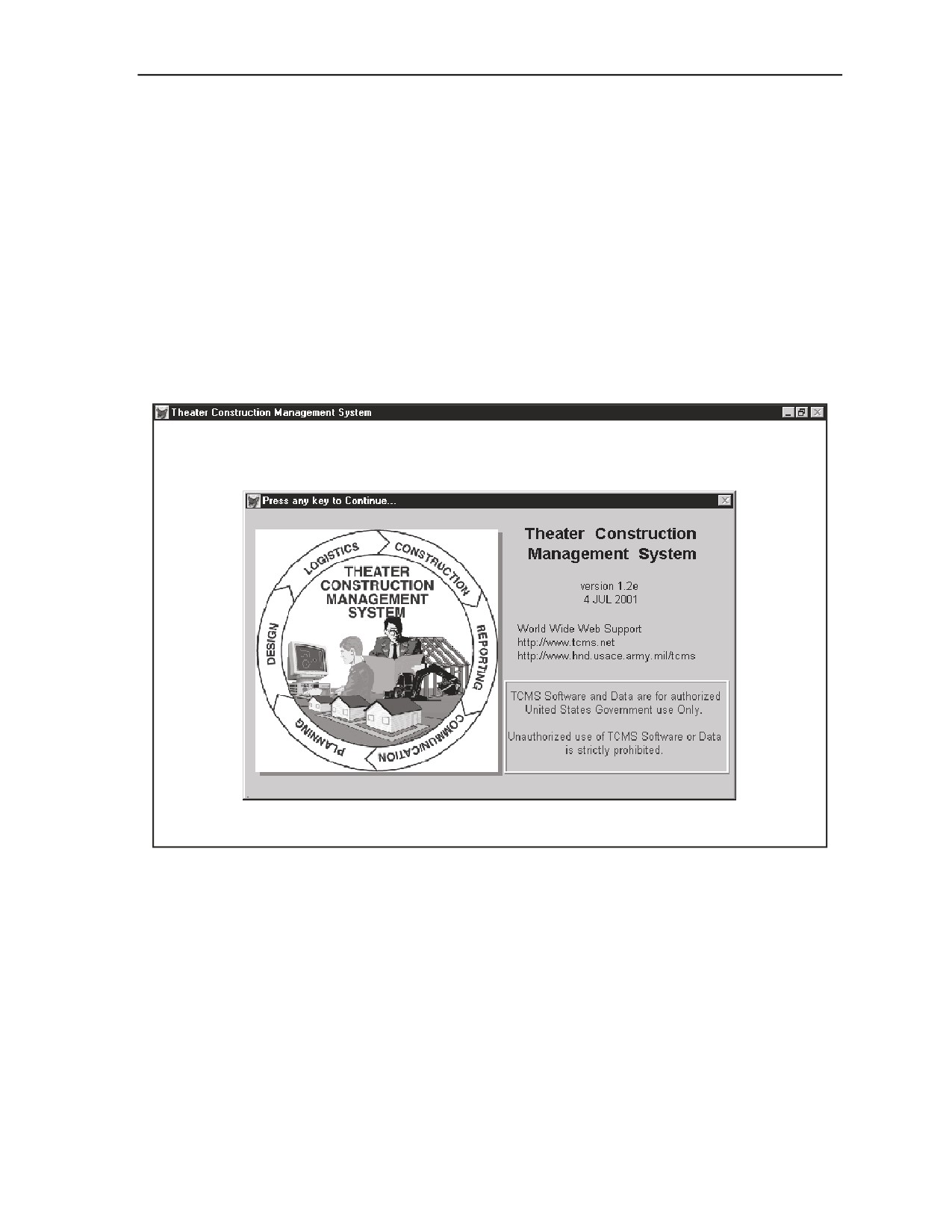
B-24. Figure B-4 depicts the TCMS online system.
Figure B-4. TCMS online
Planning
B-25. Users are able to develop facility and installation plans to satisfy mission construction requirements
using the TCMS computer routines. Planning information includes providing estimates for material and
construction requirements.
Design
B-26. Users are able to prepare site-specific and new design and construction drawings, use existing AFCS
designs within TCMS, or modify as required to site. They can adapt mission requirements using the TCMS
CADD capability.
9 December 2008
FM 3-34.400
B-7
Appendix B
Management
B-27. Users are able to set up and manage the construction progress and the construction resource
allocation and utilization throughout the construction time frame.
Reporting and Communication
B-28. The TCMS develops and transmits the necessary reports up the engineer chain of command. This
facilitates the decision-making process using inter computer electronic and direct entry.
WATER RESOURCE DETECTION TEAM
PURPOSE
B-29. The objective of the water resource detection team (WRDT) is to identify high-potential areas for the
best quality of water, within available drilling equipment capability, to meet the water production
requirements of the mission.
CAPABILITIES
B-30. Water resources database (WRDB) expertise and studies are concentrated in four areas or elements.
The four areas or elements are listed below:
z
Database. The Topographic Engineering Center produces and maintains a worldwide DOD
WRDB of available water supply and hydrologic data, including groundwater resources. The
WRDB is derived from classified and open-source data, maps, documents, and imagery. When
specific missions and requests are received for areas where data are uncertain or inconclusive,
the team will research additional sources and data unique to the area. The resulting WRDT
product or report summarizes the information critical to planning a successful well, such as the
hydrogeology, target depth, aquifer material, expected yield, and probable water quality. Office
studies, based on research and analysis of existing data, are the most cost-effective and timely
WRDT approach and take hours to days to complete.
z
Remote sensing. If databases and other supplemental information are inadequate, aerial or
satellite imagery may be studied and analyzed for indications of groundwater. This source is
especially useful in a hard-rock area, where siting wells on significant fractures and fracture
intersections is the key to success. The acquisition and analysis of imagery increases the time
and cost to complete an office study.
z
Supporting specialists. If office studies including imagery analysis are inadequate, one or more
supporting specialists may be deployed to the site. These specialists contact HN groundwater
experts, collect and evaluate in-country data associated with existing or historic wells, and
conduct hydrogeologic field reconnaissance of specific areas before drilling. They may also
assist with interpreting well cuttings and down-hole electric logging during drilling. Field
studies take days to weeks to complete.
z
Geophysics. Should information gathered by supporting specialists be insufficient, additional
local site investigation may be necessary using exploratory geophysics. Geophysicists may
deploy to the site to conduct electrical resistivity, seismic refraction, or other on-site tests to
better define the subsurface before drilling. Geophysical exploration and data analysis generally
take weeks to complete. Costs are significantly higher than for office-based studies and are paid
by the requester.
B-31. When activated, the WRDT does not automatically deploy to provide technical support for military
operations. The starting point for each WRDT request is to identify high-potential areas through the
examination of existing databases, followed by the collection and analysis of additional sources and
imagery. In those rare cases when high-potential water sites cannot be identified from source data and
imagery, teams from the supporting specialists and/or geophysics elements can be deployed for on-site
investigations. This should take place before the arrival of the well drillers. If deployed to the TO, the
WRDT operates as a component of the theater engineer command or senior engineer organization in
B-8
FM 3-34.400
9 December 2008
Reachback Tools
theater. As with any USACE capability, activation of the WRDT for deployment is not automatic; it must
be requested through the supporting theater engineer command or through other appropriate command
channels to the Topographic Engineering Center. The commander provides and arranges for the WRDT
logistics and administrative support necessary for mission accomplishment.
AUTOMATED ROUTE RECONNAISSANCE KIT
PURPOSE
B-32. An ARRK provides military units an adaptable, easy-to-use reconnaissance package. This allows
engineer reconnaissance teams or other engineer reconnaissance elements to rapidly collect and process
reconnaissance (all types, but generally route) information.
CAPABILITIES
B-33. The ARRK uses a field-ready laptop computer to continuously collect reconnaissance information
without stopping or leaving the vehicle for routine calculations. Time, security, and accuracy issues
associated with a route reconnaissance are reduced. The ARRK collects pictures, voice recordings, GPS
locations, accelerometer, and gyroscope data streams in three dimensions. Unlike the traditional, manually
recorded route reconnaissance efforts, the ARRK allows an operator with minimum training experience to
collect, process, and export route information. The ARRK accommodates a chronological, picture replay of
the route and georeferenced display of major features that affect the classification and usage of the road or
route. The viewer of the data can scroll through the stored data types to instantly locate specific features
along the route. Data includes automated determination of slope, radius of curvature, and ride quality. The
reconnaissance data collected from the ARRK is quickly converted by the operator to a preformatted report
that is according to the requirements of FM 3-34.170. Planned improvements for the system include the
integration of a laser range finder and digital scale reference guide. The system has the capability to be a
stand-alone data collection tool and a fully interoperable data collection platform for dissemination and a
repository of route information.
ANTITERRORISM PLANNER, VERSION 2.1
PURPOSE
B-34. The AT Planner is based on threat, mission, and site considerations. It is designed to assist
commanders in planning, implementing, and evaluating protective measures, expedient structure designs,
and standoff guidance required for protection.
CAPABILITIES
B-35. The AT Planner provides the user with a computerized analysis tool for evaluating critical assets in
terrorist threat scenarios based on aggressors, tactics, and weapons systems. The threat conditions dictate a
number of security measures from this manual that the user must consider and possibly employ. These
measures are cumulative from the lowest to the highest threat level and are presented in the AT Planner in
a concise format. Emphasis has been placed on the evaluation of structural components, windows,
personnel, and other limited critical assets. Structural components are defined as frames, walls, and roofs
from common construction materials. Damage to the building components is calculated using algorithms
from the Facility and Component Explosive Damage Assessment Program (FACEDAP), with the user
providing the distance of the explosive charge from the building.
B-36. The AT Planner can provide the required standoff for a given explosive charge. Once the appropriate
standoff is determined based on expected explosive size and an acceptable level of building damage, the
AT Planner provides information on protective barriers and a vehicle velocity calculator to aid in barrier
and obstacle selection. Extensive information is available on various types of obstacles and protective
barriers and the information source is referenced. In addition, the AT Planner provides a basis for the
design and analysis of wall and window retrofits. The capability is available to view facility or site images,
9 December 2008
FM 3-34.400
B-9
Appendix B
locate assets on the site image, and show building damage in 2-D and 3-D graphical formats. Blast walls
can be placed in front of structures, and the resulting damage to a protected building is then calculated.
Glass hazard calculations have been incorporated along with user-defined, pressure-impulse curves to give
engineers more flexibility in evaluating structures.
B-37. The AT Planner contains algorithms to estimate injuries and fatalities to occupants of structures and
provides the consequences of a terrorist attack for the AT program planning. The AT Planner can be
obtained by contacting ERDC.
DEFENSE ENVIRONMENTAL NETWORK AND INFORMATION
EXCHANGE
PURPOSE
B-38. The Defense Environmental Network and Information Exchange
(DENIX) is an electronic
environmental bulletin board accessible throughout the DOD. It gives DOD environmental, safety, and
occupational health managers a central communications platform to gain timely access to vital
environmental information.
CAPABILITIES
B-39. DENIX, which was based on the Army’s Defense Environmental Electronic Bulletin Board System,
gives users the ability to—
z
Read online environmental publications (proprietary or DOD-specific).
z
Send and receive mail electronically on the DENIX host computer or across the Internet.
z
Exchange environmental information via managed discussion forums based on a subject area.
z
Send and receive required reporting data through the chain of command.
z
Peruse and request environmental training courses and seminars.
z
Access the DENIX directory service database.
z
Upload and download files from DENIX to and from a personal computer.
UNITED STATES ARMY CENTER FOR HEALTH PROMOTION AND
PREVENTIVE MEDICINE
PURPOSE
B-40. The USACHPPM has a mission to provide worldwide technical support for implementing preventive
medicine, public health, and health promotion and wellness services into all aspects of America's Army and
the Army community, anticipating and rapidly responding to operational needs and adaptable to a changing
world environment. The USACHPPM organization is headquartered at Aberdeen Proving Ground,
Maryland, with subordinate commands in Landstuhl, Germany, and Sagami, Japan. USACHPPM also
maintains subordinate commands at three locations across the United States: Fort Meade, Maryland; Fort
McPherson, Georgia; and Fort Lewis, Washington.
CAPABILITIES
B-41. The USACHPPM is a linchpin of medical support to combat forces and the military managed-care
system. It provides worldwide scientific expertise and services in clinical and field preventive medicine,
environmental and occupational health, health promotion and wellness, epidemiology and disease
surveillance, toxicology, and related laboratory sciences. It supports readiness by keeping Soldiers fit to
fight, while also promoting wellness among their families and the federal civilian workforce. Professional
disciplines represented include chemists, physicists, engineers, physicians, optometrists, epidemiologists,
audiologists, nurses, industrial hygienists, toxicologists, entomologists, and many others as well as
subspecialties within these professions.
B-10
FM 3-34.400
9 December 2008

Appendix C
Infrastructure Rating
Table C-1, pages C-1 through C-4, is provided as an example of how the staff
engineer (as the integrating staff proponent) can communicate the results of an
infrastructure assessment or survey to the commander. While the areas are generally
the same as the areas included in the infrastructure assessment worksheet, the
evaluation criteria for some of the rated areas may require more specific information,
such as that provided in the survey. It is intended that the individual conducting the
assessment or survey also complete the infrastructure rating as a part of a complete
infrastructure reconnaissance. See chapter 4 for more information on infrastructure
assessment and survey.
Table C-1. Status color coding of infrastructure categories
Area
Green
Amber
Red
Black
Sewage
Sewage system
Sewage system works,
No treatment observed,
No sewage treatment
works consistently
but treatment status is
but treatment plant
system; destroyed
undetermined
exists
No sewage observed
No sewage observed, but
Sewage observed, and
Presence of raw
and no odor
odor is present and/or
odor present
sewage is a public
system is damaged
health issue
Operational in 100
Operational in 50 percent
Operational in less than
No operational sewage
percent of public
or more of public facilities
50 percent of public
in public facilities
facilities
facilities
Water
Water distribution
Water distribution works
Water distribution does
No water distribution
works at 100 percent
at 50 percent or more of
not work
system; destroyed
capacity
capacity with some leaks
Tested as clean
Appears clean, no smell,
Does not appear clean,
Tested, nonpotable
and/or local populace
and local populace states
and local populace
and/or appears
is consuming
that it is clean
states that it is not clean
contaminated and has
bad odor
Running water in 100
Running water in 50
Running water in less
No running water in
percent of public
percent or more of public
than 50 percent of
public facilities
facilities
facilities
public facilities
Electricity
Power distribution
Power distribution system
Power distribution
No power distribution
system works;
works; blackouts
system is unreliable;
system; destroyed
blackouts are planned
unplanned
frequent blackouts
Electric lines are 100
Electric lines are 50
Electric lines are less
Electric lines are all
percent; no damage
percent; some minor
than 50 percent; major
down; hot wires
and no power loss
damage and
damage and noticeable
exposed; significant
undetermined power loss
power loss
power loss
Power grid station
Power grid station
Power grid station
Power grid station
intact; secure
operational; unsecure
nonoperational; unable
stripped; destroyed
to secure
Academics
Building serviceable;
Building is adequate;
Building is usable;
Building is not usable;
all utilities
utilities operate over 50
utilities operate less
utilities are
operational; secure
percent; not secure
than 50 percent; not
nonfunctional
secure
Academic resources
Academic resources
Academic resources
Extremely limited
available to all
available to 50 percent or
available to less than 50
academic resources
students
more
percent
9 December 2008
FM 3-34.400
C-1

Appendix C
Table C-1. Status color coding of infrastructure categories (continued)
Area
Green
Amber
Red
Black
Trash
Formal trash collection
Formal trash
No formal trash
No trash collection
system is operational
collection system
collection system
exists, but is limited
Trash collection is in a
Unknown central
Central trash
Trash is consolidated
central area that does
trash collection area
collection area
in an area that
not present a health
presents a possible
presents a health
hazard
health hazard
hazard
No trash buildup in public
Limited trash in
Public facilities have
Public facilities have
facilities
public facilities;
no means to remove
excess trash
relatively clean
trash
Medical
Medical facilities are
Medical facilities are
Medical facilities are
Medical facilities are
functional; backup
usable; no backup
unsanitary; significant
not usable due to
power; minimal
power; some
equipment and supply
damage and
equipment issues;
equipment shortages;
shortages
unsanitary conditions;
secure
not secure
looted
Emergency services
Emergency services
No emergency
No emergency
including multiple
exist; ground
services; ground
services
ambulatory services
transport only
transport without
available
medically trained
personnel
Veterinary services
Limited veterinary
On-call veterinary
No veterinary
available; animal holding
services available;
services; no holding
services
area
inadequate holding
area
area
Safety
Police department
Police department
Police department
Police department is
functional; secure
functional a minimum
functional less than 50
nonfunctional;
building; equipment
of 50 percent;
percent; unable to
building is not usable;
available and operational
building securable;
secure building;
no equipment
equipment available
limited equipment
and operational less
available
than 50 percent
Fire department
Fire department
Fire department
Fire department is
functional; secure
functional a minimum
functional less than 50
nonfunctional;
building; equipment
of 50 percent;
percent; unable to
building is not usable;
available and operational
building securable;
secure building;
no equipment
equipment available
limited equipment
and operational more
available
than 50 percent
Other
Minimum of a Class C
Minimum of a Class
Minimum of a Class E
Road is not trafficable
road; can be upgraded;
D road; damage and
road; upgrade
Considerations:
no visible damage
upgrade
requirements are
Roads and
requirements will
significant; materials
Railroads
impact traffic flow
not readily available
Operational railroad
Railroad is damaged,
Railroad damage is
Railroad system did
system
but resources to
extensive; resources
exist, but now has
repair are available;
to repair are not
extensive damage to
jacks available
readily available
both track and trains
Other
Bridges are trafficable;
Bridges are
Bridges are not
Bridge is not
Considerations:
no visible damage
trafficable; damage to
trafficable for military;
trafficable and is
spans; supports
risky for civilians;
impassable
Bridges and
intact
damage to spans and
Waterways
supports
MLC verified through
MLC calculated, but
MLC is ineffective due
Construction repair
ERDC or other structural
not verified due to
to damage
required before MLC
engineer
damage
can be determined
Inspection and
Inspection and
Inspection and
Inspection and
evaluation shows original
evaluation
evaluation determines
evaluation determines
strength assessment
determines strength
minimal supportable
that bridge cannot
valid
support issues
strength
support weight
C-2
FM 3-34.400
9 December 2008

Infrastructure Rating
Table C-1. Status color coding of infrastructure categories (continued)
Area
Green
Amber
Red
Black
Other
Airport capable of
Airport can support
Airport damaged;
No working airport
supporting military and
limited military traffic;
utilities and
Considerations:
civilian traffic concurrently;
no visible damage
structures are not
Airports
no visible damage
reliable or safe
Runway, taxiway, and
Runway serviceable,
Runway is not
Runway is not
parking aprons are
but taxiway and
serviceable; can
serviceable;
serviceable; working and
parking limited; C130
repair with available
dimensions will not
parking MOG greater than
and C17 only
resources
support military
or equal to 2 (military)
aircraft; major repair
and upgrades
required
Residences are
Residences are
Residences are
Residences are
Other
structurally sound and
damaged and need
damaged and
destroyed
Considerations:
offer protection from the
structural evaluation;
structurally unsafe;
Housing
environment
offer limited
no protection from
protection from the
the environment
environment
Utilities are working and
Utilities are working
Utilities work less
Utilities are
reliable
over 50 percent; not
than 50 percent;
nonoperational
reliable
require significant
repairs
Other
Telephone system
Telephone hookups
Limited telephone
No telephone hook-
operational and reliable in
available; some
hookups and
ups or equipment
Considerations:
public facilities
equipment available;
equipment available;
Communications
somewhat reliable
not reliable
Postal system is
Postal system is
Postal system exists;
No postal system
operational and reliable
slow; over 50
extremely slow; less
percent of mail
than 50 percent of
delivered
mail delivered
Media—television,
One form of media
One form of media
No form of media
internet, radio,
exists and is
exists but has limited
newspaper—operational,
operational,
availability and
available, and reliable
available, and
reliability
reliable
Other
HAZMAT/hazardous waste
Some HAZMAT and
HAZMAT and
HAZMAT and
properly segregated,
hazardous waste not
hazardous waste not
hazardous waste
Considerations:
stored, and labeled
properly segregated,
properly segregated,
not segregated,
HAZMAT
stored, or labeled
stored, or labeled
stored, or labeled
Containers adequate for
Containers not
Containers
Containers
the material
generally adequate,
inadequate,
inadequate,
but limited corrosion
corroded, and
corroded, and
or damage
leaking
leaking
Safety measures and
Inadequate safety
No safety measures
No safety measures
secondary containment in-
measures and
or secondary
or secondary
place
secondary
containment
containment
containment
Hazards communications
Limited hazards
No hazards
No hazards
system in place
communications
communications
communications
system
system
system
No leaks or spills
Potential for leaks
Some leaks and
Gross
and spills
spills already
contamination
present;
present;
contaminants may
contaminants have
enter air, soil,
entered air, soil,
groundwater, or
groundwater, and
water courses
water courses
Spill prevention and
Limited spill
No ability to prevent
No ability to prevent
cleanup measures in
prevention and
or clean up spills
or clean up spills
place/available
cleanup measures
available
9 December 2008
FM 3-34.400
C-3

Appendix C
Table C-1. Status color coding of infrastructure categories (continued)
Area
Green
Amber
Red
Black
Other
Community leaders not
Community leaders are
Community leaders are
Community
hostile; religious centers
neutral; religious
negative; religious
leaders hostile;
Considerations:
are intact; supportive of
centers are damaged
centers are damaged
religious centers
Attitude
GE effort
but securable
and not securable;
destroyed; do not
skeptic of GE support
want GE
assistance
No ethnic tension
Distinct ethnic groups
Distinct ethnic groups
Ethnic violence
within AO; supportive
within AO; one group
occurs; one
of GE effort if equal
dominant; GE tasks
group extremely
among groups
cannot be
dominant; GE
accomplished for all
effort would
groups
increase ethnic
tension
Unemployment is less
Unemployment is
Unemployment is
Unemployment is
than 50 percent
greater than 50
greater than 50
a serious issue;
percent; Willing and
percent; Unable to
unwilling to
able to work to support
support GE work effort
support GE work
GE effort
effort
No formal paramilitary
Paramilitary threat
Paramilitary threat a
Paramilitary
threat
briefed at the BCT/RCT
concern at BCT and
threat a concern
level
RCT level
at echelons
above BCT and
RCT level
Note. Food supply and cultural, historical, and religious are still under development.
C-4
FM 3-34.400
9 December 2008
Appendix D
Environmental Considerations
GE involves a significant number of environmental considerations in the planning
and execution of military operations. The level of environmental considerations
applied to a particular military operation will be articulated in annex L of the CCDR’s
OPORD and must be linked to the engineering decisions and guidance articulated in
the engineering support plan. The engineer and ENCOORD on the staff is
responsible for ensuring that these considerations are appropriately integrated into the
OPLAN and followed in the execution of GE tasks and missions. Efforts should
always be made to minimize the release of hazardous substances into the
environment, protect cultural and natural resources, and prevent pollution.
Operational necessity may at times supersede these concerns, but that is never an
excuse for not considering them and minimizing detrimental effects whenever
possible. Commanders protect the natural and cultural environment in which U.S.
forces operate, to the greatest extent possible, consistent with operational
requirements. Environmental restoration may be performed by engineer troop units as
GE tasks, but this is generally in support of the USACE when the area is being
considered for other uses or closure.
GENERAL ENGINEERING AND ENVIRONMENTAL
CONSIDERATIONS
D-1. Environmental considerations are not issues for only the engineer, and yet the engineer is the staff
proponent for the integration of environmental considerations. This is very similar to the responsibility that
the S-2, G-2, or J-2 has for the integration of the IPB. In both cases, the integrator on the staff works with
and assimilates all staff efforts in his respective AOR; and in both cases, the respective staff officer has the
responsibility for the creation of an annex/appendix within the OPLAN/OPORD. Environmental
considerations are factors that the engineer integrates as the engineer staff running estimate is done.
Obtaining knowledge of environmentally sensitive areas and associated impacts is done by coordinating
with other staff officers like the judge advocate general; surgeon; S-2, G-2, and J-2; public affairs officer;
and others. The combatant command and subordinate joint force engineer and staff develop and assist with
the implementation of the policies, procedures, and practices of the environmental considerations annex to
an OPLAN and/or OPORD. See annex L, Environmental Considerations, to CJCSM 3122.03A for
additional information. In Army plans and orders, appendix 2, Environmental Considerations, to annex F,
Engineer, is the parallel document to annex L in a joint OPLAN/OPORD. See FM 3-100.4 for additional
information.
D-2. Because of the nature of GE and its potentially large impact on the environment, engineers must be
very sensitive to environmental considerations in all GE tasks and missions. While the risks associated
with close combat may in some situations override those associated with damage to the environment, GE
projects typically are able to give more weight to the risks associated with applying environmental
considerations. General guidance on this should be provided in the OPLAN of the CCDR and then further
linked to and specified in the engineering support plan.
D-3. Evolving guidance on environmental protection may be forthcoming through the establishment of a
JEMB. A JEMB may be established by the CCDR or subordinate JFC for a joint operation to integrate the
environmental-protection efforts of all participating components under a single authority, ensuring the
unity of effort for environmental protection and other environmental consideration activities. The JEMB
9 December 2008
FM 3-34.400
D-1
Appendix D
should be chaired by the combatant command or subordinate joint force (J-4) or joint force engineer, and
include representatives from each Service component and joint force staff as necessary (legal, occupational
health, preventive medicine, safety, comptroller, planning, operations, and logistics). The JEMB assists the
JFC in establishing the joint force environmental policies, practices, procedures, and priorities and in
providing oversight of environmental protection standards and compliance. Establishing a dedicated and
appropriately staffed environmental engineering staff, supported by experts from other joint force staff
members (legal and medical), may eliminate the need for a JEMB in smaller operations.
ENGINEER COORDINATOR ROLES AND RESPONSIBILITIES
D-4. The ENCOORD is the special staff officer for coordinating engineer assets and operations for the
command. As the senior engineer officer in the force, he advises the commander on environmental issues,
to include the command environmental program. Working with other staff officers, the ENCOORD
determines the impact of operations on the environment and integrating environmental considerations into
the decision-making process. He works with the G-4 in performing site assessments for installations and
facilities. With the SJA, the ENCOORD advises the commander on the necessity for environmental
assessments to meet HN or Executive Order (EO) 12114 requirements. He is also responsible for advising
the J-2, G-2, and S-2 of significant environmental factors and ensuring that these impacts are integrated
into the IPB process. See FM 34-130 for more information. Additionally, FM 5-0 directs that OPLANs,
OPORDs, and concept plans (CONPLANs) contain an appendix to address environmental considerations.
Through coordination with the unit staff, the ENCOORD prepares appendix
2, Environmental
Considerations, to annex F, Engineer. See FM 3-100.4 for the specific appendix format and content.
D-5. Engineers proactively advise the commander on environmental issues which promote awareness in
the unit and success during operations. As the commander’s lead advisor for integrating environmental
considerations and working with other staff officers, the engineer determines the impact of the operation,
mission, and task on the environment and integrates environmental considerations into the decision-making
process. Equally important is integrating the associated FHP issues of the effect of the environment on
personnel, and recognizing how the environmental changes caused by GE and other tasks/missions can
ultimately create changes in the environment that then have a corresponding environmental effect on
personnel. Cause and effect relationships must be well understood.
D-6. Commanders, the engineer, and other staff officers should refer to AR 40-5, DA Pamphlet 40-11,
FM 3-34, FM 3-100.4, FM 5-0, FM 6-0, Technical Bulletin (TB) Medical (MED) 577, and Training Guide
(TG) 248 for guidance in applying appropriate environmental consideration procedures during military
operations.
D-7. The integration of medical expertise is especially critical. The combatant command and subordinate
joint force surgeon are responsible for health services support (preventive medicine and occupational
health) to the joint force. Priorities are on water and wastewater, including water vulnerability assessment
support, sanitation, waste disposal (hazardous and infectious waste); health risk assessment (base camp site
selection); environmental health sampling; and surveillance and vector control to protect human health and
welfare.
ENVIRONMENTAL PLANNING
D-8. Environmental requirements can be divided into overseas requirements and requirements applicable
in the United States and its territories and possessions, although some U.S. environmental requirements
may have extraterritorial application. For example, EO 12114 establishes requirements for the conduct of
environmental studies for activities conducted overseas, somewhat similar to the environmental analysis
requirements mandated by the National Environmental Policy Act regarding operations conducted within
the United States. The SJA should be consulted to determine extraterritorial applicability. The activation
and incorporation of environmental management systems is critical for all DOD organizations
(see
EO 13148), regardless of whether they operated within the United States or outside of the United States
and its territories. Requirements applicable within CONUS may not be applicable to OCONUS situations
D-2
FM 3-34.400
9 December 2008
Environmental Considerations
that are linked to applicable international treaties, conventions, overseas environmental baseline guidance
documents, SOFAs, field governing standards, and other international agreements. Finally, in some
contingency situations, formal standards and requirements may not exist and it will be necessary for the
CCDR to articulate standards and requirements in annex L of the appropriate OPLAN or OPORD. See FM
3-100.4 for a more focused discussion on environmental requirements affecting Army operations and,
more specifically, contingency or expeditionary operations.
ENVIRONMENTAL PLANNING NEEDS
D-9. By considering environmental issues early during the planning process, the commander may
continue to achieve operational objectives while minimizing the impact on human health and the
environment. Failure to consider the environmental impact of all activities may adversely affect the
operation. Potential effects include endangering personnel, delaying operation commencement, limiting the
future use of exercise or HN areas, and creating an adverse public opinion. Through early assessment of
environmental considerations, commanders may become aware of the potential environmental effects or
impacts of mission accomplishment while alternatives to address mitigating actions still exist. By planning
early, the commander and staff must be aware of the environmental requirements and be able to plan more
effectively and act to incorporate environmental considerations. Furthermore, careful and visible attention
to environmental considerations in military operations can assist in shaping a positive image, both
internationally and domestically.
D-10. Integrating environmental considerations into planning is very similar to integrating safety and
protection issues. FM 3-100.4 discusses environmental planning and focuses on how and where the Army
integrates environmental considerations into the MDMP. As part of the MDMP, risk management is an
effective process to minimize actions that may negatively impact the environment and take appropriate
steps to prevent or mitigate damage.
ELEMENTS OF ENVIRONMENTAL PLANNING
D-11. The staff should plan the operation to achieve mission objectives while minimizing the
environmental effects and observing environmental requirements. Although not all of the following
elements are applicable to all operations
(some, such as identification of alternatives to obtaining
objectives, are not required for operations overseas), they may prove helpful during planning:
z
Identifying operational objectives and the activities that are proposed to obtain these objectives,
including logistics and the identification of HAZMAT that may be used.
z
Identifying potential alternative means of obtaining operational objectives. Alternatives may
include the use of new technologies to minimize the impact on the environment.
z
Identifying the environmental requirements applicable to the operational area.
z
Identifying adverse environmental health and environmental impacts that may result from the
operation.
z
Establishing formal relationships and coordinating with other disciplines that have roles in
environmental planning and operations (medical and legal).
z
Identifying the environmental characteristics of the potentially affected area.
z
Identifying possible environmental contingencies that may occur during the operation, such as
accidental spills.
z
Determining how the environmental contingency would affect the environment in the
operational area and how it could be prevented or mitigated should it occur.
z
Determining the environmental and operational risk associated with the operation. If risks are
unacceptable, identifying alternatives that mitigate associated risks.
z
Establishing standardized identification (signage or markings) of off-limits or high-risk areas.
z
Negotiating applicable agreements to allow for the unimpeded transit of HAZMAT or waste by
military and contracted assets for environmentally sound treatment, storage, or disposal.
z
Determining contractor status, to include privileges and immunities, in support of the operation.
z
Identifying environmental resources and reachback capabilities.
9 December 2008
FM 3-34.400
D-3
Appendix D
KEY ENVIRONMENTAL FACTORS
D-12. Commanders should consider environmental and FHP during each phase of an operation. In
planning and conducting military operations, regardless of geographic location, the engineer supports the
commander in giving appropriate consideration to the following:
z
Environmental conditions that preexist and impact site selection and environmental health
vulnerabilities, as well as potential U.S. liabilities associated with the operation.
z
Air emissions.
z
HAZMAT, including pesticides.
z
Hazardous waste. Appropriate disposition could include recovery, treatment, or disposal within
the operational area or, where necessary, transportation to another location for these purposes.
z
Oil and hazardous substance spill prevention, control, and response training.
z
Medical and infectious waste.
z
Solid waste.
z
Soil contamination.
z
Water and wastewater, to include sanitary wastewater.
z
Natural resources, to include endangered or threatened species and marine mammals.
z
Historic and cultural resources.
z
Noise abatement.
z
Resource and energy conservation through pollution prevention practices.
z
Camp closure and site cleanup before redeployment.
z
Incident reporting and documenting any cleanup action.
z
Excess material and equipment being transported from the tactical area in an environmentally
sound manner.
z
Contractors and their vehicles having unhindered transit across international borders.
RISK MANAGEMENT
D-13. FM 5-0 describes risk management as the process of detecting, assessing, and controlling risk arising
from operational factors and balancing risk with mission benefits. Risk management is an integral part of
the MDMP. FM 5-480 outlines the multi-Service risk management process and provides the framework for
making risk management a routine part of planning, preparing, and executing operational missions and
everyday tasks. FM
3-100.4 further clarifies the elements of risk when focused on environmental
considerations. Assessing environmental-related risks is part of the total risk management process. The
knowledge of environmental factors is key to planning and decision making. With this knowledge, leaders
quantify risks, detect problem areas, reduce the risk of injury or death, reduce property damage, and ensure
compliance with environmental laws and regulations. Unit leaders should conduct risk assessments before
conducting any training, operations, or logistical activities.
D-4
FM 3-34.400
9 December 2008

Appendix E
Base Camp Estimating and Planning Considerations
The purpose of this appendix is to provide the engineer with some basic common
planning factors and standards for base camp construction. Additional information
may be found in JP 3-34, the TMs that support TCMS, FM 101-10-1, and other
documents as identified throughout this appendix.
DEFINITIONS
STANDARDS OF CONSTRUCTION
E-1. The planning factor for the standards of construction are based on the expected duration of the
contingency and described in JP 3-34. Standards of construction as are as follows:
z
Organic (0 to 90 days).
z
Initial (0 to 24 months).
z
Temporary (6 months to 5 years).
z
Semipermanent (5 years to 10 years).
CLIMATE ZONE
E-2. There are four different climatic zones, with the temperate being the base. The work effort for other
zones is determined by applying the following factors: tropical (1.45), desert (1.15), and frigid (2.57).
QUALITY OF LIFE
E-3. The quality of life captures the operational commander’s requirements for bed-down and base camp
living standards.
BASE CAMP CONSTRUCTION ESTIMATING
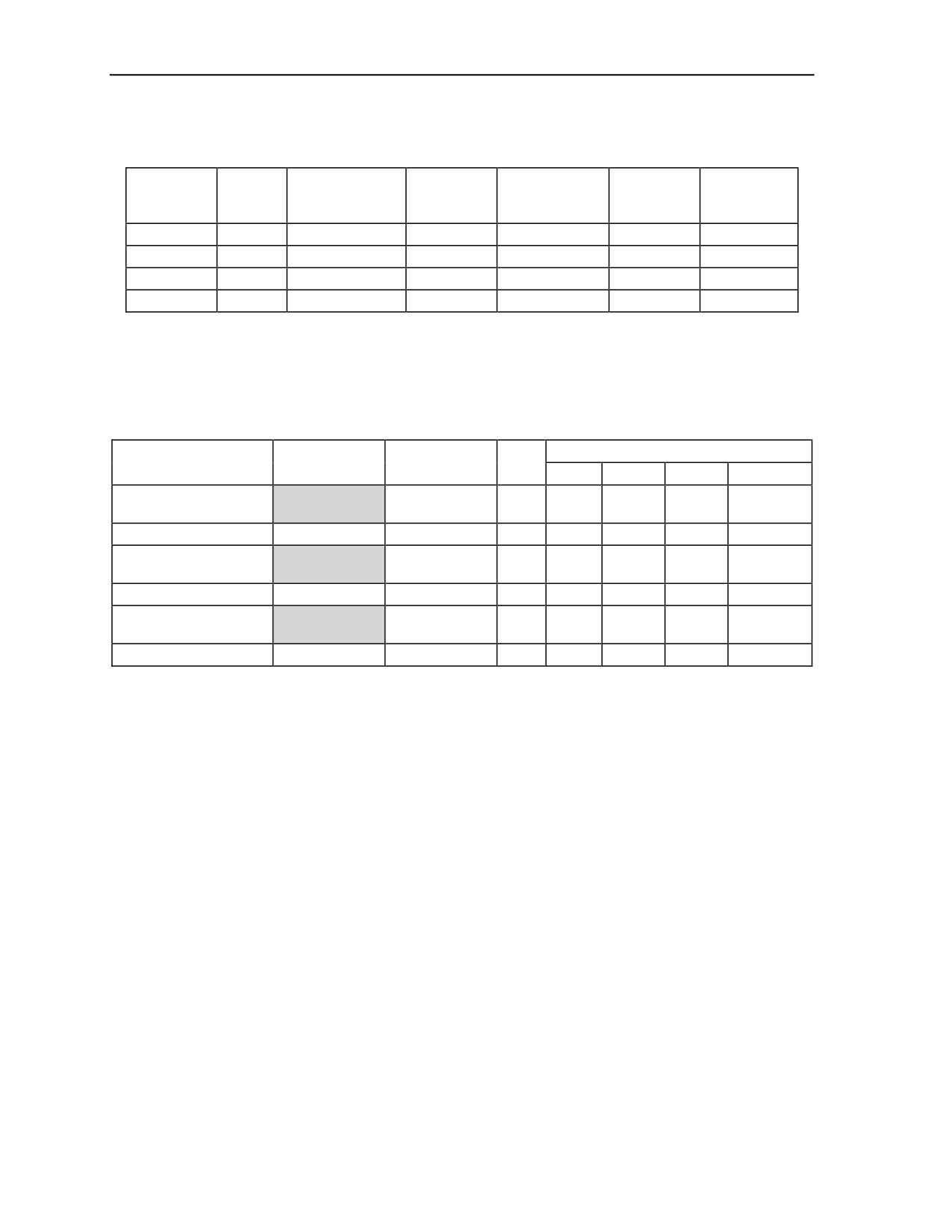
E-4. Table E-1 and Table E-2, page E-2, provide a summary of the engineer work effort, land
requirements, key materials, and utilities necessary for various size base camps. The tables are designed to
be used during initial planning for base camp construction.
Table E-1. Summary table, base camp engineer construction effort
Man-Hours
Base Camp
Short
Equipment
Size
Tons
Hours
Horizontal
Vertical
General
Total
500
2,755
77
3,506
33,175
10,232
46,913
1,500
7,698
247
8,124
86,047
26,331
120,502
3,000
15,138
503
15,093
171,012
53,730
240,070
10,000
50,460
1,680
51,093
570,040
179,100
800,233
9 December 2008
FM 3-34.400
E-1
Appendix E
Table E-2. Summary table, base camp area, aggregate, and utilities requirements
Base
Real
Fine Aggregate
Course
Potable Water
Sewage
Electricity
Camp Size
Estate
(cu yd)
Aggregate
(GPD)
(GPD)
(kW)
Acre
(cu yd)
500
16.0
450
620
12,500
8,750
182
1,500
51.4
1,700
2,485
37,500
26,250
486
3,000
104.7
3,320
4,820
75,000
52,500
988
10,000
350
11,200
16,066
250,000
175,000
3,293
GENERAL CONSTRUCTION EFFORT REQUIREMENTS
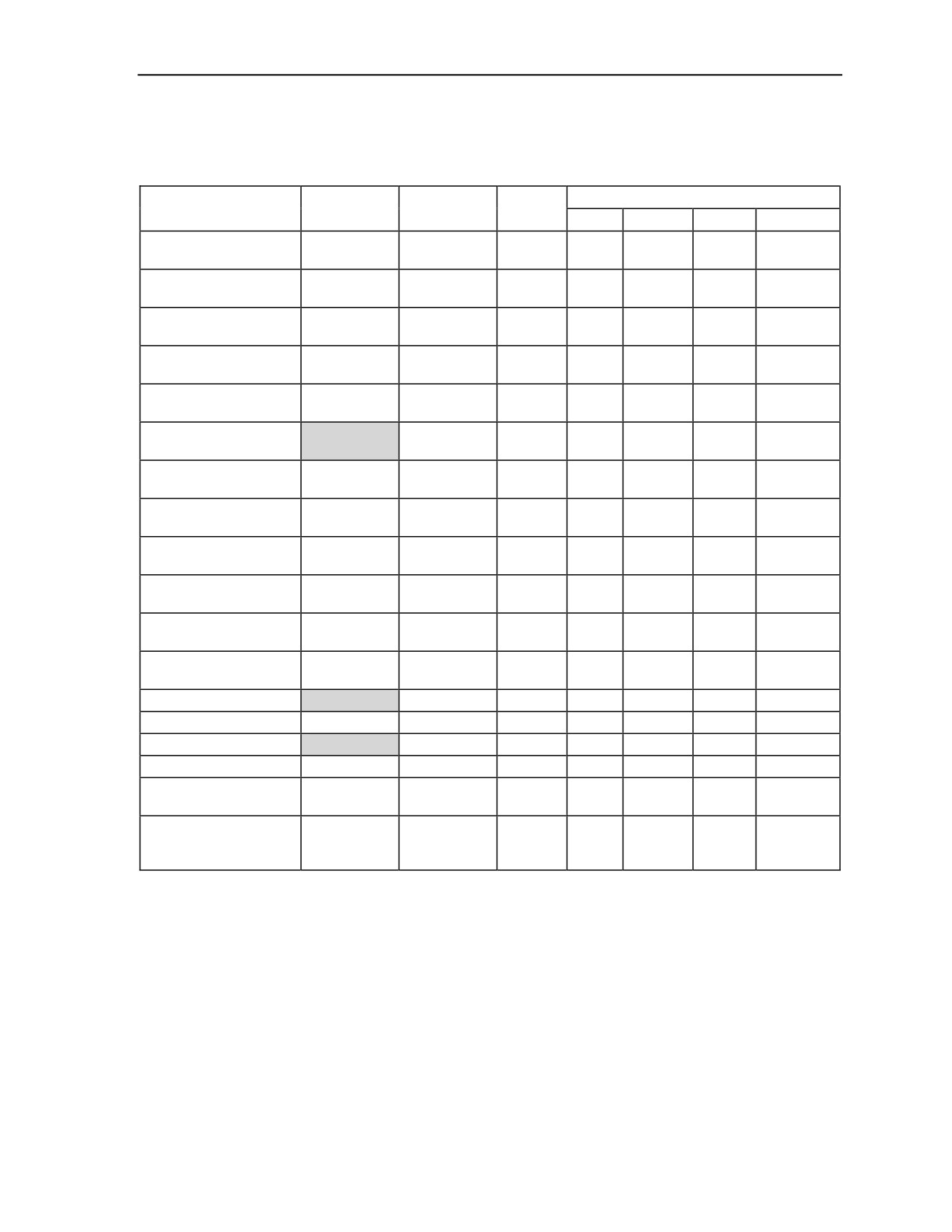
E-5. Tables E-3 and E-4 describe the general construction effort requirements necessary for typical site
preparation and basic facilities for a 500-man base camp.
Table E-3. Construction effort, site preparation requirements
Man-Hours
Facility Description
Size (sq yd)
Basis
Qty
Hor
Ver
Gen
Total
Road, Class A, 1-inch
as required
0.2
58
NA
10
68
—
multisurface, 1-mile
Hardstand
1,000
as required
4.0
168
NA
80
248
Road, Class A, graded
as required
0.2
235
NA
84
319
and drained
Hardstand
1,000
as required
4.0
288
NA
104
392
Site preparation, 1-
as required
5.0
440
NA
160
600
—
acre
TOTAL
3,506
33,175
10,232
46,913
E-2
FM 3-34.400
9 December 2008
Base Camp Estimating and Planning Considerations
Table E-4. Construction effort, facilities requirements (temporary to semipermanent
standard, temperate climate, or wood frame)
Man-Hours
Facility Description
Size
Basis
Quanity
Hor
Ver
Gen
Total
Shop, motor repair
48 x 48 x 14
1 per 100
1
55
1,185
287
1,527
ft
vehicles
Storehouse
20 x 50 x 8 ft
2 sq ft per
1
32
461
136
629
man
Dispensary
20 x 60 x 8 ft
1 per 500
1
33
1,290
115
1,438
men
Headquarters and unit
20 x 40 x 8 ft
1 per 200
3
84
1,293
240
1,617
supply
men
Barracks, 500-man
20 x 100 x 8
40 sq ft per
10
450
7,510
1,860
9,820
ft
man
Kitchen
1 per 250
2
154
10,352
3,788
14,294
—
men
Bathhouse and latrine
20 x 30 x 8 ft
1 shower per
1
24
941
61
1,026
10 men
Bathhouse and latrine
20 x 80 x 8 ft
1 shower per
1
39
1,754
150
1,943
24 men
Quarters (officer)
20 x 100 x 8
80 sq ft per
1
45
869
186
1,100
ft
officer
Guard house
20 x 60 x 8 ft
1 to 250
1
33
626
115
774
men
Day room
40 x 60 x 8 ft
5 sq ft per
1
43
868
178
1,089
man
Electric distribution
500-man
light and
1
56
460
192
708
power
Boiler plant
—
1/2 mess
1
208
4,112
1,200
5,520
Drainage
500-man
17.5 GPD
1
205
384
490
1,079
Water supply well
—
as required
1
396
45
230
671
Water tank
200 gallons
as required
1
105
4
109
Water distribution
500-man
25 GPD per
1
352
812
416
1,580
man
Sump fire
10,000
effective
1
16
108
16
240
gallons
radius 500
feet
SUPPORT AND STORAGE FACILITIES CONSTRUCTION
PLANNING FACTORS
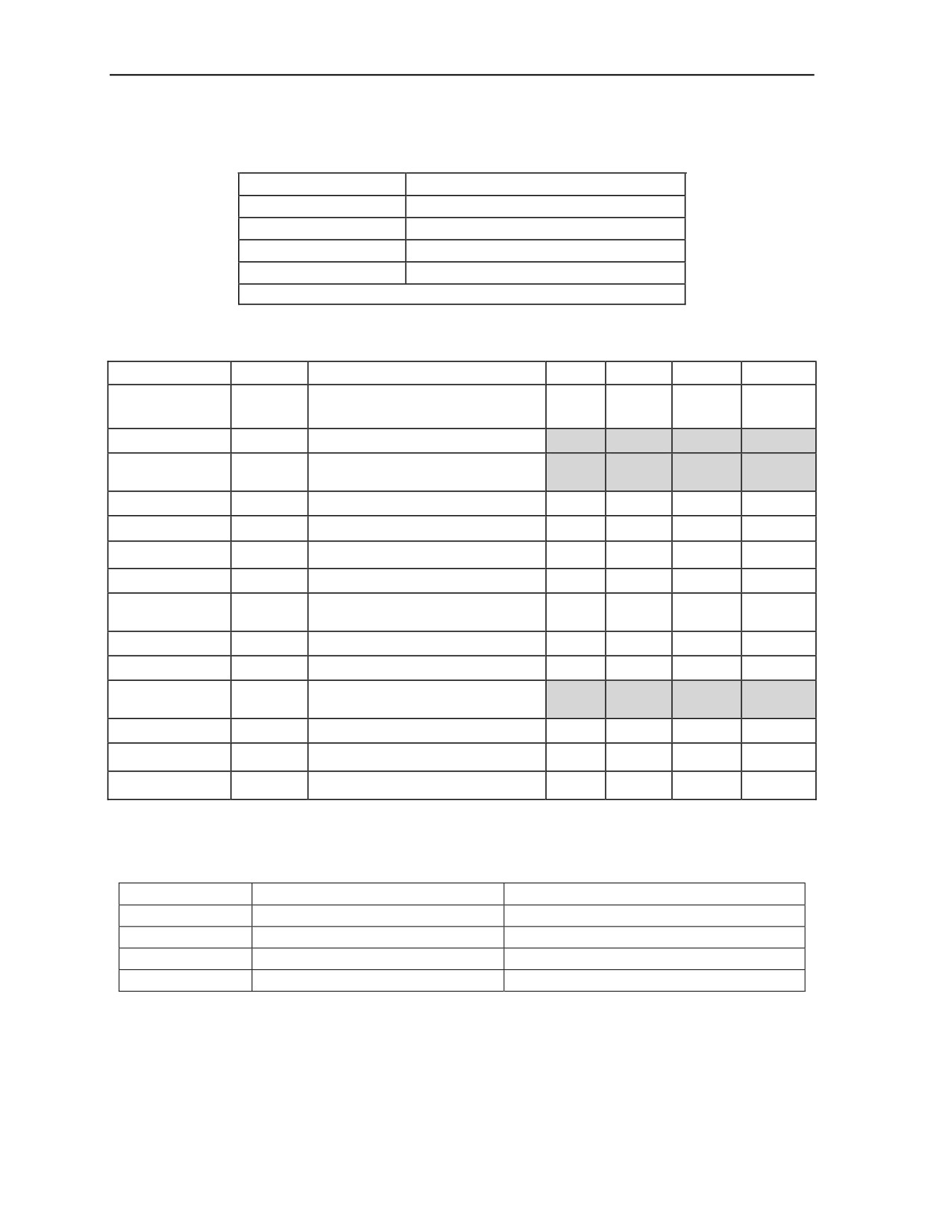
E-6. Tables E-5 and E-6, page E-4, provide construction planning information on motor parks and troop
support facilities.
9 December 2008
FM 3-34.400
E-3
Appendix E
Table E-5. Motor park
Base Camp Size
Area (sq ft)
500
61,760
1,500*
242,160
3,000*
541,200
10,000*
721,600
*Based on combinations of 500-, 1,000-, and 5,000-man estimates.
Table E-6. Troop support facilities
Description
Units
Criteria
500
1,500
3,000
10,000
Dining facility
sq ft
sq ft per person varies by unit size
14.0
11.0
11.0
11.0
Fire station
sq ft
2.6 x size of vehicle + 90 sq ft
—
—
—
—
I/R facility
sq ft
250 sq ft military police + 50 sq ft
—
—
—
—
per confinee
Bakery
sq ft
0.6 sq ft per person supported
300.0
900.0
1,800.00
6,000.0
Laundry
sq ft
sq ft per person varies by unit size
4.4
4.4
3.30
3.0
Dry cleaning
sq ft
sq ft per person varies by unit size
4.4
4.4
1.75
1.0
Chapel
sq ft
1.785 sq ft per person
893.0
2,678.0
5.55
17,850.0
Craft and hobby
sq ft
1.0 sq ft per person
500.0
1,500.0.
3,000.00
10,000.0
0
Gymnasium
sq ft
3.3 sq ft per person
1,650.0
4,950.0
9,900.00
33,000.0
Library
sq ft
0.75 sq ft per person
375.0
1,125.0
2,250.00
7,500.0
Service club
sq ft
7.5 sq ft per NCO; 9.5 sq ft per
—
—
—
—
officer
PX
sq ft
1.2 sq ft per person
600.0
1,800.0
3,600.00
12,000.0
Post Office
sq ft
sq ft per person varies by unit size
NA
NA
0.50
0.5
Theater
sq ft
sq ft per person varies by unit size
NA
NA
5.50
5.5
E-7. Examples of selected storage requirements and planning factors for base camps are addressed in
tables E-7, E-8, and E-9.
Table E-7. Covered and open storage requirements for 14 days of stockage
Base Camp Size
Covered Storage (sq ft)
Open Storage (sq yd)
500
44
1,330
1,500
132
3,990
3,000
265
7,980
10,000
882
26,600
E-4
FM 3-34.400
9 December 2008

Base Camp Estimating and Planning Considerations
Table E-8. Cold storage requirements for 14 days of stockage
Base Camp Size
Class I (cu ft)
Class VI (cu ft)
Class VIII (cu ft)
Class IX (cu ft)
500
585
155
34
12
1,500
1,755
465
101
36
3,000
3,510
930
202
72
10,000
11,690
3,095
672
238
Table E-9. Fuel storage
Base Camp Size
Diesel Barrels (bbl)*
MOGAS (bbl)*
500
160
600
1,500
480
1,800
3,000
960
3,600
10,000
3,200
12,000
*Assuming stock objective of 8 days.
TROOP HOUSING
E-8. Tables E-10, E-11, and E-12 provide basic planning guidance for troop housing.
Table E-10. Troop housing
Base Camp Size
Officer (sq ft)
Enlisted (sq ft)
500
11,000
28,800
1,500
33,000
86,400
3,000
66,000
172,800
10,000
220,000
576,000
Note. Assumes 20/80 officer to enlisted ratio; 110 sq ft per officer; 72 sq ft per
enlisted
Table E-11. Quality-of-life standards for tentage
Tier
Bed-Down and Base Camp Living Standards
Level
Tier I
Simple tent setup without floor, nonpermanent
Tier II
Wooden floor, lights, pole-supported, 2 electrical outlets
Tier III
Slightly nicer wooded floor, 2/3 wooden wall structure with frame, more electrical outlets
Table E-12. Selected tentage planning factors
Type
Floor Area (sq ft)
Weight Packed (lb)
Volume Packed (cu ft)
Tent, GP, small
198.9
163
26.2
Tent, GP, medium
512.0
534
33.0
Tent, GP, large
936.0
665
69.0
Tent, ext modular (temper)
640.0
2,192
200.0
Tent, maintenance, medium
640.0
1,798
62.0
Note. Operation Joint Endeavor living standard was 10 soldiers per GP medium.
9 December 2008
FM 3-34.400
E-5

Appendix E
ADDITIONAL PLANNING CONSIDERATIONS
E-9. General planning factors for water, utilities, and transportation requirements are listed in tables E-13,
E-14, and E-15.
Table E-13. General planning factors for potable and nonpotable water requirements
Consumer
Rate of Consumption
Remarks
Individual
3 to 6 GPD per man
—
Camp (initial with bath)
25 to 50 GPD per man
Include waterborne sewage
Vehicles (tactical)
1/2 to 1 GPD per vehicle
—
Support Facilities
Hospital
200 GPD per bed
20-hour operation
QM laundry company
64,000 GPD
20-hour operation
Construction Equipment
Road construction
10,000 G/km
Nonpotable, clean
Rock crusher
22,500 GPH
Nonpotable, clean
Concrete mixer
560/140 GPH
Nonpotable, clean
Other Considerations
Sewage treatment requirements
2.5 gallons per man per day
Nonpotable, clean
Garbage (food waste)
2.5 gallons per man per day
Nonpotable, clean
Refuse (other waste)
—
Nonpotable, clean
Table E-14. General planning factors for electrical
power and distribution requirements
Facility
Electrical Power and
Distribution Requirements
Installation
0.7 kW per man
Hospital
1.6 kW per bed
E-6
FM 3-34.400
9 December 2008

Base Camp Estimating and Planning Considerations
Table E-15. Selected transportation information
Air1
Sea
Land
Aircraft
Allow-
Allow-
Ship
Capacity
Motor
Load
Rail2
Usable
able
able (cu
or
(long ton)
(short
Cube
Cabin
ft)
Barge
ton
(short
Load (lb)
per
ton)
trip)
C-5A
204,000
18,368
7,029
2,207.8
2.5-ton
2.5
Well
50
flatcar
C-141
90,200
7,024
7,028
1,131.2
5-ton
5.0
Medium
25
flatcar
C-130
35,000
2,818
7,005
570
12-ton S&P
12.0
Small
12
flatcar
C-17
167,000
231 A
585
22.5-ton
15.0
Boxcar
10
flatbed
KC-10A
169,350
12,980
231 B
578
34-ton trailer
25.0
Coaches
40 troops
B-747
180,000
2,001
24-hour
60-ton
40.0
Sleepers
32 troops
operation
semitrailer
for troops/
24
passenger
1Estimates are for peacetime payload planning.
2Maximum length of a train is 40 cars; maximum net load is 400 tons or 1,000 troops.
PRELIMINARY ESTIMATES
E-10. The preliminary estimate performed in planning for base camp construction should contain the
following:
z
Real estate required, in area (square feet or meters).
z
Equipment hours required for construction.
z
Man-hours required for construction, by construction skill.
z
Materiel requirements in short tons.
BASE CAMP MASTER PLANNING
E-11. Master planning is a comprehensive process that brings together a variety of personnel and their
requirements. It addresses the need to comprehensively plan future facilities to meet various and competing
interests in support of the mission. The administrative control relationships and C2 may vary from one
contingency operation to the next. The discussion in this appendix is based on the assumption that a task
force is in place and is responsible to a combatant command for executing all Title 10 responsibilities in its
AO.
z
The combatant commands role in master planning is to provide standards and appropriate
factors oversight of the base camp development process and approve the expenditure of funds
according to established policy (for example, joint acquisition review board instructions).
z
Task force commanders establish base camp planning boards at each base camp and forward
operating site. They also provide guidance on conducting planning boards, issue commander
guidance, and coordinate master planning components.
E-12. A base camp master plan is the commander’s comprehensive plan for the orderly and efficient
management and development of land, facilities, and infrastructure to support the mission.
9 December 2008
FM 3-34.400
E-7
Appendix E
E-13. Most base camps and forward operating sites will establish and run a base camp planning board and
develop a base camp master plan. Some smaller or remote forward-operating sites may fall under the
command of a larger base camp or forward-operating site that provides this support and oversight.
E-14. The development and use of a base camp master plan can enhance operational area security,
operational readiness, personnel safety, the efficient use of resources, living conditions, and the quality of
life experienced during the contingency operations. Proper zoning and improvements to the facilities and
utilities and the efficient investment of resources will increase the quality of life for all Soldiers while
enhancing their physical protection.
E-15. An organized site plan is a crucial part of a master plan. A well-designed site layout will address at
least the following:
z
Biological factors that may affect physical health.
z
Financial factors that could reduce operational and renovation costs.
z
Psychological factors that affect attitudes.
z
Social factors, including coordination and cooperation.
E-16. The base camp planning board provides the forum for base camp and forward-operating site
managers and leaders to make comprehensive, balanced decisions on the future layout of forward-
operating site facilities and infrastructure. The board should meet periodically to review and refine plans
based on changing mission priorities, with the goal of providing high-quality living and working
environments appropriate to the current mission intent while incorporating best business practices.
MASTER PLAN COMPONENTS
E-17. Typical master plans consist of long- and short-range components and a capital investment strategy.
LONG-RANGE COMPONENTS
E-18. The long-range component is an assessment of what the base camp or forward-operating site should
look like in an extended period of time (for example, 5 years). The process usually includes infrastructure,
transportation flow, zoning, aesthetics, and signage requirements. The following items that could make up
the long-range components of a master plan include─
z
Long-range analysis.
z
Environmental-baseline analysis.
z
Utilities assessment.
z
Transportation assessment.
z
Land-use analysis and zoning plan.
z
Physical security plan (overlay).
z
Fire protection plan (overlay).
z
Base camp and forward-operating site design guidelines.
z
Capacity expansion analysis.
z
Supporting graphics and overlays.
z
Ammunition holding area explosive quantity distance site plan.
SHORT-RANGE COMPONENTS
E-19. The short-range component of a master plan is the immediate or temporary solution to facility
imbalances to be used until more permanent solutions are found. Temporary solutions may include
relocations or temporary diversions in uses of facilities and temporary construction. The short-range
component includes site-specific graphics with locations of projects. The following items could make up
the short-range component:
z
An assessment of how to “get well,” analyses of alternatives, evaluation and selection of
preferred alternatives, and narrative justification for the selected COA.
z
Assets and facilities investment plan.
E-8
FM 3-34.400
9 December 2008
Base Camp Estimating and Planning Considerations
z
Environmental documentation.
z
Assets disposal list.
z
Supporting graphics.
E-20. The base camp planning board acts as the commander’s “board of directors” to ensure the orderly
development and management of base camp or forward-operating site facilities (and supported sites). It
guides the development and maintenance of all components of the base camp and forward-operating site. It
should coordinate base camp and forward-operating site planning with the following:
z
An adjacent or nearby site.
z
Affected host-nation agencies.
E-21. The BCPB ensures that the base camp master plan does the following:
z
Addresses facility requirements for all activities of the base camp or forward-operating site and
supported areas.
z
Projects for growth or reduction in units and activities assigned to the base camp or forward
operating site based on changes in the mission.
z
Determines site-specific base camp or forward-operating site design guidelines, and adheres to
standards.
z
Reviews funding projections, advises the commander of priorities, and proposes COAs.
z
Ensures maximum efficient use of existing facilities.
z
Ensures that project plans and projects are consistent with good environmental stewardship.
z
Makes recommendations on space utilization.
CAPITAL INVESTMENT STRATEGY
E-22. The capital investment strategy analyzes shortfalls and excesses in facilities through a tabulation of
existing and required facilities and identifies preferred action plans to solve imbalances. The
recommendations (solutions) must be consistent with the long-range component.
FACILITIES STANDARDS
E-23. The CCDR will specify the construction standards for facilities in the theater (see paragraph 11-9).
As mentioned previously, the intended life span of the facilities and infrastructure of a base camp or
forward-operating site will depend on mission-driven and economic decisions. There are three sets of
construction standards used that are determined by the expected base camp and forward-operating site life
span. During the life cycle of a base camp or forward-operating site, authorized facilities may progress
from initial to semipermanent or may be immediately established at any level depending on operational
requirements. Meeting established facility standards may be a progressive effort; however, CCDRs will
strive to meet their standards as quickly as the operational situation permits. Table E-16, pages E-10
through E-15, provides an example of possible standards for initial, temporary, and semipermanent
facilities for base camps and forward-operating sites. Permanent standards of construction have a life
expectancy of greater than 10 years. The CCDR must specifically approve permanent construction.
9 December 2008
FM 3-34.400
E-9

Appendix E
Table E-16. Example of initial, temporary, and semipermanent facility standards
Initial
Temporary
Semipermanent
Facility
(Less Than 6
(6 Months to Less Than 24
(2 Years to Less Than 10
Months)
Months)
Years)
American forces
None
Container, SEAhut
Container; SEAhut; metal,
network-manned
prefabricated building
operations
American forces
None
Container, SEAhut
Container; SEAhut; metal,
network-unmanned
prefabricated building
operations
Alteration/pressing
None
Tier III tents, SEAhuts,
SEAhuts, containers: 2 to
shop
containers
10 years
Masonry and
prefabricated buildings: 10
or more years
ASG, area support
None
Tier III tents, SEAhuts,
SEAhuts and containers:
team
containers
2 to 10 years
Masonry and
prefabricated buildings: 10
or more years
ASP
Containers
Containers to bunkers
Bunkers
Athletic fields
None
Grassed fields
Grassed fields with lights
Aviation fuel
HEMTT tanker
Bladder
Metal tanks, steel lines
Aviation
Organic tentage,
Aviation clamshell tent with
Aviation clamshell tent
maintenance
force provider1
sand-filled plywood,
with sand-filled plywood,
asphalt, or concrete floor
asphalt, or concrete floor
Barber shop, beauty
None
Tier III tent, SEAhuts,
SEAhuts, containers: 2 to
shop
containers
10 years
Masonry and
prefabricated buildings: 10
or more years
Basic load
Military vans
Earth-covered, standard,
Earth-covered, standard,
ammunition holding
(container) with
steel-reinforced bunkers on
steel-reinforced bunkers
area, captured
earth berms
concrete pads with berms
on concrete pads with
ammunition holding
berms
area
Chapel
Organic tentage
SEAhut, containers
Davidson-like, wood-
with wooden floors,
frame building; SEAhuts;
Tier I tents,
containers: 2 to 10 years
“Chapel-in-a-Box”,
Masonry and
force provider1
prefabricated buildings: 10
E-10
FM 3-34.400
9 December 2008

Base Camp Estimating and Planning Considerations
Table E-16. Example of initial, temporary, and semipermanent facility standards
Initial
Temporary
Semipermanent
Facility
(Less Than 6
(6 Months to Less Than 24
(2 Years to Less Than 10
Months)
Months)
Years)
or more years
Cold storage
Portable
Refrigeration installed in
Refrigeration installed in
refrigeration with
temporary structures
semipermanent
freezer units for
structures: may be
medical, food, and
preengineered buildings
maintenance
storage
Communications
Organic tentage
Tier III tents, SEAhuts,
SEAhuts and containers:
compound, national
with wooden floors,
containers
2 to 10 years
service center
Tier I tents, force
Masonry and
provider2
prefabricated buildings: 10
or more years
Community activity
None
SEAhuts
SEAhuts: 2 to 10 years
center
Masonry and
prefabricated buildings: 10
or more years
Dining facility
Mobile kitchen
Tier III tents, SEAhuts, fest
SEAhuts: 2 to 10 years
trailer, organic
tents
Masonry and
tentage with
prefabricated building: 10
wooden floors, Tier I
or more years
tents, personnel
protection1
Defense
None
Metal, prefabricated
Metal, prefabricated
Reutilization and
building with concrete or
building with concrete or
Marketing Office
asphalt floor and gravel
asphalt floor with gravel
holding area
holding area
DS maintenance
Organic tentage or
Metal, two-story
Metal, two-story
force provider2
prefabricated building on
prefabricated building on
concrete base with concrete
concrete base with
aprons
concrete aprons
Direct exchange,
None
Tier III tents, SEAhuts,
SEAhuts and containers:
central issue facility
containers, metal
2 to 10 years
prefabricated building
Masonry and
prefabricated buildings: 10
or more years
Education center
None
Tier III tents, SEAhuts,
SEAhuts, containers: 2 to
containers, metal
10 years
prefabricated building
Masonry and
prefabricated buildings: 10
or more years
9 December 2008
FM 3-34.400
E-11

Appendix E
Table E-16. Example of initial, temporary, and semipermanent facility standards
Initial
Temporary
Semipermanent
Facility
(Less Than 6
(6 Months to Less Than 24
(2 Years to Less Than 10
Months)
Months)
Years)
Electrical
Tactical generators
Commercial power with
Commercial power with
with high- and low-
nontactical power and high-
nontactical power and
voltage distribution,
or low-voltage distribution
high- or low-voltage
organic equipment,
backup
distribution backup
force provider1
Field house,
None
Metal, prefabricated
Metal prefabricated
multipurpose facility
building
building
Finance and
None
Tier III tents, SEAhuts,
SEAhuts and containers:
personnel support
containers
2 to 10 years
operations
Masonry and
prefabricated buildings: 10
or more years
Fire protection
Organic equipment,
See paragraph 11-63.
See paragraph 11-63.
portable fire
extinguishers
Fitness center
None
SEAhuts; metal,
SEAhuts: 2 to 10 years
prefabricated building
Masonry and
prefabricated buildings: 10
or more years
Ground fuel
Organic equipment,
Bladders with secondary
Metal tanks with steel
bags, force provider
containment
lines with secondary
with secondary
containment
containment
HAZMAT warehouse
Storage container
SEAhuts or metal,
SEAhuts and metal,
prefabricated building with
prefabricated buildings
secondary containment
and secondary
containment: 2 to 10 years
Masonry and metal,
prefabricated buildings
with secondary
containment: 10 or more
years
Hazardous waste
Storage container,
Covered, built-on elevated
Covered, built-on elevated
removal from
pad with secondary
pad with secondary
theater
containment (civilian
containment (civilian
contract removal)
contract removal)
Helipad
Tactical surfacing,
Concrete with aprons
Concrete with aprons
including matting
E-12
FM 3-34.400
9 December 2008

Base Camp Estimating and Planning Considerations
Table E-16. Example of initial, temporary, and semipermanent facility standards
Initial
Temporary
Semipermanent
Facility
(Less Than 6
(6 Months to Less Than 24
(2 Years to Less Than 10
Months)
Months)
Years)
Housing
Organic tentage
Tier III tents, SEAhuts,
SEAhuts and containers:
with wooden floors,
containers
2 to 10 years
Tier I tents, force
Masonry and
provider1
prefabricated buildings: 10
or more years
Kennel
Organic tentage,
SEAhuts, container-
SEAhuts and containers
Tier I tents (DA
adapted to DA Pamphlet
adapted to DA Pamphlet
Pamphlet 190-12)
190-12 criteria
190-12 criteria
Latrines and septic
Organic equipment,
Waterborne from ablution
Waterborne to wastewater
systems
evaporative ponds,
units or SEAhuts to austere
treatment plant from
pit burnout latrines,
treatment facility
SEAhuts and ablution
lagoons for
units: 2 to 10 years
hospitals, force
Masonry and
provider1
prefabricated buildings: 10
or more years
Laundry collection
Organic tentage
Tier III tents, SEAhuts,
SEAhuts and containers:
and distribution point
with wooden floors,
containers
2 to 10 years
Tier I tents, force
Masonry and
provider1
prefabricated buildings: 10
or more years
Medical
Organic tentage
SEAhuts; medical metal,
SEAhuts; medical metal,
with wooden floors,
prefabricated buildings;
prefabricated buildings: 2
(See paragraph
medical tents, Tier I
refrigerated containers
to 10 years
11-24 for further
tents
guidance.)
Masonry and medical,
metal prefabricated
buildings: 10 or more
years
Medical waste
Field incinerator
Incinerator, civilian contract
Incinerator, civilian
contract
Military police station
Organic tentage
Tier III tents, SEAhuts,
SEAhuts and containers:
with wooden floors,
containers
2 to 10 years
Tier I tents, force
Masonry and
provider1
prefabricated buildings: 10
or more years
Morgue
Refrigerated
SEAhut, container with
SEAhuts and containers:
container
Gortex for private fencing,
2 to 10 years
refrigerated container
Masonry and
prefabricated buildings: 10
or more years
Multipurpose theater
None
Metal, prefabricated
Metal, prefabricated
building
buildings
9 December 2008
FM 3-34.400
E-13

Appendix E
Table E-16. Example of initial, temporary, and semipermanent facility standards
Initial
Temporary
Semipermanent
Facility
(Less Than 6
(6 Months to Less Than 24
(2 Years to Less Than 10
Months)
Months)
Years)
MWR warehouse,
None
Metal, prefabricated
Metal, prefabricated
maintenance facility
building
buildings
Nonpotable water
Local source
Local source
Local source
Office
Organic tentage
Tier III tents, SEAhuts,
SEAhuts and containers:
with wooden floors,
containers
2 to 10 years
Tier I tents, FP1
Masonry or prefabricated
buildings: 10 or more
years
Parking lots
Gravel
Gravel with concrete turning
Gravel with concrete
pads for tracked vehicles
turning pads for tracked
vehicles
Perimeter fence
Triple standard
USACE Standard FE6
USACE Standard FE6
Perimeter lights
Generator sets
Fixed lighting
Fixed lighting
Postal
None
Metal, prefabricated
Metal, prefabricated
building
building
PX
AAFES trailer
Davidson-like, wood-frame
Metal, prefabricated
building; metal
building
prefabricated building
Post warehouse
AAFES trailer
Davidson-like, wood-frame
Metal, prefabricated
building; container; metal
building
prefabricated building
Potable water
Bottled water or
Wells, treatment plants
Wells, treatment plants
water points, wells,
other potable-water
production and
pressurized water
distribution systems,
reverse osmosis
water purification
unit, force provider
Road
Gravel
Gravel
Primary roads: asphalt
with concrete turning pads
Secondary and perimeter
patrol roads: gravel
Runway and taxiway
Tactical surfacing,
Paved
Paved
including aggregate
and stabilized earth
E-14
FM 3-34.400
9 December 2008

Base Camp Estimating and Planning Considerations
Table E-16. Example of initial, temporary, and semipermanent facility standards
Initial
Temporary
Semipermanent
Facility
(Less Than 6
(6 Months to Less Than 24
(2 Years to Less Than 10
Months)
Months)
Years)
Shower
Organic equipment,
Ablution units or SEAhuts
SEAhuts and AB units: 2
personnel
to 10 years
protection1
Masonry or prefabricated
buildings: 10 or more
years
Solid waste
Field incinerator
Incinerator, civilian contract
Incinerator, civilian
and recycling when
contract, recycling
possible
program, composting
Squadron operations
Organic tentage
SEAhuts, metal
SEAhuts and metal
building
with wooden floors,
prefabricated building
prefabricated buildings: 2
Tier I tents, force
to 10 years
provider1
Masonry and metal
prefabricated buildings: 10
or more years
Supply support
Organic tentage
Metal, prefabricated
Metal, prefabricated
activity warehouse
with wooden floors,
building
building
Tier I tents, force
provider1
Training facilities
None
See paragraph 11-64.
See paragraph 11-64.
Vehicle maintenance
Organic tentage,
Metal, two-story,
Metal, two-story,
force provider1
prefabricated building on
prefabricated building on
concrete base with concrete
concrete base with
aprons
concrete aprons
Washrack
Gravel lot
Gravel lot with oil-water
Elevated, flat, and
separator and gray-water
container rack with oil-
discharge
water separator and gray-
water discharge
1Force provider: Each force provider module supports 550 personnel, plus 50 operators with climate-controlled billeting (with
planning factors of 15 Soldiers per tent); food service (1,800 A-rations meals per day); laundry service (200 pounds per hour);
showers and latrines (one 10-minute shower per day); MWR facilities and equipment; power (60-kilowatt tactical quiet
generators [1.1. megawatts continuous]); prime power connection kit; water storage and distribution (80,000 gallons for every 3
days); fuel storage and distribution (20,000 gallons for every 3 days); waste-water collection (30,000 gallons per day); and
system support packages (30 days spare and repair parts).
9 December 2008
FM 3-34.400
E-15
This page intentionally left blank.
Source Notes
This section lists sources by page number. Where material appears in a paragraph,
both the page number and paragraph number are listed. Boldface indicates titles of
vignettes.
1-1
“Although they were the size of David, engineers did the work of Goliath.” Assistant Division
Commander, 101st Airborne Division (Air Assault), Operation Iraqi Freedom After-Action Review.
2-1
“Above all, we must realize that no arsenal, or no weapon in the arsenals of the wicked are so
formidable as the will and moral courage of free men and women. It is a weapon adversaries in today's
world do not have.” Ronald Reagan [Online]. Available: <http://www.quotationspage.com>.
3-1
“Never tell people how to do things. Tell them what to do and they will surprise you with their
ingenuity.” General George Patton [Online]. Available: <http://www.brainyquote.com>.
4-1
“Seek first to understand, then to be understood.” Stephen R. Covey
[Online]. Available:
5-1
“They must float up and down with the tide. The anchor problem must be mastered. Let me have the
best solution worked out. Don’t argue the matter. The difficulties will argue for themselves.” Winston
Churchill on pier construction to support the invasion, May
1943
[Online]. Available:
6-1
“Air power is a thunderbolt launched from an eggshell invisibly tethered to a base.” Hoffman
Nickerson, Arms and Policy (1945) [Online]. Available: <http://www.quote-fox.com>.
7-1
“The line that connects an army with its base of supplies is the heel of Achilles—its most vital and
vulnerable point.” John S. Mosby, Colonel, Confederate States of America (1887) [Online], Available:
8-1
“History shows that army campaigns in undeveloped countries have often involved waging war
against natural obstacles, rather than against a foe.” Air Marshall E. J. Kingston-McCloughry.
9-1
“The art of war teaches us to rely not on the likelihood of the enemy not coming, but on our readiness
to receive him not on the chance of his not attacking, but rather on the fact that we have made our
position unassailable.” Sun Tzu [Online]. Available: <http://chinapage.com>.
10-1
“Class IV stocks should be robust and ready for crisis projects. If engineers don’t stock Class IV, no
one else will.” S-4, 130th Engineer Brigade, Operation Iraqi Freedom After-Action Review.
11-1
If you can figure out the criteria for base camp selection…you’ve done something the Army can use.”
LTG Robert B. Flowers,
50th
Chief
of
Engineers
[Online].
Available:
12-1
“Simplicity is the ultimate sophistication.” Leonardo da Vinci
[Online]. Available:
13-1
“Except when war is waged in the desert, noncombatants, also known as civilians or “the people,”
constitute the great majority of those affected.” Martin Van Creveld
[Online]. Available:
<http://www. Brainy.quote.com>.
9 December 2008
FM 3-34.400
Source Notes-1
Source Notes
14-1
“One should know one’s enemies, their alliances, their resources and nature of their country, in order
to plan a campaign.”Frederick the Great[Online]:
15-1
“…before the shooting begins. The bravest men can do nothing without guns, the guns nothing
without ammunition; and neither guns nor ammunition are of much use in mobile warfare unless there
are vehicles with sufficient petrol to haul them around.” Field Marshal Erwin Rommel, World War II
16-1
“I don’t know what the hell this ‘logistics’ is that Marshall is always talking about, but I want some of
it.” Fleet Admiral Ernest J. King, 1942 [Online]. Available: <http://www.encyclopedia.com>.
Source Notes-2
FM 3-34.400
9 December 2008
Glossary
The glossary lists acronyms/abbreviations and terms with Army or joint definitions,
and other selected terms. Where Army and joint definitions are different, (Army)
follows the term.
SECTION I - ACRONYMS AND ABBREVIATIONS
AA
assembly area
AAFES
Army and Air Force Exchange Service
AC
alternating current
ACS
Assistant Chief of Staff
ADC
area damage control
admin
administrative
ADP
automatic data processing
ADR
airfield damage repair
AFCESA
Air Force Civil Engineering Support Agency
AFCS
Army Facilities Components System
AFJPAM
Air Force Joint Pamphlet
AFM
Air Force manual
AFPAM
Air Force pamphlet
AFTTP
Air Force Technical Training Publication
AMPHIB
amphibian
AO
area of operations
AOR
area of responsibility
APOD
aerial port of debarkation
APOE
aerial port of embarkation
AR
Army regulation
ARNG
Army National Guard
ARNGUS
Army National Guard of the United States
ARRK
automated route reconnaissance kit
ART
Army tactical task
ASCC
Army service component commander
ASG
area support group
ASP
ammunition supply point
AT
antiterrorism
ATCALS
air traffic control and landing system
ATP
ammunition transfer point
ATTN
attention
AUTL
Army Universal Task List
9 December 2008
FM 3-34.400
Glossary-1
Glossary
AutoCAD®
automated computer-assisted design
AVLB
armored vehicle-launched bridge
bbl
barrels
BCT
brigade combat team
BDT
base development team
BG
bag
bn
battalion
BOM
bill of materials
BPA
blanket purchase agreement
BT
bomb trench
C2
command and control
C3
command, control, and communications
CA
civil affairs
CADD
computer-aided design and drafting
CALL
Center for Army Lessons Learned
CBMU
construction battalion maintenance unit
CBR
California bearing ratios
CBRN
chemical, biological, radiological, and nuclear
CBRNE
chemical, biological, radiological, nuclear, and high-yield explosives
CBT
combat
CCD
camouflage, concealment, and deception
CCDR
combatant commander
CCP
casualty collection point
CEWL
corps engineer work line
CFM
cubic feet per minute
CI
civilian internee
CJCSM
Chairman of the Joint Chiefs of Staff manual
CL
class
CM
consequence management
CMMC
corps materiel management center
CMOC
civil-military operations center
CMU
concrete masonry unit
co
company
COA
course of action
COCOM
combatant command (command authority)
COL
colonel
COMMZ
communications zone
CONEX
container express
CONPLAN
concept plan
CONUS
continental United States
COP
common operational picture
Glossary-2
FM 3-34.400
9 December 2008
Glossary
COS
Chief of Staff
COTS
commercial off-the-shelf
CREST
contingency real estate support team
CSH
combat support hospitals
CU
cubic
CUCV
commercial utility, cargo vehicle
cu ft
cubic foot (feet)
cu yd
cubic yard(s)
CW3
Chief Warrant Officer, W-3
CW4
Chief Warrant Officer, W-4
CW5
Chief Warrant Officer, W-5
DA
Department of the Army
DC
dislocated civilian
DCP
dynamic cone penetrometer
DD
Department of Defense
DENIX
Defense Environmental Network and Information Exchange
DEPMEDS
Deployable Medical Systems
DEPORD
deployment order
DHS
Department of Homeland Security
dist
district
div
division
DMMC
Division Materiel Management Center
doc
document
DOD
Department of Defense
DOS
Department of State
DOTMLPF
doctrine, organization, training, materiel, leadership and education,
personnel, and facilities
DPGDS
deployable power generation and distribution system
DODI
Department of Defense Instruction
DS
direct support
DSB
dry support bridge
DX
directed center of expertise
E1
Private 1
E2
Private 2
E3
Private First Class
E4
Specialist
E5
Sergeant
E6
Staff Sergeant
E7
Sergeant First Class
E8
Master Sergeant; First Sergeant
E9
Sergeant Major; Command Sergeant Major
9 December 2008
FM 3-34.400
Glossary-3
Glossary
ea
each
EBS
environmental baseline survey
ECF
entry control facility
ECP
entry control point
ECU
environmental control unit
EH
explosive hazards
EHSA
environmental health site assessment
EI2RC
Engineering Infrastructure and Intelligence Reachback Center
ENCOM
engineer command
ENCOORD
engineer coordinator
engr
engineer
EO
executive order
EOD
explosive ordnance disposal
EPW
enemy prisoner of war
ERDC
Engineering Research and Development Center/Laboratories
ESB
engineer support battalion
ETL
engineering technical letter
EWL
engineer work line
F
Fahrenheit
FACEDAP
Facility and Component Explosive Damage Assessment Program
FARP
forward arming and refueling point
FEMA
Federal Emergency Management Agency
F&ES
fire and emergency service
FEST
forward engineer support team
FEST-A
forward engineer support team─advanced
FEST-M
forward engineer support team─main
FFE
field force engineering
FHP
force health protection
FLD
field
FM
field manual
FOB
forward operating base
FOD
foreign object damage
FRAGO
fragmentary orders
FSCOORD
fire support coordinator
FSSP
fuel system supply point
ft
feet; foot
FY
fiscal year
G-2
Assistant Chief of Staff, Intelligence
G-3
Assistant Chief of Staff, Operations and Plans
G-4
Assistant Chief of Staff, Logistics
G/km
gallons per kilometer
Glossary-4
FM 3-34.400
9 December 2008
Glossary
GATER
geospatial assessment tool for engineering reachback
GB
guard bunker
GE
general engineering
gen
general
GIS
geographic information system
GP
general purpose
GPD
gallons per day
GPH
gallons per hour
GPM
gallons per minute
GPS
global positioning system
GS
general support
GSR
general support-reinforcing
HACC
humanitarian assistance coordination center
HAZMAT
hazardous material
HBCT
heavy brigade combat team
HCA
humanitarian and civic assistance
HD
hundred
HEMTT
heavy expanded mobility tactical truck
HN
host nation
HNS
host nation support
hor
horizontal
HTML
Hypertext markup language
http
Hypertext transfer protocal
HVAC
heating, ventilation, and air conditioning
HQ
headquarters
hz
hertz
IAT
infrastructure assessment team
ID
Infantry division
I/R
internment/resettlement
IED
improvised explosive devices
ike
it knows everything
IO
information operations
IPB
intelligence preparation of the battlefield
IPDS
inland petroleum distribution system (Army)
IRB
improved ribbon bridge
ISB
intermediate staging base
ISR
intelligence, surveillance, and reconnaissance
J-2
intelligence staff section
J-3
operations staff section
J-4
logistics staff section
JAB
joint assault bridge
9 December 2008
FM 3-34.400
Glossary-5
Glossary
JCS
Joint Chiefs of Staff
JEMB
Joint Environmental Management Board
JFC
joint force commander
JFLCC
joint force land component command
JLOTS
joint logistics over-the-shore
JOA
joint operations area
JP4
jet petroleum 4
JP
joint publication
JPO
Joint Petroleum Office
JTF
joint task force
Jul
July
kg
kilogram
kV
kilovolt
kVA
kilovolt amperes
kW
kilowatt
L
latrine
lb
pound
LACV-30
light air cushion vehicle-30
LARC-LX
Lighter, amphibious resupply, cargo, 60 ton
LC
landing craft
LCC
land component commander
LCM
landing craft, mechanized
LCM-8
landing craft-mechanized
LCU
landing craft utility
LED
light emitting diode
LFA
lead federal agency
LN
local national
LNO
liaison officer
LOC
line of communications
LOTS
logistics over-the-shore
LRP
load and roll pallet
LSB
logistics support brigade
LTG
lietuenant general
LZ
landing zone
m
meter(s)
M/CM/S
mobility, countermobility, and survivability
MAGTF
Marine air-ground task force
maint
maintenance
MANSCEN
Maneuver Support Center
MAOS
minimum airfield operating surface
MCRP
Marine corps reference publication
Glossary-6
FM 3-34.400
9 December 2008
Glossary
MCT
movement control team
MCWP
Marine Corps warfighting publication
MDMP
military decision-making process
MED
medical
MEF
Marine expeditionary force
MEG
means estimating guide
METL
mission-essential task list
METT-TC
mission, enemy, terrain and weather, troops and support available,
time available, and civil considerations
MGB
medium girder bridge
MHE
materials handling equipment
MI
military intelligence
mil
military
MLC
military load classification
mm
millimeter(s)
mngt
management
MOB
main operating base
MOG
maximum (aircraft) on ground
MOGAS
motor gasoline
MOS
military occupational specialty
MP
military police
MSC
Military Sealift Command
MSR
main supply route
MSS
medium shelter system
MTF
medical treatment facility
MTOE
modified table of organization and equipment
MUSE
mobile utility support equipment
MW
megawatt(s)
MWR
morale, welfare, and recreation
NATO
North Atlantic Treaty Organization
NAVAIDS
navigation aid
NAVFAC
Naval Facilities Engineering Command
NAVFACINST
Naval Facility Command Instruction
NCO
noncommissioned officer
NEC®
National Electrical Code®
NESC®
National Electrical Safety Code®
NGO
nongovernmental organization
NIBS
National Institute of Building Sciences
NICP
national inventory control point
NIPRNET
Non-Secure Internet Protocol Router Network
NMCB
naval mobile construction battalion
9 December 2008
FM 3-34.400
Glossary-7
Glossary
NOTAM
notice to airmen
NSN
National Stock Number
NTTP
Navy tactics, techniques, and procedures
NWP
naval warfare publication
O1
2d Lieutenant
O2
1st Lieutenant
O3
Captain
O4
Major
O5
Lieutenant Colonel
O6
Colonel
O7
Brigadier General
O&M
operations and maintenance
OCONUS
outside the continental United States
OE
operational environment
OMEE
operation and maintenance engineering enhancement
OP
operation
OPCON
operational control
OPDS
offshore petroleum distribution system (Navy)
OPLAN
operation plan
OPNAVINST
Chief of Naval Operations Instruction
OPORD
operation order
org
organization
PM
project management
POD
port of debarkation
POL
petroleum, oils, and lubricants
PPTO
petroleum pipeline terminal operations
Prime BEEF
Prime Base Engineer Emergency Force
PSYOP
psychological operations
pt
pint
PVC
polyvinyl chloride
PX
post exchange
QM
quartermaster
QOL
quality of life
QSTAG
Quadripartite Stanardization Agreement
qty
quantity
R
reinforcing
RCT
regimental combat team
REBS
rapidly emplaced bridge system
RED HORSE
Rapid Engineers Deployable Heavy Operations Repair Squadron,
Engineer
refr
refrigeration
Glossary-8
FM 3-34.400
9 December 2008
Glossary
RFF
request for forces
RFI
request for information
RO
roll
ROE
rules of engagement
RO/RO
roll-on/roll-off
ROWPU
reverse osmosis water purification unit
RP
retained personnel
RPMA
real property maintenance activities
rqn
requsition
rqmt
requirement
RSO&I
reception, staging, onward movement, and integration
RT
rough terrain
RTCH
rough terrain container handler
S-2
intelligence staff officer
S-3
operations staff officer
S-4
logistics staff
S&P
stake and platform
S&T
supply and transportation battalion
SBCT
Stryker brigade combat team
Seabee
Naval construction engineer
SEAhut
Southeast Asia hut
sec
section
SIPRNET
SECRET Internet Protocol Router Network
SITREP
situation report
SJA
Staff Judge Advocate
SME
subject matter expert
SOFA
status-of-forces agreement
SOP
standing operating procedure
SPOD
seaport of debarkation
SPOE
seaport of embarkation
sq ft
square feet
sq yd
square yard
SRB
standard ribbon bridge
SRT
special-reaction team
ST
short ton
STANAG
Standardization Agreement (NATO)
sup
supply
SVC
service
SWB
sanitary wall board
SWEAT-MSO
sewerage, water, electricity, academics, trash, medical, safety, and
other considerations
9 December 2008
FM 3-34.400
Glossary-9