FM 3-22.32 IMPROVED TARGET ACQUISITION SYSTEM, M41 (July 2005) - page 3
FM 3-22.32
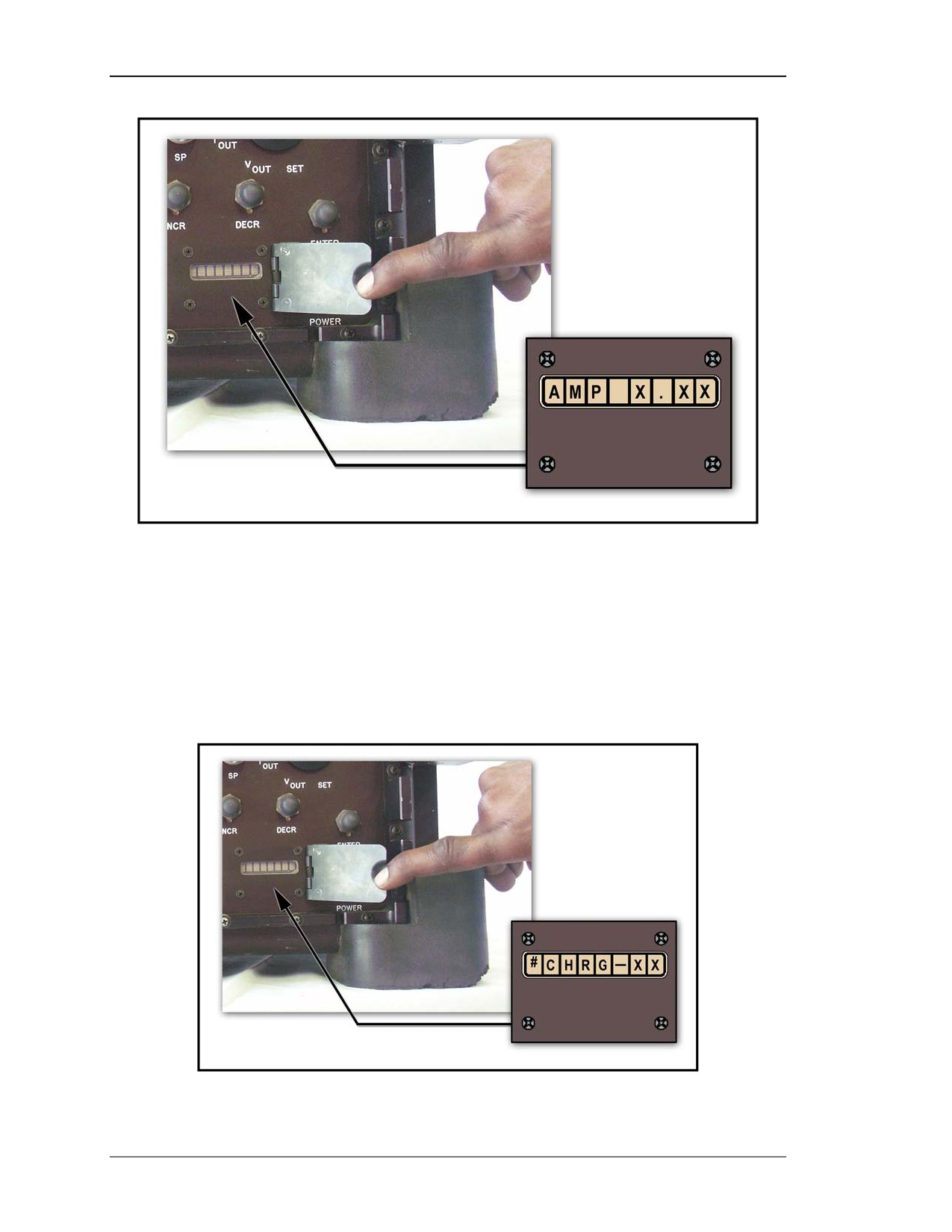
Figure 2-50. BPS displays current power output.
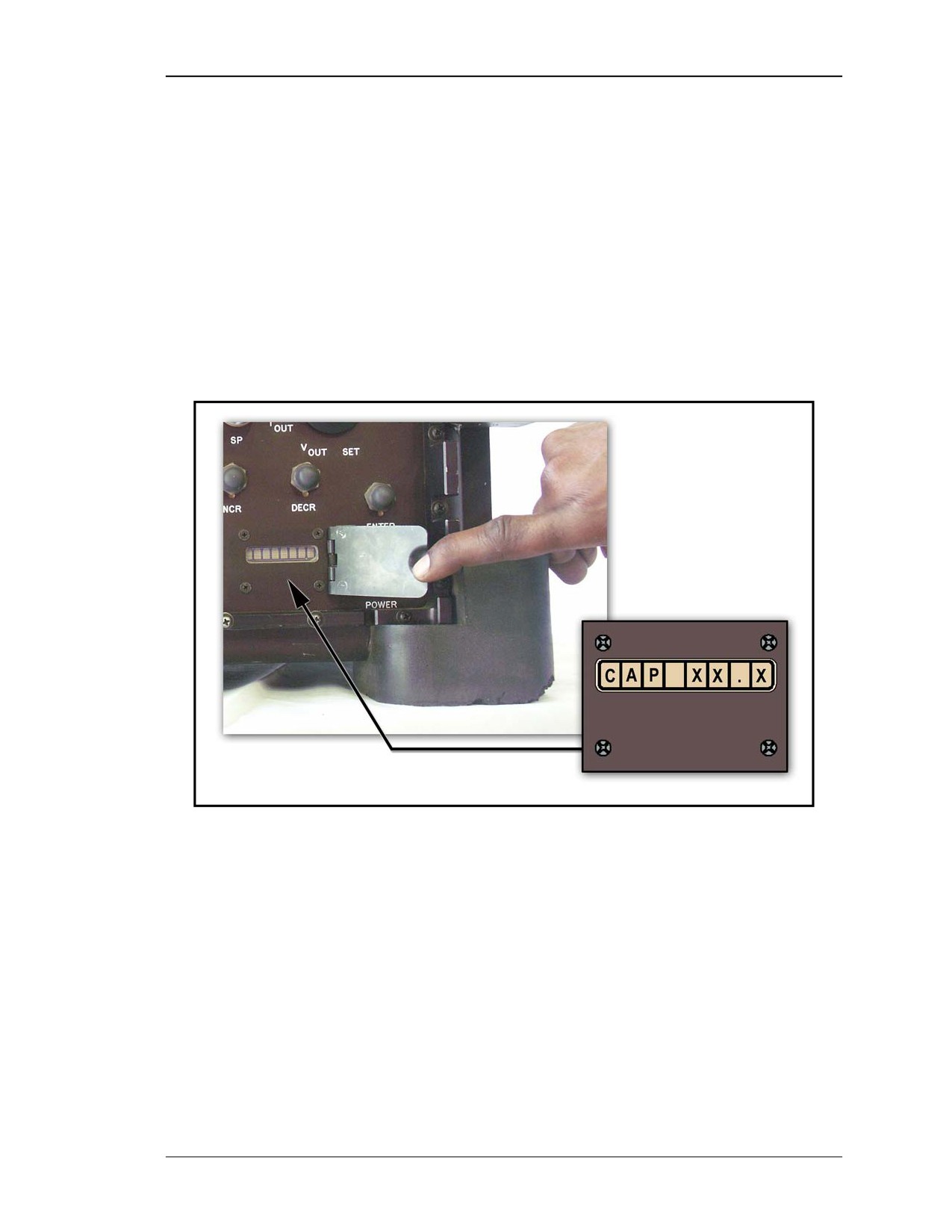
(c) CHG CYCLES. Only battery maintenance personnel use this setting. When the
function switch is placed in the CHG CYCLES position, the number of times the BPS has
been charged using AC power can be checked. The BPS display window will display the
number of times (Figure 2-51).
• The count increases every time the recharge cable is plugged in.
• Replacing the BPS battery resets this number to zero automatically.
Figure 2-51. BPS displays number of charges.
2-38
8 July 2005
FM 3-22.32
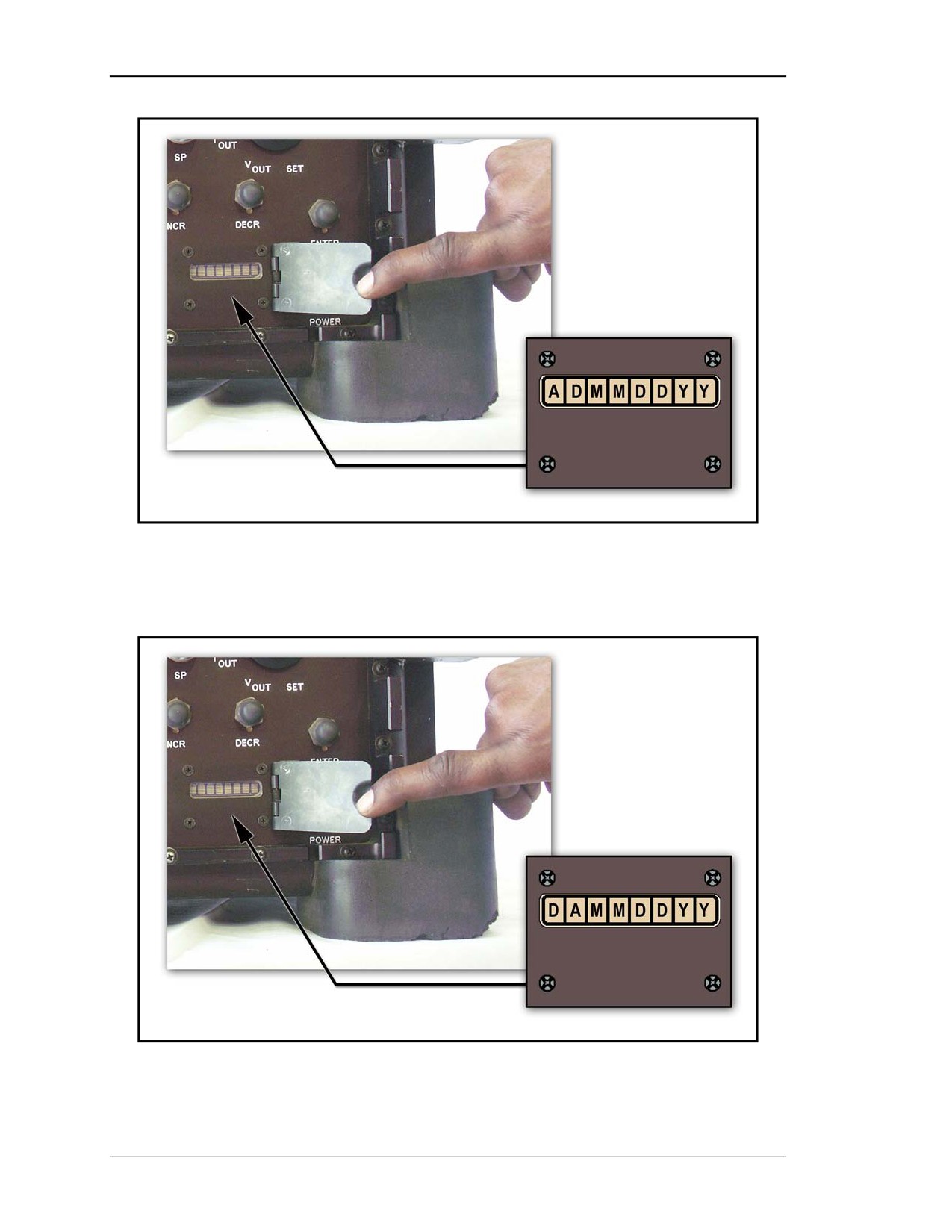
(d) BATT CAP. When the function switch is placed in the BATT CAP position, the
capacity of the BPS INTERNAL batteries can be checked. The BPS display window will
display the current internal batteries ampere (amp) hours (Figure 2-52). Every 10 amps is
one hour of operating time. When 100 is shown, the batteries have the capability to
deliver 10 amps for 10 hours.
• The higher the number, the longer the battery should last under normal
operation.
• Older batteries will achieve less than 80 amp hours capacity when they are
fully charged
• When a full 20-hour charge only achieves a capacity of 40 amp hours or less,
turn the BPS in for maintenance.
Figure 2-52. BPS displays current internal batteries ampere hours.
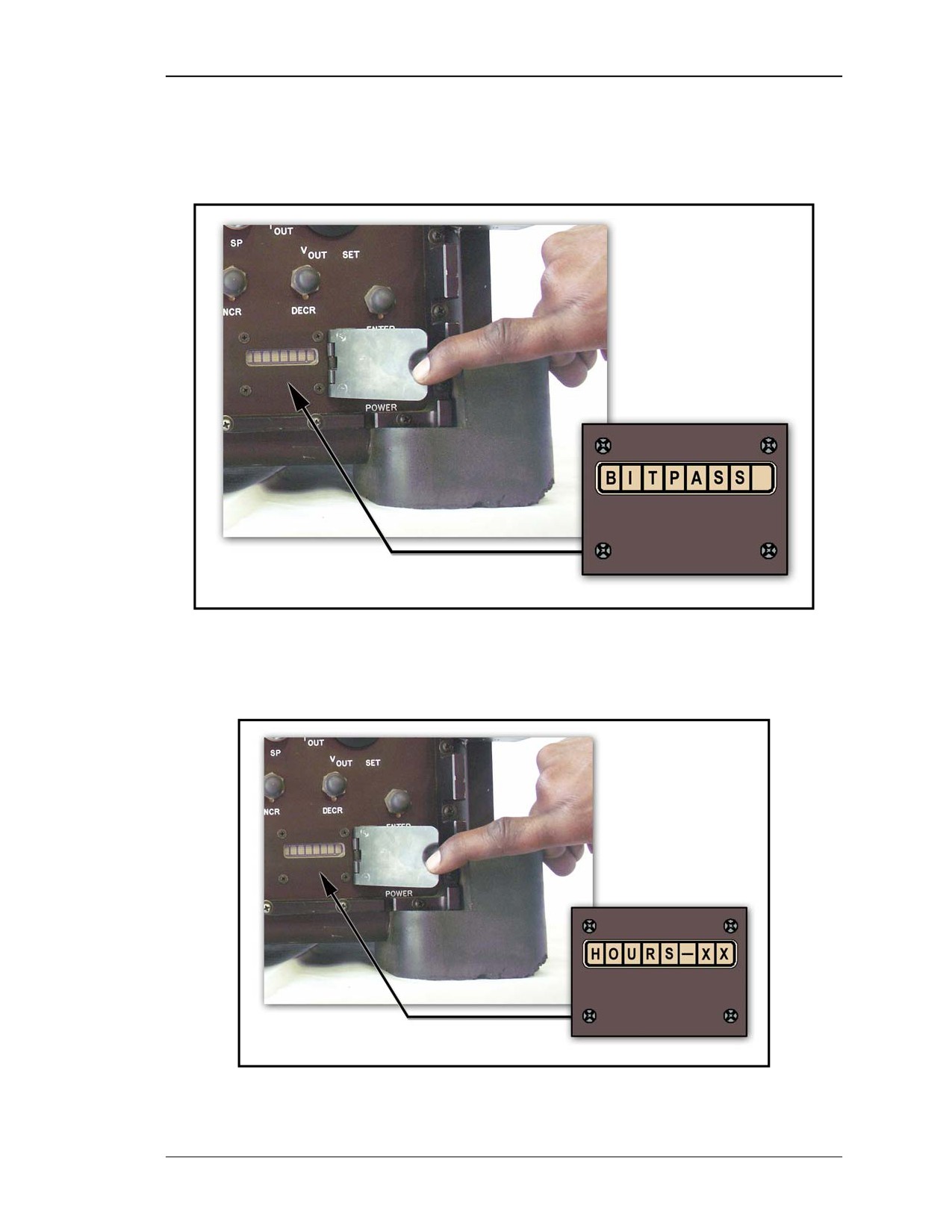
(e) ACT DATE. When the function switch is placed in the ACT DATE position, the
activation date of the BPS can be checked (Figure 2-53, page 2-40). The BPS display
window will display the date the BPS batteries were installed. An eight-digit letter code
is used:
• First and second digits = activation date.
• Third and fourth digits = month of the year.
• Fifth and sixth digits = days of the month.
• Seventh and eighth digits = year installed.
8 July 2005
2-39
FM 3-22.32
Figure 2-53. BPS displays date batteries were installed.
(f) Date. This is used by maintenance personnel only (Figure 2-54).
Figure 2-54. BPS displays date.
2-40
8 July 2005
FM 3-22.32
(g) BIT. When the function switch is placed in the BIT position, internal BPS
software checks can be conducted. The BPS display window will display the results of
any internal BPS BITs (Figure 2-55).
Figure 2-55. BPS displays BIT results.
(h) SET. This is used by maintenance personnel only (Figure 2-56).
Figure 2-56. BPS displays SET.
8 July 2005
2-41
FM 3-22.32
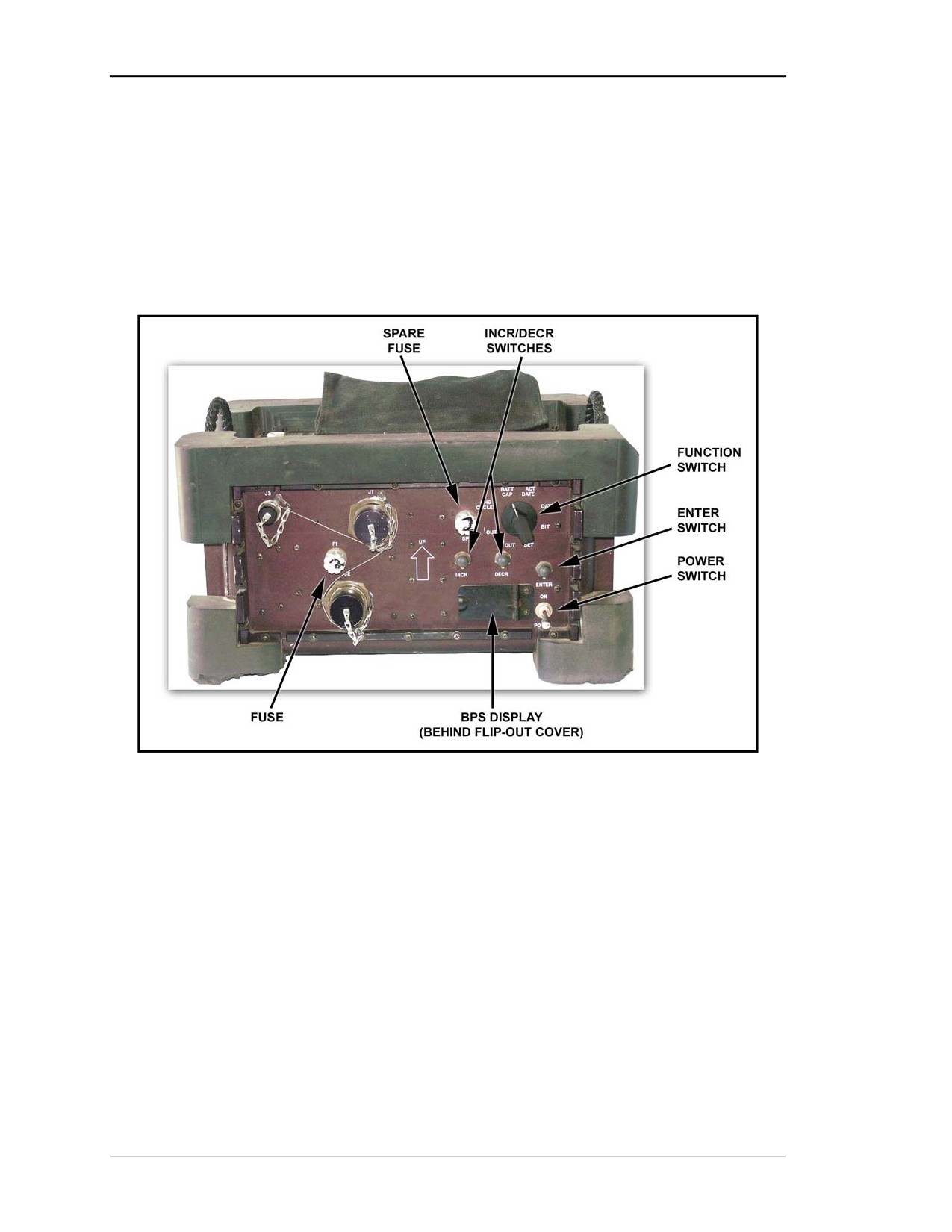
c. INCR and DECR Switches. The increase
(INCR) and decrease
(DECR)
push-button switches are located just below and to the left of the function switch
(Figure 2-57). The two switches provide the capability to change three functions on
the BPS:
• Setting the date information (minutes, hours, days, month, year).
• Selecting the BPS BIT fault codes for maintenance.
• Setting the battery activation date.
Figure 2-57. BPS controls and indicators.
d. ENTER Switch. The ENTER switch is a push button located on the right side of
the BPS front panel (Figure 2-57). When the function switch is placed in the BIT
position, pushing ENTER will initiate the BPS BIT. Results of this test are shown on the
BPS display indicator as fault codes for maintenance personnel.
e. POWER Switch. The power switch, located in the lower right corner of the BPS,
turns on the BPS (Figure 2-57). It is the first switch turned on in the ITAS power-up
procedures.
f. Fuse. The fuse protects the BPS from damage caused by a short in the cables or
ITAS components (Figure 2-57).
g. Spare Fuse. The spare fuse can be exchanged with a faulty fuse to restore
operation (Figure 2-57).
2-42
8 July 2005
FM 3-22.32
CHAPTER 3
MOUNTED AND DISMOUNTED OPERATIONS
The M41 ITAS is primarily a mounted system that utilizes the M1121
HMMWV as the carrier vehicle. Current doctrine demands a highly
mobile antiarmor weapons system that incorporates the latest technology
for the modern battlefield. The M1121 HMMWV is a one-vehicle
(1 1/4-ton truck) combat system that is air transportable, versatile,
maintainable, and survivable (Figure 3-1, page 3-2). Its 16-inch ground
clearance, four-wheel independent suspension, steep approach and
departure angles of 60-percent grade, side slope of 40 percent, and 30
inch water-fording capability
(without fording kit,
60-inch with kit)
provides the off-road mobility and speed needed in combat. The vehicle
carries one complete launcher system, seven encased missiles, and a
three-man crew. The tactical or training situation may demand that the
crew dismount the carrier and employ the ITAS in the dismounted or
tripod configuration. This chapter discusses the operation of the ITAS
while mounted on the M1121 HMMWV and dismounted in tripod
configuration.
Section I. MOUNTED OPERATIONS
Advancing technology demands mobility on the battlefield, and the mounted M41 ITAS
provides this capability. The mounted configuration is the primary method of
employment for the M41 ITAS.
3-1.
PREVENTIVE MAINTENANCE CHECKS AND SERVICES
Always conduct preventive maintenance checks and services (PMCS) using the technical
manual
(TM 9-1425-923-12). These checks and adjustments are normally made
immediately after complying with before-operations PMCS or after assembling the M41
ITAS, either in the mounted or dismounted configuration. Conduct a system checkout to
ensure that the system is working properly before engaging targets, if time permits.
System checkout consists of PBIT, IBIT, boresight, GRIPS test, and operator’s checks.
(See TM 9-1425-923-12 for complete details.)
3-2.
MOUNT THE ITAS ON THE M1121 HMMWV
The three-man crew prepares the M1121 for ITAS firing as follows:
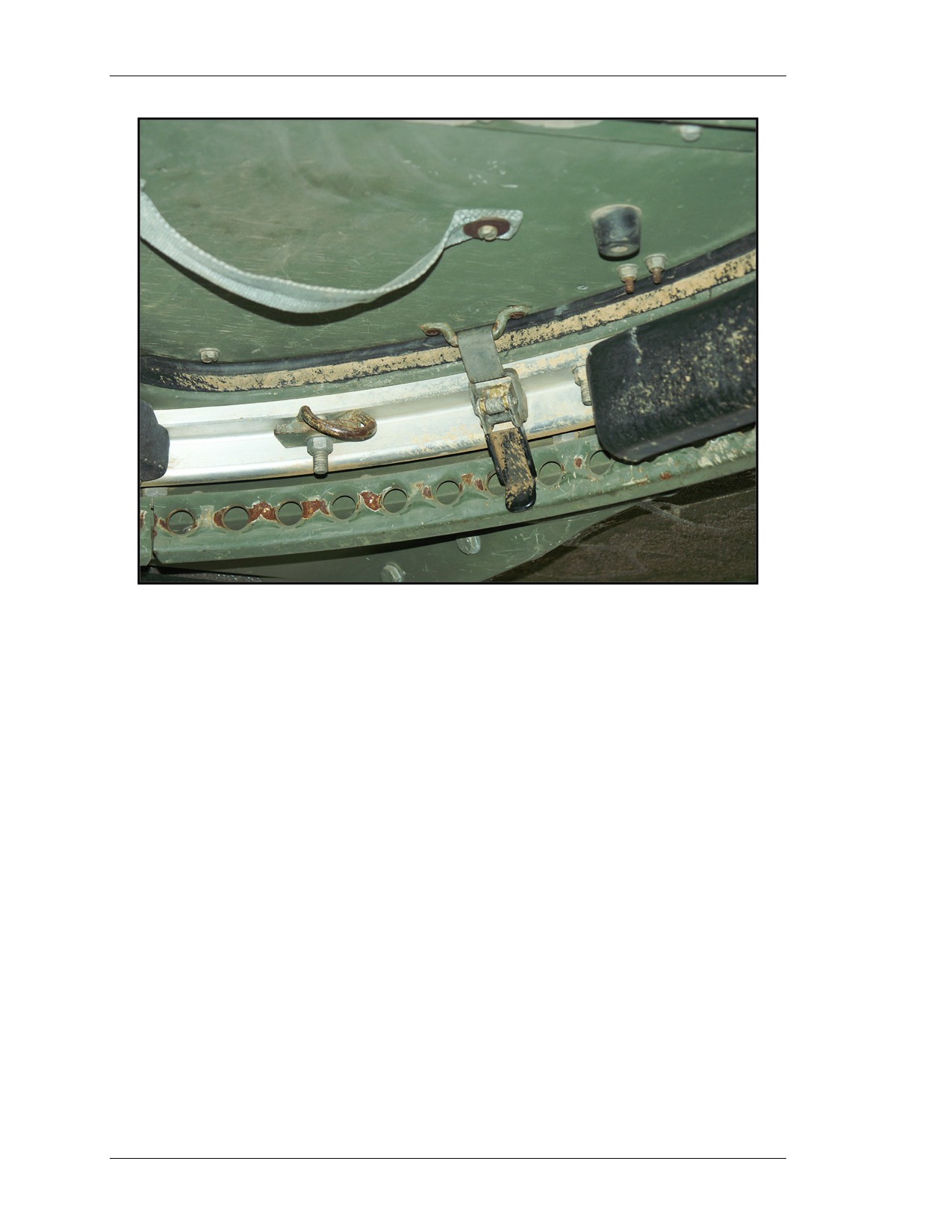
a. The gunner, driver-loader, and squad leader release the latches securing the hatch
cover (Figure 3-1, page 3-2).
8 July 2005
3-1
FM 3-22.32
Figure 3-1. Hatch cover latches.
b. From the loader’s position in the cargo hatch, the driver-loader stows the BPS and
secures it with straps, and connects the J1 and J2 connectors. He turns the BPS power
switch to the ON position, turns the function switch to BIT, and checks the results of the
BPS PBIT. He also checks battery capacity and voltage (TM 9-1425-923-12).
c. The squad leader places the tripod in the stow position on the vehicle. He fits the
tripod body over the mounting bracket and secures the tripod with a coupling clamp. He
straps the tripod in place using the retention straps.
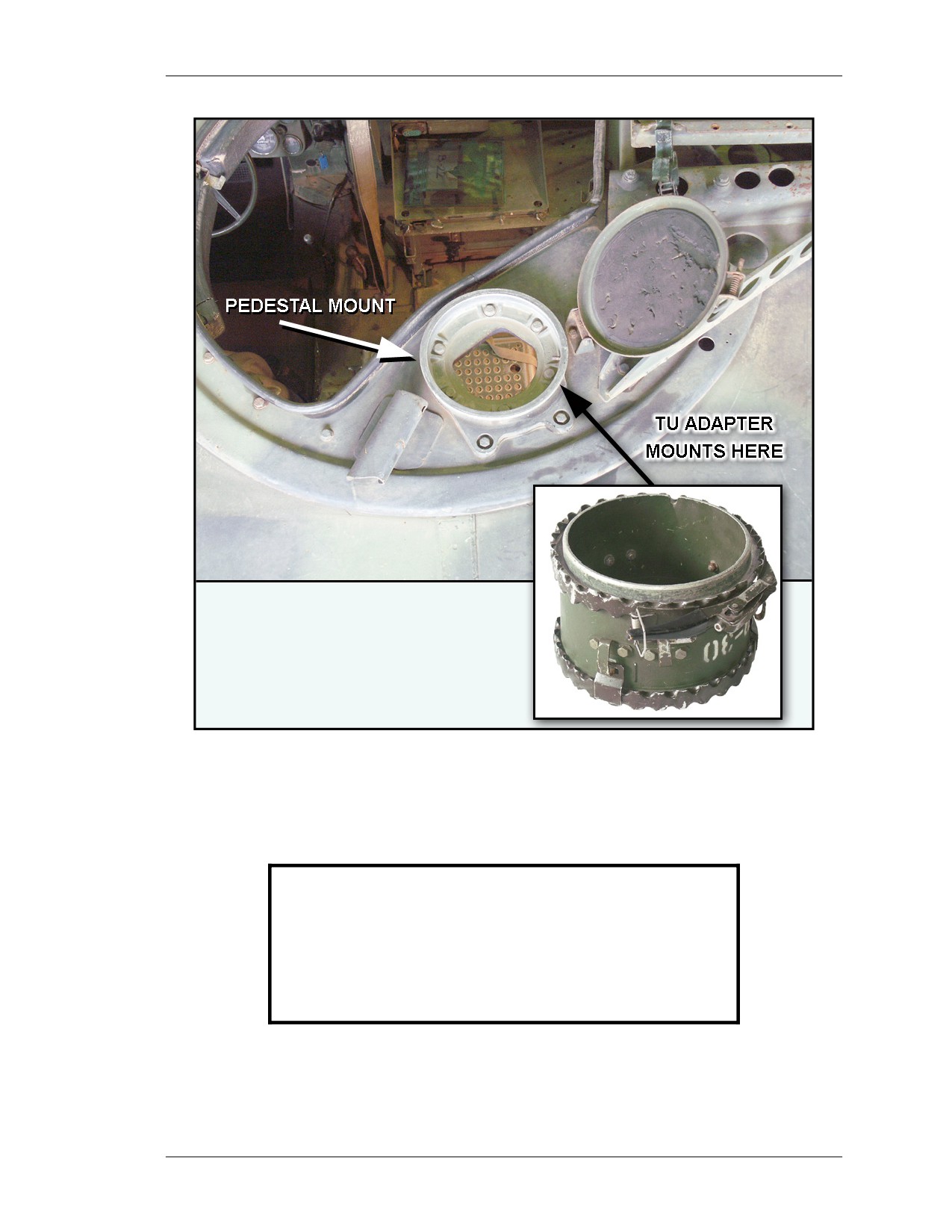
d. The gunner attaches the TU adapter to the pedestal mount (Figure 3-2).
3-2
8 July 2005
FM 3-22.32
Figure 3-2. TU adapter attaches to pedestal mount.
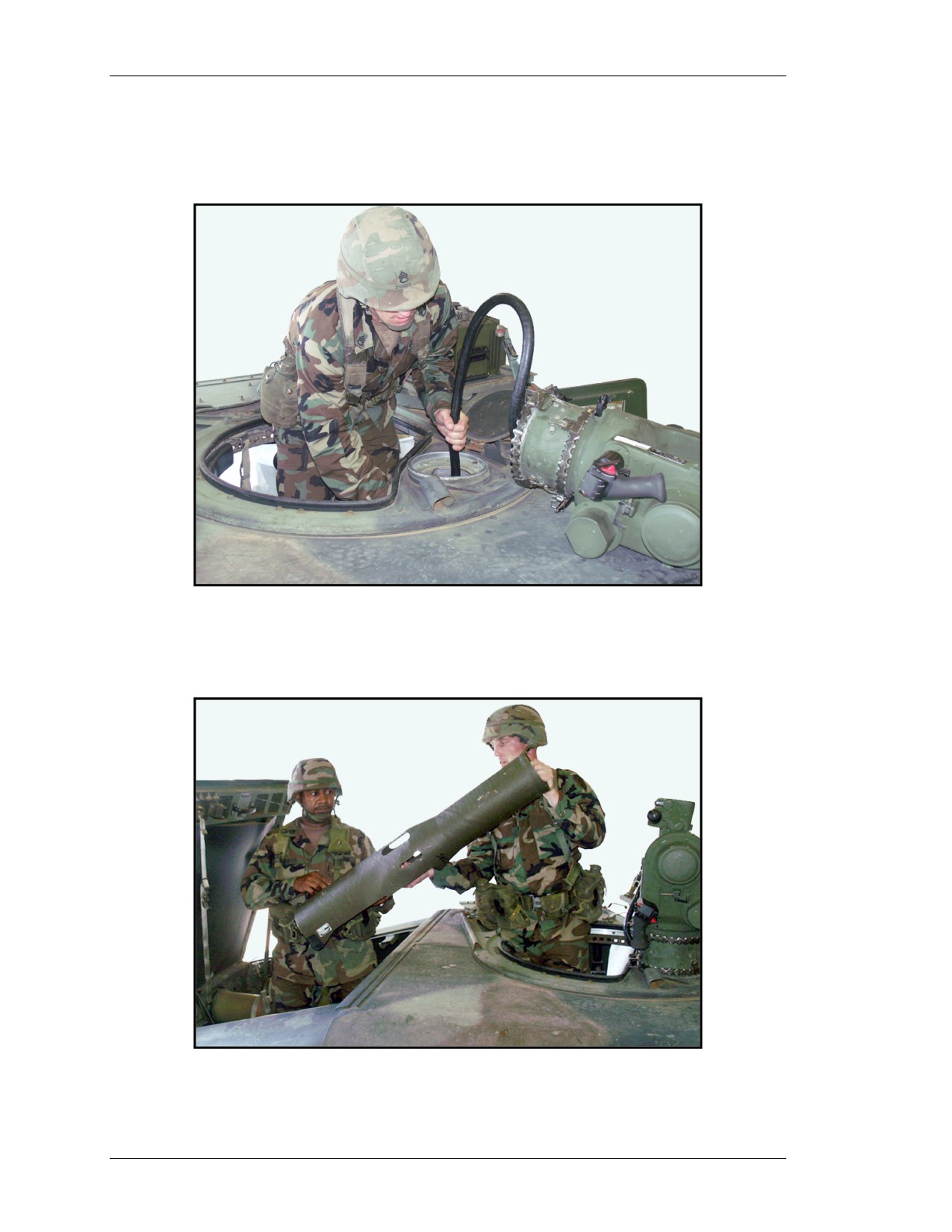
d. The driver passes the TU up through the weapon station to the gunner.
CAUTIONS
1. Do not lift the TU by the handgrips. The weight of
the TU will cause them to break and the
equipment will be inoperable.
2. Do not set the TU on the coil cable. Doing so may
damage the coil cable connector.
8 July 2005
3-3
FM 3-22.32
(1) The gunner places the TU next to the pedestal mount. He passes the coil cable
down through the hole in the pedestal mount (Figure 3-3). He mounts the TU on the TU
adapter and secures it with the coupling clamp.
Figure 3-3. Coil cable passes through pedestal mount.
(2) The driver passes the launch tube to the gunner (Figure 3-4).
Figure 3-4. Launch tube passed to gunner.
3-4
8 July 2005
FM 3-22.32
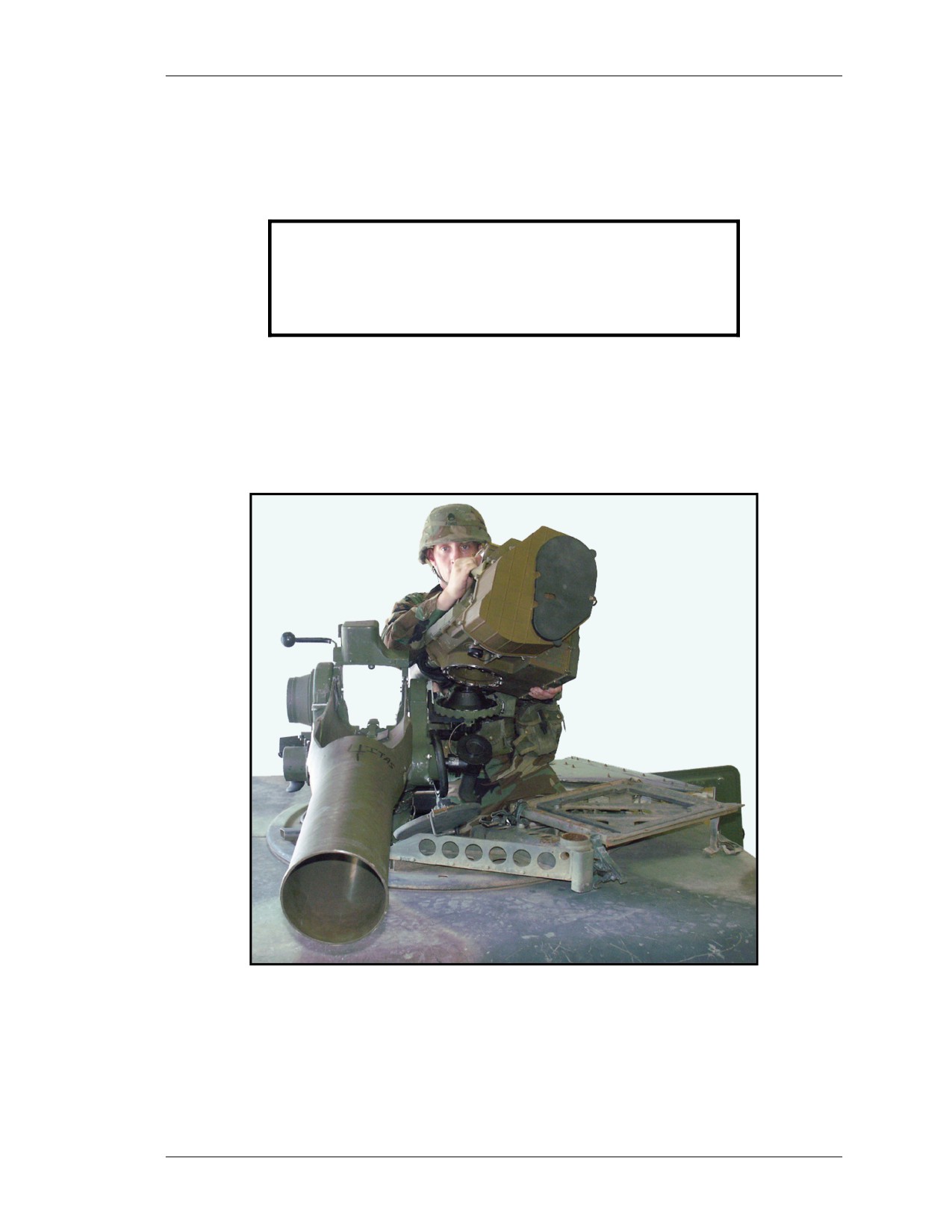
e. The gunner mounts the launch tube into position, placing the launch tube latch
into the launch tube catch, and presses down until locked.
f. The gunner removes the TAS mount connector cover.
CAUTION
Ensure that the electrical connector on the TAS
mount is free of dirt or foreign material fully seated
before installing the ITAS on the TU. Failure to do so
could cause damage to the connector pins.
g. The driver passes the TAS to the gunner.
h. The gunner places the TAS onto the TAS mount with the window facing forward
(Figure 3-5). He rotates the TAS until the index lug slot fits over the index lug on the
TAS mount and locks the TAS into position with the coupling clamp.
Figure 3-5. TAS being placed on TAS mount, window forward.
i.
The driver passes the FCS to the gunner on the left side of the HMMWV. The
gunner mounts the FCS in the FCS mounting bracket with the power switch facing the
weapon station opening. He secures the FCS with the four straps attached to the FCS
mounting bracket.
8 July 2005
3-5
FM 3-22.32
j.
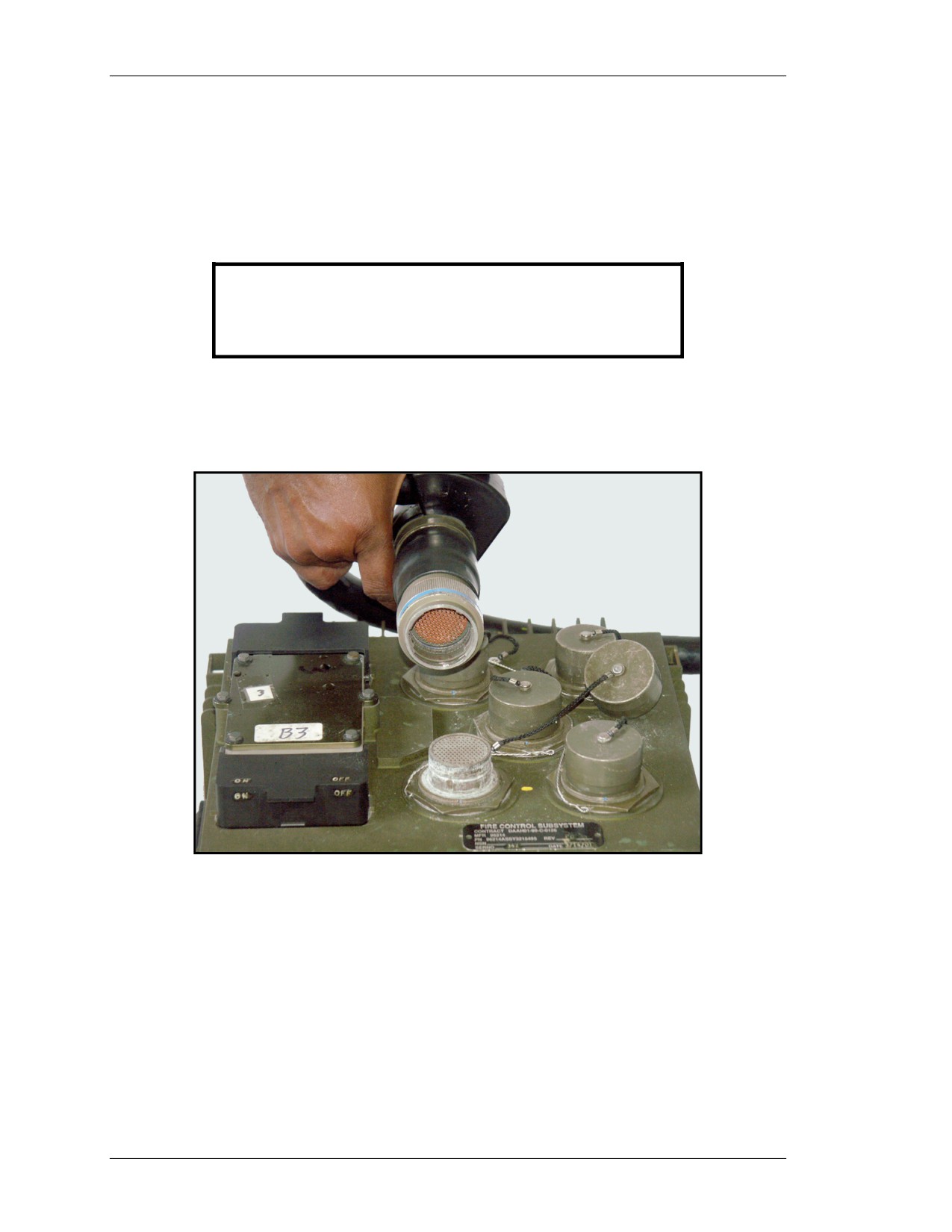
The gunner connects the coil cable to the FCS.
(1) He removes the J1 and J2 connector covers on the FCS.
(2) He connects the coil cable, with the pin-saver adapter attached, to the FCS J2
connector (Figure 3-6).
(3) He connects HMMWV interface cable (HIC) to the FCS J1 connector.
CAUTION
Ensure that no dirt or foreign material is in the end of
the coil cable connector. Failure to do so could cause
damage to the connector pins.
NOTE: The coil cable can be connected without the pin saver adapter in a combat
situation only.
Figure 3-6. Coil cable connects to FCS J2 connector.
3-3.
MOUNTED FIRING POSITIONS
When the ITAS is assembled for M1121, the vehicle must be level for effective operation
of the weapon. If the vehicle is not level, lateral (azimuth) movement of the TU produces
a change in the elevation angle of the launch tube; therefore, acquiring and tracking the
target may be difficult. An unleveled vehicle can cause an electronic control error during
the final tracking operation (while the command-link wire is guiding the missile to its
target). When the vehicle is properly positioned, the leveling bubble in each level will be
between the marks on the level indicators. The ITAS is not fired from a position where
the TU has a lateral cant of more than 10 degrees. The ideal firing position is as level as
3-6
8 July 2005
FM 3-22.32
possible. However, the missile can be fired from a position where the tripod is canted as
much as 30 degrees directly downhill or uphill. After the site is selected and the weapon
emplaced, the squad leader and gunner make a range card for the position. (For detailed
information on making a range card, see Appendix D.)
NOTE: Range card preparation applies to mounted and dismounted operations.
3-4.
PREPARATION OF MISSILE FOR FIRING
The TOW missile requires complete attention to detail when preparing it for firing
missions. Missile identification, inspection, and correct handling procedures eliminate
safety hazards to personnel and equipment.
(See TM 9-1425-923-12 for complete
details.)
3-5.
LOADING, ARMING, AND UNLOADING
The procedures for loading, arming, and unloading the M41 while mounted on the
M1121 HMMWV are as follows:
a. Load. The forward handling ring, preformed packing, electrical connector cap,
and quick-release clamp are saved in case the missile is not fired. If missile diaphragms
are damaged while loading, the missile can still be fired. The following procedures are
performed to load the M41 ITAS while mounted on the M1121 HMMWV.
(1) Using the azimuth and elevation locks on the TU, the gunner ensures that the
system is locked in the 8-degree down position. The gunner locks the system down by
pulling the elevation locking handle towards the rear of the system and pushes the
azimuth locking handle towards the left side of the system.
(2) The gunner opens the bridge clamp to load the missile.
(a) Hold encased missile with aft end raised at
45 degrees with the electrical
connector facing up. Insert indexing lugs on encased missile into missile guide slots on
launch tube.
(b) Slide encased missile forward into launch tube until indexing lugs are firmly in
place.
(c) Lower aft end of encased missile ensuring it is fully seated in TU.
(d) Lock bridge clamp by pushing down on abridge clamp and pulling bridge clamp
handle down to lock encased missile in launch tube.
b. Arm. The following procedures are performed to arm the M41 ITAS while
mounted on the M1121 HMMWV.
WARNING
Cargo shell door must be closed and securely
latched at both ends before firing the missile.
Firing the missile with the door unsecured will
cause injury to personnel and damage to
equipment.
8 July 2005
3-7
FM 3-22.32
(1) The driver-loader closes the cargo shell door and ensures that it is securely
latched.
DANGER
SERIOUS INJURY TO PERSONNEL COULD
RESULT IF THE CREWMEMBERS ARE IN THE
FIRING DANGER ZONES (BACKBLAST AREA)
WHEN THE MISSILE IS LAUNCHED. MAKE SURE
THE CREW IS OUT OF THE FIRING DANGER
ZONES BEFORE PULLING THE FIRE TRIGGER.
(2) The gunner checks the backblast area; announces,
“BACKBLAST AREA
CLEAR,” and then arms the missile by raising the arming lever.
c. Unload. After the missile has impacted, the gunner locks the TU in the 8-degree
down position.
NOTE. If a missile is not fired after being prepared for firing, it must be immediately
tagged to show the time, date, and using unit. If the missile is not used within
90 days of initial preparation, it must be turned in to the ammunition supply
point.
(1) Raise the bridge clamp handle and open the bridge clamp. (This action will cut
the command-link wires and turn off the xenon tracker in the TAS.)
(2) Remove empty missile container.
(a) Lift the aft end of the launch container and remove the launch container from the
launch tube.
(b) Dispose of empty launch container in accordance with unit SOP.
3-6.
TARGET ENGAGEMENT
The crewmembers perform the following target engagement procedures.
a. When the squad leader issues the fire command, the gunner releases the azimuth
and elevation locks on the TU, if not already released.
CAUTION
If crewmembers other than the gunner are in, or
leaning on, the M1121 HMMWV, they must be
completely still while the gunner is tracking. Even
small movements can cause the vehicle to move and
adversely affect the gunner’s aim.
3-8
8 July 2005
FM 3-22.32
b. The gunner acquires and begins to track the target.
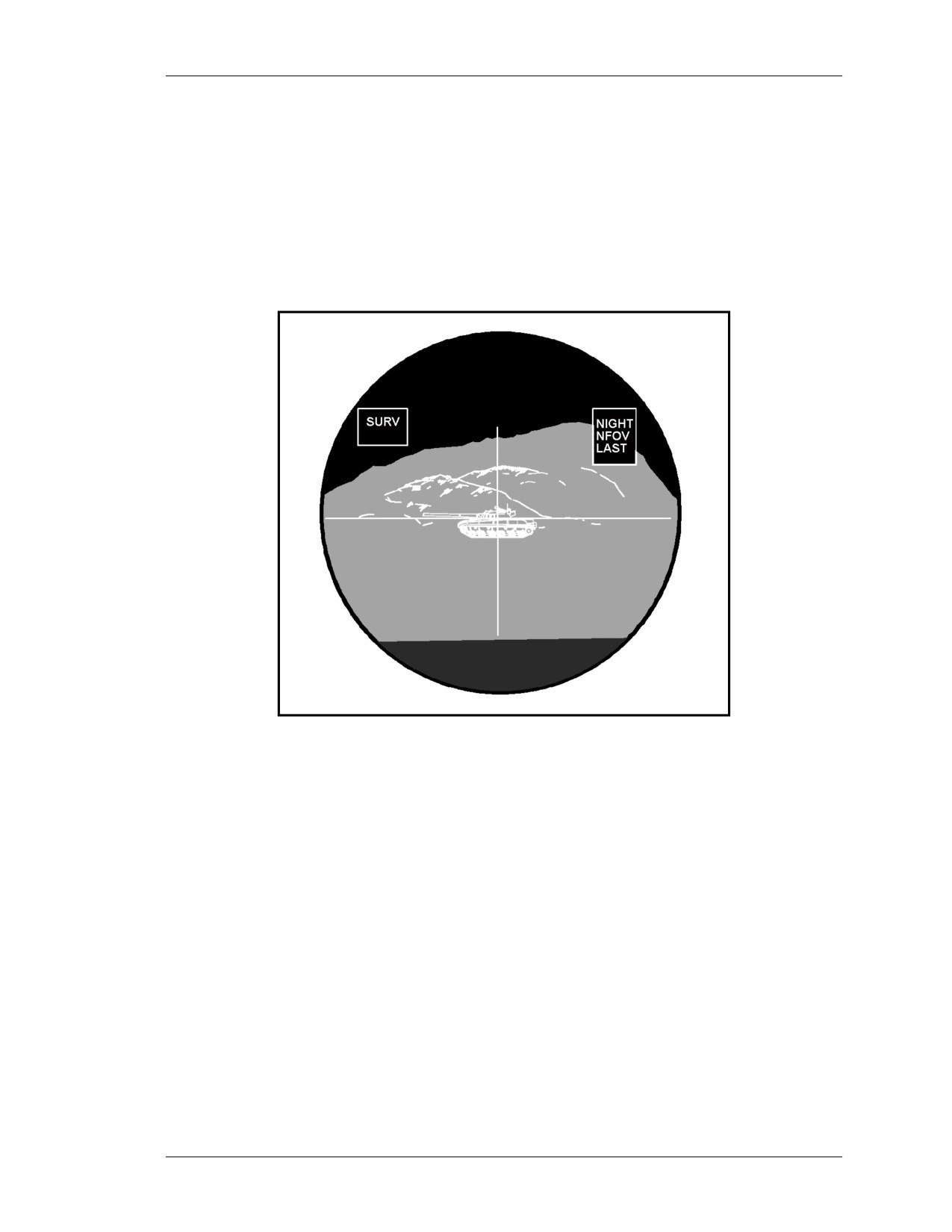
(1) If the target cannot be acquired in the sight, he announces, “Lost.” He presses
SGT SEL switch to activate the NVS WFOV and scans the sector of fire for targets. After
detecting a target, he presses the FOV switch to select NFOV (Figure 3-7).
(2) When the target has been acquired, he identifies it as friendly or enemy.
(3) If the target cannot be identified, he announces, “Cannot identify.”
(4) If the target is identified as enemy, he proceeds with a manual or tracker
engagement.
Figure 3-7. NVS NFOV selected.
c. During a tracker engagement, the gunner uses the aided target tracker. Using the
track gates will keep the missile on line with the target even if the gunner drifts off the
target for a short period of time and reacquires the target before impact.
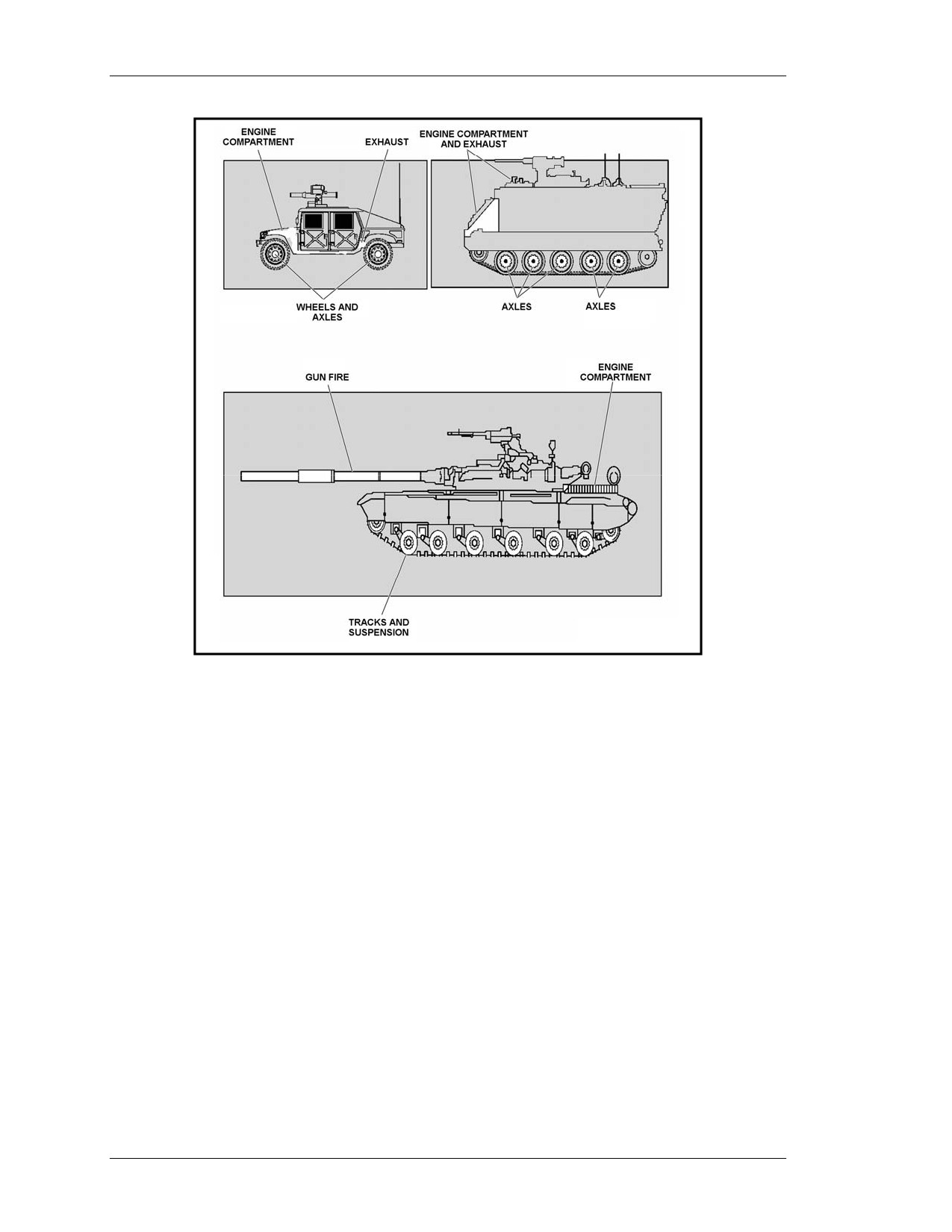
d. The gunner determines if the target is a wheeled or track vehicle. If it is a track
vehicle, he determines if it is an APC or a tank (Figure 3-8, page 3-10).
8 July 2005
3-9
FM 3-22.32
Figure 3-8. Determine type of target.
e. The gunner determines target engageability
(NFOV) using passive ranging
or LRF.
NOTE: The gunner must use active ranging to determine the actual range to targets
other than tanks beyond ranges of 3,500 meters. Passive ranging is based on
main battle tank (MBT) at 1,500 meters.
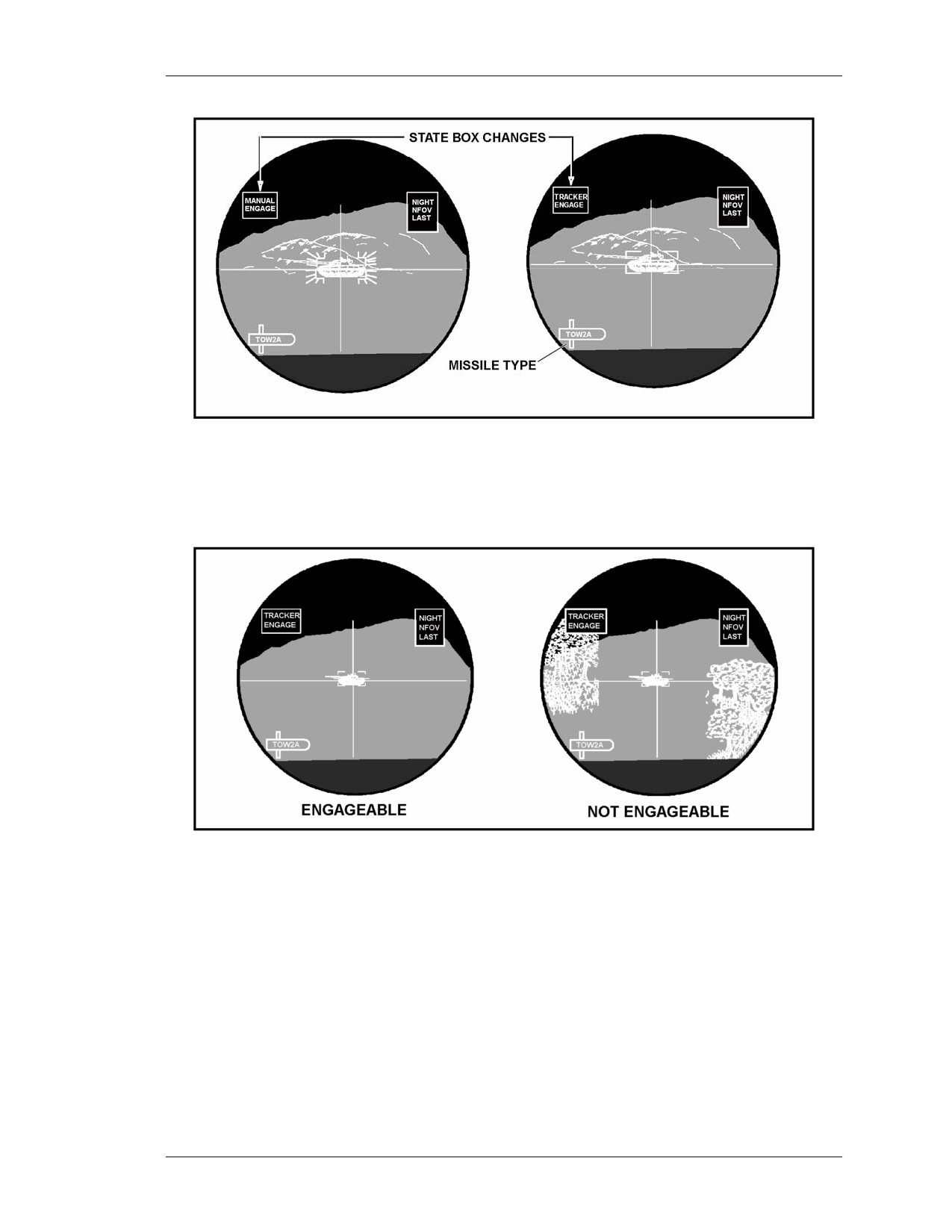
(1) If in range, the gunner arms the missile. The mode box will change from SURV to
MANUAL ENGAGE and the missile type symbol will come up. He locks on the target
(Figure 3-9), by pressing the TRK GATE switch to activate the track gates, and uses the
GATE ADJ switch to adjust the track gates around the target. He presses the TRK GATE
switch again to lock the track gates on the target.
3-10
8 July 2005
FM 3-22.32
Figure 3-9. Target lock-on.
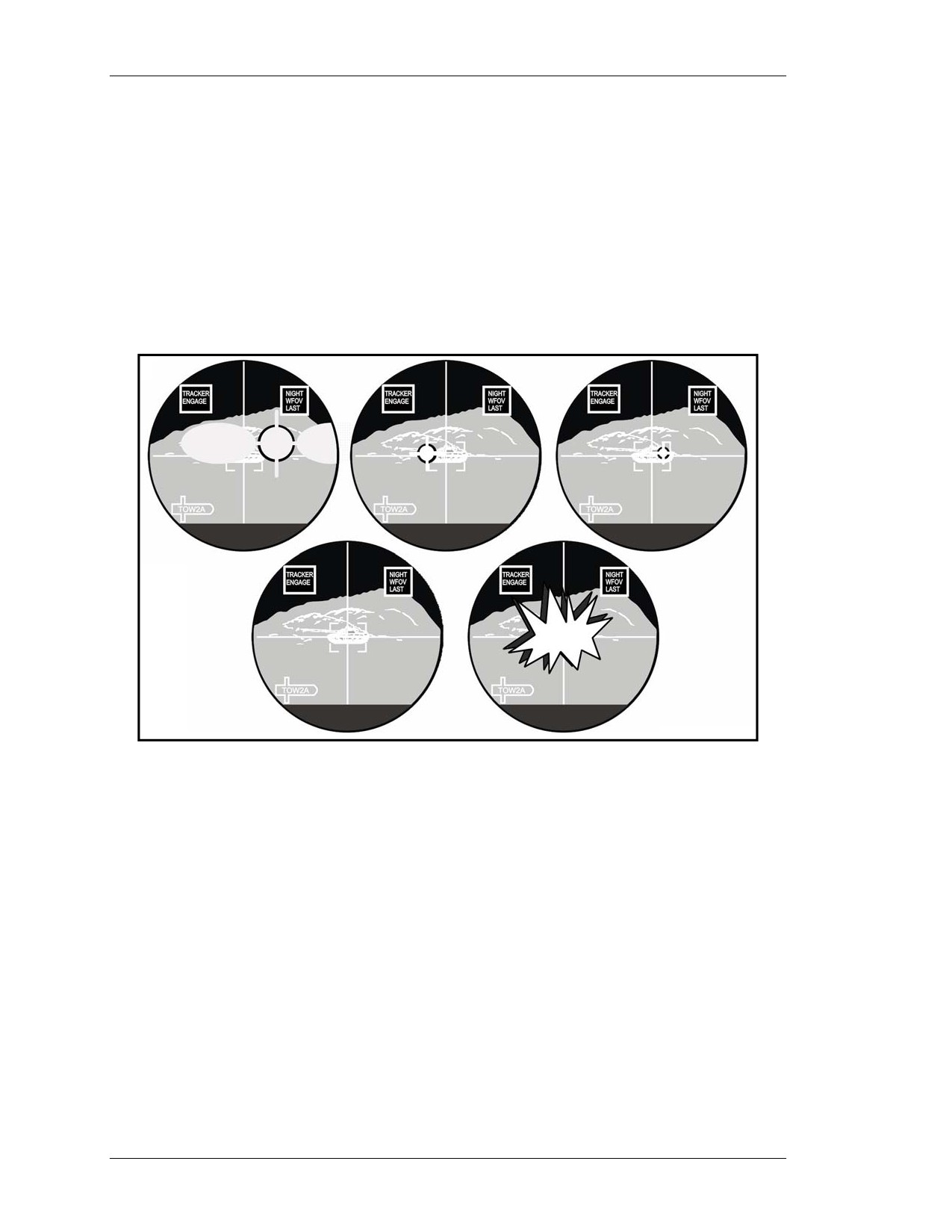
(2) If the target is moving, the gunner determines the exposure time
(NFOV)
(Figure 3-10).
Figure 3-10. Target exposure time.
f. The gunner launches the missile.
(1) He checks the crosshairs and track gates. The crosshairs must be centered on the
target, and the track gates must be around the target and solid (not flashing).
(2) The gunner takes a deep breath and lets part of it out. Proper breath control is
especially important during the first and last 400 meters of missile flight. Improper
breathing will cause poor tracking.
(3) The gunner presses the trigger. A 1.5-second delay will occur before the missile is
launched. This delayed firing of the launch motor can cause flinching or jerking of the
handgrips if the gunner is not prepared for it.
8 July 2005
3-11
FM 3-22.32
NOTE: The gunner should be prepared for two noises after pressing the trigger:
1. The first noise is the gyro being activated. This is not loud, but it may
cause the gunner to think a hangfire has occurred and he may not be
prepared for the next noise.
2. The second noise is the launch motor firing. This is a loud noise similar to
the AT4 firing and may cause the gunner to flinch.
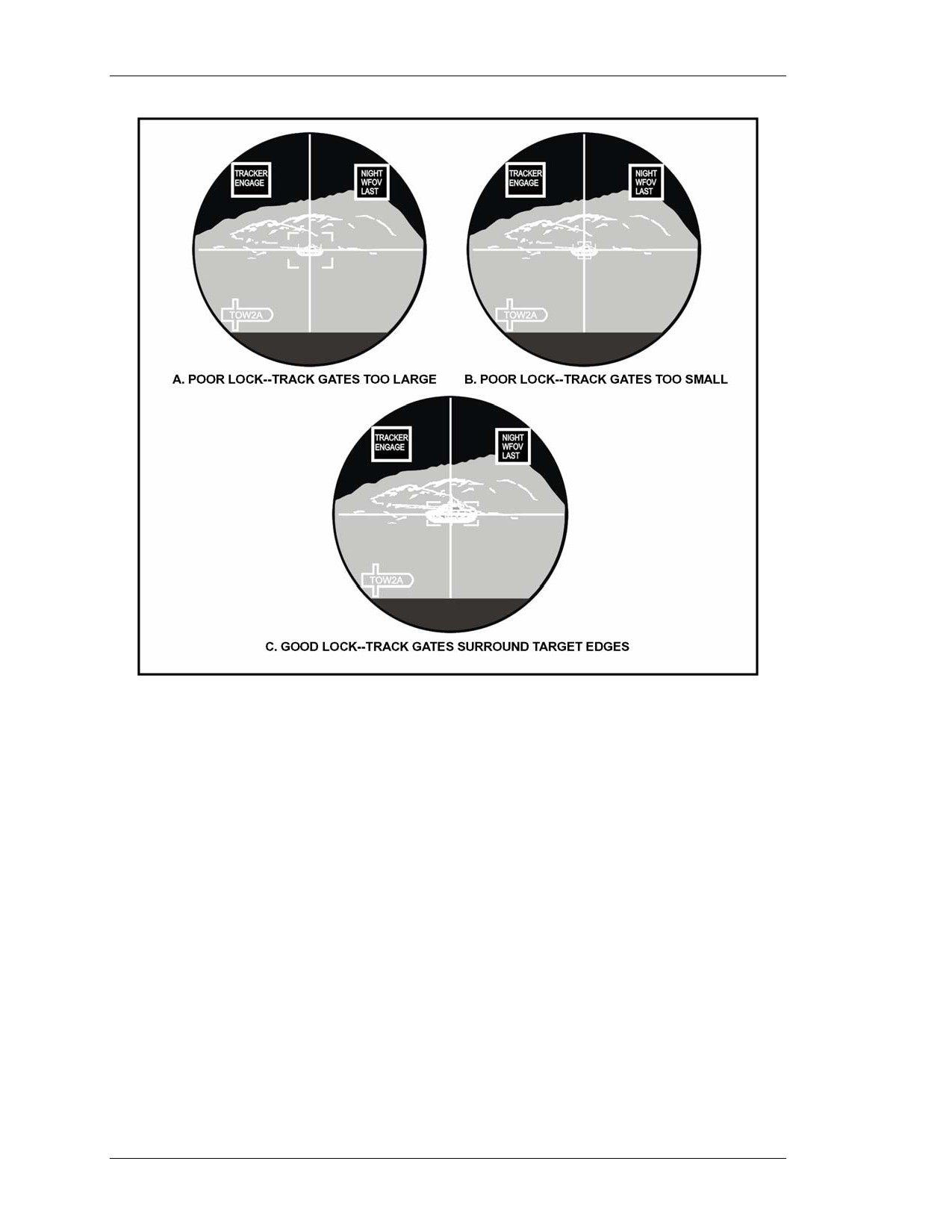
(4) When the missile appears in the TAS display (Figure 3-11), the gunner ignores it.
He never tries to guide the missile. If he is distracted, his tracking becomes poor and his
chances of hitting the target are reduced.
Figure 3-11. Missile impact.
3-7.
TROUBLESHOOTING A TRACKER ENGAGEMENT
Use the following procedures to troubleshoot a tracker engagement.
a. Tracker Will Not Lock on Target. Two things happen to indicate that a good
lock has occurred. The track gates become solid, and TRACKER ENGAGE appears in
the mode box of the TAS display.
(1) Conditions that could cause the ITAS not to lock on the target are:
• Poor range focus. A poor range focus will make it hard for the tracker to
identify the target.
• The target is in an area of high IR clutter. The tracker cannot distinguish
between the target and the background clutter.
• Low Delta-Ts/IR crossover occurring.
(2) Various corrective actions can be taken.
(a) In the case of poor range focus, the gunner must focus the NVS and readjust the
track gates to place as much of the center of the target inside the track gates as possible
3-12
8 July 2005
FM 3-22.32
and still have the track gates touching the edges of the target. If the tracker still does not
lock onto the target, the gunner readjusts the track gates slightly smaller on the center of
the target.
(b) In the case of high IR clutter, the gunner can decrease the size of the track gates
and attempt to lock on, or wait until the target leaves the area of high IR clutter.
(c) In the case of low Delta-Ts, the gunner must wait until the Delta-Ts in the target
scene change. This occurs if the target scene warms due to solar heating, if the target
cools from a lack of solar heat, or if the target warms itself from movement and or
running the engine.
(d) If NONE of the above actions correct the problem, the gunner reverts to a manual
engagement.
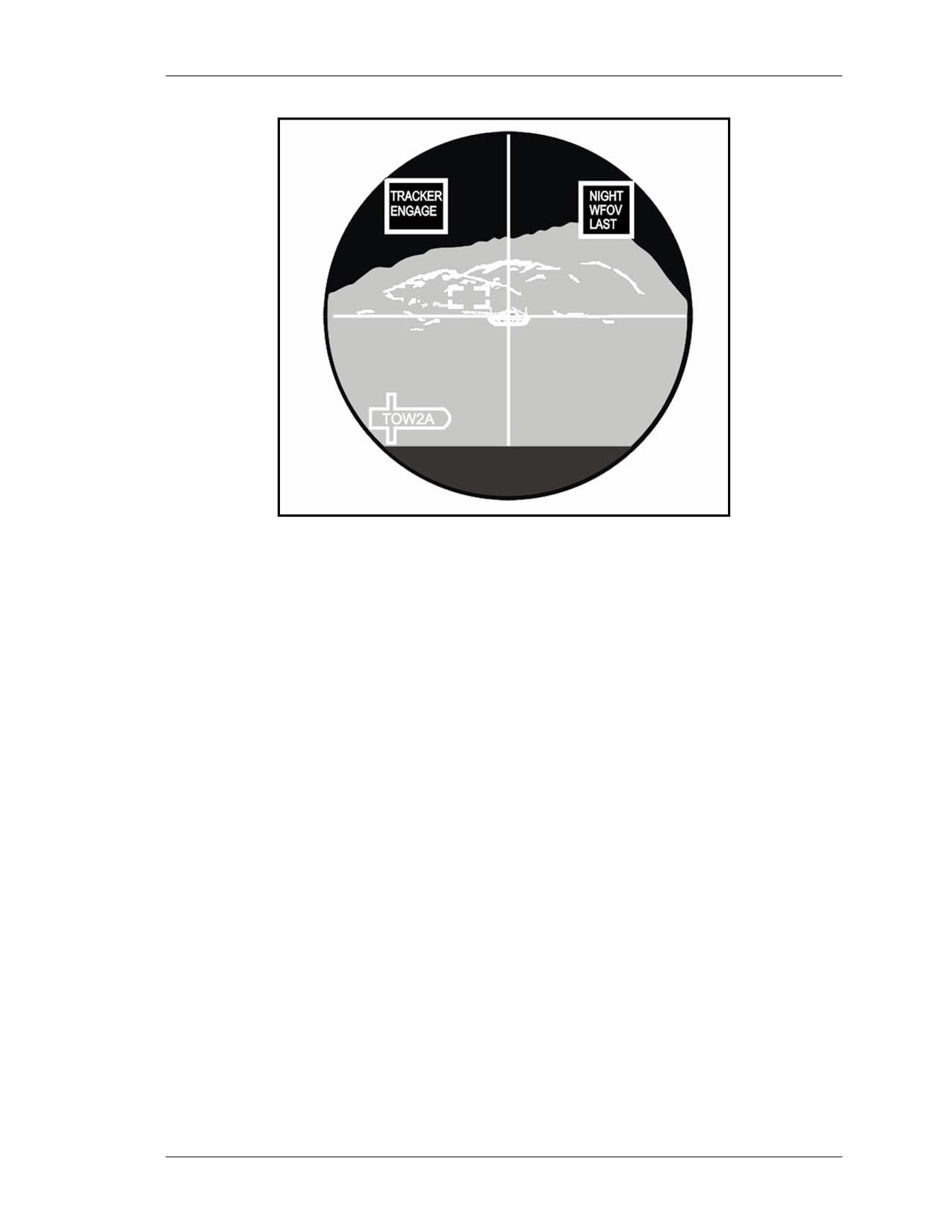
b. Track Gates are Too Large. When the track gates are set too large (A, Figure
3-12, page 3-14), they include part of the surrounding terrain, which is undesirable
because the tracker may lose the target during missile flight and impact on the “ground”
part of the target instead of the “vehicle” part of the target. Various corrective actions can
be taken.
(1) The gunner breaks the lock, adjusts the track gates so they are smaller, and
relocks onto the target.
(2) The gunner may also move the position of the target within the track gates and
attempt lock-on again.
(3) The gunner performs these actions until he achieves a good lock quality
(C, Figure 3-12, page 3-14).
c. Track Gates are Too Small. When the track gates are set too small, they only
surround a portion of the target instead of the complete target (B, Figure 3-12, page
3-14). Various corrective actions can be taken.
(1) The gunner breaks the lock, adjusts the track gates so they are larger, and relocks
onto the target.
(2) The gunner may also move the position of the target within the track gates and
attempt lock-on again.
(3) The gunner performs these actions until he achieves a good lock quality
(C, Figure 3-12, page 3-14).
8 July 2005
3-13
FM 3-22.32
Figure 3-12. Proper track gate size.
d. Track Gates are Unstable. The tracker does not have a good lock on the target if
the track gates seem to jump from one position to another at lock-on (unstable), which is
caused by some feature (normally IR clutter) in the track gate that the gunner cannot see
(Figure 3-13). However, the tracker can detect the feature and is trying to incorporate it
into the lock-on solution. The gunner breaks the lock-on, decreases the size of the track
gates, and attempts to lock onto the target again.
3-14
8 July 2005
FM 3-22.32
Figure 3-13. Unstable track gates at lock-on.
e. Moving Targets. If the target is moving, the gunner must slew the TU to keep the
crosshairs centered on the visible mass. If the target is moving slowly, the gunner adjusts
the track gates to the size of the target, no matter which direction the target is moving.
However, if the target is moving quickly, the gunner must consider the direction of
movement and how the movement affects the relative size of the target.
(1) Tanks. To ensure a good lock-on, the gunner concentrates on keeping the target’s
center of mass—the tank’s body and turret but not the gun barrel—centered in the track
gates and adjusts the track gates as close to the tank edges as possible.
(2) Target Without Turrets. The track gate adjustment for targets without turrets is
the same as that for tanks except there is no turret to be included when adjusting the track
gates.
(3) Low Target Definition. Conditions that can cause low target definition include
low Delta-Ts (difference in temperature), IR clutter, and partial masking of selected
target.
f. Tracker Break-lock. A break-lock occurs after lock-on when the track gates
appear to jump from one point to another instead of moving smoothly. A break-lock
situation can occur either before or after missile launch.
(1) While the break-lock situations before launch and after launch are the same, the
corrective actions are different.
(a) Corrective actions for a tracker break-lock before launch are:
• The gunner should push the TRK GATE switch while the crosshairs are in the
track gates to remove the track gates and attempt to relock on the target.
• If the gunner cannot lock on the target, he should attempt a manual
engagement.
8 July 2005
3-15
FM 3-22.32
(b) Corrective actions for a tracker break-lock after launch are:
• The gunner keeps the crosshairs on the target. He does not attempt to relock
on the target. The tracker will attempt to find the target at the crosshairs.
• After four seconds, if the tracker cannot relock on the target, the FCS will
default to manual engage and the missile will be guided to the crosshairs.
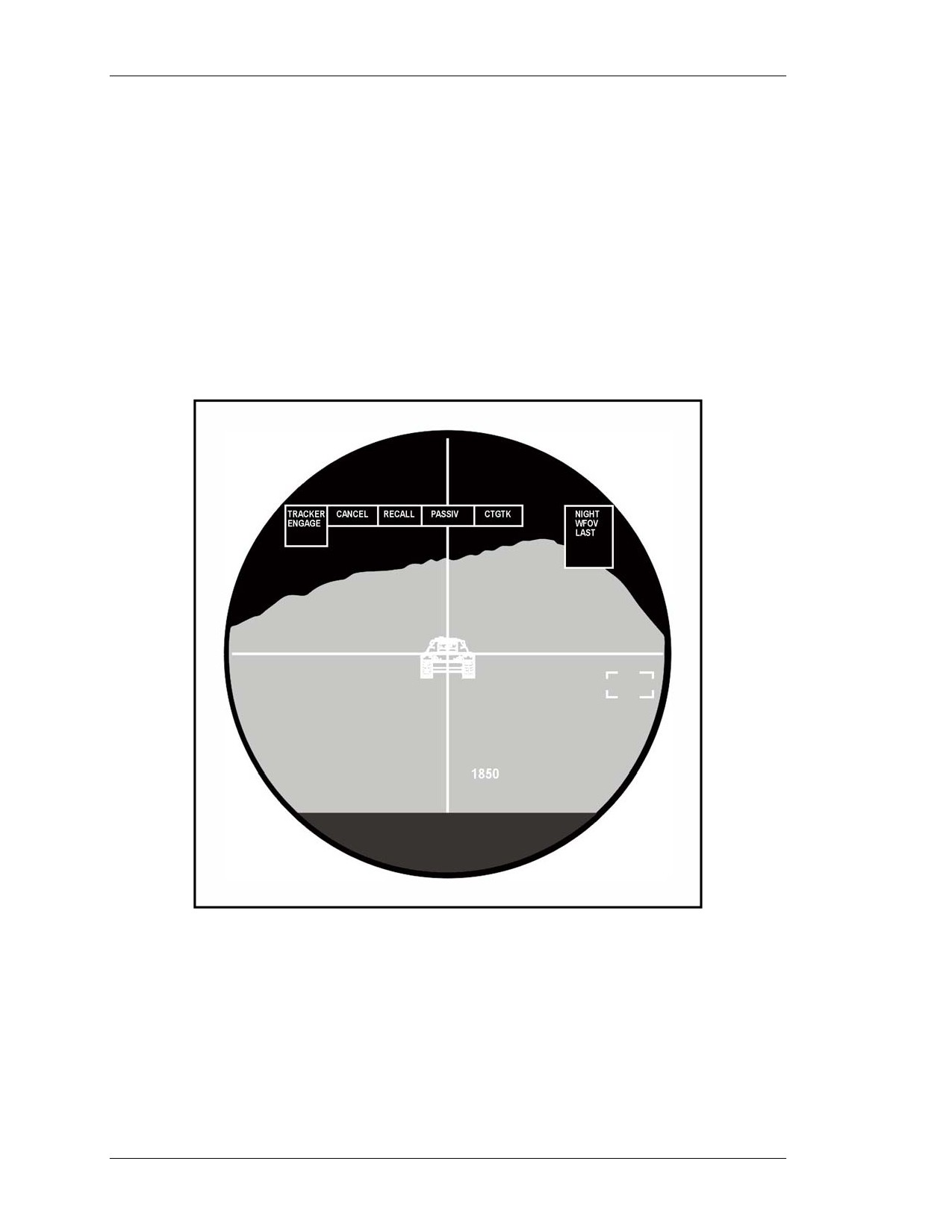
(2) To cancel target lock-on, the gunner uses either of two methods.
(a) TRK GATE switch method—the gunner presses the TRK GATE switch again
while the crosshairs are inside the track gates and the track gates will disappear.
(b) Menu method
(Figure
3-14)—the gunner selects CTGTK
(Cancel TarGet
TracKer) from the menu to delete the track gates. If two track gates are present, CTGTK
cancels the track gates farthest from the crosshairs. The steps must be repeated to remove
the second set of crosshairs, if necessary.
Figure 3-14. Passive ranging/cancel target tracker menu
NOTE: Manual target engagements can be achieved using either the daysight or
the NVS.
3-16
8 July 2005
FM 3-22.32
3-8.
MANUAL ENGAGEMENT
The following procedures detail using the daysight. To use the NVS, just press the sight
select switch to activate it.
a. Place the ITAS into operation.
(1) Assemble the system in the tripod- or HMMWV-mounted configuration.
(2) Perform system checkout procedures.
b. Load an encased missile.
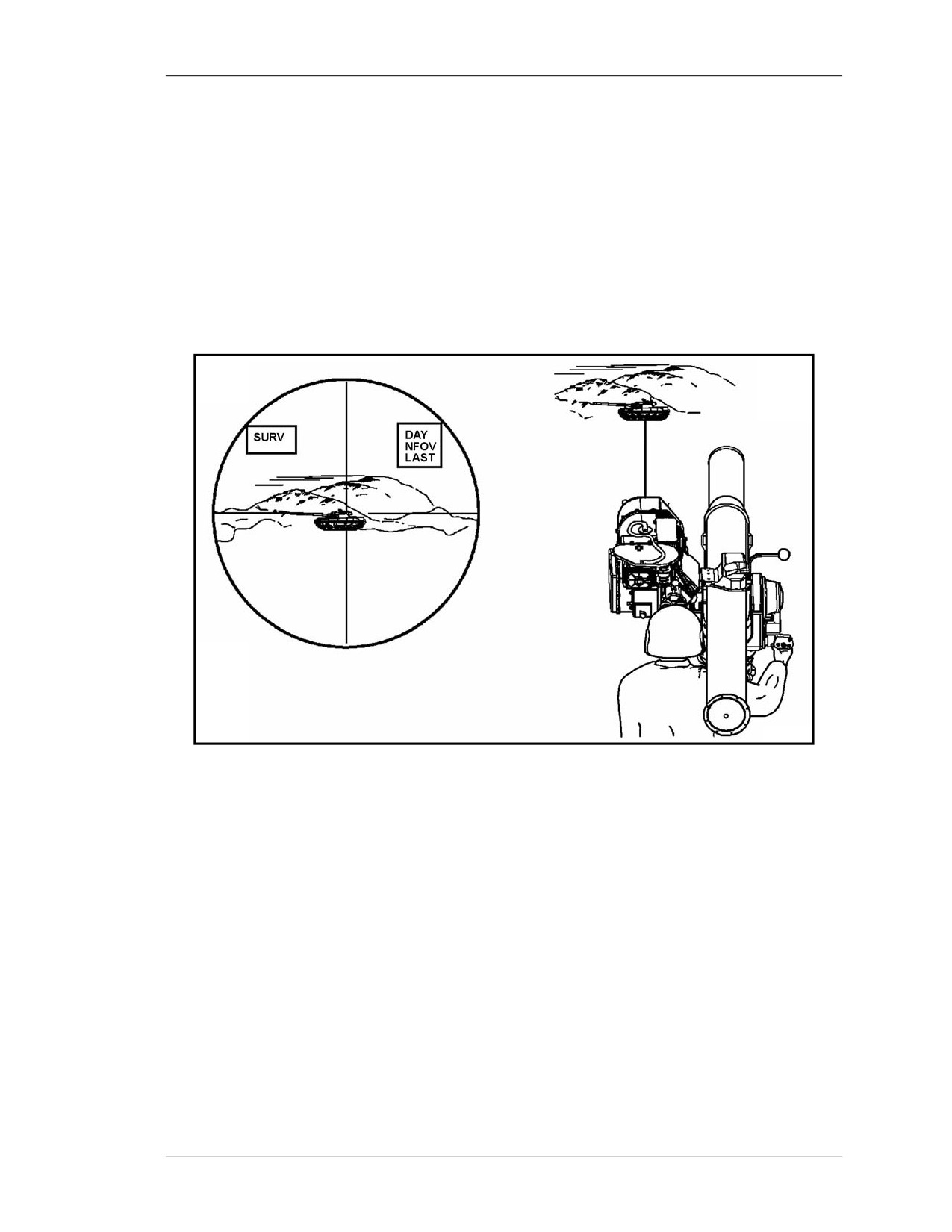
c. Acquire target (WFOV) using the daysight.
(1) Scan sector of fire for targets.
(2) After detecting target, press FOV switch and select NFOV (Figure 3-15).
Figure 3-15. Daysight NFOV selected.
d. The gunner determines if the target is a wheeled or track vehicle; if it is a track
vehicle, he determines if it is an APC or a tank
e. The gunner determines target engageability (NFOV) using the daysight.
(1) Use LRF or passive ranging.
(2) Arm the missile if target is engageable.
NOTE: When the target is in range, the gunner must determine exposure time of the
target (moving) to make sure that it will not reach cover before missile impact.
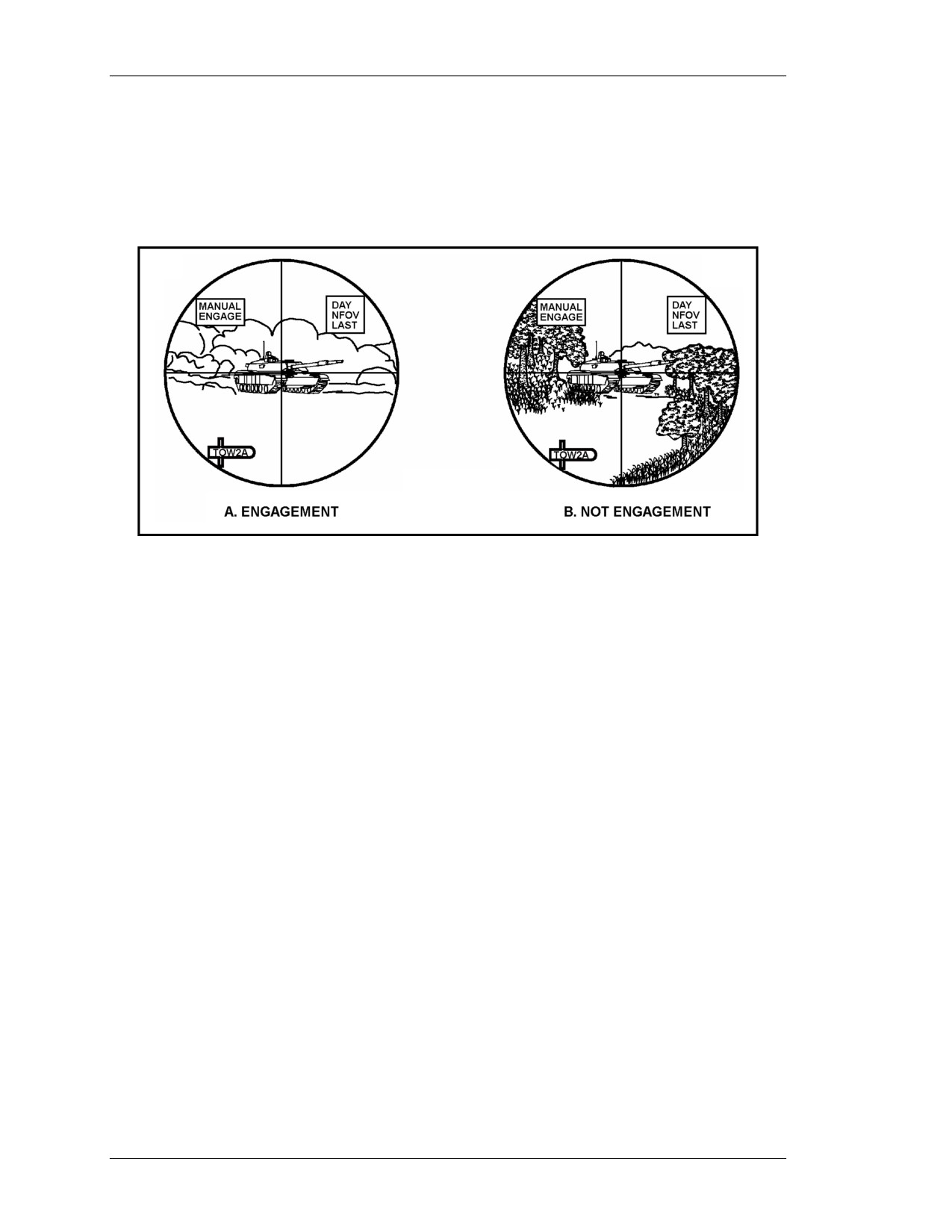
(3) If moving, determine exposure time (NFOV). Exposure time requirements do not
apply for stationary targets, only if the target starts to move before missile launch. The
gunner can determine the exposure time for a moving target by using the crosshairs. The
gunner first places the crosshairs on center of visible mass.
8 July 2005
3-17
FM 3-22.32
(a) If the area between the vertical crosshair and the edge of the field of view in the
direction of travel is clear of obstructions, the target is engageable (A, Figure 3-16).
(b) If obstructions appear between the vertical crosshair and the edge of the field of
view, the target is not engageable. The target will reach cover before the missile reaches
the target (B, Figure 3-16).
Figure 3-16. Target exposure.
e. The gunner fires the missile.
(1) He takes a deep breath and lets part of it out. Proper breath control is particularly
important during the first and last 400 meters of missile flight. Improper breathing will
cause poor tracking.
(2) The gunner presses the trigger. A 1.5-second delay occurs before the missile is
launched. This delayed firing of the launch motor can cause him to flinch or jerk the
control handgrips if he is not prepared for it.
NOTES: The gunner should be prepared for two noises after pressing the trigger:
1. The first noise is the gyro being activated. It is not loud, but it may cause
the gunner to think a hangfire has occurred and he may not be prepared for
the next noise.
2. The second noise is the launch motor firing. This is a loud noise similar to
the AT4 firing and may cause the gunner to flinch.
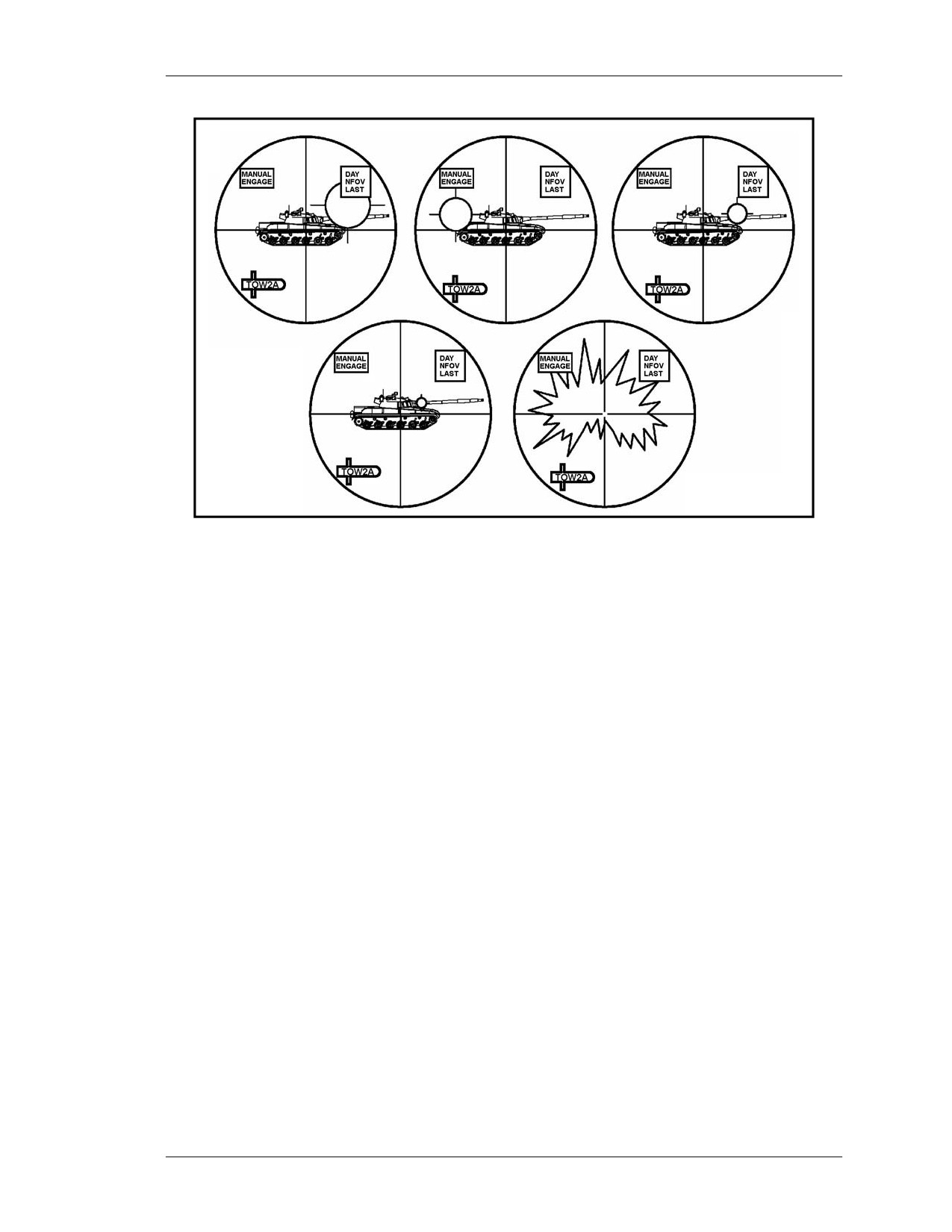
(3) When the missile appears in the sight picture (Figure 3-17), the gunner ignores it.
He never tries to guide the missile. If he is distracted, his tracking becomes poor and his
chances of hitting the target are reduced. The gunner keeps the crosshairs on the center of
visible mass of the target until impact.
3-18
8 July 2005
FM 3-22.32
Figure 3-17. Missile impact.
3-9.
MOUNT THE ITAS FROM THE DISMOUNTED (TRIPOD)
CONFIGURATION
The following actions occur at the same time when the squad leader commands, CEASE
TRACKING, OUT OF ACTION.
a. Firing Position Actions. The following actions take place at the firing position
before returning to the vehicle.
(1) Squad Leader’s Actions. The squad leader⎯
(a) Removes the launch tube and places it on the ground.
(b) Folds the tripod legs and commands, MOVE OUT. (The squad leader remains at
the firing position until the driver-loader returns and all equipment is en route to the
vehicle.)
(c) Carries the tripod and launch tube back to the vehicle. Places the launch tube on
the ground on the driver’s side of the vehicle and the rest of the equipment on the ground
behind the vehicle.
(2) Gunner’s Actions. The gunner⎯
(a) Powers down the system and disconnects and stows the coil cable and interface
cable.
(b) Replaces the TAS lens cover and removes the TAS from the TU
(c) Picks up the FCS; carries the TAS and the FCS to the vehicle.
(d) Places the TAS and the FCS on the ground and enters the gunner’s station.
(3) Driver-Loader’s Actions. The driver-loader⎯
(a) Removes the encased missile (or empty launch container if the missile was fired).
(b) Removes the TU from the tripod, carries it to the vehicle, and hands it to the
gunner when the gunner reenters the gunner’s station.
8 July 2005
3-19
FM 3-22.32
(c) Returns to the firing position to get the BPS. Carries the BPS to the vehicle where
the squad leader straps it in the BPS mount.
(d) Returns to the firing position to get the encased missile (if a missile was not fired)
and carries it to the vehicle. Hands the missile to the gunner.
b. Remount Actions. The following actions are performed to remount the vehicle.
(1) Squad Leader’s Actions. The squad leader⎯
(a) Hands the TAS to the gunner and stows the tripod on the vehicle. Closes the
tailgate and cargo shell door.
(c) Assists other crewmembers, as needed.
(2) Gunner’s Actions. The gunner⎯
(a) Receives the TU from the driver-loader, installs it on the TU adapter, and secures
it with the top coupling clamp.
(b) Installs the FCS in the FCS tray and secures it with the straps, connects the coil
cable to the FCS J2, and takes the HIC from the squad leader and connects it to the
FCS J1 connector.
(c) Installs the TAS on the TAS mount of the TU.
(d) If time permits, conducts the IBIT, boresight, and GRIPS test.
(3) Driver-Loader’s Actions. The driver-loader—
(a) Hands the launch tube up to the gunner.
(b) Enters the right rear door, stows the BPS, and connects the vehicle power cable
and HIC cable to the J1 and J2 connectors on the BPS.
(c) Hands the HIC and the coil cable to the gunner.
(d) Moves into the cargo area and places the unfired missiles in the missile rack (if
necessary).
NOTE: If a missile was fired in combat, the empty launch container is destroyed IAW
unit SOP. If a missile was fired in training, the empty launch container is
turned in to the ASP.
3-10. STOW ITAS ON THE M1121 FROM DISMOUNTED POSITION
Crewmembers use the following procedures to stow the ITAS on the M1121 HMMWV.
a. Prepare ITAS for stowage. The gunner—
(1) Locks the ITAS in the 8-degree down position.
CAUTION
Failure to turn power off on TAS, FCS, and BPS may
result in damage to components when electrical
connectors are removed.
(2) Powers down the ITAS by turning off the following power switches in sequence:
TAS, FCS, and BPS.
(3) Unloads the encased missile, if one is loaded.
3-20
8 July 2005
FM 3-22.32
(4) Disconnects the following cable connectors.
(a) The coil cable from the FCS J2 connector. Replaces the connector cover on the
FCS J2 connector.
(b) The interface cable from the FCS and BPS. Replaces the connector cover on the
FCS and BPS. Stows the interface cable in the FCS stow bag.
b. Remove and stow the launch tube in the HMMWV. The squad leader—
(1) Releases the launch tube latch on the TU.
(2) Raises the launch tube high enough to clear the launch tube brackets on the TU
and removes the launch tube.
(3) Carries the launch tube to the HMMWV.
WARNING
Before opening one end of the cargo shell door,
ensure the opposite end is securely closed.
Failure to do so will cause both ends to open at
the same time, causing injury to personnel or
damage to equipment.
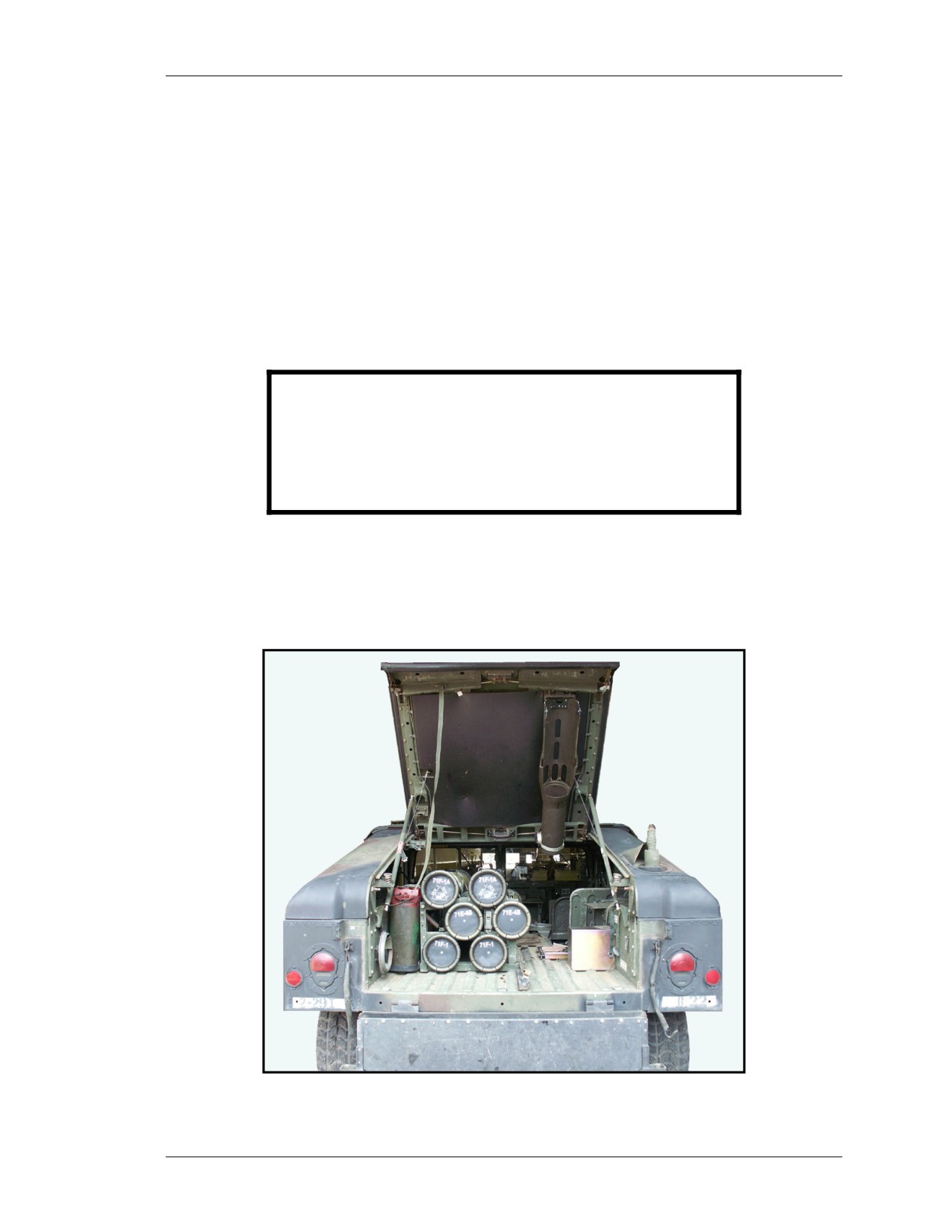
(4) Opens the cargo shell door on the rear of the vehicle and stows the launch tube on
the cargo shell door.
(a) Places the launch tube catch mating hole over the launch tube mounting bracket
guide pin (Figure 3-18).
Figure 3-18. Launch tube stowed on cargo shell door.
8 July 2005
3-21
FM 3-22.32
(b) Secures the launch tube nose to the mount with the strap.
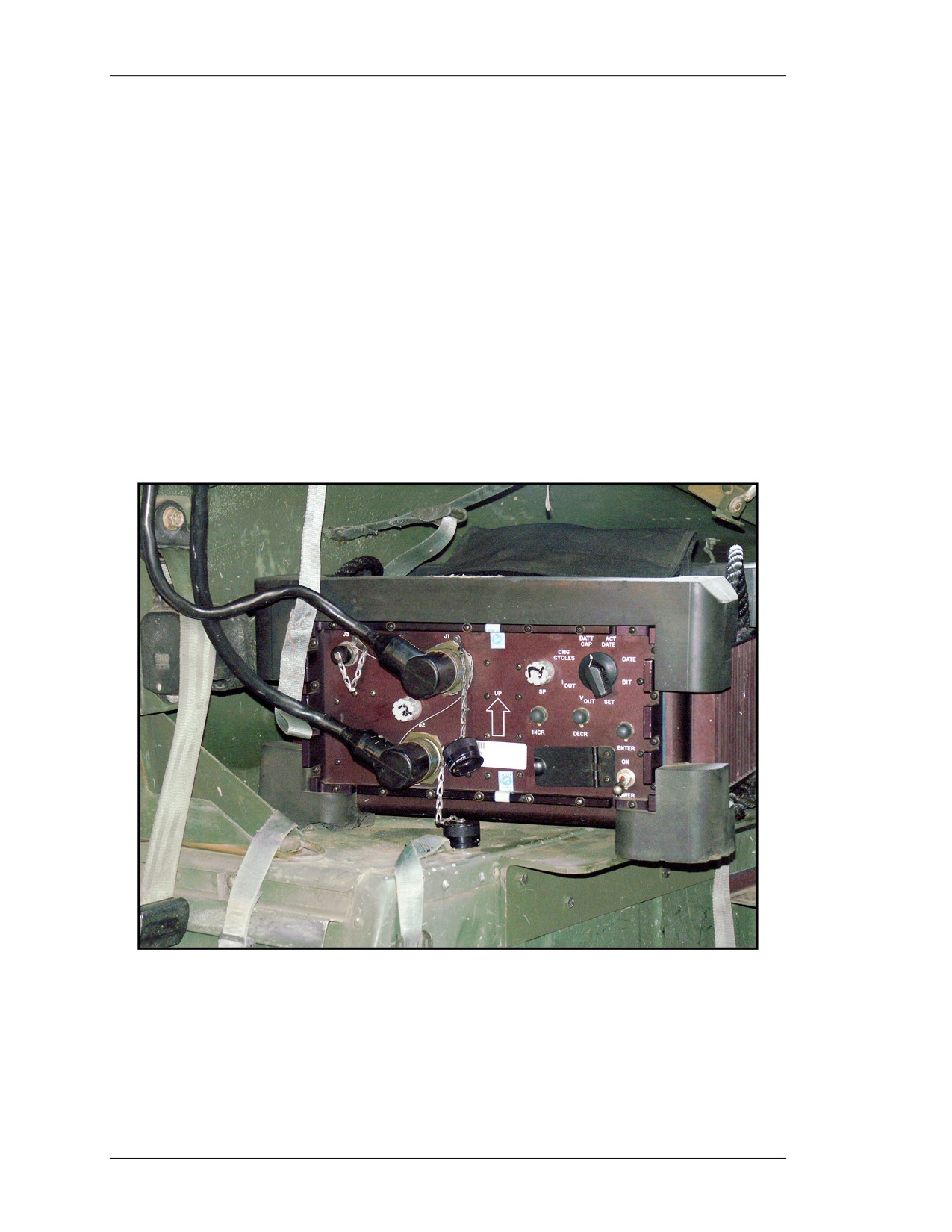
c. Stow the BPS on the HMMWV (Figure 3-19). The driver-loader—
(1) Carries the BPS to the HMMWV and stows it behind the rear passenger seat,
facing forward.
(2) Secures the BPS in place with the straps.
(3) Connects the vehicle power cable to the BPS J1 connector and the HIC to the BPS
J2 connector.
NOTE: Once the BPS power switch is placed in the ON position, do not change the
setting unless dismounting the ITAS.
(4) Places the BPS power switch in the ON position.
(a) Turns the function switch to BIT and checks the results of BPS PBIT.
(b) Turns the function switch to BATT CAP and checks the BPS internal battery
capacity.
Figure 3-19. BPS stow position.
d. Stow the TAS on the HMMWV. The gunner and the driver-loader perform the
following procedures to stow the TAS on the HMMWV.
(1) The gunner—
(a) Replaces the TAS front window cover on the TAS front window.
3-22
8 July 2005
FM 3-22.32
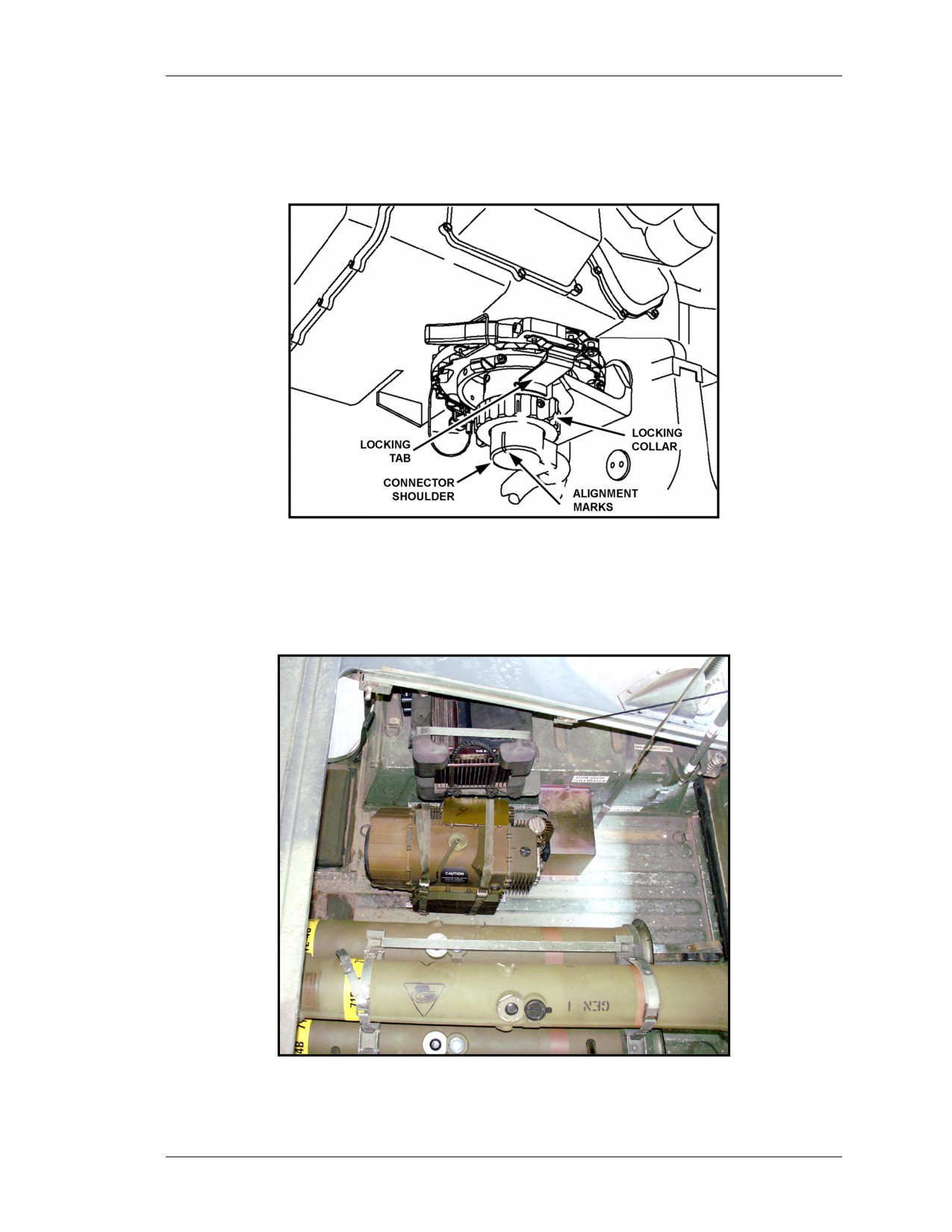
(b) Disconnects the TAS.
(c) Opens the TAS mount coupling clamp.
(d) Lifts the TAS from the TAS mount (Figure 3-20).
Figure 3-20. TAS mount.
(2) The driver-loader—
(a) Stows the TAS in the HMMWV stowage cradle (Figure 3-21), strap side up.
(b) Secures the TAS with the two stowage straps.
Figure 3-21. TAS stow position.
8 July 2005
3-23
FM 3-22.32
e. Remove the TU from the tripod and stow it on the HMMWV. The gunner and the
driver-loader perform the following procedures to remove the TU from the tripod and
stow it on the HMMWV.
(1) The gunner—
(a) Replaces the TAS mount connector cover.
(b) Rotates the gunner handgrips to the stow position.
(c) Locks each limiter in the UP position.
(d) Closes the TAS mount coupling clamp.
(e) Releases the coupling clamp handle on the tripod to release the TU from the
tripod.
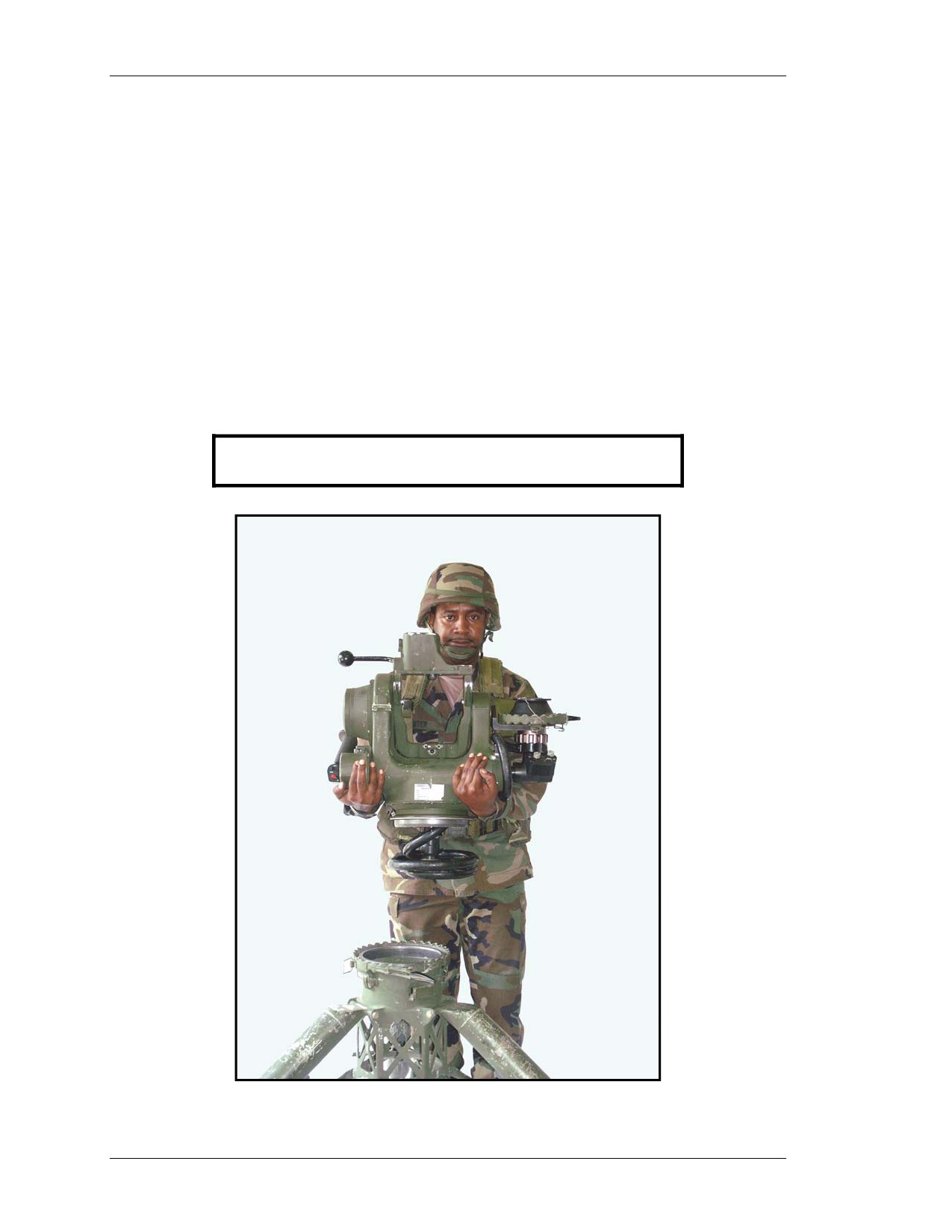
(f) Removes the TU from the tripod by carefully lifting the TU from tripod while
guiding the coil cable up through the body of tripod. (Figure 3-22).
CAUTION
Do not lift the TU by the gunner’s handgrips.
Figure 3-22. Removing the TU from the tripod.
3-24
8 July 2005
FM 3-22.32
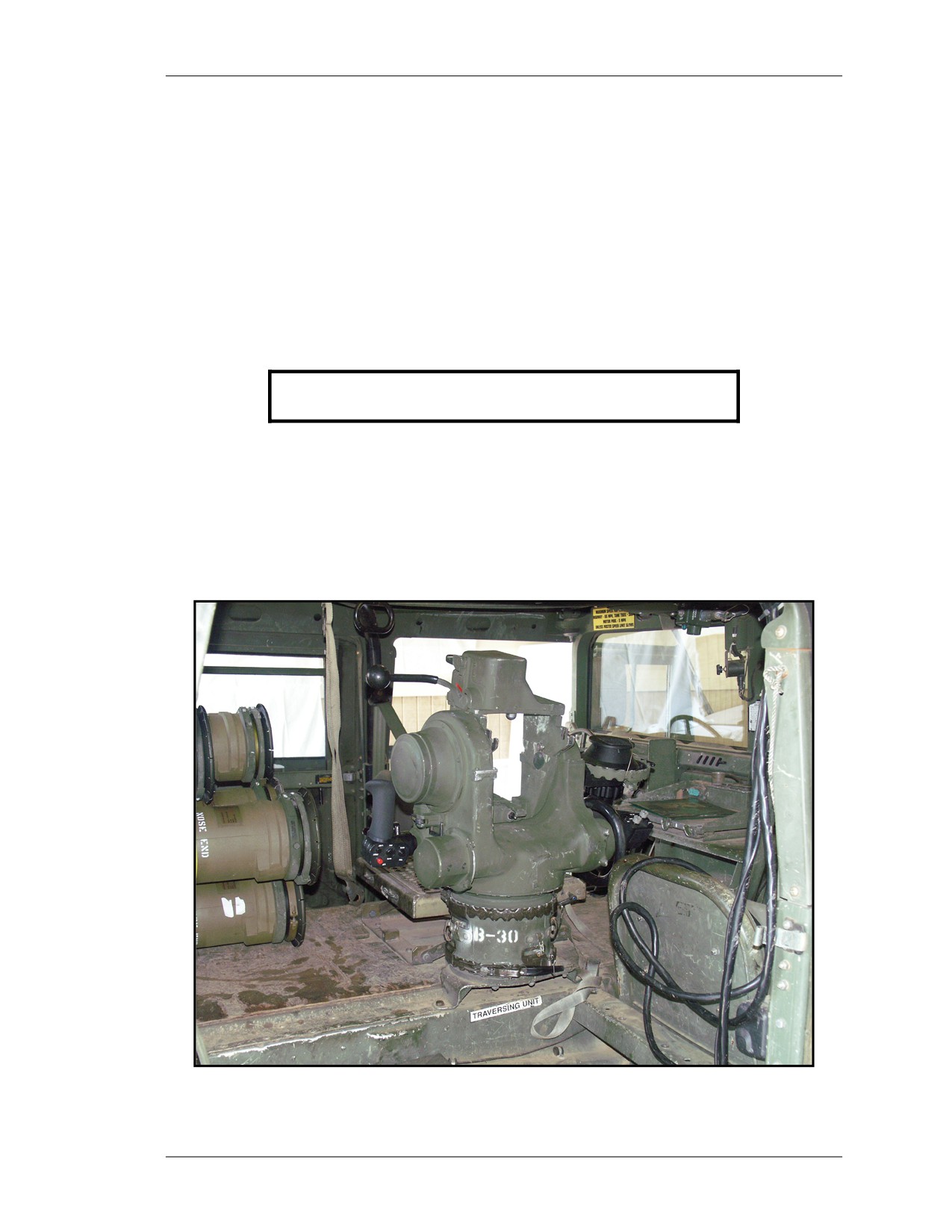
(g) Sets the TU on its side on the ground ensuring the azimuth lock side is up.
(h) Rolls the coil cable up tightly and secures it in the TU retainer cup.
(2) The driver-loader—
(a) Carries the TU to the HMMWV.
(b) Stows the TU on the TU adapter (Figure 3-23).
NOTE: Install the TU adapter on the pedestal base, if not already installed.
(c) Opens the upper coupling clamp handle on the TU adapter.
CAUTION
Do not lift the TU by the gunner’s handgrips.
(d) Picks up the TU, passes it through the rear door, holds it over the TU adapter, and
carefully places it on the adapter.
(e) Turns the TU so the bridge clamp handle is facing the rear of the vehicle.
(f) Closes the upper coupling clamp handle and secures it with the locking spring on
the TU adapter to secure the TU.
Figure 3-23. TU stowed on the TU adapter.
8 July 2005
3-25
FM 3-22.32
f. Stow the FCS on the HMMWV. The gunner opens the FCS stow bag; places the
FCS inside, connector side down; and closes the stow bag. He picks up the FCS in the
stow bag, carries it to the vehicle, and straps it to the gunner platform of the vehicle.
g. Stow the tripod in the HMMWV. The squad leader—
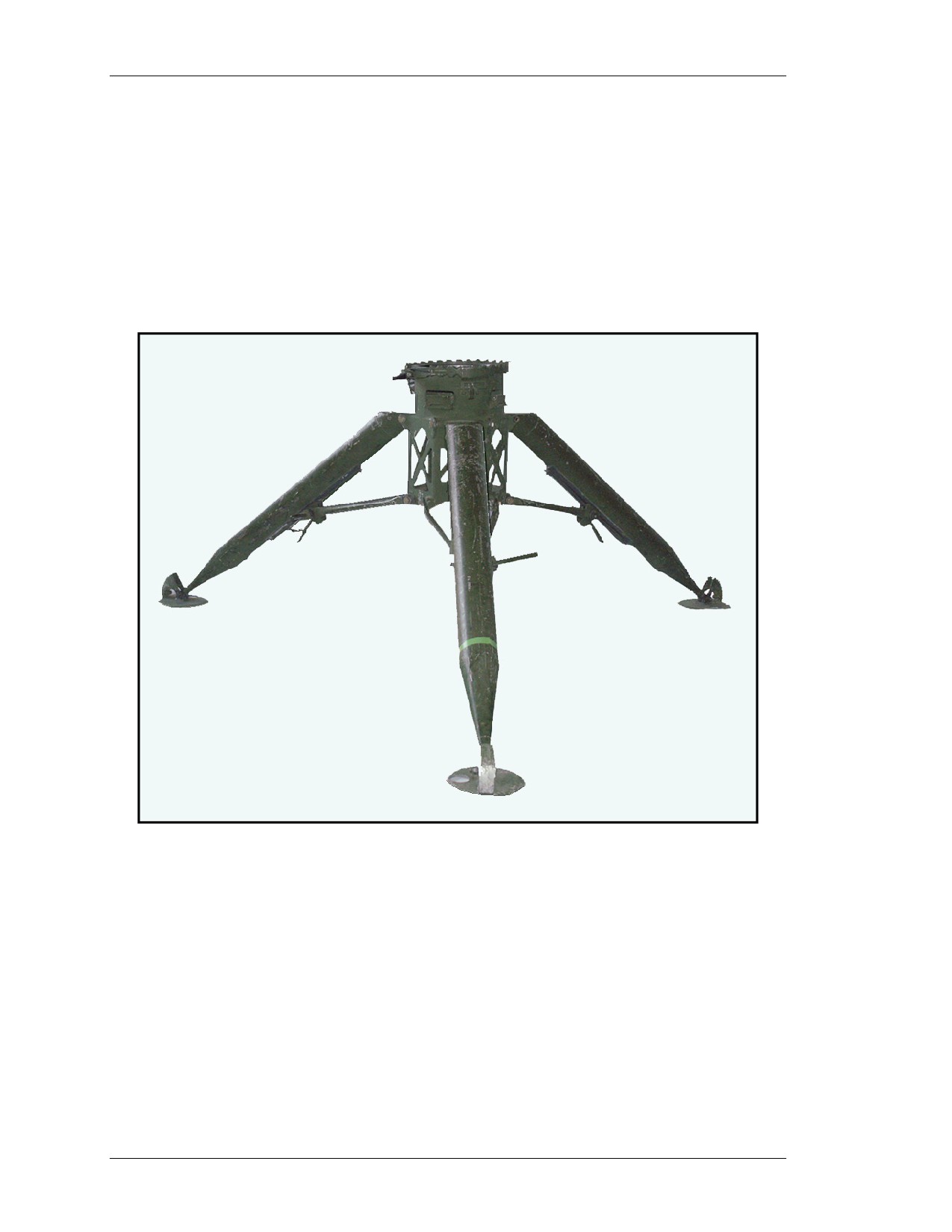
(1) Prepares the tripod for stowing (Figure 3-24).
(a) Removes any stakes from the tripod’s anchor foot.
(b) Lifts the three lock handles all the way up to the release position.
(c) Lifts the tripod up so the legs fold into the body and locks the locking handles.
Figure 3-24. Tripod.
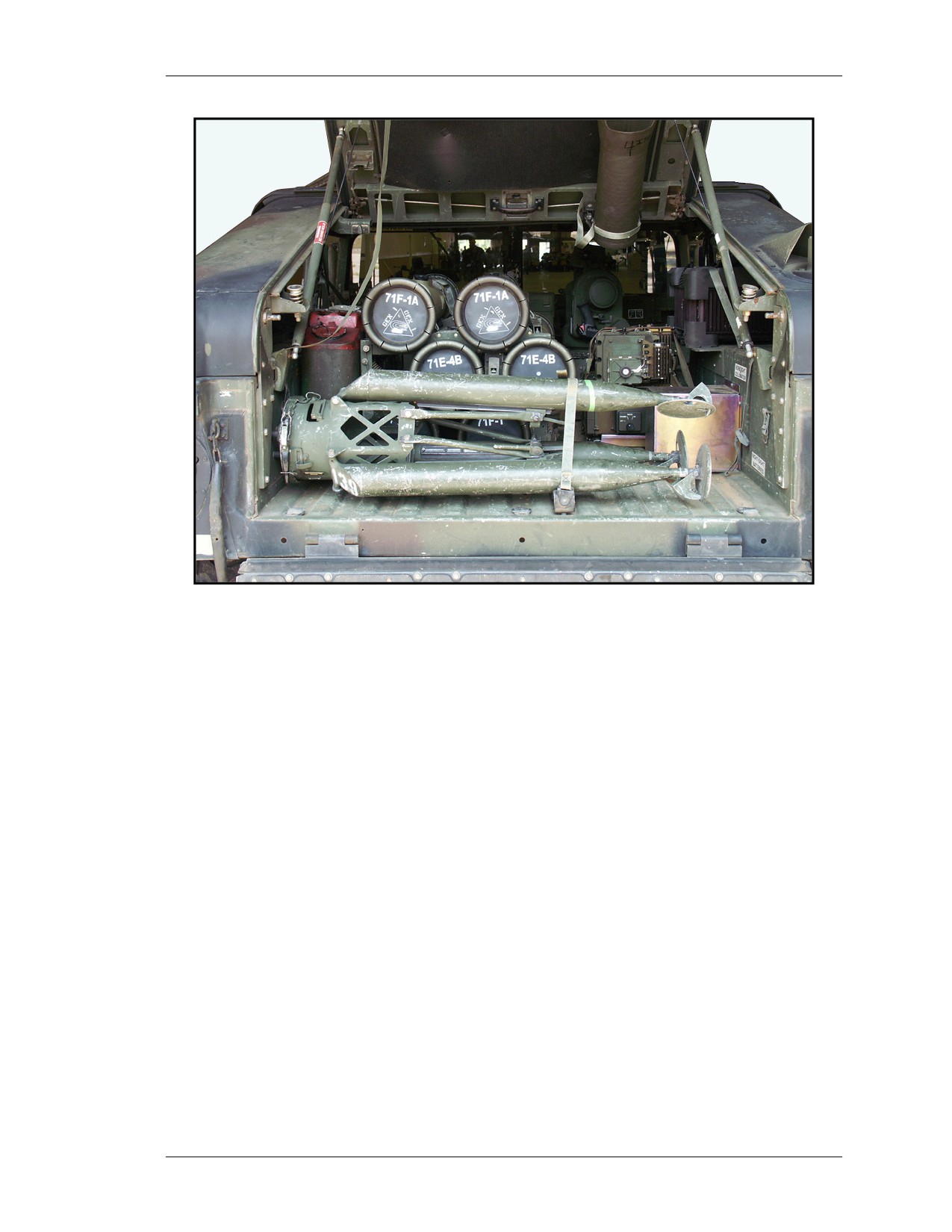
(2) Stows the tripod (Figure 3-25).
(a) Picks up the tripod and moves to the HMMWV.
(b) Places the tripod in the stow position on the vehicle.
(c) Fits the tripod head over the mounting bracket and secures the tripod with the
coupling clamp.
(d) Straps the tripod in place.
(e) From rear of vehicle, raises and secures the tailgate and closes the cargo
shell door.
3-26
8 July 2005
FM 3-22.32
Figure 3-25. Tripod stow position.
Section II. DISMOUNTED OPERATIONS
Specific actions must be followed when dismounting the M41 ITAS and moving it to the
firing site. All actions happen simultaneously.
3-11. DISMOUNT ACTIONS
Each crewmember begins executing his assigned responsibilities as soon as the squad
leader commands “DISMOUNT THE ITAS.”
a. Squad Leader’s Actions. The squad leader—
(1) Turns the BPS to the OFF position.
(2) Dismounts and goes to the rear of the vehicle; opens the cargo shell door using
the rear latch; lowers the tailgate; removes the tripod and places it on the ground by the
launch tube (on the left front side of the vehicle in front of the FCS and the TAS); and
closes the tailgate and cargo shell door.
(3) Receives the BPS from the driver-loader and places it on the ground to the left
side of the vehicle.
(4) Carries the tripod and the launch tube to the firing site.
b. Gunner’s Actions (assisted by driver-loader when needed). The gunner—
(1) Disconnects the coil cable and the HIC from the FCS.
(2) Removes the TAS and hands it to the driver-loader who places it on the ground on
the left side of the vehicle.
8 July 2005
3-27
FM 3-22.32
(3) Removes the launch tube and hands it to the driver-loader who places it on the
ground in front of the TAS.
(4) Unlocks the top coupling clamp on the TU adapter; removes the TU (minus the
adapter) places the coil cable in its retaining cup on the TU; and hands the TU to the
driver who places it on the ground behind the TAS.
(5) Unstraps the FCS and hands it to the driver-loader who places it on the ground
beside the TAS.
(6) Unstraps a missile and hands it to the driver-loader who places the missile on the
ground behind the TU. The gunner then closes the cargo shell door and dismounts the
vehicle.
(7) Carries the TAS and the FCS to the firing site.
c. Driver-Loader’s Actions. The driver-loader⎯
(1) Dismounts the vehicle removes the BPS and passes it to the squad leader through
the cargo hatch door
(2) Removes the FCS container placing it beside the TAS, and waits to receive
equipment from the gunner.
(3) Carries the TU on the first trip, the BPS on the second trip and the missile on the
third trip.
3-12. DISMOUNTED FIRING POSITIONS
When the ITAS is assembled for ground emplacement, the tripod must be level for
effective operation of the weapon. If the tripod is not level, lateral (azimuth) movement
of the TU produces a change in the elevation angle of the launch tube; therefore,
acquiring and tracking the target may be difficult. An unleveled tripod can cause an
electronic control error during the final tracking operation (while the command-link wire
is guiding the missile to its target).
a. For ground emplacement, proper adjustment of the tripod legs compensates for
uneven ground up to a slope of 30 degrees. Therefore, the firing position must not slope
more than 30 degrees. When the tripod legs are properly positioned, the bubble in each
level will be between the marks on the level indicator.
b. The ITAS is not fired from a position where the TU has a lateral cant of more
than 10 degrees. The ideal firing position is as level as possible. However, the missile can
be fired from a position where the tripod is canted as much as 30 degrees directly
downhill or uphill.
c. After the site is selected and the weapon emplaced, the squad leader and gunner
make a range card for the position. (For detailed information on making a range card, see
Appendix D.)
3-13. FIRING POSITION ACTIONS
Upon reaching the firing position, the crew proceeds with the following actions.
a. Squad Leader’s Actions. The squad leader⎯
(1) Sets up the tripod with the coupling clamp handle facing the direction of fire and
unlocked.
(2) Pulls the coil cable out of the traversing unit retaining cup, installs the launch
tube, and observes downrange for enemy targets.
(3) Issues fire commands.
3-28
8 July 2005
FM 3-22.32
b. Gunner’s Actions. The gunner⎯
(1) Places the FCS on the ground next to the tripod and installs the TAS on the TU.
(2) Connects the coil cable to the FCS J2 connector and the interface cable to the BPS
J2 and the FCS J1.
(3) Conducts the system checkout IAW TM 1425-923-12.
(4) Engages the target upon receipt of the fire command.
c. Driver-Loader’s Actions. The driver-loader⎯
(1) Installs the TU on the tripod.
(2) Returns to the vehicle for the BPS; places the BPS on the ground at the firing
position to the left side of the weapon system.
(3) Returns to the vehicle for the missile and moves back to the firing position with it,
where he loads it and arms it if commanded.
8 July 2005
3-29
This page intentionally left blank.
FM 3-22.32
CHAPTER 4
FIRING TECHNIQUES
This chapter discusses the techniques and procedures of fire control,
target engageability, and firing the ITAS under limited visibility and NBC
conditions. These techniques and procedures greatly enhance the
performance of the ITAS in combat and increase the chances of survival
for the crew.
Section I. FIRE CONTROL MEASURES
The success of the antiarmor units in combat depends on how quickly and effectively
they engage targets. All antiarmor fires must be controlled to ensure full coverage of the
target area and to minimize multiple engagement of a single target. Effective control and
distribution of fires is paramount to combat success. Fire control must become routine
without need for detailed instructions. Some conditions may limit the firing and
engagement capabilities of the ITAS. Consider the following information before
engaging targets. (See TM 9-1425-923-12 for updated firing limitations.)
4-1.
FIRING OVER WATER
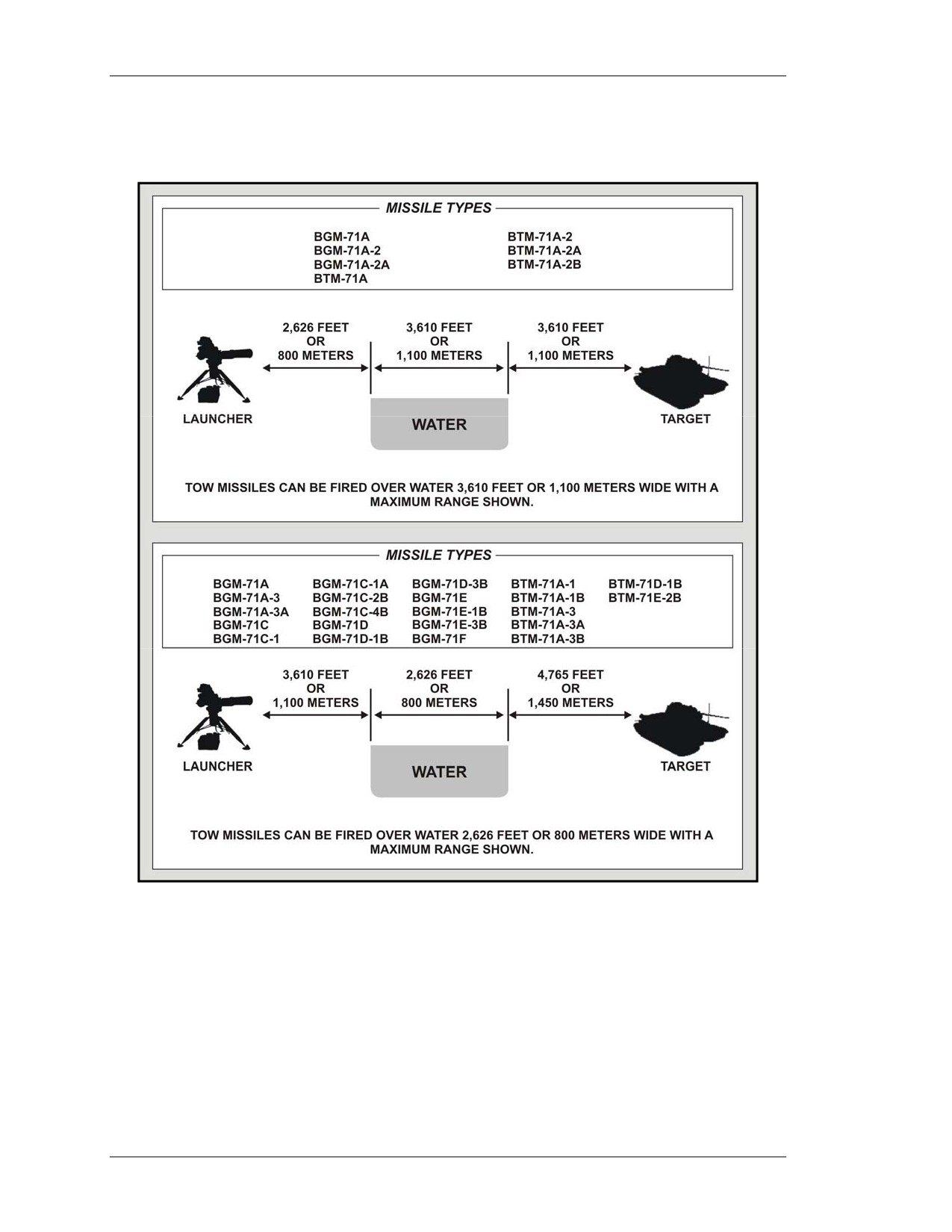
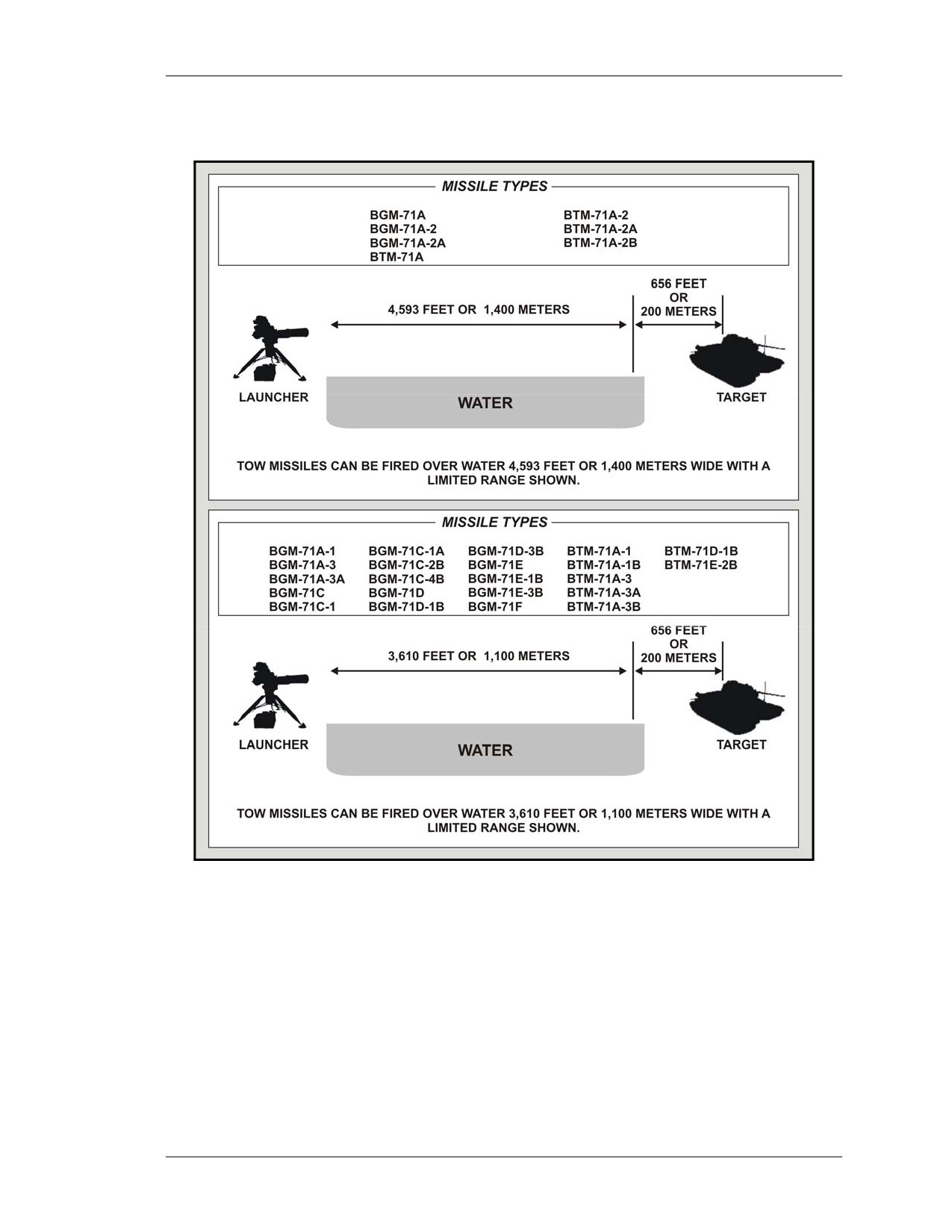
Firing across bodies of water wider than 1,100 meters can reduce the range of the ITAS.
Signals being sent through the command-link wires are shorted out when a large amount
of wire is submerged in water. If the range is less than 1,100 meters, the missile’s range is
not affected. Maximum and limited firing ranges over water vary according to missile
type. An ITAS position should be as high above and as far back from the water as the
tactical situation allows. The squad or section leader should analyze his sector as soon as
the position is occupied to determine if water will affect the employment of the ITAS.
8 July 2005
4-1
FM 3-22.32
a. TOW missiles may be fired over water to a maximum range as shown in
Figure 4-1.
Figure 4-1. Maximum TOW range over water.
4-2
8 July 2005
FM 3-22.32
b. TOW missiles may be fired over water to a limited range as shown in Figure 4-2.
Figure 4-2. Limited TOW range over water.
8 July 2005
4-3
FM 3-22.32
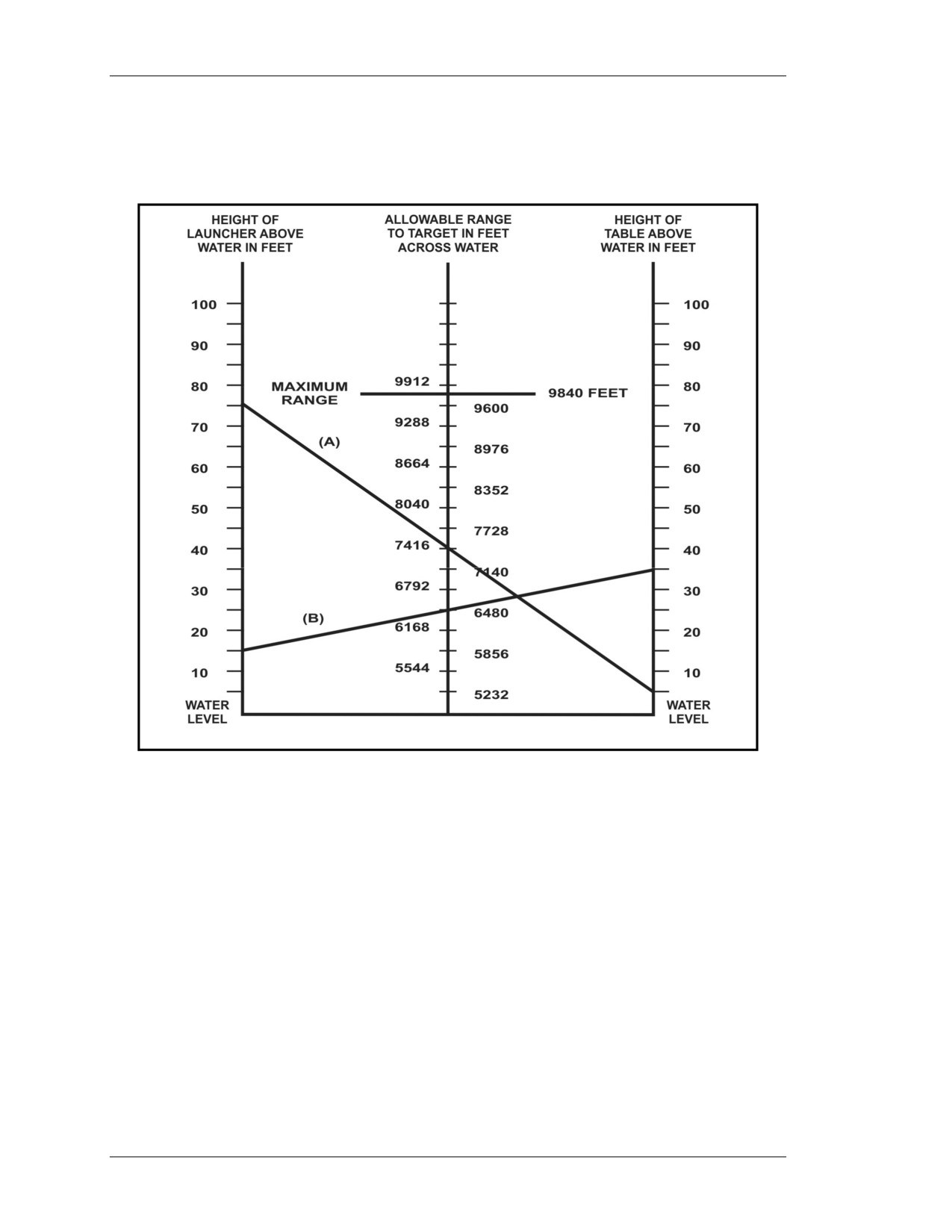
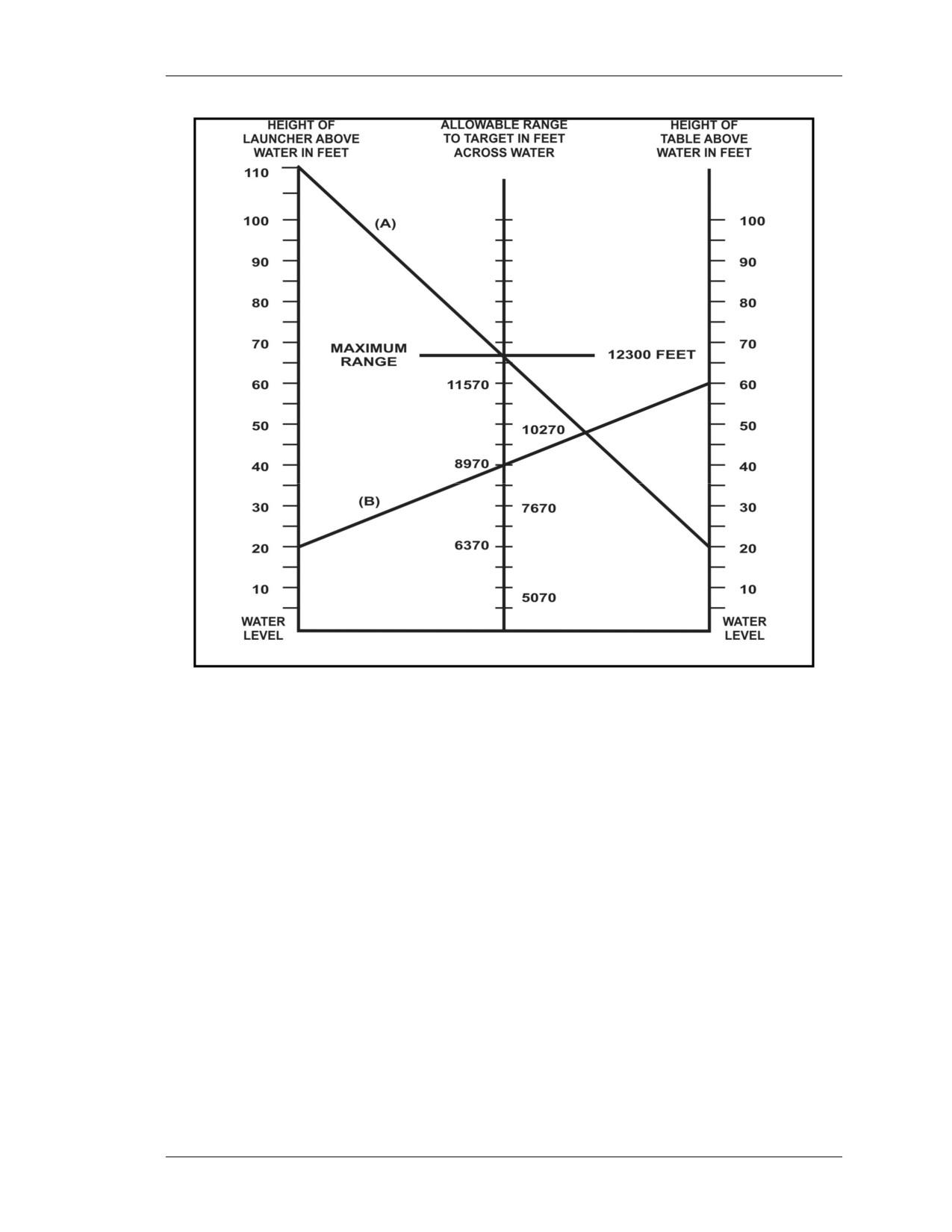
c. To determine the extended range of missiles when firing over water (when ITAS
launcher or target is above surface level of water), use Tables 4-1 through 4-4 (pages 4-4
through 4-7).
Table 4-1. Range per height above water for TOW missiles BGM-71A-2,
BTM-71A, or BTM-71A-2.
4-4
8 July 2005
FM 3-22.32
Table 4-2. Range per height above water for TOW missiles BGM-71A-1,
BGM-71A-3, BTM-71C, BGM-71C, BGM-71D, BTM-71A-1, or BTM-71A-3.
8 July 2005
4-5