FM 6-02.43 SIGNAL SOLDIER’S GUIDE (March 2009) - page 4
Theater Operations
4-65. The SC(T)’s mission is also to—
z
Provide C2 and supervision for units assigned, attached, and
OPCON to the SC(T).
z
Provide a staff component for various operational commands
including JTF J-6, JFLCC J-6, ARFOR G-6, and corps/division G-
6.
z
Support early entry mission requirements.
z
Provide operational management of signal assets responsible for
install, operate, maintain and defend (IOM-D) theater LWN to
include centralized management of voice, data, messaging, and
VTC capabilities.
z
Provide IA management supporting information protection for
theater LWN systems.
z
Develop policies and procedures for IA support in order to protect,
detect, and react to the ACERT strategies as directed by the ASCC
G-6.
z
When tasked, establish the JNCC with augmentation from other
services or provide the Army’s portion to the JNCC, once
established.
z
Provide oversight to the TNOSC.
z
Plan, engineer, and manage signal support systems installed by the
SC(T) and network interfaces to existing systems installed by
joint, combined, and allied units.
z
Plan, engineer, and manage requirements for special-purpose
communications/information systems.
z
Provide planning and staff management of the GMFs/TACSAT
Theater SATCOM Monitoring Center and Army GMFs in the
theater of operations.
z
Work closely with the DISA and ASCC G-6 concerning DISN
matters to include coordinating with host-nation communications
organizations for planning and using commercial and host-nation
assets within theater.
17 March 2009
FM 6-02.43
4-25
Chapter 4
z
Provide planning, staff supervision, and coordination of SC(T)
logistics, public affairs, and command information programs,
inspector general matters, comptroller services concerning
programming, budgeting, and controlling funds, and to facilitate
engineering support.
z
Provide coordination of operations and planning and to evaluate
and prepare reports of chemical, biological, radiological, and
nuclear activities throughout the SC(T) affecting signal assets.
z
Provide theater VI units supporting the ASCC.
z
Provide software management for units assigned, attached, or
OPCON to the SC(T), to include managing all applications and
proprietary software, managing all noncombatant service support
software, and advising the ASCC G-6 staff on software and
application matters pertaining to NETOPS.
4-66. The SC(T) can expect to deploy any part or the entire
organization to meet METT-TC requirements. It will operate in a
manner to support LWN requirements in theater, whether as a
forward element, operating in sanctuary, or from a power projection
platform. It must be able to direct the execution of sustaining base,
strategic, and tactical information and communication systems
supporting Army, joint, and coalition operations during all phases.
Ideally, the SC(T) center of mass will locate where the commander
can best exercise C2 over signal assets, influence theater network
schemes and architectures, and overall best meet network
requirements supporting the ASCC commander or JFC.
5th SC(T)
4-67. This command is OPCON to USAREUR and Seventh Army.
The commanding general also serves as the Deputy Chief of Staff, G-
6 (CIO) for USAREUR and Seventh Army. The 5th SC(T) mission is
to provide a combat-ready, forward-deployed signal force providing
responsive theater tactical, strategic, and installation signal support to
NATO and US Soldiers in the USEUCOM across the spectrum of
operations. The 5th SC(T) is also capable of meeting requirements to
4-26
FM 6-02.43
17 March 2009
Theater Operations
support worldwide contingencies in response to the joint staff,
HQDA, and NETCOM directives to install, operate, and restore
theater tactical communications across the spectrum of conflict.
7th SC(T)
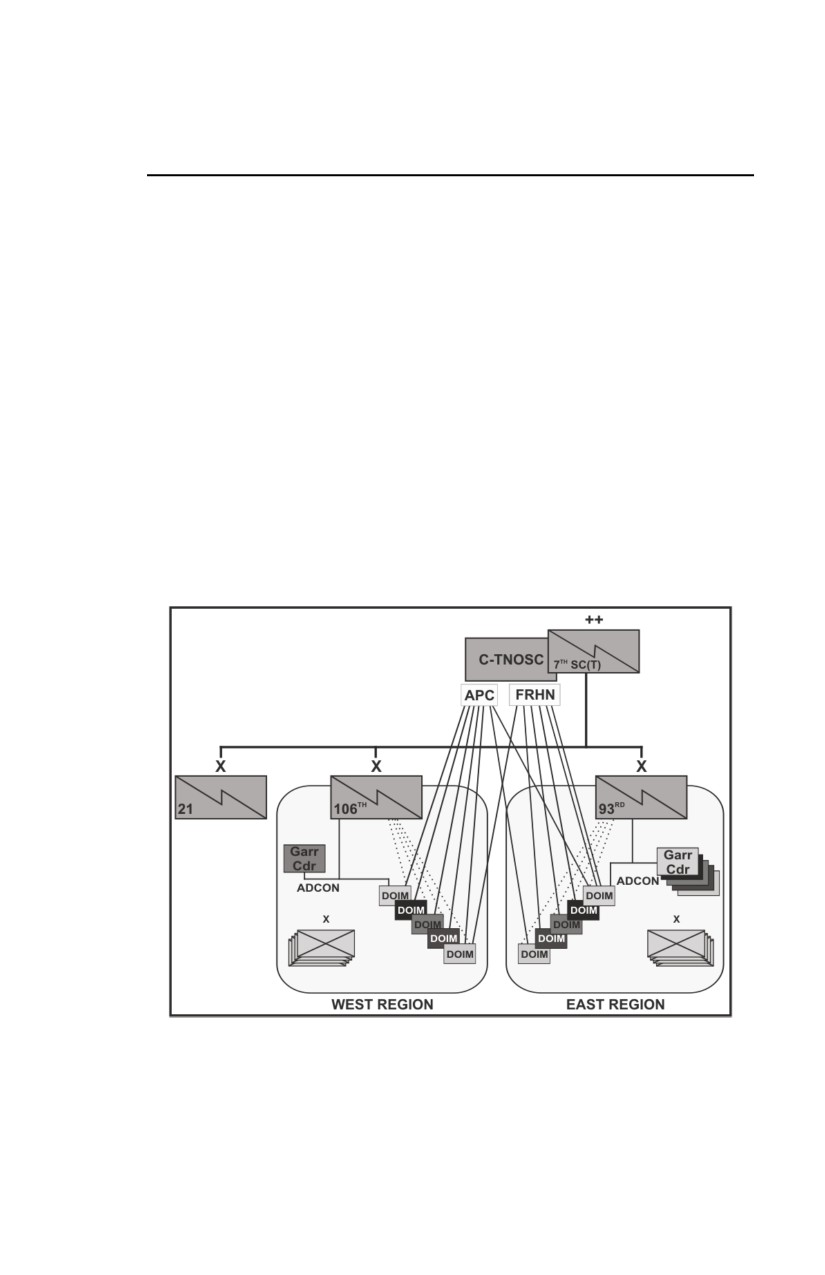
4-68. The
7th SC(T) is OPCON to FORSCOM and, when fully
operational, will consist of two regionally based signal brigades: the
93rd Signal Brigade providing signal support to CONUS West and the
106th Signal Brigade providing signal support to CONUS East. This
will be the single command responsible for the operation and defense
of the CONUS LWN. The 21st Signal Brigade and the CONUS
Theater Network Operations and Security Center well also be
assigned to the 7th SC(T) . Figure 4-4 shows the organization of the
7th SC(T). The commanding general of the 7th SC(T) also serves as
the FORSCOM G-6.
Figure 4-4. 7TH SC(T) organization
17 March 2009
FM 6-02.43
4-27
Chapter 4
4-69. The 7th SC(T) exercises technical and tactical control over all
Army NETOPS service providers in the CONUS theater. The
command will provide access to network services, data and
applications that allow units to rehearse as they fight, seamlessly train
and deploy enabling the units to maintain their operational tempo
through all operational phases
4-70. Currently, the Directorates of Information Management
(DOIMs), within their regionally aligned areas, supports
expeditionary units as they deploy, redeploy, and retrain using the
ARFORGEN model. There are currently approximately
137
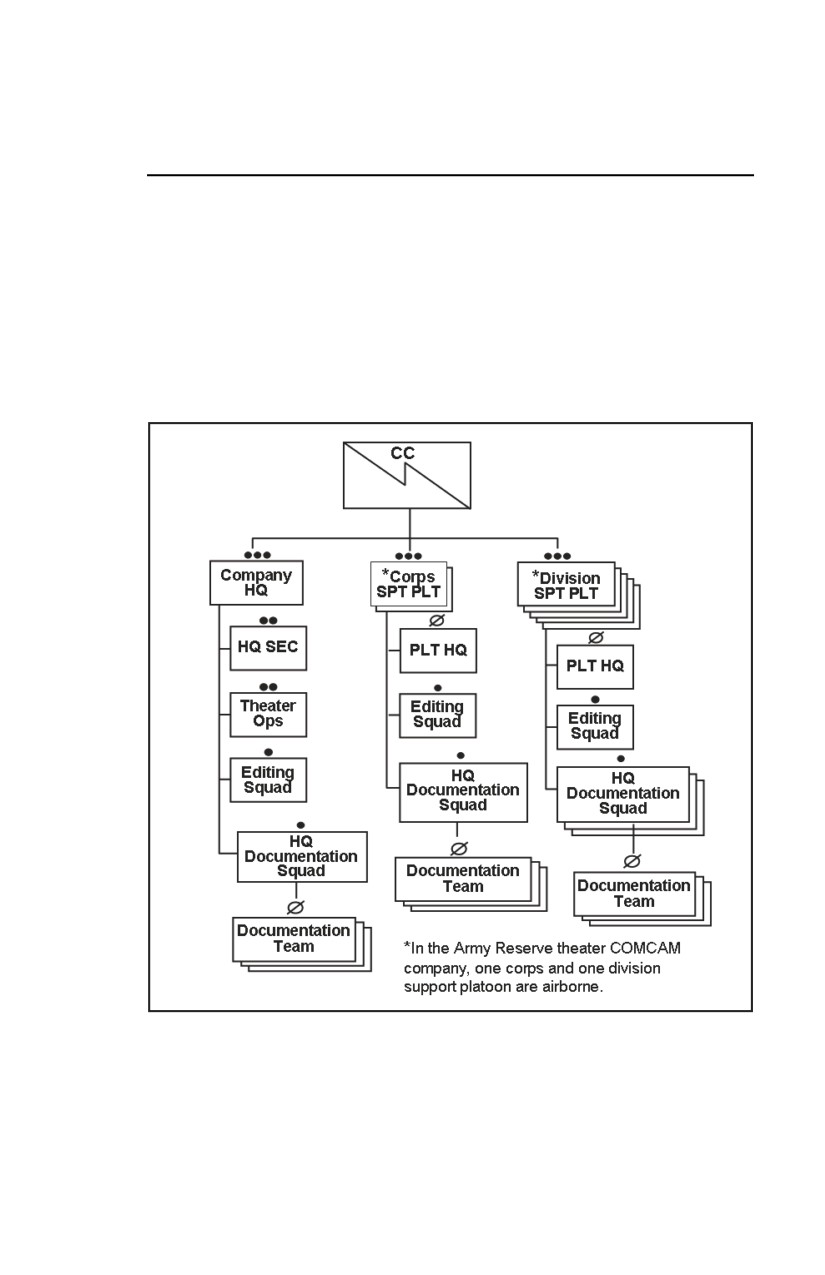
installation DOIMs. The 7th SC(T) will assume this responsibility
and create a unified, standard method of providing this support.
311th SC(T)
4-71. The 311th is the designated SC(T) for the USARPAC. The 311th
SC(T) is a United States Army Reserve Command (USARC) flagged
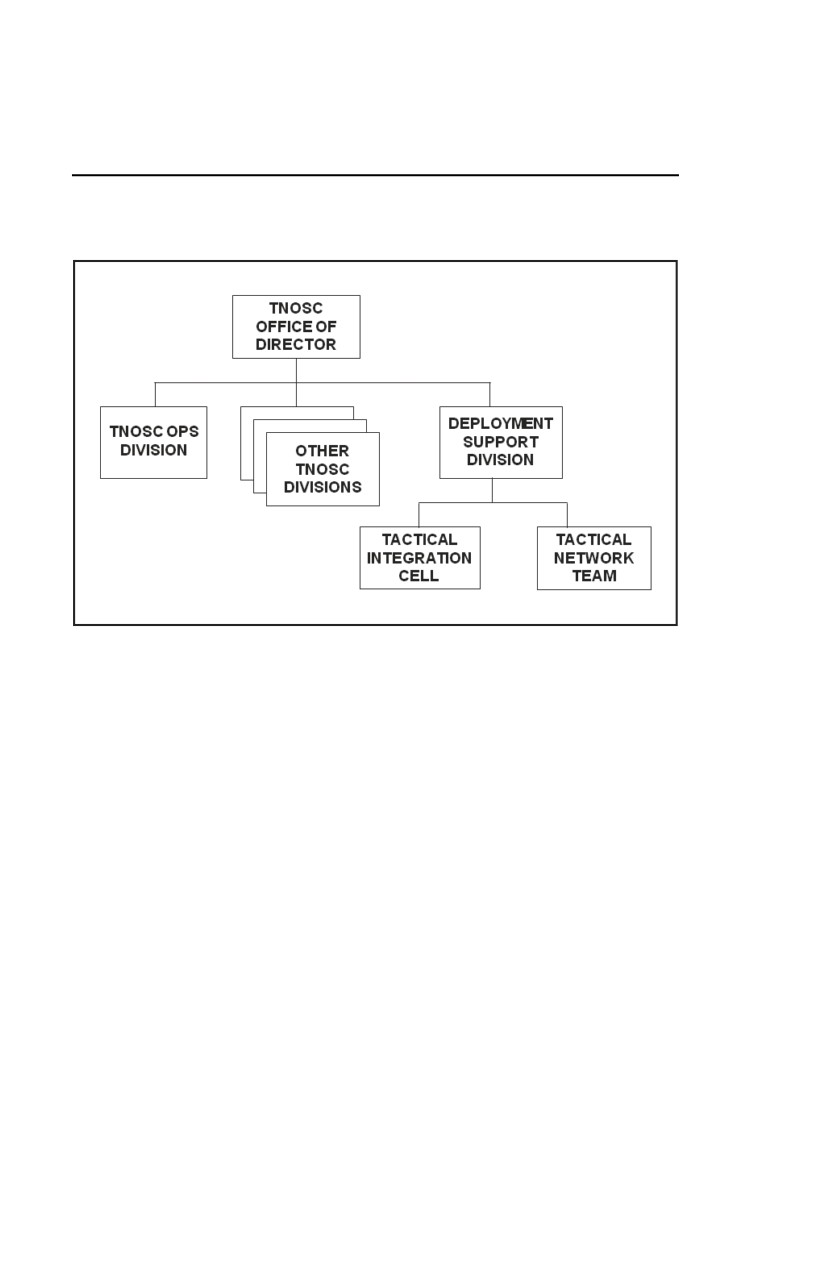
multi-component organization that is under the OPCON of
USARPAC. The 311th SC(T) receives ADCON support from both
NETCOM/9th SC(A) and the USARC. The commander of the 311th
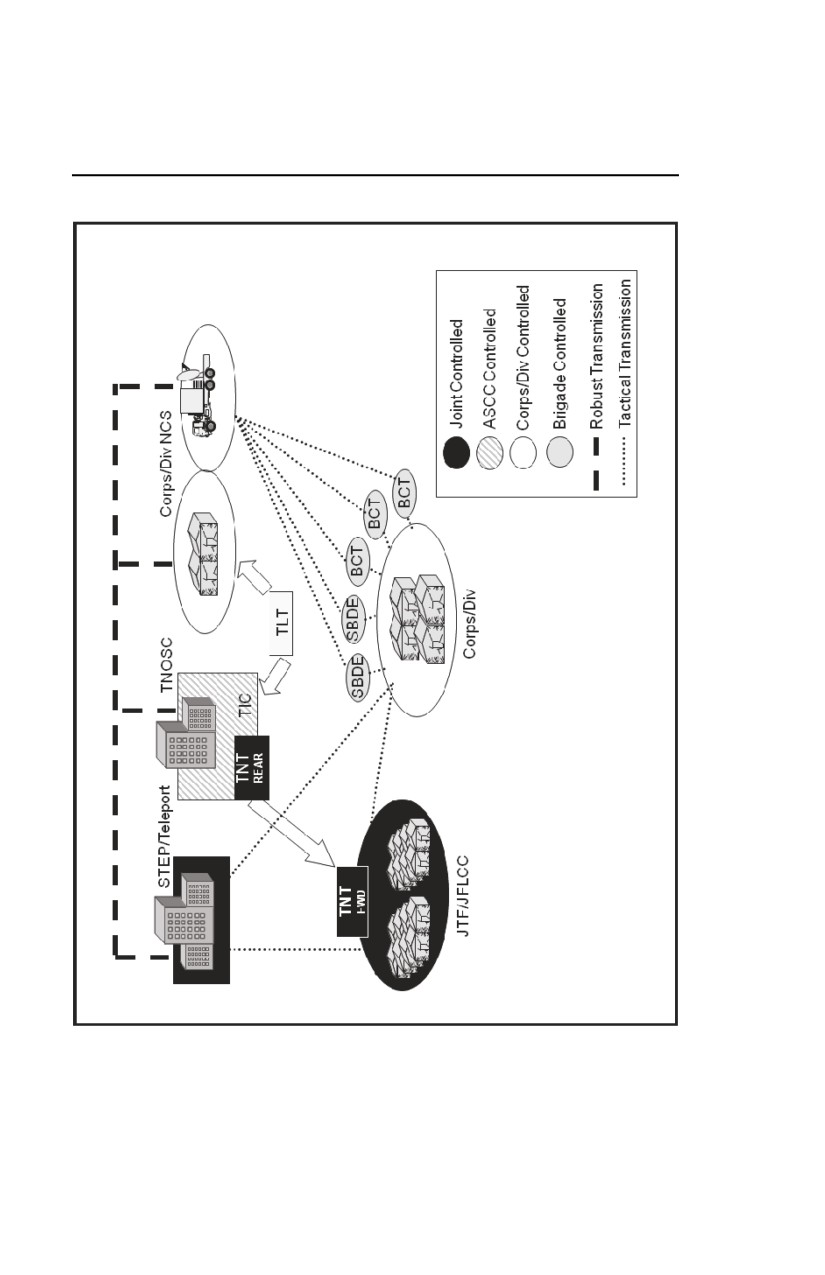
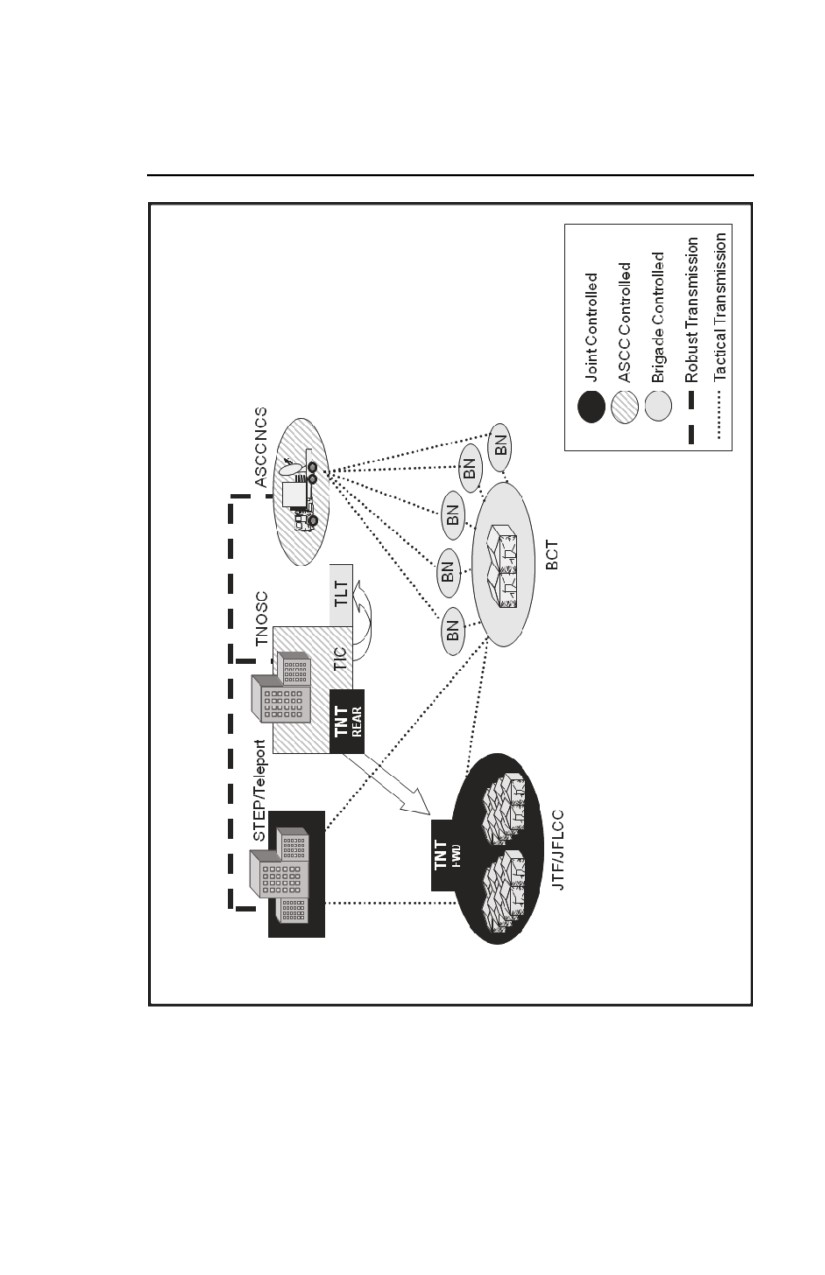
SC(T) is multi-missioned as the Deputy Chief of Staff, G-6 of
USARPAC, the RCIO for installation management control Pacific
Region, and the J-6 of the JTF-Homeland Defense.
335th SC(T)
4-72. This command is a multi-component SC(T) (USAR flagged)
with the mission to manage telecommunications infrastructure for
SWA (South Asia, Middle East, North Africa) in support of the
United States Army, Central Command (USARCENT)/3rd Army for
US Central Command during peacetime and contingency operations.
In peacetime, the USARC commands the unit. In wartime, the unit is
under the command of the NETCOM and under the OPCON of
CENTCOM. The commander of the 335th serves as the ARFOR G-6
or JTF J-6 of the supported force.
4-28
FM 6-02.43
17 March 2009
Theater Operations
THEATER TACTICAL SIGNAL BRIGADE
4-73. Tactical brigades and battalions extend information network
services to the deployed Army HQ and other deployed subordinate
organizations allocated to the Army’s AO. Tactical units are not
organic to a signal command, but are allocated based on mission
requirements. Network assets are apportioned to supported units
according to METT-TC and the supported unit’s specific
communications and network requirements.
4-74. The mission of the theater tactical signal brigade (TTSB) is to
C2 up to five tactical battalions and any other assigned or attached
forces necessary to meet the network support missions in the theater
of operations. The TTSB is equipped, manned, and organized to
provide C2 functions and staff assistance to the subordinate units,
staff supervision, personnel actions and administration, and logistics
actions. TTSBs are forces assigned to NETCOM and OPCON to
specific supported CCDRs, service component commanders, or JTF
commanders. TTSB contains the normal headquarters and staff
elements found in other tactical formations (Figure 4-5). The TTSB—
z
Conducts systems planning, transport, and infrastructure
engineering.
z
Develops architecture, design, and integration studies.
z
Determines technical circuit characteristics.
z
Develops plans for establishing communications systems.
z
Provides field support and sustainment support to operational
missions in the form of ESBs.
z
Can provide a span of control for echelons above corps (EAC)
signal support to JOA.
z
Provides passive and value-added services to Army Forces within
the JOA, including common user services and continuity of
operations facilities.
17 March 2009
FM 6-02.43
4-29
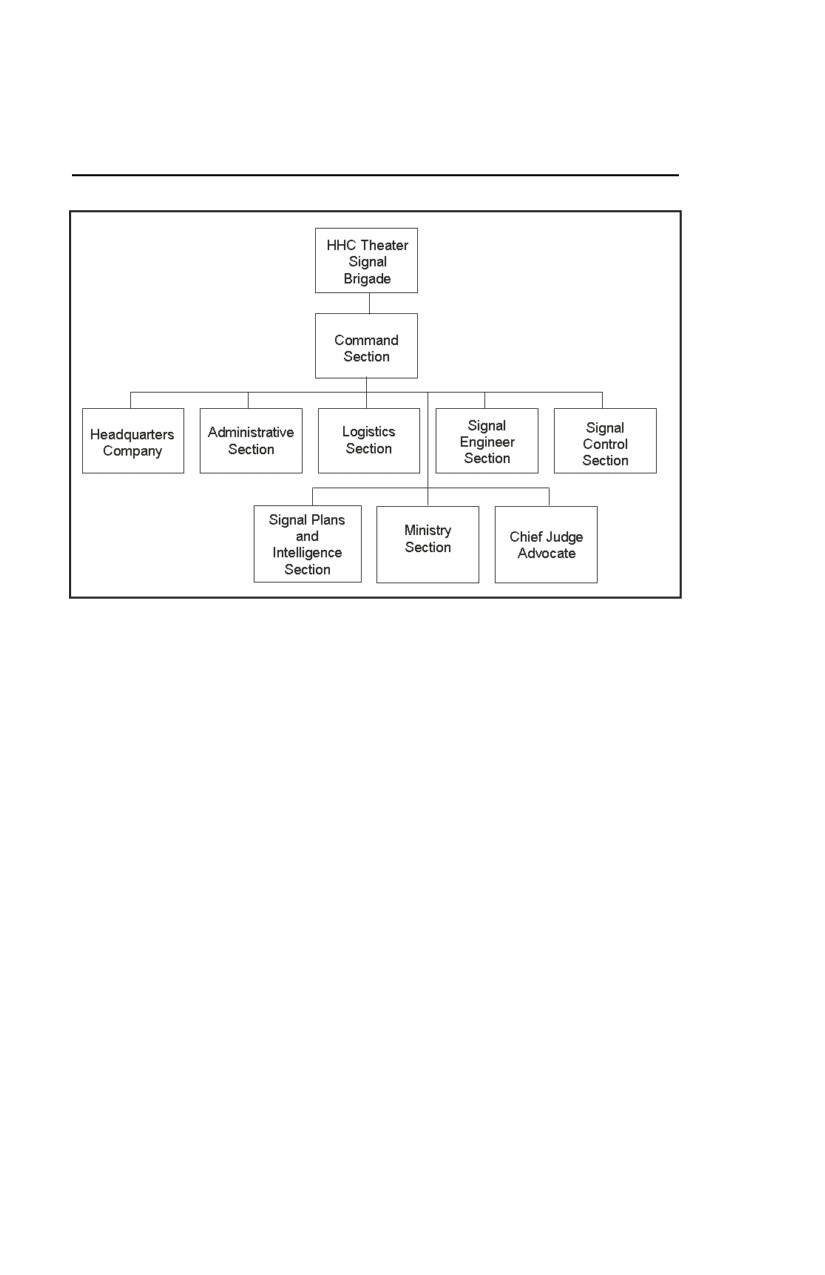
Chapter 4
Figure 4-5. Theater tactical signal brigade
Headquarters Company, TTSB
4-75. The S-1 is responsible for all human resources and
administrative functions in the brigade, to include advising the
commander on all human resource related issues and providing legal
advice and assistance, supported by personnel of the Judge Advocate
General Corps.
4-76. The logistics staff officer (S-4) provides oversight for all and
logistics plans and functions for the brigade. This section also advises
the brigade commander on all matters pertaining to logistics,
transportation, deployment, and maintenance.
4-77. The communications operations section for the brigade (S-3)
conducts detailed systems integration and network planning functions
for the brigade. This section is also responsible for—
z
Determining equipment suitability and adaptability with existing
communications systems.
z
Ascertaining the types of installations and employment required to
provide quality transmission over installed circuits and systems.
4-30
FM 6-02.43
17 March 2009
Theater Operations
z
Handling frequency requests and associated records for the brigade
units.
z
Establishing the brigade communications systems control element
(CSCE) responsible for keeping network situational understanding
and status of current and future needs for rerouting or
reconstituting
circuits
and facilities
throughout
the
communications system.
z
Providing effective operational management and responsive
systems control.
z
Taking appropriate actions to optimize the deployed network
performance in response to constantly changing network
configurations.
z
Establishing and maintaining required databases necessary to assist
in near real-time control of communications systems and to assist
the signal plans and intelligence section in systems planning and
engineering.
Note. The majority of the following signal brigades will
become a theater’s senior signal organization to perform more
effectively and efficiently the Service Title 10 functions that
support the transformed campaign-quality operating force
with joint and expeditionary capabilities.
1st Signal Brigade
4-78. This brigade provides OPCON support to United States Forces,
Korea (USFK) and 8th US Army in the Korean theater of operations.
The 1st Signal Brigade commander serves a dual role as the 8th Army
G-6 with an augmenting staff provided by the 311th SC(T). The 1st
Signal Brigade is unique in that it has both tactical and strategic
battalions assigned which provide a combat-ready, forward-deployed
LWN capability for responsive theater tactical, strategic, and
installation signal support to CCDRs, the United Nations Command,
Combined Forces Command, USFK, and warfighters in the 8th Army
17 March 2009
FM 6-02.43
4-31
Chapter 4
area across the spectrum of operations. During wartime, the 1st Signal
Brigade comes under the OPCON of the
311th SC(T) for the
USPACOM or 8th Army AO.
7th Signal Brigade
4-79. This brigade provides OPCON support to USAREUR. It
maintains a combat-ready, forward-deployed signal force to deploy,
install, operate, and maintain seamless theater tactical information
system support to US and NATO warfighters in the
USAREUR/USEUCOM AOR.
11th Signal Brigade
4-80. This brigade is a CONUS based unit that is regionally focused
to provide theater level and special tactical requirements to support
USCENTCOM, USARCENT, and USPACOM, as required. The 11th
Signal Brigade also provides support to worldwide contingencies in
response to the joint staff, HQDA, and NETCOM mission directives
to install, operate, maintain, and restore LWN systems across any
spectrum of conflict to include support to the BCT level, as
necessary. The 11th Signal Brigade provides a forward stationing
presence using the 54th Signal Battalion in order to meet daily signal
and DOIM support in the USCENTCOM AOR.
35th Signal Brigade
4-81. This brigade is a CONUS based unit that is regionally focused
to provide theater level and special tactical requirements to support
United States Army South
(USARSO). The 35th Signal Brigade
commander serves a dual role as the USARSO/G-6. The 35th Signal
Brigade can also support worldwide contingencies in response to the
joint staff, HQDA, and NETCOM directives to install, operate, and
restore theater tactical communications across the spectrum of
conflict.
4-32
FM 6-02.43
17 March 2009
Theater Operations
228th Signal Brigade and the 261st Signal Brigade
4-82. These brigades are ARNG tactical brigades under the command
of the ARNG during peacetime. Their mission focus is homeland
defense and CONUS contingency requirements. In wartime, the units
are under the command of NETCOM and are assigned IAW
applicable operation plans.
359th Signal Brigade
4-83. This brigade is an USAR TTSB under the command of the
USARC and the 335th SC(T). In wartime, the unit is commanded by
NETCOM and is assigned IAW applicable operation plans.
THEATER SIGNAL MAINTENANCE COMPANY
4-84. The theater signal maintenance company (TSMC) is a one of
kind unit that, with its current structure, supports the TTSB as an
initial-entry deployer, providing immediate readiness of all ground
support equipment to facilitate the critical theater signal mission. It
also provides rapid deployable and dedicated general support and
limited depot signal support for a theater of operations for the TTSB.
4-85. The 556th TSMC is assigned to the 11th Signal Brigade and the
current structure includes a HQ platoon and three maintenance
platoons. When deployed, the TSMC supports MCO by using a
dedicated platoon as required
(usually one platoon per MCO) to
support TTSBs.
4-86. The TSMC’s mission is to provide dedicated sustainment
maintenance and class IX supply support to a theater of operations for
TRI-TAC, MSE, computers, and conventional CE end items and
components.
4-87. The TSMC provides a maintenance control section for theater
unique and common signal assemblages. It also provides a dedicated
authorized stockage list and prescribed load list elements for common
and exclusive theater signal systems that are not necessarily demand
17 March 2009
FM 6-02.43
4-33
Chapter 4
supported but require intense control and management for the gaining
brigade. The following are its repair and support capabilities:
z
Modules, circuit boards/cards for high demand, high usage, and
low-density theater signal assemblages.
z
Automated data processing equipment (including teletype, Tactical
Army Combat Service Support Computer System, and associated
peripherals).
z
HF communications equipment.
z
Microwave equipment (including multichannel, TACSAT, and
Tropospheric Scatter [TROPO]).
z
Fabricates both copper and fiber optic cables for unique
applications.
z
Communications security equipment
(including a specialized
support activity for selected controlled cryptographic items).
z
Ground support equipment (including power generation units with
outputs up to 200 Kw, environmental control units, forced air
heaters, power-driven decontamination equipment, and gasoline
engines).
EXPEDITIONARY SIGNAL BATTALION
4-88. Over the course of the past several years and with the onset of
the global war on terror, theater signal has undergone significant
change to meet the information demands of CCDRs and joint forces.
In step with the Army transition and modularity the integrated theater
signal battalion (ITSB) was developed. These signal assets reside at
the Army echelon as a “force pool” and can deploy across the entire
spectrum of conflict in any segment of a theater, while supporting a
larger and more diverse customer base. Few signal battalions
converted to the ITSB design and provided the theater a modular,
multi-capable, deployable unit that met the information and network
requirements needed at most levels. Later it was found that the MSE
switching and LOS systems employed by the ITSB structure could
not provide the data bandwidth requirements of supported units at all
echelons.
4-34
FM 6-02.43
17 March 2009
Theater Operations
4-89. With the introduction of the next generation switch and data
systems, it was found that signal battalions could be structured in a
way that better enabled employment of network assets to support the
increased number of medium and small command posts. These
augmentations spurred the concept of an enhanced version of the
ITSB that transformed into a modular expeditionary-capable signal
formation known today as the ESB.
Note. The ESB is formally known as an integrated theater
signal battalion-joint network node
(ITSB-J). With the
accelerated fielding to equip signal battalions with JNN, the
approved naming convention of “ESB” was established.
4-90. While primarily a theater level asset, the ESB may be employed
to support a corps/division, BCT, or service component, or coalition
headquarters based on METT-TC. Although the ESB is typically
assigned to a TTSB, it may be assigned or attached to other higher-
level organizations as well, or may operate as part of a separate
network package supporting specific missions such as Homeland
Defense.
4-91. The ESB design simplifies the overall C2 of signal assets. As a
modular element, it eliminates the need to task organize from multiple
organizations to form a single communications support package,
thereby enhancing unit cohesion and deployment planning,
supporting “train-as-you-fight” and ensuring faster training for signal
leaders in a systems-centric environment. The ESB also simplifies
network-training requirements by facilitating end-to-end systems
level training versus training in single function environments. Each
battalion has the capability to link back to the sustaining base, as well
as provide other C2 linkages to intra-theater nodes as needed.
4-92. The introduction of next generation switch/data systems and the
reduction in the number of large switches has allowed the ESB to be
structured in a way that better enables employment of network assets
to support the increased number of medium and small command
17 March 2009
FM 6-02.43
4-35
Chapter 4
posts. This flexible structure improves the ESB’s ability to respond
quickly to support missions with precisely sized capabilities down to
the team level that minimize the deployed signal footprint. The total
support capability of the ESB has grown from 15 to 30 command
posts.
4-93. The ESB design, as depicted in Figure
4-6, provides a
multifunctional structure that—
z
Supports theater elements operating in both theater and
corps/division areas.
z
Leverages current equipment for immediate standup while
providing a modernization path to incorporate JNTC-S or WIN-T
systems as resources become available.
z
Applies to all Active and Reserve components.
z
Is designed for the MCO fight and is capable of executing
missions across full spectrum operations.
ESB Structure and Functions
4-94. The ESB consists of a battalion headquarters and headquarters
company (HHC), two identical expeditionary signal companies, and a
joint/area signal company.
4-95. Battalion Headquarters. The ESB HQ staff performs C2,
administrative logistics, and force protection functions to support the
commander in executing the battalion’s mission. The battalion
headquarters requires 100 percent mobility (the ability to transport all
organic personnel and equipment in a single lift).
4-36
FM 6-02.43
17 March 2009
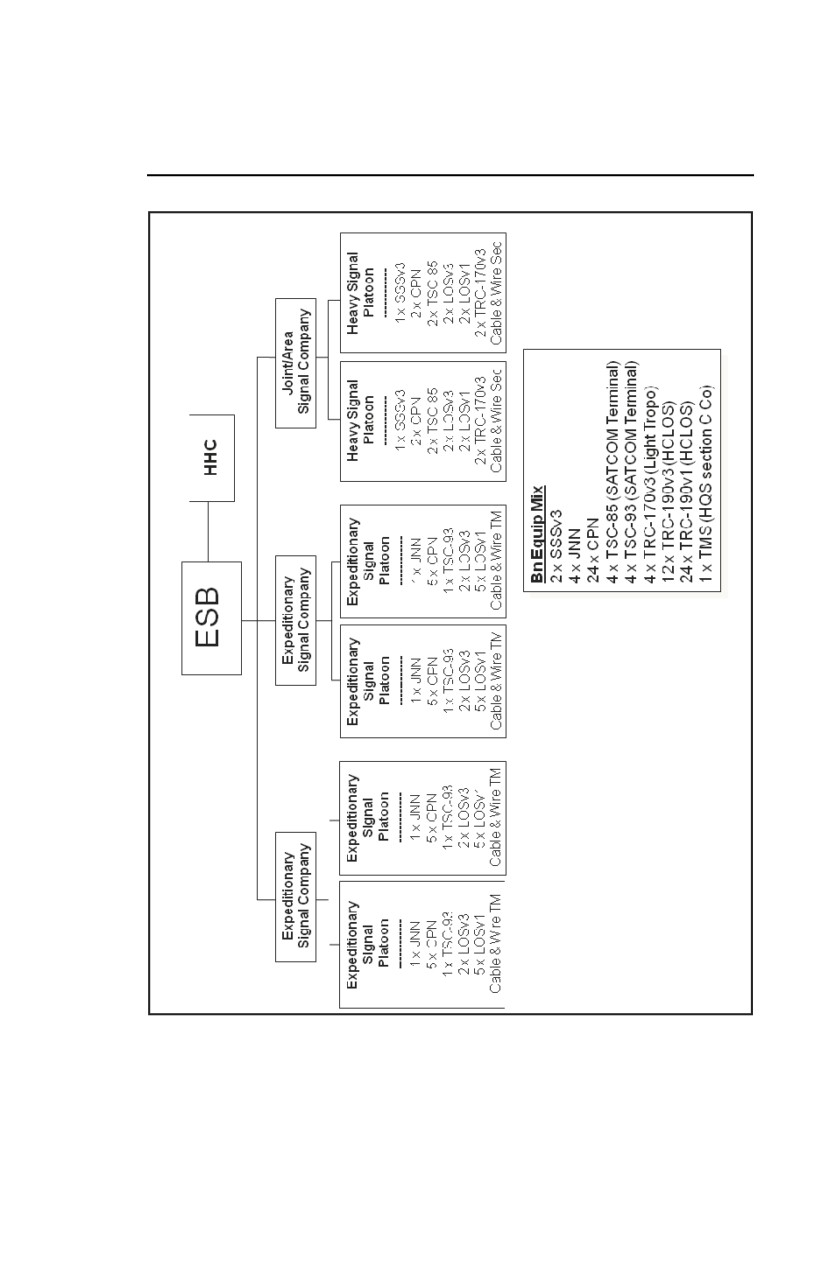
Theater Operations
Figure 4-6. The ESB structure
17 March 2009
FM 6-02.43
4-37
Chapter 4
4-96. Headquarters Company. The battalion headquarters company
provides personnel and facilities for C2 and coordination of the
company mission. Personnel and equipment are provided for
coordination and oversight of company administration, supply, force
protection, and field-level maintenance of wheeled vehicles, power
generation equipment, CE equipment, and small arms. The company
headquarters provides food service in a field environment. The
company requires 100 percent mobility (the ability to transport all
organic personnel and equipment in a single lift).
Expeditionary Signal Company
4-97. The expeditionary signal company is designed to provide
network services to small and medium command posts. The company
consists of a company headquarters and two identical Expeditionary
Signal Platoons (ESPs).
4-98. Company HQ. The company headquarters provides personnel
and facilities for C2 and coordination of the company mission.
Personnel and equipment are provided for coordination and oversight
of company operations, administration, supply, and force protection
functions. Soldiers are provided to conduct field-level maintenance of
wheeled vehicles, power generation equipment, CE equipment,
environmental control equipment, and small arms. The company
headquarters provides food service in a field environment.
4-99. ESP. Each ESP consists of a JNN Team, two LOS V3 Teams,
five CPN Teams, five LOS V1 Teams, a TACSAT Terminal Team,
and a Cable Team. Typical platoon missions include the installation,
operation, and maintenance of communication systems in support of
battalion and brigade-level command posts. The platoon may be
tasked to dispatch individual teams to separate support missions or to
be combined with other teams, platoons, or companies to meet
specific mission requirements at any echelon. Normally the LOS V1
teams will only be employed with a CPN.
4-38
FM 6-02.43
17 March 2009
Theater Operations
Joint/Area Signal Company
4-100. The joint/area signal company is designed to provide
network services to medium and large command posts and command
post clusters. The company consists of a company headquarters and
two identical Heavy Signal Platoons.
4-101. Company HQ. The company headquarters provides
personnel and facilities for C2 and coordination of the company
mission. Personnel and equipment are provided for coordination and
oversight of company administration, supply, force protection, and
field-level maintenance of wheeled vehicles, power generation
equipment, CE equipment, environmental control equipment, and
small arms. The company headquarters provides food service in a
field environment. The TMS Section is in the company headquarters.
4-102. Heavy Signal Platoon. The Heavy Signal Platoon consists
of a Switch Section, two LOS V3 Teams, two CPN Teams, two LOS
V1 Teams, two Light TROPO Terminal Teams, two TACSAT Hub
Teams, and a Cable Section with two cable teams. With its larger
switches and heavier BLOS transmission capabilities, the platoon is
suited to support large command posts, command post clusters, or
support bases. The platoon can also support battalion- and brigade-
level command posts, and may be tasked to dispatch individual teams
to separate support missions or to be combined with other teams,
platoons, or companies to meet specific mission requirements.
Operational Employment
4-103. The ESB is designed to afford network planners flexibility in
configuring resources to meet user requirements precisely. In keeping
with modularity principles, the ESB and its signal companies,
platoons, and teams may be tailored and task organized so that only
the precise package of capabilities needed to satisfy a given mission is
deployed. In the same manner, companies, platoons, or teams may be
added to an ESB to meet the demands of a particular mission.
17 March 2009
FM 6-02.43
4-39
Chapter 4
4-104. The ESB and its subordinate elements may be tasked to
support organizations anywhere in a theater AO, to include army-
level units provisioned to division-level support brigades. Network
support missions may require a full battalion, a company, or a
platoon; however, missions may require the deployment of individual
teams to support separate units in widely dispersed locations at every
echelon of an operation. Mission orders will normally be issued by
the Army G-3 in coordination with the Army G-6 and disseminated to
the ESB through the SC(T) HQ and tactical signal brigade HQ.
4-105. In a MCO, the theater army G-3 in coordination with the
theater army G-6 will normally issue mission orders. Mission orders
will be disseminated to the ESB through the SC(T) headquarters and
tactical signal brigade HQ.
4-106. ESB subordinate companies, platoons, sections, and teams
attached to supported units will normally receive logistical support, to
include rations, petroleum, oils, lubricants, ammunition, medical care,
repair parts, and maintenance services from the supported unit.
Support requirements will be specified in the attachment order.
Command Relationships
4-107. ESBs are assigned to tactical signal brigades. Tactical signal
brigades are assigned either to a SC(T) or to NETCOM/9th SC(A).
Tactical signal brigades are aligned to support numbered armies
(USAREUR/7th Army, USARPAC/8th Army, USARCENT/3rd Army,
USARSO/6th Army, and USARNORTH/5th Army).
4-108. When assigned a network support mission, ESBs and
subordinate elements will be detached from the parent unit and
attached to the supported unit for the duration of the mission.
TACTICAL INSTALLATION AND NETWORK COMPANY
4-109. The Tactical Installation and Network
(TIN) company
provides large network infrastructure installation and rapid
installation and restoration of the DCS within an Army’s AO.
4-40
FM 6-02.43
17 March 2009
Theater Operations
Growing from a need to provide responsive and agile advanced
network installation services for critical missions, the TIN company
has the capability to restore or install critical pieces of the DCS,
which includes the DSN, the DSCS, and the DISN. Thorough
planning identifies the necessary work requirements, specific core
competencies, an estimated bill of materials, and personnel
requirements.
4-110. The TIN company—
z
Provides follow-on tactical support to signal packages for semi-
permanent and permanent tactical automation, network
installation, and information system support utilizing user
provided bills of materials.
z
Provides rapid DCS installation and restoration.
z
Deploys in support of combatant commands, JTF, JFLCCs, ASCC,
and SC(T)s. May be employed to support other service component
or coalition headquarters, permanent or semi-permanent enclaves.
z
Provides technical expertise to interpret and implement
engineering plans for communication systems.
z
Advises the supported commander on aspects of network
installation to include inside plant, outside plant, LAN installation
and initialization.
z
Performs quality assurance testing and handoff of installed and
restored systems.
z
Installs, maintains, and repairs aerial, buried, or underground
cable, wire, and fiber optic transmission systems.
z
Repairs and maintains indigenous cable, wire, and fiber optic
systems, and provides antenna and tower construction and repair.
z
Provides LAN installation and cabling using any mix of military
and commercial standards and materials.
z
Provides automation support to include LAN initialization,
network security, DMS, DRSN, SIPRNET, NIPRNET, and VTC.
z
Installs or restores the DSCS terminal.
z
Installs or restores a strategic to tactical interface path.
17 March 2009
FM 6-02.43
4-41
Chapter 4
4-111. One TIN company typically deploys to an Army’s AO. The
company may be attached or OPCON to a SC(T) HQ, an ITSB, ESB
or TTSB, an ARFOR or JFLCC G-6/J-6 staff section or under an
organization responsible for joint communications until an Army
signal headquarters deploys into theater. Platoons, sections, and teams
can operate autonomously to support various locations, base clusters,
and enclaves. The TIN company can also deploy tasked organized
teams, sections, or platoons to support contingencies in CONUS and
OCONUS. The organization structure for a TIN company is depicted
in Figure 4-7.
VISUAL INFORMATION
4-112. Visual information (VI) is information in the form of visual
or pictorial representations of person(s), place(s), or thing(s), with or
without sound. VI includes still photographs, digital still images,
motion pictures, analog and digital video recordings, and hand- or
computer-generated graphic art and animations that depict real or
imaginary person(s), place(s), and/or thing(s), and related captions,
overlays, and intellectual control data (Joint Publication [JP] 1-02).
4-113. The mission of VI activities and Soldiers is to acquire and
provide the President, Office of the Secretary of Defense (OSD),
Joint Staff, military departments, and Army commanders with record
documentation, multimedia/VI products, and services to satisfy
official requirements.
4-114. Security classification, operations security or subject
sensitivity should not be used to prevent visual information
documentation (VIDOC), since VI products can be classified at any
level required. VIDOC is the process of using motion media, still
photography, and audio equipment to acquire audio and visual
records of events. Resulting VI products include photographs, motion
pictures, video recordings, graphic art, visual aids, models, and
displays.
4-42
FM 6-02.43
17 March 2009
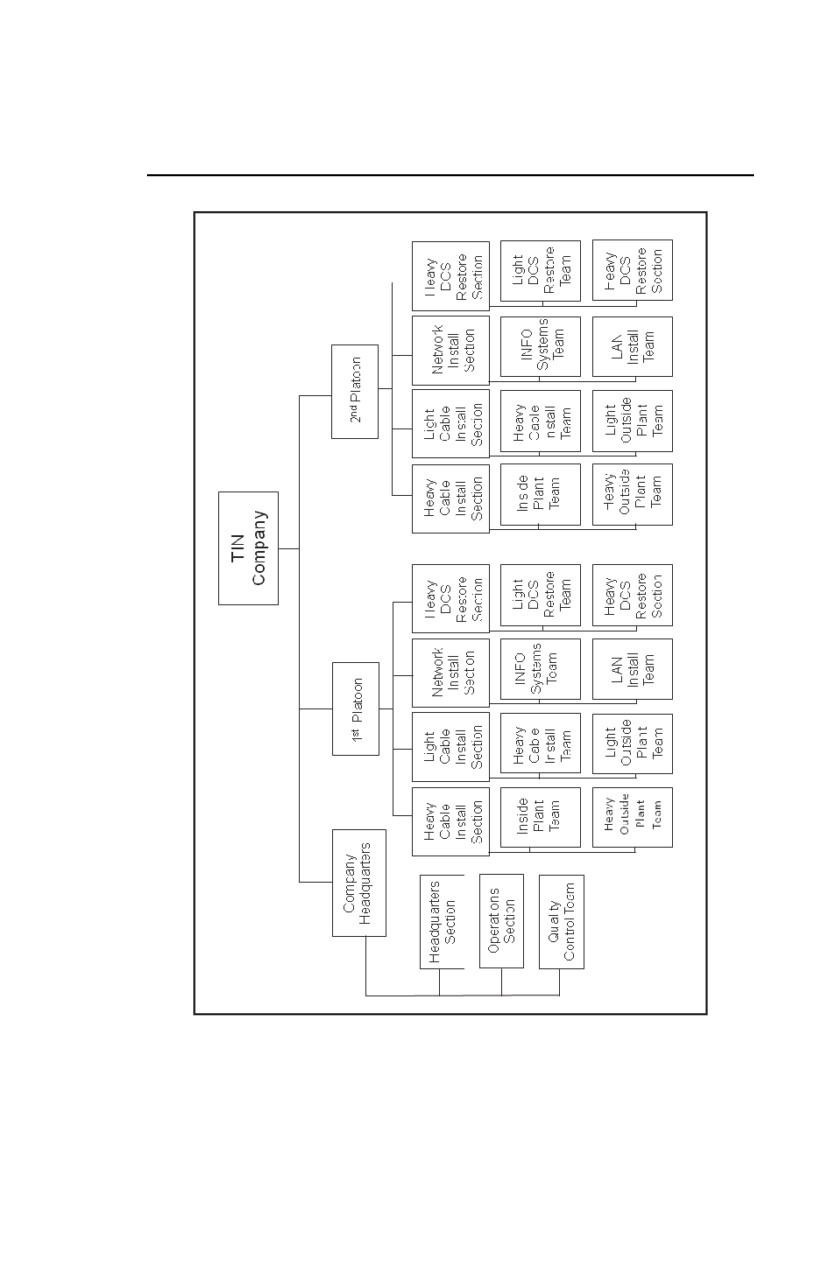
Theater Operations
Figure 4-7. Theater TIN company
17 March 2009
FM 6-02.43
4-43
Chapter 4
4-115. VI products assist commanders at all levels by providing a
visual record of significant Army events and activities. Visual images
are used in tactical C2 decision making, strategic planning, and
management through presentations and reports. Doctrinal, combat,
materiel, and training developers use VI records for analysis and in
reports and briefings to support their programs. VI products can be
used for historical purposes to document training, educational,
research, logistical, personnel, medical, and legal activities. VI with
historical or long-term value shall be stored, managed and preserved
by the Defense Imagery Management Operations Center (DIMOC).
4-116. The DIMOC is the new operational arm of the Defense
Visual Information directorate. It is a transformational organization
that has assumed the missions, functions, and responsibilities of the
Joint Combat Camera Center, the Defense Visual Information Center,
and the Joint Visual Information Services Distribution Activity and
will serve as:
z
The central reception and distribution point for all joint interest
still and motion imagery.
z
The designated central records center for storage, preservation, and
distribution of general purpose Defense imagery.
z
The central life-cycle management and initial/follow-on
distribution activity for DOD productions, providing post-
production services for DOD and other government customers.
COMBAT CAMERA
4-117. The mission of combat camera (COMCAM) forces is to
provide the OSD, Chairman of the Joint Chiefs of Staff, the Military
Departments, combatant commands, and JTFs with a directed
imagery capability in support of operational and planning
requirements during wartime operations, worldwide crises,
contingencies, and joint exercises
(FM 3-55.12). The COMCAM
mission is to support but is independent from, unique imagery
operations such as Public Affairs, psychological operations,
intelligence, and civil support. The Army’s theater COMCAM
4-44
FM 6-02.43
17 March 2009
Theater Operations
company accomplishes its mission by providing COMCAM tactical
support to joint and US Army operations and exercises.
4-118. The COMCAM company can provide land, airborne, and
airmobile operations. When deployed as a whole, it supports
warfighters at all echelons across the spectrum of conflict in the
theater of war. Its modular design facilitates tailoring support
packages for lesser regional conflicts, small-scale contingencies, and
other operations in the spectrum, such as peacekeeping and
humanitarian relief operations. The company can deploy on short
notice to support any level of combat force projection down to the
brigade combat team. It can also operate in a joint operational
environment as part of, or in support of, a joint COMCAM
organization.
4-119. The COMCAM company provides the following
capabilities—
z
Staff planning, control, and supervision of the operations of the
company, to include any augmenting personnel or materiel assets.
z
COMCAM equipment maintenance by minor on-site repair,
replacement, or evacuation to civilian contractors.
z
Liaison to supported units, joint collection management tools and
other service COMCAM elements.
z
Establishment, operation, and maintenance of COMCAM facilities
supporting theater Army and subordinate TAC CP headquarters.
This includes—
COMCAM editing for the electronic processing of
digital still and motion imagery acquired by organic
documentation teams, weapons system video, or
other COMCAM field units located in the theater
Army AOR.
Operating support facilities to provide tailored still
and motion media products, graphics products,
narration support, and video reports on short
suspense.
17 March 2009
FM 6-02.43
4-45
Chapter 4
Presentation and exploitation of visual imagery to
support operational requirements.
COMCAM platoons to support operational
requirements and provide continuous COMCAM
documentation for historical purposes, to include
ground and aerial documentation/acquisition of
visual imagery. Transmission is accomplished via the
most reliable transmission means available; that is
CNRs, single-channel TACSAT radios, local area
networks, or Defense Switched Network (DSN) and
commercial telephone lines.
VI and documentation support to Army units with
missions across the spectrum of conflict from
peacetime military engagement to MCOs.
Support Requirements
4-120. At the theater level, the COMCAM company is attached to
the theater army and is co-located with the G-3. The theater army
element provides support and services under the warfighting
functions. Under the warfighting functions support is provided for
transmission of VI on data-capable communications lines across the
theater and back to the sustaining base. The theater army provides CE
maintenance support to the COMCAM company.
4-121. At the corps and division levels, the COMCAM element is
attached to the headquarters. The platoon headquarters is co-located
with the appropriate corps/division G-3. COMCAM teams are under
the OPCON of the brigade and battalion headquarters and are co-
located with the appropriate unit S-3. The associated Army element
provides food service, health, legal, religious, financial management,
human resources, administrative services, supply, supplemental air
transportation, and support for transmission of VI on data-capable
communications lines across the corps/division and to the next higher
headquarters. The corresponding signal command provides CE
maintenance support.
4-46
FM 6-02.43
17 March 2009
Theater Operations
Structure
4-122. The modular design of the COMCAM company has been
standardized to facilitate their mission requirements at the tactical
level of operations to more accurately reflect its emerging role in
strategic and tactical requirements. The structure of the theater
COMCAM company consists of a company headquarters, two corps
support platoons, and five division support platoons. Figure
4-8
outlines the structure of a typical theater COMCAM company.
Figure 4-8. Theater COMCAM company
17 March 2009
FM 6-02.43
4-47
Chapter 4
JOINT COMBAT CAMERA OPERATIONS
4-123. COMCAM empowers the joint force commander by
acquiring, processing and distributing classified and unclassified still
and motion imagery in support of full spectrum operations. Inclusive
documentation ensures an accurate record of ongoing operations, and
is vital to the strategic communication mission. Each military Service
has dedicated COMCAM units that are specially trained and equipped
to support combat forces in any environment. All COMCAM
personnel must have received advanced field training and weapons
qualifications. All personnel who require access to information
systems processing classified defense information to fulfill their
duties will possess a security clearance based on the appropriate
personnel security investigation per Department of Defense Directive
(DODD) 5200.2. When employed, COMCAM supports the force at
all echelons in a theater of war. The COMCAM force packages are
adaptive, fully qualified and equipped to document sustained day and
night operations.
4-124. Army COMCAM teams will be tasked to participate in DOD
joint exercises along with COMCAM teams from other services. Only
the Chairman, Joint Chiefs of Staff and combatant commanders have
the authority to task joint service COMCAM teams. Tasking is
normally component-specific
(Army COMCAM is tasked to
document Army activities); however in a joint environment, joint
COMCAM forces can be formed to document all aspects of an
operation. Imagery provided will be provided to the JTF commander
and supported elements, while simultaneously and expeditiously
transmitted to the DIMOC. COMCAM products cleared by the
operational commander can be forwarded directly from the theater of
operations to the DIMOC for further distribution to the operational
staff.
4-125. The Commanding General, US Army Network Enterprise
Technology Command
(NETCOM)/9th Signal Command
(Army)
[SC(A)] organizes and operates Army deployable COMCAM units
through the 55th Signal Company (COMCAM) (Regular Army) and
4-48
FM 6-02.43
17 March 2009
Theater Operations
the 982nd Signal Company (COMCAM) (Army Reserve) to provide
visual documentation of operational contingencies, exercises, joint
operations, and relief activities in response to major disasters and
other peacetime engagements.
THEATER NETWORK OPERATIONS AND SECURITY
CENTER
4-126. The TNOSC operates, manages, and defends the LWN in
order to deliver seamless information and communication systems
capabilities in support of all in-theater Army entities in its AO. The
TNOSC executes its NETOPS responsibilities in coordination with
the Army G-6. RNOSCs may execute TNOSC functions on a
geographic basis within their AOR under tactical control of the
TNOSC. The responsibilities of the TNOSC are to control
performance of technical functions of both fixed theater network
infrastructure and tactical Army signal units within the theater AOR.
TNOSC Deployment Support Division
4-127. In conjunction with the modular restructuring of the Army,
the signal command is undergoing revision in order to support
emerging requirements of the new modular force. One such revision
is the addition of a new Deployment Support Division (DSD) within
the TNOSC. The DSD has the primary responsibility for all TNOSC
support to deployed forces. It is comprised of two branches: the
Tactical Network Team (TNT) and the Tactical Integration Cell (TIC)
as shown (with the other TNOSC divisions) in Figure 4-9.
Tactical Network Team
4-128. The TNT is a fully deployable NETOPS entity (but based on
METT-TC it is not necessarily fully or always deployed). The TNT
acts as a fully integrated NOSC providing NETOPS functions for the
SC(T) commander or signal brigade commander. The TNT will
leverage supporting capabilities of the ASCC TNOSC to execute its
NETOPS functions. The ARFOR TNT monitors, manages, and
17 March 2009
FM 6-02.43
4-49
Chapter 4
controls inter-BCT, division and corps, and EAC information
network components.
Figure 4-9. TNOSC DSD structure
Tactical Integration Cell
4-129. The TIC is a body of tactical network personnel within the
DSD of the TNOSC that is dedicated to the integration and support of
NETOPS for tactical units. The TIC provides the following functions:
z
Oversight and management of tactical ASCC NETOPS support
services, such as the tactical NETOPS systems.
z
Supplementary or backup network services in direct support of
other network elements as required. These services include storage
and directory, as requested by the ARFOR. These functions are
value-added services and are not intended to replace critical
organic NETOPS assets within the chain of command.
z
Technical subject matter expertise upon request to analyze and
resolve tactical network problems and incidents.
4-50
FM 6-02.43
17 March 2009
Theater Operations
z
Coordination of any required interoperation of ASCC NETOPS
systems with tactical NETOPS systems such as e-mail,
collaboration, DNS, and directory services.
z
Any necessary system interfaces, equipment augmentation, or
NETOPS processes to enable standard Army tactical forces to
interoperate seamlessly with combatant command’s specific
requirements and policies.
4-130. The TIC responsibilities also include the formation of
temporary Tactical Liaison Teams (TLTs), which are dedicated to the
support of a specific tactical unit. The TLT performs a liaison
function to the supported unit’s NETOPS cell, providing essential
integration services between the tactical unit and the respective
TNOSC, while also providing valuable technical NETOPS
augmentation to the unit’s organic NETOPS capability. When
supporting a corps/division or corps/division-based command, a TLT
typically collocates with corps/division personnel at the tactical
Network Service Center. TLT personnel in support of an
expeditionary BCT may perform functions from the TNOSC, or may
relocate to other locations as missions dictate. Figures
4-10 and
Figure 4-11 depict the two typical scenarios for these elements.
17 March 2009
FM 6-02.43
4-51
Chapter 4
Figure 4-10. TNOSC DSD elements-TNT, TIC, and TLT with
corps/division
4-52
FM 6-02.43
17 March 2009
Theater Operations
Figure 4-11. TNOSC DSD elements-TNT, TIC, and TLT
without corps/division
17 March 2009
FM 6-02.43
4-53
This page intentionally left blank.
Chapter 5
Transport Systems
The Army’s transformation has provided
enhanced network equipment capabilities to the
modular force. The major network transport
systems for the modular and current force are
the communications systems currently being
fielded under WIN-T Increment 1. This chapter
includes a section on MSE and the Tri-Service
Tactical
(TRI-TAC) systems to provide
information until the transformation of WIN-T
Increment 1 is complete. This chapter provides
commanders and G-6/S-6 leaders an
understanding of the LWN transport systems at
corps and below.
WIN-T INCREMENT 1
5-1. WIN-T Increment 1 was formerly known as Joint Network
Node-Network (JNN-N) and is the network enabler fielded to provide
timely, network-enabled support to tactical modular formations,
providing connectivity from a battalion to the GIG.
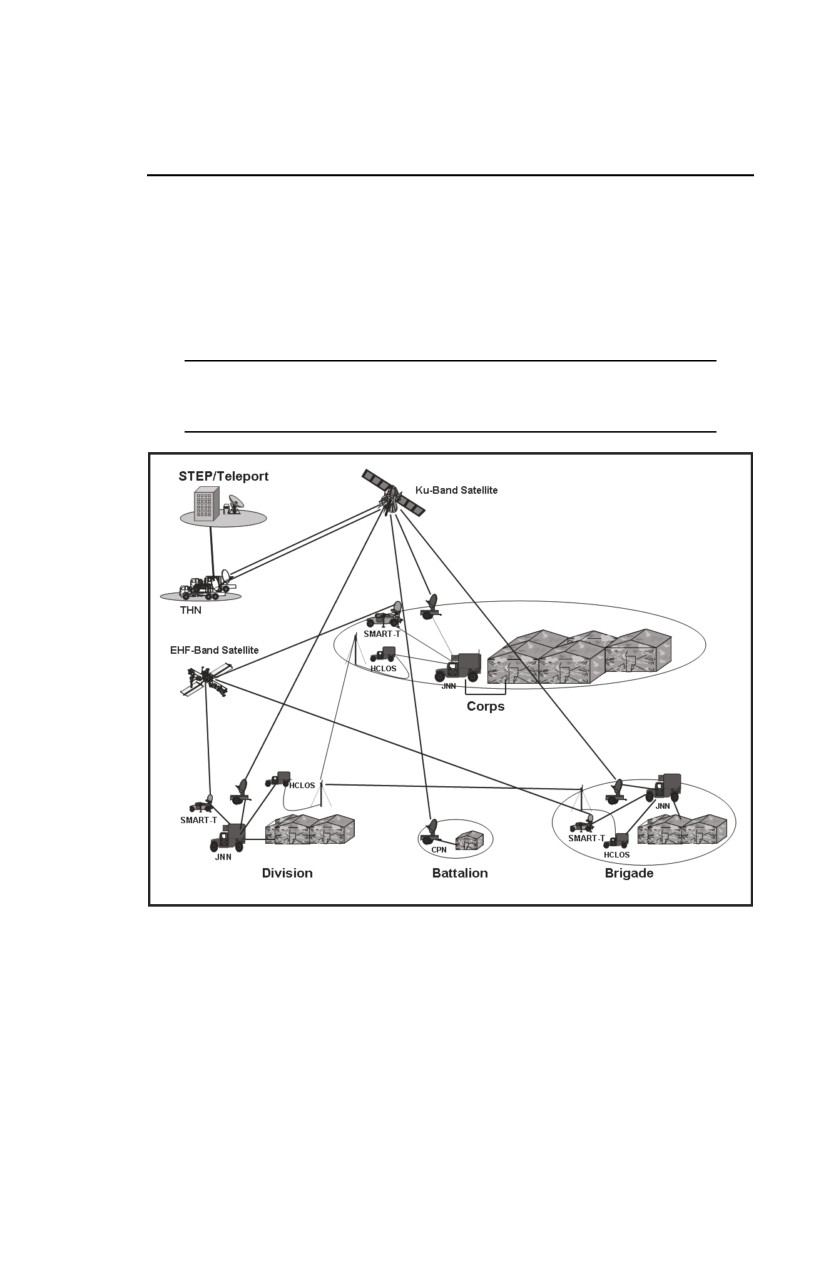
5-2. The major components of the WIN-T Increment 1 transport are
the hub node, (fixed, mobile, and tactical); the JNN at corps, division,
and brigade; and the CPN at battalion.
17 March 2009
FM 6-02.43
5-1
Chapter 5
5-3. The JNN is the communications package deployed at corps,
division and brigade levels. The JNN enables independent operations
and direct termination into the theater network, GIG, or a joint
headquarters. The JNN facilitates the management of digital groups,
trunks, and circuits. It provides the means through which the
communications resource at a node can be monitored, controlled, and
managed. The JNN capabilities include Ethernet switching, IP routing,
network management, and network security services that include
network intrusion detection.
5-4. The JNN has voice and data switching equipment allowing
independent operations and enabling both circuit switching and IP
based networking. The JNN will work with existing terrestrial transport
(LOS and HCLOS), ground mobile forces (AN/TSC-85/93), TROPO
(AN/TRC-170), SMART-T
(AN/TSC-154), Phoenix SATCOM
terminal (AN/TSC-156), and commercial Ku-band satellite or Ka-band
satellite, when available.
5-5. Networking capabilities provided by JNN to support network
enabled voice, data, and video services support include—
z
Forty-eight two-wire phone subscribers
(SIPRNET and
NIPRNET).
z
Twenty-four IP voice subscribers (SIPRNET and NIPRNET).
z
Forty-six IP data subscribers (SIPRNET and NIPRNET).
z
Includes 24 data subscribers connected to IP phones.
z
One local Private Branch Exchange; 1.544 Mbps or tier 1 T1
trunk.
z
Eight MSE black long voice subscribers.
z
Defense Red Switch Network long local access to the AN/TRC-
170 via a Pairgain modem.
z
Remote battlefield video teleconferencing center access to the
AN/TRC-170 via a Pairgain modem.
z
Supports two MSE digital transmission group supporting voice
and data.
5-2
FM 6-02.43
17 March 2009
Transport Systems
5-6. Critical communications components of the JNN are the
vantage MSE gateway switch, a private branch exchange, Cisco router,
Promina multiplexer, Cisco call manager, Ku-band TDMA, and FDMA
modems, satellite transportable terminal
(Ku-band satellite), and
tactical LAN encryptor. Figure
5-1 shows WIN-T Increment
1
architecture at different echelons.
Note. Refer to FMI 6-02.60 for more information on WIN-T
Increment 1.
Figure 5-1. WIN-T Increment 1 architecture
17 March 2009
FM 6-02.43
5-3
Chapter 5
WIN-T INCREMENT 1 HUB NODES
5-7. The hub node is the primary component of the network service
center. The network service center links the TDMA and FDMA Ku-
band architectures. Additionally, the network service center allows for
the termination, reallocation, and control of network bandwidth.
Fixed Regional Hub Node
5-8. The FRHN is a theater asset that provides coverage for units
deploying to a geographical region. There will be five FRHNs when
they are fully operational: one each within the Central Command,
Pacific Command, and European Command and two within the
CONUS. They will provide near-worldwide coverage when
operational. The FRHN may provide initial hub support for the units in
theater prior to the arrival of the division THN or if the commander
makes the decision not to employ the THN. Control of the network
may be transferred to the THN as the mission and situation dictates.
5-9. The FRHN can support up to three divisions concurrently and
has the flexibility to provide support to autonomous BCTs as well as
ESBs that are task organized to support all echelons. The FRHN
provides the following capabilities to the division—
z
Primary hub node connectivity and services during
reception, staging, onward movement, and integration
operations.
z
Continuity of operations for MRHNs and THNs.
z
A server sanctuary supporting the delivery of theater level
services to the corps, division, and brigade.
z
Assured reachback to the Trojan Network Control Centers
for TOP SECRET/Sensitive Compartmented Information
users supported by a JNN or CPN as their point of entry to
the network.
5-10. The FRHN will be collocated with a STEP or teleport facility
providing an always-on high bandwidth access to the GIG and
5-4
FM 6-02.43
17 March 2009
Transport Systems
extension of DISA services to the division. The FRHN consists of a
communications facility, which contains the satellite and baseband
equipment, and a services facility, which contains servers and network
and system administration personnel. The theater signal brigade
personnel will operate and maintain the FRHN.
5-11. A liaison team from the supported unit will ordinarily deploy to
the FRHN to assist with configuration of the Tier 2 equipment that
interfaces with their forces based on METT-TC. This Tier 2 equipment
includes routers, switches, call managers, and NETOPS. This team will
also facilitate NETOPS and troubleshooting issues. The liaison team
will remain at the FRHN as the mission dictates.
5-12. If a THN of the division assumes control of the network after
arriving in theater, it may be necessary for the liaison team to transfer
to the THN and the FRHN would become a backup capability for the
division providing continuity of operations if needed. It would then be
possible for the division technicians to remotely access the FRHN Tier
2 devices that support them as required. The division or corps G-6 will
coordinate as early as possible with the signal brigade S-3 to define
liaison support activities at the FRHN. Any Tier 2 application servers
installed at the FRHN will be configured and managed by the liaison
team.
Tactical Hub Node
5-13. The THN is the primary hub node supporting a division and its
subordinate units and is organic to the division signal company. It will
ordinarily deploy to a sanctuary location to provide connectivity to a
DOD gateway either with the division headquarters or in advance of
the division headquarters. As the corps has no organic hub node, the
THN may be used by the corps to provide access to the GIG and to
control its subordinate units. Additionally, if elements of an ESB are
OPCON to support the corps, division, or brigade, they may use the
THN as an entry point to the network. The THN is capable of
interfacing with current Army systems such as mobile subscriber
17 March 2009
FM 6-02.43
5-5
Chapter 5
equipment (MSE) and Tri-Services Tactical Communications Program
(TRI-TAC).
5-14. The THN is made of two identical TDMA/FDMA SATCOM
shelters and one baseband shelter. The SATCOM shelters have a 3.9-
meter Ku/Ka capable antenna. Each shelter contains 8 TDMA and 8
FDMA modems for 16 TDMA and 16 FDMA modems per THN.
There is a master reference terminal and network control center in each
shelter. The THN has the capability to provide services to a division
network of 16 FDMA CPs and 80 TDMA CPs. The baseband shelter
contains the necessary components to interface with the DOD gateway
and provides the following capabilities—
z
Multiplexing.
z
Link encryption.
z
IP encryption (KG-175).
z
Patching and testing.
z
Private Branch Exchange phone service with Defense
Switched Network connectivity.
z
Tier ½ NIPRNET and SIPRNET routing services.
z
Tier 2 NIPRNET and SIPRNET routing services.
z
IA (e.g., intrusion detection, firewall, and deep packet
inspection).
z
Voice over Internet Protocol.
z
Secure voice over Internet Protocol.
Network Service Center-Training
5-15. The Network Service Center-Training is located at the US
Army Signal Center, Fort Gordon, Georgia. The Network Service
Center-Training has capabilities similar to a THN with a primary
mission of providing TDMA and DISN training and sustainment
services for WIN-T Increment 1 equipped units in CONUS, Hawaii,
and Alaska. The Network Service Center-Training supports activities
such as home station training, Battle Command Training Center
training, and Combat Training Center rotations. It also provides formal
5-6
FM 6-02.43
17 March 2009
Transport Systems
schoolhouse training to prepare Soldiers to operate, manage, and
interface with WIN-T Increment 1 assets. The Network Service Center-
Training performs the following functions—
z
Provides TDMA master reference terminal services for
sustainment training networks.
z
Remotely monitors, controls, and troubleshoots remote
TDMA networks.
z
Establishes a test bed for experimentation and prototyping.
z
Supports development of doctrine and tactics, techniques,
and procedures.
z
Supports, as necessary, real-world operations.
z
Provides a vehicle for individual training and live network
collective training exercises.
z
Supports mobile training teams.
Mobile Regional Hub Node
5-16. The MRHNs are the original hub nodes fielded to the
3rd
Infantry Division and will be transitioned to the NETCOM/9th SC(A)
to serve as MRHNs. They consist of the same assemblages as the
THNs with the difference being that they are mounted on commercial
vehicles. The MRHNs will be allocated to, operated, and maintained by
theater signal brigades. Each MRHN is capable of providing network
services to a typical division consisting of 100 CPs on TDMA and 16
CPs on FDMA. A MHRN has the following capabilities—
z
Provides coverage in areas where an FRHN has not been
built or provides no coverage.
z
Provides hub node connectivity to expeditionary units (e.g.,
BCTs) not deploying with a THN.
z
Supplements a FRHN when additional capacity or satellite
coverage is required.
z
Provides TDMA management support enabling intra-theater
brigade to brigade level routing and network services.
17 March 2009
FM 6-02.43
5-7
Chapter 5
z
Provides unit sustainment training and exercise support.
z
Supports expeditionary BCTs operating independent of a
THN supported division.
COMMAND POST NODE
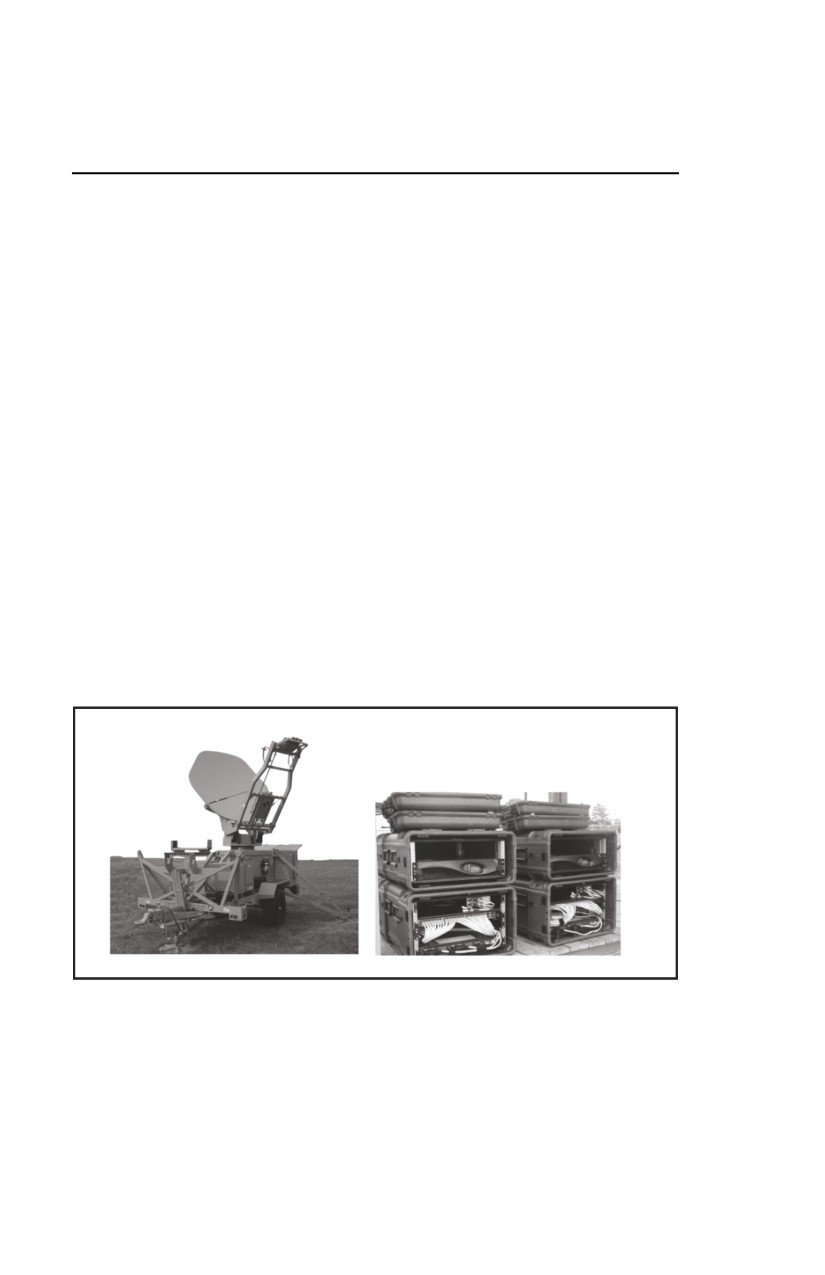
5-17. The CPN is primarily fielded to the battalion level headquarters,
but it is also used to augment a CP at other echelons. It consists of a
support vehicle, a trailer-mounted 2.4 meter satellite dish, and two
transit cases.
5-18. The CPN (refer to Figure 5-2) operates in the TDMA satellite
architecture providing secret data and Voice over Internet Protocol
phone services. This architecture allows the battalion data network to
terminate into the JNN and network service centers. The CPN has the
following characteristics—
z
Interfaces with satellite and LOS assets.
z
Is IP voice only.
z
Is one physical enclave (tunnel second).
z
Capable of using bursts up to 4 Mbps on TDMA.
Figure 5-2. Command post node
5-8
FM 6-02.43
17 March 2009
Transport Systems
BRIGADE SUBSCRIBER NODE
5-19. The brigade subscriber node (BSN) is fielded in SBCTs that are
not already JNN enabled. The BSN provides switching, routing,
transmission, network management, and security services within a
single shelter. These components form the communications network
infrastructure that enables the user to transfer voice, video, data, and
imagery information throughout the AO. The SBCT signal company
contains two BSNs and are traditionally placed at the brigade main CP
and the brigade support area CP. The BSN is capable of interfacing
with the JNN, MSE, and TRI-TAC.
NETWORK OPERATIONS CENTER-VEHICLE
5-20. The Network Operations Center-Vehicle
(NOC-V) is found
within select SBCT signal companies as well as battalion level
headquarters. The NOC-V provides the S-6 with an operational facility
and an integrated means to plan, manage, monitor and control tactical
systems and networks that are within their management domain. The
NOC-V provides voice and data services as well as radio links to the
lower tactical Internet via SINCGARS, EPLRS and NTDR radios. It
also contains a Force XXI Battle Command Brigade and Below
(FBCB2) suite and tactical Internet manager for SA message traffic,
tactical Internet, and TOC management. The NOC-V is capable of
interfacing with the strategic, commercial, joint, and multinational data
communication systems through the BSN.
HIGH-CAPACITY LINE OF SIGHT SYSTEM
5-21. The AN/TRC-190(V)3 is a terrestrial microwave radio system
containing three AN/GRC-245 HCLOS radios. Each radio provides
full duplex digital traffic at rates up to
16,384 kilobits per second
(kbps). It is found within the signal companies at the corps, division,
and brigade. It is ordinarily paired with a JNN to provide a high
bandwidth LOS capability of up to 40 kilometers when terrestrial LOS
17 March 2009
FM 6-02.43
5-9
Chapter 5
exists. The AN/TRC-190(V)1 contains one HCLOS radio and is found
in units that use the CPN.
SECURE MOBILE ANTI-JAM RELIABLE TACTICAL
TERMINAL
5-22. The SMART-T is a satellite ground communications terminal
that is found within the corps, division, and brigade signal companies.
It provides a protected SATCOM path for range extension of JNN
systems that is capable of both single-channel voice communications
and high bandwidth data transfer of up to 1.544 Mbps. SMART-T uses
the Military Strategic Tactical Relay satellite constellation and employs
frequency hopping technology that prevents jamming and interference
from affecting communications. SMART-T is a one-vehicle system
that can be put into operation by one Soldier in less than 30 minutes.
WIDEBAND SATELLITE TERMINALS
5-23. The AN/TSC-85C and AN/TSC-93C terminals are current
forces’ ground mobile forces systems. The terminals are tri-band
multichannel communications terminals that operate in the SHF
spectrum with a throughput capacity up to 8.448 Mbps. The C models
are being replaced by the D models to extend their life and provide
greater capabilities. They are found within the ESB and are used to
augment the internal assets of the corps, division, and brigade such as
when a theater asset is attached or OPCON to them. The multi-band
Phoenix AN/TSC-156 SATCOM terminal replaces selected AN/TSC-
85/93 terminals in the ESB.
COMMERCIAL SATELLITE COMMUNICATIONS TERMINALS
5-24. Commercial SATCOM terminals are used primarily in stability
operations to free up tactical assets. These are unit funded and procured
systems that receive no DOD funding. The terminals include fixed,
deployable, VSAT, and mobile products. Training, spares, and
operations and support services are ordinarily provided as required.
The two prevalent terminals are covered below.
5-10
FM 6-02.43
17 March 2009
Transport Systems
AN/USC-60A Flyaway Tri-band Satellite Terminal
5-25. The AN/USC-60A Flyaway Tri-band Satellite Terminal is a
transportable tri-Band
(C, X, Ku Band) transit case packaged
SATCOM terminal. It employs a unifold 2.4-meter antenna system and
can set up or torn down in less than
60 minutes. The modular
architecture of the AN/USC-60A terminals easily accommodates
expansions such as a digital video, digital voice/facsimile transmission,
secure communication, and network control.
5-26. The AN/USC-60A is ordinarily used as a spoke in a hub and
spoke network but may also be configured to act as the hub. It is
possible to upgrade the AN/USC-60A to make it compatible with Ka
Band satellites.
Deployable Ku Band Earth Terminal
5-27. The Deployable Ku band Earth Terminal (DKET) is a satellite
terminal capable of supporting 24 T1 data rate circuits through a 4.6-7
meter tracking antenna. It contains redundant RF electronics and auto
uplink power control with an environmentally controlled shelter with
redundant generators and UPS for critical components. The digital
fiber optic interface system connects to user baseband up to 2 km. The
DKET is Interoperable with all tri-band satellite terminals and teleport
earth terminals in commercial bands. The DKET is employed as a hub
to service large populations. (There is a Ka Band upgrade kit available
for the DKET.)
MOBILE SUBSCRIBER EQUIPMENT
5-28. The MSE system is the forerunner of the WIN-T Increment 1
suite of equipment currently fielded to many of the reorganized
modular units. It is an area-switched communications system that relies
primarily on LOS links up to 40 km (28 miles) apart, but can operate
on a satellite network if the satellite systems are provided. The use of
relay assemblages can increase the distance between LOS nodes.
17 March 2009
FM 6-02.43
5-11