FM 3-11.4 MULTISERVICE TACTICS, TECHNIQUES, AND PROCEDURES FOR NUCLEAR, BIOLOGICAL, AND CHEMICAL (NBC) PROTECTION (June 2003) - page 3

Table V-6. Potential Risks From Operations in an NBC Environment
Actions
Results
Unit selected easier routes.
Units advanced on expected avenue of approach.
Unit used tighter formations.
Less unit dispersal.
Unit was hesitant to be aggressive.
Less unit initiative.
Unit attacks took longer.
More unit casualties.
Unit conducted slower rates of travel.
Increased time to accomplish missions.
Unit fire effectiveness was decreased.
Unit loss exchange ratios decreased.
Unit demonstrated degraded ability to perform
Decreased combat team effectiveness.
mission when buttoned-up.
Unit killed fewer threat targets during
Unit combat advantage degraded.
offensive operations.
Unit intelligence collection assets (e.g.,
Unit target acquisition/intelligence collection
scouts) had difficulty seeing and hearing the
degraded.
enemy.
Individual/crew endurance was degraded
Combat power decreased.
(e.g., tank crews operating in hot weather in
MOPP4 were not able to perform their
mission longer than 3 to 6 hours).
d.
Communications. The effectiveness of communications, both face to face and via
radio, can deteriorate in an NBC environment. Hearing and seeing are degraded. The
specific impact of an NBC environment can include the following:
• Voice recognition diminishes, leading to repeated requests for call signs.
• Personnel use hand signals more often.
• Message length doubles.
• Number of radio messages increases.
• Longer transmission times increase vulnerability to enemy electronic warfare
(EW).
4.
Impact of a Nuclear, Biological, and Chemical Environment on Sustainment
Sustaining combat operations in NBC environments presents major challenges.
Operations will be slowed and task performance, both complex and simple, can be
encumbered by wearing IPE. Degradation can be found in all areas of sustainment, to
include the establishment and operation of logistical sites, movement of supply vehicles,
maintenance, and medical support.
a.
Preparation. The impact of an NBC environment can result in less dispersal of
forces and camouflage of vehicles. Setup of sites—such as Class III refuel points—takes
V-5
longer, key safety measures are not as closely followed, and units process fewer supply
requests.
b.
Movement of Supply Vehicles. Movement times for logistical packages increase.
Drivers experience more fatigue and reduced dexterity, resulting in increased time to
process supplies. Consumption of diesel fuel also increases due to greater distances
traveled. More time is required to move to subsequent battle positions, resulting in overall
slower rates of travel.
c.
Maintenance. Operations are adversely impacted by poor communications and
incorrect diagnosis while in MOPP4. For example, maintenance teams frequently do not
carry appropriate tools to the work site, on-site repairs take longer, safety measures are not
strictly adhered to, and maintenance is often deferred until MOPP levels are reduced.
d.
Medical Support. Medical operations degrade due to fatigue and the reduced
dexterity of medical personnel. The times required to conduct activities—such as setting up
medical facilities, conducting triage, measuring patient vital signs, and administering
medications—all increase. Also, surgical procedures cannot be performed in MOPP4.
Therefore, COLPRO is required to continue medical support (surgical procedures) in a
contaminated environment.
5.
Executing Countermeasures
Military leaders know that all phases of military operations can be degraded by an
NBC environment, but some areas are more degraded than others. If leaders know what to
expect, they can moderate the expected degradation. Comprehending the effect of an NBC
environment on the unit’s mission accomplishment can be achieved through—
• Performing mission-essential tasks, such as C², regularly in MOPP4.
• Conducting target acquisition (TA) and identification for individual and crew-
served weapons.
• Exercising communications functions to ensure effective and efficient results.
• Anticipating additional sustainment requirements—more water consumption,
increased wear and tear on IPE, etc.
• Striving for simplicity in plans.
• Understanding the impact of MOPP4 on mobility.
a.
Unit Preparation. Preparation for operation in an NBC environment is critical
to successful operations. Preparation must emphasize individual/crew readiness. It is
important that units focus on the performance of mission tasks under NBC conditions
because it leads to improvements in performance and endurance of individuals and crews.
Individuals learn which tasks can be performed in MOPP with little or no modification and
which tasks require the development of work-arounds or deferment until MOPP can be
reduced.
V-6
b.
Leader Preparation. Leader preparedness for operations in the NBC
environment is extremely important. For effective leader countermeasures, leaders
should—
• Observe their personnel to learn and recognize the signs of serious
physiological and psychological degradation.
• Use coping strategies to deal with physical and mental aspects of the NBC
battlefield.
• Focus on the maintenance of high physical standards for all personnel to
facilitate endurance.
• Assess unit status continually.
• Pace themselves and plan for rest and sleep periods, especially as the periods
in MOPP4 extend.
• Rely on their staff more and allow subordinates more latitude, thus avoiding
the tendency to micromanage.
• Focus on attention to detail when planning and developing OPORDs and
fragmentary orders (FRAGORDs).
• Plan for more efficient use of their time.
c.
Individual Preparation. Readiness for the individual must focus on ways to
effectively operate in an NBC environment. Individual preparation must include—
• Ensuring that NBC protective equipment is properly used and maintained.
• Understanding the need to drink adequate amounts of fluids and recognizing
the symptoms of dehydration.
• Performing tasks in MOPP4 and doing so for extended periods of time.
• Recognizing the need to develop work-arounds for difficult tasks that must be
accomplished. Individuals will share this information with their buddies and inform their
leaders.
• Understanding the physiology and psychology of encapsulation in MOPP4.
• Understanding hyperventilation and developing breathing techniques while
masked.
• Talking slowly and more clearly through the mask.
• Understanding and using work/rest cycles.
• Focusing on task completion versus time required.
V-7
d.
Preparation for Crews, Teams, and Units. Because all tasks are degraded to
some extent, the necessity for teams and units to maintain their unit cohesion and
operational tempo (OPTEMPO) become critical. Key factors that should be considered
include—
• Conducting tasks in MOPP4 for extended periods.
• Focusing on cross training of teams and crews.
• Using work/rest cycles and sleep periods for crew members.
• Emphasizing that basic survivability functions cannot be ignored, especially
tasks such as cover and concealment.
• Developing buddy systems to keep a check on individuals within the unit to
detect serious degradation.
• Using arm-and-hand signals to facilitate routine communications.
• Using a system of individual identification within the unit.
• Being aware that medical care capabilities are greatly reduced in a
contaminated environment without COLPRO.
V-8
Chapter VI
INDIVIDUAL PROTECTION
1.
Background
US military forces possess a wide array of the world’s best, mission-oriented,
individual NBC protective equipment. Using this equipment, armed forces of the US are
equipped to conduct prompt, sustained, and decisive operations throughout the spectrum of
conflict in any environment—NBC or otherwise. This chapter provides an overview of the
individual protection capabilities that are available to US forces. See Appendix A for more
detailed information on IPE.
Protecting the force consists of those actions taken to prevent or mitigate hostile actions
against personnel, resources, facilities, and critical information. These actions conserve the
force’s fighting potential so that it can be decisively applied, and sufficient equipment must
be available to protect not only the uniformed force, but also the essential supporting US
and civilian workforce.
2.
Mission-Oriented Protective Posture
Introduction. The MOPP ensemble protects against NBC contamination. It consists of
the overgarment, mask, hood, overboots, and protective gloves. Before personnel can protect
themselves against NBC hazards, they must first know the purpose of MOPP and the
capabilities of the IPE that is available for their use during tactical operations. The types of
IPE used depend on the protection required, but all fall within two major divisions:
permeable and impermeable. Permeable clothing allows air and moisture to pass through
the fabric. Impermeable clothing does not. An example of permeable protective clothing is
the joint service lightweight integrated suit technology (JSLIST) protective overgarment.
An example of the impermeable protective gear is the SCALP.
a.
Protective Clothing.
(1)
JSLIST Chemical Protective Overgarment. Over time, the JSLIST
chemical protective overgarment (CPO) will replace its predecessor, the battle dress
overgarment (BDO), as stocks become available. The JSLIST provides protection against
liquid, solid, and/or vapor CB agents and radioactive alpha and beta particles. It is a
lightweight garment and it can be laundered up to six times for personal hygiene. The
JSLIST ensemble will be worn in all environments when under threat of an imminent NBC
attack and after chemical operations have been initiated. See Table VI-1 (page VI-2), for
information on the JSLIST CPO capabilities.
VI-1

Table VI-1. Protective Clothing Capabilities
Protective
Service Life
Wear Time
Wear Time Once
Launderable/
Clothing
(Out of Bag)
Contaminated
Decontaminate
JSLIST
120 days
45 days
24 hours
Yes (6 times)/No
BDO
22 days*
22 days
24 hours
No/No
CPU
15 days
15 days
12 hours
Yes (1 time)/No
Saratoga Suit
30 days
30 days
24 hours
Yes (6 times)/No
CP Suit (MK III)
30 days
30 days
6 hours
No/No
CP Glove Set
N/A
N/A
24 hours (14/25 mil)
No/Yes
6 hours (7 mil)
GVO/BVO/MULO/
N/A
N/A
24 hours
No/Yes
CPFC
STEPO
5 contamination/
4 hours
4 hours
Yes/Yes
decontamination
processes
SCALP
N/A
N/A
1 hour
No/No
* The BDO service is 22 days; however, the commander can authorize increased wear time up to 30 days (at a
slightly increased risk).
(2)
Chemical Protective Undergarment. The chemical protective undergarment
(CPU) is worn under an approved uniform as part of an entire ensemble. The CPU provides
protection against CB agents, agent vapor, liquid droplets, and radioactive alpha and beta
particles. The CPU is not a stand-alone garment. It is worn under the standard duty
uniform, such as the battle dress uniform (BDU). The CPU is not intended to be worn under
the JSLIST or BDO. The CPU is donned when personnel are directed to go from MOPP0 to
MOPP1. When the CPU is used, the protection afforded is equivalent to that provided by a
MOPP3 or 4 ensemble. See Table VI-1 for information on CPU capabilities.
(3)
Battle Dress Overgarment. The BDO provides protection against chemical-
agent vapors, liquid droplets, biological agents, and radioactive alpha and beta particles.
The BDO is normally worn over the duty uniform; however, during high temperatures, it
may be worn over underwear. See Table VI-1 for information on BDO capabilities.
(4)
A/P22P-9A (V) Below-the-Neck Protective Assembly (USN/USMC). The
A/P22P-9A (V) below-the-neck protective assembly provides a protective ensemble that
includes undergarments, footwear covers, gloves, and a cape to protect aircrew personnel
from liquid CB contamination or radioactive particles. See Appendix A for more detailed
information.
(5)
Wet-Weather Clothing. Wet-weather clothing consists of a parka and
overalls. The system is designed to protect against all liquid chemical warfare agents in a
cold and/or wet climate both ashore and aboard ship. The system can be worn over the CP
ensemble for additional protection and to prevent soaking the wearer. See Appendix A for
more information on wet-weather clothing.
(6)
Chemical Protective Suit OG MK III (USN). This overgarment protects the
wearer against all known CB agents that present a percutaneous hazard. The suit consists
of a smock and a separate pair of trousers. This garment will be replaced Navy-wide by the
VI-2
JSLIST. This suit protects against chemical-agent vapors, aerosols, droplets of liquid, and
biological agents. See Table VI-1 for information on its capabilities.
(7)
Chemical Protective Suit, Saratoga (USMC). Like the BDO, the Saratoga
CP suit is an air-permeable, camouflage-patterned overgarment. The Saratoga protects
against chemical-agent vapors, aerosols, droplets, and unknown biological agents and can
be laundered for personnel hygiene purpose. See Table VI-1 for further information on its
capabilities.
(8)
CWU-66/P Aircrew Ensemble (USAF). The CWU-66/P is a one-piece
flightsuit configuration that provides 24-hour protection against CB agents in vapor or
aerosol form. It is less bulky than prior ensembles, offers a reduced thermal load burden,
and is compatible with aircrew life support equipment. This ensemble is permeable. If the
clothing becomes contaminated, the garments are disposed of following doffing procedures.
Contaminated garments cannot be reused or laundered to remove contamination. Tracking
the days of wear for permeable protective clothing is important. Personnel can annotate the
number days of wear by different methods. One way would be to annotate the number of
days of wear on the white clothing tag on the inside of the jacket.
(9)
Suit, Contamination Avoidance, Liquid Protective. The SCALP is an
impermeable, lightweight, inexpensive, disposable ensemble that can provide supplemental
liquid protection when worn over a standard CPO. Operationally, the SCALP is worn by
personnel who may by necessity, be forced to leave COLPRO under chemical attack to
perform some vital maintenance or reconnaissance function. If contaminated by chemicals,
the SCALP can be discarded to reduce reentry time. A secondary use of the SCALP is to
protect decontamination personnel from being soaked during decontamination operations.
See Appendix A for more information on the SCALP.
(10) Chemical Protective Glove Set. A glove set consists of an outer glove for
protection and an inner glove for perspiration absorption. The outer gloves are made of an
impermeable, black, butyl rubber. The inner gloves are made of thin, white cotton. The
inner gloves can be worn on either hand. When engaged in heavy work or during cold
weather, personnel should wear standard work gloves or black shells over the butyl rubber
gloves to protect them from damage. See Table VI-1 for information on their capabilities
and Appendix A for more detailed information.
(11) Green Vinyl Overboot (GVO); Black Vinyl Overboot (BVO); and
Multipurpose, Lightweight Overboot (MULO). The GVO, BVO, or MULO can be used to
protect the wearer against NBC agents and environmental effects (rain, mud, or snow). See
Table VI-1 for information on overboot capabilities and Appendix A for more detailed
information.
(12) Chemical Protective Footwear Cover. The impermeable chemical protective
footwear cover (CPFC) protects feet from CB agents and radioactive alpha and beta
particles. See Table VI-1 for information on CPFC capabilities and Appendix A for more
detailed information.
(13) Chemical Protective Helmet Cover. The CP helmet cover is intended to
provide the personnel armor system ground troop (PASGT) helmet with protection from CB
VI-3
contamination and radioactive alpha and beta particles. See Appendix A for more
information on the helmet cover.
(14) Self-Contained, Toxic-Environment Protective Outfit (STEPO). The STEPO
is a totally encapsulating system that provides protection for personnel working in highly
toxic, unknown, or oxygen-deficient environments that are immediately dangerous to life
and health. STEPO protects the wearer against a wide range of industrial chemicals;
petroleum, oil, and lubricants (POL); and CW agents. The impermeable STEPO CP suit
provides protection against hazardous liquids, solids, and vapors. STEPO provides a choice
of breathing apparatuses to accommodate the user and mission requirements. The system
also includes a personal cooling system to reduce heat stress and a communication system
to enable communications between team members and support personnel.
b.
Other Protective Ensembles. Protective masks keep wearers from breathing air
contaminated with NBC warfare agents. Masks are available in these categories: field
protective masks, M40 and MCU-2A/P; combat vehicle mask, M42; aircrew masks, M45,
MBU 19/P, A/P 23P-14A(V) (helicopter only), and A/P 22P-14(V) 1-4 (Marines fixed wing
only); and special-purpose masks. These protective masks are not authorized for use
during industrial chemical spills. Chemicals of that nature normally require a SCBA.
Protective masks are not effective against chemicals such as ammonia or carbon monoxide,
and they are not effective in confined spaces when there is insufficient oxygen to support
life. See Appendix A for descriptive information about protective masks.
(1)
Protective Masks. The fielded masks provide users with respiratory, eye,
and face protection against CB agents and radioactive fallout particles. A properly worn
and fitted protective mask provides a gas-tight face seal, which prevents unfiltered air from
reaching the wearer’s respiratory system.
(2)
Proper Fit. Determining the proper fit for an individual’s protective mask
is critical. A small percentage of service personnel cannot be adequately fitted with the
authorized protective mask. Test systems are available to determine if service personnel
have properly fitted masks. If not, the Army and Air Force will then use the M45 CB mask
to try and properly fit the hard-to-fit service member. If the service member still cannot be
properly fitted with a protective mask, the individual may not be deployable to an AO with
a CB threat. See applicable service TMs, technical bulletins (TBs), and TOs for specific
instructions on hard-to-fit personnel.
(3)
Prescription Mask Inserts. Individuals requiring corrective eyewear must
have prescription mask optical inserts for their protective masks. The optical inserts
require proper placement in the mask to provide maximum clarity and field of vision. See
Appendix I for description of prescription optical inserts for the protective mask.
c.
Other IPE. Other critical IPE material includes medical items (i.e., skin
exposure reduction paste against chemical warfare agents [SERPACWA], NAAK, etc.),
individual decontamination kits, and chemical detector paper. See Appendix A for
descriptions of these items.
d.
Radiological Protection. See Appendix D for information on OEG, LLR exposure,
DU, and Appendix J for information on EMP protection considerations.
VI-4
3.
Individual Protection Logistics Considerations
To meet sustainment requirements for operations under NBC conditions, commanders
must ensure responsiveness to unit requirements. Units (or authorized storage locations)
will stock specific authorized quantities of NBC defense equipment for service member use
as specified in service-specific authorization documents. For example, a forward deployed
unit, such as a carrier battle group or a USMC expeditionary unit, may require both sets of
MOPP gear to be immediately available based on the threat. Conversely, land forces may
require that one set of IPE be carried as part of an individual’s field gear and a second set of
IPE be maintained by the unit logistics base. This is, again, based on the threat. Other
sustainment techniques or procedures are contained in service logistics publications.
a.
Resupply of additional sets of MOPP gear into combat-configured loads can be
accomplished by methods such as palletizing the needed IPE. The intent of palletizing IPE
is to create a push package that can either be broken down at an arrival location (airfield or
seaport) for immediate issue to units or for further movement forward. The method of
palletizing and movement depends on the types of units and how each performs its mission.
b.
Logistics planning and push package configurations will vary based on the unit
general deployment plan or contingency mission and the likelihood of an NBC threat in an
AO. All this is integrated and executed through service logistics channels. These items will
be moved based on certain time lines dictated by the OPLAN and on events that may occur
during the operation.
c.
Other key logistics/sustainment considerations include—
• Anticipating resupply and replacement requirements for IPE.
• Monitoring serviceability for items, such as overgarments, that have specific
shelf lives (i.e., expiration dates).
• Monitoring serviceability of IPE stockages. Some items, such as
overgarments and/or mask filter canisters, are issued by lot number. Periodic surveillance
by the material developer can result in certain lots being reclassified for training use only.
• Tracking days of wear of overgarments (once they are removed from their
bags).
d.
Operational planners and supporting logisticians coordinate to provide sufficient
quantities of IPE. For example, additional sets of IPE may be issued to designated
mission-essential HN personnel, foreign military, and/or other nongovernment personnel.
VI-5
4.
Toxic Industrial Material Individual Protection
Background. Military personal protective clothing and equipment and the protective
mask are designed to protect personnel from NBC agents in a combat environment, but
provide only limited protection from some of the TIC. Personnel equipped with standard
military personal protective clothing must not remain in a TIC environment and should
seek a clean area as soon as possible.
a.
Respiratory Protection. Proper selection and wear of approved IPE can provide
the required respiratory protection. This may be achieved by air purification devices or by
atmosphere-supplying respiratory equipment, such as the SCBA. The air-purifying masks
should never be worn in the presence of unidentified contaminants or in atmospheres
containing less than 19.5 percent oxygen. This limits the use of these devices in some
emergency response operations. The two types of respirators, the SCBA and the supplied-
air respirators (SARs), provide personnel with a source of air that creates a positive
pressure in the facepiece. These respirators permit the individual to operate in low-oxygen
and volatile chemical atmospheres where an air-purifying respirator does not offer enough
protection. The SCBA is most commonly used in emergency operations, and the SAR is used
when extended work times are required. These devices will provide the responder with the
greatest protection against exposures to gases and vapors.
b.
Individual Protection Levels. There are four levels of protection established by
the US Environmental Protection Agency (EPA) according to 29 Code of Federal Regulation
(CFR) 1910.120. The Occupational Safety and Health Administration (OSHA) has also
adopted these four levels. The level of skin and respiratory protection provided by the
selected CP ensemble determines the protection that is furnished to the responder. The
levels of protection are divided into four categories (Levels A, B, C, and D) and worn
according to guidelines published by OSHA and the National Fire Protection Ageny
(NFPA). Personal protective equipment (PPE) places an increased level of mental and
physiological stress on individuals (e.g., heat stress and respiratory resistance), which must
be carefully monitored and evaluated through all phases of an operation. See Appendix A
for descriptions of protection Levels A through D.
VI-6
Chapter VII
COLLECTIVE PROTECTION
1.
Background
Protection from NBC weapons is needed when there is a chance of NBC contamination
to individuals or groups of personnel. There are two components of NBC Protection—
individual protection and COLPRO. COLPRO is that protection provided for personnel to
carry out functions without being restricted by protective clothing. Joint Publication (JP) 1-
02, Department of Defense Dictionary of Military and Associated Terms, describes COLPRO
as facilities or systems equipped with air filtration devices and air locks to provide
personnel with a toxic-free environment for performing critical work and obtaining rest and
relief in order to sustain combat operations. COLPRO is provided through a facility or the
integral portion of equipment design whereby individuals or groups may be afforded
protection. The term COLPRO applies to buildings, facilities, or ships modified to afford
protection; pieces of equipment (in their entirety or in part); or vehicles designed to provide
NBC protection. COLPRO usage is characterized by the requirement for an individual or
group to execute specific actions, such as donning or doffing equipment, entering a facility,
or closing openings in order to derive the benefits of COLPRO. COLPRO provides a safe
environment for individuals to carry out tactical functions—such as weapons employment,
medical care, C2, and communications—without being restricted by wearing the full set of
NBC protective clothing. This chapter addresses COLPRO planning considerations and the
types of COLPRO; and it discusses fixed-site, transportable, mobile, and Navy COLPRO
systems. See Appendix B for further information on preparing a COLPRO SOP, entry and
exit procedures, and guidance on shelter preparation and operation. See FM 8-10-7, Health
Service Support in a Nuclear, Biological, and Chemical Environment, for information on the
employment of CP systems as MTFs.
2.
Planning for Collective Protection
COLPRO is an important aspect of NBC defense. It does not replace MOPP gear, but
it allows the commander to reduce MOPP levels while in a contaminated environment.
COLPRO supports four primary areas that erode quickly in an NBC environment— task
performance, medical care, personnel rest/relief, and sustained operations. Commanders
understand that COLPRO requires training of personnel in doffing and donning procedures
to enter and exit shelters. Commanders who understand the trade-offs associated with
COLPRO can more accurately plan for the effective and beneficial use of CP systems. To
properly utilize COLPRO, it must be fully integrated into the commander’s overall plan.
Avoiding contaminated areas or displacing from contaminated terrain is desirable, but
neither is always possible. It may be necessary to cross, occupy, or remain in contaminated
terrain. These situations require COLPRO.
a.
General Planning Considerations.
(1)
The commander must consider the threat, mission, tactical environment,
and type of COLPRO available in his planning process. The following factors should be
considered in the planning process:
VII-1
• Does the function occupy a location that is considered to be a high-risk
target?
• How long is the facility or area likely to be subject to an NBC hazard?
• Do demands of operations require remaining in the hazard area?
• Can the mission be accomplished in the hazard area without
COLPRO?
(2)
Regardless of the type of COLPRO, the commander’s planning must
address supply, maintenance, gas and particulate filters, and contaminated-filter disposal.
• Supply. Adequate supply planning is a key element in the effective use
of CP systems. Most systems are not supply-intensive; however, the operation of such
systems requires a continuous resupply of consumable and expendable items. Included are
items that provide a means of vulnerability reduction such as rain gear, ponchos, and
plastic bags. These will keep liquid contamination away from the overgarment. Survival
under NBC conditions could depend on these items. Therefore, it is not a question of merely
maintaining special-purpose COLPRO supplies, it is a matter of obtaining needed
quantities of existing supplies. Arrange to have supplies to support extended operations of a
fixed shelter kept inside the shelter, if possible. Plan for the needed supplies, and stockpile
them before an attack. As a minimum, these supplies should include protective clothing,
expedient contamination avoidance items, decontamination kits, detector kits, and filters.
These items will allow shelter users to conduct a protective uniform exchange. Provide
adequate food and water if the shelter will operate for long periods within the contaminated
area. If the shelter requires fuel, ensure that it is requisitioned and stored. If the system
has an external power supply, store fuel outside and away from the shelter. Plan for
supplies to maintain operations inside the shelter.
• Maintenance. In most cases, the maintenance of CP systems is
minimal at organizational levels. Most systems have little or no operator maintenance
other than before-, during-, and after-operation checks and services. Operators may need to
reset circuit breakers or perform system start-up procedures. At the unit level,
maintenance is usually limited to troubleshooting and removing and/or replacing major
components or subassemblies. Changing expended or contaminated filters is the most
significant maintenance task. Both the gas and particulate filters require periodic
replacement. (See applicable service technical publications for information on when to
replace filters.)
• Gas and Particulate Filters. The useful life of a gas filter decreases as
operating time and exposure increase. As the filter removes contaminants from the air, its
residual capacity decreases. Long exposure to moisture also decreases filter capacity for
removing chemical agents. Gas filter life expectancy varies. It depends on the size and
design of the COLPRO hardware. To determine when to replace a gas filter, the shelter
attendant or another responsible person must maintain a log of the filter unit operation.
Then, personnel should change gas filters according to the TM. In general, new filters can
withstand several chemical attacks. In most cases, missions of 48 to 72 hours can be
accomplished in a contaminated environment without a filter change. Given this capacity,
VII-2
filter change during periodic unit maintenance is often advisable. See applicable service
TOs or TMs for information on defined intervals for changing filters. Within the filter, a
particulate filter collects radiological contamination and other particles from the air. Such
accumulation on the filter does not decrease its filtering efficiency. It does, however,
decrease the airflow because of the increase in resistance. In most cases, this increase in
resistance is very gradual. It is unusual for the airflow resistance to increase to a level that
affects the flow rate appreciably. Personnel should replace this filter at the same time they
replace the gas filter or when the system drops below the minimum overpressure level
specified in the system TM.
• Contaminated-Filter Disposal. Filters do not decontaminate or
neutralize contamination; they merely collect and contain it. Therefore, contaminated
filters are hazardous. Replacing and disposing of these filters require care to prevent a
hazard to personnel or a spread of contamination. Commanders should establish detailed
procedures for filter disposal during peacetime and wartime situations according to
applicable TMs/TOs. Some methods of contamination disposal, such as burning, create
additional contamination (see warning below) and do not destroy radiological
contamination. The disposal method selected (e.g., containerization) should minimize any
spread of contamination.
WARNING
Burning filters contaminated with chemical agents or toxins may produce a
downwind vapor hazard. Warn units downwind. After burning, cover the
ashes with the excavated dirt and mark the site with contamination markers.
Disposal of any filters after normal maintenance in peacetime also requires
special handling and disposal of these as hazardous waste. This includes
all masks filters and canisters and CPE filters. Material must be transported,
stored, treated, and disposed of as such.
b.
Manpower.
(1)
Manpower planning for CP systems encompasses several factors.
Commanders estimate these requirements based on multiple factors that may include—
• Setup and teardown times. Consider the setup and teardown times.
Actual times will vary with the situation, system, and degree of training. For example, it
takes two persons in MOPP4 approximately 30 minutes to set up the simplified collective
protective equipment (SCPE) and 10 minutes to tear it down.
• Entry times. Commanders should estimate entry-processing times for
units based on the estimated time for MOPP gear doffing and patient decontamination.
• Shelter security. Commanders must ensure that security is
maintained around any protective shelter. Security requirements depend on the tactical
situation. The type and strength of a security element depends on the type of operation
being conducted, the location on the battlefield, and the personnel available to protect the
VII-3
shelter. Shelters with high entry/exit traffic require attendants. Post attendants at the
shelter entrance to control entry. They should also assist in the external operations of the
shelter. Exact duties during and after an NBC attack should be outlined in the unit SOP.
(2)
Other requirements, such as communications, are also a routine part of
the commander’s planning. Some of these requirements may be system-specific, while
others may apply to all systems. They may include—
• Communications. Personnel should use the communication systems to
communicate with others in adjacent fixed or transportable shelters or immediately outside
the shelter.
• Latrines. CPSs may include sanitary facilities. If the shelter is in a
permanent structure, use the existing facilities. Consider the location of existing sanitary
facilities when selecting a portion of the building for an individual relief facility. Where
water and sewage facilities are not available, provide covered containers or chemical toilets.
• Illumination. Have lights installed if power is available, and provide
battery-operated lights for emergency use. Keep the electric light usage to a minimum to
prevent excessive heat buildup in the shelter. An alternative would be to use cold light
sources such as chemical safety lights. Take blackout precautions where required.
• Camouflage. Construct or emplace shelter sites in areas that provide
cover and/or concealment.
• Water. Have filled canteens or other water containers placed inside
the shelter. Provide each occupant at least three quarts of drinking water for each day of
anticipated occupancy. Even if piped water is available, maintain an emergency reserve of
drinking water. Additional water may be needed for hygiene.
• Warning and Detection. Plan for warning and NBC detection devices
in each protective shelter. These devices serve several purposes. They can detect an NBC
attack and/or determine if the shelter interior is contaminated. These devices also monitor
personnel going through decontamination. In addition, they can warn of shelter system
failure.
c.
Types of COLPRO. To support COLPRO planning, there are different types of
COLPRO. They are categorized according to their tactical application, interface with
tactical equipment, and mobility. The categories are fixed-site, transportable, and mobile.
Fixed-site COLPRO includes those facilities not intended to be moved; and they are
hardened, semihardened, or unhardened. Transportable shelters can be sited where
needed, can be moved as required, and are generally unhardened. Mobile COLPRO includes
those facilities, either armored or soft-skinned, that may or may not be capable of being
used on the move and may not have integrated air locks or CCAs.
VII-4
3.
Fixed-Site Collective Protection
Fixed-site COLPRO is generally found at those locations where permanent base
operations exist. At those fixed sites, such as air operations bases, critical functions, such
as C2 must be maintained. Thus, fixed-site COLPRO occupies a critical role in the planning
process and in responding to an NBC attack. (See references such as FM 3-11.34/Marine
Corps Warfighting Publication [MCWP] 3-37.5/Naval Warfare Publication [NWP] 3-11.23/
and Air Force Tactics, Techniques, and Procedures Interservice [AFTTP (I)] 3-2.33,
Multiservice Tactics, Techniques, and Procedures for NBC Defense of Theater Fixed Sites,
Ports, and Airfield, for further details on COLPRO for fixed sites.)
a.
Background. Fixed-site COLPRO is categorized as active or passive, according
to the type of facility and the equipment available. Active protection requires a high-
efficiency air filtration unit and a tightly constructed building or shelter. This system
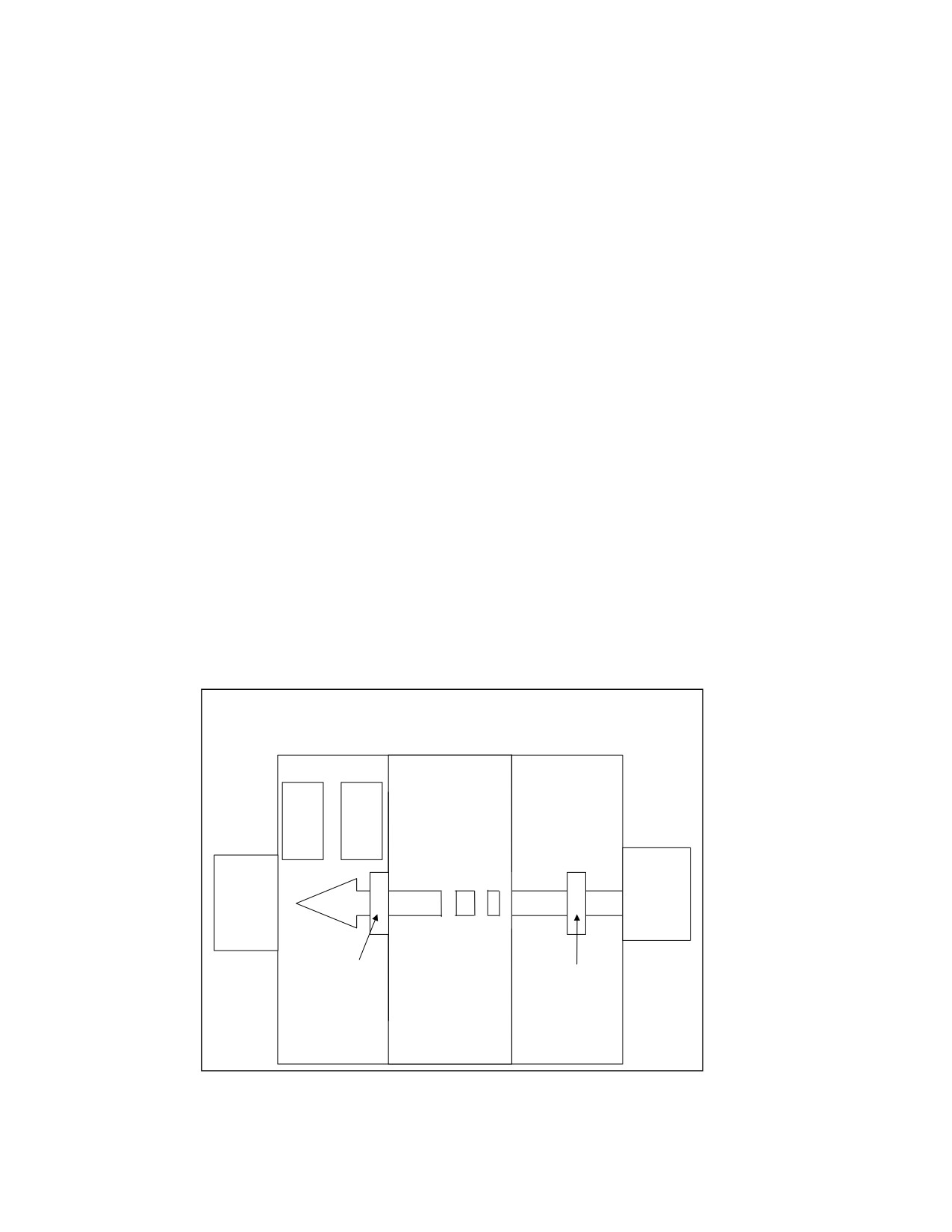
provides the highest levels of NBC protection for long periods. Figure VII-1 depicts a
typical basic CPS design using overpressure and air locks. With passive applications, the
building or shelter acts as a protective barrier by limiting the exchange of air between
indoors and outdoors. The lesser amount of air that passes (the exchange rate), the greater
the protection afforded.
b.
Planning Considerations.
(1)
Commanders should consider a number of factors in planning for the
installation or upgrade of fixed site COLPRO facilities. For example, COLPRO systems
employ a filter unit capable of removing agents from the air being circulated through the
filter and, as a general rule, also employ some type of temperature management system for
the comfort of the personnel in the shelter.
Contamination Control
Area
Toxic-Free Area
Optional
Mechanical
Liquid
Vapor
Room
Hazard
Hazard
Area
Area
Blast-
Blast-
Protected
Protected
Air
Main
Air Flow
Inlet
Entrance
Air
Filter
Lock
Unit
Figure VII-1. General Layout for an NBC Shelter
VII-5
(2)
A building or other facility employed as a CB shelter can be likened to a
leaky boat. The safety afforded depends on the rate of leaks—in this case, leaks of air. The
rate of leaking in relation to its volume is the air exchange rate, which is the rate of
uncontrolled exchange of air between the inside and the outside. This air exchange rate
determines how rapidly airborne contaminants infiltrate the structure from the outside and
how rapidly they are purged from the building once the outside air is no longer
contaminated.
(3)
Air exchange rates vary, not only from structure to structure but also for
a given structure over time. Some of the variables which influence air exchange rates are—
• Wind Velocity and Direction. The air exchange rate increases as wind
speeds increase. Wind produces a pressure difference between the outside and inside,
causing air to infiltrate through the windward side and exfiltrate on the opposite walls.
• Inside-Outside Temperature Differences. As the inside-outside
temperature difference increases, the air exchange rate increases. This difference is
manifested in pressure differences on the walls and doors according to height, which
increases the stack effect of agent infiltration.
• Ductwork Systems. Openings and crevices around heating,
ventilation, and air-conditioning (HVAC) ductwork provide a major pathway for infiltration,
along with increases in air exchange rates when the system is operating.
• Combustion. The combustion process of heating a structure increases
the air exchange from the outside into the structure.
• Seasonal Variations. Air exchange rates are highest in the winter and
lowest in the summer. Building materials contract and expand due to moisture and
temperature changes.
• Upstairs/Downstairs. Air exchange rates can be higher downstairs
than upstairs, and higher agent concentrations will likely occur on lower floors.
• Room Variations. Air exchange rates vary among rooms due to
structure design, construction materials, orientation to the wind, and the location of outside
walls.
(4)
CW experiments demonstrated that over time, the dosage inside a
building approaches the dosage outside if there is no substantial loss of agent to materials
absorption. A closed building dampens the rapid fluctuations in concentration caused by the
random variability inherent in atmospheric diffusion, protecting occupants from exposure
to high peak concentrations. If the shelter exchange rate remains constant, it will take
longer to purge the contaminant after a cloud has passed than it took for the contaminant
to enter the building. At some point during the cloud or after it passes, the concentration
inside may exceed the contamination level outside. Therefore, the building ventilation
should be turned off prior to the arrival of a cloud (to minimize the intake of the agent) and
activated after the cloud passes (to help rid the structure of any vapor).
VII-6
c.
Facility Suitability for COLPRO. In general, most facilities can be used for
COLPRO. In some cases, extensive modifications will be required. Prior to the installation
of systems, consideration must be given to the following:
(1)
Tightness of facilities. The suitability of a building or shelter for positive-
pressure COLPRO is determined by the leakage rate of the building. Ideally, the flow rate
of filtered outside air to achieve a required overpressure should be no more than that
needed for the health and comfort of the occupants (e.g., 20 cubic feet per minute [CFM] per
person). Building tightness can vary greatly with the condition of the building and its
design defects, such as unsealed construction openings, drop ceilings, and false walls. Focus
should be on reducing the air leakage from a building.
(2)
Methods of tightening the building. When a collectively protected
building is pressurized, its protection envelope must be tightened by closing all intentional
openings (e.g., outside air vents, exhaust vents, windows, and doors). Other openings (e.g.,
cracks, crevices, joints, and penetrations for pipes and cables) must be closed to the
maximum extent feasible. Caulking and weather stripping provide other means to tighten
the structure.
d.
Protective Entrances. A protective-shelter entrance provides an interface
between the contaminated environment and the protected enclosure. It enables shelter
users to remove contaminated clothing and perform decontamination procedures, providing
them a relatively clean environment before entry into the shelter. See Appendix B for
information on specific types of protective-shelter entrances.
e.
Shelter Equipment. Generally, significant efforts are required to integrate filter
units with HVAC systems. Often, the least costly approach for hazard reduction is to turn
off the HVAC system and block the supply and return vents to the protected area when the
system is pressurized. Such measures would likely require alternate heating or cooling
methods. See Appendix B for information on shelter equipment that can be used to
establish protective shelters.
f.
Shelter Equipment Characteristics.
(1)
Overpressure levels. The minimum overpressure recommended for
stationary COLPRO shelters is 0.1-inches water gauge (iwg) or 25 pascals in entry areas
and 0.2 iwg in the main shelter areas. This standard is based on preventing air infiltration
at ambient wind speeds greater than 15 miles per hour (mph). At 15 mph, the wind
reduces the concentration and dosage of mustard evaporating from the ground by about 98
percent, compared with calm conditions. When preparing buildings and conducting test
measurements, it is advisable to provide for a higher pressurization (0.2 iwg) to ensure 0.1
iwg is still achieved over time, as sealing measures and building structures may
deteriorate.
(2)
CCA. The CCA and air lock allow people to transition from individual
protection to COLPRO without introducing contaminants into the TFA. Personnel remove
their contaminated outer garments in the CCA before entering the air lock. Permanent or
interior CCAs have a filtered airflow rate sufficient to suppress vapor concentrations from
contaminated garments worn into the CCA. Open-air CCAs have high airflow rates, but
VII-7
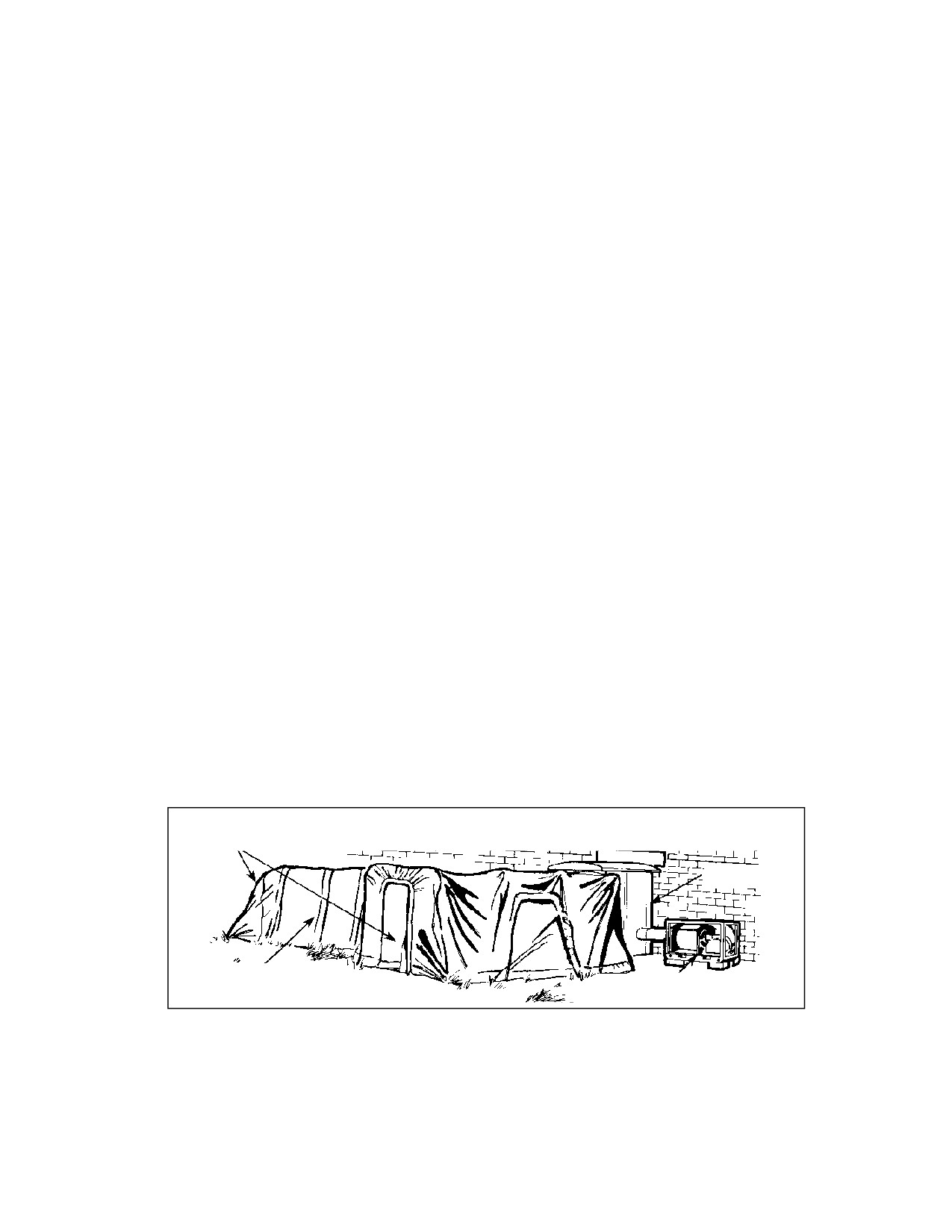
the air may not be clean, filtered air. (Figure VII-2 shows a tent used as a CCA and
attached to the air lock.) Vapor sorption or the adherence of agent vapors to surrounding
materials/objects is the primary problem in most CCAs. See Appendix B for procedures on
how to transfer into a TFA.
(3)
Integration of NBC detectors. The agent vapors in the open-air CCA can
actually adhere to the individual after he doffs the overgarment and before he enters the air
lock. There are four options for detecting and dealing with this problem:
• Halt entry processing if vapor hazards are detected.
• Use a chemical detector to screen/halt the entry of candidates with
desorbing vapor.
• Require removal of all garments if interior or exterior monitors detect
vapor, and issue new or temporary garments inside the TFA.
• Combine showers with the previous options.
Note: Using M8 paper to check for contamination prior to shelter entry is undesirable as a
preentry screening tool unless driven by operational requirements.
g.
Classes of Fixed-Site COLPRO. For fixed-site COLPRO facilities, classes of
protection are defined according to the degree of protection provided and the extent of the
expected hazard. In addition to criteria for classification standards, the expected threat
determines whether a protective system should be designed to operate continuously or on a
standby basis. These classes are—
•
Class I, pressurized shelters.
•
Class II, intermediate shelters.
•
Class III, passive shelters.
Entrance/Exit
Airlock
CCA
Figure VII-2. Tent Used as a CCA
h. Sheltering in Place.
VII-8
(1)
Background. Sheltering in place reduces but does not eliminate the risk of
exposure to CB agents. Sheltering is an alternative to evacuation. Sheltering in place has a
role in the commander’s planning process because evacuation for some groups may not be
feasible or possible. Adequate pressurized shelters may not be available. Likewise, the
amount of forewarning of impending agent contamination may not be adequate for
evacuation.
(2)
Concept. The concept of sheltering in place is to go indoors (to higher
floors, if possible), close all openings to the outside, and attempt to restrict the exchange of
air from the outside to the inside. These preparations should be accomplished before the
arrival of a contaminant cloud. Given adequate warning, additional measures should be
taken, such as sealing openings with plastic sheeting and tape and use of IPE is still
required to minimize the risk of exposure; however, not all personnel in the downwind
hazard area (e.g., civilians) may have the required IPE. The amount of protection afforded
by sheltering in place varies with the air exchange factors previously discussed. Based on
the levels of sealing, there are four levels of sheltering in place:
• Normal sheltering. Close all windows and doors, and turn off all
HVAC equipment.
• Expedient sheltering. Take rapid measures to enhance protection,
such as taping doors, windows, and electrical outlets and placing rolled, wet towels at the
bases of doors.
• Enhanced sheltering. Caulk joints, apply weather strips, install storm
windows, and make other modifications to reduce air infiltration.
• Pressurized sheltering. Use gas-particulate filter blowers to increase
the inside pressure so that it exceeds the outside pressure and provide filtered air.
(3)
Expedient Sealing Measures. The procedures of expedient sheltering are
based on an assumption that there are techniques that can be applied with little or no
training and with commonly available materials to reduce the air exchange rate. Selecting
and sealing one room can also provide a higher protection level by reducing the air
exchange rate. Testing has indicated that a room sealed with plastic sheeting and tape
provides 10 times the protection than sealing the entire house.
(4)
Implementation. The implementation of sheltering in place requires
planning to—
• Ensure that occupants know how to take protective measures.
• Determine that a CB release has occurred.
• Determine areas that may be affected by the release.
• Communicate a timely warning to all people in the affected areas.
• Communicate the appropriate time to vacate in-place shelters.
VII-9
• Turn off the HVAC systems prior to the arrival of the cloud, and
activate the HVAC systems after the cloud passes.
(5)
Instructions. Basic guidance for sheltering in place includes three core
steps: close windows and doors, turn off HVAC, and stay indoors and stand by for further
instructions. Table VII-1 provides examples of instructions that can be used for sheltering
in place.
Table VII-1. Sample Sheltering Instructions
•
Measures Common to All.
⇒
Close doors and windows.
⇒
Turn off fans, heating, and air conditioning.
⇒
Stay in the room, and await instructions on when to evacuate.
•
Sealing Measures.
⇒
Place rolled, wet towels at bases of doors.
⇒
Close fireplace/heating register dampers.
⇒
Tape plastic over windows, doors, outlets, cracks, and heat registers.
⇒
Seal bathrooms.
•
Room Selection.
⇒
Use an aboveground room, not basements.
⇒
Select an interior room with few or no windows, no plumbing fixtures, and no air
conditioners.
•
Complementary Measures.
⇒
Cover your mouth and nose with a damp cloth.
⇒
Close the bathroom door, and turn on the shower to wash the air.
⇒
Don protective clothing to exit shelter.
•
Measures to Minimize Leakage.
⇒
Minimize the use of elevators.
⇒
Ensure that all ventilation systems are set to “recirculate.”
•
Measures After the Cloud Has Passed. Open doors and windows to ventilate the
building after the all-clear signal has been given.
•
Other Measures.
⇒
Keep the phone lines open.
⇒
Have a kit of essentials.
⇒
Stay clear of windows if the danger of explosion exists.
4.
Transportable Collective Protection
Transportable COLPRO provides the commander with another means of providing a
clean air shelter for use against CBR particles. Transportable COLPRO systems employ the
principle of pressurized, purified air to provide a contamination-free environment in which
to work. The system does not protect against gamma radiation or neutrons. The air
pressure precludes the leakage of contaminated air into the enclosure. Personnel enter and
exit through a protective entrance. The protective entrance is an air lock, which prevents
contamination from entering the enclosure. Transportable COLPRO can be used for rest
and relief, C2, light maintenance, and MTFs.
a.
Modular COLPRO Equipment.
VII-10
(1)
Modular (transportable) COLPRO provides commanders with the
flexibility to move COLPRO to sites where it is needed. The system includes an array of
equipment, consisting of gas particulate filter units (GPFUs), protective entrances, and
various installation kits.
(2)
Modules can be grouped to provide space as dictated by the tactical
situation. Modular COLPRO systems could include wheel or tracked vehicles, expandable
vans, or a series of vans that are linked.
b.
Transportable Systems. The commander decides whether to use transportable
COLPRO assets. The basis for the decision is the determination that tasks, such as C² relief
from MOPP gear, is mission-essential. When a CP system is used for rest and relief, the
commander must ensure coordination of MOPP gear resupply and security. Shelters used
for personnel relief and medical treatment require a great number of entry and exits. In
addition, personnel must continuously monitor shelter operations. This monitoring ensures
that the system functions properly and that no contaminants have entered the system.
(1)
M20A1 Simplified COLPRO Equipment. The M20A1 SCPE is an updated
version of the M20. Both systems are still in the inventory. The SCPE provides a clean-air
shelter for use against CW and BW agents and radioactive particles. It is lightweight, is
mobile, and allows unit commanders to convert existing structures into protected command,
control, and operations centers. The SCPE can be used as a temporary rest-and-relief
shelter (e.g., a break area for personnel working in heavy maintenance and supply
operations or medical minimum-care wards at the combat support hospital [CSH]) or as a
C2 center. It provides a contamination-free environment in which 10 persons can work, eat,
and rest without the encumbrance of the IPE. The M20A1 consists of a large, cylindrical-
shaped liner designed to be inflated inside a room or building. A support kit contains a
motor blower for inflation and flexible air ducts to direct the air. The M20A1 can be erected
without the liner using only the protective entrance and blower compartment. A bib section
is available that fits between the protective entrance and the frame of any door; and when
taped down, it seals the entrance from outside contamination.
(2)
M28 Simplified COLPRO Equipment. The M28 SCPE is a highly
transportable COLPRO system used in conjunction with the tent, extendable, modular,
personnel (TEMPER). The modular system consists of agent-resistant liner sections, a
protective entrance, a tunnel air lock for litter patients, a hermetically sealed NBC filter
canister, a recirculation filter, and a support kit containing a motor blower and ancillary
equipment.
(3)
TEMPER. This system provides the commander with the flexibility of
tailoring COLPRO to the tactical situation. This modular shelter is available in sections
that can be assembled to provide space as required. The M28 SCPE can be used to provide
the required NBC protection. (Note: The vinyl-coated polyester fabric used in the TEMPER
and most other military tents can cause false positive readings with the ICAM, especially in
newly issued tents.)
(4)
Chemically Protected Deployable Medical Systems (CP DEPMEDS). The
CP DEPMEDS provides COLPRO to the core components of DEPMEDS CSHs. CP
DEPMEDS will provide a clean, toxic-free, environmentally controlled patient treatment
VII-11
area necessary to sustain medical operations in toxic environments. CP DEPMEDS
accommodates an NBC casualty surge and provides environmental control, while
maintaining the ability to resupply during a 72-hour mission. In addition, CP DEPMEDS
provides NBC-protected water and low-pressure alarms and contains lavatory/latrine
facilities for patients and staff.
(5)
The Chemical and Biological Protective Shelter (CBPS). The CBPS
provides an environmentally controlled, toxic free work area. The shelter can serve as a
battalion aid station, a clearing station, and a forward surgical team treatment facility in a
contaminated environment. The shelter is transported on a high-mobility, multipurpose,
wheeled vehicle (HMMWV). It has a 300-square-foot tent that are supported by air beams
that are inflated with air to form a semicircular shape that can be rolled and transported.
The vehicle provides power to support system operation.
5.
Mobile Collective Protection
Mobile CPE provides protection to a group of individuals under NBC conditions. Table
VII-2 depicts the types of mobile COLPRO systems found on vehicles and aircraft.
Personnel in mobile CPE are protected and may operate at the reduced MOPP levels shown
in Table VII-3 (page VII-14). When an attack occurs, those personnel who are not protected
by COLPRO should activate the CP system and assume MOPP4. They must remain at that
level until the shelter interior is purged. Required purge times vary with the interior
shelter volume and the airflow. Check specific technical publications for each system. When
the required purge time passes, personnel should follow unmasking procedures. When the
all-clear signal is given, personnel may resume the modified MOPP levels shown in Table
VII-3 (page VII-14).
a.
Mobile COLPRO Systems (Air/Land). There are four basic types of air and land
mobile COLPRO systems. The types are classified according to the degree of protection they
provide and the manner in which they are integrated into the host system. They include
ventilated-facepiece, overpressure, hybrid, and total systems.
(1)
Ventilated-Facepiece Systems. Ventilated-facepiece systems supply
filtered air to the protective-mask canisters. The systems are designed to connect to GPFU
and are rated by their airflow capacity in CFM. The components of these systems are
similar. The filtered, pressurized air supplied to individuals extends MOPP gear
capabilities. It reduces breathing resistance through the masks, and it aids in sweat
evaporation. In addition, it can provide warm air to facepieces in cold weather.
VII-12

Table VII-2. Types of COLPRO Systems
System
Description
Conditions Justifying the
Sample Systems
Requirement
• Clean working area subject to
• IPVs.
inadvertent entry of contamination.
• Self-propelled howitzers.
A series of individual
Ventilated-Facepiece
• High work rate and reduced
respiratory systems
breathing system.
for masks serviced by
a common filter.
• Frequent entry/exit movements.
• Brief inside occupation.
• Critical manual dexterity skills.
• Air defense.
• Limited entry/exit movements.
• Communications.
A collective NBC filter,
overpressure, and
• Lengthy inside occupation.
• Medical.
Overpressure
ventilated-facepiece
• Patient evacuation
system.
vehicles
• Maintenance and supply
sites.
• Rest and relief.
A combination of the
• Flexibility.
• Armored fighting vehicles
overpressure and
(tanks).
• Lengthy inside occupation.
ventilated-facepiece
• Helicopters.
Hybrid
systems.
• Emergency entry/exit
movements.
• Air defense.
• Multiple launcher rocket
systems.
A hybrid or an
• Flexibility.
• Armored fighting vehicles
overpressure system
(tanks).
• Lengthy inside occupation.
plus an environmental
• Helicopters.
Total
control system. Other
• Emergency entry/exit
categories may also
movements.
• Air defense.
incorporate
• Extreme climates.
• Multiple launcher rocket
environmental control;
systems.
for example, a
ventilated facepiece
and microclimatic
cooling.
(2)
Overpressure System. An overpressure system is an enclosure of
pressurized purified air. Gas and particulate filters remove any NBC contamination from
the air. The air pressure precludes leakage of contaminated air into the enclosure.
VII-13

Table VII-3. COLPRO MOPP Levels
Ventilated Facepiece
Overpressure
Assume MOPP0.
Assume MOPP0.
Turn overpressure off.
Assume MOPP1
Assume MOPP1.
Turn overpressure on.
Assume MOPP2.
Assume MOPP0 or 1.
Turn overpressure on.
Conduct entry and exit procedures if an attack occurs.
Assume MOPP3 or 4.1
Maintain MOPP0 or 1 unless the interior is contaminated.
When mounted, connect the
Turn overpressure on.
ventilated facepiece to the
Conduct entry and exit procedures if an attack occurs.
mask.
Assume MOPP3 or 4.2
Maintain MOPP0 or 1 unless the interior is contaminated.
When mounted, connect the
Turn overpressure on.
ventilated facepiece to the
Conduct entry and exit procedures if an attack occurs.
mask.
1During an engagement, the commander may allow personnel protected for liquid agents to operate temporarily
without protective gloves. This option could slightly increase the potential for casualties. Normally, personnel in
COLPRO facilities will don their protective masks (at least) during an attack until it is verified that the integrity of the
shelter or filtration system was not damaged.
2MOPP gear could include the JSLIST. If the JSLIST is worn at the appropriate MOPP level, pull the hood over the
head and secure the mask. Close the slide fastener completely, and secure the hook-and-pile fastener up to the
top of the slide fastener. Place the edge of the hood around the edge of the mask, and secure the hook-and-pile
fastener.
(3)
Hybrid System. Hybrid systems combine positive pressure and the
ventilated facemask inside the enclosure with the option of using positive pressure, the
ventilated facemask, or both. The positive pressure reduces the amount of vapor
contamination that enters. If contamination enters, the system helps purge the interior of
toxic vapors.
(4)
Total System. A total system combines overpressure and environmental
control to provide a pressurized, cooled, NBC-protected environment not dependent on
individual protection. Cooling reduces heat stress for personnel operating in extremely hot
and/or humid conditions. MOPP gear significantly increases the potential for heat stress,
making cooling systems desirable. Crew compartment cooling provides air-conditioning to
the compartment, and individual cooling proves effective when used while MOPP gear is
worn. The choice of cooling systems depends on the vehicle type and the primary mission.
The overpressure and cooling systems reduce heat stress casualties; however, they increase
the logistical burden, primarily because of maintenance. Vehicles such as the MlA1 Abrams
main battle tank (MBT) have overpressure systems. In addition to the overpressure system,
the crews are provided a ventilated facepiece. During closed-hatch operations, the system
provides positive pressure and crew cooling. During open-hatch operations, the system
provides cool, filtered air to the ventilated facepiece and the cooling vest. During open-hatch
VII-14

operations, personnel must be masked before exiting the vehicle to prevent any possibility
of chemical agent exposure. Additionally, during open-hatch operations, the system
provides modest overpressure that significantly reduces the amount of contamination
infiltrating the crew compartment. Consequently, the time required to purge contamination
is reduced.
b.
Risk Assessment. Commanders must carefully plan for both the benefits of
COLPRO and for the additional restrictions and limitations placed on the individuals and
crews by its use. Depending on the type of COLPRO, individuals and crews can work longer
and more comfortably while in COLPRO, thus increasing the efficiency and combat
capability of the individuals or crews. The commander must, however, understand the
restrictions imposed by employing COLPRO and the loss of system efficiency and capability
due to the time and procedures required to employ it. Additionally, the restrictions on
personnel dexterity, vision, and task performance and the time and effort required to enter
and exit from a system in a contaminated environment must be considered. Table VII-4
shows the advantages and disadvantages of various mobile COLPRO systems.
Table VII-4. Advantages and Disadvantages of
COLPRO Systems
System
Advantages
Disadvantages
• Reduces stress from breathing
• Requires the use of MOPP gear.
resistance.
• Does not protect vehicle interior
• Reduces eyelens fogging.
from vapor contamination.
Ventilated-Facepiece
• Allows open-hatch operations.
• Increases the protection level of the
mask.
• Allows reduction of MOPP level.
• Requires closed-mode operations
for safe unmasking.
• Reduces vapor concentration inside the
vehicle.
• Requires entry and exit
Overpressure
procedures.
• Can provide relief from continuously
wearing MOPP gear.
• Increases logistical support
requirements.
• Allows reduction of MOPP level.
• Requires closed-mode operations
for safe unmasking.
• Reduces vapor concentration inside the
vehicle.
• Requires entry and exit
Hybrid (Overpressure
procedures.
Mode)
• Can provide relief from continuously
wearing MOPP gear.
• Increases logistical support
requirements.
• Reduces stress from breathing
• Requires the use of MOPP gear.
resistance.
• Does not protect vehicle interior
• Reduces eyelens fogging.
from vapor contamination.
Hybrid (Ventilated-
Facepiece Mode)
• Allows open-hatch operations.
• Increases the protection level of the
mask.
Total
• Reduces heat stress casualties.
• Increases logistical burden,
primarily maintenance.
VII-15
6.
Navy Collective Protection Systems (Surface Ship)
COLPRO is the use of shipboard equipment and operations to provide a toxic-
free environment. COLPRO aboard surface vessels depends on the type of vessel. In
general, those vessels in which some type of COLPRO is installed will have either portions
of the vessel or the entire vessel adapted for COLPRO.
a.
Ventilation Systems. All ships have ventilation systems that provide fresh air
throughout the vessel. Ship ventilation systems are effective in stopping large particles but
are ineffective in stopping aerosol and vapor contaminants. The entry of these
contaminants can be minimized by shutting as many closures as possible. One
countermeasure, Circle William, which is the closure of all outside openings, is taken to
prevent contaminants from entering the compartments. Even when countermeasures have
been taken, it is likely that some vapor contaminants will enter the interior of the ship.
Ventilation systems are effective in removing vapor contaminants by exchanging the air
within compartments. This process, called purging, is quite effective. For example, one
change of air will remove one-half of the contaminants. Six changes of air will remove
almost all of the contaminants. For those vessels that have COLPRO systems, all or part of
the vessel will contain the components necessary to provide the COLPRO. The system will
include the areas that have overpressure capability, fans, filters, air locks, and
decontamination stations.
b.
Shipboard Collective Protection System. The CP system aboard many ships is an
installed ventilation system that sends filtered air to designated zones for protection
against toxic agents. The zones are contiguous spaces, which share common boundaries—
such as hull frames, bulkheads, decks, and accesses. Air locks, pressure locks, and
decontamination stations maintain the integrity of the toxic-free environment and allow
personnel to enter and exit the collective zones. CP systems can provide total or limited
protection. Total protection provides an IPE-free environment. Ships with limited
protection provide protection from liquid chemical agents; however, a mask must be worn
since protection from vapors is not provided. Following a chemical attack, ships with
limited protection must move to a contamination-free area for purging of the compartments.
NWP 3-20.31, Revision A, Surface Ship Survivability provides details on ship COLPRO
employment. The specifics of a particular ship COLPRO system and its operation are
contained in the ship CBR defense bill.
VII-16
Appendix A
NUCLEAR, BIOLOGICAL, AND CHEMICAL PROTECTIVE
EQUIPMENT
1.
Background
Appendix A provides additional information that supplements earlier descriptions of
IPE and masks. It describes items such as protective clothing, masks, TIM protective
equipment, decontamination, detection, medical, and other related items (e.g., chemical-
agent monitors/alarms and radiac equipment/dosimeters). For detailed information on the
employment and use of the NBC protective equipment (such as detectors), see the
applicable TTP and service-specific technical publications.
2.
Protective Clothing
a.
Joint Service Lightweight Integrated Suit Technology Chemical Protective
Overgarment. The JSLIST (hereafter referred to as the CPO) has a service life of 120 days,
of which 45 days is the maximum wear time. The CPO service life begins when the garment
is removed from the factory vacuum-sealed bag. It can be laundered up to six times for
personal-hygiene purposes and provides 24 hours of protection against liquid, solid, and/or
vapor CB attacks. It also provides protection against radioactive alpha and beta particles.
Wear time for the CPO begins when it is removed from its factory vacuum-sealed bag and
stops when the garment is sealed back into its zipper-locked bag. Donning of the CPO
(regardless of the time) equates to a day of wear. To ensure serviceability, personnel
conduct operator or shipboard preventive maintenance checks and services (PMCS).
Damaged CPO CP ensemble items may be retained only for training purposes. CB
protection provided by the CPO is dangerously degraded if an area of the ensemble is wet
through the inner lining with petroleum products, perspiration, urine, feces, or many
common insect repellents. If the overgarment becomes wet through the inner lining with
any of these materials, replace it as soon as possible. All services use the CPO.
b.
Chemical Protective Undergarment. The CPU is a two-piece undergarment
consisting of a formfitting undershirt and drawers. The CPU is not removed from its bag
until it is needed for use. When the CPU is removed from its VB bag, its protective qualities
last for a minimum of 15 days. The wear time for the CPU begins when it is removed from
the VB bag. If the original bag is not available, use a replacement bag that, as a minimum,
is water-resistant or water-repellent. The CPU can be laundered once for personal-hygiene
purposes during its 15-day use. It provides protection from CB agents (solid, liquid, and
vapor) for up to a 12-hour period. The CPU also protects against radioactive alpha and beta
particles. When worn under a duty uniform, the CPU has also shown enhanced flash fire
protection capabilities. The CPU is generally used by SOF, explosive ordnance disposal
(EOD), technical escort, and depot personnel.
c.
Battle Dress Overgarment. The BDO is a camouflage-colored (woodland or
desert), expendable, two-piece overgarment consisting of one coat and one pair of trousers.
The BDO presently comes sealed in a VB bag that protects against rain, moisture, and
A-1
sunlight. The BDO is water-resistant but not waterproof, and it is normally worn as an
outer garment. In extreme cold-weather environments, the BDO should be worn between
layer two (bib overall, cold-weather shirt, and trouser liner) and layer three (coat liner and
field trousers) of the ECWCS. In extreme cold-weather environments, the BDO is sized to
wear over arctic/extreme cold-weather environmental clothing; however, mission
requirements may dictate that the BDO be worn under arctic clothing. When the BDO is
removed from its VB bag and worn, it may be worn up to 22 days. Wear time can be
increased to 30 days, with slight increases in risk, at the discretion of the commander. Wear
time for the BDO begins when it is removed from its sealed VB bag and stops when the
BDO is sealed back in its VB bag. If the original VB bag is not available, return the BDO to
a similar material bag and seal it with common duct tape. Donning the BDO (regardless of
the time) equates to a day of wear. The BDO provides a minimum of 24 hours of protection
against exposure to CB agents (solid, liquid, and vapor) and radioactive alpha and beta
particles. While the BDO is not designed to be decontaminated or reimpregnated for reuse,
the use of the M291 skin decontamination kit (SDK)/M295 decontamination kit, individual
equipment (DKIE) on contaminated ensembles within 15 minutes of the time of exposure to
liquid chemical agents will essentially maintain full protective capabilities of the BDO. The
BDO becomes unserviceable if it is ripped or torn, a fastener is broken or missing, or POL
are spilled or splashed on the garment. Users conduct PMCS for the BDO according to
applicable service technical publications. The BDO is being replaced by the JSLIST
overgarment. All services use the BDO.
Note: If the original VB bag for clothing such as the JSLIST overgarment, CPU, or BDO, is
not available, use a replacement bag that is, as a minimum, is water-resistant or water
repellent.
d.
A/P22P-9A (V) Below-the-Neck Protective Assembly. The A/P22P-9A (V) below-
the-neck protective assembly consists of the MK-1 flyer underall, cotton undershirt and
cotton drawers, CP socks, disposable footwear covers, aircrewman’s cape, and CP gloves
and glove inserts. The MK-1 flyer underall is a one-piece chemical liner made from nylon
viscose, nonwoven fabric treated with fluorochemical liquid repellent. The inner surface is
coated with activated charcoal. The cotton undershirt and drawers are worn under the
chemical liner to prevent skin irritation from the charcoal lining and to minimize
perspiration contamination of the chemical liner. The CP socks, made of 4-mil polyethylene,
are vapor-agent impermeable and protect feet from CB agents. The disposable footwear
covers are clear plastic, disposable (one-time use only) and are designed to protect feet from
contamination. The aircrewman’s cape is a large, clear, disposable plastic bag, designed to
be worn over the body to protect from liquid contamination. The standard CP gloves and
inserts are made of butyl rubber, 7-mil thick; and the standard white inserts are 100
percent cotton knit. The primary users include the USN and the USMC.
e.
Wet-Weather Gear (see Figure A-1). Wet-weather gear provides an ensemble for
wear over IPE. Wet-weather gear provides initial protection against liquid CB agents and
radioactive alpha and beta particles in a cold and/or wet climate, both ashore and
shipboard. The wet weather gear is made of green, chloroprene-coated nylon. The jacket
style parka has a slide fastener with moisture barrier flaps, patch pockets, and a
permanently attached hood. All services use wet-weather gear.
A-2
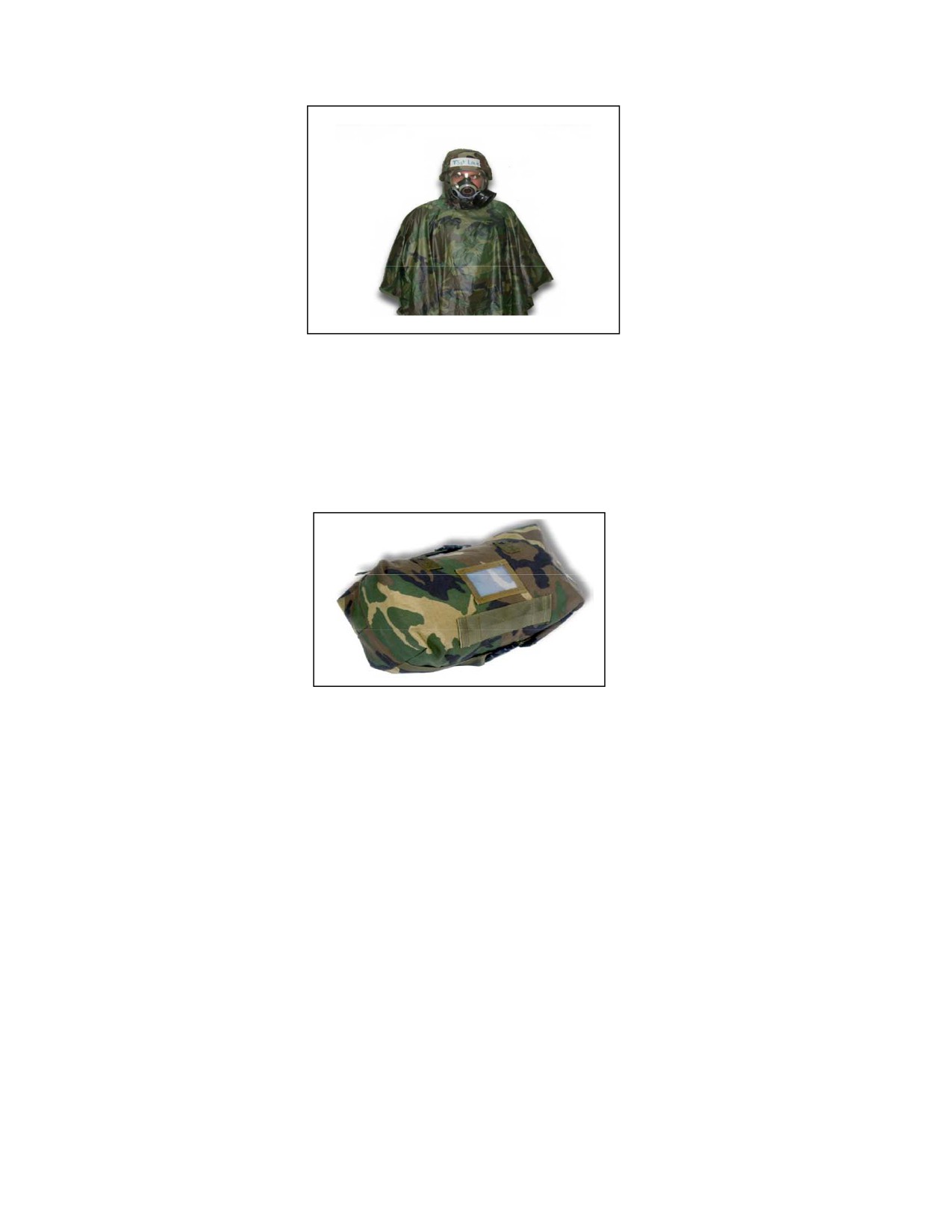
Figure A-1. Wet-Weather Gear
f.
Nuclear, Biological, and Chemical Bag (see Figure A-2). The NBC equipment
protective bag is constructed of abrasion-resistant nylon and is designed to consolidate and
transport NBC defense items such as IPE components and decontamination kits. The bag
can no longer hold the entire IPE ensemble because of the change from CP footwear covers
to GVOs/BVOs. The bag comes in one size and has a four-color, woodland camouflage
pattern.
Figure A-2. Nuclear, Biological, and Chemical Equipment Bag
g.
Suit, Contamination Avoidance and Liquid Protective. The SCALP is a four-
piece ensemble and consists of a jacket, trousers, and two footwear covers. It is designed to
be worn over the CPO (BDO or JSLIST) and CP overboots. The footwear covers have 12-mil
embossed polyethylene soles. The components provide protection from gross liquid
contamination for up to 1 hour. Users include land force elements such as EOD, technical
escorts, or medical units.
h.
Apron, Toxicological Agent Protective, M2. The apron, toxicological agent
protective (TAP), M2 is intended for personnel whose duties may bring them into contact
with liquid CB agents. For example, those who work with toxic munitions, perform
decontamination in a field environment, handle contaminated clothing and equipment at a
decontamination site, and handle and treat chemical agent casualties could use this item of
clothing.
i.
Self-Contained, Toxic-Environment Protective Outfit. The STEPO provides a
totally encapsulating protective ensemble for a TIC environment. The system can be
configured in three separate modes of operation, depending on the mission and user
requirements. STEPO includes a CP suit, a choice of breathing apparatuses (4-hour
A-3
rebreather, tethered air supply with emergency SCBA, and standalone 60-minute SCBA), a
battery-powered cooling system, and a hands-free communications system. The STEPO is
worn with the TAP boot, which fits over the integral booties of the STEPO CP suit. The
STEPO is used in extremely hazardous and/or oxygen-deficient environments where contact
with CW agents, POL, missile fuels, and/or TIC can occur. The system provides the wearer
with clean, closed-circuit breathing air and up to 4 hours of OSHA Level A protection. The
CP suit can be used five times after exposure to vapor contamination and decontamination
processes. If the suit is exposed to liquid contamination, it must be decontaminated and
disposed of in accordance with local procedures. The primary users of STEPO are EOD
specialists, technical escort personnel, and civilians engaged in chemical activity/depot
hazardous materials (HAZMAT) operations.
j.
Chemical Protective Glove Set. The glove sets come in three thicknesses (7, 14,
and 25 mil). The 7-mil glove set is generally used by personnel whose tasks require extreme
tactility and/or sensitivity and who will not expose the gloves to harsh treatment. The 14-
mil glove set is used by personnel such as aviators, vehicle mechanics, and weapon crews
whose tasks require tactility and sensitivity and who will not expose the gloves to harsh
treatment. The more durable, 25-mil glove set is used by personnel who perform close
combat tasks and other types of heavy labor. The glove protects against CB agents and
alpha and beta radioactive particles as long as they remain serviceable. If the 14- and 25-
mil glove sets become contaminated with liquid chemical agents, decontaminate or replace
them within 24 hours after exposure. If the 7-mil glove set becomes contaminated, replace
or decontaminate them within 6 hours after exposure. The contaminated gloves may be
decontaminated with a 5 percent chlorine solution or a 5 percent HTH and water solution.
Primary users include all the services.
k.
Green Vinyl Overshoe, Black Vinyl Overshoe, and Multipurpose Lightweight
Overboot. The GVO is a plain, olive drab (OD) green, vinyl overshoe with elastic fasteners.
The BVO is very similar to the GVO, except for the color and enlarged tabs on each elastic
fastener. Personnel can wear the GVO or BVO over their combat boots to protect their feet
from contamination by all known agents, vectors, and radiological particles (alpha and
beta) for a maximum of 60 days. Protection continues if the GVO/BVO remains serviceable.
Wearing the GVO/BVO with combat boots provides 24 hours of protection against all known
CB agents following contamination. Decontaminate the GVO/BVO with a 5 percent HTH
and water solution or a 5 percent household bleach and water solution. If signs of
deterioration occur following decontamination, replace the overshoe. The MULO is also
designed to be worn over combat boots, jungle boots, and intermediate cold/wet boots. The
MULO provides 60 days of durability and 24 hours of protection against CB agents. The
primary users include all services.
l.
Chemical Protective Footwear Cover. The CPFC is impermeable and protects
feet from CB agents, vectors, and radiological dust particles for a minimum of 24 hours, as
long as it remains serviceable. CPFCs can be decontaminated using a 5 percent chlorine
solution. The USN continues to use the CPFC.
m. Chemical Protective Helmet Cover (see Figure A-3). The chemical protective
helmet cover is a one-piece configuration made of butyl-coated nylon cloth and gathered at
the opening by elastic webbing enclosed in the hem. The cover comes in one size and is OD
A-4
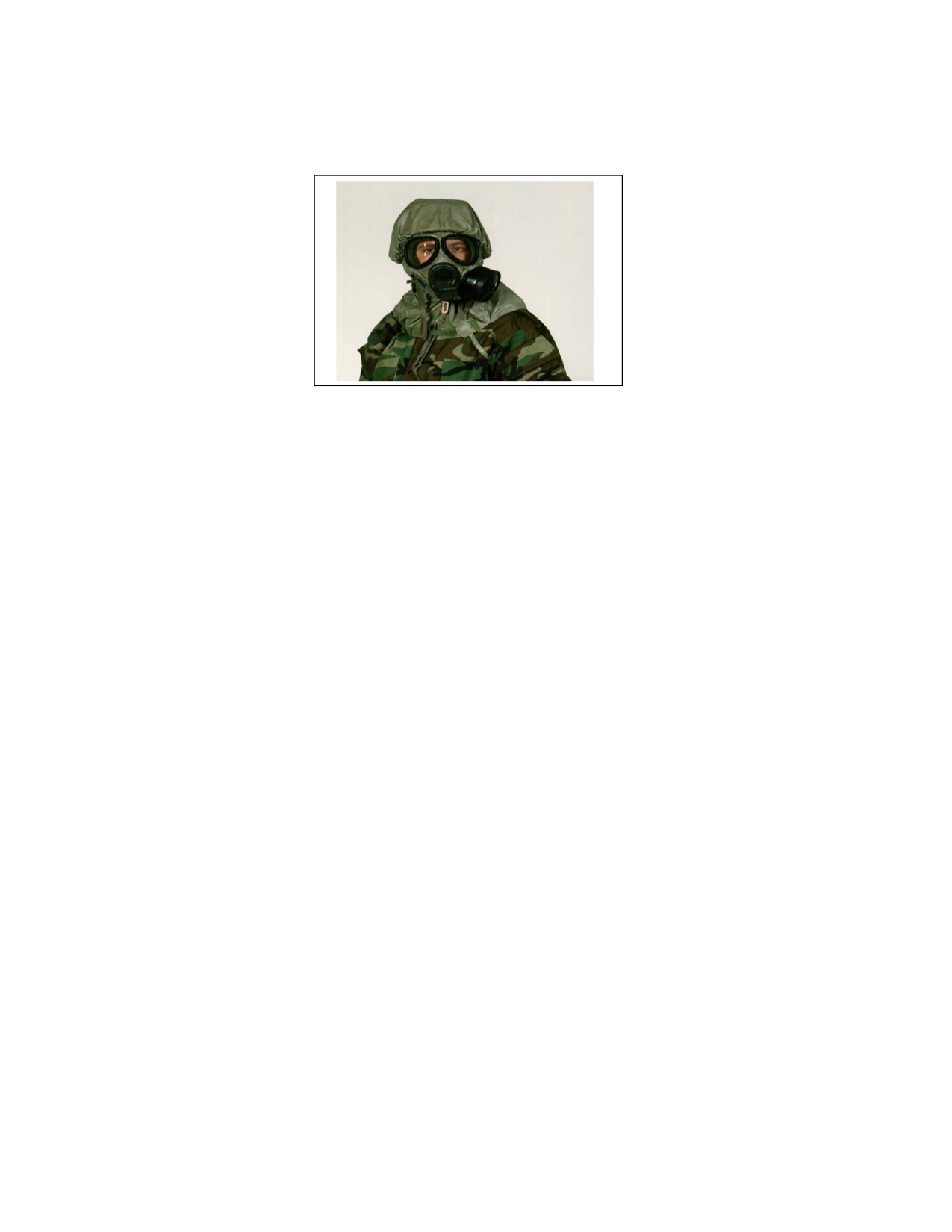
green color. The helmet cover protects the helmet from CB contamination and radioactive
alpha and beta particles. The primary users include USA and USMC units.
Figure A-3. Chemical Protective Helmet Cover
n.
Joint Firefighter Integrated Response Ensemble. The joint firefighter integrated
response ensemble (J-FIRE) configuration consists of a chemical protective overgarment
(JSLIST), a firefighter proximity suit, a hood, a modified structural helmet, CB butyl
rubber gloves with liners, fire-protective gloves, fire-protective boots, a SCBA with a CW
kit, and a carrying bag. The J-FIRE ensemble may contain a proximity glove with built-in
CP features instead of the separate butyl rubber and fire-protective gloves. The primary
users include special-purpose teams such as firefighters.
o.
NBC Protective Cover. The NBC protective cover is a lightweight cover for use
in preventing liquid contamination of supplies and equipment. The cover also provides a
barrier between covered supplies and liquid agents and radioactive dust. Protection time
against liquid agents is 48 hours. The cover can provide protection for up to 6 weeks
without agent exposure before it begins to break down due to environmental conditions.
3.
Protective Masks
The field protective masks described in this paragraph are not authorized for use in
TIC environments, because many TIC, such as carbon monoxide, are oxygen-depleting.
These masks are not effective in certain spaces when the oxygen content in the air is too
low. Standard eyeglasses or contact lenses cannot be worn with these masks (except for the
M43). Therefore, individuals must obtain optical inserts for their masks. Proper PMCS is
essential to ensure serviceability.
a.
Chemical-Biological Mask: Field M40-series. The M40-series CB mask consists of
a silicone rubber facepiece with a binocular eyelens system and an elastic head harness.
Other features include front and side voicemitters (allowing better contact, particularly
when operating communications equipment), a drinking tube, clear and tinted inserts, and
a filter canister with NATO standard threads. The M40A1 mask provides respiratory, eye,
and face protection against CB agents, radioactive fallout particles, and battlefield
contaminants. The canister filter cannot be changed in a contaminated environment; the
mask was not designed for that contingency. Additionally, the M40A1 mask uses a second
skin for additional protection, and also has a quick-doff hood. The primary users include
USA and USMC units, and the mask is selectively used by USN personnel.
A-5
b.
Chemical-Biological Mask: Combat Vehicle M42A2. The M42A2 CB mask has the
same components as the M40. In addition, the M42A2 CVC mask has a detachable
microphone for wire communications. The canister on the M42A2 mask is attached to the
end of a hose and has an adapter for connection to a GPFU. The M40/M42-series masks
also use the same filter canister with NATO standard threads, both use a second skin for
additional protection, and both have a quick-doff hood. The primary users include USA and
USMC units.
c.
Chemical-Biological Mask: Aircrew Aviator M45. The M45 aircrew mask
provides respiratory, eye, and face protection. The M45 aircrew mask protects the user
against all known CB agents and radiological particles without the aid of forced-air
ventilation, while maintaining compatibility with rotary-winged aircraft sighting systems
and night vision devices (NVDs). The mask provides a microphone, a drinking tube, close-
fitting eyelenses, front and side voicemitters for face-to-face and phone communications,
and a low-profile canister interoperability hose assembly for both hose and face-mounted
configurations. The mask also comes with a hood and a second skin. The M45 mask is used
to support service personnel who cannot be fitted with the standard M40-series or MCU-
2A/P series protective masks. The primary users include USA and USMC units.
d.
Chemical-Biological Mask: Aircraft M43. The M43 mask provides the required
CB agent protection and allows for compatability with the AH-64 attack helicopter helmet,
the display sighting system, and the optical relay tube. The mask comes with a portable
blower/filter system that operates on battery or aircraft power to maintain positive pressure
in the facepiece and an inhalation air distribution assembly for regulating the flow of air.
Additionally, the mask provides for external voice or wire communications and a drink tube
assembly. The primary users include USA AH-64 helicopter aviators.
e.
Chemical-Biological Mask: M48. The M48 CB aircraft mask was developed for
the AH-64 Apache helicopter aviators. It provides face, eye, and respiratory protection
against CB agents and radioactive particles. The M48 mask has a lightweight motor blower
that is mounted on the user during dismounted operations and is mounted to the airframe
during flight operations. The motor blower provides filtered, breathable air that keeps the
head cool and prevents the eyelens from fogging. While wearing the M48 mask,
crewmembers can perform their missions in an NBC environment inside or outside the
aircraft. The M48 will replace the M43 mask, which is worn by Apache helicopter aviators.
f.
Aircrew Eye/Respiratory Protection (see Figure A-4). The aircrew
eye/respiratory protection (AERP) is a protective mask that enables USAF aircrews to
conduct mission operations in a CB environment. The AERP system includes a protective
hood assembly with a standard MBU-13/P mask, an intercom for ground communications,
and a blower assembly that provides demisting. The blower is stowed during flight
operations on a bracket that is mounted inside the aircraft. It replaces the MBU-13/P
system for aviators. The primary users include USAF units.
A-6
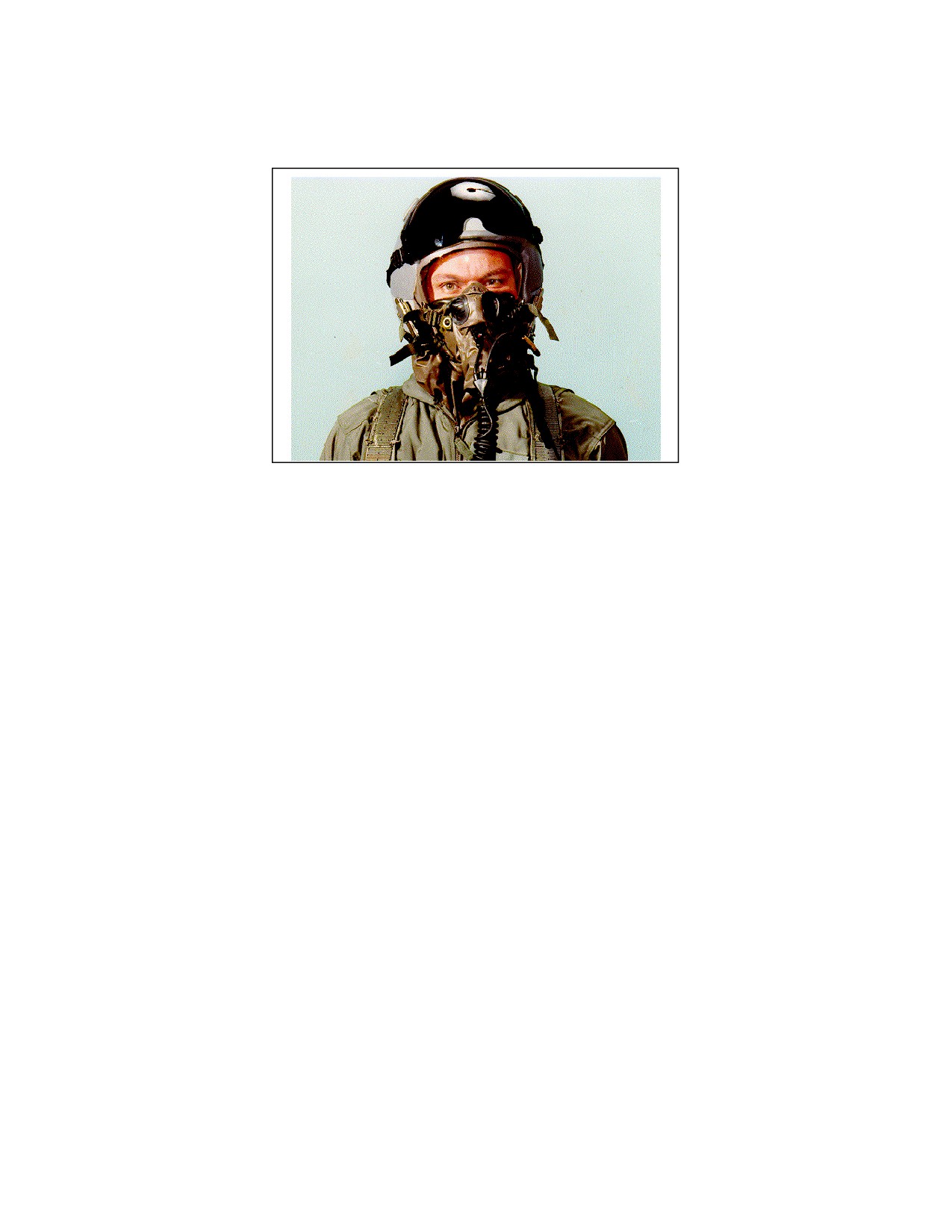
Figure A-4. Aircrew Eye/Respiratory Protection
g.
CB Respiratory System (A/P 22P-14[V] Nondevelopmental Item [NDI]). The CB
respiratory system is a self-contained, protective ensemble designed for all forward
deployed rotary wing (Version 1 for USN) and fixed wing (Versions 2 through 4 for USN
and USMC) aircrews. The design incorporates a CB filter, dual air/oxygen supply, a
crossover manifold with a ground flight selector switch to filter air for hood ventilation, and
filtered air for breathing. The A/P 22P-14(V) 1 is for helicopter use and is not compatible
with aircraft with oxygen delivery systems. The A/P 22P-14(V) 2 is used on EA-6B and F-
18A aircraft. The A/P 22 P-14 (V) 3 is used on AV-8B and F-18C/D aircraft, and the A/P
22P-14(V) 4 is used for C130 crews. The primary users include USN and USMC aircrews.
h.
MCU-2A/P Protective Mask. The MCU-2A/P mask (see Figure A-5 [page A-8])
(with a serviceable canister filter installed) protects the face, eyes, and respiratory tract
from CW and BW agents and radioactive dust particles. A properly worn mask provides
USN and USAF personnel with a gas-tight face seal, which prevents unfiltered air from
reaching the wearer’s respiratory system. An internal microphone may be placed inside the
mask and connected to an external communications system through a connector on the
front voicemitter. The major components of the MCU-2A/P mask include an outlet valve
assembly, an outlet valve cover, a drinking tube, a nosecup, an inlet valve, lens outserts,
and a canister. The accessories for the MCU-2A/P mask include a mask carrier, a protective
hood, mask outserts, and a special canteen drinking cap. The primary user includes USN
and USAF personnel.
A-7
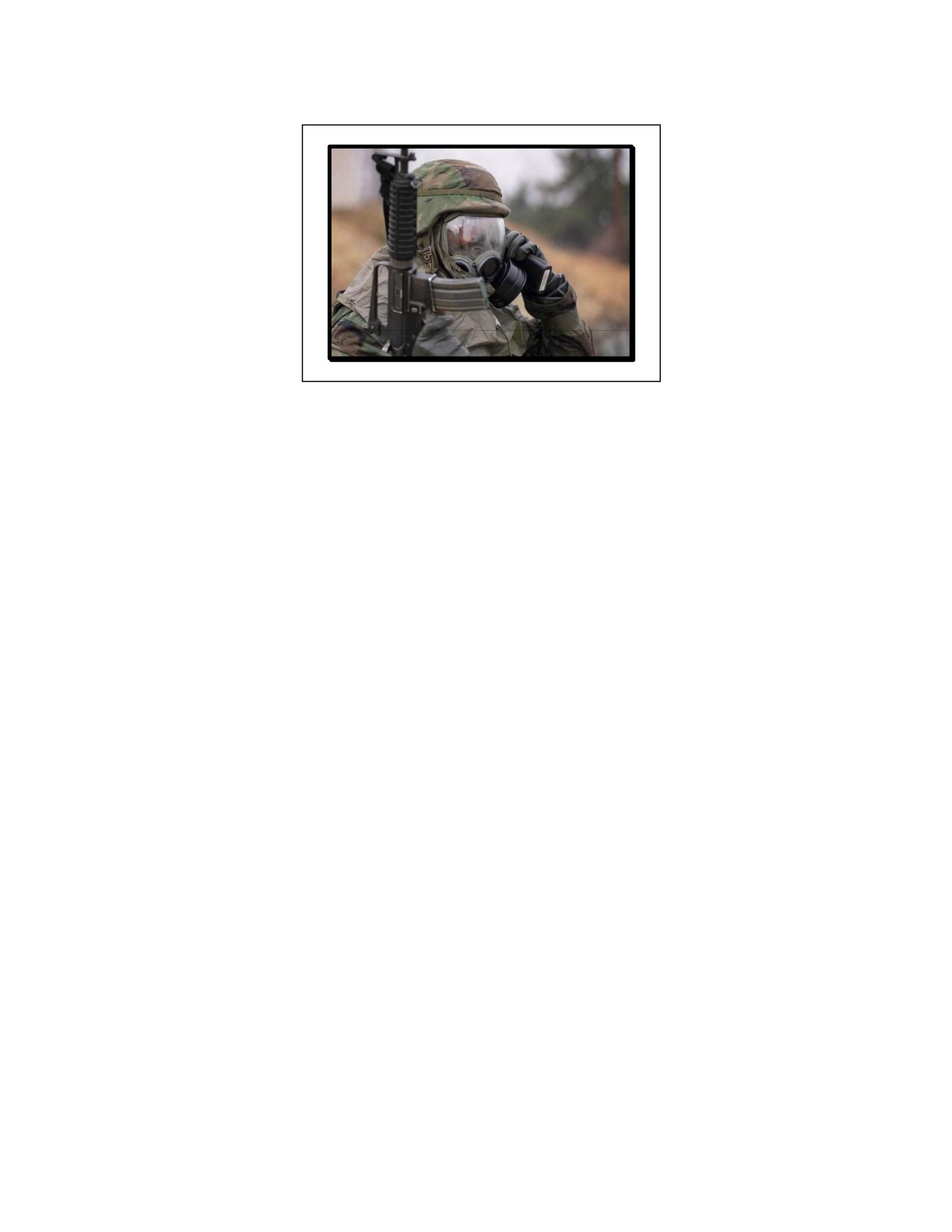
Figure A-5. MCU-2A/P Protective Mask
i.
MCU-2/P Protective Mask. The MCU-2/P-series protective mask is the eye
respiratory protection equipment used shipboard for CBR defense. It has a single filter and
two voicemitters—one on the front of the mask for speaking directly into a telephone or
radio handset and one at the side to allow personnel nearby to hear. The mask has a
drinking tube that connects to a canteen with an M1 canteen cap. The MCU-2/P is being
phased out and replaced by the MCU-2A/P-series protective mask. The primary users
include the USN and USAF.
j.
M17A1/M17A2-Series Field Protective Mask. The M17A1/M17A2-series CB
mask, with the M6A2 hood, protects against field concentrations of all known CB agents in
vapor or aerosol form. The mask is no longer standard issue for military personnel;
however, it could still be used for issue to civilians during missions such as noncombatant
evacuation operations (NEOs).
k.
Joint Service General Purpose Mask. The joint service general-purpose mask
(JSGPM) will eventually replace the M40/M42/MCU-2/P-series masks. The JSGPM will
provide face, eye, and respiratory protection from battlefield concentrations of CB agents,
TIM, and radioactive particulate matter. It will also provide improved protection for
selected TIC.
l.
M41 Protection Assessment Test System (see Figure A-6). The M41 protection
assessment test system (PATS) is designed to check the readiness of protective masks and
to verify that a protective mask, while worn by an individual, is capable of providing the
required fit factor/protection factor (PF). The PATS verifies that the fit of the mask to the
person’s face is acceptable and that there are no critical leaks in the mask system. In
addition to these features, the PATS can also be used to help screen for unserviceable
masks, to assist in determining if PMCS have been conducted properly on critical
components, and to assist in training personnel on the proper wear of the mask. The PATS
is currently used by USA, USMC, and USAF units. Additionally, the PATS requires
periodic calibration, and the calibration is scheduled and coordinated through service
logistics channels.
A-8
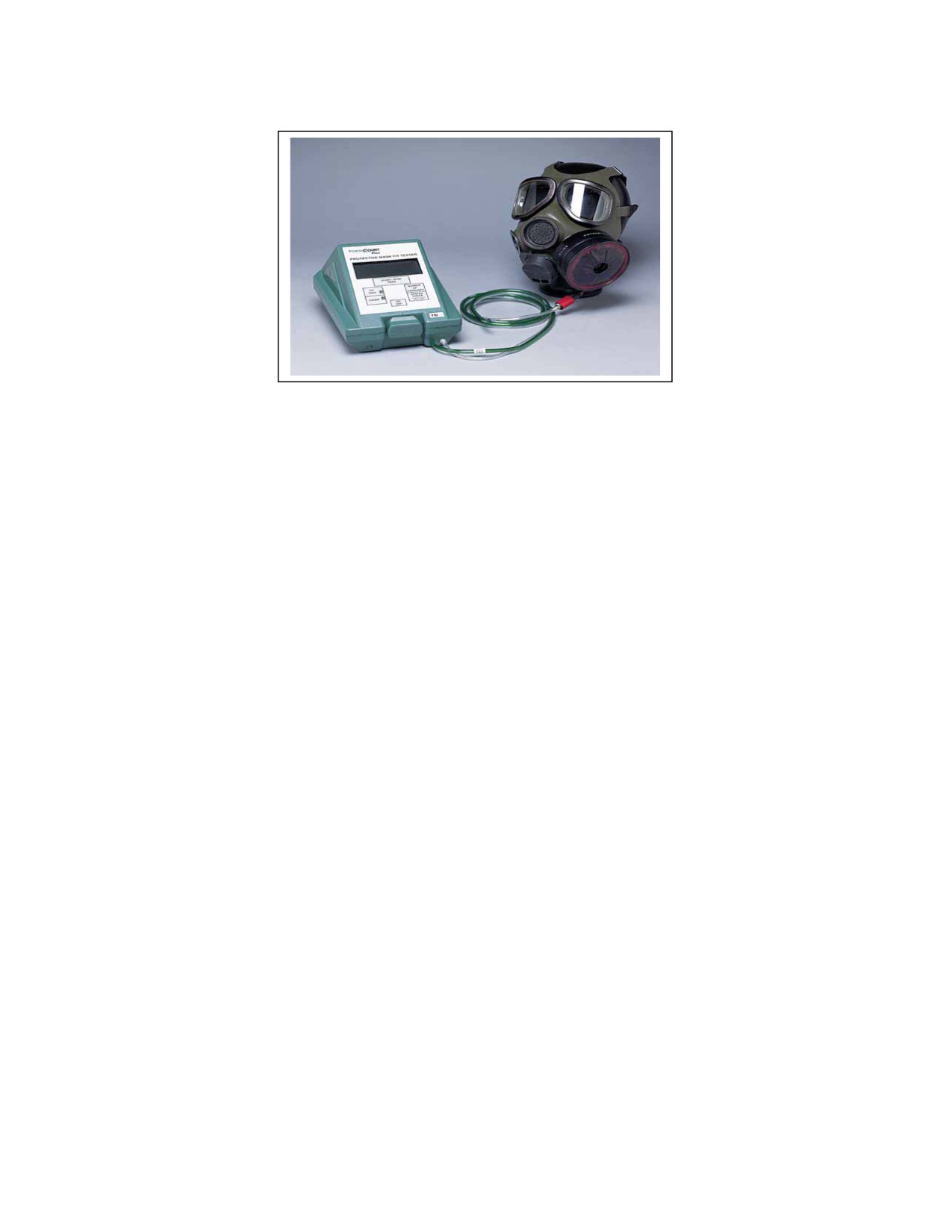
Figure A-6. M41 Protection Assessment
Test System
m. Mask Leakage Tester, TDA-99M. The TDA-99M is a one-man, portable, unit-
level system that is capable of determining serviceability, checking PMCS adequacy, and
identifying defective components of protective masks. Users include USA, USN, USAF, and
USMC units.
n.
Voice Communication Adapter. The voice communication adapter (VCA) is a low-
risk program providing additional voice amplification capability to the M40/M42 mask. The
VCA is a joint program between the USA and the USMC.
o.
Universal Second Skin. The universal second skin is one of the components of a
preplanned product improvement (P3I) in the M40/M42 series mask. The universal second
skin provides liquid agent protection for the mask faceblank material. The primary users
include USA and USMC units.
p.
NBC Protection Items Stowed in the Carrier, Protective Mask. Each branch of
service will specify what items are to be carried for the protection of their personnel based
on associated missions. Generally, current mask carriers accommodate three NAAKs, M8
detector paper, a technical reference, a mask hood (mounted on the mask in most cases),
mask outserts (mounted on the mask in most cases), a waterproof bag, a canteen cap, and
personal and equipment decontaminating kit (M291 SDK and/or M295 DKIE).
4.
Toxic Industrial Material Protection
a.
Level A. The Level A protective suit provides the greatest level of skin and
respiratory protection. It consists of a totally encapsulating suit with gloves and boots
attached. A SCBA is worn inside the suit or a supplied-air system is used for respiratory
protection. Two pairs of gloves, latex and chemical-resistant, are worn under the suit
gloves. Chemical-resistant boots are worn over the suit boots. A radio may be worn under
the suit. Optional items, such as hard hats, cooling vests, and kneepads, may be worn. This
ensemble should be worn when the highest level of respiratory, skin, and eye protection is
required.
A-9
b.
Level B. Level B protection should be considered when the highest level of
respiratory protection is needed, but with a lesser level of skin and eye protection. This
level consists of nonencapsulating, chemical-resistant suits, often called splash suits or rain
suits. Level B comes in several configurations, none of which are vapor-tight. A SCBA is
worn inside or outside the suit, depending on the configuration. Chemical-resistant outer
boots are worn, and three pairs of gloves may be used. Latex inner gloves are worn under
the chemical-resistant gloves. A pair of chemical-resistant outer gloves may cover both of
these for additional protection. Level B is the minimum level recommended for initial site
entry until all hazards have been identified and are being monitored.
c.
Level C. Level C protection can be selected when the airborne substance is
known and is being monitored. All criteria must be met for the use of air-purifying
respirators (APR), and the proper filters for the known hazard present. Air monitoring
must continue throughout the operation to ensure that Level C protection remains effective
for the environment. An escape mask should be worn in case of a change in conditions that
make the air-purifying respirator ineffective. This escape mask will provide protection to
the responder during movement to the decontamination line without risking exposure. The
Level C ensemble consists of a full facepiece, an air-purifying respirator, and a chemical
agent-resistant suit. A chemical agent-resistant hood, apron, boots, and gloves should also
be worn. The gloves are layered the same as for Level B. Level C protection is similar to
that of MOPP 4 in a chemical weapons environment.
d.
Level D. The Level D protective ensemble is the work uniform. Level D does not
provide any respiratory or skin protection and should not be used at an incident site that
presents these hazards. The military BDU or coveralls meet the requirements for this level
of protection.
5.
Decontamination Equipment
a.
M291 Skin Decontamination Kit. The M291 kit consists of a wallet-like carrying
pouch containing six individual decontamination packets, enough to do three complete skin
decontaminations. The kit allows personnel to decontaminate their skin through physical
removal, absorption, or neutralization of toxic agents with no long-term harmful effects.
The kit is used for external use only and may be slightly irritating to eyes or skin.
Personnel must ensure that they keep the decontamination powder out of eyes, cuts, or
wounds and avoid inhalation of the powder. The primary users include all services.
b.
M295 Decontamination Kit, Individual Equipment. The M295 kit allows
personnel to decontaminate their individual equipment through physical removal and
sorption of chemical agents. (Note: The M295 kit can decontaminate approximately 1,200
square feet.) Decontamination is accomplished through sorption of contamination by both
the kit nonwoven polyester pad and by the decontaminating powder. (Note: It is not
approved for skin decontamination.) Decontaminating the CB protective mask/hood,
gloves, footwear, weapon, helmet, and load-bearing equipment (LBE) preclude agent
transfer during the overgarment exchange and entry or exit procedures. The primary users
include all services.
c.
Sorbent Decontamination System (SDS) M100. The M100 SDS is intended to
replace the M11s and M13s currently employed in operator spray-down operations
A-10
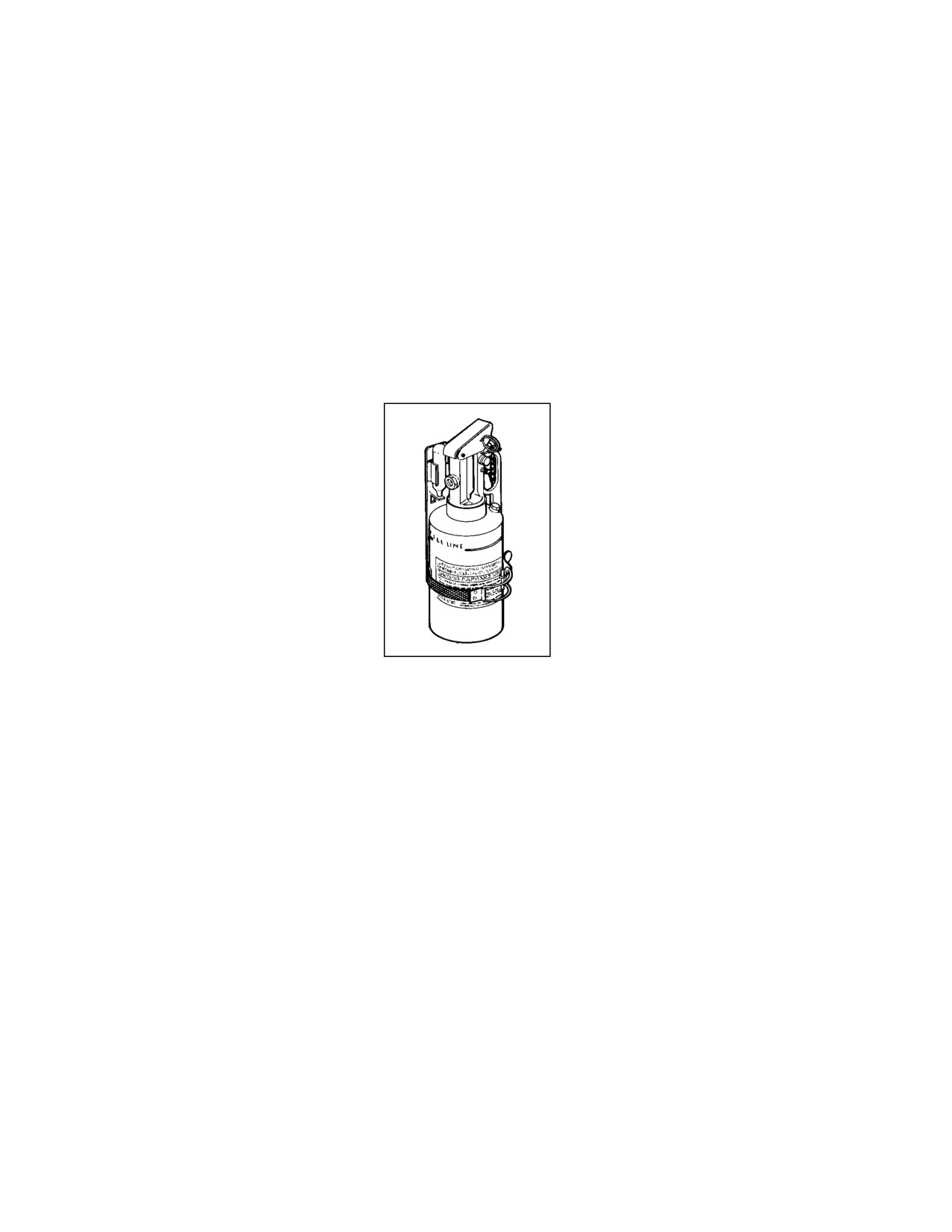
associated with immediate decontamination. (Note: It is not approved for skin
decontamination.) The system uses powdered sorbent to remove chemical agents from
surfaces. The reactive sorbent is nontoxic and noncorrosive, and it requires no water to
complete its mission. The SDS is designed to operate at temperatures between -25 and 120
degrees F.
d.
ABC-M11 Portable Decontaminating Apparatus (see Figure A-7). The ABC-M11
portable decontaminating apparatus decontaminates small areas, such as steering wheels
or other equipment-operating areas with which personnel may have contact. It is a steel
container with an aluminum spray head assembly and a nitrogen gas cylinder that provides
the pressure. It is filled with 1 1/3 quarts of DS2 decontaminating solution, which is
sufficient for decontaminating 135 square feet of surface area. The effective spray range is 6
to 8 feet. The primary users include USA and USMC units.
Figure A-7. ABC-M11 Portable Decontaminating Apparatus
e.
M13 Decontaminating Apparatus, Portable (see Figure A-8 [page A-12]). The
man-portable M13 decontaminating apparatus, portable (DAP) consists of a vehicle-
mounting bracket, a container filled with 14 liters of DS2 decontaminating solution, and a
brush-tipped pumping handle connected to the fluid container by a hose. The fluid
container and the brush head are disposable. The M13 can decontaminate 1,200 square feet
per fluid container. The combination of a spray pump and a brush allows personnel to
decontaminate hard-to-reach surfaces and remove thickened agents, mud, grease, and other
material. The primary users include USA and USMC units.
A-11
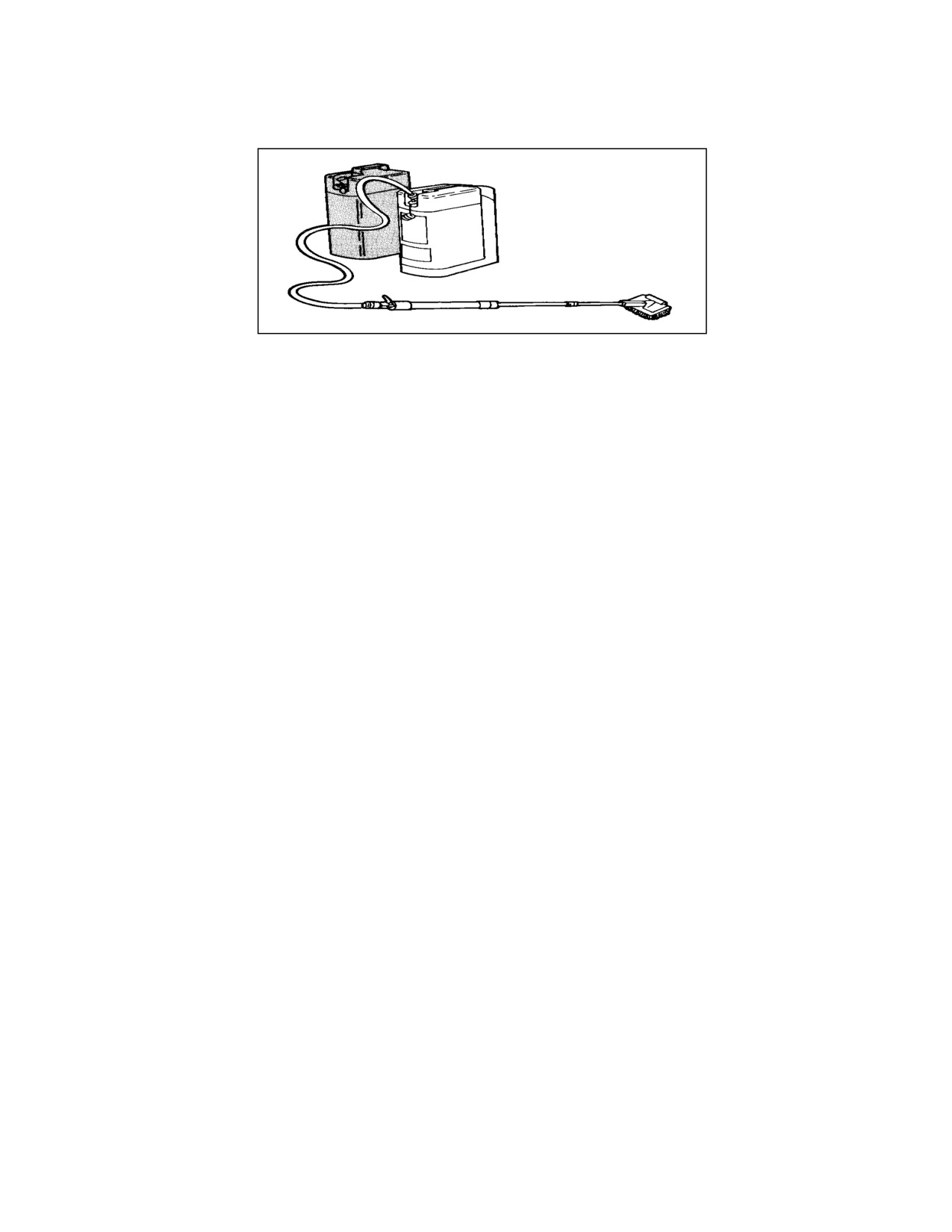
Figure A-8. M13 Decontaminating Apparatus, Portable
6.
Chemical Detector Paper/Kits
a.
M8 Chemical Agent Detector Paper. M8 paper is used to detect the presence of
liquid V type nerve, G type nerve, and H type blister agents. When a sheet is brought in
contact with liquid nerve or blister agents, it reacts with chemicals in the paper to produce
agent-specific color changes. The paper is blotted on a suspected liquid agent and observed
for a color change (liquid agent absorption). V type nerve agents turn the paper dark green;
G type nerve agents turn it yellow, and blister agents (H) turn it red. The paper cannot be
used to detect chemical agents in water, vapor, or aerosols. The primary users include all
services.
b.
M9 Chemical Agent Detector Paper. M9 paper is placed on personnel and
equipment to identify the presence of liquid chemical agent aerosols. It will turn pink, red,
reddish brown, or red-purple when exposed to liquid agents. It can detect (but not identify)
the specific agent. As soon as it indicates the presence of chemical agents, protective action
must be taken. The primary users include all services.
c.
M256A1 Chemical Agent Detector Kits. The M256A1 is a portable, expendable
item that is capable of detecting and identifying hazardous concentrations of chemical
agents. It is used after a chemical attack to determine if it is safe to unmask or reduce the
protective posture level. It also determines the type of agent present and helps confirm the
presence or absence of hazardous concentrations of an agent. Each kit can be used to test
for blister agents, blood agents, nerve agents, and lewisite. Each test spot or detecting
tablet develops a distinctive color that indicates whether a chemical agent is or is not
present in the air. The primary users include all services.
7.
First Aid Equipment
a.
Nerve Agent Antidote Kit, Mark I. Nerve agent poisoning requires immediate
first aid treatment. Personnel receive three NAAKs, Mark I, for this purpose. Personnel
may become subject to nerve agent poisoning on the battlefield. Immediate treatment with
the NAAK is required if they are to survive. The NAAK consists of one small autoinjector
containing atropine and a second autoinjector containing pralidoxime chloride. A plastic
clip holds the two injectors together. Store the NAAK in the accessory storage pocket inside
the mask carrier. Protect the NAAK from freezing. See FM 8-285/Navy Medical (NAVMED)
P-5041/Air Force Joint Manual (AFJMAN) 44-149/MCRP 4-11.1A, Treatment of Chemical
A-12
Agent Casualties and Conventional Military Injuries, for more information on the NAAK.
The NAAK can also be issued in a Mark II configuration. The two autoinjectors are issued
without the plastic clip to hold them together.
b.
Antidote Treatment, Nerve Agent Autoinjector. Nerve agent poisoning requires
immediate first aid treatment. Personnel receive three antidote treatment, nerve agent
autoinjectors (ATNAAs) for this purpose. Because personnel may become subjected to
nerve agent poisoning on the battlefield, immediate treatment with the ATNAA is required
if they are to survive. The ATNAA is a multichambered device that consists of four
components: the autoinjector (with atropine and phosphotriesterase, pralidoxime-2 [2 PAM]
chloride piggybacked in separate chambers), a spring-activated needle, a safety cap, and
carrying case. Store the ATNAA in the accessory storage pocket inside your mask carrier.
Protect the ATNAA from freezing. See FM 8-285/NAVMED P-5041/AFJMAN 44-149/ MCRP
4-11.1A for more information on the ATNAA. (Note: The ATNAA will replace the NAAK
based on shelf life expiration dates for the NAAK.)
c.
Nerve Agent Pretreatment Pyridostigmine. Nerve agent pretreatment
pyridostigmine (NAPP) is an adjunct to the NAAK/ATNAA. NAPP is an investigational
new drug (IND), which requires presidential approval for use by military personnel. NAAK
pretreatment enhances individual survivability in a nerve agent chemical environment.
Each individual is initially issued one NAPP package. If approval for NAPP use is obtained
by the combatant commander, personnel will begin taking their NAPP tablets when
ordered by their commander based on assessment of possible agent exposure within a few
hours or days. One tablet is to be taken on a continuous basis once every 8 hours until all
21 tablets have been taken or the individual has been directed to discontinue taking the
tablets. NAPPs should be stored/refrigerated in temperatures ranging from 35 to 46 degrees
F. If the medication is removed from the refrigerator for a total of 6 months, it should be
assumed that it has lost its potency and should not be used. See FM 8-285/NAVMED P-
5041/AFJMAN 44-149/ MCRP 4-11.1A for more information on the NAPP.
d.
Convulsant Antidote for Nerve Agents. The convulsant antidote for nerve agents
(CANA) is similar to existing autoinjectors, but it is modified to hold a 2-milliliter volume of
diazepam. The CANA is a disposable device for intramuscular delivery of diazepam to a
buddy who is incapacitated by nerve agent poisoning. It is administered by buddy aid only
and is an adjunct to the NAAK/ATNAA kit. The CANA is an individually issued item. See
FM 8-285/NAVMED P-5041/AFJMAN 44-149/ MCRP 4-11.1A for more information.
e.
Skin Exposure Reduction Paste Against Chemical Warfare Agents. The
SERPACWA is a topical skin protectant that will protect personnel from penetration or
absorption of vapor particulate and/or liquid CB agents. SERPACWA will be used on bare
skin in conjunction with MOPP ensembles. SERPACWA does not interfere with sunscreens,
skin or clothing, lip balm, hand lotions, or skin camouflage products. When applied at select
locations on the body (e.g., wrist, neck, ankles, armpits, groin area, and waist), SERPACWA
creates an inert physical barrier to CB agents without compromising normal skin function.
Each service member will be issued three SERPACWA packets. An application from one
packet is intended to last approximately 8 hours. SERPACWA will be applied at the
discretion of the commander. (Note: Personnel do not open their IPE to apply SERPACWA
in an NBC environment.)
A-13
8.
Related Equipment (Chemical Monitors, Radiation Detection Instruments and
Biological Detectors)
Commanders must ensure that the appropriate section/squad/department has
personnel trained to operate and maintain the assigned NBC defense equipment. Operation
and maintenance of individual and unit NBC equipment are both a leadership and
individual responsibility. Not everyone in the unit will be provided these items of NBC
equipment, but any individual may become responsible for them or need to use them. The
items may include chemical agent monitors, radiac sets, and other related items.
a.
Chemical Agent Monitor. The CAM is designed to be used to monitor for
chemical agent vapor (nerve or blister) on personnel and equipment and provide a readout
of the relative concentration of vapor present. It can be used to monitor personnel or
vehicles prior to decontamination and/or inside CPSs. When an agent vapor is detected, the
CAM will provide a bar graph indication of the relative concentration of the sample. The
primary users include all services.
b.
Improved Chemical Agent Monitor. The ICAM identifies nerve and mustard
agent contamination on personnel and equipment. The ICAM provides the operator
instantaneous feedback of chemical hazard levels and quickly determines the presence of
contamination on personnel and equipment. The ICAM is a handheld, individual-operated,
postattack device for monitoring chemical agent contamination on personnel and
equipment. The monitor detects and discriminates between vapors of nerve and mustard
agents. The primary users include all services.
c.
Soil Sampling Kit, M34. The M34 is intended for use by authorized USA NBC
personnel to perform sampling of soil, surface matter, and water. The primary use of the kit
is to gather soil samples for processing at laboratories. The carrier is used as a shipping
container for transmitting samples to the laboratories.
d.
Sampling Kit, CBR Agent, M34A1. The M34A1 kit is configured to collect liquid,
soil, surface, and small solid samples suspected of being contaminated with chemical agents
for transport to a laboratory for analysis. The kit contains Teflon® containers and
expendable materials for taking two or three samples of each type of material. The jars are
capable of containing chemical agents at high (120 degrees F) and low temperatures. The
primary users include USA personnel.
e.
Chemical Agent Detector Kit, M18A2. The M18A2 chemical agent detector kit
can detect and identify dangerous concentrations of nerve, blister, blood, and choking
agents in about 1 to 4 minutes. The kit can be used to confirm results of the M256A1 kit.
The kit also contains a booklet of M8 chemical agent detector paper to detect liquid agents.
The M18A2 kit is used by special teams, such as surety teams or technical escort personnel.
f.
Automatic Chemical Agent Alarm, M8A1. The M8A1 ACAA is a system that
continuously samples the air to detect the presence of dangerous concentrations of G and V
type nerve agent vapors. The M8A1 may be employed in a number of configurations, but all
configurations differ primarily in their mountings and power supplies: ground-mounted and
battery-operated or mounted on a vehicle and powered by the vehicle electrical system. The
M43A1 detector unit will alarm within 1 or 2 minutes from exposure to the agent. The M42
A-14
alarm unit is a remote visual and audible alarm. The M42 alarm unit may be placed up to
400 meters from the M43A1 detector unit to give users warning of an approaching agent
cloud. The primary users include land and aerospace forces (USA, USMC, and USAF).
g.
Automatic Chemical Agent Detection Alarm, M22. The M22 automatic chemical
agent detection alarm (ACADA) is a man-portable, point-sampling alarm system that
detects and identifies all nerve agents, mustard, and lewisite by class. ACADA provides
concurrent nerve and blister agent detection, improved sensitivity and response time, agent
identification, improved interference rejection, an extensive built-in test, and a data
communications interface. It can also be programmed for new threat agents. It replaces the
M8A1 alarm as an automatic point detector and augments the CAM as a survey
instrument. The primary users include land and aerospace forces (USA, USMC, and
USAF).
h.
Chemical Warfare Agent Detector, M90. The M90 is an automatic nerve and
mustard agent detector that detects agents in vapor form. The system is currently in use by
the USAF. It transmits an alarm by radio to a central alarm unit.
i.
Chemical Agent Point Detector System, MK21. The Chemical Agent Point
Detector System (CAPDS) is a fixed system capable of detecting nerve agents in vapor form,
using a simple baffle tube ionization spectrometer. Alarm signals are generated and sent to
damage control central and the bridge. The system has been installed in most surface ships.
j.
Improved Point Detection System. The Improved Point Detector System (IPDS)
is a shipboard point detector and alarm that replaces the existing shipboard CAPDS. IPDS
can detect nerve and blister agent vapors at low levels and automatically provide an alarm
to the ship. The unit is built to survive the harsh sea environment and the extreme
electromagnetic effects found on Navy ships.
k.
Water Testing Kit, Chemical Agent, M272. The M272 is a portable, lightweight
kit that will detect and identify harmful amounts of CW agents when present in raw or
treated water. The M272 detects dangerous amounts of cyanide, mustard, lewisite, and
nerve agents in water. The primary users are the USA and the USAF.
l.
Automatic Chemical Agent Alarm, M21. The M21 alarm is a standoff device that
detects both nerve and blister agents at LOS distances up to 5 kilometers. The M21 alarm
is mounted on the M93A1 NBC Reconnaissance System. The primary users are the USA
and the USMC.
m. Radiac Set, AN/UDR-13. The AN/UDR-13 pocket radiac set is designed to detect
and measure nuclear radiation from fallout, radiological contamination, and nuclear
detonations. It is a combined-rate meter and tactical dosimeter, and it measures dose rates
from 0.1 to 999 cGyph and total doses from 0.1 to 999 cGy. It is capable of measuring a
prompt gamma/neutron dose from a nuclear event plus a gamma dose and dose rate from
nuclear fallout. A push-button pad enables mode selection, functional control, and the
setting of audio and visual alarm thresholds for the dose rate and the mission dose. The
primary users are the USA and the USMC.
A-15