FM 4-20.142 Airdrop of Supplies and Equipment: Rigging Loads for Special Operations (September 2007) - page 5
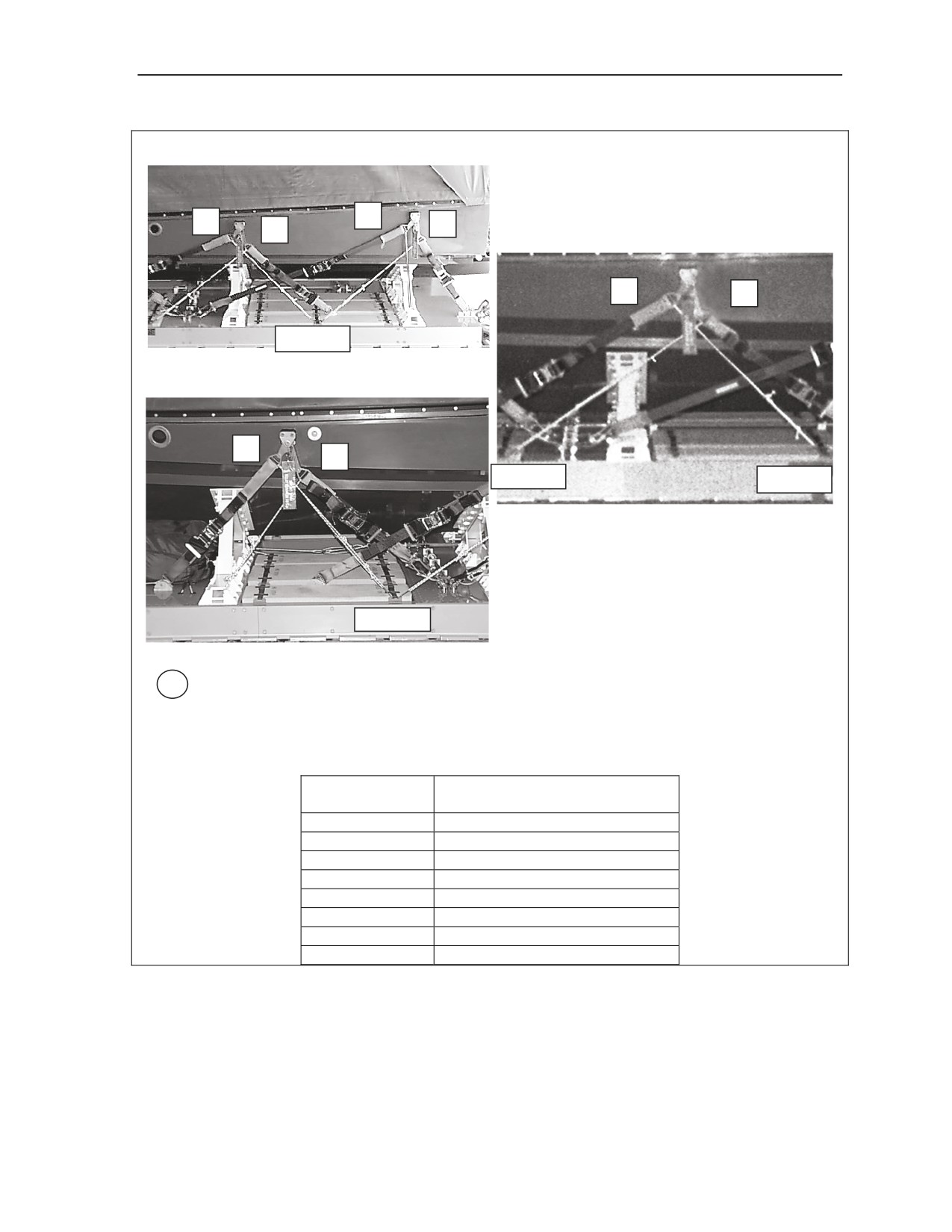
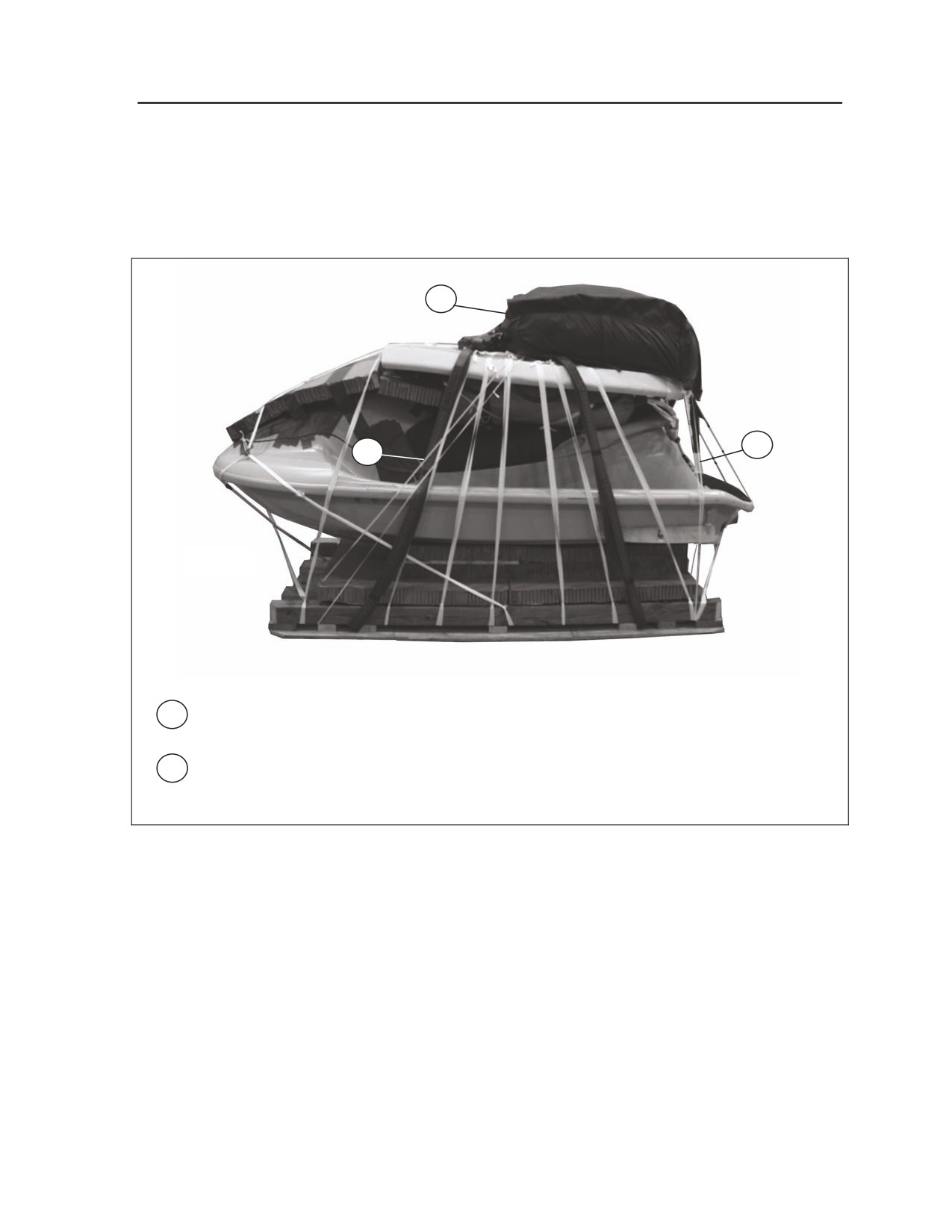
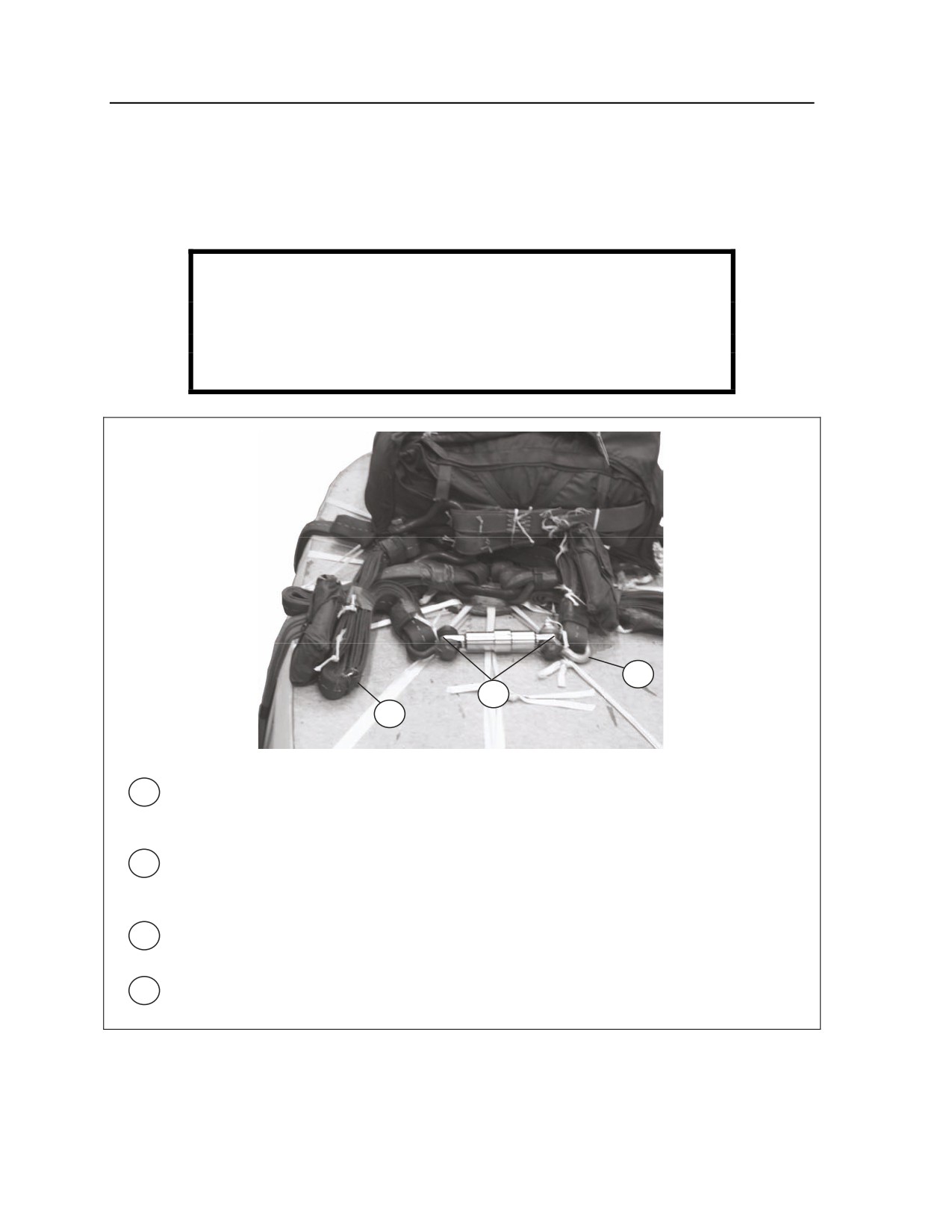
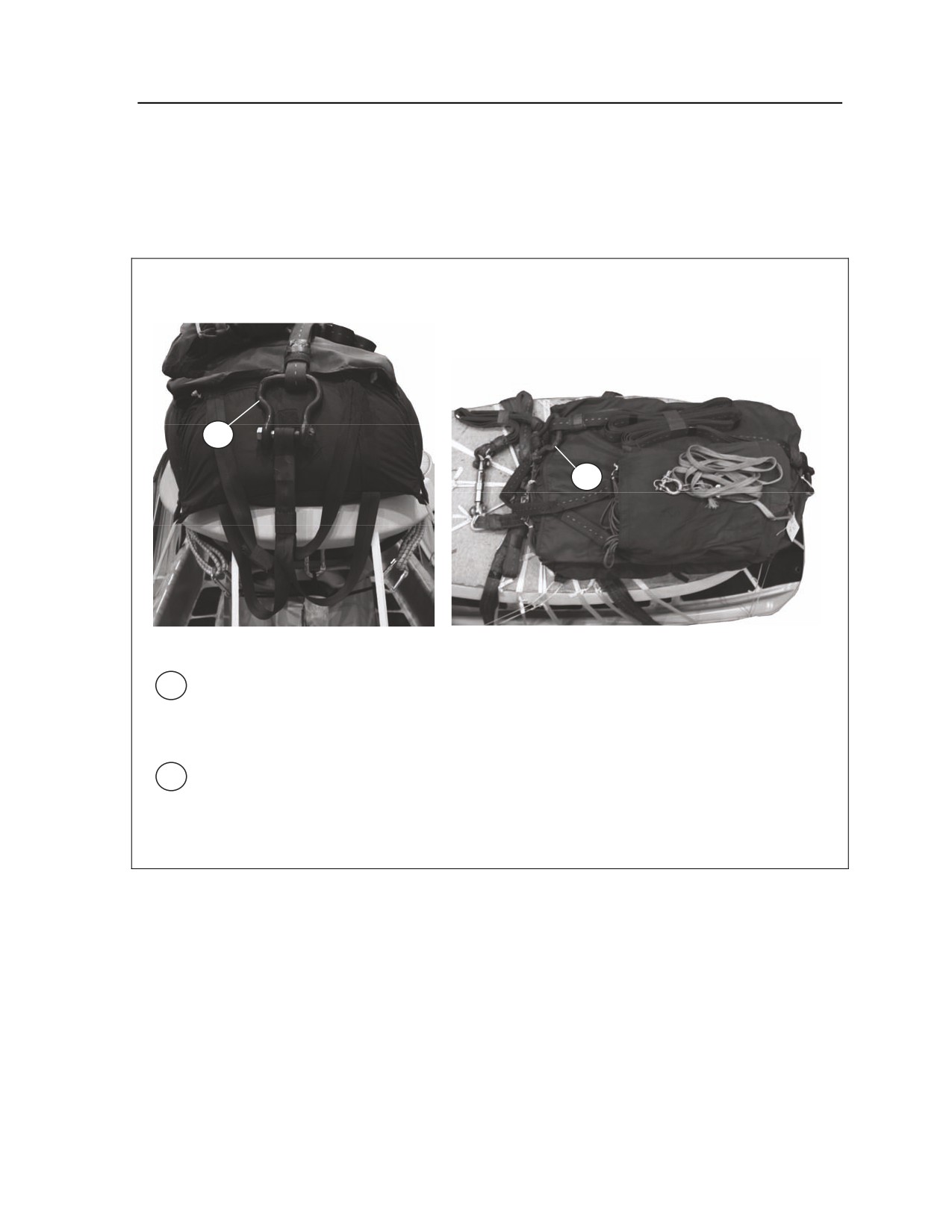
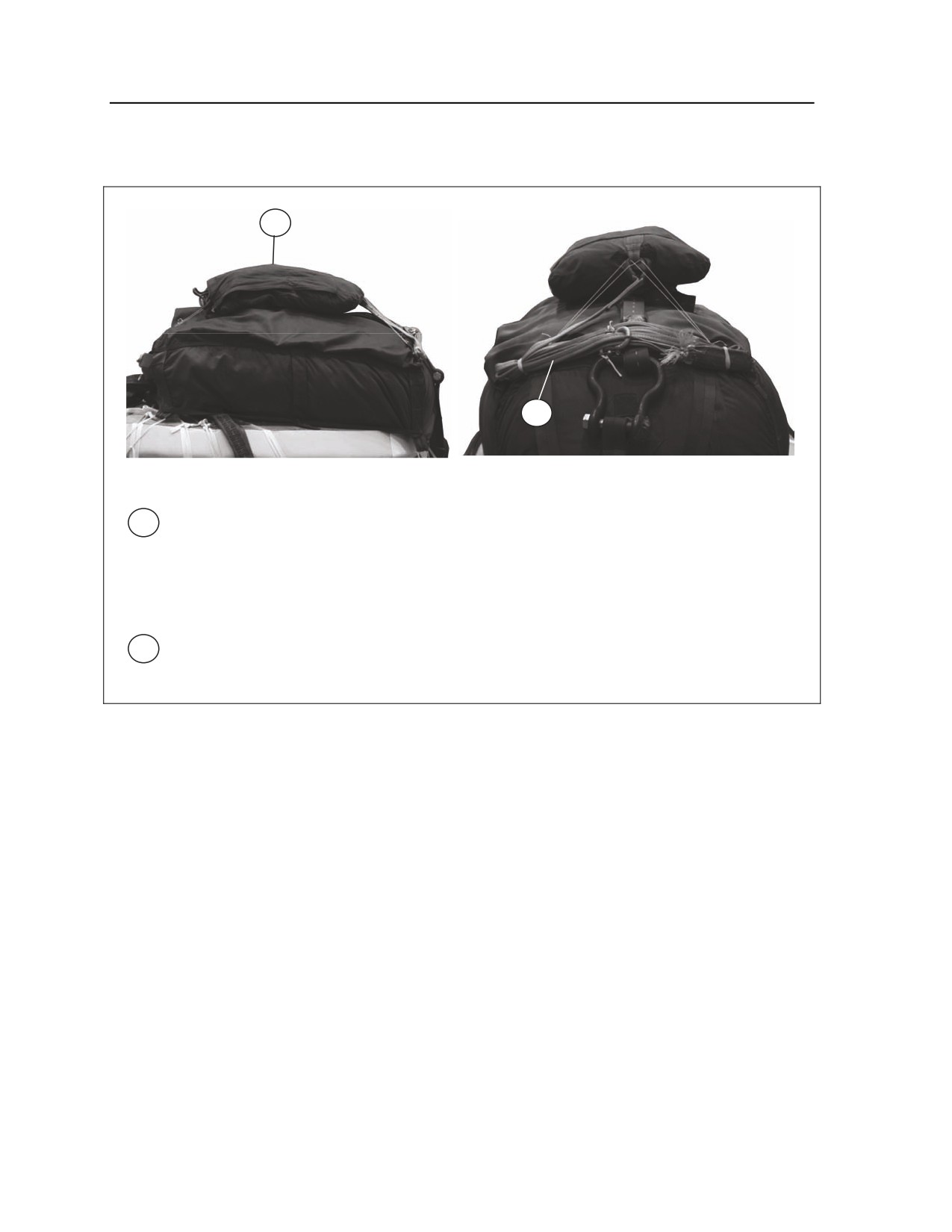
Rigging the Naval Special Warfare Rigid Inflatable Boat (NSW RIB) for Low-Velocity Airdrop
2
4
1
3
6
5
Bracket 2
8
7
Bracket 6
Bracket 4
Bracket 6
4. The lashing provision at the end of each of the 16 caliper release legs will have a length of
shock cord tied to a specific point on the platform with a trucker’s hitch. Tie the knot so that it
can easily be retied between tests. Number the lashing points on each side from 1 through 8,
beginning at the front of the platform. See the chart below for the specific points on the
platform to which each cord is tied.
Lashing Provision
Tie-down Point on Platform
Number
1
First loop on bracket 2
2
Bolt at base of first stanchion
3
First loop on bracket 4
4
Second loop on bracket 2
5
First loop on bracket 6
6
Second loop on bracket 4
7
Bolt at base of fourth stanchion
8
Second loop on bracket 6
Figure 4-29. Restraint System Prepared for Test-Fire (continued)
FM 4-20.142/MCRP 4-11.3P/NAVSEA SS400-AD-MMO-010/ TO 13C7-51-21
19 September 2007
4-45
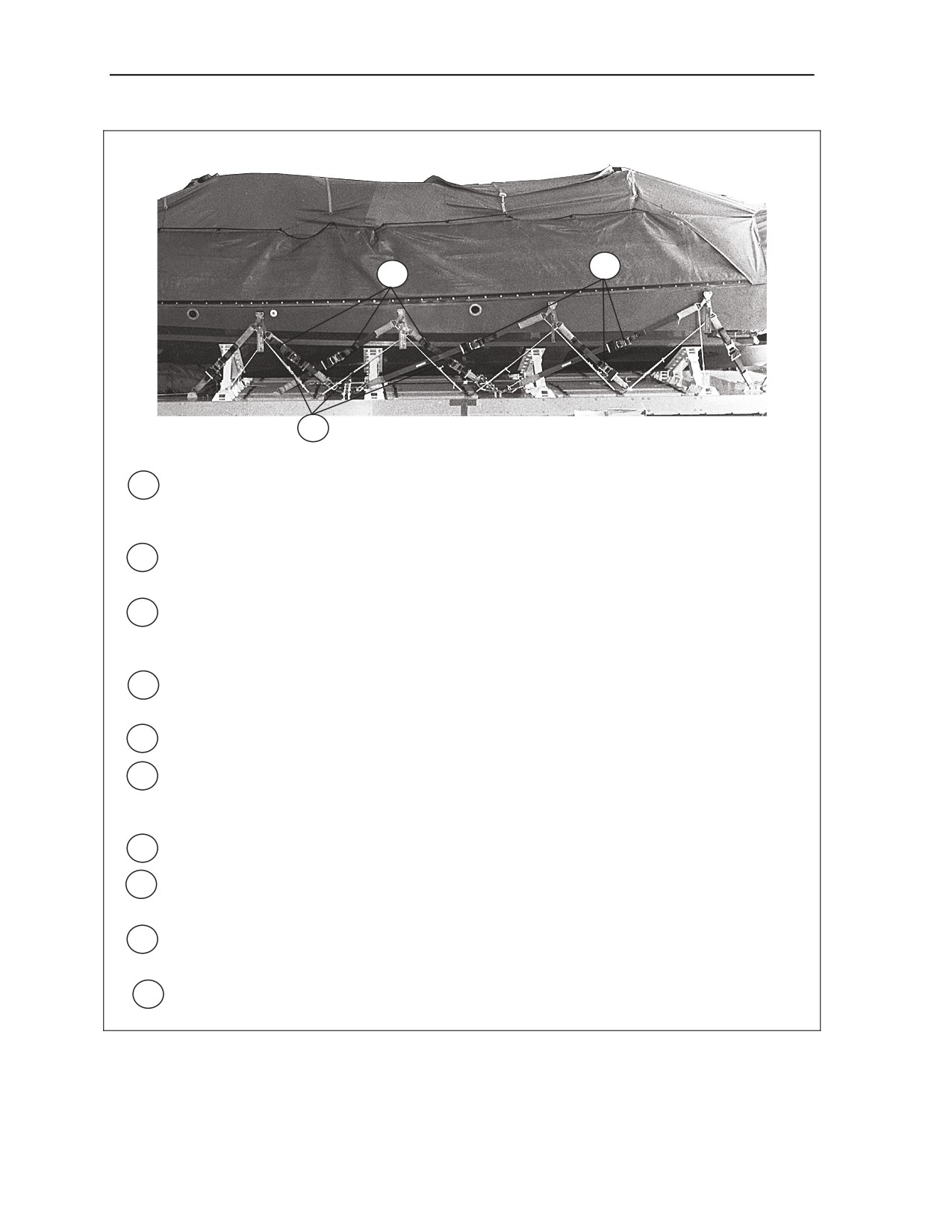
Chapter 4
8
7
6
1.
Place honeycomb under each set of caliper releases to protect the platform components from
damage. Be sure that the honeycomb does not interfere with the scissor release units (not
shown).
2.
Be sure that the push rod cable is disconnected from the halyard shackle before testing the
system (See Figure 4-6) (not shown).
3.
Remove all eight safety pins from the caliper releases. Exert enough force on the pulley rope
to allow the push rod T-pin to be removed. Releasing the rope test fires the caliper releases.
All caliper releases should release the lashings simultaneously (not shown).
4.
Repeat the steps in Figures 4-28 and 4-29 to reset the system for the next test fire. Test fire
as explained in steps 1 through 3 above.
5.
Repeat step 4 for the third test fire.
6.
Reset the restraint system for airdrop as in the previous steps. Secure the shock cord with
three alternating half-hitches and overhand knots in the running ends. Trim and tape the
ends.
7.
Roll under excess lashing and tape it to the outboard ply (not to both plies).
8.
Ensure all ratchet handles are locked in the closed position. Tape around the handle to the
outboard play of the lashing (not to both plies).
9.
Attach the wire cable connected to the drawbar to the locking halyard shackle, and be sure
the shackle is in the locked position (not shown).
10. Remove the pulley assembly.
Figure 4-30. Caliper Releases Test-Fired and Reset
FM 4-20.142/MCRP 4-11.3P/NAVSEA SS400-AD-MMO-010/ TO 13C7-51-21
4-46
19 September 2007
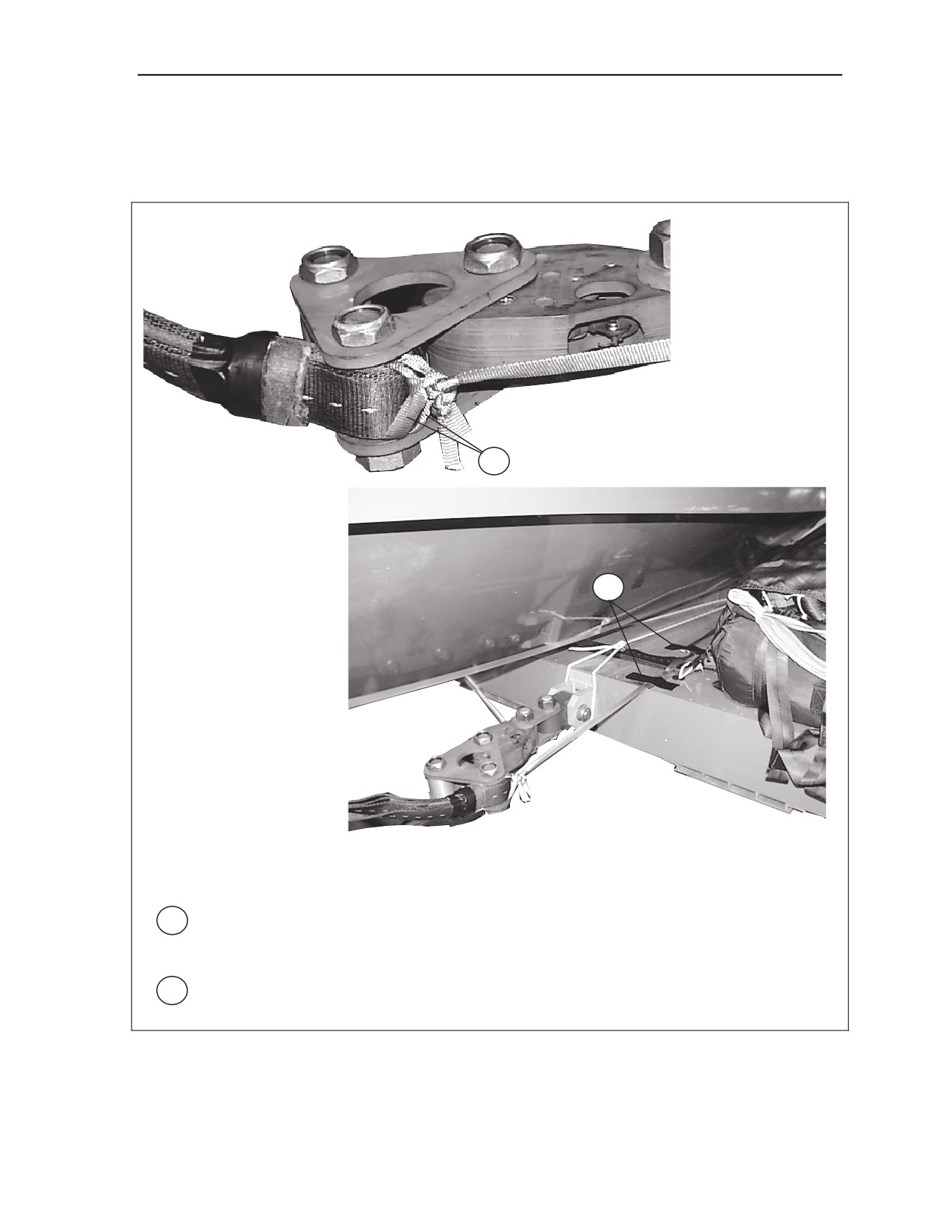
Rigging the Naval Special Warfare Rigid Inflatable Boat (NSW RIB) for Low-Velocity Airdrop
CONNECTING M-21 CUTTER ARMING WIRE LANYARDS
4-17. Connect the M-21 cutter arming wire lanyards to the deployment line as shown in Figure 4-31.
1
2
1. Tie the running end of both cutter arming wire lanyards installed in Figure 4-6 to all plies
(including the cotton buffer) of the 16-foot deployment line. Make these ties 60 inches from
the top of the cutter cable tie.
2. S-fold the excess 1/2-inch tubular nylon and tape it to the platform deck in two places.
Figure 4-31. Cutter Arming Wire Lanyards Tied to Deployment Line
FM 4-20.142/MCRP 4-11.3P/NAVSEA SS400-AD-MMO-010/ TO 13C7-51-21
19 September 2007
4-47
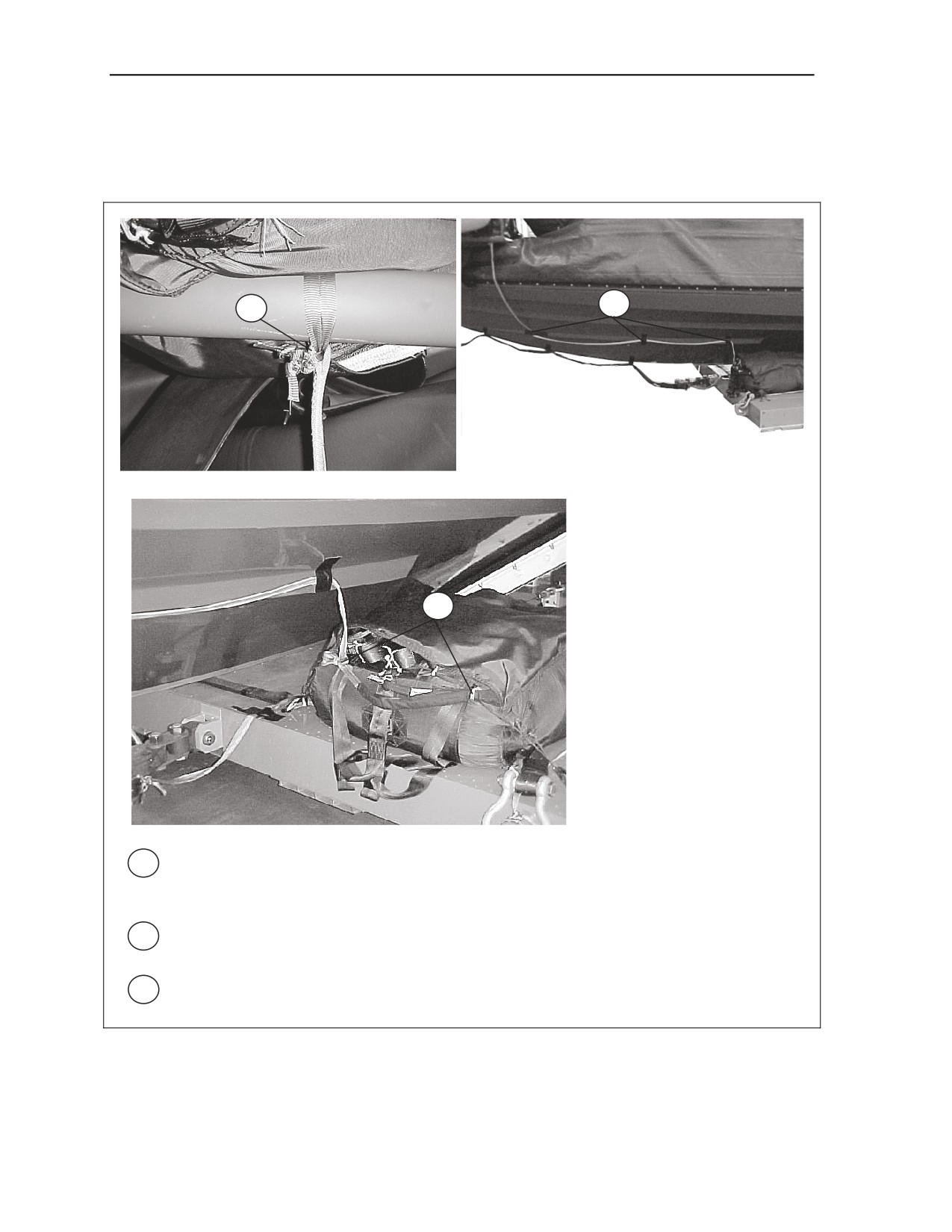
Chapter 4
SECURING G-12E PARACHUTE STATIC LINE
4-18. Tie and tape the G-12E parachute static line as shown in Figure 4-32.
2
1
3
1.
Tie the G-12E parachute static line to the outer bar of the parachute stowage platform with
two turns single of 1/2-inch tubular nylon, tied in a surgeon’s knot, locking knot, and overhand
knots in the running ends. Tie the knot over the static line.
2.
Run the static line down to the bottom of the boat hull and horizontally along the rib, taping it
in several places with cloth-backed adhesive tape.
3. Secure any excess static line to the G-12E deployment bag with retainer bands.
Figure 4-32. G-12E Parachute Static Line Secured
FM 4-20.142/MCRP 4-11.3P/NAVSEA SS400-AD-MMO-010/ TO 13C7-51-21
4-48
19 September 2007
Rigging the Naval Special Warfare Rigid Inflatable Boat (NSW RIB) for Low-Velocity Airdrop
PLACING EXTRACTION PARACHUTES
4-19. Select the extraction line and the extraction parachute needed using the extraction line requirements
table in FM 4-20.102/MCRP 4-11.3J/NAVSEA SS400-AB-MMO-010/TO 13C7-1-5. Place the extraction
parachute and the extraction line on the load for installation in the aircraft.
MARKING THE RIGGED LOAD
4-20. Mark the rigged load according to FM
4-20.102/MCRP 4-11.3J/NAVSEA SS400-AB-MMO
010/TO 13C7-1-5. Complete the Shipper’s Declaration for Dangerous Goods.
CAUTION
Make the final rigger inspection and all other inspections specified in
this manual before the load leaves the rigging site.
Rigged Load Data
Weight: Load shown
18,500 pounds
Maximum
20,640 pounds
Height:
100 inches
Width:
108 inches
Length:
432 inches
Overhang:
Front
42 inches
Rear
138 inches
CB (maximum distance allowable from the front edge of the platform)
149.5 inches
Extraction System
EFTC
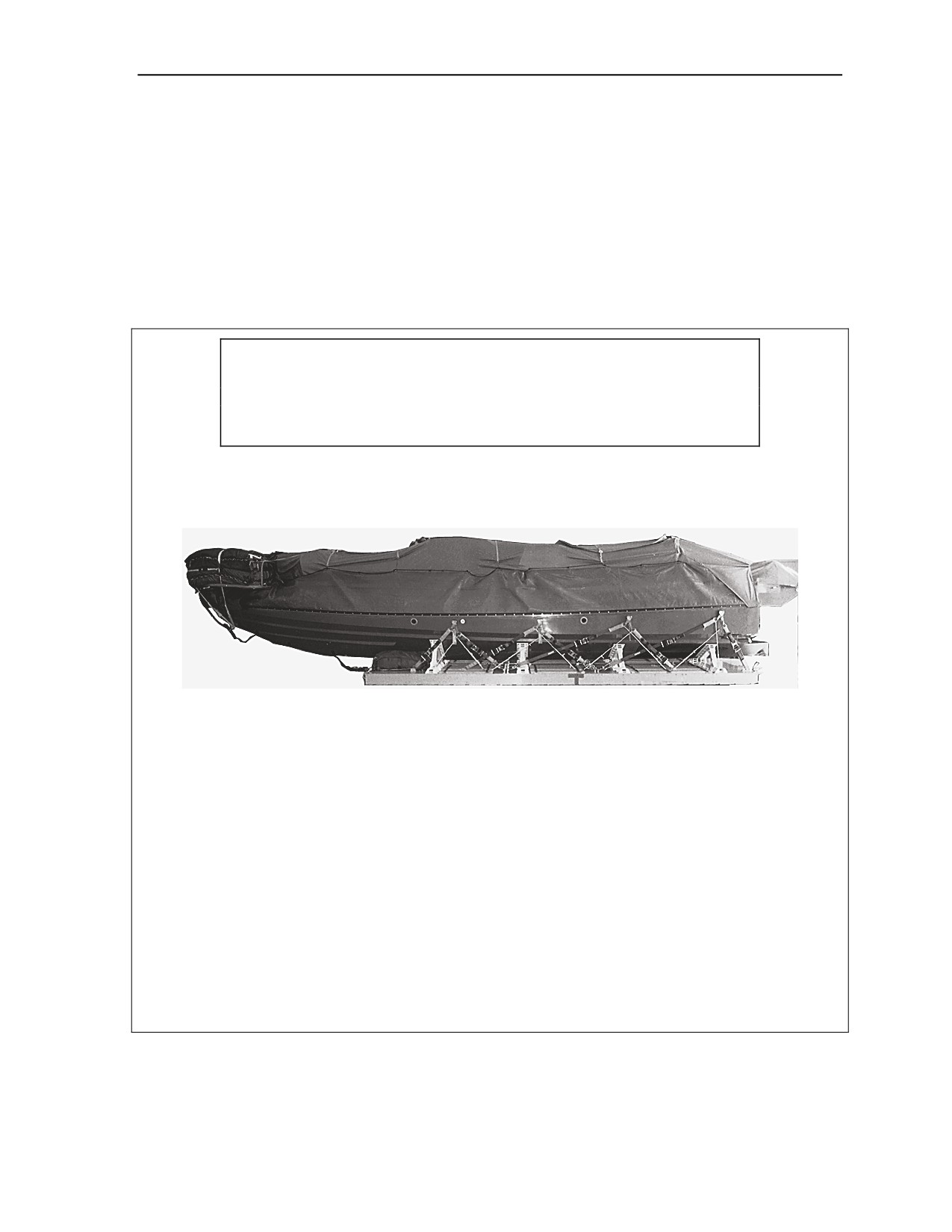
Figure 4-33. NSW RIB Rigged for Low-Velocity Airdrop
FM 4-20.142/MCRP 4-11.3P/NAVSEA SS400-AD-MMO-010/ TO 13C7-51-21
19 September 2007
4-49

Chapter 4
EQUIPMENT REQUIRED
4-21. Use the equipment listed in Table 4-1 to rig this load.
Table 4-1. Equipment Required for Rigging NSW Rib for Low-Velocity Airdrop
National Stock
Item
Quantity
Number
8040-00-273-8713
Adhesive paste, 1-gal
As required
1670-00-568-0323
Band, rubber, parachute
As required
Clevis, suspension,
4030-00-090-5354
1-in, large
5
4030-00-678-8562
3/4-in, medium
2
8305-00-926-1559
Cloth, muslin, type II, 36-in
As required
4020-00-240-2146
Cord, nylon, type III, 550-lb
As required
8305-00-267-3114
Cord, elastic, .375, nat, type I
As required
1670-01-423-4103
Coupling, airdrop, extraction force transfer with cable, 24 ft
1
Cover:
1670-00-360-0328
Clevis, large
1
1377-00-060-0885
Cutter, cartridge actuated, M-21
2
8305-00-958-3685
Felt, sheet, 1/2-in
As required
5340-00-040-8219
Knife, multi para release, strap webbing
2
1670-01-183-2678
Leaf, extraction line (line bag)
2
Line, drogue (for C-17)
1670-01-064-4452
60-ft (1-loop), type XXVI
1
Line extraction:
1670-01-062-6313
For, C-130: 60-ft (3-loop), type XXVI
1
1670-01-107-7651
For, C-141: 140-ft (3-loop), type XXVI
1
1670-01-107-7651
140-ft (3-loop), type XXVI
1
1670-01-107-7651
For, C-17: 140-ft (3-loop), type XXVI
1
Link assembly:
Two-point, 3 ¾-in
1
5306-00-435-8994
Bolt, 1-in diam, 4-in long
(2)
5310-00-232-5165
Nut, 1-in, hexagonal
(2)
1670-00-003-1953
Plate, side, 3 3/4
(2)
5365-00-007-3414
Spacer, large
(2)
Two-point 5 1/2-in
1
5306-00-435-8994
Bolt, 1-in diam, 4-in long
(2)
5310-00-232-5165
Nut, 1-in, hexagonal
(2)
1670-00-003-1954
Plate, side, 51/2½
(2)
5965-00-007-3414
Spacer, large
(2)
1670-00-753-3928
Pad, energy-dissipating, honeycomb, 3- by 36- by 96-in
4 sheets
8135-00-160-7759
Paper, kraft, untreated
As required
Parachute:
1670-01-016-7841
Cargo G-11B
4
1670-01-065-3755
Cargo G-12E
1
1670-00-040-8135
Cargo extraction, 28-ft
1
1670-01-063-3715
Drogue, 15-ft (for C-17)
1
No NSN
Platform, 21-ft, Maritime Aerial Delivery System
1
5530-00-128-4981
Plywood, 3/4- by 48- by 96-in
1 sheet
FM 4-20.142/MCRP 4-11.3P/NAVSEA SS400-AD-MMO-010/ TO 13C7-51-21
4-50
19 September 2007

Rigging the Naval Special Warfare Rigid Inflatable Boat (NSW RIB) for Low-Velocity Airdrop
Table 4-1. Equipment Required for Rigging NSW Rib for Low-Velocity Airdrop (continued)
National Stock
Item
Quantity
Number
1670-01-097-8817
Release, cargo parachute, M-2
1
No NSN
Release, cargo, parachute, Conax, water activated
5
Sling, cargo airdrop
For suspension:
1670-01-064-4453
20-ft (4-loop), type XXVI nylon webbing
4
For deployment:
1670-01-063-7761
16-ft (2-loop), type XXVI nylon webbing
1
For riser extension:
1670-01-062-6313
60-ft (3-loop), type XXVI nylon webbing
4
7510-00-266-5016
Tape, adhesive, 2-in
As required
7510-00-266-6712
Tape, adhesive, masking
As required
Thread:
8310-01-279-6073
Cotton, ticket# 8/4, orange
As required
8310-00-917-3945
Cotton, ticket# 8/7, natural
As required
1670-00-725-1437
Tie-down, cargo, aircraft, CGU-1/B
4
5310-00-057-3463
Washer, flat, 3/4-in
50
Webbing:
8305-00-268-2411
Cotton, ¼-in, type I
As required
8305-00-082-5752
Nylon, tubular, 1/2-in
As required
8305-00-268-2455
Nylon, tubular, 1-in
As required
8305-00-261-8585
Type VIII
As required
FM 4-20.142/MCRP 4-11.3P/NAVSEA SS400-AD-MMO-010/ TO 13C7-51-21
19 September 2007
4-51

This page intentionally left blank.
Chapter 5
Rigging the Advanced Rescue Craft (ARC) on a Combat
Expendable Platform (CEP)
SECTION I-RIGGING THE GP 800 ARC
DESCRIPTION OF LOAD
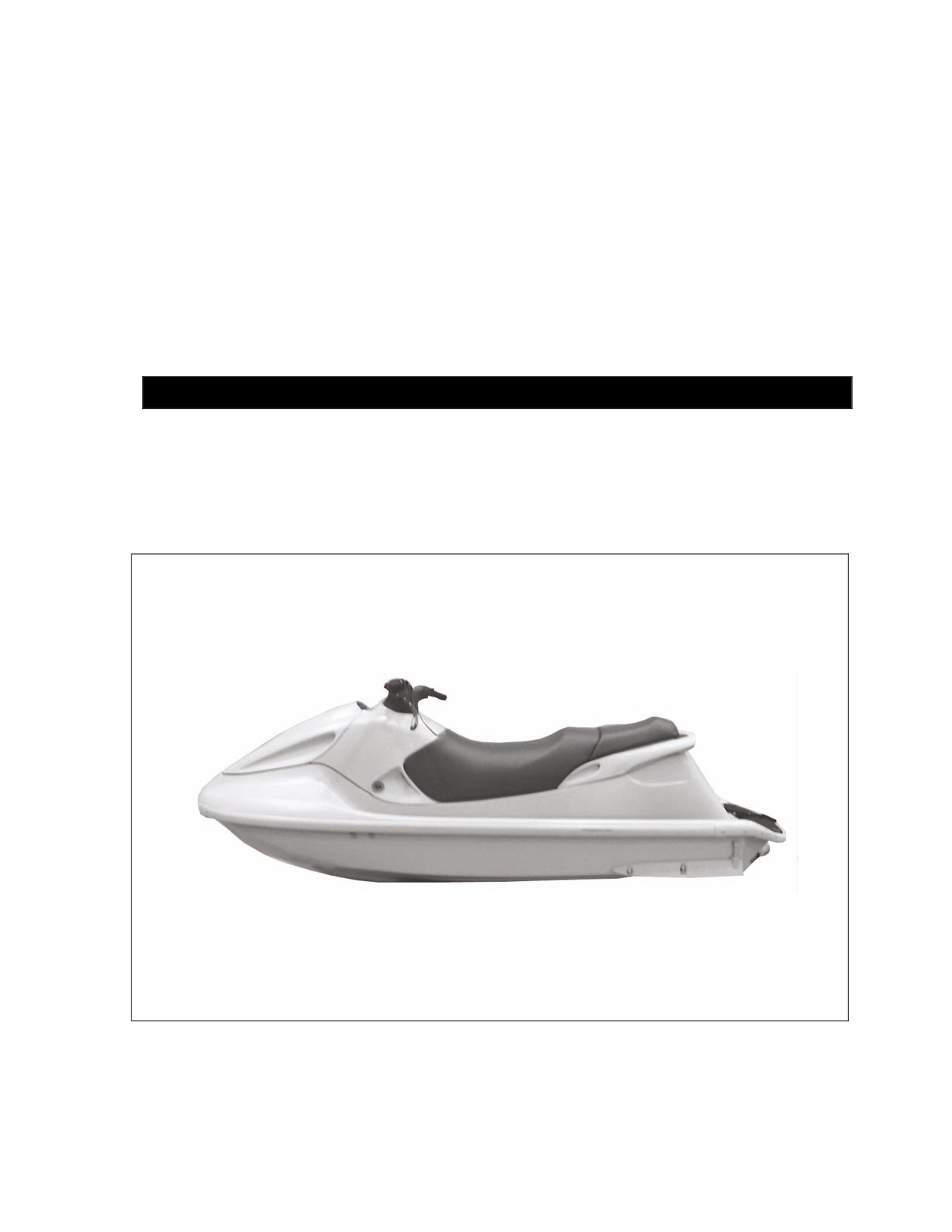
5-1. The GP 800 ARC shown in Figure 5-1 is rigged on a 48- by 87-inch combat expendable platform for
low-velocity airdrop. This load can be rigged with or without a 20-man life raft and a rescue board, a
rucksack, and an aid bag. The load requires one G-12E cargo parachute, a 15-foot cargo extraction
parachute packed in a T-10 bag, and is only rigged with a hydraulic release.
Figure 5-1. GP 800 ARC
FM 4-20.142/MCRP 4-11.3P/NAVSEA SS400-AD-MMO-010/ TO 13C7-51-21
19 September 2007
5-1
Chapter 5
BUILDING THE COMBAT EXPENDABLE PLATFORM
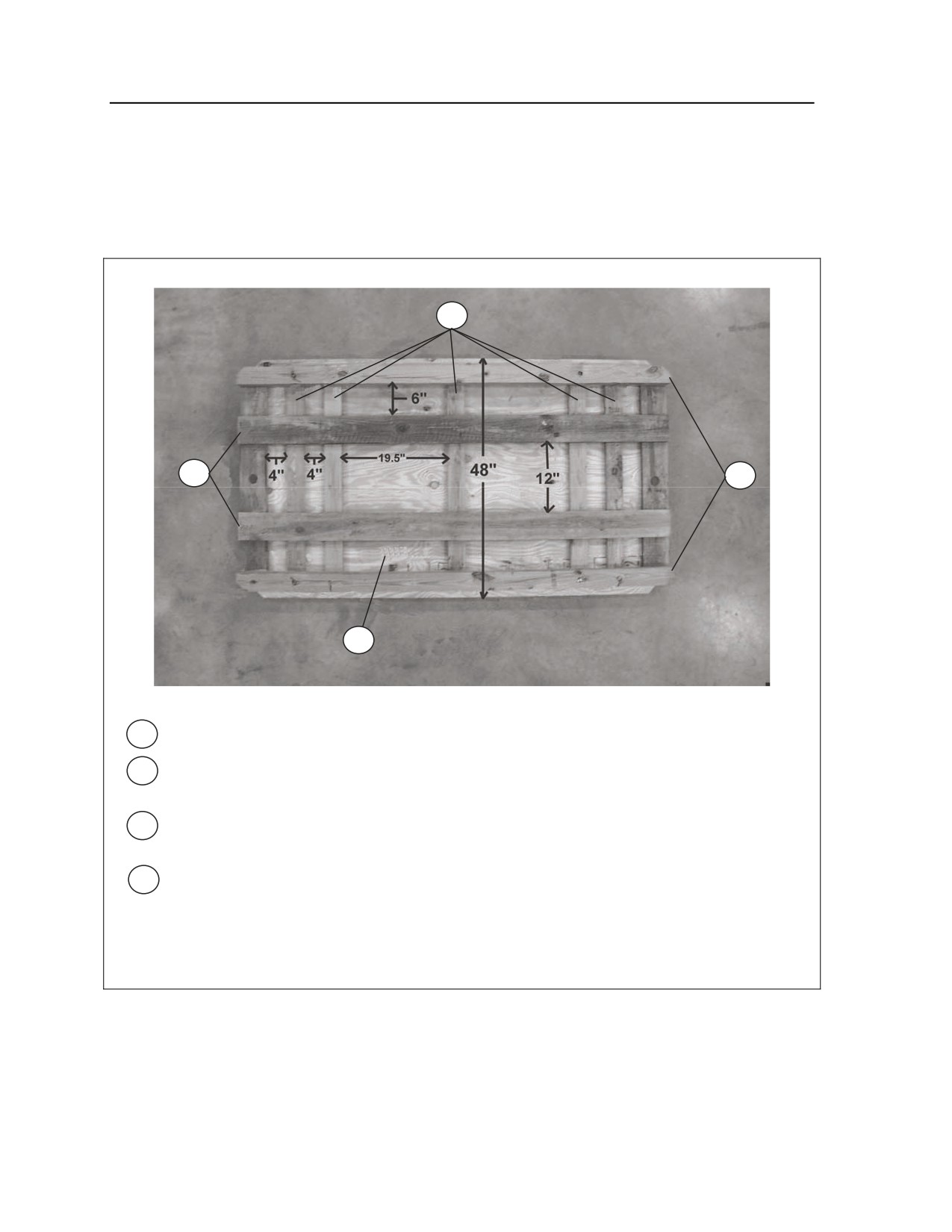
5-2. Build the 48- by 87-inch combat expendable platform as shown in Figure 5-2.
3
2
1
4
1.
Lay out two 4- by 4- by 87-inch and two 2- by 6- by 87-inch longitudinal stringers.
2.
Secure the lateral stringers to the longitudinal stringers with 8d nails. Do not nail within 2
inches of the ends of the 4- by 4- by 87-inch longitudinal stringers.
3.
Lay two 2- by 6- by 44-inch and four 2- by 4- by 44-inch lateral stringers on top and across
the longitudinal stringers matching the measurements above.
4. Position the 3/4- by 48- by 87-inch plywood on top of the lateral stringers leaving a 2-inch
overhang on each side of the 4- by 4- by 87-inch longitudinal stringers.
Figure 5-2. Combat Expendable Platform Built
FM 4-20.142/MCRP 4-11.3P/NAVSEA SS400-AD-MMO-010/ TO 13C7-51-21
5-2
19 September 2007

Rigging the Advanced Rescue Craft (ARC) on a Combat Expendable Platform (CEP)
5.
Cut the corners of the platform at a 45-degree angle to include the corners of the 4- by 4- by
87-inch longitudinal stringers. (not shown)
6.
Turn the platform over and drill eight 3/4-inch holes for the carriage bolts. Ensure to drill
again with a large enough drill bit in order to counter sink the bolt heads, washers, and nuts.
(not shown)
7.
Install the carriage bolts from bottom to top and trim the threaded ends at the nuts. File sharp
edges. (not shown)
8. Drill a 2-inch hole centered on each end of the platform. (not shown)
Figure 5-2. Combat Expendable Platform Built (continued)
FM 4-20.142/MCRP 4-11.3P/NAVSEA SS400-AD-MMO-010/ TO 13C7-51-21
19 September 2007
5-3
Chapter 5
PREPARING THE PLATFORM
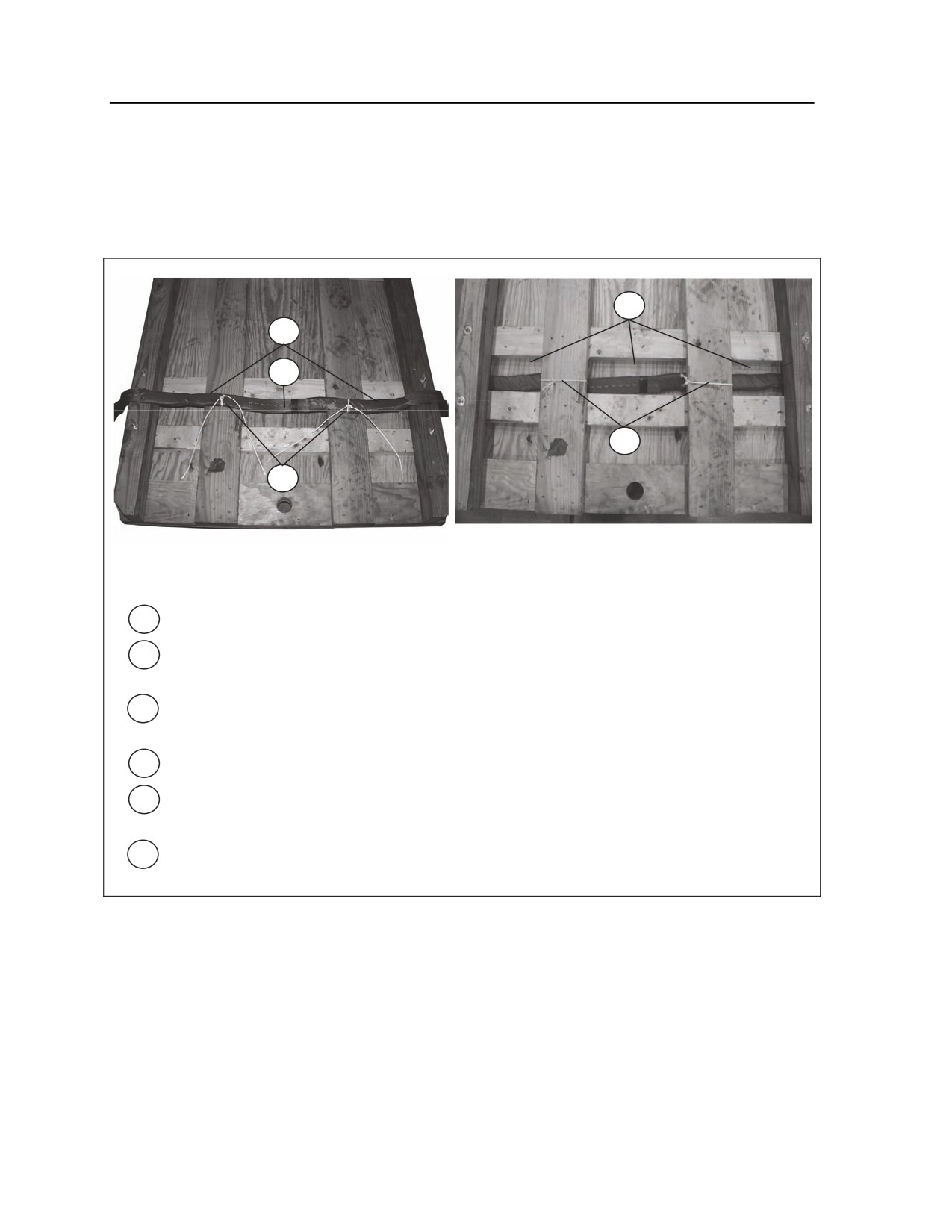
5-3. Prepare the 48- by 87-inch Combat Expendable Platform as shown in Figure 5-3.
4
2
1
5
3
1. Lay a 20-foot, 2-loop Type XXVI nylon sling centered across the rear suspension point.
2. Tape the suspension sling where it comes in contact with the two 2- by 6- by 87-inch
longitudinal stringers with 2-inch cloth-backed adhesive tape.
3.
Tie two 24-inch lengths of Type III nylon cord to the suspension sling making two wraps and
securing with a surgeon’s knot and locking knot, leaving equal amounts of running ends.
4.
Route and center the suspension sling through the suspension sling slot in the platform.
5.
Secure the suspension sling to the 2- by 6- by 87-inch longitudinal stringer with the lengths of
Type III nylon cord with a surgeon’s knot and locking knot.
6. Repeat for the front suspension sling.
Figure 5-3. Platform Prepared
FM 4-20.142/MCRP 4-11.3P/NAVSEA SS400-AD-MMO-010/ TO 13C7-51-21
5-4
19 September 2007
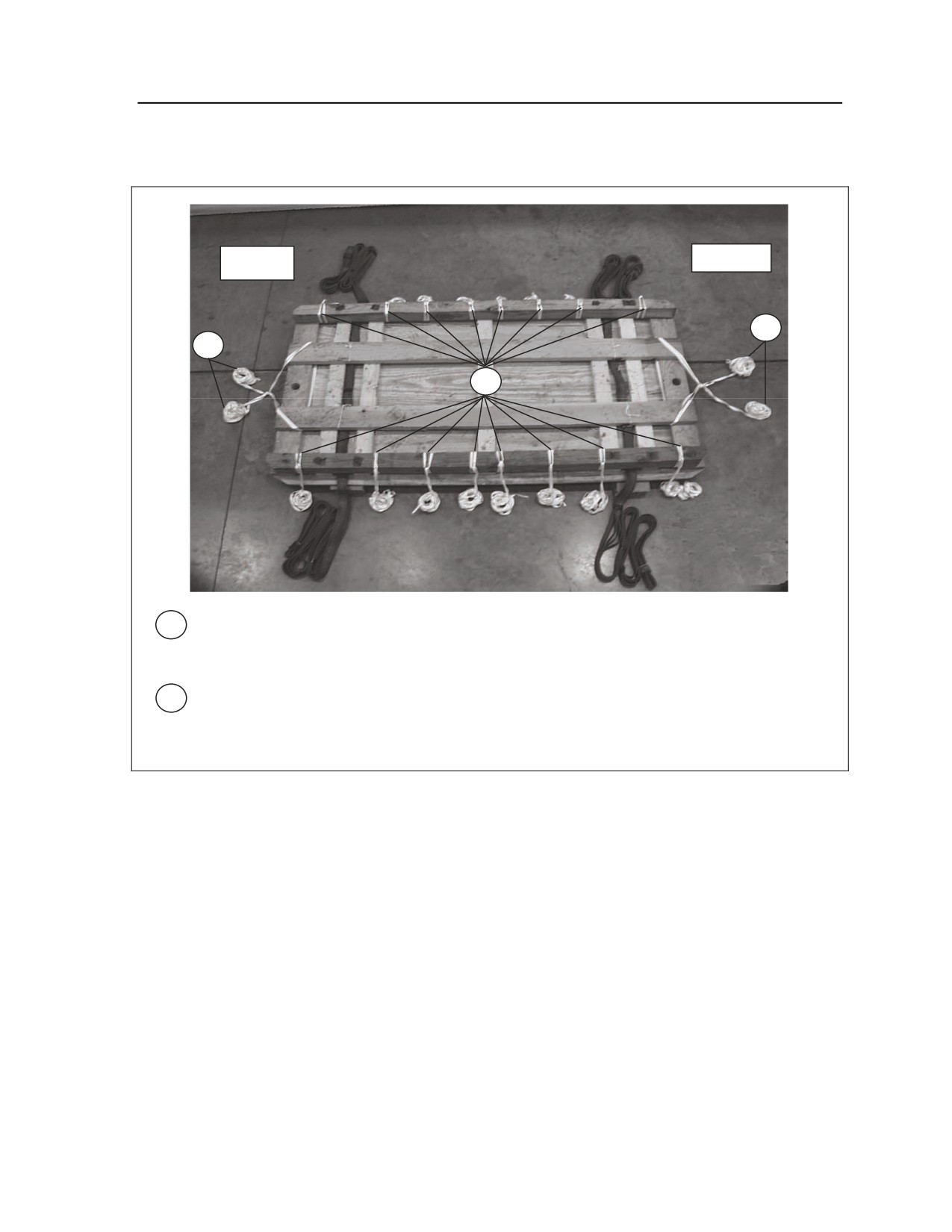
Rigging the Advanced Rescue Craft (ARC) on a Combat Expendable Platform (CEP)
REAR
FRONT
8
8
7
7. Girth hitch sixteen 15-foot lengths of 1/2-inch tubular nylon webbing to each 4- by 4- by 87
inch longitudinal stringers at positions shown above. Label right side positions 1 through 8
and the left side positions 1a through 8a.
8. Route two 20-foot lengths of 1/2-inch tubular nylon webbing around both of the 2- by 6- by
87-inch longitudinal stringers at the front and rear of the platform. Secure with an overhand
knot as close to the platform as possible.
Figure 5-3. Platform Prepared (continued)
FM 4-20.142/MCRP 4-11.3P/NAVSEA SS400-AD-MMO-010/ TO 13C7-51-21
19 September 2007
5-5
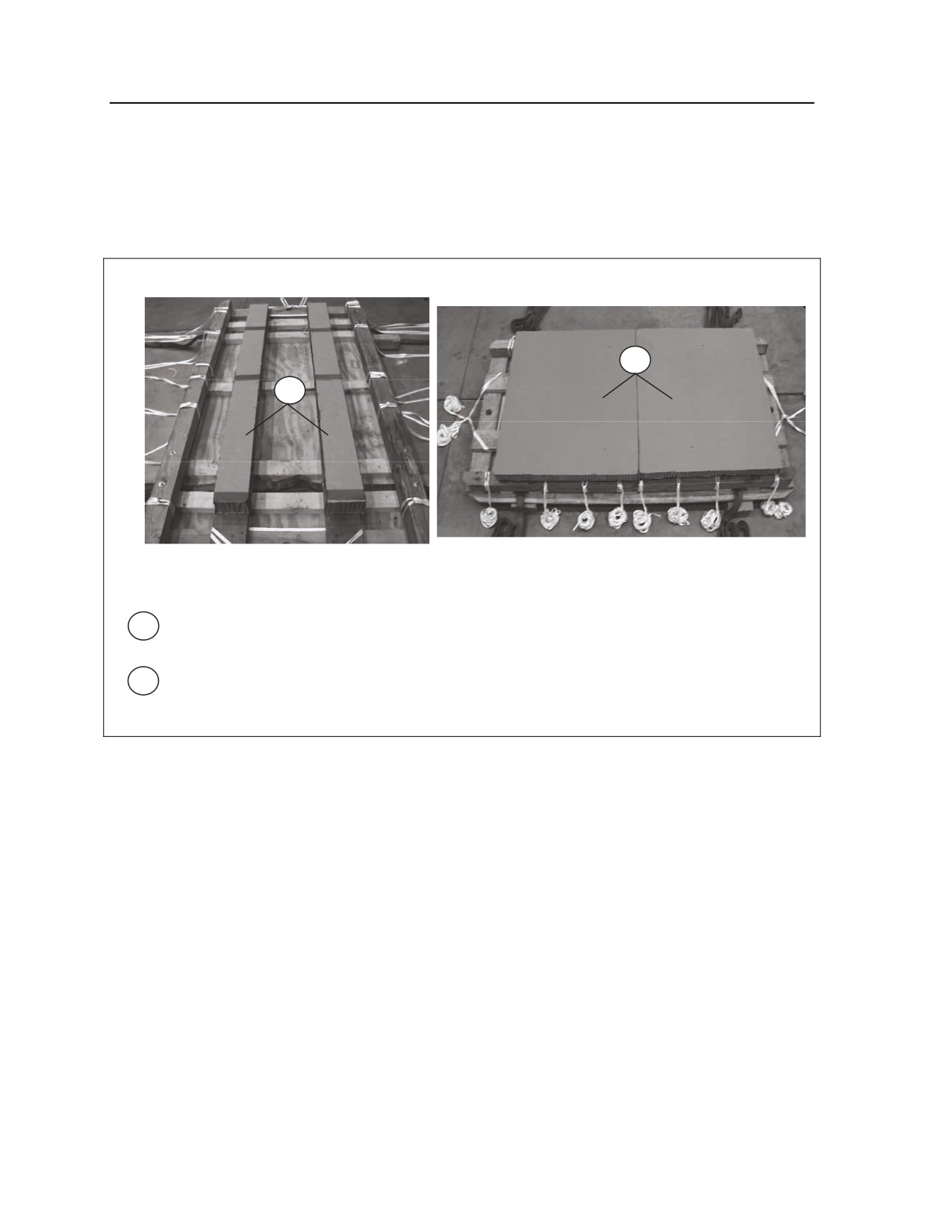
Chapter 5
PREPARING AND POSITIONING HONEYCOMB
5-4. Prepare and position the honeycomb as shown in Figure 5-4.
2
1
1. Position one 6- by 72-inch piece of honeycomb on each 2- by 6- by 87-inch longitudinal
stringer (centered) and secure in place with lengths of 2-inch cloth-backed adhesive tape.
2. Position ( Do not glue ) two 36- by 42-inch pieces of honeycomb side by side on top of and
flush with the honeycomb in step 1.
Figure 5-4. Honeycomb Positioned
FM 4-20.142/MCRP 4-11.3P/NAVSEA SS400-AD-MMO-010/ TO 13C7-51-21
5-6
19 September 2007
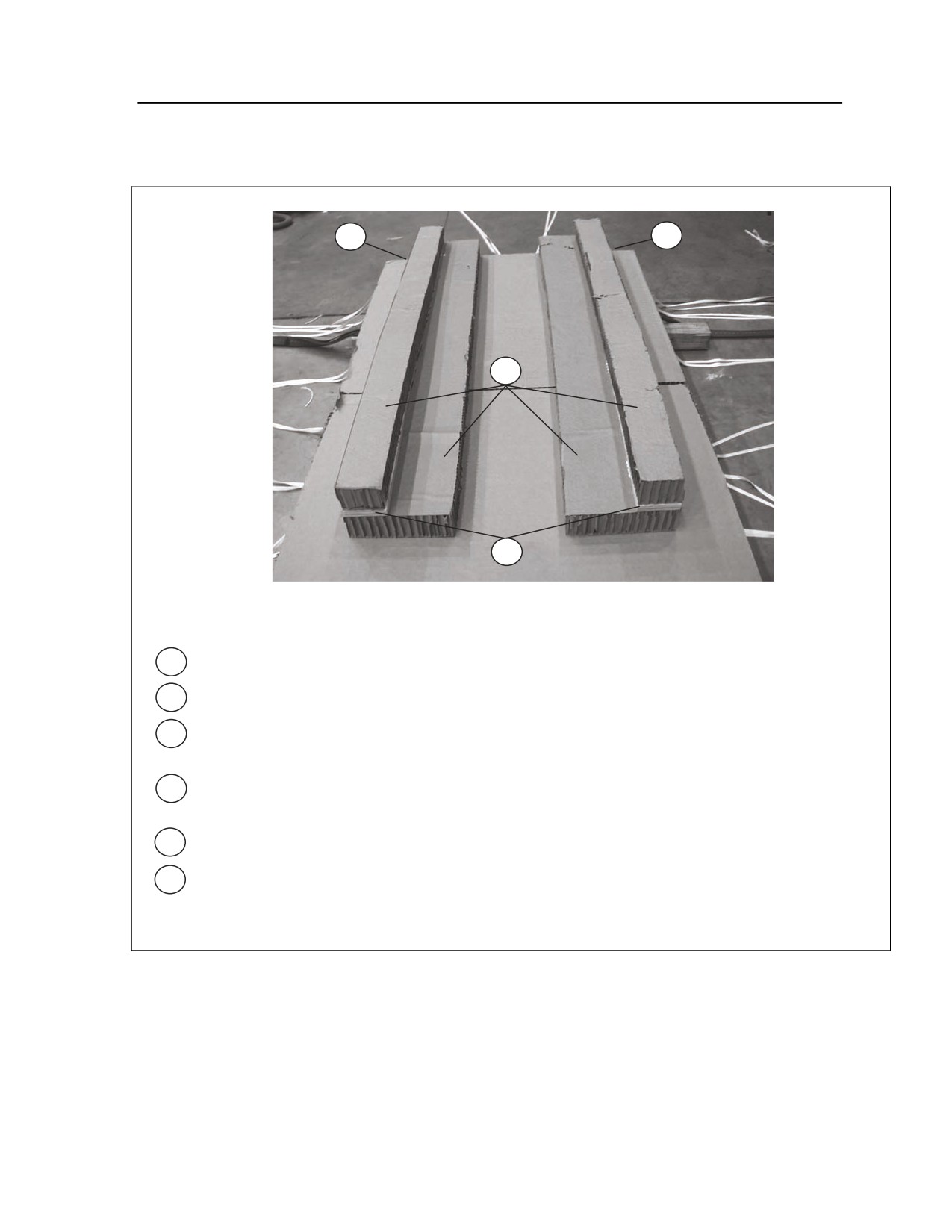
Rigging the Advanced Rescue Craft (ARC) on a Combat Expendable Platform (CEP)
8
8
3
4
3. Cut one piece of honeycomb 10- by 58-inches and one 4- by 58 inches.
Cut a piece of 3/4-inch plywood 4- by 24-inches.
4.
5. Glue the 4- by 24-inch piece of plywood flush to one corner of the 10- by 58-inch piece of
honeycomb (not shown).
6. Glue the 4- by 58-inch piece of honeycomb on top of the plywood and the 10- by 58-inch piece of
honeycomb (not shown).
7. Stack 2 is cut the same as stack 1.
8. Position (Do not glue) stacks 1 and 2 flush with the front of the honeycomb in Figure 5-4 and 7
inches in from the sides. Ensure the end with the plywood piece is to the rear of the platform.
Note. Stacks 1 and 2 will have to be adjusted to the hull of the ARC.
Figure 5-4. Honeycomb Positioned (continued)
FM 4-20.142/MCRP 4-11.3P/NAVSEA SS400-AD-MMO-010/ TO 13C7-51-21
19 September 2007
5-7
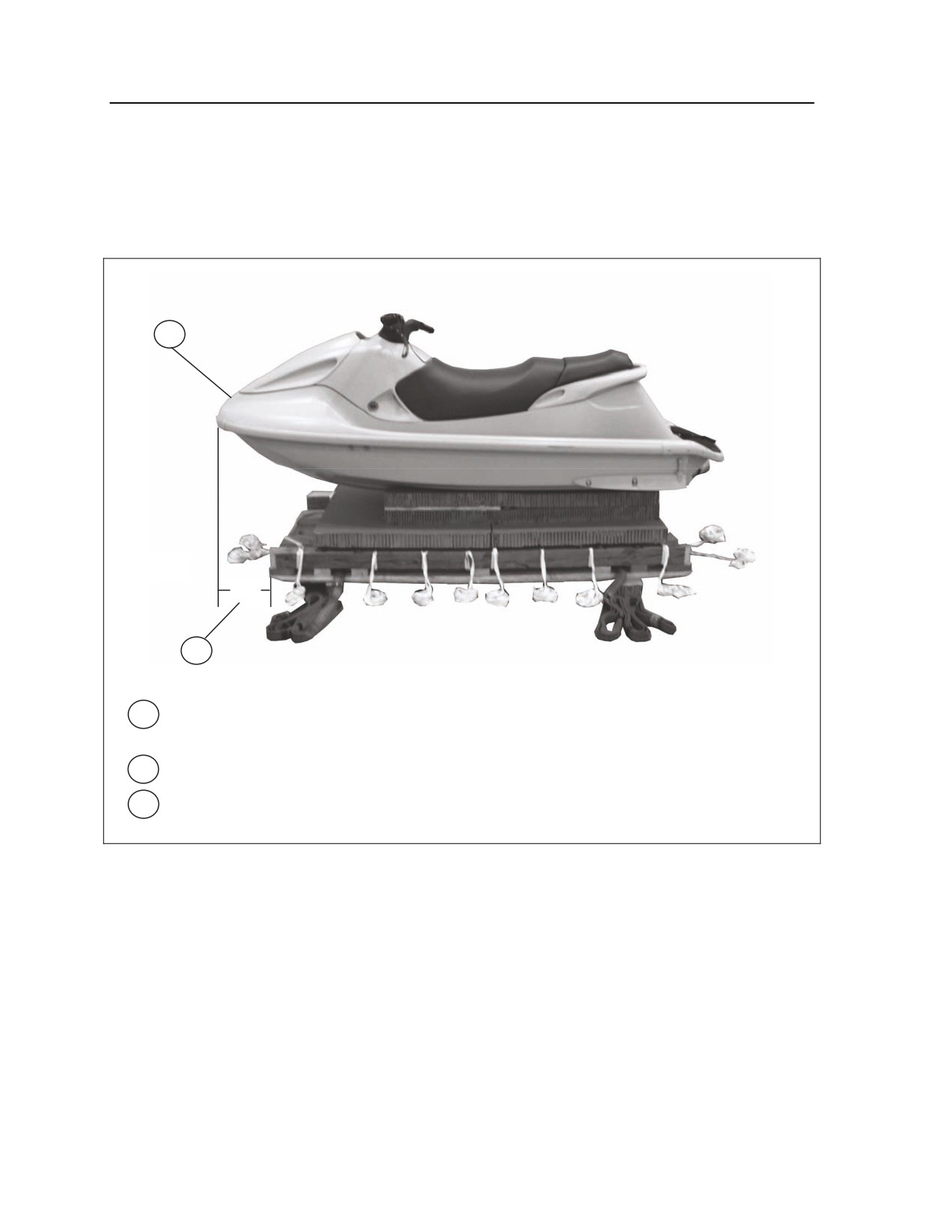
Chapter 5
POSITIONING THE ARC
5-5. Position the ARC as shown in Figure 5-5.
1
REAR
14”
3
1.
Position the ARC on honeycomb stacks 1 and 2 with the nose towards the rear of the
platform.
2.
Center it left and right (not shown).
3.
Make sure there is a 14-inch overhang to the rear of the platform.
Figure 5-5. ARC Positioned
FM 4-20.142/MCRP 4-11.3P/NAVSEA SS400-AD-MMO-010/ TO 13C7-51-21
5-8
19 September 2007
Rigging the Advanced Rescue Craft (ARC) on a Combat Expendable Platform (CEP)
PREPARING THE ARC
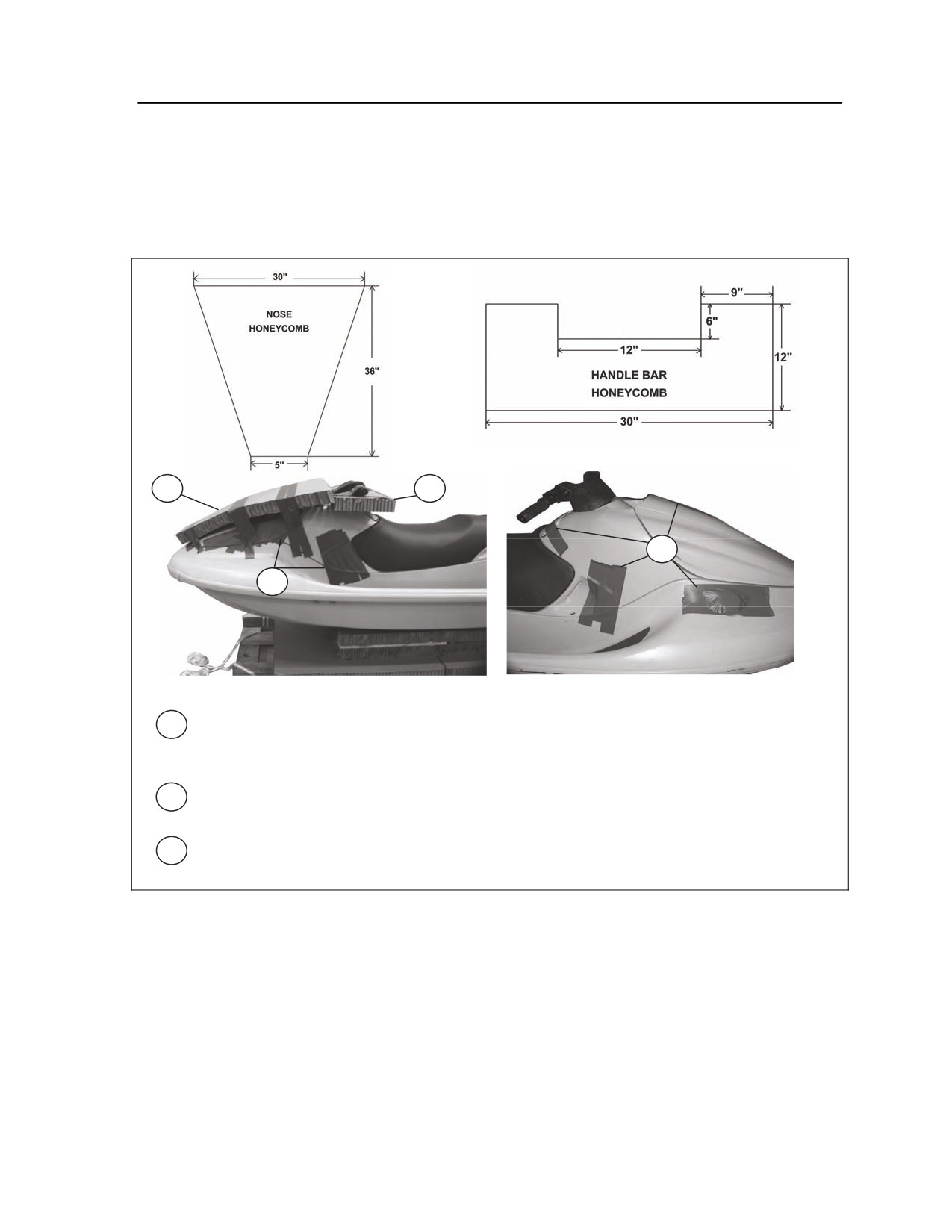
5-6. Ensure the fuel tank is no more than ¾ full. Prepare as shown in Figure 5-6.
2
1
3
3
1.
Cut handle bar honeycomb to prescribed measurements and install under the handle bars.
Secure to the handlebars with 2-inch cloth-backed adhesive tape or lengths of Type III nylon
cord.
2.
Cut nose honeycomb to prescribed measurements and position over the nose. Secure to the
nose with 2-inch cloth-backed adhesive tape or lengths of Type III nylon cord.
3. Tape over fuel cap, on/off switch, and compartments with 2-inch cloth-backed adhesive tape.
Figure 5-6. ARC Prepared
FM 4-20.142/MCRP 4-11.3P/NAVSEA SS400-AD-MMO-010/ TO 13C7-51-21
19 September 2007
5-9
Chapter 5
4
5
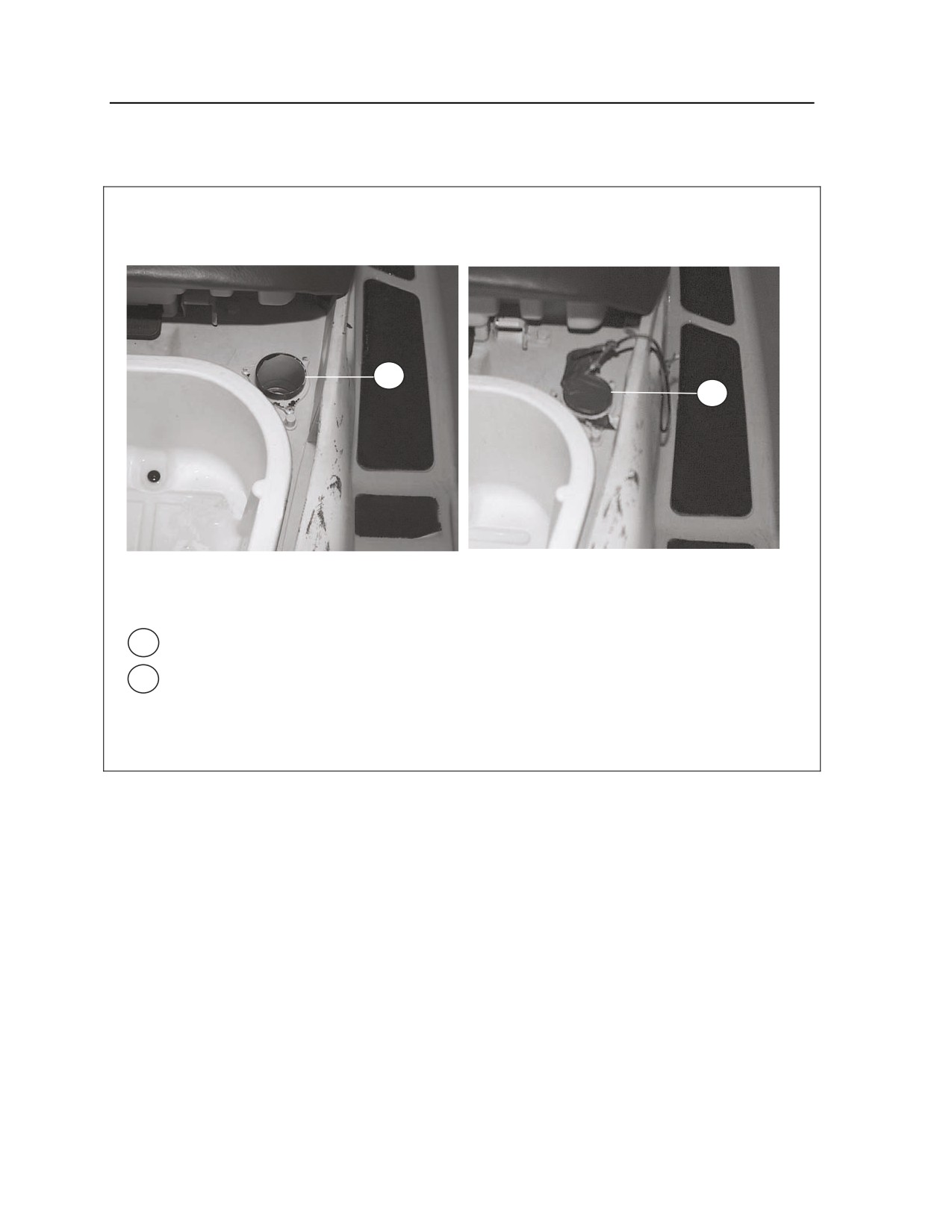
4. Remove the rear section of the ARC seat to expose the intake port.
5. Plug the intake port by taping over the opening with lengths of 2-inch cloth-backed tape.
Secure the tape in place with a retainer band. Attach a 12-inch Type III nylon cord lanyard to
the tape. Route the lanyard to the outside of the ARC and tape in place with 2-inch cloth-
backed adhesive tape.
Figure 5-6. ARC Prepared (continued)
FM 4-20.142/MCRP 4-11.3P/NAVSEA SS400-AD-MMO-010/ TO 13C7-51-21
5-10
19 September 2007
Rigging the Advanced Rescue Craft (ARC) on a Combat Expendable Platform (CEP)
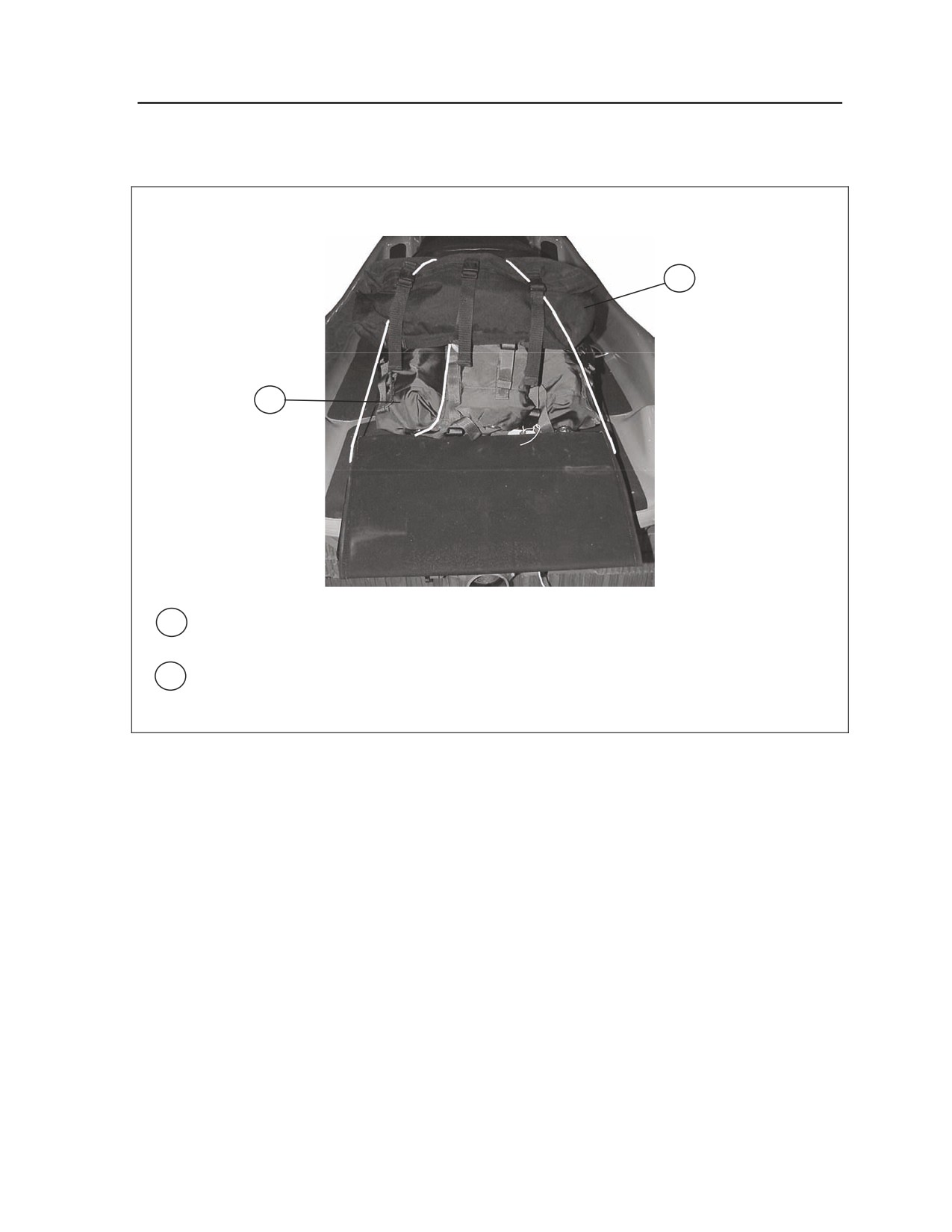
Note. If the rucksack and the first aid pack are to be rigged on the ARC use steps below.
6
7
6. Position the rucksack on the ARC behind the seat. Secure the rucksack to the rear handgrip
and the tow ring with a length of Type III nylon cord.
7. Position the first aid pack on top of the rucksack and secure to the same locations with a
length of Type III nylon cord.
Figure 5-6. ARC Prepared (continued)
FM 4-20.142/MCRP 4-11.3P/NAVSEA SS400-AD-MMO-010/ TO 13C7-51-21
19 September 2007
5-11
Chapter 5
11
12
10
8
9
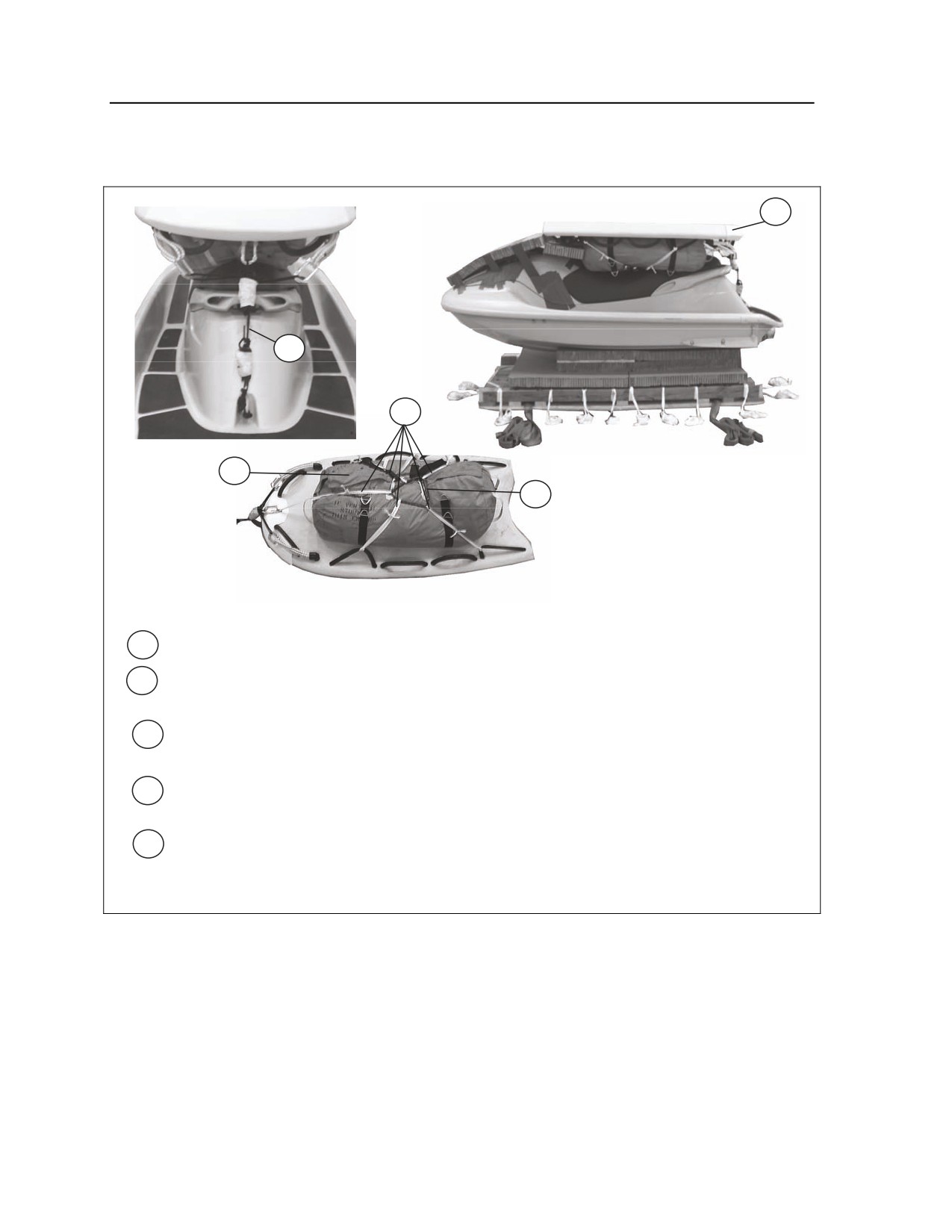
8. Center a 20-man life raft on the rescue board with closing flap up.
9. Form an 8-inch tie-down ring, according to Figure 2-16. Center the tie-down ring on the 20-
man life raft.
10. Girth hitch five 6-foot 1/2-inch tubular nylon ties to the rescue raft handles and secure to the
tie-down ring with trucker’s hitches.
11. Position the rescue board upside down on top of the seat and handlebars with the nose
towards the rear of the ARC.
12. Attach the rescue board lanyard, or a 10-foot length of Type III nylon cord, to the tie-down
ring on the aft of the ARC. S-fold the excess and tape with 2-inch masking tape.
Note. If the ARC is to be rigged without the 20-man life raft, make sure the rescue board is leveled with honeycomb.
Figure 5-6. ARC Prepared (continued)
FM 4-20.142/MCRP 4-11.3P/NAVSEA SS400-AD-MMO-010/ TO 13C7-51-21
5-12
19 September 2007
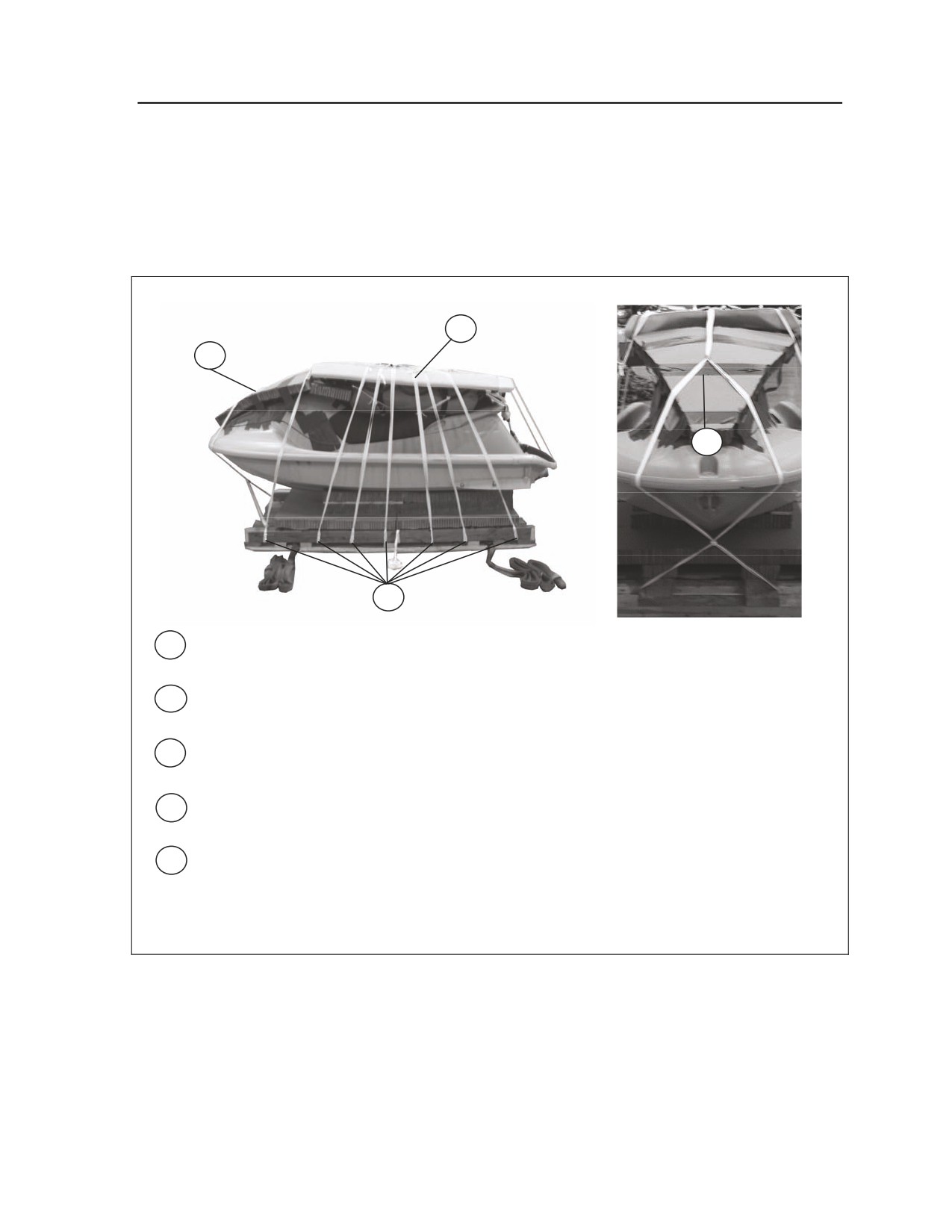
Rigging the Advanced Rescue Craft (ARC) on a Combat Expendable Platform (CEP)
LASHING THE ARC
5-7. Lash the ARC to the platform with two 6-foot, sixteen 15-foot, and four 20-foot lengths of 1/2-inch
tubular nylon webbing as shown in Figure 5-7.
4
5
5
4
1.
Form a 10-inch tiedown ring, according to Figure 2-16. Center the tiedown ring on top of the
load (not shown).
2.
Form a trucker’s hitch at one end of the tiedown and pass that end under/over the tiedown
ring (not shown).
3.
Route other end of the tiedown through the truckers hitch and tighten. Secure with three
alternating half hitches with knot in running end.
4.
Tie all of the 15-foot lashings (except lashings 4 and 4a from the front of the platform), to the
tiedown ring as described in Steps 2 and 3.
5. Pass one end of the rear lashing around each side of the nose of the ARC. Tie the ends
together with an overhand knot about 12 inches above the point of the nose. Tie the lashing
to the tie-down ring as in Steps 2, 3, and 4.
Figure 5-7. ARC Lashed to Platform
FM 4-20.142/MCRP 4-11.3P/NAVSEA SS400-AD-MMO-010/ TO 13C7-51-21
19 September 2007
5-13
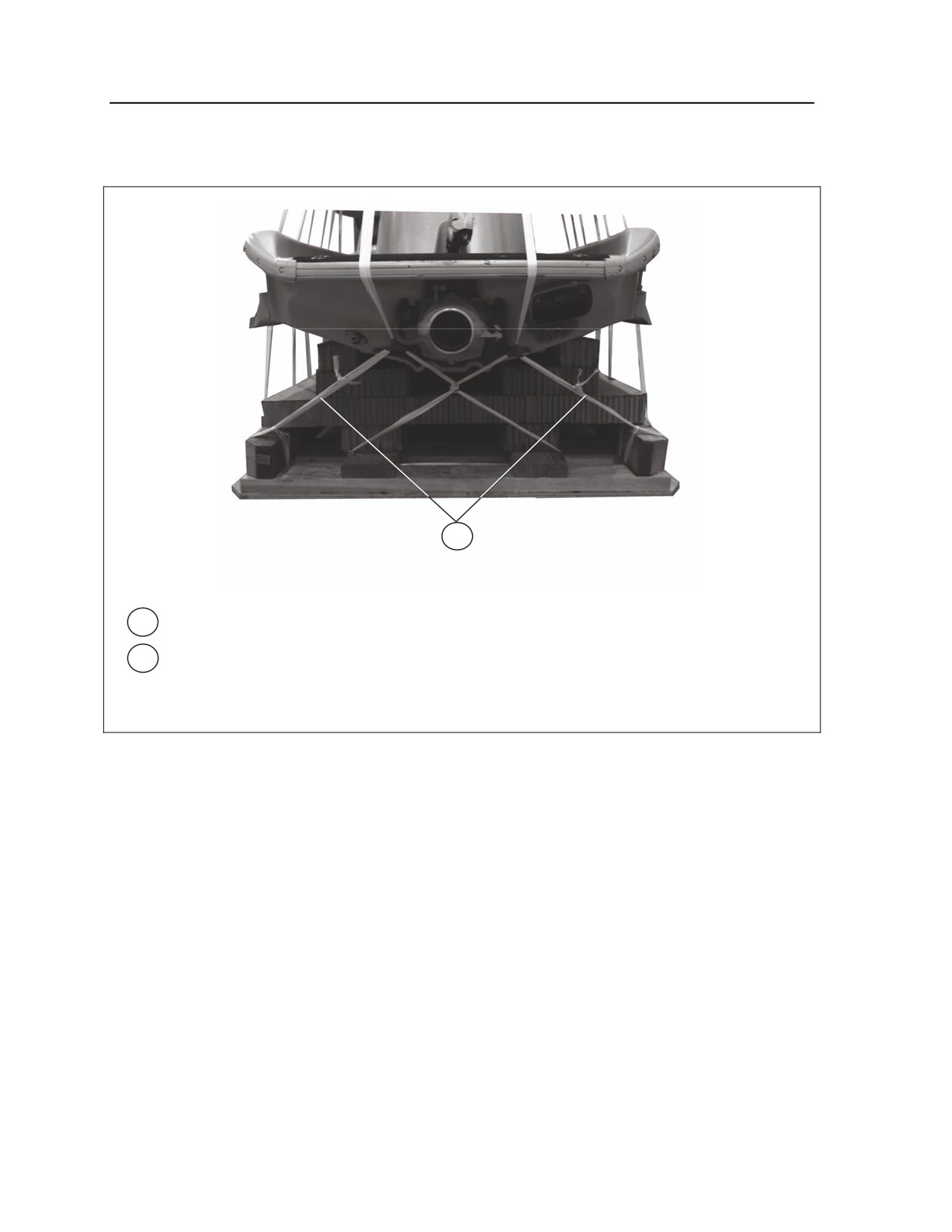
Chapter 5
7
6. Tie the front lashing to the tiedown ring as mentioned in Steps 2 and 3.
7. Girth hitch one 6-foot 1/2-inch tubular nylon lashing to the very front of both longitudinal
stringers. Tie the lashings to the front lashing, pulling the front lashing away from the jet drive
and linkage. Tape around the knot with 2-inch cloth-backed adhesive tape.
Figure 5-7. ARC Lashed to Platform (continued)
FM 4-20.142/MCRP 4-11.3P/NAVSEA SS400-AD-MMO-010/ TO 13C7-51-21
5-14
19 September 2007
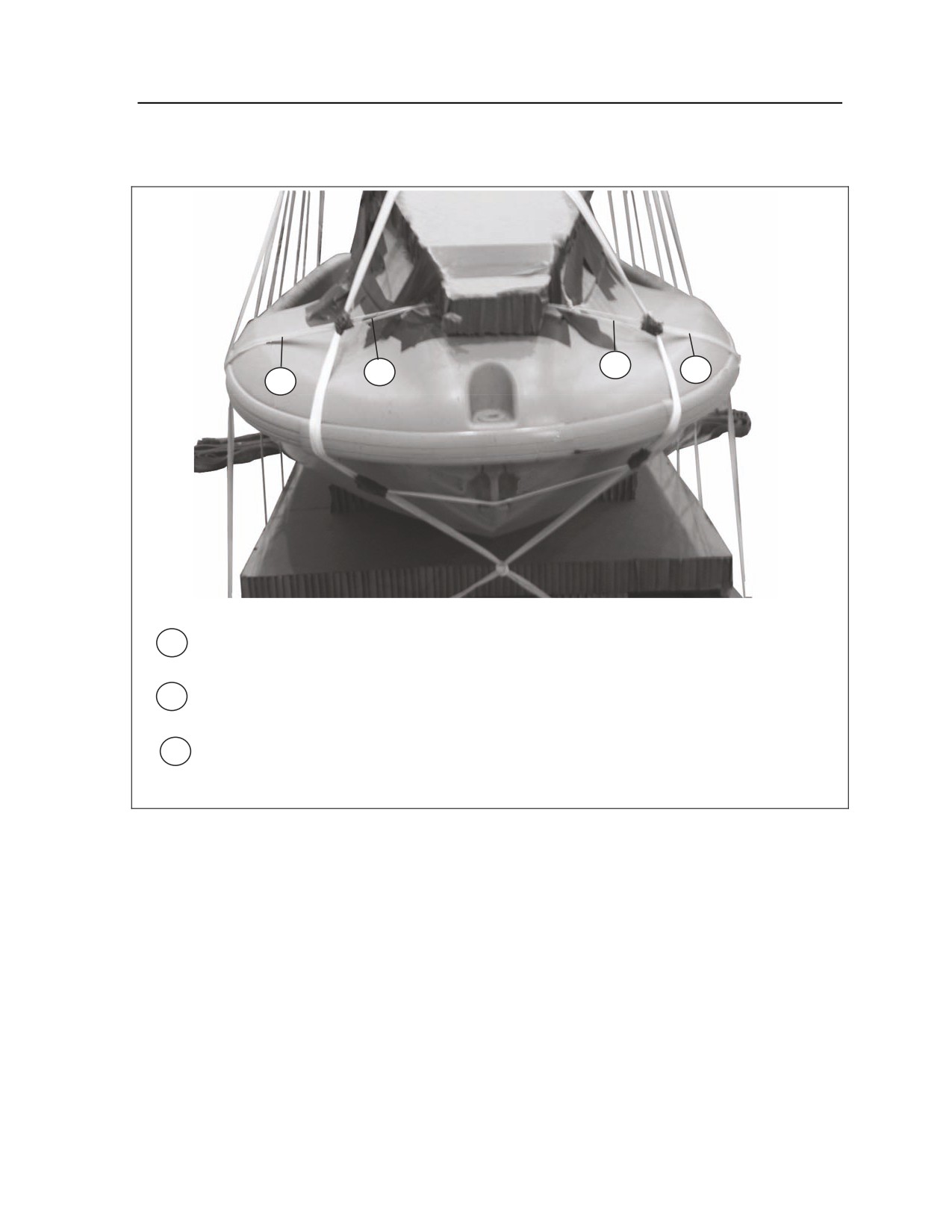
Rigging the Advanced Rescue Craft (ARC) on a Combat Expendable Platform (CEP)
10
10
9
9
8. Tie lashings 4 and 4a, from the front of the platform, to the rear lashing approximately 6
inches above the point of the nose of the ARC.
9. Tie a length of Type III nylon cord across the nose of the ARC at the points where the two
lashings are secured in step 10. Tape the knots with 2-inch cloth-backed adhesive tape.
10. Tie a length of Type III nylon cord to the rear lashing underneath the nose of the ARC. Do
not route through tiedown ring. Tape the knots with 2-inch cloth-backed adhesive tape.
Figure 5-7. ARC Lashed to Platform (continued)
FM 4-20.142/MCRP 4-11.3P/NAVSEA SS400-AD-MMO-010/ TO 13C7-51-21
19 September 2007
5-15
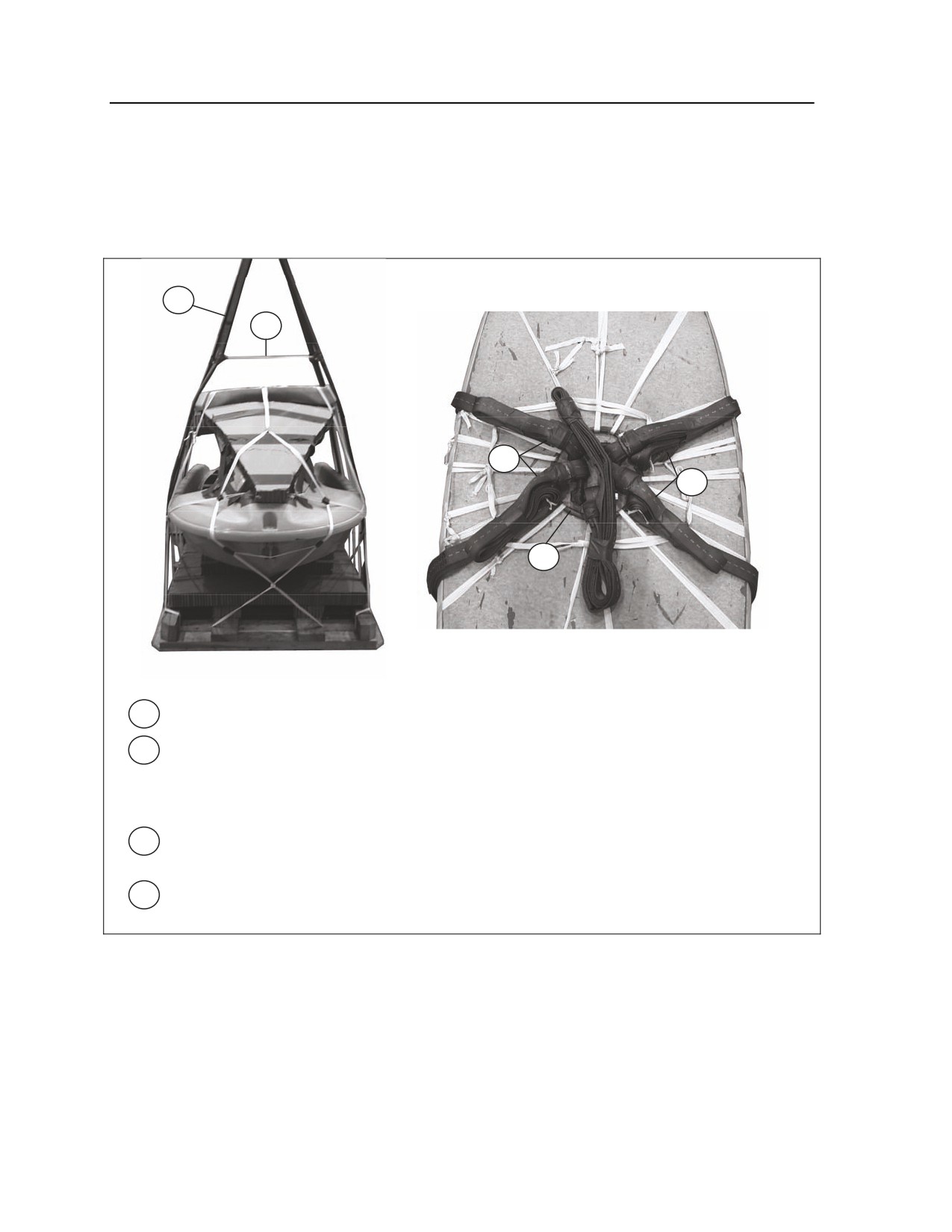
Chapter 5
SAFETY TIEING SUSPENSION SLINGS
5-8. Safety the suspension slings as shown in Figure 5-8.
REAR
1
2
3
3
4
1. Raise the suspension slings.
2. Make the deadman’s tie 6 to 8 inches above the load as described in FM 4-20.102/MCRP 4
11.3J/NAVSEA SS400-AB-MMO-010/TO 13C7-1-5. Lower the suspension slings until they
touch the tie-down ring and secure them to the tie-down ring with lengths of one turn, 1/4
inch cotton webbing.
3. Attach the suspension slings to the arms of a medium suspension clevis. Attach a 3-foot, 2
loop Type XXVI nylon suspension sling to the bolt end of the medium clevis.
4. S-fold the excess suspension sling and tape with one turn 2-inch cloth-backed adhesive tape.
Figure 5-8. Suspension Slings Safetied
FM 4-20.142/MCRP 4-11.3P/NAVSEA SS400-AD-MMO-010/ TO 13C7-51-21
5-16
19 September 2007
Rigging the Advanced Rescue Craft (ARC) on a Combat Expendable Platform (CEP)
STOWING PARACHUTE
5-9. Stow the G-12E cargo parachute as shown in Figure 5-9.
1
2
2
REAR
1. Position the G-12E cargo parachute with bridle towards the front, centered left and right, and
flush to the front edge of the rescue board.
2. Secure all four corners of the G-12E D-bag to the platform with suitable lengths of 1/4-inch
cotton webbing.
Figure 5-9. Cargo Parachute Positioned
FM 4-20.142/MCRP 4-11.3P/NAVSEA SS400-AD-MMO-010/ TO 13C7-51-21
19 September 2007
5-17
Chapter 5
INSTALLING THE AUTOMATIC CARGO PARACHUTE RELEASE
5-10. Install the automatic cargo parachute release as shown in Figure 5-10.
WARNING
The automatic cargo parachute release must be tested by the
manufacturers instructions prior to installation on the airdrop
load.
1
3
2
1.
Attach the running end of the 3-foot, 2-loop Type XXVI nylon suspension sling to the bottom
release fitting shackle (small portion) with a small clevis. Tape the buffer with one turn 2-inch
cloth-backed adhesive tape.
2.
Attach one end of a 3-foot, 2-loop Type XXVI nylon riser extension to the main body section
shackle with a small clevis. Attach the running end of the riser extension to the cargo
parachute clevis. Tape the buffers with 2-inch cloth-backed adhesive tape.
3.
Secure the small clevises of the release to a convenient point on the top of the load with
lengths of one turn 1/4-inch cotton webbing.
4. Cut and remove the triple transportation tie on the cargo parachute clevis.
Figure 5-10. Automatic Cargo Parachute Release Installed
FM 4-20.142/MCRP 4-11.3P/NAVSEA SS400-AD-MMO-010/ TO 13C7-51-21
5-18
19 September 2007
Rigging the Advanced Rescue Craft (ARC) on a Combat Expendable Platform (CEP)
STOWING THE EXTRACTION PARACHUTE
5-11. Stow the 15-foot extraction parachute packed in a T-10 deployment bag as shown in Figure 5-11.
Note. For the 15-foot extraction parachute packing procedures refer to FM 10-500-77/TO 13C7-55-1,
Chapter 3.
1
2
1. Attach a 9-foot, 2-loop Type XXVI nylon extraction line to the bell portion of a medium
suspension clevis. Attach the bridle of the G-12E cargo parachute to the bolted end of the
medium clevis. Secure the clevis to the riser extension stow bar of the cargo parachute with a
length of one turn single 1/4-inch cotton webbing.
2. Attach the 36-inch adapter web of a 15-foot extraction parachute packed in a T-10 D-bag to
the bell portion of a medium suspension clevis. Attach the running end of the 9-foot, 2-loop
extraction line to the bolt end of the medium clevis. S-fold and tape the excess extraction line
with one turn 2-inch cloth-backed adhesive tape.
Figure 5-11. Extraction Parachute Installed
FM 4-20.142/MCRP 4-11.3P/NAVSEA SS400-AD-MMO-010/ TO 13C7-51-21
19 September 2007
5-19
Chapter 5
3
4
3. S-fold the 36-inch adapter web and place it and the extraction line centered on top of the G
12E cargo parachute. Place the 15-foot extraction parachute, with the mouth of the bag
facing to the rear of the load and suspension line protective flap up, centered and on top of
the adapter web and extraction line. Secure the extraction parachute to the front and rear
riser extension stow bars of the cargo parachute with four lengths of ticket number 5 cotton
thread.
4. Fit rubber retainer bands to the front riser extension stow bar. Fold the static line, and hold
the folds in place with the rubber retainer bands.
Figure 5-11. Extraction Parachute Installed (continued)
FM 4-20.142/MCRP 4-11.3P/NAVSEA SS400-AD-MMO-010/ TO 13C7-51-21
5-20
19 September 2007
Rigging the Advanced Rescue Craft (ARC) on a Combat Expendable Platform (CEP)
ATTACHING FLOTATION DEVICES FOR TRAINING LOADS
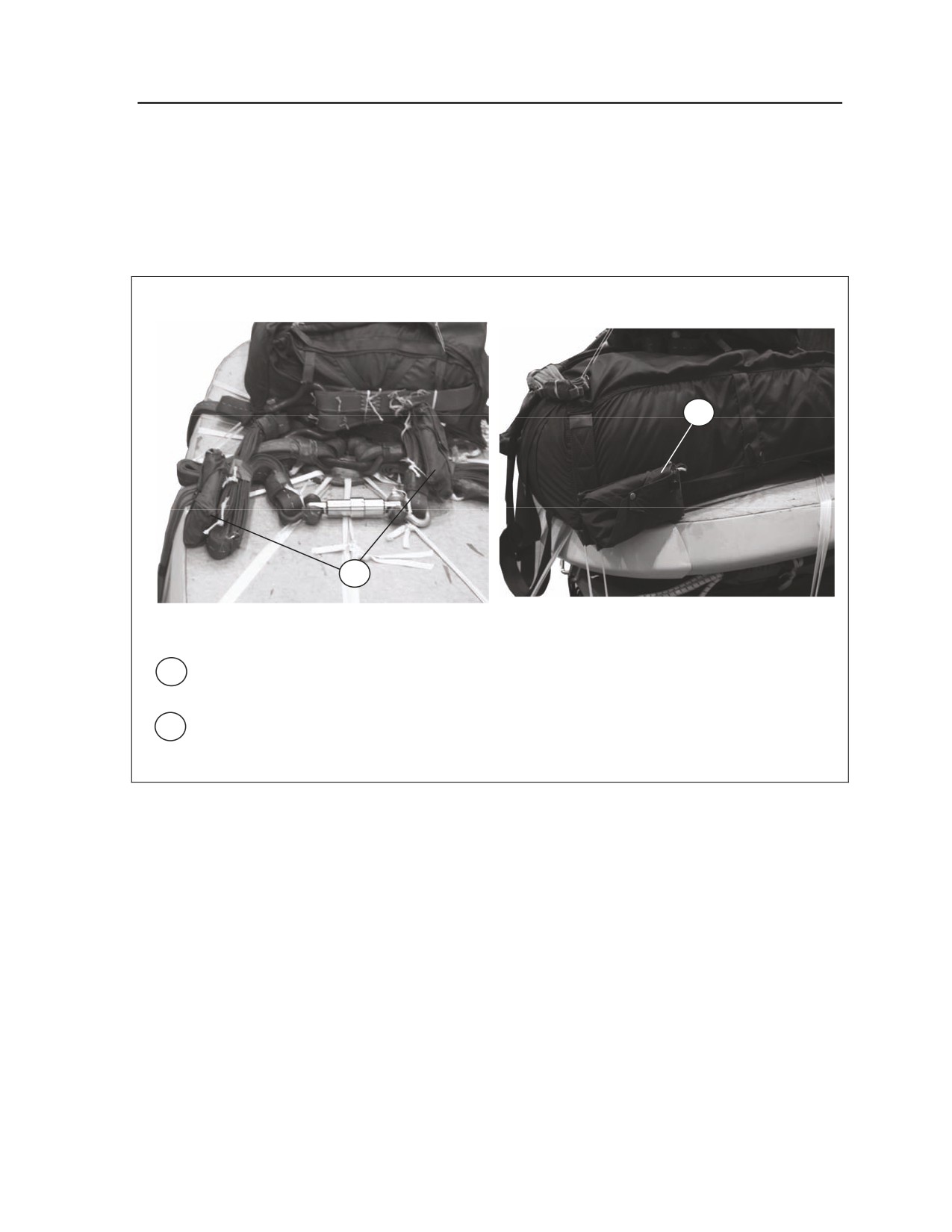
5-12. Use flotation devices on training loads to help recover equipment. Install flotation devices as shown
in Figure 5-12.
2
1
1. Install one flotation device on the 3-foot suspension sling (below the release), and one on the
3-foot riser extension (above the release) with lengths of Type III nylon cord.
2. Install a flotation device on the left front of the cargo parachute D-bag with lengths of Type III
nylon cord.
Figure 5-12. Flotation Devices Installed
FM 4-20.142/MCRP 4-11.3P/NAVSEA SS400-AD-MMO-010/ TO 13C7-51-21
19 September 2007
5-21
Chapter 5
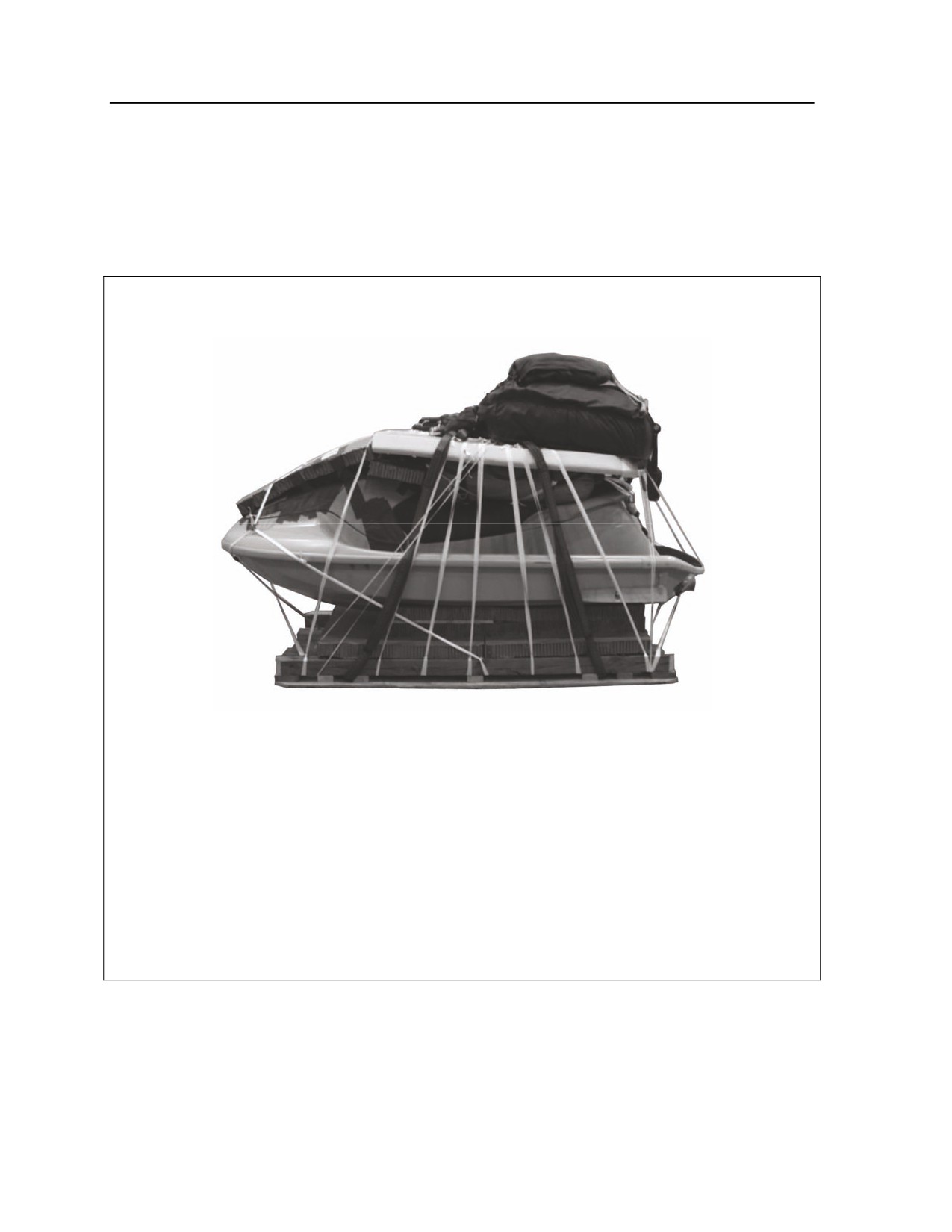
MARKING THE RIGGED LOAD
5-13. Mark the rigged load according to FM
4-20.102/MCRP 4-11.3J/NAVSEA SS400-AB-MMO
010/TO 13C7-1-5 and as shown in Figure 5-13. Complete the Shipper’s Declaration for Dangerous Goods.
Note. Attach the load data tag on the rear of the ARC.
Rigged Load Data
Total Rigged Weight: Load shown
1,140 pounds
Height:
70 inches
Width:
48 inches
Length:
111.5 inches
Overhang:
Front
10.5 inches
Rear
14 inches
CB (from the front edge of the platform)
36.5 inches
Figure 5-13. The ARC Rigged on a Combat Expendable Platform
FM 4-20.142/MCRP 4-11.3P/NAVSEA SS400-AD-MMO-010/ TO 13C7-51-21
5-22
19 September 2007

Rigging the Advanced Rescue Craft (ARC) on a Combat Expendable Platform (CEP)
EQUIPMENT REQUIRED
5-14. Use the equipment listed in Table 5-1 to rig this load.
Table 5-1. Equipment Required for Rigging the GP 800 Advanced Rescue Craft
National Stock
Item
Quantity
Number
Plywood:
5530-00-128-4981
3/4 x 48 x 96-inch plywood
1
5510-00-220-6146
2 x 4 x 44-inch lumber
5
5510-00-220-6148
2 x 6 x 44-inch lumber
2
2 x 6 x 87-inch lumber
2
5510-00-220-6274
4 x 4 x 87-inch lumber
2
5315-00-010-4659
Nail, steel wire, common, 8D (or)
As required
Local purchase
1 1/2-inch Wood screw
As required
Local purchase
Bolt, Carriage, 3/8”Dia. 7” Long
8
w/washer and nut
Air Items:
1670-01-062-6302
Line, 20-foot 2-loop Type XXVI
2
1670-01-062-6304
Line, 9-foot 2-loop Type XXVI
1
1670-01-062-6301
Line, 3-foot 2-loop Type XXVI
2
1670-01-678-8562
Clevis, Medium, Suspension
3
4030-00-360-0304
Clevis, Small 5/8-inch
2
4030-00-678-8560
Clevis, G-13
1
1670-01-065-3755
Parachute, Cargo G-12E
1
1670-01-063-3715
Parachute, Cargo 15-foot Extraction
1
1670-00-590-9909
D-bag, T-10 Personnel Parachute
1
1670-01-310-2875
Release, Automatic Cargo Parachute
1
4220-00-059-6061
Flotation Device, LPU-3/P
3
Expendables:
1670-00-753-3928
Pad, Energy Dissipating
3
8305-00-082-5752
Webbing, 1/2-inch Tubular Nylon
As required
4020-00-240-2146
Cord, Type III Nylon
As required
8305-00-268-2411
Webbing, 1/4-inch Cotton (80lb)
As required
8310-00-917-3945
Thread, Ticket 8/7 Cotton
As required
7510-00-266-5016
Tape, 2-inch Cloth-backed Adhesive
As required
7510-00-297-6655
Tape, 2-inch Masking
As required
1670-00-568-0323
Band, Rubber Retainer
As required
FM 4-20.142/MCRP 4-11.3P/NAVSEA SS400-AD-MMO-010/ TO 13C7-51-21
19 September 2007
5-23
Chapter 5
SECTION II-RIGGING THE XL1200 ARC
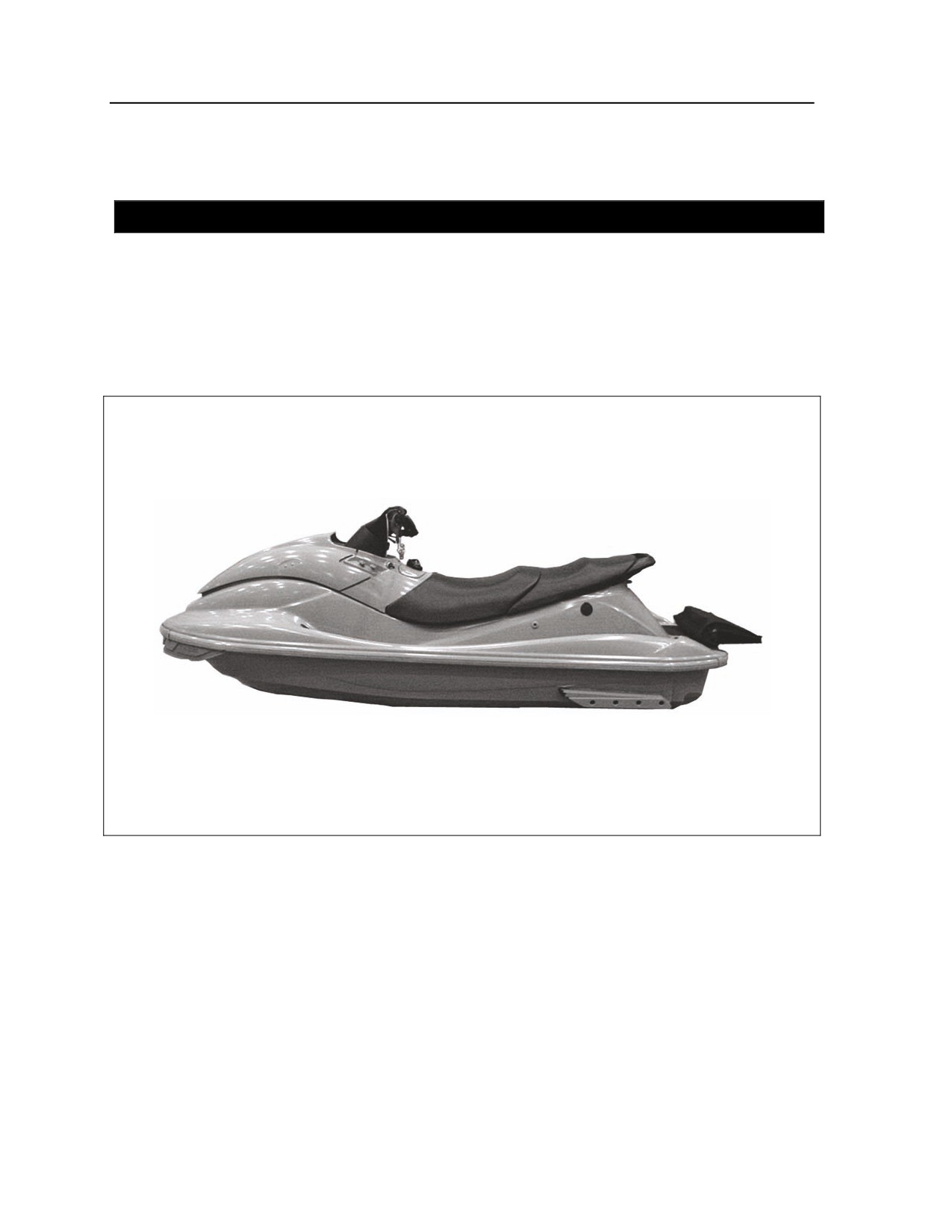
DESCRIPTION OF LOAD
5-15. The XL1200 ARC shown in Figure 5-14, is rigged on a 48- by 87-inch Combat Expendable Platform
for low-velocity airdrop. This load can be rigged with or without a 20-man life raft, a rescue board, a
rucksack, and an aid bag. The load requires one G-12E cargo parachute and a 15-foot cargo extraction
parachute packed in a T-10 deployment bag.
Figure 5-14. XL1200 ARC
FM 4-20.142/MCRP 4-11.3P/NAVSEA SS400-AD-MMO-010/ TO 13C7-51-21
5-24
19 September 2007
Rigging the Advanced Rescue Craft (ARC) on a Combat Expendable Platform (CEP)
BUILDING THE COMBAT EXPENDABLE PLATFORM
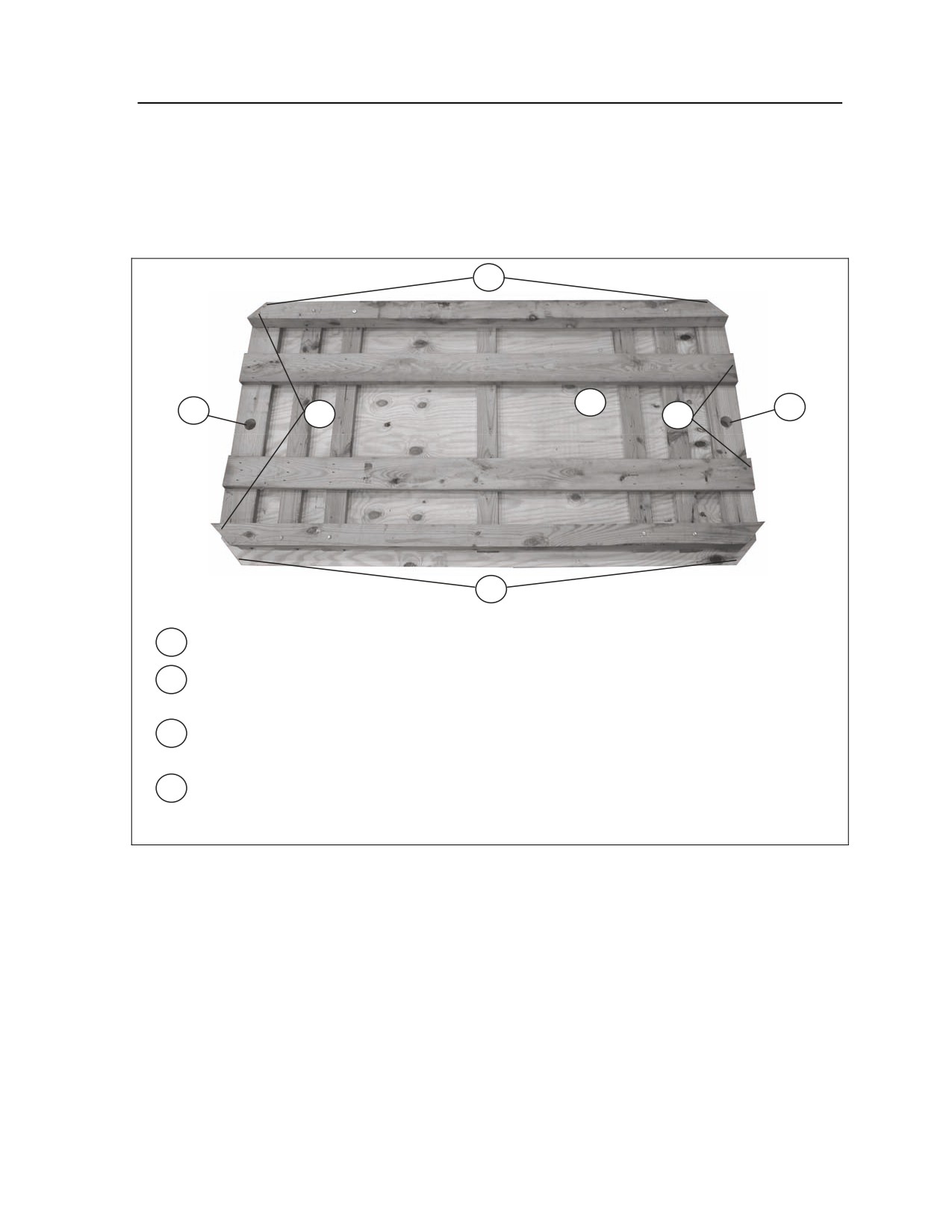
5-16. Build a new 48- by 87-inch CEP or inspect and repair a used platform as shown in Figure 5-15.
6
4
9
9
1
2
6
1. Lay out two 4- by 4- by 87-inch and two 2- by 6- by 87-inch longitudinal stringers.
2. Lay two 2- by 6- by 44-inch and four 2- by 4- by 44-inch lateral stringers on top and across
the longitudinal stringers matching the measurements above.
3. Secure the lateral stringers to the longitudinal stringers with 8d nails. Do not nail within 2
inches of the ends of the 4- by 4- by 87-inch longitudinal stringers (not shown).
4. Position the 3/4- by 48- by 87-inch plywood on top of the lateral stringers leaving a 2-inch
overhang on each side of the 4- by 4- by 87-inch longitudinal stringers.
Figure 5-15. CEP Built
FM 4-20.142/MCRP 4-11.3P/NAVSEA SS400-AD-MMO-010/ TO 13C7-51-21
19 September 2007
5-25

Chapter 5
5.
Secure the plywood to the lateral stringers with 8d nails at 6-inch intervals (not shown).
6.
Cut the corners of the platform at a 45-degree angle to include the corners of the 4- by 4- by
87-inch longitudinal stringers.
7.
Turn the platform over and drill eight 3/4-inch hole for the carriage bolts. Drill again with a
large enough drill bit in order to counter sink the bolt heads, washers, and nuts (not shown).
8.
Install the carriage bolts from bottom to top and trim the threaded ends at the nuts. File sharp
edges (not shown).
9. Drill a 2-inch hole centered on each end of the platform.
Figure 5-15. Combat Expendable Platform Built (continued)
FM 4-20.142/MCRP 4-11.3P/NAVSEA SS400-AD-MMO-010/ TO 13C7-51-21
5-26
19 September 2007
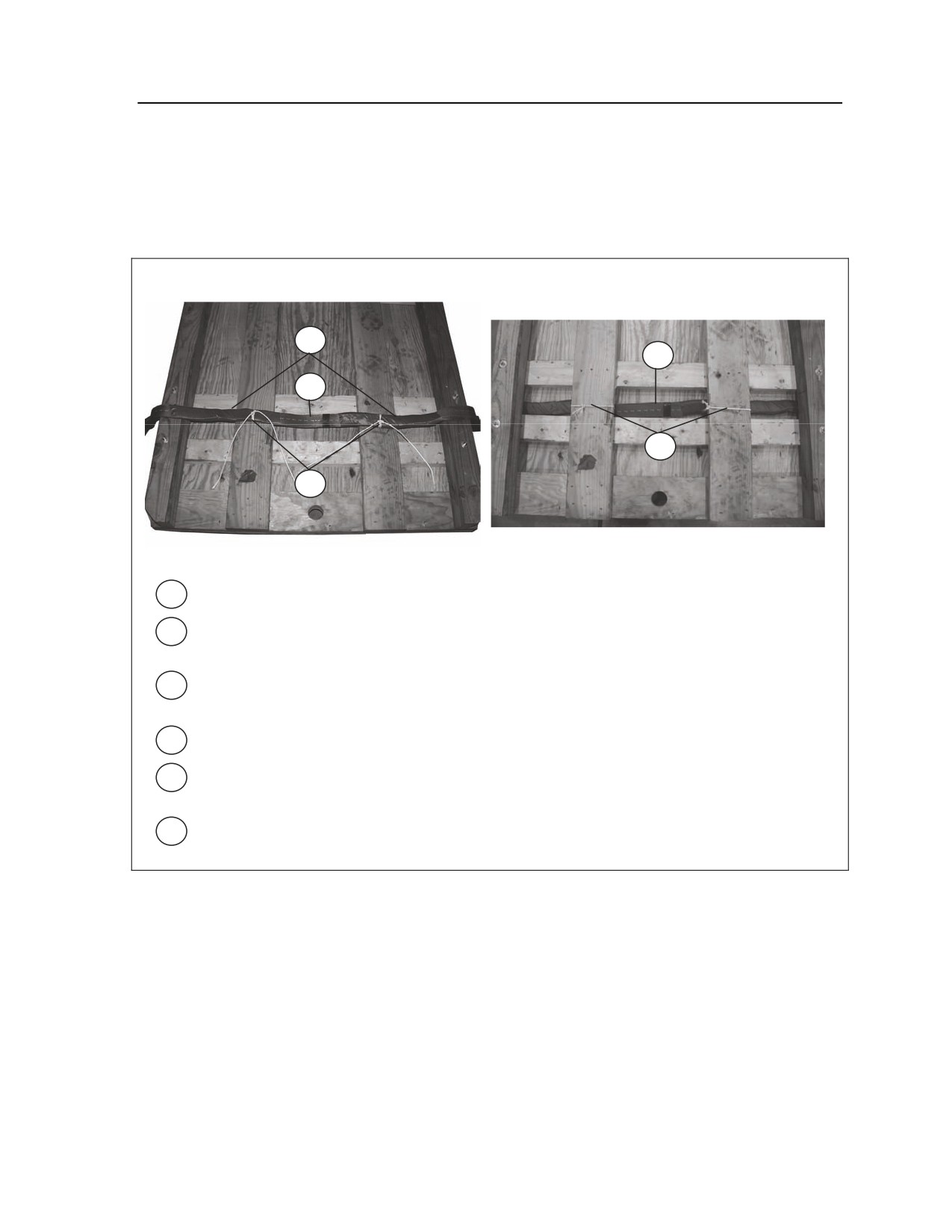
Rigging the Advanced Rescue Craft (ARC) on a Combat Expendable Platform (CEP)
PREPARING THE PLATFORM
5-17. Prepare the Combat Expendable Platform as shown in Figure 5-16.
2
4
1
5
3
1.
Lay a 20-foot, 2-loop Type XXVI nylon sling centered across the rear suspension point.
2.
Tape the suspension sling where it comes in contact with the 2- by 6- by 87-inch longitudinal
stringers with 2-inch cloth-backed adhesive tape.
3.
Tie two 24-inch lengths of Type III nylon cord to the suspension sling making two wraps and
securing with a surgeon’s knot and locking knot, leaving equal amounts of running ends.
4.
Route and center the suspension sling through the suspension sling slot in the platform.
5.
Secure the suspension sling to the 2- by 6- by 87-inch longitudinal stringer with the lengths of
Type III nylon cord with a surgeon’s knot and locking knot.
6. Repeat for the front suspension sling.
Figure 5-16. Platform Prepared
FM 4-20.142/MCRP 4-11.3P/NAVSEA SS400-AD-MMO-010/ TO 13C7-51-21
19 September 2007
5-27
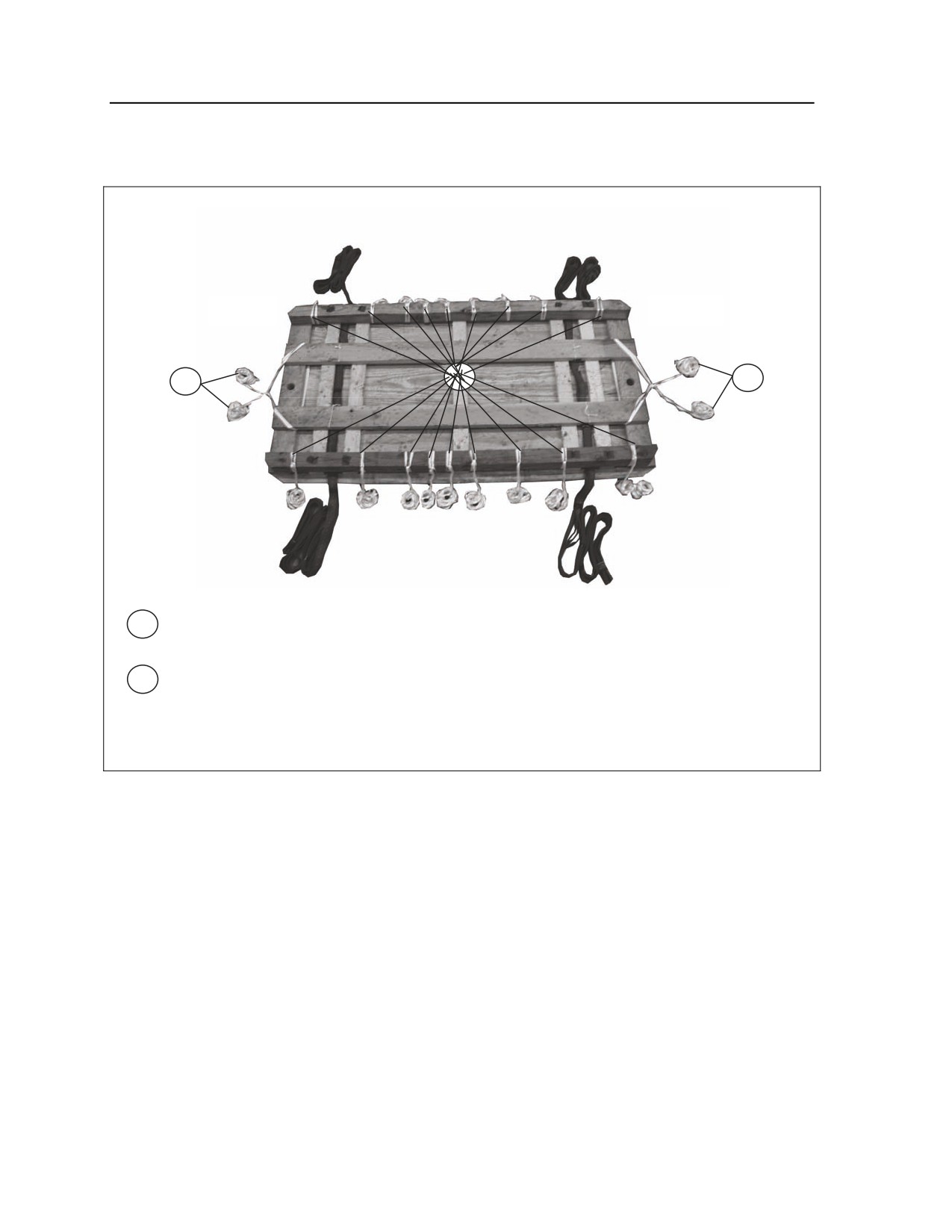
Chapter 5
REAR
FRONT
7
8
8
7. Girth hitch eighteen 20-foot lengths of 1/2-inch tubular nylon webbing to the 4- by 4- by 87
inch longitudinal stringer as shown. Label right side 1 through 9 and left side 1a through 9a.
8. Route a 25-foot length of 1/2-inch tubular nylon webbing, doubled around both of the 2- by 6-
by 87-inch longitudinal stringers at the front and rear of the platform. Secure the front with an
overhand knot as close to the platform as possible. Secure the rear with an overhand knot,
24 inches from the rear edge of the platform.
Figure 5-16. Platform Prepared (continued)
FM 4-20.142/MCRP 4-11.3P/NAVSEA SS400-AD-MMO-010/ TO 13C7-51-21
5-28
19 September 2007
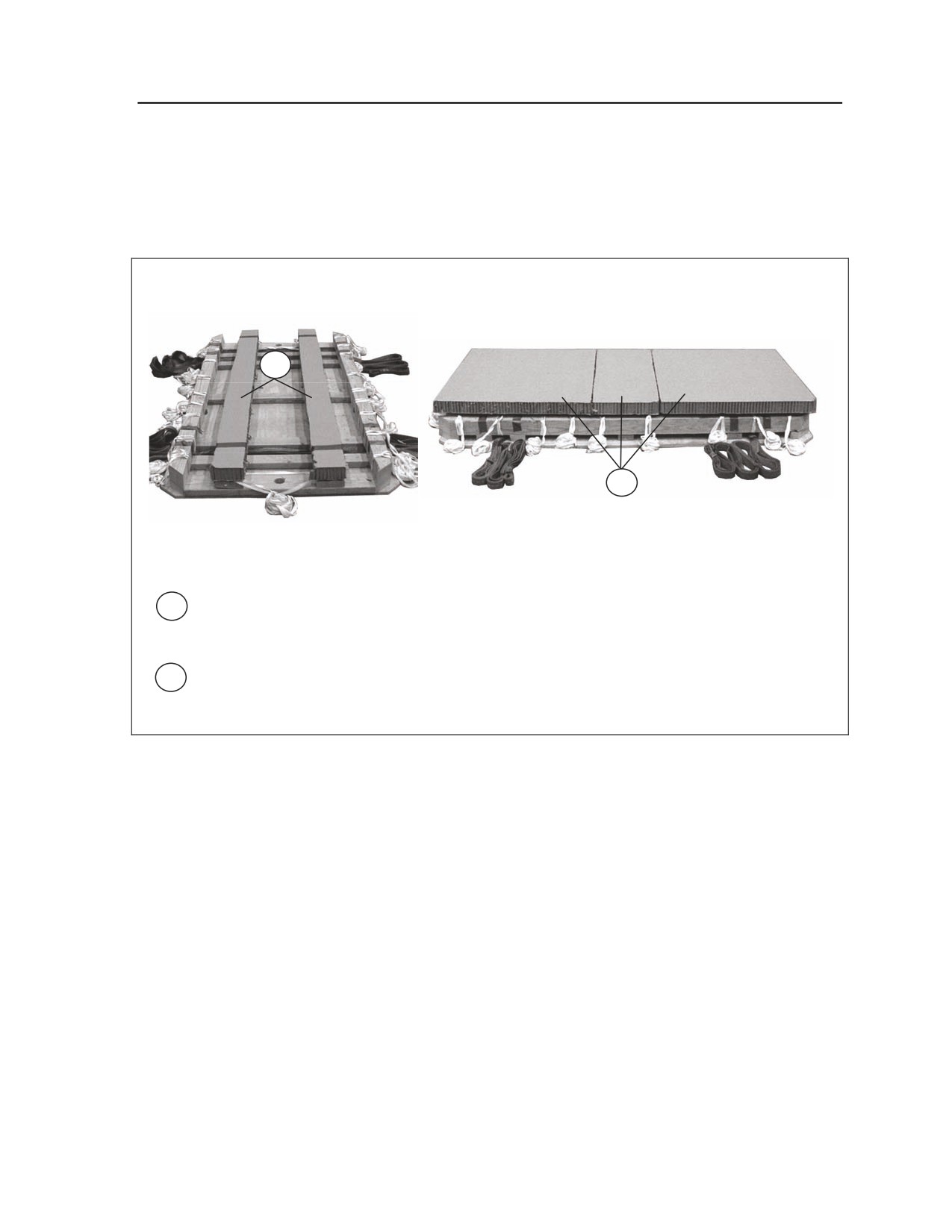
Rigging the Advanced Rescue Craft (ARC) on a Combat Expendable Platform (CEP)
PREPARING AND POSITIONING HONEYCOMB
5-18. Prepare and position the honeycomb as shown in Figure 5-17.
1
2
1. Position one 6- by 87-inch piece of honeycomb on each 2- by 6- by 87-inch longitudinal
stringer, flush with the sides. Secure in place with lengths of 2-inch cloth-backed adhesive
tape.
2. Position (do not glue) two 36- by 42-inch pieces and one 15- by 42-inch piece of honeycomb
on top of the honeycomb placed in step 1 centered and flush.
Figure 5-17. Honeycomb Positioned
FM 4-20.142/MCRP 4-11.3P/NAVSEA SS400-AD-MMO-010/ TO 13C7-51-21
19 September 2007
5-29
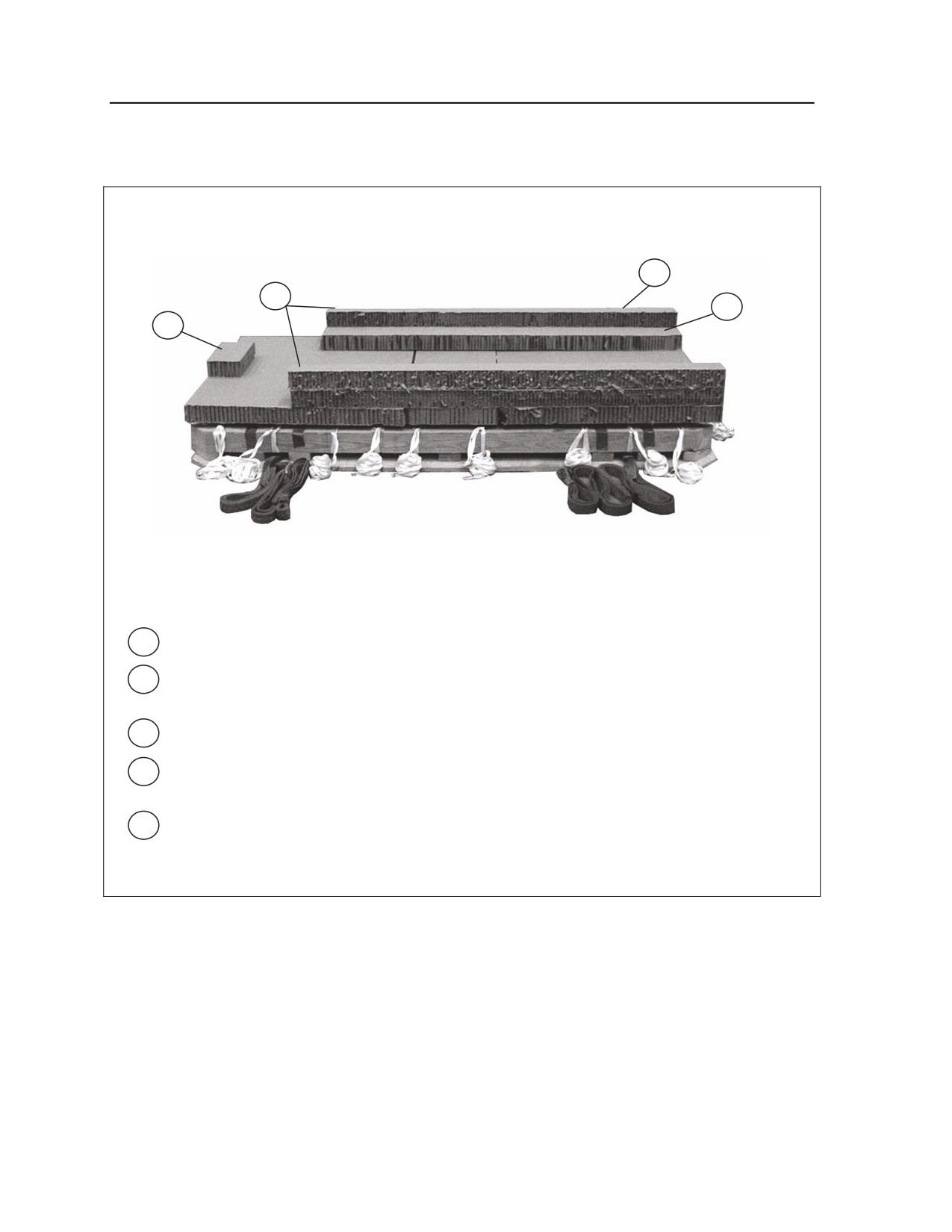
Chapter 5
4
6
3
7
3. Cut a 10- by 70-inch piece of honeycomb for a base.
4. Glue a 40- by 70-inch piece of honeycomb on top of the honeycomb in step 3 flush with one
side.
5. Repeat steps 3 and 4 (not shown).
6. Position (do not glue) stacks 1 and 2 flush with the front and sides of the honeycomb in
Figure 5-16.
7. Cut a 4- by 12 -inch piece of honeycomb. Position (do not glue) stack 3 centered and flush
with the rear of the honeycomb in Figure 5-16.
Note. Stacks 1, 2, and 3 will have to be adjusted to the hull of the ARC.
Figure 5-17. Honeycomb Positioned (continued)
FM 4-20.142/MCRP 4-11.3P/NAVSEA SS400-AD-MMO-010/ TO 13C7-51-21
5-30
19 September 2007
Rigging the Advanced Rescue Craft (ARC) on a Combat Expendable Platform (CEP)
POSITIONING THE ARC
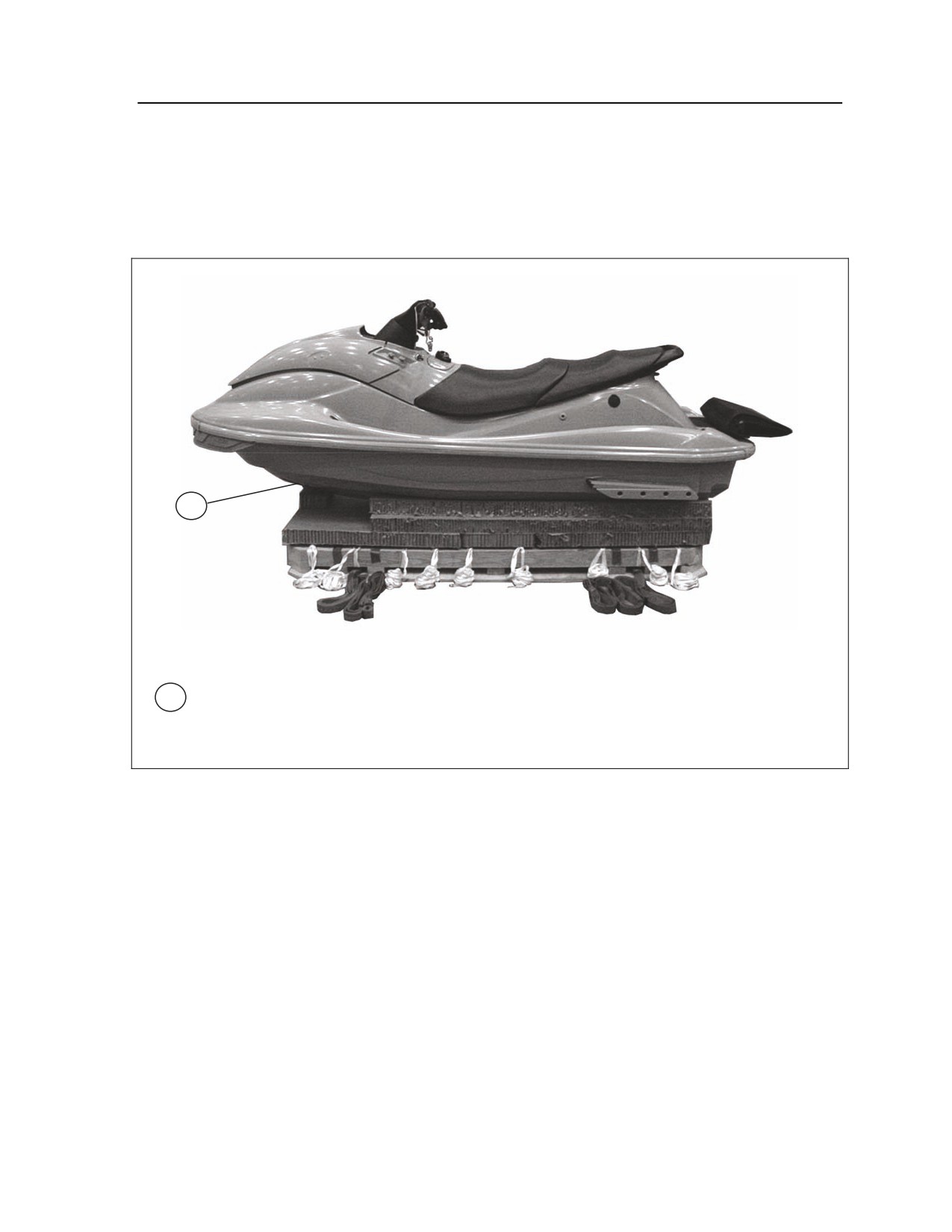
5-19. Position the ARC as shown in Figure 5-18.
1
1. Position the ARC on honeycomb stacks 1, 2, and 3 centered on the platform and nose of the
ARC towards the rear of the platform.
Note. There will be a 25-inch overhang in the rear and 12-inch overhang in the front of the platform.
Figure 5-18. ARC Positioned
FM 4-20.142/MCRP 4-11.3P/NAVSEA SS400-AD-MMO-010/ TO 13C7-51-21
19 September 2007
5-31
Chapter 5
PREPARING THE ARC
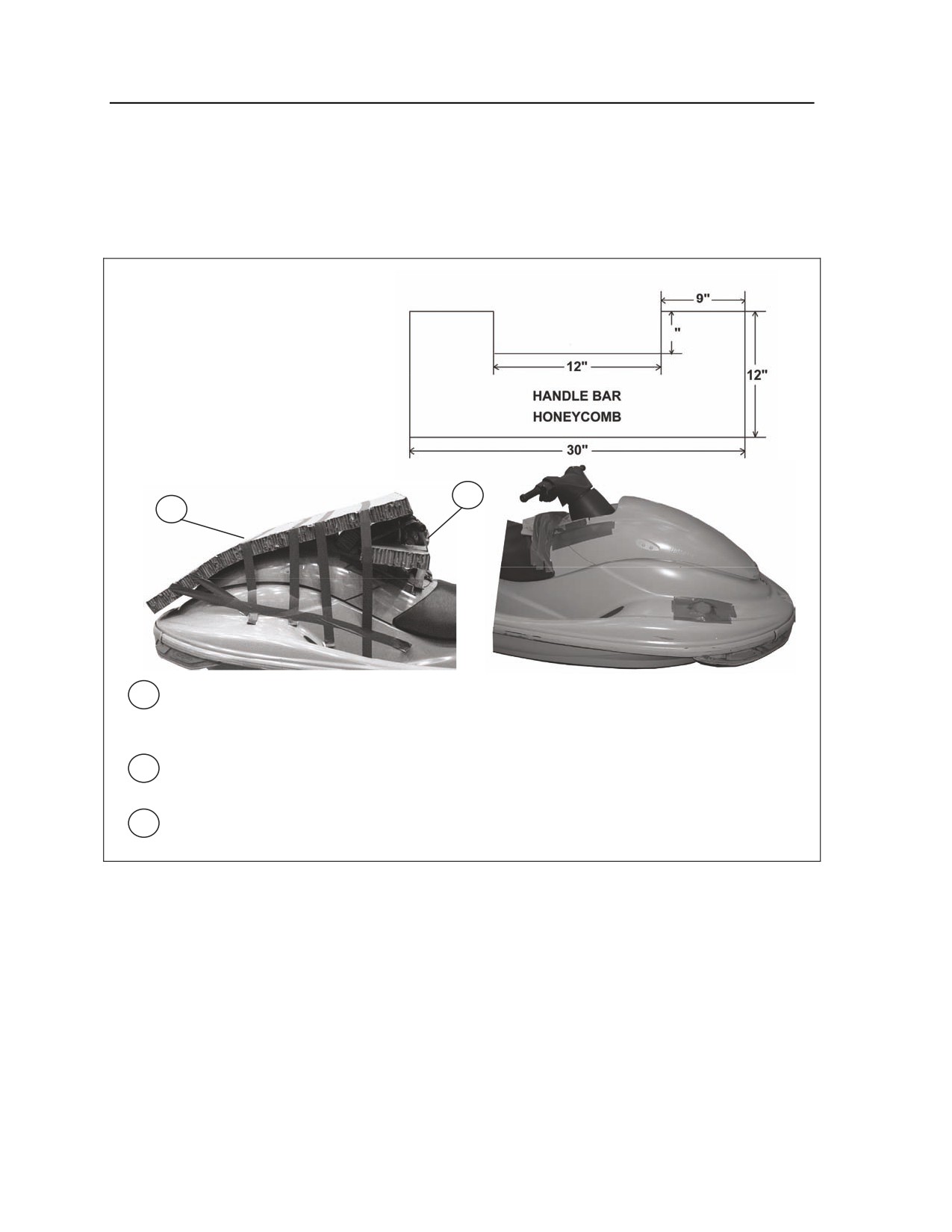
5-20. Ensure the fuel tank is no more than ¾ full. Prepare as shown in Figures 5-19 through 5-22.
1
2
1.
Cut handlebar honeycomb to prescribed measurements and install under the handle bars.
Secure to the handlebars with 2-inch cloth-backed adhesive tape or lengths of Type III nylon
cord.
2.
Cut nose honeycomb to prescribed measurements and position over the nose. Secure to the
nose with 2-inch cloth-backed adhesive tape or lengths of Type III nylon cord.
3. Tape over fuel cap, on/off switch, and compartments with 2-inch cloth-backed adhesive tape.
Figure 5-19. Nose and Handlebar Honeycomb Prepared
FM 4-20.142/MCRP 4-11.3P/NAVSEA SS400-AD-MMO-010/ TO 13C7-51-21
5-32
19 September 2007
Rigging the Advanced Rescue Craft (ARC) on a Combat Expendable Platform (CEP)
CAUTION
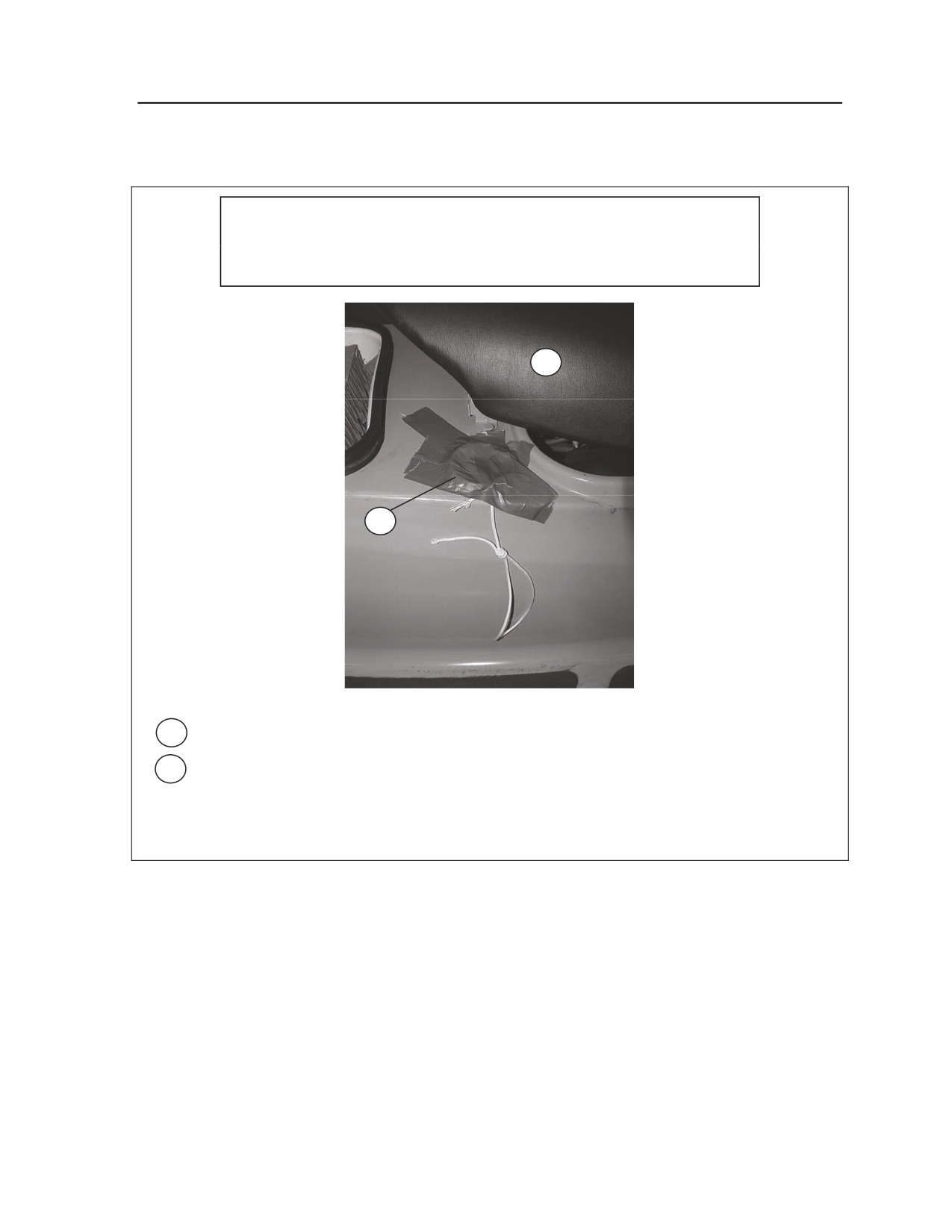
Ensure the drain plugs are securely tightened at the rear of the ARC.
1
2
1. Remove the rear section of the ARC seat to expose the intake port.
2. Plug the intake port by taping over the opening with lengths of 2-inch cloth-backed adhesive
tape. Secure the tape in place with a retainer band. Attach a 12-inch Type III nylon cord
lanyard to the tape. Route the lanyard to the outside of the ARC and tape in place with 2-inch
cloth-backed adhesive tape.
Figure 5-20. Intake Port Plugged
FM 4-20.142/MCRP 4-11.3P/NAVSEA SS400-AD-MMO-010/ TO 13C7-51-21
19 September 2007
5-33