FM 4-20.142 Airdrop of Supplies and Equipment: Rigging Loads for Special Operations (September 2007) - page 6
Chapter 5
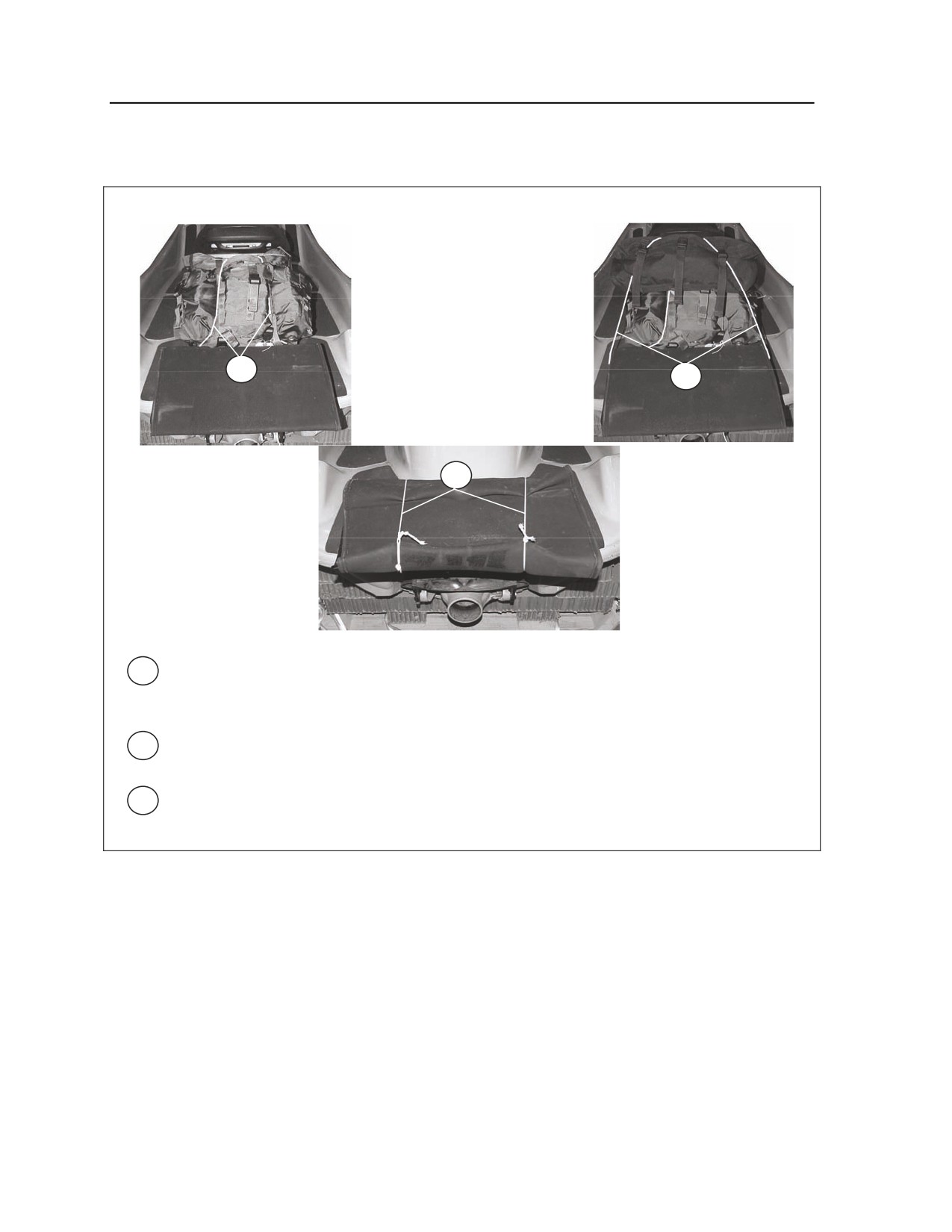
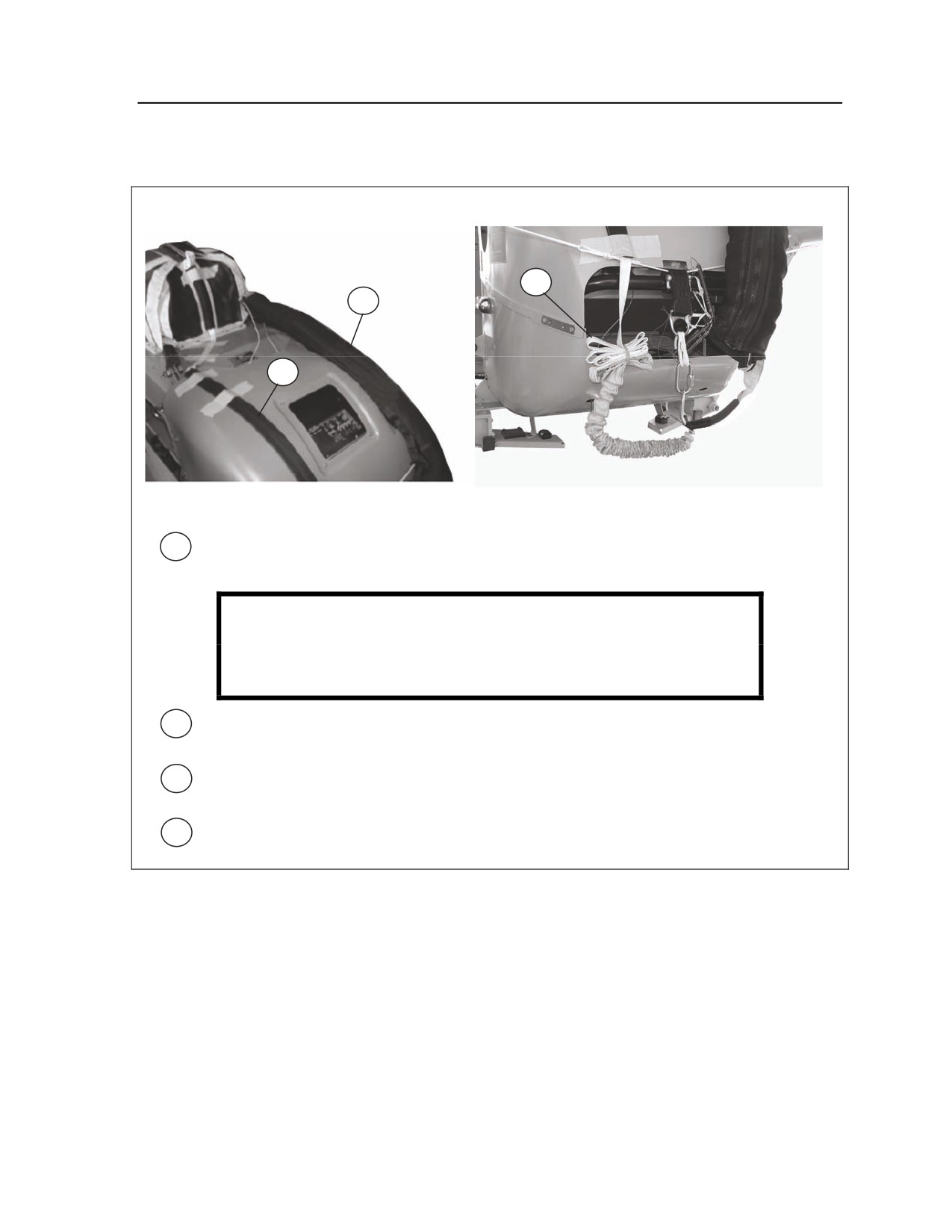
Note. If the rucksack and the first aid pack are to be rigged on the ARC use the steps below.
1
2
3
1.
Position the rucksack on the ARC behind the seat. Secure the rucksack to tow ring and
around the rescue board quick attach assembly with a length of 1/2-inch tubular nylon
webbing.
2.
Position the first aid pack on top of the rucksack and secure to the same locations with a
length of 1/2-inch tubular nylon webbing
3. Secure the protector flap around the rescue board quick attach link with two lengths of Type
III nylon cord.
Figure 5-21. Rescue Board Quick Attach Link Installed
FM 4-20.142/MCRP 4-11.3P/NAVSEA SS400-AD-MMO-010/ TO 13C7-51-21
5-34
19 September 2007
Rigging the Advanced Rescue Craft (ARC) on a Combat Expendable Platform (CEP)
1
5
2
4
3
6
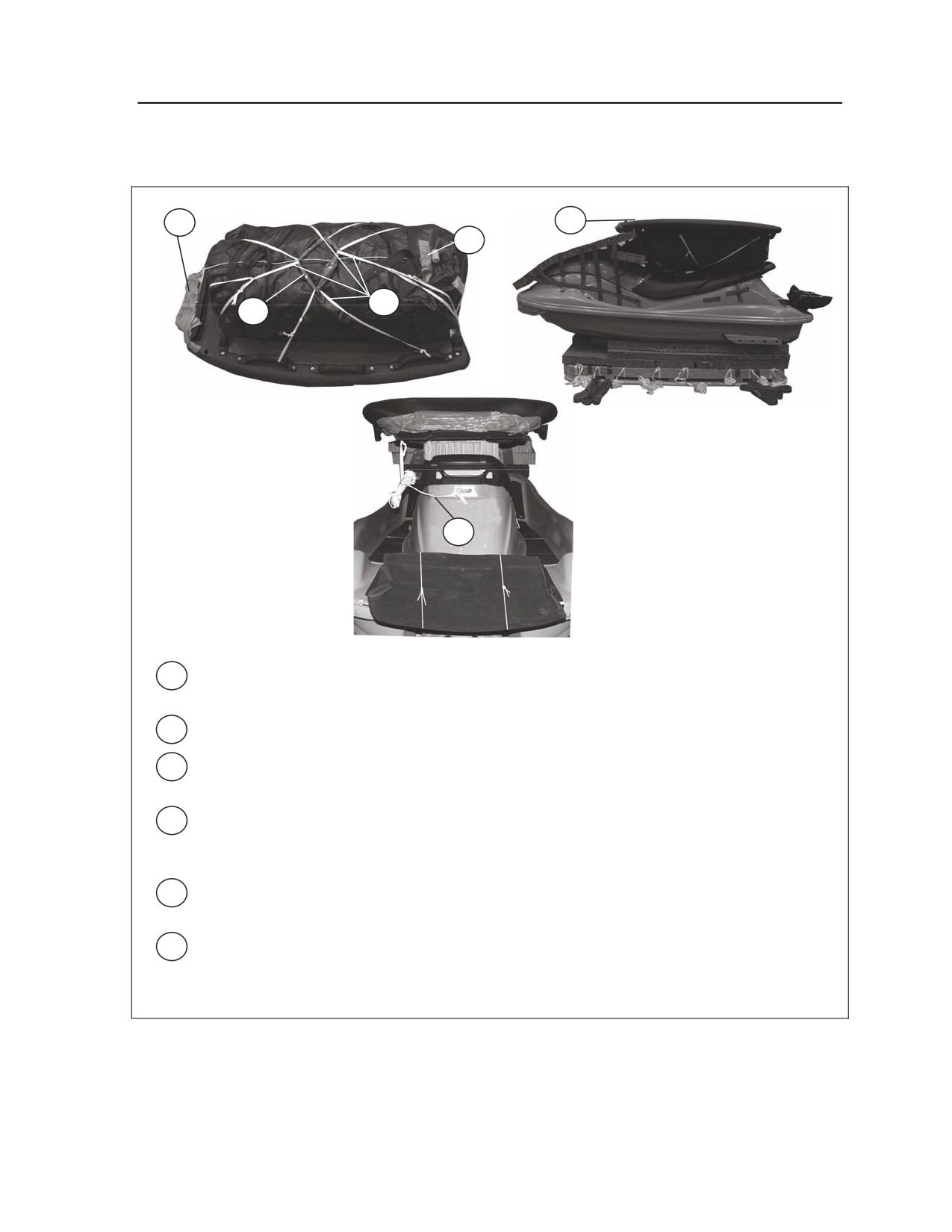
1. Pad the metal bracket on the nose of the rescue board with cellulose wadding and secure
with 2-inch cloth-backed adhesive tape.
2. Center a 20-man life raft on the rescue board with closing flap up.
3. Form an 8-inch tiedown ring as shown in Figure 2-16. Center the tiedown ring on the 20-man
life raft.
4. Cut four 6-foot lengths of 1/2-inch tubular nylon webbing for securing ties. Secure one end of
the tie to a rescue board handle. Route the tie through the tiedown ring and secure to another
rescue board handle with a trucker’s hitch.
5. Position the rescue board upside down on top of the seat and handlebars with the nose
towards the rear of the ARC.
6. Attach a 10-foot length of 1/2-inch tubular nylon webbing to a rescue board handle and the
tow ring. S-fold the excess and tape with 2-inch masking tape.
Note. If the ARC is to be rigged without the 20-man life raft, ensure rescue board is leveled with honeycomb.
Figure 5-22. Rescue Board Installed
FM 4-20.142/MCRP 4-11.3P/NAVSEA SS400-AD-MMO-010/ TO 13C7-51-21
19 September 2007
5-35
Chapter 5
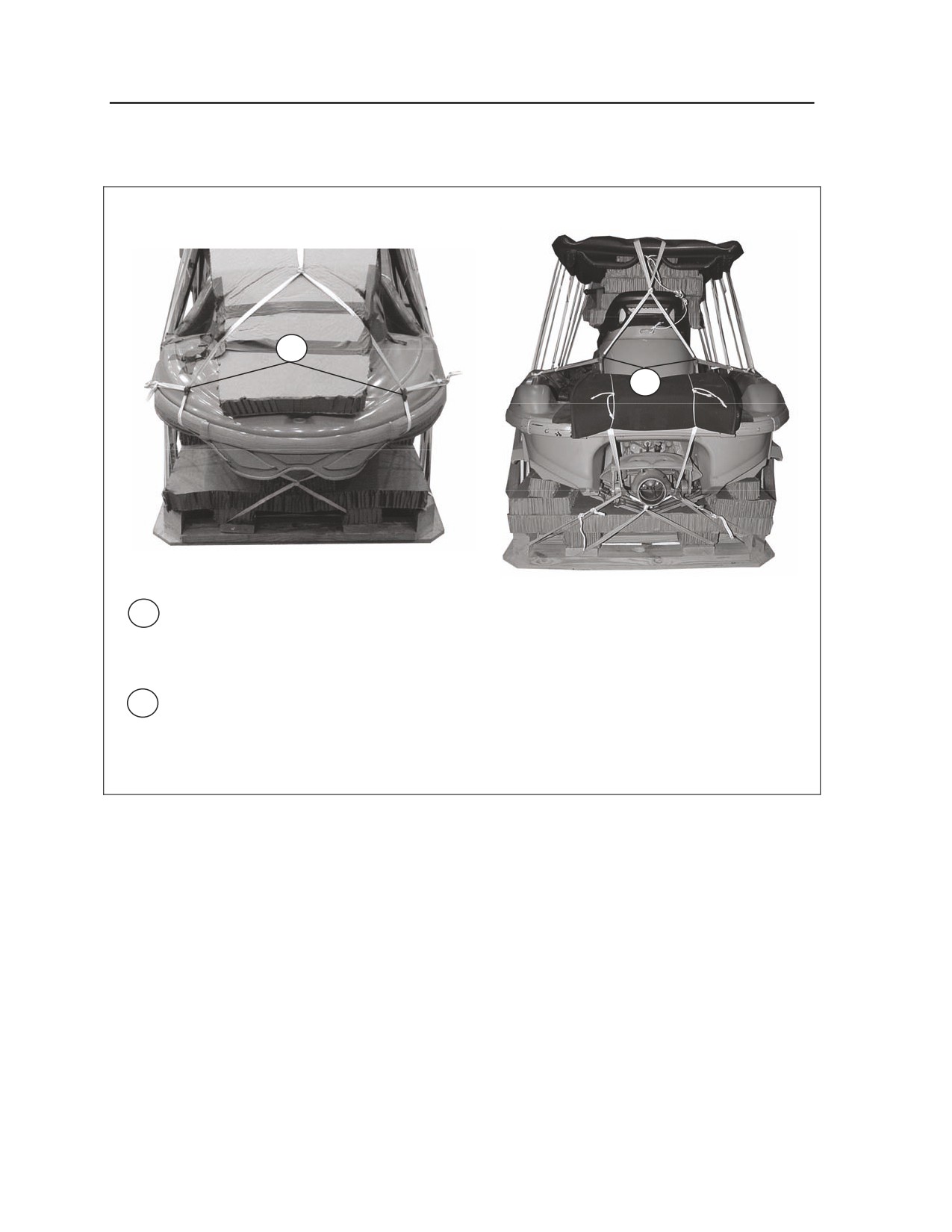
LASHING THE ARC
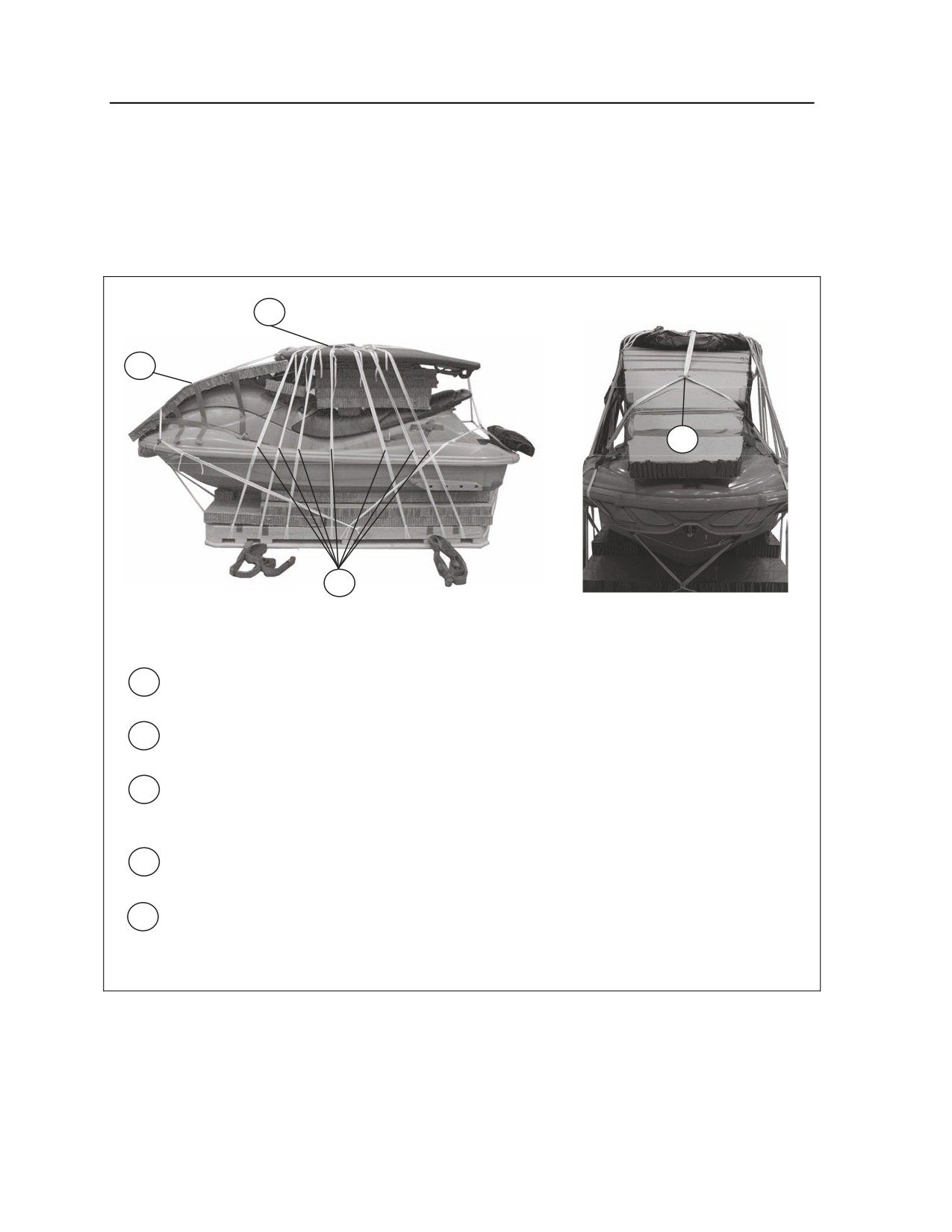
5-21. Lash the ARC to the platform with two 6-foot, eighteen 20-foot and two 25-foot (doubled) lengths of
½-inch tubular nylon webbing as shown in Figure 5-23.
1
5
5
4
1.
Form a 10-inch tiedown ring as shown in Figure 2-16. Center the tiedown ring on top of the
load.
2.
Tie a loop in one end of each 20-foot lashing with an overhand knot. Tie the running end with
an overhand knot (not shown).
3.
Pass the looped end through the tiedown ring. Pass the opposite end of the lashing through
the loop, pull it tight, and tie it with three alternating half hitches with a knot in the running end
(not shown).
4.
Tie all of the 20-foot lashings, (except 4 and 4a, and 5 and 5a from the front of the platform),
to the tiedown ring as described in steps 2, 3, and 5.
5. Pass one end of the rear lashing around each side of the nose of the ARC. Tie the ends
together with an overhand knot about 18 inches above the point of the nose. Tie the lashing
to the tiedown ring as in steps 2, 3, and 4.
Figure 5-23. ARC Lashed to Platform
FM 4-20.142/MCRP 4-11.3P/NAVSEA SS400-AD-MMO-010/ TO 13C7-51-21
5-36
19 September 2007
Rigging the Advanced Rescue Craft (ARC) on a Combat Expendable Platform (CEP)
7
6
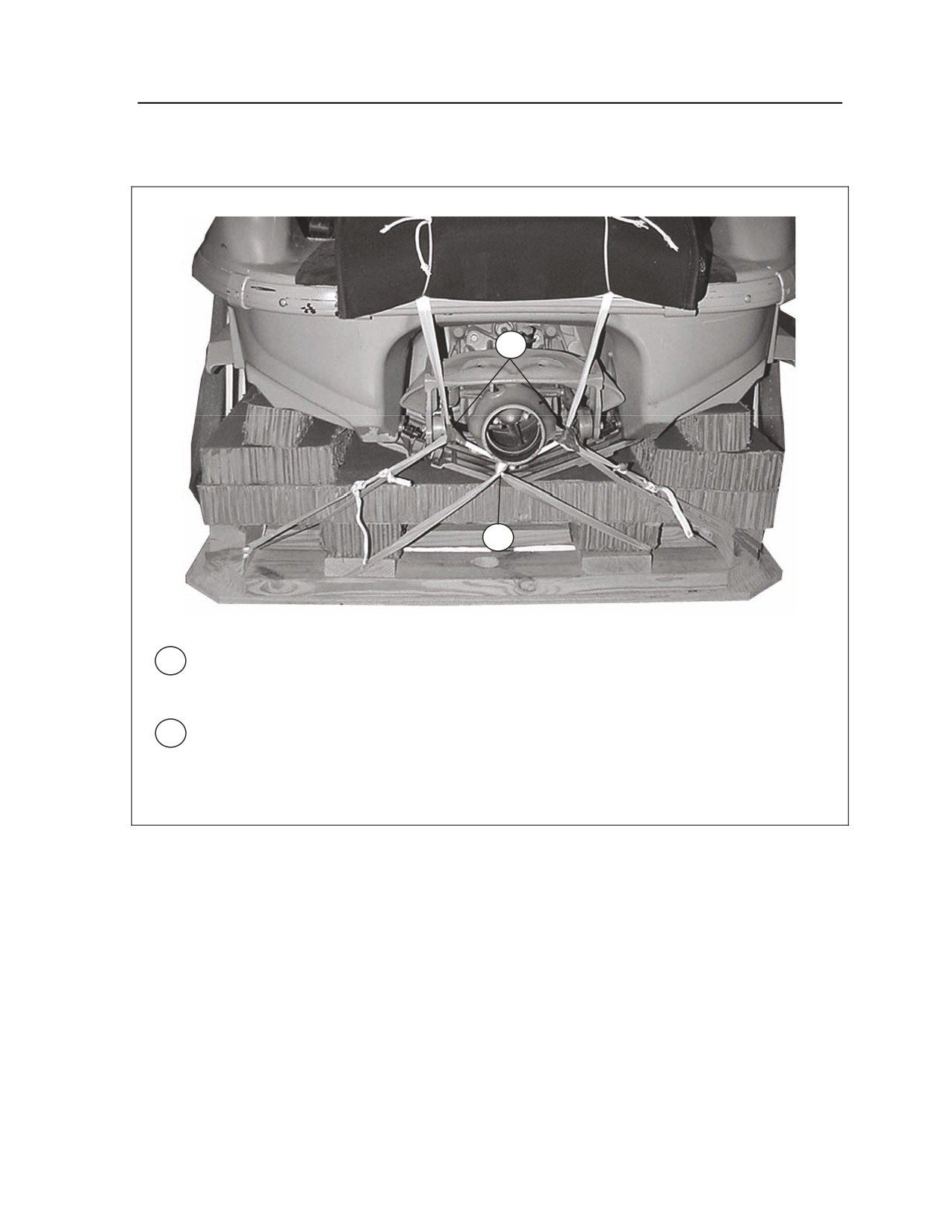
6. Pass one end of the front lashing around each side of the jet drive and the rescue board
quick attach link. Tie the ends together with an overhand knot about 18 inches above the
CEP. Tie the front lashing to the tiedown ring as described in steps 2, 3, and 4.
7. Girth hitch one 6-foot 1/2-inch tubular nylon webbing lashing to the very front of both
longitudinal stringers. Secure to the front lashing with a trucker’s hitch, pulling the front
lashing away from the jet drive and linkage. Tape around the two lashings with 2-inch cloth-
backed adhesive tape.
Figure 5-23. ARC Lashed to Platform (continued)
FM 4-20.142/MCRP 4-11.3P/NAVSEA SS400-AD-MMO-010/ TO 13C7-51-21
19 September 2007
5-37
Chapter 5
8
9
8. Tie lashings 4 and 4a from the front of the platform, to the rear lashing approximately 6
inches above the point of the nose of the ARC. Secure the rear lashing with a trucker’s hitch
pulling the rear lashing away from the nose of the ARC. Tape around the two lashings with 2
inch cloth-backed adhesive tape.
9. Tie lashings 5 and 5a from the front of the platform, to the front lashing approximately, 3
inches above the rescue board quick attach link. Secure to the front lashing with a truckers
hitch pulling the front lashing away from the rescue board quick attach link. Tape around the
two lashings with 2-inch cloth-backed adhesive tape.
Figure 5-23. ARC Lashed to Platform (continued)
FM 4-20.142/MCRP 4-11.3P/NAVSEA SS400-AD-MMO-010/ TO 13C7-51-21
5-38
19 September 2007
Rigging the Advanced Rescue Craft (ARC) on a Combat Expendable Platform (CEP)
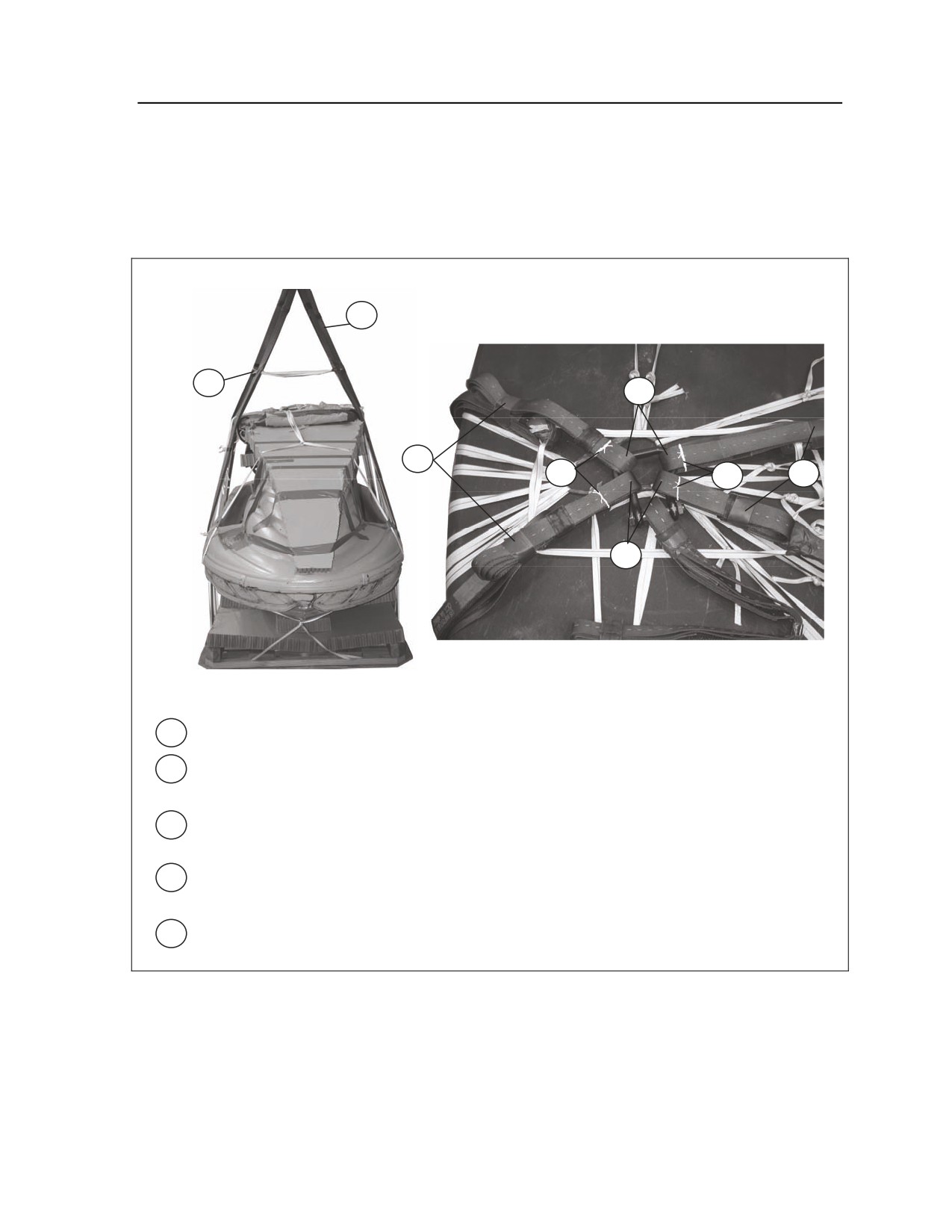
SAFETY TIEING SUSPENSION SLINGS
5-22. Safety tie the suspension slings as shown in Figure 5-24.
1
2
4
5
3
3
5
4
1.
Raise the suspension slings.
2.
Install the deadman’s tie 6 to 8 inches above the load as described in FM 4-20.102/MCRP 4
11.3J/NAVSEA SS400-AB-MMO-010/TO 13C-7-1-5.
3.
Lower the suspension slings until they touch the tiedown ring. Secure them to the tiedown
ring with lengths of one turn 1/4-inch cotton webbing.
4.
Attach the suspension slings to the arms of a medium suspension clevis. Attach a 3-foot, 2
loop Type XXVI nylon suspension sling to the bolt end of the medium clevis.
5. S-fold the excess suspension sling and tape with one turn 2-inch cloth-backed adhesive tape.
Figure 5-24. Suspension Slings Safety Tied
FM 4-20.142/MCRP 4-11.3P/NAVSEA SS400-AD-MMO-010/ TO 13C7-51-21
19 September 2007
5-39
Chapter 5
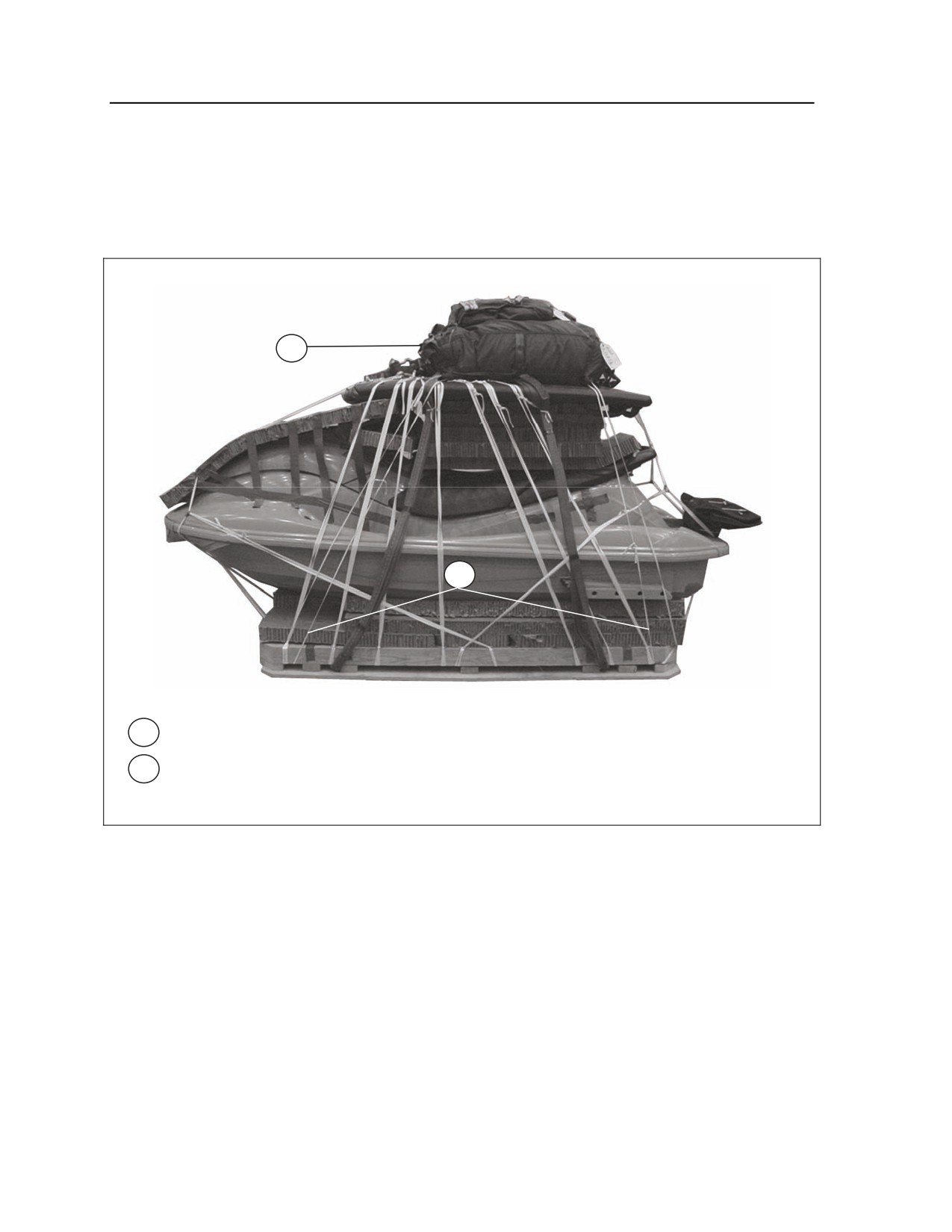
STOWING CARGO PARACHUTE
5-23. Stow the G-12E cargo parachute as shown in Figure 5-25.
1
2
1. Position the G-12E parachute with the bridle towards the front, centered on the rescue board.
2. Secure all four corners of the G-12E D-bag to the platform with suitable lengths of 1/4-inch
cotton webbing.
Figure 5-25. Cargo Parachute Stowed
FM 4-20.142/MCRP 4-11.3P/NAVSEA SS400-AD-MMO-010/ TO 13C7-51-21
5-40
19 September 2007
Rigging the Advanced Rescue Craft (ARC) on a Combat Expendable Platform (CEP)
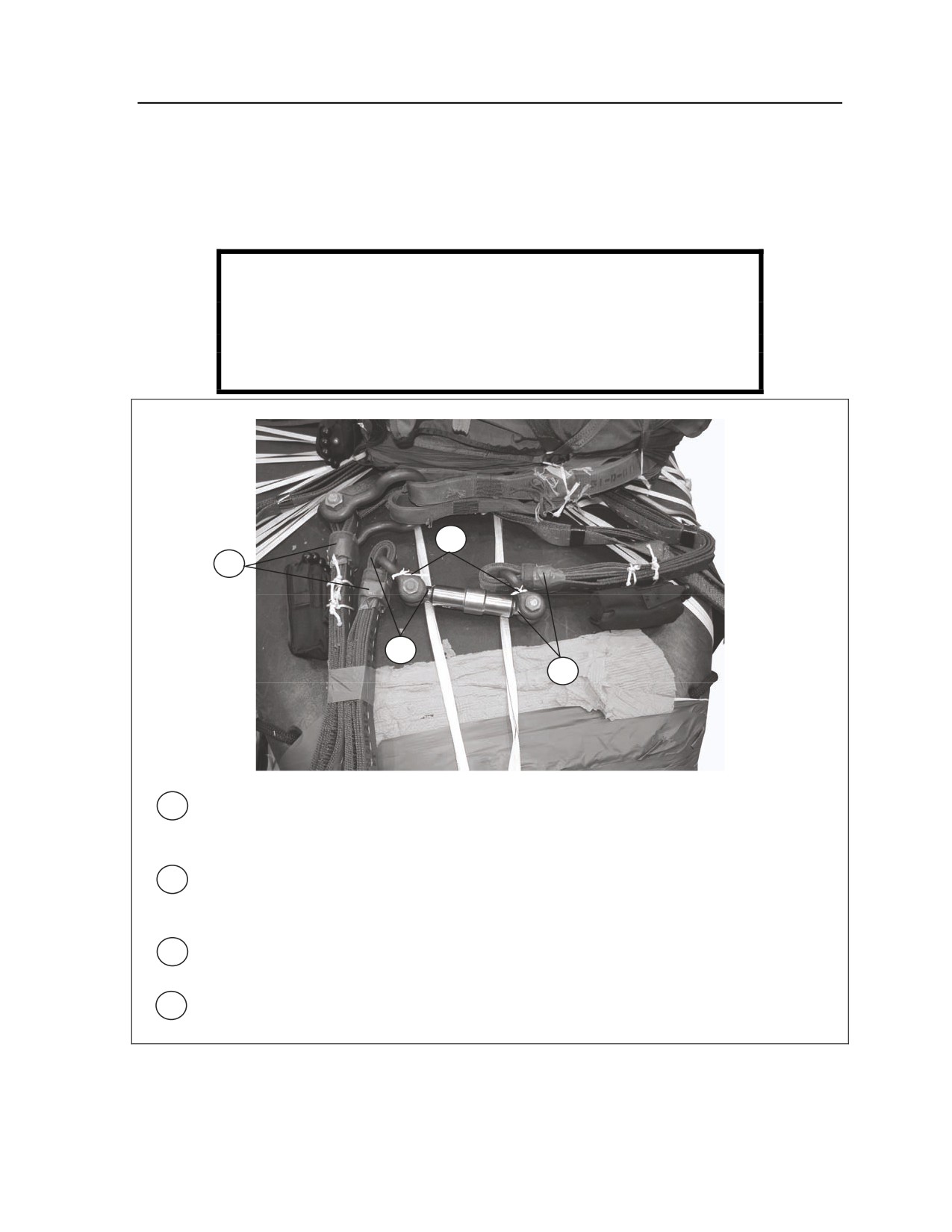
INSTALLING THE AUTOMATIC CARGO PARACHUTE RELEASE
5-24. Install the cargo parachute hydraulic release as shown in Figure 5-26.
WARNING
The automatic cargo parachute release must be pre-drop tested
according to the manufacturer’s instructions prior to installation
on the airdrop load.
3
2
2
1
1. Attach the running end of the 3-foot, 2-loop Type XXVI nylon suspension sling to the bottom
release fitting shackle (small portion) with a suspension clevis. Tape the buffer with one turn
2-inch cloth-backed adhesive tape.
2. Attach one end of a 3-foot, 2-loop Type XXVI nylon webbing riser extension to the main body
of the release with a suspension clevis. Attach the running end of the riser extension to the
cargo parachute clevis. Tape the buffers with 2-inch cloth-backed adhesive tape.
3. Secure the suspension clevises of the release to a convenient point on the top of the load
with suitable lengths of 1/4-inch cotton webbing.
4. Cut and remove the triple transportation tie on the cargo parachute clevis (not shown).
Figure 5-26. Automatic Cargo Parachute Release Installed
FM 4-20.142/MCRP 4-11.3P/NAVSEA SS400-AD-MMO-010/ TO 13C7-51-21
19 September 2007
5-41
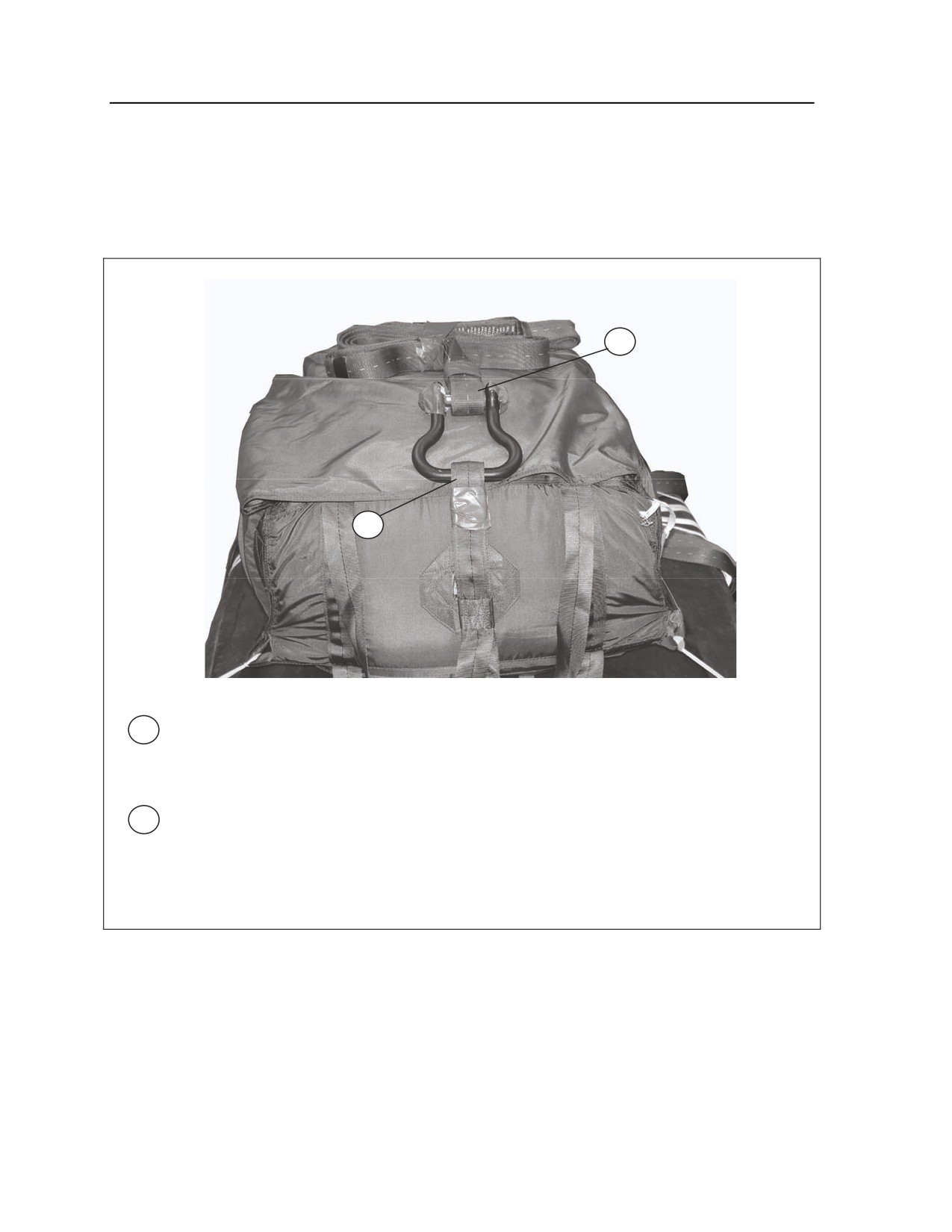
Chapter 5
STOWING THE EXTRACTION PARACHUTE
5-25. Stow the 15-foot extraction parachute packed in a T-10 deployment bag as shown in Figure 5-27.
Note. For the 15-foot extraction parachute packing procedures, see FM 10-500-77, Chapter 3.
2
1
1. Attach a 9-foot, 2-loop Type XXVI nylon webbing extraction line to the bell portion of a
medium suspension clevis. Attach the bridle of the G-12E cargo parachute to the bolted end
of the medium clevis. Secure the clevis to the riser extension stow bar of the cargo parachute
with a length of one turn single ¼-inch cotton webbing.
2. Attach a 36-inch adapter web of a 15-foot extraction parachute packed in a T-10 deployment
bag to the bell portion of a medium suspension clevis (not shown). Attach the running end of
the 9-foot, 2-loop Type XXVI nylon webbing extraction line to the bolt end of the medium
clevis. S-fold and tape the excess extraction line with one turn 2-inch cloth-backed adhesive
tape.
Figure 5-27. Extraction Parachute Installed
FM 4-20.142/MCRP 4-11.3P/NAVSEA SS400-AD-MMO-010/ TO 13C7-51-21
5-42
19 September 2007
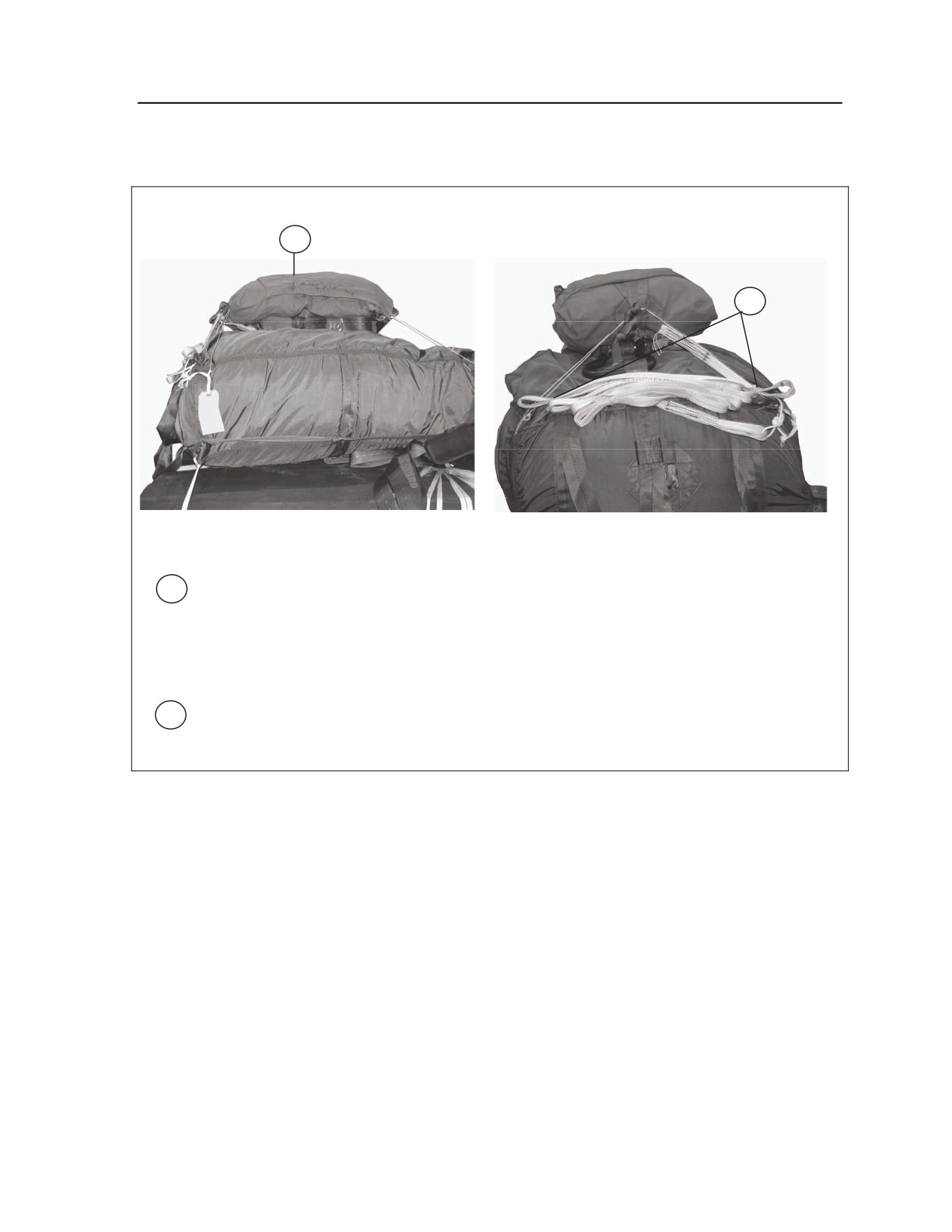
Rigging the Advanced Rescue Craft (ARC) on a Combat Expendable Platform (CEP)
3
4
3. S-fold the 36-inch adapter web and place it and the extraction line centered on top of the G
12E cargo parachute. Place the 15-foot extraction parachute, with the mouth of the bag
facing to the rear of the load and suspension line protective flap up, centered on top of the
adapter web and extraction line. Secure the extraction parachute to the front and rear riser
extension stow bars of the cargo parachute with four suitable lengths of ticket number 5, 8/7
cotton thread.
4. Fit rubber retainer bands to the front riser extension stow bar. Fold the static line, and hold
the folds in place with the rubber retainer bands.
Figure 5-27. Extraction Parachute Installed (continued)
FM 4-20.142/MCRP 4-11.3P/NAVSEA SS400-AD-MMO-010/ TO 13C7-51-21
19 September 2007
5-43
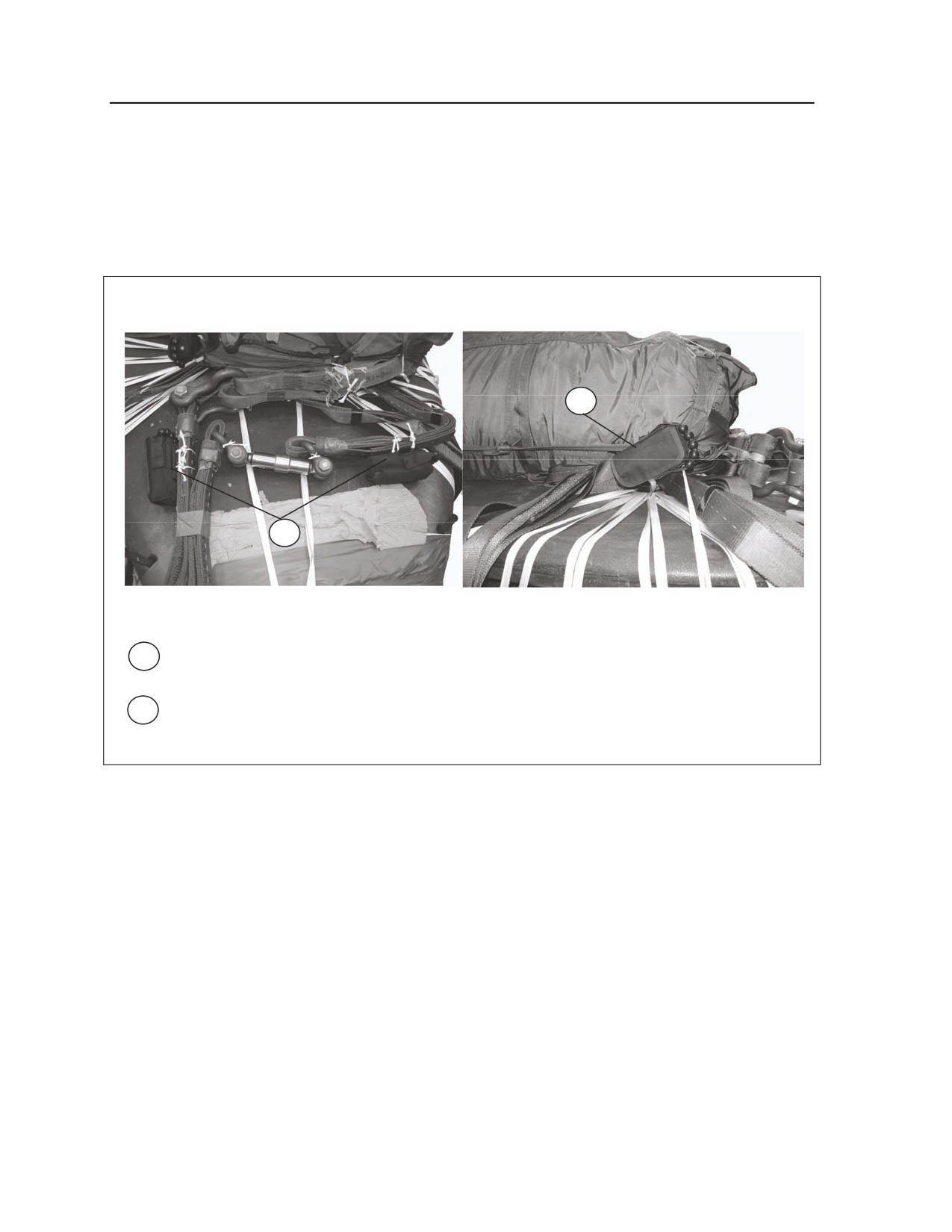
Chapter 5
ATTACHING FLOTATION DEVICES FOR TRAINING
5-26. Use flotation devices on training loads to help recover equipment. Install flotation devices as shown
in Figure 5-28.
2
1
1. Install one flotation device on the 3-foot suspension sling (below the release), and one on the
3-foot riser extension (above the release) with suitable lengths of Type III nylon cord.
2. Install a flotation device on the left front of the cargo parachute deployment bag with suitable
lengths of Type III nylon cord.
Figure 5-28. Flotation Devices Installed
FM 4-20.142/MCRP 4-11.3P/NAVSEA SS400-AD-MMO-010/ TO 13C7-51-21
5-44
19 September 2007
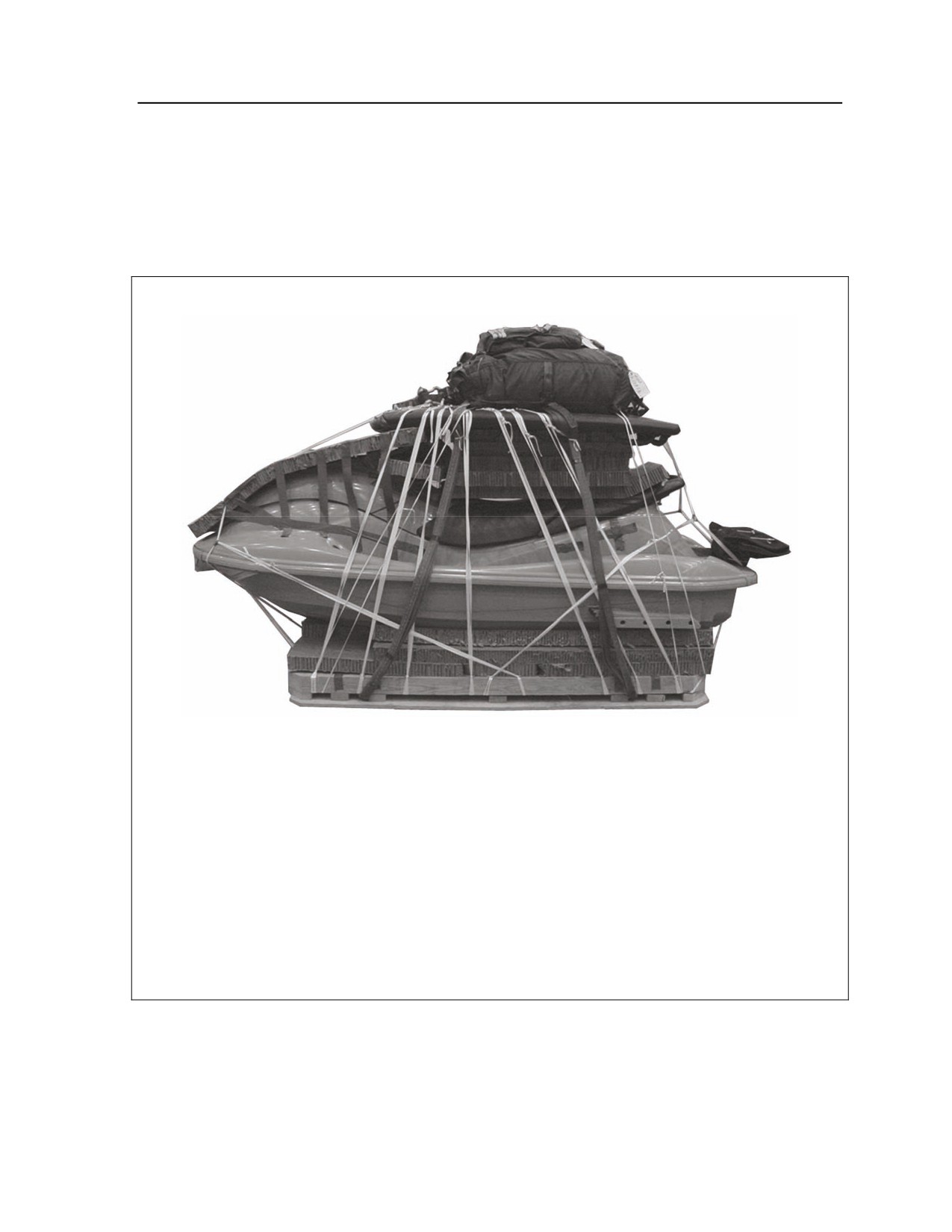
Rigging the Advanced Rescue Craft (ARC) on a Combat Expendable Platform (CEP)
MARKING THE RIGGED LOAD
5-27. Mark the rigged load according to FM
4-20.102/MCRP 4-11.3J/NAVSEA SS400-AB-MMO
010/TO 13C7-1-5 and as shown in Figure 5-29.
Note. Attach the load data tag on the rear of the ARC.
Rigged Load Data
Weight: Load shown……….(with a 20-man life raft)
1,450 pounds
(without a 20-man life raft)
1,380 pounds
Height:
78 inches
Width:
48 inches
Length:
124 inches
Overhang:
Front
12 inches
Rear
25 inches
CB (from the front edge of the platform)
36.5 inches
Figure 5-29. The XL 1200 ARC Rigged on a Combat Expendable Platform
FM 4-20.142/MCRP 4-11.3P/NAVSEA SS400-AD-MMO-010/ TO 13C7-51-21
19 September 2007
5-45

Chapter 5
EQUIPMENT REQUIRED
5-28. Equipment required to rig the ARC on the 48- by 87-inch combat expendable platform for low-
velocity airdrop is listed in Table 5-2.
Table 5-2. Equipment Required for Rigging the XL 1200 Advanced Rescue Craft
National Stock
Item
Quantity
Number
5530-00-128-4981
3/4- by 48- by 96-inch Plywood
1 Sheet
5510-00-220-6146
2- by 4- by 44-inch Lumber
5
5510-00-220-6148
2- by 6- by 44-inch Lumber
2
2-by 6- by 87-inch Lumber
2
5510-00-220-6274
4-by 4- by 87-inch Lumber
2
5315-00-010-4659
Nail, steel, wire, common, 8d
As Required
(or)
Local Purchase
1 1/2-inch Wood screw
As Required
Local Purchase
Bolt, Carriage, 3/8-inch Dia. 7 inches long w/
washer and nut
8
Air Items:
1670-01-062-6302
Line, 20-foot, 2-loop Type XXVI
2
1670-01-062-6304
Line 9-foot, 2-loop Type XXVI
1
1670-01-062-6301
Line 3-foot, 2-loop Type XXVI
2
4030-00-678-8562
Clevis, Medium Suspension
3
4030-00-360-0304
Clevis, Suspension, air delivery
2
4030-00-678-8560
Clevis, G-13
1
1670-01-065-3755
Parachute, Cargo G-12E
1
1670-01-063-3715
Parachute, Cargo 15-foot extraction
1
1670-00-590-9909
D-bag, T-10 Personnel Parachute
1
1670-01-310-2875
Release, Automatic Cargo Parachute
1
4220-00-059-6061
Flotation Device, LPU-3/P
3
Expendables:
1670-00-753-3928
Pad, Energy Dissipating
4 Sheets
8305-00-082-5752
Webbing, ½-inch Tubular Nylon
As Required
4020-00-240-2146
Cord, Type III Nylon
As Required
8305-00-268-2411
Webbing, ¼-inch Cotton (80 lb.)
As Required
8310-00-917-3945
Thread, Ticket #5 Cotton
As Required
7510-00-266-5016
Tape, 2-inch Cloth-backed adhesive
As Required
7510-00-297-6655
Tape, 2-inch Masking
As Required
1670-00-568-0323
Band, Rubber Retainer
As Required
FM 4-20.142/MCRP 4-11.3P/NAVSEA SS400-AD-MMO-010/ TO 13C7-51-21
5-46
19 September 2007
Chapter 6
Wind Supported Aerial Delivery System (WSADS) Snow
Goose
DESCRIPTION OF LOAD
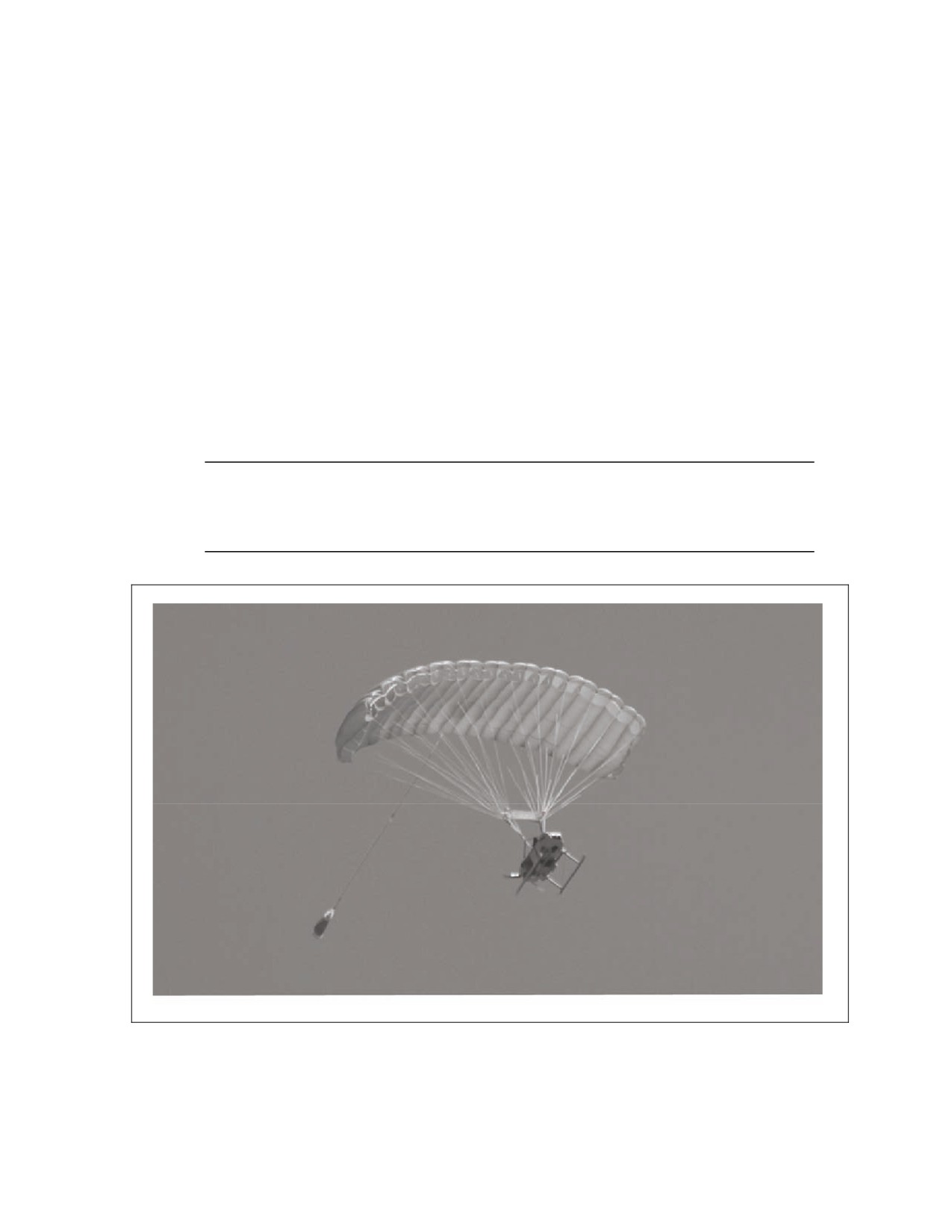
6-1. The Wind Supported Aerial Delivery System (WSADS) Snow Goose is a low-cost, reusable, fully
autonomous, unmanned aerial vehicle (UAV) that can be used to carry out a variety of missions at
otherwise inaccessible locations. It is quickly configurable for air or ground launch deployable missions.
Note. Before rigging the WSADS by this chapter, refer to the manufacturer’s Pre-Flight
Procedures to ensure all steps are adhered to. Mission requirements dictate the amount of fuel
that is used, but each fuel cell will be full. Strict adherence to proper procedures is crucial to the
survivability of this piece of equipment.
Figure 6-1. The Wind Supported Aerial Delivery System (Snow Goose)
FM 4-20.142/MCRP 4-11.3P/NAVSEA SS400-AD-MMO-010/ TO 13C7-51-21
19 September 2007
6-1
Chapter 6
INSTALLING AIR LAUNCH PARACHUTE
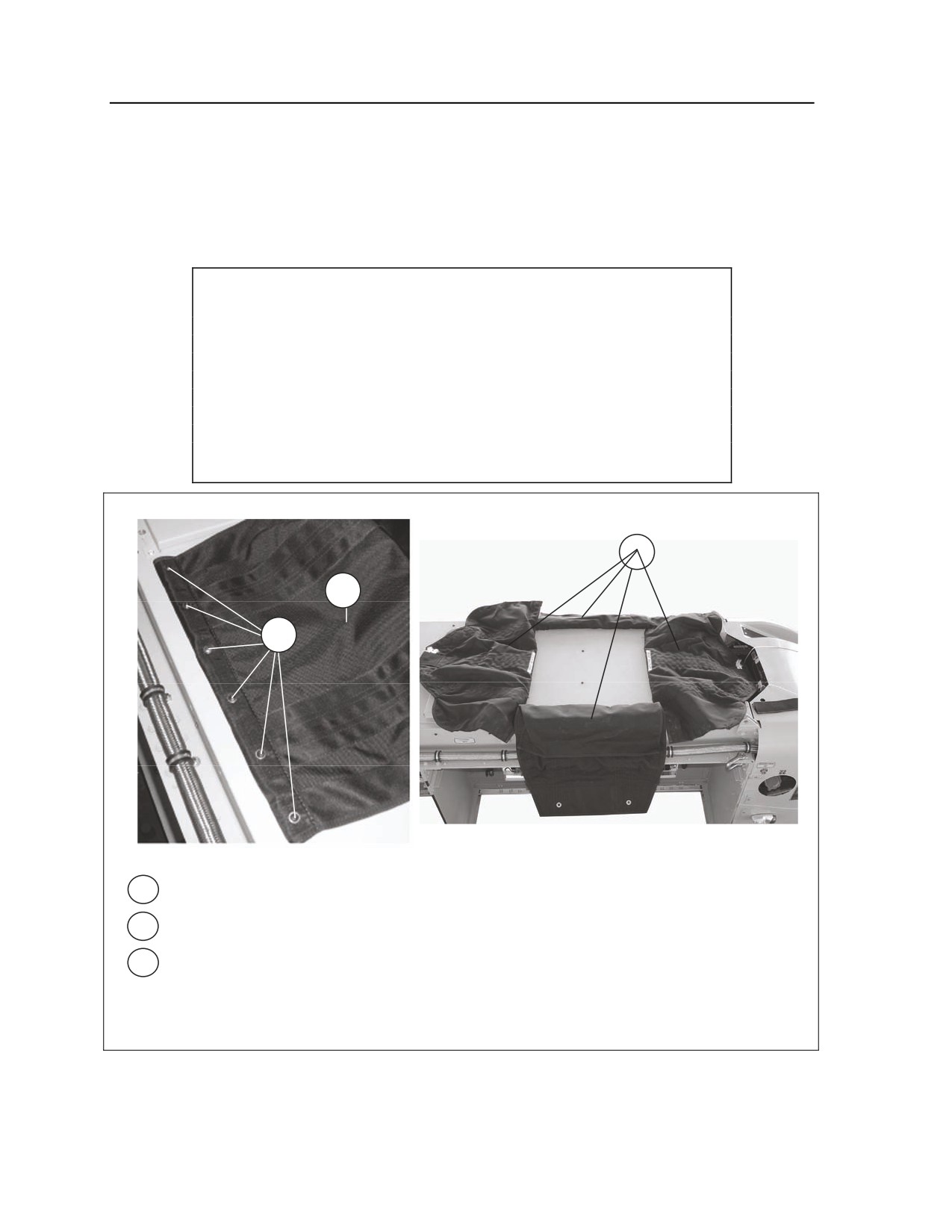
6-2. Install the Air Launch Parachute as described and shown in Figure 6-2.
CAUTION
It is a mandatory requirement that only qualified riggers who have
successfully completed the Mist Mobility Integrated Systems
Technology (MMIST) Air Parachute training course are certified to
pack both the air launch and drogue parachutes. Packing both
parachutes requires following precise, detailed procedures to ensure
the successful and timely deployment of both parachutes. The Air
Launch Parachute will be packed prior to rigging the WSADS and
according to the manufacturer’s rigging procedures.
3
1
2
1. Install the Air Launch Parachute Container to the Snow Goose top panel.
2. Secure both side flaps with the hardware provided.
3. Unfold the parachute container rear flap, outer side flaps and inner side flaps leaving the
front flap towards the front of the vehicle. The front flap has a channel guide for the locking
pin bridle for easy identification.
Note. Ensure side flap with hook pile tape is installed on the right side.
Figure 6-2. Air Launch Parachute Installed
FM 4-20.142/MCRP 4-11.3P/NAVSEA SS400-AD-MMO-010/ TO 13C7-51-21
6-2
19 September 2007
Wind Supported Aerial Delivery System (WSADS) Snow Goose
4
5
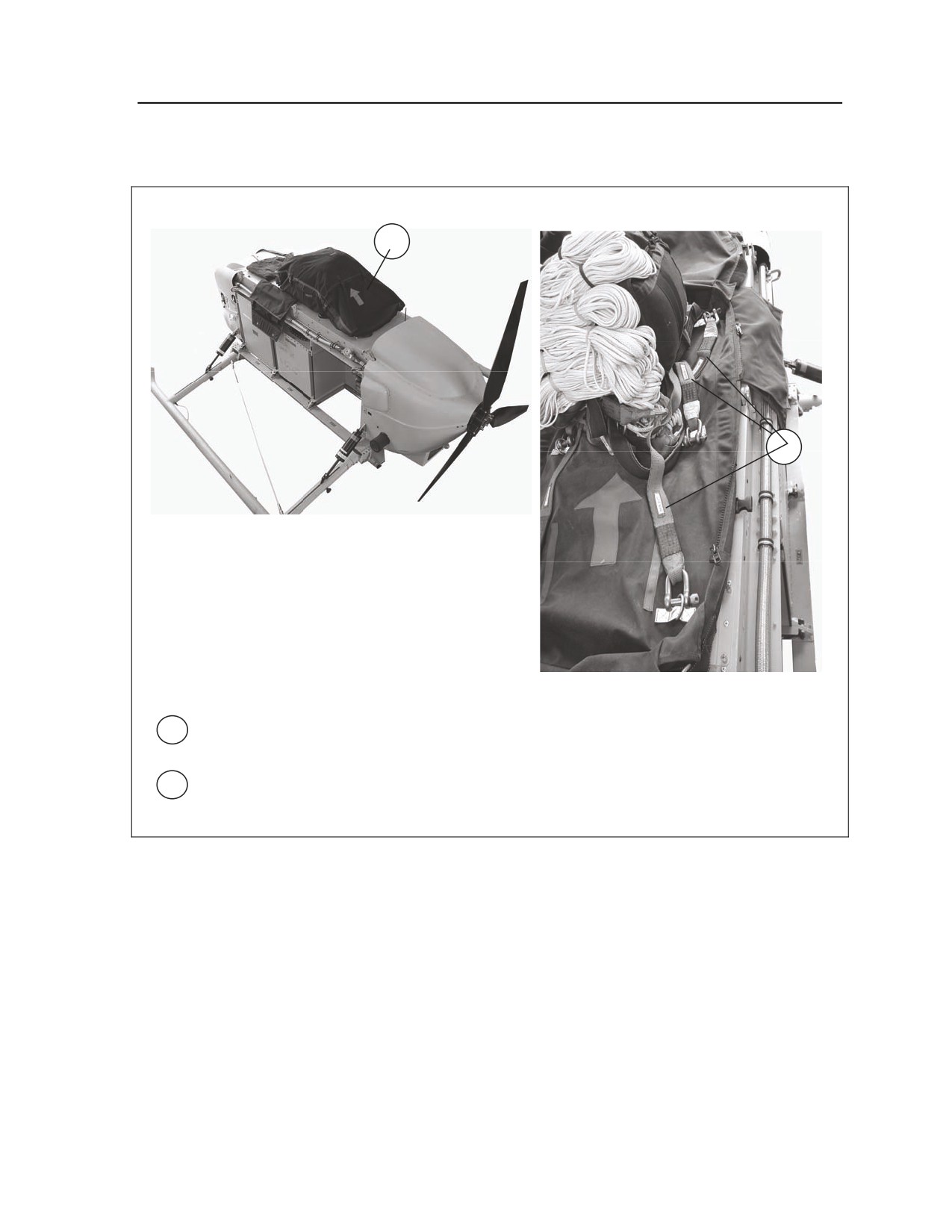
4. Place the packed parachute in its recovery bag on top of the Snow Goose with the direction
of flight arrow facing the front.
5. Open the recovery bag exposing the six lower riser shackle bolts (right side shown).
Note. The green-tagged risers should be on the right.
Figure 6-2. Air Launch Parachute Installed (Continued)
FM 4-20.142/MCRP 4-11.3P/NAVSEA SS400-AD-MMO-010/ TO 13C7-51-21
19 September 2007
6-3
Chapter 6
6
6
7
6.
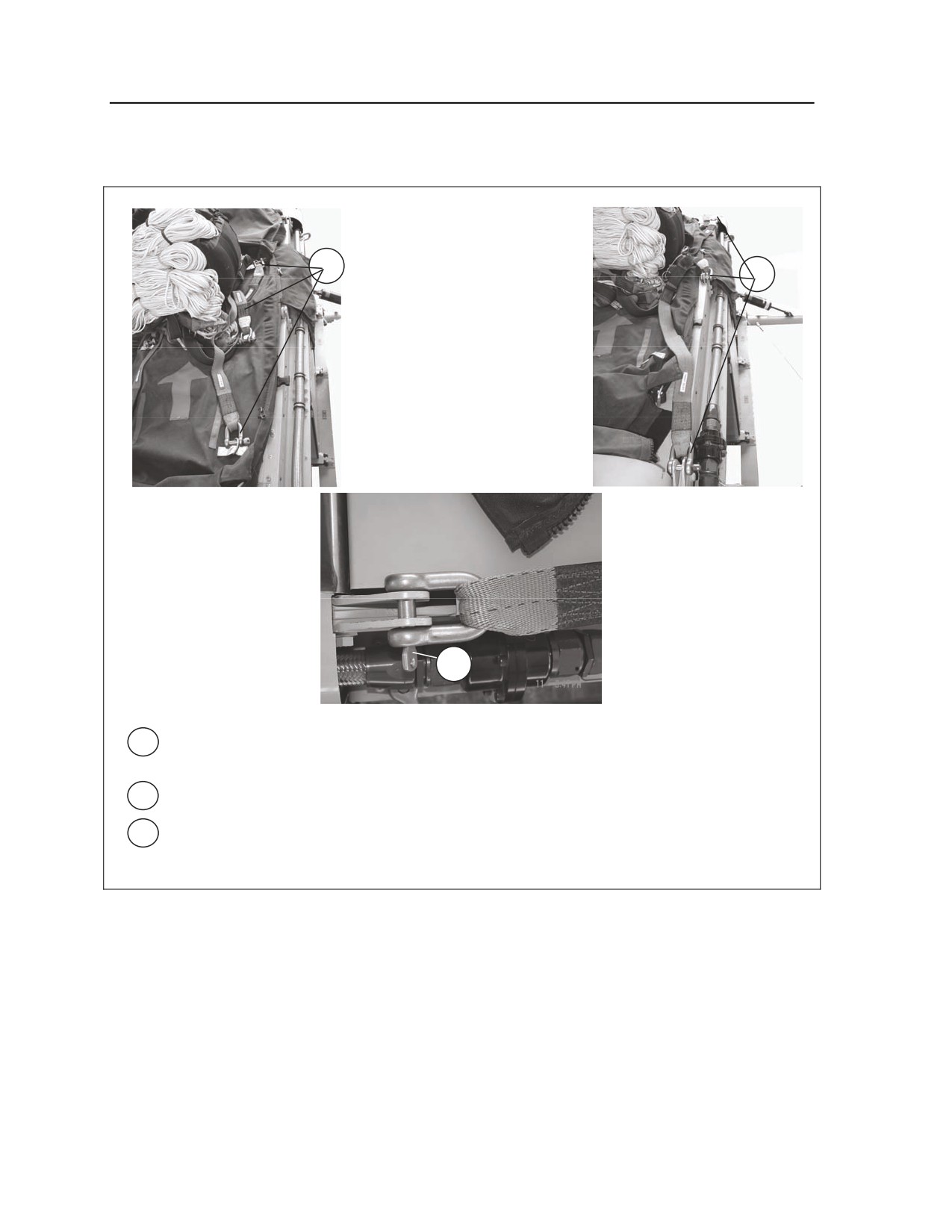
One at a time, disconnect each lower riser shackle from the recovery bag and immediately
connect it to the corresponding attachment point on the vehicle.
7.
Insert shackle bolts from the outboard to inboard and tighten until screw pin clicks.
8. Once all six shackles are connected, ensure there are no twists in the lower risers (not
shown).
Figure 6-2. Installing Air Launch Parachute (Continued)
FM 4-20.142/MCRP 4-11.3P/NAVSEA SS400-AD-MMO-010/ TO 13C7-51-21
6-4
19 September 2007
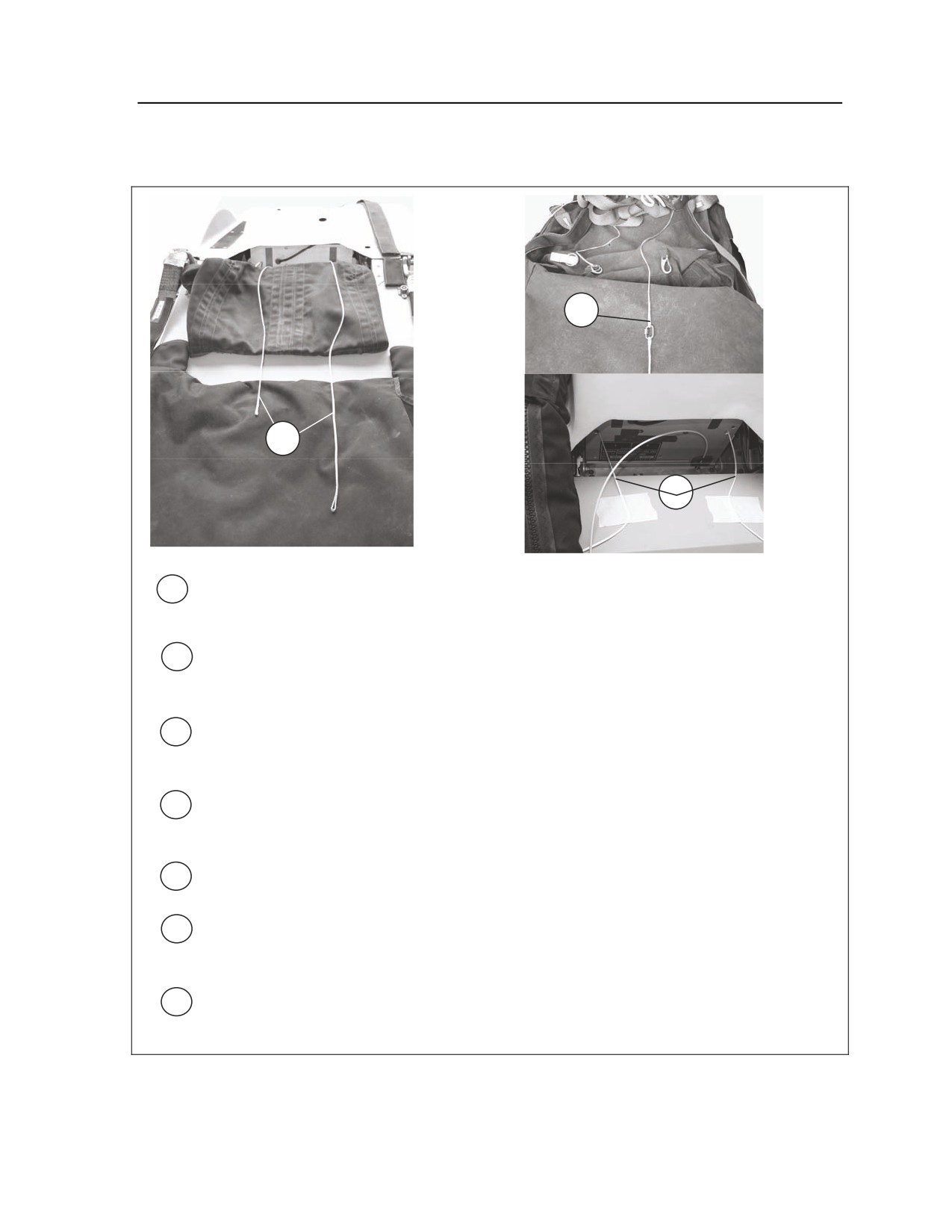
Wind Supported Aerial Delivery System (WSADS) Snow Goose
10
9
12
9. Pull each of the two Airborne Guidance Unit (AGU) steering lines to their full extension
(called mechanical zero).
Note: Right steering line should be 8 to 10 inches longer than the left steering line.
10. Feed the left steering line through the left guide ring at the top of the lower riser and connect
the left steering line end with the preset loop to the left parachute steering line extension
using a rapide link connector.
11. Visually check to ensure that the steering line extension runs directly from the brake, down
the inner edge of the riser and then through the lower steering guide ring before the
connection is made to the AGU steering line.
12. Visually check to ensure that the AGU steering lines run directly from the AGU to the
connection point, without twisting around the lower risers. Tape the steering lines with a
suitable length of masking tape.
13. Repeat steps 10 through 12 to connect the right AGU steering line to the right parachute
steering line extension.
14. Starting at the front, carefully stow the left steering line in the steering line channel on the
lower front left riser and S-fold any excess at the rear of the channel (not shown).
Note. Carefully stow all excess steering line in the upper rear riser steering line channel.
15. Repeat the above step carefully stowing the right steering line in the right steering line
channel.
Figure 6-2. Air Launch Parachute Installed (Continued)
FM 4-20.142/MCRP 4-11.3P/NAVSEA SS400-AD-MMO-010/ TO 13C7-51-21
19 September 2007
6-5
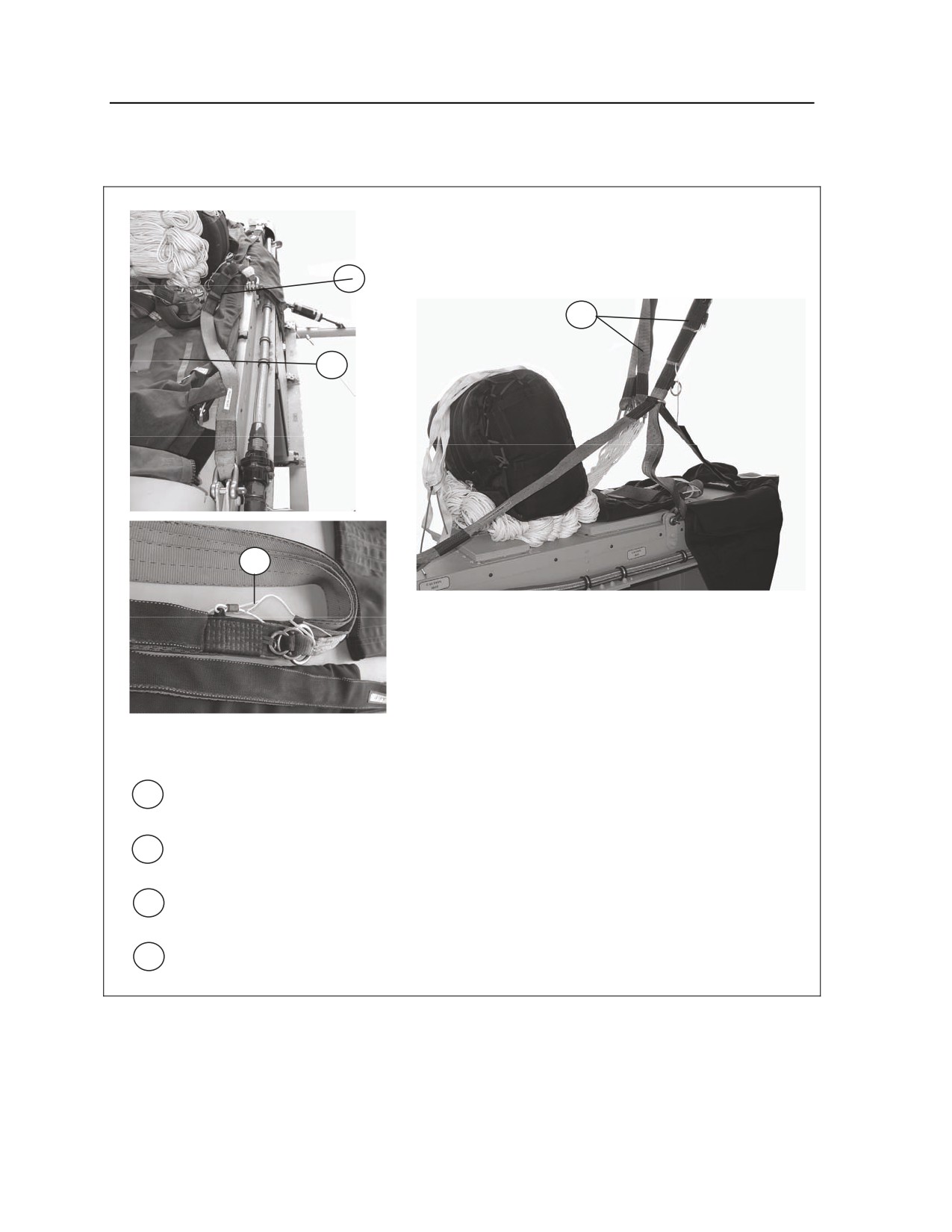
Chapter 6
18
19
16
17
Note. This step requires a second individual to remove the recovery bag.
16. Remove the recovery bag, and place the packed parachute immediately in front of the engine
intake, with the lines in front of the parachute.
17. Ensure the steering line or the brake setting does not get dislodged during the removal of the
recovery bag.
18. Place the left set of lower risers over the left edge of the vehicle on top of the side flaps and
repeat for the right set of lower risers.
19. Straighten the upper risers.
Figure 6-2. Air Launch Parachute Installed (Continued)
FM 4-20.142/MCRP 4-11.3P/NAVSEA SS400-AD-MMO-010/ TO 13C7-51-21
6-6
19 September 2007
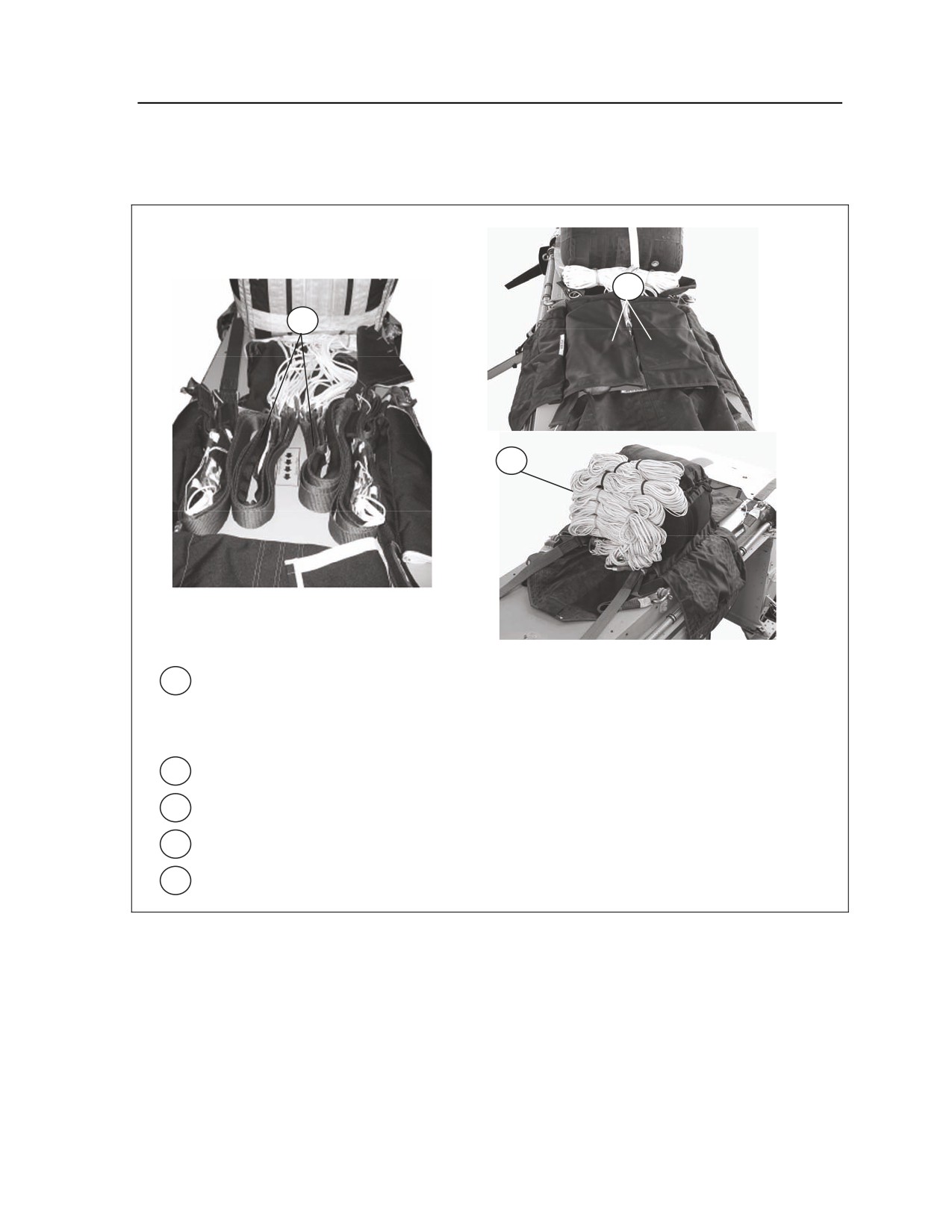
Wind Supported Aerial Delivery System (WSADS) Snow Goose
23
20
24
20. On the left side, pull the lower rear, middle, and front risers in the container area. S-fold the
riser within the container area keeping all three lower risers tight.
Note. Ensure neither the steering line, nor the brake setting gets dislodged during the S-folding process. This step also
requires a second individual.
21. Repeat the above step on the right side (not shown).
22. Make sure that the left and right brake settings are still intact (not shown).
23. Cover the risers with the two inner container side flaps.
24. Roll the parachute over the S-folded risers leaving the lines at the rear of the vehicle.
Figure 6-2. Air Launch Parachute Installed (Continued)
FM 4-20.142/MCRP 4-11.3P/NAVSEA SS400-AD-MMO-010/ TO 13C7-51-21
19 September 2007
6-7
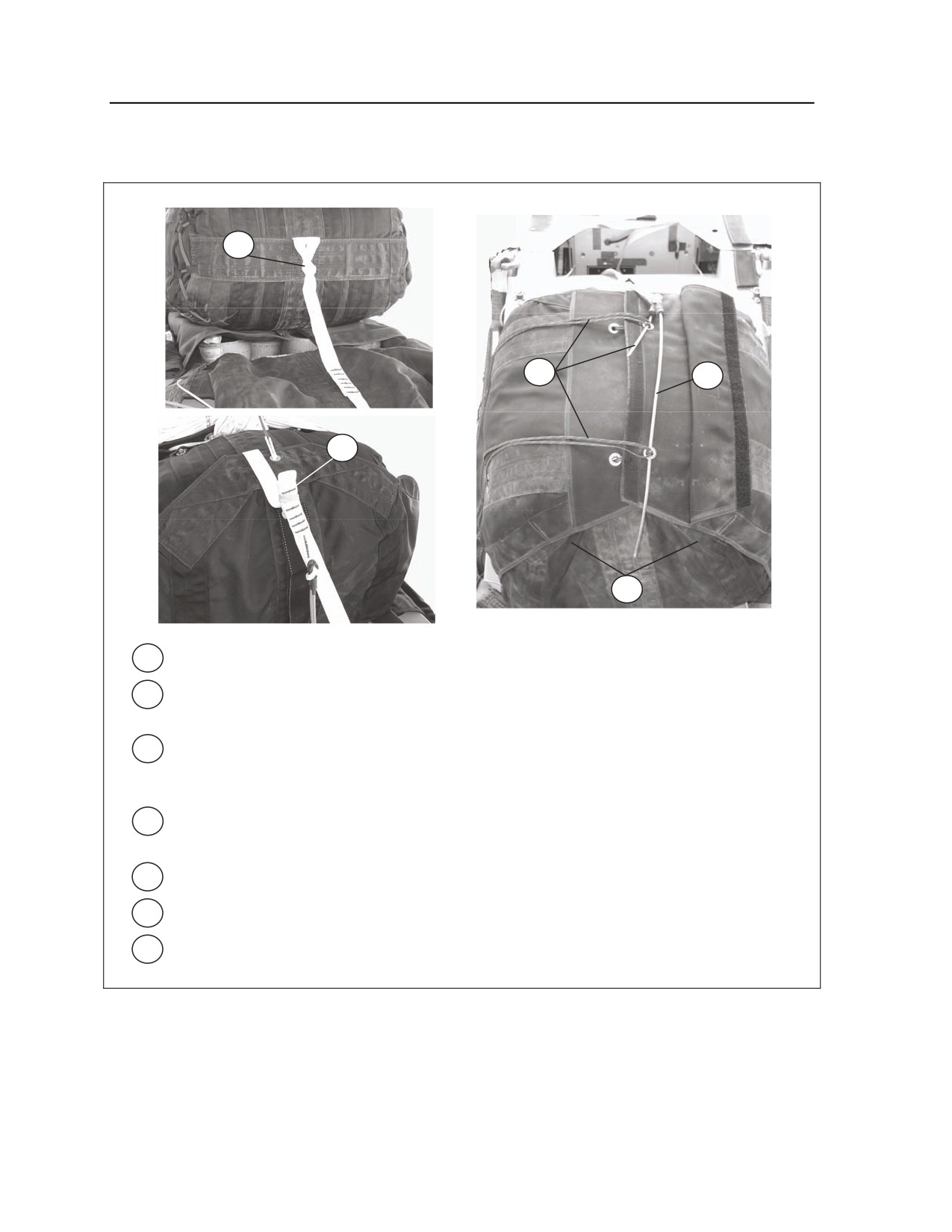
Chapter 6
25
28
29
27
31
25. Girth hitch the locking pin bridle short end to the deployment bag loop.
26. Close the flaps of the container starting with the front and rear followed by the sides (not
shown).
27. Before stowing the locking pin bridle, ensure bridle exits bag on the right side of the front flap
grommet. Stow the excess bridle outside the container with a retainer band located at the top
of the channel guide.
28. Route a pull-up cord through each soft loop. Route the front pull-up cord through the
grommets in the following sequence: front, left, rear. Secure with short locking pin.
29. Repeat for rear pull-up cord using the long locking pin.
30. Remove the pull-up cords (not shown).
31. Ensure the corners of the front and rear flaps are neatly tucked under the side flaps.
Figure 6-2. Air Launch Parachute Installed (Continued)
FM 4-20.142/MCRP 4-11.3P/NAVSEA SS400-AD-MMO-010/ TO 13C7-51-21
6-8
19 September 2007
Wind Supported Aerial Delivery System (WSADS) Snow Goose
35
34
32
32. Stow the drogue bridle in the bridle channel along the front of the container and along the
channel on the cowl. Secure with masking tape at intervals of 4 to 6 inches.
WARNING
Ensure the drogue bridle is routed over top of the steering line.
33. Connect the locking pin bridle to the drogue assembly with a small rapide link connector (not
shown).
34. Connect the hook pile tape on the drogue bag with the hook pile tape strip on the cowl.
Ensure the drogue bag is flush against the parachute.
35. S-fold excess locking pin bridle to keep off floor of the aircraft with a rubber retainer band.
Figure 6-2. Air Launch Parachute Installed (Continued)
FM 4-20.142/MCRP 4-11.3P/NAVSEA SS400-AD-MMO-010/ TO 13C7-51-21
19 September 2007
6-9
Chapter 6
INSTALLING PYROTECHNIC CUTTERS
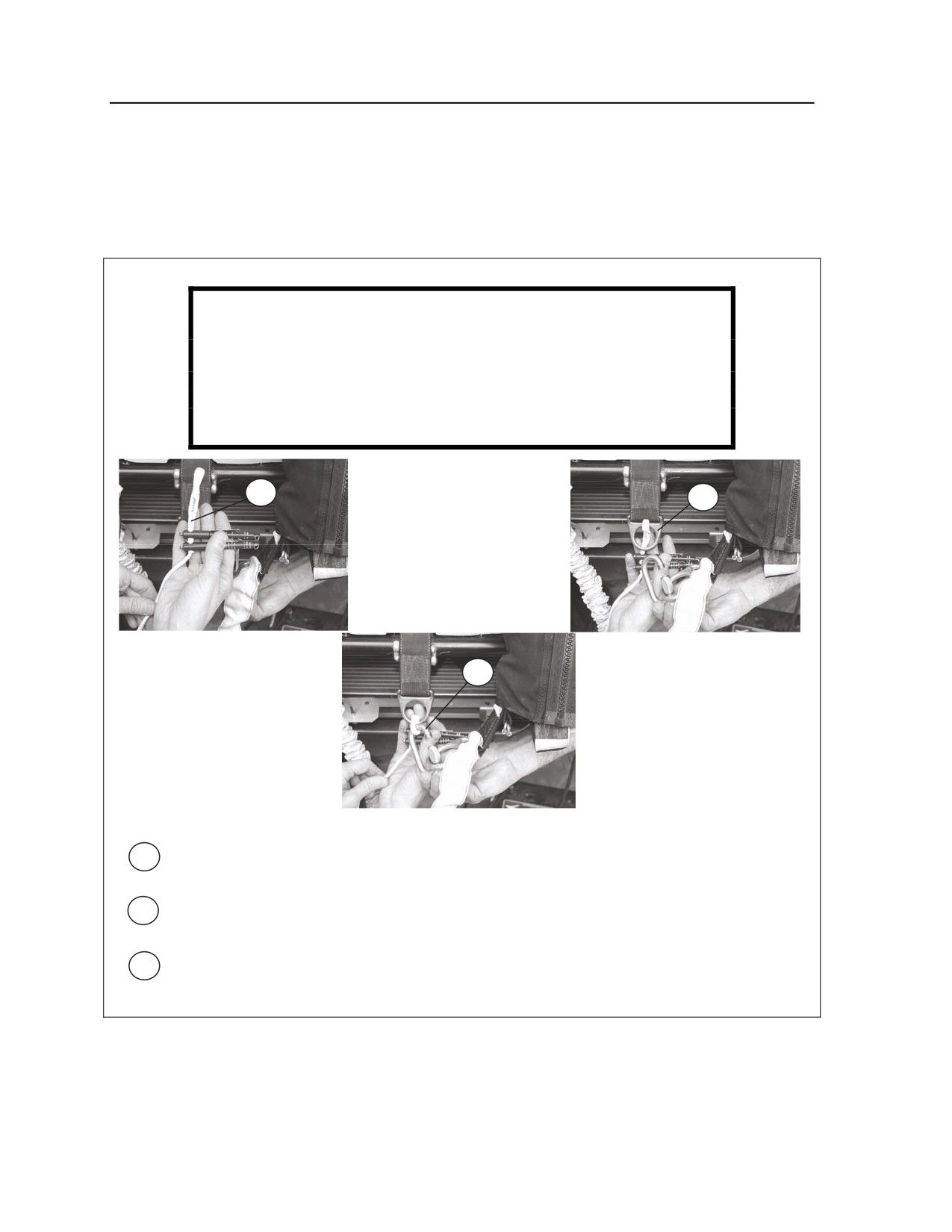
6-3. Install pyrotechnic cutters as shown in Figure 6-3.
WARNING
Never connect the drogue bridle ring directly to the Snow Goose
drogue attachment point using the rapide link connector. A direct
connection will prevent the pyrotechnic cutters from deploying
the main canopy, causing critical failure of the system.
2
3
3
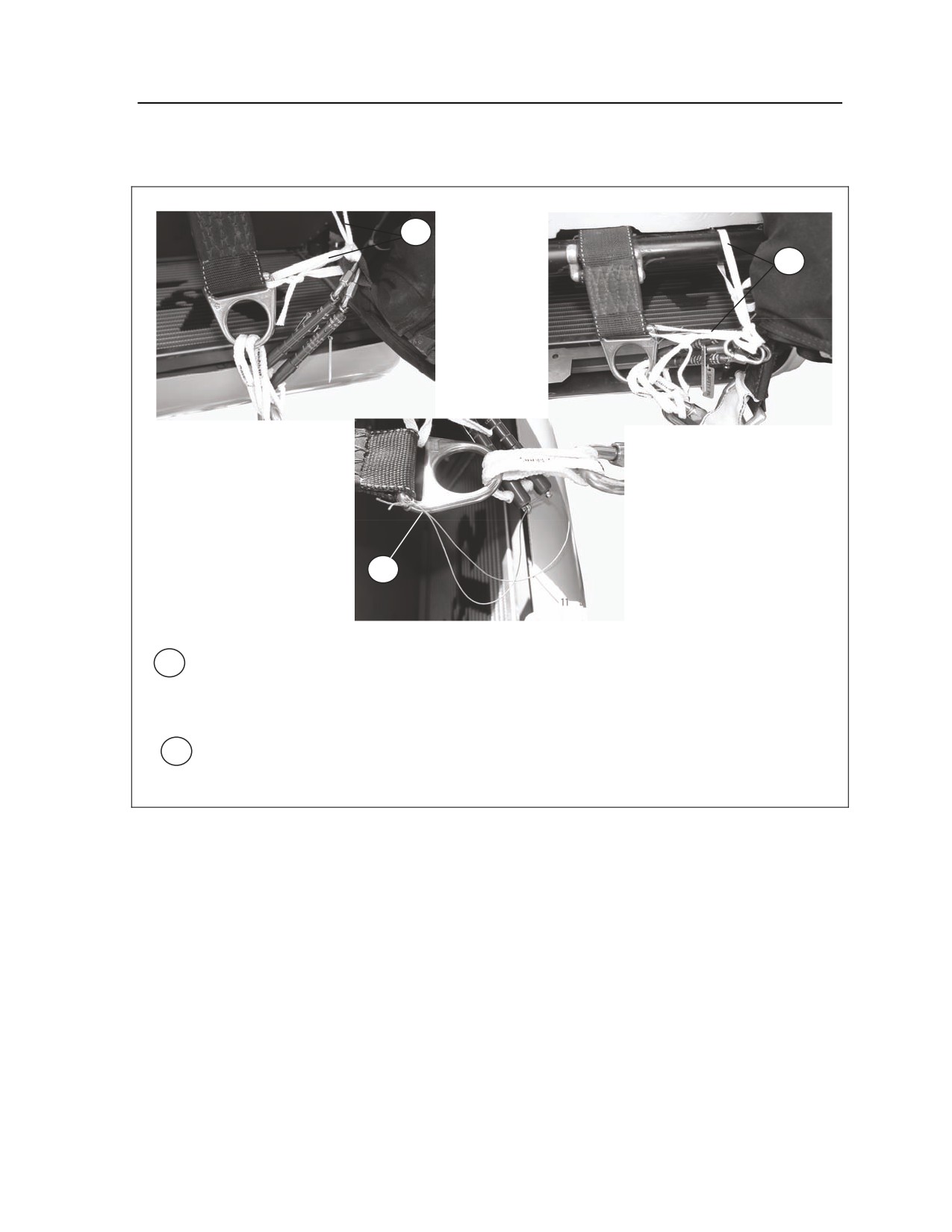
1. Install the pyrotechnic cutters between the Snow Goose drogue attachment point and the
medium rapide link connector on the drogue bridle ring (not shown).
2. Route a 14-inch piece of braided dacron (1575 pound breaking strength) through two 6
second (E-3) pyrotechnic cutters approximately 3 inches from the looped end.
3. Route looped end up through the drogue attachment ring and attach it to the rapide link.
Note. Ensure that only the cutter loop connects the drogue bridle to the Snow Goose drogue attachment point.
Figure 6-3. Pyrotechnic Cutters Installed
FM 4-20.142/MCRP 4-11.3P/NAVSEA SS400-AD-MMO-010/ TO 13C7-51-21
6-10
19 September 2007
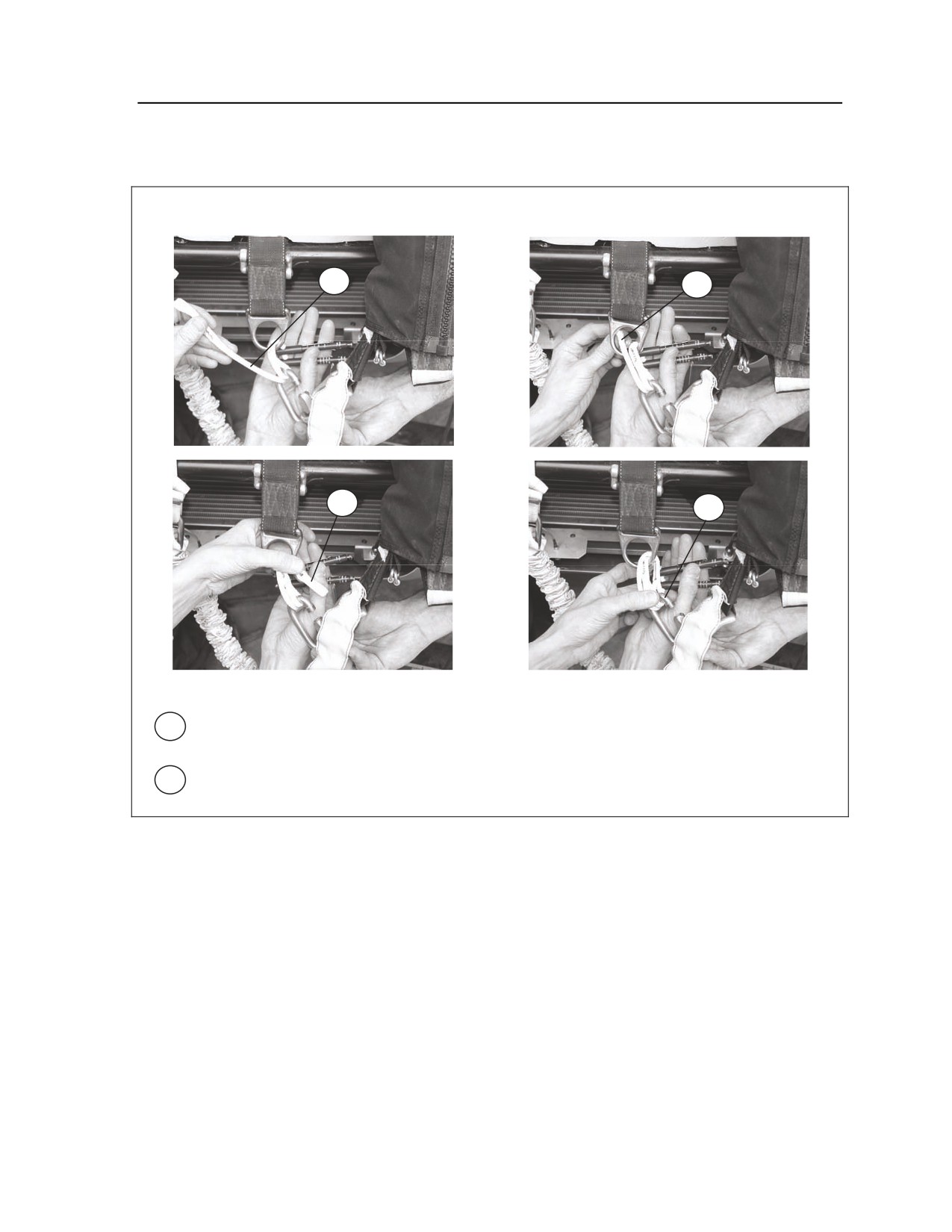
Wind Supported Aerial Delivery System (WSADS) Snow Goose
4
4
5
5
4. Route opposite end of the braided dacron up through rapide link and down through the
drogue attachment ring.
5. Route over pyrotechnic cutters and attach to rapide link.
Figure 6-3. Pyrotechnic Cutters Installed (Continued)
FM 4-20.142/MCRP 4-11.3P/NAVSEA SS400-AD-MMO-010/ TO 13C7-51-21
19 September 2007
6-11
Chapter 6
7
6
8
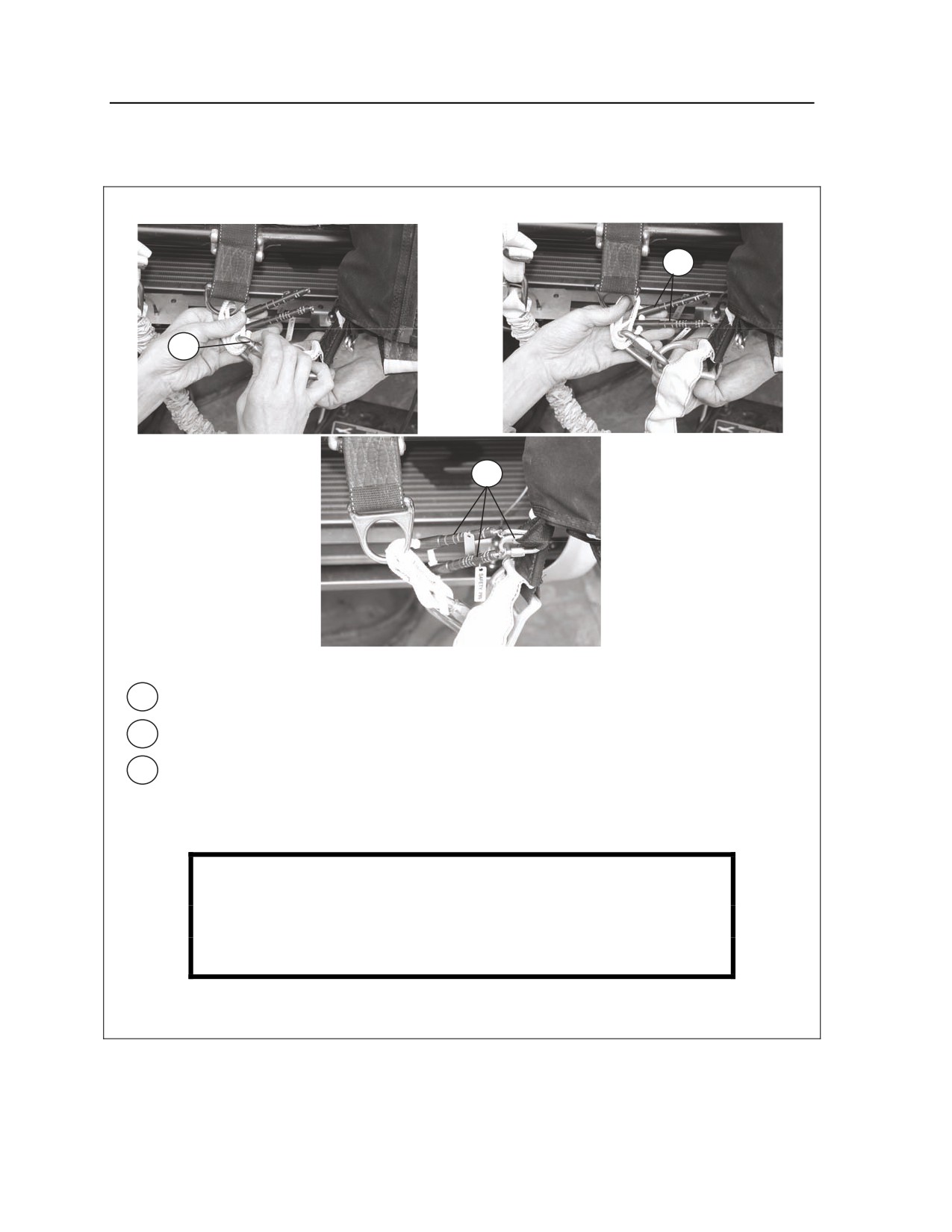
6.
Close rapide link finger tight.
7.
Once cutters are in place, ensure they are clear of the braided dacron cutter loop
8. Connect two small rapide links to the sewn loop on the drogue bag, then connect a
pyrotechnic cutter to each rapide link.
WARNING
Failure to connect the pyrotechnic cutters to the drogue
attachment bag will prevent the parachute from being deployed.
Figure 6-3. Pyrotechnic Cutters Installed (Continued)
FM 4-20.142/MCRP 4-11.3P/NAVSEA SS400-AD-MMO-010/ TO 13C7-51-21
6-12
19 September 2007
Wind Supported Aerial Delivery System (WSADS) Snow Goose
9
9
10
9. Girth hitch two lengths of type I, 1/4-inch cotton webbing to the sewn loop on the drogue bag.
Tie one length to the drogue attachment ring, and the other to the front frame (this reduces
lateral and vertical motion of the drogue bag and prevents early activation of the pyrotechnic
cutters).
10. Tie a length of ticket 5, 8/7 cotton thread across the pyrotechnic cutters to secure the cutters
to the drogue attachment ring.
Figure 6-3. Pyrotechnic Cutters Installed (Continued)
FM 4-20.142/MCRP 4-11.3P/NAVSEA SS400-AD-MMO-010/ TO 13C7-51-21
19 September 2007
6-13
Chapter 6
RECOVERY DISPATCH PIN PLACEMENT
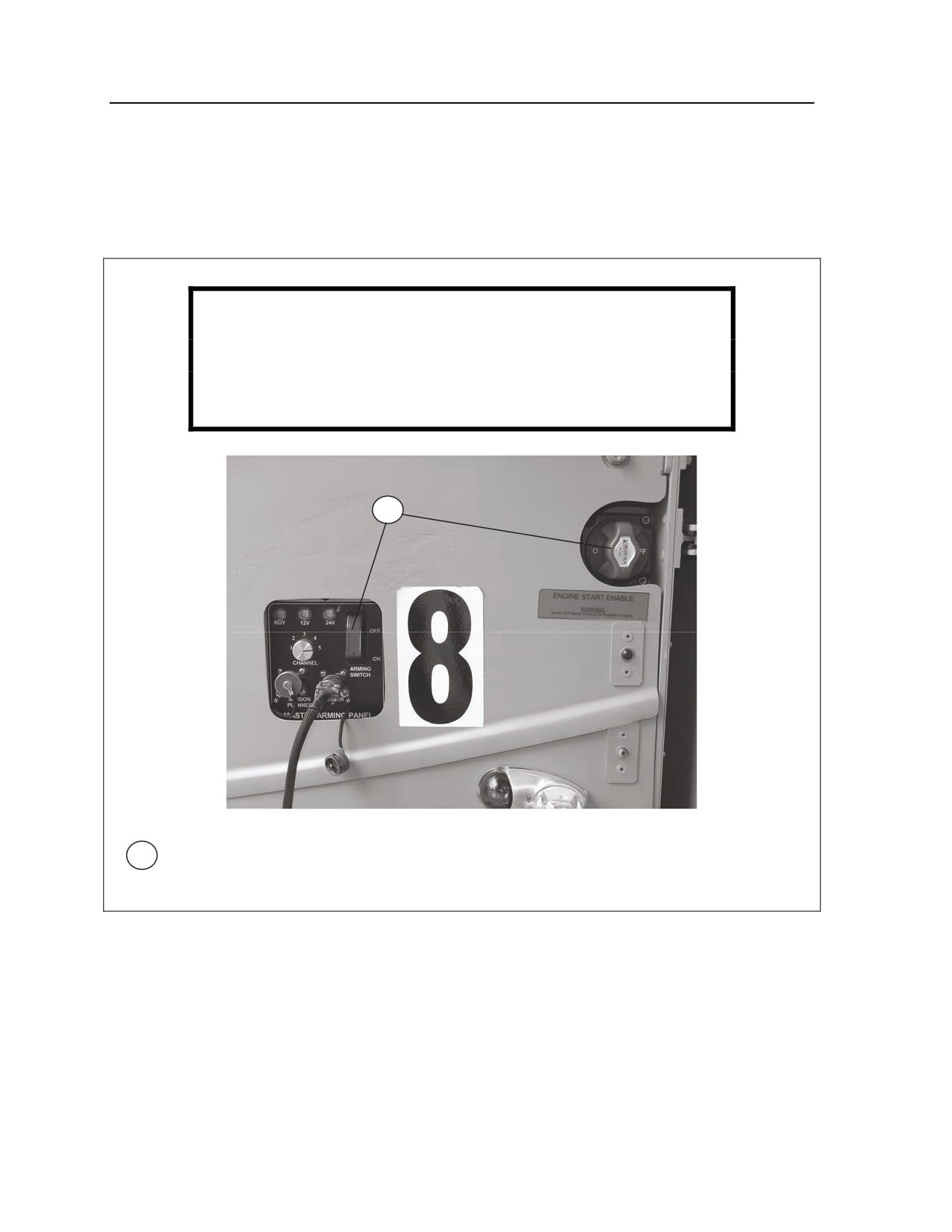
6-4. Install recovery dispatch pin as shown in Figure 6-4.
WARNING
Failure to ensure the master-panel arming switch and the engine
start enable switch are both in the off position could result in a
premature engine start.
1
1. Ensure that both the Master Panel-Arming Switch and the Engine Start Enable Switch are
both in the off position.
Figure 6-4. Recovery Dispatch Pin Installed
FM 4-20.142/MCRP 4-11.3P/NAVSEA SS400-AD-MMO-010/ TO 13C7-51-21
6-14
19 September 2007
Wind Supported Aerial Delivery System (WSADS) Snow Goose
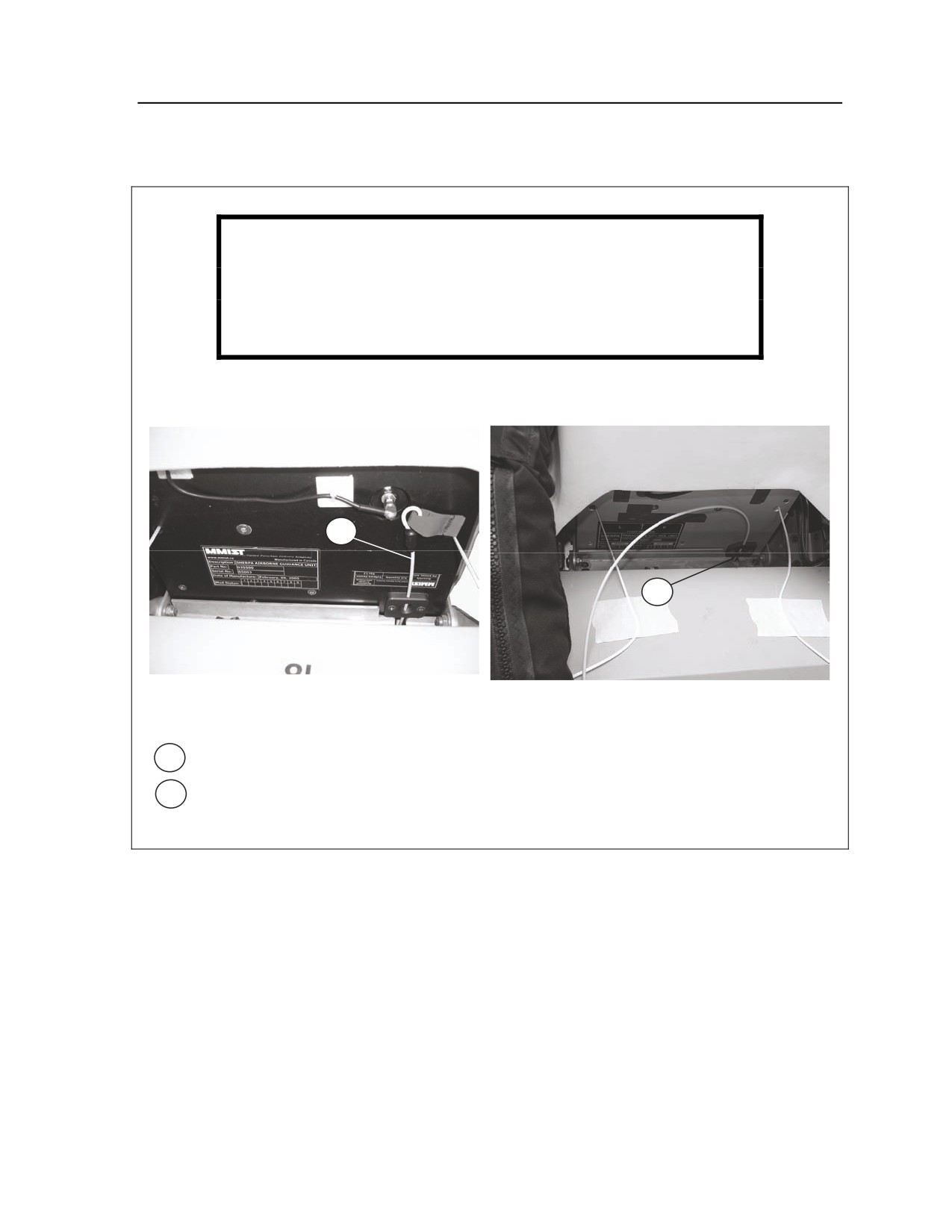
WARNING
Failure to replace the recovery dispatch pin will prevent the AGU
from starting the engine after it leaves the aircraft resulting in the
possible loss of the Snow Goose and a failed mission.
2
3
2. Remove the recovery dispatch pin and immediately insert the drogue bag dispatch pin line.
3. Push the dispatch pin line through the dispatch switch cover as far as possible to prevent
accidental removal.
Figure 6-4. Recovery Dispatch Pin Installed (Continued)
FM 4-20.142/MCRP 4-11.3P/NAVSEA SS400-AD-MMO-010/ TO 13C7-51-21
19 September 2007
6-15
Chapter 6
SECURING LANDING GEAR
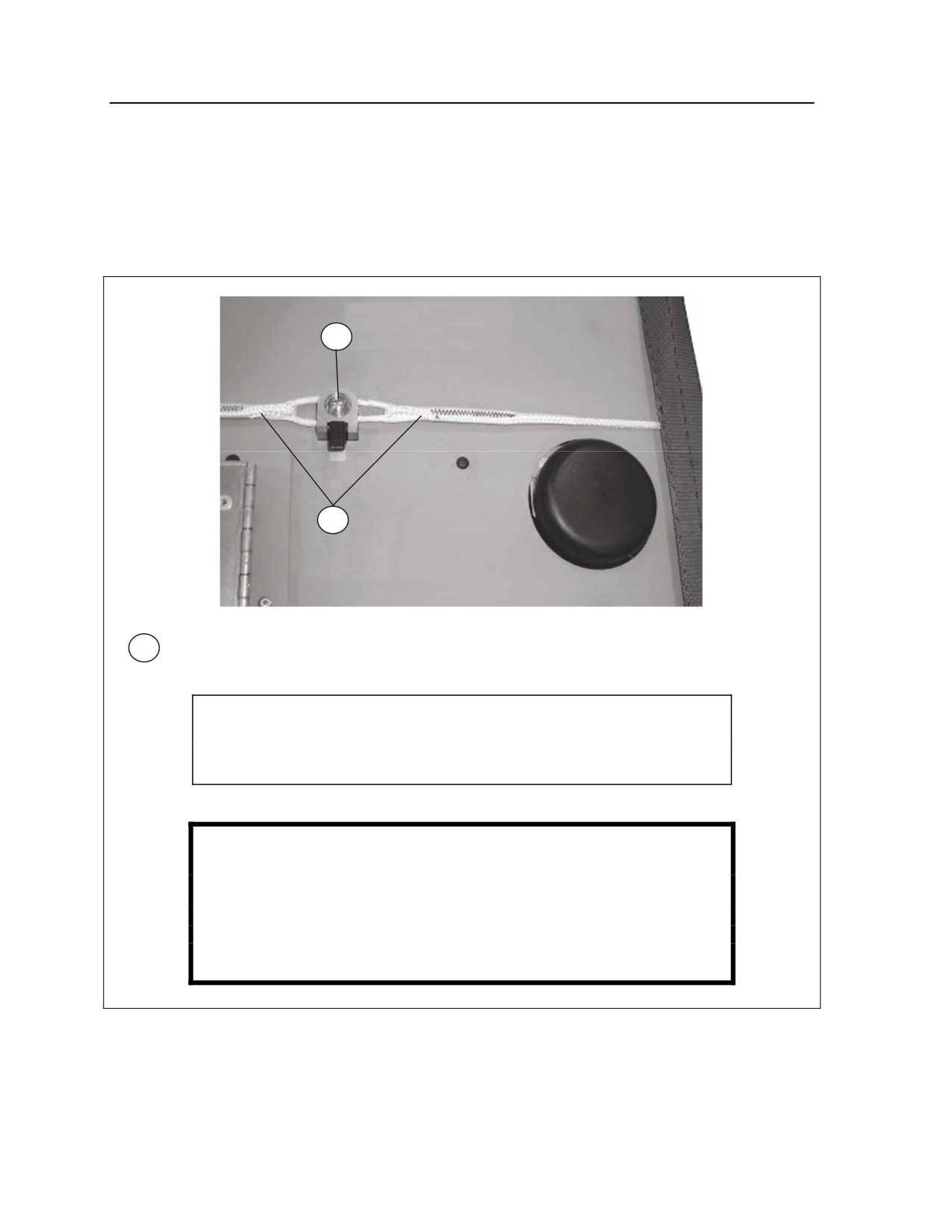
6-5. Secure landing gear as shown in Figure 6-5.
1
1
1. Depress the leg release pin and insert two leg support lanyards over the top of the pin and
under the guard.
CAUTION
Ensure only the leg release pin and not the guard holds each lanyard.
WARNING
The landing gear support lanyards must pass underneath the
parachute risers when securing the landing legs. Passing a
lanyard over the top of the riser will result in damage to the Snow
Goose, including the landing gear.
Figure 6-5. Landing Gear Secured
FM 4-20.142/MCRP 4-11.3P/NAVSEA SS400-AD-MMO-010/ TO 13C7-51-21
6-16
19 September 2007
Wind Supported Aerial Delivery System (WSADS) Snow Goose
2
3
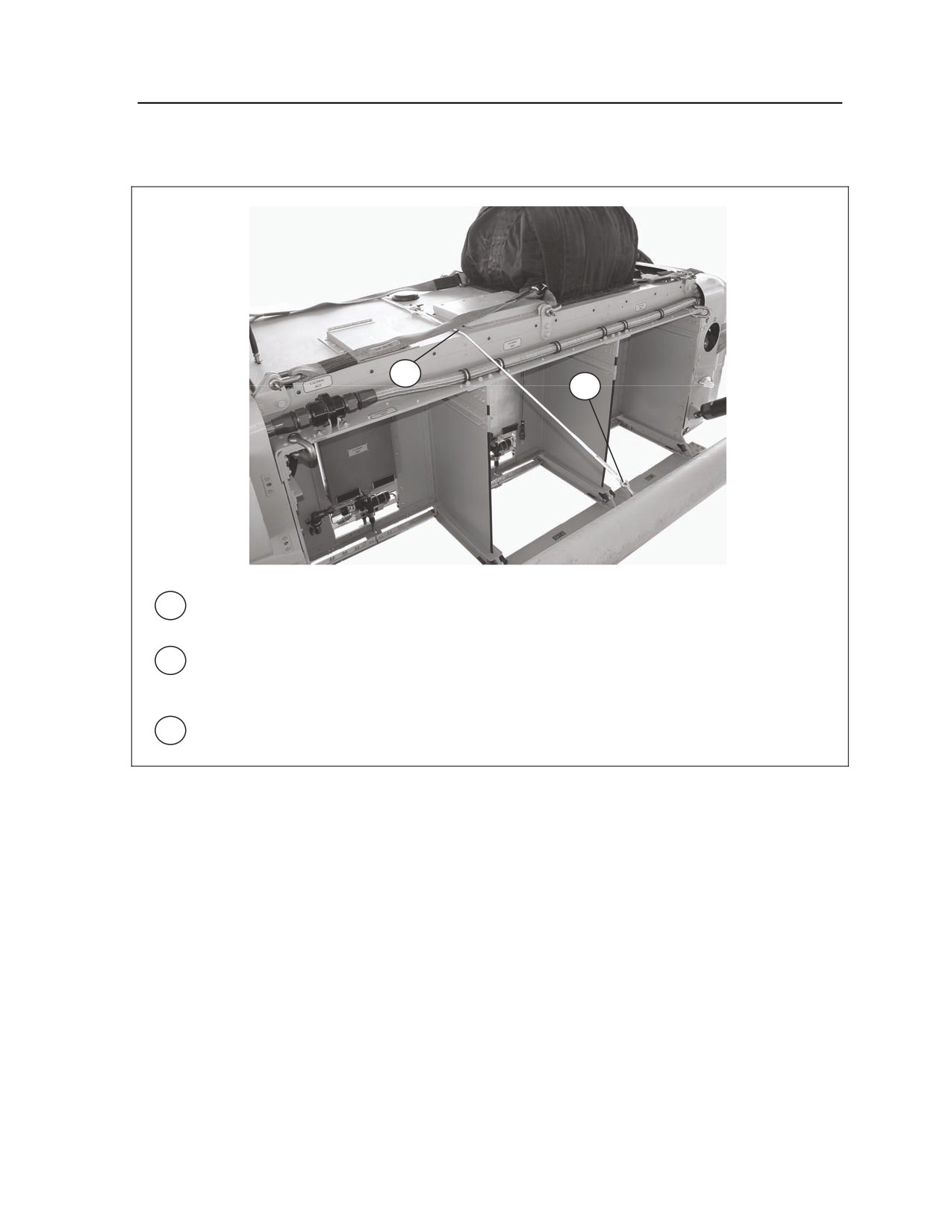
2. Raise the left side of the vehicle skid and pass the other side of the left landing gear support
lanyard underneath the parachute riser.
3. Pass the unfinished end of the 53-inch braided dacron through the eyebolt and secure with
three half hitches and a knot in the running end.
Note. The landing gear support lanyard will come from the manufacturer with one end finger trapped and 53 inches long.
4. Repeat steps 2 and 3 for the right side landing gear support lanyard (not shown).
Figure 6-5. Landing Gear Secured (Continued)
FM 4-20.142/MCRP 4-11.3P/NAVSEA SS400-AD-MMO-010/ TO 13C7-51-21
19 September 2007
6-17
Chapter 6
INSTALLING PROPELLER BRAKE
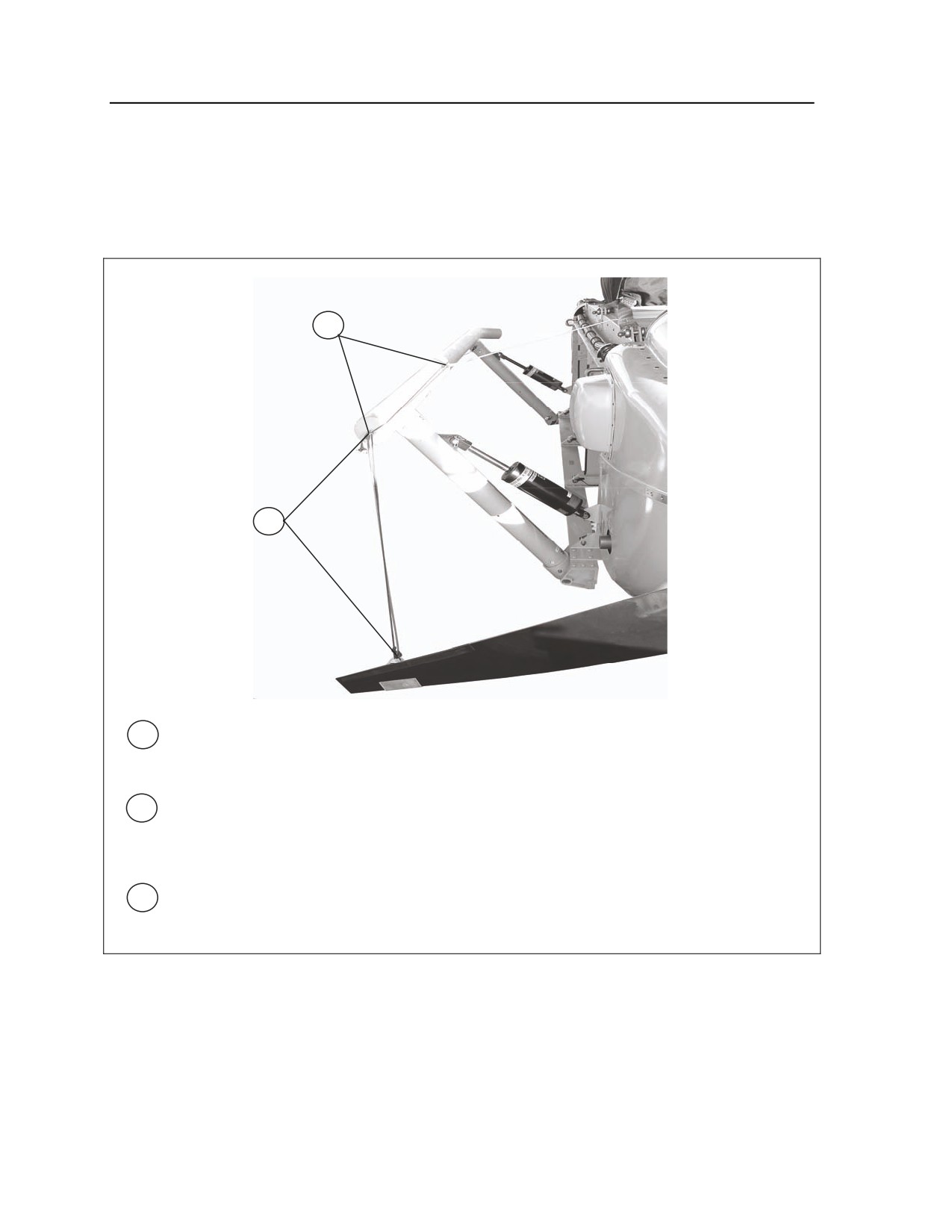
6-6. Install propeller brake as shown in Figure 6-6.
1
2
1. Install left propeller brake by passing the elastic lanyard end through the eyebolt on the rear
end of the skid. Secure the free end of the brake release lanyard to the vehicles left skid
center eyebolt with three half hitches and a knot in the running end.
2. Install the propeller brake 4 to 6 inches from the tip of the propeller. Route a suitable length of
type III nylon cord through the left skid rear end eyebolt and tie it tight to the eyebolt using
half hitches and a knot in the running end.
Note. Do not overcome the tension of the elastic lanyard with type III nylon cord.
3. Repeat steps 1 and 2 for the right side brake release making sure the propeller blades are
evenly positioned and secured.
Figure 6-6. Propeller Brake Installed
FM 4-20.142/MCRP 4-11.3P/NAVSEA SS400-AD-MMO-010/ TO 13C7-51-21
6-18
19 September 2007
Wind Supported Aerial Delivery System (WSADS) Snow Goose
INSTALLING DEFLECTOR LANYARDS
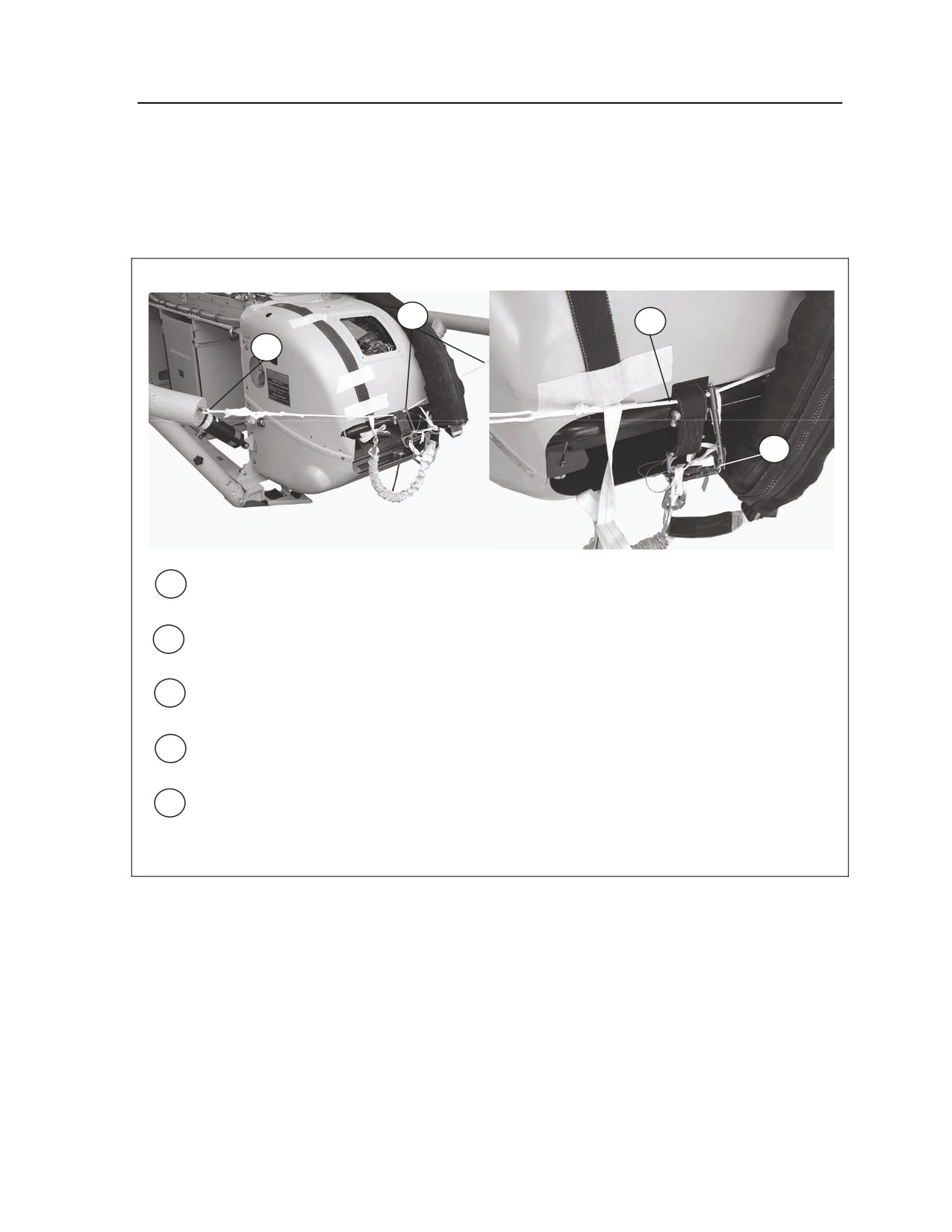
6-7. Install deflector lanyards as shown in Figure 6-7.
2
3
1
4
1.
Secure the end of a riser deflector lanyard to the left skid front padeye or eyebolt with three
alternating half hitches and a knot in the running end.
2.
Route the deflector lanyard behind the drogue tube, through the 24 second (E-3) pyrotechnic
cutter, between the drogue attachment strap, and behind the locking pin bridle.
3.
Attach the opposite end of the deflector lanyard to the right skid front padeye or eyebolt and
secure with three alternating half hitches with a knot in the running end.
4.
Attach the cutter to a small rapide link, and safety with ticket 5, 8/7 cotton thread to the L-link
above the drogue ring. Shown above and on the next page.
5. Route the riser deflector unfinished end through the right deflector overhand loop and secure
through the eyebolt using three alternating half hitches with a knot in the running end (not
shown).
Figure 6-7. Deflector Lanyard Installed
FM 4-20.142/MCRP 4-11.3P/NAVSEA SS400-AD-MMO-010/ TO 13C7-51-21
19 September 2007
6-19
Chapter 6
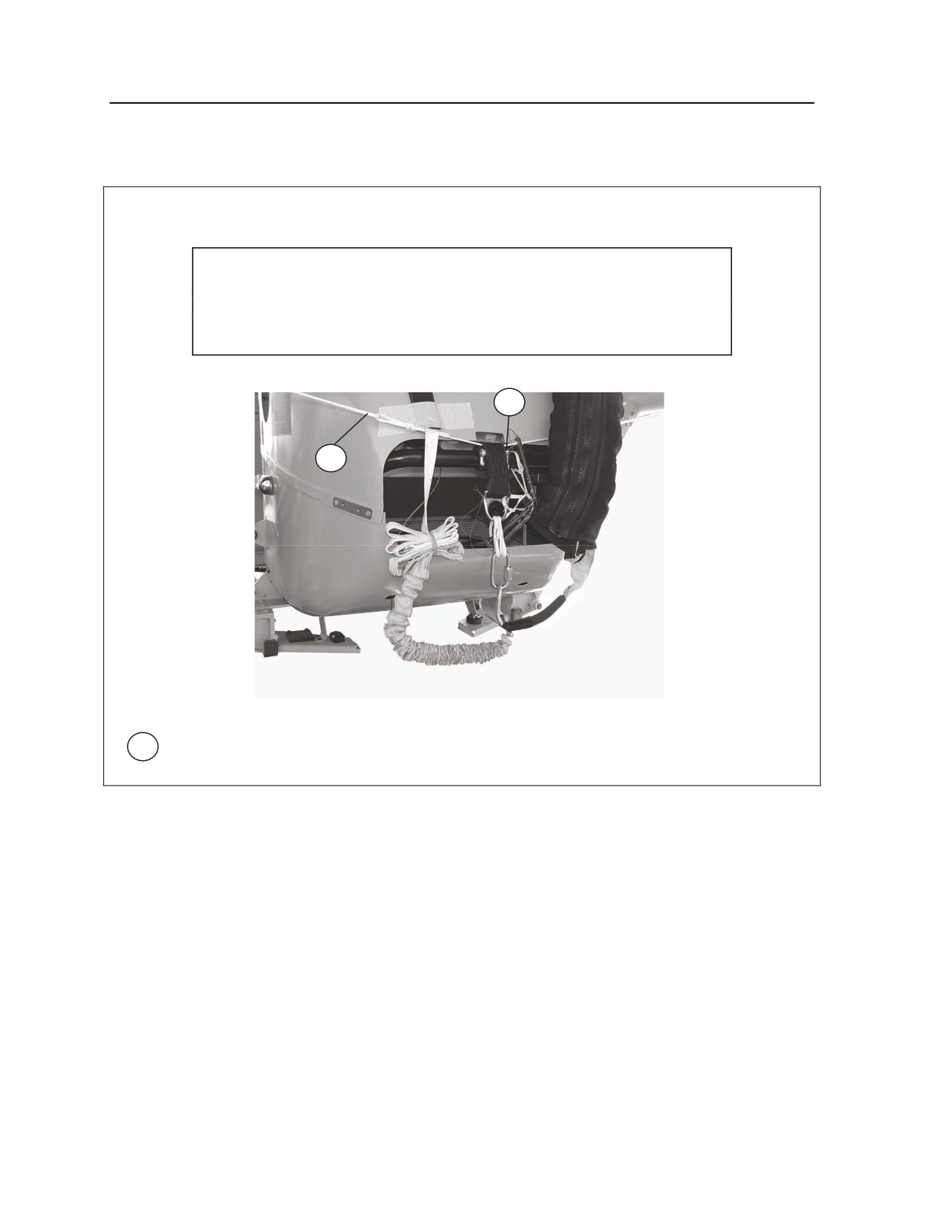
Note. Tension of the deflector lanyards must not overcome tension supplied by the leg support lanyards.
CAUTION
The deflector must be routed under the drogue tube and the locking
pin bridle.
4
6
6. Secure all lanyard loose ends with suitable lengths of masking tape (not shown).
Figure 6-7. Deflector Lanyard Installed (Continued)
FM 4-20.142/MCRP 4-11.3P/NAVSEA SS400-AD-MMO-010/ TO 13C7-51-21
6-20
19 September 2007

Wind Supported Aerial Delivery System (WSADS) Snow Goose
EQUIPMENT REQUIRED
6-8. Use the equipment listed below in Table 6-1 to rig this load.
Note. Along with the equipment list, it is recommended that an air drop kit with the following
contents be added: (Braided Dacron lanyards, pyrotechnic cutters, propeller brakes, masking
tape, cotton wadding and ticket 5).
Table 6-1. Equipment Required for Rigging the WSADS Snow Goose.
Item
Quantity
WSADS Battery Charger
1
Mission Planner (MP) file created with the MP software
1
Suitable computer with MP software installed
1
Flight Termination Device (FTD)
1
MP cable
1
WSADS Tool Kit
1
High Mobility Multipurpose Wheeled Vehicle (HMMWV), fitted
with Launch Control Box (LCB) and a mounted Ground Launch
1
Bracket (GLB)
Hand Held Remote Control Unit (HRCU)
1
Yellow Dispatch Pin
1
Link, Rapide, medium
1
Link, Rapide, small
3
FM 4-20.142/MCRP 4-11.3P/NAVSEA SS400-AD-MMO-010/ TO 13C7-51-21
19 September 2007
6-21

This page intentionally left blank.

Glossary
AC
Aircraft
AFB
Air Force Base
AFMAN (I)
Air Force Manual Interservice
AFSOC
Air Force Special Operations Command
AFTO
Air Force technical order
AMC
Air Mobility Command
ARC
advanced rescue craft
ARNG
Army National Guard
attn
attention
AGU
Airborne Guidance Unit
C
change
CB
center of balance
CEP
combat expendable platform
CRRC
combat rubber raiding craft
d
penny
DA
Department of the Army
DC
District of Columbia
DD
Department of Defense
diam
diameter
DP
Dispatch Point
EFTC
extraction force transfer coupling
EMM
Engine Management Module
EZ
Electrical Zero
FAA
Federal Aviation Administration
FM
Field Manual
FOD
Foreign Object Debris
ft
foot/feet
FTD
Flight Termination Device
Gal
gallon
GLB
Ground Launch Bracket
GPS
global positioning system
HQ
headquarters
HSLLADS
high-speed, low-level, aerial delivery system
HMMWV
High Mobility Multipurpose Wheeled Vehicle
FM 4-20.142/MCRP 4-11.3P/NAVSEA SS400-AD-MMO-010/ TO 13C7-51-21
19 September 2007
Glossary-1

Glossary
Hp
Horse Power
HRCU
Hand Held Remote Control Unit
in
inch
JAI
joint airdrop inspector
LAW
light anti-tank weapon
lb
Pound
LCB
Launch Control Box
LPU
life preserver, underarm
LCSM
Life Cycle Sustainment Manager
LOS
Line of Sight
LV
low-velocity
LVAD
low-velocity airdrop
MADS
maritime aerial delivery system
MARS
marine amphibious reconnaissance submersible
MCRP
Marine Corps Reference Publication
mm
millimeter
MMIST
Mist Mobility Integrated Systems Technologies Inc.
MP
Mission Planner
NAVSEA
Naval Sea Systems Command
no
number
NSN
national stock number
NSW RIB
Naval Special Warfare Rigid Inflatable Boat
psi
pounds per square inch
qty
quantity
RAMZ
rigging alternate method zodiac
rqr
requirement
SCUBA
self contained breathing apparatus
sec
second
SOP
standing operating procedure
STS
special tactics squadron
TM
technical manual
TO
technical order
TRADOC
US Army Training and Doctrine Command
FM 4-20.142/MCRP 4-11.3P/NAVSEA SS400-AD-MMO-010/ TO 13C7-51-21
Glossary-2
19 September 2007

Glossary
UAV
Unmanned Aerial Vehicle
US
United States
USAR
US Army Reserve
w
with
WAPR
water-activated parachute release
WSADS
Wind Supported Aerial Delivery System
FM 4-20.142/MCRP 4-11.3P/NAVSEA SS400-AD-MMO-010/ TO 13C7-51-21
19 September 2007
Glossary-3