FM 4-20.142 Airdrop of Supplies and Equipment: Rigging Loads for Special Operations (September 2007) - page 3
Chapter 3
10
10
11
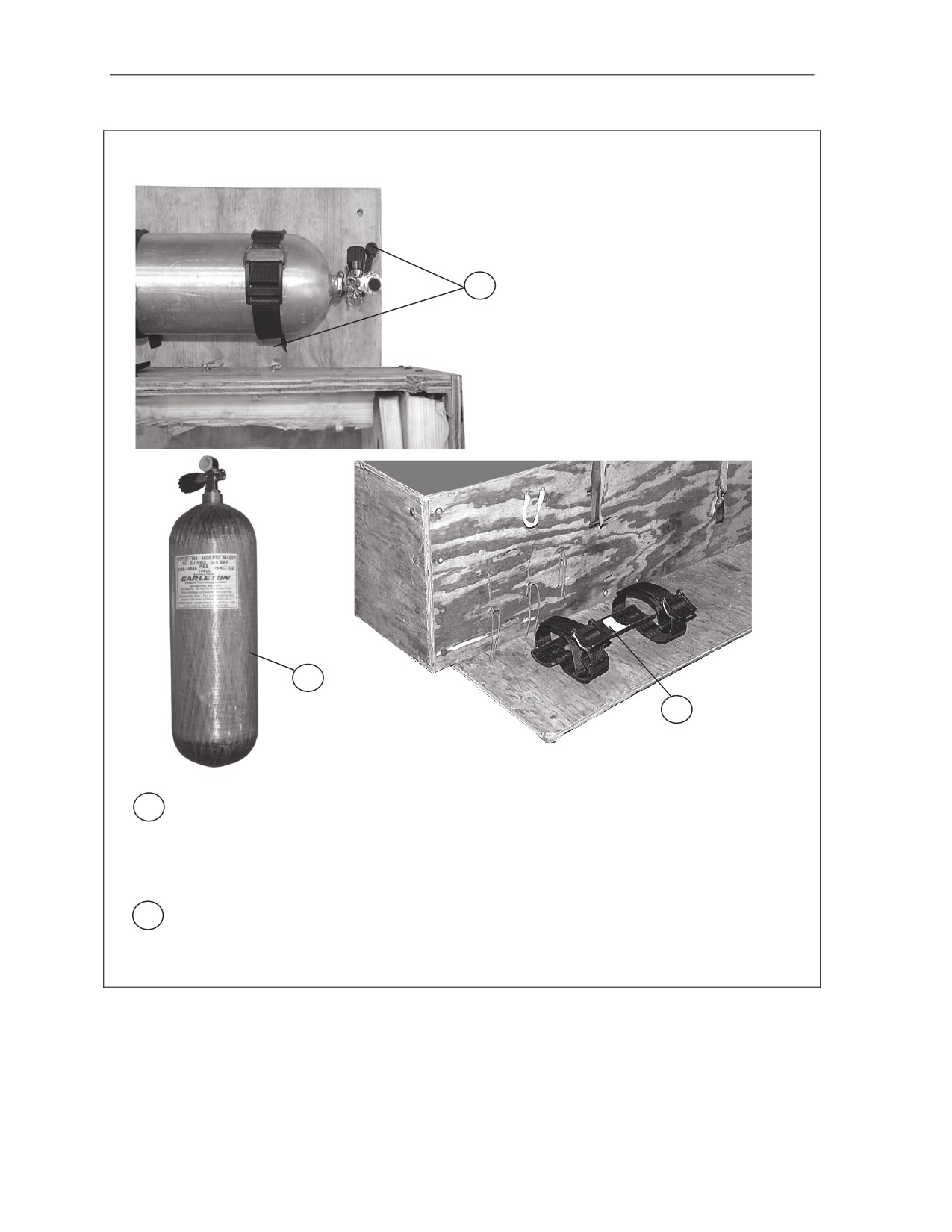
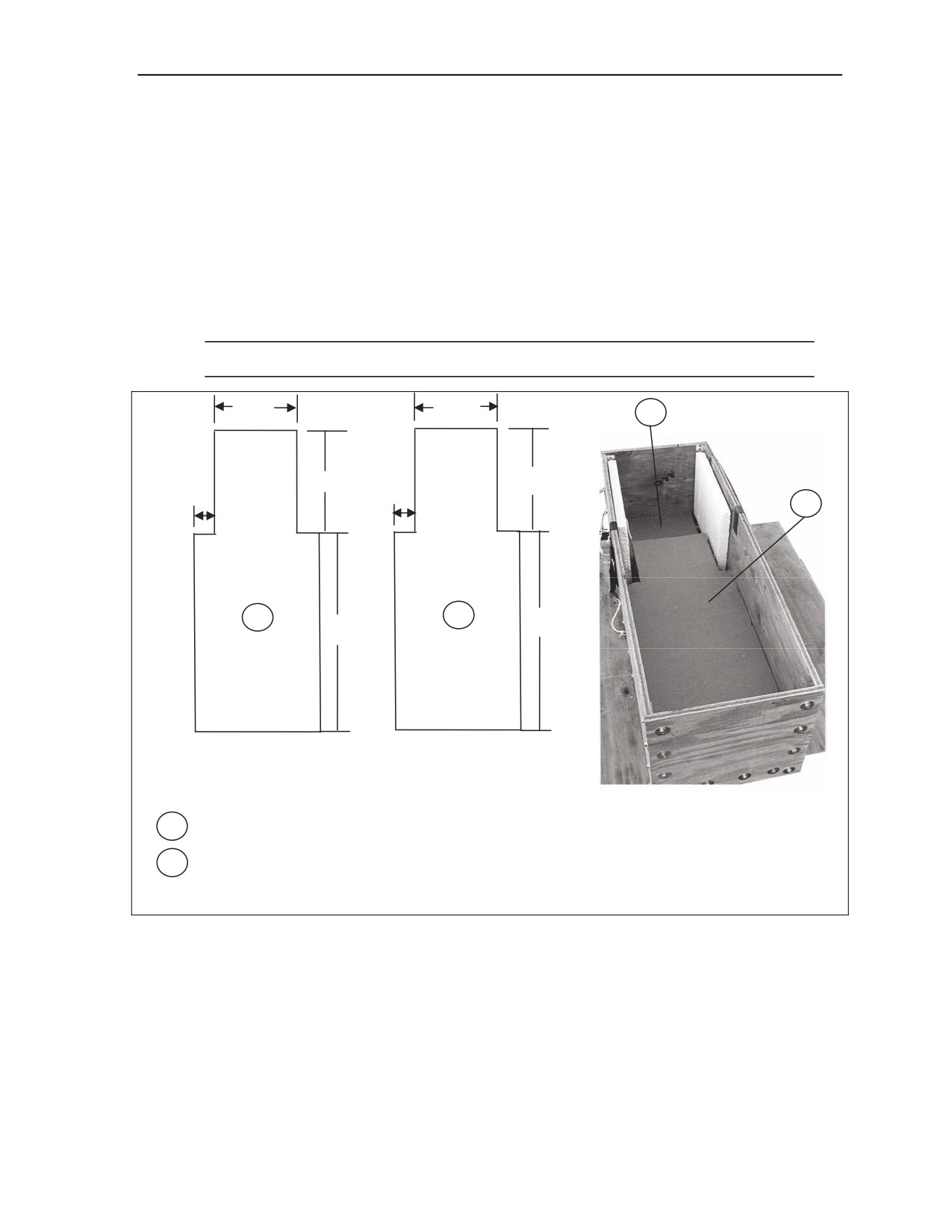
10. Fill a Self Contained Underwater Breathing Apparatus (SCUBA) cylinder with compressed
air at 3000 pounds per square inch (psi), and position the cylinder in its mounting plate. Place
the cylinder on the left side of the box base so that the cylinder is 1-inch from the box side,
and the cylinder valve flush with the front edge of the base. A carbon fiber apparatus
(SCUBA) cylinder with compressed air at 4500 psi may also be used.
11. Remove the cylinder. Using the mounting plate as a template, drill holes through the box
base. Install the mounting plate using the bolts provided.
Figure 3-2. Engine Protection Box Constructed (continued)
FM 4-20.142/MCRP 4-11.3P/NAVSEA SS400-AD-MMO-010/ TO 13C7-51-21
3-8
19 September 2007
Rigging Zodiac F470U Boat in A-22 Cargo Bag
12
13
15
14
16
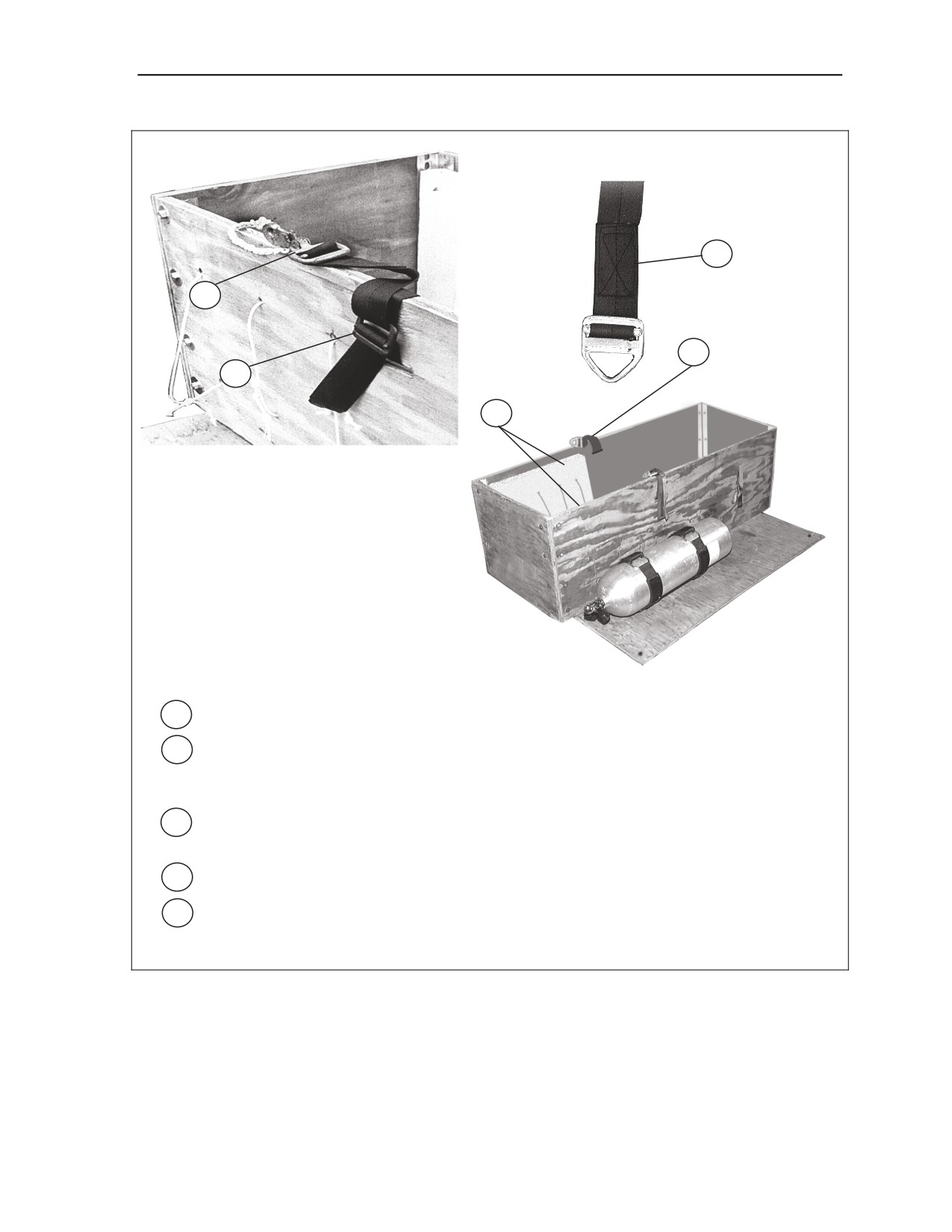
12. Sew a V-ring to a 30-inch length of type VIII nylon webbing.
13. Attach a parachute harness strap to another 30-inch length of type VIII nylon webbing using
the friction adapter on the snap. Make a pull handle for the snap as shown in step 4 of Figure
3-1.
14. With the snap opening facing the inside of the box, attach the strap with the parachute
harness snap to the slot on the left side of the box using a friction adapter.
15. Attach the strap with the V-ring to the slot on the right side of the box with a friction adapter.
16. Place one 13- by 17-inch piece of foam padding in each front side of the box. Secure them
with type III nylon cord tied through the holes in the sides of the box.
Figure 3-2. Engine Protection Box Constructed (continued)
FM 4-20.142/MCRP 4-11.3P/NAVSEA SS400-AD-MMO-010/ TO 13C7-51-21
19 September 2007
3-9
Chapter 3
PREPARING SKID AND A-22 CARGO BAG AND PLACING ENGINE
BOX
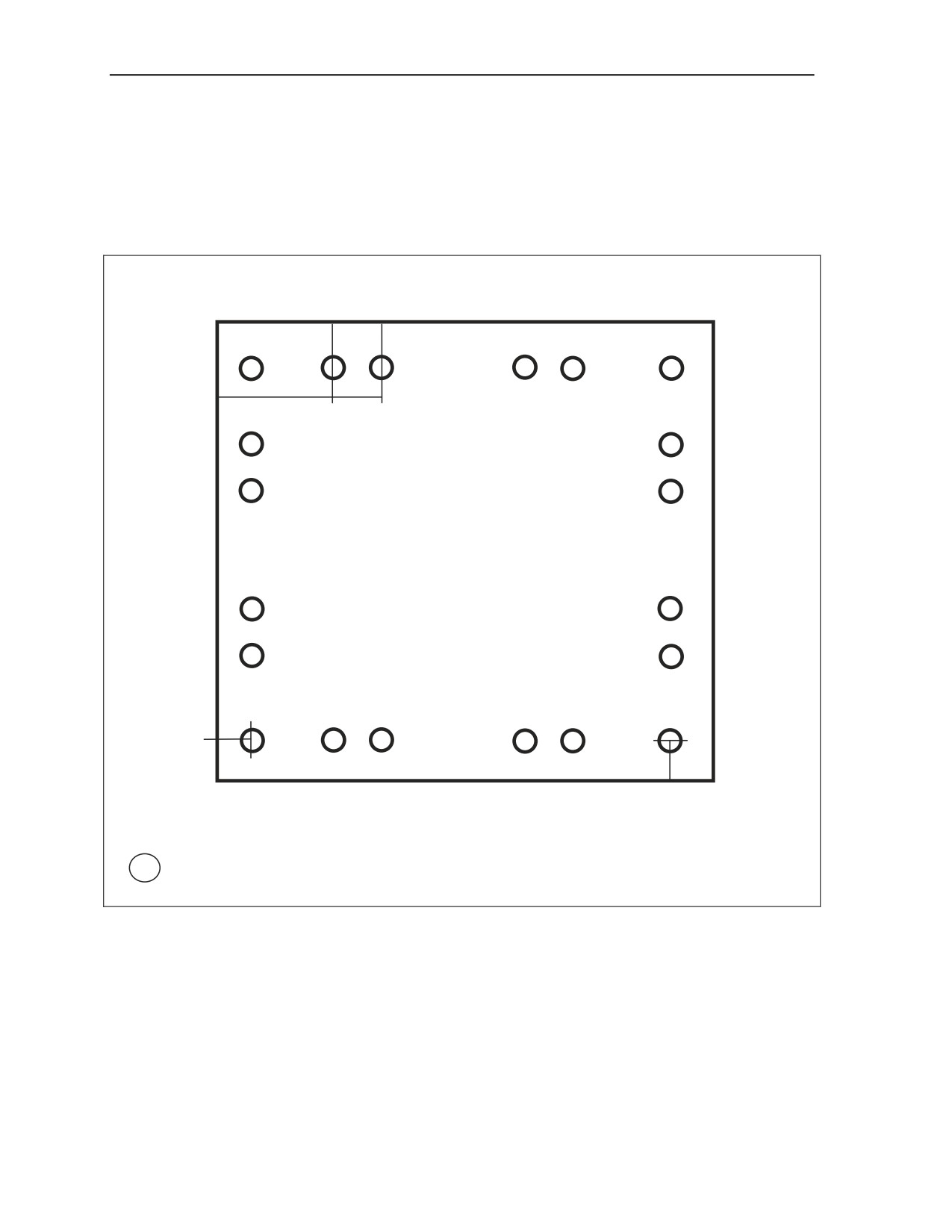
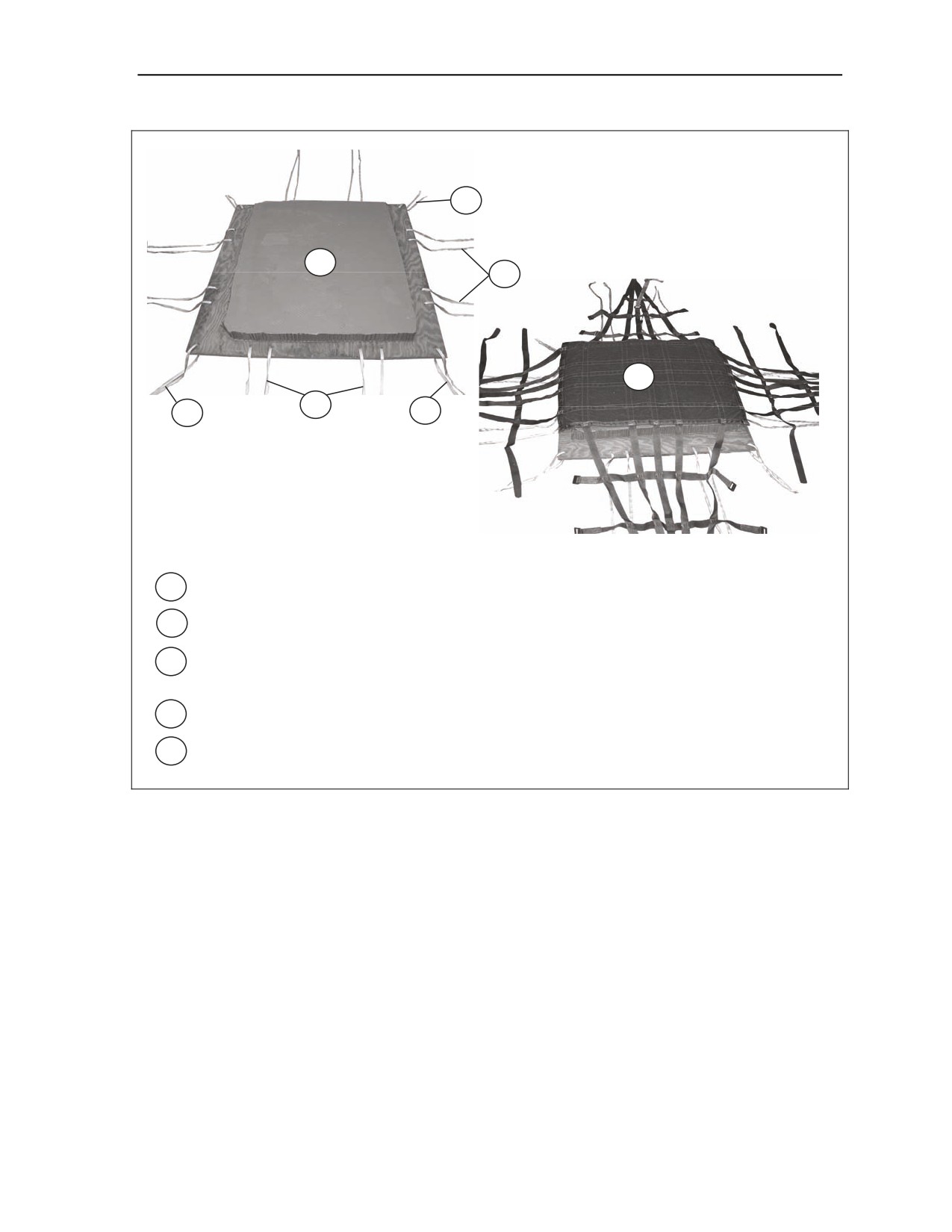
3-4. Prepare the skid board and A-22 cargo bag assembly as shown in Figures 3-3 and 3-4. Place the
engine box as shown in Figure 3-5.
12”
14”
48”
2”
48”
2”
1. Drill 1/2-inch holes in skid board according to Figure 3-2, step 1.
Figure 3-3. A-22 Skid Board Prepared
FM 4-20.142/MCRP 4-11.3P/NAVSEA SS400-AD-MMO-010/ TO 13C7-51-21
3-10
19 September 2007
Rigging Zodiac F470U Boat in A-22 Cargo Bag
2
4
3
5
3
2
2
1.
Place the skid board on dunnage to allow lifting by forklift. (not shown)
2.
Center a 24-inch length of 1/2-inch tubular nylon webbing through each corner hole.
3.
Pass a length of 1/2-inch tubular nylon webbing through each pair of holes in the sides of the
skid board.
4.
Center a 36- by 42-inch piece of honeycomb on the skid board as shown.
5. Center the scuff pad of the A-22 sling assembly over the honeycomb and skid board.
Figure 3-4. Skid Board and A-22 Cargo Bag Prepared
FM 4-20.142/MCRP 4-11.3P/NAVSEA SS400-AD-MMO-010/ TO 13C7-51-21
19 September 2007
3-11
Chapter 3
1
2
3
1.
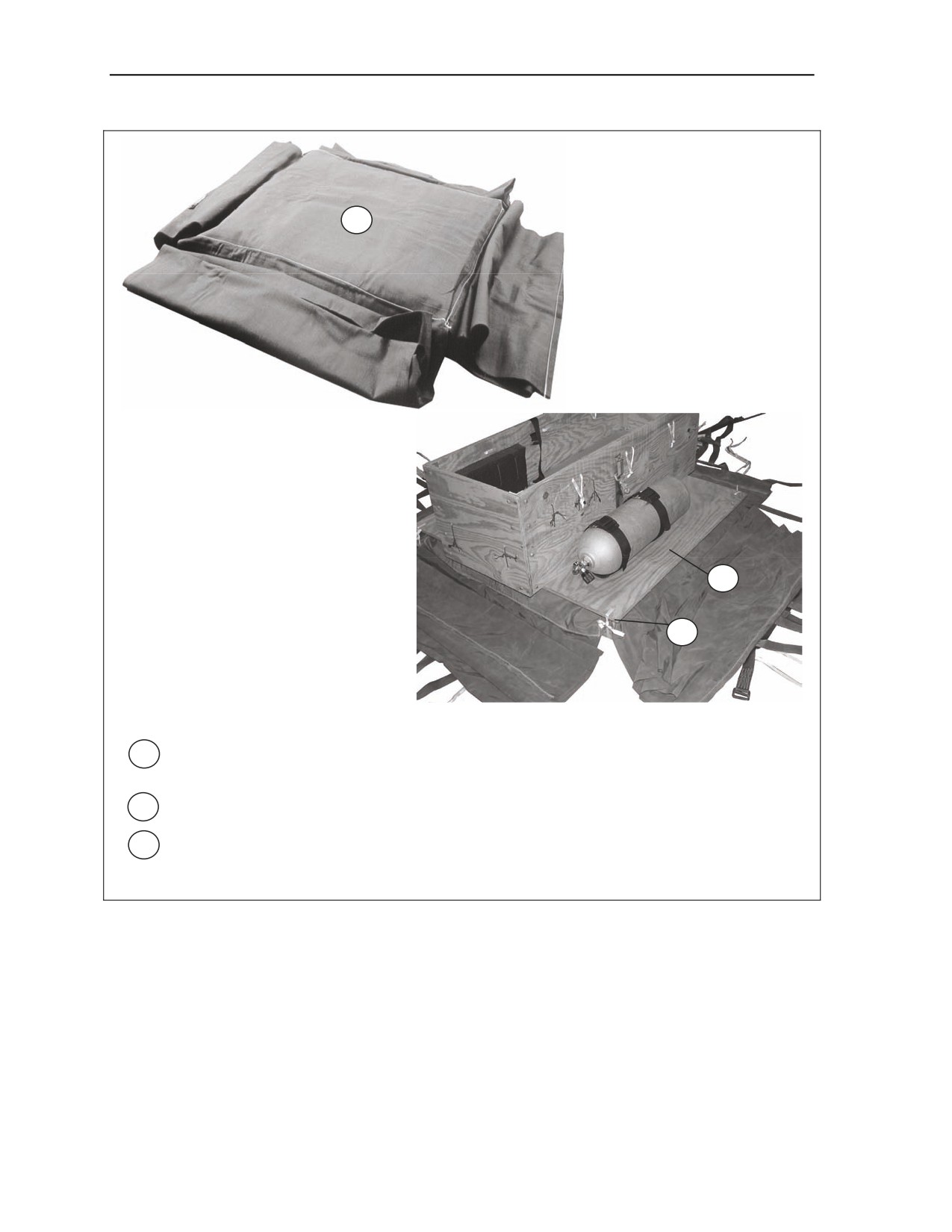
Center the A-22 cover assembly over the scuff pad. Tuck the slings and cover flaps around
skid board to allow working space.
2.
Center the base of the engine box over the skid board and A-22 cargo bag.
3. Tie the corners of the skid board to the corners of the engine box using the lengths of 1/2
inch tubular nylon webbing placed in step 3 of Figure 3-4.
Figure 3-5. Engine Box Placed
FM 4-20.142/MCRP 4-11.3P/NAVSEA SS400-AD-MMO-010/ TO 13C7-51-21
3-12
19 September 2007
Rigging Zodiac F470U Boat in A-22 Cargo Bag
PREPARING ENGINE AND SECURING ENGINE IN BOX
3-5. Prepare a 35-horsepower MARS submersible engine and secure it in the engine box as described
below:
• Prepare the engine with the assistance of a boat operator as described below.
Place the shift lever in the NEUTRAL position
Open the throttle fully
Place the dewatering valve in the OUT position
Coat the ignition components with moisture-resistant sealer
• Place the engine in the engine box, pad it with honeycomb, and secure it as shown in Figure 3-6.
Note. This drawing is not to scale.
12 1/2”
121/2”
1
20”
NOTE
2”
2”
2
1
2
29½”
29½ “
Note. This length will vary with the model of the engine used. See Step 5 for proper alignment.
1. Cut a piece of honeycomb as shown. Place it in the bottom of the engine box.
2. Cut the second piece of honeycomb as shown. Place it in the box, aligning the rear edge with
the rear edge of the first piece.
Figure 3-6. Engine Secured in Box
FM 4-20.142/MCRP 4-11.3P/NAVSEA SS400-AD-MMO-010/ TO 13C7-51-21
19 September 2007
3-13
Chapter 3
6
5
4
3
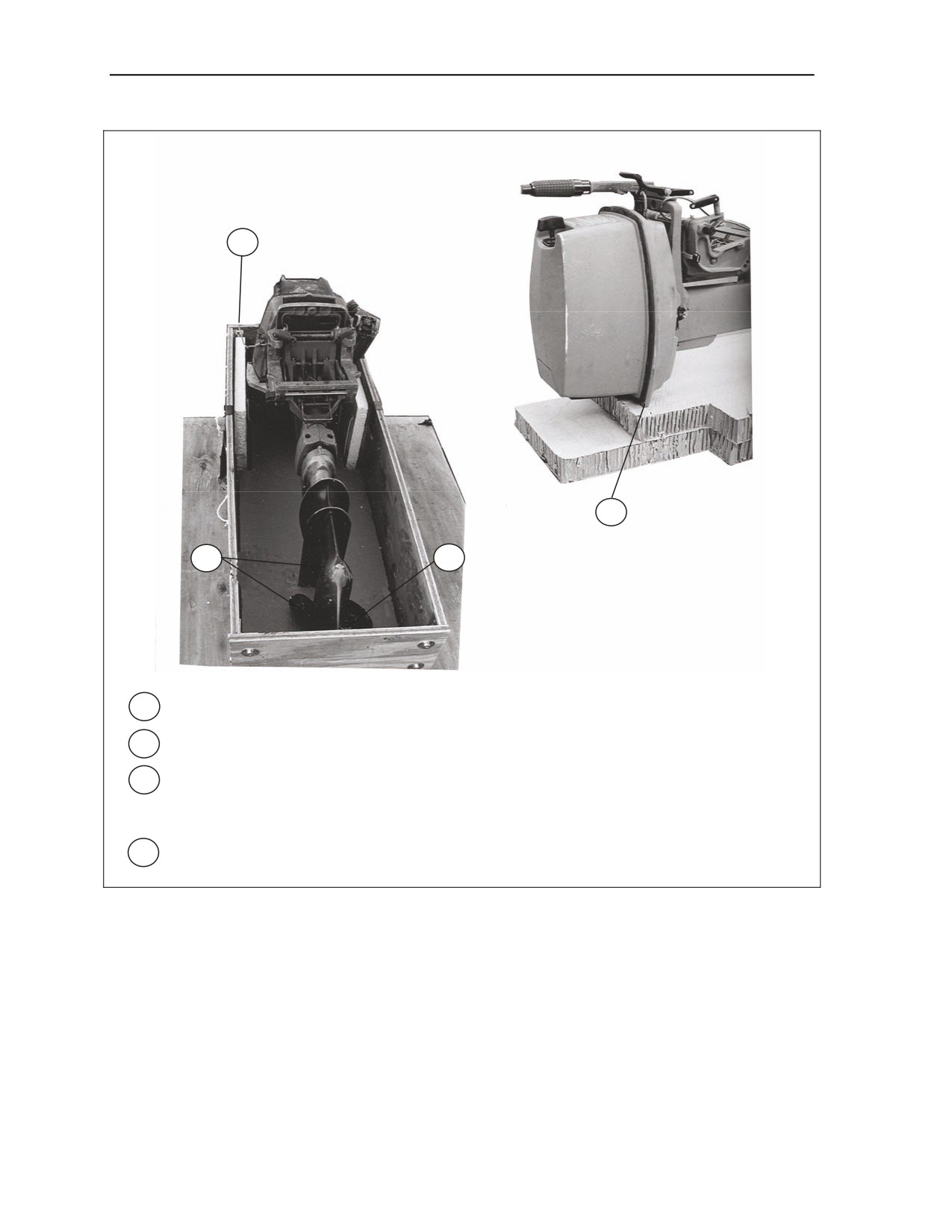
3. Place the engine in the box with the skeg touching the rear of the box.
4. Push the propeller and the anti-ventilation plate down into the honeycomb.
5. Make sure the metal ledge below the engine cover rests on the honeycomb as shown. (The
box is NOT shown here for visual purposes.)
Note. Make sure the engine cover does not rest on the honeycomb.
6. Leave the engine retention cable outside the box.
Figure 3-6. Engine Secured in Box (continued)
FM 4-20.142/MCRP 4-11.3P/NAVSEA SS400-AD-MMO-010/ TO 13C7-51-21
3-14
19 September 2007
Rigging Zodiac F470U Boat in A-22 Cargo Bag
8
8
7
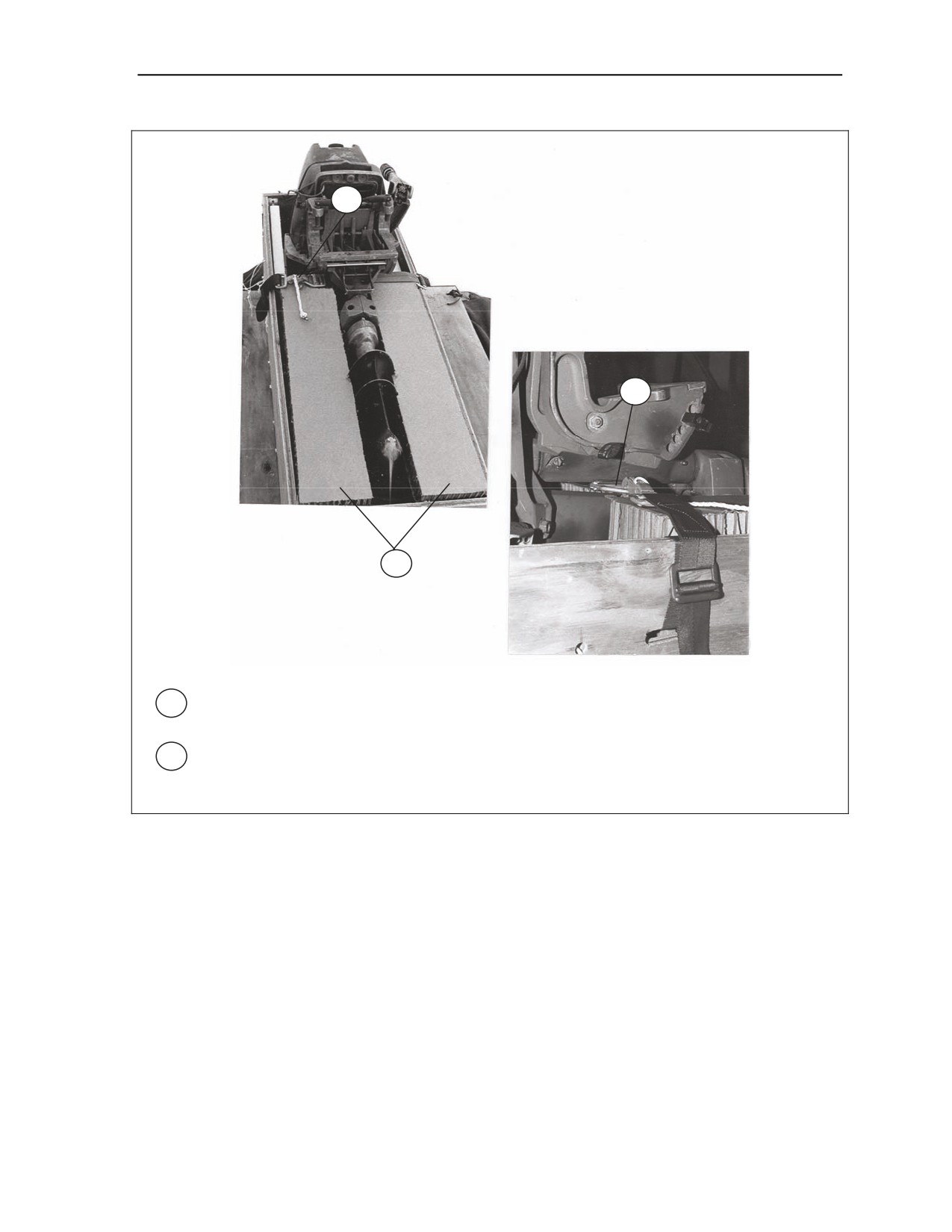
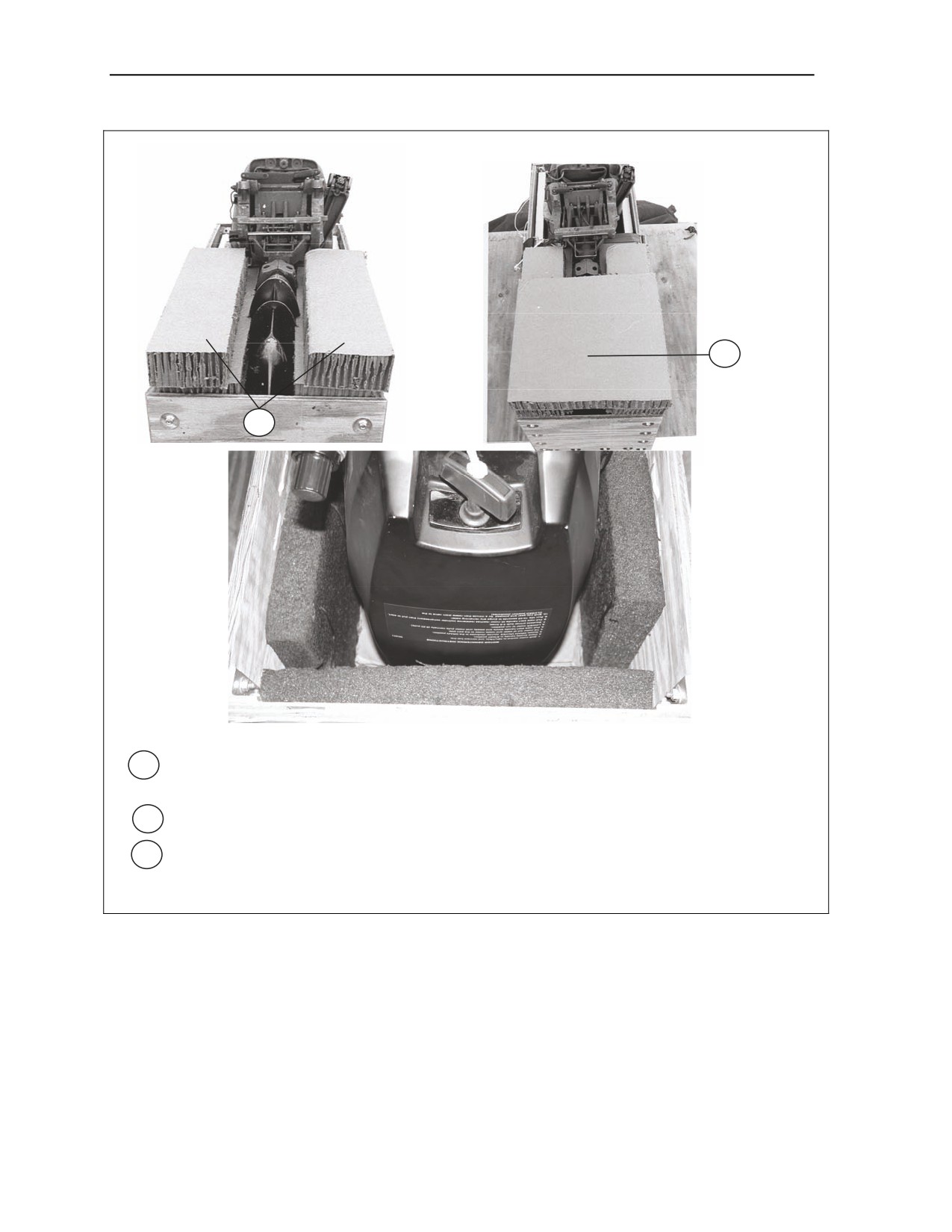
7. Place four 6- by 30-inch pieces of honeycomb in the box on each side of the lower engine
shaft.
8. Fasten the engine restraint strap snugly over the engine. Pass the strap between the engine
mounting bracket and drive shaft housing.
Figure 3-6. Engine Secured in Box (continued)
FM 4-20.142/MCRP 4-11.3P/NAVSEA SS400-AD-MMO-010/ TO 13C7-51-21
19 September 2007
3-15
Chapter 3
10
9
9. Place a layer of 6- by 26-inch honeycomb on each side of the engine, flush with the rear
corners of the box.
10. Place an 18- by 18-inch piece of honeycomb flush over the rear of the box.
11. If the short-shaft engine is being rigged, place a piece of honeycomb or a piece of 2-inch thick
styrofoam between the top of the engine and the front end of the engine box.
Figure 3-6. Engine Secured in Box (continued)
FM 4-20.142/MCRP 4-11.3P/NAVSEA SS400-AD-MMO-010/ TO 13C7-51-21
3-16
19 September 2007
Rigging Zodiac F470U Boat in A-22 Cargo Bag
PREPARING BOAT AND INFLATION SYSTEM
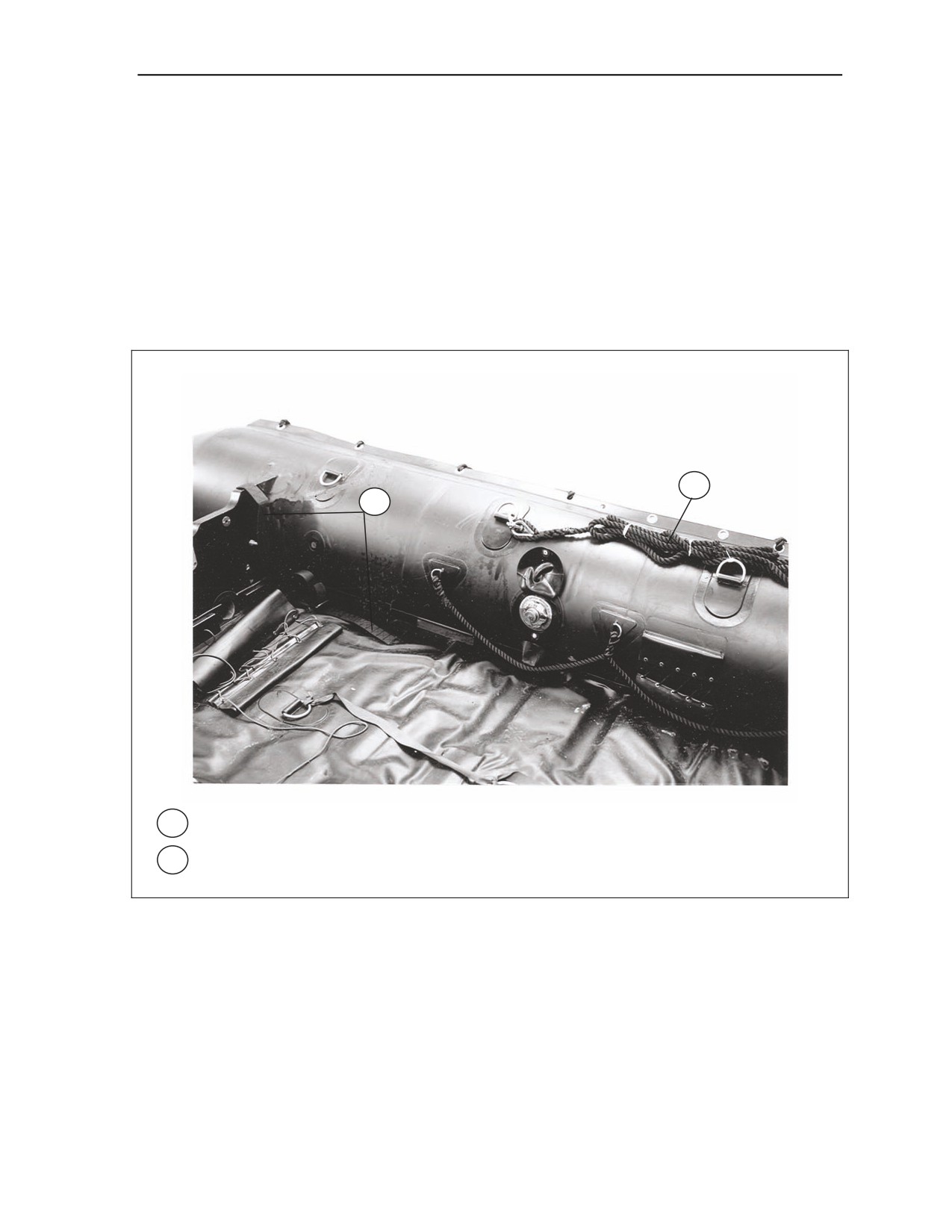
3-6. Prepare the F470U boat and the inflation system as described below.
• Make a pressure check on the boat in accordance with the manufacturer’s manual
• Make sure the bow line is less than 12 feet long
• Stow any tools, spare engine parts, foot pump, and hose in the bow storage pouches. Attach
chemical lights (not red) to the zipper pulls if mission requirements dictate
• Prepare the boat as shown in Figure 3-7
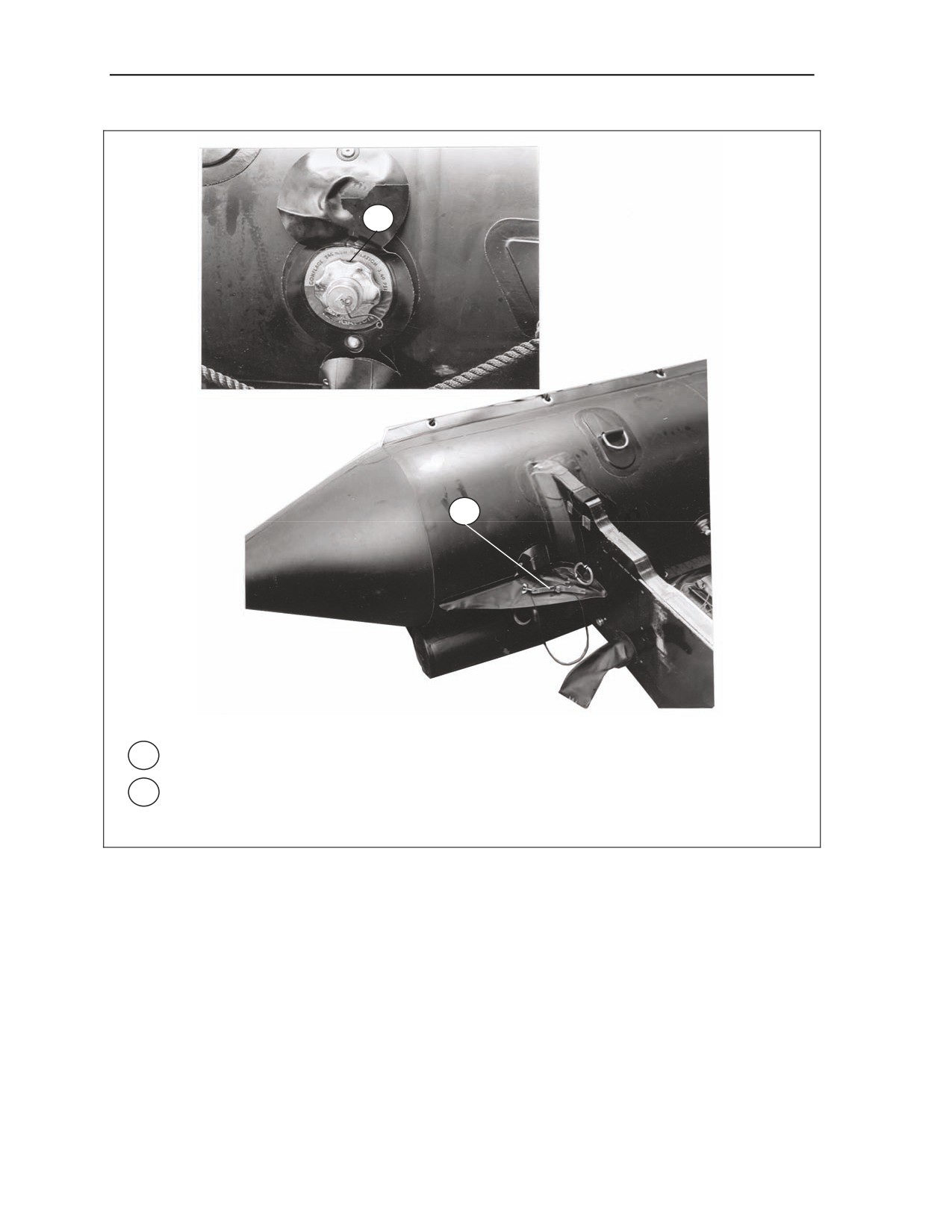
• Prepare the inflation system as shown in Figure 3-8
1
2
1. S-fold all loose boat lines. Secure the folds to adjacent rings with retainer bands.
2. Loosen the transom straps.
Figure 3-7. Boat Prepared
FM 4-20.142/MCRP 4-11.3P/NAVSEA SS400-AD-MMO-010/ TO 13C7-51-21
19 September 2007
3-17
Chapter 3
1
2
1. Make sure all four valves are set in the center of the inflation (red) position.
2. Remove the isolator clamps from the shock absorption tubes. Store them in the pouch
provided.
Figure 3-8. Inflation System Prepared
FM 4-20.142/MCRP 4-11.3P/NAVSEA SS400-AD-MMO-010/ TO 13C7-51-21
3-18
19 September 2007
Rigging Zodiac F470U Boat in A-22 Cargo Bag
3
4
5
4
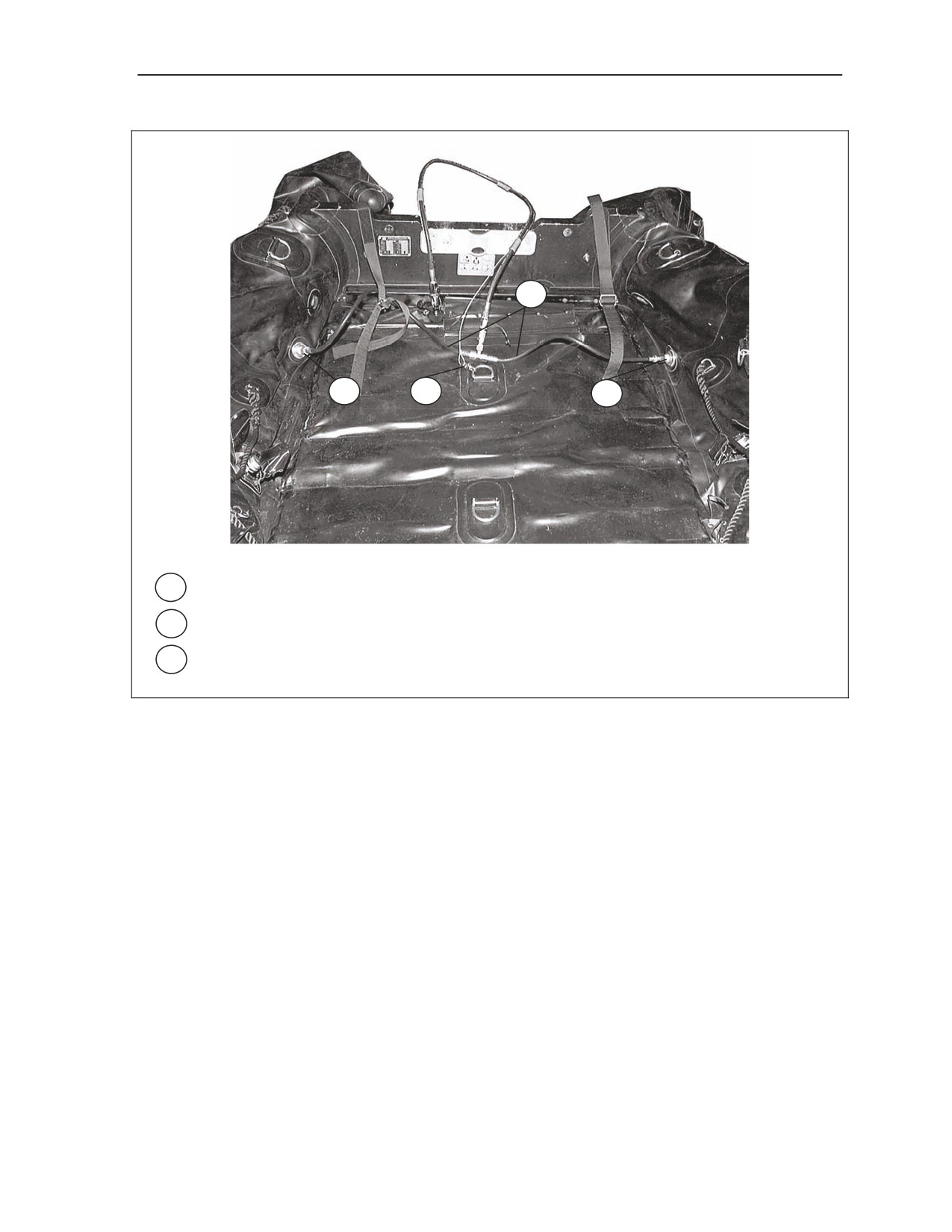
3.
Connect the two Zodiac high-pressure inflation hoses to the Zodiac tee tube.
4.
Connect the Zodiac high-pressure inflation hoses to the buoyancy tubes.
5. Connect the safety lanyard to the aft center D-ring with a small clevis.
Figure 3-8. Inflation System Prepared (continued)
FM 4-20.142/MCRP 4-11.3P/NAVSEA SS400-AD-MMO-010/ TO 13C7-51-21
19 September 2007
3-19
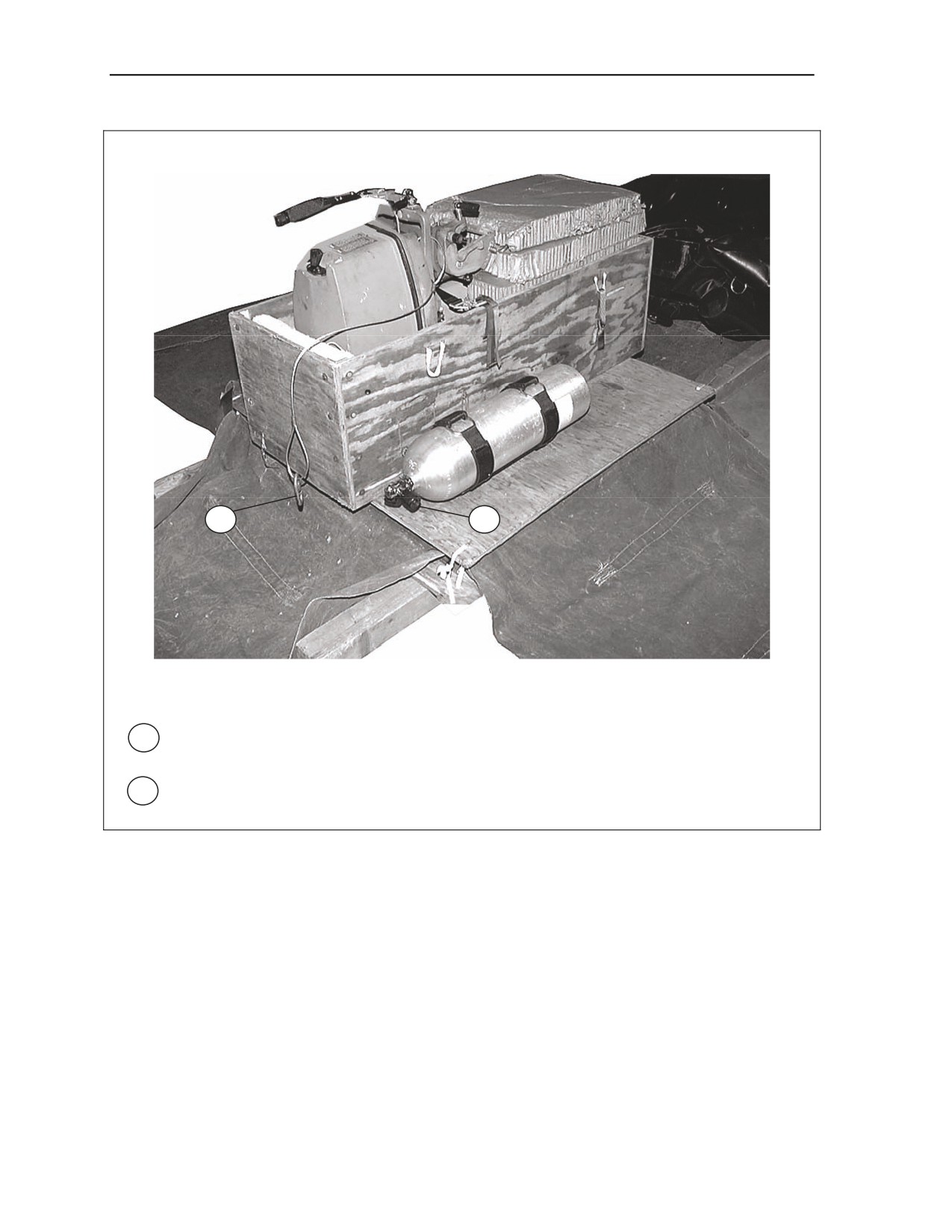
Chapter 3
7
6
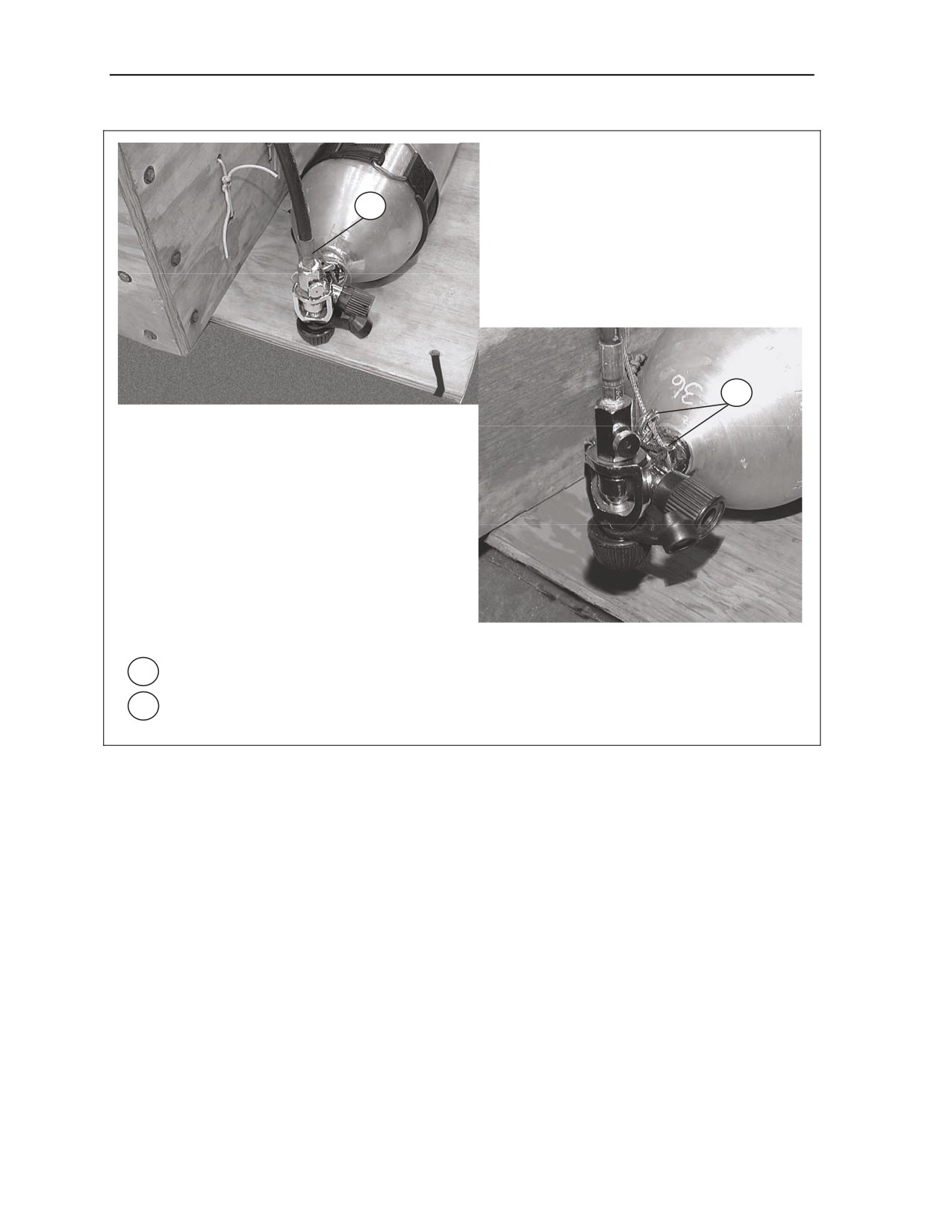
6. Make sure the cylinder is placed and secured in its holder, exactly as shown, and that the
hand wheel faces away from the box wall.
7. Place a carabiner or small clevis on the engine securing cable.
Figure 3-8. Inflation System Prepared (continued)
FM 4-20.142/MCRP 4-11.3P/NAVSEA SS400-AD-MMO-010/ TO 13C7-51-21
3-20
19 September 2007
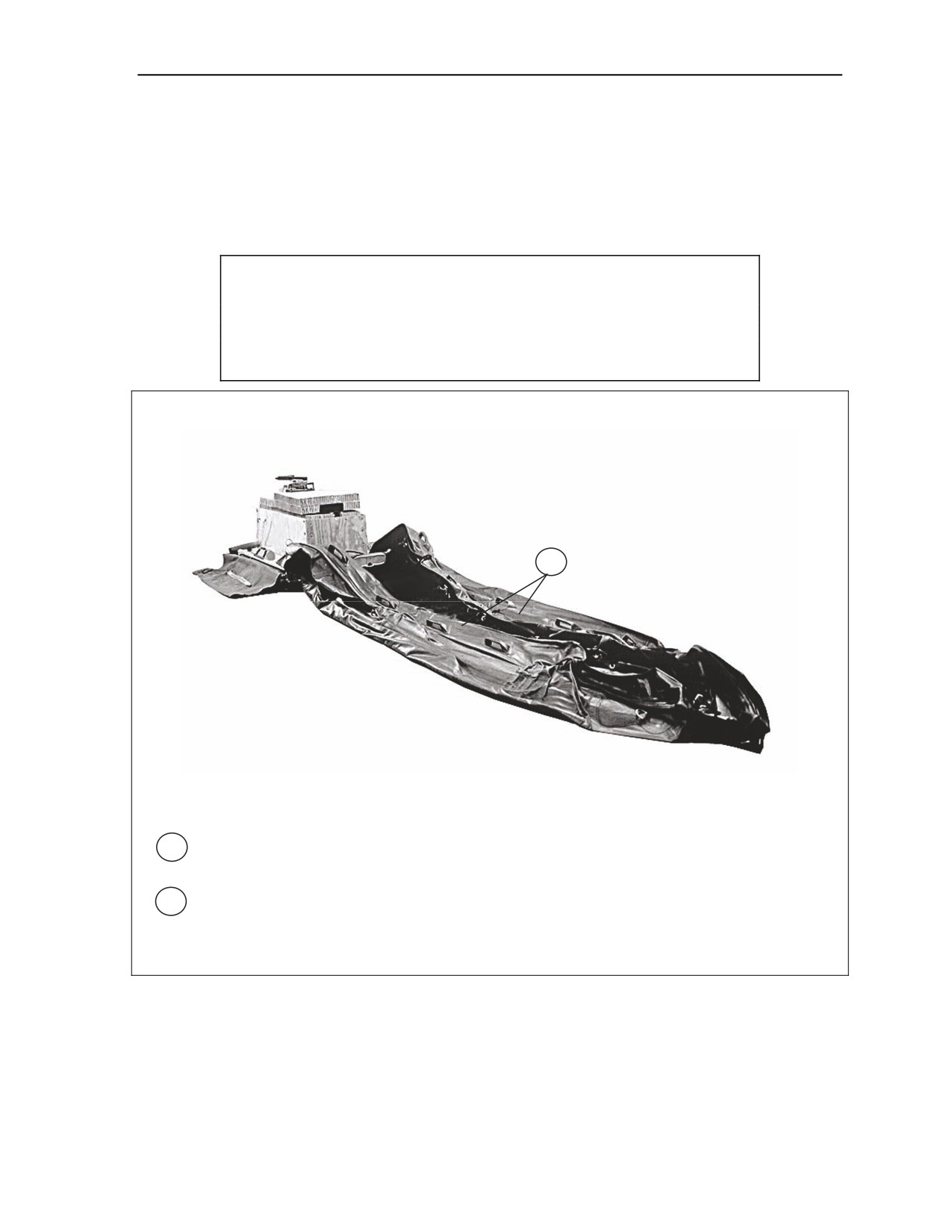
Rigging Zodiac F470U Boat in A-22 Cargo Bag
COLLAPSING AND FOLDING BOAT, COMPLETING INFLATION
SYSTEM CONNECTION AND LOADING FUEL TANKS
3-7. Collapse the boat, attach it to the engine, and connect the inflation hoses to the cylinder as shown in
Figure 3-9. Fold the boat over the engine box as shown in Figure 3-10. Stow the fuel tanks and make the
final folds as shown in Figures 3-11 and 3-12.
CAUTION
Make sure the isolator clamps are removed from the shock absorption
tubes and stowed. Also make sure all inflation valves are closed and in
the center of the inflation (red) position.
2
1. Use an industrial strength vacuum cleaner to extract the air out of the buoyancy tubes and
the keel chamber of the boat. (not shown)
2. Fold the side tubes in toward the center. The bottom seams of the buoyancy tubes will lie
along the edge of the deflated boat. The left and right tubes will touch as they are folded
toward the center of the boat.
Figure 3-9. Boat Collapsed and Attached to Engine, Final Inflation System Connection Made
FM 4-20.142/MCRP 4-11.3P/NAVSEA SS400-AD-MMO-010/ TO 13C7-51-21
19 September 2007
3-21
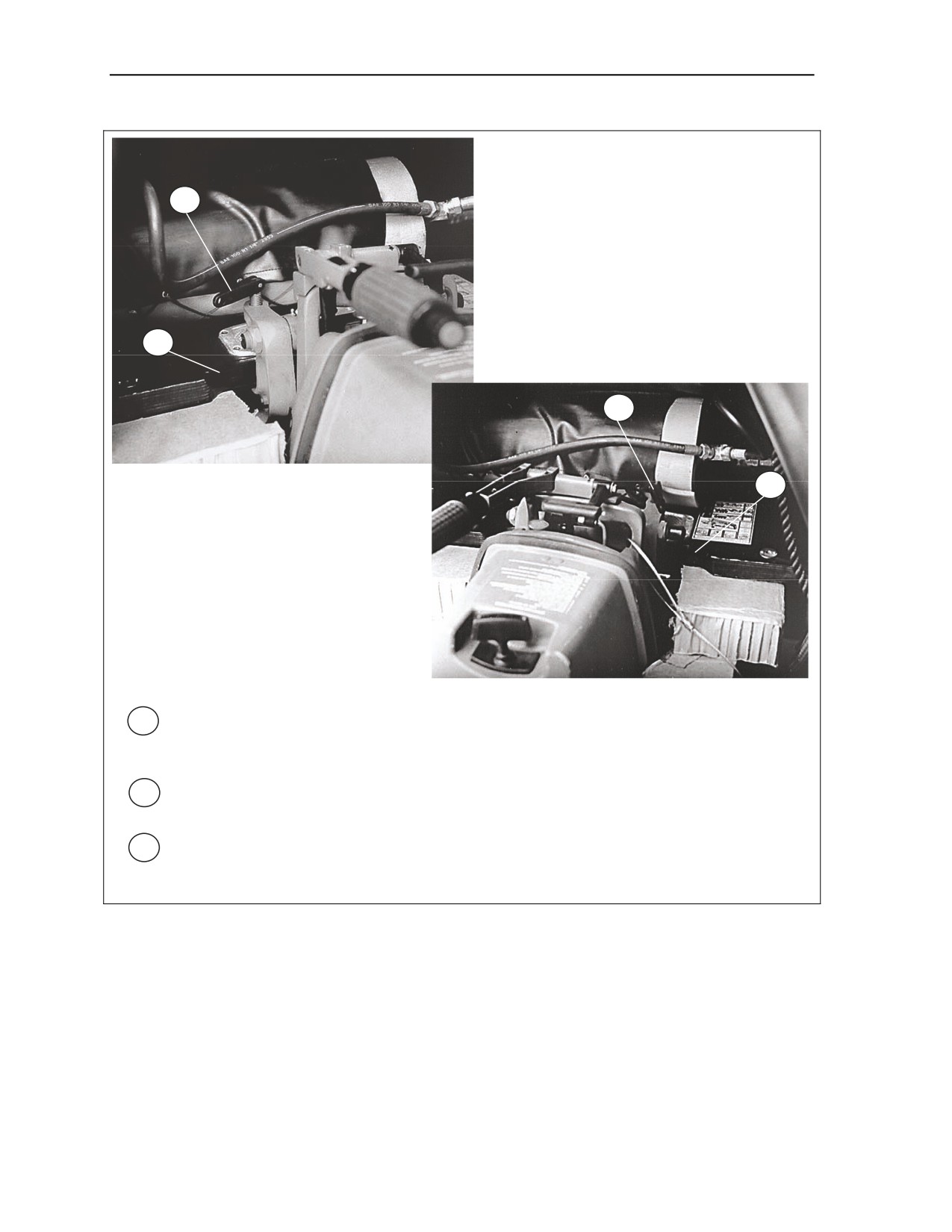
Chapter 3
4
3
4
3
3.
Open the mounting clips on the engine. Lift the transom of the boat with the help of an
assistant and slide the transom into the engine mounting clamps. Crush the surrounding
honeycomb, if necessary.
4.
Make sure the clips are aligned with the metal engine mounting pads on the transom. Tighten
the engine mounting clamps.
5. Attach the engine safety cable to the ring provided on the transom using a small clevis, or the
locking carabiner installed in Figure 3-8, Step 7 (not shown).
Figure 3-9. Boat Collapsed and Attached to Engine, Final Inflation System Connection Made
(continued)
FM 4-20.142/MCRP 4-11.3P/NAVSEA SS400-AD-MMO-010/ TO 13C7-51-21
3-22
19 September 2007
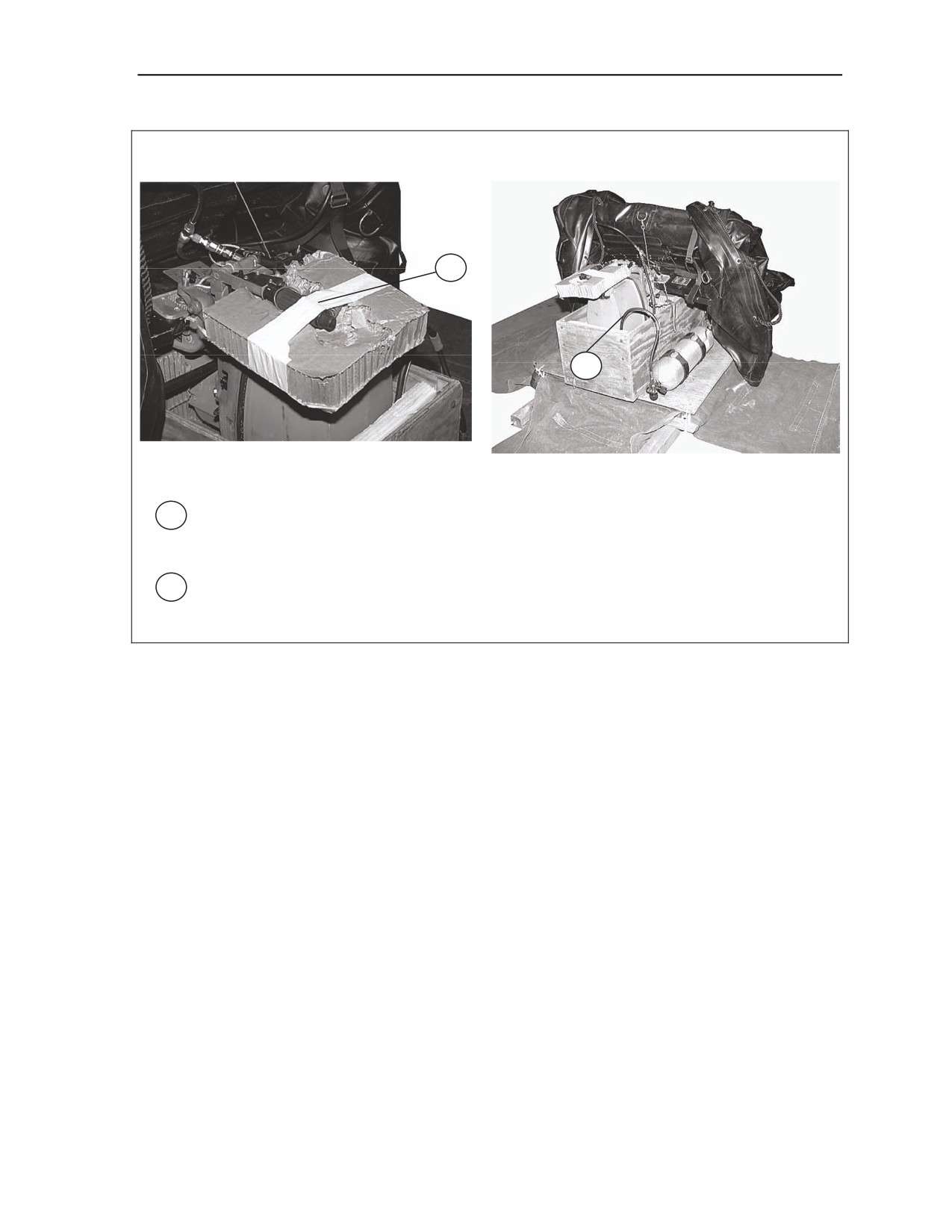
Rigging Zodiac F470U Boat in A-22 Cargo Bag
6
7
6. Center the motor control handle in a 12- by 12-inch piece of honeycomb. Crush the
honeycomb to allow the handle to lay in it. Secure the honeycomb to the handle with two
turns of masking tape.
7. Route the main inflation hose down into the box on the left side. Allow a smooth turn of the
hose out of the box to where it joins the cylinder valve.
Figure 3-9. Boat Collapsed and Attached to Engine, Final Inflation System Connection Made
(continued)
FM 4-20.142/MCRP 4-11.3P/NAVSEA SS400-AD-MMO-010/ TO 13C7-51-21
19 September 2007
3-23
Chapter 3
8
9
8. Connect the inflation tube to its connector.
9. Route the lanyard through the ring, and attach it to its connector.
Figure 3-9. Boat Collapsed and Attached to Engine, Final Inflation System Connection Made
(continued)
FM 4-20.142/MCRP 4-11.3P/NAVSEA SS400-AD-MMO-010/ TO 13C7-51-21
3-24
19 September 2007
Rigging Zodiac F470U Boat in A-22 Cargo Bag
1
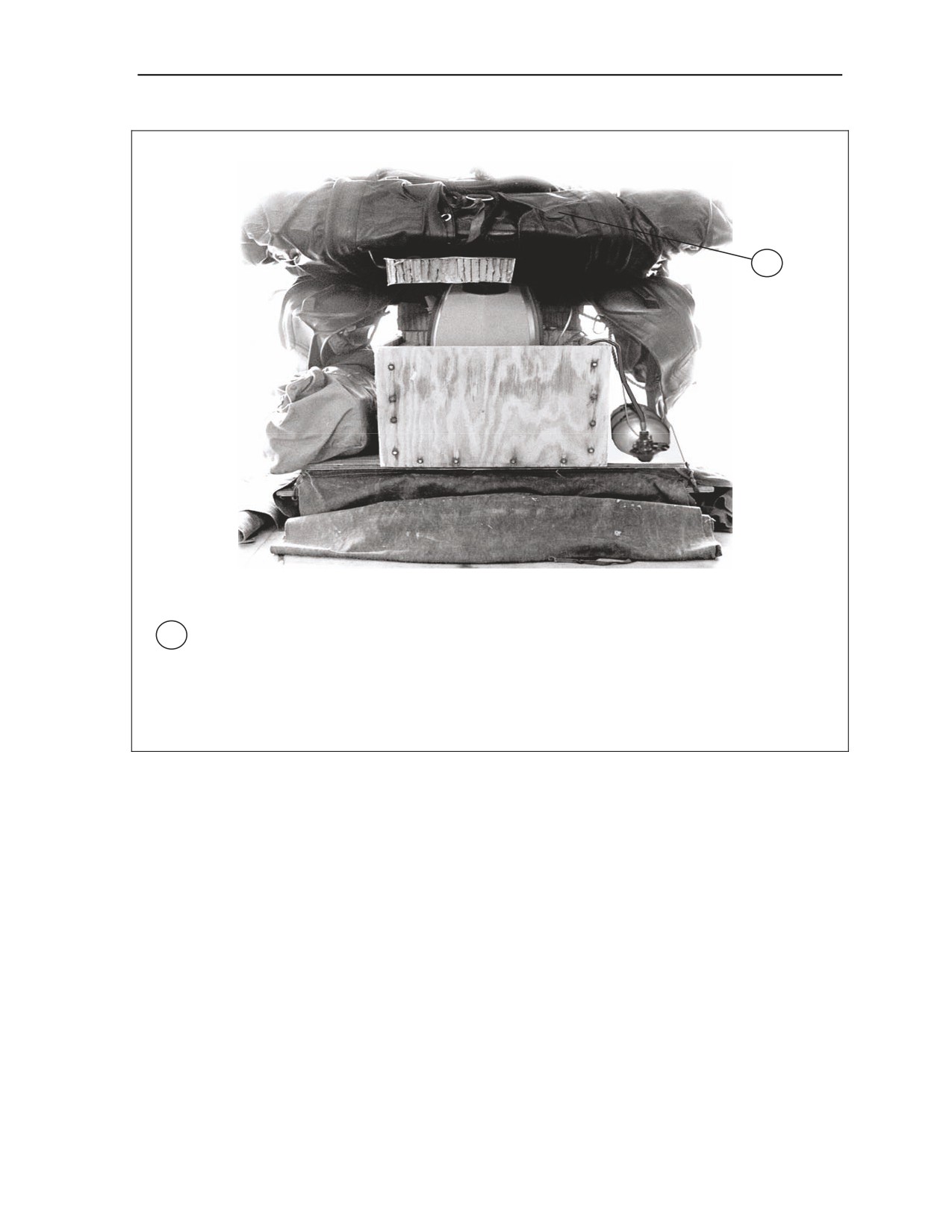
1. Fold the boat up onto the box so that the second floor D-ring is nearly even with the front
edge of the box. Make sure the floor slats lie flat and the inflation system connections are
intact.
Note. Any equipment, such as rucksacks, may be stowed at this stage along the sides of the box. Do not exceed the
dimensions of this space or the capacity of the cargo parachutes. Use the pre-positioned Type III nylon cord to secure the
equipment.
Figure 3-10. Boat Folded over Engine Box
FM 4-20.142/MCRP 4-11.3P/NAVSEA SS400-AD-MMO-010/ TO 13C7-51-21
19 September 2007
3-25
Chapter 3
1
2
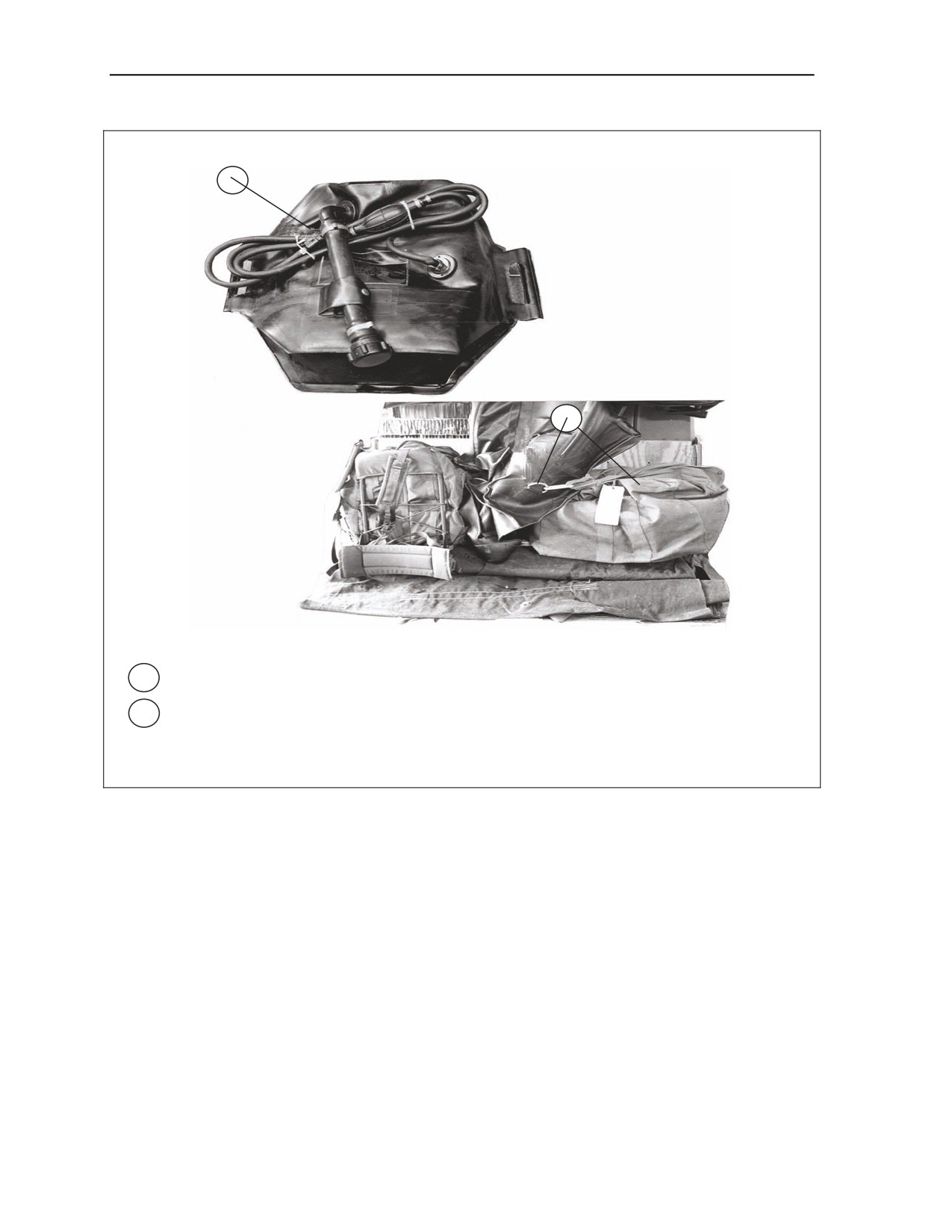
Note. Use 6-, 9-, or 18-gallon plastic collapsible fuel tanks. Use no more than four tanks.
1. S-fold and tie the fuel lines on the tanks.
2. Place the tanks in aviator kit bags, no more than two 6- or 9-gallon tanks per bag. Set the
bag on the shelf outside the engine box. Secure the bag to the engine box or to the tow rings
on the boat.
Figure 3-11. Fuel Tanks Stowed
FM 4-20.142/MCRP 4-11.3P/NAVSEA SS400-AD-MMO-010/ TO 13C7-51-21
3-26
19 September 2007
Rigging Zodiac F470U Boat in A-22 Cargo Bag
1
FRONT
2
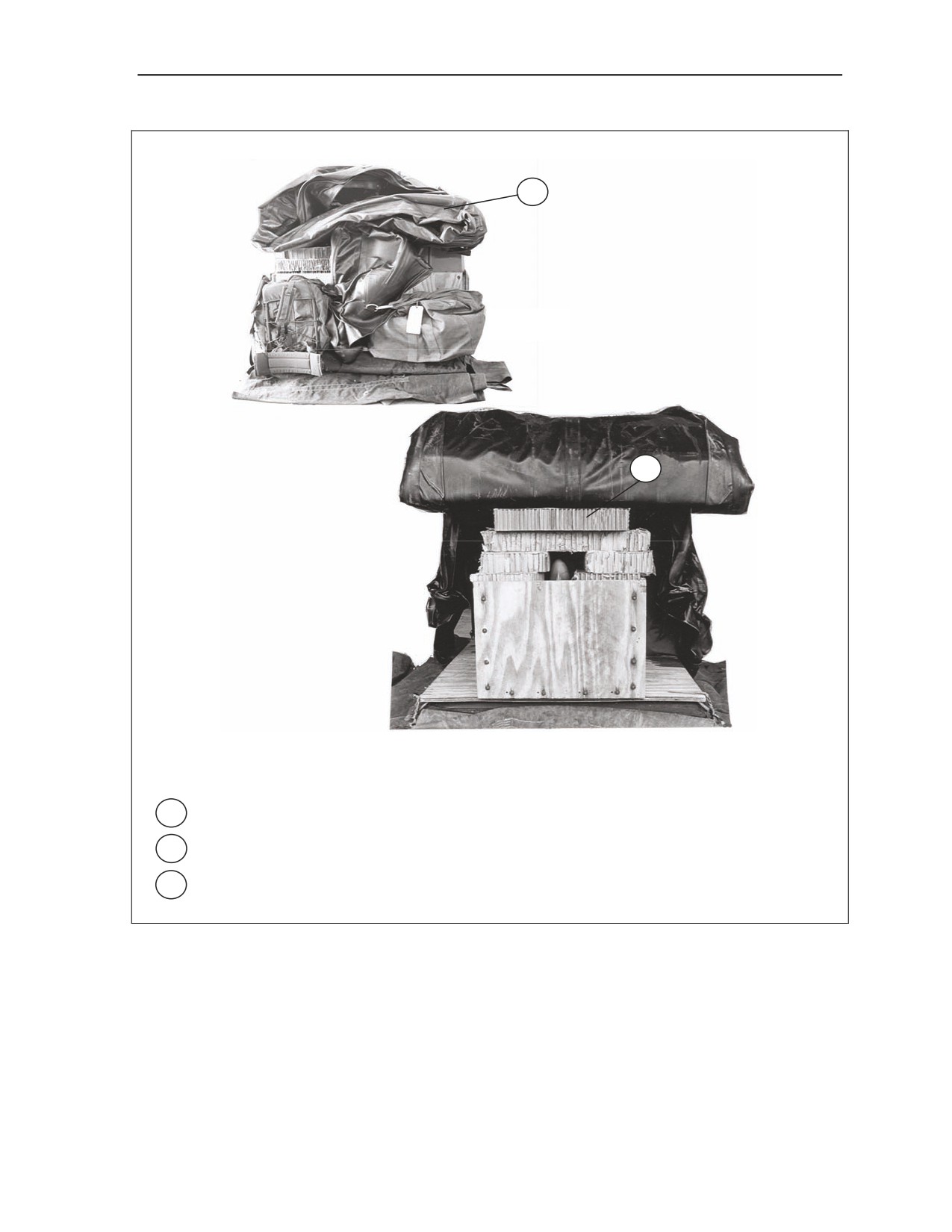
1.
Fold the bow of the boat to the front as far as the front edge of the engine box.
2.
Support the boat at the rear with a 26- by 16-inch piece of honeycomb.
3. Fold all lifelines under the boat (not shown).
Figure 3-12. Fuel Tanks Stowed and Final Folds Made
FM 4-20.142/MCRP 4-11.3P/NAVSEA SS400-AD-MMO-010/ TO 13C7-51-21
19 September 2007
3-27
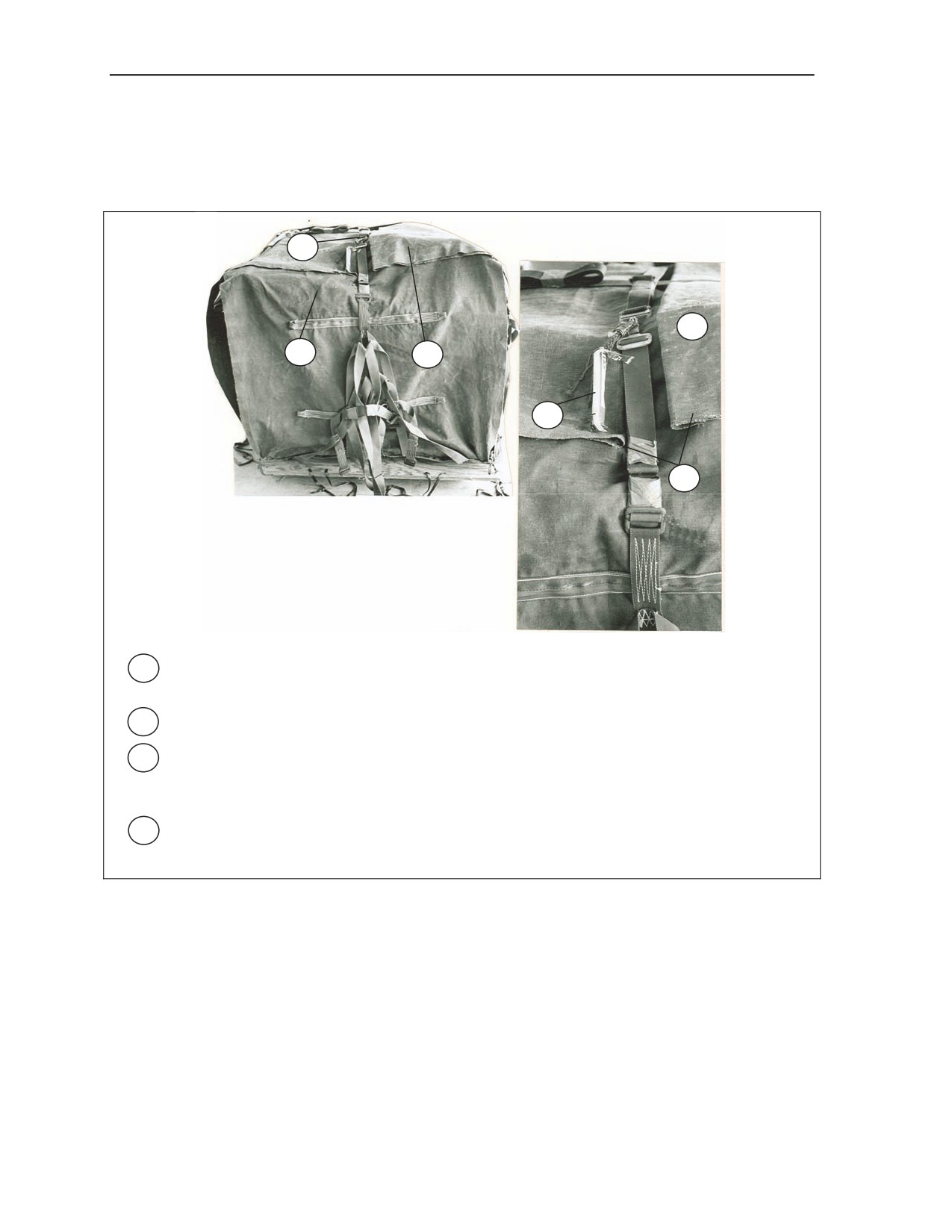
Chapter 3
SECURING A-22 CARGO BAG
3-8. Secure the A-22 cargo bag as shown in Figure 3-13.
3
3
1
2
4
2
1.
Fold the front and rear A-22 cover flaps up. Fold the excess of each flap under itself so that
the two flaps just touch.
2.
Fold the left and right flaps up in the same way as in step 1 above.
3.
Fasten the front-to-rear long and short tiedown straps using the modifications installed in
Figure 3-1. Position the fasteners so that they close on the front of the load (the engine end
of the boat).
4. Tie a chemical light to the parachute harness snap.
Figure 3-13. Cargo Bag Secured
FM 4-20.142/MCRP 4-11.3P/NAVSEA SS400-AD-MMO-010/ TO 13C7-51-21
3-28
19 September 2007
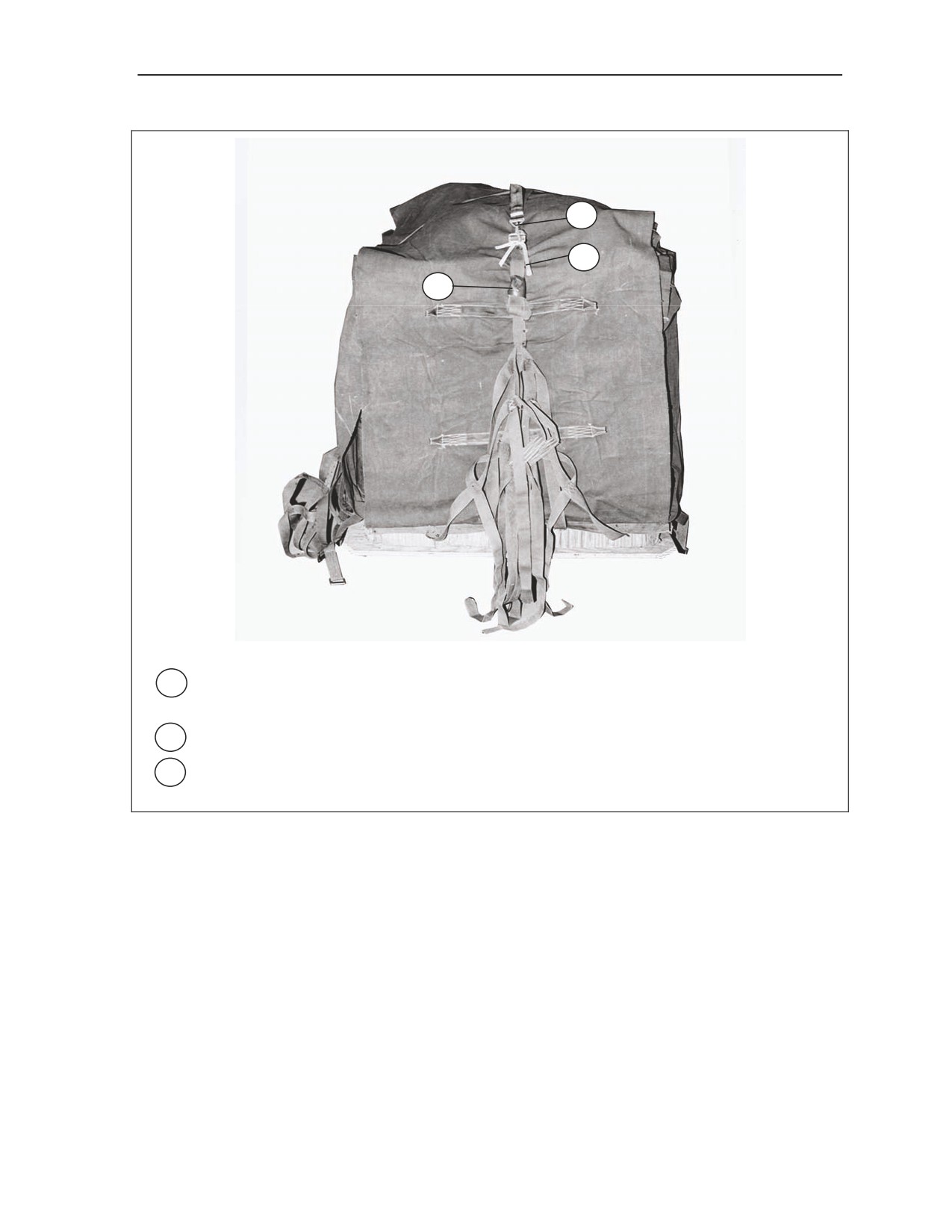
Rigging Zodiac F470U Boat in A-22 Cargo Bag
5
6
7
5.
Fasten the left to right, long and short tiedown straps using the modifications installed in
Figure 3-1. Position the fasteners so that they close on the top left side of the load.
6.
Tie a chemical light to the parachute harness snap.
7. Fold and tape any excess webbing.
Figure 3-13. A-22 Cargo Bag Secured (continued)
FM 4-20.142/MCRP 4-11.3P/NAVSEA SS400-AD-MMO-010/ TO 13C7-51-21
19 September 2007
3-29
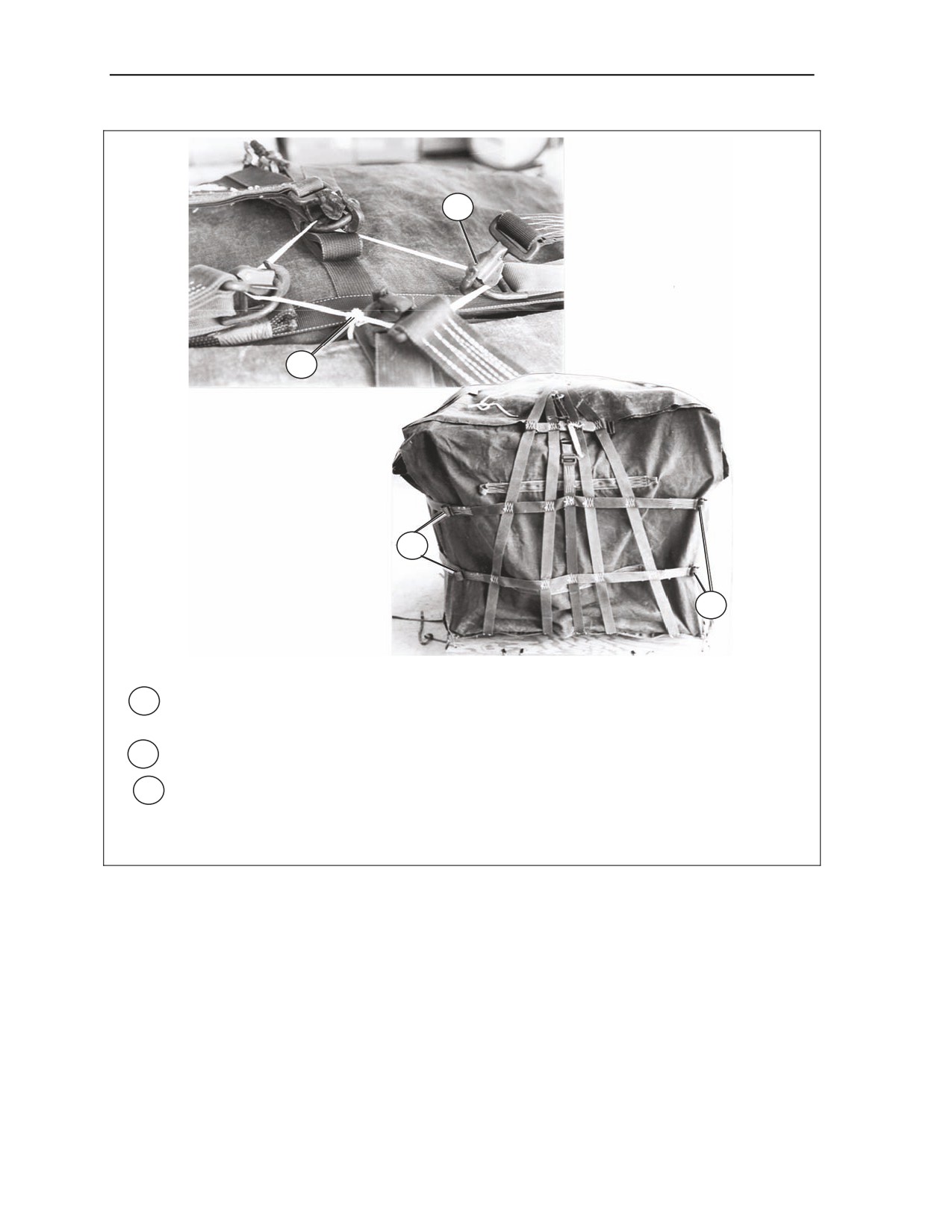
Chapter 3
9
8
10
10
8. Bring all four support web assemblies to the top of the load. Tie all four together through the
D-rings as shown using a length of Type I, ¼-inch cotton webbing tied in a square knot.
9. Install the adapter webs so that the connector snaps face inward.
10. Close the lower and middle lateral connector snaps loosely so that the bag flaps are held
securely. Do NOT allow the lateral straps to touch the boat. Do not fasten the upper lateral
straps. Fold them inward, and tape them to the support web assembly.
Figure 3-13. Cargo Bag Secured (continued)
FM 4-20.142/MCRP 4-11.3P/NAVSEA SS400-AD-MMO-010/ TO 13C7-51-21
3-30
19 September 2007
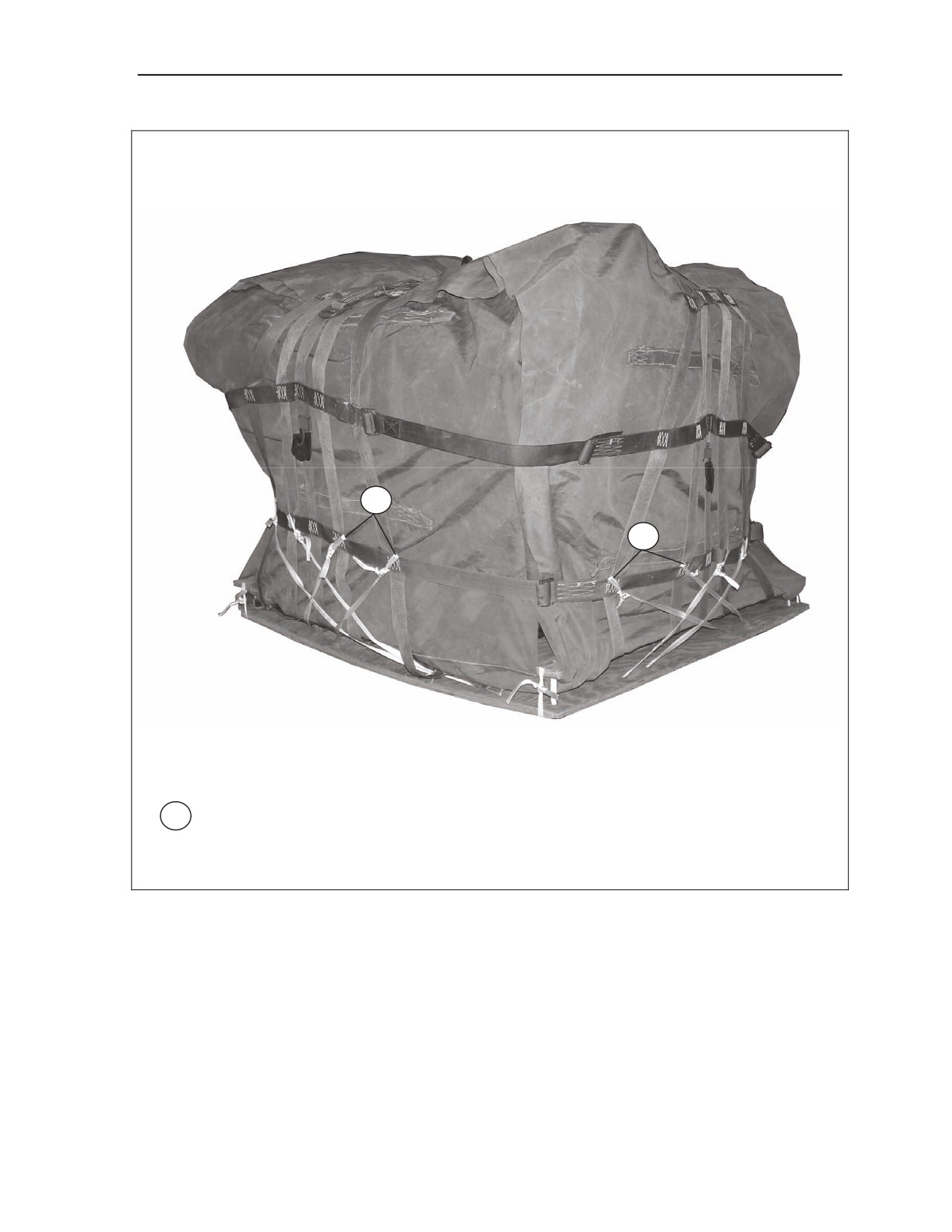
Rigging Zodiac F470U Boat in A-22 Cargo Bag
11
11
11. Tie the skid board to the A-22 sling assembly where the lower lateral straps join the support
webs as shown using ½-inch tubular nylon webbing and according to FM 4-20.103/MCRP 4
11.3C/TO 13C7-1-11.
Figure 3-13. A-22 Cargo Bag Secured (continued)
FM 4-20.142/MCRP 4-11.3P/NAVSEA SS400-AD-MMO-010/ TO 13C7-51-21
19 September 2007
3-31
Chapter 3
MODIFYING TYPE IV LINK ASSEMBLY FOR USE WITH
HYDRAULIC RELEASE
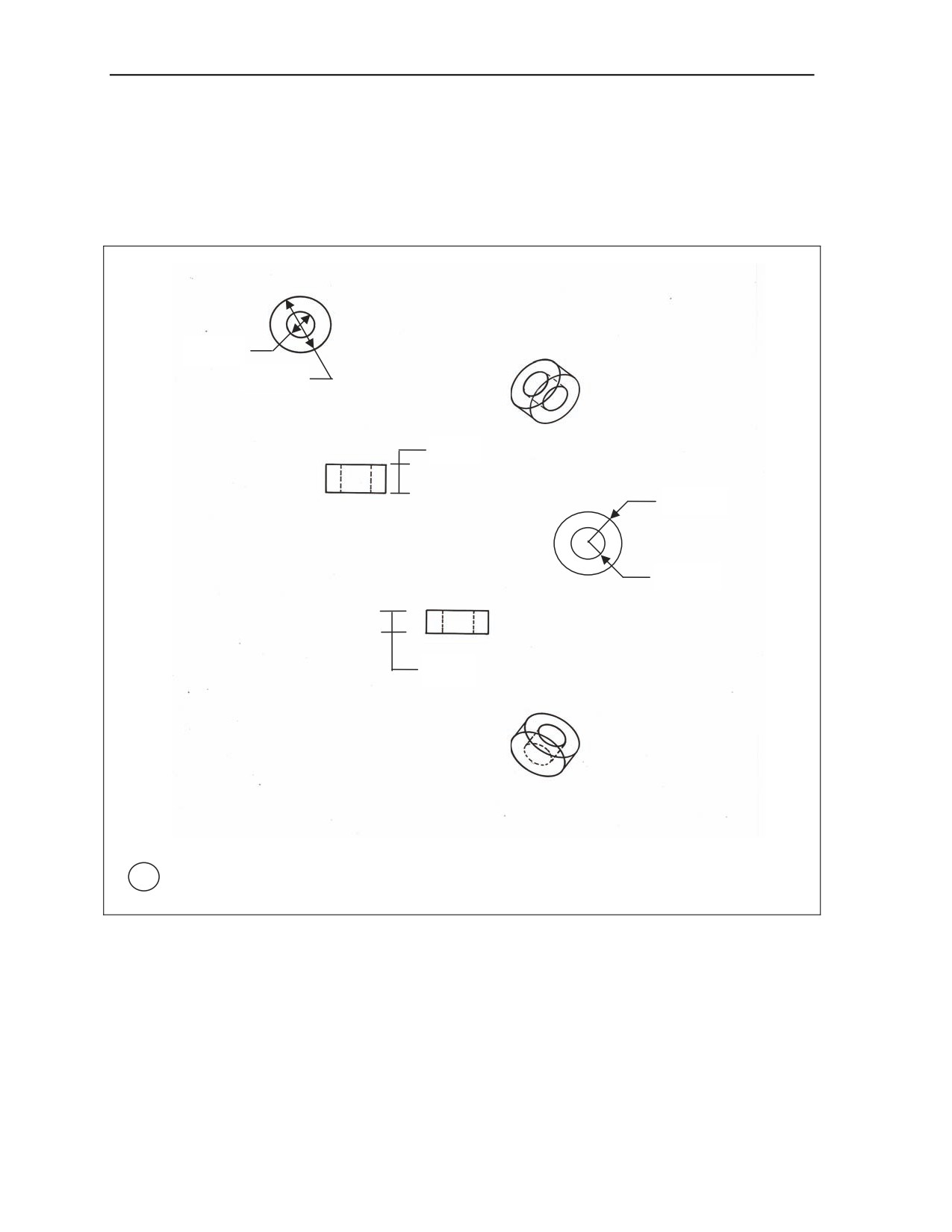
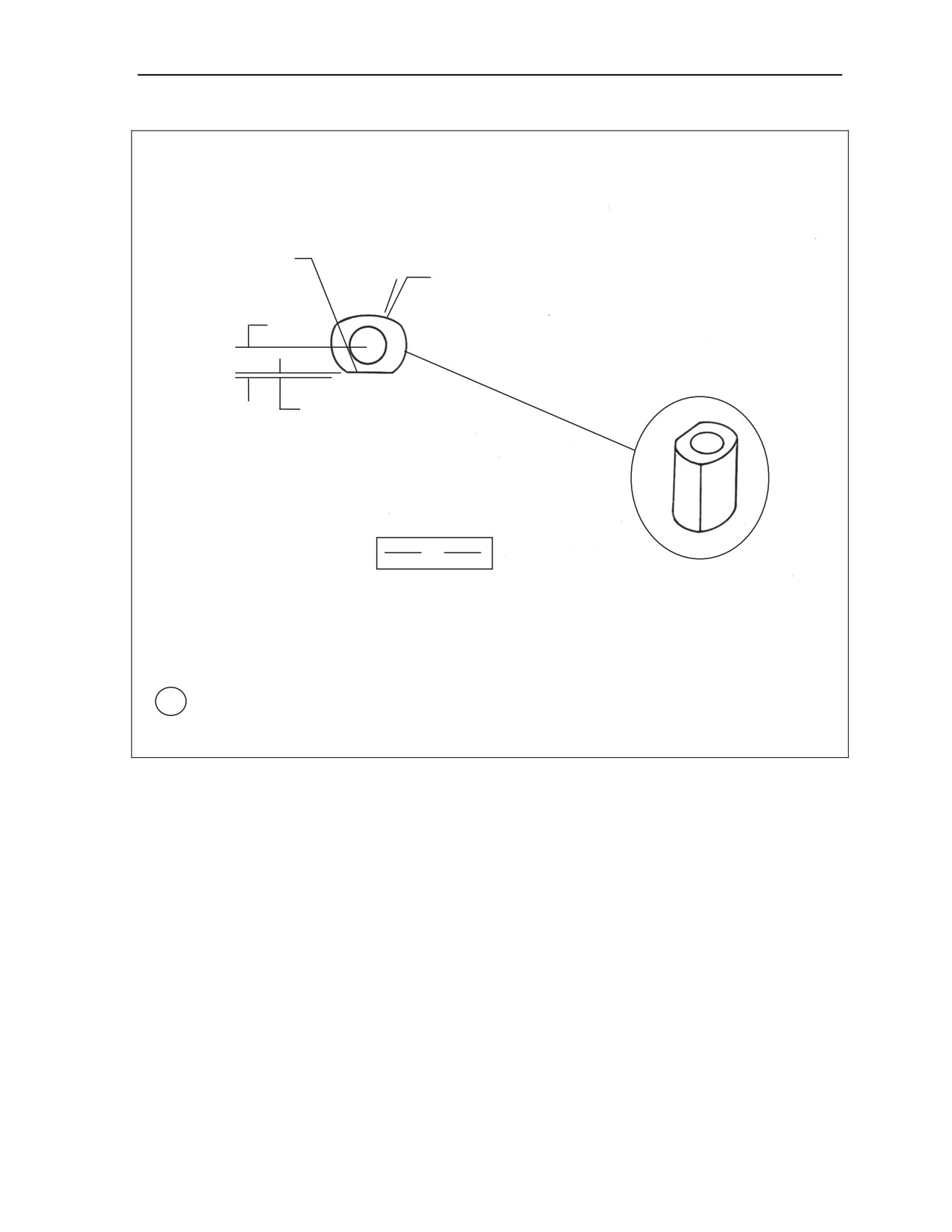
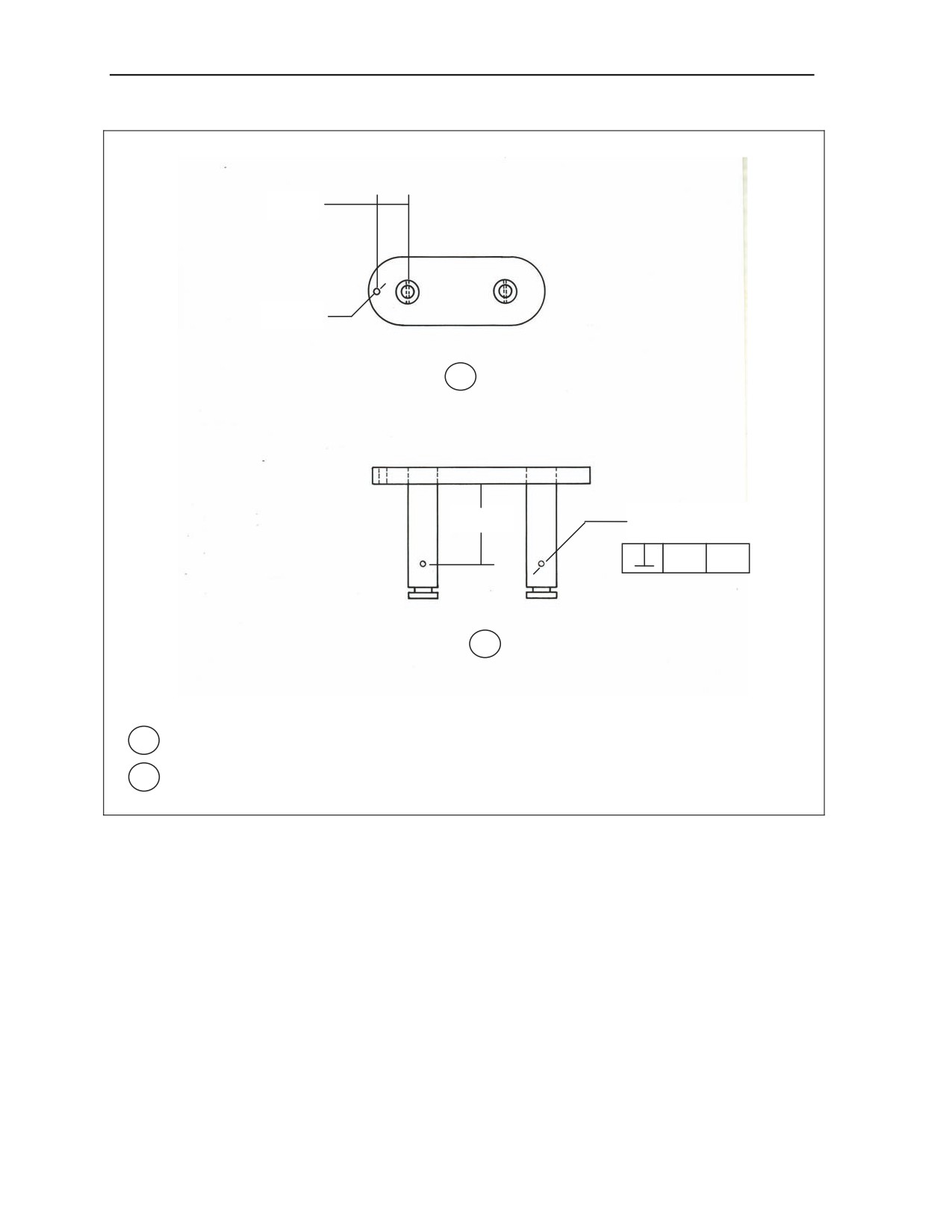
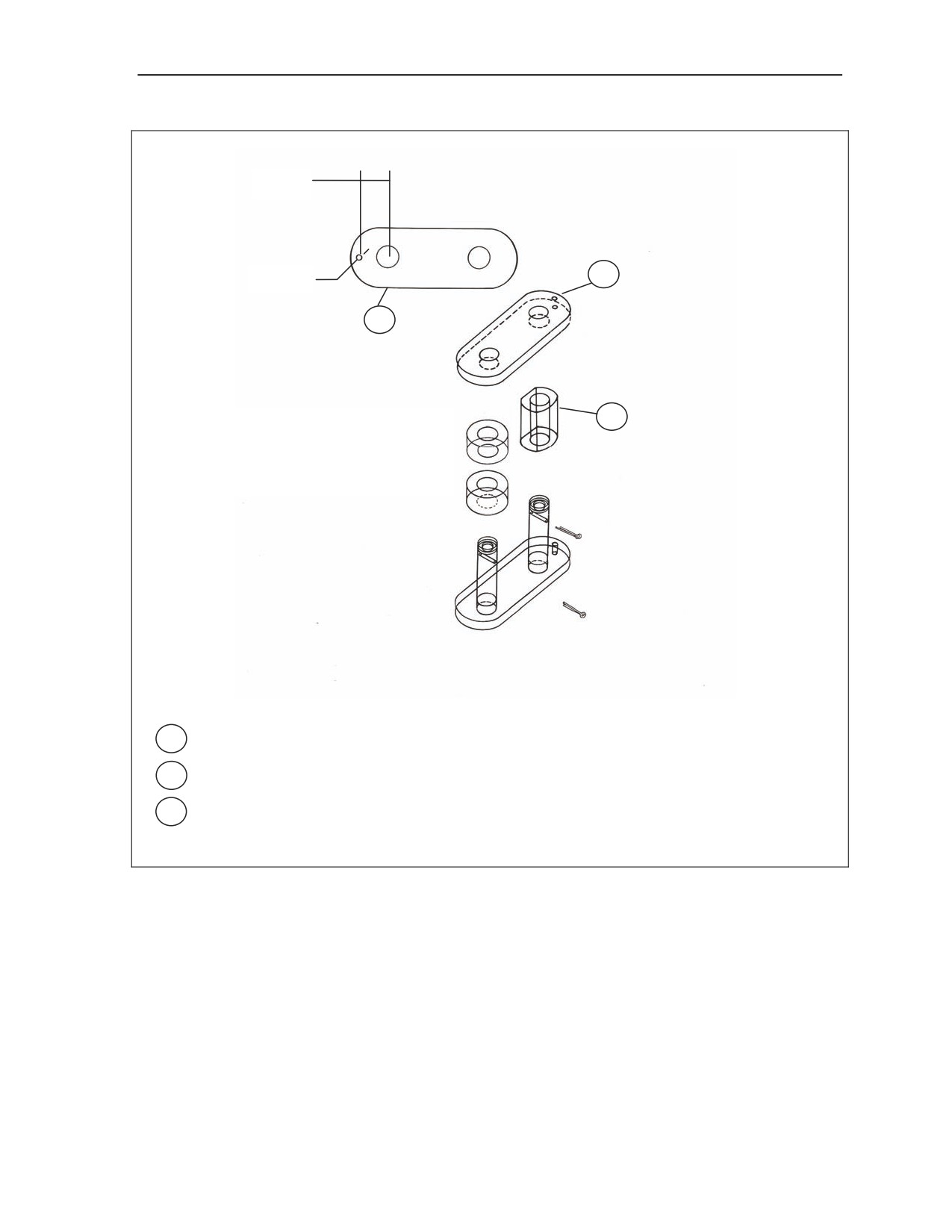
3-9. Modify the type IV link assembly as shown in Figures 3-14 through 3-17, if the hydraulic release is
used on this load.
Note. These drawings are not drawn to scale
0.625
01.250
.625
R .625
R .312
.500
1. Cut one spacer to the thickness shown above.
Figure 3-14. Spacer Modified for Release End of Link
FM 4-20.142/MCRP 4-11.3P/NAVSEA SS400-AD-MMO-010/ TO 13C7-51-21
3-32
19 September 2007
Rigging Zodiac F470U Boat in A-22 Cargo Bag
Note. These drawings are not drawn to scale.
R1.000
64.923
ARC IS MEASURED FROM
DATUM A AT POINT C
.531
C
.044
FLAT IS PARALLEL
TO DATUM A
A
DATUM IS PERPENDICULAR TO
RADIUS OF SPACER AND AT
POSITION INDICATED
1. Mill the other spacer to the specifications shown so that the D-rings on the A-22 adapter
webs fit over the spacer.
Figure 3-15. Spacer Modified for Load End of Link
FM 4-20.142/MCRP 4-11.3P/NAVSEA SS400-AD-MMO-010/ TO 13C7-51-21
19 September 2007
3-33
Chapter 3
Note. These drawings are not drawn to scale.
.884
0.156
2
1.807
0.090 DRILL
THROUGH 2 PLACES
.02
A
1
1. Drill holes as shown in both sleeve pins of the link assembly.
2. Drill a hole in one end of the link assembly body as shown.
Figure 3-16. Link Assembly Body Modified
FM 4-20.142/MCRP 4-11.3P/NAVSEA SS400-AD-MMO-010/ TO 13C7-51-21
3-34
19 September 2007
Rigging Zodiac F470U Boat in A-22 Cargo Bag
Note. These drawings are not drawn to scale.
.844
3
0.156
1
2
COVER PLATE
(LOCKING FEATURE REMOVED
FOR CLARITY)
1.
Drill a hole as shown in the closure end of the side plate.
2.
Place the milled single spacer on the same end of the link assembly body as the drilled hole.
3. Assemble the link as shown. Place the side plate on the link assembly with the drilled hole at
the same end as the milled spacer.
Figure 3-17. Side Plate Modified and Link Assembled
FM 4-20.142/MCRP 4-11.3P/NAVSEA SS400-AD-MMO-010/ TO 13C7-51-21
19 September 2007
3-35
Chapter 3
INSTALLING PARACHUTE RELEASE AND PARACHUTES
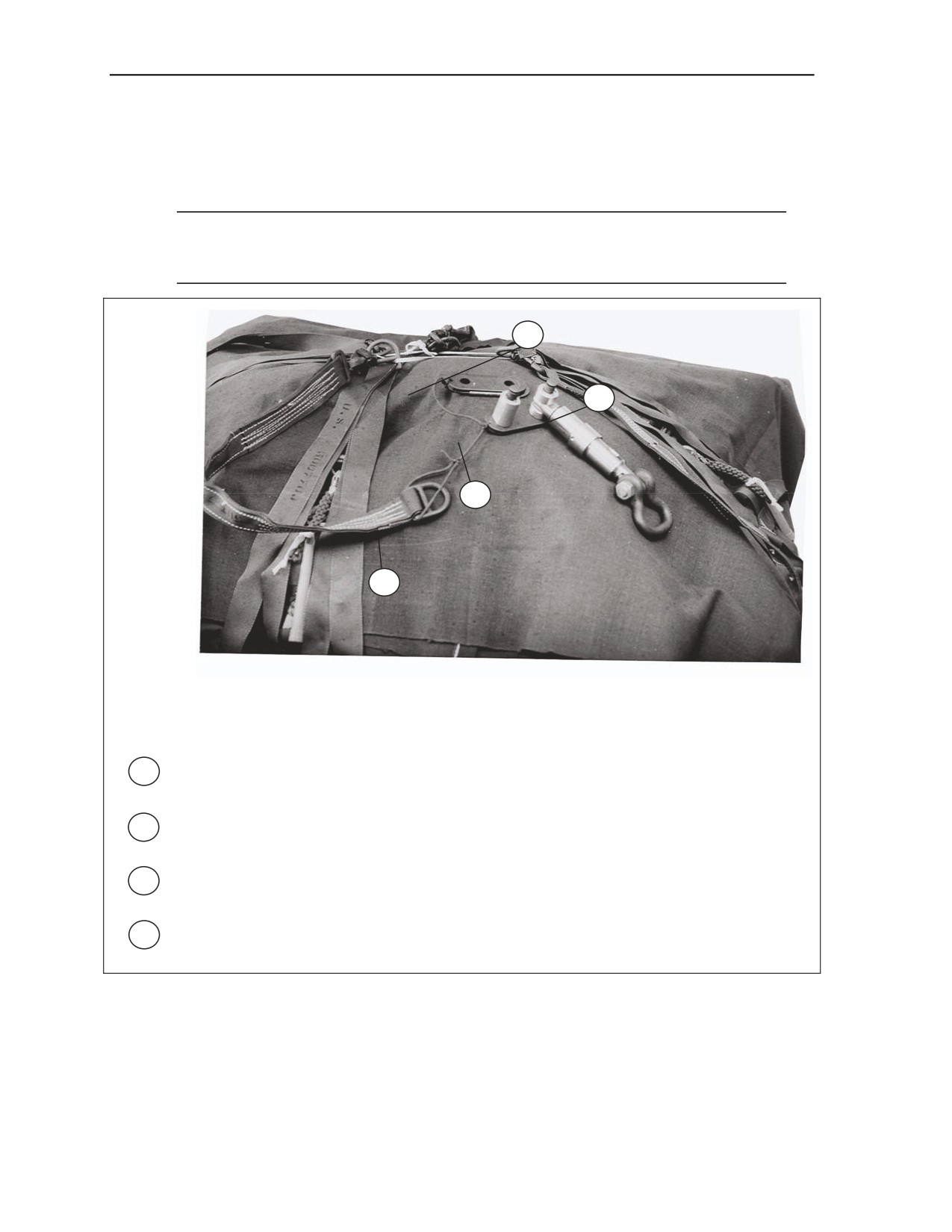
3-10. Install the automatic cargo parachute release as shown in Figure 3-18. Install two T-10 parachutes
modified for cargo use as shown in Figures 3-19 through 3-21.
Note. Army units are not authorized to use the automatic cargo parachute release and must use
the M-1 cargo parachute release. If parachutes other than the T-10 parachute are used, finish
rigging the load according to FM 4-20.103/MCRP 4-11.3C/TO 13C7-1-11.
4
1
2
3
Note. Install the cargo release with the hydraulic cylinder section attached to the cargo slings and the
release bolt to the 120-inch parachute risers.
1.
Install the automatic cargo parachute release to the split spacer side of the modified type IV
connector link as described in paragraph 3-9.
2.
Pass a suitable length of type III nylon cord through the hole in the baseplate of the type IV
connector link, leaving 18 inches.
3.
Pass the 18-inch end through the fabric loop in the front adapter web. Tie a loop as shown
with a bowline knot with an overhand in the running end.
4. Tie the free end of the type III nylon cord to the drilled hole in the type IV link cover.
Figure 3-18. Release Installed
FM 4-20.142/MCRP 4-11.3P/NAVSEA SS400-AD-MMO-010/ TO 13C7-51-21
3-36
19 September 2007
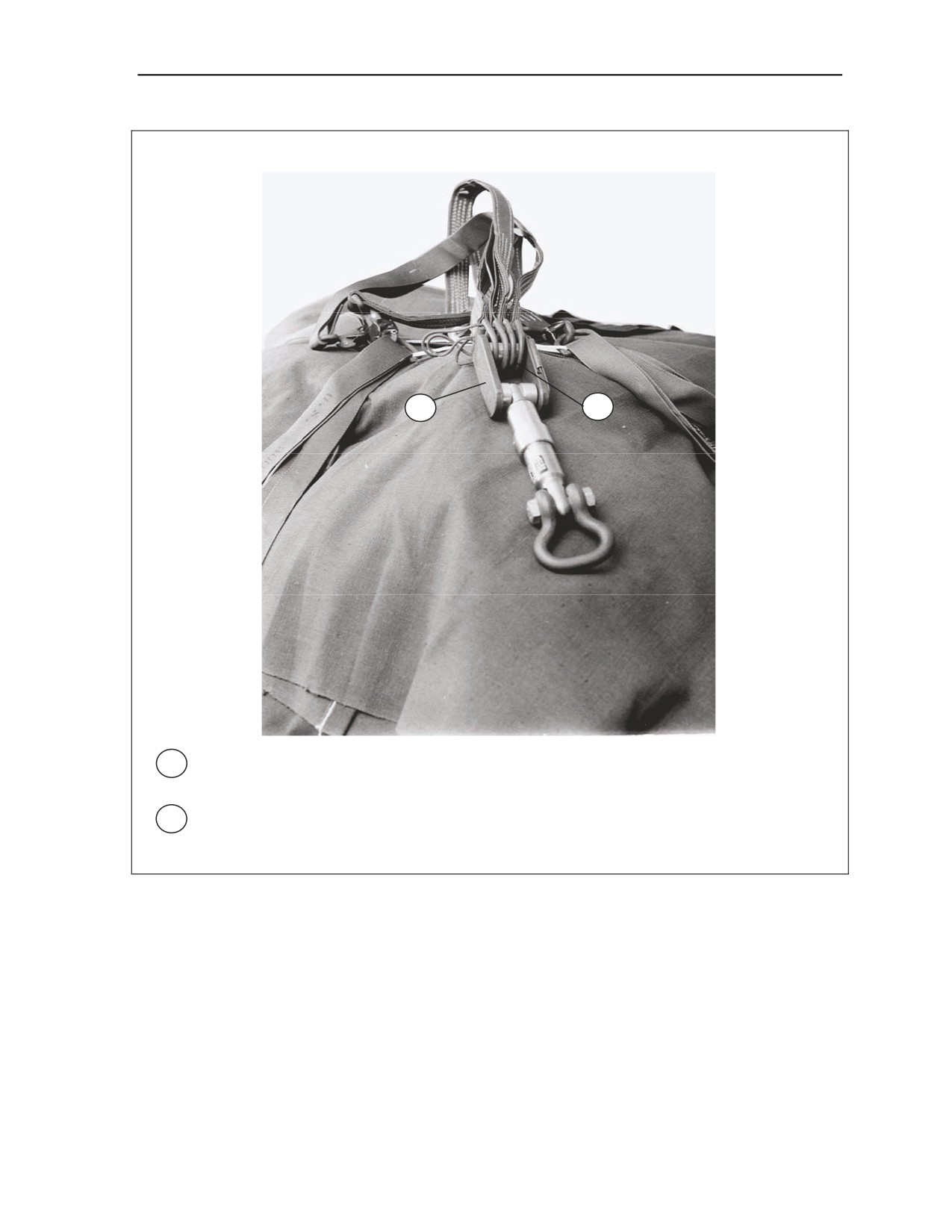
Rigging Zodiac F470U Boat in A-22 Cargo Bag
6
5
5. Place the D-rings of the adapter webs on the milled spacer of the type IV connector link in the
following order: front, left, rear, right (clockwise or counterclockwise beginning with the front).
6. Install the cover plate on the type IV connector link, facing the drilled hole away from the
release. Raise the adapter webs and make sure there are no twists in them.
Figure 3-18. Release Installed (continued)
FM 4-20.142/MCRP 4-11.3P/NAVSEA SS400-AD-MMO-010/ TO 13C7-51-21
19 September 2007
3-37
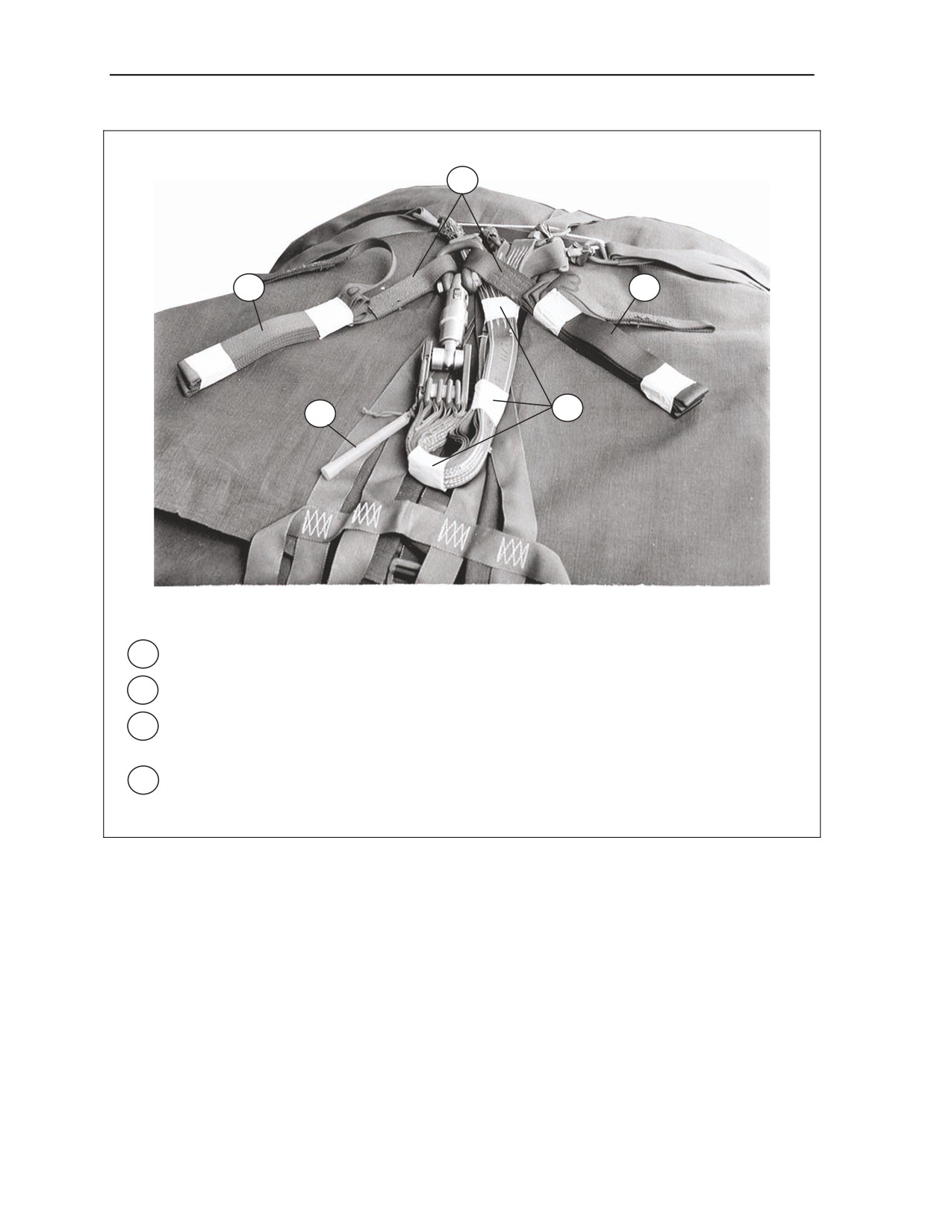
Chapter 3
3
4
4
2
1
1.
Tie a chemical light to the type IV connector link with type I, 1/4-inch cotton webbing.
2.
Tape the adapter webs together in three places with paper masking tape.
3.
Attach two 120-inch connector straps to the bell portion of a small suspension clevis. Bolt the
clevis to the release.
4. S-fold the riser extensions into 1-foot folds. Tape the folds in two places with paper masking
tape.
Figure 3-19. Small Clevis and 120-inch Connector Straps Installed
FM 4-20.142/MCRP 4-11.3P/NAVSEA SS400-AD-MMO-010/ TO 13C7-51-21
3-38
19 September 2007
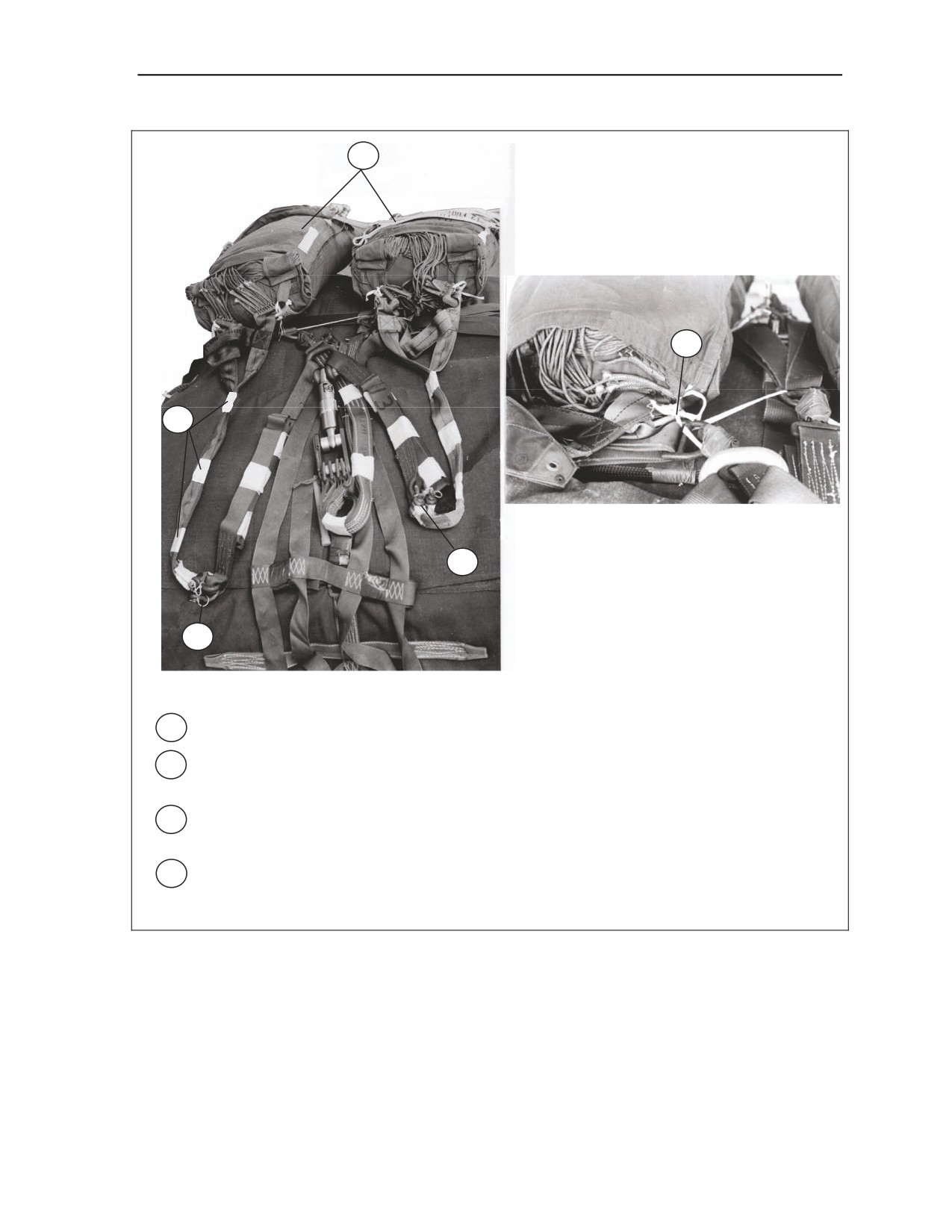
Rigging Zodiac F470U Boat in A-22 Cargo Bag
1
4
3
2
2
1. Install two T-10 parachutes modified for cargo on the front of the load.
2. Place both of the riser clevises in the loop of the riser extension. Secure the clevis pins and
make sure the clevis pins remain in the loops of the parachute risers.
3. Tape the risers of each parachute individually in three places with two turns paper masking
tape, just behind the clevises, in the center and 6 inches from the H-bar.
4. Tie the inside L-bar connector links on each parachute to the rectangular holes in the nearest
support web D-rings with type I, ¼-inch cotton webbing.
Figure 3-20. Riser Extensions and Parachutes Installed
FM 4-20.142/MCRP 4-11.3P/NAVSEA SS400-AD-MMO-010/ TO 13C7-51-21
19 September 2007
3-39
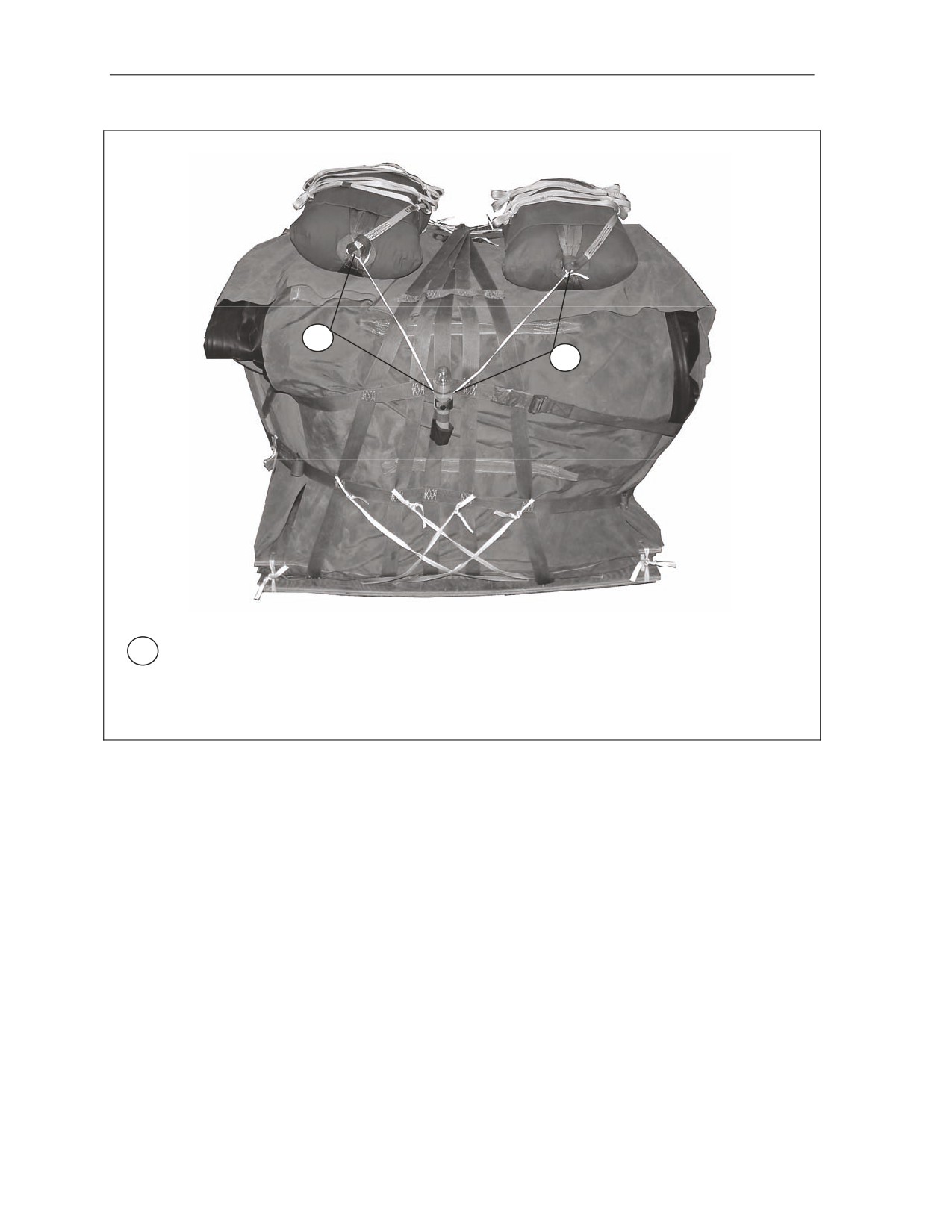
Chapter 3
1
1
1. Pass a single length of type I, 1/4-inch cotton webbing through the support web at the second
lateral strap. Tie each end to the break cord attaching strap on each parachute deployment
bag.
Note. A strobe light is shown at center. Local operating procedure or mission requirements may dictate use of special lighting.
Figure 3-21. Parachutes Installed
FM 4-20.142/MCRP 4-11.3P/NAVSEA SS400-AD-MMO-010/ TO 13C7-51-21
3-40
19 September 2007
Rigging Zodiac F470U Boat in A-22 Cargo Bag
INSTALLING FLOTATION DEVICES AND CHEMICAL LIGHTS
(OPTIONAL)
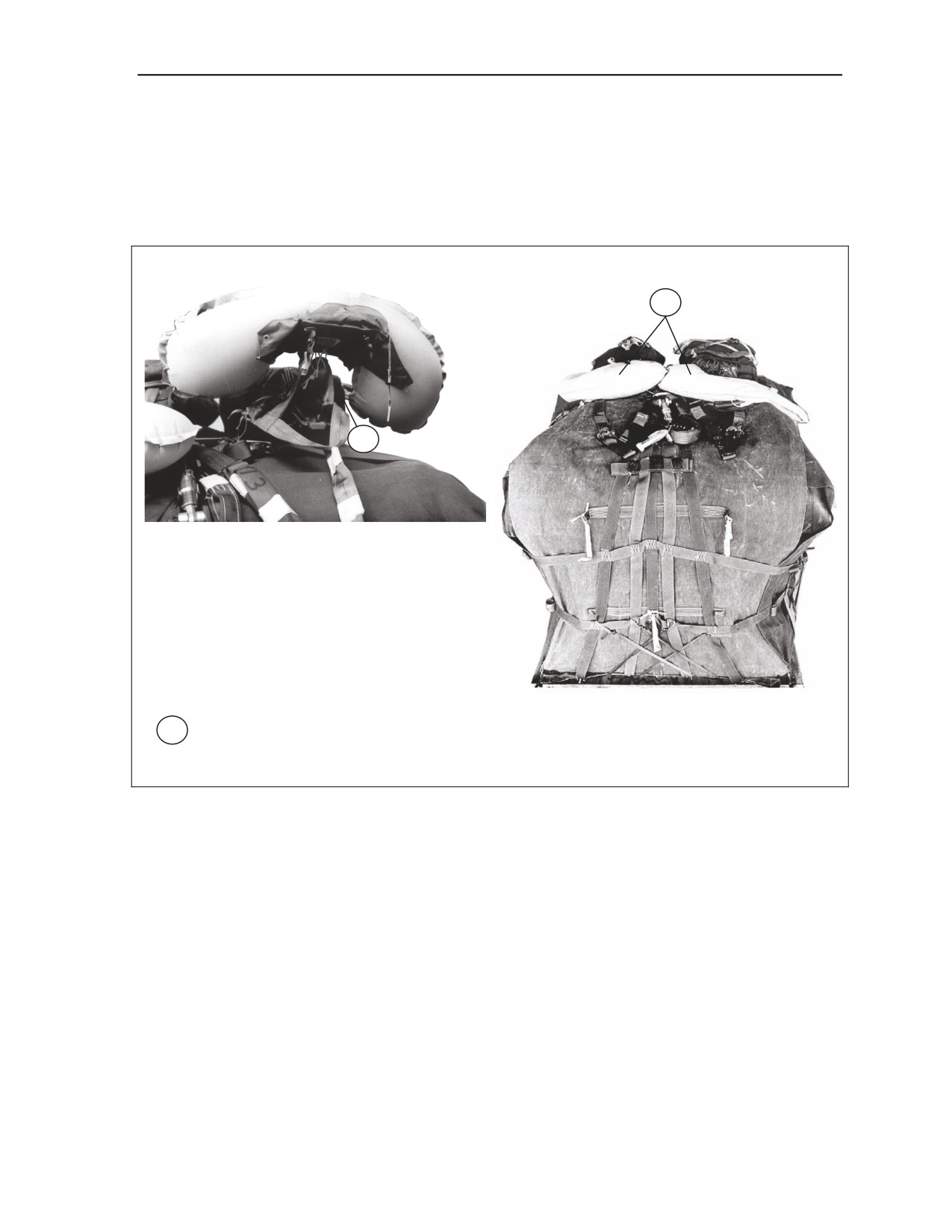
3-11. Install flotation devices to aid in the recovery of parachutes for training drops as shown in Figure 3
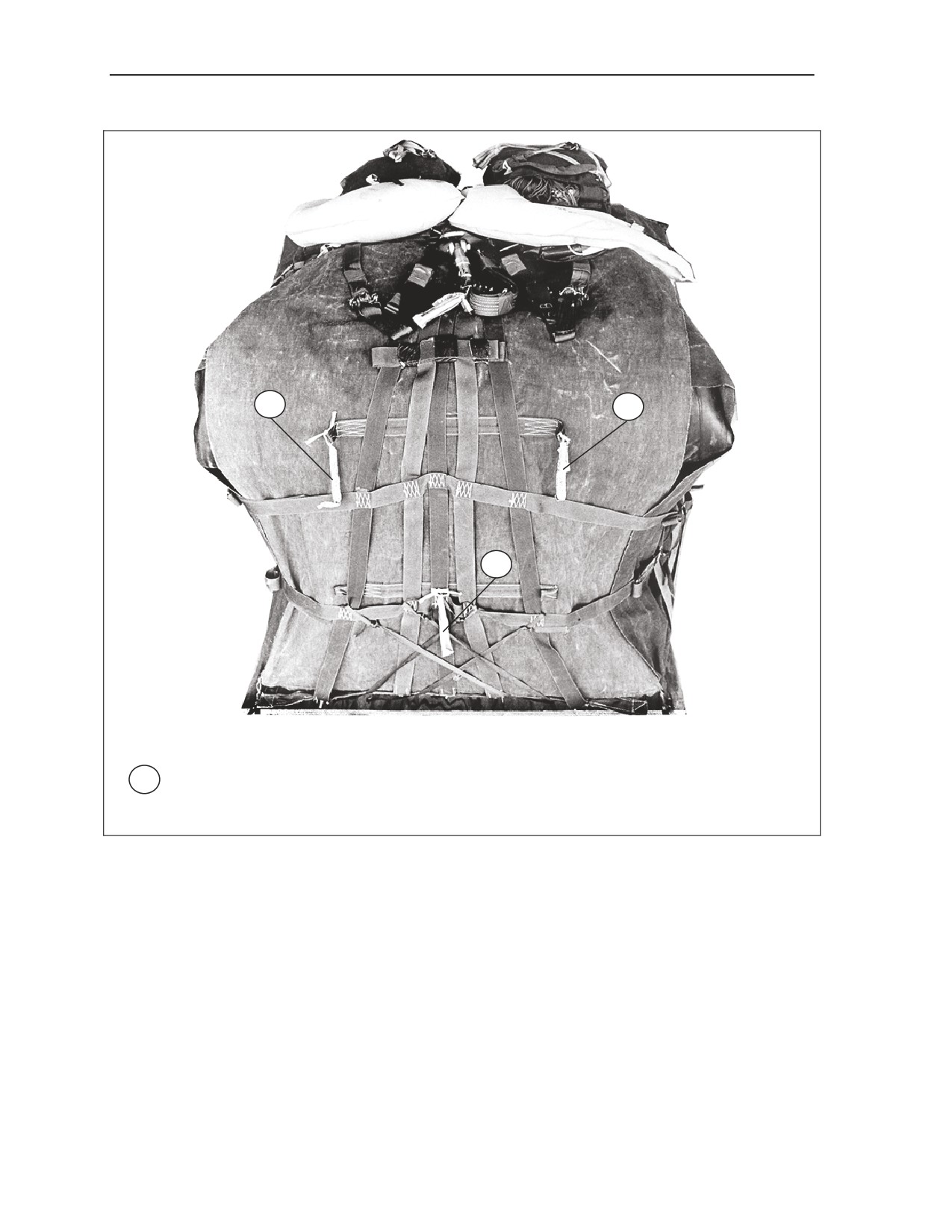
22. Install chemical lights for night operations as shown in Figure 3-23.
Note. Flotation devices and chemical lights may not be required for operational drops.
1
1
1. Tie a flotation device to the H-bar of the riser harness of each parachute with type III nylon
cord.
Figure 3-22. Flotation Devices Installed
FM 4-20.142/MCRP 4-11.3P/NAVSEA SS400-AD-MMO-010/ TO 13C7-51-21
19 September 2007
3-41
Chapter 3
1
1
1
1. Tie chemical lights to the support webs on all sides of the load. An inverted V pattern is
shown. Unit standing operating procedures (SOP) will dictate the use of chemical lights.
Figure 3-23. Chemical Lights Installed for Night Operations
FM 4-20.142/MCRP 4-11.3P/NAVSEA SS400-AD-MMO-010/ TO 13C7-51-21
3-42
19 September 2007
Rigging Zodiac F470U Boat in A-22 Cargo Bag
MARKING RIGGED LOAD
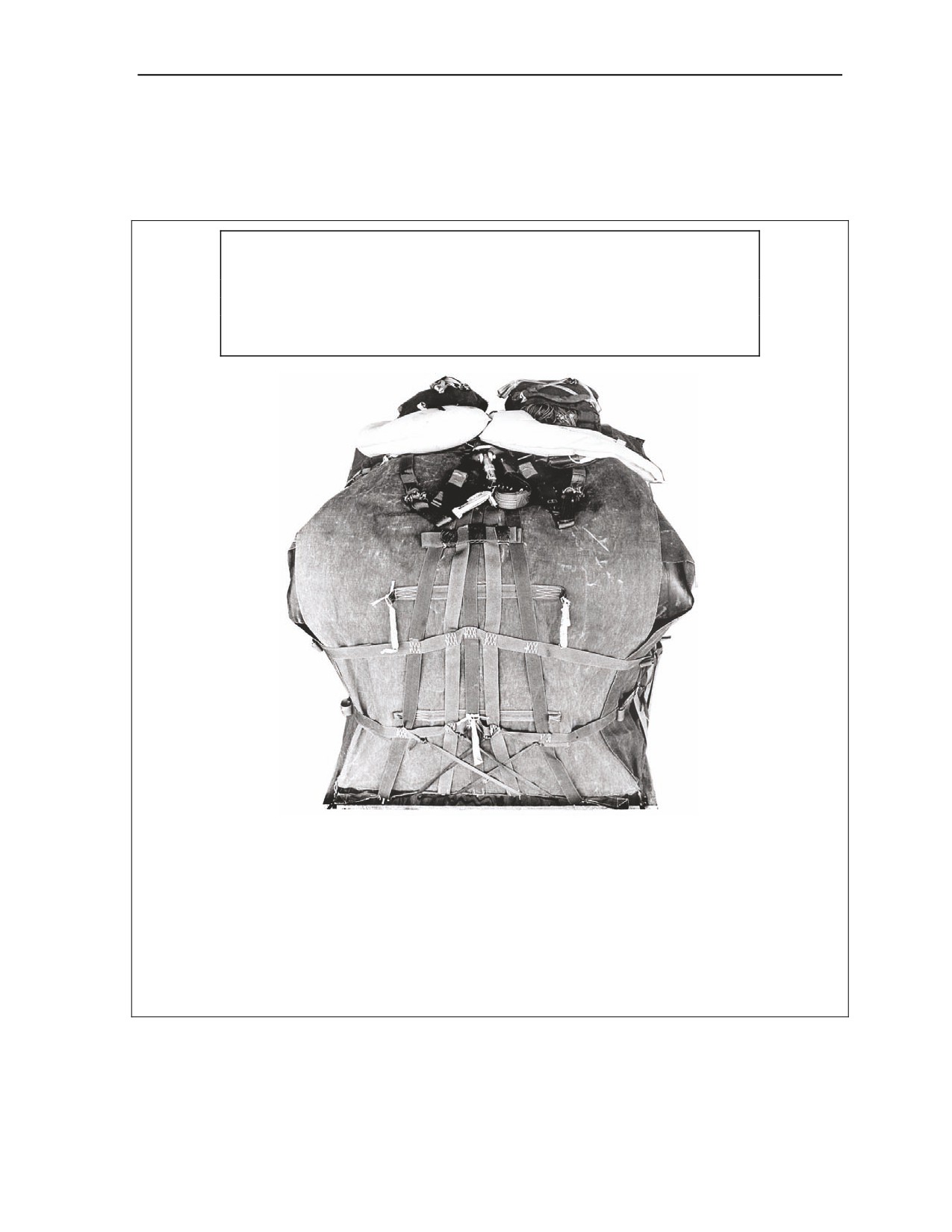
3-12. Mark the rigged load according to FM 4-20.103/MCRP 4-11.3C/TO 13C7-1-11 and as shown in
Figure 3-24.
CAUTION
Make the final rigger inspection required by FM 4-20.102/MCRP 4
11.3J/NAVSEA SS400-AB-MMO-010/TO 13C7-1-5 before the load
leaves the rigging site.
Note. The load shown includes 10 gallons of fuel and no additional equipment.
Weight: Load shown
600 pounds
Maximum load allowed with two T-10 cargo parachutes
900 pounds
Height
56 inches
Width
51 inches
Length
51 inches
Figure 3-24. Zodiac F470U Boat Rigged in A-22 Bag for Low Velocity Airdrop
FM 4-20.142/MCRP 4-11.3P/NAVSEA SS400-AD-MMO-010/ TO 13C7-51-21
19 September 2007
3-43

Chapter 3
EQUIPMENT REQUIRED
3-13. The equipment required to rig the F470U boat in the A-22 cargo bag is listed in Table 3-1.
Table 3-1. Equipment Required for Rigging F470U Boat in A-22 Cargo Bag
National Stock
Item
Quantity
Number
7125-00-577-5858
Aluminum, angle, 90 degrees
As required
1670-00-587-3421
Bag, cargo, A-22
1
1670-00-568-0323
Band, rubber, parachute
As required
Local purchase
Bolt, 1/4- by 1 1/2- in, galvanized
136
No NSN
Charging yoke, SCUBA, w/dust cap
1
4030-00-360-0304
Clevis, suspension, 5/8-in (small)
1
4020-00-240-2146
Cord, nylon, type III, 550-lb
As required
No NSN
Cylinder, SCUBA, compressed air
1
No NSN
Disconnect, 1/4-in, stainless steel male, NPT
1
No NSN
Disconnect, 1/4-in, stainless steel male, NPT, w/safety detent
1
Flotation device,
4220-00-059-6061
LPU 3/P or
2
4220-00-657-2197
B7
2
8135-01-005-8974
Foam
2 sheets
5330-01-363-2634
Gasket, paper
4
No NSN
Hose, Zodiac, high pressure inflation
2
No NSN
Hose, rubber, 1/4-in diam, 60-in length, high pressure, 3000 psig,
1
….w/male and female threaded ends
No NSN
Lanyard, safety, braided stainless steel, w/clips
1
Light, chemical, wand,
6260-01-074-4229
Green
As required
6260-01-178-5559
Red
As required
1670-00-783-5988
Link assembly, type IV
1
No NSN
Mounting plate, single, SCUBA
1
Local purchase
Nut, hexagonal, 1/4-in, galvanized
136
1670-00-753-3928
Pad, energy-dissipating, honeycomb
2 sheets
1670-01-247-7151
Parachute, T-10B (modified for cargo)
2
5530-00-128-4981
Plywood, 3/4-in:
17- by 18-in
2
17- by 51-in
2
48- by 48-in
2
1670-01-310-2875
Release, automatic cargo parachute,
1
5340-00-875-1861
Snap, parachute harness
3
1670-00-925-7843
Static line, personnel, (T-10/Universal Static Line)
1
1670-00-738-5879
Strap, connector, extraction, 120-in
2
Tape:
7510-00-266-6710
Masking, 2-in
As required
7510-00-266-5016
PSA, cloth-backed, adhesive, 2-in
As required
4730-01-364-6035
Tube, tee, Zodiac
1
No NSN
Valve, SCUBA
1
1670-00-986-1139
V-ring, assembly
3
Local purchase
Washer, fender, 1 1/2-in, galvanized
272
FM 4-20.142/MCRP 4-11.3P/NAVSEA SS400-AD-MMO-010/ TO 13C7-51-21
3-44
19 September 2007

Rigging Zodiac F470U Boat in A-22 Cargo Bag
Table 3-1. Equipment Required for Rigging F470U Boat in A-22 Cargo Bag (continued)
National Stock
Item
Quantity
Number
Webbing:
8305-00-268-2411
Cotton, type I, 1/4-in
As required
8305-00-082-5753
Nylon, tubular, 1/2-in
As required
8305-00-263-3591
Nylon, type VIII
As required
FM 4-20.142/MCRP 4-11.3P/NAVSEA SS400-AD-MMO-010/ TO 13C7-51-21
19 September 2007
3-45
Chapter 4
Rigging the Naval Special Warfare Rigid Inflatable Boat
(NSW RIB) for Low-Velocity Airdrop
DESCRIPTION OF LOAD
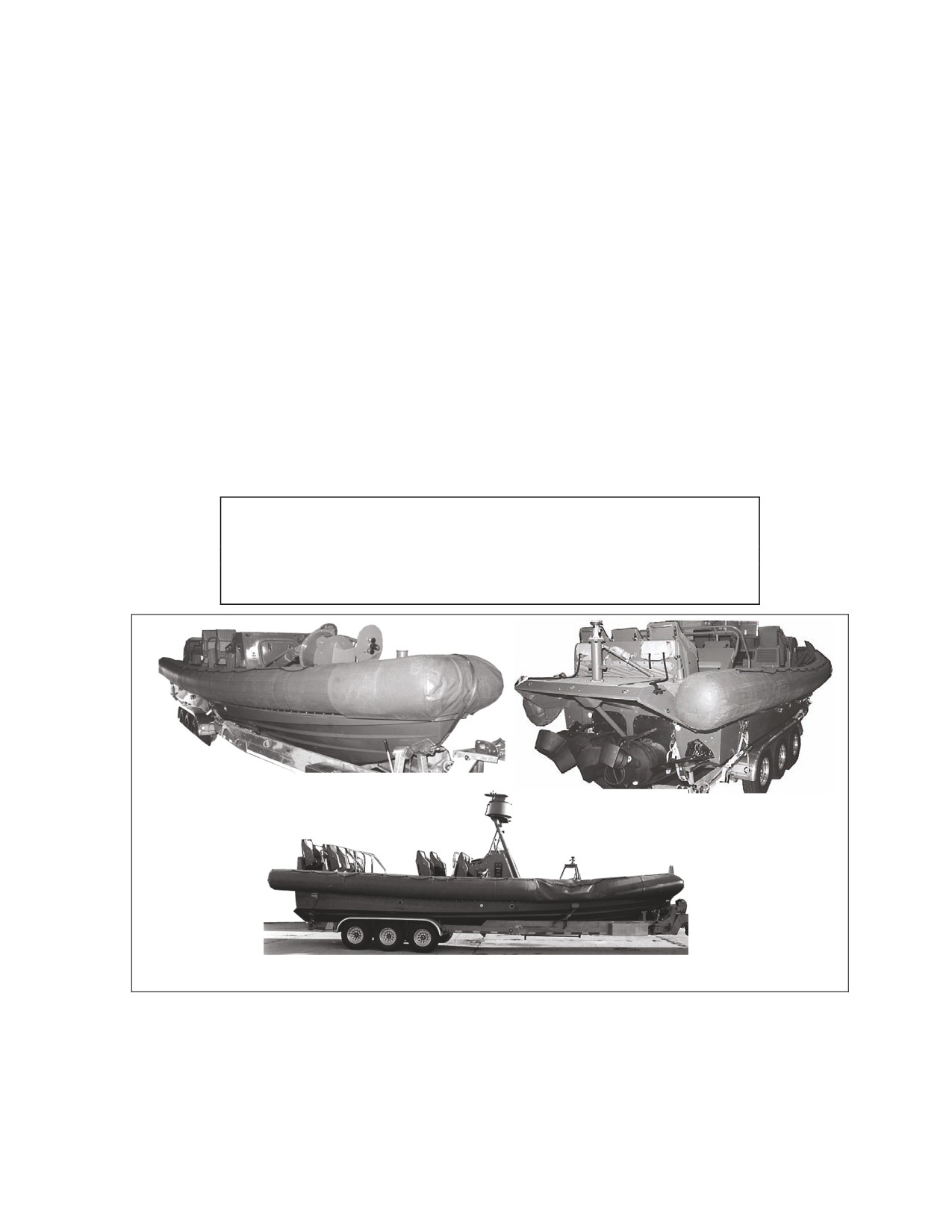
4-1. The NSW RIB is a high-speed boat designed to be airdropped, and quickly recovered. It is rigged on
a 21-foot Maritime Aerial Delivery System (MADS) platform. The platform separates from the boat during
deployment, and drops with its own G-12 parachute. The platform is easily recoverable and reusable. The
load requires four G-11 cargo parachutes. A water activated release system, with the M-2 release as a back
up, ensures separation of the parachutes when the boat strikes the surface of the water. The maximum
rigged load weight is 20,640 pounds, including an accompanying load that can vary according to the
mission. The boat is 100 inches high, 108 inches wide and 432 inches long.
CAUTION
This load differs greatly from conventional airdrop loads. Strict
adherence to these procedures is critical.
Figure 4-1. NSW RIB on its Trailer
FM 4-20.142/MCRP 4-11.3P/NAVSEA SS400-AD-MMO-010/ TO 13C7-51-21
19 September 2007
4-1
Chapter 4
PREPARING PLATFORM
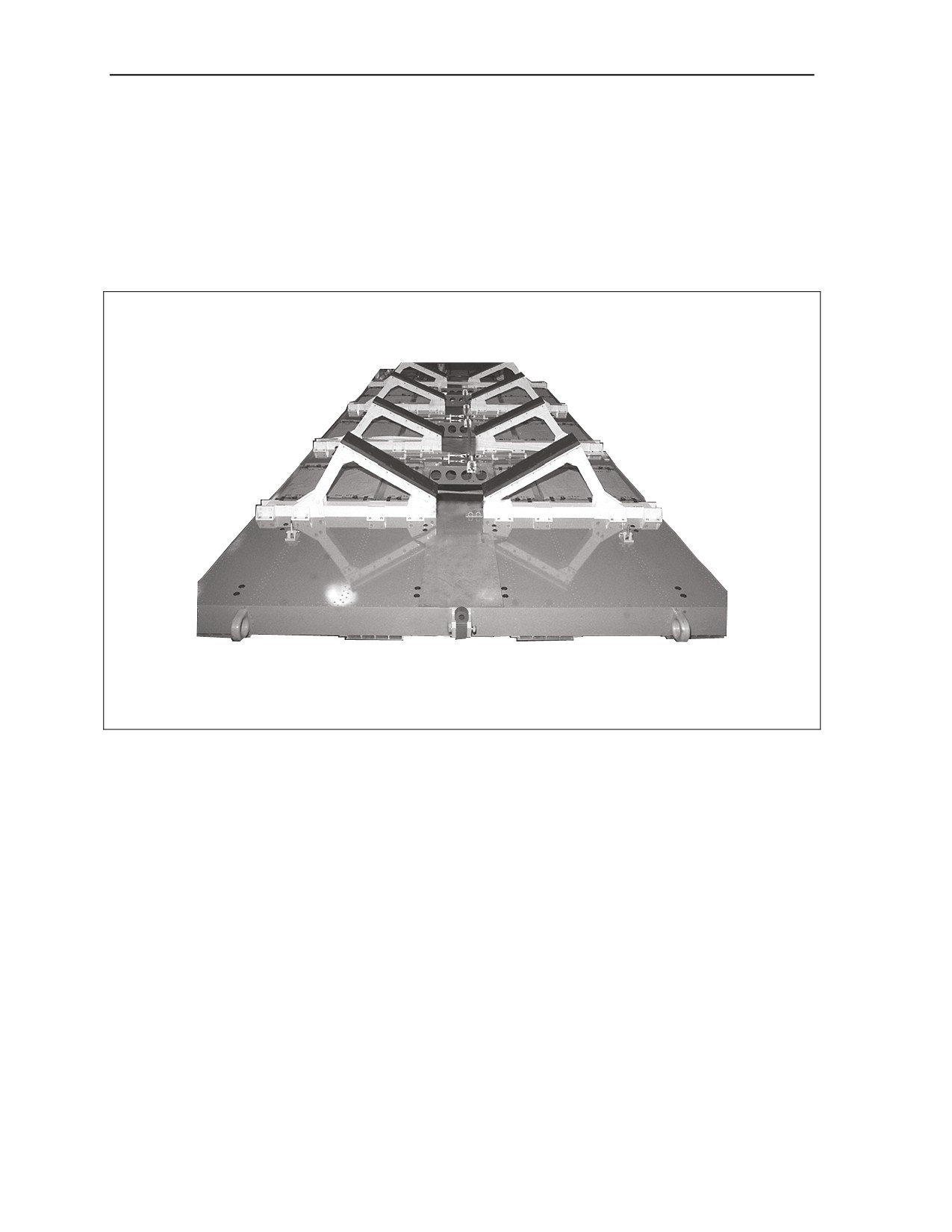
4-2. Prepare a 21-foot MADS platform as shown in Figure 4-2.
• Prepare and inspect the 21-foot MADS platform as explained in the manufacturer’s manual.
• Install the emergency restraint clevises to the front of the platform as shown in Figure 4-3.
• Install and test the platform release pulley assembly as shown in Figure 4-4.
• Install the platform recovery parachute as shown in Figure 4-5.
Figure 4-2. 21-Foot MADS Platform Prepared
FM 4-20.142/MCRP 4-11.3P/NAVSEA SS400-AD-MMO-010/ TO 13C7-51-21
4-2
19 September 2007
Rigging the Naval Special Warfare Rigid Inflatable Boat (NSW RIB) for Low-Velocity Airdrop
2
1
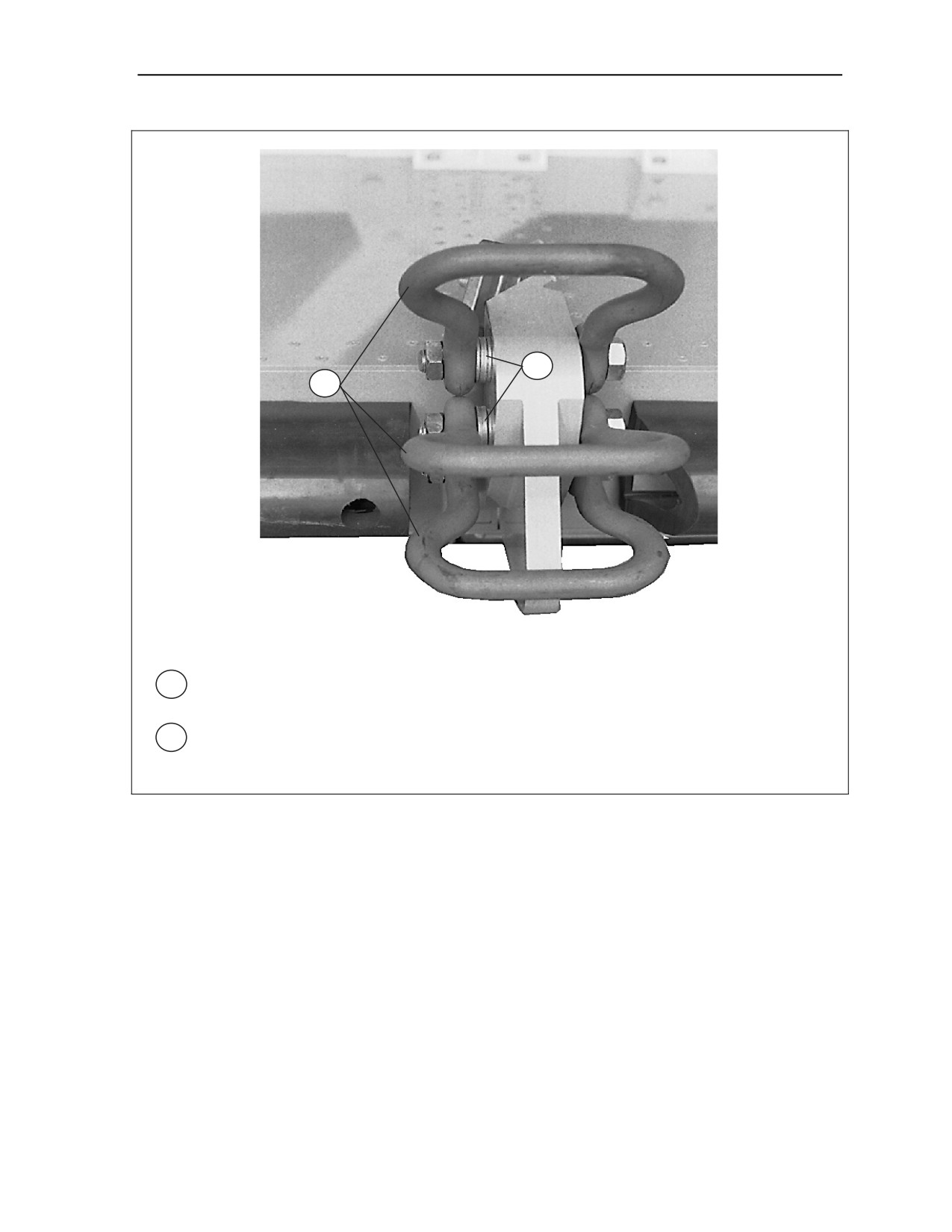
1. Install a medium clevis assembly to each of the three holes in the links at the front of the
platform.
2. Add washers to ensure a snug fit. Tighten the nuts just enough to allow the clevises to stay in
the positions shown.
Figure 4-3. Emergency Restraint Clevises Installed
FM 4-20.142/MCRP 4-11.3P/NAVSEA SS400-AD-MMO-010/ TO 13C7-51-21
19 September 2007
4-3