FM 3-11 MULTISERVICE TACTICS, TECHNIQUES, AND PROCEDURES FOR NUCLEAR, BIOLOGICAL, AND CHEMICAL DEFENSE OPERATIONS (MARCH 2003) - page 3
Chapter VII
SUPPORTING CONFLICT TERMINATION
Campaign objectives and the desired political end state of the conflict determine
conflict termination objectives and conditions. The agreements the US reaches with HNs,
other affected nations, and multinational and other coalition partners should include the
conditions and objectives for conflict termination. Commanders at all echelons must be
particularly vigilant to identify the conditions that may facilitate conflict termination and
report these conditions to the appropriate joint and multinational authorities to support
political decisions on conflict termination. Timely and accurate information to the media,
within the limits of operational security, can promote proper conflict termination,
encourage friendly and world public support, and create pressure on the adversary to accept
conflict termination conditions favorable to the US and its partners.
Conflict termination involves activities under the control of the armed forces and
activities under the control of civilian organizations. Campaign and supporting plans and
operation orders should include civilian organization considerations for conflict
termination. Coordination of military and civilian activities in this phase of operations is
essential to achieving conflict termination objectives. Detailed planning, training, and
rehearsal of civil-military conflict termination coordination should be included in the plans,
training, and rehearsals for the overall operation at all levels.
Conflict termination generally results in the end of hostilities; however, the presence
of NBC contamination or TIM can still present a volatile situation. The transition to conflict
termination is a deliberate process of concluding hostilities; the two NBC-specific basic
objectives include ensuring the safety of all personnel in the theater and establishing the
foundation for long-term control of elimination of adversary NBC capabilities. The basic
tasks that are implied in the accomplishment of those two objectives include, but are not
limited to—
• IPB.
• FP.
• Decontamination.
• Mitigation of residual hazards.
• Control and recovery of adversary NBC capabilities.
• Coordination with nonmilitary entities.
• Force health protection.
• Accurate record keeping.
• Contaminated remains.
VII-1
• Contaminated material retrograde.
• Transition and disengagement.
1.
Intelligence Preparation of the Battlespace
a.
Intelligence collection and analysis continue to be focused on adversary NBC
capabilities. Commanders provide for surveillance of adversary NBC assets (e.g., known or
suspected NBC capabilities that have yet to be captured or destroyed).
b.
Intelligence on adversary NBC capabilities will be critical, and it may require
increased collection, analysis, and production activities. Intelligence objectives in this phase
should emphasize continuing to develop a complete picture of the adversary’s residual NBC
assets and capabilities—including location and disposition of weapons, delivery means,
production and research facilities, documentation, key military and civilian personnel,
operational units, and consideration of how the adversary (presumably still in possession of
NBC weapons) may react. Assessing indigenous TIM facilities and potential releases from
those facilities and potential releases from those facilities may require specialized
intelligence support using non-military organic hazard assessment means and tools.
2.
Force Protection
During this phase, FP measures are still used to deter, detect, contain and mitigate
the possible effects of NBC attacks and threats. As unit drawdown occurs during conflict
termination, commanders still apply the principles of NBC defense (avoidance, protection,
and decontamination) to ensure that their personnel remain prepared. An adversary’s
armed forces or terrorists may still seek to strike (CONUS/outside the continental US
[OCONUS]) during reduction in US force levels to punish and inflict revenge on the US and
multinational partners for their policies and actions.
3.
Decontamination
During this period, personnel and/or terrain decontamination may be required. Units
use established decontamination TTP contained in applicable service publications. For
example, units may conduct equipment decontamination that was deferred during previous
combat operations. Units may also be tasked to support decontamination of civilian
personnel, equipment, or facilities in coordination with HN authorities.
4.
Mitigation of Residual Hazards
Commanders’ maintenance of SA enables rapid identification of those areas that were
contamination hazards. Containment and mitigation actions previously taken are assessed
to determine what follow-on actions (i.e., low-level monitoring, weathering, isolation, and
containerization) should be conducted. Unit planning also coordinates for the transfer of
contaminated materials and associated tasks (i.e., security and monitoring) to the HN or
follow-on forces or organizations.
a.
Identifying, assessing, and mitigating residual hazards in the theater of
operations are an important aspect of conflict termination. US and other multinational
VII-2
forces must be able to detect and evaluate hazardous areas in order to contain and mitigate
contamination hazards.
b.
Operations may require the application of specialized ISR assets, continued NBC
defense actions in selected zones (even as hostilities are terminated), NEOs, and the
execution of in-theater plans to manage the consequences of deliberate or accidental
contamination. These activities may require intensive coordination and cooperation with
multinational forces and HN civil authorities, as well as NGOs and private volunteer
organizations (PVOs) that offer specialized capabilities and skills.
c.
The commander will determine when emergency or routine equipment
retrograde procedures will be undertaken. This command decision entails accepting higher
contamination risks when warranted by immediate (emergency) mission requirements. As
conflict termination appears more certain, commanders must weigh the risks to personnel
safety against operational requirements prior to cessation of hostilities.
d.
The geographic zone in which mitigation activities will be conducted may be
quite extensive as adversary and friendly occupied territory comes under US and
multinational control and may be further complicated by the need to interact with local
populations, both friendly and unfriendly. The potential complexity of this mission calls for
detailed planning before transition to conflict termination. Plans should include provisions
for maintaining detailed written and visual (e.g., photographic and video) records of
contamination caused by NBC weapons and other toxic materials. These records may be
essential for determining accountability and reparations requirements.
5.
Control and Recovery of Adversary NBC Capabilities
a.
The commander may consider NBC-related objectives associated with disabling
or destroying NBC capabilities. Among the primary aims of the commander during the
negotiations or imposition of cease-fire conditions is to ensure that enemy NBC capabilities
are identified and secured during the initial phases of postconflict operations. Ideally, the
provisions should require adversary military and civilian authorities to specify the location
of all NBC weapons, production facilities, storage facilities and delivery systems, as well as
chemical minefields and contaminated areas. The commander should establish rules
against access to and transport of the weapons and delivery systems; provide for measures
to mitigate residual hazards, to include the immediate securing of all disclosed facilities
and searches to examine suspected sites; establish rules for transition to long-term
disarmament, monitoring, and inspection regimes; and plan for monitoring and survey of
designated areas.
b.
Completion of search, identification, control, and recovery tasks of areas under
US/multinational control provides a critical foundation for postconflict planning to
eliminate adversary capabilities and establish effective monitoring and other controls. A
search, identification, control, and recovery plan should be established and executed with
sufficient forces to gain timely control of enemy NBC capabilities. Specifically designated
search and recovery task forces (S/RTFs) can be organized to include personnel with the
technical proficiency necessary to identify and evaluate NBC weapons, equipment, and
associated materiel. A S/RTF organization will be based on METT-T and will likely include
NBC specialists, security, logistics, intelligence, medical, C2, communications, and civilian
VII-3
agencies (i.e., NGO or HN). S/RTFs should also be capable of emergency response to NBC
accidents or incidents. S/RTFs should be prepared to initiate operations as soon as a cease-
fire is in effect or, at the latest, upon the formal cessation of hostilities. Assuming ongoing
efforts by the adversary to disperse, conceal, or remove NBC capabilities, early expansion of
the area under positive US and multinational control is a central concern. S/RTFs must
also begin inventorying adversary NBC capabilities as well as classifying, evaluating, and
mapping associated sites. Where possible, international monitoring organizations should be
involved to demonstrate the legitimacy and credibility of S/RTF actions and assist in the
transition to international control. S/RTF efforts should assist planners in determing the
scope and requirements for disposing of enemy NBC capabilities in the postconflict phase.
c.
S/RTFs will require clear guidance for execution of their missions, which could
encompass a diverse set of tasks, including—
• Securing NBC-related sites.
• Disabling (rendering safe) or confiscating NBC weapons and materiel,
including emergency operations to dispose of toxic materiel that cannot wait
for normal processing during all phases of operations in peace, war, and
MOOTW.
• Detaining adversary or third-country nationals who may be associated with
NBC weapons, accountable as possible war criminals, or useful for
intelligence purposes.
• Countering efforts to remove NBC assets from the adversary country.
• Preparing hazard predictions based on potential consequences of actions.
6.
Coordination with Nonmilitary Entities
a.
Nonmilitary international organizations, NGOs, and PVOs could play significant
roles during conflict termination. The commander may already have coordinated with US
and HN agencies to help manage activities such as medical treatment of NBC casualties,
evacuation of remains, decontamination and management of contamination hazards, and
retrograde and destruction of NBC and other toxic material.
b.
Nonmilitary organizations could also have a role in providing assistance in the
transition from military to civilian control of an area and interaction with nonmilitary
entities (such as the media) on issues related to NBC weapons in an area that will require
continuous oversight. Objectives can be advanced through a positive relationship with the
media that ensures efficient dissemination of accurate information.
7.
Force Health Protection
During conflict termination, HSS includes providing selected health and medical care,
as required, and augmenting local support capabilities when appropriate. Plans for conflict
termination should include the transition from in-theater military HSS capability and the
return of HSS to local and HN support. Coordination by the staff with HN medical facilities
VII-4
may be necessary to ensure medical plans include procedures to treat and care for
contaminated or infected personnel. Preventive medicine personnel and specialized medical
personnel continue to use databases of naturally occurring diseases and procedures to
quickly assess and identify suspicious illnesses and diseases. Medical teams also identify,
treat, and handle contaminated casualties. Medical facilities have areas designated to treat
and segregate contaminated patients. Medical treatment facilities maintain the capability
to detect contamination and decontaminate. Contaminated patient transport and
contamination control also remain available for litter and ambulance operations. HSS has
conducted health risk assessments for NBC and TIM exposure, and also monitors
individual exposure as part of the required record keeping process.
8.
Accurate Record Keeping
a.
During conflict termination, the commander addresses two areas: documentation
of lessons learned and identification of what can be termed after-operation follow-up. Key
areas of documentation include identifying in unit records the facts relating to any
activities surrounding operations in an NBC environment.
b.
Lessons learned should be collected and then consolidated in the joint universal
lessons learned system (JULLS) format, if possible, or through individual service systems
such as the US Army’s Center for Army Lessons Learned (CALL).
c.
It is in the conflict termination phase that detailed follow-up occurs. Summaries
may be prepared that outline when, where, and how NBC attacks or TIM incidents
occurred.
d.
Accurate record keeping also addresses the monitoring of incidents involving
personnel for long-term health problems that could be operationally related.
9.
Contaminated Remains
a.
Mortuary affairs/unit graves registration (GRREG) personnel must be prepared
to handle contaminated remains.
b.
For procedures on management and handling contaminated remains, see Joint
Publication 4-06, Joint Tactics Techniques and Procedures for Mortuary Affairs in Joint
Operations.
10. Contaminated Material Retrograde
a.
Goals for contaminated materiel retrograde from the theater are mission
support, protection of forces and resources from NBC hazards, and the control of
contamination. The commander will establish the relative priority among these goals in
view of the circumstances at hand—in particular, operational timing and the extent of
contamination. For example, under emergency conditions, the attainment of US and
multinational objectives may warrant increased risks and require a more robust protective
posture to limit contamination hazards and mitigate their effects. In a nonemergency
situation, those same risks may be unacceptable and more stringent contamination control
measures may be required to support lower individual protection levels.
VII-5
b.
Essential actions begin at the operator level and continue to the organization
ultimately receiving the shipped equipment. A key role that the JRAC performs (see JP 3-
10, Joint Doctrine for Rear Area Operations) is to determine if mission requirements
warrant the risk of emergency retrograde or if other COAs are acceptable. To assist with
requirements for deliberate contaminated materiel retrograde, the JRAC may organize a
support task force to accomplish tasks from marking equipment to contamination
monitoring. FM 3-11.34; MCRP 3-37.5; Naval Warfare Publication (NWP) 3-11.23; and
AFTTP (I) 3-2.33, Multiservice Tactics, Techniques, and Procedures for NBC Defense of
Theater Fixed Sites, Ports, and Airfields provide useful assistance and TTP for this process.
Redeployment planning should also address requirements for consolidation points for
equipment with residual NBC contamination.
c.
The safety of personnel is of foremost concern during the retrograde of
equipment with potential, residual, or low-level NBC contamination. Services and other
responsible military agencies must develop and implement specific precautionary
procedures for handling and transporting their equipment. Any equipment present in the
attack or downwind hazard areas may possess residual contamination. Specialized
detectors may be required at specified sites in the JRA to monitor contamination. Given
decontamination technology limitations, some equipment may require extensive weathering
or, in some cases, destruction to meet safety objectives. Following thorough
decontamination, residual contamination risks include potential vapor and contact hazards.
These risk increase as contaminated equipment is consolidated and personnel work around
this equipment for prolonged periods. Risks may also increase as equipment is
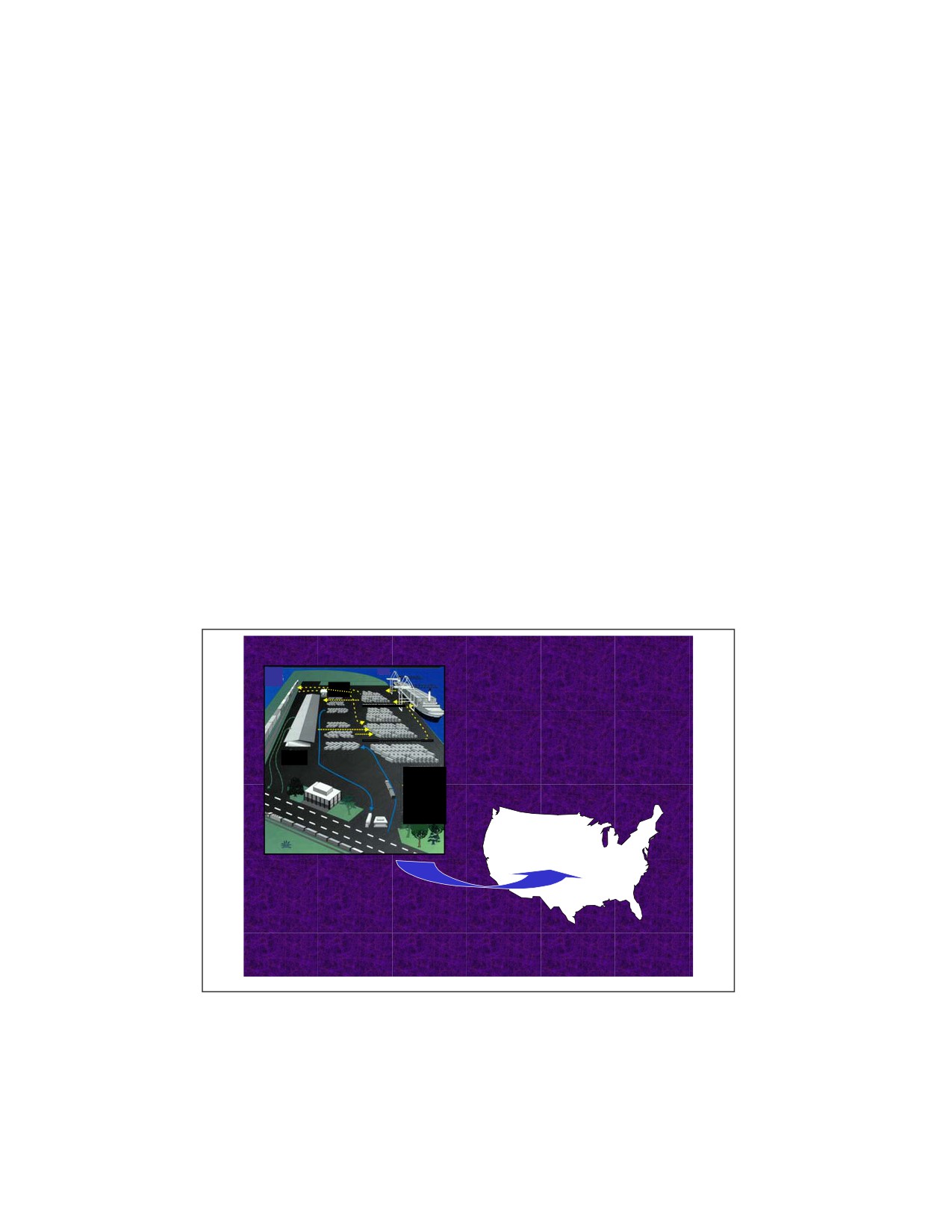
disassembled for maintenance functions or containerized for shipment (see Figure VII-1).
• Postconflict Return to CONUS
• Specialized Monitoring
• Thorough Decon
• Extraordinary Decon Measures
• Weathering
• Stringent Individual Protection
Measures
• Stringent Contamination Control
Measures
Intermediate or
CONUS Location
• Contamination Control
Measures
• In-Transit Monitoring
• Periodic Monitoring
• Contamination Control
Measures
• Disassembly Precautions
Figure VII-1. Deliberate Contaminated Material Retrograde Concept
d.
The nonemergency equipment retrograde concept assumes that postconflict
conditions allow time for thorough decontamination and weathering in the joint operational
area before retrograde from the theater. Personnel assisting the JRAC with detection,
VII-6
monitoring, and preparation of the equipment will require stringent personal protection
and specialized detectors. These preparations may require continuous operations for weeks
or months. As suspect equipment is consolidated for monitoring, decontamination, and
weathering, security and buffer zones around the consolidation site provide additional
contamination control measures to protect US and multinational forces as well as HN
personnel. Ships requiring depot level chemical/radiological decontamination at a shipyard
will proceed en route as operations permit.
e.
Air quality control and related legal requirements are additional considerations
requiring legal advice and review prior to equipment retrograde. Once in CONUS,
precautionary measures continue throughout the remaining equipment life cycle, including
DOD control requirements, premaintenance monitoring, and other periodic monitoring.
11. Transition and Disengagement
a.
During conflict termination, this transition period involves the transfer of
responsibilities and functions to other organizations. Transition could occur between US
military units, between US and multinational or coalition military units, and between US
and international or HN authorities.
b.
If US forces are transitioning functions between units, then the transition
requirements follow standard military handover procedures. If transition involves the DOD
forces transitioning functions or areas to other authorities, military or civilian, then the
mechanics of transition will reflect operational procedures and existing agreements.
c.
A transition plan helps the staff identify transition issues in relation to the
desired or projected end state. The transition plan may involve exchange of information on
multiple topics such as providing contamination overlays, transferring custody of material
or areas, security support, surveillance and identification activities, or other technically
related services (i.e., explosive ordnance disposal (EOD), technical escort, laboratory
support, etc.).
VII-7
Chapter VIII
REAR AREA OPERATIONS
US forces maintain OPTEMPO and generate combat power to sustain operations and
achieve operational and strategic missions. Theater-level sustainment from JRA is crucial
for the required deployment, reception, staging, onward movement, and integration for
support of joint force command missions. Subordinate unit planning and operations help to
ensure that units in the JRA can continue to support the accomplishment of assigned
missions in an NBC environment.
1.
JRA Coordination
Theater-level logistics support is generally furnished from service-operated and other
functional fixed sites throughout the JRA. Logistics NBC defense operations in the JRA are
based on service and site requirements but will be coordinated with the JRAC and base
cluster commanders (when designated). One of the JRAC’s responsibilities is NBC defense
integration. Component commanders will incorporate NBC plans, exercises, equipment
considerations, individual decontamination measures, and preventive measures into their
area and base cluster defense plans. They will also position NBC defense personnel and
assets in their AOs to support current mission requirements and facilitate future
operations according to the chain of command and area commander directives and
priorities. The JRAC, as defined in JP 3-10, Joint Doctrine for Rear Area Operations, is
responsible for coordinating the overall security and area damage control efforts of the JRA.
Specifically, the JRAC incorporates provisions and procedures for NBC defense to include
warning and reporting procedures. General coordination responsibilities for the JRAC
include the following:
• Coordinates JRA security.
• Dedicates FP assets to integrate security, conserve resources, and prevent support
degradation.
• Establishes the JRA tactical operations center (TOC) (if required) with joint
intelligence center interface.
a.
Specific Coordination Responsibilities. The JRAC ensures that JRA commanders
and staffs incorporate appropriate NBC planning, exercises, equipment, personnel
decontamination measures, and preventive measures into overall security planning and
operations throughout the JRA. Table VIII-1 shows other specific responsibilities.
VIII-1
Table VIII-1. JRAC-Specific Responsibilities
JRAC-SPECIFIC RESPONSIBILITIES
• Security Plan/Posture
• Chain of Command (if granted)
• Threat Estimates/Threat Response Forces
• Base Criticality and Vulnerability Assessments
• NBC Defense Plans/NBCWRS
• Area Air Defense
• Unit and Facilities Positioning/Stationing
• Infrastructure Development and Positioning
• Multinational and HN Liaison
• US and HN Legal Guidelines
• Key LOC Security
• Additional Security Forces (as required)
• Security for Key Operations
• Adjacent Force Coordination
• Civil Affairs and Judge Advocate Support
• Tactical Combat Force (if established)
• Intelligence, Counterintelligence, and Law
• Liaison with Naval Coastal Warfare
Enforcement Networks
Commander (NCWC)
b.
Base Clusters/Base Cluster Commanders.
(1)
Base Clusters. Fixed sites will fall into a base or base cluster category
depending on geographical dispersion, activities, and functions. For example, a port
designated as a base cluster might consist of berthing, railhead, and marshaling area
bases—all part of a synchronized port NBC defense plan. In turn, the base cluster
commander controls and coordinates the base defense plans of separate base commanders.
Each base commander develops plans that include an NBC defense annex and may also
include a cover, camouflage, and deception or smoke annex. Further details on base
defense are addressed in JP 3-10 and JP 3-10.1, Joint Tactics, Techniques, and Procedures
for Base Defense.
(2)
Base Cluster Commanders. When designated, base cluster commanders are
generally responsible for coordinating the defense of the bases within their base cluster and
integrating base defense plans into a base cluster defense plan. Unless specifically
delegated to him, the base cluster commander does not have tasking authority except as
provided during emergency situations addressed in JP 0-2, Unified Action Armed Forces
(UNAAF).
(3)
Responsibilities for Base Clusters. The base cluster operations center
(BCOC) becomes the primary focus for controlling and coordinating base cluster NBC
defense and for tracking NBC resource status and task execution. (Note: A BCOC should
only be established if delegated authority exists to plan, direct, coordinate, integrate, and
control base cluster defense activities.) The BCOC establishes an alternate BCOC,
maintains linkage with the rear area operations center (RAOC)/rear tactical operations
center (RTOC) or JRA TOC (as required), and provides facilities and housing for base
liaisons.
(4)
Base Commanders. In an emergency, the base commander is considered an
area commander with authority and command for execution of base defense actions to
VIII-2
include the employment of transient forces in the base area (see JP 0-2). Specific
responsibilities include—
• Establishing a base defense operations center (BDOC) with linkage to
BCOC/RAOC/RTOC as required (see BCOC note above).
• Establishing an alternate BDOC.
• Augmenting the defense with transient forces in the base area.
(5)
Transient Commanders. Transient commanders in the vicinity of fixed sites
may be required to support base defense with their organic assets, including NBC defense
capabilities. In force projection operations, commanders quickly move combat power away
from the POD to reduce force vulnerability (e.g., the dispersing of rotary-wing assets shortly
after arrival at the POD during Operation Desert Shield). However, since combat
sustainment flows through the POD, the transient commander has a vested interest in
assisting with NBC defense emergencies, if required.
(6)
Fixed-Site Tenant Commanders. Tenant commanders of forces assigned to
a base/base cluster retain responsibility for unit protection and NBC defense. However,
tenant commanders may also be tasked to—
• Help prepare/integrate base defense plans.
• Conduct and/or support individual, unit, or US/HN civilian NBC defense
training.
• Provide BDOC/BCOC staff with NBC expertise.
• Provide NBC defense equipment support (i.e., decontamination or
engineer equipment).
• Provide tenant-sector or base NBC emergency response teams and
support (i.e., NBC survey and monitoring teams, NBC casualty
collection points, contamination control teams [CCTs], MOPP gear
exchange points).
(7)
NBC Defense Staff Planner. General responsibilities of the staff planner in
the JRA include—
• Ensuring that the NBC threat is identified/disseminated.
• Communicating the NBC threat in plans/orders.
• Recommending appropriate training based on the threat.
• Assessing NBC readiness/vulnerabilities.
• Identifying NBC defense requirements.
VIII-3
• Developing/recommending NBC defense guidance.
• Tracking requirements/execution.
2.
JRA Planning for NBC Defense of Fixed Sites, Ports, or Airfields
Combat forces are vulnerable to an NBC attack during entry operations and during
movement to areas of military operations. Fixed sites can be centers of gravity because they
are vital for sustaining, enhancing, and controlling combat power.
Understanding the nature of possible effects of NBC agents is central to adopting an
effective concept of operations that reduces the risk of casualties and cross contamination,
while ensuring rapid resumption of operations after an attack. Fixed sites used for military
operations are often located near industrial areas that may include TIM facilities and
therefore present potential TIM release hazards.
a.
Countermeasure Considerations.
(1)
Attack Warning and Dissemination. Timely warning of NBC attacks and
the subsequent spread of contamination is essential. The JFC has the responsibility, in
coordination with the HN, to establish an effective and timely warning system and to
exercise this system on a recurring basis.
(2)
Protective Postures. Logistics planners must consider the vulnerability of
HN and other civilian workers to an attack and plan accordingly. Commanders are
responsible for establishing and directing execution of protective postures and for ensuring
that mission-essential civilian workers receive appropriate equipment and training and are
integrated into area NBC defense plans.
(3)
Postattack Reconnaissance. Planners ensure designation of resources that
will be responsible for conducting damage and contamination assessments following an
attack. Commanders will also position NBC defense personnel and assets in their AOs to
support postattack mission requirements to help facilitate future operations according to
chain-of-command and area commander directives and priorities.
(4)
Decontamination. A chemical or biological attack may contaminate
essential operating areas. Accordingly, local commanders in the JRA must have available
the capability to decontaminate operating surfaces, materiel handling equipment, aircraft,
and exposed military cargo to the extent required to sustain operations. Large-area
facilities (e.g., ports) with throughput capacity higher than required allow flexibility to shift
operations to uncontaminated locations within the facility. At smaller facilities, however,
an attack could reduce throughput capacity to a level below the requirement.
(5)
Considerations for POEs and En Route Facilities. POEs and en route fixed
sites may be targeted in order to disrupt or inhibit US military deployments. Commanders
of intermediate logistics bases and POEs must also take action to protect their facilities
(including supporting staging areas, as well as rail and road networks) against the effects of
NBC attacks.
VIII-4
(6)
Considerations for APODs. While each APOD is unique, a few general
considerations are important. The size and operational flexibility of the site will affect the
commander’s options for contamination avoidance. Because it is unlikely that all of the
operational areas of an APOD will be contaminated at any one time, it is particularly
important that the commander know the location of hazard areas, requirements for
working and parking areas, and the availability of runways and taxiways.
(7)
Considerations for SPODs. In large-scale operations, equipment and
materiel normally enter the theater on strategic sealift ships and off-load at SPODs. If port
managers and operators are properly prepared to survive the attack and sustain operations,
NBC attacks may not cause significant long-term degradation of military logistics
throughput capacity. This is especially true at large ports where many piers, storage areas,
and much of the materiel handling equipment may escape contamination. Operations in
these cases may be limited more by the effects of the attacks on the local workforce and
nearby civilian population.
b.
Handling of Contaminated Materiel, Equipment, and Human Remains.
(1)
Materiel and Equipment. The geographic combatant commander is
responsible for ensuring that all materiel and equipment returned to stock or retrograded
from the theater is decontaminated and safe for transport. Joint and service TTP are
required to protect individuals against low-level NBC hazard exposure, conserve valuable
assets, identify requirements for the return of equipment and personnel to the US, and
maintain DOD life-cycle control of previously contaminated equipment.
(2)
Human Remains. The geographic combatant commander has responsibility
to search, recover, tentatively identify, and evacuate remains from the AOR. To complete
this task, the combatant commander’s affected area commander establishes a MADCP. The
MADCP is an operational element under the oversight of the Joint Mortuary Affairs Office
(JMAO) and is manned by specialized mortuary affairs and NBC defense personnel. Unique
MADCP equipment is maintained in operational project stocks and is supplemented by
theater assets as required by JP 4-06.
(a) The area commander’s principal responsibility with respect to
contaminated remains is to ensure that all remains are rendered safe for transport into the
US and for release to mortuaries. Remains contaminated with chemical agents can
generally be rendered safe by external decontamination. Biologically contaminated remains
must be embalmed and transported in appropriate containers (or other equally effective
contamination control methods authorized by qualified medical authority) prior to
movement from the theater. When conditions permit, personnel remains will be evacuated
to primary military port mortuaries in CONUS.
(b) In some circumstances (such as large-scale NBC casualties), the area
commander may need to authorize alternative procedures for the disposition of human
remains. If decontamination capabilities are not available, contaminated remains may have
to be buried in place following emergency burial procedures. In instances of mass fatalities,
the area commander, on advice of the JMAO, may authorize mass burials. The JMAO will
direct and control subsequent disinterments.
VIII-5
Chapter IX
HEALTH SERVICE SUPPORT
This chapter provides HSS considerations for planning and conducting joint NBC
defense operations. HSS for NBC defense operations will be performed during all phases of
military operations. The combatant commander should plan for these HSS aspects in the
NBC defense portions of the theater campaign plans and orders.
Theater campaign plans and subordinate plans and orders must provide for full
integration of the military HSS systems with available civilian systems in the AOR as well
in other supporting areas including CONUS. This responsibility for planning rests
primarily with the geographic combatant commanders. Other commanders ensure their
plans and orders are integrated and synchronized with the theater campaign plan in order
to ensure the best use of scarce NBC defense and HSS resources in pursuit of mission
accomplishment.
1.
Health Service Support
HSS remains a service responsibility, as outlined in JP 4-02, Doctrine for Health
Service Support in Joint Operations. As more nations develop and use NBC weapons, the
probability of US forces encountering these weapons will increase. HSS planning is one
aspect of meeting this challenge. The enemy’s use of NBC weapons can cause large
numbers of casualties and require special handling that can drain medical resources. The
combatant commander must, therefore, plan to use directive authority to ensure the proper
coordination of HSS to the force (to include adequate shelter, water, food, medical
prophylaxis, medical pretreatments, preventive medicine services, immunizations, and
antidotes).
a.
Defensive Measures.
(1)
There are a number of interrelated defensive measures that should be
included in the planning aspects associated with HSS in an NBC environment. These
measures can include military surveillance of key sectors to deter the dissemination of
chemical or biological agents (from a ship-, aircraft-, missile-, or ground-based source),
health risk and vulnerability assessments, medical defensive measures to protect personnel
at risk against exposure, infection, or toxication.
(2)
Other actions can include physical defensive measures (i.e., IPE such as
the joint service lightweight integrated suit [JSLIST]) to reduce the risk of personnel
inhaling any chemical agent or biological aerosol that may be present. Although the
detection of a biological aerosol is not itself a countermeasure, effective detection plays a
key role in enabling the efficient use of countermeasures.
b.
Medical Surveillance.
(1)
The medical surveillance of casualties resulting from the use of NBC
weapons (particularly biological agents) presents the problem of managing large numbers of
individuals with infectious disease or toxins, exposure to chemical agents, and injuries
IX-1
resulting from nuclear weapons. MTFs will require augmentation to decontaminate
incoming casualties. Each element of the medical treatment and evacuation process must
be evaluated, especially as it pertains to multinational and HN interrelationships. The fact
that the source of the exposure may have been artificially created by deliberate, hostile
means will not change the basic principles of prevention and treatment for exposure to CW
or BW agents. For instance, in the event of a biological attack, the most important factor in
providing operationally relevant information and adequate medical management is the
rapid and accurate identification of the agent. In contrast to naturally occurring epidemics
(in which the disease incidents increase over a period of weeks or months), an artificially
induced epidemic will peak in a few hours or days. Since a biological attack may be silent or
nearly so, the first indication of a problem may well be the appearance of a wave of
casualties in which medical personnel are unable to differentiate natural disease epidemics
from overt or covert enemy attacks. The onset of illness following exposure to toxic agents
may range from minutes to weeks. Some potential biological agents are transmissible
among humans, so the method of spread after the initial attack will be an important
planning consideration.
(2)
There are unique aspects of medical surveillance after biological attacks
that require special alertness and training. Timely identification and communication of the
threat are essential for force health protection. Casualties may not occur at the same time
as they would in the case of saturation bombing or a massive surprise attack with nerve
agents. The degree of exposure to the agent and host resistance may cause the onset of the
illness to be spread over a number of hours or days. An increasing casualty load is
anticipated with relatively few initial casualties and a greater number over successive
hours or days until a peak is reached. An exception to this aspect would be an attack with
biological toxins that might create an immediate and dramatic mass-casualty situation.
(3)
Decontamination and COLPRO for NBC attacks are particularly
important if the situation necessitates a prolonged stay in a presumedly contaminated area.
Medical management must provide adequate shelter, ensure uncontaminated food and
water sources, and ensure that preventive measures and treatments are available.
Demands for military medical support to neighboring civilian populations following such an
attack will be intense, especially if the attack contaminates neighboring civilian
populations with a concentration of the very young, the very old, and those already
suffering from disease. Security for medical facilities must also be planned.
2.
Medical Intelligence
The Armed Forces Medical Intelligence Center can assist in the theater threat
assessment by evaluating the state of a potential adversary’s CW or BW preparedness.
Medical personnel conduct medical surveillance activities for diseases resulting from
suspected enemy employment of BW agents and can provide limited analyses of enemy
drugs, serums, antibiotics, and prophylaxis. They are instrumental in gathering data from
the various medical and nonmedical units.
IX-2
3.
Preventive Medicine Principles
In an NBC environment, HSS (i.e., preventive medicine) will be in great demand.
Many deaths may occur if there is an effective biological-agent attack. Demands for military
medical support to both military and civilian populations will probably be intense.
Preventive-medicine and veterinary personnel must assist the commander in determining
the health hazards associated with nuclear fallout and chemical or biological agents—such
as the contamination of food and water sources—and make recommendations regarding
prophylaxis, pretreatments, immunizations, and other preventive measures associated with
NBC warfare. Preventive-medicine personnel must be aware of the NBC threat in the
theater of operations and continuously update medical-intelligence information regarding
disease threats, disease vectors, and susceptibility. Following attacks, diseases known to
exist in the area may be manifested, but not transmitted to the forces. In addition, the
appearance of a disease or vector not known to exist in the theater may be an indication
that BW agents have been employed. The need for continuous medical surveillance by
preventive-medicine personnel cannot be overstated.
a.
The challenge for all personnel involved in an emergency situation is to maintain
food and water integrity, use proper personal hygiene measures, ensure shelter
habitability, and participate in disease control measures to prevent the spread of disease.
b.
All food, except canned or otherwise well-protected items, should be thoroughly
inspected to ensure wholesomeness. Foods determined to be safe must be protected against
secondary contamination by applying food safety measures during transport, storage,
preparation, serving, and consumption.
c.
Maintaining health and sanitation following an NBC attack will be difficult.
Strict preventive measures must be in place for potable-water production and protection,
solid-waste management, shelter habitability, vector control, and vector-borne disease
threat reduction.
4.
Patient Evacuation
Forward evacuation within the combat zone is normally the responsibility of the
respective component command using organic service-assigned assets, such as Army,
Marine, Navy, and SOF fixed- and rotary-wing aircraft. Air Force fixed-wing aircraft with
specialized aeromedical evacuation crews can assist with forward evacuation if the terrain,
distance, and other related factors are not conducive to using organic assets.
a.
Movement of patients within the theater is the responsibility of the geographic
combatant commander, in coordination with the US State Department and HN authorities.
The Commander in Chief, US Transportation Command, is responsible for establishing,
operating, training, and maintaining the common-user aeromedical evacuation system for
movement between theaters and from theaters to CONUS. An NBC environment forces the
commander to consider to what extent he will commit uncontaminated evacuation assets to
the contaminated area.
b.
There are three basic modes of evacuating casualties in the combat zone—
personnel, ground vehicles, and aircraft. Individual protective gear, climate, increased
IX-3
workloads, and fatigue will greatly reduce personnel effectiveness. When evacuation
personnel are sent into a radiologically contaminated area, OEG must be established.
Based on the OEG, commanders decide which evacuation assets will be sent into the
contaminated area. Every effort will be made to limit the number of evacuation assets that
are contaminated. To ensure contamination of evacuation assets is limited, patients should
be decontaminated before transport.
5.
Patient Decontamination and Triage
The management and treatment of contaminated casualties will vary with the tactical
situation and the nature of the contaminant. Each medical unit must have a plan that can
be put into effect immediately. Decentralization is necessary—casualties must not be forced
to wait at a central point for decontamination. The following general principles should be
adhered to if possible:
• Use critical medical personnel at their highest level of capability.
• Minimize the injuries resulting from contaminating agents and prevent the
aggravation of conventional injuries.
• Protect the personnel handling contaminated casualties or working in a
contaminated environment.
• Continue essential medical services unrelated to NBC defense.
a.
All MTFs must have comparable sets of medical items and decontamination
equipment for treatment of contaminated patients originating in their areas.
Decontamination of the patients serves two purposes: it prevents the patients from
absorbing additional contaminants and it protects other patients and medical personnel
treating the patient from contamination.
b.
MTFs will establish decontamination areas. When casualties arrive at the MTF,
they must be seen at a triage point and directed to the proper area. The triage officer must
determine if the patients have a medical condition that requires treatment priority over
decontamination.
c.
A significant amount of all contamination can be removed by removing the outer
clothing and shoes. This can usually be accomplished before admission without interfering
with medical treatment. Actions should be taken immediately to ensure that all personnel
suspected of being contaminated by an agent are cleaned and contaminated patients are not
permitted to enter the MTF.
6.
Medical Facilities
Because of the medical unit location, threat capabilities, and the unique aspects of
NBC operations, there is a potential for mass casualties.
IX-4
a.
NBC casualties require intensive HSS. Within the first few hours after an NBC
attack, medical facilities can be overwhelmed with casualties who require lengthy
hospitalization.
b.
At the same time the patient load is increasing, other factors combine to
complicate HSS operations. Operations in MOPP gear reduce individual and collective
efficiency at a time when personnel requirements increase. Patient decontamination
requires additional resources and, without augmentation, will reduce the number of
personnel available to treat casualties. Heat stress in MOPP will require more frequent rest
breaks, further reducing care capability. Establishing and maintaining a facility with a CP
system and continuously monitoring the air inside the shelter for contaminants calls for
additional personnel. These procedures decrease the ability to treat patients efficiently and
effectively.
7.
Impact on HSS
The contaminated battlefield will be a difficult environment in which to operate.
Stress from MOPP, reduced visual and tactile senses from protective equipment, a reduced
communication capability, and a sense of isolation are all detrimental to military
operations. The HSS system has several unique aspects that must be considered.
a.
Contamination may be transferred to the MTF if patients are evacuated without
being decontaminated. All personnel should perform personal decontamination or be
decontaminated by a buddy or their unit immediately after being exposed to NBC
contaminants, mission permitting. However, patients may arrive at an MTF still
contaminated. In either case, patients must be decontaminated before they are admitted
into the MTF (with or without a CPS). This is required to prevent the medical staff from
becoming casualties; ordinarily, the medical staff works without protective equipment to
maintain full patient care capabilities.
b.
Many HSS assets are fixed or possess limited mobility. They are often located
near command, control, communications, computers, and intelligence (C4I) activities and
MSRs; hence, they must continue to operate within the contaminated environment.
Treatment cannot cease while the unit relocates. Thus, the MTF requires a CPS to permit
the medical staff to provide full patient care.
c.
Production of liquid and gaseous oxygen normally will not occur in an NBC-
contaminated environment. Although newer production plants have been designed for
potential operation in such a state, production will generally be stopped until air quality
improves. Product transfer operations (gaseous and liquid) will also be curtailed unless
medical and flight line requirements demand such. Supply and MTFs must develop plans to
resupply critical gases and cryogenic liquids in the contaminated area from primary and
alternate sources. These sources include production and storage organic to the unit from
other services, HN support, and commercial contracts.
d.
Decontamination operations are extremely resource intensive. Current medical
personnel authorizations may not be able to manage both medical treatment and
decontamination of patients. For this reason, plans must address the requirement for
IX-5
providing nonmedical personnel from supported units or units within the geographical
area/base cluster to the MTF to perform patient decontamination procedures.
e.
Additional heat casualties can likely be anticipated at MTFs due to the heat
stress caused by wearing full MOPP gear.
IX-6
Appendix A
USA NBC DEFENSE CAPABILITIES
The USA must be prepared to conduct prompt, sustained, and decisive land combat
operations in an NBC environment. Mission-essential tasks that could be influenced by
USA land forces operating in an NBC environment could include—
•
Conducting sustained land operations. Army elements apply the principles of
NBC defense to afford optimum protection. Units do not allow an NBC
environment to reduce positional advantage.
•
Conducting forcible entry. Army forces conduct operations with the right
elements of combat power that ensures enhanced lethality, versatility, agility,
responsiveness, deployability, survivability, and sustainability.
•
Responding promptly to a crisis. Army forces respond to natural or man-made
crisis situations that may involve an adversary with NBC weapons capability.
Unit preparedness enables successful mission accomplishment, CONUS or
OCONUS, in any crisis situation.
•
Closing with and destroying the enemy. Army elements close with and destroy
the enemy to terminate conflict on US terms and deny an adversary the effects of
asymmetric warfare.
•
Shaping the security environment. Peacetime military engagements provide
opportunities to work with allies and help promote goals such as interoperability
and enhanced NBC defense.
•
Mobilizing the Army. Expanding the Army’s capability enables commanders to
obtain additional NBC defense assets to meet mission requirements.
•
Providing support to civil agencies. Prompt Army assistance to civil authorities
supports homeland defense and provides useful augmentation for support of
civilian authorities.
To support these land force mission-essential tasks, the US Army Chemical Corps
provides support to help ensure the objective of achieving an NBC trained and ready force.
To support this objective (an NBC trained and ready force), this appendix briefly outlines
the capabilities and responsibilities that Army NBC units and staff provide to the
commander. The capabilities include—
•
Providing NBC R&S capabilities with monitoring, detection, identification, and
sampling capabilities.
•
Supporting NBC battle management through conducting NBC IPB, performing
risk assessments, using the NBCWRS, and advising leaders on NBC defense.
A-1
•
Providing decontamination capabilities to help support restoration of combat
power.
•
Shielding friendly operations by providing smoke and obscurants to achieve the
commander’s goal of operational advantage.
1.
USA (Organization)
The capabilities of USA NBC units include the ability to provide decontamination,
NBC R&S, large-area smoke, and staff support to commanders. Most NBC units are 100
percent mobile. The basis of allocation is determined on the numbers and types of units
being supported and METT-T. This section addresses the Army component NBC
organization in theater, the types of NBC units that could be available within the theater,
force tailoring, and the roles of NBC unit commanders and staff.
a.
Introduction. NBC units operate throughout the TO. Numbers, types, and
locations of NBC units and HQ would depend on the operational situation. Allocation of
some NBC assets is theater-dependent. Exact numbers of NBC units in a specific AO may
vary because of the theater-specific differences in NBC support requirements. NBC support
requirements will be determined by establishing NBC defense priorities. NBC support
requirements must be identified in OPLANs to ensure that NBC support will be
incorporated into the time-phased force development list (TPFDL).
b.
Communications Zone. JRAs are not a safe haven from combat operations.
Enemy forces’ capabilities may present significant NBC threats to JRAs. Because of this,
COMMZ assets require smoke, NBC R&S, biological-detection, decontamination, and NBC
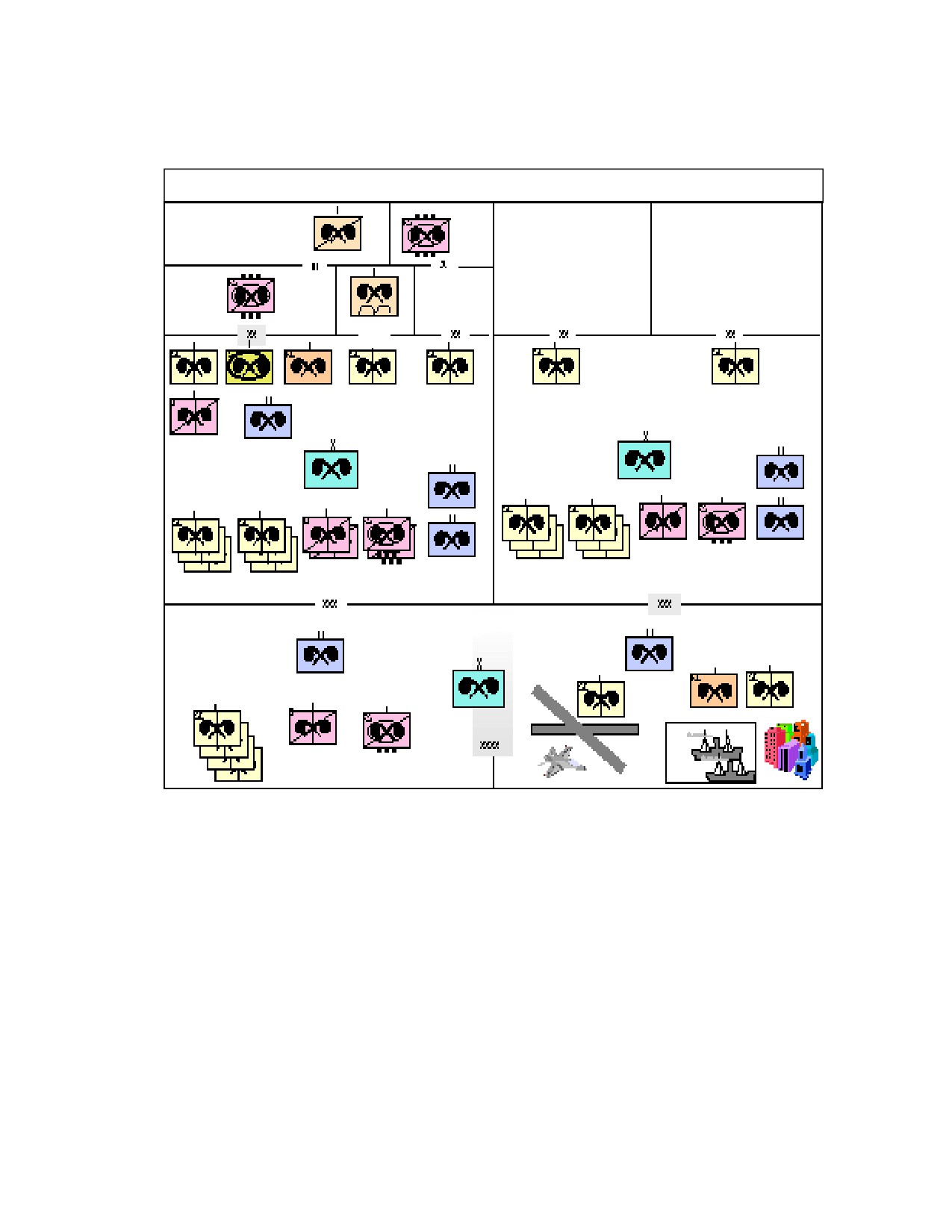
staff support. See Figure A-1 for an example that reflects an assigned NBC brigade with
three NBC battalions controlling NBC reconnaissance, reconnaissance/smoke,
smoke/decontamination, and biodetection unit assets. The COMMZ also has assets such as
a biological point detection capability (i.e., Portal Shield) to monitor for and presumedly
identify biological agents. Additionally, the senior logistics HQ receives an NBC center
team to perform NBC staff functions. The planning allocation for the COMMZ NBC brigade
is as follows:
• The brigade HQ and HQ detachment.
• Two or more NBC battalion HQ to provide C2 for assigned companies.
• One biodetection company.
• One NBC reconnaissance company.
• Four smoke/decontamination companies (plus one per USMC division, six per
USMC Marine Expeditionary Force, one per SPOD or APOD, and one per
USAF air operating base).
• One NBC reconnaissance/decontamination company (one per SPOD).
A-2
c.
Combat Zone (Corps Area). The corps has an assigned NBC brigade. The number
and types of NBC units assigned to the NBC brigade depend upon the corps’s mission and
its organization. The notional corps depicted in Figure A-1 includes biological-detection,
NBC reconnaissance, decontamination, and smoke assets. (Note: A biological-detection
company operates directly under the NBC brigade.) This force is a mix of NBC
reconnaissance, mechanized smoke, smoke/decontamination, reconnaissance/
decontamination, and biological-detection units beyond those that are organic to the
divisions. It allows the corps commander to send augmentation where it is needed. The
planning allocation for a corps NBC brigade is as follows:
• The brigade HQ and HQ detachment.
• One NBC reconnaissance company and one NBC reconnaissance/
decontamination company per light armored cavalry regiment (LACR) and
SPOD.
• Six or more smoke/decontamination companies (six per corps plus one per
division).
• Two or more NBC battalion HQ to C2 assigned companies.
• One mechanized smoke company per heavy division.
• One biological-detection company.
d.
Combat Zone (Division Area). Figure A-1 depicts the mechanized and armored
heavy divisions (forward deployed) with their organic NBC reconnaissance platoon. (Note:
Mechanized and armor divisions are in a transition period. Their organic NBC defense
company is being moved to echelons above division.) The mechanized and armored divisions
do not have an organic NBC defense company; however, the division does retain an NBC
reconnaissance platoon. The division relies on corps augmentation for smoke,
decontamination and additional NBC reconnaissance support. The heavy division has an
NBC officer, NBC staff, and NBC Center (NBCC). The light infantry division does not have
an organic NBC company. It relies upon corps augmentation for smoke, decontamination,
and/or NBC reconnaissance. The light division has an NBC officer, NBC staff, and NBCC.
Maneuver brigades in divisions have a brigade NBC officer and NBC staff
noncommissioned officer (NCO). Separate heavy maneuver brigades have an NBC officer,
staff, and NBC platoon (smoke/decontamination/reconnaissance) in the brigade
headquarters and headquarters company (HHC).
A-3
Chemical Force Allocation
1-BCT
FDD
LID
ABN/AA
XX
Army
Joint Rear Area
Figure A-1. NBC Structure in a Typical Theater of Operations
2.
Organization for Combat
NBC units perform their vital combat role throughout the TO, from the forward line of
own troops (FLOT) back through the COMMZ. NBC units provide reconnaissance,
decontamination, biological detection, and smoke capabilities to accomplish different tasks
throughout the theater. The NBC C2 structure forms these units into an organization that
is responsive to commanders at all echelons; however, it may be necessary to tailor NBC
unit packages to support specific requirements for a contingency operation. The COMMZ
(theater) and corps structure normally includes an NBC brigade. This brigade provides
NBC units to perform NBC reconnaissance, biodetection, decontamination, and smoke
support throughout the COMMZ/corps area.
a.
NBC Brigade.
A-4
(1)
Introduction. The brigade’s mission is to provide C2 of two to six battalions
and other assigned or attached separate companies. The unit provides staff planning and
coordination for combat, CS, and CSS operations for all assigned and attached units.
Because there are insufficient assets for the entire corps, the allocation of units will be
based on the commander’s OPLAN. The battalions are assigned missions and assets and
will be employed throughout the depth of the battlefield to synchronize effects and
maintain initiative and agility to reallocate (as required) based on the commander’s
priorities.
(2)
Table of Organization and Equipment (TOE). Headquarters and
headquarters detachment (HDD), chemical brigade, TOE 03472L000.
b.
NBC Battalion.
(1)
Introduction. The battalion’s mission is to provide C2 of two to five chemical
companies (reconnaissance, decontamination, and mechanized/motorized smoke). The
battalion provides C2 of these companies in the COMMZ, corps, and division areas.
Battalions are task-organized to provide smoke, decontamination, and/or reconnaissance
support with a mix of NBC companies. The brigade organizes NBC battalions for combat
based on METT-T.
(2)
TOE. HHD, chemical battalion, TOE 03476L100 (corps).
c.
NBC Companies.
(1)
Introduction. Several types of NBC companies are located in the corps and
COMMZ and are organized into NBC battalions. They are not permanently assigned to
chemical battalions, and the numbers and types of companies will be based on the numbers
and types of MSCs (i. e., divisions) assigned to the combat zone. Units are task-organized by
the chemical brigade based on METT-T factors. These units can include mechanized smoke
companies, decontamination/reconnaissance companies, NBC reconnaissance companies,
biological-detection companies, and dual-purpose smoke/decontamination companies.
(2)
TOE.
• Chemical company (smoke/decontamination) (airborne), TOE 03057L100.
• Chemical company (smoke/decontamination) (air assault [AA]), TOE
03057L200.
• Chemical company (decontamination) (corps), TOE 03417L000.
• Chemical company (smoke generator) (mechanized), TOE 03437L000
(Army of excellence [AOE] variant); TOE: 03437F000 (force XXI variant).
• Chemical company (reconnaissance/decontamination) force XXI digitized
division (FDD), TOE 03457F000.
• Chemical company (smoke/decontamination) (corps/TAACOM/division),
TOE 03467L000.
A-5
• Chemical company (biological detection), TOE 03477A000.
d.
NBC Heavy Decontamination Companies.
(1)
Introduction. The COMMZ may contain heavy decontamination companies.
The heavy decontamination company is authorized 15 power-driven decontamination
apparatus for support of mission requirements.
(2)
TOE.
• Chemical company (heavy division), TOE 03157L100 (National Guard
[NG]); TOE 03157L200 (active component [AC]).
• Chemical company (heavy division) (AC/variant), TOE 03157L200.
e.
NBC Armored Cavalry Regiment (ACR) Company.
(1)
Introduction. The ACR NBC company provides smoke, NBC
reconnaissance, decontamination, and NBC staff support to the ACR. Its
smoke/decontamination platoon normally supports a cavalry squadron with either large-
area smoke or equipment decontamination. However, smoke and decontamination
operations cannot be done simultaneously. The LACR operates in much the same way as
the ACR and also has an assigned NBC company. The LACR NBC company provides NBC
reconnaissance, decontamination, and NBC staff support to the regiment.
(2)
TOE.
• Chemical company (reconnaissance/decontamination) (ACR) (light [LT]),
TOE 03333L000.
• Chemical company (smoke/decontamination/reconnaissance) (ACR), TOE
03377L100, Wheeled Vehicle Equipped) TOE 03377L200 (tracked vehicle
equipped).
• Survival recovery center chemical company
(smoke/decontamination/reconnaissance) (ACR) (track equipped)
03377L200.
f.
NBC Mechanized Smoke Companies.
(1)
Introduction. Mechanized smoke companies have light armor (i.e., ballistic)
protection. They have the mobility to operate in support of maneuver forces but are
vulnerable to enemy weapons when operating with forward elements. Typical missions
include screening battle positions, flanks, and river crossings; obstacle breaching; and
deception operations. A company can produce smoke screens up to approximately 3
kilometers (km) in width and several km in depth.
(2)
TOE. Chemical company (smoke generator) (mechanized), TOE 03437L000
(AOE variant); TOE 03437F000 (force XXI variant).
A-6
g.
NBC Wheeled Smoke/Decontamination Companies.
(1)
Introduction. The unit provides NBC equipment decontamination, large-
area smoke, NBC warning and reporting, and NBC staff support to an Airborne Avenue of
Approach (ABN/AA) Division. At Level 1, the unit provides 24-hour NBC staff support. The
individual platoons are not capable of performing simultaneous smoke and
decontamination operations; however, the company can be tailored to respond to needs for
both smoke and decontamination support.
(2)
TOE.
• Chemical company (smoke/decontamination), TOE 03057L100.
• Chemical company (smoke/decontamination) (AA), TOE 03057L200.
h. NBC Reconnaissance/Decontamination Companies.
(1)
Introduction. The mission of this unit is to provide NBC reconnaissance and
equipment decontamination for the FDD. The company is assigned to a chemical battalion
(normally at corps level). The unit performs NBC reconnaissance and decontamination
missions simultaneously. Reconnaissance and decontamination elements are dedicated to
their respective missions. The unit operates 2 thorough equipment and aircraft
decontamination sites capable of decontaminating up to 32 vehicles per hour combined (16
vehicles per hour per platoon or 8 vehicles per hour per 2 squads). It also conducts route,
zone, area, point, and by-pass NBC reconnaissance.
(2)
TOE. Chemical company (reconnaissance/decontamination) (FDD), TOE
03457F000.
i.
Biological-Detection Companies.
(1)
Introduction. Biological-detection companies support the corps or could be
task-organized to provide reports directly to the JFC. Each company is equipped with 35
BIDSs, which are capable of providing a near-real time presumptive identification of
specific biological agents. The unit is organized to be employed as a company asset;
however, platoon deployments may occur. The company is arrayed to provide coverage
through the supported unit’s AO or to protect specific high-risk biological targets. One
biological-detection company also has three long-range biological standoff detection systems
(LR-BSDS) for standoff detection of biological agents (Note: Detection does not equal
identification.) The biological-detection company requires CLS for sustainment of the
system’s biodetection suite, and CLS deploys as an integral part of the unit.
(2)
TOE. Chemical company (biological detection), TOE 03477A000.
j.
Smoke/Decontamination Companies.
(1)
Introduction. Smoke/decontamination companies support both light and
heavy divisions. Each of these dual-purpose companies has the ability to set up equipment
decontamination sites in support of brigade and division operations or can provide large-
area smoke up to 4 km wide. The unit can operate up to 4 thorough (8 tactical vehicles per
A-7
hour) or 8 operational decontamination sites. Individual platoons are not capable of
performing simultaneous smoke and decontamination operations; however, the company
can be tailored to respond to needs for both smoke and decontamination support.
(2)
TOE. Chemical company (smoke/decontamination)
(corps/TAACOM/division), TOE 03467L000.
k.
NBC Reconnaissance Companies.
(1)
Introduction. NBC reconnaissance companies provide support for elements
of a corps/theater Army (TA). The unit’s platoons provide contamination avoidance through
route, zone, and area reconnaissance.
(2)
TOE. NBC reconnaissance company, TOE 03427L000.
l.
Chemical Detachments.
(1)
Introduction. The mission of the NBC reconnaissance detachment is to
provide NBC reconnaissance support for elements of a FDD. The unit is assigned to an FDD
cavalry squadron, TOE 17285F000. The unit has the capability to conduct route, zone, and
area NBC reconnaissance to determine the presence and extent of NBC contamination.
(2)
TOE. Chemical detachment (reconnaissance), TOE 03219F000.
m. Division-Level NBC Units. The division is converting to a new NBC force
structure concept that eliminates the divisional chemical company. Some heavy divisions
that have not undergone the structure change may still have the chemical company. Under
the new force design, each heavy division will have an NBC reconnaissance platoon which
will be organic to the division cavalry squadron. Heavy divisions have an NBC staff organic
to the division and receive additional NBC support from the corps when required. Airborne
and AA divisions have organic NBC companies. These companies provide smoke,
decontamination, and NBC staff support under the OPCON of the division NBC officer.
Light infantry divisions do not have organic NBC companies. Light divisions have an NBC
staff organic to the division HHC. The parent corps receives a smoke/decontamination
company for each light infantry division assigned. The division NBC officer requests
appropriate support from the corps when required.
n. ACR/Interim Brigade Combat Team (IBCT).
(1)
Introduction. The ACR and the IBCT have an NBC staff organic to the HQ
element. The ACR is assigned an NBC defense company with reconnaissance,
decontamination, and smoke capability. Additionally, the IBCT is assigned one NBC
reconnaissance platoon that is organic to the reconnaissance, surveillance, and target
acquisition squadron.
(2)
TOE.
• Chemical company (smoke/decontamination/reconnaissance) (ACR), TOE
03377L200.
A-8
• NBC Reconnaissance IBCT, TOE 17098F000.
o. NBC Service Organization.
(1) Introduction. The mission of NBC service organizations is to provide or
augment NBC reconnaissance, decontamination, and staff support. The numbers and types
of units in the TO form the basis for allocation of this support. NBC service organizations
are allocated to separate brigades, corps, and other operational-level units. NBC service
organizations include JA and JB Teams that provide NBC staff operations support to units
over 1 or 2 12-hour shifts. These teams also augment a TOC NBCC to provide NBC staff
operations support to units over two 12-hour shifts. The NBC reconnaissance LB Team
(Special Forces [SF]) or service equivalent provides an SF group with NBC reconnaissance
support in all environments, to include enemy-held, denied, or sensitive territory. It collects
NBC intelligence and provides technical knowledge pertaining to the enemy’s weapons
capabilities, techniques, and dispositions. Additionally, the chemical detachment organic to
the HHC of each SF group supports the group with thorough decontamination and limited
NBC R&S of the SF operating force.
(2)
TOE. Chemical service organization chemical detachment (reconnaissance)
(SF), TOE 03529LB00.
p. Modular Force Packing. To meet the requirements for a contingency operation, it
may be necessary to form NBC force packages to perform specific tasks. Each force package
requires a C2 cell or HQ. The force package can be built around a company, battalion, or
brigade. It will be task-organized to meet the specific needs of the deploying commander.
3.
Command and Support Relationships
In the tactical planning process, the NBC brigade staff recommends the appropriate
command or support relationship between the NBC unit and the supported unit. This
relationship defines the specific responsibilities between supporting and supported units.
a.
A command relationship reflects the chain of command and degree of authority.
NBC units can operate in various common relationships: assigned, attached, OPCON, or
TACON. Assignment is the normal relationship when a parent unit directly commands its
subordinate units. In this case, the parent unit is responsible for all command
responsibilities, personnel actions, and logistics support. The parent unit may attach a
subordinate unit to a supported commander when the parent unit cannot provide adequate
logistical support or timely command decisions. Attachment to another HQ means that all
command and logistics responsibilities are transferred to the receiving HQ. OPCON is
appropriate when a supported unit commander needs task organization authority over NBC
units, but the parent NBC HQ can provide continued logistics support. The parent NBC
unit coordinates with logistics organizations to make this viable. Further, TACON may be
used when command authority is needed to task-assigned or -attached forces.
b.
A support relationship represents the manner in which the maneuver unit is to
be supported. When a support relationship is established, the parent unit retains command
responsibility. The parent unit also remains responsible for logistics needs of that
subordinate unit. A general-support (GS) relationship is appropriate when the higher HQ
requires central control and flexibility in using limited NBC assets. In this relationship,
A-9
support is to the force as a whole rather than to a particular subunit of the force. COMMZ
and corps NBC units are normally retained for GS missions unless specific units require a
higher degree of responsiveness. A direct-support (DS) relationship provides support that is
directly responsive to the needs of a specific combat, CS, or combat service support element
(CSSE). It is usually for a single operation or a short period. A higher HQ may use DS when
it expects a change to the task organization that will require shifting of NBC units to other
locations. This relationship precludes further task organization of the NBC unit by the
supported commander.
c.
Generally, NBC units at corps and division levels establish support rather than
command relationships.
d.
Each situation is unique and requires its own solution. Whatever the
relationship, NBC unit commanders remain responsible for the missions undertaken by
their subordinate elements.
4.
Task Organization
NBC units work most efficiently under the control of a parent NBC unit. This
organization permits close control and the most productive use of all NBC assets. The
commander continuously monitors the progress of assigned tasks and shifts elements where
the need is greatest throughout the AO.
a.
The decision whether to provide NBC units in a command or a support
relationship is a balance between the needs of the higher commander for flexibility and the
needs of the subordinate commander for responsiveness.
b.
The corps may provide each committed heavy division with an NBC battalion
task-organized to support the commander’s intent and in a command or support role
appropriate for the mission. Light infantry divisions are normally provided a dual-purpose
smoke/decontamination company. Units are provided in either a command or support
relationship. The NBC unit commander deploys his subordinate elements based on his
estimate. The NBC brigade may be required to task organize to provide additional
capabilities to functional facilities such as APODs/SPODs.
c.
At each echelon, commanders use organizational principles to guide the use of
NBC units. Commander’s task organize to meet requirements. Mission requirements drive
the size and composition of task forces. A mix of NBC units is often necessary to achieve the
proper balance of capabilities. The commanders give priority to the main effort. There are
not enough NBC assets on the battlefield to handle all tasks. NBC units are not spread
evenly across the battlefield but are task-organized to best support the overall scheme of
maneuver.
d.
A commander controls subordinate elements both by presence and leadership at
critical events and through the use of the HQ. The commander at each echelon uses his HQ
to control operations. The commander relies upon NBC unit C2 elements to ensure assigned
tasks are successfully executed. These NBC C2 elements consist of the NBC officer on the
supported commander’s staff, NBC unit commanders, and the staffs of those units.
A-10
5.
Roles of the NBC Staff Elements
NBC staff elements are composed of a variety of personnel whose duties support the
NBC defense mission. The following paragraphs discuss these elements.
a.
TA NBC Officer. The Army service component command normally includes the
Army service component command NBC officer (formerly the TA NBC officer). This officer
is a member of the Army service component commander’s special staff that integrates NBC
defense into the Army service component command’s plan to sustain Army forces and
support joint and coalition operations.
b.
Corps NBC Officer. The corps staff includes the corps NBC officer who is a
member of the commander’s special staff. This officer has staff responsibility within the
corps for NBC-related matters in the corps AO, including the use of the NBC
battalion/brigade, and is assisted in this task by the corps NBC section. This section
prepares NBC annexes, estimates, and SOPs. It operates an NBCC that processes and
distributes NBC reports and maintains radiation dose status of corps units. It also prepares
fallout predictions and NBC downwind hazard predictions.
c.
Division NBC Officer. The division staff includes the division NBC officer who is
a member of the commander’s special staff. This officer has staff responsibility to the
division commander for NBC-related matters in the division AO, including the use of the
NBC brigade, and is assisted in this task by the division NBC section. This section prepares
NBC annexes, estimates, and SOPs. It operates an NBCC that processes and distributes
NBC reports and maintains radiation dose status of division units. It also prepares fallout
predictions and NBC downwind hazard predictions.
d.
Separate Brigade and ACR NBC Officer. Separate maneuver brigades, ACRs,
and LACRs have an NBC officer and NBC section organic to the brigade. Currently,
separate brigades are authorized an NBC platoon with smoke, decontamination, and NBC
reconnaissance capabilities. ACRs and LACRs have an organic NBC company that provides
smoke, decontamination, and NBC reconnaissance support.
e.
Brigade NBC Officer. The NBC officer at brigade level (or brigade equivalent) is
the primary adviser to the commander on NBC matters. This officer integrates NBC and
smoke considerations into the brigade planning process and coordinates current operations
in the brigade area. The brigade NBC officer receives required reports from divisional and
corps units operating in the brigade area and keeps the brigade staff and the division
informed on NBC activities. The NBC officer passes brigade taskings to supporting NBC
units on behalf of the commander.
f.
Special Forces Group NBC Officer. Special forces groups, airborne (SFGA) have
an NBC officer and NCO assigned to the group HQ. They function as a staff section located
within the SF operational bases (SFOB). SFGA have NBC detachments organic to the
groups under the OPCON of the group NBC officer. These detachments provide NBCC and
decontamination support to the SFOB and forward operating bases. When available, LB
Teams (special forces reconnaissance) provide NBC reconnaissance support to special forces
groups in all environments, to include enemy-held, denied, or sensitive territory.
A-11
g.
Battalion NBC Officer and NCO. Combat (and some CS) battalions are
authorized an NBC officer, and nonmaneuver battalions are authorized an NBC NCO. The
battalion NBC officer or NCO serves in the HQ operations (operations and training officer
[US Army] [S3]) section and integrates NBC and smoke into the battalion or battalion task
force’s planning process. This officer monitors execution of the NBC portions of the
operation, makes operational reports throughout the operation, and provides other required
input to the brigade NBC officer.
h. Company NBC NCO. All TOE companies except HHCs are authorized a
company-level NBC NCO. The company NBC NCO is the commander’s advisor on NBC
defense and smoke and provides the commander with an organic source of NBC expertise
for planning and conducting NBC defense operations. This officer ensures that all platoons,
squads, and sections can operate their assigned NBC equipment. The NBC NCO trains
company personnel to support operational or thorough decontamination operations.
6.
Roles of the NBC Unit HQ and Staff Elements
The following paragraphs discuss the roles of the NBC HQ and staff elements.
a.
Corps NBC Brigade HQ. The NBC brigade HQ coordinates the CS operations of
assigned and attached NBC battalions. The NBC brigade staff integrates NBC defense, to
include large-area biological detection, NBC reconnaissance, decontamination, and smoke
considerations into corps plans. From its command post, the NBC brigade staff then
conducts the detailed planning necessary to implement the tasks assigned by the corps
order. The staff’s time is primarily spent acquiring and positioning resources needed for
future operations.
b.
NBC Battalion HQ. An NBC battalion HQ coordinates the CS operations of
assigned or attached NBC units. Depending on the types of companies assigned or attached,
the battalion can provide smoke, decontamination, and NBC reconnaissance support in its
assigned area of the corps. The command or support relationship established in the corps
order determines how a division can use a corps battalion in its area. When a battalion is
provided to a division, the battalion staff completes the detailed planning from its command
post for the division NBC officer who is required to implement tasks in the division order.
The NBC battalion HQ can control division companies or other corps companies in addition
to its own. When in DS of the division, the battalion is well suited as a C2 HQ for all NBC
operations.
c.
NBC Company HQ. As with higher HQ, the company helps the MSC NBC officer
fulfill his role as a special staff officer. The MSC NBC officer integrates NBC
reconnaissance, smoke, and decontamination into the unit plan. The remainder of his staff
and the company do the detailed planning to support the plan. The staff solves or
recommends alternatives to logistics problems that prevent completion of any critical NBC
task. In some circumstances, the division NBC company may be required to provide a C2
HQ for attached forces. The company is the lowest NBC echelon that can plan and execute
continuous operations in support of tactical forces. The platoons of the company are ideally
suited for integration into task force operations and provide the priority task force with the
NBC assets to accomplish its mission.
A-12
d.
NBC Platoon. The NBC platoon is the lowest level conventional NBC unit that
can effectively accomplish independent tasks. For that reason, NBC units rarely operate in
smaller increments than this and, then, only for specific actions of limited duration. Due to
the limited NBC units available, some brigades and task forces may operate without
dedicated NBC unit support.
e.
Chemical Teams. The LB (reconnaissance) Team (SF) provides NBC
reconnaissance support to the SF group in all environments, to include enemy-held, denied,
or sensitive territory. It may deploy augmented by Special Forces Operational Detachment
A (SFODA) Team members or operate independently. The LB Team is the lowest level that
can effectively accomplish independent tasks. Additionally, the SF chemical detachment is
a 10-man detachment organized into 2 4-man squads with a captain and NCO in the HQ
section. The detachment’s missions are decontamination site reconnaissance, hasty
exfiltration decontamination, operational decontamination, thorough decontamination, and
NBC reconnaissance in rear areas. Additionally, the chemical Teams’ (JA and JB) NBC
element provides support to NBC TOCs.
7.
Army Assets
All Army units are capable of conducting limited NBC defense operations. These
operations consist of, but are not limited to, detecting nuclear and chemical contamination;
performing immediate and operational decontamination procedures on individuals and
equipment; deploying NBC detection devices; and conducting nuclear and chemical
monitoring, survey, and reconnaissance operations. The USA NBC force structure includes
specialized units providing additional capabilities for NBC detection, identification, survey,
reconnaissance, and thorough decontamination. USA units also provide large-area smoke
and obscurant support to operations.
a.
NBC Reconnaissance Platoon (Heavy Division). The NBC reconnaissance platoon
(heavy division) (see Table A-1) is capable of providing route, area, and zone NBC
reconnaissance for support of divisional units.
Table A-1. NBC Reconnaissance Platoon (Heavy Division) Equipment
Detection Equipment
Description
M21 Remote Sensing Chemical Agent Alarm
Standoff nerve and blister chemical agent vapor
(RSCAAL)
detector. Capable of ranges up to 5 km.
Vehicle-mounted system designed to detect,
Reconnaissance System NBC M93A1 Fox
identify, and mark NBC contamination.
b.
Chemical Company (Smoke/Decontamination) ABN/AA. Each platoon can
support either equipment decontamination or large-area smoke; but a platoon cannot
perform smoke and decontamination simultaneously or immediately switch between
missions without a transition time. Although a platoon can be separated into separate
squads for operational decontamination, the entire platoon must be available to support
smoke and thorough decontamination missions. Table A-2 depicts the specialized NBC
equipment organic to this unit. The unit can provide—
• Three DED sites.
A-13

• Three large-area smoke screens, each .6 by 1.4 km wide by several km long.
• Six operational decontamination sites.
Table A-2. Chemical Company (Smoke/Decontamination) ABN/AA Equipment
Decontamination Equipment
Description
Decontaminating Apparatus: High-Pressure
Washing component of the modular
Washer Module M22
decontamination system.
Decontaminating Apparatus: Decontaminating
Decontaminant application component of the
Solution Number 2 (DS2) Pumper/Scrubber
modular decontamination system.
Module M21
Portable, lightweight, power-driven
M17 Lightweight Decontaminating System
decontaminating device.
Tank and Pump Unit, Liquid-Dispensing
Truck-mounted tank and pump unit.
Pump, Centrifugal, 65 Gallons Per Minute
Power-driven water pump.
(GPM)
Pump, Centrifugal, 125 GPM
Power-driven water pump.
Tank Assembly, 500-gallon (Gal)
Portable fabric water tank.
Tank Assembly, 3,000-Gal Collapsible
Portable fabric water tank.
Smoke/Obscurant Systems
Description
Generator, Smoke, Mechanical Motorized M56
Large-area smoke generation system mounted
on a heavy variant high-mobility multipurpose
wheeled vehicle (HMMWV).
Generator, Smoke M157
Large-area smoke generation system mounted
on a HMMWV.
c.
Chemical Company (Reconnaissance/Decontamination) ACR. Table A-3 depicts
the specialized NBC equipment organic to this unit. The Chemical Company ACR is
capable of providing the following support:
• NBC reconnaissance (route, zone, area, point, and by-pass).
• One DED site.
• NBC staff support.
Table A-3. Chemical Company (Reconnaissance/Decontamination) (ACR) Equipment
Detection Equipment
Description
Standoff nerve and blister chemical agent vapor
M21 RSCAAL
detector. Capable of ranges up to 5 km.
Vehicle-mounted system designed to detect,
Reconnaissance System NBC M93A1 Fox
identify, and mark NBC contamination.
Decontamination Equipment
Description
Decontaminating Apparatus: High-Pressure
Washing component of the modular
Washer Module M22
decontamination system.
A-14

Table A-3. Chemical Company (Reconnaissance/Decontamination) (ACR) Equipment
(Continued)
Decontamination Equipment
Description
Decontaminating Apparatus: DS2
Decontaminant application component of the
Pumper/Scrubber Module M21
modular decontamination system.
Portable, lightweight, power-driven
M17 Lightweight Decontaminating System
decontaminating device.
M923 series 5-ton truck with 2 600-gal water
Tank and Pump Unit, Liquid-dispensing
tanks and an integral pump unit.
Pump, Centrifugal, 65 GPM
Power-driven water pump.
Pump, Centrifugal, 125 GPM
Power-driven water pump.
Tank Assembly, 3,000-Gal Collapsible
Portable, fabric water tank.
Tank Assembly, 500 Gal
Portable, fabric water tank.
d.
Chemical Company (smoke/reconnaissance/decontamination) ACR. The dual-
purpose unit can support only smoke or decontamination at any one time. Table A-4 depicts
the specialized NBC equipment organic to this unit. The chemical company is capable of
providing the following support:
• NBC reconnaissance (route, zone, area, point, and bypass).
• One DED site.
• Large-area smoke, .6 by 1.4 km by several km long (one platoon).
• NBC staff support.
Table A-4. Chemical Company (Smoke/Reconnaissance/Decontamination) (ACR)
Equipment
Detection Equipment
Description
Vehicle-mounted system designed to
Reconnaissance System NBC M93A1 Fox
detect, identify, and mark NBC
contamination.
Decontamination Equipment
Description
Decontaminating Apparatus: High-Pressure
Washing component of modular
Washer Module M22
decontamination system.
Decontaminating Apparatus: DS2
Decontaminant application component of
Pumper/Scrubber Module M21
modular decontamination system.
Portable, lightweight, power-driven
M17 Lightweight Decontaminating System
decontaminating device.
Tank Assembly, Fabric, 500-Gal
Portable fabric water tank.
Tank Assembly, Fabric, 3,000-Gal Collapsible
Portable fabric water tank.
M923 series 5-ton truck with two 600-Gal
Tank and Pump Unit, Liquid-dispensing
water tanks an integral pump unit.
Pump, Centrifugal, 65 GPM
Power-driven water pump.
Pump, Centrifugal, 125 GPM
Power-driven water pump.
Smoke/Obscurant Systems
Description
Large-area smoke generation system
Generator, Smoke, Mechanical Motorized M56
mounted on a heavy variant HMMWV.
Large-area smoke generation system
Generator, Smoke M157A2
mounted on a HMMWV.
A-15

e.
Chemical Company (Reconnaissance/Decontamination), Corps, TA Table A-5
depicts the specialized NBC equipment organic to this unit. The chemical company
(reconnaissance/decontamination) is capable of providing the following support: (Note: The
planning allocation for this unit is generally one SPOD.)
• Operation of 1 thorough or operational decontamination site (8 to 10 vehicles
per hour).
• Route, zone, area, or bypass NBC reconnaissance and NBC surveys,
surveillance, and sampling.
Table A-5. Chemical Company (Reconnaissance/Decontamination) Corps, TA Equipment
Decontamination Equipment
Description
Decontaminating Apparatus: High-Pressure
Washing component of the modular
Washer Module M22
decontamination system.
Decontamination Apparatus: DS2
Decontaminant application component of the
Pumper/Scrubber Module M21
modular decontamination system.
Detection Equipment
Description
Vehicle-mounted system designed to detect,
Reconnaissance System NBC M93A1 Fox
identify, and mark NBC contamination.
f.
Chemical Company (Biological Detection) Corps. The chemical company,
biological detection, is capable of providing five biological-detection platoons and one long-
range biological standoff detection detachment. Table A-6 depicts the specialized NBC
equipment organic to this unit. (Note: The planning allocation for this unit is generally one
per corps and one per NBC brigade for the COMMZ.)
Table A-6. Chemical Company (Biological Detection), Corps Equipment
Detection Equipment
Description
Detects biological agents.
M31/M31A1 BIDS
Identifies biological agents.
Collects samples.
Detects aerosol clouds.
LR-BSDS (only organic to one biodetection
Distinguishes natural from man-made
company and requires aviation augmentation)
events.
g.
Chemical Company (NBC Reconnaissance), Corps, TO. Table A-7 depicts the
specialized NBC equipment organic to this unit. The chemical company, reconnaissance, is
capable of providing the following support:
•
NBC reconnaissance (route, zone, and area).
•
Conventional reconnaissance (route, zone, and area).
A-16

Table A-7. Chemical Company (NBC Reconnaissance), Corps, TO Equipment
Detection Equipment
Description
Standoff nerve and blister chemical agent vapor
M21 RSCAAL
detector. Capable of ranges up to 5 km.
Vehicle-mounted system designed to detect,
Reconnaissance System NBC M93A1 Fox
identify, and mark NBC contamination.
h. Chemical team (LA Reconnaissance). Table A-8 depicts the specialized NBC
equipment organic to this unit. The chemical team (LA reconnaissance) is capable of
providing the following support:
• NBC reconnaissance (route, area, zone, and point).
• Collection of environmental samples.
• Identification/examination of NBC contamination.
Table A-8. Chemical Team (LA Reconnaissance) Equipment
Detection Equipment
Description
Standoff nerve and blister chemical agent vapor
M21 RSCAAL
detector. Capable of ranges up to 5 km.
Vehicle-mounted system designed to detect,
Reconnaissance System NBC M93A1 Fox
identify, and mark NBC contamination.
i.
Chemical team (LB Reconnaissance [SF]). The chemical team (LB
reconnaissance [SF]) is capable of providing the following support:
• NBC reconnaissance support.
• Collection, identification, and examination of NBC contamination.
• Expertise in enemy NBC systems and TTP.
• Specialized NBC protective equipment.
j.
Chemical team, JA (NBC element [NBCE]). The chemical team JA (NBCE) is
capable of providing the following support:
• NBC TOC, 12-hour shift.
• NBCWRS monitoring.
• NBC monitoring.
k.
Chemical team JB (NBCE). The chemical team JB (NBCE) is capable of
providing the following support:
• NBC TOC, 24-hour staffing.
A-17

• NBCWRS monitoring.
• NBC monitoring.
l.
Additional Army Units. In addition to units that specialize in NBC defense, there
are other types of units that are capable of making significant contributions to NBC defense
operations. Table A-9 provides information and data on the types of units and their general
capabilities.
Table A-9. Additional NBC Capabilities
UNIT TYPE
EQUIPMENT
CAPABILITIES
Planning and performing emergency
Toxicological agent protective
neutralization and subsequent
Technical Escort Unit
(TAP) suits
disposal of chemical agents.
Chemical detection kits
Escorting hazardous cargo/material.
Detecting, identifying, rendering
Explosive Ordnance
TAP suits
safe, evacuating, and disposing of
Disposal
M18A2 chemical detection kits
conventional as well as improvised
NBC weapons.
Providing information on
identification of biological agents to
Theater Medical Lab
Testing equipment
support commanders’ information
requirements.
8.
NBC Special Staff Responsibilities
Corps, division, brigade, and battalion NBC staff responsibilities encompass actions
that range from operations and intelligence to logistics and training. The NBC staff
accomplishes its key functional responsibilities and supports its unit’s planning and
preparation to accomplish missions in an NBC environment.
a.
Corps/Division. The corps/division NBC section is part of the corps/division
special staff section. It is usually under the direct supervision of the chief of staff. The
section helps the commander and staff by providing information, estimates, and
recommendations on NBC matters. The members of the NBC section help the principal
staff officers prepare plans, orders, and reports. The corps/division NBC officer also
recommends, plans, supervises, and coordinates various mission requirements for any
organic NBC defense units and nondivisional NBC units assigned, attached, or OPCON to
the division.
(1)
Intelligence.
• Help the intelligence section analyze and disseminate NBC threat
information.
• Ensure that effective downwind messages (EDMs) and chemical
downwind messages (CDMs) are passed to subordinate commands, in
coordination with the Air Force staff weather officer.
A-18
• Receive, prepare, and correlate information on enemy NBC attacks.
• Recommend collection tasks for supporting NBC reconnaissance assets.
• Help the intelligence section evaluate captured NBC-related foreign
material. Recommend urgency of evaluation for further exploitation.
• Ensure that the countermeasures developed in the threat analysis are
incorporated into division plans and procedures.
• Provide technical assistance for interrogating EPWs about NBC matters.
(2)
Personnel.
• Provide recommendations for the assignment of NBC personnel, in
coordination with the personnel section.
• Coordinate professional development of subordinate NBC personnel.
• Monitor the use of subordinate unit NBC personnel. Promote the
integration of non-NBC personnel into NBC activities.
• Actively participate in NBC personnel and unit force structure planning
and programming.
(3)
Training.
• Conduct NBC defense training for personnel throughout the command.
Monitor the general status of NBC training throughout the command.
• Assist in establishing and reviewing the unit-level mission-essential task
list. Provide recommendations to ensure higher-HQ-approved battle
tasks can be performed under NBC conditions.
• Promote the total involvement of the chain of command in NBC matters.
• Monitor and inspect subordinate command individual and unit NBC
proficiency testing.
• Ensure that NBC training is routinely integrated into training events.
• Ensure that divisional and subordinate command NBC school programs
of instruction (POIs) are approved and meet minimum standards and
requirements.
• Request training support, as required, from HN resources.
• Plan and integrate NBC training to maximize the use of critical NBC
collective tasks.
A-19
• Determine training needs through staff visits and evaluations and
recommend training to correct deficiencies.
(4)
Evaluation.
• Use the results of individual training (i.e., common task training),
internal and external evaluations, and informal field training exercises
(FTXs) to improve NBC readiness.
• Evaluate NBC readiness through maintenance of NBCDE, use of
personnel, and quality of training provided.
• Provide the divisional training branch with assistance as required for
support of unit evaluations.
(5)
Readiness.
• Receive, collate, and disseminate the NBC readiness status as required
by the senior HQ.
• Monitor NBC personnel, equipment, and training shortfalls and
recommend policies and programs to improve readiness.
• Periodically inspect the rotation of shelf-life items, inspect load plans for
NBC war reserve stocks, and develop plans and SOPs related to NBC
defense.
• Ensure NBC readiness is clearly shown in unit status reports.
(6)
Logistics.
• Request funding to replace shortages, expendables, and items consumed
in training. Monitor equipment status and make requests based on the
needs of the command.
• Recommend plans and programs for forward-deployed, pre-positioned
stocks of NBCDE and decontaminants.
• Help develop and implement policies and plans related to NBC matters.
• Provide (through divisional NBC unit assets) decontamination planning
support for assigned or attached units.
(7)
Administration.
• Ensure NBC-related publications are maintained and updated.
• Update NBC portions of divisional SOPs.
A-20
• Provide guidance on changes in doctrine, equipment authorization, and
new items of equipment to be fielded.
(8)
Field Operations.
•
Receive, prepare, correlate, and pass information on enemy NBC attacks
as the focal point of the division’s NBCWRS.
•
Monitor the radiation status of subordinate units as required.
•
Integrate the NBC threat analysis into the IPB process.
•
Establish and operate the division NBCC. Coordinate activities and
reports.
•
Recommend, plan, supervise, and coordinate mission requirements for
any organic NBC defense units and other NBC units assigned, attached,
or under OPCON of the division.
•
Perform a vulnerability assessment.
•
Coordinate with operations personnel, logistics sections, and subordinate
commands and allocate NBC equipment and personnel to those
subordinate commands.
•
Provide NBC estimates and input them into combat plans and orders.
•
Recommend employment of organic and supporting NBC unit assets,
based upon tactical situations.
•
Provide priorities of support and priorities of effort for NBC units in DS
to the corp/division.
b.
Brigade/Regiment. The unit’s (i.e., regiment and brigade) NBC sections consist of
the NBC officer and an NBC staff NCO. The NBC officer works as a special staff officer
under the staff supervision of the brigade senior staff officer, usually the S3 or executive
officer (XO). Through staff visits, coordination, and inspections of subordinate units—the
brigade NBC section serves as a focal point for NBC operations. It assists subordinate units
in all NBC defense areas to improve NBC readiness.
(1)
Intelligence.
• Provide technical assistance to the intelligence section for analysis of the
NBC threat and indigenous TIM facilities and ensure that PIRs and
threat information are reflected in unit OPLANs and SOPs.
• Help subordinate units in their threat analysis and evaluate/disseminate
key information.
• Integrate NBC reconnaissance assets into the unit’s R&S plans.
A-21
(2)
Personnel.
• Provide recommendations concerning the assignment of NBC personnel.
• Help professional development of subordinate unit NBC personnel.
• Ensure the proper use of subordinate unit NBC personnel and promote
the integration of non-NBC personnel into NBC activities.
(3)
Training.
•
Monitor NBC defense training and integration of NBC defense tasks in
all aspects of training.
•
Determine training needs through staff visits and evaluations.
Recommend the training that is required to correct deficiencies.
•
Assist in establishing and reviewing the unit-level mission-essential task
list. Provide recommendations to ensure that battle tasks can be
performed under NBC conditions.
•
Project training ammunition requirements to support NBC defense needs
in coordination with training and logistical representatives.
•
Provide NBC technical staff help to subordinate units. Explain individual
and collective training policies, procedures, and guidance.
•
Plan and coordinate NBC training.
•
Ensure the achievement of at least minimum standards of proficiency by
all individuals and units.
•
Make maximum use of installation or area NBC defense courses. Ensure
quotas are provided to units needing them most.
•
Ensure the medical training in a contaminated environment is included
in exercises.
(4)
Evaluation.
• Use the results of training and evaluation plan evaluations, unit
evaluations, internal and external mission training plan (MTP)
evaluations, and FTXs to improve NBC readiness.
• Evaluate NBC readiness through the maintenance of NBCDE, use of
funds, use of personnel, and quality of training provided.
• Monitor and evaluate subordinate unit’s NBC proficiency.
(5)
Readiness.
A-22