FM 3-11 MULTISERVICE TACTICS, TECHNIQUES, AND PROCEDURES FOR NUCLEAR, BIOLOGICAL, AND CHEMICAL DEFENSE OPERATIONS (MARCH 2003) - page 2
(1)
Identify Hazard. Risk decisions should be based upon SA of the threat
and the potential impact on the missions. Commanders also consider mission-essential
USG civilians and contracted support personnel (CSP) in risk assessment. Further, hazards
can occur regardless of enemy or adversary actions, in areas with no direct enemy contact,
and in areas outside the enemy’s influence (i.e., naturally occurring disasters that cause
release of TIM, etc.). The threat of an NBC/TIM environment can be found in all
operational environments, and the ability of unit leaders and staffs to predict and identify
hazards is key.
(2)
Assess Hazard. The commander assesses the potential NBC/TIM hazards in
terms of probability and severity to determine the risk that may result from exposure them.
The end result is an estimate of risk and an estimate of the overall risk to the mission
caused by hazards that cannot be eliminated.
(3)
Develop Controls and Make Risk Decision.
(a) After assessing the threat and the potential hazard of an NBC/TIM
environment, leaders develop controls that either eliminate the hazard or reduce the risk
(i.e, probability and/or severity). To be effective, each control developed must meet the
following criteria:
• Suitability. It must remove the hazard or mitigate (reduce) the
residual risk to an acceptable level.
• Feasibility. The unit must have the capability to implement the
control.
(b) Examples of controls include the following representative
contamination avoidance, protection, and decontamination measures:
• Avoiding the identified hazard.
• Limiting the number of people exposed to the hazards.
• Providing detection and warning signs and signals.
• Using individual and COLPRO.
• Using countermeasures such as water “washdown” capability.
(c)
Once the responsible leader develops and adopts selected control
measures, the leader assesses the risk associated with each measure and the overall
residual risk for the mission.
(4)
Implement Controls. Leaders and staffs ensure that controls are integrated
into SOPs, written and verbal orders, mission briefings, and staff estimates. The critical
check for this step, with oversight, is to ensure that controls are converted into clear, simple
execution orders that are understood at all levels.
II-17
(5)
Supervise/Evaluate. During mission preparation and execution, leaders
complete the risk assessment process through supervision and evaluation. The continuous
evaluation and assessment of risk levels may yield lessons learned and/or identification of
new hazards.
b.
NBC Warning and Reporting System. The NBCWRS provides the data and
information to support the NBC battle management process. Input and output from the
NBCWRS provides a means to inform friendly units of possible contamination. For the
NBCWRS to be effective, units send information on first use by the fastest communications
means available. For example, first-use reports require FLASH precedence. Units send
subsequent information by any reliable communications means. Follow-up information is
also critical when units must also follow up with closeout reports of an initial observer or
contamination report that turns out to be a false positive.
c.
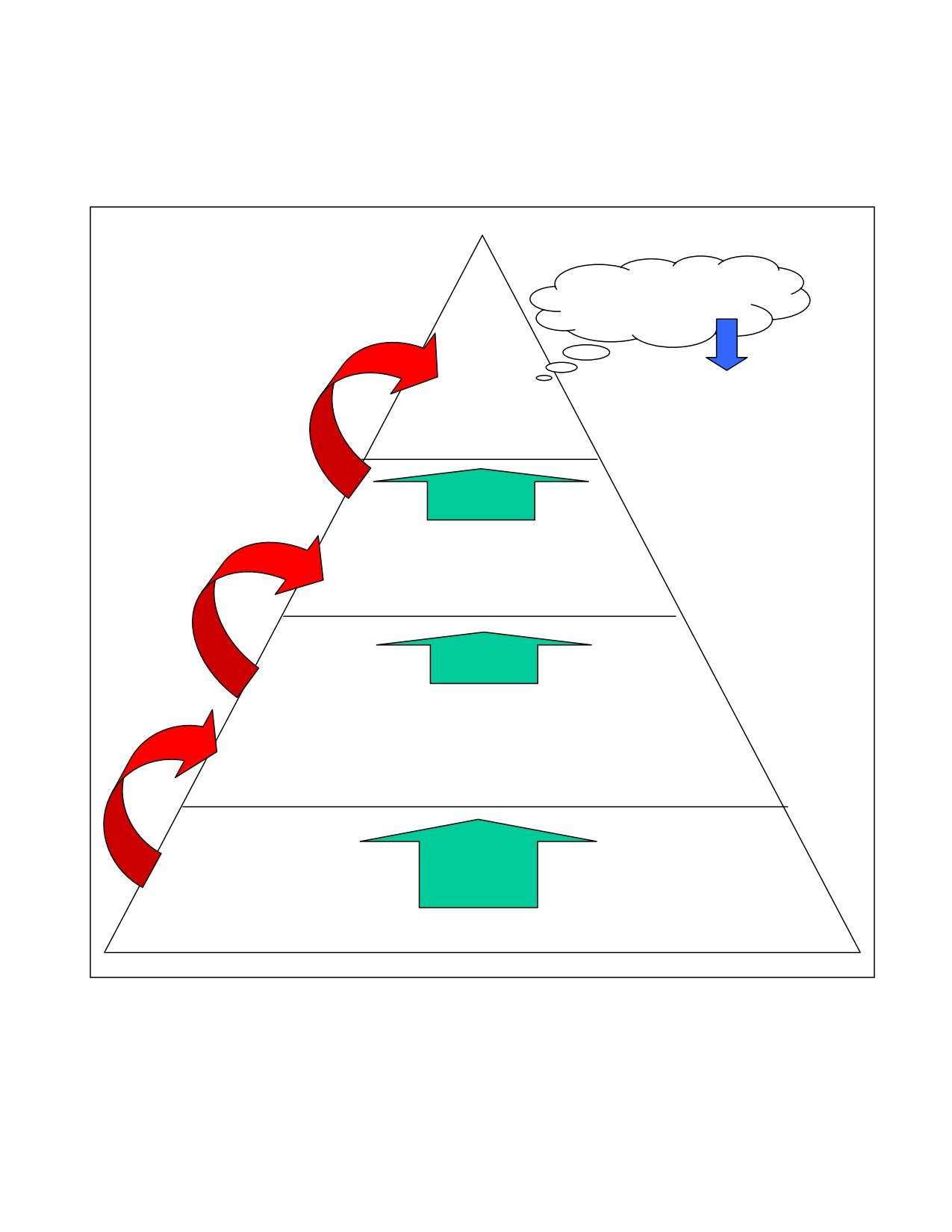
NBC Information Management (see Figure II-2). NBC IM refers to the processes
a commander uses to obtain, manipulate, direct, and control information. IM includes all
processes involved in the creation, collection and control, dissemination, and storage and
retrieval of information. NBC SA of the operations environment allows the commander to
anticipate future conditions and accurately assess risks. Graphic depictions of NBC hazard
estimates/plots with text files (messages, reports, etc.) are very useful versus sole reliance
on map boards and overlays. The vertical and horizontal exchange of NBC-related
information keeps different commands and functional/staff personnel informed. The NBC
staff determines the need for specific types of NBC information (i.e., the when and where of
the NBC attack). Positioning the required information at its anticipated points of need
speeds the flow and reduces demands on communications systems. The information
received from a disparate sensor network also helps to provide an assessment of the current
situation by detecting/identifying NBC hazards in air, on water, or on land. It
detects/identifies NBC hazards affecting personnel, equipment, or facilities and the
physical state of such hazards (gas, liquid, or solid). The detection of hazards is a key
enabler and provides a visualization of the NBC environment. This visualization helps to
develop a clear understanding of the current and predicted NBC situation, envision the end
state (mission accomplishment without NBC casualties and operational tempo [OPTEMPO]
degradation), and anticipate the sequence that moves the force from its current state to the
desired end state. The commander’s SA and risk assessment leads to decisions to
implement measures to protect the force and maintain an advantage in OPTEMPO while
preventing casualties under NBC conditions by reducing the threat, reducing operational
vulnerability, and avoiding contamination.
(1)
Background. The NBC staff translates all source information into an
understanding of the NBC threat and the operational environment for NBC defense
actions. This process requires (see Figure II-2)—
• Timely conduct to assess vulnerability.
• Specific COAs for reducing vulnerability and countering specific
threats.
II-18
• NBC warning and reporting on potential and actual NBC attacks to
facilitate risk assessments and actions to minimize the short- and long-
term health effects of toxic exposures.
Man-in-the-loop assessment
• Validation
Common NBC SA
• Feedback
• False alarms
• Technical reach-back
capability for anomalies
• Dewarning
• Commander’s intent
Understanding SA
• Orders and execution
• Integrated NBC defense
• Risk management
Judgment
• Avoidance
• Protection
Knowledge
• Decontamination
Hazard Prediction/COA Development
Cognition
Information
• Vulnerability Assessment
• NAIs
• NBC Reports
Processing
• IPB
• Sensors
• Reconnaissance and
Surveillance
Data
Figure II-2. NBC Information Management
(2)
Enablers. To maintain SA, units conduct NBC IM through—
• Obtaining the relevant battlespace data.
II-19
• Processing data into relevant information.
• Gaining knowledge by determining the impact of the information on
operations.
• Applying judgment to develop understanding. “I know what has
occurred and its impact on operations, and this is what I am going to do
about it.”
• Supporting NBC defense execution through orders and risk
management.
• Maintaining SA with man-in-the-loop assessment.
(3)
Data. The NBC staff focuses on knowing what data is relevant, determining
what data can be collected prior to events, and developing a data collection plan to obtain
other data.
(4)
Information. The NBC staff processes data into operationally significant
information and develops a collection plan to obtain additional data if information is
incomplete.
(5)
Knowledge. The NBC staff uses the military decision-making process to
translate information into knowledge. It estimates and assesses hazards to develop possible
COAs.
(6)
Understanding. Understanding requires SA; the commander uses this
awareness to communicate intent and issue orders that mitigate risk through application of
various NBC defense measures.
5.
Commander-Staff Interactions in Meeting NBC Defense Challenges
NBC defense challenges call for close commander and staff interactions. Operations in
NBC environments demand close attention to technical details by NBC staff experts and
integration of NBC defense knowledge into the overall organization's plans and actions.
Technical experts must be fully familiar with the organization's mission, capabilities, and
current situation so that their assessments and recommendations provide meaningful
options for action by the commander.
In addition to applying the principles of NBC defense and exercising NBC battle
management capabilities in the most effective manner, NBC staff experts must be aware of
the military and civilian environments in which the organizations operations are unfolding.
While the primary responsibility of the commander and the military organization as a
whole is to accomplish the mission and care for the lives and welfare of individuals in
uniform, the military exists in an interdependent mode with its surrounding community.
Therefore, due consideration in risk assessments, other recommendations, and plans must
be given to the broader environment, including the civilian populace, in order to make
militarily effective plans that are not frustrated by adversary damage inflicted on the
civilian community.
II-20
Chapter III
NBC DEFENSE C2 CONSIDERATIONS, ROLES, AND
RESPONSIBILITIES
C2 considerations for NBC defense operations will vary depending upon the type of
operation, the nature of the threat, the set of capabilities needed to accomplish the mission,
and friendly task organization. The operations conducted may be single-service, joint,
coalition, or multinational and may involve civil authorities from the US and other nations.
Further, operations (whether in a conflict or MOOTW setting) can take place as part of an
ongoing combat operation or as part of an operation supporting consequence management
or other operations in support of civil authorities.
1.
NBC Defense C2 Considerations
Unity of effort is a key C2 consideration for effective use of forces in an NBC
environment. In particular, the unique aspects of communications, intelligence, operations,
sustainment, and decision making in NBC environments present challenges to commanders
and staffs.
a.
Developing sound NBC defense COAs will require timely exploitation of all
information from all sources—such as NBC detection, surveillance, and reconnaissance
systems. NBC SA from sources—such as sensors, detection systems, and warning and
reporting networks—must be fully integrated into the overall C2 system to make the best
use of available resources.
b.
Using input from the IPB process, assess vulnerability. The assessments provide
critical input to support the military decision-making process. Vulnerability to NBC
weapons and TIM site identification and hazard assessments support the IPB process.
c.
The specific COAs recommended consider prioritized use of limited NBC defense
assets. Decision makers consider key elements of command guidance—such as the
commander’s intent, the commander’s critical information requirements (CCIR), and the
NBC priorities—in assessing where to allocate limited numbers of NBC reconnaissance,
surveillance, and decontamination assets. Additionally, civil considerations (e.g.,
minimizing collateral damage) can influence modification of recommended COAs. For
example, theater strategic considerations could include insuring technical reach-back
capability to the US for applicable subject matter expertise. An operational-level COA could
include recommending reallocation of NBC reconnaissance assets to support an
intermediate staging base. A tactical-level COA could involve rapid dispersal of units after
arrival at an APOD or SPOD.
d.
Integrating the command’s warning and reporting system enables tactical- and
strategic-level warning of affected units to take action, such as assuming an increased
protection level. Further, the same system that warns personnel should also provide
notification to reduce MOPP levels (dewarning).
III-1
2.
Command and Support Relationships—NBC Units
Command relationships indicate the degree of authority a commander can exercise
over NBC units. Command relationships are critical to NBC defense because commands
must understand what assets they have in order to develop NBC defense priorities and
understand the command’s responsibilities to sustain these capabilities.
a.
Command Relationships.
(1)
Combatant Command (COCOM) (command authority). This command
authority is exercised only by commanders of unified and specified combatant commands
and cannot be delegated or transferred.
(2)
Operational Control. Subordinate JFCs exercise operational control
(OPCON) over assigned or attached NBC units through the commanders of subordinate
organizations; in peacetime, this authority is normally exercised through service component
commanders. JFCs may establish functional components to provide centralized direction
and control of certain functions and types of operations. The JFC will designate the military
capability that will be made available for tasking by the functional component
commander—such as the joint force air component commander, the joint force land
component commander, the joint force maritime component commander, and the joint force
special operations component commander.
(3)
Tactical Control. For short-term arrangements, NBC units may also be
attached or assigned to a subordinate command to which tactical control (TACON)
authority has been delegated for local control and direction.
b.
Support. Support relationships may be used when support to the force as a whole
or to a particular subunit of the force is needed. The higher HQ retains central authority
and also remains responsible for logistics support; however, a support relationship may still
require that the supported unit remain responsible for logistics support.
c.
C2 Considerations—Disposition/Architecture.
(1)
General. The commander should be fully aware of all available NBC assets
and capabilities and integrate their capabilities into the operational plan (OPLAN). For
example, the air component commander prepares a plan that integrates available NBC
defense unit assets. The command’s assessment indicates that additional decontamination
and NBC reconnaissances are required. To support the need for additional assets, options
could include requesting support from either the land or maritime component or requesting
deployment of other AF resources. See Appendixes A through D for information on USA,
USN, USMC, and USAF capabilities, respectively.
(2)
Force Composition. The commander should identify available NBC
capabilities. This analysis begins by defining command relationships to determine what
assets are assigned. The staff should then assess the available operational NBC defense
capabilities and determine whether any shortfalls need to be remedied. In general, hazard
assessments of major TIM sites located in an operational area may require specialized
expertise; to include reach back technical expertise in CONUS-based organizations.
III-2
(3)
Force Disposition. The commander should determine the best way to
employ NBC assets without exposing the forces to unacceptable risks. For example, if the
joint force is primarily conducting land operations, the commander may wish to position
NBC reconnaissance assets at an optimum location to ensure maximum responsiveness in
support of ground operations.
(4)
Prioritization. The commander establishes priority intelligence
requirements (PIR) before the onset of hostilities. These priorities should generally conform
to the military objectives. NBC monitoring, survey, detection, surveillance, and
identification capabilities are focused on supporting the established PIR. Experience has
shown that combat operations seldom go as planned, with the fog and friction of war
causing operations to evolve in unanticipated directions. Therefore, prioritization of NBC-
related PIR is critical.
(5)
JTF Mission Considerations. In NBC environments, the JTF commander
may be tasked with minimizing risk to the supporting civilian workforce and to HN political
and population centers. NBC assets from the HN and other potential coalition and
multinational partners may be available. Civilian health service and other assets may have
utility in NBC defense as well. The JTF commander is responsible for coordination of the
overall effort to take account of assets that are not under his command or control, all in
accomplishment of the JTF mission.
(6)
Other Joint Force C2 NBC Considerations. The commander may appoint a
joint rear area coordinator (JRAC) to be responsible for coordinating the overall security of
the joint rear area (JRA). The JRAC would coordinate FP requirements (to include passive
defense) across the joint components. In addition, the JRAC could be given responsibilities
for coordination and liaison with the HN and with other coalition military forces located in
the JRA.
3.
Command Responsibilities for Operations in NBC Environments
In the US and abroad, all elements and commands of the US armed forces have basic
responsibilities at the outset of operations. A key task is the establishment of protection
against NBC attacks in the operational area and in other areas providing forces and
sustaining capabilities. Protection is also vital against NBC attacks on US and friendly
countries' centers of gravity. The goals established to carry out military responsibilities
include prevention of adversarial use of NBC weapons either in the US or abroad, rapid and
uninterrupted force preparation and deployment, and comprehensive FP. These goals
should be reflected in joint operation planning, development of branches in campaign plans,
redundant assignments of mission-essential tasks to forces, and visible exercises that
assure peacetime preparedness and may, thereby, deter potential adversaries.
a.
Basic Goals.
(1)
Commanders’ mission analyses identify specific mission-essential tasks for
individuals and organizations that facilitate operations in NBC environments.
(2)
Commanders of forces and facilities in the US and abroad are responsible
for assessments of vulnerabilities that may compromise peacetime preparedness, given the
NBC threat and the potential utility to state and nonstate actors of NBC attacks against
III-3
US civilian and military targets. (Note: For more information, see Appendix E.)
Commanders at all levels must take appropriate measures to protect DOD personnel and
resources.
(3)
Commanders are responsible for coordination with civilian authorities and
agencies to prevent and, if necessary, mitigate and manage the consequences of deliberate
or accidental NBC employment or similar toxic material events in the US.
(4)
US ambassadors and their country teams have primary responsibility for
coordination with their host country government; commanders in theater operational areas
must coordinate their actions with the country team to maintain peacetime preparedness.
(5)
Commanders’ OPLANs must include options for generating adequate and
timely force capabilities (including FP) in the event of early adversary NBC employment in
the supported JFC’s area of responsibility (AOR).
(6)
Commanders establish PIR and take precrisis actions to prevent or
minimize the impact of an NBC attack.
(7)
Commanders (i.e., geographic combatant commanders), if required,
communicate and reinforce US deterrence policies. The commander is prepared to
recommend and implement flexible deterrent options (FDOs) in NBC environments
consistent with the joint strategic capabilities plan (JSCP) and other applicable plans.
FDOs may be diplomatic, economic, informational, or military in nature. They may include
exercises and demonstrations of NBC defense capabilities in order to convey US
preparedness to counter adversary threats and mitigate the consequences of NBC attacks
without significant degradation of operations. FDOs are for the adversary to see, thus
deterring the use of NBC attacks. Force enhancements (FEs) are done to enhance force
capability/protection and should be hidden from the adversary until NBC weapons are
actually used.
(8)
The commander considers the adequacy of equipment and training of
nonmilitary and non-US logistics personnel to survive and operate in NBC environments.
(9)
Other specific responsibilities with regard to NBC defense include
integrating the capabilities of available detection systems, providing guidance for levels of
protection, establishing an NBC warning and reporting network to ensure timely warning
of NBC risks, and prioritizing decontamination requirements.
(10) NBC control centers (NBCCCs) may be established at each level of
command.
b.
Combatant Commanders’ and Other Joint Commanders’ Responsibilities.
(1)
Joint Force Commander. All JFCs, at all levels, must plan for and integrate
US and coalition force capabilities to sustain multinational operations in all mediums
(aerospace, sea, and land), regardless of the nature and targets of an adversary’s attack.
The JFC also ensures that forces and facilities are prepared to operate in NBC
environments, including taking due account of the civilian populace and other HN key
AOIs. The commander establishes and implements a deliberate process for assessing the
III-4
vulnerability of manpower and materiel to an NBC attack. This process will integrate all
offensive and defensive capabilities to reduce the threat of NBC use and sustain operations
if attacks occur. The process will also include executing mitigation and restoration plans to
reduce the operational impact of NBC contamination and other toxic hazards. The
commander ensures that critical logistics “throughput” and transportation facilities receive
adequate protection and that plans, training, and equipment are in place for rapid
restoration of operations after an attack.
(2) Combatant Commanders. Combatant commanders must be able to execute
the campaign under NBC conditions through unified action at the theater level. Unified
action for subordinate commanders is equally important for combat, combat support (CS),
and combat service support (CSS) units of all service and multinational partners. Unified
action encompasses not only NBC-related actions, but also all other actions that permit
continuation of theater operations and focus on attaining the single theater military
objective in line with the commander’s intent.
(3)
Geographic Combatant Commander/Subordinate Commander. The
geographic combatant commander’s responsibilities can include protecting US civilians in
the joint operations area (JOA) who accompany the force to provide mission-essential
services or who are sponsored by the force. The service or other components sponsoring the
civilians in the theater normally discharge responsibilities in this area. These
responsibilities may include, but are not limited to, the issuance of protective clothing and
equipment, training on this equipment, instructions regarding movement into and within
high NBC threat areas, and procedures to implement these actions in the event of an
attack. Protective clothing and equipment will be made available to US civilians consistent
with supply availability and their risk of exposure. In the event of shortages of masks or
overgarments, limitations on movement by unequipped civilians into high-threat areas may
be necessary. Sufficient quantities of the necessary clothing and equipment may be
obtained as the theater matures. In response to a request from the US country team, the
combatant commander or subordinate commander may assume responsibility for US
civilians who are neither mission-essential nor sponsored.
(a) The geographic combatant commander provides for measures to
protect enemy prisoners of war (EPWs) and civilian internees (CIs) from attacks, to include
NBC attacks. EPWs and CIs may not have protective clothing that is adequate or
compatible with that of US and multinational partners and, therefore, could require the
issue of and training on the use of US equipment. Appropriate medical treatment must be
provided to EPWs and CIs in the event of injury, to include injury from NBC exposure.
Where the NBC threat to EPWs and CIs is high, this may place additional requirements on
US and multinational forces for training, liaison, decontamination, HSS, and other logistics
support.
(b) Planning also helps to ensure proper placement of NBC defense assets
in theater in advance of a crisis or conflict and in the time-phased force and deployment
data prepared to support movement to the theater. In particular, the combatant
commander should be cognizant of any significant shortfalls in the capability or availability
of NBC defense assets.
III-5
(c)
The planning process establishes appropriate command, planning, and
operational relationships and ensures that coalition and HN weaknesses do not compromise
US forces or missions. It may be necessary in this regard to apply US resources to support
multinational partners and HNs before, during, and after NBC attacks. The commander
must identify requirements for support from US resources and develop plans and
procedures that integrate and obtain maximum value from multinational forces and HN
capabilities to support the continuation of operations. The commander is responsible to
establish the necessary support agreements that would make available US assets (e.g.,
units, equipment, personnel, and supplies) to support NBC defense and mitigate and
manage the consequences of adversary NBC use in the theater.
(4)
Multinational Force Responsibilities. Subject to the provisions of mutual
support agreements and available means, multinational partners may assume the
responsibility for providing support and assistance to US and other multinational forces
operating in their areas. This support and assistance may involve the full spectrum of NBC
defense activities, offensive actions to reduce or eliminate the NBC threat, and actions to
mitigate and manage the consequences of adversary NBC use in the theater. The protection
of forces and supporting civilians of other countries participating with the US in
multinational operations is the responsibility of the multinational force chain of command
within the TO. In order to provide maximum protection to all forces, the commander
should, to the greatest extent possible, involve other participating forces in NBC defense
and related activities.
(5)
HN Responsibilities. Based on applicable agreements and proper
coordination, the HN may have the responsibility to provide support and assistance to US
and other forces operating on its territory. This support and assistance may entail HSS
personnel, supplies, facilities, decontamination, and transportation. In the event of
adversary NBC attack, the HN responsible for protecting its forces, citizens, and
infrastructure may not have the capability to mitigate the consequences of this attack. For
this reason, the commander may have to respond to requests for NBC defense or mitigation
and management of the consequences of adversary NBC use in coordination with the US
country team, consistent with support agreements and available resources.
4.
NBC Defense Supporting Plans
Integration of functional responsibilities
(e.g. personnel, intelligence, operations,
logistics, medical, etc.) at the strategic, operational, and tactical levels is necessary to
coordinate NBC actions across these functional disciplines. Commanders integrate
personnel and resources from diverse specialties and assemble plans and intelligence in key
documents, such as base support plans. These types of plans provide for integration of
resources to support effective NBC defense operations. Each major functional area (i.e.,
operations, intelligence, etc.) is interdependent on the others in order to maximize friendly
force effectiveness.
a.
Operational Risk. Central to each functional AOR is assessment of operational
risk. The threat to operate in an NBC environment can come from multiple sources. They
can be unexpected and employed through a broad range of tactics from clandestine
operations to large-scale attacks. They may be intended to cause psychological distress or
diversion, hinder operations, or cause mass casualties and force withdrawal. Identifying
III-6
and quantifying the risks involved requires a concerted intelligence effort against potential
aggressors. Operational risk assessments, based upon this information, are essential. The
risk assessment process is vital to determining the priority trade-offs in assessing what
types of mission capabilities are needed in the early stages of an operation. For example,
early deployment of active defense and passive defense equipment could displace assets
needed for offensive operations. Operational risk assessments consolidate and clarify issues
so leaders are able to make informed decisions. Risk assessments also recognize that not all
NBC agents have the same impact on operations because different agents have different
degrees of lethality and persistence. Risk assessments also recognize that not all NBC
agents and potential TIM have the same impact on operations because different agents and
materials have different degrees of lethality and persistence.
b.
Strategic, Operational, and Tactical Responsibilities.
(1)
US, alliance, or coalition strategic security objectives will be reflected in the
responsibilities assigned to US, alliance, or coalition (or multinational) commands. The
commands will apply the national resources under their control to achieve these objectives.
A geographic combatant commander will usually participate in discussions concerning
strategic objectives, strategy, and available resources with the Chairman of the Joint Chiefs
of Staff (CJCS) and with allies and coalition members. The theater strategy is, thus, an
element that relates to both US national strategy and operational activities within the
theater. Strategic-level decisions form the basis for promoting stability and thwarting
aggression through credible deterrence and robust war-fighting capabilities. At the
strategic level, analysis of mission, enemy, terrain and weather, troops and support
available-time available (METT-T) focus on the conditions, circumstances, and potential
influences (i.e., NBC/TIM threat) on the theater strategic environment. At operational and
tactical levels, civilian considerations may also be relevant.
(2)
The operational level links the tactical employment of forces to strategic
objectives. The operational-level staff’s IPB anticipates what may occur within the AO and
conducts joint and multinational coordination, as required. Operational employment of
military forces also examines the arrangement of the forces, efforts in time, space, and
purpose (i.e., prioritizing the deployment of resources and insuring the presence of a
required infrastructure). Joint operational art, in particular, focuses on the fundamental
issues associated with the synchronization of air, land, sea, space, and SOF to support NBC
defense operations.
(3)
Tactical-level responsibilities and execution enable the force to survive,
fight, and win under NBC conditions. Commanders reduce the likelihood of an NBC attack
through avoidance measures. They disperse their forces and ensure operations and
communications security. When units cannot avoid contamination or are in danger of an
enemy NBC attack, they implement NBC protective measures. To restore combat power,
commanders decontaminate as early as possible to reduce contamination levels.
(4)
In summary, functional responsibilities at the strategic, operational, and
tactical levels of operations vary in the scope and level of detail. At the theater, strategic,
and operational levels, SA ideally provides a near real time picture of enemy NBC
capabilities. This information allows commanders to adjust their plans based on NBC/TIM
hazards. The impact of an NBC environment on OPTEMPO and force generation
III-7
capabilities will impact strategic- and operational-level actions. At the tactical level of war,
again ideally, a near real time portrayal of enemy NBC capabilities helps units avoid enemy
NBC attacks and limit contamination. It allows rapid dissemination of information on
required protective measures. It provides early warning of an NBC attack to units.
c.
Specific Functional Area Responsibility. To support OPLAN execution, the
commander’s staff executes its proponent responsibilities to ensure that each required
capability in an NBC environment could be successfully accomplished.
(1)
Personnel. The personnel officer, medical officer, and NBC staff assess the
probability and impact of NBC and TIM release related casualties. They also assess NBC
personnel readiness issues; this is especially critical when a majority of US forces are
reserve component, arriving in theater at various times and spread across combat, CS, and
CSS units. The personnel officer and medical officer ensure that medical support is
available in the event of an NBC attack. They advise the commander on the medical effects
of NBC weapons, preventive procedures (chemoprophylaxis, pretreatments, barrier creams,
and immunizations), treatment, and protection available. The medical officer provides
recommendations on associated environmental concerns, such as heat stress in MOPP. The
NBC staff checks with the personnel officer to determine the impact of NBC casualties on
the unit throughout all phases of operations. The personnel officer also monitors the
radiation exposure of units in coordination with the NBC officer. The HSS staff
recommends proper MOPP, troop safety criteria, and operation exposure guidance (OEG).
(2)
Intelligence. The NBC staff works with the intelligence officer on weather
and terrain data. They assess whether environmental factors are conducive to enemy use of
NBC weapons. The intelligence section’s PIR address the enemy situation and the enemy’s
ability to use NBC weapons. The NBC staff also supports the intelligence section in the
development of PIR. The staff assists in the IPB process for all phases of operations—
determining and/or evaluating enemy capabilities, types of agents, types of obscurants and
sensors, protective posture, line-of-sight influences on direct fire, and friendly
vulnerabilities to enemy strengths. The intelligence section also provides information on
enemy vulnerability to friendly operations (i.e., smoke and obscurants).
(3)
Operations. The NBC staff recommends proper MOPP guidance, troop
safety criteria, and OEG. The staff also recommends priorities for use of limited NBC
defense resources to the operations section through all phases of operations. The NBC staff
supports the operations staff by recommending task organizations for NBC units and
coordinating smoke, decontamination, and NBC reconnaissance efforts. Further, the NBC
staff advises the commander on the impact of NBC-related attacks on the current and
future concepts of operations. They also provide input to the commander on hazard
predictions, vulnerability, control of NBC units, mitigating techniques, and recommending
priorities for actions such as decontamination, NBC reconnaissance support, or chemical
defense equipment (CDE) resupply. The NBC staff also provides recommendations on NBC
reconnaissance, decontamination, and smoke unit employment.
(4)
Logistics. The NBC staff must coordinate with the logistics section
concerning MOPP gear, decontaminants, and resupply requirements throughout all phases
of operations. The logistics section and NBC staff must know the rate and extent of the
unit’s decontamination capability. They also must plan to decontaminate contaminated
III-8
supplies or equipment. In addition, the NBC staff keeps the logistics section abreast of any
reported NBC contamination to main supply routes (MSRs) and critical supply and
maintenance facilities that affect unit sustainability. The staff also advises the logistics
section on ways to limit the need for decontamination of supplies, which includes the use of
disposable protective wraps or covers.
d.
Other Functional AORs.
(1)
Civil Affairs Officer. The NBC staff works with the civil affairs (CA) officer
(USA/USMC/USAF) on estimating the impact of NBC events on the civilian population in
the unit’s operational area. Psychological operations (PSYOP) are also considered when
estimating the impact of NBC events. The NBC staff coordinates with the CA section for
integration of HN assets into decontamination operations, such as field-expedient
decontamination equipment and supplies (steam cleaners and bleach), fire trucks, and
washracks. They also consider the integration of field-expedient NBC protective shelters,
such as existing buildings in local population centers.
(2)
Engineer Officer (USA). The NBC staff works with the engineer staff to
identify NBC obstacles and plan for the use of smoke and obscurants at river crossings sites
and obstacle breaching. The NBC staff also coordinates engineer support for NBC
decontamination survivability operations and facility hardening.
(3)
Air Defense. The NBC staff and air defense officer coordinate to exchange
information on NBC defense and chemical downwind hazards from an enemy NBC attack
and integration of the theater missile defense (TMD) warning system into the commander’s
passive defense strategy.
(4)
Fire Support. As required, the NBC staff and fire support element (FSE)
coordinate during the targeting process. Prior to target nomination and selection,
coordination addresses the type of enemy NBC agents and their containment within
facilities and vehicles, proximity to population centers, and adversary active and passive
defenses. Another factor is The Law of Armed Conflict and its relation to noncombatants
and friendly forces. All of these target considerations will affect the mission planning for
the correct force mixture to deliver the right weapon to defeat an adversary’s NBC
capability with minimum collateral effects. Target planning also requires knowledge of the
types of agents, disposition, location, storage, employment area, and demographics to
effectively predict collateral effects. Automated planning tools provide target modeling that
assists decisions regarding the risks associated with collateral effects.
(5)
Security. The NBC staff, military law enforcement officer, and FP officer
coordinate and exchange needed information on NBC defense, especially data on NBC
identification, detection, and warning. Timely information exchange on NBC defense is
especially important for land force battlefield circulation control. Traffic control points
should be well informed on the location of any contamination.
(6)
Medical/HSS. The medical/HSS officer advises the commander on the
health effects of NBC and TIM agents as well as the medical effects of immunizations,
pretreatments, chemoprophylaxis, and treatment. The medical officer also performs a
health risk assessment to quantify and qualify NBC and TIM exposure data to determine
III-9
short-and long-term health risk to personnel executing missions in contaminated
environments. The HSS staff provides recommendations on associated concerns, such as
heat stress and psychological effects of NBC weapons use. The plans help to ensure that
required HSS is available in the event of an NBC attack. The HSS staff also oversees the
preventive medicine mission and ensures preventive medicine services are provided to the
commander. Additionally, they ensure casualty treatment and preventive medicine
personnel coordinate with NBC defense personnel in plans. The medical staff also provides
medical guidance on the establishment of radiation exposure levels.
(7)
NBC Staff. The NBC staff is responsible at every echelon of command for
NBC defense. (Note: See key references contained at Appendix F.) Specific responsibilities
may include the following:
•
Recommend COAs to minimize friendly and civilian vulnerability and
assess probability and impact of NBC-related casualties.
•
Provide technical advice and recommendations on MOPP, personnel
safety criteria, OEG, NBC reconnaissance, smoke operations (as
applicable), NBC defense measures, and mitigating techniques.
•
Help verify, in conjunction with the medical staff, and report enemy
first use of NBC agents.
•
Assess probability and impact of NBC-related casualties.
•
Coordinate among the staff while assessing the impact of enemy NBC-
related attacks and hazards on current and future operations.
•
Coordinate with the medical staff on health support requirements for
NBC operations.
•
Support consequence management planning and operations.
•
Support planning efforts on estimating collateral effects from various
operations (e.g., counterforce and active defense).
•
Assist in developing NBC IPB vulnerability and recommending PIR.
•
Plan, supervise, and coordinate the conduct of NBC decontamination
operations. Designate proposed decontamination sites using METT-T,
current weather data, water availability, trafficability, accessibility, and
logistics supportability.
•
Assess weather and terrain data to determine if environmental factors
are conducive to enemy employment of NBC weapons.
•
Predict downwind vapor hazard and fallout patterns and their probable
effects on operations.
III-10
•
Plan, coordinate, and manage chemical and radiological survey and
monitoring operations.
•
Collate, evaluate, and distribute NBC attack and contamination data.
•
Prepare and distribute NBC messages.
•
Prepare NBC situation reports (SITREPs).
•
Maintain and report radiation exposure and dose status and coordinate
with surgeon.
•
Participate in targeting meetings (when required).
•
Estimate effect of a unit’s radiation exposure state on mission
assignments.
•
Estimate consumption rates of NBC defense equipment (NBCDE) and
supplies.
•
Manage the NBCWRS.
•
Coordinate with the logistics section as it relates to CDE and supplies,
maintenance of chemical equipment, and transportation of chemical
assets.
•
Coordinate integration of NBC reconnaissance assets into the R&S plan.
•
Coordinate NBC defense planning and operations, as necessary, with
HN and/or multinational assets.
III-11
Chapter IV
PLANNING
The primary purpose of NBC defense planning is to support commanders’ decision-
making needs. NBC defense planning is accomplished by identifying, assessing, and
estimating the adversary’s NBC capabilities, intentions, and COAs that are most likely to
be encountered based on the situation and by providing recommendations for commanders’
guidance to help ensure that forces and facilities are prepared to operate in NBC
environments. NBC defense assessments support several critical facets of joint force
planning and decision-making—including mission analysis, COA development, and the
analysis and comparison of adversary and friendly COAs. Although NBC defense planning
support to decision making is both dynamic and continuous, it must also be preplanned in
the sense that extensive NBC defense vulnerability analysis must be completed early
enough to be factored into the commanders’ decision-making effort. The unit NBC
officer/NCO and staff work together to ensure that all analyses are fully integrated into
deliberate and crisis action planning. They accomplish this through war gaming friendly
versus adversary COAs and by mutually developing products designed to assist the service
components, multinational partners, and JFC’s decision-making processes.
1.
Strategic, Operational, and Tactical Planning
The basic NBC defense planning process remains the same across the range of
military operations, regardless of the level of war and MOOTW. Nevertheless, specific NBC
defense planning considerations may vary considerably between strategic-, operational-,
and tactical-level operations due to differences in the mission, available resources, and the
size of the operational areas and AOIs. Planning at all levels should ensure integration of
NBC defense considerations into the overall planning and decision-making processes.
Plans and estimates at each level take into account plans and estimates at higher and
lower levels. Planning for NBC defense operations is continuous and within and between
all levels. One of the key facets of planning for NBC defense, given the large variety of
potential agents and weapons, is to limit the agents and weapons under consideration to
those most likely to be employed during the time frame of the period being addressed.
a.
Strategic-Level NBC Defense Planning. Activities at the strategic level establish
national and multinational military objectives, develop global plans or theater war plans to
achieve these objectives, sequence initiatives, define limits and assess risks for the use of
military and other instruments of national security policy, and provide military forces and
other capabilities according to strategic plans. The strategic-level battlespace will address
potential adversaries who might have NBC capabilities—such as global adversaries,
regional adversaries, or nonstate groups. A number of these potential adversaries have, or
could rapidly acquire, NBC weapons and other toxic materials. Other factors—such as
treaties, international law, the capability of adversary propaganda to influence US public
support, and world opinion—can also impact the command’s NBC defense planning. The
strategic-level battlespace environment is analyzed in terms of such matters as geographic
regions, nations, strategic personality of leadership, and climate rather than local
geography and weather. For deterrence, political, psychological, and economic
IV-1
characteristics of the battlespace assume increased importance at the strategic level. For
example, on the political scale, if a state has possessed NBC weapons during past crises, it
becomes important to understand the effect of those weapons upon the region's politics and
their effect on the decision to use or withhold such weapons. On the psychological scale, it
is vital to understand the adversary’s motivations and values in order to be able to estimate
the pressure it might feel to use, or withhold, NBC weapons in a particular situation. On
the economic scale, understanding the industrial and technological capabilities and
interdependence of a nation or region can help estimate the type of NBC weapons that may
exist. Political, psychological, and economic considerations that influence deterrence may be
the dominant factors influencing the adversary’s COAs. At this level, the analysis of the
adversary’s strategic capabilities will concentrate on considerations such as psychology of
political leadership, national will and morale, ability of the economy to sustain warfare,
possible willingness to use NBC weapons, and possible intervention by third-party
countries and nonstate groups. COA models at the strategic level consider the entire
spectrum of resources available to the adversary and identify both military and nonmilitary
methods of power projection and influence.
b.
Operational-Level NBC Defense Planning. NBC planning at the operational
level takes into account the planning and estimates produced at the strategic level. The
size and location of the operational-level battlespace depends on such varied factors as the
location of adversary’s political and economic support structures, military support units,
force generation capabilities, potential third-nation or third-party involvement, logistics
and economic infrastructure, political treaties, press coverage, and adversary propaganda.
At the operational level, the analysis of the battlespace environment should concentrate on
characteristics (i.e., the capability of road, rail, air, and sea transportation networks) to
support the movement of (and logistics support to) NBC weapons; zones of entry into and
through the operational area and AOI; the impact of large geographic features such as
mountains, large forests, deserts, and archipelagos on military operations; and the impact
of seasonal climate on NBC weapons effects. In addition, when examining the adversary’s
order of battle, the analysis of the adversary should include doctrine for C2, logistics
support, release procedures for the use of NBC weapons, agent delivery capability, special
operations, and paramilitary forces. NBC defense planning examines the adversary’s COAs
in terms of operational objectives, large-scale movements, LOCs, and the phasing of
operations. These estimates form the basis for operational planning by identifying,
developing, and comparing friendly COAs and assessing the impact of an NBC environment
on each friendly COA. Specifically, NBC defense planning by the staff helps to determine—
• The idiosyncrasies and decision-making patterns (i.e., weapons release
procedures) of the adversary’s strategic leadership and field commanders.
• The adversary’s strategy, intention, or strategic concept of operation for use
of NBC weapons, which should include the adversary’s desired end state,
perception of friendly vulnerabilities, and intentions regarding those
vulnerabilities.
• The adversary's ability to integrate offensive NBC operations into the overall
concept of operations.
IV-2
•
The adversary's capabilities for FP, civilian and infrastructure protection
and, specifically, NBC defense operations.
•
The composition, disposition, movement, strength, doctrine, tactics, training,
and combat effectiveness of adversary forces with an offensive NBC
capability.
•
The adversary’s principal strategic and operational objectives and lines of
operation.
•
The adversary’s NBC weapons’ strategic and operational sustainment
capabilities.
•
The adversary’s ability to conduct information operations (IO) and use or
access data from space systems to support its targeting process.
•
The adversary’s NBC weapons/storage locations vulnerabilities.
•
The adversary’s capability to conduct asymmetric attacks against global
critical support nodes.
•
The adversary’s relationship with possible allies and the ability to enlist their
support.
•
The adversary’s capability to operate advanced war-fighting systems (e.g.,
smart weapons and sensors) in adverse meteorological and oceanographic
conditions.
•
Area studies, intelligence estimates, and/or economic studies that may
indicate potential TIM hazards in the AO. Use the IPB analysis to assess the
existence and status of TIM hazard areas.
•
The adversary’s capabilities for FP, civilian and infrastructure protection
and, specifically, NBC defense operations.
c.
Tactical-Level NBC Defense Planning. At the tactical level, NBC defense
planning takes into account planning and estimates at the strategic and operational levels.
Tactical-level NBC defense planning focuses on ensuring that commanders can accomplish
their mission-essential tasks in NBC environments. At the tactical level, the size and
location of the battlespace are influenced by the physical location of the adversary’s land,
air, naval, space, and other forces that could pose a direct threat to the security of the
friendly force or the success of its mission. The extent to which the effects of the battlespace
environment are analyzed at the tactical level is largely dependent on the mission and
planning time available. At a minimum, tactical-level forces should analyze the battlespace
environment in terms of military objectives, avenues of approach, and the effects of an NBC
environment on personnel, military operations, weapons systems, and force mobility. The
tactical-level assessment of a military adversary should concentrate on factors such as the
capability, disposition, tactics, and training status of tactical units or factional groups that
could interfere with mission accomplishment. Also, units should include an assessment of
IV-3
potential TIM hazards from local activities (industrial pipelines, storage and shipping
facilities, etc.).
2.
Joint Force Planning Considerations
Multiple factors (see Figure IV-1) must be considered in planning for operations across
the range of military operations. These planning considerations include factors such as
intelligence collection and analysis, SA, common standards for NBC defense, and HSS.
• Intelligence collection, analysis, and production
• SA
• Common planning, training, and equipment standards
• Health Service Support
• Protection of the JRA and theater sustainment capabilities
• Logistics burden of NBC attacks
• In-theater passive defense systems
• Preplanning for attack operations
• Effects of NBC attacks on C2 systems
• Capabilities and limitations of multinational forces
• In-theater consequence management
Figure IV-1. Joint Force Planning Considerations
for Operations in NBC Environments
a.
Intelligence Collection, Analysis, and Production. Unit intelligence collection,
analysis, and production must give appropriate attention to NBC threats in the geographic
region of interest and operations as well as in other areas, including the US, that might
have an adverse impact on friendly force capabilities and force projection plans. Peacetime
assessments emphasizing the order of battle and operational concepts should support
focused assessments of indications and warnings in crises and transition to war. At all
levels, intelligence products should include appropriate input from national and
interagency sources. Of particular importance is ensuring the dissemination of threat data
and assessments to units down to the lowest level, including subcomponents of US and
multinational commands and tactical-level HQ, such as brigades, wings, and/or regiments.
Assessments should include identification of industrial sites containing TIM that would, if
sabotaged or destroyed, present a hazard to deployed forces.
b.
Situational Awareness. Ensuring adequate SA is a central concern for planning.
An integrated warning and reporting system provides a significant measure of protection by
allowing friendly forces to minimize exposure to the hazard. Accurate and timely
understanding of the hazard and its effects minimizes the possibility of having either
excessive or inadequate protection of the force, maintaining a protective posture longer
than necessary, or misusing NBC defense assets. Procedures also ensure linkage with the
TMD warning systems. Warning system provisions also address the need to warn
personnel, based on an alarm, thus causing units to increase their protective posture.
c.
Common Planning, Training, and Equipment Standards. Common standards for
NBC defense—especially in training, exercises, and equipment maintenance—are used to
enhance joint force capabilities. Gaps in the NBC defense capabilities of multinational
forces and important civilian population and infrastructure areas are identified to promote
IV-4
effectiveness in both planning and operations. The unit mission analysis will produce joint
mission-essential tasks (JMETs). For each JMET, the conditions under which
implementation must be conducted will facilitate establishing realistic standards, which in
turn, form the basis for training and for assessing readiness. This process is facilitated by
the Universal Joint Task List (UJTL), which provides a standard description of key
individual and unit tasks for action across the range of military operations (see Appendix
G).
d.
Health Service Support. HSS NBC defense integrates into the planning process
to support unit readiness. Key elements include casualty estimation, prophylaxis (including
immunizations), active medical surveillance, preventive medicine, diagnostics, mass
casualty management, evacuation, and patient decontamination requirements for HSS
operations. Unit plans should recognize that NBC attacks have the potential to create mass
casualties, and the treatment and evacuation of NBC casualties will be difficult and
hazardous, both to the patients and to medical personnel and facilities. HSS NBC defense
planning must include appropriate liaison with affected and potentially supportive civilian
HSS facilities and an assessment of the capabilities and limitations of those facilities.
e.
Protection of the JRA and Theater Sustainment Capabilities. The JRA and
theater sustainment capabilities must be protected. A successful adversary NBC attack on
or a major TIM attack near an essential POD or other critical logistics facility may degrade
OPTEMPO and force generation capabilities. Mitigation measures focus on maintaining
support to combat operations and rapidly restoring the degraded capabilities. Moreover,
alternate sites must be designated and exercised in advance to ensure uninterrupted JRA
operations and theater sustainment capabilities.
f.
Logistics Burden of NBC Attacks. Protecting forces from the effects of NBC
attacks will tax the logistics system. The resupply of protective clothing and equipment
(and repair parts), medical supplies (antidotes and antibiotics), and other resources must be
factored into computation of JFC resource requirements.
g.
In-theater Passive Defense Systems. In-theater passive defense systems will be
allocated according to the commander’s priorities. Planning should consider deployment
configurations and concepts of operations that maximize the defensive capabilities of
available passive defense systems. In this area, consideration of the vulnerabilities of
civilian populations and infrastructures to an adversary’s NBC attack is vital.
h. Effects of NBC Attacks on C2 Systems. NBC attacks can degrade C2 systems.
Limitations will result from the requirement to operate in NBC protective equipment and
from the effects of the electromagnetic pulse (EMP) on electrical and electronic equipment.
In order to maintain effective IO, the commander plans for countermeasures to ensure
continued operations. Alternate C2 means must be designated and exercised.
i.
Capabilities and Limitations of Multinational Forces. Where multinational
operations are envisioned, unit planning assesses coalition member capabilities for NBC
defense and interoperability with US forces in NBC environments. The planning process
should consider the implications and feasibility of diverting US assets and capabilities to
support HNs and other multinational members in meeting common operational objectives.
IV-5
j.
In-theater Consequence Management. The commander plans for in-theater
consequence management: mitigation and management of the effects of NBC attacks. For
the purposes of multinational cohesion, maintaining access to basing and logistics facilities,
and minimizing casualties and damage, every effort should be made with available
resources to reduce the HN’s vulnerability to NBC attacks and to improve the HN’s ability
to mitigate the effects of such attacks. This will require close coordination and cooperation
with USG civilian agencies, HN military and civil authorities, nongovernmental
organizations (NGOs), private voluntary organizations, and, possibly, international
organizations (IOs). Here, too, it may be necessary to provide US military assets
(equipment, personnel, and supplies) to support HNs.
3.
NBC Defense Plans
NBC defense plans address tasks and support requirements during mobilization,
deployment, employment, sustainment, redeployment, and postconflict phases. NBC plans
also address support during the various phases of an operation.
a.
Planning Guidance.
(1)
The commander’s responsibilities include considering the implications of a
potential adversary’s NBC capabilities, not only in the adversary’s geographic region, but
also in other regions, including the US.
(2)
This responsibility extends to the assessment of adversaries who are
belligerents in a conflict as well as opportunists not directly engaged who may take
advantage of a conflict to threaten US interests. Planning is conducted to ensure sustained
operations in potential NBC environments that include joint, multinational, and
interagency dimensions.
(3)
National, strategic, operational, and tactical NBC defense plans should be
linked vertically and horizontally. Vertical linkage connects the joint functions of one level
of war to another. For example, NBC defense planning is accomplished at the strategic,
operational, and tactical levels; horizontal linkage involves the synchronization of plans
with different functions, such as synchronizing FP efforts with operational-level maneuvers
or fires at a specific level.
(4)
Tactical- and operational-level NBC defense plans call for detailed
synchronization. For example, the TMD warning system is synchronized between service
components to ensure an effective and efficient network. As part of the synchronization,
each unit—regardless of level—is aware that all organizations of the US armed forces are
responsible for ensuring that their forces and facilities are prepared to provide needed
support in the execution of national military strategy.
b.
NBC Defense Support Planning.
(1)
The NBC threat is considered in the prioritization and appointment of
forces and resources. Consideration of NBC vulnerabilities is integral to these assessments,
including the previous use of NBC weapons in the adversary’s geographic region. Specific
IV-6
planning considerations emphasize and reinforce previously planned and exercised
peacetime preparedness actions (see Figure IV-2).
• Establish PIR
• Take precrisis actions to prevent adversary NBC weapons employment
• Plan attack and active defense operations to prevent or minimize NBC attacks
• Plan actions to counter, mitigate, and manage the effects of an NBC attack
• Identify NBC defense unit requirements
• Emphasize early warning and detection
• Take actions to prepare US and indigenous military forces
• Protect threatened civilians, infrastructures, and facilities
Figure IV-2. NBC Defense Support Planning Considerations
(2)
The theater/operational plans concepts of operations impose requirements
on mobilization timing and generation of necessary force capabilities. Previous peacetime
planning, supporting actions, and compliance with the commander’s FP guidance
(contained in documents such as OPLANs or FP directives) help to ensure successful
operations. As the services develop supporting mobilization plans, their theater service
component commands identify additional resources required to facilitate rapid transition to
operations. In particular, supporting plans must include options for generating adequate
and timely force capabilities in the event of early adversary use of NBC weapons.
(a) Deployment planning is directed toward the relocation of forces and
the sustainment of the theater for further intratheater deployment and in-theater
employment. The supported commander (using the service and functional-component
movement capabilities) controls, coordinates, and protects the movement of the force.
During the crucial period, commanders use established PIR to plan counterforce operations
and active defense and/or passive defense measures. Another key task during this phase is
the establishment of protection against NBC attacks in the operational area and in other
areas providing forces and sustaining capabilities. Commanders also coordinate with allies,
coalition forces, appropriate US civilian authorities, and HNs on FP deployment issues.
(b) The service component commands are responsible for providing
administration and logistics support to their forces throughout the phases of a campaign,
subordinate campaign, or major operation. Service component commanders develop
supporting plans to provide and maintain needed sustainment throughout all phases of
major operations or campaigns. Logistics planners must plan for both active and passive
defense measures to minimize the risks of NBC weapons attacks while satisfying the needs
of the commander for uninterrupted logistics support.
c.
NBC Defense Planning for Force Employment Plans.
(1)
Force employment is the strategic, operational, or tactical use of forces
within an operational area. Planners synchronize and coordinate passive defense
capabilities with all other aspects of operations.
(2)
Passive defense planning integrates the use of NBC defense measures—
avoidance, protection, and decontamination—to ensure continued FP. The planning
IV-7
synchronizes and links active defense measures, counterforce operations, and passive
defense measures.
(3)
Planning, coordination, and exercises maximize available passive defense
capabilities. Organizations with a responsibility for passive defense operations planning
must have an understanding of theater passive defense capabilities, current threat
assessments, and the results of relevant analytical work. Preconflict war games and
training (including joint and multinational field exercises) integrate planning efforts.
d.
NBC Defense Planning for Functional Components. Whenever the commander
organizes his force employing functional components, the functional-component commander
is responsible for preparing plans to direct the employment of forces or available military
capabilities and supporting commands.
(1)
Joint Force Air Component Command. Joint Force Air Component
Command (JFACC) planners recognize that NBC attacks have the potential to significantly
degrade the aerospace operating environment and the contribution of aerospace forces to
operational objectives. For fixed or semifixed installations (i.e., ABs), near real-time
warning from US and coalition information systems should reduce the possibility of
operational degradation by direct attack effects and NBC contamination. The use of
shelters, particularly hardened shelters, offers aircraft protection from the effects of NBC
weapons. Similarly, planning outlines countermeasures (such as using alternate bases) to
limit the potential damage of any particular NBC attack.
(2)
Joint Force Land Component Command. Joint Force Land Component
Command (JFLCC) planners recognize that the ability of land forces to maneuver must not
be constrained by unforeseen areas of contamination. Contaminated areas must quickly be
identified, delineated, and avoided. Planning identifies alternate routes, assembly and
support areas, and areas for unit dispersion to reduce vulnerability to NBC attacks.
Planners are aware of factors such as—
• Higher levels of MOPP that may affect joint fire support as well as C2.
• Radio transmissions that may become longer in duration or may
frequently need to be repeated.
• Incidents of fratricide that could increase.
(3)
Joint Force Maritime Component Command. Joint Force Maritime
Component Command (JFMCC) planners recognize that their forces are most vulnerable to
NBC attacks when in proximity to land—such as when in port, during expeditionary
operations, and when constrained by restrictive water transits (e.g., canals, locks, straits,
and shallow water). Both the ship’s crew and embarked personnel are vulnerable to
clandestinely disseminated CB agents. At sea, all ships are inherently able to maneuver to
avoid identified NBC threats. Forces afloat are mobile and, thus, more difficult to target
than a fixed site. They can exploit this mobility to remain clear of areas of contamination,
provided these areas have been identified and characterized. Expeditionary forces may
have more difficulty avoiding areas threatened with CB hazards, and naval forces in port
and fixed host installations may have less flexibility in avoiding contamination. Port
IV-8
facilities, ships in dry dock, aircraft under repair, and naval construction units located at
these fixed facilities may not have the opportunity to relocate away from NBC-threat areas.
(4)
Joint Force Special Operations Component Commander. Joint Force Special
Operations Component Commander (JFSOCC) planners realize that the threatened or
actual use of NBC weapons pose significant challenges to SOF. Due to their unique nature
(they are small; self-sufficient; and operate independently in hostile, denied, or politically
sensitive areas), SOF operations can be affected by the limited NBC defense assets found
within their formations, particularly with respect to equipment and personnel
decontamination. A number of SOF mission profiles require rapid deployment into
contaminated areas. The requirement for rapid, worldwide mobility limits SOF to an
austere NBC defense structure. Accordingly, SOF rely heavily upon preventive health
measures, early detection and, when possible, contamination avoidance in NBC
environments. Timely and accurate intelligence and maximum use of weather and terrain
are also key considerations.
e.
Other Planning Considerations.
(1)
Sustainment and Reinforcement Plans. The capability to sustain the
campaign from beginning to end sets the overall OPTEMPO. For example, the purpose of
sustainment or reinforcement planning can be to estimate the NBC supplies, equipment,
and materiel required to sustain the forces involved.
(2)
Noncombatant Evacuation Plans. Evacuation requirements must be
planned in advance to ensure that resources consistent with theater needs are available.
These include transportation, base operations support, and all supply classes. Plans must
consider casualty evacuation when some portion of the AOR is contaminated with
NBC/TIM agents. Issues such as overflight rules; landing rights; transport of infectious
patients; and cleanliness standards for ground, air, and/or maritime transport of patients
must be addressed. Noncombatant evacuation operations (NEOs) plans support the theater
campaign plan. Although the State Department is primarily responsible for NEOs, the
geographic combatant commander is responsible for furnishing support within the theater.
In such instances, the operation may be in response to imminent hostile action or civil
unrest in locations where the threat of an NBC attack exists.
(3)
Multinational NBC Defense Planning. Campaigns may be conducted within
the context of other multinational arrangements. Planning is accomplished through both
US and multinational channels. Coordinated NBC defense planning on such matters as
operations; logistics (including infrastructure); intelligence; deception; decontamination;
warning, detection, and monitoring; consequence management; and NBC interoperability is
essential to unity of effort. The preparation of supporting plans addressing coordination
and liaison, HN support, and the provision of mutual support are examples of essential
tasks that must be accomplished.
(4)
Interagency Efforts. Information sharing across US military and USG
agencies is an important concept of interagency planning. A number of USG agencies may
be operating in conjunction with each other. These efforts require a strong focus on lateral
coordination and the development of an effective program of interagency information
sharing. For example, interagency NBC defense planning between the JFC and
IV-9
Department of State or the Federal Emergency Management Agency (FEMA) could be
conducted as a peacetime preparedness measure to provide military support to civilian
authorities, including consequence management, according to federal law and policy and
joint publications.
IV-10
Chapter V
PEACETIME PREPAREDNESS AND TRANSITION TO OPERATIONS
This chapter focuses on peacetime preparedness and transition to operations.
Peacetime preparedness and planning for the transition to operations are based on national
security, military strategies, and supporting plans. The services and US Special Operations
Command (USSOCOM) have the primary responsibility for organizing, training, and
equipping forces for the full range of potential operations. Combatant commanders have
responsibilities for organization, joint training, and integration of force elements provided
by the services and USSOCOM to meet peacetime, war, and MOOTW requirements. All
elements in the US armed forces are responsible for ensuring that their training for
individuals and organizations meet the requirements for operations in NBC environments.
1.
Peacetime Preparedness
The basic elements needed for maintaining adequate preparedness are a clear
understanding of the threats and operational requirements, both overseas and in the US, as
well as unity of effort. To support these requirements, commanders’ mission analyses
identify specific mission-essential tasks for individuals and organizations that facilitate
operations in NBC environments. The US armed forces are also responsible for appropriate
military support within the US to counter adversary threats and employment of NBC
weapons directly against the US. Such domestic military activity is subject to
constitutional, statutory, and policy restrictions.
a.
Preparedness in the US.
(1)
Commanders of forces and facilities in the US are responsible for
assessments of vulnerabilities that may compromise peacetime preparedness, given the
NBC threat and the potential benefit to state and nonstate actors of NBC attacks against
US civilian and military targets. A number of state and nonstate adversaries may choose
early NBC employment against the US civilian population and infrastructures, as well as
military forces and facilities, in the expectation of achieving an early, decisive advantage in
pursuit of their objectives. Commanders’ consider their assigned missions and supporting
plans, as well as the UJTL, when trying to reduce their vulnerabilities.
(2)
Commanders must maintain current assessments of the NBC threat in the
US, integrating their efforts with other USG agencies, including appropriate law
enforcement and intelligence organizations. Of particular importance are facilities essential
to training, staging, deploying, and sustaining forces for operations.
(3)
Peacetime planning and supporting actions must include plans to minimize
vulnerability to, and mitigate the effects of, NBC attacks in order to maintain required
force preparedness. Plans are exercised in order to provide maximum deterrent effect on
potential adversaries. Commanders are responsible for coordination with civilian
authorities and agencies to prevent and, if necessary, mitigate and manage the
consequences of deliberate or accidental NBC employment or similar toxic material events
in the US. Detailed interagency processes guide the US armed forces in providing MSCA to
cope with such events.
V-1
(4)
The key tasks to be undertaken in the US in order to reduce the
vulnerability of US forces to NBC attacks are enforcing operations security (OPSEC),
maintaining emergency NBC response plans, ensuring redundant force capabilities,
maintaining effective NBCDE, and planning visible joint and interagency training and
related preparations.
(5)
Attacks at locations essential to deployment may delay operations.
Emergency response immediately after an NBC incident will determine the suitability of
that location to continue deployment activities. Installations supporting deployment must
have timely access to specialized equipment, personnel, and units needed to identify and
provide early warning of an NBC attack. Joint and interagency plans, training, and
exercises should visibly demonstrate the ability of the US to maintain its essential
deployment, sustainment, and employment capabilities.
b.
Preparedness in Theater Operational Areas. Peacetime preparedness for
operations in NBC environments includes measures taken by commanders in theater
operational areas abroad. All commands undertake vulnerability assessments and
supporting actions similar to those described for US territories with appropriate emphasis
on APOEs and SPOEs and APODs and SPODs, vulnerable foreign civilian populations and
infrastructures, nonmilitary and foreign military support personnel, and deployed US
forces and facilities. The commands also undertake cooperative actions in peacetime with
governments and armed forces of allies and potential coalition partners to facilitate
sustainment of operations in NBC environments. US ambassadors and their country teams
have primary responsibility for coordination with their host country government.
Commanders in theater operational areas must coordinate their actions with the country
team to help maintain peacetime preparedness.
c.
Peacetime Preparedness and Predeployment Actions.
(1)
NBC Threat Assessment and Enemy Capability Evaluation. Commanders
should establish an NBC threat assessment team that consists of intelligence, medical,
operations, NBC staff, and other personnel—as necessary. The team should assess
operational and medical intelligence reports, epidemiological findings, local observations,
and other indications so they can advise the commander on the likelihood and projected
consequences of NBC attacks against probable deployment locations. Of particular interest
in the planning phase are the assessment of enemy capabilities in terms of NBC agent
production, delivery systems, and historical employment doctrine and the assessment of
friendly NBC defense capabilities. Output from the assessment will help to ensure that
planning, training, and equipping for NBC defense provides the proper focus in
recommendations for the commander.
(2)
Force and Unit Status Evaluation. Commanders must ensure that
personnel have the necessary defense training and equipment to sustain operations in an
NBC environment. They should pay particular attention to the amount and currency of
training, the quantity and condition of equipment and supplies, and the medical FP status
(i.e., vaccinations and antibiotics). Common standards for NBC defense help to maximize
effectiveness and prevent unanticipated vulnerabilities in joint force capabilities.
(3)
Coordinated Planning. Commanders task their NBC staff to work with the
intelligence, medical, operations, and other staff sections in establishing coordinated and
V-2
detailed plans for NBC defense. These plans should specify responsibilities, procedures, and
relationships for all phases of NBC defense.
(4)
Training Readiness. To ensure that the joint forces training readiness
status is based on common standards for NBC defense, the joint force command produces
JMETs. For each task, the conditions under which task performance must be conducted
support providing realistic standards, which serve as the basis for assessing force and unit
status. This process is supported by the UJTL, which provides a standard description of key
tasks across the range of military operations.
(5)
Conducting Training. NBC personnel coordinate or provide general NBC
defense training for units and personnel. They provide training for specialized teams, such
as monitoring, survey, contamination control, readiness support, decontamination support,
and other augmentation as appropriate. Also, they help identify the NBC individual and
collective training requirements for unit personnel.
(6)
Medical Protective Measures. Commanders should ensure their personnel
in (or subject to deployment to) NBC threat areas receive immunizations, pretreatments,
and chemoprophylaxis based on recommendations from medical authorities. Considerations
will be given to the medical threat, attack probability, logistics stockpiles, and other
available protective measures. In addition, the commander and medical personnel should
emphasize good sanitation and hygiene measures. These are some of the most important
and least costly protective measures against both naturally occurring diseases and
biological attacks. Personnel should protect food and water, maintain personal cleanliness,
and properly dispose of waste.
(7)
Planning/Preparing NBC Defense Equipment and Supplies. Units should
prepare their NBCDE and supplies for individual and team use through actions such as
shipping/delivering detection, sampling, and analysis equipment and medical supplies to
deployment embarkation points. Vaccines, chemoprophylaxis, pretreatments, and
antibiotics or medical treatments are unique to biological defense and may require cooling
or refrigeration during transport. Specimens and samples being shipped to supporting
medical laboratories for analysis may also need cooling or refrigeration.
(8)
NBC Logistics Planning - Agent Detection. There are many logistics
planning implications. Chemical and biological point and standoff detectors will also add to
the unique deployment requirements. Some point detector supplies will also require cold
storage (i.e., reagents); some detection equipment requires contracted logistics support
(CLS). Deployment planning ensures that detection equipment and supporting CLS
elements arrive concurrently. Also, planners prepare estimates for the amount of
decontaminants that may be used. Logistics planners identify sources for decontaminants
and resolve issues that may arise with regard to procurement, storage, or deployment. NBC
logistics planning at all levels includes consideration of the civilian community capabilities,
both in theater operational areas as well as other areas from which forces may have to be
deployed.
2.
Transition to Operations
Units may follow the routine or crisis action planning models during transition to
operations. In maintaining peacetime preparedness, commanders are aware that an attack
V-3
can occur without warning. Unit actions taken before the initiation of hostilities can assist
in determining the setting for future operations. There are multiple planning and
operational considerations that support the actions involved in the transition to sustained
operations.
a.
Planning Considerations.
(1)
Intelligence. At the advent of a crisis or other indication of potential
military action, commanders continue to examine available intelligence estimates. As part
of the joint IPB process, commanders involve their intelligence and NBC staff early in the
planning process in order to focus intelligence effort to refine estimates of enemy
capabilities, dispositions, intentions, and probable COAs. Commanders direct
reconnaissance, surveillance, and target acquisition operations by elements of the force to
further develop the situation and gain information critical to decision making. SOF can be
employed for special reconnaissance or other human intelligence operations. Commanders
can use a broad range of supporting capabilities to develop a current NBC intelligence
picture. These supporting capabilities include national intelligence and combat support
agencies (i.e., National Security Agency, Central Intelligence Agency, Defense Intelligence
Agency, and National Imagery and Mapping Agency).
(2)
Organizing and Training Forces. Preparing the operational area also
includes organizing and, where possible, training forces to conduct operations throughout
the operational area. The training focus for all forces and the basis for exercise objectives
should be the combatant commander’s JMETL.
(3)
Maintaining Theater Access. Commanders establish and maintain access to
operational areas in which they are likely to operate, ensuring forward presence, base
operations support, freedom of navigation, and cooperation with allied/coalition nations. In
part, this effort is national or multinational, involving maintenance of intertheater
(between theaters) air and sea LOCs.
(4)
Logistics Support and Sustainment. Thorough logistics planning for
deployment and sustainment during operations is particularly critical, to include, as much
as possible, active participation by all deploying and in-theater US and multinational forces
and supporting civilian workforces.
(5)
Isolating the Enemy. With strategic-level military support, commanders
use active means to isolate enemies by denying them allies and sanctuary. The intent is to
strip away as much of the enemy’s capability or freedom of action as possible while limiting
the adversary’s potential for escalation.
(6)
Protection. Commanders must protect their forces and their freedom of
action. This protection dictates that commanders be aware of and participate, as
appropriate, in regional, political, and diplomatic activities. Commanders, in coordination
with US ambassadors, may spend as much time on regional political and diplomatic
deterrent efforts as on direct preparation of their forces for combat.
(7)
Physical Environment. Seasonal effects on terrain, weather, and sea
conditions can significantly affect operations of the joint force and the NBC environment
and should be carefully assessed before and during operations.
b.
Actions—Transition to Operations.
V-4
(1)
Many of the actions undertaken during peacetime preparedness will
continue during the transition to operations. Medical protective measures should continue
to be followed and emphasized.
(2)
Commanders continue to ensure that personnel/units remain prepared
through NBC defense training and monitor unit personnel and equipment status for
shortfalls. Basic requirements for NBC individual equipment stockage levels and training
that applies to personnel stationed in or deployable to threat areas will depend on
service/component command guidance and/or war plans that set specific levels for their
operating locations.
(3)
Particular attention should be paid to increased intelligence gathering to
assess a potential adversary’s operational NBC capabilities during this phase. Status of
enemy NBC offensive and defensive capabilities should be ascertained. Intelligence should
provide information concerning the movement of NBC munitions to forward locations in
preparation for use. Other intelligence information that could be key indicators of potential
NBC attacks include increased enemy CB defense training and the establishment of
immunization programs.
(4)
From the onset of deploying US forces to hostile areas, active measures are
undertaken to enhance FP. The air component maintains air superiority over the
battlespace, and missions are flown against targets to destroy and neutralize the
adversary’s offensive NBC capability. Actions to prevent enemy weapons from reaching
friendly targets are accomplished by defeating enemy weapon systems in the air and on the
surface through active measures.
(5)
Units deploy available IPE for each person subject to deployment to NBC
threat areas. Units can ship the equipment separately for each person or ship the
equipment in bulk to be distributed after deployment. Regardless of the method, personnel
should carry one set of protective clothing (to include a mask) when they deploy to provide
immediate protection at the deployment location and any intermediate stops. Further,
deploying units (i.e., medical) should deploy and activate preidentified NBCDE and
supplies for detection, decontamination, and medical treatment purposes. Examples of this
equipment include automatic detectors, sampling and analysis equipment, decontamination
systems and supplies, antibiotics, and vaccines. Requirements for issue of antibiotics,
vaccines, and other medical supplies will depend on the threat at the deployment
location(s).
(6)
Commands at all levels must take into account potential needs for IPE to
support civilian workforces under US, HN, or other multinational element control that may
be essential to the transition to operations as well as to sustained operations.
V-5
Chapter VI
SUSTAINED OPERATIONS
The US armed forces must be prepared to conduct prompt, sustained, and decisive
combat operations in NBC environments. In considering sustained combat operations,
commanders conduct actions to reduce vulnerability and protect their forces.
1.
Challenges
In confronting the challenges to sustained combat operations, the following areas
merit special emphasis:
• IPB.
• Reducing vulnerability to adversary NBC use.
• Protecting the force.
• Multinational operations.
• Synchronization of operations.
a.
Intelligence Preparation of the Battlespace. The continuous IPB process must
account for confirmed—as well as plausible, but unconfirmed—adversary capabilities,
plans, and actions. The IPB process must address the capabilities and limitations of
adversary NBC weapons and delivery systems, their C2 and release procedures, and the
indicators of intent to employ NBC weapons or to initiate releases of TIM from indigenous
facilities in or near the battlespace.
b.
Reducing Vulnerability to Adversary NBC Capabilities. Vulnerabilities should be
examined through continuous comprehensive risk assessments that encompass the full
range of potential targets that may be subject to an adversary’s NBC attack. When US, HN,
or other civilian populations and infrastructures are at risk to an NBC attack, the
commander assists the appropriate military and civil authorities to protect against,
mitigate, and manage the consequences of these risks. Risk assessment and vulnerability
reduction must also address the dangers posed by toxic materials, including radiological
contamination and other environmental contamination from industrial operations within
the JFC’s theater.
c.
Protecting the Force. Protecting the force consists of those actions taken to
prevent or mitigate hostile actions against personnel, resources, facilities, and critical
information. These actions conserve the force’s fighting potential so it can be decisively
applied. Offensive and defensive measures are coordinated and synchronized to enable the
effective employment of the joint force while degrading opportunities for the adversary.
Realistic individual and joint unit training ensures readiness to fight and win should an
adversary employ NBC weapons. As a means to minimize the potential for, and mitigate
the effects of, adversary NBC use, PSYOP can decrease an adversary’s perception of the
usefulness of NBC weapons and help deter their employment. Plans should include
preventive medicine, joint medical surveillance, NBC casualty control, medical evacuation,
VI-1
and provisions for readily available treatments and supplies to counter the physical effects
of NBC exposure. Sufficient equipment must be available to protect not only the uniformed
force but also the essential supporting US and foreign national civilian workforces. In
affecting an adversary’s intelligence and SA, IO (including OPSEC) provide forces with a
significant measure of protection by preventing an adversary from acquiring information
necessary to successfully target forces and facilities. Assessing indigenous TIM facilities
and potential releases from those facilities may require specialized personal protection and
identification equipment as well as non-military organic hazard assessment means and
tools.
d.
Multinational Operations. US military operations are routinely conducted with
forces of other countries within the structure of an alliance or coalition. An adversary may
employ NBC weapons against non-US forces—especially those with little or no defense
against these weapons—in an effort to weaken, divide, or destroy the multinational effort.
Further, military unit coordination of HN support activities will involve a number of DOD
components as well as the US country team.
e.
Synchronization of Operations. Synchronization entails the interrelated and
time-phased execution of all aspects of combat operations. In NBC environments, successful
synchronization requires proper integration of (and sequencing among) intelligence,
surveillance, and reconnaissance (ISR) capabilities; passive defense measures; active
defense measures; counterforce operations; and sustainment.
2.
Conducting Sustained Operations
Synchronizing sustained operations involves understanding NBC defense actions. It
deals with NBC defense actions for the preattack, during attack, and postattack phases.
This section will address those preattack, during attack, and postattack actions that could
be taken to support NBC defense operations.
a.
Preattack Actions.
(1)
Reassess NBC Threat and Potential Risk. Soon after deployment, the
commander and staff reassess the NBC threat and risk based on any changes in the
operational situation during deployment, intelligence updates, and direct access to
information at the deployment location. Commanders continuously monitor intelligence
assessments, SITREPs, and other related information to prepare themselves to make an
informed decision on whether or not to implement NBC defense measures. Other important
factors to consider could include the time of day, weather conditions, mission demands,
training status, and equipment status.
(2)
Reassess Plans and Ensure Real-Time Liaison with Higher, Adjacent, and
Lower Units. Staffs provide commanders with assessments of the current plans, including
branches and sequels, and situations of other units in the AOs. Staffs propose adjustments
to plans as appropriate in view of the NBC threat. Staffs examine continuously the
synchronization of NBC defense plans and actions with all other aspects of plans and
operation orders and recommend adjustments to ensure maximum effectiveness. Staff
assessments must include joint, multinational, interagency, and civilian considerations.
VI-2
(3)
Implement Coordinated NBC Defense Plan. Commanders should direct the
implementation of coordinated NBC defense plans developed for their units. The kinds of
actions to be implemented include, but are not limited to, dispersing available units,
dispersing detectors, designating sampling locations, implementing periodic sampling and
analysis, and designating shelters. If the commander has decided during the preattack
period that the threat of an NBC attack is sufficient, the unit/base must assume an
appropriate defense posture. As the unit/base progresses through various stages of alert,
NBC attack preparations occur concurrently with preparations for a conventional attack.
Preattack measures include disseminating protective gear, declaring MOPP levels,
distributing antidotes and initiating pretreatments, activating CP systems, deploying and
activating detection and warning systems, covering supplies and equipment, and readying
decontamination systems. Commanders should disperse critical personnel as much as the
operational situation permits. Additionally, commanders should ensure appropriate
medical protective measures are initiated or continued.
(4)
Prepare to Provide Primary Care for Unit Casualties. Unit commanders
should have their units prepare contingency plans for administering first aid to unit
casualties, with limited medical treatment from the medical staff. This may be necessary if
casualties exceed the capabilities of the medical staff alone or when response will be
delayed. Medical personnel also continuously evaluate and assess the unit’s health
situation for indications of an NBC attack. They look for agent symptoms, unusual disease
patterns, or indications of environmental contamination. Information sources include
medical intelligence reports, disease and injury rates, lab analysis, and epidemiological
studies. Commanders should receive advice on MOPP levels from their NBC staff experts,
to include input from intelligence and medical personnel.
(5)
Monitor Intelligence Indicators. Intelligence, NBC, and medical staffs
should monitor incoming reports for any information concerning enemy NBC capability and
intentions. Forces should be alert for any unique indications of covert attacks.
(6)
Determine and Implement MOPP. Based on the situation, commanders
should determine and implement the appropriate MOPP level and variation.
(7)
Maintain Watch for Attack Indicators. Commanders should issue periodic
reminders of the need to remain observant for signs of a covert attack. Those reminders
apply to all unit/base personnel.
(8)
Use Only Protected Food and Water. Commanders should ensure that
personnel consume only protected food and water to avoid the possibility of ingesting
covertly disseminated contamination, no matter how slight the threat may be perceived.
Use of packaged foods, bottled water, and protected food preparation equipment and eating
utensils are the primary means to meet this requirement.
(9)
Minimize Skin Exposure. Commanders should direct personnel to minimize
skin exposure to protect against hazards. Although inhalation and ingestion of agents are
the primary concerns, many agents can enter the body by penetrating the skin or through
cuts, cracks, or abrasions in the skin. This could be a serious problem with highly infective
or toxic agents.
VI-3
(10) Continue Good Hygiene and Sanitation Methods. Commanders should
require that their personnel practice proper hygiene and sanitation methods at all times.
(11) Deploy and Activate Detectors. Each unit, as part of its overall NBC
defense plan, should deploy available detectors. Teams may deploy specialized detectors to
preestablished locations according to the NBC defense plan. These locations can include
sites upwind of the unit/base, along the perimeters, and/or near selected critical facilities on
the base itself. If biological detectors are not available, the commander prepares alternate
plans and disperses and uses sampling supplies and laboratory capabilities to conduct
sampling at key sites. Units exercise their NBCWRS to include warning and dewarning
personnel.
(12) Designate and Prepare Shelters. Commanders at locations such as fixed
sites, ports, or airfields survey and designate appropriate rest and relief shelters. Protection
from NBC and conventional weapons effects—such as liquid and vapor contamination,
blast, shrapnel, and heat—should determine the suitability of buildings as shelters. In
addition, the commander should designate unit responsibility for preparing and operating
each shelter and for performance of NBC reconnaissance around the shelter. Units
responsible for the shelters will prepare them by sealing cracks and holes, closing all doors
and windows, and adding filters to ventilation systems or preparing to turn off nonfiltered
ventilation systems if environmental conditions permit. The innermost rooms in buildings
without filters make the best shelter areas in terms of the least amount of aerosol and
vapor infiltration. Based on threat assessments, the commander may initiate sheltering of
all nonmission-essential personnel in designated shelters, available CP shelters, or inner
rooms of buildings (improvised shelters), which offer the best available degree of protection
from contamination when the possibility of attack is imminent. Personnel should remain in
these areas when not performing mission-essential tasks. At sea, commanders and
commanding officers will set the conditions of readiness, ensure countermeasures for any
exceptions, and continue to monitor for any contamination. In addition, they will activate
predesignated contamination control areas (CCAs) and decontamination stations. If time
and operations permit, personnel will be shifted to CP zones or to deep shelter. At a
minimum, exposed personnel will take ready shelter.
(13) Cover Unprotected Mission-Essential Equipment. Commanders may direct
units to cover/shelter mission-essential equipment to prevent contamination from being
deposited on the equipment. This reduces decontamination requirements and limits the
spread of contamination on personnel handling or operating the equipment at a later time.
(14) Conduct Training and Rehearsals. During preparations for operations,
commanders should direct continuation of training and rehearsals to include NBC defense
plans and related actions. Training and rehearsals should focus on the entire unit and not
solely on NBC defense units and personnel.
b.
During Attack Actions.
(1)
Initiating Attack Warning. During attack procedures begin when the attack
begins. Detection and warning of the attack are critical to the implementation of protective
measures. Attack warnings direct personnel to take cover and use protective measures.
VI-4
(2)
Taking Cover. Taking cover protects personnel against blast, shrapnel,
heat, and liquid and particulate contamination. After taking cover, personnel don their
masks and remaining protective gear, as appropriate. Personnel able to safely observe the
attack in progress should watch for any unique or unusual signs that an attack is
escalating or changing in some manner.
(3)
Using MOPP 4. All personnel should assume MOPP 4 (full IPE) in the
absence of any other information and remain in full IPE until directed to reduce the MOPP
level. Commanders should consider using MOPP 4 until they can gain more information on
the type and extent of contamination. MOPP levels may then be reduced accordingly. The
ultimate goal is to balance mission continuation with force survivability in order to
maximize mission effectiveness. Toward this end, the concept of risk assessment (what
risks a commander is willing to take in relation to the importance of the mission) is an
integral part of the equation.
(4)
Keeping Shelters Closed. Shelter teams and repair parties ensure shelter
doors remain closed as much as possible to limit infiltration of contamination.
Contamination and control personnel entering and exiting the shelter must pay particular
attention to this precaution.
(5)
Adjusting Plans and Operation Orders. Commanders direct changes to
plans and operation orders based on the nature of the attack and mission requirements.
c.
Postattack Actions.
(1)
Continue previous NBC defense actions, while the technical NBC defense
actions continue into the postattack phase, commanders and staffs are especially vigilant to
ensure the entire operation continues to be fully integrated and synchronized.
(2)
Avoid Potentially Contaminated Surfaces/Areas. Units consider delayed
agent deposits, agent time of arrival, the delivery system used, and how weather will affect
the contamination variables. Units should avoid or minimize contact with potentially
contaminated areas or surfaces until the presence or absence of contamination is
determined.
(3)
Obtain and Report Observations or Evidence of an NBC Attack. Units
provide reconnaissance and assessment information. During initial reconnaissance,
personnel should be observant for activated detectors and operating or spent delivery
systems or devices (such as spray tanks, aerosol generators, and submunitions or
bomblets). This information will be reported to higher HQ through the established
NBCWRS.
(4)
Survey, Control, and Mitigate NBC Health Hazards. Medical units should
continue to take patient specimens and environmental samples and send them to the
supporting medical lab for analysis. They should review medical intelligence reports,
monitor patient diagnoses and symptoms, and conduct epidemiological studies to find (and
inform the commander of) indications of an NBC attack. If there are indications of an NBC
attack, the medical staff should provide antidotes, vaccines, and antibiotics as dictated by
the agent and medical protective countermeasures. For detailed information on HSS, see JP
4-02, Doctrine for Health Service Support in Joint Operations, or applicable service TTP
VI-5
reference such as FM 4-02.283, Treatment of Nuclear and Radiological Casualties; FM 8-9,
NATO Handbook on the Medical Aspects of NBC Defensive Operations; FM 8-10-7, Health
Service Support in a Nuclear, Biological, and Chemical Environment; FM 4-02.33, Control
of Communicable Disease Manual; FM 8-284, Treatment of Biological Warfare Casualties;
and FM 8-285, Treatment of Chemical Agent Casualties and Conventional Military
Chemical Injuries. They should provide treatment for casualties according to established
medical protocols. Such treatment includes supportive measures; isolation procedures; and
antibiotic, antiviral, or antitoxic therapy.
(5)
Use MOPP 4. Commanders should adjust MOPP to the lowest possible
level, consistent with identified hazards.
(6)
Maximize Shelter Use and Restrict Nonessential Movement. Commanders
should ensure that personnel continue to use shelters as long as there is residual
contamination. Shelter teams/repair parties should employ contamination control measures
to limit the infiltration of contamination. They should monitor shelters until it is
determined that a contamination hazard no longer exists.
(7)
Identify and Manage of Contaminated Remains. Commanders should
ensure that mortuary affairs and medical personnel (including augmentation) identify and
place suspected NBC contaminated remains in double human remains pouches (one inside
the other). Mark them with either CHEMICAL or CHEM or BIOLOGICAL or BIO before
evacuation to theater mortuary affairs decontamination collection points (MADCPs).
(8)
Document Exposure. The medical staff must document exposures to NBC
agents and TIM in the medical record of those personnel who have been exposed. This
includes exposures below established guidance limits. It must be done regardless of
whether or not personnel receive treatment.
(9)
Sample, Monitor, and Analyze for Residual Hazard and Waste. Units
conduct and focus their detection efforts on determining the extent of residual NBC
hazards. This information is necessary to determine appropriate contamination,
containment, and decontamination actions. Any contaminated waste generated will be
planned for disposal according to specified environmental directions.
(10) Plan and Implement Decontamination and Contamination Containment
Actions. These actions must be planned and implemented to minimize operational impacts
of NBC contamination if hostilities continue and to prepare for transition to posthostility
hazard reduction and environmental restoration.
(11) Treat and Evacuate NBC Casualties. Medical staffs and unit commanders
should be prepared to decontaminate and treat NBC casualties. HSS personnel are
responsible for additional sampling, monitoring, and analysis when reporting results.
Medical staffs should arrange for evacuation of NBC casualties according to established
guidelines. Medical and NBC staffs should maintain continuous liaison with civilian
facilities and authorities that may be affected by the NBC attack and postattack NBC
defense actions.
VI-6
(12) Issue Postattack—All Clear. Commanders should revert to an appropriate
MOPP level based on the current threat in conjunction with the “All Clear” signal. All
personnel should return their MOPP gear to a ready status in anticipation of the next
attack warning. At the first opportunity, they should clean and inspect masks and other
repairable items and replace nonrepairable items.
d.
Special Considerations for Sustained Combat.
(1)
Operational Requirements. Logistics operations, the HSS system, and
reconstitution efforts may be adversely affected by the use of NBC weapons. NBC weapons
present different implications, and planning must address the unique characteristics of
each threat. In considering the operational support requirements, staffs develop options for
the commander that ensure the required level of support can be sustained, notwithstanding
an NBC attack.
(2)
Degradation. Generally, operations will slow as units encumbered by
protective equipment or exposed to NBC effects perform tasks—both simple and complex.
Contamination hazards may require abandonment or limited use of facilities, transfer of
forces to uncontaminated facilities, and avoidance of planned terrain and routes. In all
cases, time delays will be incurred. Additionally, adversary NBC use could severely hamper
the component commander’s capabilities for force generation and sustainment if there is
major disruption of normal personnel and materiel replacement processes in the theater.
Force reconstitution requirements may also dramatically increase. Even when sufficient
protection has been afforded to individuals and units, the number of anticipated casualties
may severely tax reorganization and reconstitution systems, as well as the deployed and in-
theater available medical treatment capabilities.
(3)
IPE Degradation. The use of IPE degrades individuals’ ability to perform
assigned tasks and missions. The use of IPE can adversely impact individual capabilities;
therefore, commanders must conduct assessments and ensure the conduct of actions that
mitigate the impact of any performance degradation. Degradation could take the form of
increased movement times for tactical operations and logistics, degraded communications
requiring increased numbers of electronic transmissions, longer response times on requests
for fire support, and degraded C2. The impact of the use of protective equipment—such as
reduced sensory awareness and work rates, as well as increased fatigue and water
requirements—requires that individuals and units conduct realistic mission-oriented
training while using their IPE.
(4)
Unit Degradation. All units, including staffs, must expect deficits in
performance due to the impact of protective clothing and equipment. Commanders at every
level can prepare their units and staffs by engaging in realistic training at a variety of
MOPP levels to build competence in operating under MOPP conditions, confidence in
individual and unit capabilities, and cohesion. When conducting mission-oriented training
with protective clothing and equipment, special attention should be given to those tasks
affected (e.g., those that require clear vision; precise hearing; fine motor skills; social and
emotional support; or communication by facial expression, gestures, and vocal inflections).
Individuals, staffs, and organizations that train often and realistically under restrictive
MOPP levels will be prepared for the constraints imposed by protective clothing and
equipment on communication, vision, and movement.
VI-7
(5)
Tailoring of Forces. Commanders routinely tailor force packages for
employment by the conbatant commanders. This tailoring includes maintaining force
elements outside the TO in order to contain logistic requirements and minimize
vulnerabilities. JTF components may establish supporting and supported relationships that
provide adequate and timely support in theater from locations outside the theater. The
ability of in-theater components to call for and receive timely support assists in reducing
vulnerabilities in theater to adversary employment of NBC weapons.
(6)
Logistics. During sustained operations in an NBC environment, multiple
factors will impact logistics operations. Commanders can expect deficits in the performance
of logistics functions such as maintenance, supply, and transportation missions. For
example, operational readiness rates may decrease. NBC contamination may require longer
repair times for components/systems. Arrival of material will be delayed if alternate routes,
APOEs, or SPOEs are used. Time and distance factors must be considered based on
operations in an NBC environment.
(a) Commanders must anticipate the many contingencies that will impact
logistics operations. These considerations may include, but are not limited to—
• Providing IPE for mission-essential civilian personnel.
• Anticipating additional requirements for commodities such as
potable/nonpotable water, fuel (i.e., additional miles and time
required to transport material), covering material, shelters, etc.
• Canvassing/assessing availability of supplies/materials in a HN
environment (i.e., availability of decontamination agents such as
bleach or batteries for detectors).
• Anticipating the impact of NBC weapons use on facilities (i.e., the
impact of corrosion from water wash down on systems, porous
surfaces that would permit absorption of liquid agent, etc.).
(b) Logistics planning forecasts requirements for IPE and other related
items. Sustained operations in an NBC environment can directly impact the mission and
cause increased requirements for items such as—
• Individual mask filters.
• Chemical protective (CP) equipment/filters.
• Batteries for detectors.
• Decontaminants.
• Detector kits/paper.
• Protective clothing and boots.
• Protective overgarments.
VI-8
• Decontamination kits (individual and crew/equipment).
• Decontamination apparatuses.
• Pumps.
• Class VIII (medical) items (i.e., antidotes and pretreatments).
• Protective masks.
(7)
Command and Control. During sustained operations in an NBC
environment, commanders and staffs ensure continuity in the exercise of C2. C2 planning
and training must take into account the effects of potential adversary NBC employment.
Countermeasures can include designation of alternative command posts, supporting
communications, and mission-oriented training to help facilitate continuous, sustained
operations.
VI-9