FM 3-11 MULTISERVICE TACTICS, TECHNIQUES, AND PROCEDURES FOR NUCLEAR, BIOLOGICAL, AND CHEMICAL DEFENSE OPERATIONS (MARCH 2003) - page 1
FM 3-11 (FM 3-100)
MCWP 3-37.1
NWP 3-11
AFTTP (I) 3-2.42
FM 3-11
Fort Monroe, Virginia
US Training and Doctrine Command
MCWP 3-37.1
Marine Corps Combat Development Command
Quantico, Virginia
NWP 3-11
Navy Warfare Development Command
Newport, Rhode Island
AFTTP (I) 3-2.42
Headquarters Air Force Doctrine Center
Maxwell Air Force Base, Alabama
10 March 2003
Multiservice Tactics, Techniques, and Procedures
For Nuclear, Biological, and Chemical Defense Operations
TABLE OF CONTENTS
Page
EXECUTIVE SUMMARY
xi
PROGRAM PARTICIPANTS
xiii
CHAPTER I
POLICY AND ENVIRONMENT
Policy
I-1
Counterproliferation Operations
I-3
Threat Environment
I-4
Maintaining Preparedness
I-9
Organization of Operational Areas
I-13
Conditions of the Battlespace
I-13
Commanders’ Planning Considerations
I-14
CHAPTER II
NBC DEFENSE CHALLENGES
Contamination Avoidance
II-1
* This publication supersedes FM 3-100, dated 8 May 1996.
iv
NBC Protection
II-7
Decontamination
II-12
NBC Battle Management
II-15
Commander-Staff Interactions in Meeting NBC
Defense Challenges
II-20
CHAPTER III
NBC DEFENSE C² CONSIDERATIONS, ROLES, AND
RESPONSIBILITIES
NBC Defense C² Considerations
III-1
Command and Support Relationships—NBC Units
III-2
Command Responsibilities for
Operations in NBC Environments
III-3
NBC Defense Supporting Plans
III-6
CHAPTER IV
PLANNING
Strategic, Operational, and Tactical Planning
IV-1
Joint Force Planning Considerations
IV-4
NBC Defense Plans
IV-6
CHAPTER V
PEACETIME PREPAREDNESS AND TRANSITION TO OPERATIONS
Peacetime Preparedness
V-1
Transition to Operations
V-3
CHAPTER VI
SUSTAINED OPERATIONS
Challenges
VI-1
Conducting Sustained Operations
VI-2
CHAPTER VII
SUPPORTING CONFLICT TERMINATION
Intelligence Preparation of the Battlespace
VII-2
Force Protection
VII-2
Decontamination
VII-2
Mitigation of Residual Hazards
VII-2
Control and Recovery of Adversary NBC Capabilities
VII-3
Coordination with Nonmilitary Entities
VII-4
Force Health Protection
VII-4
Accurate Record Keeping
VII-5
Contaminated Remains
VII-5
Contaminated Material Retrograde
VII-5
Transition and Disengagement
VII-7
CHAPTER VIII
REAR AREA OPERATIONS
JRA Coordination
VIII-1
JRA Planning for NBC Defense of
Fixed Sites, Ports, or Airfields
VIII-4
CHAPTER IX
HEALTH SERVICE SUPPORT
Health Service Support
IX-1
Medical Intelligence
IX-2
v
Preventive Medicine Principles
IX-3
Patient Evacuation
IX-3
Patient Decontamination and Triage
IX-4
Medical Facilities
IX-4
Impact on HSS
IX-5
APPENDIX A
USA NBC DEFENSE CAPABILITIES
USA (Organization)
A-2
Organization for Combat
A-4
Command and Support Relationships
A-9
Task Organization
A-10
Roles of the NBC Staff Elements
A-11
Roles of the NBC Unit HQ and Staff Elements
A-12
Army Assets
A-13
NBC Special Staff Responsibilities
A-18
Battlefield Functions for Commanders
A-26
NBC Defense Assets
A-31
APPENDIX B
USN CBR CAPABILITIES
Shipboard CBR Defense
B-1
Expeditionary Warfare CBRD
B-1
Naval Installations CBRD Actions
B-2
Naval Aviation CBRD
B-2
Navy Medical Capabilities
B-2
APPENDIX C
USMC NBC CAPABILITIES
USMC (Organization)
C-1
USMC Assets
C-7
USMC Staff Responsibilities in NBC Operations
C-12
APPENDIX D
USAF NBC DEFENSE CAPABILITIES
USAF (Organization)
D-1
USAF Assets
D-3
USAF Staff Responsibilities
D-5
USAF Deployable NBC Defense Capabilities
D-7
APPENDIX E
NBC THREAT CONDITIONS
NBC Threat Status
E-1
Completing NBC Threat Status Matrix
E-3
APPENDIX F
NBC DEFENSE DOCTRINE HIERARCHY
Published Manuals
F-1
Manuals Under Development
F-1
APPENDIX G
BASIC STANDARDS OF PROFICIENCY
Individual Protection
G-1
Basic Standards of Proficiency for NBC Defense
G-4
Basic Standards of Proficiency for Commanders
G-6
Basic Standards of Proficiency for Civilians
G-6
Basic Standards of Proficiency for Medical Personnel
G-8
vi
Survival and Unit Basic Operating Standards
G-9
Guide to Organization for NBC Defense
G-10
Suggested NBC Defense Organization—Land Forces
and Air Forces
G-10
Suggested NBC Organization—Naval
G-11
Training Standards
G-11
REFERENCES
References-1
GLOSSARY
Glossary-1
INDEX
Index-1
FIGURES
I-1
Counterproliferation Operational Concept
I-3
I-2
Battle for Al Faw, April 1988
I-10
II-1
Risk Assessment
II-16
II-2
NBC Information Management
II-19
IV-1
Joint Force Planning Considerations for Operations
in NBC Environments
IV-4
IV-2 NBC Defense Support Planning Considerations
IV-7
VII-1 Deliberate Contaminated Material Retrograde Concept
VII-6
A-1 NBC Structure in a Typical Theater of Operations
A-4
C-1 NBC Centers
C-3
C-2 USMC CBIRF Internal Organization
C-9
C-3 Organization of an Incident Site
C-11
TABLES
II-1
MOPP Levels for US Forces
II-8
VIII-1 JRAC-Specific Responsibilities
VIII-2
A-1 NBC Reconnaissance Platoon (Heavy Division)
Equipment
A-13
A-2 Chemical Company (Smoke/Decontamination)
ABN/AA Equipment
A-14
A-3 Chemical Company (Reconnaissance/Decontamination)
(ACR) Equipment
A-14
A-4 Chemical Company (Smoke/Reconnaissance/Decontamination)
(ACR) Equipment
A-15
A-5 Chemical Company (Reconnaissance/Decontamination)
Corps, TA Equipment
A-16
A-6 Chemical Company (Biological Detection), Corps
Equipment
A-16
A-7 Chemical Company (NBC Reconnaissance), Corps, TO
Equipment
A-17
A-8 Chemical Team (LA Reconnaissance) Equipment
A-17
A-9 Additional NBC Capabilities
A-18
A-10 NBC Functions
A-27
A-11 NBC Defense Equipment
A-31
B-1 Navy Afloat CBR IPE
B-2
B-2 Navy Ashore CBR IPE
B-3
vii
B-3 Navy Afloat Chemical Detection Equipment
B-3
B-4 Navy Ashore Chemical Detection Equipment
B-3
B-5 Navy Afloat Biological Detection Equipment
B-4
B-6 Navy Ashore Biological Detection Equipment
B-4
B-7 Navy Radiological Defense Detection Equipment
B-4
B-8 Navy Afloat Decontamination Equipment
B-5
B-9 Navy Ashore Decontamination Equipment
B-5
B-10 Navy Afloat Collective Protective Systems
B-6
B-11 Navy Ashore Collective Protective Systems
B-6
C-1 USMC-Unique NBCDE
C-8
D-1 NBCDE Assets (USAF)
D-3
E-1 NBC Threat Status Matrix
E-4
viii
EXECUTIVE SUMMARY
Multiservice Tactics, Techniques, and Procedures
For Nuclear, Biological, and Chemical Defense Operations
Policy and Environment
Chapter I provides information on US national policy regarding NBC weapons, the
counterproliferation operational concept, the threat environment, and maintaining
preparedness. The chapter addresses the organization of the operational area, conditions of
the battlespace, and the commander’s planning considerations.
NBC Defense Challenges
Chapter II discusses NBC defense challenges and the principles of NBC defense
(contamination avoidance, protection, and decontamination) that support operations of US
forces in the US and overseas. It discusses NBC battle management.
NBC Defense C2 Considerations, Roles, and Responsibilities
Chapter III examines C2 considerations with regard to an NBC defense, command
relationships for NBC units, and command responsibilities for operations in an NBC
environment.
Planning
Chapter IV provides NBC strategic, operational, and tactical planning considerations
and instructions for preparation of supporting plans for an NBC defense. It also addresses
joint force planning considerations.
Peacetime Preparedness and Transition to Operations
Chapter V describes steps for peacetime preparedness and transition to operations.
Peacetime preparedness and planning for the transition to operations are based on national
security and military strategies and supporting plans.
Sustained Operations
Chapter VI addresses the requirements for US armed forces to be prepared to conduct
prompt, sustained, and decisive combat operations in NBC environments. In considering
sustained combat operations, commanders conduct actions to reduce vulnerability and
protect their forces.
ix
Supporting Conflict Termination
Chapter VII addresses conflict termination at the end of hostilities; however, the
presence of NBC or toxic industrial materials (TIM) can still present a volatile situation.
The transition to conflict termination is a deliberate process of concluding hostilities. The
two NBC-specific basic objectives include ensuring the safety of all personnel in the theater
and establishing the foundation for elimination of adversary NBC capabilities. Information
is provided on coordinating with nonmilitary entities, health service support (HSS), record
keeping, and contaminated material retrograde.
Rear Area Operations
Chapter VIII addresses how US forces maintain operational tempo, which generates
combat power and sustains operations in order to perform operational and strategic
missions. It addresses requirements for joint rear area coordination and planning for NBC
defense of rear area facilities.
Health Service Support
Chapter IX addresses HSS considerations for planning and conducting joint NBC
defense operations. HSS for NBC defense operations will be performed during all phases of
military operations. It addresses provisions for full integration of HSS systems.
x
PROGRAM PARTICIPANTS
The following commands and agencies participated in the development of this publication.
Joint
Joint Chiefs of Staff, J5, Nuclear, and Counterproliferation Division, The Pentagon, Room
2S938, Washington, DC 20318.
Defense Threat Reduction Agency, 8725 John J. Kingman Road, Fort Belvoir, VA 22060.
Army
United States Army Chemical School, 401 MANSCEN Loop, Suite 1029, Fort Leonard
Wood, MO 65473.
United States Army Medical Department Center and School, 1400 E. Grayson Street, Fort
Sam Houston, TX 78234.
United States Army Soldier Biological Chemical Command, Aberdeen Proving Ground, MD
21040.
Marine Corps
United States Marine Corps NBC Defense School, 1273 Iowa Avenue, Fort Leonard Wood,
MO 65473.
United States Marine Corps Combat Development Command, 3300 Russell Road, Suite
318A, Quantico, VA 22134-5021
Navy
United States Navy Warfare Development Command, 686 Cushing Road, Sims Hall,
Newport, RI 02841.
United States Navy Surface Warfare Officer School Command, 446 Cushing Road,
Newport, RI, 02841
United States Navy, Chief of Navy Operations N70 CP, 2812 Summerfield Road, Falls
Church, VA 22032.
United States Navy Facilities Command, 1322 Patterson Avenue, Washington, DC 20374.
xi
United States Navy Surface Warfare Development Group, 2200 Amphibious Drive, Norfolk,
VA 23521.
Air Force
Air Combat Command, 129 Andrews Street, Suite 102, Langley AFB, VA 23655.
United States Air Force Civil Engineer Support Activity, 14a Barnes Drive, Suite 1, Tyndall
AFB, FL 32403.
United States Air Force Special Operations Command, 100 Bartley Street, Suite 153W,
Hurlburt Field, FL 32544.
United States Air Force Doctrine Center, Detachment 1, 216 Sweeney Boulevard, Suite
109, Langley AFB, VA 23665.
United States Air Force Counterproliferation Center, 325 Chennault Circle, Maxwell AFB,
AL 36112.
xii
Chapter I
POLICY AND ENVIRONMENT
US national policy seeks reliable, verifiable bans on production; stockpiling; and use of
NBC weapons. Proliferation prevention can be expected to continue for the foreseeable
future as the first line of US defense to lessen the availability to potential aggressors of not
only chemical and biological weapons, but of nuclear or radiological weapons as well.
International nonproliferation, arms control conventions, and threat reduction initiatives
serve as the principal means to prevent such proliferation. To that end, the US favors
greater international treaty, legal, and policy restrictions on proliferation, testing,
possession, and employment of NBC weapons. While the US adheres to the existing
international restrictions, a number of potential adversaries may not, particularly nonstate
(sub-national or terrorist) groups. Thus, US strategy and preparations concerning NBC
defense must deter adversaries’ development or use of NBC weapons through a balance of
information activities and political, economic, and military measures. To do so, the US
maintains a robust counterproliferation capability, the key components of which are
proliferation prevention, counterforce, active and passive defense, and consequence
management. Specifically, this chapter addresses policy, the counterproliferation
operational concept, the threat environment, maintaining preparedness, organization and
conditions of the battlespace, and the commanders’ planning considerations.
1.
Policy
Current US policy is to deter enemy NBC use through a strong nuclear force and
conventional capabilities that include counterforce, active and passive defense, and
consequence management to enable US forces to survive, fight, and win in an NBC
environment. In shaping a peaceful international environment favorable to US interests,
US policies and strategies are continually adapted to prevent and limit the proliferation of
NBC capabilities. Commanders organize, train and equip to ensure their forces and
supporting activities are prepared to advance and defend US interests; however, the
overriding mission of the US armed forces is to deter war. Should deterrence fail, the US
will pursue war to a successful conclusion.
a.
The US approach to military operations is shaped by national security and
military strategy. This same guidance guides military operations in NBC environments.
This guidance applies in war and military operations other than war (MOOTW). In shaping
a peaceful international environment favorable to US interests, US policies and strategies
seek to prevent and limit the proliferation of NBC capabilities through international
agreements and treaties, multilateral initiatives, and unilateral actions. Wherever
proliferation has occurred, deterrence of an adversary’s NBC weapons employment is a
principal US national objective. To support deterrence, commanders must ensure that their
forces and supporting facilities are visibly able to operate effectively in NBC environments.
Should deterrence fail, US forces will need to survive, avoid or mitigate the effects of NBC
employment, fight, and win in a contaminated battlespace. Consideration of NBC risks is
integral to success, including NBC use in the adversary’s geographic region and/or in the
US against civilian or military targets. When developing theater strategies and plans,
I-1
combatant commanders with geographic responsibilities include specific guidance to ensure
that their forces are able to sustain military operations in NBC environments.
b.
The US may use nuclear weapons to terminate a conflict or war at the lowest
acceptable level of hostilities. This is interpreted to mean that the US may use nuclear
weapons first. The employment of nuclear weapons by the US is governed by guidance to
the joint force commander (JFC) as contained in JP 3-12, Doctrine For Joint Nuclear
Operations, and other strategic level directives. The US is party to treaties and
international agreements that limit proliferation, testing, and possession of nuclear
weapons.
c.
The US will never use chemical weapons. The Chemical Weapons Convention
(CWC), which the US ratified on 29 April 1997, bans the acquisition, development,
production, retention, stockpiling, transfer, and use of chemical weapons.
d.
The US will never use biological weapons. Under the terms of the Biological
Weapons Convention (BWC), which the US ratified on 29 March 1975, parties agreed not to
develop, produce, stockpile, or acquire biological agents or toxins of types and in quantities
that have no justification for prophylactic, protective, or other peaceful purposes.
e.
The US considers neither herbicides nor riot control agents (RCA) as chemical
agents but has adopted policies concerning their use during an armed conflict. The use of
herbicides and RCA is covered by different policies than those governing chemical warfare
(CW). Executive Order No. 11850, Renunciation of Certain Uses in War of Chemicals,
Herbicides, and Riot Control Agents, 8 April 1975, renounced first use of herbicides in war
except for specified defensive use and first use of RCA in war except for defensive military
modes to save lives. The President must approve the use of RCA in tactical situations. Upon
Presidential approval, herbicides may be used in areas under US control to eliminate
unwanted vegetation around defensive positions. In peacetime, the Secretary of Defense
may authorize the use of RCAs. Approval authority for certain uses of RCAs and herbicides
in peacetime have been delegated to the unified commands and chiefs of the services as
described in Chairman Joint Chiefs of Staff Instruction (CJCSI) 3110.07a, Nuclear,
Biological, and Chemical Defense; Riot Control Agents; and Herbicides (U). The CWC
prohibits the use of RCA as a method of warfare.
f.
US statutes and policy provide the individual services and commanders the
necessary authority to organize, train, equip, and employ US military forces to achieve
stated national objectives. Responsibility, authority, and resources are thus aligned to
ensure US forces operate effectively in all threat environments, including an NBC
environment. Commanders at all levels, therefore, are responsible for integrating effective
NBC defense measures into their training and operations considerations. NBC defense
measures are addressed in this field manual (FM). This responsibility extends to
commanders of service organizations operating in joint and multiservice operations subject
to appropriate joint and multiservice doctrine and applicable plans and orders.
I-2
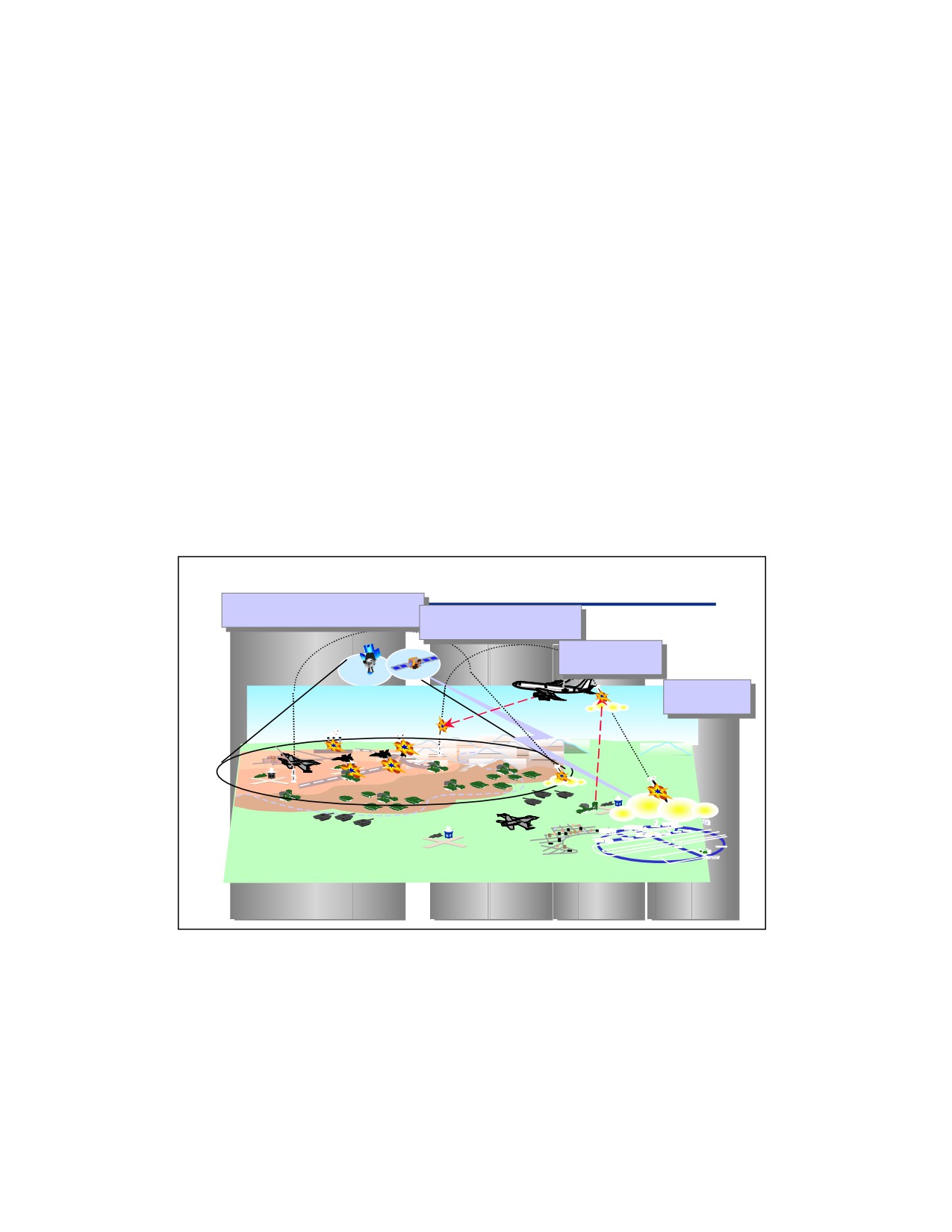
2.
Counterproliferation Operations
The US military response to the threat, and actual use of NBC weapons is
counterproliferation. Counterproliferation is a multitiered, integrated approach intended to
deter NBC use and enable US forces to survive, fight, and win in an NBC environment.
Counterproliferation is built on four core capabilities: counterforce, active defense, passive
defense, and consequence management; it is also enhanced by military support to
nonproliferation efforts. It includes the activities of the Department of Defense (DOD)
across the full range of US government (USG) efforts to combat proliferation (see Figure I-
1). Commanders at all levels are responsible for the integration and synchronization of
these four core capabilities into their overall operations in support of national
nonproliferation and counterproliferation objectives.
a.
Counterproliferation exists across a sequence of mutually supporting operations
that form a continuum of interrelated activities that employ both offensive and defensive
measures. The success of efforts in one area impacts other functions throughout the
operational cycle. The focus of this publication is passive defense. An awareness of how
passive defense fits within the counterproliferation operations concept is important because
passive defense operations can be impacted by the other three core capabilities.
Every NBC weapon we destroy
before it is used...
is one less we must
intercept...
protect
against...
or recover
from.
Counterforce
Active Defense
Passive
Consequence
Defense
Management
Figure I-1. Counterproliferation Operational Concept
b.
The first core capability, counterforce, attacks adversary NBC weapons and their
associated production, transportation, and storage facilities before their use in order to
reduce the NBC threat to friendly operations and US interests. The second core capability,
active defense, intercepts conventional and unconventional NBC delivery means—whether
through air defense or active ground defense. Together, counterforce operations and active
defense lessen the number and size of attacks friendly forces have to absorb and reduce the
I-3
burden on passive-defense measures; they can also have consequences and collateral
effects. The third core capability, passive defense, protects personnel from the effects of an
NBC attack and allows sustained operations. The fourth core capability, consequence
management, includes measures to provide emergency assistance to civilian authorities
when directed by the chain of command. Consequence management measures could be
required at any phase of operations, depending on the threat and availability of assets.
c.
Passive defense seeks to deter and deny the use of NBC weapons by ensuring
that US forces succeed in an NBC environment. The highest priorities for passive defense
are force survivability and successful mission accomplishment. Passive-defense operations
focus on protecting assets, sustaining mission operations, and minimizing casualties. The
elements of passive defense against an NBC attack consist of contamination avoidance,
protection, and decontamination. Actions undertaken include measures to provide essential
individual and collective protection (COLPRO) for friendly forces and critical assets.
Passive-defense measures are planned whenever US forces could face a threat with an NBC
capability.
(Note: For detailed information for defense against an NBC attack, see MTTPs
on NBC contamination avoidance, protection, and decontamination.)
d.
The employment of the other counterproliferation capabilities could have
consequences for passive-defense operations. For example, communication of early warning
information provided by counterforce or active-defense surveillance systems is essential for
passive-defense preparedness. The collateral effects of conducting counterforce and active-
defense measures are also assessed to determine the possible impact on friendly operations;
detailed situational awareness (SA) is critical for this process.
e.
Counterproliferation efforts are also enhanced by military support to
nonproliferation efforts. Military support could include export control and intelligence
activities, as well as inspection, monitoring, verification, and enforcement support for
treaties and international agreements. Commanders may be specifically tasked to include
nonproliferation and counterproliferation support tasks as a part of joint and theater
engagement plans for peacetime operations. Similarly, specific tasks may be taken from
service and joint mission-essential task lists (JMETL) for this purpose. Training and
operations should visibly reflect the capabilities of service organizations—alone and in
conjunction with joint and multiservice organizations—to operate successfully in NBC
environments.
3.
Threat Environment
US forces face a potential NBC threat across a broad range of military operations. The
term “NBC environment” includes the deliberate or accidental employment or threat of
NBC weapons and attacks with other CBR materials, including toxic industrial materials
(TIM). The employment and threat of NBC weapons and other toxic materials pose unique
challenges to US military operations worldwide. The number of nations capable of
developing or possessing NBC weapons is steadily increasing. Many potential adversaries
use former Soviet-style equipment and doctrine. The potential use for CBR weapons can
range from blackmail or acts of terrorism during peace, to limited use during MOOTW;
however, during a conflict or war the probability of NBC weapons may increase.
I-4
a.
Introduction. NBC weapon employment doctrine for an adversary would likely be
based on its sources of training, systems, and technological advances. Commanders have
the responsibility to consider the implications of a potential adversary’s NBC capabilities
not only in a region of active conflict, but also in other regions. This includes potential US
adversaries who might possess NBC capabilities, including emerging global adversaries,
regional adversaries, and nonstate groups.
b.
Adversaries.
(1)
Global. A global adversary could be a dominant regional power with an
advanced economy and technology base; such an adversary would have a program
underway to field a full range of military capabilities, including NBC weapons, with the
capability to project power beyond its geographic region.
(2)
Regional. A regional adversary could be a state willing to threaten or
employ military force to settle disputes contrary to international law. Regional adversaries
may develop or possess NBC weapons to gain international prestige, threaten neighbors, or
deter other regional or global adversaries; such an adversary could project power beyond its
state boundaries.
(3)
Nonstate. Nonstate adversaries are likely to act without regard for the
boundaries of established state authority; such adversaries could possess or have access to
a range of conventional and NBC weapons and other toxic materials and the means to
employ them by overt or clandestine means.
c.
Technology. The worldwide availability of advanced military and commercial
technologies (including dual-use) and commonly available transportation and delivery
means may permit adversaries to develop and employ NBC weapons and other toxic
materials.
d.
Incentives. State and nonstate groups alike may have incentives to operate
outside the norms of acceptable international behavior, especially when important interests
are involved. These groups may have incentives to acquire NBC weapons in spite of their
adherence to international agreements and treaties. They may seek to overcome US and
alliance or coalition strengths by focusing their vulnerabilities on the use of NBC weapons
and other toxic materials.
e.
Adversary NBC Employment.
(1)
Adversaries may employ NBC weapons to exploit US and multinational
vulnerabilities. Civilian populations, physical infrastructures, and unwarned and
unprotected military forces are especially vulnerable to an NBC attack. Joint and
multinational operations in areas where indigenous friendly populations have less
protection than US forces present similar vulnerabilities. The enemy could elect to conduct
an NBC attack while US forces are engaged in a crisis or conflict, thus negating the
strength of the US and coalition forces. An adversary could employ NBC weapons to
impose terms of combat that are not easily overcome by US and multinational forces, such
as holding vulnerable high-value targets at risk. NBC weapons may also be used as
weapons of last resort if the adversary anticipates the loss of its strategic center of gravity.
I-5
(2)
An emerging global adversary may acquire a sufficient NBC stockpile to
establish credible deterrence against US intervention when no vital US interests are
involved in a conflict. However, when faced with the uncertainty of US intervention, this
adversary may act largely in the manner of a regional adversary and seek to avoid defeat
and survive.
(3)
Regional adversaries, including those aspiring to regional ascendancy, may
select employment concepts that delay defeat and seek reduction or elimination of US
influence and presence in the region. A number of adversaries also may operate routinely to
violate the international treaties and agreements, often taking unpredictable, high-risk
actions. Their employment concepts may include conventional and clandestine delivery of
NBC weapons at the inception or later in the conflict for the purpose of disruption,
destabilization, coercion, or revenge.
(4)
Broad adversary objectives for acquisition and employment of NBC
weapons may include the capabilities to—
•
Defeat, influence, intimidate, and deter a regional rival and deter US
intervention.
•
Disrupt US and multinational forces and operations.
•
Delay defeat by US and coalition forces in a region.
•
Punish and inflict revenge on the US and multinational partners for
their policies and actions to help ensure regime survival.
f.
Threat Agents.
(1)
One of the key facets of planning for NBC defense, given the large variety of
potential agents and weapons, is to emphasize the agents and weapons under consideration
to those most likely to be employed.
(2)
With regard to chemical agents, the concern is the use of nerve, blister,
blood, and choking agents.
(3)
Biological agents are categorized as disease producing organisms
(pathogens) and toxins. The time from exposure to maximum effects generally ranges from
a few hours to several days.
(4)
The effects of nuclear weapons are qualitatively different from biological or
chemical weapons. A nuclear detonation produces its damaging effects through blast,
thermal energy, electromagnetic pulse, and radiation.
(5)
The large variety of potential agents for use against military and civilian
targets can also include TIM.
(6)
In addition to the physical effects, common to any adversary use or threat of
these weapons is the psychological effect, both in the immediate target area and in other
vulnerable areas that may be potential future targets. For example, the use of NBC
I-6
weapons can cause a psychological impact among military and civilian personnel, and the
weapons’ effects can be increased beyond their actual capacity to cause physical casualties.
(7)
Although a common defense concern for all three types of weapons is some
degree of residual contamination that is hazardous to humans, there are significant
differences between NBC weapons. The mechanisms for dissemination of contamination
differ in that biological and chemical weapons either undergo low-order detonations or
employ some less violent form of release to disperse the agent without destroying it;
whereas, nuclear weapons can produce radioactive contamination from an explosion or a
simple rupture, and the extent of contamination increases with the violence of the event.
(Note: See FM 3-6, Field Behavior of NBC Agents, Including Smoke and Incendiaries, for
detailed information on the effects of weather and terrain on NBC agents.)
g.
Threat Attacks.
(1)
Introduction. Delivery systems—such as aircraft, cruise missiles,
unmanned aerial vehicles/remotely piloted vehicles, and tactical ballistic missiles—could be
probable overt delivery methods for use against operational-level targets. Other delivery
systems, such as artillery, could be used to support adversary tactical operations. Covert
releases, including various aerosol-releasing devices, could also be possible. Location,
mobility, and defensive capabilities of US forces play a major role in determining the
threats from nuclear and radiological, chemical, or biological weapons.
(2)
Nuclear and radiological attacks. Many nations have delivery means for
nuclear munitions—such as aircraft, cruise ballistic missiles, artillery, or clandestine
employment. Adversaries may also employ toxic radioactive materials using explosives or
other devices.
(3)
Biological Warfare. Biological warfare (BW) agents can be produced with
little difficulty in a relatively short time. They can be produced covertly using dual-purpose
technology by those of modest education using limited tools and space. An adversary could
use a production facility to manufacture prescription drugs one day and be producing BW
agents the next day. Using commercially available equipment and established
microbiological techniques (perfected decades ago), several countries have rapidly
assembled viable offensive BW programs that can easily be concealed. Other BW weapons
characteristics make these agents particularly attractive for use. Certain BW pathogens—
such as smallpox and pneumonic plague—are communicable diseases and can cause
tremendous numbers of casualties. Furthermore, the incubation period for biological agents
could also make them a weapon of choice against an unsuspecting force. Employment of
biological agents can be conducted using means such as aerosol generators, aircraft, or
missiles. Not since Japan’s use of BW in China during World War II have biological
weapons been used in combat. As the Japanese discovered, the effects of biological weapons
are difficult to anticipate and control and may cause considerable casualties to
unvaccinated friendly forces and populations. The Japanese limited the use of biological
weapons following incidents of high casualties among their own unvaccinated forces.
Furthermore, the difficulty in limiting effects may result in a devastating response upon
the perpetrator, especially by forces capable of holding the perpetrator’s centers of gravity
at risk.
I-7
(4)
Chemical Warfare. Chemical weapons are perceived by many nations as an
alternative to developing and fielding nuclear weapons. Chemical munitions require little
more expense or expertise to manufacture than conventional munitions. The technology
and literature are readily available on the world market. Once the decision is made to arm
with chemical weapons, stockpiles can be rapidly produced. CW employment options
include artillery, mortars, rockets, aircraft, and missiles, as well as covert use by terrorists.
Since the end of World War II, combatants have used chemical weapons in Yemen (1963 to
1967), Laos and Cambodia (late 1970s), Afghanistan (mid-1980s), and the Iran-Iraq War
(late 1980s). In some cases, notably against large concentrations of untrained troops,
chemical weapons have been credited for major successes. World censure of chemical
weapons has been sporadic and ineffective. Initially, developing nations’ use of chemical
weapons may be unsophisticated. The learning curve for use, even with military advisers,
will be slowed by rudimentary training in basic skills. The combatants must learn to handle
the logistics burden, friendly protection, weapons effects prediction, and difficulty in storage
and handling. The impact of the use of chemical weapons is clearly demonstrated in Figure
I-2.
(5)
Toxic Industrial Materials. TIM hazards, previously considered
insignificant during wartime, increase greatly in significance when manufactured, stored,
distributed, or transported in close proximity to fixed sites, ports, or airfields. Deliberate or
inadvertent release significantly increases hazards to the indigenous population and US
forces. While CW agents are highly toxic and lethal in small amounts, the countries that
produce them are generally known and are few in number when compared with the
quantities and universal nature of TIM. Given the prevalence of TIM throughout the world,
US forces use area studies, intelligence estimates, and/or economic studies to possibly
indicate TIM hazards in an AO. TIM should be recognized for the singular hazards they
pose as well as the potential risks that may result from an explosion or a fire. Most TIM
will present a vapor (inhalation) hazard. Vapor concentration at or near the point of release
may be very high and may reduce the oxygen concentration below that required to support
life. TIM are generally classified in one of the following categories:
•
Agricultural—includes insecticides, herbicides, and fertilizers.
•
Industrial—chemical and radiological materials used in
manufacturing processes, in fuel, or in cleaning.
•
Production and research—chemicals and biological materials produced
or stored in a facility.
•
Radiological—nuclear power plants, medical facilities, and
laboratories.
I-8
4.
Maintaining Preparedness
Maintaining military preparedness for potential operations in NBC environments
presents significant challenges and places extraordinary demands on commanders at all
echelons for a clear understanding of potential threats and the requirements for unity of
effort among US forces (service, interagency, joint, multiservice, and multinational) in the
US and abroad. Threat assessment includes overseas areas of potential conflict as well as
US territory, with particular attention to the civilian infrastructure, military forces, types
of hazards that may be encountered (i.e., low-level exposure hazards), and facilities needed
to support the range of military operations. Preparedness includes visibly and successfully
exercising service, joint, multinational, and interagency plans that demonstrate the
capability to operate in NBC environments because the use of NBC weapons could impact
strategic, operational, or tactical operations.
a.
Background. Maintaining preparedness may include combat operations and
MOOTW such as peace operations, foreign humanitarian assistance, and other military
support to civil authorities (MSCA). This environment presents numerous opportunities for
US military operations to encounter antagonists possessing NBC weapons or toxic
materials.
b.
Low-Level Exposure. In addition to the employment of NBC weapons by a threat,
maintaining preparedness includes being alert to other dangerous hazards that can persist
in the AO. Prevalent among those hazards are low-level radiation (LLR), depleted uranium
(DU), TIM, and biological agents (covertly or accidentally dispersed). An LLR threat can
exist in certain expended munitions, damaged or destroyed equipment, or contaminated
shrapnel—as well as inadequate nuclear waste disposal, deterioration of nuclear power
facilities, or damage to facilities that routinely use radioactive material. LLR produces long-
term radiation exposure health consequences for personnel. DU found in munitions does
not present significant hazards as long as the round is intact. However, care must be taken
around vehicles that have been hit by DU rounds or fires where DU munitions are involved
because inhalation and ingestion of DU dust and residue present a health hazard. TIM are
often present in enormous quantities in the AO and can be released from industrial plants,
transport containers, or storage facilities through battle damage or used as a desperation
measure during military operations.
I-9
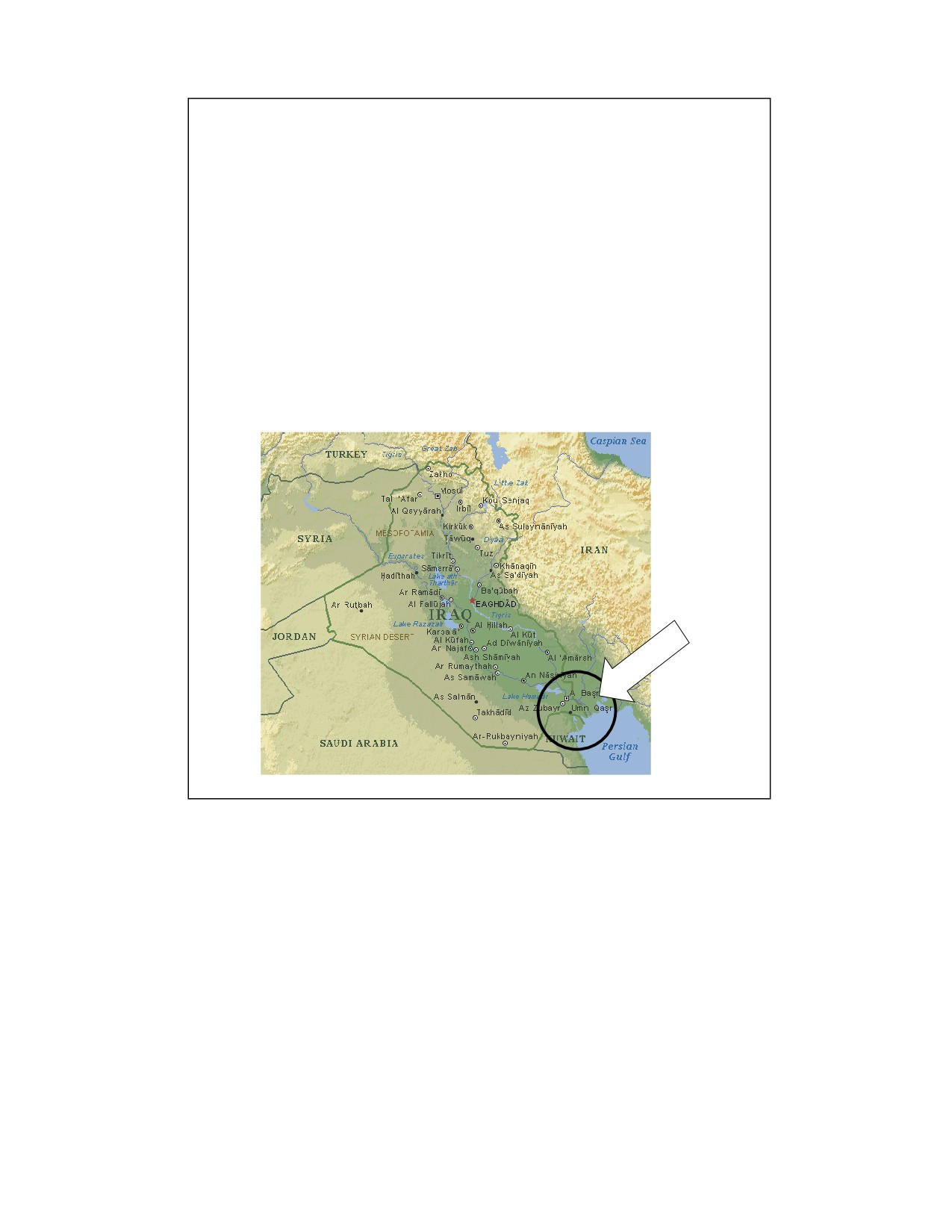
HISTORICAL VIGNETTE
•
In April 1988, Iraq began Operation “Blessed Ramadan” against Iranian
forces. The attack began on the morning of 17 April. Armored forces of the
Republican Guard conducted the main attack. The Iraqi 7th Corps conducted
a supporting attack along the west bank of the Shatt al-Arab waterway. The
employment of chemical agents was an integral part of the Iraqi plan.
Nonpersistent nerve agent was used on the defending Iranians.
•
Both artillery and aircraft delivered the chemical agent on the intended
targets. Only 35 hours were required to complete the operation. The Iranians
never recovered from the initial assault and were unable to reestablish an
effective defense. The Iraqis did not win this battle solely by employing
chemical weapons, but their impact was significant. The employment of
chemical weapons in this battle caused casualties, disrupted operations,
hindered battle command, and allowed the Iraqis to retain the initiative
throughout the attack.
•
The Iraqi use of chemical agents was a major contributor to Iraq’s
successes against an otherwise superior force, which—although
numerically superior and highly motivated—was poorly protected and
unable to deter CW use.
Area of Operation
Map Scale
Figure I-2. Battle for Al Faw, April 1988
c.
The Strategic Level.
(1)
Activities at the strategic level establish national and multinational
military objectives, assess risks for the use of military and other instruments of national
security policy, develop theater plans to achieve these objectives, and provide military
forces and other capabilities according to strategic plans. Events that may appear to be
focused at operational and tactical levels may have strategic consequences. Therefore, when
contemplating operations in NBC environments, commanders must be attentive to the
broader implications of adversary and friendly capabilities and operations.
(2)
At the strategic level of war, the national military strategy is based on
defense and deterrence. Elimination of the threat of NBC warfare is a clear strategy of the
I-10
US. A viable NBC defense program helps to deter aggression; pursue arms control
agreements; prevent proliferation; support counterproliferation, national missile defense,
homeland security, and weapons of mass destruction (WMD) civil support; and repel or
defeat an enemy attack. These strategic efforts help demonstrate to an adversary that US
forces would be minimally affected by the use of these weapons.
(3)
The use of CW from a theater-strategic perspective can be decisive. For
example, the threatened use of Iraqi chemical-weapon-equipped ballistic missiles against
Iranian cities late in 1988 tipped the strategic scale decisively in Iraq’s favor. Unable to
effectively counter the threat, a war-weary Iranian government sued for peace and
renounced its strategic objective toward Iraq. Throughout the war, Iran and Iraq exchanged
conventional-armed ballistic missiles and high-performance aircraft attacks without
apparent strategic impact. Because of the devastating effect that Iraq’s use of CW had on
Iranian troops and their morale, Iraq’s threat to use CW-equipped missiles against
undefended Iranian cities become too much of a psychological and political risk for the
Iranian government to chance (see Figure I-2).
d.
The Operational Level.
(1)
The operational level links the actual employment of forces to strategic
objectives. The focus at this level is on operational art. Operational art determines when,
where, and for what purpose major forces will be employed.
(2)
Among many considerations, operational art requires commanders to
consider the following:
•
Ends—What military (or related political and social) conditions must
be produced in the operational area to achieve the strategic goal (i.e.
deterrence of an enemy’s NBC weapons employment)?
•
Ways—What sequence of actions will support surviving, avoiding, or
mitigating the effects of an NBC environment?
•
Means—How should the resources of the joint force be applied to
accomplish eliminating or reducing the adversary’s NBC capabilities?
•
Risk—What is the likely cost or risk to the joint force of operating in
an NBC environment?
•
Resources—What resources must be committed or actions performed
to successfully execute the JFCs’ exit strategy (i.e., support for arms
control, peacekeeping, etc.)?
(3)
Operational level planners consider that an adversary may target the
functions and services provided by US fixed sites to include beachheads and lodgments. US
fixed sites will provide critical C2, force projection, and sustainment capabilities for joint
forces. The military environment of fixed sites includes strategic choke points, sustainment
operations, complex C2, and centers of gravity. The strategic projection of combat power
may require aerial ports of debarkation (APODs), seaports of debarkation (SPODs), and
I-11
subsequent sustainment through the limited number of fixed sites available. The limited
number of usable ports of debarkation (POD) may cause an unavoidable concentration of
forces at these sites, creating a major target. Likewise, multiple services, activities, and
organizational structures coupled with the presence of host nation (HN)/US civilians with
less training in passive-defensive measures than combat forces further complicate planning
and C2 at these sites. An enemy theater missile with an NBC warhead, NBC capable long-
range artillery, or special operations forces (SOF) covert dissemination may quickly disrupt
the flow of information and resources to and from the fixed site. For example, nations with
adequate stocks of chemicals could follow former Soviet doctrine and use persistent
chemical agents to restrict air base and port operations. Persistent nerve and blister agents
may delay the servicing of aircraft and ships and hinder cargo handling. Persistent agents
at logistics facilities may impair resupply and service operations. Likewise, such agents
may seriously delay definitive medical care and the use of pre-positioned stocks.
(4)
NBC tasks at the operational level may include—
•
Counterproliferation.
•
Theater NBC defense.
•
Integration of component NBC defense capabilities at operational
level.
•
Consequence management in support of lead federal agency.
•
Integration of NBC defense with HNs.
•
Interagency and multinational tasks and operations.
•
Mitigation of residual hazards and control and recovery of belligerents
NBC capabilities.
•
Reduction of vulnerabilities to an NBC attack.
•
Assessment of collateral effects of targets that may produce a hazard.
•
Visible, effective training and exercises designed for operations in
NBC environments (required at the tactical level as well).
e.
The Tactical Level.
(1)
At the tactical level, the size and location of the battlespace are influenced
by the physical location of the adversary’s land, air, maritime, space, and other forces that
could pose a direct threat to the security of the friendly force or the success of its mission.
(2)
At the tactical level, units use NBC defense and medically related TTP to
avoid, protect, and decontaminate to help reduce vulnerability to NBC attacks.
(3)
The proliferation of NBC weapons combined with the proliferation of
ballistic and cruise missle technology pose an increasing threat to tactical units in offshore
I-12
facilities, rear areas, fixed sites, and forward areas. Since each of the NBC weapons can be
delivered by a wide variety of means—including ballistic missiles, precision-guided
munitions, or covert devices—the threat environment extends throughout the depth of the
battlespace and continues to the force projection base. Nations’ combatants with adequate
chemical stocks who use former Soviet doctrine would likely employ nonpersistent agents
against front-line troops and on avenues of approach. They would be inclined to use
persistent agents on bypassed troops, strongpoints, and flanks. They may use persistent or
nonpersistent chemical agents in barrier and denial plans. With small stockpiles, however,
they may use biological or chemical weapons selectively to support a critical attack or
defense, particularly against massed troops or potential staging areas. Of prime
importance; an adversary may select key civilian targets in order to avoid military
preparedness and to achieve important political objectives. Commanders at all levels must
be prepared for such adversary attacks against civilian targets, including maintaining
military preparedness for other operations while participating in consequence management
and other operations in support of civil authorities. TIM releases from bulk storage,
transport and pipelines could be used as improvised weapons against friendly forces.
5.
Organization of Operational Areas
To assist in the coordination and deconfliction of joint action, commanders may define
operational areas. The size of these areas and types of forces employed within them depend
on the scope and nature of the crisis and the projected duration of operations.
a.
Operational Areas. Within the operational area’s combat and communications
zone (COMMZ), the commanders continually assess the enemy’s capability. In-depth
assessments are necessary for targeting to support destruction of an enemy’s offensive NBC
capability However, the uncertainties associated with accomplishing destruction of an
enemy’s NBC capability within an operational area make it essential that the commander’s
mission-essential task list (METL) includes NBC defense. Of particular importance are
those NBC defense tasks that are included in the JMETL that may support individual
service, joint, and multinational operations. Operational areas are critical in determining
NBC defense capabilities and priorities for NBC defense. Operational areas (along with the
associated threat assessment) and the organic defense capabilities of units influence NBC
task organization, siting of NBC collection centers, and command and control of NBC
assets.
b.
Joint Areas. For operations somewhat limited by scope and duration,
commanders can use the operational areas to minimize the impact of NBC weapons.
Commanders may consider using operational areas to achieve positional advantages such
as positioning assets beyond the threat range, identifying relocation sites, and deploying
redundant critical assets. Remote basing in an operational area could be used to protect
critical weapons systems (e.g., F117 aircraft) from contamination or destruction. Relocation,
dispersal, and redundancy of sites within operational areas offer another alternative if an
enemy NBC attack should prevent or restrict operations at primary sites.
6.
Conditions of the Battlespace
The operational setting for US military operations is a diverse and complex
environment. This diverse condition includes the physical, military, civil, and threat
I-13
environments. By function, NBC defense operations can impact each aspect of the physical
battlespace: air, space, land, and maritime. Secondly, US military operations are inherently
joint and will likely include joint task force (JTF) operations. Thirdly, in addition to the
physical and military environments, military operations (especially aerial and sea port
operations) may occur within the complex framework of the HN and the civil environment.
Commanders will use the conditions of the operational environment as planning
considerations for inclusion in joint/multiservice plans and exercises.
a.
Physical Environment. Just as the physical battlespace directly impacts site
operations, the physical environment directly influences NBC operations. NBC weapons
can impact force projection and combat operations on land, at sea, in space, and in the air.
Further, the nuclear component of NBC could also impact the space environment and
communications; additionally, C2 networks that rely on this dimension would be severely
degraded.
b.
Military Environment. The military environment includes settings such as
strategic chokepoints, sustainment sites, complex C2, and centers of gravity.
c.
Civil Environment. The culture and economic aspects of the civil environment
that significantly influence NBC defense considerations include religious, national, and
ethnic values; public media; and economic, industrial, and technological capabilities.
7.
Commanders' Planning Considerations
Commanders at all levels have the responsibility for taking into account the above
policy and environmental considerations in planning and conducting training, exercises,
and operations. This responsibility applies to war and MOOTW. It includes commanders'
actions in support of standing plans and orders as well as implicit command
responsibilities. Commanders are also responsible for ensuring that their forces'
capabilities to operate successfully in NBC environments receive appropriate attention
through active participation in appropriate information and public affairs activities. Visible
capability built upon actual battlespace capability provides a basis for deterrence and
successful operations should deterrence fail.
a.
The primary responsibility for mission accomplishment, inherent in command,
requires commanders to consider the nonmilitary as well as the strictly military aspects of
their AOs. This includes the impact of operations on the civilian populace and nonmilitary
governmental and private organizations. Based on national policy and higher headquarters
(HQ) guidance, commanders bear the ultimate responsibility for preparing their forces for
successful operations in NBC environments. Fixed TIM storage, production, and transport
sites pose potential release hazards locally as well as distances greater than several
kilometers downwind.
b.
Broad considerations for commanders include—
• The NBC threat to their organizations as well as to the civilian environment
in which their forces exist in war and MOOTW. This includes a requirement
for liaison and planning as a routine matter with nonmilitary organizations
affected by the threat and friendly operations to mitigate the threat.
I-14
• The challenges of transition from peacetime to war or MOOTW. While
commanders normally do not command all the forces that will be at their
disposal during war or MOOTW, they are responsible for prudent planning
for potential additional forces that may be made available for unforeseen
circumstances. This includes nonmilitary organizations that may be linked in
some way, even if informally, with military organizations in the battlespace
or elsewhere.
• The integration of all capabilities, military and nonmilitary, to ensure
mission accomplishment. This will often require coordination and liaison
rather than C2. Nevertheless, the imperative for planning and preparedness
falls on the military commander, subject to guidance from higher HQ.
Integration of civilian capabilities for consequence management, HSS, civil
engineering (CE), and other civilian functions may be crucial to military
mission accomplishment and should be routinely considered in peacetime
development of METL, individual and unit training, exercises at all levels,
and leader development at all levels.
• Assessing TIM storage, production, transit sites, and pipelines in proximity
to friendly force occupation sites.
I-15
Chapter II
NBC DEFENSE CHALLENGES
Passive defense operations use the principles of NBC defense (contamination
avoidance, protection, and decontamination) to prepare for possible operations in an NBC
environment. These form a hierarchy that protects the force, sustains operational
effectiveness, and minimizes casualties. Units employ avoidance measures, detection,
identification, sheltering, covering, and NBC reconnaissance to avoid contamination, thus
minimizing or eliminating NBC casualties, mission performance degradation, and logistical
intensive decontamination requirements. Units attacked or contaminated by NBC weapons,
will use individual and COLPRO to sustain operations and reduce the impact of NBC
weapons on the unit. Individual protection uses physical protection devices, immunizations,
pretreatments and prophylaxis, and NBC casualty medical treatment. COLPRO provides
relief from sustained operations in full NBC protective equipment and provides clean
environments for operations that cannot be performed under NBC-contaminated conditions.
COLPRO neutralizes or removes NBC hazards from personnel and equipment, minimizes
the hazard and spread of contamination, and facilitates the prompt restoration of normal
operations. Overall, battle management is essential in planning and executing NBC
defense. Timely NBC risk assessment and information management (IM) are critical as
part of this process. NBC battle management supports preparation of sound COAs that
apply avoidance, protection, and decontamination measures, thus providing an effective
and integrated NBC defense strategy.
Efficient command and staff interactions are crucial to effective operations in NBC
environments in war and MOOTW. A principal focus of an organization's NBC staff
element is to provide accurate and timely information for command decision. Rapid
dissemination of decisions and their supporting knowledge are crucial to success in the
command as a whole. Command, specialized C2, and battle management systems have, as a
key objective, efficient knowledge sharing vertically and horizontally across the entire
command to facilitate mission accomplishment and meet NBC defense challenges.
In applying the following NBC defense principles of contamination avoidance,
protection, and decontamination, commanders focus primarily on mission accomplishment
with due regard for the health and effectiveness of their subordinates and the civilian
populace (including civilian workers supporting the military effort) in their AOs.
Unprotected civilians may become a significant obstacle to military success and present a
lucrative target for adversary employment of NBC capabilities in pursuit of adversary
political or operational objectives.
1.
Contamination Avoidance
Contamination avoidance includes those individuals and/or unit measures taken to
avoid or minimize NBC attacks and reduce the effects of NBC hazards. Contamination
avoidance helps to prevent the disruption to operations and organizations by preventing
casualties, eliminating unnecessary time in cumbersome protective posture, and
minimizing decontamination requirements. Avoiding contamination requires the ability to
recognize or accurately predict the presence or absence of NBC hazards in the air, on
II-1
water, or on land - as well as assessing existing TIM storage and production facilities as
potential release sources.
a.
Introduction.
(1)
Avoidance alone is probably an insufficient response to a representative
large-area NBC attack, regardless of the type of unit. On one hand, forces operating from
fixed locations (e.g., USAF Air Expeditionary Force) are not capable of relocating quickly
enough to avoid contamination, regardless of the type of attack. On the other hand, even
highly mobile units (e.g., USMC maneuver units) may be unable to move far enough or
quickly enough to avoid contamination when attacks cover such large areas as those
possible with typical biological aerosol attacks. Accordingly, for fixed and mobile units
alike, avoidance of an NBC attack most likely means detecting or learning of the attack in
time to take protective and medical actions to prevent or minimize the effects.
(2)
In general, contamination avoidance includes actions to prevent
contamination of mission-essential resources and personnel, whether directly from agent
deposition or by transfer from contaminated surfaces of terrain and equipment. Avoidance
actions include the use of protective covers or coatings and removal of these covers or
coatings upon entry into uncontaminated areas. It may also include the removal of
absorbent materials found on the exterior of vessels or vehicles. Navy vessels employ a
countermeasure “washdown” system that prewets the exterior to form a saltwater barrier.
(3)
Contamination avoidance has a direct and significant impact on limiting
the spread of contamination by isolating key resources from the need for decontamination.
Early detection of missiles or aircraft attacks triggers the use of contamination avoidance
procedures and protects personnel through the use of COLPRO and individual protective
equipment (IPE).
(4)
Avoidance measures are those taken specifically to avoid, control, or
mitigate NBC hazards. Avoidance measures provide the commanders the means to
maintain and anticipate the NBC SA status for specific areas. This SA helps the
commander to understand the current situation, envision the end state, and envision the
sequence that moves his forces from the current state to the end state. This does two things
for the commander: it minimizes casualties in the NBC environment and preserves combat
power.
b.
Contamination Detection and Identification.
(1)
Introduction. Commanders need information about contamination hazards
and locations of clean areas; they gain this information through the NBC warning and
reporting system (NBCWRS) and their own NBC reconnaissance efforts. As commanders
collect data, they forward it to higher HQ. If higher HQ requires additional information,
detailed surveys are directed. There is a range of detecting and identifying devices and kits
to assist the commander in detecting and identifying chemical hazards. The devices and
kits range from detection paper to the M93 NBC Reconnaissance System (NBCRS). A
typical unit organization (i.e., wing, ship, and battalion) is equipped with automatic
chemical alarms, chemical-agent monitors (CAMs), chemical-agent detector kits, and
detector paper. Dedicated NBC reconnaissance units are equipped with more sophisticated
II-2
detection and identification equipment. Further, there are separate detection and
identification roles or tasks: warn, treat, verification or confirmation, surface
contamination, and unmasking. Specific methods, capabilities, and limitations vary
according to the detection and identification role or task.
(2)
Detection for Warning. Standoff detection provides warning of an
approaching cloud (not a specific chemical biological [CB] agent) in sufficient time to
implement protective measures before exposure to agent contamination occurs. For attacks
upwind, detection must occur at sufficient upwind distances to provide reasonable time for
detection, processing, and information transmission. Detection of the leading edge of the
cloud is preferable, since it can give more warning time. However, such detection requires
greater detector sensitivity because the agent concentration at the leading edge of the cloud
is less than in the middle of the cloud. Warning of an upwind attack may come from a
unit’s/base’s own upwind detectors or from other assets (i.e., standoff detectors) monitoring
the area upwind, whether purposely or coincidentally. Commanders use the full array of
sensors available to provide required information. Lacking the necessary point or standoff
detectors, commanders must decide when, based on intelligence indications, the possibility
of an attack warrants an increased protective posture. Also, reports of an attack from
upwind units can provide warning of an attack, assuming the units have the necessary
detectors, have observed enemy activities indicative of an attack, or have identified an
agent through detection by sampling and analysis. For attacks directly on installations or
units (e.g., theater ballistic missile [TBM] or artillery), rapid detection of CB agents for
warning will be difficult, if not impossible. Use of COLPRO and IPE in response to a
general TBM attack warning, based on the commander's assumption that a CB attack is
possible, is a viable COA.
(3)
Detection for Treatment. Detection for treatment focuses on identifying the
type of agent dispersed in an attack so that the best possible treatment can be rendered as
early as possible. Since some aspects of treatment are agent-specific, agent discrimination
is extremely important. Agent sampling and analysis continue to be the primary means of
accomplishing this detection role. Detection and presumptive identification for treatment
could also come from biological agent identification systems such as Portal Shield, the
USN’s interim biological agent detection system (IBADS), or the USA’s biological integrated
detection system (BIDS). Sampling is a local action, while analysis can occur locally or at
designated medical laboratories, depending on capabilities. Medical personnel collect and
submit clinical specimens from patients. Medical and NBC personnel perform
environmental sampling and detection functions; medical surveillance will involve both
local and theater-wide observations and reports.
(4)
Detection for Verification. Detection for verification provides critical
information to the President to support decisions regarding national strategic direction and
integration. The President uses such information to determine the need for response and to
select options in a timely manner.
(5)
Detection for Surface Contamination. Detection for surface contamination
means detecting deposited contamination on surfaces of personnel, terrain, and equipment
to make determinations such as whether decontamination is necessary or whether bypass
routes are needed to help facilitate maneuver unit operations.
II-3
(6)
Detection for Unmasking. Detection for unmasking (dewarning) means
detecting the reduction of contamination to acceptable levels. Comparison with methods
and results from earlier detection of agent(s) will be an important aspect of determining
when to unmask.
c.
NBC Reconnaissance.
(1)
Introduction. NBC reconnaissance is a multiple echelon process that begins
at the national level and ranges down to the alert watchfulness of each individual.
Operationally, NBC reconnaissance and surveillance (R&S) focuses on providing key
information to support the commander’s SA. Tactically, NBC reconnaissance is conducted
as a routine part of conventional land operations. If this reconnaissance is being conducted
after a terrorist incident, units follow procedures according to service directives for
preserving the crime scene. For land forces, reconnaissance elements check for
contamination in addition to looking for enemy activity. Units check relatively small areas
and routes of immediate interest to unit commanders. When commanders need additional
information unavailable through routine monitoring, they direct surveys of the area of
interest (AOI). Further, dedicated NBC reconnaissance elements organic to major
subordinate commands (MSCs), such as USA corps and divisions, are designed to conduct
NBC reconnaissance missions. These elements provide early warning of contamination,
determine the extent of contamination, and find clear routes of advance. NBC
reconnaissance missions help determine whether an NBC attack has occurred and identify
and quantify the agent, if any that was used. They can determine if contamination remains
in an area. Tasks that may be executed to support an NBC reconnaissance mission could
include—
•
Searches—used to locate contaminated areas during reconnaissance
operations.
•
Surveys—used once the contaminated area is located. The purpose of
surveys is to define the extent of the contaminated area.
•
Surveillance—the systematic observation of a specific area for
indications of an NBC attack.
•
Sampling—the collection of material and/or environmental items to
support intelligence collection and operational requirements.
•
Route reconnaissance—used as a form of reconnaissance to focus along
a specific line of communication (LOC)—such as a road, railway, or
waterway—to provide new or updated information on route conditions.
•
Area reconnaissance—used as form of reconnaissance as part of a
directed effort to obtain detailed information concerning the terrain or
enemy activity within a prescribed area, such as a town, ridgeline,
woods, or other feature critical to operations. Named areas of interest
(NAIs) are often designated area reconnaissance missions for chemical
reconnaissance units in support of the overarching R&S plan.
II-4
• Zone reconnaissance—used as part of a directed effort to obtain detailed
information concerning all routes, obstacles (to include chemical or
radiological contamination), terrain, and enemy forces within a zone
defined by boundaries. Normally, a zone reconnaissance is assigned
when the enemy situation is vague or when information concerning
cross-country trafficability is desired.
Note: Navy vessels do not conduct reconnaissance missions per se, but employ automated
detection systems that alert the crew to the presence of CB agents and radioactivity.
(2)
Follow-On NBC Reconnaissance Tasks. The following tasks may or may not
be executed during a reconnaissance mission:
• Mark—Marking the boundaries of a contaminated area (or critical
points along the boundary, such as roads) can be conducted after a
survey to warn follow-on forces of a potential hazard.
• Bypass—Determining a clean route around contamination can assist
lead elements of a task force or a logistical convoy in reaching their
destination without becoming contaminated.
• Sample— Sampling can also occur as a follow-on action, although it is
primarily a reconnaissance task.
(3)
Contamination Marking. Contamination is marked to warn friendly
personnel. Units or NBC reconnaissance teams mark all likely entry points into the area
and report contamination to higher HQ. The only exception is where marking would help
the enemy. In this event, the hazard is reported to higher HQ as an unmarked
contaminated area. When a unit enters a previously marked contaminated area, personnel
check the extent of contamination and adjust plans as necessary. As the hazard area
changes, the unit relocates the signs. When the hazard is gone, the unit removes the signs.
The unit reports all changes to higher HQ.
(4)
Alarms and Signals. Alarms and signals convey warnings of NBC
contamination. Units use easily recognizable and reliable alarm methods to respond quickly
and correctly to NBC hazards. Standard alarms, the NBCWRS, and contamination markers
help give orderly warning that may also require a change of mission-oriented protective
posture (MOPP) level. Alarms and signals include—
• Audible alarms.
• Automatic alarms.
• Visual signals.
d.
Mitigating Contamination. To maintain freedom of action, friendly forces may
use information from the NBCWRS to bypass contamination or practice other mitigation
techniques. Mitigation techniques include leaving nonessential forces behind,
encapsulating personnel and critical items, and covering equipment. If friendly forces are
II-5
already contaminated, they can control exposure by relocating to an uncontaminated area
and decontaminating as appropriate. Mitigating measures include—
• Bypassing contamination or isolating areas.
• Sheltering (moving personnel or equipment into buildings).
• Covering.
• Relocating.
• Employing shipboard washdown systems.
e.
Intelligence Preparation of the Battlespace. The continuous intelligence
preparation of the battlespace (IPB) process must account for confirmed as well as
plausible, but unconfirmed, adversary capabilities, plans, and actions. An adversary’s NBC
capabilities may result from research and development or acquisition of readily usable NBC
capabilities from other countries or nonstate adversaries. The commanders must take into
account these potential adversaries’ NBC capabilities in assessments, estimates, and plans.
The IPB process must address the capabilities and limitations of adversary NBC weapons
and delivery systems; their command, control, and release procedures; the indicators of
intent to employ NBC weapons; and the possibility of direct or accidental release of TIM.
f.
Vulnerability. Commanders, with staff input, assess their units’ vulnerability to
NBC attacks. Commanders determine the protection of the units versus the enemy’s
capability. They estimate the likely impact of NBC attacks and, based on the concept of the
operation, determine methods of reducing any impact to allow mission accomplishment. A
separate analysis is made to assess vulnerability for an NBC attack because of the specific
nature of each type of use. Commanders reduce vulnerability to NBC weapons through
applying the principles of NBC defense.
g.
Hazard Prediction. Staff personnel prepare hazard predictions for NBC attacks,
as the attack is not confined to the area directly attacked. The resulting aerosol or fallout
travels with the wind and can cover a large area downwind of the attack area. To prevent
casualties, units quickly estimate the possible hazard area and warn units within that area.
The estimates of the hazard areas are only an approximation. Terrain and weather, as well
as delivery system variations, modify the hazard area. In addition, the methods used to
predict the downwind hazard are “safe sided” for personnel safety. This ensures that the
hazard should be within the predicted area, giving units in the area time to take
appropriate precautions.
II-6
2.
NBC Protection
NBC protection is a command responsibility: the commander directs actions to ensure
continued mission accomplishment. Avoidance and protection are closely related.
Techniques that work for avoidance also provide protection; there are broad groups of
activity that comprise protective measures: individual protection, reaction to attack, and
use of COLPRO. The commander is primarily concerned with the protection of
subordinates; however, when directed by the geographic combatant commander, the
commander may be responsible for providing NBC protection to mission-essential civilians
or noncombatants.
a.
Individual Protection.
(1)
Introduction. The commander will likely provide force protection (FP)
guidance in orders/directives. The establishment of protection guidance provides
components/services with the critical information that they need to ensure that military
and civilian personnel are properly equipped and trained. This guidance on the appropriate
IPE helps to ensure protection of the wearer from direct exposure to NBC agents. The IPE
consists of a mask, overgarment, gloves, and overboots (see Table II-1). The mask keeps the
agent from entering the body through the nose, mouth, or eyes; the remainder of the
ensemble prevents skin contact, absorption through the skin, and entry through cuts or
abrasions of the skin. A mask provides a critical and unique form of protection not available
through normal combat clothing and, assuming a proper fit, it provides a physical barrier to
NBC agent penetration, but not to all TIM.
(2)
Passive Measures. Passive protection measures are those actions a unit
takes regardless of the status of NBC warfare. Military tactics dictate many practices that
will increase protection and reduce the impact of enemy NBC or conventional attacks. Good
training, improved positions, and dispersed forces are particularly effective in reducing the
impact of an NBC attack and reducing casualties if an attack does occur. Passive protection
measures can include—
• Providing realistic, integrated training.
• Using dispersal and employing camouflage, concealment, and deception
activities appropriate to the threat.
• Readying positions. Take actions to make them more resistant to the
blast effects of conventional or nuclear munitions, to the heat and
radiation of nuclear weapons, and to the contamination of radiological,
chemical, and/or biological weapons.
• Readying personnel. Under the threat of enemy NBC attacks, leaders
must ensure that protection and detection equipment is prepared and
readily available.
• Remaining mobile. Units take actions, such as placing equipment in
buildings.
II-7

• Covering supplies and equipment (e.g., use NBC protective covers).
(3)
MOPP (see Table II-1). The commander determines the appropriate level of
personnel protection for forces. Higher MOPP levels provide more protection; however,
increasing MOPP levels degrade personnel performance. MOPP decisions must balance
mission requirements, personnel protection, and performance degradation. Paragraph (b)
below discusses MOPP analysis techniques and the associated personnel and risk analysis
(RA).
Table II-1. MOPP Levels for US Forces
MOPP DIFFERENCES (AFLOAT vs ASHORE)
Afloat1
Ashore2
Afloat
Afloat Description
Ashore MOPP
Ashore Description
MOPP
MOPP ready (USA/USMC
Carry mask; IPE nearby
only)4
MOPP 0
Carry mask; IPE available
MOPP 1
IPE available
MOPP 1
Don overgarment
MOPP 2
Activate installed
MOPP 2
Don protective boots
detectors, carry mask3,
post M8/M9 detector
paper.
MOPP 3
Don protective suit and
MOPP 3
Don protective mask
boots, intermittent
countermeasures
washdown (CMWD).
MOPP 4
Don protective mask
MOPP 4
Don protective gloves
and gloves, secure
hood, Circle William,
CMWD.
USN, USCG, MSC Vessels
USN, USMC, USA, USAF personnel
Notes:
1 Aboard ship
2 Ashore, on land
3 The term “mask” includes any form of respiratory protection against NBC hazards as issued by services
4 MOPP ready is not used by USAF
(a) Specialized Protective Equipment. Mission requirements during TIM
threat conditions—such as operations near damaged industrial resources or MOOTW (for
support of consequence management)—may also require the use of other standard
protection levels, such as the US Environmental Protection Agency Levels A through D (for
more information, see applicable service references, such as FM 3-11.21, Multiservice
Tactics, Techniques, and Procedures for Nuclear, Biological, and Chemical Aspects of
Consequence Management).
(b) MOPP Analysis. Leaders, generally at shipboard, an air-operating
base, and brigade/battalion level establish MOPP levels based on a RA of their units’
particular situations. The RA finds a balance between reducing the risk of casualties and
accomplishing the mission. Commanders must recognize the significant increase in time
II-8
required for mission execution in MOPP 4 and anticipate the effects of that degradation on
subsequent missions. Leaders must also understand the increased drinking water
requirements. The use of MOPP involves risk; the better commanders are at analyzing
their units’ needs for protection, the lower their units’ risks. MOPP analysis enables leaders
to select the appropriate MOPP level. During MOPP analysis, the commander considers
factors such as mission, work rate and its duration, probable warning time, terrain,
weather, time of day, unit training, additional protection available, and alarm placement.
For example, commanders must balance the probable number of heat casualties in MOPP
against the possible number of casualties among unprotected personnel. Heat casualties
are likely when personnel in MOPP gear are performing hard, physical work under stress of
combat. Leaders establish an initial MOPP level before the mission and adjust it as the
situation changes or new intelligence is received. Leaders must also consider the
degradation, required flexibility, and the protection offered by overgarments.
(c)
Initiating the Use of Protective Action. During activities such as force
projection operations at aerial ports of embarkation (APOEs) or APODs and seaports of
embarkation (SPOEs) or SPODs, commanders ensure their units are aware and capable of
taking immediate protective action in the event of an NBC attack. For example, USA or
USMC elements are aware of and comply with USN NBC defense measures during
operations aboard ship, and JTF units from various services/components comply with
applicable air base survivability procedures. Commanders establish and maintain SA of
both friendly and enemy situations and continually assess policy and standing operating
procedure (SOP) actions on guidelines such as automatic masking and MOPP levels. They
use tools such as MOPP analysis to conduct this assessment. Personnel must automatically
mask when there are high-probability indicators of a chemical attack. High-probability
indicators may include activation of chemical alarms, color change of detector paper,
aircraft spray, or chemical-agent exposure symptoms. The leader’s decision on whether
personnel should automatically mask is critical in NBC defense preparation. If intelligence
sources have identified possible enemy use of biological agents, including toxins, the
commander may institute automatic masking. Personnel will also automatically mask for
conditions that may signal a biological attack, such as smoke, spray, mist, or the presence
of dead animals. Since some toxins will attack the skin, protective clothing should be worn.
b.
Reacting to an Attack. Personnel take immediate action to reduce the impact of
an NBC attack. Following an attack, the use of MOPP involves balancing force survivability
and mission continuation. Commanders determine the risk they are willing to take
depending on the mission that must be accomplished. They take poststrike actions to
restore fighting power and prepare to continue the mission. Specific actions vary according
to the type of attack.
(1)
Nuclear Attack. A strategic or tactical warning may precede an enemy
nuclear attack. In the event deterrence fails, a tactical warning of an imminent enemy
attack or an attack in progress may provide only a few minutes of notice—or no notice
(depending upon a service member’s location)—for personnel to take immediate shelter.
The first indication of a nuclear detonation is a flash of intense light and heat. Direct
radiation arrives with the light. The leading edge of the atmospheric shock wave and
fireball propagates at nearly the speed of sound, and its arrival will be somewhat delayed
II-9
behind the light, heat, and radiation, depending on the distance from the detonation. For
those who are not debilitated by the initial heat or radiation, this delay may be great
enough to allow an attempt to find cover from the blast. Blast hazards include trauma from
flying debris, being blown into obstacles, collapsing structures or falling objects, and the
overpressure wave impact itself. There is also a radiation hazard as much of the debris and
dust that moves with the blast can be radioactive. A small increase in safety may be
achieved by simply lying flat on the ground, head toward the detonation. If time permits,
additional protection may be achieved by moving below ground level (e.g., by finding a ditch
in which to lie). If enough time is available to reach a trench, dugout, or basement—these
usually provide the best protection. Whether to fall flat or to run for better shelter must be
decided instantly upon recognizing the heat/light flash, based on a preconception of how far
away the detonation is likely to have occurred. As soon as possible, don any protective gear
at hand then move as quickly and as far away from ground zero as the mission and
conditions permit. Poststrike concerns will be damage assessment, restoration of combat
power, and treatment of casualties. Leaders must maintain control, take contingency
actions quickly, and plan for the continued presence of radioactive contamination from
fallout.
(2)
Biological Attack. A biological attack may come with no warning (i.e.,
upwind aerosol release) due to the difficulty in detecting and correctly assessing the use of
biological agents. Personnel should treat a suspected biological attack just as they would a
chemical attack. Since it is difficult to readily detect and determine the character of a
particular biological attack (e.g., anthrax, smallpox, or botulism toxin), donning a well-
fitting protective mask remains the best method to enhance the survival of unvaccinated
forces. Most biological agents have a delayed onset of signs or symptoms—thus hampering
identification, complicating personnel decontamination, and delaying definitive treatment.
It is important to note that due to the nature of biological agents, an attack could go
unrecognized.
(3)
Chemical Attack. If an advanced warning of a chemical attack is not
received, warning may come from an automatic alarm (audible or visual signal), detection
of a chemical cloud, color change of detector paper, or symptoms observed in oneself or
another. The first reaction should always be to mask and then give the alarm. If the
mission permits, immediately seek cover and perform skin decontamination. After the
attack, leaders adjust MOPP levels, as appropriate, for the type of hazard and mission.
Continued reassessments of available threat information and mission requirements are
needed to ensure that MOPP levels are not set too high.
(4)
TIM Releases. Fixed sites with large bulk storage of materials are
potential hazards. Units that have positioned themselves in the downwind or local area to
the TIM sites must be prepared to relocate on short notice following TIM releases.
c.
Collective Protection. COLPRO complements the individual protection provided
by MOPP gear. COLPRO provides a toxic-free working environment for selected personnel
and functions. This environment may allow personnel to function more effectively while
continuing to wear overgarments (as with the ventilated facepiece system). Alternatively, it
may allow personnel to temporarily remove overgarments (as with an overpressure
system).
II-10
• Collective Protective Shelter. A collective protective shelter (CPS) is a shelter
that provides cover and protection to a group of individuals, enabling them to relax their
individual protection. Shelters can be located wherever collective protection is needed—on
ships, in buildings, at air bases, etc.
• Collective Protective System. A collective protective system is one or more
collective protective shelters employed by the commander for protection of assigned
personnel. Shelters are used wherever the need exists in the area of operations.
In either event, the collective protective shelter (CPS) is effective only as long as entry and
exit procedures remain valid. When CPSs are used to provide relief from wearing MOPP,
commanders establish a system for the rotation of personnel. They plan for supplies,
maintenance, and transportation to support the system and establish operating procedures
for the shelter that ensures security, reliability, and utility.
(1)
Collective Protective Shelters/Naval Vessels. CPSs are freestanding
structures or areas within a ship that protect personnel from the effects of NBC
contamination. Walls, doors, and windows (or the water/airtight integrity of a ship) offer
limited physical barriers to the penetration of contamination. CPSs with an air filtration
system protect those inside against contamination through the combination of
nonpenetrable structural materials, air filtration equipment, air locks, and
overpressurization. CPSs reduce contamination levels when personnel enter or exit the
structure. They enable personnel to work or gain rest and relief without the encumbrance of
the IPE. If CPSs are not available and NBC contamination is present and persists beyond a
few hours, it may become necessary to locate and designate contamination-free areas for
rest and relief. These shelters are only effective if CB agents are delivered by
nonpenetrating weapons or nonexplosive dispersal systems.
(2)
Types. There are differing types of CPSs. In one type, the COLPRO is built
into critical work areas, such as squadron operations centers, wing command posts,
communications centers, medical treatment facilities (MTFs), and avionics maintenance
facilities. Another type, the transportable COLPRO, is deployable and has multiple
variations that can protect work areas, MTFs, or rest and relief areas. The variations fit
inside rooms within buildings, protect deployable shelters, and can stand alone. Another
type is mobile CPS that could be installed on an armored fighting vehicle. There are also
varieties used on naval systems: full coverage and selected area coverage. On a full
coverage ship, all spaces—except main propulsion spaces—are protected by over
pressurization and air filtration. Selected area CPSs, installed on amphibious ships, protect
critical operational and medical spaces. Vessels not equipped with CPSs still provide, by
ship design practices, significant protection.
(3)
Sealing Structures. Sealed and closed structures offer some protection. In
the absence of dedicated CPSs, the inherent features of some buildings offer protection not
otherwise available. Walls, doors, and windows offer physical barriers to the penetration of
contamination, while filters in heating, ventilation, and cooling systems can remove certain
levels of particulate contamination. Wearing a mask inside such structures increases the
protection for the wearer.
II-11
(4)
Ready and Deep Shelter on Naval Vessels. In preparation for an NBC
attack, naval commanders designate ready and deep shelter.
• Ready shelters are immediately available shelters for exposed personnel
that offer limited protection from weapons effects and contamination.
• Deep shelters are predesignated spaces low in the ship that provides
additional protection from CB agents and gamma radiation.
3.
Decontamination
The same resources are required to fight the battle, so commanders must apply them
wisely and sparingly. Efforts focus on operational results rather than the process of
decontamination. Often, the result desired is reducing the hazard so that MOPP levels can
be safely reduced. Yet, technical limitations may not allow personnel to decontaminate
their way out of MOPP. For example, agent will sorb into paint or other porous substances
and produce a lingering off-gas hazard that must be monitored and may require personnel
to wear protective gear. The following principles guide decontamination operations:
• Speed—decontaminate as soon as possible to restore full combat potential.
• Need—decontaminate only what is necessary. Consider mission, time, extent of
contamination, MOPP status, and decontamination assets available.
• Limit—decontaminate as close to the site of contamination as possible to limit its
spread. Do not move contaminated equipment or personnel away from the
operational area if it is possible to bring decontamination assets (organic or
supporting units) forward safely. This will keep the equipment on location, speed
decontamination, and limit the spread of contamination to other areas.
• Priority—decontaminate the most important items first and the least important
items last.
a.
Levels of Decontamination. The three levels of decontamination during
hostilities (immediate, operational, and thorough) complement each other and serve to
minimize contamination, save lives, and limit the spread of contamination. Ultimately, the
goal is to restore operations to near-normal capacity by reducing or eliminating the need for
the IPE. Retrograde of equipment outside the operational area will require additional
decontamination.
(1)
Immediate Decontamination. Immediate decontamination is exactly what
the term implies—the immediate actions taken by an individual to survive. Individuals
conduct immediate decontamination using the supplies and equipment they carry.
Immediate decontamination consists of—
• Skin decontamination.
• Personal equipment wipe down.
II-12
• Operator spray/wipe down.
(2)
Operational decontamination. Teams or squads conduct operational
decontamination using organic decontamination equipment. If this equipment is not
available, units will request decontamination support through command channels. This
mission can be tasked to the supporting NBC unit. These procedures limit the spread of
contamination and minimize contact or transfer hazards by decontaminating specific parts
of operationally essential equipment, material, work areas, and IPE that is exchanged.
Operational decontamination makes thorough decontamination easier by effectively
speeding up the weathering process for chemical and biological contamination. Operational
decontamination is less resource intensive than thorough decontamination. Operational
decontamination includes—
• MOPP gear exchange.
• Equipment wash down.
(3)
Thorough Decontamination. This is the most resource-intensive level of
decontamination. It may require external support (augmentation) to accomplish the
mission of NBC decontamination. Thorough decontamination goals are to reduce
contamination to neglible risks during combat operations; however, during postconflict
operations, retrograde decontamination becomes a key concern. Thorough decontamination
requires augmentation from supported units to accomplish this process. The
decontamination unit is in charge of the decontamination site and operation. Forces
coordinate decontamination sites with the HN through civil-military liaison teams. The
commander of the decontamination operation takes positive action to prevent runoff and
contamination of civilian water sources. Applicable documents, such as FM 3-5, NBC
Decontamination, describe in detail the procedures for thorough decontamination. The
three techniques used in thorough decontamination are—
• Detailed troop decontamination (DTD).
• Detailed equipment decontamination (DED).
• Detailed aircraft decontamination (DAD).
b.
Levels of Decontamination for Naval Forces.
(1)
Personnel. Emergency swabbing of contamination from skin or flushing
contamination from eyes.
(2)
Limited Operational. Teams conduct gross decontamination to remove or
reduce concentrations of contaminants and clear vital areas and equipment for tactical use.
(3)
Operationally Complete. Detailed decontamination carried out as
operations permit. Designed to remove remaining contamination.
(4)
Chemically/Radiologically Complete. A level of decontamination that
requires the support of an industrial facility. Normally, it is not conducted by operational
II-13
forces. This can include the sealing of chemically soaked paint, flushing seawater systems,
and removing radioactive components.
c.
Effects of Decontamination. Decontamination has positive and negative effects
on unit effectiveness. The overriding positive effect and ultimate goals of decontamination
are the restoration of the combat power lost when assuming MOPP. A negative, offsetting
effect is a consumption of resources (time and supplies). Commanders must decide where
the optimum trade-off occurs between restored power and resource depletion.
(1)
Immediate decontamination allows personnel to survive and continue to
fight on the battlefield. Operational decontamination allows the force to fight longer by
reducing contamination. When time permits, thorough decontamination restores almost all
combat power of the contaminated force. However, decontamination operations reduce
combat power during the decontamination period.
(2)
All decontamination uses valuable resources, including time. Staff
estimates must include time and resupply requirements. NBC personnel work closely with
combat operators and logisticians to determine resources needed and availability. In some
cases, resources will not be readily available for decontamination. In this event, the
commander may choose weathering to reduce contamination. There may be substantial
time before personnel can reduce MOPP levels if weathering is allowed. In addition,
decontamination may not result in a reduced MOPP or a significant decrease in risk.
d.
Casualty Decontamination. Emergency medical care may be required prior to
decontamination. Personnel injured from NBC munitions should be triaged separately and
decontaminated before definitive medical care is rendered in a treatment facility.
Additionally, patient decontamination is done as far forward as possible to limit the spread
of contamination. Casualty decontamination presents special problems for units and
HSS/medical personnel. Under NBC conditions, contaminated wounded personnel create
increased hazards to rescuers and HSS/medical personnel. On the NBC battlefield, two
classifications of casualties will be encountered: contaminated and uncontaminated. Those
who are contaminated may be suffering the effects of an NBC agent, a conventional wound,
or both. It is important to follow proper decontamination procedures to limit the spread of
contamination.
(1)
Casualty decontamination begins at small-unit level. When the battle and
casualties’ conditions permit, they may go through a MOPP equipment
exchange/decontamination station. However, immediate skin decontamination must be
performed before evacuation. When battle conditions prevent decontamination procedures
forward, casualties may require evacuation to an MTF before decontamination.
(2)
Contaminated patients who arrive at the MTF must be decontaminated
before admission into the clean treatment area. A patient decontamination team from the
supported unit performs patient decontamination. The team operates under the supervision
of medical personnel to prevent further patient injury during the decontamination process.
See FM 8-10-7, Health Service Support in a Nuclear, Biological, and Chemical Environment
for patient decontamination procedures.
II-14
(3)
The next higher-echelon MTF may also receive contaminated patients and
is also supported by a patient decontamination team from the supported unit. For AF units,
medical personnel accomplish the patient decontamination mission. See Chapter IX for
additional information on patient decontamination at MTFs.
e.
Terrain Decontamination. Despite the tremendous logistical burden, terrain
decontamination may be necessary at fixed sites such as railheads, depots, and so forth.
Terrain decontamination may be very limited (i.e., paths, specific buildings, piers, and
docks). Terrain decontamination will occur only where operationally required. If terrain
decontamination is required, expedient methods, such as covering with earth or scraping,
may be used.
f.
Environmental Considerations. Accurate record keeping will be essential for
support of decontamination. During postconflict, it may become important to know where
actions such as DED were conducted. Environmental considerations are key planning
considerations across the range of military operations. Planners may consider factors such
as—
(1)
Availability of potable/nonpotable water sources.
(2)
Effect of decontaminants on water supply.
(3)
Residual hazard assessment.
g.
Fixed-Site and Retrograde Decontamination. Fixed-site procedures support
decontamination of critical areas such as maintenance depots, APOEs/SPOEs, or C2
facilities. Retrograde decontamination may require additional resources such as low-level
monitoring equipment. Detailed planning also provides for consideration of multiple options
such as decontamination, weathering, or destruction. The purpose of retrograde
decontamination is to make assets safe enough to return to the continental US (CONUS) or
overseas installations. See Joint Publication 3-11, Joint Doctrine for Operations in Nuclear,
Biological, and Chemical (NBC) Environments, and service-specific publications for further
guidance. The NBC staff uses the military decision-making process to provide assessments
and recommendations to commanders. Risk assessments incorporate key elements of NBC
defense principles and accurate and timely information to support SA. In turn, this process
helps support the preparation of an NBC defense plan that is fully integrated into the
organization's overall plan for war and MOOTW. The following section explains how NBC
battle management enables commanders to effectively apply knowledge developed in the
staff assessment process to support command decisions.
Note: For information on joint policy and detailed instructions for handling contaminated
remains, see Joint Publication 4-06, Joint Tactics, Techniques, and Procedures for Mortuary
Affairs in Joint Operations.
4.
NBC Battle Management
NBC battle management requires consideration of the risks associated with adversary
NBC employment and friendly NBC defense actions. It includes the proper employment of
the NBCWRS and applies principles of IM to the NBC defense challenges facing the
command.
II-15
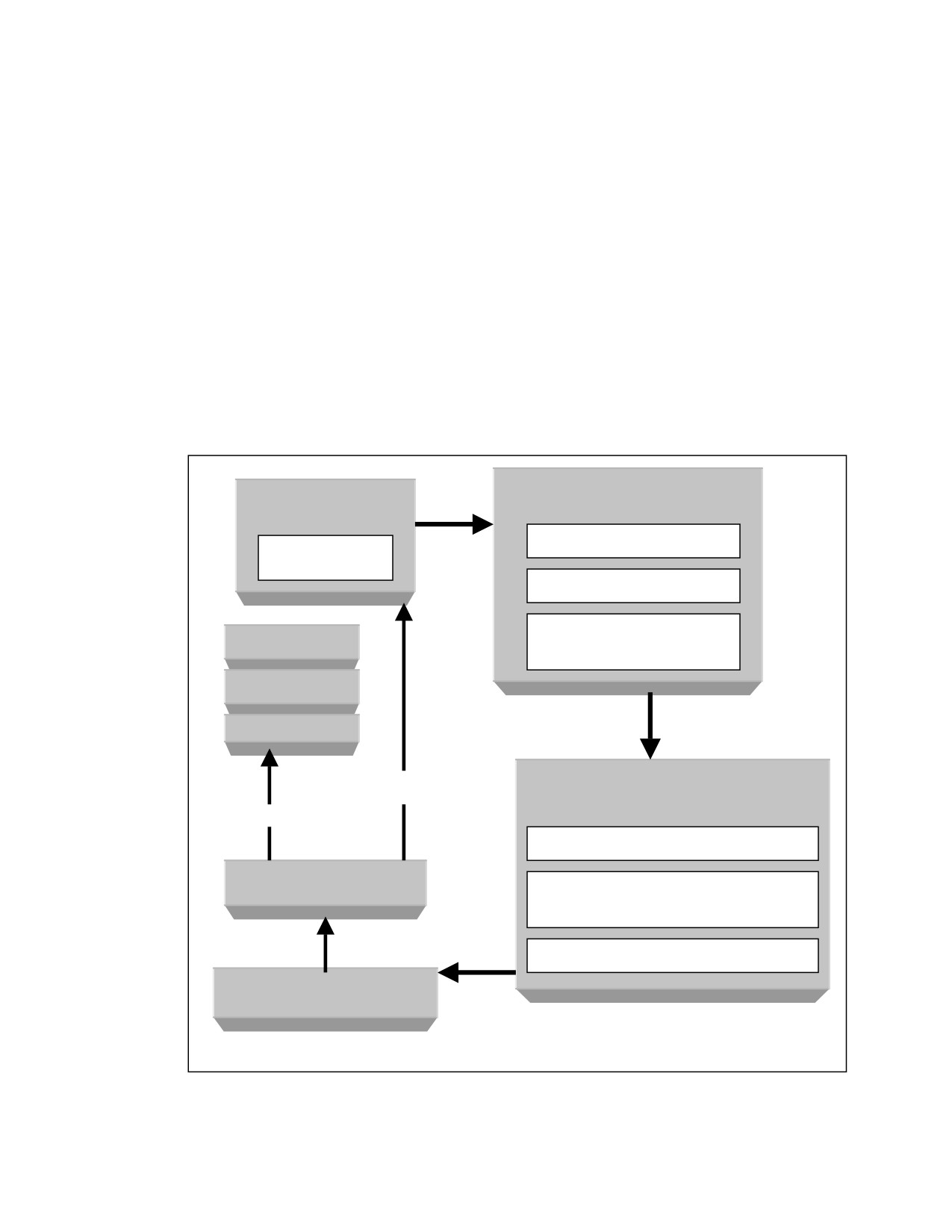
a.
Risk Assessment. Commanders conduct risk assessment during the decision-
making process in determining how to execute operations in an NBC/TIM environment.
Risk assessment is a process that can be used to help identify and control hazards to
conserve combat power and resources and determine factors such as when and where to
implement various NBC defense measures. The five steps of risk assessment include the
following (see Figure II-1):
• Identify hazard.
• Assess hazard.
• Develop controls and make risk decision.
• Implement controls.
• Supervise/evaluate.
Step 2
Step 1
Assess Hazard
Identify Hazard
Estimate Hazard
Apply
METT-T
Estimate Security
Determine Risk Level for
Mission
Each Hazard
Mission
Mission
Step 3
New Hazards
Develop Controls and Make Risk
Decision
Lesson Learned
Develop Controls
Step 5
Determine Risk for Each Hazard
Supervise/Evaluate
and Overall Mission
Make Decision
Step 4
Implement Controls
Figure II-1. Risk Assessment
II-16
///////////////////////////////////////