FM 4-20.103 AIRDROP OF SUPPLIES AND EQUIPMENT: RIGGING CONTAINERS (September 2005) - page 3
FM 4-20.103/MCRP 4-11.3C/TO 13C7-1-11
PREPARING SKID BOARD
6-19. Prepare a skid board for ramp drop as shown in Figure 6-4. For paratroop
door drops, the skid board is optional. When the load is being airdropped from
the C-130 aircraft’s cargo ramp, the skid board will be at least 42 inches wide,
but must be 48-inches wide when using the C-17 or C-130 aircraft’s CVRS.
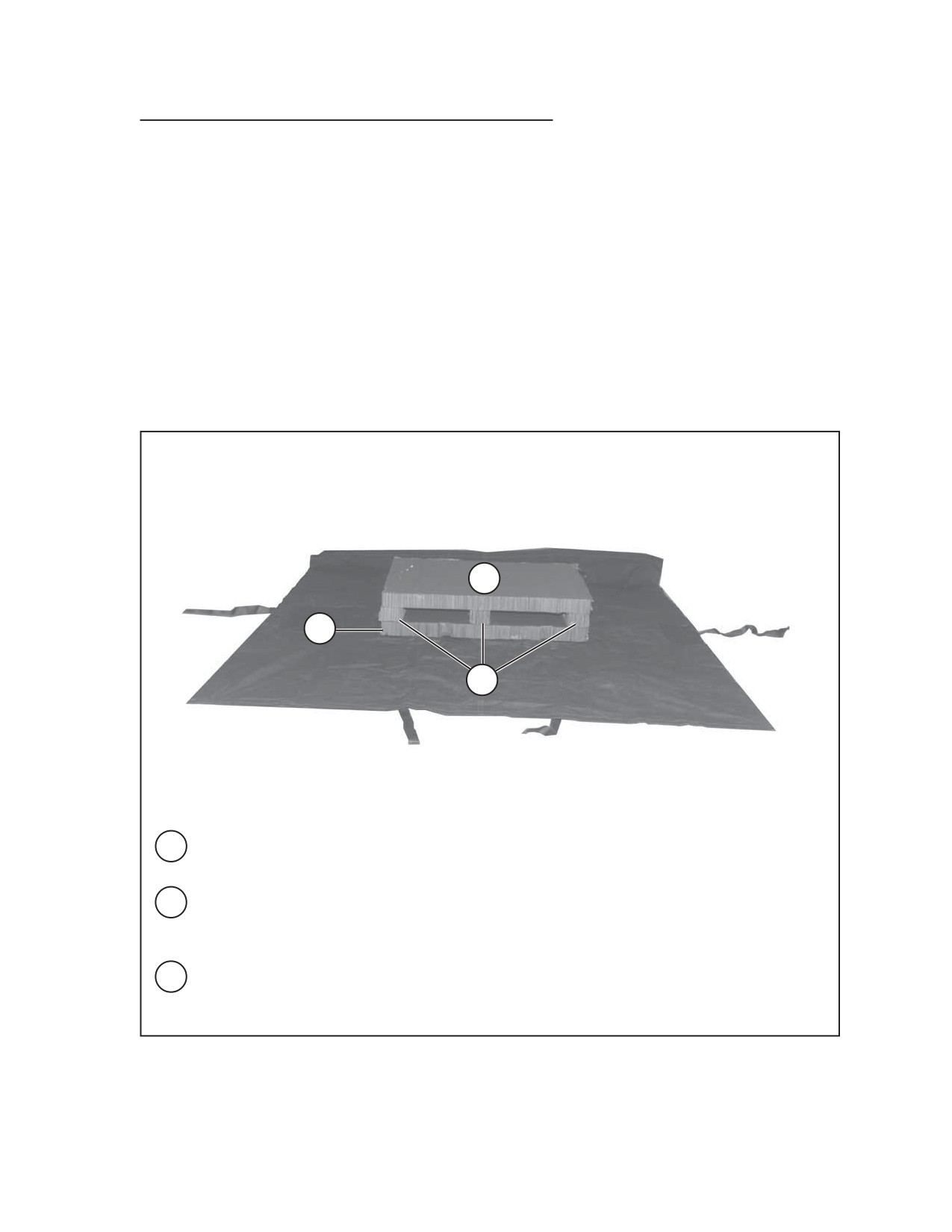
POSITIONING HONEYCOMB
6-20. Use honeycomb on paratroop door or ramp drops. When the skid board is
not used, place the honeycomb inside the container when rigging the load. When
the skid board is used, place honeycomb inside or outside the container. Prepare
and position the honeycomb as shown in Figure 6-7.
3
1
2
1
Cut one piece of honeycomb at least the size of the base of the load. Center it on the
container.
2
Cut three pieces of honeycomb 3 inches wide and the length of the honeycomb cut in
step 1. Glue and center one piece on top of the first layer of honeycomb. Glue and place
one piece of honeycomb even with each side edge.
3 Cut another piece of honeycomb the same size as in step 1 and glue it on top of the
second layer of honeycomb.
Figure 6-7. A-21 Honeycomb Prepared and Positioned
2 September 2005
6-11
FM 4-20.103/MCRP 4-11.3C/TO 13C7-1-11
POSITIONING CONTAINER AND LOAD
6-21. Position the container and load according to Paragraph 6-3.
RIGGING CONTAINER
6-22. Rig the container according to Paragraph 6-4.
SECURING SKID BOARD
6-23. Secure the skid board according to Paragraph 6-13.
INSTALLING PARACHUTE
6-24. Install the parachute according to Chapters 3 and 5.
MARKING RIGGED LOAD
6-25. Mark the rigged load according to Paragraph 1-5. Compute the rigged
load data.
EQUIPMENT REQUIRED
6-26. Use the equipment listed in Table 6-3 to rig the load shown in Figure 6
8.
Table 6-3. Equipment Required for Rigging A-21 Container Load for High-Velocity Airdrop
National Stock
Item
Quantity
Number
8040-00-273-8713
Adhesive, paste, 1-gallon
As required
1670-00-242-9173
Bag, cargo, A21
1
4020-00-240-2146
Cord, nylon, type III
As required
8135-00-664-6958
Cushioning material, packaging, cellulose
As required
waddin g
1670-00-753-3928
Pad, energy-dissipating material, honeycom b
As required
1670-00-999-2658
Parachute, cargo, G14
1
Plyw ood:
5530-00-129-7777
1/2- by 48- by 96-inch
1 sheet
or
5530-00-128-4981
3/4- by 48- by 96-inch
1 sheet
7510-00-266-6710
Tape, masking, 2-inch
As required
Webbing:
8305-00-268-2411
Cotton, 1/4-inch, type I
As required
8305-00-082-5752
Nylon, tubular, 1/2-inch
As required
6-12
2 September 2005
FM 4-20.103/MCRP 4-11.3C/TO 13C7-1-11
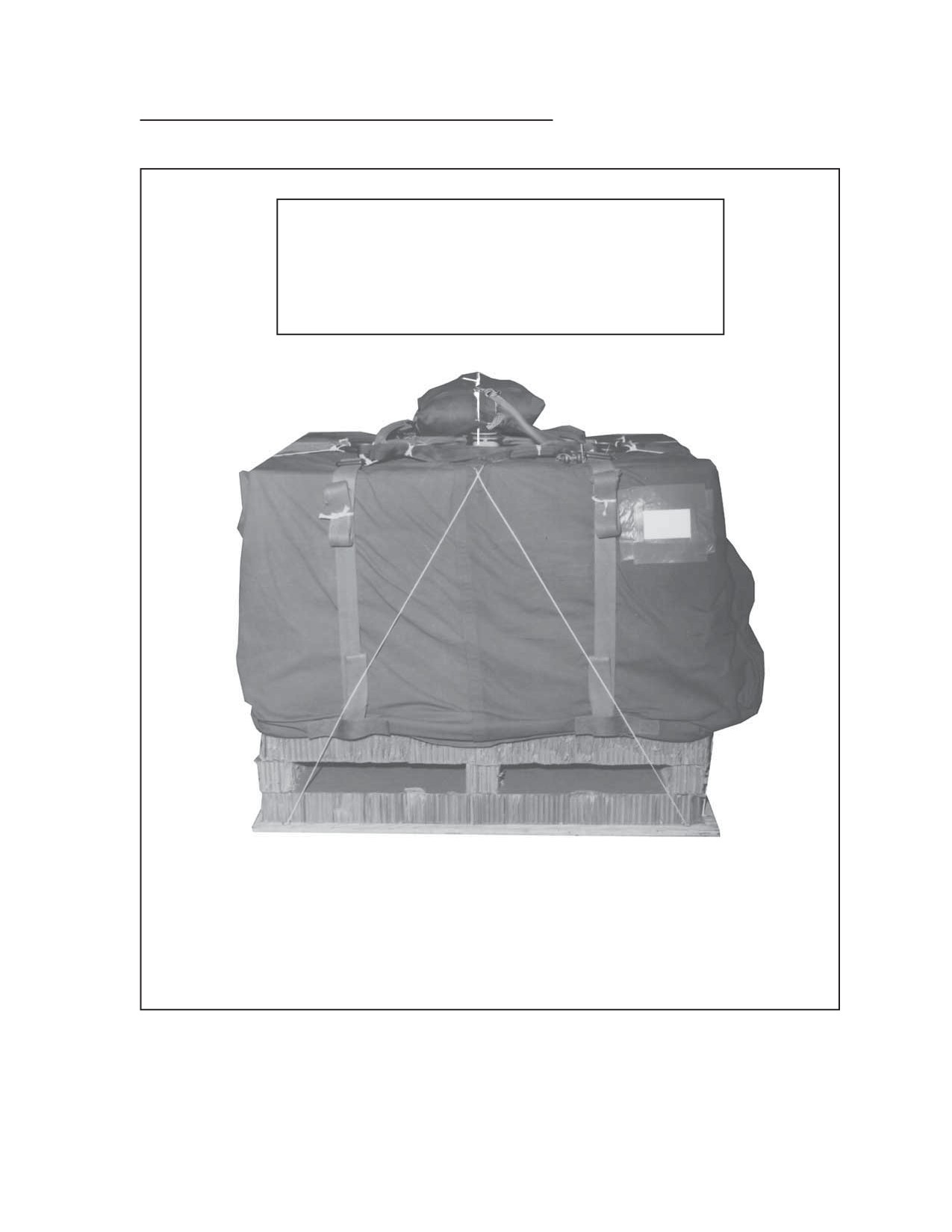
CAUTION
Make the final rigger inspection required by FM 4-20.102/
NAVSEA SS400-AB-MMO-010/TO 13C7-1-5 and AR 59-
4/OPNAVINST 4630.24C/AFJ 13-210(I)/MCO 13480.1B
before the load leaves the ri
gging site.
RIGGING LOAD DATA (without parachute)
Three 68-inch parachutes
151 - 500 pounds
*12-foot, high-velocity cargo parachute (shown)
151 - 500 pounds
15-foot modified parachute for high-velocity
151 - 500 pounds
*Primary parachute
Figure 6-8. A-21 Container Load Rigged For High-Velocity Airdrop
2 September 2005
6-13
This page intentionally left blank.
FM 4-20.103/MCRP 4-11.3C/TO 13C7-1-11
Chapter 7
Rigging Ground Laser Location Designator in A-21
Container Rigged for Low-Velocity Airdrop
DESCRIPTION OF LOAD
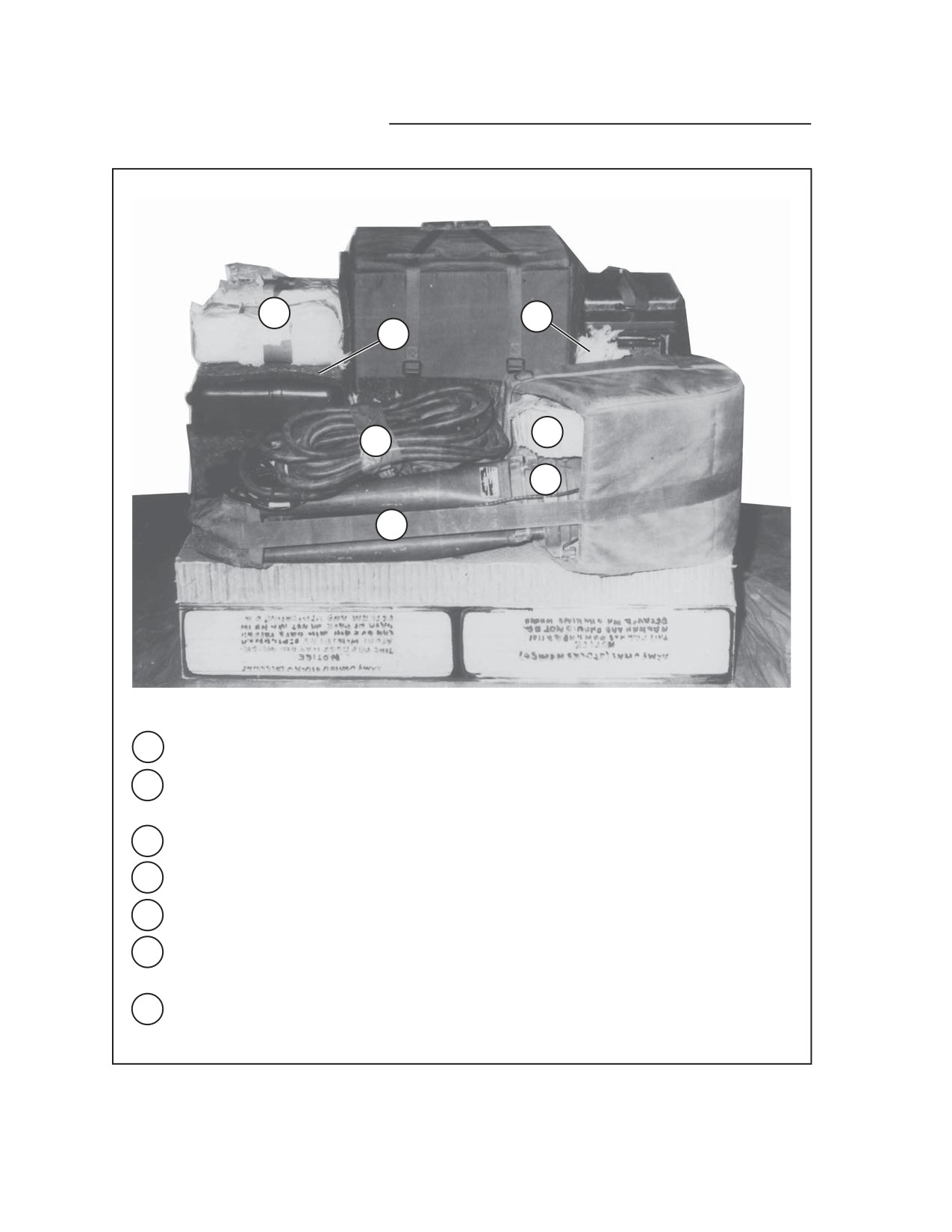
7-1. The ground laser location designator (GLLD) is rigged in an A-21 cargo
bag with one G-14 cargo parachute. Three A-7A straps are also needed to secure
equipment within the container to the skid board. The GLLD components are
the tripod, night vision sight and battery, laser designator in a backpack,
batteries traversing unit and batteries, vehicle power conditioner, cables, and
collimator. Four cases of rations are dropped with the GLLD.
PREPARING SKID BOARDS
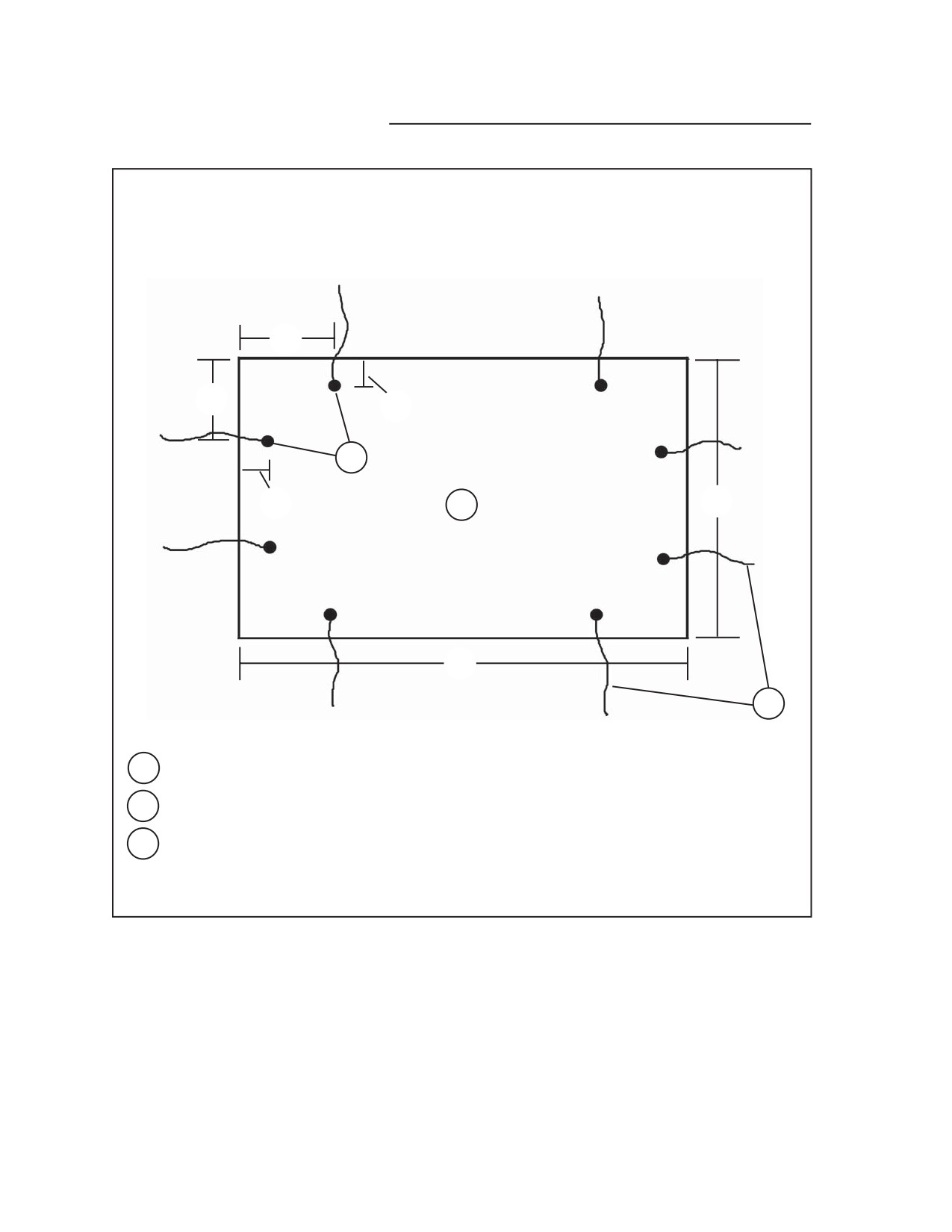
7-2. Prepare two skid boards as shown in Figure 7-1.
PLACING HONEYCOMB AND TOP SKID BOARD
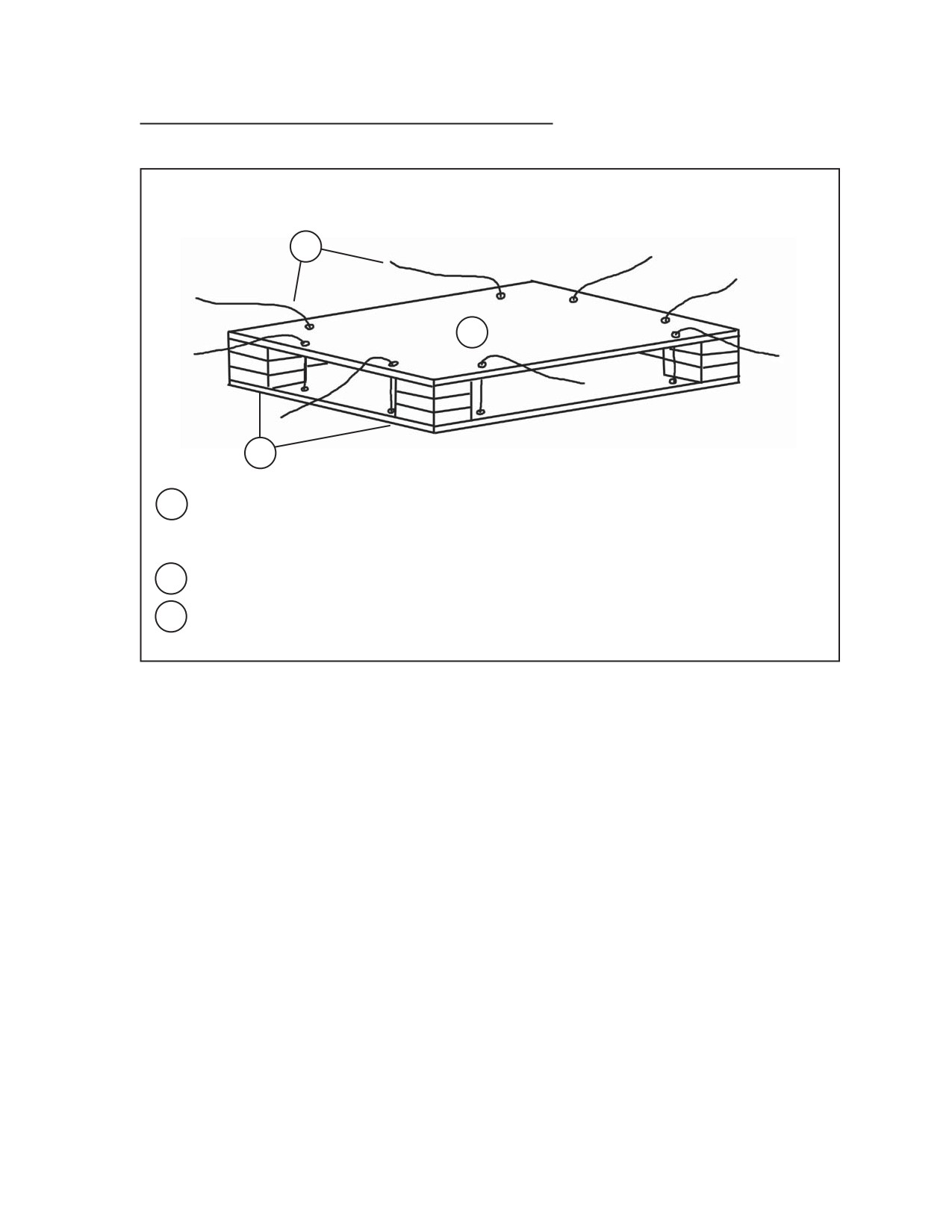
7-3. Place honeycomb and top skid board as shown in Figure 7-2.
RIGGING GLLD
7-4. Rig the GLLD according to Figure 7-3.
INSTALLING PARACHUTE
7-5. Install the G-14 cargo parachute according to Chapter 5.
MARKING RIGGED LOAD
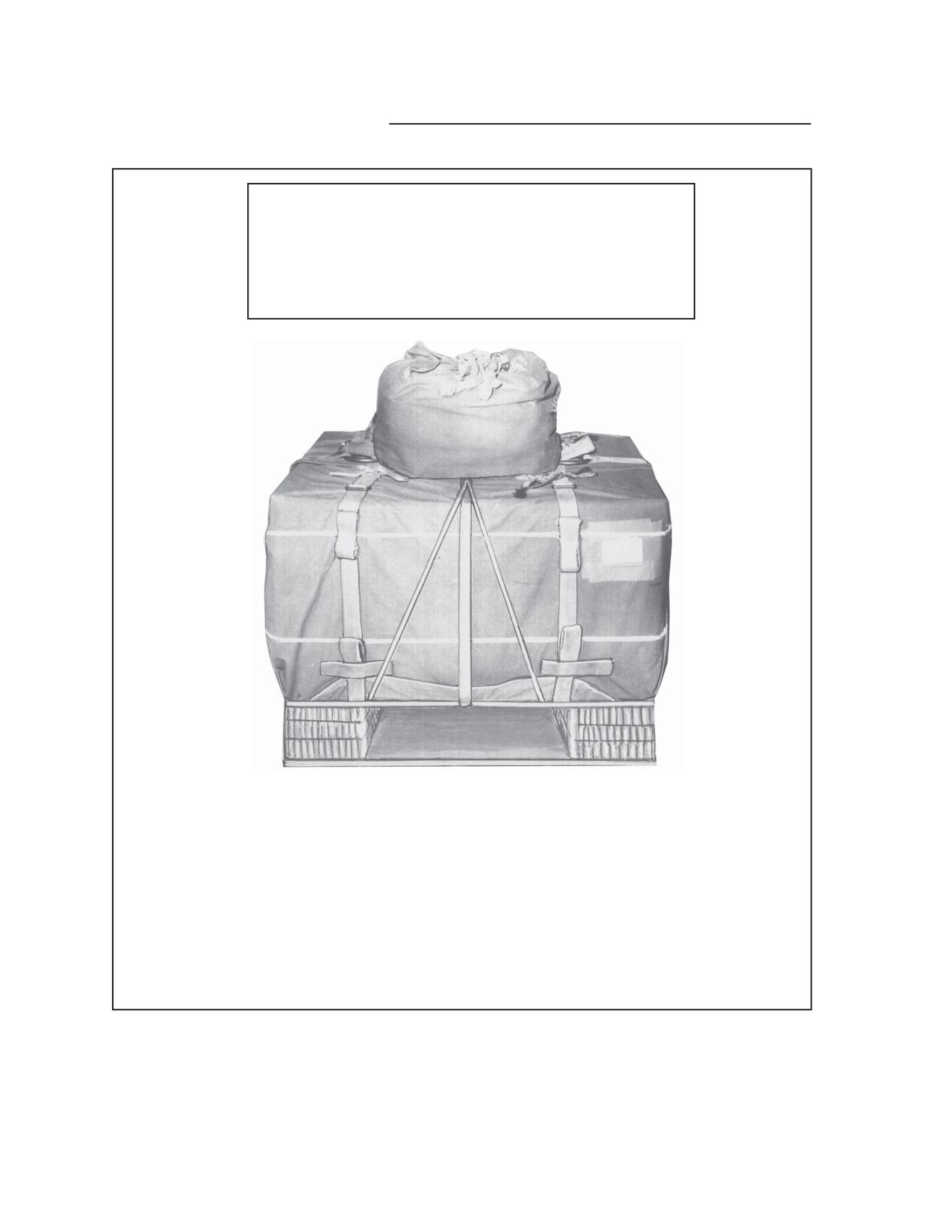
7-6. Mark the rigged load according to Paragraph 1-5 using the data given in
Figure 7-4. If the load varies from the one shown in Figure 7-4, recompute the
rigged load data.
EQUIPMENT REQUIRED
7-7. Use the equipment listed in Table 7-1 to rig the load shown in Figure 7-4.
2 September 2005
7-1
FM 4-20.103/MCRP 4-11.3C/TO 13C7-1-11
NOTES:
1. This drawing is not drawn to scale.
2. All dimensions are given in inches.
3. The skid board is ramp-compatible, NOT CVRS compatible.
9
9
1
2
1
1
30
42
3
1
Cut two 3/4- by 30- by 42-inch pieces of plywood.
2
Drill eight 1/2-inch holes in each piece of plywood as shown above.
3 Place one piece of plywood on a flat surface. Cut four 13-foot lengths of 1/2-inch tubular
nylon webbing. Pass a length of webbing through each set of holes in the plywood.
Figure 7-1. Skid Boards Prepared
7-2
2 September 2005
FM 4-20.103/MCRP 4-11.3C/TO 13C7-1-11
NOTE: This drawing is not drawn to scale.
3
2
1
1 Cut twelve 8- by 8-inch pieces of honeycomb. Place the honeycomb in four stacks (three
pieces each). Glue each stack together. Place a stack flush in each corner of the skid
board. Glue the stacks to the skid board.
2 Center the top skid board (prepared in Figure 7-1) on top of the honeycomb.
3 Route the lengths of webbing (Figure 7-1, step 3) through the top skid board as shown
above.
Figure 7-2. Honeycomb and Top Skid Boards Placed
2 September 2005
7-3
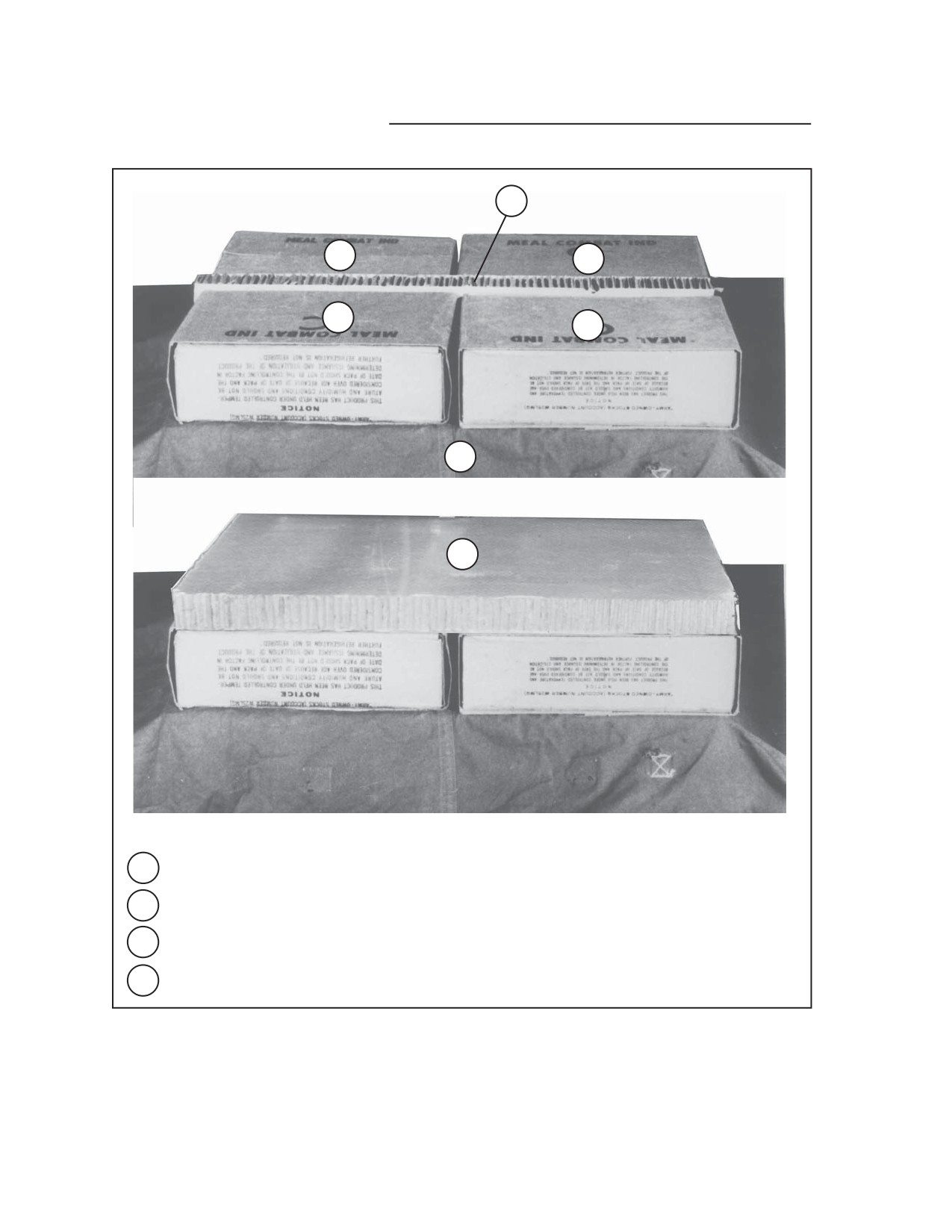
FM 4-20.103/MCRP 4-11.3C/TO 13C7-1-11
3
2
2
2
2
1
4
1
Center the cover on top of the skid board.
2
Place four cases of rations on the A-21 cover.
3
Place honeycomb between the rations.
4 Place a 30- by 42-inch piece of honeycomb on top of the rations.
Figure 7-3. GLLD Rigged
7-4
2 September 2005
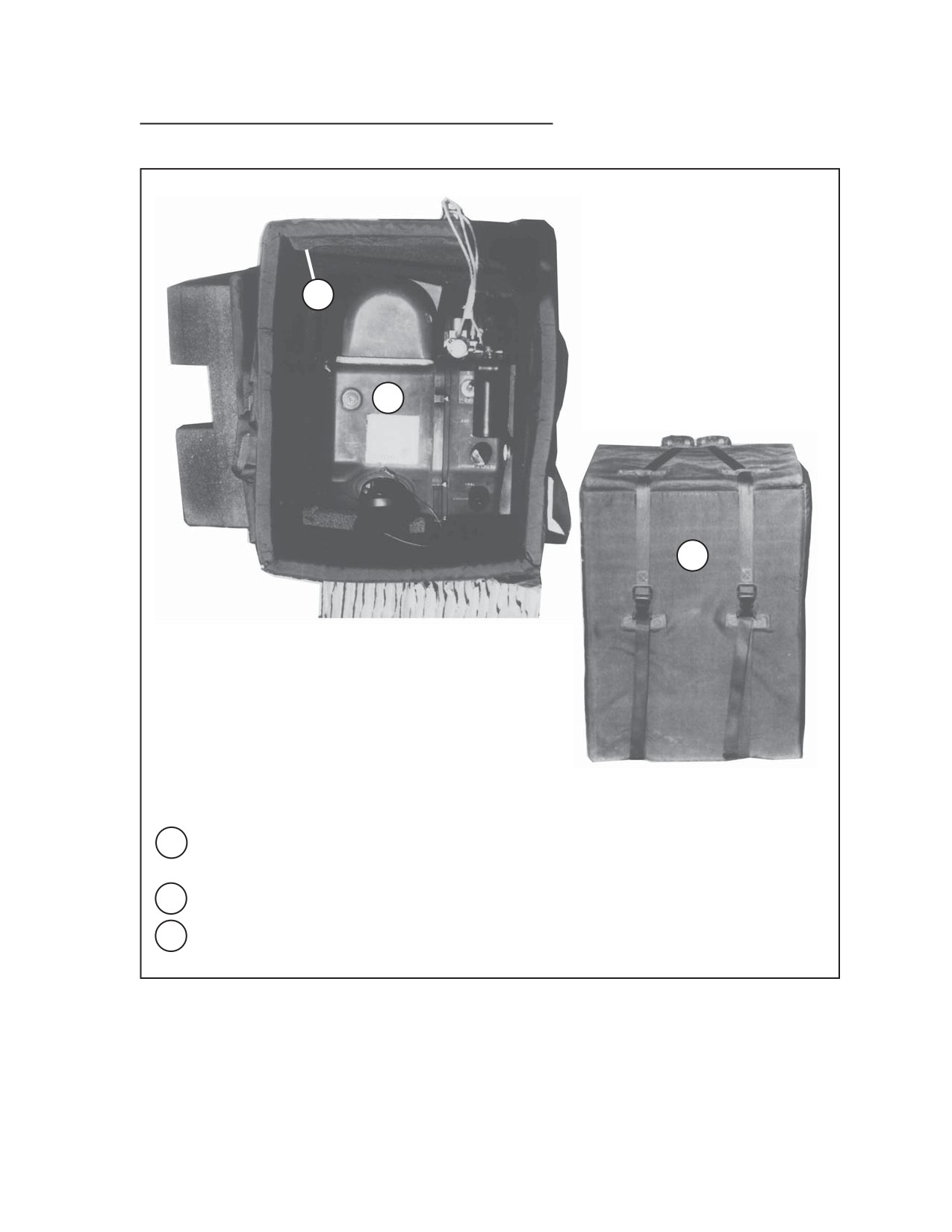
FM 4-20.103/MCRP 4-11.3C/TO 13C7-1-11
5
6
7
5
Remove the laser designator from the backpack. Cut pieces of felt to fit the bottom and
each side of the backpack. Position them in place.
6
Replace the laser designator in the backpack.
7 Close the backpack and secure the straps.
Figure 7-3. GLLD Rigged (Continued)
2 September 2005
7-5
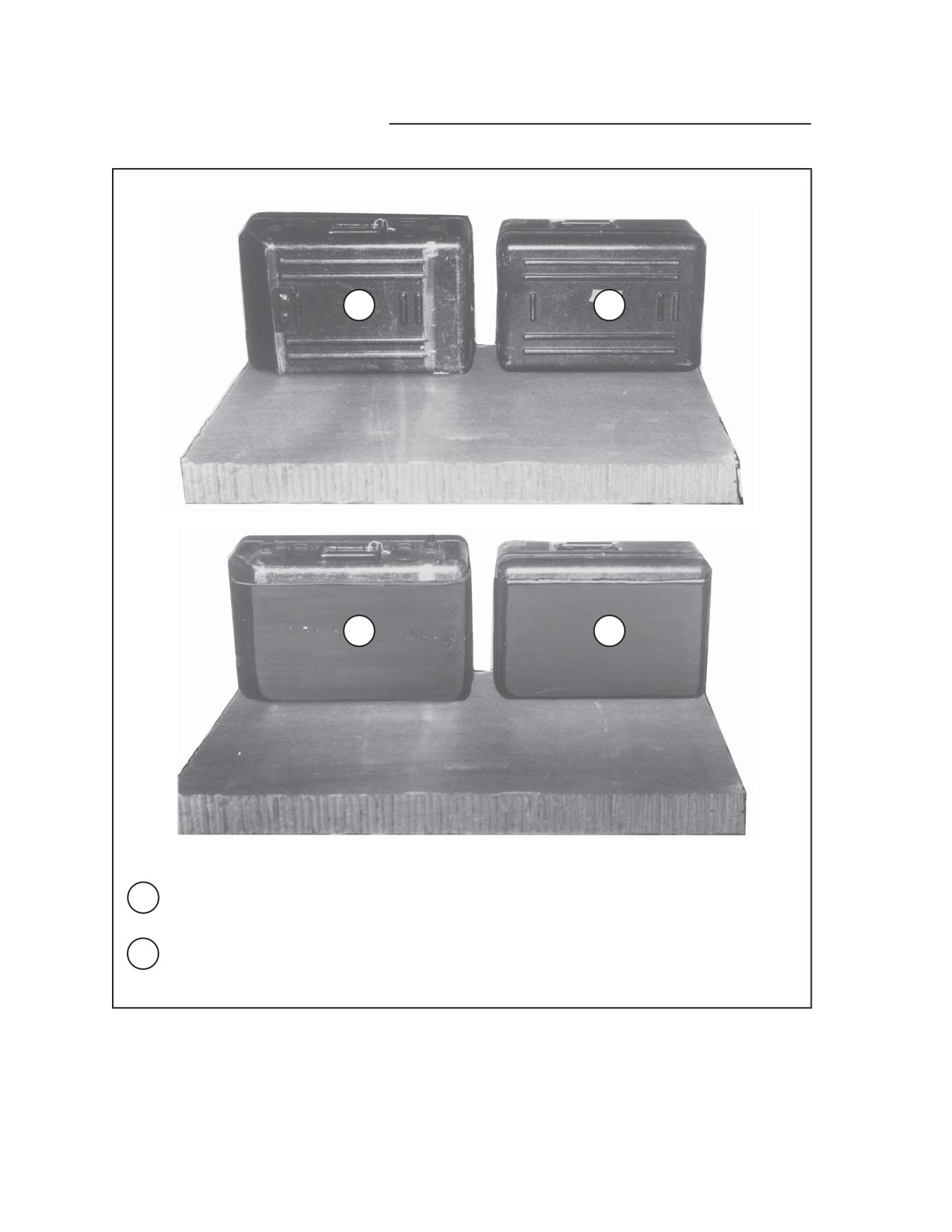
FM 4-20.103/MCRP 4-11.3C/TO 13C7-1-11
8
8
9
9
8
Place the collimator and the night sight at the rear of the 30- by 42-inch piece of honey-
comb.
9
Pad the collimator and the night sight with felt.
Figure 7-3. GLLD Rigged (Continued)
7-6
2 September 2005
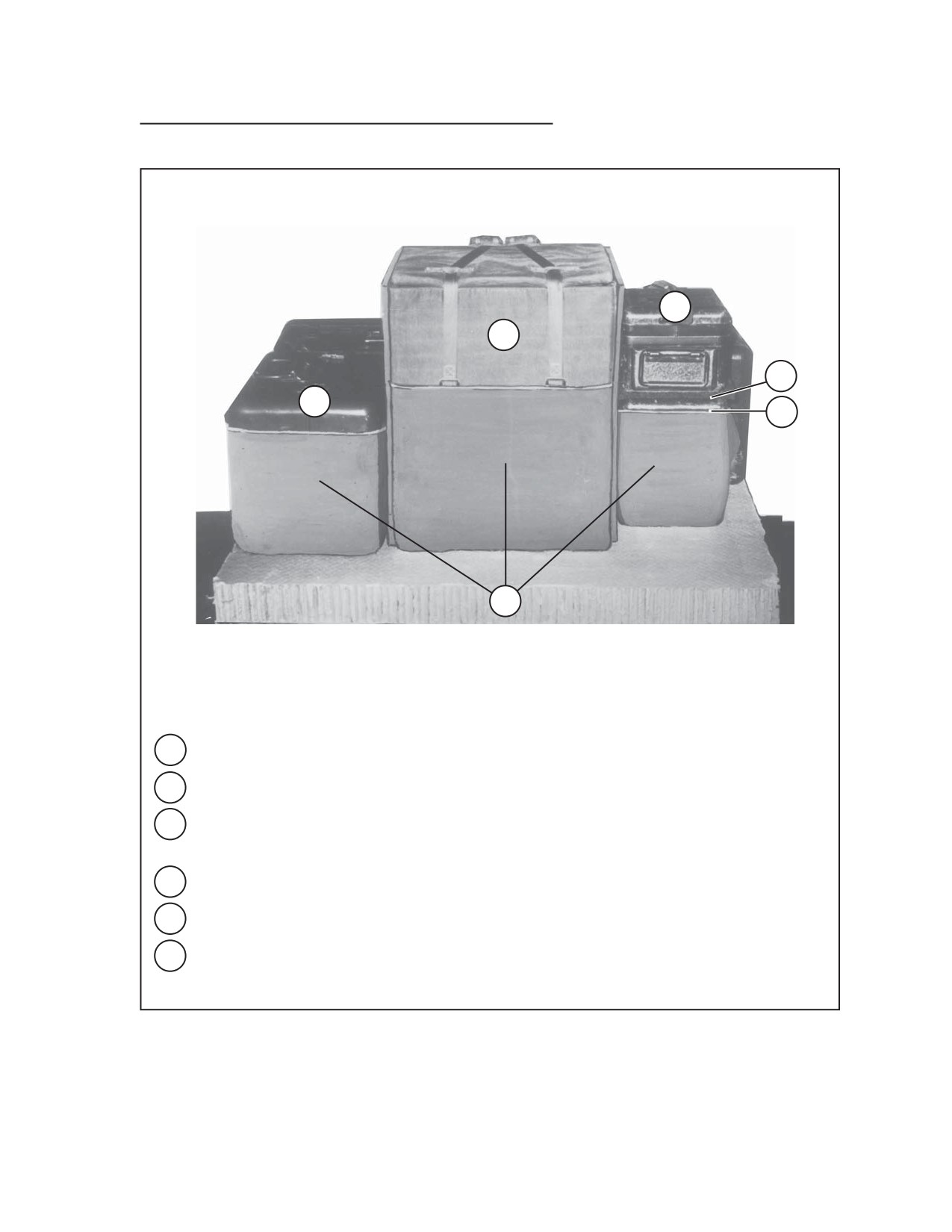
FM 4-20.103/MCRP 4-11.3C/TO 13C7-1-11
14
10
13
11
12
15
10
Place the laser designator near the center of the 30- by 42-inch piece of honeycomb.
11
Place the traversing unit on the honeycomb to the left of the laser designator.
12
Place the vehicle power conditioner on the honeycomb to the right of the laser
designator.
13
Cut and position a piece of felt to fit the top of the power conditioner.
14
Place the night vision sight batteries on top of the power conditioner.
15 Pad the laser designator, the traversing unit, and the vehicle power conditioner with
pieces of felt.
Figure 7-3. GLLD Rigged (Continued)
2 September 2005
7-7
FM 4-20.103/MCRP 4-11.3C/TO 13C7-1-11
17
21
16
18
20
19
22
16
Place a piece of felt on top of the traversing unit.
17
Wrap the traversing unit batteries in cellulose wadding. Tape the wadding in place.
Place the wrapped batteries on top of the traversing unit.
18
Place a 6- by 6-inch piece of honeycomb on the tripod handle.
19
Place the tripod on the front of the 30- by 42-inch piece of honeycomb.
20
Roll up the cable and tape it together. Place the cable on top of the tripod.
21
Wrap extra batteries and small parts in cellulose wadding and tape the wadding in
place. Place these items on the load.
22 Pass an A-7A airdrop cargo sling strap around the lower layer of equipment and fasten
the strap.
Figure 7-3. GLLD Rigged (Continued)
7-8
2 September 2005
FM 4-20.103/MCRP 4-11.3C/TO 13C7-1-11
25
27
24
26
25
28
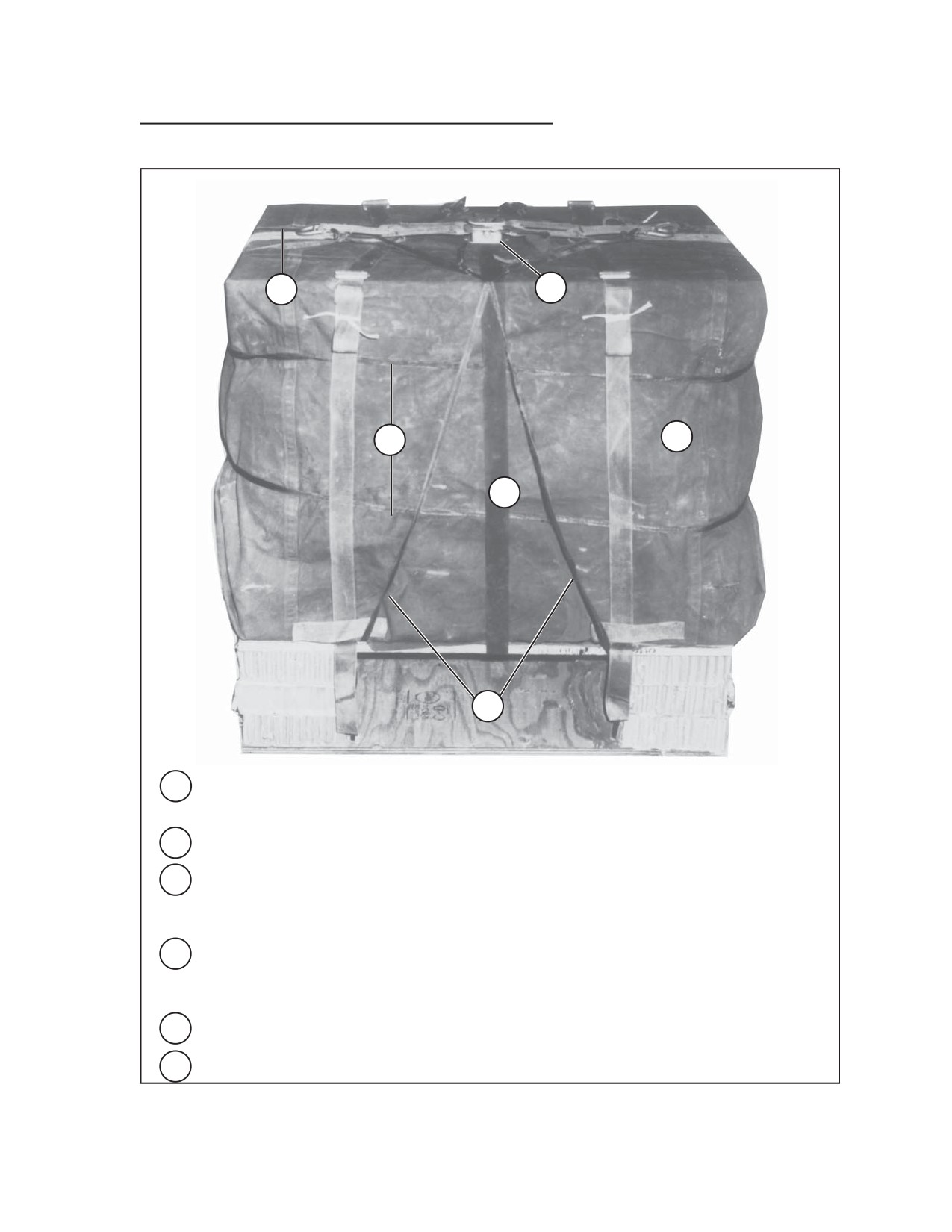
23 Using scrap pieces of honeycomb and other padding material, square off the top of the
load. Place a 3/4- by 30- by 42-inch piece of plywood on top of the load (not shown).
24 Fold the cover over the load. Fold under the excess cover.
25 Using two A-7A straps, route one strap between the skid board and the second piece of
plywood from front to rear. Bring the strap over the load and secure it. Repeat step for
the other strap, but route it from left to right.
26 Using two 14-foot lengths of 1/2-inch tubular nylon webbing, route one length around
the load about one-third of the way up the load. Secure it tight with a trucker’s hitch
knot. Repeat step for second length two-thirds of the way up the load.
27 Finish closing the container according to Figure 6-2.
28 Secure the skid board to the load according to Figure 6-5.
Figure 7-3. GLLD Rigged (Continued)
2 September 2005
7-9
FM 4-20.103/MCRP 4-11.3C/TO 13C7-1-11
CAUTION
Make the final rigger inspection required by FM 4-20.102/
NAVSEA SS400-AB-MMO-010/TO 13C7-1-5 and AR 59-
4/OPNAVINST 4463.24C/AFJ 13-210(I)/MCO 13480.1B
before the load leaves the ri
gging site.
RIGGING LOAD DATA
Weight with parachute
395-pounds
Height with parachute
42-inches
Width
42-inches
Length
30-inches
Parachute
G-14
Figure 7-4. GLLD Rigged In An A-21 Cargo Bag For Low-Velocity Airdrop
7-10
2 September 2005
FM 4-20.103/MCRP 4-11.3C/TO 13C7-1-11
Table 7-1. Equipment Required for Rigging the GLLD in an
A-21 Cargo Bag for Low-Velocity Airdrop
National Stock
Item
Quantity
Number
8040-00-273-8713
Adhesive, paste, 1-gallon
As required
1670-00-242-9173
Bag, cargo, A-21
1
8305-00-242-3593
Cloth, cotton duck, 60-inches
As required
4020-00-240-2146
Cord, nylon, type III
As required
8135-00-664-6958
Cu shioning material, packaging, cellulose
As required
wadding
As required
8305-00-958-3685
Felt, 1/2-inch thick
2 sheets
1670-00-753-3928
Pad, energy-dissipating, honeycomb
1
1670-00-999-2658
Parachute, cargo, G-14
3
5530-00-128-4981
Plywood, 3/4- by 30- by 42-inch
1
1670-00-251-1153
Sling assembly, cargo, airdrop, A-7A
As required
7510-00-266-6710
Tape, masking, 2-inch
As required
8310-01-102-4478
Thread, cotton, ticket number 8/7
Webbing:
As required
8305-00-268-2411
Cotton, 1/4-inch, type I
As required
8305-00-082-5752
Nylon, tubular, 1/2-inch
2 September 2005
7-11
This page intentionally left blank.
FM 4-20.103/MCRP 4-11.3C/TO 13C7-1-11
PART FOUR
RIGGING A-22 CONTAINER LOADS
Chapter 8
General Information and Procedures
A-22 CARGO BAG ASSEMBLY
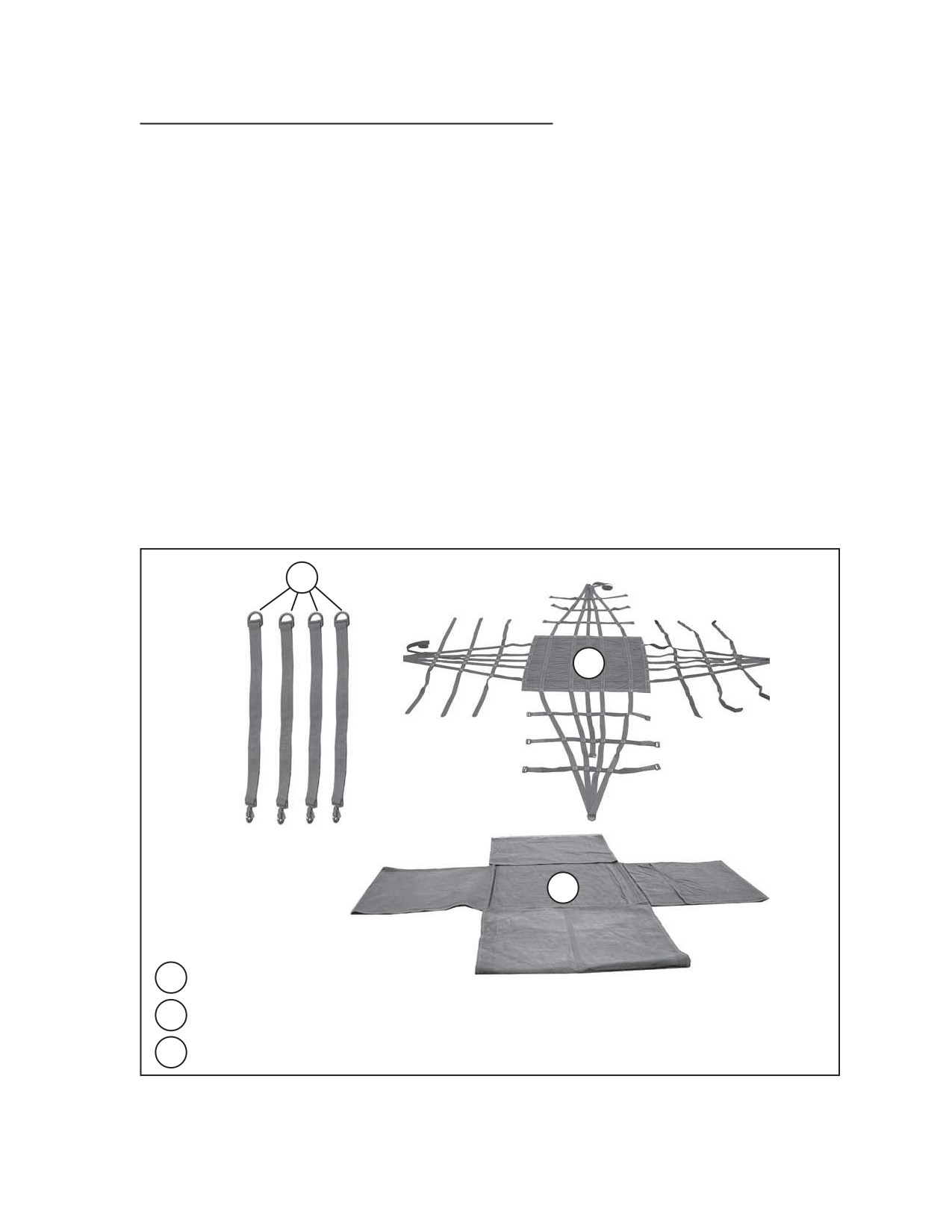
8-1. The A-22 cargo bag assembly is an adjustable cotton duck cloth and nylon
webbing container. It consists of a sling assembly, a cover, and four suspension
webs as shown in Figure 8-1. The load may be rigged with or without the cover.
2
1
3
1 Sling assembly with scuff pad.
2 Suspension web.
3 Cover.
Figure 8-1. A-22 Cargo Bag
2 September 2005
8-1
FM 4-20.103/MCRP 4-11.3C/TO 13C7-1-11
A-22 SKID BOARD
CAUTION
When the skid board is locally fabricated, AC grade ply
wood must be used. Make sure the smooth side is facing
down on the rollers.
8-2. The skid board is 1- by 48- by 48-inches for both low- and high-velocity
drops. When dropping low-velocity loads weighing 501 to 1,600 pounds, a
3/4-inch thick skid board may be used. The skid board has sixteen 1/2-inch
holes (four in each side), which are used to secure the skid board to the load.
The skid board ties are made with 1/2-inch (or 5/8-inch) tubular nylon webbing.
The length will vary according to the layers of honeycomb. Steel strapping will
not be used to secure the skid board to the load unless specific rigging procedures
authorize it.
NOTE: The steel strapping must not touch the aircraft’s rollers.
A-22 CONTAINER LIMITATIONS
8-3. The A-22 load has a weight range of 501 to 2,200 pounds, excluding the
weight of the parachute. Ensure the load weighs the minimum of 28-pounds
per square foot. The height of the load with parachute will not exceed 83 inches
for C-130 aircraft or 101 inches for C-17 aircraft unless specific rigging procedures
authorizes it. The width of the load must not exceed 48 inches.
NOTES:
1. If the load is smaller than the length of the skid board, place honeycomb filler
sheets vertically inside the A-22 container. The length of the A-22 container should
equal the length of the skid board. This prevents the A-22 containers from shifting
when the loads are restrained in the aircraft.
2. Any overhang must be placed to the front or rear of the container; overhang to the
left or right will not fit in the CVRS or logistic rails.
DOUBLE A-22 CARGO BAG
8-4. The double A-22 cargo bag is made using two A-22 cargo bags. The weight
range is 900 to 2,200 pounds. The skid board is constructed of a 1- by 48- by 96
inch piece of plywood. When dropping loads weighing 900 to 1,600 pounds, a 3/
4-inch thick skid board may be used. The skid board has twenty-four 1/2-inch
holes used for skid board ties. Ensure the load weighs the minimum of 28
pounds per square foot. This load will also be rigged with the double “X” skid
board ties.
8-2
2 September 2005
FM 4-20.103/MCRP 4-11.3C/TO 13C7-1-11
CAUTION
When rigging double A-22 loads, make sure cotton and
nylon sling assemblies are not mixed.
STRETCH A-22 CARGO BAG
8-5. The stretch A-22 cargo bag is made using two A-22 cargo bags. The weight
range is 675 to 2,200 pounds. The skid board is constructed of a 1- by 48- by 72
inch piece of plywood. When dropping loads weighing 675 to 1,600 pounds, a 3/
4-inch thick skid board may be used. The skid board has twenty-four 1/2-inch
holes used for skid board ties. Ensure the load weighs the minimum of 28
pounds per square foot. This load will also be rigged with the double “X” skid
board ties.
ASSEMBLY LINE RIGGING
8-6. When assembly line rigging is used for A-22 loads, only five stations are
needed. FM 10-500-9 covers setting up the rigging line and stations. The five
stations are laying out containers and preparing base, positioning load, rigging
load, installing parachute, and inspecting the rigged load.
INSPECTING LOAD
8-7. The A-22 load must be inspected by a qualified rigger. While being rigged,
this load should be supervised or rigged by a parachute rigger. DD Form 1748
1 (Joint Airdrop Inspection Record (Container)) must be completed before
airdrop.
PARACHUTES USED
8-8. There are two types of parachutes used for A-22 loads, depending on whether
the load is being dropped for low- or high-velocity. Each category has a primary
and alternate parachute. The alternate should be used only when the primary
parachute is not available.
a. LOW-VELOCITY DROPS.
(1) Primary Parachute. The G-12E cargo parachute is the primary
parachute used for A-22 loads for low-velocity airdrop. It is rated for
501 to 2,200 pounds of suspended weight. A 68-inch pilot parachute is
installed on the G-12E cargo parachute to deploy it. Other parachutes
may be used to deploy the G-12E cargo parachute; however, the specific
manual must give the procedures. TM 10-1670-281-23&P/TO 13C5-
32-2 covers the inspection and packing of the G-12E cargo parachute
and the 68-inch pilot parachute.
NOTE: Suspended weight is the total weight of the load without the parachute at
tached.
2 September 2005
8-3
FM 4-20.103/MCRP 4-11.3C/TO 13C7-1-11
(2) Alternate Parachute. The G-14 cargo parachute is the alternate
parachute used for A-22 loads for low-velocity airdrop. It is used in a
cluster of two or three parachutes. The two clustered parachute is used
for loads containing 501 to 1,000 pounds of suspended weight and the
three clustered parachute is used for loads containing, 1,001 to 1,500
pounds of suspended weight. TM 10-1670-282-23&P/TO 13C5-30-2
covers the inspection and packing of the G-14 cargo parachute.
b. HIGH-VELOCITY DROPS.
(1) Primary Parachute. The 26-foot, high-velocity cargo parachute
is the primary parachute used for A-22 airdrops high-velocity. The
parachute is rated from 501 to 2,200 pounds. TM 10-1670-276-23&P/
TO 13C5-29-2/NAVAIR 13-1-29 covers the inspection and packing of
the parachute.
(2) Alternate Parachute. The 22-foot cargo extraction parachute is
the alternate parachute used for A-22 high-velocity airdrops. It is rated
for 501- to 2,200 pounds of suspended weight. TM 10-1670-279-23&P/
TO 13C5-27-2/NAVAIR 13-1-28 covers the inspection and packing of
the parachute.
INSTALLING PARACHUTES
8-9. Parachutes should be installed as follows:
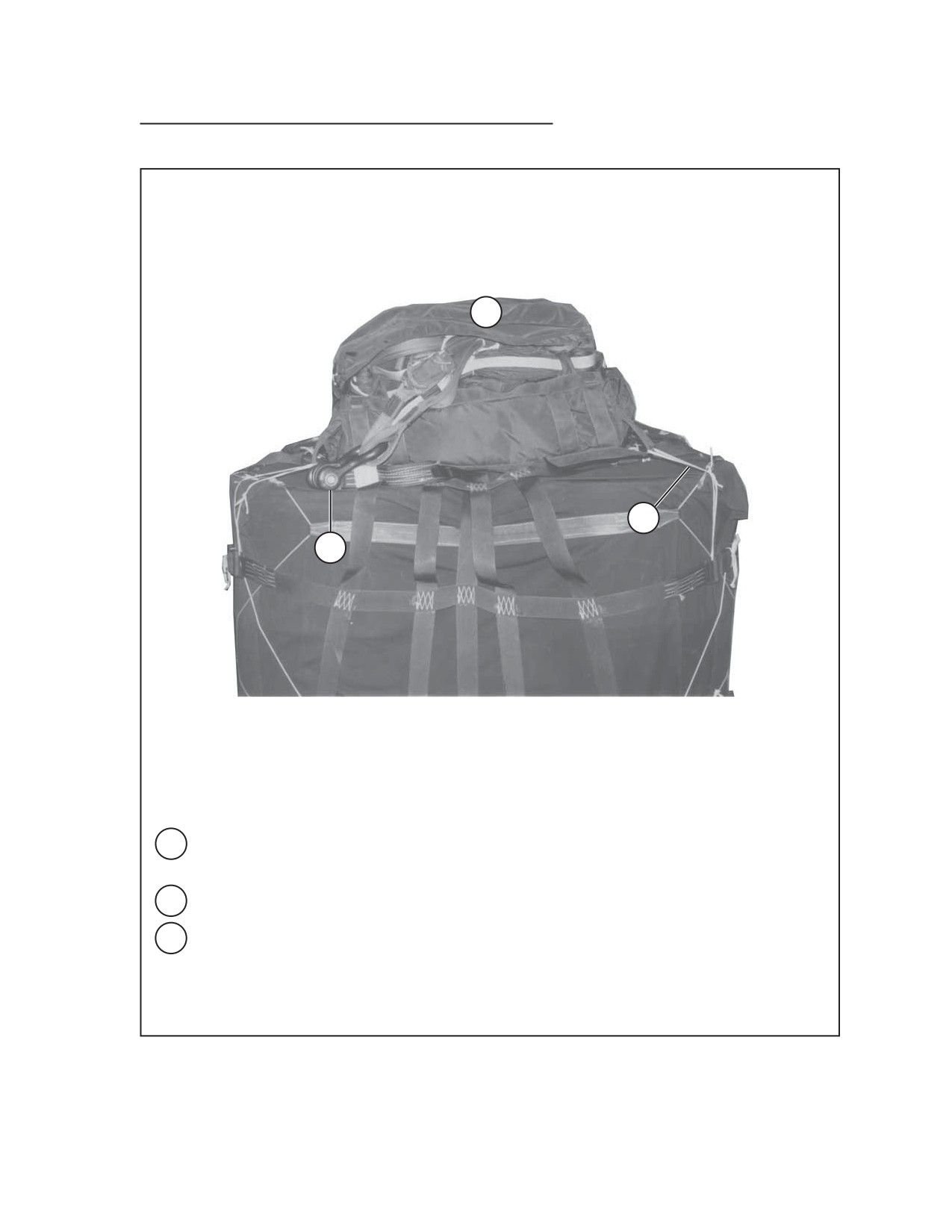
a. Install the G-12E cargo parachute as shown in Figure 8-2.
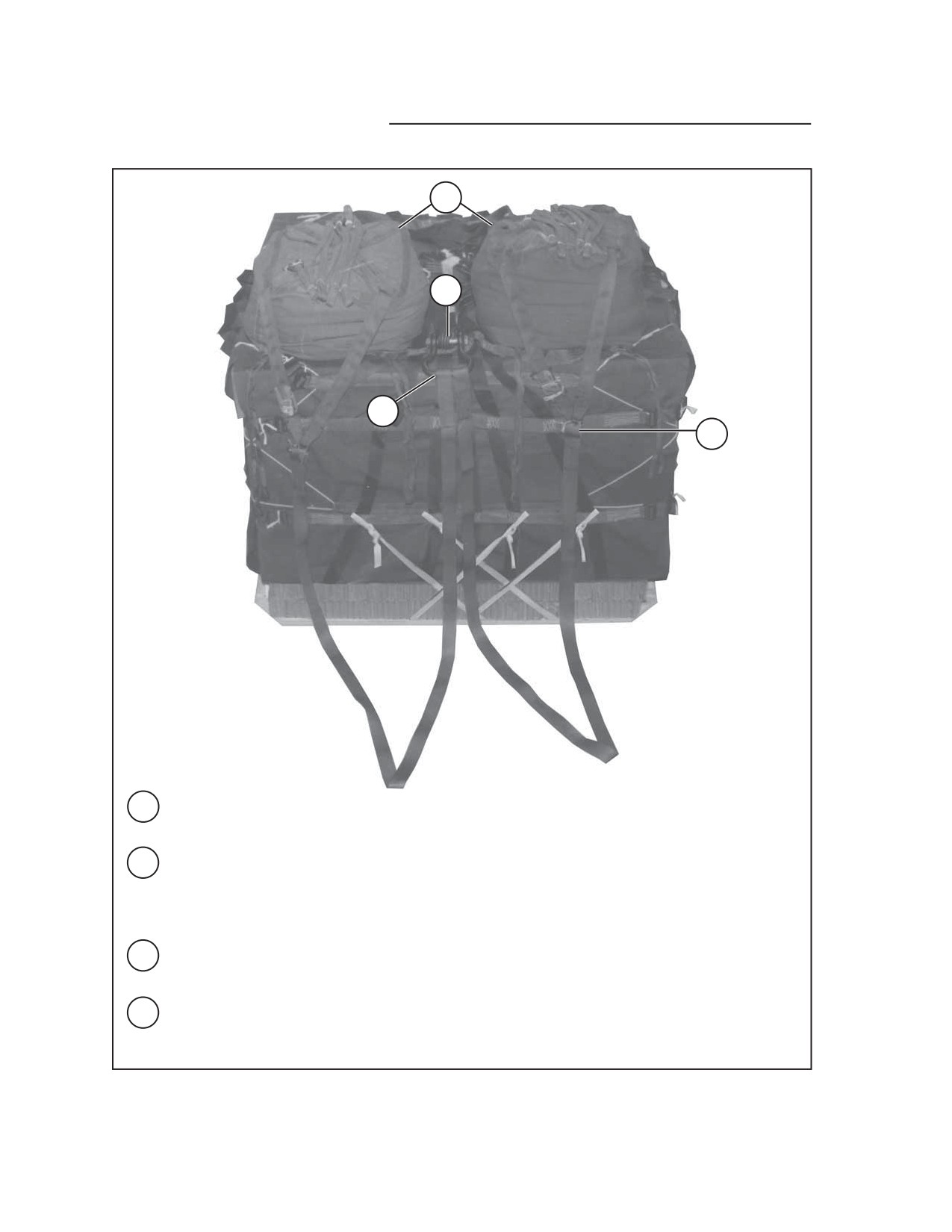
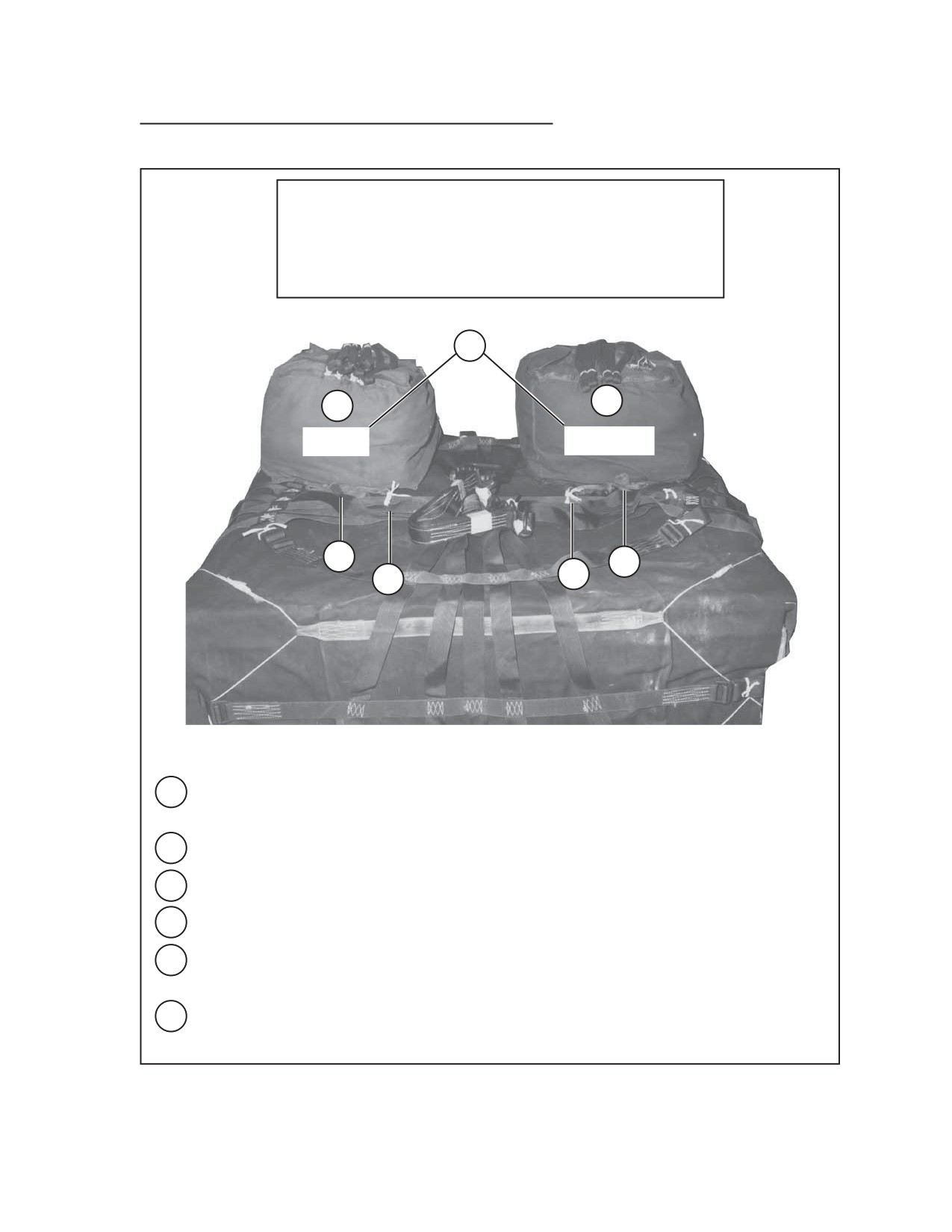
b. Install two G-14 cargo parachutes as shown in Figure 8-3.
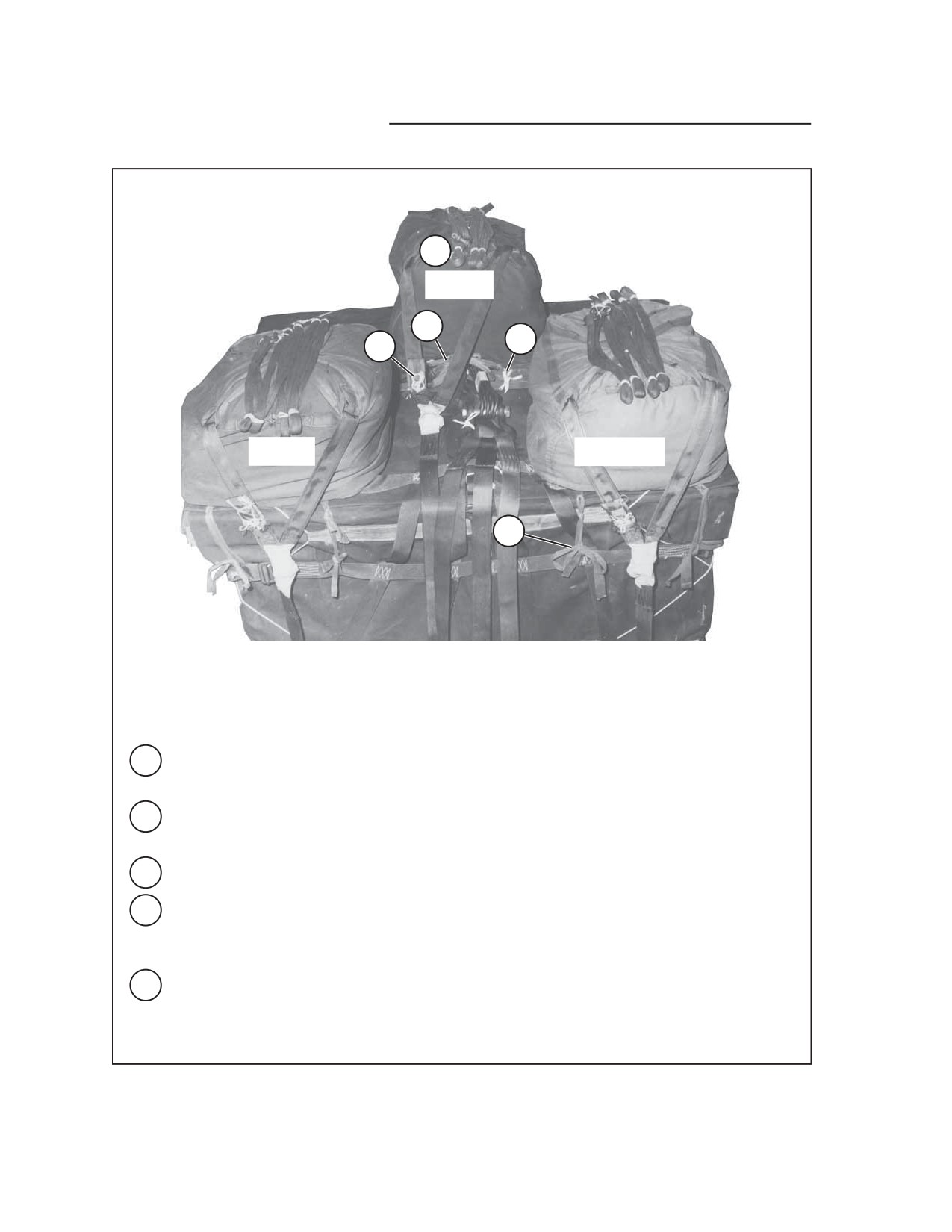
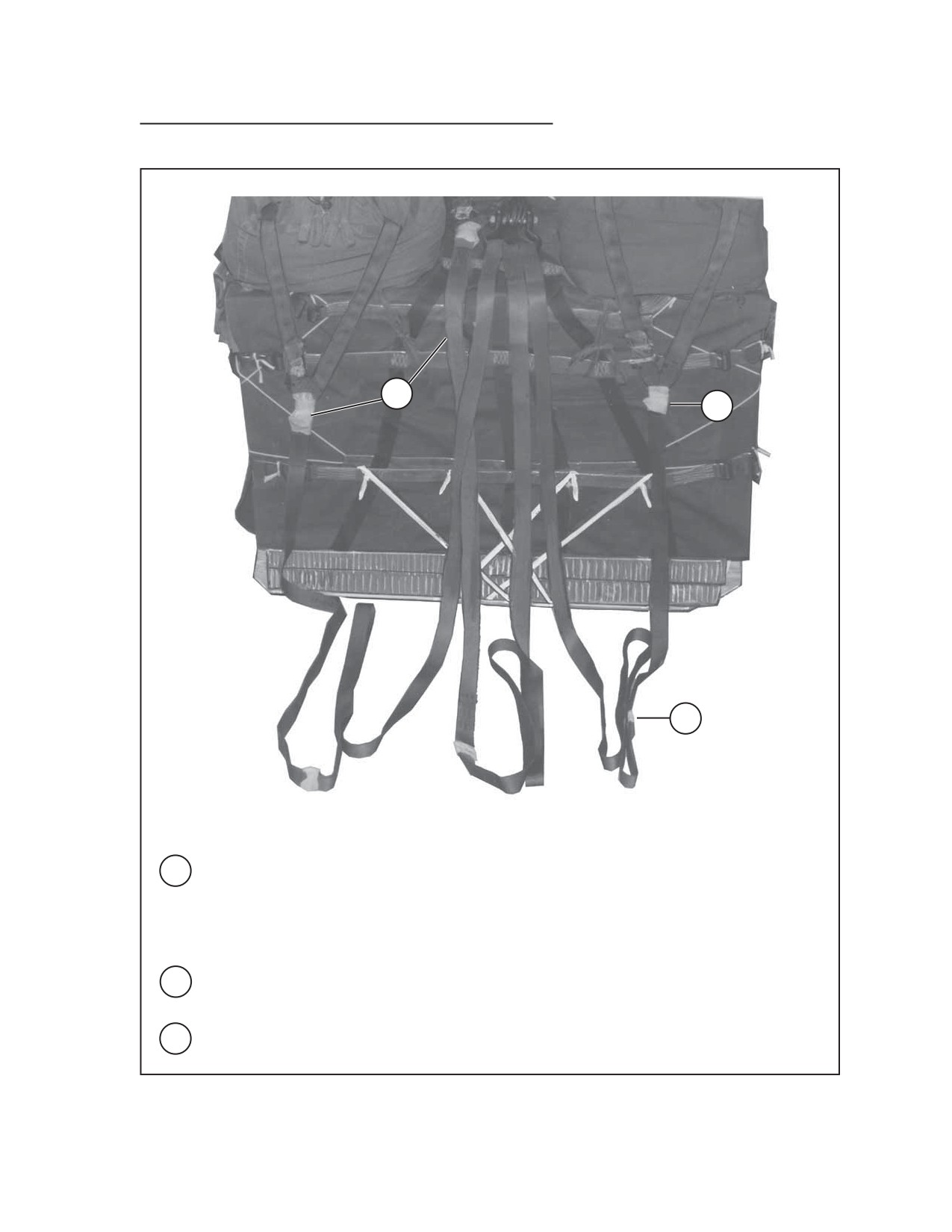
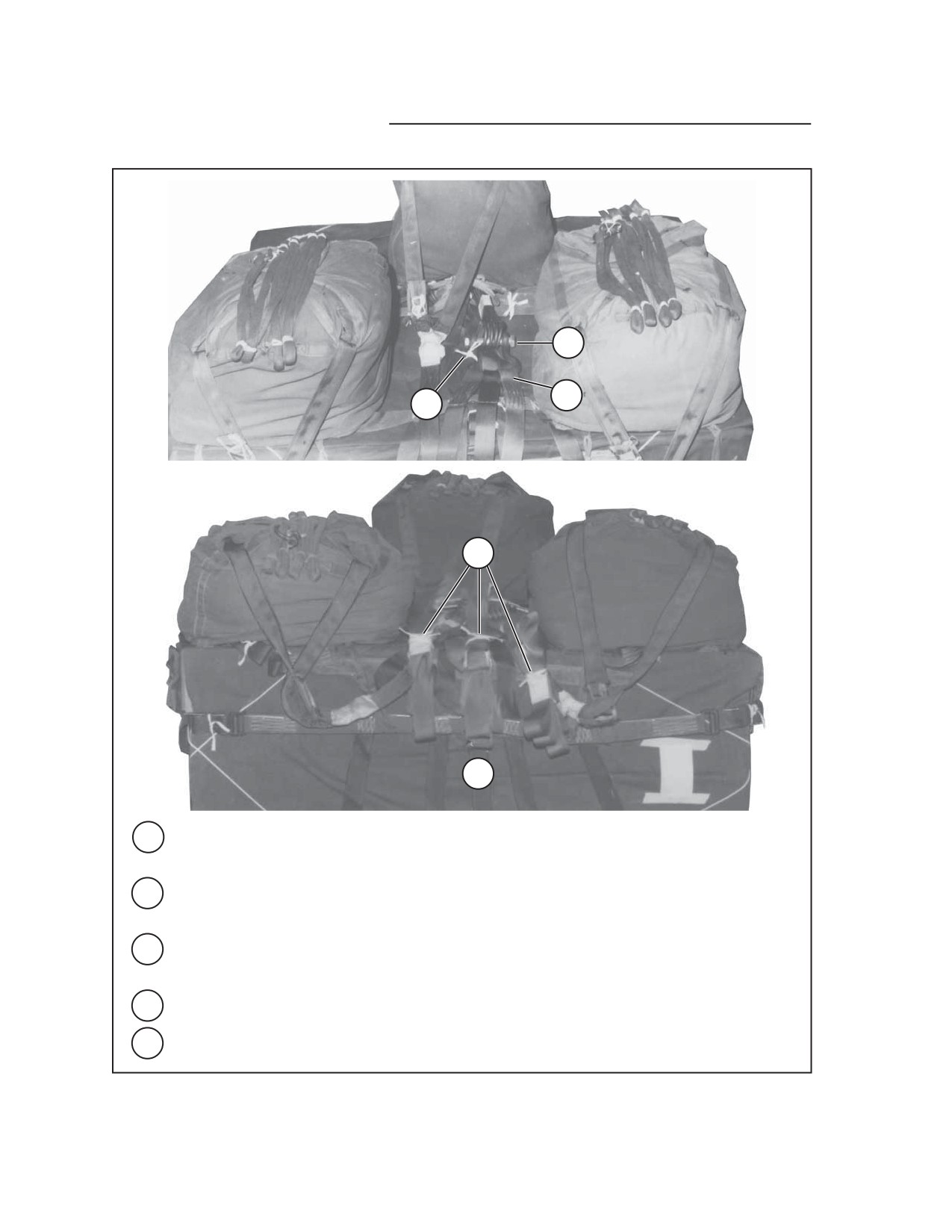
c. Install three G-14 cargo parachutes as shown in Figure 8-4.
d. Install the 26-foot, high-velocity cargo parachute as shown in Figure 8
5.
e. Install the 22-foot, cargo extraction parachute as shown in Figure 8-6.
8-4
2 September 2005
FM 4-20.103/MCRP 4-11.3C/TO 13C7-1-11
1
FRONT
REAR
3
2
NOTE: Any overhang must be placed to the front or rear of the container; overhang to
the left or right will not fit in the CVRS or logistic rails.
1
Place the G-12E cargo parachute on the load. When the front and rear have been
designated, the parachute sides should run parallel to the front and rear.
2
Place the four D-rings of the suspension webs on the clevis bolt. Replace the nut.
3 Secure the parachute to the load using one turn single of type I, 1/4-inch cotton web
bing.
NOTE: Ensure the 68-inch pilot parachute is attached and secured to the G-12E cargo
parachute according to TM 10-1670-281-23&P/TO 13C5-32-2/NAVAIR 13-1-32.
Figure 8-2. G-12E Cargo Parachute Installed
2 September 2005
8-5
FM 4-20.103/MCRP 4-11.3C/TO 13C7-1-11
1
4
3
2
1 Place two G-14 cargo parachutes on the front of the load with the parachutes side by
side.
2 Remove the pin from the G-14 clevis assembly on the risers. Place the risers of one
parachute on the bell portion of a single clevis. Place the end of a 120-inch connector
strap on the clevis. Replace the clevis pin and the cotter pin. Repeat for the other
parachute.
3
Place the free end of the 120-inch connector straps on the bell portion of a cargo suspen
sion clevis.
4 Place the four suspension web D-rings on the bolt of the clevis. Replace nut.
Figure 8-3. Two G-14 Cargo Parachutes Installed
8-6
2 September 2005
FM 4-20.103/MCRP 4-11.3C/TO 13C7-1-11
7
7
5
6
8
5
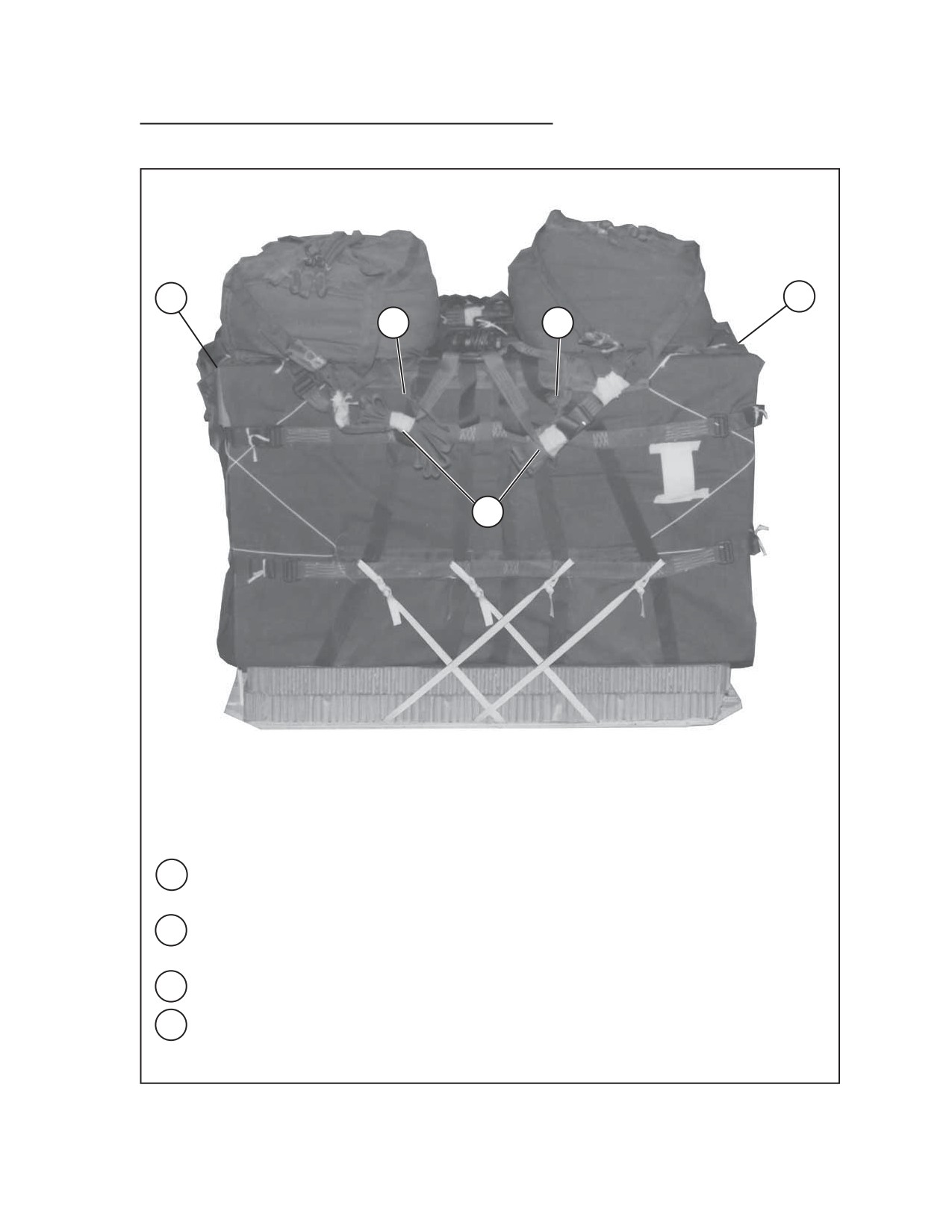
Tie the front center tie tapes of one parachute to a convenient point on the front of the
load.
6
Tie the front center tie tapes of the other parachute to a convenient point on the front of
the load.
7
Tie the front outside tie tapes of each parachute to a convenient point on the load.
8 Fold the excess connector strap and secure the folds with tape. Tie the folds to the front
of the load with a double length of type I, 1/4-inch cotton webbing.
Figure 8-3. Two G-14 Cargo Parachutes Installed (Continued)
2 September 2005
8-7
FM 4-20.103/MCRP 4-11.3C/TO 13C7-1-11
11
10
9
10
REAR
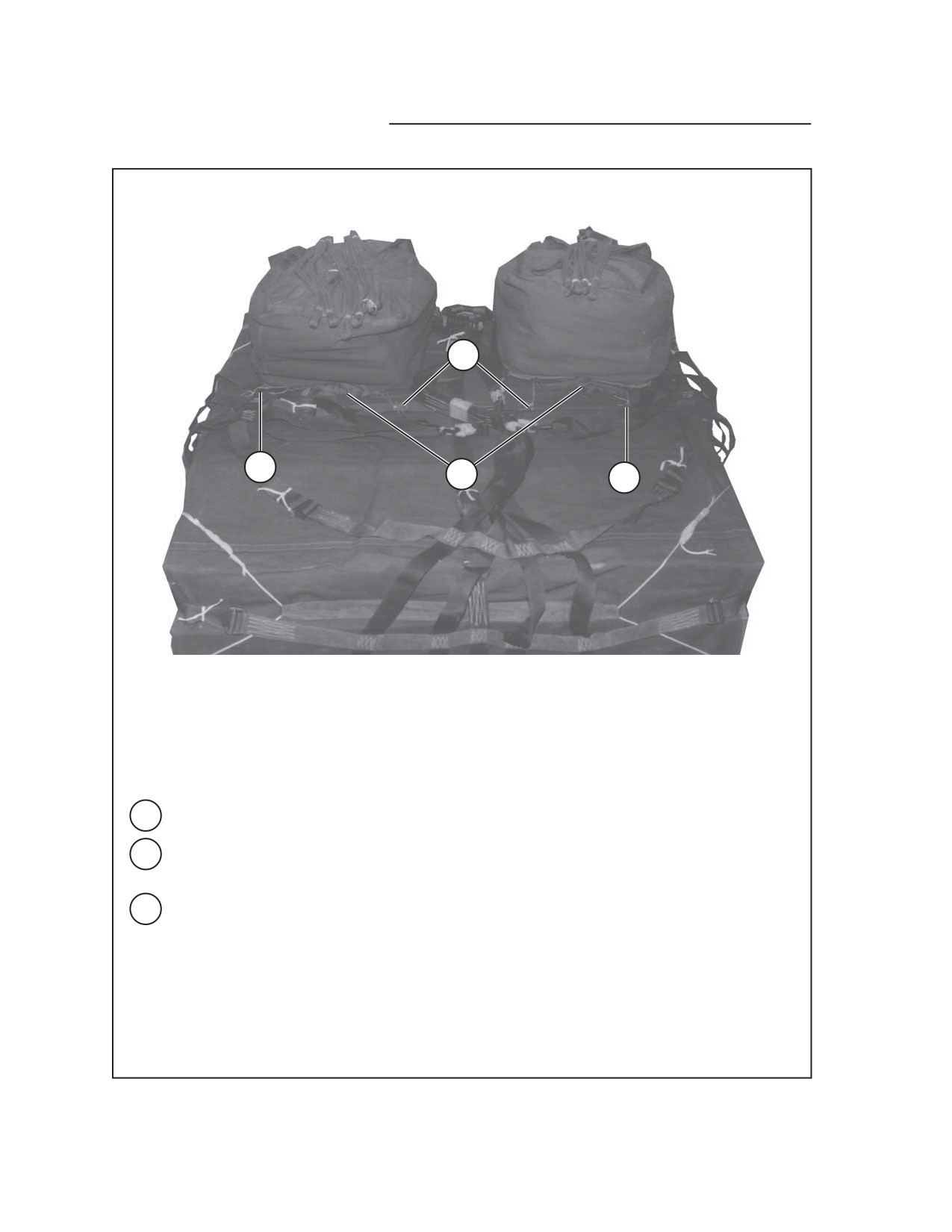
9 Tie the rear tapes of each parachute together.
10 Pass a length of ticket number 8/7 cotton thread through the outside tie loop of each
parachute. Tie the ticket number 8/7 cotton thread to a convenient point on the load.
11 Pass a length of ticket number 8/7 cotton thread through the inside tie loop of each
parachute. Tie the ticket number 8/7 cotton thread to a convenient point on the load.
NOTES:
1. Two 9-foot (2-loop) slings may be used in place of the two 120-inch connector
straps. However, one sling and one strap may not be used.
2. Tape the clevis pin and other sharp edges.
Figure 8-3. Two G-14 Cargo Parachutes Installed (Continued)
8-8
2 September 2005
FM 4-20.103/MCRP 4-11.3C/TO 13C7-1-11
CAUTION
The cluster of three G-14 cargo parachutes will be used
with single airdrop loads only and not with multiple loads.
2
1
1
FIRST
SECOND
3
4
6
5
REAR
1 Place two G-14 cargo parachutes equipped with nonbreakaway static lines on top of the
load even with the front of the A-22 cargo bag.
2 Designate the parachutes as first and second.
3 Tie the left rear tie tapes of the first parachute to the right tie loop.
4 Tie the right rear tie tape of the second parachute to the left tie loop.
5 Tie the left rear corner of the first parachute to the A-22 sling assembly with a double
length of type I, 1/4-inch cotton webbing.
6 Tie the right rear corner of the second parachute to the A-22 sling assembly with a
double length of type I, 1/4-inch cotton webbing.
Figure 8-4. Three G-14 Cargo Parachutes Installed
2 September 2005
8-9
FM 4-20.103/MCRP 4-11.3C/TO 13C7-1-11
7
THIRD
9
10
11
FIRST
SECOND
8
FRONT
7 Center a third G-14 cargo parachute with a nonbreakaway static line behind the first
and second parachutes.
8 Tie the three outside tie tapes of the first and second parachutes and the two outside tie
tapes of the third parachute to convenient points on the load.
9 Tie the front deployment bag tie tapes of the third parachute together.
10 Pass one end of a double length of type I, 1/4-inch cotton webbing around the tie tapes
and the upper lateral strap of the A-22 sling assembly. Tie the ends of the type I, 1/4-
inch cotton webbing together with a surgeon’s knot and locking knot.
11 Tie the opposite side of the deployment bag of the third parachute as described in step
10.
Figure 8-4. Three G-14 Cargo Parachutes Installed (Continued)
8-10
2 September 2005
FM 4-20.103/MCRP 4-11.3C/TO 13C7-1-11
14
13
12
12
Form a 180-inch riser extension by connecting a 60-inch connector strap and a 120-inch
connector strap with an L-bar connector link. Cover the L-bar connector link with tape.
NOTE: A 16-foot (2-loop), type XXVI nylon webbing sling is an authorized substitute.
A medium clevis must be used to connect the sling to the G-14 risers.
13
Connect the risers of the first parachute to one end of the 180-inch riser extension with
a G-14 clevis assembly. Cover the G-14 clevis assembly with tape.
14 Repeat steps 12 and 13 for the second and third parachutes.
Figure 8-4. Three G-14 Cargo Parachutes Installed (Continued)
2 September 2005
8-11
FM 4-20.103/MCRP 4-11.3C/TO 13C7-1-11
16
15
17
19
18
15 Place the bell portion of a cargo suspension clevis on the free ends of the riser exten
sions.
16 Place the A-22 sling assembly D-rings on the bolt of the cargo suspension clevis. Re
place the nut.
17 Tie the cargo suspension clevis to the A-22 sling assembly with a double length of type I,
1/4-inch cotton webbing.
18 Fold each riser extension and tape the folds together.
19 Tie the folds to the A-22 sling assembly with type I, 1/4-inch cotton webbing using a
surgeon’s knot and locking knot.
Figure 8-4. Three G-14 Cargo Parachutes Installed (Continued)
8-12
2 September 2005
FM 4-20.103/MCRP 4-11.3C/TO 13C7-1-11
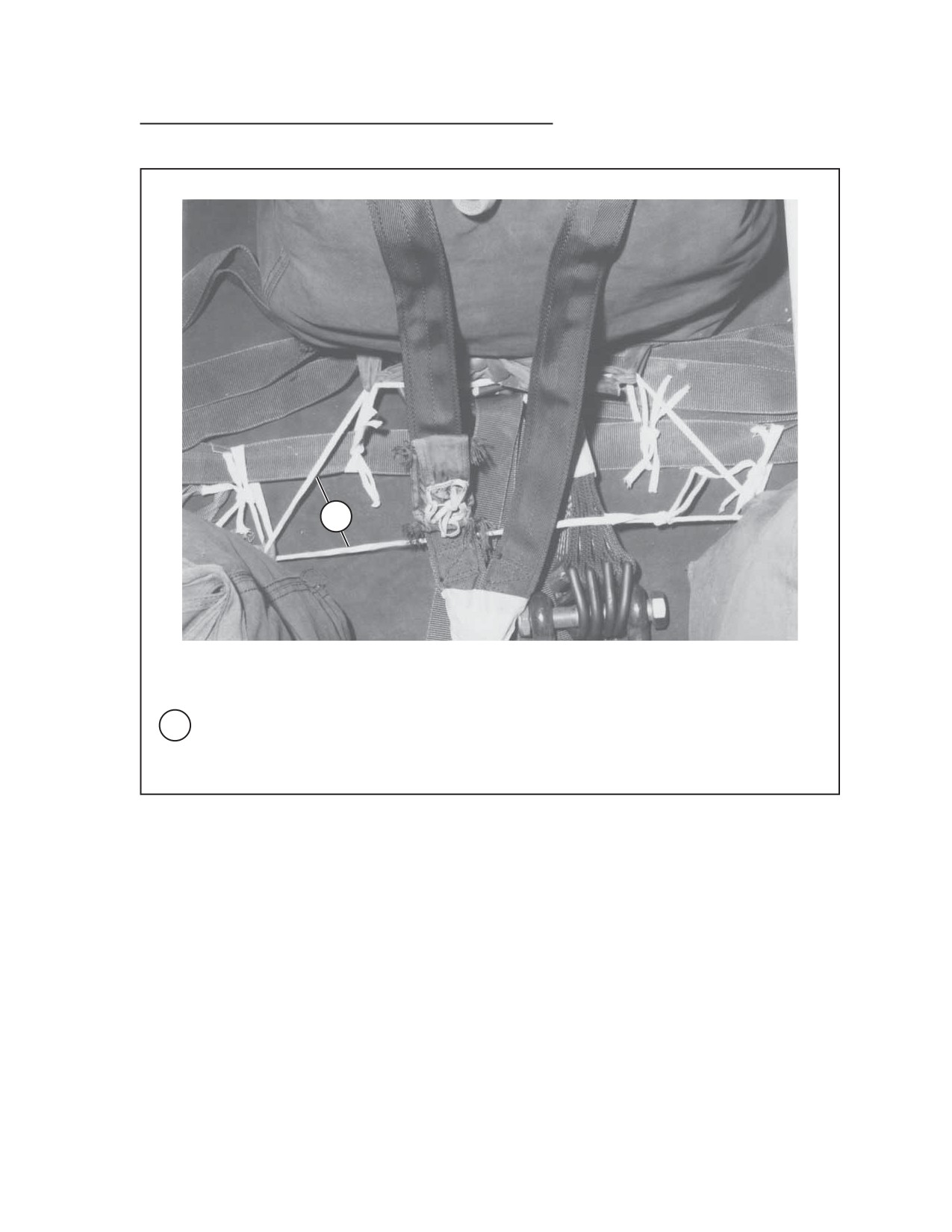
20
20 Safety the three cargo parachutes together with one length of type I, 1/4-inch cotton
webbing. Pass the webbing through the inside bag closing tie loops of the deployment
bags. Tie the ends of the webbing together with a surgeon’s knot and locking knot.
Figure 8-4. Three G-14 Cargo Parachutes Installed (Continued)
2 September 2005
8-13
FM 4-20.103/MCRP 4-11.3C/TO 13C7-1-11
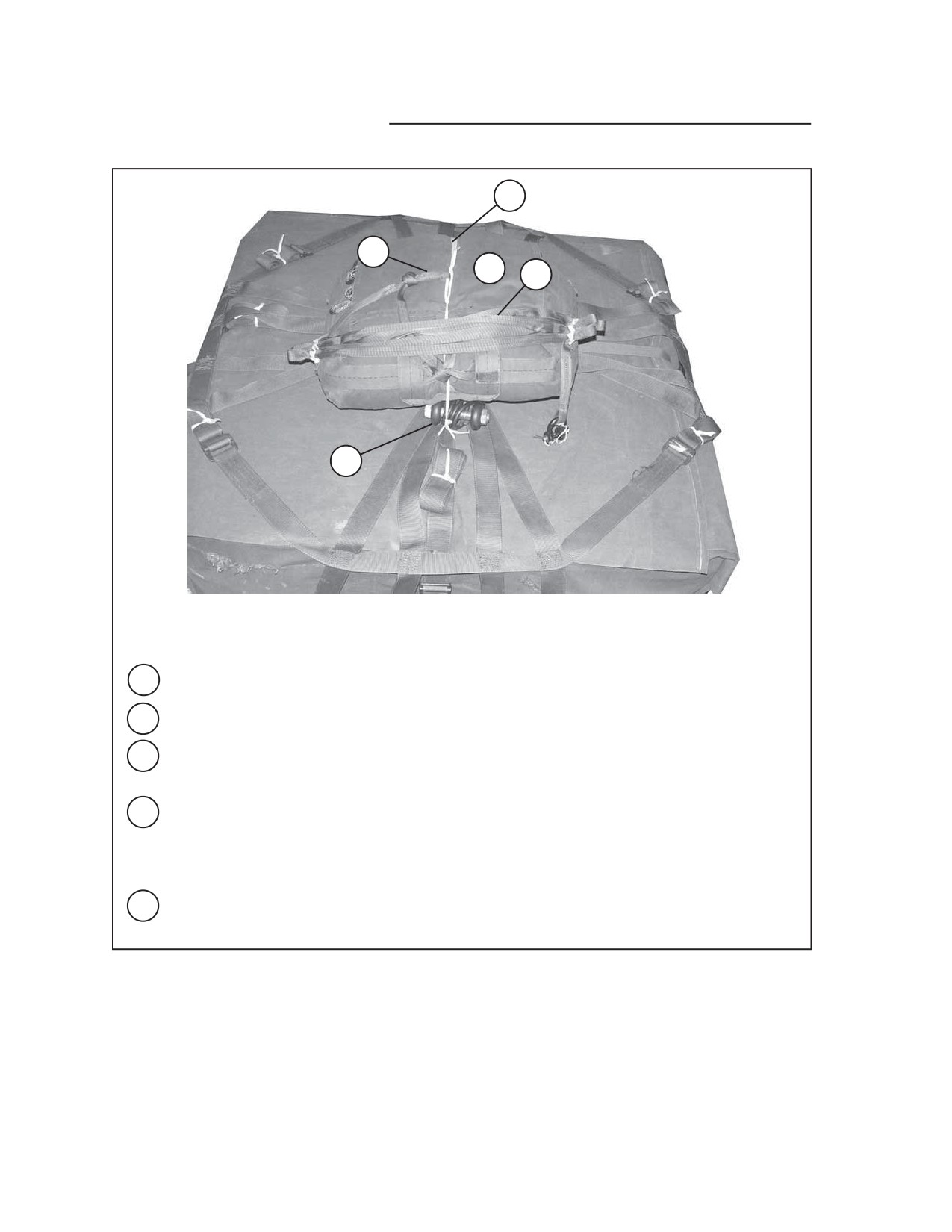
4
3
1
5
2
1
Place a 26-foot, high-velocity cargo parachute on top of the load.
2
Place the suspension web D-rings on the bolt of the cargo suspension clevis.
3
Form a 3-inch diameter loop in the static line by tying an overhand knot approximately
12 inches up from the deployment bag main strap attaching loop.
4
Tie one end of a length of type I, 1/4-inch cotton webbing to a convenient point on the A
22 container. Pass the free end of the cotton webbing through the deployment bag main
strap attaching loop, through the loop in the static line around a convenient point on the
load and secure using a trucker’s hitch knot.
5 Stow the static line according to TM 10-1670-276-23&P/TO 13C5-29-2/NAVAIR 13-1-29.
Figure 8-5. One 26-Foot High-Velocity Cargo Parachute Installed
8-14
2 September 2005
FM 4-20.103/MCRP 4-11.3C/TO 13C7-1-11
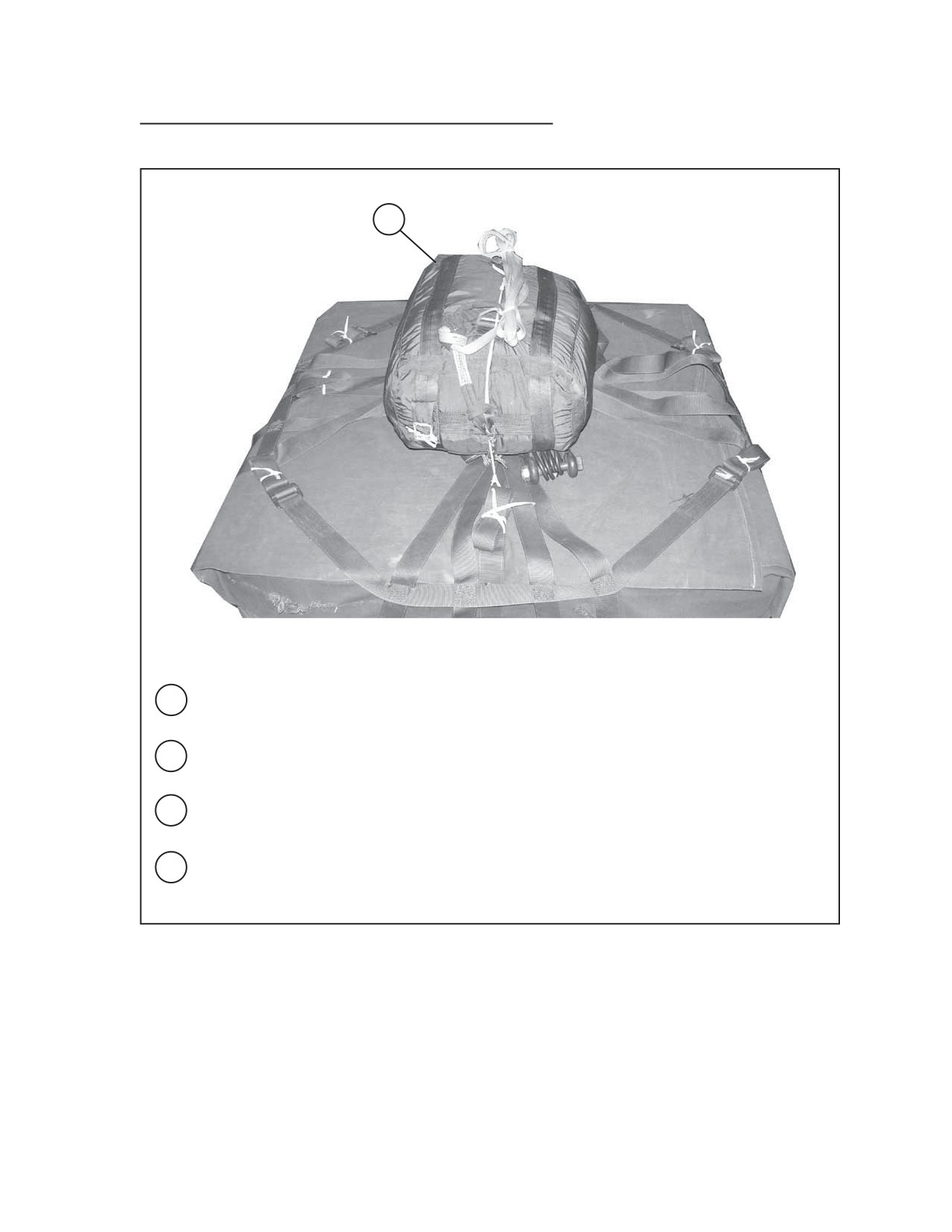
4
1
Modify the 22-foot cargo extraction parachute by adapting the procedures in Figure 3-6,
steps 1 through 3 for modifying the 15-foot cargo extraction parachute.
2
Pack the 22-foot extraction parachute in accordance with TM 10-1670-279-23&P/TO
13C5-27-2.
3
S-fold pendulum line and attach a 20-foot type XXVI sling following Figure 3-6, steps 5
through 7.
4 Secure parachute to the top of the load using the procedures outlined in Figure 3-7,
steps 1 through 11.
Figure 8-6. One 22-Foot Cargo Extraction Parachute Installed
2 September 2005
8-15
This page intentionally left blank.
FM 4-20.103/MCRP 4-11.3C/TO 13C7-1-11
Chapter 9
Rigging Typical A-22 Loads
SECTION I - RIGGING A-22 LOADS FOR LOW-VELOCITY AIRDROP
DESCRIPTION OF LOAD
9-1. A typical load is rigged for low-velocity airdrop using an A-22 cargo bag.
Typical loads include rations, repair parts, water cans, and other small items.
Items to be dropped may be rigged in their original shipping container or may
be repacked for airdrop. A-22 container loads must weigh between 501 and
2,200 pounds, excluding the weight of the parachute. The load is rigged with
one G-12E cargo parachute with a 68-inch diameter pilot parachute. See Chapter
2 for aircraft capabilities and limitations.
PREPARING DROP ITEMS
9-2. Prepare the drop items according to the load’s sensitivity. Items must be
well padded to prevent damage during airdrop. Items must also be padded or
containerized to prevent them from falling out of the container during airdrop.
PREPARING SKID BOARD
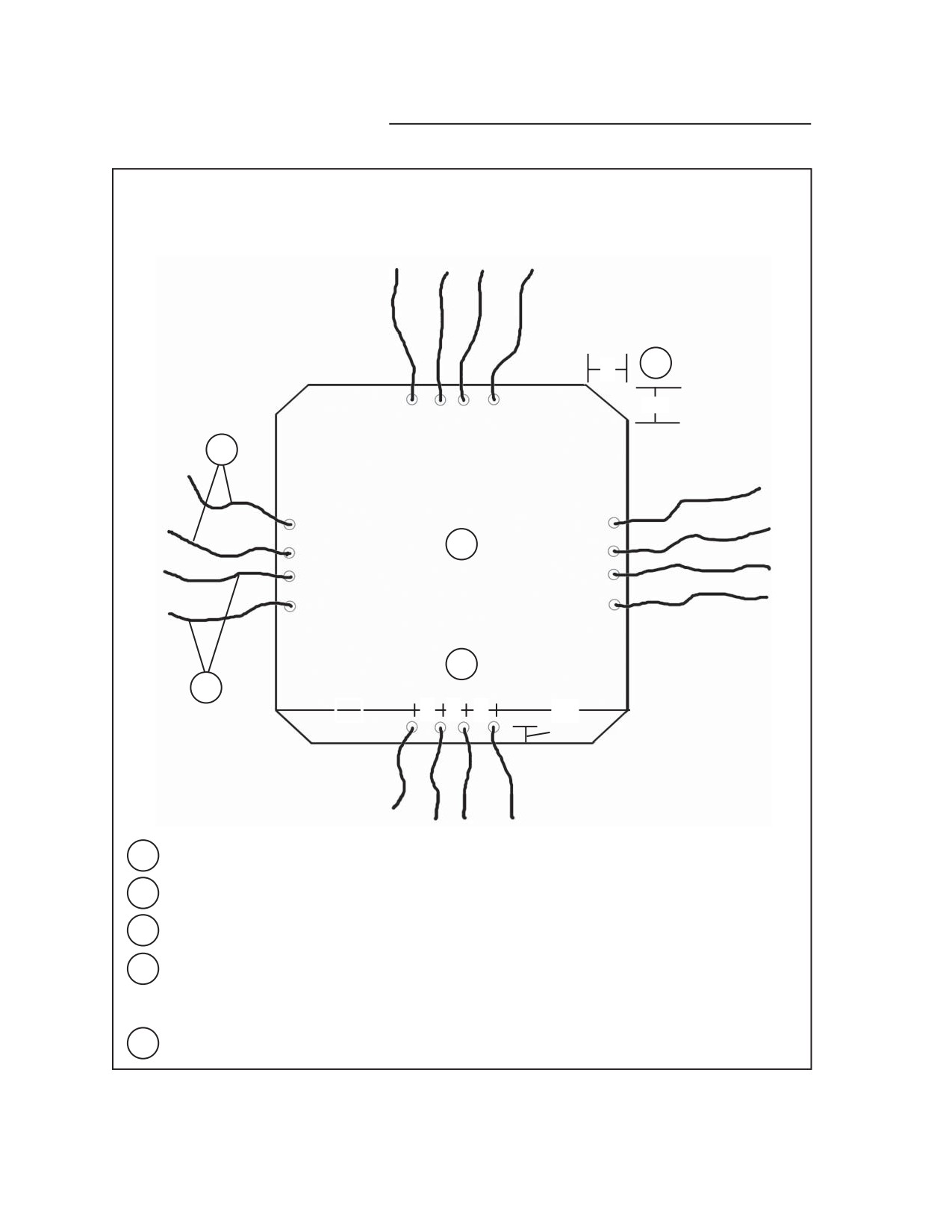
9-3. Prepare a locally fabricated skid board as shown in Figure 9-1.
NOTE: Precut skid boards ordered by National Stock Number (NSN) DO NOT require
the preparation shown in Figure 9-1.
2 September 2005
9-1
FM 4-20.103/MCRP 4-11.3C/TO 13C7-1-11
NOTES:
1. This drawing is not drawn to scale.
2. All dimensions are given in inches.
3. Use only AC grade plywood for skid boards.
3
3
3
4
A
1
B
C
D
2
5
18
5
2
5
18
2
1 Place a 3/4- or 1- by 48- by 48-inch piece of plywood on a flat surface.
2 Drill four 1/2-inch holes on each side as shown above.
3 Measure 3 inches in from each corner of the skid board and make a diagonal cut.
4 Cut eight 8-foot lengths of 1/2-inch tubular nylon webbing. Route one length through
hole A from the bottom and the other end through hole B from the bottom. Even the
ends.
5 Repeat step 3 for holes C and D and remaining sides.
Figure 9-1. Locally Farbricated Skid Board Prepared for Single A-22 Load
9-2
2 September 2005
FM 4-20.103/MCRP 4-11.3C/TO 13C7-1-11
POSITIONING HONEYCOMB
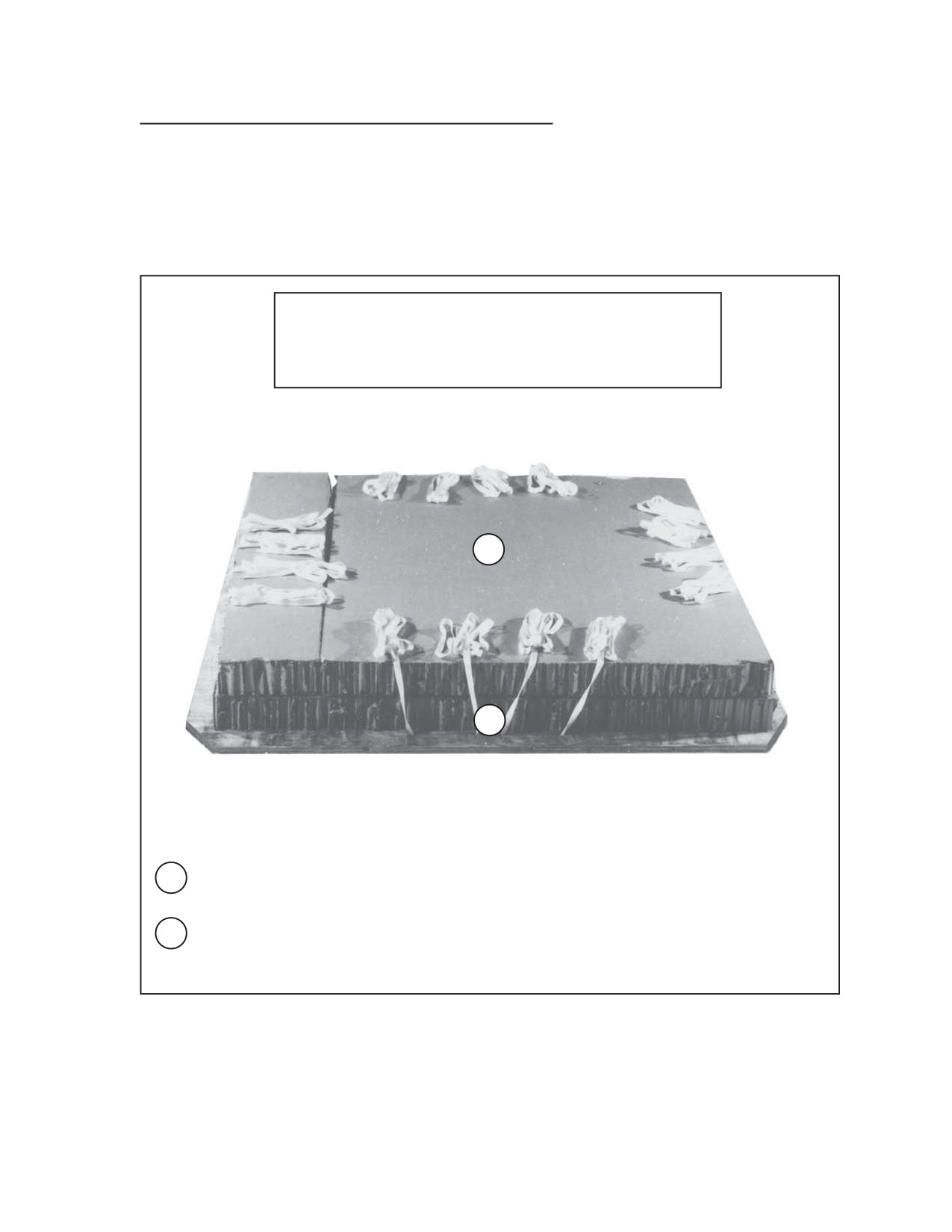
9-4. Position honeycomb as shown in Figure 9-2. Glue the pieces of honeycomb
together; however, the stack does not have to be glued to the skid board.
CAUTION
The bottom layer honeycomb must be 2 inches from all
sides to allow proper operation of the CVRS.
2
1
1 Center a 36- by 44-inch and an 8- by 44-inch piece of honeycomb side by side on the skid
board.
2 Repeat step 1 for a second layer of honeycomb; however, alternate the pieces of honey
comb.
Figure 9-2. Honeycomb Positioned on Skid Board
2 September 2005
9-3
FM 4-20.103/MCRP 4-11.3C/TO 13C7-1-11
POSITIONING A-22 CARGO BAG SLING, COVER, AND LOAD
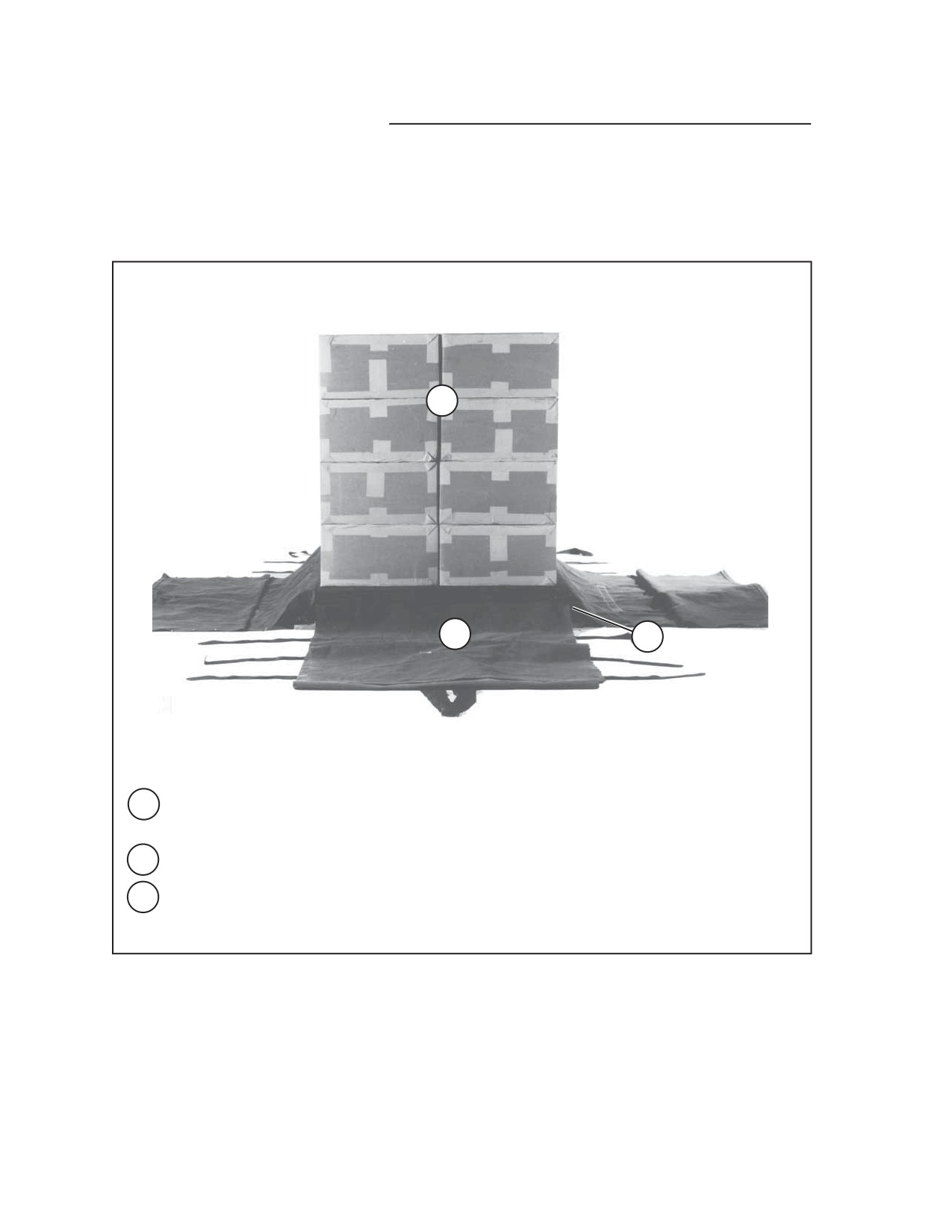
9-5. Position the A-22 cargo bag sling, cover, and load as shown in Figure 9-3.
3
2
1
1
Center the A-22 cargo bag sling facing down on the honeycomb. When the webbing is
laid facing down, the webbing sewn to the scuff pad will be on the bottom.
2
Center the A-22 cargo bag cover on the sling assembly (optional).
3 Center the load on the cover and honeycomb.
Figure 9-3. A-22 Cargo Bag Sling, Cover, and Load Positioned
9-4
2 September 2005
FM 4-20.103/MCRP 4-11.3C/TO 13C7-1-11
SECURING A-22 CARGO BAG COVER
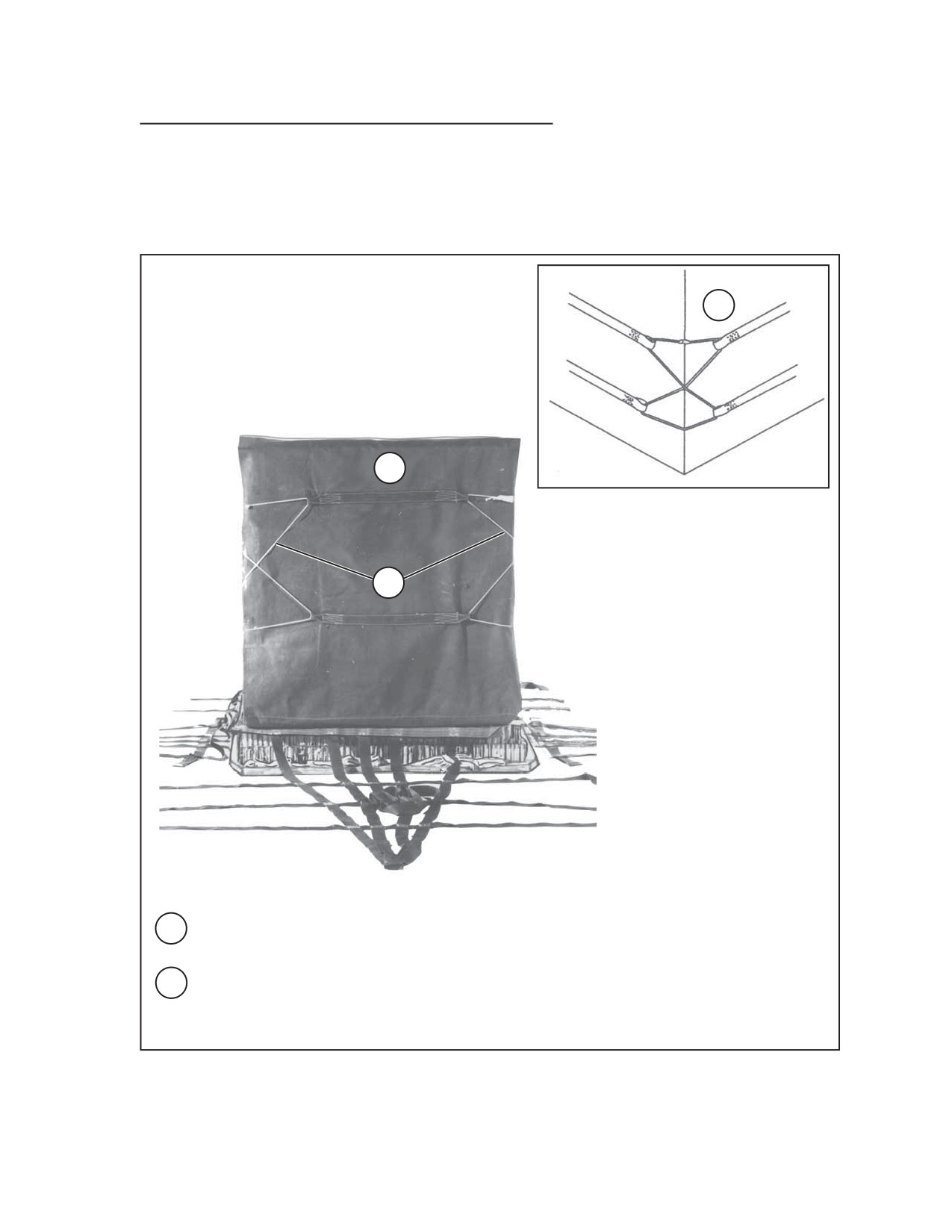
9-6. Secure the A-22 cargo bag cover over the load as shown in Figure 9-4.
NOTE: This drawing is not drawn to scale.
2
1
2
1 Bring up sides to cover the load. Fold under any side that will obstruct the bag cover
securing ties.
2 Using a length of type III nylon cord, route the cord as shown. Pull it tight and make a
surgeon’s knot and bow knot. Secure the knot and excess with masking tape. Make
sure one running end is exposed.
Figure 9-4. A-22 Cargo Bag Cover Secured
2 September 2005
9-5
FM 4-20.103/MCRP 4-11.3C/TO 13C7-1-11
SECURING A-22 CARGO BAG SLING
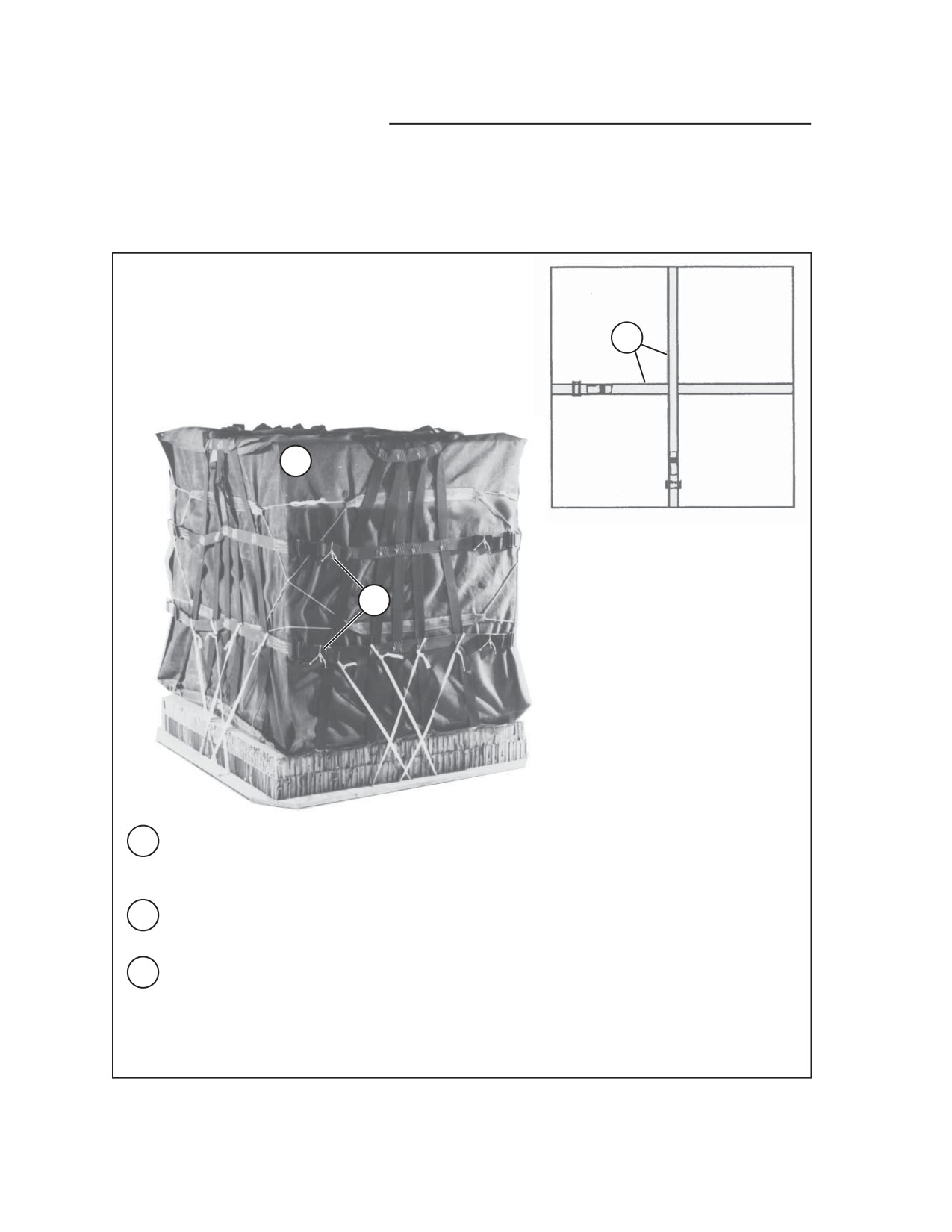
9-7. Secure the sling assembly according to Figure 9-5.
NOTES:
1. This drawing is not drawn to scale.
2. Friction adapters cannot be on corners.
3. The middle support web should remain vertical.
1
3
2
1 Bring the short tie-down strap over the load and route it through the friction adapter.
Route the long tie-down strap the same way. Apply tension to the friction adapter and
fold. Secure the excess as shown in Figure 1-3.
2 Route the two lower lateral straps through the friction adapter. Apply uniform tension
and secure the excess as shown in Figure 1-3.
3 If the top lateral strap is higher than the load, tighten the strap loosely on top of the
load as shown above. If the load is higher than the lateral strap, place the strap over
the corner and tighten it. If the strap cannot be placed over the corner, fasten the strap
around the load sides. Pass a length of type I, 1/4-inch cotton webbing through each
rectangle portion of the suspension web D-rings and tie the ends together with a
surgeon’s knot and locking knot.
Figure 9-5. A-22 Cargo Bag Sling Secured
9-6
2 September 2005
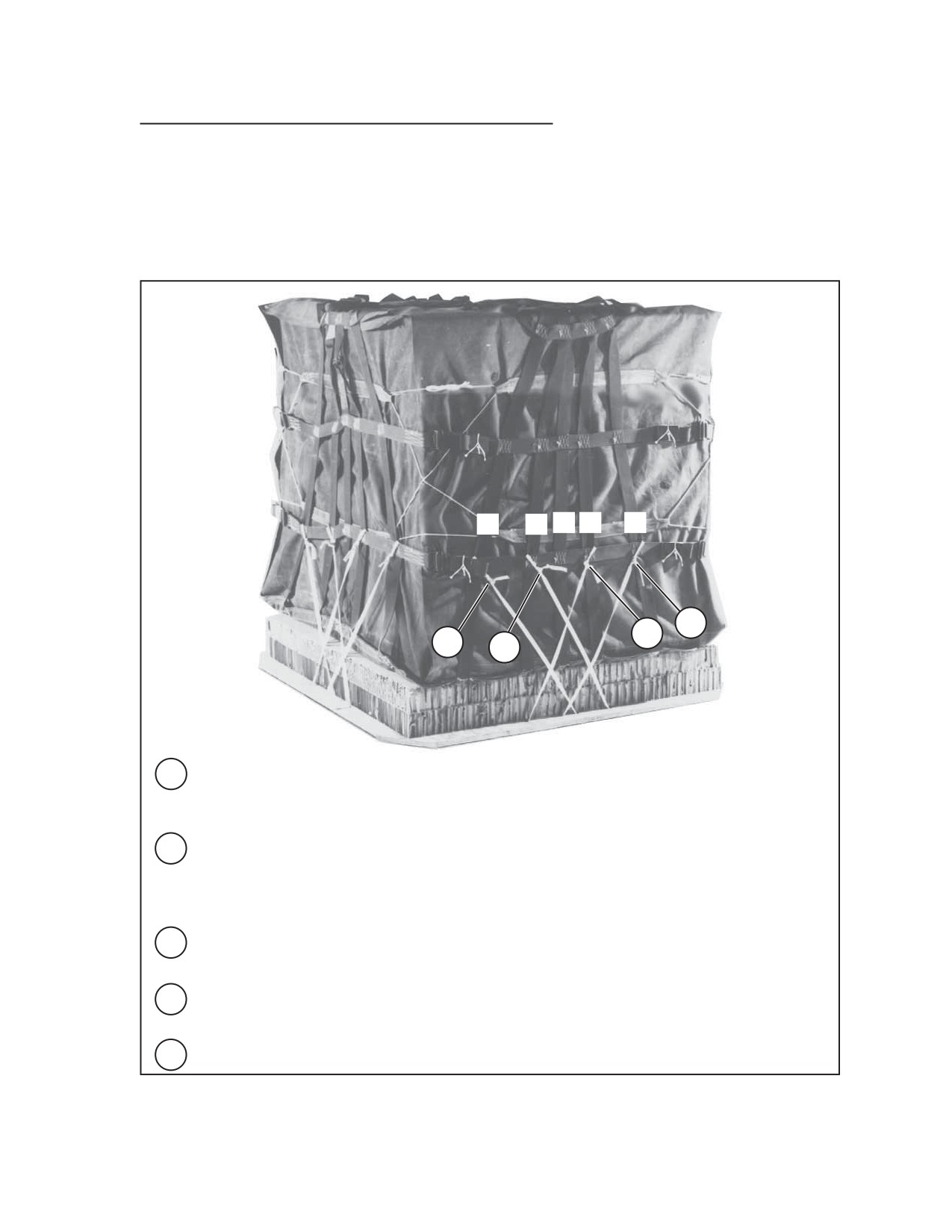
FM 4-20.103/MCRP 4-11.3C/TO 13C7-1-11
SECURING SKID BOARD TO A-22 CARGO BAG
9-8. Secure the skid board to the A-22 cargo bag as shown in Figure 9-6. When
tightening straps, make sure excess tension is not applied causing the sewn
portion at the intersection of lateral straps and support web to separate.
1
2
3
4
5
2
1
4
3
D
C
B
A
1 Starting at the left side, take tie-down A and diagonally tie it around the intersection of
lower lateral strap and fourth support web. Use three half-hitch knots and an overhand
knot in the running end.
2 Route tie-down B around the fifth support web and lower lateral strap intersection
diagonally. Pull the excess slack out and tie it with a trucker’s hitch knot and an
overhand knot in the running end. Cut excess webbing, leaving end approximately 6
inches long.
3 Repeat step 1 for tie-down D and secure it to the second intersection on the lower lateral
strap.
4 Repeat step 2 for tie-down C, and secure it to the second intersection on the lower
lateral strap.
5 Repeat steps 1 through 4 for the other tie-down straps.
Figure 9-6. Skid Board Secured to A-22 Bag
2 September 2005
9-7
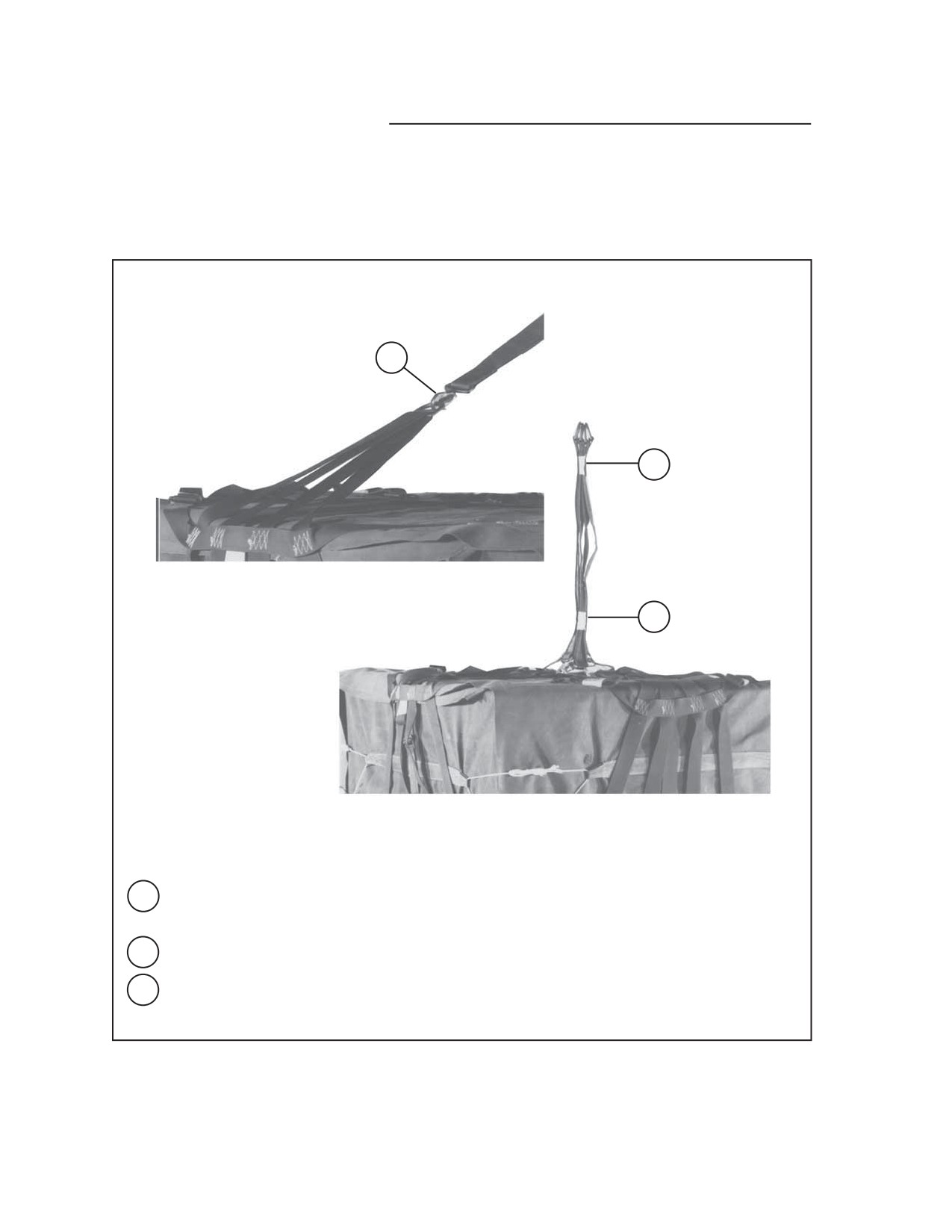
FM 4-20.103/MCRP 4-11.3C/TO 13C7-1-11
ATTACHING SUSPENSION WEBS
9-9. Attach four suspension webs as shown in Figure 9-7.
1
2
3
1 Attach all four suspension webs as shown above. Route snap fastener from outside to
inside. Wrap masking tape around the snap fasteners.
2 Tape all suspension webs together near the free end using masking tape.
3 Tape all suspension webs together 2 inches above the snap fasteners using masking
tape.
Figure 9-7. Suspension Webs Attached
9-8
2 September 2005
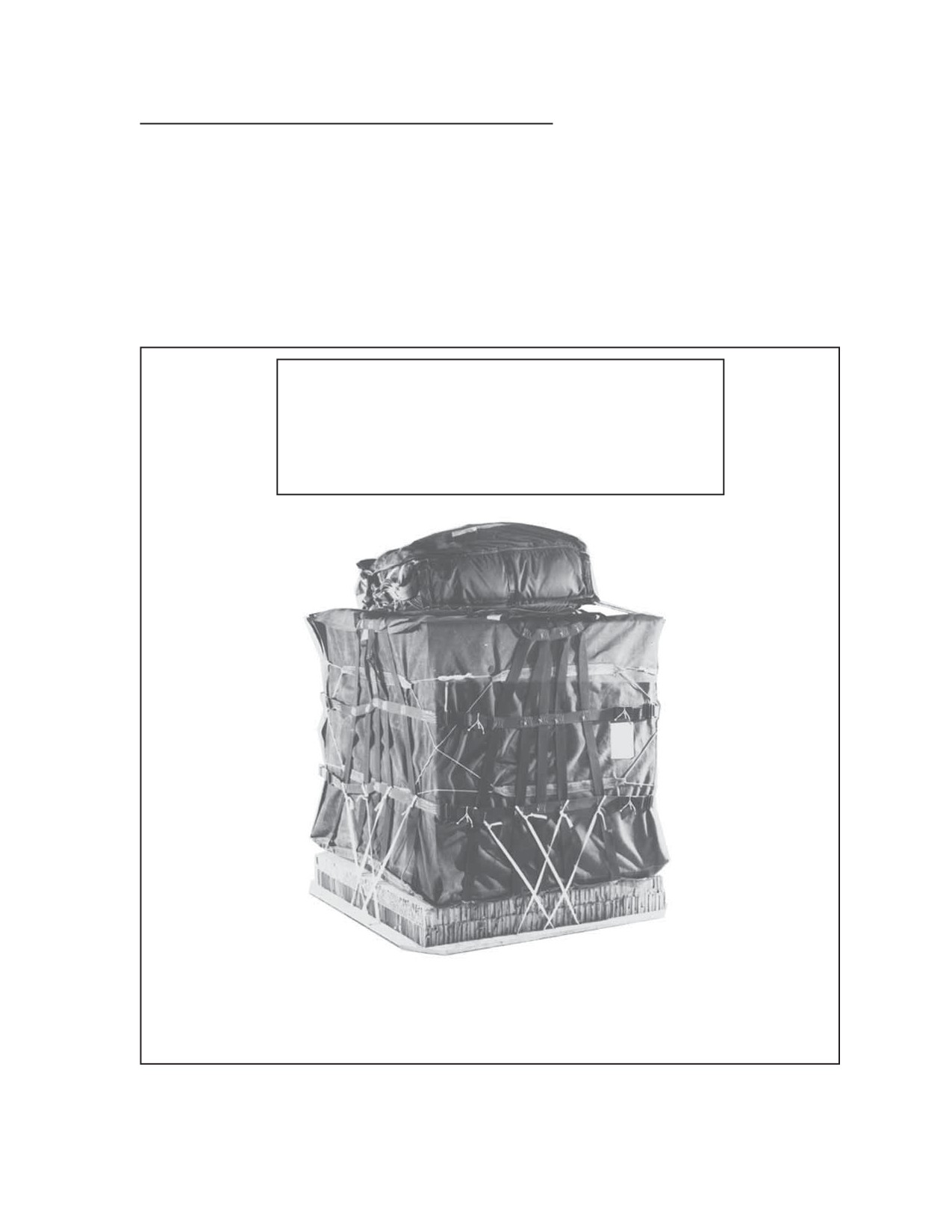
FM 4-20.103/MCRP 4-11.3C/TO 13C7-1-11
INSTALLING PARACHUTE
9-10. Install the G-12E cargo parachute according to Chapter 8.
MARKING RIGGED LOAD
9-11. Mark the rigged load according to Chapter 1. Compute the rigged load
data.
CAUTION
Make the final rigger inspection required by FM 4-20.102/
NAVSEA SS400-AB-MMO-010/TO 13C7-1-5 and AR 59-
4/OPNAVINST 4630.24C/AFJ 13-210(I)/MCO 13480.1B
before the load leaves the ri
gging site.
RIGGING LOAD DATA (without parachute)
G-12E cargo parachute
501 - 2,200 pounds
Figure 9-8. A-22 Container Load Rigged for Low-Velocity Airdrop
2 September 2005
9-9