FM 2-0 INTELLIGENCE (MAY 2004) - page 3
____________________________________________________________________________________FM 2-0
• Verify communications protocols with theater and higher headquarters
and subordinate and lateral units.
• Update intelligence databases.
• Update the forces with the most recent intelligence on the AO imme-
diately before mission execution.
VERIFICATION
4-10. Coordination for or requesting provisions or services is only the first
step in acquiring them. It is crucial that staff and leaders check to verify that
procedures, personnel, equipment, and services are in place and ready for
mission execution.
REHEARSALS
4-11. Rehearsals help units prepare for operations by either verifying that
provisions and procedures are in place and functioning or identifying inade-
quacies, which staff and leaders must remedy. They allow participants in an
operation to become familiar with and to translate the plan into specific
actions that orient them to their environment and other units when executing
the mission. They also imprint a mental picture of the sequence of key actions
within the operation and provide a forum for subordinate and supporting
leaders and units to coordinate. (FM 6-0)
REPORTING PROCEDURES
4-12. The timely and accurate reporting of CCIRs (PIRs and FFIRs) and IRs
is key to successful operations. All assets should know when, how often, and
what format to use when reporting. The G2/S2 must verify the frequencies,
alternate frequencies, and reactions during jamming, as well as the LTIOV
for specific information to be reported. Unit SOPs provide the proper
reporting procedures.
4-13. The G2/S2 coordinates with the unit staff, subordinate and lateral
commands, and higher echelon units to ensure that specific reporting assets,
personnel, equipment (especially communications), and procedures are in
place. The G2/S2 requests or establishes the appropriate message addresses,
routing indicators, mailing addresses, and special security office
(SSO)
security accreditation for units.
COMMUNICATIONS
4-14. Staff and leaders must work closely with the G6/S6 or signal officer
(SIGO) to coordinate for the required communication links. The unit may
require classified and unclassified network connections for their equipment.
If elements of the unit will be working outside the range of the unit’s
communications systems, then it is necessary to coordinate for global or
extended range communications. Leaders must obtain the required type and
amount of communications equipment and related components as well as the
latest fills and frequencies. They must possess and be familiar with all the
instructions, passwords, policies, regulations, and directives conducive to
OPSEC. They must also ensure soldiers are trained in the use and
procedures involved in operating communications equipment.
4-6
FM 2-0 ____________________________________________________________________________________
SITUATION UPDATES
4-15. Each staff section and element conducts activities to maximize the
operational effectiveness of the force. Coordination and preparation are just
as important, if not more important, as developing the plan. Staff preparation
includes assembling and continuously updating estimates. For example,
continuous IPB provides accurate situational updates for commanders.
INTELLIGENCE HANDOFF
4-16. A well-executed intelligence hand-off will ensure a smooth and
seamless transition between units. It is important that the incoming unit
becomes familiar with the operation as soon as possible to avoid compro-
mising the intelligence production and flow of the mission. The following are
points to consider during a mission hand-off:
•
Briefings and reports (learn what briefings are required and when as
well as report formats and requirements).
•
Past, present, and planned activities within the AOI.
•
Established SOPs (know procedures for reporting; intelligence contin-
gency funds [ICFs] and incentive use if applicable; emplacement and
use of ISR equipment).
•
Key personalities (introductions are required; establish rapport and a
good working relationship with all key personalities).
Key personnel on the base or camp (their responsibilities; how to
contact them).
Key personnel in other US and multinational service components
(coordinate for exchange of information and intelligence).
Key personalities from surrounding towns (local figures).
Key national level political and military figures.
•
Supporting units (know where to go for provisions, information, or
assistance and POCs within those organizations).
•
Current attitudes (understand current attitudes and perspectives of
the local populace).
•
Equipment operation and idiosyncrasies
(equipment may run on
different applications; personnel may need to train on specific
equipment and procedures).
•
Area familiarization (identify NAIs, key terrain, minefields, and bound-
aries; know camp locations, routes and route names, checkpoints,
towns, and troubled resettlement areas).
RULES OF ENGAGEMENT
4-17. Although ROE training was presented during the plan function of the
intelligence process, leaders at all levels can take the opportunity during the
prepare function to ensure their subordinates completely understand the
ROE. It is also during this function that commanders may need to consider
exceptions to, or modifications of, the ROE to facilitate HUMINT and CI
collection or to enable the placement of ISR assets.
4-7
____________________________________________________________________________________FM 2-0
COLLECT
4-18. Recent ISR doctrine necessitates that the entire staff, especially the
G3/S3 and G2/S2, must change their reconnaissance and surveillance mind-
set to conducting ISR. The staff must carefully focus ISR on the CCIR (PIR
and FFIR) but also enable the quick retasking of units and assets as the
situation changes. This doctrinal requirement ensures that the enemy
situation not just our OPLAN
“drives” ISR operations. Well-developed
procedures and carefully planned flexibility to support emerging targets,
changing requirements, and the need to support combat assessment is
critical. The G2/S2 and G3/S3 play a critical role in this challenging task that
is sometimes referred to as “fighting ISR” because it is so staff intensive
during planning and execution (it is an operation within the operation).
Elements of all units on the battlefield obtain information and data about
enemy forces, activities, facilities, and resources as well as information
concerning the environmental and geographical characteristics of a particular
area.
ISR TASKS
4-19. ISR tasks are the actions of the intelligence collection effort. ISR tasks
consists of three categories:
• Intelligence.
• Surveillance.
• Reconnaissance.
4-20. Intelligence tasks are included in Annex B of the OPORD under
Scheme of Intelligence. They include the following:
• Intelligence Production. Intelligence production includes analyzing
information and intelligence and presenting intelligence products,
conclusions, or projections regarding the OE and enemy forces in a
format that enables the commander to achieve situational under-
standing.
• Request for Information. Submitting an RFI to the next higher or
lateral echelon is the normal procedure for obtaining intelligence
information not available through the use of available ISR assets.
Users enter RFIs into an RFI management system where every other
user of that system can see it. Hence, an echelon several echelons
above the actual requester becomes aware of the request and may be
able to answer it. A G2/S2 who receives an RFI from a subordinate
element may use intelligence reach to answer RFIs.
• Intelligence Reach. Intelligence reach allows the commander to access
the resources of national, joint, foreign, and other military
organizations and units. Requestors can acquire information through
push and pull of information, databases, homepages, collaborative
tools, and broadcast services. (See Chapter 2 for more information on
intelligence reach.)
4-21. For information on reconnaissance or surveillance tasks, refer to
FM 7-15 and FM 3-55.
4-8
FM 2-0 ____________________________________________________________________________________
SPECIAL RECONNAISSANCE
4-22. Special reconnaissance
(SR) is the complementing of national and
theater intelligence collection assets and systems by obtaining specific, well-
defined, and time-sensitive information of strategic or operational signi-
ficance. It may complement other collection methods where there are
constraints of weather, terrain, hostile countermeasures, and/or other
systems availability. SR places US or US-controlled personnel conducting
direct observation in hostile, denied, or politically sensitive territory when
authorized. SOF may conduct these missions unilaterally or in support of
conventional operations. (See JP 3-05 and FM 101-5-1.)
4-23. Army Special Operations Forces
(ARSOF) elements conduct SR
missions to obtain information not available through other means. SR
operations encompass a broad range of collection activities to include
reconnaissance, surveillance, and TA. SR complements national and theater
collection systems that are more vulnerable to weather, terrain masking, and
hostile countermeasures. SR missions provide intelligence or information
that is often not available through other means. Typical SR missions
include⎯
• TA and surveillance of hostile C2 systems, troop concentrations, deep-
strike weapons, lines of communication (LOCs), WMD systems, and
other targets.
• Location and surveillance of hostage, prisoner of war, or political
prisoner detention facilities.
• Post-strike reconnaissance for BDA.
• Meteorologic, geographic, or hydrographic reconnaissance to support
specific air, land, or sea operations.
4-24. For more information on special reconnaissance, see FM 3-05.102.
REPORTING
4-25. The most critical information collected is worthless if not reported in a
timely manner. Collectors may report information via verbal, written,
graphic, or electronic means. Unit SOPs must clearly state the transmission
means of different types of reports (for example, sent by voice frequency
modulated [FM] radios or by automated means). In general, the transmission
of reports for enemy contact and actions, CCIRs, exceptional information, and
NBC reports is by voice FM, and then followed up with automated reports.
Commanders and staffs must remember that timely reporting, especially of
enemy activity, is critical in fast-moving operations. Collectors must report
accurate information as quickly as possible. Commanders and staff must not
delay reports for the sole purpose of editing and ensuring the correct format.
This is particularly true for reporting information or intelligence that
answers the PIR.
TIME-SENSITIVE REPORTING
4-26. Intelligence and time-sensitive combat information that affects the
current operation is disseminated immediately upon recognition. Combat
information is unevaluated data, gathered by or provided directly to the
tactical commander which, due to its highly perishable nature or the
4-9
____________________________________________________________________________________FM 2-0
criticality of the situation, cannot be processed into tactical intelligence in
time to satisfy the user’s tactical intelligence requirements. Thus combat
information is provided directly to the tactical commander (see JP 1-02). The
routing of combat information proceeds immediately in two directions:
directly to the commander and through routine reporting channels, which
include intelligence analysis and production elements.
4-27. Time-sensitive information usually includes reports concerning enemy
contact and actions and CCIRs.
PROCESS
4-28. The process function converts relevant information into a form suitable
for analysis, production, or immediate use by the commander. Processing also
includes sorting through large amounts of collected information and
intelligence (multidiscipline reports from the unit’s ISR assets, lateral and
higher echelon units and organizations, and non-MI elements in the
battlespace). Processing identifies and exploits that information which is
pertinent to the commander’s intelligence requirements and facilitates
situational understanding. Examples of processing include developing film,
enhancing imagery, translating a document from a foreign language,
converting electronic data into a standardized report that can be analyzed by
a system operator, and correlating dissimilar or jumbled information by
assembling like elements before the information is forwarded for analysis.
4-29. Often collection assets must collect and process their data prior to
disseminating it. MI systems have their own reporting and processing
systems, the details of which are in the appropriate MI system manuals and
technical manuals. Some collection assets, particularly air reconnaissance
and ground scouts, can report relevant information that is immediately
usable by the tactical commander (for example, for targeting purposes).
However, the personnel in the reporting chain still process these reports by
evaluating their relevancy and accuracy. In many cases, the output of a
collection asset is data, or information of limited immediate use to a
commander. Also, in certain situations ROE dictate a requirement for target
confirmation by other sources.
4-30. The intelligence staff processes information collected by the unit’s
assets as well as that received from higher echelons. The intelligence staff
processes many types of information and data from intelligence reach,
unmanned aerial vehicle
(UAV) imagery, radar imagery, mobile target
indicators (MTIs), and HUMINT and SIGINT reports.
PRODUCE
4-31. In the production step, the G2/S2 integrates evaluated, analyzed, and
interpreted information from single or multiple sources and disciplines into
finished intelligence products. Like collection operations, the G2/S2 must
ensure the unit’s information processing and intelligence production are
prioritized and synchronized to support answering the CCIRs (PIRs and
FFIRs).
4-32. Intelligence products must be timely, relevant, accurate, predictive, and
usable. The accuracy and detail of every intelligence product has a direct
4-10
FM 2-0 ____________________________________________________________________________________
effect on how well the unit plans and prepares for operations. However, the
G2/S2 and unit must use intelligence (no matter what form the intelligence is
in) that meets the requirements but might not be as detailed or refined as
possible or in a better form. A good answer on time is better than a more
refined answer that is late.
4-33. The G2/S2 produces intelligence for the commander as part of a
collaborative process. The commander drives the G2/S2’s intelligence
production effort by establishing intelligence and IRs with clearly defined
goals and criteria. Differing unit missions, environments, and situations
impose numerous and varied production requirements on the G2/S2 and his
staff.
4-34. The G2/S2 must employ collaborative analysis techniques and
procedures that leverage intelligence production capability of higher and
subordinate echelons to meet these requirements. Proficiency in these
techniques and procedures enables the G2/S2 to answer the commander’s and
staff’s requirements regardless of the mission, environment, and situation.
The G2/S2 and staff intelligence products enable the commander to⎯
• Plan operations and employ maneuver forces effectively.
• Recognize potential COAs.
• Employ effective tactics and techniques.
• Take appropriate security measures.
• Focus ISR.
COMMON INTELLIGENCE PROCESS TASKS
ANALYZE
4-35. Analysis occurs at various stages throughout the intelligence process.
Personnel conducting intelligence operations at all levels analyze
intelligence, information, and problems to produce intelligence, solve pro-
blems and, most importantly, answer the PIRs. Leaders at all levels conduct
analysis to assist in making many types of decisions. An example is a
HUMINT collector analyzing an intelligence requirement in order to deter-
mine the best possible collection strategy to use against a specific source.
4-36. Analysis in RM is critical to ensuring the IRs receive the appropriate
priority for collection. The intelligence staff analyzes each requirement to
determine its feasibility, whether or not it supports the commander’s intent,
and to determine the best method of satisfying the IRs. The staff also
analyzes collected information to determine if it satisfies requirements.
4-37. During the produce function, the intelligence staff analyzes information
from multiple sources to develop all-source intelligence products. The
intelligence staff analyzes information and intelligence to ensure the focus,
prioritization, and synchronization of the unit’s intelligence production is in
accordance with the PIRs.
4-38. In situation development, the intelligence staff analyzes information to
determine its significance relative to predicted ECOAs and the CCIRs (PIRs
and FFIRs). Through predictive analysis, the staff attempts to identify enemy
activity or trends that represent opportunities or risks to the friendly force.
4-11
____________________________________________________________________________________FM 2-0
They use the indicators developed for each ECOA and CCIRs (PIRs and
FFIRs) during the MDMP as the basis for their analysis and conclusions.
DISSEMINATE
4-39. Successful operations at the tactical and operational levels require an
increased ability to synchronize fires, have faster access to intelligence, and
enhance situational understanding and effective FP. Timely and accurate
dissemination of intelligence is key to the success of these and other
operations. Commanders must receive combat information and intelligence
products in time and in an appropriate format to support decisionmaking.
Additionally, sharing the most current all-source information and intelligence
at all echelons is essential for commanders to maintain situational
understanding.
4-40. To achieve this, it is imperative that the commander and staff establish
and support a seamless intelligence architecture—including an effective
dissemination plan—across all echelons to ensure information and intelli-
gence flow in a timely manner to all those who need them. Intelligence and
communications systems continue to evolve in their sophistication, appli-
cation of technology, and accessibility to the commander. Their increasing
capabilities also create an unprecedented volume of information available to
commanders at all echelons. Finally, the commander and staff must have a
basic understanding of these systems and how they contribute to the
Intelligence BOS. A dissemination plan can be a separate product, or
integrated into existing products such as the ISR synchronization plan or
ISM, the decision support template (DST), or decision support matrix (DSM).
Dissemination Procedures
4-41. The G2/S2 and intelligence personnel at all levels assess the
dissemination of intelligence and intelligence products.
4-42. Disseminating intelligence simultaneously to multiple recipients is one
of the most effective, efficient, and timely methods. This can be accomplished
through various means; for example, push, broadcast. However, within the
current tactical intelligence architecture, reports and other intelligence
products move along specific channels. The staff helps streamline information
distribution within these channels by ensuring dissemination of the right
information in a timely manner to the right person or element. There are
three channels through which commanders and their staffs communicate:
command, staff, and technical.
4-43. Command Channel. The command channel is the direct chain-of-
command link that commanders, or authorized staff officers, use for
command-related activities. Command channels include command radio nets
(CRNs), video teleconferences
(VTC), and the Maneuver Control System
(MCS).
4-44. Staff Channel. The staff channel is the staff-to-staff link within and
between headquarters. The staff uses the staff channel for control-related
activities. Through the staff channel, the staff coordinates and transmits
intelligence, controlling instructions, planning information, provides early
warning information, and other information to support C2. Examples of staff
4-12
FM 2-0 ____________________________________________________________________________________
channels include the operations and intelligence radio net, telephone, the
staff huddle, VTC, and the BOS-specific components of the Army Battle
Command System (ABCS).
4-45. Technical Channel. Staffs typically use technical channels to control
specific combat, CS, and CSS activities. These activities include fire direction
and the technical support and sensitive compartmented information (SCI)
reporting channels of intelligence and ISR operations. The SIGINT tasking
and reporting radio net, intelligence broadcast communications, and the wide
area networks (WANs) supporting single intelligence discipline collection,
processing, and production are examples of technical channels.
Presentation Techniques and Procedures
4-46. The staff’s objective in presenting information is to provide the
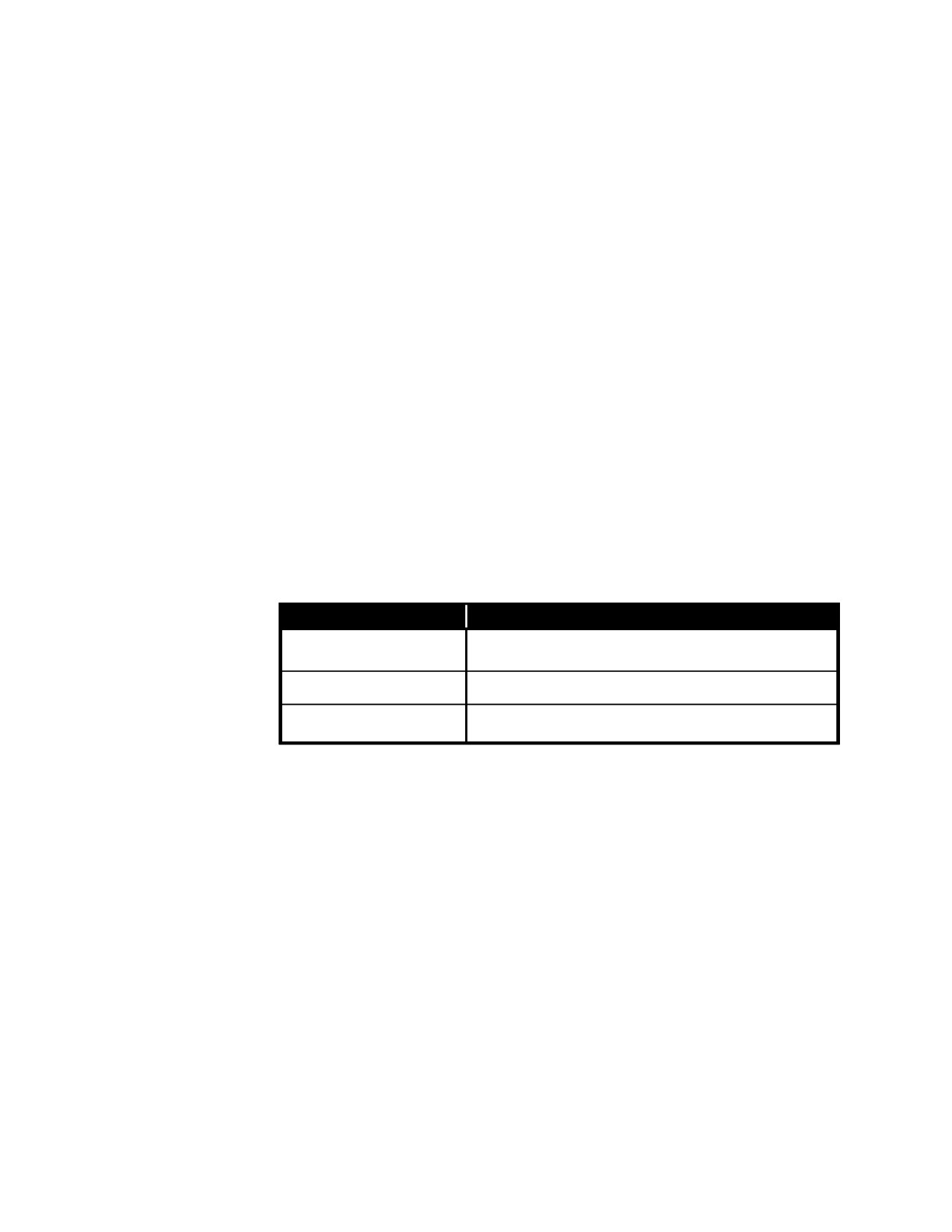
commander with relevant information. Table 4-1 lists the three general
methods that the staff uses to present information and meet its information
objective. Systems within the ABCS contain standard report formats, maps,
and mapping tools that assist the staff in presenting information in written,
verbal, and graphic form. Audio and video systems such as large format
displays and teleconferencing systems enable the staff to use a combination
of the methods in multimedia presentations.
Table 4-1. Presentation Methods and Products.
Method
Products
Written Narrative
Reports, Estimates, and Studies
Verbal Narrative
Briefing (information, decision, mission, and staff)
Graphic
Charts, Overlays, and Electronic Displays
Intelligence Communications Architecture
4-47. The intelligence communications architecture transmits intelligence
and information to and from various ISR elements, units, and agencies by
means of automation and communication systems. With the continued
development of sensors, processors, and communications systems, it is
increasingly important to understand the requirements of establishing an
effective communications architecture. The G2/S2 must identify the Intelli-
gence BOS specific requirements of the unit’s overall communications
architecture. Refer to FM
2-33.5 for more information on intelligence
communications reach. The following are some (but not all) of the questions
which the staff must answer in order to establish the intelligence communi-
cations architecture:
• Where are the unit’s collectors?
• What and where are the unit’s processors?
• Where are the unit’s intelligence production elements?
• Where are the unit’s decisionmakers?
• How does the unit disseminate information from its producers to its
decisionmakers and/or consumers?
4-13
____________________________________________________________________________________FM 2-0
• Are the systems which the unit’s collectors, producers, processors, and
consumers use compatible with each other? If not, what is the plan to
overcome this challenge?
• How can the unit access databases and information from higher and
other agencies?
ASSESS
4-48. Assessment is the continuous monitoring⎯throughout planning,
preparation, and execution—of the current situation and progress of an
operation, and the evaluation of it against criteria of success to make
decisions and adjustments. Assessment plays an integral role in all aspects of
the intelligence process. Assessing the situation and available information
begins upon receipt of the mission and continues throughout the intelligence
process. The continual assessment of intelligence operations and ISR assets,
available information and intelligence, the various aspects of the battlefield
environment, and the situation are critical to⎯
• Ensure the CCIRs (PIRs and FFIRs) are answered.
• Ensure intelligence requirements are met.
• Redirect collection assets to support changing requirements.
• Ensure operations run effectively and efficiently.
• Ensure proper use of information and intelligence.
• Identify enemy efforts at deception and denial.
4-49. During planning, the intelligence staff conducts a quick initial
assessment of the unit’s intelligence posture and holdings, status of intelli-
gence estimates, and any other available intelligence products. From this
assessment the commander issues his initial guidance and a WARNO.
4-50. While the majority of the unit is engaged in preparation, the ISR effort
should already have begun. It is during this period when the prepare and
execute activities of the operations process overlap, that the G2/S2 assesses
the current situation as well as the progress of ISR operations.
4-51. During execution the intelligence staff continues assessing the
effectiveness of the ISR effort while at the same time assessing the results
and products derived from the collection effort. The critical aspects of
assessment at this point include determining whether the PIRs have been
answered, will be answered with the current ISR operations, or which ISR
operations to adjust in order to answer the CCIRs (PIRs and FFIRs). This
type of assessment requires sound judgment and a thorough knowledge of
friendly military operations, characteristics of the AO and AOI, and the
threat situation, doctrine, patterns, and projected future COAs.
4-14
PART THREE
Military Intelligence Disciplines
Part Three provides a more detailed explanation of the intelligence disciplines
introduced in Part One of this manual.
Chapter 5 defines and discusses the roles and fundamentals of the all-source
intelligence discipline.
Chapter 6 defines and discusses the roles, fundamentals, and generic organization
of the HUMINT discipline.
Chapter 7 defines and discusses the roles, fundamentals, and generic organization
of the IMINT discipline.
Chapter 8 defines and discusses the roles, fundamentals, and generic organization
of the SIGINT discipline.
Chapter 9 defines and discusses the roles, fundamentals, and generic organization
of the MASINT intelligence discipline.
Chapter 10 defines and discusses the roles, fundamentals, and generic organization
of the TECHINT discipline.
Chapter 11 defines and discusses the roles, fundamentals, and generic organization
of the CI discipline.
_________________________________________________________________________
Chapter 5
All-Source Intelligence
DEFINITION
5-1. All-source intelligence is defined as the intelligence products,
organizations, and activities that incorporate all sources of information and
intelligence, including open-source information, in the production of
intelligence. All-source intelligence is a separate intelligence discipline, as
well as the name of the function used to produce intelligence from multiple
intelligence or information sources.
ROLE
5-2. The operational environment provides an ever-growing volume of data
and information available from numerous sources, from which the
commander can use to achieve situational understanding. His situational
5-1
FM 2-0 ___________________________________________________________________________________
understanding enables him to make decisions in order to influence the
outcome of the operation; prioritize and allocate resources; assess and take
risks; and understand the needs of the higher and subordinate commanders.
The commander depends upon a skilled G2/S2 working within his intent to
support his ISR effort and provide all-source intelligence analysis conclusions
and projections of future conditions or events.
FUNDAMENTALS
5-3. All-source intelligence production satisfies intelligence requirements. It
provides an overall picture of the adversary and the battlespace. It reduces
the possibility of error, bias, and misinformation through the use of multiple
sources of information and intelligence.
PLAN
5-4. The utilization of all-source intelligence facilitates the development of
accurate and concise contingency-specific plans, orders, and intelligence
products. Additionally, the G2/S2 must retrieve, update, or develop any
required intelligence databases. The most important all-source products are
the modified combined obstacle overlay (MCOO), event templates, ECOA
sketches, and the HPT list provided during initial IPB in support of the plan
function. Through all-source intelligence, the commander can make informed
decisions about COAs and adversary capabilities.
5-5. The intelligence staff coordinates its efforts with other elements such as
the engineer terrain team, the unit surgeon, the Air Force weather team, and
other assets or elements that can support the analytical effort.
5-6. IPB plays a significant role in the planning phase of the intelligence
process. It is a systematic, continuous process of analyzing the threat and
environment and is designed to support staff estimates and the MDMP. The
IPB is led by the G2/S2, with participation by the entire staff. IPB allows the
commander and staff to make informed decisions, develop COAs, and focus
ISR efforts where they are most needed. IPB continuously assists the
commander and staff in focusing ISR assets on the appropriate targets at
critical points in time and space.
5-7. The time available for the IPB process may not permit the luxury of
conducting each step in detail. Overcoming time limitations requires the
commander to identify those parts of IPB that are most important to the
commander in planning and executing his mission. Applying the specific
steps or degree of detail performed varies according to METT-TC. There are
four steps in the IPB process: define the battlefield environment, describe
the battlefield’s effects, evaluate the threat, and determine ECOAs.
Define the Battlefield Environment
5-8. In this step, the G2/S2⎯
• Identifies characteristics of the battlefield that will influence friendly
and threat operations including terrain
(mobility), weather,
hydrological data, infrastructure, and civilian demographics. Produces
accurate, timely, and predictive IPB products that depict the aspects of
the battlefield.
5-2
FM 2-0 ____________________________________________________________________________________
• Identifies the limits of the command’s AO and AOI.
• Identifies gaps in current intelligence holdings, identifies IRs, and
recommends CCIRs (PIRs and FFIRs).
5-9. Defining the battlefield environment includes identifying enemy forces
(their location, mobility, general capabilities, and weapon ranges) and all
other aspects of the environment that could have an effect on the unit’s
ability to accomplish the mission. Depending on the situation, these
considerations may also include⎯
• Geography, terrain, and weather of the area.
• Information environment to include but not limited to computer and
communications systems and capabilities, data acquisition systems and
capabilities, media access and distribution, areas prone to electro-
magnetic interferences, and systems to generate electromagnetic
interference.
• Population demographics (ethnic groups, religious sects, age distribu-
tion, health status, income groups).
• Medical threat to include but not limited to endemic and epidemic
diseases, occupational and environmental health hazards, and poison-
ous and toxic plants and animals.
• Political or socio-economic factors, including factions, clans, and gangs.
• Infrastructures, such as transportation or telecommunications, and
critical decisionmaking infrastructures and supporting information
systems.
• ROE or legal restrictions, such as international treaties or agreements.
Describe the Battlefield’s Effects
5-10. This IPB step deals with the effects of the battlefield environment on
the current operations and potential enemy and friendly COAs. It begins with
the assessment of existing and projected conditions of the battlefield
environment, which the staff accomplishes through terrain analysis, weather
analysis, and analysis of other characteristics of the battlefield. To conduct
terrain analysis, the staff uses maps, reconnaissance, and other specialized
terrain products
(maps, overlays, databases, software). These products
address such factors as wet or dry cross-country mobility, transportation
systems (road and bridge information), vegetation type and distribution,
surface drainage and configuration, surface materials (soils), ground water,
manmade structures, and obstacles. The results of evaluating the terrain’s
effects should be expressed by identifying areas of the battlefield that
influence each COA.
Evaluate the Threat
5-11. Evaluating the threat involves determining the threat force capabilities
and the doctrinal principles and TTP that threat forces prefer to employ. The
result of this evaluation produces a threat model, which portrays how threat
forces normally execute operations and how they have reacted to similar
situations in the past. The threat model includes an evaluation of the threat’s
strengths, weaknesses, and vulnerabilities, including an evaluation of typical
HVTs.
5-3
FM 2-0 ___________________________________________________________________________________
Determine ECOAs
5-12. Determining ECOAs involves the identification and development of
likely ECOAs that will influence accomplishing the friendly mission.
Developing ECOAs is a form of predictive intelligence analysis and
production. The procedures for this step include⎯
• Identifying the enemy’s likely objectives and predicting the desired
end-state.
• Identifying the full set of COAs available to the enemy.
• Predicting the enemy’s most likely and most dangerous COAs.
• Evaluating and prioritizing each COA.
• Developing each COA in the amount of detail that time permits.
• Identifying initial ISR and collection requirements.
5-13. After conducting the initial IPB, the staff, primarily the G2/S2,
identifies gaps in the available intelligence, develops the initial PIRs and IRs,
and develops the initial input to the ISR plan based on the commander’s
guidance.
5-14. Indicators are the basis for situation development. Indicators are
activities that will confirm or deny the event specified in an intelligence
requirement. They are any positive or negative evidence of enemy activity or
characteristic of the AO that points toward enemy capabilities, vulnerabi-
lities, or intentions. Individual indicators cannot stand alone. Each indicator
is integrated with other factors and indicators before patterns are detected
and enemy intentions established. Indicators are developed by the analysts in
the G2/S2 section. The event matrix shows the threat activities, or indicators,
to look for in each NAI, and the timelines during which each NAI should be
active. All indicators are developed to answer the commander’s PIRs and IRs.
The analyst uses indicators to correlate particular events or activities with
probable ECOAs and to determine what events or activities must occur for an
enemy to follow a particular COA. The ability to read indicators (including
recognition of enemy deception indicators) contributes to the success of
friendly operations. The analyst integrates information from all sources to
confirm indicators of enemy activities. As indicators are detected and
confirmed, PIRs are answered.
PREPARE
Activities
5-15. All-source activities during the prepare function include⎯
• Conducting rehearsals.
• Conducting communications rehearsals and verifiying communications
protocols with higher, lateral, and subordinate units.
• Planning and practicing actions that support likely contingencies,
branches, or sequels.
• Reviewing and updating available databases and IPB products.
• Ensuring control and coordination measures are still in effect.
5-4
FM 2-0 ____________________________________________________________________________________
• Updating the force with the most recent intelligence before mission
execution.
Intelligence Estimates
5-16. The intelligence estimate is a continuous process that is the product of
all actions the intelligence staff performs throughout the MDMP. The
intelligence estimate provides a timely and accurate evaluation of the enemy
and the AO (and often the AOIR) at a given time. It provides the background
the G2/S2 uses to portray enemy actions during COA analysis.
5-17. The G2/S2 must clearly understand the weather and terrain effects and
the ability to visualize the battlespace before producing the intelligence
estimate. This understanding facilitates accurate assessments and projec-
tions regarding the enemy: enemy situation
(including strengths and
weaknesses), enemy capabilities and an analysis of those capabilities (COAs
available to the enemy), and conclusions drawn from that analysis. The
intelligence estimate’s conclusion identifies the enemy’s most likely COA and
most dangerous COA. ECOAs must include a sketch of the COA with a task
and purpose for the enemy’s actions. Any gaps in the intelligence estimate
are identified as information requirements.
5-18. The intelligence estimate may be written or oral. At the tactical level,
especially during operations and exercises, intelligence estimates are usually
delivered orally, supported by graphic displays and other decision support
tools. During contingency planning, especially at corps level and above,
estimates are usually written. During deliberate planning at joint
headquarters, estimates are always written (see JP 5-00.2). However, the
intelligence estimate should always be prepared as thoroughly as time and
circumstances permit. A comprehensive intelligence estimate considers both
the tangible
(quantifiable) and the intangible aspects of the enemy’s
operations. It translates enemy strengths, weapon systems, training, morale,
and leadership into combat capabilities and projections of future enemy
actions.
5-19. Different sections of the intelligence estimate receive more emphasis
during different activities within the operations process.
• During planning, the most important decision the commander makes is
selecting a COA on which to base the plan. Thus, the sections of the
intelligence estimate that focus on the commander’s selecting the most
appropriate COA are the most important at that time.
• During preparation, the intelligence estimate must focus on the
commander’s decisions that affect the ability of the unit to execute the
upcoming operation. The intelligence estimate⎯and functions⎯that
supports these decisions must focus on answering the CCIRs (PIRs and
FFIRs) and guiding the ISR effort.
• During execution, the intelligence estimate focus is to support the
anticipated command decisions. The most important action of the
intelligence estimate⎯and the ISR effort⎯ is to answer the PIR.
However, it is also during the execution phase that the intelligence
estimate must look ahead: anticipating branches or sequels to the
5-5
FM 2-0 ___________________________________________________________________________________
current operation, transition to other operations, changes in the
ECOAs, and required adjustments to the ISR effort.
5-20. Refer to FM 2-01 for examples of intelligence estimates.
COLLECT
5-21. The collect intelligence process function within the all-source intel-
ligence discipline is limited to gathering the necessary information,
intelligence, and intelligence products required to perform analysis. Thus, all-
source intelligence depends upon the other intelligence disciplines to perform
collection. This is also the primary reason why OSINT is defined as a source
of information and intelligence and not a separate intelligence discipline.
PROCESS
5-22. The process function converts relevant information into a form suitable
for analysis, production, or immediate use by the commander. Processing also
includes sorting through large amounts of collected information and
intelligence to identify and exploit the information which is pertinent to the
commander’s intelligence requirements and facilitates situational under-
standing.
PRODUCE
5-23. All-source intelligence analysis and production⎯
• Drives collection to answer the PIR.
• Provides the enemy situation.
• Provides INTSUMs and other intelligence reports.
• Supports situational understanding.
• Provides predictive estimates of enemy actions; specifically, ECOAs.
• Provides continuously updated IPB.
• Provides all-source target packages (or folders).
5-24. As previously stated, the intelligence estimate is a continuous process.
The commander and staff constantly collect, process, store, display, and
disseminate information. Staff members update their estimates as they
receive new information, such as—
• When they recognize new facts.
• When they replace assumptions with facts or find their assumptions
invalid.
• When they receive changes to the mission or when changes are
indicated.
5-25. Technological advances and NRT information allow estimates to be
continuously updated; the running estimate and its intelligence component,
the intelligence running estimate, exemplify this.
Running Estimate
5-26. Running estimates are continuously updated estimates based on new
information as the operation proceeds. They serve as a staff technique to
support the commander’s visualization and decisionmaking, as well as the
5-6
FM 2-0 ____________________________________________________________________________________
staff’s tool for assessing during preparation and execution. In the running
estimate, staff officers continuously update their conclusions and recommen-
dations as they evaluate the impact of new facts. Current doctrine
emphasizes the COP as the primary tool that provides the current situation
and, when merged with the running estimates, facilitates commanders
achieving situational understanding. All staff sections (BOSs) provide their
respective input to the COP. The COP as used today, combined with the
running estimate, is predictive and enhances our current ability to collect,
process, store, display, and disseminate information.
5-27. The portion of the COP that depicts the enemy situation is currently
limited to displaying the locations and dispositions of enemy and threat
forces in a relatively static manner, sometimes referred to as snapshots in
time. The enemy situation portion of the COP requires analysis to provide the
required level of detail. The COP and running estimates sufficiently provide
effective support for battle command of knowledge-based organizations.
5-28. The main differentiation between the running estimate and the old
staff estimates is the emphasis on not only continuously updating the facts of
the estimate but also continuously updating the conclusions and
recommendations while including projections of future conditions of the
entire battlespace. While the COP is primarily a display of current
intelligence and information, the running estimate requires the merging of
the staff’s cognitive processes with automation applications. The primary
focus of the staff’s cognitive process is to present predictive or anticipatory
intelligence in support of the commander’s decisionmaking or situational
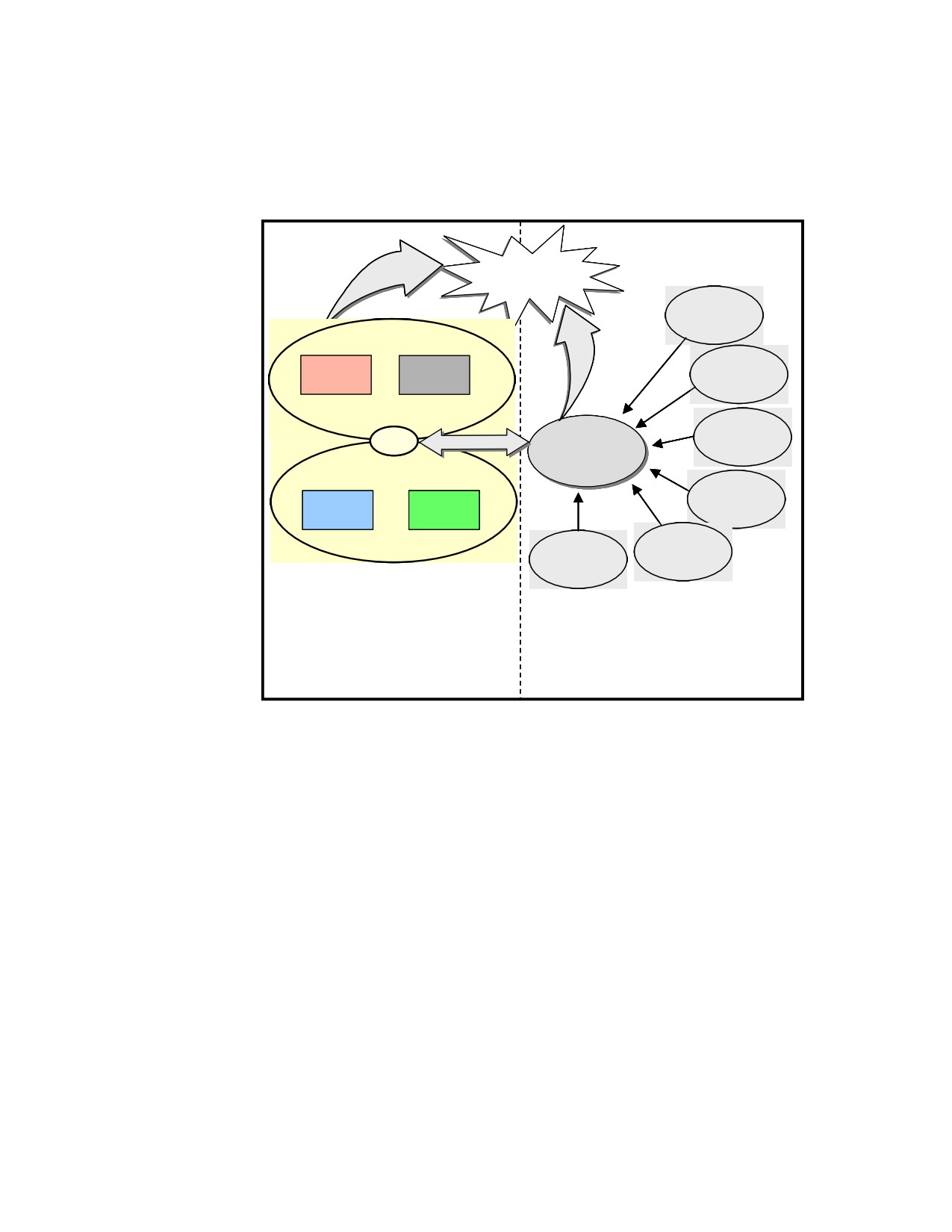
understanding. See Figure 5-1.
5-29. The running estimate is a product of the entire battle staff. Just as all
BOSs contribute to the COP, they will also contribute their portion of the
running estimate. The running estimate integrates the running estimates
from each BOS. The Intelligence BOS input to the running estimate is the
intelligence running estimate.
Intelligence Running Estimate
5-30. The intelligence running estimate is a continuous flow and
presentation of relevant information and predictive intelligence that, when
combined with the other staff running estimates, enables the decisionmaker’s
visualization and situational understanding of the AOI in order to achieve
information superiority. The intelligence running estimate requires constant
verification to support situational understanding of the current situation as
well as predictive assessments for future operations.
5-31. While it is possible to employ the concept of the intelligence running
estimate today, the true seamless and continuous update feature will be
achieved with technological enablers that are not yet present in the force. In
the future, technology should allow the information from the running
estimate to become implanted as a part of the COP. However, there will
always be a place for some separate context, orally or written, separate from
the COP display to add fidelity and assist in the commander’s visualization
and decisionmaking. Additional training must be implemented not just
5-7
FM 2-0 ___________________________________________________________________________________
within MI but also throughout the force in order to institute the running
estimate concept.
ENABLE
Battle
Command
Intelligence
Running
E
Estimate
N
Enemy and Battlefield Civilians
A
B
Maneuver
Enemy
Civilian
L
Running
Situation
Situation
E
Estimate
Refugees
Civilians
NGO
Fire Support
Running
COP
Enable
Running
Estimate
Estimate
Friendly
All BOS
Sustainment
Running
Friendly
Combined
Estimate
Situation
Situation
(All BOS)
Support
Protection
Running
Running
Estimate
Estimate
COP
Running Estimates
• Static in nature…Snapshots in time
• Dynamic and continuous in nature
• Continuously updated
• CCIR stars the process
• Easy drill-down
• Staff product…All BOSs have a piece
• Easily programmable, tailored, filtered
• Battlefield dynamics drive the process
• Provides context to the COP
• Enables Situational Understanding
Figure 5-1. Example of the COP and a Running Estimate.
ANALYZE
5-32. Analysis is key in converting combat information and all intelligence
from each discipline into all-source intelligence products and targeting
information. From the multiple sources of information received, the staff
analyzes and identifies critical information; determines the relevancy and
accuracy of the information; and reaches conclusions about the information.
These conclusions are either immediately disseminated or are used to form
the basis of intelligence analysis products.
DISSEMINATE
5-33. The intelligence staff extracts and disseminates pertinent intelligence
from products developed as a result of all-source analysis. The intelligence
staff⎯
• Rapidly disseminates time-sensitive, all-source analysis intelligence
and intelligence products to higher, lateral, and subordinate commands
in order to keep all commanders abreast of current developments in the
situation and battlespace in accordance with unit SOPs.
5-8
FM 2-0 ____________________________________________________________________________________
• Disseminates all-source analysis intelligence to other G2/S2 intelli-
gence activities for additional processing or detailed analysis and
exploitation in accordance with unit SOPs.
5-34. For intelligence reach operations all-source intelligence products are
available and disseminated in a variety of forms. It is incumbent on the
requestor to ensure that the all-source product can be transmitted over the
available communications systems. This includes verifying the appropriate
security level of the communication system.
ASSESS
5-35. The commander, the intelligence staff, and the intelligence consumers
assess the analysis, production, and dissemination of all-source intelligence.
The staff identifies intelligence gaps, emerging operational requirements,
duplication of effort, or new targets or threats and redirects all-source
activities as appropriate to meet intelligence requirements. Throughout the
assessment process, the G2/S2, the intelligence staff, and intelligence users
should be alert for evidence of possible enemy denial and deception efforts.
The staff assesses intelligence and information for⎯
• Consistency with the current situation and threat trends.
• Accuracy and confirmation by other intelligence sources or disciplines.
• Source reliability and credibility.
• Pertinence to PIRs, intelligence requirements, RFIs, and other intelli-
gence tasks or requests.
5-9
Chapter 6
Human Intelligence
DEFINITION
6-1. HUMINT is the collection by a trained HUMINT Collector of foreign
information from people and multimedia to identify elements, intentions,
composition, strength, dispositions, tactics, equipment, personnel, and
capabilities. It uses human sources as a tool and a variety of collection
methods, both passively and actively, to gather information to satisfy the
commander’s intelligence requirements and cross-cue other intelligence
disciplines.
ROLE
6-2. The role of HUMINT Collectors is to gather foreign information from
people and multiple media sources to identify adversary elements, intentions,
composition, strength, dispositions, tactics, equipment, personnel, and
capabilities. It uses human sources and a variety of collection methods to
gather information to satisfy the commander’s intelligence requirements, and
cross-cue other intelligence disciplines.
HUMINT FUNCTIONS
6-3. HUMINT functions are interrelated, mutually supporting, and can be
derived from one another. No single function or technical capability can
provide a full understanding of our adversaries. HUMINT functions are
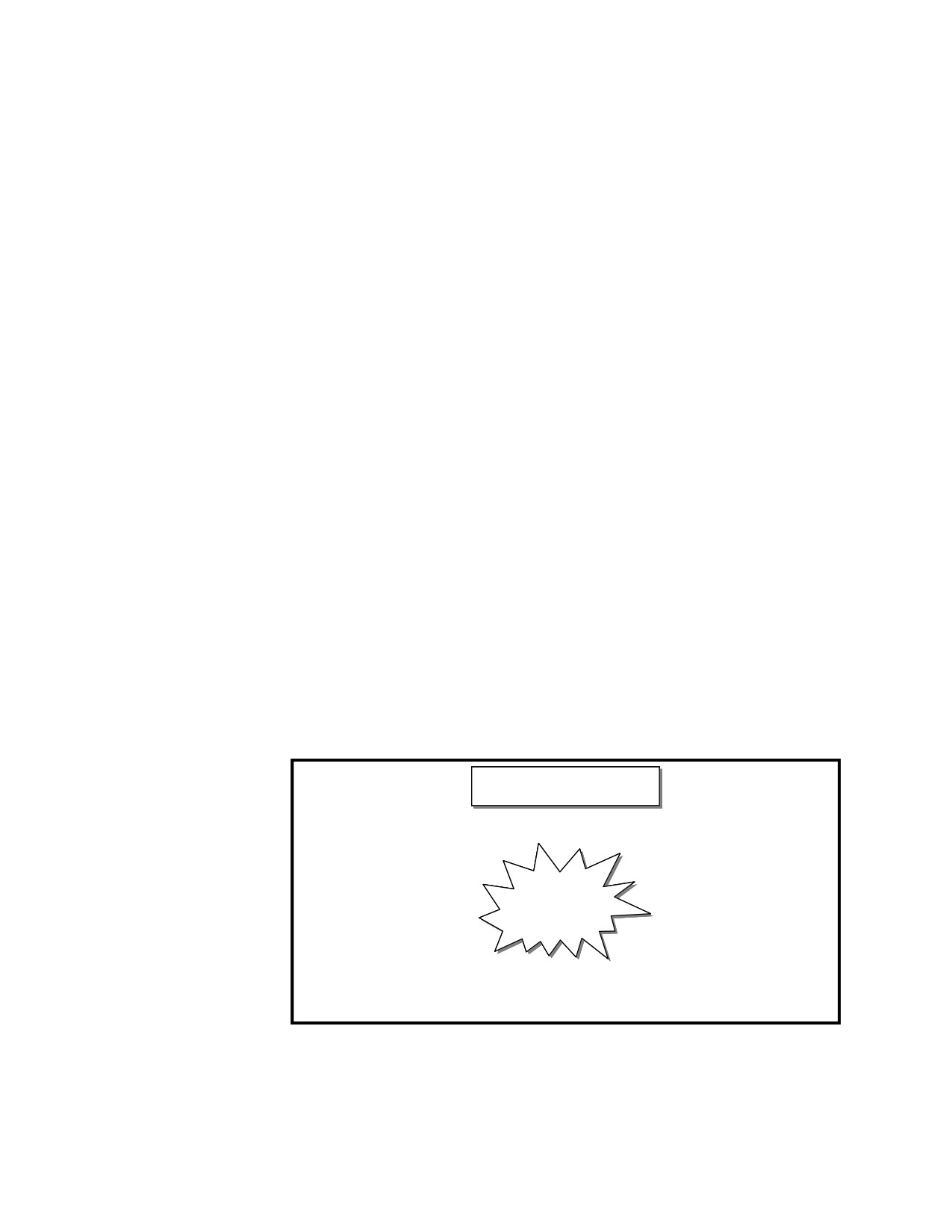
defined below and shown in Figure 6-1.
HUMAN INTELLIGENCE
Roles
Functions
Capabilities
Collection
Intentions
Debriefings
Order of Battle
Screening
Target
Vulnerabilities
Liaison
Adversary
HUMINT Contact Operations
Decisionmaking
DOCEX
Architecture
Interrogation
Tactical Questioning
Analysis
Trends
Intent
Patterns
Shapes Blue’s Visualization of Red
Analytical Tools
Figure 6-1. HUMINT Roles and Functions.
6-1
FM 2-0 ____________________________________________________________________________________
COLLECTION
6-4. HUMINT collection methods and operations include⎯
•
Debriefings. Debriefings are the systematic questioning of individuals
to procure information to answer specific collection requirements by
direct and indirect questioning techniques. Sources for debriefings are
categorized as friendly forces, US and non-US civilians to include
refugees, displaced persons, and local inhabitants.
•
Screening. Screening is the process of evaluating and selecting human
and media sources for the prioritized collection of information in
support of commander’s PIRs and IRs. Screening categorizes and
prioritizes sources based on the probability of a particular source
having priority information and the degree of difficulty of extracting
that information from the source. While screening is not in itself an
information collection technique, it is vital to the rapid collection of
information.
•
Liaison. HUMINT elements conduct liaison with US, multinational,
and HN military and civilian agencies, to include NGOs. Liaison is
conducted to obtain information of interest and to coordinate or
deconflict HUMINT activities.
•
HUMINT Contact Operations. HUMINT contact operations are
tactically oriented, overt collection activities that use human sources to
identify attitude, intentions, composition, strength, dispositions,
tactics, equipment, target development, personnel, and capabilities of
those elements that pose a potential or actual threat to US and
multinational forces. These forces provide early warning of imminent
danger to US and multinational forces and contribute to the MDMP.
•
Document Exploitation (DOCEX). DOCEX is the systematic extraction
of information from all media formats in response to collection
requirements.
•
Interrogation. Interrogation is the systematic effort to procure
information to answer specific collection requirements by direct and
indirect questioning techniques of persons who are in the custody of the
forces conducting the questioning.
UNIT SUPPORT TO HUMINT COLLECTION
6-5. Small units contribute to HUMINT collection through a number of
different ways.
Tactical Questioning
6-6. Tactical questioning can provide critical information for situational
understanding. Tactical questioning is the expedient initial questioning for
information of immediate tactical value. Soldiers conduct tactical questioning
based on the unit’s SOP, ROE, and the order for that mission. Unit leaders
must include specific guidance for tactical questioning in the order for
appropriate missions. The unit S3 and S2 must also provide specific guidance
down to the unit level to help guide tactical questioning. For a more detailed
discussion of tactical questioning, see ST 2-91.6.
6-2
___________________________________________________________________________________ FM 2-0
Combat Patrolling
6-7. Through observing and interacting with the local environment during
the conduct of missions, handling EPWs/detainees, and handling captured
documents, soldiers serve as the commander’s “eyes and ears” whether—
• Performing traditional offensive or defensive operations.
• Performing a patrol in a stability operation.
• Manning a TCP or a roadblock in a support operation.
• Occupying an observation post.
• Passing through an area in a convoy.
• Performing any operation that involves observing and reporting on
elements of the environment and activities in the AO.
ISR Operations
6-8. The information that the soldier reports as a result of completed
missions up the chain of command forms a vital part of planning and
operations. Careful and quick handling of EPWs/detainees and documents
also helps the ISR effort. Unit headquarters must ensure that the reports
they receive and forward contain all the subtle detail provided by the small
unit. For tactical operations, there are four levels of reporting:
• Immediate reporting of information of critical tactical value, based
either on predetermined criteria or common sense.
• Normal reporting, submitted before the unit S2 section performs the
debriefing.
• Debriefing performed by the S2 section.
• Follow-up reporting, submitted after the unit S2 section performs the
debriefing.
6-9. The four levels of reporting facilitate the unit S2 section capturing all
the fine details of the small unit’s activities for all-source analysis and future
planning. The unit S2 must ensure that information of HUMINT and CI
value is reported to the G2X.
ANALYSIS
6-10. IPB, all-source, and single-source analysis are used to template
adversarial OB. HUMINT elements analyze operational taskings to
determine the best collection methods to employ in satisfying CCIRs (PIRs
and FFIRs) and IRs. As information is collected, it is analyzed for
completeness and accuracy to identify significant facts for subsequent
interpretation and inclusion in intelligence products, and passing to other
collectors. This analysis also helps to identify collection gaps and focus or
refocus collection efforts. Analysis provides the commander with situational
understanding of the battlespace to execute operations. Raw information,
open-source material, and finished intelligence products are analyzed in
response to local and national requirements. Analysis occurs at all levels
from tactical to strategic.
• At the tactical level, HUMINT teams focus their efforts on supporting
mission requirements and contributing to the all-source COP.
6-3
FM 2-0 ____________________________________________________________________________________
• Operational analysis is used to assess adversary intentions,
capabilities, dispositions, and their regional impacts.
• Strategic analysis supports national and Army programs through
compilation of local and regional analysis into global assessments;
identifies technology development trends and patterns in military
activities and capabilities.
6-11. HUMINT products consist of, but are not limited to, target nomination,
input to threat and vulnerability assessments, intelligence estimates, and
intelligence information reports. Finalized intelligence derived from
HUMINT activities is incorporated into joint and national intelligence
databases, assessments, and analysis products. HUMINT products are also
incorporated into the COP to support situational awareness. HUMINT
production takes place at all levels.
• Operational and tactical production includes tactical alerts, spot
reports, and current intelligence; input to threat and/or vulnerability
assessments tailored to specific activities, units, installations,
programs or geographic areas, and target studies to support
contingency planning and major exercises; studies of military activities
and capabilities.
• Strategic products include assessments supporting national and Army
information requirements on foreign technology development;
worldwide assessments of the organization, location, funding, training,
operations capabilities and intentions of terrorist organizations;
analyses of the capabilities of international narcotics trafficking
organizations.
OPERATIONAL EMPLOYMENT
6-12. Army HUMINT must support the full spectrum of military operations.
Commanders require a well-trained HUMINT force consisting of AC, RC,
civilian government, and contractor personnel. The HUMINT force is focused
on and dedicated to the collection of data and information relevant to the
commander’s PIRs and IRs. Effective employment of Army HUMINT
elements in all phases of operations and at all levels from tactical to strategic
will remain paramount to ensuring that commanders have the best pictures
possible of their adversaries. HUMINT Collectors use the following collection
methods.
LEVELS OF EMPLOYMENT
6-13. Strategic and Departmental. Strategic and departmental operations
will be conducted by HUMINT elements supporting national, DOD, and DA
required missions (for example, support to NATO and special operations and
missions). The Army strategic HUMINT force resides in DHS. Trained Army
HUMINT professionals must be available to augment DOD HUMINT efforts
and coordinate between Army and Joint or DOD elements during crisis and
war. Strategic HUMINT activities are generally carried out by departmental
level HUMINT elements or Army HUMINT assets directly assigned to DOD
and Joint positions. The Army overt HUMINT capability at the strategic
6-4
___________________________________________________________________________________ FM 2-0
level will be deployed and under operational control (OPCON) of the Army
Service Component Commander (ASCC).
6-14. Operational. HUMINT operational missions must support combatant
commanders, generally in geographic AORs. Operational HUMINT assets
provide capabilities to support theater requirements for HUMINT collection.
Operational HUMINT elements will focus on threat identification and
capabilities. As with all levels of employment, HUMINT activities and
functions will include DOCEX, collection, operations, analysis, and
production. HUMINT elements must be capable of quickly transitioning from
a peacetime mission to crisis operations to support combatant commander
requirements. Operational elements may also be deployed to support or
reinforce tactical forces in CONOPS.
6-15. Tactical. Army HUMINT play a crucial role in supporting tactical
forces. HUMINT teams conduct operations throughout the battlespace during
CONOPS. CONOPS support activities include debriefings, screenings,
contact operations, and interrogations. HUMINT activities in CONOPS focus
on the threat and assisting the senior intelligence officer
(SIO) and
commander in understanding the threat's decisionmaking process. During
peacetime, organic tactical HUMINT teams conduct activities pursuant with
approved regulations and command guidance.
SUPPORT TO CONTINGENCY OPERATIONS
6-16. Initial Phase. The initial phase of operations from peacetime military
engagement (PME) to major theater war (MTW) lays the foundation of future
team operations. In general, the priority of effort focuses inward on security
of operating bases, areas of troop concentration, and C2 nodes to identify the
collection threat to US forces that could be used by adversarial elements to
plan hostile acts against US activities and locations.
6-17. Continuation Phase. Once security of the operating bases has been
established, the operational focus of HUMINT teams shifts outside the
operating base to continue to detect, identify, and neutralize the collection
threat to US forces as well as to provide I&W of hostile acts targeting US
activities. The HUMINT team uses several collection methods, to include
HUMINT contact operations, elicitation, and liaison, to answer the supported
commander’s requirements.
6-18. HUMINT Team. A key element to the HUMINT team’s success is the
opportunity to spot, assess, and develop relationships with potential sources
of information. Operating as independent teams, without being tied to
combat assets, enables the HUMINT team’s maximum interaction with the
local population, thereby maximizing the pool of potential sources of
information. A second key element of a HUMINT team’s success is its
approachability to the local population. A soft posture enables a HUMINT
team to appear as non-threatening as possible. Experience has shown that
the local population in general is apprehensive of fully and openly armed
patrols and soldiers moving around population centers. During some
operations civilian attire or non-tactical vehicles may be used to lower the
6-5
FM 2-0 ____________________________________________________________________________________
HUMINT team profile. NOTE: In some special situations, these measures
are taken to make the operation less visible to the casual observer. Also, in
some cultures, sharing food and beverages among friends is expected;
exceptions to restrictions or general orders should be considered to facilitate
successful HUMINT team operations, many of which are geared towards
developing relationships with potential sources of information.
SUPPORT TO INSTALLATIONS AND OPERATING BASES
6-19. Commanders may restrict personnel to base camps and installations
during the initial stages of operations (PME to MTW), when the operational
environment is being assessed, or as a temporary expedient when the threat
level exceeds the ability to provide reasonable FP. Operational restrictions
minimize the risk to the HUMINT team, but minimizing its collection
potential may increase the risk to the force as a whole. While confined to an
installation or a base camp, the HUMINT team can maintain a limited level
of information collection by⎯
• Screening locally employed personnel.
• Debriefing combat and ISR patrols.
• Debriefing friendly force personnel who are in contact with the local
population.
• Conducting limited local open-source information collection.
• Contributing to the threat and vulnerability assessments of the base
camp.
TACTICS, TECHNIQUES, AND PROCEDURES
6-20. At the HUMINT team level, team members conduct mission analysis
and planning specific to their AO. Backwards planning and source profiling
are used extensively to choose HUMINT targets. To verify adequate area
coverage, the HUMINT team may periodically develop and use HUMINT
target overlays and other HUMINT analytical tools that illustrate the
HUMINT situation, identify gaps, and help refocus the collection effort.
6-21. The HUMINT team is also in constant contact with the supported S2
and the other ISR assets
(Scouts, PSYOP, CA, and MPs) in order to
coordinate and deconflict operations and to cross-check collected information.
The supported unit S2, with the help of the HUMINT team, regularly and
systematically debriefs all ISR assets.
6-22. The HUMINT team must be integrated into the supported unit’s ISR
plan. The HUMINT operational management team (OMT) chief will advise
the supported unit on the specific capabilities and requirements of the team
to maximize mission success.
OPERATIONAL RISK MITIGATION
6-23. The employment of HUMINT teams includes varying degrees of contact
with the local population. As the degree of contact with the population
increases, both the quantity and quality of collection increases. In many
instances, however, there is a risk to the team inherent with increased
exposure to the local population. The decision at what level to employ a team
is METT-TC dependent. The risk to HUMINT assets must be balanced with
6-6
___________________________________________________________________________________ FM 2-0
the need to collect priority information and to protect the force as a whole.
ROE, SOFA, direction from higher headquarters, and the overall threat level
may also restrict the deployment and use of HUMINT teams. The
commander should consider exceptions to the ROE to facilitate HUMINT
collection.
6-24. Risks are minimized through the situational awareness of HUMINT
team members. They plan and rehearse to readily react to any situation and
carry the necessary firepower to disengage from difficult situations. If it
becomes necessary to call for assistance, adequate and redundant
communications equipment is critical. These scenarios and actions should be
trained prior to deployment into a contingency area and rehearsed
continuously throughout the deployment.
6-25. A supported unit commander is often tempted to keep the HUMINT
team “inside the wire” when the threat condition
(THREATCON) level
increases. The supported commander must weigh the risk versus potential
information gain when establishing operational parameters of supporting
HUMINT teams. This is necessary especially during high THREATCON
levels when the supported unit commander needs as complete a picture as
possible of the threat arrayed against US and multinational forces.
6-26. When it is not expedient to deploy the HUMINT team independently
due to threat levels or other restrictions, the team can be integrated into
other ongoing operations. The HUMINT team may be employed as part of a
combat, ISR, or MP patrol or used to support CA, PSYOP, engineer, or other
operations. This method reduces the risk to the team while allowing a limited
ability to collect information. It has the advantage of placing the team in
contact with the local population and allowing it to spot, assess, and interact
with potential sources of information. However, this deployment method
restricts collection by subordinating the team’s efforts to the requirements,
locations, and timetables of the unit or operation into which it is integrated
and does not allow for the conduct of sensitive source operations. This method
of employment should be considered a last resort.
HUMINT EQUIPMENT
6-27. Basic C2, transportation, and weapons requirements do not differ
significantly from most soldier requirements and are available as unit issue
items. However, HUMINT teams have unique communications, collection,
processing, and mission-specific requirements.
COMMUNICATIONS
6-28. Dedicated and secure long-range communications are key to the success
of the HUMINT team mission. HUMINT team operations require a secure,
three-tiered communications architecture consisting of inter/intra-team
radios, vehicle-based communications, and a CI and HUMINT base station.
6-29. The HUMINT team must have access to existing communications
networks such as the tactical local area network (LAN). The HUMINT team
must also be equipped with its own COMSEC devices. It is imperative that
the HUMINT team acquire access to the public communication system of the
HN. This can be in the form of either landlines or cellular telephones. Such
6-7
FM 2-0 ____________________________________________________________________________________
access enables the HUMINT team to develop leads which can provide early
indicators to US forces.
Interoperability
6-30. Communications systems must be equipped with an open-ended
architecture to allow for expansion and compatibility with other service
elements, government organizations, NGOs, and multinational elements to
effectively communicate during CONOPS. All ISR systems must be vertically
and horizontally integrated to be compatible across all BOSs and with Legacy
and Interim Force elements.
Satellite Communications On-The-Move (SOTM)
6-31. To provide real time or NRT information reporting, HUMINT elements
must have the capability to transmit voice, data, imagery, and video while on
the move. HUMINT teams must be able to transmit while geographically
separated from their parent unit while operating remotely. This broadband
requirement can only be achieved through a SATCOM capability and must be
achievable while mobile.
HUMINT COLLECTION AND PROCESSING SYSTEMS
6-32. The HUMINT team must rely on automation to achieve and maintain
information dominance in a given operation. With time, effective collection
planning and management at all echelons, the HUMINT team can collect a
wealth of information. The sorting and analysis of this information in a
timely and efficient manner is crucial to operations. Automation helps the
HUMINT team to report, database, analyze, and evaluate the collected
information quickly and to provide the supported unit with accurate data in
the form of timely, relevant, accurate, and predictive intelligence.
6-33. Automation hardware and software must be user friendly as well as
interoperable among different echelons and services. They must interface
with the communications equipment of the HUMINT team as well as
facilitate the interface of audiovisual devices. Technical support for hardware
and software must be available and responsive.
6-34. The demand for accurate and timely HUMINT reporting, DOCEX, and
open-source information has grown tremendously. Biometric (physiological,
neurological, thermal analysis, facial and fingerprint recognition)
technologies will allow rapid identification; coding and tracking of
adversaries and human sources; and cataloging of information concerning
enemy prisoners of war (EPWs), detainees, and civilians of HUMINT interest
on the battlefield. Biometrics will also provide secure authentication of
individuals seeking network or facility access.
6-35. HUMINT teams work with multinational forces, and other foreign
nationals, and require the ability to communicate in their respective
languages. Often HUMINT personnel have little or no training in the target
language, and lack of skilled interpreters can hinder HUMINT activities.
HUMINT teams require textual and voice translation devices, source
verification, and deception detection machines
(biometrics) to improve
collection capability and accuracy.
6-8
___________________________________________________________________________________ FM 2-0
6-36. HUMINT teams require dynamic machine language translation (MLT)
tools that provide both non-linguists and those with limited linguist skills a
comprehensive, accurate means to conduct initial screenings and basic
interviews in a variety of situations. HUMINT elements will focus on in-
depth interviews and communications with persons of higher priority. MLT
tools will minimize reliance on contract linguists and will allow soldiers to
concentrate on mission accomplishment.
MISSION SPECIFIC
6-37. The HUMINT team may conduct night operations and must be
equipped with NVDs for its members and photographic and weapons
systems. The HUMINT team also may operate in urban and rural areas,
where the threat level can vary from semi-hostile to hostile. The safety of the
HUMINT team can be enhanced with equipment that can detect, locate,
suppress, illuminate, and designate hostile optical and E-O devices. In
addition, high power, gyro-stabilized binoculars, which can be used from a
moving vehicle, also increase the survivability of the HUMINT team. It also
gives the team another surveillance and collection device.
6-38. Some of the HUMINT team missions may require the documentation of
incidents. The teams can use the following equipment in their open-source
collection efforts.
• Small, rugged, battery-operated digital camcorders and cameras which
are able to interface with the collection and processing systems as well
as communication devices.
• GPSs that can be mounted and dismounted to move in the AO
efficiently.
• Short-range multichannel RF scanning devices that can also identify
frequencies which enhance their security.
6-39. In some cases HUMINT teams require a stand-off, high resolution
optical surveillance and recording capability that can provide target
identification at extended ranges to protect the intelligence collector while
avoiding detection by the adversary target. An advanced optical capability
provides intelligence collectors the ability to locate and track adversarial
targets
(passive and hostile) for identification, collection, and target
exploitations.
INTEGRATION OF LINGUISTS
6-40. Integrating linguists into the HUMINT team should take place as soon
as possible. Security clearances and contractual agreements will help the
team determine the level of integration.
6-41. Along with the basic briefing of what is expected of the civilian
linguists as interpreters, HUMINT teams should be informed about the
civilians’ chain of command and the scope of their duties beyond interpreting.
The HUMINT team leader must ensure that linguists are trained and
capable of completing all tasks expected of them.
6-9
FM 2-0 ____________________________________________________________________________________
BATTLE HAND-OFF
6-42. HUMINT teams are always engaged. A good battle hand-off is critical
to smooth transition and mission success. The battle hand-off can directly
contribute to mission success or failure of the outgoing team, but especially of
the incoming team. The battle hand-off begins the first day the HUMINT
team begins to operate in an AO. Regardless of how long the team believes it
will operate within the AO, it must ensure there is a seamless transition to
an incoming team, other US unit, or agency. The HUMINT team
accomplishes this transition by establishing procedures for source
administration, database maintenance, and report files.
6-43. Teams must plan and implement a logical and systematic sequence of
tasks to enable an incoming team to assume the operations in the AO.
Adequate time must be allotted for an effective battle hand-off. In some
environments, a few weeks may be necessary to accomplish an effective battle
hand-off. Introductions to sources of information, especially HUMINT contact
operations sources, are critical and teams must prioritize their time. During
this time the outgoing HUMINT team must familiarize the new HUMINT
team with all aspects of the operation, which includes past, present, and
planned activities within the AO. Area orientation is critical. These include
major routes, population centers, potential hot spots, and other points of
interest (such as police stations, political centers, and social centers).
ORGANIZATION
6-44. HUMINT activities require a complex C2 relationship to ensure that
the requirements of the supported commander are fulfilled while balancing
the need for strict integrity and legality of HUMINT operations. This complex
relationship balances the role of the SIO as the requirements manager and
the *2X as the mission manager with the MI commander as the asset
manager. (“*2X” indicates 2X functions at all levels.)
COMMAND VERSUS CONTROL
6-45. ARFOR will normally deploy as part of a joint and/or multinational
operation. In all cases, commanders at each echelon will exercise command
over the forces assigned to their organization. Command includes the
authority and responsibility for effectively using resources, planning for and
employment of forces, and ensuring that forces accomplish assigned missions.
Leaders and staffs exercise control to facilitate mission accomplishment.
6-46. While the MI commander supervises subordinates and produces
reports, the
*2X synchronizes activities between intelligence units and
provides single-source processing and limited analysis. While the MI
commander takes care of the operators executing missions, the *2X obtains
the data and reports from higher echelons required to execute the missions.
STAFF RESPONSIBILITIES AND FUNCTIONS
*2X Staff
6-47. The *2X staff is responsible for the integration, correlation, and fusion
of all Human Sensor information into the Intelligence BOS within the *2X
6-10
___________________________________________________________________________________ FM 2-0
AOIR. The *2X is also responsible for analyzing adversary collection, terrorist
and sabotage activities, developing countermeasures to defeat threat
collection activities, identifying and submitting collection requirements to fill
collection gaps, and providing input to the all-source picture regarding
adversary intelligence activities.
*2X Staff Officer
6-48. The *2X Staff Officer provides CI and HUMINT collection expertise.
The *2X⎯
•
Is the single focal point for all matters associated with CI and
HUMINT in the AOIR.
•
Is the CI and HUMINT advisor to the G2 and commander.
•
Is an extension of the collection manager and ensures that the best
asset or combinations of assets are used to satisfy information
requirements.
•
Along with his subordinate elements (CICA, HOC, OSC, CI Analysis
Cell [CIAC], and HAC), exercises technical control over his assigned
Army CI and HUMINT elements in the designated AOIR.
•
Is the principal representative of the G2 and the commander when
coordinating and deconflicting CI and HUMINT activities with
national or theater agencies operating in the AOIR.
•
Supports specific RM efforts in conjunction with the requirements
manager through⎯
Planning and coordinating CI and HUMINT operations.
Reviewing and validating HUMINT requirements.
Recommending assignment of tasks to specific collectors.
Conducting liaison with non-organic HUMINT collection. This
liaison includes national level and multinational force assets for
source deconfliction and special activities outside the *2X AOIR.
•
Will provide OMTs with capability to reach back to current database
information, technical information and guidance, and source
deconfliction necessary to monitor the collection activities of the
HUMINT teams.
The HUMINT Analysis Cell (HAC)
6-49. The HAC is the single-source fusion point for all HUMINT reporting
and operational analysis. It determines gaps in reporting and coordinates
with other analysis teams and technical controllers to cross-cue other
collection sensor systems. The HAC⎯
• Uses analytical tools to develop long-term collection plans and provides
reporting feedback that supports all HUMINT and CI entities in the
supported command’s AOIR.
• Produces and disseminates HUMINT products and provides input to
intelligence summaries.
• Uses analytical tools found at the ACE or JISE to develop long-term
analyses and provides reporting feedback that supports the J/G/S2X,
HUMINT operations section, OMTs, and HUMINT teams.
• Produces country and regional studies tailored to HUMINT collection.
6-11
FM 2-0 ____________________________________________________________________________________
• Compiles target folders to assist J/G/S2X assets in focusing collection
efforts.
• Analyzes and reports on trends and patterns found in HUMINT
reporting.
• Analyzes source reliability and credibility as reflected in reporting and
communicating that analysis to the collector.
• Develops and maintains databases specific to HUMINT collection
activities that directly support the collection efforts of HUMINT teams
and are directly accessible by HUMINT teams.
• Provides collection requirements input to the HOC.
• Supports RM through the development of HUMINT SIRs based on
command PIRs.
• Answers HUMINT-related RFIs.
6-50. For intelligence reach operations, HUMINT products are available and
disseminated in a variety of forms. It is incumbent on the requestor to ensure
that the HUMINT product can be transmitted over the available
communications systems. This includes verifying the appropriate security
level of the communications systems.
HUMINT Operations Cell (HOC)
6-51. The HOC in the
*2X coordinates and synchronizes all HUMINT
activities in the AOIR. The HOC exercises technical control over all HUMINT
entities in the designated AOIR and deconflicts HUMINT activities with
higher, lower, and adjacent HUMINT elements. The HOC accomplishes all
responsibilities through coordination with the operational units and the
CICA and operations support cell (OSC). The HOC tracks all HUMINT
activities in the AOR. The J/G2X uses this information to advise the SIO on
all HUMINT activities conducted within the AO. The HOC—
• Exercises technical control of all HUMINT assets and coordinates and
deconflicts HUMINT activities in the deployed AO.
• Establishes and maintains a HUMINT source database.
• Coordinates and supervises HUMINT FP source operations conducted
by all services and components in the AO.
• Develops and manages collection requirements for HUMINT in
coordination with the requirements manager.
• Develops and provides the HUMINT portion of the intelligence
synchronization plan to the J/G/S2X and requirements manager for
inclusion in the intelligence synchronization plan.
• Coordinates the activities of HUMINT collectors assigned or attached
to interrogations and debriefing facilities.
• Expedites preparation of intelligence information reports and their
distribution to consumers at all levels.
• Performs liaison with HN and US national HUMINT organizations.
6-12
___________________________________________________________________________________ FM 2-0
Operations Support Cell
6-52. The OSC in the *2X staff maintains the source registry for all HUMINT
activities in the designated AOIR. The OSC provides management of
intelligence property book operations, source incentive programs, and ICFs.
6-53. Integrating linguists and DOD emergency-essential civilians, such as
technical support contractors, into the HUMINT team should take place as
soon as possible. Security clearances and contractual agreements will help
the team determine the level of integration.
6-54. Along with the basic briefing of what is expected of the civilian
linguists as interpreters and the emergency-essential civilians as support
personnel, HUMINT teams should be informed about the civilians’ chain of
command and the scope of their duties beyond interpreting and technical
support. The HUMINT team leader must ensure that linguists and
emergency-essential civilians are trained and capable of completing all tasks
expected of them.
Counterintelligence Coordinating Authority
6-55. The CICA coordinates all CI activities for a deployed force. There can
be only one CICA in a theater of operations. When multiple echelons exist,
the highest echelon has the CICA and subordinate G2X offices have a CICA.
Depending on the size and scope of the operation, the CICA could be the
unified command’s CI staff officer; the CI or HUMINT staff officer from corps
or division; or a senior warrant officer or branch CI officer designated by the
unified command CI staff officer or task force commander. For more
information about the CICA functions, see Chapter 11.
HUMINT TEAM STRUCTURE
Operational Management Team
6-56. The OMT is a four-person team consisting of a warrant officer (WO),
two noncommissioned officers (NCOs), and a junior enlisted soldier. Civilians
may be inserted into this structure when appropriate. Rank structure and
standards of grade for OMTs vary depending upon the skill sets required and
mission focus. HUMINT OMTs provide operational guidance for two to four
HUMINT teams, depending on mission focus and operational tempo. When
two or more HUMINT teams are deployed in DS of a maneuver element, an
OMT also deploys to provide technical control. The OMT works closely with
the supported S2 and analysis and control team (ACT) to furnish current
threat information and answer the supported commander’s PIRs and IRs.
OMTs coordinate with the supported 2X and manage subordinate HUMINT
team echelons to⎯
• Provide guidance and technical control of operational activity.
• Provide the collection and operational focus for HUMINT teams.
• Provide quality control and dissemination of reports for subordinate
HUMINT teams.
• Conduct single-discipline HUMINT analysis, and assist in mission
analysis for the supported commander.
6-13
FM 2-0 ____________________________________________________________________________________
• Act as a conduit between subordinate HUMINT teams, the HOC, and
supported unit headquarters.
• Provide administrative support for subordinate HUMINT teams, to
include reporting mission and equipment status to the HOC and the
supported unit headquarters.
• Educate the supported commander on the capabilities of the HUMINT
teams.
• Integrate the HUMINT teams directly into the maneuver commander’s
ISR planning.
HUMINT Team
6-57. The HUMINT team is a four-person team consisting of two NCOs and
two junior enlisted personnel. Civilians may be inserted into this structure
when appropriate. Rank structure and standards of grade for HUMINT
teams vary depending upon the skill sets required and the mission focus.
HUMINT teams are trained to execute the full range of HUMINT functions
as defined in HUMINT FUNCTIONS section. However, they may be assigned
to mission-focused elements such as DOCEX, interrogation, debriefing, or
contact operations.
6-14
Chapter 7
Imagery Intelligence
DEFINITION
7-1. IMINT is intelligence derived from the exploitation of imagery collected
by visual photography, infrared, lasers, multi-spectral sensors, and radar.
These sensors produce images of objects optically, electronically, or digitally
on film, electronic display devices, or other media.
ROLE
7-2. The role of imagery is to assist the commander in focusing and
protecting his combat power. Imagery often enhances the commander’s
situational understanding of the battlespace. Other than direct human
observation, imagery is the only intelligence discipline that allows the
commander to see the battlefield in real time as the operation progresses. In
those cases where maps are not available, digital imagery in hardcopy or
softcopy can be used as a substitute. Imagery can also be used to update
maps or produce grid-referenced graphics. Detailed mission planning often
requires imagery, to include three-dimensional stereo images, in order to
provide the degree of resolution necessary to support such specialized
planning.
FUNDAMENTALS
7-3. Some imagery assets are very responsive to the individual commander’s
intelligence requirements. Some imagery systems can directly transmit
imagery into the tactical operations center (TOC); examples include imagery
from UAVs and the Joint Surveillance Target Attack Radar System
(JSTARS). This direct downlink enables the G2/S2 to use the imagery as soon
as possible instead of having to wait for finished imagery products. A note of
caution is required, however, if not a trained imagery analyst because the
G2/S2 could incorrectly interpret the imagery.
7-4. Imagery-related equipment has undergone a reduction in size as well as
a reduction in the time it takes to provide products, particularly softcopy
imagery. The modularity and size reduction of imagery analysis, processing,
and display systems make transport easier; they also allow the commander to
bring lesser amounts than in the past, while still retaining those systems (or
subsystems) required to complete the mission. Additionally, data compression
allows faster transmission of imagery products directly to the warfighter.
SOURCES OF IMAGERY
7-5. There are three general sources of imagery: national, civil, and
commercial. National imagery traditionally refers to imagery collected by
DOD imagery systems. However, there are other sources of imagery provided
7-1
FM 2-0 ____________________________________________________________________________________
by non-national sources such as handheld photography (film, digital, and
video), UAV imagery, and gun-camera images.
National
7-6. National systems are developed specifically for supporting the President
of the United States, the Secretary of Defense, other national agencies, and
US military forces. These systems respond to the needs of the nation and
those of the combatant commands.
Civil
7-7. Civil imagery systems are usually government funded in terms of
building, launching, and operating the system. In many, but not all, cases the
agencies operating these civil imagery systems also process, distribute, and
archive the imagery data or images.
Commercial
7-8. Commercial companies build, launch, and operate imagery systems for
profit. In times of crises, license agreements with the US Government
obligate US commercial satellite imaging systems to provide data only to the
US Government at the market value. This protects information concerning
US operations from adversarial exploitation from commercial systems such
as the ACE Imagery Company. However, foreign commercial imagery
systems are not bound to this arrangement, and thus may be used by our
nation’s adversaries. Commercial imagery has become increasingly valuable
for many reasons:
• Due to its unclassified nature, civil and commercial imagery is useful
in an open environment, may be released to multinational partners,
and can be made available to the press. They are especially useful for
geospatial products. Their use allows national systems more time to
focus on other intelligence functions.
• Civil and commercial imagery offer radar and multi-spectral. Some
offer large area collection useful for broad area coverage purposes.
• Commercial satellite imagery resolution varies from less than one
meter to several kilometers.
7-9. The Central Imagery Tasking Office (CITO) is responsible for ordering
commercial imagery. The Commercial Satellite Imagery Library is available
to research DOD purchased commercial imagery. The G2/S2 should consult
the CITO when forming commercial imagery requests. NGA will deliver the
imagery primarily on CD-ROM media via courier or mail service. Limited
digital or electronic delivery is available as well.
TYPES OF IMAGERY SENSORS
7-10. There are four types of imagery sensors: visible (optical), infrared,
radar, and multi-spectral. Each sensor has a unique capability, with distinct
advantages and disadvantages. The G2/S2 must understand each sensor’s
capability in order to select the best sensor for the mission and thus enable
the user to better understand the intelligence received. Certain sensors are
better suited for military operations than others. (See Table 7-1.)
7-2

___________________________________________________________________________________ FM 2-0
Table 7-1. Sensor Characteristics Matrix.
SENSORS
ADVANTAGES
DISADVANTAGES
Visible (Optical)
•
Affords a familiar view of a
•
Restricted by terrain and vegetation.
Best tool for daytime,
scene.
•
Limited to daytime use only.
clear weather,
•
Offers system resolution that
•
Reduced picture size.
detailed analysis.
cannot be achieved in other
Includes video and
optical systems or in thermal
electro-optical.
images and radars.
•
Preferred for detailed analysis
and mensuration.
•
Offers stereoscopic viewing.
Infrared
•
A passive sensor and is
•
Not effective during thermal
Best tool for
impossible to jam.
crossover periods.
nighttime, clear
•
Offers camouflage
•
Product not easily interpretable.
weather, detailed
penetration.
•
Requires skilled analysis.
analysis.
•
Provides good resolution.
•
Cannot penetrate clouds.
Includes Overhead
•
Nighttime imaging capability.
Non-Imaging Infrared
(ONIR).
Radar
•
All weather; can penetrate
•
Product not easily interpretable.
Useful for detecting
fog, haze, clouds, smoke.
•
Requires skilled analysis.
presence of objects
•
Day or night use.
•
Terrain masking inhibits use.
at night and in bad
•
Does not rely on visible
weather. Includes
light nor thermal radiation.
synthetic aperture
•
Good standoff capability.
radar (SAR),
•
Large area coverage.
coherent change
•
Allows moving target
detection (CCD), and
detection.
MTI.
•
Foliage and ground
penetration.
Multi-Spectral
•
Large database available.
•
Product not easily interpretable.
Imagery (MSI)
•
Band combinations can be
•
Requires skilled analysis.
Best tool for mapping
manipulated to display
•
Computer manipulation requires
purposes and terrain
desired requirements.
large amounts of memory and
analysis.
•
Images can be merged with
storage; requires large processing
other digital data to provide
capabilities.
higher resolution.
PLAN
7-11. The first step in planning for IMINT is determining the need for IMINT
products based on the PIRs and the initial IPB. The G2/S2 should research
targets using online imagery databases early and request those imagery
products that are not perishable for contingency planning. National and
COCOM imagery databases may hold recently imaged targets that could
meet the commander’s immediate needs instead of requesting new imagery.
The staff must clearly articulate their intelligence requirements to include
communicating what the mission is and how the requested product will aid in
mission accomplishment. The G2/S2 should submit the imagery requirement
7-3
FM 2-0 ____________________________________________________________________________________
using established procedures such as those in the unit’s SOP or as
established by the COCOM.
7-12. The G2/S2 must also determine the specific imagery requirements so as
not to burden the system with unnecessary requests. The desire for imagery
products often exceeds the capabilities of the IMINT system. Therefore, it is
imperative that the G2/S2 consider what type of analysis they require, and
request only that which they require. The specifications of the request for
IMINT products often affect the timeliness of the response. For example,
determining if vehicles are tanks takes less time and requires less resolution
than determining if a tank is a T-64 or a T-72.
7-13. Here are some of the roles IMINT can perform that the G2/S2 may
consider when determining IMINT requirements:
• Imagery can detect and/or identify and locate specific unit types,
equipment, obstacles, potential field fortifications, etc., from which
intelligence analysts are able to analyze enemy capabilities and
develop possible COAs.
• Imagery can also update maps and enhance the interpretation of
information from maps. Detailed mission planning uses imagery to
include stereo images for three-dimensional viewing of the terrain and
many other geospatial uses.
• Imagery can be used as a substitute for maps when maps are not
available. The most common application of this technique is by
constructing imagery mosaics: a combination of two or more
overlapping photographic prints that form a single picture.
• MTI displays or products can provide an NRT picture of an entity’s
movement by indicating its speed, location, and direction of travel. MTI
systems do not differentiate friendly from enemy. Imagery assets,
particularly MTI systems, are useful in cueing other ISR systems.
• Imagery can be used to support protection of the force by helping the
commander visualize how his forces look⎯including their disposition,
composition, and vulnerabilities⎯as exploited by enemy IMINT sys-
tems.
• Imagery analysts use combat assessment imagery to confirm
destruction, determine the percentage of destruction, or whether the
target was unaffected.
PREPARE
7-14. The G2/S2 IMINT-related actions during the prepare function of the
intelligence process include establishing or verifying the portion of the
intelligence communications architecture that supports IMINT display and
analysis functions properly. Additionally, the G2/S2 must ensure that
required IMINT analytical assets and resources are prepared to provide
support or are available through intelligence reach. Lastly, the G2/S2 must
also ensure IMINT reporting and dissemination channels and procedures are
in place and rehearsals are conducted with all pertinent IMINT elements to
ensure interoperability.
7-4
___________________________________________________________________________________ FM 2-0
COLLECT
7-15. As previously mentioned, there are four types of imagery sensors.
Depending on the type of sensor, it can record hardcopy or softcopy single
frame or continuous (video). A given imagery target will not necessarily
receive continuous coverage due to the possible conflict between the number
and priority of targets and the number and availability of imagery assets.
However, a commander may decide to have continuous surveillance of certain
targets, for specified periods of time, usually using his own imagery assets
(for example, UAV) even though this detracts from the commander’s ability to
use these assets for other imagery targets within his AOI.
PROCESS
7-16. The process function regarding IMINT involves converting imagery
data into a form that is suitable for performing analysis and producing
intelligence. Examples of IMINT processing include developing film,
enhancing imagery, converting electronic data into visual displays or
graphics, and constructing electronic images from IMINT data.
PRODUCE
7-17. The IMINT producer must ensure the IMINT product satisfies the
associated intelligence requirements and that the product is in the required
format. The quality and resolution of the product is highly dependent upon
the type of sensor, the time of day, and the weather conditions, as well as the
imagery analyst’s ability to identify items, vehicles, equipment, and
personnel within the images. Specific IMINT products are discussed in the
ANALYZE section below.
ANALYZE
7-18. Timeliness is critical not only to IMINT collection but also to IMINT
analysis and reporting. It is difficult to separate IMINT reporting from
IMINT analysis in this discussion. This is demonstrated by the three phases
of IMINT reporting presented below; all are dependent upon the timeliness
requirements. Each phase represents a different degree of analysis and
period of time available to accomplish the exploitation of the imagery.
• First Phase imagery analysis is the rapid exploitation of newly
acquired imagery and reporting of imagery-derived information within
a specified time from receipt of imagery. This phase satisfies priority
requirements of immediate need and/or identifies changes or activity of
immediate significance. First Phase imagery analysis results in an
Initial Phase Imagery Report (IPIR).
• Second Phase imagery analysis is the detailed exploitation of newly
acquired imagery and the reporting of imagery-derived intelligence and
information while meeting the production and timeliness
requirements. Other intelligence discipline source material may
support phase two imagery as appropriate. Second phase imagery
analysis results in a Supplemental Imagery Report (SUPR).
• Third Phase imagery analysis is the detailed analysis of all available
imagery pertinent to an SIR, and the subsequent production and
reporting resulting from this analysis within a specified time. This
7-5
FM 2-0 ____________________________________________________________________________________
phase provides an organized detailed analysis of an imagery target or
topic, using imagery as the primary data source but incorporating data
from other sources as appropriate.
7-19. The two types of imagery exploitation are national and direct support
(DS).
• National exploitation is imagery exploitation that supports presidential
requirements, National Security Council
(NSC) requirements,
congressional requirements, or requirements of a common concern to
the intelligence community.
• DS exploitation is imagery exploitation that supports assigned
missions of a single agency, department, or command (the warfighter).
7-20. IMINT assets will complete DS exploitation in order to satisfy (First
Phase) requirements and report the results as soon as possible, but not later
than 24 hours after receipt of the imagery. Collectors will complete national
exploitation in order to satisfy (Second and Third Phases) requirements and
report the results within the time specifications of each individual
requirement.
DISSEMINATE
7-21. IMINT products are distributed or disseminated in hardcopy, softcopy,
or direct viewing such as through remote terminals. The distribution of
hardcopy products will be via couriers or other type of mail system. The
dissemination of softcopy products will be either as hardcopy products (for
example, CD-ROM and 3.5-inch disks) or electronically. The requestor must
ensure that the requested product is transmittable over the available
communications systems.
ASSESS
7-22. The requestor should immediately assess the imagery product upon
receipt for accuracy and relevance to the original request. The requestor must
then notify the producer and inform him of the extent to which the product
answered the PIR. Providing feedback to the producer regarding the product
helps ensure the producer will provide the required information in the correct
format. The following are some of the questions which the requestor should
consider when providing feedback to the producer.
• Is the format of the product acceptable?
• Is additional information needed on the product or future products?
• Is excess information included on the product?
7-6
Chapter 8
Signals Intelligence
DEFINITION
8-1. SIGINT is a category of intelligence comprising either individually or in
combination all COMINT, ELINT, and FISINT, however transmitted;
intelligence is derived from communications, electronics, and foreign
instrumentation signals. SIGINT has three subcategories:
• COMINT - The intelligence derived from foreign communications by
other than the intended recipients.
• ELINT - The technical and geo-location intelligence derived from
foreign non-communications electromagnetic radiations emanating
from other than nuclear detonations or radioactive sources.
• FISINT - Technical information and intelligence derived from the
intercept of foreign electromagnetic emissions associated with the
testing and operational deployment of non-US aerospace, surface, and
subsurface systems. Foreign instrumentation signals include but are
not limited to telemetry, beaconry, electronic interrogators, and video
data links. (See JP 1-02)
8-2. SIGINT provides intelligence to the commander based upon intercepted
communications and provides transmitter location data.
ROLE
8-3. SIGINT provides intelligence on threat capabilities, disposition,
composition, and intentions. In addition, SIGINT provides targeting
information for the delivery of lethal and non-lethal effects.
FUNDAMENTALS
8-4. It is important that the G2/S2 understand how SIGINT assets are
organized not only within the Army but also throughout the DOD. The
majority of SIGINT assets are located at EAC. SIGINT assets from all the
armed services, combined with national SIGINT assets, work together to
support commanders from the tactical to the strategic level. Only by
understanding the SIGINT structure that transcends traditional service
component boundaries can the G2/S2 understand how to use SIGINT
effectively.
TECHNICAL CONTROL AND ANALYSIS ELEMENT (TCAE) ARCHITECTURE
8-5. The TCAE architecture supports Army SIGINT collectors and analysts
by providing SIGINT-specific intelligence and guidance to SIGINT personnel.
The SIGINT technical architecture complements existing C2 relationships; it
does not replace the commander’s authority or chain of command.
8-1
FM 2-0 ____________________________________________________________________________________
8-6. There is a TCAE at each Army operational echelon. The TCAE at each
echelon provides a single POC and resource dedicated to supporting the
commander at that level. TCAEs or SIGINT elements at varying echelons
draw information from each other in order to provide a more complete and
detailed intelligence picture for their respective commanders.
ARMY TCAE (ATCAE)
8-7. The ATCAE, established at the national level, plays a significant role in
TCAE operations by providing technical support oversight and providing
access to national databases⎯in coordination with the NSA and other
intelligence organizations. Additionally, the ATCAE works closely with NSA's
IO element assisting in operations, monitoring technical capabilities, and
providing liaison with Army's 1st Information Operations Command (Land).
(This unit was previously called Land Information Warfare Activity.)
8-8. The ATCAE supports the Army’s Quick Reaction Capability (QRC)
SIGINT and signals research and target development (SRTD) operations. The
QRC systems are responsive to the ground force commander’s requirements
and allow the ability to conduct SIGINT operations against modern
communications systems.
REGIONAL TCAE (RTCAE)
8-9. The Army established RTCAEs to allow supported units at all echelons
access to SIGINT regarding their respective AOI. The Army placed an
RTCAE within each Regional Security Operations Center (RSOC). An RSOC
is a joint service facility established by the Director, NSA, to conduct
continuous security operations on selected targets in support of national and
warfighter intelligence requirements using remoting technologies. The RSOC
embeds a focus on the tactical commander’s SIGINT requirements at a
national level. It also creates a framework for enhanced interoperability
among service SIGINT activities, especially within the context of a deployed
JTF.
8-10. In addition to each RSOC, the RTCAE works closely with Theater
TCAEs as well as Corps and Division SIGINT elements with the same
regional focus. It provides analytic support and tailored products and
answers RFIs. During peacetime and real-world operations RTCAEs
facilitate intelligence reach support. They provide tailored technical support
packages, support for surge and survey operations, analytic expertise, and
signal data access and digital file transfers of live collection for Army tactical
units.
THEATER TCAE
8-11. The Theater TCAE performs SIGINT and EW technical control and
analysis and management. It provides SIGINT technical support for
assigned, OPCON, and lower echelon SIGINT resources deployed in the
theater. This includes mission tasking, processing, analyzing, and reporting
of SIGINT data, information, and intelligence. The TCAE provides direction
for the Theater Collection and Exploitation Battalion's SIGINT mission and
for other theater tactical SIGINT assets.
8-2
___________________________________________________________________________________ FM 2-0
SIGINT THEATER INTELLIGENCE BRIGADE/GROUP (TIB/TIG)
8-12. The TIB/TIG conducts operational level multidiscipline SIGINT
operations. It provides timely intelligence to the commander throughout the
full spectrum of operations. The TIB/TIG is structured to provide ground and
aerial SIGINT support. It executes the full range of SIGINT missions or
tasks.
SIGINT AT ECHELONS CORPS AND BELOW
8-13. There is a varying mixture of SIGINT assets within each corps. A
reference listing the types of SIGINT assets found at echelons corps and
below is listed in ST 2-50.
PLAN
8-14. An important SIGINT planning consideration is that if at all possible,
SIGINT collection should be employed in conjunction with another
intelligence discipline collection system. SIGINT is often used to cue, and be
cued by, other ISR assets.
8-15. During planning, the G2/S2 should retrieve, update, or develop any
required SIGINT databases. This includes effecting coordination with other
SIGINT assets or elements that can support the operation.
8-16. SIGINT ground collection assets are usually placed in proximity to
enemy signal sources due to the limited height of collector antennas, the low
power output of threat or enemy emitters, and the line-of-sight
(LOS)
constraints imposed by terrain. Ground-based SIGINT teams are most
effective when positioned to⎯
• Maximize threat emitter interception. This allows teams to overcome
the constraints of threat emitter characteristics usually allowed by
proximity to the threat.
• Minimize system receiver interference. This increases the potential
capability of the team to acquire threat emitters in a timely manner.
• Optimize overlapping areas of intercept coverage. This ensures
coverage of the AOIR and allows targets to be handed off from team to
team if necessary.
8-17. Aerial SIGINT assets have additional planning requirements.
Coordination must be effected with Army Airspace Command and Control
(A2C2) for ingress and egress routes, restricted operating zones (ROZs) where
the aircraft can travel on an intercept track, as well as with the supporting
air operations center to determine the availability of asset types and times.
PREPARE
8-18. The G2/S2 ensures the SIGINT unit and asset leaders have effected all
necessary coordination and conducted rehearsals. This includes establishing
or verifying the operation of the SIGINT technical architecture. The G2/S2
also ensures all required SIGINT assets and resources are available, SIGINT
reporting and dissemination channels and procedures are in place, and
connectivity and interoperability exist with all pertinent SIGINT elements.
8-19. SIGINT OPCON is the authoritative direction of SIGINT activities,
including tasking and allocation of effort, and the authoritative prescription
8-3