FM 2-0 INTELLIGENCE (MAY 2004) - page 1
*FM 2-0
Field Manual
Headquarters
No. 2-0
Department of the Army
Washington, DC, 17 May 2004
Intelligence
Contents
Page
PREFACE
v
PART ONE
INTELLIGENCE IN THE OPERATIONAL ENVIRONMENT
Chapter 1
INTELLIGENCE AND THE OPERATIONAL ENVIRONMENT
1-1
Role of Intelligence
1-1
The Intelligence Battlefield Operating System
1-2
Intelligence Tasks (METL)
1-3
The Operational Environment
1-19
Dimensions of the Operational Environment
1-20
Critical Variables of the Contemporary Operational Environment
1-23
The Intelligence Process
1-27
Intelligence Disciplines
1-30
Force Projection Operations
1-31
Chapter 2
INTELLIGENCE AND UNIFIED ACTION
2-1
Unified Action
2-1
The Levels of War
2-1
Categories of Intelligence
2-5
Intelligence Community
2-7
Unified Action Intelligence Operations
2-12
Intelligence Reach
2-19
DISTRIBUTION RESTRICTION: Approved for public release; distribution is unlimited.
_________
*This publication supersedes FM 34-1, 27 September 1994.
i
FM 2-0 ___________________________________________________________________________________
PART TWO
INTELLIGENCE IN FULL SPECTRUM OPERATIONS
Chapter 3
FUNDAMENTALS IN FULL SPECTRUM OPERATIONS
3-1
Full Spectrum Operations
3-1
Elements of Combat Power
3-3
The Foundations of Army Operations
3-4
The Operational Framework
3-4
Army Capabilities
3-7
Chapter 4
INTELLIGENCE PROCESS IN FULL SPECTRUM OPERATIONS
4-1
The Intelligence Process
4-1
Plan
4-3
Prepare
4-4
Collect
4-8
Process
4-10
Produce
4-10
Common Intelligence Process Tasks
4-11
PART THREE
MILITARY INTELLIGENCE DISCIPLINES
Chapter 5
ALL-SOURCE INTELLIGENCE
5-1
Definition
5-1
Role
5-1
Fundamentals
5-2
Chapter 6
HUMAN INTELLIGENCE
6-1
Definition
6-1
Role
6-1
HUMINT Functions
6-1
Operational Employment
6-4
HUMINT Equipment
6-7
Integration of Linguists
6-9
Battle Hand-Off
6-10
Organization
6-10
Chapter 7
IMAGERY INTELLIGENCE
7-1
Definition
7-1
Role
7-1
Fundamentals
7-1
ii
___________________________________________________________________________________ FM 2-0
Chapter 8
SIGNALS INTELLIGENCE
8-1
Definition
8-1
Role
8-1
Fundamentals
8-1
Chapter 9
MEASUREMENT AND SIGNATURES INTELLIGENCE
9-1
Definition
9-1
Role
9-3
Fundamentals
9-4
Chapter 10
TECHNICAL INTELLIGENCE
10-1
Definition
10-1
Role
10-1
Fundamentals
10-1
Chapter 11
COUNTERINTELLIGENCE
11-1
Definition
11-1
Role
11-1
Counterintelligence Functions
11-2
Operational Employment
11-6
Counterintelligence Equipment
11-9
Integration of Linguists
11-11
Battle Hand-Off
11-12
Organization
11-12
Appendix A
INTELLIGENCE AND INFORMATION OPERATIONS
A-1
The Information Environment
A-1
The Commander and Information
A-1
Information Superiority
A-1
Appendix B
LINGUIST SUPPORT
B-1
Role of Linguists
B-1
Linguistic Support Categories
B-1
Determining Linguist Requirements
B-1
Planning and Managing Linguist Support
B-2
Sources of Linguists
B-8
Evaluating Linguist Proficiency
B-10
Sustaining Military Linguist Proficiency
B-11
iii
FM 2-0 ___________________________________________________________________________________
GLOSSARY
Glossary-1
BIBLIOGRAPHY
Bibliography-1
INDEX
Index-1
iv
Preface
FM 2-0 is the Army’s keystone manual for military intelligence (MI) doctrine. It
describes⎯
• The fundamentals of intelligence operations.
• The operational environment (OE).
• Intelligence in unified action.
• The Intelligence Battlefield Operating System (BOS).
• Intelligence considerations in strategic readiness.
• The intelligence process.
• MI roles and functions within the context of Army operations.
This manual conforms to the overarching doctrinal precepts presented in FM 3-0.
This manual provides doctrinal guidance for the Intelligence BOS actions in
support of commanders and staffs. It also serves as a reference for personnel who
are developing doctrine; tactics, techniques, and procedures (TTP); materiel and
force structure; and institutional and unit training for intelligence operations.
This manual provides MI guidance for all commanders, staffs, trainers, and MI
personnel at all echelons. It forms the foundation for MI and the Intelligence
BOS doctrine development, and applies equally to the Active Component (AC),
United States Army Reserve (USAR), and Army National Guard (ARNG). It is
also intended for commanders and staffs of joint and combined commands, US
Naval and Marine Forces, units of the US Air Force, and the military forces of
multinational partners.
Headquarters, US Army Training and Doctrine Command is the proponent for
this publication. The preparing agency is the US Army Intelligence Center and
School. Send written comments and recommendations on DA Form 2028 (Recom-
mended Changes to Publications and Blank Forms) directly to: Commander,
ATZS-FDT-D (FM 2-0), 550 Cibeque Street, Fort Huachuca, AZ 85613-7017. Send
comments and recommendations by e-mail to ATZS-FDC-D@hua.army.mil.
Follow the DA Form 2028 format or submit an electronic DA Form 2028.
Unless otherwise stated, masculine nouns and pronouns do not refer exclusively
to men.
This manual contains Army tactical task (ART) description taken verbatim from
the Army Universal Task List (AUTL). ART task descriptions are followed by a
reference to FM 7-15 in parentheses and the ART number; for example (See FM
7-15, ART 5.1.1.).
v
PART ONE
Intelligence in the Operational Environment
Part One discusses MI’s role in peace, conflict, and war. Supporting the warfighter
with effective intelligence is the primary focus of Military Intelligence. Intelligence
provides commanders and decisionmakers with the requisite information facilitating
their situational understanding so that they may successfully accomplish their
missions in full spectrum operations.
Chapter 1 describes the operational environment and the roles of MI within the
operational environment. It introduces the Intelligence BOS, the intelligence tasks,
and the intelligence process, which are the mechanisms through which MI supports
the warfighter. This chapter also introduces the intelligence disciplines, which are
explained in detail in Part Three of this manual.
Chapter 2 describes the interaction of MI within the nation’s intelligence community
structure, providing an overview of the intelligence community at the national level
and the unified action level⎯joint, multinational, and interagency aspects of full
spectrum operations. This chapter also discusses the concepts and components of
intelligence reach.
Chapter 1
Intelligence and the Operational Environment
ROLE OF INTELLIGENCE
1-1. The commander requires intelligence about the enemy and the
battlespace prior to engaging in operations in order to effectively execute
battles, engagements, and other missions across the full spectrum of
operations. Intelligence assists the commander in visualizing his battlespace,
organizing his forces, and controlling operations to achieve the desired
tactical objectives or end-state. Intelligence supports force protection (FP) by
alerting the commander to emerging threats and assisting in security
operations.
1-2. The unit may need to deal with multiple threats. The commander must
understand how current and potential enemies organize, equip, train,
employ, and control their forces. Intelligence provides an understanding of
the enemy, which assists in planning, preparing, and executing military
operations. The commander must also understand his OE and its effects on
both his own and enemy operations. The commander receives mission-
oriented intelligence on enemy forces and the area of operations (AO) from
1-1
FM 2-0 ___________________________________________________________________________________
the G2/S2. The G2/S2 depends upon the intelligence, surveillance, and
reconnaissance (ISR) effort to collect and provide information on the enemy
and battlespace.
1-3. One of the most significant contributions that intelligence personnel can
accomplish is to accurately predict future enemy events. Although this is an
extremely difficult task, predictive intelligence enables the commander and
staff to anticipate key enemy events or reactions and develop corresponding
plans or counteractions. The most important purpose of intelligence is to
influence decisionmaking. Commanders must receive the intelligence,
understand it (because it is tailored to the commander’s requirements),
believe it, and act on it. Through this doctrinal concept, intelligence drives
operations.
THE INTELLIGENCE BATTLEFIELD OPERATING SYSTEM
1-4. The Intelligence Battlefield Operating System (BOS) is one of seven
battlefield operating systems⎯intelligence, maneuver, fire support (FS), air
defense, mobility/countermobility/survivability, combat service support
(CSS), and command and control (C2)⎯that enable commanders to build,
employ, direct, and sustain combat power. The Intelligence BOS is a flexible
force of personnel, organizations, and equipment that, individually or
collectively, provide commanders with the timely, relevant, and accurate
intelligence required to visualize the battlefield, assess the situation, and
direct military actions. Additionally, the Intelligence BOS is—
• A complex system that operates worldwide, from “mud-to-space,” in
support of an operation, to include the ability to leverage theater and
national capabilities.
• Cooperation and division of labor internally, higher, lower, adjacent,
and across components and the coalition.
1-5. The Intelligence BOS not only includes assets within the MI branch but
also includes the assets of all branches or BOS that conduct Intelligence BOS
tasks. Every soldier, as a part of a small unit, is a potential information
collector and an essential component to help reach situational understanding.
Each soldier develops a special level of awareness simply due to exposure to
events occurring in the AO and has the opportunity to collect information by
observation and interaction with the population.
1-6. Planning and executing military operations will require intelligence
regarding the enemy and the battlefield environment. The Intelligence BOS
generates intelligence and intelligence products that portray the enemy and
aspects of the battlespace. These intelligence products enable the commander
to identify potential courses of action (COAs), plan operations, employ forces
effectively, employ effective tactics and techniques, and take appropriate
security measures.
1-7. The Intelligence BOS is always engaged in supporting the commander in
offensive, defensive, stability, and support operations. We must posture the
Army for success through hard training, thorough planning, meticulous
preparation, and aggressive execution. We can no longer allow a “crawl, walk,
run” cycle in preparation for operations. In our current environment we must
maintain intelligence readiness to support operations on “no notice.” This
1-2
___________________________________________________________________________________ FM 2-0
support is comprehensive and reaches across full spectrum operations and
levels of war to produce the intelligence required to win on the battlefield. A
combination of space, aerial, seaborne, and ground-based systems provide the
most comprehensive intelligence possible. During force projection operations,
the Intelligence BOS supports the commander with accurate and responsive
intelligence from predeployment through redeployment.
1-8. The Intelligence BOS architecture provides specific intelligence and
communications structures at each echelon from the national level through
the tactical level. These structures include intelligence organizations,
systems, and procedures for collecting, processing, analyzing, and delivering
intelligence and other critical information in a useable form to those who
need it, when they need it. Effective communications connectivity and
automation are essential components of this architecture.
INTELLIGENCE TASKS (METL)
1-9. The personnel and organizations within the Intelligence BOS conduct
four primary intelligence tasks that facilitate the commander’s visualization
and understanding of the threat and the battlespace. These tasks are
interactive and often take place simultaneously. (Refer to FM 7-15 for the
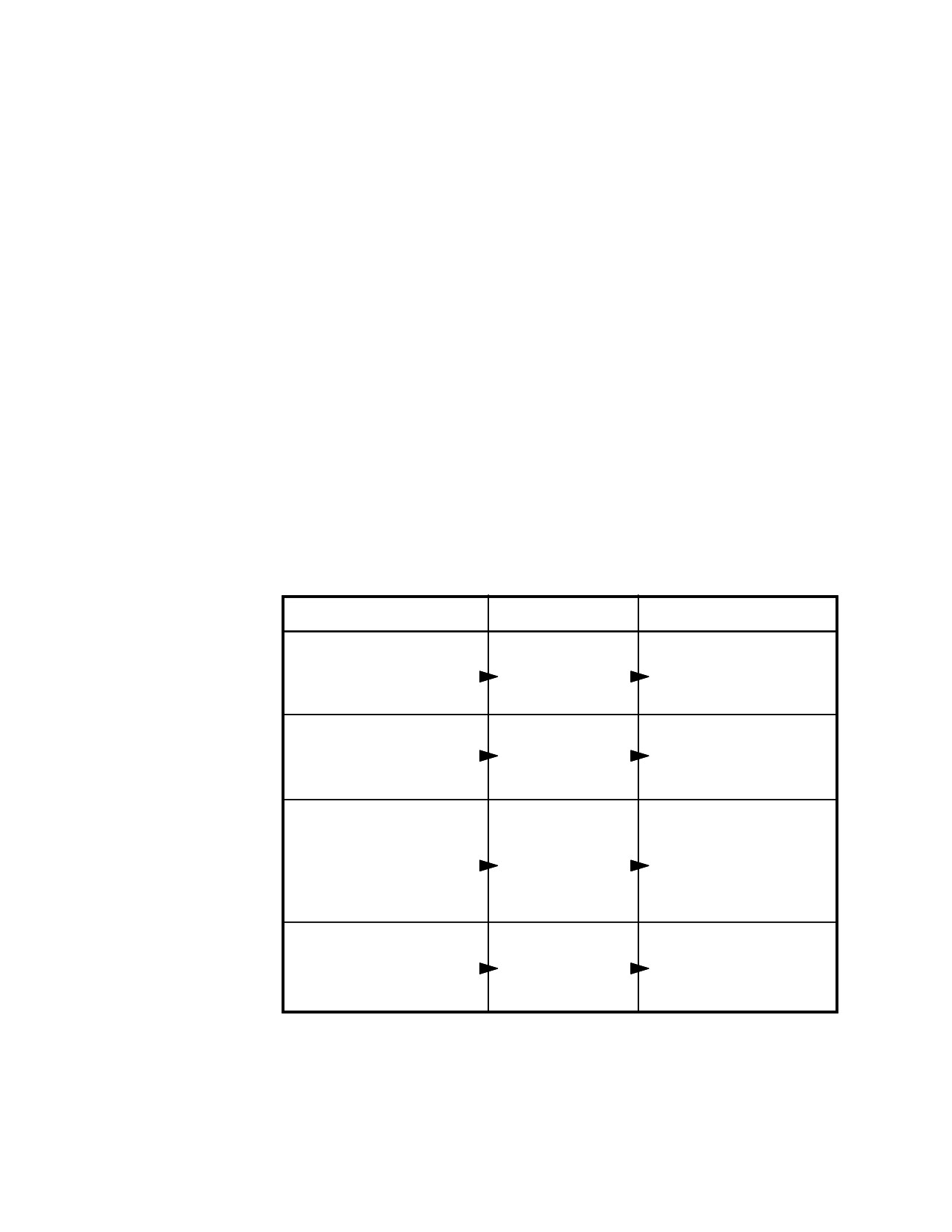
complete subordinate task listing.) Figure 1-1 shows these tasks tailored to
the commander’s needs.
INTELLIGENCE
COMMANDER’S
COMMANDER’S
TASKS
FOCUS
DECISIONS
Support to Situational Understanding
Plan a mission.
Which COA will I implement?
- Perform IPB
Execute the operation.
- Perform Situation Development
Secure the force.
Which enemy actions are expected?
- Provide Intelligence Support to Force
Protection
- Conduct Police Intelligence Operations
Support to Strategic Responsiveness
Orient on contingencies.
Should I increase the unit’s level
- Perform I&W
of readiness?
- Ensure Intelligence Readiness
- Conduct Area Studies of Foreign
Should I implement the OPLAN?
Countries
- Support Sensitive Site Exploitation
Conduct Intelligence, Surveillance,
Plan the mission.
Which DPs, HPTs, etc., are linked
and Reconnaissance
Prepare.
to the enemy actions?
- Perform Intelligence Synchronization
Execute.
- Perform ISR Integration
Assess.
Are the assets available and in
- Conduct Tactical Reconnaissance
position to collect on the DPs,
- Conduct Surveillance
HPTs, etc.?
Have the assets been repositioned
for contingency mission?
Provide Intelligence Support to Effects
Destroy/suppress/
Is my fire (lethal or non-lethal) and
- Provide Intelligence Support to
neutralize targets.
maneuver effective?
Targeting
Reposition intelligence or
- Provide Intelligence Support to IO
attack assets.
Should I refire the same targets?
- Provide Intelligence Support to
Combat Assessment
Figure 1-1. Intelligence Tailored to the Commander’s Needs.
SUPPORT TO SITUATIONAL UNDERSTANDING
1-10. This task centers on providing information and intelligence to the
commander, which facilitates his achieving understanding of the enemy and
1-3
FM 2-0 ___________________________________________________________________________________
the environment. It supports the command’s ability to make sound decisions.
Support to situational understanding comprises four subtasks: perform intel-
ligence preparation of the battlefield (IPB), perform situation development,
provide intelligence support to FP, and conduct police intelligence operations.
Perform Intelligence Preparation of the Battlefield
1-11. The G2/S2 is the staff proponent for IPB. IPB is the staff planning
activity undertaken by the entire staff to define and understand the
battlespace and the options it presents to friendly and threat forces. IPB
includes input from the whole staff. There is only one IPB in each
headquarters with inputs from all affected staff cells; they are not separate
BOS or staff section IPBs throughout the headquarters. It is a systematic
process of analyzing and visualizing the threat and battlespace in a specific
geographic area for a specific mission or in anticipation of a specific mission.
By applying IPB, the commander and staff gain the information necessary to
selectively apply and maximize combat power at critical points in time and
space. IPB is most effective when it integrates each staff element’s expertise
into the final products. To conduct effective IPB, the G2/S2 must⎯
• Produce IPB products that support the staff’s preparation of estimates
and the military decision-making process (MDMP).
• Identify characteristics of the AO, including the information environ-
ment, that will influence friendly and threat operations.
• Establish the area of interest
(AOI) in accordance with the com-
mander’s guidance.
• Identify gaps in current intelligence holdings.
•
Determine multiple enemy COAs (ECOAs) by employing predictive
analysis techniques to anticipate future enemy actions, capabilities, or
situations.
•
Establish a database that encompasses all relevant data sets within
and related to the battlespace.
• Determine the enemy order of battle (OB), doctrine, and TTP. Identify
any patterns in enemy behavior or activities.
• Accurately identify and report hazards within the AO, including the
medical threat and toxic industrial material (TIM).
• Accurately identify threat capabilities, high-value targets (HVTs), and
threat models.
• Integrate IPB information into COA analysis and the MDMP.
•
Update IPB products as information becomes available.
Perform Situation Development
1-12. Situation development is a process for analyzing information and
producing current
intelligence about the enemy and environment during
operations. The process helps the intelligence officer recognize and interpret
the indicators of enemy intentions, objectives, combat effectiveness, and
potential ECOAs. Situation development⎯
• Confirms or denies threat COAs.
• Provides threat locations.
1-4
___________________________________________________________________________________ FM 2-0
• Explains what the threat is doing in relation to the friendly force
operations.
•
estimate of threat combat effectiveness.
Provides an
1-13
officer is able to
. Through situation development, the intelligence
quickly identify information gaps, and explain enemy activities in relation to
the unit’s own operations, thereby assisting the commander in gaining
situational understanding. Situation development helps the commander
make decisions and execute branches and sequels. This reduces risk and
uncertainty in the execution of the plan. The intelligence officer maintains,
presents, and disseminates the results of situation development through
intelligence input to the common operational picture
(COP) and other
intelligence products.
Provide Intelligence Support to Force Protection
1-14. Provide intelligence in support of protecting the tactical force’s fighting
potential so that it can be applied at the appropriate time and place. This
task includes the measures the force takes to remain viable and functional by
protecting itself from the effects of or recovery from enemy activities. FP
consists of those actions taken to prevent or mitigate hostile actions against
Department of Defense (DOD) personnel (to include Department of Army
[DA] civilians, contractors, uniformed personnel, and family members),
resources, facilities, and critical information. These actions⎯
• Conserve the force’s fighting potential for application at the decisive
time and place.
•
Incorporate coordinated and synchronized offensive and defensive
measures.
•
Facilitate the effective employment of the joint force while degrading
the capabilities of and opportunities for the threat.
1-15.
ting the activities,
Intelligence to FP consists of monitoring and repor
intentions, and capabilities of adversarial groups and determining their
possible COAs. Detecting the adversary’s methods in today’s OE requires a
higher level of situational understanding, informed by current and precise
intelligence. This type of threat drives the need for predictive intelligence
based on analysis of focused information from intelligence, law enforcement,
and security activities.
1-16. Intelligence analysis in support of FP employs analytical methodologies
and tools to provide situational understanding and to predict the adversary’s
actions. Modified or standard time-event charts, association matrixes,
activity matrixes, link diagrams, and overlays are beneficial in monitoring
the actions of the adversary. Overlays may include (but are not limited to)
threat training camps, organizations, finances, personalities, industrial sites,
information systems, decisionmaking infrastructures, specific activities, and
locations of previous attacks.
Conduct Police Intelligence Operations
1-17. Police intelligence operations (PIO) are a military police (MP) function
that supports, enhances, and contributes to the commander’s force protection
program, COP, and situational understanding. The PIO function ensures that
1-5
FM 2-0 ___________________________________________________________________________________
information collected during the conduct of other MP functions⎯maneuver
and mobility support, area security, law and order, and internment and
resettlement⎯is provided as input to the intelligence collection effort and
turned into action or reports. PIO has three components: (See FM 7-15,
ART 1.1.4)
• Collect police information.
• Conduct Police Information Assessment Program (PIAP).
• Develop police intelligence products.
Notes:
US Code, Executive Orders, DOD Directives, and Army Regulations contain
specific guidance regarding prohibition on the collection of intelligence infor-
mation on US citizens, US corporations, and resident aliens. These laws and
regulations include criminal penalties for their violation. Any PIO directed
against US citizens should undergo competent legal review prior to their
initiation.
The inclusion of the PIO task branch in the Intelligence BOS does not change the
intelligence process described in this manual.
SUPPORT TO STRATEGIC RESPONSIVENESS
1-18. Intelligence support to strategic responsiveness supports staff planning
and preparation by defining the full spectrum of threats, forecasting future
threats, and forewarning the commander of enemy actions and intentions.
Support to strategic responsiveness consists of four subtasks: Perform I&W,
ensure intelligence readiness, conduct area studies of foreign countries, and
support sensitive site exploitation. (See FM 7-15, ART 1.2)
Perform Indications and Warnings
1-19. This activity provides the commander with forewarning of enemy
actions or intentions; the imminence of threat actions. The intelligence officer
develops I&W in order to rapidly alert the commander of events or activities
that would change the basic nature of the operations. It enables the
commander to quickly reorient the force to unexpected contingencies and
shape the battlefield. (See FM 7-15, ART 1.2.1)
1-20. The G2/S2 at the operational and strategic levels develops I&W in
order to rapidly alert the commander of events or activities that would
change the basic nature of the operations so the commander can initiate the
appropriate action in a timely manner. I&W reduce the risk of enemy actions
that are counter to planning assumptions. I&W enable the commander to
quickly reorient the force to unexpected events and to shape the battlefield by
manipulating enemy activities.
Ensure Intelligence Readiness
1-21. Intelligence readiness operations support contingency planning and
preparation by developing baseline knowledge of multiple potential threats
and operational environments. These operations and related intelligence
training activities engage the Intelligence BOS to respond effectively to the
1-6
___________________________________________________________________________________ FM 2-0
commander’s contingency planning intelligence requirements. (See FM 7-15,
ART 1.2.2) While still in garrison, intelligence defines the full spectrum of
threats and forecasts future threats and dangers. Intelligence readiness
operations accomplish the following:
• Provide intelligence to support contingency-based training and staff
planning.
•
nsider, and evaluate all potential threats to the entire unit.
Identify, co
• Provide a broad understanding of the operational environment of the
contingency area, which is developed through continuous exchange of
information and intelligence with higher echelon and joint intelligence
organizations.
Conduct Area Studies of Foreign Countries
1-22. Study and understand the cultural, social, political, religious, and
moral beliefs and attitudes of allied, host nation (HN), or indigenous forces to
assist in accomplishing goals and objectives. (See FM 7-15, ART 1.2.3)
Note: The inclusion of this task does not change the support to strategic
responsiveness provided by MI organizations described in this manual.
Support Sensitive Site Exploitation
1-23. Sensitive site exploitation consists of a related series of activities inside
a sensitive site captured from an adversary. A sensitive site is a designated,
geographically limited area with special military, diplomatic, economic, or
information sensitivity for the United States. This includes factories with
technical data on enemy weapon systems, war crimes sites, critical hostile
government facilities, areas suspected of containing persons of high rank in a
hostile government or organization, terrorist money laundering, and
document storage areas for secret police forces. These activities exploit
personnel, documents, electronic data, and material captured at the site,
while neutralizing any threat posed by the site or its contents. While the
physical process of exploiting the sensitive site begins at the site itself, full
exploitation may involve teams of experts located around the world. (See
FM 7-15, ART 1.2.4)
Note: The inclusion of this task does not change the support to strategic
responsiveness provided by MI organizations described in this manual.
CONDUCT INTELLIGENCE, SURVEILLANCE, AND RECONNAISSANCE
1-24. With staff participation, the intelligence officer synchronizes intel-
ligence support to the ISR effort by focusing the collection, processing,
analysis, and intelligence products on the critical needs of the commander.
The operations officer, in coordination with the intelligence officer, tasks and
directs the available ISR assets to answer the commander’s critical
information requirements (CCIRs). Through various detection methods and
systematic observation, reconnaissance and surveillance obtains the required
information. A continuous process, this task has four subtasks: perform intel-
ligence synchronization, perform ISR integration, conduct tactical recon-
naissance, and conduct surveillance. (See FM 7-15, ART 1.3, and FM 3-90).
1-7
FM 2-0 ___________________________________________________________________________________
Perform Intelligence Synchronization
1-25. The intelligence officer, with staff participation, synchronizes the entire
collection effort to include all assets the commander controls, assets of lateral
units and higher echelon units and organizations, and intelligence reach to
answer the commander’s priority intelligence requirements
(PIRs) and
information requirements (IRs). (See FM 7-15, ART 1.3.1)
1-26. The intelligence officer, with staff participation, supports the G3/S3 in
orchestrating the entire ISR effort to include all assets the commander
contro
ls, assets of lateral units and higher echelon units and organizations,
and intelligence reach to answer the CCIRs
(PIRs and friendly force
information requirements
[FFIRs]) and other intelligence requirements.
Intelligence synchronization activities include the following:
•
Conducting requirements management
(RM): anticipate, develop,
analyze, validate, and prioritize intelligence requirements. Recommend
PIRs to the commander. Manage the commander’s intelligence
requirements, requests for information (RFIs) from subordinate and
lateral organizations, and tasks from higher headquarters. Eliminate
satisfied requirements and add new requirements as necessary.
•
Developing indicators.
•
Developing specific IRs (specific information requirements [SIRs]).
•
Converting the SIRs into intelligence tasks or ISR tasks.
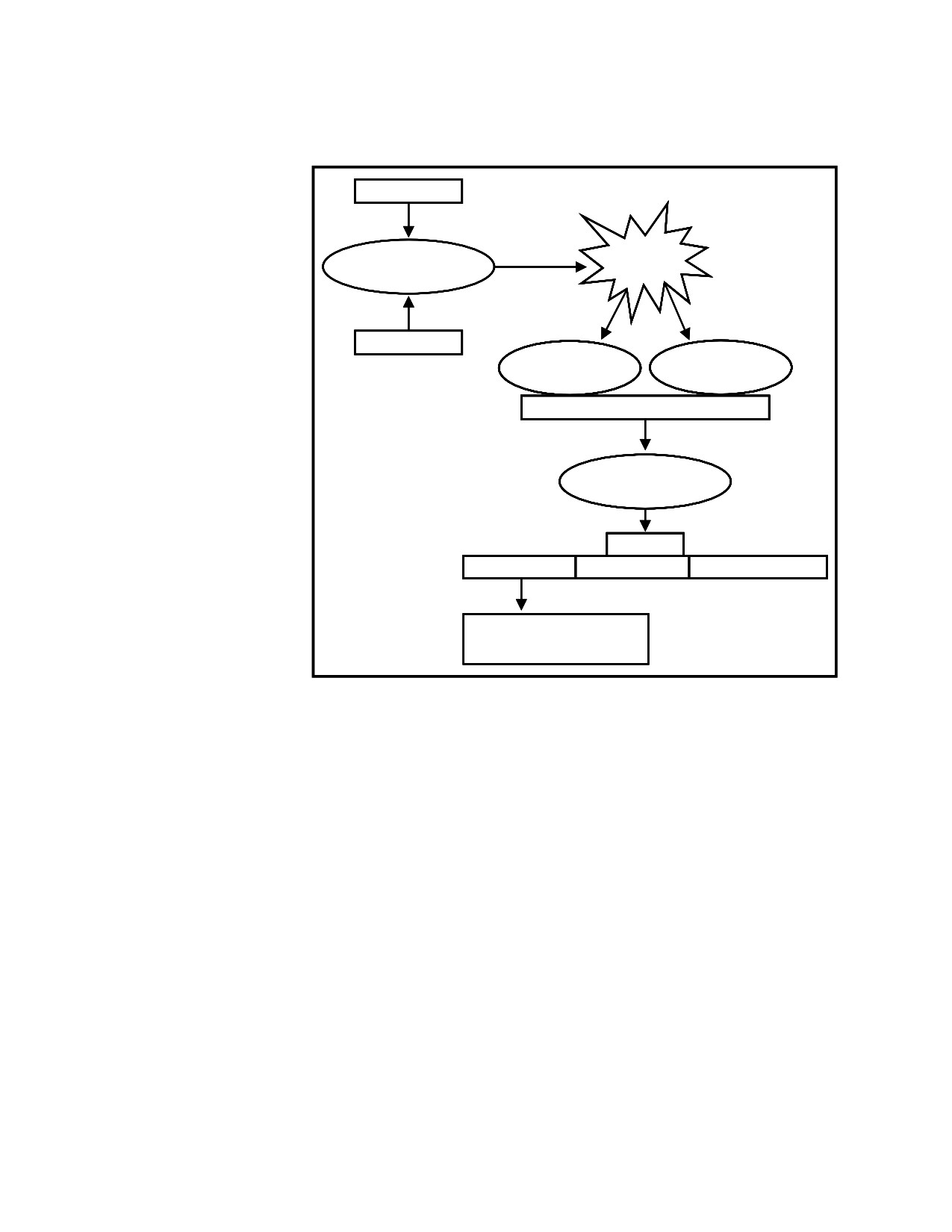
(See Figure 1-2 for the ISR task development process.) The S2/G2
assigns intelligence production and reach tasks to subordinate
intelligence ele-ments or personnel, submits RFIs to higher and lateral
echelons, and coordinates with (or assists) the G3/S3 to develop and
assign ISR tasks.
•
Comparing the ISR tasks to the capabilities and limitations of the
available ISR assets (in coordination with the operations officer).
•
Forwarding SIRs that cannot be answered by available assets to higher
or lateral organizations as RFIs.
•
Assessing collection asset reporting and intelligence production to
evaluate the effectiveness of the ISR effort.
•
Maintaining situational understanding to identify gaps in coverage and
to identify the need to cue or redirect ISR assets.
•
Updating the intelligence synchronization plan. The G2/S2 manages
and updates the intelligence synchronization plan as PIRs are
answered and new requirements arise.
1-27. Intelligence Synchronization Considerations. The G2/S2 gen-erally
follows six considerations in planning intelligence synchronization and ISR
activities: anticipate, integrate, prioritize, balance, control, and reach. Refer
to FM 2-01 for more information regarding intelligence synchro-nization.
• Anticipate. The intelligence staff must recognize when and where to
shift collection or identify new intelligence requirements. The overall
intent of this principle is to identify a new or adjust an existing
requirement and present it to the commander for approval before
waiting for the commander or his staff to identify it.
1-8
___________________________________________________________________________________ FM 2-0
Mission Analysis
Threat
Information Requirements
and
(IRs)
Environment
Support
Commander’s
Decision
COA Analysis
Intelligence
Priority Intelligence
Requirements
Requirements
(PIR)
Indicators
Specific Information
Requirements
(SIR)
ISR Tasks
Intelligence Tasks
Surveillance Tasks
Reconnaissance Tasks
• Production Requirements
• Requests for Information (RFI)
• Intelligence Reach
Figure 1-2. ISR Task Development Process.
•
Integrate. The intelligence staff must be fully and continuously
integrated
into the unit’s orders production and planning activities to
ensure early identification of intelligence requirements. Early and
continuous consideration of collection factors enhances the unit’s
ability to direct collection assets in a timely manner, ensures thorough
planning, and increases flexibility in selecting assets.
•
Prioritize. Prioritize each intelligence requirement based on its
importance in supporting the commander’s intent and decisions.
Prioritization, based on the commander’s guidance and the current
situation, ensures that limited ISR assets and resources are directed
against the most critical requirements.
•
Balance. ISR capabilities complement each other. The intelligence staff
should resist favoring or becoming too reliant on a particular unit,
discipline, or system. Balance is simply planning redundancy, when
required, eliminating redundancy when not desired, and ensuring an
appropriate mix of ISR assets or types. The intelligence syn-
chronization matrix
(ISM) is useful in determining or evaluating
balance.
•
Control. To ensure timely and effective responses to intelligence
requirements, a unit should first use ISR assets it controls. These
1-9
FM 2-0 ___________________________________________________________________________________
assets usually are more responsive to their respective commander and
also serve to lessen the burden on the ISR assets of other units,
agencies, and organizations.
•
Reach. Although usually not as responsive as a unit’s own assets,
intelligence reach may be the only way to satisfy an intelligence
requirement. If at all possible, one should not depend solely on
intelligence reach to answer a PIR.
1-28.
Develop IRs. The intelligence staff develops a prioritized list of what
information needs to be collected and produced into intelligence. Additionally,
the in
and adjusts those requirements in
telligence staff dynamically updates
response to mission adjustments and changes. This list is placed against a
latest time intelligence is of value to ensure intelligence and information
are reported to meet operational requirements. (See FM 7-15, ART 1.3.1)
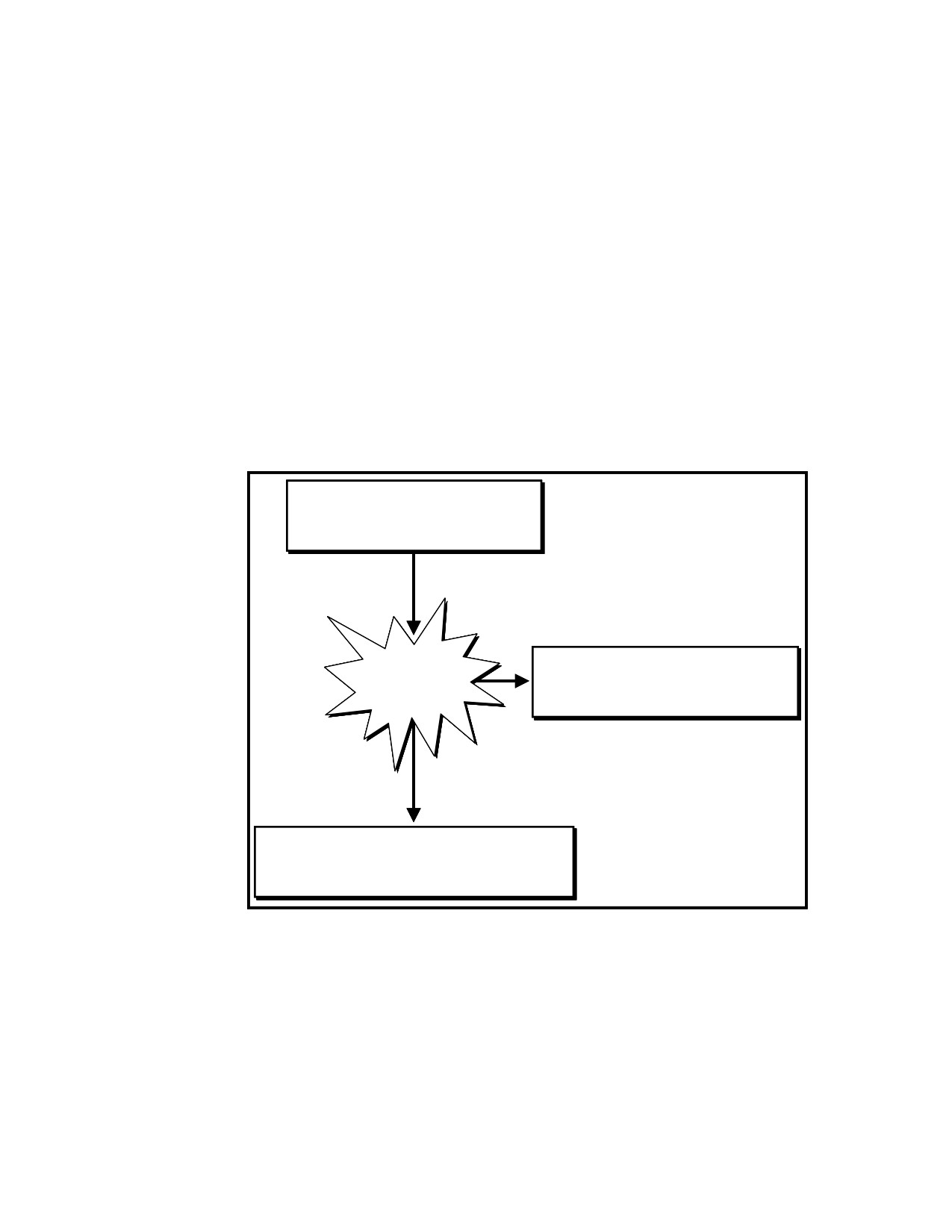
Figure 1-3 shows a comparison of IR, PIR, and intelligence requirements.
Information Requirements (IR)
- Information elements required for planning
and executing operations
Priority Intelligence Requirement (PIR)
THREAT
- Designated by the commander
or
- Intelligence requirements associated with a
ENVIRONMENT
decision that affects mission accomplishment
Intelligence Requirement
- Requirement for the Intelligence BOS to fill a gap in the
Commander’s and Staff’s knowledge or understanding
of the battlespace or threat
Figure 1-3. IR, PIR, and Intelligence Requirements Comparison
1-29. An effective discussion of ISR has to include an understanding of the
CCIRs. The CCIRs are elements of information required by commanders that
directl
ilitary
y affect decisionmaking and dictate the successful execution of m
operat
on his
ions. The commander decides what information is critical based
experience, the mission, the higher commander’s intent, and the staff’s input
(initial IPB, information, intelligence, and recommendations). Refer to
FM 3-0 for more information regarding CCIRs.
1-10
___________________________________________________________________________________ FM 2-0
1-30. Based on the CCIRs, two types of supporting IRs are generated: PIRs
and FFIRs. However, commanders may determine that they need to know
whether one or more essential elements of friendly information (EEFI) have
been compromised or that the enemy is collecting against a designated EEFI.
In those cases, commanders may designate that question as one of their
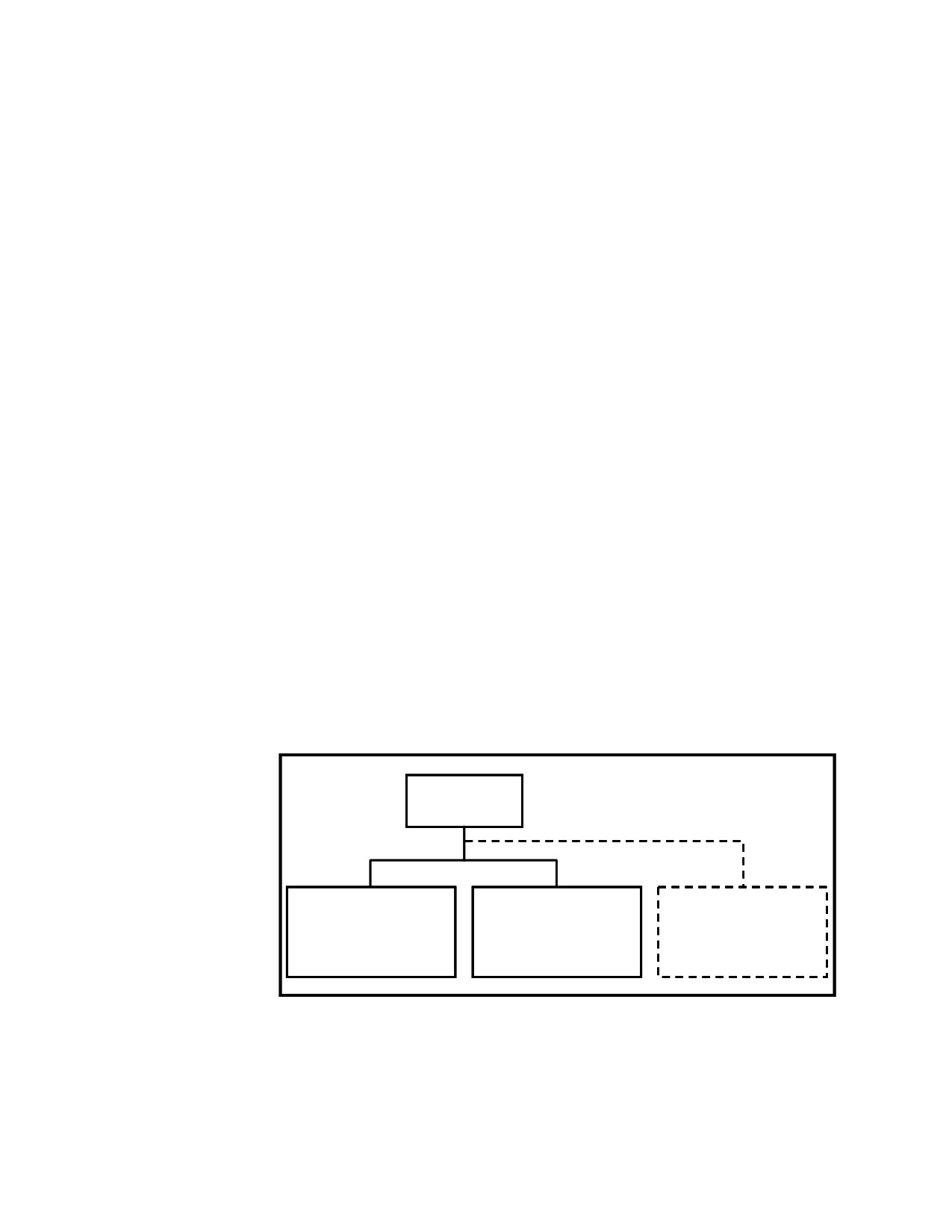
CCIRs. Figure 1-4 shows the CCIR composition.
1-31. IRs are all of the information elements required by the commander and
his staff for the successful planning and execution of operations; that is, all
elements necessary to address the factors of mission, enemy, terrain and
weather, troops and support available, time available, civil considerations
(METT-TC). Vetting by the commander or his designated represen-tative
turns an IR into either a PIR or an intelligence requirement. IRs are
developed during COA analysis based on the factors of METT-TC.
1-32. PIRs are those intelligence requirements for which a commander has
an anticipated and stated priority in his task of planning and
decisionmaking. PIRs are associated with a decision based on an enemy
action or inaction or the battlespace that will affect the overall success of the
commander’s mission. The commander designates intelligence require-ments
tied directly to his decisions as CCIR (PIR and FFIR). Answers to the PIRs
help produce intelligence essential to the commander’s sit-uational
understanding and decisionmaking. For information on PIR devel-opment,
see FM 2-01.
1-33. The G2/S2 recommends to the commander those IRs produced during
the MDMP that meet the criteria for PIR. They do not become CCIR (PIR and
FFIR) until approved by the commander. Additionally, The commander may
unilaterally designate PIRs. The IRs that are not designated by the
commander as PIRs become intelligence requirements. The intelligence
requirement is a gap in the command’s knowledge or understanding of the
battlespace or threat that the Intelligence BOS must fill.
CCIR
EEFI
PIR
FFIR
What friendly information
What the commander needs
What the commander needs
must be protected and
to know about the enemy or
to know about the friendly
concealed from the enemy
environment
force
(commander’s discretion)
Figure 1-4. Commander’s Critical Information Requirements Composition.
1-34. The G3/S3 then tasks the unit’s assets to answer both the PIR and
intelligence requirements through the ISR plan. PIR should⎯
1-11
FM 2-0 ___________________________________________________________________________________
• Ask only one question.
• Support a decision.
• Identify a specific fact, event, activity (or absence thereof) which can be
collected.
• If linked to an ECOA, indicate an ECOA prior to, or as early as possible
in, its implementation.
• Indicate the latest time the information is of value
(LTIOV). The
LTIOV is the absolute latest time the information can be used by the
commander in making the decision the PIR supports. The LTIOV can
be linked to time, an event, or a point in the battle or operation.
1-35. Friendly Force IRs. The staff also develops FFIRs which, when
answered, provide friendly force information that the commander and staff
need to achieve situational understanding and to make decisions.
1-36. Essential Elements of Friendly Information. EEFI establish infor-
mation to protect, not information to obtain. However, commanders may
determine that they need to know whether one or more EEFI have been
compromised or that the enemy is collecting against a designated EEFI. In
those cases, commanders may designate that question as one of their CCIRs,
which generates PIRs and/or FFIRs. For example, a commander may
determine that if the enemy discovers the location and movement of the
friendly reserve, the operation is at risk. In this case, the location and
movement of the friendly reserve are EEFI. He designates determining
whether the enemy has discovered the location and movement of the friendly
reserve as one of his CCIR. That CCIR, in turn, generates PIR and FFIR to
support staff actions in determining whether the EEFI has been
compromised.
1-37. Develop the Intelligence Synchronization Plan. The entire unit staff
develops their IRs and determines how best to satisfy them. The staff uses
reconnaissance and surveillance assets to collect information. The
intelligence synchronization plan includes all assets that the operations
officer can task or request and coordination mechanisms to ensure adequate
coverage of the AOIs. (See FM 7-15, ART 1.3.1.2)
1-38. The intelligence synchronization plan, often presented in a matrix
format as an ISM, aids in synchronizing the entire ISR effort with the overall
operation and the commander’s decisions and/or decision points (DPs). The
intelligence synchronization plan is often produced in conjunction with the
ISR plan. However, before performing intelligence synchronization and
finalizing the intelligence synchronization plan, the G2/S2 must have⎯
• The CCIR (PIR and FFIR).
• A prioritized list of the remaining intelligence requirements.
• Evaluated ISR assets and resources.
• All of the assigned ISR tasks.
Perform ISR Integration
1-39. The operations officer, in coordination with the intelligence officer and
other staff members, orchestrates the tasking and directing of available ISR
1-12
___________________________________________________________________________________ FM 2-0
assets to answer the CCIR.
The operations officer, with input from the
intelligence officer, develops tasks from the SIRs which coincide with the
capabilities and limitations of the available ISR assets and the latest time
information is of value (LTIOV). Intelligence requirements are identified,
prioritized, and validated and an ISR plan is developed and synchronized
with
the scheme of maneuver. (See FM 7-15, ART 1.3.2, and FM 3-90)
1-40. The G3/S3, in coordination with the G2/S2 and other staff members,
orchestrates the tasking and directing of available ISR assets to answer the
CCIRs (PIRs and FFIRs) and IRs. The result of this process is the forming of
the I
to be
SR plan. The ISR plan provides a list of all the ISR tasks
accomplished. The G2/S2 and the G3/S3 develop tasks from the SIRs. These
tasks are then assigned based on the capabilities and limitations of the
available ISR assets and the LTIOV.
1-41. Develop the ISR Plan. The operations officer is responsible for
developing the ISR plan. The entire unit staff analyzes each requirement to
determine how best to satisfy it. The staff will receive orders and RFIs from
both subordinate and adjacent units and higher headquarters. The ISR plan
includes all assets that the operations officer can task or request and
coordination mechanisms to ensure adequate coverage of the area of interest.
(See FM 7-15, ART 1.3.2.1, and FM 3-90)
1-42. The ISR Plan. The ISR plan is usually produced as the ISR Annex to an
OPORD (Annex L, Intelligence Surveillance, and Reconnaissance). Refer to
FM 5-0 for specific and authoritative information on the ISR Annex. ISR is a
continuous combined arms effort led by the operations and intelligence staffs
in coordination with the entire staff that sets reconnaissance and
surveillance in motion. The PIRs and other intelligence requirements drive
the ISR effort. The commander takes every opportunity to improve his
situational understanding and the fidelity of the COP about the enemy and
terrain through the deployment of his ISR assets. Commanders integrate
reconnaissance and surveillance to form an integrated ISR plan that
capitalizes on their different capabilities. The ISR plan is often the most
important part of providing information and intelligence that contributes to
answering the CCIRs. For the G2/S2, an effective ISR plan is critical in
answering the PIR. Also see FM 3-55 for more information on the ISR plan.
1-43. The ISR plan is not an MI-specific product⎯the G3/S3 is the staff
proponent of the ISR plan⎯ it is an integrated staff product executed by the
unit at the direction of the commander. The G2/S2, however, must maintain
his situational understanding in order to recommend to the commander and
G3/S3 changes or further development of the ISR plan. Based on the initial
IPB
arily the G2/S2⎯identifies gaps in the
and CCIRs, the staff⎯prim
inte
lable ISR
lligence effort and develops an initial ISR plan based on avai
asse
SR assets
ts. The G3/S3 turns this into an initial ISR Annex that tasks I
as s
ort.
oon as possible to begin the collection eff
1-44.
es the ISR plan to task and direct
The G3/S3, assisted by the G2/S2, us
the available ISR assets to answer the CCIRs
(PIRs and FFIRs) and
intelligence requirements. Conversely, the staff revises the plan as other
intelligence gaps are identified if the information is required to fulfill the
1-13
FM 2-0 ___________________________________________________________________________________
CCIRs or in anticipation of future intelligence requirements. With staff
participation, the G2/S2 intelligence officer synchronizes the ISR effort
through a complementary product to the ISR plan⎯the intelligence
synchronization plan.
1-45. Execute and Update the ISR Plan. The operations officer updates the
ISR plan based on information he receives from the intelligence officer. The
operations officer is the integrator and manager of the ISR effort through an
integrated staff process and procedures. As PIRs are answered and new
information requirements arise, the intelligence officer updates intelligence
synchronization requirements and provides the new input to the operations
officer who updates the ISR plan. He works closely with all staff elements to
ensure the unit’s organic collectors receive appropriate taskings. This ISR
reflects an integrated collection strategy and employment, production and
dissemination scheme that will effectively answer the commander’s PIR. (See
FM 7-15, ART 1.3.2.2, and FM 3-90)
Conduct Tactical Reconnaissance
1-46. To obtain, by visual observation or other detection methods, such as
signals, imagery, measurement of signature or other technical
characteristics, human interaction and other detection methods about the
activities and resources of an enemy or potential enemy, or to secure data
concerning the meteorological, hydrographic, or geographic characteristics
and the indigenous population of a particular area. This task includes the
conduct of NBC reconnaissance and the tactical aspects of SOF special
reconnaissance. The five subtasks are⎯
• Conduct a Zone Reconnaissance.
• Conduct an Area Reconnaissance.
• Conduct a Reconnaissance in Force.
• Conduct a Route Reconnaissance.
• Conduct a Reconnaissance Patrol.
Note: This task branch includes techniques by which ART 1.1.4.1 (Collect Police
Information) may be performed. (FM 7-15)
1-47. Reconnaissance is a mission undertaken to obtain by visual observation
or other detection methods, information about the activities and resources of
an enemy or potential enemy, and about the meteorological, hydrographic, or
geographic characteristics of an AO. MI personnel and organizations can
conduct reconnaissance through obtaining information derived from signals,
imagery, measurement of signatures, technical characteristics, human
interaction, and other detection methods. When performing reconnaissance,
it is important to⎯
• Orient the reconnaissance asset on the named area of interest (NAI)
and/or reconnaissance objective in a timely
manner.
• Report all information rapidly and accurately.
• Complete the reconnaissance mission not later than (NLT) the time
specified in the order.
• Answer the requirement that prompted the reconnaissance task.
1-14
___________________________________________________________________________________ FM 2-0
Conduct Surveillance
1-48. To systematically observe the airspace, surface, or subsurface areas,
places, persons, or things in the AO by visual, aural (audio), electronic,
photographic, or other means. Other means may include but are not limited
to space-based systems, and using special NBC, artillery, engineer, SOF, and
air defense equipment. (See FM 7-15, ART 1.3.4, and FM 3-90)
Note: This task is a technique by which ART 1.1.4.1 (Collect Police Information)
may be performed.
1-49. Conducting surveillance is systematically observing the airspace,
surface, or subsurface areas, places, persons, or things in the AO by visual,
aural, electronic, photographic, or other means. Surveillance activities
include⎯
• Orienting the surveillance asset on the NAI and/or the surveillance
objective in a timely manner.
• Reporting all information rapidly and accurately.
• Completing the surveillance mission NLT the time specified in the
order.
• Answering the requirement that prompted the surveillance task.
PROVIDE INTELLIGENCE SUPPORT TO EFFECTS
1-50. The task of providing the commander information and intelligence
support for targeting of the threat’s forces, threat organizations, units and
systems through lethal and non-lethal fires to include electronic attack and
information operations. This task includes three subtasks: provide intelli-
gen
igence support to information opera-
ce support to targeting, provide intell
tion
combat assessment. (See FM 7-15,
s, and provide intelligence support to
ART
1.4)
Provide Intelligence Support to Targeting
1-51. The intelligence officer, supported by the entire staff, provides the
commander information and intelligence support for targeting the threat’s
forces and systems through employment of direct, indirect lethal, and non-
lethal fires. It includes identification of threat capabilities and limitations.
The Intelligence BOS plays a crucial role by providing intelligence
throughout the steps of the targeting process: decide, detect, deliver, assess.
Support to targeting includes identifying threat capabilities and limitations.
The G2/S2 supports the unit’s lethal and non-lethal targeting effort through
target development, target acquisition (TA), electronic warfare (EW), and
combat assessment. This task has two subtasks:
• Provide Intelligence Support to Target Development is the systematic
analysis of the enemy forces and operations to determine HVTs,
systems, and system components for potential attack through
maneuver, fires, or information.
• Provide Intelligence Support to Target Detection establishes
procedures for dissemination of targeting information. The targeting
team develops the sensor/attack system matrix to determine the sensor
1-15
FM 2-0 ___________________________________________________________________________________
required to detect and locate targets. The intelligence officer places the
following requirements into the integrated ISR plan.
Requires reconnaissance and surveillance operations to identify,
locate, and track high-payoff targets (HPTs) for delivery of lethal or
non-lethal effects.
Includes employing fires, offensive IO, and other attack capabilities
against enemy C2 systems as part of the unit’s FS plan and IO
objectives.
Provide Intelligence Support to
Information Operations
1-52. IO are actions taken to affect adversary information, influence other’s
decisionmaking processes and information systems while protecting one’s
own information and information systems. Overall operational continuity and
mission success requires close, mutual coordination and synchronization of
intelligence plans and operations with IO elements and related activities.
Refer
e
to Appendix A, this manual, for more information. This task has thre
subordinate tasks: (See FM 7-15, ART 1.4.2)
• Provide Intelligence Support to Offensive IO.
•
Provide Intelligence Support to Defensive IO.
• Provide Intelligence Support to Activities Related to IO.
Provide Intelligence Support to Combat Assessment
1-53. Combat assessment is the determination of the overall effectiveness of
force employment during military operations. The objective of combat
assessment is to identify recommendations for the course of military
operations. It answers the question, “Were the objectives met by force em-
ployment?” Although the assessment is primarily an intelligence respon-
sibility, it requires input from and coordination with operations and fire
support staffs. Combat assessment consists of conducting physical damage,
functional damage, and target system assessments. (See FM 7-15, ART 1.4.3)
1-54. The staff determines how combat assessment relates to a specific target
by conducting physical damage, functional damage, and target system
assessments.
• Conduct Physical Damage Assessment (PDA). A PDA is an estimate of
the extent of physical damage to a target based upon observed or
interpreted damage. This post-attack target analysis is a coordinated
effort among all units.
• Conduct Functional Damage Assessment (FDA). The FDA estimates
the remaining functional or operational capability of a targeted facility
or object. The staff bases FDA on the assessed physical damage and
estimat
p
es of the threat’s ability to recu
erate (to include the time
required to resume normal operations). Multiple echelons typically
conduct this all-source analysis. The targeting or combat assessment
cell integrates the initial target analyses with other sources, including
intelligence, and then compares the original objective with the current
status of the target to determine if the objective has been met.
•
Conduct Target System Assessment (TSA). The TSA is an estimate of
the overall impact of force employment against an adversary’s target
1-16
___________________________________________________________________________________ FM 2-0
system. The unit, supported by higher echelon assets, normally
conducts this assessment. The analyst combines all combat assessment
reporting on functional damage to targets within a target system and
assesses the overall impact on that system’s capabilities. This process
la
k for future recommendations for military
ys the groundwor
operations in support of operational objectives.
1-55. Munitions Effects Assessment (MEA). MEA takes place concur-rently
and inte
ombat assessment since the same signatures used to
ractively with c
determine the level of physical damage also give clues to munitions
effectiveness. MEA is primarily the responsibility of operations and FS
personnel, with input from the G2/S2. After the same weapon is used to
attack several targets of a specific type, MEA should be accomplished to
evaluate weapon performance. MEA analysts seek to identify through
systematic trend analysis any deficiencies in weapon system and munitions
performance or combat tactics by answering the question, “Did the weapons
employed perform as expected?” Using a variety of input (targeting analysts,
imagery analysts, structural engineers, and mission planners) analysts
pre
ombat troops capture
pare a report assessing munitions performance. If c
attack
iled information on the
ed targets, it is then possible to collect deta
targ
pecified target
et. Reports should detail weapon performance against s
types. This information could have a crucial impact on future operations.
1-56. Re-attack Recommendation. Re-attack recommendations follow
directly from both battle damage assessment
(BDA) and MEA efforts.
Basically re-attack recommendations answer the question,
“Have we
achieved the desired effects against our targeted objectives?” Evolving
objectives, target selection, timing, tactics, weapons, vulnerabilities, and
munitions are all factors in the new recommendations, combining both
operations and intelligence functions.
1-57. Targeting Meeting. The role of the G2/S2 in targeting meetings is
critical to ensuring intelligence supports the targeting process. The G2/S2
must come to the targeting meeting prepared. Additionally, the G2/S2 must
understand the steps of the targeting process and tailor the intelligence
products and G2/S2 participation according to the targeting process steps of:
decide, detect, deliver, and assess.
1-58.
There are two major areas in which the G2/S2 must prepare in order to
support the targeting meeting.
• Analysis: Determine what the enemy is doing (current situation) and
anticipated threat models; ECOA situation templates, ECOA sketches
and statements, HVTs, and other associated products.
•
IPB Products: Updated from the initial IPB effort, including analytical
results (see above bullet), and tailored to the targeting requirements.
1-59.
Decide. At the targeting meeting, the G2/S2 should be prepared to do
the following:
• Brief the current and projected future enemy situation with an event
template.
1-17
FM 2-0 ___________________________________________________________________________________
•
Brief any combat assessments.
•
Brief HVTs for potential selection of HPTs.
•
Brief the current PIR portion of CCIRs, the PIRs of the CCIRs for the
next phase or in accordance with the same timeframe of the targeting
meeting.
•
Brief the current ISM or intelligence synchronization plan.
• Participate in wargaming.
• Refine the initial ISR plan (in conjunction with the FS and G3/S3
representatives).
1-60. Detect. Based on information from the decide portion of the targeting
meeting, the G2/S2 should be prepared to do the following:
• Identify specific ISR assets.
• Develop IRs and propose pertinent IRs to the commander for designa-
tion as PIRs.
• Complete the initial ISR plan; ensure it addresses the HPTs.
1-61. Electronic Warfare. EW provides targeting information to the
commander based on transmitter location data. There are three major
subdivisions within EW: electronic support (ES), electronic protection (EP),
and electronic attack (EA).
• ES - Also referred to as electronic warfare support (EWS) in JP 1-02,
involves actions to search for, intercept, identify, and locate or localize
sources of intentional and unintentional radiated electromagnetic
energy. In addition to supporting the overall ISR effort, ES is needed to
produce intelligence required to support EA missions.
• EP - Involves passive and active means taken to protect personnel,
facilities, and equipment from any effects of friendly or enemy
employment of EW that degrades, neutralizes, or destroys friendly
combat capabilities.
• EA - Involves the use of electromagnetic energy, directed energy, or
anti-radiation weapons to attack personnel, facilities, or equipment
with the intent of degrading, neutralizing, or destroying enemy combat
capability and is considered a form of fires. EA includes actions taken
to prevent or reduce an enemy’s effective use of the electromagnetic
spectrum (EMS), such as jamming and electromagnetic deception.
1-62. Deliver. The G2/S2 should be prepared to do the following:
• Brief how the Intelligence BOS will work to detect and track the target
through the entire targeting process.
• Brief the implementation of the intelligence synchronization and ISR
plans, including the LTIOV and communications structure.
1-63. Assess. Depending on the factors of METT-TC and the PIRs, the same
ISR assets that detect and track the targets may be required to support
combat assessments in order to determine if re-attack is required. Converse-
ly, if re-attack is a decision that the commander will make based upon the
1-18
___________________________________________________________________________________ FM 2-0
effects on the enemy, combat assessment should be reflected in the PIR, and
supported in the corresponding ISR plan.
THE OPERATIONAL
ENVIRONMENT
1-64.
US military forces face a dynamic, multidimensional, and increasingly
interconnected global OE. The world situation is complicated and
split into
many different factions with many possible conflicts. In addition, the
characteristics of warfare continue to change as the nature of conflict
changes. Different threats require intelligence operations to adapt to the
ever-changing OE. This necessitates that all MI personnel maintain or very
quickly build cultural awareness (to a high level of detail) specific to the
regional and local environment in the AO. These conditions greatly affect MI,
as they increase the degree of difficulty and complexity in determining not
only
who constitutes the enemy but also which of the many possible ECOAs
the
enemy could implement.
1-65
ological,
. If the US can dominate an adversary through its size or techn
orga
ort to
nizational, and strategic capabilities, the adversary will res
unconventional and adaptive ways and means to achieve his ends, which may
themselves change at times. MI personnel (uniformed and civilian) must also
adapt their operations and thinking to understand and predict or anticipate
the enemy’s next move. MI personnel must remain vigilant, as any likely
adversary is a thinking, adaptive threat with extensive resources which he
cultivates through ingenuity, purchase of niche capabilities, and the support
of his
allies. For example, the adversary⎯
•
May use tactics designed to inflict large numbers of military or civilian
casualties or attack high-profile persons.
• May target and destroy subsystems of a BOS individually or collective-
ly.
•
May use the local civilian population for cover and support.
•
May use the characteristics of the natural environment, industry, and
enterprise against our forces in unexpected manners.
•
May study every aspect of US doctrine, training, and technological
capabilities.
•
May quickly overcome any countermeasures and subsequent
countermeasures that US forces emplace to deter his activities.
•
l as
May employ many personnel to conduct reconnaissance as wel
those in the local civilian population who support the threat.
• May attack US information, information systems, and decisionmaking
infrastructures in order to discredit or provoke the US, weaken
alliances and coalitions, erode public support, incite nation-state and/or
international condemnation, and degrade US C2 and/or ISR capabili-
ties.
1-66. The overall ability of US forces to defeat such adversaries depends upon
the ability of MI personnel to analyze the current and future methods and
capabilities of potential adversaries and incorporate those considerations into
training, planning, and executing military operations. The OE will continue
to change, thus the US military forces and MI must evolve to provide
intelligence.
1-19
FM 2-0 ___________________________________________________________________________________
DIMENSIONS OF THE OPERATIONAL ENVIRONMENT
1-67. The OE has six dimensions: threat, political, unified action, land
combat operations, information, and technology. Each affects how Army
forces (ARFOR) and MI units plan, prepare, execute, and assess military
operations. (See FM 3-0, Chapter 1.)
THREAT
1-68. Extremism, ethnic disputes, poverty, and religious rivalries create
unstable conditions within and among states. Rarely are only two sides
involved in modern conflicts. More often, one ethno-national group opposes
other groups with conflicting interests. This poses a significantly more
complex set of enemy or potential adversaries (threat), entities that MI
personnel must understand.
1-69. Adversaries will try to create conditions to defeat US operations and to
slow the advance of US forces. They will use complex terrain, urban
environments, and force dispersal methods—similar to those used by enemies
the US has faced before—to offset US advantages. These methods increase
the difficulty for MI personnel to identify or locate the enemy’s HVTs and
may result in US forces’ wasting precision weapons on relatively unimportant
assets. MI personnel must be aware of the following general concepts that the
enemy may use against US forces:
•
Conduct force-oriented operations.
•
Inflict unacceptable casualties.
•
Optimize the use of standoff weaponry and techniques.
•
Attempt to control the tempo.
•
Create conditions to defeat US forcible entry operations.
•
Transition to a defensive framework that avoids decisive battle,
preserves capability, and prolongs the conflict. If US forces deploy, the
threat may use terrorist and/or information warfare tactics and other
measures to erode public support, erode or fracture alliance or
multinational cohesion, and the will to fight.
•
Conduct effective ISR.
•
Use weapons of mass destruction (WMD) to conduct sophisticated
ambushes.
•
Attack key operating systems or inflict mass casualties within and
outside the theater of operations.
•
Employ TIM or other toxic substances or pollutants in unconventional
manners.
•
Use terrain and urban areas to conceal or shield mechanized and
armored units. The threat may concentrate and disperse them as
opportunities allow, particularly maneuvering forces during periods of
reduced exposure to US ISR technology.
•
Use effective camouflage and deception techniques.
•
Form coalitions against the US.
•
Acquire or modify advanced technology systems to create surprise and
limited duration superiority in specific areas.
1-20
___________________________________________________________________________________ FM 2-0
1-70. Additionally, MI personnel must be aware of how to produce
intelligence on the many transnational groups that conduct a range of
activities that threaten US interests and citizens at home and abroad. Such
activities include terrorism, information warfare, illegal drug trafficking,
illicit arms and strategic material trafficking, international organized crime,
piracy, and deliberate environmental damage.
POLITICAL
1-71. The national security strategy defines how the US meets challenges in
the complex and dynamic global environment. It establishes broad strategic
guidance for advancing US interests through the instruments of national
power. The military components of the National Security Strategy and the
National Military Strategy focus on using military force as an instrument of
national power. The President and the Secretary of Defense
(formerly
referred to as National Command Authorities [NCA]) combine using military
force with accurate intelligence to preserve, protect, and advance US
interests. Translating political decisions into missions depends on informed
and candid assessments.
UNIFIED ACTION
1-72. Unified action is a broad generic term that describes the wide scope of
actions (including the synchronization of activities with governmental and
non-governmental agencies) taking place within unified commands,
subordinate unified commands, or joint task forces under the overall direction
of the commanders of those commands. (See Chapter 2.) The
“Mud to Space”
intelligence structure calls for MI to
act as part of a fully interoperable and
integrated joint intelligence structure. Consequently, the employment of MI
in campaigns and major operations must be viewed from a joint perspective.
Joint force commanders (JFCs) synchronize the complementary capabilities
of the
service components that comprise the joint force. They exploit service
intelligence capabilities and create an effective joint intelligence team. Often,
ARFOR intelligence assets work with multinational and interagency partners
to accomplish their missions. Ideally, multinational and interagency
intelligence partners provide cultures, perspectives, and capabilities that
reinforce and complement Army MI strengths and capabilities. Close
intelligence coordination is the foundation of successful unified action.
LAND COMBAT OPERATIONS
1-73. Land combat continues to be the salient feature of conflict. It usually
involves destroying
or defeating enemy forces or taking land objectives that
reduce the enemy's effectiveness or will to fight. The axiom “intelligence
drives operations” continues to be true; operations and intelligence are
complementary. Four characteristics distinguish land combat. The support
MI provides is covered in each:
• Scope. Intelligence considers and strives to understand an enemy
throughout the depth of an operational area. Commanders rely on
intelligence in order to use maneuver, fires, and other elements of
combat power to defeat or destroy enemy forces.
1-21
FM 2-0 ___________________________________________________________________________________
• Duration. Intelligence assets routinely conduct missions prior to,
during, and after the commitment of land combat forces. Intelligence is
always engaged.
• Terrain. Intelligence missions occur among a complex variety of
natural and manmade features. Employing intelligence assets in the
complexity of the ground environment requires thorough planning.
Employing intelligence assets must account for the visibility and
clutter of the terrain and the effects of weather and climate.
• Permanence. MI forces are integrated with, or assigned to, land combat
forces as they seize or secure ground. MI assets with these land combat
forces make permanent the temporary intelligence capabilities of other
operations.
INFORMATION
1-74. Many intelligence operations take place within an information
environment that is largely outside the control of military forces. The
information environment is the aggregate of individuals, organizations, and
systems that collect, process, store, display, and disseminate information;
also included is the information itself. (See JP 3-13 and FM 3-13). National,
international, and non-state actors use the information environment to
collect, process, and disseminate information. The media's use of real-time
technology affects public opinion, both in the US and abroad, and alters the
conduct and perceived legitimacy of military operations. Now, more than
ever, every soldier is a potential representative of America to a global
audience. The adaptive thinking adversary will often seek to exploit the
information environment in an effort to counter, weaken, and defeat the US.
Information warfare will be directed against the US and US interests. While
the level of sophistication of such attacks may vary, they nonetheless will
take place and over time will take their toll.
1-75. Historically, information superiority has enabled decisive ARFOR
operations. Information superiority enables ARFOR to see first, understand
the situation more quickly and accurately, and act faster than their
adversaries. Information superiority, which is derived from the effective
synchronization of ISR, information management
(IM), and IO, is an
operational advantage that results in friendly forces gaining and retaining
the initiative. Effective ISR operations and IM identify the information
commanders require, collect it, and get it to them when they need it.
Offensive IO degrade an adversary’s will to resist and ability to fight while
simultaneously denying him relevant friendly force information. Defensive IO
protect friendly information and C2 systems. Information superiority means
commanders receive accurate and timely information that enables them to
make better decisions and act faster than their adversaries.
TECHNOLOGY
1-76. Technology greatly enables intelligence operations. It enhances the
intelligence leader, unit, and soldier performance and affects intelligence
operations in full spectrum operations. Intelligence system interoperability is
a major concern for the G2/S2, commanders, and staffs
as they plan, prepare
forces, and weigh employment options. Quality intelligence provided by
1-22
___________________________________________________________________________________ FM 2-0
advanced ISR capabilities and communications, coupled with sound IM,
assists commanders in making decisions.
1-77.
Battle command benefits from the ability of modern intelligence and
telecommunications systems to provide intelligence products faster and more
precisely. Technology improves all facets of intelligence, thereby increasing
the potential for mission accomplishment. MI personnel must be able to
operate their respective systems at their maximum potential. An MI soldier
who can use technology to improve the quality, timeliness, and method of
presentation of intelligence products provided to the commander is extremely
valuable.
1-78.
In all operations, MI personnel must determine the extent to which
their advers
at least some advanced weaponry. Their weaponry
aries possess
may range from a computer connected to the Internet to WMD. Adversaries
may also possess information-based technologies or capabilities, such as
satellite imagery, night vision devices (NVDs), or precision-delivery systems.
The potential for asymmetric threats puts a premium on IPB and the other
intelligence tasks, to include situation development and providing I&W.
Operational success requires identifying and evaluating enemy capabilities
(strengths and vulnerabilities), intentions, and potential ECOAs.
CRITICAL VARIABLES OF THE CONTEMPORARY OPERATIONAL
ENVIRONMENT
1-79. The contemporary operational environment (COE) is the operational
environment that exists in the world today and is expected to exist until a
peer competitor arises. There are eleven critical variables, as shown in
Figure 1-5, that facilitate understanding the threat and define the OE. These
variables are interrelated, and different variables will be more or less
important in relation to each other in different situations. Only by studying
and understanding these variables⎯and incorporating them into
training⎯will the US Army be able to both keep adversaries from gaining an
operational advantage against the US and to find ways to use them to our
own advantage. Figure 1-5 not only depicts the critical variable of the OE but
it also shows that they are linked to all the dimensions of the OE.
NATURE AND STABILITY OF THE STATE
1-80. This variable refers to how strong or weak a country is. It is important
to determine where the real strength of the state lies; it may be in the
political leadership, the military, the police, or some other element of the
population⎯or in some combination of these factors. Intelligence will provide
the information crucial in defining the battlefield environment and allow US
forces to better understand all aspects of the AO, the nature of the military
campaign, and the true aims of an enemy campaign, operation, or action.
Intelligence will inform the commander of threats that may be present in a
particular country. The most direct and potentially lethal threat to US forces
may come from elements other than the threat’s military forces. Intelligence
must also be aware of the condition of, or conditions leading to, a failed state.
1-23
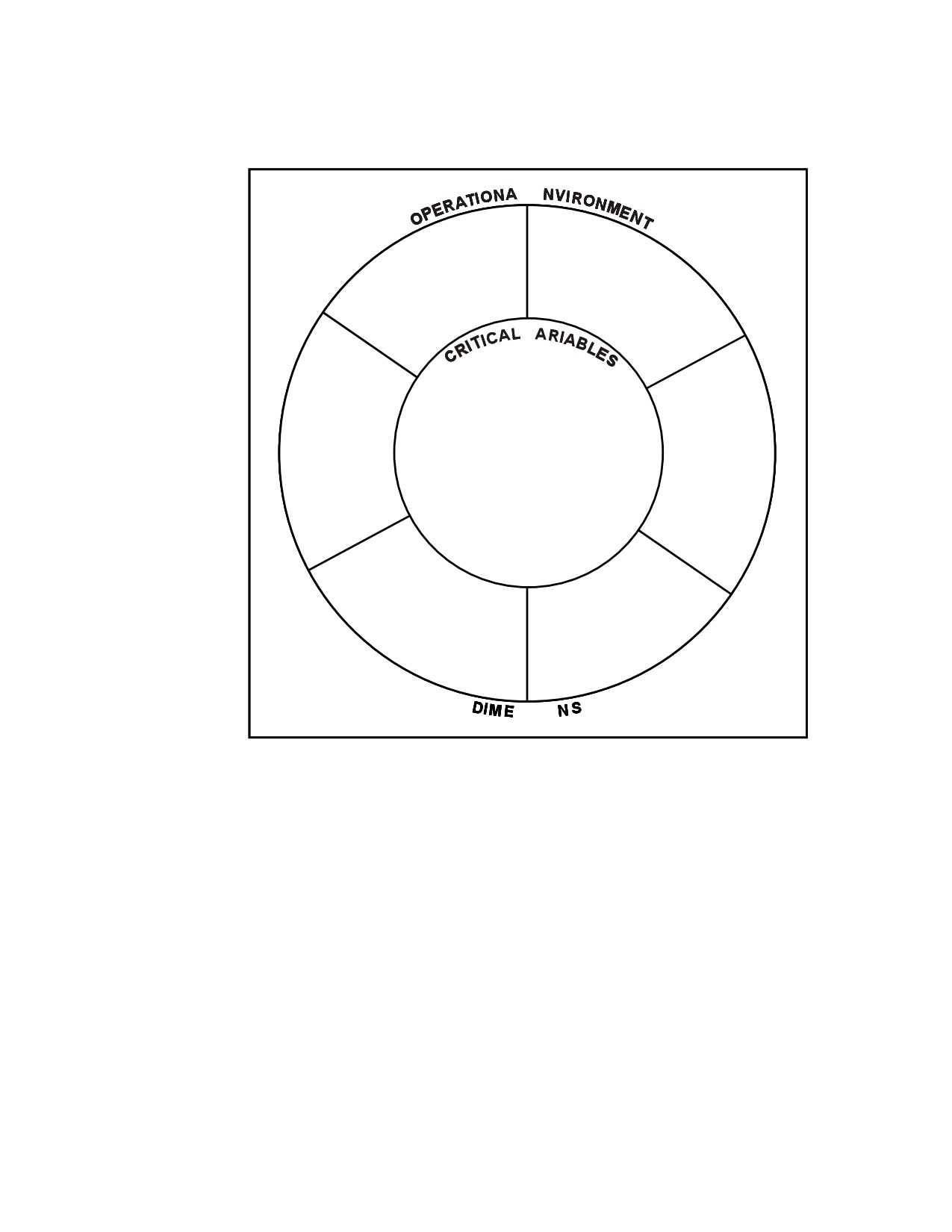
FM 2-0 ___________________________________________________________________________________
LE
TECHNOLOGY
THREAT
V
• NATURE AND STABILITY
OF THE STATE
• REGIONAL AND GLOBAL
RELATIONSHIPS
• ECONOMICS
• DEMOGRAPHICS
INFORMATION
POLITICAL
• INFORMATION
• PHYSICAL ENVIRONMENT
• TECHNOLOGY
• EXTERNAL ORGANIZATIONS
• NATIONAL WILL
• TIME
• MILITARY CAPABILITIES
LAND COMBAT
UNIFIED
OPERATIONS
ACTION
NSIO
Figure 1-5. Critical Variables And Dimensions of the
Operational Environment
REGIONAL AND GLOBAL RELATIONSHIPS
1-81. Nation-states and/or non-state actors often enter into relationships,
which can be regional or global. These partnerships support common
objectives, which can be political, economic, military, or cultural. When actors
create regional or global alliances, it can add to their collective capability and
broaden the scale of operations and actions. Intelligence will provide the
commander with a visualization of all real and/or potential adversaries and
the various aspects of their cooperation that could impact on the operation.
ECONOMICS
1-82. The economic variable consists of economic conditions in the region and
economic ties between regional states and other world regions or other
countries; the role that economic power plays in the operational environment;
and the ability of the United States and its allies to apply economic power in
the specific situation. A significant gap in the economic conditions among
nation-states and other actors can be a source of conflict. Economic power
1-24
___________________________________________________________________________________ FM 2-0
provides the enemy with increased flexibility and adaptability. It can provide
an enemy with the ability to purchase modern technology that can be used to
counter US operations and prolong operations. In some cases, economic
superiority, rather than military superiority, may be the key to power or
dominance within a region. The IPB process identifies those elements of
economic power that may be a significant characteristic of the battlefield.
However, the application of the economic instrument of national power lies
primarily outside the military sphere.
DEMOGRAPHICS
1-83. The demographics variable includes the cultural, religious, and ethnic
makeup of a given region, nation, or non-state actor; additionally, such
factors as public health and other population trends must be considered.
Intelligence and information enable the commander to understand the
influences of the demographic features of his AO. An evaluation of the
situation and possible threats with these factors in mind will provide the
commander with knowledge concerning underlying demographics that could
affect operations in the region. Additionally, intelligence can provide
information on whether the population is sympathetic to the US or the enemy
cause or is uncommitted in its views to either the US or the enemy.
INFORMATION
1-84. Broadcast media and other information means can make combat
operations visible to a global audience. Various actors seek to use perceptions
to control and manipulate how the public views events. The enemy will
exploit US mistakes and failures, create disinformation based on falsehoods,
and use propaganda to sway the local population to support their cause, to
alienate world opinion, and to influence US public opinion. Media coverage
can affect US political decisionmaking, internal opinion, or the sensitivities of
multinational members. Intelligence can determine the enemy’s ability to
manage and manipulate information as well as assess the enemy’s ability to
access or
disrupt US systems
(for example, satellite communications
[SATCOM] and imagery).
the commander on the
Intelligence can also inform
enemy’s communication infrastructure, to include its capabilities and
vulnerabilities.
PHYSICAL ENVIRONMENT
1-85. The main elements of the physical environment are terrain and
weather, including the medical threat. Intelligence often considers terrain
and weather effects on not only the earth’s surface but also subterranean,
aerospace, and space. Potential enemies understand that less complex and
open environments favor a US force. Therefore, the enemy may try to operate
in urban environments, in complex terrain, and in weather conditions that
may adversely affect US military operations and mitigate technological
advantages. Intelligence provides a thorough analysis and evaluation of the
effects of weather, prevalent diseases, and terrain on military operations.
Analysis of the adversary provides information on his preferred tactics,
weapons systems, and other capabilities and vulnerabilities.
1-25
FM 2-0 ___________________________________________________________________________________
TECHNOLOGY
1-86. Even adversaries lacking a research and development (R&D) capability
can purchase sophisticated systems, or gain access to such systems, in the
global marketplace. Commanders and staffs should prepare for adversaries
who use technology in sophisticated ways. These ways may differ sharply
from the ways that US forces use similar technologies. The technology that
nations or non-state actors can bring to the OE includes what they can
develop, as well as what they can acquire through purchase or capture. MI ⎯
• Provides intelligence on the enemy’s technological capabilities and
vulnerabilities.
• Provides the commander with intelligence regarding the enemy’s
potential technological ability to achieve equality or even superiority
against the US in selected areas.
• Indicates whether or not the enemy is employing dual-use technologies.
EXTERNAL ORGANIZATIONS
1-87. When the US Army conducts operations of any kind in a failed state or
areas torn by conflict, it is likely to find non-governmental organizations
(NGOs), international humanitarian organizations, multinational
corporations, and other civilian organizations at work there. These
organizations and/or their members can have both stated and hidden
interests and objectives that can either assist or hinder US mission
accomplishment. Defining the battlefield environment should provide the
commander with information as to the impact civilians on the battlefield will
have on mission accomplishment. Intelligence, in conjunction with other
members of the commander’s staff, can inform the commander on the number
and types of humanitarian organizations and multinational corporations
operating in the country or region and whether those organizations are
supporting or hindering US mission accomplishment.
NATIONAL WILL
1-88. The willingness of the people to submit to enemy operations can be a
significant characteristic of the battlefield. The intensity and durability of
this support can influence the objectives of a conflict, its duration, the type
and intensity of the enemy’s operations in opposition to US operations, and
the conditions for ending the conflict. Intelligence about the national will
could affect the conduct of information operations.
TIME
1-89. Potential adversaries of the US generally view time as being to their
advantage. An adversary may see prolonging combat operations for an
extended period as a means of tying down US forces, increasing opportunities
to inflict casualties on US forces, stirring public opinion in the area of
responsibility (AOR) against the US presence and operations, and creating
dissatisfaction in US public opinion. For example, an adversary can use the
time required for US forces to deploy into an area to manipulate the nature of
the conflict, attempting to control the tempo of operations by influencing
early entry operations and prolonging operations with the desire to increase
friendly casualties. Once US forces have deployed and begun operations in an
1-26
___________________________________________________________________________________ FM 2-0
AOR, the adversary may adopt modes of operation that seek to avoid decisive
conflict to inflict casualties on US forces and create more favorable conditions
for future combat. Intelligence provides the commander with information on
the enemy’s ability to use the time factor to impact on the commander’s
mission.
MILITARY CAPABILITIES
1-90. Intelligence supports the commander’s understanding of the
adversary’s military capabilities and ability to use conventional and
unconventional tactics. The adversary will be flexible, thinking, adaptive, and
capable of using a combination of conventional and unconventional warfare
tactics. Modern technology will enhance his capabilities. Terrorism, suicide
bombings, WMD, sabotage, information warfare, and assassinations are but a
few of
arsenal.
the tactics within the adversary’s
THE INTELLIGENCE PROCESS
1-91. Intelligence operations generally include the five functions that
constitute the intelligence process: plan, prepare, collect, process, and
produce. Additionally, there are three common tasks that occur across the
five functions of the intelligence process: analyze, disseminate, and assess.
The three common tasks are discussed after the last function, produce. The
intelligence process functions are not necessarily sequential; this is what
differentiates the Army’s intelligence process from the Joint intelligence
cycle. The intelligence process provides a common model with which to guide
one’s thinking, discussing, planning, and assessing about the threat or AOI
environment. The intelligence process generates information about the
threat, the AOI, and the situation, which allows the commander and staff to
develop a plan, seize and retain the initiative, build and maintain
momentum, and exploit success.
PLAN
1-92. The plan step consists of the activities that identify pertinent IRs and
develop the means for satisfying those requirements. The CCIRs (PIRs and
FFIRs) drive the planning of the ISR effort. The intelligence officer supports
the G3/S3 in arranging the ISR effort, based on staff planning, to achieve the
desired collection effects. Planning activities include, but are not limited to⎯
• Conducting IPB.
• Managing requirements.
• Submitting RFIs and using intelligence reach to fill information gaps.
• Evaluating reported information.
• Establishing the intelligence communications and dissemination archi-
tecture.
• Developing, managing, and revising the intelligence synchronization
plan and the ISR plan as mission requirements change.
PREPARE
1-93. The failure of MI units or personnel to accomplish their tasks or
missions can often be attributed to their failure to prepare. The prepare step
includes those staff and leader activities which take place upon receiving
1-27
FM 2-0 ___________________________________________________________________________________
the operation order
(OPORD), operation plan
(OPLAN), warning order
(WARNO), or commander’s intent in order to improve the unit’s ability to
execute tasks or missions.
1-94. The most habitual and egregious preparation failures committed by
leaders (as evidenced by performance at the combat training centers) is not
the conduct of specific tasks, but the failure to adequately coordinate for more
generi
c combat requirements such as⎯
• Friendly forward unit liaison.
• Departing or reentering friendly lines or AOs.
• Fire support: enroute, at mission location, and return.
• Casualty evacuation procedures.
• Passwords (running, forward of friendly lines), recognition signals, call
signs, and frequencies.
• Resupply.
• Movement through friendly AOs.
COLLECT
1-95. The collect step involves collecting and reporting information in
response to ISR tasking. ISR assets collect information and data about threat
forces, activities, facilities, and resources as well as information concerning
the environmental and geographical characteristics of a particular
battlespace. A successful ISR effort results in the timely collection and
reporting of relevant and accurate information. This collected information
forms the foundation of intelligence databases, intelligence production, and
the G2’s/S2’s situational understanding. The requirements manager
evaluates the reported information for its responsiveness to the CCIRs (PIRs
and FFIRs).
PROCESS
1-96. Processing involves converting collected data and information into a
form that is suitable for analyzing and producing intelligence. Examples of
processing include developing film, enhancing imagery, translating a
document from a foreign language, converting electronic data into a
standardized report that can be analyzed by a system operator, and
correlating information.
1-97. Processing data and information is performed unilaterally and coopera-
tively by both humans and automated systems.
PRODUCE
1-98. The produce step involves evaluating, analyzing, interpreting,
synth
nd combining information and intelligence from single or
esizing, a
multiple sources into intelligence or intelligence products in support of known
or an
mbining new
ticipated requirements. Production also involves co
information and intelligence with existing intelligence in order to produce
intelligence in a form that the commander and staff can apply to the MDMP
and that supports and helps facilitate situational understanding. During the
produce step, the intelligence staff manipulates information by⎯
• Analyzing the information to isolate significant elements.
1-28
___________________________________________________________________________________ FM 2-0
• Evaluating the information to determine accuracy, timeliness, usa-
bility, completeness, precision, and reliability.
• Combining the information with other relevant information and pre-
viously developed intelligence.
• Applying the information to estimate possible outcomes.
• Presenting the information in a format that will be most useful to its
eventual user.
1-99. The intelligence staff deals with numerous and varied production
requirements based on PIRs and intelligence requirements; diverse missions,
environments, and situations; and presentation requirements. Through
analysis, collaboration, and intelligence
reach, the G2/S2 and the staff use
the
collective intelligence production capability of higher, lateral, and
subordinate echelons to meet the production requirements. Proficiency in
these techniques and procedures facilitates the intelligence staff’s ability to
answer command and staff requirements regardless of the factors of
METT-TC.
1-100. The three common tasks, discussed below, can occur throughout the
intelligence process.
Analyze
1-101. The intelligence staff analyzes intelligence and information about the
enemy’s capabilities, friendly vulnerabilities, and the battlefield environment
as well as issues and problems that arise within the intelligence process itself
to determine their nature, origin, and interrelationships. This analysis
enables commanders, staffs, and leaders to determine the appropriate action
or reaction and to focus or redirect assets and resources to fill information
gaps or alleviate pitfalls. It is also within the analyze function that
intelligence analysts sort through large amounts of collected information and
intelligence to obtain only that information which pertains to the CCIRs
(PIRs and FFIRs), maintenance of the COP, and facilitates the commander’s
situational understanding.
Disseminate
1-102. Disseminating is communicating relevant information of any kind
from one person or place to another in a usable form by any means to improve
understanding or to initiate or govern action. Disseminating intelligence
entails using information management techniques and procedures to deliver
timely, relevant, accurate, predictive, and usable intelligence to the
commander. Determining the product format and selecting the means to
deliver it are key aspects of dissemination. Information presentation may be
in a verbal, written, interactive, or graphic format. The type of information,
the time allocated, and the individual preference of the commander all
influence the information format.
Assess
1-103. Assessment plays an integral role in all aspects of the intelligence
process. Assessing includes evaluating the effectiveness of intelligence in
supporting the operation. Assessing the situation and available information
begins upon receipt of the mission and continues throughout the in
telligence
1-29
FM 2-0 ___________________________________________________________________________________
process. The continual assessment of intelligence operations and ISR efforts,
available information and intelligence, and various
aspects of the factors of
METT-TC are critical to ensure⎯
•
The G2/S2 answers all CCIRs (PIRs and FFIRs).
• The G2/S2 and G3/S3 redirect ISR assets to support changing
requirements.
•
Using information and intelligence properly.
INTELLIGENCE
DISCIPLINES
1-104. Intelligence disciplines are categories of intelligence functions. The
Army’s intelligence disciplines are All-Source Intelligence, Human
Intelligence (HUMINT), Imagery Intelligence (IMINT), Signals Intelligence
(SIGINT), Measurement and Signatures Intelligence (MASINT), Technical
Intelligence
(TECHINT), and Counterintelligence
(CI). Although JP
2-0
defines these intelligence disciplines, it also includes Open-Source
Intelligence (OSINT) as a separate intelligence discipline. Because OSINT is
more appropriately defined as a category of information, used singly or
integrated into an all-source analytical approach, it is not defined in this
manual as an intelligence discipline. For more information regarding the
intelligence disciplines, see Part Three of this manual, as well as the
respective manuals, which covers each individual intelligence discipline.
ALL-SOURCE INTELLIGENCE
1-105. All-source intelligence is defined as the intelligence products,
organizations, and activities that incorporate all sources of information and
intelligence, including open-source information, in the production of
intelligence. All-source intelligence is a separate intelligence discipline, as
well as the name of the task used to produce intelligence from multiple
intelligence or information sources.
HUMAN INTELLIGENCE
1-106. HUMINT is the collection of foreign information⎯by a trained
HUMINT Collector⎯from people and multimedia to identify elements,
intentions, composition, strength, dispositions, tactics, equipment, personnel,
and capabilities. It uses human sources as a tool, and a variety of collection
methods, both passively and actively, to collect information.
IMAGERY INTELLIGENCE
1-107. IMINT is intelligence derived from the exploitation of imagery
collected by visual photography, infrared, lasers, multi-spectral sensors, and
radar. These sensors produce images of objects optically, electronically, or
digitally on film, electronic display devices, or other media.
SIGNALS INTELLIGENCE
1-108. SIGINT is a category of intelligence comprising either individually or
in combination all communications intelligence
(COMINT), electronic
intelligence
(ELINT), and foreign instrumentation signals intelligence
(FISINT), however transmitted. SIGINT is derived from communications,
electronics, and foreign instrumentation signals.
1-30
___________________________________________________________________________________ FM 2-0
MEASUREMENT AND SIGNATURES INTELLIGENCE
1-109. MASINT is technically derived intelligence that detects, locates,
tracks, identifies, and/or describes the specific characteristics of fixed and
dynamic target objects and sources. It also includes the additional advanced
processing and exploitation of data derived from IMINT and SIGINT
collection. MASINT collection systems include but are not limited to radar,
spectroradiometric, electro-optical
(E-O), acoustic, radio frequency
(RF),
nuclear detection, and seismic sensors, as well as techniques for gathering
chemical, biological, radiological, and nuclear (CBRN), and other material
samples.
TECHNICAL INTELLIGENCE
1-110. TECHINT is intelligence derived from the collection and analysis of
threat and foreign military equipment and associated materiel for the
purposes of preventing technological surprise, assessing foreign scientific and
technical (S&T) capabilities, and developing countermeasures designed to
neutralize an adversary’s technological advantages.
COUNTERINTELLIGENCE
1-111. CI counters or neutralizes intelligence collection efforts through
collection, counter-intelligence investigations, operations, analysis, and
production, and functional and technical services. CI includes all actions
taken to detect, identify, track, exploit, and neutralize the multidiscipline
intelligence activities of friends, competitors, opponents, adversaries, and
enemies; and is the key intelligence community contributor to protect US
interests and equities. CI assists in identifying EEFI, identifying
vulnerabilities to threat collection, and actions taken to counter collection
and operations against US forces.
FORCE PROJECTION OPERATIONS
1-112. Force projection is the military component of power projection. It is a
central element of the national military strategy. Army organizations and
installations, linked with joint forces and industry, form a strategic platform
to maintain, project, and sustain ARFOR, wherever they deploy. Force
projection operations are inherently joint and require detailed planning
and synchronization. Force projection encompasses a range of
processes⎯mobilization, deployment, employment, sustainment, and
redeployment⎯discussed below.
1-113. The Army must change its mindset from depending on an “intelligence
buildup” to performing intelligence readiness on a daily basis in order to meet
the requirements for strategic responsiveness. MI personnel, even in garrison
at the lowest tactical echelons, must use their analytic and other systems and
prepare
for possible operations on a daily basis.
1-114. Built on a foundation of intelligence readiness, the Intelligence BOS
provides the commander with the intelligence he needs to plan, prepare, and
execute force projection operations. Successful intelligence during force
projection operations relies on continuous collection and intelligence
production before and during the operation. In a force projection operation,
1-31
FM 2-0 ___________________________________________________________________________________
higher echelons will provide intelligence to lower echelons until the tactical
ground force completes entry and secures the lodgment area. The joint force
J2 must exercise judgment when providing information to subordinate
G2s/S2s so not to overwhelm them. Figure 1-6 is an example of force
projection intelligence.
Plan
Initial Entry
Alert
Stage
Lodgment
X
KEY PLANNING FACTORS
1. Stay out front in intelligence planning
• Develop steady effort
• Prioritized intelligence requirements for surge
2. Understand how to get intelligence support
• Identify information and asset requirements
• Know what’s available, how/when to get it
Mobilization
Deployment
Employment
Redeployment
Sustainment
Figure 1-6. Force Projection Intelligence.
1-115. The G2/S2 must anticipate, identify, consider, and evaluate all threats
to the entire unit throughout force projection operations. This is critical
during the deployment and entry operations stages of force projection. During
these stages, the unit is particularly vulnerable to enemy actions because of
its limited combat power and knowledge of the AO. Intelligence personnel
must, therefore, emphasize the delivery of combat information and
intelligence products that indicate changes to the threat or battlespace
developed during predeployment IPB.
1-116. The G2/S2 should⎯
• Review available databases on assigned contingency AOIs, conduct
IPB
on these AOIs, and develop appropriate IPB products.
• Comply with higher headquarters standing operating procedures
(SOPs) and manuals for specific intelligence operations guidance.
• Coordinate for and rehearse electronic message transfers (for example,
Internet Protocol addresses, routing indicators) using the same
communications protocols with theater, higher headquarters,
subordinate, and lateral units that the unit
would use when deployed.
• Plan, train, and practice surging intelligence functions on likely or
developing contingency crises.
• Prepare and practice coordination from predeployment through
redeployment with other elements and organizations (for example,
HUMINT, IMINT, SIGINT, MASINT, IO, staff weather officer [SWO],
1-32
___________________________________________________________________________________ FM 2-0
civil affairs
[CA], psychological operations
[PSYOP], and special
operations forces [SOF] units, to include databases and connectivity).
• Include the following as a part of daily (sustainment) operations:
RC and other augmentation.
A linguist plan with proficiency requirements.
(Alert linguists
through early entry phases of deployment.)
Training (individual and collective).
• Establish formal or informal intelligence links, relationships, and
networks to meet developing contingencies.
• Forward all RFIs to higher headquarters in accordance with SOPs.
• Establish statements of intelligence interests (SIIs), other production,
and I&W requirements.
1-117. To draw intelligence from higher echelons and focus intelligence
downward, based on the commander's needs, the G2/S2 must⎯
• Understand the J2's multiple echelon and broadcast dissemination
capability to ensure near-real time (NRT) reporting to all deployed, in
transit, or preparing to deploy forces.
• Maintain or build intelligence databases on the environment and
threats for each probable contingency.
• State and record the CCIR (as a minimum, list the PIRs and ISR tasks
or requests).
1-118. Until the unit’s collection assets become operational in the AO, the
G2/S2 will depend upon intelligence from the ARFOR or JTF to answer the
unit’s intelligence
needs. The following paragraphs describe
the intelligence
and ISR considerations during force projection.
MOBILIZATION
1-119. Mobilization is the process by which the armed forces or part of them
are brought to a state of readiness for war or other national emergency. It
assembles and organizes resources to support national objectives.
Mobilization includes activating all or part of the RC, and assembling and
organizing personnel, supplies, and materiel. A unit may be brought to a
state of readiness for a specific mission or other national emergency. This
process, called mobilization, is where specific AC or RC units, capabilities,
and
personnel are identified and integrated into the unit. During
mobilization, the G2/S2 must⎯
• Monitor intelligence reporting on threat activity and I&W data.
• Manage IRs and RFIs from their unit and subordinate units to include
updating ISR planning.
•
Establish habitual training relationships with their AC and RC
augmentation units and personnel as well as higher echelon
intelligence organizations as identified in the existing OPLAN. Support
the RC units and augmentation personnel by preparing and conducting
intelligence training and threat update briefings and by disseminating
intelligence.
• Identify ISR force requirements for the different types of operations
and contingency plans (CONPLANs).
1-33
FM 2-0 ___________________________________________________________________________________
•
Identify individual military, civilian, and contractor augmentation
requirements for intelligence operations. The Army, and the
Intelligence BOS in particular, cannot perform its missions without the
support of its Department of the Army Civilians
(DACs) and
contractors. The force increasingly relies on the experience, expertise,
and performance of non-uniformed personnel and has fully integrated
t
hting team.
hese non-uniformed personnel into the warfig
1-120. During mobilization the G2/S2, in conjunction with the rest of the
staff, must ensure the adequacy of training and equipping of AC and RC MI
organizations and individual augmentees to conduct intelligence operations
1-121. The G2/S2 supports peacetime contingency planning with IPB
produ
ly contingency areas. The G2/S2 establishes an
cts and databases on like
intelligence synchronization plan that will activate upon alert notification.
For smooth transition from predeployment to entry, the G2/S2 must
coordinate intelligence synchronization and communications plans before the
crisis occurs. The intelligence synchronization plan identifies the intelligence
requirements supporting those plans, to include⎯
•
ut the AOI.
ISR assets providing support througho
• Command and support relationships of ISR assets at each echelon.
•
red in unit SOPs.
Report and request procedures not cove
• Sequence of deployment of ISR personnel and equipment. Early
deployment of key ISR personnel and equipment is essential for force
protection and combat readiness. Composition of initial and follow-on
deploying assets is influenced by the factors of METT-TC, availability
of communications, and availability of lift.
• Communications architecture supporting both intelligence staffs and
ISR assets.
Frien
•
dly vulnerabilities to hostile intelligence threats and plans for
conducting FP measures. The staff must begin this type of planning as
early as possible to ensure adequate support to FP of deploying and
initial entry forces.
• Monitor time-phased force and deployment data (TPFDD) and recom-
mend changes in priority of movement, unit, or capability to enable ISR
operations.
1-122. The G2/S2 must continually monitor and update the OPLANs to
reflect the evolving situation, especially during crisis situations. National
intelligence activities monitor regional threats throughout the world and can
answer some intelligence requirements supporting the development of
OPLANs.
1-123. Upon alert notification, the G2/S2 updates estimates, databases, IPB
products, and other intelligence products needed to support command
decisions on force composition, deployment priorities and sequence, and the
AOI.
Units reassess their collection requirements immediately after alert
notification. The G2/S2 begins verifying planning assumptions within the
OPLANs. CI and ISR personnel provide FP support and antiterrorism
measures.
1-34
___________________________________________________________________________________ FM 2-0
1-124. Throughout mobilization, unit intelligence activities will provide the
deploying forces with the most recent intelligence on the AO. The intelligence
staff will also update databases and situation graphics. The G2/S2 must⎯
•
Fully understand the unit, ARFOR, and joint force intelligence organi-
zations.
•
Revise intelligence and intelligence-related communications architec-
ture and delete or integrate any new systems and software with the
current architecture.
•
Support 24-hour operations and provide continuous intelligence.
•
Plan all required intelligence reach procedures.
•
Determine transportation availability for deployment and availability
when deployed.
•
Determine all sustainability requirements.
•
Determine intelligence release requirements and restrictions; releasa-
bility to multinational and HN sources.
•
Review status of forces agreements (SOFAs), rules of engagement
(ROE), international laws, and other agreements, emphasizing the
effect that they have on intelligence collection operations. (Coordinate
with the staff judge advocate [SJA] on these issues.)
•
Ensure ISR force deployment priorities are reflected in the TPFDD to
support ISR operations based upon the factors of METT-TC.
•
Ensure intelligence links provide the early entry commander vital
access to multi-source army and joint intelligence collection assets,
processing systems, and databases.
•
ecified tasks, implied tasks,
Review the supporting unit commanders’ sp
task organization, scheme of support, and coordination requirements
with forward maneuver units. Address issues or shortfalls and direct or
coordinate changes.
•
Establish access to national HUMINT, IMINT, SIGINT, MASINT, and
CI databases, as well as automated links to joint service, multi-
national, and HN sources.
DEPLOYMENT
1-125.
t is the movement of forces and materiel from their point of
Deploymen
origin to the AO. This process has four supporting components:
predeployment activities, fort to port, port to port, and port to destination;
these components are known collectively as reception, staging, onward
movement, and integration (RSO&I) activities. Success in force projection
operations hinges on timely deployment. The size and composition of forces
requiring lift are based on the factors of METT-TC, availability of pre-
positioned assets, the capabilities of HN support, and the forward presence of
US forces. Force or tactical tailoring is the process used to determine the
correct mix and sequence of deploying units.
1-126. During deployment, intelligence organizations at home station or in
the rear area take advantage of modern SATCOM, broadcast technology, and
automated data processing (ADP) systems to provide graphic and textual
intelligence
updates to the forces enroute. Enroute updates help eliminate
1-35
///////////////////////////////////////