FM 4-02.285 MULTISERVICE TACTICS, TECHNIQUES, AND PROCEDURES FOR TREATMENT OF CHEMICAL AGENT CASUALTIES AND CONVENTIONAL MILITARY CHEMICAL INJURIES (SEPTEMBER 2007) - page 3
filling the alveoli) and development of fibrotic pulmonary changes with marked hypoxia. This
late-onset process appears to be immunologically mediated.
c. Symptoms.
(1) The smoke of HC can cause a range of clinical effects. Central pulmonary
damage resulting from disruption of smooth laminar bulk flow in central airways creates
turbulence, which can be recognized clinically by airway noise: paroxysmal coughing,
sneezing, hoarseness, inspiratory stridor, and wheezing. Nausea and retching may
accompany these signs. With supportive therapy, these symptoms resolve rapidly, often
within minutes to hours.
(2) Damage to peripheral airways and air spaces results in the accumulation of fluid,
initially within alveolar septa; it is the thickening of these normally thin-walled septa that
cause the dyspnea that is usually the first clinical indicator of incipient pulmonary edema.
The dyspnea ordinarily occurs after a clinically asymptomatic latent period that is inversely
correlated to inhaled dose and may last several hours. Objective signs and radiological and
laboratory abnormalities may be absent at this stage, but the dyspnea by itself is an
important clue that must not be overlooked.
(3) Finally, case reports of accidental exposure to moderate and high concentrations
of HC smoke have shown that a certain percentage of victims will appear to recover from
mild to more severe pulmonary edema only to develop fever, rapid pulse, malaise,
shortness of breath, retrosternal pain, abdominal cramps, and cyanosis up to 48 hours after
exposure. Chest radiographs associated with severe exposures have demonstrated a
dense, diffuse, infiltrative process present in one or both lung field(s). Repeat radiographs
will show progression of the infiltrate even though the physical examination of the chest is
normal. Final resolution of the infiltrate may be delayed for a month or longer, even though
the patient is asymptomatic during this period. In fatal cases, shock and respiratory
insufficiency, as well as secondary bacterial infection, may lead to death.
d. Self-Protection. Put on the mask at once in all concentrations of HC smoke. If
nausea, vomiting, or difficulty in breathing develops, report for medical treatment as soon as
the combat situation permits. It is important to follow medical recommendations even if all
you are feeling is shortness of breath.
e. Treatment. The early symptoms due to bronchial constriction may be relieved by the
subcutaneous injection of 0.5 mg (0.5 ml of a 1:1000 solution) of epinephrine hydrochloride,
repeated in 20 to 30 minutes if necessary. Aspirin or acetaminophen will help relieve
general discomfort. Oxygen therapy is required, and steroids should be administered
prophylactically to reduce the risk of late-onset pulmonary fibrotic changes.
f.
Prognosis. Prognosis is related entirely to the extent of the pulmonary damage. All
exposed individuals should be kept under observation for at least 48 hours. Most individuals
recover in a few days. At moderate exposures, some symptoms may persist for one to two
weeks. In severe exposures, survivors may have reduced pulmonary function for some
months after exposure. The early use of steroids will prevent fibrosis for HC smoke and
NOx. The severely exposed patient may develop marked progressive dyspnea, cyanosis,
and fibrosis and may die.
5. Sulfur Trioxide-Chlorosulfonic Acid
a. Properties. Sulfur trioxide-chlorosulfonic acid is a standard smoke mixture for aircraft
spray tanks. It is a heavy, strongly acidic liquid which, when dispersed in the air, absorbs
moisture to form a dense white fog consisting of small droplets of hydrochloric and sulfuric
18 September 2007 FM 4-02.285/MCRP 4-11.1A/NTRP 4-02.22/AFTTP(I) 3-2.69
VIII-3
acids. In moderate concentrations, it is highly irritating to the eyes, nose, upper (central)
airways, and skin. Because of its extremely corrosive properties, it has become obsolete for
US military use.
b. Pathology. Local inflammation of the eyes, respiratory tract (central pulmonary
effects), and skin may be seen after severe exposures to the smoke. Contact with liquid FS
produces acid burns.
c. Symptoms. The symptoms are usually limited to a prickling sensation of the skin.
Exposure to heavy concentrations or long exposures to ordinary field concentrations may
result in severe eye, skin, and respiratory tract irritation. Conjunctival irritation and edema,
lacrimation, and mild photophobia may occur. Coughing
(which may be explosive),
soreness in the chest beneath the sternum, bronchoconstriction (especially in individuals
with sensitized airways), and moderate chemical dermatitis of the exposed skin are
occasionally seen. Splashes of liquid in the eye are extremely painful and cause mineral
acid burns with corneal erosions. Liquid FS on the skin may cause painful acid burns.
d. Self-Aid. Wear the mask in all concentrations of FS smoke that cause coughing,
irritation to the eyes, or a prickling sensation of the skin. If the skin is splashed with liquid
FS, wash it off at once with water. If liquid FS gets into the eye, forcibly hold the eye open
and flush it with water, then report for medical treatment as soon as the combat situation
permits.
e. Treatment.
(1) Eye. Irrigate the contaminated eye with water or saline solution as soon as
possible. Examine the cornea for erosion by staining it with fluorescein. If corneal erosion
is severe, transfer the patient to the care of an ophthalmologist. If this is not practicable,
mydriasis should be induced with the use of atropine sulfate.
(2) Skin. Wash irritated skin or skin burns with water (with or without soap); this may
be followed by washing with a sodium bicarbonate solution. After washing, treat the burns
as thermal burns of like severity.
(3) Respiratory tract. Administer warm, moist air. Use bronchodilators as clinically
indicated.
f.
Prognosis. The skin burns, conjunctival lesions, and respiratory irritation heal
readily. Corneal erosions are more serious and may lead to residual scarring.
6. Titanium Tetrachloride
a. Properties. Liquid FM is a corrosive that decomposes on contact with moist air,
yielding a dense white smoke composed of titanium dioxide, titanium oxychloride, and
hydrochloric acid. It may be dispersed as an aircraft spray or by explosive munitions, but it
is not commonly used.
b. Pathology. Liquid FM produces acid burns of the skin or eyes. It may also cause
irritation of the upper (central) airways.
c. Symptoms. Exposure of the eyes to the spray will cause conjunctivitis with
lacrimation and photophobia, but this seldom causes significant corneal injury. Liquid
splashes cause acid burns of the skin and severe eye injury, including some corneal
erosion. Titanium tetrachloride smoke may provoke bronchospasm in individuals with
underlying reactive airway disease.
VIII-4
FM 4-02.285/MCRP 4-11.1A/NTRP 4-02.22/AFTTP(I) 3-2.69
18 September 2007
d. Self-Aid. Wear the mask in all concentrations of FM smoke that irritate the nose or
the throat. Wash any liquid splash off the skin with water. If spray or liquid splash enters
the eye, forcibly open the eye and flush it with water, then report for medical attention as
soon as the combat situation permits.
e. Treatment. Treatment is similar to that for FS (see paragraph 5e).
f.
Prognosis. The prognosis is good except in rare instances in which corneal erosions
lead to some permanent scarring.
7. White Phosphorus Smoke
a. Properties. White phosphorus
(WP) is a pale yellow waxy solid that ignites
spontaneously on contact with air. The flame produces a hot, dense white smoke
composed of particles of phosphorus pentoxide. The particles are converted by moist air
into phosphoric acid. White phosphorus is usually dispersed by explosive munitions. The
WP smoke irritates the eyes and nose in moderate concentrations. In an artillery projectile,
WP wedges ignite immediately upon exposure to air and fall to the ground. Up to 15
percent of the WP remains within the charred wedge and can reignite if the felt is crushed
and the unburned WP is exposed to the atmosphere.
b. Pathology. For WP burns, see Chapter 9, paragraph 4. Inhaled smoke irritates the
upper respiratory tract.
c. Symptoms. Field concentrations of the smoke may irritate the eyes, nose, and
throat. Casualties from WP smoke have not occurred in combat operations.
d. Self-Aid. Wear the protective mask in all concentrations of WP smoke that cause
any cough or irritation. Since the WP remaining in felt wedges can cause thermal injury, do
not handle the charred wedges on the ground without protective covering. For self-aid
against particles of burning WP, see paragraph 4, Chapter 9.
e. Treatment.
Generally, treatment of WP smoke irritation is unnecessary.
Spontaneous recovery is rapid. For treatment of thermal injury due to large particles of
burning WP, see paragraph 4, Chapter 9.
f.
Prognosis. No permanent injury has been reported from exposure to WP smoke at
usual field concentrations.
8. Red Phosphorus Smoke
This smoke is similar to WP smoke (for information, see paragraph 7, above).
9. Colored Smokes
a. Properties. These smokes are produced by explosive dissemination of dyes.
b. Physiological Properties. There are no reports of serious effects produced by
exposure to these smokes. Anecdotally, discoloration of the urine has been noted.
18 September 2007 FM 4-02.285/MCRP 4-11.1A/NTRP 4-02.22/AFTTP(I) 3-2.69
VIII-5
Chapter IX
INCENDIARY AGENTS
They have committed monstrous crimes. They have used the most barbarous arms
such as napalm, chemical products and toxic gases, to massacre our compatriots and
burn down our villages, pagodas, churches, hospitals, schools. Their acts of
aggression have grossly violated the 1954 Geneva agreements on Viet-Nam and have
seriously menaced peace in Asia and the world.
Ho Chi Minh letter to Pope Paul VI
13 February 1967
Biological and chemical agents may be disseminated in a variety of means and
fashions. One means of dissemination may be through the use of incendiary agents.
During the ancient times, it was common practice during a siege to attempt to start
fires by launching incendiary shells filled with chemicals such as sulphur and
turpentine. Armies discovered that even when fires were not started, the resulting
smoke and vapors would provide, at the very least, concealment and distraction
which created chaos and confusion. Although its main purpose of being fire starters
was never abandoned, a variety of chemical fills for shells were soon developed that
were intended to exploit the quick-spreading effects of the smoke.
1. Types of Incendiary Agents
Incendiary agents are used to burn supplies, equipment, and structures. The main
agents in this group are thermite (TH), magnesium (MG), white phosphorus (WP), and
combustible hydrocarbons
(including oils and thickened gasoline).
Chemical fire
extinguishers containing carbon dioxide should not be used in confined spaces to extinguish
TH or MG incendiaries. When carbon tetrachloride is in contact with flame or hot metal, it
produces a mixture of phosgene (CG), chlorine, carbon monoxide (CO), and hydrochloric
acid. The field protective mask does NOT protect against some products of combustion
such as CO.
2. Thermite
Thermite incendiaries are a mixture of powdered iron oxide, powdered aluminum, and
other materials. Thermite incendiaries are used for attacks on armored fighting vehicles.
Thermite incendiaries burn at about 3600°F (1982.2°C) and scatter molten iron. Explosive
charges are frequently added, which makes control hazardous. Particles of iron that lodge
in the skin produce multiple small deep burns. The particles should be cooled immediately
with water and removed. Afterwards, treat as any other thermal burn.
3. Magnesium and Its Alloys
Magnesium burns at about 3600°F (1982.2°C) with a scattering effect similar to that of
TH. Its particles produce deep burns. Healing is slow unless these particles are removed
quickly. Removal is usually possible under local anesthesia. When explosive charges have
been added to a MG bomb, the fragments may be embedded deep in the tissues, causing
the localized formation of hydrogen gas and tissue necrosis.
18 September 2007 FM 4-02.285/MCRP 4-11.1A/NTRP 4-02.22/AFTTP(I) 3-2.69
IX-1
4. White Phosphorus
Incandescent particles of WP may produce extensive burns. The burns usually are
multiple, deep, and variable in size. The particles continue to burn unless deprived of
atmospheric oxygen. The smoke irritates the eyes and the nose in moderate
concentrations.
a. Self-Aid.
(1) If burning particles of WP strike and stick to the clothing, take off the
contaminated clothing quickly before the WP burns through to the skin.
(2) If burning WP strikes the skin, smother the flame with water, a wet cloth, or mud.
Keep the WP covered with the wet material to exclude air until the particles can be removed.
(3) Try to remove the WP particles with a knife, bayonet, stick, or other available
pointed object. It may be possible to remove some particles by rubbing with a wet cloth.
(4) Report for treatment as soon as the mission permits.
b. Treatment.
(1) Since WP will ignite spontaneously and continue to burn when exposed to air,
oxygen must be excluded until the agent is removed from the burn or the wound.
(2) At the earliest opportunity, all WP particles must be removed from the skin.
(a) Initially, the affected area is bathed in a bicarbonate solution to neutralize
phosphoric acid. Visible WP can then be removed. Particles often can be located by their
emission of smoke when air strikes them, or by their phosphorescence in the dark. In dark
surroundings, fragments are seen as luminescent spots.
(b) Promptly debride the burn if the patient’s condition will permit and remove
particles of WP that might be absorbed later and possibly produce systemic poisoning. Do
not apply oily based ointments until it is certain that all WP has been removed. Following
complete removal of the particles, treat the lesions as thermal burns.
(3) Once the particles have been removed, they must be placed in a container filled
with water, sand, or, preferably, oil to prevent injury to others in the surrounding area.
(4) If the eyes are affected, treatment must be initiated immediately. The most
effective treatment is to neutralize any phosphoric acid present by irrigating with 5 percent
bicarbonate solution (5/6 cup [7 ounces]) of bicarbonate dissolved in a gallon of water).
Continue irrigation for 10 to 15 minutes using copious amounts of normal saline or room
temperature water. Upon completion of irrigation, a wet dressing, wet cloth, or mud should
be applied to stop the WP burning by depriving it of oxygen. All WP particles that are readily
accessible must be promptly removed. Since WP is readily soluble in oil and certain other
solutions, oily dressings or eye ointments must not be used. White phosphorus fumes are
also irritating to the eyes and the respiratory tract. Separate the lids and instill a local
anesthetic to aid in the removal of all embedded particles. Once all particles have been
removed from the eyes, atropine ophthalmic ointment should be instilled. Transfer the
patient to the care of an ophthalmologist as soon as possible.
Note: Cupric (copper) sulfate, used by US personnel in the past and still being used
by some nations, may produce kidney and cerebral toxicity as well as
intravascular hemolysis. It is no longer used to counteract white phosphorus.
IX-2
FM 4-02.285/MCRP 4-11.1A/NTRP 4-02.22/AFTTP(I) 3-2.69
18 September 2007
5. Combustible Hydrocarbon Incendiaries
Burns may be produced by flame weapons (such as napalm), oil incendiary bombs
(which may also contain phosphorus and sodium), and firebombs containing thickened
gasoline (napalm). Lung damage from heat and irritating gases may be a complication
added to the injuries from incendiaries, especially in confined places. Morphine should be
given cautiously to patients with pulmonary complications. The treatment of burns caused
by these agents is similar to that for other thermal burns.
6. Flame Weapon Attack
As flame and burning fuel fills an enclosed area, the oxygen content of the air is
reduced. A hot toxic atmosphere containing large amounts of CO, unburned hydrocarbons,
and smoke is produced. The coolest and least contaminated air is found at floor level.
a. Casualties. Deaths may occur during or shortly after a flame attack due to the heat,
the toxic atmosphere, or suffocation caused by irritative laryngospasm or laryngeal or glottic
edema. Survivors may have thermal burns of the skin and upper respiratory tract and
central pulmonary damage from the hot flames.
b. Protection. The floor level is the safest area during a flame attack. Any kind of cover
affords some protection from heat. A wet wool blanket is excellent. The protective mask
may give partial protection against smoke but is NOT protective against CO.
c. Treatment. Remove casualties to fresh air as soon as possible. Assisted ventilation
(using oxygen, if available) should be administered if breathing has ceased. Treat skin
burns as thermal burns. If there are burns about the face, laryngeal burning with
subsequent edema-producing respiratory obstruction may occur. Intubation, tracheotomy,
or cricothyroid cannulation may be required. The general treatment of the casualty
produced by flame attack does not differ from the treatment of one with extensive thermal
burns from other sources.
7. Firebomb Attack
A firebomb is a large container containing 100 or more gallons of thickened gasoline
(such as napalm) that is air dropped. When it strikes the ground, the fuel is ignited by
phosphorus igniters and a large fireball of intense heat is produced, lasting about four to six
seconds. A wide area of ground covered with burning thickened gasoline may continue to
burn for 10 to 12 minutes.
a. Casualties. Deaths may be caused by the intense heat or by suffocation from
laryngospasm or from edema of the larynx or glottis. Thermal burns of the skin and upper
respiratory tract may occur in the survivors. Danger from a toxic atmosphere is small in
firebomb attacks in an open or in a well-ventilated enclosure.
b. First Aid. Rapidly remove burning clothing and brush off burning fuel with a gloved
hand or with several layers of other material. The flames can also be smothered with a
wet/damp cover to deprive it of oxygen for combustion.
c. Treatment. In general, treatment is similar to that used after flame weapon attacks.
d. Replacement of Body Fluids. In severe burns, lost body fluid must be replaced
quickly to prevent shock.
(1) Intravenous Replacement. The preferred method of replacing body fluids is the
rapid administration of IV fluids. If liquid contamination is present, spot decontaminate the
18 September 2007 FM 4-02.285/MCRP 4-11.1A/NTRP 4-02.22/AFTTP(I) 3-2.69
IX-3
protective jacket at the site to be used for the IV. To start an IV, cut the sleeve of the
protective jacket to expose the forearm. Start the IV as usual, pull the protective jacket over
the IV needle and tube assembly, and tape the sleeve to return the protective posture to the
arm.
(2) Oral Replacement. An alternate method of body fluid replacement in conscious
casualties is by oral replacement. In a contaminated atmosphere, fluids that are being
replaced orally must be administered to the casualty without disrupting their MOPP. Oral
fluid replacement may be accomplished by using the protective mask drinking tube and
observing the following procedures:
• Do not remove the casualty’s protective clothing or mask.
• If the casualty’s protective clothing has burned away, replace it with a dry
uncontaminated dressing or an improvised dressing, a sheet, a blanket, a mattress cover,
or similar article.
• Remove the casualty’s canteen from its carrier. Check the canteen for
contamination. If it is contaminated, decontaminate it before using.
• If the casualty is conscious, is not vomiting, and does not have a stomach
wound, open the valve on the mask, to position the drinking tube.
• Insert the protruding end of the drinking tube into the protective canteen cap. Be
sure the seal is tight.
• Gradually give the water to the casualty a few sips every few minutes. If the
casualty does not become nauseated, gradually increase the fluid intake. At the first sign of
nausea, stop giving the water until the nausea subsides.
• Arrange for the evacuation of the casualty to an uncontaminated area as rapidly
as possible.
IX-4
FM 4-02.285/MCRP 4-11.1A/NTRP 4-02.22/AFTTP(I) 3-2.69
18 September 2007
Chapter X
TOXIC INDUSTRIAL CHEMICALS
Also looming on the horizon is the prospect that these terror weapons will increas-
ingly find their way into the hands of individuals and groups of fanatical terrorists or
self-proclaimed apocalyptic prophets. The followers of Usama bin Laden have, in
fact, already trained with toxic chemicals.
Excerpt from Message of the then Secretary of Defense William S. Cohen
January 2001
Toxic industrial materials (TIMs) or toxic industrial chemicals (TICs) are substances,
including chemical, biological, and radiological materials that in sufficient quantities,
may pose a danger to individuals in the battlefield. In the hands of terrorists, rogue
states or nonstate actors, TICs can serve as a chemical agents or WMD that could
seriously undermine regional stability. Contact with these compounds, whether in
solid, liquid, gas, vapor, or aerosol (including smoke) form, can be deadly, especially
in confined areas, if proper personal protective equipment, including respiratory
protection, is not immediately available.
1. General
a. Many of these TIMs’ gases and vapors are released as thermal decomposition
products (pyrolysis products) of chemical elements present in a wide variety of materials.
Personnel are at increased risk when operating around manufacturing, storage, and major
transportation (truck terminals and railheads) facilities. Releases may be by accidental
release or by enemy forces, terrorists, or belligerents.
b. The most widely encountered TICs are ammonia (NH3), carbon monoxide (CO),
chlorine gas, hydrogen sulfide, and oxides of nitrogen (NOx).
2. Protection
a. The field protective mask and collective protection systems may have limited
protection capabilities against TICs. A health risk assessment is required in order to employ
the best available protective equipment (that is, CBRN gas mask, self-contained breathing
apparatus [SCBA]) in support of the operation or response. For these reasons, the field
protective mask should be considered an escape device only, and personnel exposed to
unidentified TICs should egress the contaminated area as rapidly as possible. The SCBA or
supplied air respirators protect the respiratory tract against most TICs and provide an
additional protection against low oxygen tensions in the ambient environment due to
displacement of air by some TICs, especially in enclosed spaces. Depending on the TIC,
specialized clothing may also be required, up to the level of fully encapsulating suits. For
more information on risk assessment, see FM 5-19.
b. The filter element/canister of the field protective mask provides only limited
protection against smoke caused by TICs. Duration of the protection depends upon the type
of smoke and its concentration. The filter element/canister does not generate oxygen but
filters smoke and some agents out of the air as they pass through it. Therefore, the field
protective mask should not be used in air containing less than 19.5 percent oxygen.
18 September 2007 FM 4-02.285/MCRP 4-11.1A/NTRP 4-02.22/AFTTP(I) 3-2.69
X-1
Note: Always replace the filter element/canister after wearing the protective mask in
a heavy concentration of oil fire smoke because the oil clogs the filter.
3. Acids
a. Properties. Acids may be encountered as solids, liquids, gases, or aerosols. Liquids
may also evaporate to form vapor. Vapors (commonly but incorrectly called “fumes”) and
gases usually have a characteristic pungent odor. The most common acids are
hydrochloric, nitric (HNO3), and sulfuric (H2SO4).
b. Relevance to Military Operations. Acids are found in a variety of industrial settings in
bulk quantity. They may be accidentally released as the result of combat fire, or
intentionally released during enemy retrograde operations in order to retard force
advancement of adversaries. Acids, like all TICs, pose the greatest threat in enclosed
spaces or close quarters operations, such as urban combat.
c. Pathology. Acids are toxic to the skin, eyes, and mucous membranes. Severe burns
are usually the result of direct contact with the acid. Inhalation of concentrated vapors may
be fatal within minutes. To the extent to which acids are soluble in aqueous media and
chemically reactive, they exert central pulmonary effects: release of hydrogen ions in moist
tissue in the central airways leads to necrosis and denudation of respiratory epithelium. As
dose increases, however, peripheral pulmonary effects (pulmonary edema) may also be
seen.
d. Symptoms. Signs and symptoms may include severe burns with pain; destruction of
the cornea and can result in blindness; turbulence-induced respiratory noise (coughing,
sneezing, hoarseness, wheezing, stridor) in the upper (central) airways; shortness of breath
(dyspnea), chest pain, and pulmonary edema; dizziness, shock, convulsions, and coma; and
weak and rapid pulse with resultant circulatory collapse.
e. Diagnosis. Diagnosis will initially be empiric, based on signs and symptoms, which
will primarily be related to the respiratory tract and vision. Individuals who experience
symptoms listed in paragraph 3d should be presumed to have been exposed to a caustic
vapor or gas, which would include acids in the differential diagnosis. Since the emergency
treatment of these exposures is the same, exact agent diagnosis at that time is not required.
Evidence of large, ruptured, or leaking containers in an industrial setting is the single
environmental clue of potential acid exposure. The single agent that is important initially to
rule out is nerve agent exposure, easily differentiated by the papillary changes, sweating,
muscular fasciculations, and mental status changes.
f.
Protection. Rescuers must determine the TIC concentration level and assume the
appropriate respiratory and skin protective level before attempting to rescue or care for
casualties in the contaminated area. Self-contained breathing apparatus and chemical
resistant outer clothing (Occupational Safety and Health Administration [OSHA] Level A)
afford the greatest protection and should be worn if the substance or concentrations are
unknown, especially in a confined space.
g. Treatment.
(1) Trauma specialist/hospital corpsman/Air Force medic (4N0 career field) care.
• Remove casualty from contamination zone and decontaminate.
• Administer oxygen using a face mask.
• Start an IV or saline lock.
X-2
FM 4-02.285/MCRP 4-11.1A/NTRP 4-02.22/AFTTP(I) 3-2.69
18 September 2007
• Administer one or two glasses of water in cases of ingestion, if casualty is
conscious.
• Monitor and treat for shock, as necessary.
• Loosely cover burns with sterile gauze.
• Evacuate casualty.
(2) Medical treatment facility care.
• Maintain airway and be prepared for possible early intubation.
• Continue oxygen therapy with warm, humidified air.
• Use appropriate postural drainage and percussion to assist in removal of tissue
debris from airways.
• Perform bronchoscopy as indicated to identify and remove pseudomembranes.
• Administer beta agonists to manage bronchospasm.
• Be alert for secondary pneumonitis, and treat with antibiotics once a causative
organism has been identified.
• If estimated inhaled dose of acid is high, maintain patient at enforced bed rest
(semiseated if tolerated by patient).
• Observe for and manage pulmonary edema.
• Manage circulatory collapse, if needed.
• Treat burns by applying a topical antimicrobial cream to cleansed burn wound.
Use silver sulfadiazine and/or mafenide acetate burn creams.
• Treat eye injuries.
h. Prognosis. Long-term prognosis of individuals exposed to acid vapors is excellent.
Prolonged exposure may, however, lead to pulmonary compromise, secondary infections,
noncardiogenic pulmonary edema, and permanent functional pulmonary impairment due to
scarring.
4. Ammonia
a. Properties. Ammonia is a pungent, suffocating, and colorless gaseous alkaline
compound of nitrogen and hydrogen. The boiling point is -27°F (-32.8°C), but its vapor is
heavier than air and may remain close to the ground for some time and inside structures for
hours to days. Ammonia is readily soluble in water and forms a corrosive, alkaline liquid. It
is used as a refrigerant, a fertilizer, as a cleaning and bleaching agent, and as a household
cleaner. It is also used in a variety of manufacturing applications. Liquid NH3 is a vesicant.
b. Relevance to Military Operations. Ammonia has not been used in warfare but may
be encountered in industrial accidents, bombings involving refrigeration plants, and holds of
ships as a product of decomposing material. Terrorists and belligerents may also release
NH3 from storage containers, transportation carriers, or large refrigeration systems.
c. Pathology. Exposure to high concentrations of NH3 produces prompt and violent
irritation of the eyes and respiratory tract. There may be spasm and edema of the glottis or
necrosis of the laryngeal mucous membranes. Damage to upper (central) airways may
predominate at low to moderate doses and may be complicated by secondary bacterial
18 September 2007 FM 4-02.285/MCRP 4-11.1A/NTRP 4-02.22/AFTTP(I) 3-2.69
X-3
bronchopneumonia; at higher concentrations, peripheral pulmonary damage (pulmonary
edema) is also seen.
d. Symptoms. Low to moderate concentrations produce violent, burning pain in the
eyes and nose, lacrimation, sneezing, pain in the chest, cough, and laryngeal spasm
characteristic of central pulmonary damage. Often there is a temporary reflex cessation of
respiration with spasm of the glottis. Edema of the glottis at a later period may interfere with
breathing. Concentrations of 0.1 percent are intolerable to humans. Exposure to higher
doses can lead to pulmonary edema.
e. Diagnosis. Diagnosis will initially be empiric, based on signs and symptoms, which
will primarily be related to the respiratory tract and vision. Individuals who experience
symptoms listed in paragraph 3d should be presumed to have been exposed to a caustic
vapor or gas, which would include acids in the differential diagnosis. Since the emergency
treatment of these exposures is the same, exact agent diagnosis at that time is not required.
Evidence of large, ruptured, or leaking containers in an industrial setting is the single
environmental clue of potential acid exposure. The pungent odor of NH3 is characteristic.
f.
Protection. Rescuers must determine the TIC concentration level and assume the
appropriate respiratory and skin protective level before attempting to rescue or care for
casualties in the contaminated area. Self-contained breathing apparatus and chemical
resistant outer clothing (OSHA Level A) afford the greatest protection and should be worn if
the substance or concentrations are unknown, especially in a confined space.
g. Treatment. Treatment consists of prompt removal from the contamination zone and
administration of assisted ventilation. Later measures are directed toward the treatment of
bronchitis, pneumonia, and pulmonary edema. In general, treatment is designed to address
burns, airway compromise, and damage to the respiratory tract.
h. Prognosis. The mortality is high following severe exposure. With low concentra
tions, recovery is usually rapid, although bronchitis may persist.
5. Carbon Monoxide
a. Properties. Pure CO is a colorless, tasteless, odorless gas. It is lighter than air, into
which it diffuses rapidly.
b. Relevance to Military Operations. Carbon monoxide is formed by gun blasts,
bursting shells, internal combustion engines, fires in confined spaces, and the incomplete
combustion of fuels. It can also be a metabolic by-product of chemicals like the industrial
solvent methylene chloride.
c. Pathology. Tissue hypoxia is caused chiefly by displacement of oxygen from binding
sites on blood hemoglobin: carbon dioxide has an affinity for these sites that is 200 times
that of oxygen, and it forms COHb, a cherry-red compound that does not carry oxygen. The
CNS is the most sensitive organ system to low oxygen availability. Postmortem
examinations reveal little beyond the characteristic cherry-red color of the blood and
hemorrhages in the brain.
d. Symptoms. Carbon monoxide is insidious in its actions, and poisoning may occur
without appreciable initial signs. The symptoms progress from throbbing headaches,
vertigo, yawning, and poor visual acuity to the development of cherry-red mucous
membranes, weakness and coma, subnormal temperature, weak pulse, and death.
e. Diagnosis. The diagnosis is made from the circumstances of exposure and the
appearance of cherry-red skin and mucous membranes. Exposure to hydrogen cyanide
X-4
FM 4-02.285/MCRP 4-11.1A/NTRP 4-02.22/AFTTP(I) 3-2.69
18 September 2007
(AC) may occasionally produce flushed skin, but from persistence of oxygenated blood in
capillaries and veins rather than from the presence of a colored compound. Co-oximetry in
cases of CO poisoning will demonstrate increased COHb. Both cyanide and CO poisoning
will produce lactic acidosis.
f.
Protection. Adequate ventilation should be provided for all enclosed spaces where
CO may be produced. Air safety in enclosed spaces for people to breathe may be tested by
using standard CO indicator or detector devices. Individuals required to enter closed areas
where high concentrations of CO are known or suspected to be present must be provided
with respiratory protective devices. For the approved devices, refer to TB MED 502.
g. Treatment. Relocate the victim to open air. If respirations are weak or absent, begin
assisted ventilation at once. Administer oxygen using a face mask, preferably under
pressure (up to 3 atmospheres) if available. Keep the patient warm and at rest. Sedation
may cloud clinical assessment of mental status and should be avoided unless needed for
severe agitation, which is uncommon in CO poisoning. After resuscitation, initial supportive
measures (such as the need for parenteral fluids and pressor drugs) can best be decided by
the medical officer. Hyperbaric oxygen has been shown to be efficacious, but its use in field
operations is prohibitive.
h. Prognosis. The chance for recovery lessens as the period of the coma lengthens.
Most mildly exposed individuals recover with early treatment. Tachycardia and dyspnea
may continue for months. There may be chronic CNS disturbances.
6. Chlorine
a. Properties. Chlorine is a pungent, irritating clear to amber-colored liquid or green-
yellow gas with a boiling point of -29°F (-33.9°C). It is a strong nonflammable oxidant that
will readily evaporate in open air but that can remain in closed unventilated spaces for
extended periods. Chlorine is moderately soluble in water to produce hypochlorous and
hydrochloric acids; it reacts with NH3 to form toxic chloramines.
b. Relevance to Military Operations. Weaponized for use during World War I, chlorine
is an industrial chemical ubiquitous in modern society. It is therefore easily available for
sabotage or terrorist use. Accidents involving chlorine, particularly in use in water
purification, occasionally occur.
c. Pathology. Chlorine is an irritant and blistering agent. Because it is intermediate in
both aqueous solubility and chemical reactivity, it exhibits both central pulmonary effects
and also peripheral pulmonary effects in approximately equal measure. Hydrochloric acid is
formed when chlorine contacts moist tissue, and this acid is responsible for most of the
irritation of and damage to the conducting (central) airways. Hypochlorous acid in the
peripheral airways becomes a source of oxygen free radicals that damage endothelial cells
in pulmonary capillaries and lead to transudation of fluid into alveolar septa and eventually
into alveoli and airways (pulmonary edema).
d. Symptoms. Exposure to liquid chlorine can cause intense local pain with skin
blistering and tissue necrosis; chlorine gas irritates the eyes, the skin, and mucous
membranes and leads to the noise (coughing, sneezing, hoarseness, inspiratory stridor, and
wheezing [bronchospasm]) indicative of damage to the central airways. A suffocating
feeling may be experienced along with nausea and vomiting. Dyspnea after a latent period
indicates peripheral damage to the respiratory tract and may progress to frank pulmonary
edema with shock, circulatory collapse, and death.
18 September 2007 FM 4-02.285/MCRP 4-11.1A/NTRP 4-02.22/AFTTP(I) 3-2.69
X-5
e. Diagnosis. The odor of chlorine is characteristic. Unless intentionally weaponized,
environmental clues will be similar as that for industrial acids. Diagnosis is made
empirically, at least initially, based on individuals with symptoms.
f.
Protection. Rescuers must determine the concentration level in the contaminated
area and assume the appropriate protective level before attempting to rescue or care for
casualties.
Closed-system breathing apparatuses
(for example, SCBA) and fully
encapsulated chemically protective suits should be worn when entering a contaminated
confined space. The MOPP Level 4 will usually be adequate in open-air contaminated
areas.
g. Treatment.
(1) Trauma specialist/hospital corpsman/Air Force medic (4N0 career field) care.
• Mask casualty and remove from contamination zone as soon as possible.
• Decontaminate casualty with soap and water.
• Flush eyes with normal saline or water.
• Administer oxygen, as needed.
• Start an IV or saline lock.
• Monitor and treat for shock, if necessary.
• Evacuate casualty.
(2) Medical treatment facility care.
• Manage airway.
• Administer nebulized beta agonist as needed for bronchoconstriction and bron
chospasm.
• Administer humidified oxygen, as needed.
• Enforce bed rest during observation.
• Observe for and manage pulmonary edema.
• Manage circulatory collapse, if required.
• Treat eye injuries.
h. Prognosis. Individuals with a mild or short-term exposure have excellent prognosis.
Of over 21,000 cases reported to the American Association of Poison Controls Centers’
National Data Collection System, 40 resulted in a major effect; 2,091 resulted in a moderate
effect; 17,024 resulted in a minor effect; and 2,099 had no effect. Three fatalities occurred.
Minor effects quickly resolve. Moderate effects may have a systemic nature and usually
require some form of treatment. Major effects include signs or symptoms that are life-
threatening or result in significant residual disability or disfigurement.
7. Ethylene Oxide
a. Properties. Ethylene oxide is a colorless gas at room temperature that becomes a
liquid at temperatures below 54°F (12.2°C). It has an ether-like odor. The boiling point is
51°F (10.6°C), and its freezing point is -168°F (-11.11°C). The immediate danger to life is at
X-6
FM 4-02.285/MCRP 4-11.1A/NTRP 4-02.22/AFTTP(I) 3-2.69
18 September 2007
800 parts per million (ppm) and the lethal concentration for 50 percent of those exposed
(LC50) is 4350 ppm. The vapors are flammable and explosive.
b. Relevance to Military Operations. Ethylene oxide is used to sterilize surgical
instruments, as an agricultural fungicide, to fumigate food items and textiles, and in organic
synthesis.
c. Pathology. Ethylene oxide may injure the skin, mucous membranes, and eyes. The
liquid may be absorbed via the skin or the eyes. Vapor and gas may injure the eyes and,
through inhalation, the respiratory tract, in which both central and peripheral pulmonary
damage may occur. Prolonged exposure to low concentrations has also been associated
with peripheral polyneuropathy, teratogenicity, spontaneous abortions, and leukemia.
d. Symptoms. Symptoms may include red and inflamed eyes, skin (both chemical
burns and frostbite from contact with refrigerated liquid may occur), and mucous
membranes; a distinctive odd taste; coughing; and substernal pain. Shortness of breath
(dyspnea) is a harbinger of developing pulmonary edema. Abdominal pain, nausea, and
vomiting may also be seen, as may mental changes indicative of encephalopathy.
e. Diagnosis. Diagnosis will initially be empiric and based on clinical and environmental
findings. Diagnosis that the individual has been exposed to some toxic substance (without
differentiating) may be the best available at the time, and sufficient for initial emergency
treatment.
f.
Protection. Rescuers must determine the concentration level in the contaminated
area and assume the appropriate protective level before attempting to rescue or care for
casualties. Wear at least OSHA Level C (a respirator with face shield or goggles and
chemical resistant outer clothing, boots, and gloves). Since ethylene oxide can reasonably
be considered to be a carcinogen, higher levels of protection should be assumed when
practical.
g. Treatment.
(1) Trauma specialist/hospital corpsman/Air Force medic (4N0 career field) care.
• Remove casualty from the contamination zone and decontaminate.
• Clear airway as indicated.
• Administer oxygen, as needed.
• Start IV or saline lock.
• Administer beta agonist to manage bronchospasm.
• Administer one or two glasses of water in cases of ingestion, if casualty is
conscious.
(2) Medical treatment facility care.
• Continue IV and oxygen therapy, as needed.
• Administer 30 to 100 gm of activated charcoal as a suspension in 1 cup of water
(12.5 to 25 gm for children), if ingestion has occurred.
• Administer a cathartic such as magnesium sulfate following the activated
charcoal. Give 10 to 15 gm in a glass of water (5 to 10 gm for children).
• Irrigate the eyes, as needed.
18 September 2007 FM 4-02.285/MCRP 4-11.1A/NTRP 4-02.22/AFTTP(I) 3-2.69
X-7
h. Prognosis. Those with short-termed, acute exposure usually have a prompt
resolution of symptoms after removal to an uncontaminated environment. Those with
prolonged exposure may suffer irreversible central nervous system damage, including
mental status changes, cognitive impairment, and cerebellar dysfunction. Deaths have
occurred due to very high dose acute exposures, although displacement of oxygen with
subsequent hypoxemia may be contributory.
8. Hydrogen Fluoride
a. Properties. Hydrogen fluoride is a colorless gas with a strong irritating odor. It has a
boiling point of 68°F (20.0°C) and a freezing point of -118°F (-83.3C). It damages glass,
ceramics, concrete, and alkali materials and will produce hydrogen gas when it comes in
contact with metals. Exposure to 50 parts per million (ppm) for 30 to 60 minutes may be
fatal.
b. Relevance to Military Operations. Hydrogen fluoride is extensively used in the
industry and is widely available.
c. Pathology. Hydrogen fluoride is one of the most corrosive acids in existence. Direct
contact may result in severe burns that can extend to deep tissue and bone. Death has
resulted from burns that involved as little as 2.5 percent body surface area. Inhalation of
concentrated vapor may be fatal by reason of both central and peripheral damage to the
airways. Systemic toxicity resulting in multiple electrolyte abnormalities (hypocalcemia,
hyperkalemia, hypomagnesemia) can occur with significant exposures. Bone density
changes may be seen after prolonged exposure.
d. Symptoms. The symptoms include red inflamed skin and eyes; severe skin burns,
corneal injury and in some cases blindness; abdominal pain, nausea, and vomiting; upper-
airway irritation and damage with concomitant noise
(cough, sneezing, hoarseness,
wheezing, stridor); shortness of breath (dyspnea) and pulmonary edema; weak and rapid
pulse; dizziness; shock; convulsions; coma; circulatory collapse; and death. Pain is often
not present in hydrogen fluoride burns that are severe enough to cause extensive tissue
damage and systemic effects.
e. Diagnosis. Diagnosis is initially empiric and similar to that for acid or chlorine
exposure.
f.
Protection. The OSHA Level A protects against exposure.
g. Treatment.
(1) Trauma specialist/hospital corpsman/Air Force medic (4N0 career field) care.
• Ensure casualty has been removed from hazard area and decontaminated.
• Administer oxygen, as needed.
• Administer one or two glasses of water in cases of ingestion, if casualty is
conscious.
• Monitor casualty for shock and treat if necessary.
• Loosely cover burns with sterile gauze.
• Evacuate casualty to supporting MTF.
(2) Medical treatment facility care.
X-8
FM 4-02.285/MCRP 4-11.1A/NTRP 4-02.22/AFTTP(I) 3-2.69
18 September 2007
• Calcium Gluconate Gel (check your local medical protocol for this treatment).
See FM 8-500, Appendix J, for more information.
• Treat burns.
• Manage airway.
• Administer bronchodilators for bronchospasm.
• Observe for and manage pulmonary edema.
• Manage circulatory collapse, if required.
• Treat eye injuries.
h. Prognosis. Prognosis is similar to that for individuals exposed to acids or chlorine
and will be dose and time exposure dependent. Individuals who survive breathing in
hydrofluoric acid (HF) may suffer lingering chronic lung disease. Burns may take a long time
to heal and may result in severe scarring, persistent pain and bone loss. Eye injury to HF
may cause prolonged or permanent visual defects or blindness.
9. Hydrogen Sulfide
a. Properties. This colorless gas in low concentrations has the odor of rotten eggs. In
high concentrations it may dull the sense of smell and be difficult to recognize. It has a
boiling point of -77°F (-60.6°C) and a freezing point is -122°F (85.6°C). It is incompatible
with metals, acids, and strong oxidizing materials. Severe health effects occur at air
concentrations of 70 ppm. Olfactory fatigue occurs at 100 ppm.
b. Relevance to Military Operations. Hydrogen sulfide may exist in petroleum products,
natural gas, and maybe a by-product of certain processes that occur in leather tanning and
the production of rayon fibers. It may also be generated from bacterial action in the
environment and occur in soil, sewage material, and manure collections.
c. Pathology. Hydrogen sulfide rank with CO and cyanide in terms of inhalational
toxicity. In low concentrations (less than 0.15 mg per liter), hydrogen sulfide may produce
inflammation of the eyes, nose, and throat if inhaled for periods of 30 minutes to 1 hour.
Higher concentrations (0.75 mg per liter or greater) are rapidly fatal as the result of inhibition
of cytochrome oxidase in the mitochondria of cells. This mechanism is identical to that of
AC (see Chapter 4, paragraph 2a). All cells are affected, but nerve tissue is more sensitive
than muscle, and the mechanism of death is central apnea from failure of the respiratory
center in the medulla.
d. Symptoms. The symptoms depend upon the concentration of the gas. At the lowest
concentrations, the effects are chiefly on the eyes; that is, conjunctivitis, swollen eyelids,
itchiness, smarting, pain, photophobia, and blurring of vision. At higher concentrations,
respiratory tract symptoms are more pronounced. Rhinitis, pharyngitis, laryngitis, and
bronchitis may occur. Pulmonary edema may result. At very high concentrations,
unconsciousness, convulsions, and cessation of respiration rapidly develop as in inhalation
of AC. Any discolored copper coins in close proximity to exposure (for example, on the
person of the casualty) should lead to a high suspicion of poisoning with hydrogen sulfide.
e. Diagnosis. Diagnosis is initially empiric and similar to that for acid or chlorine
exposure.
f.
Protection. Rescuers should wear OSHA Level C protection. Medical personnel
caring for contaminated casualties should be at the same protective posture.
18 September 2007 FM 4-02.285/MCRP 4-11.1A/NTRP 4-02.22/AFTTP(I) 3-2.69
X-9
g. Treatment.
(1) Trauma specialist/hospital corpsman/Air Force medic (4N0 career field) care.
• Remove casualty from contamination zone and decontaminate with soap and
water.
• Administer CANA or other forms of diazepam to control seizures.
• Start an IV or saline lock.
• Flush eyes with normal saline or water to relieve pain.
• Administer 100 percent oxygen if available.
(2) Medical treatment facility care.
• Intravenously inject 300 mg of sodium nitrite over a period of three minutes.
Hydrogen sulfide acts at the same site (at cytochrome oxidase within mitochondria) as does
AC and can be removed from the enzyme by the same nitrite antidotal treatment that forms
the first step in the treatment of cyanide poisoning. The sodium nitrite is given to produce
methemoglobin, thus sequestering the sulfide on the methemoglobin. Sodium nitrite
therapy is the primary pharmaceutical treatment for severe cases but its efficacy has never
been conclusively demonstrated. It should be considered for severe cases that present
soon after exposure. The use of sodium thiosulfate in cases of poisoning with hydrogen
sulfide has not yet been demonstrated to be of benefit.
CAUTION
Administer sodium nitrite ONLY intravenously. Intramuscular
administration will cause severe tissue necrosis.
• The decrease in blood pressure following sodium nitrite injections is usually not
clinically significant unless the patient is allowed to get into an upright position. The
development of a slight degree of cyanosis is evidence of a desirable degree of
methemoglobin formation (methemoglobinemia). It is not anticipated that at the above
dosages an extreme or injurious degree of methemoglobinemia will develop. If it does,
however, it should be treated by 100 percent oxygen inhalation.
• Maintain airway and ventilate, as necessary.
• Manage central airway effects as clinically indicated
(such as with a
bronchodilator to treat bronchospasm).
• Manage peripheral pulmonary damage (pulmonary edema), as indicated (see
Chapter 2).
• Continue oxygen and IV therapy, as needed.
• Administer diazepam for seizures, as needed.
• Treat eye injuries.
h. Prognosis. Prognosis is similar to that for individuals exposed to acids or chlorine
and will be dose and time exposure dependent. Those progressing to cardiovascular
collapse or seizures have an especially grave immediate and long-term prognosis, and long-
term disability among survivors is common. Asymptomatic patients who have no evidence
X-10
FM 4-02.285/MCRP 4-11.1A/NTRP 4-02.22/AFTTP(I) 3-2.69
18 September 2007
of pulmonary edema or CNS or respiratory compromise and no signs of eye irritation may be
discharged after four to six hours of observation. Prolonged exposure has been reported to
cause low blood pressure, headache, nausea, loss of appetite, weight loss, ataxia, eye-
membrane inflammation, and chronic cough. Neurologic symptoms, including psychological
disorders, have been associated with chronic exposure.
10. Oxides of Nitrogen
a. Properties. Oxides of nitrogen include nitric oxide (NO), nitrous oxide (N2O), and
nitrogen dioxide (NO2). The term “oxides of nitrogen” is also used for mixtures containing
two or more of these compounds. Nitric oxide and N2O are colorless gases; the other
oxides are red-brown gases. Their boiling points are -241°F (-151.7°C) (NO), -127°F
(-88.3°C) (N2O), and 70°F (21.1°C) (NO2). The term “nitrogen tetroxide” refers to an
equilibrium mixture of the liquid forms (under pressure) of NO2 and dinitrogen tetroxide
(N2O4).
b. Relevance to Military Operations. Oxides of nitrogen are a component of
photochemical smog and may also be seen in silos in agricultural settings, but these
compounds are typically released in the military environment from burning munitions or
munitions fire from weapons. The danger of poisoning is great if high explosives (such as
smokeless powder or cordite) are burned or detonated in poorly ventilated areas. This may
occur in gun pits, armored vehicles, ship magazines, and turrets as well as in mining and
tunneling operations. Oxides of nitrogen as vapor or gas are emitted from fuming nitric
acids (white and red) and are generated by the combustion of some plastics.
c. Pathology. Inhalation of NO causes the formation of methemoglobin and does not
appear to lead to any tissue lesions. Inhalation of NO2 results in the formation of nitrite that
leads to a fall in blood pressure and to the production of methemoglobin. Inhalation of high
concentrations of NO2 (above 0.5 mg per liter) causes rapid death without the formation of
pulmonary edema. Somewhat lower concentrations result in death with the production of
yellow, frothy fluid in the nasal passages, mouth, and trachea and marked pulmonary
edema. The findings in other tissues are negligible. The pathology of most military
exposures relates in an acute setting to damage to pulmonary capillary endothelium and the
eventual appearance of pulmonary edema, and in a longer-term setting to late-onset
immunologically mediated cryptogenic organizing pneumonia with pulmonary fibrosis.
d. Symptoms.
(1) The symptoms following inhalation of vapor and gas from fuming nitric acids are
due chiefly to NO2. The symptoms presented depend upon the concentration of the gas.
Exposures to low to moderate concentrations may not be irritating and may not be
recognized by the victim. Exposures to higher concentrations cause central pulmonary
effects (severe local irritation with choking and burning in the chest, violent coughing, yellow
staining of the mucous membranes, and expectoration of yellow-colored sputum) in addition
to the inevitable peripheral pulmonary damage this may also produce headache and
vomiting. Even in cases in which central effects are seen, these effects usually resolve; a
clinically asymptomatic latent period
(shorter with higher doses and also shortened by
exertion) then ensues, lasting
2 to 24 hours. Incipient pulmonary edema (peripheral
damage) is then heralded by the often sudden onset of severe dyspnea, coughing, and
production of copious quantities of sputum (often frothy).
(2) Nausea and vomiting are also common. Cyanosis, convulsions, and death may
follow. At exposures to very high concentrations for short periods of time, the onset of
symptoms is very sudden and marked. Convulsions, unconsciousness, and respiratory
18 September 2007 FM 4-02.285/MCRP 4-11.1A/NTRP 4-02.22/AFTTP(I) 3-2.69
X-11
arrest occur within a short time, and death may follow rapidly. Some patients who develop
pulmonary edema appear to recover completely, but dyspnea and cough, often with fever,
chills, and cyanosis, may develop two to six weeks after the initial exposure. Crackles are
present; chest radiography may demonstrate fluffy infiltrates consistent with pulmonary
edema or cryptogenic organizing pneumonia. Respiratory failure and death may sometimes
follow.
e. Diagnosis. In an acute setting, diagnosis is based on characteristic signs and
symptoms, coupled with an index of suspicion based on environmental setting. The
differential diagnosis includes inhalation of other TICs, including hydrogen sulfide, CO, and
organophosphates. Any environmental toxin that may produce acute pulmonary symptoms
may be included.
f.
Protection. Positive-pressure, self-contained breathing apparatus is recommended
in response situations that involve exposure to potentially unsafe levels of nitrogen oxides.
Chemical-protective clothing is recommended when repeated or prolonged contact with
liquids of NOx or with high concentrations of NOx vapors is anticipated because skin
irritation or burns may occur.
g. Treatment. Treatment of casualties is the same as the treatment for victims exposed
to hexachloroethane, grained aluminum, and zinc oxide (HC) smoke. The use of steroids
has not been proven to be beneficial in cases of noncardiogenic pulmonary edema induced
by CG or most of the other peripheral pulmonary agents. Nevertheless, their use in cases of
poisoning by NOx or HC smoke should be encouraged since these agents appear to be able
to induce late-onset pulmonary fibrosis by immunological means. Even asymptomatic
victims of exposure should be observed for 48 to 72 hours due to the risk of delayed
noncardiogenic pulmonary edema. All cases should be monitored for several months after
exposure due to the risk of a subacute phase involving occurrence of bronchitis or
bronchiolitis.
h. Prognosis The few cases with symptoms referable to the CNS either die quickly or,
on removal to fresh air, recover spontaneously. Acutely fatal cases usually die within 48
hours. Bronchopneumonia and varying degrees of pulmonary fibrosis and emphysema
often follow recovery from the acute stage.
11. Inorganic Phosphorus Compounds
a. Properties. Inorganic phosphorus compounds exist as solids, liquids, vapors, gases,
or aerosols. Many are highly flammable. They may react with water. The boiling and
freezing points are dependent upon the formulation of the compound; phosphorous
trichloride has a boiling point of 168°F (75.6°C) and a freezing point of -182°F (-118.9°C).
b. Relevance to Military Operations. They are used in chemical manufacturing and
synthesis, for metal cleaning, and safety-match manufacturing.
c. Pathology. Inorganic phosphorus compounds are tissue irritants. Severe effects
may be delayed up to 24 hours after exposure. Acute exposure can affect calcium
metabolism and damage the liver and kidneys.
d. Symptoms. Exposure may be by ingestion, inhalation, or skin contact. Common
effects include red and inflamed eyes, skin, and mucous membranes; intense tearing,
salivation, blurred vision, and conjunctivitis; blindness; tissue damage and pain; abdominal
cramps, nausea, vomiting, and diarrhea; hoarseness and both central and peripheral
effects; and difficulty swallowing and speaking.
X-12
FM 4-02.285/MCRP 4-11.1A/NTRP 4-02.22/AFTTP(I) 3-2.69
18 September 2007
e. Diagnosis. Diagnosis in the acute setting can be difficult due to nonspecific clinical
signs and symptoms that will resemble exposures to other irritant or caustic materials.
Patients resemble those exposed to other caustic liquids or vapors. There are no specific
findings to narrow the differential diagnosis in these patients.
f.
Protection. Rescuers must determine the concentration level in the contaminated
area and assume the appropriate protective level before attempting to rescue or care for
casualties. Wear OSHA Level A protection to enter a contaminated confined space/area.
The MOPP Level 4 will usually be adequate in open-air contaminated areas.
g. Medical Treatment.
(1) Trauma specialist/hospital corpsman/Air Force medic (4N0 career field) care.
• Remove casualty from contamination zone and decontaminate.
• Administer oxygen using a non-rebreather mask.
• Administer one or two glasses of water in cases of ingestion, if casualty is
conscious.
• Monitor for shock and treat, if necessary.
• Evacuate casualty to supporting MTF.
(2) Medical treatment facility care.
• Manage airway and administer oxygen.
• Administer beta agonist if bronchospasm occurs.
• Monitor for and manage pulmonary edema.
• Manage shock.
• Irrigate eyes if irritation continues.
• Administer cathartic if ingestion is route of entry.
h. Prognosis. Although most survivors of acute exposure show no permanent
disabilities, damage due to insufficient blood supply to the heart and brain has been
reported. Subacute poisoning resulting from exposure for a few days may cause reactive
airways dysfunction syndrome months later.
12. Organophosphorus Compounds
a. Properties.
The organophosphorus compounds
(often incorrectly called
“organophosphate” compounds) are solids or liquids used as pesticides. Some formulations
are highly flammable. Their physical properties vary with the specific manufacturing
process. Although most are persistent, the length of persistence in the environment
depends upon many factors, including the strength of the pesticide, temperature, and
humidity; toxic quantities may last from days to months in soil and other absorbing materials.
b. Relevance to Military Operations. These compounds are widely used as pesticides
in military, civilian, and public health settings. Common members of this class include
diazinon, malathion, parathion, dichlorvos, and chlorpyrifos.
c. Pathology. The effects are qualitatively the same as for nerve agents. The toxic
effects occur following ingestion, skin contact, or inhalation. Agriculture-grade compounds
are the most toxic; the least toxic are ready-mix household formulations. Toxic effects will
18 September 2007 FM 4-02.285/MCRP 4-11.1A/NTRP 4-02.22/AFTTP(I) 3-2.69
X-13
gradually increase, peaking within a few hours of exposure; paralysis occurs in some
exposures. These compounds have greater lipid solubility than nerve agents; therefore, the
clinical effects they produce may last longer.
d. Symptoms. Symptoms are the same as for nerve agent poisoning (see Chapter 3,
paragraph 4).
e. Diagnosis. Diagnosis is similar to that for nerve agent intoxication. Exposure to
vapors will produce miosis and pulmonary symptoms, which are dose dependent, followed
by mental confusion, obtundation, seizures, flaccid paralysis, and death. Skin exposure will
produce similar systemic symptoms, with fasciculations and sweating locally, but without
significant visual impairment. Skin absorption will produce delayed and more gradual onset
of symptoms than inhalation exposure.
f.
Protection. Rescuers must determine the concentration level in the contaminated
area and assume the appropriate protective level before attempting to rescue or care for
casualties. Wear OSHA Levels A or B protection, depending upon concentration. The
MOPP Level 4 will usually be adequate in open-air contaminated areas.
g. First Aid.
(1) Self-aid. Put on protective mask and move out of the hazard area. Remove
contaminated clothing and decontaminate skin with soap and water. Time is critical in
removing the contamination from the skin; delayed decontamination will result in increase
toxicity. Administer one MARK I or one ATNAA. Seek buddy aid or medical assistance if
symptoms persist.
(2) Buddy aid. Mask casualty and move from the hazard area. Decontaminate skin
with soap and water. Administer the MARK I autoinjectors (up to a total of three MARK I
Kits) or the ATNAA and CANA as for nerve agent, if required. Request medical assistance.
h. Treatment.
(1) Trauma specialist/hospital corpsman/Air Force medic (4N0 career field) care.
• Mask casualty, if needed.
• Remove casualty from contamination zone and decontaminate.
• Administer MARK I Kits (up to a total of three MARK I Kits), ATNAA, or
additional atropine as needed to reduce secretions and to reduce airway resistance.
• Administer additional diazepam to manage convulsions.
• Administer oxygen, if available.
• Evacuate casualty.
(2) Medical treatment facility care.
• Administer additional atropine as needed to reduce secretions and to reduce
airway resistance.
Note: The total amount of atropine required for victims exposed to
organophosphorus pesticides will probably exceed the typical 20 mg or less
required for nerve agent casualties and may reach a total of up to 1 to 2 gm
over days.
X-14
FM 4-02.285/MCRP 4-11.1A/NTRP 4-02.22/AFTTP(I) 3-2.69
18 September 2007
• Consider additional oxime (2-PAM Cl) as clinically indicated.
• Administer additional CANA or other forms of diazepam to manage convulsions.
• Administer oxygen.
• Manage shock, as needed.
i.
Prognosis. Complete recovery generally occurs within 10 days unless severe lack of
oxygen has caused residual brain damage. Central nervous system effects such as
confusion, fatigue, irritability, nervousness, and impairment of memory can occasionally last
for several weeks. Six to
21 days after acute exposure to some organophosphate
compounds, onset of nerve disorders of mixed sensory-motor type may occur; peripheral
nerve recovery may never be complete.
13. Sulfur Dioxide
a. Properties. Sulfur dioxide is highly soluble in water and will immediately form a
corrosive acid when it reacts with water. It is colorless, nonflammable gas with a strong
suffocating odor. It has a boiling point of 14°F (-10.0°C) and freezes at -104°F (-75.6°C).
Concentrations above 39 ppm can cause severe respiratory tract injury.
b. Relevance to Military Operations. Sulfur dioxide is a widely used and readily
available industrial compound.
c. Pathology. Sulfur dioxide is injurious to the eyes and to the respiratory tract, where it
acts primarily as a central pulmonary toxicant at low to moderate doses, but may also exhibit
peripheral effects (pulmonary edema) at high doses.
d. Symptoms. Sulfur dioxide exposure will result in immediate symptoms due to its
high water solubility. Symptoms include eye irritation, headache, irritation to mucous
membranes and to upper
(central) airways
(with concomitant coughing, sneezing,
hoarseness, wheezing, stridor, or laryngospasm), dyspnea
(shortness of breath, chest
tightness) indicative of incipient pulmonary edema, shock, circulatory collapse, seizures, and
coma.
e. Diagnosis. Diagnosis in the acute setting is usually empiric and includes other TICs
or chemical agents that produce eye irritation and acute pulmonary symptoms.
f.
Protection. Rescuers should wear OSHA Levels A or B to enter the contaminated
area. Medical personnel caring for contaminated casualties should be at the same
protective posture.
g. Treatment.
(1) Trauma specialist/hospital corpsman/Air Force medic (4N0 career field) care.
• Mask casualty, remove casualty from the contaminated area, or both.
• Manage airway.
• Decontaminate casualty.
• Administer oxygen using a non-rebreather mask.
• Irrigate casualty's eyes with copious amounts of water or, preferably, sterile
isotonic saline.
• Start an IV or saline lock.
18 September 2007 FM 4-02.285/MCRP 4-11.1A/NTRP 4-02.22/AFTTP(I) 3-2.69
X-15
• Administer CANA or other forms of diazepam to control seizures.
(2) Medical treatment facility care.
• Maintain airway and administer warm, moist air.
• Continue supplemental oxygen and IV therapies, as needed.
• Manage central and peripheral pulmonary effects, as clinically indicated.
• Administer additional diazepam to manage seizures, as indicated.
h. Prognosis. High-level acute exposures have resulted in pulmonary fibrosis, chronic
bronchitis, and chemical bronchopneumonia with bronchiolitis obliterans. Bronchospasm
can be triggered in individuals who have underlying lung disease, especially those who have
asthma and emphysema. Rarely, new onset airway hyperreactivity, known as reactive
airways dysfunction syndrome, develops in patients without prior bronchospasm.
14. Hazards Caused by Fire
a. Properties. In fires, injury and/or death may be caused by blast, direct flame, anoxia,
CO, heat, NOx, cyanogens, other toxic fumes from burning chemicals and plastics, and
smoke.
b. Relevance to Military Operations. Flame and smoke are frequent hazards in the
military.
c. Pathology. Pathology specific to TIC exposure may be difficult to ascertain as a
result of other injuries related to the fires. Further, depending on the materials consumed by
flames, a variety of products of combustion, most of which have effects on primarily the eyes
and the lungs, may be seen. With or without these secondary combustion materials,
inhalation of smoke will cause an intense irritation of the central compartment of the lungs,
with pathological evidence of extreme bronchorrhea and, if severe enough, peripheral
compartment effects of noncardiogenic pulmonary edema.
d. Symptoms. In terms of respiratory damage, inhaled smoke particles act in the
central airways to create burns by heat transfer to tissues. Inhaled vapors or gases may
produce central effects, peripheral effects, or both. The presence of central-airway effects
should always place the clinician on alert for possible early intubation, as should the
presence of soot around the nose or mouth.
e. Diagnosis. Diagnosis of exposure to smoke should be obvious. Depending on the
history elicited, secondary effects, such as hypoxemia, CO or cyanide inhalation,
methemoglobinemia or exposure to other TICs should be considered during evaluation of
the casualty.
f.
Protection. A supplied air breathing device or SCBA must be used for respiratory
protection.
g. Treatment.
(1) Trauma specialist/hospital corpsman/Air Force medic (4N0 career field) care.
• Remove casualty from contamination zone and decontaminate, if necessary.
• Administer oxygen using a non-rebreather mask, as required.
• Irrigate casualty’s eyes with copious amounts of water, as needed.
• Start IV or saline lock.
X-16
FM 4-02.285/MCRP 4-11.1A/NTRP 4-02.22/AFTTP(I) 3-2.69
18 September 2007
• Administer CANA or other forms of diazepam to control seizures.
• Manage airway and prepare for early intubation.
(2) Medical treatment facility care.
• Manage airway aggressively.
• Manage bronchospasm and pulmonary edema.
• Continue oxygen and IV therapies, as needed.
• Administer additional diazepam to manage seizures, if necessary.
h. Prognosis. Prognosis will be dependent on the duration and degree of exposure,
concomitant hypoxemia, and specific products of combustion inhaled. Patients who survive
acute exposure will likely survive the effects of smoke inhalation alone. Other injuries,
however, such as extensive burns, or inhalation of these other products, may complicate
treatment and worsen prognosis.
18 September 2007 FM 4-02.285/MCRP 4-11.1A/NTRP 4-02.22/AFTTP(I) 3-2.69
X-17
Appendix A
RECOGNITION OF A CHEMICAL CASUALTY
1. General
Medical units should rely on information not only from detectors and intelligence
sources, but also from the casualties themselves. This principle applies particularly to
agents (such as incapacitating agents) for which at present there is no satisfactory detector.
Nerve agent signs and symptoms may range from mild (such as miosis, headache, and
tightness of the chest) to severe (such as convulsions and respiratory failure). The nature
and timing of symptoms will vary with the state of the agent and the route of exposure.
Although pulmonary agents are less likely to be employed, the possibility of their use must
not be forgotten. The danger is that the latent, or clinically asymptomatic, period that follows
the initial poisoning might be mistaken for recovery with service members being sent back to
duty even after a lethal dose. When chemical agents have been used by the enemy, it is
important that the fullest and earliest information be given to medical units and the chain of
command. The information is used to facilitate the diagnosis of individual cases and to
permit the arrangement for the reception of casualties.
2. Types of Casualties
On the battlefield, the following types of casualties may be seen:
a. Conventional Casualties.
(1) Conventional casualties with no chemical injury and with no contamination of
their clothing and equipment.
(2) Conventional casualties with no chemical injury but with contamination of their
clothing and equipment.
b. Direct Chemical Casualties.
(1) Chemical casualties with no other injury.
(2) Mixed casualties with conventional and chemical injuries. Since chemical
munitions often include burst charges, such injuries may occur as part of a chemical agent
attack. They may also be present when the chemical injury and conventional injury occur at
different times.
(3) Other types of mixed casualties may be from nuclear or biological weapons used
as well as the chemical weapons. Also, mixed casualties may result when chemical injuries
are combined with natural illnesses (infectious disease still accounts for the majority of
casualties in conventional warfare) and preexisting medical conditions. Whenever mixed
casualties are encountered, the nature of the interactions, or synergism, of the coexisting
diagnoses must be considered. For example, radiation casualties who are also exposed to
sulfur mustard are at far greater risk than casualties exposed to just radiation or just sulfur
mustard.
c. Indirect Chemical Casualties.
(1) Casualties suffering COSR occur often in warfare, but may be more frequent
where the CW threat exists. The service member will have the additional stress of
claustrophobia or a sense of isolation from wearing the chemical protective ensemble,
18 September 2007 FM 4-02.285/MCRP 4-11.1A/NTRP 4-02.22/AFTTP(I) 3-2.69
A-1
additional fatigue when wearing the garments, and fear of chemical agents. The differential
diagnosis between the COSR patients and chemical patients may sometimes be difficult.
Combat and operational stress reaction patients could outnumber all others.
(2) Some chemical agent antidotes have undesirable side effects when taken
inappropriately or in large enough quantities. Atropine, for instance, may cause decreased
heat tolerance at doses of as little as 1 mg. Higher doses can cause tachycardia, dryness of
the mouth, and decreased sweating in the absence of nerve agent exposure. Medical
personnel must be aware of side effects of available antidotes and be alert for their
appearance.
(3) Wearing the protective ensemble makes dissipation of excess body heat more
difficult. Wearing the mask also makes water intake very difficult. Both will increase the
probability of heat injury (heat exhaustion or heat stroke). The possibility of heat injury and
the psychological effects of wearing the protective ensemble may degrade mission
effectiveness.
3. Recognition of Chemical Casualties
a. Under operational conditions, the medical situation may be complicated by the
psychological effects of an incapacitating agent. To determine if the casualty has been
caused by a chemical agent, the medical officer should ask questions to ascertain the
following:
• Was the casualty wearing full MOPP at the time of the attack?
• Were there any aircraft or artillery bombardment in the area at the time of the
attack?
•
Was there any evidence of spray, liquid droplets, or smoke?
•
Was anyone else affected and if so, what effects and were those effects similar?
•
Did the casualty notice any unusual smell?
b.
To recognize a chemical casualty, the identity of the agent must be determined.
(1) The medical officer should look for the following signs and symptoms:
• An unexplained sudden runny nose.
• A feeling of choking or tightness in the chest or throat.
• Blurring or dimness of vision and difficulty in focusing the eyes on close objects.
• Irritation of the eyes.
• Unexplained difficulty in breathing or increased rate of breathing.
• Sudden feeling of depression.
• Anxiety or restlessness.
• Dizziness or light-headedness.
• Slurred speech.
• Nausea.
• Muscular weakness.
A-2
FM 4-02.285/MCRP 4-11.1A/NTRP 4-02.22/AFTTP(I) 3-2.69
18 September 2007
(2) The patient should also be questioned concerning a delay between the onset of
symptoms and exposure or contamination.
• If so, how long was the delay?
• Did the effects of exposure persist after adjustment of the protective mask?
• Did the casualty use any self-injection device or did anyone else use any
injection devices on the casualty? If so, did the symptoms improve or deteriorate?
• Is the casualty’s behavior normal?
c. To assess the dose of agent received by the patient, determine the following:
• Was the casualty exercising or at rest?
• Was the casualty in the open or under cover?
• For how long was the agent inhaled?
• What was the interval between suspected contamination and decontamination?
18 September 2007 FM 4-02.285/MCRP 4-11.1A/NTRP 4-02.22/AFTTP(I) 3-2.69
A-3
Appendix B
CARE OF CONTAMINATED CLOTHING AND EQUIPMENT AT
MEDICAL TREATMENT FACILITIES
1. General
Care must be taken to prevent the spread of CW agents inside MTFs, which may injure
patients and medical personnel. Chemically contaminated clothing, blankets, and other
equipment must be kept outside the MTF. Contaminated items must be decontaminated or
disposed of to prevent spread of contamination. Contaminated clothing and equipment are
removed from the casualty as soon as possible. Clothing removal must not compromise the
individual’s medical condition.
2. Disposition of Contaminated Clothing and Blankets
a. An area downwind of the MTF or in a leeward exposed topside position afloat should
be designated as a casualty decontamination area with a contaminated waste dump.
Contaminated blankets and clothing, except impermeable chemical protective overgarments
and rubber gloves, are transferred to this dump as conditions permit. If possible, the
contaminated material is placed in plastic bags, stored in closed airtight containers, or
covered with earth to prevent the escape of toxic vapors. On land, this dump should be at
least 75 meters downwind from the MTF and living quarters. The dump should be clearly
marked with standard chemical contamination markers (see FM 4-02.7 and FM 3-3/FMFM
11-17).
b. Casualties are not admitted to or removed from an MTF or other enclosed spaces in
clothing or blankets known to be contaminated. To do so may result in serious injury to the
casualty, other patients, and medical personnel from contact with the liquid agent or from
the vapor that accumulates in confined spaces.
c. The medical officer should notify designated authority of the—
• Existence of the dump for contaminated clothing and blankets.
• Exact location and size of the dump.
• Type of chemical contamination.
3. Replacement of Contaminated Blankets
a. To prevent the supply of blankets from becoming exhausted, those lost by
contamination must be replaced. An informal inventory on the number of contaminated
blankets sent to the contaminated waste dump is kept so that replacement requirements are
known. Disposable foil blankets may be used in place of cotton blankets.
b. If the tactical situation permits, replacements are requisitioned through the normal
medical logistics channels. Emergency resupply may be requested from the nearest
general supply support unit.
18 September 2007
FM 4-02.285/MCRP 4-11.1A/NTRP 4-02.22/AFTTP(I) 3-2.69
B-1
Note: In an emergency situation, if blanket replacement is not possible, cloth
blankets may be decontaminated and reused.
Decontamination is
accomplished by immersing in warm (100°F) soapy water (1 pound of soap in
10 gallons of water) for one hour with light agitation or using a 5 percent
sodium-carbonate (washing soda) solution for G-agents.
4. The Chemical Protective Ensemble
a. All personnel handling or treating chemically contaminated casualties must be at
MOPP 4 (paragraph 7, on page 1-4). Personnel must also be at MOPP 4 while
decontaminating litters, ambulances, and other equipment.
b. The chemical protective overgarment is not removed until the danger of
contamination has been eliminated. Contaminated chemical protective overgarments/joint
service lightweight integrated suit technology
(JSLIST) may be worn safely in a
contaminated environment for 24 hours. The uncontaminated suit may be worn for 45 days
or as prescribed in FM 3-11.4/MCWP 3-37.2/NTTP 3-11.27/AFTTP(I) 3-2.46. Field Manual
3-11.4/MCWP 3-37.2/NTTP 3-11.27/AFTTP(I) 3-2.46 gives further guidance on individual
protection using the complete ensemble, and FM 3-5/MCWP 3-37.3 contains the procedure
to be followed in the MOPP gear exchange.
Note: Medical personnel who are required to wear the chemical protective
ensemble will be severely restricted in their ability to treat casualties. Medical
treatment may be limited to enhanced first aid in some situations. It is
imperative that CPS or clean areas be located for the provision of medical
care.
5. Disposition of Contaminated Gloves and Chemical Protective Over-
garments
a. Air, Land, and Naval Operations.
(1) Contaminated gloves and overgarments are placed in a closed plastic bag and
segregated for further disposal.
(2) Ordinarily, medical units cannot decontaminate impermeable protective
equipment. Such contaminated equipment is placed in CW agent-tight containers to await
later decontamination. If this is not possible, the items are discarded in the contaminated
waste dump.
b. Shipboard Operations. For ships at sea, overboard dumping of hazardous waste is
prohibited except under emergency conditions or if failure to discharge would endanger
health and safety of shipboard personnel. If at all possible, contaminated suits should be
double-bagged (with each bag a minimum of 3 millimeters [mm] thick) and stored in the
weather for later transfer to a shore facility hazardous material (HAZMAT) team. For ships
in port, double-bag contaminated suits for turn-in to shore-based disaster
preparedness/HAZMAT teams for disposal, see NTTP 3-20.31 and Office of the Chief of
Naval Operations Instructions (OPNAVINST) 5090.1.
B-2
FM 4-02.285/MCRP 4-11.1A/NTRP 4-02.22/AFTTP(I) 3-2.69
18 September 2007
6. Impermeable Protective Clothing, Aprons, Gloves, and Boots
a. Liquid contaminants on impermeable protective clothing should be neutralized or
removed as quickly as possible. The quickest decontamination is that performed while the
clothing is being worn. If a decontamination slurry is not available, blot liquid off with
available absorbent material (such as rags).
b. The ratio of a slurry mix is 1:5 (1 gallon hot water to 5 pounds of super tropical
bleach. For more information on slurry mix see FM
3-11.5/MCWP 3-37.3/NTTP 3
11.26/AFTTP(I) 3-2.60: This should be done immediately if clothing is contaminated by
splashes or large drops of CW agent. Complete decontamination may be done by one of
the following methods:
(1) Aeration. If the contamination is light or is caused by vapor, the articles can be
decontaminated by airing outdoors in the wind and sunlight for several days.
(2) Water. Immerse heavily contaminated articles in hot soapy water at a
temperature just below boiling for one hour. Do not stir or agitate. After one hour, remove
the articles, rinse in clear water, and drain. While items are still hot and wet, pull apart any
surfaces that are stuck together. Hang them up to dry. Repeat the process, if necessary.
(3) Slurry. Decontaminate impregnated items (primarily worn by depot personnel) by
spraying or applying a decontamination slurry immediately after contamination. After a few
minutes, wash off the slurry with water. This can be done while the clothing is being worn.
7. Protective Masks, Web, Canvas, and Leather Equipment
a. Protective masks. Masks that have been exposed to droplets or vapor may be
decontaminated. If the mask is decontaminated immediately after contamination (thus
avoiding absorption of the agent into the rubber), the following methods may be used:
• Wash external parts of the mask with hot soapy water and rinse with clear water. Do
not allow water to get into the filter elements. This method is practical for G-agents if the
contamination is external and relatively light. Contaminated carriers may be scrubbed with
hot soapy water, rinsed, drained, and air dried.
• Decontaminate the mask by using the SDK.
• Mask and carriers lightly contaminated by vapor only may be decontaminated by
airing in sunlight and wind.
b. Web and canvas equipment. First-aid pouches and other web and canvas
equipment may be decontaminated by boiling in water for one hour. The addition of soap
speeds this process against all agents, particularly the G-agents. After removal from the
boiling water, rinse, air dry, and return the items to service. This kind of equipment can also
be decontaminated by using bleach slurry and other methods (see FM 3-5/MCWP 3-37.3).
c. Leather equipment. Leather quickly absorbs liquid chemical agents. Initial
decontamination should be done as rapidly as possible by using the M295 Decontamination
Kit, Individual Equipment (DKIE). Perform thorough decontamination when the situation
permits. For thorough decontamination, soak shoes, straps, and other leather equipment in
water heated to 122°F to 131°F (50°C to 55°C) (about as hot as the hand can stand it) for
four to six hours, then air dry without excess heat. See FM 3-5/MCWP 3-37.3 for additional
information on decontamination of leather equipment.
18 September 2007
FM 4-02.285/MCRP 4-11.1A/NTRP 4-02.22/AFTTP(I) 3-2.69
B-3
8. Care of Litters
a. Protection. Provide emergency protection of canvas litters by covering them with
materials such as ponchos, plastic sheeting, or shelter halves.
b. Decontamination.
(1) Canvas litter. If possible, take litters apart and decontaminate components as
follows:
• Canvas. Decontaminate litter canvas by immersion in boiling water for one hour.
If available, add 4 pounds of sodium carbonate (washing soda) to each 10 gallons of water.
After boiling with washing soda, rinse with clear water.
• Wood. Apply a 30-percent aqueous slurry of bleach and let it react for 12 to 24
hours. Repeat applications if necessary. Then swab the wood dry and let it aerate at
elevated temperatures, if possible.
• Metal (unpainted). Use soap and water or available decontamination solution.
Note: The only place where 5 percent hypochlorite (full strength liquid bleach)
solution is used is to decontaminate (plastic mesh) litters that are designed to
be decontaminated. Allow the litter to air dry. Litters should be rinsed with
water before use. See FM 3-11.5/MCWP 3-37.3/NTTP 3-11.26/AFTTP(I) 3
2.60 for more information.
(2) If the litter cannot be taken apart, decontaminate it by flushing it with copious hot
soapy water. Then aerate the litter outdoors until dry or discard.
c. Decontaminable litter. Apply a 5 percent hypochlorite solution to the entire surface of
the litter and handles/poles. Allow the solution to remain on the litter for 10 to 15 minutes
and then rinse thoroughly with fresh water. If the 5 percent hypochlorite solution is not
available, remove gross contamination by scraping with a stick or other object, then use the
M295 DKIE. Litters must be removed from the patient care area of the patient
decontamination station for decontamination.
9. Verify Completeness of Decontamination
a. Residual Hazards. Despite the best efforts to completely decontaminate equipment,
there is still a chance that a residual hazard may exist. This hazard may be due to deeply
absorbed CW agents in porous materials. These absorbed agents can emerge as chemical
vapors, posing a risk to both patients and medical personnel.
b. Monitor Decontaminated Equipment. Use the ICAM to check each item prior to its
being placed into the general supply area. If time allows, complete the following:
• Place individual items of equipment in separate clean plastic bags and seal them.
Place the bags in the sun or in a heated unoccupied structure. Allow the bags to warm for
30 minutes. At the end of the 30 minutes, slightly unseal the bag, immediately place the
nozzle of the ICAM into the opening, and observe for any indication of residual vapor
hazard.
• If residual contamination is found, bury the item unless it is an essential item of
equipment. If it is an essential item of equipment, repeat the decontamination process as in
paragraph 7a above, then recheck.
B-4
FM 4-02.285/MCRP 4-11.1A/NTRP 4-02.22/AFTTP(I) 3-2.69
18 September 2007
Appendix C
MEDICAL MANAGEMENT AND TREATMENT IN CHEMICAL
OPERATIONS
1. General
a. All MTFs must be prepared to receive mass casualties caused by exposure to
chemical agents. A mass casualty situation exists when the number and type of casualties
exceed the local medical support capabilities for their care. If the unit follows conventional
operational SOPs, an overwhelming backlog of work will rapidly accumulate. Such backlogs
can result in avoidable suffering and loss of life and limb. Therefore, plans for mass
casualty situations must be prepared and units must be trained in applying these plans. The
unit must be ready to operate with minimal confusion. Medical units must provide medical
treatment to these casualties and supervise their decontamination. Normally, individual
service members are responsible for their own decontamination. For casualties who are
injured and unable to decontaminate themselves, this process has to be performed by
buddy aid or at an MTF.
b. At US Army Levels I and II (unit and division) including nondivisional units, the
supported unit commander must provide a minimum of eight nonmedical personnel to
perform casualty decontamination. At Levels III and IV hospitals, a
20-man casualty
decontamination augmentation team or 20 nonmedical personnel must be provided to
perform casualty decontamination. The base cluster commander or units within the
geographical area of the US Army hospital must provide these nonmedical personnel.
Medical personnel supervise casualty decontamination operations to ensure that the
casualty’s condition is not compromised by the decontamination procedures. The final
determination on the completeness of casualty decontamination rests with medical
personnel. If the supported units do not have the necessary resources to provide
nonmedical personnel, the units (not the medical services) must address this issue with
higher headquarters.
c. At United States Air Force (USAF) MTFs, casualty decontamination is performed by
the USAF Wartime Medical Decontamination Team.
d. At USN MTF afloat, nonmedical personnel perform casualty decontamination
procedures.
e. At MTFs supporting USMC units, casualty decontamination is performed by
personnel as designated by the commander.
2. Objectives of Health Service Support in Chemical Operations
The objectives of health service support in chemical operations are to—
• Return to duty the maximum number of personnel as soon as possible.
• Protect persons handling contaminated casualties or persons working in contami
nated areas.
• Avoid spreading contamination in ambulances, other evacuation vehicles, MTFs, and
adjoining areas.
18 September 2007 FM 4-02.285/MCRP 4-11.1A/NTRP 4-02.22/AFTTP(I) 3-2.69
C-1
• Manage casualties so that chemical agent injuries are minimized and any other
injuries or illnesses are not aggravated.
• Provide postdeployment health assessments, aftercare, and continued treatment as
indicated and directed by DOD and component service guidance.
3. Planning for the Management and Treatment of Chemically Contaminated
Casualties
a. The initial management and treatment of casualties contaminated with a CW agent
will vary with the tactical situation and the nature of the contaminant. Therefore, each MTF
must have a plan and put it into effect immediately, then modify it to meet each specific
situation. Casualty decontamination sites are collocated with an MTF and should be
positioned downwind (based on prevailing winds) from the adjacent MTF, or in a leeward
exposed topside position afloat (Navy). This ensures medical supervision of casualty
decontamination is available.
b. Specifics on management of chemically contaminated casualties at the MTF are
found in FM 4-02.7. Each MTF has identical medical equipment sets (MESs) for chemical
agent casualty decontamination and patient treatment. The numbers of each type of MES
vary, depending on the level of care. Each MTF must be prepared to treat—
• Chemical agent casualties generated in the geographical area of the MTF.
• Patients received from a forward and, in some cases, a lateral MTF.
4. Emergency Medical Treatment of Chemically Contaminated Casualties
a. Chemical agent casualties received at an MTF may also have traumatic wounds or
illnesses due to other causes. Management of these patients must minimize the CW agent
injuries without aggravating their traumatic wounds or illnesses.
b. Triage of the arriving casualties is extremely important. A decision must be made
whether EMT or decontamination of the casualty requires priority. Airway management
and/or control of hemorrhage may be equal to or more urgent than treatment for CW agent
poisoning.
c. For vesicant-contaminated casualties who have traumatic injuries or other illnesses,
decontamination should be accomplished as soon as the situation permits. The general
principle
“better blistered and living than decontaminated and dead” must be followed.
Lifesaving measures for a traumatic injury or some illnesses must be given priority over
immediate decontamination, although the delay may increase the CW agent injury.
d. When a contaminated casualty has another injury or illness resulting in respiratory
difficulty, hemorrhage, or shock, the order of priority for emergency action is as follows:
• Administer CW agent antidote, if available.
• Control respiratory failure (provide assisted ventilation) and/or massive hemorrhage.
• Decontaminate the casualty.
• Administer additional EMT for shock, wounds, and life- or limb-threatening illnesses.
• Evacuate the casualty as soon as possible, if necessary.
C-2
FM 4-02.285/MCRP 4-11.1A/NTRP 4-02.22/AFTTP(I) 3-2.69
18 September 2007
5. Casualty Decontamination Methods
a. Casualty decontamination serves two purposes: It prevents the casualty’s system
from absorbing additional contaminants. It also protects medical personnel treating the
casualty, other patients, and medical equipment and supplies, from contamination.
Accumulated contamination in the MTF is a serious threat to medical personnel and
patients. Accumulated contaminated material may also impose a serious medical logistical
burden on the unit. The effectiveness of decontamination is strongly influenced by the time
lapse between initial contamination and decontamination. In many cases, the casualty may
have absorbed dangerous quantities of a contaminant before arriving at the MTF.
b. Each service member is trained in self-aid and buddy aid decontamination and is
equipped to do so. Any casualty arriving at an MTF from a chemically contaminated area is
considered contaminated, unless there is positive proof to the contrary.
c. A decontamination area is established downwind side of the MTF. The site is
provided with overhead protection such as plastic sheeting, trailer covers, ponchos, or
tarpaulins. Only those patients requiring immediate treatment at a forward MTF will have
their protective overgarments and other clothing removed. Needless removal of protective
clothing only increases the patient’s vulnerability to liquid agent exposure with resultant
increased injury. Also, forward MTFs do not have replacement protective overgarments.
Any ambulatory patient decontaminated during clothing removal becomes a litter patient; he
must be placed in a PPW for protection from CW agents during evacuation. There is only a
limited supply of PPW; therefore, medical personnel must ensure they do not needlessly
remove a patient’s overgarment and clothing. Patients not requiring treatment at a forward
MTF, but requiring evacuation to the next level MTF, must initiate immediate
decontamination techniques on their MOPP gear and equipment and the integrity of their
MOPP gear restored, such as by taping over tears or rips. Immediate decontamination will
remove gross contamination, reducing the hazard to the casualty and evacuation personnel.
d. Every person entering the decontamination area (including casualties) must wear
their protective mask or have other respiratory tract protection in place. Most contaminants
are removed by carefully removing all clothing. The following items are removed from the
casualty: protective mask hood (the protective mask will be worn by the casualty at all times)
overgarments, green or black vinyl overboots, boots, uniform, and undergarments. For step-
by-step procedures in performing casualty decontamination, refer to FM 4-02.7. For more
information on levels of decontamination (immediate, operational and thorough), refer to FM
3-11.5.
e. After patients have been decontaminated, exercise rigid control to prevent exposing
their unprotected skin to a vapor or liquid CW agent. After treatment in the clean treatment
area or CPS, the patient is placed in a PPW and taken to the evacuation point to await
evacuation. Medical personnel must monitor patients at the evacuation point to ensure that
their condition remains stable; if their condition changes, additional treatment may have to
be provided before evacuation.
f.
Ambulatory patients may be able to decontaminate themselves and may assist with
the decontamination of other ambulatory patients. Their overgarments are not removed
unless they must enter the clean treatment area or CPS for treatment. For patients not
entering the clean treatment area or CPS, immediate decontamination must be performed
on their overgarment to remove gross contamination. When possible, have those personnel
proceed in groups of two or three to facilitate control. Ambulatory patients require constant
observation and periodic assistance during the decontamination process. The trauma
specialist/corpsman/Air Force medic at the decontamination point removes all bandages
18 September 2007 FM 4-02.285/MCRP 4-11.1A/NTRP 4-02.22/AFTTP(I) 3-2.69
C-3
from patients that will be treated at the MTF. Bandages are not replaced unless needed to
control bleeding. After decontamination, each patient walks across the hot line, through a
shuffle pit if established, to the clean treatment area where wounds are treated and if
possible, protective covering is restored. Restore protective covering by taping holes or
tears in the protective overgarment. Patients are returned to duty or go to the evacuation
point, as their medical conditions dictate. Ambulatory patients with injuries that do not
require immediate attention but require treatment at a higher level MTF are evacuated in
their MOPP ensemble. For example: A patient with a broken arm has a stabilizing splint on.
This individual does not require treatment at a Level I MTF; however, immediate
decontamination techniques on his MOPP gear must be performed to remove gross
contamination before evacuation to the Level II or III MTF.
6. Logistics
a. Medical treatment requirements increase when operating in a chemically
contaminated environment. Health service support personnel reinforcement or replacement
may be necessary. Plans for HSS following an CBRN attack must include efforts to
conserve available HSS personnel and ensure their best use.
b. Provisions must be made to ensure that medical personnel are supplied and
equipped to manage and treat contaminated casualties. The MTF should operate in a
contaminated environment only until HSS personnel have the time and means to move to a
clean area. Also, supplies and equipment must be provided for protection of personnel
manning the contaminated areas. Medical supplies are stored or stocked in a manner that
reduces potential loss from chemical contamination.
c. Patient protective wraps must be available for casualties whose injuries require
decontamination
(clothing removal) for treatment in the clean treatment area. After
treatment, decontaminated patients must be provided new MOPP ensembles or be placed
in PPWs before they are moved to the evacuation point if they are to be transported with
dirty patients or through a contaminated area.
d. Contaminated environments may have a profound effect on medical evacuation.
There are three basic modes of evacuating casualties: personnel, ground vehicles, and
aircraft. Watercrafts may also be used to conduct patient evacuation for waterborne forces
(see MCRP 4-11.1E). If operating forces are in a contaminated area, most or all of the
medical evacuation assets will operate there. However, efforts should be made to keep
some ambulances free of contamination.
7. Training
a. Commanders must ensure that medical personnel and decontamination team
members (provided by the supported unit) are trained to manage, decontaminate, and treat
CW agent contaminated casualties. Personnel must be trained to protect themselves from
CW agent injuries.
b. In addition, provisions must be made for practice exercises to enable them to
accomplish their responsibilities with speed and accuracy. For example: Decontaminating a
casualty with speed is achieved through practice. Air Force medical personnel training for
handling CBRN contaminated casualties is established in AFI 41-106.
“First Receivers”
training is required as a minimum. Training emphasis should be placed on the following
subjects:
• Employing individual protection.
• Practicing personal decontamination.
C-4
FM 4-02.285/MCRP 4-11.1A/NTRP 4-02.22/AFTTP(I) 3-2.69
18 September 2007
• Using CW agent detection paper and the ICAM to monitor for and detect CW agents.
• Sorting and receiving contaminated casualties into a system designed for the
treatment of both contaminated and noncontaminated casualties.
• Providing EMT while in MOPP ensemble.
• Performing casualty decontamination.
• Patient lifting and transfer techniques.
• Evacuating decontaminated casualties.
• Evacuating contaminated casualties.
8. Casualty Evacuation
a. Contaminated casualties should be decontaminated as close to the areas where they
were contaminated as possible. Their MOPP gear and clothing should not be removed until
they are at an MTF. Upon arrival at the MTF where treatment will be provided, all
contaminated clothing and equipment (except the protective mask) are removed and the
skin and protective mask are decontaminated. After decontamination at the MTF, the
patient is placed in the clean holding area to await admission into the CPS or clean
treatment area. They must be protected from recontamination at all times. Patients will
keep their protective masks on until they are in the clean treatment area (away from liquid
and vapor contamination) or have entered the CPS through the airlock (see FM 4-02.7).
b. Once treated, the patient is provided new MOPP ensemble or is placed in a PPW
before movement to the evacuation pickup point. The PPW provides the same level of
individual protection as does MOPP 4. Individuals inside the PPW no longer have to wear
the protective mask and are evacuated as clean. The individual’s mask is bagged after
decontamination and stays with the patient. A plastic window in the PPW permits patient
observation. A patient in a PPW and left in a sunny area is subject to excessive heat build
up. The battery-operated blower in the PPW is not to reduce heat load on the patient. It
was designed to maintain positive pressure inside the PPW in case there are any leaks.
Casualties in PPWs must be in a shaded area for maximum protection from heat injury.
c. If a chemical attack occurs, medical units in the evacuation system can expect to
receive contaminated casualties because of the need for hasty evacuation. Therefore,
extreme care must be taken to avoid spreading the contamination.
d. A special consideration when evacuating patients is to determine the specific routes
that will be used by dirty medical evacuation vehicles to get to the personal decontamination
site at an MTF. The routes used by the dirty ground vehicles to cross between
contaminated and clean areas are considered dirty routes and are not crossed by clean
vehicles
e. If immediate decontamination can not be performed to contaminated casualties, they
should be evacuated by ground ambulance where feasible. This will allow for easier
decontamination of transport assets. Before contaminated casualties are evacuated by
military rotor wing aircraft or watercraft, immediate decontamination techniques should be
conducted. The CW agent vapor from contaminated casualties may endanger the crew and
other personnel, as ventilation is poor in aircraft compartments and other enclosed spaces.
These crafts should be designated as dirty evacuation assets. These casualties should
18 September 2007 FM 4-02.285/MCRP 4-11.1A/NTRP 4-02.22/AFTTP(I) 3-2.69
C-5
wear their protective masks. Applying the following measures can further minimize the
hazards of the CW agent to other persons:
(1) Prepare each litter by placing an impermeable cover over it and an open blanket
on top of the cover.
(2) Place the casualties on the prepared litters and fold the sides of the blankets
over them. Although this measure helps protect other persons, it increases the casualties’
exposure to the contaminant and increases the possibility for heat injuries.
f.
Provide as much ventilation during transport as the weather and other conditions
permit.
(1) When the casualties are removed from the litters, the impermeable covers and
blankets must remain with them. If the litters have not been protected with impermeable
covers, they must be handled as contaminated. Decontaminate the litters before returning
them to the inventory.
(2) Patients being evacuated by Air Force aeromedical evacuation aircraft, in
essentially all cases, will have been decontaminated as a result of admission to an MTF for
aeromedical evacuation staging.
C-6
FM 4-02.285/MCRP 4-11.1A/NTRP 4-02.22/AFTTP(I) 3-2.69
18 September 2007
Appendix D
INDIVIDUAL SKIN PROTECTION AND DECONTAMINATION
PROCEDURES
1. Use of Skin Exposure Reduction Paste Against Chemical Warfare Agents
a. Skin exposure reduction paste against chemical warfare agents is a barrier cream for
use by service members to protect against the toxic effects of CW agents (such as blister
[vesicant] and nerve agents). The SERPACWA, when used in conjunction with MOPP gear,
will prevent or significantly reduce the toxicity following cutaneous exposure to CW agents.
Skin exposure reduction paste against chemical warfare agents serves as an antipenetrant
barrier to CW agent. The SERPACWA was approved by the FDA in 2000 for use against
chemical agents; however, it is not approved for use by Navy personnel.
b. Skin exposure reduction paste against chemical warfare agents creates a physical
barrier between the skin and the CW agent; only those areas of the skin having an intact
layer of SERPACWA will be protected.
c. Individuals should use SERPACWA as an adjunct to MOPP, not as a substitute.
Established doctrine for MOPP is followed if CW agent contamination is anticipated or
suspected, even if the individual is wearing SERPACWA. Apply the SERPACWA before
donning the MOPP.
d. All service members at risk in a potentially contaminated CW agent environment
should use SERPACWA.
e. Each service member is issued six packets of SERPACWA (see Figures D-1 and
D-2 for packet labels). This is sufficient material for six applications (one application every
eight hours) or two days use.
SKIN EXPOSURE REDUCTION PASTE AGAINST CHEMICAL
WARFARE AGENTS (SERPACWA)
Ingredients: Polytetrafluoroethylene and perfluroalkypolyether
Net: 84 g
Store between 20° and 30° C.
CAUTION: For military use only. For external use only. This
product, product packaging, and clothing or other materials exposed
to SERPACWA should not be destroyed by burning due to the
release of toxic fumes. Avoid getting SERPACWA on smoking
products.
Clean hands thoroughly before handling smoking
products. Smoking should be avoided during and after applying
SERPACWA.
Manufactured for U.S. Army by:
McKesson HBOC BioServices
14665 Rothgeb Drive
Rockville, MD 20850
Figure D-1. Skin Exposure Reduction Paste Against Chemical
Warfare Agents Packet Front Label
18 September 2007 FM 4-02.285/MCRP 4-11.1A/NTRP 4-02.22/AFTTP(I) 3-2.69
D-1
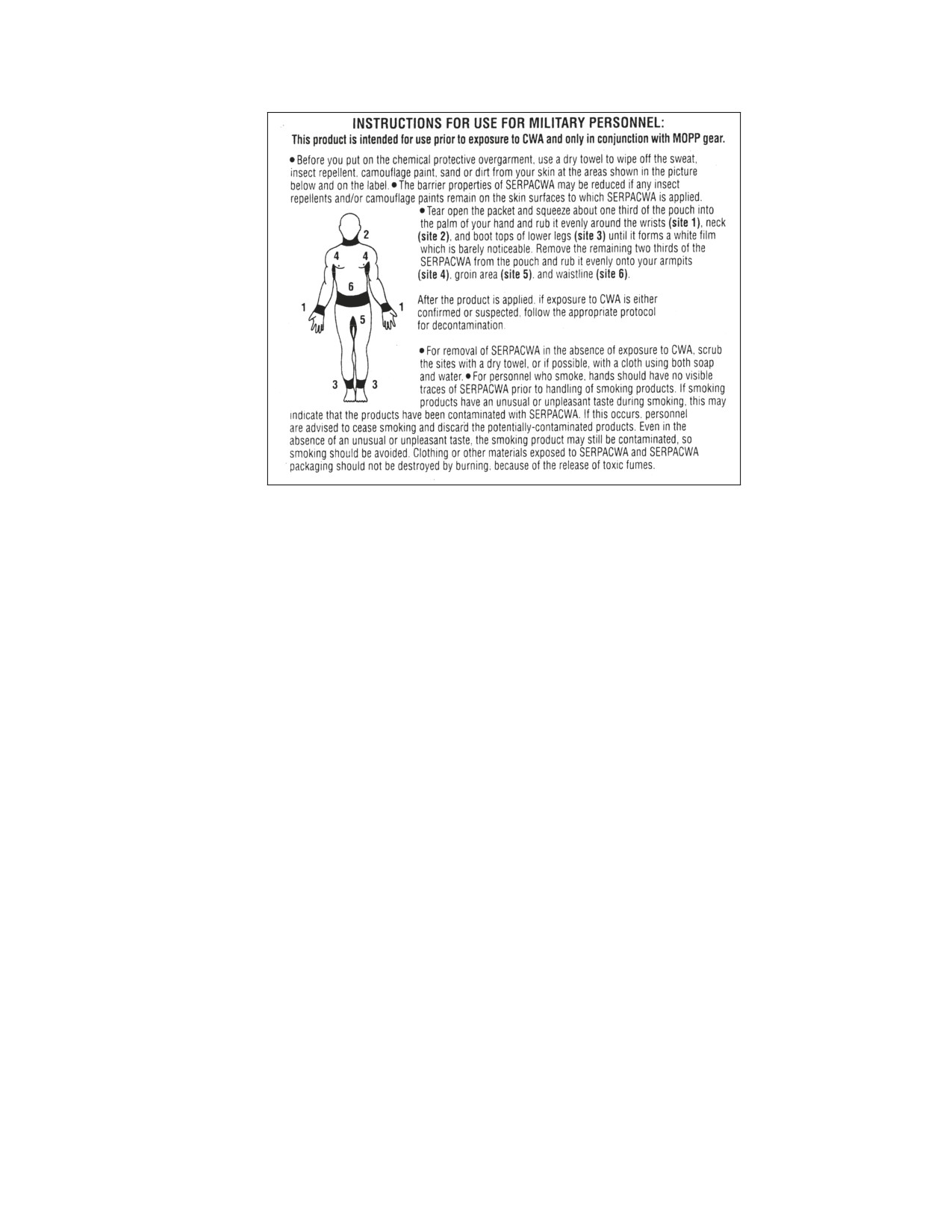
Figure D-2. Skin Exposure Reduction Paste Against Chemical Warfare
Agents Packet Back Label
f.
The commander will decide whether to begin, continue, or discontinue SERPACWA
use based on the threat. The intelligence officer, the chemical officer, and the surgeon act
as advisors to the commander in making the decision if a CW agent threat exists (for
example, the enemy having vesicants or nerve agents in the combat zone and the
probability of their use).
2. Application of Skin Exposure Reduction Paste Against Chemical Warfare
Agents
a. The effectiveness of SERPACWA is dependent on the thickness and integrity of the
SERPACWA layer and the length of time between application and agent exposure (wear
time).
b. Skin Surface Coverage. When applying SERPACWA to the skin, first priority should
be given to covering those areas adjacent to the closure or the battle dress overgarment
(BDO); the neck, wrists, and lower legs (areas around the top of the boots). Additional
SERPACWA may be applied to the armpits, groin area, creases and crack of the buttocks,
around the waist and back of knees since blister agents are more effective where there is
sweat. Do not apply SERPACWA to open wounds or remove bandages to apply
SERPACWA to these areas.
c. Thickness of Skin Exposure Reduction Paste Against Chemical Warfare Agent.
Under normal conditions, SERPACWA is effective when spread over the skin as a thin layer
(0.1 mm thickness or 0.01 ml/square cm). One packet of SERPACWA contains 1.35 fluid
ounces (about 2.7 weight ounces or 84 gm) for one application. A third of the packet should
cover the skin areas of neck, wrists, and lower legs (at boot tops). This amount of
SERPACWA will produce a smooth coating on the skin which is a barely visible cream color
and detectable by touch. The rest of the packet of SERPACWA may be applied to the
armpits, groin area, creases and crack of buttocks, and around the waist. Refer to Figure D-
2 for application areas.
D-2
FM 4-02.285/MCRP 4-11.1A/NTRP 4-02.22/AFTTP(I) 3-2.69
18 September 2007
d. Wear Time. Skin exposure reduction paste against chemical warfare agents, which
is not water soluble, cannot be washed off by water or removed by sweat without brushing
and scrubbing, but it may physically wear off with time. Abrasion of SERPACWA by clothing
or other contacts, such as sand or dirt, will reduce the wear time. Skin exposure reduction
paste against chemical warfare agents needs to be reapplied when the coating is generally
embedded with particulate matter (dirt or sand), or the sites are decontaminated, or after
eight hours on the skin. Normally, SERPACWA on the skin is effective for four hours in
preventing CW agents from penetrating and contacting the skin.
3. Use of Skin Exposure Reduction Paste Against Chemical Warfare Agents
with Other Nuclear, Biological, or Chemical Protective Material
a. Military M40 Protective Mask. Use of SERPACWA and the military protective mask
together does not require any change in doctrine on the use of the protective mask. Skin
exposure reduction paste against chemical warfare agents does not interfere with the
sealing capability of the protective mask. No loss of vision (such as eye irritation or fogging
on the mask lens) due to SERPACWA use is expected. Skin exposure reduction paste
against chemical warfare agents is odorless.
b. Battle Dress Overgarment/JSLIST. Use of SERPACWA should not reduce the
effectiveness of the BDO/JSLIST. Since it has no water content, it will not wet the
BDO/JSLIST.
c. Chemical Agent Detection Systems. Skin exposure reduction paste against
chemical warfare agents on the skin will not register a false alarm with the automatic
detectors (such as ICAM) and CW agent detector systems, such as M8 paper for G-nerve
agents or vesicants (SERPACWA must not be on the surface of M8 paper because it
prevents the CW agent from contacting the M8 paper).
d. M291 Skin Decontaminating Kits. The M291 SDKs are more effective when
SERPACWA is applied on the skin because it is easier to physically remove CW agents
from the SERPACWA layer than from the skin. Service members should perform skin
decontamination immediately after chemical contamination, as the effectiveness of
SERPACWA decreases with time.
e. Insect Repellent, 75 percent N,N-diethyl-meta-toluamide (DEET). Use of 75 percent
DEET on the skin, before or after SERPACWA application, will decrease the effectiveness of
the SERPACWA. Avoid applying DEET as much as possible on skin areas where
SERPACWA is to be applied.
(Skin exposure reduction paste against chemical warfare
agents can still provide significant protection by physically removing DEET from the skin
using a dry wipe
[towel, gauze, or clothing], not a wet wipe, before applying the
SERPACWA.)
4. Steps for Applying Skin Exposure Reduction Paste Against Chemical
Warfare Agents
a. When directed by your commander/leader, apply SERPACWA as follows:
(1) Remove the SERPACWA from your uniform pocket or rucksack.
(2) Wipe off sweat and remove all loose dirt or sand from your neck, hands, wrists,
and lower leg (at the boot tops). If applicable, remove insect repellent with a dry (must not
be wet) towel or gauze or any other available clean item. Dry your armpits, waistline,
creases and crack of buttocks, and groin area as much as possible.
18 September 2007 FM 4-02.285/MCRP 4-11.1A/NTRP 4-02.22/AFTTP(I) 3-2.69
D-3
(3) Tear open a SERPACWA packet. Place about a third of the SERPACWA from
the container into your hand.
(4) Rub and work SERPACWA into the neck (all surfaces from the back of the
hairline to the jaw line, then under the chin), to the lower legs (at the boot tops); using one
hand for each side; then to the wrists and back of the hands.
(5) Apply and work the remainder of the package contents to the groin area, all
creases and the crack of the buttock, and the waist (about 2-inch wide band around the
waist and the armpits).
(6) Rub and work excess SERPACWA, if any, evenly over areas where it has been
applied (in order: wrist, neck, and legs at boot top) and ensure an even distribution.
b. If the CW agent threat continues, reapplication of SERPACWA will be needed at the
following times:
(1) After decontamination of CW agent from the SERPACWA protected skin areas;
(2) After washing and brushing the SERPACWA protected areas;
(3) When the SERPACWA barrier becomes disturbed by embedded particulate
matter such as sand or dirt, or by rubbing with towel or clothing;
(4) After eight hours of continuous wear if mission permits; or
(5) At the direction of your commander/leader.
5. Removal of Skin Exposure Reduction Paste Against Chemical Warfare
Agents
Skin exposure reduction paste against chemical warfare agents can be removed by
brushing and scrubbing the skin areas with soap and water. This action may make the skin
more susceptible to subsequent chemical agent absorption by decreasing the integrity in
those areas.
Note: The protective overgarment will not be removed to apply additional layers of
SERPACWA when in a contaminated environment.
6. Detailed Procedures for Decontaminating the Eyes
a. Any suspected CW agent contamination of your eyes or face must be removed
immediately. In most cases, you will not be able to identify the agent before decontami-
nation. Quickly obtain overhead shelter to protect yourself while performing the following
decontamination process:
(1) Remove and open your canteen.
(2) Take a deep breath and hold it.
(3) Lift your mask away from your face. Do not take the mask off.
(4) Flush (irrigate) your eye or eyes immediately with copious amounts of water. To
irrigate the eyes with water (from a canteen or other container of uncontaminated water), tilt
your head to one side, open the eyelids as wide as possible, and slowly pour water into the
eye so that it will run off the side of your face to avoid spreading the contamination. Do not
use your fingers or gloved hand to hold the eyelids apart. Instead, open your eyes as wide
D-4
FM 4-02.285/MCRP 4-11.1A/NTRP 4-02.22/AFTTP(I) 3-2.69
18 September 2007
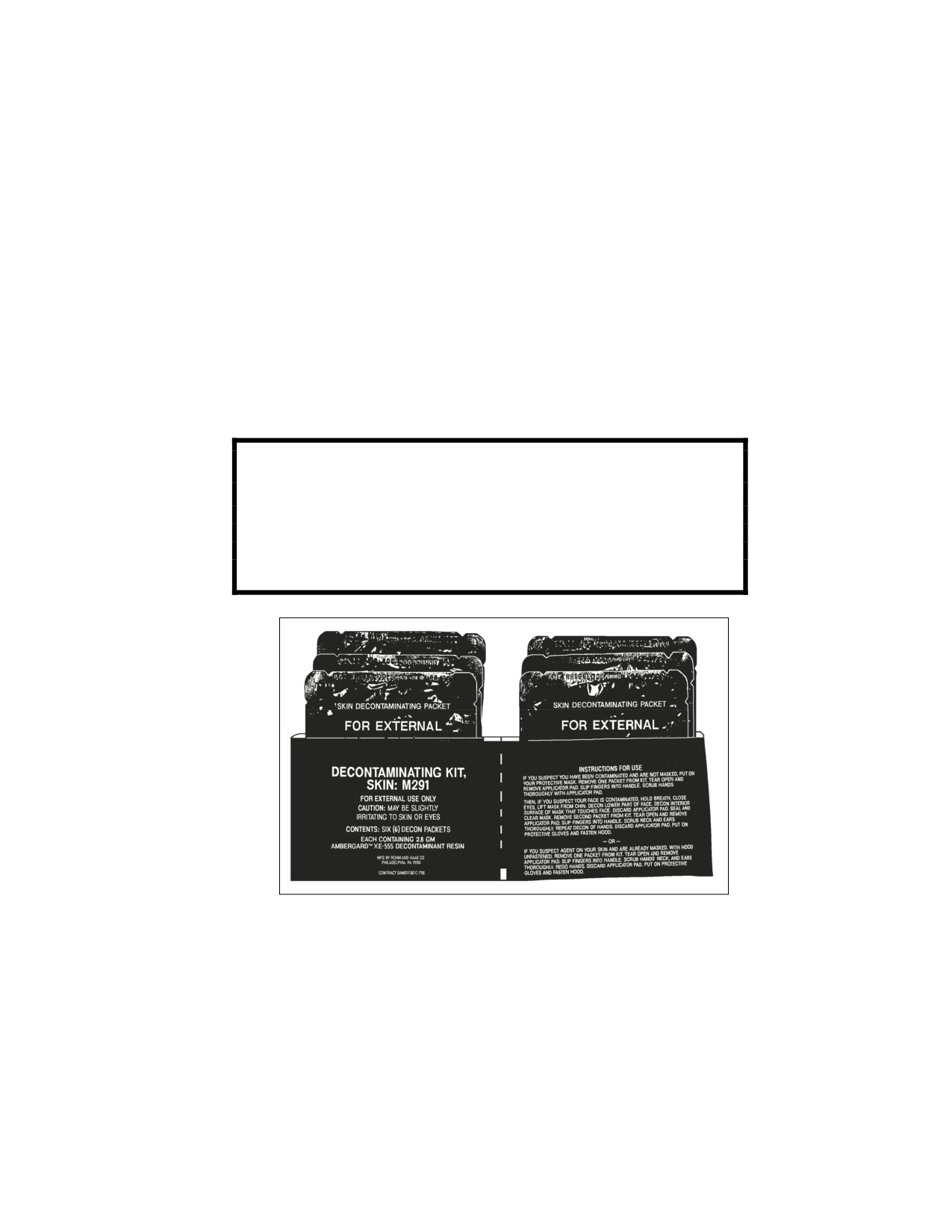
as possible and pour the water as indicated. You must irrigate your eyes despite the
presence of toxic vapors in the atmosphere. Hold your breath and keep your mouth closed
to prevent contamination and absorption through the mucous membranes. Neutralize CW
agent residue along the flush path on the face.
b. If the skin is contaminated while flushing your eyes, then decontaminate the face.
Follow the procedure outlined in paragraphs D-7 below.
7. Detailed Procedures for Decontaminating the Skin (Hands, Face, Neck,
Ears, and Other Exposed Areas) Using the M291 Skin Decontaminating Kit
a. The M291 SDK (Figure D-3) is provided to service members for skin decontami-
nation only. This kit may also be used if necessary to partially decontaminate selected
individual equipment, such as load-bearing equipment, protective gloves, mask, hood, and
weapon, but does not contain sufficient resin to guarantee decontamination. The M295
DKIE should be used for equipment decontamination if available.
•
•
WARNING
•
The M291 SDK is for external use only. Keep
decontaminating powder out of the eyes; it may be slightly
irritating to the eyes. Use water to wash toxic agent out of eyes.
You may also use a 0.5 percent hypochlorite solution, if available,
to wash CW agents out of cuts or wounds.
•
Figure D-3. The M291 Skin Decontaminating Kit
b. The detailed procedures for decontaminating the skin (hands, face, neck, ears, and
other exposed areas) using the M291 SDK are as follows:
(1) Put on your mask and hood. Do not zip the hood. Do not pull the draw strings.
Do not fasten the shoulder straps.
(2) Seek overhead cover or use a poncho for protection against further
contamination.
(3) Remove one skin decontaminating packet from the carrying pouch.
18 September 2007 FM 4-02.285/MCRP 4-11.1A/NTRP 4-02.22/AFTTP(I) 3-2.69
D-5
(4) Tear open quickly at notch. Although any notch may be used to open the packet,
opening at the tear line will place applicator pad in a position that is easier to use.
(5) Remove applicator pad from packet and discard empty packet.
(6) Unfold applicator pad and slip fingers into handle.
(7) Thoroughly scrub exposed skin on one hand (back of hand, palm, and fingers)
until completely covered with black powder from the applicator pad.
(8) Switch applicator pad to other hand and repeat procedures in step (7) above. Do
not discard the applicator pad at this time.
Notes: 1. If you were masked with the hood zipped and drawstring pulled tight
when you were contaminated, STOP. Discard the applicator pad, put on your
protective gloves and go to step (19) below. If, however, you were masked,
but the zipper and drawstring were not secured, go to step (14) below.
2. Procedure is the same regardless of protective mask type. Ignore
mention of hood when using the JSLIST suit, the hood is attached to the
jacket.
WARNING
Injury or death may result if you breathe CW agent while doing
step (9). If you need to breathe before you finish, reseal your
mask, clear and check it, get your breath, then resume the
decontaminating procedure.
(9) Thoroughly scrub exposed skin of the face until completely covered with black
powder from the applicator pad. In the absence of M291 SDK, soap and water may be used
as an alternative. Scrubbing with either the M291 or soap and water may make the skin
more susceptible to subsequent chemical agent absorption by decreasing the integrity in
those areas.
(a) Hold breath, close eyes, grasp mask beneath chin, and pull hood and mask
away from chin enough to allow one hand between the mask and your face. Hold mask in
this position during steps (b) through (f).
(b) Scrub up and down across the face beginning at front of one ear to nose to
other ear.
1. Scrub across face to corner of nose.
2. Scrub extra stroke at corner of nose.
3. Scrub across nose and tip of nose to other corner of nose.
4. Scrub extra stroke at corner of nose.
5. Scrub across face to other ear.
D-6
FM 4-02.285/MCRP 4-11.1A/NTRP 4-02.22/AFTTP(I) 3-2.69
18 September 2007
(c) Scrub up and down across face beginning where step (b) ended, to the
mouth and to the other end of jawbone.
1. Scrub across cheek to corner of mouth.
2. Scrub extra stroke at corner of mouth.
3. Scrub across closed mouth to center of upper lip.
4. Scrub extra stroke above upper lip.
5. Scrub across closed mouth to other corner of mouth.
6. Scrub extra stroke at corner of mouth.
7. Scrub across cheek to end of jawbone.
(d) Scrub up and down across face beginning where step (c) ended, to the chin
and to the other end of jawbone.
1. Scrub across the under jaw to chin, cupping chin.
2. Scrub extra stroke at center of chin.
3. Scrub across the under jaw to the end of the jawbone.
(e) Turn your hand out, and quickly wipe the inside of the mask that touches your
face.
(f) Discard applicator pad.
(g) Immediately seal mask, clear, and check it.
(10) Remove second skin decontaminating packet from carrying pouch.
(11) Tear open quickly at notch.
(12) Remove applicator pad from packet, and discard empty packet.
(13) Unfold applicator pad and slip finger(s) into handle.
(14) If you were already masked when you became contaminated and skipped steps
(9) through
(13), continue using the same applicator pad. Without breaking the seal
between the face and mask, thoroughly scrub skin of neck and ears until completely
covered with black powder.
(15) Redo hands until completely covered with black powder.
(16) Discard applicator pad.
(17) Put on your protective gloves.
(18) Fasten hood.
(19) Remove powder with soap and water when operational conditions permit. It
does not matter how long the powder stays on your skin.
(20) Used M291 SDK materials can become an off-gassing risk. Bury the used pads
and packets, if circumstance permit.
8. Reactive Skin Decontamination Lotion
a. A Joint Service Personnel Decontamination System that will soon replace the M291
is Reactive Skin Decontamination Lotion (RSDL). The RSDL is a liquid skin decontaminant
18 September 2007 FM 4-02.285/MCRP 4-11.1A/NTRP 4-02.22/AFTTP(I) 3-2.69
D-7