FM 4-02.285 MULTISERVICE TACTICS, TECHNIQUES, AND PROCEDURES FOR TREATMENT OF CHEMICAL AGENT CASUALTIES AND CONVENTIONAL MILITARY CHEMICAL INJURIES (SEPTEMBER 2007) - page 1
*FM 4-02.285
MCRP 4-11.1A
NTRP 4-02.22
AFTTP(I) 3-2.69
*FM 4-02.285 (FM 8-285)
Headquarters, Department of the Army
Washington, DC
MCRP 4-11.1A
Marine Corps Combat Development Command
Quantico, Virginia
NTRP 4-02.22
Navy Warfare Development Command
Newport, Rhode Island
AFTTP(I) 3-2.69
Headquarters, Air Force Doctrine Center
Maxwell Air Force Base, Alabama
18 September 2007
MULTISERVICE TACTICS, TECHNIQUES AND PROCEDURES
FOR
TREATMENT OF CHEMICAL AGENT CASUALTIES AND
CONVENTIONAL MILITARY CHEMICAL INJURIES
TABLE OF CONTENTS
Page
EXECUTIVE SUMMARY
xiii
CHAPTER I
CHEMICAL WARFARE AGENT CASUALTIES
I-1
The Threat of Chemical Warfare Agents to United States
Forces
I-1
Military Employment of Chemical Warfare Agents
I-2
Routes of Entry
I-2
Classification of Chemical Warfare Agents
I-2
Means of Delivery of Chemical Warfare Agents
I-3
Diagnosis of Injury from Chemical Warfare Agents
I-4
Protective Measures and Handling of Chemical Warfare
Agent Casualties
I-4
Chemical Warfare Agent Contamination Detection and
Identification
I-5
Medical Management
I-6
*This publication supersedes FM 8-285/NAVMED P-5041/AFJMAN 44-149/FMFM 11-11, 22 December 1995
DISTRIBUTION RESTRICTION: Approved for public release; distribution is unlimited
iv
FM 4-02.285/MCRP 4-11.1A/NTRP 4-02.22/AFTTP(I) 3-2.69
18 September 2007
Personal Decontamination
I-6
Casualty Decontamination
I-6
First Aid
I-6
Medical Treatment
I-7
Medical Evacuation
I-7
Individual Prescriptions
I-7
Medical Surveillance
I-8
CHAPTER II
LUNG-DAMAGING AGENTS (CHOKING AGENTS)
II-1
General
II-1
Central Pulmonary Agents
II-1
Peripheral Pulmonary Agents
II-2
Properties of Phosgene
II-4
CHAPTER III
NERVE AGENTS
III-1
General
III-1
Physical and Chemical Properties
III-1
Absorption of and Protection Against Nerve Agents
III-2
Effects of Nerve Agents
III-2
Clinical Presentation and Diagnosis of Nerve Agent
Poisoning
III-10
Prevention and Treatment of Nerve Agent Poisoning
III-11
Prevention of Poisoning
III-12
Effects of Nerve Agent Antidotes
III-12
Rate of Absorption
III-13
Symptoms Produced by Antidotes
III-13
Elements of Self-Aid and Buddy Aid
III-15
The Nerve Agent Antidote Kit, MARK I
III-16
Antidote Treatment, Nerve Agent, Autoinjector
III-17
Convulsant, Antidote for Nerve Agent, Autoinjector
III-18
Principles for the Use of the MARK I and Antidote
Treatment Nerve Agent Autoinjector
III-19
Principles for the Use of Convulsant, Antidote for Nerve
Agent
III-20
Treatment in a Medical Treatment Facility
III-21
Administration of Follow-on Medical Treatment
III-22
Medical Aerosolized Nerve Agent Antidote
III-23
Nerve Agent Pyridostigmine Bromide Pretreatment for
Soman Nerve Agent Poisoning
III-24
The Soman Nerve Agent Pyridostigmine Bromide
Preteatment Tablet Set
III-25
Effects of Pyridostigmine Bromide
III-27
Principles for the Use of Pyridostigmine Bromide
III-27
Administration of Pyridostigmine Bromide Pretreatment in
an Uncontaminated Environment
III-28
18 September 2007 FM 4-02.285/MCRP 4-11.1A/NTRP 4-02.22/AFTTP(I) 3-2.69
v
Signs and Symptoms of Pyridostigmine Bromide Overdose,
Adverse Reactions, and Contraindications
III-28
Emergency Medical Treatment for Pyridostigmine Bromide
Adverse Side Effects, Allergic Reactions, and Overdose
III-29
CHAPTER IV
CYANOGEN BLOOD AGENTS
IV-1
General
IV-1
Protection
IV-1
Pathology
IV-2
Symptoms
IV-2
Diagnosis
IV-3
Prognosis
IV-3
Self-Aid
IV-3
Buddy Aid
IV-4
Treatment
IV-4
CHAPTER V
BLISTER AGENTS (VESICANTS)
V-1
General
V-1
Self-Aid
V-2
Precautions for Receiving Casualties
V-2
Protection
V-2
Sulfur Mustard
V-2
Effects of Sulfur Mustard on the Eyes
V-3
Effects of Sulfur Mustard on the Skin
V-4
Effects of Sulfur Mustard on the Respiratory Tract
V-7
Systemic and Gastrointestinal Effects of Sulfur Mustard
V-8
Nitrogen Mustards
V-10
Arsenical Vesicants
V-10
Effects of Arsenical Vesicants on the Eyes
V-11
Effects of Arsenical Vesicants on the Skin
V-11
Effects of Arsenical Vesicants on the Respiratory Tract
V-12
Systemic Effects of Arsenical Vesicants
V-13
Phosgene Oximes
V-13
CHAPTER VI
INCAPACITATING AGENTS
VI-1
General
VI-1
Diagnosis
VI-2
Protection, Decontamination, and First Aid
VI-4
CHAPTER VII
RIOT CONTROL AGENTS (IRRITANT AGENTS
AND VOMITING AGENTS)
VII-1
Irritant Agents
VII-1
Protection
VII-1
Properties
VII-2
Effects
VII-2
Diagnosis
VII-3
Self-Aid
VII-3
vi
FM 4-02.285/MCRP 4-11.1A/NTRP 4-02.22/AFTTP(I) 3-2.69
18 September 2007
Treatment
VII-4
Prognosis
VII-4
Vomiting Agents
VII-4
Protection
VII-4
Properties
VII-4
Pathology
VII-5
Symptoms
VII-5
Diagnosis
VII-5
Self-Aid
VII-5
Treatment
VII-5
Prognosis
VII-5
CHAPTER VIII
SMOKES
VIII-1
General
VIII-1
Protection Against Smokes
VIII-2
Petroleum Oil Smokes
VIII-2
Zinc Oxide Mixtures
VIII-2
Sulfur Trioxide-Chlorosulfonic Acid
VIII-3
Titanium Tetrachloride
VIII-4
White Phosphorus Smoke
VIII-5
Red Phosphorus Smoke
VIII-5
Colored Smokes
VIII-5
CHAPTER IX
INCENDIARY AGENTS
IX-1
Types of Incendiary Agents
IX-1
Thermite
IX-1
Magnesium and Its Alloys
IX-1
White Phosphorus
IX-2
Combustible Hydrocarbon Incendiaries
IX-3
Flame Weapon Attack
IX-3
Firebomb Attack
IX-3
CHAPTER X
TOXIC INDUSTRIAL CHEMICALS
X-1
General
X-1
Protections
X-1
Acids
X-2
Ammonia
X-3
Carbon Monoxide
X-4
Chlorine
X-5
Ethylene Oxide
X-6
Hydrogen Flouride
X-8
Hydrogen Sulfide
X-9
Oxides of Nitrogen
X-11
Inorganic Phosphorus Compounds
X-12
18 September 2007 FM 4-02.285/MCRP 4-11.1A/NTRP 4-02.22/AFTTP(I) 3-2.69
vii
Organophosphorus Compounds
X-13
Sulfur Dioxide
X-15
Hazards Caused by Fire
X-16
APPENDIX A
RECOGNITION OF A CHEMICAL CASUALTY
A-1
General
A-1
Types of Casualties
A-1
Recognition of Chemical Casualties
A-2
APPENDIX B
CARE OF CONTAMINATED CLOTHING AND EQUIPMENT
AT MEDICAL TREATMENT FACILITIES
B-1
General
B-1
Disposition of Contaminated Clothing and Blankets
B-1
Replacement of Contaminated Blankets
B-1
The Chemical Protective Ensemble
B-2
Disposition of Contaminated Gloves and Chemical
Protective Overgarments
B-2
Impermeable Protective Clothing, Aprons, Gloves, and
Boots
B-3
Protective Masks, Web, Canvas, and Leather Equipment
B-3
Care of Litters
B-4
Verify Completeness of Decontamination
B-4
APPENDIX C
MEDICAL MANAGEMENT AND TREATMENT IN CHEMICAL
OPERATIONS
C-1
General
C-1
Objectives of Health Service Support in Chemical
Operations
C-1
Planning for the Management and Treatment of Chemically
Contaminated Casualties
C-2
Emergency Medical Treatment of Chemically Contaminated
Casualties
C-2
Casualty Decontamination Methods
C-3
Logistics
C-4
Training
C-4
Casualty Evacuation
C-5
APPENDIX D
INDIVIDUAL SKIN PROTECTION AND DECONTAMINATION
PROCEDURES
D-1
Use of Skin Exposure Reduction Paste Against Chemical
Warfare Agents
D-1
Application of Skin Exposure Reduction Paste Against
Chemical Warfare Agents
D-2
Use of Skin Exposure Reduction Paste Against Chemical
Warfare Agents with Other Nuclear, Biological, or
Chemical Protective Material
D-3
Steps for Applying Skin Exposure Reduction Paste Against
Chemical Warfare Agents
D-3
viii
FM 4-02.285/MCRP 4-11.1A/NTRP 4-02.22/AFTTP(I) 3-2.69
18 September 2007
Removal of Skin Exposure Reduction Paste Against
Chemical Warfare Agents
D-4
Detailed Procedures for Decontaminating the Eyes
D-4
Detailed Procedures for Decontaminating the Skin (Hands,
Face, Neck, Ears, and Other Exposed Areas) Using
the M291 Skin Decontaminating Kit
D-5
Reactive Skin Decontamination Lotion
D-7
Procedures for Decontaminating Individual Equipment
Using the M295 Kit
D-8
APPENDIX E
PROCEDURES FOR ADMINISTERING THE NERVE
AGENT ANTIDOTES
E-1
Injection Site
E-1
Self-Aid
E-1
APPENDIX F
CHEMICAL WARFARE AGENTS AND TOXIC
INDUSTRIAL CHEMICALS IMMEDIATE/EMERGENCY
TREATMENT READY REFERENCE
F-1
REFERENCES
..........................................................................................References-1
GLOSSARY
..............................................................................................Glossary-1
INDEX
....................................................................................................Index-1
FIGURES
Figure III-1. Autonomic Nervous System
III-5
Figure III-2. Pyridostigmine Bromide Tablet Cardboard
Sleeve Labels
III-26
Figure III-3. Pyridostigmine Bromide Blister Pack Front
and Back Label
III-26
Figure D-1. Skin Exposure Reduction Paste Against
Chemical Warfare Agents Packet Front Label
D-1
Figure D-2. Skin Exposure Reduction Paste Against
Chemical Warfare Agents Packet Back Label
D-2
Figure D-3. The M291 Skin Decontaminating Kit
D-5
Figure D-4. The M295 Decontaminating Packet, Individual
Equipment
D-9
Figure E-1. Nerve Agent Antidotes
E-1
Figure E-2. Thigh Injection Site
E-3
Figure E-3. Buttocks Injection Site
E-3
Figure E-4. Removing Atropine Autojector from Clip
E-3
Figure E-5. Self-Aid Thigh Injection
E-4
Figure E-6. Self-Aid Buttocks Injection
E-4
Figure E-7. Removing 2-PAM Cl Autoinjector from Clip
E-4
Figure E-8. One Set of Used Autoinjectors Attached to
Pocket Flap
E-5
Figure E-9. Preparing ATNAA or CANA for Injection
E-5
18 September 2007
FM 4-02.285/MCRP 4-11.1A/NTRP 4-02.22/AFTTP(I) 3-2.69
ix
Figure E-10. Used ATNAA Attached to Clothing
E-6
Figure E-11. Injecting the Casualty's Thigh
E-8
Figure E-12. Injecting the Casualty's Buttocks
E-9
Figure E-13. Three Sets of Used MARK I Autoinjectors and
One CANA Attached to Pocket Flap
E-9
Figure E-14. Three Used ATNAA Autoinjectors and One
CANA Autoinjector Attached to Clothing
E-10
TABLES
Table I-1. Summary of Chemical Agent Effects
I-9
Table III-1. Signs and Symptoms of Nerve Agent Poisoning
III-4
Table III-2. Time Course of Effects of Nerve Agents
III-8
Table VI-1. Signs and Symptoms Produced by
Incapacitating Agents
VI-3
Table E-1. Self-Aid for Nerve Agent Poisoning
E-2
Table E-2. Buddy Aid/Combat Lifesaver Aid for Nerve
Agent Casualty
E-7
Table F-1. Emergency Treatment Ready Reference
F-1
x
FM 4-02.285/MCRP 4-11.1A/NTRP 4-02.22/AFTTP(I) 3-2.69
18 September 2007
EXECUTIVE SUMMARY
Multiservice Tactics, Techniques, and Procedures
for
Treatment of Chemical Agent Casualties and Conventional
Military Chemical Injuries
Chapter I
Chemical Warfare Agent Casualties
Chapter I discusses the threat, military employment and classification of chemical warfare
agents.
Chapter II
Lung-Damaging Agents (Choking Agents)
Chapter II discusses protection, pathology, symptoms, diagnosis and treatment of lung
damaging agents.
Chapter III
Nerve Agents
Chapter III discusses effects, prevention, symptoms, diagnosis and treatment of nerve
agents.
Chapter IV
Cyanogen Blood Agents
Chapter IV discusses protection, pathology, symptoms, diagnosis and treatment of
cyanogen blood agents.
Chapter V
Blister Agents (Vesicants)
Chapter V discusses protection, properties, effects, symptoms and treatment of blister
agents.
Chapter VI
Incapacitating Agents
Chapter VI discusses diagnosis, protection and treatment of incapacitating agents.
18 September 2007 FM 4-02.285/MCRP 4-11.1A/NTRP 4-02.22/AFTTP(I) 3-2.69
xi
Chapter VII
Riot Control Agents (Irritant Agents and Vomiting Agents)
Chapter VII discusses protection, properties, effects, diagnosis and treatment of riot control
agents.
Chapter VIII
Smokes
Chapter VIII discusses properties, pathology, symptoms, and treatment of different types of
smokes.
Chapter IX
Incendiary Agents
Chapter IX discusses protection and treatment of different types of incendiary agents.
Chapter X
Toxic Industrial Chemicals
Chapter X discusses properties, pathology, symptoms, diagnosis and treatment of different
types of toxic industrial chemicals.
xii
FM 4-02.285/MCRP 4-11.1A/NTRP 4-02.22/AFTTP(I) 3-2.69
18 September 2007
PROGRAM PARTICIPANTS
The following commands and agencies participated in the development of this
publication:
Army
United States Army Office of The Surgeon General, 5111 Leesburg Pike, Ste. 401,
Falls Church, VA 22041-3258
United States Army Center for Health Promotion & Preventive Medicine, 5158
Blackhawk Road, Aberdeen Proving Ground, MD 21010-5403
United States Army Medical Research Institute of Infectious Diseases, 1425 Porter
Street, Frederick, MD 21702-5011
United States Army Medical Research Institute of Chemical Defense, 3100 Ricketts
Point Road, Aberdeen Proving Ground, MD 21010-5400
Marine Corps
United States Marine Corps Combat Development Command, ATTN: C42 (Director)
3300 Russell Road, Quantico, VA 22134-5001
Navy
United States Navy Warfare Development Command, ATTN: N5, 686 Cushing
Road, Newport, RI 02841-1207
Air Force
Headquarters Air Force Doctrine Center, ATTN: DR, 155 North Twining Street,
Maxwell AFB, AL 36112-6112
18 September 2007 FM 4-02.285/MCRP 4-11.1A/NTRP 4-02.22/AFTTP(I) 3-2.69
xiii
Chapter I
CHEMICAL WARFARE AGENT CASUALTIES
Given the probability that a significant number of Gulf War veterans may have
been exposed to low levels of sarin and cyclosarin during and after the war, and
recent research findings indicating that low-level sarin exposures can result in
chronic health sequelae, the Committee concludes that low-level exposure to
chemical agents must be thoroughly investigated as a potential contributing
cause of the multisymptom illnesses affecting Gulf War veterans, and that it is
important that the precise mechanisms of chronic adverse effects of low-dose
exposures be identified.
Research Advisory Committee on Gulf War Veterans’ Illnesses
2004 Report and Recommendations
It is believed that the use of chemical weapons dates back several centuries.
However, the use of modern chemical weapons has its origins in World War I.
Chemical gas (actually an aerosol or vapor) was used effectively on numerous
occasions by both sides during this conflict to alter the outcome of battles.
Chemical battlefield casualties were sustained. The Geneva Protocol, prohibiting
use of chemical weapons in warfare, was subsequently proposed and signed in
1925. The United States, along with several other nations, signed with the
stipulation that it will refrain only from the first use of chemical weapons, but
reserves the right to retaliate in kind if chemical weapons were used against them
(the United States did not ratify the Protocol until 1975).
1. The Threat of Chemical Warfare Agents to United States Forces
a. Chemical warfare agents remain a significant and continuing HSS threat to US
forces. Chemical weapons delivery may be accomplished through conventional or non-
conventional means, causing extensive injury and contamination. Collateral damage to
enemy storage facilities and/or destruction of their munitions by “friendly forces,” such
as, bombs, artillery fire, or destruction of industrial facilities can release TICs.
Traditionally, enemy commanders have regarded CW agents as a part of their
conventional arsenal. The Chemical Weapons Convention (CWC), which banned the
use of CW agents and was signed by 175 countries/states as of October 2005, will take
many years to fully implement. The CWC was opened for signature on 13 January
1993. In accordance with Article XVIII of the CWC, the signature period ended on 28
April 1997, the day before the CWC entered into force. Countries/states that signed the
CWC during this period (the “Signatory States”) must also ratify it through their standard
national processes; countries/states that did not sign during this period, but now wish to
become States Parties to the CWC, must accede to it. Not all countries have signed the
CWC. In spite of the CWC and other diplomatic efforts, CW agents will be available to
threat forces in regions where US forces may be deployed.
b. Chemical warfare agents are readily obtainable. The ease of obtaining these
weapons greatly increases the complexity and extent of the total threat. For example,
nonmilitary organophosphate insecticide factories may also be used to produce nerve
18 September 2007 FM 4-02.285/MCRP 4-11.1A/NTRP 4-02.22/AFTTP(I) 3-2.69
I-1
agents. Chemical warfare agents are most effectively employed against untrained or
unprotected targets. Civilian fixed sites
(airfields, depots, cities, and ports) are
especially vulnerable and may be targeted as part of a plan to defeat US force
projection. Chemical warfare agents can also be encountered in a variety of situations
off the battlefield.
2. Military Employment of Chemical Warfare Agents
a. Chemical warfare agents dispersed by modern weapons can be tactically used
anywhere within the range of current delivery systems. Chemical warfare agents can be
used in conjunction with other weapons systems or by themselves. These agents may
produce temporary incapacitating effects, serious injury, or death. Chemical warfare
agents also have the potential for use by saboteurs and terrorists in rear areas against
key targets and civilian populations. The scope of CW agents is broad since they target
groups rather than individuals and could be directed against civilian populations. Vapors
of CW agents may penetrate vehicles, ships, aircraft, fortifications, and buildings.
Special design of such equipment and/or structures can prevent CW agent penetration.
b. The presence or threat of CW agent operations can create psychological and
physiological problems, adversely affect morale, and reduce military or civilian efficiency.
Chemical weapons may be employed with smoke. Therefore, friendly forces must be
prepared for chemical attacks when the enemy is employing smoke munitions or
production equipment.
c. All service members must take every precaution against becoming chemical
casualties. Service members must apply the principles of first aid and chemical
decontamination contained in this manual to protect themselves and increase their
patients’ chances for survival and recovery. Medical personnel must apply the principles
of first aid, treatment, and decontamination contained in this manual to increase their
patients’ and their chances of survival.
3. Routes of Entry
Chemical warfare agents may enter the body by several routes. When inhaled,
gases, vapors, and aerosols may be absorbed by the respiratory tract. Absorption may
occur through the mucosa of the upper and lower airway to include the nose, mouth,
throat and/or the alveoli of the lungs. Liquid droplets and solid particles can be absorbed
by the surface of the skin, eyes, and mucous membranes. Chemical agents that
contaminate food and drink can be absorbed through the gastrointestinal tract. Wounds
or abrasions are presumed to be more susceptible to absorption than the intact skin.
Additional factors which affect absorption include occlusion of contaminated skin and
warm and moist environments.
4. Classification of Chemical Warfare Agents
Chemical warfare agents are classified by either their physiological action or their
military use.
a. Physiological Action.
(1) Lung-damaging agents (choking agents) include phosgene (CG), diphosgene
(DP), chlorine, and chloropicrin (PS). These agents produce injury to the lungs and
irritation of the eyes and the respiratory tract. They may also cause noncardiogenic
pulmonary edema and predispose to secondary pneumonia.
I-2
FM 4-02.285/MCRP 4-11.1A/NTRP 4-02.22/AFTTP(I) 3-2.69
18 September 2007
(2) Nerve agents (anticholinesterases), such as tabun (GA), sarin (GB), soman
(GD), cyclosarin (GF), and V-agents (for example, O-ethyl methyl phosphonothiolate
[VX]), inhibit the cholinesterase enzymes. The cholinesterase enzymes hydrolyze
acetylcholine, a chemical neurotransmitter. Inhibition of those enzymes creates an
accumulation of acetylcholine at cholinergic synapses that results in an over stimulation
of nerve impulses, causing cholinergic crisis. Cholinergic receptors are located—
• In the central nervous system (CNS).
• In the neuromuscular endplates of the peripheral voluntary nervous system.
• At the parasympathetic endings and sympathetic presynaptic ganglia of the
autonomic nervous system.
• On smooth muscle of the gastrointestinal tract.
• On smooth muscle of the respiratory tract.
(3) Cyanogen (blood) agents include hydrogen cyanide (AC) and cyanogen
chloride (CK). These agents are transported by the blood to all body tissues, where they
block the oxidative processes, preventing tissue cells from utilizing oxygen. The CNS is
especially sensitive to this anoxia and toxicity with these agents leads to cessation of
respiration followed by cardiovascular collapse.
(4) Blister agents (vesicants) include sulfur mustard (HD), nitrogen mustard (HN),
arsenicals such as Lewisite (L), and phosgene oxime (CX) (technically an urticant).
Blister agents produce pain and injury to the eyes, reddening and blistering of the skin,
and when inhaled, damage to the mucous membranes and respiratory tract. These
agents may produce major destruction of the epidermal layer of the skin.
(5) Incapacitants are chemicals designed to temporarily disable an individual, but
they do not cause permanent injury or death. Although a variety of different types of
chemicals are classified as incapacitants, predominant among these are chemicals with
anticholinergic properties that block the effect of acetylcholine on receptor sites and at
neuronal synapses. As a result, symptoms are exactly the opposite one would see with
nerve agents and include erythema, decreased salivation, urinary retention, mydriasis
(dilation of the pupils with decreased visual acuity), hyperthermia, and mental status
changes.
b. Military Use.
(1) Toxic CW agents produce serious injury or death. They include lung-
damaging agents (choking agents), nerve agents, cyanogen (blood) agents, and blister
agents.
(2) Incapacitating agents produce temporary physical or mental effects or both.
5. Means of Delivery of Chemical Warfare Agents
Chemical warfare agents can be dispersed by explosive shells, rockets, missiles,
aircraft bombs, mines, spray devices and through industrial accident and sabotage.
Water supplies have the potential for contamination by either water-soluble or miscible
liquids or solids, although effective concentrations are difficult to maintain. The means of
delivery does not in itself help in identifying CW agents. A spray or cloud delivered from
an aircraft or by shells and bombs may indicate that a chemical attack is taking place.
Vapors delivered from aircraft may not be visible and vapors and sprays may be hidden
by atmospheric conditions.
18 September 2007 FM 4-02.285/MCRP 4-11.1A/NTRP 4-02.22/AFTTP(I) 3-2.69
I-3
6. Diagnosis of Injury from Chemical Warfare Agents
a. Odor. Some agents have odors which may aid in their detection and
identification (Table I-1), but many are essentially odorless. The odor of a CW agent
delivered by an explosive shell may be concealed by the odor of the burning explosive.
Odor alone must not be relied on for detection or identification of a CW agent. Some
CW agents are not perceptible by smell even on initial exposure. Continued exposure
dulls the sense of smell. Even harmful concentrations of an odor-producing CW agent
may become imperceptible. Standard detection devices are the most reliable means of
identifying a CW agent, but may be specific to a given state (such as vapor but not
liquid, or vice versa) and may indicate agent presence in their immediate area only.
They may not cover large areas and thus should not be the sole means on which to
base conclusions on the presence or absence of CW agents.
b. Observations for Signs and Symptoms. These include the following:
• A brief history eliciting symptoms and their progression.
• Physical examination of the eyes (pupils, conjunctivae, and lids) and skin.
• Observation of respiration, color of mucous membranes, and general behavior.
If a mixture of agents has been used, identification of the specific agents used may not
be possible. Signs and symptoms are summarized in Table I-1. Full descriptions of the
signs and symptoms produced by specific CW agents are given in the following
chapters.
7. Protective Measures and Handling of Chemical Warfare Agent Casualties
a. Mission-oriented protective posture (MOPP) (consisting of wearing the protective
overgarment, mask and hood, gloves, and overboots [MOPP Level 4], unless otherwise
directed by command to resume a reduced protective posture [MOPP Levels 0-3]), will
be assumed immediately—
(1) When the local alarm or command is given.
(2) When entering an area known to be or suspected of being contaminated with
a CBRN agent.
(3) During any troop movement, once CW agent use has been suspected.
(4) When casualties are being received from an area where CW agents have
reportedly been used. Appendix A provides additional information on recognizing CW
agent casualties.
(5) The mask should be put on immediately upon detection of a CW agent odor
and worn until detection procedures indicate the air is free of CW agent and the “all
clear” signal is given by authorized personnel (see FM 3-11.4/Marine Corps Warfighting
Publication
[MCWP] 3-37.2/Navy Tactics, Techniques, and Procedures
[NTTP]
3
11.27/Air Force Tactics, Techniques, and Procedures [Interservice] [AFTTP(I)] 3-2.46 for
masking and unmasking procedures).
b. It is the responsibility of all individuals to decontaminate themselves or to
decontaminate other personnel in their unit. Contaminated casualties may arrive at an
MTF, presenting a hazard to unprotected personnel. Handlers must wear their individual
protective equipment (IPE) or appropriate MOPP level while handling these casualties.
A patient decontamination area should be located downwind
(prevailing winds) of
I-4
FM 4-02.285/MCRP 4-11.1A/NTRP 4-02.22/AFTTP(I) 3-2.69
18 September 2007
designated MTFs. Contaminated clothing and equipment are placed in plastic bags and
removed to a designated dumpsite downwind from the MTF (see Appendices B and C).
c. Handling chemically contaminated patients presents a great challenge to HSS
units. The vapor hazard associated with contaminated patients may require HSS
personnel to remain at MOPP 4 for long periods; therefore, HSS personnel must locate
clean areas to set up their MTF. The MTF should operate in a contaminated
environment only until HSS personnel have the time and means to move to a clean area.
When an MTF is expected to operate in a contaminated area, collective protective
shelters (CPSs) must be used (see Appendix C).
d. Military commanders, leaders, and medical personnel should be on the alert for
the possibility of anxiety reactions (combat and operational stress reactions [COSR])
among personnel during CW agent attacks. All possible steps must be taken to prevent
or control anxiety situations.
e. Personnel in protective clothing are particularly susceptible to heat injury.
Ambient temperature is considered when determining the degree of physical activity
feasible in protective clothing.
Wet bulb globe temperature
(WBGT) index
determinations (which indicate heat stress conditions in the environment) should be
used with caution since the humidity within the protective ensemble will generally be
higher than the ambient humidity. At MOPP 4 add 10° Fahrenheit (F), (-12.2° Celsius
[C]) to the WBGT index. See FM 3-11.4/MCWP 3-37.2/NTTP 3-11.27/AFTTP(I) 3-2.46
for additional guidance on the degradation effects of the protective clothing.
f.
Military commanders, leaders, and medical personnel should be on the alert for
unexposed personnel self-administering antidotes. Administration of atropine without
exposure to nerve agents can stop the individual's ability to perspire, resulting in
potentially severe heat injury.
8. Chemical Warfare Agent Contamination Detection and Identification
Identification of CW agents will greatly assist in the diagnosis and treatment of
chemical injuries. Chemical warfare agent detector paper or tape can be used to
detect/identify liquid chemical agents. The following are means of detecting and
identifying chemical agent contamination:
a. The M8 Chemical Agent Detector Paper can be used to detect and identify liquid
V- and G-type nerve agents and H-type blister agents. It does not detect CW agent
vapors. Some solvents and standard decontaminating solutions cause false-positive
reactions on the M8 paper.
b. The M9 Chemical Agent Detector Paper (tape), which can be worn on the
uniform, detects the presence of liquid nerve agents (V and G) and blister agents (HD,
HN, and L). The M9 tape does not distinguish between the types of agent; it signifies
merely the presence of an agent. Neither will it detect CW agent vapors. Extremely
high temperatures, scratches on the tape, or certain organic liquids cause M9 tape false-
positive reactions.
c. Automatic CW agent alarm systems and the improved chemical agent monitor
(ICAM) detect agent aerosol and vapor contamination consistent with their designed
specifications and operational limitations.
d. Detector kits (such as the M256 Chemical Agent Detector Kit) detect and identify
vapor concentrations of nerve, blister, and cyanogen agents.
18 September 2007 FM 4-02.285/MCRP 4-11.1A/NTRP 4-02.22/AFTTP(I) 3-2.69
I-5
9. Medical Management
Medical management consists of those procedures for optimizing medical care to
ensure the maximum return to duty (RTD) on the battlefield. This includes triage, basic
medical treatment, decontamination, emergency medical treatment (EMT), advanced
trauma management
(ATM), evacuation, and continuing protection of CW agent
casualties (Appendix C).
10. Personal Decontamination
When an individual becomes contaminated with a CW agent, personal
decontamination must be carried out immediately. For those individuals who cannot
decontaminate themselves, the nearest able person should assist them as the situation
permits. Decontamination consists of either agent removal and/or neutralization; agent
removal is preferred. Refer to Appendix D for decontamination procedures.
11. Casualty Decontamination
Contaminated casualties entering the medical treatment system are decontaminated
through a decentralized process. Units decontaminate the casualty before evacuation,
that is, if patient status, situation, and time permit, immediate decontamination of the
casualty should be accomplished (mission, enemy, terrain and weather, troops and
support available, time available, and civil considerations
[METT-TC] dependent);
operational decontamination should also be accomplished.
Patient decontamination
stations are established at all roles of care to decontaminate individuals as required prior
to entry into collective protection. Medical supervision is required to prevent further
injury to the casualty and to provide EMT during the decontamination process. There
are insufficient medical personnel to both decontaminate and treat patients. Medical
personnel will be fully employed providing treatment for the patients during and after
decontamination. Nonmedical augmentees are usually required to perform patient
decontamination while supervised by medical personnel.
Decontamination is
accomplished as quickly as possible to facilitate medical treatment, prevent the patient
from absorbing additional agent, and reduce the spread of chemical contamination.
12. First Aid
a. First aid is comprised of self-aid, buddy aid, or aid provided by those nonmedical
personnel trained as combat lifesavers (Army).
b. Self-Aid. Self-aid consists of measures that service members can apply in
helping themselves. These include individual decontamination, administration of
antidotes (only for nerve agent exposure), and assumption of the appropriate MOPP
level.
c. Buddy Aid. Buddy aid consists of emergency actions to restore or maintain vital
body functions in a casualty who cannot administer self-aid. Mental confusion, muscular
incoordination, physical collapse, unconsciousness, and cessation of breathing may
occur so rapidly that the individual is incapable of providing self-aid. Therefore, the
nearest individual may need to follow these steps in order:
(1) Mask the casualty, if not already masked.
(2) Administer antidotes (only for nerve agent exposure).
(3) Decontaminate the casualty.
I-6
FM 4-02.285/MCRP 4-11.1A/NTRP 4-02.22/AFTTP(I) 3-2.69
18 September 2007
(4) Put remaining protective clothing on the casualty to preclude further
absorption of contamination through any exposed skin.
(5) Evacuate the casualty as soon as possible.
d. Combat Lifesaver. In addition to those actions taken as buddy aid, combat
lifesaver aid also includes—
(1) Administering additional atropine.
(2) Administering additional convulsant antidote for nerve agent (CANA).
(3) Placement of an oropharyngeal airway.
(4) Starting intravenous (IV) infusions.
13. Medical Treatment
Medical treatment consists of those procedures undertaken to return injured or ill
service members to duty, to save life and limb, and to stabilize the patient for evacuation
to the next level of medical care. Specific CW agent treatment procedures are described
in the ensuing chapters.
14. Medical Evacuation
a. Casualties requiring evacuation should be decontaminated, if possible, before
evacuation. For more information on levels of decontamination see FM 3-11.5/MCWP 3
37.3/NTTP
3-11.26/AFTTP(I)
3-2.60. In many instances, the casualty must be
evacuated to the first role of care before complete decontamination. Ground
ambulances are the preferred means to evacuate the casualties in contaminated forward
areas, when feasible. This does not mean that rotary-wing medical evacuation aircraft
should not be used. When used, the number of assets committed to evacuation within
the contaminated area should be limited; once contaminated, the same evacuation
assets should be repeatedly used in the contaminated area until all casualties have been
evacuated.
b. During mass casualty situations, commanders may be required to employ
nonmedical vehicles/aircraft for casualty evacuation (CASEVAC). En route care is not
available for CASEVAC. If medical personnel augmentation is available, limited en route
care may be available.
c. For detailed information on medical evacuation see Joint Publication (JP) 4-02,
FM 8-10-6 (FM 4-02.2), and FM 4-02.7.
15. Individual Prescriptions
a. All Force Health Protection Prescription Products (FHPPP) will be issued under a
prescription by qualified personnel who have been instructed on exclusion criteria and
other medical guidance applicable to the product. A blanket prescription may be issued
by a physician serving as the Assistant Secretary of Defense (Health Affairs) (ASD[HA]),
the Surgeon Generals of the Army, Navy, or Air Force, The Medical Officer, US Marine
Corps, or the command surgeon of a combatant command (COCOM). Although the
inclusive list of FHPPP may vary between areas of responsibility based on differing
threats, examples of such products include atropine/2-pralidoxime chloride (2-PAM C1)
autoinjectors; certain antimicrobials, including antimalarials; and pyridostigmine bromide
(PB). The provision or issuance of FHPPP shall be documented in medical records of all
18 September 2007 FM 4-02.285/MCRP 4-11.1A/NTRP 4-02.22/AFTTP(I) 3-2.69
I-7
personnel or other individuals receiving the FHPPP. For more information, refer to
ASD(HA) policy memorandum 03-007, dated 24 April 2003.
b. Investigational New Drugs and Off-Label Indications
(1) Department of Defense Directive (DODD) 6200.2 directs that when, there is
the need for a HSS countermeasure against a particular threat and no safe and effective
Food and Drug Administration- (FDA-) approved drug or biological product is available,
the DOD components may request approval of the Secretary of Defense to use an
investigational new drug (IND). Such requests must be justified based on available
evidence of the safety and efficacy of the drug and the nature and degree of the threat to
personnel.
(2) When using INDs for HSS, the DOD components will comply with United
States Code Title 10 (Subtitle A, Part II, Chapter 55, Section 1107), Executive Order
13139, and applicable FDA regulations.
(3) The Secretary of the Army, as Executive Agent, and in concert with the
COCOM commander involved and the ASD(HA), will develop a specific treatment
protocol for the use of the IND. The protocol will provide for the prior informed consent
of service members receiving the IND. Under Title 10, only the President may grant a
waiver of informed consent to use an IND for HSS in connection with service members’
participation in particular military operations and only the Secretary of Defense may
request that the President grant such a waiver.
(4) When using an IND for HSS, the DOD components will—
(a) Inform persons receiving the drug or biological product that it is an IND.
(b) Explain the reason the IND is being used.
(c) Provide information regarding the possible side effects of the IND.
(d) Ensure that medical records of personnel receiving the IND are
accurately documented.
(5) Health care providers and those in leadership positions will participate in
ongoing training and health risk communication in the administration of INDs.
16. Medical Surveillance
All personnel who have been deployed are subject to postdeployment health
assessments according to DOD and component service guidance. In the event that
personnel have been exposed to chemical agents, including TICs, during deployed
operations, they will be afforded additional postdeployment aftercare treatment and
evaluation as indicated. For more information on postdeployment health assessment
process, see DODI 6490.03.
I-8
FM 4-02.285/MCRP 4-11.1A/NTRP 4-02.22/AFTTP(I) 3-2.69
18 September 2007
Chapter II
LUNG-DAMAGING AGENTS (CHOKING AGENTS)
There are several types of munitions and other delivery systems that contain
substances intended to injure or kill or incapacitate personnel or to deny access or
use of area, facilities and materials. One distinguishes between harassing agents,
incapacitating agents and casualty or lethal agents. The latter are highly toxic man-
made substances which are dispersed in liquid or gas form. They include choking
agents like chlorine and phosgene . . .
United Nations Office on Drugs and Crime
The chemical agents preferred in World War I have lost much of their destructive
utility since the invention of newer chemical agents, to include nerve and choking
agents. Phosgene is a common industrial chemical that serves as a moderately lethal
choking agent that can be easily obtained. Choking agents inflict injury mainly on
the respiratory tract including the nose, throat, and especially the lungs. Victims
typically inhale these agents, which can all lead to pulmonary edema and respiratory
failure.
1. General
a. Chemical agents that primarily cause pulmonary edema by attacking lung tissue
have traditionally been classified as lung-damaging agents (choking agents) or pulmonary
edematogenic agents. They include CG, DP, chlorine, and PS. Best known of these agents
is CG. There are also numerous TICs or products of combustion that pose a primary threat
similar to lung-damaging agents. Smokes are covered in Chapter VIII and TICs, including
chlorine and oxides of nitrogen (NOx), are covered in Chapter X.
b. Agents causing pulmonary edema by damaging capillary endothelia in alveolar septa
are also called peripheral pulmonary agents because they affect the peripheral compartment
(those airways distal to the terminal bronchioles). Central pulmonary agents are compounds
that irritate and damage the central airways. The terms lung-damaging agents, choking
agents, and respiratory irritants are sometimes ambiguous and are not as specific as the
terms centrally acting pulmonary agents and peripherally acting pulmonary agents
(pulmonary edematogenic agents). Pure central and pure peripheral effects represent two
ends of a spectrum; some agents, such as chlorine, exhibit central and peripheral effects in
roughly equal proportions. Most pulmonary agents in high doses will affect both the central
and peripheral compartments.
2. Central Pulmonary Agents
a. The central compartment, or tracheobronchial region, of the respiratory tract can be
defined physiologically as that portion of the airways in which bulk air flow—flow with
appreciable velocity—occurs. This includes the trachea, bronchi, and bronchioles down to
the level of respiratory bronchioles.
b. These agents tend to be very soluble in water and other aqueous media and very
chemically reactive. They dissolve in and react with the first moist tissue they encounter, the
tissue of the central compartment. At low doses, they may be essentially consumed by
18 September 2007 FM 4-02.285/MCRP 4-11.1A/NTRP 4-02.22/AFTTP(I) 3-2.69
II-1
dissolving into and reacting with tissue in the central compartment; at high doses, they can
reach the peripheral compartment as well.
c. Strong acids and bases such as hydrogen chloride, hydrogen fluoride, acetic acid,
and ammonia (NH3) act as central agents. Agents that are intermediate in solubility and
reactivity tend to affect both central and peripheral compartments relatively equally. Sulfur
mustard, even though officially classified as a vesicant, can be regarded as the prototypical
central pulmonary CW agent.
d. Pathophysiology. After dissolving in aqueous solutions, central pulmonary agents
typically act as acids and damage or kill the delicate epithelial cells that line the airways of
the central compartment. The necrotic epithelium may slough off and can occlude airways.
Alternately, the epithelium may be released in membrane-like sheets. These sheets are not
true membranes but rather pseudomembranes (of the type seen in diphtheria) and they can
also obstruct airways. Effects on the peripheral airways may be seen with central
pulmonary agents, but chiefly at high doses. At these doses, the generation of oxygen free
radicals may predominate over release of hydrogen ions.
e. Clinical presentation. Identification of a particular CW agent is important mainly as a
means of predicting, identifying, and managing central versus peripheral pulmonary
damage. Central pulmonary agents produce irritation (a symptom) of the airways and
sounds indicative of airway dysfunction (a sign). The clinical hallmark of central damage to
the central compartment is characteristic airway sounds. Casualties may cough, sneeze,
become hoarse, exhibit inspiratory stridor, or develop coarse rhonchi or wheezing. In
severe cases, irritation may lead to obstruction of the airway from reactive laryngospasm.
For most central pulmonary agents, airway irritation and sounds occur relatively soon after
exposure, although these effects may be delayed with slowly dissolving but extremely
reactive agents such as HD.
f.
Management. Management should be primarily focused on the type of damage to
the airway rather than on the agent since agents in different doses may produce only one
kind of effect or both kinds of effects. Treatment of central pulmonary damage involves
administration of warm, moist oxygen, treatment of bronchoconstriction with bronchodilators
in the case of irritative bronchospasm or in those with underlying reactive airways, and
removal of necrotic debris by percussion, postural drainage, and, if available, bronchoscopy.
Administration of supplemental oxygen is recommended, especially in cases in which the
estimated inhaled dose raises the suspicion of eventual peripheral compartment effects in
addition to central compartment effects.
3. Peripheral Pulmonary Agents
a. The peripheral compartment, or gas-exchange region, of the respiratory tract can be
defined physiologically as that portion of the airways in which bulk air flow is absent during
each breath. This comprises the respiratory bronchioles, alveolar ducts, alveolar sacs, and
alveoli, that is, the portion of the respiratory tract distal to the terminal bronchioles.
b. Peripheral pulmonary agents tend to be relatively insoluble in water and other
aqueous media and are chemically unreactive. At high doses, both compartments of the
airway can be affected either by a central or a peripheral pulmonary agent.
c. The World War I agents CG and DP are relatively insoluble, chemically unreactive,
and exhibit peripheral effects at low to moderate concentrations. Perfluoroisobutylene
(PFIB)
(a high-temperature combustion product of polytetrafluoroethylene or Teflon®);
isocyanates; NOx; and hexachloroethane, grained aluminum, and zinc oxide (HC) smoke
II-2
FM 4-02.285/MCRP 4-11.1A/NTRP 4-02.22/AFTTP(I) 3-2.69
18 September 2007
also exhibit peripheral effects. Chloropicrin, chlorine, chloramines, and to some extent
ozone are intermediate in aqueous solubility and chemical reactivity and tend to produce
central and peripheral effects in roughly equal proportions. Lewisite has irritative central
effects similar to those of HD but also damages pulmonary endothelial cells and leads to
peripheral compartment effects as well. Phosgene can be regarded as the prototypical
peripheral pulmonary CW agent.
d. Pathophysiology. Peripheral pulmonary damage is characterized by reactions of
carbonyl groups (as in CG) with tissue in the endothelial cells lining pulmonary capillaries.
These capillaries begin to leak fluid into the normally thin alveolar septa separating the
capillaries from the alveolar spaces, and the septa expand from the influx of fluid. Fluid
eventually seeps into the alveoli, tracks up respiratory and terminal bronchioles, and may
spill over into even large bronchi. The term for this type of effect is
“noncardiogenic
pulmonary edema,” or
“dry-land drowning”; peripherally acting pulmonary agents are,
therefore, often called pulmonary edematogenic agents. At high doses, other reactions,
such as liberation of hydrogen ions, can also cause irritation and damage to tissue in the
central compartment. Oxides of nitrogen and HC smoke appear to have an additional
immunological component leading in many cases to apparent recovery of acute effects
followed by extensive and in some cases irreversible pulmonary fibrosis
(cryptogenic
organizing pneumonia).
e. Clinical presentation. Identification of a particular CW agent is important mainly as a
means of predicting, identifying, and managing central versus peripheral damage. The
clinical hallmark of damage to the peripheral compartment is dyspnea (shortness of breath),
which results from fluid expansion of alveolar septa. This dyspnea usually occurs only after
an hours-long clinically asymptomatic period that is inversely proportional to dose, and it can
be brought on earlier by exertion. Because the hallmark of peripheral pulmonary damage is
a symptom (delayed dyspnea) rather than a sign (airway sounds), the absence of abnormal
signs on clinical examination should not be used to exclude damage to the peripheral
compartment; neither should the initial absence of dyspnea. Irritation may be absent or so
mild that victims of low doses may not be aware of being poisoned. With higher doses,
initial irritation may present as coughing or sneezing; however, these signs usually subside
after several minutes at most. Thus, disappearance of initial signs of irritation should not be
used to exclude peripheral pulmonary damage. Eventually, crackles, decrease in arterial
oxygen saturation, radiological indications of pulmonary edema, and dullness to percussion
will be evident, but diagnosis before the occurrence of these relatively late signs is crucial.
Most patients who survive the episode of pulmonary edema will recover without sequelae,
but those exposed to NOx or HC smoke are at risk of late-onset pulmonary fibrosis heralded
by cough, fever, chills, dyspnea, cyanosis, and radiological evidence of cryptogenic
organizing pneumonia.
f.
Management. Management should be primarily focused on the type of damage to
the airway rather than on the agent since agents in different doses may produce only one
kind of effect or both kinds of effects. Management includes enforced rest (exertion leads to
earlier appearance of effects and more severe effects), administration of supplemental
oxygen, observation of clinically asymptomatic individuals, early evacuation of victims with
relatively early-onset symptoms or with a significant likelihood of developing early-onset
symptoms, and treatment of pulmonary edema in a pulmonary-intensive-care-unit setting.
Antibiotics should not be used prophylactically, but should be reserved for treatment of
infections with culture-positive organisms. Bronchodilators and other treatments for central
compartment effects may be used as clinically indicated since high doses of peripheral
pulmonary agents may also produce central effects; however, pulmonary edema by itself is
18 September 2007
FM 4-02.285/MCRP 4-11.1A/NTRP 4-02.22/AFTTP(I) 3-2.69
II-3
not a usual indication for bronchodilator therapy. Steroids have not proven beneficial in
most cases of agent-induced pulmonary edema. Nevertheless, their use in cases of
poisoning by NOx or HC smoke should be considered since these agents appear capable of
inducing late-onset pulmonary fibrosis by immunological means.
g. Protection. The protective mask or a collective protection system gives protection
against military lung-damaging agents. High concentrations of certain lung-damaging
industrial chemicals (such as ammonia [NH3] and carbon monoxide [CO]) may defeat the
filters of the field protective mask.
4. Properties of Phosgene
a. Phosgene is the prototypical peripherally acting pulmonary agent and the one with
the most extensive battlefield history. At ordinary temperatures and atmospheric pressure,
CG is a colorless gas. The boiling point of CG is 47°F (8.3°C), and it is extremely volatile
making it a nonpersistent chemical agent. The vapor density of CG is 3.4 times that of air.
Phosgene may remain for long periods of time in trenches and other low-lying areas. In low
concentrations, CG has a smell that some have likened to that of newly mown hay.
Phosgene is readily soluble in organic solvents and fatty oils. In water, CG is rapidly
hydrolyzed with the formation of hydrochloric acid and carbon dioxide.
b. Pathology. Aside from mild conjunctival irritation with moderate doses, the direct
effects of exposure to CG are confined to the lungs. Changes in other organs are
secondary to the pulmonary alterations. The outstanding feature of severe CG poisoning is
massive pulmonary edema. The trachea and large bronchi are usually normal in
appearance, although with higher doses, damage to bronchiolar epithelium may be seen in
association with patchy areas of emphysema. This contrasts with the findings in chlorine
and PS poisoning in which not only is pulmonary edema present, but both the trachea and
the large bronchi may show serious damage to the epithelial lining with desquamation. The
lungs are large, edematous, and darkly congested. Edema fluid (usually frothy) pours from
the bronchi and may be seen escaping from the mouth and nostrils. With exposure to very
high concentrations, death may occur within several hours. In most fatal cases, pulmonary
edema reaches a maximum in 12 hours, followed by death in 24 to 48 hours. If the victim
survives, resolution commences within
48 hours, and in the absence of complicating
infection, there may be little or no residual damage. This contrasts with exposure to NOx
and HC smoke, either of which can result in apparent recovery for two to five weeks followed
by cough, dyspnea, and radiological and pathological evidence of pulmonary fibrosis
(cryptogenic organizing pneumonia).
c. Symptoms. During and immediately after exposure, there may either be no
symptoms at all or, at moderate to high doses, coughing, choking, a feeling of tightness in
the chest, nausea, occasionally vomiting, headache, and lacrimation. The presence or
absence of these symptoms is of little value in immediate prognosis since some patients
with severe coughing fail to develop serious lung injury, while others with little sign of early
respiratory tract irritation develop fatal pulmonary edema. Nevertheless, the appearance of
severe coughing should always raise the suspicion of a high inhaled dose of agent. There
may be an initial slowing of the pulse, followed by an increase in rate. A period follows
during which abnormal chest signs are absent and the patient may be symptom-free. This
interval commonly lasts 2 to 24 hours but may be shorter. The larger the dose, the sooner
the symptoms will appear; onset of dyspnea (shortness of breath) within four hours of
exposure is usually a grave prognostic indicator. The clinically asymptomatic phase is
replaced by signs and symptoms of pulmonary edema, beginning with dyspnea (the clinical
hallmark of incipient pulmonary edema), cough (occasionally substernally painful), rapid
II-4
FM 4-02.285/MCRP 4-11.1A/NTRP 4-02.22/AFTTP(I) 3-2.69
18 September 2007
shallow breathing, and cyanosis. Nausea and vomiting may appear. As edema progresses,
discomfort, apprehension, and dyspnea increase and frothy sputum develops. Rales and
rhonchi are audible over the chest and breath sounds are diminished. The patient may
develop shock-like symptoms, with pale, clammy skin, low blood pressure, and a feeble,
rapid heartbeat.
d. Diagnosis. Irritation of the nose and throat by CG may be mistaken for upper
respiratory tract infection. Difficulty in breathing and complaint of tightness of the chest may
suggest nerve agent poisoning or an acute asthmatic attack. Noncardiogenic pulmonary
edema is similar to that produced by other agents and may be confused with the edema
associated with heart failure. Diagnosis can only be established with certainty from a
definite history of exposure to CG. A high index of suspicion and the early generation of a
presumptive clinical diagnosis of possible CG exposure may mean the difference between
life and death for a victim.
e. Prognosis. During the acute phase, prognosis should be guarded because of the
progressive nature of the effects. The most important prognostic indicator is the length of
the latent, or clinically asymptomatic, period. Victims with dyspnea occurring within the first
four hours of exposure may well be expectant. Exertion after exposure will worsen the
prognosis. Most deaths occur within the first 48 hours. The few that occur later are due
largely to bronchopneumonia. Casualties from CG who survive more than 48 hours usually
recover without sequelae. Exposure to CG rarely results in the development of chronic
bronchitis and bronchiectasis. Long-term pulmonary effects are generally the result of
intercurrent infection or other exposures.
f.
Self-Aid.
(1) The protective mask should be put on immediately when any of the conditions
described in Chapter I, paragraph 7a exist. Other indications of a CG attack are—
(a) Odor like newly mown hay.
(Do not rely upon odor as an indication of a
chemical attack.)
(b) Irritation of the eyes.
(2) The victim should be evaluated by medical staff familiar with the presentation of
noncardiogenic pulmonary edema. Victims with no initial difficulty breathing may still
become fatalities and, if there is reason to suspect significant CG exposure, affected
Soldiers should be kept at rest, evaluated, and promptly evacuated if the operational
situation permits.
(3) If potentially affected service members develop dyspnea (shortness of breath)
either on exertion or at rest, they should be evaluated clinically as soon as possible. In the
event of a suspected CW agent release, clinical judgment should be made concerning the
likelihood of exposure to CG and the inhaled dose (taking into account that higher doses
produce shorter latent periods). Those service members who are at high likelihood of
exposure should be kept at rest, observed, and promptly evacuated even if they are not yet
clinically symptomatic.
g. Treatment.
(1) Rest and Warmth. A casualty with potentially significant unprotected exposure
to a lung-damaging agent should be kept at rest until the danger of pulmonary edema is
past, if the operational situation permits. Tightness of the chest and coughing should be
treated with immediate rest and comfortable warmth. The casualty should be evacuated in
18 September 2007
FM 4-02.285/MCRP 4-11.1A/NTRP 4-02.22/AFTTP(I) 3-2.69
II-5
a semiseated position if dyspnea or orthopnea make a supine posture impractical.
Evacuation by litter in cases of significant respiratory involvement is strongly advised.
(2) Sedation. Sedation should be used sparingly. Codeine in doses of 30 to 60
milligrams (mg) may be effective for cough. Restlessness may be a manifestation of
hypoxia; therefore, only cautious use of sedatives is advised. Use of sedatives should be
withheld until adequate oxygenation is assured and facilities for possible respiratory
assistance are available. Barbiturates, atropine, analeptics, and antihistamines are all
contraindicated.
(3) Oxygen. Hypoxemia may be controlled by oxygen supplementation. Early
administration of positive airway pressure (intermittent positive pressure breathing [IPPB],
continuous positive airway pressure [CPAP] mask, positive end-expiratory pressure [PEEP]
mask, or, if necessary, intubation with or without a ventilator) may delay and/or minimize the
pulmonary edema and reduce the degree of hypoxemia.
(4) Antibiotics. Antimicrobial therapy should be reserved for cases complicated by
suspected bacterial bronchitis/pneumonitis modified by culture results if available.
Prophylactic therapy is not indicated.
(5) Steroids. After exposure to a sufficiently high dose of CG or similar agent,
pulmonary edema will follow. Steroids have been demonstrated to be useful for treatment of
NOx and HC smoke. When steroid treatment is initiated within a very short time of the
exposure, this therapy may lessen the severity of the edema. Rest, warmth, sedation, and
oxygen are also of great importance. Steroid dosage requirements are much greater than
those used to treat asthma. Two regimes are used: one using dexamethasone-sodium
phosphate and the other using beclomethasone dipropionate or betamethasone valerate. In
either case, treatment should be started as soon as possible, ideally within 15 minutes of
exposure.
(a) Using dexamethasone-sodium phosphate:
• Treatment should start at the earliest possible moment with the inhalation of
the steroid from an inhaler. This must be done in a CW agent vapor-free environment.
Treatment may be required for five days or longer.
• Systemic steroids should be administered according to a tapering-dose
regimen. Beginning with day six, the dose of systemic steroids should be reduced as soon
as possible, provided that the chest radiograph remains clear. If further early systemic
treatment is necessary, epinephrine
(adrenaline) may be given in the acute stage of
bronchial spasm and oxygen may be necessary. Treatment of severe cases is very difficult
because of tissue damage. Absolute rest and administration of oxygen are fundamental.
Expectorants may also be used. Bronchopneumonia is treated by antibiotics.
(b) Using beclomethasone dipropionate or betamethasone valerate, the
procedure is as follows: (The differences occur due to the various absorption characteristics
of these steroids. Limited systemic therapy is necessary, even for precautionary treatment.)
• Treatment should commence as soon as possible with the inhalation of the
steroid from an inhaler. Inhalational therapy is considered necessary for at least five days.
Systemic therapy will be required as a precautionary treatment, during the first 24 hours
and should commence as soon as possible with the intravenous injection of 20 mg of
betamethasone or the equivalent dose of another systemic steroid. This dose should be
repeated intravenously or intramuscularly for at least the first 24 hours. During the next five
days, inhalation therapy should be continued but systemic therapy may be reduced based
on clinical response and improvement on chest radiographs.
II-6
FM 4-02.285/MCRP 4-11.1A/NTRP 4-02.22/AFTTP(I) 3-2.69
18 September 2007
• Pulmonary fibrosis is typical of damage caused only by NOx and HC smoke.
Definitive treatment may call for longer periods of systemic therapy. Prednisolone,
betamethasone, and methylprednisolone are preferred to other steroids for systemic use,
as there is evidence that these steroids do not interfere with collagen metabolism.
Antibiotic coverage should be considered with these high doses of steroids in patients
predisposed to pulmonary infections. Side effects of high steroid dosages should be
accepted provided they do not themselves endanger life. Any indication of pulmonary
fibrosis will necessitate antifibrotic treatment.
h. Convalescent Care. Absolute rest must be continued until the acute symptoms have
disappeared. Individuals must be closely monitored for signs of recovering from the acute
effects of the CG poisoning. When the acute symptoms disappear, individuals should be
encouraged to resume physical exertion as soon as possible.
18 September 2007
FM 4-02.285/MCRP 4-11.1A/NTRP 4-02.22/AFTTP(I) 3-2.69
II-7
This page intentionally left blank.
Chapter III
NERVE AGENTS
In September 1947, weapons of mass destruction were defined in a Security Council
document as
“atomic explosive weapons, radioactive material weapons, lethal
chemical and biological weapons, and any weapons developed in the future which
have characteristics comparable in destructive effect to those of the atomic bomb or
other weapons mentioned above.”
World Health Organization, 10 Weapons of Mass Destruction
Majority of the nerve agents belong to a group of chemicals called
“organophosphates.” The first formulation of organophosphates was believed to
have been developed in 1854 to be used as pesticides. The first nerve agent
developed for military use was called “Tabun” or “GA,” and was manufactured in
Germany in 1936. Another nerve agent, “Sarin” or “GB,” was made in 1938 and
“Soman” or “GD” was made in 1944. Although there has been no definitive proof
that these nerve agents were used by the Germans during World War II, records
indicate that several tons of both Tabun and Sarin were discovered in that country. In
the 1950s, England produced another nerve agent called, phosphonothiolate or “VX.”
1. General
a. Nerve agents are a group of highly toxic organophosphorous compounds. They are
similar in action to organophosphate insecticides but are more potent, longer-acting, and
tend to be irreversible after a time that varies with the agent.
b. Nerve agents are among the deadliest of CW agents and may produce symptoms
rapidly. They include the G- and V-agents. Examples of G-agents are GA, GB, GD, and
GF. A V-agent is VX. (Detailed descriptions of nerve agents are found in FM 3-11.9/MCRP
3-37.1B/NTRP 3-11.32/AFTTP(I) 3-2.55).
c. Nerve agents can be dispersed by artillery shell, mortar shell, rocket, land mine,
missile, aircraft spray, aircraft bomb or bomblet, or through passive evaporation as noted in
the Tokyo subway attack.
d. Several related but somewhat less toxic compounds have proven to be useful in
medicine and agriculture. For example, carbamates are among the most popular pesticides
for home use. Carbaryl is perhaps the best known and most applied carbamate pesticide,
used primarily for lawns and gardens.
2. Physical and Chemical Properties
Nerve agents are colorless to light brown liquids. Some are volatile, while others are
relatively nonvolatile at room temperature. Most nerve agents are odorless; a few have a
faint fruity odor. Aqueous solutions of nerve agents are tasteless. The G-agents tend to be
nonpersistent, whereas the V-agents are persistent. Thickening substances may be added
to nonpersistent agents, reducing volatility and allowing these mixtures to remain in the
environment for extended periods of time.
18 September 2007 FM 4-02.285/MCRP 4-11.1A/NTRP 4-02.22/AFTTP(I) 3-2.69
III-1
3. Absorption of and Protection Against Nerve Agents
a. Nerve agents may be absorbed through any body surface. When dispersed as a
spray or aerosol, droplets can be absorbed through the skin, eyes, and respiratory tract.
When dispersed as a vapor, it is primarily absorbed through the respiratory tract. If enough
agent is absorbed, local effects are followed by generalized systemic effects. The rapidity
with which effects occur is directly related to the amount of agent absorbed in a given period
of time. Liquid nerve agents may be absorbed through the skin, eyes, mouth, and
membranes of the nose. Nerve agents may also be absorbed through the gastrointestinal
tract when ingested with food or water. Skin exposure produces localized sweating and/or
muscular twitching (fasciculation). The local ocular effects from liquid exposure to the eye
are similar to miosis and often, conjunctival hyperemia. Effects of liquid on mucous
membranes include twitching or contracting of the underlying muscle and glandular
secretions. The respiratory tract
(inhalation) is the most rapid and effective route of
absorption.
b. The protective mask and hood protect the face and neck, eyes, mouth, and
respiratory tract against nerve agent spray, vapor, and aerosol. Nerve agent vapor is
absorbed through the skin very slowly, so proper masking may provide some protection
against the effects of low vapor concentrations. To prevent inhaling an incapacitating or
lethal dose, one should stop breathing immediately and don the mask within nine seconds at
the first warning of a nerve agent presence.
c. Liquid nerve agents rapidly penetrate ordinary clothing. Although absorption through
the skin usually requires at least several minutes (and for low doses this may take up to 18
hours), the process begins almost immediately after contact with the liquid agent. The
effects may be reduced by quickly removing contaminated clothing and neutralizing liquid
nerve agent on the skin (washed off, adsorbed through blotting, or wiped away). Prompt
decontamination of the skin is imperative. Decontamination of nerve agents on the skin
within one minute after exposure is ten times more effective than if delayed five minutes.
Nerve agent on the skin can be removed effectively by using a skin decontaminating kit
(SDK) such as the M291 SDK (see Appendix D). Liquid nerve agent in the eye is absorbed
faster than on the skin; contaminated eyes should be immediately irrigated with copious
amounts of saline or uncontaminated water.
d. The MOPP ensemble (chemical protective overgarment, impermeable protective
gloves, and overboots) and the patient protective wrap (PPW) protect the skin against nerve
agents in liquid, aerosol, and vapor forms. The protective capability of the MOPP ensemble
is enhanced by use of the skin exposure reduction paste against chemical warfare agents
(SERPACWA). See Appendix D for discussion on the use of SERPACWA.
4. Effects of Nerve Agents
a. Mechanism of Action.
(1) Nerve agents (Table III-1) inhibit cholinesterase enzymes throughout the body.
Since the normal function of these enzymes is to hydrolyze acetylcholine, such inhibition
results in the accumulation of excessive concentrations of acetylcholine at its various sites
of action. These include the synapses of the autonomic nerves to the smooth muscle of the
iris, ciliary body, bronchial tree, gastrointestinal tract, bladder, and blood vessels; to the
salivary glands and secretory glands of the gastrointestinal tract and respiratory tract; and to
the cardiac muscle and synapses of sympathetic nerves to the sweat glands (Figure III-1).
III-2
FM 4-02.285/MCRP 4-11.1A/NTRP 4-02.22/AFTTP(I) 3-2.69
18 September 2007
(2) Accumulation of acetylcholine at these sites results in characteristic signs and
symptoms (Table III-1) at muscarinic receptors in smooth muscle and glands. The
accumulation of acetylcholine at the endings of motor nerves to voluntary muscles and in
some autonomic ganglia results in nicotinic signs and symptoms (Table III-1). Finally,
accumulation of excessive acetylcholine in the brain and spinal cord results in characteristic
CNS symptoms (Table III-1). The total picture of signs and symptoms so produced is called
cholinergic crisis. The inhibition of cholinesterase enzymes by nerve agents may be
irreversible and the effects prolonged; therefore, treatment should begin promptly. Until the
tissue cholinesterase enzymes are restored to normal activity, which may take months, there
is a theoretical period of increased susceptibility to the effects of another exposure to any
nerve agent and the effects of repeated exposures are cumulative.
18 September 2007 FM 4-02.285/MCRP 4-11.1A/NTRP 4-02.22/AFTTP(I) 3-2.69
III-3
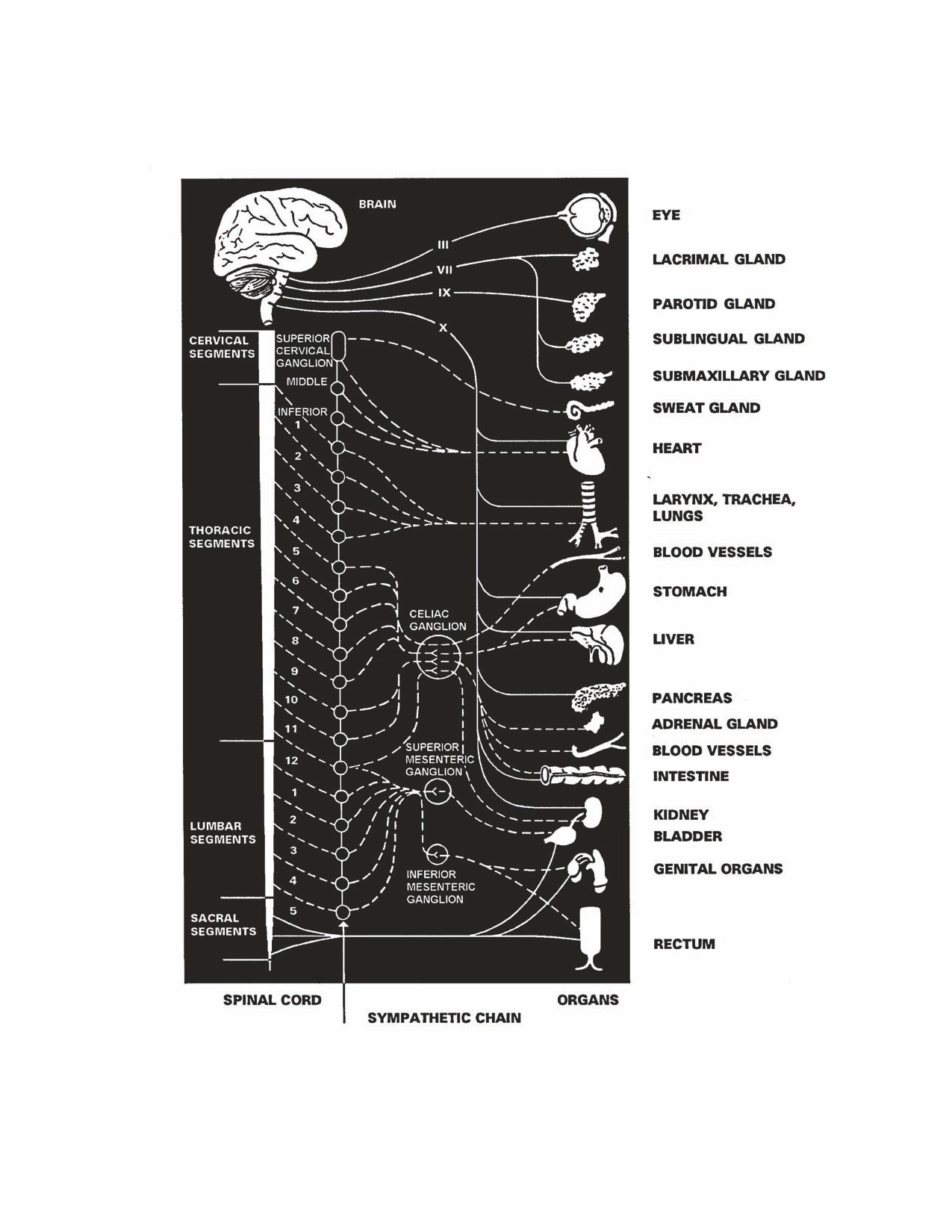
Figure III-1. Autonomic Nervous System
18 September 2007 FM 4-02.285/MCRP 4-11.1A/NTRP 4-02.22/AFTTP(I) 3-2.69
III-5
b. Pathology. Aside from the decrease in the activity of cholinesterase enzymes
throughout the body (this decrease may be analyzed by laboratory methods), no specific
lesions are detectable by ordinary gross examination. At postmortem examination, there is
usually capillary dilation, hyperemia, and edema of the lungs; there may be similar changes
in the brain and the remaining organs. Neuropathologic changes have been reported in
animals following severe intoxication.
c. Effects of Vapor. The airways and the eyes absorb nerve agents rapidly. Results
include miosis (contraction of the pupil), bronchial constriction, and excessive secretions in
the upper and lower airways. High vapor exposures lead to rapid absorption of agent from
the lungs into the general circulation; widespread systemic effects may appear in less than
one minute.
(1) Local ocular effects. These effects begin within seconds or minutes after
exposure and before there is any evidence of systemic absorption. Miosis is an invariable
sign of ocular exposure to enough vapor to produce other symptoms. It is also the last
ocular manifestation to disappear and may persist for up to weeks to months. The pupillary
constriction may be different in each eye. Within a few minutes of exposure, there may be
reddening of the eyes due to conjunctival hyperemia; the casualty may also experience a
sensation of pressure with heaviness in and behind the eyes. Usually vision is not grossly
impaired, although the casualty may complain of dim or dark vision.
(This may be from less
light entering the eye, but in cases with systemic distribution of agent, may also be
secondary to direct effects of nerve agent on the brain.) Exposure to a low level results in
miosis; pain in and behind the eyes (attributable to ciliary spasm), especially on focusing;
some difficulty of accommodation; and frontal headache. Some twitching of the eyelids may
occur. Occasionally there is nausea and vomiting which, in the absence of systemic
absorption, may be due to a reflex initiated by the ocular effects. These local effects may
result in moderate discomfort and some loss of efficiency, but may not necessarily produce
casualties. The conjunctival erythema, eye pain, and headache may last from 2 to 15 days
depending on the dose; paralysis of accommodation can persist for weeks to months.
(2) Local respiratory effects. Earliest effects on the respiratory tract are watery nasal
discharge, nasal hyperemia, sensation of tightness in the chest, and occasionally, prolonged
wheezing expiration suggestive of bronchoconstriction, or increased bronchial secretion.
Rhinorrhea usually lasts for several hours after minimal exposure and for about one day
after more severe exposure. Respiratory symptoms may last hours to days.
(3) Systemic effects. The sequence of symptoms varies with the route of exposure.
While respiratory symptoms are generally the first to appear after inhalation of nerve agent
vapor, these effects are more properly considered local effects of nerve agents on exposed
respiratory epithelium and musculature. Systemic manifestations are similar after any
exposure to nerve agent poisoning by any route. If local ocular exposure has not occurred,
the ocular manifestations (including miosis) initially may be absent. The signs, symptoms,
and their time course following exposure to nerve agent are given in Table III-2. The
systemic effects may be considered to be nicotinic, muscarinic, or due to any action at
receptors within the CNS. The predominance of muscarinic, nicotinic, or CNS effects will
influence the amount of atropine, oxime, or anticonvulsant which must be given as therapy.
These effects will be considered separately.
(4) Muscarinic effects. A sensation of chest tightness is an early local symptom of
respiratory exposure. This symptom increases as the nerve agent is absorbed into the
systemic circulation, regardless of the route of exposure. After severe exposure, excessive
bronchial and upper airway secretions occur and may become very profuse, causing
III-6
FM 4-02.285/MCRP 4-11.1A/NTRP 4-02.22/AFTTP(I) 3-2.69
18 September 2007
coughing, airway obstruction, and respiratory distress. Audible wheezing may occur, with
prolonged expiration and difficulty in moving air into and out of the lungs, due to the
increased bronchial secretions, bronchoconstriction, or both. Some pain may occur in the
lower thorax and salivation increases. Secretions may be thick, sticky, and persistent. If
postural drainage or suction is not employed, these secretions may add to the airway
obstruction. Laryngospasm and collapse of the airway musculature may also obstruct the
airway. The casualty may gasp for breath, froth at the mouth, and become cyanotic. If the
upper airway becomes obstructed by secretions, laryngospasm, or collapse of the airway
musculature, or if the bronchial tree becomes obstructed by secretions or
bronchoconstriction, little ventilation may occur despite respiratory movements. As
hypoxemia and cyanosis increase, the casualty will collapse and lose consciousness.
Following inhalation of nerve agent vapor, the respiratory manifestations predominate over
the other muscarinic effects; they are likely to be most severe in older casualties and in
those with a history of respiratory disease, particularly bronchial asthma. If the exposure is
not so overwhelming as to cause death within a few minutes, other muscarinic effects
appear. These include sweating, anorexia, nausea, and epigastric and substernal tightness
with heartburn and eructation (belching). Abdominal cramps, profuse sweating, vomiting,
diarrhea, tenesmus, increased lacrimation, and urinary incontinence may occur.
Cardiovascular effects may include early bradycardia, transient tachycardia and/or
hypertension followed by hypotension and cardiac arrhythmias. The casualty may go into
cardiorespiratory arrest and die.
18 September 2007 FM 4-02.285/MCRP 4-11.1A/NTRP 4-02.22/AFTTP(I) 3-2.69
III-7
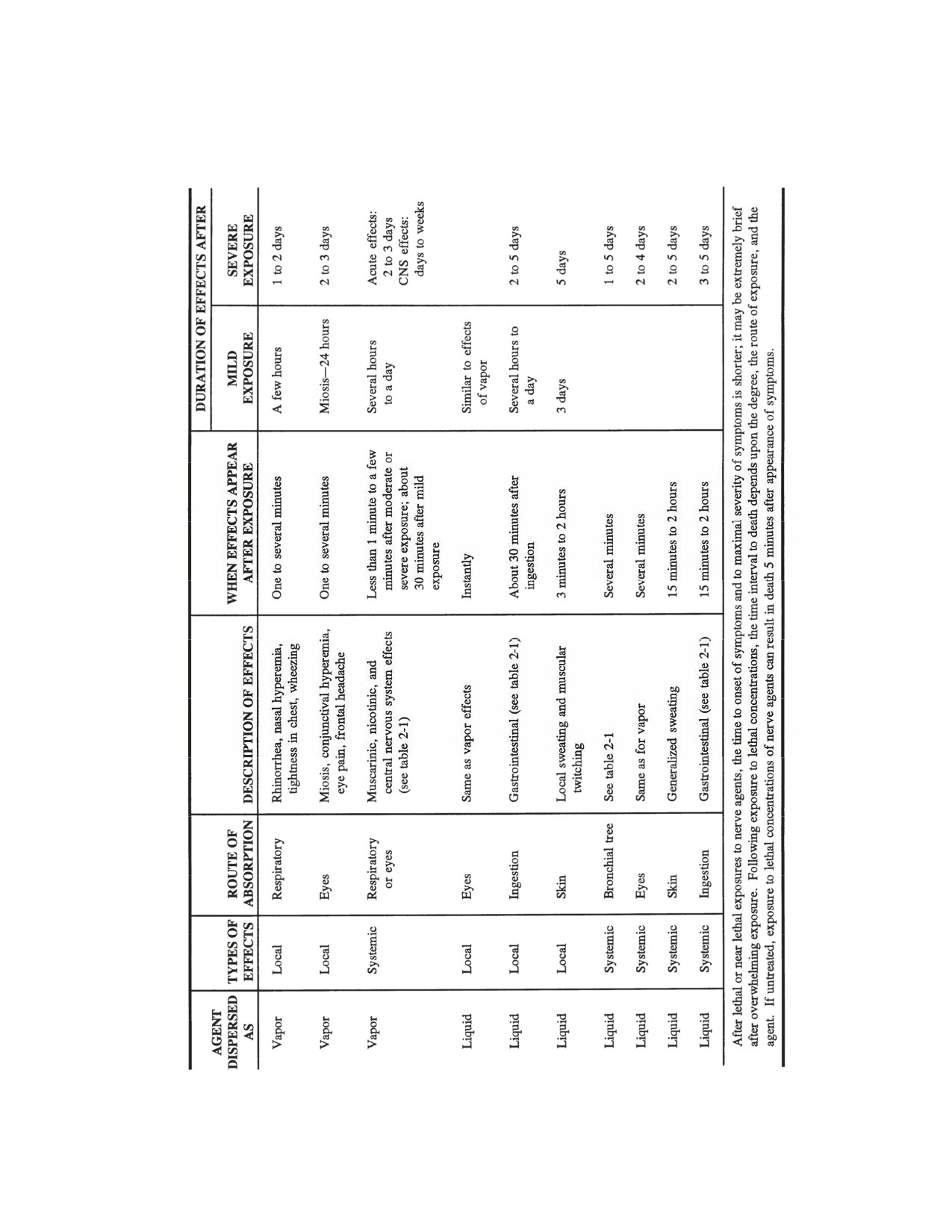
Table III-2. Time Course of Effects of Nerve Agents
III-8
FM 4-02.285/MCRP 4-11.1A/NTRP 4-02.22/AFTTP(I) 3-2.69
18 September 2007
(5) Nicotinic effects. Increased fatigability and generalized weakness are followed
by scattered muscular fasciculations, involuntary twitching, and occasional cramps. The
skin may be pale due to vasoconstriction and blood pressure moderately elevated
(transitory) together with tachycardia, resulting from epinephrine response to excess
acetylcholine. If the exposure has been severe, the muscarinic cardiovascular symptoms
may dominate; however, because of the opposing effects of nerve agent at nicotinic
receptors in autonomic ganglia and at muscarinic receptors in the heart, the heart rate can
be low, normal, or high in a nerve agent casualty and must not be used to gauge the
severity of the exposure. Early on, tachycardia is more frequent in casualties than is
bradycardia. As the absorbed dose increases, fasciculations (which usually appear first in
the eyelids and in the facial and calf muscles) become generalized. This is followed by
severe generalized muscular weakness, including the muscles of respiration. The
respiratory movements become more labored, shallow, and rapid; then they become slow
and finally intermittent. Later, respiratory muscle weakness may become profound and may
contribute to respiratory depression. Central respiratory depression may be a major cause
of respiratory failure.
(6) Central nervous system effects. Systemic manifestations of nerve agent
poisoning usually include tension, anxiety, jitteriness, restlessness, emotional lability, and
giddiness. There may be insomnia or excessive dreaming, occasionally with nightmares. If
the exposure is more marked, the following symptoms may be evident: headache, tremor,
drowsiness, difficulty in concentration, memory impairment with slow recall of recent events,
and slowing of reactions. In some casualties, there is apathy, withdrawal, and depression.
The casualty may exhibit confusion and ataxia (difficulty with balance) and have changes in
speech, including slurring and difficulty in forming words. The casualty may then become
comatose, reflexes may disappear, and Cheyne-Stokes respirations may be seen. Finally,
generalized seizures may ensue; in a paralyzed casualty, they may not be observable. With
the appearance of severe CNS symptoms, central respiratory depression will occur and may
progress to respiratory arrest. After severe exposure, the casualty may lose consciousness
and promptly convulse without other obvious symptoms. Death is usually due to respiratory
arrest and anoxia. Prompt initiation of assisted ventilation may prevent death. Depression
of the circulatory centers may also occur, resulting in a marked reduction in heart rate with a
fall of blood pressure some time before death.
d. Effects of Liquid Nerve Agent.
(1) Local ocular effects. The local ocular effects are similar to the effects of nerve
agent vapor. If the concentration of the liquid nerve agent contaminating the eye is high, the
effects will be instantaneous and marked; and, if the exposure of the two eyes is unequal,
the local manifestations may be unequal. Hyperemia may occur but there is no immediate
local inflammatory reaction such as may occur following ocular exposure to more irritating
substances (for example, L). Bloody tears have been reported.
(2) Local skin effects. Following cutaneous exposure, there is localized sweating at
and near the site of exposure and localized muscular twitching and fasciculation. These
may not be noticed; and since nerve agents are colorless and are not irritating to skin, skin
absorption may go undetected until systemic symptoms begin.
(3) Local gastrointestinal effects. Following the ingestion of substances containing a
nerve agent (which is essentially tasteless), the initial symptoms include abdominal cramps,
vomiting, and diarrhea.
(4) Systemic effects. The sequence of symptoms varies with the route of exposure.
While respiratory symptoms are generally the first to appear after inhalation, they more
18 September 2007 FM 4-02.285/MCRP 4-11.1A/NTRP 4-02.22/AFTTP(I) 3-2.69
III-9
properly represent a local effect upon respiratory tissues. Gastrointestinal symptoms are
usually the first systemic effects seen after ingestion or after absorption through the skin or
through wounds. Following comparable degrees of exposure, respiratory manifestations are
most severe after inhalation, and gastrointestinal symptoms may be most severe after
ingestion, percutaneous absorption, or entry via wounds. Otherwise, the systemic
manifestations are, in general, similar after any exposure to nerve agent poisoning by any
route. If local ocular exposure has not occurred, the ocular manifestations (including miosis)
initially may be absent.
e. Time Course of Effects of Nerve Agents. The latency between exposure and onset
and progression of signs and symptoms is dependent on both dose absorbed and route of
exposure. The first sign of a massive exposure may be sudden collapse with apnea and
convulsions; the difference is that the collapse will be essentially immediate after inhalation
of vapor but will be preceded by a clinically asymptomatic, or latent, period following liquid
exposure. Most fatal liquid exposures will have a latent period of 30 minutes or less,
although mild effects from a tiny drop of VX may take up to 18 hours to appear. See Table
III-2.
f.
Cumulative Effects of Repeated Exposure. Daily exposure to concentrations of a
nerve agent insufficient to produce symptoms following a single exposure may result in the
onset of symptoms after several days. Continued daily exposure may be followed by
increasingly severe effects. After symptoms subside, increased susceptibility may persist
for up to three months.
g. Mechanism of Death. Death is due to respiratory depression caused by four
mechanisms: bronchoconstriction; increased respiratory secretions obstructing airways;
paralysis of respiratory muscles, especially the diaphragm; and most importantly, central
apnea, or failure of the respiratory center in the brain. When overwhelming doses of the
agent are absorbed quickly, death occurs rapidly without an orderly progression of
symptoms.
5. Clinical Presentation and Diagnosis of Nerve Agent Poisoning
a. Nerve agent poisoning may be identified from the characteristic signs and symptoms.
If exposure to vapor has occurred, the pupils will be very small, usually pinpoint. If exposure
has been cutaneous, or has followed ingestion of a nerve agent in contaminated food or
water, the pupils may be normal or, in the presence of severe systemic symptoms, slightly or
only moderately reduced in size. In this event, the other manifestations of nerve agent
poisoning must be relied on to establish the diagnosis. No other known CW agent produces
muscular twitching and fasciculations, rapidly developing pinpoint pupils, or the
characteristic train of muscarinic, nicotinic, and CNS manifestations. Both cyanide and
nerve agents (as well as hydrogen sulfide) can lead to rapid collapse with apnea and
convulsions; fine distinctions involving the presence or absence of miosis, secretions, or
cyanosis may be difficult to make in this situation. For this reason, when a casualty
suddenly collapses, stops breathing, and begins to convulse, nerve agent antidotes should
be administered immediately; if the casualty fails to respond, a trial of cyanide antidotes
should be considered.
b. It is important that all service members know the following mild and severe signs and
symptoms of nerve agent poisoning. Service members who have most or all of the
symptoms listed below must immediately receive first aid (self-aid or buddy aid).
(1) Mild poisoning (self-aid). Casualties with mild exposure may experience most or
all of the following:
III-10
FM 4-02.285/MCRP 4-11.1A/NTRP 4-02.22/AFTTP(I) 3-2.69
18 September 2007
• Unexplained runny nose.
• Unexplained sudden headache.
• Sudden drooling.
• Difficulty in seeing (dimness of vision and miosis).
• Tightness in the chest or difficulty in breathing.
• Wheezing and coughing.
• Localized sweating and muscular twitching in the area of the contaminated skin.
• Stomach cramps.
• Nausea with or without vomiting.
• Tachycardia followed by bradycardia.
(2) Severe symptoms
(buddy aid).
Casualties with severe symptoms may
experience most or all of the mild symptoms, plus most or all of the following:
• Confused behavior.
• Increased wheezing and increased dyspnea (difficulty in breathing).
• Severely pinpoint pupils.
• Red eyes with tearing.
• Vomiting.
• Severe muscular twitching and general weakness.
• Involuntary urination and defecation.
• Convulsions.
• Unconsciousness.
• Respiratory failure.
• Tachycardia or bradycardia.
Note: Casualties with severe symptoms will not be able to treat themselves and
must receive prompt buddy aid, combat lifesaver aid, and prompt follow-on
medical treatment if they are to survive. The first indication of severe
exposure may be sudden loss of consciousness with or without apnea and
convulsions; that is, there may not be an orderly progression from mild to
severe effects.
c. The progress of symptoms from mild to severe indicates either inadequate treatment
or continuing exposure to the agent.
6. Prevention and Treatment of Nerve Agent Poisoning
The essential prevention and treatment elements of nerve agent poisoning are—
• Donning the protective mask and hood at the first indication of a nerve agent attack.
• Administering antidotes (MARK I, atropine, 2-PAM Cl, or Antidote Treatment—Nerve
Agent Autoinjector [ATNAA]) as soon as any signs or symptoms are noted.
18 September 2007 FM 4-02.285/MCRP 4-11.1A/NTRP 4-02.22/AFTTP(I) 3-2.69
III-11
• Administering the CANA to severely poisoned casualties or those obviously seizing.
• Removing or neutralizing any liquid contamination immediately.
• Removing airway secretions if they are obstructing the airway. Airway suction may
be needed.
• Removing mask and establishing an open airway (for example, endotracheal tube or
cricothyroidotomy) and administering assisted ventilation, if required. Airway resistance
from bronchospasm may frustrate attempts at mechanical ventilation of a severely exposed
casualty until atropine takes effect.
• Administering supplemental oxygen as available.
7. Prevention of Poisoning
a. The respiratory tract absorbs nerve agent vapor very rapidly. The protective mask
must be put on immediately when it is suspected that nerve agent vapor is present in the air.
To prevent inhaling an incapacitating or lethal dose, immediately stop breathing until the
mask is on, cleared, and checked. If the nerve agent concentration in the air is high, a few
breaths may result in death. When the concentration in the air is low, a longer time will
occur before full signs and symptoms are present. Since the effects of a nerve agent are
progressive and cumulative, the prevention of further absorption is urgent once symptoms
have begun. Protective masks should be worn until the “all clear” signal is given.
b. Do not give nerve agent antidotes for preventive purposes before exposure to a
nerve agent. To do so may enhance respiratory absorption of nerve agents by inhibiting
bronchoconstriction and bronchial secretion. Atropine will degrade performance when taken
in doses of more than 2 mg without nerve agent exposure and will degrade an individual’s
ability to perform duties in a hot environment because of an inability to sweat. Atropine
supplies are rapidly used up in the treatment of nerve agent poisoning, and repeated doses
may be necessary.
c. Pyridostigmine bromide (PB), when given as a pretreatment, affords some protective
effects against GD. See paragraph 20 through 26 below for a complete discussion on PB.
d. Nerve agents (liquid or vapor) can poison food and water. For details on the
management and decontamination of food and water, see FM 4-02.7.
8. Effects of Nerve Agent Antidotes
a. Atropine sulfate remains the principal drug in the treatment of nerve agent poisoning.
It blocks the effects of acetylcholine at muscarinic receptors and produces relief from
symptoms. If given in large doses, some therapeutic effects are also produced within the
CNS, although atropine does not penetrate the blood-brain barrier as readily as does
diazepam, and central muscarinic receptors are thought not to be identical with those in the
periphery. Atropine is thought to counteract the respiratory depression in the medulla
oblongata. More importantly, it probably has a role in preventing the activation of additional
neurotransmitters important in the later, more refractory, stages of seizures induced by
nerve agents. Used alone, it will not prevent or reverse muscle weakness, paralysis, or
apnea and therefore must be supplemented by 2-PAM Cl and by attention to the basics of
airway, breathing, and circulation. The combination of adequate atropine plus assisted
ventilation is several times more effective in saving lives than assisted ventilation alone and
has saved lives even without the administration of 2-PAM Cl.
III-12
FM 4-02.285/MCRP 4-11.1A/NTRP 4-02.22/AFTTP(I) 3-2.69
18 September 2007
b. The 2-PAM Cl is an oxime that blocks the nerve agent inhibition of cholinesterase by
breaking the initial bond between the nerve agent and cholinesterase. Clinically, its effects
are more prominent on muscle weakness associated with nerve agent effects at nicotinic
sites; thus, its clinical effects are complementary to those of atropine. The 2-pralidoxime
chloride reverses the bonding of the nerve agent to the acetylcholinesterase. After a time
that is dependent on the specific nerve agent used, a process known as aging strengthens
the agent-cholinesterase bond to such an extent that the oximes may no longer be effective.
Since the half-times of aging for most nerve agents are hours to days, aging is not clinically
relevant for most nerve agents. Almost all of the complex of GD and cholinesterase has
aged within 10 minutes of binding. This renders 2-PAM Cl ineffective against GD exposure
unless administration occurs relatively early.
Note: Other countries field other oximes for this purpose. Their mode of action is
identical to that of 2-PAM Cl.
c. Diazepam, the active ingredient in CANA, is the only anticonvulsant currently
approved by the FDA for use against the seizures caused by nerve agents. Other
benzodiazepines (for example midazolam) have shown to be effective in reducing seizures
caused by nerve agents but are not approved by FDA for this purpose. Other
anticonvulsants that are not in the benzodiazepines family, such as phenobarbital and
phenytoin (Dilantin®) are not effective against nerve agent induced seizures.
9. Rate of Absorption
a. Atropine. A 2-mg intramuscular (IM) injection will reach peak effectiveness in 3 to 10
minutes; then blood concentrations will decline. If the system is unchallenged by a nerve
agent, a 2-mg IM injection will cause atropine effects for several hours. In the presence of a
nerve agent challenge, the duration of action of the antidote may be significantly shortened.
More frequent doses of atropine will be required to achieve and maintain the desired clinical
effect. This can be provided through additional IM injections or the slow IV administration of
atropine.
b. The 2-Pralidoxime Chloride. Depending on the degree of intoxication, a 600-mg
injection will be effective in 6 to 8 minutes and will maintain peak effectiveness for 1 hour or
more. If the system is unchallenged by a nerve agent, this dose will remain in the circulatory
system for several hours without apparent adverse effect.
c. Diazepam. A 10-mg IM injection in the thigh ordinarily produces significant plasma
levels in 10 minutes; peak plasma concentrations are obtained in about 1 hour. The rate of
distribution in individual patients may vary substantially. The concentrations will then
decline over a prolonged period. Early administration via CANA after nerve agent exposure
will effectively prevent or ameliorate convulsions. Severe nerve agent toxicity may require
multiple 10-mg doses given at about 10-minute intervals for a maximum of three injections
(a total of 30 mg diazepam) to control convulsions; additional IM or IV doses may be given
by qualified medical personnel.
10. Symptoms Produced by Antidotes
a. Atropine.
(1) The administration of a single dose of 2 mg (one autoinjector) of atropine to an
individual who has absorbed little or no nerve agent produces minimal to no symptoms. If
symptoms occur, they may include dryness of the skin, mouth, throat, and slight difficulty in
18 September 2007 FM 4-02.285/MCRP 4-11.1A/NTRP 4-02.22/AFTTP(I) 3-2.69
III-13
swallowing. The individual may have a feeling of warmth, slight flushing, rapid pulse, some
hesitancy of urination, and an occasional desire to belch. The pupils may be slightly dilated
but react to light. In some individuals, there may be drowsiness, slowness of memory, and
diminished recall. Recipients of atropine may have the feeling that their movements are
slow and their near vision is blurred. Some individuals may be mildly relaxed. These
symptoms should not interfere with ordinary activity. Mental reaction may be slightly slowed
down; for this reason, aviators must not fly an aircraft after taking atropine until cleared by
the flight surgeon. If the administration of 2 mg of atropine is repeated within an hour
without nerve agent challenge, the symptoms increase. After repeated injections of
atropine, heat-stressed individuals will become casualties. A third 2-mg dose of atropine
(again without nerve agent challenge) administered within an hour will incapacitate most
people. Severe incapacitating symptoms of atropine overdosage in the absence of nerve
agent poisoning are a very dry mouth; swelling of the tongue and oral mucous membranes;
difficulty in swallowing; thirst; hoarseness; dry and flushed skin; dilated pupils; blurred near
vision; tachycardia (rapid pulse); urinary retention (in older individuals); constipation; slowing
of mental and physical activity; restlessness; headache; disorientation; hallucinations;
depression; increased drowsiness; extreme fatigue; rapid respiratory panting; and
respiratory distress. Abnormal behavior may require restraint. The effects of atropine
without nerve agent challenge are fairly prolonged, lasting 3 to 5 hours after one or two
injections and 12 to 24 hours after a severe overdose. Overdosage may be incapacitating
but presents little danger to life in a temperate environment for the nonheat-stressed
individual. A single dose of 10 mg of atropine has been administered intravenously to
normal young adults without endangering life—even in the absence of any prior absorption
of a nerve agent—although it has produced very marked signs of overdose.
Note: While an unchallenged dose of atropine may allow individuals to continue
normal duties, they must be closely monitored for possible heat injury. This is
especially important when at MOPP 4 since the individuals’ ability to perspire
is reduced due to atropine.
(2) In hot, desert, or tropical environments or in heat-stressed individuals, doses of
atropine tolerated well in temperate climates may be seriously incapacitating by interfering
with the sweating mechanism. This can sharply reduce the combat effectiveness of troops
who have suffered little or no exposure to a nerve agent. In hot climates or in heat-stressed
individuals, one dose (2 mg) of atropine can reduce efficiency; two doses will sharply reduce
combat efficiency; and three doses will incapacitate troops for several hours. In hot, humid
climates, individuals who have inadvertently taken an overdose of atropine and are
exhibiting signs of atropine intoxication should have their activity restricted. In addition,
these casualties must be kept as cool as possible for 6 to 8 hours after injection to avoid
serious incapacitation. Usually, the casualties will recover fully in 24 hours or less from a
significant overdose of atropine. Near vision may be impaired for as long as 24 hours.
Experience in chemical operations has shown that when troops become alarmed, some
believe they have been exposed to more CW agents than they actually have been. Hence,
it is important that service members not give themselves more than one atropine injection (2
mg). Casualties who are able to walk (ambulate) and know who and where they are may
not need any more atropine injections. If the symptoms do recur, additional atropine, up to
two more injections for a total of three, can be administered to these casualties. A service
member must consult with a buddy to determine if he needs additional injections of atropine.
If an individual’s breathing appears normal, bronchial secretions have diminished, and the
skin is dry, the individual does not need any more atropine at that time. Additional atropine
is given by a buddy since casualties requiring more will be unable to administer additional
III-14
FM 4-02.285/MCRP 4-11.1A/NTRP 4-02.22/AFTTP(I) 3-2.69
18 September 2007
injections to themselves. The additional administration of atropine to a service member with
only mild symptoms must be approached cautiously with at least 10 to 15 minutes elapsing
between successive injections. If the signs of nerve agent poisoning disappear, or if
breathing becomes easier and secretions diminish, no further injections should be
administered. These casualties should remain under observation without further injections
of atropine unless signs of nerve agent intoxication reappear.
(3) Patients with severe symptoms due to systemic absorption of a nerve agent
require increase levels of atropine to control the effects of nerve agents. Multiple doses may
be required before airway resistance and secretions diminish. Most cases of nerve agent
poisoning should not require a total dose of more than approximately 20 mg of atropine in
the first few hours or 50 mg of atropine in a 24-hour period. This contrasts with the often
heroic doses (up to 1 to 2 grams [gm]) that may be required in patients poisoned by
ingestion of organophosphorous (organosphosphate) pesticides. More than three injections
of atropine will be administered only by the combat lifesaver or medical personnel.
b. The 2-Pralidoxime Chloride. Blurred vision, nausea, vomiting, vertigo, and, most
significantly, elevations of heart rate and blood pressure may occur after overdosage with 2
PAM Cl. After the administration of three injections of 2-PAM Cl via MARK I or ATNAA
autoinjectors, repeat doses may be given as needed of atropine alone (every 3 to 10
minutes). The additional IM doses of
2-PAM Cl should normally be separated by
approximately 60 to 90 minutes.
c. Diazepam. The administration of a single dose of 10 mg (one autoinjector of CANA)
to an individual who has absorbed minimal or no nerve agent produces significant
performance decrements for about 2 to 5 hours. The individual may have impaired
decision-making functions, reduced alertness, and breathing difficulties. For this reason,
casualties should be lying on their sides until they are alert again. There may be transient
irritation, as well as pain, at the injection sites.
11. Elements of Self-Aid and Buddy Aid
Don the protective mask and hood immediately at the first signs of a chemical attack.
The protective overgarment should have already been put on prior to the use of chemicals
on the battlefield. Stop breathing, put on your mask, clear and seal the mask, and resume
breathing. Secure the mask hood. Wear the mask and protective clothing continually until
the “all clear” signal is given.
a. Immediately mask any casualty who does not have a mask on if the atmosphere is
still contaminated.
b. The appearance of severe nerve agent poisoning symptoms calls for the immediate
IM injection of the nerve agent antidote and CANA.
c. Promptly remove any liquid nerve agent on the skin or on the clothing. Remove
agent in wounds and eyes by irrigation.
(1) If a liquid nerve agent gets on the skin, decontamination should ideally be
accomplished within 1 minute (see Appendix D). Then continue the mission. Examine the
contaminated area occasionally for local sweating and muscular twitching. If these occur,
the nerve agent antidote should be administered. Combat duties should be continued, as
systemic symptoms of nerve agent poisoning may not occur or may be mild if the
decontamination was done immediately and successfully.
18 September 2007 FM 4-02.285/MCRP 4-11.1A/NTRP 4-02.22/AFTTP(I) 3-2.69
III-15
(2) If a drop or splash of liquid nerve agent gets into the eye, instant action is
necessary to avoid serious effects. Irrigate the eye immediately with saline or water as
described in Appendix D. During the next minute, the pupil of the contaminated eye should
be observed by a buddy. If the pupil rapidly gets smaller, a nerve agent antidote should be
administered. If the pupil does not get smaller, the ocular contamination was not caused by
a nerve agent and atropine is not needed.
(3) If good relief is obtained from the first set of atropine and 2-PAM Cl injections and
breathing is normal, carry on with combat duties. Dryness of the mouth is a good sign—it
means enough atropine has been taken to overcome the dangerous effects of the nerve
agent. If symptoms of the nerve agent are not relieved, the service member should be given
two additional doses of atropine, two additional doses of 2-PAM Cl, and one injection of
CANA by a buddy. If symptoms still persist, bronchial secretions persist, or the skin remains
moist, then the service member can be administered additional atropine injections by
medical personnel (who carry additional atropine for the treatment of nerve agent patients)
to counteract the nerve agent. Trauma specialists/corpsmen/Air Force medics (4N0 career
field) also carry extra CANA for administration to nerve agent patients. Trauma
specialists/corpsmen/Air Force medics (4N0 career field) can administer additional CANA up
to a maximum of three before evacuating the patient. Evacuate the service member to an
MTF as soon as the combat situation permits.
(4) Atropine and 2-PAM Cl by injection do not relieve the local effects of nerve agent
vapor on the eyes. Although the eyes may hurt and there may be difficulty in focusing and a
headache, the service members should carry on with their duties to the best of their ability.
These symptoms are annoying but not dangerous. Medical personnel may treat these
symptoms with atropine eye ointment.
(5) Exposure to high concentrations of a nerve agent may bring on incoordination,
mental confusion, and/or collapse so rapidly that the casualty cannot perform self-aid. If this
happens, the nearest able service member must render buddy aid.
(6) Severe nerve agent exposure may rapidly cause unconsciousness, muscular
paralysis, and the cessation of breathing. When this occurs, antidote alone will not save life.
Immediately after a buddy administers three sets of MARK I (or three ATNAA) and one
CANA, the airway must be secured and assisted ventilation must be started by medical
personnel, if a resuscitation device is available. Assisted ventilation should be continued
until normal breathing is restored.
12. The Nerve Agent Antidote Kit, MARK I
The Nerve Agent Antidote Kit (NAAK), MARK I (Figure E-1), is an antidote kit used by the
Army in the treatment of nerve agent poisoning.
a. Description. The MARK I Kit consists of four separate components: the atropine
autoinjector in a short tube, the 2-PAM Cl autoinjector in a longer tube, the plastic clip, and
the foam carrying case.
(1) The atropine autoinjector consist of a hard plastic tube containing 2 mg (0.7
milliliter [ml]) of atropine in solution. It has a pressure-activated coiled spring mechanism
that triggers the needle for injection of the antidote solution. The container is white plastic
with yellow lettering on green identification and directions labels. The safety cap is yellow
plastic attached to the clip at the rear of the container. The needle end is a green plastic
cap which, when pressure is applied, activates the spring mechanism.
III-16
FM 4-02.285/MCRP 4-11.1A/NTRP 4-02.22/AFTTP(I) 3-2.69
18 September 2007
(2) The 2-PAM Cl autoinjector is a hard plastic tube which dispenses 600 mg/2 ml of
2-PAM Cl (300 mg/ml) solution when activated. It has a pressure-activated coiled spring
mechanism identical to that in the atropine autoinjector. The container is clear plastic with
black lettering on a brown identification label. Directions are in black lettering on a white
background. The safety cap is gray plastic attached to the clip at the rear of the container.
The needle end is black plastic.
(3) The MARK I clip is made of clear hard plastic constructed to hold the pair of
autoinjectors together while attached to their safety caps. The safety caps are held flush to
the bottom of the plastic clip by a movable metal retaining flange. The clip container
recesses are labeled with black numbers:
“1” for the atropine and “2” for the 2-PAM Cl
autoinjector.
(4) The MARK I foam envelope is a charcoal gray form-fitting case with pressed
seams and is designed to carry both autoinjectors. The envelope is used for shipping
purposes only and is removed by service members prior to putting the MARK I Kits in their
mask carrier.
b. Issue to Service Members. In the US Army, each person is authorized to carry three
MARK I Kits for the treatment of nerve agent poisoning. The US Navy, the US Air Force,
and US Marine Corps, however, do not use the MARK I; rather, its antidote components are
issued as three separate atropine and three separate 2-PAM Cl autoinjectors per person.
c. The use of MARK I by or upon persons to whom it has not been prescribed (such as
contractors, DOD civilian casualties of terror or combat actions) is enabled by a DOD policy
(DODI 3020.37 and DODD 1404.10) that empowers health care providers and other first
responders and service members to use these medications in an emergency outside of an
MTF, as an element of prehospital or on-site emergency medical actions. Also, see FM 3
100.21 and Army Regulation (AR) 40-400 for more information.
d. Protection Against Freezing. The atropine and the 2-PAM Cl solutions freeze at
about 30°F (-1.1°C). Therefore, when the temperature is below freezing, the injectors
should be protected against freezing. Autoinjectors issued to the individual service member
are normally carried in the protective mask carrier. During cold weather when the
temperature is below freezing, the injectors should be carried in an inside pocket close to
the body.
(Should the injectors become frozen, they can be thawed and used. Allowing the
autoinjector to freeze can prevent an individual from having the nerve agent antidote
immediately available for use.)
13. Antidote Treatment, Nerve Agent, Autoinjector
The ATNAA (Figure E-1) is scheduled to replace the MARK I autoinjector currently used
by the Armed Forces. For more information about ATNAA see FM 4-25.11.
a. Description. The ATNAA is a multichambered device that consists of three
components. The autoinjector tube, a spring-activated needle, and a safety cap. The
device is packaged in a chemically hardened pouch.
(1) The autoinjector outer cylinder is natural polypropylene consisting of two
chambers (one chamber contains 2.1 mg of atropine injection; the second chamber contains
600 mg of 2-PAM Cl injection). It has a pressure-activated coiled spring mechanism, which
triggers the needle for injection of the antidote solutions. The third component is a safety
cap.
18 September 2007 FM 4-02.285/MCRP 4-11.1A/NTRP 4-02.22/AFTTP(I) 3-2.69
III-17
(2) The label is white with black lettering; there are two colored stripes on the end of
the label (one is tan and the other is yellow). The safety cap is gray plastic. The needle end
is green plastic.
(3) The chemically protected pouch is amber and black in color. The end of the
pouch that covers the atropine (needle end of the autoinjector) is solid black; the remainder
of the pouch is amber. The lettering on the pouch is black.
b. Issue to Service Members. Each service member will be issued and will carry three
ATNAAs for the treatment of nerve agent poisoning. These devices are for use as the initial
treatment of nerve agent poisoning (self-aid or buddy aid).
c. The use of the ATNAA by or upon persons to whom it has not been prescribed (such
as contractors, DOD civilian casualties of terror or combat actions) is enabled by a DOD
policy (DODI 3020.37 and DODD 1404.10) that empowers health care providers and other
first responders and service members to use these medications in an emergency outside of
an MTF, as an element of prehospital or on-site emergency medical actions. Also, see FM
3-100.21 and AR 40-400 for more information.
Note: For self-aid or buddy aid, the ATNAA will replace the MARK I and the
separately packaged autoinjectors when all stocks of the MARK I and the
separately packaged autoinjectors have been exhausted or the device’s shelf
life expires. Separately packaged atropine autoinjectors will still be available
for medical personnel.
d. Protection from Freezing. The atropine and the 2-PAM Cl solutions freeze at about
30°F (-1.1°C). Therefore, when the temperature is below freezing, the ATNAA should be
protected from freezing. Normally, the ATNAA issued to service members is carried in the
protective mask carrier. During cold weather when the temperature is below freezing, the
injectors should be carried in an inside pocket close to the body.
(Should the ATNAA
become frozen, it can be thawed multiple times, if necessary, and used.) Allowing the
device to freeze will delay your ability to administer the antidote when needed, which could
lead to increased injury from exposure to a nerve agent.
14. Convulsant Antidote for Nerve Agent, Autoinjector
The CANA (Figure E-1) is an anticonvulsant that is used by the Armed Forces to prevent
or treat seizures from nerve agent poisoning.
a. Description. The CANA autoinjector consists of a light gray plastic tube with two
flanges and is labeled with directions; the lettering is black. The CANA is packaged in an
easy-to-open clear plastic package with a single injector inside. The safety cap is gray
plastic on the end of the autoinjector. The needle end is the black plastic end which, when
pressure is applied, activates the spring mechanism.
(1) The autoinjector contains
10 mg of diazepam injection. It has a pressure-
activated coiled spring mechanism which triggers the needle for injection of the antidote
solution. The third component is a safety cap.
(2) The label has black lettering. The safety cap is gray plastic. The needle end is
black plastic.
(3) The chemically protected pouch is clear plastic. The pouch has easy-to-tear
notches on all sides. The lettering on the pouch is black.
III-18
FM 4-02.285/MCRP 4-11.1A/NTRP 4-02.22/AFTTP(I) 3-2.69
18 September 2007
///////////////////////////////////////