FM 4-20.102 AIRDROP OF SUPPLIES AND EQUIPMENT: RIGGING AIRDROP PLATFORMS (JUNE 2006) - page 4
Chapter 7
1
2
3
2
3
4
1
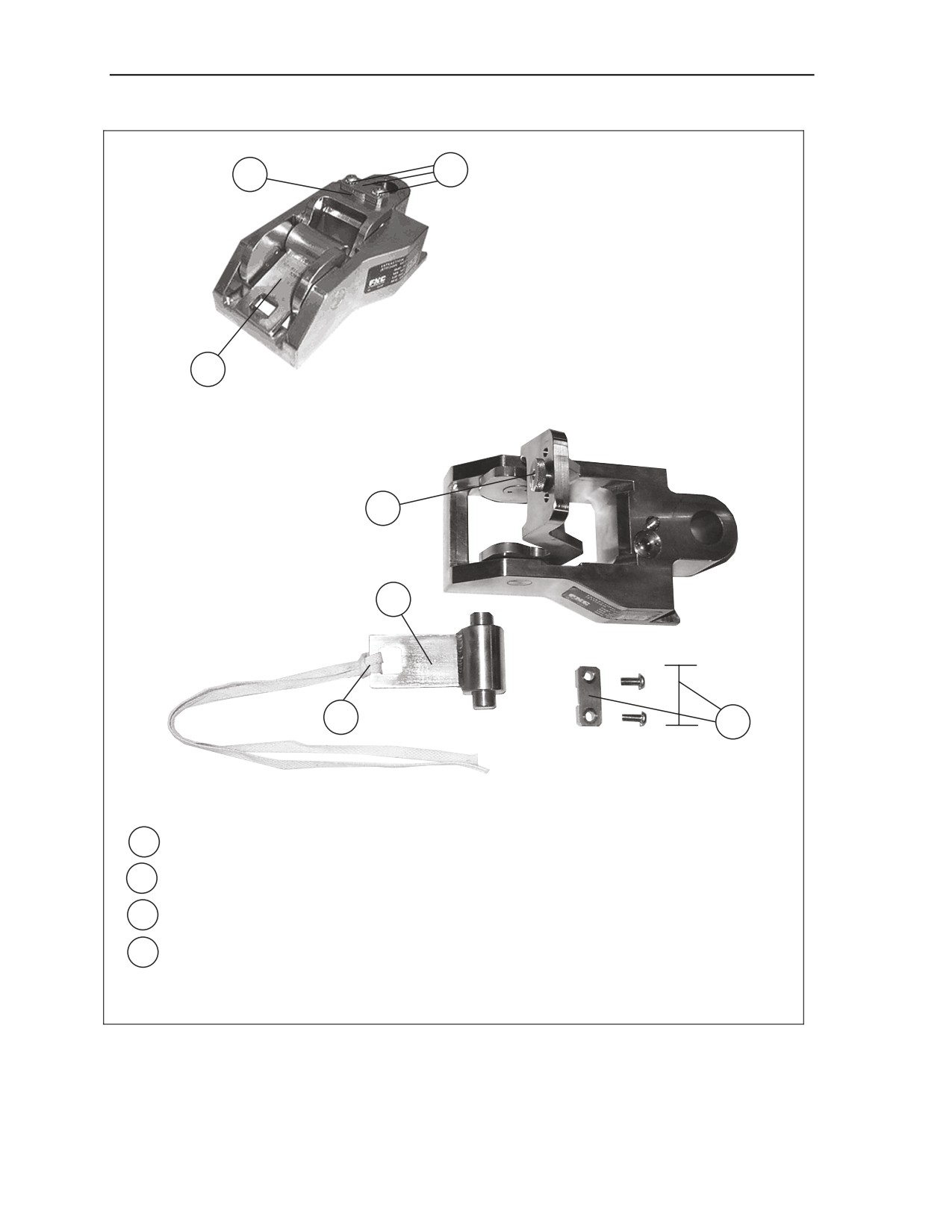
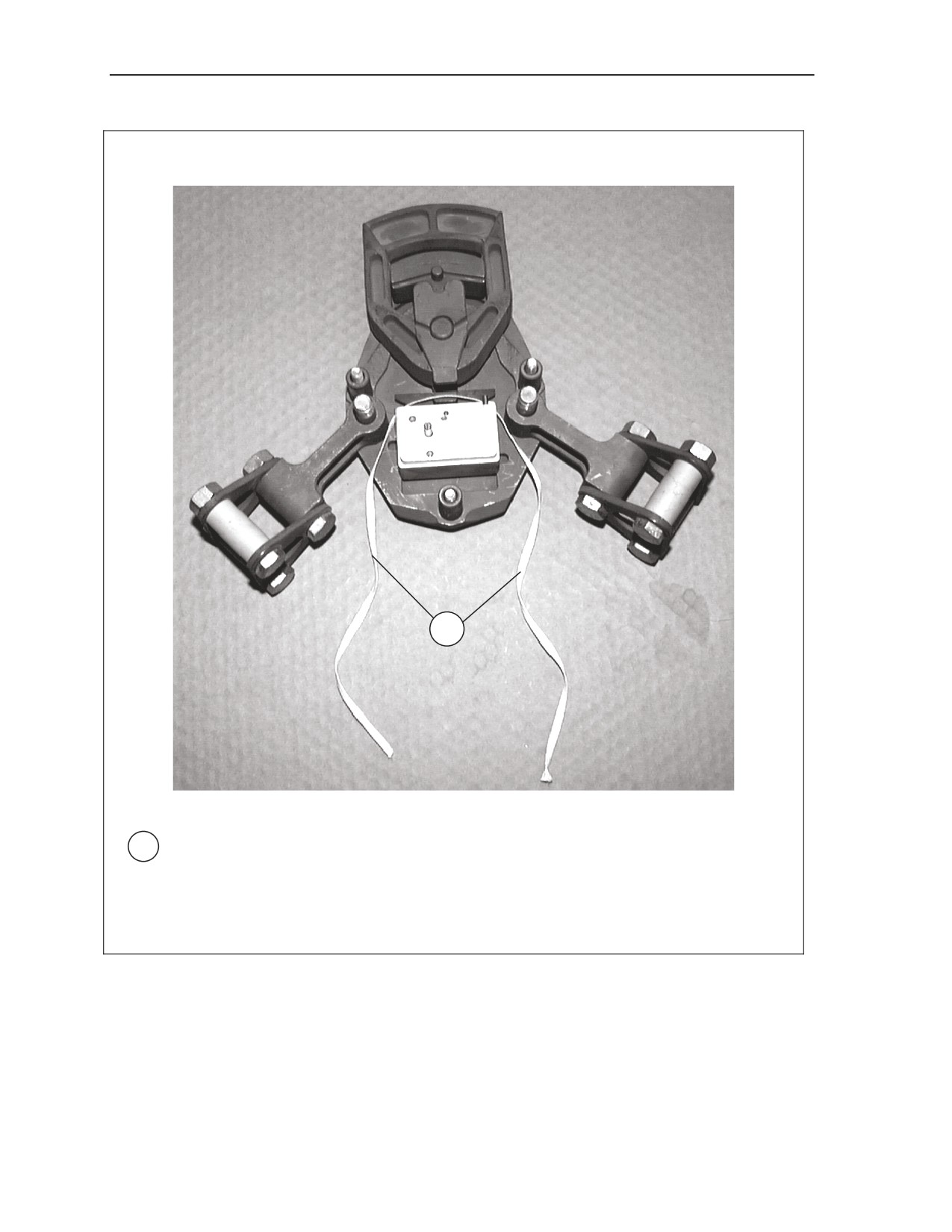
1 Remove the cap screws and retainer clamp from the latch of the EPJD.
2 Unscrew the latch retainer from the shear bolt.
3 Remove the extraction line keeper from the latch.
4 Girth hitch an 18-inch piece of type I, 1/4-inch cotton webbing through the rectangular
portion of the keeper.
Figure 7-3. Extraction Line Attached to the EPJD
7-6
FM 4-20.102/MCRP 4-11.3J/NAVSEA SS400-AB-MMO-010/TO 13C7-1-5
8 June 2006
Extraction Parachute Jettison System (EPJS)
5
6
9
7
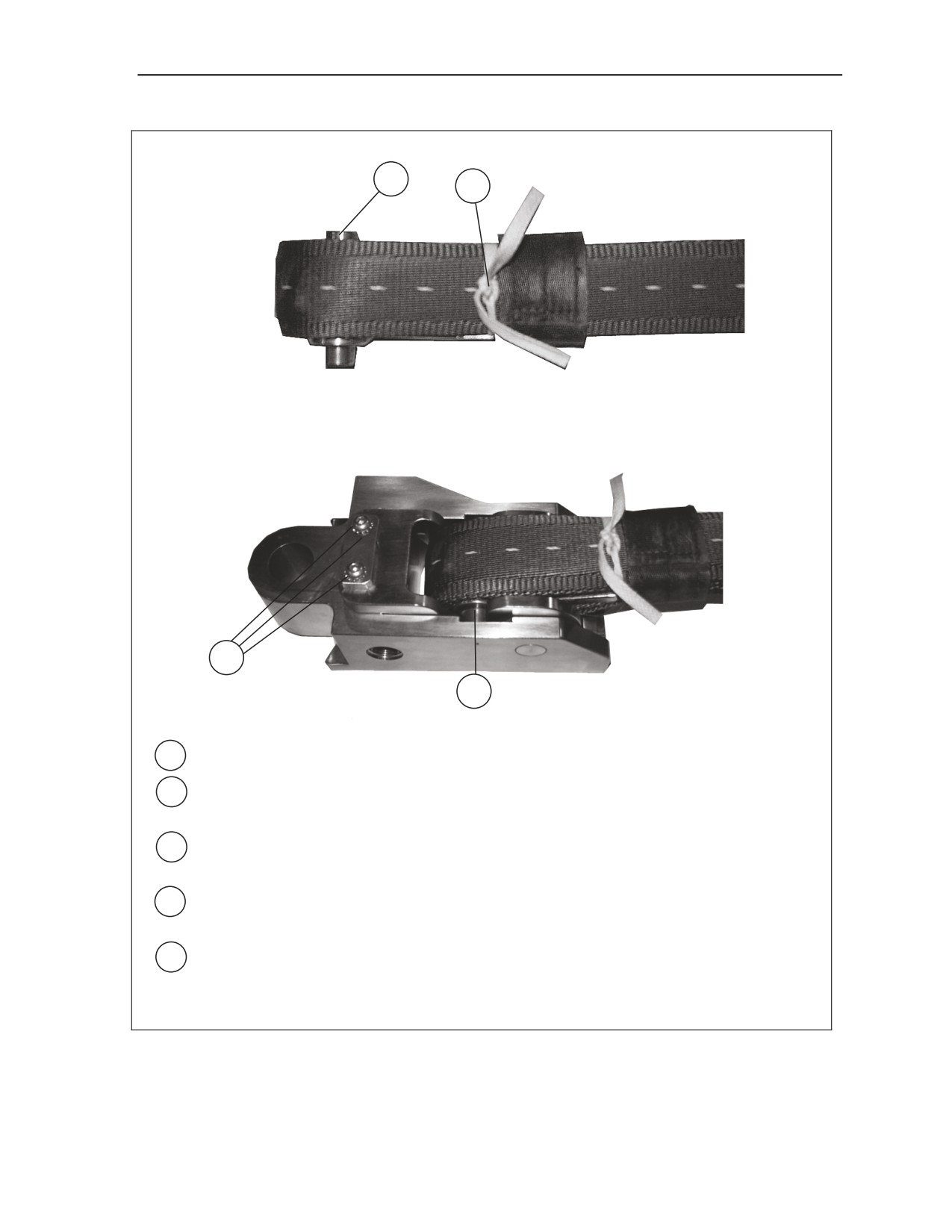
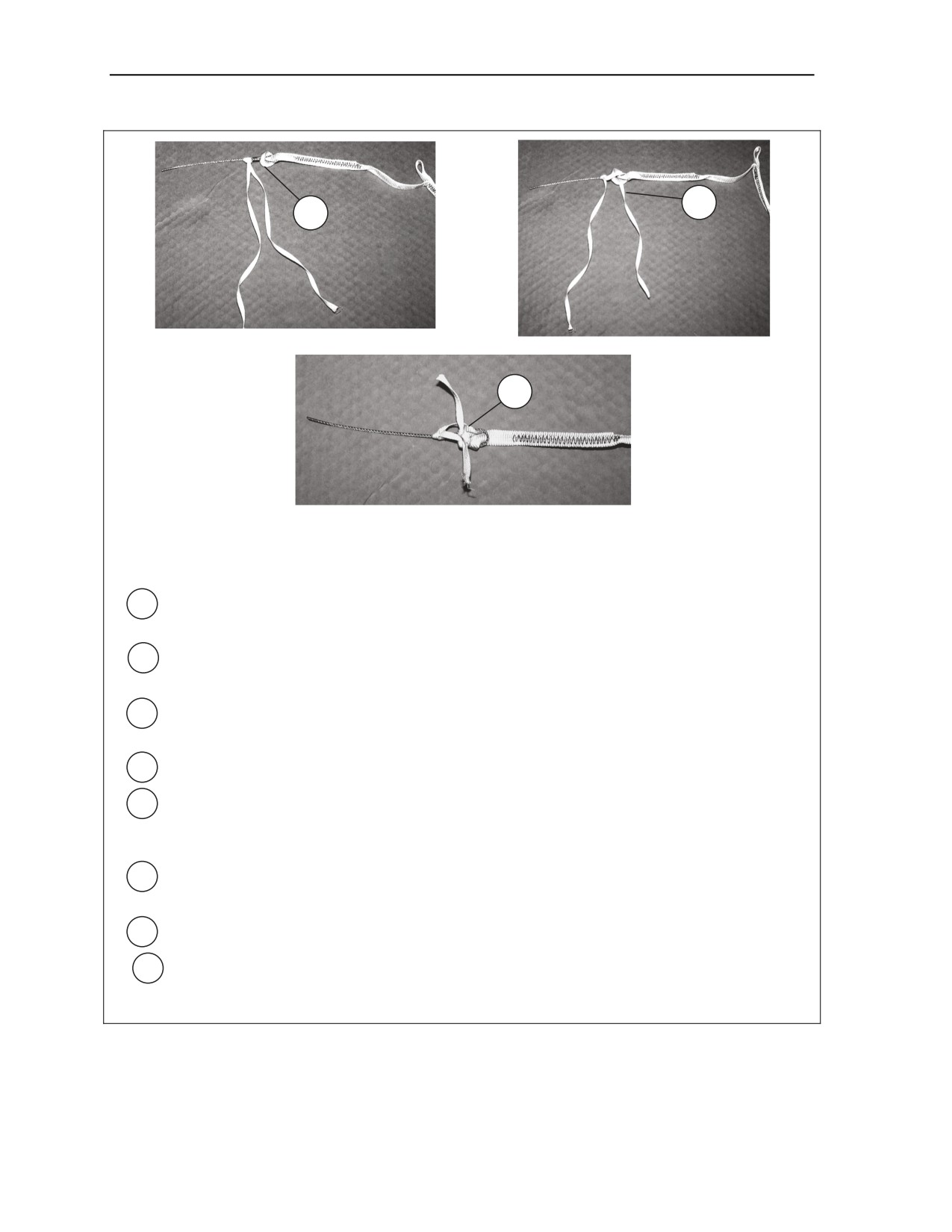
5 Evenly split the plies of the extraction line and place the keeper inside.
6 Route the running ends of the type I, 1/4-inch cotton webbing around the top of the
extraction line in opposite directions and secure it with a surgeon's knot and locking knot.
7 Place the extraction line keeper with extraction line attached back into the latch of the
EPJD.
8 Secure the latch by screwing the latch retainer nut to the shear bolt (not shown).
Note. Lift the latch slightly before engaging the threads to make assembly easier.
9 Attach the retainer clamp to the latch using the two cap screws.
Note. Ensure the cap screws are wrench tightened using a 5/32-inch T-handle, hex drive wrench.
Figure 7-3. Extraction Line Attached to the EPJD (Continued)
8 June 2006 FM 4-20.102/MCRP 4-11.3J/NAVSEA SS400-AB-MMO-010/TO 13C7-1-5
7-7
Chapter 7
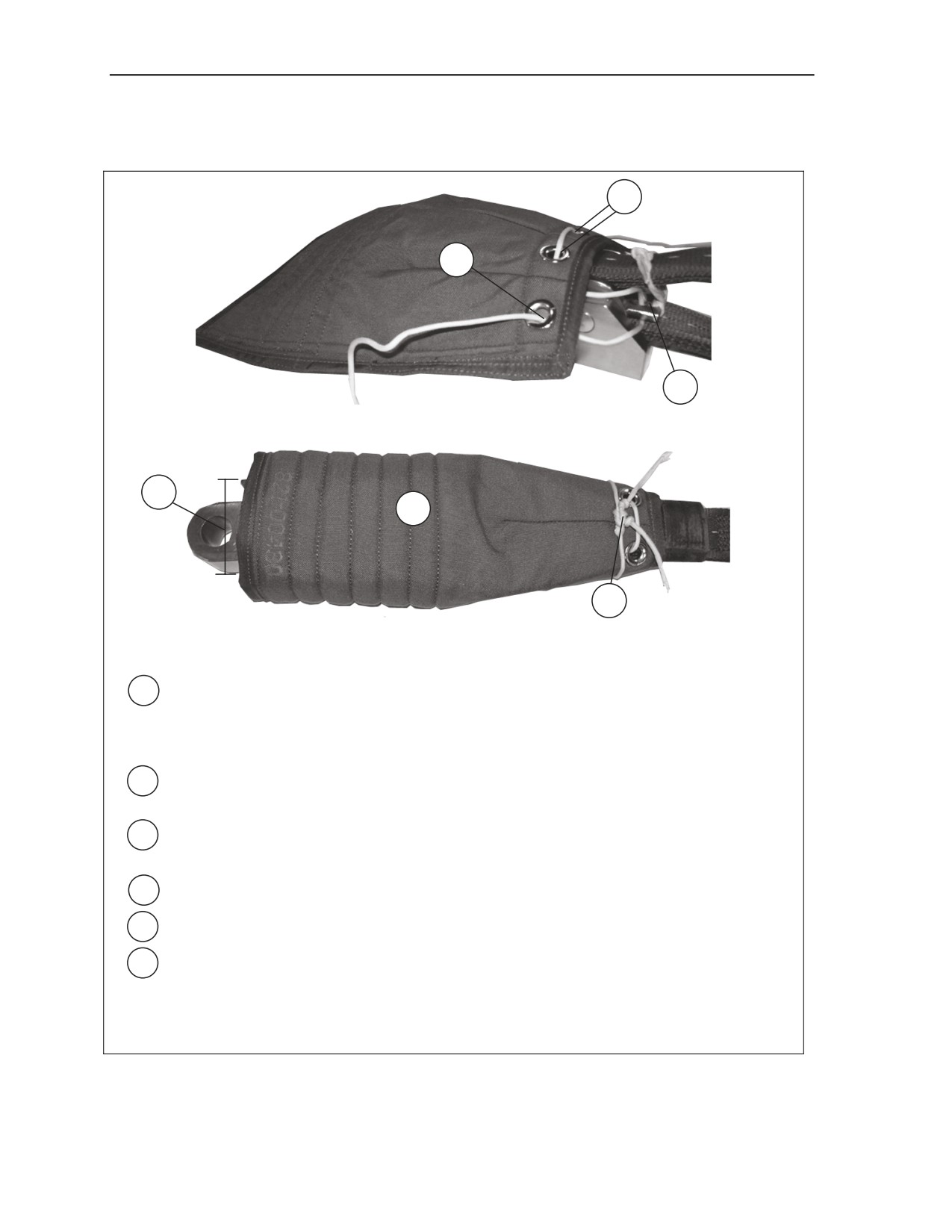
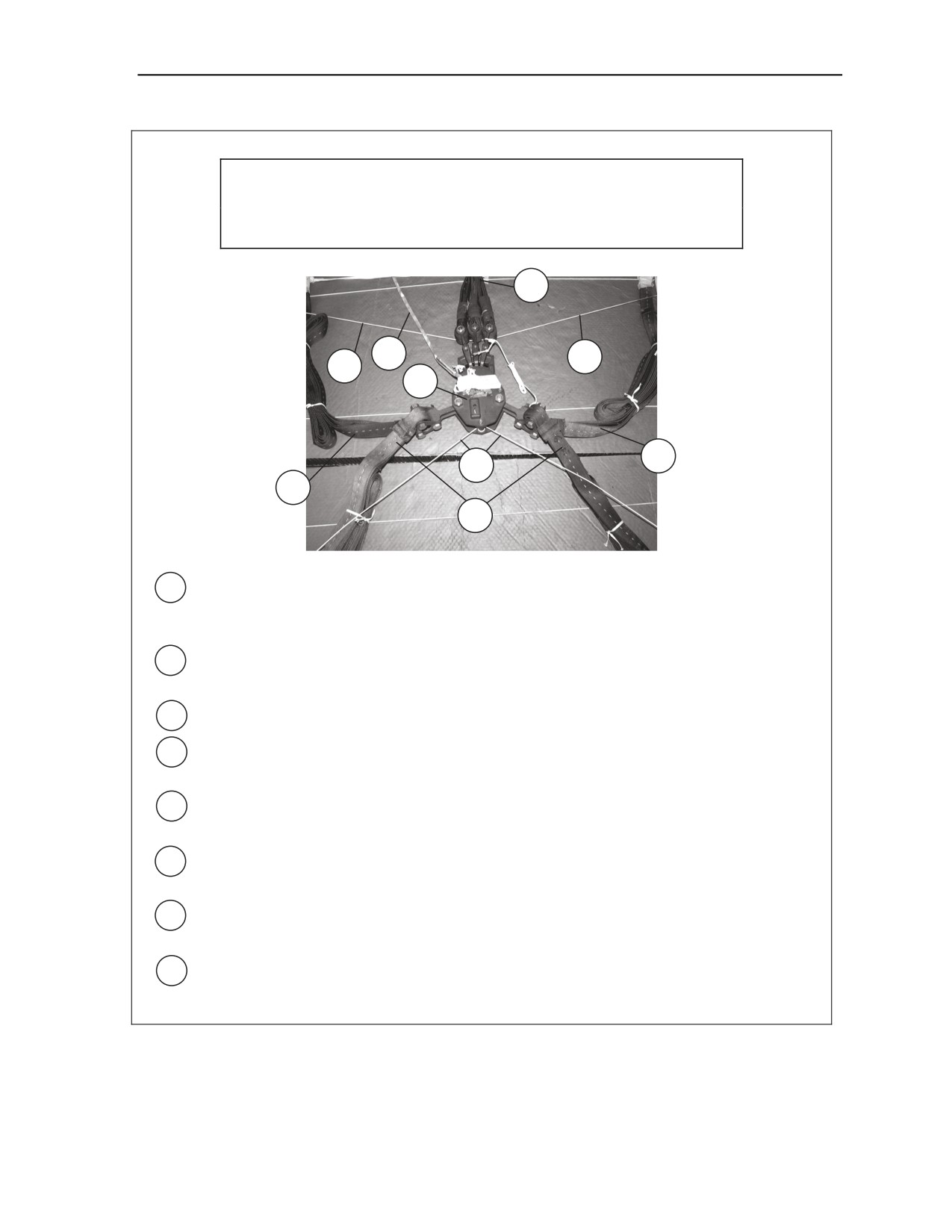
• Attaching the Protective Cover to the EPJD. Attach the protective cover to the EPJD and
extraction line as shown in Figure 7-4.
1
3
2
4
5
6
1 Cut a piece of type III nylon cord 60 inches long. Lace the two running ends of the type III
nylon cord through the two inside grommets of the protective cover from nylon side to felt
side. Position the protective cover on the EPJD, felt side down, with the grommet edge
toward the extraction line panel.
2 Route the two running ends of the type III nylon cord to the outside of the extraction line
and through the rectangular cutout in the extraction line keeper from top to bottom.
3 Run the two running ends of the type III nylon cord to the two outside grommets of the
cover from felt side to nylon side (only the left outside grommet is visible in photo).
4 Align the edge binding of the cover with the front edge of the EPJD latch.
5 Fold the protective cover around the EPJD and secure the hook pile tape.
6 Tighten the type III nylon cord making sure the cover does not slip forward over the EPJD
attaching lug. Cross both running ends and bring them to the top of the cover. Tie the
running ends in a surgeon's knot and locking knot with overhand knots in the running ends.
Figure 7-4. Protective Cover Attached to the EPJD
7-8
FM 4-20.102/MCRP 4-11.3J/NAVSEA SS400-AB-MMO-010/TO 13C7-1-5
8 June 2006
Extraction Parachute Jettison System (EPJS)
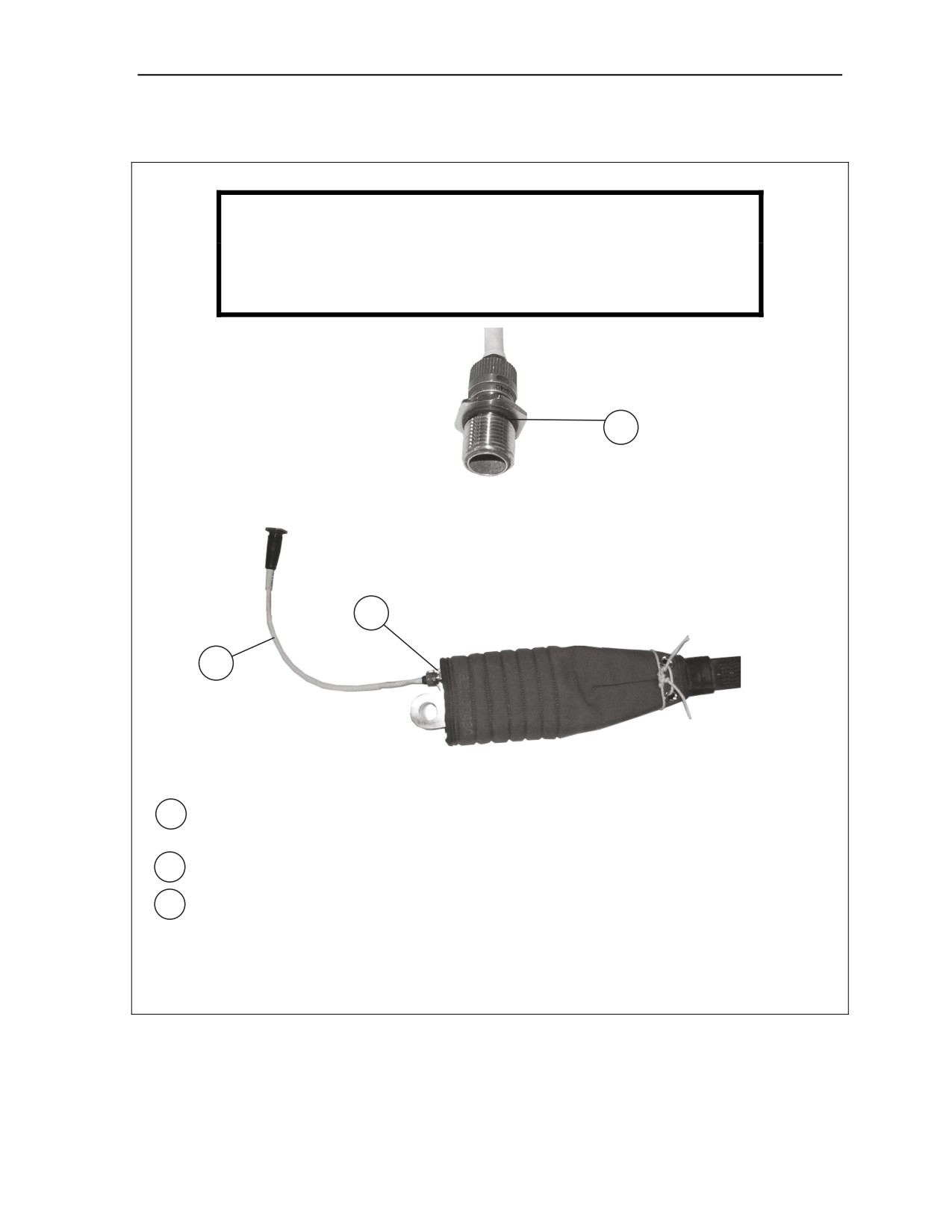
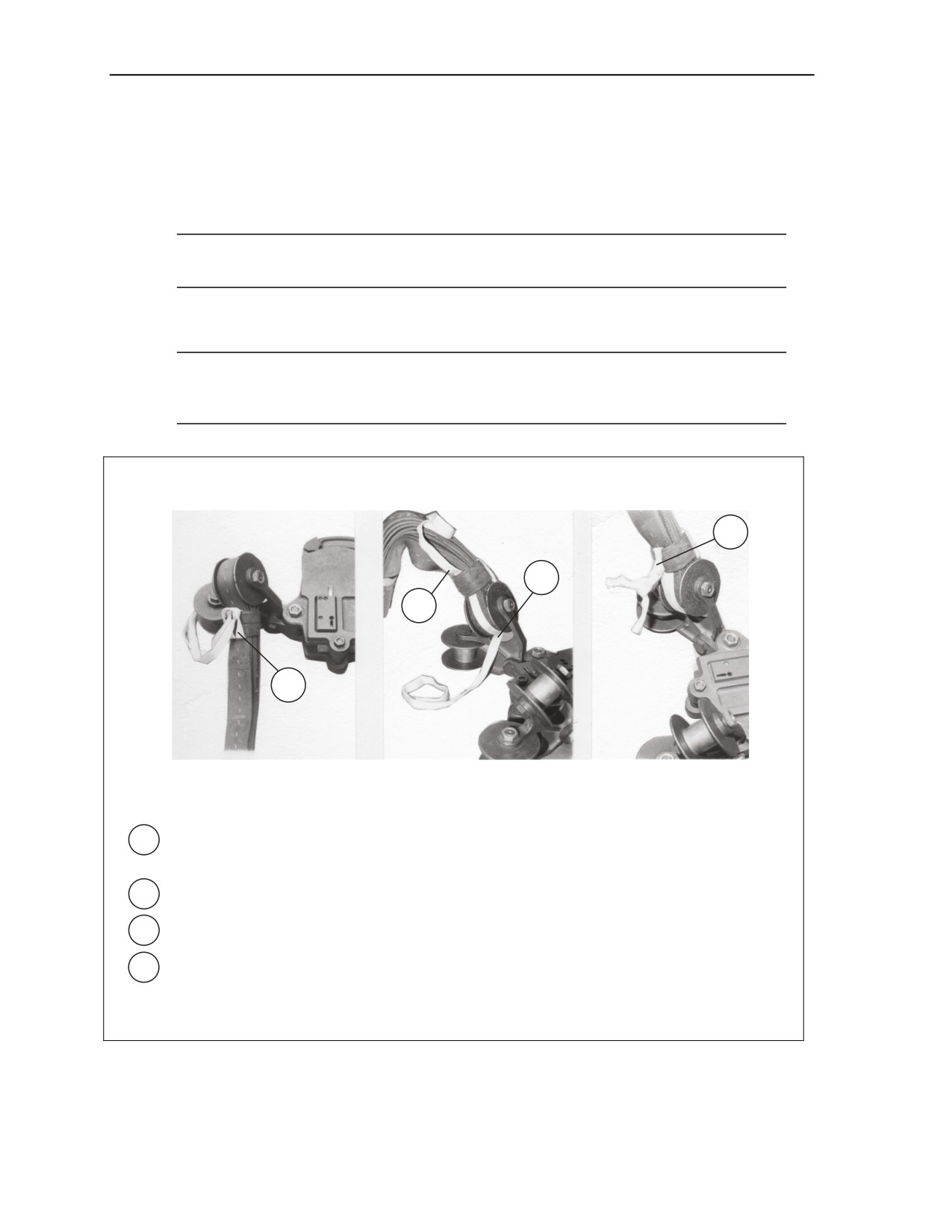
• Attaching the Squib to the EPJD. Attach the squib to the EPJD as shown in Figure 7-5.
WARNING
When attaching the squib to the EPJD do not separate the squib
cable with safety cap from the squib.
2
3
1
1 Inspect and prepare a squib, squib cable with safety cap and EPJD according to the
procedures in TM 10-1670-296-20&P/TO 13C7-49-2 and Figures 7-3 and 7-4 of this manual.
2 Apply a small amount of O-ring lube to the O-ring of the squib.
3 Attach the squib assembly to the threaded EPJD squib port. Use a 1-inch wrench provided
with the kit to tighten the squib until it contacts the body of the EPJD.
Note. Do not over tighten the squib
Figure 7-5. Squib and Squib Cable Attached to the EPJD
8 June 2006 FM 4-20.102/MCRP 4-11.3J/NAVSEA SS400-AB-MMO-010/TO 13C7-1-5
7-9
Chapter 7
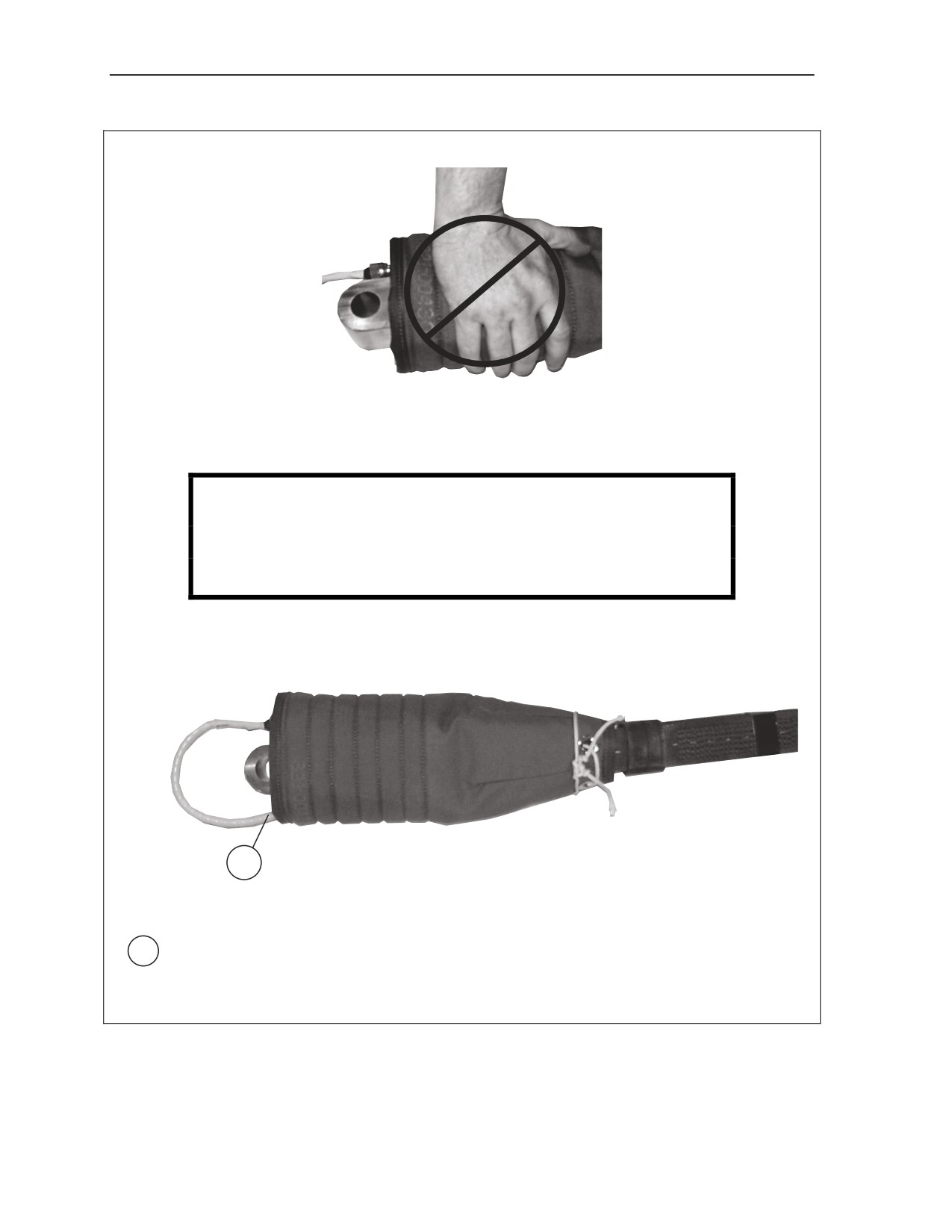
WARNING
Avoid handling the EPJD by its latch after the squib has been
installed in the EPJD squib port.
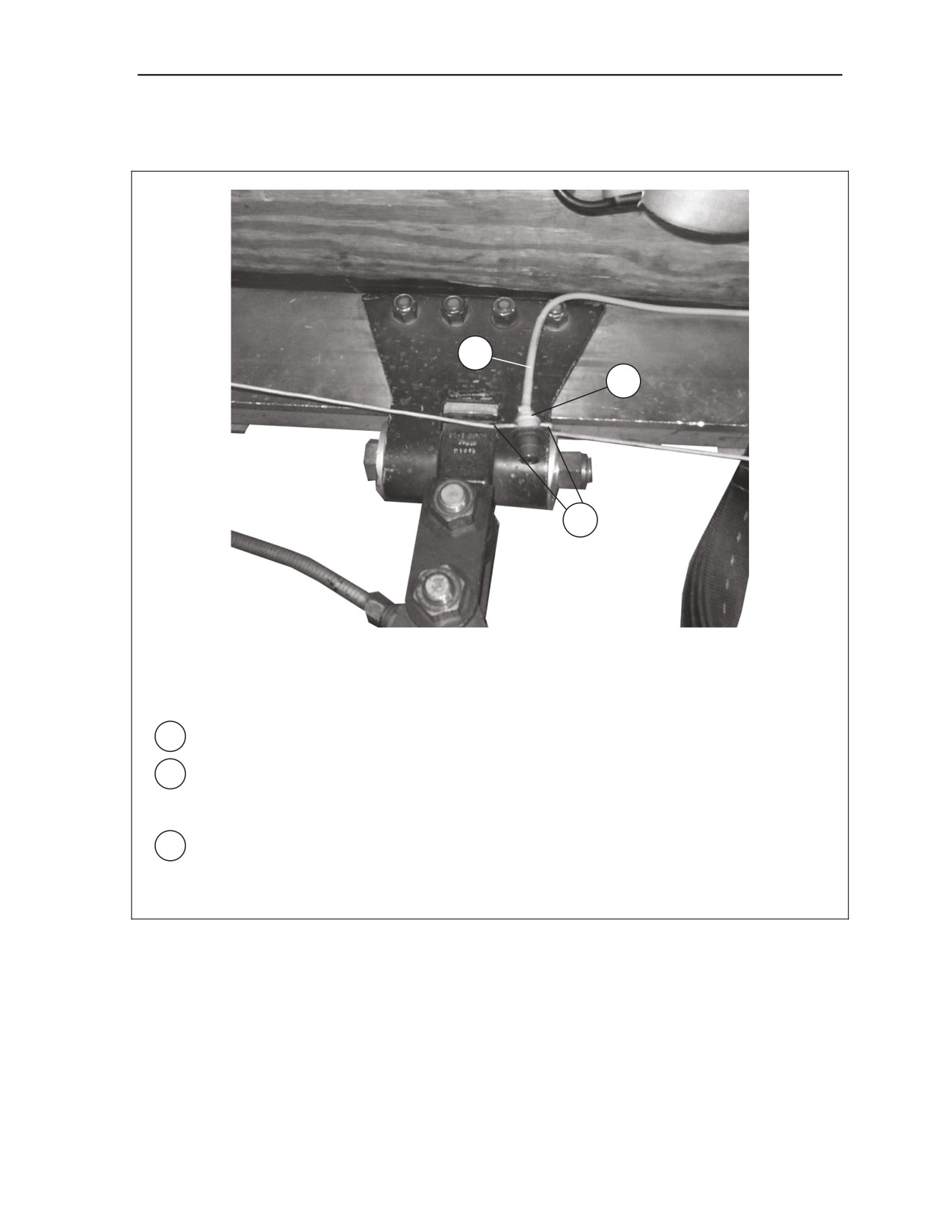
4
4 Open the hook pile tape and bend the squib cable back so that the connector and most of the
cable is inside the protective cover and close the cover.
Figure 7-5. Squib and Squib Cable Attached to the EPJD (Continued)
7-10
FM 4-20.102/MCRP 4-11.3J/NAVSEA SS400-AB-MMO-010/TO 13C7-1-5
8 June 2006
Extraction Parachute Jettison System (EPJS)
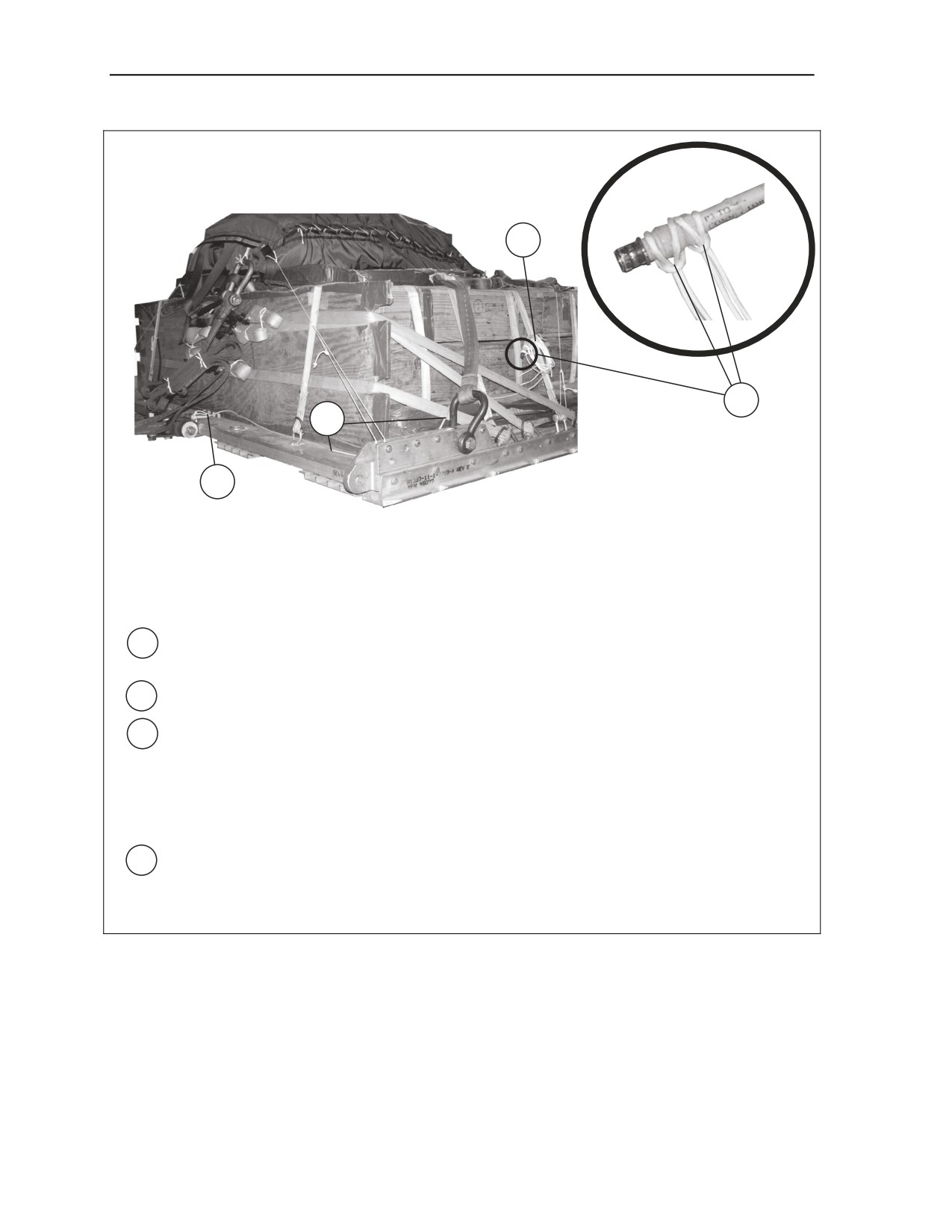
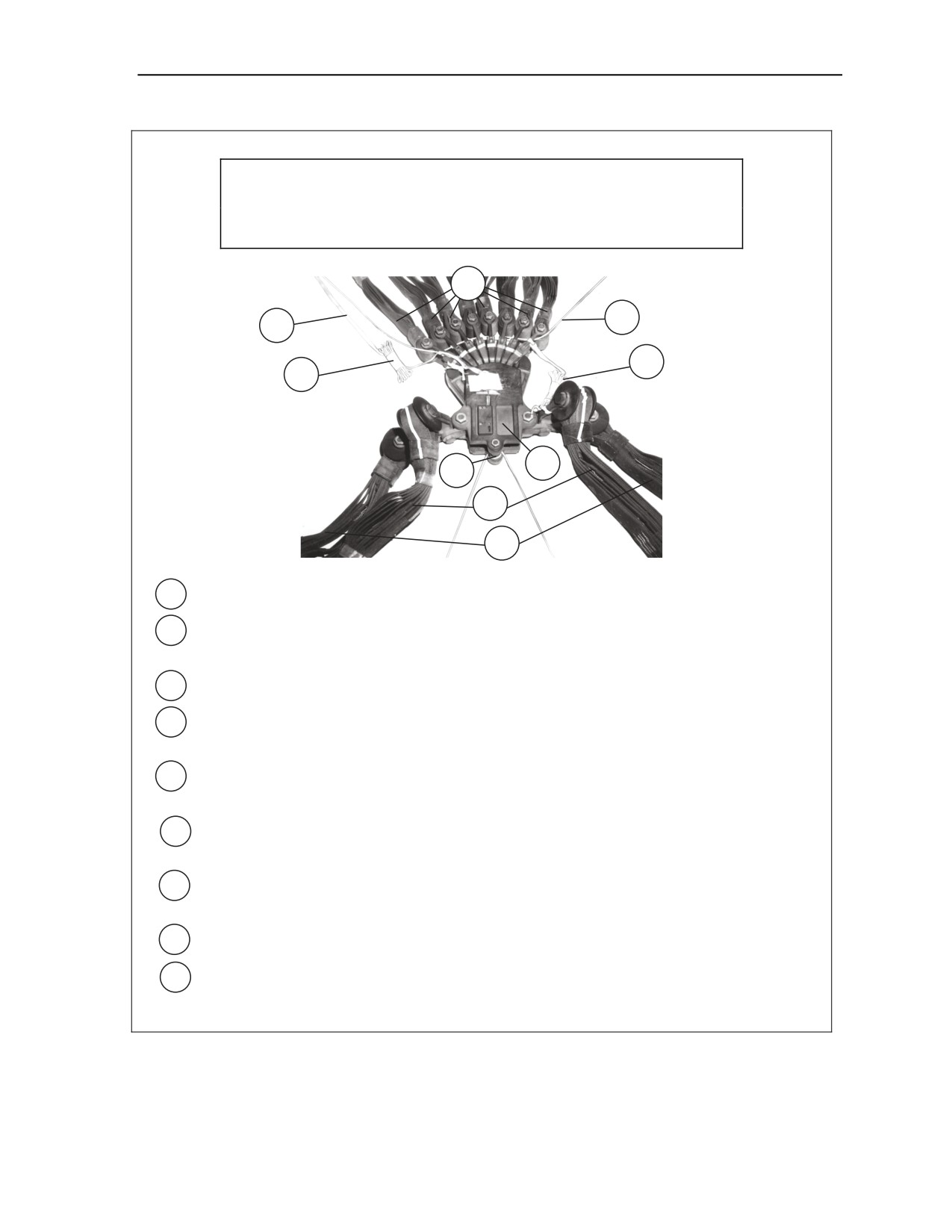
• Preparing the Airdrop Load. Prepare the airdrop load by attaching a platform cable to the load
as shown in Figure 7-6.
1
2
3
1 Inspect a 10-foot platform cable as shown in TM 10-1670-296-20&P/TO 13C7-49-2.
2 Girth-hitch a 32-inch length of type III nylon cord to a point just forward of the aft connector
flange of the platform cable. Position the girth-hitched portion of the cable on top of the right
side of the extraction bracket, aligning the tie with the rear edge of the platform.
3 Route both running ends of the type III nylon cord through the space between the top of the
extraction bracket and the extraction lug in opposite directions.
Figure 7-6. Platform Cable Attached to the Airdrop Load
8 June 2006 FM 4-20.102/MCRP 4-11.3J/NAVSEA SS400-AB-MMO-010/TO 13C7-1-5
7-11
Chapter 7
7
6
5
4
4 Route and secure the running ends of the type III nylon cord on top of the platform cable with
a surgeon's knot and locking knot with overhand knots in the running ends.
5 Route the platform cable to the right side of the platform and behind all lashings and slings.
6 Girth-hitch two suitable lengths of type III nylon cord to the quick disconnect fitting on the
platform cable to be used as safety ties during after-load rigging.
Note. When utilizing the C-17 aircraft an extension cable must be used; therefore; girth-hitch a single
length of type III nylon cord around the quick disconnect fitting of the platform cable.
7 Tie the platform cable to a convenient point on the load with a length of type I, 1/4-inch cotton
webbing.
Figure 7-6. Platform Cable Attached to the Airdrop Load (Continued)
7-12
FM 4-20.102/MCRP 4-11.3J/NAVSEA SS400-AB-MMO-010/TO 13C7-1-5
8 June 2006
Extraction Parachute Jettison System (EPJS)
• Preparing the EPJS Aircraft Components for Transportation (C-130, and C-17 only). Assemble,
inspect, and transport the EPJS aircraft components as follows:
Inspect a set of EPJS aircraft components as outlined in TM 10-1670-296-20&P/TO 13C7-
49-2.
Stow the components of the EPJS in an EPJS equipment bag. Put the control box and
mounted Y-connectors in the lower level compartments. Fold the separator panel over the
lower level and place the cables in the upper level.
Note. Ensure that the Y-connectors are mounted to the Y-connector mounting boxes according to the type of
aircraft being utilized. For the C-130 and C-17 aircraft, mount the Y-connector to the wide portion of the
mounting box.
Transport an EPJD with extraction line attached, that has been prepared as outlined in
Figures 7-3 through 7-5 of this manual.
While the airdrop loads are being weighed and manifested, transport the EPJS equipment
bag and the prepared EPJD to the aircraft.
Aircrew members will install the EPJS in the aircraft.
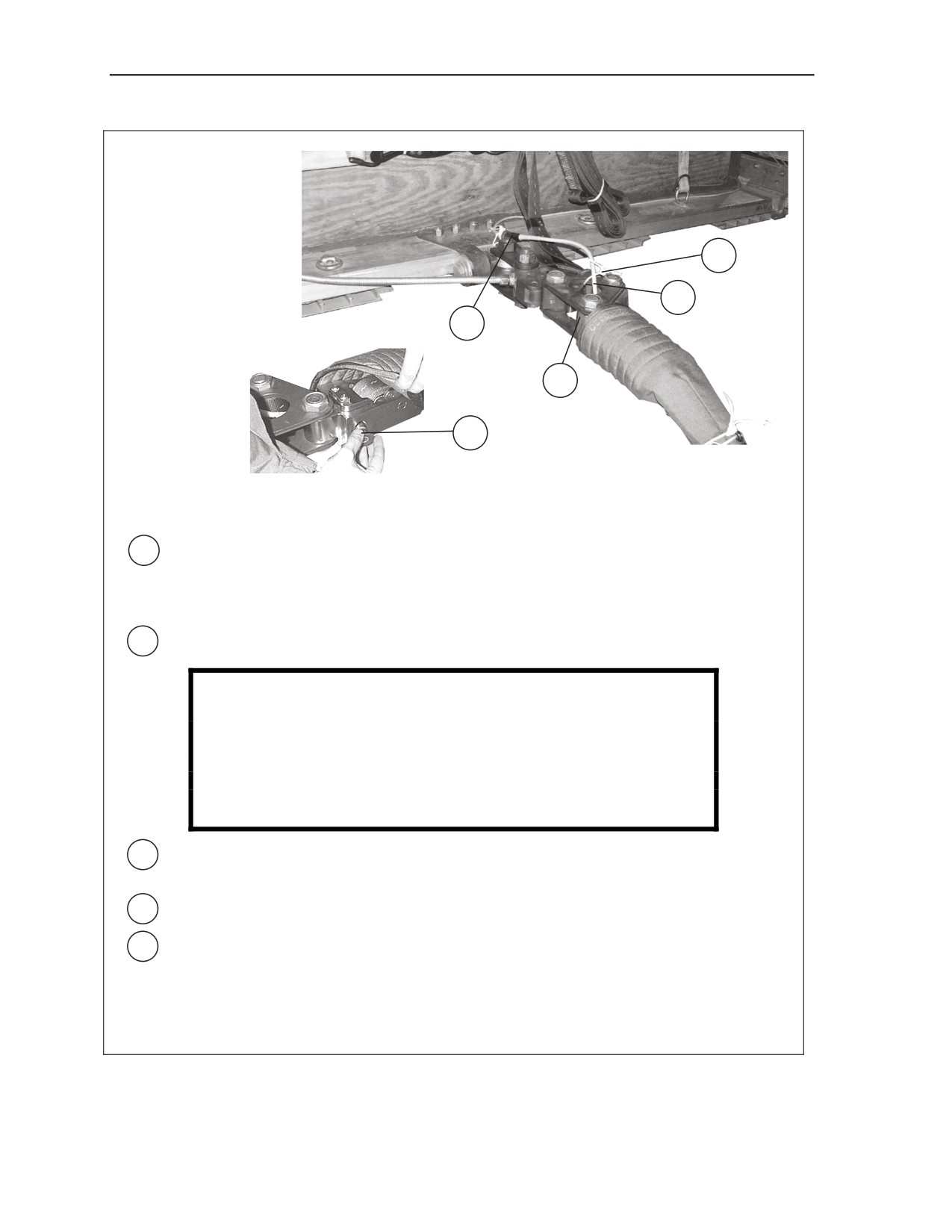
• Attaching the EPJD to the Airdrop Load During After-Load. Attach the EPJD to the load as
shown in Figure 7-7.
WARNING
Failure to connect the squib cable to the platform cable as soon
as practical after removing the safety cap, increases the
probability of inadvertent activation.
CAUTION
Ensure the safety cap is stowed in the threaded port of the EPJD.
8 June 2006 FM 4-20.102/MCRP 4-11.3J/NAVSEA SS400-AB-MMO-010/TO 13C7-1-5
7-13
Chapter 7
5
2
3
1
4
Note. Ensure that the spacer removed in step 1 is removed from the aircraft prior to airdrop.
1 Remove the nut, bolt, and spacer from the extraction side of the coupling assembly.
Attach an EPJD that has been inspected and prepared according to the procedures in TM
10-1670-296-20&P/TO 13C7-49-2 and Figures 7-3 through 7-5. Secure with the nut and
bolt previously removed.
2 Route the squib cable through the hole in the top plate of the coupling assembly.
WARNING
Prior to attaching the squib cable to the platform cable ensure
the power and jettison switches on the control box are in the
off position. This will prevent inadvertent activation of the
squib.
3 Remove the safety cap from the squib cable and immediately plug the connector on the
squib cable to the fitting on the platform cable.
4 Stow the safety cap in the threaded hole on the left side of the EPJD body.
5 Route a length of type III nylon cord around the squib cable and top plate of the coupling
assembly on the deployment side making a loose retaining tie. Secure with a surgeon's
knot and locking knot with overhand knots in the running ends.
Note. When making the retaining tie ensure that there is approximately 1 to 3 inches of slack
between the top plate of the three-point link and squib cable.
Figure 7-7. EPJD Attached to the Airdrop Load
7-14
FM 4-20.102/MCRP 4-11.3J/NAVSEA SS400-AB-MMO-010/TO 13C7-1-5
8 June 2006
Chapter 8
Release Assemblies
SECTION I-GENERAL INFORMATION
USE
8-1. The cargo parachute release assembly allows the parachute (s) to separate from the load when the
load touches the ground. The separation reduces the chance of the wind dragging or overturning the load.
DESCRIPTION
8-2. The M-1 or the M-2 is used when a platform load is rigged for low-velocity airdrop. The
automatic cargo release is used on some Marine Corps, Navy and Air Force loads.
• The M-1 Airdrop Cargo Parachute Release. This release is used with rigged loads weighing
up to 15,000 pounds suspended.
• The M-2 Airdrop Cargo Parachute Release. The M-2 release is similar to the M-1 release.
The M-2 release is used on loads weighing up to 42,000 pounds suspended.
• The Automatic Cargo Parachute Release (ACPR) (Not for Army Use). The automatic cargo
parachute release is a two-piece unit that operates on a load-tension activated hydraulic arming
delay principal. It has no internal maintenance or repair. The automatic cargo parachute release
is used on loads weighing up to 2,500 pounds suspended.
Note. Specific rigging manuals will specify which release is used.
INSPECTION AND MAINTENANCE
8-3. The M-1 and M-2 releases are inspected and maintained as outlined in TM 10-1670-296-20&P/TO
13C7-49-2. See the TM for specifics on inspection and maintenance.
OPERATION
8-4. The operation of the airdrop cargo parachute release works when the load touches the ground and
upper suspension link tilts or moves to the side. When the release tilts, the parachutes are released from the
load. Figure 8-1 shows how the release operates.
8 June 2006 FM 4-20.102/MCRP 4-11.3J/NAVSEA SS400-AB-MMO-010/TO 13C7-1-5
8-1
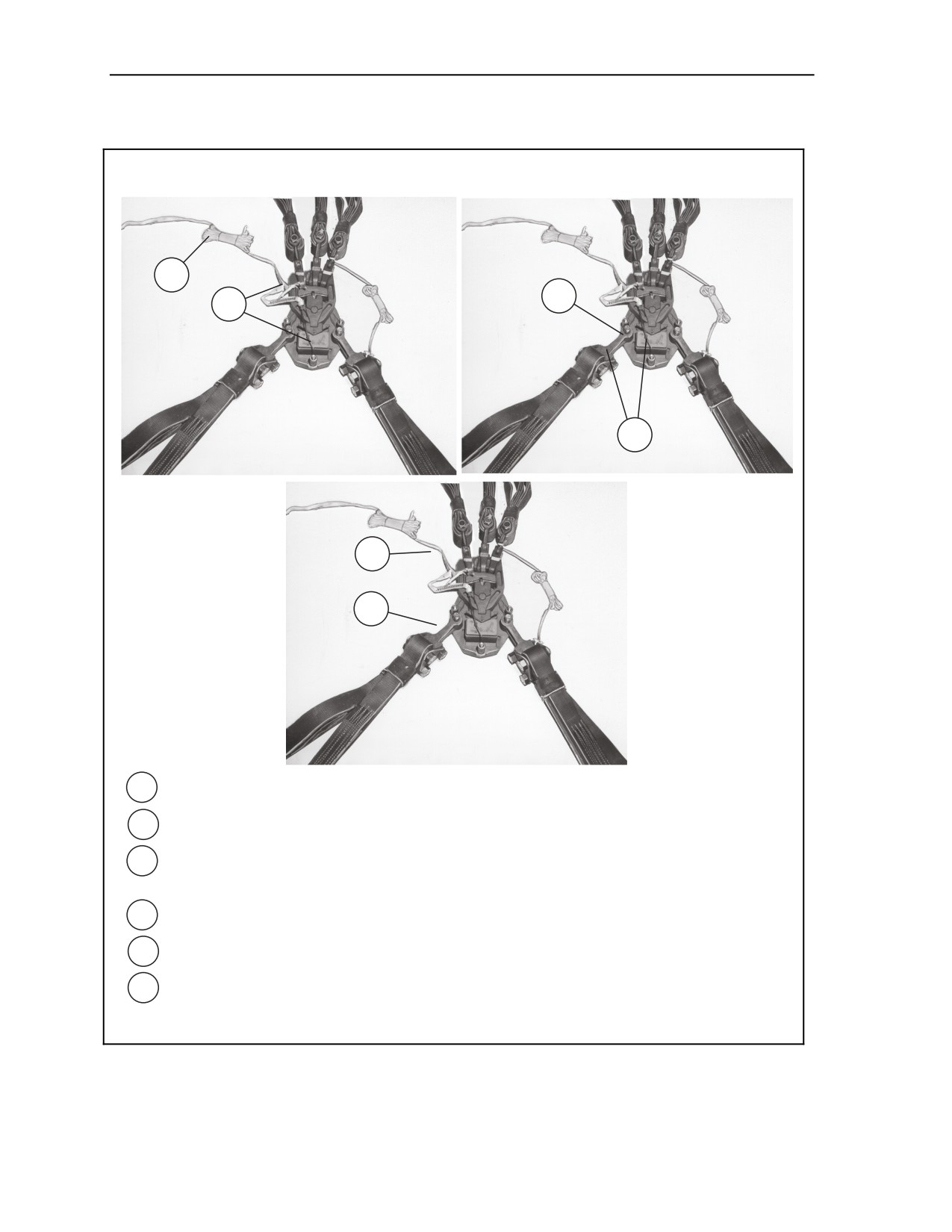
Chapter 8
Note. The face plate has been removed to aid in identification.
1
3
2
4
6
5
1 As the cargo parachute deploys, the arming wire lanyard is pulled.
2 The safety tie is broken and the arming wire is pulled from the timer.
3 The timer delays from 12 to 16 seconds. This delay allows the load to stabilize itself under
the parachute.
4 When the timer winds down, it retracts its keys from the slots in the release.
5 When the keys are retracted from their slots, the timer is free to fall within the release.
6 As the timer falls, it frees the toggle and upper suspension link.
Figure 8-1. Typical Operation of the M-1 and M-2 Cargo Parachute Release
8-2
FM 4-20.102/MCRP 4-11.3J/NAVSEA SS400-AB-MMO-010/TO 13C7-1-5
8 June 2006
Release Assemblies
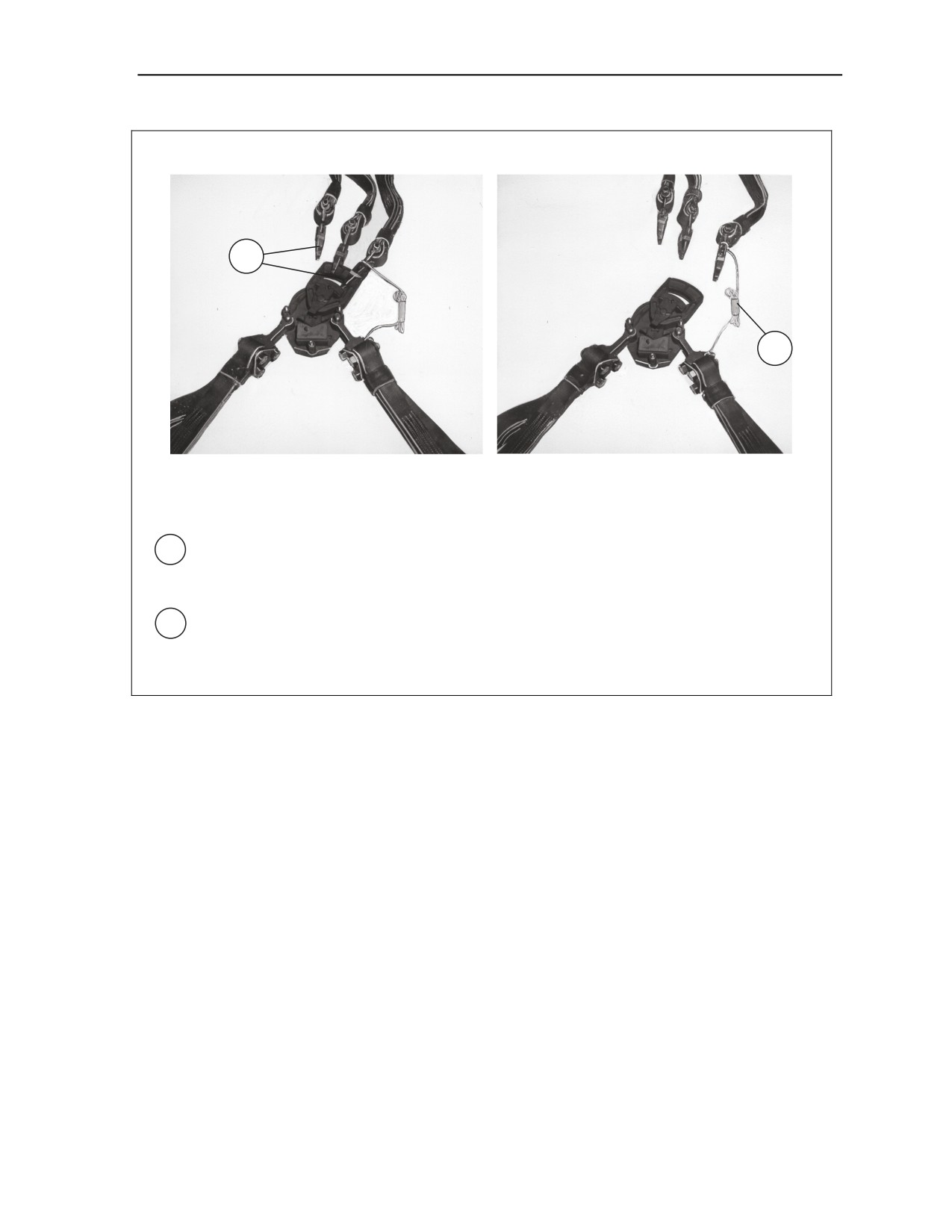
7
8
7 When the load descends, the normal upright position of the M-1 release keeps the
parachute connectors in place. As the load touches the ground, the upper suspension link
tilts and allows the parachute connectors to pull free.
8 The released parachute stretches the dragline until the release drags to one side of the
load to prevent damage to the load. Then the dragline breaks.
Figure 8-1. Typical Operation of the M-1 and M-2 Cargo Parachute Release (Continued)
8 June 2006 FM 4-20.102/MCRP 4-11.3J/NAVSEA SS400-AB-MMO-010/TO 13C7-1-5
8-3
Chapter 8
SECTION II-RIGGING INFORMATION
M-1 CARGO PARACHUTE RELEASE
8-5. Test, attach, and safety the M-1 cargo parachute release as follows:
CAUTION
DO NOT use the M-1 cargo parachute release with four G-11B cargo
parachutes. The M-2 cargo parachute release MUST be used.
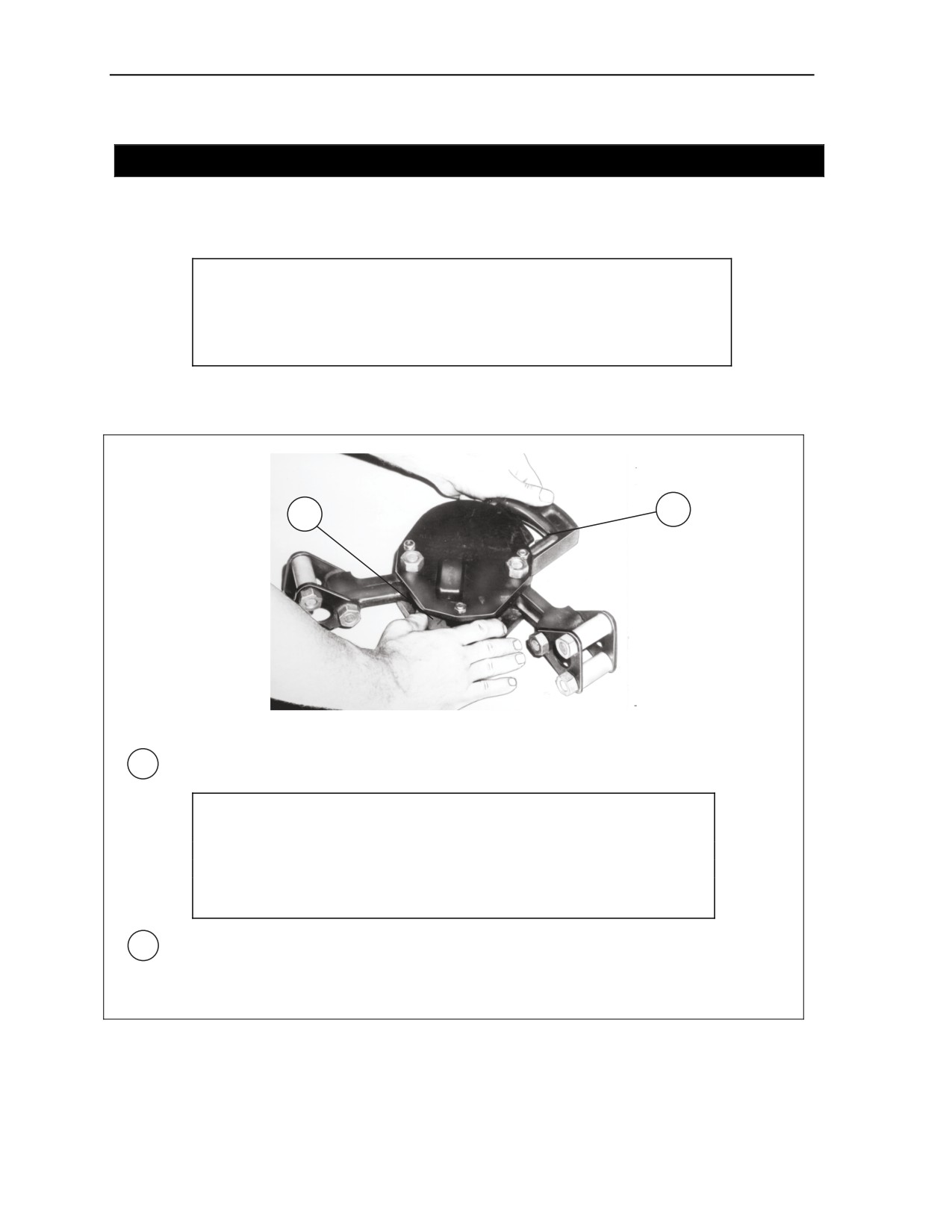
• Testing Timer. Before each use, seat, arm, and test the delay timer as shown in Figures 8-2
through 8-4.
1
2
1 Align and center the upper suspension link with the release side plates.
CAUTION
If the timer is not correctly seated in the upper position in the release
when it is armed, the keys will not fit into the slots in the back side
plate and could damage the timer.
2 Reach between the side plates, and slide the timer up until the toggles fit in the toggle lock
slides, making sure the timer slides freely. You should be able to see the winding shaft of
the timer through the guide block winder access hole.
Figure 8-2. Delay Release Timer Seated
8-4
FM 4-20.102/MCRP 4-11.3J/NAVSEA SS400-AB-MMO-010/TO 13C7-1-5
8 June 2006
Release Assemblies
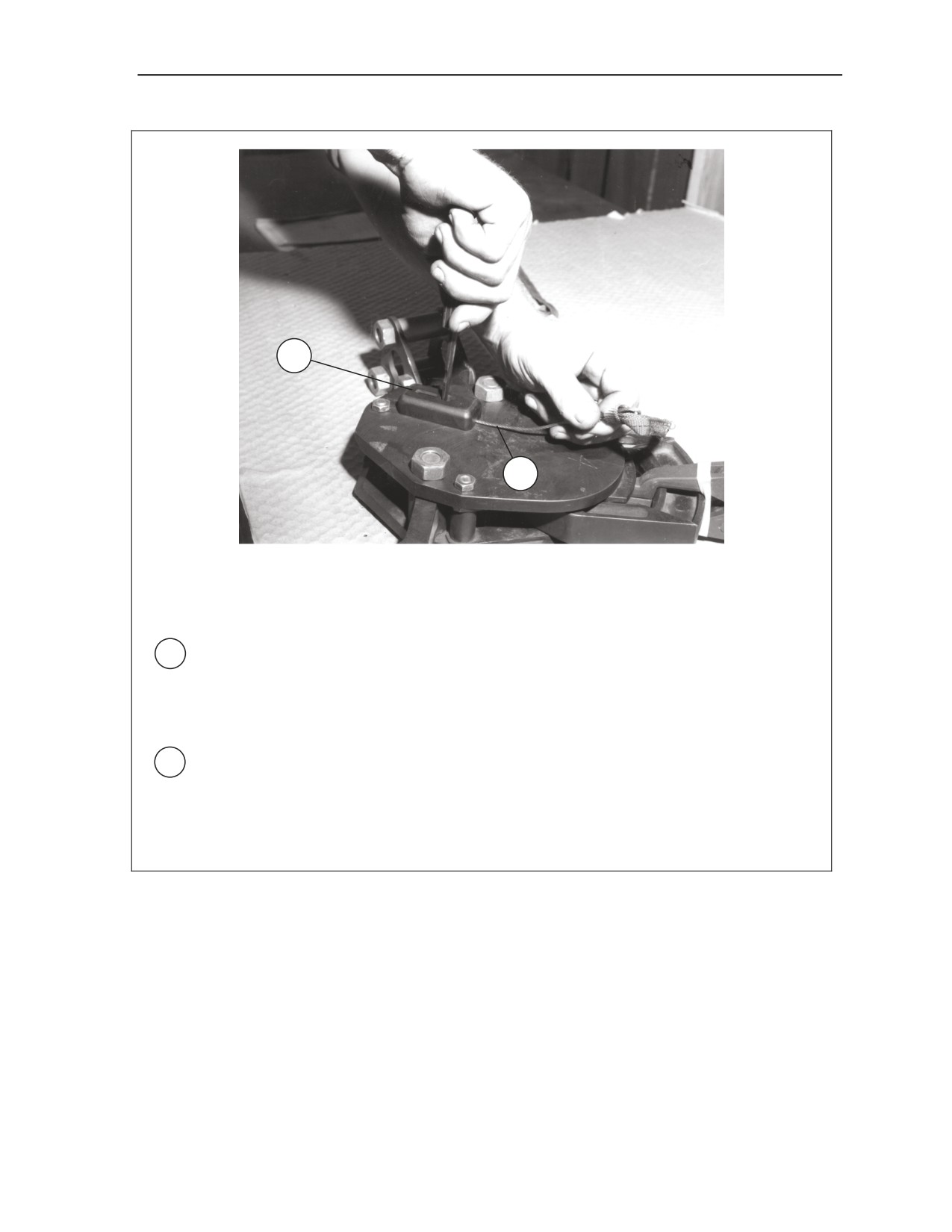
1
2
1 Put the tip of a flat-tip screwdriver through the guide block winder access hole and into the
slot in the timer winding shaft. Gently turn the shaft one-quarter turn to the right and stop,
holding the shaft with the screwdriver.
Note. If the winding shaft is hard to turn, hold the shaft with the screwdriver and move the timer
around until the keys align with the slots in the back plate.
2 Hold the shaft, and push the arming wire down through the hole in the guide block and the
hole in the winding shaft.
Note. When the timer is correctly armed, about 1/2 inch of the arming wire can be seen through the
slot below the guide block winder access hole.
Figure 8-3. Timer Armed
8 June 2006 FM 4-20.102/MCRP 4-11.3J/NAVSEA SS400-AB-MMO-010/TO 13C7-1-5
8-5
Chapter 8
Note. The delay release timer will be tested before each use.
1
1 Pass a length of type I, 1/4-inch cotton webbing up between the release side plates, over
and around the center of the timer, and back down between the side plates. The side plate
and a toggle lock slide have been removed to show how the webbing passes around the
timer. You may use a length of wire to help you pass the webbing around the timer.
Figure 8-4. Testing Timer
8-6
FM 4-20.102/MCRP 4-11.3J/NAVSEA SS400-AB-MMO-010/TO 13C7-1-5
8 June 2006
Release Assemblies
CAUTION
Do not over tighten the face side plate. Failure to do so could result
in a malfunction of the M-1 release.
2
4
4
3
3
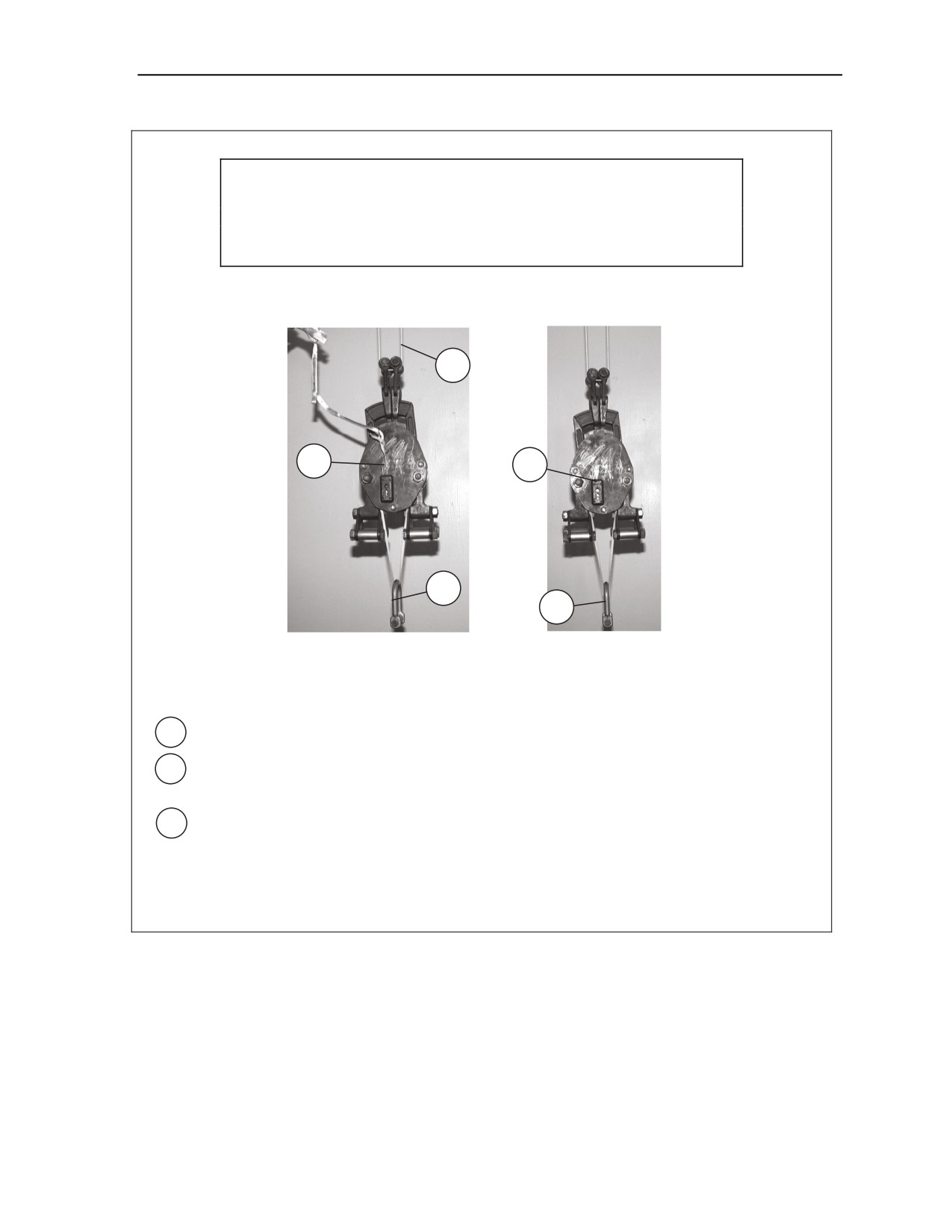
2 Hang the release in a straight, level position.
3 Tie a 10-ounce weight, such as a platform clevis with bolt with no spacer or a parachute
release connector, without the nut and bolt, to the type I, 1/4-inch cotton webbing.
4 Pull the arming wire from the timer. Count the seconds from the time the wire is pulled until
the timer falls within the release.
Note. If the timer fails to fall after the allotted time (12 to 16 seconds), refer to TM 10-1670-296-
20&P/TO 13C7-49-2 for proper maintenance procedures.
Figure 8-4. Testing Timer (Continued)
8 June 2006 FM 4-20.102/MCRP 4-11.3J/NAVSEA SS400-AB-MMO-010/TO 13C7-1-5
8-7
Chapter 8
• Preparing, Attaching, and Safety Tieing Release. Prepare, attach, and safety the M-1 cargo
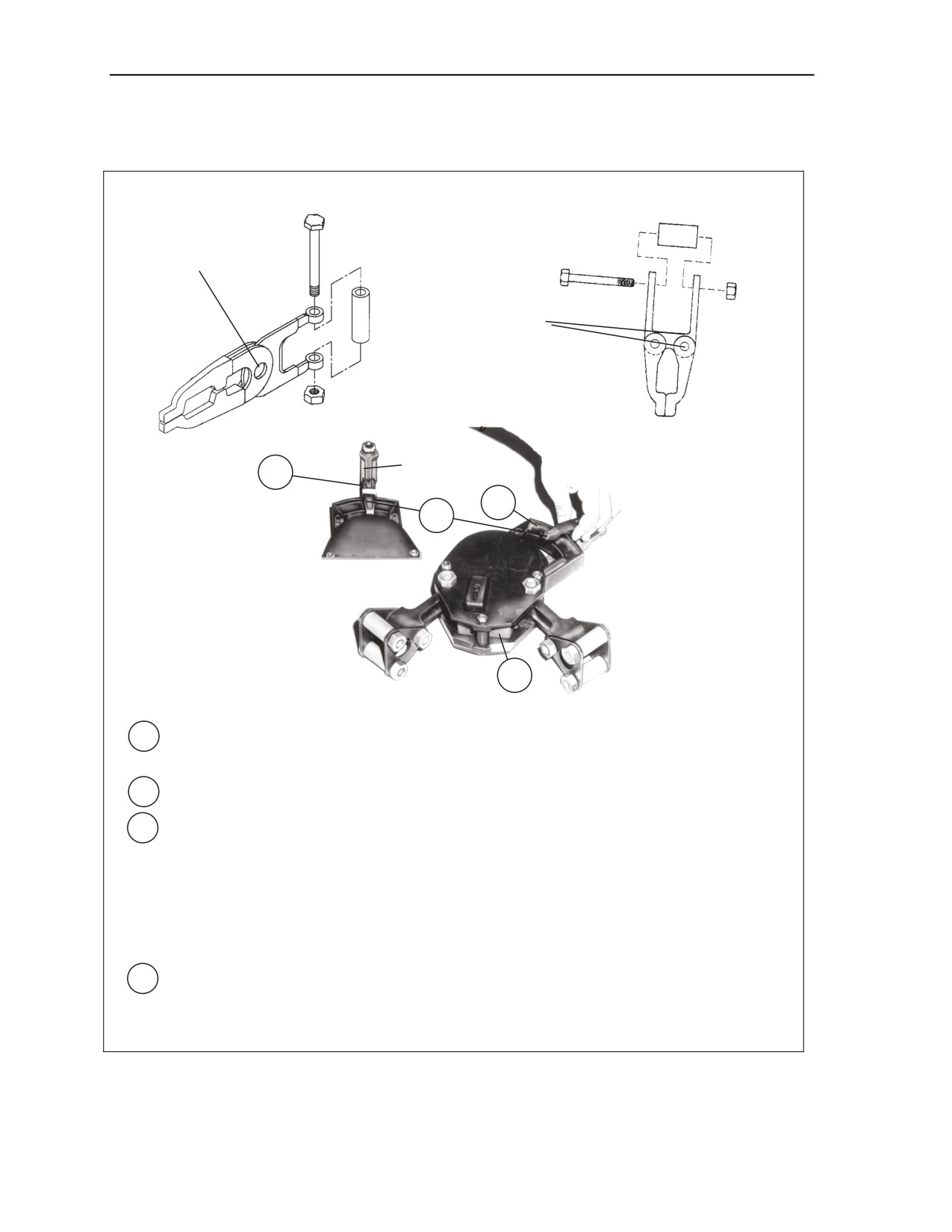
parachute release as shown in Figures 8-5 through 8-7.
NEW PARACHUTE CONNECTOR
OLD PARACHUTE CONNECTOR
ONE PIVOT POINT
TWO PIVOT POINTS
PARACHUTE
4
CONNECTOR
2
3
1
Note. Do not mix the two types of connectors on the same release.
1 Use an M-1 release with a tested timer and make sure that the delay release timer is down
in the housing of the release.
2 Move the upper suspension link to the right or the left as far as it will go.
3 Open the arms of a parachute connector, and fit the arms on the upper suspension link
with the tips together in the groove of the retaining clamp.
Notes.
1. One parachute connector will be fitted to the upper suspension link for each cargo
parachute used on the load.
2. A retaining band may be used to aid in assembly.
4 Fit a retainer band around the parachute connector to aid in assembly. Remove the
retainer bands.
Figure 8-5. Parachute Connector Fitted to Upper Suspension Link or M-1 Release
8-8
FM 4-20.102/MCRP 4-11.3J/NAVSEA SS400-AB-MMO-010/TO 13C7-1-5
8 June 2006
Release Assemblies
9
6
10
2
1
7
8
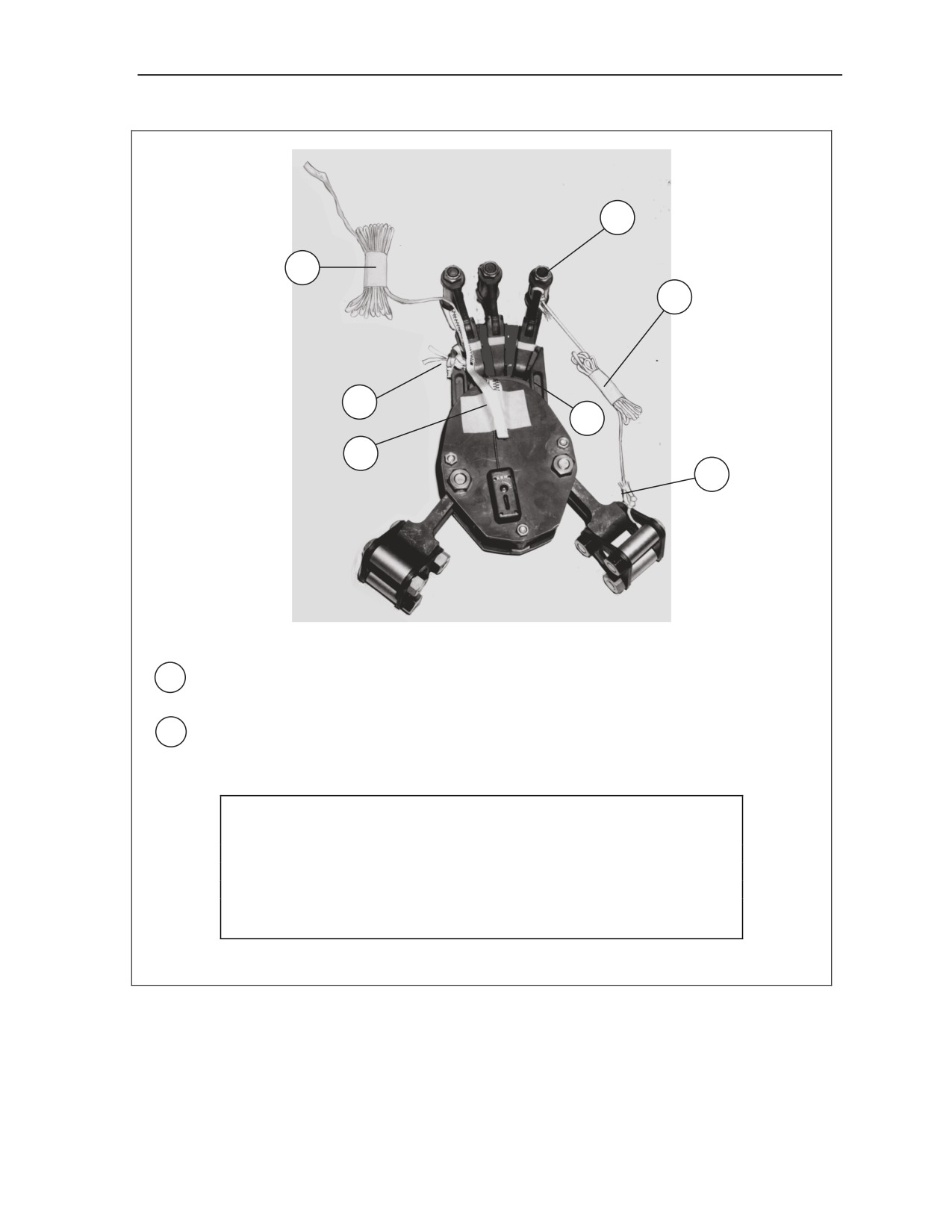
1 Move the upper suspension link back to the center of the release and arm the timer as
indicated in Figures 8-2 and 8-3.
2 Safety the arming wire lanyard to the upper suspension link with a double length of type I,
1/4-inch cotton webbing with a surgeon’s knot and a locking knot.
CAUTION
The end loop of the arming wire may pull free from the crimping
sleeve during parachute deployment. To ensure that the arming wire
disengages from the timer stem, an arming wire safety tie must be
installed on all arming wires prior to use on an airdrop operation.
Figure 8-6. M-1 Release Prepared
8 June 2006 FM 4-20.102/MCRP 4-11.3J/NAVSEA SS400-AB-MMO-010/TO 13C7-1-5
8-9
Chapter 8
4
3
5
Note. With the arming wire lanyard attached to the arming wire loop, the arming wire loop shall be
designated as the top. This safety tie should be inspected at the joint airdrop load inspection, before
and after loading. Install the safety tie as follows:
3 Girth hitch a 12-inch length of 1/4-inch cotton webbing on the safety wire just below the metal
fastener.
4 Route one running end of the 1/4-inch cotton webbing through the looped ends of the arming
wire and lanyard.
5 After ensuring there is 1/2-inch to 1-inch of slack in both running ends, tie a surgeon’s knot
and locking knot in the 1/4-inch cotton webbing.
6 Fold the slack in the lanyard, and tape the folds in place with one turn of masking tape.
7 Fold the slack in the lanyard, between the safety tie and the arming wire, and tape the fold to
the face side plate with one piece of masking tape.
Note. Include the following data on the masking tape: name, date, and timer seconds.
8 Tie one end of a 5-foot length of type III nylon cord (dragline) to the outside side of the right
lower suspension link.
9 Tie the other end of the dragline to the body of the right parachute release connector.
10 Fold the slack in the dragline and tape the folds in place with one turn of masking tape.
Figure 8-6. M-1 Release Prepared (Continued)
8-10
FM 4-20.102/MCRP 4-11.3J/NAVSEA SS400-AB-MMO-010/TO 13C7-1-5
8 June 2006
Release Assemblies
CAUTION
Make sure the arming wire lanyard is routed over all items.
2
7
6
6
1
4
5
4
3
1 Put the release on the load as instructed in the specific rigging manual for the load.
Note. Bolt a 3-foot (2-loop), type XXVI nylon sling to the parachute clevis of one G-11B cargo
parachute and to the parachute connector fitted to the release.
2 Bolt the riser extensions of two G-12E, or two or three G-11B cargo parachutes to the
parachute connectors already fitted to the release.
3 Attach the front suspension slings to the top bolts of the lower suspension link.
4 Attach the rear suspension slings to the lower bolts of the lower suspension link. The rear
slings will have a half twist towards the parachutes.
5 Run a length of type III nylon cord to encircle the lower spacer, and tie the ends of the cord
to points on the front of the load or platform.
6 Run a length of type III nylon cord over the suspension slings and through the parachute
connectors, and tie the ends of the cord to points on the rear of the load or platform.
7 Tie the lanyard to a carrying handle of a parachute with three alternating half hitches and
an overhand knot in the running end.
8 Fold the slack in the lanyard, and tape the folds in place with one turn of masking tape.
(Not shown)
Figure 8-7. M-1 Release Attached and Safety Tied to Load
8 June 2006 FM 4-20.102/MCRP 4-11.3J/NAVSEA SS400-AB-MMO-010/TO 13C7-1-5
8-11
Chapter 8
M-2 CARGO PARACHUTE RELEASE
8-6. Prepare, attach, and safety the M-2 cargo parachute release as follows:
• Preparing Release. Test the timer and prepare an M-2 cargo parachute release the same as the
M-1 release.
Note. Three to eight connectors may be fitted to an M-2 release. The M-2 release requires a 5-
foot dragline made from 1/2-inch tubular nylon webbing.
• Attaching and Safety Tieing Release. Attach and safety tie the M-2 cargo parachute release to
the load as shown in Figure 8-8.
Note. When using the M-2 cargo parachute release on the 28-foot and 32-foot platforms, use a
25-foot arming wire lanyard. Make the lanyard according to TM 10-1670-296-20&P/TO 13C7-
49-2.
4
2
3
1
1 Form a girth hitch around one side of a suspension sling keeper with a 5-foot length of 1/2-
inch tubular nylon webbing. Make sure the running ends are equal.
2 Route both ends around the looped end of the sling and through the lower suspension link.
3 Route one end of the 1/2-inch tubular nylon webbing through the suspension sling keeper.
4 Slide the keeper as close to the lower suspension link as possible. Tie the running ends
together with a slip knot.
Figure 8-8. M-2 Release Prepared, Attached, and Safety Tied to Load
8-12
FM 4-20.102/MCRP 4-11.3J/NAVSEA SS400-AB-MMO-010/TO 13C7-1-5
8 June 2006
Release Assemblies
CAUTION
Make sure the arming wire lanyard is routed over all items.
6
9
11
13
12
5
10
7
8
5
Put the release on the load as instructed in the specific rigging manual for the load.
6
Bolt the riser extensions of three to four G-11B or five to eight G-11C cargo parachutes to
the parachute connectors already fitted to the release.
7
Attach the front suspension slings to the top bolt of the lower suspension link.
8
Attach the rear suspension slings to the lower bolt of the lower suspension link. The rear
slings will have a half twist towards the parachutes.
9
Run a length of type III nylon cord through the connectors, and tie the ends of the cord to
points on the rear of the load or platform.
10
Run a length of type III nylon cord around the lower spacer, and tie the ends of the cord to
points on the front of the load or platform.
11
Tie the lanyard to the carrying handle of a parachute with three alternating half hitches and
an overhand knot in the running end.
12
Fold the slack in the lanyard, and tape the folds in place with one turn of masking tape.
13
Install the drag line and fold the slack. Secure with masking tape.
Figure 8-8. M-2 Release Prepared, Attached, and Safety Tied to Load (Continued)
8 June 2006 FM 4-20.102/MCRP 4-11.3J/NAVSEA SS400-AB-MMO-010/TO 13C7-1-5
8-13
Chapter 8
THE AUTOMATIC CARGO PARACHUTE RELEASE (NOT FOR
ARMY USE)
8-7. The automatic cargo parachute release is a two-piece unit that operates on a load tension activated
hydraulic arming delay principal. It has no internal maintenance or repair.
Note. The service life of the release is 10 years from the date of manufacture.
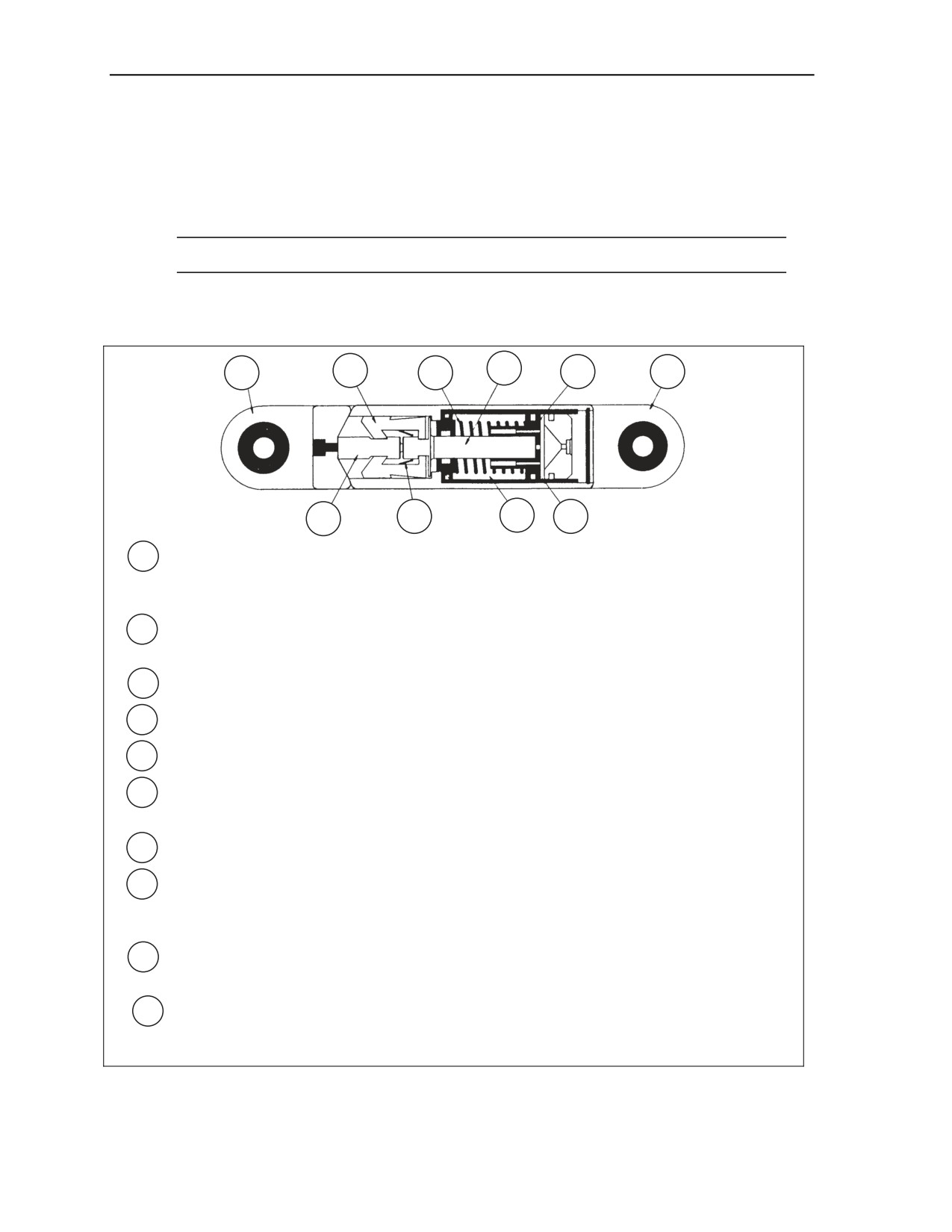
• Physical and Functional Characteristics. The physical and functional characteristics of the
automatic cargo release are shown in Figure 8-9.
2
8
5
3
4
1
9
10
6
7
1
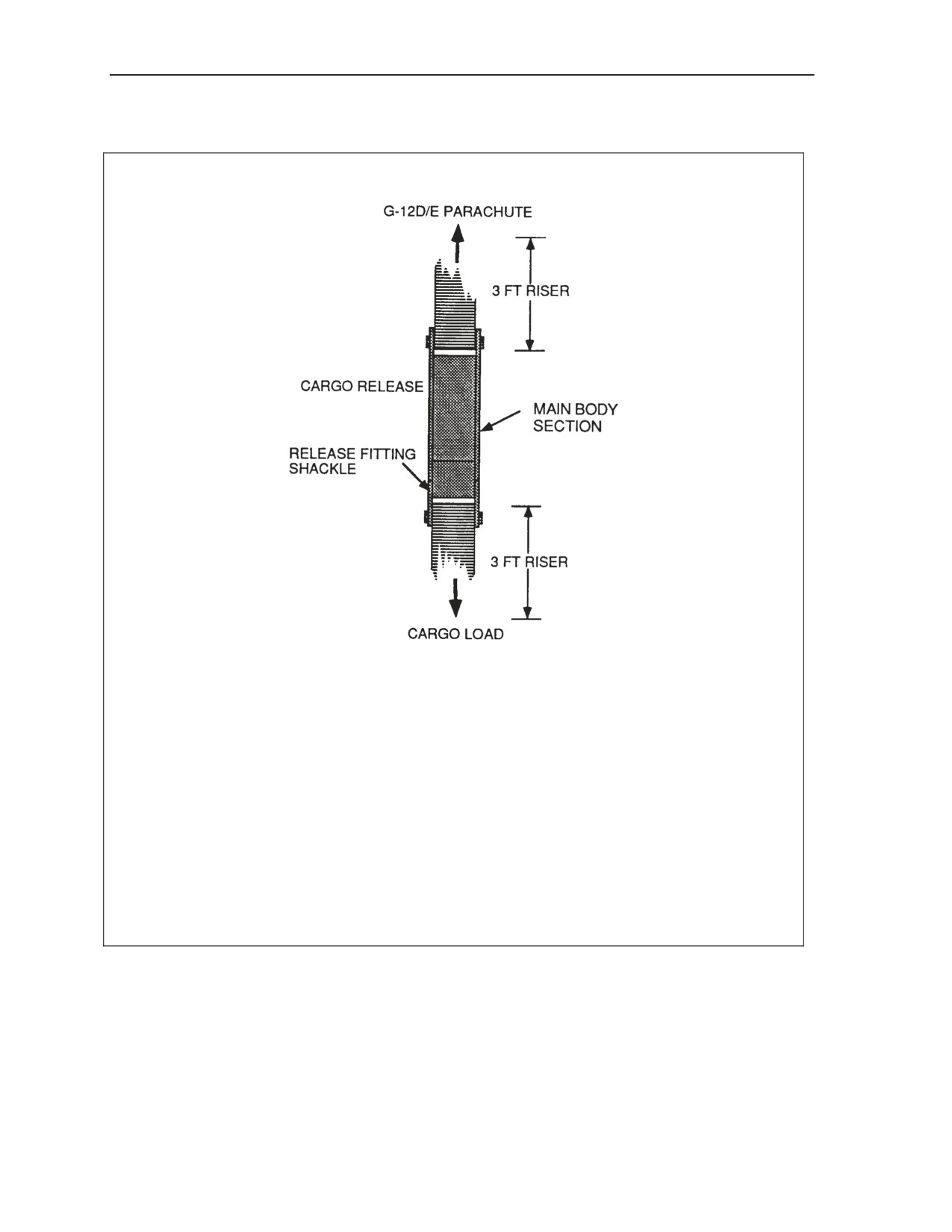
The automatic cargo release is a two-piece unit that operates on a load-tension activated
hydraulic arming delay principle. The main body, section 1, is attached to the main
parachute riser and the release fitting shackle.
2
The release fitting shackle is attached to the suspension sling while the assembly is in the
closed position.
3
Application of a load will exert force on the piston rod.
4
This causes the piston head to move downward.
5
This also causes the load spring to move downward.
6
This forces hydraulic fluid, located in the lower chamber to flow through orifices in the
piston head.
7
The fluid flows from the piston head to the upper chamber.
8
The size of the orifices and the thickness of the fluid limit the flow, so that the maximum
stroke will occur after a period of time defined by the manufacturer as 420/square root of
the load in pounds. At the end of the stroke, the jaws are fully extended downward.
9
The jaw teeth engage the neck and shoulders of the release stud, in the shackle and retain
it by friction as long as the load remains on the assembly.
10
When the load is relieved due to canopy collapse, the release spring forces the jaws apart
and the release fitting shackle drops away.
Figure 8-9. Physical and Functional Characteristics
8-14
FM 4-20.102/MCRP 4-11.3J/NAVSEA SS400-AB-MMO-010/TO 13C7-1-5
8 June 2006
Release Assemblies
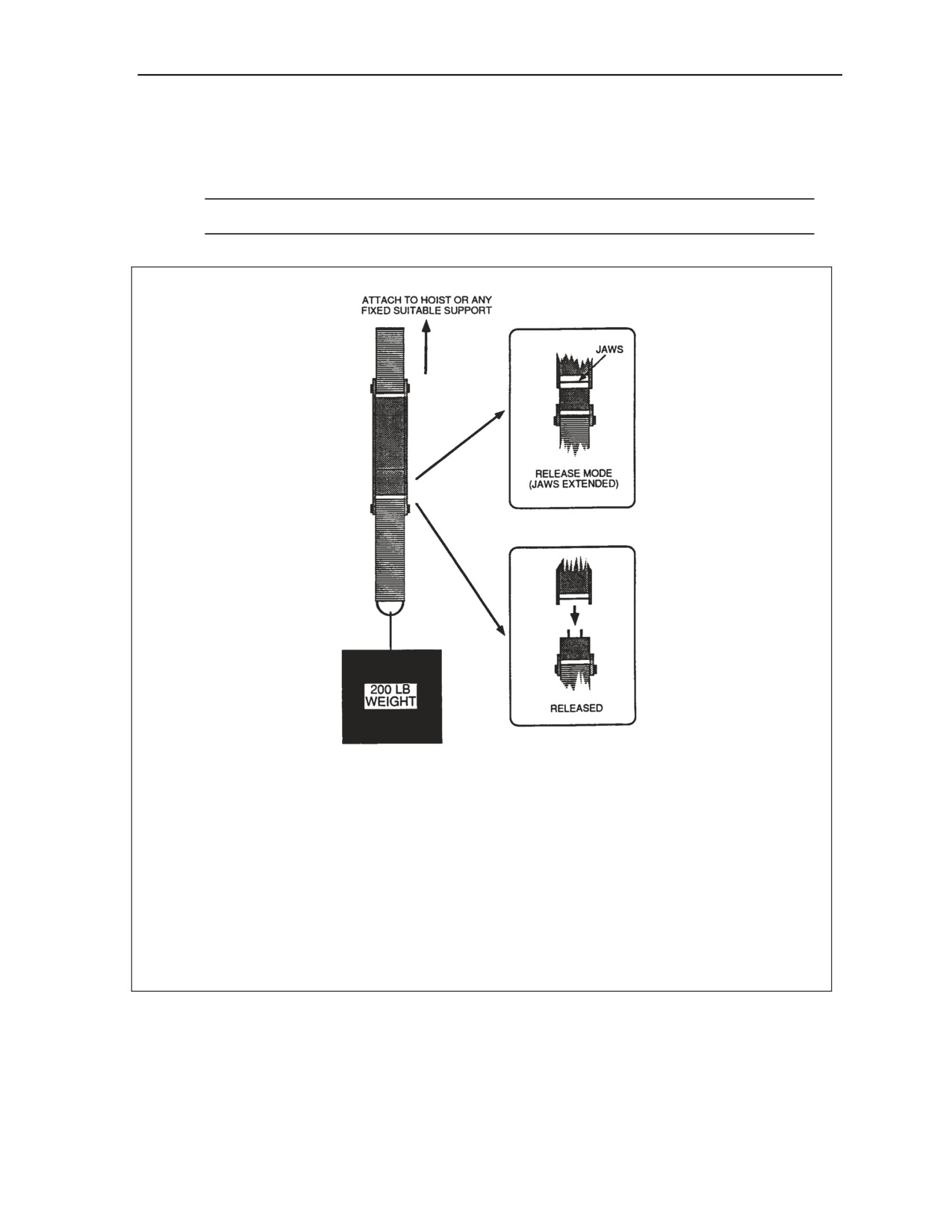
• Original Receipt Inspection. After removing the unit from its packaging, visually verify that
all components of Figure 8-9 are present and in acceptable condition for use (no corrosion,
deformation, leakage, or other abnormalities). Perform a pre-drop activation test as shown in
Figure 8-10.
Note. When testing the Automatic Cargo Parachute Release the main body must be facing up.
Step:
1. Remove the two hex bolts and spacers and insert the spacers into interfacing webbing
loops.
2. Attach the main body section webbing sling to a hoist or any suitable support that allows
sufficient height to activate the release. (Full extension including release mode is 2 inches.)
3. Attach a weight of approximately 200 pounds to the release fitting shackle webbing sling. If
the support height is sufficient, your suspended body weight is suitable.
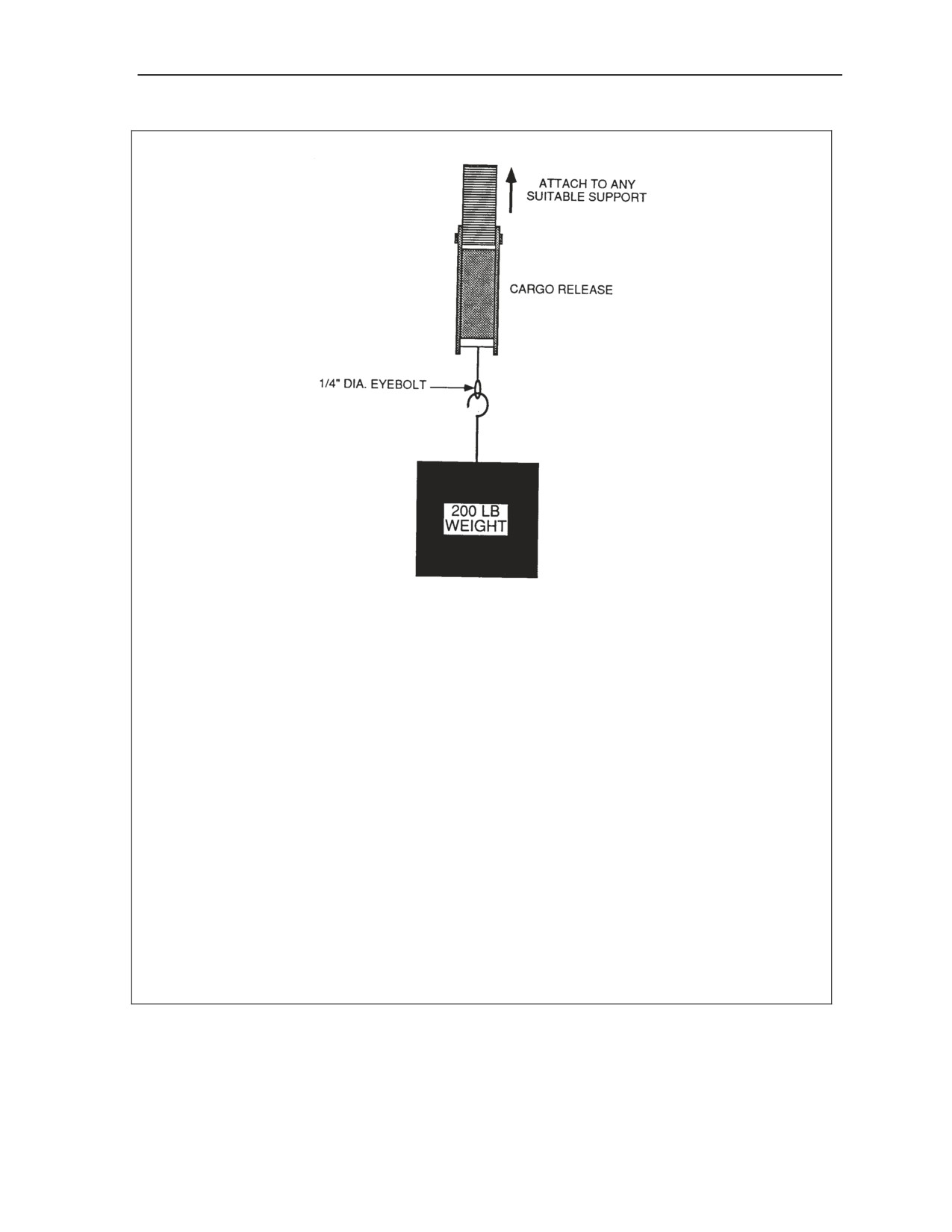
Figure 8-10. Pre-Drop Activation Test
8 June 2006 FM 4-20.102/MCRP 4-11.3J/NAVSEA SS400-AB-MMO-010/TO 13C7-1-5
8-15
Chapter 8
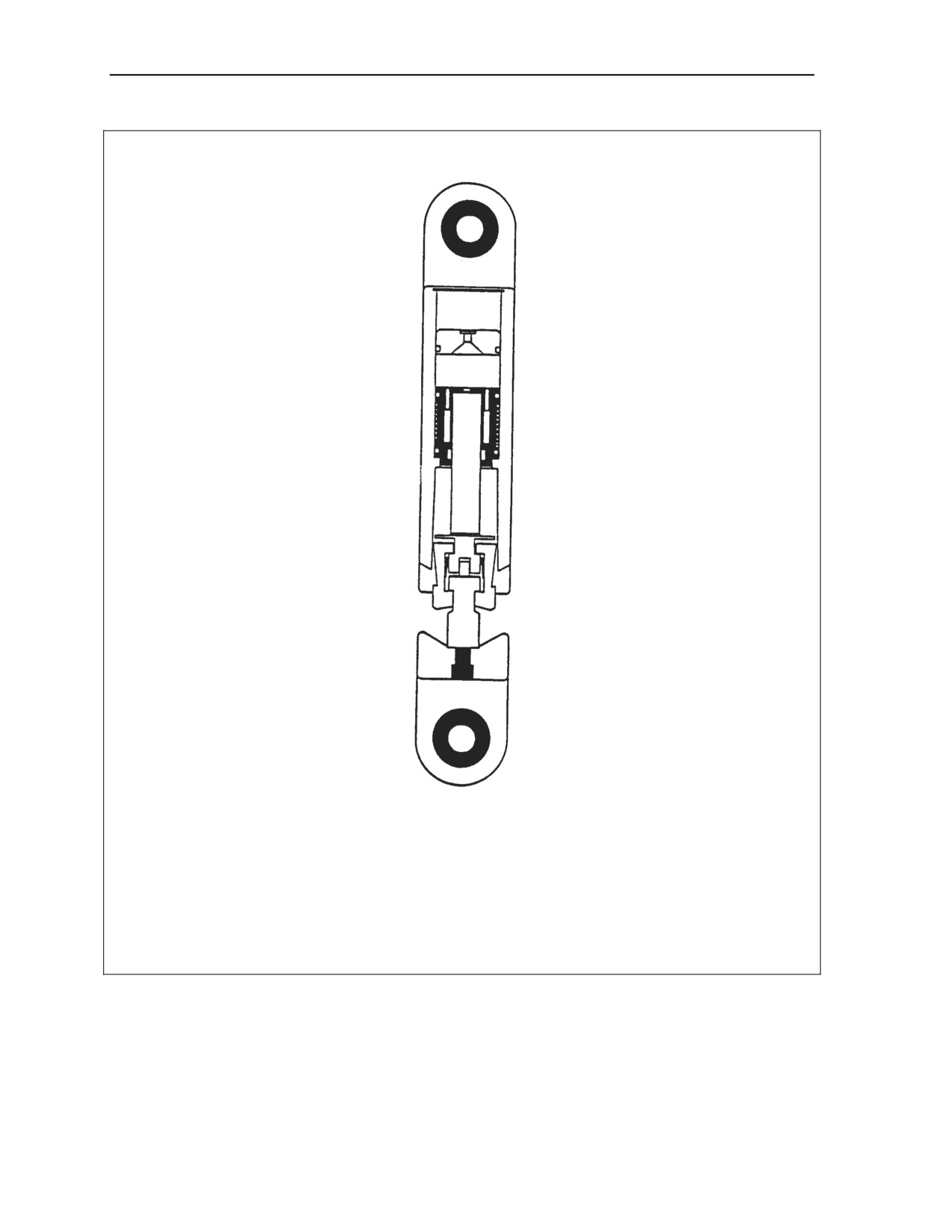
Step:
4. Time the arming delay starting from when the load is applied to when the jaws of the release
extend below the cutouts in the bottom section of the main body section. Release mode
should occur after 30 to 40 seconds under a 200-pound load. If the release mode and full
extension is reached in less than 30 seconds under a suspended load of 200 pounds, the
release is to be considered unserviceable.
Figure 8-10. Pre-Drop Activation Test (Continued)
8-16
FM 4-20.102/MCRP 4-11.3J/NAVSEA SS400-AB-MMO-010/TO 13C7-1-5
8 June 2006
Release Assemblies
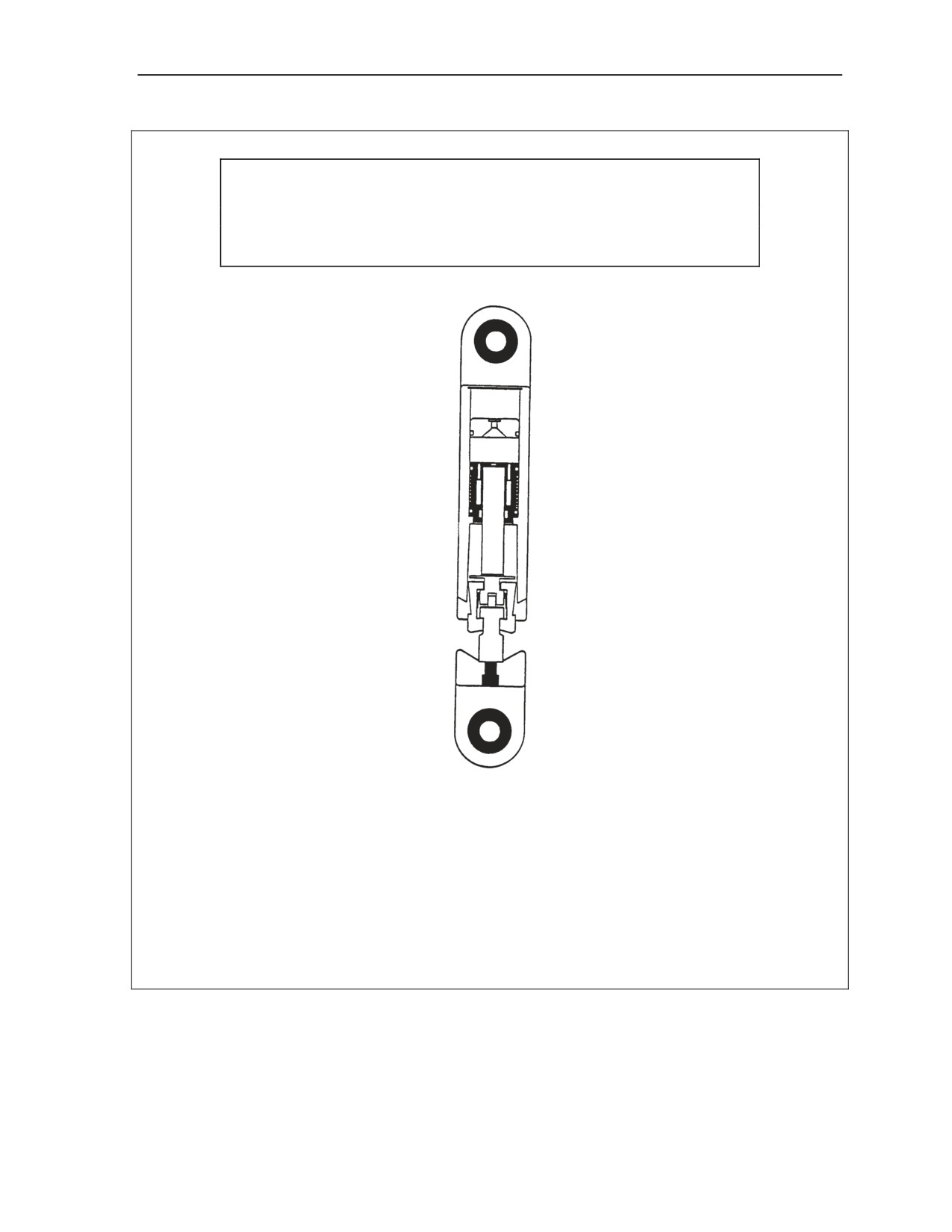
CAUTION
Ensure the release fitting shackle is held when the weight is released
to prevent it falling upon separation which could cause personal injury.
Step:
5. When the release mode has been achieved, simulate impact by lowering the hoist (if used)
until the load is relieved; or if body weight is used, (ensure the release fitting shackle is held
securely to prevent personal injury upon separation), quickly release the load. The spring
loaded jaws will kick outward releasing the release fitting shackle which allows the cargo
release unit to immediately separate. The outer lip on the jaws will catch on the lip of the
main body section, holding the piston extracted and retaining the jaws in the open position.
Figure 8-10. Pre-Drop Activation Test (Continued)
8 June 2006 FM 4-20.102/MCRP 4-11.3J/NAVSEA SS400-AB-MMO-010/TO 13C7-1-5
8-17
Chapter 8
Step:
6. Inspect the main body section for fluid leakage. The jaws and release fitting shackle should
be totally dry. The silicone fluid is clear and if any evidence of leakage is apparent, it will
appear as wet and glistening. If leakage is evident, the release will not be used.
Note. The automatic cargo parachute release NSN 1670-01-337-4366 part number 811-00220
incorporates a removable filter. The automatic cargo parachute release part number 811-00220-1/-2
incorporates a nonremovable solid aluminum cap.
7. Inspect the presence, condition, and security of the removable filter. The filter is a thin silver
disc of porous metal located on the end of the main body section. The removable filter is held
securely in the main body piston cavity by a washer and retaining ring.
8. Inspect for presence, condition, and security of the solid aluminum cap. The cap is located on
the end of the main body section.
9. Preparation for reuse is accomplished by simply flushing foreign particles from the unit and
air drying.
Figure 8-10. Pre-Drop Activation Test (Continued)
8-18
FM 4-20.102/MCRP 4-11.3J/NAVSEA SS400-AB-MMO-010/TO 13C7-1-5
8 June 2006
Release Assemblies
Step:
10. If the spring loaded jaws are squeezed together without the release fitting shackle
installed, they will retract into the main body section. When this occurs, simply insert a 1/4-
inch diameter (thread size 20) eye bolt into the threaded hole of the piston. Attach the
release body to a hoist or suitable support, and attach a weight to the eye bolt. When the
jaws are extracted beyond the body, they will be forced to the open position by the spring
tension.
11. Insert the release fitting shackle in the main body section by inserting the pins in the
respective holes in the piston. Hold in position, and by using finger pressure, squeeze the
spring loaded jaws together. Retraction of the jaws into the main body section will
immediately start. (The check valve within the hydraulic circuit allows quick and easy
insertion.) Completely close the release assembly using hand force. The cargo release is
now ready for use.
12. The release should always be reassembled and stored in the closed position. After
submersion in water, position the release with the filter end facing down, allowing any
water which may be trapped behind the filter to drain.
Figure 8-10. Pre-Drop Activation Test (Continued)
8 June 2006 FM 4-20.102/MCRP 4-11.3J/NAVSEA SS400-AB-MMO-010/TO 13C7-1-5
8-19
Chapter 8
• Installation for Airdrop. Instructions for installing the cargo release are shown in Figure 8-11.
Step:
1. Perform the pre-drop activation test to ensure the cargo release is fully functional and
ready to use.
2. Ensure the release is used with a 3-foot sling attached to the main body section and to the
release fitting shackle. (The slings will absorb any twisting during parachute descent.)
3. Install the cargo release with the main body section facing toward the parachute riser and
the release fitting shackle facing toward the cargo load slings.
4. Tie the cargo release to the rigged load in two places by routing a length of 1/4-inch cotton
webbing through each end shackle sling.
Figure 8-11. Cargo Release Installed
8-20
FM 4-20.102/MCRP 4-11.3J/NAVSEA SS400-AB-MMO-010/TO 13C7-1-5
8 June 2006
Release Assemblies
• Post Drop Maintenance. Perform post drop maintenance according to the following:
Step:
1. Remove the retaining ring in the upper cargo release assembly using Truarc ring pliers. To
remove the filter and washer, hold the release filter end downward. The filter and washer
should fall out. Thoroughly rinse the main body section and release fitting shackle with fresh
water. Direct flow using a water hose or faucet would be ideal. If the cargo release has not
been maintained, the filter may adhere to the housing bore. Where severe corrosion exists,
the filter may have to be replaced.
2. Thoroughly rinse the main body section and release fitting shackle with fresh water. (For non-
removable solid aluminum cap)
3. Inspect the cargo release visually for obvious damage. Use low pressure air if available to dry
the unit. Minor leakage of the silicone fluid will be very difficult to detect at this point.
Note. The release fitting shackle assembly, part number 811-00324-1, NSN 4030-01-353-6217, may
be procured through normal supply channels.
4. Reassemble the unit by inserting the release fitting shackle into the main body section and
squeezing the spring loaded jaws together. Completely close the release assembly using
hand pressure. If the release does not close fully and the ball locks cannot snap in place,
then the unit should be subjected to the pre-drop inspection test.
5. To completely dry, hang or stand the assembled unit with the filter end (main body section)
facing down to allow drainage of any water that may have accumulated behind the filter.
6. Any discrepancies found or suspected will be cause for rejection. Return the unit with a brief
description of the problem and a point of contact to: Commander, Code 461100D, Naval Air
Warfare Center Weapons Division, 1 Administration Circle, China Lake, CA 93555-6001. Do
not return the unit to the manufacturer.
8 June 2006 FM 4-20.102/MCRP 4-11.3J/NAVSEA SS400-AB-MMO-010/TO 13C7-1-5
8-21
Chapter 8
PARACHUTE RISERS ATTACHED TO THE PARACHUTE RELEASE
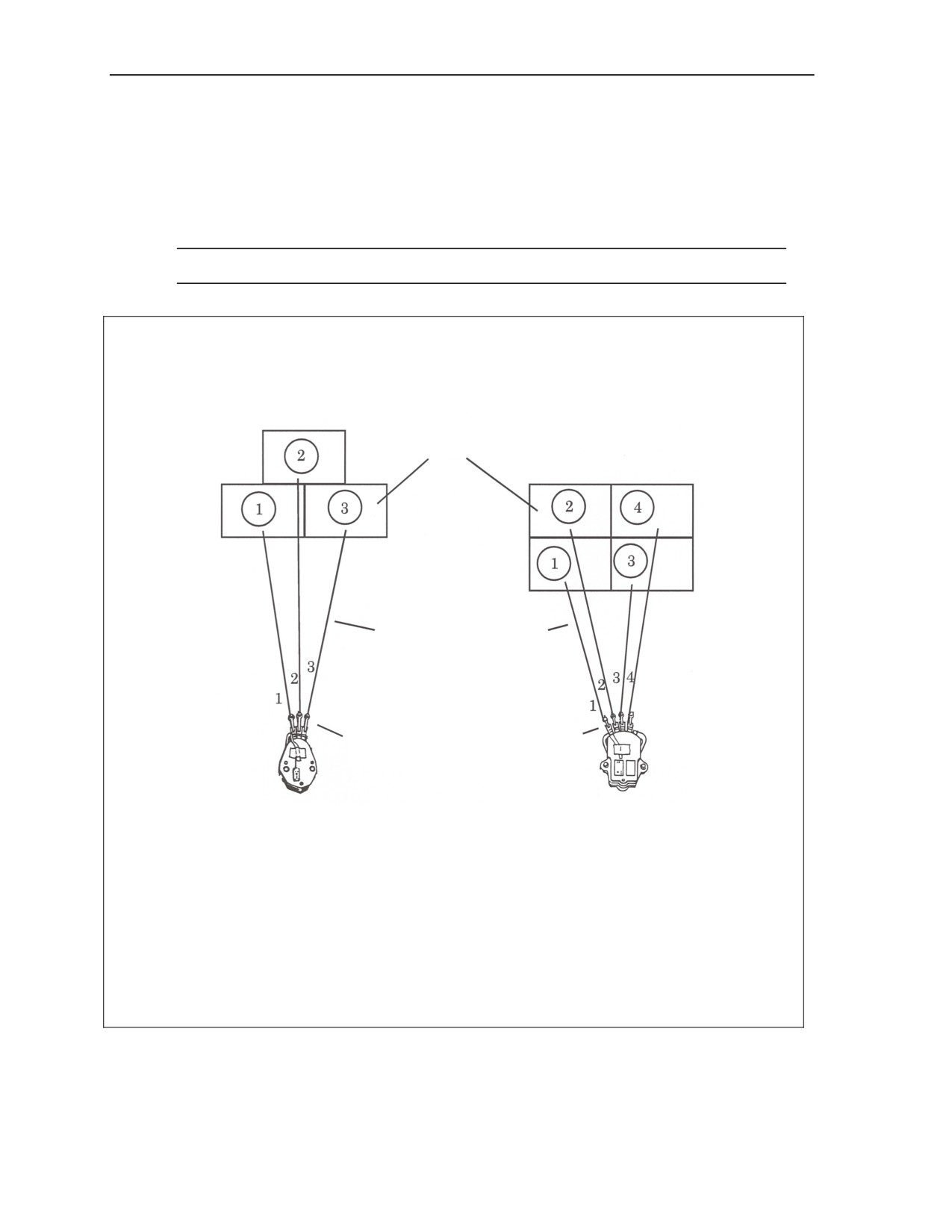
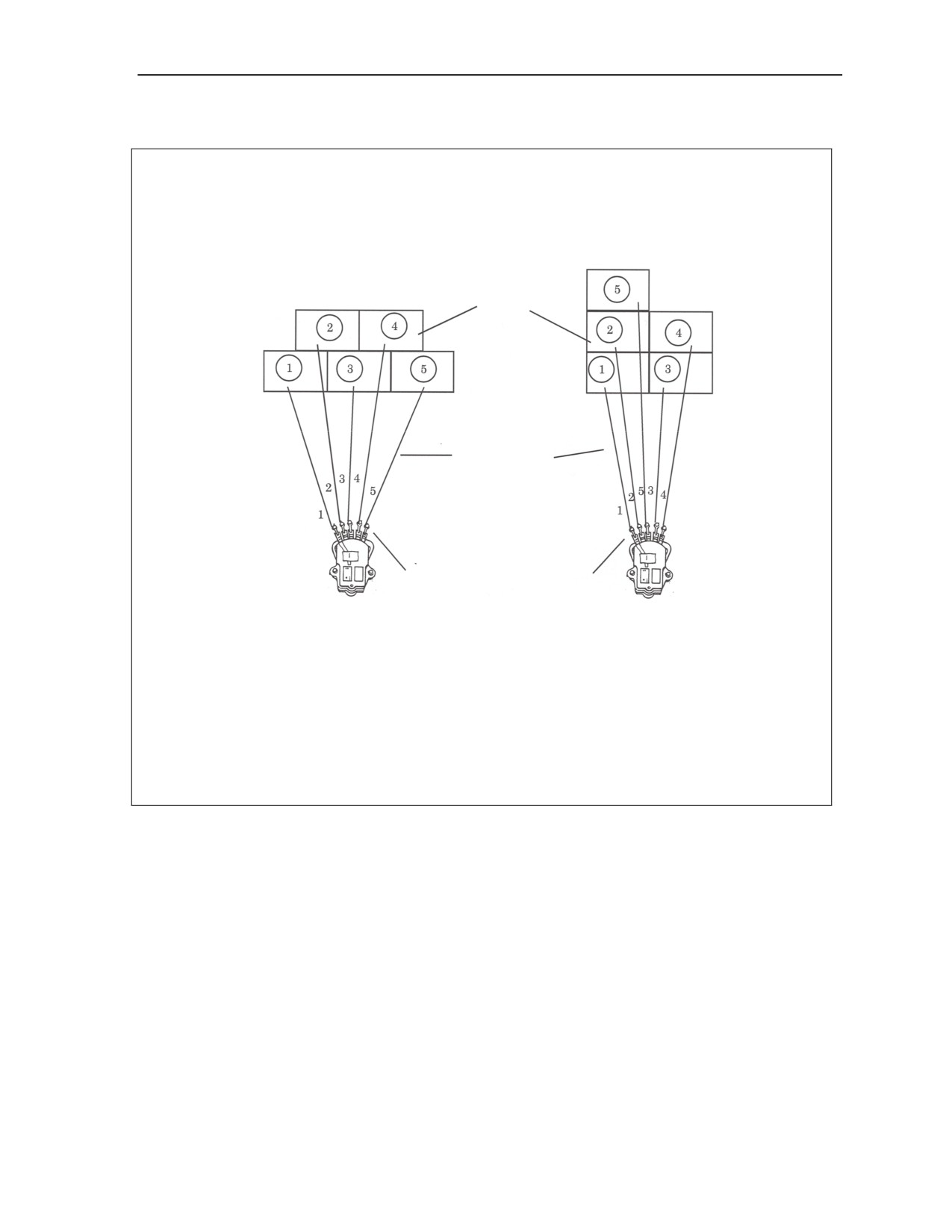
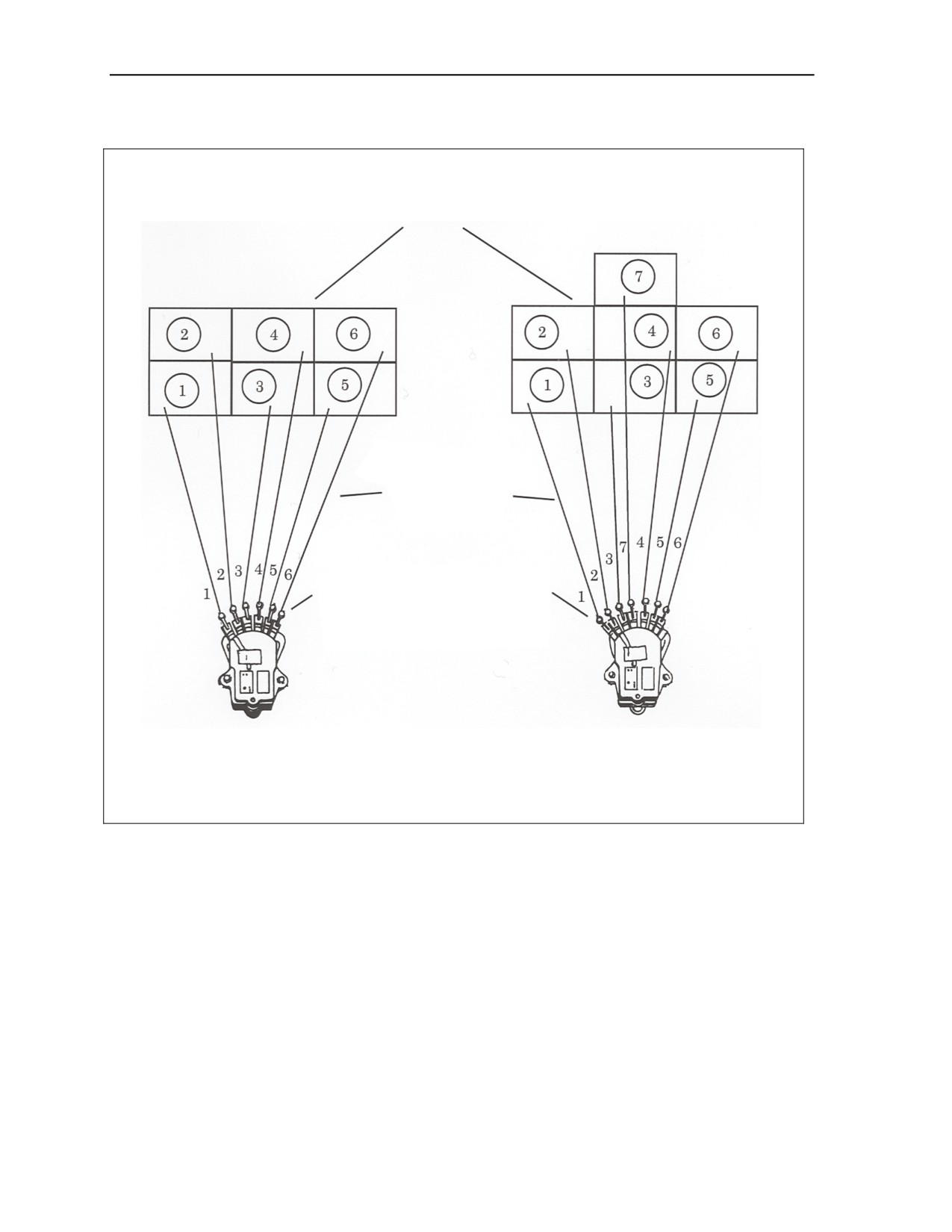
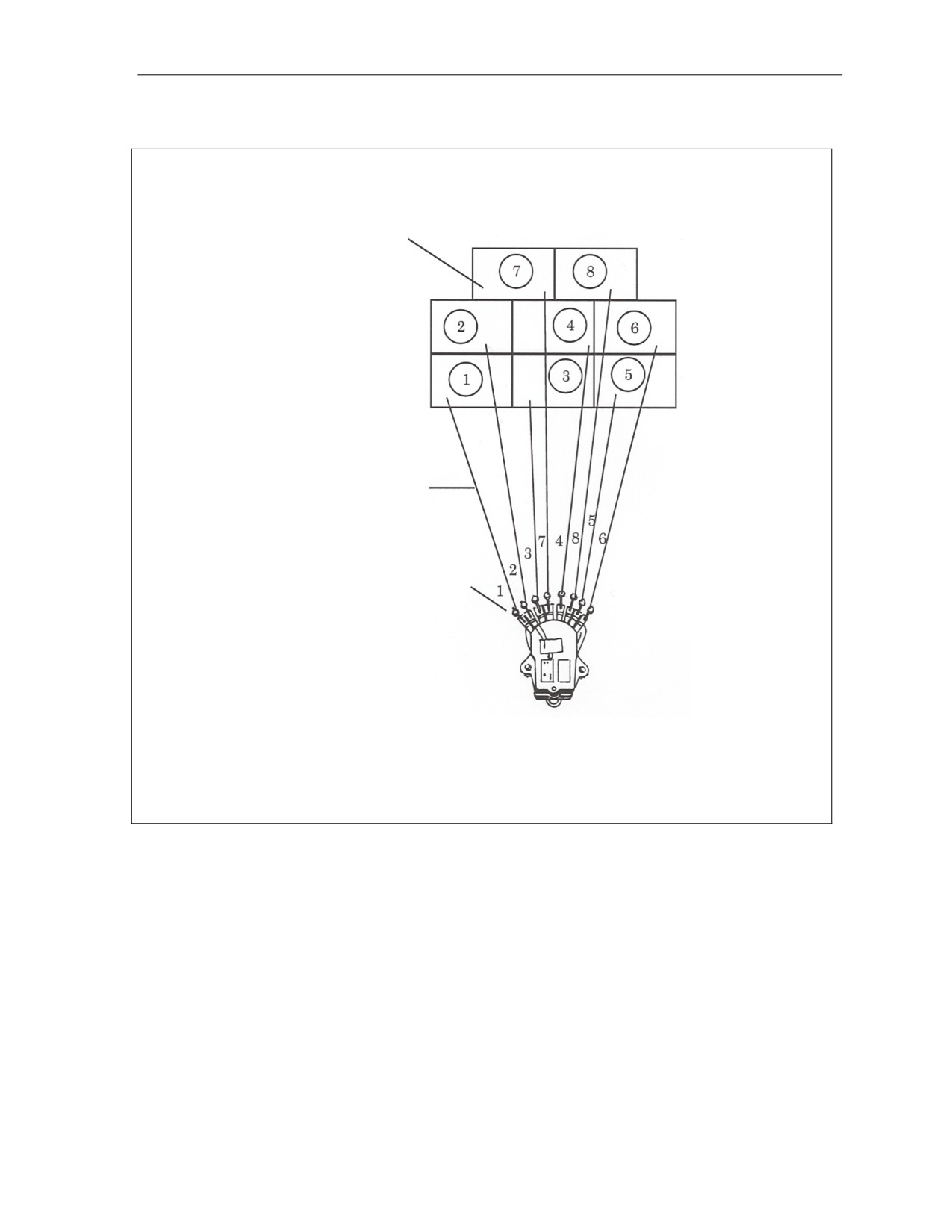
8-8. Lay the parachute release on top of the load with the bolt end of the parachute connectors toward the
cargo parachutes. Bolt the parachute riser extensions to the parachute connectors of the M-1 or M-2
parachute releases as shown in Figures 8-12 through 8-15.
Note. Bolt the parachute riser extensions to the parachute connectors from rigger’s right to left.
REAR OF PLATFORM
CARGO PARACHUTES
PARACHUTE RISER
EXTENSIONS
PARACHUTE CONNECTORS
FRONT OF PLATFORM
Figure 8-12. Three and Four Parachute Riser Extensions Attached to the Parachute
8-22
FM 4-20.102/MCRP 4-11.3J/NAVSEA SS400-AB-MMO-010/TO 13C7-1-5
8 June 2006
Release Assemblies
REAR OF PLATFORM
CARGO PARACHUTES
PARACHUTE RISER
EXTENSIONS
PARACHUTE CONNECTORS
Note. Only used on small emplacement
excavator (SEE)
FRONT OF PLATFORM
Figure 8-13. Five Parachute Riser Extensions Attached to the Parachute
8 June 2006 FM 4-20.102/MCRP 4-11.3J/NAVSEA SS400-AB-MMO-010/TO 13C7-1-5
8-23
Chapter 8
REAR OF PLATFORM
CARGO PARACHUTES
PARACHUTE RISER
EXTENSIONS
PARACHUTE CONNECTORS
FRONT OF PLATFORM
Figure 8-14. Six and Seven Parachute Riser Extensions Attached to the Parachute
8-24
FM 4-20.102/MCRP 4-11.3J/NAVSEA SS400-AB-MMO-010/TO 13C7-1-5
8 June 2006
Release Assemblies
REAR OF PLATFORM
CARGO PARACHUTES
PARACHUTE RISER
EXTENSIONS
PARACHUTE CONNECTORS
FRONT OF PLATFORM
Figure 8-15. Eight Parachute Riser Extensions Attached to the Parachute
8 June 2006 FM 4-20.102/MCRP 4-11.3J/NAVSEA SS400-AB-MMO-010/TO 13C7-1-5
8-25
Chapter 9
Drogue and Extraction Parachutes and Extraction Line
SECTION I-GENERAL INFORMATION
DROGUE PARACHUTES
9-1. A 15-foot cargo extraction parachute is used as a drogue parachute attached to a 1-loop, 60-foot type
XXVI extraction line with a 3 3/4-inch link for the C-130J, MC-130, and the C-17 aircraft. The opposite
end of the drogue line is connected to the jettison link of the extraction link assembly.
CARGO EXTRACTION PARACHUTES
9-2. A cargo extraction parachute is placed on every airdrop platform load to pull the load out of the
aircraft. The extraction system is rigged up after the load is in the aircraft.
• The 15-Foot Parachute. This extraction parachute has a 15-foot-diameter, flat circular ring-slot
nylon canopy. It is also used as a drogue parachute.
• The 22-Foot Parachute. This extraction parachute has a 22-foot-diameter, flat circular ring-slot
nylon canopy.
• The 28-Foot Parachute. This extraction parachute has a 28-foot-diameter, flat circular, ring-
slot nylon canopy.
INSPECTION, MAINTENANCE, AND PACKING
9-3. Cargo extraction parachutes are inspected, maintained, and packed as outlined in TM 10-1670/
TO 13C5 series manuals. See the specific TM for more information on inspecting, maintaining, and
packing these parachutes. The 22-foot extraction deployment bag modification procedures are located in
TM 10-1670-286-20/TO 13C5-2-41.
REQUIREMENTS
9-4. Each rigging manual states the number and type of cargo extraction parachutes and the extraction
line to be used on a particular load. However, when changes are made to an accompanying load or
variations in rigging are made, the extraction parachute requirement must be determined. Use Table 9-1 as
a guide for determining the cargo extraction parachute. Use Table 9-2 as a guide for determining extraction
line requirements and the extraction parachutes link and tie requirements for the C-130 and C-17 aircraft.
8 June 2006 FM 4-20.102/MCRP 4-11.3J/NAVSEA SS400-AB-MMO-010/TO 13C7-1-5
9-1