FM 4-20.102 AIRDROP OF SUPPLIES AND EQUIPMENT: RIGGING AIRDROP PLATFORMS (JUNE 2006) - page 3
Cargo Parachutes
RESTRAINING TWO TO EIGHT PARACHUTES
5-9. The following parachute restraint systems are used to restrain two to eight cargo parachutes.
CAUTION
Ensure tension is tight on the multi-knife straps.
• Two Parachutes. Restrain two cargo parachutes as shown in Figures 5-16 and 5-17. The
restraint system for two cargo parachutes consists of one length of type VIII nylon webbing
(restraint strap). When using a guillotine knife parachute release strap follow Figures 5-18 and
5-19. When using a multicut parachute release strap follow Figures 5-20 and 5-21.
1
2
3
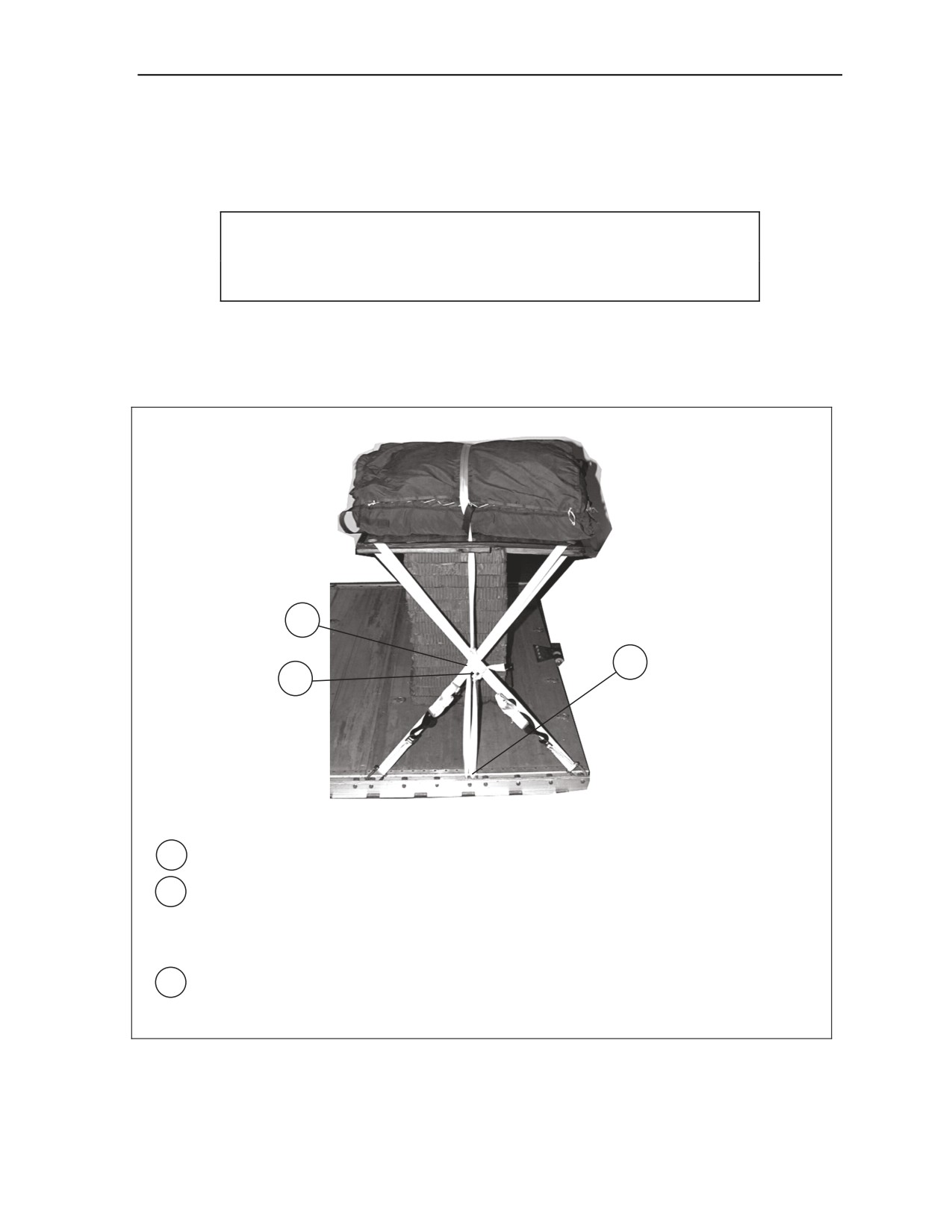
1 Tie a trucker’s hitch a suitable distance in each end of the restraint strap.
2 Run each free end of the strap through or around the indicated point on the load and back
up through the trucker’s hitch.
Note. The indicated point for tying the parachute restraint strap to the load will be given in the
specific rigging manual.
3 Pull on both ends of the restraint strap at the same time. When the strap is tight, tie the
ends with three alternating half hitches and an overhand knot in the running end.
Figure 5-16. Restraint Strap Tied
8 June 2006 FM 4-20.102/MCRP 4-11.3J/NAVSEA SS400-AB-MMO-010/TO 13C7-1-5
5-19
Chapter 5
Note. The restraint strap must run through the parachute stowage platform.
2
1
4
3
2
2
1
4
4
3
1 Restraint strap
2 Release strap
3 Trucker’s hitch
4 Half hitches and overhand knot
Figure 5-17. Two Parachutes Restrained
5-20
FM 4-20.102/MCRP 4-11.3J/NAVSEA SS400-AB-MMO-010/TO 13C7-1-5
8 June 2006
Cargo Parachutes
2
1
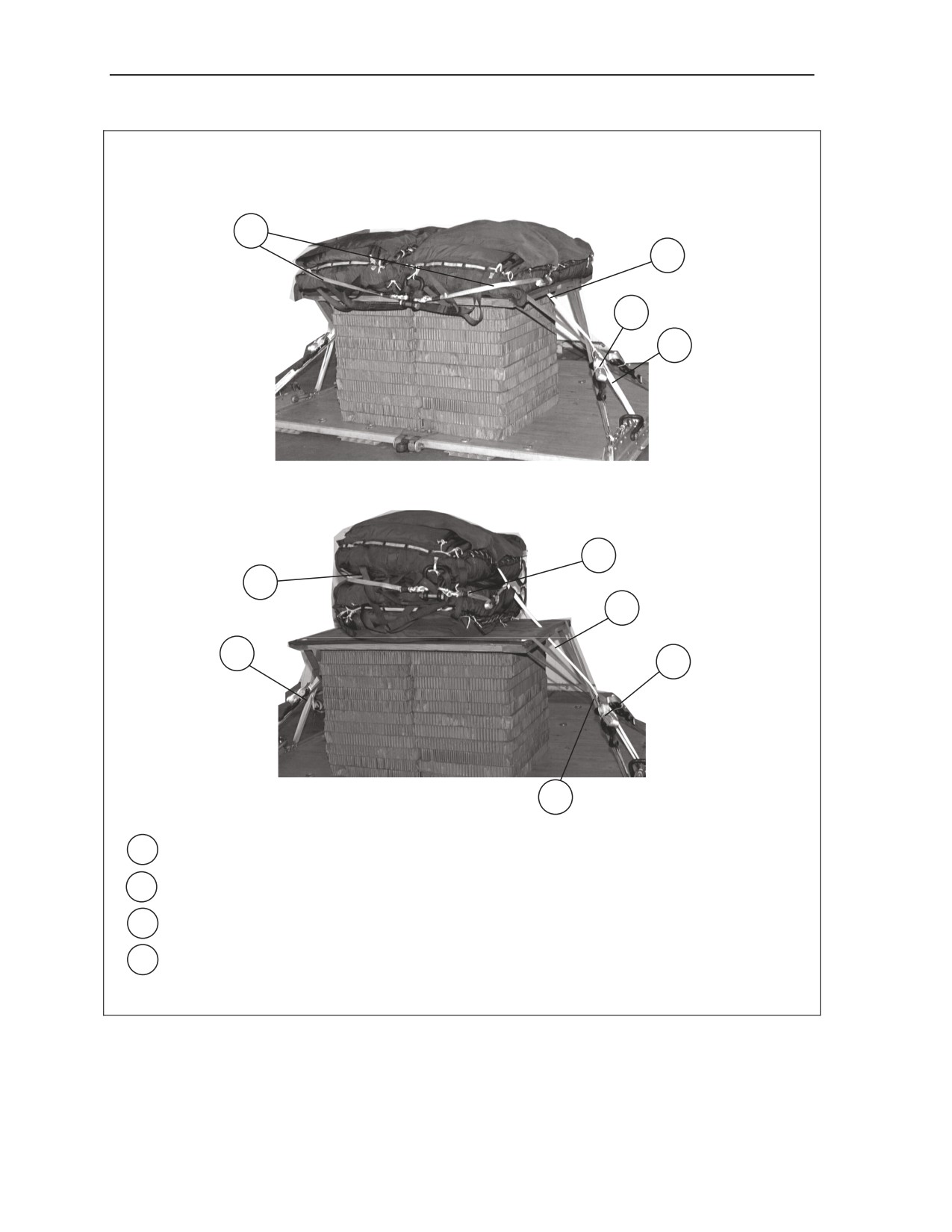
1 Run the restraint strap through the center carrying handles on the left side of the
parachutes, up and across the top of the parachutes, and down through the center
carrying handles on the right side of the parachutes. Tie the restraint strap to the load as
described in Figure 5-16.
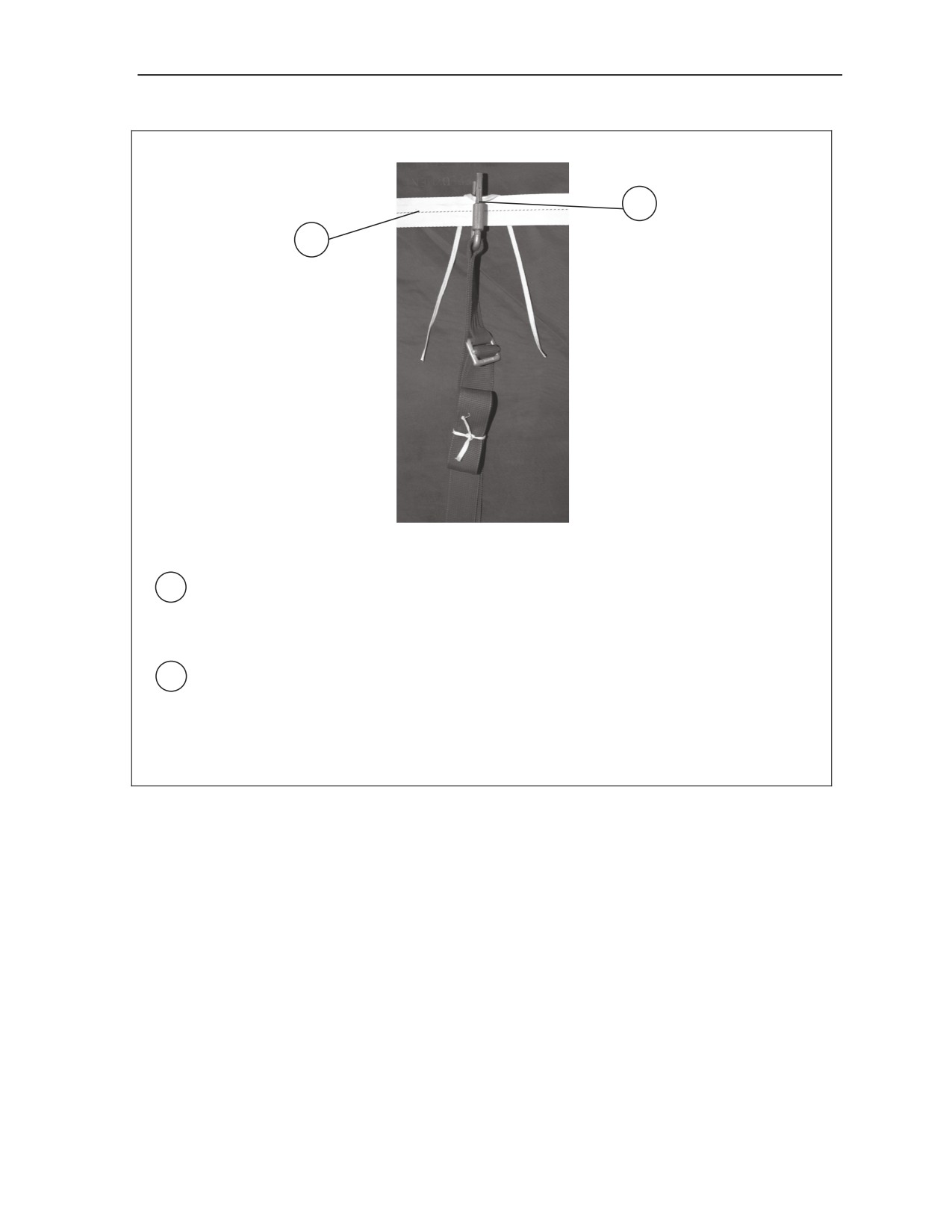
2 Close the knife around the restraint strap, knurled nut up. Thread a length of type I, 1/4-
inch cotton webbing through the safety tie hole. Even the ends of the webbing, and run
them under the restraint strap, and alongside the release knife.
Figure 5-18. Single-knife Parachute Release Strap Installed on Two Stacked Parachutes
8 June 2006 FM 4-20.102/MCRP 4-11.3J/NAVSEA SS400-AB-MMO-010/TO 13C7-1-5
5-21
Chapter 5
4
3
5
6
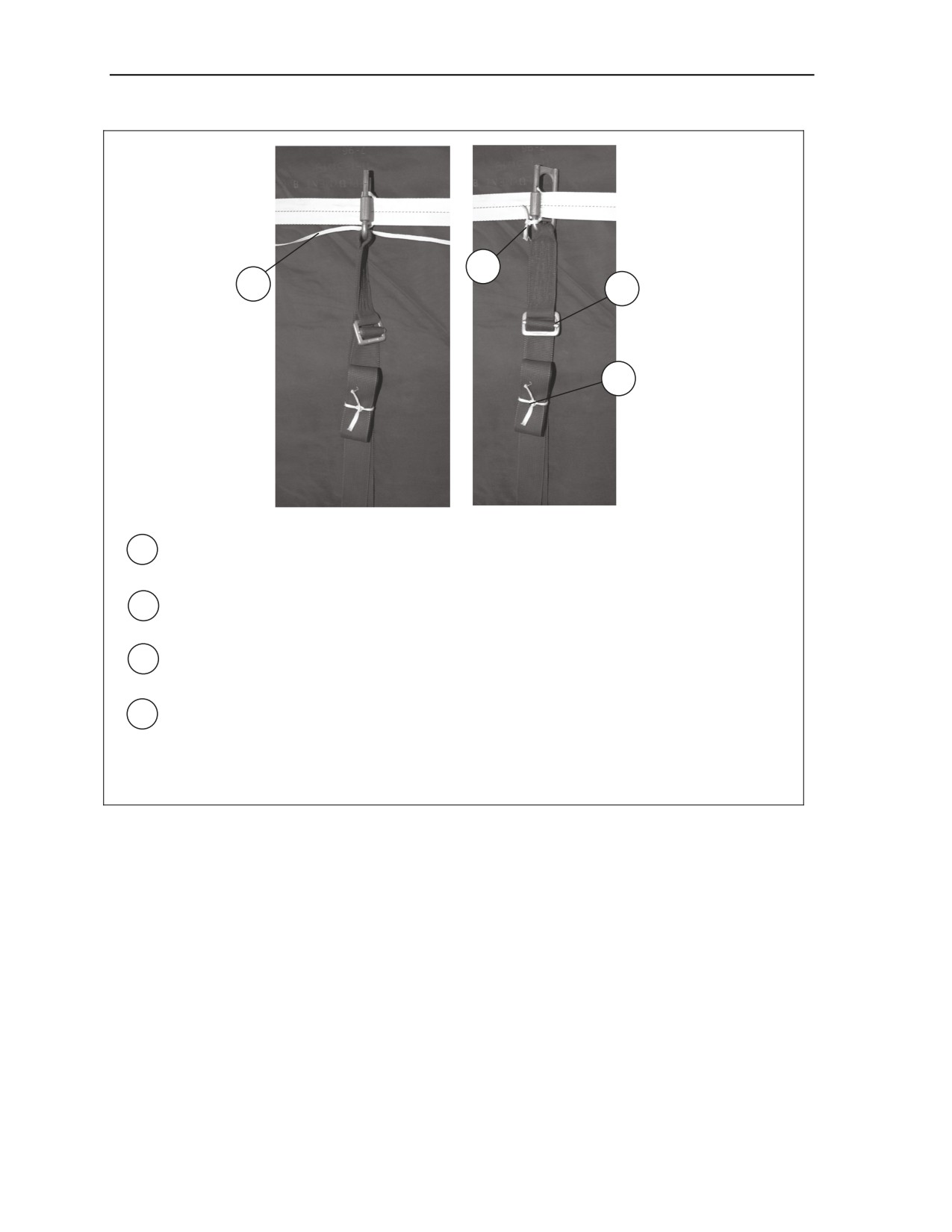
3 Thread the end of the webbing on the left side of the knife to the right behind the bar of the
knife. Thread the other end of webbing to the left in a like manner.
4 Bring the ends of the webbing up over the top of the bar. Tie the ends of the webbing
together with a surgeon’s knot and a locking knot.
5 Run the free end of the release strap around the large clevis grouping the bridles and back
up through the friction adapter.
6 Pull the release strap tight. Fold or roll the excess strap, and tape or tie the folds in place.
Note. Be sure the release strap is tight so that the knife will cut the restraint strap before the
extraction force is transferred to the parachute bridles.
Figure 5-18. Single-knife Parachute Release Strap Installed on Two Stacked Parachutes
(Continued)
5-22
FM 4-20.102/MCRP 4-11.3J/NAVSEA SS400-AB-MMO-010/TO 13C7-1-5
8 June 2006
Cargo Parachutes
3
2
1
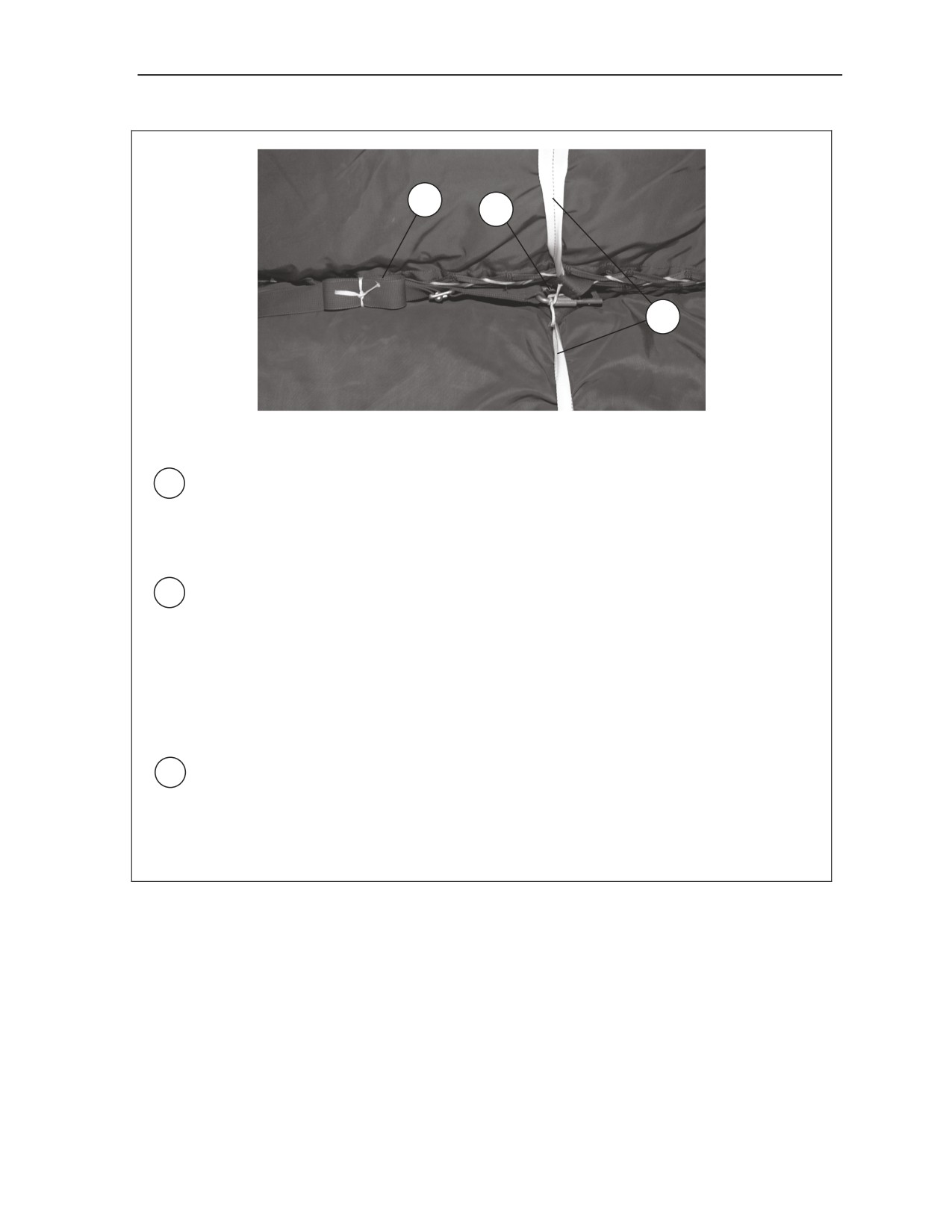
1 Run the restraint strap up through the outside carrying handle of the left parachute, across
the left parachute, down through the inside center carrying handle of the left parachute, up
through the inside center carrying handle of the right parachute, across the right
parachute, and down through the outside center carrying handle of the right parachute. Tie
the restraint strap to the load as described earlier in this chapter.
2 Close the knife around the restraint strap with the knurled nut up, between the inside
carrying handles. Thread a length of type I, 1/4-inch cotton webbing through the safety tie
hole. Even the ends of the webbing, and run them under the restraint strap, and alongside
the release knife. Thread the end of the webbing on the left of the knife to the right behind
the bar of the knife. Thread the other end of webbing to the left in a like manner. Bring the
ends of the webbing up over the top of the bar. Tie the ends of the webbing together with a
surgeon’s knot and locking knot as shown earlier. Run the free end of the release strap
down through the large clevis grouping the bridles and back up through the friction adapter
as described in earlier in this chapter.
3 Pull the release strap tight. Fold or roll the excess strap, and tape or tie the folds in place
as described earlier in this chapter.
Note. Be sure the release strap is tight so that the knife will cut the restraint strap before the
extraction force is transferred to the parachute bridles.
Figure 5-19. Single-Knife Parachute Release Strap Installed on Two Side-by-Side Parachutes
8 June 2006 FM 4-20.102/MCRP 4-11.3J/NAVSEA SS400-AB-MMO-010/TO 13C7-1-5
5-23
Chapter 5
5
1
3
1
2
4
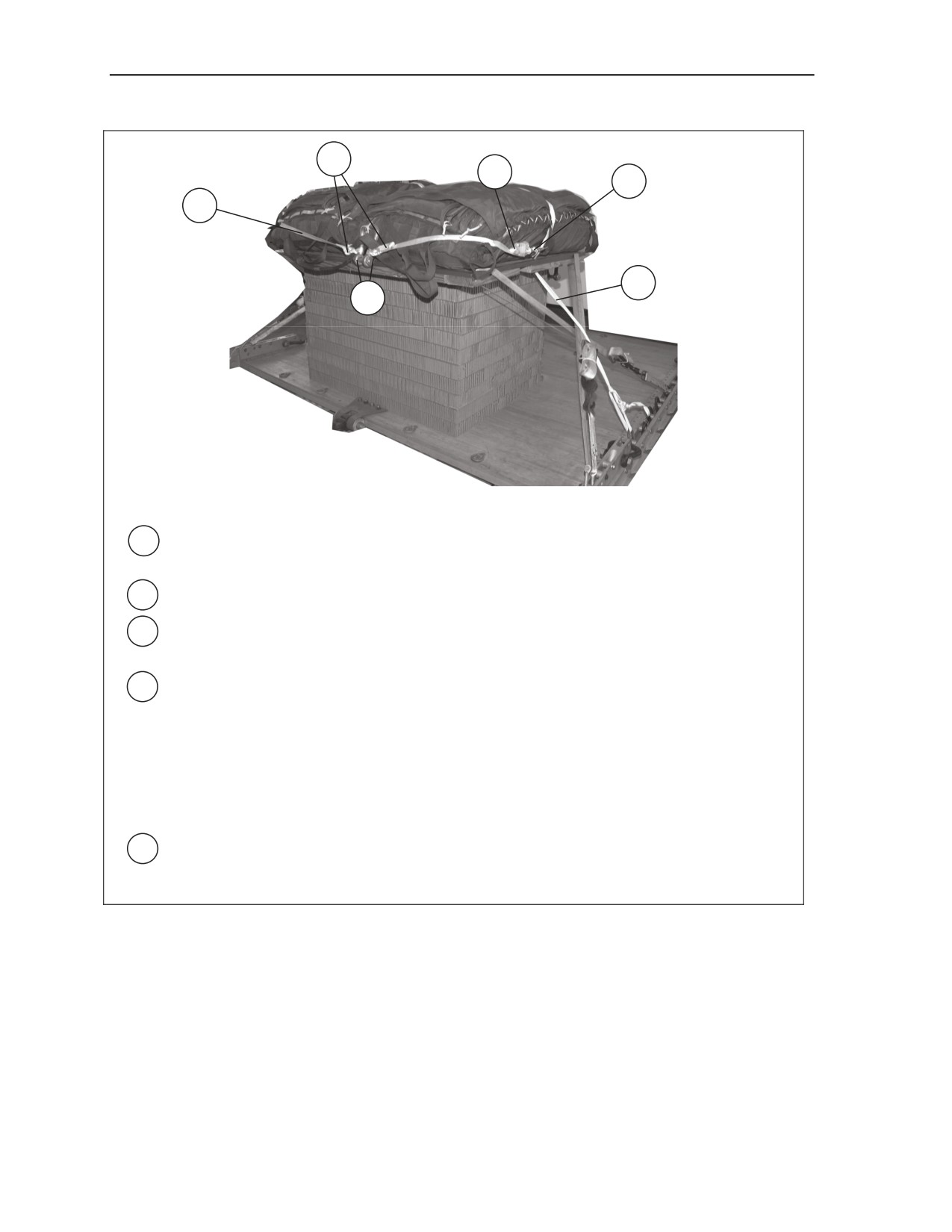
1 Remove guillotine knives number 2 and 3 (Figure 1-2) from each multicut parachute
release straps. Fold the unused loops, and tape the folds in place.
2 Tie the restraint strap to the load as described earlier in this chapter.
3 Close each knife around the restraint strap, with the knurled nut up. Secure as shown
earlier in this chapter.
4 Tie the free end of each release strap to the large clevis grouping the bridles. Use three
alternating half hitches and an overhand knot in each running end. Make sure that the
parachute release straps are not routed under the parachute restraint or parachute bridles.
Make sure that the release straps are shorter than the parachute bridles to ensure that the
deployment force is applied to the strap before the bridles.
Note. Ensure tension is tight on the multi-knife.
5 Fold or roll any excess strap, and tape the folds in place.
Figure 5-20. Multicut Parachute Release Straps Installed on Two Side-by-Side Parachutes
5-24
FM 4-20.102/MCRP 4-11.3J/NAVSEA SS400-AB-MMO-010/TO 13C7-1-5
8 June 2006
Cargo Parachutes
1
1
5
3
2
4
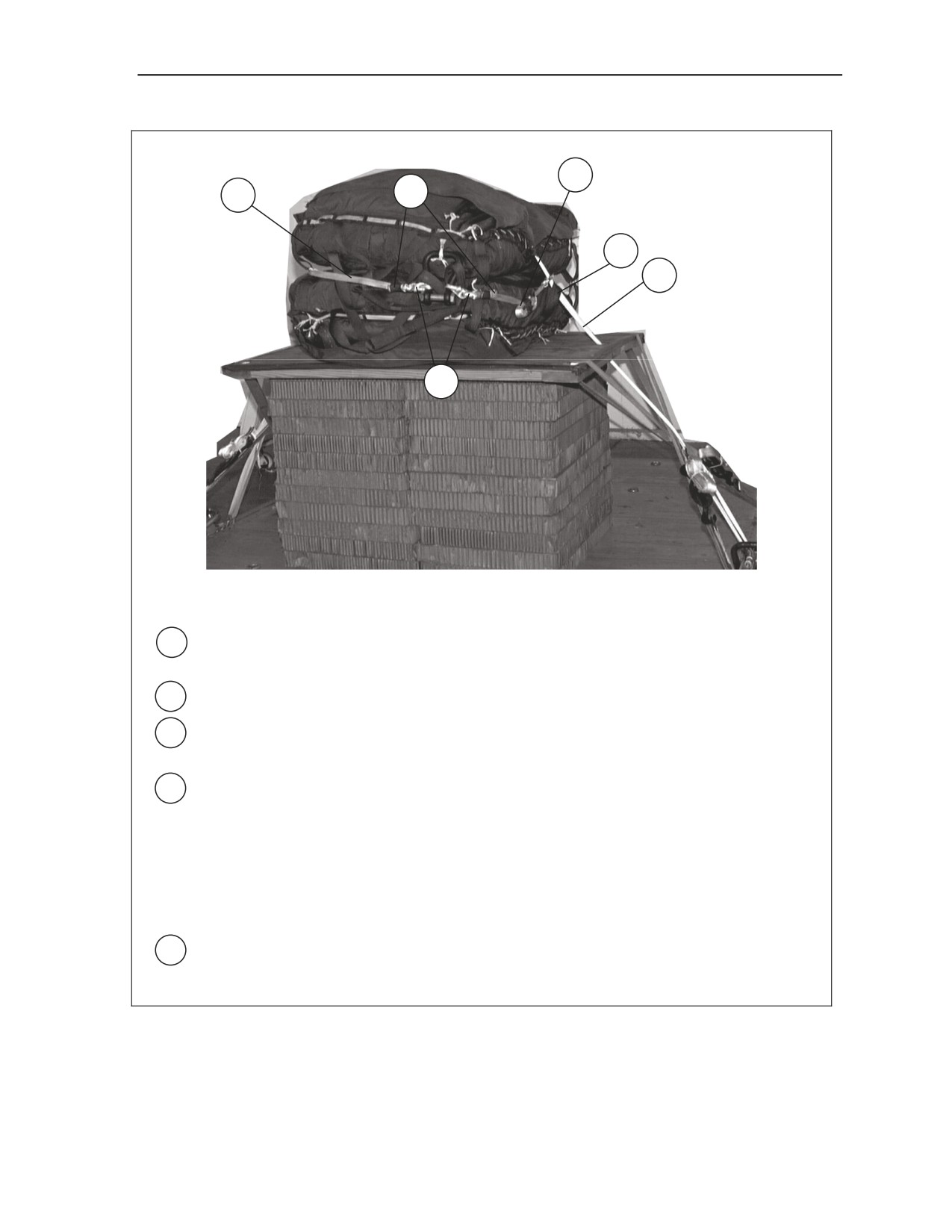
1 Remove guillotine knives number 2 and 3 (Figure 1-2) from each multicut parachute
release straps. Fold the unused loops, and tape the folds in place.
2 Tie the restraint strap to the load as described earlier in this chapter.
3 Close each knife around the restraint strap, with the knurled nut out between the top and
bottom carrying handles. Secure as shown earlier in this chapter.
4 Tie the free end of each release strap to the large clevis grouping the bridles. Use three
alternating half hitches and an overhand knot in each running end. Make sure that the
parachute release straps are not routed under the parachute restraint or parachute bridles.
Make sure that the release straps are shorter than the parachute bridles to ensure that the
deployment force is applied to the strap before the bridles.
Note. Ensure the release straps are tied evenly so the guillotine knives cut simultaneously.
5 Fold or roll any excess strap, and tape the folds in place.
Figure 5-21. Multicut Parachute Release Straps Installed on Two Stacked Parachutes
8 June 2006 FM 4-20.102/MCRP 4-11.3J/NAVSEA SS400-AB-MMO-010/TO 13C7-1-5
5-25
Chapter 5
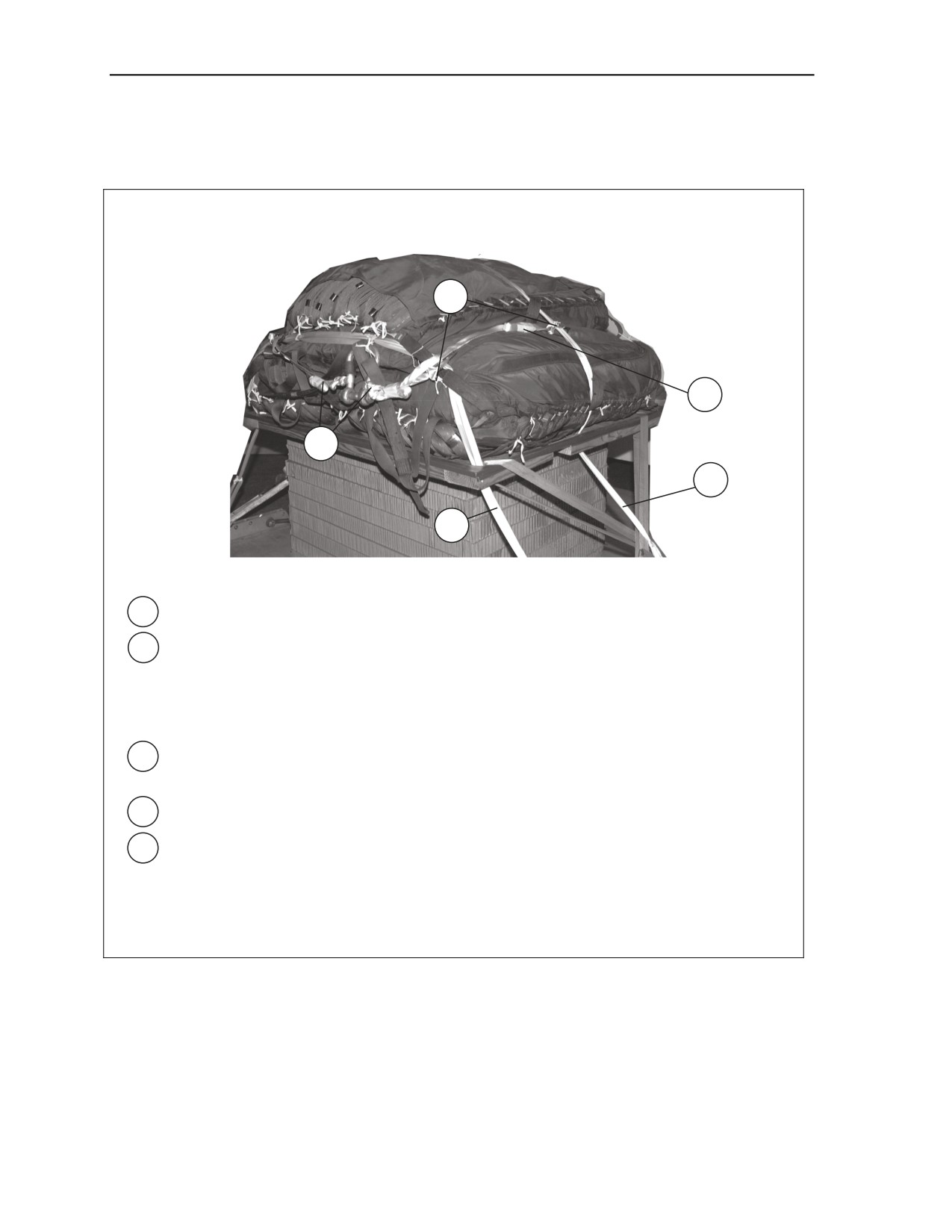
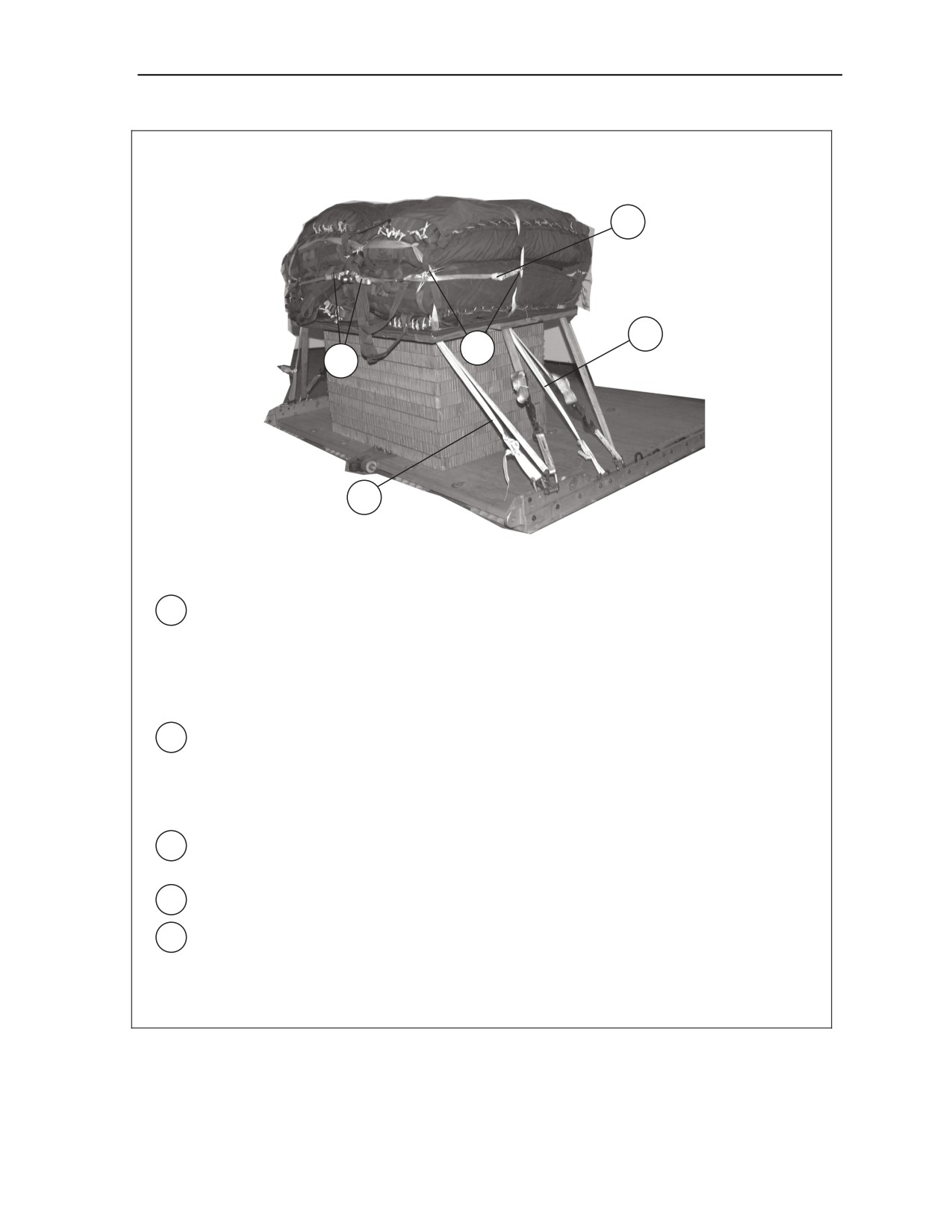
• Three to Five Parachutes. The restraint system for three to five cargo parachutes consists of
two lengths of type VIII nylon webbing (restraint strap) and two multicut parachute release
straps. Restrain three to five cargo parachutes as shown in Figures 5-22 through 5-24.
Note. Always use multicut parachute release straps in pairs.
4
3
5
1
2
1 Install the first restraint strap as described earlier in this chapter.
2 Run the second restraint strap through the outside rear carrying handle of the bottom left
parachute, up through the top left rear carrying handle and both bridle attaching loops of
the top parachute for the cotton bags or through the parachute restraint strap loops for the
nylon bag, and down through the outside rear carrying handles of the top and bottom right
parachute. Tie the restraint strap to the load as described earlier in this chapter.
3 Remove guillotine knife number 3 (Figure 1-2) from each of two multicut parachute release
straps. Fold the unused loops, and tape the folds in place.
4 Close and safety the guillotine knives as described earlier in this chapter.
5 Tie the release straps to the large clevis as described earlier in this chapter.
Note. Place the knives around the restraint straps between the carrying handles of the top and
bottom parachutes.
Figure 5-22. Three Parachutes Restrained and Multi-Knife Installed
5-26
FM 4-20.102/MCRP 4-11.3J/NAVSEA SS400-AB-MMO-010/TO 13C7-1-5
8 June 2006
Cargo Parachutes
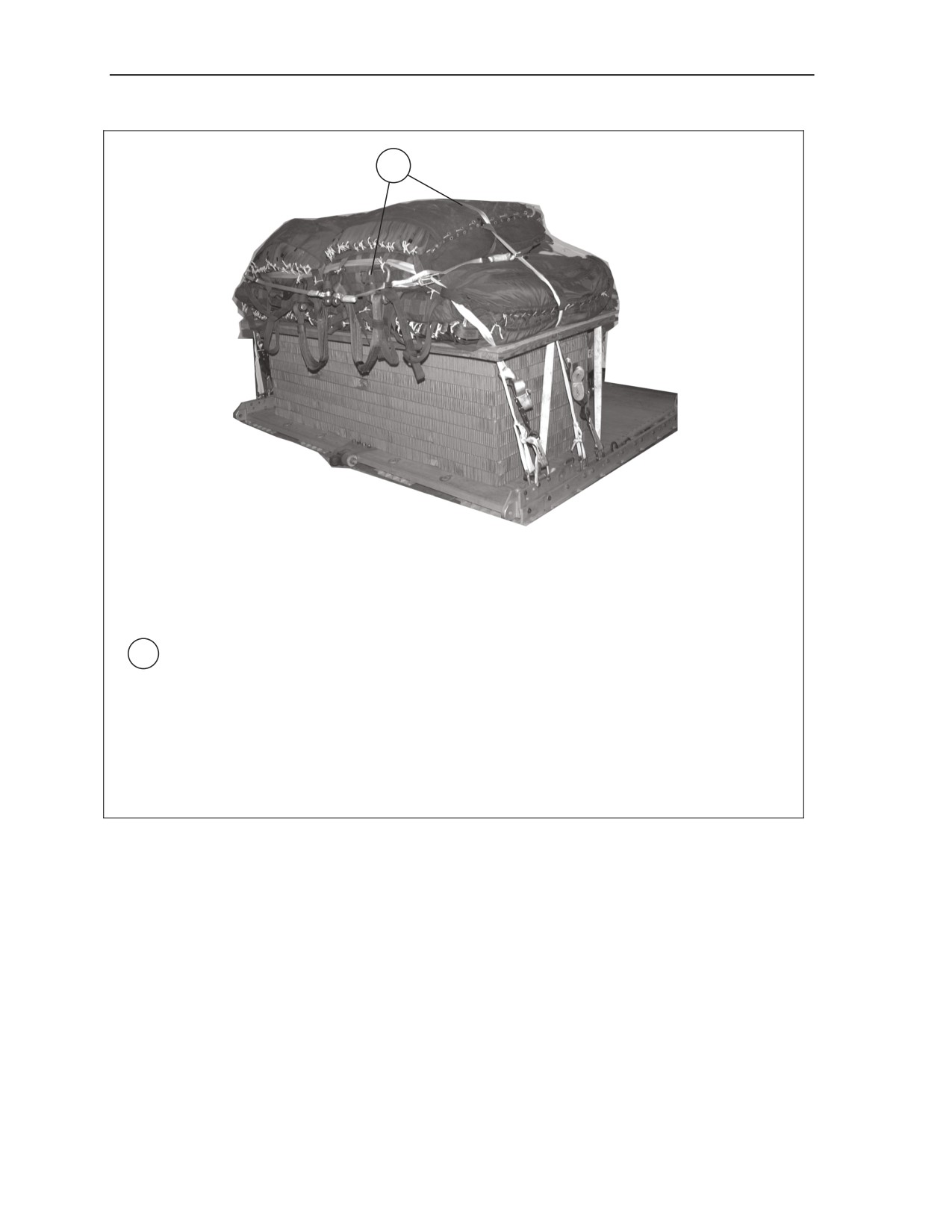
Note. Always use multicut release straps in pairs.
3
1
4
5
2
1 Run the restraint strap through the center carrying handles on the left side of the
parachutes. Run the restraint strap over the top of the parachute, and down through the
left inside center carrying handle. Continue to run the restraint strap up through the right
inside center carrying handle. Run the restraint strap over the right parachute and down to
the right outside carrying handles. Tie the ends of the restraint strap to the load as
described earlier in this chapter.
2 Run the second restraint strap through the outside rear carrying handles of the left
parachutes. Run the restraint strap through the bridle attaching loops of the top parachutes
for the cotton bags or through the parachute restraint strap loops for the nylon bag, and
down through the outside rear carrying handles of the right parachutes. Tie the ends of the
restraint strap to the load as described earlier in this chapter.
3 Remove guillotine knife number 3 (Figure 1-2) from each of two multicut parachute release
straps. Fold the unused loops, and tape the folds in place.
4 Close and safety the guillotine knives as described earlier in this chapter.
5 Tie the release straps to the large clevis as described earlier in this chapter.
Note. Place the knives around the restraint straps between the carrying handles of the top and
bottom parachutes.
Figure 5-23. Four Parachutes Restrained and Multi-Knife Installed
8 June 2006 FM 4-20.102/MCRP 4-11.3J/NAVSEA SS400-AB-MMO-010/TO 13C7-1-5
5-27
Chapter 5
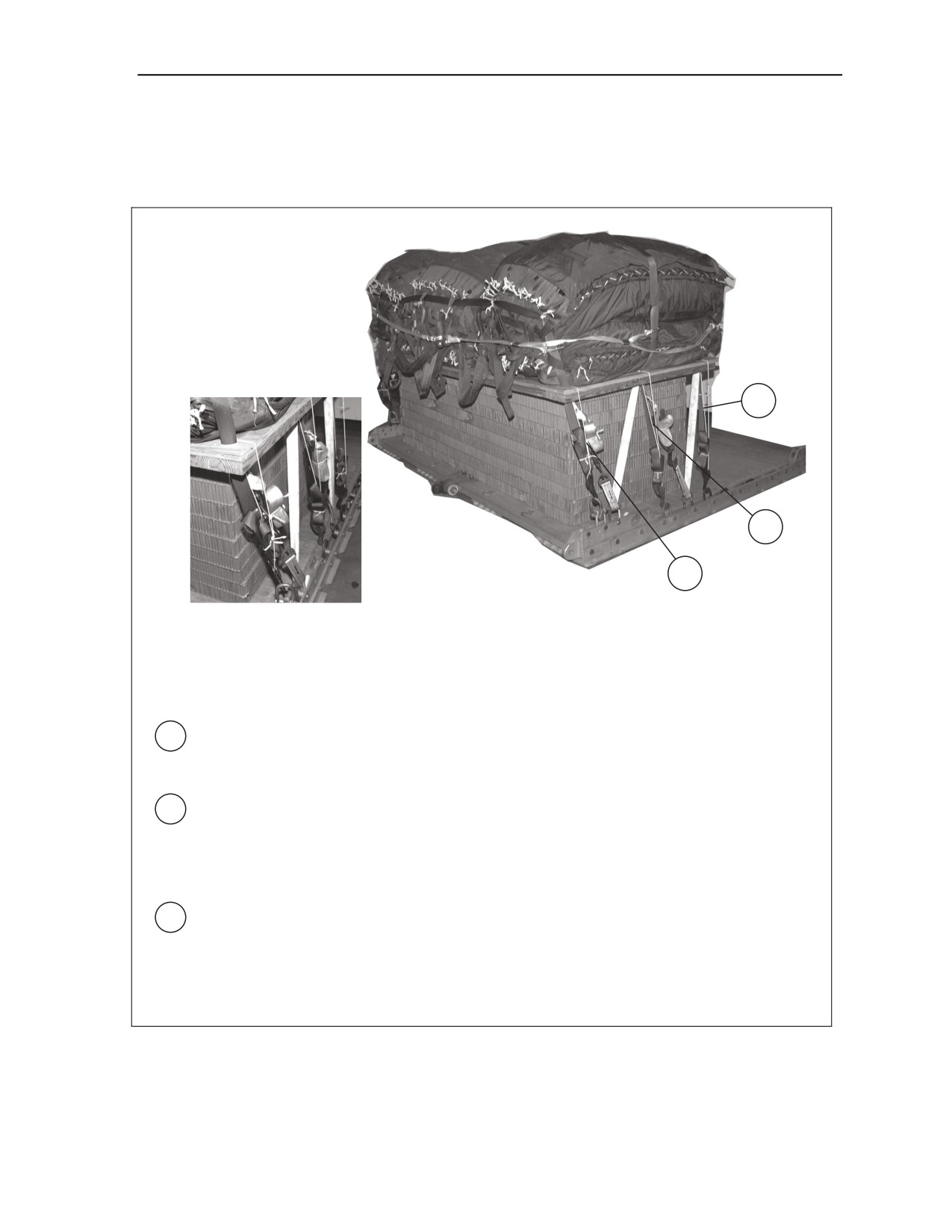
1
1 Install the first and second restraint straps and two multicut parachute release straps as
shown earlier in this chapter.
Note. Place the knives around the restraint straps between the carrying handles of the top and
bottom parachutes.
Figure 5-24. Five Parachutes Restrained and Multi-Knife Installed
5-28
FM 4-20.102/MCRP 4-11.3J/NAVSEA SS400-AB-MMO-010/TO 13C7-1-5
8 June 2006
Cargo Parachutes
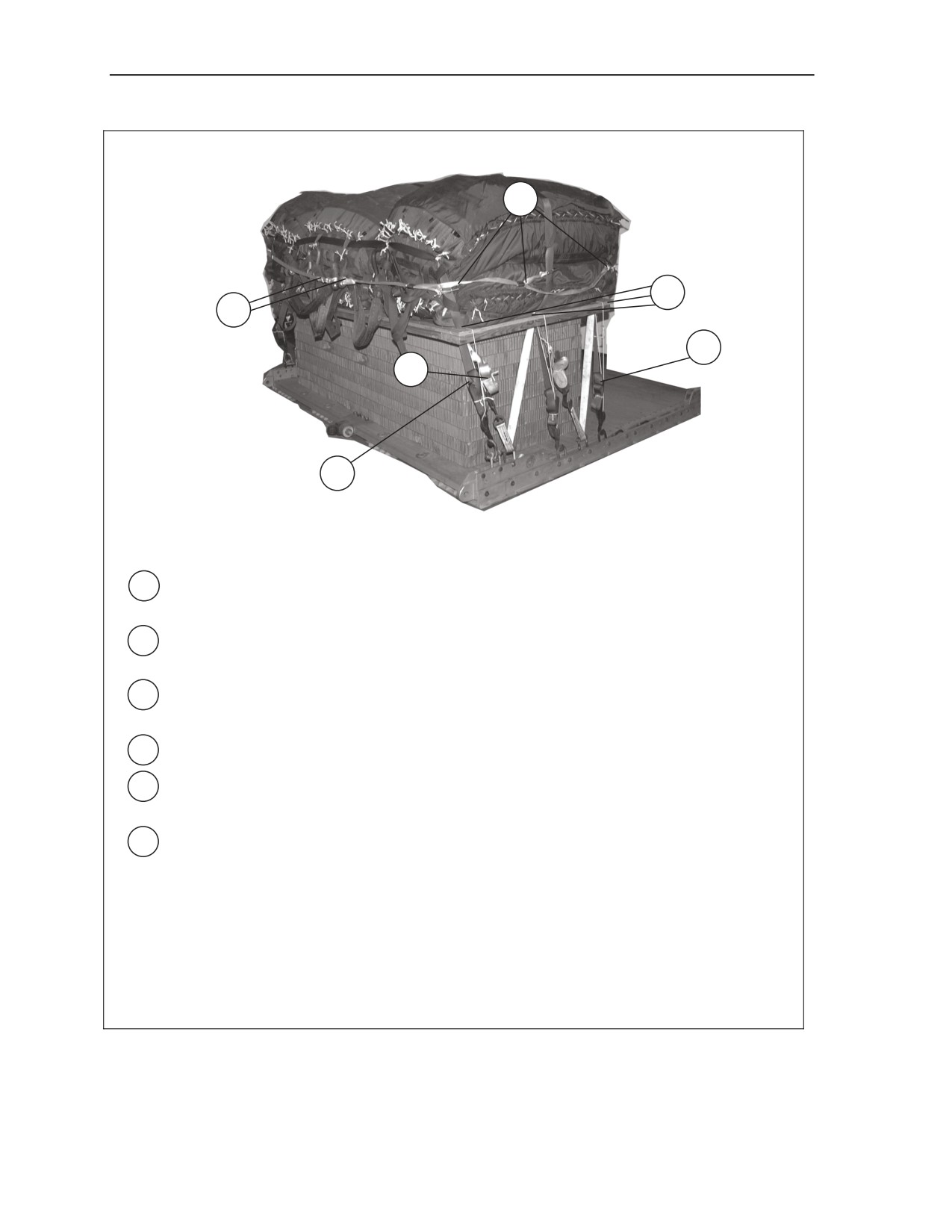
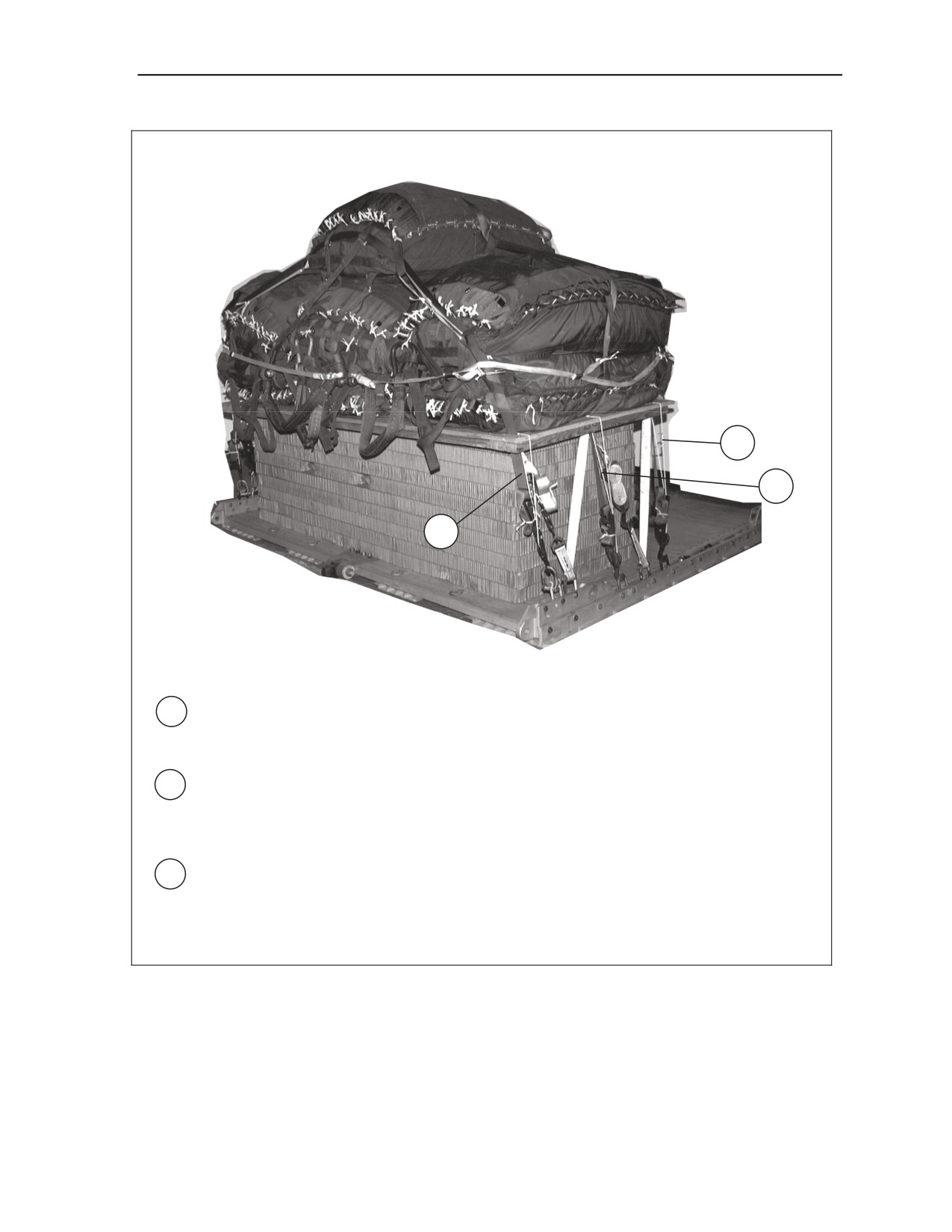
• Six, Seven, or Eight Parachutes. The restraint system for six, seven, or eight cargo parachutes
consists of three type X restraint straps, two multicut parachute release straps, six D-rings, and
six load binders. Restrain six, seven, or eight cargo parachutes as shown in Figures 5-25 through
5-27.
3
1
2
Note. Safety the load binders with type III nylon cord.
1 Run the first restraint strap up through the outside center carrying handles of the bottom
left and top left parachutes, across the top parachutes, and down through the outside
center carrying handles of the top and bottom right parachutes.
2 Run the second restraint strap up through the outside rear carrying handles of the bottom
left parachute, up through the top left rear carrying handle and all bridle attaching loops of
the top parachutes for the cotton bags or through the parachute restraint strap loops for
the nylon bag, and down through the outside rear carrying handles of the top and bottom
right parachutes.
3 Run the third restraint strap through the outside front carrying handles of the left bottom
and top parachutes, through the top front inside carrying handles, and down through the
outside front carrying handles of the right top and bottom parachutes.
Figure 5-25. Six Parachutes Restrained
8 June 2006 FM 4-20.102/MCRP 4-11.3J/NAVSEA SS400-AB-MMO-010/TO 13C7-1-5
5-29
Chapter 5
8
4
9
5
7
6
4 Run the six ends of the three restraint straps down through the holes in the parachute
stowage platform.
5 Fit a D-ring to each end of the three restraint straps. Hook the D-ring to the clevis
(indicated in the specific rigging manual) with a load binder.
6 Fold or roll all excess straps, and tie the folds to the load binders with type I, 1/4-inch
cotton webbing.
7 Tie the load binders and D-rings to the stowage platform with lengths of type III nylon cord.
8 Close and safety tie the guillotine knives of two multicut parachute release straps as
described earlier in this chapter.
9 Tie the release straps to the large clevis as shown earlier in this chapter.
Notes.
1. Place the knives around the restraint straps between the carrying handles of the top and
bottom parachutes.
2. Secure the load binders and D-rings to a convenient point on the load when there is no
stowage platform.
Figure 5-25. Six Parachutes Restrained (Continued)
5-30
FM 4-20.102/MCRP 4-11.3J/NAVSEA SS400-AB-MMO-010/TO 13C7-1-5
8 June 2006
Cargo Parachutes
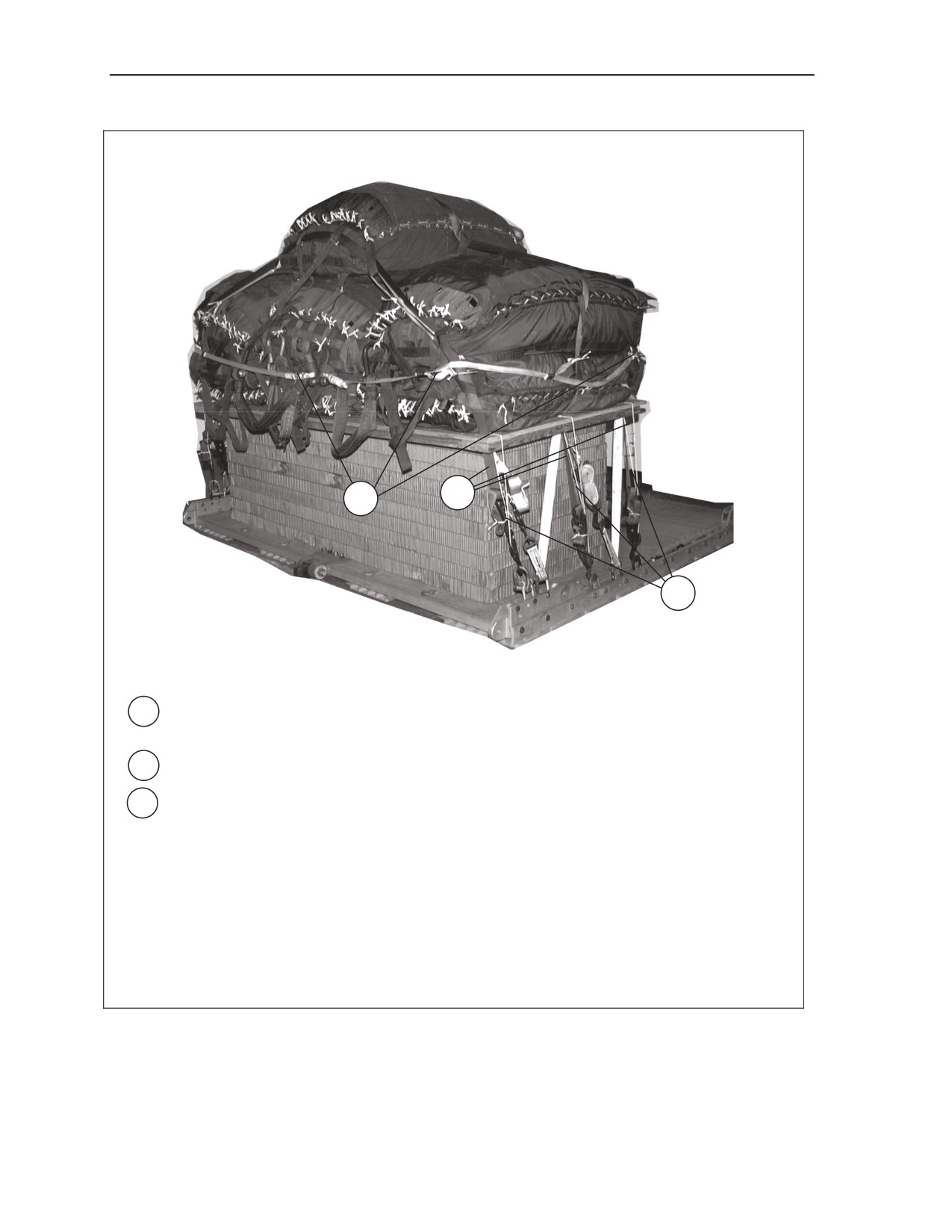
3
1
2
1 Run the first restraint strap up through the outside center carrying handles of the left
bottom, middle, and top parachutes, across the top parachute, and down through the
outside center carrying handles of the top, middle, and bottom right parachutes.
2 Run the second restraint strap up through the outside rear carrying handles of the left
bottom, middle, and top parachutes, and both upper bridle attaching loops for the cotton
bags or through the parachute restraint strap loops for the nylon bags, and down through
the outside rear carrying handles of the top, middle, and bottom right parachutes.
3 Run the third restraint strap through the outside front carrying handles of the left bottom,
middle, and top parachutes. Run the restraint strap across and down through the outside
front carrying handles of the right top, middle, and bottom parachutes.
Figure 5-26. Seven Parachutes Restrained
8 June 2006 FM 4-20.102/MCRP 4-11.3J/NAVSEA SS400-AB-MMO-010/TO 13C7-1-5
5-31
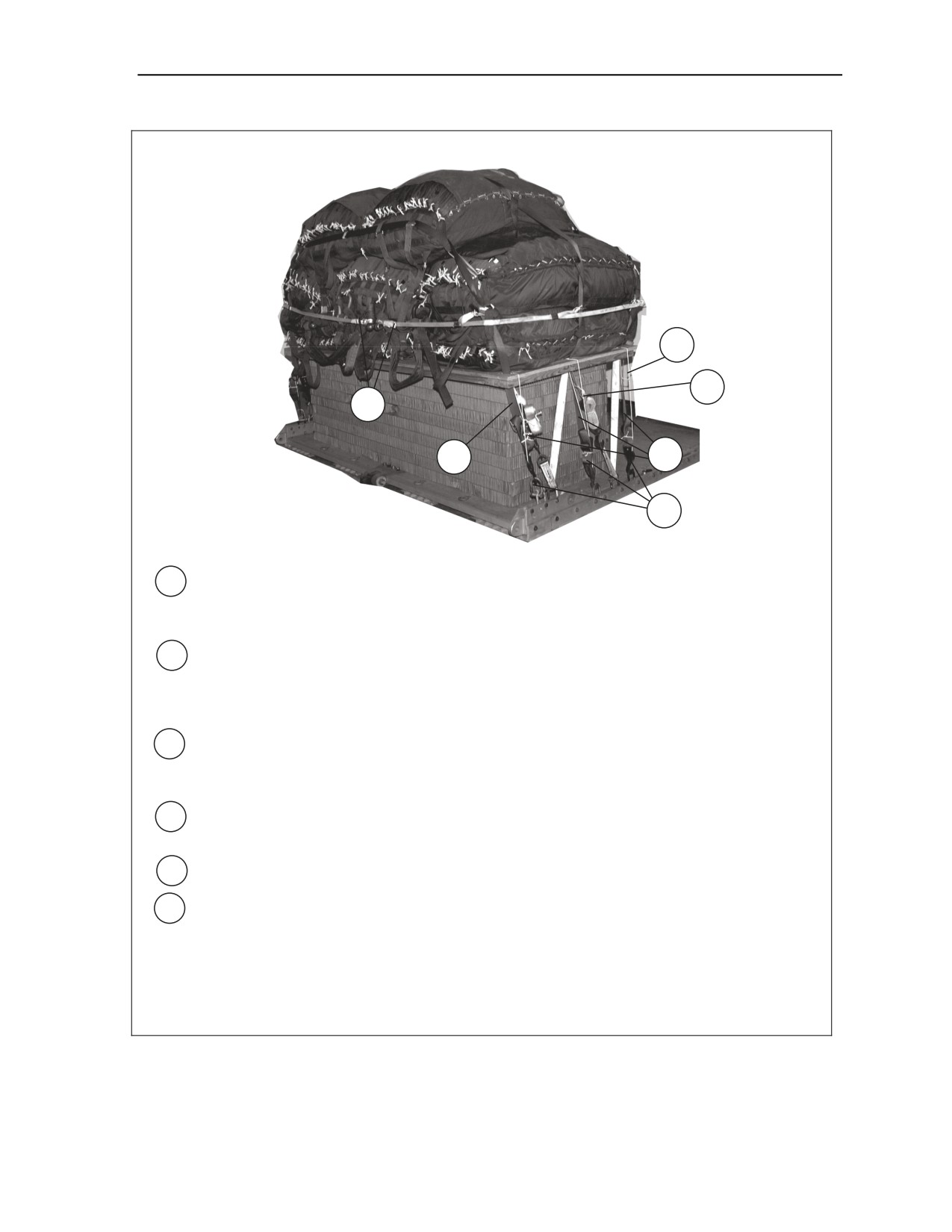
Chapter 5
4
6
5
4 Run the six ends of the three restraint straps down through the holes in the parachute
stowage platform.
5 Secure the ends of the restraint straps as described earlier in this chapter.
6 Close and safety tie the knives and tie the release straps as described earlier in this
chapter.
Notes.
1. Place the knives around the restraint straps between the carrying handles of the top and
bottom parachutes.
2. Secure the load binders and D-rings to a convenient point on the load when there is no
stowage platform.
Figure 5-26. Seven Parachutes Restrained (Continued)
5-32
FM 4-20.102/MCRP 4-11.3J/NAVSEA SS400-AB-MMO-010/TO 13C7-1-5
8 June 2006
Cargo Parachutes
3
1
6
2
4
5
1 Run the first restraint strap up through the outside center carrying handles of the left
bottom, middle, and top parachutes, across the top parachutes, and down through the
outside center carrying handles of the top, middle, and bottom right parachutes.
2 Run the second restraint strap up through the outside rear carrying handles of the left
bottom, middle, and top parachutes, and all upper bridle attaching loops for the cotton
bags or through the parachute restraint strap loops for the nylon bags, and down through
the outside rear carrying handles of the top, middle, and bottom right parachutes.
3 Run the third restraint strap through the outside front carrying handles of the left bottom,
middle, and top parachutes. Run the restraint strap across and down through the outside
front carrying handles of the right top, middle, and bottom parachutes.
4 Run the six ends of the three restraint straps down through the holes in the parachute
stowage platform.
5 Secure the ends of the restraint straps as described earlier in this chapter.
6 Close and safety tie the knives, and tie the release strap as described earlier in this
chapter.
Note. Place the knives around the restraint straps between the carrying handles of the outside
middle and bottom parachutes.
Figure 5-27. Eight Parachutes Restrained
8 June 2006 FM 4-20.102/MCRP 4-11.3J/NAVSEA SS400-AB-MMO-010/TO 13C7-1-5
5-33
This page intentionally left blank.
Chapter 6
Extraction System
SECTION I-GENERAL INFORMATION
USE
6-1. The extraction system is made up of the extraction parachute, the extraction lines, line panels, and
the extraction force transfer coupling (EFTC). The EFTC is bolted to the airdrop platform and is used to
pull the load from the aircraft. The load exits through the cargo ramp and door of the aircraft and the
extraction force is then transferred to the deployment line of the cargo parachute. The weight range of the
EFTC is from 2,520 to 42,000 pounds.
COMPONENTS
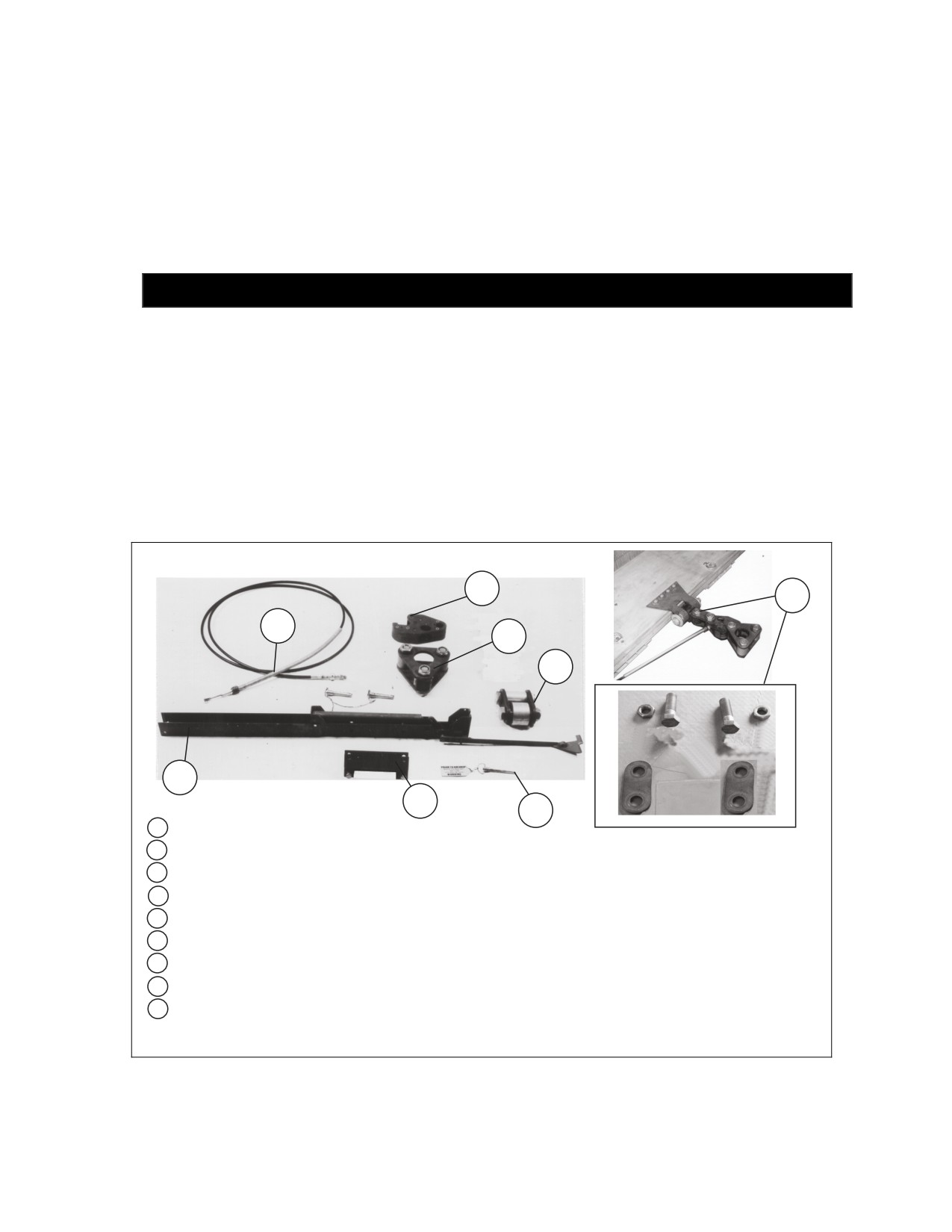
6-2. The components of the EFTC used on low-velocity airdrop loads are shown in Figure 6-1.
2
4
1
3
5
7
8
9
1 Cable assembly (12-, 16-, 20-, 24-, or 28-foot)
2 Coupling link assembly
3 Latch connector assembly
4 Adapter link assembly
5 Adapter link assembly
6 Quick-release pins (pip pins)
7 Actuator assembly
8 Actuator mounting bracket
9 Locking pin
Figure 6-1. Components of EFTC
8 June 2006 FM 4-20.102/MCRP 4-11.3J/NAVSEA SS400-AB-MMO-010/TO 13C7-1-5
6-1
Chapter 6
OPERATION
6-3. The EFTC is used for low-velocity airdrop and how it operates is described below.
• After the extraction parachute deploys, it pulls the extraction line and coupling link assembly or
the adapter link assembly (Items 3 and 5, Figure 6-1).
• The arm of the actuator assembly (Item 7, Figure 6-1) rides on top of the aircraft’s left side
restraint rail. When the load and actuator are pulled out and cleared of the rails, the arm rotates
downward and pulls on the cable (Item 1, Figure 6-1) attached to the catch inside the latch
assembly (Item 2, Figure 6-1). This causes the catch to release the coupling link assembly from
the latch assembly.
• The extraction parachute then pulls on the deployment line and pulls on the parachute release
knife, cutting the parachute restraint and starting the recovery parachute deployment.
6-2
FM 4-20.102/MCRP 4-11.3J/NAVSEA SS400-AB-MMO-010/TO 13C7-1-5
8 June 2006
Extraction System
SECTION II-RIGGING INFORMATION
EXTRACTION FORCE TRANSFER COUPLING
6-4. Inspect, maintain, and test the components of the EFTC extraction system as outlined in TM 10-
1670-296-20&P/TO 13C7-49-2 and this manual.
• Inspecting and Assembling Components. Before each use, inspect and assemble the
components of the EFTC extraction system as follows:
Inspect the components according to TM 10-1670-296-20&P/TO 13C7-49-2.
Assemble the EFTC extraction system as shown in Figures 6-2 through 6-6.
CAUTION
The compression rod spring will be under 175 pounds of pressure
when the actuator is fully armed.
1
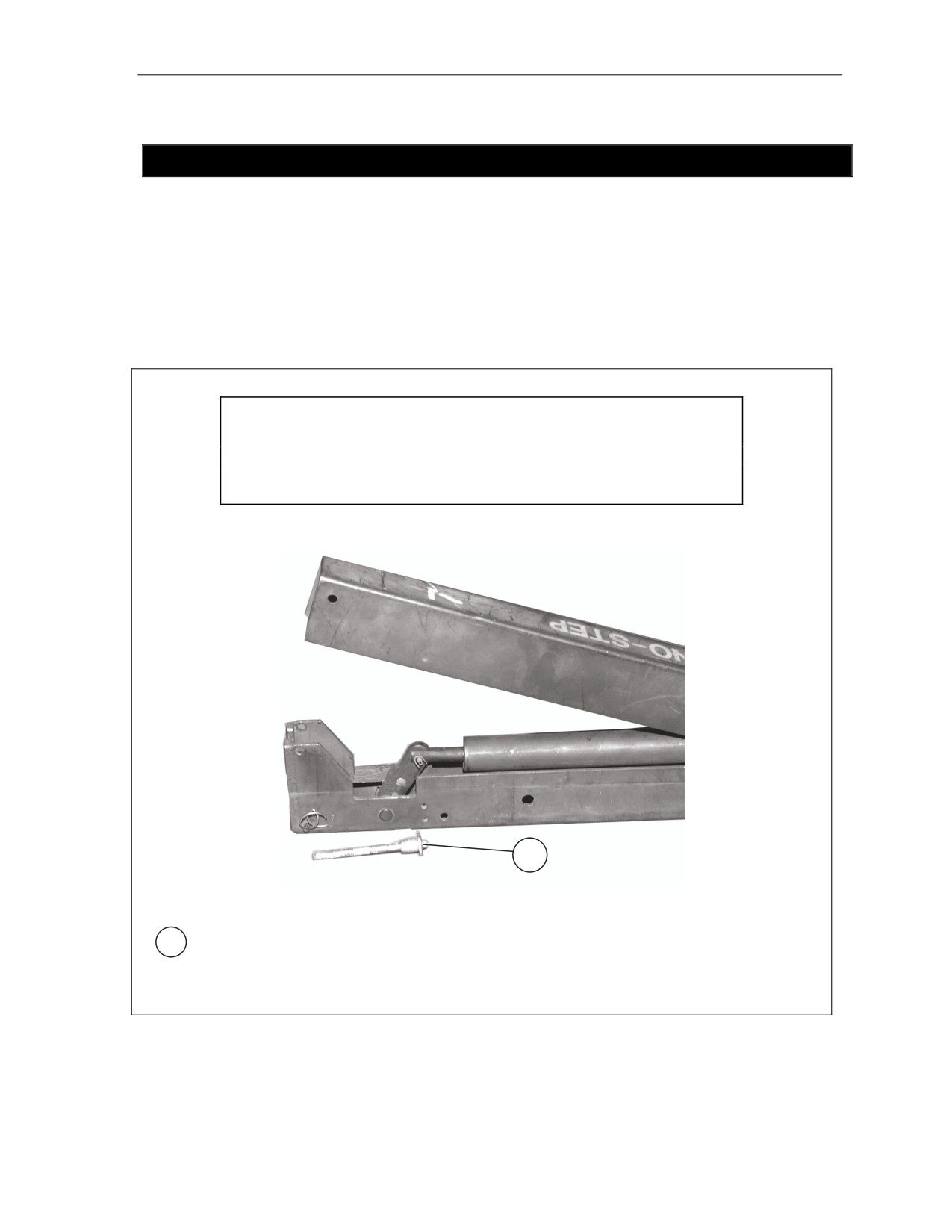
1 Remove the locking pin, and rotate the cover upward and rearward.
Figure 6-2. Locking Pin Removed
8 June 2006 FM 4-20.102/MCRP 4-11.3J/NAVSEA SS400-AB-MMO-010/TO 13C7-1-5
6-3
Chapter 6
CAUTION
If the adjusting collar is loose, replace the cable.
2
1
4
4
3
5
Notes.
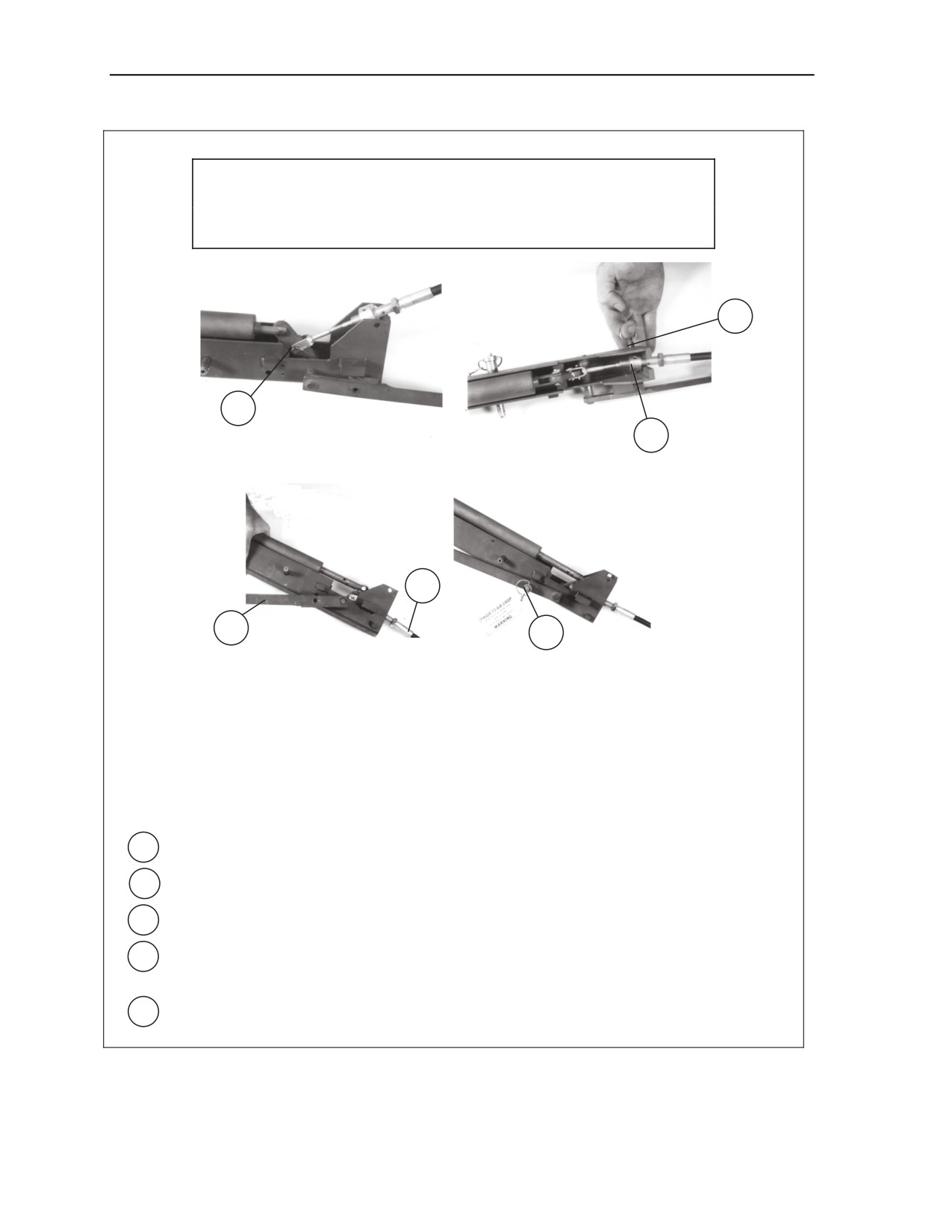
1. Before attaching the cable clevis, make sure the cable at both ends moves freely in the
housing and that the cable is the proper length for the load to be rigged. This length will be
cited in the specific rigging manual.
2. The EFTC is functional with all lengths of cable assemblies. When shortages of specific
lengths of cable occur, the next longer cable assembly can be used.
1 Attach the clevis on the cable to the cable actuator with the straight pin and cotter pin.
2 Pull on the spring-loaded pin to release the actuator arm from the unlocked position.
3 Turn the actuator arm clockwise.
4 As the arm is turned, make sure the adjusting collar on the cable fits inside the end slot of
the actuator.
5 When the actuator is armed, insert the locking pin to hold the actuator arm in place.
Figure 6-3. Cable Installed and Actuator Armed
6-4
FM 4-20.102/MCRP 4-11.3J/NAVSEA SS400-AB-MMO-010/TO 13C7-1-5
8 June 2006
Extraction System
2
1
4
3
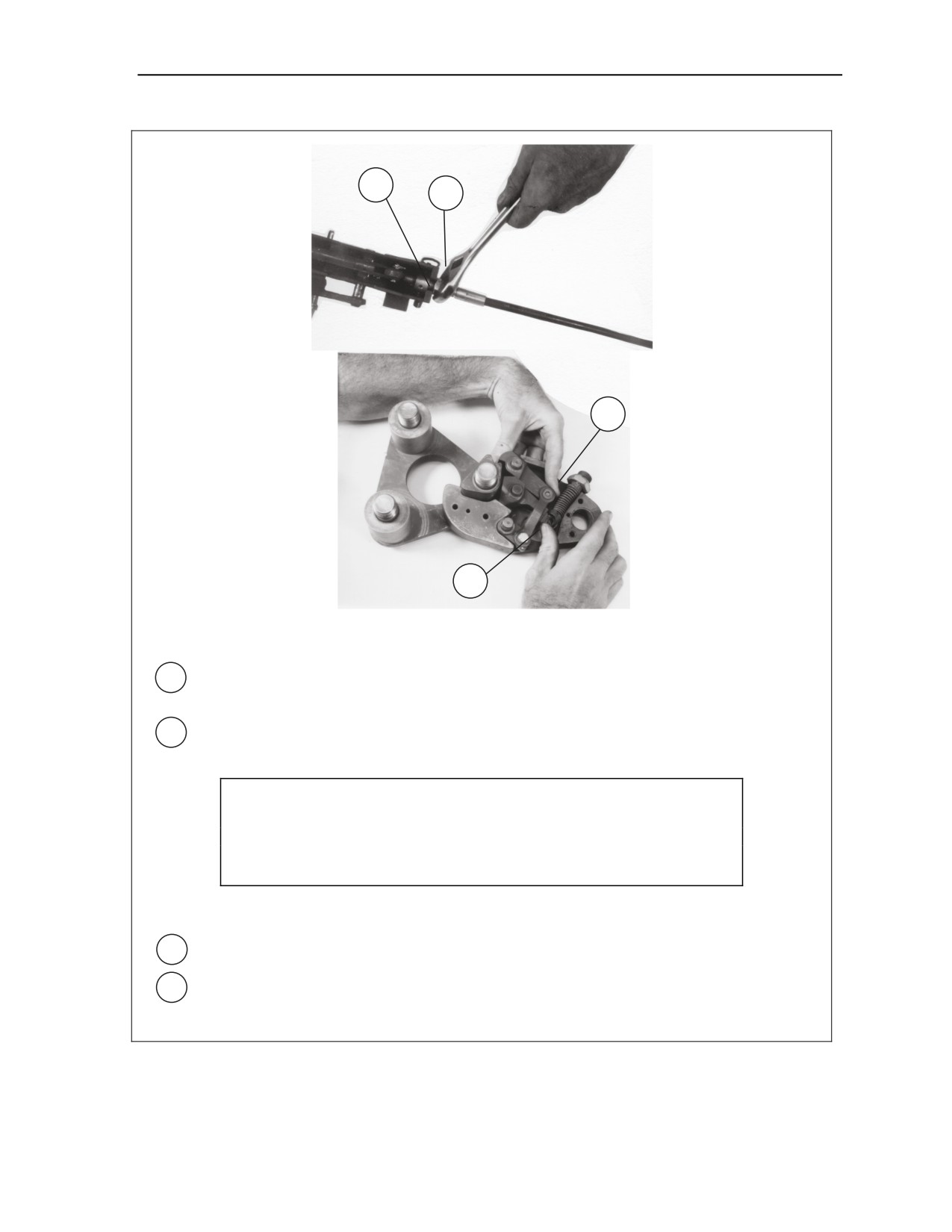
Note. The top plate of the latch assembly is removed for clarity.
1 Use a wrench to tighten the locking nut on the cable until the nut is flush against the
actuator body.
2 Make sure the adjusting collar is flush against the inside of the actuator body.
CAUTION
Do not over tighten the locking nut. This may cause the housing to
crack.
Note. To ensure that the cam of the link assembly is properly seated in the latch assembly with the
retainer hook holding the cam, release and then reseat the cam as follows:
3 Push up on the catch.
4 Push down on the retainer hook and idler link to free the cam, and remove the link
assembly.
Figure 6-4. Cable Installed and the Link Assembly Cam Seated
8 June 2006 FM 4-20.102/MCRP 4-11.3J/NAVSEA SS400-AB-MMO-010/TO 13C7-1-5
6-5
Chapter 6
3
1
5
4
2
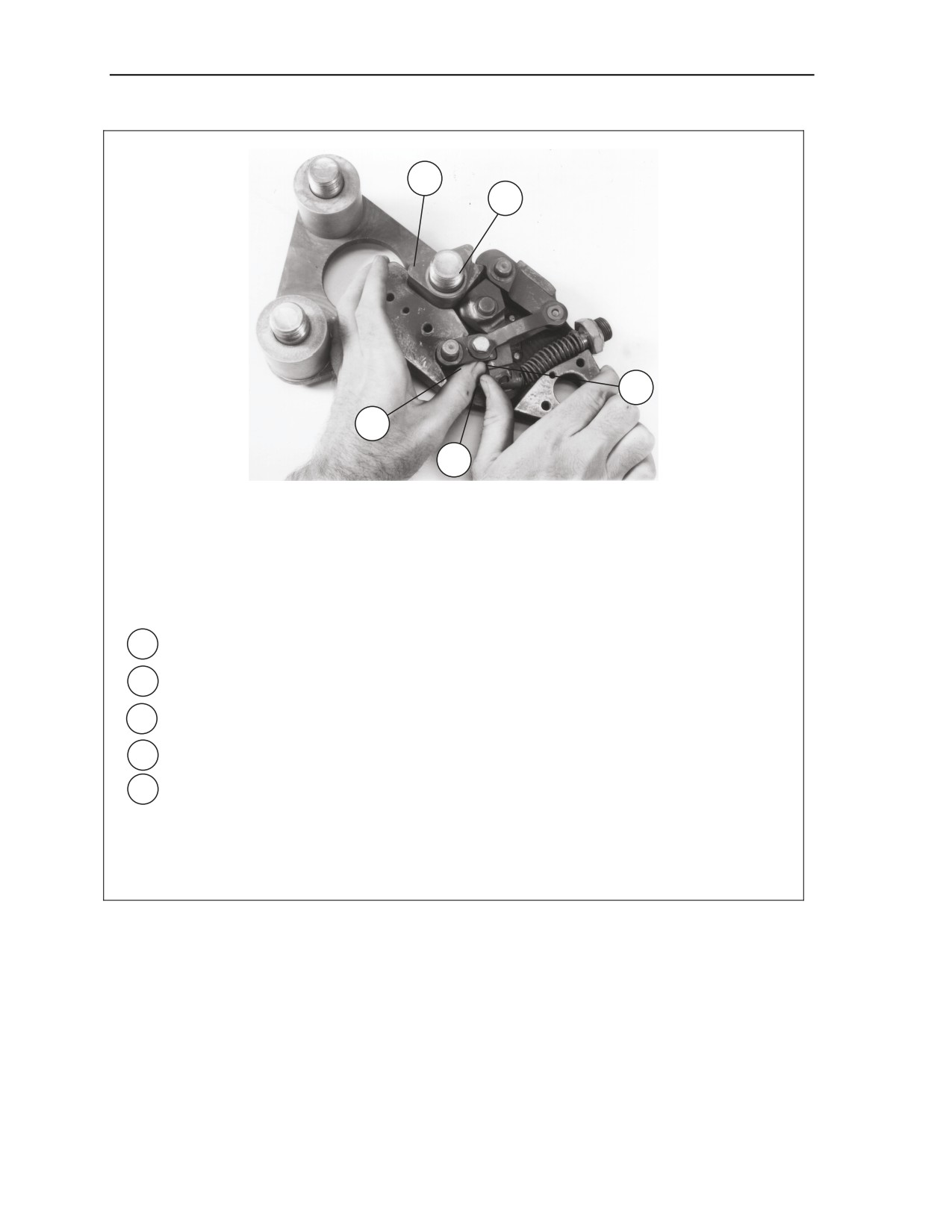
Note. The top plate of the latch assembly is removed for clarity.
Reseat the cam of the link assembly in the latch assembly as follows:
1 Set the edge of the cam in place within the latch.
2 Repeat steps 3 and 4, Figure 6-4.
3 Push cam into place.
4 Push the lock link up to engage the retainer hook.
5 Align the dot on the lock link with the arrow on the catch.
Note. The cam of the link assembly is now properly seated under the retainer hook of the latch
assembly.
Figure 6-5. Link Assembly Cam Reseated
6-6
FM 4-20.102/MCRP 4-11.3J/NAVSEA SS400-AB-MMO-010/TO 13C7-1-5
8 June 2006
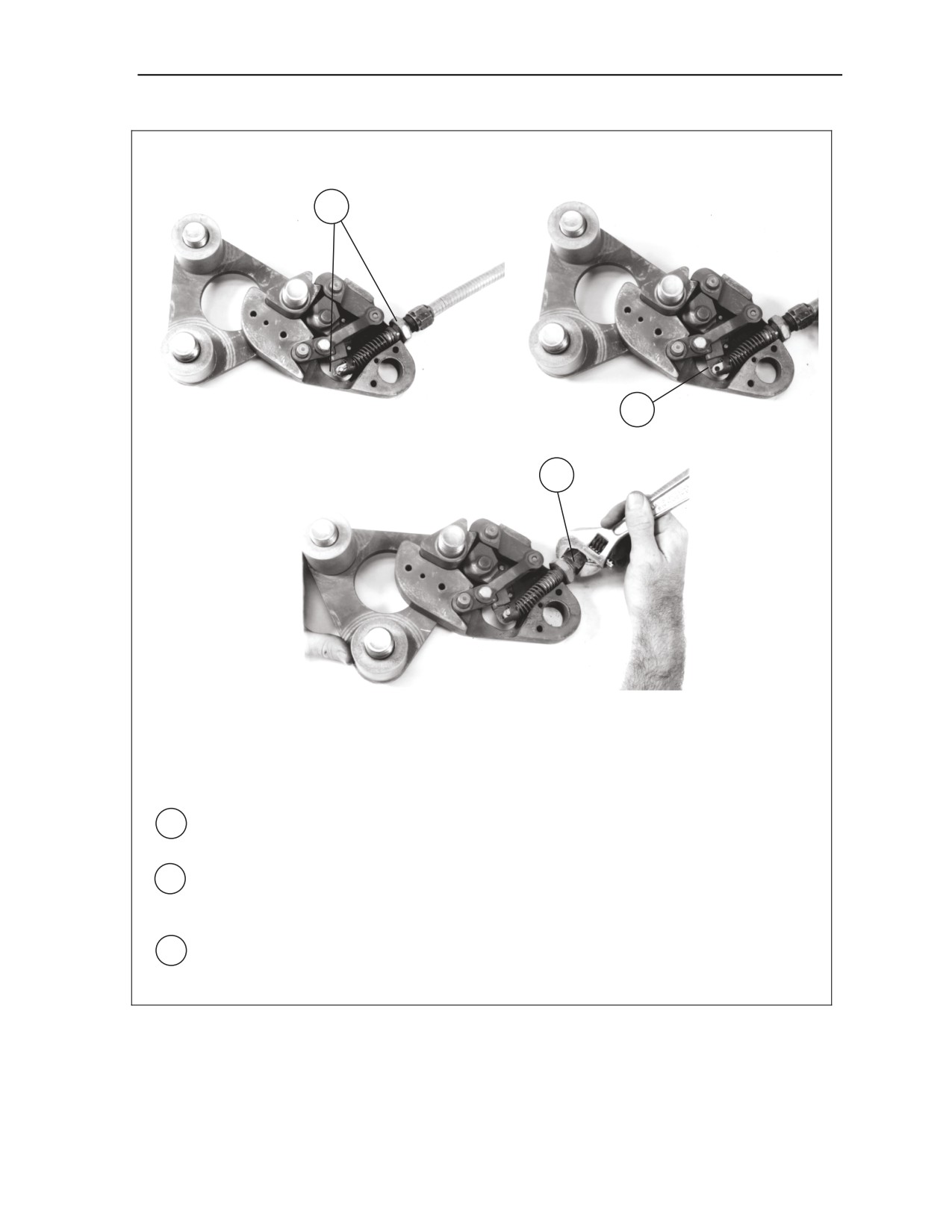
Extraction System
1
2
3
Note. The top plate of the latch assembly is removed for clarity.
1 Make sure that the swage fitting end of the release cable is open 1/8 inch, and slide the
fitting through the locking nut and catch spring down over the catch.
2 Align the holes in the fitting with the hole in the catch and insert the straight pin with the
head up, down through the fitting. Catch and hold the pin in place with a cotter pin on the
underside.
3 Use a wrench to tighten the locking nut on the cable to the threaded fitting on the latch
assembly.
Figure 6-6. Latch Assembly Cable Adjusted
8 June 2006 FM 4-20.102/MCRP 4-11.3J/NAVSEA SS400-AB-MMO-010/TO 13C7-1-5
6-7
Chapter 6
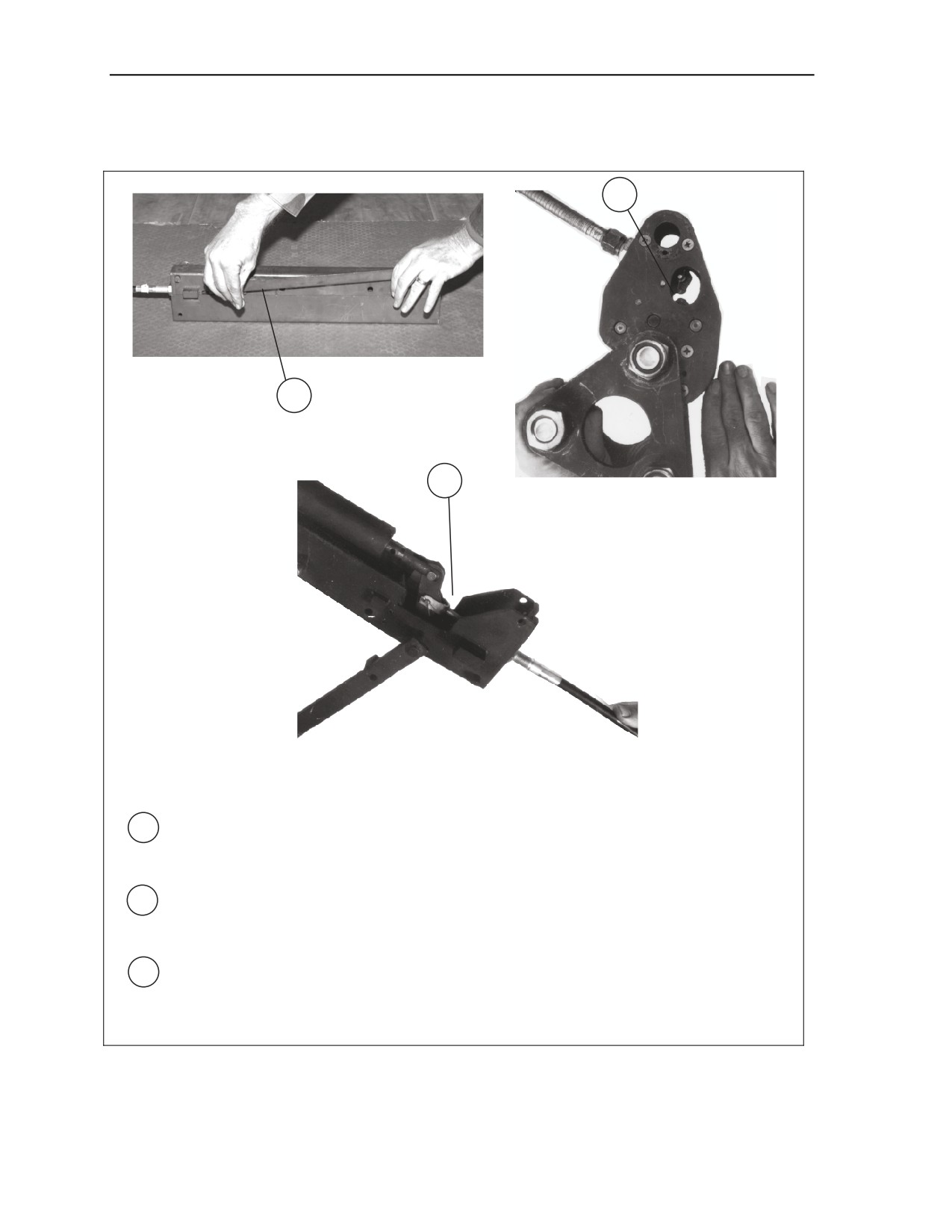
• Testing EFTC Extraction System. Before each use of the EFTC extraction system, test it as
shown in Figure 6-7.
2
1
3
Note. It takes two people to test the EFTC properly.
1 The first person holds the actuator arm firmly and relaxes the binding on the locking pin.
The second person removes the locking pin. The first person then allows the arm to travel
to the released position.
2 The first person carefully rotates the arm fully to the lock-up position on the side of the
actuator. The second person watches the inside of the latch assembly to be sure that the
cable retracts the catch and that the locking link and retainer hook are released.
3 The first person closely watches the cable inside the actuator to be sure that the pull on the
cable is a straight pull and that the cable does not bend or crimp.
Figure 6-7. EFTC Tested
6-8
FM 4-20.102/MCRP 4-11.3J/NAVSEA SS400-AB-MMO-010/TO 13C7-1-5
8 June 2006
Extraction System
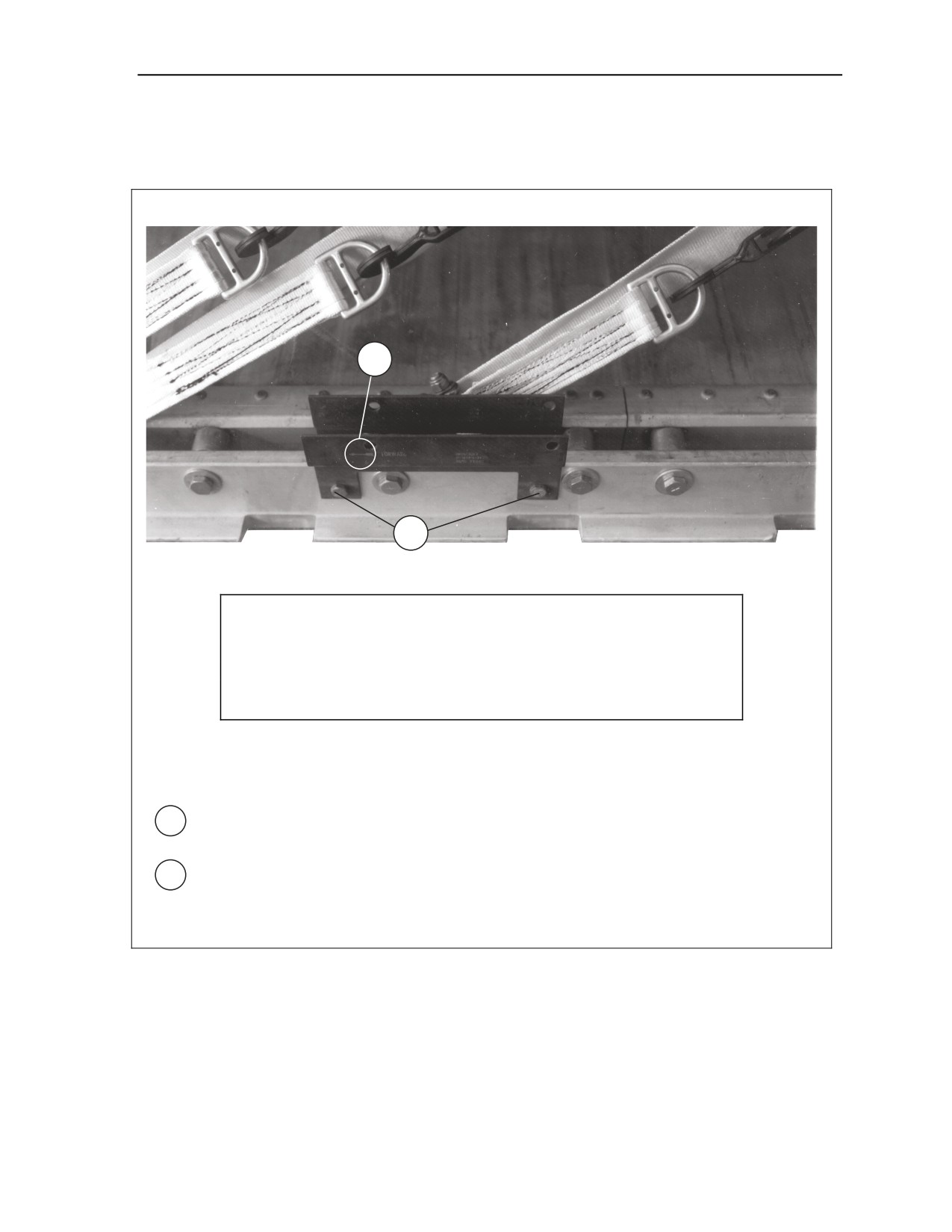
• Preparing and Attaching the EFTC to the Type V Platform. After the EFTC has been tested,
disassemble it. Prepare the EFTC components and attach them to the type V platform as shown
in Figures 6-8 through 6-10.
2
1
CAUTION
When attaching the EFTC mounting brackets on a 28- or 32-foot
type V airdrop platform that has three sets of actuator mounting
bracket holes, use only the rear most set of holes.
Note. Bolt the actuator mounting brackets to the bracket holes as directed in the specific rigging
manual.
1 Bolt the inside and outside actuator brackets to the left rail of the type V platform using self
locking nuts.
2 Make sure the arrow on the outside mounting bracket points toward the front of the
platform to show the brackets are properly installed.
Figure 6-8. Actuator Mounting Brackets Installed to the Type V Platform Side Rail
8 June 2006 FM 4-20.102/MCRP 4-11.3J/NAVSEA SS400-AB-MMO-010/TO 13C7-1-5
6-9
Chapter 6
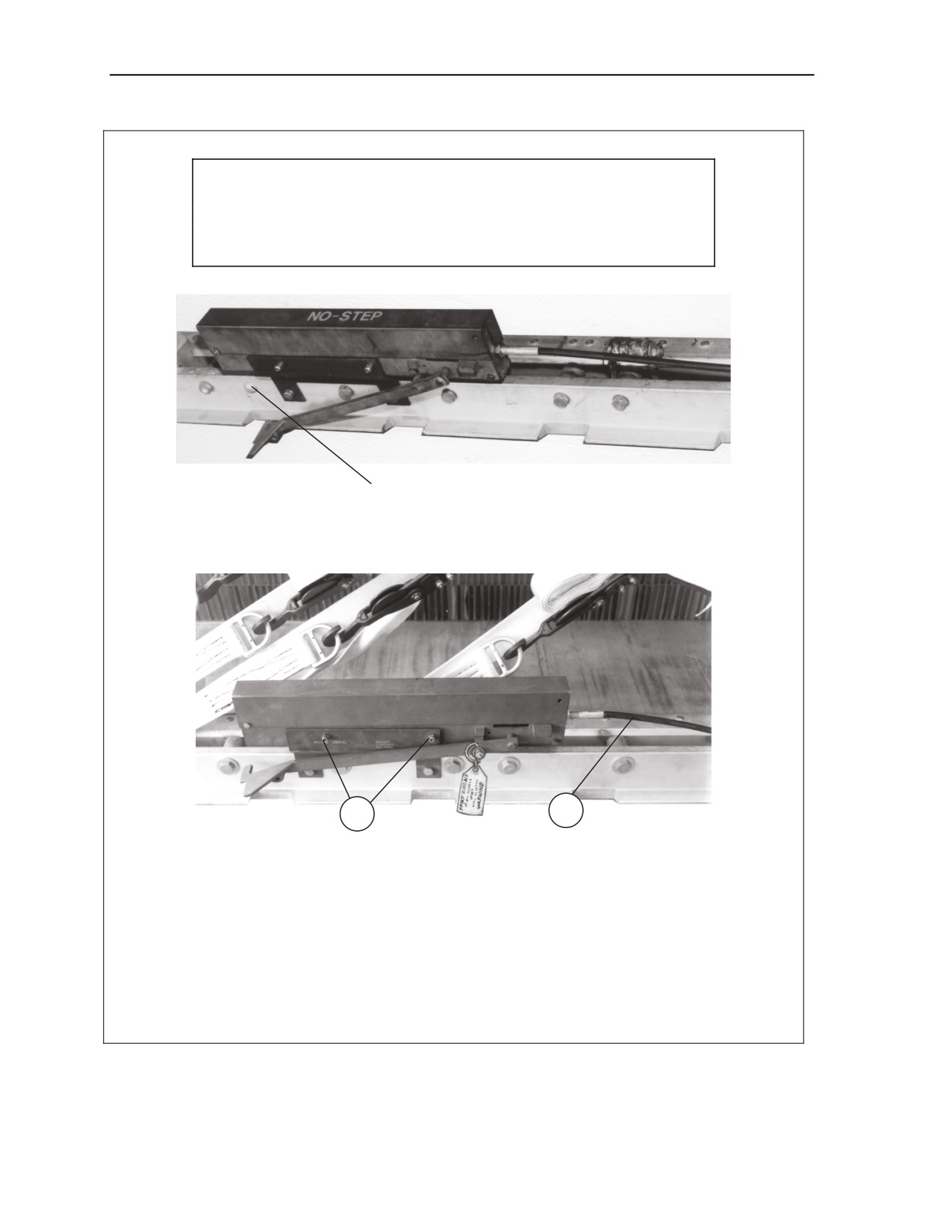
CAUTION
When the actuator arm falls directly over the side rail bolt, use a
round head replacement bolt. (NSN 5306-00-151-0653)
ROUND HEAD BOLT
2
1
Step:
3. Pin the actuator to the actuator brackets with the push in, pull out (PIP) pins provided.
Make sure the PIP pins are put in from the inboard side of the bracket.
4. Pass the cable to the inside of the side rail tiedown straps to prevent movement of the
cable. Tie the cable in place as directed by the specific rigging manual.
Note. If a longer cable than specified in the specific rigging manual is used, make sure that it is
routed in smooth S-shaped bends with no 360 degree circles.
Figure 6-9. Actuator Pinned to Brackets and Position Verified
6-10
FM 4-20.102/MCRP 4-11.3J/NAVSEA SS400-AB-MMO-010/TO 13C7-1-5
8 June 2006
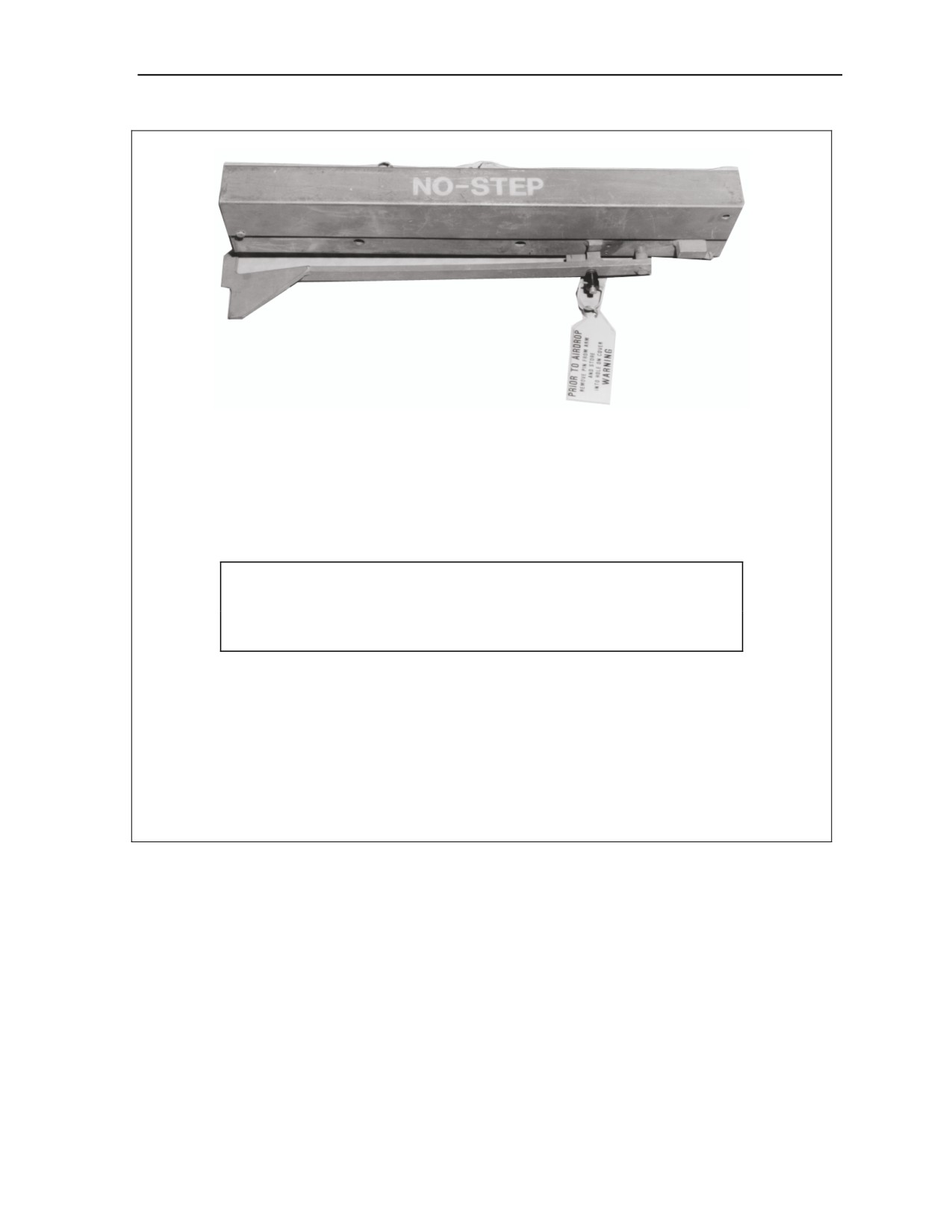
Extraction System
Step:
5. Verify the positioning of the installed actuator as follows:
• Hold the actuator arm in place, and remove the locking pin.
CAUTION
The actuator arm is under 175 pounds of force.
• Allow the arm to rotate down through the forward indent in the side rail.
• Make sure the arm clears the indent by 1/4-inch.
• If the arm CLEARS the indent by 1/4-inch, return the arm to the armed position and replace
the PIP pin.
• If the arm FAILS to clear the indent by 1/4-inch, make sure the correct mounting holes were
used. If the correct holes were used, REPLACE the actuator.
Figure 6-9. Actuator Pinned to Brackets and Position Verified (Continued)
8 June 2006 FM 4-20.102/MCRP 4-11.3J/NAVSEA SS400-AB-MMO-010/TO 13C7-1-5
6-11
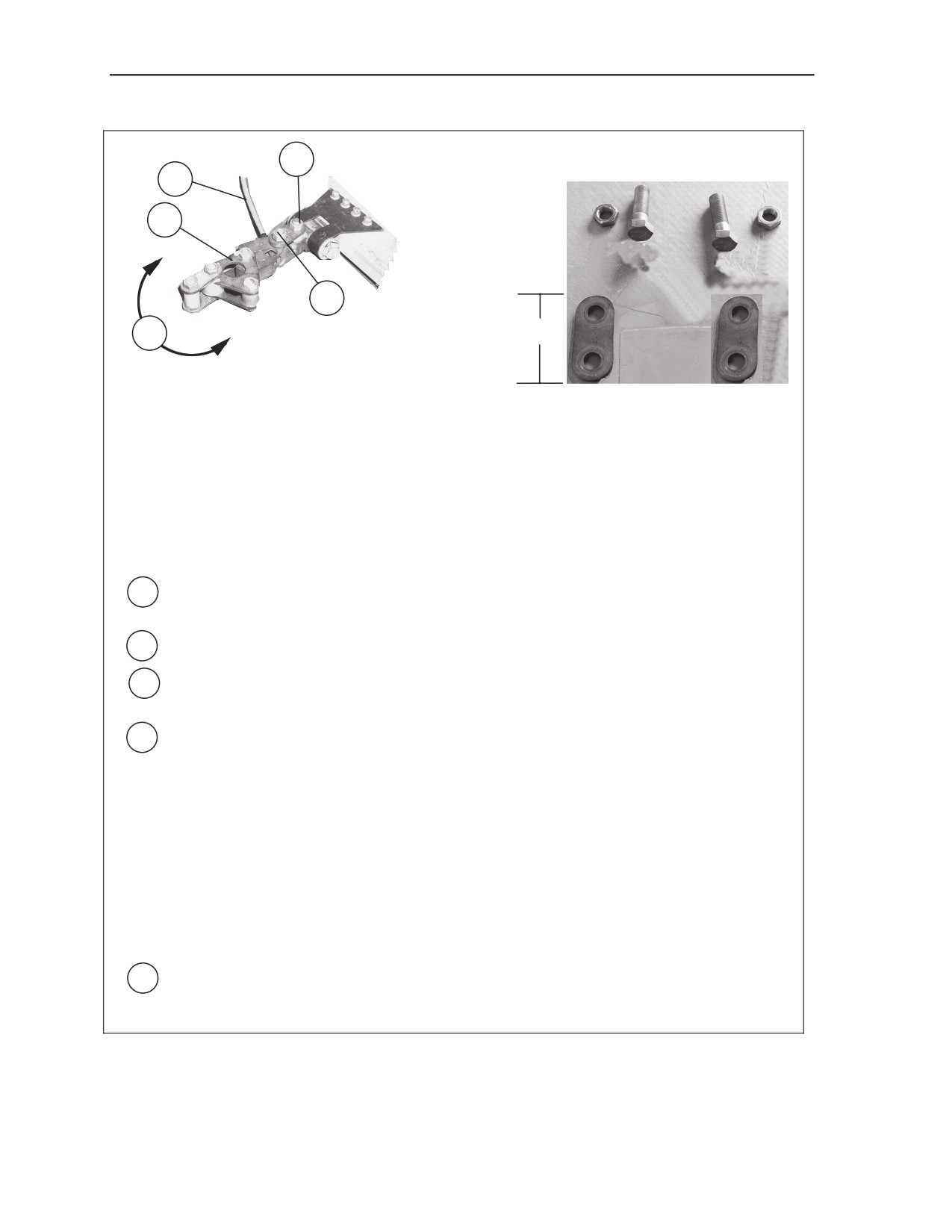
Chapter 6
1
4
3
2
5
5 ¼ INCHES
Notes.
1. Ensure that the platform extraction bracket lug has the required 1/4-inch raised edge at the
base of the lug. If the lug does not have a raised edge it has to be modified. This raises the
latch assembly to prevent damage to the aircraft.
2. When using the modified latch connector assembly, the rounded portion must be bolted to
the extraction bracket lug. If the cut portion of the latch connector assembly is bolted to
the lug, it cannot rotate left or right.
1 Bolt one end of a 5 1/4-inch latch connector assembly (measured from end to end) to the
extraction lug on the platform extraction bracket (Do not tighten bolt).
2 Bolt the latch assembly to the latch connector assembly (Do not tighten bolt).
3 Follow steps 3 and 4, Figure 6-4, and steps 1 through 5, Figure 6-5, to attach the coupling
link assembly to the latch assembly.
4 Follow steps 1, 2, and 3, Figure 6-6, to attach the cable assembly to the latch assembly.
Notes.
1. Some EFTC configurations do not allow steps 5 and 6. See specific rigging manuals for
procedures.
2. When installing the EFTC, the latch assembly is rotated to the right and left. On some
airdrop loads the specified cable length in the rigging procedures is not long enough to
allow the latch assembly to contact the platform, when rotating it to the right. Airdrop units
are authorized to use the next longer length of EFTC cable if the latch assembly fails to
make contact with the platform while installing the EFTC.
5 After attaching the cable, rotate the latch assembly all the way right until it comes in
contact with the platform or lug, then all the way to the left until the cable begins to bind.
Figure 6-10. Latch Assembly Bolted to Type V Platform Extraction Bracket
6-12
FM 4-20.102/MCRP 4-11.3J/NAVSEA SS400-AB-MMO-010/TO 13C7-1-5
8 June 2006
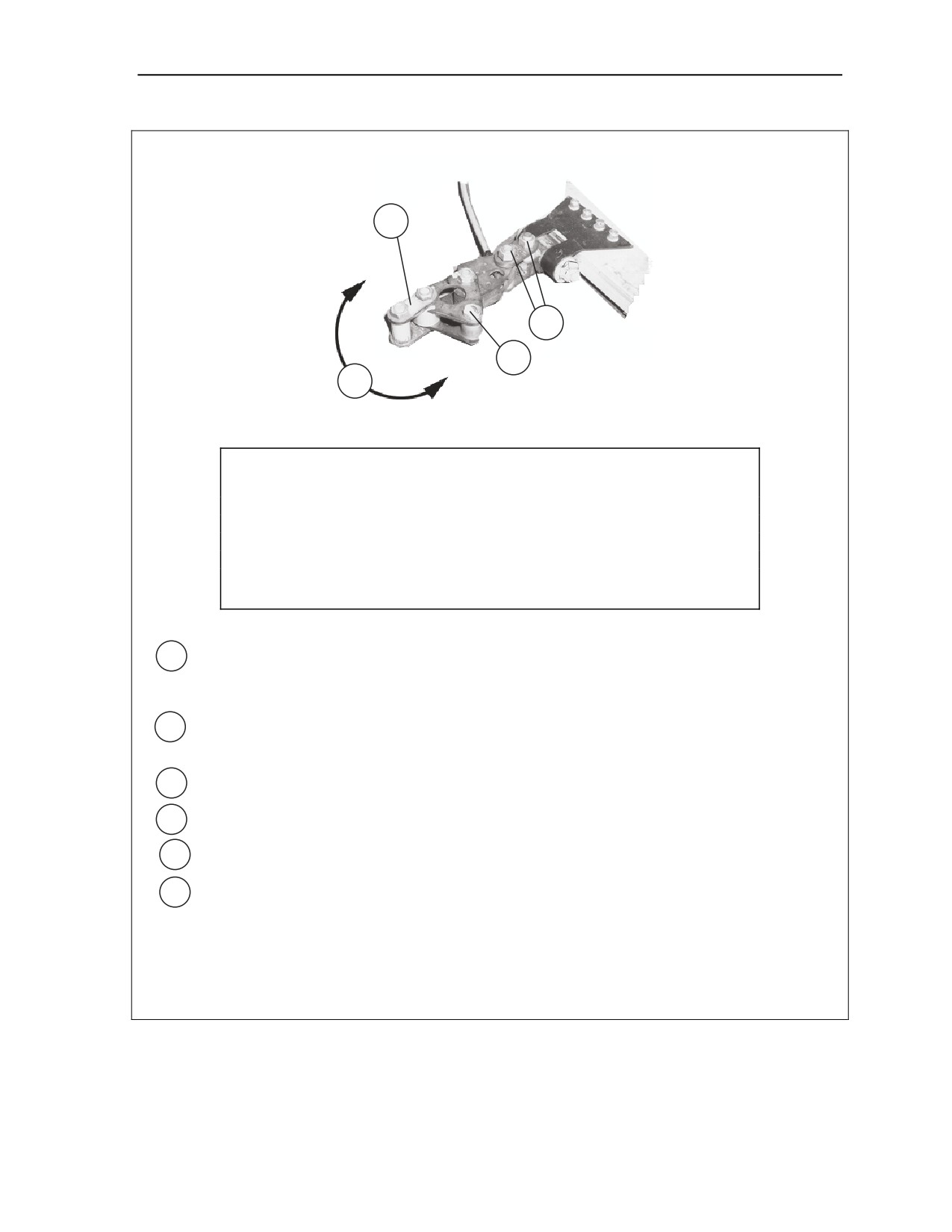
Extraction System
11
9
10
7
CAUTION
Tie the slack in the cable in a smooth S-shaped bend. This should be
tied to the side of the load or to a lashing on the type V platform in
such a way to allow free play in the cable. This will avoid binding
problems in the cable. Do not make a tie around the metal reinforced
portion of the EFTC cable.
6 With the latch assembly in the far right position, make the securing ties to the cable using
Type I, 1/4-inch cotton webbing, one turn single with a surgeon’s knot and locking knot
allowing free play in the cable.(Not Shown)
7 Rotate the latch assembly left and right once again to verify sufficient play. The cable SHALL
NOT bind. Ensure that dot/arrow on the latch assembly stays aligned.
8 Repeat step 7 with the latch assembly in the transportation (vertical) position.
9 Tighten bolts from steps 1 and 2.
10 Bolt one end of the deployment line to the right spacer of the coupling link assembly.
11 When a 6-loop extraction line is used, the adapter link assembly MUST be used to separate
the loops of the line.
Note. After you verify sufficient slack in the cable on the EFTC, remove the quick-release pins from
the actuator. Lay the actuator on the platform, and secure the actuator. This will keep the actuator
from being damaged while the platform is being loaded in the aircraft.
Figure 6-10. Latch Assembly Bolted to Type V Platform Extraction Bracket (Continued)
8 June 2006 FM 4-20.102/MCRP 4-11.3J/NAVSEA SS400-AB-MMO-010/TO 13C7-1-5
6-13
This page intentionally left blank.
Chapter 7
Extraction Parachute Jettison System (EPJS)
SECTION I-GENERAL INFORMATION
USE
7-1. The EPJS allows jettisoning of an extraction parachute, extraction line and line panel in the event of
a malfunction during the extraction phase of airdrop. The system is capable of jettisoning a single 15, 22,
or 28-foot extraction parachute.
CAUTION
The load range of the EPJS is 2,520 pounds to 30,000 pounds. The
EPJS is not authorized for use with clusters of two 28-foot extraction
parachutes.
DESCRIPTION
7-2. The EPJS consists of four extraction parachute jettison devices (EPJDs) and the aircraft electrical
control components that accommodate four airdrop loads. The EPJD connects directly to the airdrop load
and the EPJS aircraft electrical components are routed and secured inside the cargo compartment of the
aircraft. Modifications to existing hardware are not required. The EPJD is prepared and attached to an
extraction line prior to loading the aircraft. The aircraft electrical control components will be installed in
the aircraft by the aircrew prior to aircraft loading. The aircrew will attach the EPJD to the platform after
the platform is locked into position on the aircraft. The EPJS may be utilized with the C-17 and the C-130
aircraft. Figure 7-1 shows the location of the major components.
8 June 2006 FM 4-20.102/MCRP 4-11.3J/NAVSEA SS400-AB-MMO-010/TO 13C7-1-5
7-1
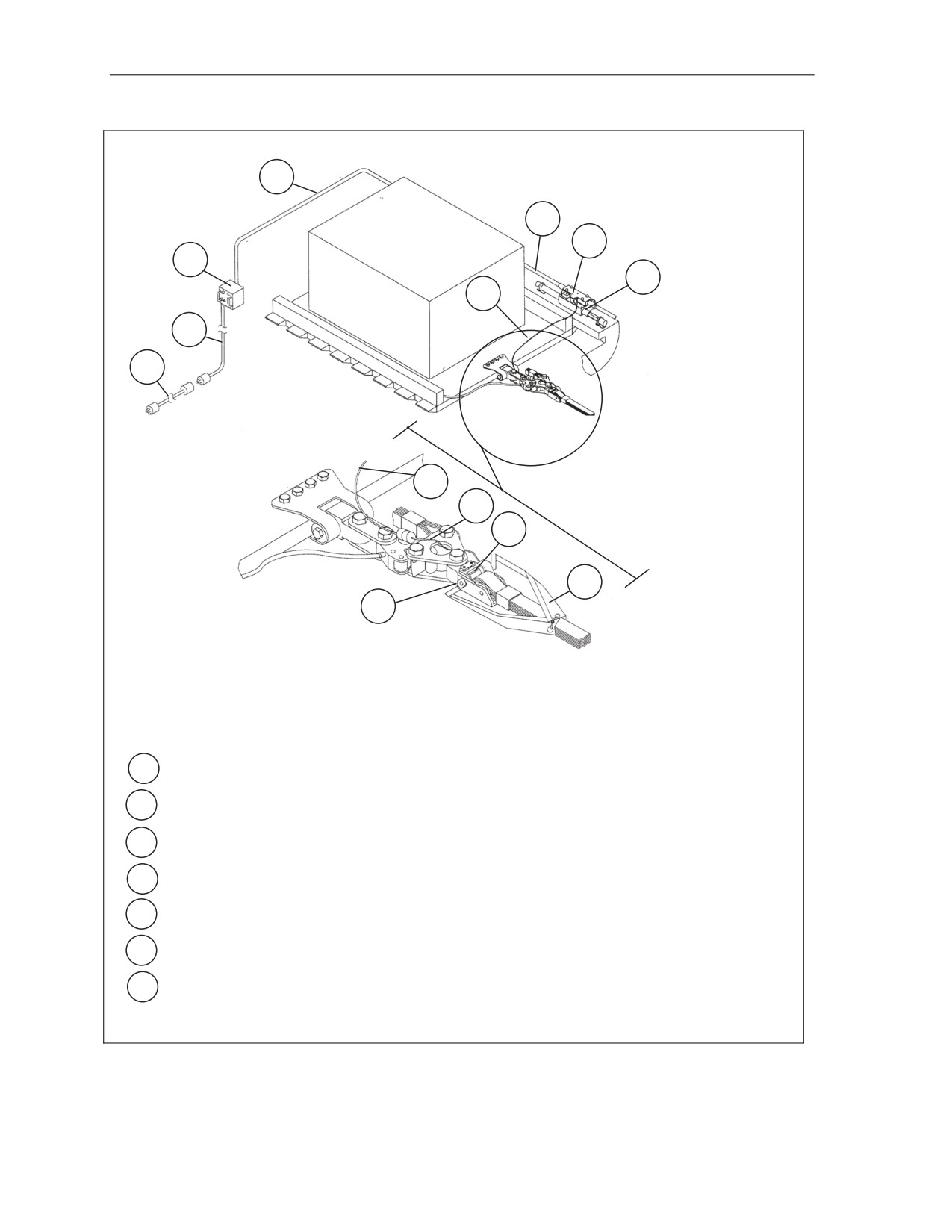
Chapter 7
9
8
7
10
6
5
11
12
5
2
1
4
3
Note. One load is shown and the EPJD with attached components is expanded for clarity. For a
complete component listing, refer to TM 10-1670-296-20&P/TO 13C-7-49-2.
1 Extraction Parachute Jettison Device
2 Squib Cable, 18-inch (yellow)
3 Safety Cap (stowed in EPJD)
4 Protective Cover
5 Platform Cable, 10-foot (yellow)
6 Y-Connector Mounting Box (C-130; C-17 )
7 Y-Connector
Figure 7-1. Major Components of the Extraction Parachute Jettison System
7-2
FM 4-20.102/MCRP 4-11.3J/NAVSEA SS400-AB-MMO-010/TO 13C7-1-5
8 June 2006
Extraction Parachute Jettison System (EPJS)
8 Interconnect Cable, 10-foot (black)
9 Main Cable, 50-foot (black)
10 Control Box
11 Power Cable, 20-foot (red)
12 Power Cable Extension, 20-foot (red)
13 Extension Cable, 4-foot (yellow) (C-17 only) (not shown)
Figure 7-1. Major Components of the Extraction Parachute Jettison System (Continued)
INSPECTION AND MAINTENANCE
7-3. The EPJS components are inspected and maintained according to the procedures in TM 10-1670-
296-20&P/TO 13C7-49-2. See the TM for specifics on inspection and maintenance procedures.
OPERATION
7-4. The operation of the EPJS is explained in Figure 7-2.
• Normal Airdrop Sequence. During a normal airdrop, there is no change to the existing
sequence of extraction and deployment events. Cable disconnect events occur in the following
manner. As the airdrop platform moves aft from its locked position during extraction, the
forward connector of the platform cable disconnects from its respective Y-connector. During
extraction transfer, the squib cable disconnects from the aft connector of the platform cable.
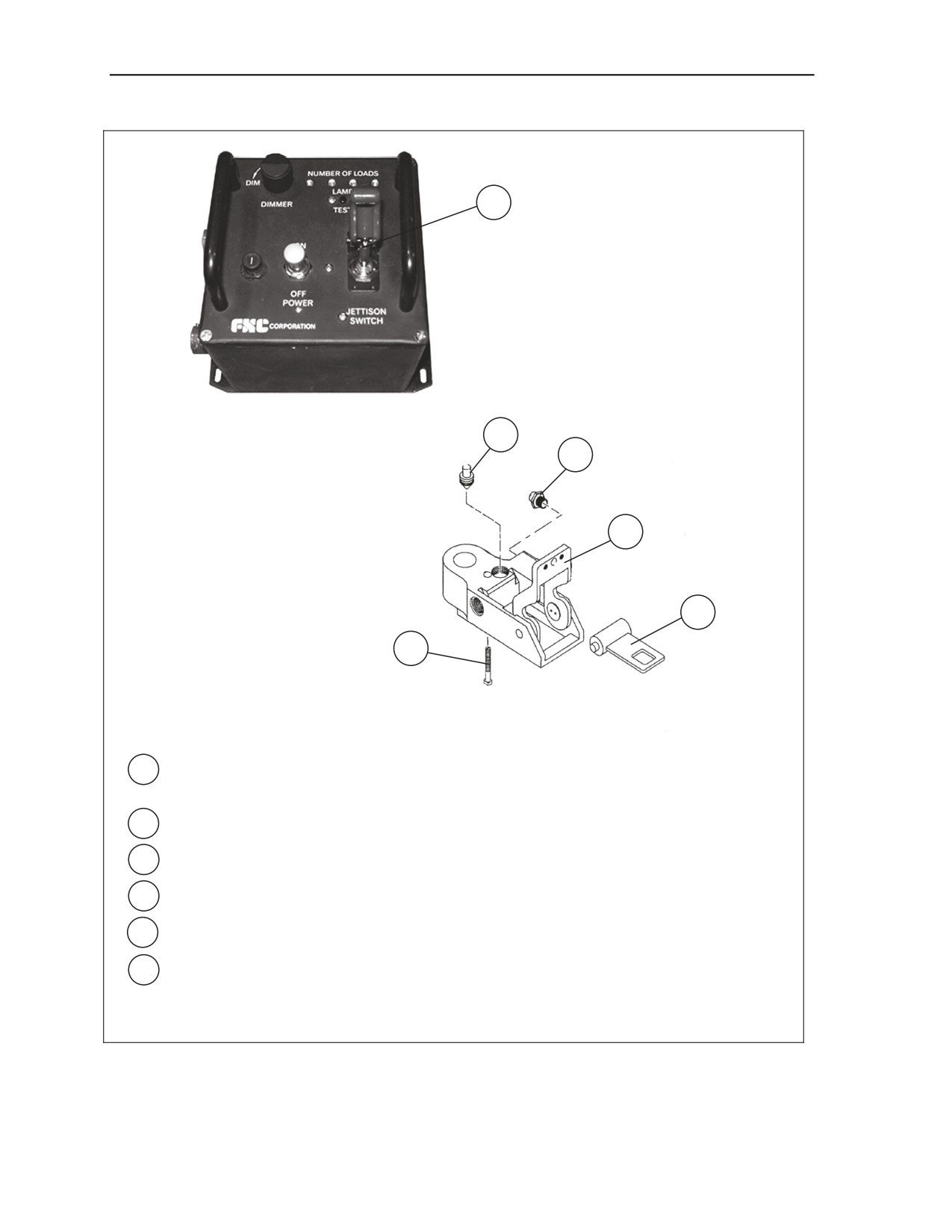
• Extraction Malfunction. When the "JETTISON" switch is activated the EPJD releases the
keeper, allowing the extraction line and keeper to pull free of the load and aircraft. If multiple
loads are being airdropped and the jettison switch is activated, all squibs will fire
simultaneously.
8 June 2006 FM 4-20.102/MCRP 4-11.3J/NAVSEA SS400-AB-MMO-010/TO 13C7-1-5
7-3
Chapter 7
1
3
2
4
6
5
1 The EPJS operates when the jettison switch of the EPJS control box is moved to the
"JETTISON" position.
2 Squib: The squib will then fire, generating a tremendous amount of force.
3 Piston: The force will push on the piston inside the housing.
4 Latch: The piston will push against the latch.
5 Shear Bolt: The latch in turn, applies sufficient tension to break the shear bolt.
6 Keeper: The latch then rotates aft, releasing the extraction line keeper and the attached
extraction line, line panel and extraction parachute.
Figure 7-2. Operation of the Extraction Parachute Jettison System (EPJS)
7-4
FM 4-20.102/MCRP 4-11.3J/NAVSEA SS400-AB-MMO-010/TO 13C7-1-5
8 June 2006
Extraction Parachute Jettison System (EPJS)
SECTION II-RIGGING INFORMATION
PREPARING THE EPJS
7-5. Inspect, test, and prepare the components of the EPJS as shown in TM 10-1670-296-20&P/TO
13C7-49-2 and this manual.
• Preparing the Extraction Parachute Jettison Device (EPJD). Before each use, inspect and
assemble the components of the EPJD as shown in TM 10-1670-296-20&P/ TO 13C7-49-2.
• Attaching the Extraction Line. Prepare and attach the extraction line to the EPJD as shown in
Figure 7-3.
WARNING
The squib must not be installed in the EPJD when beginning this
procedure. A squib, when improperly handled, may inadvertently
activate, or fail to activate when required. Unintentional activation
may result and cause injury to personnel, burns or unwanted
secondary activations.
CAUTION
Ensure that the piston stop and cross hole plug is installed in the
EPJD, and that the shear bolt is not loose. Do not unscrew the latch
retainer nut from the latch.
8 June 2006 FM 4-20.102/MCRP 4-11.3J/NAVSEA SS400-AB-MMO-010/TO 13C7-1-5
7-5