FM 4-20.102 AIRDROP OF SUPPLIES AND EQUIPMENT: RIGGING AIRDROP PLATFORMS (JUNE 2006) - page 1
*FM 4-20.102/MCRP 4-11.3J/NAVSEA SS400-AB-MMO-010/TO 13C7-1-5
Field Manual
Headquarters
Department of the Army
No. 4-20.102
United States Marine Corps
MCRP
Department of the Navy
No. 4-11.3J
Department of the Air Force
Naval Sea Command
Washington, DC, 8 June 2006
No. SS400-AB-MMO-010
Technical Order
No. 13C7-1-5
AIRDROP OF SUPPLIES AND EQUIPMENT:
RIGGING AIRDROP PLATFORMS
Contents
Page
PREFACE
iv
Scope
iv
User Information
iv
Chapter 1
AIRDROP INFORMATION
1-1
Responsibilities
1-1
Safety Precautions
1-1
Type and Method of Airdrop
1-2
Commonly Used Items
1-3
Inspection and Description of Items
1-4
Maximum Rigged Weight
1-10
Accompanying Loads
1-10
Stowing Accompanying Loads
1-10
Preparing Drop Items
1-11
Covering Load
1-11
Center of Balance (CB)
1-11
Items and Loads in Cold Climates
1-14
Knots
1-15
Chapter 2
THE TYPE V AIRDROP PLATFORM
2-1
Section I-General Information
2-1
Use
2-1
Distribution Restriction: Approved for public release; distribution is unlimited.
*This publication supersedes FM 4-20.102/NAVSEA SS400-AB-MMO-010/TO 13C7-1-5, 22 August 2001.
MARINE CORPS PUBLICATION NUMBER PCN 144 000163 00.
i
Contents
Platform Limitations for Aircraft
2-2
Section II-Platform and Honeycomb Preparation
2-3
Inspecting Platform
2-3
Suspending Platform Loads
2-3
Preparing the Type V Platform
2-8
Building Honeycomb Stacks
2-9
Placing Honeycomb Stacks
2-10
Drive-off Aid
2-11
Center of Balance (CB)
2-12
Chapter 3
SUSPENSION SLINGS
3-1
Section I-General Information
3-1
Line Multi-Loop
3-1
Requirements
3-2
Section II-Rigging Information
3-3
Attaching Slings
3-3
Safety Tieing Slings
3-4
Chapter 4
LASHINGS
4-1
Section I-General Information
4-1
Use
4-1
Components and Strengths
4-1
Section II-Rigging Information
4-4
Fitting D-rings
4-4
Lashing Load
4-4
Safety Tieing Load Binder Handles
4-7
Forming a 30-Foot, 45-Foot, or Greater Length Tiedown Strap
4-8
Chapter 5
CARGO PARACHUTES
5-1
Section I-General Information
5-1
Use
5-1
Types
5-1
Riser Extensions
5-2
Section II-Rigging Information
5-2
Forming and Bolting Riser Extensions
5-2
Stowing Riser Extensions
5-4
Stowing Cargo Parachutes
5-9
Using Deployment Lines
5-9
Restraining One Parachute
5-18
Restraining Two to Eight Parachutes
5-19
Chapter 6
EXTRACTION SYSTEM
6-1
Section I-General Information
6-1
Use
6-1
Components
6-1
Operation
6-2
Section II-Rigging Information
6-3
Extraction Force Transfer Coupling
6-3
ii
FM 4-20.102/MCRP 4-11.3J/NAVSEA SS400-AB-MMO-010/TO 13C7-1-5
8 June 2006
Contents
Chapter 7
EXTRACTION PARACHUTE JETTISON SYSTEM (EPJS)
7-1
Section I-General Information
7-1
Use
7-1
Description
7-1
Inspection and Maintenance
7-3
Operation
7-3
Section II-Rigging Information
7-5
Preparing the EPJS
7-5
Chapter 8
RELEASE ASSEMBLIES
8-1
Section I-General Information
8-1
Use
8-1
Description
8-1
Inspection and Maintenance
8-1
Operation
8-1
Section II-Rigging Information
8-4
M-1 Cargo Parachute Release
8-4
M-2 Cargo Parachute Release
8-12
The Automatic Cargo Parachute Release (Not for Army Use)
8-14
Parachute Risers Attached to the Parachute Release
8-22
Chapter 9
DROGUE AND EXTRACTION PARACHUTES AND EXTRACTION LINE
9-1
Section I-General Information
9-1
Drogue Parachutes
9-1
Cargo Extraction Parachutes
9-1
Inspection, Maintenance, and Packing
9-1
Requirements
9-1
Extraction Line Panel
9-4
Section II-Rigging Information
9-7
Extraction Lines
9-7
C-130/MC-130 Aircraft
9-7
Extraction Parachute Clusters
9-11
C-17 Aircraft
9-16
C-17 Aircraft Sequential Platform Extraction System Rigging
9-16
Chapter 10
TRANSPORTATION OF RIGGED LOADS
10-1
Section I-General Information
10-1
Responsibilities
10-1
Typical Loading And Transporting Equipment
10-1
Section II-Rigging Information
10-2
Marking Rigged Load
10-2
Types of Inspection
10-2
Emergency Aft Restraint Requirements for Platform- Extracted Loads Rigged
on a Type V Platform
10-3
GLOSSARY
Glossary-1
REFERENCES
References-1
8 June 2006 FM 4-20.102/MCRP 4-11.3J/NAVSEA SS400-AB-MMO-010/TO 13C7-1-5
iii
Preface
Preface
SCOPE
The purpose of this manual is to provide the latest approved procedures for rigging airdrop Platforms. This
manual is written for use by the parachute rigger. It consists of 10 chapters.
The procedures contained in this manual are typical and serve as the standard from which all platform rigging is
derived. Due to the uniqueness of some equipment and items, the procedures in a specific rigging manual may
be different from those in this manual. When procedures are different, those in the specific manual will be
followed. When an item of equipment is specified to be used for which its minimum or maximum capacity is
exceeded, a notice of exception will be printed at the beginning of each paragraph in each rigging manual
where the exception is authorized. When an item of airdrop equipment is replaced or a procedure is changed, it
will be impossible to change all manuals in the field at one time. Therefore, this manual will be changed, when
necessary.
Chapters 1 through 10 contain specific limitations and general information about the rigging of airdrop platform
loads for low-velocity airdrop from US aircraft and also shows and tells how to prepare, attach, and safety tie
some of the components and systems used in the specific rigging manuals of the FM 4-20.100/TO 13C7 series.
Note: New information concerning the Extraction Parachute Jettison System (EPJS) has been
added along with some new procedures for the extraction force transfer coupling (EFTC). The
C-141 and C-5 aircraft have been taken out and the C-17 aircraft information has been added.
Also, a new user friendly format has been introduced combining general information and
rigging information in each chapter.
USER INFORMATION
The proponent of this publication is United States Army Training and Doctrine Command (TRADOC). You are
encouraged to report any errors or omissions and to suggest ways of making this a better manual.
This publication applies to Active Army, the Army National Guard (ARNG)/Army National Guard of the
United States (ARNGUS), and the United States Army Reserve (USAR) unless otherwise stated.
Army/Navy personnel, send your comments on DA Form 2028 (Recommended Changes to Publications and
Blank Forms) directly to:
Director
Aerial Delivery and Field Services Department
USA Quartermaster Center and School
710 Adams Avenue
Fort Lee, Virginia 23801-1502
iv
FM 4-20.102/MCRP 4-11.3J/NAVSEA SS400-AB-MMO-010/TO 13C7-1-5
8 June 2006
Preface
Air Force personnel, route your reports on AFTO Form 22 (Technical Order Publication Improvement
Report) through your respective command Weapons and Tactics to:
Headquarters
Air Mobility Command (AMC/A39T)
402 Scott Drive, Unit 3A1
Scott AFB, Illinois 62225-5302
Air Force personnel in Special Operations Command, send your reports on AFTO Form 22.
HQ AMC/A39T will consolidate and forward changes to:
Director
Aerial Delivery and Field Services Department
USA Quartermaster Center and School
710 Adams Avenue
Fort Lee, Virginia 23801-1502
Also send an information copy of AFTO Form 22 to:
584 CBSS/GBMUDE
380 Richard Ray Blvd
STE 104
Robins AFB, Georgia 31098-1640
Marine Corps personnel, send your comments to:
Deputy Commandant for Combat Development and Integration
Logistics Integration Division
3300 Russell Road, Suite 318A
Quantico, Virginia 22134-5010
8 June 2006 FM 4-20.102/MCRP 4-11.3J/NAVSEA SS400-AB-MMO-010/TO 13C7-1-5
v
Chapter 1
Airdrop Information
RESPONSIBILITIES
1-1. Personnel responsible for loading rigged platform loads into aircraft and installing and operating
airdrop systems are given below.
• Air Forces Aircraft. Air forces personnel are responsible for loading the rigged platform loads
into the aircraft and for installing and operating the airdrop system.
• US Air Force (USAF) Aircraft Foreign Joint Training. USAF aircraft and crews conducting
joint airdrop operations with foreign military governments are not authorized to airdrop
equipment and configurations not included in this manual, unless authorized by specific
MAJCOM.
• Other Aircraft. When an aircraft other than US Air Force aircraft is used, the service being
airdropped may be responsible for loading their rigged platform loads into the aircraft and for
installing and operating the airdrop systems.
SAFETY PRECAUTIONS
1-2. Safety precautions MUST be closely followed when airdrop platform loads are rigged.
Failure to follow the precautions could result in serious injury to the rigger or damage to the
drop item or aircraft. The following safety precautions shall be taken by the rigger:
• Make sure that when lifting heavy items, the lifting device has a rated lifting capacity that
exceeds the weight of the item to be lifted.
• Be sure that items being lifted are secured to the lifting device.
• Avoid working under suspended equipment unless absolutely necessary.
• Cover all wet cell batteries in service with plastic or nonflammable material.
• Check fuel tanks to ensure that they do not exceed the fuel level of the specific rigging manuals.
Check fuel cans to make sure they are performance-oriented packaging approved. When
stowing fuel cans, use cellulose wadding or other suitable material to prevent metal-to-metal
contact.
• Package, mark, and label hazardous materials according to AFMAN 24-204(I)/TM 38-250.
CAUTION
Only ammunition listed in FM 4-20.153/MCRP 4-11.3B/TO 13C7-18-41
may be airdropped. Hazardous material must be packaged, marked,
and labeled as required by AFMAN(I) 24-204/TM 38-250.
8 June 2006
FM 4-20.102/MCRP 4-11.3J/NAVSEA SS400-AB-MMO-010/TO 13C7-1-5
1-1
Chapter 1
TYPE AND METHOD OF AIRDROP
1-3. As used in this manual, airdrop is the air-to-ground delivery of platform loads from an
aircraft in flight. Airdrop is designed to supplement the usual surface methods of delivering
supplies and equipment to forces in the field.
• Type of Airdrop. Currently the only type of airdrop used to deliver platform loads is low-
velocity airdrop. Low-velocity airdrop delivers platform loads from an aircraft at various
altitudes. Cargo parachutes are used to slow the descent of the loads to ensure minimum landing
shock. The type and number of cargo parachutes can vary as shown in Table 1-1. Due to
differing deployment characteristics, parachutes of different types will not be mixed on the same
load. Loads with different type parachutes and loads with quantities of the same type parachute
may be airdropped from the same aircraft or element provided the following conditions are met:
Airdrop altitude for the aircraft or element will be determined by the type and number of
parachutes on the load requiring the highest airdrop altitude.
Aircraft or elements with lower airdrop altitudes will drop before aircraft or elements with
higher airdrop altitudes.
The transported force accepts strike report responsibility for loads other than the first
platform to exit the aircraft or element lead for formation airdrops.
Table 1-1. Type and Number of Parachutes for Low-Velocity Airdrop
MINIMUM DROP ALTITUDE
PARACHUTES
(FEET ABOVE GROUND LEVEL)
G-11B
700
1
750
2 to 4
G-11C
1,150
5
1,200
6 to 7
1,300
8
G-12E
550
2
(Not for Army Platform Loads)
CAUTION
Drop altitudes reflect Minimum drop altitudes.
• Method of Airdrop. The extraction method is used for platform loads delivered by low-velocity
airdrop on type V platform. This method uses a cargo extraction parachute to pull the platform
load from the cargo compartment of the aircraft.
1-2
FM 4-20.102/MCRP 4-11.3J/NAVSEA SS400-AB-MMO-010/TO 13C7-1-5
8 June 2006
Airdrop Information
COMMONLY USED ITEMS
1-4. Items commonly used for rigging platform loads are described in this section. Each rigging manual
in the FM 4-20.100/TO 13C7 series contains one or more tables of equipment required. These tables list
the National Stock Number (NSN), item, and quantity of each item needed to prepare and rig the load
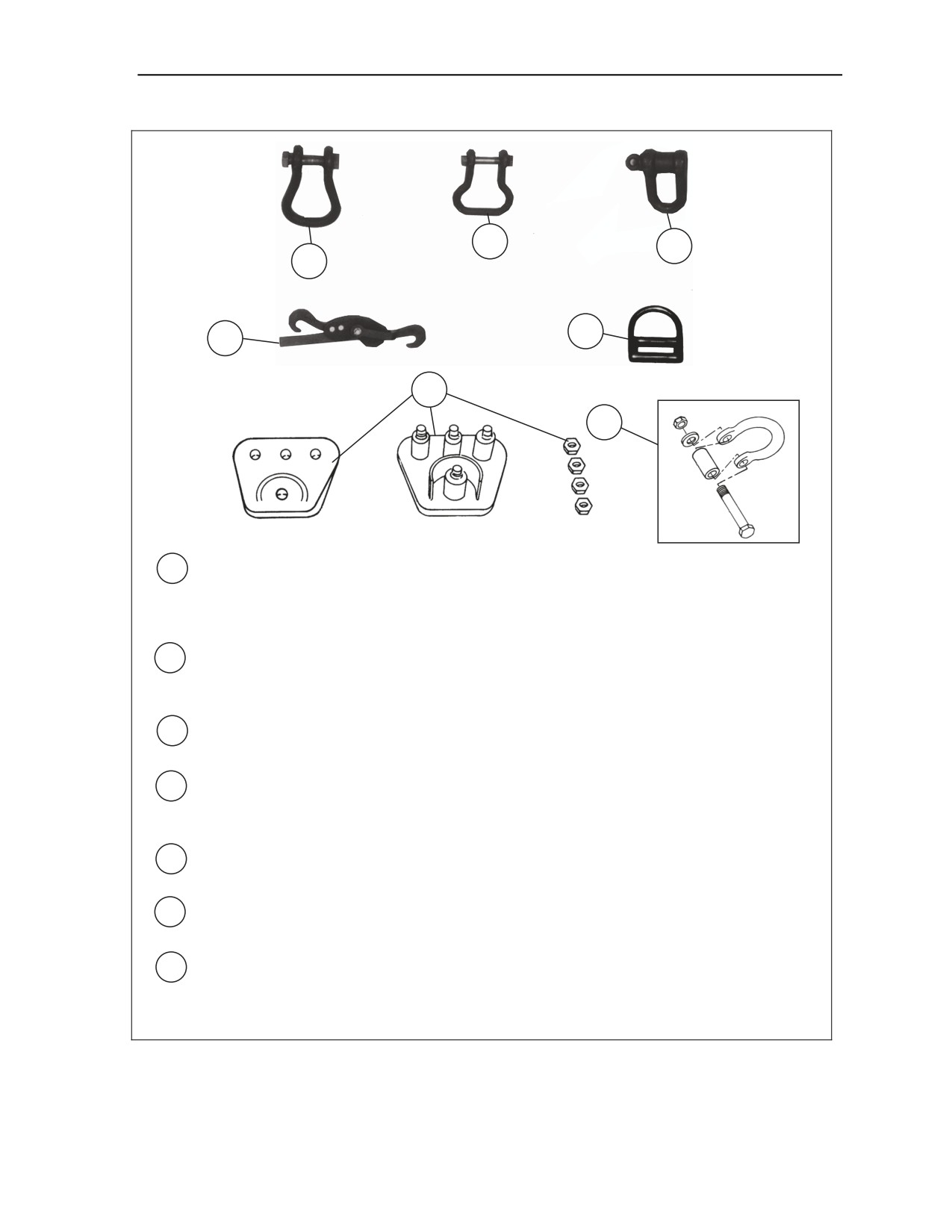
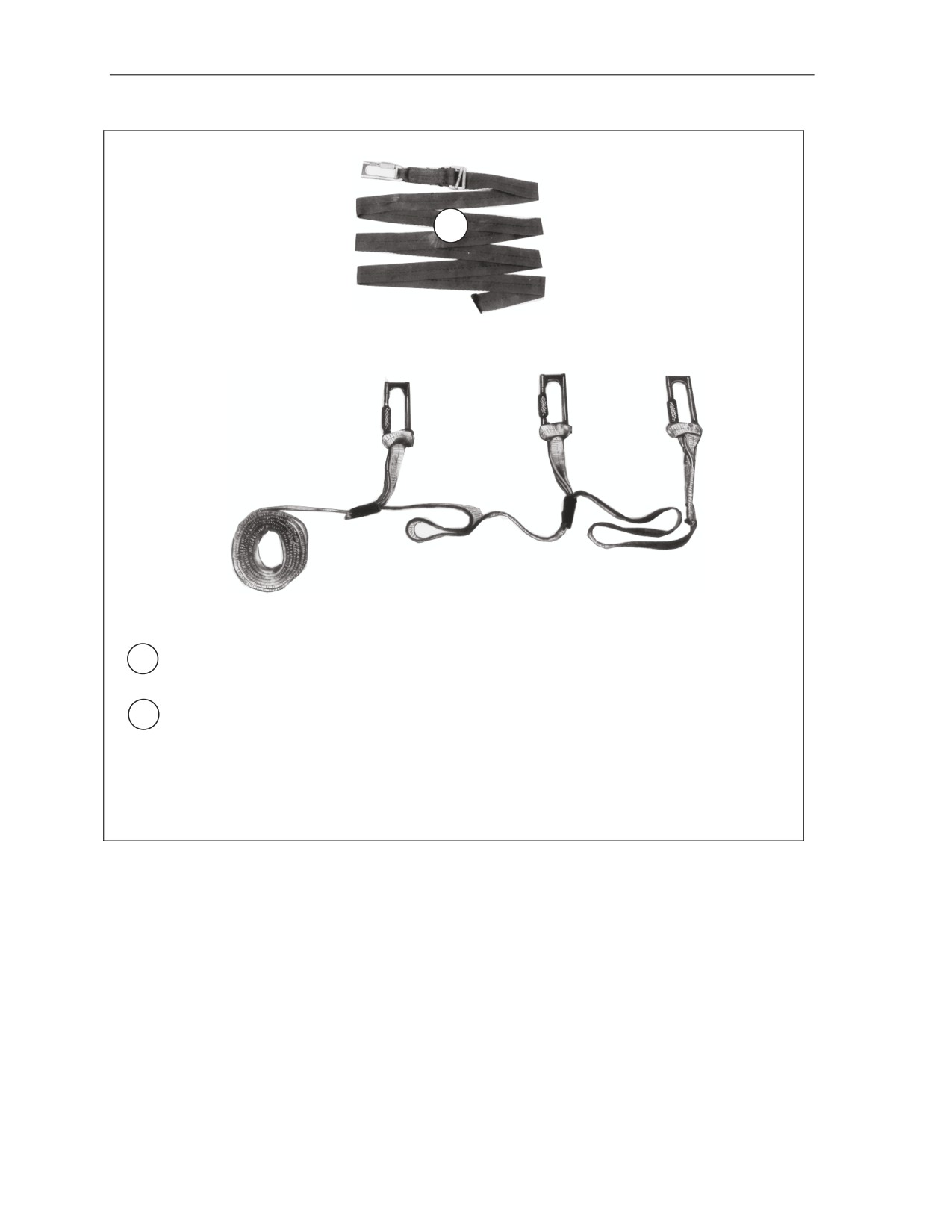
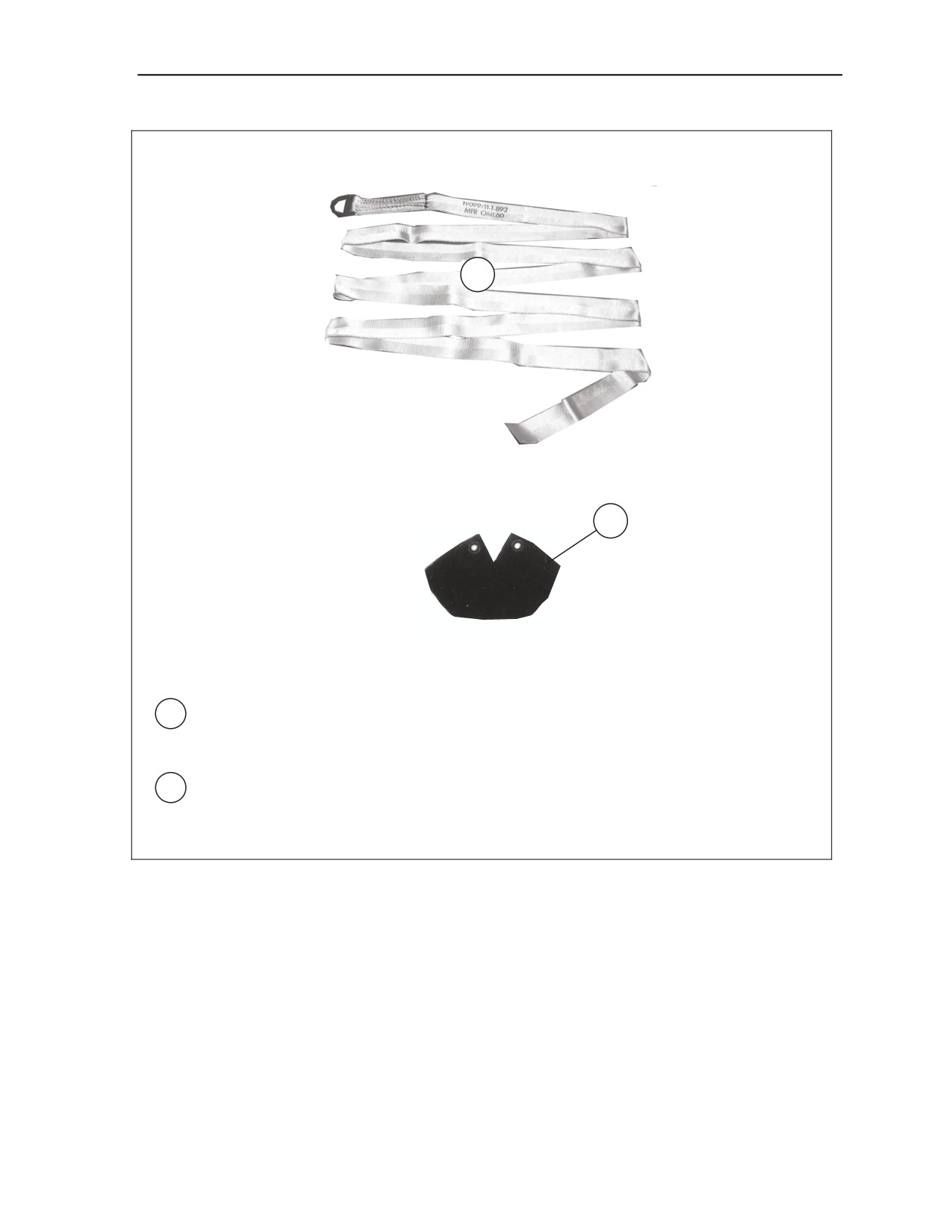
covered in the manual. Standard airdrop hardware items are shown in Figure 1-1. Standard airdrop straps
and canvas items are shown in Figure 1-2. Some textile, wood, and miscellaneous items are described
below.
• Textile Items. The most common textile items and their uses are as follows:
Type III nylon cord is used to make safety ties and to hold items in place. It has a tensile
strength of 550 pounds.
1/2-inch tubular nylon webbing is used to secure items during airdrop and to tie the
deadman’s safety tie. It has a tensile strength of 1,000 pounds.
Type I, 1/4-inch cotton webbing is used to make many of the needed safety ties used when
a platform load is rigged. It has a tensile strength of 80 pounds.
5/8-inch or 9/16-inch tubular nylon webbing may be used for the deadman’s safety tie and
parachute clustering ties in place of 1/2-inch tubular nylon webbing. Five-eighths inch
tubular nylon webbing has a tensile strength of 2,250 pounds and 9/16-inch tubular nylon
webbing has a tensile strength of 1,500 pounds.
8 June 2006 FM 4-20.102/MCRP 4-11.3J/NAVSEA SS400-AB-MMO-010/TO 13C7-1-5
1-3
Chapter 1
• Wood Items. Wood items used when platform loads are rigged for specific airdrop are made
locally. Details for building these wood items are in the specific rigging manuals.
Note. Plywood will be grade AC or AD.
• Miscellaneous Items. Miscellaneous items that may be used when a platform load is rigged are
discussed below. The proper use of these items will be covered in detail in this manual or in
other FM 4-20.100/ TO13C7 series manuals.
Adhesive tape (masking tape), 2 inches wide, is used to secure folds of excess webbing. It
is also used to protect honeycomb from being cut by type III nylon cord and to hold
padding in place. It can be used for other tasks also.
Type IV, cloth-backed adhesive tape, 2 inches wide, is used to protect honeycomb from
being cut by type III nylon cord and to hold padding in place. It can be used for other
tasks, such as securing the sling keepers.
CAUTION
The type IV, cloth-backed adhesive tape, will not be used to secure
folds of extraction lines, suspension slings, and deployment lines.
Cellulose wadding and felt sheets have many uses. They may be used to pad fragile items,
to prevent sharp edges from cutting, and to protect slings during airdrop.
Pad energy dissipating (honeycomb) are used to absorb the landing shock. Honeycomb is
also used to level, pad, and fill empty spaces.
INSPECTION AND DESCRIPTION OF ITEMS
1-5. Canvas, metal, webbing, and wood items are inspected according to TM 10-1670-296-20&P/TO
13C7-49-2.
CAUTION
The maximum rated strength will reduce depending on the
configuration in which it is used.
1-4
FM 4-20.102/MCRP 4-11.3J/NAVSEA SS400-AB-MMO-010/TO 13C7-1-5
8 June 2006
Airdrop Information
2
3
1
5
4
6
7
1 The large clevis is used in forming suspension systems, grouping bridles, and attaching
riser extensions to the G-11 cargo parachute. It may be used on the type V platform for
suspension. The clevis is used in other places, as indicated in the specific rigging manual.
This has a maximum rated strength of 40,000 pounds.
2 The medium clevis is used to attach riser extensions to the G-12E cargo parachute and
emergency aft restraint provisions on the type V platform. Other uses are given in the
specific rigging manual. This has a maximum rated strength of 20,000 pounds.
3 The screw-pin clevis is used with a sleeve in a manner similar to a large suspension clevis.
This has a maximum rated strength of 40,000 pounds.
4 The 10,000-pound load binder is used to hook two D-rings together or to hook a D-ring to a
platform tiedown clevis on the airdrop platform. This has a maximum rated strength of
10,000 pounds.
5 The heavy-duty D-ring is used with a 15-foot tiedown strap. This has a maximum rated
strength of 10,000 pounds.
6 The four-point link assembly is used to cluster two 28-foot cargo extraction parachutes on
a low-velocity load. This has a maximum rated strength of 56,000 pounds.
7 The platform clevis is attached to the side rails, tandem links, or suspension links of the
type V platform in order to secure the load. This has a maximum rated strength of 10,000
pounds.
Figure 1-1. Hardware Items Used for Rigging Platform Loads
8 June 2006 FM 4-20.102/MCRP 4-11.3J/NAVSEA SS400-AB-MMO-010/TO 13C7-1-5
1-5
Chapter 1
8
9
10
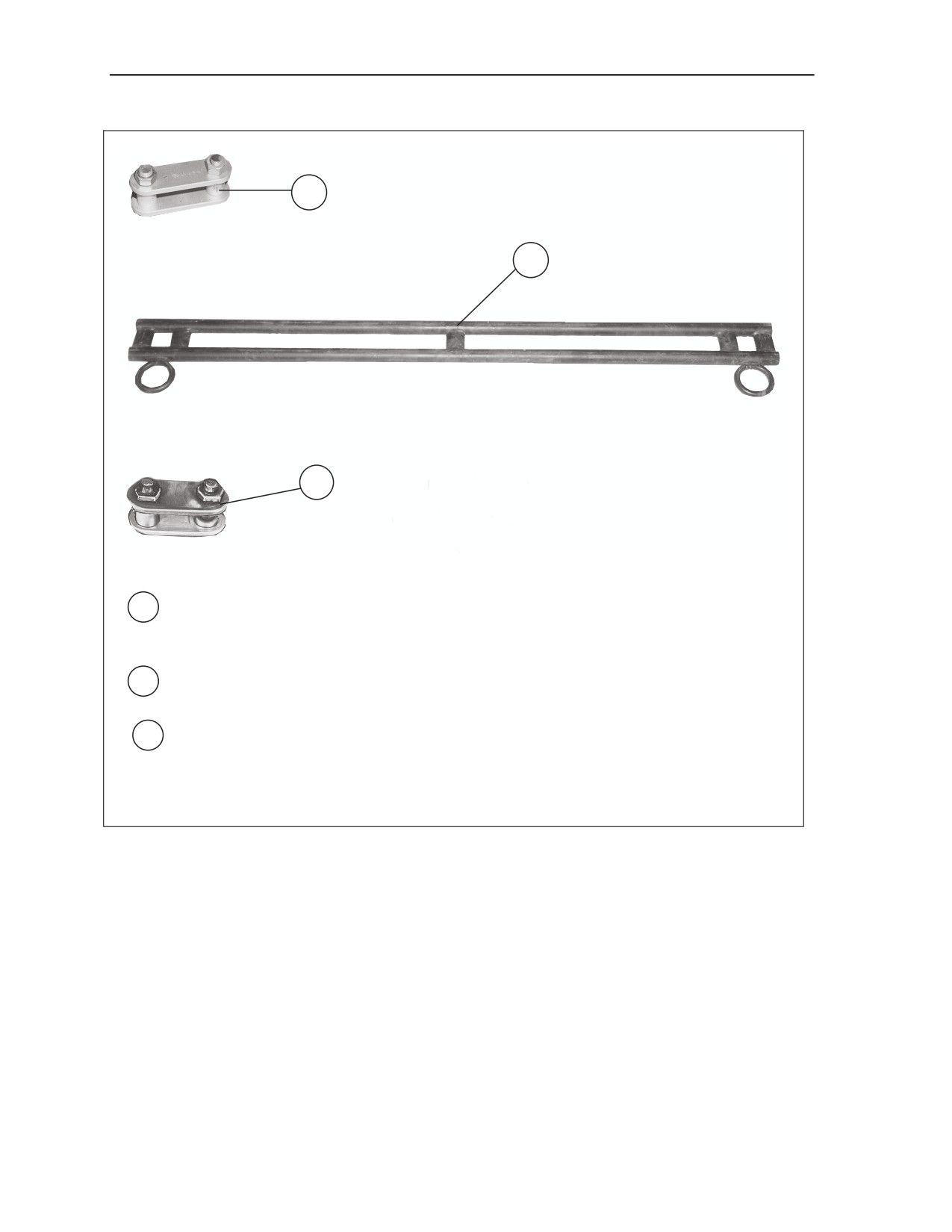
8 The 5 1/2-inch, two-point link assembly is used to join suspension slings and extraction
lines and to attach an extraction line to a cargo extraction parachute. This has a maximum
rated strength of 30,000 pounds.
9 The attitude control bar (ACB) is used as an alternate spreader bar on loads identified in
specific rigging manuals.
10 The 3 3/4-inch, two-point link assembly is used to join suspension slings and to attach an
extraction line to a cargo extraction parachute. This has a maximum rated strength of
30,000 pounds.
Figure 1-1. Hardware Items Used for Rigging Platform Loads (Continued)
1-6
FM 4-20.102/MCRP 4-11.3J/NAVSEA SS400-AB-MMO-010/TO 13C7-1-5
8 June 2006
Airdrop Information
12
14
11
13
15
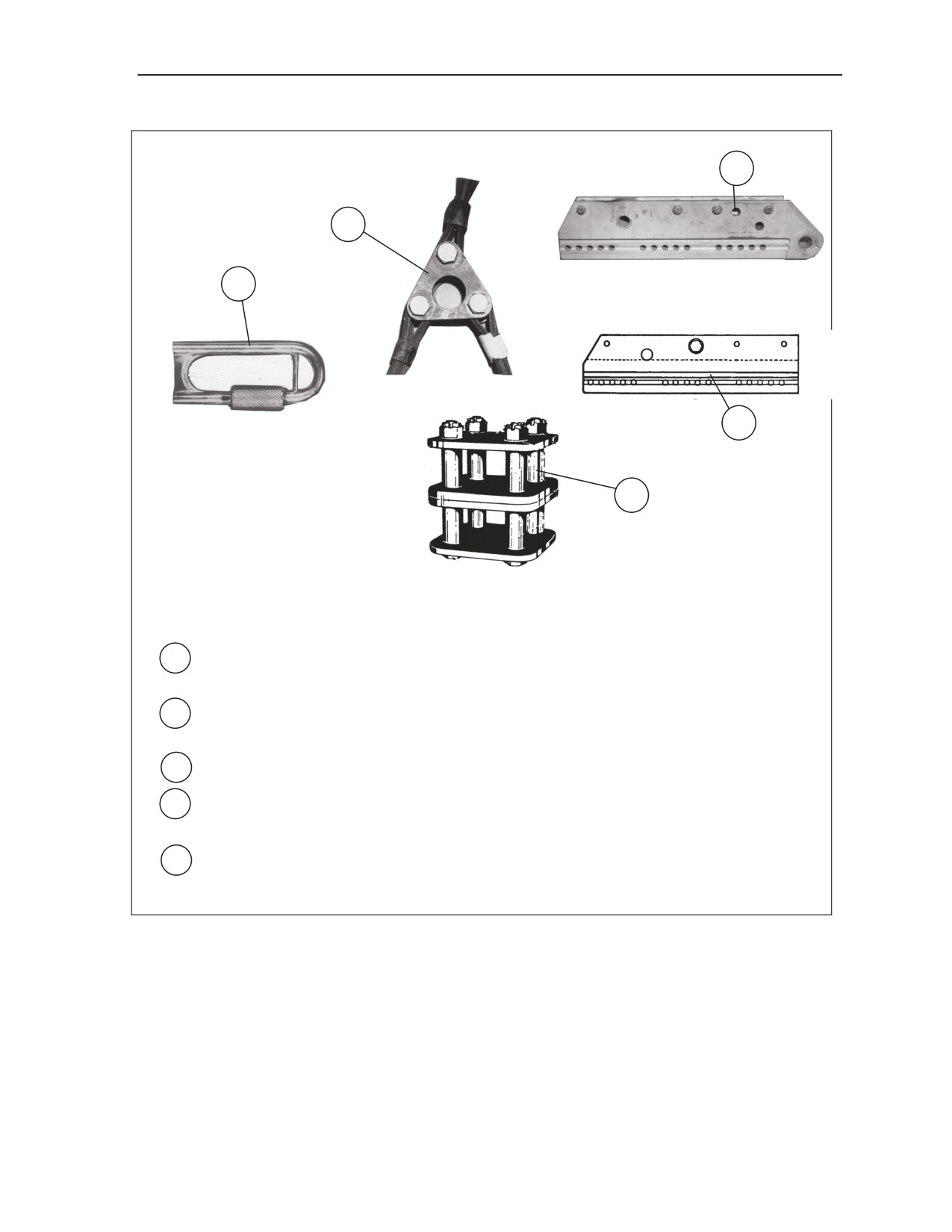
11 The guillotine-type knife is used on parachute release straps and in other places as
directed in the specific rigging manual.
12 The tandem link assembly is used on the type V platform for low-velocity airdrop for
platform suspension and emergency aft restraint.
13 The suspension bracket assembly is used for platform suspension.
14 The three-point link may be used to connect suspension slings and is part of the extraction
force transfer coupling.
15 The 8-spool load coupler may be utilized with the automatic cargo parachute release.
Figure 1-1. Hardware Items Used for Rigging Platform Loads (Continued)
8 June 2006 FM 4-20.102/MCRP 4-11.3J/NAVSEA SS400-AB-MMO-010/TO 13C7-1-5
1-7
Chapter 1
1
KNIFE 1
KNIFE 2
KNIFE 3
1 The single-knife parachute release strap, with guillotine knife, is used to cut one parachute
restraint strap on a low-velocity airdrop load.
2 The multi-knife parachute release strap is used to cut one to three parachute restraint
straps on a platform load rigged for low-velocity airdrop. The strap comes with three
guillotine-type release knives. Knives that are not being used are removed. This release
strap is always used in pairs. The multi-knife release strap is used in all cases where
multiple knives are required.
Figure 1-2. Straps and Canvas Items Used for Rigging Platform Loads
1-8
FM 4-20.102/MCRP 4-11.3J/NAVSEA SS400-AB-MMO-010/TO 13C7-1-5
8 June 2006
Airdrop Information
3
4
3 The 15-foot Dacron tiedown strap is used to lash an airdrop load to the platform. Other
uses of this strap are covered in the specific rigging manual. This has a maximum rated
strength of 10,000 pounds.
4 The large clevis cover is used on the large and medium suspension clevis when the clevis
is used to join the risers of a cargo parachute to a riser extension.
Figure 1-2. Straps and Canvas Items Used for Rigging Platform Loads (Continued)
8 June 2006 FM 4-20.102/MCRP 4-11.3J/NAVSEA SS400-AB-MMO-010/TO 13C7-1-5
1-9
Chapter 1
MAXIMUM RIGGED WEIGHT
1-6. The weight cited in the rigged load data for each specific load is typical for the load as shown. Some
amount of overweight is allowed as long as load dimensions, rigging and extraction components, and
rigging procedures are not changed.
Note. When a maximum allowable rigged weight is specified in the rigged load data, this weight
is the absolute maximum and will not be exceeded.
ACCOMPANYING LOADS
1-7. Accompanying loads are items of supplies and equipment that may be added to a certain primary
load as specified in the specific rigging manual for that load. Each airdrop manual states whether an
accompanying load is authorized and lists the restrictions for that particular load. The following restrictions
apply to all accompanying loads.
• The accompanying load must be positioned so that—
The primary load will not hit or crush it upon ground impact.
It will not interfere with the suspension slings.
• The accompanying load must not cause the--
Height of the rigged load to exceed the height limitations and the tip-off curve (Table 1-2
and Table 1-3) of the aircraft used.
Weight of the rigged load to exceed the maximum allowable weight prescribed in the
specific rigging manual.
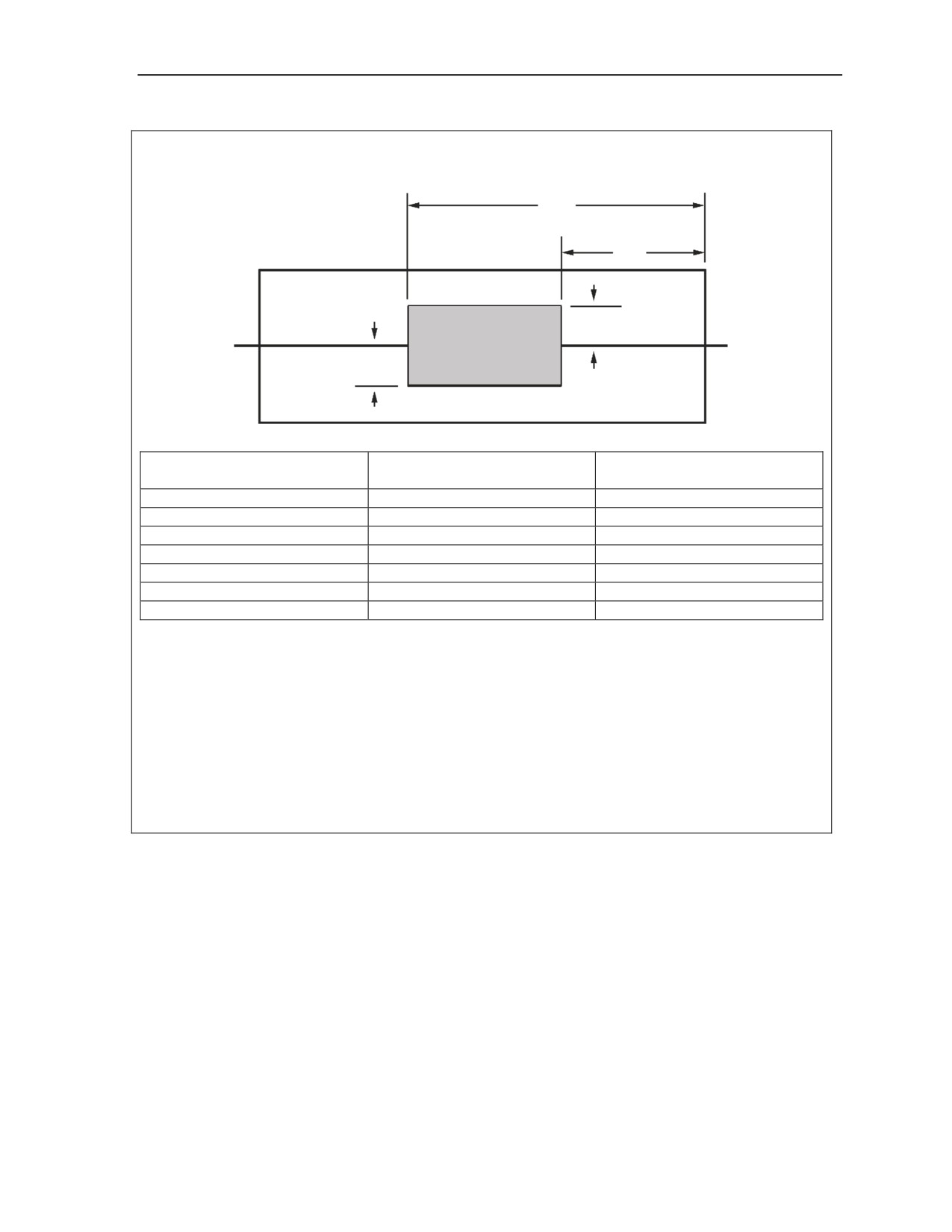
Center of balance (CB) of the rigged load to move outside the limitations shown in Figure
1-3.
Hang angle of the suspended rigged load to exceed 1 inch per linear foot of platform
length.
CAUTION
The accompanying load must be lashed to meet the same restraint
requirements as the primary load.
STOWING ACCOMPANYING LOADS
1-8. Each specific rigging manual contains the weight limitations, placement, and any additional
restrictions on accompanying loads.
1-10
FM 4-20.102/MCRP 4-11.3J/NAVSEA SS400-AB-MMO-010/TO 13C7-1-5
8 June 2006
Airdrop Information
CAUTIONS
1. Only ammunition listed in FM 4-20.153/MCRP 4-11.3B/TO 13C7-18-
41 may be rigged for airdrop.
2. Hazardous materials must be packaged, marked, and labeled as
required by AFMAN 24-204(I)/TM 38-250.
3. At least two layers of honeycomb must be placed under all
ammunition rigged for airdrop unless the specific rigging manual states
differently.
PREPARING DROP ITEMS
1-9. Some items need to be prepared for rigging. This preparation can include removing, reinforcing,
stowing, and securing components. Detailed preparation instructions will be included in the specific
rigging manual.
COVERING LOAD
1-10. Covers may be needed to protect the load and keep the suspension slings from fouling. To keep the
load from being damaged by falling hardware such as parachute releases, it may be necessary to cover
portions of the load with honeycomb, plywood, or cloth protectors. If a cover is needed, the specific
rigging manual will include this information and the procedures for its installation.
CENTER OF BALANCE (CB)
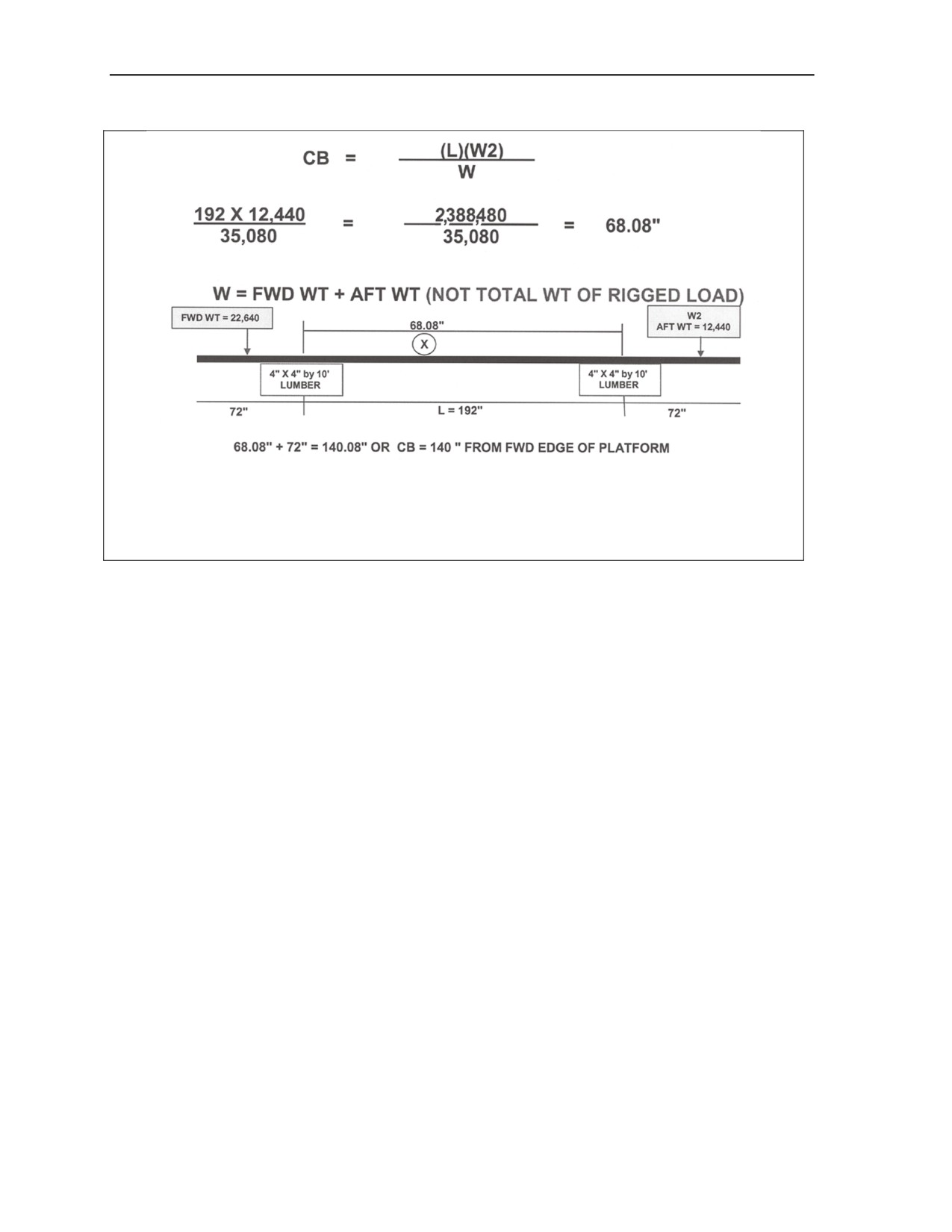
1-11. The CB of an airdrop platform load, based on the total rigged weight, is given in the rigging manual
for a particular item. If the load varies from the one given in a particular manual, the CB must be
recomputed using the procedures shown in Figure 1-4.
CAUTION
If the CB or load profile exceeds the limits of Table 1-2 or Table 1-3 or
Figure 1-4, the load is not acceptable.
8 June 2006 FM 4-20.102/MCRP 4-11.3J/NAVSEA SS400-AB-MMO-010/TO 13C7-1-5
1-11

Chapter 1
Table 1-2. C-130 Forward Profile Limits (Tip Off Curve) for Airdrop Platforms
DISTANCE FORWARD
MAXIMUM HEIGHT
DISTANCE FORWARD
MAXIMUM HEIGHT
OF CB (INCHES)
(INCHES)
OF CB (INCHES)
(INCHES)
0 to 45
100
153 to 155
82
46 to 75
99
156 to 160
81
76 to 87
98
161 to 162
80
88 to 93
97
163 to 165
79
94 to 100
96
166 to 168
78
101 to 107
95
169 to 170
77
108 to 113
94
171 to 172
76
114 to 117
93
173 to 174
75
118 to 122
92
175 to 177
74
123 to 124
91
178 to 179
73
125 to 128
90
180 to 181
72
129 to 133
89
182 to 183
71
134 to 138
88
184 to 186
70
139 to 141
87
187 to 188
69
142 to 144
86
189 to 190
68
145 to 146
85
191 to 192
67
147 to 150
84
193 to 195
66
151 to 152
83
196 to 197
65
Table 1-3. C-17 Forward Profile Limits (Tip Off Curve) for Airdrop Platforms
DISTANCE FORWARD
MAXIMUM HEIGHT
DISTANCE FORWARD
MAXIMUM HEIGHT
OF CB (INCHES)
(INCHES)
OF CB (INCHES)
(INCHES)
0 to 53
115
161 to 164
98
54 to 74
114
165 to 170
97
75 to 82
113
171 to 174
96
83 to 94
112
175 to 178
95
95 to 100
111
179 to 182
94
101 to 108
110
183 to 187
93
109 to 112
109
188 to 191
92
113 to 116
108
192 to 194
91
117 to 122
107
195 to 198
90
123 to 128
106
199 to 202
89
129 to 132
105
203 to 204
88
133 to 138
104
205 to 206
87
139 to 142
103
207 to 210
86
143 to 148
102
211 to 212
85
149 to 150
101
213 to 214
84
151 to 154
100
215 to 217
83
155 to 160
99
218 to 220
82
1-12
FM 4-20.102/MCRP 4-11.3J/NAVSEA SS400-AB-MMO-010/TO 13C7-1-5
8 June 2006
Airdrop Information
B
A
REAR
FRONT
14 IN
PLATFORM
CB
CENTERLINE
14 IN
PLATFORM LENGTH
MINIMUM A
MAXIMUM B
(FEET)
(INCHES)
(INCHES)
8
30
66
12
52
91 ½
16
75
117
20
97 1/2
142 ½
24
120
168
28
120
190
32
157
212
Notes.
1. Distances are measured in inches from the front edge of the platform.
2. Shaded area indicates allowable CB tolerances.
3. These drawings are not drawn to scale.
Figure 1-3. CB Limits for Airdrop Platforms
8 June 2006 FM 4-20.102/MCRP 4-11.3J/NAVSEA SS400-AB-MMO-010/TO 13C7-1-5
1-13
Chapter 1
Figure 1-4. Drawing Showing Formula for Computing the CB in a 28-Foot, Type V Platform
ITEMS AND LOADS IN COLD CLIMATES
1-12. Some items to be dropped may have been modified for use in cold climates by the installation of
extra equipment. Special rigging procedures may be needed when the drop item has been so modified.
When loads are to be dropped in cold climates, all excess webbing of suspension slings and tie-down straps
must be folded and tied with type I, 1/4-inch cotton webbing.
1-14
FM 4-20.102/MCRP 4-11.3J/NAVSEA SS400-AB-MMO-010/TO 13C7-1-5
8 June 2006
Airdrop Information
KNOTS
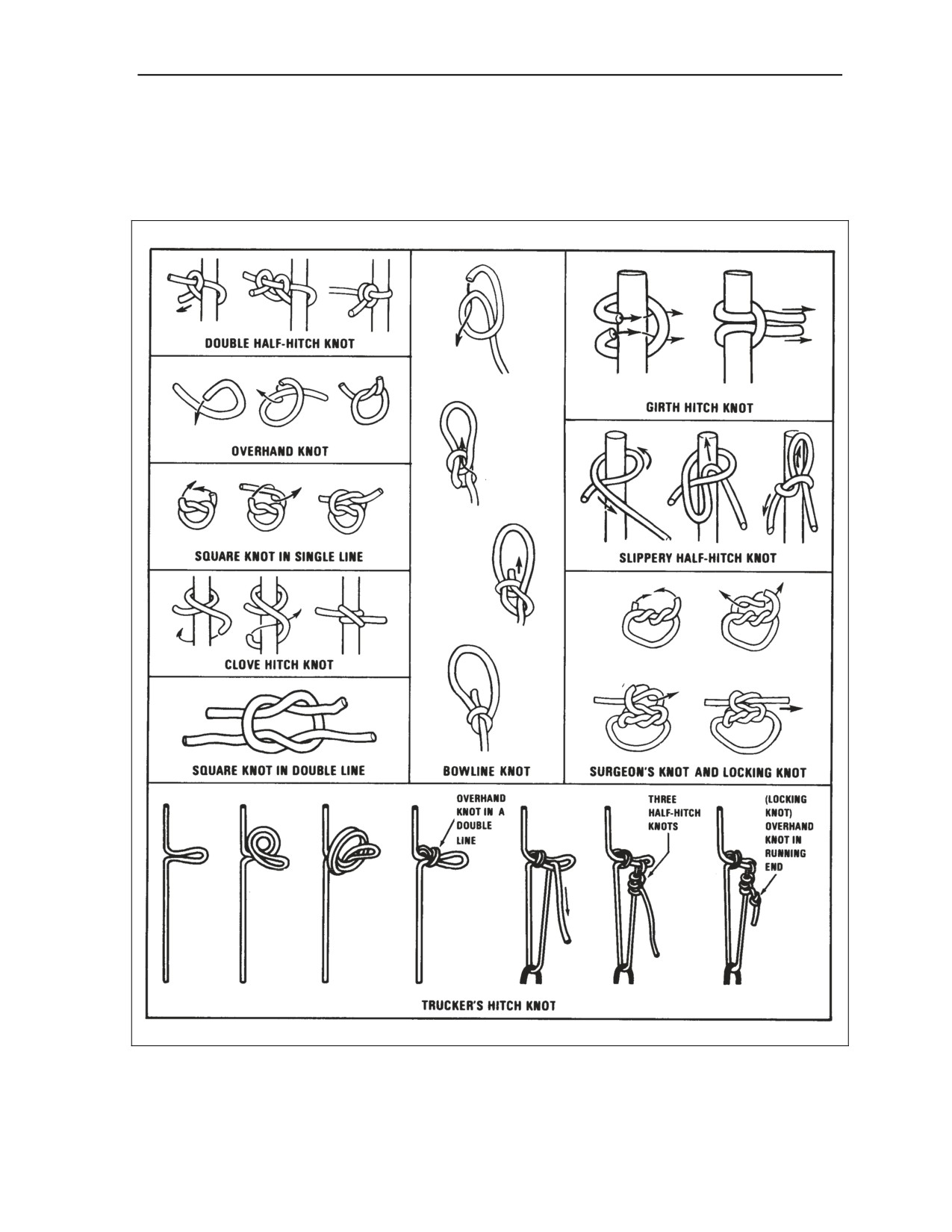
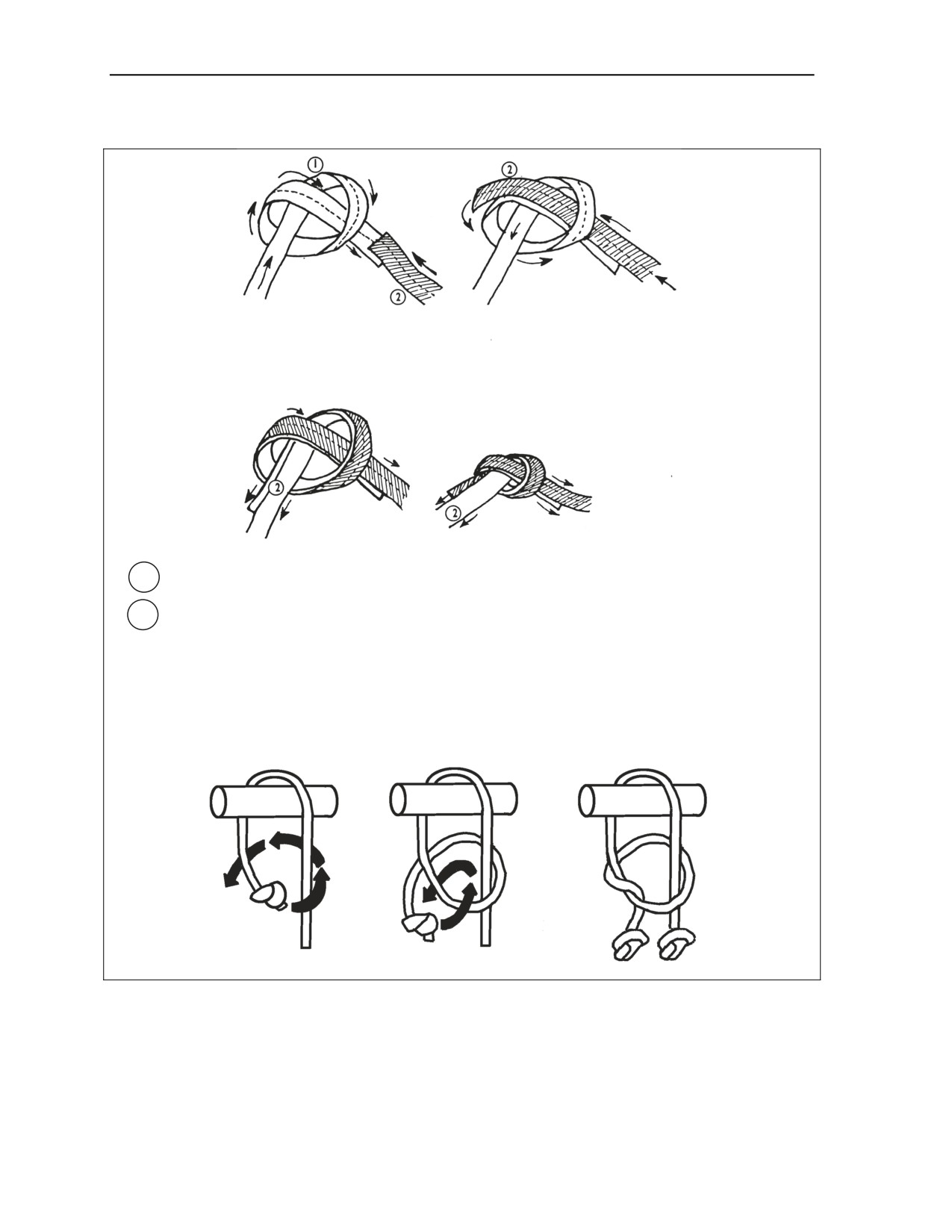
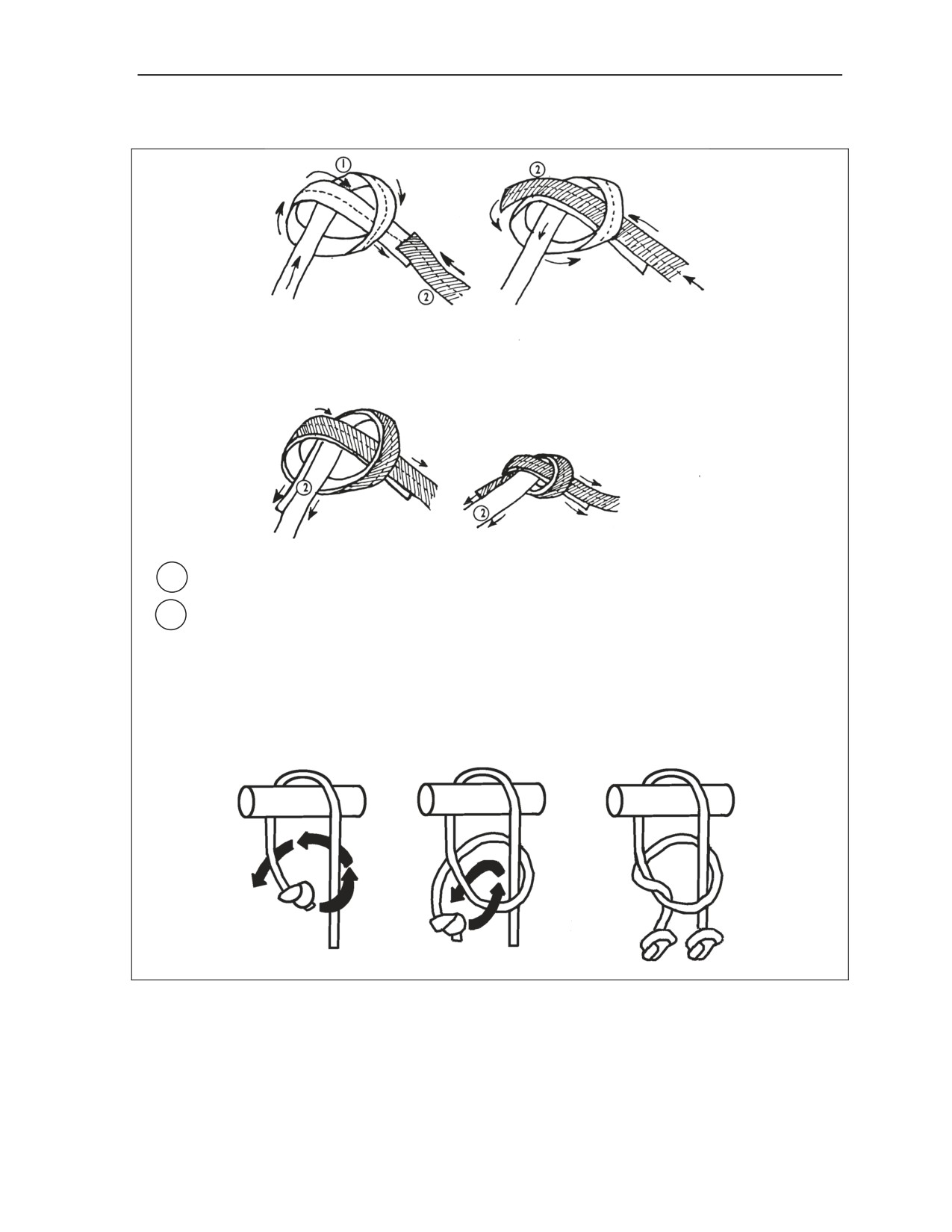
1-13. Some of the knots used for rigging platform loads are shown in Figure 1-5. When tying knots using
nylon material, place an overhand knot in the running ends.
Figure 1-5. Knots Used During Rigging
8 June 2006 FM 4-20.102/MCRP 4-11.3J/NAVSEA SS400-AB-MMO-010/TO 13C7-1-5
1-15
Chapter 1
5 Make an overhand knot in one end.
6 Follow the curve back in the reverse direction with the other end.
Notes.
1. There is no need to safety tie the ends when webbing is used.
2. Be sure the knot is neat, so as to tell if it is tied correctly
3. This knot will jam after heavy loading.
RING BEND KNOT USED ON THE DRIVE-OFF AID
Figure 1-5. Knots Used During Rigging (Continued)
1-16
FM 4-20.102/MCRP 4-11.3J/NAVSEA SS400-AB-MMO-010/TO 13C7-1-5
8 June 2006
Airdrop Information
5 Make an overhand knot in one end.
6 Follow the curve back in the reverse direction with the other end.
Notes.
1. There is no need to safety tie the ends when webbing is used.
2. Be sure the knot is neat, so as to tell if it is tied correctly
3. This knot will jam after heavy loading.
RING BEND KNOT USED ON THE DRIVE-OFF AID
Figure 1-5. Knots Used During Rigging (Continued)
8 June 2006 FM 4-20.102/MCRP 4-11.3J/NAVSEA SS400-AB-MMO-010/TO 13C7-1-5
1-17
This page intentionally left blank.
Chapter 2
The Type V Airdrop Platform
SECTION I-GENERAL INFORMATION
USE
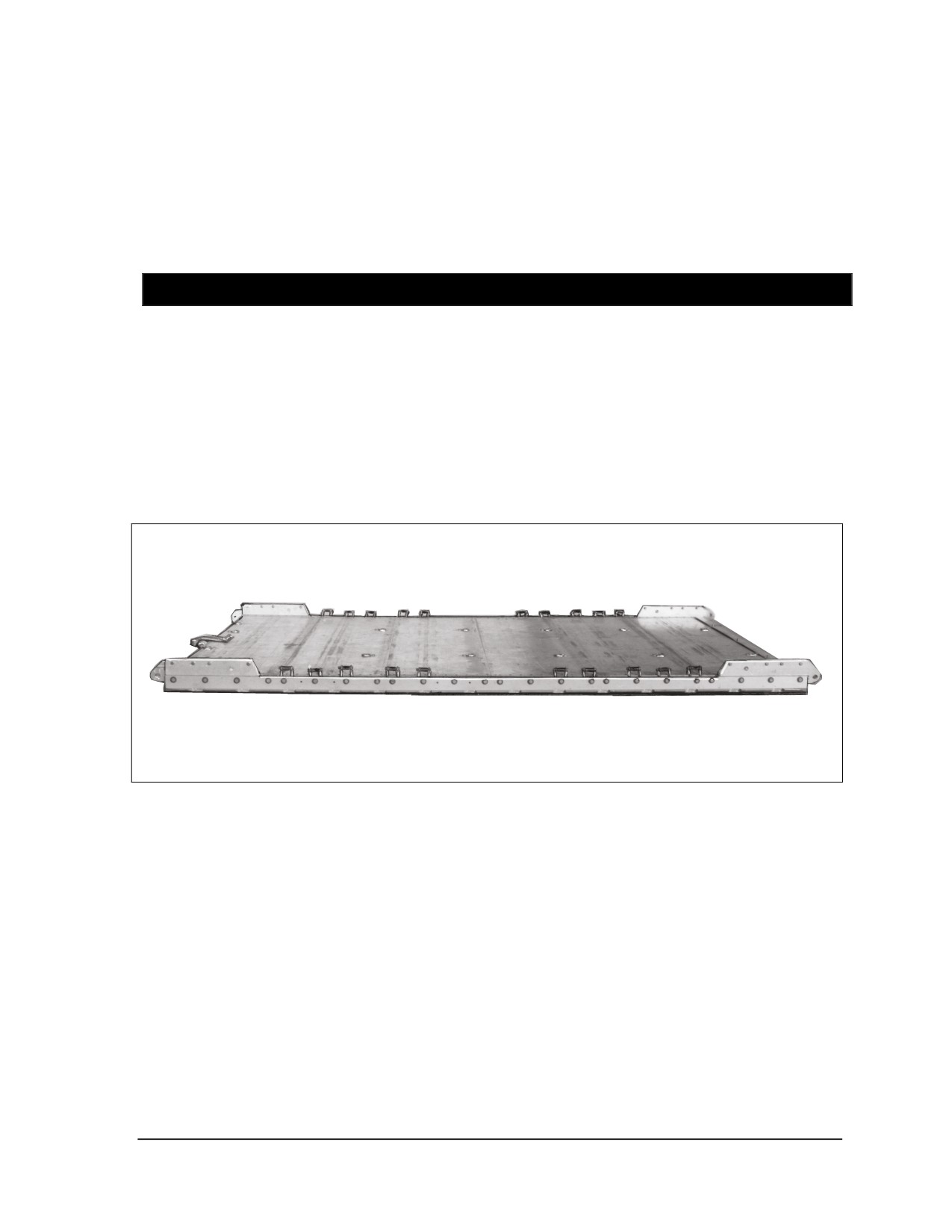
2-1. The type V airdrop platform, as shown in Figure 2-1, serves as the base on which supplies and
equipment are restrained. This platform also supports the load during the extraction, parachute deployment,
suspension, and recovery phases. The type V airdrop platform is used for low-velocity airdrop. The type V
platform can be assembled in 8-, 12-, 16-, 20-, 24-, 28-, and 32-foot lengths. The assembled platform is
108 inches wide. A detailed description of this platform is in TM 10-1670-268-20&P/TO 13C7-52-22. The
nose bumper is not required, unless required by a specific rigging manual. The type V platform spreads the
shock of ground impact. Limitations for the type V platform are listed in Table 2-1.
Figure 2-1. Type V Airdrop Platform
8 June 2006
FM 4-20.102/MCRP 4-11.3J/NAVSEA SS400-AB-MMO-010/TO 13C7-1-5
2-1

Chapter 2
Table 2-1. Limitations for Type V Airdrop Platforms when Dropping from C-130 Series and C-
17 Aircraft
C-130 Series Aircraft
Platform
Minimum
Maximum
Length
Width
Width
Surface
Rigged Weight
Rigged Weight
(Feet)
(Inches)
(Pounds)
(Square Feet)
(Pounds)
(Pounds)
8
108
820
72
2,520
15,000
12
108
1,220
108
3,780
21,000
16
108
1,590
144
5,040
28,000
20
108
1,950
180
6,300
39,000
24
108
2,280
216
7,560
42,000
28
108
2,820
252
8,820
42,000
32
108
3,056
288
10,080
42,000
C-17 Aircraft
Platform
Minimum
Maximum
Length
Width
Width
Surface
Rigged Weight
Rigged Weight
(Feet)
(Inches)
(Pounds)
(Square Feet)
(Pounds)
(Pounds)
8
108
820
72
2,520
10,000
12
108
1,220
108
3,780
18,500
16
108
1,590
144
5,040
28,000
20
108
1,950
180
6,300
39,000
24
108
2,280
216
7,560
42,000
28
108
2,820
252
8,820
42,000
32
108
3,056
288
10,080
42,000
PLATFORM LIMITATIONS FOR AIRCRAFT
2-2. Cargo and transport aircraft are specifically designed to deliver supplies and equipment by airdrop
and are employed in airborne operations. Aircraft limitations are described below.
• Hercules (C-130). Platform loads are generally restricted to a height of 100 inches (measured
from the bottom of the platform) and weight of 25,000 pounds for aircraft with an aircraft serial
number of 62-1783 or lower. For aircraft with an aircraft serial number of 62-1784 and higher,
and for aircraft with a serial number of 61-2358, the weight restriction is 42,000 pounds. MC-
130E Combat Talon I and MC-130H Combat Talon II aircraft are restricted to 35,000 pounds
Single and combined platform lengths are restricted to 28 feet for MC-130E Combat Talon I
aircraft and 41 feet of available floor space for all other C-130 aircraft. When the towplate is
used for drogue extraction system (DES) airdrops, the extraction/drogue parachute requirements
in Table 9-1 will apply. DES is the primary method of extraction for Combat Talon aircraft.
• Globemaster (C-17). Platform loads are generally restricted to a height of 118 inches measured
from the bottom of the platform. Platform loads are generally restricted to a weight of 60,000
pounds. For multiple platforms, up to 110,000 pounds of airdrop load may be airdropped. Loads
certified for low-velocity airdrop from C-130 aircraft that meets the limitations in Table 2-1 may
be airdropped from the C-17 aircraft. The aircraft has a total available floor space of 64 feet.
2-2
FM 4-20.102/MCRP 4-11.3J/NAVSEA SS400-AB-MMO-010/TO 13C7-1-5
8 June 2006
The Type V Airdrop Platform
SECTION II-PLATFORM AND HONEYCOMB PREPARATION
INSPECTING PLATFORM
2-3. Inspect or and inspect, the type V airdrop platform as outlined in TM 10-1670-268-
20&P/TO 13C7-52-22.
SUSPENDING PLATFORM LOADS
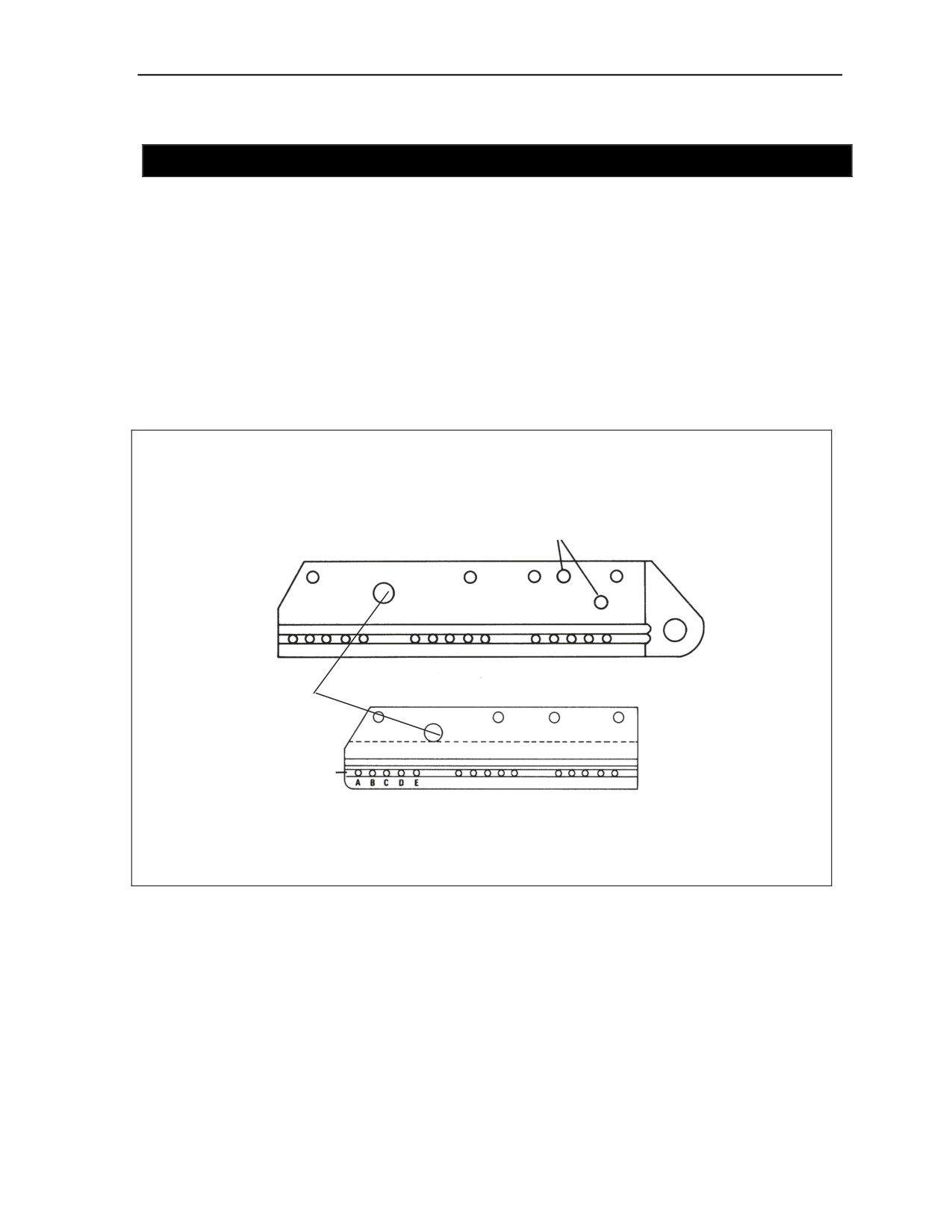
2-4. The suspension points for a platform-suspended load on a type V platform are the
suspension bracket assembly holes. The emergency aft restraint holes are provided in the
tandem link only. The suspension bracket assembly as shown in Figure 2-2 may be
positioned at various points along a platform rail.
Note. These drawings are not drawn to scale.
HOLES DRILLED FOR EMERGENCY AFT RESTRAINT
TANDEM LINK ASSEMBLY
SUSPENSION
HOLE FOR LARGE
CLEVIS
REFERENCE HOLES
SUSPENSION BRACKET ASSEMBLY
Figure 2-2. Tandem Link Assembly and Suspension Bracket Assembly
8 June 2006 FM 4-20.102/MCRP 4-11.3J/NAVSEA SS400-AB-MMO-010/TO 13C7-1-5
2-3
Chapter 2
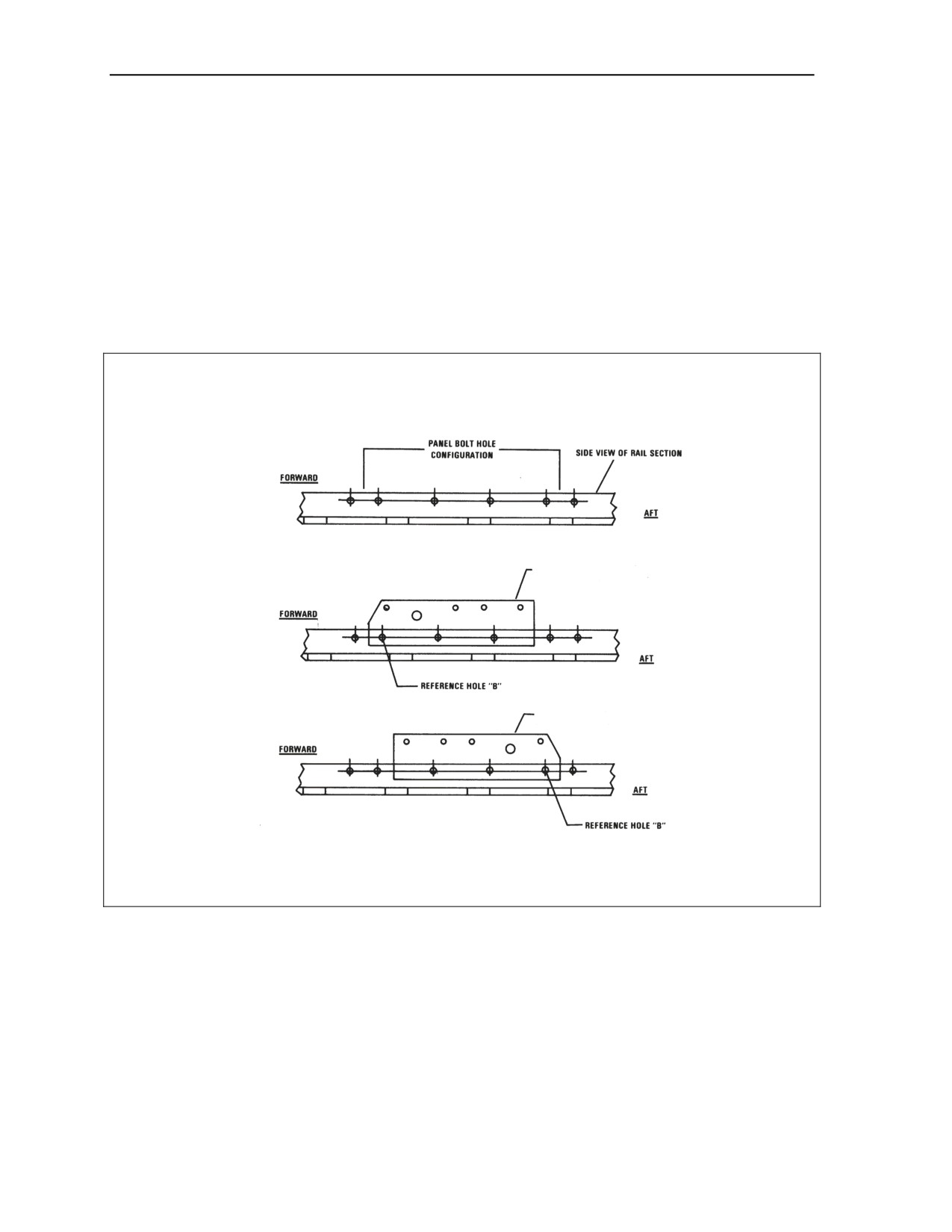
• However, their positioning is limited by the fact that the bolt hole configuration of the platform
side rails only allows the suspension bracket assembly to be secured within the 2-foot panels of
the platform. Every panel assembly has a four-bolt configuration on each side. These four bolts
are designated as platform clevis points. The suspension bracket assembly can be positioned
within the bolt configuration of a panel as shown in Figure 2-3. A reference hole “B” is used to
show the appropriate position of the suspension bracket assembly as shown in Figures 2-2 and
2-3. The direction of the suspension bracket assembly is determined by matching reference hole
“B” with the prescribed platform clevis number and placing the suspension bracket assembly in
the direction where it can be secured within the same panel bolt configuration. Figure 2-4 shows
the suspension bracket assemblies installed. Table 2-2 shows the maximum allowable suspended
weights for the four-point and centerline suspension systems. Figure 2-5 details the centerline
suspension system.
Note. These drawings are not drawn to scale
MAXIMUM FORWARD
POSITION OF
SUSPENSION
BRACKET WITHIN
PANEL
MAXIMUM AFT
POSITION OF
SUSPENSION
BRACKET WITHIN
PANEL
Figure 2-3. Bolt Configuration of a Panel
2-4
FM 4-20.102/MCRP 4-11.3J/NAVSEA SS400-AB-MMO-010/TO 13C7-1-5
8 June 2006
The Type V Airdrop Platform
Note. These drawings are not drawn to scale
6
4
7
3
1
2
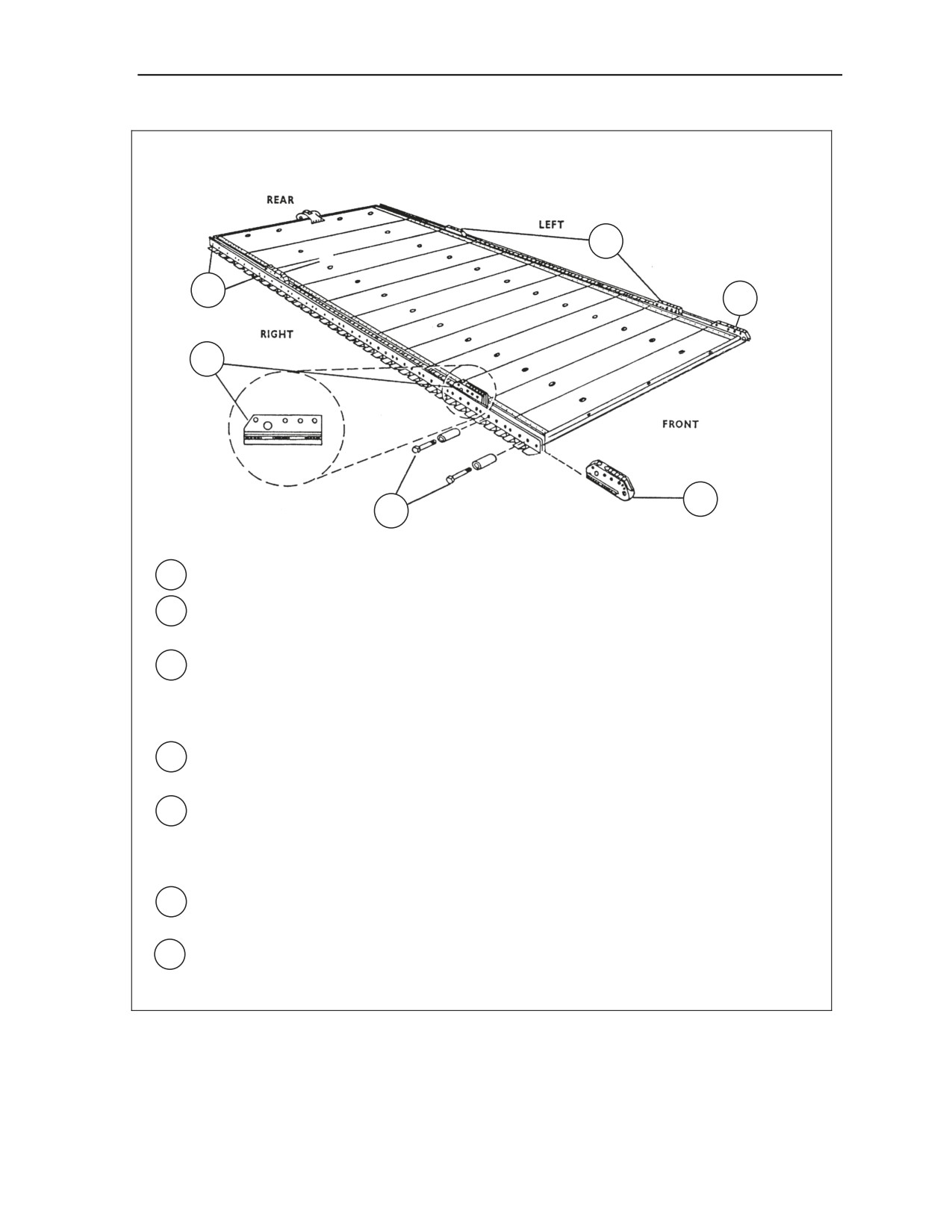
1 Remove the tandem link on the front of the right platform rail.
2 Remove the required bushings, as given in the specific rigging manual, from the bushing
holes in the right rail.
3 Insert a suspension bracket assembly on the front end of the right rail. Slide the bracket
assembly along the rail until the holes in the bracket assembly align with the required rail
holes. Bolt the bracket assembly in place with the bushing bolts. Reinstall the required
bushings and bolts.
4 Remove the required bushings, as given in the rigging manual, from the bushing holes in
the right rail.
5 Insert a suspension bracket assembly on the rear of the right rail. Slide the bracket
assembly along the rail until the holes in the bracket assembly align with the required rail
holes. Bolt the bracket assembly in place with the bushing holes. Reinstall the required
bushings and bolts.
6 Install two suspension bracket assemblies on the left rail, adapting the procedures in steps
1 through 5 above.
7 Reinstall the tandem link assembly from step 1.
Figure 2-4. Suspension Bracket Assemblies Installed
8 June 2006 FM 4-20.102/MCRP 4-11.3J/NAVSEA SS400-AB-MMO-010/TO 13C7-1-5
2-5
Chapter 2
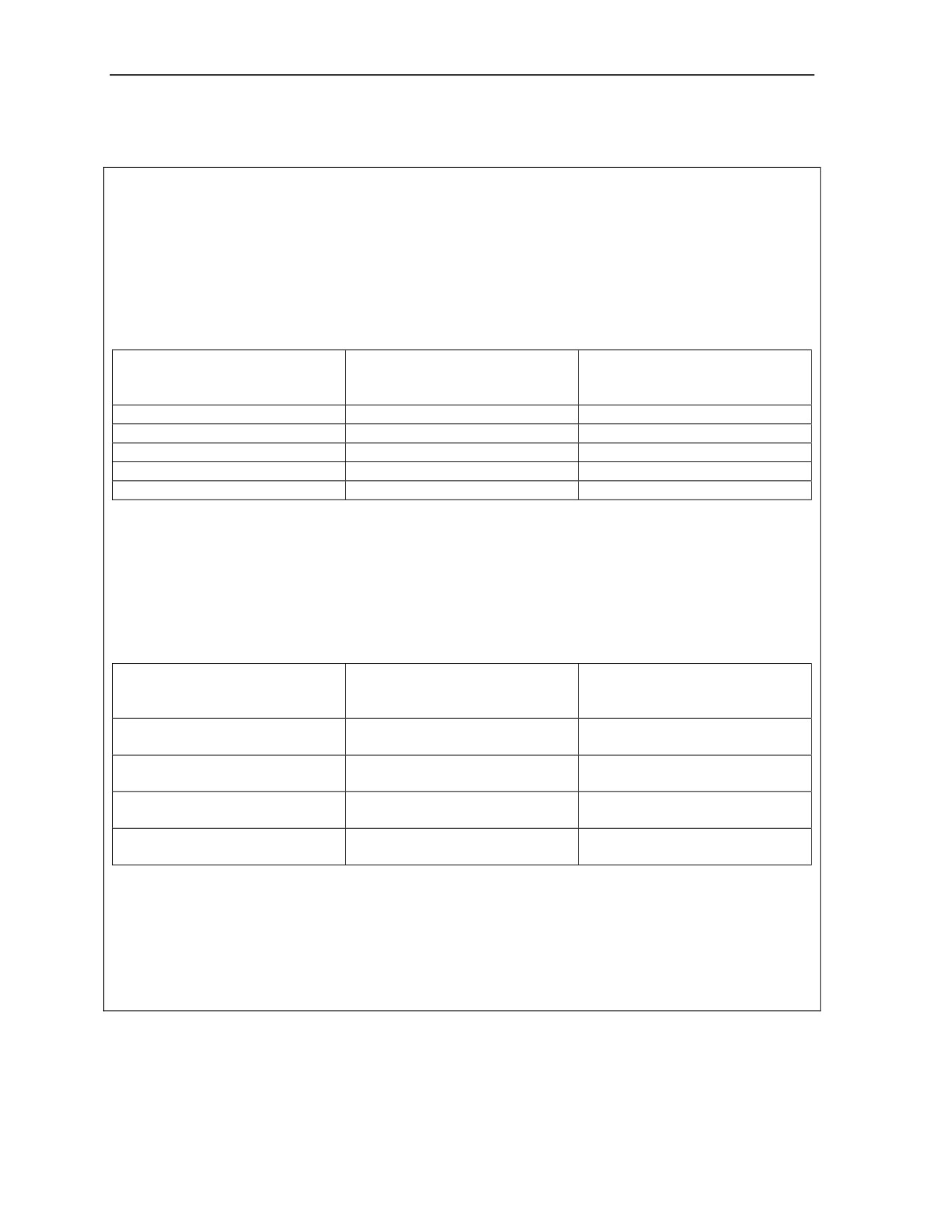
Table 2-2. Maximum Allowable Suspended Weights for the Four-Point and Centerline
Suspension Systems
Four-Point Suspension System
The following table lists the maximum allowable suspended weights along with the suspension
bracket assembly and/or tandem link position. All links positioned along the most forward and aft
panels will be tandem links. All other positions along the platform side rail will use the suspension
bracket assembly.
Suspension/Tandem Link
Platform Length
Maximum Suspended Weight
Positions(platform clevis
(feet)
(pounds)
numbers)
8
3, 3A, 14, 14A
16,000
12
3, 3A, 22, 22A
14,000
16
3, 3A, 30, 30A
9,300
16
8, 8A, 25, 25A
26,000
20
8, 8A, 33, 33A
19,000
Centerline Suspension System
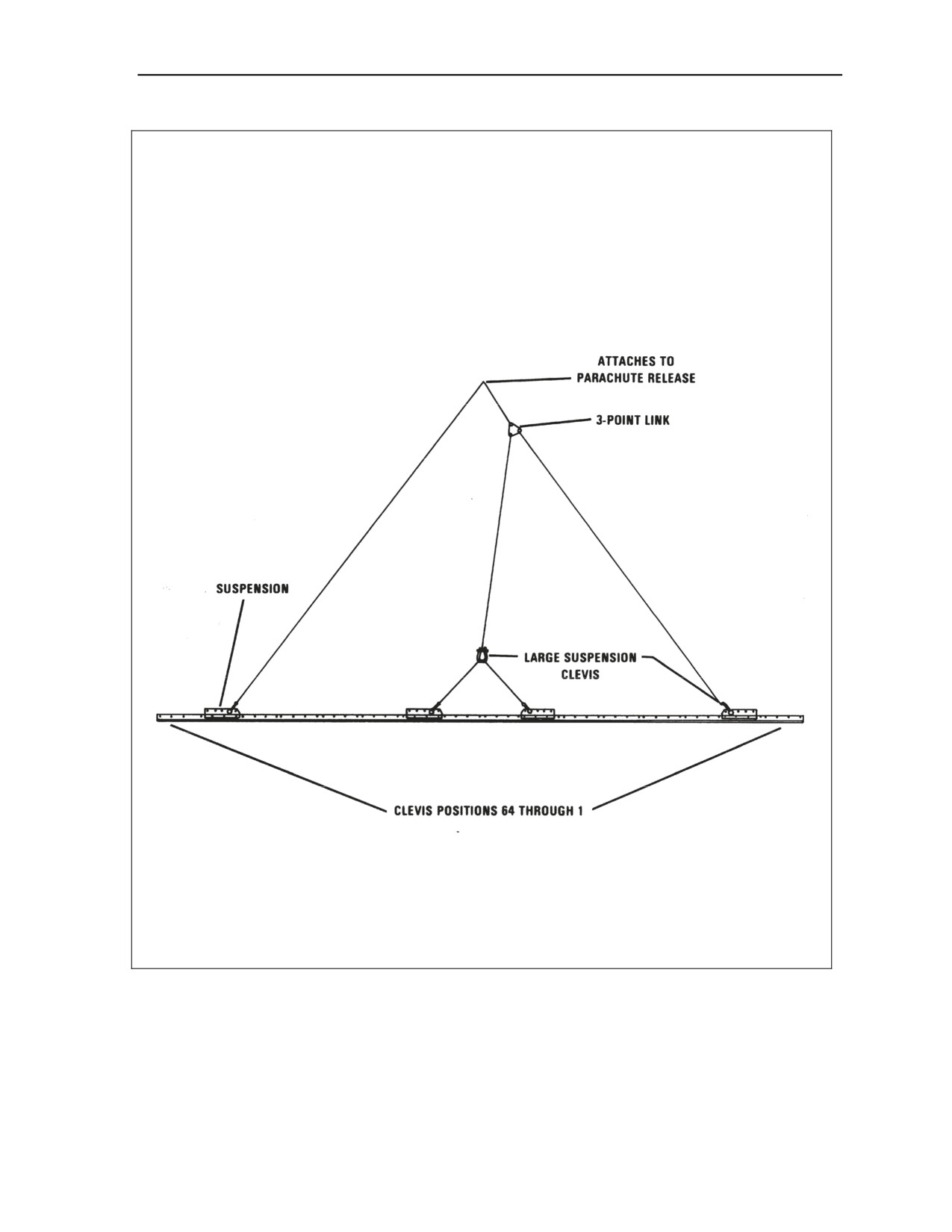
The centerline suspension system consists of eight suspension bracket assemblies, four of which
form a bridge on each side of the platform in the center and six suspension slings. Figure 2-5 details
the configuration. The following table lists the maximum suspended weights along with the position of
the suspension bracket assemblies on the platform rails.
Suspension/Tandem Link
Platform Length
Maximum Suspended Weight
Positions(platform clevis
(feet)
(pounds)
numbers)
5, 5A, 36, 36A
20
16,000
17, 17A, 24, 24A
8, 8A, 41, 41A
24
14,000
20, 20A, 29, 29A
8, 8A, 49, 49A
28
9,300
24, 24A, 33, 33A
8, 8A, 57, 57A
32
26,000
28, 28A, 37, 37A
Note. All maximum suspended weights can be higher with specific loads which increase the rigidity of
the platform. Methods that differ from the suspension systems described above are given in the
specific rigging manuals.
2-6
FM 4-20.102/MCRP 4-11.3J/NAVSEA SS400-AB-MMO-010/TO 13C7-1-5
8 June 2006
The Type V Airdrop Platform
Note. This drawing is not drawn to scale.
Figure 2-5. Centerline Suspension System Shown
8 June 2006 FM 4-20.102/MCRP 4-11.3J/NAVSEA SS400-AB-MMO-010/TO 13C7-1-5
2-7
Chapter 2
PREPARING THE TYPE V PLATFORM
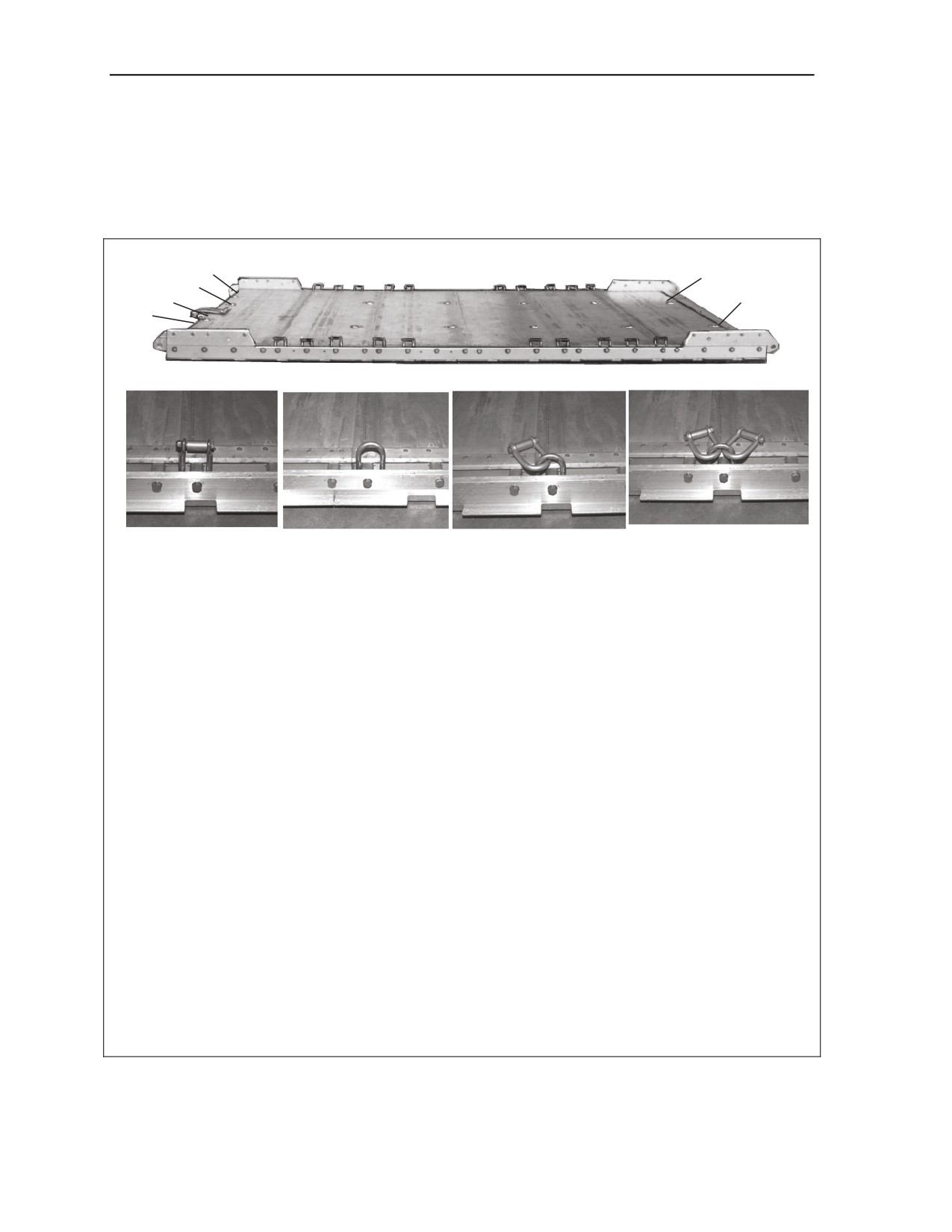
2-5. The platform must be prepared by attaching clevises, tandem links or suspension bracket assemblies
according to the specific rigging manual. Figure 2-6 gives an example of how to bolt the clevises to the
bushings in the platform side rails and how to number them.
TIEDOWN RINGS
TIEDOWN RINGS
D
ROW B
C
B
ROW A
B1
A
A1
REAR
FRONT
SINGLE CLEVIS
INVERTED CLEVIS
DOUBLE CLEVIS
TRIPLE CLEVIS
Step:
1. Bolt the tandem links and suspension bracket assemblies to the platform side rails, if
needed.
2. Bolt the clevises to the bushings in the platform rails as shown in the specific rigging
manual.
3. Bolt clevises (when needed) to the bushings in the tandem links and suspension bracket
assemblies.
4. Starting at the front of the platform, number the clevises bolted to the right side beginning
with 1 and those bolted to the left side beginning with 1A.
5. Starting at the front of the platform, number the two tiedown rings on each panel A and B
from right to left. Label the four tiedown rings on the rear panel A, B, C, and D from right
to left. Starting with the first panel, number the tiedown rings beginning with 1 from front
to rear.
Notes:
1. The single clevis is sometimes installed in an inverted manner if the specific rigging manual calls
for it.
2. One clevis is sometimes installed on another inverted clevis. This is called a double clevis. Do not
number the inverted clevis.
3. Two clevises attached to an inverted clevis is called a triple clevis. The two clevises will be
numbered as two separate clevises. Do not number the inverted clevis.
4. Do not attach a load binder to the inverted portion of the double or triple clevis.
Figure 2-6. Type V Platform Prepared
2-8
FM 4-20.102/MCRP 4-11.3J/NAVSEA SS400-AB-MMO-010/TO 13C7-1-5
8 June 2006
The Type V Airdrop Platform
BUILDING HONEYCOMB STACKS
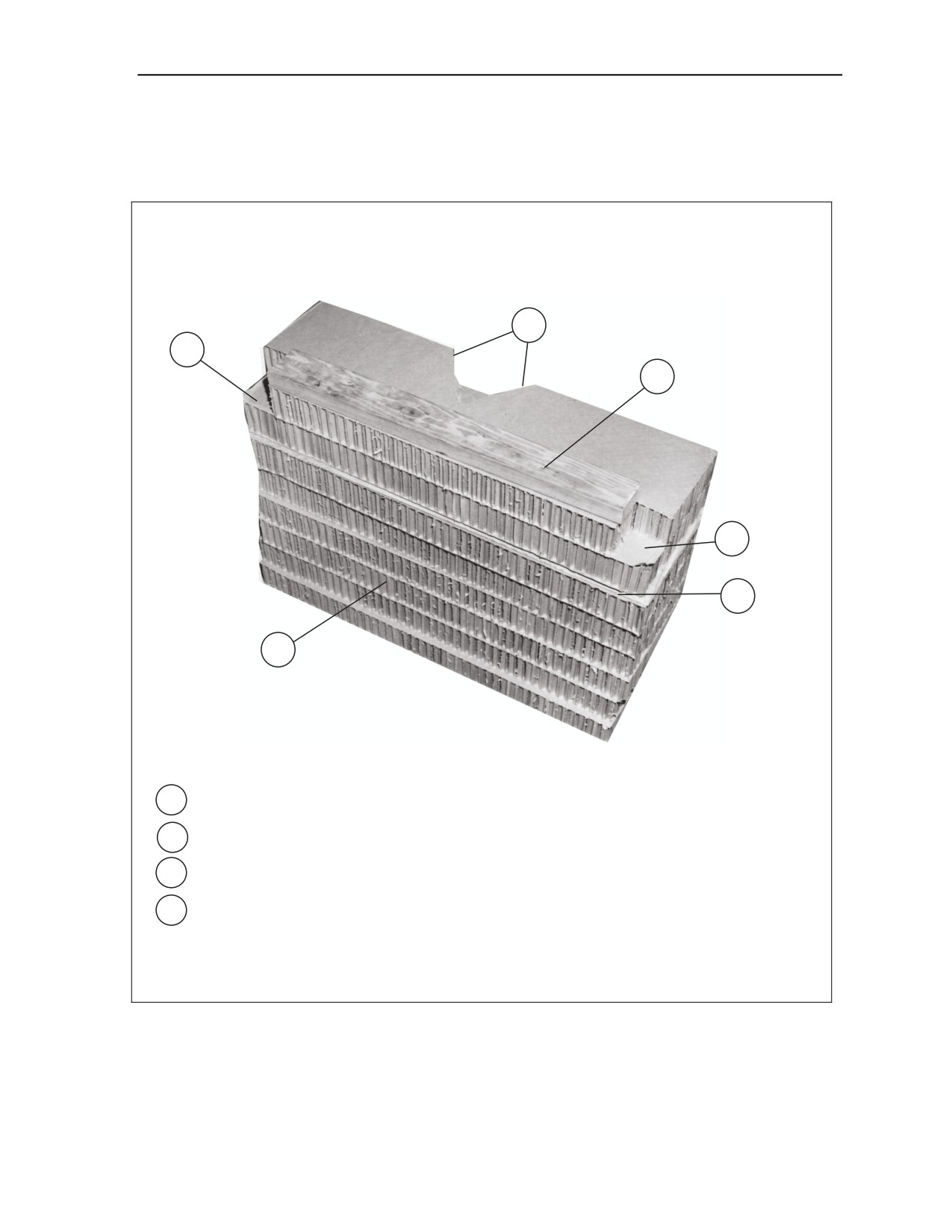
2-6. Honeycomb stacks must be prepared according to the specific rigging manual. Honeycomb is used to
absorb the landing shock. Figure 2-7 shows a typical honeycomb stack.
Note. When honeycomb layers are longer than 96 inches or wider than 36 inches, alternate the
layers to build a solid, cohesive stack.
3
3
1
3
2
4
1 Lumber
2 Plywood
3 Cutouts or notches
4 Layers of honeycomb
Note. Glue the layers of the stack together.
Figure 2-7. Typical Honeycomb Stack
8 June 2006 FM 4-20.102/MCRP 4-11.3J/NAVSEA SS400-AB-MMO-010/TO 13C7-1-5
2-9
Chapter 2
PLACING HONEYCOMB STACKS
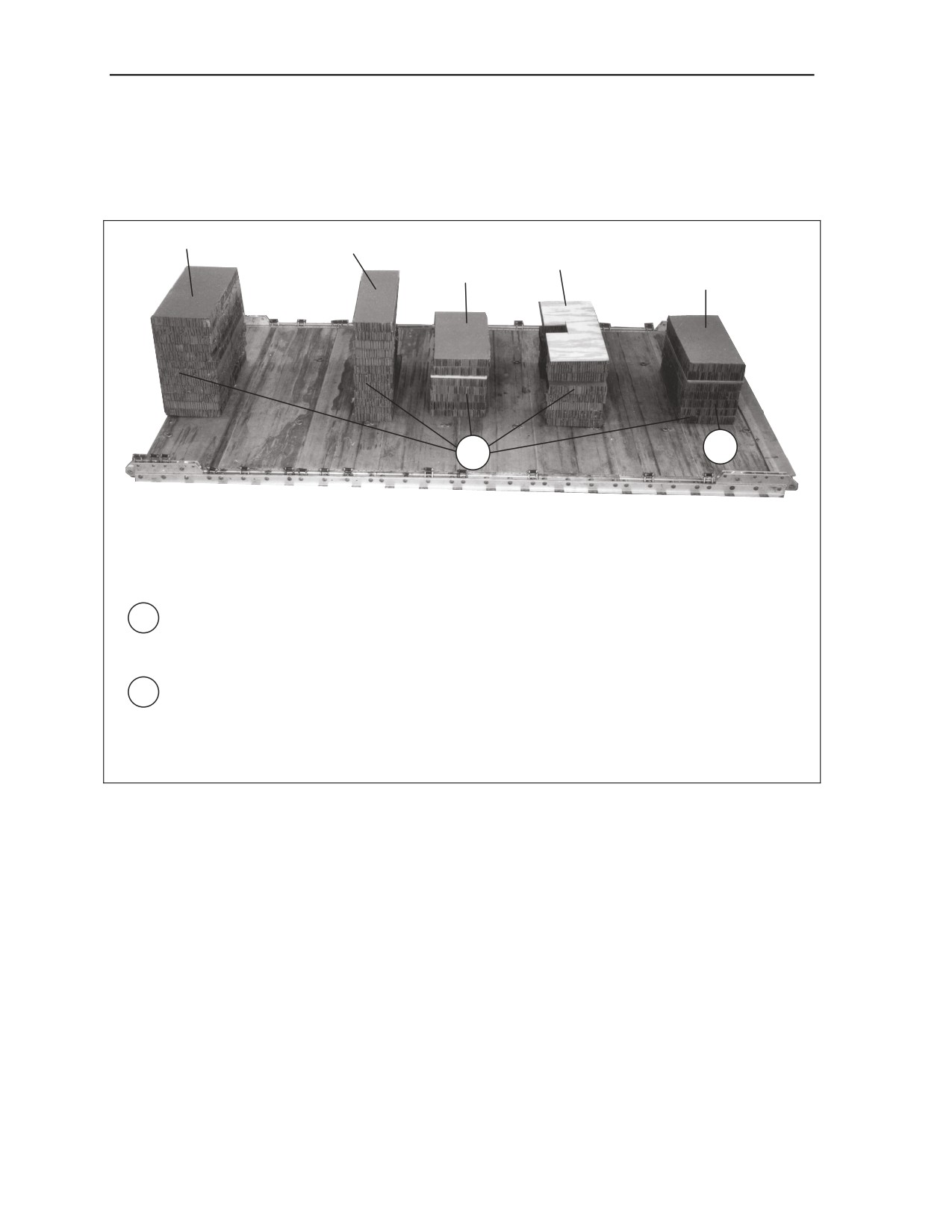
2-7. Honeycomb stacks must be set on the platform according to instructions in the specific rigging
manual. Figure 2-8 shows a typical placement of honeycomb stacks on a type V platform.
STACK 4
STACK 5
STACK 3
STACK 2
STACK 1
FRONT
REA
1
2
1 Place the honeycomb stacks on the platform according to instructions in the specific rigging
manual.
Note. Do not glue the stacks to the platform.
2 Number the stacks from front to rear in a numerical sequence with 1 at the front of the
platform.
Figure 2-8. Typical Placement of Honeycomb Stacks on Platform
2-10
FM 4-20.102/MCRP 4-11.3J/NAVSEA SS400-AB-MMO-010/TO 13C7-1-5
8 June 2006
The Type V Airdrop Platform
DRIVE-OFF AID
2-8. The drive-off aid may be used with the HMMWV, 2 1/2-ton truck, and the 5-ton, 900-series truck.
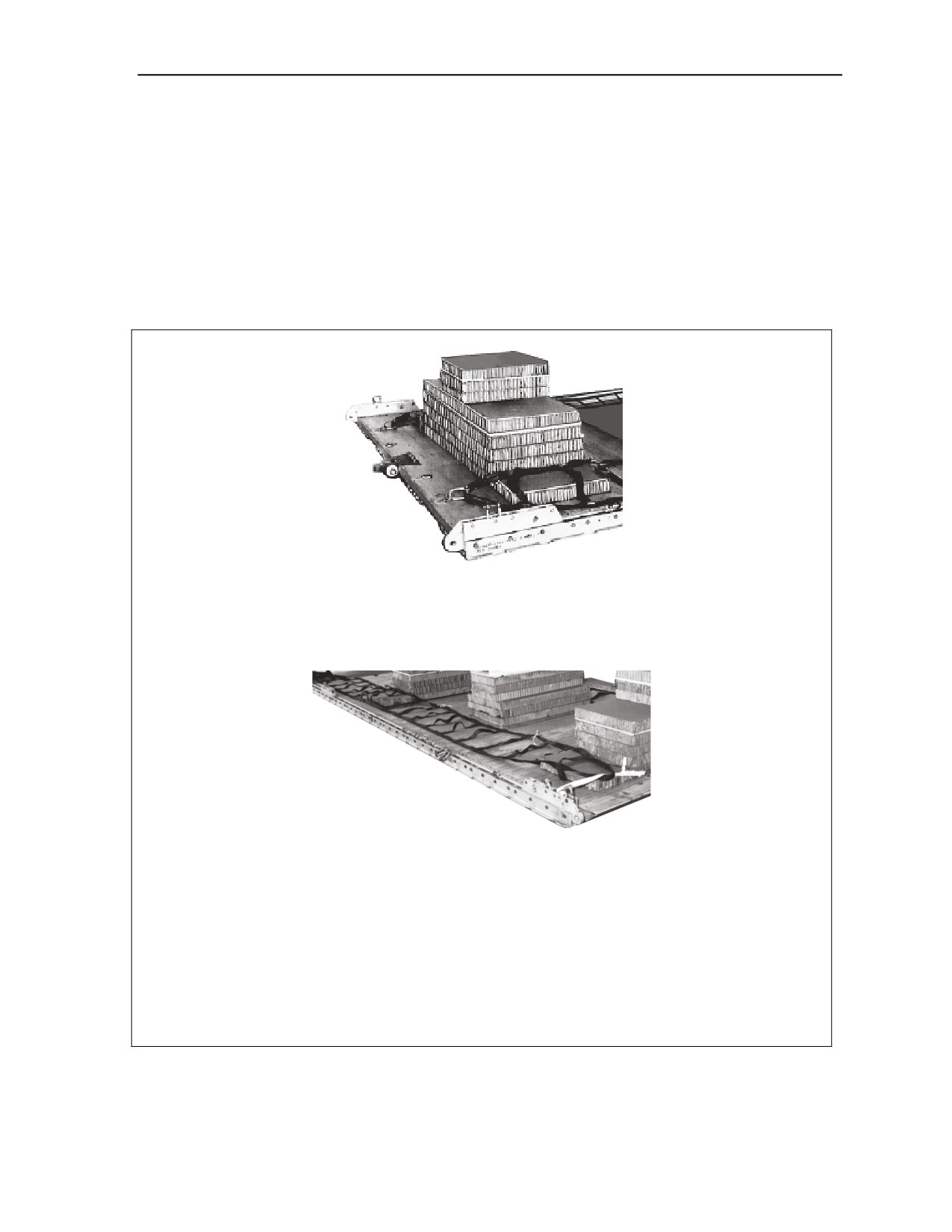
The drive-off aid, shown in Figure 2-9, consists of a fabric track sewn into a ladder-type configuration. The
system is placed on two of the identified vehicle’s tires and attached to the type V platform tiedown rings
with a tiedown clevis or type VIII nylon webbing. There are two tracks to each system. Each track is 30
feet long and 22 inches wide and weighs 21 pounds. When powered up, the vehicle (with tiedown
assemblies removed), will progressively wrap the webbed ladder around the two tires (using the platform
for leverage) and pull itself clear of the honeycomb and platform. Figure 2-10 shows the drive-off aid
installed on the vehicle wheels.
REAR PLATFORM ATTACHMENT
Note. If the vehicle is to be driven off the rear of the platform, attach the drive-off aid to the outside
tiedown rings on each side with a type V tie-down clevis.
FRONT PLATFORM ATTACHMENT
Note. If the vehicle is to be driven off the front of the platform, tie a length of type VIII nylon
webbing from the second bushing of the front tandem link assembly, through the end loop of the
drive-off aid, and through the nearest tie-down ring. When attaching the drive-off aid to the type V
platform using type VIII nylon webbing, tie the free ends with a ring bend knot as shown in Figure
1-5. Tie the drive-off aid to tie-down rings or platform bushings with type I, 1/4-inch cotton webbing.
Figure 2-9. Drive-off Aids Installed on Platform
8 June 2006 FM 4-20.102/MCRP 4-11.3J/NAVSEA SS400-AB-MMO-010/TO 13C7-1-5
2-11
///////////////////////////////////////