FM 4-20.102 AIRDROP OF SUPPLIES AND EQUIPMENT: RIGGING AIRDROP PLATFORMS (JUNE 2006) - page 2
Chapter 2
CENTER OF BALANCE (CB)
2-9. The CB of an airdrop platform load, based on the total rigged weight, is given in the rigging manual
for a particular item. If the load varies from the one given in a particular manual, the CB must be
recomputed using the procedures shown in Figure 1-4.
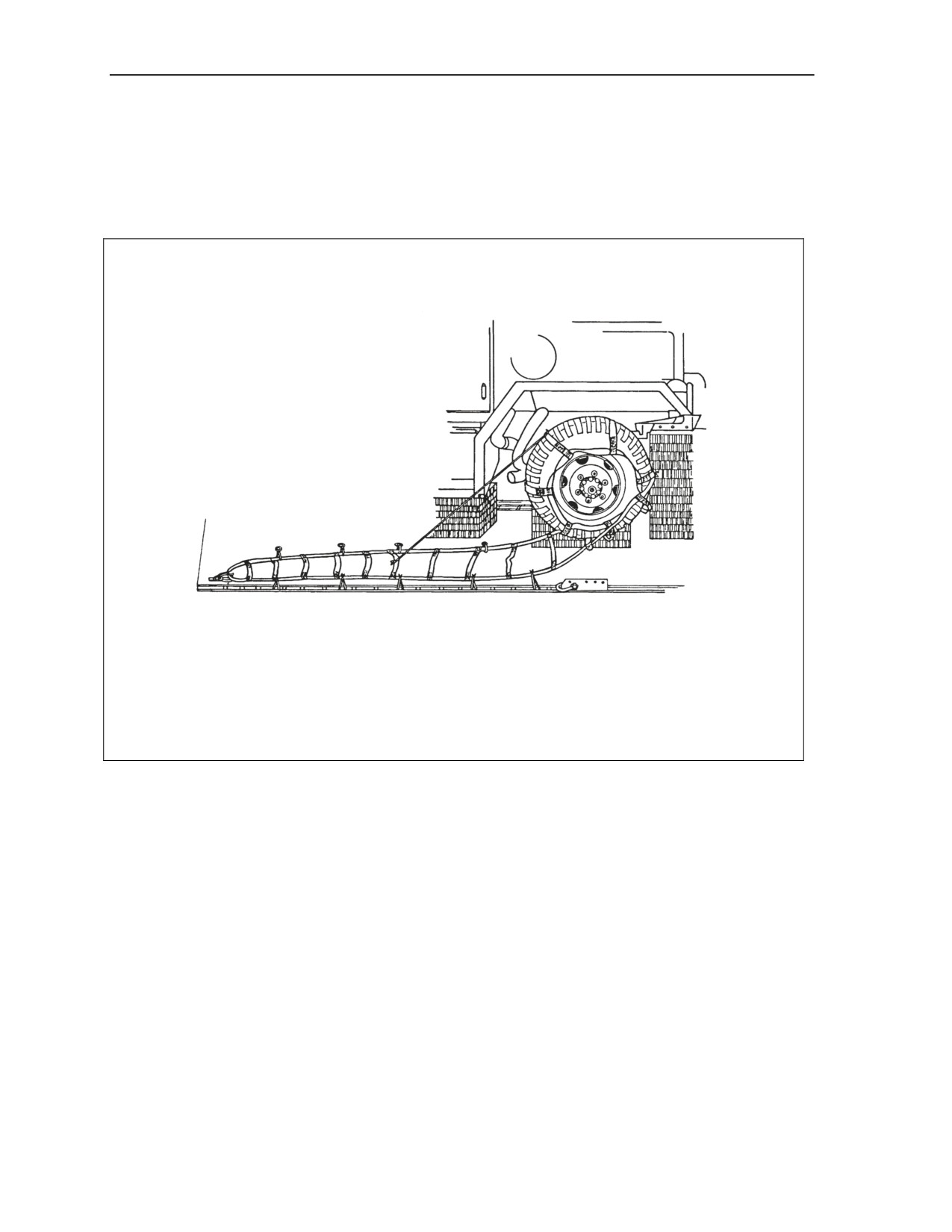
Note. Wrap the drive-off aid around the wheel of the vehicle on each side as shown in the specific
manual for that vehicle. Wrap the drive-off aid around the wheel until the webbing lays flat on the
platform, but is not under tension. Tie the drive-off aid to adjacent tie-down rings or platform
bushings on each side with type I, 1/4-inch cotton webbing.
Figure 2-10. Drive-off Aids Installed on Wheel of Vehicle
2-12
FM 4-20.102/MCRP 4-11.3J/NAVSEA SS400-AB-MMO-010/TO 13C7-1-5
8 June 2006
Chapter 3
Suspension Slings
SECTION I-GENERAL INFORMATION
LINE MULTI-LOOP
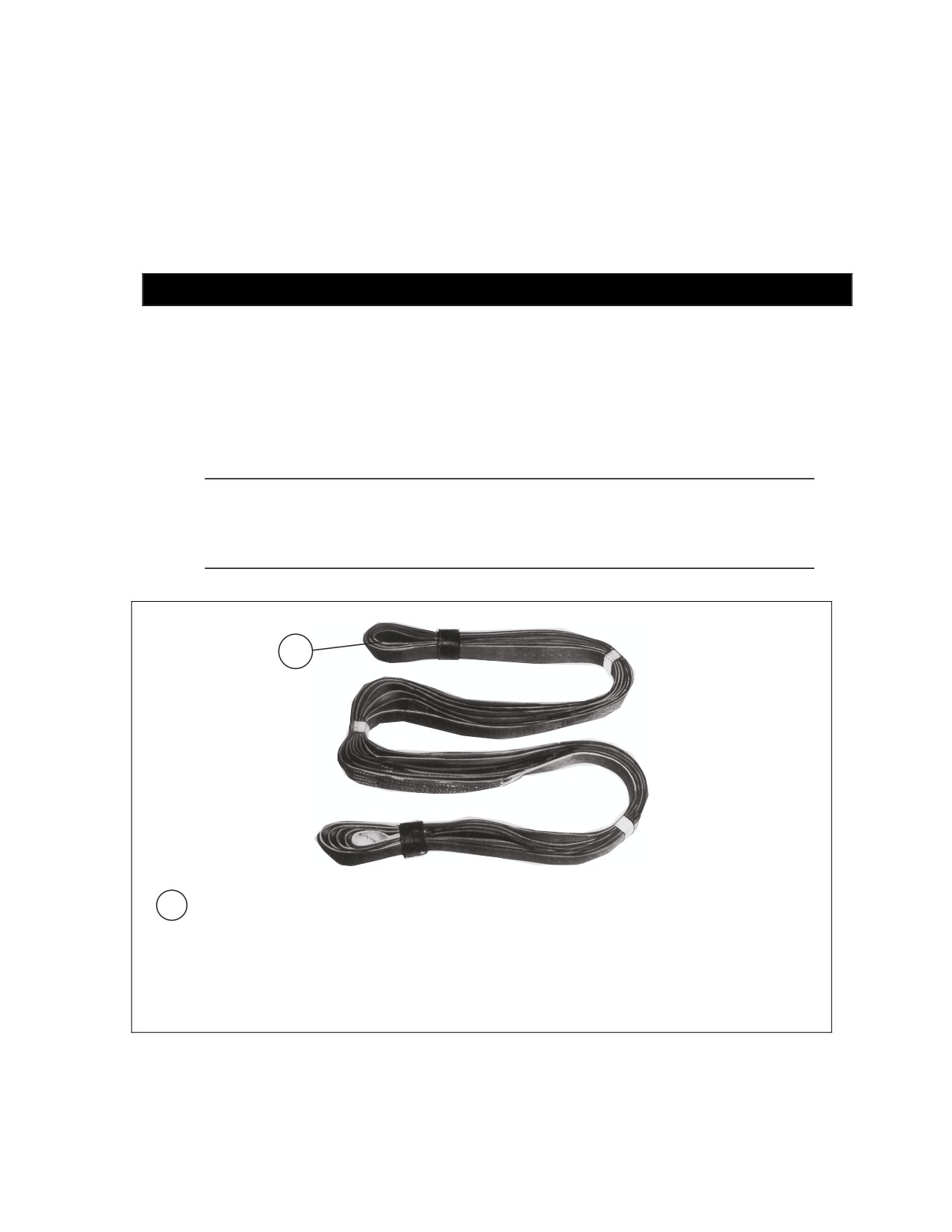
3-1. A line, multi-loop, (Figure 3-1) is used as suspension slings on platform loads rigged for low-
velocity airdrop. These slings suspend the load under the cargo parachute during descent. Suspension
slings connect the cargo parachute to the load using a parachute release assembly. A line, multi-loop, may
also be used as deployment lines and to extend the risers of cargo parachutes or to group the bridles of a
multi-parachute load.
Note. Tube edge nylon webbing suspension slings are an authorized substitute for the type
XXVI nylon webbing slings. The combination of both tube edge nylon webbing and type XXVI
nylon webbing slings are authorized in any configuration due to the same material
characteristics.
1
1 Each sling is made with continuous loops. The loops are 1 3/4-inch-wide, type XXVI nylon
webbing. They are held together with keepers made of 1-inch, nylon reinforced tape. Each
sling has a sliding webbing keeper and a cotton or nylon buffer at each end.
Note. The keeper at each end of the sling must be drawn snugly against the object on which the
sling is fitted.
Figure 3-1. Suspension Slings
8 June 2006 FM 4-20.102/MCRP 4-11.3J/NAVSEA SS400-AB-MMO-010/TO 13C7-1-5
3-1
Chapter 3
REQUIREMENTS
3-2. The size and number of suspension slings needed to rig an airdrop platform load for low-velocity
airdrop depend on the suspended weight of the load. The size and number of suspension slings needed at
each suspension point are listed in Table 3-1. The types and lengths of suspension slings authorized for use
when a platform load is rigged for low-velocity airdrop are listed in Table 3-2. Each rigging manual lists
the specific slings used on each load.
Table 3-1. Size and Number of Cargo Slings Required for Airdrop Platform Loads
Weight of Rigged Load
Type XXVI Nylon Webbing
Without Cargo Parachutes
Cargo Slings at Each Suspension Point
(pounds)
2270 to 14,000
1 each (2-loop)
14,001 to 40,000
1 each (4-loop)
Table 3-2. Type XXVI Nylon Webbing Suspension Slings for Low-Velocity Airdrop
Length
Number of
National Stock Number
(feet)
Loops
1670-01-062-6301
3
2
1670-01-062-6306
3
4
1670-01-062-6304
9
2
1670-01-062-6305
9
4
1670-01-063-7760
11
2
1670-01-062-6310
11
4
1670-01-062-6303
12
2
1670-01-062-6307
12
4
1670-01-063-7761
16
2
1670-01-062-6308
16
4
1670-01-062-6302
20
2
1670-01-064-4453
20
4
3-2
FM 4-20.102/MCRP 4-11.3J/NAVSEA SS400-AB-MMO-010/TO 13C7-1-5
8 June 2006
Suspension Slings
SECTION II-RIGGING INFORMATION
ATTACHING SLINGS
3-3. The specific rigging manual includes the length and loops of suspension slings needed and the
method used to connect them to the platform or drop item. When suspension slings must be joined to form
a longer suspension sling, a two-point link may be used. Attach suspension slings to the suspension bracket
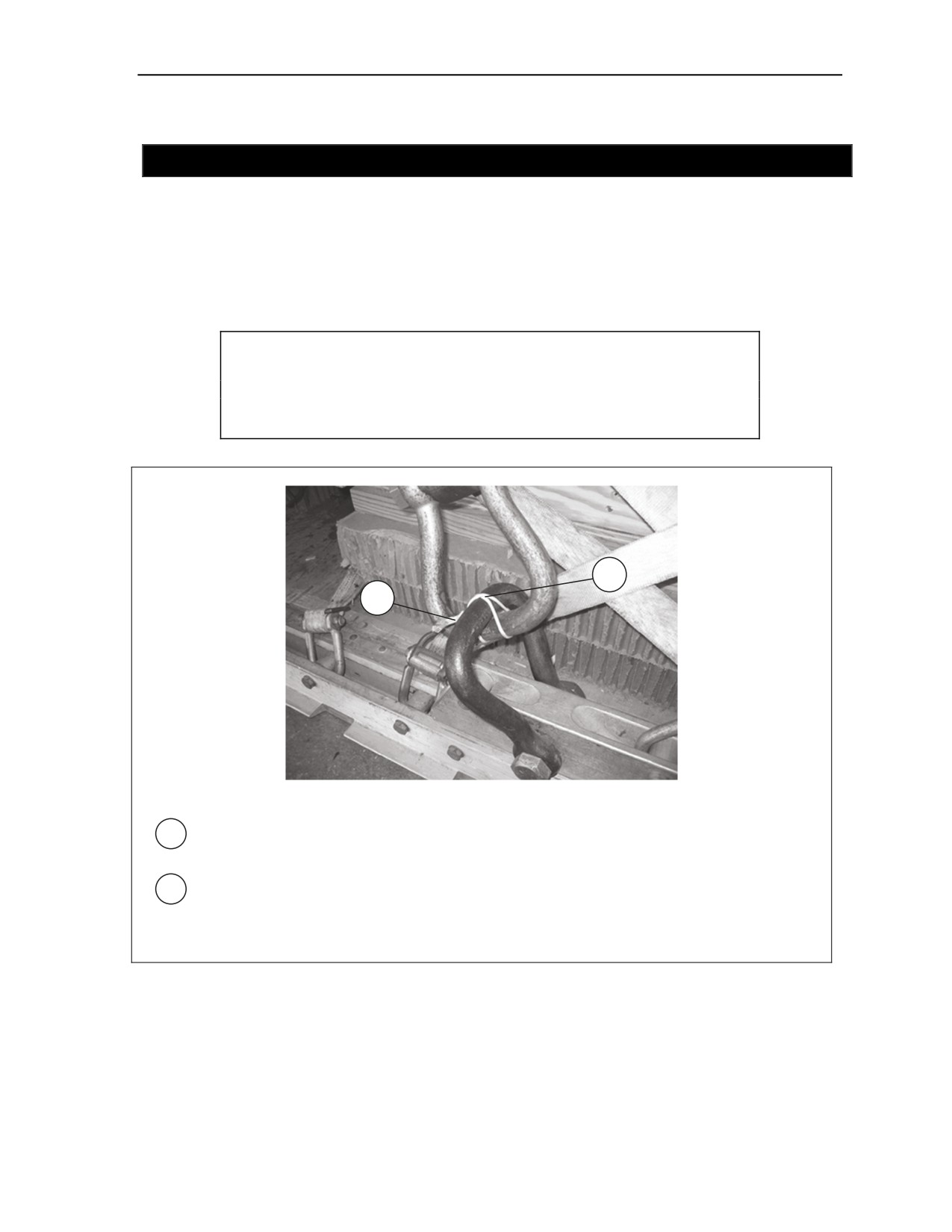
assembly or tandem links using large suspension clevises. When using a double suspension clevis
configuration, follow the procedures in Figure 3-2.
CAUTION
Ensure the nut is wrench tightened to keep it from loosening during
transport and airdrop.
1
2
1 Use a single length of type III nylon cord to route a running end through and around the
clevises forming an X on the top clevis.
2 Secure with a slip knot ensuring the clevises are centered on each other.
Figure 3-2. Double Suspension Clevis Configuration Safety Tied
8 June 2006 FM 4-20.102/MCRP 4-11.3J/NAVSEA SS400-AB-MMO-010/TO 13C7-1-5
3-3
Chapter 3
SAFETY TIEING SLINGS
3-4. Safety tieing the suspension slings keeps them from entangling with the load. Safety
tie the slings according to the instructions given in the specific rigging manual for the
particular load.
Note. When using four-loop, type XXVI suspension slings, wrap each set of four plies with a
10- by 10-inch piece of cotton muslin. Secure each wrap with one single turn of 1/4-inch cotton
webbing.
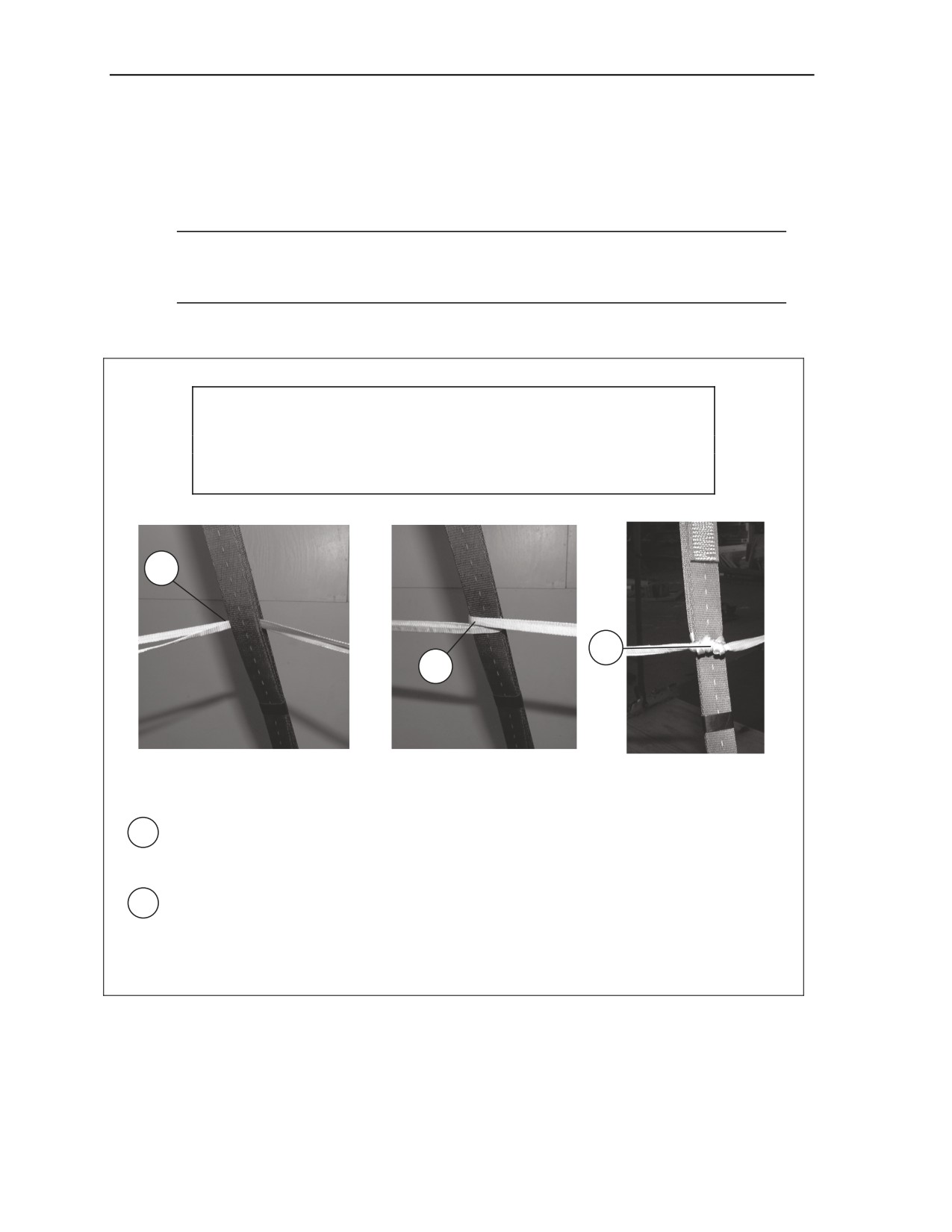
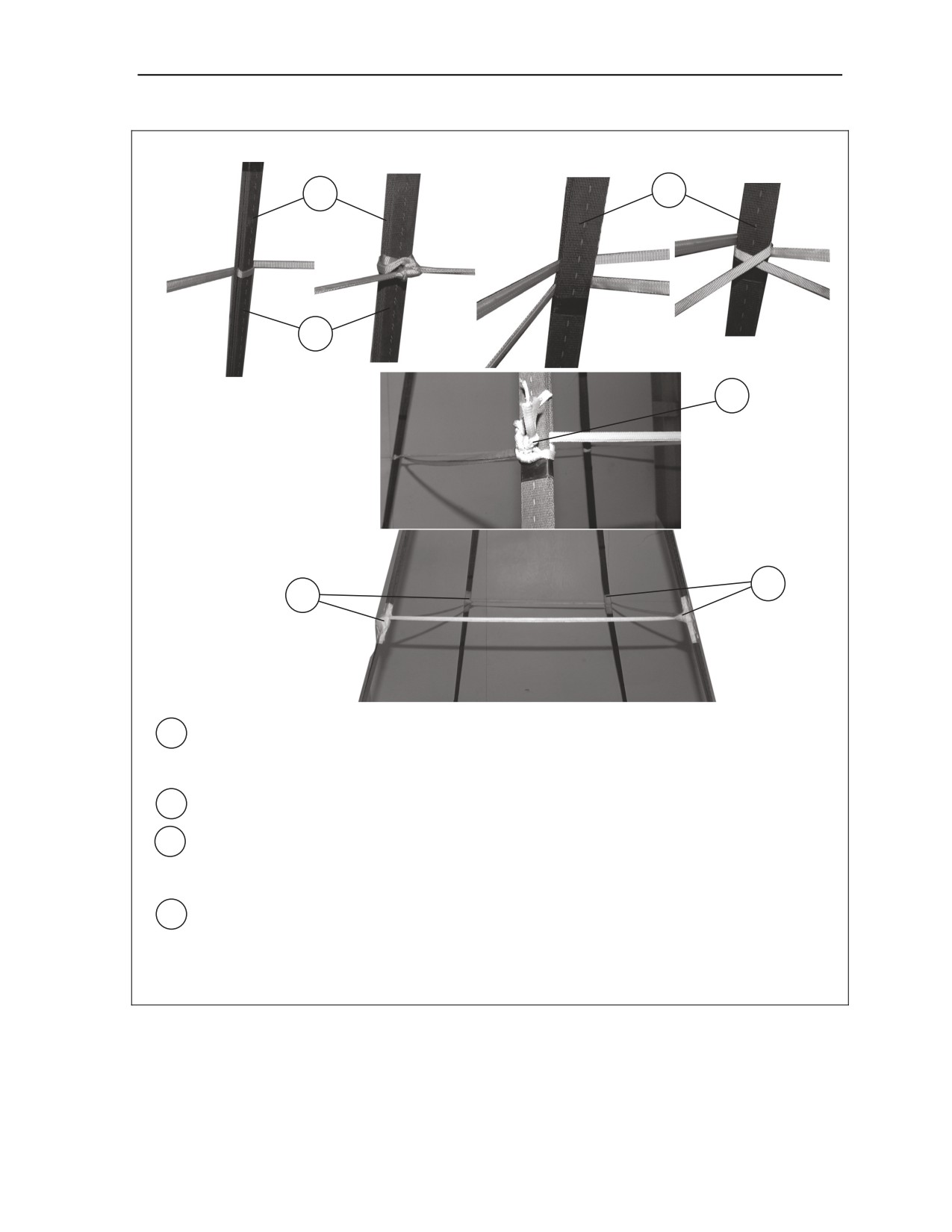
• Deadman’s Tie. Safety tie all suspension slings with a deadman’s tie as shown in Figure 3-3.
CAUTION
This tie must be located between 6 and 8 inches above the top of
the load or as directed in the specific rigging manual.
1
2
2
1 Cut two lengths of 1/2-inch tubular nylon webbing, making each long enough to encircle all
slings plus 8 feet. Mark the lengths of webbing at their centers. Pass an end of both pieces
of webbing through the center plies of the right front sling until the marks reach the sling.
2 Pass the running end of each length around the inboard side. Tie it on the outboard side
with a surgeon’s knot, a locking knot, and an overhand knot in the running ends.
Figure 3-3. Safety Slings Tied with a Deadman’s Tie
3-4
FM 4-20.102/MCRP 4-11.3J/NAVSEA SS400-AB-MMO-010/TO 13C7-1-5
8 June 2006
Suspension Slings
3
5
4
5
6
6
3 Pass one running end to the left front sling, through the center plies, around the inside of the
plies to the outside. Tie it to the inside of the plies with three alternating half hitches and an
overhand knot in the running end.
4 Repeat step 3 for the right rear sling.
5 Run both ends of the webbing through the center plies of the left rear sling and around the
inboard side of the sling to the outboard side. Safety tie it with a surgeon’s knot, a locking
knot, and an overhand knot in the free ends.
6 Tape the webbing to the slings.
Note. Make sure the safety tie allows the slings to suspend in their natural position.
Figure 3-3. Safety Slings Tied with a Deadman’s Tie (Continued)
8 June 2006 FM 4-20.102/MCRP 4-11.3J/NAVSEA SS400-AB-MMO-010/TO 13C7-1-5
3-5
Chapter 3
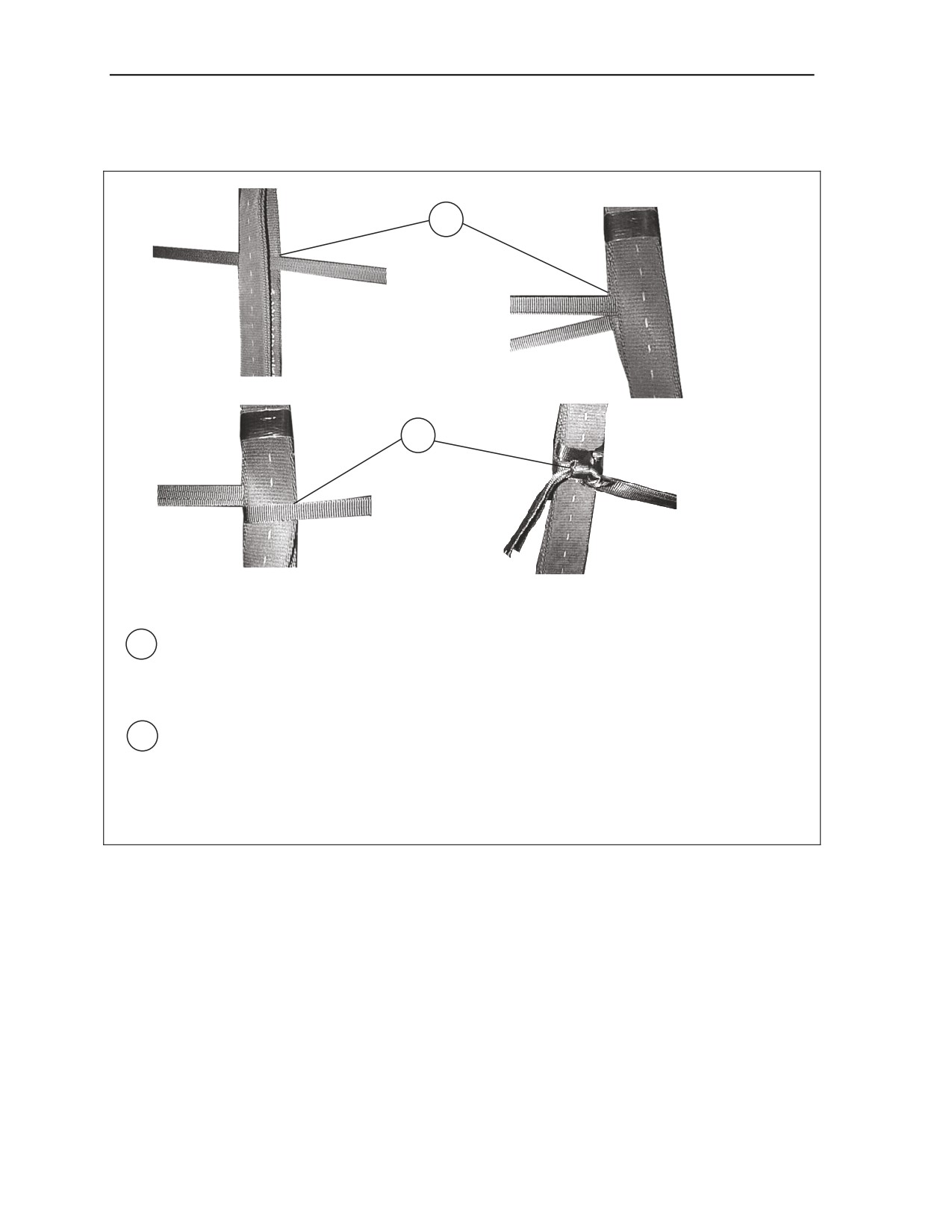
• Modified Deadman’s Tie. Safety tie suspension slings with a modified deadman’s tie when
specified by the individual rigging manual and as shown in Figure 3-4.
1
2
1 Cut two lengths of 1/2-inch tubular nylon webbing, making each long enough to reach from
the left suspension sling to the right suspension sling plus 8 feet. Split the plies of the front
suspension sling. Route two lengths of the 1/2-inch tubular webbing through the plies of the
sling from inboard to outboard about 3 feet.
2 Route the 3-foot running end from outboard to inboard around the inside plies and around the
outboard plies from inboard to outboard. Tie it in place on the inboard side with three
alternating half-hitches with an overhand knot in the running end.
Figure 3-4. Safety Slings Tied with a Modified Deadman’s Tie
3-6
FM 4-20.102/MCRP 4-11.3J/NAVSEA SS400-AB-MMO-010/TO 13C7-1-5
8 June 2006
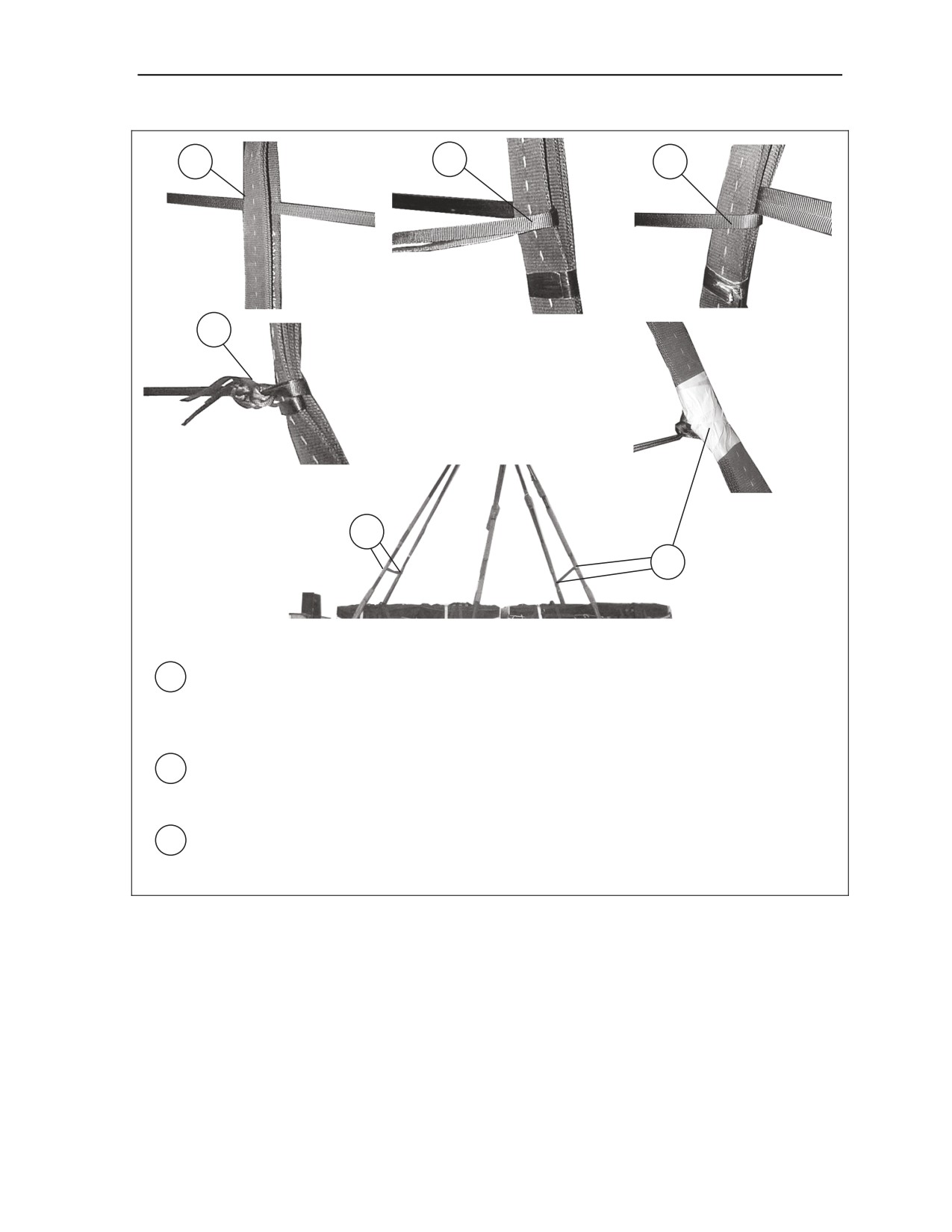
Suspension Slings
3
4
4
4
5
5
3 Split the plies of the right suspension sling and route the running ends of the two lengths of
1/2-inch tubular nylon webbing through the plies of the sling from inboard to outboard. Pass
enough of the webbing through the sling to take the slack out, but not enough to keep the
slings from hanging in their natural position.
4 Route the running end from outboard to inboard around the inside plies and around the
outboard plies from inboard to outboard. Tie it in place on the inboard side with three
alternating half-hitches with an overhand knot in the running end.
5 Tape the webbing to the slings with masking tape.
Figure 3-4. Safety Slings Tied with a Modified Deadman’s Tie (Continued)
8 June 2006 FM 4-20.102/MCRP 4-11.3J/NAVSEA SS400-AB-MMO-010/TO 13C7-1-5
3-7
This page intentionally left blank.
Chapter 4
Lashings
SECTION I-GENERAL INFORMATION
USE
4-1. The drop item and the accompanying load are lashed to the platform to prevent damage to the load or
to the aircraft during airdrop. The accompanying load is lashed to the platform to withstand the same force
as the drop item.
COMPONENTS AND STRENGTHS
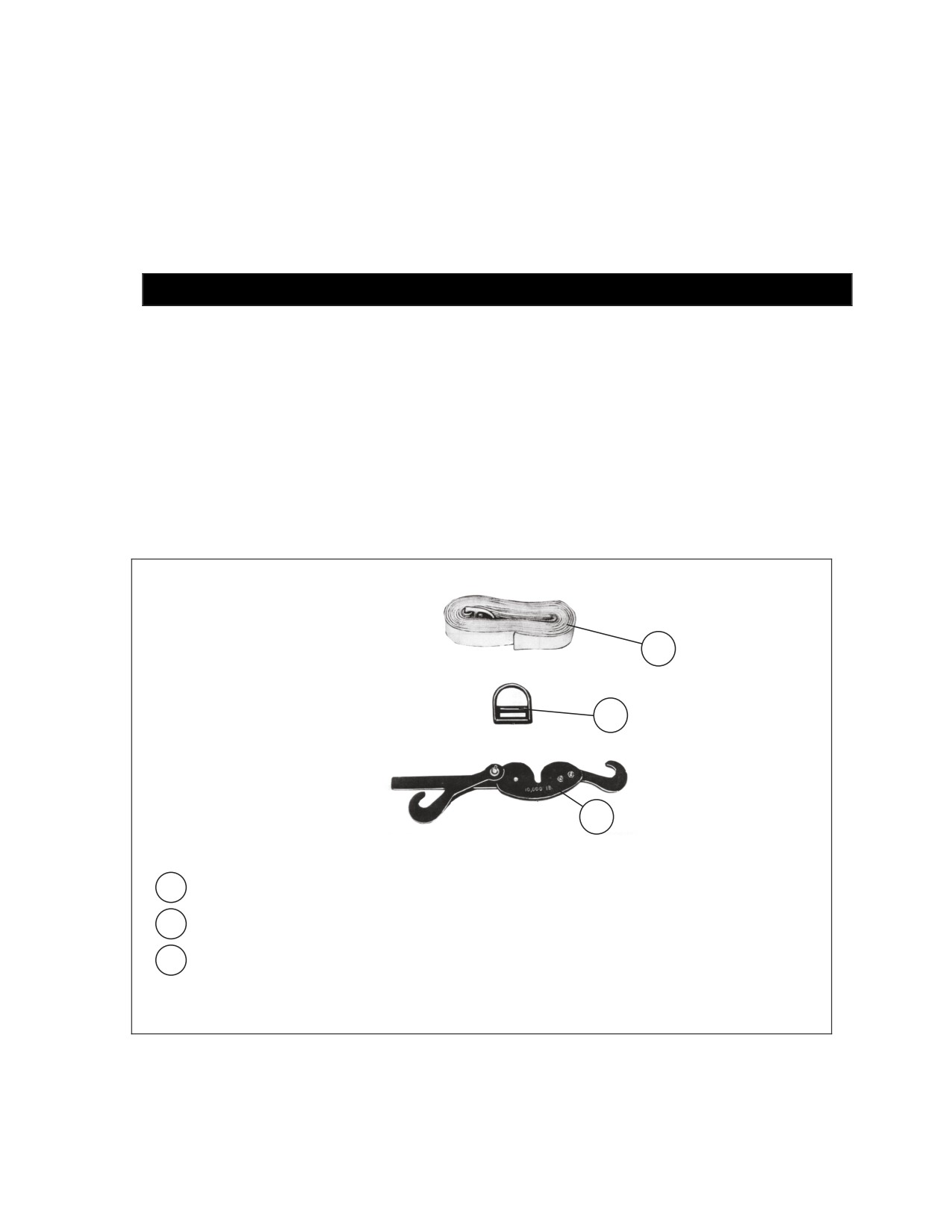
4-2. The components of the lashings used on airdrop loads are shown in Figure 4-1. The effective
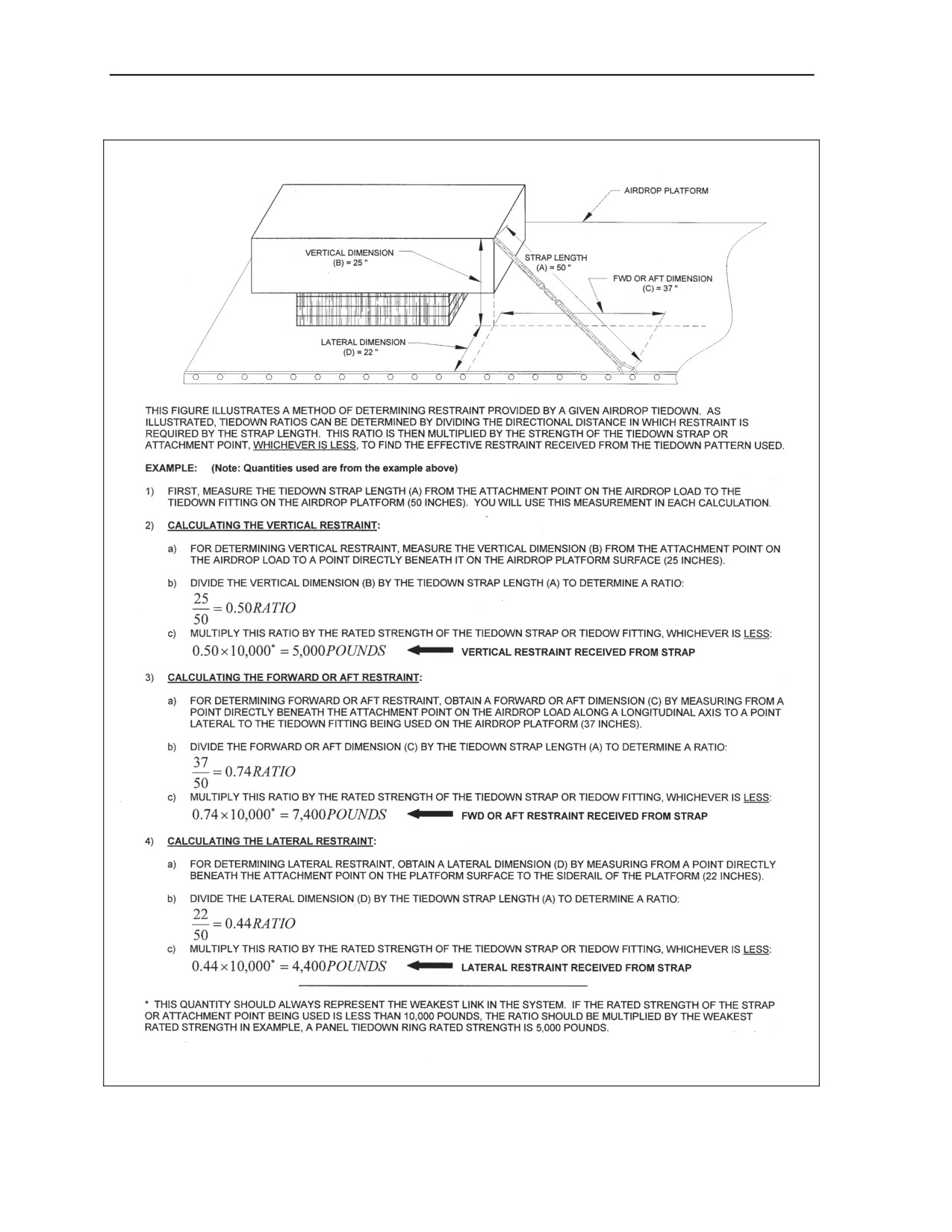
strength of a lashing is determined by the angle of lashing. Table 4-1 illustrates a method of determining
lashing effectiveness forward, aft, lateral, and vertical thrusts. The maximum strengths of the various forms
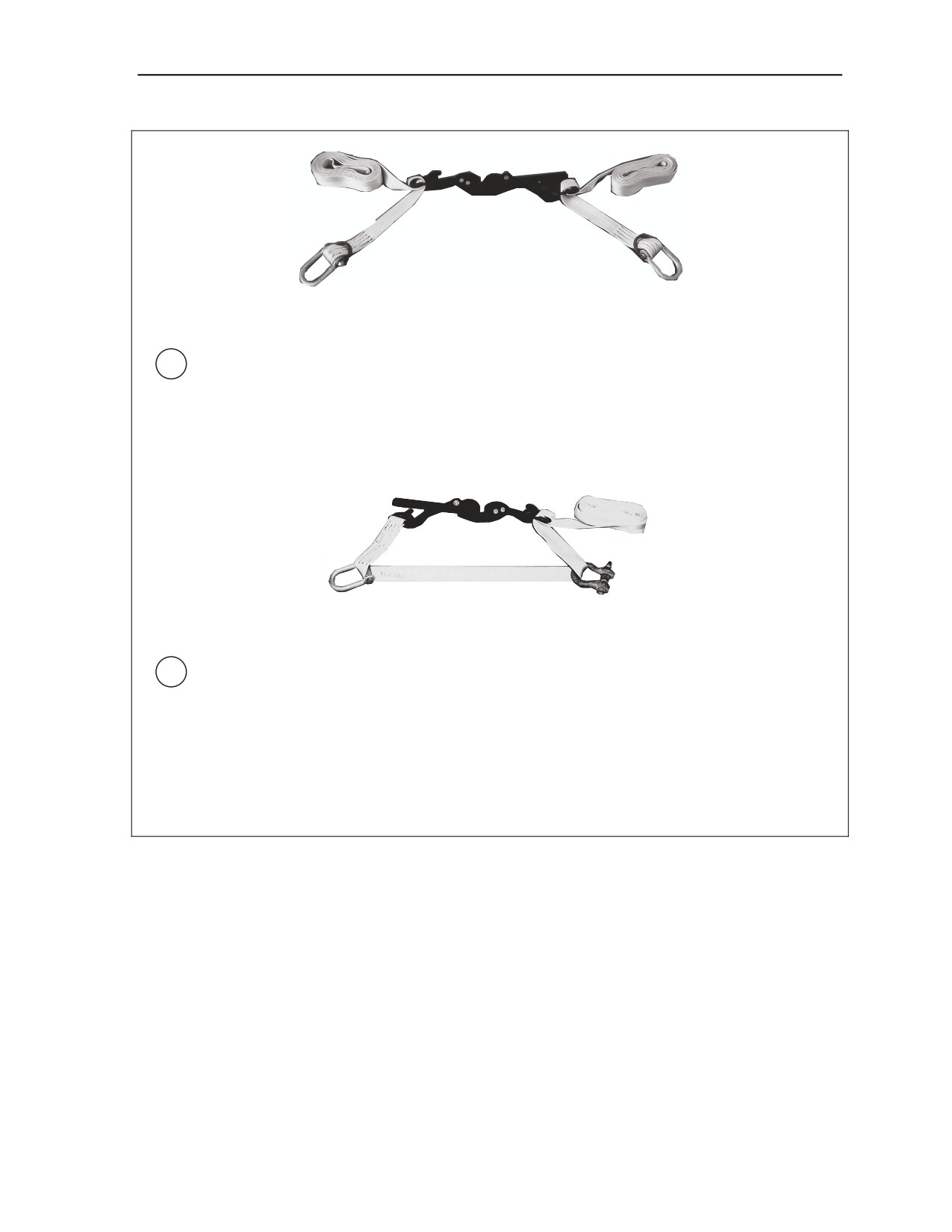
of lashings are given in Figure 4-2.
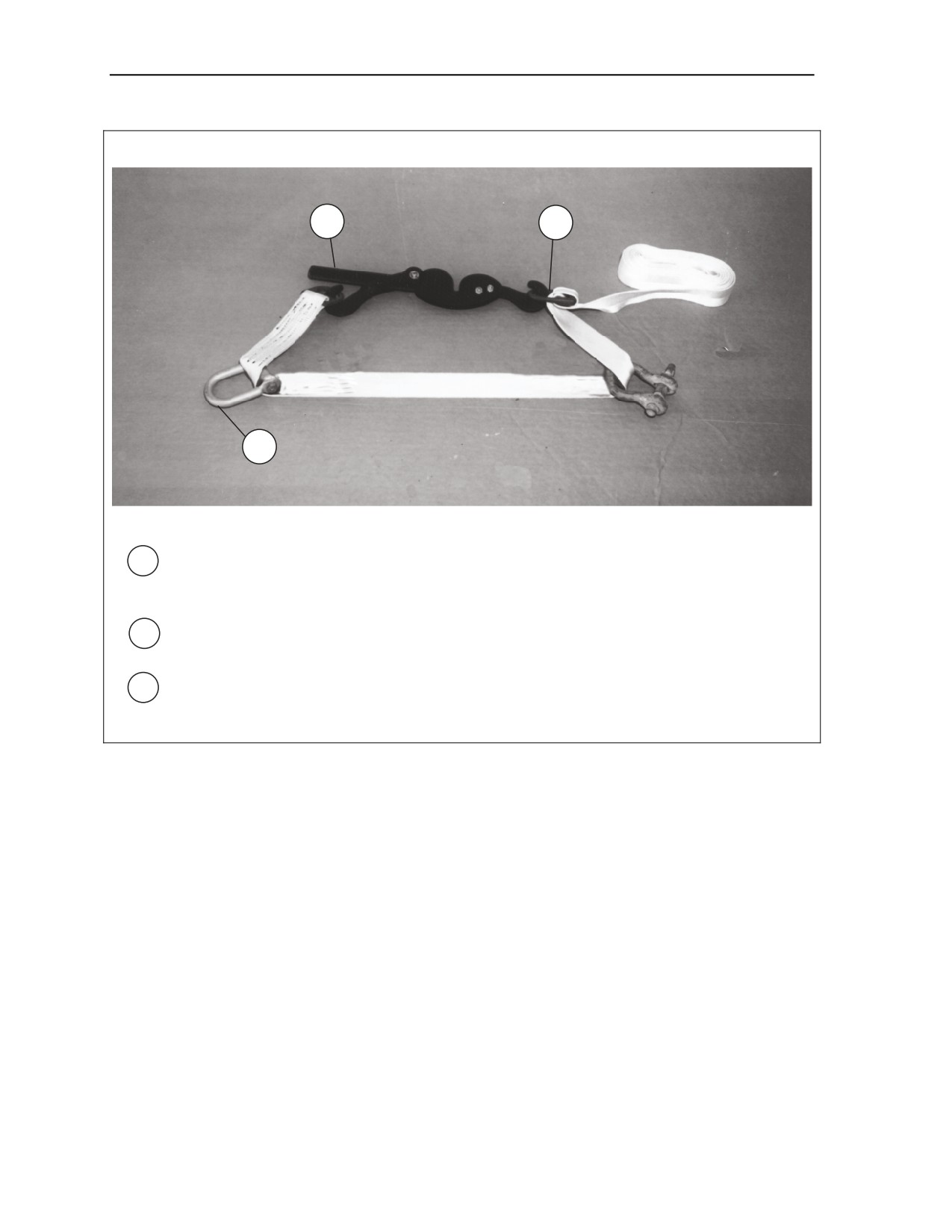
1
2
3
1
15-foot Dacron tiedown strap
2 Heavy-duty D-ring
3
10,000-pound-capacity load binder
Figure 4-1. Components of a Tiedown Assembly
8 June 2006 FM 4-20.102/MCRP 4-11.3J/NAVSEA SS400-AB-MMO-010/TO 13C7-1-5
4-1
Chapter 4
Table 4-1. Lashing Effectiveness
4-2
FM 4-20.102/MCRP 4-11.3J/NAVSEA SS400-AB-MMO-010/TO 13C7-1-5
8 June 2006
Lashings
Platform
Platform
SINGLE LINE CONFIGURATION
1 A dacron lashing routed in a single line configuration has a maximum strength of 6,000
pounds when attached to a type V platform side rail and a tiedown clevis. It has a maximum
strength of 5,000 pounds when attached to a panel tiedown ring.
Platform
Item
LOOPED (FLOTING BINDER) CONFIGURATION
2 A dacron lashing routed in a double line looped (floating binder) configuration has a
maximum strength of 10,000 pounds when attached to a type V platform side rail and a
tiedown clevis. It has a maximum strength of 5,000 pounds when attached to a panel tiedown
ring.
Figure 4-2. Strengths of Dacron Lashings
8 June 2006 FM 4-20.102/MCRP 4-11.3J/NAVSEA SS400-AB-MMO-010/TO 13C7-1-5
4-3
Chapter 4
SECTION II-RIGGING INFORMATION
FITTING D-RINGS
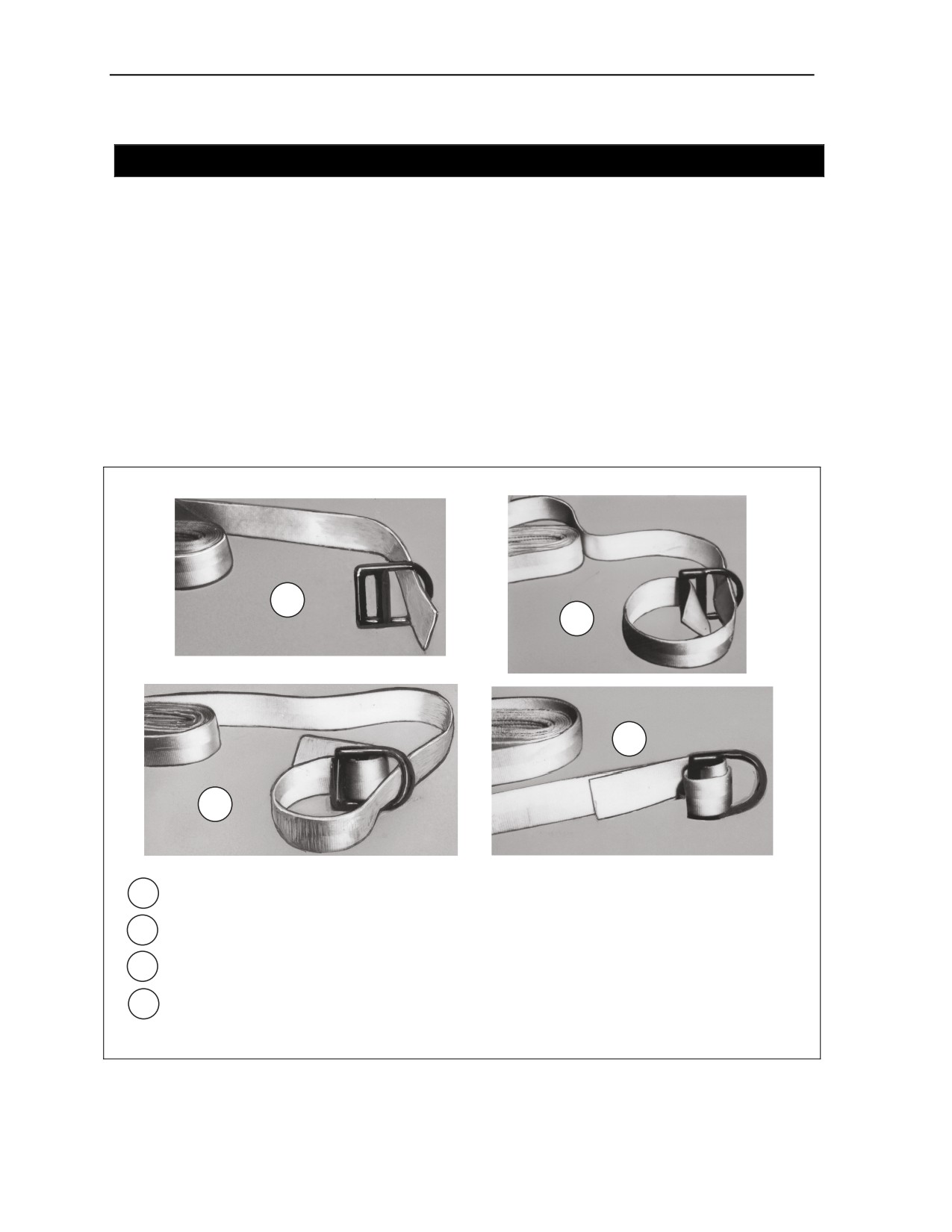
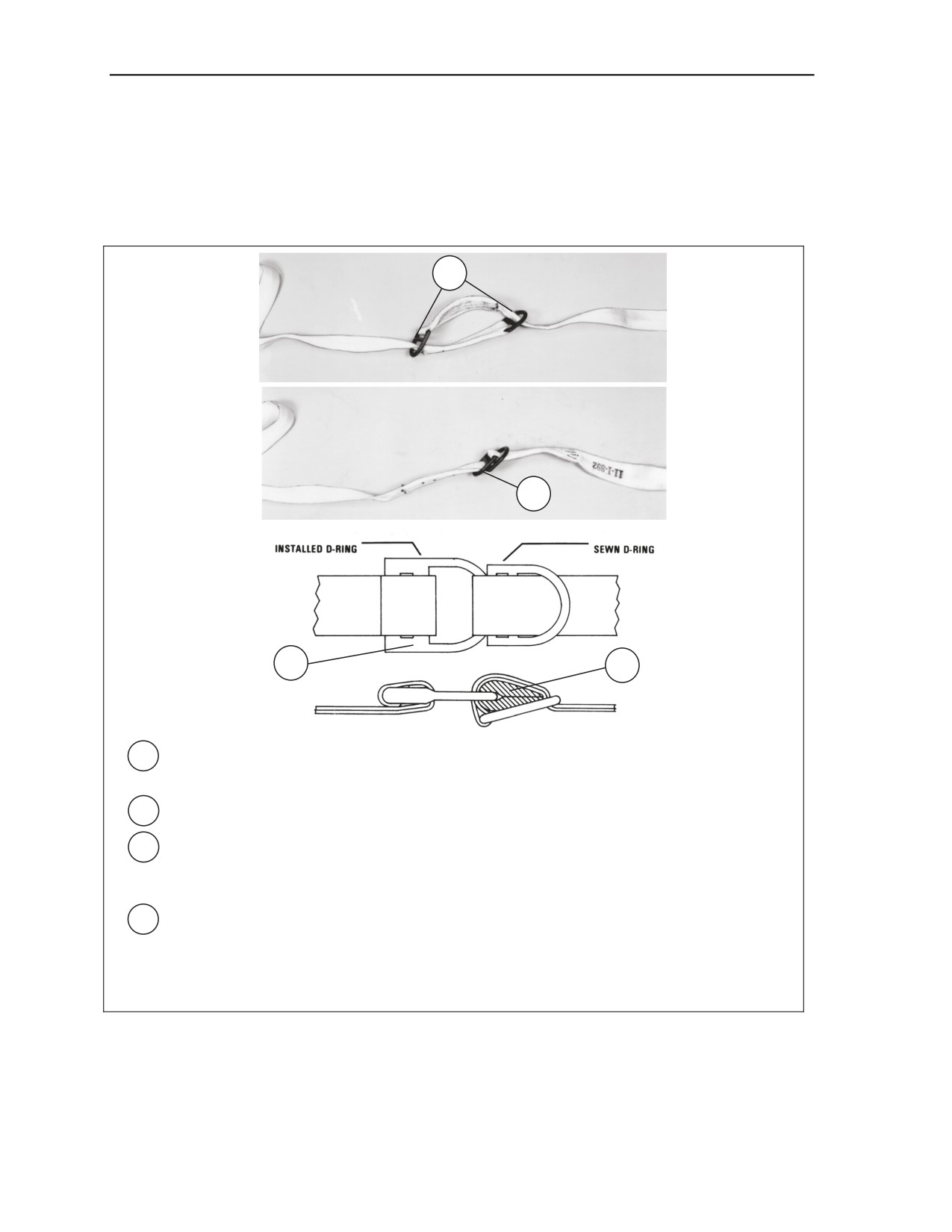
4-3. Fit a D-ring to the end of each tiedown strap as shown in Figure 4-3.
LASHING LOAD
4-4. Lash a low-velocity airdrop load to the platform according to the instructions in the specific rigging
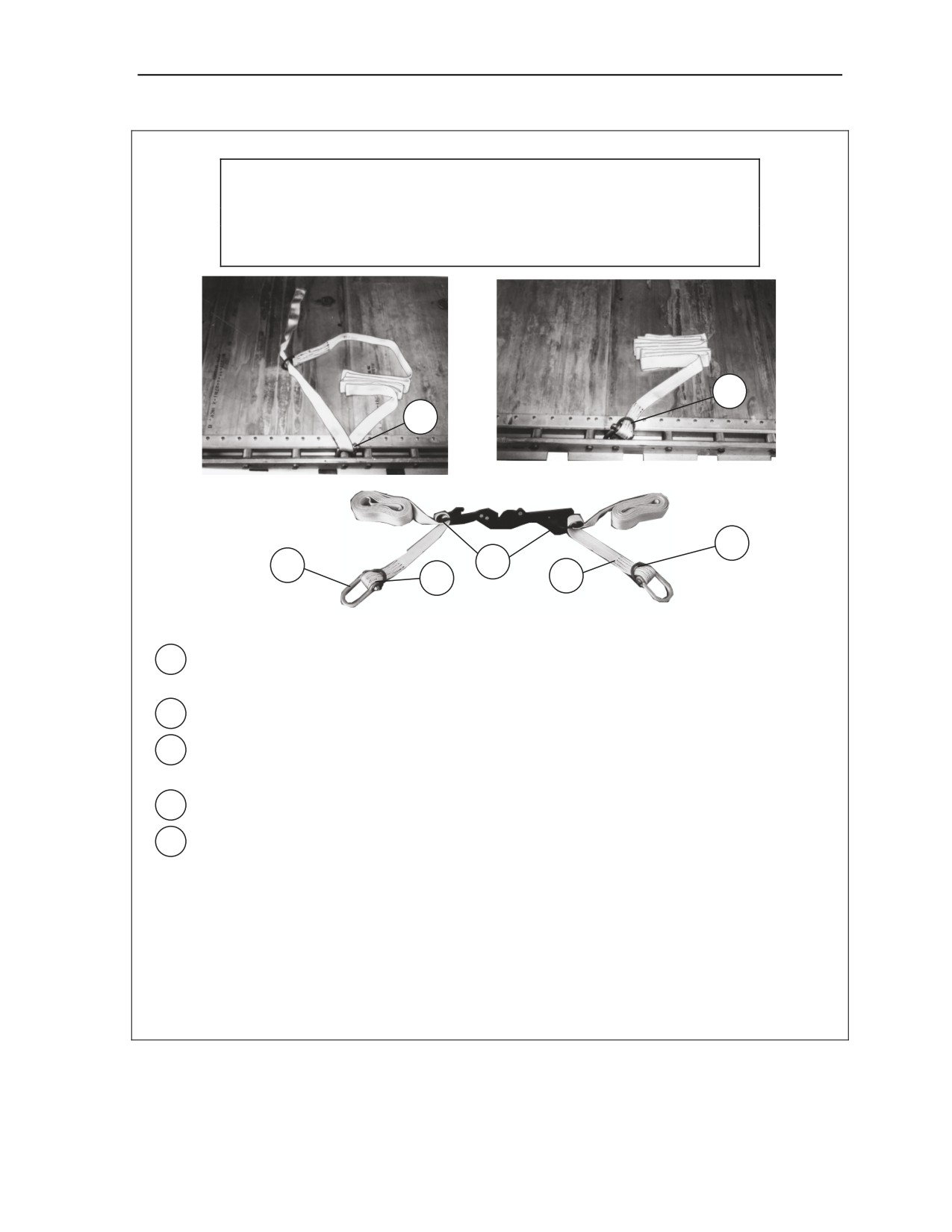
manual. Install the lashings as shown in Figures 4-4 and 4-5. When a load is rigged for which there is no
specific rigging manual, lashings must provide restraint to withstand extraction, deployment recovery, and
ground impact forces. Airdrop loads that do not have specific rigging procedures must be restrained to the
airdrop platform to the following criteria: 3Gs forward, 2.25 Gs aft, 1.5 Gs lateral, and 2 Gs vertical. The
total force that is necessary to restrain a load in a given direction is determined by multiplying the weight
of the load times the specific G value for that restraint direction. Lashing effective strength is determined
as shown in Table 4-1.
1
2
4
3
1 Run the free end of the tiedown strap through the large opening in the D-ring.
2 Run the strap around and through the small opening in the D-ring.
3 Run the strap back through the large opening in the D-ring.
4 Pull the strap taut.
Figure 4-3. D-Ring Fitted to Tiedown Strap
4-4
FM 4-20.102/MCRP 4-11.3J/NAVSEA SS400-AB-MMO-010/TO 13C7-1-5
8 June 2006
Lashings
CAUTION
Do not tighten the lashings so tight that they cause the platform to
bow.
3
3
1
3
5
4
2
1 Pass the free end of one tiedown strap through a clevis on the right rail and through its own
D-ring. Pull the strap taut.
2 Run the free end of the strap up over the load.
3 Pass the free end of a second tiedown strap through a clevis on the left rail and through its
own D-ring. Pull the strap taut.
4 Run the free end of the strap up over the load.
5 Fit a D-ring on the free end of each strap as described in Figure 4-3, and place the D-rings on
the hooks of a load binder. Safety the binder handle closed as shown in Figure 4-6.
Notes.
1. When the tiedown strap length is not a factor, it is permissible to use a single tiedown strap
and D-ring with a load binder attached directly to a side rail clevis or tiedown ring.
2. Pad all sharp edges that may touch the strap with cellulose wadding or other suitable
material.
Figure 4-4. Single Line Lashing
8 June 2006 FM 4-20.102/MCRP 4-11.3J/NAVSEA SS400-AB-MMO-010/TO 13C7-1-5
4-5
Chapter 4
3
2
1
1 Pass the free end of a tiedown strap through a clevis on a rail and up and over, around, or
through the indicated tiedown provision on the load. The tiedown provision will be listed in the
specific rigging manual for a particular load. Run the strap back toward the clevis.
2 Fit a D-ring to the free end of the strap (Figure 4-3), and place the D-rings on the hooks of a
load binder. Close the handle of the load binder pointing toward the platform.
3 Close the handle of the load binder toward the load.
Figure 4-5. A Looped (Floating Binder) Lashing
4-6
FM 4-20.102/MCRP 4-11.3J/NAVSEA SS400-AB-MMO-010/TO 13C7-1-5
8 June 2006
Lashings
SAFETY TIEING LOAD BINDER HANDLES
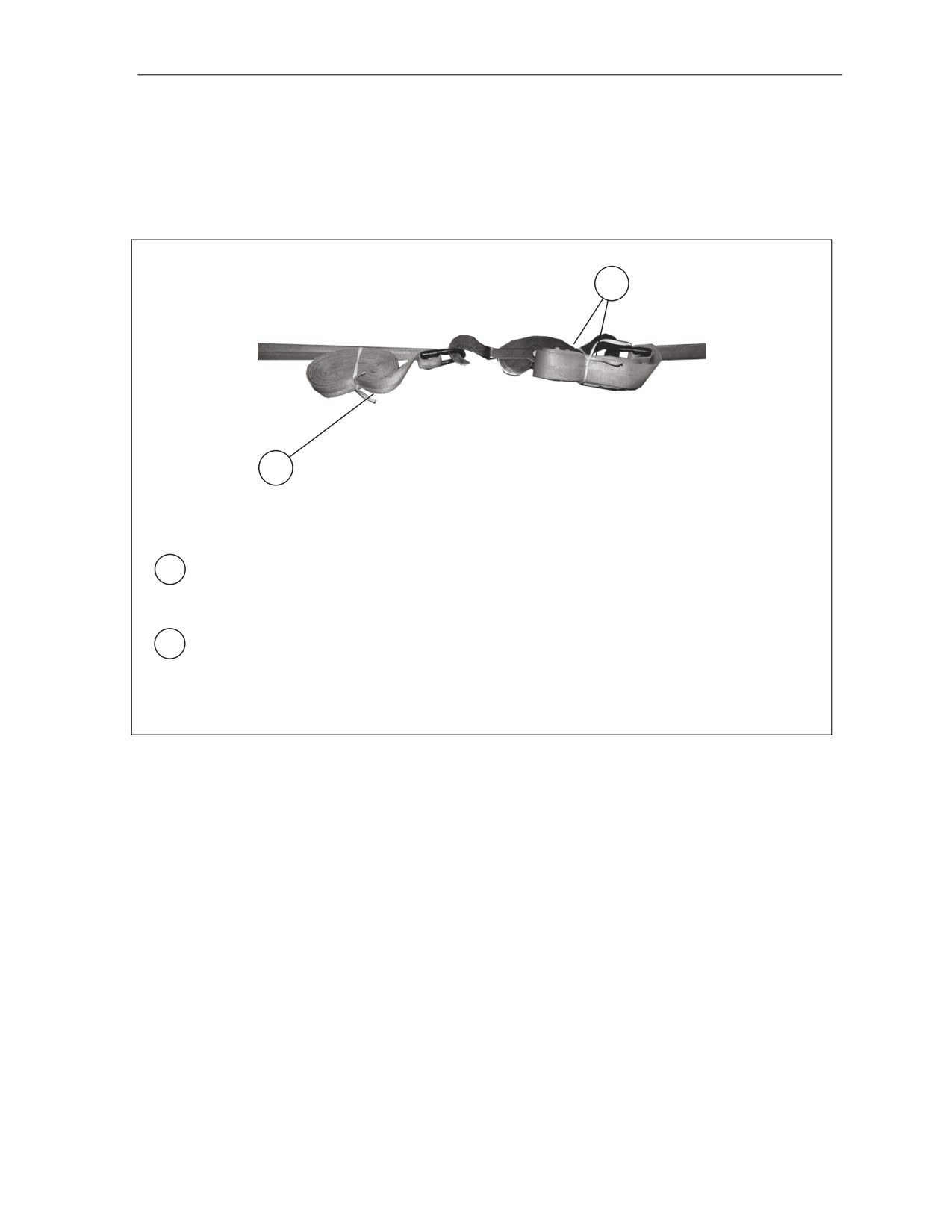
4-5. Roll the excess tiedown strap, and place alongside the load binder handle. Safety tie
the load binder handle closed as shown in Figure 4-6.
1
2
1 After the handle of the load binder has been closed, roll any excess tiedown strap and
place the folds alongside the load binder handle. Tie the rolled webbing to the binder and
the binder handle closed with a single length of type I, 1/4-inch cotton webbing.
2 Roll any excess from the opposite tiedown strap and place on top of the lashing. Tie the
rolled webbing to the lashing with a single length of type I, 1/4-inch cotton webbing.
Figure 4-6. Load Binder Handle and Excess Webbing Safety Tied
8 June 2006 FM 4-20.102/MCRP 4-11.3J/NAVSEA SS400-AB-MMO-010/TO 13C7-1-5
4-7
Chapter 4
FORMING A 30-FOOT, 45-FOOT, OR GREATER LENGTH TIEDOWN
STRAP
4-6. When needed, attach 15-foot tiedown straps together to form a 30-foot, 45-foot, or greater length
tiedown strap as shown in Figure 4-7.
1
2
3
4
1 Run the free end of two 15-foot tiedown straps through the D-ring of the opposite strap to
form a 30-foot strap.
2 Pull the straps taut.
3 Install a D-ring on a free end of the 30-foot strap. Pass the free end of a 15-foot tiedown
strap through the installed D-ring and back through its own D-ring to form a 45-foot or
greater strap.
4 Insert a 2- by 5-inch piece of 1/2-inch felt around the installed D-ring.
Note. Make sure the felt is centered around the installed D-ring.
Figure 4-7. A 30-Foot, 45-Foot, or Greater Length Tiedown Strap Formed
4-8
FM 4-20.102/MCRP 4-11.3J/NAVSEA SS400-AB-MMO-010/TO 13C7-1-5
8 June 2006
Chapter 5
Cargo Parachutes
SECTION I-GENERAL INFORMATION
USE
5-1. Cargo parachutes, also called recovery parachutes, are used to slow the descent of a low-velocity
platform load. Table 5-1 lists the weight limitations for cargo parachutes used with airdrop platform loads.
TYPES
5-2. The following cargo parachutes are used when loads are rigged for low-velocity airdrop.
• G-11B Cargo Parachute. The parachute has a 100-foot-diameter canopy. It has 120 suspension
lines (35-foot, type III nylon cord). The apex vent lines have been pulled down with a 95-foot,
type V nylon webbing center line. The parachute has four 2-second cutters. When packed, the
assembly weighs 250 pounds.
• G-11C Cargo Parachute. This is the same parachute as the G-11B except this parachute has
two 2-second cutters with two reusable reefing lines. The apex vent lines have been pulled down
with a 100-foot, type V nylon webbing center line. When packed, the assembly weighs 250
pounds.
• G-12E Cargo Parachute. This parachute has a 64-foot-diameter canopy. It has sixty-four 51-
foot, type IV braided nylon cord suspension lines. The apex vent lines have been pulled down
with a 55-foot, type V nylon webbing center line. When packed, the assembly weighs 125
pounds.
Table 5-1. General Suspended Weight Limitations in Pounds for Cargo Parachutes
Parachutes
Minimum
Maximum
G-11B
1
2,270
5,000
2
5,001
10,000
3
10,001
15,000
4
15,001
20,000
G-11C
5
20,001
25,000
6
25,001
30,000
7
30,001
35,000
8
35,001
40,000
G-11E
2
2,270
3,500
8 June 2006 FM 4-20.102/MCRP 4-11.3J/NAVSEA SS400-AB-MMO-010/TO 13C7-1-5
5-1

Chapter 5
Note. Suspended weight in pounds is the total rigged weight less the weight of the cargo
parachutes.
RISER EXTENSIONS
5-3. Cargo parachutes are used singularly or in a cluster. When parachutes are used in a cluster, the risers
of each parachute are lengthened so the canopies remain almost vertical as they descend to increase the
effectiveness of each canopy. The length of a riser extension and the number of stows used in stowing the
extensions are given in Table 5-2.
Table 5-2. Riser Requirements for G-11B, G-11C, and G-12E Cargo Parachutes
Number of Parachutes
Length of Riser
Number of Extension
Type XXVI Nylon
Extension (feet)
Stows
Webbing Slings
1
3
0
3-foot (2-loop)
2
20
2
20-foot (2-loop)
3 or 4
60
8
6-foot (3-loop)
5 to 8
120
16
120-foot (2-loop)
Notes.
1. All riser extensions must be continuous type XXVI nylon slings. Each parachute must have
identical riser extensions and each must be of the same length.
2. G-12E parachutes have three stows.
SECTION II-RIGGING INFORMATION
FORMING AND BOLTING RISER EXTENSIONS
5-4. The risers of a cluster of cargo parachutes used on low-velocity airdrop loads must be extended
(lengthened) using the following methods.
• Forming Extensions. Only continuous riser extensions may be used.
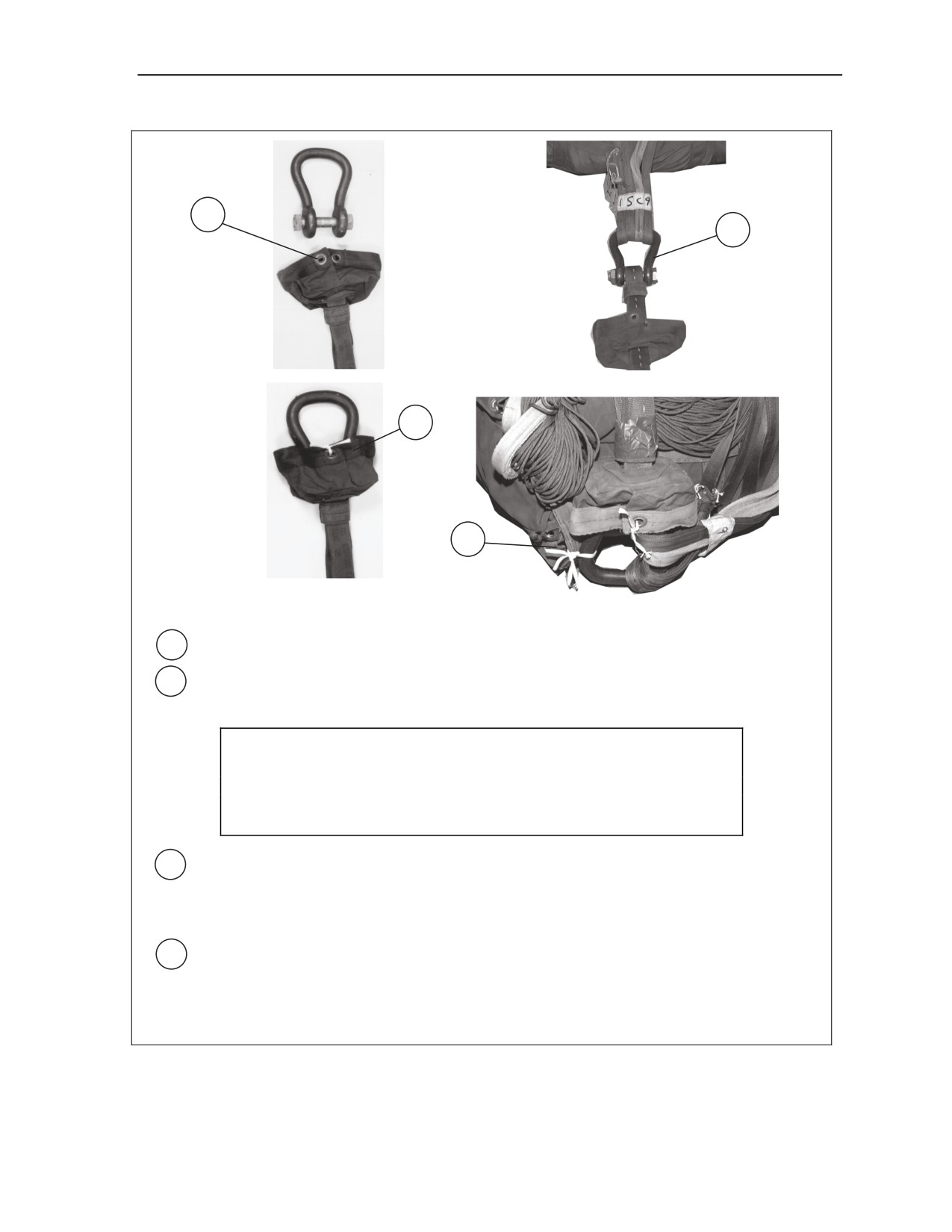
• Bolting Extensions to Risers. Bolt the riser extension to the risers of a cargo parachute as
shown in Figure 5-1.
5-2
FM 4-20.102/MCRP 4-11.3J/NAVSEA SS400-AB-MMO-010/TO 13C7-1-5
8 June 2006
Cargo Parachutes
1
2
3
4
1 Route a clevis cover around one end of the riser extension.
2 Attach the riser extension to the bolt of the parachute clevis.
CAUTION
Ensure the nut is wrench tightened to keep it from loosening during
transport and airdrop.
3 Route the clevis cover up over the bolt of the clevis and girth-hitch a length of type I, 1/4-
inch cotton webbing to the single grommet on the rear of the cover. Route one of the
running ends of the 1/4-inch cotton webbing between the center of the clevis and through
both remaining grommets, and secure on top with a surgeon’s knot and a locking knot.
4 Rotate the parachute clevis until the riser extension is facing the top of the deployment
bag. Tie the clevis to the left bag carrying handle using a double length of type I, 1/4-inch
cotton webbing.
Figure 5-1. Riser Extension Bolted to Risers
8 June 2006 FM 4-20.102/MCRP 4-11.3J/NAVSEA SS400-AB-MMO-010/TO 13C7-1-5
5-3
Chapter 5
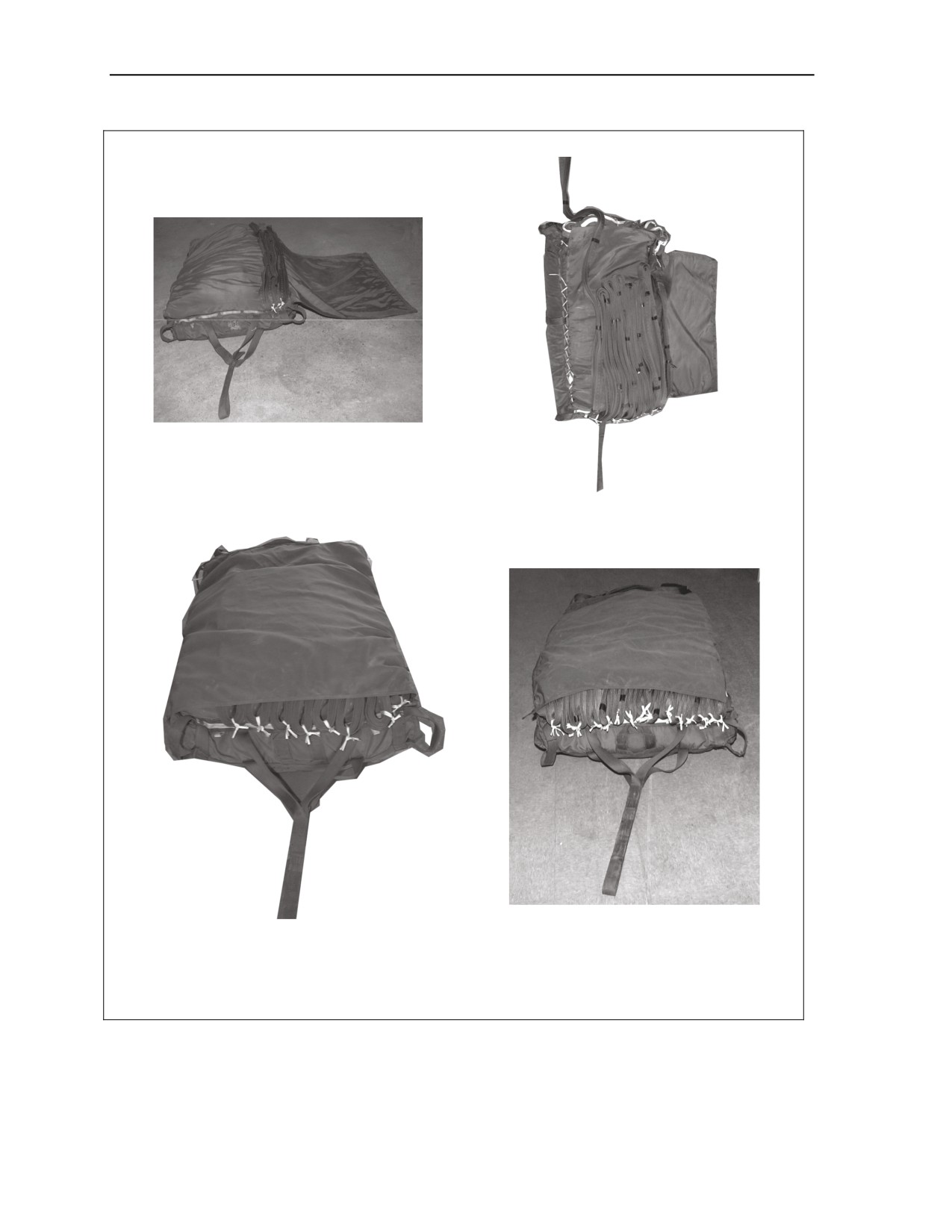
STOWING RISER EXTENSIONS
5-5. The riser extensions for the parachutes must be stowed as described below.
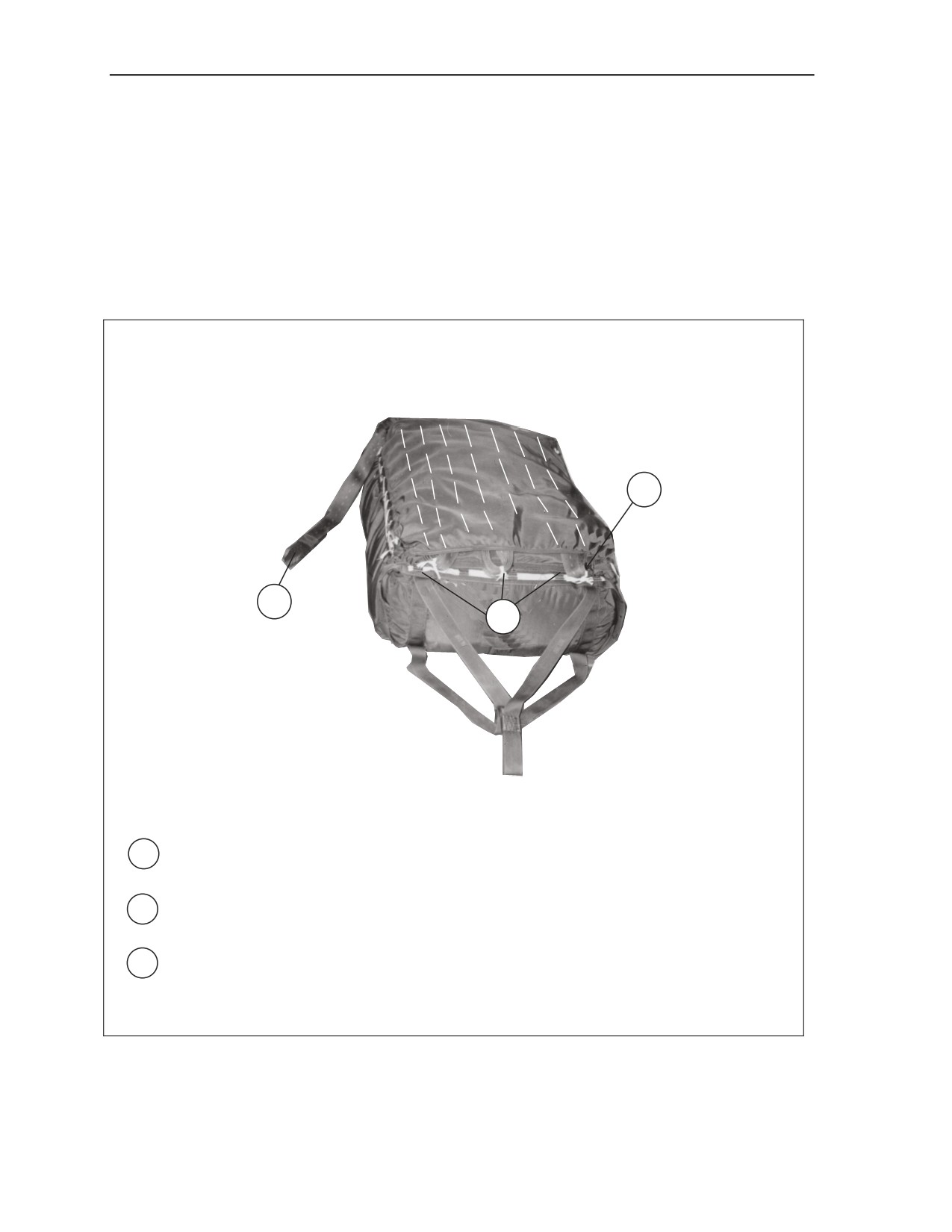
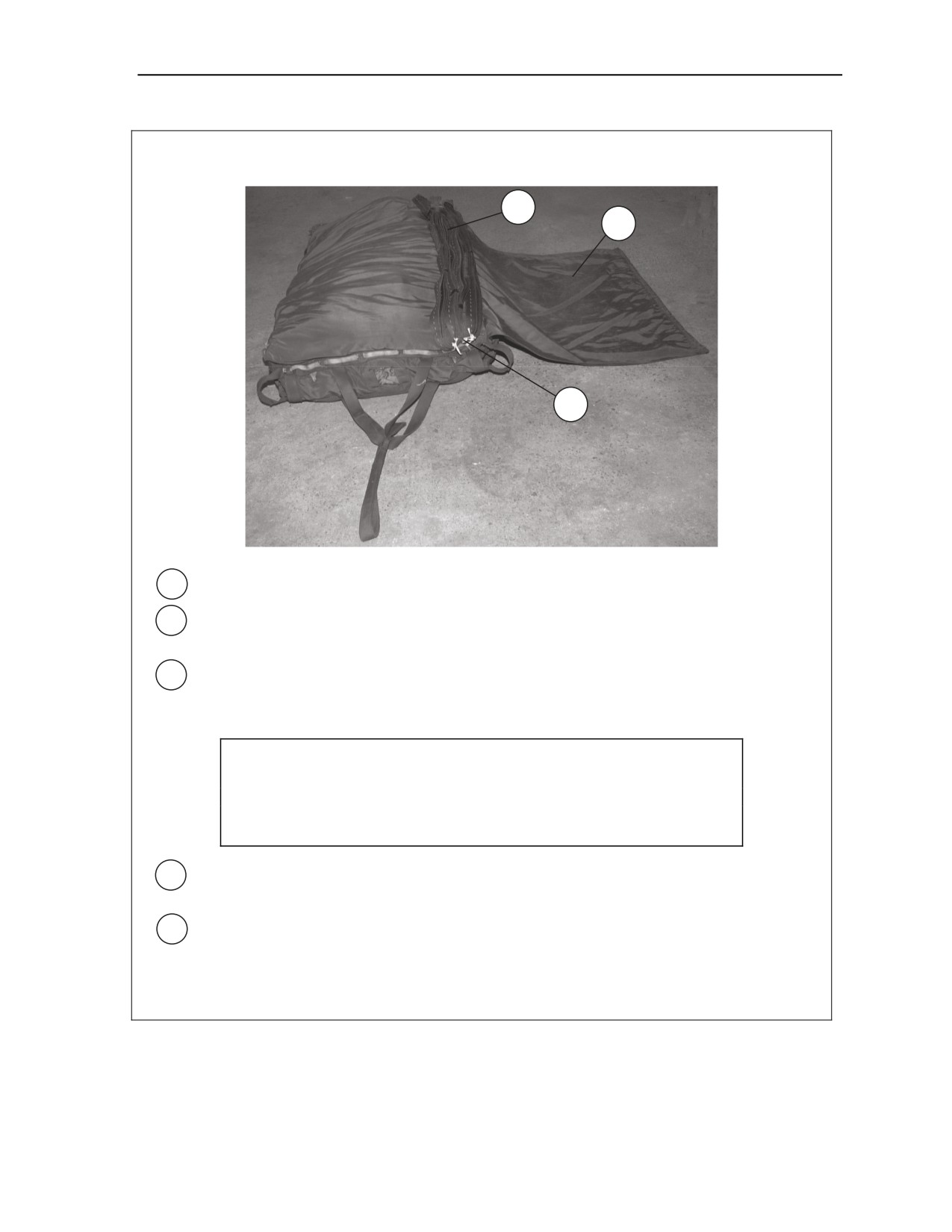
• G-12E Cargo Parachute. There are two deployment bags that may be used in packing the G-
12E. There is the modified G-12 deployment bag, Part Identification Number (PIN) 54K6299 or
the G-12E deployment bag, PIN 11-1-3967. Stow the riser extension as shown in Figures 5-2
and 5-3.
• G-11B or G-11C Cargo Parachute. Stow the riser extensions of a G-11B or G-11C cargo
parachute as shown in Figures 5-4 and 5-5.
MODIFIED G-12 DEPLOYMENT BAG (PIN 54K6299)
1
2
3
1 Start at the end of the riser extension fitted to the clevis (step 2, Figure 5-1) and S-fold the
extension into the riser extension compartment forming three stows.
2 Leave approximately 3 feet of the free end of the extension outside the riser end of the
compartment.
3 Tie each stow to a riser extension loop with one turn single of type I, 1/4-inch cotton
webbing.
Figure 5-2. Riser Extension of a Modified G-12 Deployment Cargo Parachute Stowed
5-4
FM 4-20.102/MCRP 4-11.3J/NAVSEA SS400-AB-MMO-010/TO 13C7-1-5
8 June 2006
Cargo Parachutes
G-12 DEPLOYMENT BAG (PIN 11-1-3967)
2
1
4
1 Open the riser extension flap which is attached with type I, 1/4-inch cotton webbing.
2 Start at the end of the riser extension fitted to the clevis and S-fold the extension into the
riser extension compartment forming three stows.
3 Leave approximately 3 feet of the free end of the extension outside the riser extension
compartment. (Not shown)
CAUTION
Do not girth hitch the type I, ¼-inch cotton webbing ties to the riser
extension securing line.
4 Tie each stow to a riser extension loop with one turn single of type I, 1/4-inch cotton
webbing.
5 Close the riser flap according to TM 10-1670-281-23&P/NAVAIR 13-1-32/TO 13C5-32-2.
(Not shown)
Figure 5-3. Riser Extension of a G-12 Deployment Cargo Parachute Stowed
8 June 2006 FM 4-20.102/MCRP 4-11.3J/NAVSEA SS400-AB-MMO-010/TO 13C7-1-5
5-5
Chapter 5
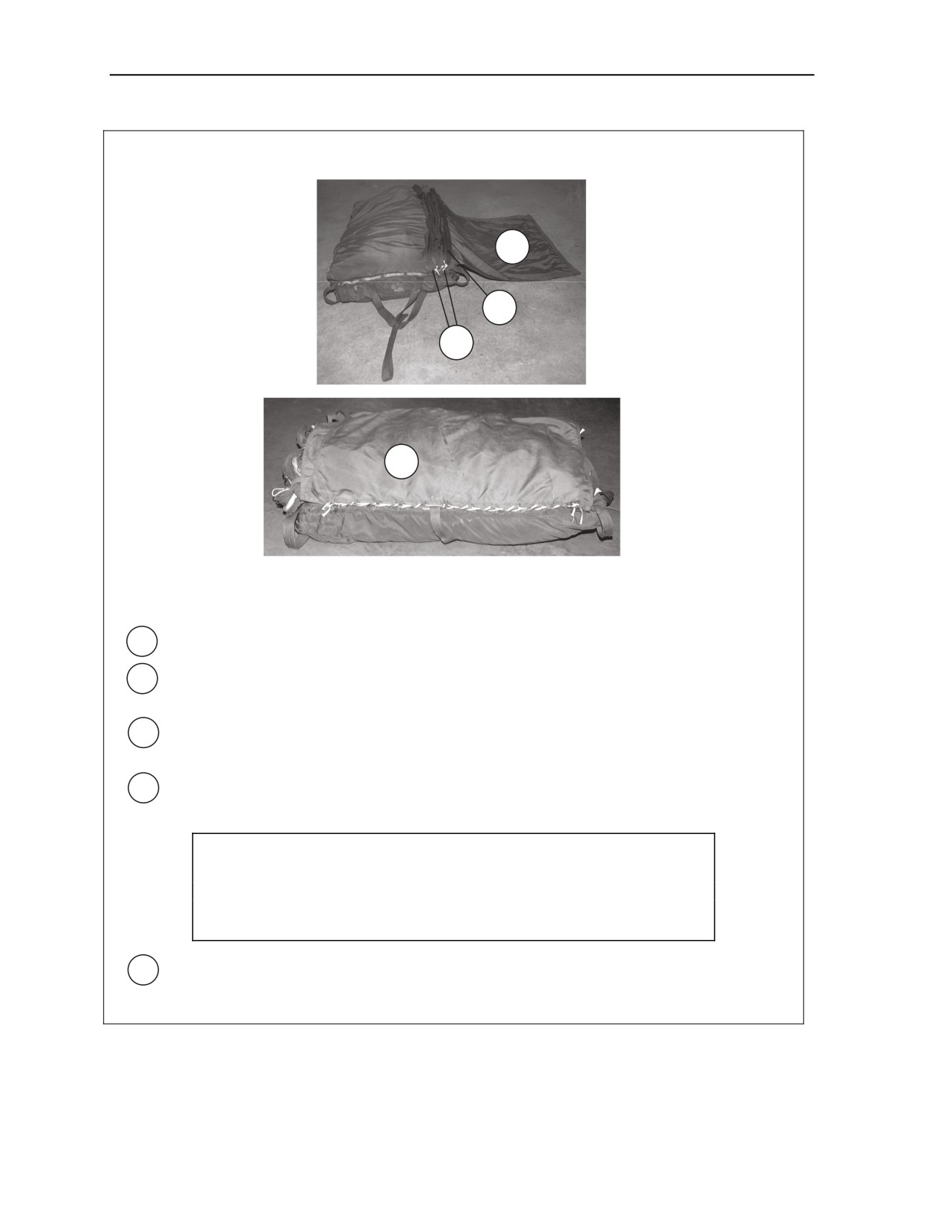
NYLON BAG
1
2
4
5
Note. The nylon deployment bags have the riser extension securing line permanently attached.
1 Open the riser extension flap which is attached with type I, 1/4-inch cotton webbing.
2 Start at the end of the riser extension fitted to the clevis and S-fold the extension into the
riser extension compartment.
3 Leave approximately 3 feet of the free end of the extension outside the riser end of the
compartment. (Not shown)
4 Tie each stow to the riser extension securing line with one turn double, type I, 1/4-inch
cotton webbing.
CAUTION
Do not girth hitch the type I, ¼-inch cotton webbing ties to the riser
extension securing line.
5 Close the riser flap according to TM 10-1670-280-23&P/NAVAIR 13-1-31/TO 13C5-32-2.
Figure 5-4. Riser Extension of a G-11 Cargo Parachute (Nylon Bag) Installed and Stowed
5-6
FM 4-20.102/MCRP 4-11.3J/NAVSEA SS400-AB-MMO-010/TO 13C7-1-5
8 June 2006
Cargo Parachutes
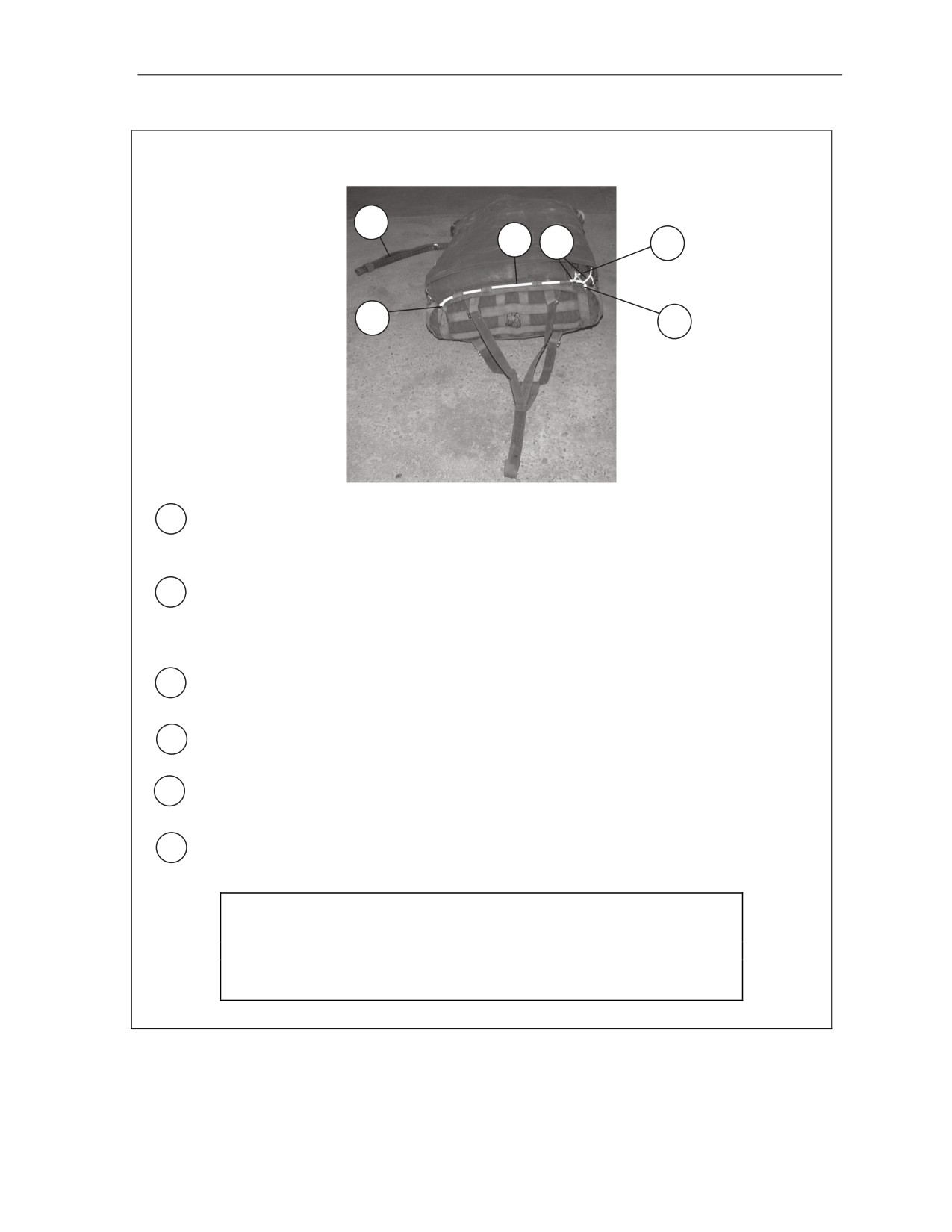
COTTON BAG
5
2
6
4
1
3
1 Fold an 8-foot length of 1/2-inch tubular nylon webbing in half lengthwise. Run the loop in
the folded end through the right carrying handle. Run the free ends of the webbing through
this loop, and pull the webbing taut.
2 Run the webbing across the parachute, passing it through the riser extension retaining
loops (end tabs).
Note. Do not pull the webbing tight across the parachute.
3 Tie the webbing to the left front carrying handle with three alternating half hitches and an
overhand knot in each free running end.
4 Start at the end of the riser extension fitted to the clevis and S-fold the extension into the
riser extension compartment.
5 Leave about 3 feet of the free end of the extension outside the riser end of the
compartment.
6 Tie each stow to the riser extension securing line with one turn double type I, 1/4-inch
cotton webbing.
CAUTION
Do not girth hitch the type I, ¼-inch cotton webbing ties to the riser
extension securing line.
Figure 5-4. Riser Extension Securing Line of a G-11 Cargo Parachute (Cotton Bag) Installed
and Riser Extension Stowed (Continued)
8 June 2006 FM 4-20.102/MCRP 4-11.3J/NAVSEA SS400-AB-MMO-010/TO 13C7-1-5
5-7
Chapter 5
20-FOOT RISER EXTENSION STOWED
60-FOOT RISER EXTENSION STOWED
120-FOOT RISER EXTENSION STOWED
20-FOOT RISER EXTENSION STOWED
Figure 5-5. The 20-, 60-, and 120-Foot Riser Extensions Stowed
5-8
FM 4-20.102/MCRP 4-11.3J/NAVSEA SS400-AB-MMO-010/TO 13C7-1-5
8 June 2006
Cargo Parachutes
STOWING CARGO PARACHUTES
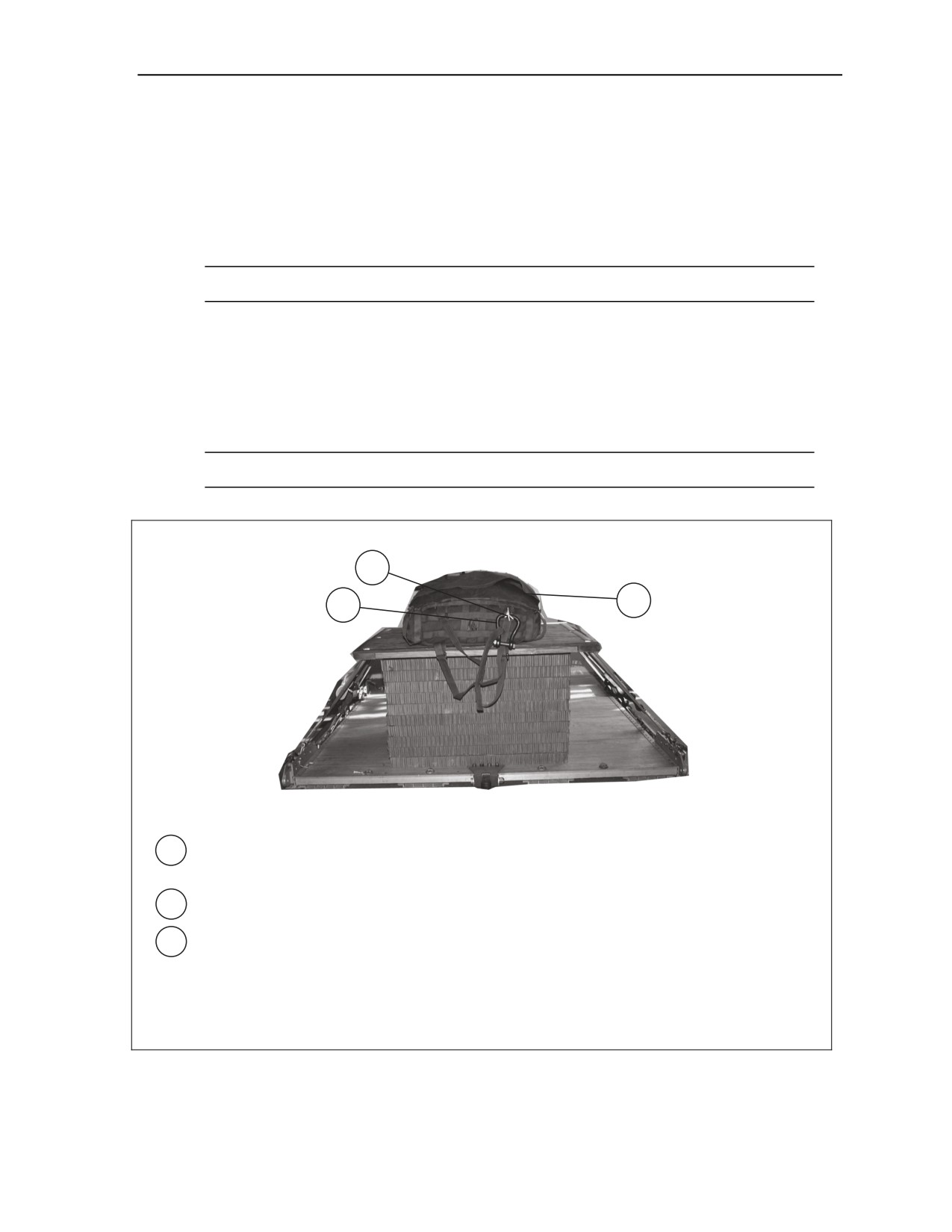
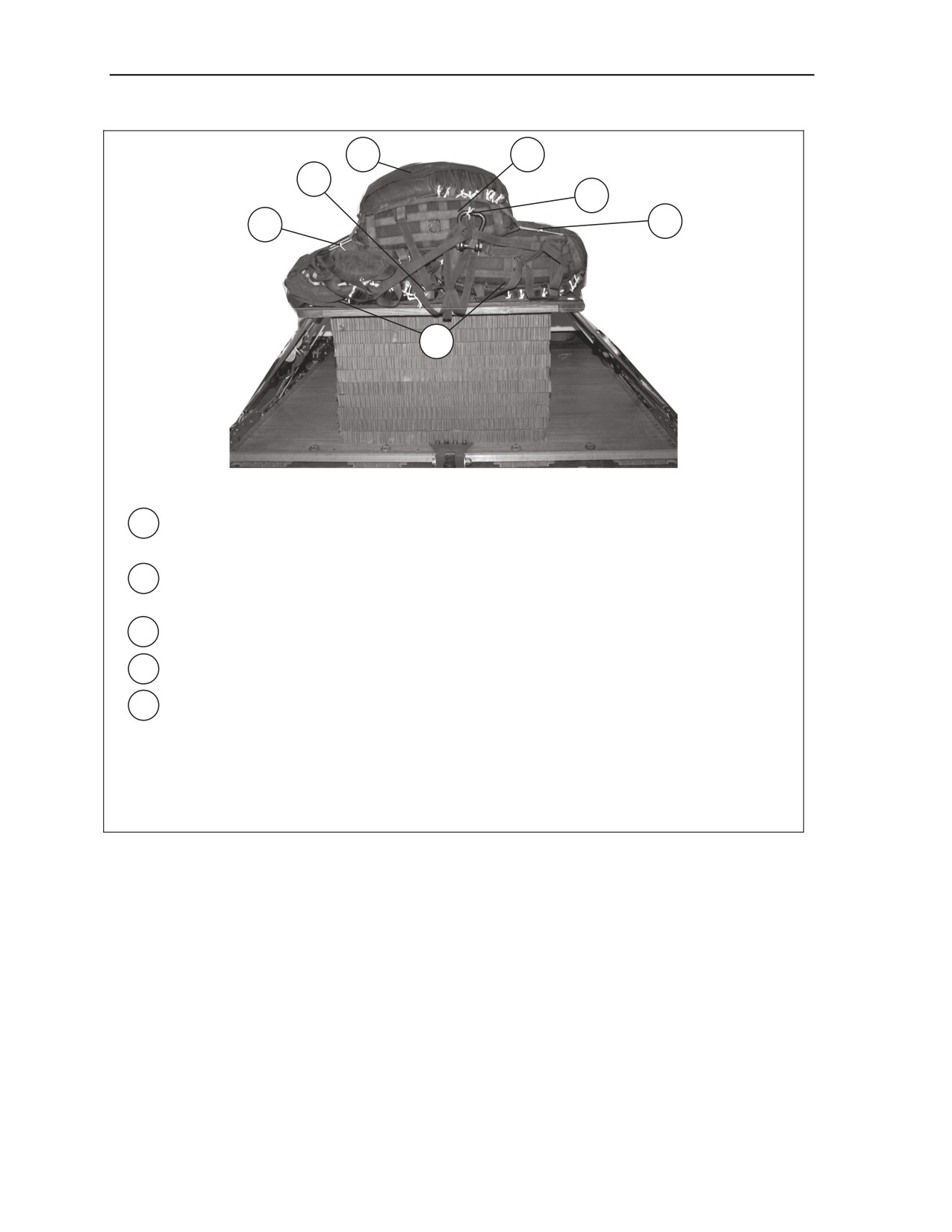
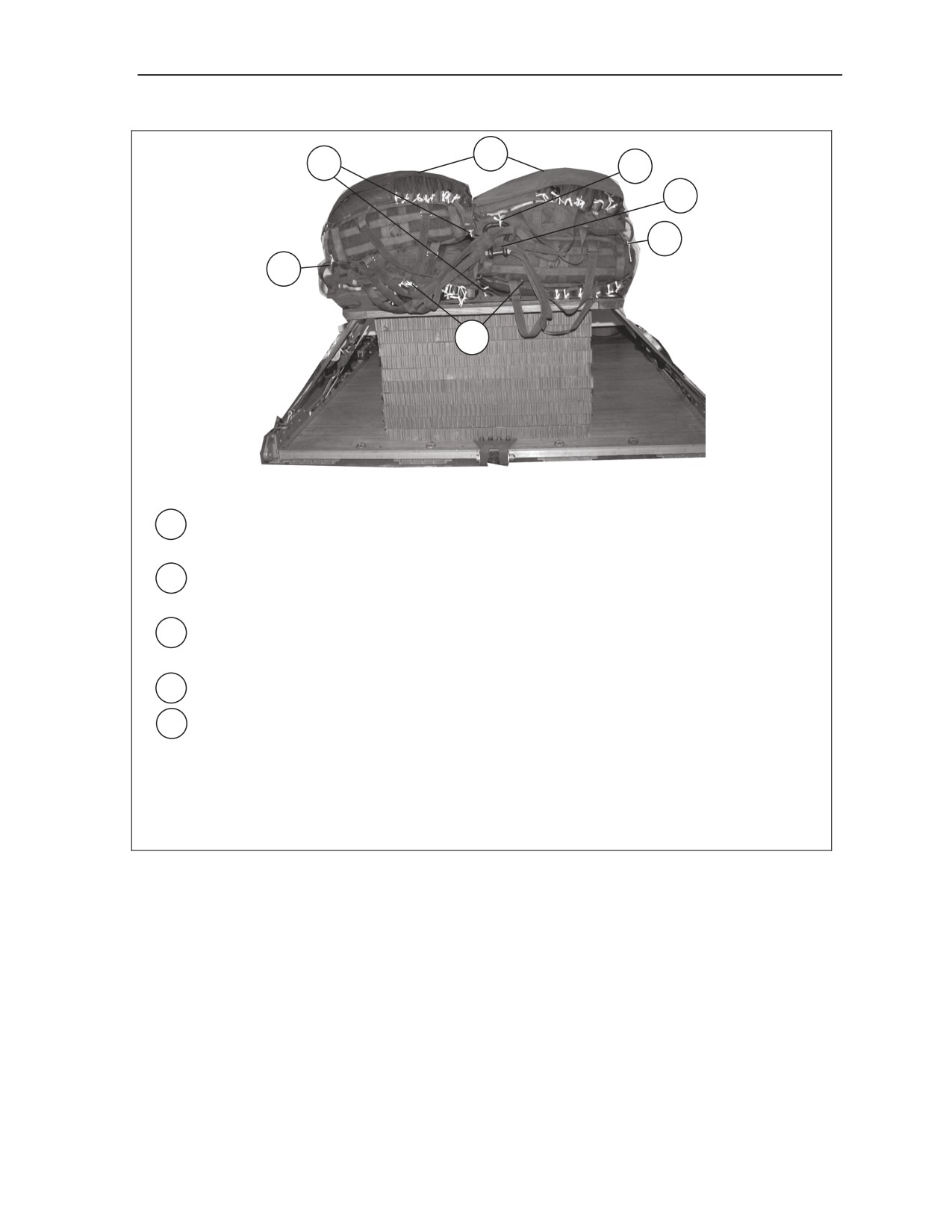
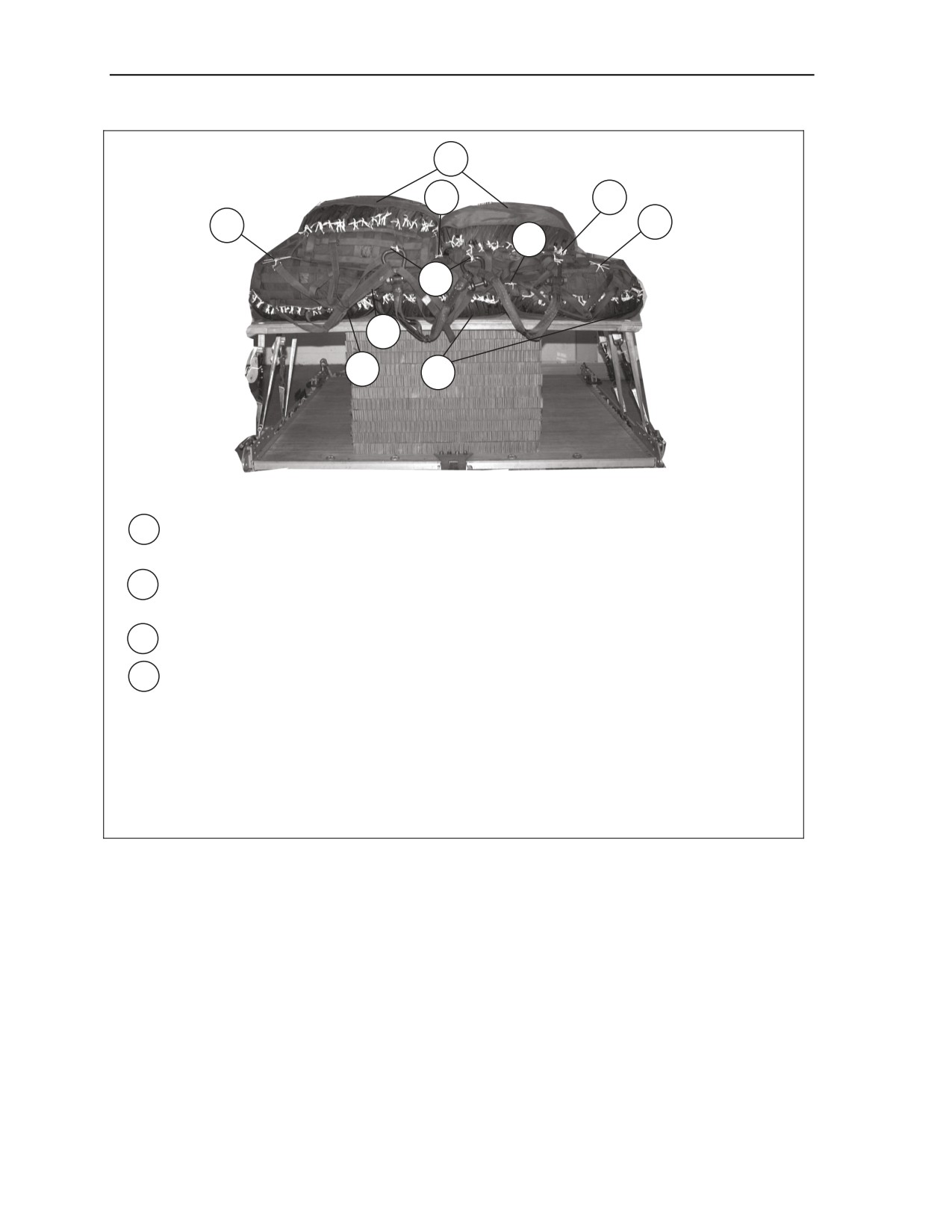
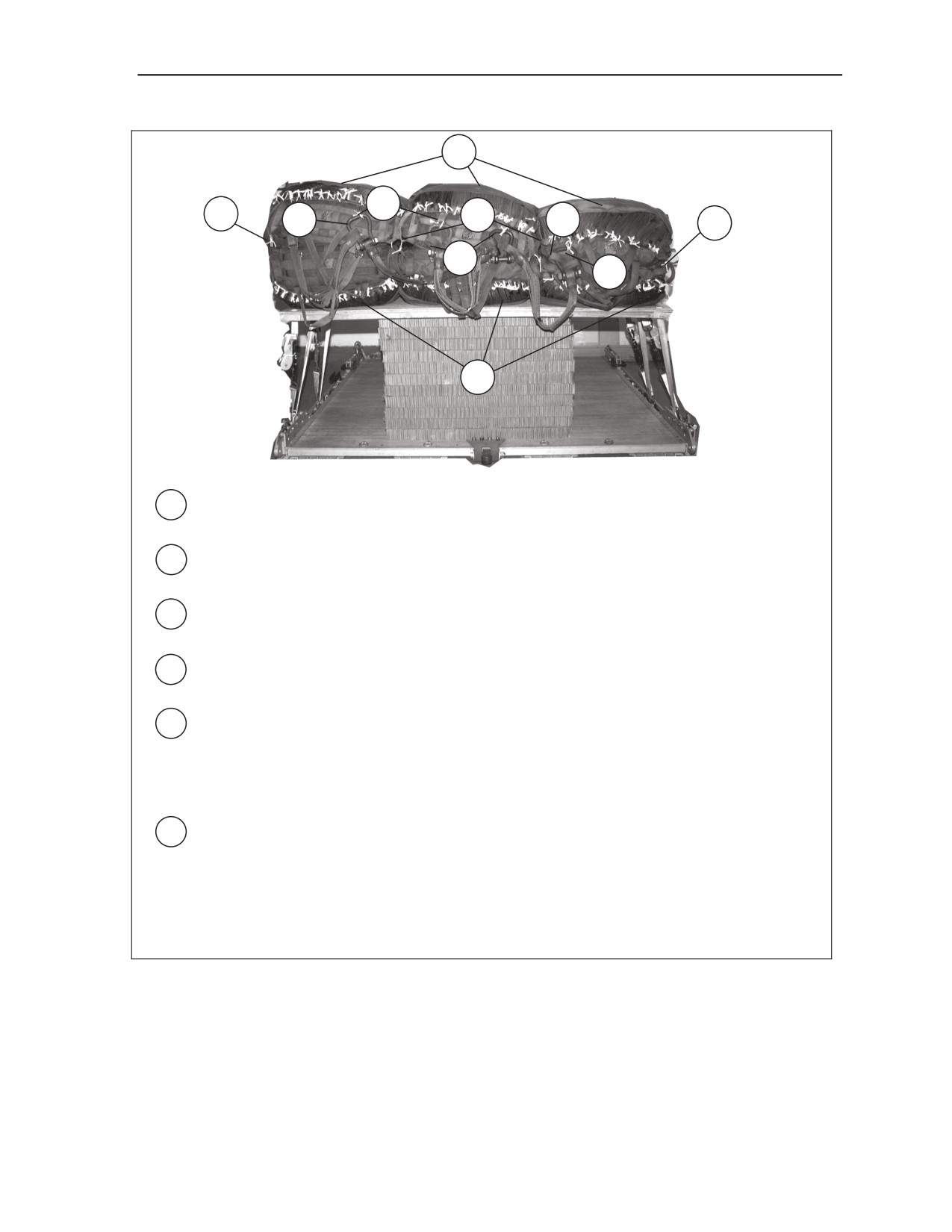
5-6. When referring to cargo parachutes, stowing consists of three steps. First, place the cargo parachutes
on the load or on a parachute stowage platform. Second, cluster the parachutes by tying their deployment
bags handles together. Third, group the bridles of a multiparachute load. When attaching parachute bridles
to the clevis, make sure they are not twisted, misrouted, or entangled. Route parachute bridles straight from
the D-bag to the clevis. Stow the parachutes as shown in Figures 5-6 through 5-14.
Note. Nylon and cotton bags may be mixed on the same load.
USING DEPLOYMENT LINES
5-7. The correct size and length of the deployment line will be given in each specific rigging manual. As
a rule, use 9-foot, (2-loop), type XXVI nylon slings as deployment lines. One end of the deployment line is
fitted to the coupling link assembly of the EFTC. The other end of the line is fitted to the bolt of the large
clevis grouping the bridles of a cluster of parachutes.
Note. 4-loop slings may be substituted for 2-loop slings for deployment lines.
3
1
2
1 Set one parachute on the load or on a parachute stowage platform with the riser
compartment up and with the bridle toward the rear of the platform.
2 Fit a large clevis to the bridle loop.
3 For the nylon bag tie the clevis to the right parachute restraint strap loop with a length of
doubled type I, 1/4-inch cotton webbing. Secure with a surgeon’s knot and a locking knot.
(Not shown) For the cotton bag tie the clevis to the right bridle attaching loop with a length
of doubled type I, 1/4-inch cotton webbing. Secure with a surgeon’s knot and a locking
knot.
Figure 5-6. One Parachute Stowed
8 June 2006 FM 4-20.102/MCRP 4-11.3J/NAVSEA SS400-AB-MMO-010/TO 13C7-1-5
5-9
Chapter 5
1
2
4
3
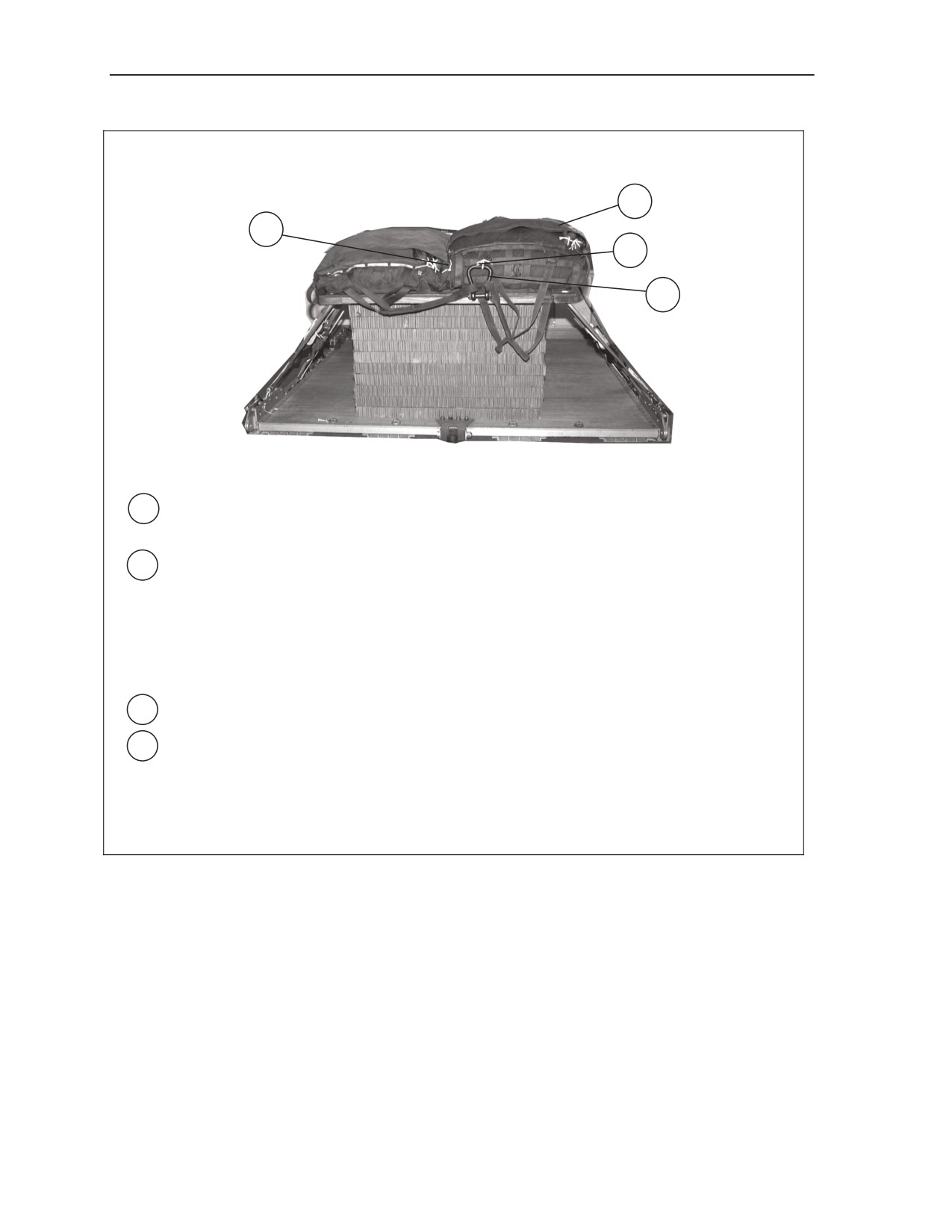
1 Set two parachutes side by side on the load with the riser compartments up and the bridles
toward the rear of the platform.
2 Tie the inside front and rear cluster attaching loops (hereafter called carrying handles)
together with one turn single of type III nylon cord.
Note. G-12E cargo parachutes are tied together with the clustering straps on each corner of the
deployment bag or with a single length of type III nylon cord through the bag carrying handles
unless the individual rigging manual states otherwise.
3 Fit the bridle loops on the arms of a large clevis.
4 For the nylon bag tie the clevis to the right parachute restraint strap loop with a length of
doubled type I, 1/4-inch cotton webbing. Secure with a surgeon’s knot and a locking knot.
For the cotton bag tie the clevis to the right bridle attaching loop with a length of doubled
type I, 1/4-inch cotton webbing. Secure with a surgeon’s knot and a locking knot.
Figure 5-7. Two Parachutes Stowed Side by Side
5-10
FM 4-20.102/MCRP 4-11.3J/NAVSEA SS400-AB-MMO-010/TO 13C7-1-5
8 June 2006
Cargo Parachutes
1
4
3
2
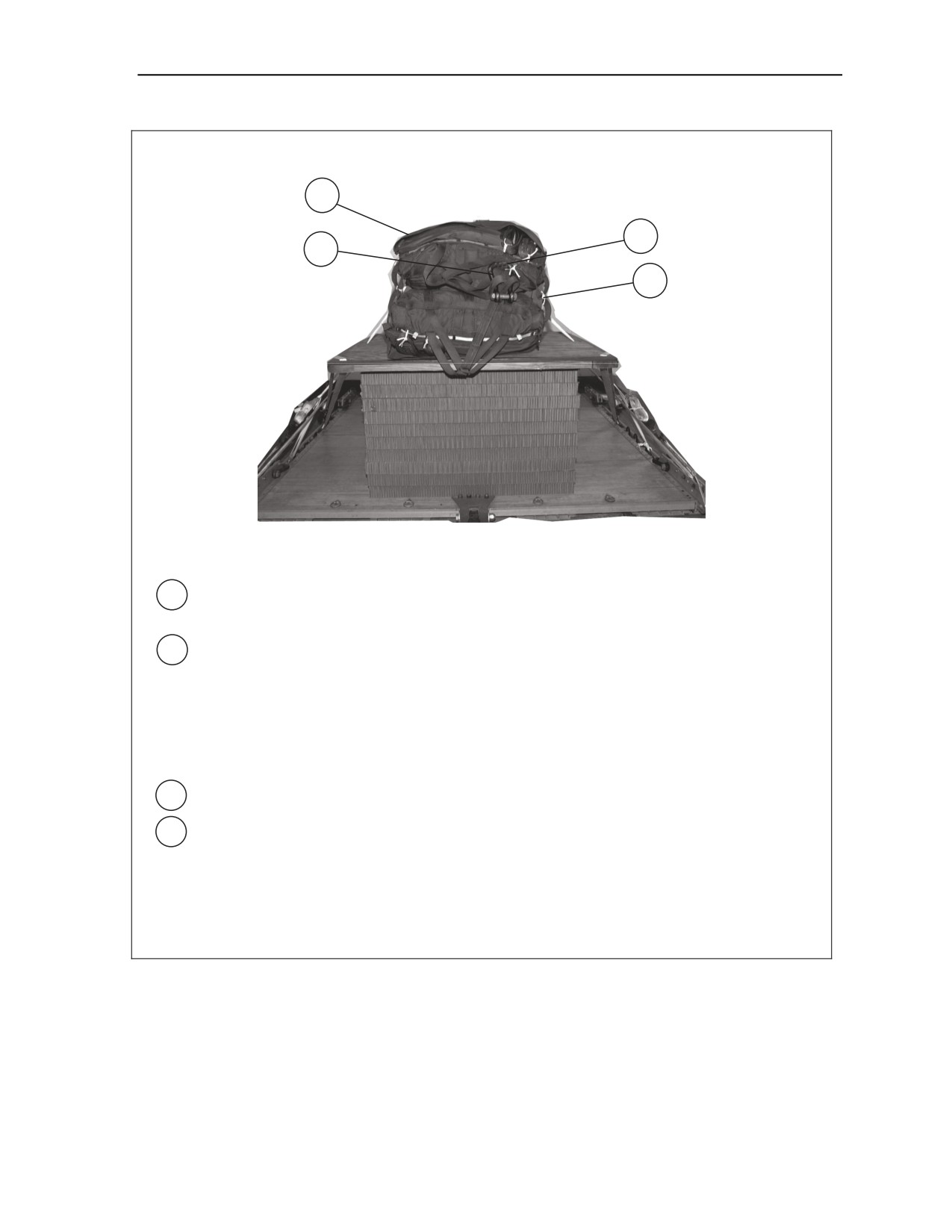
1 Stack two parachutes with the riser compartment of the bottom parachute down and the
riser compartment of the top parachute up.
2 Tie the outside front and rear carrying handles together with one turn single of type III
nylon cord.
Note. G-12E cargo parachutes are tied together with the clustering straps on each corner of the
deployment bag or with a single length of type III nylon cord through the bag carrying handles
unless the individual rigging manual states otherwise.
3 Fit the bridle loops on the arms of a large clevis.
4 For the nylon bag tie the clevis to the top right parachute left parachute restraint strap loop
with a length of doubled type I, 1/4-inch cotton webbing. Secure with a surgeon’s knot and
a locking knot. For the cotton bag tie the clevis to the top right parachute’s left bridle
attaching loop with a length of doubled type I, 1/4-inch cotton webbing. Secure with a
surgeon’s knot and a locking knot.
Figure 5-8. Two Parachutes Stowed and Stacked
8 June 2006 FM 4-20.102/MCRP 4-11.3J/NAVSEA SS400-AB-MMO-010/TO 13C7-1-5
5-11
Chapter 5
2
4
3
5
3
3
1
1 Set two parachutes side by side on the load with the riser compartments down and the
bridles toward the rear of the platform.
2 Center one parachute on top of the two parachutes in step 1 above with the riser
compartment up.
3 Tie the front and rear carrying handles together with a single length of type III nylon cord.
4 Fit the bridle loops on the arms of a large clevis.
5 For the nylon bag tie the clevis to the top right parachute restraint strap loop with a length
of doubled type I, 1/4-inch cotton webbing. Secure with a surgeon’s knot and a locking
knot. For the cotton bag tie the clevis to the top right bridle attaching loop with a length of
doubled type I, 1/4-inch cotton webbing. Secure with a surgeon’s knot and a locking knot.
Figure 5-9. Three Parachutes Stowed
5-12
FM 4-20.102/MCRP 4-11.3J/NAVSEA SS400-AB-MMO-010/TO 13C7-1-5
8 June 2006
Cargo Parachutes
2
3
5
4
3
3
1
1 Set two parachutes side by side on the load with the riser compartments down and with
bridles toward the rear of the platform.
2 Set two parachutes side by side on top of the two parachutes in step 1 above with the riser
compartments up.
3 Tie the four center front and four center rear carrying handles together with a single length
of type III nylon cord. Tie the outside carrying handles together with type III nylon cord.
4 Fit the bridle loops on the arms of a large clevis.
5 For the nylon bag tie the clevis to the top right parachute left parachute restraint strap loop
with a length of doubled type I, 1/4-inch cotton webbing. Secure with a surgeon’s knot and
a locking knot. For the cotton bag tie the clevis to the top right parachute’s left bridle
attaching loop with a length of doubled type I, 1/4-inch cotton webbing. Secure with a
surgeon’s knot and a locking knot.
Figure 5-10. Four Parachutes Stowed
8 June 2006 FM 4-20.102/MCRP 4-11.3J/NAVSEA SS400-AB-MMO-010/TO 13C7-1-5
5-13
Chapter 5
2
3
4
3
3
3
4
3
1
1
1 Set three parachutes side by side on the load with the riser compartments down and the
bridles toward the rear of the platform.
2 Center two parachutes on top of the three parachutes in step 1 above with the riser
compartments up.
3 Tie the front and rear carrying handles together with a single length of type III nylon cord.
4 Fit the bridles of the left three parachutes on the arms of a large clevis, and fit a 3-foot sling
on the clevis bolt. Fit the bridles of the two right parachutes on the arms of a second clevis,
and fit a 3-foot sling on the clevis bolt. Fit the ends of the two 3-foot slings on the arms of a
third clevis. Tie each clevis to a bridle attaching loop with a double length of type I, 1/4-inch
cotton webbing. For the nylon bag tie each clevis to a parachute restraint strap loop with a
length of doubled type I, 1/4-inch cotton webbing. Secure with a surgeon’s knot and a
locking knot.
Figure 5-11. Five Parachutes Stowed
5-14
FM 4-20.102/MCRP 4-11.3J/NAVSEA SS400-AB-MMO-010/TO 13C7-1-5
8 June 2006
Cargo Parachutes
2
6
4
3
5
5
4
5
6
1
1 Set three parachutes side by side on the load with the riser compartments down and with
the bridles toward the rear of the platform.
2 Set three parachutes on top of the parachutes in step 1 above with the riser compartments
up.
3 Tie the inside front four carrying handles together with a single length of type III nylon cord
on all the bags. Repeat for the rear four carrying handles.
4 Tie the outside front two and rear two carrying handles together with a single length of type
III nylon cord.
5 Fit the bridles of the left stack of parachutes on the arms of a large clevis, and fit a 3-foot
sling on the clevis bolt. Fit the bridles of the center stack of parachutes on the arms of a
second large clevis, and fit a 3-foot sling on the clevis bolt. Fit the bridles of the right stack
of parachutes on the arms of a third large clevis, and fit a 3-foot sling on the clevis bolt. Fit
the ends of the 3-foot slings on the arms of a fourth large clevis.
6 For the cotton bag tie each clevis to a bridle attaching loop with a doubled length of type, I
1/4-inch cotton webbing and secure with a surgeon’s knot and a locking knot. For the nylon
bag tie each clevis to a parachute restraint strap loop with a doubled length of type I, 1/4-
inch cotton webbing and secure with a surgeon’s knot and a locking knot.
Figure 5-12. Six Parachutes Stowed
8 June 2006 FM 4-20.102/MCRP 4-11.3J/NAVSEA SS400-AB-MMO-010/TO 13C7-1-5
5-15
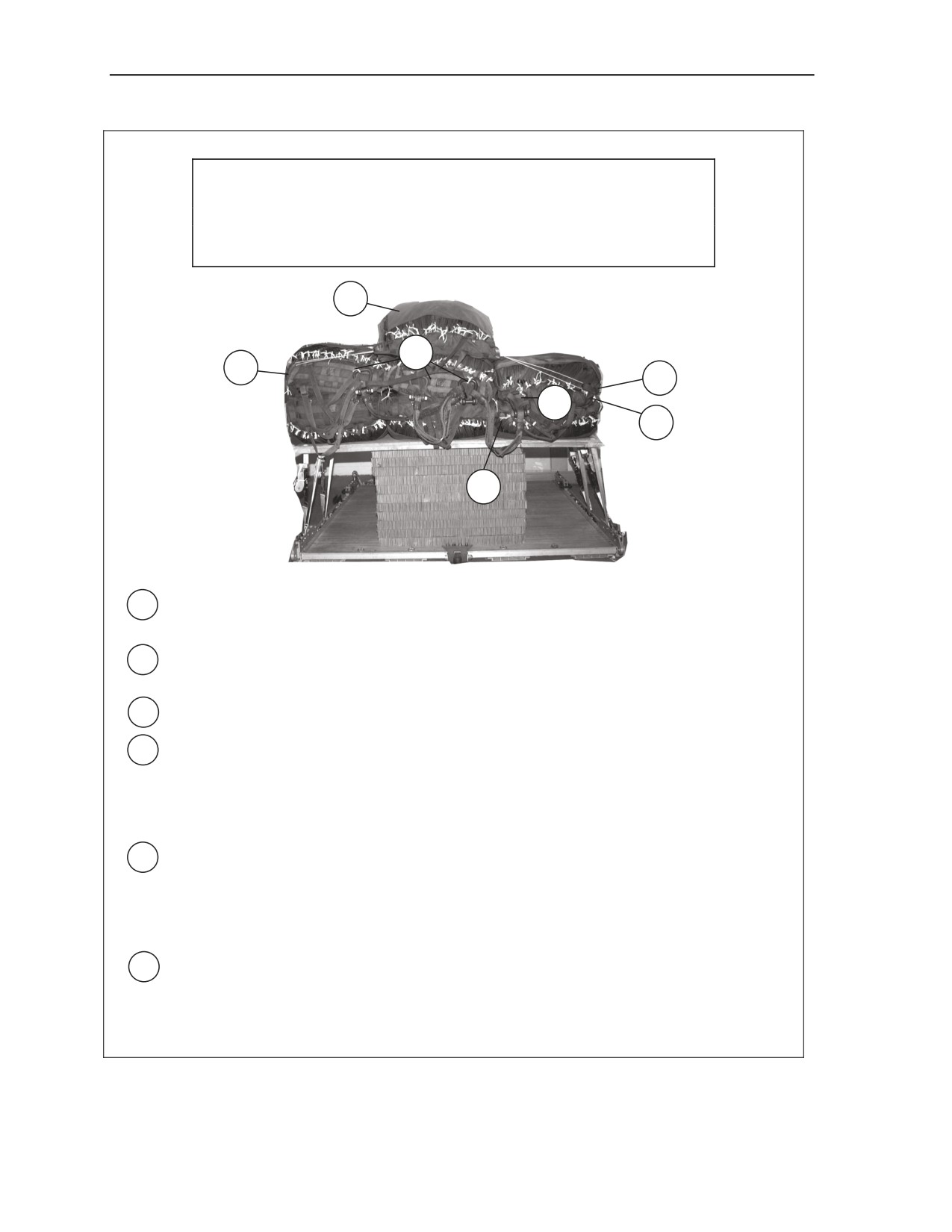
Chapter 5
CAUTION
The front clustering ties MUST NOT interfere with the deployment of
the parachutes.
3
6
2
2
5
4
1
1
Set three parachutes side by side on the load with the riser compartments down and with
the bridles toward the rear of the platform.
2
Set three parachutes on top of the parachutes in step 1 above with the riser compartments
up.
3
Set a parachute on top of the center parachutes with the riser compartment up.
4
Tie the inside front four and rear four carrying handles together with lengths of 1/2-inch
tubular nylon webbing. Tie the two outside corners of the middle and bottom parachutes
together with lengths of 1/2-tubular nylon webbing. Tie the top two front and top two rear
parachute carrying handles to the outside carrying handles of the middle parachutes using
1/2-inch tubular nylon webbing.
5
Fit the bridles of the left stack and top parachute on the arms of a large clevis, and fit a 3-
foot sling on the clevis bolt. Fit the bridles of the center two parachutes on the arms of a
second large clevis, and fit a 3-foot sling on the clevis bolt. Fit the bridles of the right stack
of parachutes on the arms of a third large clevis, and fit a 3-foot sling on the clevis bolt. Fit
the ends of the 3-foot slings on the arms of a fourth large clevis.
6
For the cotton bag tie each clevis to a bridle attaching loop with a doubled length of type I,
1/4-inch cotton webbing and secure with a surgeon’s knot and a locking knot. For the nylon
bag tie each clevis to a parachute restraint strap loop with a doubled length of type I, 1/4-
inch cotton webbing and secure with a surgeon’s knot and a locking knot.
Figure 5-13. Seven Parachutes Stowed
5-16
FM 4-20.102/MCRP 4-11.3J/NAVSEA SS400-AB-MMO-010/TO 13C7-1-5
8 June 2006
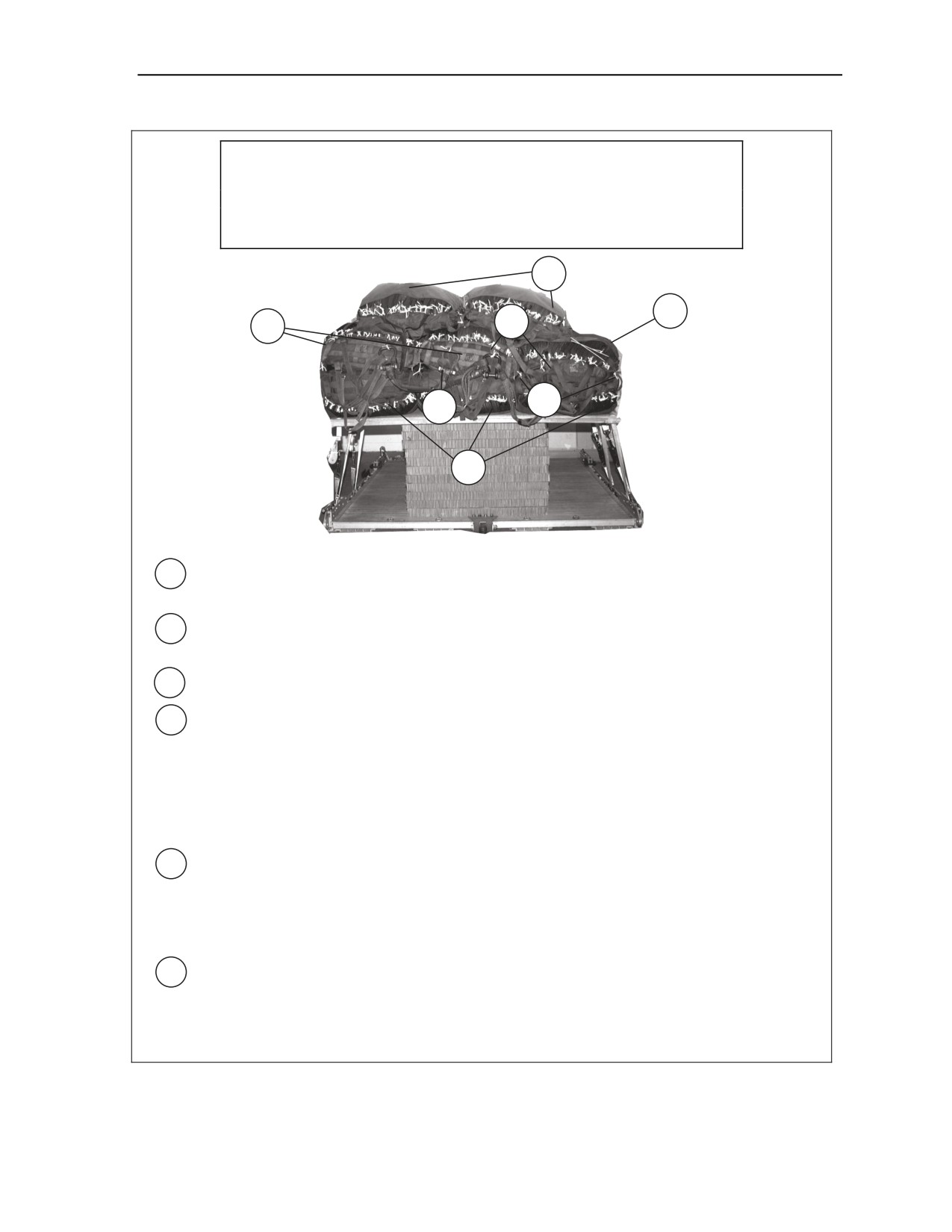
Cargo Parachutes
CAUTION
The front clustering ties MUST NOT interfere with the deployment of
the parachutes.
3
2
6
2
4
5
1
1
Set three parachutes side by side on the load with the riser compartments down and with
the bridles toward the rear of the platform.
2
Set three parachutes on top of the parachutes in step 1 above with the riser compartments
up.
3
Set two parachutes on top of the parachutes in step 2 with the riser compartments up.
4
Tie the inside front four and rear four carrying handles of the middle and bottom
parachutes together with lengths of 1/2-inch tubular nylon webbing. Tie the two top front
and rear inside carrying handles with lengths of 1/2-tubular nylon webbing. Tie the two
outside front and rear carrying handles of the middle and bottom parachutes with lengths
of 1/2-inch tubular nylon webbing. Tie the top two outside front and rear parachute carrying
handles to the outside front and rear carrying handles of the middle parachutes together
using 1/2-inch tubular nylon webbing.
5
Fit the bridles of the left stack and the left top parachute on the arms of a large clevis, and
fit a 3-foot sling on the clevis bolt. Fit the bridles of the center stack of parachutes on the
arms of a second large clevis, and fit a 3-foot sling on the clevis bolt. Fit the bridles of the
right stack and the right top parachute on the arms of a third large clevis, and fit a 3-foot
sling on the clevis bolt. Fit the ends of the 3-foot slings on the arms of a fourth large clevis.
6
For the cotton bag tie each clevis to a bridle attaching loop with a doubled length of type I,
1/4-inch cotton webbing and secure with a surgeon’s knot and a locking knot. For the nylon
bag tie each clevis to a parachute restraint strap loop with a doubled length of type I, 1/4-
inch cotton webbing and secure with a surgeon’s knot and a locking knot.
Figure 5-14. Eight Parachutes Stowed
8 June 2006 FM 4-20.102/MCRP 4-11.3J/NAVSEA SS400-AB-MMO-010/TO 13C7-1-5
5-17
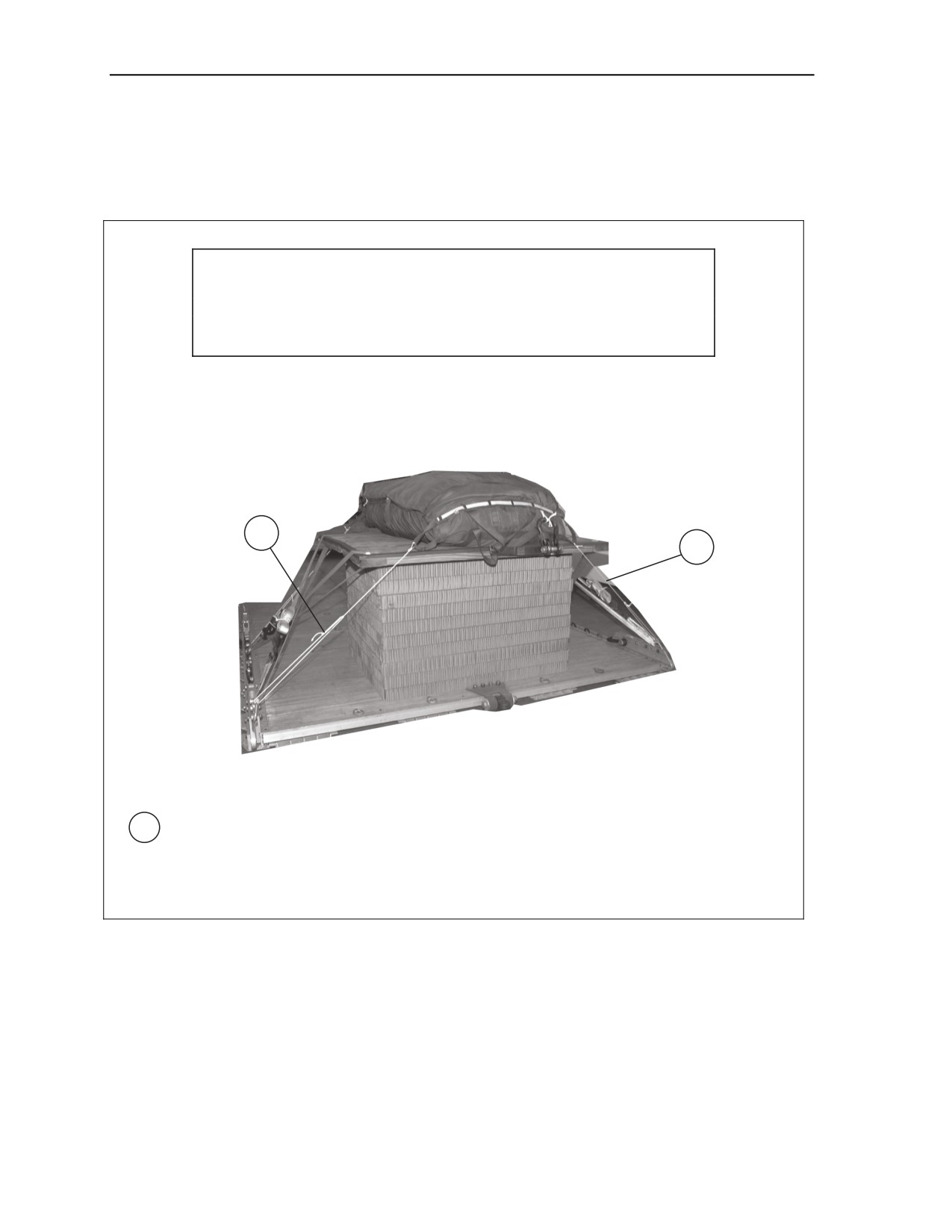
Chapter 5
RESTRAINING ONE PARACHUTE
5-8. Restrain one cargo parachute as shown in Figure 5-15.
CAUTION
Be sure that each point to which a restraining tie is made can
withstand a pull of 550 pounds.
1
2
1 Tie each corner carrying handle to a convenient point on the drop item or platform with a
single length of type III nylon cord.
Figure 5-15. One Parachute Restrained
5-18
FM 4-20.102/MCRP 4-11.3J/NAVSEA SS400-AB-MMO-010/TO 13C7-1-5
8 June 2006