FM 4-20.102 AIRDROP OF SUPPLIES AND EQUIPMENT: RIGGING AIRDROP PLATFORMS (JUNE 2006) - page 5
Chapter 9
Table 9-1. Extraction Parachute Requirements for C-130 Series and C-17 Aircraft
Extraction Load Range
Cargo Extraction Parachute
2,520-8,000
15-Foot
7,000-17,000
22-Foot
16,000-30,000
28-Foot
28,000-42,000
Two 28-Foot
Notes.
1.
The maximum load that may be extracted over the ramp of a C-130 aircraft during
airdrop is 25,000 pounds for aircraft with a serial number (tail number) of 62-1783 or lower and
42,000 pounds for aircraft with a tail number of 61-2358, 62-1784 and higher.
2.
When the extraction weight falls into the load range of two parachutes, the larger
extraction parachute should be used.
3.
The minimum total rigged weight (includes the weight of the cargo parachutes) for loads
to be airdropped from all aircraft is 2,520 pounds.
4.
MC-130 aircraft extracted load range shall not exceed 35,000 pounds.
9-2
FM 4-20.102/MCRP 4-11.3J/NAVSEA SS400-AB-MMO-010/TO 13C7-1-5
8 June 2006

Drogue and Extraction Parachutes and Extraction Line
Table 9-2. Extraction Line and Link and Tie Requirements for C-130 Series, and C-17 Aircraft
Extraction
C-130
C-17
Link
Tie
Parachute
15-Foot
1-Loop 60-Foot
1 Loop 160 Foot
3 ¾-inch, two-
1 turn single of
point
type I, ¼-inch
cotton webbing
22-Foot
3-Loop 60-Foot
3 Loop 140 Foot
3 ¾-inch, two-
1 turn single of
point
type I, ¼-inch
cotton webbing
28-Foot
3-Loop 60-Foot
3 Loop 140 Foot
5 1/2-inch, two-
1 turn double of
point
type I, ¼-inch
cotton webbing
Two 28-Foot
6-Loop 60-Foot
6 Loop 120 Foot
Four point
1 turn single of
type III, nylon
cord
Two 28-Foot
N/A
6 Loop 140 Foot
Four point
1 turn single of
type III, nylon
Note 2
cord
Notes.
1.
All extraction lines, (except for the C-17 drogue line) must be packed in an extraction
line bag according to TM 10-1670-286-20/TO 13C5-2-41.
2.
A 120-foot extraction line may be used for loads placed no further forward than fuselage
station 680 (C-17 only).
3.
All extraction lines are type XXVI nylon webbing.
8 June 2006 FM 4-20.102/MCRP 4-11.3J/NAVSEA SS400-AB-MMO-010/TO 13C7-1-5
9-3
Chapter 9
EXTRACTION LINE PANEL
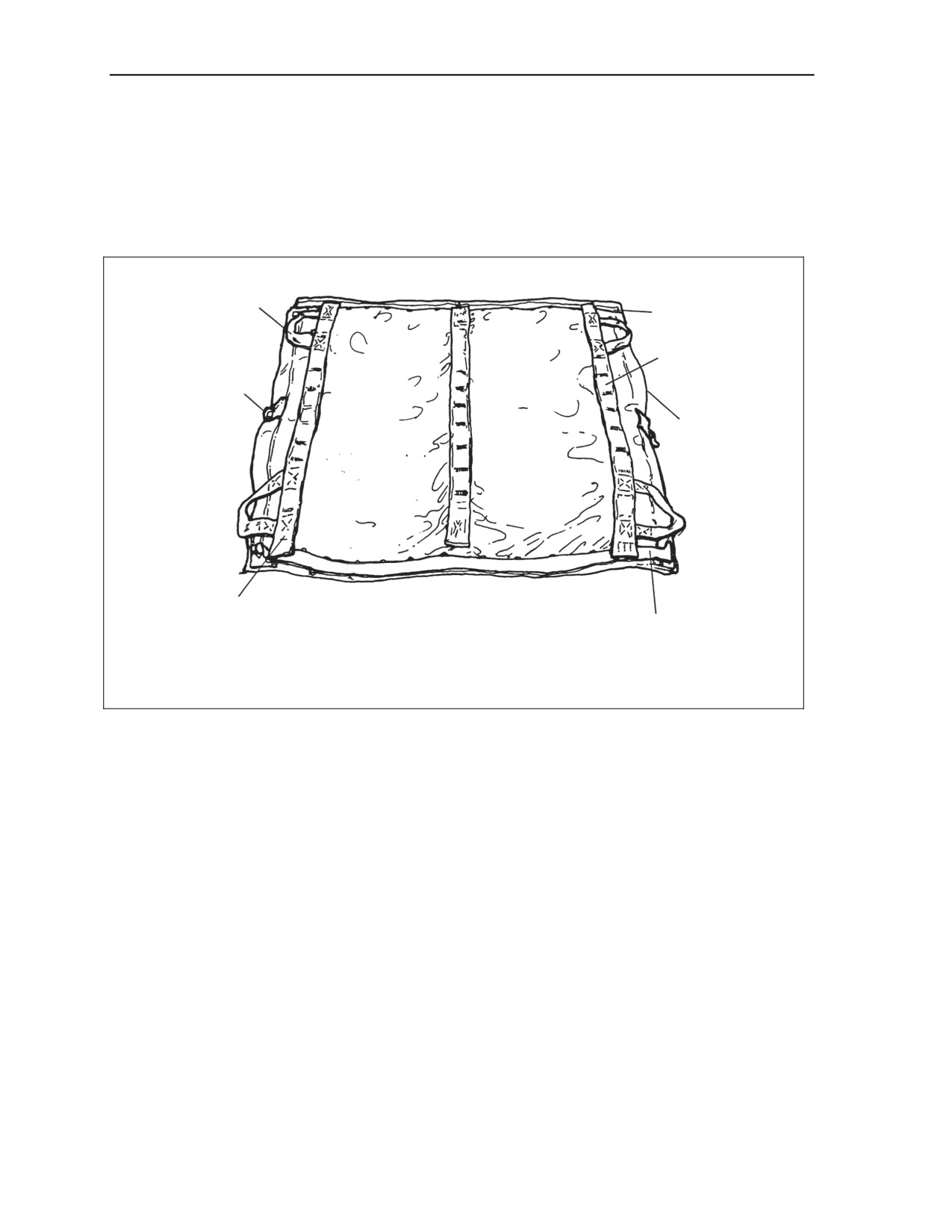
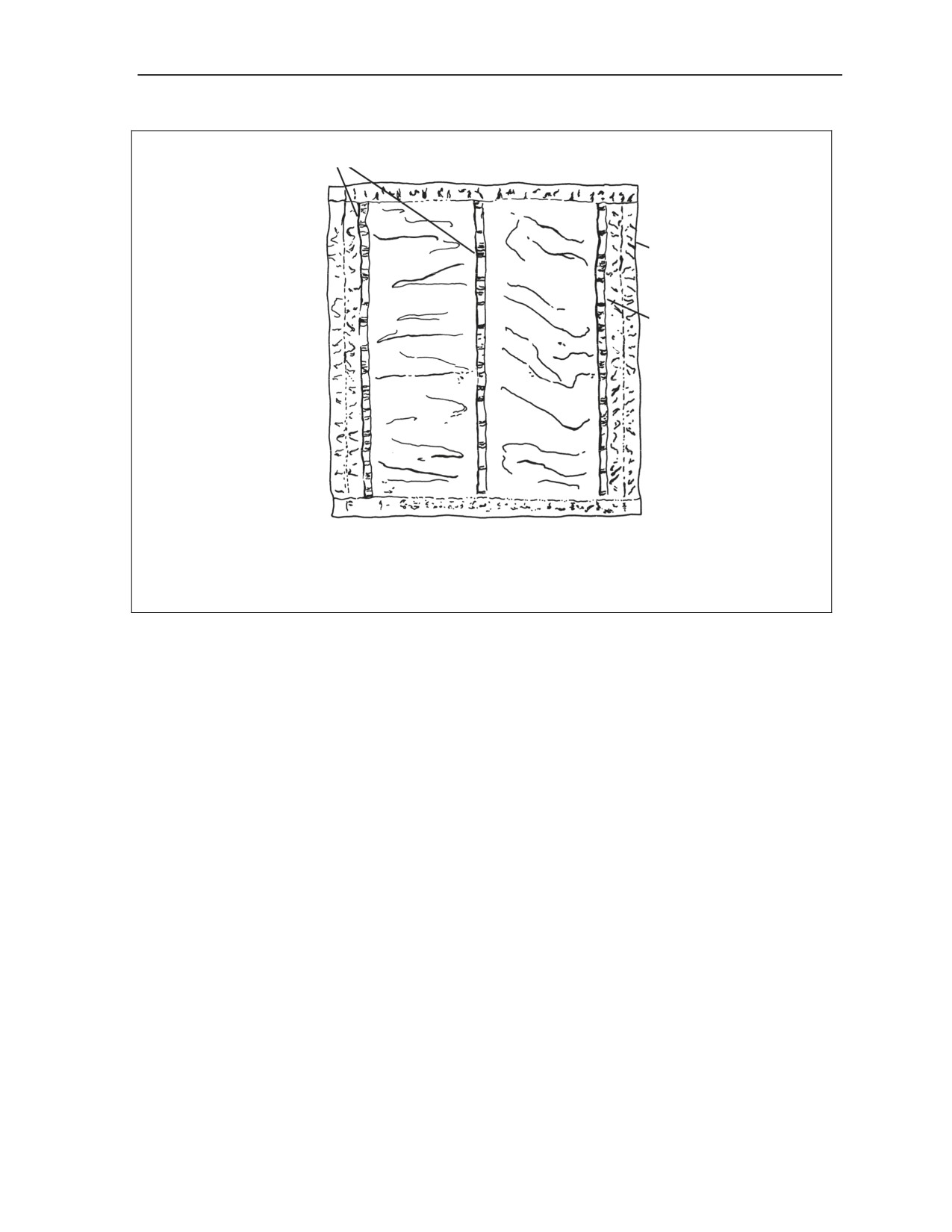
9-5. The extraction line panel, as shown in Figures 9-1 and 9-2, is used to store the extraction lines.
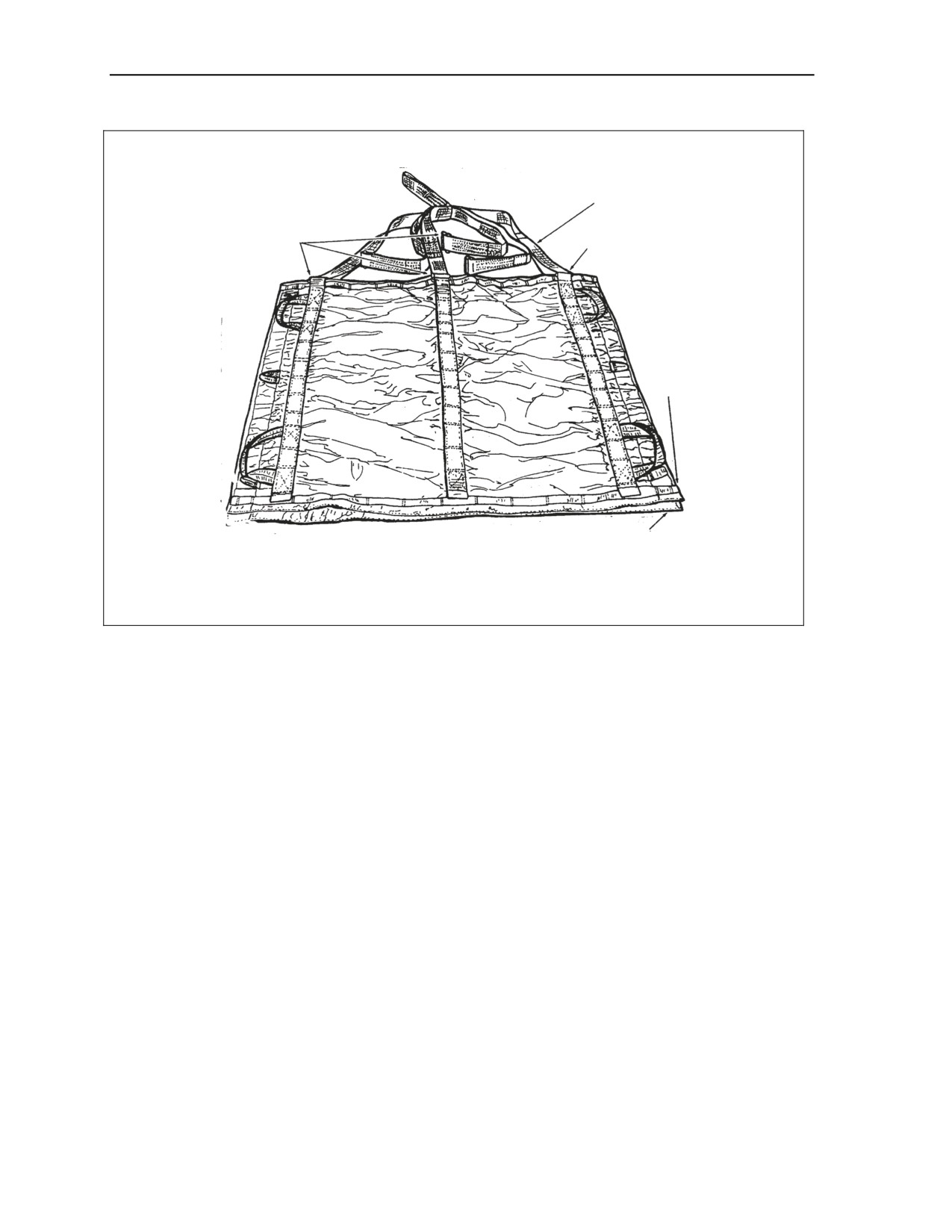
Extraction line panels shown in Figure 9-3 are used to store the extraction lines when used in conjunction
with towplate operations. Stow the different extraction lines in the extraction line bag according to TM 10-
1670-286-20/TO 13C5-2-41.
STRAP
CLOSING
HANDLE
STRAP
REINFORCEMENT
STRAP
CLOSING
LOOP
BODY
(OUTSIDE)
REINFORCEMENT
STRAP
CLOSING STRAP
Figure 9-1. Outside View of Extraction Line Panel
9-4
FM 4-20.102/MCRP 4-11.3J/NAVSEA SS400-AB-MMO-010/TO 13C7-1-5
8 June 2006
Drogue and Extraction Parachutes and Extraction Line
STOW LOOPS
BODY (OUTSIDE)
STOW LOOPS
Figure 9-2. Inside View of Extraction Line Panel
8 June 2006 FM 4-20.102/MCRP 4-11.3J/NAVSEA SS400-AB-MMO-010/TO 13C7-1-5
9-5
Chapter 9
EXTRACTION BRIDLE
CONNECTOR LINK
BRIDLE ATTACHMENT
LOOP
SECOND PANEL
(TOP)
FIRST PANEL (BOTTOM)
Figure 9-3. Extraction Line Panel for Tow Plate Operations
9-6
FM 4-20.102/MCRP 4-11.3J/NAVSEA SS400-AB-MMO-010/TO 13C7-1-5
8 June 2006
Drogue and Extraction Parachutes and Extraction Line
SECTION II-RIGGING INFORMATION
EXTRACTION LINES
9-6. The size and length of the extraction line used depends on the aircraft used and the size of the cargo
extraction parachute rigged for the load.
CAUTION
All multi-loop lines must have 15 feet of each end of the line, taped at 1
foot intervals. The measurement should begin from the end of the line
and the tape must be centered at each interval mark. Failure to comply
may cause an extraction line ply to get caught under the aircraft roller
and cause damage to the roller or extraction line.
CAUTION
While attaching the extraction line to the cargo extraction parachute,
ensure that the keepers on the extraction line and the adapter web are
pushed tight against the link and are taped in place with cloth-backed
tape. If a keeper is not present on the adapter web or extraction line,
tape in place with cloth-backed tape.
C-130/MC-130 AIRCRAFT
9-7. The primary method of airdrop platform extractions uses a 60-foot extraction line attached to a cargo
extraction parachute as detailed in the following paragraphs.
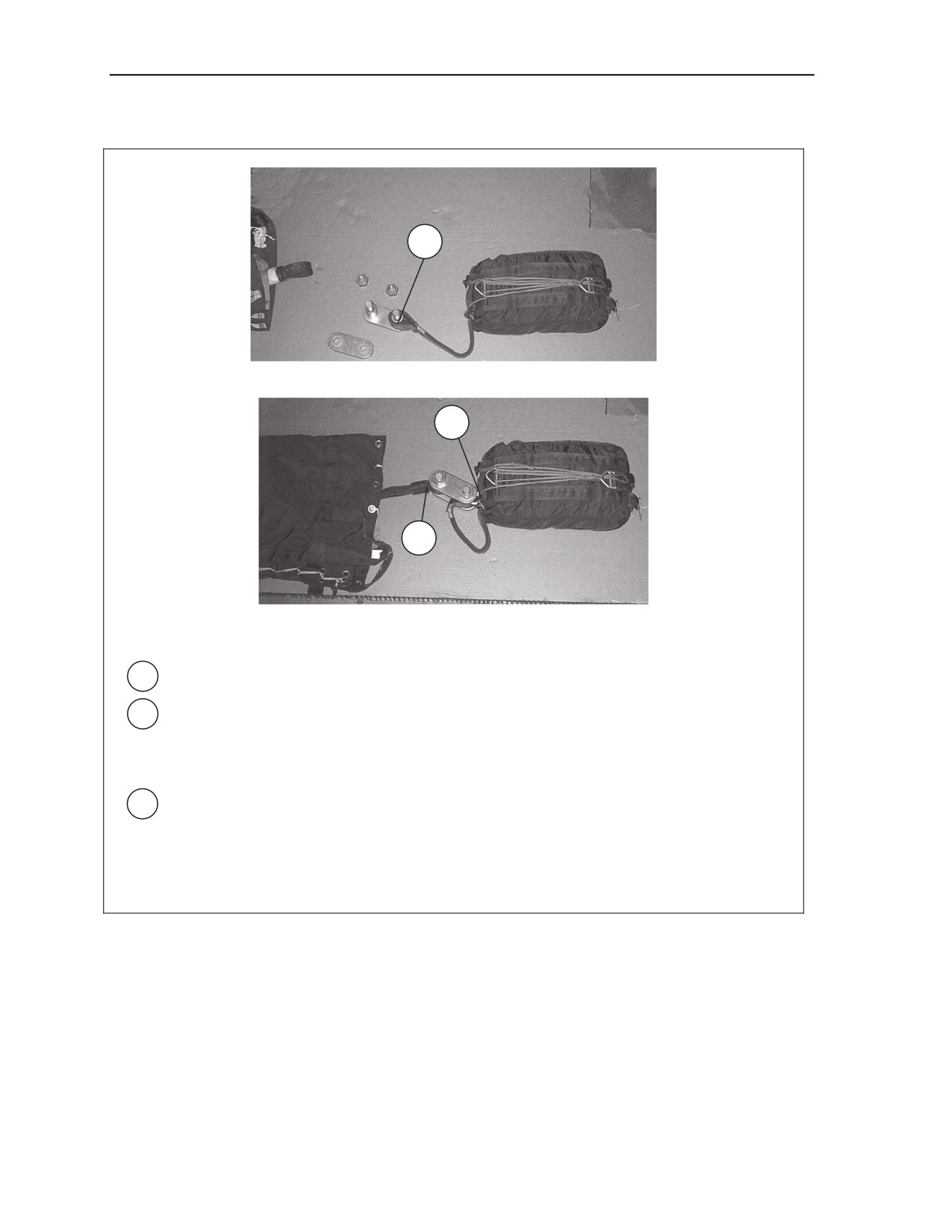
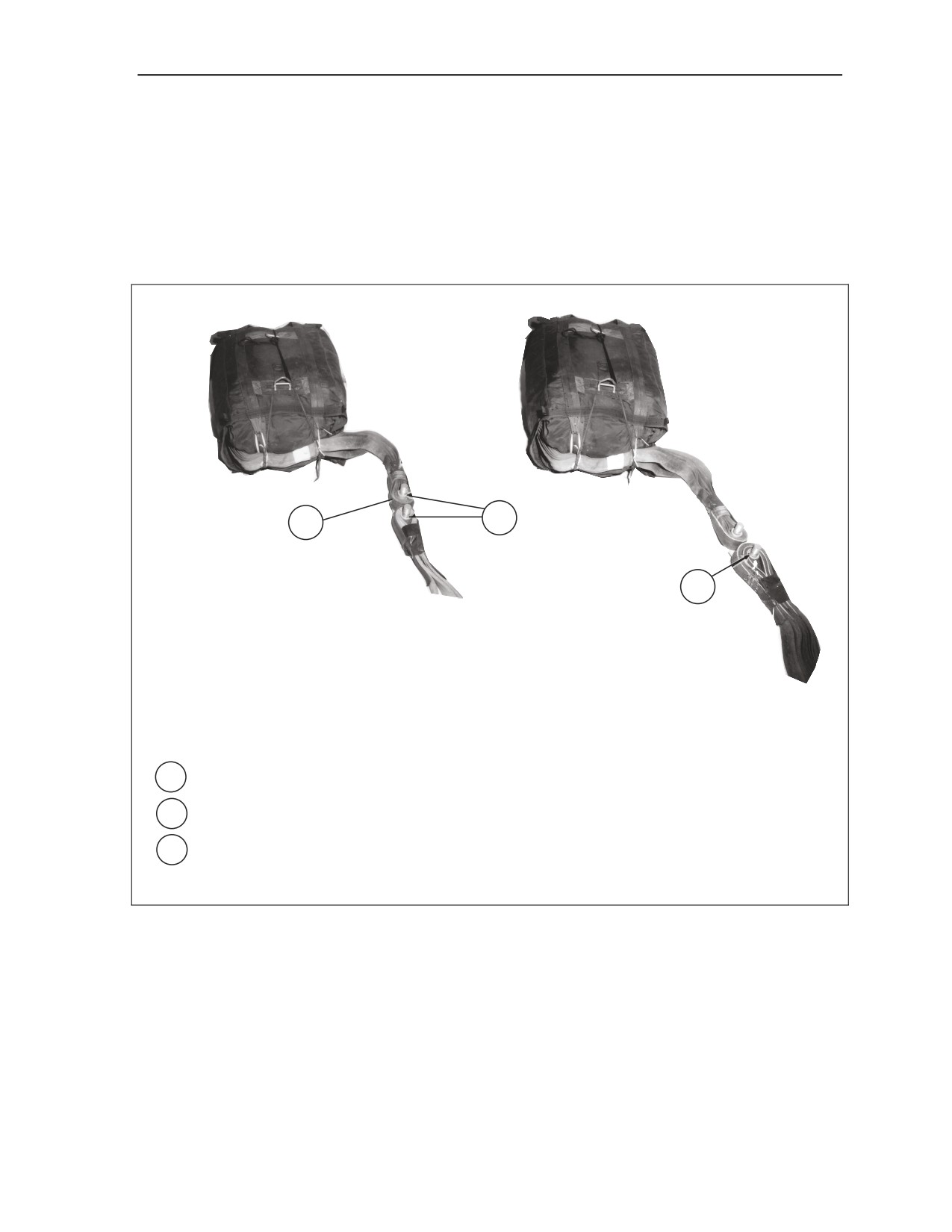
• One 15-Foot Cargo Extraction Parachute. Attach a 60-foot (1-loop), type XXVI nylon
webbing extraction line as shown in Figure 9-4. Attach the adapter web of the 15-foot extraction
parachute as shown in Figure 9-4.
8 June 2006 FM 4-20.102/MCRP 4-11.3J/NAVSEA SS400-AB-MMO-010/TO 13C7-1-5
9-7
Chapter 9
1
3
2
1 Fit the loop of the adapter web on the spacer of a 3 3/4-inch, 2-point link assembly.
2 Fit the extraction line attaching loop to the other spacer on the link. Replace the side plate
of the link assembly. Put the nuts on the bolts of the 2-point link. Use a wrench to tighten
the nuts. Run a length of tape around the link and over each nut and bolt end. Tape the
keeper and the adapter web in place with cloth backed tape. (Not shown)
3 Tie the 3 3/4-inch, 2-point link tightly against the parachute bag closing loops with one
length of type I, 1/4-inch cotton webbing. Run the webbing through the top and bottom
closing loops on the right side of the bag. Tie the ends of the webbing together with a
surgeon’s knot and a locking knot.
Figure 9-4. Extraction Line Attached to 15-foot Extraction Line
9-8
FM 4-20.102/MCRP 4-11.3J/NAVSEA SS400-AB-MMO-010/TO 13C7-1-5
8 June 2006
Drogue and Extraction Parachutes and Extraction Line
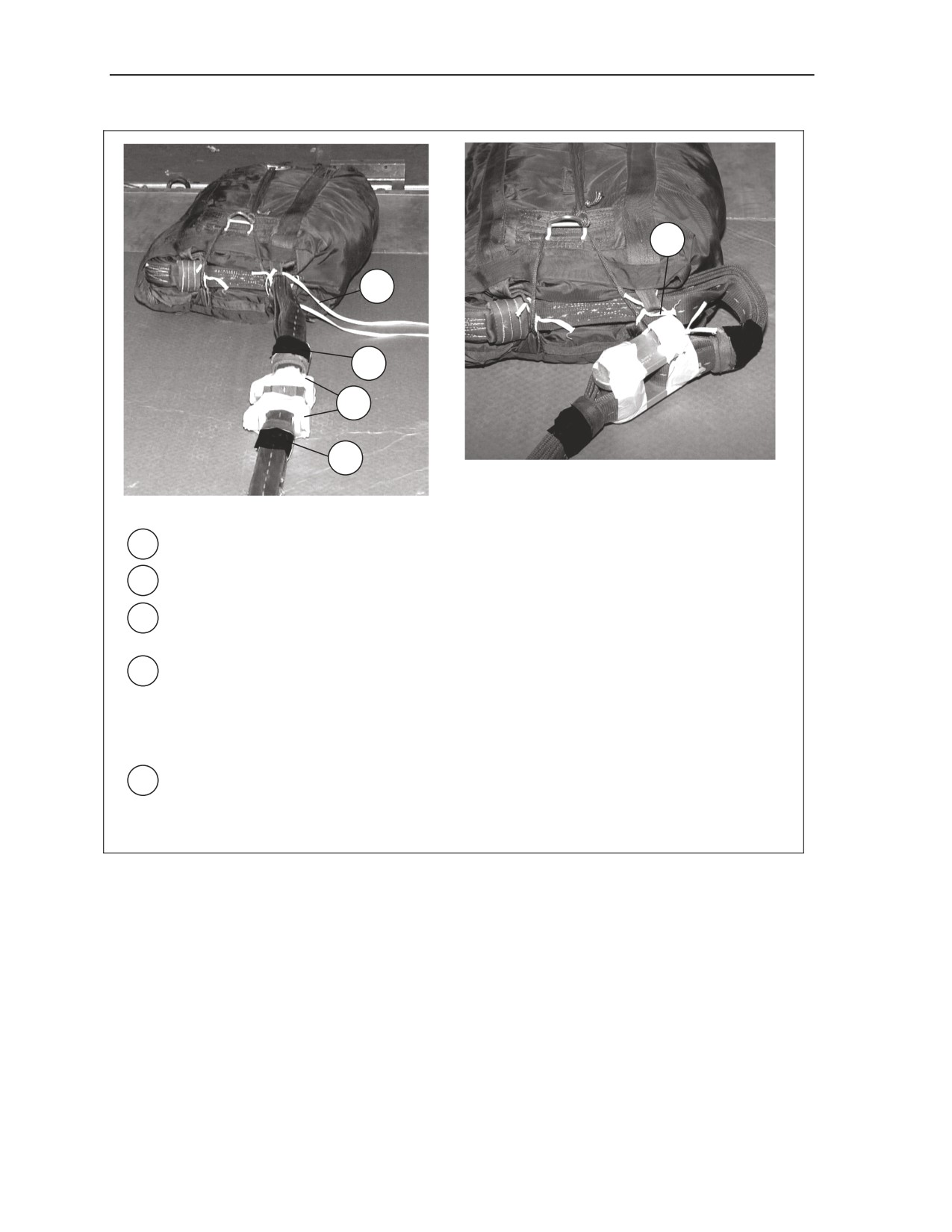
• One 22-Foot Cargo Extraction Parachute. The 22-foot cargo extraction parachute uses a 60-
foot (3-loop), type XXVI nylon webbing extraction line. Using a 3 3/4-inch, 2-point link
assembly, attach the line to the parachute by adapting the procedures shown in Figure 9-5.
• One 28-Foot Cargo Extraction Parachute. The 28-foot, cargo extraction parachute uses a 60-
foot (3-loop), type XXVI nylon webbing extraction line. Using a 5 1/2-inch, 2-point link
assembly, attach the line to the parachute by adapting the procedures shown in Figure 9-5.
Note. See Table 9-2 to determine the proper link assembly (3 3/4- or 5 1/2-inch) to use.
1
2
3
1 Place a large spacer on each bolt of the two-point link assembly.
2 Fit the adapter web loop on one of the spacers attached in step 1 above.
3 Fit the loop of the 60-foot extraction line on the free spacer of the two-point link assembly.
Figure 9-5. Extraction Line Attached to 22- or 28-Foot Cargo Extraction Parachute with a 3 ¾-
or 5 ½-Inch, Two-Point Link Assembly
8 June 2006 FM 4-20.102/MCRP 4-11.3J/NAVSEA SS400-AB-MMO-010/TO 13C7-1-5
9-9
Chapter 9
8
7
4
6
5
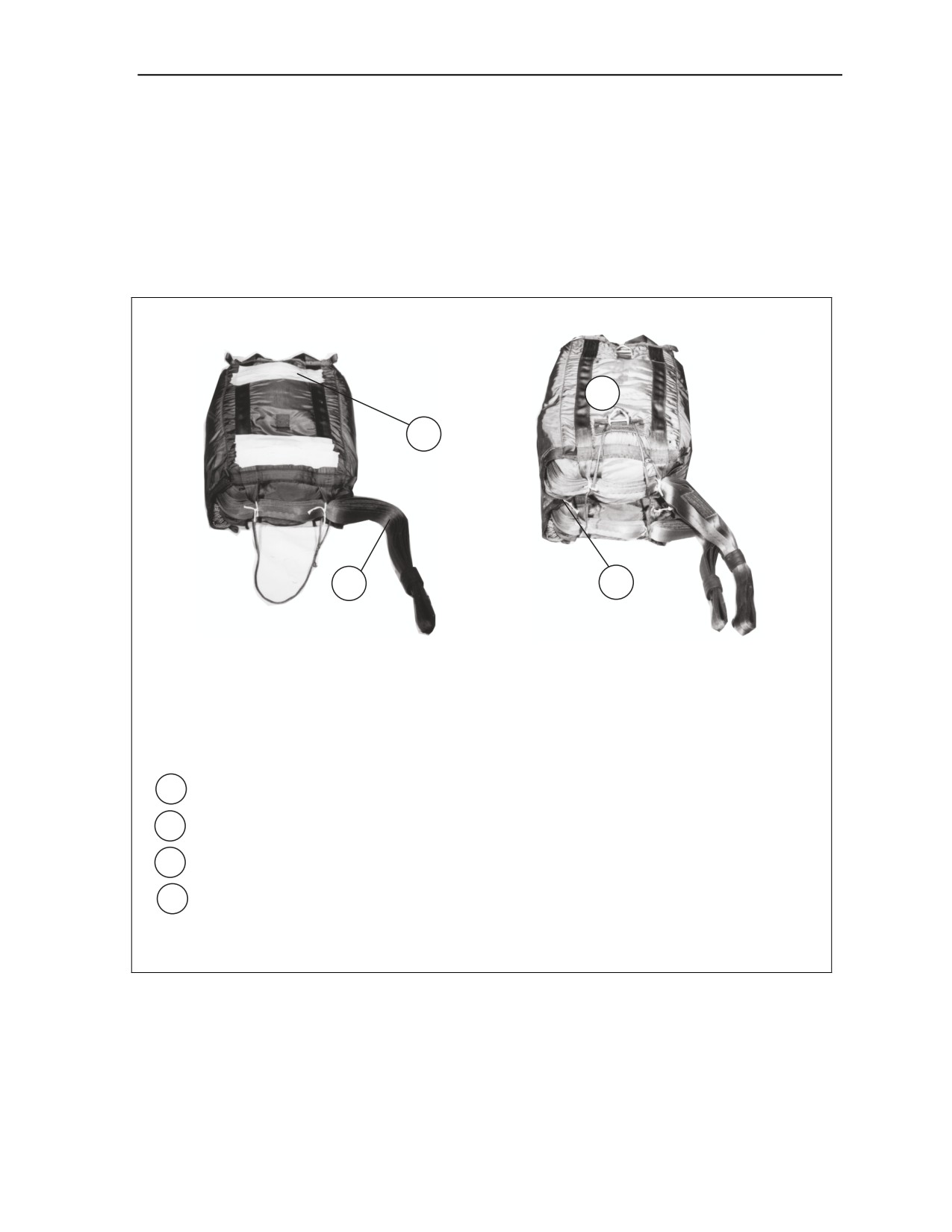
4 Run a length of cloth-backed tape around the adapter web keeper.
5 Run a length of cloth-backed tape around the extraction line keeper.
6 Bolt the side plate to the two-point link assembly. Use a wrench to tighten the nuts. Run a
length of tape around the link and over each nut and bolt end.
7 For a 22-foot cargo extraction parachute, run a length of type I, 1/4-inch cotton webbing
through the top and bottom bag closing loops on the right side of the bag. For a 28-foot
cargo extraction parachute, run a double length of type I, 1/4-inch cotton webbing through
the top and bottom bag closing loops on the right side opposite where the adapter web
exits the bag.
8 Run type I, 1/4-inch cotton webbing through the two-point link assembly, and tie the ends
of the webbing together with a surgeon’s knot and a locking knot.
Figure 9-5. Extraction Line Attached to 22- or 28-Foot Cargo Extraction Parachute with a 3 ¾-
or 5 ½-Inch, Two-Point Link Assembly (Continued)
9-10
FM 4-20.102/MCRP 4-11.3J/NAVSEA SS400-AB-MMO-010/TO 13C7-1-5
8 June 2006
Drogue and Extraction Parachutes and Extraction Line
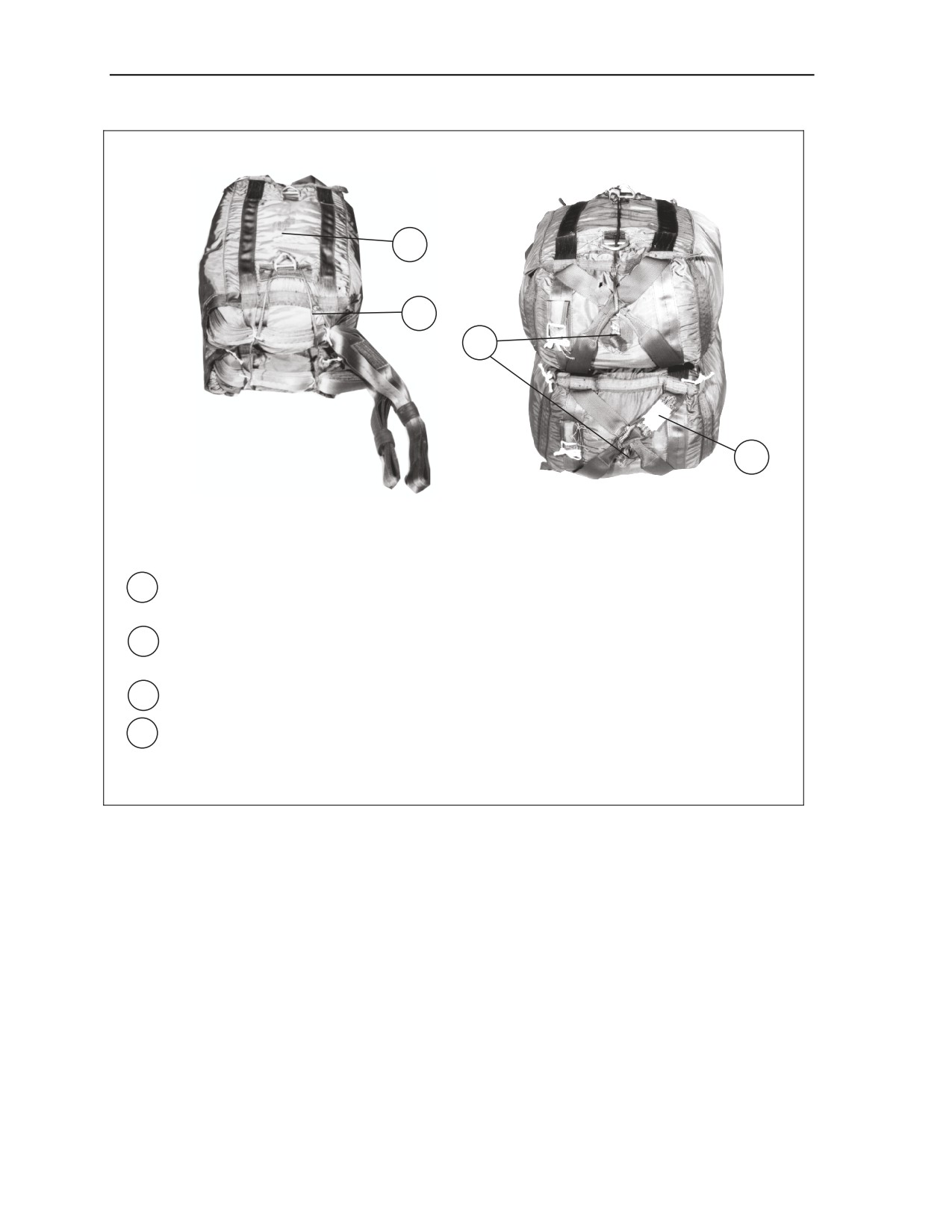
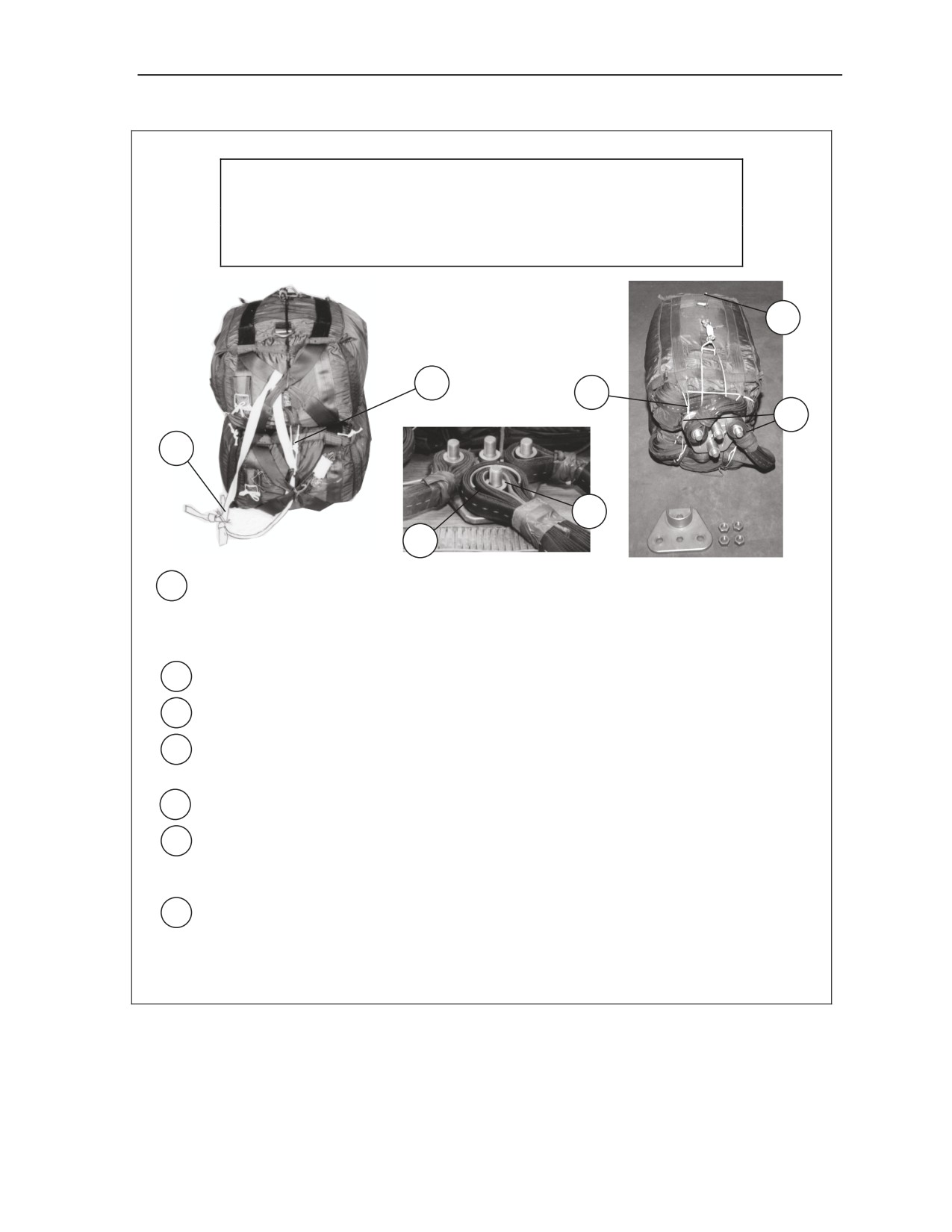
• Two 28-Foot Cargo Extraction Parachutes. A cluster of two 28-foot cargo extraction
parachutes as shown in Figure 9-6, is attached to one end of a 60-foot (6-loop), type XXVI
nylon webbing line. The other end of the line is attached to the four-point link assembly of the
parachute cluster after the cluster has been installed in the aircraft.
EXTRACTION PARACHUTE CLUSTERS
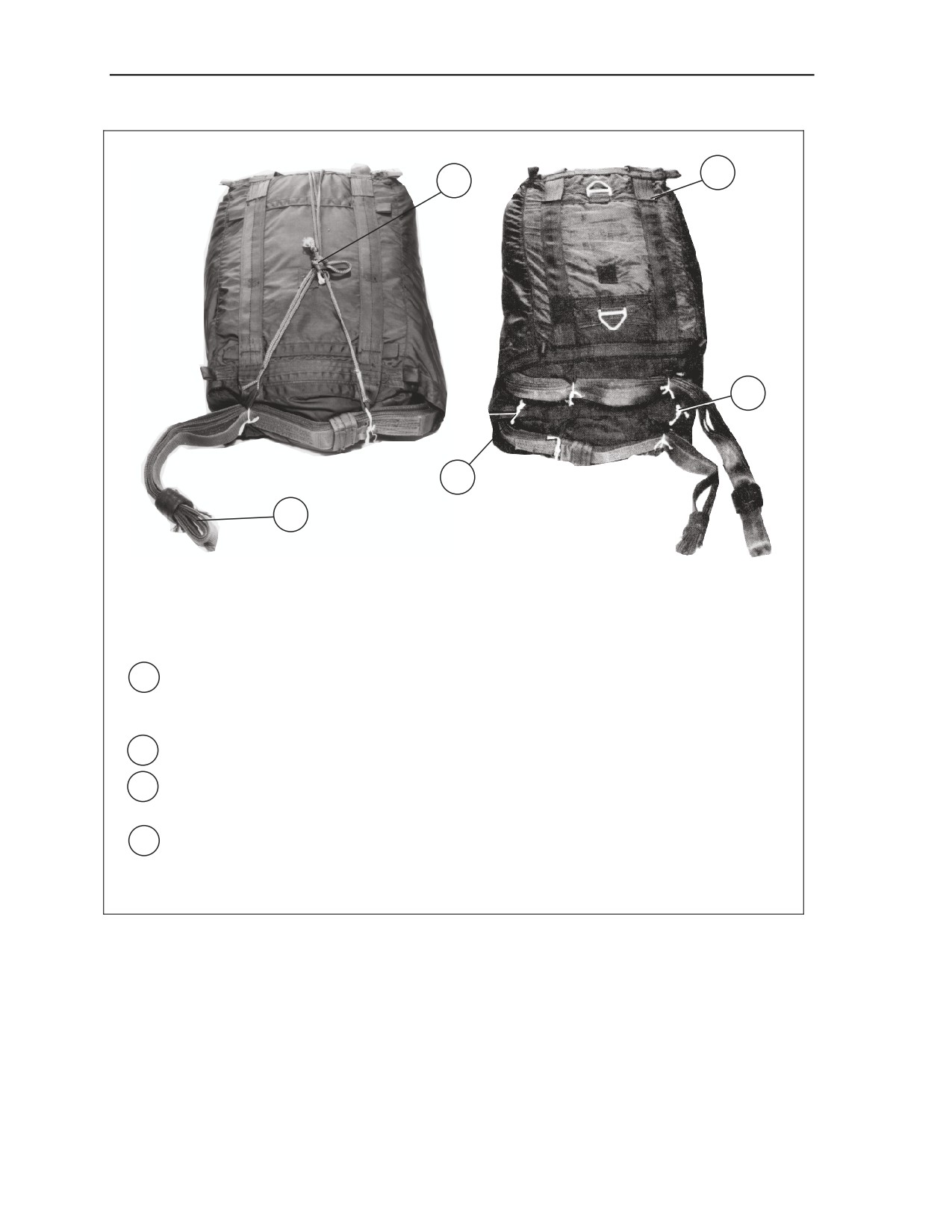
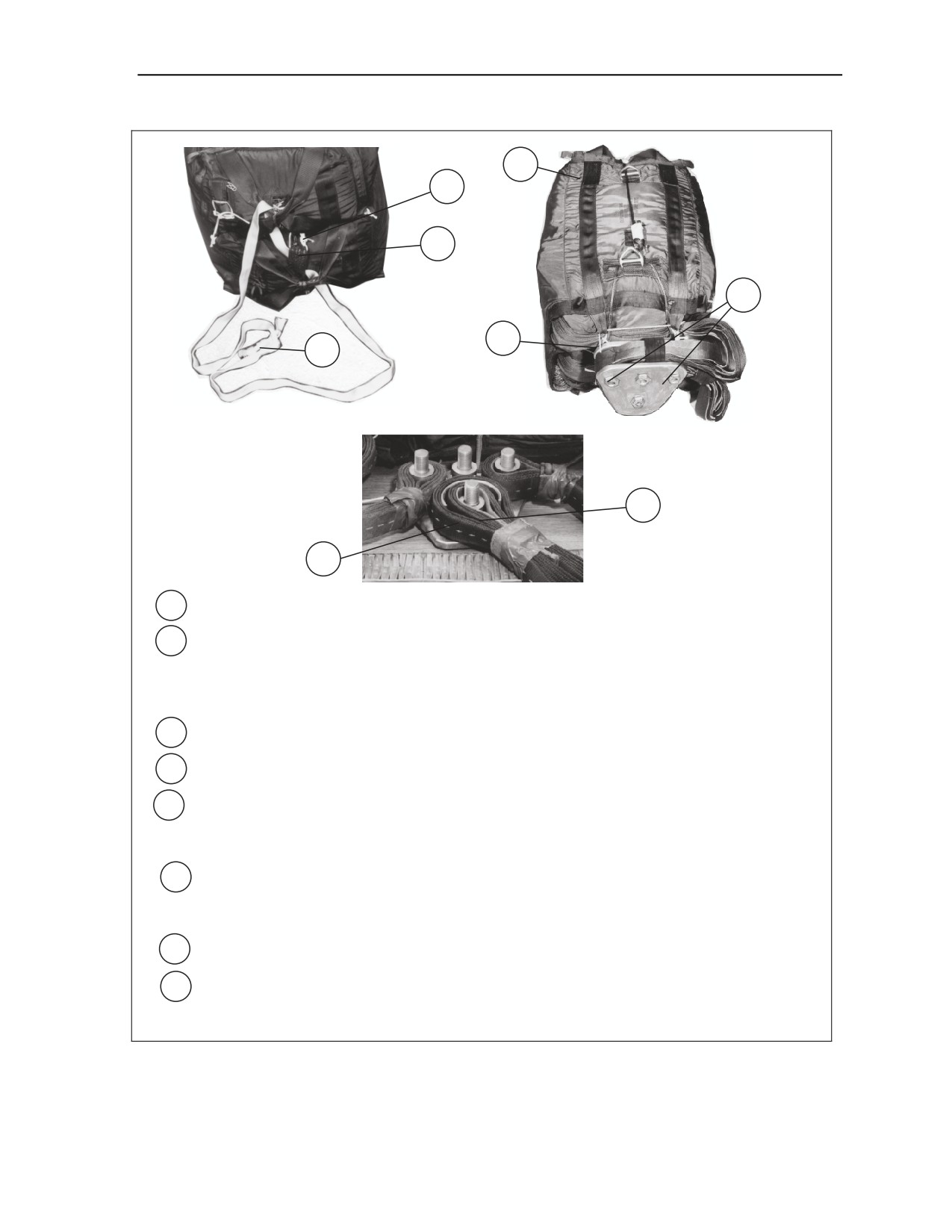
9-8. Cluster two 28-foot cargo extraction parachutes for an initial extraction as shown in Figure 9-6 and
for a sequential extraction as shown in Figure 9-7.
3
1
2
4
1 Tape the V-rings of the bottom parachute to the deployment bag.
2 Be sure 9 to 12 inches of the adapter web extend beyond the bag tie.
3 Place a second parachute on top of the first.
4 Tie the parachute deployment bags together at each corner with single lengths of type III
nylon cord.
Figure 9-6. Clustering Extraction Parachutes Clustered for an Initial Extraction from C-130
Aircraft
8 June 2006 FM 4-20.102/MCRP 4-11.3J/NAVSEA SS400-AB-MMO-010/TO 13C7-1-5
9-11
Chapter 9
6
5
8
7
5 Run the safety loop of the top parachute through the safety loop of the bottom parachute,
and hook it behind the bent V-ring of the top parachute.
6 For transportation only, tie the pendulum line of the top parachute to the bent V-ring. Fold
the excess line, and tape the folds in place.
7 Fold the pendulum line of the bottom parachute, and tape the folds in place.
8 Pull each bridle loop from its bag far enough to untie the bag retaining lines. Remove these
lines.
Figure 9-6. Clustering Extraction Parachutes Clustered for an Initial Extraction from C-130
Aircraft (Continued)
9-12
FM 4-20.102/MCRP 4-11.3J/NAVSEA SS400-AB-MMO-010/TO 13C7-1-5
8 June 2006
Drogue and Extraction Parachutes and Extraction Line
CAUTION
Be sure the bag retaining tie does not pass through the bridle loop
of the top parachute.
13
10
15
14
9
11
12
9
Use a 103-inch length of 1-inch tubular nylon webbing for the bag retaining tie. Run the tie
through the bag retaining straps of the bottom parachute, through the bridle loop, and up
through the bag retaining straps of the top parachute. Tie the ends of the retaining tie
together with a surgeon’s knot, a locking knot, and an overhand knot in each running end.
10
Tie the bridle loops together with one length of type III nylon cord to form a break cord.
11
Place a cotton buffer on the bottom pin of the four-point link assembly.
12
Place the free end of the extraction line on the bottom pin and the separator. Divide the
plies between the pin and the separator.
13
Fold the bag retaining tie, and tape the folds in place.
14
Place the top adapter web on the left pin. Place the adapter web of the bottom parachute
on the right pin and replace the link cover. Push the keepers against the pins, and tape the
keepers in place with cloth-backed tape.
15
Tie the link assembly to the upper bag closing loops of the top parachute with one length of
type III nylon cord. Make sure the cord passes through the link assembly and under the top
pins.
Figure 9-6. Clustering Extraction Parachutes Clustered for an Initial Extraction from C-130
Aircraft (Continued)
8 June 2006 FM 4-20.102/MCRP 4-11.3J/NAVSEA SS400-AB-MMO-010/TO 13C7-1-5
9-13
Chapter 9
3
1
4
4
2
1 Remove the safety loop from around the bent V-ring. Extend the safety loop around the
opposite side of the bag from the bent V-ring, and tie it tightly in place with the pendulum
line.
2 Be sure 9 to 12 inches of the adapter web extend beyond the bag closing tie.
3 Prepare a second parachute as in steps 1 and 2 above and place it on top of the first
parachute.
4 Tie the parachutes together at each corner with single length of type III nylon cord with a
surgeon’s knot, a locking knot, and an overhand knot in each free end.
Figure 9-7. Clustering Extraction Parachutes for a Sequential Extraction
9-14
FM 4-20.102/MCRP 4-11.3J/NAVSEA SS400-AB-MMO-010/TO 13C7-1-5
8 June 2006
Drogue and Extraction Parachutes and Extraction Line
8
7
5
9
10
6
11
12
5
Pull each bridle loop from its bag far enough to untie the bag retaining lines.
6
Use a 103-inch length of 1-inch tubular nylon webbing for the bag retaining tie. Run the tie
through the bag retaining straps of the bottom parachute, through the bridle loop, and up
through the bag retaining straps of the top parachute. Tie the ends of the retaining tie
together with a surgeon’s knot, a locking knot, and an overhand knot in the running end.
7
Tie the bridle loops together with a single length of type III nylon cord.
8
Fold and tape the bag retaining tie.
9
Place the top adapter web on the left pin. Place the adapter web of the bottom parachute
on the right pin and replace the link cover. Push the keepers against the pins, and tape the
keepers in place with cloth-backed tape.
10
Tie the link assembly to the upper bag closing tabs of the top parachute with a single
length of type III nylon cord. Make sure the cord passes through the link and under the top
pins.
11
Place a cotton buffer on the bottom pin of the four-point link assembly.
12
Place the free end of the extraction line on the bottom pin and the line separator. Divide
the plies between the pin and the separator.
Figure 9-7. Clustering Extraction Parachutes for a Sequential Extraction (Continued)
8 June 2006 FM 4-20.102/MCRP 4-11.3J/NAVSEA SS400-AB-MMO-010/TO 13C7-1-5
9-15
Chapter 9
C-17 AIRCRAFT
9-9. Low velocity loads rigged for aerial delivery from the C-17 aircraft require an extraction line based
on the size of the extraction parachute. All extraction lines used on loads rigged for the C-17 aircraft must
be continuous, type XXVI nylon webbing. In addition to the extraction line and extraction parachute, the
C-17 requires a 15-foot drogue parachute and a 60-foot (1-loop) drogue line. The drogue line is not
required to be packed in a sling/extraction line bag. The C-17 utilizes a tow release mechanism which
connects the drogue line to the extraction parachute(s) and extraction line bag. All extraction lines must be
packed in a sling/extraction line bag. The C-17 can accommodate a single platform weight of up to 60,000
pounds with a total airdrop load weight of 100,000 pounds. The C-17 can accommodate up to 64 feet of
type V airdrop platforms.
• One 15-Foot Cargo Extraction Parachute. Attach a continuous 160-foot (1-loop), type XXVI
nylon extraction line rigged in accordance with TM 10-1670-286-20/TO 13C5-2-41. Due to the
use of the tow release mechanism, the rigging procedures are very detailed and should be
followed exactly.
• One 22-Foot Cargo Extraction Parachute. The 22-foot cargo extraction parachute needs a
continuous 140-foot (3-loop), type XXVI nylon webbing extraction line rigged in accordance
with TM 10-1670-286-20/TO 13C5-2-41.
• One 28-Foot Cargo Extraction Parachute. The 28-foot cargo extraction parachute needs a
continuous 140-foot (3-loop), type XXVI nylon webbing extraction line rigged in accordance
with TM 10-1670-286-20/TO 13C5-2-41.
• Two 28-Foot Cargo Extraction Parachutes. For a cluster of two 28-foot cargo extraction
parachutes, the extraction line requirements can change based on where the platform is located
in the aircraft. Normally the 140-foot (6-loop), type XXVI nylon webbing extraction line is
utilized. If the platform’s aft edge is located aft of FS 680 the 120-foot (6-loop), type XXVI
nylon webbing extraction line rigged in accordance with TM 10-1670-286-20/TO 13C5-2-41
may be used.
C-17 AIRCRAFT SEQUENTIAL PLATFORM EXTRACTION SYSTEM
RIGGING
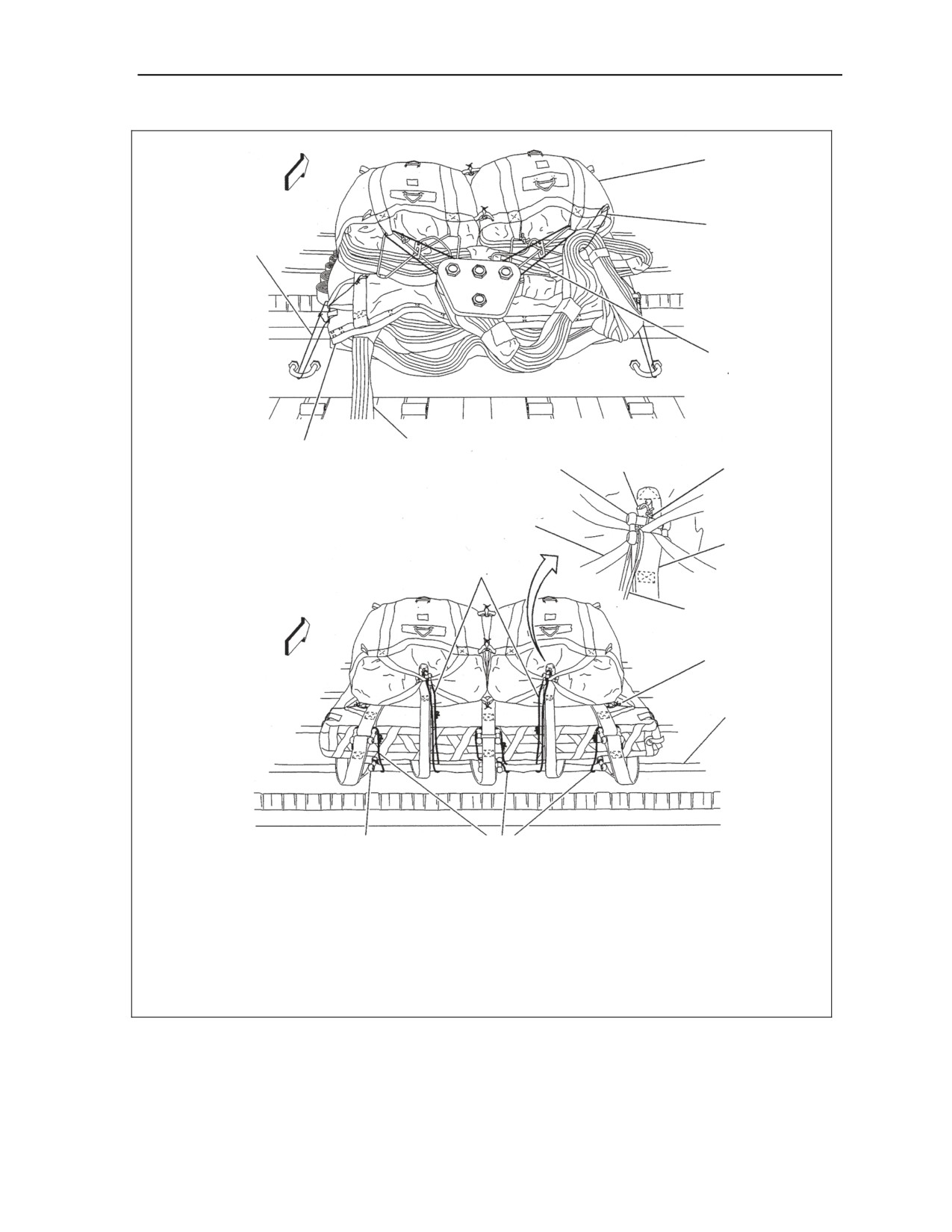
9-10. The typical installation of an extraction parachute and extraction line bag for sequential airdrop is
shown in Figure 9-8.
Note: The aircraft loadmaster is responsible for rigging the sequential extraction system in the aircraft.
CAUTION
Failure to correctly position the extraction parachute(s) and extraction
line bag could result in non-deployment of the parachutes.
Note: The following procedures are taken directly from TO 1C-17A-9. If there are any differences between the
following procedures and TO 1C-17A-9, the TO 1C-17A-9 takes precedence.
9-16
FM 4-20.102/MCRP 4-11.3J/NAVSEA SS400-AB-MMO-010/TO 13C7-1-5
8 June 2006
Drogue and Extraction Parachutes and Extraction Line
EXTRACTION
PARACHUTE
AFT
EXTRACTION
LINE RESTRAINT
EXTRACTION LINE
TIE
BAG RESTRAINT
TIE
CONNECTOR
LINK BREAK
CORD TIE
PARACHUTE
PARACHUTE
EXTRACTION
EXTRACTION
CANOPY BRIDLE
BREAK CORD
LINE BAG
LINE TO EFTC
CONNECTOR
LOOP
LINK
PARACHUTE BAG
EXTRACTION LINE
BAG BRIDLE
BRIDLE STRAP
ATTACHING WEB
PARACHUTE
RESTRAINT TIE
PARACHUTE
RESTRAINT TIE
PARACHUTE
ATTACHMENT TIE
FWD
AIRDROP
LOAD
RESTRAINT
LASHING
EXTRACTION LINE BAG
EXTRACTION LINE BAG
CONNECTOR LINK
RESTRAINT TIE
Step:
1. Position the extraction parachute(s) and extraction line bag on the forward end of the
proceeding load to prevent entanglement of the extraction line bag with the load or its
suspension system.
Figure 9-8. Typical Extraction Parachute and Extraction Line Bag for Sequential Airdrop
Installed
8 June 2006 FM 4-20.102/MCRP 4-11.3J/NAVSEA SS400-AB-MMO-010/TO 13C7-1-5
9-17
Chapter 9
CAUTION
1. Failure to correctly route ties could result in non-deployment of
the parachutes.
2. If the load attaching end of the extraction line bag contacts the
aircraft floor during extraction, damage to the extraction line bag
may result.
Step:
2. Secure the extraction line bag to the load. Fold the extraction line bag bridle under the
extraction line bag before securing. Install three one turn single 1/2-inch tubular nylon
webbing restraint ties through the top and bottom extraction line bag panel connector links
and to convenient points on the load. Ties are routed on the load to prevent shifting of the
extraction system and secured using a trucker’s hitch with three alternating half-hitches
and an overhand knot in the running ends for each restraint tie.
CAUTION
The connector link(s) shall not be routed through the parachute
canopy bridle loop. Failure to comply could result in non-deployment
of the parachute(s).
3. Secure each extraction parachute(s) to the load. Route one turn double 1/2-inch tubular
nylon webbing restraint tie through the connector link(s), around the bag bridle strap(s),
and to a convenient point on the load. Secure with a trucker’s hitch, three alternating half-
hitches, and an overhand knot in the running ends.
4. Use the carrying handle to secure the extraction line bag to the load. Route one turn
double Type I, 1/4-inch cotton webbing restraint ties through the top and bottom carrying
handles on each corner of the load attaching end of the extraction line bag to a convenient
point on the load.
CAUTION
Link break cord ties for sequential airdrop must be of correct size.
Failure to comply could result in non-deployment of the
parachute(s).
Figure 9-8. Typical Extraction Parachute and Extraction Line Bag for Sequential Airdrop
Installed (Continued)
9-18
FM 4-20.102/MCRP 4-11.3J/NAVSEA SS400-AB-MMO-010/TO 13C7-1-5
8 June 2006
Drogue and Extraction Parachutes and Extraction Line
5. Ensure link break cord ties are correct.
• For 15-foot extraction parachutes, remove 1/2-inch tubular nylon webbing link break
cord ties and replace with type III nylon cord.
• For three 28-foot extraction parachutes, remove 9/16-inch tubular nylon webbing link
break cord ties and replace with 1/2-inch tubular nylon webbing.
6. Prepare extraction line by removing temporary handling and transport ties.
Note: The extraction line is stowed in the extraction line bag with Type I, 1/4-inch cotton webbing
restraint ties. It may be necessary to cut a number of restraint ties to obtain a sufficient length of
extraction line to reach the EFTC. For in-flight rigging, the restraint ties should be cut on the
ground.
7. Pull the required length of extraction line from the load attaching end of the extraction line
bag for attachment to the EFTC.
8. Repeat steps 1 through 7 for additional platforms.
Figure 9-8. Typical Extraction Parachute and Extraction Line Bag for Sequential Airdrop
Installed (Continued)
8 June 2006 FM 4-20.102/MCRP 4-11.3J/NAVSEA SS400-AB-MMO-010/TO 13C7-1-5
9-19
Chapter 10
Transportation of Rigged Loads
SECTION I-GENERAL INFORMATION
RESPONSIBILITIES
10-1. The using unit is responsible for coordinating transportation of the rigged load from the rigging site
to the aircraft. To prevent damage, loads must be lashed to the transporting vehicle and protected during
transport. The transporting force must ensure that the off-loading equipment is compatible with the aircraft
to be used.
TYPICAL LOADING AND TRANSPORTING EQUIPMENT
10-2. Some of the equipment that may be used to load and transport rigged loads is listed below.
• Materials Handling Equipment. If a loading ramp is not available to use in loading the rigged
load onto the transporting vehicle, the load is hoisted aboard the vehicle. The materials-handling
equipment used to hoist the loads may include but not limited to the 5-ton wrecker, the 10,000-
or 15,000-pound-capacity warehouse crane, or 5,000 pound through 15,000-pound-capacity
forklift trucks.
• Transporting Vehicle. Any standard military truck or semi-trailer with sufficient cargo space
and payload capacity can be modified to transport a rigged load from the loading area to the
cargo aircraft. However, not all military trucks are compatible with the cargo-loading system of
all types of cargo aircraft now in use. Rigged platform loads require straight-in loading over a
horizontally positioned ramp from a truck, a forklift, a flatbed, or a cargo loader. Consequently,
this may require transfer of the rigged load at the aircraft site before it is off-loaded into the
cargo aircraft. The following types of materials-handling equipment can be used to transport
and/or off-load platform loads:
The 6- or 10-ton cargo semi-trailer can transport loads rigged on airdrop platforms.
The 25,000-pound-capacity cargo loader can move the maximum weight of 25,000 pounds
up a 3-percent incline at 15 miles per hour. It can be used for loading all aircraft.
The 40,000-pound-capacity cargo loader can move the maximum weight of 40,000 pounds
up a 3-percent incline at 15 miles per hour.
The 60,000-pound-capacity cargo loader (the Tunner) can move the maximum weight of
60,000 pounds up a 3-percent incline at 15 miles per hour.
The model M172 (lowboy) semi-trailer can load a C-130 aircraft. Any similar vehicle can
be used if its loading floor meets the cargo floor heights of the aircraft. For C-130 aircraft,
this is 39 to 42 inches.
SECTION II-RIGGING INFORMATION
MARKING RIGGED LOAD
10-3. Each rigged load must have a data tag prepared for it, and some rigged loads may require a Shipper’s
Declaration for Dangerous Goods. The center of balance must also be clearly marked on both sides of the
platform.
8 June 2006 FM 4-20.102/MCRP 4-11.3J/NAVSEA SS400-AB-MMO-010/TO 13C7-1-5
10-1
Chapter 10
• Data Tag. A data tag is prepared and secured to each platform load near the extraction system.
Entries on the tag are used in making inspections and in finding causes for malfunctions. The
entries are also used to help the loadmaster determine where to place the load in the aircraft. Use
a ballpoint pen or other waterproof marking device to record the following information on the
tag:
Total rigged weight.
Height, including parachutes.
Overall length.
Overhang (specify front, rear, or side of load).
Longitudinal center of balance (measured from the front edge of the platform).
Type and size of extraction system.
• Shipper’s Declaration of Dangerous Goods. This form is prepared and secured on each load
that has any type of hazardous material such as fuel, ammunition, or a battery.
• Center of Balance. In addition to being included on the data tag, the longitudinal center of
balance must also be marked on the platform. The vertical line of the symbol CB is placed at the
center of balance on both sides of the platform.
TYPES OF INSPECTION
10-4. The types of inspections performed on a rigged load are the final rigger inspection, the before-
loading inspection, and the after-loading inspection as required by FM 4-20.102/MCRP 4-11.3J/NAVSEA
SS400-AB-MMO-010/TO
13C7-1-5 and AR
59-4/OPNAVINST
4463.24C/AFJ
13-210(I)/MCO
13480.1B. All rigged low-velocity loads must be inspected at prescribed intervals to make sure that the
loads and the equipment used on the loads are assembled and installed to meet the criteria outlined in the
specific rigging manual.
• Final Rigger Inspection (Shop Final). After the load has been completely rigged, a certified
Transported Force Rigger Inspector performs the final rigger inspection. This inspection is
accomplished before the rigged load leaves the rigging site to make sure it is rigged according to
the specific field manual/technical order for that particular load. This inspection should be
conducted by an inspector other than the rigger supervising the installation of parachutes and
extraction system. It is not necessary to use the DD Form 1748 (Joint Airdrop Inspection Record
[Platforms])-series inspection forms for this inspection.
• Before-Loading Inspection. A before-loading inspection must be performed on a rigged load
before it is loaded into the aircraft. This inspection is conducted jointly by a certified
Transported Force Rigger Joint Airdrop Inspector and a certified Air Force Joint Airdrop
Inspector. The inspectors use the proper joint airdrop inspection record, and both sign the
appropriate blocks to certify correct rigging of the load. When the rigged load is delivered to the
aircraft, the aircraft loadmaster checks the inspection form for completion and necessary
signatures before accepting the load.
• After Loading Inspection. After the loadmaster completes the loading and in-aircraft rigging,
the after-loading inspection is performed. This inspection is conducted jointly by a certified
Transported Force Rigger Joint Airdrop Inspector and a certified Air Force Joint Airdrop
Inspector, and the aircrew loadmaster. After the inspection is completed, the three inspectors
certify, by signing the form, that the load is ready to airdrop.
EMERGENCY AFT RESTRAINT REQUIREMENTS FOR PLATFORM-
EXTRACTED LOADS RIGGED ON A TYPE V PLATFORM
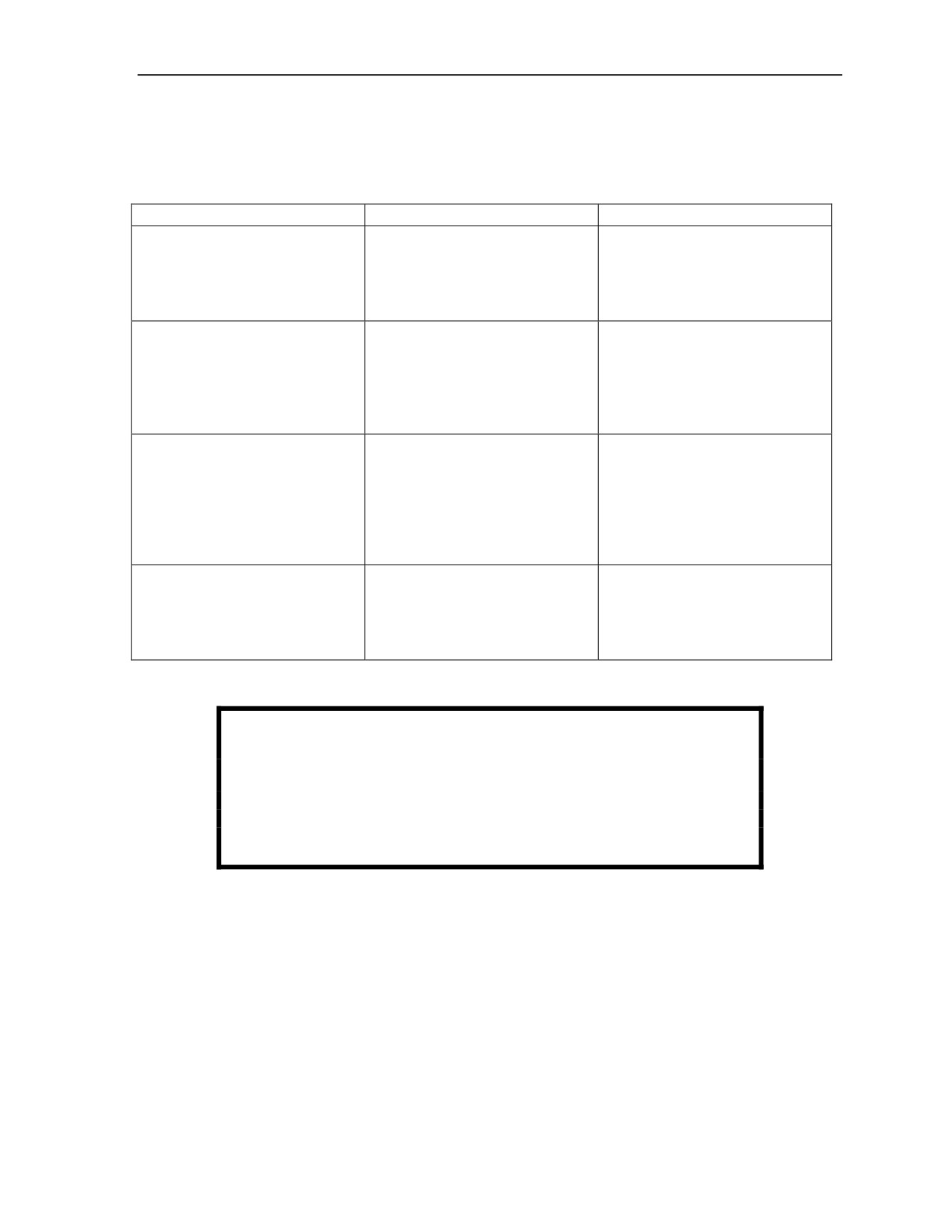
10-5. Use Table 10-1 as a guide for determining the emergency aft restraint requirements for platform-
extracted loads rigged on a type V platform.
10-2
FM 4-20.102/MCRP 4-11.3J/NAVSEA SS400-AB-MMO-010/TO 13C7-1-5
8 June 2006
Transportation of Rigged Loads
Table 10-1. Emergency Aft Restraint Requirements for Platform-Extracted Loads Rigged on a
Type V Platform for Airdrop from a C-130 Series Aircraft
Cargo Extraction Parachute
Chains Required
Attachment Provision
15-foot
Two 10,000-pound. One chain
Two medium suspension
to each clevis
clevises. One clevis is
attached to the top emergency
aft restraint provision hole of
each tandem link.
22-foot
Four 10,000-pound. One chain
Four medium suspension
to each clevis.
clevises. Two clevises are
attached to the top two
emergency aft restraint
provision holes of each tandem
link.
One 28-foot
Six 10,000-pound. One chain
Six medium suspension
to each clevis.
clevises. Two clevises are
attached to the top two
emergency aft restraint
provision holes of each tandem
link. The third clevis is attached
to the front tandem link hole.
*Two 28-foot
Two 10,000-pound. One chain
Two medium suspension
to each clevis.
clevises. One clevis is
attached to the top emergency
aft restraint provision hole of
each tandem link.
WARNING
*This emergency aft restraint is used only to secure a loose
platform in the aircraft if the right hand locks release prior to
green light. Do not attempt to restrain two 28-foot extraction
parachutes deployed outside the aircraft.
8 June 2006 FM 4-20.102/MCRP 4-11.3J/NAVSEA SS400-AB-MMO-010/TO 13C7-1-5
10-3
Glossary
ACB
attitude control bar
ACL
allowable cabin load
ACPR
automatic cargo parachute release
AD
airdrop
AFB
Air Force base
AFMAN(I)
Air Force Joint Manual
AFR
Air Force regulation
AFTO
Air Force Technical Order
AGL
above ground level
ALC
Airlift Logistics Center
AR
Army Regulation
AWADS
Adverse Weather Aerial Delivery System
CB
center of balance
DA
Department of the Army
DC
District of Columbia
DD Form
Department of Defense Form
DES
drogue extraction system
dia
diameter
EFTC
extraction force transfer coupling
EPJD
extraction parachute jettison device
EPJS
extraction parachute jettison system
fs
fuselage station
FM
field manual
ft
foot/feet
HMMWV
high mobility multipurpose wheeled vehicle
HQ
headquarters
in
inch
lb
pound
MAJCOM
Major Command
MCRP
Marine Corps Reference Publication
mm
millimeter
NAVSEA
Naval Sea Systems Command
NSN
national stock number
OVE
on-vehicular equipment
PIN
part identification number
PIP
push in, pull out
SEE
small emplacement excavator
ROWPU
Reverse Osmosis Water Purification Unit
TM
technical manual
TO
technical order
TRADOC
US Army Training and Doctrine Command
USAF
United States Air Force
US
United States
wt
weight
8 June 2006 FM 4-20.102/MCRP 4-11.3J/NAVSEA SS400-AB-MMO-010/TO 13C7-1-5
Glossary-1
References
AFMAN/24-204(I)/TM 38-250. Preparing Hazardous Materials for Military Air Shipments.
14 February 2002.
AR 59-4/OPNAVINST 4630. 24C/AFJ 13-210(I)/MCO 13480.13, Joint Airdrop Records,
Malfunction Investigations, and Activity reporting. 1 May 1998
FM 4-20.153/MCRP 4-11.3B/TO 13C7-18-41. Airdrop of Supplies and Equipment: Rigging
Ammunition. 1 May 2004
FM 10-542/FMFM 7-51/NAVSEA SS400-AD-MMO-010/TO 13C7-51-21. Airdrop of Supplies and
Equipment: Rigging Loads for Special Operations. 7 October 1987
TM 10-1670-268-20&P/TO 13C5-52-22, Operational Maintenance Manual Including Repair
Parts and Special Tools List for Type V Platform and Dual Row Airdrop Platforms.
15 September 2002
TM 10-1670-280-23&P/TO 13C5-31-2/NAVAIR 13-1-31. Unit and Intermediate Direct Support
(DS) Maintenance Manual (Including Repair Parts and Special Tools List) for Parachute, Cargo
Type: 100-Foot Diameter, Model G-11A, Model G-11B and Model G-11C, (NSN 1670-01-016-
7841) 15 September 2002
TM 10-1670-281-23&P/TO 13C5-32-2/NAVAIR 13-1-32. Unit and Intermediate Direct Support
(DS) Maintenance Manual (Including Repair Parts and Special Tools List) for Parachute, Cargo
Type: 64-Foot Diameter, Model G-12D, NSN 1670-00-893-2371 and Model G-12E, NSN 1670-
065-3755. 1 October 1990
TM 10-1670-286-20/TO 13C5-2-41. Unit Maintenance Manual for Extraction Line Panel
(Including Stowing Procedures). 15 March 2001
TM 10-1670-296-20&P/TO 13C7-49-2. Unit Maintenance Manual Including Repair Parts and
Special Tools List for Ancillary Equipment for Low Velocity Airdrop System. 30 October 2002
AFTO Form 22. Technical Order Publication Improvement Report.
DA Form 2028. Recommended Changes to Publication and Blank Forms.
DD Form 1748-series. Joint Airdrop Inspection Record (Platforms).
Shipper’s Declaration for Dangerous Goods. Locally procured form.
8 June 2006
FM 4-20.102/MCRP 4-11.3J/NAVSEA SS400-AB-MMO-010/TO 13C7-1-5
References-1