FM 5-499 Hydraulics (August 1997) - page 4
FM 5-499
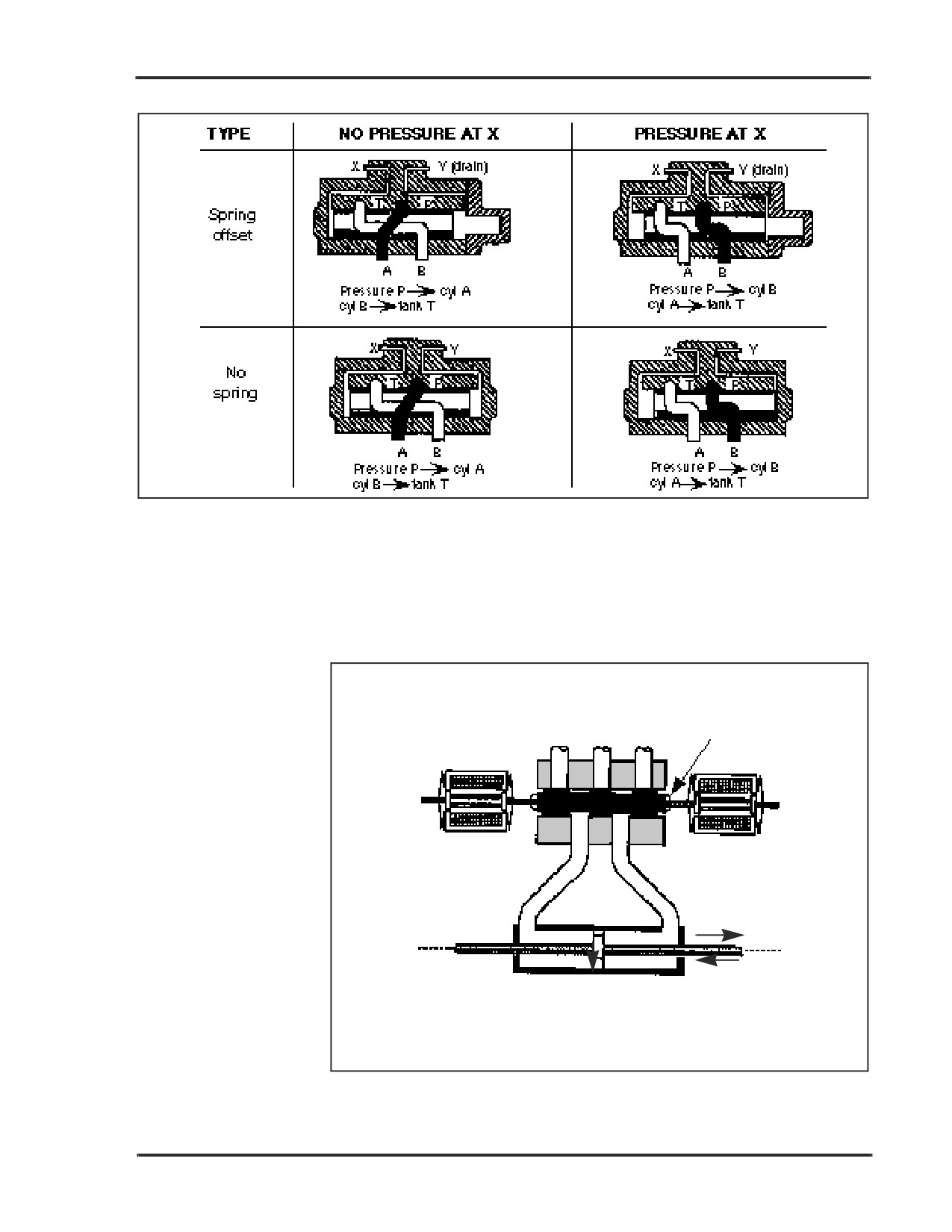
Figure 5-28. Spool shifted by pilot pressure
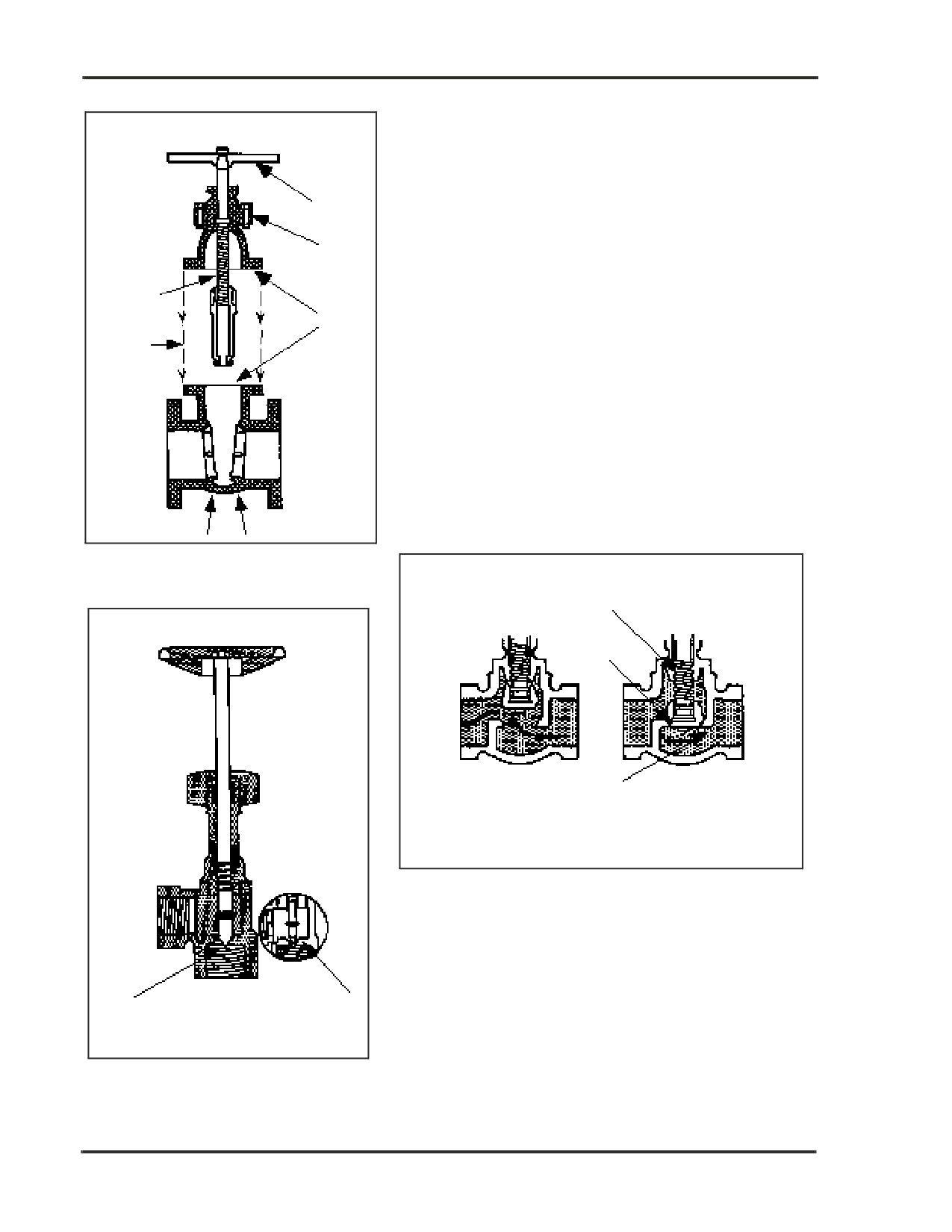
a. Gate Valve. In this type of valve, a wedge or gate controls the flow. To open and close
a passage, a handwheel moves a wedge or gate up and down across a flow line. Figure 5-30,
page 5-22, shows the principal elements of a gate valve. Area A shows the line connection
and the outside structure of the valve; area B shows the wedge or gate inside the valve and
the stem to which the gate and the handwheel are attached. When the valve is opened, the
gate stands up inside
the bonnet with its
bottom flush with the
Pressure
Valve
wall of the line. When
In
spool
the valve is closed, the
Return
Return
gate blocks the flow by
standing straight
across the line where it
rests firmly against
the two seats that
Solenoid 1
Solenoid 2
extend completely
around the line.
A gate valve
Actuator
allows a straight flow
and offers little or no
resistance to the fluid
flow when the valve is
completely open.
Sometimes a gate
valve is in the partially
open position to
Figure 5-29. Solenoid-operated, sliding-spool, directional-
restrict the flow rate.
control valve
Valves
5-21
FM 5-499
However, its main use is in the fully open or fully
closed positions. If the valve is left partly open, the
valve's face stands in the fluid flow, which will act on
the face and cause it to erode.
Control
wheel
B
b. Globe Valve. A disc, which is screwed directly
on the end of the stem, is the controlling member of a
globe valve. A valve is closed by lowering a disc into a
Seal
valve seat. Since fluid flows equally on all sides of the
Control
center of support when a valve is open, there is no
screw
Bonnet
unbalanced pressure on a disc to cause uneven wear.
Gate
Figure 5-31 shows a globe valve.
c. Needle Valve. A needle valve is similar in
design and operation to a globe valve. Instead of a
disc, a needle valve has a long, tapered point at the
A
end of a valve stem. Figure 5-32 shows a sectional
view of a needle valve. A long taper allows a needle
valve to open or close gradually. A needle valve is
used to control flow—
Seat
• Into delicate gauges, which could be dam-
Figure 5-30. Cross section of a
gate valve
Control screw
Disc
Seat
Figure 5-31. Operation of a globe valve
aged if high-pressure fluid was suddenly
delivered.
• At the end of an operation when work
Closed
Open
motion should halt slowly.
• At other points where precise flow adjust-
ments are necessary.
Figure 5-32. Sectional view of a
• At points where a small flow rate is desired.
needle valve
5-22
Valves
FM 5-499
Bonnet
Adjusting
screw
Figure 5-33. Fixed restrictor
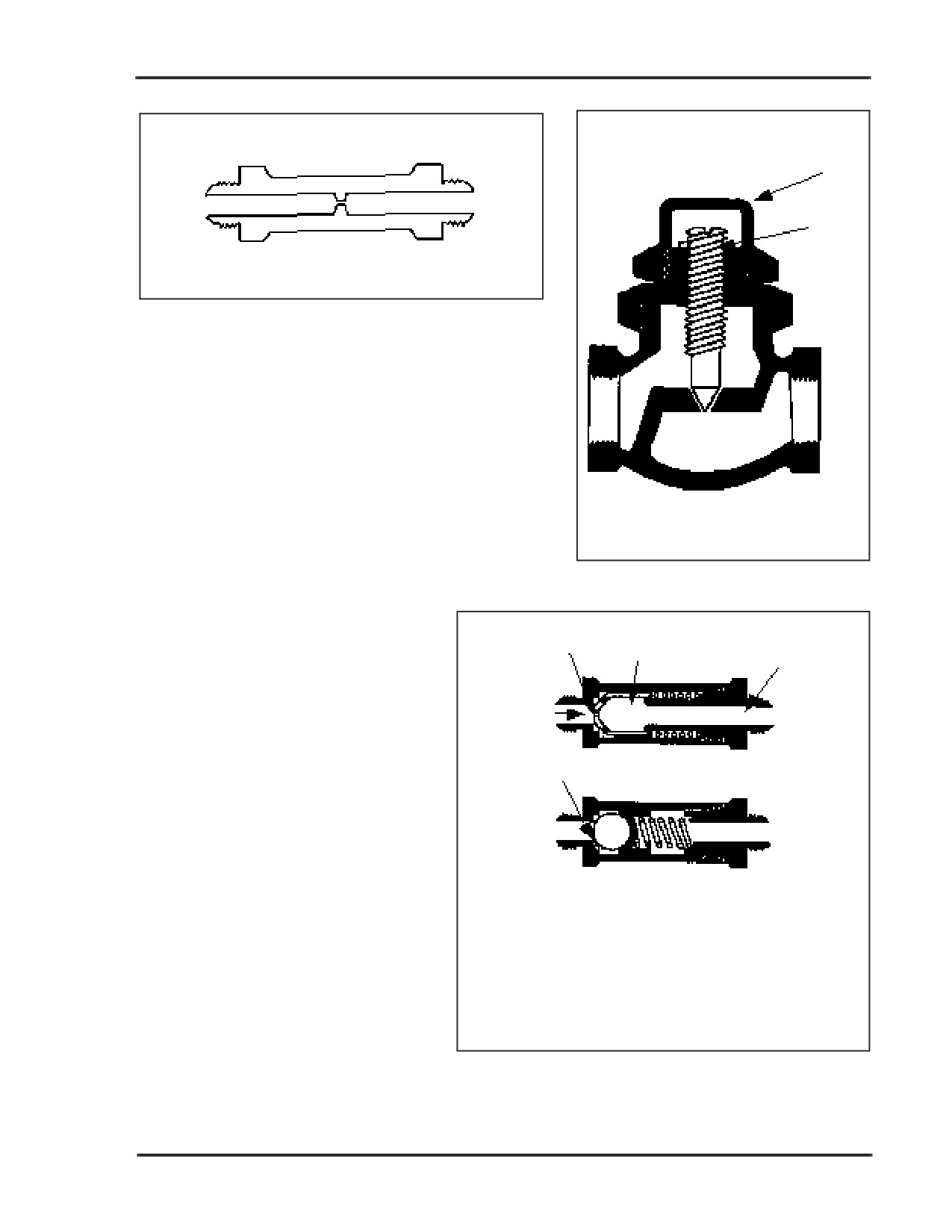
d. Restrictor. A restrictor is used in liquid-powered
systems to limit the movement speed of certain actu-
ating devices by limiting flow rate in a line. Figure 5-
33 shows a fixed restrictor. Figure 5-34 shows a vari-
able restrictor, which varies the restriction amount
and is a modified needle valve. This valve can be pre-
adjusted to alter the operating time of a particular
subsystem. Also, it can be adjusted to meet the
requirements of a particular system.
e. Orifice Check Valve. This valve is used in liquid-
powered systems to allow normal speed of operation
Figure 5-34. Variable restrictor
in one direction and limited speed in
another. Figure 5-35 shows two orifice
check valves.
3
2
1
f. Flow Equalizer. A flow equal-
izer (flow divider) is used in some
Inlet
4
hydraulic systems to synchronize the
Outlet
operation of two actuating units. An
equalizer divides a single stream of
A
5
fluid from a directional-control valve
into two equal streams. Each actuat-
ing unit receives the same flow rate;
Inlet
Outlet
both move in unison. When the two
streams of return fluid operate in oppo-
site directions, a flow equalizer com-
B
bines them at an equal rate. Thus, a
flow equalizer synchronizes the actuat-
1. Outlet port
4. Inlet port
ing units' movements during both
2. Cone
5. Orifice
3. Orifice
operational directions.
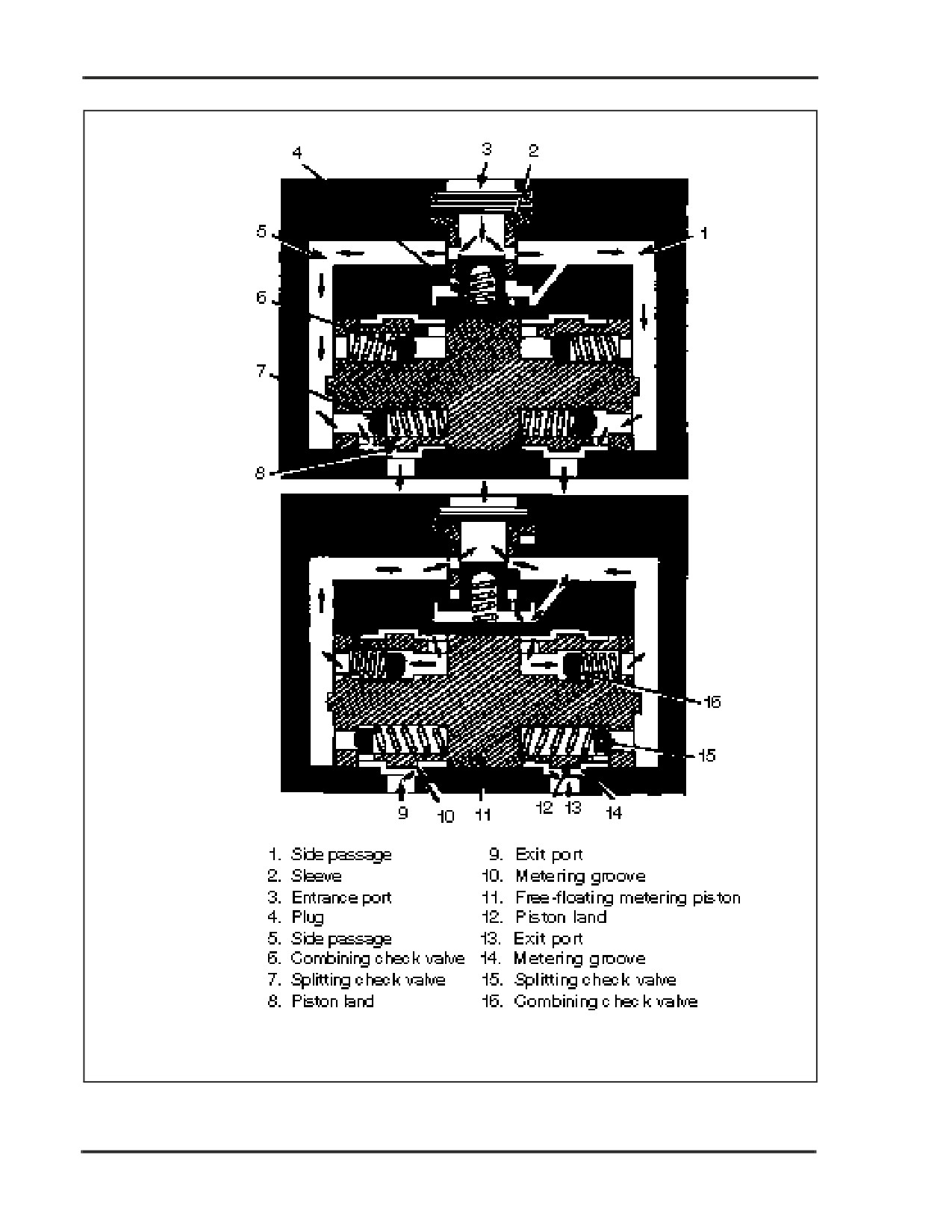
Figure 5-36, page 5-24, shows one
type of flow equalizer; the valve is in the
splitting (divided-flow) position. Fluid,
under pressure from the directional-
control valve, enters port 3. This pres-
Figure 5-35. Orifice check valve
sure overcomes spring tension and
Valves
5-23
FM 5-499
Figure 5-36. Flow equalizer
5-24
Valves
FM 5-499
forces plug 4 down and uncovers the two orifices in sleeve 2. The fluid then splits and should
flow equally through side passages 1 and 5. The fluid flows through—
• Splitting check valves 7 and 15.
• Metering grooves 10 and 14.
• Ports 9 and 13.
• The connecting lines to the actuating cylinders.
Any difference in the flow rate between the two passages results in a pressure differen-
tial between these two passages. Free-floating metering piston 11 shifts to equalize the
internal pressure, equalizing the flow.
5-4. Valve Installation. Since a flow-control valve meters flow in one direction only, the
inlet and outlet ports must be correctly connected in a circuit in relation to the flow direction
to be metered. A valve's drain connection must be piped to a tank so that a connection will
not be subjected to possible pressure surges. The location of a flow-control valve with
respect to workload has an affect on a circuit's operating characteristics. The three basic
types of flow-control-
valve installations
are the meter-in,
meter-out, and bleed-
off circuits.
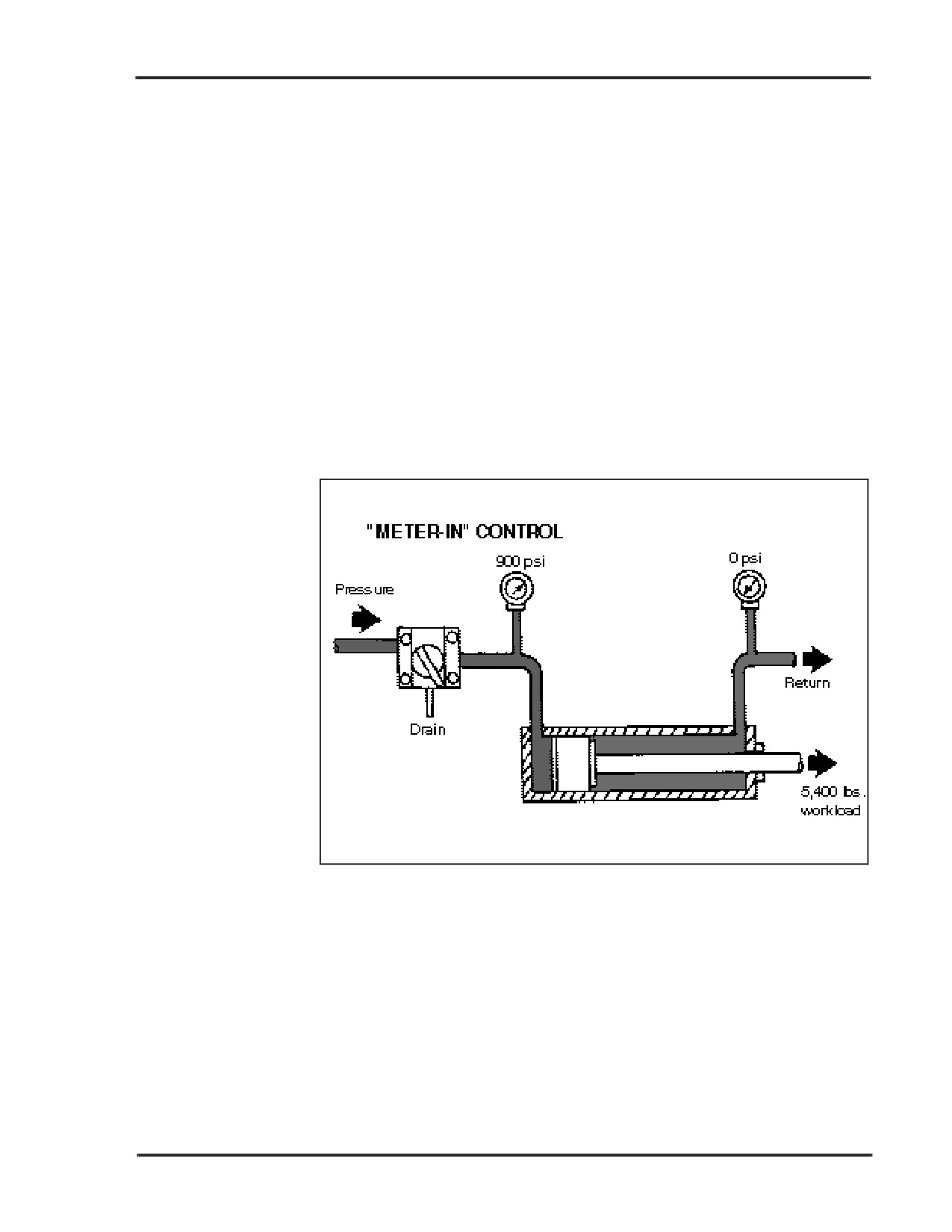
a. Meter-In Cir-
cuit (Figure 5-37).
With this circuit, a
flow-control valve is
installed in a pres-
sure line that leads to
a work cylinder. All
flow entering a work
cylinder is first
metered through a
flow-control valve.
Since this metering
action involves reduc-
ing flow from a pump
to a work cylinder, a
pump must deliver
Figure 5-37. Typical meter-in circuit
more fluid than is
required to actuate a cylinder at the desired speed. Excess fluid returns to a tank through a
relief valve. To conserve power and avoid undue stress on a pump, a relief valve’s setting
should be only slightly higher than a working pressure’s, which a cylinder requires.
A meter-in circuit is ideal in applications where a load always offers a positive resis-
tance to flow during a controlled stroke. Examples would be feeding grinder tables, welding
machines, milling machines, and rotary hydraulic motor drives. A flow-control-and-check
valve used in this type of circuit would allow reverse free flow for the return stroke of a cylin-
der, but it would not provide control of return stroke speed.
Valves
5-25
FM 5-499
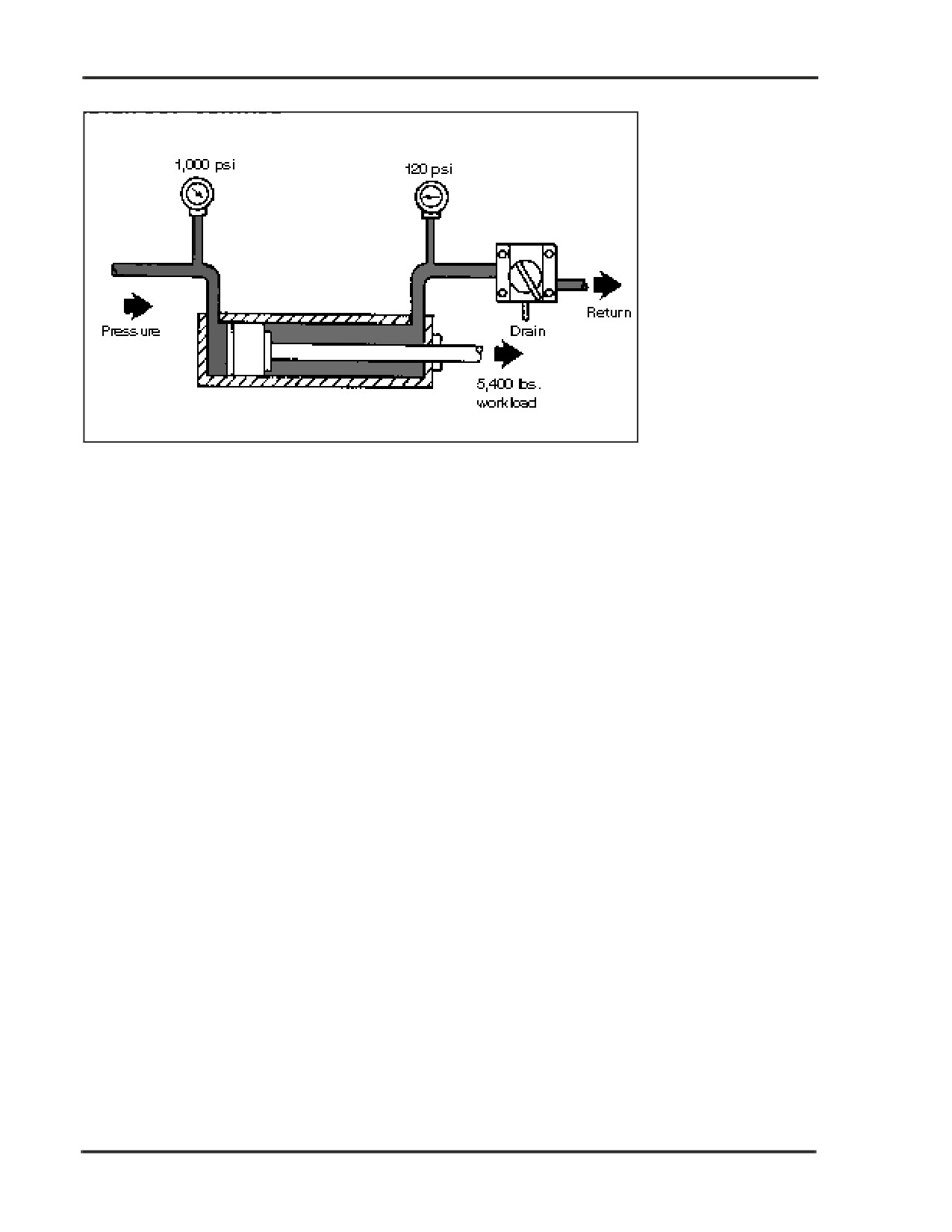
b. Meter-Out
Circuit (Figure 5-38,
page 5-26). With a
meter-out circuit, a
flow-control valve is
installed on the
return side of a cyl-
inder so that it con-
trols a cylinder's
actuation by meter-
ing its discharge
flow. A relief valve
is set slightly above
the operating pres-
sure that is required
by the type of work.
This type of cir-
Figure 5-38. Typical meter-out circuit
cuit is ideal for over-
hauling load
applications in which a workload tends to pull an operating piston faster than a pump's
delivery would warrant. Examples would be for drilling, reaming, boring, turning, thread-
ing, tapping, cutting off, and cold sawing machines. A flow-control-and-check valve used in
this circuit would allow reverse free flow, but it would not provide a control of return stroke
speed.
c. Bleed-Off Circuit. A typical bleed-off circuit is not installed directly in a feed line. It
is Td into this line with its outlet connected to a return line. A valve regulates flow to a cyl-
inder by diverting an adjustable portion of a pump’s flow to a tank. Since fluid delivered to a
work cylinder does not have to pass through a flow-control valve, excess fluid does not have
to be dumped through a relief valve. This type of circuit usually involves less heat genera-
tion because pressure on a pump equals the work resistance during a feed operation.
d. Compensated Flow. The flow-control valves previously discussed do not compensate
for changes in fluid temperature or pressure and are considered noncompensating valves.
Flow rate through these valves can vary at a fixed setting if either the pressure or the fluid's
temperature changes. Viscosity is the internal resistance of a fluid that can stop it from
flowing. A liquid that flows easily has a high viscosity. Viscosity changes, which can result
from temperature changes, can cause low variations through a valve. Such a valve can be
used in liquid-powered systems where slight flow variations are not critical consideration
factors.
However, some systems require extremely accurate control of an actuating device. In
such a system, a compensated flow-control valve is used. This valve automatically changes
the adjustment or pressure drop across a restriction to provide a constant flow at a given set-
ting. A valve meters a constant flow regardless of variation in system pressure. A compen-
sated flow-control valve is used mainly to meter fluid flowing into a circuit; however, it can
be used to meter fluid as it leaves a circuit. For clarity, this manual will refer to this valve
as a flow regulator.
5-26
Valves
FM 5-499
5-5. Valve Failures and Remedies. Hydraulic valves are precision-made and must be
very accurate in controlling a fluid’s pressure, direction, and volume within a system. Gen-
erally, no packings are used on valves since leakage is slight, as long as the valves are care-
fully fitted and kept in good condition.
Contaminants, such as dirt in the oil, are the major problems in valve failures. Small
amounts of dirt, lint, rust, or sludge can cause annoying malfunctions and extensively dam-
age valve parts. Such material will cause a valve to stick, plug small openings, or abrade the
mating surfaces until a valve leaks. Any of these conditions will result in poor machine
operation, or even complete stoppage. This damage may be eliminated if operators use care
in keeping out dirt.
Use only the specified oils in a hydraulic system. Follow the recommendations in a
machine’s operator's manual. Because oxidation produces rust particles, use an oil that will
not oxidize. Change the oil and service the filters regularly.
a. Servicing Valves. Do the following before servicing a valve:
• Disconnect the electrical power source before removing a hydraulic valve’s compo-
nents. Doing so eliminates starting the equipment accidentally or shorting out
the tools.
• Move a valve's control lever in all directions to release the system’s hydraulic
pressure before disconnecting any hydraulic valve components.
• Block up or lower all hydraulic working units to the ground before disconnecting
any parts.
• Clean a valve and its surrounding area before removing any part for service. Use
steam-cleaning equipment if available; however, do not allow water to enter a sys-
tem. Be certain that all hose and line connections are tight.
• Use fuel oil or other suitable solvents to clean with if steam cleaning is not possi-
ble. However, never use paint thinner or acetone. Plug the port holes immedi-
ately after disconnecting the lines.
b. Disassembling Valves. Do the following when disassembling a valve:
• Do not perform service work on a hydraulic valve’s interior on the shop floor, on
the ground, or where there is danger of dust or dirt being blown into the parts.
Use only a clean bench area. Be certain that all tools are clean and free of grease
and dirt.
• Be careful to identify the parts when disassembling for later reassembly. Spools
are selectively fitted to valve bodies and must be returned to those same bodies.
You must reassemble the valve sections in the same order.
CAUTION
Be very careful when removing a backup plug on a
spring-loaded valve. Personal injury could result.
Valves
5-27
FM 5-499
•
Be very careful when you have to clamp a valve housing in a vise. Do not damage
the component. If possible, use a vise equipped with lead or brass jaws, or protect
the component by wrapping it in a protective covering.
•
Make sure that you seal all the valve's housing openings when you remove the
components during service work. Doing so will prevent foreign material from
entering the housing.
•
Use a press to remove springs that are under high pressure.
•
Wash all valve components in a clean mineral-oil solvent (or other noncorrosive
cleaner). Dry the parts with compressed air, and place them on a clean surface
for inspection. Do not wipe a valve with waste paper or rags. Lint deposits on
any parts may enter the hydraulic system and cause trouble.
•
Do not use carbon tetrachloride as a cleaning solvent; it can deteriorate the rub-
ber seals.
• Coat the parts with a rust-inhibiting hydrau-
lic oil immediately after cleaning and drying
them. Make sure to keep the parts clean and
free from moisture until you reinstall them.
• Inspect the valve springs carefully when dis-
assembling them. Replace all the springs
that show signs of being cocked or crooked or
ones that contain broken, fractured, or rusty
coils.
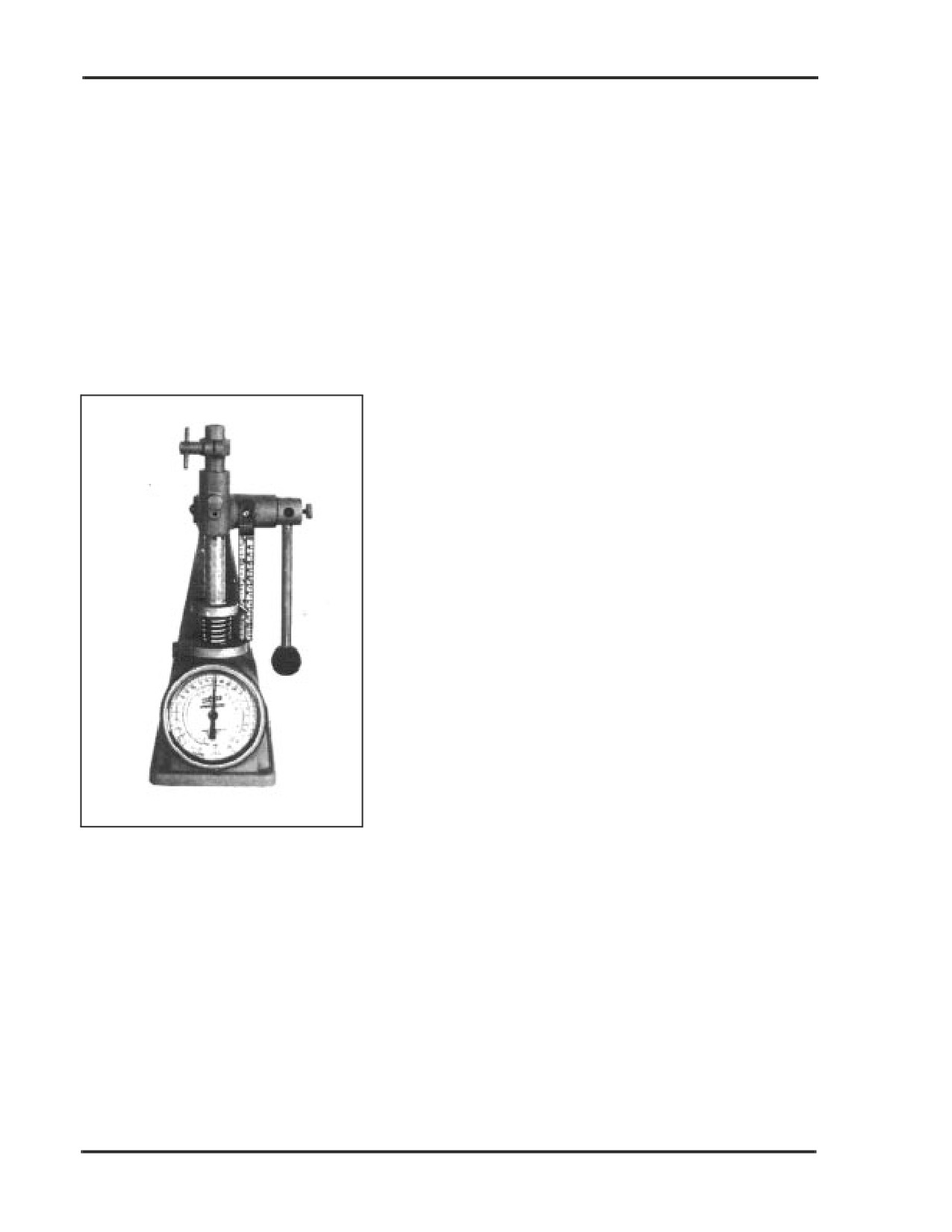
• Use a spring tester to check the strength of
the springs, in pounds, compressed to a spec-
ified length (see Figure 5-39).
c. Repairing Valves. The following paragraphs
address repair of directional-control, volume-control,
and pressure-control valves:
(1) Directional-Control Valves. Directional-con-
trol-valve spools are installed in the valve housing by a
select hone fit. This is done to provide the closest possi-
ble fit between a housing and a spool for minimum
internal leakage and maximum holding qualities. To
Figure 5-39. Spring tester
make this close fit, you would need special factory tech-
niques and equipment. Therefore, most valve spools
and bodies are furnished for service only in matched sets and are not available individually
for replacement.
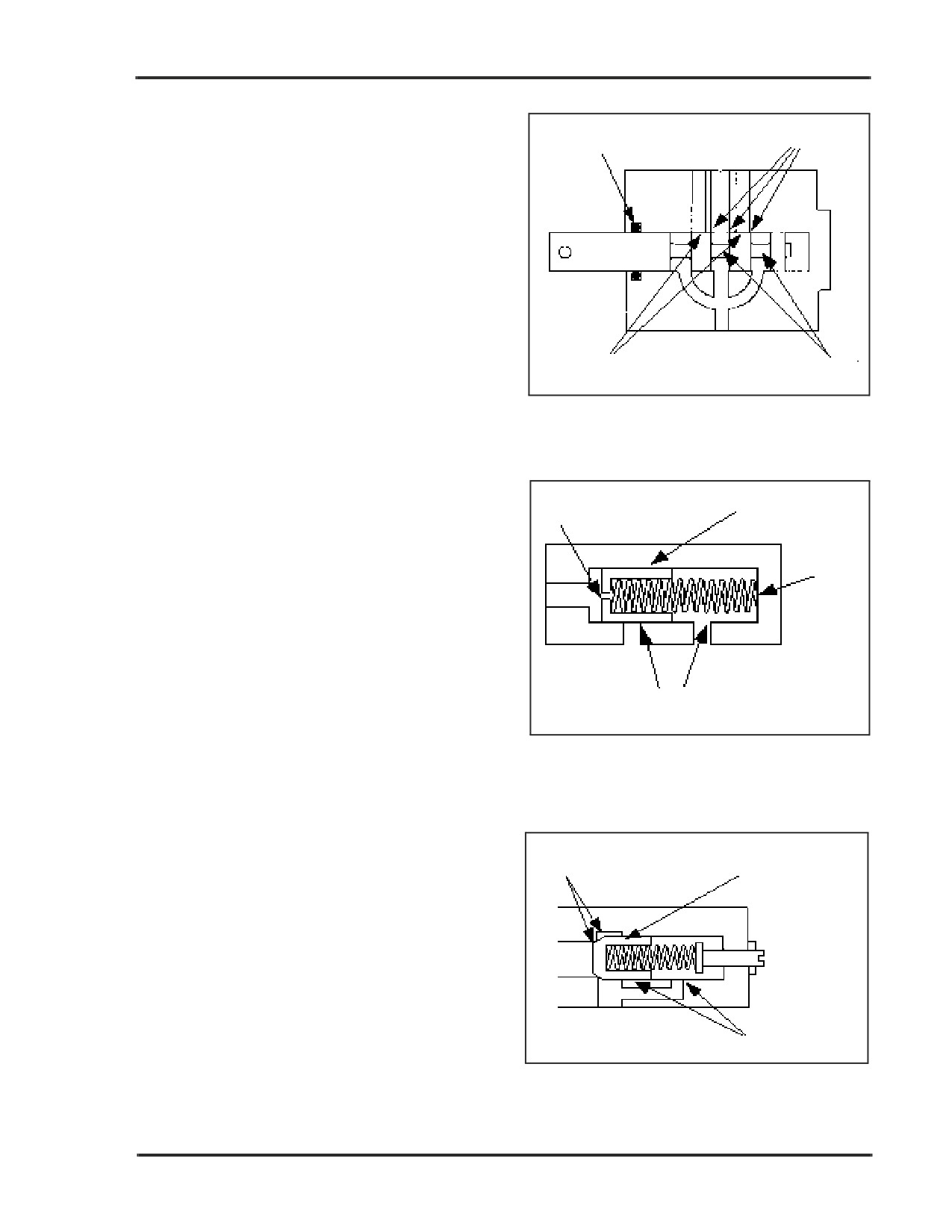
When repairing these valves, inspect the valve spools and bores for burrs and scoring as
shown in Figure 5-40. The spools may become coated with impurities from the hydraulic oil.
When scoring or coating is not deep enough to cause a leakage problem, polish the surfaces
with crocus cloth. Do not remove any of the valve material. Replace a valve’s body and spool
if scoring or coating is excessive. If a valve’s action was erratic or sticky before you removed
it, it may be unbalanced because of wear on the spools or body; replace the valve.
5-28
Valves
FM 5-499
(2) Volume-Control Valve. On valve spools
Inspect seal
Inspect for burring
with orifices, inspect for clogging from dirt or
for leakage.
of edges.
other foreign matter (see Figure 5-41). Clean a
valve with compressed air or a small wire.
Rewash all the parts thoroughly to remove all
emery or metal particles. Any such abrasives
could quickly damage an entire hydraulic sys-
tem. Check a valve spool for freedom of move-
ment in a bore. When lightly oiled, a valve
should slide into a bore from its own weight.
(3) Pressure-Control Valve (Figure 5-42).
Check for
scoring
Check for a weak relief-valve spring with a
Look for coating
on lands.
spring tester if system checks have indicated
in this area.
low pressure. You can remedy this by replacing
a spring or by adding shims to increase the com-
Figure 5-40. Valve inspection
pression of a spring, in some cases. Never add
so many shims that a spring is compressed solid.
Check orifice
Inspect valve
(4) Valve Seats and Poppets. Check the
for clogging.
spool for scoring.
valve seats for possible leakage by scoring.
Replace a valve if flat spots appear on a seat or
on the poppets. You can surface polish the
Inspect
metal valve seats and poppets if the scoring is
spring.
not deep. Do not remove any valve material.
Some seats and valve poppets are made of
nylon, which is long wearing and elastic enough
to conform perfectly to mating surfaces, giving a
Check for burring
tight seal. The nylon seats on the poppet valves
at edges of ports.
will take wear, with no damage to the mating
metal point. When repairing these valves,
Figure 5-41. Volume-control valve
always replace the nylon parts with new nylon
service parts.
(5) Nonadjustable, Cartridge-Type Relief
Valves. If a relief valve's screen or orifice
Check mating
becomes plugged, oil cannot enter its body to
Look for scoring
seats.
on valve.
equalize the pressure in an area between an
orifice plate and a pilot assembly (see Figure 5-
43, page 5-30). This plugging causes a valve to
open at lower pressures than it should. The
result is sluggish operating hydraulic units.
Keep a relief valve's screen and orifice clean at
all times. Also check the O-rings for damage,
which might cause leakage.
Inspect for burring
in housing bore.
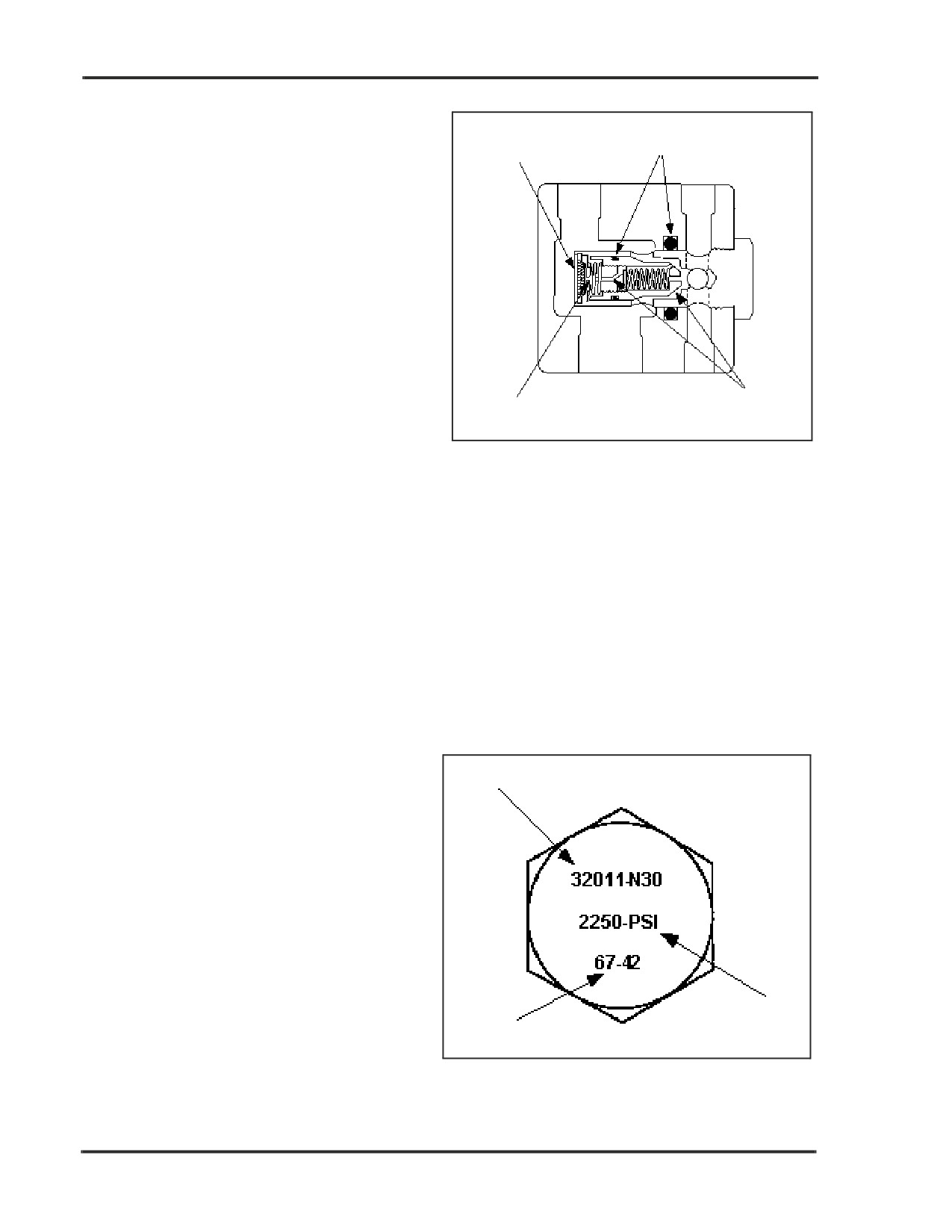
Each relief valve's cartridge is stamped with
a part number, a pressure limit, and the date of
Figure 5-42. Pressure-control valve
manufacture (see Figure 5-44, page 5-30). Use
Valves
5-29
FM 5-499
this code when testing the cartridges. Test a
Inspect O-rings
Check screen
valve's cartridges for pressure setting by
for damage.
for clogging.
installing them in a system and operating it
until you reach the valve's opening pres-
sure. Read the pressure on a gauge that is
installed in a valve's circuit.
5-6. Valve Assembly. Do the following
when assembling valves:
•
Ensure that the valves are clean.
Wash their parts in kerosene, blow
dry them with air, and then dip them
in hydraulic oil with rust inhibitor to
prevent rusting. Doing so will aid in
Inspect for
Check seats
assembly and provide initial lubrica-
clogged orifice.
for damage.
tion. You can use petroleum jelly to
hold the sealing rings in place during
Figure 5-43. Cartridge-type relief valve
assembly.
•
Double check to make sure that a valve's mating surfaces are free of burrs and paint.
•
Replace all the seals and gaskets when repairing a valve assembly. Soak the new
seals and gaskets in clean hydraulic oil before assembling. Doing so will prevent
damage and help seal a valve’s parts.
•
Make sure that you insert a valve’s spools in their matched bores. You must assem-
ble a valve’s sections in their correct order.
•
Make sure that there is no distortion when mounting valves. Distortion can be
caused by uneven tension on the mounting bolts and oil-line flanges, uneven mount-
ing surfaces, improper valve location, or insufficient allowance for line expansion
when the oil temperature rises. Any of these could result in valve-spool binding.
•
Check the action of a valve’s spools
after you tighten the bolts. If there
is any sticking or binding, adjust the
Part number
tension of the mounting bolts.
5-7. Troubleshooting Valves. Listed
below are areas that you can diagnose in
hydraulic valves. When working on a spe-
cific machine, refer to a machine's technical
manual for more information.
a. Pressure-Control Valves. The follow-
ing lists information when troubleshooting
relief, pressure-reducing, pressure-
sequence, and unloading valves:
Pressure limit
Date of manufacture
(1) Relief Valves. Consider the follow-
ing when troubleshooting relief valves
because they have low or erratic pressure: Figure 5-44. Readings on a cartridge-type
relief valve
5-30
Valves
FM 5-499
• Adjustment is incorrect.
• Dirt, chip, or burrs are holding the valve partially open.
• Poppets or seats are worn or damaged.
• Valve piston in the main body is sticking.
• Spring is weak.
• Spring ends are damaged.
• Valve in the body or on the seat is cocking.
• Orifice or balance hold is blocked.
Consider the following when troubleshooting relief valves because they have no pres-
sure:
• Orifice or balance hole is plugged.
• Poppet does not seat.
• Valve has a loose fit.
• Valve in the body or the cover binds.
• Spring is broken.
• Dirt, chip, or burrs are holding the valve partially open.
• Poppet or seat is worn or damaged.
• Valve in the body or on the seat is cocking.
Consider the following when troubleshooting relief valves because they have excessive
noise or chatter:
• Oil viscosity is too high.
• Poppet or seat is faulty or worn.
• Line pressure has excessive return.
• Pressure setting is too close to that of another valve in the circuit.
• An improper spring is used behind the valve.
Consider the following when troubleshooting relief valves because you cannot adjust
them properly without getting excessive system pressure:
• Spring is broken.
• Spring is fatigued.
• Valve has an improper spring.
• Drain line is restricted.
Consider the following when troubleshooting relief valves because they might be over-
heating the system:
• Operation is continuous at the relief setting.
• Oil viscosity is too high.
• Valve seat is leaking.
Valves
5-31
FM 5-499
(2) Pressure-Reducing Valves. Consider the following when troubleshooting pressure-
reducing valves because they have erratic pressure:
• Dirt is in the oil.
• Poppet or seat is worn.
• Orifice or balance hole is restricted.
• Valve spool binds in the body.
• Drain line is not open freely to a reservoir.
• Spring ends are not square.
• Valve has an improper spring.
• Spring is fatigued.
• Valve needs an adjustment.
• Spool bore is worn.
(3) Pressure-Sequence Valves. Consider the following when troubleshooting pressure-
sequence valves because the valve is not functioning properly:
• Installation was improper.
• Adjustment was improper.
• Spring is broken.
• Foreign matter is on a plunger seat or in the orifices.
• Gasket is leaky or blown.
• Drain line is plugged.
• Valve covers are not tightened properly or are installed wrong.
• Valve plunger is worn or scored.
• Valve-stem seat is worn or scored.
• Orifices are too large, which causes a jerky operation.
• Binding occurs because moving parts are coated with oil impurities (due to over-
heating or using improper oil).
Consider the following when troubleshooting pressure-sequence valves because there is
a premature movement to the secondary operation:
• Valve setting is too low.
• An excessive load is on a primary cylinder.
• A high inertia load is on a primary cylinder.
Consider the following when troubleshooting pressure-sequence valves because there is
no movement or the secondary operation is slow:
• Valve setting is too high.
• Relief-valve setting is too close to that of a sequence valve.
• Valve spool binds in the body.
Valves
5-32
FM 5-499
(4) Unloading Valves. Consider the following when troubleshooting these valves
because a valve fails to completely unload a pump:
• Valve setting is too high.
• Pump does not build up to the unloading valve pressure.
• Valve spool binds in the body.
b. Directional-Control Valves. Directional-control valves include spool, rotary, and
check valves. Consider the following when troubleshooting these valves because there is
faulty or incomplete shifting:
• Control linkage is worn or is binding.
• Pilot pressure is insufficient.
• Solenoid is burned out or faulty.
• Centering spring is defective.
• Spool adjustment is improper.
Consider the following when troubleshooting directional-control valves because the
actuating cylinder creeps or drifts:
• Valve spool is not centering properly.
• Valve spool is not shifted completely.
• Valve-spool body is worn.
• Leakage occurs past the piston in a cylinder.
• Valve seats are leaking.
Consider the following when troubleshooting directional-control valves because a cylin-
der load drops with the spool in the centered position:
• Lines from the valve housing are loose.
• O-rings on lockout springs or plugs are leaking.
• Lockout spring is broken.
• Relief valves are leaking.
Consider the following when troubleshooting directional-control valves because a cylin-
der load drops slightly when it is raised:
• Check-valve spring or seat is defective.
• Spool valve's position is adjusted improperly.
Consider the following when troubleshooting directional-control valves because the oil
heats (closed-center systems):
• Valve seat leaks (pressure or return circuit).
• Valves are not adjusted properly.
c. Volume-Control Valves. Volume-control valves include flow-control and flow-divider
valves. Consider the following when troubleshooting these valves because there are varia-
tions in flow:
Valves
5-33
FM 5-499
• Valve spool binds in the body.
• Cylinder or motor leaks.
• Oil viscosity is too high.
• Pressure drop is insufficient across a valve.
• Oil is dirty.
Consider the following when troubleshooting volume-control valves because of erratic
pressure:
• Valve's poppet or seat is worn.
• Oil is dirty.
Consider the following when troubleshooting volume-control valves because of improper
flow:
• Valve was not adjusted properly.
• Valve-piston travel is restricted.
• Passages or orifice is restricted.
• Valve piston is cocked.
• Relief valves leak.
• Oil is too hot.
Consider the following when troubleshooting volume-control valves because the oil
heats:
• Pump speed is improper.
• Hydraulic functions are holding in relief.
• Connections are incorrect.
Valves
5-34
FM 5-499
CHAPTER 6
Circuit Diagrams and
Troubleshooting
Hydraulic-circuit diagrams are complete drawings of a hydraulic circuit. Included in
the diagrams is a description, a sequence of operations, notes, and a components list. Accu-
rate diagrams are essential to the designer, the people who build the machine, and the person
who repairs it. Hydraulic mechanisms are precision units, and their continued smooth oper-
ation depends on frequent inspection and servicing. Personnel must maintain the equipment
and system by performing frequent inspections and servicing. The systems must be kept
clean, with the oil and filters changed at established intervals.
6-1. Hydraulic-Circuit Diagrams. The four types of hydraulic-circuit diagrams are block,
cutaway, pictorial, and graphical. These diagrams show the—
• Components and how they will interact.
• Manufacturing engineer and assembler how to connect the components.
• Field technician how the system works, what each component should be doing,
and where the oil should be going so that the technician can diagnose and repair
the system.
a. Block Diagram. A block diagram shows the components with lines between the
clocks, which indicate connections and/or interactions.
b. Cutaway Diagram. A cutaway diagram shows the internal construction of the com-
ponents as well as the flow paths. Because the dia-
gram uses colors, shades, or various patterns in the
lines and passages, it can show the many different
Steering circuit
flow and pressure conditions.
Lift
circuit
c. Pictorial Diagram. A pictorial diagram shows
Double
a circuit’s piping arrangement. The components are
pump
seen externally and are usually in a close reproduc-
tion of their actual shapes and sizes.
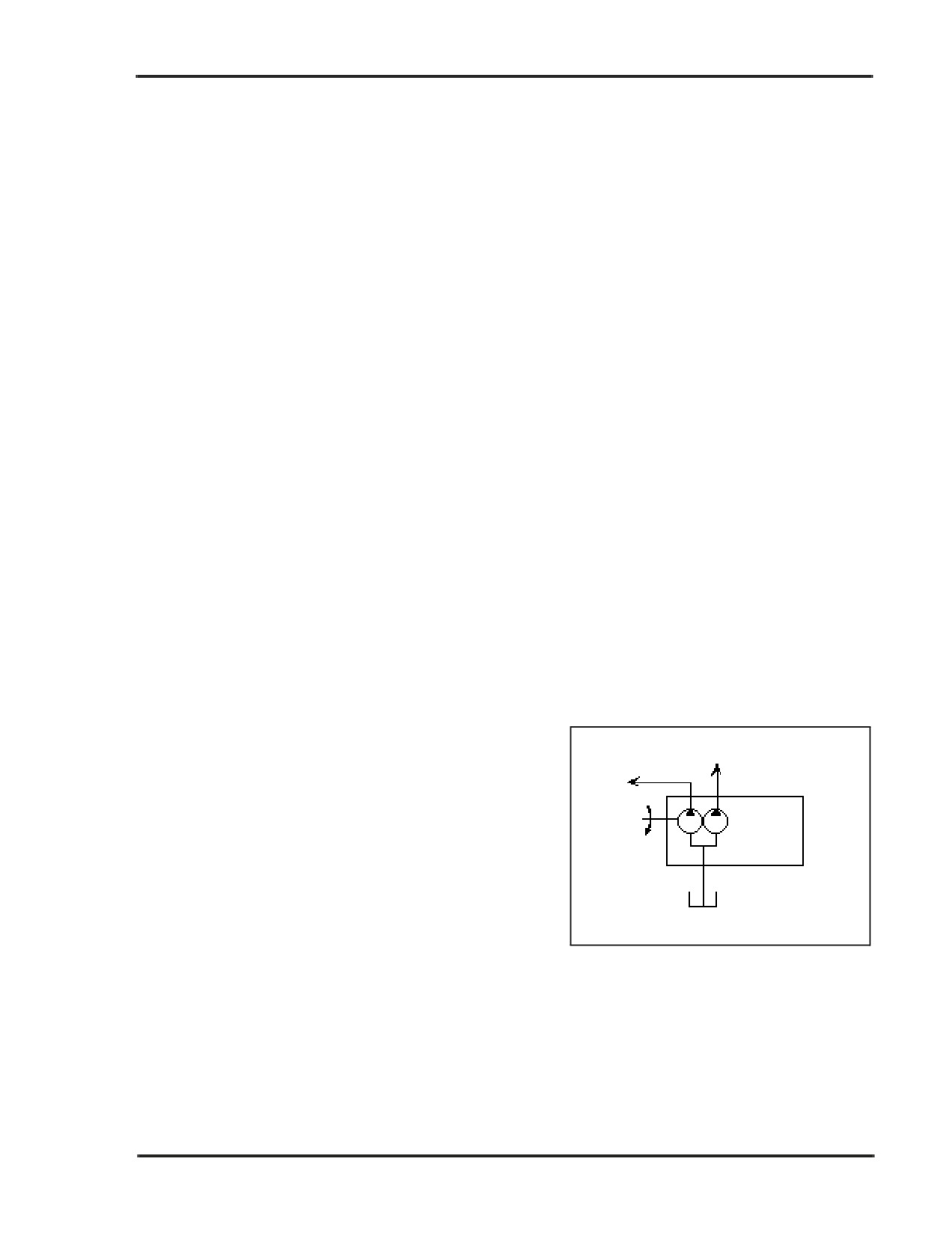
d. Graphical Diagram. A graphical diagram
(Figure 6-1), the short-hand system of the industry,
Reservoir
is usually preferred for design and troubleshooting.
Simple geometric symbols represent the components
Figure 6-1. Graphical-circuit
and their controls and connections.
diagram
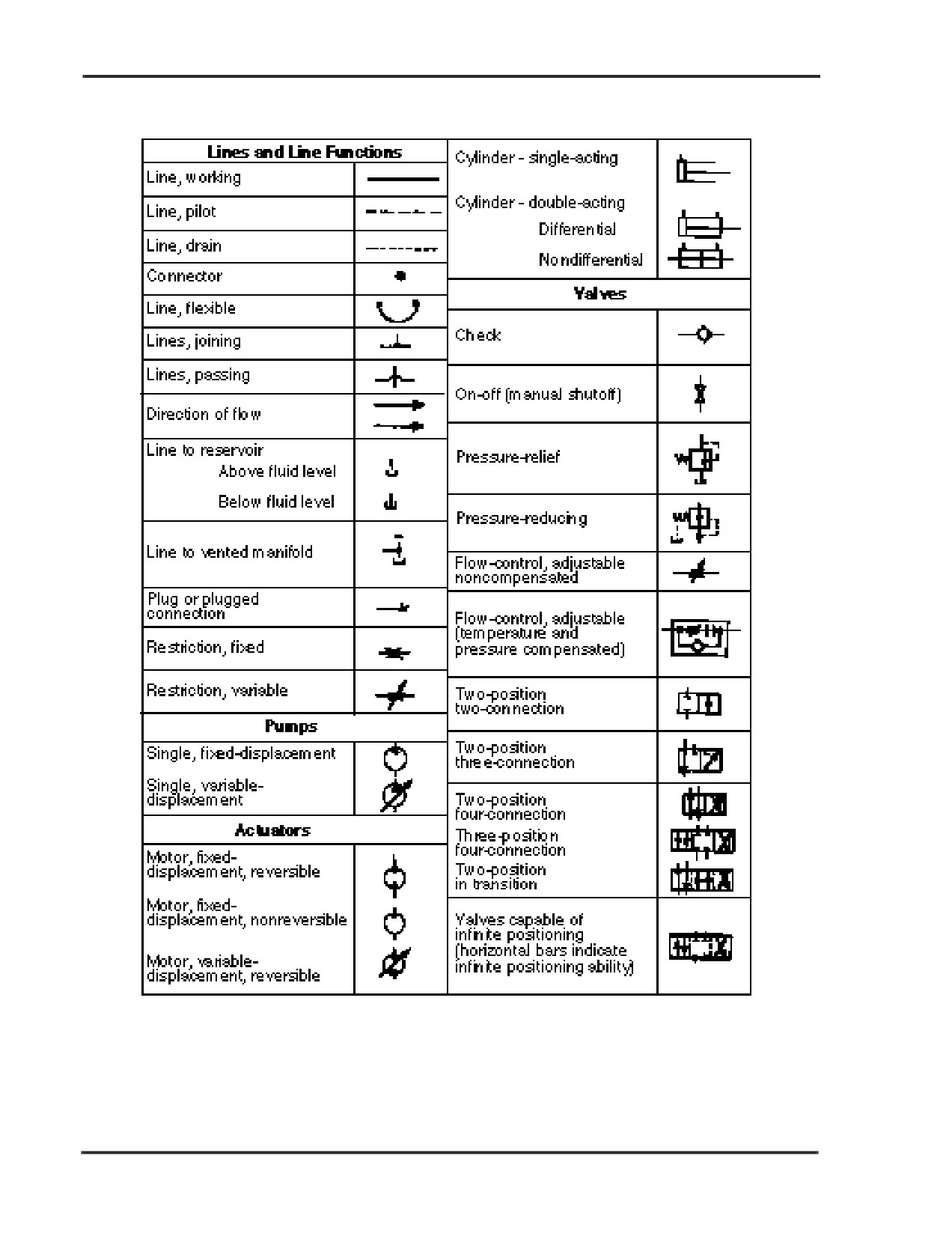
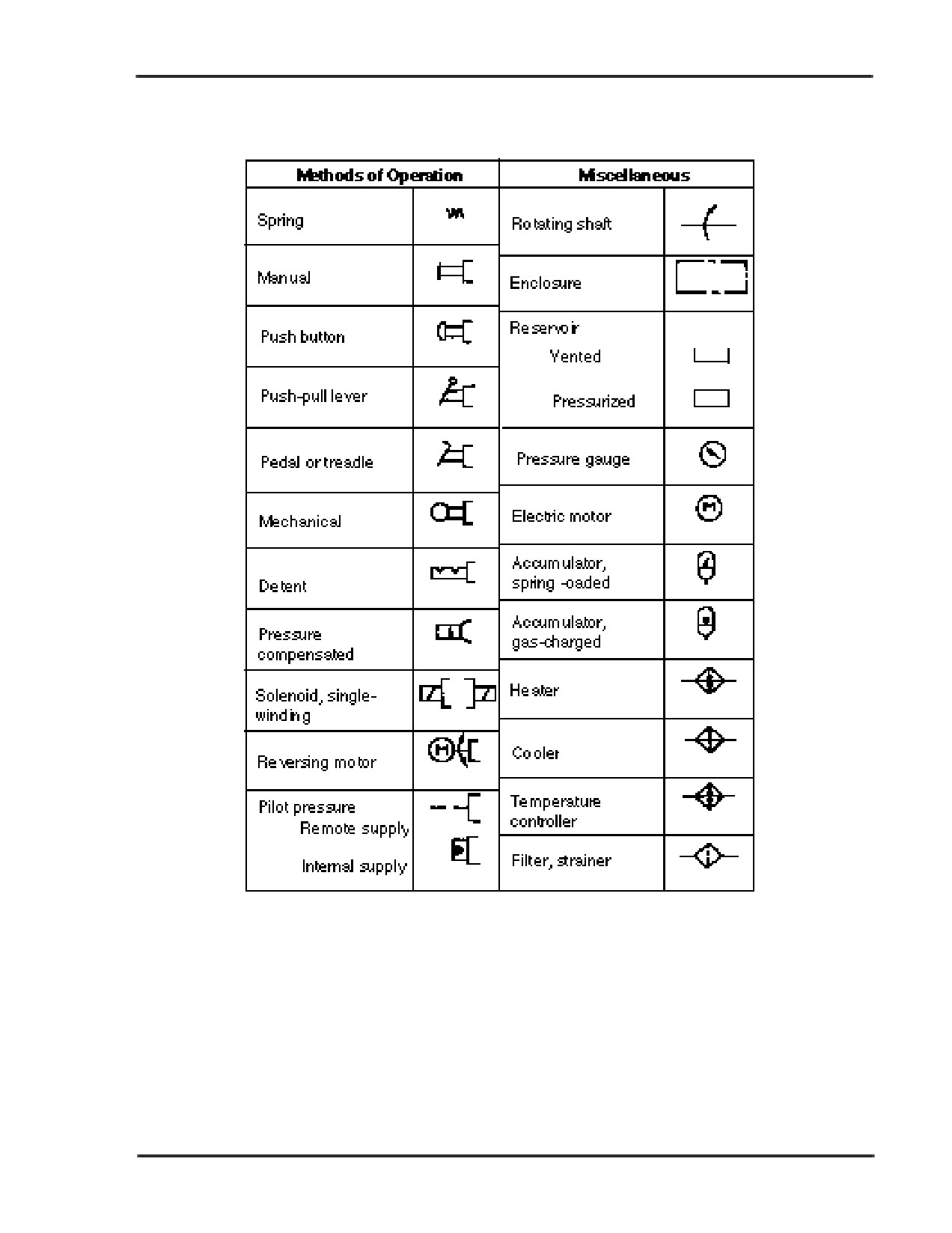
6-2. United States of American Standards Insti-
tute (USASI) Graphical Symbols. The USASI, the old American Standards Association
(ASA), and the Joint Industry Conference (JIC) are three systems of symbols used in circuit
diagrams. This manual uses the USASI symbols shown in Figure 6-2, pages 6-2 and 6-3.
Circuit Diagrams and Troubleshooting
6-1
FM 5-499
Figure 6-2. USASI graphical symbols
6-2
Circuit Diagrams and Troubleshooting
FM 5-499
Figure 6-2. USASI graphical symbols (continued)
Circuit Diagrams and Troubleshooting
6-3
FM 5-499
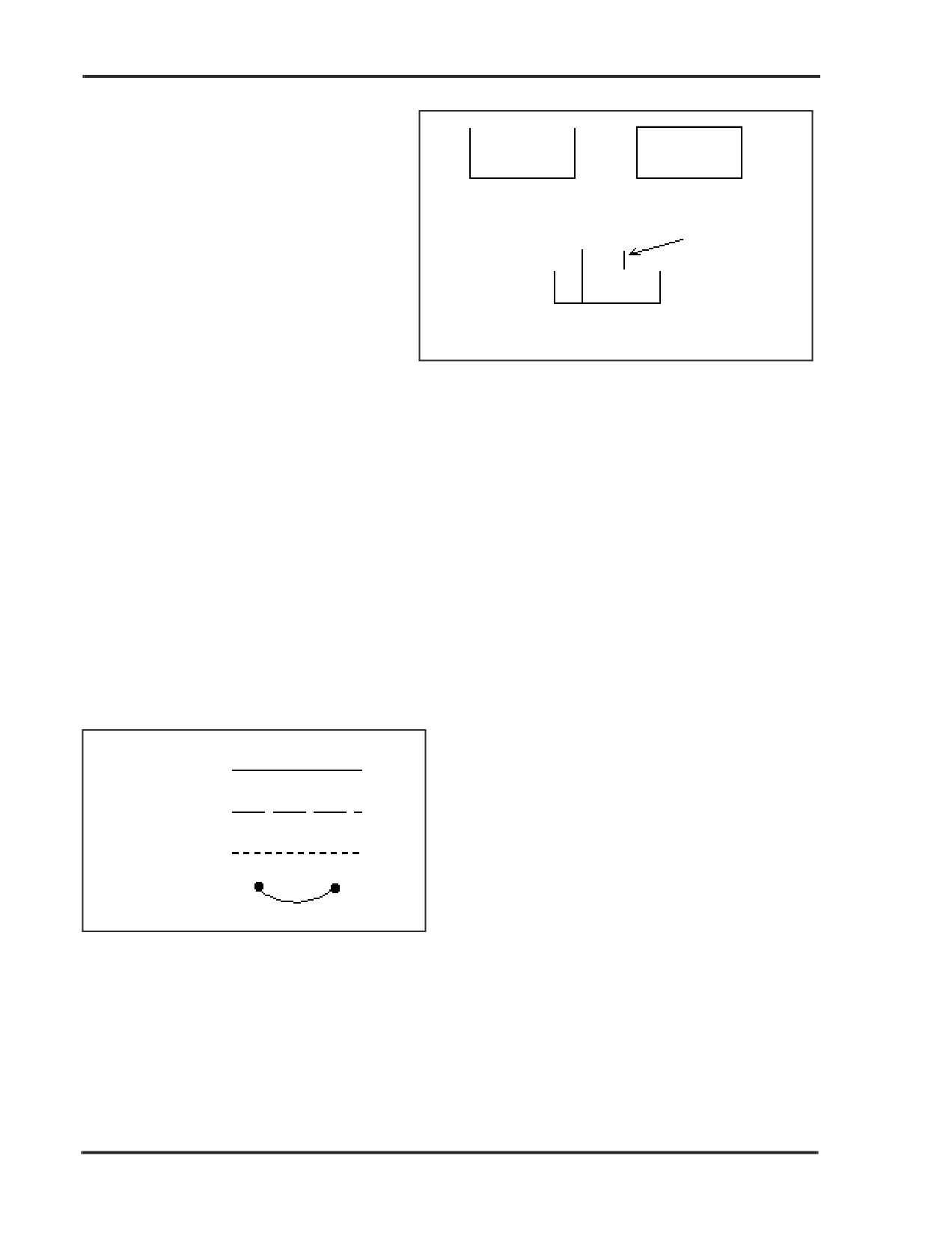
a. Reservoir. The symbol for a reser-
voir is a rectangle; the horizontal side is
the longest side (see Figure 6-3). If a res-
ervoir is vented to the atmosphere, the
Vented
Pressurized
top of the symbol is open. If a reservoir
reservoir
reservoir
is pressurized, the top is closed. Lines
Line terminating
that connect to a reservoir usually are
above fluid level
drawn from the top, regardless of where
they connect. If the line terminates
below the fluid level, it is drawn to the
bottom of the symbol. A line connected
Line terminating
below fluid level
to the bottom of a reservoir may be
drawn from the bottom of the symbol, if
the bottom connection is essential to the
Figure 6-3. Reservoir symbols
system's operation. For example, when
the pump's inlet must be charged or flooded by a positive head of oil above the inlet's port,
they would be positioned above the pump symbol and the suction line drawn out the bottom
of the symbol. Every reservoir has at least two hydraulic lines connected to it; some have
more. The reservoir is usually the only component pictured more than once so that compo-
nents and return or drain lines to and from the reservoir are represented correctly.
b. Lines. Figure 6-4 shows the symbols for hydraulic lines, which are as follows:
• Working line: A solid line that represents a hydraulic pipe, tube, hose, or other
conductor that carries the liquid between components.
• Pilot line: Long dashes that represent control lines.
• Drain line: Short dashes that represent the drain lines for leaking oil.
• Flexible line: A solid, arced line that is drawn between two dots which represents
a flexible line in the system.
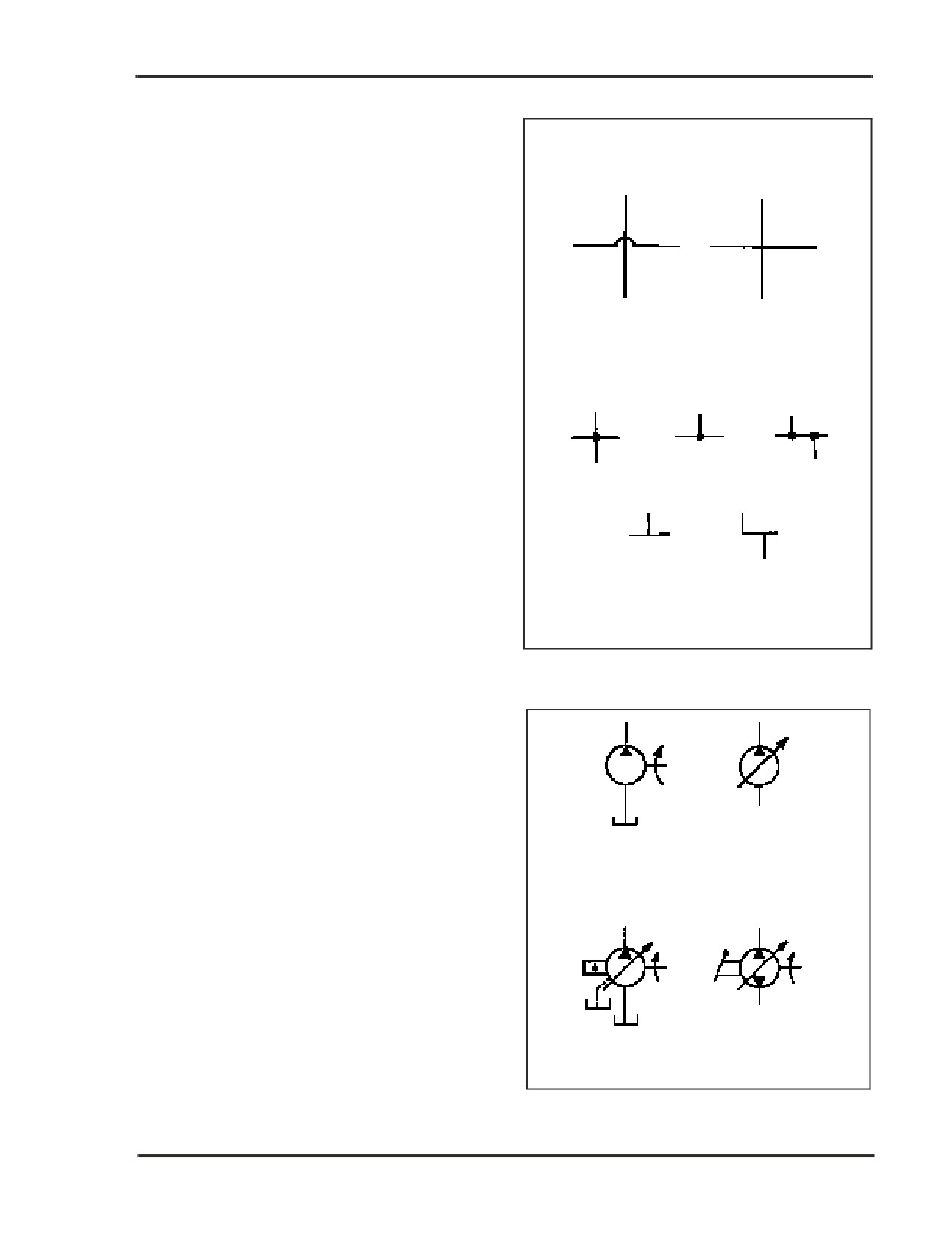
Figure 6-5, diagram A, shows crossed lines
that are not connected. Systems 1 and 2 repre-
Working line
sent two ways to indicate an intersection, one
with a loop, one without a loop. Diagram B
Pilot line
shows lines that are connected. The lines in
system 1 use a dot at the crossing, indicating
that loops are used to designate the crossing.
Drain line
The lines in system 2 do not use a dot at the
crossing, indicating that loops are not used at
Flexible line
the crossing.
c. Pump. The basic symbol of a pump is a
Figure 6-4. Hydraulic line symbols circle with a black triangle in the circle point-
ing outward (see Figure 6-6). The pressure line
from the pump is drawn from the tip of the triangle; the suction line is drawn opposite it.
The triangle indicates the flow direction. If a pump is reversible, it will have two triangles,
one pointing out of each port. Port connections to the pump (or any other component except
the reservoir) are at the points where the lines touch the symbols. A variable (or adjustable)
component is designated by an arrow drawn through the components at a 45-degree angle.
6-4
Circuit Diagrams and Troubleshooting
FM 5-499
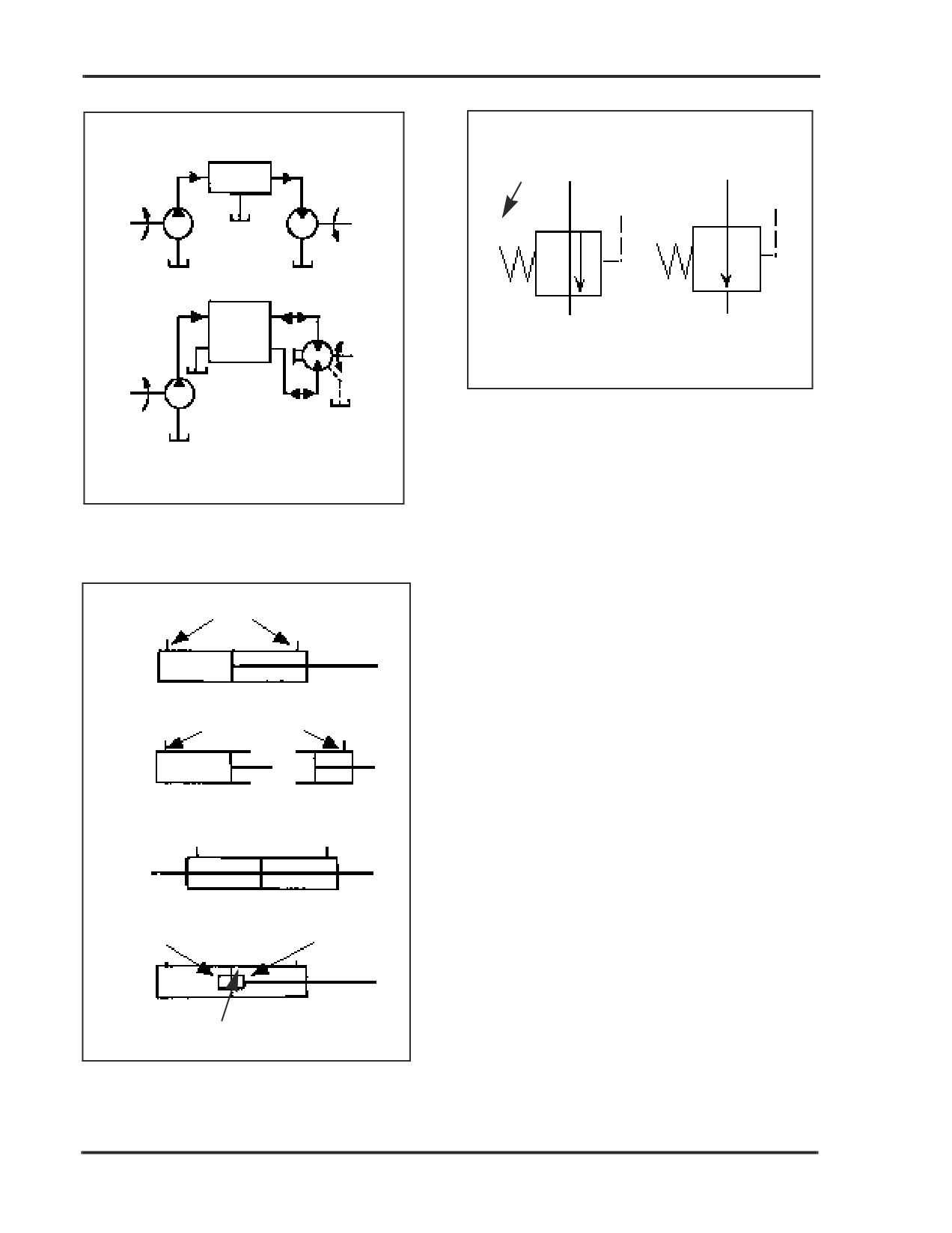
d. Motor. Motor symbols are circles with
System 1
System 2
black triangles pointing inward, indicating that
to loop
not to loop
the motor receives pressure energy (see Figure
6-7, page 6-6). One triangle indicates a nonre-
versible motor; two triangles indicate a revers-
ible motor. Flow direction in a single triangle
is the way the triangle points. In the reversible
motor, studying the pump and valve symbols is
the way to trace the flow direction. The arrows
that are outside the lines show the flow direc-
Nonconnecting lines
tion, which is always away from the pump's
A
pressure port and into the motor port that is
connected to the pressure line. The opposite
System 1 to dot
port then discharges back to the tank.
e. Cylinder. The basic cylinder symbol is a
simple rectangle (a barrel) and a T-shaped fig-
ure (a piston and a rod). The symbol can be
System 2 not to dot
drawn in any position. The following describes
four different cylinder symbols (see Figure 6-8,
page 6-6):
• Single-acting cylinder: One hydraulic
Connecting lines
line drawn to the basic cylinder symbol;
the end opposite the port is open.
B
• Double-acting cylinder: Both ends of
the symbol are closed; two lines meet
Figure 6-5. Crossing lines A and B
the basic cylinder symbol at the port
connections.
• Double-end rod cylinder: A rod line
extends from each end of the basic cylin-
der symbol.
• Cushioned cylinder: Small rectangles
are placed against the piston line. If the
Variable
cushion has an adjustable orifice, a
displacement
Fixed displacement
slanted arrow is drawn across the sym-
(simplified)
bol. There is no symbol for flow direc-
tion, so lines must be watched to see
where they are connected, which should
help determine flow.
f. Pressure-Control Valves. The basic symbol
Reversible with
lever control
is a square with external port connections and
an arrow inside to show the flow direction (see
Figure 6-9, page 6-6). This valve operates by
Variable displacement
pressure compensated
balancing the pump outlet to the reservoir.
(complete)
Figure 6-6. Pump symbols
Circuit Diagrams and Troubleshooting
6-5
FM 5-499
Nonreversible
motor
Inlet
Inlet
Pilot
Valves
Spring
pressure
Outlet
Outlet
Valves
NORMALLY
NORMALLY
CLOSED
OPEN
Figure 6-9. Pressure-control-valve
symbols
Reversible
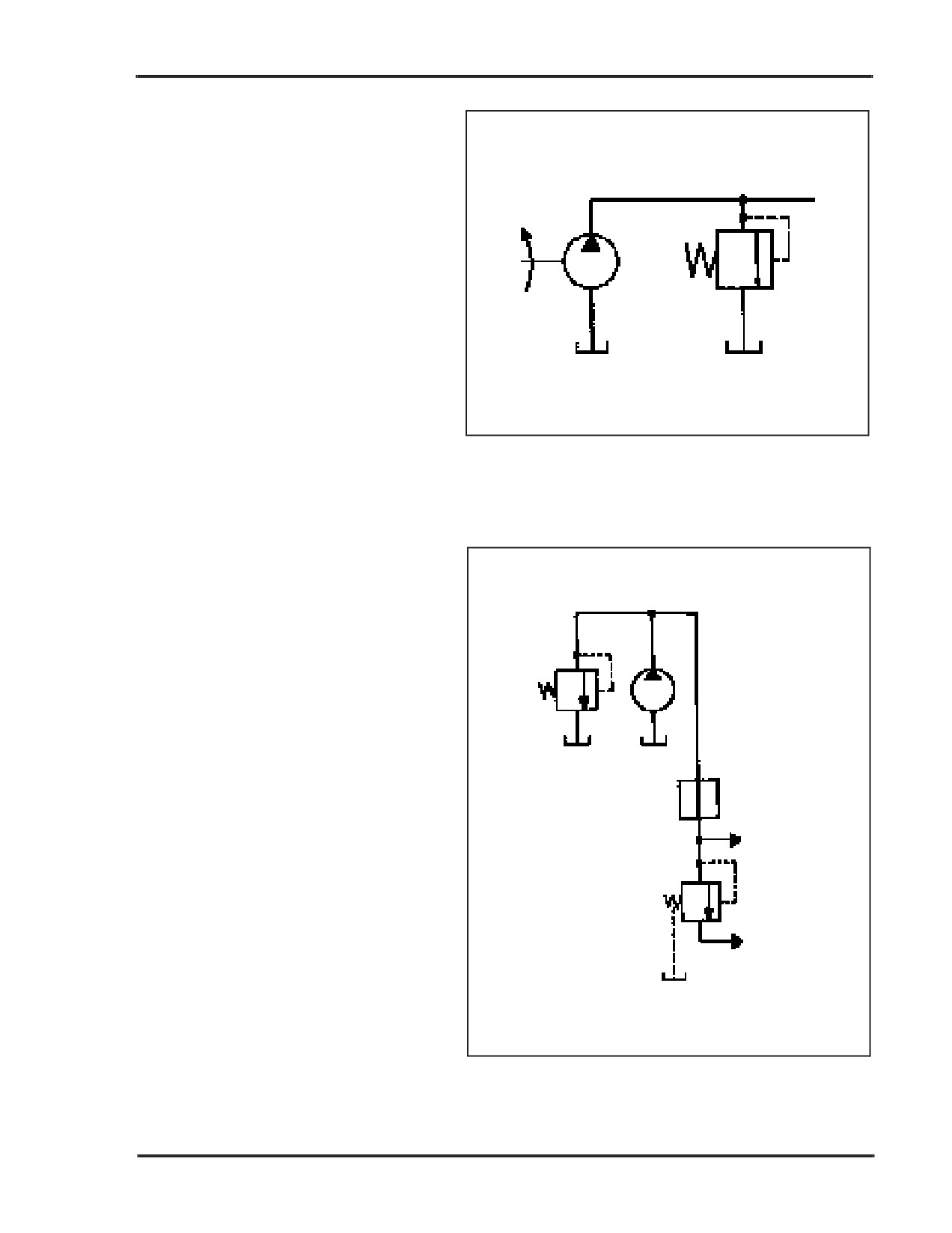
(1) Relief Valve (Figure 6-10). The relief
motor
valve's symbol goes between the pressure line and
the tank. The flow-direction arrow points away
from the pressure-line port and toward the tank
Figure 6-7. Motor symbols
port. When pressure in the system overcomes the
valve spring, flow is from the pressure port to the
tank port.
Ports
(2) Sequence Valve (Figure 6-11). A sequence
valve uses the relief valve. However, the inlet
port is connected to a primary cylinder line; the
outlet port is connected to the secondary cylinder
Double-acting
line. Pilot pressure from the primary cylinder
line sequences the flow to the outlet port when it
Port
Port
reaches the valve's setting. Since the sequence
valve is externally drained, a drain connection is
or
added to the symbol at the drain's location in the
Single-acting
valve.
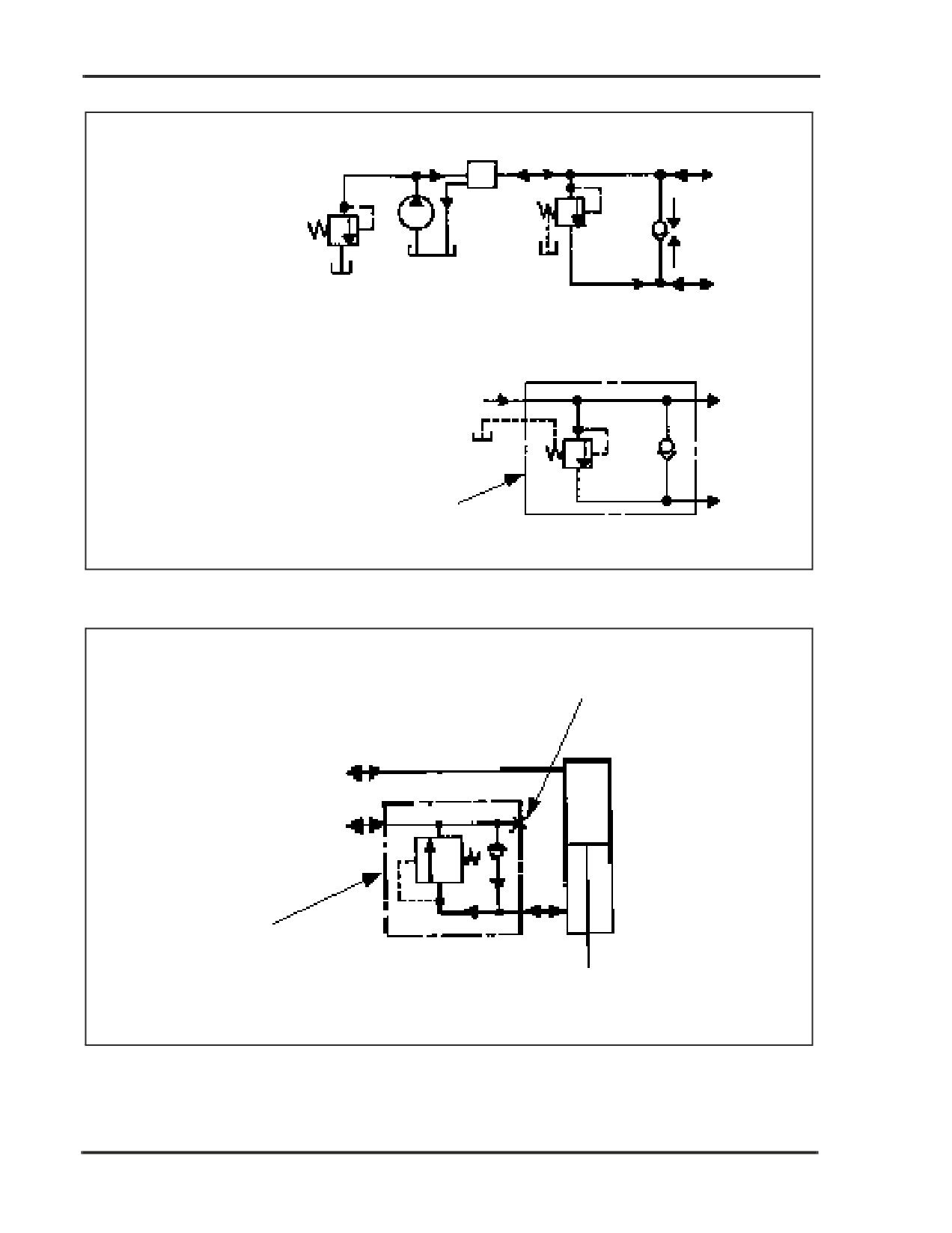
(3) Check Valve (Figure 6-12, page 6-8). A
check valve uses a sequence valve for free return
flow when the cylinders are reversed. In Figure
Double end rod
6-12, diagram A shows the valves as separate
units. Diagram B shows the check valve built into
Nonadjustable
Adjustable
the sequence valve. The box around the valves is
an enclosure, which shows the limits of a compo-
nent or an assembly that contains more than one
component. The enclosure is an alternate long
and short dashed line. External ports are
Cushioned
assumed to be on the enclosure line and indicate
connections to the components.
Figure 6-8. Cylinder symbols
6-6
Circuit Diagrams and Troubleshooting
FM 5-499
(4) Counterbalance Valve (Figure 6-
13, page 6-8). A counterbalance valve is
a normally closed pressure-control with
an integral check valve. A directly con-
Pressure line
trolled valve uses the same symbol as in
Figure 6-13, with the primary port con-
nected to the bottom port of the cylinder
and the secondary port to the direc-
tional valve. The valve is drained inter-
nally, so the symbol shows no drain
connection. If the valve body has two
primary ports, the symbol should show
one of them plugged.
Pump
Relief valve
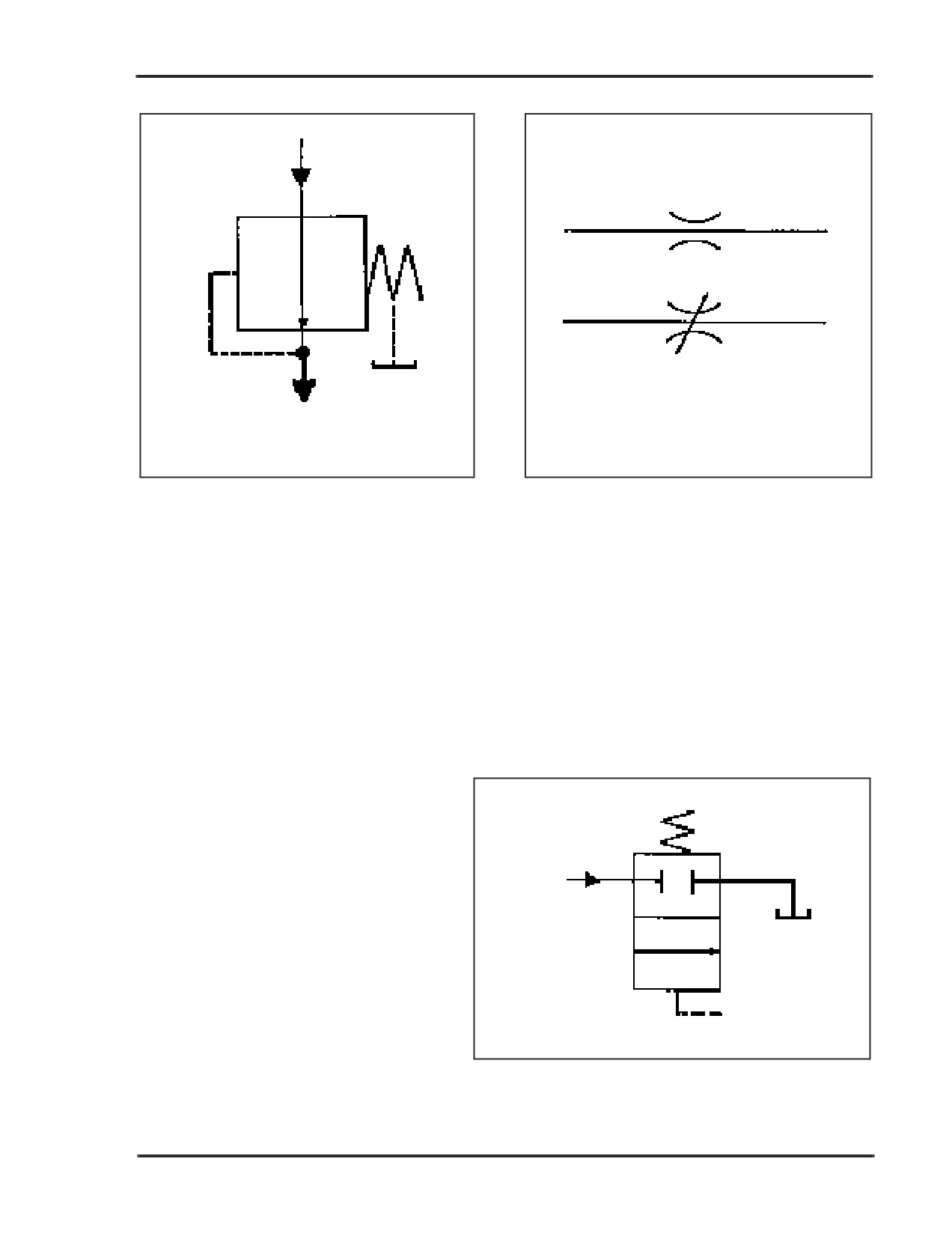
(5) Pressure-Reducing Valve. Fig-
ure 6-14, page 6-9 shows the normally
opened pressure-reducing valve. The
symbol shows the outlet pressure oppo-
Figure 6-10. Relief-valve symbol
site the spring to modulate or shut off
the flow when the valve setting is
reached.
g. Flow-Control Valves. Figure 6-15,
page 6-9, shows the symbols for the
basic flow-control, adjustable and nonad-
justable valves. The figure also shows
the symbol for a completely adjustable,
pressure-compensated, flow-control
valve with a built-in bypass.
h. Directional-Control Valves. A
directional-control-valve symbol uses a
multiple envelope system that has a
Relief valve
Pump
separate rectangle for each position. All
the port connections are made to the
Directional valve
envelope, which shows the neutral con-
To primary
dition of the valve. Arrows in each
cylinder
envelope show the flow paths when the
valve shifts to that position.
Sequence valve
(1) Unloading Valve (Figure 6-16,
To secondary
page 6-9). The symbol for this valve has
cylinder
two envelopes. In the normally closed
position, flow is shown blocked inside
Drain
the valve. The spring control is placed
adjacent to this envelope, indicating
that the spring controls this position.
The external pilot pressure is placed
against the bottom envelope, indicating
Figure 6-11. Sequence-valve symbol
the flow condition when the pilot pressure
Circuit Diagrams and Troubleshooting
6-7
FM 5-499
Directional
valve
To primary
A - SEPARATE UNITS
cylinder
Sequence
No-flow
Check
valve
direction
valve
Pump
Free-flow
Relief valve
direction
To secondary
B - INTEGRAL SEQUENCE
cylinder
AND CHECK
Component enclosure
Figure 6-12. Check-valve symbol
Plugged
port
To directional valve
Enclosure
Counterbalance
and check valve
Figure 6-13. Counterbalance-valve symbol
6-8
Circuit Diagrams and Troubleshooting
FM 5-499
Nonadjustable
Adjustable
Reduced-pressure outlet
Figure 6-14. Pressure-reducing-valve
Figure 6-15. Flow-control-valve symbol
symbol
takes over. If the lower envelope were superimposed on the top envelope, the symbol would
show that the flow path's arrow connects the pump outlet to the reservoir.
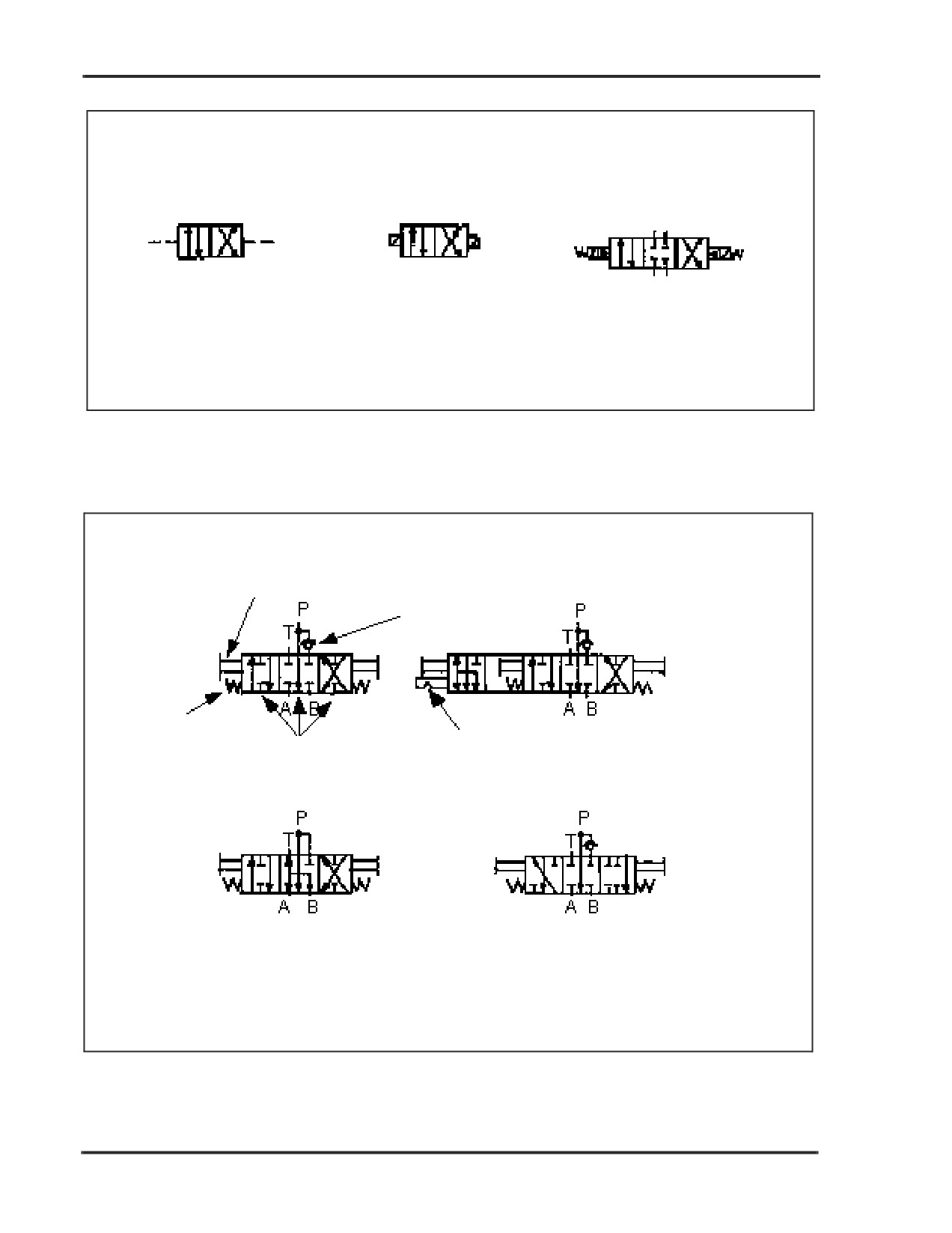
(2) Ordinary Four-Way Valve (Figure 6-17, page 6-10). If this valve is a two-position
valve, the symbol will have two envelopes. If the valve has a center position, the symbol will
have three envelopes. The actuating-control symbols are placed at the ends of the envelopes.
The extreme envelopes show the flow conditions when their adjacent controls are actuated.
(3) Mobile Directional-Valve Section (Figure 6-18, page 6-10). The symbol for this valve
section resembles a four-way-valve symbol; however, it has added connections and flow
paths to represent the bypass passage. There is a separate envelope for each finite position,
and connections are shown to the center or neutral position. The symbol shows a manual
lever control with centering springs at
each end.
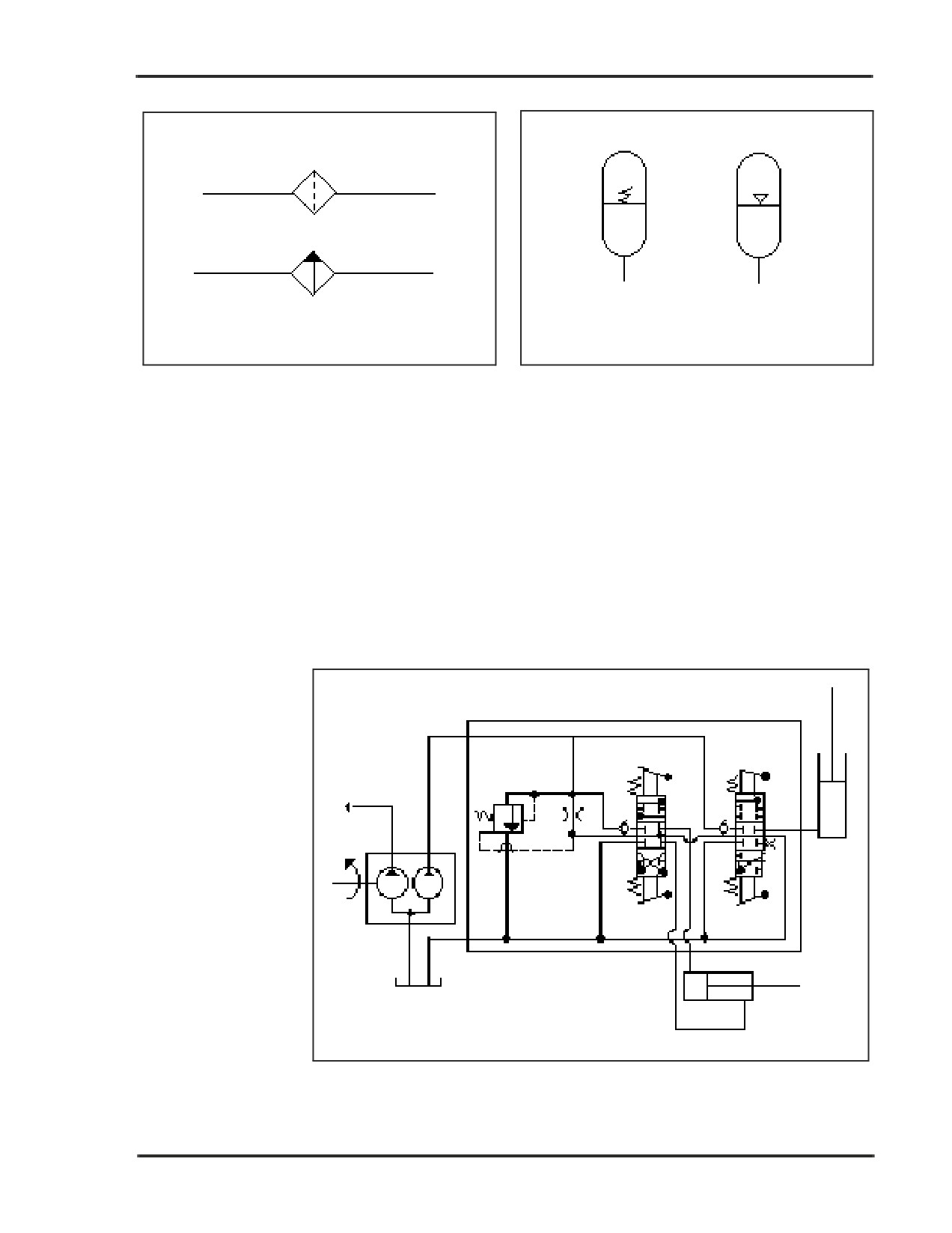
i. Accessories. The symbol for a fluid
conditioner is a square (Figure 6-19,
page 6-11) that is turned 45 degrees and
From pump
has the port connections to the corners.
A dotted line at right angles to the port
connections indicates that the condi-
tioner is a filter or strainer. A cooler
symbol has a solid line at a right angle to
the fluid line with energy triangles (indi-
To pilot-pressure
cating heat) pointing out. An accumula-
source
tor (Figure 6-20, page 6-11) symbol is an
oval, with added inside details to indi-
cate spring load, gas charge, or other fea-
Figure 6-16. Unloading-valve symbol
tures.
Circuit Diagrams and Troubleshooting
6-9
FM 5-499
Solenoid control
with internal pilot
pressure
A B
Solenoid-
control
symbol
P T
Two-position, controlled
Two-position, controlled
Three-position, spring-centered,
by external pilot pressure
by solenoids
closed-center controlled by soleniod
with internal pilot pressure
Figure 6-17. Four-way, directional-control-valve symbol
Manual control
Check valve in
pressure line
Spring centered
Float detent
By-pass passage
View A
View C
Double-acting D-spool
Floating C-spool
View B
View D
Motor B-spool
Single-acting T-spool
Figure 6-18. Mobile directional-control-valve symbol
6-10
Circuit Diagrams and Troubleshooting
FM 5-499
Filter or strainer
Spring loaded
Gas charged
Figure 6-19. Fluid-conditioner
Figure 6-20. Accumulator symbol
symbols
6-3. Typical Mobile Circuits. Hydraulic-lift, power-steering, and road-patrol-truck cir-
cuits are considered typical mobile circuits.
a. Hydraulic-Lift Circuit. Figure 6-21 shows the lift portion of the hydraulic system.
The circuit has two cylinders: a single-acting lift cylinder and a double-acting tilt cylinder.
The lift cylinder moves the lifting fork up and down. The tilt cylinder tilts the mast back
and forth to support or dump the load.
A two-section, multiple-unit directional valve controls the cylinder's operation. The first
valve has a double-acting D-spool to operate the tilt cylinder, hydraulically, in either direc-
tion. The outer envelopes show the typical four flow paths for reversing the cylinder. The
second valve has a single-acting T-spool to operate the lift cylinder. This cylinder is
returned by gravity;
the bypass unloads
Lift cylinder
the pump.
The pump is
T-spool
D-spool section
section
driven by the lift
To steering
truck's engine and
circuit
supplies the circuit
from the large vol-
ume end. The enclo-
sure around the two
pump symbols indi-
cates that both
pumping units are
contained in a single
assembly. The same
Tilt cylinder
applies to the two
directional valves
and the relief valve
that are enclosed.
They are in a single
assembly.
Figure 6-21. Hydraulic-lift circuit in neutral
Circuit Diagrams and Troubleshooting
6-11
FM 5-499
Figure 6-21 shows the circuit in neutral; the valves are centered. If the figure were to
show the operating mode, the outer envelopes on the valve symbols would be shifted over to
align with the ports at the center envelopes. The arrows in the envelopes would then show
the flow paths from the pressure inlet to the cylinders and/or the return flow to tank.
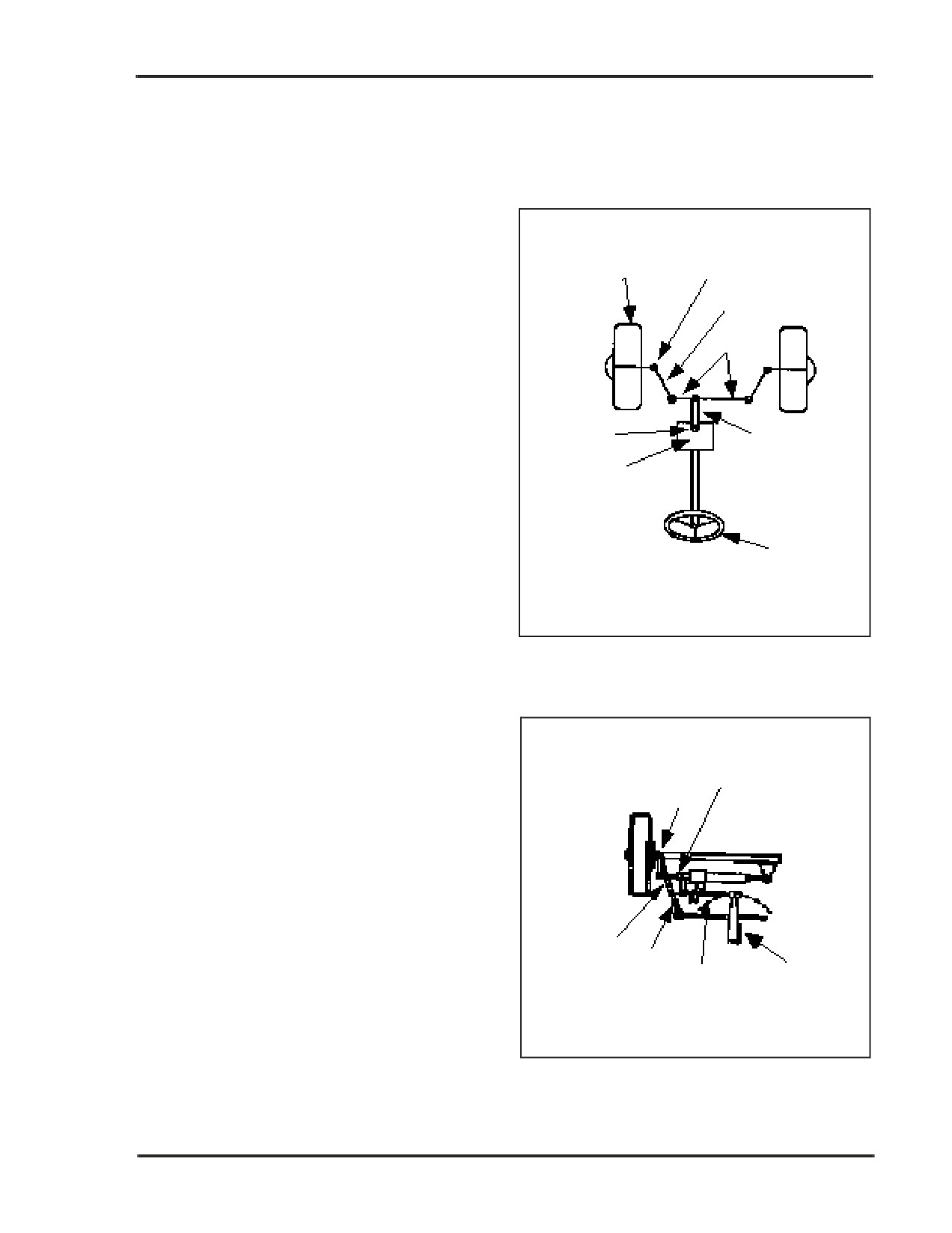
b. Power-Steering Circuits. Hydraulic
power steering incorporates a hydraulic boost
into a basic manual-steering system. A basic
Wheel pivot
manual-steering system is an arrangement of
Wheel
(king pin or ball studs)
gears in a box that multiplies the input torque
Steering arm
from the steering wheel to a much greater
torque at the steering shaft (Figure 6-22). The
Linkage
steering shaft, through the pitman arm (or
steering-shaft arm), transmits this increased
torque through the steering linkage to the
steering arms that turn the wheels. The basic
system of manual-steering gears and steering
Steering shaft
Pitman arm
linkage is a steering wheel, steering gear, and
linkage to the steered wheel.
Steering gear
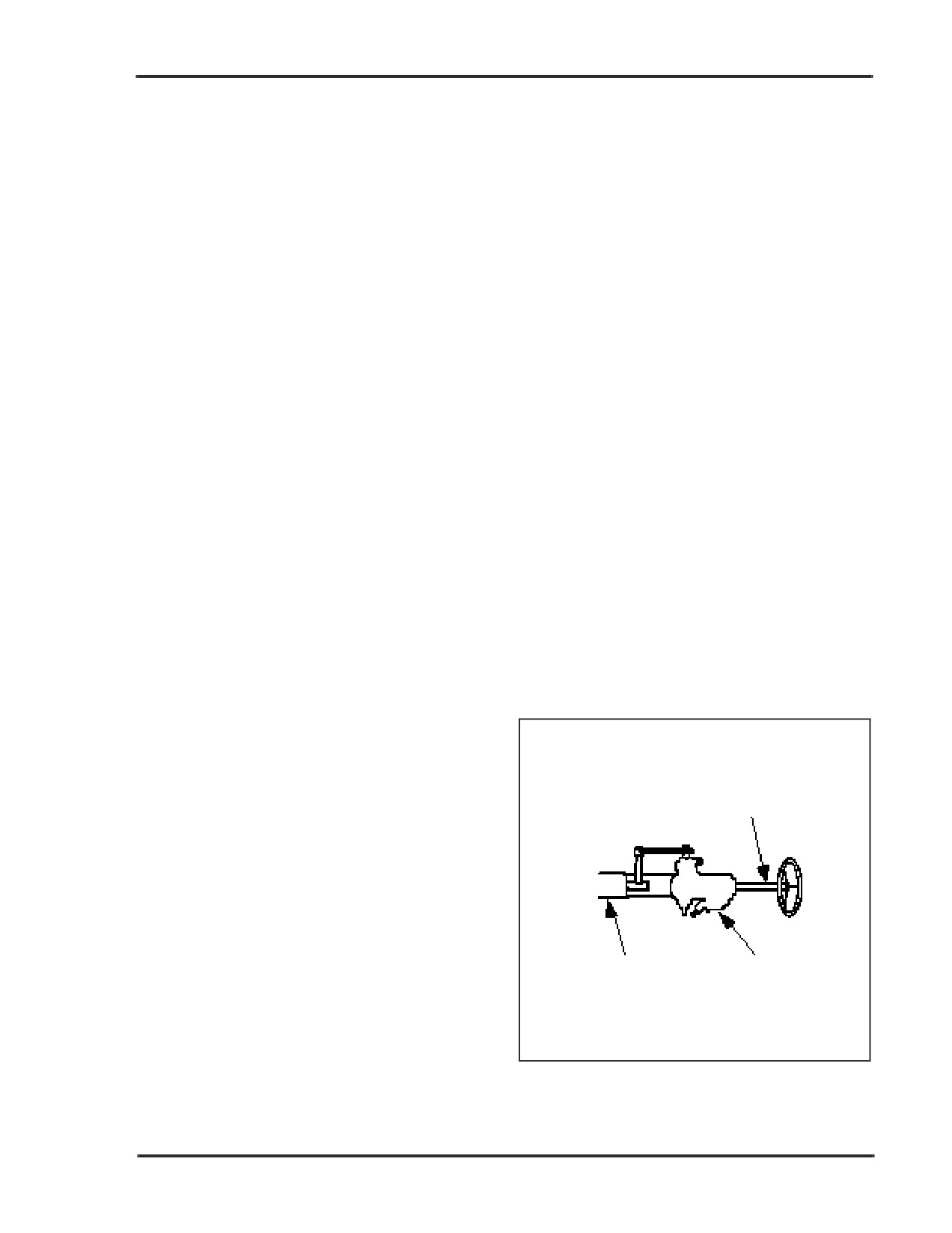
The hydraulic boost, which is a mechani-
cally operated hydraulic servo, may be applied
to the steering linkage (Figure 6-23) or within
Steering wheel
the steering gear. Steering-wheel movement
actuates the steering valve, which directs the
fluid under pressure to the steering-valve body
that follows the valve spool. Hydraulic boost is
applied only when the steering wheel is being
moved.
Figure 6-22. Manual-steering-gear
layout
An integral power-steering system has the
hydraulic-boost subsystem built into the
mechanical steering gear. The steering valve
is actuated by moving the steering shaft. The
valve controls the operation of the power cylin-
Integral steering unit
der. Thrust from the power cylinder is trans-
C
mitted directly to the steering shaft. Road
shock transmitted back from the wheels is
taken up in the steering gear.
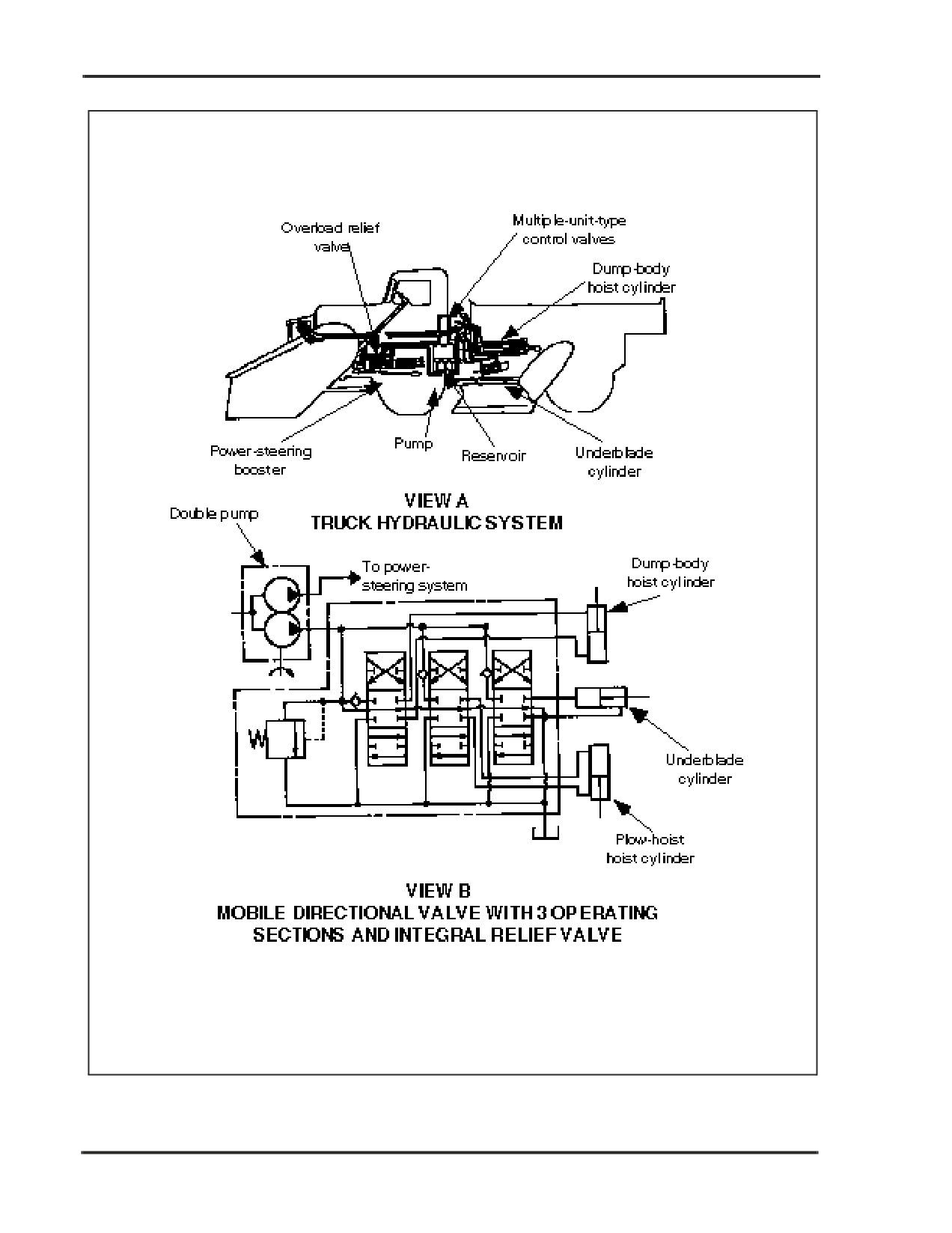
Figure 6-24, page 6-13, shows the semi-
integral power-steering system, or valve-on-
gear system. The steering valve is built into
the steering gear. The power cylinder is
A
attached to the vehicle's frame and to the link-
D
Pitman arm
age. Road shock and thrust are absorbed in
B
the frame.
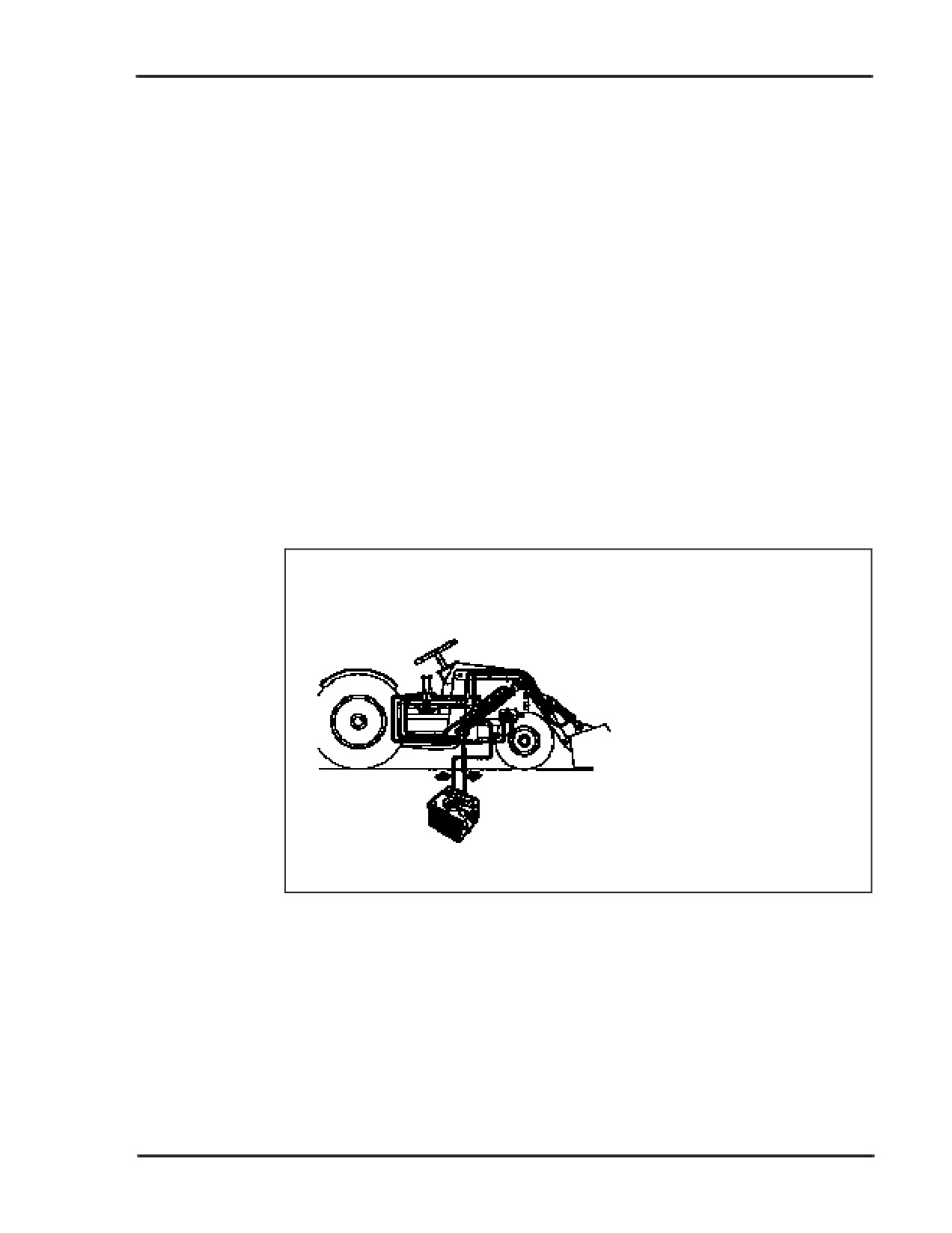
c. Road-Patrol-Truck Circuits. Figure 6-25,
page 6-14, diagrams A and B respectively,
shows a road-patrol truck's hydraulic system
Figure 6-23. Power-steering layout
and a hydraulic circuit's schematic, as a com-
parison. The truck needs three double-acting
Circuit Diagrams and Troubleshooting
6-12
FM 5-499
cylinders to operate its blades and dump body: a plow hoist cylinder for the front plow, an
underblade cylinder, and a dump-body hoist cylinder. The truck also has a power-steering
system operated from one-half of the double pump. (The steering system has been omitted
from diagram B). The schematic shows that the three cylinders are operated through a
three-spool, mobile directional valve fed from the large volume end of the double pump.
6-4. Troubleshooting. Personnel should follow a system when troubleshooting. The fol-
lowing shows the STOP system:
• Study the circuit diagrams.
• Test by using a reliable tester.
• Organize the knowledge gained from the circuit-test results.
• Perform repairs, taking time to do the job well.
a. Causes of Improper Operations. If improper operation does occur, the cause can gen-
erally be traced to one of the following:
• Use of the wrong oil viscosity or type.
• Insufficient fluid in the system.
• Presence of air in the system.
• Mechanical damage or structural failure.
• Internal or external leakage.
• Dirt, decomposed packing, water, sludge, rust, and other foreign matter in the
system.
• Improper adjustments.
• Heat exchanger that is plugged, dirty, or leaking.
b. Testing a Hydraulic Circuit. To test complete or individual parts of a hydraulic cir-
cuit, use a hydraulic circuit tester (see para-
graph 2-8, page 2-18). The best tester to use is
a compact portable unit that can check flow,
pressure, and temperature.
c. Comparing Test Results with Specifica-
Steering column
tions. Hydraulic-powered systems are power-
transmission systems. The only purpose of the
components and the circuit is the controlled
transfer of power from the motor shaft to the
point of effective work.
fp
HP
= --------------
1, 714
Steering valve
Steering gear
where—
HP = hydraulic horsepower
f
= flow, in GPM
Figure 6-24. Semi-integral power-
p
= pressure, in psi
steering system
Circuit Diagrams and Troubleshooting
6-13
FM 5-499
Figure 6-25. Hydraulic circuit diagram for a road-patrol truck
6-14
Circuit Diagrams and Troubleshooting
FM 5-499
By measuring those two factors at the same time, it is possible to read the effective out-
put at any point. Comparing test results with specifications will give the necessary fault-
finding facts.
d. Slippage. All hydraulic systems have some slippage (see paragraph 3-4, page, page
3-3) even when new. As wear increases, slippage at wear points increases, causing a
decrease in GPM. However, system pressure is maintained. In time, wear can be so great
that all flow is lost. Only at a complete breakdown will a pressure gauge show where the
trouble is. Conducting a flow, pressure, and temperature (FPT) test would have indicated
such a problem and avoided a complete breakdown.
NOTE: At low oil temperature and low pressure (or light loads) the
machine will continue to operate but at less speed.
e. Flow and Pressure. Always test flow and pressure together. Connect a hydraulic
tester into the hydraulic circuit at various points to isolate and check components (pumps,
valves, or cylinders) for efficiency. Figure 6-26 shows a hydraulic tester, connected to the
pump's output, checking the flow at various pressures that, in turn, checks the pump's per-
formance against the recommended specification. When isolating and testing individual
components with a hydraulic tester, direct the return fluid to the reservoir. If the fluid
returns to the reservoir through the system's piping, you will not get a correct reading
because of buildup of back pressure.
Test the
whole circuit as
TROUBLESHOOTING A HYDRAULIC SYSTEM
described, and
then isolate por-
tions and test
Isolate and check the following:
for a complete
analysis of the
• Directional-control valves
for leakage, efficiency.
system. If a test
on a full circuit
• System’s relief valves
indicates a mal-
for leakage, proper settings.
function, isolate
• Pump’s GPM flow at
a portion and
various pressures.
test the remain-
• Cylinder’s efficiency.
ing portions
until you find
the malfunction-
ing part. Gener-
ally, cylinders
Figure 6-26. Hydraulic tester connected to a pump’s output
will fail first.
Packing will
wear because of friction and loading against the cylinder walls. Therefore, isolate the cylin-
ders first. If test results indicate that the circuit is operating properly, the cylinders have a
problem. During testing, determine the setting and condition of the relief valve. If further
tests are necessary, isolate the directional-control valve to check the pump's efficiency and
inlet hose.
f. Other Conditions. Other problems could occur that are not directly related to nor
caused by the various parts of the hydraulic system. These problems could show the same
Circuit Diagrams and Troubleshooting
6-15
FM 5-499
general malfunctions of an improperly operating system. Examples are leaking hose, pack-
ing glands, and seals, which would be visually evident; a bind in the directional-control
valve or the cylinder's piston rod; a dented or deformed hydraulic cylinder; or a crimped or
restricted pressure line, which would be harder to detect.
g. Specific Troubles, Causes, and Solutions. Tables 6-1 through 6-5, pages 6-17 through
6-21 list some possible problems and solutions in a hydraulic system.
6-16
Circuit Diagrams and Troubleshooting
FM 5-499
Table 6-1. Problems and solutions with pump operations
No Fuel Delivery
Problems
Solutions
Fluid level in the reservoir is low.
Add the recommended oil; check the level on both sides of
the tank's baffle to be certain that the pump suction is sub-
merged.
Oil intake pipe or inlet filter is plugged.
Clean the filter; otherwise, remove the obstruction.
Air leak in the inlet line prevents priming or causes
Repair the leaks.
noise and irregular action of the control circuit.
The pump shaft turns too slowly to prime itself
Check the appropriate manual's minimum speed recommen-
(vane-type pumps only).
dations.
The oil viscosity is too heavy to pick up the prime.
Use a lighter oil viscosity; follow the appropriate manual's
recommended temperatures and services.
Shaft rotates in the wrong direction.
Reverse the rotation immediately to prevent seizure and
parts from breaking due to lack of oil.
Pump shaft is broken, parts are broken inside the
See the appropriate manual for replacement instructions.
pump, or the shear pin or shear linkage is broken.
Pump has dirt in it.
Dismantle and clean the pump; flush the system.
The stroke is incorrect on variable delivery pumps.
See the appropriate manual for instructions.
No Pressure in the System
Pump does not deliver oil for any reasons given in
Follow the remedies given.
above section.
• Relief-valve setting is not high enough.
• Increase the pressure setting of the valve; check the
appropriate manual for the correct pressure.
• Relief valve leaks.
• Check the seat for score marks and reseat.
• Relief-valve spring is broken.
• Replace the spring and readjust the valve.
Vane is stuck in the rotor slots (vane-type pumps
Inspect for wedged chips; inspect the oil for excessive vis-
only).
cosity.
The head is loose (very infrequent occurrence).
Tighten the head; check the appropriate manuals before
tightening.
Oil to the tank recirculates freely through the sys-
Check to see if a return line is open due to either a direc-
tem.
tional valve set in the open-center neutral position or some
other valve is left open.
Control valves have internal leakage.
Block off various parts of the circuit to determine where the
leak is; repair when located.
Noisy Pump
Intake line, filter, or restricted intake pipe is partially
Clean out the intake or strainer, or eliminate the restrictions;
clogged.
ensure that the inlet line is open.
Circuit Diagrams and Troubleshooting
6-17
FM 5-499
Table 6-1. Problems and solutions with pump operations (continued)
Noisy Pump (continued)
Problems
Solutions
• Air leaks occur at the pump's intake piping joints.
• Pour oil on the joints while listening for a change in the
operating sounds; tighten the joints as required.
• Air leaks are present at the pump's shaft packing.
• Pour oil around the shaft while listening for a change in
the operating sounds; follow the appropriate manual
instructions when changing the packing.
• Ensure that the inlet and return lines are well below the oil
• Air is drawn in through the inlet pipe openings.
level in the reservoir; add oil to the reservoir if necessary.
Air bubbles are present in the intake oil.
Use hydraulic oil that has a foam depressant.
Reservoir's air vent is plugged.
Clean or replace the breather.
Pump is running too fast.
See the appropriate manuals for recommended maximum
speeds.
Oil viscosity is too high.
Use a lower oil viscosity; check the appropriate manuals for
the recommended temperatures and services.
Coupling is misaligned.
Realign the coupling.
Pump vane is stuck (vane-type pump).
Inspect the pump for wedged chips or sticky oil; reassemble.
Parts are worn or broken.
Replace worn or broken parts.
External Oil Leaks
Shaft packing is worn.
Replace the worn parts.
A head of oil is present on an inlet-pipe connection.
Keep all the joints tight; slight leakage may be necessary.
Excessive Wear
Abrasive matter in the hydraulic oil is being circu-
Install an adequate filter or replace the oil more often.
lated through the pump.
Oil viscosity is too low for working conditions.
Check the appropriate manual's recommendations or the
lubrication chart for information.
Sustained high pressure occurs above the maxi-
Check the relief or regular valve's maximum setting.
mum pump rating.
Drive is misaligned or belt drive is tight.
Check the parts; correct the problem.
Air recirculation is causing a chatter in the system.
Remove the air from the system.
Broken Parts Inside the Pump Housing
Excessive pressure above the maximum pump rat-
Check the relief or regulator valve's maximum setting.
ing is present.
Seizure occurs due to lack of oil.
Check the reservoir level, oil filter, and possibility of restric-
tion in the inlet line.
Solid matter is being wedged in the pump.
Install a filter in the suction line.
Head screws are too tight.
Check appropriate manual’s recommendations; adjust.
6-18
Circuit Diagrams and Troubleshooting
FM 5-499
Table 6-2. Problems and solutions with actuating mechanism
Inoperative System
Problems
Solutions
System fails because of any problem listed in
Follow recommened solution.
Tables 6-1 through 6-5.
Mechanism Creeps (Stopped in Intermediate Position)
Internal leakage occurs in the actuating cylinders or
Replace the piston packing or cylinder, if the walls are
operating valves.
scored; replace or repair the valve.
Longer Operating Times Than Specified
Air is present in the system.
Bleed the system.
Actuating cylinder or directional-control valve has
Replace the piston packing or replace the cylinder if the
an internal leak.
walls are scored; replace or repair the valve; clean the unit to
remove foreign matter; check the cam clearance.
Pump is worn.
Repair or replace the pump.
Action is sluggish on start up but less so after oper-
Check appropriate manual’s lubrication order.
ating temperatures have increased, or action slows
down after warm up. Depending on equipment and
circuit design, could indicate that the oil viscosity is
too high.
External Oil Leaks
End caps leak.
Tighten caps, if possible, or replace the gasket.
Chevron seals leak.
Adjust or replace the seals.
Abnormal Packing-Gland Wear
Cylinder is not securely fastened to the frame,
Tighten the cylinder; check it periodically.
causing it to vibrate.
Cylinder and piston-rod extension are misaligned.
Check the parts; correct the problem.
Side load occurs on the piston rod.
Check for cylinder alignment or worn pins or ball joints.
Circuit Diagrams and Troubleshooting
6-19
FM 5-499
Table 6-3. Problems and solutions with heating oil
Heating Caused by Power Unit (Reservoir, Pump, Relief Valve, Coolers)
Problems
Solutions
Relief valve is set at a higher pressure than neces-
Check manual for the correct pressure; reset the relief valve.
sary; excess oil dissipated through increased slip-
page in various parts or through the relief valve or
directional valve.
Internal oil leaks occur due to wear in the pump.
Repair or replace the pump.
Oil viscosity is too high.
Check appropriate manual for correct oil viscosity to use at
various temperatures.
Overhauled pumps may be assembled too tightly,
Follow the appropriate manuals when rebuilding a pump.
which reduces clearances and increases friction.
Pump has leaking check or relief valves.
Repair or replace the valves.
Oil cooler or coolant functions improperly in cut off.
Inspect cooler; clean inside and outside; ensure that air flow
or coolant flow around fins is not cut off.
Conditions in System Cause Excessive Heating
Lines are restricted.
Replace the lines if they are crimped; remove any obstruc-
tion if lines are partially plugged.
Large pump deliveries do not unload properly.
Ensure that the open-center valves are neutralized and that
any pressure-relieving valves are in the correct position.
(Allow only small pumps to stay at high pressures when run-
ning idle for long periods.)
Radiation is insufficient.
Use artificial cooling.
Pump has internal leaks.
Locate leaks; replace the packing.
Reservoir is too small to provide adequate cooling.
Replace unit with a larger reservoir.
Valves or piping is undersized.
Check flow velocity through the lines and valves; compare
them with the manual’s recommendations. If velocity is
excessive, install larger equipment.
6-20
Circuit Diagrams and Troubleshooting
FM 5-499
Table 6-4. Problems and solutions with fluid motors
Motor Turns in the Wrong Direction
Problems
Solutions
Conductors are crossed between the control valve
Check circuit to determine the correct conductor connection
and the motor.
between the control valve and motor.
Motor Does Not Turn or Does Not Develop Proper Speed or Torque
System’s overload-relief-valve adjustment is not set
Check system’s pressure; reset the relief valve.
high enough.
Relief valve sticks open.
Clean or replace the relief valve; adjust.
Oil to the reservoir freely recirculates through the
Check control-valve linkage; directional-control valve may be
system.
in open-center neutral.
Driven mechanism binds because of misalignment.
Check the motor shaft for alignment.
Pump does not deliver enough GPM or pressure.
Check pump’s GPM and pressure; repair or replace.
Motor yoke is not set at the proper angle.
Adjust the pump’s yoke angle.
External Oil Leak From the Motor
Seals leak (drain may not be connected from motor
Check motor for 3rd line (a drain line that must go to tank
to tank).
used on piston and vane motors).
NOTE: See Table 6-1 for improper operation of pump.
Table 6-5. Problems and solutions with accumulator operation
Sudden Drop in Accumulator Pressure (Position of Selector Valve is Changed)
Problems
Solutions
Accumulator has an internal or external leak.
Repair the leak or replace the accumulator.
No Pressure When Pump Stops Running (Normal Pressure When Pump Was Running)
Hydraulic line has a leaking gas or check valve.
Replace the check or the gas valve.
Sluggish Response for Accumulator
Oil screen in the accumulator stops.
Dismantle the accumulator; clean the screen.
Gas precharge is not sufficient.
Precharge according to recommendations in the manual;
check for gas leaks.
NOTE: Release all internal pressure before making repairs on accumulators.
Circuit Diagrams and Troubleshooting
6-21