FM 21-10 MCRP 4-11.1D FIELD HYGIENE AND SANITATION (June 2000) - page 3
FM 21-10/MCRP 4-11.1D
NOTE
Ensure that sleeping individuals observe safety precautions. Use ground
guides for vehicles in bivouac areas.
ENFORCE PREVENTIVE MEDICINE MEASURES FOR THE EFFECTS OF
SLEEP LOSS
Those individuals with the most complex mental or decision-making jobs need the
most sleep. This means you and your most critical leaders and operators!
Cross train individuals to perform the critical tasks and delegate limited authority
among leaders, thus enabling all to get necessary rest.
ENSURE WELFARE, SAFETY, AND HEALTH OF UNIT
Ensure the best and safest water, food, equipment, shelter, sanitation, and sleep
possible are provided.
Educate service members to maintain professional pride and personal caring for
themselves, each other, and their equipment.
3-29
FM 21-10/MCRP 4-11.1D
Know the personal backgrounds and the military skills of your service members.
Chat with them informally about themselves. Be attentive and understanding while
listening to service members.
Utilize group support and counsel for service members with home front problems.
Assign jobs to maintain a balance between having qualified people in key positions
while sharing the load, hardship, and risks fairly.
Use challenging and difficult environments during training to increase your own and
the units coping skills and confidence.
REDUCE UNCERTAINTY BY KEEPING EVERYONE INFORMED
Brief unit personnel on the situation, objectives, and conditions that the mission or
environment may involve.
Explain reasons for hardships, delays, and changes.
Do not give false reassurances. Prepare your service members for the worst and put
any unexpected challenges or reversals in a positive perspective.
Deal with rumors firmly and honestly. Prevent the spread of rumors.
Make contingency plans and follow SOP to reduce the effects of surprise.
3-30
FM 21-10/MCRP 4-11.1D
PROMOTE COHESION WITHIN THE UNIT
Use equipment drills, physical fitness training, team sports, and field stress training
to stimulate mutual reliance and closeness.
Bring unit members together for meals, award ceremonies, and other special occasions.
Integrate new members by assigning sponsors and ensuring rapid familiarization.
IMPART UNIT PRIDE
Educate service members in the history and tradition of the small unit, its parent
units, and the branch of Service.
Honor the historical examples of initiative, endurance, and resilience, of overcoming
heavy odds, and of self-sacrifice.
Section VII. NOISE
PLAN FOR NOISE
Identify existing noise in your unit. If necessary, request PVNTMED assistance in
identifying sources.
3-31
FM 21-10/MCRP 4-11.1D
Ensure that hearing conservation is part of the unit SOP.
Ensure all service members are medically fitted for hearing protectors and are
issued multiple sets.
Ensure all service members have annual hearing test/screening.
Control noise sources.
Isolate by distance; that is, keep troops away from noise, if possible.
Isolate by barrier; for example, use sandbags.
Use organic equipment controls; for example, keep mufflers and engine covers
in good repair.
Train unit to do mission while wearing hearing protectors.
Post Noise Hazard signs in noise hazardous areas and on noise hazardous equipment.
ENFORCE INDIVIDUAL PROTECTIVE MEASURES
Ensure that service members
Wear earplugs or other hearing protective devices.
3-32
FM 21-10/MCRP 4-11.1D
Do not remove inserts from aircraft or tracked vehicle helmets.
Avoid unnecessary exposure.
Limit necessary exposure to short, infrequent, mission-essential times.
Clean their hearing protectors.
PROTECT MISSION
Be aware of short-term noise effects on the service members ability to hear combat
significant noise.
Assign listening post
(LP)/observation post
(OP) to troops least affected by
noise,augment LP/OP with night vision devices and/or increase the number of
audible alarms around your position.
Section VIII. TOXIC INDUSTRIAL CHEMICALS/MATERIALS
PLAN FOR CHEMICALS
Identify sources of toxic industrial chemicals/materials in your unit. If necessary,
request PVNTMED assistance in identifying sources.
3-33
FM 21-10/MCRP 4-11.1D
Obtain safer chemicals for unit operations, if available.
Observe cautions/warnings posted in technical manuals dealing with solvents
corrosives, and other hazardous materials.
(Refer to MSDS that accompany stores
of toxic chemicals/materials.)
ENFORCE INDIVIDUAL PREVENTIVE MEDICINE MEASURES
Ensure that service members
Repair engines outside or vent engine exhaust to outside.
Keep their sleeping quarters ventilated.
Do not use vehicle engines as heaters.
Use/maintain onboard ventilation systems.
Are trained and drilled to self-protect themselves around hydrogen chloride and M8
smoke.
Maintain bore/gun gas evacuation systems.
Use safety Stoddard solvent.
3-34
FM 21-10/MCRP 4-11.1D
Have adequate clean gloves, coveralls, and other protective gear.
Follow label instructions on chemical containers.
3-35
FM 21-10/MCRP 4-11.1D
CHAPTER 4
UNIT FIELD SANITATION TEAM
FIELD SANITATION TEAM CONCEPT
During World War II, it became apparent that more action was needed at the unit
level to counter the medical threat.
(Remember Togatabu Island and the jungles of
Burma? [pages 1-2 and 1-3]) To answer this need, the FST concept was developed.
Selected members from each company-sized unit were designated to receive special
training in DNBI prevention so they could advise the commander in PMM for
DNBIs. This training enabled the unit commander to provide arthropod control,
individual and unit disinfection of water, and safe food supplies. This resulted in
commanders being able to reduce DNBI losses.
SCOPE OF FIELD SANITATION TEAM OPERATIONS
The FST
Conducts arthropod and rodent control operations in the field as directed by the
commander. In garrison, the FST is in a training status. During mobilization, the
FST performs its field sanitation duties.
4-1
FM 21-10/MCRP 4-11.1D
Ensures that unit leaders are supervising the disinfection of unit water supplies.
Instructs the troops in methods of individual water purification.
Assists the commander by inspecting food service operations.
Monitors the waste disposal procedures and the construction of garbage and soakage
pits; and then inspects these devices for proper waste disposal procedures use.
Ensures personnel have individual waste collection bags and the units chemical
toilets are set up and operated correctly. Monitors disposal methods of individual
bags and chemical toilet contents. Monitors the construction of field latrines and urinals
when chemical toilets are not available. Inspects these devices for proper sanitation.
Provides unit training in the use of individual PMM.
Applies pesticides as required/necessary for the control of arthropods.
FIELD SANITATION TEAM TASKS
Unit FSTs serve as advisors to the commander on individual and unit PMM that prevent
DNBI. To assess the medical threat (disease/illness risk), the team members must be able
to perform the following tasks:
Inspect water containers and trailers.
4-2
FM 21-10/MCRP 4-11.1D
Disinfect unit water supplies.
Check unit water supply for chlorine.
Inspect unit field food service operations.
Inspect unit waste disposal operations.
Control arthropods, rodents, and other animals in unit area.
Train unit personnel in use of individual PMM.
Monitor status of PMM in unit.
Assist in selection of a unit bivouac site.
Supervise the construction of field sanitation devices.
Monitor unit personnel in the application of individual PPM.
NOTE
All unit leaders should be able to perform these tasks.
4-3
FM 21-10/MCRP 4-11.1D
SELECTION OF PERSONNEL
Selection of personnel for the unit FST should be based on the following:
Units having organic medical personnel (combat medics) WILL use them as the FST.
When organic medical personnel are not available, selected team members should
be personnel whose normal field duties allow them to devote time to field sanitation
activities.
At least one member must be a noncommissioned officer when organic medical
personnel are not available.
TRAINING
Members of the FST are required to receive training in basic sanitation techniques, disease
control, and individual PMM. Training includes
Use of insect repellents, uniform impregnants, and protective clothing.
Use and repair of screening and bed nets.
Use of residual and space insecticide sprays.
Rodent control measures.
4-4
FM 21-10/MCRP 4-11.1D
Food service sanitation.
Unit waste disposal procedures.
Water purification procedures, to include determination of chlorine residual.
Personal hygiene.
Heat/cold injury prevention, to include WBGT determination and use of the
windchill chart.
Other subjects as they relate to the medical threat in the units AO, to include noise
hazards and hearing protection.
HOW TO MAKE YOUR FIELD SANITATION TEAM THE BEST IN THE
COMMAND
Select soldiers you can rely on.
After they are trained, use them during
Service training and evaluation programs.
Field training exercises.
4-5
FM 21-10/MCRP 4-11.1D
Unit training on PMM.
Predeployment training on the medical threat in the deployment AO.
Ensure your unit has a functional FST SOP.
NOTE
Do not let your FST just be an Inspector General requirement. Make it an
asset you can use. Your FST has a critical role and can assist you in
protecting the health of unit personnel.
4-6
FM 21-10/MCRP 4-11.1D
APPENDIX A
UNIT-LEVEL PREVENTIVE MEDICINE
MEASURES TASKS
TASK 1: Control biting insects.
EQUIPMENT NEEDED:
1-gallon or 2-gallon sprayer, ready-to-use insecticide, and
individual repellents (DEET and permethrin).
STEPS OF PERFORMANCE:
MOSQUITOES:
STEP 1: Identify common mosquito-breeding areas:
Mosquito landing counts and trapping.
Standing water.
Artificial water containers.
STEP 2: Control:
If possible, drain standing water.
A-1
FM 21-10/MCRP 4-11.1D
Empty artificial water containers.
Avoid setting up bivouac sites near mosquito-breeding areas.
Enforce individual use of DOD insect repellent systems (DEET on skin and
permethrin on uniforms and bed nets).
Have FST spray pesticide on adult mosquito-resting areas using 1-gallon or
2-gallon sprayer (see Task 2), if necessary.
FLEAS:
STEP 1: Identify rodent infestations or the presence of wild or
domestic cats and dogs in the unit area (rodents, cats,
and dogs carry fleas).
STEP 2: Control:
Have service members in unit use individual DOD insect repellents.
Exclude rodents and other wild animals from camps and buildings.
Have FST spray pesticide, using 1-gallon or 2-gallon sprayer (see Task 2)
around rodent burrows and harborage.
A-2
FM 21-10/MCRP 4-11.1D
DO NOT allow service members to keep pet animals.
LICE:
STEP 1: Identify lice infestation:
Head licelook for lice and eggs attached to the hair, close
to the scalp. Eggs are attached directly to the hairs.
Crab liceusually associated with the pubic area (groin), but
can be found attached to other body hairs. The eggs are
attached directly to the hair.
Body licegenerally found in the seams of infested persons
clothing. The eggs are attached to the fibers of the garments.
Body lice tend to move to the body of the host only during
the actual feeding process.
STEP 2: Control:
Refer individuals with lice infestation for medical treatment.
Enforce high standards of personal hygiene. Require frequent showering and
laundering of bedding and clothing (once a week at a minimum).
A-3
FM 21-10/MCRP 4-11.1D
To prevent body lice, enforce individual use of permethrin-treated battle dress
uniform/cammies.
Avoid sexual contact (for crab lice).
TICKS AND MITES:
STEP 1: Identify tick- or mite-infested areas
Grassy areas.
Animal trails or resting areas.
Rodent burrows.
STEP 2: Control:
Avoid walking through tick-infested areas.
Cut down vegetation in and around camps.
Enforce individual use of DOD insect repellent.
A-4
FM 21-10/MCRP 4-11.1D
If necessary, have FST spray area with pesticide, using 1-gallon or 2-gallon
sprayer to apply pesticide (see Task 2).
Enforce a buddy system where troops perform checks not only on themselves
but on their buddy as well. If ticks are found
Remove any attached ticks promptly and carefully without crushing, using
gentle steady traction with forceps (tweezers) close to the skin to avoid
leaving mouthparts in the skin;
Protect hands with gloves, cloth or tissue when removing ticks from humans
or animals;
Ensure that the body of the tick is not separated from its head.
NOTE
Lyme disease, Rocky Mountain spotted fever, ehrlichiosis, and encephalitis
can be contracted through tick bites. Beware of ticks when passing through
the thick vegetation they may cling to. When cleaning host animals for
food, or when gathering natural materials to construct a shelter, you must
be on the lookout for them. Buddy checks are important. If diagnosed early,
the diseases mentioned above can be cured. If not, they can lead to death.
A-5
FM 21-10/MCRP 4-11.1D
BITING FLIES:
STEP 1: Identify problems with biting flies and their breading sites.
Moist soil near ponds and stream banks.
Decaying vegetation and animal manure.
Rodent burrows, rock walls, and cracks in walls of buildings.
STEP 2: Control:
Enforce use of DOD insect/arthropod repellents (DEET on the skin and
permethrin on uniforms.
Avoid areas with biting fly problems or breeding sites.
FILTH FLIES:
STEP 1: Identify infestations and breeding areas, such as
Open latrines.
Uncovered food and waste.
Ground soaked with liquid kitchen waste or food scraps on wet soil.
A-6
FM 21-10/MCRP 4-11.1D
Animal barnyards near AO.
STEP 2: Control:
Remove, cover, or burn latrine waste.
Keep food and waste covered.
Use fly swatters for small to moderate numbers of filth flies. Only use the
DOD-approved aerosol (Insecticide, d-Phenothrin, 2%, 12 ounce Aerosol,
NSN 6840-01-412-4634) pesticide if large numbers of flies are in an enclosed
area (do not use in food service operations).
Ensure proper disposal of waste collection bags.
Have FST use a 1-gallon or 2-gallon sprayer to spray pesticide on ground that
is wet with kitchen waste, in field latrines, and on fly-resting sites (see Task 2).
Use toxic fly baits.
COCKROACHES:
STEP 1: Identify cockroach infestations and breeding areas, such as
Food service areas.
A-7
FM 21-10/MCRP 4-11.1D
Latrines/shower facilities.
Trash collection points.
STEP 2: Control:
Enforce good sanitation practices.
Ensure proper collection and removal of food waste.
Have FST use a 1-gallon or 2-gallon sprayer to spray pesticide as spot treatment
in food service areas and as a residual spray to outside surfaces of buildings
and trash collection points.
SPIDERS:
STEP 1: Identify infestations of medically important spiders (black
widow, tarantula, and brown recluse spider).
NOTE
Use caution when entering into and clearing out of old, infrequently used
buildings.
A-8
FM 21-10/MCRP 4-11.1D
STEP 2: Control:
Eliminate unnecessary rubbish and other debris in the
bivouac area.
Have FST use a 1-gallon or 2-gallon sprayer (see Task 2) to
spray around tents, field latrines, or other spider habitats.
SCORPIONS and CENTIPEDES:
STEP 1: Identify places where scorpions and centipedes are a problem.
Rocky areas.
Inside of building.
Tents.
STEP 2: Control:
Have FST use a 1-gallon or 2-gallon sprayer (see Task 2) on nesting sites
around the entire tent or other structure, forming a band 2-feet high from the
ground level.
Saturate all cracks and crevices with insecticide.
A-9
FM 21-10/MCRP 4-11.1D
BEES, WASPS, AND ANTS:
STEP 1: Identify places where these insects are a problem. Locate the nests.
STEP 2: Control:
Educate troops to avoid nests.
Have FST use a 1-gallon or 2-gallon sprayer (see Task 2) on
the nesting sites. Use caution to avoid stings from disturbed
insects. If the task is too great or too dangerous, contact
PVNTMED personnel for assistance.
TASK 2: Use the 1-gallon or 2-gallon compressed air sprayer.
EQUIPMENT NEEDED:
1-gallon or
2-gallon sprayer and authorized insecticide,
respirator, gloves, nonvented goggles, and other personal protective equipment, as appropriate.
NOTE
Only personnel certified as DOD Pesticide Applicator may apply pesticides.
Uncertified persons may apply pesticides if they are properly trained by and
under the direct supervision of a certified pesticide applicator.
A-10
FM 21-10/MCRP 4-11.1D
STEPS OF PERFORMANCE:
STEP 1: Determine the job to be done (pest, area to be treated, and pesticide type).
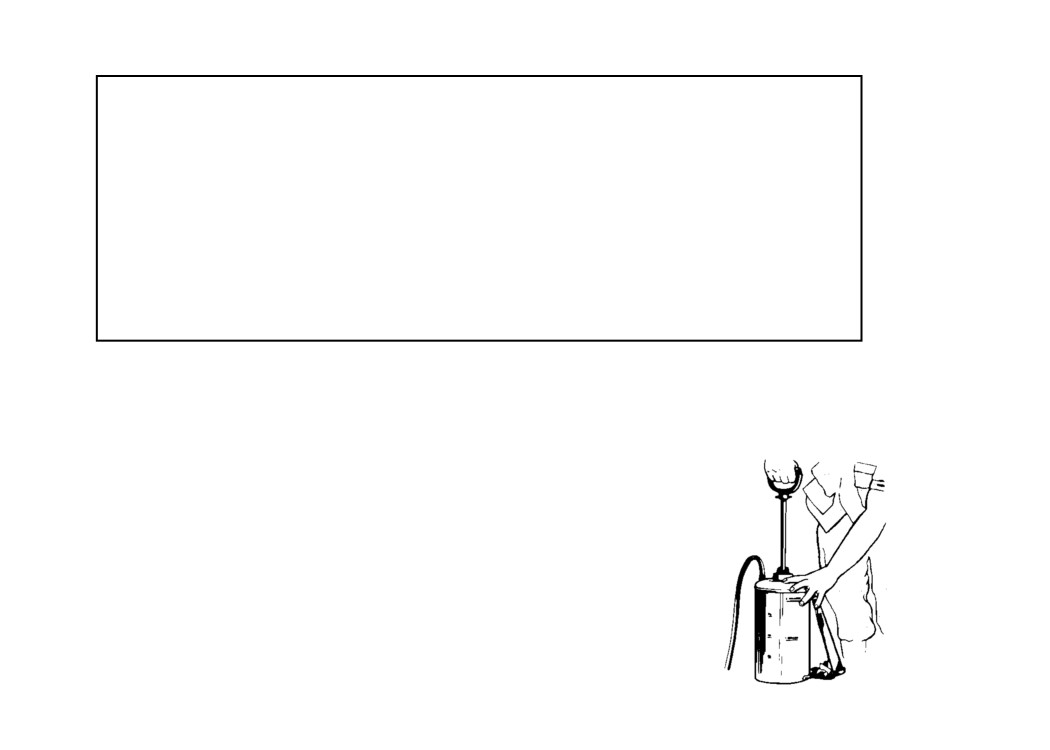
STEP 2: Assemble the compressed air sprayer. Select
the correct nozzle and attach to the end of the
wand, fill the tank half full of clean water, and
pressurize the tank to ensure that the tank and
nozzle are operational.
Pressurize to
approximately 40 to 60 pounds per square inch
(psi) of pressure. If the sprayer does not have a
gauge, approximately 30 to 35 pump strokes
will usually be sufficient. Squeeze the handle
on the wand to check nozzle performance. If
the sprayer is operational, release pressure from
tank. If the sprayer leaks, replace the gaskets
or tighten the connections on the hose, wand,
and nozzle.
STEP 3: Read the insecticide label.
Always read the label before doing anything.
Always follow all instructions on the label. The label is the law.
A-11
FM 21-10/MCRP 4-11.1D
CAUTION
Wear chemical resistant gloves during mixing and spraying. Gloves,
Chemical and Oil Protective, NSN 8415-01-012-9294 (size 9) or NSN
8415-01-013-7832 (size 10) are recommended. Wear an approved
pesticide respirator, if required by the label. DO NOT use the NBC
protective mask when applying pesticides. Avoid skin contact with
insecticide.
STEP 4: Add pesticide to the clean water in the sprayer tank. Finish filling the
sprayer with clean water to the appropriate level. DO NOT fill the
sprayer to the top. Leave space for pumping air
pressure into the tank. Put the pump assembly into
the sprayer and tighten.
STEP 5: Pump the sprayer.
Pump the sprayer 30 to 35 times to achieve 40 to 60 psi
pressure.
There should be a slight resistance to pumping when this
pressure is achieved. DO NOT over pump.
A-12
FM 21-10/MCRP 4-11.1D
STEP 6: Spray insecticide.
Point nozzle at area to be sprayed and squeeze the
handle on the wand.
Continue spraying until area is covered.
NOTE
Record all pesticide applications. The record should
include location of application, name of pesticide used,
and amount of pesticide used. Pesticide applications
must be reported to higher echelon command, using
Department of Defense Form 1532-1 as required by
DOD Instruction 4150.7.
STEP 7: Clean the sprayer.
Clean the sprayer with soap and water, then flush the tank at least 3 times with
clear water.
Rinse all parts in clear water.
A-13
FM 21-10/MCRP 4-11.1D
Reassemble and spray clear water through nozzle. If the sprayer is not cleaned
after use, vital parts will corrode.
STEP 8: Store cleaned sprayer.
Turn the sprayer tank upside down with pump assembly separated to keep
tank dry.
CAUTION
Always wash your hands and chemical resistant gloves, respirator,
goggles, and other personal protective equipment with soap and water
after spraying. Store personal protective equipment away from
pesticides and applicator.
TASK 3: Control domestic rodents.
EQUIPMENT NEEDED: Tamper-proof rodent bait stations, rat snap trap (mechanical
spring), mouse snap trap (mechanical spring), and rodenticides.
A-14
FM 21-10/MCRP 4-11.1D
STEPS OF PERFORMANCE:
STEP 1: Identify rodent infestations and breeding and harborage areas, such as
Underground burrows.
Around building foundations.
Under rubbish piles.
Near food sources.
STEP 2: Control:
Enforce food sanitation practices, such as eliminating garbage and food waste
in the bivouac area and keeping all food and waste covered.
Locate trash dumps away from sleeping/berthing and food service areas.
Clear all possible nesting areas by removing unnecessary rubbish and other
debris.
Modify buildings and structures to prevent rodents from having easy access.
A-15
FM 21-10/MCRP 4-11.1D
Use rodent snap traps and poison baits simultaneously for effective control.
Poison baits must be placed in tamper/spill-proof containers with bilingual
labels (English and local). Read the label and wear chemical resistant gloves
when handling poison baits.
CAUTION
Wear chemical resistant gloves while handling rodenticides. Avoid
skin contact with rodenticides. Wear plastic gloves when handling
dead rodents. Place dead rodents in plastic bags; seal and dispose
of the bags in landfills, or incinerate.
TASK 4: Prevent injuries due to venomous snakebite.
STEPS OF PERFORMANCE:
STEP 1: Be familiar with venomous snakes in the AO and with areas where snakes
may be a problem.
Rocky areas.
Areas with rodent infestations.
Heavy vegetation.
A-16
FM 21-10/MCRP 4-11.1D
STEP 2: Control:
Be familiar with field treatment of snakebites.
Educate personnel on avoiding snakes and preventing snakebites.
Prevent and control rodents (food sources for snakes) around camps and
bivouac sites.
Exclude snakes from buildings.
TASK 5: Inspect unit food service operations.
EQUIPMENT NEEDED: Thermometer, Self-Indicating Bimetallic, 0° F to 220° F,
NSN 6685-00-444-6500. Clipboard with writing material.
BACKGROUND INFORMATION:
Some foods support the rapid growth of disease organisms that cause diarrhea; these foods
are called:
POTENTIALLY HAZARDOUS FOODS
Examples of potentially hazardous foods include but are not limited to meats, fish, milk,
creamed beef, gravies, soups, and chicken. Extra care and precautions must be taken with
A-17
FM 21-10/MCRP 4-11.1D
these potentially hazardous foods. Five factors most often involved in outbreaks of diarrhea
caused by contaminated foods are
Failing to keep potentially hazardous foods cold (below 40° F) or hot (above
140° F).
Allowing potentially hazardous foods to remain at warm temperatures (41° F
to 139° F).
Preparing foods 3 hours or more before being served.
Allowing sick employees to work.
Permitting poor personal hygiene or sanitation practices by food handlers.
Example: Not washing hands after using the latrine; improperly washing and
sanitizing all cooking utensils.
STEPS OF PERFORMANCE:
IN GARRISON OR WHEN FOOD IS PREPARED IN A FIELD FOOD SERVICE
FACILITY:
STEP 1: Have the supervisor check the temperature of potentially hazardous foods.
A-18
FM 21-10/MCRP 4-11.1D
If hotfood should be 140° F or above.
If coldfood should be 40° F or below.
STEP 2: Check personnel for illness and skin infection.
STEP 3: Check food handling techniques and personal hygiene.
STEP 4: Have the supervisor check the food temperature in cold storage units.
STEP 5: Check handwashing facilities. Are they being used by food handlers?
STEP 6: Check doors and windows. Are they closed or screened to prevent flies
from entering?
NOTE
See FM 10-23 for the correct operating procedures for a field kitchen
facility (mobile field kitchen [MKT-75] or kitchen tent [M-1948]).
WHEN FOOD IS BROUGHT TO YOUR UNIT IN THE FIELD:
STEP 1: Check the preparation of insulated containers.
A-19
FM 21-10/MCRP 4-11.1D
For hot foods, the container should be preheated by
the use of boiling water. Foods should be placed in
the container while they are hot (above 140° F).
For cold foods, the container should be prechilled by
the use of ice. Foods placed in the container should
be cooler than 40° F. Always check the container
and the insert seals to ensure that they are intact and
in good condition to aid in keeping food at its
required temperature.
NOTE
See FM 8-34 and FM 10-23 for the correct procedures for preparing the
insulated containers.
STEP 2: When the insulated container arrives, the supervisor must check the food
temperature before serving. Make sure it is 140° F or above for hot foods
and 40° F or below for cold foods. If the temperature is in the danger
zone, contact the medical authority for instructions.
STEP 3: Check for handwashing devices for use by service members.
A-20
FM 21-10/MCRP 4-11.1D
STEP 4: Check the mess kit laundry, if
used.
Make sure service
members are using the mess kit
laundry correctly. The food
waste is placed in a scrap can.
Wash the kit in warm, soapy
water (120° F to 140° F) using a
long-handled brush to scrub.
Rinse the mess kit in clear,
boiling water. Disinfect the
mess kit by immersing it in clear, boiling water for 10 seconds. Each mess
kit laundry setup of four cans will support 80 personnel. Air-dry mess kits.
NOTE
If a sanitation center or immersion heaters are not available, food service
disinfectant may be used. Make sure the label directions are being
followed. Each setup of four cans will support 100 personnel. The setup
consists of one can for food scraps, one can with soapy water, a clear rinse
can, and a final rinse can with food service disinfectant.
STEP 5: Check the sanitation center, if used. The sanitation center is a set of one
garbage can and three sinks with the M2 field range burners, or the
A-21
FM 21-10/MCRP 4-11.1D
modern burner unit, and
thermometers. The first sink
has warm, soapy water. The
second sink has clear, 170° F
water. The third sink has
clear,
180° F water. If
thermometers
are
not
available, the third sink must
have boiling water. Food is
scraped into the garbage can.
Scrub mess kit in the warm, soapy water by using a long-handled brush.
Rinse the mess kit in the second sink of clear, 170° F water. Disinfect the
mess kit by immersing it in the third sink of 180° F water for 10 seconds.
Air-dry mess kits.
TASK 6: Inspect water containers.
EQUIPMENT NEEDED: None.
WHEN TO INSPECT WATER CONTAINERS:
Quarterly in garrison when not being used.
Prior to deployment.
A-22
FM 21-10/MCRP 4-11.1D
Before filling at water distribution points.
Upon completion of use to ensure that all water has been drained from the
container before storage.
STEPS OF PERFORMANCE:
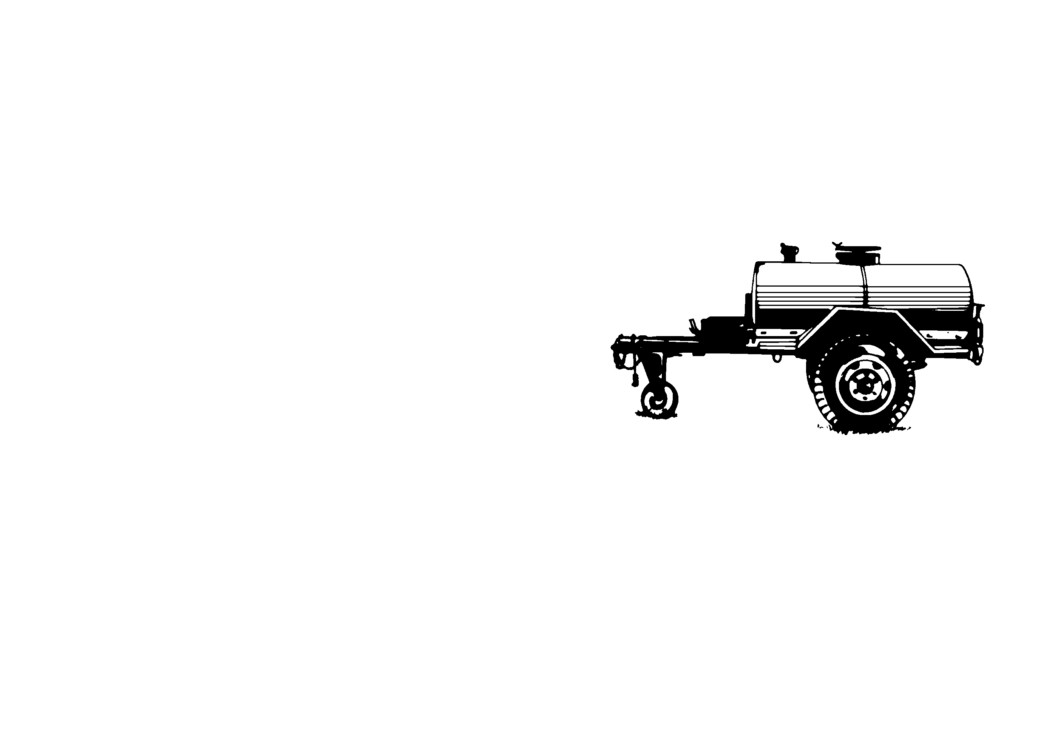
UNIT WATER TRAILER:
Upon completion of use:
STEP 1: Drain plug and spigots:
Make sure that the drain
plug has been removed and
that all spigots have been
opened to drain all water
from the tank. Foul odors, bacteria growth, and rust will accumulate
during storage if the water is not completely drained.
STEP 2: Manhole cover: Place a thin piece of wood under the manhole cover
to provide ventilation. With the manhole cover and spigots open, air
circulation will be allowed, thus drying the inside of the water trailer.
NOTE
See the technical manual on your water trailer for additional guidance.
A-23
FM 21-10/MCRP 4-11.1D
Quarterly:
STEP 1: Manhole cover: Ensure the sealing
gasket is in place, free of excessive
cracks and dry rot. Cover should
provide an effective seal.
STEP 2: Drain plug: Ensure it is operable; it
should be removable without excessive effort.
STEP 3: Interior: Check surface for excessive cracks; check for signs of being
used for storage of products other than water such as oil products,
gasoline, or diesel fuel. Rust stains and other discoloration caused by
common natural chemicals in water (iron or manganese) pose no
health problem.
STEP 4: Spigots: Make sure spigots are clean and operable. Covers over spigots
should open and close with ease. Spigot handles should operate freely.
NOTE
Questions concerning excessive interior cracks or chipping and use after
storage of products other than water should be directed to PVNTMED
personnel. Refer to the technical manual on your water trailer for
maintenance instructions.
A-24
FM 21-10/MCRP 4-11.1D
Before filling at water distribution points:
STEP 1: Check interior for gross contamination.
STEP 2: Check hose used to fill trailer. Water point fill hose should not come
in contact with the ground. If the hose is lying on the ground, wash
the end before use.
STEP 3: After filling, check manhole cover and drain plug to ensure that they
are secure.
CAUTION
Personnel detailed to fill water trailers must be directed to fill the
trailers only at approved water points.
COLLAPSIBLE FABRIC DRUMS/PILLOWS/ONION TANKS:
STEP 1: Interior: Check for dirt and other contamination; check for holes.
STEP 2: Fill holes: Check to ensure that fill holes are clean and covers are in place.
A-25
FM 21-10/MCRP 4-11.1D
STEP 3: Exterior: Check to ensure the exterior is free of oils and other contaminants
that may seep into the bag and contaminate the water.
LYSTER BAGS:
STEP 1: Interior: Check for dirt and other contamination;
check for holes.
STEP 2: Cover: Check to make sure it fits. Check for holes.
STEP 3: Spigots: Make sure spigots are clean and in place.
STEP 4: Location: Elevate Lyster bags sufficiently to prevent
contamination of spigots by wildlife.
NOTE
Always clean the Lyster bag prior to its first use and periodically
thereafter with potable water.
WATER CANS: Check interior for contamination; if can has a fuel odor,
such as gasoline, do not use it for drinking water.
A-26
FM 21-10/MCRP 4-11.1D
TASK 7: Check unit water supply for chlorine residual.
EQUIPMENT NEEDED: Field chlorination kit containing chlorine ampules, color
comparator, and chlorine test tablets.
Check the chlorine residual when
Filling unit containers at water distribution points.
Water containers arrive in unit area.
Directed by command medical authority.
Treating a raw water supply.
STEPS OF PERFORMANCE:
STEP 1: Determine the desired chlorine residual in milligrams per liter (mg/L).
At the point of consumption, water obtained from an approved water
distribution point should have at least a trace of chlorine residual.
When the unit must obtain water from a raw water supply, or from another
source such as a stream or pond, the finished product should have a 5-mg/L
chlorine residual after 30 minutes. Under certain conditions, the local medical
authority may direct a higher residual.
A-27