FM 21-10 MCRP 4-11.1D FIELD HYGIENE AND SANITATION (June 2000) - page 4
FM 21-10/MCRP 4-11.1D
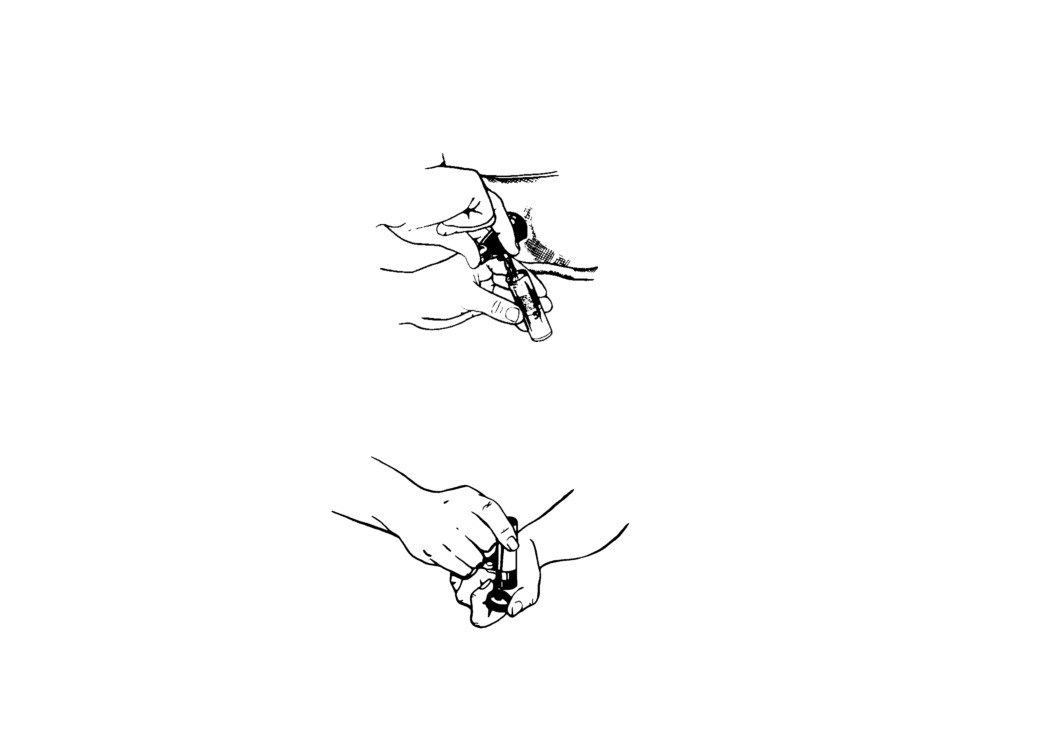
STEP 2: Flush the spigots of the water container being checked and fill the color
comparator tube to a point just below the top of the tube.
STEP 3: Place one chlorine test tablet in the comparator and allow it to dissolve.
STEP 4: Hold the color comparator at eye level and toward a good light source.
A-28
FM 21-10/MCRP 4-11.1D
STEP 5: Compare the color of the water with the color disc on the opposite side of
the color comparator.
The water is safe to use if the color of the water is the same shade or darker
than the required color for the chlorine residual.
The water must be chlorinated if the color is lighter than the required residual.
TASK 8: Chlorinate water supplies.
EQUIPMENT NEEDED: Field chlorination kit, a 6-ounce jar of calcium hypochlorite
(HTH) (70 percent chlorine), or a container of 5- to 6-percent household bleach. Chlorinate
the water when
The water supply has no chlorine residual.
A-29
FM 21-10/MCRP 4-11.1D
The chlorine residual is below required level.
A raw (untreated) or unapproved water supply must be used.
STEPS OF PERFORMANCE:
STEP 1: Before adding chlorine, check the chlorine residual following the
procedures in Task 7.
STEP 2: If the chlorine residual is less than the desired level, add enough chlorine
to raise the residual to the required level. Use Table A-1 to determine the
amount to add to untreated water. If a 10 mg/L chlorine residual is
required, double these amounts. To increase the residual in treated water,
smaller quantities of chlorine will be needed.
STEP 3: Wait 10 minutes, then check the chlorine residual.
STEP 4: If the residual is less than 5 mg/L, repeat steps 2 and 3 using a smaller
amount of chlorine.
STEP 5: If the residual is at least 5 mg/L, wait an additional 20 minutes before
drinking.
A-30

FM 21-10/MCRP 4-11.1D
Table A-1. Amounts of HTH and Bleach Equivalent to a 5 mg/L Dose in Various
Volumes of Water Volume*
HTH
5% BLEACH
MRE
MESSKIT
MRE
MESSKIT
VOLUME
AMPULES
SPOON
SPOON
SPOON
SPOON
5 GAL
0.5
0.5
10 GAL
1.0
1.0
20 GAL
1.0
2.0
32 GAL
2.0
2.0
1.0
36 GAL
2.0
0.5
3.0
1.0
50 GAL
3.0
0.5
3.0
1.0
55 GAL
3.0
0.5
4.0
1.0
100 GAL
6.0
1.0
7.0
2.0
150 GAL
8.0
1.0
10.0
3.0
160 GAL
9.0
1.0
11.0
3.0
250 GAL
14.0
2.0
0.5
17.0
5.0
400 GAL
22.0
3.0
1.0
26.0
7.0
500 GAL
27.0
3.0
1.0
33.0
9.0
1000 GAL
54.0
7.0
2.0
66.0
18.0
3000 GAL
162.0
20.0
6.0
196.0
54.0
5000 GAL
270.0
33.0
10.0
327.0
90.0
*
THE QUANTITIES DEPICTED IN THIS TABLE ARE GENERAL GUIDELINES, ACTUAL AMOUNTS MAY
VARY BASED ON WATER QUALITY.
A-31
FM 21-10/MCRP 4-11.1D
TASK 9: Set up, construct, and maintain field waste disposal devices.
EQUIPMENT NEEDED:
Set up required number of chemical toilets.
Collect material for type of improvised facilities to be constructed, if required.
Establish a detail to set up or construct the devices.
DISPOSAL METHODS THAT MAY BE USED IN THE FIELD:
NOTE
Local, state, federal, and host-nation regulations or laws may prohibit
burning or burial of waste. The garbage, rubbish, and other such material
may have to be transported to a waste disposal facility. Chemical toilets
are the required human waste disposal devices for use during field exercises
or missions. Improvised devices may be used under emergency conditions;
the burn-out latrine is the preferred method for improvised devices.
Garbage/rubbish disposal.
Collect and transport to approved disposal facilities.
A-32
FM 21-10/MCRP 4-11.1D
Expedient devices.
BurialLess than 1 week.
IncinerationLonger than a week.
Liquid kitchen or bathing waste disposal.
Grease trap.
Soakage pits.
Evaporation beds.
Human waste disposal.
Chemical toilets. Urinals should be provided in these facilities to prevent soiling
the toilet seats, if possible.
Individual waste collection bags on the march or for small groups in isolated
areas.
Cat-hole latrine for marches if individual waste collection bags are not
available.
A-33
FM 21-10/MCRP 4-11.1D
Field expedients when individual waste collection bags are not available
Burn-out latrine.
Pail latrine when chemical toilets are not available, the ground is too hard,
or the water table is too high (soil is very wet).
Straddle trench for 1 to 3 day bivouac sites when burn-out or pail latrine
are not available.
Deep pit latrine for temporary camps.
Soakage pits for urinals at temporary camps.
Trough urinal.
Pipe urinal.
Urinoil.
(See page A-44 for further information on the urinoil.)
STEPS OF PERFORMANCE:
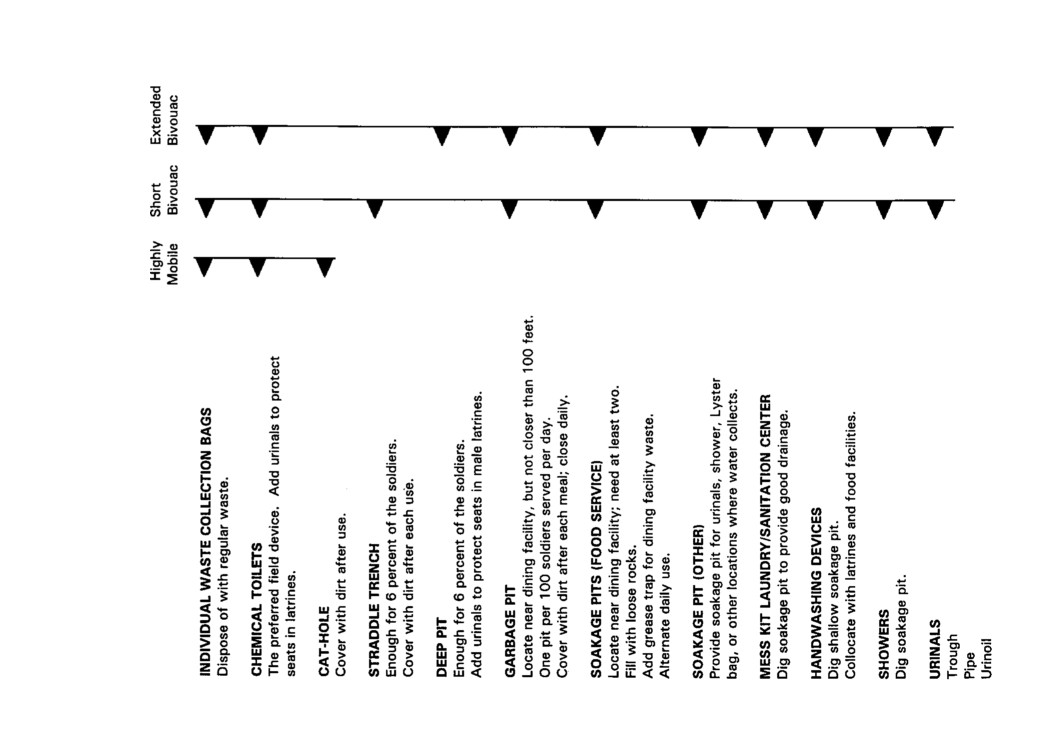
STEP 1: Use the following chart to determine disposal requirements.
A-34
FM 21-10/MCRP 4-11.1D
A-35
FM 21-10/MCRP 4-11.1D
STEP 2: Select site of construction.
Garbage and soakage pits should be at least 30 meters from food service.
Latrine should be as far as possible from food service (100 meters or more
is best).
Latrine should be located on level ground. Never uphill from the campsite or
water supplies.
STEP 3: Construct disposal facility.
Garbage pitUsed to prevent accumulation of
garbage in the unit area.
NOTE
Garbage and rubbish should be transported to
an approved landfill or must be buried or
burned. If buried for short stays, cover daily.
For longer periods, garbage and rubbish may
have to be burned; however, the ashes should
be buried.
(Reader should consult the note
on page A-32.)
A-36
FM 21-10/MCRP 4-11.1D
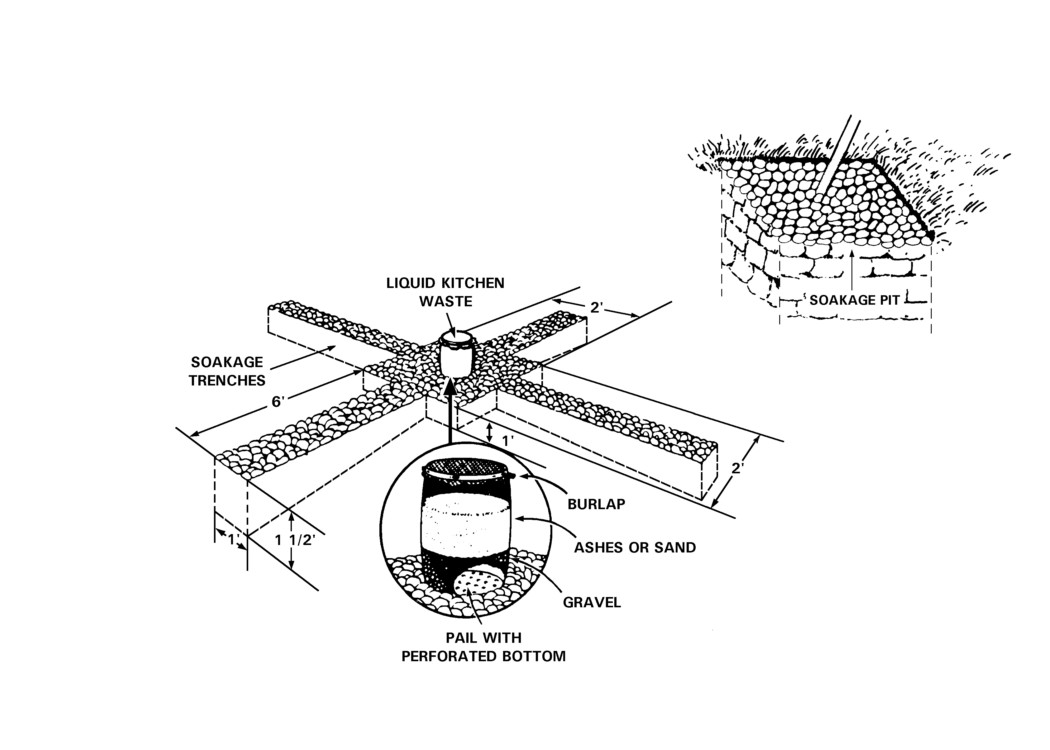
Soakage pit/trenchUsed to prevent accumulation of liquid waste (water
from showers, sinks, and field kitchens).
A-37
FM 21-10/MCRP 4-11.1D
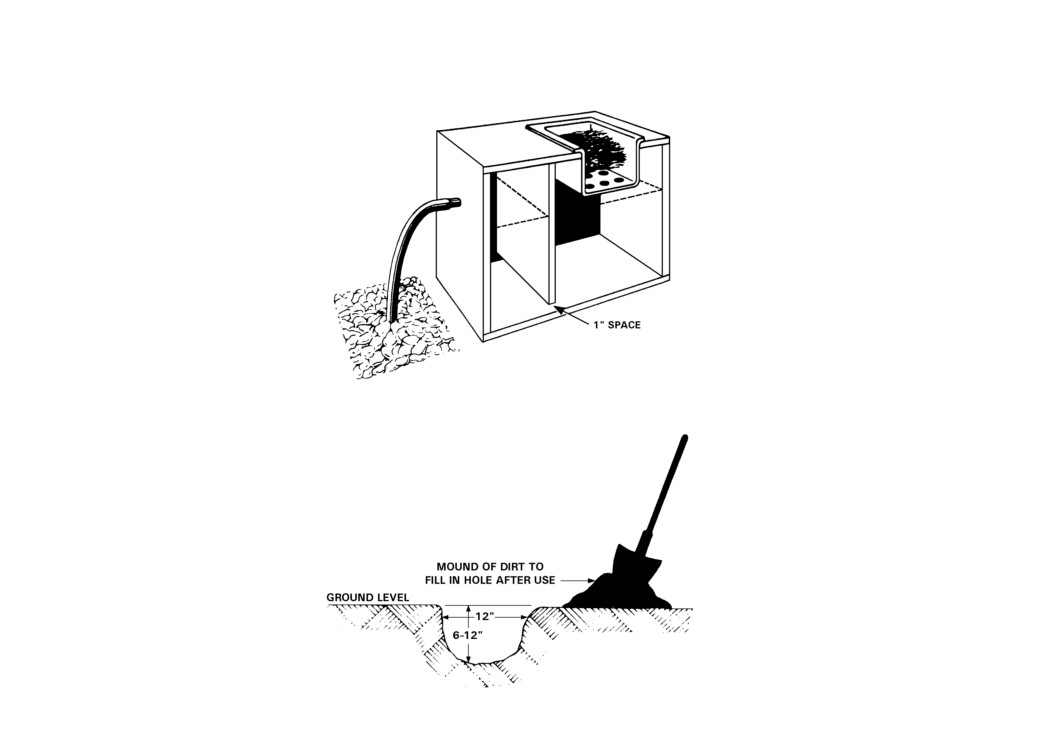
Grease trapUsed with both soakage pit and trench to prevent clogging of soil.
Cat-hole latrineUsed only on the march (if individual waste collection bags
are not available) and covered immediately after use.
A-38
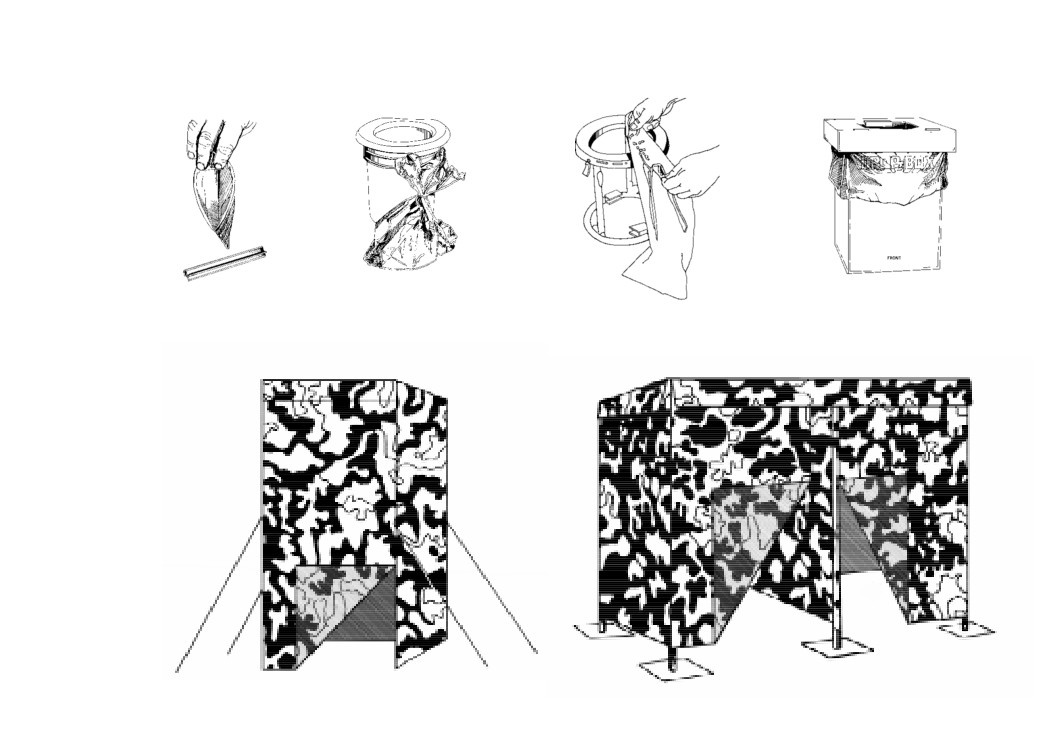
FM 21-10/MCRP 4-11.1D
Chemical toiletsUsed as the standard field latrine.
BRIEF RELIEF
DISPOSA-JOHN
INDIVIDUAL SERVICE
DROP-BOX TOILET
(INDIVIDUAL)
MEMBER FIELD TOILET
INDIVIDUAL TENT LATRINE
SCREEN LATRINE
A-39
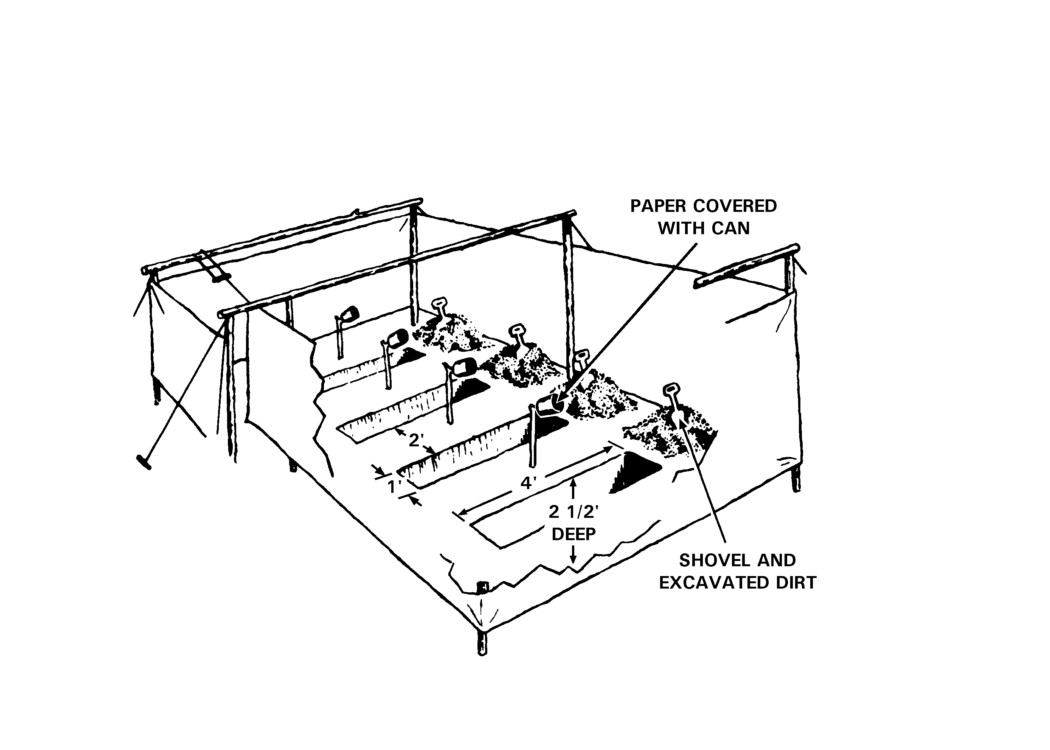
FM 21-10/MCRP 4-11.1D
Straddle trench latrineUsed on short bivouacs and field training exercises.
Two trenches per 100 males and three trenches per 100 females.
A-40
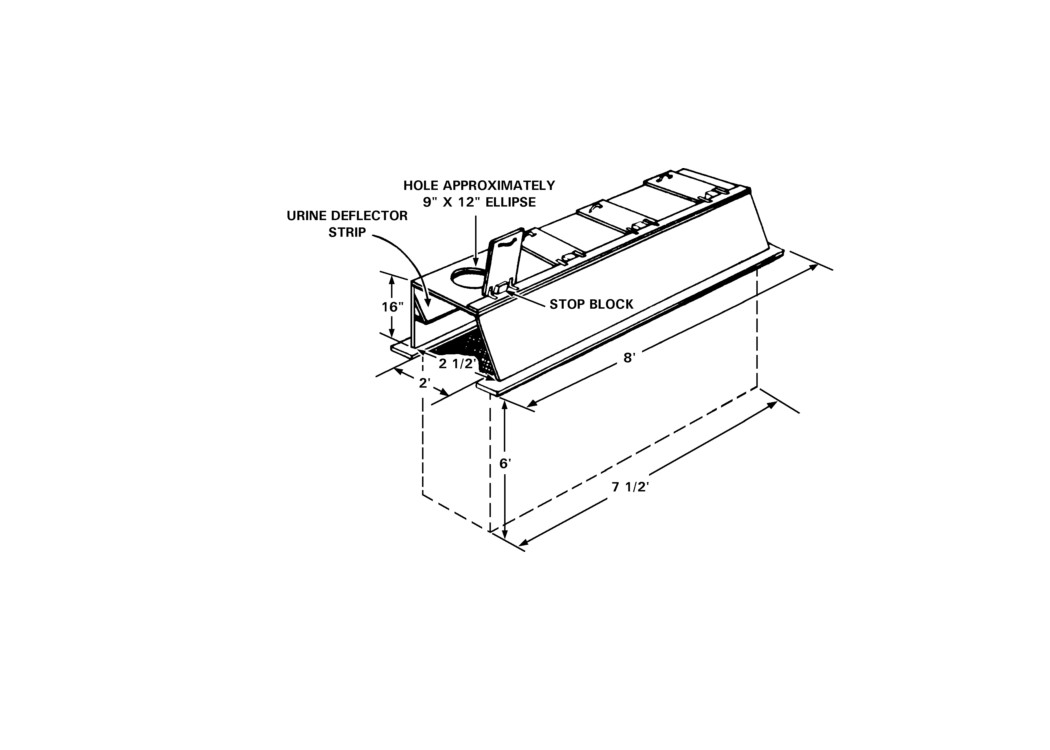
FM 21-10/MCRP 4-11.1D
Deep pit latrineUsed for longer periods of time and in built-up areas.
Collapsible two-seat boxes are available in the supply system.
NOTE
If ground is too hard for digging, or if the water table is too high, use a pail
latrine or a burn-out latrine.
A-41
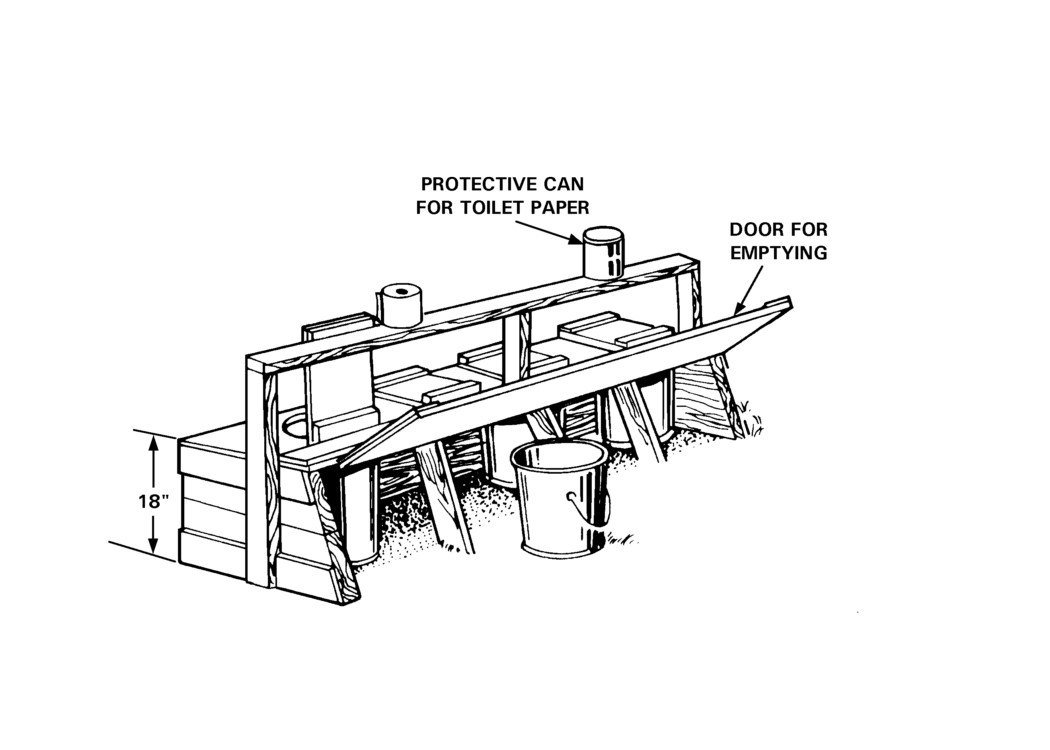
FM 21-10/MCRP 4-11.1D
Pail latrineUse where water table is too close to the surface of the ground
for digging a deep pit latrine.
A-42
FM 21-10/MCRP 4-11.1D
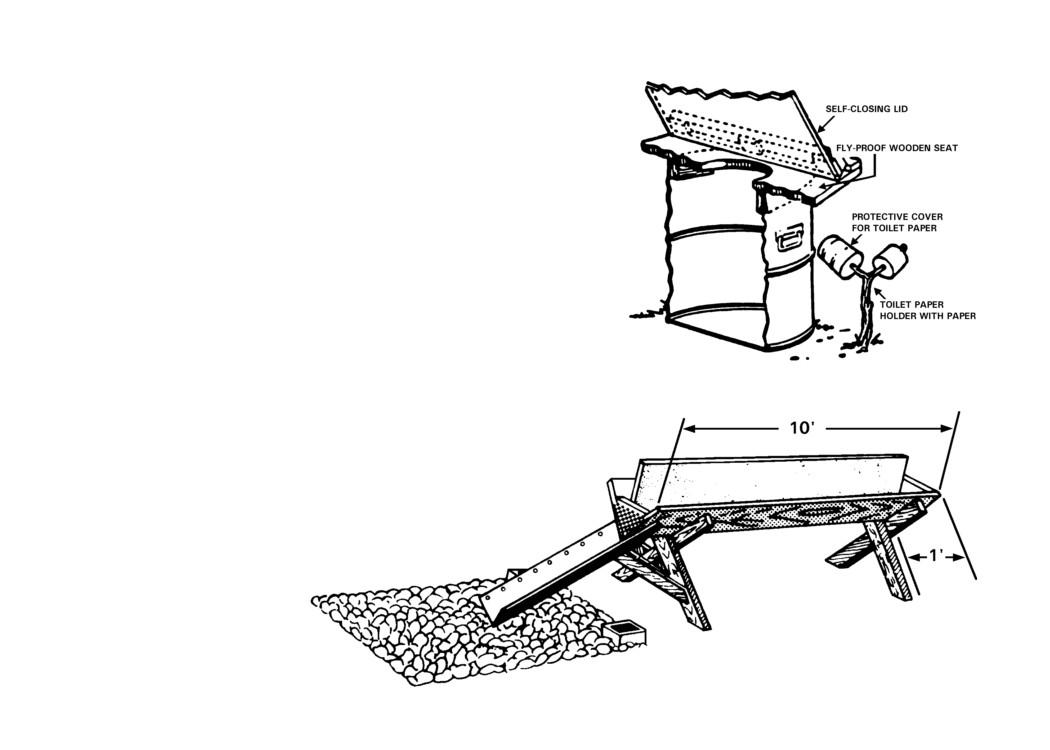
Burn-out latrineUse where water
table is too close to the surface of the
ground for digging a pit latrine, or
stay is for an extended period.
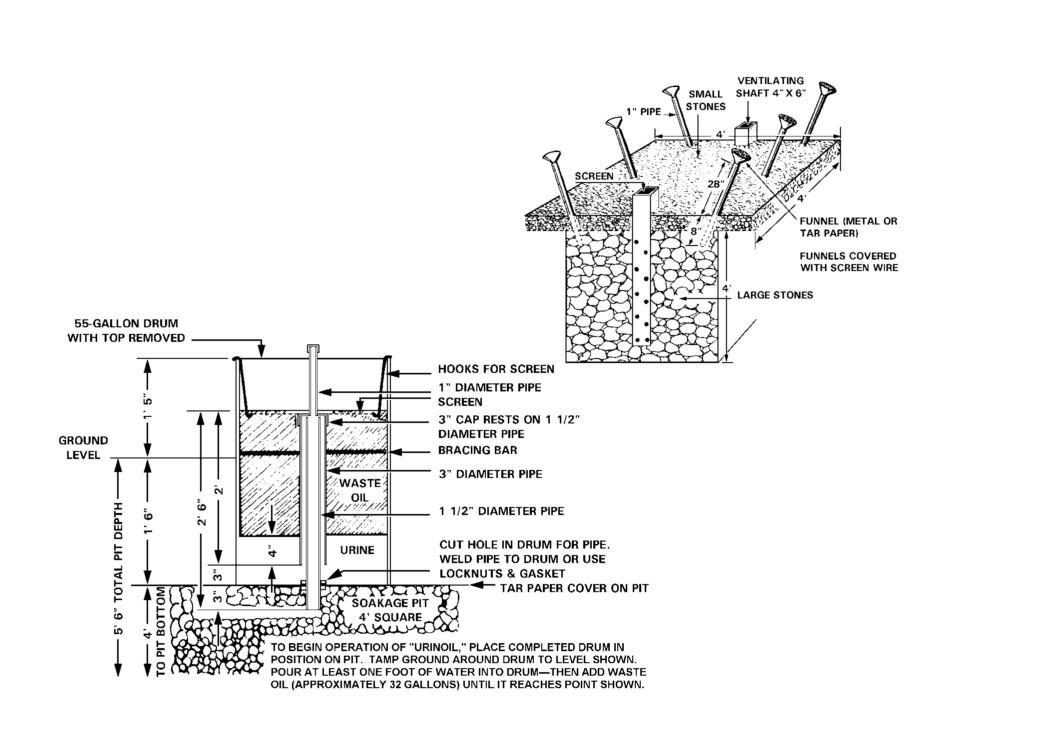
UrinalsFor male latrines,
construct one of the following
urinals: trough urinal, pipe
urinal, or urinoil.
TROUGH URINAL
A-43
FM 21-10/MCRP 4-11.1D
PIPE URINAL
URINOIL
A-44
FM 21-10/MCRP 4-11.1D
STEP 4: Inspect daily to make sure that the following is done:
Waste is collected and transported to an approved disposal facility.
Straddle trench latrines and garbage pits are covered with dirt daily.
Pail latrines are emptied and cleaned daily.
Burn-out latrine containers are rotated and contents burned daily. · Facilities
(not the contents) are sprayed with insecticide for fly control when other
control techniques fail.
STEP 5: Close improvised latrines and garbage pits when filled to within 1 foot of
the ground surface. Have chemical toilet contents removed daily.
Close out by
Spraying with residual insecticide.
Packing earth in successive 3-inch layers until mounded 1 foot above ground
level. Spraying again with residual insecticide.
Posting a sign stating, Closed latrine/garbage pit and date (except in combat).
A-45
FM 21-10/MCRP 4-11.1D
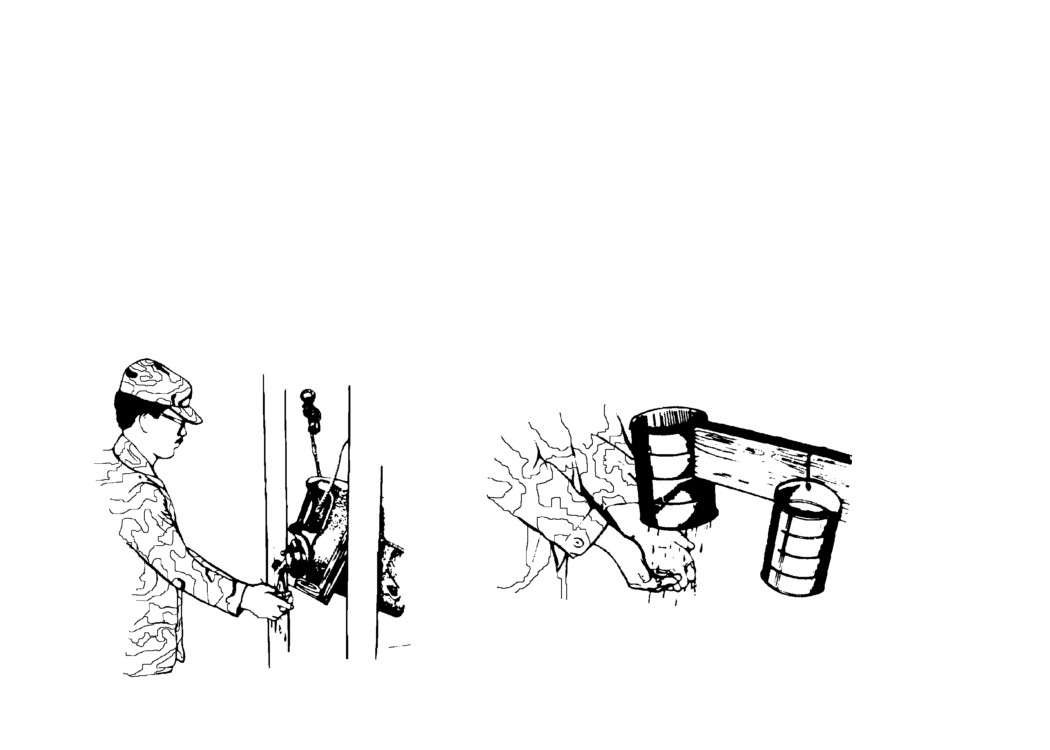
TASK 10: Construct and maintain field handwashing and shower devices.
EQUIPMENT NEEDED: Personnel detailed to construct and maintain field handwashing
and shower devices. Material as required for type of facilities to be constructed.
STEPS OF PERFORMANCE:
STEP 1: Select device to be constructed.
Handwashing devices.
A-46
FM 21-10/MCRP 4-11.1D
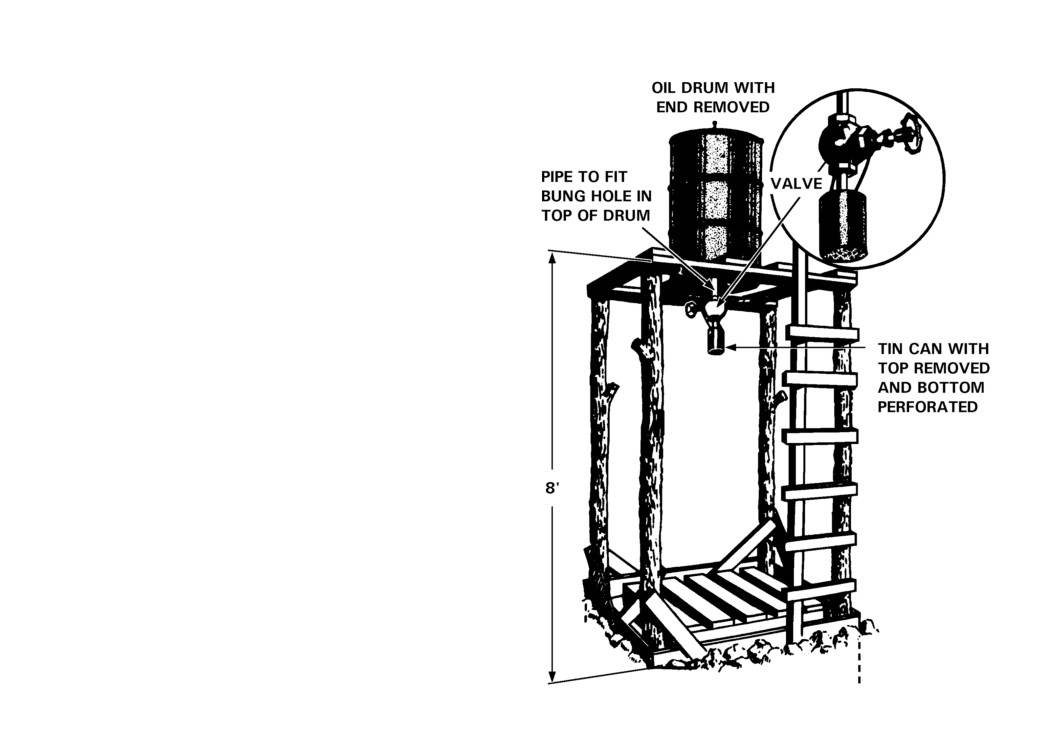
Shower devices.
STEP 2: Construct devices.
Collocate handwashing
devices at food service
and latrine locations.
NOTE
A soakage pit should be
provided for all handwashing
and shower facilities.
STEP 3: Maintain devices. A
supply of soap and
water must be avail-
able at all times.
STEP 4: Close devices.
A-47
FM 21-10/MCRP 4-11.1D
GLOSSARY
ABBREVIATIONS AND ACRONYMS
AO area of operations
attn
attention
C centigrade
DA Department of the Army
DEET
75 percent N, N-diethyl-M-Toluamide
DNBI disease and nonbattle injury
DOD Department of Defense
F Fahrenheit
FM field manual
FST field sanitation team
gal
gallon
Glossary-1
FM 21-10/MCRP 4-11.1D
GTA graphic training aid
hr
hour
HSS health service support
HTH calcium hypochlorite, 70 percent available chlorine
lb
pound
LP listening post
MCRP Marine Corps Reference Publication
mg/L milligrams per liter
min
minute
MOPP mission-oriented protective posture
mph miles per hour
MRE meal(s), ready to eat
MSDS material safety data sheets
Glossary-2
FM 21-10/MCRP 4-11.1D
NBC nuclear, biological, and chemical
NL no limit
NSN National Stock Number
OP observation post
PMM preventive medicine measures
psi
pounds per square inch
PVNTMED preventive medicine
qt
quart
SOP standing operating procedure
STD sexually transmitted disease
US United States
UV ultraviolet
WBGT wet bulb globe temperature
Glossary-3
FM 21-10/MCRP 4-11.1D
REFERENCES
Joint or Multiservice Publications
AR 40-562. Immunizations and Chemoprophylaxis. AFJI 48-110; BUDMEDINST
6230.15; CG COMDTINST M6230.4E. 1 November 1995.
FM 8-33. Control of Communicable Diseases Manual (16th Edition). NAVMED P-5038.
9 April 1996.
TM 5-632. Military Entomology Operational Handbook. NAVFAC MO-310; AFM 9-16.
1 December 1971. (Reprinted with basic including Changes 12, January 1976).
TB Med 81. Cold Injury. NAVMED P-5052-29; AFP 161-11. 30 September 1976.
TB Med 507. Occupational and Environmental Health Prevention, Treatment, and Control
of Heat Injury. NAVMED P-5052-5; AFP 160-1. 25 July 1980.
DOD Instruction 4150.7. DOD Pest Management Program. 22 April 1996.
Army Publications
AR 40-5. Preventive Medicine.
15 October 1990.
AR 40-35. Preventive Dentistry.
26 March 1989.
DA Pam 600-63-11. Dental Health Module for Fit to Win Program. September 1987.
FM 8-34. Food Sanitation for the Supervisor.
30 December 1983.
FM 8-250. Preventive Medicine Specialist.
27 January 1986.
(Reprinted with basic
including Change 1, 12 September 1986).
References-1
FM 21-10/MCRP 4-11.1D
FM 10-23. Basic Doctrine for Army Field Feeding and Class I Operations Management.
18 April 1996.
FM 10-52. Water Supply in Theaters of Operations.
11 July 1990.
FM 10-52-1. Water Supply Point Equipment and Operations. 18 June 1991.
FM 21-11. First Aid for Soldiers.
27 October 1988.
(Reprinted with basic including
Changes 12, 4 December 1991).
FM 21-20. Physical Fitness Training.
30 September 1992. (Change 1, 1 October 1998).
FM 21-76. Survival. 5 June 1992.
CTA 50-900. Clothing and Individual Equipment.
1 September 1994.
TB Med 530. Occupational and Environmental Health Food Service Sanitation.
28
November 1991.
TB Med 561. Occupational and Environmental Health Pest Surveillance. 1 June 1992.
TB Med 577. Occupational and Environmental Health: Sanitary Control and Surveillance
of Field Water Supplies.
7 March 1986.
GTA 5-8-12. Individual Safety Card.
25 February 1999.
GTA 8-6-12. Adverse Effects of Cold.
1 August 1985.
Department of the Defense Form
1532-1. Pest Management Maintenance Record. August 1996 (EG).
Technical Notes
United States Army Research Institute of Environmental Medicine, Natick, MA
01760.
References-2
FM 21-10/MCRP 4-11.1D
USARIEM TN 93-1. Sustaining Soldier Health and Performance in Somalia: Guidance for
Small Unit Leaders, December 1992.
USARIEM TN 93-6. Sustaining Soldier Health and Performance in Yugoslavia: Guidance
for Small Unit Leaders, June 1993.
USARIEM TN 94-4. Sustaining Soldier Health and Performance in Haiti: Guidance for
Small Unit Leaders, September 1994.
USARIEM TN 95-1. Sustaining Soldier Health and Performance in Southwest Asia:
Guidance for Small Unit Leaders, October 1995.
References-3
FM 21-10/MCRP 4-11.1D
INDEX
acclimatization, 2-1
area of operation, 1-1
arthropod(s), 3-8, 3-17
ants, A-10
bees, A-10
biting, 3-8, 3-17, 3-18, 3-10, A-6
centipedes, 2-19, A-9
cockroaches, A-7
control, 2-17, 4-1, A-1
filth flies, A-6
fleas, A-2
lice, 3-19, A-3
minimize exposure to, 3-20, A-1
mites, A-4
mosquitoes, A-1
repellents, 2-1315, A-1, A-2, A-6
scorpions, 2-18, A-9
spiders, 2-18, A-8
ticks, A-4
wasps, A-10
bathe/bathing, 2-16, 3-18, 3-27
Index-1
FM 21-10/MCRP 4-11.1D
bed net
repair, 2-18
use, 2-17
biological waste, 2-43
bleach, household, 2-26
can
water, A-26
chemical(s), toxic materials, 2-38
bore/gun gases, 2-41
carbon monoxide, 2-40, 2-42
gloves, A-5, A-10, A-12, A-14, A-16
grease, oils, and solvents, 2-41
hydrogen chloride, 2-40
injuries, 2-40
protection, 2-41
threat
biological/radiological, 2-40
industrial, 2-39
occupational, 2-38
chlorine
ampules, 2-24, A-27
residual, A-27
test tablets, A-27
Index-2
FM 21-10/MCRP 4-11.1D
cold
injuries, 2-612, 3-910
protection from, 2-912
special considerations, 3-14
carbon monoxide poisoning, 3-15
windchill
categories, 3-12
chart, 3-11
factor, 3-10
combat
hospital admissions, 1-1
injuries, 1-1
cycles
rest, 2-3, 3-3, 3-7
work, 2-3, 3-3, 3-7
dehydration, 2-1, 2-23
diarrhea
dehydration, 2-23
disease organisms, A-17
hazardous foods, A-17
outbreak factors, 2-22, A-17
disease, 1-1, 2-13
dental, 2-33
foodborne, 2-22, 2-2829, 3-22, 3-26
Index-3
FM 21-10/MCRP 4-11.1D
disease (continued)
nonbattle injury, 1-1, 4-1
rates, 1-1
sexually transmitted, 2-33
wasteborne, 2-22, 3-22
waterborne, 2-23
domestic and wild animals, 3-17, A-2
feet, care of, 2-9, 2-32
field sanitation
devices, 3-24, 4-2, 4-3, A-32
garbage pit, A-36
grease trap, A-38
latrines, 3-2425
burn-out, 3-24, A-32, A-43
cat hole, 2-30, A-38
chemical toilets, 3-24, A-39
deep pit, A-4
pail, A-42
straddle trench, A-40
soakage
pit, A-36
trench, A-36
urinals, A-4344
pipe, A-44
Index-4
FM 21-10/MCRP 4-11.1D
field sanitation
devices
urinals (continued)
trough, A-43
urinoil, A-44
team, Preface, Chapter 4
concept, 4-1
lice infections, 3-20, A-3
members, 4-3
operations, 4-1
pesticides, 3-20, 3-25
prophylaxis, 3-18
scope of operation, 4-1
site selection, 3-20, 4-2
tasks, Appendix A
training, 3-1, 3-9, 3-17, 3-22, 3-26, 3-27, 4-4, Appendix A
fitness
leaders role, 2-30
physical, 3-1, 3-26
fleas, A-2
fluid replacement, Table 3-1
food
civilian vendors, 2-27
hazardous, A-17
inspection, A-20
Index-5
FM 21-10/MCRP 4-11.1D
food (continued)
insulated containers, A-1920
safe temperatures, A-20
safety, 3-29
service operations, A-17
frostbite, 2-6
hands, 3-16
washing, 2-29, 3-24
handwashing devices
location, 3-25, A-19
use, 3-25, A-19
heat
acclimatization, 2-1
condition information, 3-3
injuries, 2-1, 3-1
in MOPP/body armor/armored vehicles, 2-4
prevention, 2-2, 3-1
special considerations, 3-8
stress, 2-1, 2-4, 2-5
household bleach, 2-26
hydration, 2-2
illness
food, 3-22
Index-6
FM 21-10/MCRP 4-11.1D
illness (continued)
water, 3-22
infections
genital, 2-31, 2-33
prevention, 2-31
skin, 2-31
urinary tract, 2-33
insecticide
aerosol, A-7
DEET, 2-13, 2-18
spray, 3-25
use, A-7
iodine tablets, 2-23
latrines, 3-25, A-6
laundry, 3-24
lice, 3-19, A-3
Lyster bags, A-26
meals
eating, 2-4
salt replacement, 2-4
medical threat, Chapter 1
advice, 2-17
arthropods, 3-8
Index-7
FM 21-10/MCRP 4-11.1D
medical threat (continued)
cold, 3-9
heat, 3-1
mess kit laundry, 2-29, A-21
mites, A-4
mosquitoes, A-1
noise, 2-37
effects of, 3-31
individual protection measures, 3-32
protection from, 2-37, 3-32
nonbattle injury, 1-1
permethrin, 2-13, 2-15
personal hygiene, 2-16, 2-30, 3-2, 3-26
female, 3-27
male, 2-33
plan for, 2-32, 3-27
skin infection, 2-31
poisonous plants, 2-21, 3-21
preventive medicine measures, 1-2
individual, Chapter 2, 3-17, 3-22
leaders, Chapter 3
principles of, 1-34
Index-8
FM 21-10/MCRP 4-11.1D
preventive medicine measures (continued)
tasks, Appendix A
unit level, Appendix A
windchill, 3-13
prisoner of war, 1-1
protect
buddy, 2-11
ears, 2-10
eyes, 2-5, 2-11
face, 2-10
feet, 2-9
hands, 2-9
head, 2-16
health, 2-13
repellents
DEET, 2-13, 2-18
permethrin, 2-13, 2-15
rest, 3-7
risk
of contamination, 2-2
of heat stress/injuries, 2-5
rodents, 3-17, A-2, A-14
traps. See snap traps.
Index-9
FM 21-10/MCRP 4-11.1D
salt
replace, 2-4
tablets, 2-4
sanitation center, A-21
sexually transmitted diseases, 2-33
showers, 3-19, 3-27, A-4647
sleep
catnaps, 2-35, 3-28
discipline, 2-35, 3-28
loss, effects of, 2-35, 3-29
minimize loss, 2-35
safety, 2-12, 2-20
when possible, 2-35, 2-37
snakes, 2-20, 3-17, A-16
snap traps, mechanical, A-14, A-16
sprayer, 1- or 2-gallon
cleaning, A-13
use of, Appendix A
stress
combat, 2-36
heat, 2-1, 2-4, 2-5
reduce within unit, 2-36
tablets
Chlor-Floc©, 2-24
Index-10
FM 21-10/MCRP 4-11.1D
tablets (continued)
chlorine test, A-27
iodine, 2-23, 3-23
salt, 2-4
thermometer, A-17, A-22
ticks, A-4
toilet articles, 2-32
toxic fruit, 2-21
toxic industrial chemicals, 2-38, 3-33
identify, 3-33
injury, 2-40
threat, 2-38
protect from, 2-41, 3-34
undergarments
cotton, 2-34, 3-27
silk-polyester type, 2-32, 3-27
uniform
laundry, 2-17
modify, 2-5
treat, 2-15
wear, 2-7, 2-16
unit
cohesion, 3-31
health, 3-29
Index-11
FM 21-10/MCRP 4-11.1D
unit (continued)
pride, 3-31
safety, 3-29
uncertainty, 3-30
welfare, 3-29
waste disposal, 2-13
devices
burial, 3-24, 3-26, A-33
closing, A-45
garbage/rubbish, 4-2, A-15, A-32, A-36
human waste
latrines, 3-25, A-33
burn-out, A-34, A-43
cat hole, 2-30, A-33, A-38
chemical toilet, A-33, A-39
collection bags, 4-2, A-34, A-39
deep pit, A-34, A-41
location, 3-25
pail, A-34, A-42
pipe, A-44
soakage
pits, A-37
trenches, A-37
straddle trench, A-34, A-40
Index-12
FM 21-10/MCRP 4-11.1D
waste disposal
devices
human waste (continued)
urinals, A-33, A-43
urinoil, A-44
incinerator, A-33
water
bag, Lyster, A-26
boiling, 2-27
can, 3-23
chlorinate, 2-24
chlorination kit, field, A-27
chlorine residual, 2-26, A-27
containers, A-22, A-25
distribution point, 3-2122, A-27
drinking, 2-2, 2-8, 2-23
flavoring, 2-2
potable, 3-2
requirements, 2-1, 2-2
supplies, 4-2, A-29
trailer, 4-2, A-23
treatment of, 2-2427
windchill, 3-10, 4-5
chart, 3-11
index, 3-14
Index-13
FM 21-10/MCRP 4-11.1D
windchill (continued)
preventive medicine measures, 3-1314, 3-1516
work/rest cycles, 2-3, 3-3, 3-4, 3-7
Index-14